May was a delightful and hectic month. School wrapped up, seniors graduated and moved away, though mostly downtown or to Brooklyn, and the station has continued to function, day by day, through changes. Our three-day Miles Davis birthday broadcast received excellent feedback and the unfortunately impromptu memorial for the late Sunny Rollins was met with an inspiring programming turnout and similar level of positive reception from listeners.
On the last day of May, we hosted an alumni weekend dinner, facilitated by Ken Howitt, class of 1976, and Lou Venech, class of 1973. Students read aloud remembrances submitted by alums and enjoyed an evening of connection and continued adoration for the institution that is WKCR. As we look towards June, and the rest of an exciting summer, I know I am speaking for all of us when I say there is a warm, reflective, hopeful energy permeating the station.
June starts off with a 24-hour birthday broadcast for Anthony Braxton, with an Ergot Records takeover a few days later. Following that are the João Gilberto and Erroll Garner birthday broadcasts, respectively, with more details in the later pages of this publication.
In this month’s OnAir guide, I had the pleasure of interviewing Casey Lamb, station manager emeritus, about his years devoted to the station and beauty and relationships that have emerged from it. Pieces on the inaugural kickball game against campus literary publication The Blue and White, as well as several reviews, grace this month’s pages. I can say with confidence that big things are happening up here on 114th and Broadway.
‘Til next month,
Solène
by Ben Rothman AMERICAN
OBrandy Clark’s “Art of the Storyteller” Show with Rosanne Cash
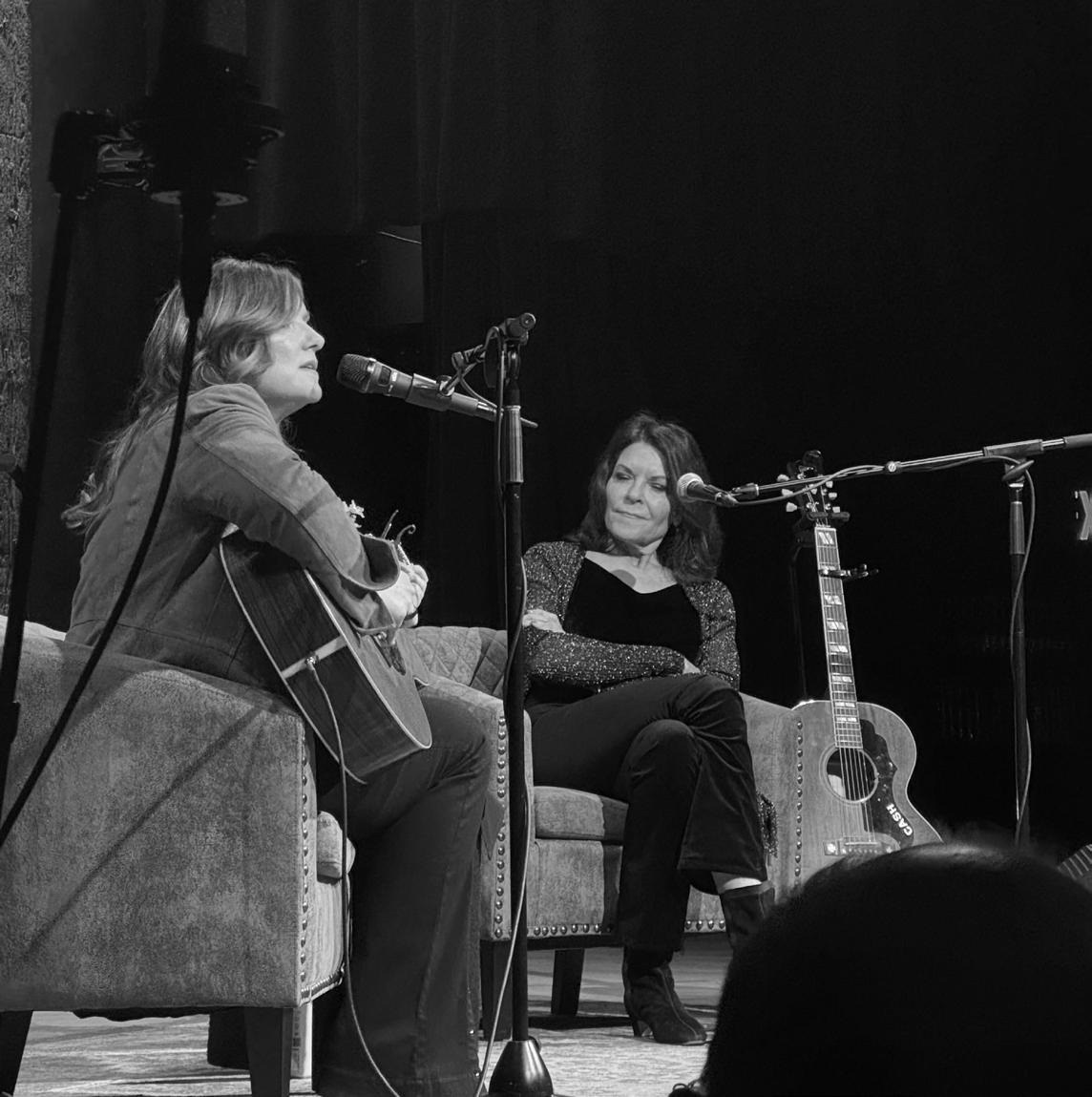
n April 9th, I attended something at City Winery that wasn’t quite a concert, but wasn’t a traditional talk either. It was a stop on Brandy Clark’s “Art of the Storyteller” tour, where she interviews various songwriters and alternates with them in acoustic performances, playing different songs from their respective catalogs. I was drawn to this particular date because the guest was Rosanne Cash, the daughter of Johnny Cash and a country music legend in her own right, who set herself apart from her father by incorporating rock stylings into her sound. Clark herself is hugely influential in Nashville, having written for artists like Kacey Musgraves and Sheryl Crow, and also releasing her own brand of country-rock with often dark and sardonic lyricism. Discussing grief, hope, and the intricacies of the songwriting process, Clark and Cash engaged in an intergenerational conversation on the importance of storytelling in country music.
Like any great American songwriters, Clark and Cash paid hefty tribute to their influences during this show. Clark remembered growing up outside of Nashville and being raised on artists like Loretta Lynn and Merle Haggard. This no doubt informed her songs on topics like heartbreak and crime, which often feel more introspective than traditional Nashville songwriting. She also noted humorously that she fell in love with Rosanne Cash’s music long before she knew who Johnny Cash was, and that to this day she thinks of Johnny Cash as Rosanne’s father, not the other way around. Cash countered with a humorous anecdote about recording the song “Tennessee FlatTop Box”—which she assumed was a public
domain tune—on 1984’s King’s Record Shop and later finding out her father had written it. Cash discussed her 2009 album The List, inspired by a list her father gave her when she turned 18 of 100 essential American songs (ranging from blues to folk protest songs to southern gospel). She then launched into her first live performance of the night, which she claimed would be on her personal list: Bob Dylan’s esoteric “Farewell Angelina.”
As Clark began her first song, she joked about singing such a “downer” so early on. She sang “Since You’ve Gone to Heaven,” a track about her father’s death in a logging accident which happened months before 9/11,hence the lyric “Since you’ve gone to heaven, the whole world’s gone to hell.”. Cash remarked that the song was “sad, but not a downer” since it was such a love letter to Clark’s father. It reminded Cash of her own tributes to her father, most notably her 2006 record Black Cadillac which was released in the wake of not just Johnny Cash’s death, but also the deaths of her mother Vivian Liberto and stepmother June Carter. From that album, she performed “The World Unseen,” a beautiful ballad that lifts lines from the Christmas carol “We Three Kings” to describe her spiritual search to connect to Johnny after his death (“Westward leading, still proceeding / to the world unseen”).
During the Q&A portion of the show, I asked Clark and Cash what goes into writing a great country song, and one of their answers was specificity, namely, focusing on particular things rather than general themes. Clark’s song “She Smoked in the House,” which she performed next, perfectly encapsulated this ideology—a rich and detailed tribute to the
singer-songwriter’s late grandmother. She claimed the song was like “Grandma stepped down with a cigarette and co-wrote it with me,” with specific references to Folgers cans, “Ford over Chevy,” and, of course, the song’s topic. Cash responded by singing and discussing her smash hit “Seven Year Ache,” a song that presents a portrait of a man attempting to cure his relationship dissatisfaction. While still detailed and specific, Cash claimed the song as more ambiguous in its storytelling, as it sets up a scene but does not necessarily resolve it. She also said, “I have a relationship with that song. It's a person to me now.”
The two songwriters spent significant time talking about how physical media and recording have shaped their careers and their understanding of great music. Cash recalled that when she first started recording, the process was incredibly tactile, and the learning curve for digital production and mixing was steep. She cited Bruce Springsteen’s Nebraska (famously recorded entirely on a fourtrack) as a prime example of the beauty of that old-school recording style. Clark worried about AI overtaking music production, but claimed that there will “always be a place for the real.” She discussed recording her new album with Shooter Jennings, producer and son of Waylon Jennings, who she recalled: “always thinks in vinyl.” According to Clark, Jennings talks about their upcoming record in terms of “side a” and “side b” and keeps a keen eye for album sequencing in a world now run by Spotify
playlists. Cash chimed in that it is a good sign that her younger fans keep asking her to sign their physical records at concerts.
Both Clark and Cash debuted songs that will (probably) be on their upcoming albums, each expressing fear and hope for the social and political climate of the United States. Cash played a song she co-wrote with The National’s Matt Berninger, who she praised heavily as a collaborator. The song was a bit difficult to decipher lyrically, but Cash described it as being about “the things you have to walk away from to become yourself.” I most vividly remember a lyric that seemed to refer to religiously motivated violence: “can’t believe what we’ve been doing to each other in the names of things we don’t read.” Clark’s song debut was more straightforward and based on her fears as a lesbian woman in the wake of the 2024 election. The track, titled “If I Get to Be an Old Woman,” contains the lyrics
“I hope the god that knows me / will say I did alright.” Noticing Cash’s strong reaction to the song, Clark asked if she could feature on the final version, to which Cash excitedly agreed. That kind of spontaneous collaborative energy defined the entire night, showing the uniqueness and power of Brandy Clark’s songwriting-focused tour.
Photograph courtesy of Ben Rothman
MEET A MEMBER
CCasey Lamb Interview
by Solène Millsap
asey Lamb graduated this May and served as the Station Manager from 2025-2026, the Business Manager from 2024-2025, as well as the regular host of Afternoon Classical and Bach Hour on Fridays. I sat with him to investigate his clear devotion and continued interest in the station.
Solène Millsap: How did you first get involved with WKCR, and what was your initial trajectory into the position you are now?
Casey Lamb: I kind of just showed up on campus and they were pretty aggressive at the club fair about recruiting. I didn't join the first semester, but in the spring, I joined because I was bored and liked music. I started hosting Afternoon Classical, and then I got more involved. I grew up in the city, so I kept programming over the summer, and then the next year, I became the Business Manager. I managed all the fund drives, and then, that spring, we had all the encampment news coverage. And then I ended up as the Station Manager.
SM: And what led you to programming specifically in the classical department, as opposed to something else?
CL: I grew up listening to a lot of classical music because I played the violin throughout my whole life. And there's just such a large record collection at ‘KCR of all these classical record, so it made sense, it sort of took off from there—there's just so much in the record section of the classical department.
SM: I think being in the role of Station Manager was a natural trajectory for you because of your clear devotion to the station and your level of involvement, but why do you think you were inclined to develop into leadership positions in this club, as opposed to something else? What is
it about this atmosphere that made you want to be more involved?
CL: Well, I think ‘KCR is like, it's a campus club, sure, but it's also a real radio station, and there are stakes, and it's a really valuable way to get involved and care about music as a student at Columbia. It's sort of like a part-time job or an internship that you don't get paid for, for four years. It's a very serious music community, a more serious opportunity to engage with radio and music than almost anywhere that you can get at the undergraduate level. And I think there's a lot of knowledge to be gained from all the different people who are at the station throughout the years; a great community of people who care about music, seriously.
SM: You mentioned people, that are perhaps separate from the undergraduate community, that have allowed you to engage with music on a deeper level. Do you have specific names of people that you feel like you've connected with, that are older than you, or are undergrads, or other, like, tertiary figures?
CL: Well, it kind of just feels like every alumni, even the recent ones, have their music related things going on in their life, like Matt Rivera has the Hot Club and works at the Armstrong Museum. And they're all just involved in New York City's music scene in their own unique ways. I've been lucky to host the show right before Cliff Preiss every Friday, and have gotten to know all the old guard, like Sid and Sharif, and they have this boundless knowledge of jazz. But there's also the recent alumni who are my close friends and involved in their own ways, still coming back for BachFest and all these other special programs. Just the engagement with the New York City music scene from Pioneer Works to Smoke to the Vanguard and all this different stuff we do throughout the city is incredible.
SM: And I think there's something to be said about the level of connectedness between individuals involved in ‘KCR, like everyone is deeply involved. What's your relationship to other students in the radio station?
CL: I feel like I always hear these old-school stories about how ‘KCR used to be 24/7 and everyone would just kind of sit around in the station all day. And there's a way in which it's different now, because we have pre-recorded shows. We're sort of in the modern era, not the ‘80s anymore. But also there's a way in which it's very much the same. And it kind of just feels like the people here end up hanging out and spending a lot of time putting work into the station together. So it's a close community. Because of that, I would say people just spend time working on their own individual station projects, but all in close proximity.
SM: I feel like your closest friendships are through this connectedness or a shared love of the station, and there's something beautiful about that.
CL: I think that's true. It's just like a good way to get a bunch of like-minded people into working on a major project that they all care about. And then, you know, naturally, people end up becoming friends as a result of that, because of shared interests and values and all these sorts of things.
SM: Do you have a particular instance or memory of people from the station, or a time where you felt like it was, like, very reflective of what the station is about?
CL: I mean, BachFest is always a lot of fun. It's kind of empty, but you'll run into, like, alumni and recent alumni, and there's these massive piles of Bach records in the station. It's unique, because a lot of the people have gone home, and it's kind of just the people who are in the city over break or grew up in the city, and it's interesting to see how that sort of internal ‘KCR festival functions without hardly any of the people who are normally around there. But also, you know, we have our year long festivals—Ragas Live is always a super big one that takes a lot of work, which happens in the fall semester. And then there's always plenty of these marathon broadcasts that you run into people at. I think just being around the station for these different special broadcasts and even just regular
shows…fundraising is always a big time, because we have basically everyone hanging out in the station to answer your calls and whatnot.
SM: Yeah, I feel like Ragas Live is a good example where it's one day, 24 straight hours. So many students this year went and spent the night at Pioneer Works. It was, it seemed like, just such a beautiful time of connection that wouldn't have occurred otherwise. There's this shared desire to commit and complete this project together.
CL: Definitely. I think, you know, that was a lot the case with the news coverage a couple years back where we did two straight weeks of running a breaking-news room out of our tiny station, which was sort of unprecedented, because we had a sparse news department prior to that, but after, had much more dedication to news. All the most involved people in the station were spending 24/7 on news all together in the same room. So that was exciting, but also intense.
SM: Do you have something conclusive you want to share to the listeners, or, like, potential future generations that might be reading this? A word of wisdom? Anything you want to say, a musing?
CL: It’s important to keep ‘KCR’s weird uniqueness as a New York City, micro institution. We play these old records that are in most places, obsolete, and are sort of historical documents. In most cases, we play stuff that's very historically important from a musical perspective, but from a popular perspective, we neglect almost all of that. So I would just, you know, remember to focus on the history and the analog and just the strangeness of ‘KCR being able to exist in this year of 2026 when it kind of seems like a place like this shouldn't even really be relevant anymore, but still has this wonderfully strong community of listeners and DJs and hosts and engineers still going strong.
SM: That's really good. Thank you.
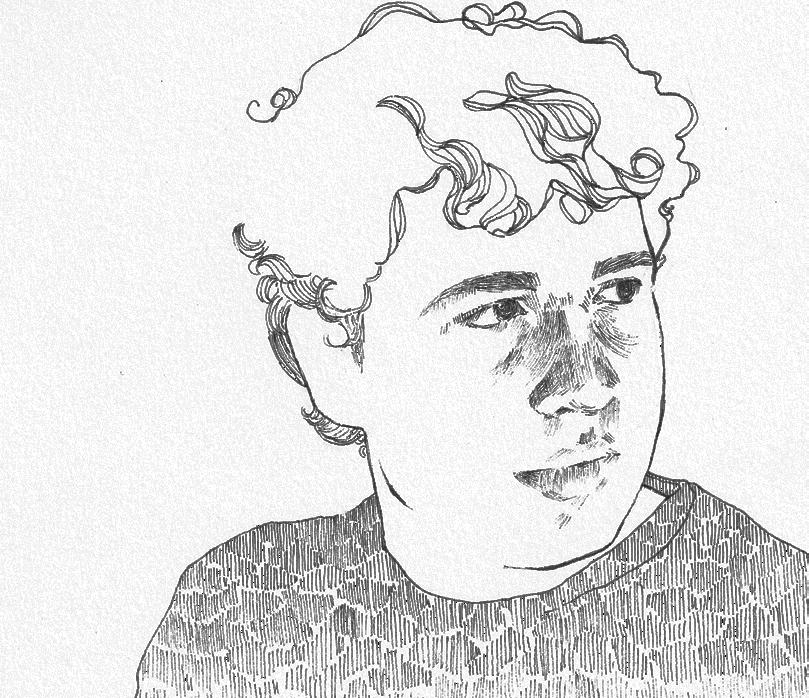
Illustration by Micky Garb
NEWS & ARTS
Westsider Records and the Tipster Who Knows it All
by Jack Serpick
The whole block was Upper-West-Sidey. Take the Upper-West-Sidey bagel I got across the street. Kossar’s Bagels & Bialys—whose original location was, admittedly, on the Lower East Side—did me well: lox, cream cheese, tomato, and capers on an everything bagel, crispy on the outside, soft on the inside, and with delightful interior proportions. Tomato could be fresher. 8.2/10.
After the bagel, I made my way across the Upper-West-Sidey street and into the Upper-West-Sidey record store, aptly named Westsider Records at 233 W 72nd St. I was immediately aware that the building was an old one with its cozy, vintage vibe well-preserved. Originally built in 1899, it was first intended to be a café. Then the building became a button store, then a doctor’s office, and finally a good old-fashioned record store. The shop’s café roots permeate its air, which smells like coffee even still.
While Westsider Records moved into this building in 1997, it first opened 25 years and four locations earlier, back in 1972, primarily as a bookstore with only a few bins of classic jazz. Back then, the shop was called Barqu Books and their jazz was not yet classic jazz, but just jazz.
In 1976, they moved up from 71st to 89th St., just east of Broadway, and changed their name to Gryphon Books. Around the same time, they bought the entire stock of a classical record store in Greenwich Village called Lunus Tonalis that was closing. Westsider (then Gryphon) opened a partner record store around the corner on Amsterdam. The pair of stores moved one more time in 1984 to Broadway between 80th and 81st St., before
coming to the 127-year-old building at 233 W 72nd St.
Today, the store is an expansive one that I could spend hours in. There seemed to be three distinct sections: the front held mostly books, CDs, merchandise, and a small collection of new arrivals; the middle section held mostly classical, jazz, blues, soul, and soundtracks; the back held the country, folk, world, and classic rock selections.
I decided to head for the back first and work my way up. A group of three men in their late 20s with graphic tees and slightly oversized jeans flooded the small walkway as I passed the front desk and walked through the middle section.
In the back corner, there’s a sizable world section of several shelves (this was primarily a shelf store, not a crate one). Venturing into the folk section, I snagged a Joan Baez compilation, before making my way through the middle and front parts of the store. By the end of my browsing, I had the Baez compilation and two CDs: Seal’s 1994 eponymous album and Aretha Franklin’s What You See Is What You Sweat.
The classical selection is pretty easily the most expansive, with jazz, mostly classic jazz, coming in second. Notably, the shop lacked contemporary and experimental music—a far cry from many of the Brooklyn and Lower Manhattan shops which are run by a much younger crowd. This is no poser record store. No, this is a pure and old-school shop. The manager I spoke to at the front desk had an attitude that reflected Westsider Records almost perfectly. Bruce Eder, originally a customer of the store when it opened
in 1972, truly seems like the shop personified: he’s a 70-year-old ex-journalist and Queens College alum with an extremely warm presence and soft voice that tells incredible stories.
When I asked about the lack of contemporary or experimental collections, he explained the way he thinks about media today—a weird and sorta depressing one, which he constantly refers to as a “fact of life.” He sighed and said, “I'm 70. Nothing that I hear at my age, from Taylor Swift to anybody else today, is going to have the impact on me that the Beatles had when I was 13. It's just a fact of life.”
He continues, “I don't resonate easily with current movies either. I noticed that in the 1990s. If I were to resonate in a serious way to a current hit film or a movie that was just about to open, the producers of that picture would probably go into a complete panic! If I, at 70, am resonating with it, they would have to think, ‘Oh, Jesus Christ, we must have made a mistake.’ There's no way that a guy who's 70 is gonna resonate with the same movie as the 20-to-40 age range that they’re aiming for. It's just a fact of life.”
The vintage feel of the shop reflects this philosophy, a philosophy, not dissimilar in effect to WKCR’s, that enables preservation of quintessential music and methods. Eder told me that Westsider Records sold strictly classical and jazz until 2002 and, when it comes to CDs, was purposefully late to the game, only beginning to sell them in 2004.
Eder himself has been a customer since before the current owners had even heard of Westsider Records. His connection runs deep and the shop’s current location can even be attributed to him. Eder says, “Strangely enough, I was not even working for the record store at the time. I was walking over here at the very moment that the owners of this building put a ‘For Rent’ sign in the window. I get to the record store, and I hear that the owner is gonna be moving the store and he isn't sure where yet. So I told him, ‘Hey, a place just went up
for rent 200 feet east of where you are, on the same side of the street. What more could you ask for?’ I had nothing to do with any negotiations or discussions, but within three months, they had moved here to this space.”
I got the sense that Eder, manager since 2012, was at home in the shop, behind the desk. He belongs there, no doubt about it, where he can listen to the music he loves and talk to customers, not only about music or the shop, but about anything. He told me, “We get people coming in here asking questions all day long about things that have nothing to do with music, theater, film, or dance. I sometimes feel like the tipster, if you ever saw Police Squad!, the shoe shine guy. Frank Drebin goes to get his shoes shined and he's whispering questions to the guy, like, ‘Where can I find…,’ ‘Where does he hang out?’ You know, I feel like that.”
He continues, “We have one customer in particular who is a pianist, plays in a lot of clubs even today. He comes in looking for unusual sheet music all the time, popular stuff going back even 100 years, and he says he can never, ever predict what he's gonna hear on the PA system when he comes in here. My interest in music crosses at least nine centuries. The strange thing is, I only ever took six credits of music at Queen's College. I was an English major.”
The man is delightfully chatty and he has played a huge role in the shop’s long-term success. Presumably, he’s done so since its original opening; Eder makes customers want to come back. I know I’ll definitely be back—if not for a record, then for another chat with the ol’ tipster. It’s just a fact of life.
Jack Serpick loves to program Daybreak Express from 5 AM to 8:30 AM.
am
am
Sin Fronteras
Jazz Alternatives
Nueva Canción
Som do
Special Broadcasts
SPECIAL BROADCASTS
Anthony Braxton Birthday Broadcast
Thursday, June 4, All Day
WKCR starts off the summer with 24 hours dedicated to the 81st birthday of American composer and saxophonist Anthony Braxton (born 1945). A musician whose practices are deeply rooted in jazz, classical, and new music, Braxton—a MacArthur Fellow and NEA Jazz Master—has a style which transcends modern conceptions of genre. Braxton’s entire discography, including as a composer, bandleader, and sideman, totals over a staggering 400. Join us on June 4 as we celebrate Braxton’s incredible career and legacy.
Ergot Records Takeover
Saturday, June 6, 12:00 - 4PM
In collaboration with New York Music Month, an initiative by the Mayor’s Office of Media and Entertainment, we take over Ergot Records on E. 2nd St. for four hours on June 6. Featuring performances by Isadora Evers (director, New Music Department), Thomas Preston (host, Groove Trackers & Lit Hum Radio Hour), Ayanna Heaven (host, Across 110th Street) and Adrian Rew (owner, Ergot Records), the event is part of the “Radio City” series. More information can be found at: https://nymusicmonth.nyc/ performances/2026/wkcr-live-ergot-records/
João Gilberto Birthday Broadcast
Wednesday, June 10, All Day
In our second 24-hour birthday broadcast of the month, we are thrilled to honor Brazilian guitarist and singer João Gilberto (1931-2019). Nicknamed the “Father of Bossa Nova,” Gilberto helped to bring Latin jazz to the global stage and won Grammys in the “Album of the Year,” “Best Jazz Instrumental Album,” and “Best World Music Album” categories. Already a regular voice of WKCR programs such as Som Do Brazil, tune in to hear classics by Gilberto such as “Corcovado” and “The Girl from Ipanema” all day.
Erroll Garner Birthday Broadcast
Monday, June 15, 12:00-3:00PM & 6:009:00PM
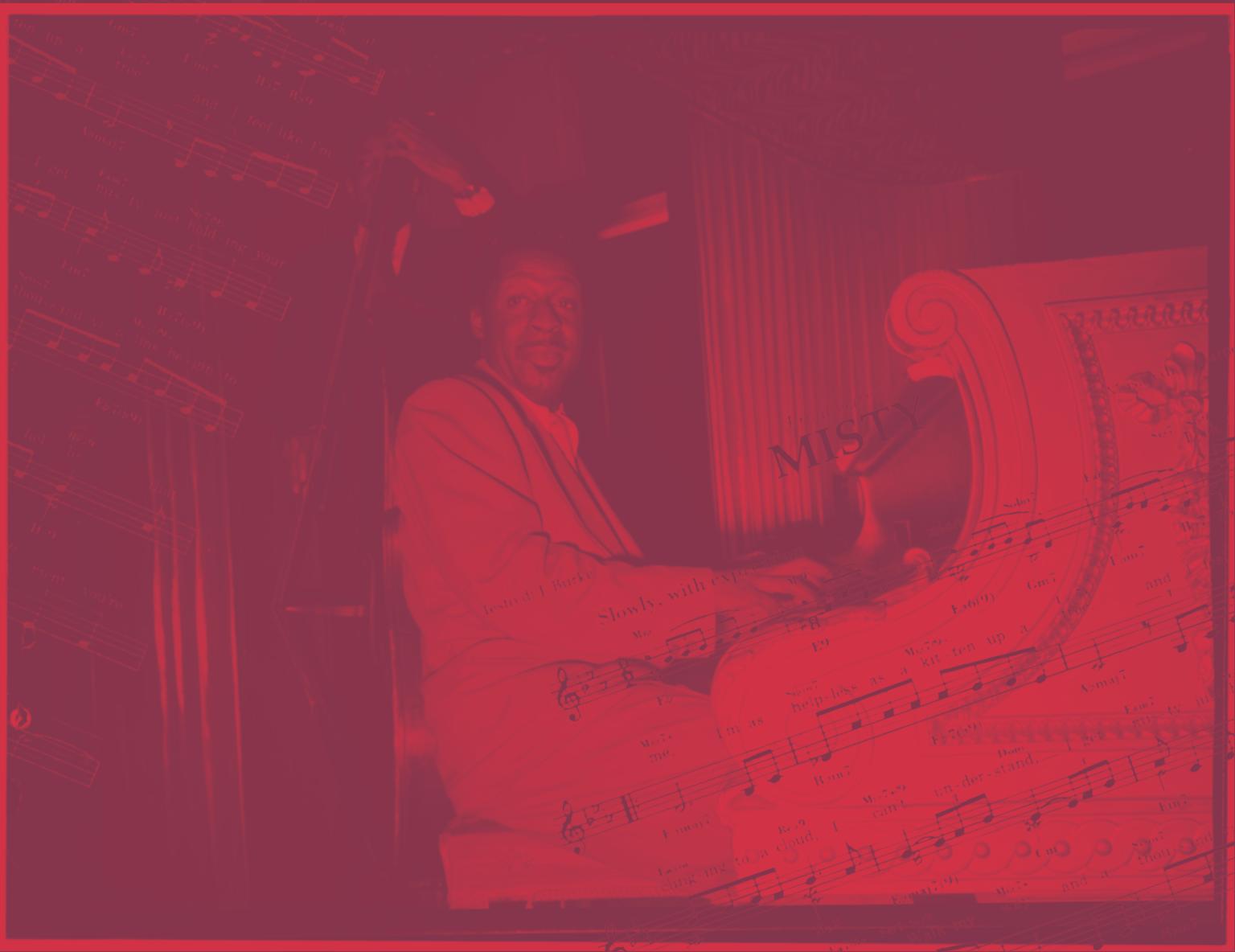
For six hours on June 15, join us as we celebrate the music of jazz icon Erroll Garner (1921-1977). Known for his uncompromisingly personal style of performance, he is best known for his monumental composition “Misty,” today a standard of the repertoire. Throughout programs Out to Lunch and Jazz Alternatives, tune in to hear the sweet sounds of Garner at the keys.
THEMED SHOWS
SATURDAY NIGHT AT THE OPERA
Saturdays 9:00 PM - 12:30 AM
SUNDAY PROFILES
Sundays 2:00-7:00 PM
Prince
June 7
Host: TBD
WKCR honors the birthday of the late Prince of Funk.
TBD
June 14
Host: WKCR's Executive Board
TBD
June 21
Host: Sid Gribetz
WKCR’s iconic Sunday Profile host, Sid Gribetz, returns with a five-hour broadcast diving into the life and work of a jazz great.
TBD
June 28
Host: TBD
Show Listings
JAZZ
Daybreak Express, Mon.-Fri. 5-8:20am
Out to Lunch, Mon./Tues./Thurs./Fri. 12-3pm
Jazz Alternatives, Mon.-Fri. 6-9pm
The core of our jazz offerings, these three programs span the entire range of recorded jazz: everything from New Orleans jazz, jazz age, swing era, bebop, hardbop, modal, free, and avant-garde. Hosts rotate daily, offering an exciting variety of approaches, some of which include thematic presentation, artist interviews, or artist profiles. On the first Wednesday of every month, Jazz Alternatives becomes “The Musician’s Show” and is hosted by a professional working musician.
Birdflight, Tues.-Thurs. 8:20-9:30am
Archival programs from the late Phil Schaap, one of the world’s leading jazz historians, producers, and an NEA Jazz Master, who hosted this daily forum on the music of Charlie Parker for about 40 years.
Now's The Time*, Fri. 8:20-9:30am
The newest show from WKCR Jazz is dedicated to jazz as a living art form and features the music of young, upand-coming musicians pushing the genre forward.
Traditions in Swing, Sat. 6-9pm
Archival programs from the late Phil Schaap. This awardwinning Saturday night staple presents focused thematic programs on jazz until World War II. Schaap presents the music, much of it incredibly rare, from the best sound source—often the original 78 issue.
Phil Lives*, Mon. 3-5am
Selections of archival programs from late Phil Schaap. This show features interviews, tributes, and portions of longform programs.
Jazz ‘til Dawn, Sun. 4-6 AM
An early Sunday morning jazz program, limitless in era and style.
CLASSICAL
Cereal Music, Mon.-Thurs. 9:30am-12pm
An entirely open-ended classical show to start your weekdays.
The Early Music Show, Fri. 9:30am-12pm
Dedicated primarily to European medieval, Renaissance, and baroque music before c. 1800.
Extended Technique*, Wed. & Thurs. 3-6pm
WKCR’s first interdepartmental show (in the New Music and Classical departments) dedicated to contemporary classical music. Under the direction of the New Music and Classical departments, this program is dedicated to experimental classical music.
Afternoon Classical, Fri. 3-6pm.
Two hours of unrestricted classical music selections followed by one hour dedicated entirely to the music of J.S. Bach.
Saturday Night at the Opera, Sat. 9pm-12:30am.
One of NYC’s longest running opera shows, Saturday Night at the Opera features one opera in its entirety, with time for history and commentary, each week.
NEW MUSIC
Afternoon New Music, Mon. & Tues. 3-6pm
Our daytime new music program features a wide variety of music that challenges boundaries and subverts categorizations. Shows include everything from seminal new music compositions to the most challenging of obscure deep cuts and new releases.
Transfigured Night, Tues./Thurs. 1-5am and Sat. 2-6am
Our overnight explorations into the world of new music, Transfigured Night rewards our late night listeners with a wide range of sounds and experimental music.
Workaround*, Fri. 9-10pm
WKCR presents live sets from local professional and student DJs.
Live Constructions, Sun. 10-11pm
This weekly program features a live in-studio performance or a previous performance recorded at WKCR.
* Indicates show was created after January 2022
LISTINGS FOR LISTENERS
Honky Tonkin’, Tues. 10-11pm
One of WKCR’s longest-running American music programs, Honky Tonkin’ focuses on country music from the 1930s through the 1950s.
Tuesday’s Just as Bad, Tues. 11:30pm - Wed. 1am
For the first hour, Tuesday’s Just as Bad explores the world of blues prior to World War II. In the final half hour, hosts turn to the post-war years.
Night Train, Wed. 1-5am
All aboard! One of two overnight programs in the American Department, Night Train rolls through the post-war R&B and soul tradition, from the genre’s emergence in the 1940s and ‘50s through the funk revolution in the ‘70s. Shows often feature extended live recordings and concerts.
Offbeat, Fri. 1-5am
Offbeat exposes undiscovered, underplayed, or up-andcoming new hip hop artists, including experimental instrumental artists not typically played on mainstream hip hop radio.
Across 110th Street, Sat. 12-2pm
Across 110th Street airs soul, funk, and dance music from the 1960s through the ‘80s and ‘90s.
Something Inside of Me, Sat. 2-4pm
WKCR’s Saturday afternoon blues show, Something Inside of Me focuses on electric and post-war styles.
Hobo’s Lullaby, Sat. 4-6pm
Rooted in the folk revival of the 1950s and ‘60s, Hobo’s Lullaby airs American folk and traditional music styles from the early 20th century through the present day. Shows feature old staples like Leadbelly, Elizabeth Cotton, and Woody Guthrie through contemporary stalwarts like the Carolina Chocolate Drops.
Notes from the Underground, Sun. 12:30-2am
Notes from the Underground showcases contemporary hip hop and rap music with an emphasis on emerging and experimental artists. The program also hosts local and visiting artists for interviews, freestyles, and guest curation.
Amazing Grace, Sun. 8-10am
Greeting listeners on Sunday morning, Amazing Grace shares the African-American gospel tradition.
The Moonshine Show, Sun. 10am-12pm
On the air for nearly 60 years, The Moonshine Show showcases the American Bluegrass tradition, from the earliest roots in vernacular string-band music, the genre’s pioneers in the 1940s and 50s and advancements in the 60s and 70s, through the leading innovators of today.
The Tennessee Border Show, Sun. 12-2pm
The Tennessee Border Show highlights the singersongwriter tradition, from Hank Williams and Townes Van Zandt to Lucinda Williams.
LATIN
Caribe Latino, Mon. 10pm-12am
Caribe Latino features the diverse, upbeat music from Latin communities in the Caribbean. Popular Latin rhythms such as Salsa, Merengue, Bachata and Latin Jazz take center stage throughout the program.
Urbano Latinx, Tues. 12-1am
From salsa and merengue to Latin punk rock, Urbano Latinx airs contemporary sounds from Latin America, the Caribbean, and the diaspora.
Sin Fronteras*, Wed. 12-3pm
Occupying the time slot of Out to Lunch on Wednesday afternoons, Sin Fronteras explores the tremendous and growing tradition of Latin Jazz.
Nueva Canción, Wed. 10-11pm
Nueva Canción explores protest music created throughout Latin America during the 1960s and ‘70s, on its own and in the context of protest music from other countries and during time periods.
Som do Brasil, Wed. 11pm - Thurs. 1am
From samba and bossa nova to MPB, Som do Brazil features the enchanting sounds and rhythms of Brazil.
Sonidos Colombianos, Fri. 10-11pm
Sonidos Colombianos presents music from Colombia. The bilingual musical tour includes not only cumbia, but also the guitar-based bambuco from the Andean region, the harp llanero music from the Eastern Plains, the marimba-infused currulao from the Pacific Region, and the accordion-driven vallenato of the North Atlantic Coast.
* indicates show was created after January 2022
LISTINGS FOR LISTENERS
The Mambo Machine, Fri. 11pm - Sat. 2am
The Mambo Machine is the longest running salsa show in New York City. The program plays a wide spectrum of Afro-Latin rhythms perfect for dancing.
El Sonido de la Calle*, Sun. 2-4am
The Latin companion to Sunday morning’s Notes from Underground, El Sonido de la Calle highlights the diverse world of contemporary Spanish-language hip hop and dance music.
IN ALL LANGUAGES
The Celtic Show, Mon. 12-1am
Music from across the island of Ireland throughout the era of recorded music, particularly focusing on traditional folk and vernacular music forms.
Coordinated Universal Time, Mon. 1-3am
Coordinated Universal Time brings listeners the latest cut of music from across the globe, especially highlighting music that does not get attention in America.
The African Show, Thurs. 10pm-12am
The longest running African music radio show in the United States, The African Show brings listeners a variety of music from the entire continent of Africwa.
Middle Eastern Influences, Fri. 12-1am
Middle Eastern Influences features selections from the Middle East and North Africa, with particular attention on traditional forms.
Sounds of Asia and Couleurs Antillaises, Sat. 6-8am
Previously Sounds of China, Sounds of Asia explores the recorded musical traditions and innovations of Asia and the Pacific Islands. Couleurs Antillaises features music from Haiti and the French-speaking Carribean. These shows alternate in the Saturday morning timeslot so each airs every two weeks.
Eastern Standard Time, Sat. 8am-12pm
One of New York’s most popular Reggae programs, Eastern Standard Time captures listeners with the hypnotic sounds of Reggae and Jamaican dance music.
Field Trip, Sun. 6-8am
Field Trip focuses on the music and practice of field recordings: music recorded outside of a studio. This definition is expansive and includes everything from released recordings to street music documented by WKCR.
Raag Aur Taal, Sun. 7-9pm
Raag Aur Taal (which means “melody and rhythm”) explores the classical musical heritage of South Asia.
Back in the USSR, Sun. 11pm-12am
Back in the USSR features music from Eastern Europe, East Asia, and Central Asia, from the mid-20th century through the present.
NEWS & ARTS
Monday Morningside*, Mon. 8:30-9:30am
WKCR’s morning news broadcast, Monday Morningside features segments on events around Morningside Heights and upper Manhattan. All episodes are available as podcasts on Spotify.
News and Arts Program, Sun.-Thurs. 9-10pm
These programs form the core of our News and Arts programming. On Sundays, “Soundstage” features a live reading of a play; on Mondays, “Late City” offers retrospective coverage on local cultural happenings; on Thursdays, “Playlist Profiles” characterize a person through music. As news is constantly evolving, note that these programs are subject to change and preemption.
SPECIAL BROADCASTS
Sunday Profile, Sun. 2-7pm*
This five-hour program dedicated to a longform, researched profiles of a pioneering artist, label, or musical movement. Originally known as “Jazz Profiles,” this show has expanded its scope; today, it may feature any of the musical traditions represented by WKCR’s programs.
* indicates show was created after January 2022
by CJ Gamble NEWS & ARTS
TThe Inaugural Kickball Showdown: WKCR vs. The Blue & White
he inaugural WKCR vs. The Blue and White kickball game began the way most Columbia traditions do: slightly disorganized, a bit delayed, and somehow already deeply competitive before the first pitch had even been thrown. Heavy rain the night before had left the softball diamond originally reserved for the matchup completely unusable, the infield swallowed by puddles and slick mud. By noon, I was pacing out baselines on the uneven, grassy field beside the diamond, using backpacks, water bottles, and vague estimates of distance to assemble a playable field before the teams arrived.
Fortunately, the weather seemed intent on making amends. Less than twenty-four hours after the downpour threatened to derail the event altogether, the afternoon arrived with clear skies, warmer temperatures, and the sort of sunshine that made even an improvised kickball field in Morningside Park feel official. What began as a contingency plan quickly took on the atmosphere of a neighborhood spectacle. Several bystanders with no apparent affiliation to either publication stopped to spectate, including one particularly enthusiastic observer dressed entirely in red—a hidden WKCR supporter, perhaps.
When the game finally commenced, any illusion that this would be a friendly exhibition disappeared almost immediately. Led by team captains Chris Brown CC ’26 for The Blue and White and myself, CJ Gamble BC ’27 for WKCR, both sides approached the contest with a level of seriousness that far exceeded what the sport of kickball reasonably demands. WKCR jumped out to an early lead through a combination of aggressive baserunning and timely kicking,
while The Blue and White took the field with a lineup formed for a Sunday afternoon in the park.
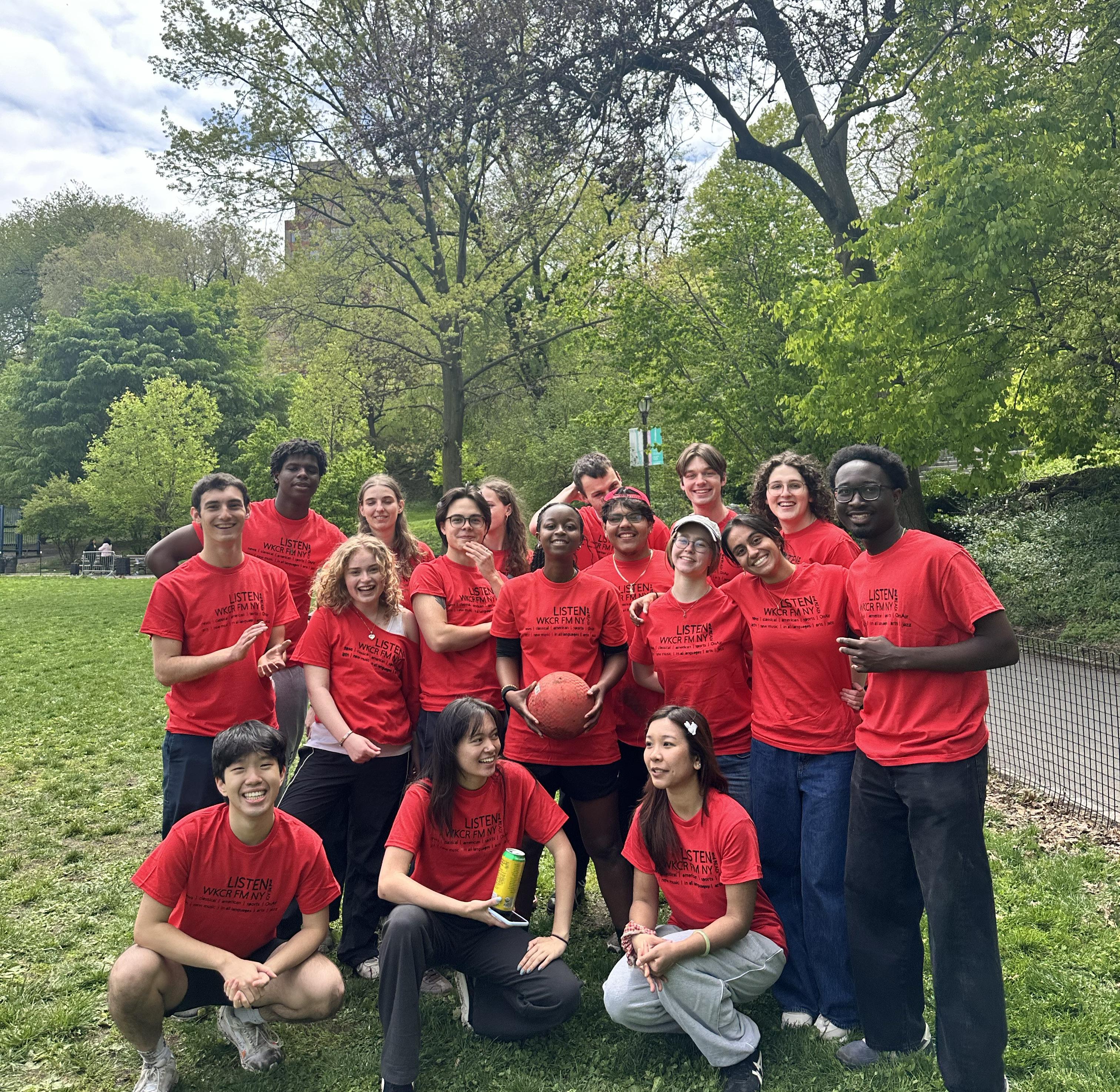
WKCR arrived in matching red-and-black shirts with “89.9” printed across the back, giving the entire team an air of coordination that was not always reflected in its on-field execution. The Blue and White, meanwhile, countered with a more eclectic aesthetic and an equally determined commitment to victory. On the WKCR sideline, Armando Gimenez CC ’26 emerged as a driving sideline presence, leading chants between plays, amplifying reactions to every close call, and engaging in a steady stream of light sideline commentary directed at both teammates and opponents alike.
No sporting event is complete without commentary, and this matchup was no exception. Rachel Smith CC ’26 and Emma Lacy CC ’27 spent the afternoon stationed along the sidelines, narrating the action into a Zoom recorder, giving shape to an otherwise improvised field. Their narration elevated routine moments into something closer to spectacle, lending structure to an afternoon that often seemed to expand and contract beyond its own boundaries.
Among the game's standout performers was Mason Lau CC '27, whose stellar play at shortstop anchored WKCR's defense throughout the afternoon. Throughout the afternoon, Lau seemed to appear wherever the ball happened to be headed, turning potential base hits into outs and providing WKCR with much-needed defensive stability. If anyone on the field looked prepared for a championshipcaliber kickball game, it was probably Lau.
On the Blue and White side, Chris Brown CC ’26 held things down on the mound for most of the afternoon, going seven innings and allowing just two runs. At the plate, his day was less clean, finishing 1-for-5 with three flyouts. Defensively, Brown also played a key role in one of the sharpest moments of the game, helping initiate a triple play after a tricky fly ball was tracked down in the infield and quickly relayed to cut the play off before WKCR could recover. WKCR’s offense also ran into trouble earlier in the day when Rocky Rüb CC ’26 sent multiple deep kicks into the outfield, forcing fielders into constant retreat and briefly pushing WKCR onto its heels.
Things got loud again in the bottom of the seventh when Ted Schmiedeler CC ’26, former WKCR station manager, sent a ball deep into center field. The play broke open a bit after the ball was cut off and briefly mishandled, giving Schmiedeler just enough space to keep circling the bases. The defining play of the afternoon came moments later during one of WKCR's offensive pushes. By the time Brown’s throw reached Evan Rossi CC ‘26 at catcher, Schmiedeler was already sliding into home. It was clear as day: he had beaten the tag, adding yet another tally to WKCR’s already growing lead. What followed was an immediate flurry of competing opinions, made all the more animated by the absence of an umpire to impose anything resembling final authority. Players from both sides crowded around the plate, each offering increasingly confident— and increasingly contradictory— accounts of what had just occurred. With no official voice to settle the matter and no practical way to rewind the moment, the dispute eventually collapsed into a rockpaper-scissors matchup between Schmiedeler and Brown, which ended with Schmiedeler’s scissors cutting cleanly through Brown’s
paper and only confirming what was already evident from the play itself: Schmiedeler was safe, and it was a run for WKCR.
Natalie Buttner BC ‘27, a member of The Blue and White and former programmer at WKCR, perhaps captured the spirit of the afternoon best. Setting aside the imaginary scoreboard and incredibly creative interpretations of the rules of kickball, Buttner reflected on the occasion’s broader significance: “Let’s never forget who the real enemy is–today was a win for semi-independent student journalism.”
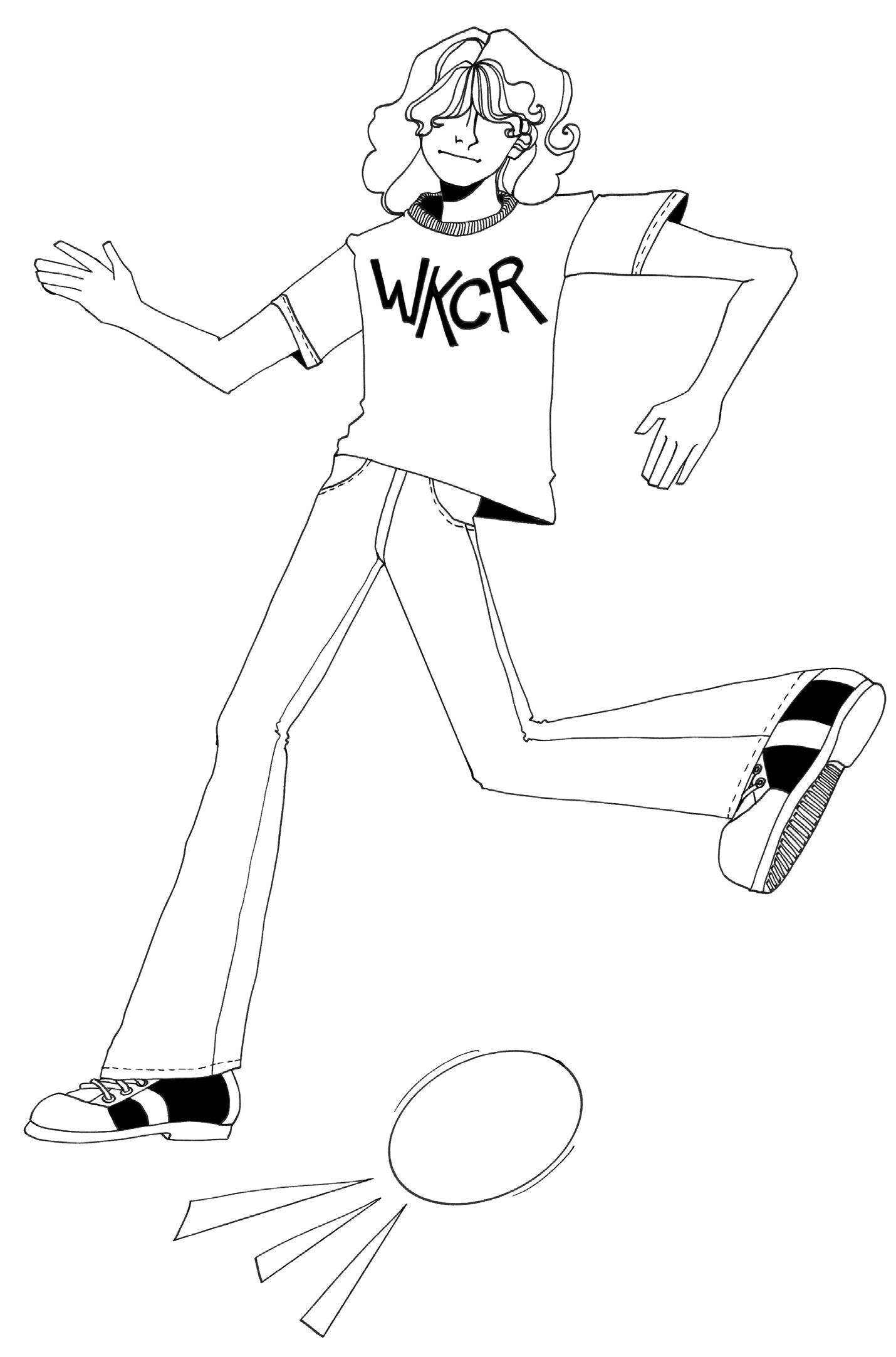
Illustration by Mickey Garb
If the inaugural matchup proved anything, it was that Columbia's student publications are capable of fierce competition when necessary and cheerful cooperation when it counts. The afternoon's friendly atmosphere was helped by the fact that the divide between the two teams was never especially rigid. Friends lined up on opposite baselines, former (and current) WKCR programmers played for The Blue and White, and many participants shared connections that extended well beyond either publication. Under the bright sun in Morningside Park, the rivalry felt less like a contest between competing organizations than a celebration of the student media community they collectively sustain.
Photograph courtesy of CJ Gamble
SUPPORT WKCR
TOP 5 REASONS TO DONATE TO WKCR
1. You’d be helping a student-run, listener-funded, and volunteer-based radio station continue to bring you the absolute best in what radio has to offer. Music, arts, news, and sports— we’ve got the works!
2. You wouldn’t be a free-rider anymore.
3. WKCR donations are tax-deductible (so make sure you donate before tax season). For more info on that, or anything else business-related, email business@wkcr.org
4. Being “the Original FM,” our equipment is getting a bit old. Thanks to your donations, we were able to retire Buzz, the hamster that ran the wheel powering us. But our new hamster, Roach, needs to start saving for retirement... can you blame him?
5. Isn’t On Air cool? Without proper funding, projects like this can’t come to fruition and, if they do, don’t make it very long. Donate to allow the little On Air minions to stay in the job.
HOW TO DONATE TO WKCR IN 4 STEPS
BY MAIL
Step 1: Locate your nearest checkbook
Step 2: Indicate “WKCR” as payee and fill out as usual
Step 3: Mail check to CU Gift Systems, 622 West 113th Street, MC 4524, New York, NY 10025
Step 4: ...and VOILÀ! Just like that, you have become a WKCR supporter!
ONLINE
Step 1: head to www.wkcr.org
Step 2: Click the yellow “DONATE TO WKCR” banner at the top of the page
Step 3: Fill out the form in the giving portal and enter your information...
Step 4: ...and VOILÀ! Just like that, you have become a WKCR supporter!
WKCR also accepts checks to our direct address. Just follow the same steps listed above but mail the check to: 2920 Broadway, New York, NY 10027
Did you know you can make recurring donations to WKCR when you donate online?
Just indicate your frequency preferences on the giving portal when prompted!