Student Life Director CJ Gamble studentlife@wkcr.org
Publicity Director June Frankel publicity@wkcr.org
Business Manager Sara Carson business@wkcr.org
Department Directors
Jazz Emma Lacy & Stella Manyan jazz@wkcr.org
New Music
Isadora Evers newmusic@wkcr.org
Classical
Isabel Norman classical@wkcr.org
American
Ben Rothman & Landon Pottebaum american@wkcr.org
In All Languages
Ethan Thacker ial@wkcr.org
Latin Merielen Espino latin@wkcr.org
News & Arts
Natalie Lahr news@wkcr.org
Sports Mason Lau sports@wkcr.org
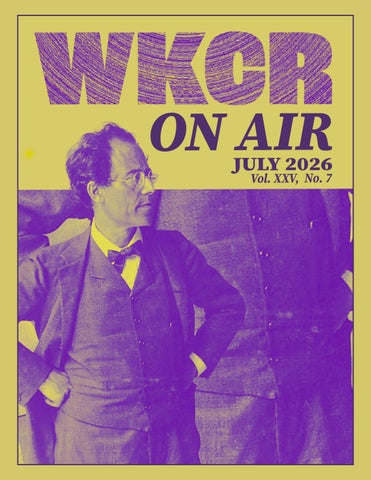
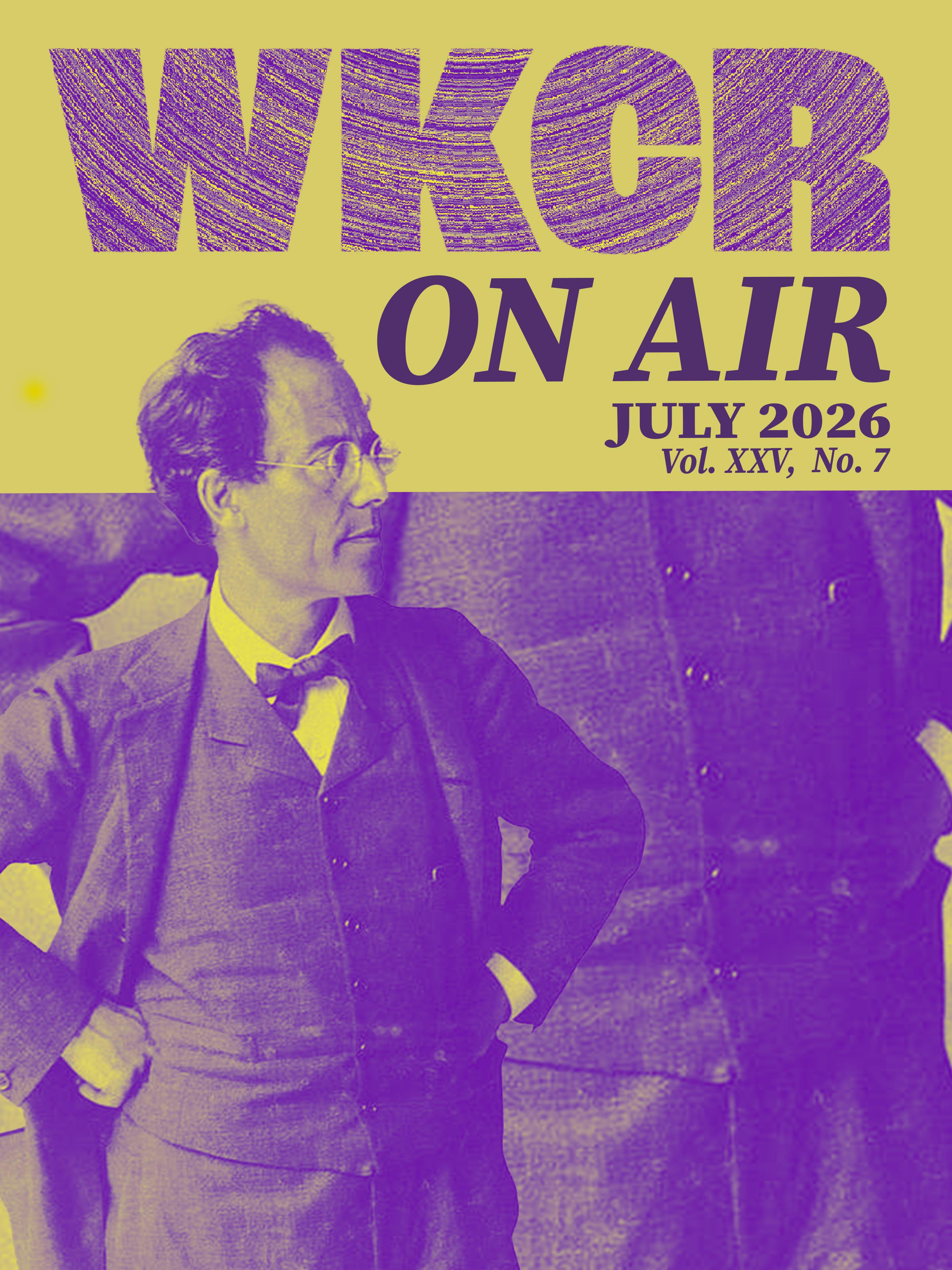
Dear Listeners, July has begun, and this month of programming is very, very exciting. We have birthday broadcasts representing nearly every department – Hariprasad Chaurasia, Louis Armstrong, Gustav Mahler, Manfred Eicher, and Albert Ayler, all in the first two weeks of July. Tuesday morning, Cereal Music listeners know I am rather fond of Mahler, so be sure to tune in on July 7 if you’d like to hear Charlie and me play his nine-and-a-half symphonies in succession.
This month’s OnAir guide is packed full of reflective experience documentations: read Charlie’s thoughts on Daft Punk’s new film, Cyril and June’s synthesis of a sound installation at the Cooper Hewitt, and Hadassah’s review of Close Up’s second anniversary. The On Air team consistently works to facilitate this compilation of writing and music, as well as design and edit this publication. Many thanks to Olivia Callanan, Ella Werstler, and the rest of the team, who continue to work through the summer months to make this publication accessible to listeners like you, dear reader. Keeping the station running is a tedious delight, and one that requires a collective commitment, so keep that in mind as you tune in to this month’s programming. We appreciate you all dearly.
Stay Cool, Solène
NEW MUSIC
Eloctroma at Tribeca
by Charlie Kusiel King
Last July, I had the pleasure of writing an article for WKCR’s On Air Guide on the 20th anniversary of Daft Punk’s Human After All, the French electronic duo’s third studio album and a personal favorite. By the time of its release in 2005, Daft Punk’s masked persona had been fully realized, emphasizing intrigue among fans while promoting a devout sense of anonymity in the face of their increasingly popular music. This persona, of two robots born from a fictional studio accident in 1999, was explored meaningfully in Human After All, a record deeply at odds with its dance-focused predecessors: gritty and selfconscious, it explored human relationships with the quickly-evolving technologies of the early 21st century.
The following year, Daft Punk—Thomas Bangalter and Guy-Manuel de Homem-Christo—traveled to Inyo County in western California in pursuit of a music video for the album’s titular track. After several days spent filming, it was clear that they had found themselves in the throes of a production destined to be larger than anticipated, and Human After All became Daft Punk’s Electroma, the duo’s third film. Electroma was Bangalter and de Homem-Christo’s feature directorial debut, with Bangalter also acting as cinematographer. The film follows the robots of Daft Punk, portrayed by Peter Hurteau and Michael Reich, on a fruitless quest through the desert to become human. Unlike their previous films, it features no original music, instead using works by musicians including Todd Rundgren, Brian Eno, Linda Perhacs, Curtis Mayfield and Gregorio Allegri, conjuring a wide-ranging sense of the human condition to juxtapose
the emotional complexity experienced by the strange characters onscreen. With no dialogue and a certain reliance on the expressivity of two faceless protagonists, the film is certainly avant-garde. After its premiere at the Cannes Festival in 2006, Electroma became a cult classic.
The announcement in April of the premiere of Daft Punk's Electroma: 4k Remaster and 20th Anniversary at the 2026 Tribeca Film Festival was not unexpected. After their breakup in 2021 (announced, as it were, with a montage of scenes from Electroma), Daft Punk have steadily rolled out anniversary-packaged souvenirs: the 10th anniversary and drumless re-releases of Random Access Memories, the 25th anniversary edition of Homework, and the controversial, AI-remastered cut of Interstella 5555, which had its American premiere at Tribeca in 2024. What did come as a surprise, however, was that Thomas Bangalter would be present at the June 8 screening in New York. Following decades in seclusion and a mere handful of public appearances in the past five years, Bangalter arrived at Tribeca to an ecstatic crowd of fans and reporters. The middle-aged Frenchman looked frazzled, perhaps unaccustomed to being the subject of celebrity obsession, but obliged the crowd’s hooting and hollering, signing records and answering interview questions on the red carpet before heading inside.
The actual event of the evening, the remaster of Electroma, did not disappoint. Its 4k restoration on the big screen, alongside a hifi presentation of the film’s ranging soundtrack and impressive sound design, was a privilege to view. Of course, with the remaster of any great
film, perhaps the only bar is simply “not to mess it up,” a metric which was not only wonderfully surpassed in this new presentation but which did sure justice to the original artistry of the film.
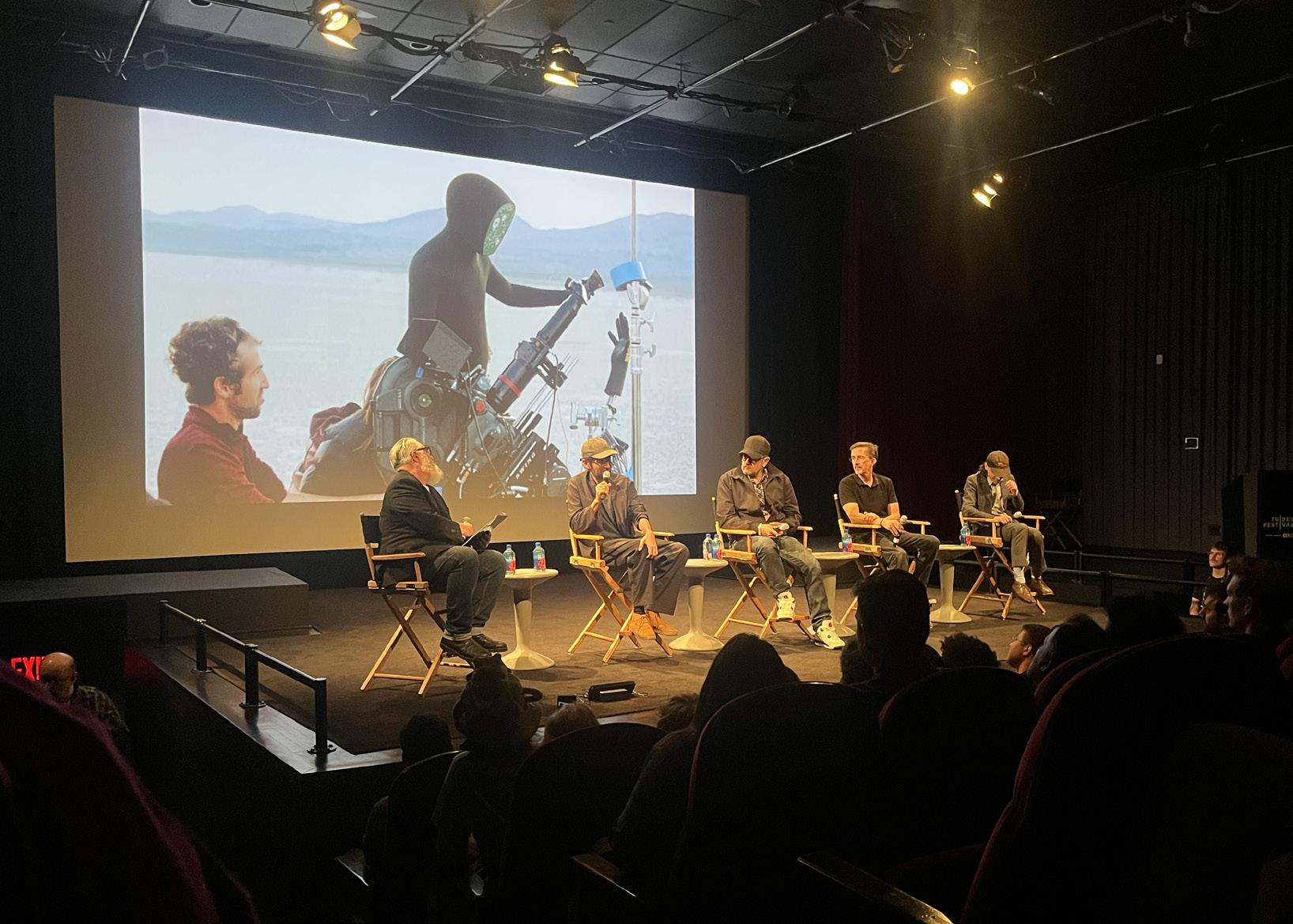
Following the screening, Bangalter— along with Daft Punk’s creative director Cédric Hervet, special effects producer Tony Gardner, and actor Michael Reich—participated onstage in a conversation moderated by Rolling Stone’s David Fear. Answering a range of questions and telling long-winded anecdotes about the film’s production, Thomas Bangalter appeared excited to interact with the audience and speak on Electroma. In response to one question on whether the film was inspired by 2001: A Space Odyssey, he came up with a quippy reply: “well, it might have inspired it because it’s my favorite film ever!” But, as with every answer, he followed up the quick remark with a meaningful response, in this case on subconscious inspiration and the relevancy today of Kubrick’s 1968 film. Given the subject matter of Electroma and Daft Punk’s robot persona as a whole, a large portion of the
conversation focused on themes surrounding technology and artificial intelligence. Bangalter was firm in his statement that he strives to lead a technology-free lifestyle, explaining that even digital production is not present in his musical practices: from his early house music to his recent ambient ballet Mirage, analog methods have always pervaded his compositional style. Seeing Electroma at Tribeca with Bangalter and members of the production team present was an incredible experience; it was a meaningful reminder not only of the deep power of contemporary film and music, but that a life in the absence of technology, as Electroma always intended, is a pursuit worth fighting for. Being a host at WKCR, this fight is not easy to forget as we pull record and physical media from the library for every program on the air; hearing it from a musical hero, however, was inspiring and gratifying.
Charlie Kusiel King is Program Director and the regular host of Thursday Cereal Music and Friday’s The Early Music Show (both 9:30AM12PM).
left to right: Fear, Bangalter, Hervet, Gardner and Reich at the Tribeca Film Festival Image coutesy of Charlie Kusiel King
NEWS & ARTS
Close Up on Close Up's Two Year Anniversary
by Hadassah Weinmartin
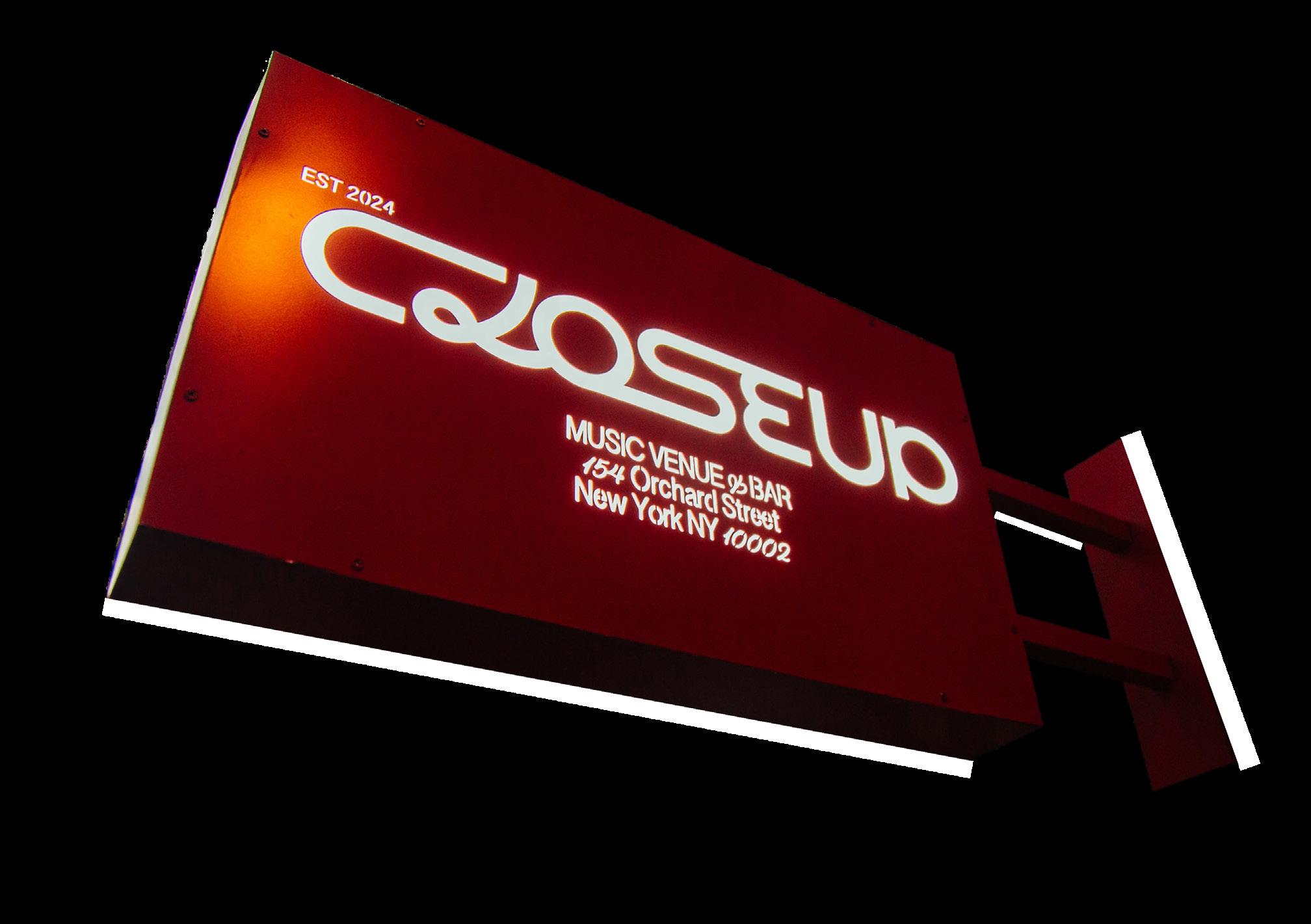
On Monday, June 1st, music venue & bar Close Up celebrated the two year anniversary of its opening at 154 Orchard Street. Musicians, music appreciators, and everyone in between gathered at the young Lower East Side locale to enjoy the second annual tradition of the “Close Up Big Band,” made up of established local(ish) jazz musicians, many of whom play at Close Up regularly.
I arrived at the venue before the first set to see the 6pm rehearsal and the fashionable bar and seating area was already abuzz, filling up with eager attendees ranging in age from teens to Gen X. The energy at the club was high; even after the two big band sets, music from the jam session rang out late into the wee hours and the crowd remained until after 3AM when I finally had to catch the train home.
Throughout the event, I had the opportunity to talk to many of the musicians from the big band, Close Up employees, and attendees (many of whom were also musicians).
Close Up cofounders Daniel Gaynor and Solomon Gottfried, the club's owner and artistic director met in high school when Solomon introduced Daniel to the world of jazz. Daniel would attend the jazz combo concerts that Solomon played in as the bassist and recalled how the performances were “really high energy and got me really into improvised music. ‘If you think we’re good,’” young Solomon told him, “‘you should listen to Miles and ‘Trane and Cannonball and Oscar Peterson …’” Their friendship grew throughout the years as they bonded over a love of music, especially the magic of live music. During the pandemic, Gaynor and Gottfreid lived together in Vermont
and would run shows for each other and their housemates. At the same time, many New York City jazz venues—including 55 Bar and The Jazz Standard—shut their doors, leaving a gap in the city's music scene that needed to be filled. What began as an idea for a house show series soon evolved, propelled by the unique opportunity of the moment, into a vision for a brand new New York City jazz venue: Close Up.
“Close Up came at the right time,” explained Kalia Vandever, trombonist in the big band that evening, who had also played the first ever set at Close Up when it opened. “There were not a lot of spaces where young musicians could come and … feel welcome to play. I feel like it really fits a specific niche in the jazz community that we all have been craving.” Many of the people I spoke to, both musicians and frequent patrons (many of whom were also musicians) agreed with Kalia. In these conversations, Close Up stood out for the platform which it gave to younger, less-established (though not less talented) artists to share their music and experiment creatively. “A lot of people who wouldn’t really have a place at a Smalls or a Mezzrow are doing dope things and getting more exposure here,” Gervis Myles, the bassist in the big band, told me.
Close up has live music every day of the week except Tuesday. Often, the same musician plays an early and late set, and with a jam happening later in the night. David Leon, who played lead alto in the big band, feels that “Close Up is more like the clubs that used to exist in the kind of mythical era of New York that we hear about before … a kind of watering hole for musicians and artists.”
Selendis Sebastian Alexander Johnson, the
lead trombone player that evening who has organized big bands played at avant garde venues around the city, highlighted this booking practice: “For most folks who are younger or booking shows that are maybe weirder, you are kind of hoping to just get one set on a multi act bill somewhere … Close Up is the only venue that is calling folks … for casual shows where you are playing two sets in one night alone … something which back in the day was standard and these days there are very few places that do that that aren't only calling on an older, more established, more straight-ahead thing.”
It is true that many of the sets presented by Close Up lean towards a more experimental or avant-garde side of jazz. However, on the evening of the two- year anniversary, the music of Duke Ellington, Count Basie, Dizzy Gillespe, and Charles Mingus resounded into the relatively small room and through the speakers at the bar. Standards like “Such Sweet Thunder,” “A Night in Tunisia,” and “Lil’ Darlin’” were played by musicians many of whom hadn’t played these songs since their time studying jazz in high school or college! The audience hummed and moved along to the familiar tunes. A combination of the familiarity of the music and sheer power of the big band, elevated by the evening’s celebratory excitement, kept my fellow audience members’ and my own spirits high, even as the second set ended around midnight.
Gottfreid, the curator of the big band’s personnel and repertoire, explained his artistic vision in our conversation before the show. “This is an opportunity to celebrate the club but also to celebrate some of the greatest music in the history of this country … to take some of the most singular voices in creative music today and put them back into
the big band context while allowing them to be celebrated as the individuals that they are when it comes time to solo … Everyone in this band is someone who has helped build the club to be what it is today … it is a beautiful thing to see all those people all on stage at once.” The sets indeed had many opportunities to showcase the players’ unique creative voices, integrating contemporary jazz vocabulary into their solos, adding another layer of complexity to the classic tunes.
This signature celebration revealed that two years in, Close Up has already become more than a venue. The word that came up again and again in conversations with musicians, staff, and attendees was “home.” Jazz survives through live performance, through musicians gathering night after night to listen, experiment, and learn from one another. Close Up has cultivated a space where that process can happen, run by musicians and designed with musicians in mind. Close Up truly embodies the same spirit that drives institutions like WKCR: a belief that
Sin Fronteras
Jazz Alternatives
Nueva Canción
Som do
Special Broadcasts
SPECIAL BROADCASTS
Hariprasad Chaurasia Birthday Broadcast
Wednesday, July 1, 6AM - 6PM
We begin July with a debut birthday broadcast for Hariprasad Chaurasia (born 1938), a bansuri player and pillar of modern Hindustani classical music. A collaborator of many of the greatest musicians of the 20th century across genres and continents, Chaurasia serves as the artistic director of the World Music Department at the Rotterdam Music Conservatory, founded the Vrindavan Gurukul in Mumbai and Vrindavan Gurukul in Bhubaneshwar, and has composed for countless films. Tune in between 6am and 6pm on Wednesday, July 1 for twelve hours of Chaurasia’s music, including an archival interview conducted by David Ellenbogen, founder of the Ragas Live Festival and a monthly host of WKCR’s own Raar Aur Taal.
Louis Armstrong Birthday Broadcast
Saturday, July 4, All Day
One of WKCR’s most iconic broadcasts, we return for another July 4 spent with the work of jazz icon Louis Armstrong (1901-1971). The first of two birthday broadcasts dedicated to Armstrong (the second occurring on August 4), he throughout his life maintained that his true birthday was concurrent with the date of American independence, however historical records found after his passing revealed his day of birth to be one month later.
Gustav Mahler Birthday Broadcast
Tuesday, July 7, All Day
Returning to our airwaves for the second year, we are excited to celebrate the musical legacy of Gustav Mahler (1860-1911). Mahler, most widely known as a conductor during his lifetime (including final years spent in New York at the Metropolitan Opera and Philharmonic) was a prolific and revolutionary symphonic composer. As always, in WKCR fashion, programming July 7 will feature works by Mahler, both beloved and lesser known, in their full renditions.
Manfred Eicher Birthday Broadcast
Thursay, July 9, All Day
For the first time, WKCR celebrates producer Manfred Eicher (born 1943). Eicher, the founder of the acclaimed label ECM Records, and later ECM New Series, has produced over a thousand albums for artists including Arvo Pärt, Steve Reich, Keith Jarrett, Chick Corea, Meredith Monk, Jack DeJohnette, the Hilliard Ensemble, Gary Burton, and countless more. Join us on Thursday July 9, for twenty-four hours of ECM Records in Eicher’s honor, with special segments dedicated to their jazz, new music, and classical releases.
Albert Ayler Birthday Broadcast
Monday, July 13, All Day
The original birthday broadcast on WKCR, it wouldn’t be July without Albert Ayler (19361970). An avant-garde saxophonist and musical intimate of John Coltrane’s, Ayler’s music is hard to place and spans conceptions of genre and sound. On Monday, July 13, we air twentyfour hours of Ayler’s music, alongside exclusive interviews and archival material (TBA).
THEMED SHOWS
SATURDAY NIGHT AT
Saturdays 9:00 PM - 12:30 AM
SUNDAY PROFILES
Sundays 2:00-7:00 PM
TBA
July 12
Host: Sid Gribetz
Labeled #54: Dala Records
July 19
Host: Steve Mandel & Jake Cohn
TBA
July 26
Host: Isadora Evers
THE OPERA
Show Listings
JAZZ
Daybreak Express, Mon.-Fri. 5-8:20am
Out to Lunch, Mon./Tues./Thurs./Fri. 12-3pm
Jazz Alternatives, Mon.-Fri. 6-9pm
The core of our jazz offerings, these three programs span the entire range of recorded jazz: everything from New Orleans jazz, jazz age, swing era, bebop, hardbop, modal, free, and avant-garde. Hosts rotate daily, offering an exciting variety of approaches, some of which include thematic presentation, artist interviews, or artist profiles. On the first Wednesday of every month, Jazz Alternatives becomes “The Musician’s Show” and is hosted by a professional working musician.
Birdflight, Tues.-Thurs. 8:20-9:30am
Archival programs from the late Phil Schaap, one of the world’s leading jazz historians, producers, and an NEA Jazz Master, who hosted this daily forum on the music of Charlie Parker for about 40 years.
Now's The Time*, Fri. 8:20-9:30am
The newest show from WKCR Jazz is dedicated to jazz as a living art form and features the music of young, upand-coming musicians pushing the genre forward.
Traditions in Swing, Sat. 6-9pm
Archival programs from the late Phil Schaap. This awardwinning Saturday night staple presents focused thematic programs on jazz until World War II. Schaap presents the music, much of it incredibly rare, from the best sound source—often the original 78 issue.
Phil Lives*, Mon. 3-5am
Selections of archival programs from late Phil Schaap. This show features interviews, tributes, and portions of longform programs.
Jazz ‘til Dawn, Sun. 4-6 AM
An early Sunday morning jazz program, limitless in era and style.
CLASSICAL
Cereal Music, Mon.-Thurs. 9:30am-12pm
An entirely open-ended classical show to start your weekdays.
The Early Music Show, Fri. 9:30am-12pm
Dedicated primarily to European medieval, Renaissance, and baroque music before c. 1800.
Extended Technique*, Wed. & Thurs. 3-6pm
WKCR’s first interdepartmental show (in the New Music and Classical departments) dedicated to contemporary classical music. Under the direction of the New Music and Classical departments, this program is dedicated to experimental classical music.
Afternoon Classical, Fri. 3-6pm.
Two hours of unrestricted classical music selections followed by one hour dedicated entirely to the music of J.S. Bach.
Saturday Night at the Opera, Sat. 9pm-12:30am.
One of NYC’s longest running opera shows, Saturday Night at the Opera features one opera in its entirety, with time for history and commentary, each week.
NEW MUSIC
Afternoon New Music, Mon. & Tues. 3-6pm
Our daytime new music program features a wide variety of music that challenges boundaries and subverts categorizations. Shows include everything from seminal new music compositions to the most challenging of obscure deep cuts and new releases.
Transfigured Night, Tues./Thurs. 1-5am and Sat. 2-6am
Our overnight explorations into the world of new music, Transfigured Night rewards our late night listeners with a wide range of sounds and experimental music.
Workaround*, Fri. 9-10pm
WKCR presents live sets from local professional and student DJs.
Live Constructions, Sun. 10-11pm
This weekly program features a live in-studio performance or a previous performance recorded at WKCR.
* Indicates show was created after January 2022
LISTINGS FOR LISTENERS
Honky Tonkin’, Tues. 10-11pm
One of WKCR’s longest-running American music programs, Honky Tonkin’ focuses on country music from the 1930s through the 1950s.
Tuesday’s Just as Bad, Tues. 11:30pm - Wed. 1am
For the first hour, Tuesday’s Just as Bad explores the world of blues prior to World War II. In the final half hour, hosts turn to the post-war years.
Night Train, Wed. 1-5am
All aboard! One of two overnight programs in the American Department, Night Train rolls through the post-war R&B and soul tradition, from the genre’s emergence in the 1940s and ‘50s through the funk revolution in the ‘70s. Shows often feature extended live recordings and concerts.
Offbeat, Fri. 1-5am
Offbeat exposes undiscovered, underplayed, or up-andcoming new hip hop artists, including experimental instrumental artists not typically played on mainstream hip hop radio.
Across 110th Street, Sat. 12-2pm
Across 110th Street airs soul, funk, and dance music from the 1960s through the ‘80s and ‘90s.
Something Inside of Me, Sat. 2-4pm
WKCR’s Saturday afternoon blues show, Something Inside of Me focuses on electric and post-war styles.
Hobo’s Lullaby, Sat. 4-6pm
Rooted in the folk revival of the 1950s and ‘60s, Hobo’s Lullaby airs American folk and traditional music styles from the early 20th century through the present day. Shows feature old staples like Leadbelly, Elizabeth Cotton, and Woody Guthrie through contemporary stalwarts like the Carolina Chocolate Drops.
Notes from the Underground, Sun. 12:30-2am
Notes from the Underground showcases contemporary hip hop and rap music with an emphasis on emerging and experimental artists. The program also hosts local and visiting artists for interviews, freestyles, and guest curation.
Amazing Grace, Sun. 8-10am
Greeting listeners on Sunday morning, Amazing Grace shares the African-American gospel tradition.
The Moonshine Show, Sun. 10am-12pm
On the air for nearly 60 years, The Moonshine Show showcases the American Bluegrass tradition, from the earliest roots in vernacular string-band music, the genre’s pioneers in the 1940s and 50s and advancements in the 60s and 70s, through the leading innovators of today.
The Tennessee Border Show, Sun. 12-2pm
The Tennessee Border Show highlights the singersongwriter tradition, from Hank Williams and Townes Van Zandt to Lucinda Williams.
LATIN
Caribe Latino, Mon. 10pm-12am
Caribe Latino features the diverse, upbeat music from Latin communities in the Caribbean. Popular Latin rhythms such as Salsa, Merengue, Bachata and Latin Jazz take center stage throughout the program.
Urbano Latinx, Tues. 12-1am
From salsa and merengue to Latin punk rock, Urbano Latinx airs contemporary sounds from Latin America, the Caribbean, and the diaspora.
Sin Fronteras*, Wed. 12-3pm
Occupying the time slot of Out to Lunch on Wednesday afternoons, Sin Fronteras explores the tremendous and growing tradition of Latin Jazz.
Nueva Canción, Wed. 10-11pm
Nueva Canción explores protest music created throughout Latin America during the 1960s and ‘70s, on its own and in the context of protest music from other countries and during time periods.
Som do Brasil, Wed. 11pm - Thurs. 1am
From samba and bossa nova to MPB, Som do Brazil features the enchanting sounds and rhythms of Brazil.
Sonidos Colombianos, Fri. 10-11pm
Sonidos Colombianos presents music from Colombia. The bilingual musical tour includes not only cumbia, but also the guitar-based bambuco from the Andean region, the harp llanero music from the Eastern Plains, the marimba-infused currulao from the Pacific Region, and the accordion-driven vallenato of the North Atlantic Coast.
* indicates show was created after January 2022
LISTINGS FOR LISTENERS
The Mambo Machine, Fri. 11pm - Sat. 2am
The Mambo Machine is the longest running salsa show in New York City. The program plays a wide spectrum of Afro-Latin rhythms perfect for dancing.
El Sonido de la Calle*, Sun. 2-4am
The Latin companion to Sunday morning’s Notes from Underground, El Sonido de la Calle highlights the diverse world of contemporary Spanish-language hip hop and dance music.
IN ALL LANGUAGES
The Celtic Show, Mon. 12-1am
Music from across the island of Ireland throughout the era of recorded music, particularly focusing on traditional folk and vernacular music forms.
Coordinated Universal Time, Mon. 1-3am
Coordinated Universal Time brings listeners the latest cut of music from across the globe, especially highlighting music that does not get attention in America.
The African Show, Thurs. 10pm-12am
The longest running African music radio show in the United States, The African Show brings listeners a variety of music from the entire continent of Africwa.
Middle Eastern Influences, Fri. 12-1am
Middle Eastern Influences features selections from the Middle East and North Africa, with particular attention on traditional forms.
Sounds of Asia and Couleurs Antillaises, Sat. 6-8am
Previously Sounds of China, Sounds of Asia explores the recorded musical traditions and innovations of Asia and the Pacific Islands. Couleurs Antillaises features music from Haiti and the French-speaking Carribean. These shows alternate in the Saturday morning timeslot so each airs every two weeks.
Eastern Standard Time, Sat. 8am-12pm
One of New York’s most popular Reggae programs, Eastern Standard Time captures listeners with the hypnotic sounds of Reggae and Jamaican dance music.
Field Trip, Sun. 6-8am
Field Trip focuses on the music and practice of field recordings: music recorded outside of a studio. This definition is expansive and includes everything from released recordings to street music documented by WKCR.
Raag Aur Taal, Sun. 7-9pm
Raag Aur Taal (which means “melody and rhythm”) explores the classical musical heritage of South Asia.
Back in the USSR, Sun. 11pm-12am
Back in the USSR features music from Eastern Europe, East Asia, and Central Asia, from the mid-20th century through the present.
NEWS & ARTS
Monday Morningside*, Mon. 8:30-9:30am
WKCR’s morning news broadcast, Monday Morningside features segments on events around Morningside Heights and upper Manhattan. All episodes are available as podcasts on Spotify.
News and Arts Program, Sun.-Thurs. 9-10pm
These programs form the core of our News and Arts programming. On Sundays, “Soundstage” features a live reading of a play; on Mondays, “Late City” offers retrospective coverage on local cultural happenings; on Thursdays, “Playlist Profiles” characterize a person through music. As news is constantly evolving, note that these programs are subject to change and preemption.
SPECIAL BROADCASTS
Sunday Profile, Sun. 2-7pm*
This five-hour program dedicated to a longform, researched profiles of a pioneering artist, label, or musical movement. Originally known as “Jazz Profiles,” this show has expanded its scope; today, it may feature any of the musical traditions represented by WKCR’s programs.
* indicates show was created after January 2022
NEWS & ARTS
Art of Noise at Cooper Hewitt
by Cyril Blackman & June Frankel
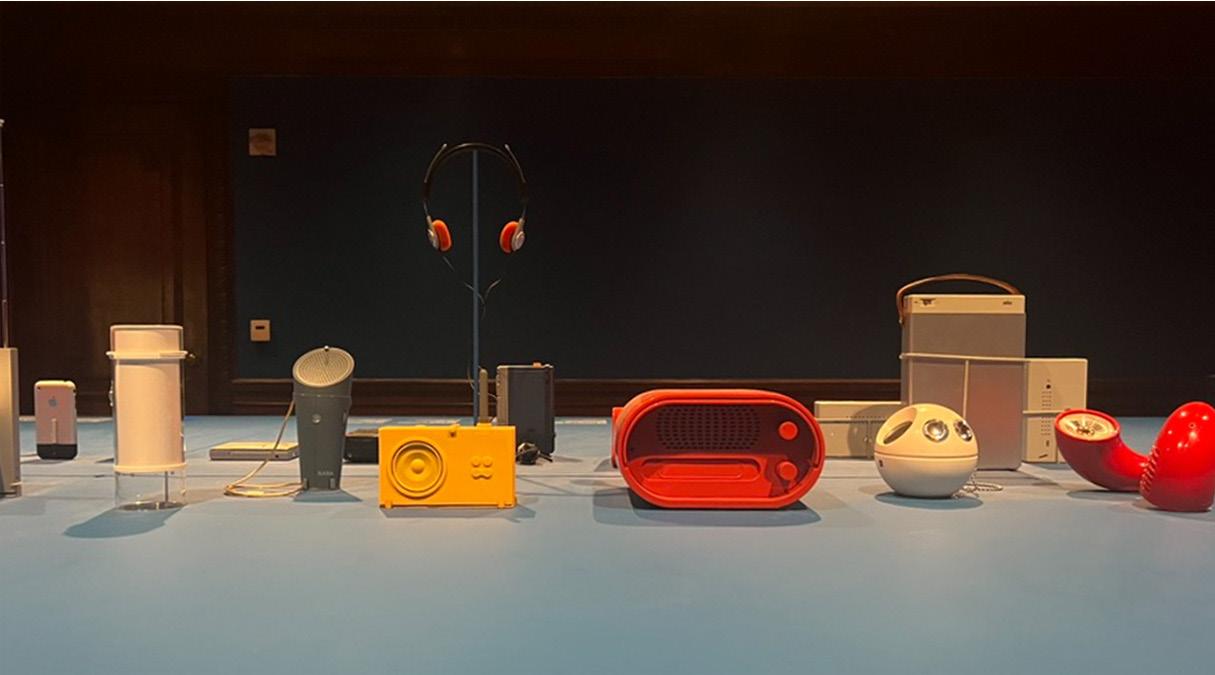
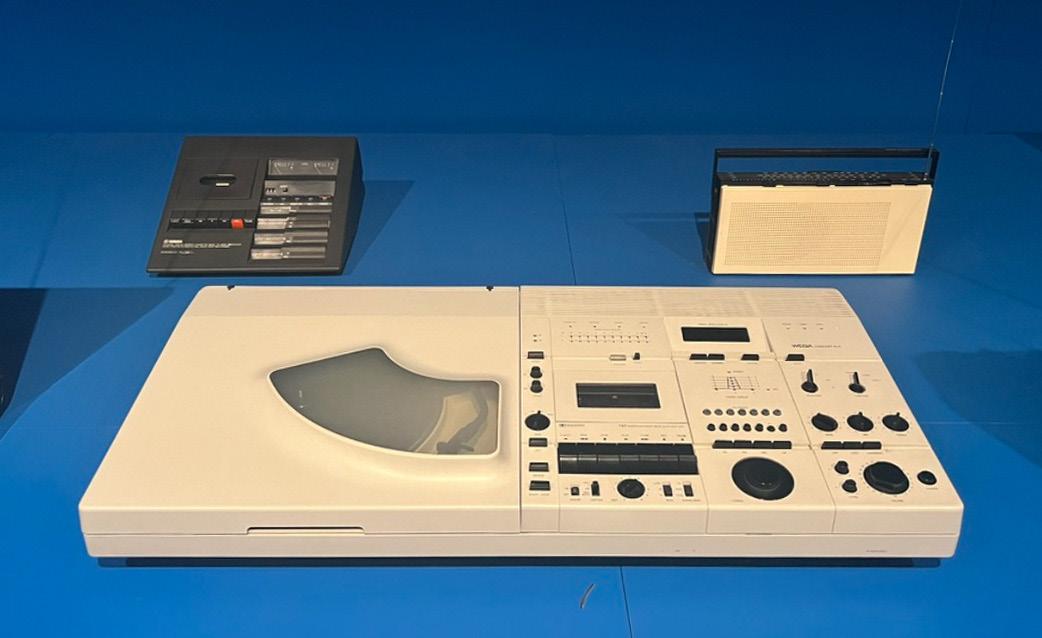
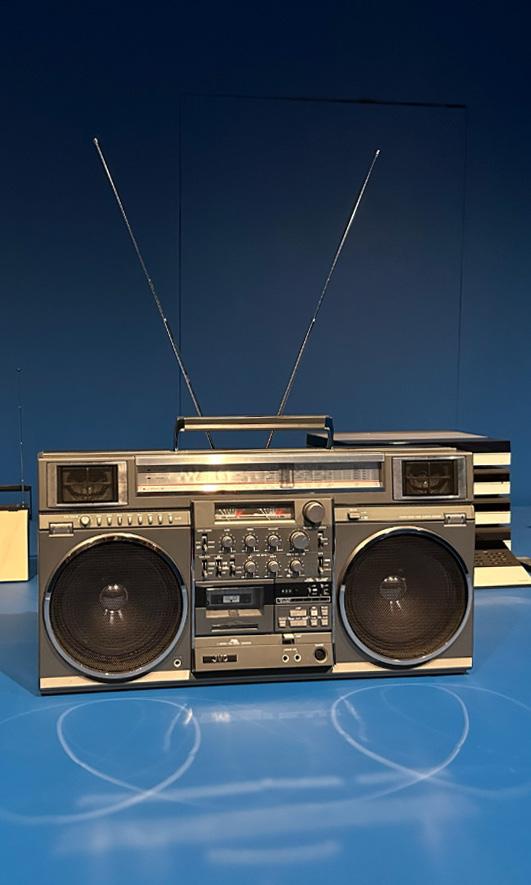
Earlier this June we had the pleasure of exploring the Cooper Hewitt, Smithsonian Design Museum's latest exhibit Art of Noise. From the very beginning the exhibition subverts the average museum experience as the typically quiet gallery space was filled with an all encompassing noise. We could occasionally make out bits of songs here and there but for the most part we were met by a cacophony of music history. It continued to defy expectations for what a music centered exhibition would entail as it focuses on the art’s visual and physical properties. As we made our way through the gallery, decades worth of design history confronted us in the form of iPods, Walkmen, record players and radios, some objects being more familiar to us than others. The space oscillated between inspiring both nostalgia and awe, for devices we had either forgotten or never knew could be so beautifully designed. We bounced back and forth between displays before coming across two installations
that solidified the exhibition as a cohesive experience.
The installations and much of this cohesion were both thanks to the Swedish electronics design company Teenage Engineering, who collaborated with the museum to design the experience. Before we had even properly located the exhibit entrance we found ourselves lost in the gift shop examining replicas of Teenage Engineering’s wooden choir dolls without knowing we would soon hear their performance in action. Each of the eight named figurines had a unique visual and sonic identity that came together to sing various constellations in a dedicated room in the exhibition floor. Every “performance” was marked by spotlights that would illuminate whichever dolls were participating in the piece, creating a lively atmosphere from otherwise static objects.
Just outside of their choir was another one of Teenage Engineering’s most notable
contributions, and what ultimately dominated the majority of our visit, a dynamic blue couch-scape with built in listening stations. Embedded into the sprawl of couches were music players where visitors could take a break from the exhibit to put on headphones and listen to an assortment of songs. These panels featured a pause/play button, skip buttons, as well as a volume dial, a small tape wheel flush with the surface, a rocker to scrub through the tracks, and a loop button. As we listened to songs we scrubbed through them using the rocker or scrubbing the tape wheel, held the loop button to sample and loop parts of the song in relatively unsuccessful attempts at creating our own remixes. While the auditory element clearly defined the experience, the haptics of the design made pressing the buttons an experience in itself. The active engagement with not only the music but also such high quality design made the two of us dread the return to the modern state of music consumption.
As we finally left the museum attempting to figure out the pieces we wanted to highlight for our review, we couldn’t help but compare the decades of sound design that were marked by its innovation and artistic genius to what we have been left with in the modern age. For most people today listening to music has become a passive act. Seeing portable music players, speakers, and sound systems be displayed as works of art and marveling at the idea of a functional item expressing any sort of character made us realize how drastic music’s role in society has changed. By having access to nearly every song that's ever been recorded all the time through streaming services the intimacy of listening to music has been damaged. We realized that it had become easier to treat songs as white noise when going about our daily tasks, not noticing nor caring about what song is playing. We can no longer hear a song play and think back to holding the album in our hands before purchasing it. The disconnect extends to our devices as we primarily listen to music as a feature on a phone or a laptop, rather than through a device
that has been engineered with the sole purpose of music. And while this rant fails to mention the benefits of modern music’s accessibility for both artists wishing to spread their craft or listeners who just want to experience the art form without having to worry about paying for each song, the question of what is lost still stands. Even if Art of Noise doesn’t answer this question, in highlighting sound design they are reminding some and introducing others to a forgotten art.
All images coutesy of Cyril Blackman and June Frankel
FROM THE ARCHIVES
EA Brief History of WKCR in case you have forgotten...
by Chris Hatchell
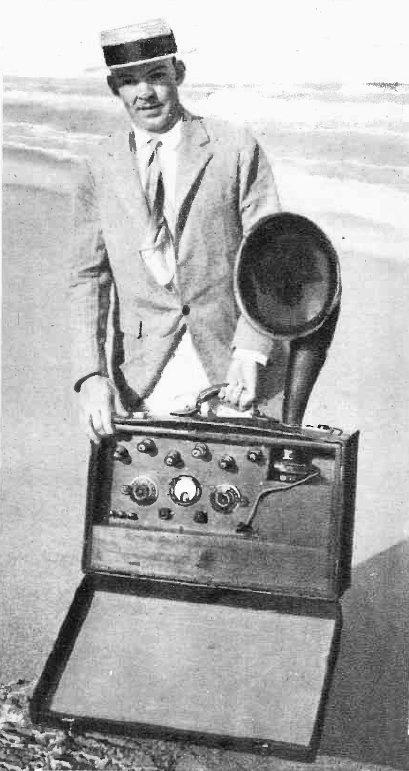
XTREMELY SEDITIOUS are the words jokingly used by WKCR's first program director to describe the station's maiden broadcasts. Neither licensed by the FCC nor authorized by the university, these first programs date back to 1941 when a group that called itself the Columbia University Radio Club formalized its transmissions from a Morningside basement into actual radio broadcasts. Among the engineers producing them were major figures in the field of audio technology. The founder of WKCR was Edwin H. Armstrong, the man who is also the father of modern radio itself. Said by some to be the greatest American inventor since Edison, Armstrong had patents in the radio field as early as 1912, while he was still an undergraduate engineer. In 1933 he invented the FM transmitter. Over the next eight years Armstrong and his protege William Hutchins constructed the virtual entirety of the original Columbia station and formed the Radio club which by 1936 had been recognized by the University as a formal campus activity.
Music, drama, and faculty lectures made up the early programming, which was transmitted in AM and FM simultaneously. The AM carrier current broadcasts apparently began on February 26, 1941. The FCC sanctioned FM line started up at 9:00 AM on Friday October 10, 1941. The first recording played was "Swing Is Here," a Victor side that featured Gene Krupa, Roy Eldridge, and Benny Goodman. The AM band, received only on campus, began to attract students to the club, and CURC grew to be one of the most popular activities at Columbia. In 1946 the FCC formalized the educational band (which includes college stations), and
the Radio Club became WKCR--King's Crown Radio.
From that point, the station grew continually, with a staff of students determined not only to produce great programming, but to make history along the way. The program "Music at Columbia" was recorded and broadcast in the Soviet Union. Ayn Rand produced a season of lectures for the station. The staff established a direct line to the U.N. and WKCR became its official station. Programmers conducted interviews with the likes of Eleanor Roosevelt, Martin Luther King, Malcolm X, Dizzy Gillespie, Max Roach, Charles Mingus, Lester Young, Art Blakey, B.B. King, Philip Glass, Steve Reich, and John Cage. WKCR news reported local and national events with an immediacy most evident in its award-winning coverage of the campus riots in 1968 and its stirring report of the police violence that followed.
A range of musical presentations, as well, became the centerpiece of the station's programming. WKCR created Classical, Jazz, Blues, Country, Latin, Chinese, African, and Irish programs, to mention just a few. The experience garnered at WKCR has been an education in itself for station members, and many have gone from their beginnings at WKCR to hold preeminent positions in the media. Station alumnus Robert Siegel, for instance, is the director of news and information programming for National Public Radio in Washington D.C., and produces the nationally acclaimed program "All Things Considered." Fred Seibert and Alan Goodman have started one of New York City's hottest video production companies, and were instrumental in the creation of MTV. Others, like Peter Hereford,
Carl Stern, and Thomas Guisto now hold positions as producers, correspondents, and editors in the newsrooms of the three major television networks. New York radio also contains station alumni, like Katie Cowdery who anchors for WINS. Then, of course, there is the student's favorite-Sorrell Booke-the actor known for his portrayal of "Boss Hogg" on the television series "The Dukes of Hazzard." WKCR alumni include leading authors, composers, musicians, engineers, scientists, and businessmen, among other experts in their fields.
If there is one station member whose work highlights him in the history of WKCR, it is Phil Schaap. For the past 20 years, Philip Van Loon Guybo Schaap Van Noorden (his full name) has worked for the station and within the jazz community with an intensity that has led him to be described as "a one man jazz radio movement."
An authoritative scholar and historian, Schaap's on-air presentation of the music is an education to listeners, and his presence at WKCR has allowed the station to become a vehicle for the promotion and preservation of the American jazz tradition.
He backs his words with trademark marathon jazz festivals, exclusive interviews, birthday broadcasts and memorial retrospectives. Phil also hosts the weekday morning program "Birdflight," which presents the music of BeBop legend Charlie Parker. Though WKCR has been one of the main beneficiaries of Schaap's intensity, his work is by no means confined to the station. He has taught jazz history in a number of schools, amassed what the Smithsonian has assessed as the largest collection of jazz interviews, founded a touring jazz classroom that goes by the name of his oldest FM show, "Traditions in Swing," and he continues to produce volumes of archival and discographical work, including the box set "Bird: The Complete Charlie Parker On Verve" which contains the liner notes for which he won a Grammy in 1989.
While Schaap's energies may set him apart, his commitment to broadcasting is emblematic of the attitude held by the station as a whole. With each year of its existence, WKCR has increased its commitment to provide programming for the entirety of the metropolitan community.
Edwin Armstrong & portable stereoheterodyne
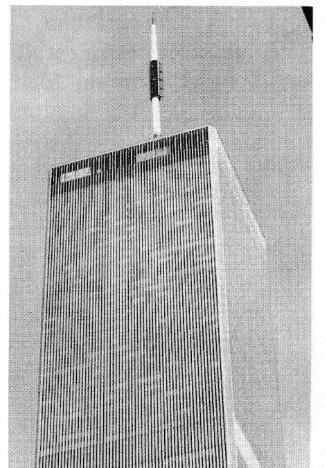
A transmitter move in 1957 to the top of a Madison Avenue high-rise greatly increased the station's range, and in 1985 the station reached the pinnacle of transmitting--broadcasting from the north tower of the World Trade Center. WKCR currently sends its signal more than 90 miles to reach a potential of 20 million listeners.
Today's programming, still billed as "The Alternative," is as diverse as the community to which it is directed. Jazz is the staple, filling the weekday programming along with classical music. Nights and weekends feature music from country and blues to opera and Indian. The schedule contains shows in English, Spanish, Portuguese, Creole, and includes one of the city's only Chinese language broadcasts, which employs Taiwanese, Cantonese, and Mandarin. WKCR sports provides coverage of both university and professional events, and the award winning news department produces
its own feature and magazine segments in addition to its regular newsbreaks. The New Music department covers the best of contemporary classical, experimental, and improvisatory music including New York City's own Downtown Scene. A radio theater program features student and professional compositions, and on Friday nights the jazz department produces broadcasts from Birdland, in New York's only regular live jazz broadcast.
WKCR is something of a traditionalist in the era of modern radio. There is nothing on tape, no morning chatter, nothing commercial, and no paycheck at the end of the week. It would be trivial, however, to simply state that we are dedicated. Dedication by itself rarely makes good programming. Quality radio is not just being there, it is having something to say. And while 50 years is a long time to be around, the time becomes more valuable when it is approached, and preserved, with an acute perception. There are few places where a group with that perception can be assembled, and fewer still that can speak of it, all day, in the language of the hop joints, honky-tonks, and ballrooms, theatres, newsrooms arenas and studios where the time was, and will be passed. The best of those may be on the radio.
This article was originally published in the October 1991 issue of On Air by thenPublicity Director Chris Hatchell.
Did you enjoy this journey into On Air archives? Did you hate it? Do you know Chris Hatchell? Are you Chris Hatchell? Let us know all of this and more by emailing onair@wkcr.org. We read your emails, we love your emails. We look forward to hearing from you.
North Tower of the World Trade Center
SUPPORT WKCR
TOP 5 REASONS TO DONATE TO WKCR
1. You’d be helping a student-run, listener-funded, and volunteer-based radio station continue to bring you the absolute best in what radio has to offer. Music, arts, news, and sports— we’ve got the works!
2. You wouldn’t be a free-rider anymore.
3. WKCR donations are tax-deductible (so make sure you donate before tax season). For more info on that, or anything else business-related, email business@wkcr.org
4. Being “the Original FM,” our equipment is getting a bit old. Thanks to your donations, we were able to retire Buzz, the hamster that ran the wheel powering us. But our new hamster, Roach, needs to start saving for retirement... can you blame him?
5. Isn’t On Air cool? Without proper funding, projects like this can’t come to fruition and, if they do, don’t make it very long. Donate to allow the little On Air minions to stay in the job.
HOW TO DONATE TO WKCR IN 4 STEPS
BY MAIL
Step 1: Locate your nearest checkbook
Step 2: Indicate “WKCR” as payee and fill out as usual
Step 3: Mail check to CU Gift Systems, 622 West 113th Street, MC 4524, New York, NY 10025
Step 4: ...and VOILÀ! Just like that, you have become a WKCR supporter!
ONLINE
Step 1: head to www.wkcr.org
Step 2: Click the yellow “DONATE TO WKCR” banner at the top of the page
Step 3: Fill out the form in the giving portal and enter your information...
Step 4: ...and VOILÀ! Just like that, you have become a WKCR supporter!
WKCR also accepts checks to our direct address. Just follow the same steps listed above but mail the check to: 2920 Broadway, New York, NY 10027
Did you know you can make recurring donations to WKCR when you donate online?
Just indicate your frequency preferences on the giving portal when prompted!