Engineering: people’s work
Annual Report 2025
Interplay
In 2025, Witteveen+Bos generated added value for biosphere, economy and society on more than 4,500 projects together with its clients and partners.
Employing expertise and curiosity, we collaborated on challenges that matter. In the interplay between bringing expertise together and pushing boundaries, more is produced than just the sum of the parts. And that is how we make more impact together.
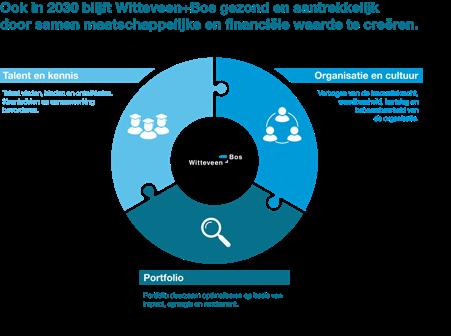
Last year, we worked on our new strategic course using three pillars: Talent and Knowledge, Organisation and Culture, and Portfolio.
In this 2025 annual report, we share our results and outline the six impact areas we are committed to. You will also learn more about the people behind Witteveen+Bos. Enjoy reading!
Progress through change
The challenges we face as a society are many. Climate change, grid congestion, restrictions on space, refugees, conflicts, and biodiversity are just some of these. But despite the dynamic world we are living in, we can look back on a successful 2025 – both financially and in terms of our impact. This is what comes from following your own course for almost 80 years. In 2025, with a team that now totals 1,710 dedicated colleagues, we worked with our clients and partners in more than 54 countries on over 4,000 projects that contributed to creating a healthier biosphere, society and economy.
In 2026, we celebrate our 80th anniversary. During the eight decades of our existence, generations of Witteveen+Bos employees have built up a solid knowledge foundation fed by sustainable relationships in which we learn, develop, and bring new insights to life. This has resulted in innovations such as eDNA – for which we were awarded the Vernufteling prize in 2025 – and in stable financial growth, which was rewarded last year with the Cobouw50 Award for best performing engineering firm.
These achievements are due to our strength as a collective: colleagues who employ their expertise and curiosity daily on tasks that make a difference, clients who give us the confidence to push boundaries together with them, and collaboration and research partners who unite their expertise with ours. Our success in 2025 is reflected in our results, which included an own revenue of EUR 196.7 million and a net result of EUR 22.5 million. These figures do not only represent a financial achievement; they also indicate the appreciation that exists for our work and the value of the foundation we have built together. We continue to cherish this, and in the years ahead we will implement targeted measures to reinforce it.
Our movements and results in 2025 offer a good picture of how we are developing as an organisation. In following sections of this report, we describe the course that is giving direction to this development: how we further developed our strategic objectives in 2025, how its three pillars – Talent and Knowledge, Organisation and Culture, and Portfolio –guide our work, and how this is reflected in the development of our organisation.
The organisationwho we are and what we do
Witteveen+Bos is a globally operating consultancy and engineering firm that offers ingenious solutions for a healthier biosphere, society and economy. Through the projects we work on, we want to make a positive impact on energy, infrastructure, climate adaptation, living environments, water, and construction. These efforts give shape to future-proof base infrastructure and to the transitions required for the functioning, well- being and prosperity of our society.
Organisational structure
Witteveen+Bos N.V. is a statutory two-tier company. It acts in accordance with the requirements applicable to such an organisation. Day-to-day management of the company is the responsibility of an executive committee consisting of eight directors. A supervisory board monitors continuity at the company by performing external supervision. We operate in close proximity to our clients, projects and collaboration partners, and to the labour market.
Our product-market combinations (PMCs) are responsible for maintaining a healthy portfolio of projects and clients. These PMCs are grouped into knowledge areas represented by our four business lines: Infrastructure and Mobility; Built Environment; Deltas, Coasts and Rivers; and Energy, Water and Environment. The business lines and the executive committee are advised and supported by the departments: Communications; Facility Management; Finance; Information Management and Digital Support; Legal and
Quality; ICT; and HR. These departments are responsible for the smooth running of our corporate processes across the company. Together with the business lines, they form a network within which colleagues from various countries and disciplines collaborate.
Our clients include public organisations (the national government, provinces, municipalities, water authorities), semi-public organisations (grid operators, drinking water companies, railway and port authorities), and private organisations (contractors, architecture and engineering firms, other industry parties). We serve these markets from ten offices in the Netherlands; from offices in Belgium, Indonesia, Kazakhstan, Latvia, Panama, Singapore, the United Kingdom, and the United Arab Emirates; and through various national and international collaborations and joint ventures. Some of our offices operate as legal entities within the Witteveen+Bos Group, whereas others are branch offices.
Doing business responsibly
Our approach to doing business is outlined in our company code. Across the globe, all Witteveen+Bos employees act with professionalism and integrity and in line with this
company code. We support compliance in various ways, including by facilitating trainings, dilemma sessions, and assessments. Our company code also provides a link between our values and beliefs and the OECD Guidelines for Multinational Enterprises. Witteveen+Bos is a member of the United Nations Global Compact (UNGC), and we emphatically endorse its ten principles on human rights, labour rights, the environment, and anti-corruption. We are committed to ensuring that human rights are upheld throughout the entire supply chain in which we are active. Specifically, this means ensuring a safe and fair working environment for all individuals in which there is no room for discrimination. We actively endorse the Modern Slavery Act, and the principles of this act have been incorporated into our corporate processes and our selection criteria for tenders and projects.
Safe and responsible business practices
We continue to work on (digital) safety across our organisation, including through the Safety Culture Ladder (step 4), SCC standardisation, and the further development of our management system. We are also giving form to our SROI responsibilities by creating opportunities for people distanced from the labour market.
Review of 2025
A year of growth, targeted investments, and the reinforcement of our foundations
Further development of our strategic goals
Lasting impact requires innovation and conscious choices. Together, we have refined and strengthened our strategic course in recent years. In 2024, we created the initial outlines of a refined company strategy. In 2025, we developed these into a more concrete and more detailed strategic course.
This refined course is supported by our three strategic pillars. The Portfolio pillar is aimed at bringing together and efficiently deploying our knowledge and expertise on the challenges that generate the most value for society and healthy returns. The Talent and Knowledge pillar concerns our people: by developing, supporting and retaining talent – and where necessary actively recruiting it – we continue to develop a strong and future-proof knowledge base. The Organisation and Culture pillar relates to how we collaborate, organise and innovate to ensure our organisation is flexible and well prepared for present and
Portfolio - impact as a compass
Our portfolio is the heart of Witteveen+Bos’s valuegenerating activities. In 2025, we worked on more than 4,500 projects varying in scale, complexity, and geographical context. Climate change, the energy transition, restrictions on space, struggling infrastructure, biodiversity loss, and access to clean water – all these challenges require solutions that exploit internationally developed knowledge and experience while being locally appropriate. The challenges which we address occur in an increasingly complex world. This broad scope requires targeted choices. In the pillar Portfolio, therefore, the focus is specifically on the deployment of our knowledge and capacity on challenges where we can make a demonstrable impact and simultaneously achieve a healthy return. This being the case, a focus on portfolio impact means for Witteveen+Bos: choosing those challenges where we, operating from different countries and contexts, can demonstrably add value, achieve an adequate return and utilise the collective strength of Witteveen+Bos.
In order to give concrete form to this focus, we arranged our portfolio in 2025 along six impact areas: Healthy Habitats, Sustainable Mobility and Infrastructure, Energy Transition, Climate Adaptation, Clean Water and Sanitation,
and Sustainable Built Environment. These impact areas connect urgent challenges facing society with our strategic ambitions and knowledge positions. They serve as a compass for our project choices, for investments in expertise and innovation and for the further development of our (international) collaboration.
Impact areas in practice
In 2025, we critically analysed our market position for each impact area and engaged in dialogue with clients and colleagues. By assessing each impact area for synergy, impact on society and return, we obtained a clear picture of where our strength lies, where there is space to grow and how we can best deploy our innovation and expertise in the future. The following examples show how these impact areas come together in practice in projects and innovations.
Energy Transition
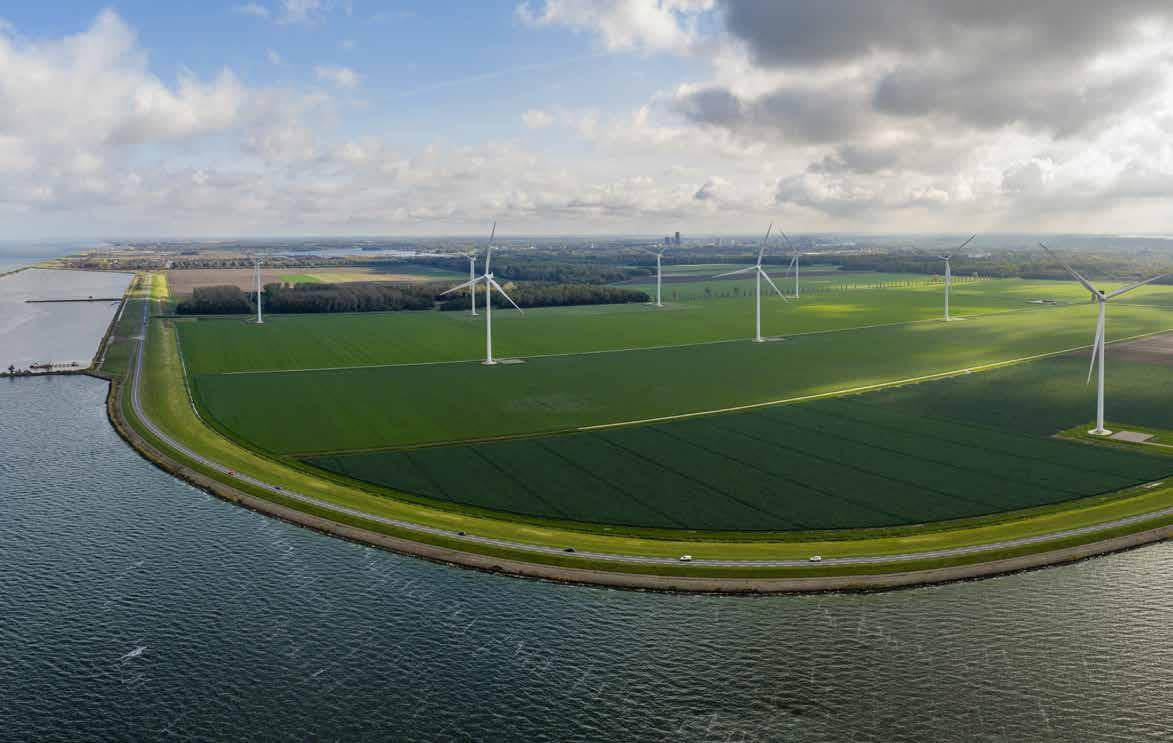
Within the Energy Transition impact area, we are working on a reliable and future-proof energy supply. Among other things, the transition to renewable energy requires extension and reinforcement of grids and high-voltage substations, which brings various disciplines and interests together. An example of this is our collaboration within the E-MERGE consortium, in which we pool expertise in order to realise complex energy infrastructure projects in an integrated and controllable manner. We also developed the TipTool,
which enables iterative energy system design because it immediately shows the impact of design choices in the energy system on infrastructure and land use.
Healthy Habitats
Our impact areas are not separate from each other and regularly overlap in practice. This is apparent, for example, in the interaction between the Energy Transition and Healthy Habitats impact areas. Together with various other parties, we are investigating the effect of electromagnetic fields of undersea power cables on shark and ray species, so as to obtain a better understanding of how growing energy infrastructure affects the behaviour and orientation of these electro-receptive animals. Within the Healthy Habitats impact area, we are focusing on strengthening and protecting biodiversity and ecosystems, taking an integrated approach to the various systems and their interconnections. The development of eDNA analysis based on one water sample, for instance, helps us chart submarine life and establish the link with toxic pressure. This innovation enables more targeted measures against biodiversity loss and in 2025 received the Vernufteling prize awarded by Koninklijke NLingenieurs.
Clean Drinking Water and Sanitation
Insight into biodiversity and toxic load is also important where water quality is concerned. Within the Clean Drinking
Water and Sanitation impact area, we are working on futureproof water supply chains. We are supporting parties such as the Vechtstromen water authority in adapting multiple wastewater treatment plants so that the resulting effluent helps achieve Water Framework Directive (WFD) targets. In addition, we are a partner in CLC Water, which deploys innovative technical solutions to make secondary effluent treatment more effective and economical and support water authorities in complying with European water quality directives.
Climate Adaptation
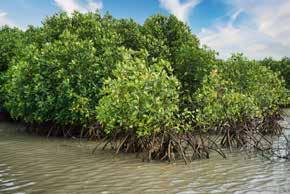
Within the Climate Adaptation impact area, we are working on a climate-proof arrangement of the living environment, so that nature, water and society can move along with climate change. In 2025, we worked on various projects and innovations within this area. One of these is the water quality stress test developed in collaboration with STOWA, with which water managers obtain better insight into vulnerabilities and can take targeted measures to limit the impact of climate change on water quality. We also worked on mangrove recovery projects, for instance in Sei Jang (Bintang, Indonesia). Through an integrated systems analysis, ecological expertise and close collaboration with local stakeholders, we contributed to the recovery of mangroves and to a resilient coastal zone, with positive effects on biodiversity and the living environment.
Sustainable Mobility and Infrastructure
Effective infrastructure is a precondition for the proper functioning of society. Through the Sustainable Mobility and Infrastructure impact area, we are helping ensure that vital networks remain accessible, safe and future-proof. For the Port of Rotterdam Authority, for example, we are working on a project to widen the Yangtze Canal. On this project, we are jointly conducting investigations and pilots in areas including land and material usage, clean and emissionfree construction and the application of innovative materials such as geopolymer concrete. On the PTZ tunnel renovations project in South Holland, on the other hand, we are working as part of the Tunnel Engineering Consultants (TEC) consortium on future-proofing existing tunnels, with the emphasis on learning and improving together in order to carry out this major replacement and renovation programme in a manageable way.
Sustainable Built Environment
The areas of energy, water, nature and infrastructure all come together in the way in which we arrange our living environment. Within the Sustainable Built Environment impact area, we are working on living environments in which living, working, accessibility and nature are in balance. An example of this is the Wilderszijde area development project in Bergschenhoek, where we are supporting the municipality of Lansingerland in building approximately 3,000 homes in a climate-adaptive and nature-inclusive neighbourhood in which water, green spaces and buildings reinforce each other. In the densely urbanised city of Antwerp, it
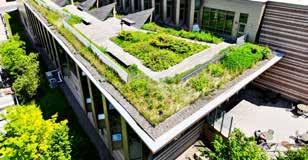
is becoming more and more difficult to absorb periods of drought and increasingly intense rainfall. So together with De Urbanisten and Common Ground, we are helping the local municipality develop plans that will make the Standspark, Kiel and Tentoonstelling neighbourhoods more robust.
Strategic reinforcement of our portfolio: acquisition of Maidl Tunnelconsultants
GmbH (MTC)
A key step within our portfolio strategy in 2025 was the acquisition of Maidl Tunnelconsultants GmbH (MTC). MTC is known worldwide as a high-quality engineering, consultancy and (monitoring) software firm for bored tunnels, and is regarded as one of the pioneers in modern bored tunnel construction. The new collaboration experienced a successful start in 2025 with the exchange of capacity and the sharing of specialist knowledge. Witteveen+Bos is also investing in the continued development of MTC’s realtime data management system PROCON, which represents another step in the further digitalisation of our tunnel projects. Our integrated knowledge, experience and international reputation with regard to bored tunnels strengthens our international proposition and offers concrete opportunities to increase TEC’s market share in the global tunnel market.
Talent and Knowledge
Our impact evolves both from the people who do the work and from the circumstances we create to develop knowledge. The strength of Witteveen+Bos lies in the interaction between
our colleagues, who share their expertise, reinforce each other and together develop solutions for the challenges facing society.
Attracting and retaining talent
As was the case in 2024, Witteveen+Bos again increased its employee base last year despite labour market shortages: from 1,577 colleagues at the end of 2024 to 1,710 colleagues at the end of 2025. This was autonomous growth. Thanks to our profile, our collaboration with educational establishments and the broad development opportunities we offer, we are managing to hold on to promising talent. New employees are also increasingly diverse (in terms of background, nationality and gender), which is in line with our aim to exploit a range of perspectives and experiences on our projects. Following steps taken in recent years on language policy, recruitment and selection, appointments, development opportunities and employment conditions, a key point of attention in the period ahead will be further promoting the advancement of diverse talents.
Employee turnover across the company was 10.3 %, with differences between countries (for instance, 9.3 % in the Netherlands and 12.6 % in Belgium). Employee growth was

18.75 % company-wide. In all areas of the company, we see that team continuity is being preserved and that new colleagues feel comfortable with our way of working.
A healthy and stimulating working environment
In 2025, we saw a decline in sick leave (to 3.28 %) in the Netherlands and positive scores in our renewed PulseCheck, a periodic measurement of enthusiasm and vitality which we developed with Saxion University of Applied Sciences. At the same time, we see differences between colleagues, underlining the importance of constant attention for a healthy, safe and stimulating working environment. This requires a tailored approach: we are increasingly looking at what individual employees need for a sustainable, enjoyable and balanced way of working. In 2025, we made further investments in a safe, inclusive and professional working environment, with attention for psychological safety, clear parameters, work pressure and energy balance.
Organisation and Culture
In 2025, we continued working on a manner of organisation that is appropriate for who we are: a network of engaged professionals who take responsibility, are quick to change gear and adopt an entrepreneurial approach in tackling complex issues. Our cellular structure, the strong sense of ownership and the open, informal way of collaborating make us flexible and resilient. At the same time, our growth requires a greater degree of coordination and support, so that we can keep collaborating as one Witteveen+Bos.
Refining the governance model in a growing organisation
In 2025, our governance model was refined so as to be more aligned with the scale and complexity of our organisation. The executive committee consists of eight members: two statutory directors (the managing director and the director of operations) and six nominal directors (the director of innovation and transformation, the business line directors, and the director of Witteveen+Bos
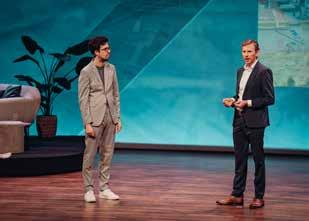
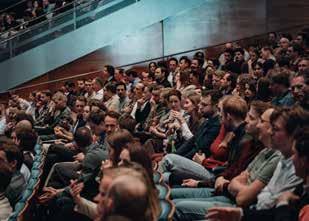
‘When entrepreneurship, knowledge and collaboration come together, the result is an increase in performance, enjoyment, innovation, and social impact.’
Belgium). Our cellular structure offers significant scope for entrepreneurship and direct contact with clients, but our growth has increased interdependence between teams, departments and countries. Our refined governance model therefore incorporates shorter decision-making routes and makes it easier to quickly and consistently translate strategic choices into daily practice. This helps the business lines, PMCs and departments to stay on course as one Witteveen+Bos.
Innovation and transformation
Innovation and transformation are needed in order to move along at the speed with which our environment is changing. In order to firmly embed these themes, a director of innovation and transformation was appointed in 2025.
This gives direction and structure to the development and scaling-up of innovative working methods and digital applications.
Digitalisation in practice
In the context of our digital transition, we further implemented our IT and AI visions in 2025, whereby colleagues from digitalisation teams of departments and business were brought together. They now work from a central team on the continued development of our digital services and the underlying data and IT foundations. We invested in IT facilities such as a data platform, access and security, including associated policy frameworks for information security. In addition, we identified the digital knowledge positions within the organisation and
took targeted steps to increase AI literacy among our employees. These steps resulted in concrete improvements in everyday work. The preconditions for further upscaling were reinforced by the renewed ISO 27001 certification and the signing of the Digital System for the Built Environment (DSGO) at level 2.
Biodiversity and Climate
We also made substantial investments in our Biodiversity and Climate programme. In 2025, we took steps in further reinforcing our climate policy. Thus, we launched a pilot aimed at better measuring climate impact in projects, deepened our knowledge of biodiversity in the design process and worked out transition pathways for concrete, steel and earth-moving. Knowledge is widely shared through the Climate Academy and the community around it. The programme team was reorganised in order to shift the focus to application and assurance in the next phase.
In 2025, we also made our business operations more sustainable. Our premises developed in line with our sustainability ambitions, with a new circular location in Arnhem, a sustainable relocation in The Hague, a refurbished office in Amsterdam and additional workspaces in Utrecht to absorb the growth of the organisation. In addition, we introduced a new mobility concept that
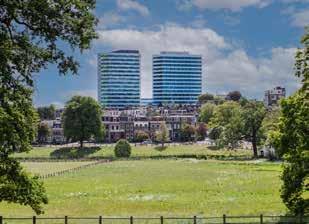
supports colleagues in choosing more sustainable transport options, with the aim of further reducing our travel-related climate impact.
Detailed financial commentary
The growth of our organisation in terms of employees, projects, expertise and organisational development is reflected in our financial results. We ended 2025 with a net result of EUR 22.5 million and a revenue increase of 14 %. Although the net result is slightly lower than in 2024, we are proud of these figures. However, we did notice in 2025 that the increase in costs outpaced the increase in revenue. This can be explained by the targeted investments we made in terms of money and time in the digitalisation agenda, the Biodiversity and Climate programme, a new office in Arnhem and the acquisition of MTC. Another factor is the relatively strong growth in employee numbers, which resulted in a rise in salary costs that will only later be matched by an increase in chargeable work. Although these developments reduce the result in the short term, they strengthen our foundations for the years ahead. In some markets, furthermore, it has become more difficult to realise our rates and achieve good project results.
Targeted investments for our future
The investments in 2025 required a considerable capacity scale-up. In financial terms this especially means higher wage costs, because of the recruitment and induction of additional experts and the expansion of specialist teams. There also was an increase in internal development hours, because these programmes structurally required time for knowledge building, experimentation, training and the further development of methods, systems and digital applications.
These are costs that precede value creation: necessary preparation years in which we build up knowledge, systems and capacity which will produce a return in future years. This means that the financial impact is directly linked to our strategic choice to invest in organisational development, innovative power and future proofing.
A substantial part of our investments in 2025 went to the acquisition of Maidl Tunnelconsultants GmbH, which was effectuated on 18 March 2025. This gave Witteveen+Bos a 90 % stake in MTC. A strategic decision which required both financial resources and efforts in terms of linking up and collaborating, and thereby also had an impact on the result.
Finally, some unforeseen expenses were incurred in 2025 which reduced the result. For example, a contribution was made to the Witteveen+Bos pension fund for consultancy fees relating to the new pension system.
The Witteveen+Bos pension fund is preparing the transition to the new pension system. The contribution provided is sufficient to ensure a well-managed transition. We do not expect the need for additional contributions. In december 2025 a roadshow has taken place to inform the Witteveen+Bos employees about a well-balanced transition to the new pension scheme.
Productivity, work in progress and financial focus points
Even though there was a substantial growth in staff numbers and an increase in project complexity, our productivity remained at the budgeted level, which is a sign of professional and effective collaboration among our teams. The workforce increase, in combination with the achievement of the budgeted productivity level, ensured that we had sufficient billable capacity to realise the 14 % increase in revenue. Despite the growth in revenue, the value of work in progress declined in 2025. Nevertheless, the balance at year-end 2025 is still (too) high, certainly if we compare our revenue with that of other consultancy and engineering firms. This underlines the importance of project control, timely invoicing and close collaboration between project teams and corporate services departments. It also appeared in 2025 that liquidity requires additional consideration. Nevertheless, our financial position remained solid and future-proof. We already took major steps in 2025 to ensure better control of these areas. During the monthly PMC meetings, we now look at projects from a wider angle: we consider not only the financial progress, but also any
additional non-financial risks that may impact predictability and result. We will press this point further in 2026, with internal campaigns regarding financial awareness and the further development of our dashboarding. The focus on profitability in projects will continue to receive special attention as well.
Liquidity and balance sheet ratios
Long-term liabilities increased, due to the funding of the acquisition of MTC. This resulted in a slight decline in our solvency ratio (from 47.9 % to 44.7 %) and a current ratio which fell from 1.76 to 1.64. During the year, we invested in the acquisition of MTC, different (new) offices and we contributed to the pension fund. Among other things, the cash flow statement shows a EUR 5 million higher dividend distribution in 2025 than in 2024. In particular, we observe a significant drop in our cash flow following the dividend payment. Therefore, we closely monitored cash flow developments throughout the year. We make wellconsidered decisions regarding cash outflows.
Participation system: stability as a precondition
Stable profits, and by extension stable dividends, and a steady course are key factors in ensuring the continuity of our participation system. This enables Witteveen+Bos in the long term to co-finance its growth by issuing shares
in addition to taking out bank loans. In 2025, we issued shares with a value of EUR1.9 million. After a profit sharing payment for all employees, the operating result is distributed to all the shareholders in the form of dividend. This manner of profit sharing underlines a deep conviction: everyone who contributed to the success of Witteveen+Bos has the opportunity to share in that success. In addition, it stimulates us to make every year a successful year and not to rely on successes achieved in the past. But because our organisation continues to grow, the participation system will require attention for a healthy balance sheet in the years ahead.
Working together on sound risk management
In general, Witteveen+Bos is reluctant to assume risks. When carrying out projects, Witteveen+Bos aims for a reasonable limitation of liability towards its clients. The monitoring of projects and contracts by the Legal and Quality department helps limit the risks. All new colleagues take an e-learning course aimed at risk awareness in the area of integrity and compliance. An increasing focus on digital solutions requires an expansion of our risk management model. Although Witteveen+Bos already took some steps in recent years where Enterprise Risk Management is concerned, these concerned only particular segments within the company. In the past year, initiatives were
launched to make this segmented risk management more comprehensive, which process will be continued in 2026.
On the grounds of our business operations, Witteveen+Bos may be or become involved in claims, legal proceedings and investigations, which may have financial and/or other consequences. Witteveen+Bos expects that potential adverse financial developments have been adequately provided for as at year-end 2025.
We control the financial risks by collaborating within the same project administration system worldwide, and by using one integrated system to keep the financial records for the entities. We constantly work on improving the provision of information, partly through the use of visualisation tools, which means that the information is up to date and available independently of time and location. In order to limit currency risks, contracts are concluded in euros or US dollars where possible. In addition, contracts with subcontractors are concluded in the same currency where possible.
Given the multiple (global) uncertainties, we will continue to operate with caution in the coming years. In 2026, we will remain focused on long-term economic value retention, by staying adaptive while preserving productivity and cost control. Witteveen+Bos is able to respond flexibly to
Top risks
Strong organisational growth
Excessive organisational growth could result in a loss of identity, the dilution of corporate culture, and increased employee turnover, which would threaten the preservation of core values and connections with employees.
Strong focus on public sector
Excessive reliance and focus on the public sectors in the Netherlands and Belgium could lead to increasingly less flexibility in other sectors (e.g. private clients) and make the organisation vulnerable to political course changes and costcutting, potentially resulting in a diminishing workload and decreasing profitability.
Increasing exposure to risks on projects
The combination of larger and more complex projects with the ‘legalisation’ of the context in which we operate could lead – especially in an international context – to increased exposure to claims, compliance risks, and reputational damage.
Rising working capital
Rising working capital negatively affects liquidity and solvency, which limits room for investment and growth opportunities and could make issuing shares necessary, which would lead to share dilution.
Geopolitical instability
Dutch involvement in armed conflicts (e.g. as part of the EU or NATO) could lead to projects being abruptly stopped, government budgets being increasingly reduced, and public utilities being disrupted, which would have direct consequences for organisational continuity and business operations.
societal developments. Our organisational structure based on PMC’s allows us to anticipate market developments swiftly and adapt our services accordingly. Entrepreneurship is embedded low in the organization, enabling close cooperation across PMCs and business lines.
Management has identified the risks set out in the table to the left as the most relevant at present and requires these to be closely monitored and addressed as necessary.
Non-financial performance indicators
The recent Omnibus relaxations in relation to the CSRD have had the effect that Witteveen+Bos no longer falls within the scope of mandatory CSRD reporting. However, this does not mean a change in our responsibility. Indeed, the executive committee regards this as an invitation to include sustainability information in our reporting in such a way that it gives direction and reinforces confidence, while keeping the administrative burden manageable.
In the coming years we will therefore report in accordance with the VSME framework, which is more closely aligned with the scale of our organisation and offers scope for integrating sustainability step by step into the annual financial statement. In this context, we are adopting a twotrack approach. On the one hand, we want to link ESG subjects explicitly to our strategy and value creation, so that sustainable performance will be part of governance, dialogue and decision-making. On the other hand, we are opting for a core set of KPIs, supported by existing systems and reliable data, so that the reporting remains feasible while simultaneously giving direction.
For the coming annual report, we will work out in more detail how to flesh out integrated reporting within VSME and how to find the right balance between transparency, proportionality and our ambition to embed sustainability in a serious and accountable manner.
Witteveen+Bos also drives performance with non-financial performance indicators such as stated under our three strategic pillars mentioned earlier.
Outlook for 2026
In 2026, we will remain focused on long-term economic value retention: staying adaptive, increasing productivity, controlling costs and further reinforcing our risk infrastructure. In addition, the executive committee has decided to reorganise W+B Caspian LLP into a Front Office in 2026. A key element in this process is the retention of our design licence with a minimum staffing level, whereby we are keeping the option open to scale up when market conditions improve. Where possible, administrative and HR tasks will be outsourced in order to guarantee operational efficiency and control costs.
Corporate governance
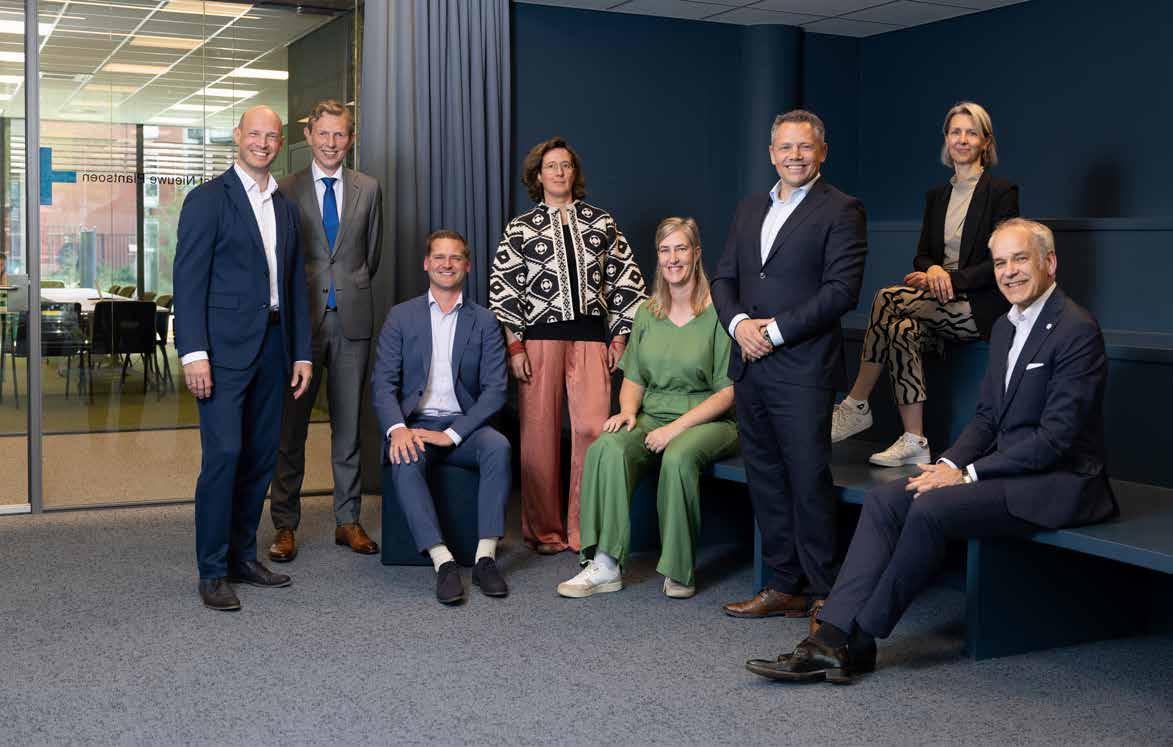
In 2025, the executive committee of Witteveen+Bos consisted of the two statutory directors Wouter Bijman and Maarten-Kees van Breukelen. Together with Marc Scheres, Leonie Koops, Edgar Rijsdijk, Harry Mols, Evelien Peeters and Hannie Dierx they form the executive committee. The supervisory board consists of Peter Reinders, Angelique
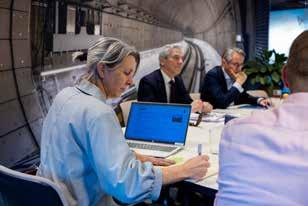
Heckman, Daniëlle van der Sluijs and Roland van Dijk. This composition means that Witteveen+Bos has a balanced gender ratio on both the executive committee and the supervisory board.
Witteveen+Bos wants the male-female ratio in the various management layers to be a proper reflection of its population. On the executive committee, the male-female ratio in 2025 was five to three. The distribution among the PMC leaders is 37 men and 7 women, while among the heads of departments the ratio was four men and three women. This means that the target values have not yet been achieved everywhere. This aspect will be an ongoing item for consideration in our appointment procedure.
The year 2026 and beyond
In 2026, our focus will be on further refining our impact areas and on the knowledge and innovation required to that end. Research and development (R&D) are primarily embedded in our projects and are carried out in close collaboration with our clients. We will strengthen our market position through deliberate choices in projects and investing in client relationships and multidisciplinary collaboration. This includes identifying development points in the knowledge, expertise and skills available. We therefore
started to draw up a knowledge agenda in 2025, which we will work out in 2026 into development pathways for crucial roles. We will invest in skills that are appropriate for a data-driven, professional organisation, and will remain focused on a healthy, inclusive working environment. This goes beyond technical expertise: process control, change management and interdisciplinary collaboration are becoming increasingly important as well.
AI plays a growing part in this context. We identify the tasks and roles that are changed by technology and the new competences required in order to remain future-proof. In 2026, we will continue to optimise processes, reinforce the coherence in innovation and digitalisation and improve the sustainability of our business operations by investing in a project portal. For the investments mentioned, we do not foresee the need for additional external funding. We will continue to invest in safety, connection and a culture in which colleagues develop and collaborate on our programmes with pleasure and confidence.
For 2026 we assume limited quantitative growth. We expect a personnel growth of less than 5 %. We expressly opt for qualitative growth instead of quantitative growth: better at what we do, how we collaborate and what social and economic impact we make, with permanent attention for liquidity and return. Through targeted and cyclical portfolio
management, we will retain grip, balance and coherence among PMCs and aim at synergy, impact and manageability. We will do so in a culture of entrepreneurship, trust and connection.
In 2026 we will celebrate our 80th anniversary. This milestone underlines the strength of the collective which Witteveen+Bos has been for generations, and gives extra meaning to our ambition to add value for clients and society as one organisation also in the future. It is with confidence that we continue building towards a future-proof Witteveen+Bos.
Deventer, 23 March 2026
Executive committee of Witteveen+Bos N.V.,
Wouter Bijman
Maarten-Kees van Breukelen
Edgar Rijsdijk
Evelien Peeters
Hannie Dierx
Harry Mols
Leonie Koops
Marc Scheres
Supervisory board report
With this report, the supervisory board of Witteveen+Bos N.V. (hereafter ‘SB’) provides the stakeholders of Witteveen+Bos with an insight into how the SB performed its supervisory role in 2025.
In hindsight, 2025 was a good year in a complex context for Witteveen+Bos
Witteveen+Bos can look back on a good year in an enduringly dynamic context at both national and international levels. At a national level, there was limited progress on dossiers relevant to Witteveen+Bos, such as housing construction and the nitrogen issue. Internationally, the geopolitical situation remained tense, with effects being felt in areas including the perception of national security.
Against this background, Witteveen+Bos ended 2025 strongly. Both its revenue and employee numbers developed positively, financial results were in line with the budget, and the order portfolio remained well stocked. A number of impressive assignments were obtained, some of which relate to the energy transition. This contributes to a stable foundation for the years ahead.
Effective collaboration with executive committee
The supervisory board is pleased with its collaboration with the executive committee (hereafter ‘EC’) in 2025. This collaboration was characterised by an effective balance between investigation of strategic topics –including in specific, themed sessions – and attention for operational matters in regular meetings.
Various strategic topics were central to discussions in 2025, including the company’s vision for the future, its corresponding long-term strategy, and the most appropriate governance model for the organisation. The formation of the EC was a concrete step in this process. The EC’s composition ensures that signals and issues present in the organisation are addressed
at the top level of the company quicker and in a more integrated manner. This contributes to the quality of decision-making both within the EC and in the EC’s interaction with the SB.
Important steps were taken on various strategic issues last year, with the strategy consciously being developed step-by-step. The portfolio analysis performed by the company, which provided insight into both impact on society and sustainable returns on service delivery, will support strategic decision-making in the future. The SB notes that the EC is maintaining a careful balance between providing strategic direction and preserving the entrepreneurial spirit deeply embedded in the organisation, together with the freedom of choice it entails. Other building blocks for the further development of the strategy – such as HR policy, ICT developments, and exploring possible supplementary services – were discussed by the EC and SB in themed sessions.
The more operations-related topics were addressed during regular meetings. These included capacity utilisation (CHscore), working capital, and developments in liquidity. The EC regularly devotes attention to these topics, which is appropriate to their importance for Witteveen+Bos’s further development.
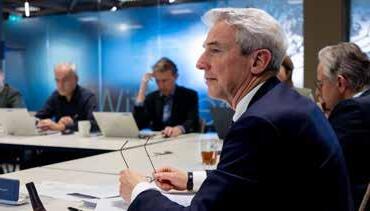
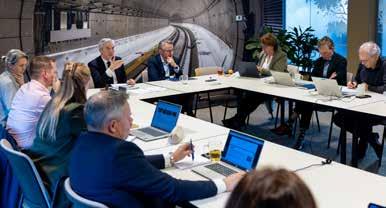
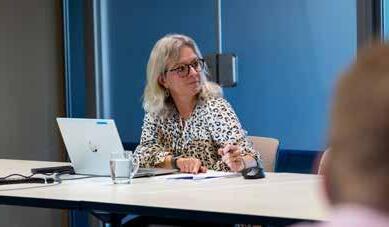
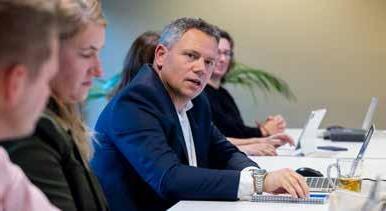
Devoting specific attention to digitalisation remains important to both the company’s services and its internal organisation. In 2025, Witteveen+Bos took steps in this area by including a director of innovation and transformation in the EC. This role oversees strategic transitions (climate, biodiversity,
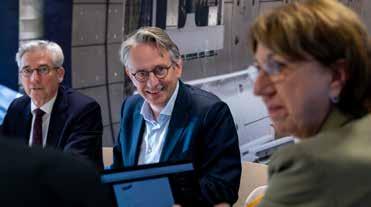

digitalisation) and strengthens innovation in the business lines by supporting and connecting them. It also proved possible to attract sufficient talent. But growth is not a goal in itself and always relates to the organisation’s strategic ambitions. Witteveen+Bos also remains attentive to safety, quality, compliance and digitalisation, with the EC applying specific policies in these areas.
The SB also held two meetings with the works council in 2025. The topics discussed included the company’s diversity policy and the tension between the freedom to act for managers deep in the organisation and the need for more structure to prevent apparent arbitrariness.
Continuity of SB ensured
The SB’s composition was stable throughout 2025. This ensured the continuity of the SB’s functioning. Collaboration within the SB was constructive.
Outlook for 2026
In 2026, several points of attention exist which will give shape to the SB’s role as supervisor and interlocutor. The EC’s focus will include the further concretisation of the company’s strategic course and related choices surrounding services, markets, and talent development. Attention will also be given to further developing the EC – both in terms of its internal collaboration and its connection to the organisation – and to effectively directing operational performance. The SB considers it important to combine clear and widely supported strategic choices with the flexibility required in everyday practice.
SB endorses profit appropriation proposal
The SB has discussed the annual financial statement with the EC and met with the accountant. Based in part on these discussions, the SB recommends that the annual general meeting adopt the annual financial statement and discharge
the statutory board of directors from liability for its management and policies and the SB for its supervisory duties.
Based on the EC’s considerations and analyses, it is clear that the continuity of the company is ensured by the EC’s profit appropriation proposal. The SB therefore endorses this proposal.
We thank Witteveen+Bos’s EC. It has taken concrete steps this year towards an effective governance model and a strategic framework. These will be further developed and implemented in 2026, which provides a strong foundation for the continued existence of the company. We also extend our thanks to all Witteveen+Bos’s employees, whose engagement, hard work, and mastery were essential for the result achieved in 2025. The SB also thanks the works council for the open and constructive dialogue in the past year. Finally, we would like to thank the clients for the trust they again placed in Witteveen+Bos.
In light of the above, the SB looks forward with confidence to 2026, which promises to be a year of continuous development for Witteveen+Bos and its employees.
Deventer, 23 March 2026
Supervisory Board
Peter Reinders (chairperson)
Angelique Heckman
Daniëlle van der Sluijs
Roland van Dijk
Strategic pillars as anchor
In this annual report, we use our new corporate strategy as a foundation. We report on 2025 using its three pillars: Talent and Knowledge, Organisation and Culture, and Portfolio.
In the Talent and Knowledge chapter, we devote attention to our people, describing how Witteveen+Bos is continually building a strong, future-proof knowledge base by developing, supporting and retaining talented employees, and through targeted recruitment where necessary. Also in this chapter, a selection of our talents from across the company talk about who they are and what motivates them.
In the Organisation and Culture chapter, we look at how Witteveen+Bos collaborates and innovates, and how we are organised. We also discuss the ways in which we ensure that our organisation remains agile and well-prepared for the challenges of both today and tomorrow.
Our portfolio is the heart of Witteveen+Bos, and in the Portfolio chapter we reflect more than 4,500 projects we worked on across the world in 2025. We show how these projects made a concrete contribution to solving the challenges facing society, and how they fit within our company’s six impact areas. This highlights the impact we make with our knowledge and projects for clients, communities and society.
Finally, what all this has brought us is discussed in the last chapter, Economic Value, which includes our financial reports for 2025.

Talent and Knowledge
Exploiting synergies in talent and knowledge
One of the strategic pillars of our refined strategy is Talent and Knowledge. Our people are the driving force behind our company’s ambition to make an impact on the challenges facing society through our ingenious solutions. Letting knowledge flow is in the hands of our employees and the community we form with our clients and collaboration partners. We offer talented employees the room they need to develop, and we stimulate impact through collaboration and knowledge sharing. In 2025, 1,710 colleagues deployed their knowledge and experience in this manner worldwide.
Labour market position
Just as in 2024, we experienced significant employee growth worldwide: from 1,578 employees at the end of 2024 to 1,710 at the close of 2025. Apart from the minor growth resulting from the acquisition of Maidl Tunnelconsultants, this was autonomous growth. In a tight labour market, we are managing to attract people to Witteveen+Bos with the unique opportunities we offer. One of the ways we do this is by actively contributing to education and offering internships and graduation project opportunities in collaboration with universities and other tertiary institutions in the countries where our offices are located.
In recent years, new Witteveen+Bos employees have increased in diversity in terms of educational background, nationality, and male-female ratio.
Attracting people with a diversity of backgrounds matches our desire to apply different perspectives, knowledge and experiences to the solutions we design.
Just as in 2024, the high number of new employees was accompanied by relatively low employee turnover (below 10 %), which indicates that we are effectively managing to retain colleagues.
1,710
A stimulating and healthy working environment for everyone
Unlike other years, this employee growth was coupled with above-average productivity and declining sick leave (moving average at WBRi: 3.3 %). We are managing to deploy new colleagues on projects in a pleasant and healthy manner, as underlined by the pulse check measurement developed in collaboration with Saxion University of Applied Sciences and conducted in November. On average, colleagues gave their vitality a score of 7.0 and their enthusiasm 7.7. These are great scores. But as well as there being colleagues who gave scores higher than this average, there were also those who scored their vitality and/ or enthusiasm lower. We are therefore continuing to work on creating an environment where the quality of work for everyone is high, and conditions are optimal for colleagues to contribute to our designs and advice.
We also strive to ensure that the diversity of our employee base is reflected in leadership roles in (project) management, expertise, markets, and our participation system. We are already devoting explicit attention to this in areas including language policy, recruitment and selection, promotions, development opportunities, and employment conditions.
Knowledge development
In 2025, we undertook a number of actions which have provided us with a good starting point for the further operational development of the Talent and Knowledge pillar. Good progress was made, for example, in strengthening learning and development on projects. The belief that learning is most effective when it takes place in daily practice – learning in the flow of work – was also further embedded in our organisation. This is reflected, among other things, in the further development of PLUSschool, which is now even better suited to the needs of designers, structural engineers, and project teams. Topics connected to company-wide programmes – such as those for digitalisation, biodiversity and climate, and leadership –were also integrated into our learning opportunities, helping employees immediately apply relevant knowledge and skills on projects.
Learning in the flow of work
On increasingly more long-term projects, clients and collaboration partners are valuing our view of learning and development on projects. On projects where many similar objects need to be designed or revised, for example, we find that organising knowledge sharing and assurance across project teams leads to better and faster results.

We also see that the natural W+B view of learning and development on projects can lead to career development in the form of different roles on the same project.
Last year, the Learning in Projects handbook was given wide attention. This handbook offers practical tools and methodologies for making learning conscious and accessible in project teams. These include moments of reflection, sharing successes and mistakes, and stimulating a growth mindset. Project managers and team members are actively encouraged to set aside time for reflection and feedback, which contributes to a culture of continuous learning and improvement.
Greater attention was also devoted to career development on projects. The Career Compass – the result of a collaboration between the business lines, HR advisers, and the Learning and Development group – helps employees determine their own development pathway and discuss it with their manager. This is in line with the increasing awareness surrounding career pathways and the importance of effective conversations on development for
colleagues at different stages of their lives. On tenders, too, we note that our attention for career development on (long-term) projects is valued by our clients.
Domain knowledge and skills agenda
External training costs (euro)
1,580,745
(2024: 1,059,526)
In order to be effective in our supply chains, we resolved to develop a knowledge agenda. We have so far made limited progress on this, as we first want to extend our portfolio analysis and the development of our impact areas and operational contexts. By spending more time on these tasks, it will become clearer what the knowledge agenda should comprise both in an overarching sense and with respect to specific impact areas. Nevertheless, we have already determined that a knowledge agenda is not only needed for ‘hard’ knowledge but also for skills, such as information skills (prompt engineering), computational thinking, risk assessment, process direction, and change management.
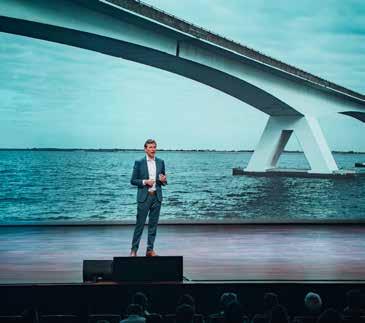
Tvarita Shivakumar
‘Small things matter because people matter’
‘The way snow crunches under your feet and feels soft in your hand are things I only recently discovered. Weather phenomena fascinate me. As a child, I was always looking up at the sky – and I was already worrying about global warming. When I recently experienced a snowstorm for the first time, I felt like that amazed little girl again. But the difference is that now I think about the climate and energy as part of my job too.’

From climate to people
‘I was born in India and grew up in Singapore. During my master’s in energy and environmental sciences, I discovered how science and policy come together on climate issues. My graduation project looked at atmospheric climate modelling. I worked on improving models that analyse human emissions in Europe. By adding oxygen signatures to the current emission models, it was possible to better calculate how emissions behaved and were absorbed in the atmosphere. Although I really enjoy those mathematical analyses, I realised fairly quickly that technical knowledge alone is not enough. Ultimately, the energy transition is about people: how do you ensure that solutions actually get accepted and applied?’
Visible results
‘Following my studies, I started working at Witteveen+Bos in Singapore. For a short while now, I’ve been working in the Netherlands. We’re currently working on a new district heating network for Sheffield in the United Kingdom. Eventually, it will provide the city with sustainable heating. Projects like this are challenging, because regulations, technology, and competing interests are all involved. At the same time, it’s exactly what makes this work so interesting: you’re working on something that you’ll actually get to see functioning later on.’
‘In my role, I do a lot of project management. I hadn’t expected it beforehand, but it suits me well. I’m learning how to direct teams and manage budgets, and how to bring people together to help a project move forward. But I also like to stay involved in the technical analyses – for example, by creating maps and connecting datasets to find the best solutions to the complex puzzles we face.’
Making complex matters understandable
‘What motivates me is the idea that small steps matter. You can’t always change an entire system in one go, but you can start by helping one project, one solution, or sometimes just one person move forward. Ultimately, it’s people who will make the energy transition possible. If we can explain complex, technical matters in a way that is understandable for everyone, and we can build up trust with clients and stakeholders, then projects can really get moving. That’s what I’m determined to keep working on in the years ahead.’
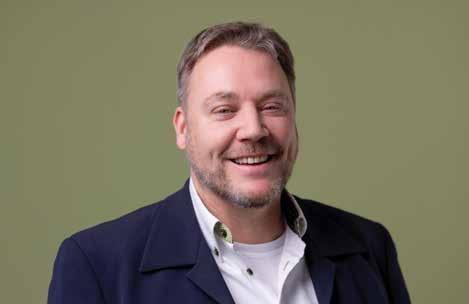
‘It’s
our job to reduce complexity’
‘As a project manager, I’m constantly adapting to the dynamics of a project. Projects never progress in a straight line, and everything you encounter along the way is just part of the game. I believe it’s our job to reduce complexity for stakeholders. We have to be able to say: if you turn this knob or make this decision, these are the consequences.’
‘Over the past fifteen years, I’ve worked exclusively on large, integrated projects. Currently, the energy transition is central: getting energy ashore from offshore wind farms, reinforcing the grid, and building new infrastructure for hydrogen and CO2. The more complex it becomes, the more I enjoy it. Each time the scope of projects has increased in scale, it’s been a milestone in my career. At each new level, you think: this is too much for me. But you manage anyway and take another step in your development. And then, sooner or later, an even larger or more complex project comes along.’
Curious about Patrick’s whole story?
Read it on www.witteveenbos.com/stories/employee-portrait-patrick-mulder
‘I
want to show people that it’s possible’
‘When I chose mechanical engineering at TU Delft, I knew I wanted to use my technical knowledge to make the Netherlands more sustainable. What I like about technical disciplines is that things can be factually accurate. You can argue about the best approach, but ultimately you have to determine together what’s correct from a technical perspective. In practice, that’s proven to sometimes be more complicated than I’d thought.’
‘During my studies, I realised how important it is for me to combine theory with practice. I was involved as a mechanical engineer in developing a hydrogen-powered race car. My focus was on making the battery pack as efficient as possible. It was lots of fun. But I also performed a communications role and did PR at events. I’d speak to people who were less optimistic about sustainability. That’s when I first discovered how important communication is in our line of work.’
Curious about Juul’s whole story?
Read it on www.witteveenbos.com/stories/employee-portrait-juul-schuurmans
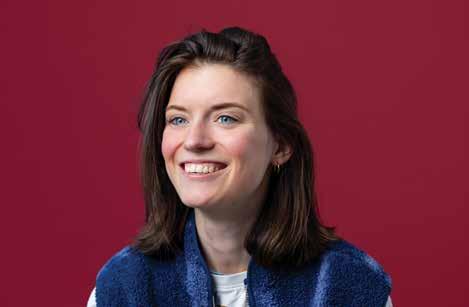
Juul Schuurmans
Patrick Mulder
‘The financial picture never tells the whole story’
‘During a training, a colleague gave me a note. On it was written: ‘Kyra gives innovative advice’. That surprised me. I don’t necessarily see myself as innovative. But in this new context I find myself in, it’s a nice compliment. As head of Finance, I take a different approach to that of my predecessors. It’s great to see that colleagues are open to that.’
‘Because of my financial inclination, I like to get straight into the details and examine the complexity. But the trick is to reduce that complexity to something understandable, so that you can make a connection with the rest of the organisation. I’m open to other people’s opinions and factor them into my decisions –both to ensure I make good choices and to generate support in all parts of the organisation. I believe it’s important to continually explore what connects us. I’m convinced that’s how you achieve the best outcome. The financial picture never tells the whole story: the big picture is all about balance. And to ensure that balance, you have to try to understand each other’s perspectives.’
Curious about Kyra’s whole story?
Read it on www.witteveenbos.com/stories/employee-portrait-kyra-den-ouden
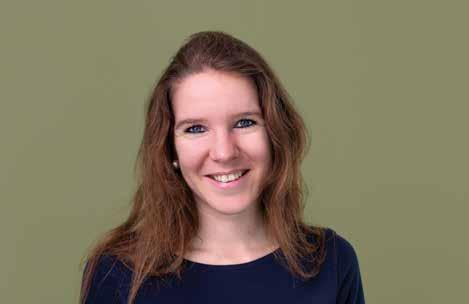
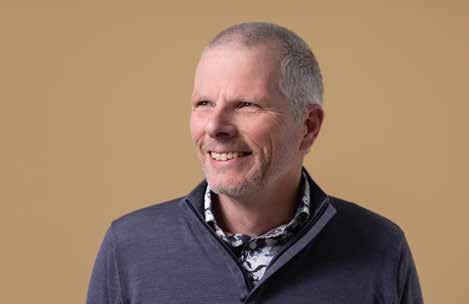
Harry Leerkes
‘When systems become too complex, they create risks’
‘Project managers have to deal with increasingly more quality, safety, environmental and information security requirements on projects. My role is to ensure that they can properly handle them. Because if systems become too complex, they don’t help anyone – they actually create risks.’
‘I was already working in a lab when I began studying environmental science part-time. I’d always been interested in it, as I grew up in the Veluwe. Later, I moved to consulting, where I became involved in quality management and certification. For several years, I carried out audits at a globally active certification institution. I learned a lot from doing that: you see how different companies approach quality and safety, and you get to know a wide variety of people and visions.
Curious about Harry’s whole story?
Read it on www.witteveenbos.com/stories/employee-portrait-harry-leerkes
Kyra den Ouden
Talent
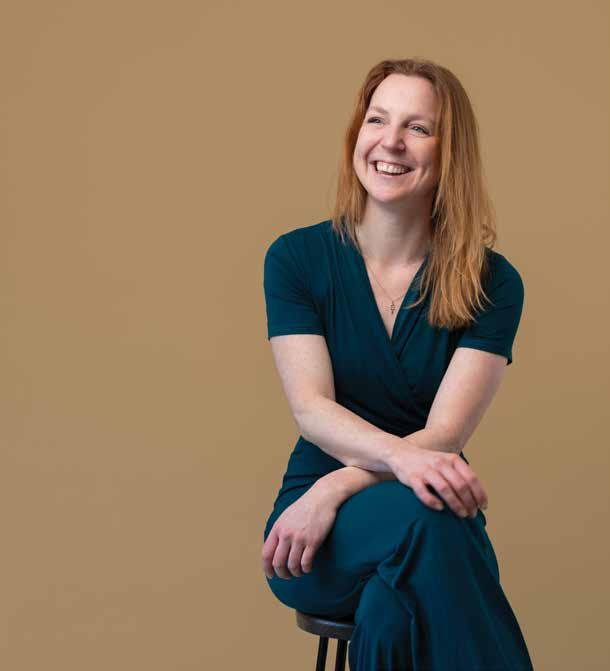
Not according to plan
‘I quickly realised that I’m more a generalist than a specialist. That’s why I now combine my technical expertise with the roles of project manager and group leader. Switching between these roles can be challenging: the focus you need for technical work is regularly interrupted. At the same time, it’s the variation which makes my work interesting.
‘As a team, we have close connections with universities and are involved in various pilots investigating technologies for the future. Pilots almost never go exactly according to plan: you’re often doing something for the first time and you regularly have to rethink your approach. But that makes it really enjoyable. In the coming years, I want to further automate repetitive work to free up time for the major water-related challenges of the future.’
Reusing water
‘For Brabant Water, we’re working on a pilot to turn seawater into a suitable source of drinking water for Brabant. We use reverse osmosis: water is pushed through a membrane at high pressure, which removes salt and other minerals. How can you scale up a pilot like this to full-scale? And what do you do with the waste? These aren’t just technical questions; they also involve legal and ecological considerations. The great thing is that all the relevant expertise is present at Witteveen+Bos.
Tiza Spit
‘Water is precious – we need to appreciate that’
‘My father works in the water sector too. I tried really hard to avoid following in his footsteps, but after two other study programmes, I ended up doing just that. At an orientation day for civil engineering, I thought: this feels right. Water involves everything: sustainability, health, and social relevance. I want to contribute to that.’
‘Projects like the seawater pilot are technically challenging and really interesting to work on. But if you asked me what the most logical next step would be, I see more potential in reusing water. We use huge quantities of water each day which, if we purified it better, we could use again. That would be a constant source.’
Reevaluating water
‘We have unbelievably good drinking water in the Netherlands, but we take it for granted. You even see videos on social media which allegedly prove that tap water is dangerous. That makes me angry, because the opposite is true: we have very high-quality drinking water. Water is actually too cheap if you consider how precious it is. If we use water consciously and appreciate its true value, we can safeguard its availability in the future.’
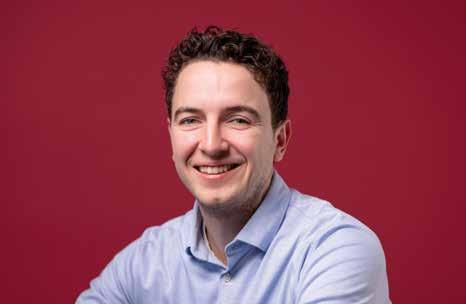
‘Structural engineering lends itself perfectly to programming’
‘I began in building engineering. I wanted to be an architect. But I soon became disappointed by the lack of attention for technical skills: are these ideas technically possible? I didn’t want to design something wonderful only for it to be changed later because it was structurally unfeasible. To really push boundaries, I needed to know where they lay. That’s why I moved to civil engineering.’
‘It was a difficult change. Suddenly my days consisted of doing calculations. As a structural engineer, you simplify reality into a formula. The trick is simplifying it in the right way – being conservative but not missing anything. Once you’ve done that, the rest is really just one big flowchart. You change the initial values, calculate, check, and then follow the same procedure again and again. That’s why it lends itself perfectly to programming.’
Curious about Rayaan’s whole story?
Read it on www.witteveenbos.com/stories/employee-portrait-rayaan-ajouz
‘This is a discipline that isn’t always understood’
‘Everyone wants a clean manufacturing industry, but chemicals – in other words, hazardous substances – will always be needed. That’s the field of tension I work in. If you choose to exclude all hazardous substances, then you miss opportunities and prevent innovative technologies from developing.’
‘Of course, working with hazardous substances involves risks. But if you eliminate every possible risk, then you’re optimally cautious and…nothing actually happens. For me, it’s about identifying risks, weighing up interests, and determining how innovations can proceed responsibly. That requires data, knowledge of substances as well as the law, and sometimes creativity. I want to understand the exact cause of things. Only then can you give good advice. But what if there’s no standard? How do you determine what’s responsible?
Curious about Jan Willem’s whole story?
Read it on www.witteveenbos.com/stories/employee-portrait-jan-willem-slaa
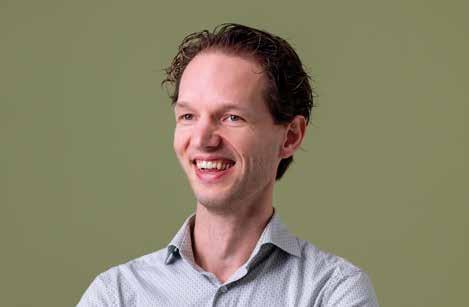
Rayaan Ajouz
Jan Willem Slaa
‘Ultimately, quality isn’t about standards; it’s about behaviour’
‘My involvement in quality actually came about by chance. An audit was planned but hadn’t been well prepared, and I had room in my schedule. Together with a colleague, I put together a handbook in three days. That experience taught me that quality offers great tools for organising work more simply and effectively.’
‘I studied biology and began working on the technical side of soil survey projects. But after producing that handbook, I gradually made an internal switch. Ultimately, the thought that I could improve processes and help colleagues do their jobs more easily gave me greater satisfaction. That isn’t as strange as it might seem: being responsible for quality means I need to understand the bigger picture and identify connections. Systems thinking comes naturally to me, and it was very useful during my biology studies.’
Curious about Ruth’s whole story?
Read it on www.witteveenbos.com/stories/employee-portrait-ruth-cartuyvels
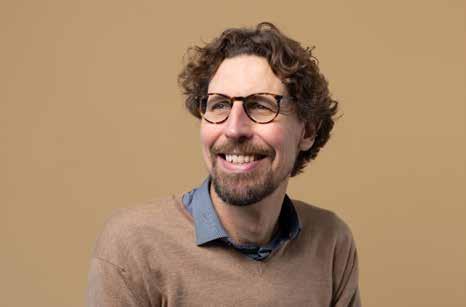
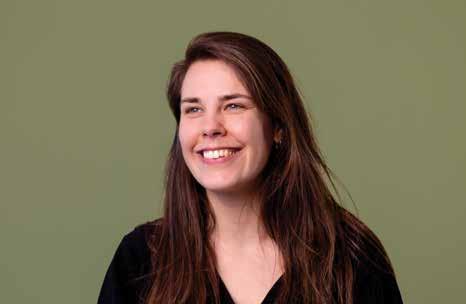
‘If you understand the system, you can take the right action’
‘I’m always interested in the bigger picture. Whether it’s water quality, biodiversity, or the way we collaborate: only when you understand how a system works can you take the right action.’
‘I’ve always had that broad outlook. As a child, I enjoyed listening to adult conversations and was interested in social issues. The Chernobyl disaster made a big impression on me. It made me environmentally aware. I chose environmental subjects so I could combine aspects of hard science and social science. In various places around the world at the time, including Siberia and the Philippines, I saw how serious water problems could be. It became clear to me that water doesn’t stand alone – it’s always a question of systems and the social context in which those systems operate.’
Curious about Sebastiaan’s whole story?
Read it on www.witteveenbos.com/stories/employee-portrait-sebastiaan-schep
Ruth Cartuyvels
Sebastiaan Schep
Organisation and Culture
Progress through change
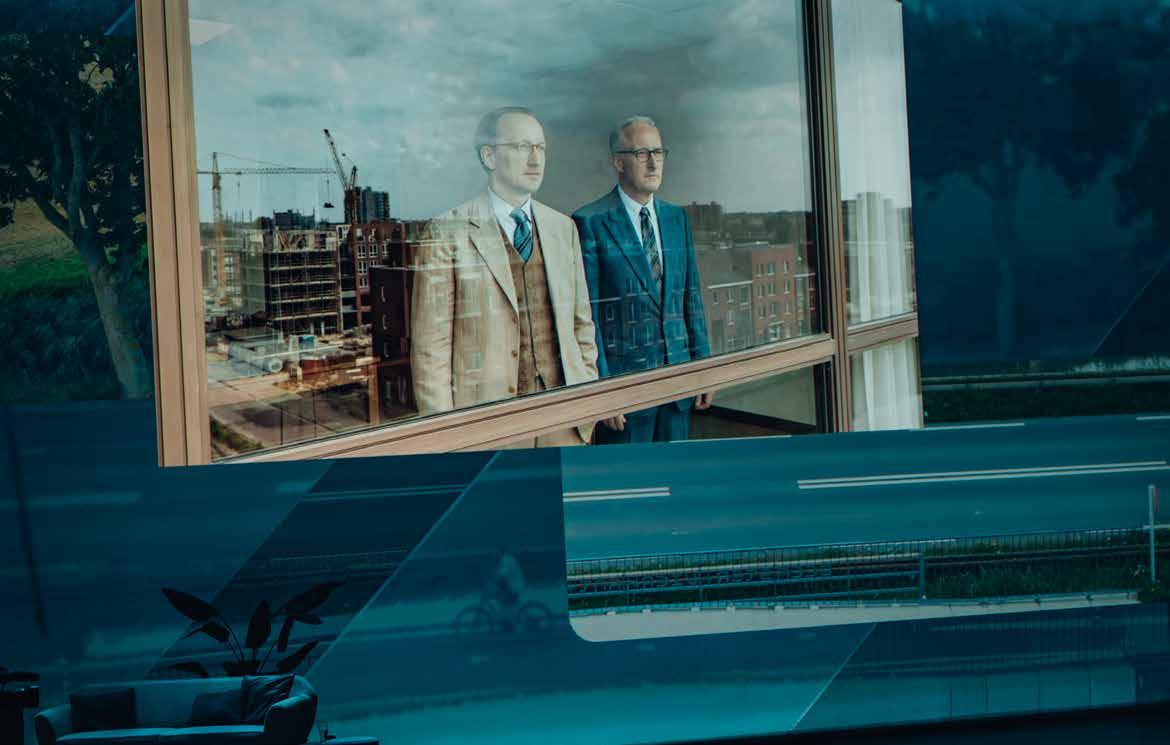
Since Witteveen+Bos’s founding in 1946 by Willem Witteveen and Goosen Bos, entrepreneurship has been one of our most important core values. Sometimes, when circumstances demand it, entrepreneurship means adjusting your course. In recent years, the world around us has changed rapidly and our organisation is changing with it. In 2025, we developed a refined strategic course and altered our governance model. We also appointed a director of operations and a director of Innovation and Transformation, ensuring focus and continuity on these topics and giving them a boost so that we remain agile as an organisation and well positioned for the challenges of our time. Urgent social challenges that also require attention within our organisation – in our business operations, on our projects, and in our advice – are biodiversity loss, climate change, and digitalisation.
Impact through our climate policy
An important aspect of the Organisation and Culture strategic pillar is our vision on biodiversity and climate. In 2022, we formalised this in our climate policy, whose practical implementation is being carried out on the Biodiversity and Climate programme. Last year, we took further steps on this programme to increase knowledge, insight, and opportunities
for action. Our focus was on developing methods to more effectively measure and monitor the impact of sustainability measures on our business operations. Attention was also devoted to applying biodiversity during the design process. The transition pathways for concrete, steel and excavation were also further developed. These provide direction and guidance for our own people and our collaboration partners in making the physical living environment more sustainable.
Together with other initiatives, our newly established internal Climate Academy and associated community is sharing and extending knowledge. In line with this development, a new programme team for Biodiversity and Climate was put together in 2025 to suit the next phase, in which the application, securing, and further extension of knowledge are central.
4.509
Number of countries where these projects were located
Number of completed projects
2.231 > 4.677
2.260
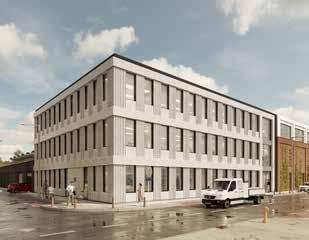
Developments in our premises portfolio also reflect our broader sustainability ambitions. In Arnhem, we opened a sustainable new location above the central train station that is fit out with circular office furniture. The addition of Arnhem to our portfolio also meets our employees’ need for a workplace close to home which makes collaboration with colleagues and partners possible. In The Hague, we relocated to a sustainable office building within walking distance of the different train stations. We also worked on sustainable premises outside the Netherlands. In the final months of 2025, for example, renovations began on a larger, sustainable office in Ghent, Belgium.
Witteveen+Bos is also taking steps to make employee mobility more sustainable, with the aim of further reducing our travelrelated climate impact. In 2025, we began implementing the Mobility as a Service concept in the Netherlands, through which employees can easily plan trips with various sustainable modes of transport. Progress lagged behind our original ambitions, however, in part due to technical challenges in the required data connections. As a result, part of the implementation process was postponed to 2026.
New steps in digitalisation
In 2025, further steps were taken in our organisationwide development of digitalisation and innovation. The appointment of a director of Innovation and Transformation strengthened focus on coherence, prioritisation and upscaling. New applications and methods are being experimented with in a transformation zone, with the aim of allowing promising initiatives to develop in a controllable way.
Our focus in 2025 was on jointly identifying and carrying out digitalisation tasks in combination with a governance and meeting structure that better suits the innovative nature of digitalisation. Digitalisation teams are active in both the business lines and the departments, coordinating with one another through a central meeting for cross-project issues.
We also continue to invest in strengthening our digital foundation. Our systems and infrastructure, including a central data location where we collect our company data and make it available within the organisation, have been further developed. Policy frameworks have been refined in areas including the responsible use of artificial intelligence and the secure handling of information within
the frameworks of ISO 27001, with attention focusing on security awareness in the organisation. The organisation’s digital knowledge position was also determined in order to give direction to further knowledge development.
These steps have led to visible improvements in day-to-day work, such as new and improved digital applications. Complete upscaling and wide adoption, however, take time. A shared image of the final destination and collective persistence remain essential for determining the pace at which further steps can be taken.
Important preconditions for this were met in 2025 with our renewed certification for ISO 27001 and our signing of the Digitaal Stelsel Gebouwde Omgeving (DSGO) at level 2. These steps help fulfil our ambition of structurally embedding digital collaboration and data exchange on our projects and in our services.
Safety
As consultants and engineers, we actively contribute to making the construction industry safer – through our designs, but also by acting as (on-site) supervisor during construction.
As a signatory to the Governance Code for Safety in the Construction Industry (GCVB) and participant in its lead group,
safety awareness is a point of attention in everything we do. Employees are trained to develop safety awareness, but it is also a requirement in our tenders and contracts.
In May 2025, Witteveen+Bos organised an extremely successful ‘safety breakfast’ for the GCVB, at which Witteveen+Bos’s managing director used a personal story to reveal the source of his safety awareness, and representatives from the entire construction supply chain discussed structural safety during a range of workshops. Internal audits, work area inspections, and personal safety checks provide us with a good image of the conditions in which employees – but also our service providers and other third parties – perform work on projects, and of their safety awareness. The results of these audits and inspections provide input for improvements in our processes and for training and awareness programmes.
Safe working environment
In 2025, a draft global health and safety policy was shared and discussed with the managing directors of entities outside the Netherlands and the programmes for psychological safety and well-being. The result was an improved global policy for healthy and safe working that will be implemented at all Witteveen+Bos offices in 2026. In 2025, no serious accidents occurred. Seven non-serious accidents took place, four of which resulted in injuries. One of these accidents led to an absence from work of longer than one day. In addition to these seven workplace accidents, nine accidents during commuting were reported. The regular internal and certification audits for the Safety Culture Ladder and SCC** took place and produced good results. The certifications were extended, with no deviations being found. At the start of 2025, an audit in Singapore resulted in the level of its existing bizSAFE certificate – a local safety ladder certificate –being increased from step 2 to step 3 (out of five).
SROI
Social Return on Investment (SROI) policy is aimed at creating more employment opportunities for people distanced from the labour market. Some of our public assignments feature SROI requirements. Our SROI approach in the Netherlands is based on four pillars: Work, Education, Social and Community-Based Activities, and Procurement.
For the Work pillar, we organised a career fair for elite athletes together with the De SportMaatschappij foundation. It took place at our Utrecht office in October. Former elite athletes are also distanced from the labour market. When they finish their sporting career, they can be viewed as starters in the labour market in spite of their typically older age. They often have the education but not the experience. In our company’s experience, the background and mindset of former elite athletes can make them a very valuable addition to a team. With this
knowledge, we gladly facilitate meetings between our business associates and (former) athletes looking for a career outside sport.
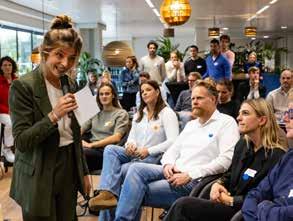
Knowing that starting young can be beneficial later in life, in April we introduced youthful visitors to technology at the Makersfestival fair in Zwolle. Children could participate in a racing game through a wastewater treatment plant or walk around the project site for a new bridge using VR glasses.
Working with integrity and engagement
At Witteveen+Bos, we strive to work for all our stakeholders with integrity and engagement. Our responsibilities and approach to working are set out in our company code, which all employees abide by worldwide. We support compliance through trainings, dilemma sessions, and assessments. Our company code is partly based on the OECD Guidelines for Multinational Enterprises and the ten principles of the United Nations Global Compact (UNGC) on human rights, labour rights, the environment, and anti-corruption. We are committed to human rights being upheld throughout the supply chain. Accordingly, we ensure a safe and fair working environment free of discrimination, and we only want to work with suppliers that support fair labour practices.
ESG reporting: VSME
The recent easing of CSRD requirements through the Omnibus package means that Witteveen+Bos no longer falls within the scope of mandatory CSRD reporting. In the coming years, therefore, we will be reporting in line with the voluntary VSME standard, which is more suited to the scale of our organisation and offers space for integrating sustainability step by step into our annual financial statement. This will give us time to better adjust our systems and integrate our data so that reporting processes remain feasible and provide direction. We strive for transparent, integrated reporting that provides clarity on our sustainability targets and performance while keeping administrative burdens manageable.
Use of publc transport for business and commuting purpose (km)
8,260,553
(2024: 7,813,046)
Business purposes
7,281,902
(2024: 6,809,056)
Commuting purposes
978,651
(2024: 195,308) BUSINESS OPERATIONS KEY FIGURES
Use of private cars for business purpose (km)
2,278,235
(2024: 2,806,270)
Use of company cars for businesspurposes (km)
841,117
(2024: 1,003,990) District heating (hot water in gigajoule) (2024: 2,076)
78,356
(2024: 685,616) Use of company cars for business purposes (l) (2024: 95,683)
Use of company cars for business purposes (kWh)
2,067
87,200
162,395)
1,851,411
travel (km) (2024: 2,591,616)
209,639
4,105
use (kg) (2024: 3,688)
1,809,412
2,031
of private cars for commuting purposes (km) (2024: 1,557,164) Use of company cars for commuting purposes (l) (2024: 3,466)
1,910,957
consumption (kWh) (2024: 1,706,839)
Impact areas
Whether it concerns sustainability, liveability, or social issues, we believe that change begins with concrete initiatives that make progress possible. Through our projects, we want to contribute to solving the major challenges facing society in our time.
Adding demonstrable value
With our Portfolio pillar, we are consciously focusing on deploying our knowledge and capacity on social challenges where we can make an impact while achieving healthy returns. For Witteveen+Bos, portfolio impact means taking on challenges – in various countries and contexts – where we can add demonstrable value. To help achieve this, in 2025 we organised our
project portfolio along six impact areas: Healthy Habitats, Sustainable Mobility and Infrastructure, Energy Transition, Climate Adaptation, Clean drinking Water and Sanitation, and Sustainable Built Environment. These impact areas connect urgent social challenges with our company’s strategic ambitions and knowledge positions. They are intended to serve as a guideline for project selection, expertise and innovation investments, and the further development of (international) collaboration.
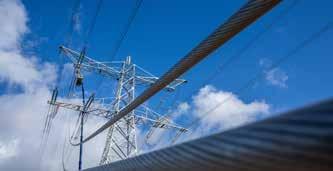
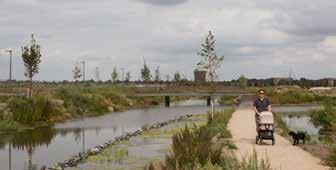
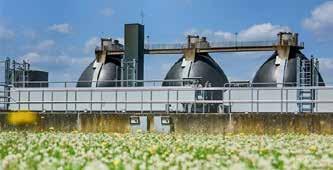
Impact areas in practice
The social challenges we work on are often too large and complex to solve on our own. That is why we are part of a network of partners, clients, organisations and communities. To genuinely make an impact, collaborating with these parties and possessing knowledge of this professional ecosystem is crucial. In 2025, we made progress in this area by critically analysing our market position per impact area, and engaging in dialogue with clients and colleagues. By assessing each impact area for synergy, impact on society, and returns, we obtained a clear picture of where our strengths lie, where room exists to grow, and how we can best deploy our innovation and expertise in the future. The following examples illustrate how we are putting these impact areas into practice on projects and innovations, and how they are being given shape through collaboration.
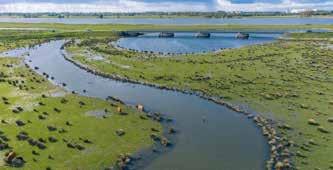
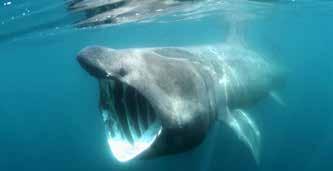
Sustainable Mobility
Within the Sustainable Mobility impact area, we are employing our design strength to expand and improve mobility and infrastructure in the most sustainable way possible. This means prioritising health aspects, carbon emissions, and living environment quality as much as accessibility and affordability. On the widening of the Yangtze Canal in the Port of Rotterdam, intensive collaboration is being carried out with the client to develop innovative, low-carbon materials solutions. On the assignment to renovate five traffic tunnels in ZuidHolland, meanwhile, urgency is required. The tunnels are at the end of their lifespans but remain important for accessibility in the region. Accordingly, they are being tackled simultaneously, with knowledge sharing essential to success.
Widening of Yangtze Canal in Maasvlakte, Rotterdam
Economic growth need not hold back sustainability. Proof of this is visible on the project to widen the Yangtze Canal, one of the most important waterways in Rotterdam’s Maasvlakte. Under a framework agreement for maritime engineering services, we are working on this project with the Port of Rotterdam Authority and their contractors to implement sustainable measures in designs and during construction.
This includes using smart tools and ECI-CO2 analyses to compare alternatives and reduce materials use; integrating shore power or autonomous power supplies into projects; and advising on
sustainable tendering criteria. We are also collaborating with the Port of Rotterdam Authority on studies and pilots, including soil and materials studies, clean and zeroemission construction, and innovative materials such as geopolymer concrete.
Implementing sustainable measures
The Port of Rotterdam is getting busier and busier, and the container ships of the future will be even bigger than today’s. To give these ships more room to pass one another and safely enter and leave the port, the Port of Rotterdam Authority is widening and deepening the Yangtze Canal along its entire length. Two new quay walls are being built to make this possible, with limiting their carbon footprint being an important consideration.
Read more
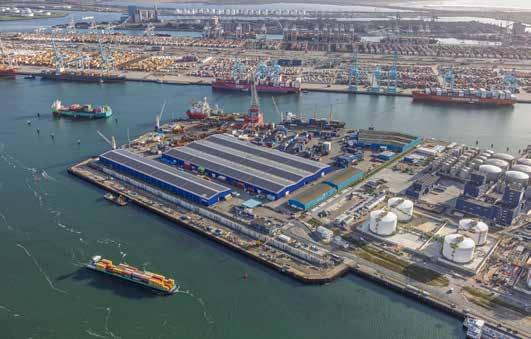
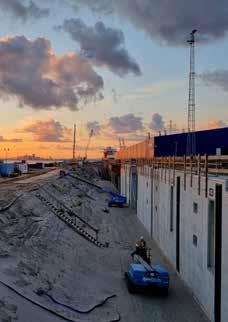
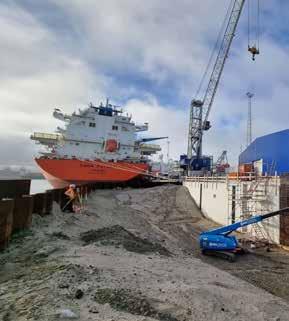
Tunnel renovations project in Zuid-Holland
Due to urbanisation and population growth, the intensity of traffic on Dutch roads is increasing. This has consequences for infrastructure, including tunnels. Of course, traffic flow through tunnels must remain as safe and smooth as possible. So to ensure that cities remain accessible and guarantee future road safety, five Rijkswaterstaat tunnels in the province of Zuid-Holland are being renovated between now and 2032.
Most of these public tunnels were constructed around the end of last century and the start of this one. As part of Tunnel Engineering Consultants (TEC) – since 1988, a permanent collaboration between Haskoning and Witteveen+Bos – we are working with Rijkswaterstaat to ensure the tunnels remain safe and usable for the next 30 years.
All milestones achieved on time TEC has been part of the Tunnelrenovatie Zuid-Holland project (PTZ) for more than three years now. So far, each of the project’s milestones have been achieved on time, including the contract award for the Noord Tunnel and the start of contract preparations for the Benelux Tunnel. This year, we are tackling five tunnels in various phases, which requires coordination and integrated collaboration.
Greater efficiency through portfolio strategy
On this project, we are employing a portfolio strategy which involves bundling the renovation of several tunnels and using overlapping schedules. This allows us to accelerate design and renovation tasks. There are two portfolios, with portfolio 1 consisting of the Noord Tunnel (A15), the Benelux Tunnel (A4) and the Tweede Heinenoord Tunnel (A29), and portfolio 2 comprising the Drecht Tunnel (A16) and the Sijtwende Tunnel (N14). Whereas it used to take seven years to renovate a single tunnel, a portfolio approach reduces that to around four years. Together with the use of overlapping schedules – in which tunnels are renovated successively and partly in parallel – this is hugely beneficial.
Read more
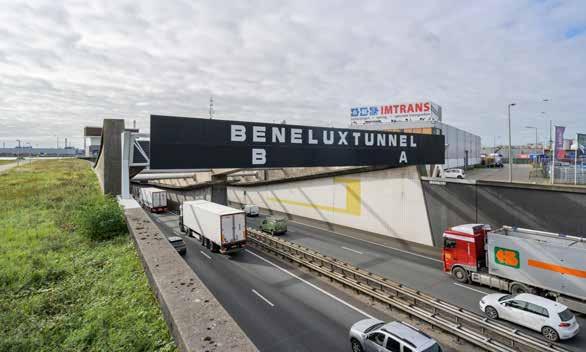
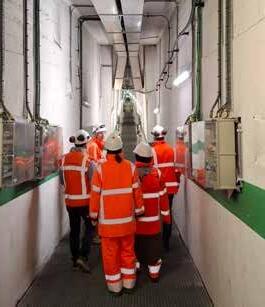
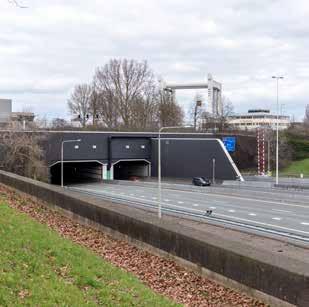
Energy Transition
The challenges within the Energy Transition impact area are enormous, as are the uncertainties. Our activities range from drawing up impact scenarios and advising on Regional Energy Strategies to designing high-voltage substations and overseeing stakeholder management. For TenneT, we are working as part of the EMERGE collaboration on various projects related to reinforcing the electricity grid. At the same time, our TIP digital tool is making the iterative design of energy systems possible for policy makers, consultants, and planners working on energy systems and related spatial issues at municipal, regional and provincial scales.
The huge task facing TenneT
The energy transition has resulted in huge demand for expansion and reinforcement of the electricity grid. Until 2040, TenneT is going to invest around EUR 65 billion in new high-voltage substations, cables, connections, and projects that promote circularity and biodiversity.
E-MERGE (Witteveen+Bos, Antea Group, Bilfinger) is involved in large integrated projects on this task, including for new high-voltage substations in Emmen and a 380 kV connection in the north of Noord-Holland.
Growing demand
These projects are expected to significantly increase capacity to meet the growing demand for renewable energy.
Integrated approach
Because of the complexity involved, planning, engineering, environmental research, and participation are running in parallel. The total lead time is ten to twelve years, most of which is taken up by the planning and design phases. To accelerate the project, TenneT and E-MERGE are adopting an integrated approach that features overlapping workflows, better transitions between project phases, and design standardisations. Suppliers are also being involved earlier, and automation and AI are providing opportunities to reduce repetitive tasks, saving time and costs to society.
Read more
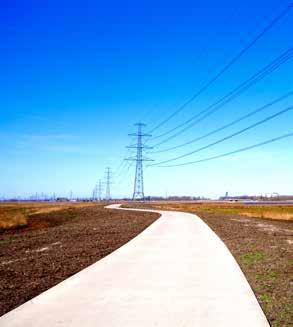
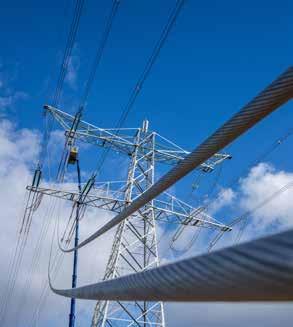
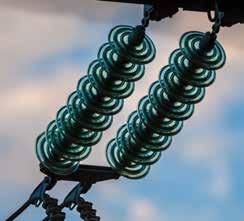
The human factor
‘Professionalism forms the foundation of any successful collaboration, but mutual trust, shared values and a shared sense of responsibility are just as important.’ Abdirezak Ljatifi, TenneT’s category manager for EU300, sees the human factor, alongside a professional approach, as crucial to delivering projects on time, within budget and to agreed quality standards. ‘In the initial phase, a conscious investment is being made in developing mutual understanding. That involves getting to know each other’s methods and gaining insight into each other’s interests, constraints and expectations. This prevents ambiguities in later project phases and increases the predictability of implementation and results. Ultimately, the shared goal is central: the timely and cost-effective delivery of projects that contribute to a reliable and sustainable energy supply.’
Tool for Integrated Programming (TIP)
Giving direction to efforts for a sustainable energy system requires effective communication between governments, grid operators, and energy-intensive industries. The Tool for Integrated Programming (TIP) makes it possible to design energy systems iteratively, focusing on the interactions between energy carriers, industries, scales, and impact on infrastructure.
Regional energy systems
TIP is intended for policymakers, policy advisers, and (energy) planners working on energy systems and related spatial issues at municipal, regional and provincial scales. It supports the (integrated) programming of regional energy systems. As a design tool, it also helps provide insight into policy plans’ mid-to-long-term impact (2040 and 2050) on regional energy systems. TIP focuses on policy areas (or ‘developments’) in which non-central governments have the freedom to act, helping these parties explore the available choices and their impact.
We are currently working towards a platform that features shared standards, which provinces, municipalities, grid operators, and other stakeholders will be able to use to upload and edit their visions on future energy systems. These parties can then prioritise the necessary grid investments and develop action-oriented policies for sustainably generating energy, organising energy-intensive industries, and increasing flexibility.
Further development with partners
The first version of TIP is now live and is being further developed for specific users. Recent
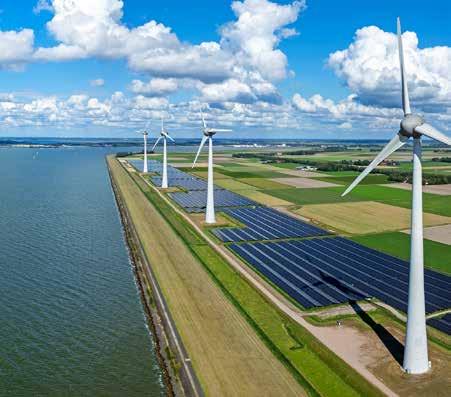
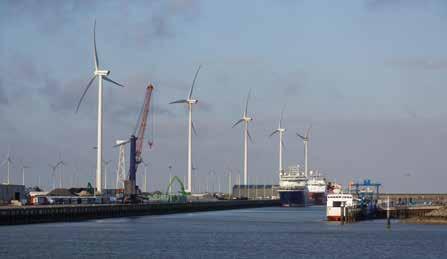
‘Tools like TIP are needed for a successful energy transition’
In the summer of 2025, user research was conducted among officials from municipalities, provinces, regions and grid operators in Gelderland, NoordHolland and Zuid-Holland.
The conclusion: tools such as TIP can make a significant contribution to the integrated, area-based planning of the energy system in terms of quality, speed and cost-efficiency. Tools help to make complex information understandable. The impact of choices becomes visible at various scales, with these choices and the complex energy data being translated into visualisations where appropriate.
This helps policymakers, administrators and other stakeholders to engage in substantive discussions with the best possible information and to arrive at supported, well-founded choices for integrated area-based planning.
user research – coordinated by SP IPE –revealed that tooling like TIP meets various user demands, and can make an important contribution to processes and products in the integrated area-based programming of energy systems. One of SP IPE’s recommendations is to centrally coordinate TIP’s further development and embedding.
Climate adaptation
Climate adaptation is about adapting to long- and short-term changes in our environment. It involves flood resilience as much as it does water quality preservation. This impact area shares much common ground with the others. The water quality and biodiversity stress tests we developed are perfect illustrations of this. The results of these tests provide water managers, site managers, and governments with tools for devising measures for improvement. Meanwhile, our years of experience in mangrove restoration are proving useful in several locations, with positive results being achieved in fighting coastal erosion as well as promoting biodiversity. The mangrove restoration project in Indonesia’s Sei Jang is one excellent example.
Stress tests
Climate change is threatening biodiversity in the Netherlands both under water and above it. Action is required, but where do you start? Together with its partners, Witteveen+Bos has developed two stress tests: one for water quality and one for biodiversity. These tests help answer a key question: Which waterbodies and areas of land are vulnerable to climate change and which are more resilient?
Together with Ambient, Witteveen+Bos developed the water quality stress test for STOWA for application on DPRA (Delta Programme for climate change adaptation). It gives water managers – local governments, water authorities, and the national government – a handy tool for identifying climaterelated vulnerabilities in their water systems.
Vulnerabilities
The water quality stress test has already proven its practical worth, including on projects by the HHNK and AGV water authorities, the Province of Overijssel, and Rijkswaterstaat. Together with the different Rijkswaterstaat regions and Witteveen+Bos, Rijkswaterstaat investigated the climate vulnerabilities of all 54 WFD waterbodies.
The investigation revealed that each waterbody is somewhere between vulnerable and very vulnerable. The causes vary widely from one water system to another, but the same factors occur remarkably often. These include
high nutrient levels, high toxicity, limited ecology, and a lack of natural dynamics. Rijkswaterstaat plans to consider the outcomes and use them to programme and prioritise.
Biodiversity
The second test is the biodiversity stress test, developed by Witteveen+Bos for the Ministry of Agriculture, Fisheries, Food Security and Nature. This test identifies the vulnerability of biodiversity to climate change using abiotic factors. In terms of method, the biodiversity stress test works the same as the water quality stress test. The difference is that it tests whether the preconditions for terrestrial flora and fauna are sufficiently present to ensure a healthy habitat – now and in the future.
Sandy soils
The test was developed for the whole of the Netherlands but first refined for application with sandy soils in high-lying areas. In the near future, the biodiversity stress test will almost certainly be adapted to and used for other soils, such as clay soils.
Solid foundation
ith the development of both these tests, Witteveen+Bos is making an important contribution to conserving and protecting our natural environment both under water and above it. The stress tests offer a solid foundation that provides water managers, site managers, and governments in a broader sense with tools for tackling current and future challenges.
Read more
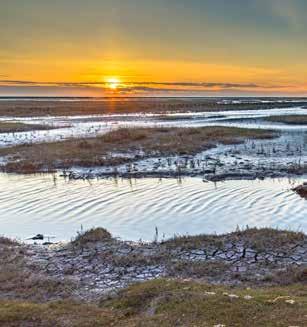
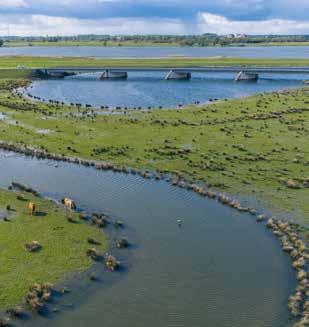
Nature-based solutions: robust foundation for successful mangrove restoration
At the end of 2025, a four-year evaluation was conducted of the mangrove restoration project in Sei Jang, Bintan (Indonesia). It produced extraordinary results. Monitoring – including by satellite technology – showed that 66 % of the planted mangroves had survived. This was aboveaverage growth. But the project also generated added value for both local biodiversity and the local community.
Witteveen+Bos possesses years of experience in planting mangroves, including on its semipermeable dam projects to combat coastal erosion in Demak (Indonesia).
Nature-based solutions are an important foundation for the successful restoration of mangroves. Planting mangroves successfully requires a systematic approach that considers all aspects of the ecosystem, including hydrological, ecological, historical and social factors. Working with nature – not against it – is vital to achieving long-term sustainability.
Nature+
The mangrove restoration project in Sei Jang has its origins in 2020. In that year, Jaïr Smits, the managing director of Witteveen+Bos Singapore at the time, formulated the goal of making Witteveen+Bos SouthEast Asia’s office carbon-neutral: ‘We consciously wanted to do that not by buying emission rights, but by committing to nature enhancement – or Nature+ as we call it. So we decided to set up a mangrove restoration project. Mangroves are one of the most carbon-rich ecosystems in the world. In the long term, they can serve as carbon sinks.’
Read more

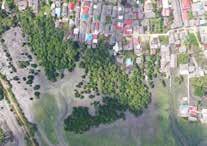
Sustainable Built Environment
Within the Sustainable Built Environment impact area, we are working to increase synergy on projects and collaborations in fields such as area design, buildings, ecology, planning studies, infrastructure, subsurface, and energy systems. The Wilderszijde project, on which a new residential area is being developed just north of Rotterdam, brings many of these fields together. For Antwerp’s urban area plans, on the other hand, the challenge involves reorganising existing urban environments to better position them for increasing climate challenges.
Wilderszijde residential development
Wilderszijde is an area development project in Bergschenhoek, just north of Rotterdam, where approximately 3,000 homes are being built. The Municipality of Lansingerland has formulated ambitious sustainability goals for this residential district and tasked Witteveen+Bos with making Wilderszijde climate-adaptive and nature-inclusive.
Wilderszijde is located on a green link between the Lage Bergse Bos forest and the Schieveen nature reserve. The shape of this link resembles a bow-tie, with Wilderszijde situated at its end. The district therefore plays a crucial role – in addition to its residential function – in the rural and ecological connection between two natural areas.
Wilderszijde consists of sixteen neighbourhoods, with construction taking place between 2024 and 2028. Witteveen+Bos’s role on this project is multifaceted, involving the creation of an integrated design for public spaces, primary infrastructure and civil engineering structures. At the request of the developers, we also provided an ecological design plan for the construction plots. In every case, we have ensured that living, home and nature reinforce one another.
Read more
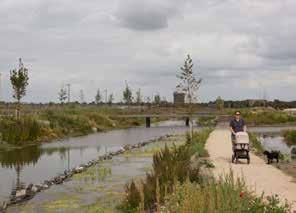

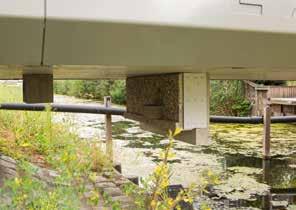
Lansingerland Council: climate adaptation at centre stage
‘The Municipality of Lansingerland has prioritised climate adaptation and nature-inclusive design for Wilderszijde from day one,’ explains Bregje van Spaendonck, Lansingerland’s project manager for the Wilderszijde Area Development.
Witteveen+Bos has been the linchpin in translating the ambitions of the Climate-Adaptive Building Covenant into practical area development. ‘The principles in the covenant have been made concrete using the funnel method. This has taken into account policy rules and EIA obligations. The nature-inclusive measures matrix provided, and continues to provide, important guidance for the choices made.’
‘It is unique that Witteveen+Bos does not present one single definitive solution for each task. Instead, experts analyse the objectives with an integrated approach and translate these into various options and scenarios, highlighting the pros and cons. This enables the project team to arrive at the best solutions with maximum synergy and to work together towards integration and sustainability.’
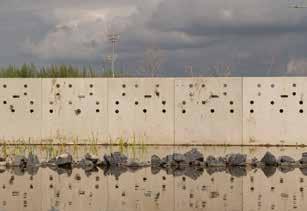
Urban area plans for water and greenery in Antwerp
Climate change is producing longer periods of heat and drought, coupled with less frequent but more intense rainfall. The consequences of this are experienced even more extremely in cities due to the prevalence of hard surfaces. With urbanisation also resulting in biodiversity loss, the combined effects on the living environment are significant. The City of Antwerp has started preparing for the future. Through urban area plans, it is anticipating future developments and giving concrete form to the ambitions of its water, climate and greenery plans, and to the conclusions of its drought study. On this project, phased and substantiated plans are being developed for a number of urban areas – initially, Stadspark, Brederode, Kiel and Tentoonstellingswijk, with a third assignment now underway for the Oud-Berchem-Zurenborg and Borgerhout areas.
The urban area plans are about making the respective areas of Antwerp more climate-resilient. In the initial studies, Witteveen+Bos drafted a plan with design firm De Urbanisten and communications partner Common Ground for the area surrounding the Stadspark park. Witteveen+Bos was responsible for the hydrological-technical and biodiversity component, and supported De Urbanisten and Common Ground in, respectively, design and participation.
Vito Timmerman from De Urbanisten and Witteveen+Bos project manager Ben Catry are collaborating on this project. Vito is involved as project manager in drafting the urban area plan for Oud-Berchem-Zurenborg and Borgerhout. Vito: ‘Together with the client, the City of Antwerp, we’re now looking at how we can apply the results of the plan to implement change in the areas. How can we make it as easy as possible for them? Our efforts have resulted in a comprehensive document, but what ultimately matters is which parts of it can be implemented to improve the areas’ climate-resilience.’
Ambitions
The urban area plans are aimed at building a climate-resilient Antwerp with a strategic water-and-greenery network. Ben Catry:
‘In these plans, we indicate specifically how and where water and greenery can be given strategic, high-quality locations. Redeveloping the urban areas will prevent flooding during instances of heavy rainfall – which are occurring more frequently and are more intense – but it will also result in water being retained and buffered. This will increase the supply of groundwater, which combats drought.’
On top of this, the plans employ experiential greenery to reduce heat stress by offering shade and through transpiration. This greenery is strategically arranged to produce sufficient cooling spots for use on hot summer days. The cooling spots are connected by green belts in strategic locations, creating an ecological corridor. Ultimately, the green locations and corridors will enhance the quality of the city and stimulate an increase in biodiversity, with the visible and tangible nature of these ecological structures increasing their experiential value and, in turn, raising climate awareness.
Phased plans
Each plan is divided into three phases. In the first phase, a comprehensive analysis is made of the current and historical situation of the area and potential obstacles are identified. In the second, scenarios are outlined in which the predetermined ambitions are made concrete. The effectiveness of each scenario is then calculated, with the effective solution pathways being used to produce a concrete plan in the form of an accessible system-and-vision map. In the final phase, the strategies are incorporated into an action plan and accompanying communication plan.
Vito: ‘It’s important that the project is supported in the city. First and foremost, officials have to be behind it. At a later stage, when the plans are implemented on the streets, more participation will be involved. We have to have the support of residents too. The City of Antwerp is only responsible for public land, but we hope that the plans can also be contributed to from private spaces. It’s the task of the project team to determine how achievable the ambitions are.’
Read more
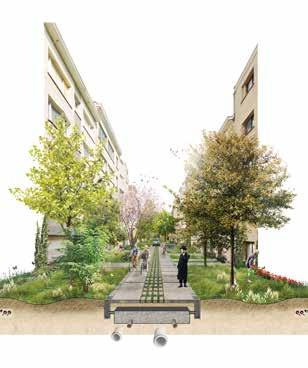
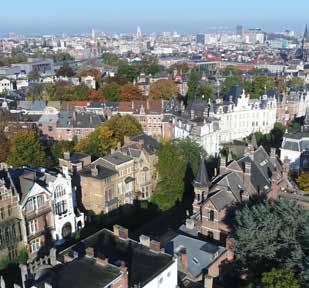
Clean drinking Water and Sanitation
Across the globe, drinking water presents a challenge in terms of both availability – now and in the future – and quality. The same is true of surface water. Water authorities, in particular, must address this challenge. Within the Clean drinking Water and Sanitation impact area, we are helping the Vechtstromen water authority modify eight of its wastewater treatment plants so that they comply with Europe’s Water Framework Directive. Witteveen+Bos is also working on large-scale sludge digestion projects at various treatment plants. These efforts will produce green gas that can be distributed via the natural gas network.
Centralised sludge digestion: a step forward in the energy transition
Water authorities are playing an increasing role in the energy transition by digesting sewage sludge to form biogas, which can be fed into the natural gas network after being upgraded to green gas. Centralising this process, instead of performing it at individual treatment plants, can result in significant benefits for efficiency and sustainability. According to research in 2022 by Unie van Waterschappen, centralisation could increase green gas production by a factor of 2.5.
The Vallei en Veluwe water authority is currently taking on this challenge with a central sludge digestion installation in Ede. From 2027, this installation will process sludge from several treatment plants in the region, ultimately producing enough green gas for around 2,200 households and capturing CO₂ that can subsequently be sold.
The project in Ede is being carried out by CLC Water*. The client and contractors are
collaborating intensively as a construction team, which accelerates the design process and reduces risks. Important design challenges – such as customising silo dimensions due to height restrictions – are solved together at an early stage.
An important insight from earlier projects is that permit and design processes should be closely integrated. By allowing for uncertainties at an early stage and incorporating freedom into the design, problems after submitting the permit request can be avoided.
On this project, human aspects precede technical processes. Regular contact is needed for coordination, but also for team building. If the construction team partners are attentive to one another’s interests, a better flow in the design process results.
Read more
*A collaboration involving ADS Group, Nijhuis Saur Industries (not involved in this project), Witteveen+Bos, Pannekoek GWW, and Moekotte, supported by Iv.
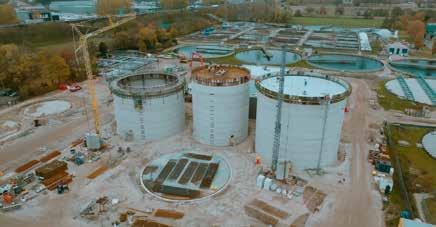
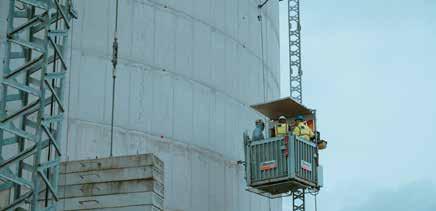
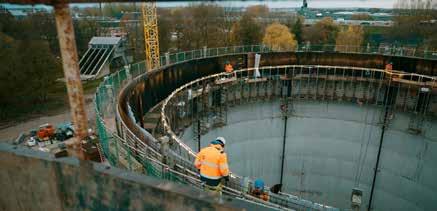
WFD: clean water for Vechtstromen water authority
The Vechtstromen water authority – active in Gelderland, Overijssel and Drenthe – is modifying several of its 23 wastewater treatment plants so that their effluent conforms to WFD target values. For eight of these plants, the water authority is collaborating with Haskoning and Witteveen+Bos on a unique, programme-based approach on which work is being carried out in parallel.
Water quality in the Netherlands is threatened by phosphate and nitrogen emissions, which lead to algae growth, oxygen deficiencies and biodiversity loss. In line with the European Water Framework Directive (WFD), water authorities are taking measures to improve surface water and groundwater quality. This includes modifying treatment plants to increase their capacity to remove phosphates (phosphorus) and nitrogen.
Standardised building blocks
Collaboration on these projects differs from the traditional client-contractor model. An integrated programme team is employed, complemented by a project team for each plant and a central review team from the water authority. Successful collaboration depends on regular coordination, flexibility, a shared physical and digital working environment, and above all trust in one another’s expertise.
Where possible, standardised building blocks (e.g. for sand and fabric filters) are being developed on the programme and then refined for each plant. This standardisation initially demands more time and energy, but saves time later. The detailed designs for the plants in Hengelo, Goor and Denekamp have since been completed, and construction work has commenced. Ultimately, all plants must be operational by no later than 1 January 2028.
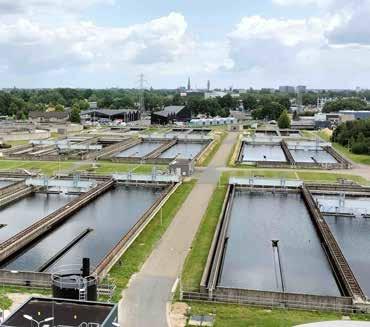
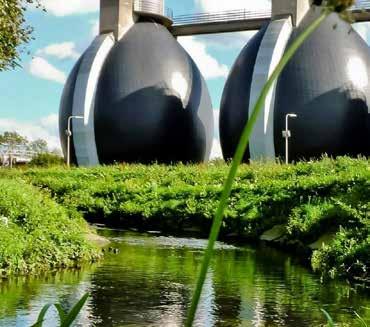
Starting well makes all the difference
‘A programme-based approach, which includes using standardised building blocks, costs more time at first compared to a custom approach for each plant. But later in the process, we end up saving time,’ explains Vechtstromen’s Jeroen Ensink op Reimer, who is involved in the programme in a number of roles, including as a core team member.
Various building blocks have been developed on the programme, including for the sludge thickening building, the fabric and sand filters, and the methane storage structures. ‘We got various disciplines within the water authority involved, developing the blocks together in the preliminary design phase. Later, in the detailed design phase, the detailing and adaptation is done for each location.’
One of the building blocks has since been used in a treatment plant outside the programme. ‘That’s a nice bonus. It will save a lot of time and energy if the blocks are rolled out further. It creates organisational transparency, and we don’t have to start from the beginning each time.’
Healthy Habitats
Human activities – including for the energy transition – are leading to the steady decline of biodiversity. This is worrying, because where species diversity declines, ecosystems are at risk. Ecosystems involve complex networks of connections and dependencies. Accordingly, challenges within the Healthy Habitats impact area require comprehensive ecosystems knowledge. Both on the eDNA project and on our research into the effects of anthropogenic electromagnetic fields (EMFs), we are building up a solid foundation of this knowledge.
The influence of electromagnetic fields on fish
Annemiek Hermans has finished her PhD on the effects of electromagnetic fields on sharks and rays. During her research at Wageningen University & Research (WUR), as well as on her projects at Witteveen+Bos, Annemiek has regularly come into contact with Niels Kinneging. At Rijkswaterstaat, Niels is responsible for Descriptor 11 in the Marine Strategy Framework Directive (MSFD), European legislation aimed at protecting the ecosystems and biodiversity of oceans, seas and coasts.
Descriptor 11 (D11) concerns adding energy to water –a consequence, for example, of (installing) wind farms and cables, whose effects include underwater noise and electromagnetic fields (EMFs). With his physics degree and fascination for sound, Niels was perfectly suited to this assignment when he became involved in 2013. Niels: ‘D11 was the last topic added to MSFD – in 2008 – so it’s relatively new. That means a great deal of knowledge needs to be developed before nature conservation measures can be devised. In my opinion, that knowledge development should happen within the golden triangle: the government in collaboration with research institutes and universities as
well as market participants. Knowledge and experience should flow from one party to the other, which is what I’m trying to encourage.’
Infancy
The knowledge development for D11 began with underwater noise. EMFs were added later, and the knowledge area is still in its infancy. Annemiek: ‘I set up the Marine Ecology group at Witteveen+Bos around 2019. Of course, we then had to look for assignments to build up our portfolio. We submitted a tender to Rijkswaterstaat for research into impulse noise. Even though we’d tried really hard to satisfy the criteria, we weren’t awarded the assignment. So I contacted Niels to find out what we could do better the next time. It turned out that although our content was good, we lost because of our rates.’
Research topic
But a connection had been established, and other opportunities would follow. Niels: ‘For some time, I’d felt that EMFs would be added to D11, and I thought it’d be good for the Netherlands to take the lead in knowledge development. So I asked Annemiek to write an advisory report.’ For Annemiek, this had multiple benefits: it led to assignments for her group at Witteveen+Bos – which now handles EMFs as well as noise – and it provided her with a unique research topic for her PhD studies at WUR.
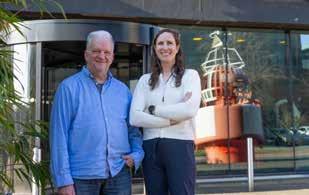
Specialist knowledge
ElasmoPower is the name under which research is being conducted into fish species sensitive to electric and magnetic fields, and into the impact on marine environments of installing wind farms and power cables. It is being carried out by a consortium that includes Witteveen+Bos. Niels is a member of the steering group, which makes him an excellent discussion partner for Annemiek: ‘He has an awful lot of specialist knowledge on the topic. That’s unusual in an organisation where knowledge is often outsourced. His combination of technical and ecological expertise is truly unique.’ Niels: ‘It’s true that I’m very much driven by content. That’s why even after a 40-year career, I’m still working with sound and am still not bored by it. I’ve always been given that freedom at Rijkswaterstaat. A lot has been achieved in noise research, and I’m really satisfied with that – but we’re not even close to being finished yet.’
Annemiek: ‘Sometimes, I think everything’s going really slowly. But when you look back, you see that a lot has been done. What really helps, especially on a niche topic like this, is being able to work with someone whom you can tell what you really think. And who also works hard on the content when necessary. This is the kind of sustainable relationship we strive for at Witteveen+Bos, because it helps you get to the essence of things faster.’
Read more
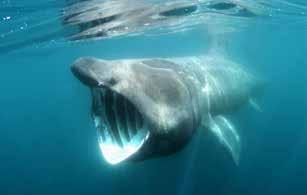
Developing systems knowledge with eDNA
Developing systems knowledge with eDNA
Successful collaborations are often the product of good personal relationships – people with the right knowledge or network who share an intrinsic motivation and a common ambition. A decade ago, Kees van Bochove of Datura Environmental Solutions and Sebastiaan Schep of Witteveen+Bos met at an inspiring STOWA conference on innovative techniques. Sebastiaan, with his knowledge of water management and ecosystems, and Kees, with his laboratory background and knowledge of DNA analysis, shared a propensity for systems thinking. They soon suspected that their combined knowledge could be very useful for water and nature managers.
Kees: ‘I’m a doer. Soon after our conversation and a few messages back and forth about suitable locations, I started taking water samples to see what kind of data they provided. That was in spring 2016.’ Sebastiaan adds: ‘In December, we were already meeting with several water managers to pitch the idea to test the quality of surface water with eDNA.’
Engagement
Sebastiaan believes it is important to approach innovation development like a normal paid project as much as possible: ‘That hugely increases engagement, and it forces those involved to think in terms of application.’ Finding clients willing to pay for innovations can be difficult, but seven water managers were immediately enthusiastic about the idea. Enthusiasm and confidence in the idea, and involving water managers early, were the success factors.
Ten years on, almost every water authority has been involved for at least a year. Further developing the technology with these water authorities has also resulted in it being integrated into practice, with the biggest achievement being the Delfland water authority’s plan to use eDNA regularly from 2027. This proves that innovation is possible – but it requires patience. Sebastiaan: ‘It often depends on a couple of fanatical promoters. I sometimes think that we could have
spent the time that went to promoting it on developing the idea instead, but that’s not how it works.’
Focus on succes
Effective collaboration is all about trust. Matters such as budget allocation can be tricky, but having the courage to trust that the other party is fully committed to the project is essential. Occasionally, something will go wrong – for example, during sampling or the exchange of data – but that is to be expected from people’s work. Kees: ‘We both know that we have that drive to do better. No one wants it to fail. You need each other, and we fulfil our promises to one another.’ Sebastiaan: ‘Above all, you have to keep acknowledging the overall progress: not judge each other on small setbacks and focus on success.’
Sebastiaan: ‘The possibilities extend so much further than just surface water. You can get eDNA from soil and air too – or from drinking water or sewage. At Witteveen+Bos, we’ve set up an eDNA core team to look at what other opportunities exist and what we want to concentrate on in the near future.’
Kees: ‘Because Datura is not that large, we have to make choices about what we focus on. Over the next two years, we’ll be concentrating on using our eDNA technique for bats and soil quality. Development of the technology will continue for some time, which is also our strength. Witteveen+Bos is helping us remain involved in multiple topics.’
Entrepreneurship
The collaboration that emerged from that chance meeting ten years ago has thus resulted in a successful innovation, which also received the Vernufteling prize. But Sebastiaan and Kees are only starting to achieve what will ultimately be many great things. Besides their personal relationship, this is due to the entrepreneurship they both possess and their ability to think in terms of possibilities. To do that, you need to look beyond your own company or clients. As Sebastiaan puts it: ‘If you just sit at your desk all day, there’s no possibility for chance encounters.’
Read more
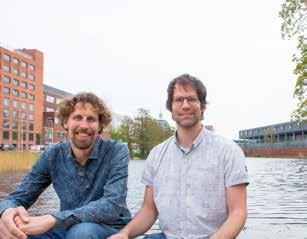
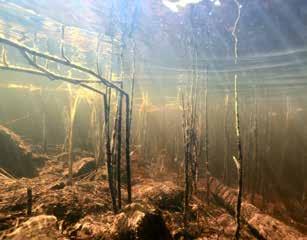

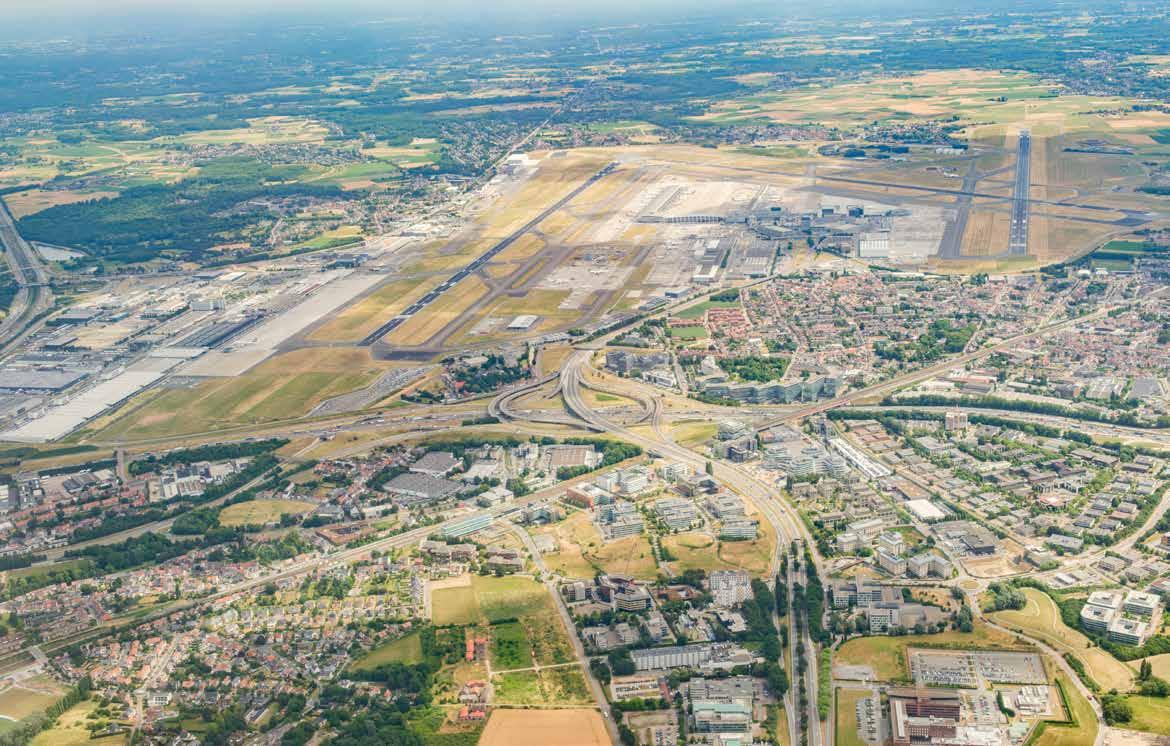
Economic value
Financial basis
Witteveen+Bos consciously invests in innovation, digitalisation, sustainability, and the development of our people and organisation. A sound financial basis is essential for this, enabling us to finance strategic choices – such as international expansion or acquisitions – and continue generating value in the long term.
224,747
(2024: 196.685)
196,686
(2024: 174,701)
Healthy results
In 2025, we achieved a 14 % increase in revenue and a net result of EUR 22.5 million. Although this net result is slightly lower than in 2024, we are proud of these figures. Our costs increased more than our revenue, however, mainly due to targeted investments, relatively strong employee growth (so that salary costs outstripped chargeable hours), and exceptional expenses such as consultancy costs for our pension fund.
Targeted investments for the future
In 2025, we invested heavily in our digitalisation agenda, our Biodiversity and Climate programme, a new office in Arnhem, and the acquisition of Maidl Tunnelconsultants GmbH (90 % stake as of 18 March 2025). These investments required additional capacity, higher salary costs, and more internal development hours – costs necessary for future value generation and the strengthening of our strategic position.
22,475
(2024: 23,281)
Productivity, work in progress, and points of attention
Our productivity remained at the budgeted level, which indicates that teams are working together effectively. Revenue growth was achieved, but despite a decline in 2025, the balance of projects in progress remained slightly high. Managing working capital, invoicing in a timely manner, and project control remain important points of attention. Liquidity, too, demands extra attention, but our financial position remained solid and future-proof.
Control measures and outlook
In 2025, steps were taken to monitor risks and project progress more broadly during PMC discussions. In 2026, this will be reinforced with internal financial awareness campaigns, improved dashboarding, and continued attention for profitability on each project.
Consolidated balance sheet (before profit appropriation)
Instructions for the reader
This summarised annual financial statement is a condensed version of Witteveen+Bos N.V.’s 2025 consolidated annual financial statement. It does not include all the information provided in the consolidated statement, and it should be read in conjunction with that more expansive document and the accounting policies it outlines and explanatory notes it provides. The 2025 consolidated annual financial statement of Witteveen+Bos N.V. can be obtained from the company.
Principles for preparing consolidated balance sheet, profit and loss account, and other financial
statements
Witteveen+Bos N.V.’s consolidated annual financial statement, from which this summarised statement is derived, was prepared in accordance with Title 2.9 (Book 2) of the Dutch Civil Code.
Change to financial reporting principles
From 2025, the company accounts for joint ventures using the equity method (‘nettovermogenswaardemethode’) instead of the proportionate consolidation method. See the consolidated annual financial statement for comprehensive explanation and financial reporting principles.
(all amounts in thousands of euros)
Consolidated profit and loss account
Consolidated cash flow statement
(all amounts in thousands of euros)
Independent auditor’s report
To the supervisory board and board of directors of Witteveen+Bos N.V.
Our opinion
The summary financial statements 2025 (hereafter: ‘the summary financial statements’) of Witteveen+Bos N.V. based in Deventer is derived from the audited financial statements 2025 of Witteveen+Bos N.V.
In our opinion the enclosed summary financial statements are consistent, in all material respects, with the audited financial statements 2025 of Witteveen+Bos N.V. on the basis described in the disclosures.
The summary financial statements consist of:
1. The consolidated balance sheet as per December 31 2025.
2. Consolidated profit and loss over 2025.
3. Consolidated cash flow statement for the year 2025.
Summary financial statements
The summary financial statements do not contain all the disclosures required by Dutch law, title 9 book 2. Reading the summarized annual results and our report thereon, therefore, is not a substitute for reading the audited financial statements of Witteveen+Bos N.V. over 2025 and our auditor’s report dated March 23, 2026.
The audited annual accounts and our corresponding audit opinion
We expressed an unmodified audit opinion on the audited financial statements 2025 of Witteveen+Bos N.V. in our auditor’s report of March 23, 2026.
The board of directors’ and supervisory boards’ responsibilities for the summary financial statements
The board of directors is responsible for the preparation of the summarized annual results on the basis as described in the disclosures. The supervisory board is responsible for overseeing the company’s financial reporting process.
Our responsibilities
Our responsibility is to express an opinion on whether summarized annual results are consistent, in all material respects, with the audited financial statements based on our procedures, which we conducted in accordance with Dutch law, including the Dutch Standard 810 ‘Assignments to Report on Summary Annual Accounts’.
Utrecht, March 23 2026
Deloitte Accountants B.V.
Signed on the original: S. Bakker
Financial health
Financing the acquisition of MTC led to higher long-term liabilities, which resulted in a slight decline in our solvency ratio (from 47.9 % to 44.7 %) and current ratio (from 1.76 to 1.64). Despite these developments, our foundation remains appropriate for the growth strategy we have chosen, together with a focus on reducing work in progress and improving liquidity management.
solvency as a percentage
44.7 %
(2024: 47.9 %)
Net working capital in thousands of euros
29,513
(2024: 30,471)
Participation system
Net profit margin as a percentage
(2024: 11.7 %) 10.0 %
Witteveen+Bos’s shares have been in employee hands since 1992. Our participation system helps us fulfil our mission. It stimulates entrepreneurship, increases engagement, and contributes to the long-term continuity of Witteveen+Bos. For a healthy participation system now and in the future, enough shares must be available for new participants and sufficient room must exist for new partners. This is why the system has significantly grown in its more-than-30-year existence. As at 1 July 2025, the company is owned by 984 participants (who hold 19.0 % of total shares), 133 partners (27.5 %), 28 premium partners (17.8 %), and 21 senior partners (35.7 %).
Colophon
Editorial team
Witteveen+Bos
Concept and design
Houdbaar
Images
Witteveen+Bos
Viorica Cernica
Gerrit Vermeulen
Fonger de Vlas
DMP
Shutterstock
Rijkswaterstaat image archive
Havenbedrijf Rotterdam Bureau Beeldtaal
Thanks to all our collaboration partners, clients, and colleagues
Witteveen+Bos N.V.
Leeuwenbrug 8
Postbus 233
7400 AE Deventer
The Netherlands
+31 570 69 79 11 info@witteveenbos.com www.witteveenbos.com