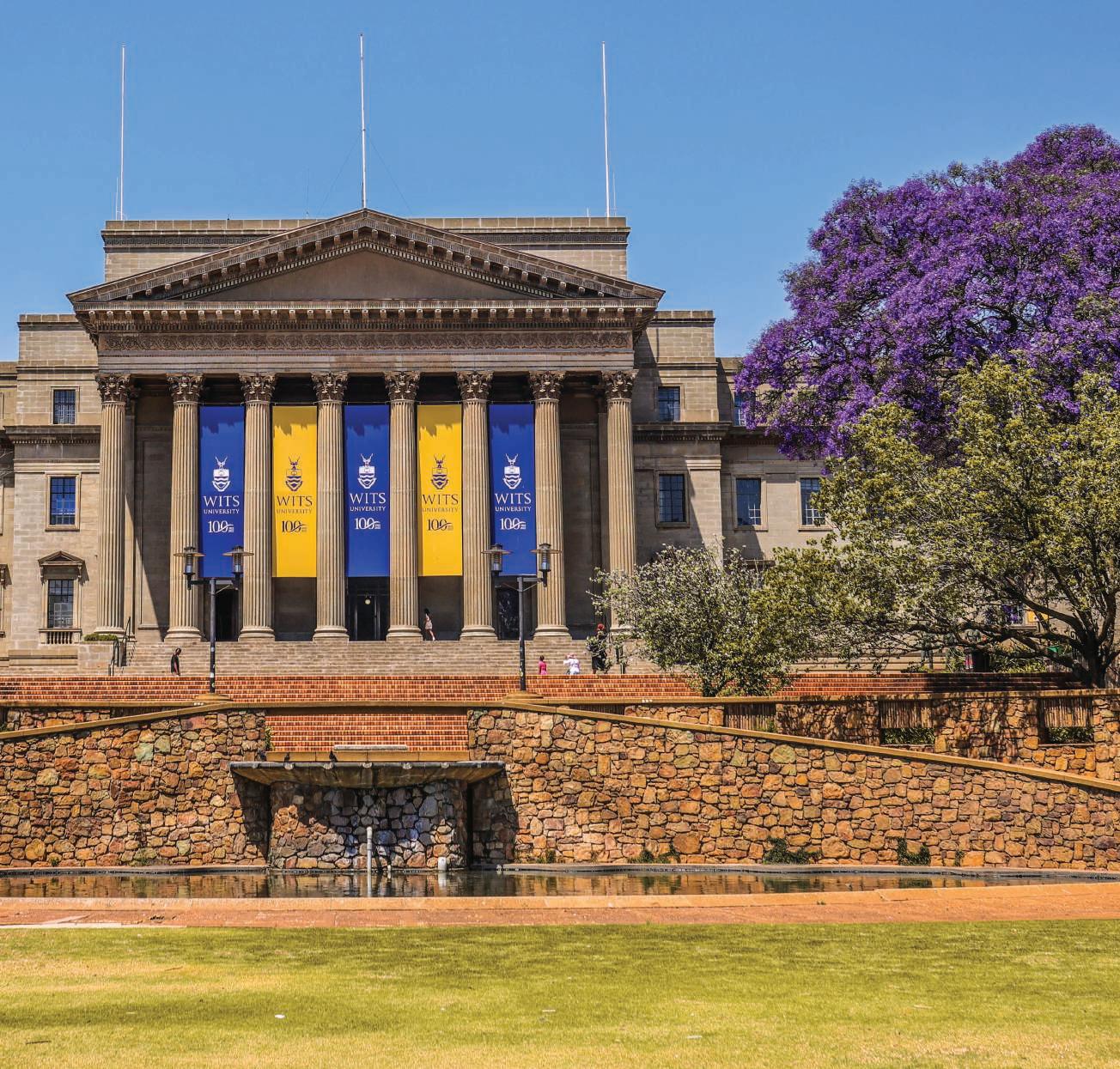
The University of the Witwatersrand (Wits University) is a leading African university ranked in the top 1.5% of universities in the world. Wits had celebrated over 100 years of academic and research excellence, social justice, and the advancement of the public good. In our pursuit to impact humanity positively, our innovative technologydriven research aims to transform and prepare society for a collective and common digital future. Our research output has doubled in the past five years and offers new ways to impact society for good, as well as astounding ‘moonshot moments’ that give us hope and inspiration.
WELCOME TO WITS!
Internationally recognised for academic excellence, the University of the Witwatersrand, Johannesburg, remains one of the top universities in Africa, particularly for postgraduate students looking to further their studies and to make a positive impact on society.
At Wits, almost 40% of our student body is made up of postgraduate students. By 2026, we hope to have increased this to 45%. Wits produces high-calibre employable graduates. We stimulate debate and cultivate open-mindedness, critical thinking, creativity and ethics.
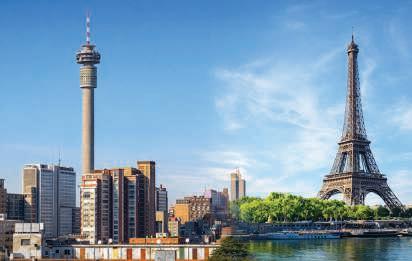
Located in the centre of Johannesburg, the economic heartbeat of Africa, Wits gives you the opportunity to produce innovative, impactful research that changes disciplinary thinking, influences policy and generates economic activity.
As a researcher at Wits, you will create new knowledge to address 21st Century challenges and inspire talented young students to shape our shared future. You may even help to inform policies on the sugar tax, national health insurance or the national minimum wage.
Perhaps you will collaborate with the best physicists in the world at CERN, or work with other leading researchers to find solutions to deep-level mining problems in Africa. Maybe you will work with the team that performed the world’s first intentional liver transplant from a mother living with HIV to her HIV-negative child.
At Wits, you will find an environment that nurtures the freedom of expression, protects academic liberty, and encourages intellectual debate. We empower our staff
and postgraduate students to push the boundaries of knowledge and to tackle fundamental research questions.
We empower our staff and postgraduate students to push the boundaries of knowledge and to tackle fundamental research questions.
At Wits, we produce publications of the highest quality and work hard to sustain the interplay between teaching and research.
We are proud of the leaders who have emerged from Wits, and the roles that some of our students have assumed, both pre- and post-graduation.
We look forward to welcoming a new generation of postgraduates to Wits!
Wits. For Good
400+ buildings
7 campuses (including the Wits Rural Campus)
9 libraries
14 residences Commercial companies (Wits Health Consortium and Wits Enterprise)
1 short course company (WitsPlus)
Wits owns the Sterkfontein Caves in the Cradle of Humankind World Heritage Site and the Wits Donald Gordon Medical Centre, a private teaching hospital
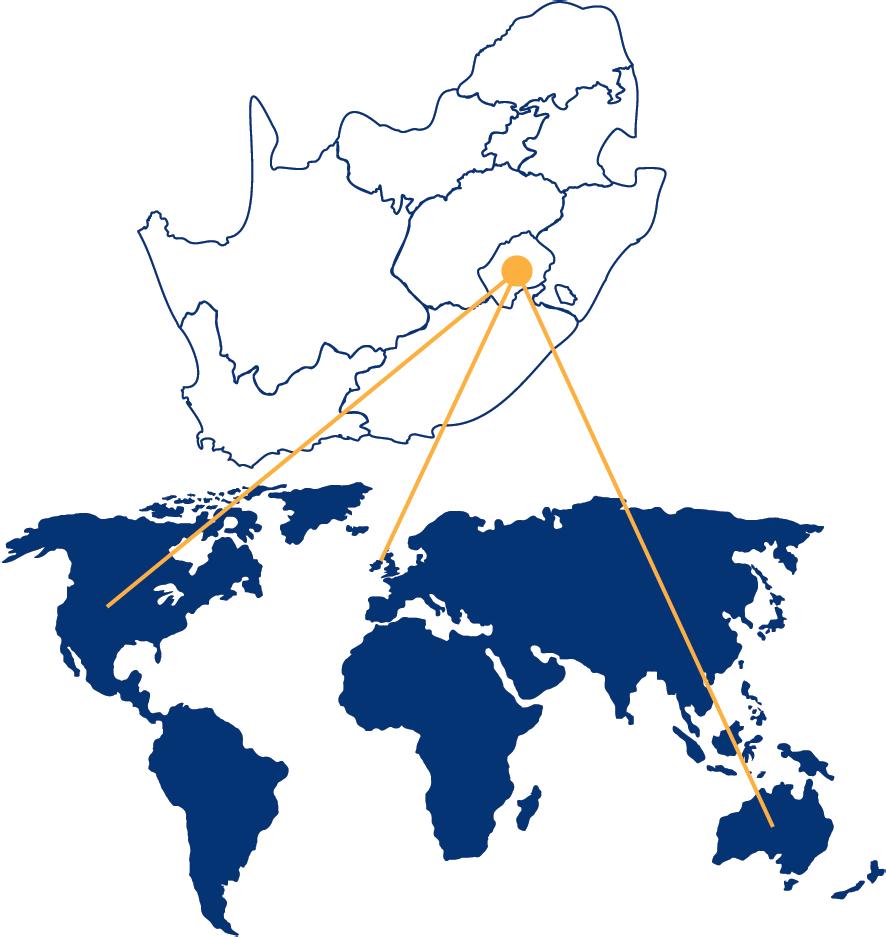
Wits has offices in the UK, USA, and Australia
DEVELOPING EMPLOYABLE GRADUATES
About 10 000 highly employable students graduate annually
graduating
Of those employed, 96% employment within six months of +200 000
98 th in the world graduates in 102 years
find
Ranked for Alumni Employability (CWUR)
Ranked 54th in the world based on the number of Fortune Global 500 CEOs
(Times Higher Education (THE) Alma Mater Index)
Ranked 21st in the world in the QS World University Rankings for Employment Outcomes
OUR 8 PRIORITY AREAS
Driving digital transformation
Catalysing innovation and entrepreneurship
Ensuring better health for all
Solving global challenges
Advancing society, governance and justice
Future-proofing our national treasures
Developing the next generation of leaders
Energising broad-based alumni support
OUR IMPACT FOR GOOD
A-rated Academics
(recognised by peers inter nationally as global leaders in their fields)
Department of Science and TechnologyNRF Centres of Excellence
South African Research Chairs of Wits authored publications are in inter national jour nals
Specialised Wits research entities = 68, made up of 12 large institutes, 22 centres, 3 innovation hubs, 26 research groups, and 5 research units Wits’ research output has increased by almost a third in the last specialised research entities
Wits trains the highest number of clinical specialists in South Africa
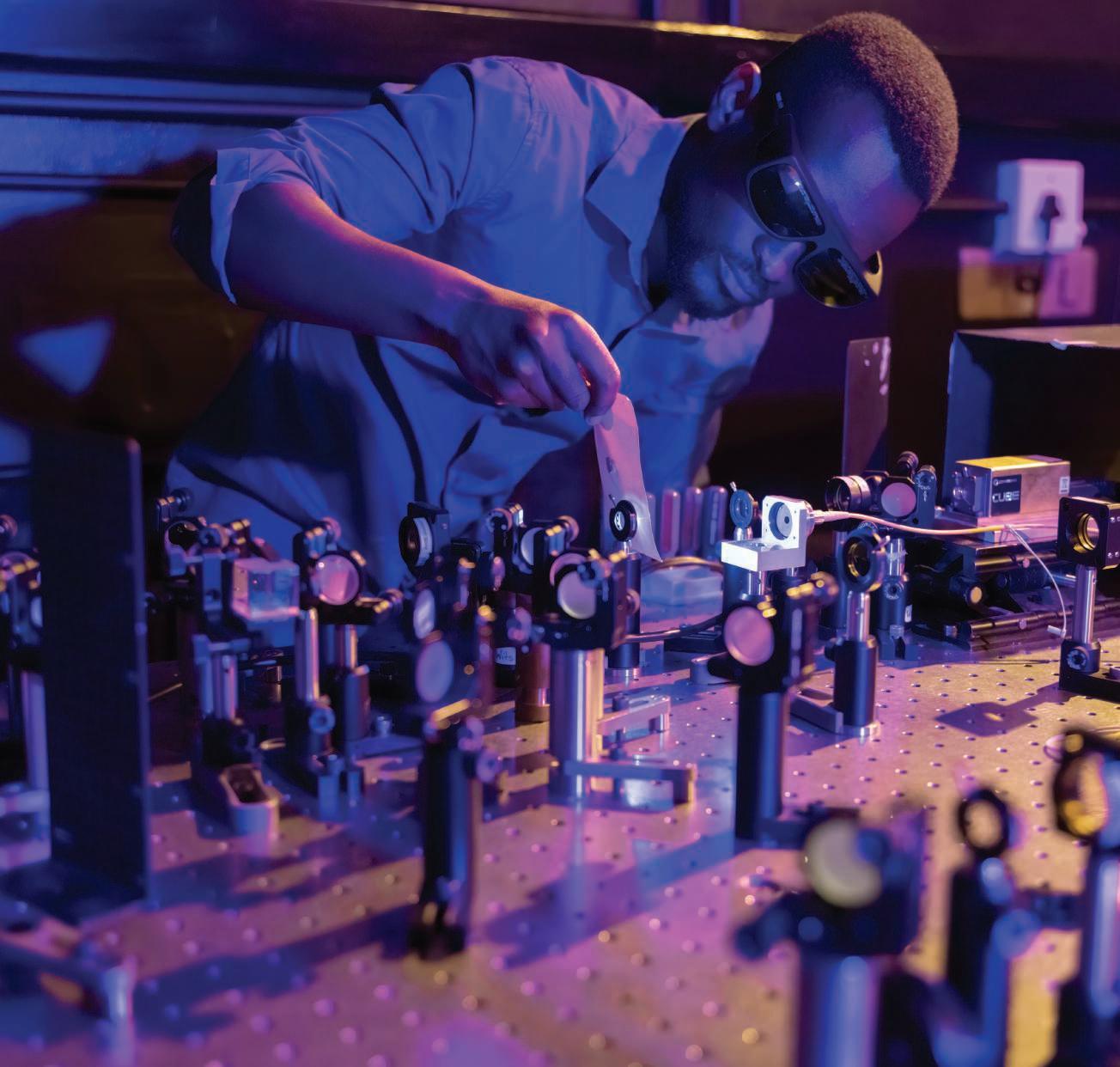
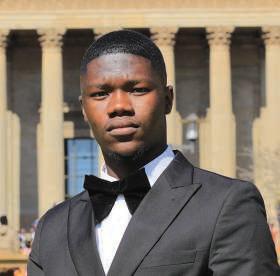
Isaac Nape, a distinguished PhD graduate, has recently been honoured with the inaugural Optica Emerging Leader in Optics Chair, marking a significant milestone in his burgeoning career in quantum optics. This prestigious position, established by Wits University in collaboration with Optica, aims to spearhead advancements in experimental quantum optics and further research in structured light.
POSTGRADUATE STUDIES AT WITS
Become globally competitive and locally relevant with a postgraduate qualification from one of Africa’s leading universities.
AN INVESTMENT IN YOUR FUTURE
The 21st century is a period of extraordinary change. New information is generated on an unprecedented scale and the world of work is changing rapidly. More careers are becoming multidisciplinary, requiring jobseekers continuously to adapt and learn new skills. Lifelong learning has become imperative.
In this changing job market, postgraduate study can open more doors and enrich your employment prospects, while satisfying your natural intellectual desire.
Not only does a postgraduate degree from Wits provide you with a greater understanding of your chosen field of study, it also equips you with other highly valued professional skills. These include critical thinking, creativity, and collaboration skills, and above all, the ability to be a lifelong learner.
10 REASONS TO BE A WITS POSTGRADUATE STUDENT
1. Wits is renowned for its high-calibre graduates, academic standing, and research capabilities.
2. Wits challenges you to develop original thinking, which is the cornerstone of intellectual growth.
3. Wits University has been ranked among the top 301-350 universities in the world according to the Times Higher World University rankings 2026. It also attained the highest research score among universities in Africa, based on its research output and its reputation for producing research that moves society forward.
4. According to the Shanghai Ranking Consultancy, Wits is among the top 201-300 universities in the world in 13 subject areas – a proud achievement for an institution that celebrated its centenary in 2022.
5. Our focus on producing research with impact ensures that Wits students and staff operate at the leading edge of their disciplines.
6. Wits has mutually beneficial partnerships that promote research and enhance the postgraduate experience.
7. Nearly 40% of our student body is made up of postgraduate students.
8. We provide quality training to postgraduate students, while at the same time enriching the University’s undergraduate teaching.
9. We stimulate debate and cultivate openmindedness, critical thinking, creativity, ethics and a strong sense of social responsibility through teaching activities that promote meaningful learning.
10. According to the latest Global Employability Survey and Ranking, directors and recruiters consider Wits graduates to be some of the most employable in South Africa.
Wits University was ranked within the top 1.5% of universities worldwide according to the QS World University Rankings (2026).
Dr Isaac Nape
HONOURS PROGRAMMES
Kick-start your postgraduate career with an Honours degree from Wits
Build your current skills set. Increase your knowledge base. Hone your critical thinking skills. Show prospective employers that you have a higher capacity for independent learning and research. This is all possible with an Honours degree from Wits.
Isn’t an undergraduate degree enough to land me a job?
An undergraduate degree is important for laying the groundwork but a postgraduate qualification takes your knowledge and skills to the next level. With a more in-depth approach to your specialisation, you will gain an entirely new perspective on your industry and, with so many voices vying to be heard in the graduate job market, an Honours degree will help you stand above the rest and be noticed.
Wits offers a comprehensive choice of Honours programmes across five faculties, intellectually stimulating research areas, and excellent supervision and research support. We also offer funding for meritorious students and those in financial need.
Honours degrees run over a year of full-time study or two years on a part-time basis.
MASTERS AND PHD PROGRAMMES
Different students have different reasons for studying their Masters or PhD. Some do so in the hope that either qualification will improve their career prospects, since many employers view these qualifications as an indication of a person’s character and capabilities. Other students enjoy the chance to pursue their undergraduate subject at a more advanced level. Whatever your motivation, Wits remains the perfect institution to give you what you’re looking for.
OUT MORE
www.wits.ac.za/postgraduate/
Wits is the top-ranked university in sub-Saharan Africa for innovation performance in the 2025 Global Innovation Index – a remarkable achievement. Our researchers and innovators are making their mark in the global arena – take Dr Precious Matsoso for example, who has just been named as one of Nature’s 10, a list of people who shaped science in 2025 and Prof Benjamin Rosman who was named in the ‘Thinkers’ category of the TIME100 AI 2025 list.
POSTGRADUATE AFFAIRS OFFICE
WITS GOLD PROGRAMME
Our Graduduate Online Training and Development (GOLD) platform provides postgraduate students with a range of resources to enhance their postgraduate degrees through access to asynchronous content on our LMS. This includes content on proposal writing, quantitative and qualitative data analysis, science communication, and preparation for the submission of the research report, dissertation or thesis.
Research events serve to highlight the cutting edge research and innovations by Wits students, giving students and staff the opportunity to see what other postgrads are doing in other faculties and encourage a blended interdisciplinary approach to research.
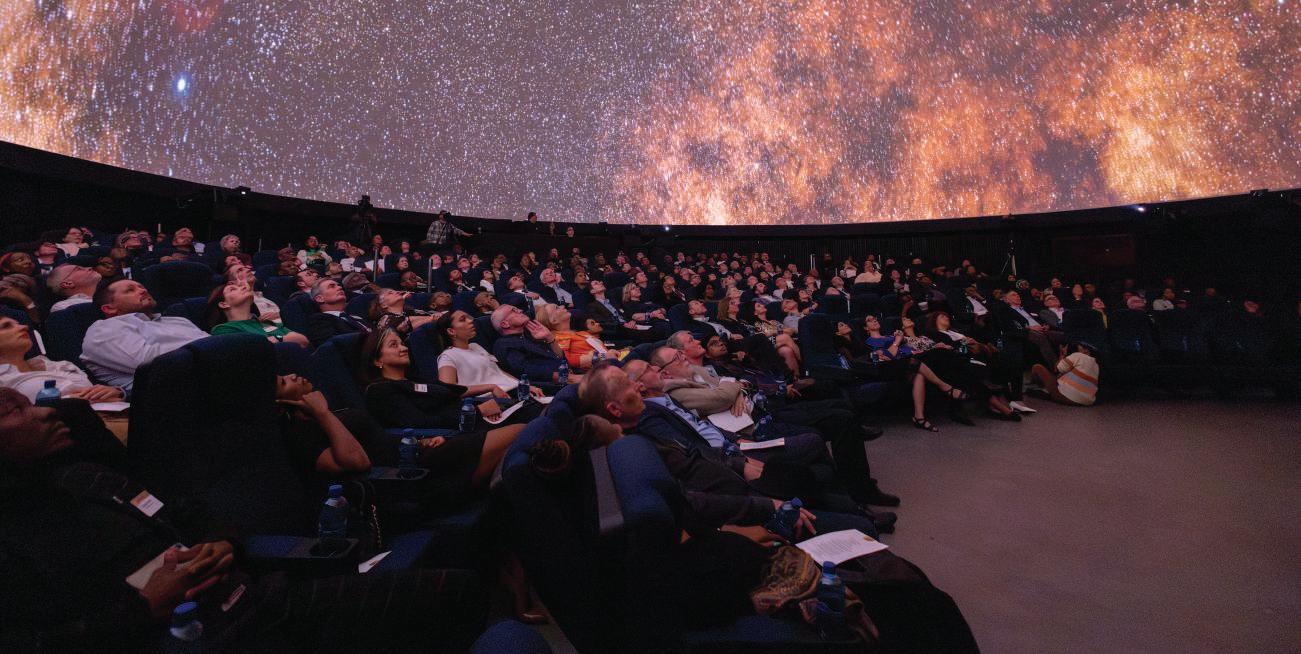
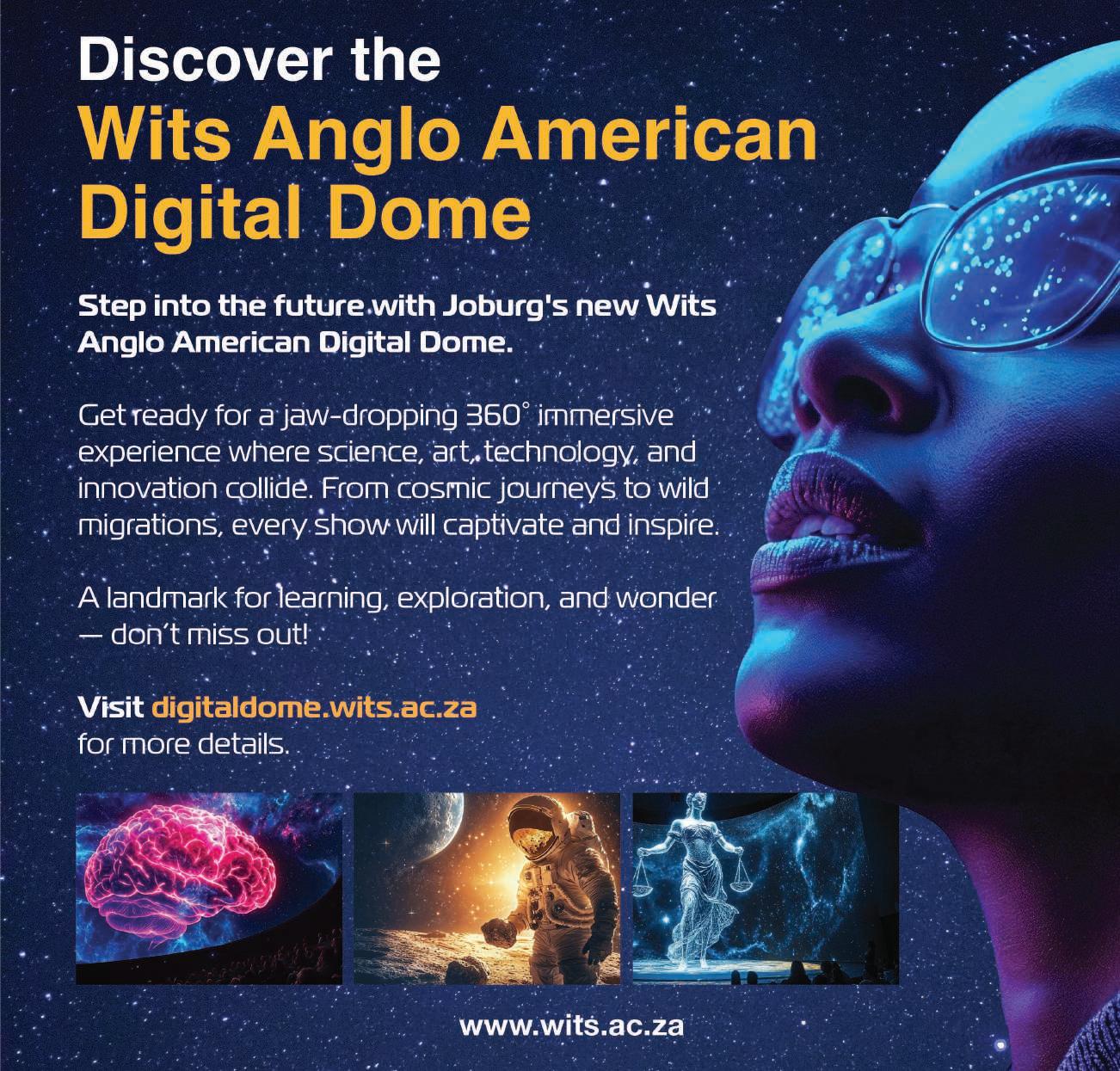
New Digital Dome: After major refurbishments, the old Johannesburg Planetarium has been transformed into the state-of-the-art
Wits Anglo American Digital Dome. This is a place of infinite possibilities and will forever change how South Africans teach, research, and engage with science, technology, business, sport, the humanities and the arts, in a multidisciplinary facility.
The new Wits Anglo American Digital Dome offers a 360° immersive experience for visitors of all ages, with a variety of shows for young and old. It will also serve as a modern teaching venue and a collaborative research space where scientists and students can visualise their work – be it in big data, astrophysics, the digital arts, artificial medicine, microbiology, or precision medicine. The new Digital Dome opened to the public in February 2025.
POSTGRADUATE RESOURCES
At Wits, we understand that support and development are key to the success and well-being of our postgraduate students. This is why we offer a variety of services ranging from a Health and Wellness Centre, to a Postgraduate Students’ Association that will support your academic and professional development.
Here are some of the services available to our postgraduate students:
POSTGRADUATE RESEARCH AND DEVELOPMENT OFFICE: SUPPORTING POSTGRADUATE RESEARCH. FOR GOOD
The primary function of this Office is to oversee and implement the University’s Strategic Plan for Postgraduate Research Training. Aligned to the Wits 2033 strategy, and guided by a broad theory of change (see below), the goal is to ‘Develop socially engaged postgraduate thinkers and innovators equipped to use knowledge for change in the country, in Africa, and across the world.’ Cognisant of the fact that doing so requires the development of world-class research capacity and a strong and supportive research culture in our postgraduate students, our focus is on:
Implementing programmes that facilitate interdisciplinarity, innovation, and an inclusive graduate culture
Modernising information systems to enable evidence-based interventions
Working with the Development and Fundraising Office (DFO) and Finance Aid and Scholarship Office (FASO) to increase the availability of, and access to, funding opportunities
The Office acts as a cross-faculty, cross-discipline centre for postgraduate researchers that improves the overall quality of the postgraduate experience across all five faculties through:
Increasing the recruitment pool and success of our postgraduate students
Encouraging and facilitating the publication of postgraduate research outputs
Collaborating with Wits Libraries to enhance the visibility of our postgraduate research outputs
Formulating policy on graduate studies
Facilitating and hosting annual postgraduate research enrichment events
Designing and implementing courses and research workshops
Organising writing retreats
Promoting postgraduate studies at Wits
Increasing awareness of postgraduate research on campus
The PGA is a student representative body for postgraduate students at Wits. Its mission is to:
Promote and enhance the interests of postgraduate students
Interact with the postgraduate student body and University management
Uphold academic excellence and integrity
Facilitate the allocation of relevant resources for postgraduate research
Enhance access of resources to postgraduate students
FIND
OUT MORE
www.wits.ac.za/pga
RESEARCH SUPPORT
The University Research Office drives a number of initiatives that aim to grow future generations of scholars publishing research with impact.
Interventions include:
Mentoring/coaching - One-on-one discussions with experienced researchers
Skills enhancement - Knowledge sharing
Advocacy - Assisting to remove or reduce (internal) hindrances to research
Recognition and exploiting networks - Linking researchers with appropriate funders
Recently, the scope of the support programme has been enlarged to include a holistic approach to the development of early career academics. Teaching and learning, including postgraduate student supervision, are also supported in a programme run in collaboration with the Centre for Learning and Teaching Development (CLTD).
WITS LIBRARY
www.wits.ac.za/research/researcher-support/ FIND OUT MORE
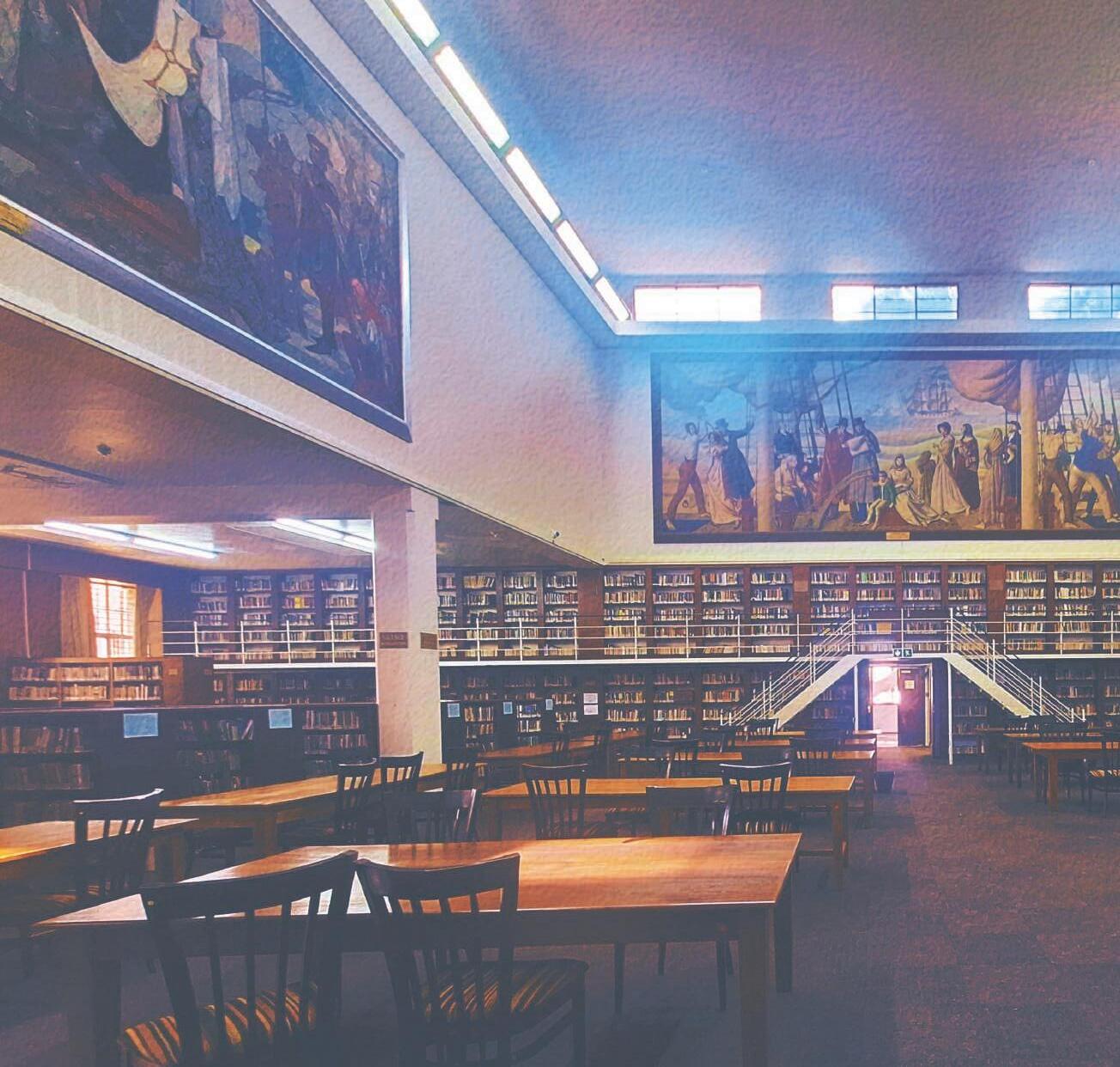
The Wits Library consists of two main libraries (Wartenweiler and William Cullen), as well as nine branch libraries where students have access to over one million book volumes, 400,000 journal titles and 46 000 updated electronic resources.
Visit our Library and be awed by the beautiful collections of incunabula, early printed books, and rare manuscripts. Browse through the Africana Collection, which contains exquisitely illustrated volumes on the flora, fauna and exploration of the southern half of the continent of Africa.
And while you are at it, take some time to explore the Historical and Literary Papers department, which is home to material documenting the early days of trade unions, political trials, and apartheid.
STUDENT SERVICES
www.wits.ac.za/library/ FIND OUT MORE
All registered students at Wits have access to resources including the Campus Health and Wellness Centre, the Disability Rights Unit, and the Counselling and Careers Development Unit. Postgraduate students also have full access to various sports facilities through the Wits Sport associations.
Wits University researchers have recently received several prestigious awards:
Professors Rachel Jewkes, Lyn Wadley, and Marietjie Venter who were awarded prestigious accolades for research excellence in gender studies, ecology, and emerging viral threats respectively. Jewkes received the Academy of Science of South Africa’s Science-for-Society Gold Medal and nine other Witsies were inducted as Fellows. Wadley and Venter also received the Royal Society of South Africa’s John FW Herschel Medal and Marloth Medal respectively, and the Society welcomed four new Fellows from Wits University, Professors Andrew Forbes (Physics), Shabir Madhi (Vaccinology), and Derick Raal (Endocrinology) are for the second year running amongst the world’s most highly cited researchers on Clarivate’s annual list. Forbes was also a co-recipient of the 2025 Harry Oppenheimer Fellowship Award,
Prof. Maureen Joffe was awarded CANSA’s highest accolade, the Oettlé Memorial Medal,
Prof. Jonah Choiniere won the 2025 Society of Vertebrate Paleontology Robert Lynn Carroll Award,
Dr Zaheera Jina Asvat was the recipient of the Nadine Gordimer Short Story Award at the 2025 South African Literary Awards,
Prof. Nasreen Mahomed won a Leadership Excellence Award at the 2025 Health Excellence Awards
Prof. Christopher Henshilwood and the Wits/SapienCE Blombos Museum of Archaeology were honoured for the Best Innovative Project at the Western Cape Cultural Affairs and Sport Awards,
www.wits.ac.za/students/
MORE
Dr Edward Nkadimeng won the Presidential Youth Award in AI at the G20 AI for Africa Forum,
The Wits Institute for Collider Particle Physics team were the winners of the 2025 ODESS Prize for AI-powered environmental monitoring,
Caitlin Wheeler is a Novartis Next Generation Scientist whose PhD zooms in on confounding questions about autoimmune liver disease, and
Anele Siswana was the 2025 Next Generation Doctoral Dissertation Proposal Fellowship winner.
These accolades highlight Wits University’s commitment to excellence in research across various disciplines.
More of our latest news can be found at: www.wits.ac.za/news/latest-news/researchnews
A SNAPSHOT OF WITS
Our People Our Campuses
Home to exceptional researchers, academics, professional, administrative and support staff, and students
Wits is home to lauded A-rated scientists, award-winning researchers, and internationally recognised academics.
Research powerhouses including the Academy of Science of South Africa (ASSAf), the Royal Society of South Africa (the Society), and Clarivate, a British American publicly traded analytics company, all named Wits scientists amongst their awardees in 2025, as did the Cancer Association of South Africa (CANSA) and the South African Literary Awards.
Professors Rachel Jewkes, Lyn Wadley, and Marietjie Venter were awarded prestigious accolades for research excellence in gender studies, ecology, and emerging viral threats respectively. Jewkes received ASSAf’s Sciencefor-Society Gold Medal and nine other Witsies were inducted as Fellows. Wadley and Venter received the Royal Society of South Africa’s John F.W Herschel Medal and Marloth Medal respectively and the Society welcomed four new Fellows from Wits University.
More than 200 000 Wits graduates have made and continue to make their mark in the world, including illustrious artists, renowned lawyers, politicians, business leaders, accountants, and highly rated scientists.
A wealth of sightseeing and educational opportunities
Wits University’s campuses, spread across Braamfontein, Parktown, and the Cradle of Humankind World Heritage Site, offer students a wealth of educational and sightseeing experiences that extend far beyond the classroom.
In addition to iconic sites like the Wits Anglo American Digital Dome, Origins Centre, and the Bleloch Geological Museum, Wits continues to enrich the academic and cultural landscape with modern additions. The Fossil Vault, housing rare palaeontological treasures, and the Adler Museum of Medicine continue to captivate students and visitors alike.
More recent developments include:
Wits Innovation Centre: A multidisciplinary hub that encourages collaboration and innovation across various sectors, providing students with a platform to work on real-world challenges. (www.wits.ac.za/ innovation/wits-innovation-centre/)
Solar powered benches: These ecofriendly outdoor study spaces, equipped with solar panels, offer students the ability to charge their devices while enjoying the beauty of campus grounds.
Rooftop solar installations: Supporting sustainability efforts, 14 rooftop solar projects across Wits campuses contribute to the University’s goal of reaching net-zero emissions by 2050.
These exciting additions, combined with Wits’ rich history of scientific and cultural resources, make the university a dynamic environment for both learning and exploration.
life is the norm Wits Arts and Culture
Where a
vibrant
social and
cultural
Wits University offers a vibrant arts and culture scene, featuring a variety of seminars, art events, exhibitions, and student-run productions. The Wits Theatre Complex is renowned for its experimental works, collaborating with some of the continent’s best professional talent. The Wits Art Museum (WAM), located in close proximity to the Nelson Mandela Bridge in Braamfontein, houses over 13,000 African artworks accumulated over seven decades.
WAM regularly hosts educational workshops that are open to the public. Additionally, the Fassler Gallery and the Anthropology Museum offer unique cultural experiences. These offerings
highlight Wits University’s commitment to fostering a dynamic and inclusive arts and culture environment.
FIND OUT MORE
www.wits.ac.za/ campus-life/
A proud history of producing top quality sportsmen and sportswomen Wits Sport
Wits is South Africa’s only official ‘Elite Athlete Friendly’ university, with over 28 sports codes. At Wits, we see health, fitness, and physical activity as a way of life. This is why we’re known for the prowess and success of our sportsmen and sportswomen, as well as for our vibrant sports culture.
Wits Sport enables students, staff, and alumni to participate in a range of sporting codes, whether high performance, competitive, or recreational. We also offer bursaries to top student athletes who meet the necessary academic requirements.
www.wits.ac.za/ sport/ FIND OUT MORE
Sport Research at Wits
The Wits Cricket Research Hub for Science, Medicine and Rehabilitation is involved in exciting research, from injury surveillance to three-dimensional technique analysis. The Wits Cricket Research Hub collaborates with local and international researchers on the creation of new and relevant knowledge, while fostering an evidence-based culture amongst coaches, trainers, healthcare providers, players, and other cricket stakeholders. www.wits.ac.za/wcrh/
Wits Sport and Health
Enhancing the peak performance of athletes through sport training programmes and rehabilitation
Wits Sport and Health is aimed at enhancing the lives of athletes by offering sport and exercise medicine programmes to aid in peak performance and rehabilitation through high calibre, internationally recognised training programmes.
www.wits.ac.za/wish/
Wits University has been recognised as the top-ranked university in Sub-Saharan Africa for innovation performance in the 2025 Global Innovation Index (GII).
The Wits Anglo American Digital Dome, formerly the Johannesburg Planetarium, was officially reopened in November 2024 after significant upgrades. It offers a 360-degree immersive experience, supporting fields like astronomy, AI, and digital arts.
We created an ICT division, eResearch, which caters for big data requirements and provides dedicated support to researchers.
Wits trains more specialists and sub-specialists than any other university in southern Africa. The new R22 million Wits Advanced Surgical Skills Lab will help to enhance the training of surgeons, in a state-of-the-art environment.
The Scilinx Research Laboratory and Studio in the School of Computer Science and Applied Mathematics conducts studies to advance the operational capabilities of organisations in different sectors of the economy.
The DigiMine, a 21st Century state-of-the-art mining lab, uses digital technologies to make mining safer and more sustainable.
The Wits Business School established the first ever Chair in Digital Business in Africa, to help South African businesses thrive in the digital era.
AN IT-SAVVY UNIVERSITY
Wits is committed to researching subjects such as quantum computing, artificial intelligence, and big data, which have the potential to shape future societies and drive innovation in both academia and industry.
At Wits, we understand the impact of digital transformation in Africa and that is why we are building a new AI research entity in partnership with the Cirrus Initiative.
We’re working hard to transform Braamfontein into a young, vibrant precinct known for its tech-savvy, innovative community of movers and shakers, and, together with our partners in government, business and industry, Wits launched the Tshimologong Digital Innovation Precinct in Braamfontein.
Africans should be the contributors, shapers, and owners of coming
advances in artificial intelligence and machine learning.
- Professor Zeblon Vilakazi
Setswana for ‘new beginnings’, Tshimologong is Johannesburg’s newest high-tech address – home to the incubation of start-ups, the commercialisation of research, and the development of high-level digital skills for students, working professionals and unemployed youth. Artificial Intelligence and Machine Learning technologies are key drivers in the Tshimologong Digital Innovation Precinct. We have a number of highly skilled AI and machine learning researchers at Wits. In fact, we are the only university in Africa regularly to publish at all major international AI, ML, and robotics conferences.
Wits is also making major strides in the field of quantum computing, recently becoming the first African partner on the IBM Q Network. This will enable African researchers to keep up with cutting-edge developments in this field.
AI/ML and Data Science are 2 of our 20 areas of Research Excellence
RESEARCH AT WITS
Over the last five years, our research output has increased by 17%, with 72% of research published in international, high impact academic journals.
Wits has a proud history of research excellence dating back to its origins as a School of Mines in 1922. Over the years, research activities have evolved to include the fields of humanities, social sciences, and health sciences.
More recently, we have encouraged a blended, interdisciplinary approach to research at Wits. This puts us in the right place to grapple with various complexities while producing world-class research that transforms and impacts society in multiple beneficial ways.
Research Highlights
Research productivity exceeded the 2 000 units barrier for the first time against a target of 1 952 units, completing 10 years of year-on-year growth
Below are some examples of the type of high quality, relevant research conducted at Wits in fields like Covid-19, HIV, genetics, quantum computing, energy, migration, diversity, and inequality:
- A milestone in the prevention of HIV among women in sub-Saharan Africa, the newly discovered injection to prevent HIV, is more effective than the current HIV pill.
- The Wits Advanced Drug Delivery Platform research unit discovered that the repurposing of drugs is a cost-efficient approach that eliminates the lengthy time frames of conventional drug development, thus giving patients treatment sooner.
- The Optical Society of America named Wits’ research involving fractal light from lasers as the most influential in optics and photonics.
- Climate scientists are developing the first Earth System Model based in Africa which will contribute to the fight against the climate emergency.
- In a major African Genome study, Wits geneticists have discovered more than three million new genetic and susceptibility variants. This study informs African population history, environmental adaptation and susceptibility to disease.
- PeCo Power – a home-grown electrical off-grid solution that will radically change lives and impact local communities.
- Low-cost, long-range, free-space optics that can connect informal settlement communities to highspeed internet.
- Wits Professors developed technology using molecular diagnostics that ensures the efficacy of the equipment that tests for tuberculosis, improving diagnosis and treatment of TB around the world.
284
Total number of 13 SARCHi Research Chairs and Postdoctoral Research Fellows
438
Total number of NRF*- Rated Researchers
24 Researchers (2025)
4
550
Research Publications (2025)
20 Areas of Research Excellence
3 DSI-NRF Centres of Excellence are hosted, or co-hosted at Wits
LATEST RESEARCH NEWS FROM WITS
POSTDOCTORAL FELLOWS
Prospective postdoctoral fellows and their hosts are also strongly encouraged to apply for external postdoctoral fellowship funding.
Do you qualify to apply for a postdoctoral fellowship at the University of the Witwatersrand Witsies awarded prestigious Google PhD Fellowships 20 January 2026
Jess Rees and Tristan Bester, have been awarded the highly competitive Google PhD Fellowship for 2025.
The fellowship recognises exceptional PhD students from the School of Computer Science and Applied Mathematics (CSAM) at Wits whose research demonstrates the potential for groundbreaking scientific contributions and meaningful societal impact, particularly in areas where advances in computing can benefit communities around the world.
Landmark Study Identifies Prostate Cancer Risk Factors in African Men
Wits ranked first for innovation performance 5 January 2026
Wits University has been recognised as the top-ranked university in Sub-Saharan Africa for innovation performance in the 2025 Global Innovation Index (GII).
Published by the World Intellectual Property Organization (WIPO), the GII 2025 measures the innovation performance of 139 economies worldwide, assessing how effectively nations translate knowledge, research, and technology into economic and social value.
South Africa ranked 61st globally, maintaining its position as a regional innovation leader, with Wits at the forefront of that performance.
• Have you obtained your PhD within the past 5 years?
• If your PhD was obtained outside of South Africa, have you obtained a SAQA certificate?
• Do you have a strong research record?
• Does your area of research, and any equipment you need, align with the expertise and infrastructure of the University of the Witwatersrand
Taking up a Postdoctoral Fellowship at Wits
Should you take up a Postdoctoral Fellowship at Wits you are expected to produce:
1. An average peer-reviewed research output[1] of at least two publications per annum during your stay. Ideally, the research should be published in journals that are found in the ISI index of journals. If there is a particular reason why it is more appropriate to publish the work in local journals, then they should be ‘accredited journals’.
2. A contribution to the research ethos of the School or Institute in which you are based. This contribution should come in the form of willing participation in staff meetings, debates about research, research seminars (especially those involving postgraduate students), etc. It is important that you contribute to the academic programme by putting forward your ideas and thinking.
3. A contribution to the operation of a research laboratory (where appropriate). This contribution may involve calibrating instruments, advising postgraduate students on operating conditions, giving instrument training, commissioning preventative maintenance, etc.
4. Make a contribution towards the University and its goal to become an internationally acclaimed research-intensive university.
5. Postdoctoral fellows are not appointed to reduce the load of lecturing staff. You may take up sessional lecturing positions within your department, where available, to a maximum of 12 hours a week. These are claim paid roles, and incur income tax. The university is under no obligation to make such positions available.
A postdoctoral fellowship is viewed, with regards to local tax laws, as akin to a bursary. Therefore, strict regulations apply.
[1] Research output is used in its broadest sense and recognises creative outputs that meet agreed criteria. However, typically the outputs include journal articles, peer-reviewed conference proceedings, chapters in peer-reviewed books and even peer-reviewed books.
Wits offers a large number of Postdoctoral Fellowships annually and our goal is to grow the number of Postdoctoral Fellows to more than 200.
Current opportunities
PhD and Postdoctoral Opportunities, EViTOH/IDORI
Join a cutting-edge research team tackling emerging viral threats across Africa. We’re recruiting for two positions in the PREPARE EPSILON programme at Wits University’s EViTOH/IDORI.
Refer to this link for more information: https://www.wits.ac.za/research/postdoctoral-fellows/
LATEST RESEARCH NEWS FROM WITS
A new playbook for cancer prevention in Africa begins with everyday infections
16 January 2026
Wits scientists have identified a ‘microbial watchlist’ of bacteria, viruses, fungi and parasites that could cause cancer.
Thus, targeting common infections in Africa, such as Salmonella typhi and the Epstein-Barr virus, may be among the most effective cancer-prevention strategies for the continent.
Infections shape the immune system, alter tissue environments, and induce chronic inflammation, thereby increasing the risk of carcinogenesis.
A recent review by scientists at the Wits Antiviral Gene Therapy Research Unit (AGTRU) and the Wits Infectious Diseases and Oncology Research Institute (Wits-IDORI) projects that cancer incidence in sub-Saharan Africa will double by 2040. Many people are diagnosed late and have limited access to specialised treatment, and new cancer drugs are often unaffordable.
New Postgraduate Hub centralises community
29 January 2026 - Wits University
Wits has launched a new Postgraduate Hub on the 2nd floor of Solomon Mahlangu House, creating a central “one-stop-shop” for postgraduate students to access key support services, collaborate, and build community. Described as an “infrastructure of possibility,” the Hub brings together central services, study and meeting spaces, and dedicated support to guide students from enquiry through to graduation. More than just a physical space, the Hub aims to foster connection, belonging, and real-time support for postgraduates in an increasingly competitive and global research environment.
Our Research Impact
Witsies awarded prestigious Google PhD Fellowships
20 January 2026 - Wits University
Jess Rees and Tristan Bester, have been awarded the highly competitive Google PhD Fellowship for 2025.
The fellowship recognises exceptional PhD students from the School of Computer Science and Applied Mathematics (CSAM) at Wits whose research demonstrates the potential for groundbreaking scientific contributions and meaningful societal impact, particularly in areas where advances in computing can benefit communities around the world.
The Google PhD Fellowship programme supports outstanding graduate students pursuing innovative research in fields relevant to Google, including machine learning, artificial intelligence, and their applications. Fellows are selected through a rigorous international process and are recognised not only for academic excellence, but also for the ambition of their work to address real-world challenges and shape the future of technology.
Research Impact
Advancing AI for healthcare: Jess Rees
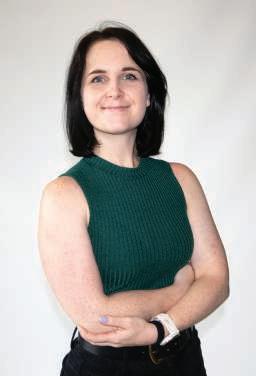
Jess Rees is supervised by Distinguished Professor Bruce Bassett from CSAM, and has been recognised for her research on the use of AI in medicine, with a particular focus on improving clinical diagnosis and strengthening healthcare systems in South Africa.
Jess Rees, Google PhD Fellow 2026Reflecting on the award, Rees said she feels “excited and honoured,” describing the fellowship as a powerful validation of the potential impact of her research. “The possibility of influencing how AI is developed for healthcare, and of making a large, positive contribution to the South African healthcare system, is hugely motivating,” she said. “I feel even more driven to contribute to both the field and the country through my work.”
Rees highlighted the freedom the fellowship provides, allowing her to focus fully on her PhD research and to build collaborations across the CSAM, the Faculty of Health Sciences, and the Machine Intelligence and Neural Discovery (MIND) Institute.
She also expressed enthusiasm for the mentorship opportunities offered through Google and the global community of PhD fellows, adding that she is eager to “dive in and nerd out as we develop new algorithms for clinical diagnosis.”
Previously a Principal Data Scientist at Discovery Health, where she worked for nine years, Rees has transitioned to a fulltime PhD in Computer Science at Wits. Her career has been rooted in natural language processing, with recent work centred on large language models and generative AI.
In 2024, she was named one of the Mail & Guardian’s “200 Young South Africans” for her contributions to Technology and Innovation.
Her doctoral research will focus on multi-agent AI systems for sequential clinical diagnosis, aiming to deliver practical, highimpact tools for healthcare.
Strengthening the foundations of AI: Tristan Bester
Tristan Bester received the Google PhD Fellowship for his work in machine learning foundations, particularly at the intersection of reinforcement learning and symbolic AI.
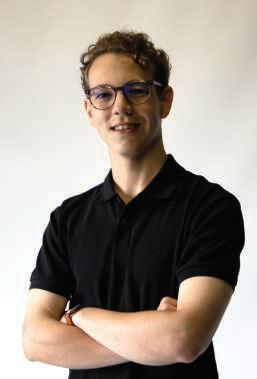
Tristan Bester, Google PhD Fellow 2026“I am honoured to receive the Google PhD Fellowship for Machine Learning and ML Foundations”, Bester said. “It is truly a privilege to have an institution as prestigious as Google support my research and recognise the importance of my work. This motivates me to continue pushing the boundaries of AI and machine learning.”
Bester is a PhD candidate in Computer Science at Wits, where he is supervised by Professor Benjamin Rosman, Director of the MIND Institute, and Drs Steven James and Geraud Nangue Tasse from CSAM. Notably, James was also a Google PhD Fellow in 2018 — highlighting the fellowship’s lasting and recurring impact on machine learning research in Africa.
Bester’s research focuses on the fundamental theory underlying modern AI systems, with a strong emphasis on understanding why algorithms work, when they fail, and how they can be designed more reliably.
His work bridges neural and symbolic approaches to AI, aiming to unify low-level learning with high-level reasoning. He introduced Counting Reward Machines, the first Turing-complete framework for state-machine-based reward modelling, establishing a new theoretical foundation for optimal behaviour in reinforcement learning tasks requiring complex temporal reasoning.
Building on this, his PhD research explores optimal knowledge transfer between subtasks, principled automated reward design, and the synthesis of task structure from natural language—developing rigorous, general-purpose algorithms to improve the reliability, interpretability, and scalability of reinforcement learning.
Global
recognition, local impact
The success of Rees and Bester underscores the growing international recognition of Wits University as a hub for world-class AI and machine learning research. Their work exemplifies how foundational theory and applied research can work hand in hand to address pressing societal challenges, from healthcare delivery to the development of more robust and trustworthy intelligent systems.
The Google PhD Fellowship not only supports these students individually, but also strengthens the broader research ecosystem at Wits and across Africa—enabling talented researchers to pursue ambitious ideas, build global collaborations, and contribute knowledge with lasting impact.
FACULTY OF COMMERCE, LAW AND MANAGEMENT
FACULTY OF COMMERCE, LAW AND MANAGEMENT
The Faculty of Commerce, Law and Management (CLM) boasts six diverse Schools and a number of research entities. Research pursued by the Faculty address key issues facing South Africa and the world impacting on business, governance, law, and economics. We offer academic qualifications and pursue programmes of knowledge production that promote social good. We influence digital transformation, strengthen democracy and good governance, advocate for climate justice, and think deeply about addressing inequality and economic growth. Our graduates are leaders in industry, commerce, and society.
Our research informs the curriculum of our postgraduate programmes, keeping you relevant and current in fast-moving professions. These are some of the exciting research opportunities available to you:
Research in the Margo Steele School of Accountancy focuses on financial reporting, corporate governance, and integrated thinking with the added benefit of its Centre for Critical Accounting Research examining integrated reporting, ecological and biodiversity accounting and auditing
The School of Business Sciences offers research on digital business transformation in Africa, entrepreneurship and the social economy in the Global South covering social entrepreneurship and social enterprise, sustainable entrepreneurship and the circular economy.
The School of Economics and Finance does research in health economics, financial data science, development economics, the political economy and gender economics. Its graduate students consistently feature in the top three of the Nedbank & Old Mutual budget speech competition. We also have a state of the art Fintech hub that teaches students the latest developments in financial technology.
School of Law houses the Centre for Applied Legal Studies (CALS) that focuses on public law and the Wits Law Clinic that provides services to people who cannot afford legal fees. The School also holds research Chairs in Earth Justice and Stewardship, and Equality, Law and Social Justice. Offerings include environmental law, tax, human rights and cyberlaw.
Wits Business School offers specialist research in the fields of energy leadership, healthcare leadership, finance and investment, entrepreneurship, digital leadership and philanthropy, with associated MM and MBA programmes, supported inter-alia by the African Energy Leadership Centre, Centre on African Philanthropy and Social Investment, and Mervyn King Chair for Corporate Governance and Sustainability.
Wits School of Governance is an exclusive postgraduate school whose programmes are informed by cutting edge research in monitoring and evaluation, corruption and state capture, local government, energy and digital governance.
The Southern Centre for Inequality Studies focuses on understanding inequality in the global south and champions a cross-disciplinary masters programme on inequality studies.
CLM offers several student exchange opportunities and jointdegrees at masters or doctoral level with international partners that include SOAS, UK; Kedge Business School, France; ISS Erasmus University, Rotterdam.
Schools and Research Entities
Wits Margo Steele School of Accountancy
- Centre for Critical Accounting Research
School of Business Sciences
- Entrepreneurship Clinic
School of Economics and Finance
- Firstrand Foundation Chair in Financial
- Data Science
- PPS Chair in Health Economics
- Helen Suzman Chair in Political Economy
- Derek Schrier and Cecily Cameron Chair in Development Economics
- Fintech Hub
School of Law
- Centre for Applied Legal Studies (CALS)
- Mandela Institute
- NRF SARChI Chair on Equality, Law and Social Justice
- Claude Leon Chair in Earth Justice and Stewardship
Wits School of Governance
- African Centre for Conflict Management (ACCM)
- Centre for Learning on Evaluation and Results (CLEAR-AA)
- Tayarisha Research Group on Digital Governance
Graduate School of Business Administration – Wits Business School (WBS)
- African Energy Leadership Centre
- Centre on African Philanthropy and Social Investment
- Mervyn King Chair for Corporate
- Governance and Sustainability
Southern Centre for Inequality Studies (SCIS)
COMMERCE, LAW AND
School of Business Science
COMMERCE, LAW AND
Wits Business School
Wits School of Governance
Postgraduate Enquiries in the Faculty of Commerce, Law and Management
Braamfontein Campus West
Ms Sibongile Dhladhla T 011 717 8005 | E Sibongile.Dhladhla@wits.ac.za
Ms Susie Maluleke T 011 717 8173 | E Susie.Maluleke@wits.ac.za
Mr Tshepo Mohlakoane T 011 717 8390 | E Tshepo.Mohlakoane@wits.ac.za
Wits Business School
Ms Jennifer Mgolodela T 011 717 3038 | E Jennifer.Mgolodela@wits.ac.za
Wits Business School General | E admissions.wbs@wits.ac.zA
Wits School of Governance
Ms Bongiwe Zuma T 011 717 3582 | E Bongiwe.Zuma @wits.ac.za
Wits School of Governance General | E admissions.wsg@wits.ac.za
Access these internationally recognised research centres:
Centre of Excellence in High Voltage Engineering
The National Aerospace Centre
The Centre for Urbanised and Built Environment Studies
Responsible Mining Laboratory
The Joburg Centre for Software Engineering
The Transnet Centre for Systems Engineering
The Faculty is also home to the Wits Mining Institute. www.wits.ac.za/wmi/
Four of the South African Research Chairs (SARChI) in Engineering are at Wits, and are recognised for excellence in research:
- Chair in Development Planning and Modelling
- Chair in Sustainable Process Engineering
- Chair in Hydrometallurgy: Innovation and Sustainability
- Chair in Clean Coal Technology
FACULTY OF ENGINEERING AND THE BUILT ENVIRONMENT
The Faculty of Engineering and the Built Environment works with the public and private sectors to tackle national problems such as energy generation, deep-level mining, mining safety, water purification systems, transport, and urban development.
The Faculty has the highest number of endowed professorships or chairs at Wits and strong relationships with industry. It often conducts contract research for local and international companies aimed at addressing South Africa’s social, spatial, and infrastructural needs.
ENGINEERING
With high-calibre academic and support staff and purpose-built laboratories, computing, and library facilities, you have everything you need to build your skills in specialist areas.
Choose between various Postgraduate Diplomas, Honours, Masters and Doctoral degrees. Science graduates can also study engineering at a postgraduate level, to prepare themselves for leadership roles in technology and related fields.
BUILT ENVIRONMENT
The School of Architecture and Planning and the School of Construction Economics and Management are known for researching creative responses to societal challenges. These include climate change, sustainability when designing cities and buildings, the delivery of affordable housing and the creation of more inclusive cities.
Examine, develop and test proposals to shape inner cities in live city studios, or dig deeper into everything from declining towns and informal settlements to street traders and provincial and metropolitan policies.
The Digital Mining Incubator will serve as a hub that enables the development of South Africa’s next generation of digital mining experts.
ENGINEERING
Master of Science in Engineering
AND THE BUILT ENVIRONMENT PROGRAMMES ON OFFER
Master of Science in Engineering
Master of Engineering (Professional)
Doctor of Philosophy (Engineering)
Postgraduate Diploma in Engineering
by coursework and research by dissertation by coursework only, in the fields of: in the fields of: in the fields of:
1
• Chemical Engineering
• Civil Engineering
• Mechanical Engineering
• Industrial Engineering
• Aeronautical Engineerin
• Metallurgy and Materials Engineering
• Mining Engineering
• Engineering Management
• Chemical Engineering
• Civil Engineering
• Electrical Engineering
• Mechanical Engineering
• Industrial Engineering
• Aeronautical Engineering
• Civil and Environmental Engineering
• Electrical Engineering
• Mechanical Engineering
• Industrial Engineering
• Aeronautical Engineering
• Chemical Engineering
• Civil Engineering
• Electrical Engineering
• Metallurgy and Materials Engineering
• Mining Engineering
• Mechanical, Industrial and Aeronautical Engineering
• Chemical Engineering
• Electrical Engineering
• Mechanical Engineering
• Industrial Engineering
• Systems Engineering
• Mechanical, Industrial and Aeronautical Engineering
• Metallurgy and Materials Engineering
• Metallurgy and Materials Engineering
• Mining Engineering
• Engineering Management
• Systems Engineering
• Artficial Intelligence Engineering
• Mechanical, Industrial and Aeronautical Engineering
• Engineering Management
• Systems Engineering
• Metallurgy and Materials Engineering
• Engineering Management
ENGINEERING AND THE BUILT ENVIRONMENT PROGRAMMES ON OFFER
Master of Urban Design
Master of Science in Development Planning
Master of Architecture (Professional)
Master of Science in Building
Master of Urban Studies
Doctor of Philosophy
Bachelor of Science Honours in Quantity Surveying
Bachelor of Architectural Studies with Honours
Bachelor of Science with Honours in Construction Management
Bachelor of Science Honours in Property Studies
* Bachelor of Science with Honours in Urban and Regional Planning
by coursework and research in the fields of: in the fields of: in the fields of: in the fields of: 1
• Construction Project Management
• Property Development and Management
• Development Planning
• Housing and Human Settlements • Architecture
• Sustainable Energy
Building
• Efficient Cities
Real Estate
• Urban Management • Urban and Regional Planning
• Urban Politics and Governance
• Urban Research
• Construction Management
• Construction Project Management
• Quantity Surveying
Postgraduate Diploma in Property Development and Management
Postgraduate Diploma in Planning Postgraduate Diploma in Construction Management in the fields of: in the fields of: in the fields of:
Department of Science and Innovation National Research Foundation Centres of Excellence
Department of Science and Innovation/National Research Foundation South African Research Chairs 7
African Network for Drug and Diagnostics Innovation Centres (ANDI) 2
21Research Entities
2 Research Thrusts
(Diseases of Lifestyle and Molecular Biosciences)
FACULTY OF HEALTH SCIENCES
The Wits Faculty of Health Sciences pioneers African and global research that improves and saves lives.
HIV/AIDS, tuberculosis and malaria, diabetes, hypertension and heart disease are some of the serious health issues affecting South African communities. As a postgraduate student of the Faculty of Health Sciences, you can help to develop new treatments and vaccines in these areas, as well as in oral health sciences, therapeutic sciences and drug delivery.
Our Faculty is the largest of its kind on the continent and we have trained more specialists and sub-specialists than any other university in southern Africa. The quality of our research output is among the best in the country and is respected internationally. It has influenced national policy, informed our clinical work and enabled us to produce well-rounded healthcare professionals. Our postgraduate supervisors are seasoned researchers in clinical, applied and basic sciences and can guide you through your research project. Furthermore, our extensive clinical training programme gives you access to experts at institutions such as the Wits Donald Gordon Medical Centre.
Choose from a selection of courses on research methodology, scientific writing skills and biostatistics, and join a thriving research community by attending monthly informative talks, the biennial Research Day, and the Postgraduate Expo.
Choose from a wide range of postgraduate degrees and diplomas offered through our six Schools:
Biomedical Sciences
Clinical Medicine
Oral Health Sciences
Pathology
Public Health
Therapeutic Sciences
HEALTH SCIENCES
Bachelor of Clinical Medical Practice with Honours, in the field of Emergency Medicine 2
Bachelor of Health Sciences with Honours, in the fields of:
• Anatomical Pathology
• Bioethics and Health Law
• Biokinetics
• Chemical Pathology
• Clinical Microbiology and Infectious Diseases
• Exercise Science
• Forensic Sciences
• Human Biology
• Human Genetics
• Medical Cell Biology
• Molecular Medicine
• Neuroscience
• Pharmacology (Biosciences track)
• Pharmacology (Health Sciences track)
• Physiology
• Health Systems Sciences
• Immunology
• Public Health
• Virology
Master of Science in Dentistry by coursework and research report, in the fields of:
• Aesthetic Dentistry
• Community Dentistry
• Cranio-Mandibular Dysfunction
• Digital Operative Dentistry
• Endodontics
• Implantology
• Maxillo-Facial Radiology
• Maxillo-Facial Oral Surgery
• Oral Pathology
• Oral Medicine
• Orthodontics
• Paedodontics
• Prosthodontics
• Restorative Dentistry
Master of Science in Medicine by coursework and research report, in the fields of:
• Bioethics and Health Law
• Biokinetics
• Child Health Community Paediatrics
• Child Health Neurodevelopment
• Child Life and Paediatric Psychosocial Care
• Clinical Pharmacy
• Emergency Medicine
• Exposure Science
• Genetic Counselling
• Genomic Medicine
• Pharmaceutical Affairs
• Sports Medicine
• Sports Science
• Translational Research
HEALTH SCIENCES
PROGRAMMES ON OFFER
Master of Science in Occupational Therapy by coursework and research report, in the fields of:
• Neurological Disorders
• Perceptual Disorders • Psychiatric Disorders
Master of Science in Physiotherapy by coursework, in the fields of:
• Orthopaedic Surgery for Physiotherapists
• Respirology, Cardiology and Cardiothoracic Surgery for Physiotherapists
Master of Science in Nursing by dissertation, in the fields of:
• Advanced Psychiatric Nursing
• Child Nursing
• Community Health Nursing
• Infection Control
• Intensive Care Nursing
• Nephrology Nursing
• Nursing Education
• Occupational Health Nursing
• Oncology Nursing
• Trauma Nursing
Master of Science in Epidemiology by coursework and research report, in the fields of:
• Field Epidemiology
• Epidemiology and Biostatistics
• Implementation Science
• Public Health Informatics
• Infectious Disease Epidemiology
1 2
• Vaccinology 1 2
• Biostatistics 18m 3
Master of Public Health by coursework and research report, in the fields of:
• Exposure and Health
• Maternal and Child Health
• Rural Health
• Health Systems and Policy
2 4
• Health Economics
• Social and Behaviour Change Communication
HEALTH SCIENCES
PROGRAMMES ON OFFER
Bachelor of Health Sciences with Honours, in the fields of:
• Anaesthetics
• Anatomical Pathology
• Anatomical Sciences
• Biokinetics
• Chemical Pathology
• Clinical and Experimental Physiology
• Clinical Microbiology and Infectious Diseases
• Community Health
• Critical Care
• Diagnostic Radiology
• Exposure Science
• Family Medicine
• Haematology and Molecular Medicine
• Health Analytics
• Health Entrepreneurship
• Health Innovation
• Health Sciences Education
• Health Systems Science
• Human Genetics
• Immunology
• Internal Medicine
• Material Science
• Microbiology
• Neurosurgery
• Nursing
• Obstetrics and Gynaecology
• Occupational Therapy
• Orthopaedic Surgery
• Ophthalmology
• Paediatrics
• Pharmacology
• Pharmacy
• Physiology
• Physiotherapy
• Psychiatry
• Radiation Oncology
• Rural Health
• Surgery
• Therapeutic Sciences
• Virology
• Wits Reproductive and HIV Institute 1 2
HEALTH SCIENCES
PROGRAMMES ON
Master of Science in Medicine by dissertation, in the fields of:
• Health Science Education
• Human Genetics
• Immunology
• Internal Medicine
• Microbiology
• Physiotherapy
• Radiation Oncology
• Rural Health
Surgery
Virology • Exposure Science 1 2
Master of Science in Dentistry by dissertation in fields of :
• Community Dentistry
• Prosthodontics
• Oral Pathology
• Oral Medicine
• Maxillo Facial and Oral
Doctor of Philosophy, in the fields of:
• Anaesthesia
• Anatomical Pathology
• Anatomical Sciences
• Bioethics and Health Law
• Chemical Pathology
• Clinical Governance
• Clinical Microbiology and Infectious Diseases
• Community Dentistry
• Diagnostic Radiology
• Doctor of Philosophy (Biomedical Informatics & Translational Medicine)
• Family Medicine
• Forensic Medicine
• Haematology and Molecular Medicine
• Health Sciences Education
• Human Genetics
• Immunology
• Internal Medicine
• Material Science • Maxillo Facial and Oral Surgery
• Microbiology
• Neurosurgery • Nursing
Obstetrics & Gynaecology
Occupational Therapy
HEALTH SCIENCES
•
FACULTY
FACULTY OF HUMANITIES
The Faculty of Humanities links the arts, social and natural sciences, law, and management to allow to engage creatively and criticallly in your chosen field.
Learn from leading academics and collaborate on research with scholars in Africa, Asia, Europe, North America and the Middle East.
Explore Johannesburg’s dynamic political, social, economic and cultural links to Africa and the world, and become part of a diverse, stimulating community of multicultural, multidisciplinary researchers.
Choose from vocationally oriented programmes that prepare you with the theoretical and practical knowledge and skills to pursue a specific career, or strengthen your research and analytical skills to unlock a range of career opportunities.
RESEARCH INSTITUTES AND UNITS
Our thriving research entities add to our vibrant culture and have a significant impact on our research into issues confronting South Africa and the world.
Centres of Excellence:
The African Centre for Migration and Society
The Wits Centre for Diversity Studies
The Wits Centre for Ethics (WiCE)
The Centre for Deaf Studies
The Centre for Researching Education and Labour Centre
Emthonjeni Centre (Multi-disciplinary Community Service and Development Centre)
The Learning, Information, Networking, Knowledge Centre
The Marang Centre for Maths and Science Education
Research Entities:
The Health Communication Research Unit
The Society, Work and Development Institute
The Wits Institute for Social and Economic Research Cross-Faculty Entities:
The African Centre for the Study of the United States
The Global Change Institute
EQUALITY STUDIES IN THE GLOBAL SOUTH
Inequality is a major influencing factor in South Africa and indeed in the Global South. The study of this problem using a multidisciplinary approach is an ongoing area of research excellence at Wits.
www.wits.ac.za/scis
HUMANITIES PROGRAMMES
HUMANITIES PROGRAMMES
HUMANITIES PROGRAMMES
HUMANITIES PROGRAMMES
HUMANITIES PROGRAMMES
HUMANITIES PROGRAMMES
HUMANITIES PROGRAMMES
HUMANITIES GRADUATE CENTRE
Get all the information that you need about student life, academic requirements, funding opportunities, and scholarly events from the Humanities Graduate Centre. Open late and on weekends, the Centre is the hub of intellectual and social life for humanities and social sciences students.
Postgraduate training in research methods
Attend methods workshops – facilitated by expert scholars – to help with the development of your research proposal, data collection and analysis and the write-up and presentation of results for publication in academic journals.
Conversations in social and cultural theory
Learn more about the terms and concepts that are integral to contemporary theory and research in the humanities and social sciences, at a number of seminars and colloquia in critical social and cultural theory.
Postgraduate student-initiated research and learning collectives
Access the space and financial resources to initiate your own independent explorations in theory, creative work, and policy-oriented research.
Writing retreats: Training in scholarly writing, presentation and publication
Learn the mechanics and techniques of research proposal writing, conference abstract preparation and submission and the effective presentation of research results at a number of on- and off-campus writing retreats, conferences and seminars.
The scholarly vocation: Preparing PhDs for an academic career
Attend Postdoctoral Fellowship programmes or Post PhD Submission Fellowship programmes for financial and intellectual support before submitting thesis chapters to peer-reviewed publications.
THInK (Transforming the Humanities through Interdisciplinary Knowledge): Towards a new generation of African scholars
This interdisciplinary doctoral studies programme provides support to African postgrads – and especially exceptional black doctoral fellows. Preference is given to those pursuing a career in teaching scholars in the African academy and whose research explores interdisciplinary terrain in unusual and imaginative ways.
Get all the information that you need about student life, academic requirements, funding opportunities, and scholarly events from the Humanities Graduate Centre. Open late and on weekends, the Centre is the hub of intellectual and social life for humanities and social sciences students.
Postgraduate
training in research methods
Attend methods workshops – facilitated by expert scholars – to help with the development of your research proposal, data collection and analysis and the write-up and presentation of results for publication in academic journals.
Conversations in social and cultural theory
Learn more about the terms and concepts that are integral to contemporary theory and research in the humanities and social sciences, at a number of seminars and colloquia in critical social and cultural theory.
Postgraduate student-initiated research and learning collectives
Access the space and financial resources to initiate your own independent explorations in theory, creative work, and policy-oriented research.
Writing retreats: Training in scholarly writing, presentation and publication
Learn the mechanics and techniques of research proposal writing, conference abstract preparation and submission and the effective presentation of research results at a number of on- and off-campus writing retreats, conferences and seminars.
The scholarly vocation: Preparing PhDs
for
an academic career
Attend Postdoctoral Fellowship programmes or Post PhD Submission Fellowship programmes for financial and intellectual support before submitting thesis chapters to peer-reviewed publications.
THInK (Transforming the Humanities through Interdisciplinary Knowledge): Towards a new generation of African scholars
This interdisciplinary doctoral studies programme provides support to African postgrads – and especially exceptional black doctoral fellows. Preference is given to those pursuing a career in teaching scholars in the African academy and whose research explores interdisciplinary terrain in unusual and imaginative ways.
SCHOOL OF SOCIAL SCIENCES
The School of Social Sciences strives to understand all aspects of society in order to improve livelihoods. With research and teaching at its core, SOSS also plays a critical role in facilitating public debates on policy formulation and implementation.
SOSS is committed to:
Imparting critical and usable skills through excellent teaching methods
Promoting research that broadens knowledge
Deepening engagement within the disciplines to create interdisciplinary synergies
Promoting partnerships with international institutions, particularly across Africa
Positioning itself at the centre of public debates and dialogue that foster societal understanding and contribute to knowledge that informs public policy
Disciplines:
Anthropology
Demography and Population Studies
Development Studies
History
SCHOOL OF HUMAN AND COMMUNITY DEVELOPMENT
Choose from a range of professional postgraduate degree programmes in clinical psychology, community-based counselling, organisational and educational psychology, speech pathology and audiology, and social work.
Our research programmes include:
Research design
Narrative theory and methodologies
Organisational change and development
Quantitative and qualitative methodologies
Violence and trauma
Health psychology
Employee health and wellness programmes
Psychoanalytic theories and therapies
Cognitive neuroscience
Psychosocial studies
Language and thought
Mothering and infant health
Employment equity and transformation
Child protection (policy and practice)
Apartheid studies
Disability studies
Youth identities
Race, racialisation and racism
Gender and sexualities
Health communication
Rural health and development
Social justice and social protection
Migration and mobility
Spirituality and healthcare
Social development
Social policy
LGBTI studies
Learning-teaching and transformation
Women’s studies
Critical childhood studies
Occupational social work
www.wits.ac.za/shcd/
Sculpture reliefs of the Alphabet (Centre for Deaf Studies)
WITS SCHOOL OF ARTS
The School of Arts offers PhD by both dissertation and by creative work and dissertation. The PhD can be taken in any of the disciplines in the School or can be structured as an interdisciplinary research project.
Choose from a range of disciplines, including:
Digital Arts
An array of Digital Arts subjects is available for postgraduates, covering subjects in Game Design, Game Studies, Interactive Narrative, Culture and Technology in Africa, Digital Culture and Decolonisation, Digital Creative Industries and more in this range of fields.
Interdisciplinary Arts and Culture Studies
The department supports graduate research that investigates questions regarding the interconnections between culture, artistic expression, aesthetics, identities, political economy, technologies, and power relations, and, the relevance of developments, debates, and critical inquiry within the context of both our specific geographical location in Johannesburg/ South Africa/ Africa as well as our positioning within a global context.
Film and Television
Wits Film and Television produces trailblazing filmmakers who challenge and redefine filmmaking processes. Through our established filmmaking programmes, you will develop conceptual creativity, intellectual rigour and strong practical filmmaking capabilities. MA offered by dissertation or by creative work and dissertation.
Heritage Studies
Master a range of practical skills that form the core of Heritage Studies and Arts and Culture Management and participate in debates around policy and conceptual issues. Leverage our relationships with museums and archives in the City of Johannesburg, art networks and organisations and other Wits departments.
Theatre and Performance
The Theatre and Performance programme aims to produce informed and critically aware practitioners and consumers of the arts, who are conscious of their cultural and social environment. It draws on diverse surroundings, a committed staff of artist-scholars, and a dynamic student body to promote creative and socially productive engagement through a range of degree programmes.
Drama for Life
Drama for Life (DFL) is a global leader in arts-based social transformation. Founded during the HIV/Aids crisis, DFL uses applied arts, therapies, and research to promote healing and social justice. Rooted in the African philosophy of ubuntu, its programmes prepare artists, therapists, and educators to use drama and dance for positive change. DFL offers postgraduate diplomas, honours, masters, and PhDs. The department’s work addresses contemporary global challenges, fostering collective resilience.
Interactive Digital Media
The Interactive Digital Media programme is designed for students from an arts and design background who want to explore the creative possibilities of interactive digital media technologies. It is suited to students from engineering or science and technology backgrounds who want to develop their creativity in these areas. The Masters programme brings together passionate individuals from diverse creative and technology/science backgrounds to explore and develop new and exciting interactive media.
Fine Arts
Fine Arts combines technical training in artistic production with conceptual and creative thinking. Our location in Johannesburg gives us the freedom to incorporate exciting sitespecific components and a dynamic exhibitions programme into the course.
History of Art
Contemporary Curatorial Practice
The Contemporary Curatorial Practice programme explores the evolving roles of curators, the constitution of exhibition audiences and publics, the roles of different forms of display and artistic practice within and outside the white cube. Throughout the course, students are expected to participate in various practical projects with partner institutions, structured to give them the opportunity to engage with different forms of writing and producing exhibitions.
The History of Art programme places a dual emphasis on the condition of our postcoloniality and curatorial practices as core components of the construction of knowledge in the discipline. Students regularly go on to successful careers in curating, museums, galleries, filmmaking, fine arts, advertising, auction houses, filmmaking and journalism.
Music
Wits Music is one of South Africa’s most innovative higher education music departments, preparing students for diverse musical careers in the contemporary world.
SCHOOL OF LITERATURE, LANGUAGE AND MEDIA
Explore the implications of social and cultural diversity through the study of language, literature, writing, media studies, policy and regulation in electronic communications.
The SLLM provides prestigious programmes in African and world literature, an extensive language offering, and an expanding Media Studies programme. It contributes to the vibrant literary and intellectual life of the City of Johannesburg and offers the premier graduate programme in Journalism in Africa.
As well as academic postgraduate programmes, the SLLM serves Johannesburg’s writing community through professional postgraduate programmes in creative writing, journalism, publishing, and translation and interpreting. It also hosts public events aimed at facilitating engagement with the broader academic community and public culture institutions.
In line with its interdisciplinary ethos, the School encourages postgraduate students to select and register for courses across its departments. Please contact the departments for advice on interdisciplinary curriculum options.
Fields of study include:
Creative Writing
MA students register for a 2-year programme in which a creative project in fiction, non-fiction or poetry, as well as a reflective essay are completed. PhD candidates are expected to produce a substantial creative project (a novel, a collection of stories or essays, etc.) plus a scholarly dissertation that extends and supports the creative work.
Linguistics
Phonology, especially Optimality Theory approaches to African languages
Syntax and Morphology
Historical Linguistics
Psycholinguistics, especially gestures and second language acquisition
Critical Discourse Analysis and Social Semiotics
Sociolinguistics of globalisation, race, colonialism, gender and sexuality
Translation and Interpreting Studies:
Language and translation policy
African cultures, languages and literatures
Translation and interpreting in the Global South
Sign languages
Literary translation
Interpreter and translator training
Translation theory
Multilingualism
Neurocognition linked to translation and interpreting
Literary Modernisms: Imperialism and Internationalism, Writing the City, postmodernism
Contemporary literature, New forms & critical paradigms
Literary theory
Writing Gender, Sex and Queer Theory
Literature and historiography
Narrative Theory and New Media
Media
Studies
Multiple aspects of popular and consumer cultures
Democracy
Policy and decoloniality
Digital media
Interactivity and internet practices
French
Comparative Anglophone-Francophone literature
Sub-Saharan African and diasporic literature in both French and English
Négritude and/or Négritudinists
Caribbean Francophone literature
Afropean literature and Afripolitanism in literature
Feminist literary criticism
Literary translation
Second language acquisition and multilingualism
French foreign language and literature pedagogies
Autobiography in contemporary Francophone literature
Publishing Studies
African book and reading cultures
Reading and book buying in South Africa
Literacy in the Global South
Indigenous knowledge and languages
Distribution and circulation of information
Book and literary histories in Africa
Market and readership analysis
Publishing in South Africa and issues of accessibility
German
Goethe and his period (including Jean Paul, Kleist, Herder, etc.)
Contemporary German literature
GDR literature (Anna Seghers, Monika Maron, Jürgen Fuchs, etc.)
Comparative literature (Nietzsche and Musil, Thomas Mann, etc.)
Che Austrian novel
Literary theory, especially Roland Barthes
Literature and philosophy
Women’s writing/gender studies
Interculturalism and transnationalism
Disciplinary paradigms, identities and imaginaries
Didactics of literature in foreign language teaching/learning contexts
Fiction writing
Editing and production of local materials
Content creation and distribution
Financial management and commissioning of books
Strategic sales management
Journalism
A career entry route for graduates who want to become journalists, or a mid career route for working journalists who wish to develop their skills and knowledge, are both offered.
Fields of study include:
African Literature
All modules use English-language material, and all courses are taught in English. Familiarity with an African language is an advantage, but not a requirement. Teaching areas include:
African Literary and Cultural Studies
Black Intellectual Traditions
Indian Ocean Studies
Critical literary theories
Gender and Queer Studies
Ecocritical Studies
Oceanic humanities
Book history and print culture
African Languages
Alternative Film Studies in Cinema and Television
Linguistics in African languages
Sociolinguistics
Language Policy and Planning
Onomastics
Sociology of African language Media Text
Production
African language literature
Spanish
Comparative Hispanic Literature
Contemporary literature in Spanish
Literature from Latin America and Equatorial Guinea
Diasporic literature
Migration and exile literature
Women´s writing
Interculturalism and transnationalism
Postmodernism and postcolonialism
Pedagogies of Spanish as a foreign language and literature
FACULTY OF SCIENCE
The Faculty of Science is among the top 1% of global institutions for research citations, in everything from geosciences, environmental studies and ecology, to chemistry, plant and animal sciences and physics.
Our research institutes in Global Change, Evolutionary Sciences, and Molecular Biosciences – as well as our globally recognised qualifications – make ours a leading science research and teaching facility.
Our goal is to stay at the forefront of the latest scientific developments and we pride ourselves on the partnerships and academic staff that enable this.
Our programmes equip students with various research techniques and prepare them to pursue research at the highest levels in experimental, theoretical, computational and applied sciences.
Pursue a Postgraduate Diploma, Honours degree, Masters degree by dissertation or coursework and research report, or Doctoral degree by thesis across diverse subject areas and support your research with state-of-the-art analytical facilities in the Microscopy and Microanalysis Unit and other schools at Wits.
Learn from internationally respected scientists, get support through world-class supervision and research programmes, and attend national and international conferences that prepare you to publish your research in leading international journals.
OUR RESEARCH
Wits, as part of a consortium of six universities, is leading a drive to develop local e-Science (data science) research skills and capabilities. To this end, we implemented the National e-Science Postgraduate Teaching and Training Platform (NEPTTP), a DSI-CSIR initiative aimed at advancing training in e-Science fields.
With the relevant data science skills and knowledge, you could work on exciting projects, such as the South African Research Infrastructure Roadmap and the Square Kilometre Array (SKA) telescope.
WHY CHOOSE THE WITS FACULTY OF SCIENCE?
Our researchers are members of large multinational collaborations, including the ATLAS, ALICE at the Large Hadron Collider (LHC) and ISOLDE Collaborations at CERN, the MeerKAT Large Survey Projects and Square Kilometre Array Key Science Projects, the High Energy Stereoscopic System, the Cherenkov Telescope Array, the Cubic Kilometre Neutrino Telescope and Event Horizon Telescope.
The School of Physics hosts the High-Throughput Electronics Laboratory, which deals exclusively with big data projects.
You can study the origin, distribution, and character of Earth’s mineral and fossil energy resource systems at the DSI-NRF Centre of Excellence for Integrated Mineral and Energy Resource Analysis and in the African Research Centre for Ore Systems Science (CORES).
Engage with 14 institutions across the country on how pure and applied mathematics, statistics, and computer science can address issues such as rhino poaching, climate change and big data, at the DSI-NRF Centre of Excellence in Mathematical and Statistical Sciences.
Access South Africa’s leading protein structure research group, the Protein Structure-Function Research Lab (PSFRL).
The Mandelstam Institute conducts research in Theoretical High Energy Physics, Cosmology and Quantum Matter and is widely regarded as the leading university-based theoretical physics research group in Africa. It also hosts the Gauteng node of the National Institute for Theoretical Physics.
Our academic staff and researchers have made game-changing discoveries, including:
- The discovery of the most complete early hominin fossils, new species of early human ancestors and a new species of human relative, Homo Naledi
- A breakthrough in the field of Alzheimer’s disease and therapeutic tools for the treatment of metastatic cancer types
- Overturning ideas about how some mountain landscapes are formed, and
- Reporting the first evidence of a comet fragment found on Earth
The Faculty hosts the Centre of Excellence in Strong Materials and Catalysis.
SCIENCE PROGRAMMES ON OFFER
Doctor of Philosophy, in the fields of:
• Animal, Plant and Environmental Sciences
• Archaeology
• Chemistry
• Computational and Applied Mathematics
• Computer Science
• Geography and Environmental Studies
• Geology
• Geophysics
• Palaeontology
• Mathematics • Molecular and Cell Biology
Master of Science by coursework and research report, in the fields of:
• Artificial Intelligence
• Artificial Intelligence for Games
• Astrophysics
• Computer Science
• Cybersecurity
• Data Science
• Economic Geology
• Environmental Sciences
• e-Science
• Geographical Information Systems and Remote Sensing
• Hydrogeology
• Interdisciplinary Global Change Studies
• Mathematics
• Medical Physics
• Radiation Protection
• Robotics and Science Communication 1 2
Bachelor of Science Honours, in the following:
• Actuarial Science
• Animal, Plant and Environmental Sciences
• Applied Bioinformatics
• Archaeology
• Biochemistry and Cell Biology
• Chemistry
• Computational and Applied Mathematics
• Computer Science
• Cybersecurity
• Genetics and Developmental Biology
• Environmental Studies
• Geochemistry
• Geography
• Geography, Archaeology and Environmental Studies
• Geology
• Geophysics
SCIENCE PROGRAMMES ON OFFER
Bachelor of Science Honours, in the following, (continued):
• Geographic Information System and Remote Sensing
• Mathematical Statistics
• Mathematics
• Microbiology and Biotechnology
• Palaeontology
• Palaeontology and Geology
• Physics
• Psychology
Master of Science by dissertation, in the fields of:
• Animal, Plant and Environmental Sciences
• Archaeology
• Chemistry
• Computational and Applied Mathematics
• Computer Science
• Geochemistry
• Geography and Environmental Studies
• Geology
Postgraduate
• Applied Biosciences
• Data Science
• Geophysics
• Mathematics
• Mathematical Statistics
• Molecular and Cell Biology
• Palaeontology
• Physics 1 2
• Innovation and Entrepreneurship
The duration for the various programmes is as follows:
2 FT and 4 PT for PhD
1 FT and 2 PT for Masters
1 FT and 2 PT for PG Diploma and Honours
Please note that the durations indicated above reflect minimum registration periods. The normal time to completion is typically longer and may vary depending on the nature of the research component and/or field of study.
Postgraduate Enquiries
MSc Enquiries PhD Enquiries
APPLYING TO WITS
GENERAL ADMISSION REQUIREMENTS
The requirements below are only a guideline. Final selection is based on availability of places, academic results and other entry requirements where applicable.
Doctorate: The candidate must have a Masters level degree.
Senior Doctorate: The candidate is required to apply directly to the relevant Faculty. An ad hoc committee of the Faculty board will ascertain whether a prima facie case exists for admission of the candidate.
Masters: The candidate must have an appropriate qualification taken over a minimum of four years of study.
Honours: The candidate must be a graduate with an appropriate qualification.
Postgraduate diploma or certificate: The candidate must be a graduate with an appropriate qualification.
PLEASE NOTE
Unless special permission is obtained from the Senate, no person may be registered as a student of Wits University while he/she is registered as a student of another university. The permission of the Senate is also required to register for more than one degree or diploma in the same Faculty in the same academic year. No person may register as a student in more than one Faculty in the same academic year, unless the written authority of the Dean/s is obtained. We make every effort to ensure that the information published here is accurate, but we reserve the right to make changes to:
The programmes on offer
The curricula programme
The offering schedule and calendar.
Wits researchers in the Structured Light Laboratory have transmitted data and images securely through light.
1
Use the course finder at www.wits.ac.za/postgraduate/ to confirm the entry requirements and closing dates for your programme of study.
5
Upload supporting documents (certified within the last three months) via the self-service portal:
https://self-service.wits.ac.za/
Click on:
https://bit.ly/3kfc5RQ
https://bit.ly/32JaWvW for helpful information regarding document requirements.
2
Complete an online application form at www.wits.ac.za/applications/
3
Certain programmes require additional departmental forms. Complete and return these forms within the timeframes for submission. The University will withdraw incomplete applications.
6
Successful applicants will be able to accept an offer without submitting certified hard copies of academic qualifications. However, the University will verify any information/documents submitted and immediately cancel your registration, record such action against your record, and take necessary legal action in the event that any fraudulent document/s and/or other misrepresentation has been provided.
7
4
Please note that for all pure research applicants, before being admitted to a research degree, a candidate needs to approach the HOD for the particular School or department to discuss choice of research topic and availability/suitability of a supervisor. This has to be done before an application can be made.
Pay the application fee of R200. Current Wits students who apply online do not need to pay this fee.
8
Once your application is complete, it is referred to the relevant School for assessment. Each application is considered individually. There is no set time frame for decision-making. Most Schools make a final decision at the end of the academic year or at the beginning of the new academic calendar.
47%
9
You can monitor the progress of your application on the self-service portal.
https://self-service.wits.ac.za/
Fees
WHAT DOCUMENTS DO YOU NEED?
1. Certified copies of all degree certificates and a full academic transcript covering all periods of registration
This must include details of the courses you took and the marks you obtained, and feature an original Commissioner of Oaths’ stamp and signature. A sworn translator must translate any documents not in English. However applicants are required to submit both the original as well as the sworn translation. Statements of Credit and Credit certificates are not acceptable. Applicants who are currently studying are required to upload their final academic record only once their final results become available towards the end of the academic year.
2. Curriculum Vitae (CV)
This must showcase your work experience, educational background and skills.
3. A short outline (no more than one typed page) of your intended research area for Masters (by research) and PhD applicants only.
Please note that this not a requirement for Health Sciences. If you are applying for a Master of Arts programme, you must provide a sample of your research work or a long essay written in or translated into English.
4. Proof of evaluation of your qualification
If you hold a foreign qualification, you must submit proof of evaluation of your qualification by the South African Qualifications Authority (SAQA).
Contact SAQA:
+27 12 431 5000
saqainfo@saqa.org.za
5. Proof of English language proficiency
If your qualification is not from an English medium institution, you must submit proof (a letter from your institution) of English language proficiency. Wits accepts the International English Language Testing System as well as Cambridge English Language Assessment.
INTERNATIONAL STUDENTS
The International Students Office (ISO) at Wits is committed to creating a welcoming, supportive, and enriching environment for all our international students.
We are here to ensure that your time at Wits is not only academically rewarding but also a life-changing experience that shapes your personal and professional growth.
HOW WE SUPPORT YOU
From pre-arrival planning to graduation day, the ISO is with you every step of the way.
We offer:
Immigration assistance
Study abroad opportunities
Cultural integration support
Our team works closely with Wits faculties, departments, and service providers to make your journey as smooth as possible.
OUR MISSION
ISO strives to:
Ensure Wits remains the preferred study destination for international students.
Offer diverse cultural and integration programmes for a high-quality academic and personal experience.
Maintain Wits as a sought-after university for international partnerships.
MORE THAN JUST SUPPORT
At ISO, we see ourselves as partners in your success. Whether you’re exploring opportunities, managing your visa, or looking for ways to connect with the Wits community, we are here for you.
CAMPUS HOUSING AND RESIDENCE LIFE (CHRL)
Campus Housing and Residence Life (CHRL), a division of Student Affairs, is responsible for overseeing all aspects of the University’s residence programmes, including accommodation and meals and the provision of recreational facilities and programmes to improve academic performance and holistically develop students within a residential environment.
HOW TO APPLY FOR HOUSING
New students or first-time residence applicants:
• Residence applications are done online.
• Before you are admitted to a residence, you will be required to pay R5000 of your residence fees for the year.
• International students are required to pay 75% of their residence fees.
• Bursary students must provide proof of their bursary upon registration.
• The closing date for accommodation applications is 31st October.
FIND OUT MORE
For more information refer to https://www.wits.ac.za/ accommodation/applications/
FUNDING OPTIONS
The University offers various scholarships, bursaries and other funding opportunities for its postgraduate students from both internal and external sources. There is a live database of all these opportunities that is regularly updated.
Refer to the link to access the funding portal:
https://www.wits.ac.za/funding-portal/
WITS POSTGRADUATE MERIT AWARD
The aim of the University Postgraduate Merit Award (PMA) is to assist graduates to complete Honours, Masters or PhD degrees by research or by a combination of coursework and research on a full-time basis only.
Tuition fees up to a maximum of R 71 900 will be awarded to students who qualify.
This award is based purely on academic merit and the availability of funds.
The Postgraduate Merit Award does not fund all courses.
All University Council Funds are allocated by the end of March.
For more information refer to the following link: https://www.wits.ac.za/ media/wits-university/study/fees-andfunding/documents/2026-PMA-TermsConditions_.pdf
HAROLD AND DORIS TOTHILL SCHOLARSHIPS
This scholarship is available to all full-time Masters and PhD students studying in the English field. A special committee decides on the amount awarded to qualifying candidates. Applications are dependent on the availability of funds.
EXTERNAL STATUTORY FUNDING
Postgraduate students can apply for several of the following funding opportunities:
1. National Research Foundation (NRF)
The NRF offers scholarships for Honours, Masters and PhD students. The Free-standing, Innovation and Scarce Skills NRF scholarships are offered to full-time students who are South African citizens and permanent residents. A small percentage is awarded to non-South African citizens.
The NRF SKA Scholarship is available for South African citizens who wish to study their Honours, Masters or PhD degree majoring in Astronomy and/or Astrophysics.
Apply online: https://skagrants.nrf.ac.za
3. Mandela Rhodes Scholarship
The Mandela Rhodes Foundation Scholarship aims to help build leadershipexcellence in Africa.
The Mandela Rhodes Foundation offers young Africans who exhibit academic prowess as well as broader leadership potential an educational opportunity unique on the continent. While pursuing their chosen postgraduate degree, each scholar benefits from access to leadership development programmes, rooted in the principles underpinning the Foundation.
www.wits.ac.za/study-at-wits/student-fees/
Two Witsies are heading to Oxford on a Rhodes Scholarship in 2026
5 January 2026 - Wits University
Coral Pillay and Kabelo Mbuyisa-Seonyane have been named recipients of the world’s pre-eminent graduate fellowship, aimed at exceptional young people.
The Rhodes Scholarship, celebrated as one of the most distinguished academic awards, allows young leaders to pursue full-time postgraduate study at Oxford University. Recipients of the scholarship are chosen not only for their outstanding scholarly achievements, but for their character, commitment to others and to the common good. Alumni of this prestigious fellowship have gone on to serve at the forefront of education, business, science, medicine, the arts, politics and beyond. These two Witsies are part of a dynamic ten change makers from Southern Africa who will join their peers from across the world at Oxford in October 2026.
Carol Pillay
A socially grounded astrophysicist
Aspirant astrophysicist and Wits graduate Coral Pillay will start her PhD in 2026 at Oxford University as a Rhodes ScholarCoral Pillay is currently completing a Master’s degree in Astrophysics and earned her BSc Honours in Physics with distinction. In 2026 Pillay will pursue a PhD in Astrophysics at Oxford. Her research focuses on how galaxies and the supermassive black holes at their centres grow, merge, and shape the cosmos over billions of years.
Pillay is interested in bridging the gap between advanced supercomputer simulations of the universe and observations from modern radio telescopes, including South Africa’s MeerKAT+ and the upcoming Square Kilometre Array (SKA). She has also contributed to international research with the European
Space Agency’s Laser Interferometer Space Antenna (LISA) Consortium, expanding her expertise into the extraordinary realm of gravitationalwave astronomy. During her postgraduate studies, she has received awards to conduct research abroad at the University of Edinburgh in Scotland and at the Joint Institute for VLBI ERIC (JIVE) in the Netherlands, where she worked as a summer student in 2024.
In addition, she is an active science communicator and community organiser, passionate about making science more inclusive, socially engaged, and politically responsive. Born in Chatsworth, a suburb in Durban, Pillay believes that science can be a tool for social resistance, expanding opportunity and democratising knowledge for all who seek to better understand our universe.
Kabelo Mbuyisa
An educator steeped in development
Rhodes Scholar Kabelo Mbuyisa is an educator deeply committed to African developmentKabelo MbuyisaSeonyane graduated with a Bachelor of Education in Senior Phase & FET (Cum Laude) with triple majors in Physics, Life Sciences and Geography and an Honours in Education also attained with Distinction. In addition he is a Mandela Rhodes Scholar who completed his Master’s at the Wits School of Education. This scholarship comes just as he commences his second Masters, this time a Master of Science in African Studies at Oxford University as a FirstRand Scholar. He will proceed to PhD studies in International Development under the Rhodes Scholarship in 2026.
Driven by a commitment to African development through education, his research focuses on decoloniality
in the science curriculum looking at how indigenous knowledge systems can be used as pluriversal knowledge to improve science education outcomes in South Africa. His current studies examine how the geopolitical competition for resources impacts education and economic development outcomes with the aim of proposing frameworks for targeted fiscal allocations by African states. His PhD will explore how African countries can leverage on the green transition to diversify their economies and ultimately improve lives of ordinary people.
A recipient of several academic and service award, he is the youngest member in Africa of the UNESCO Chair in Teacher Education for diversity and development, and has served in multiple significant leadership roles where he advocates for relational social justice. The 23-year-old from Krugersdorp also works as a Research and Organisational Development consultant for the Club of Rome; and as the Executive Chairman at the Pedagogical Science Institute and Education for Economic Development centralised regulatory Non-Profit Company, which he founded.
The Southern Africa Rhodes Trust has congratulated the 2026 cohort.
“The Rhodes selection process aims to identify young people with proven academic excellence who also show exceptional character and grit, the courage to lead and make a difference in the broader community, the energy to use their talents to the full, and a commitment to solving humanity’s challenges. We believe that Coral and Kabelo personify these core selection criteria” says Ndumiso Luthuli, National Secretary for Rhodes Scholarships for Southern Africa.
Applications for the 2027 Rhodes Scholarships will open in June 2026.
FEES
NOTE: At the time of going to print, the tuition fees for 2026 were not available. These are the approximate tuition fees for the first year of study in 2025. Fees may increase by approximately 5% or more. The approach for final fee determination is guided by DHET recommendations, which are yet to be finalised. Please note that the fees listed are for South African citizens only
COMMERCE, LAW AND MANAGEMENT
Postgraduate qualifications (Average tuition fee per programme)
FACULTY OF COMMERCE, LAW AND MANAGEMENT
FACULTY OF COMMERCE, LAW AND
PGDip
ENGINEERING AND THE BUILT ENVIRONMENT
FACULTY OF ENGINEERING AND THE BUILT ENVIRONMENT
(Prof)
MSc(Eng)
MSc(AeroEng (Embry-Riddle)(Over two years)
MScBulkMaterialsHandling
MSc(AeroEng (Embry-Riddle)(Over two years)
MScBulkMaterialsHandling
MSc (EngMan)
MSc Industrial Eng
MSc(MechEng)
RESEARCH PROGRAMMES PER YEAR OF STUDY
Masters by research, full-time
Masters by research, full-time, second term
Masters by research, part-time
Masters by research, part-time, second term
PhD by research, full-time
PhD by research, full-time, second term R20 500
PhD by research, part-time R27 300
PhD by research, part-time, second term R13 800
HEALTH SCIENCES
Postgraduate qualifications (Average tuition fee per programme)
FACULTY OF HEALTH SCIENCES
Qualification
PGDip Occupational Therapy
PDip Child Health
PGDipHS Management
PGDip in Physiotherapy
PGDip Occupational Health
PDip Public Health
PDip Tropical Medicine and Hygiene
PDip HS Education
(MDENT AND MMED HOLDERS OF APPROVED POSTS ARE ENTITLED TO 90% REMISSION OF FEES)
MSc
MSc
RESEARCH PROGRAMMES (PER YEAR OF STUDY)
Masters by Research, full-time
Masters by Research, full-time, second term
Masters by Research, part-time
www.wits.ac.za/study-at-wits/student-fees/
FACULTY OF HEALTH SCIENCES
Qualification
Masters by Research, part-time, second term
R15 070
PhD by Research, full-time R38 860
PhD by Research, full-time, second term R19 630
PhD by Research, part-time R25 900
PhD by Research, part-time, second term R13 100
HUMANITIES - Postgraduate qualifications
(Average tuition fee per programme)
FACULTY OF HUMANITIES
Qualification
PGDA (Applied Drama and Theatre Studies)
R52 230
PGDA (Dance in Education, Communities and Social Contexts) R42 200
PGDipIn- Interpreting R46 230
PGDipIn- Translation R42 900
PDE R39 600
PDE(Deaf Education) R42 080
PGCE FT R53 790
PGCE PT R53 990
PGDip(HE) R53 990
PG Dip (Digital Educ and Online Teaching) R42 080
BAHons R47250 - R69 850
BA Hons in Translation – Interpreting R85 40
BEd (Hons) R51 120
PART 1B: AVERAGE TUTION - FEES 2025 (MA BY COURSEWORK AND RESEARCH REPORT)
African Lang and Ling
African Literature
R59 990
R59 990
Applied Drama: Theatre in Education R56 720
FACULTY OF HUMANITIES
Qualification
Anthropology
Applied Ethics for Professionals
Contemporary Curatorial Practice
Critical Diversity Studies
Cultural Policy and Management
Demography and Population Studies
Development Studies
Drama Therapy
e-Science
French and Francophone Studies
Gender Studies
German Studies
Global South
Health Demography
Health Sociology
History
History and Film Documentary
History of Art
ICT Policy and Regulation
Interactive Media Design
International Relations
Italian Studies
Journalism and Media Studies
Labour, Economic and Dev Sociology
Labour Policy and Globalisation
Linguistics
Literary Theory and Crit Prac
Migration and Displacement
Modern and Contemporary Literature
Organisational and Institutional Studies
Amount
R59 990
R85 600
R59 990
R59 990
R59 990
R59 990
R59 990
R56 720
R61 450
R59 990
R59 990
R59 990
R59 990
R59 990
R59 990
R59 990
R59 990
R59 990
R75 900
R59 940
R59 990
R59 990
R59 990
R59 990
R59 990
R59 990
R59 990
R59 990
R59 990
R59 990
FACULTY OF HUMANITIES
Qualification
Organisational Psychology
Philosophy
PART 1B: AVERAGE TUITION - FEES 2025
Political Studies
Politics and Gender
Psychology
Amount
R73 580
R59 990
R53,080
R59 990
R73 950
Publishing Studies R59 990
Social Development
Sociology
R68 310
R59 990
Social and Psyc Research R73 950
MA (Audiology)
MA (Clin Psych)(over two years of study)
MA (Comm-based Counselling Psych)(over two years of study)
MA (Heritage)
R52 040
R95 690
R95 690
R59 780
MA Theatre and Performance R59 780
MA (Translation)(Interpreting) R105 300
MA (Translation)(Translation) R70 600
MA (Social Work) in the field of Occ Social Work R66 900
MA (Social Work) in the field of School Social Work R66 900
MA (Speech Pathology) R52 000
MEd by coursework and research report (General) R46 000
Med (Ed Psychology) R81 840
RESEARCH PROGRAMMES (PER YEAR OF STUDY)
Masters by research, full-time R35 300
Masters by research, full-time, second term R18 900
Masters by research, part-time R23 400
Masters by research, part-time, second term R12 000