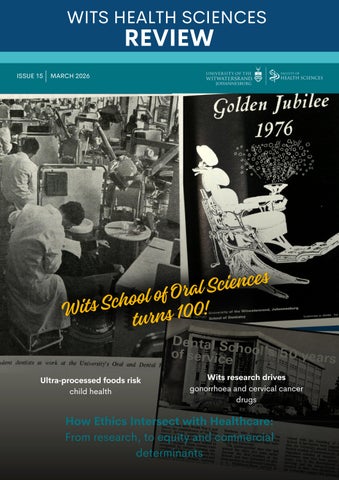
How Ethics Intersect with Healthcare: From research, to equity and commercial determinants WitsSchool ofOralSciences W School O S
Wits research drives gonorrhoea and cervical cancer drugs
Appointees C O N T E N T S
Message from the Dean
High-Impact Research
Highlights
News
Student News
Faculty Publications
Alumni
Achievements
Funding & Partnerships
Thought Leadership
Events
Message from the Dean
As we begin the 2026 academic year, it is a pleasure to extend a warm welcome to all members of our Faculty of Health Sciences community I especially welcome our new students as you begin your journey in the health professions and sciences, and I wish our returning students, academic staff, and professional staff a productive and rewarding year ahead. The start of the academic year brings renewed energy, and it is encouraging to see the faculty once again come alive with teaching, research, and engagement
Earlier this year, we gathered for our Faculty Strategic Retreat to reflect on the context in which we operate and the direction in which we are heading. Universities and health systems increasingly function in a VUCA environment, characterised by volatility, uncertainty, complexity, and ambiguity. In such conditions, the ability to plan thoughtfully while remaining adaptable is essential.
Our discussions focused on preparing for the Faculty of the Future, one that is agile, collaborative, and responsive to the evolving needs of society and the health sector. Central to this is the culture of our faculty: how we work together, support one another, and ensure that our systems enable people to contribute and thrive. These reflections will continue to inform our priorities throughout the year
Several important initiatives are already underway The ongoing revision of our staffing and promotions criteria aims to ensure fairness and transparency, while recognising the full range of contributions across teaching, research, clinical service, leadership, and engagement This work also speaks to the academic culture we seek to strengthen, one that values excellence, accountability, and meaningful contribution
This year also marks an important milestone for the School of Oral Health Sciences, which celebrates its 100-year anniversary, making it the oldest Oral Health Science faculty on the African continent For a century, the School has contributed to training oral health professionals and improving oral health locally and
nationally This milestone provides an opportunity to reflect on a rich history while looking ahead to the continued evolution of the field
We are also seeing continued progress with the Wits BioHub, now moving into its operational phase This represents a significant investment in interdisciplinary collaboration and research infrastructure, creating new opportunities for innovation and for addressing pressing health challenges In addition, the opening of the Wits Satellite Campus at Chris Hani Baragwanath Academic Hospital will enhance teaching and learning at our largest clinical training site, while the long-overdue renovation of the Faculty of Health Sciences library will further strengthen the learning and research environment
While these developments are encouraging, our work must remain grounded in the highest standards of ethics and integrity As our research activities expand and new initiatives come into operation, maintaining a strong ethical culture is essential to sustaining the trust placed in our institution and in the health professions more broadly. This edition of the Health Sciences Review includes a feature on ethics, reflecting on these responsibilities
As we move into the year ahead, I am encouraged by the momentum within our Faculty and by the dedication of our community I look forward to continuing our work together as we strengthen the faculty and advance our shared mission in education, research, and service.
I wish you all a successful and rewarding 2026.
Shabir A. Madhi Dean: Faculty of Health Sciences
Announcement
By Professor Bill WG Evans with valuable input from Professor Joy Shackleton
Christmas Day 1925 a signal day for dental education at Wits, a young Irish dentist, John Charles MiddeltonShaw, arrives as the first formal staff member in the Section of Dentistry, Wits Department of Anatomy. He will hold sway over dental education in South Africa for the next thirty years!
Fourteen students, completing primary subjects at Medical School before final qualification overseas First dental graduates in South Africa, in 1927… Leopold Shlom and Isaac Shein trained at a Dental Clinic located in “The Tin Temple” on Plein Square, operated by volunteers.
One hundred years and eleven Deans/Heads of School later (and many Acting Heads), our final-year classes have 30 dental and 23 oral hygiene students We have nine Departments. The proposed seven-year training period, combined Medical/Dental curriculum for 1926, is now trimmed to five years, with dental and medical subjects from the first year. The School accepts 64 students each year into two undergraduate degrees. To date, the School has produced an estimated 3500 graduates and 300 specialists
mined Shaw hed the Bok Dental Hospital by g the previous nts (turfing their ngs out onto the nt and inviting to “The Dental ” for tea!!)
subjects from the first year The School accepts 64 students each year into two undergraduate degrees. To date, the School has produced an estimated 3500 graduates and 300 specialists. A “New” Dental Hospital, near the main Johannesburg Railway Station.
Railways usurped us, we languish in Nissen huts on the main campus!!
A new and dedicated Dental Hospital on Wits University grounds, peaceful and productive, Wits Dentistry is gaining international recognition
The Zola Wits Dental Clinic opened, and students were undertaking treatment
The School moved to the Charlotte Maxeke Johannesburg Academic Hospital (CMJAH) and Health Sciences campus After some “teething” problems, it settled well, with 74 clinical chairs and 40 working laboratory places THEN came the 2020 COVID-19 pandemic!
nd THEN came the 2021 FIRE in levels vel 2 of the parking garage at CMJAH!
The Dental Clinic closed, staff and students sent home, no clinical extension of teaching terms,
work for four or more months. A mighty challenge, answered by online tuition, special precautions in the clinics, and alternative venues sought.
Despite the HPCSA wanting to halt the intake of BDS students from 2025, this was appealed and considerable progress was demonstrated in areas of
In February, the HPCSA issued a notice directing the School NOT to admit any further dental students from 2025 After appeals, the School is now accredited conditionally until 31 March 2028! concern, such as the new skills and prosthetics labs, and Zola Wits Dental Clinic (ZWDC) being fully operational The University had invested over R100 million in the labs, while the ZWDC was fund by and resolve in surviving these recent
a multi-year, multi-million donation from the Bergman Foundation
The school and the staff have shown tremendous resilience, resourcefulness,
threats and challenges. The Dental Research Unit has a respected record of studies in dental caries, fluorides and diet, followed closely by investigations into dental
adhesives, particularly for direct bonding of orthodontic brackets The Electrognathograph, invented in Restorative Dentistry, enabled accurate recording of mandibular movements, and international congresses have focused on “Electrognathographics”. Major contributions have been made to the science of intra-osseous implants by Periodontology, by Prosthodontics and by MaxilloFacial surgery, who are excited by their work using CAD CAM in facial skeletal
reconstruction CAD CAM milling of restorations and analysis of dental materials are the focus of research in Prosthodontics, while Oral Biological Sciences delve into the application of nanoparticles in Dentistry, including the management of candidiasis.
Indomitable spirit indeed! Centenary here we come!
We also play sports!
Research Highlights
Wits Research Drives Major Advances in Preventing and Treating Gonorrhoea and Cervical Cancer
Wits University researchers are playing a leading role in global efforts to tackle sexually transmitted infections, advancing both prevention and treatment. Two recent landmark studies highlight important progress in reducing cervical cancer risk and managing drug-resistant gonorrhoea.
Prevention is a critical starting point. A study published in The Lancet Global Health focuses on cervical cancer, a major public health concern in South Africa.
Women living with HIV face a cervical cancer risk around six times higher than those without HIV, largely due to persistent infection with high-risk human papillomavirus (HPV).
The study, led by Wits RHI in partnership with the Kirby Institute at the University of New South Wales, provides the first population-level evidence that a national HPV vaccination programme can be highly effective in a high HIV prevalence setting It evaluated South Africa’s free, school-based vaccination programme introduced in 2014.
Importantly, the research shows strong protection in both HIV-negative girls and those living with HIV, offering the first real-world evidence of the benefits of early vaccination before HPV exposure.
“For the first time, we can demonstrate at a population level that early HPV vaccination through a national programme provides excellent protection in a high HIV setting. This is a major public health success for South Africa and sends a clear global message ”
Alongside advances in prevention, new treatment options are also emerging Gonorrhoea remains one of the world’s most common STIs, affecting an estimated 82 million people aged 15 to 49 each year. Rising antimicrobial resistance, particularly to ceftriaxone, long recommended by the World Health Organization, is making the infection increasingly difficult to treat
A study published in The Lancet investigated zoliflodacin, the first drug developed specifically for gonorrhoea. Marketed as Nuzolvence®, it has since been approved by the United States Food and Drug Administration for use in adults and adolescents aged twelve and older.
Professor Sinead Delany-Moretlwe, Wits Professor of Global Health and Infectious Diseases and Principal Investigator of the South African arm of the study, highlights the risks of untreated infection:
“Gonorrhoea can have a devastating impact, particularly in women, leading to chronic pelvic pain, ectopic pregnancies and infertility Babies exposed at birth may develop serious eye infections that can result in blindness ”
The study compared zoliflodacin with ceftriaxone While treatment guidelines have evolved, zoliflodacin’s strong performance positions it as a promising new option as resistance continues to grow
Together, these studies show how progress in both prevention and treatment is shaping the future of sexual and reproductive health, while reinforcing South Africa’s growing contribution to global research
Wits Digital Pathology Hub’s
First Research Paper Takes on Africa’s Diagnostic Crisis
Across sub Saharan Africa, a quiet yet consequential transformation is taking place inside pathology laboratories While microscopes and overburdened specialists still anchor diagnostic services, digital tools are beginning to open new possibilities
At the centre of this shift is the Wits Digital Pathology Hub, launched last year to drive African-centred innovation in diagnostics, education and research. The publication of its first study, Pixels and Pathology, marks an important milestone and offers early insight into both the promise and the practical realities of digital diagnostics across the continent
The survey at the heart of the study reveals both the enthusiasm and challenges surrounding digital diagnostics across the continent Africa’s pathology workforce remains critically overstretched, with severe shortages delaying diagnoses and affecting clinical decision making Digital pathology and telecytology offer potential solutions, by expanding access to specialist expertise and training
Many respondents recognised these possibilities. Whole-slide imaging is helping some laboratories manage the burden, and telepathology, although used by only a fifth of respondents, is also proving valuable for reducing turnaround times
The study highlighted that Africa’s shortage of anatomical pathologists affects t rural populations the most, with an average of one specialist serving a million people Yet, the enthusiasm of non users often contrasts sharply with the reality experienced by
laboratories already using digital systems. “Those currently implementing digital workflows say they are challenged by slow scanning times, suboptimal image quality, inadequate infrastructure and limited technical support The promise is real, but so too are the frustrations,” says Associate Professor Pamela Michelow, Professor of Anatomical Pathology and lead author of the study.
Cost remains the most significant barrier The financial demands of equipment, storage, maintenance and software licensing far exceed the budgets of most African laboratories. “Some respondents argued that a robust microscope still offers better long term reliability than equipment dependent on stable electricity, adequate bandwidth and continuous support,” she explains, highlighting that digital transformation cannot be achieved through equipment acquisition alone, but requires sustained investment in infrastructure, training and support personnel.
These challenges were anticipated when the Digital Pathology Hub was established. Its founders envisioned a future where Africans are not only consumers of digital tools but creators of them. The intention is to cultivate a pipeline of professionals who can combine coding, image analysis and pathology to drive innovation rather than rely on imported expertise. Its collaborative model, bringing together specialists across Wits, Africa and international institutions, aims to ensure that technology aligns with local needs and remains accessible
The study also highlights significant opportunities Digital platforms have already expanded access to training, particularly since the pandemic. Whole slide imaging and telecytology offer possibilities for remote mentorship, student education and continuous professional development They also support research collaborations across the continent, although this potential remains underutilised.
Associate Professor Michelow says the future of digital diagnostics in Africa will depend on thoughtful planning and sustained investment. “With continued collaboration, research and support, digital diagnostics can help build more equitable healthcare systems and bring high quality pathology services closer to the communities that need them most ”
High-Impact Research
Experts Warn of Rising Child Health Risks Linked to Ultra-Processed Diets
“You are what you eat”. It’s a phrase we hear often, but it carries more truth than we might think The reality is that the food we eat shape our entire being, including our appearance and our physical and mental well-being. Although the concept may appear philosophical, it is backed by scientific evidence.
This message took centre stage at the recent subSaharan launch of the Lancet series on ultra-processed foods (UPFs), hosted by the SAMRC/WITS Centre for Health Economics and Decision Science, PRICELESS SA at the Wits School of Public Health on 25 February The event brought together researchers, policymakers and health advocates to confront a growing public health challenge: the growing dominance of ultraprocessed foods in our diets. th
What are ultra-processed foods, and why is there concern?
Ultra-processed foods (UPFs) are products made mostly from cheap ingredients and additives, with little to no whole foods Think sugary drinks, packaged snacks, instant noodles and many fast foods They’re designed to be convenient, affordable, and often hard to resist UPFs are increasingly replacing traditional diets across Africa and globally and are linked to a rise in non-communicable diseases. Professor Tobias
Chirwa, Head f School of Public Health, highlighted that, “the launch comes at a time when obesity and NCDs are on the rise in Sub-Saharan Africa, especially among children.”
The Lancet series brings together global research on how UPFs affect our health, economies and societies, including a manuscript from the founding Director of PRICELESS SA, Professor Karen Hofman, paper “Towards unified global action on ultra-processed foods” Professor Carlos Monteiro, a leading researcher in the field, explained that diets high in ultra-processed foods are strongly linked to weight gain and chronic illness On the flip side, reducing these foods and following simple dietary guidelines can lead to lower energy intake and meaningful weight loss
But this isn’t just about individual choice
The bigger picture: marketing, power and policy
Several speakers pointed out that ultra-processed foods are heavily promoted by powerful global companies These products are often marketed in ways
Prof Tobias Chirwa
that make them appealing, especially to children.
Sasha Stevenson, Executive Director of SECTION27 noted that UPFs are designed to be highly appealing, with some research suggesting they can trigger responses similar to addictive substances She stressed that voluntary action from the food industry is not enough to protect public health Professor Amos Laar of the University of Ghana added diets at this stage can have long-lasting health consequences
What can be done?
South Africa’s Deputy Minister of Health, Dr Joe Phaahla, reaffirmed government efforts already underway, including salt reduction targets, limits on trans fats, and the sugary drinks tax More measures, such as front-of-pack labelling and tighter marketing rules, are also in progress.
A
shared responsibility
Addressing the rise of ultra-processed foods will take more than individual willpower. It requires coordinated action from governments, researchers, communities and the food industry itself.
There was strong agreement among speakers that a ction is needed and urgently.
At its core, the message is simple: healthier food environments lead to healthier people. And ensuring access to nutritious, minimally processed foods is key to building a healthier future for all.
This includes:
Clearer food labelling to help people make informed choices
Stronger regulation of marketing, especially to children
Policies that make healthier foods more available and affordable
Support for traditional and minimally processed foods
L-R: Prof Tobias Chirwa, Dr Darshini Govindasamy, Sasha Stevenson, Prof Susan Goldstein, Dr Erick Bunyasi
Sasha Stevenson
Dr Joe Phaahla speaking in a pre-recorded video
Wits-led Genetic Study Adds Over 1000 New African Genomes to Global Science
A major new African genomics project could uncover millions of previously unknown genetic differences which may improve how we predict disease and personalise treatment.A paper published in Nature outlines the complex process of launching a nine-country collaboration in Africa to significantly expand scientists’ understanding of human genetic diversity. This work can reveal new insights into diseases such as cancer, mental health conditions, diabetes, and heart disease, benefiting health systems globally.
The Assessing Genetic Diversity in Africa (AGenDA) project has generated whole-genome sequence data from more than 1000 individuals from communities that are largely underrepresented in global research.
Researchers believe this effort will reveal millions of novel genetic variants that could reshape how disease risk is predicted and how treatments are tailored
AGenDA is built on a strong collaboration, with balanced contributions developed through a process of co-creation. The study includes a wide range of populations including hunter-gatherer communities, Nilo-Saharan, Afro-Asiatic and Bantu-speaking communities, as well as people from North Africa and Indian Ocean islands.
Working closely with local research teams, participants were recruited in Angola, the Democratic Republic of Congo, Kenya, Libya, Mauritius, Rwanda, Tunisia, and Zimbabwe with overall coordination led from South Africa
Professor Michèle Ramsay, lead author of the study, explains that most genetic data used in medicine today comes from people of European ancestry This means current tools often don’t work as well for African populations. “AGenDA aims to change that by increasing African representation in global datasets, so that advances in health research benefit everyone,” she says
African genomes are older and more diverse than those of any other continent Two Africans from different regions can be more genetically different from each other than a European and an Asian When African data are missing, genetic tools can fail to detect important risk variants and produce inaccurate disease-risk predictions
“AGenDA is about correcting that imbalance so that genetic research and resulting medical interventions work for African people and for the world,” says Dr Furahini Tluway, AGenDA Project Coordinator at SBIMB and a co-author of the study. “By sequencing whole genomes and not just small genetic panels, we are creating rich reference data that scientists everywhere can use,” she says.
Professor Scott Hazelhurst, SBIMB’s head of bioinformatics, explains the technical impact: “Genome-wide association studies (GWAS) rely on recognising patterns in DNA, but those patterns look very different across populations Without African data, risk-prediction models are biased and often inaccurate for African patients By expanding African genome reference data, AGenDA is making GWAS more scientifically robust and more ethically sound.”
Meanwhile AGenDA hopes to be an exemplary research governance model: it is led from the continent by African scientists. Data sharing is managed through African-based data-access committees that review who can use the data, for what purpose and under what conditions. Communities are engaged before any sampling begins, and consent processes are adapted to local languages, cultures, and governance systems. Read more
Contraception has transformed women’s lives for more than fifty years. Despite its unquestionable impact, unplanned pregnancies are rising, with half of all pregnancies worldwide being unintended.
Researchers of the review article Biomedical innovations in contraception: gaps, obstacles, and solutions for sexual and reproductive health, published in The Lancet, have identified systemic failures in global contraception The article also highlights promising scientific solutions and calls for changes that could help these innovations improve people’s lives and advance reproductive rights
Wits contributing researcher and Director of Clinical Trials at Wits RHI, Professor Thesla Palanee-Phillips, says that prioritising innovations in contraception is necessary because gaps in existing methods remain inadequately addressed. Although innovation alone cannot be the solution, it is a critical pathway for expanding autonomy and improving reproductive outcomes “We prioritised innovations because the science is advancing in ways that can directly address longstanding gaps, improving acceptability, expanding choice, and shifting burdens to enable greater equity and reproductive autonomy,” she explains.
The social cost of limited options
Some 259 million women who want to avoid pregnancy are not choosing contraception, often due to concerns about hormonal side effects and the cost of alternative methods. Up to half of women discontinue oral contraceptives within a year.
Phillips explains that these systemic challenges highlight the urgent need for contraceptive options that are acceptable, accessible, and user centred. However, she stresses that designing methods that are not only
clinically effective but also affordable, easy to use, and culturally acceptable takes time and extensive user experience research
Despite rapid scientific advances, the translation of non hormonal contraceptives into widely available products remains slow This is partly because hormonal methods were historically prioritised, a legacy that continues to reinforce structural barriers. Other factors, such as misinformation and inequitable healthcare, have also stalled uptake and rollout.
She adds, “When health systems themselves are constrained by stigma, low funding, or political resistance, new contraceptive options, particularly those that shift traditional gender roles, face delayed adoption ”
Global unmet needs
Access to contraception is shaped by gender norms, cultural expectations, religious beliefs, restrictive laws, misinformation, and inequities in healthcare In some parts of the world, unintended pregnancy rates are significantly higher, ranging from 36 per 1,000 women in Western Europe to 283 per 1,000 in Central Africa
Transformative contraception
There growing selection of male contraception innovations. “This could redistribute reproductive responsibility and provide meaningful choices to groups historically excluded from contraceptive development, including men, young people, and transgender individuals,” says Professor PalaneePhillips.
New hormonal combinations such as the NES/T gel have shown the ability to suppress sperm levels by 88 to 89 per cent in trial participants, without serious side effects Read more
Study Finds That Flies Can Transmit Cholera-Causing Pathogens
Africa carries the largest cholera burden, a bacterial disease that causes severe diarrhoea and dehydration.
The Africa Centres for Disease Control and Prevention recorded 300,000 confirmed and suspected cases of cholera in 2025 across 20 countries, making it the worst outbreak in 25 years
However, the role that flies play in spreading cholera has been underestimated in Africa, which is why an oral cholera vaccine trial is timeous.
In a recently published paper, African biostatisticians demonstrated that cholera does not spread solely through contaminated water or direct contact with an infected person; flies can carry the pathogen, moving rapidly between contaminated environments and human food. This makes transmission faster and more unpredictable
Scientists examined how often flies pick up bacteria from contaminated water, how readily they transmit bacteria to food, and how long flies survive in the environment
Digital System to Strengthen HIV and TB Patient Tracking
DIMA Health, in partnership with the Get Ready Centre, the University of the Witwatersrand, Research and Innovation Systems for Africa (RISA) and UK International Development, hosted a prelaunch event at the Sinqobile Centre in Mamelodi East.
The event unveiled a ground-breaking digital health solution designed to strengthen HIV and TB care and improve patient experience across South Africa’s public health system
“When these fly-related transmission factors were high, cholera outbreaks were more likely to take off But when flies die quicker or don’t pick up or transmit bacteria as efficiently, outbreaks were far more likely to fade out,” explains Professor Romain Glèlè Kakaï, coproject investigator for the Sub-Saharan Africa Consortium for Advanced Biostatistics (SSACAB) at the Wits School of Public Health.
Additional modelling data revealed that flies are efficiently contaminated with bacteria “The model suggests that cholera transmission can be highly explosive: even a small initial contamination may lead to a large outbreak when environmental vectors such as flies are active Once contaminated, flies can mechanically transmit the bacteria to many individuals in a short time, producing outbreak dynamics that resemble sparks igniting dry grass,” says Glèlè Kakaï
This initiative forms part of the national “Tracking 1 1 Million HIV Clients and 5 Million TB Clients Closing Campaign,” and introduced a booking system where clients can dial *120*7331# on their phones[AM1] to schedule clinic appointments remotely, without airtime, data, or a smartphone
The digital booking platform aims to transform how patients access care Through the USSD number, clients can book appointments from home, select a convenient time, receive reminders, and avoid long queues at clinics. For the health system, this reduces overcrowding, supports smoother patient flow, and eases the administrative burden on nurses
The system also supports maternal and community health by helping mothers, babies, and other vulnerable groups receive timely, uninterrupted care
Nicole Mamadi, a Stakeholder Engagement Officer at DIMA Health, described the pre-launch as a significant milestone for both the organisation and the community. Read more
New Review Points to Faster, Safer Vaccine Development
This is important in the context of low-resourced health settings, Africa’s focus on increasing its vaccine manufacturing, and pandemic preparedness.
A review by the Antiviral Gene Therapy Research Unit (AGTRU), published in the journal Infection, highlights a generation of safe viral-like technologies that could dramatically speed up the development of vaccines and antiviral treatments.
Traditional antiviral studies, where researchers work with the live virus, often require specialised biosafety level 3 laboratories, which are expensive, tightly regulated, and limited in number. This slows experiments and restricts participation in advanced virology research.
“Viral mimics remove this bottleneck,” explains Natasha Killassy, AGTRU postgraduate student and first author of the review She explains that “because viral mimics behave like the real virus, but cannot cause disease, researchers can rapidly screen new drug and vaccine candidates They can test how well compounds block infection, compare immune responses, and evaluate how emerging variants respond to existing therapies.”
This can be done within a biosafety level 2 facility, which is far more accessible. This approach will enable promising therapies to move more rapidly from laboratory testing to clinical development. The review examines viral mimic systems that reproduce key features of dangerous pathogens such as SARS-CoV-2, the virus that causes Covid-19, without the ability to replicate or cause disease These systems allow researchers to study infection safely,
quickly, and in more accessible laboratory environments
“For Africa, this is especially significant,” says Professor Betty Maepa, AGTRU Team Leader and coauthor of the paper. “The Covid-19 pandemic exposed the continent’s reliance on imported vaccines and the risks of global supply shortages. Africa has set targets to increase local vaccine research and manufacturing and technologies like these could play an important role in achieving that.”
Meanwhile, mimic models that accurately reproduce infections such as SARS-CoV-2 are vital for continued research and development, says Killassy. “They allow scientists to investigate viral behaviour and test treatments without needing to work with live, pathogenic viruses.”
In the News
READ | Beyond compliance — the urgent need for child-centric advertising regulation
Wits researchers highlight that unavoidable advertising harmful products in shared spaces can expose children to harmful content, urging a child‑centred regulatory approach that addresses both legality and well-being They say that outdoor advertising regulation must move beyond structural compliance and revenue concerns to prioritise children’s rights and public health. Read the full article in Daily Maverick
READ | Childhood Cancer: Warning Signs Easy to Miss
“Childhood cancer symptoms frequently resemble common illnesses, so children are treated repeatedly for infections before cancer is considered” shares Adjunct Professor Jennifer Geel She is a Paediatric oncology expert at the Wits Department of Paediatrics and Child Health, and Head of Paediatric Oncology at the Charlotte Maxeke Academic Hospital Read the full article in The Sunday Times.
READ | 180 000 infections in 2024, 47 000 by 2045 – if SA rolls out the HIV prevention jab Dr Lise Jamieson, a modelling scientist at Wits University’s Health Economics and Epidemiology Research Office (He2RO) says the donated lenacapavir (LEN) supply will cover only about 3% of those who need it. Read the full article in Mail & Guardian.
Student News
PhD candidate takes research to MIT and Harvard
Type 2 diabetes is the most common form of diabetes in Africa and a growing public health concern, particularly in underserved populations. Wits PhD candidate Bontle Masango is working to better understand the condition and find ways to reduce its impact on both individuals and healthcare systems.
As a 2025/2026 Fulbright Scholar, Masango has begun a five-month research exchange at the Broad Institute of MIT and Harvard in Cambridge, Massachusetts. The prestigious fellowship recognises students with strong academic achievement and leadership potential to contribute to global knowledge and societal impact.
At the Broad Institute, a world-leading centre for genomics and biomedical research, Masango is advancing her work on identifying early warning signs of type 2 diabetes. Her research explores how a person’s biology and lifestyle interact, including small differences in DNA and how the body processes sugar.
“The purpose of my research is to find better ways to predict who is likely to develop type 2 diabetes before
serious damage happens. Many people only find out they have type 2 diabetes when it has already started causing complications,” she says
Her PhD builds on her earlier research in genomic medicine. For her master’s degree, Masango examined how blood sugar levels change in South African adults after eating, and how these responses may signal future diabetes risk.
“This is important because the way a person’s body responds to sugar can tell us a lot about their risk of developing type 2 diabetes I also looked at whether these blood sugar changes are linked to other processes in the body, such as hormones and liver health,” she explains.
Masango will undertake advanced training at the Broad Institute of MIT and Harvard and collaborate with leading researchers in genomics and biomedical science, while strengthening research that benefits African populations and helps address critical gaps in precision medicine for underrepresented populations
Read more
Emerging Scientist to Explore New Nanoparticle Therapy for Brain Cancer
PhD candidate Michael Gomes wins scholarship to advance his research in targeted drug delivery systems for glioblastoma.
Michael Gomes, a PhD candidate at the Wits Advanced Drug Delivery Platform (WADDP), has been awarded the 2026 South African Medical Research Council (SAMRC) Institutional Clinician Researcher Development Programme scholarship to advance his research into new nanoparticle-based drug delivery systems for glioblastoma
Glioblastoma is one of the most aggressive and lethal forms of brain cancer, largely because these cancer cells are very aggressive and spread rapidly to surrounding brain tissue This makes it difficult to remove completely through surgery, and often the cancer will come back after being removed Even with the current standard of care, surgical removal of as much of the tumour as possible, followed by radiation therapy and chemotherapy with temozolomide, outcomes remain poor. Most patients survive only 12 to 18 months after diagnosis In South Africa and across Africa, survival is often lower because of delayed diagnosis, limited access to specialist neurosurgical services, and the high cost of advanced treatments
Beyond the brain-blood barrier “One of the biggest challenges in treating brain tumours is simply getting the drug to where it needs to be,” says Gomes. “The brain is protected by the blood–brain barrier, which blocks many chemotherapy agents from reaching the tumour at effective concentrations ”
For Gomes, the scholarship will enable him to focus on developing tiny drug carriers designed to deliver chemotherapy more effectively to brain tumours.
Gomes’s research compares three types of these nanoparticle-based drug delivery systems: liposomes, polymer-based particles, and polydopamine nanoparticles, to determine which is most effective.
Nanoparticles are extremely small particles, far too small to see, that can be used to carry medicine through the body In this case, they act like tiny delivery vehicles, transporting cancer drugs directly to tumour sites This can increase the amount of drug that reaches the cancer while reducing harmful side effects elsewhere in the body.
Liposomes, which are tiny spherical lipid-based particles, are already widely used in drug delivery Polymer-based nanoparticles, often made from biodegradable materials, can be designed to release drugs gradually or in response to specific biological conditions.
Gomes’s research focuses particularly on polydopamine nanoparticles, a less-explored approach that may offer improved targeting for brain cancer treatment.
Ntombikayise Kgosana, a 2nd year Postgraduate Nursing student, received the Lester Connock Foundation Award for her Master's paper entitled “The Experiences of Mothers and Nurses in Care-By- Parent Interventions in a Neonatal Intensive Care Unit of a Regional Hospital in Gauteng”
Ellen Mensah-Bonsu, PhD candidate was was awarded the International Urogyneacology Association Observership Grant for her research paper titled “Pelvic floor dysfunction and physical rehabilitation among gynaecological cancer survivors in Ghana”.
Faculty Publications
New Book Advocates for African Expertise in Pancreatic Cancer Care
Pancreatic cancer remains one of the most difficult cancers to treat, with limited therapeutic options and high mortality rates. In response to these challenges, researchers from the Wits Faculty of Health Sciences have joined global experts in a new publication that examines Africa’s realities in tackling pancreatic cancer
The book, Understanding Pancreatic Cancer – Global Strategies and African Perspectives in Africa, features chapters contributed by Professors in the Wits Department of Surgery
The book takes a two-fold approach to the issue First, it explains the latest global science on pancreatic cancer, including its causes and the innovative treatments currently under development Second, it explores how these advances can be applied within African health care systems
In his contribution to the book, Adjunct Professor Thifhelimbilu Luvhengo’s focuses on palliative care and quality of life for people living with pancreatic cancer. It outlines the principles of palliative care and calls for its integration into treatment plans, particularly in resource-limited African settings. The chapter also addresses patients’ social and psychological needs through personalised support, illustrated with African case studies
Prof Luvhengo describes the chapter as a practical tool for patients, families and health care workers “We are emphasising that precision or individualised care for cancer patients must be a continuum that includes palliative care. It is a task for everyone. We can use AI to integrate information for quality care No two patients are the same,” he explains
As African institutions increasingly contribute to global cancer research, their role in international collaborations is creating new opportunities for more inclusive, population-relevant studies Associate Professor Ekene Nweke’s contributions highlights ongoing initiatives on the continent and outlines future directions to address late-stage diagnoses and poor survival rates
Prof Nweke notes, “The chapter emphasises the innovative work being conducted on the continent and how emerging tools such as AI, liquid biopsies and mics technologies
can be leveraged for cost-effective patient management and treatment.”
In their contributions Both Witsies advocate for a more equitable oncology landscape and support the development of solutions that benefit patients globally.
Cricket Sports Medicine offers a comprehensive, evidence based guide to cricket healthcare, covering injury prevention, biomechanics, conditioning, rehabilitation, and return to play Co edited by Wits Professor of Rehabilitation Benita Olivier, it equips multidisciplinary healthcare professionals with practical tools to deliver holistic, sport specific care for cricketers at all levels
How Wits Alumnus Built a Generation of African Gene Therapy Leaders
As a medical student, Patrick Arbuthnot (BSc 1982, MBBCh 1985, PhD 1992) developed a growing interest in the biological sciences that would shape the direction of his career Alongside his medical training, he pursued studies in science, eventually forging a path that bridged medicine and molecular research.
By the time of his retirement at the end of 2025, Professor Patrick Arbuthnot, former head of the Antiviral Gene Therapy Research Unit (AGTRU), had dedicated 46 years to Wits. His career was driven by a commitment to understanding the underlying mechanisms of disease, a pursuit that defined his work and legacy Over the decades, he played a key role in transforming a modest laboratory into a successful South African Medical Research Council (SAMRC) research unit
After qualifying as a medical doctor and completing his internship in 1986, Patrick formally entered academia under the mentorship of Wits Professor Wynfried Fitschen He completed his PhD in 1992, before undertaking postdoctoral training in gene therapy at an INSERM unit based at the renowned paediatric hospital, Necker-Enfants Malades in Paris. There, he worked with Professor Christian Bréchot, a leading figure in hepatitis B virus research and the former Director of the Pasteur Institute.
“In the early 1990s, gene therapy was still largely experimental and very much a frontier technology. It as, however, full of promise My time in Paris was formative
and I am grateful I was there just as the field began to take shape ”
Returning to Wits in 1994, Arbuthnot established a laboratory focused on hepatitis B virus and genebased therapies.
“In that lab, the technologies were limited. We worked with ribozymes to cleave viral RNA While conceptually elegant, these approaches proved inefficient in practice,” he said. As the field evolved, so too did the lab’s work, progressing to more advanced genesilencing and gene-editing approaches, including RNA interference, transcription activator-like effector nucleases (TALENs), and CRISPR-based systems. This growth culminated in the unit’s recognition as an extramural SAMRC unit, marking a significant milestone in its development.
More recently Arbuthnot and his colleagues patented an ionisable lipid technology, now being commercialised through a startup, Green Lipids This step reflects years of foundational research, accelerated during the COVID-19 pandemic, when AGTRU pivoted to vaccine development, viral vector technologies and mRNA-based platforms in response to urgent global needs This work was supported by the WHO, the Medicines Patent Pool (MPP), and a range of government and funding partners
“We had established the basic molecular biology required for mRNA production, but it was a careerdefining moment when we realised that we were the only academic lab in Africa to produce its own mRNA constructs in-house”, said Professor Arbuthnot.
Alongside Professor Arbuthnot, Drs Ely and Bloom have been instrumental in setting up Green Lipids and the technology that underpins it This innovation converts cashew nutshell liquid, an abundant agricultural waste product in Africa, into ionisable lipids essential for mRNA vaccine formulation This work has been developed in collaboration with Prof Charles de Koning and his team from the Wits School of Chemistry.
Sharpeville Massacre, Chaos and the Making of Modern Emergency Medicine
Drawing on personal experience, Dr Michael Morris (MBBCh 1961) reflects on how the Sharpeville Massacre of 1960 catalysed modern emergency medicine Working in an under resourced casualty unit, clinicians managed 180 casualties with rudimentary tools, improvised triage and sheer teamwork
Though not formal research, this lived experience shaped core emergency medicine principles.
In a the blog post of the Royal College of Emergency Medicine, Morris writes that while technology has transformed trauma care, rapid decision making, prioritisation and human resilience remain its foundation
Read his full article
Assoc. Prof Corlia Brandt
Appointed: President of the International Organisation of Physiotherapists in Pelvic and Women’s Health, marking the first time that the organisation’s President is from Africa
Dr Haroun Rhemtula
Selected: Second Runner-Up for the Clinical Excellence Award at the South African Health Excellence Awards 2025
Dr Naeema Ahmad Ramadan Reis
Returning Fellow: Carnegie Corporation of New York & African Studies Association. Dr Olwethu Mbakaza
Dr Irene Kearns
Appointed: Associate Editor of the Curationis Journal
Dr Kerry-Ann Singaram
Two
New
Elected: President of the South African Society of Nuclear Medicine (SASNM).
Prof Veronica Ntsiea
Reappointment: HPCSA
Professional Board for Physiotherapy, Podiatry & Biokinetics, 2025-2030
SAMRC Extramural
Elected: Chair of the Gauteng branch of the Neonatal Association of Southern Africa (NNASA).
Units Effective From 1 April 2026
Professor Laetitia Rispel
Renewal: Prestigious SARChI Chair on the Health Workforce for the third and final term
Dr Lebogang Maseko
Appointment: HPCSA
Professional Board for Occupational Therapy, Orthotics and Prosthetics (OCP), 2025-2030
Dr Meghan Botes
Appointed: Associate Editor for the African Journal of Emergency Medicine
Prof Lisa du Toit
SAMRC/WITS Centre for Nanopharmaceutical
Translational Research in Infectious diseases, Cancer & Neurotherapeutics Research Unit.
SAMRC/WITS
Prof Lisa Micklesfield
Emeritus Professors
Pathology
Full Professors
Reader
Associate Profes
Prof Deborah Glencross
Prof Linda Richter Clinical Medicine
Prof Sooraj Baijnath Biomedical Sciences
Prof Latifat Ibisomi Public Health
Assoc. Prof Clement Penny Clinical Medicine
Prof Admire Chikandiwa Prof Busisiwe Maseko medical Sciences
Prof Sharon Therapeutic
Prof Sibusiso Mkwananzi WitsRHI
Prof Sonti Pilusa Therapeutic Sciences
Adjunct Professors
Senior Clinical Lecturers
Senior Researcher
Dr Belinda Marais Clinical Medicine
Dr Karishma Lowton Clinical Medicine
Dr Candince ChettyMakkan HE2RO
Prof Merika Tsitsi Clinical Medicine
Prof Zaheer Bayat Therapeutic Sciences
Prof Nnabuike Ngene Clinical Medicine
Grants & Funding
Science and Policy Experts Unite in Africa to Accelerate Climate and Health Solutions
Researchers from the Wits Faculty of Health Sciences will play a central role in the new Southern African Climate and Health Science and Policy Consortium, led by the University of the Witwatersrand and supported through Wellcome’s major new investment in climate and health research in Africa.
African universities and regional experts are working with Wellcome to establish new science and policy consortiums that will address the escalating public health crisis driven by climate change - saving lives and livelihoods
Wellcome will provide an initial £40 million for two new consortiums in Southern and Western Africa with a further £20 million earmarked to set up a third consortium in Eastern Africa
The first two regional consortiums will be led by the University of the Witwatersrand in South Africa and Kwame Nkrumah University of Science and Technology in Ghana Scientists, policy makers and community partners will join forces to co-develop evidence-based solutions that reflect local priorities and translate rapidly into policy and practice.
The Southern Africa consortium will prioritise solutions that address the health and economic impacts of heatwaves and floods as well as develop high-quality data to support evidence-informed action. In Western
Africa, the consortium will focus on the impact of heatwaves, dust storms and drought on people’s health and nutrition to develop effective policies that also take into consideration the economic costs and benefits
Africa is at the frontline of a rapidly warming world. Rising temperatures are driving deadly heatwaves, air pollution, worsening nutrition, and new threats to maternal and newborn health Extreme weather events fuelled by climate change are disrupting food and water supplies and straining health systems, with marginalized communities facing the greatest burden
Professor Charlotte Watts, Executive Director, Solutions at Wellcome, said:
“Africa is on the frontline of climate change, with women and marginalised communities already suffering the worst health impacts. By supporting African science and leadership, these new consortiums will generate the evidence and locally led solutions needed to improve health and save lives – now and in the future "
The new consortiums will strengthen scientific expertise, support innovative solutions and provide context-specific evidence to inform policies and action across Africa Their priorities are based on pan-African frameworks and co-designed with regional partners over the past two years with a focus on health and science equity. Dr Modi Mwatsama, Head of Capacity
“Wellcome is committed to working with partners in Africa who are best placed to develop the regional-specific evidence that supports decision-makers and community action. Both the accelerating crisis in Africa and the capacity for new knowledge, leadership and innovation means that the consortiums have huge potential to improve health and save lives.”
Professor Matthew Chersich, University of the Witwatersrand and Southern Africa consortium lead says: “Southern Africa faces increasingly severe extreme heat and precipitation events with large numbers of highly vulnerable people, from
New Wits-Led Consortium Unites to Build a Stronger Epidemiology Workforce
Opinions & Thought Leadership
Protecting Research Integrity from Gender Bias and Gender Political Interference
By Adjunct Professor Mantoa Mokhachane
Why sex and gender cannot be ignored in research
Gender bias and the politicisation of science are undermining research integrity A correspondence titled “Safeguarding research integrity: SAGER guidelines, research ethics, and the politics of evidence”, published in The Lancet, warns that excluding sex and gender from research compromises justice, beneficence and scientific rigour
When women and gender diverse people are overlooked, findings become biased, harms are missed, and evidence cannot be reliably applied across populations Ethical and rigorous research must integrate sex and gender from design and sampling to analysis and reporting.
The overlooked responsibility of ethics committees Research ethics committees (RECs) and institutional review boards (IRBs) are central to fairness in research, yet they often fail to require sex and gender considerations Existing frameworks emphasise autonomy, consent and risk but do not position sex and gender as essential dimensions of justice or scientific quality Legacy norms such as male only study models and inconsistent institutional guidance worsen the gap. Misconceptions that gender issues relate only to women’s health further contribute to this oversight.
While the REC checklist focuses on consent, risk/benefit, privacy, vulnerable populations, sex and gender fall through the cracks There are other reasons for this blind spot, such as legacy norms in research –predominantly male animal models, male human subjects, the average effect reporting, which masks sex differences, and inconsistent guidance across institutions
There are examples of stronger leadership During South Africa’s HIV crisis, the Wits Research Ethics Committee, led at the time by the late Professor Cleaton Jones, insisted that funders continue providing antiretrovirals to participants who were responding to treatment after studies ended This collective decision by universities protected participants at a time when lifesaving medicines were not available through public systems
Political interference
The authors of the correspondence, including researchers from the Wits Faculty of Health Sciences, warn that political ideologies, attempts to distort scientific evidence and the marginalisation of gender responsive research are eroding public trust in science and weakening the integrity of health research They point to historical examples where governments prioritised political narratives over scientific truth, with devastating consequences.
South Africa offers a stark reminder Between 1997 and 2005, during the height of the HIV crisis, government denialism delayed access to life saving antiretroviral therapy. Thousands died unnecessarily because political beliefs were allowed to supersede scientific evidence This example illustrates the human cost of subordinating science to ideology.
Another example of this is th f il f th Ab ti Be Faithful and Condom us not draw upon gender resp showcase that it was ineffe ABC campaign ignored str HIV infection – poverty, ge inequalities and violence th rendered women vulnerabl
Adjunct Professor Mantoa Mokhachane, Director: Wits Unit For Undergraduate Medical Education, School of Clinical Medicine
Ethics, Regulation and Ethics, Regulation and Methodology of Clinical Studies in South Africa
By Professor Paul Ruff
All research in South Africa involving humans or animals must be approved by an independent local or national ethics committee This ensures participants’ dignity, rights and welfare, and confirms that research is scientifically valid, and compliant with national and international ethical standards In addition, all clinical studies of health products including medicines, devices and kits are regulated by SAHPRA
At Wits, the HREC (Medical) approves undergraduate and postgraduate degrees, from BSc to PhD In addition, it approves Grant Funded Research, Commercial Clinical Trials, Investigator Initiated Trials, and local (e g, SAMRC) and international (e g, WHO) cooperative group studies.
Preclinical testing
Preclinical testing is required to establish the profile, efficacy, and safety of health products before human testing. Preclinical results provide a preliminary assessment of the balance of risks versus benefits of the investigational product (IP). Safety goals include characterization of toxic effects, identification of target organs, dose dependence, toxicity relationship to exposure, and potential reversibility. Tests of functionality and metabolism (pharmacodynamics and pharmacokinetics) may be explored in vitro (laboratory), in silico (computer) and in vivo (animal)
models Animal models should include more than one species.
Phase I (including First in Human (FIH) studies
Phase I studies define dose-limiting toxicity (DLT) and maximum tolerated dosage (MTD) for phase II studies by gradual dose escalation, as most treatments must be delivered at maximum dose for maximum effect Phase I /FIH studies provide minimal information about efficacy as patients are diverse regarding diagnoses and are treated at escalating doses (usually 3 to 6 at a particular dose). Most Phase I / FIH studies use healthy volunteers except in oncology and gene therapy studies, where patients have failed other alternative reatments Healthy volunteers, who are exposed to increased risks of adverse events (AEs), especially serious adverse events (SAEs), from receiving IPs, with no probability of medical benefit, are typically offered more substantial reimbursements than participants in later phase studies Additionally, these healthy volunteers must undergo intensive medical monitoring, including confinement in residential research facilities or even hospitals for days or weeks
Phase II studies
The main aim is the assessment of adverse events, especially serious adverse events (SAEs), as well as estimating the IP’s clinical activity Basic objectives in phase II trials are patient benefit, screening for activity and toxicology and pharmacology of IP(s) A Phase II study is usually uncontrolled (usually one-arm, openlabel but maybe two-arm) to obtain an estimate of the IP effect Randomized phase II trials look at two or more treatments, none of which are controls or standards of care Proportion of patients whose disease responds for at least 4 weeks is usually the primary endpoint ie objective response rate (ORR). Participant numbers, while more than in phase I study, are relatively small, with a minimum of 30 but up to 100 participants and are “underpowered” to show survival benefits A concern is that if an IP has no or low activity, participants might die early from their disease. It is therefore ethically imperative to minimize participants treated with ineffective medicines by exercising early phase II termination Although the main aim is to decide if IPs warrant phase III studies aimed at regulatory approval, early regulatory approval of highly effective medicines is sometimes possible from phase II trials, although rare
Phase III
Phase III aims to demonstrate the effectiveness of the study therapy(s) compared with standard of care. Clinical equipoise, with genuine uncertainty about which therapy is better, is the principled basis for these studies. Randomisation prevents bias in the allocation of participants, helping obtain outcomes that reduce uncertainty. These studies compare standard of care A (control) to new treatment(s) B alone, or standard of care A plus new treatment(s) B. They may have two arms or more by comparing A versus B, A versus A+B, A versus B and A versus C, etc , or A versus A+B and A versus A+C, etc.
Hazard ratios (HR) measure the relative increase/decrease in the risk of an event between the investigation and control groups HR=0 80 is 20% relative risk reduction, while HR=1.2 is 20% relative risk increase Absolute risk reduction should also be assessed, as well, with risk reduction from 20% to 10% equals 50% relative, but 10% absolute risk reduction. Survival estimation of incomplete data measures the difference in time to event endpoints eg, OS, PFS1.
Superiority Studies aim to show that the IP +/- control significantly prolongs survivals of patients eg. from 2 Years for control to 3 years for patients with IP They
must show HR <1.0 (usually >20% difference ie. HR <0 8) with 95% CIs not crossing 1 0 and p<0 05 NonInferiority Studies question whether new treatment(s) are as good as current treatments, requiring a prespecified margin of non-inferiority, usually Δ of 20% (<HR 1.2). They do not statistically prove equivalence but show that differences are less than this prespecified probability
Phase IV
Phase IV studies are usually randomised long-term post-marketing studies where there is a concern for IP safety or efficacy and are often mandated by regulatory authority(s) such as the U S Food and Drug Administration (FDA) and SAHPRA
Conclusions
Clinical studies play a critical role in evaluating health products but require strict regulatory and ethics review to protect participants and ensure scientific integrity These studies follow a strict clinical study pathway after preclinical research, before any health product can be approved for use in humans and animals.
Reference: Kaplan E & Meier P J Amer Statist Assoc 1958; 53(282): 457-481
Professor Paul Ruff, Emeritus Professor, School of Clinical Medicine, Chair Wits Human Research Ethics Committee (HREC) (Medical), and Prior Chair of South African Health Products Regulatory Authority (SAHPRA) Clinical Trials Committee (CTC)
Events
Missing Link Between Ethics and Safety in Medicine
The Department of Internal Medicine at Charlotte Maxeke Johannesburg Academic Hospital (CMJAH) hosted an ethics-focused academic meeting titled “Silence Kills: The Missing Link Between Ethics and Safety in Medicine.”
The session, hosted in the weekly departmental meeting, explored why clinicians often remain silent in situations of perceived risk, discomfort, or deviation from best practice This silence can often contribute to ethical distress, compromised patient safety, and strained team dynamics
He says in contrast to the department’s usual academic meetings, which focus on diagnosis and management, “this session centred on the human and psychological dimensions of clinical practice,” explained Dr Jarrod Zamparini, a Wits Lecturer and the Academic Meeting Coordinator in the Department of Internal Medicine at CMJAH He says the discussion proved emotionally charged, as it reflected on the daily realities faced by healthcare workers in the state sector At the centre of these challenges are resource
This platform created a needed space for open dialogue, especially as “entrenched hierarchies” can make speaking up feel too risky or unsafe Drawing on behavioural science, organisational psychology, and the South African healthcare context, the session was presented by Dr Khosi Jiyane, a Clinical Psychologist, and Jeshika Gopal-Bassett, an Industrial and Organisational Psychologist, both from The Human Edge.
The speakers examined the psychological and structural factors that discourage open communication in highpressure clinical environments, highlighting how fear of judgment, hierarchical power imbalances, and the emotional toll of clinical work can all contribute to a culture of silence.
The session also emphasised practical, evidence-based strategies to help empower clinicians to raise concerns early and constructively These included techniques to navigate complex power dynamics, frameworks for initiating difficult conversations in ways that support both ethical practice and team well-being
Global STEM Leaders Gather at Global STEM Leaders Gather at Global STEM Leaders Gather at Wits for TechWomen 2026 Wits for
TechWomen 2026 Wits for TechWomen 2026
On Monday, 16 February 2026, the University of the Witwatersrand hosted a “TechWomen” event under the theme “@WITS Connecting Global Leaders in Technology and Innovation”.
TechWomen is a global initiative that empowers women leaders in Science, Technology, Engineering and Mathematics (STEM) by expanding their access to networks, resources, and professional growth opportunities Each year, TechWomen hosts two international delegation trips to different partner countries, creating opportunities for cross cultural exchange and strengthening pathways for women’s advancement in STEM
The visit to the Wits University formed part of a strategic anchor of this mission: as a leading African research institution with strong ecosystems in digital innovation, engineering, health sciences, and creative technologies
Wits Deputy Vice Chancellor for Research and Innovation, Professor Lynn Morris, opened the event by highlighting how societies advance when barriers are removed and impactful partnerships are built As a globally recognised scientist and leader, her message resonated strongly with participants
This year’s programme bridged disciplines to explore how AI and digital innovation can transform education, healthcare and the technology industry.
The programme at Wits was coordinated by TechWomen alumnae and Wits lecturers Amanda Jankowitz (Faculty of Health Sciences) and Dr Chioniso Kuchwa Dube (Faculty of Engineering), in close collaboration with Professor René Smith, Head of the School of Arts, and Dr Olu Randle.
The Design Thinking workshop guided participants in applying its principles to AI integration across education and industry The discussions emphasised problem solving approaches that respond to societal needs
The Human First Health Tech workshop reinforced the social aspect of innovation, particularly in improving healthcare delivery and patient outcomes. Speakers stressed that AI health innovations should support healthcare practitioners in enhancing care, not replace them. The Head of the School of Therapeutic Sciences, Professor Hellen Myezwa, noted: “Innovation grounded in empathy, courage and wisdom is transformative.”
In her closing remarks, Professor Hellen Myezwa urged that the principles discussed at the event become a movement “Let us ensure that women are not only present but powerful in shaping systems,” she said.
The Infectious Diseases and Oncology Research Institute (IDORI) at the Wits Faculty of Health Sciences came alive with ideas, debate, and collaboration when it hosted the Discovery via CARTA Outcomes-based Research Training and Scientific Excellence (DISCOURSE) Hub Symposium.
The DISCOURSE Hub integrates the disciplines of Infectious Diseases and Oncology research to change how high-priority cancers are prevented, diagnosed, and treated These common cancers include breast, colon, and cervical cancer, which account for a significant proportion of cancer-related deaths.
Jointly led by the Consortium for Advanced Research Training in Africa (CARTA) PhD graduates and supported by the IDORI, the event convenes a dynamic group of researchers and administrative staff from Uganda, Rwanda, and South Africa, whose region is burdened by cancer. Participants discussed three core thematic areas: Cancer Surveillance, Epidemiology, and
Burden of Disease; Cancer Screening and Early Diagnosis; and Factors Impacting Cancer Treatment
Effectiveness and Survival
The DISCOURSE Hub has identified key cross-cutting capacity gaps in cancer research across participating countries Assoc Prof Chikandiwa says a limited oncology research workforce, inadequate laboratory and digital infrastructure are key challenges that weaken research management and data systems for early-career investigators.
“In response, the Hub is beginning to address these nges through oncology-focused postdoctoral wships, embedded mentorship, multidisciplinary rch training, and support for collaborative multiry studies,” he explains
b has already capacitated the three participating ies by supporting formalised research nistrator training in the fundamentals of Research gement and Administration, and Contracts and s Management
UPCOMING EVENTS
25 – 26 June
25–26 June
Surgical Research Society of Southern Africa 2026 Meeting Register
This year Wits University takes its place as host, providing a fitting stage for renewed dialogue, shared discovery and the collective pursuit of surgical excellence.
The Steve Biko Centre for Bioethics, in the School of Clinical Medicine, will be the local host of the World Congress of Bioethics (WCB) It will take place at the OR Tambo Conference Centre from 8-10 July 2026. The Centre is supported by leaders in bioethics from Kenya and Ghana, who, together with us, form the Congress Africa Hosting Committee.
The WCB is the biennial gathering of the International Association of Bioethics, an organisation whose membership spans every global region. This year’s event is expected to welcome between six and seven hundred delegates, selected from a remarkable pool of more than eight hundred and fifty abstracts submitted by scholars in seventy seven countries The Congress will be preceded by a two day meeting of the Feminist
Approaches to Bioethics Network, a longstanding affiliate of the Association.
Bioethics, as a wide ranging field of applied ethics, explores moral responsibilities linked to life, health, scientific progress, medicine and the environment Its relevance is profound and far reaching, touching almost every dimension of human and ecological existence In the wake of the Covid 19 pandemic and amid mounting global pressures from climate change, geopolitical instability, war and the problematic application of technology, the need for ethical guidance has never been more pressing At a time when the world requires greater tolerance, compassion, responsibility and a shared commitment to sustainability, bioethics offers essential insight and direction
Against this backdrop, the theme of the 2026 Congress, Comforting and Disturbing Bioethics, captures the dual role of ethical inquiry. At times, bioethics provides clarity, reassurance and support, helping individuals and communities navigate moral difficulty with integrity and empathy At other moments, it unsettles, disrupts and challenges entrenched assumptions, speaking for the vulnerable, exposing injustice and confronting ignorance and prejudice
Delegates are invited to present work that comforts or disturbs or does both simultaneously across the diverse landscape of contemporary bioethics. The Congress will centre its discussions on seven broad domains: bioethics and invisibility, discrimination, inequity or injustice; bioethics in global and public health; environmental bioethics; bioethics in healthcare and clinical practice; and bioethics and emerging technologies
Senior Appointees
Head of School: School of Clinical Medicine
Professor Salome Maswime
Professor Maswime is currently Professor and Head of the Global Surgery Division at the University of Cape Town (UCT); and the Director of UCT’s World Health Organization Collaborating Centre on Integrated Clinical Care Prof Maswime, who hails from Limpopo, completed her MBChB undergraduate studies at the University of KwaZulu-Natal, following which she completed her specialist training (FCOG(SA), MMED) in Obstetrics and Gynaecology at Wits University. She subsequently also completed her PhD at Wits, before undertaking a postdoctoral fellowship at Harvard Medical School and Massachusetts General Hospital Prof Maswime has worked in several hospitals as a medical doctor and specialist, including Chris Hani Baragwanth Academic Hospital She has been involved in the development of undergraduate and postgraduate courses in Clinical Medicine, Public Health and the Graduate School of Business
Prof. Maswime demonstrates strong leadership in research, with over 100 publications and the successful supervision of 30 postgraduate students to completion, including 24 Masters and 6 PHD students. She is an NRF Y-Rated Scientist and a member of the Academy of Science of South Africa and is actively involved in multiple national and international bodies Furthermore, she is the recipient of numerous awards for her contribution to science and to healthcare, including the Trailblazer and Young Achiever Award from the President of South Africa in 2017; the NSTF-SAMRC Clinician Scientist award for pioneering Global Surgery in Africa in 2023; and the International Healthcare Practitioner Award from Zenith Global Health in the UK in 2025
Director: Antiviral Gene Theraphy Research Unit (AGTRU)
Professor Abdullah Ely
Professor Ely is an associate professor in the Antiviral Gene Therapy Research Unit (AGTRU) with over two decades of experience in the developmental aspects of gene therapy A molecular biologist by training, his research has focussed extensively on targeting the hepatitis B virus, which is of particular concern in sub–Saharan Africa. Over the course of his scientific career, he has explored the use of many technologies to develop gene therapeutics, foremost being the RNA interference pathway and gene editing technologies such as Transcriptional Activator Like Effectors (TALE) and the CRISPR/Cas9 system Exploiting the RNA interference pathway, he developed artificial primary microRNA and demonstrated impressive silencing of the hepatitis B virus. This has formed the basis of numerous research projects in the AGTRU to develop this technology for use in recombinant viral vectors. The expertise that the AGTRU has cultivated in the development of gene therapeutics placed the team in good stead to apply their skills to developing mRNA vaccines Abdullah and his colleagues in the AGTRU were instrumental in the success of the WHO’s mRNA Technology Transfer Hub, providing critical skills to the hub members in designing and synthesizing mRNA vaccines More recently Abdullah has is applying his skills to developing HIV mRNA vaccines and exploring the use of RNA therapeutics to combating infectious diseases