Research . Rethink . Relearn




Trust is something we rarely think about until it begins to break down. Science depends on it. Without trust, scientific discoveries cannot be implemented, cannot inform policy, drive innovation or help societies respond to complex challenges. Although science and scientific institutions remain among the most trusted globally, there are signs that confidence is being eroded.
Much of the concern around science centres on misinformation and disinformation, some of which is designed to mislead, manipulate and undermine confidence in scientific evidence. With our unprecedented access to information, including via social media, it is harder to distinguish reliable knowledge from opinion and falsehood, and emotion and certainty from evidence and nuance.
The consequences for science are increasingly apparent. Vaccine scepticism, once largely confined to fringe groups, has become more widespread. Climate science has become deeply politicised in many countries where political leaders and even governments openly challenge scientific evidence, resulting in reduced support for research programmes and scientific institutions. Although many of these developments have been most visible in the Global North, their effects are felt around the world, including in South Africa, where our scientific ecosystem depends heavily on international collaboration, funding and partnerships.
An important insight emerging from recent analyses is that the problem may not be that people have stopped trusting science altogether. Rather, many people have shifted their trust to sources that are themselves untrustworthy. The challenge is therefore not simply a loss of trust, but the growth of misplaced trust. When scientific evidence becomes entangled with political identity or ideology, people become more susceptible to alternative narratives that may not be evidence-based at all.
This presents a profound challenge for scientists. We are trained to communicate uncertainty, complexity and nuance. Yet these are not qualities that thrive in today's information environment. A carefully constructed scientific explanation will almost always struggle to compete with a simple, emotionally compelling narrative. If science is to remain a
“WHEN SCIENTIFIC EVIDENCE BECOMES ENTANGLED WITH POLITICAL IDENTITY OR IDEOLOGY, PEOPLE BECOME MORE SUSCEPTIBLE TO ALTERNATIVE NARRATIVES THAT MAY NOT BE EVIDENCE-BASED AT ALL.”
trusted public good, scientists and scientific institutions must become better at explaining not only what we know, but also how we know it and why that process matters.
At the same time, science must maintain confidence within its own institutions. Concerns about research misconduct, paper mills, manipulated data and other forms of fraudulent research have contributed to rising numbers of retractions. Although these cases represent a small proportion of scientific activity, they can have a disproportionate effect on public confidence.
Artificial intelligence adds another dimension to the
challenge of trust. While AI has enormous potential to accelerate discovery, it can also spread misinformation, reinforce bias and contribute to the production of fake or low-quality research outputs. As AI becomes increasingly embedded in research and society, transparency, accountability and responsible use become essential. Trust in science is also shaped by how research is conducted and who benefits from it. Particularly in the Global South, questions of fairness, accountability and respect are central, especially in contexts where communities have historically been excluded from or exploited by research processes. The FAIR (Findable, Accessible, Interoperable and Reusable) and CARE (Collective Benefit, Authority to Control, Responsibility and Ethics) principles, together with initiatives such as the Cape Town Statement on Research Integrity and Research Ethics, provide important frameworks for building and maintaining trust.
CURIOS.TY is Wits University’s award-winning research magazine that features pioneering research through the voices of our academics, researchers, and postgraduates. Edition 21 explores TRUST – the invisible glue binding society, science, and technology. We interrogate shifting paradigms of faith, from AI as ‘confidant’, to predatory child gaming, questionable corporate handshakes, SA’s municipalities, and the complex dynamics of vaccine hesitancy and universal healthcare. We confront structural vulnerabilities like xenophobia, institutional corruption, and media misogyny. Yet, hope emerges through community-rooted solutions like traditional healers, university-city collaborations, and urban mapping. From personal relationships to aging bodies, we question who earns your trust –and why.
Ultimately, science is a collective endeavour built on trust: trust in evidence, institutions, ethical conduct, and the relationships between researchers and society. Universities occupy a unique position because their legitimacy rests on a commitment to evidence, debate, transparency and the pursuit of truth.
However, trust cannot simply be assumed. It must be earned and maintained. At a time when trust itself is increasingly contested, protecting and strengthening these foundations may be one of the most important responsibilities of scientists and universities.
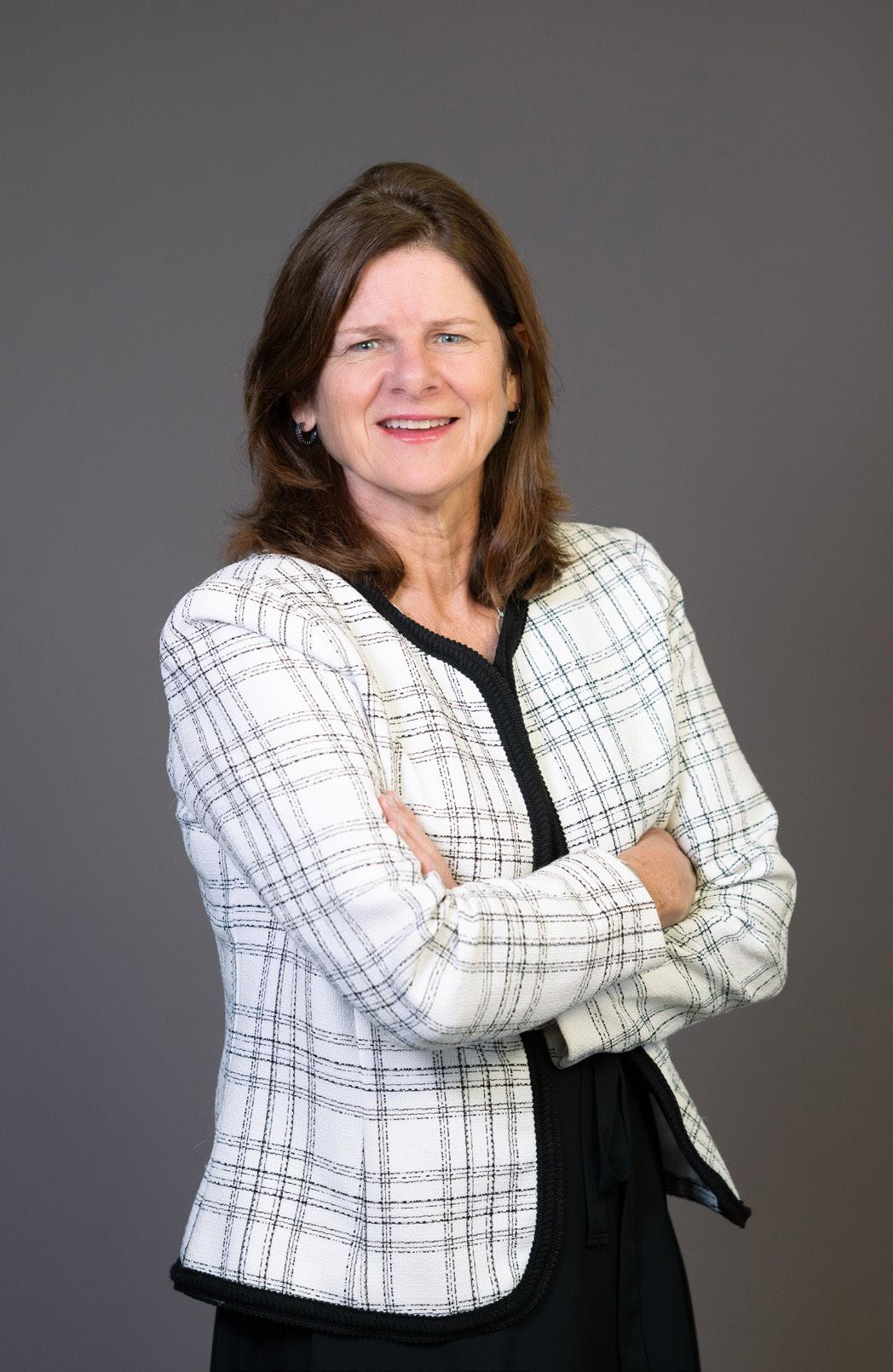
Professor Lynn Morris Deputy Vice-Chancellor: Research and Innovation
ChatGPT was used to refine this editorial.
Professor Lynn Morris Deputy Vice-Chancellor: Research and Innovation
Professor Brett Bowman Senior Director for Research
Shirona Patel Head: Communications and Managing Editor
Schalk Mouton Senior Communications Officer and CURIOS.TY Editor
Deborah Minors Senior Communications Officer and CURIOS.TY Co-Editor
Erna Van Wyk
Senior Multimedia Communications Officer and CURIOS.TY Digital Director
Chanté Schatz
Multimedia Communications Officer and CURIOS.TY Photographer and Picture Editor
Wendy Mothata Social Media Officer
SUB-EDITOR Deryn Graham
COVER DESIGN Lauren Mulligan
LAYOUT AND DESIGN Nadette Hartzenberg
PRODUCED BY Wits Communications and the Wits Research Office, Solomon Mahlangu House, Jorissen Street, Braamfontein Campus East, Wits University
PHONE: +27 11 717 1025
EMAIL: curiosity@wits.ac.za
WEB: www.wits.ac.za/curiosity/
All material in this publication is copyrighted and all rights are reserved. Reproduction of any part of the publication is permitted only with the express written permission of Shirona Patel, the Head of Communications at the University of the Witwatersrand, Johannesburg. The views expressed in this publication are not necessarily the views of the University, nor its management or governance structures. ©2026
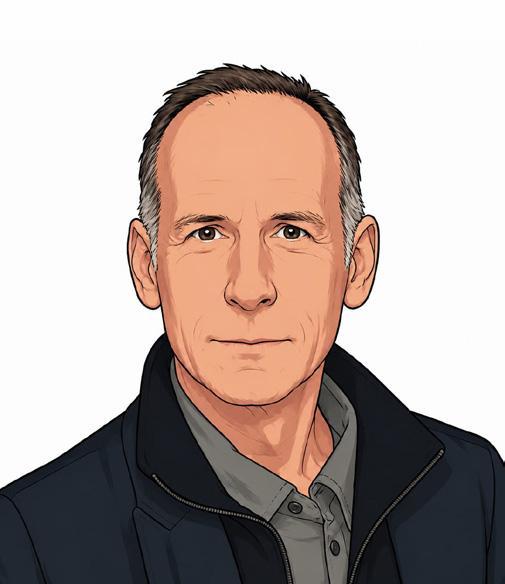
Professor Keith Breckenridge is the Standard Bank Chair in African Trust Infrastructures in the Wits Institute for Social and Economic Research. Over the past two decades, he has been researching biometric identification systems and their political effects, especially in Africa. He is widely published on the history and contemporary politics of biometrics and his book, Biometric State: The Global Politics of Identification and Surveillance in South Africa, 1850 to the Present, won the inaugural Humanities Book Award from the Academy of Science of South Africa in 2017. He is a National Research Foundation B1-rated researcher.
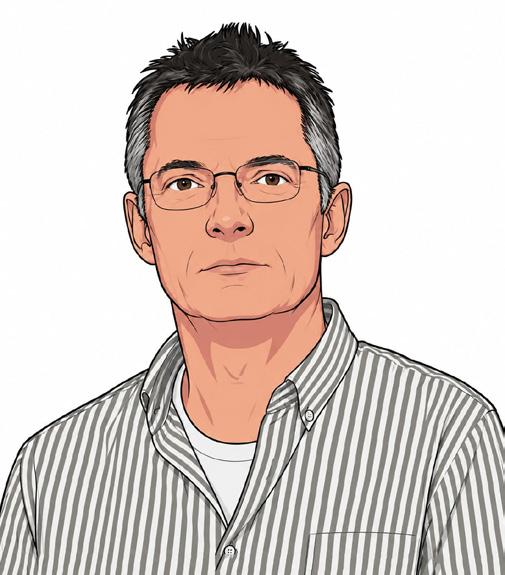
Glenda Daniels holds a PhD in Political Science from Wits. She is a National Research Foundationrated Professor in the Wits Media Studies department. Her expertise spans media and politics and the politics of technology, across academia, industry and advocacy. She is involved in South Africa’s Competition Commission case with Big Tech on unfair competition. She has addressed international for a on the value of journalism in democracies, as well as speaking about AI and cyber-misogyny. She is co-editor of the book: 2018 Glass Ceilings: Women in South African media houses (Gender Links) and is editor of the latest Glass Ceilings 2026: Women in South African Media. She also has a new upcoming book: Media Freedom in the Age of AI: Now is the time for monsters.
Christine Hobden is an Associate Professor in Ethics and Public Governance in the Wits School of Governance. A National Research Foundation Y1-rated researcher, her research is in the discipline of analytic political theory and focuses on democratic citizenship and public ethics. Hobden's most recent publications analyse South Africa's Zimbabwean Exemption Permit Process, contribute to debates on the nature and role of public political philosophy, and critically engage with Brock's Corruption and Global Justice. She is the founding convener of Public Ethics Network South Africa.

Professor Loren B. Landau holds the South African Research Chair in Mobility and the Politics of Difference in the African Centre for Migration and Society at Wits. A trained political scientist, his interdisciplinary scholarship explores mobility, multi-scale governance and the sociopolitical transformation across the Global South. He is editor/co-editor of I Want to Go Home Forever: Stories of becoming and belonging in South Africa's Great Metropolis and Exorcising the Demons Within: Xenophobia, Violence and Statecraft in Contemporary South Africa. His latest book, The Atlas of Uncertainty, will be published in 2027.
Precious Matsoso is Director of the Health Regulatory Science Platform in the Wits Health Consortium and an Honorary Lecturer in the Wits Department of Pharmacy and Pharmacology.
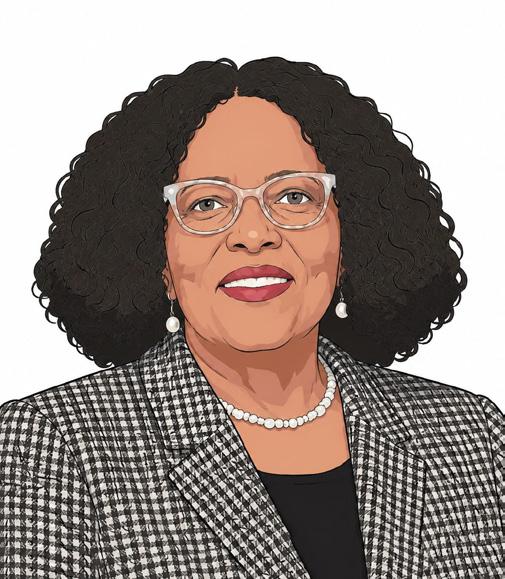
She previously served as Director-General of the National Department of Health. Matsoso’s career has focused on strengthening health systems, shaping transformative policies and ensuring access to essential medicines. She co-chaired the World Health Organization’s Intergovernmental Negotiating Body for the Pandemic Prevention, Preparedness and Response Treaty. For her leadership in brokering the first global pandemic treaty, she was named as one of the prestigious Nature’s 10 for shaping global science in 2025.
Dr Stuart Pattinson is a medical doctor, clinical lecturer and Head of Clinical Skills in the Unit for Undergraduate Medical Education in the Faculty of Health Sciences. He completed his Master’s degree in health sciences education at Wits in 2018, researching the transition from the pre-clinical to clinical years of training. He is a PhD candidate in the School of Health Professions Education at Maastricht University in the Netherlands, conducting research which explores preparedness for the transition to practice in South Africa.
Mojalefa ‘Jeff’ Reginald Mosala is a Senior Lecturer in Financial Accounting in the Wits School of Accountancy. His research lies at the intersection of corporate law, auditing and accounting education, with a focus on ethics and governance in financial markets. He has published on professional scepticism in fundamental corporate transactions, legal capital and dividend distribution laws, as well as in transparency, media and public trust in the external auditing profession. He has co-authored work on ethics pedagogy for accounting students in response to recurring corporate scandals.
Michele Van Eck is an Associate Professor in the Wits School of Law and a Fellow of the Wits MIND Institute. She is an admitted attorney of the High Court of South Africa (non-practising) and joined academia in 2019. Her PhD titled The Drafting of Contracts in South Africa, is the foundation of her research interest in contract law, the relationship between law and language, substantive contract theory as well as the drafting of contracts, with further research interests in the fields of emerging and fringe technologies (such as AI and smart contracts), legal practice and legal ethics.

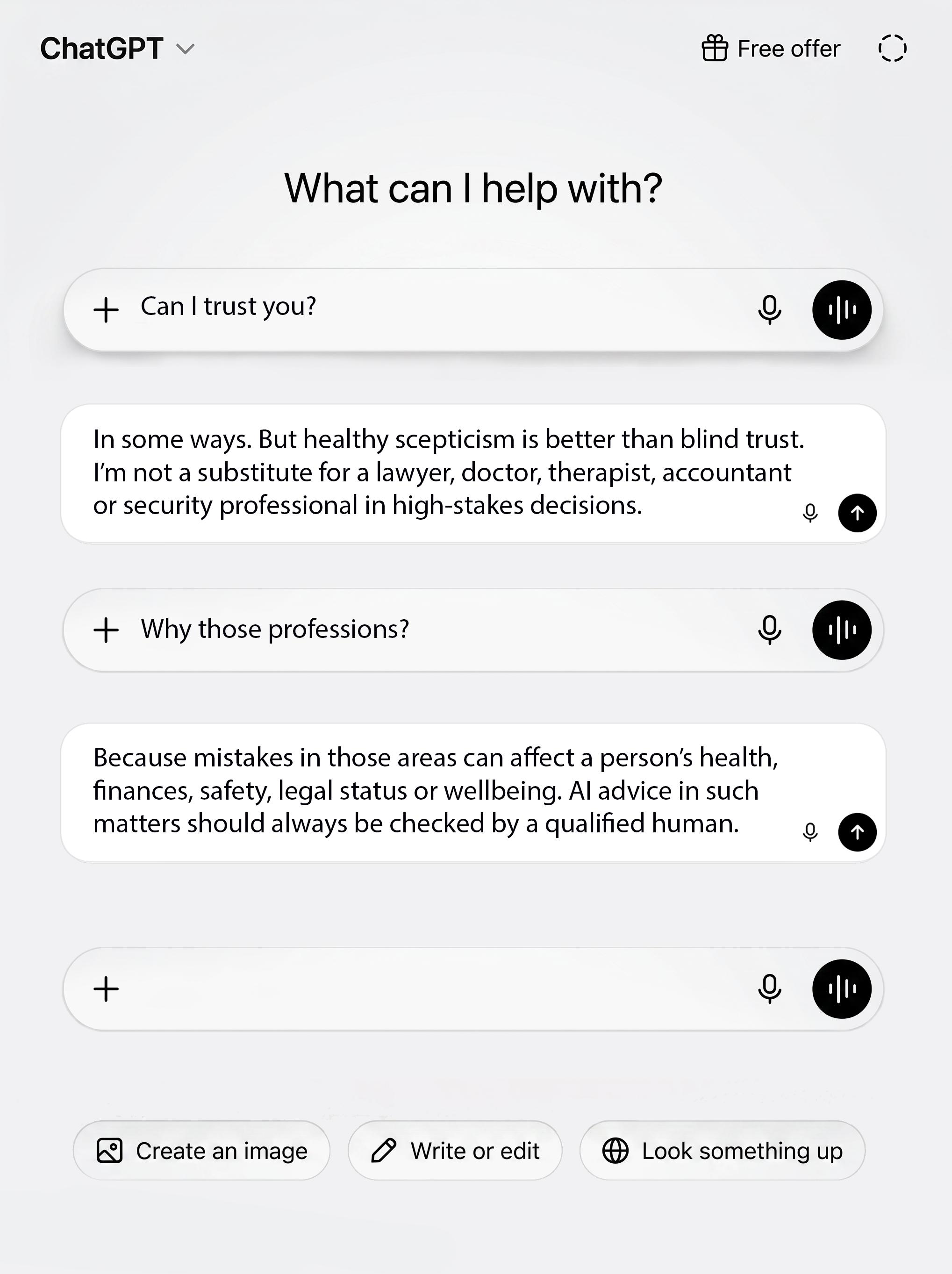
In the last couple of years, many of us have started using AI to answer some of life’s more difficult questions. Can we trust the advice that it gives us, and more specifically, can we trust the motives behind the people that build the systems? Erna van Wyk asks the questions.
The warning on the opposite page sounds sensible enough, and yet these are precisely the high-stakes areas in which people are turning to generative AI chatbots such as ChatGPT, Claude and other large language models (LLMs).
The concern extends beyond the professional advice that people are seeking. They are also looking for life and relationship guidance from AI, drawn by its 24/7 availability, low cost and perceived security. Studies suggest that users mostly prefer chatbots that are agreeable, even sycophantic, in their offering of interpersonal advice – including when they affirm harmful or illegal behaviour.
“Anonymity is another big factor, especially in the mental health and medical fields where stigma and prejudice still exist,” says Professor Sumaya Laher, a psychologist and Head of the Wits School of Human and Community Development. “The assumption is that if you ask an AI chatbot something, you’ll have anonymity and protection. The perception is that these are platforms that provide accurate, objective information, and what you get back will be more reliable than a friend’s support.”
She adds: “Unlike WebMD and similar platforms where people used to check their medical symptoms, GenAI is more interactive, almost like a doctor or therapist. Its responses sound reasonable and accurate.”
Laher says that people form a connection with an AI chatbot because it is accessible, affordable and anonymous. However, quite often people do not realise
the harm that it can do precisely because AI is not always 100% accurate. “Given that much of what is fed into AI is developed in the Global North, it may miss cultural nuances that are relevant in countries like ours. Even though it feels like a very real connection, it isn’t.”
In just four years, GenAI has made information and advice available to anyone with an internet connection.
“Many of my students have disclosed that they take their relationship advice from an AI chatbot instead of a friend, a counsellor or a therapist,” says Dr Martin Bekker, Lecturer in the School of Electrical and Information Engineering.
Yet trust in AI advice raises ethical questions beyond accuracy.
As an ethicist, Bekker is concerned with the question around autonomy, the principle that individuals have their own identity and make their own choices. “If we violate autonomy, if we manipulate people, such as when we use blackmail, encourage addiction or gaslight people, then we are normally violating some ethical norm. There are all sorts of ways in which we can take autonomy away from people, and the most obvious is lying,” he says.
“With AI chatbots there is an interesting infraction of autonomy in that we have to pretend that this is a real person, so we are already kind of fooling ourselves. Then we essentially ask it for guidance that influences our real behaviour in the world. Our autonomy is influenced by that and it’s a super tricky thing.”
Humans humanise almost everything: we see faces in clouds, we form attachments to inanimate objects and we believe that our animals understand what we say. “We cast human characteristics into everything,” says Bekker.
We are no different when it comes to AI chatbots, except that anthropomorphising is deliberately built into the design. AI systems are trained on large amounts of internet data to predict the next word. “However, what made them useful was reinforcement learning – a kind of feedback reward loop between human and machine – introduced with GenAI,” says Professor Steven James from the School of Computer Science and Applied Mathematics. “GenAIs are designed in ways that reinforce users’ beliefs and viewpoints, making them easier to trust. Humans generally prefer being told that they are correct and AI chatbots are trained to reinforce those beliefs.”
He adds: “Today you will see the little thumbs up or thumbs down emojis in the prompts and even if you do not use them, the fact that you are continuing the conversation indicates that you clearly enjoy talking to the AI chatbot. So, it's just going to reinforce that signal – that whatever it's doing, it should keep on doing. A lot of it boils down to the fact that it will continue to give the human what the human wants to hear.”
Associate Professor Michele van Eck from the School of Law says that while AI systems and chatbots are wonderful resources if used correctly, there is “trust in thinking that these systems are producing accurate information”.
“We forget that we need to check, verify and make sure the information given to us is correct,” says van Eck.
She adds that technology companies are increasingly relying on transparency measures, disclaimers and ethical guidelines to build trust but that regulation is struggling to keep pace with the technology, leaving users exposed to growing privacy and security risks.
"Data is the new oil. When people share personal information with AI chatbots, it can be connected to their broader digital footprint, creating a powerful tool for targeted marketing and potential misuse. At worst, it creates opportunities for hackers and identity theft when different pieces of personal information are brought together."
It's not just about understanding terms and conditions –there is also a need for education.
“It's easy to say, 'just read the terms and conditions’. But how is the average person supposed to make sense of
“THE DANGER IS NOT MERELY THAT PEOPLE BELIEVE THAT AI IS ACCURATE BUT THAT THEY BEGIN TO EXPERIENCE AI AS A RELATIONSHIP.”
them, if half of the lawyers don’t understand them?” asks van Eck. “Even when they're written in plain language, most people still don't understand what they're agreeing to.”
Then what do we do? We paste the T&Cs into AI and ask it to explain them. But is that truly an objective engagement?
Professor Rennie Naidoo from the School of Business Sciences is just as concerned. “People are increasingly trusting AI with very personal aspects of their lives, whether it’s their personal data, ID numbers, thoughts or feelings. What concerns me is that this seems to be happening quite easily and without much thought. There appear to be very few guardrails.”
For Naidoo, AI systems may warn users not to share sensitive information but in many cases they still accept that information. “Users should not assume it will be automatically rejected, deleted or excluded from further processing,” he says.
Naidoo believes that designers and technology companies need to take responsibility for user safety.
"The designers of AI want us to keep using these systems. Like social media, there are business incentives behind them and that can shape how they're designed to keep users engaged. That's why the risks go beyond just advice and decision-making.”
One of the biggest concerns today is the rise of companion chatbots such as Replika, says Dr Victoria Williams, from the School of Computer Science and Applied Mathematics.
The loneliness epidemic that intensified after the Covid19 pandemic is still a major concern today as more people are working remotely, living on their own and having little contact with other human beings.
“I’m very concerned about companion chatbots. When you go on to a companion chatbot, it doesn’t have any disclaimers. It doesn’t say, ‘please note that this is not a human’. People will log in and automatically feel connected and feel like, ‘oh, it understands me in ways people don’t’, as opposed to recognising that this is actually based on how it has been designed,” says Williams.
The danger is not merely that people believe that AI is accurate but that they begin to experience AI as a relationship. C

“HUMANS GENERALLY PREFER BEING TOLD THAT THEY ARE CORRECT AND AI CHATBOTS ARE TRAINED TO REINFORCE THOSE BELIEFS.”
WENDY MOTHATA CHANTÉ SCHATZ
Do you tell your partner everything?
It sounds like a simple question but the answer is surprisingly complicated.
Most of us believe that trust is the foundation of a healthy relationship. We tell ourselves that honesty matters and that secrets are dangerous. Yet real relationships are rarely built on complete transparency. We soften difficult truths, avoid unnecessary conflict, keep certain thoughts to ourselves and sometimes tell little white lies in the name of love, selfpreservation or emotional safety.
So, where is the line between healthy privacy and harmful secrecy? Can intimacy survive without some degree of concealment?
According to Professor Katherine Bain from Wits University's Department of Psychology, trust is often misunderstood – trust is not about certainty.
"Trust matters in relationships because it creates a sense of safety, which allows people to be honest and emotionally connected," says Bain. "Trust is not certainty that a partner will never disappoint or betray you. Rather, it is the willingness to accept vulnerability and uncertainty while having confidence that if hurt occurs both people will respond with care and a commitment to repair the relationship," she says.
That vulnerability is what makes honesty so difficult. Bain says that the little white lies that fudge total honesty can be acts of care, self-protection or conflict avoidance. "Most often, people lie to avoid the shame associated with anticipated disappointment from the other person."
Her response suggests that people do not always conceal things out of a desire to deceive. Often, they are trying to avoid shame, disappointment, conflict or the consequences they fear honesty might bring.
Bain argues that total honesty is neither possible nor desirable.
"No, total honesty in relationships is not possible, it is hard enough to achieve ourselves!" she says. Instead, she draws an important distinction between privacy and secrecy.
"Privacy is important. It is healthy to have a private inner world, personal thoughts, fantasies and individual experiences that are not necessarily shared in full," says Bain, adding that healthy relationships require a balance between connection and individuality. "Too much transparency can undermine healthy individuality and lessen desire and mystery within relationships," she says.
However, Bain cautions that privacy should not be confused with deception.
"Secrecy and deception about breaking agreed upon 'rules of engagement' in order to avoid consequences are not okay. This kind of lying damages trust," she says.
While romantic relationships are often where trust is tested, close emotional connections can develop in other spaces too, including the workplace.
Enter the "work spouse".
The term has become increasingly common, describing a close friendship between colleagues who spend significant time together, support one another and often know more about each other's daily lives than anyone else at work.
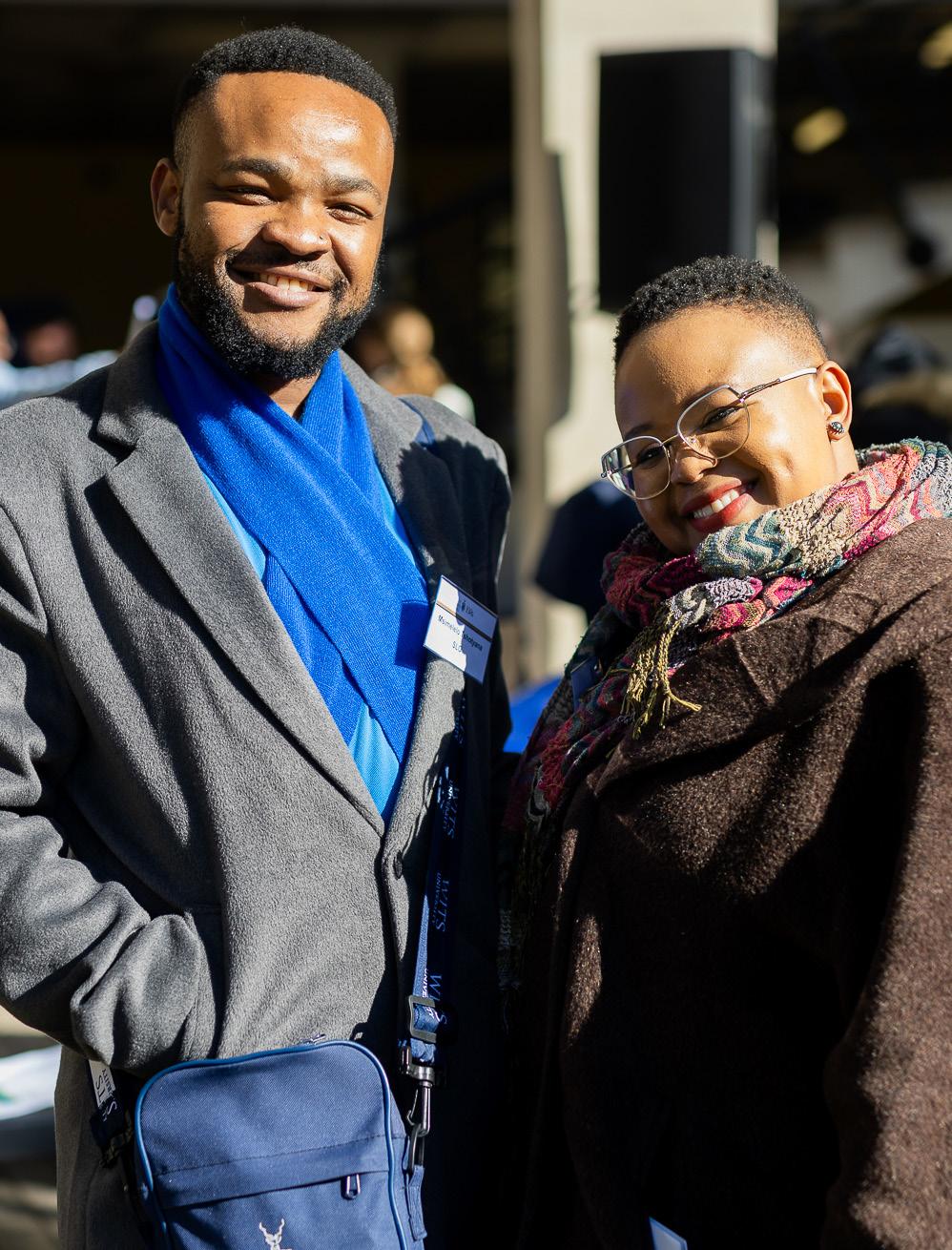
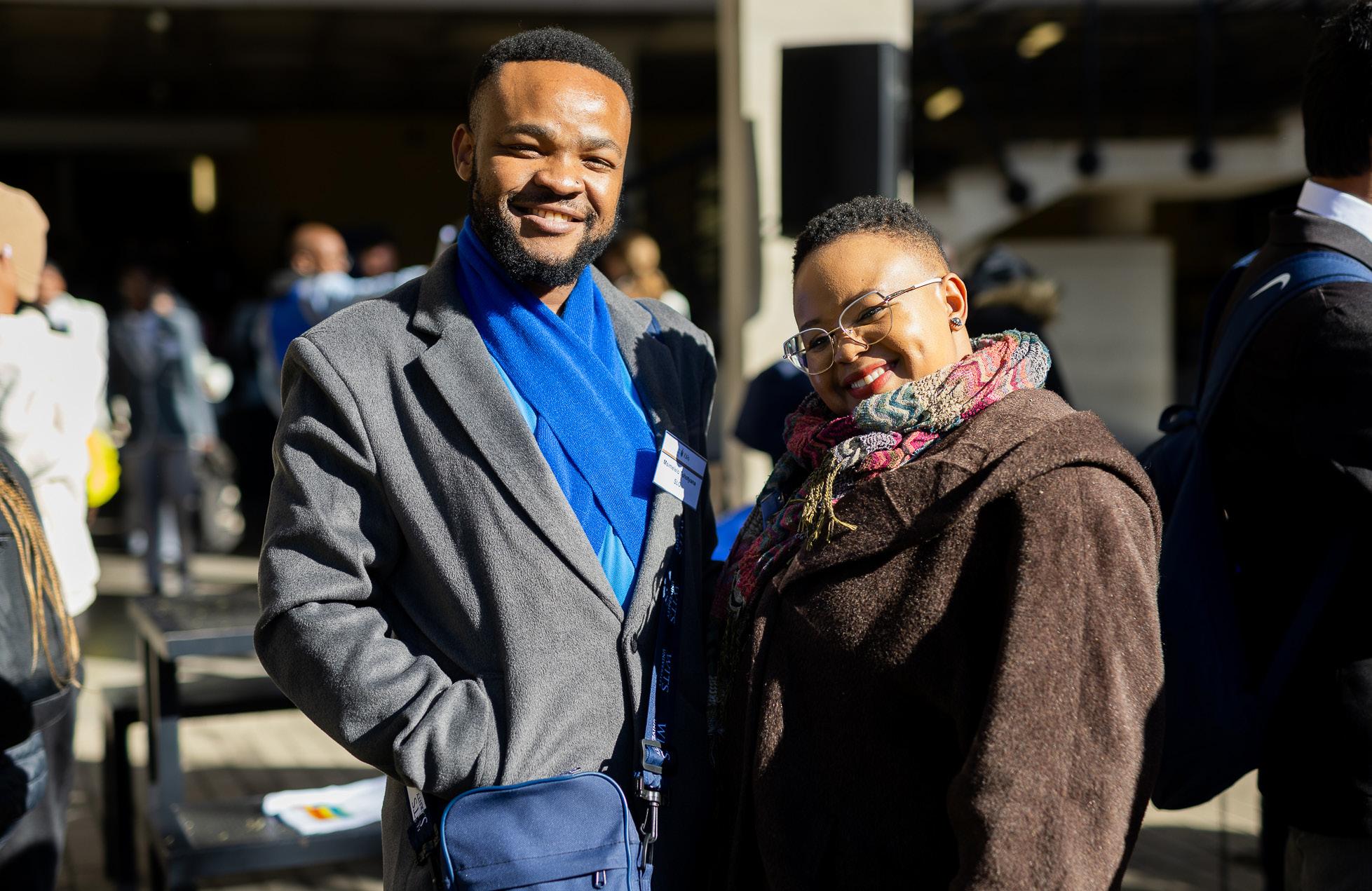
For Wits Schools Liaison Officer, Msimelelo Tshotyana, affectionately known as Msi, the term was initially unfamiliar.
"It’s a new concept to me. We usually use ‘work twinny’, ‘work sister’, ‘bestie’. I would have blindly assumed [‘work spouse’] is people who are dating at work," says Msi.
Yet Msi’s description of his friendship with colleague Boikhutso Johnson, a fellow Wits Schools Liaison Officer who shares the same office, sounds remarkably intimate.
"There is nothing like waking up in the morning, going to work and having someone who takes care of you, makes you laugh and makes coming to work thrilling," says Msi.
Boikhutso shares a similar sentiment.
"It’s like having another home because I have a friend that I can share my life with without any form of judgement or prejudice," says Boikhutso.
Their friendship is built on something Bain had identified as central to all meaningful relationships - trust.
Boikhutso says, "Trust plays a critical role in cementing our working relationship. It’s important for me to know that I can trust him without any doubt or fear."
For Msi, that trust extends beyond office tasks.
"Trust is pivotal in work relationships as we not only share work-related issues but also dive into personal life matters that would need us to equally have a sip on each other’s fountains of wisdom," he says.
Both colleagues believe that these close workplace bonds improve wellbeing and productivity.
"My working spouse, my 'B baby', is my ashwaganda at work," says Msi. "Every day without fail I will have not just a laugh but a deep laugh that leaves me with stomach cramps. This inevitably fosters a healthy working environment. A happy team equals a productive team."
Boikhutso agrees that having someone who understands
and supports you through difficult periods can make all the difference: "I have survived difficult times at work because my work bestie was there for me to confide in and sometimes, he notices that I’m not well and provides the relevant support."
If work spouses are simply close friends, why does the term make some romantic partners uncomfortable?
"Anything that could pose a threat to one’s relationship would make them uncomfortable," says Msi. "Insecurities and jealousy are part of human psychology."
Boikhutso believes that the issue may lie in misunderstanding the term itself.
"The term ‘work spouse’ can be misleading if not understood properly. A spouse would not be threatened by our friendship because it is platonic," she says.
The debate highlights a broader truth about trust. It is not simply about knowing everything. It is about understanding where boundaries lie and feeling secure enough not to need complete certainty.
Attachment patterns, Bain explains, play an important role in what people choose to share or conceal.
"People disclose, conceal or soften aspects of themselves in ways that reflect their expectations about safety, rejection, dependence and connection within the relationship," says Bain.
More importantly, Bain does not believe that withholding information is always harmful.
"Withholding information can strengthen emotional safety at times. Not telling your partner every doubt and irritation you experience may allow them to feel more accepted and emotionally safer," she says.
But there is a limit.
“NOT SHARING THE ‘BIG STUFF’ DENIES YOUR PARTNER THE OPPORTUNITY TO GET TO KNOW YOU AND TO DECIDE IF THEY CAN MANAGE YOUR RELATIONAL NEEDS.”
Bain says that while withholding minor frustrations may sometimes protect emotional safety, concealing important truths comes at a cost.
"Not sharing the ‘big stuff’ denies your partner the opportunity to get to know you and to decide if they can manage your relational needs," she says.
For Bain, trust is not about certainty or complete transparency.
Perhaps that is the paradox at the heart of intimacy. Relationships require honesty but they also require judgment. They demand vulnerability yet depend on boundaries. Complete transparency is neither possible nor desirable, but neither is sustained deception.
In the end, trust may not be about knowing everything. It may be about feeling safe enough to share what matters most. C
“BELONGING COMES FIRST. INFLUENCE FOLLOWS. THAT IS WHAT MAKES TRUST SUCH A POWERFUL FORCE.”
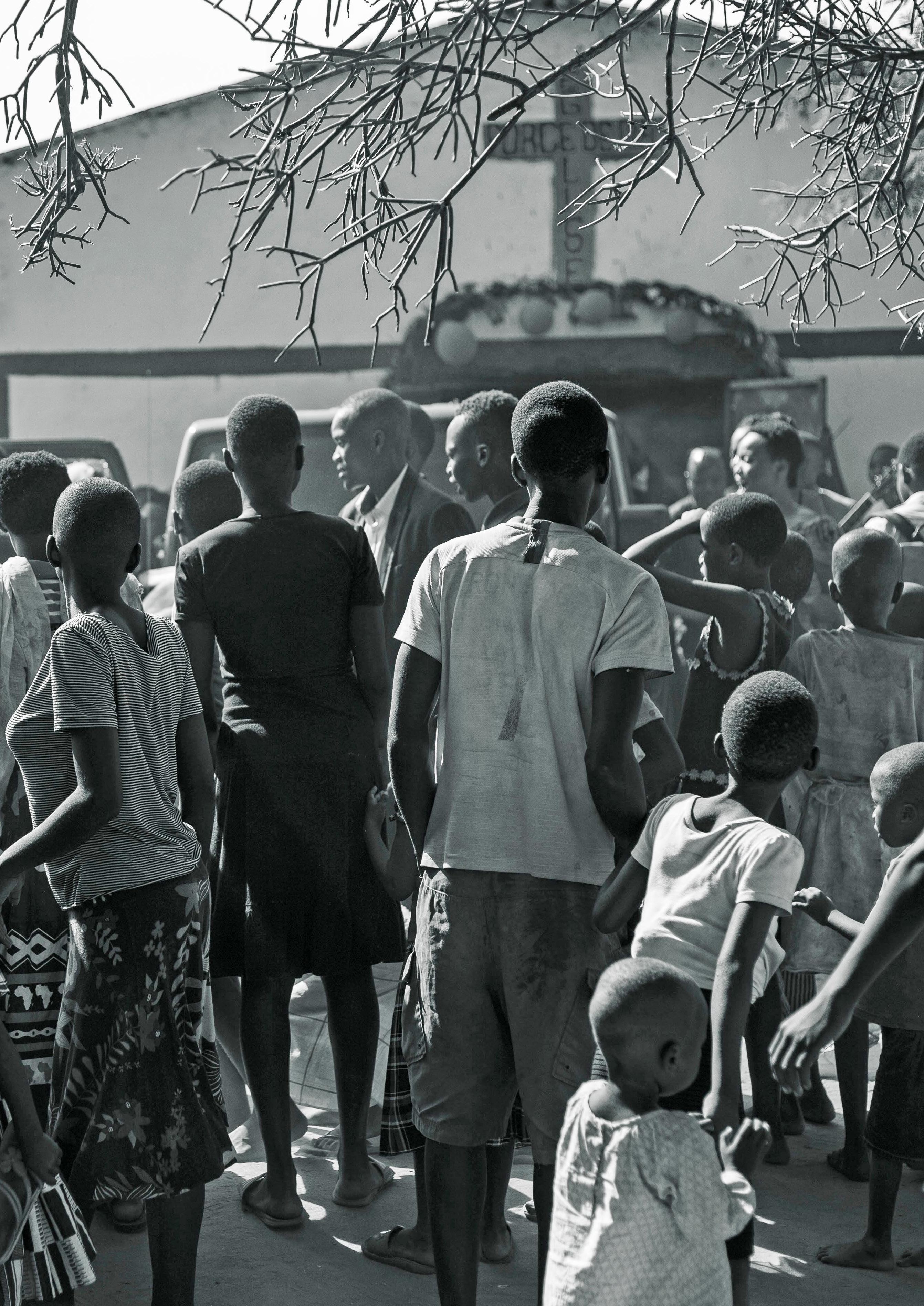
Millions put their faith in religious leaders despite some dramatic exposés of untrustworthy conduct
CHANTÉ SCHATZ SAFAR CONSOLER
Acongregation gathers around a pastor on his birthday. There is singing, prayer and celebration. Then comes the surprise: the church presents him with a luxury car.
Across the country, a teenager scrolls through TikTok. Between dance videos and skincare routines, a young pastor appears on screen. "God put this message on my heart for someone today," he says, looking directly into the camera as a scripture flashes across the screen.
Meanwhile, headlines continue to surface about churches accused of financial misconduct, spiritual abuse and cult-like behaviour.
South Africans have watched allegations of sexual and physical abuse unfold around the KwaSizabantu Mission in KwaZulu-Natal. They have debated the influence of the Seven Angels Ministry in Ngcobo in the Eastern Cape, a church that made national headlines after a deadly shootout with police linked to a botched cash-in-transit heist.
Yet despite these scandals, millions continue to trust pastors, churches and faith communities.
Why?
It is tempting to assume the answer is blind faith. However, according to researcher Shongile Myeza, that explanation misses something important. The real currency is not belief. It is belonging.
Myeza, a Master’s candidate in Social and Psychological Research, studies churches as what social researchers call "third spaces" – places outside of home and work where people build relationships, identity and community.
For many people, churches do far more than offer spiritual guidance.
Every Sunday, millions of South Africans still fill churches across the country. Not because they cannot see the headlines but because churches offer something many people struggle to find elsewhere. Kinship. Acceptance. Inclusion.
"It plays a huge role in trying to figure out where you want to go in life," says Myeza. "The person at the top is your role model in terms of career and in terms of relationships."
For some people, church is where they find mentors. For others, it is where they build professional networks, find parenting advice or meet the people that they will eventually call family.
"Community is big," says Myeza. "Church members become the people you do life with."
That sense of belonging helps explain a contradiction that often frustrates outsiders. Why do people stay when they see warning signs? Why do followers defend pastors accused of wrongdoing? Why do congregations continue supporting leaders after financial controversies or public scandals?
Part of the answer is that leaving a church rarely means leaving a single individual. It means leaving friendships, routines, support systems and a community built over years.
"Finding a new pastor is difficult," says Myeza. "To find a church, start again, building a community. Who can you trust?"
The same dynamic is increasingly playing out online.
TikTok has become home to a new generation of faith influencers offering everything from relationship advice to daily devotionals. Some attract huge audiences by appearing authentic and relatable. Others rise quickly before falling from grace just as fast.
"Faith influencers rise and fall in cycles," says Myeza. "Someone gains an audience, changes their beliefs or walks away from faith and followers are left searching again. As you flip, there's always, ‘okay, now I have to find something else’.”
People are constantly searching for voices that they can trust. Part of that trust comes from relatability. According to Myeza, many charismatic pastors are skilled at connecting scripture to everyday struggles. "Many of the pastors come from low economic backgrounds, so they know what it is to struggle and they know what poverty is," she says.
Through personal stories and practical advice, pastors create the feeling that they understand the realities that their congregations face. For younger audiences, youth pastors often become aspirational figures in their own right – people who seem successful, confident and relatable at the same time. Trust, Myeza suggests, is built not only on belief but also on the sense that someone understands where you have come from and where you hope to go.
The search for trusted voices is not unique to South Africa.
Research by Dr Rodrigo Campos of King's College London found that evangelical chaplaincy groups have expanded their reach within Brazil's police force by providing services traditionally associated with welfare and mental health support.
Officers dealing with trauma, burnout and personal crises could access 24-hour counselling, support networks, and around-the-clock chaplaincy assistance. According to Campos, these initiatives gained traction because they responded to needs that many officers felt were not being adequately addressed elsewhere.
In his words, "If there is a problem, evangelicals present a solution."
Campos' research revealed something important about human nature. Communities are rarely held together by fear alone. More often, they are held together by "aspiration, pride, friendship, camaraderie and solidarity". In other words, belonging comes first. Influence follows. That is what makes trust such a powerful force.
The same pastor who becomes the centre of controversy may also be the person praying beside a hospital bed. The same church criticised from the outside may be the place where someone found friendship after years of loneliness. However, this does not excuse exploitation, nor does it mean that churches should be immune from scrutiny.
Campos warns that influence often grows from care. Once people trust a community, they become more open to its messages, values and worldviews. What begins as support can evolve into something far more powerful, and potentially insidious. C
People are more receptive to health information and messaging when it is delivered by someone they trust, rather than by someone with authority.
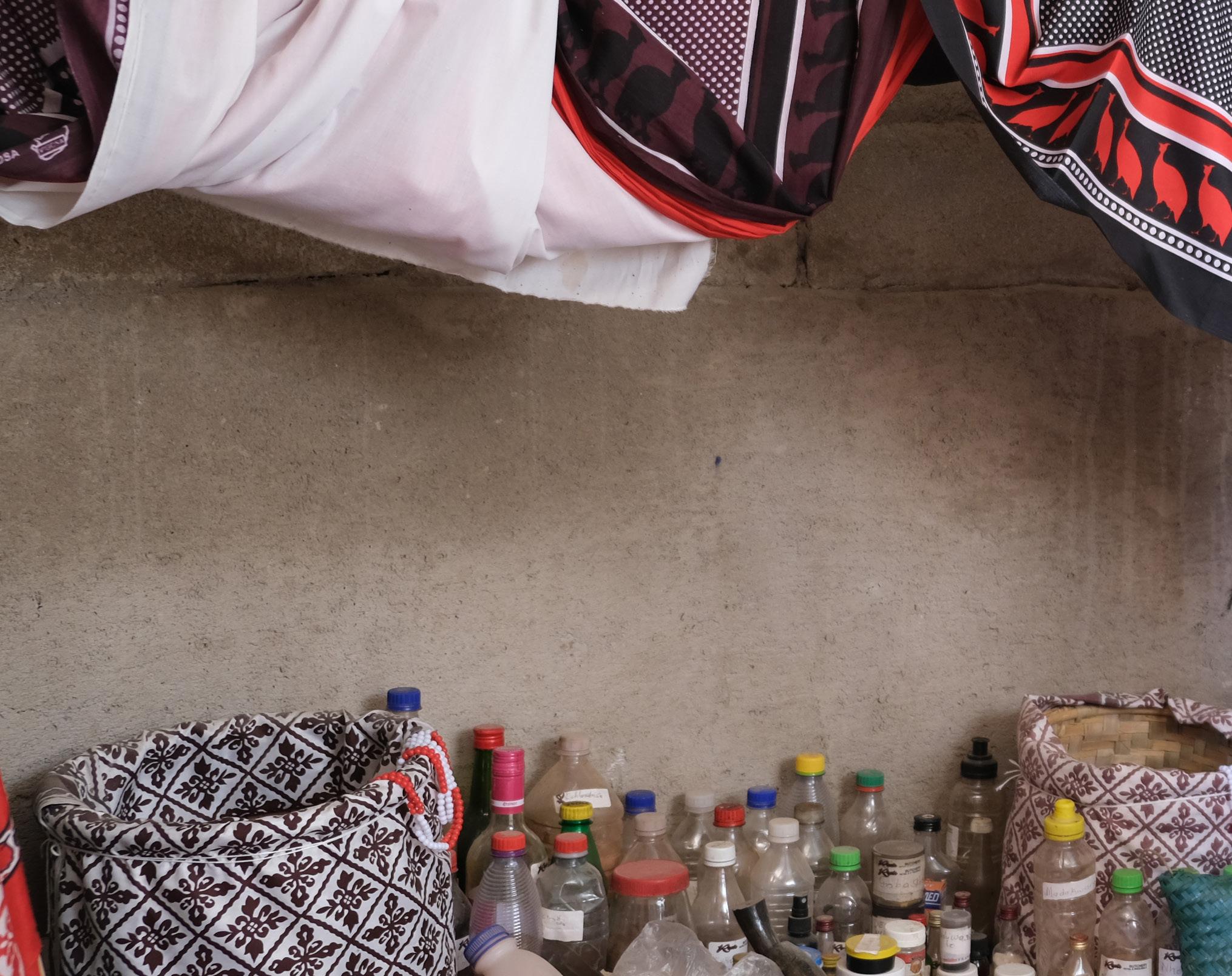
When peer educator Odwa Mbane sits on a bed in a Joburg brothel to talk about HIV prevention, the transgender sex worker next to her listens more attentively than she would in a clinic. The gold in Mbane’s teeth glints as she explains, in a familiar lingo, how to stay safe with clients. The sex worker – among the most vulnerable in society to HIV – trusts Mbane not to judge her.
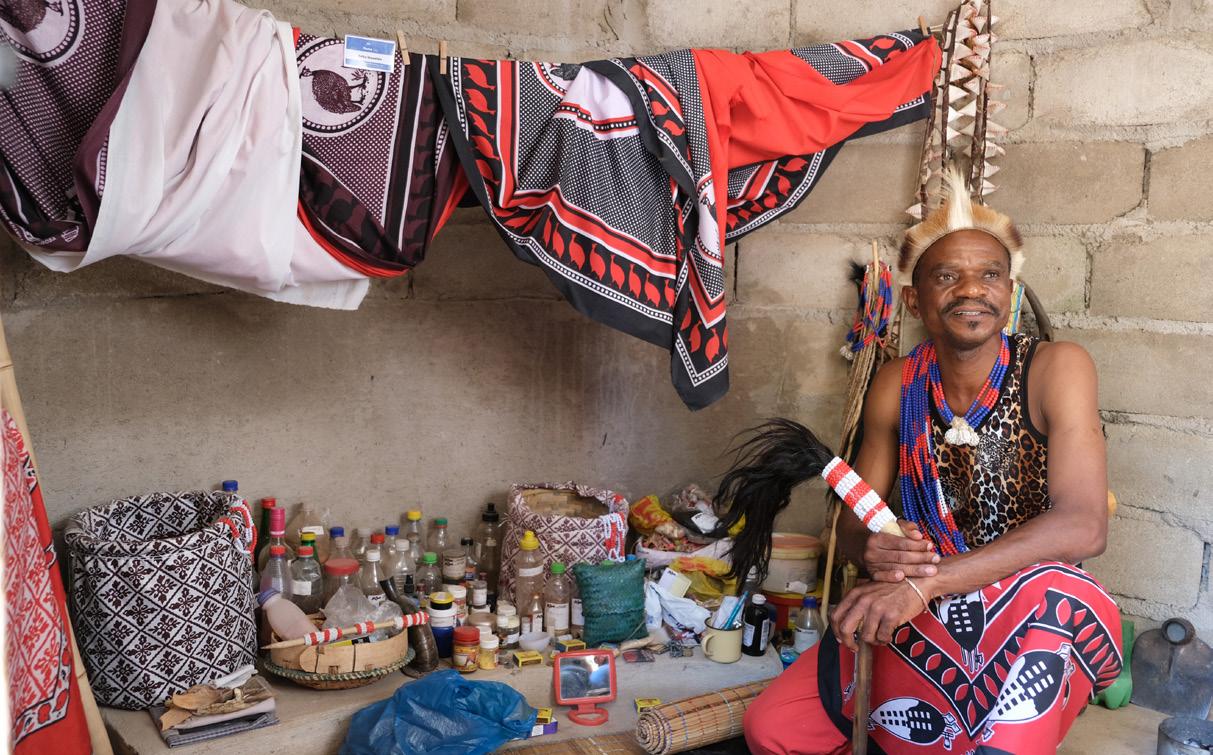
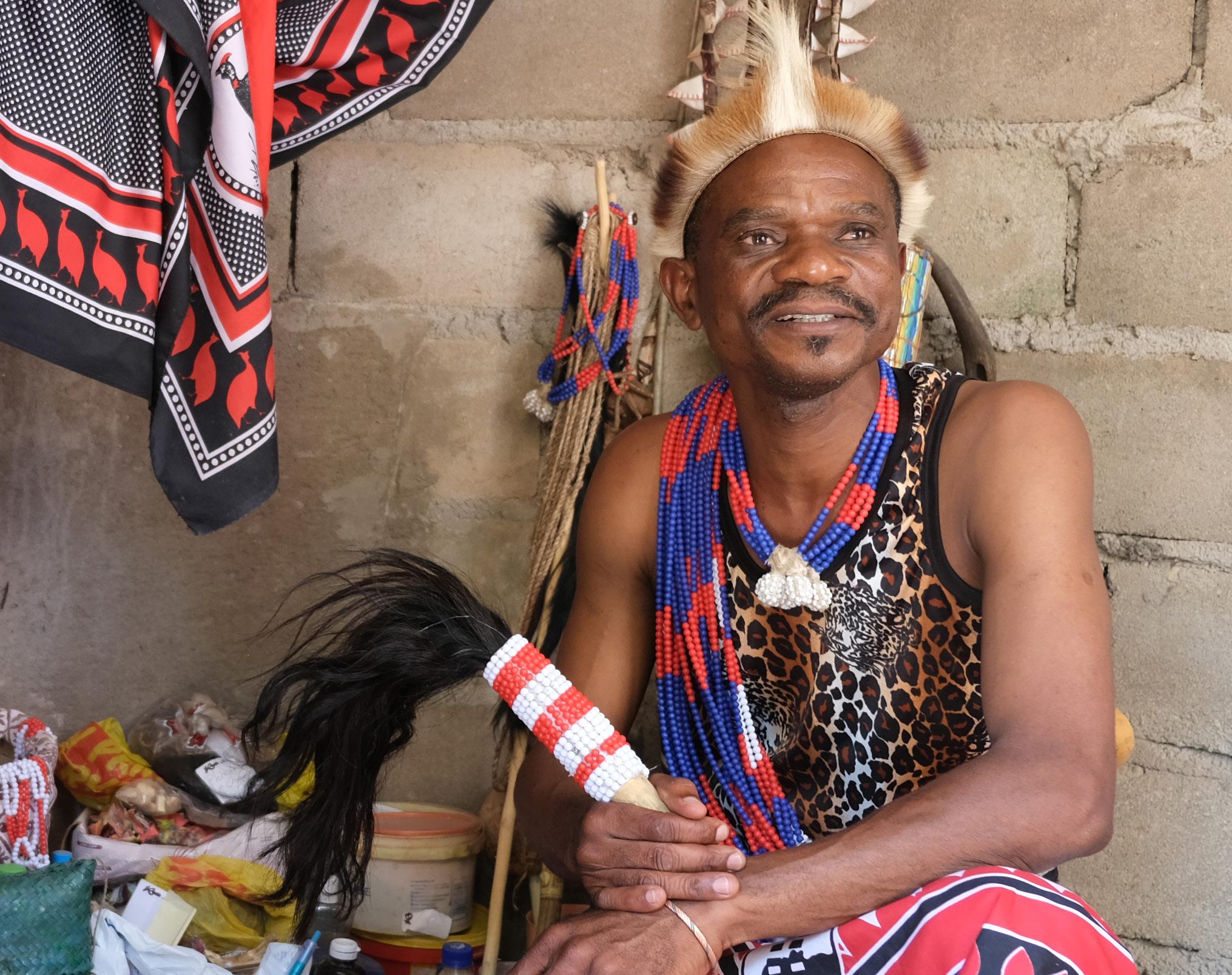
About 500km east of Joburg, in a hut fragrant with herbs, a traditional healer talks to an elderly man from Bushbuckridge, Mpumalanga, about HIV testing. “Our old fathers don’t like clinics but they come to me,” says Thembisile Makhubele who works with the Ntirhisano project run by the MRC/Wits Rural Public Health and Health Transitions Research Unit (Agincourt), which trains traditional health practitioners to conduct HIV counselling and rapid testing in partnership with the Department of Health and Vanderbilt University.
“If they hear about testing from people like us who believe in culture and they trust us, it is easier for them to understand and accept what we say about HIV,” says Makhubele.
Ntirhisano Co-Principal Investigator Dr Ryan Wagner, a Senior Research Fellow at Agincourt, says: “Traditional healers are often integral, respected members of the community and from this established position they can give advice. People are more likely to listen to – and act on
– advice given by someone whom they trust. Trust is a key component of any relationship.”
Peer educators and traditional healers, in partnership with Wits programme implementers, researchers and the Department of Health, are bridging the gap between populations vulnerable to HIV and healthcare providers.
For example, the Wits Reproductive Health and HIV Institute’s (Wits RHI) Key Populations Programme, trains and supports peer educators in promoting safe sexual health behaviours. Amanda*, a 42-year-old sex worker, says: “We feel free talking to them because they know where we are coming from. They give us condoms and pamphlets and will remind us not to forget to go to the clinic to collect our medication.”
The results are in the data that show that 95% of female sex workers who had tested HIV positive and initiated antiretroviral treatment in the Wits RHI Key Populations Programme achieved 95% suppression of their viral load.
More than 4 500 sex workers and about 1 500 trans and gender diverse people in nine clinics across South Africa were on antiretrovirals before last year’s funding cuts. Programme lead, Naomi Hill says that trust boosted their high adherence. “Our clients see healthcare workers as the deliverers of technical information, but peer educators share their experiences, which builds rapport,” she says.
WE FEEL FREE TALKING TO THEM BECAUSE THEY KNOW WHERE WE ARE COMING FROM.
Peer educators also use stories and role-play to engage their clients. “This makes it easier for them to address their clients’ fears and the stigma,” says Programme Manager, Nokunceda Mabuza.
Community Liaison Officer, Katlego Serame, says that “coming to a safe space to share with people in the same situation” makes people more receptive to healthcare messages.
“Trusted peers also broadcast their messages on social media platforms like WhatsApp. The messaging is co-created with vulnerable populations to be relevant to the local context,” explains Hill.
Traditional healers are often from the community whose members they treat, says Wagner. “They may share cultural beliefs and speak the same language. This is not always the case with doctors or nurses and it can provide an advantage.”
Traditional practitioner Makhubele says: “Our clients feel more comfortable with us compared to with a nurse at a clinic. When I explain HIV counselling and testing, they sometimes tell me, ‘I don’t want to do this’ or ‘We are afraid’. I tell them it is not about dying. You can still live with HIV. Knowing your status by testing means you can get help,” she says.
She adds: “When I told my clients about HIV testing, I thought I might lose them because many people don’t want to hear about it. But the first person I advised about HIV
understood. The training also helped me as a traditional healer to do my work safely. Before, we were even doing things (with blood) without gloves.”
Ntirhisano Project Manager Wonderful Mabuza said that 16 out of 17 traditional healers trained in the pilot “were excited to help their clients”.
Traditional practitioners recruited 250 clients, a third of whom had never tested for HIV. All were willing to test for HIV compared to 23% in the control group. However, only 60% presented for treatment.
In March 2026, Dr Ruth Browne, CEO of the Ronald McDonald House children’s charity, spoke at Wits about how hair stylists and barbers in New York City have become trusted community messengers, connecting formal health systems to communities. Wits programmes are further proof of this endeavour.
“We have much to learn from trusted peers on how to build relationships and conversations, rather than just delivering health information. We have always had a strong partnership with the Department of Health and now we are working closely with them to ensure that peer-led approaches are embedded in public health clinics,” concludes Browne. “Building trust and understanding people’s experiences bridges the credibility gap between key population groups and health providers.” C
*Amanda preferred to use her first name only
Will Africa’s digital financial revolution overcome the legacy of credit exclusion –or deepen it? Which institutions of trust could make it work?
GILLIAN
JONES BAKHTIAR ZEIN
The lack of access to credit for many Africans has been a developmental handicap, preventing progress and prosperity. This could be changing, as digital offerings such as biometric IDs, automated credit scoring and asset registers make loans and credit accessible to millions, unlocking development opportunities. But it could also expose people to surveillance, new forms of exploitation and overwhelming debt.
“Debt has been fundamental to creating prosperity in many parts of the world," says Professor Keith Breckenridge from the Wits Institute for Social and Economic Research (WiSER).
Credit was key to the functioning of the early modern English economy but from the end of the 1600s the Bank of England began issuing long-term bonds to raise money to fight wars, enabling them to become the dominant world power.
“This changes everything. It gives us capitalism and institutional economists would say this moment is what ultimately generates prosperity,” says Breckenridge, pointing out that the bond market was made possible because lenders were also parliamentarians who trusted that the state’s contracts would be honoured.
African countries did not follow the same path. For most of their history under colonial rule, they were prohibited from borrowing in their own names. Export profits, especially
from the slave trade, as the Nigerian historian Joseph Inikori has shown, fostered financial institutions and innovation in England, while most Africans were denied access to formal credit from the 1920s.
The result was a form of what Professor Deborah James, formerly of Wits University, terms “credit apartheid”: white settlers, foreign traders and colonial governments could access capital but Africans could not.
Credit is the best way to measure the level of trust in societies, according to Bruce Carruthers, a US sociologist. In his 2022 book The Economy of Promises: Trust, Power and Credit in America, Carruthers argues that credit relationships make trust concrete, observable and quantifiable in a way that abstract ideas of “social trust” do not. Credit is a promise to repay borrowed money in the future and the entire credit system is built on evaluating whether that promise can be trusted.
Breckenridge says that this credit data collection was traditionally backed by “paper-based instruments used to identify people – a driver's licence, a passport, a birth certificate or some other identity document that shows you are a respectable citizen, often drawing on land ownership or a lease.” This excluded a vast section of Africa’s population.
Breckenridge suggests that digital infrastructures, such as biometric identification systems, digital financial platforms and algorithmic scoring, can bring millions of unbanked people into the formal financial system, opening access to formal credit.
Linking biometric identification, such as fingerprints, to social relief cash-transfer programmes can be a more reliable, cheaper way to reach those who need support, while also reducing opportunities for corrupt intermediaries to steal from the poor.
However, these digital systems also create “biometric capitalism” where private corporations overwhelm public regulators. In many African countries, commercial banks and data-processing firms have funded national biometric identity systems to create centralised population registers, in part to resist the development of a single platform monopoly.
The commercial actors benefit as they can use data such as online betting activity and transactions to evaluate which citizens in the database are “appropriate” for loans. Previously “invisible” populations have now become automated subjects of debt and risk assessment.
“Private firms effectively own or control the infrastructure that determines credit risk, locking citizens into long-term debt and deepening forms of technically mediated debt dependence rather than creating real prosperity,” says Breckenridge.
While biometric systems are opening credit to individuals, small and medium-sized businesses across Africa still struggle to access credit, which they need to grow.
“The shift to biometric lending is encouraging business owners to borrow in their own names, as it is easier than doing it through their firms,” says Breckenridge. A lack of access to credit stifles the growth of smaller businesses, which has knock-on effects, as these businesses create jobs, pay taxes and build infrastructure.
“South Africa’s National Credit Act was meant to strengthen consumer protection and improve access to better-quality credit, including for smaller companies. Instead, the Act has been instrumental in driving credit away from commercial enterprises and towards biometric lending to individuals,” says Gabriel Davel, Research Associate at WiSER. Davel was Policy Adviser to the Department of Trade, Industry and Competition and advised the Department in the drafting of the National Credit Act in the mid-2000s.
While consumer credit has been growing over the past 15 years, the Small and Medium-sized Enterprises (SME) loan book has shrunk, wrote Davel, in an opinion piece in 2025. This is a problem, as the SME sector remains one of the few routes into work for the country's millions of unemployed people.
"The lack of bank finance is clearly not the only factor, but it is a big factor," Davel says. “Part of the problem lies in how credit information flows. South Africa's credit bureaux are good at sharing data on individual consumers, but bad at sharing data on business loans, thus blocking the kind of automated credit scoring that has expanded lending to individuals.”
Davel proposes making it compulsory for banks to report business credit to the bureaux, opening the door to the same scoring and automation that has transformed consumer lending.
Digital networks build confidence when the system works as promised. However, that same reliance builds mistrust as it can expose users to cybercrime.
To build trust in digital biometric systems, Breckenridge calls for professional intermediaries, similar to notaries, who can act to correct errors or prompt unresponsive officials. Professional self-regulation, the threat of a negligence claim and in the last instance, criminal prosecutions, keep fiduciaries accountable. Intermediaries working alongside strong regulation offer a path to trust.
Africa's chances of harnessing credit to create broad-based prosperity depend on who builds, governs and profits from biometric systems. Left in the hands of private players chasing profits, under weak regulation, these systems may include more people on paper but leave the deeper question of trust unresolved.
Until that changes, debt in Africa risks repeating an old pattern in a new form: extracting value from the many to benefit the few who control the infrastructure. C
Xenophobia in South Africa is not an accident of poverty or frustration – it is political action driven by distrust in economic and political systems, often fuelled by those who want to benefit from them.
Between 2022 and 2025, there were 406 verified incidents of xenophobic discrimination recorded in South Africa. On average, at least 103 incidents are reported in a year, but, in 2025 alone, 151 were reported in all provinces – with Gauteng, KwaZulu-Natal, Western Cape and the Eastern Cape recording the highest number.
This is according to researchers from the Xenowatch project, a platform developed by the Wits African Centre for Migration and Society (ACMS), to monitor all forms of xenophobic discrimination in the country.
The ACMS describes acts of xenophobic discrimination as violence, denied access to public services, eviction, extortion, harassment, selective enforcement of by-laws, threats, unlawful arrests and detentions, verbal abuse, hate speech and intimidation.
While the data show a South Africa in which South Africans and migrants cannot seem to get along, researchers at the ACMS paint a different picture.
“South Africans live with an enormous amount of diversity and fluidity in their lives. This spans various dimensions like religion, language, ethnicity, race, sexuality and of course, nationality. All of these are sources of tensions but most people, most days, just accept that this is what it means to live in South Africa,” says Professor Loren Landau, the South African Research Chair in Mobility and the Politics of Difference.
Xenowatch echoes this sentiment, stating that xenophobic discrimination is not a failure of neighbourliness but a spontaneous predictable outcome of decades of scapegoating, weak governance, and impunity.
“When leaders blame migrants for unemployment or crime, they are not describing reality – they are promoting discrimination, sometimes violent discrimination,” says Jaclyn Modise, Xenowatch Project Research Assistant and a Master’s student in Migration and Displacement at ACMS.
While the assumption can be made that distrust is a central driver of these incidents of xenophobic discrimination, Landau and the Xenowatch researchers suggest that the issue is nuanced – the more damaging distrust runs vertically, not horizontally.
Modise explains that migrants become a convenient scapegoat when communities lose trust in the police, local councillors and formal conflict resolution mechanisms:
“With the belief that the state will not protect them or deliver services, they turn to informal leaders, vigilantism and scapegoating. With no viable avenue to hold leaders accountable
for their shortcomings, citizens take their frustrations out on the foreign nationals in their communities. So, the most concerning distrust is the distrust in leaders and institutions of authority.”
Landau adds that people losing faith in their ever being able to lead a successful life, after getting a degree, or through hard work, adds to the frustrations that result in the need to reinforce boundaries.
Adding to these frustrations is the high unemployment rate that now sits at almost 33% and the fact that more than 23 million South Africans are living below the poverty line, which increases the sense of threat.
The prevailing narrative is that South Africa has a large number of immigrants coming into the country and that they are burdening already strained health, education, economic and other systems.
However, in February 2026, Statistics South Africa reported that there were approximately three million international immigrants in the country, representing 5.1% of the total population. Almost 64% of these were immigrants from the Southern African Development Community.
“There has not been any substantial increase in immigration into South Africa. As a percentage of the population, nonnationals have only increased slowly over the last 20-30 years,” says Landau. “The real migration surge is happening internally with South Africans moving to urban centres, overwhelming systems that were never designed to absorb them,” he adds.
The Xenowatch team reinforces this assertion, adding that conflict is caused by a perception that is often manufactured by political rhetoric - that migrants are responsible for unemployment and service delivery failures.
“In reality, unemployment rates do not correspond closely to immigrant presence. The rural Eastern Cape has almost no jobs and almost no immigrants,” says Reabetswe Maputla, a Xenowatch Project Research Assistant.
Rampant xenophobia in our country begs the question: is it a South African problem or a global one?
Xenowatch focuses its data collection on South Africa but researchers are careful not to suggest uniqueness.
Ghana saw widespread animosity towards foreign nationals when economic strain drove up unemployment. In Kenya, Somali migrants faced violence as terrorism fears were mapped broadly onto their community.
“MOST PEOPLE WHO ARE ANGRY AT FOREIGN NATIONALS ARE NOT THUGS, BUT SIMPLY SOUTH AFRICANS WHO FEEL CHEATED BY HISTORY AND SYSTEMS THAT HAVE FAILED THEM.”
What makes South Africa distinctive is a particular combination of deep inequality, weak state capacity and a political culture that has normalised anti-migrant rhetoric over time.
The recent mobilisation against foreign nationals has seen South African communities at odds with one another, with some calling out violent attacks and intimidation which are largely on migrants from the African continent.
Landau believes that most people who are angry at foreign nationals are not thugs but simply South Africans who feel cheated by history and systems that have failed them.
“Are South Africans right to dislike people who come and sell drugs in their communities? Absolutely. Are they right to be frustrated that the state was ‘captured’ by the immigrants who ran the Saxonwold shebeen? Certainly. Where they’re wrong is in suggesting that ridding the country of immigrants, documented or undocumented will put a serious dent in unemployment, crime or disease.”
Modise adds that while peaceful protests and freedom of speech are constitutional rights in South Africa, the argument that foreigners are responsible for South Africa's unemployment, crime or housing crisis is not supported by evidence.
“South Africa is a fragmented country,” says Landau. “Leaving aside immigrants, there remain open wounds around race, class, language, religion and ethnicity.”
Immigration is one more dimension in an already complicated puzzle and in a country as dynamic as South Africa, one new problem tends to emerge, just as another gets resolved.
For Xenowatch, the answer lies in recognising that working-class South Africans and migrants face many of the same hardships.
Modise says, “Social cohesion requires accountable leadership, consistent rule of law, community dialogue and economic inclusion practising the ubuntu that South Africa has been preaching for 30 years.”
"Anti-immigrant sentiment, Afrophobia and xenophobia have unfortunately been part of South Africa’s history for decades, and are symptoms of the unfinished project of political, economic and social transformation", says Deputy Vice-Chancellor: People Development and Culture, Professor Garth Stevens.
"These symptoms are however the thin end of the wedge. We should be reminded from history that the rise of totalitarianism occurs precisely when populations are mobilised amidst the ruins of an atomised, isolated and alienated population, through the crude and simplified scapegoating ideologies of antiimmigrant, anti-Semitism, anti-Islamism, and so forth. This is why it is so emotionally seductive and not open to rational alteration – it creates a false sense of a collective purpose to replace individual alienation, it provides an explanation for one’s plight of being marginalised, but also provides an apparent solution to being included in the polity once more, often through violence against the Other But this comes at a price for us all - it leads to reciprocal dehumanisation, a legitimisation of lawlessness, the erasure of social conscience, and the entrenchment of terror as the mode of social relating and control. This is the thick end of the wedge, and a longer term metastatic possibility if we do not excise this social cancer". C
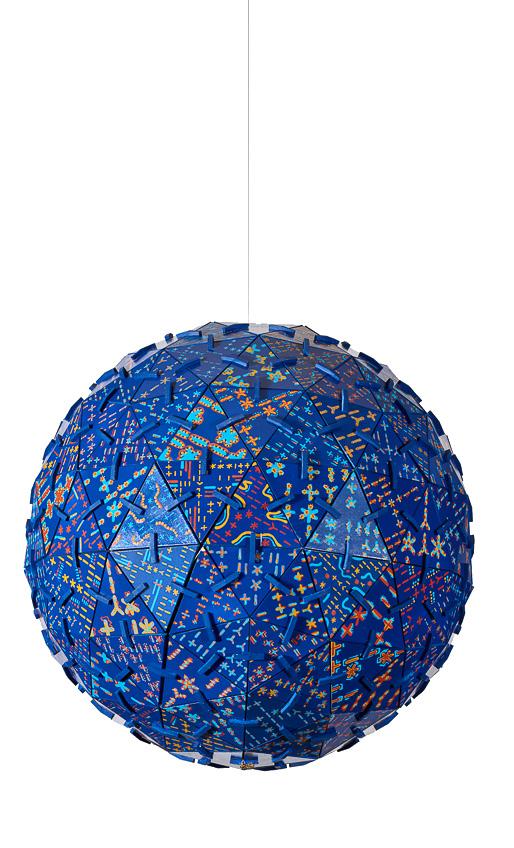
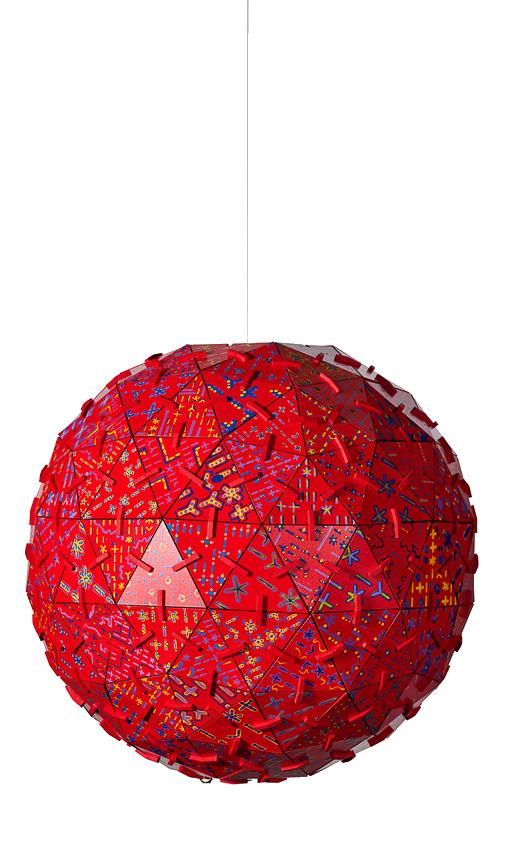
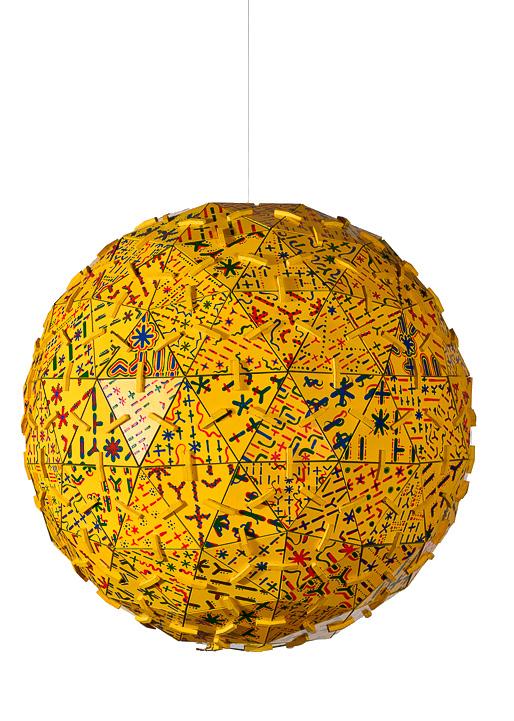
The Atlas of Uncertainty illuminates ‘ecologies of trust’ as well as previously untold complexities about migration, revealing how we might harness these for more inclusive urban spaces.
The resilient aquatic life that inhabits estuaries, where freshwater rivers meet saltwater oceans in ever-changing environments, has no choice but to go with the flow of the river and the mood of tides.
Loren B Landau, Research Professor at the African Centre for Migration & Society (ACMS) and Co-Founder of the Wits-Oxford Mobility Lab, says that African cities work a bit like that. Landau, who studies migration and sociopolitical communities
across the Global South, calls gateway neighbourhoods – where people arrive from elsewhere and get their first foothold into a city – urban estuaries.
It is what sits at the centre of the Atlas of Uncertainty, co-created by Landau. A collaborative knowledge project, The Atlas challenges how we understand and interpret migration and African cities.
Using essay, visual and sonic arts and new forms of cartography,
The Atlas – a book, interactive website and exhibition - is built on survey data from nine gateway neighbourhoods in Johannesburg, Nairobi and Accra.
“The project is driven by the need to break out of the narrative of poverty and decline, to “fix” what’s “wrong” about these spaces, to understand better how people are living, improvising and adapting in uncertain environments,” says Landau.
The Atlas of Uncertainty has been a complex, years-long undertaking pulling together over 60 contributors, including cartographers, social scientists, artists and urban planners. The project required trust across diverse disciplines and an ability to sit with the uncertainty around the unwieldy data that it produced.
Making sense of survey data from the 1 644 respondents was left to Kabiri Bule, ACMS researcher and data analyst for the Atlas. Questions included where people were born, where they moved and why, where their families lived, where they hoped to retire, their plans for saving money, religious affiliations, civic engagement, familial commitments and social networks as well as their views about the police, counsellors, neighbours, religious leaders and service providers.
Bule, whose research lies in ecologies of trust, says that responses can tell us much about how people experience social and institutional life.
“I don't treat trust as a mood, I treat it more as a governance signal,” says Bule. “It enables us to better understand residents as they encounter different forms of authority...which crosses into questions around migration status and experiences with safety, crime and discrimination.”
These are not always yes or no questions, explains Bule, so the survey had to accommodate mixed responses.
“It's frustrating for a stats person. You just want to report your percentages and move on but the data fought back. I had to sit with complexity and be comfortable with it. You just have to report honestly what the data is telling you.”
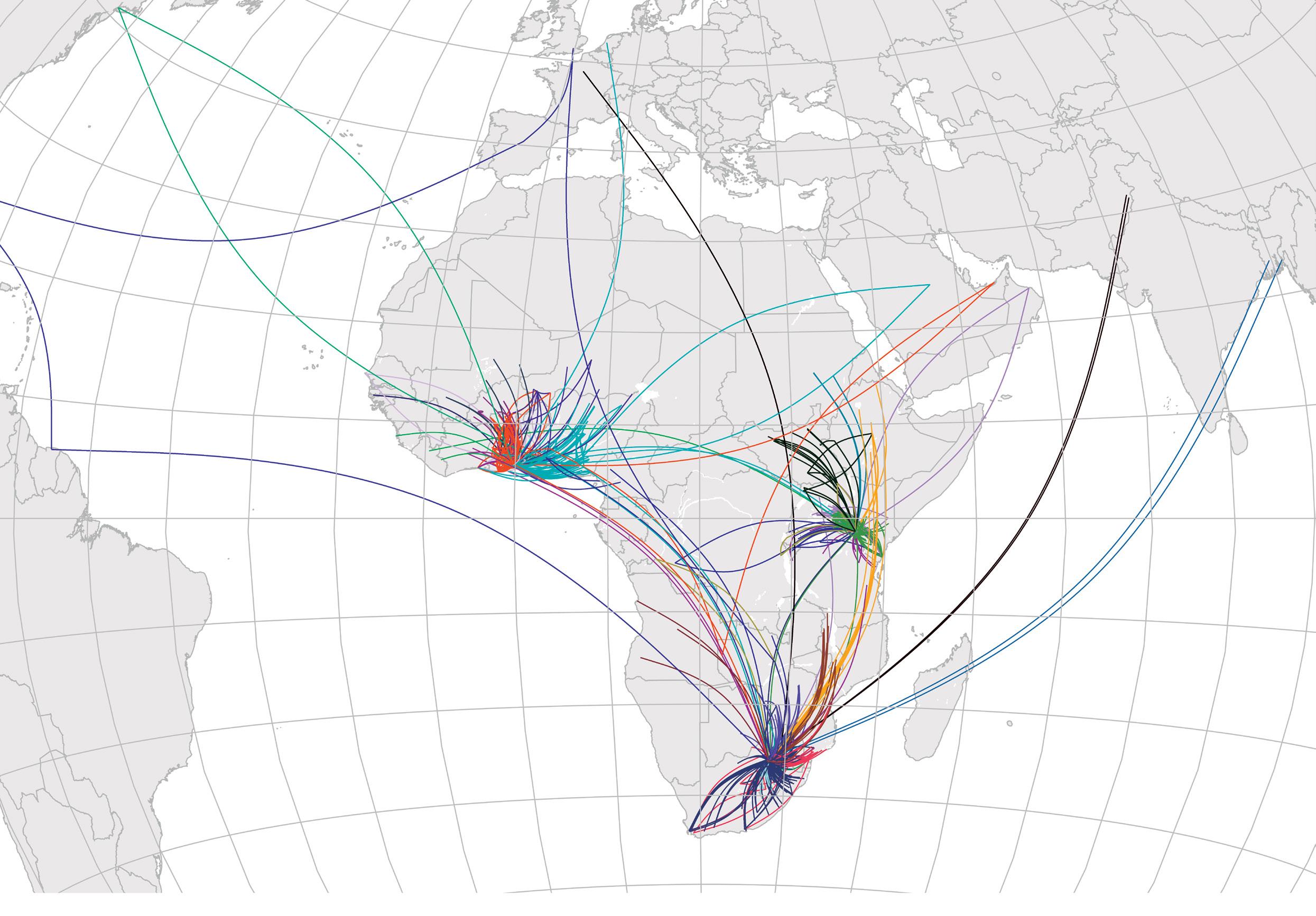
Bule worked closely with cartographers from Columbia’s Center for Spatial Research who used the data to plot hundreds of maps that told a story not just of place but of dreams, money, trust and belonging. Accustomed to precise coordinates, they too had to embrace the ambiguity baked into the data. For example, different people named the same village but linked it to different “nearest cities”. Spellings of locations varied and places locally referred to as villages were considered urban clusters by international bodies like the United Nations.
Among other findings, the maps clearly show how 80% of migration happens within countries or is contained on the continent and that African migrants are not streaming into Europe or the United States.
When the maps started rolling in, Landau likened them to hieroglyphics. For Bule, it was more like spaghetti.
“They are not clean, linear lines, and I love that. It shows that migration is not just a simple journey from A to B. There are many
“WHAT WE OFFER IS THIS SPACE FOR OPENING UP THE WAY WE SEE THINGS, A METHODOLOGY THROUGH COUNTER CARTOGRAPHY, ALLOWING MULTIPLE PERSPECTIVES TO COME INTO PLAY."
stops along the way. There's also immobility, where people get stuck in a place for all sorts of reasons, despite indicating a desire to move along,” explains Bule.
Shongile Myeza, a research assistant who worked on The Atlas as part of her internship for her Master’s in social and psychological research, found that being able to play with the data once it was configured on the website was illuminating.
“You just keep diving into it and jumping around the different points,” she says. “It helps you understand how people have to jump around between different locations. It made me think, if I had to do the same thing, would I be okay?”
That’s exactly what Caroline Kihato, a research associate at ACMS and co-creator of The Atlas with Landau, was hoping to achieve.
“Through these hidden maps, through the spiritual world, through the church, we start to see these generative spaces.
Cracks open, fissures bubble out and bubble over the static map, showing us ways in which we might tap into some of these energies and resources, to create a much more inclusive urban space,” says Kihato.
The result, she says, is not a policy blueprint.
“What we offer is this space for opening up the way we see things, a methodology through counter cartography, allowing multiple perspectives to come into play. We have to admit that maybe we don't know the full story. We need to be a bit humbler in understanding these other aspects of the story so that we can intervene in a way that might be sustainable and done in a way that people want us to intervene.”
The messy data, corralling dozens of essays and tracking down artwork delayed in the continent’s unreliable transit systems, added to the complexity.
For Myeza, improvisation summed up the entire process. Eventually, she just got out the popcorn.
“It's like watching a movie,” she says. “You have to trust that the director knows how to tie this whole thing together, and it's going to line up in a way that makes sense, that it's going to come alive in a way that's interesting and dynamic. That's what I've found so far. It's like, ah, now I'm getting it and now it's all making sense.” C
If you came seeking a salve in this bruising era of uncertainty, the Atlas of Uncertainty is not for you.
Here, the streets of Johannesburg, Nairobi and Accra chatter and spirits linger. A tyre shop emerges, a taxi runs roughshod, and maps of yarn and copper insist there is something lurking beneath the surface. The Atlas is a travelling exhibition, interactive website and a book (January 2027, Wits University Press/Actar) built on Wits-Oxford Mobility Lab data and new forms of cartography. The collaboration of over 60 social scientists, architects, activists, and artists places creative outputs on par with data in a deliberate move from “the census to the senses”.

Austine Adika, Strangers and Spaces, 2025, Aluminium, 1400 x 720 x 800 mm each. Adika’s aluminum “strangers” from Kayole, Nairobi bend and twist, vulnerable and open-mouthed. As Atlas co-curator and African Centre for Migration & Society doctoral candidate Carina Kanbi says, the figures “embody the ambiguous status of migrants and marginalised residents as they navigate spaces that oscillate between inclusion and enforced separation”.
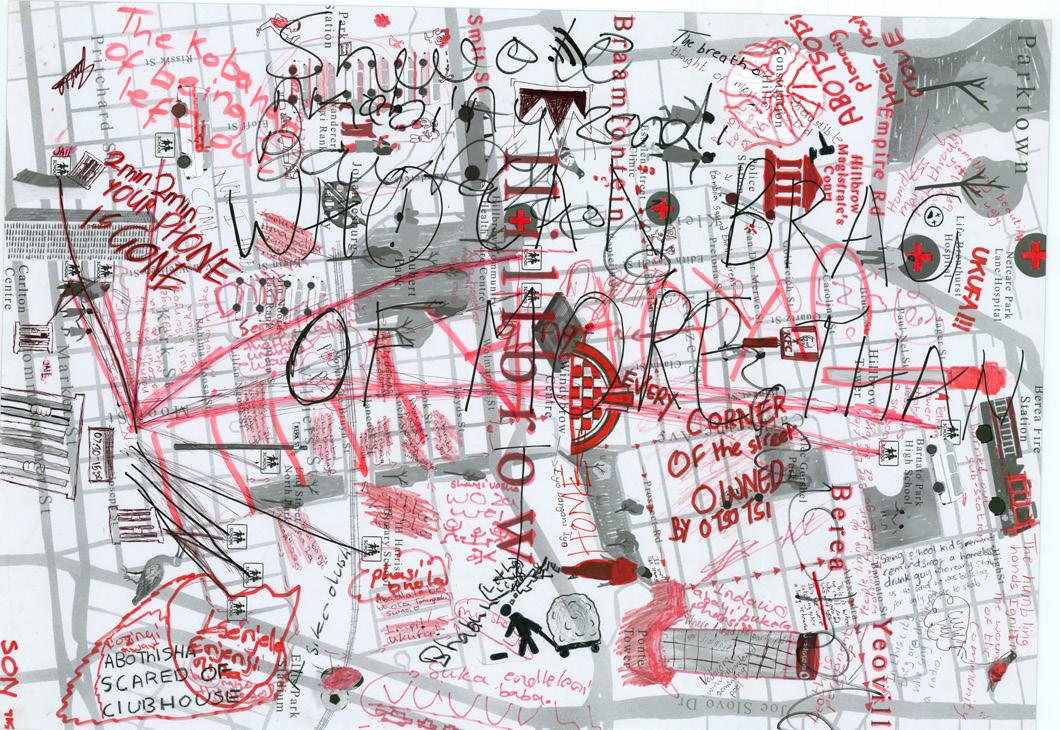
Windybrow Writing Group (Thandeka Masango, Reneilwe Leopeng, Thabang Matsaung, Genoc Kalongo, Khayalethu Ndlovu, Lesedi Udeh, Caleb Nyaguila, Zandile Dube, Lungalethu Mahlangu), I am the Graffiti on the Cracked Wall – Proof that Galleries are not the Home of Art, 2024. Digital print.
In her essay for Atlas, Wits Creative Writing lecturer Stacy Hardy traces the work of the Windybrow Writing Group youth who created a collaborative work of their lives in Johannesburg’s Hillbrow. Part of that process was mapping their space.
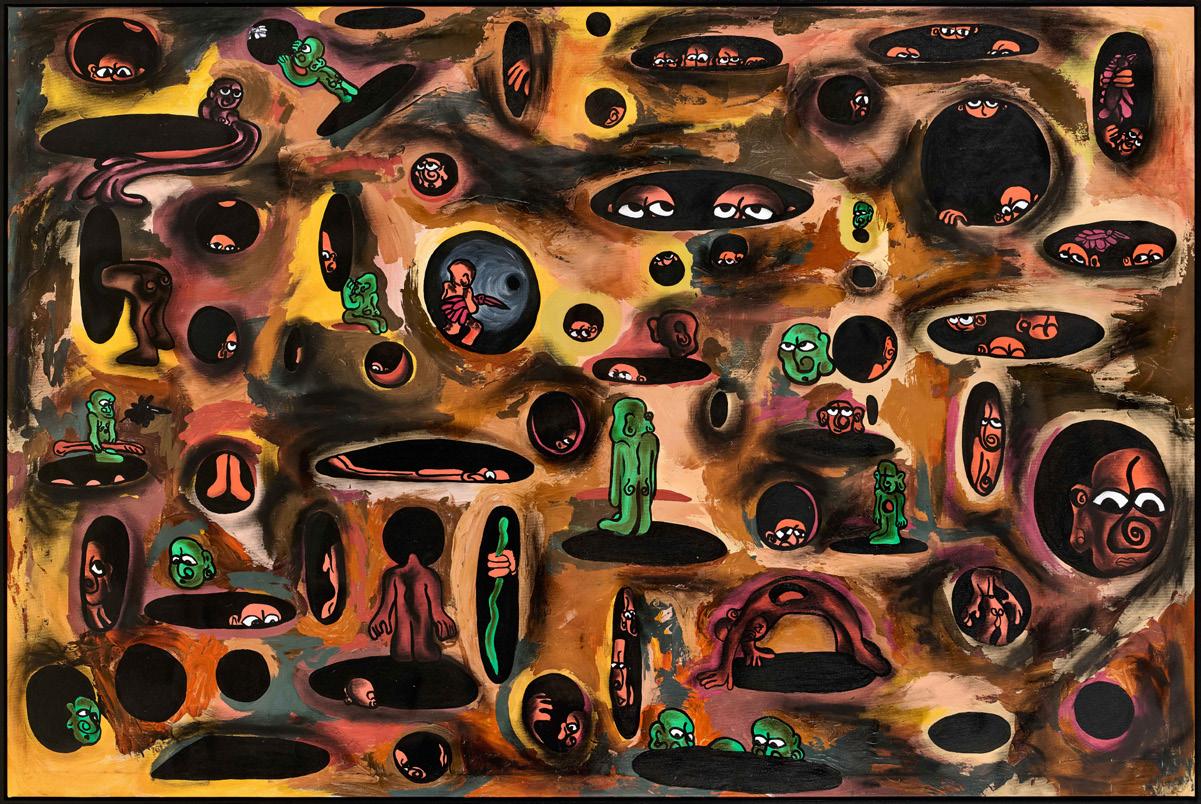
Beach Gold - Nana Danso AwuahAsante, Po Ano Sika (Beach Gold), 2024, Acrylic and charcoal on canvas, 1800 x 1200 mm.
An illegal mining gold rush in Ghana has poisoned the earth with the chemicals needed to extract it. AwuahAsante’s work imagines a future where a new civilisation is birthed underground. The curators explain how the undergrounders “construct portals and metaphysical boundaries that seal their realm from outsiders –an existence born from environmental ruin and ancestral power”.
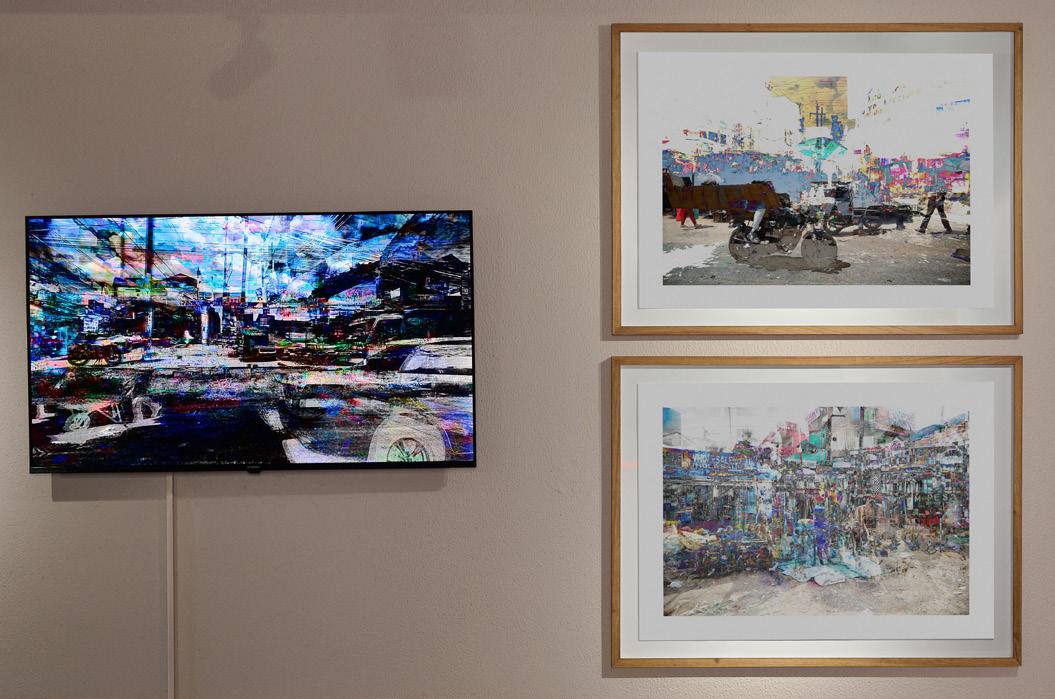
Daniel Muchina, MADINI, 2025, HD video 02:24, Archival pigment prints, 901 x 648 mm.
Muchina’s MADINI exists in one of the themes of Atlas – “speculative topographies”, in which the curators ask: “What happens when we trace topographies not yet legible but deeply known?”
The film and video hybrid plays on layers of street scenes in Nairobi in a “haunted archive asking viewers to contemplate what moves beneath the everyday”.
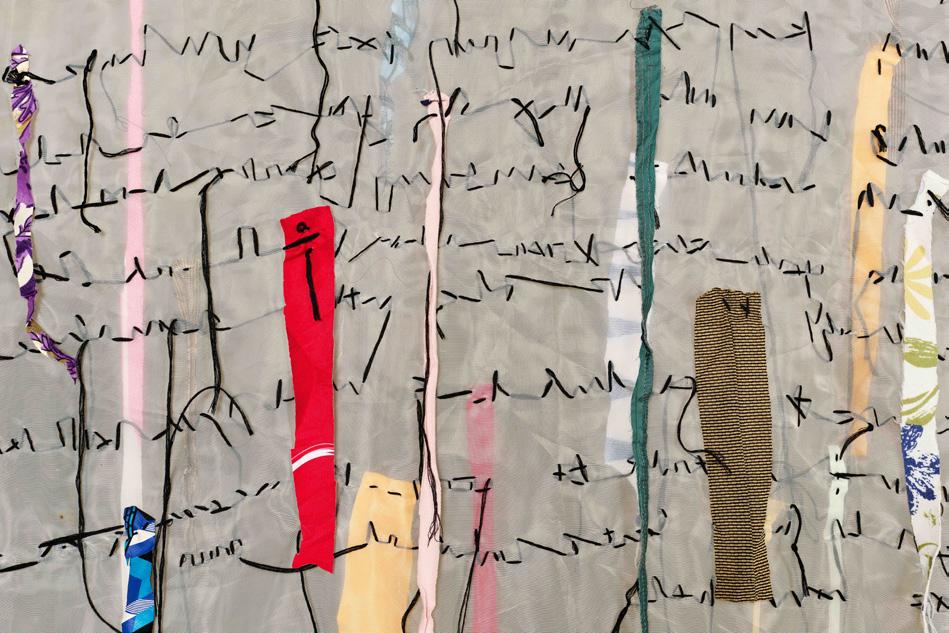
Billie McTernan, A Map of Dreams and Realities, 2025, Thread (including polyester and waxed), organdie, scrap fabric, banknotes, and coins, 3000 x 6000 mm.
Stories from Accra’s Old Fadama neighbourhood are told through McTeran’s delicately crafted tapestry where threads speak the illegible messages of its denizens and soundwork is based on McTeran's own set of interviews and street sounds. Kabiri notes it reveals a city “maintained by threads of care” where coins, notes and ribbons render tales of lives, hopes, fears, and dreams.
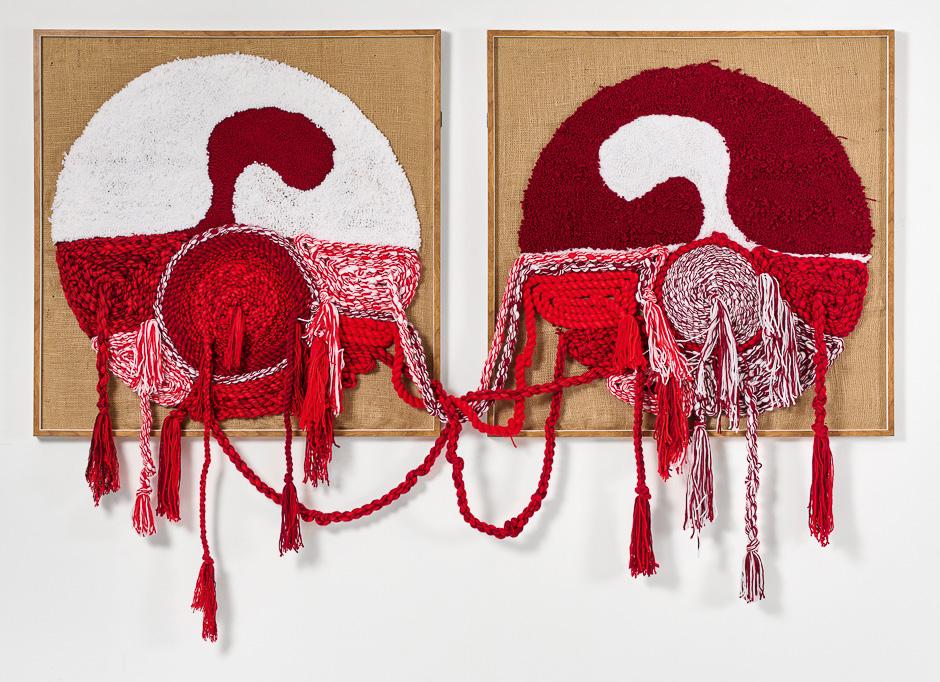
Lebo Thoka, The Seams, 2025, Wool on hessian, 2400x1200mm.
The “co-joined twins” of Diepsloot and Dainfern reveal, the curatorial team notes, the moral and material economies that connect them.
The informal settlement provides labour that maintains “privilege behind palisades” while, the work also holds a city “sustained by threads of care, connection, and labour”.
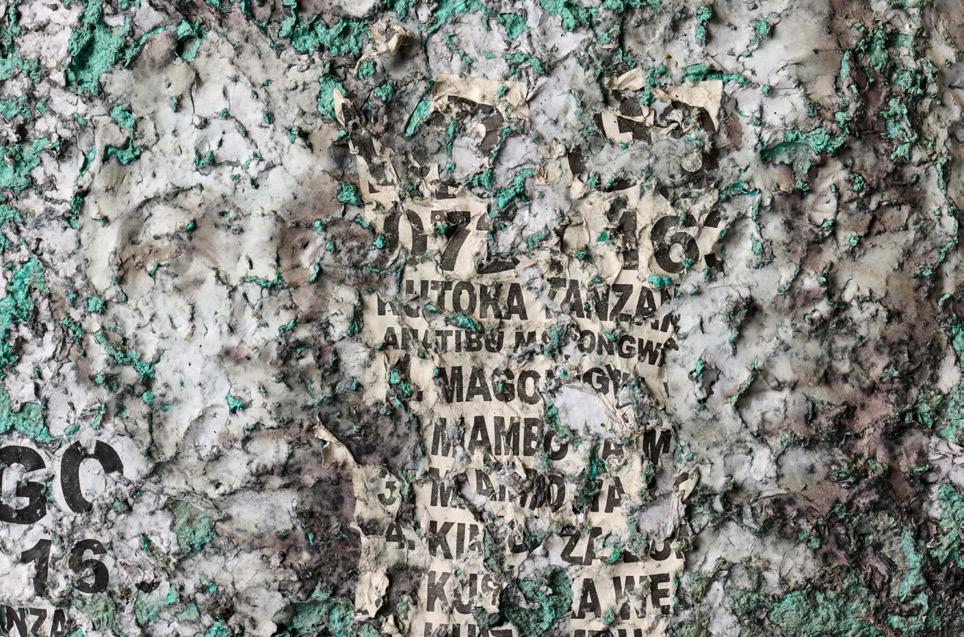
Martin, Mashua and Hakuna
(Dhow/No Way Through), 2025, Papier mache canoe, 1800 x 600 x 850 mm.
Martin’s papier mâché canoe - crafted of Nairobi street posters advertising prophets and healers, promises of work and receipts from travel - presents a paradox. Centred on Nairobi’s Machakos bus station, the curators reflect that the work is about mobility “as aspiration and constraint, and the fragile materiality of what allows movement to happen at all”.
The Atlas of Uncertainty is a project of the Wits-Oxford Mobility Lab and the African Centre for Migration & Society which ran at the Origins Centre from 18 May - 11 July 2026, with plans for exhibitions in Nairobi, Accra and Europe. The book, Atlas of Uncertainty: Transforming African Cityscapes (Actar/Wits University Press), will be released in January 2027.
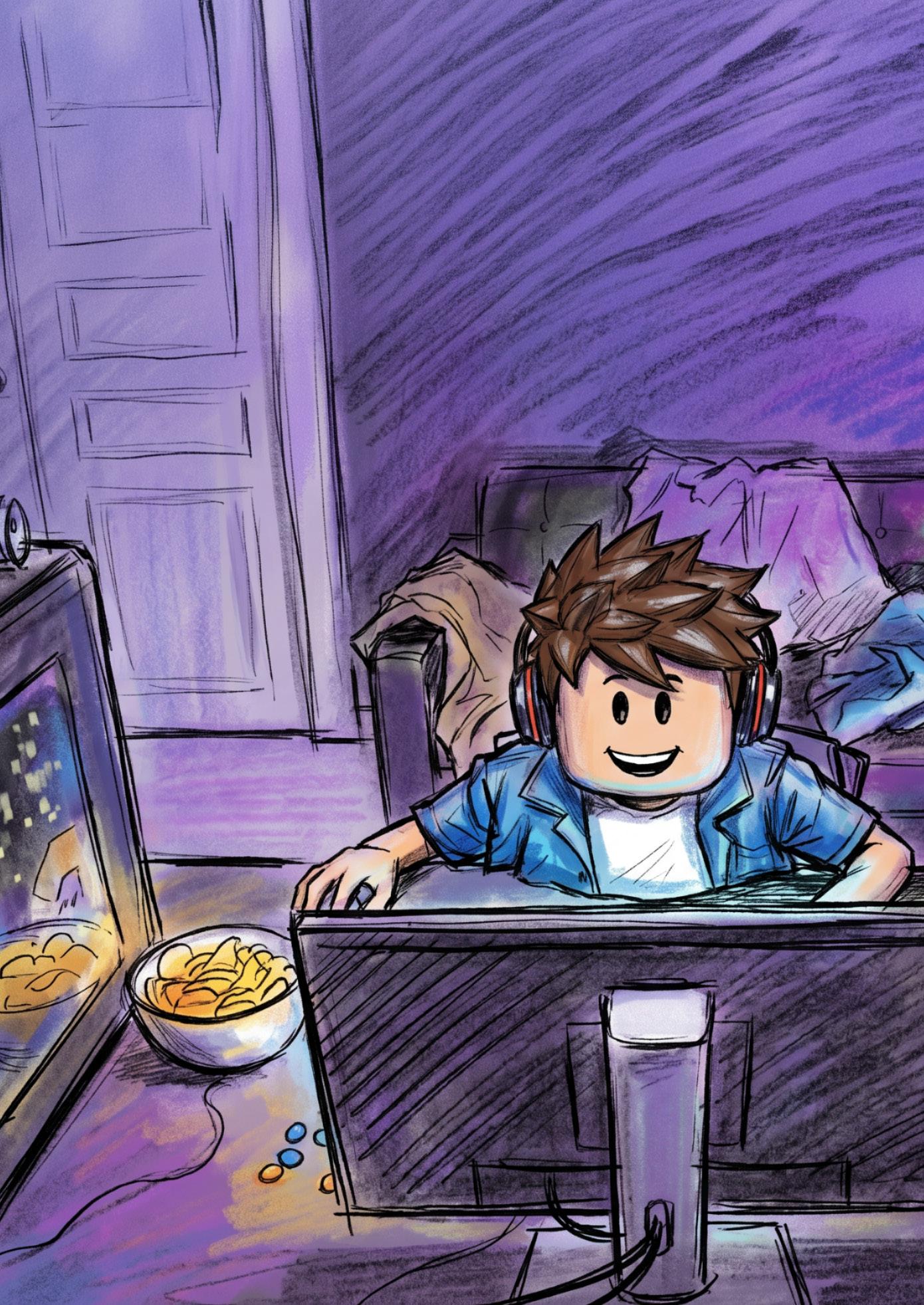

While gaming has been used effectively as an alternative learning system, developers use the same principles as gambling to entrap and to keep children in their gaming environment, without the checks and balances that regulate the gaming industry. Beth Amato explores how this affects our youth.
Long before simulation labs in which students encounter life-like dummy patients and Minecraft-based classrooms, nurses at the Wits Medical School in the 1950s were already using board games to deepen their learning.
The game worked less like a race to the finish and more like a turn-based strategy game, where the outcome changed with each decision made. A nursing student, for instance, might move a token to a square marked “home visit” and draw a card. The scenario on the card might reveal that the patient is unwell but there is tension in the house, such as a drunk and disruptive family member. The nurse has a choice. What should be done first? Calm the family? Check the patient’s vital signs or call for help? Each choice would open a different route and result in a different outcome.
Whatever their choice, the students were learning how to manage complex situations, including the consequences of those choices.
Hosted by eFundanathi in the Wits School of Therapeutic Sciences, the inaugural Game On! Where Pedagogy Meets Play symposium presented an innovative programme that blends technology and adaptive learning processes. There, a small but growing academic gaming community reflected on the history of play for learning and explored further how games are used as tools for teaching, assessment, simulation, health communication and social change.
Amanda Jankowitz, a Lecturer at eFundanathi, explains how, in one Minecraft-based game, Wits occupational therapy students enter the rural world of Arabang, a fictional character living with her disabled daughter and granddaughter. Through Arabang’s life, they learn how water, distance, disability and family context shape health issues. In 2026, Arabang’s village expanded and the Ntuli family moved in, allowing students to work through household dynamics, disability and care needs.
In a different game, microbiology students are sent into a rural village after a disease outbreak to search for patient zero. In this setting, they learn to confront stigma, traditional-healer advice, vaccination misinformation and the fears that follow a rural family into hospital.
“During Covid-19, eFundanathi even built a virtual phar macy so students could practise inspecting a pharmacy environment when they could not visit one in person,” says Jankowitz. When the game proved too data-heavy for some students, the
THE GAME IS COLOURFUL AND NOISY AND WORKS ON THE SAME PRINCIPLES OF CHANCE AND REWARD THAT DRAWS AN ADULT INTO A CASINO.
team created a video version. “It was a reminder that ethical game-based learning in South Africa must also account for access, devices and data.”
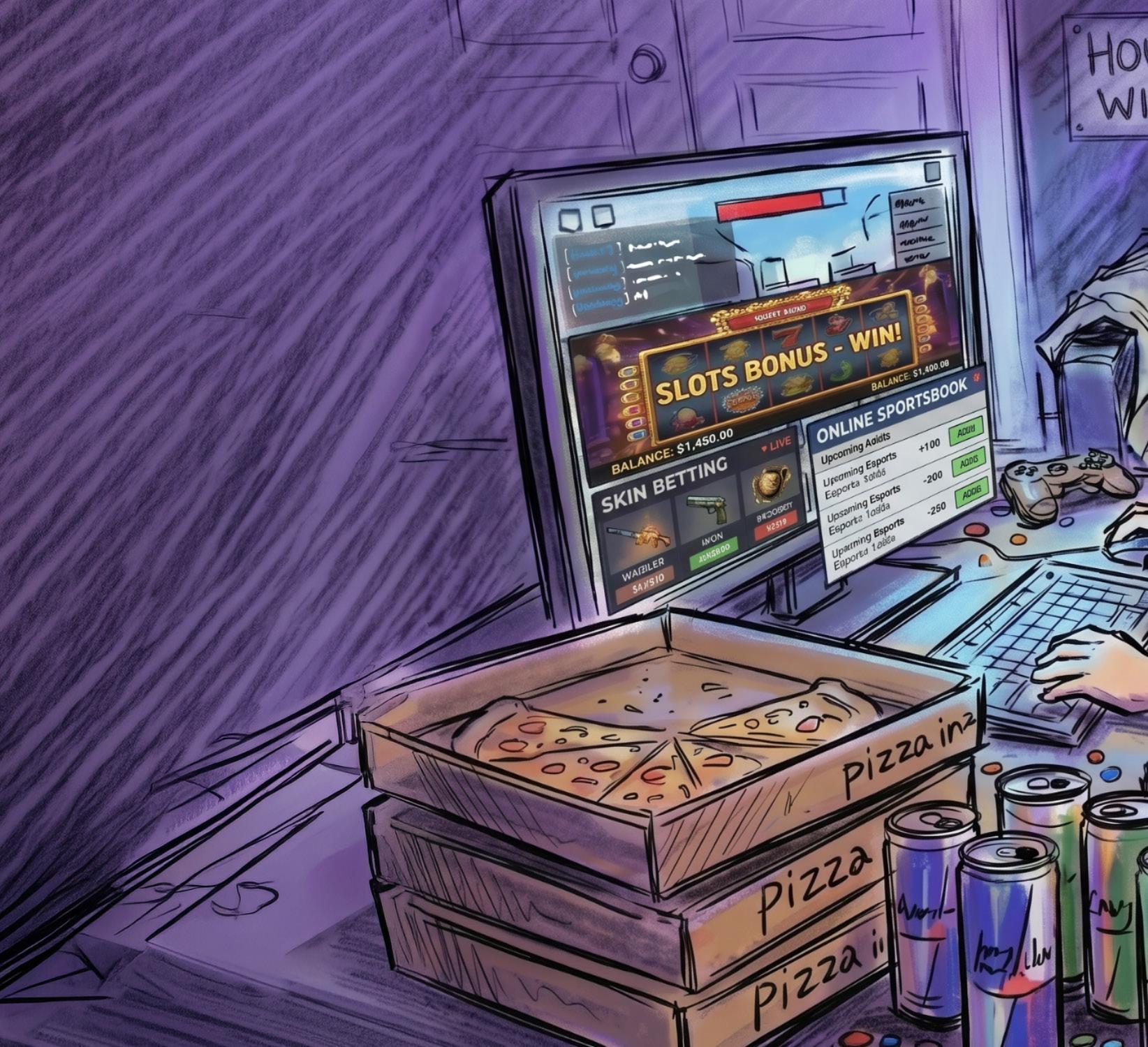
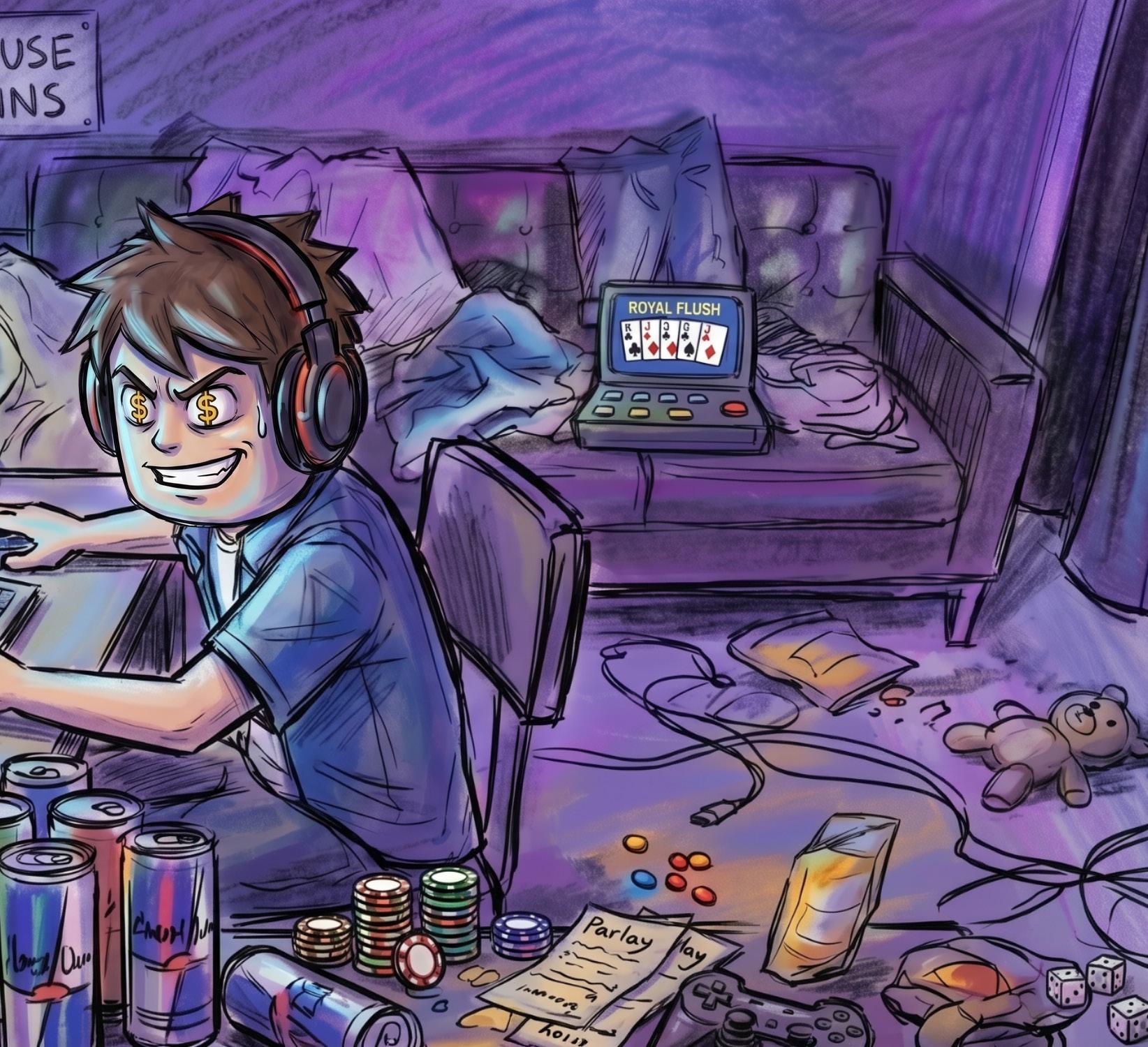
Meanwhile, in a different setting, a nine-year-old boy logs onto Roblox after school. He has to use his mom’s phone to play and has been obsessively hounding her for it. His friends are there, and he gets into a game of ‘1 versus 1’ with them, if he is lucky to be chosen by the 12-year-old boys playing simultaneously. The game is colourful and noisy and works on the same principles of chance and reward that draws an adult into a casino. The boy usually has to pay with real money to enter, buy the “Robux” currency, open the box, spin for the prize and try again if he loses. The prize might not be cash but could be a rare character, a footballer card, a pet, a weapon ‘skin’ or a status item (which other children can admire).
“Imagine a casino entirely built for children. It runs on slotmachine psychology, charging real money for rewards with
undisclosed odds. There is no parental supervision in a real world of course, society would shut it down immediately,” says Professor Michele van Eck from the Wits School of Law, who recently presented a webinar on grooming minors through gambling-like gaming practices.
Yet, the same psychological architecture is packaged inside a smartphone, called a video game and remains unchallenged. These types of games also fall through the cracks of South Africa’s legal framework.
This is the uneasy question at the centre of gaming today. If play is powerful enough to support learning and health, what happens when that same power is built into unchecked systems designed to keep children spending, returning, obsessing and perhaps being stalked by online predators?
Dr Alan Mattiassi, a gaming psychologist who was a keynote speaker at eFundanathi’s Game On! symposium, says that games are structured psychological environments in which a
A CASINO ANNOUNCES ITSELF AS A GAMBLING ENVIRONMENT. A CHILD’S GAME ANNOUNCES ITSELF AS FUN.
small change in a variable can alter behaviour. “This is what makes games powerful. It is also what makes them risky,” he says.
Mattiassi cautions against treating addiction as something unique to gaming. “There is a major trust breach in some children’s games. A casino announces itself as a gambling environment. A child’s game announces itself as fun. A parent sees entertainment. A child sees friends, avatars, colours and rewards. A developer sees a monetisation funnel.”
Parents are often told to monitor screen time, set limits and activate parental controls. “Responsibility is pushed downstream onto parents and children, while the architecture that creates the risk remains upstream with developers and publishers. Children are expected to exercise restraint in environments built to undermine it. Parents are expected to supervise systems that they may not fully understand. Meanwhile, the companies designing these reward loops, virtual currencies and spending pathways face little direct accountability for the risks built into their products,” says van Eck.
Of course, not all these games use the same mechanics,
and not every child who plays them will be harmed. “Children are growing up in digital environments where spending is abstracted and chance is normalised,” explains Mattiassi.
Jankowitz has seen how even educational rewards need careful handling. In one mostly online medicine and surgery course for occupational therapy and physiotherapy students, badges were introduced to improve engagement. Students loved them but the team found that some became too focused on collecting badges rather than on the learning itself. The system was redesigned, reducing the number of badges and spacing them out more carefully.
The question, then, is not whether games are good or bad.
“The challenge is not to remove games from children’s lives but to insist that the systems surrounding them are transparent, accountable and designed with children’s best interests in mind. Play can be a space for learning, care and imagination. It should not become a rehearsal for gambling before a child is old enough to understand the rules,” concludes van Eck. C
LEANNE RENCKEN LAUREN MULLIGAN
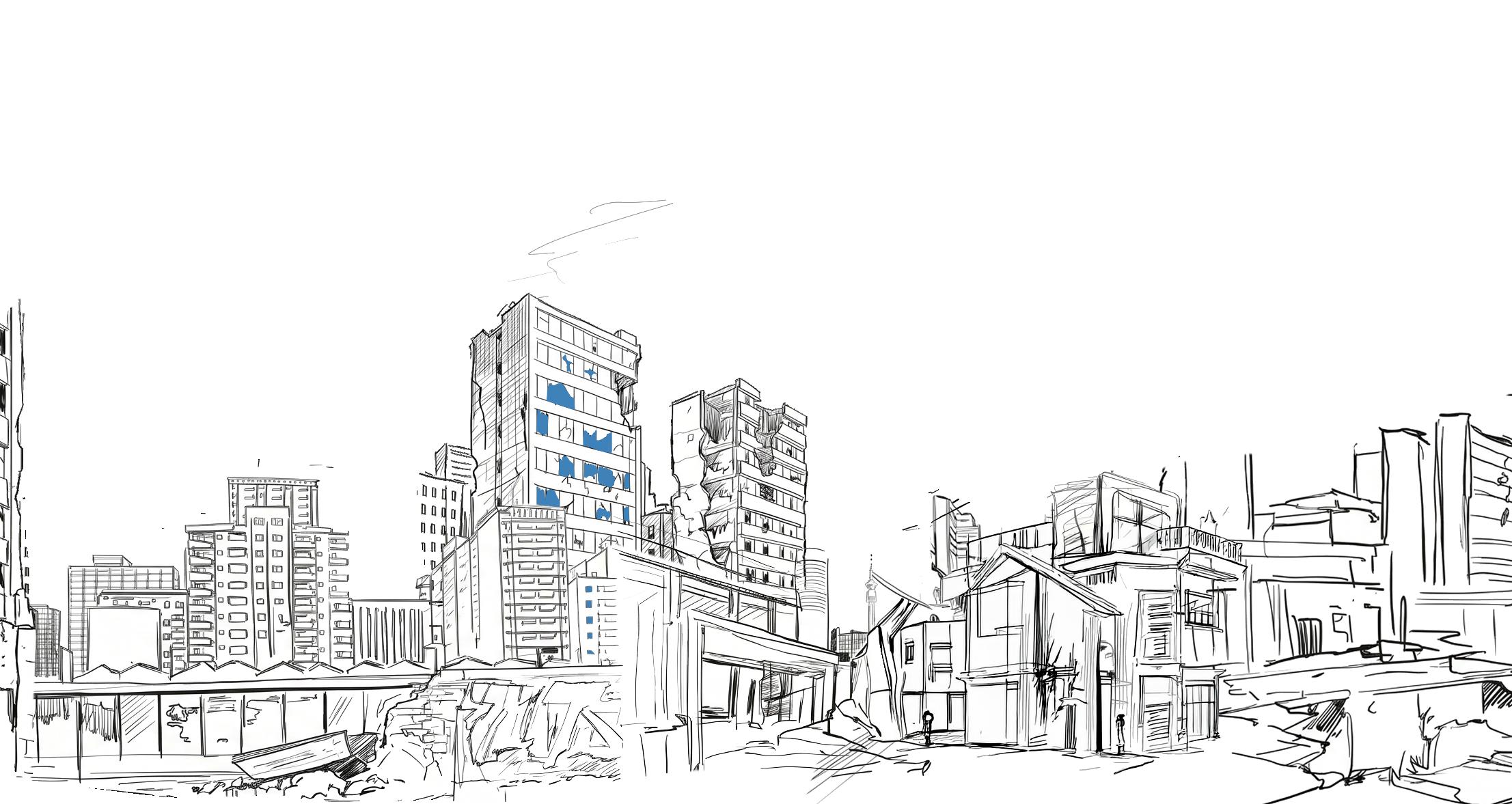
For most South Africans, the state is experienced through the mechanics of a fight-or-flight response, a rational adaptation to an environment of constant unpredictability. Experiencing state mechanisms, for most South Africans, means confronting constant unpredictability, resulting in a ‘fight or flight’ response.
The "fight" is a daily battle for basic rights, physical survival in the face of collapsed infrastructure and the mental fortitude required when nothing ever changes. The "flight" manifests as internal migration, as those with the means to do so flee collapsed municipalities in search of more functional local governance elsewhere. Those left behind stay out of necessity rather than choice. While some might stay out of a sense of defiant civic loyalty, others simply have no option, forced to survive by whatever means they can.
The upcoming municipal elections highlight the rift between administrative performance and citizen expectations. Professor Emeritus Susan Booysen from the Wits School of Governance observes that asking people to cast a ballot in this climate is fundamentally an exercise in cognitive dissonance: "We’re really asking them to suspend their trust and disbelief that things can actually be better," she says. Professor Daryl Glaser, from the Department of Political Studies, points out that explicit discourse
leadership’s ethno-regional appeal. This reliance on identity over performance sees political actors encouraging voters to overlook profound structural shortcomings, from economic stagnation to systemic corruption. This dynamic presents a fundamental puzzle for local democracy.
"Perhaps the real question is why narrowly transactional considerations have played such a limited role in shaping voter preferences until now," says Glaser.
In the City of Johannesburg, urban specialist Dr Tanya Zack from the Research Chair in Spatial Analysis and City Planning within the School of Architecture and Planning, documents a localised state that routinely "hides its service delivery failures behind the poor”. Ahead of the elections, rather than deploying spatial or developmental solutions to fix hazardous, flooded roads and pavements or broken traffic lights, the state defaults to what Zack calls "performative violence”. This involves sensationalised policing blitzes to project an illusion of order. "It’s like the government stopped governing and then blames the people for its failure," says Zack.
Dr Tracy Ledger, from the Public Affairs Research Institute (PARI), traces this administrative failure back to a betrayal of the post-apartheid social contract. Universal access to basic services was a foundational promise meant to guarantee a dignified
interventions, which despite doing vital work, exposes state absence and deepens historical divides. Professor Philip Harrison, also from the Research Chair in Spatial Analysis and City Planning, warns that overstating the efficacy of short-term private initiatives is dangerous as there are distinct limits to what communities can achieve outside the state. Crucially, these interventions can introduce long-term risks for the poorest of the poor: “The electricity grid and the water grid depend on the middle class paying their service charges. If they've gone completely off grid, then the impacts for the poorer communities are substantial over the long term.”
Ledger targets this structural dysfunction with even less patience: “The municipality cannot expect the public sector or businesses to solve the problems that the municipality has caused and continues to cause.” Civil society stepping in to pick up the slack provides a "get out of jail free card" to paid officials who choose to redirect infrastructure budgets towards general expenditure or vanity projects. The human cost of this misallocation is devastating – child grant beneficiaries borrow money primarily to pay for electricity, sacrificing essential protein items from their food baskets which results in childhood stunting. Women-led township food businesses are also decimated because they cannot preserve stock, cook or trade safely in unlit environments. Widespread municipal diversion leaves people without the basic benefits explicitly funded by the national budget. For Ledger, the solution is not a creative private-sector partnership – it is a legal imperative: “The state must go back and read the freaking Constitution.”
“IT'S LIKE THE GOVERNMENT STOPPED GOVERNING AND THEN BLAMES THE PEOPLE FOR ITS FAILURE.”
“THE STATE MUST GO BACK AND READ THE FREAKING CONSTITUTION.”
problematic "political fiefdoms" designed to route tenders to associates and cronies. While breaking these appointment loops marks a vital shift, the public expects much more. As Booysen says, unless the legislation actively enforces individual responsibility and deep project engagement, the law will remain an empty gesture.
Glaser says that maladministration is only one symptom of a much larger structural issue and adds that patronage networks, while inherently toxic to clean governance, have historically acted as a flawed stabiliser in low-trust environments by offering rapid upward mobility for a few. Dismantling them legislatively without fixing the broader economy may simply trigger intense frustration.
Moving past historical failures requires defining clear metrics for a functional local democracy. Harrison notes that the real "seeds of hope" lie in a broader emerging reform package. This includes National Treasury's implementation of trading service reforms which structurally ring-fence revenue from water and electricity. By ensuring that this income goes directly back into utility infrastructure rather than the general pot of municipal spending, we can get the basics back on track.
Furthermore, Ledger introduces an essential conceptual balance to the grim state of affairs: "Being in a community with people who are trying to make a plan will cheer you up every time." This is matched by Zack's insistence that civic trust is built not through abstract political statements but through a tangible "demonstration of delivery” such as the Social Employment Fund's localised food gardens and waste-reclaiming initiatives. Zack rejects the idea that trust requires a romanticised community consensus, stating instead that "trust equals really robust battling to get some of these big issues solved”.
For Glaser, success is a reduction of exposed corruption, while
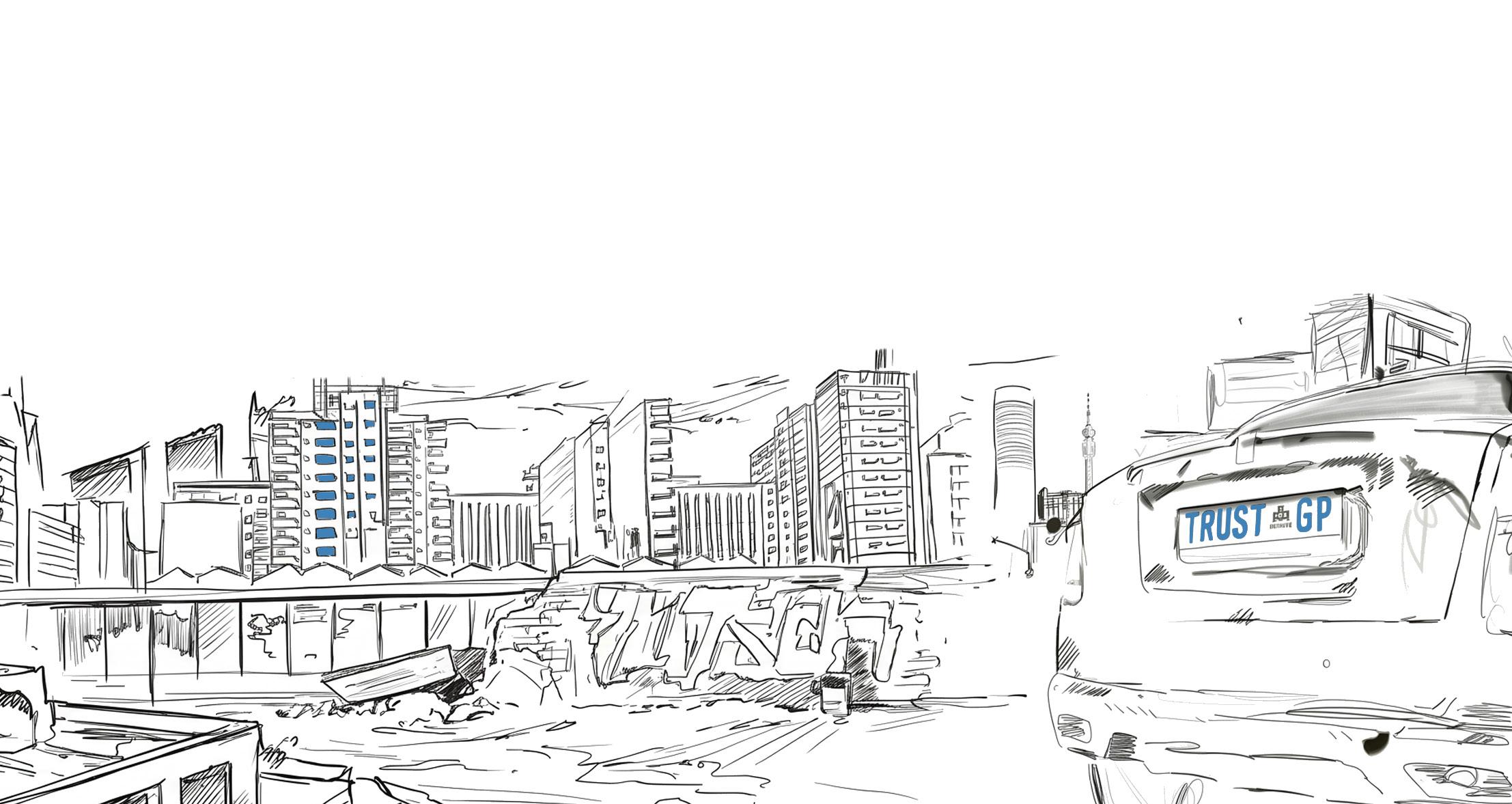

More than a decade after state capture, the country is still feeling its impact as the Madlanga Commission hearings expose the extent to which South Africa’s state institutions have been weakened. What happens when corruption becomes the norm?
DESMOND THOMPSON CHANTÉ SCHATZ
More than a decade after state capture, the country is still feeling its impact as the Madlanga Commission hearings expose the extent to which South Africa’s state institutions have been weakened. Desmond Thompson looks at what happens when corruption becomes the norm.
According to the latest Afrobarometer findings, a large majority of South Africans believe corruption has worsened, while trust in key institutions such as Parliament, local government and the Presidency continues to decline. More than nine in 10 citizens say the government is performing poorly in fighting corruption – the highest level of dissatisfaction recorded among 38 African countries.
Yet, South Africans often speak about corruption as though it happens somewhere else – in state tender processes, corporate boardrooms or on the pages of the Zondo Commission report.
Everyday life tells a different story. Corruption is also the traffic officer being offered – and accepting - a bribe. It is tax evasion, routine littering, and the growing disregard for rules no longer deemed meaningful in a society that increasingly feels as though it is falling apart.
For author W illiam Gumede, founder of the Democracy Works Foundation and a visiting Associate Professor in the Wits School of Governance (WSG), corruption reshapes society itself.
“My frustration is that people do not see how corruption
undermines democracy and the economy. Crucially, it causes instability by breaking down the social fabric,” he says.
In a society as diverse as South Africa, he argues, corruption undermines nation-building by eroding the credibility of institutions and rules.
For Gumede, “once the culture is set at the top, everyone accepts that as the norm”.
Recalling courses he has taught for Members of Parliament, he says some of them argued that elected leaders were culturally expected to “look after their own” once in office.
Gumede considers this a fundamental misunderstanding: “In a democracy, you get elected to govern in the interests of everyone”.
If the wrong example is set, civil servants learn that rules can be bent. Businesses begin gaming the system. Citizens stop believing fairness exists and eventually, rule-breaking itself becomes the norm.
Gumede describes this as a vicious cycle. Service delivery suffers, economic growth slows, businesses and investors lose confidence. Citizens come to believe that only the politically connected or wealthy can escape accountability.
“Eventually, the rules of society collapse,” Gumede says. “Laws still exist, but nobody follows them.”

Christine Hobden, Associate Professor in Ethics and Public Governance at WSG, agrees that high-level corruption shapes everyday behaviour. But her research suggests the story is more nuanced.
She argues against seeing corruption simply as the product of immoral individuals. Instead, people’s behaviour is shaped by institutional cultures, inequality and social context.
Her perspective is informed by years of working with public servants on public service ethics. She says many officials operate in environments shaped by fear, silence and weak support systems.
Cautioning against simplistic distinctions between ‘good citizens’ and ‘bad apples’, she argues that most people occupy a morally ambiguous middle ground where compromise, frustration and survival pressures shape behaviour.
“Many people participate in and uphold unjust or corrupt systems while simultaneously being victims of those systems,” she says.
For both scholars, the breakdown of public trust is the central crisis, and rebuilding it the main challenge.
Hobden frames this through the philosophical lens of the social contract – the implicit agreement that relies on citizens being able to believe that institutions will treat them fairly and will apply rules equally.
When corruption becomes endemic, that belief disappears.
“People begin to take justice into their own hands or simply find their own ways to survive,” she says.
South Africans know this dynamic intimately. Gated communities and private security, generators and boreholes have become everyday responses to institutional failure. In a sense, rule-following increasingly appears naïve rather than virtuous.
Yet, neither Gumede nor Hobden believes the situation is hopeless.
“MANY PEOPLE PARTICIPATE IN AND UPHOLD UNJUST OR CORRUPT SYSTEMS WHILE SIMULTANEOUSLY BEING VICTIMS OF THOSE SYSTEMS.”
Gumede argues that rebuilding trust must begin with uncompromising, visible accountability at the top. Politicians, public servants and business people implicated in corruption must face the law.
But he also believes change requires a broader shift. The upcoming local government elections, he argues, offer an important test.
“If significant numbers of South Africans start voting based on honesty and competence, it changes the game,” he says.
Hobden emphasises collective responsibility. Citizens do have personal ethical duties, she says, but these extend beyond obeying traffic laws or refusing small bribes. They also involve participating in democratic life and holding institutions accountable.
“We shouldn’t only think about what we can achieve as individuals, but what we can achieve together. The social contract is not only between citizens and the state, but also horizontally between citizens themselves,” she says.
Both Gumede and Hobden make the point that solutions cannot come only from the top.
Yes, rebuilding an ethical culture requires long-term civic and institutional education – from schools and universities to the training of public servants and political leaders themselves.
But the question facing South Africa is not merely whether the state has the capacity to combat corruption – it is whether enough ordinary citizens still believe that honesty, mutual accountability and public-mindedness are principles worth defending together. C
South Africans' mistrust in government's data-gathering and their reluctance to be counted dates back to when racial classification determined the allocation (or not) of resources. Should we have more faith today in the statistics that shape policy and lives?
Attributed to two-time British Prime Minister Benjamin Disraeli, the quote, “There are three kinds of lies: lies, damned lies and statistics” suggests that statistics are the most deceptive form of untruth.
In South Africa today, with a national statistics agency that is severely under-capacitated, can we trust that Statistics South Africa is being transparent? Can we have faith that there is no hidden agenda in the information that it publishes? Certainly, governments elsewhere have been accused of manipulating or deliberately misreporting their findings to paint a different picture from the country’s political reality. In the USA, Trump fired the head of the Bureau of Labor Statistics because he, Trump, didn’t like the numbers. In India, the government was accused of doctoring data to skew inequality levels.
“South Africa’s statistical agency is independent and credible,” asserts Dr David Francis, a Senior Researcher at the Southern Centre for Inequality Studies. “In South Africa, we live with the unburnished facts. We generally have good data, which people may or may not choose to believe or trust.”
David Everatt, Wits Professor of Urban Governance and former Chair of the South African Statistics Council, believes that part of the problem is that people want their own view of the world confirmed by data. If it does not meet their expectations, they assume that the numbers are wrong.

“We want statistics to confirm our biases, not challenge our beliefs, and so we use data to support a weak argument or particular agenda,” he says.
If Statistics South Africa is reliable and credible, it is public perception around government performance that has largely led to public mistrust in the data it publishes. “We have conflated our mistrust of politicians’ words and actions with the statistics. If data is used as intended – to shape government policy and to allocate resources, to build schools and hospitals where they are most needed – and these are not forthcoming, it is political will that is missing, not credible data,” says Everatt.
Yet we blame the data.
Associate Professor Mark Collinson, Reader in Population Health in the Wits School of Public Health, South African Medical Research Council/Wits Agincourt Unit, goes back to looking at the purpose of data.
“If people believe that the information gathered in the census, for example, is going to result in better service delivery but their lives do not materially improve, then they are justifiably disgruntled. When the process is perceived to have failed and not the implementation, this leads to an erosion of trust in the data.”
The data from the 2022 Census – collected post-Covid and

following the 2021 political unrest and public riots –has been a contentious issue since its publication in October 2023. A deep-seated anxiety and mistrust around personal data usage and questions around anonymity, led to many people choosing not to complete the online survey or to answer the door to moderators. This resulted in a reported undercount of 31%, much higher than in most other countries.
Everatt believes that using big data – information held by banks, cell phone providers and other corporate entities - could supplement census data, which relies on voluntary submission.
“Accessing this kind of data may require legislation and other guardrails to assure our individual rights, and while it can’t substitute for a census, it could augment the census very nicely,” he says.
The quarterly unemployment numbers are another important gauge of the health of the country, but they, too, are not without contestation. Our understanding of the concept of work versus employment goes to the heart of what the data reflects.
“The Labour Force Survey does not account for people who work for no compensation, such as caregivers. It relies on people’s interpretation of a job. For example, informal market vendors may not believe that they have a job, but they are working for money,” says Francis.
The current slowdown in the rate of unemployment reflected in official numbers is cold comfort for those who remain out of work. How can those people trust the data if it does not reflect their reality of no jobs?
While there is no silver bullet to the unemployment crisis that would reignite public trust, Imraan Valodia, Professor of Economics, Pro Vice-Chancellor: Climate,
“WE WANT STATISTICS TO CONFIRM OUR BIASES, NOT CHALLENGE OUR BELIEFS, AND SO WE USE DATA TO SUPPORT A WEAK ARGUMENT OR PARTICULAR AGENDA.”
Sustainability and Inequality, and Director of the Southern Centre for Inequality Studies, believes that the data can influence behaviour. “When unemployment figures go down, hope is buoyed and more people may be encouraged actively to seek work again,” he says.
Even if hope is restored, restoring trust is another matter. When citizens do not trust the data, they may abdicate from the democratic process. We see this in low voter turnout during elections and part of the census underreporting may be attributed to an unwillingness to participate.
Much like the slogan ‘It’s the right thing to do’, used by the SABC to encourage TV owners to buy a licence, Everatt believes that good citizenship must be the motivation for active participation in data gathering processes whose results impact us all. There is no other reward.
It would seem that the government’s track record over the last 30 years constitutes a massive own goal when it comes to trust. The trust of citizens has been squandered through politicians’ actions – or lack of action – and the value and credibility of national data has been compromised as a result.
We can use data in a different way, says Valodia. “Data is not just about the policies which come out of the numbers but a way of empowering citizens to hold politicians accountable.” C
New tech and male-dominated cultures push female voices out of the newsroom and throttle the social conversation.
DERYN GRAHAM CHANTÉ SCHATZ
If traditional media in general is under siege from mis- and disinformation, AI generated slop and Big Tech owned social media platforms whose algorithms determine what we see and hear, then women media practitioners are bearing the brunt.
According to the 2026 Glass Ceilings book, due out in August, as a consequence of a hostile media environment in South Africa, women journalists are leaving the profession in their numbers. Already under-represented in the sector, women journalists face issues of cyberbullying, misogyny inside and outside the workspace, gender pay gaps, and sexism, making conditions untenable for them.
Since the last Glass Ceiling report published in 2018, there has been a marked decline in the number of women entering the newsroom and there are now fewer women in South African media compared even to 10 years ago, when the space was more equal.
“The influence of the so-called manosphere and an anti-feminist backlash are resulting in a gendered onslaught against women in the South African media,” says Wits Media Studies Professor Glenda Daniels, editor of Glass Ceilings 2026: Women in South African Media and author of Media Freedom in the Age of AI: now is the time for monsters, scheduled for release by Wits University Press in the next few months. “Attacks on female journalists are gendered and sexualised, and range from body shaming, doxxing and trolling, to threats of rape and murder, which can spill over into real life.”
Published by the South African National Editors’ Forum (SANEF), the Glass Ceiling book reveals alarming levels of online harassment and cybermisogyny against female journalists.
“Promotion issues and old boy networks, the impact of Strategic Lawsuits Against Public Participation, in which women are disproportionately targeted, all signal how deeply women lack trust in today’s media environment. In media companies and in online spaces, new exclusions and emotional violence abound,” says Daniels.
The erosion of women journalists’ trust in employers to support and defend them against these harms will ultimately result in a depletion of different voices emanating from newsrooms and a skewed media that is male heavy in its points of view. Stories about women leaders that focus on emotion and physical appearance and not their professional capabilities are not uncommon, where the same would never be true of a report about a man. Violence and bigotry occur as a result of normative role expectations and rigid societal gender norms such as that women should not be tough and ambitious, and that are perpetuated by male dominated media.
Editorial decisions that are insensitive to gender balance amplify gender biases rather than seeing stories through a gender transformation lens. Journalists – both male and female – need to ask how a story could be better told including the female voice. Failure to do so further entrenches injustice.
How we restore the trust of female journalists in the profession generally and in the workplace specifically requires work on both sides. If a woman is threatened in any way, she needs to report it to her editor, as well as to the police, according to the Standard Operating Procedures that media houses are formulating through SANEF. Daniels emphasises that all media companies should have procedures and protocols in place to manage such incidences, including trauma counselling services. (SANEF, in partnership with the South African Depression and Anxiety Group is offering trauma counselling and workshops to journalists who have been victims of cybermisogyny, bullying, harassment and other harms).
Ultimately, protecting women in the media is to protect the plurality of voices, non-sexism and the integrity of the media itself.
“If women cannot participate fully, freely and safely in the media, we lose the diversity of voices, perspectives and experiences. Ultimately, we weaken the democratic function of the media as a public good as the trust deficit deepens,” says Daniels.
Some good news for South Africa is that thanks to a robust civil society sector, including in the media sector, South Africa recently ranked 21st out of 180 countries in the World Press Freedom Index compiled by Reporters Sans Frontiers This is testament to the work of organisations including SANEF, Moxii Africa, Quote this Woman, Gender Links and others.
But what about public trust in the media in this world of lies and misinformation, which, Daniels believes, has been made worse by AI? Media Freedom in the Age of AI: now is the time for monsters, speaks to the mistrust that AI has engendered in journalists and media consumers alike. In addition, Big Tech hegemony rules without accountability and proper regulation, allowing the manosphere, full of sexism and cybermisogyny, to gain traction. The book examines the lack of trust that grows exponentially when there is no clear policy around or regulation of Big Tech.
The role of media consumers is to be discerning and to interrogate sources before accepting a story as the truth. The more far-fetched it is and the more times it has been shared, the more likely it is to be fake.
And we can all be taken in. C
IF WOMEN CANNOT PARTICIPATE FULLY, FREELY AND SAFELY IN THE MEDIA, WE LOSE THE DIVERSITY OF VOICES, PERSPECTIVES AND EXPERIENCES.
Senior academics in Public Health and Governance respectively argue where they each believe the trust process should begin in the contentious National Health Insurance debate.
BY LEM CHETTY
South Africa’s universal healthcare plan remains entangled in court challenges and fierce public debate. To the sceptical public, the National Health Insurance (NHI) blueprint sounds illusory. How will authorities convince us that they can manage this gargantuan beast, when the public and private health sectors are worlds apart? Every South African is asking: “Can we trust the government to do this?”.
For Adjunct Professor Precious Matsoso, trust is not a soft public relations concept. It is the foundation upon which major health reforms either succeed or fail.
A pharmacist and former Director-General of the National Department of Health, Matsoso recently concluded one of the most complex diplomatic assignments in global health governance. As Co-Chair of the World Health Organization's Intergovernmental Negotiating Body, she helped steer 194 countries in negotiations which started during the Covid-19 pandemic and which culminated in May 2025 in the adoption of the WHO Pandemic Agreement. Her experience offers important lessons for our NHI journey.
"We, too, started with a trust deficit during the pandemic," she says.
The negotiations unfolded during a period marked by deep divisions between wealthy and developing nations. Many lower-income countries felt abandoned as richer nations secured and stockpiled vaccines while others waited for access. People died.
"The issue was equity," Matsoso says. "There were countries that strongly supported equity and others that were either opposed or remained silent. The polarisation was palpable."
Despite those divisions, nearly 200 countries eventually reached agreement, an outcome which Matsoso says was only possible because negotiators recognised an uncomfortable truth from the outset: trust could not be assumed.
"It was very clear that there was no way we would succeed without addressing the trust issues up front, by building bridges and confidence,” she says.
There was much talk which, for those seeking action, might have been frustrating, but Matsoso says that the process required sustained dialogue, difficult conversations and a willingness to confront contentious issues.
The parallels with South Africa's NHI debate are difficult to ignore.
"Trust is foundational, but it is also fragile," Matsoso says. "You can't simply present something to people, saying you've consulted and that is sufficient. It requires a conscious effort to engage in dialogue and build bridges, not walls."
She recalls similar tensions during her tenure in government when health policy reforms were being developed. "While we were engaging with multiple stakeholders across the public and private sectors, there were headlines suggesting we had been captured by the private sector."
Such accusations, she argues, undermine meaningful engagement.
"We need to dispel the notion that dialogue with different stakeholders is somehow inappropriate. Trust is also about listening."
For Matsoso, consultation must go beyond formal meetings and public submissions. It requires genuine engagement with dissenters.
"If you coordinate different groupings, working towards different goals, you won't succeed," she says. "You need meaningful dialogue."
The current impasse over the NHI, she argues, cannot be resolved solely through litigation. "We need to sit around the table and start talking – and listening. What are the concerns? As long as these issues remain in court, nothing will move."
Rebuilding trust, she adds, requires humility.
"Where mistakes have been made, parties must acknowledge them. Trust is reciprocal. It takes commitment to build bridges."
The engagement process should extend beyond government and traditional stakeholders, she argues, to include scientists, health experts and private sector actors whose experience may help strengthen implementation.
"You need to engage detractors and find ways to deal with their concerns."
Her emphasis on consensus-building echoes calls from several prominent health and governance figures who have advocated for broader stakeholder engagement around health reform.
Professor Alex van den Heever, Chair of Social Security Systems Administration and Management Studies at the Wits School of Governance, argues that the trust issue is not only about what the public believes is possible, but that the NHI
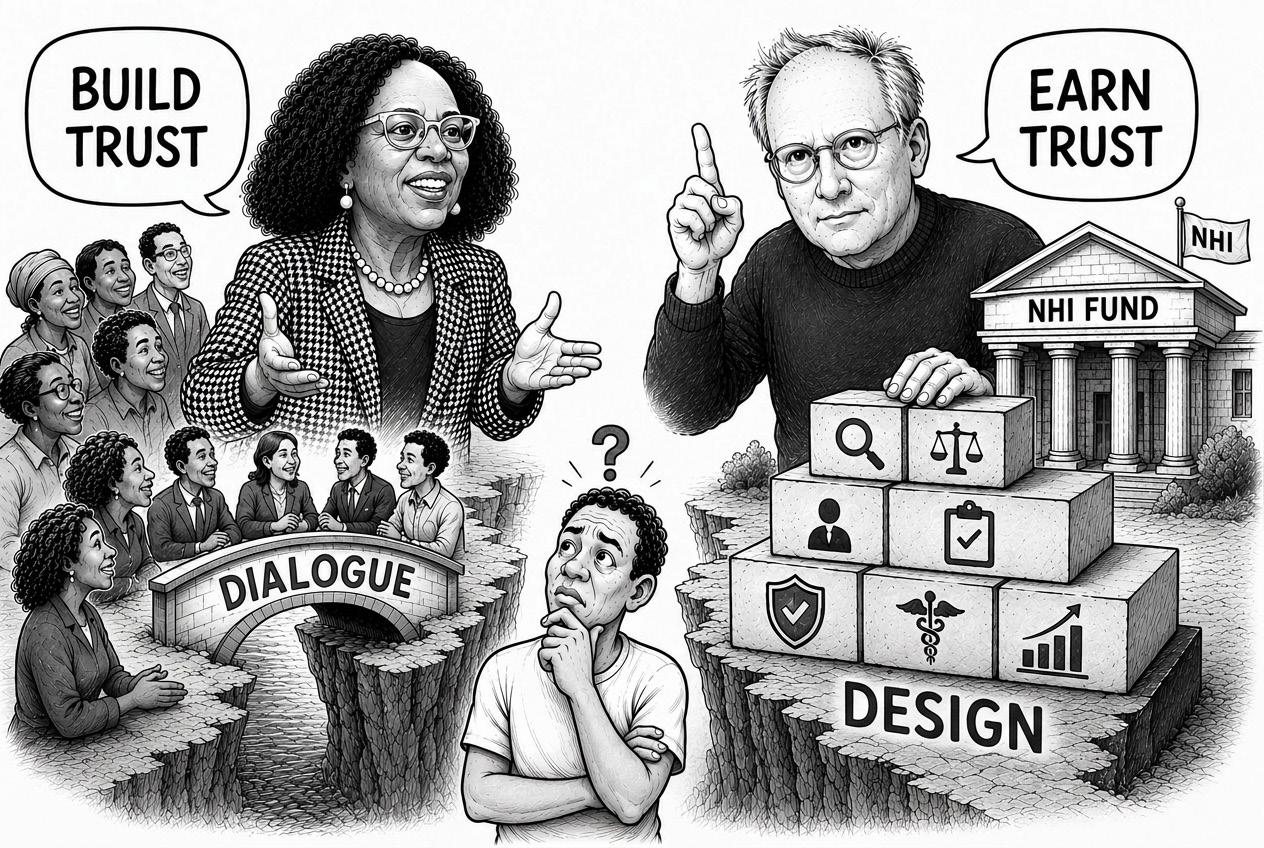
framework itself has failed to earn public confidence.
"Trust follows credible design," he says. "It follows competence, accountability, legality and protection against abuse. The NHI Act and policy framework fail these tests."
Van den Heever argues that trust cannot be created through consultation alone if the underlying institutional design remains flawed.
“As framed in law, the NHI is institutionally weak, fiscally unrealistic and practically unimplementable,” he says. “It cannot deliver on its promises.”
He warns that the current framework risks undermining existing forms of healthcare coverage without adequately addressing longstanding weaknesses in the public health system.
“That is not reform,” he says. “It is institutional overreach masquerading as universal healthcare.”
For van den Heever, South Africa's challenge is not creating universal coverage from scratch but deepening coverage by improving the access, quality, equity and effectiveness of a system that already provides some level of healthcare access for all.
Central to his critique is governance. He argues that South Africa's history of state capture and corruption demands stronger institutional safeguards than those currently contained within the NHI framework.
“A core problem is structural corruption,” he says. “Once networks of extraction are embedded in operational leadership, procurement systems, and regulatory bodies, corruption is no longer an exception to the system. It becomes the system.”
In his view, concentrating purchasing and regulatory authority within a single NHI fund creates new risks rather than solving existing ones.
“A credible universal health system would move in the opposite direction,” he says. “It would disperse power, hardwire transparency and create real checks and balances.”
That would include independent regulators, merit-based appointments, transparent procurement systems, formuladriven funding mechanisms and stronger accountability measures.
Van den Heever, too, points to the pandemic as evidence that public and private sectors can work together when required. However, he believes that the deeper lesson learned was not the value of trust-building alone but the importance of robust governance and institutional structures.
He says, “The issue is not mistrust between sectors. It is that no serious actor can place confidence in a public system still primed for capture.”
There is time for the government and state institutions that lost public faith to correct, he adds. “South Africans will believe in universal healthcare when abuse is made difficult, performance is visible and accountability is unavoidable. The answer is not to market the NHI more aggressively. It is to build institutions worthy of public belief.”
The difference in the two arguments lies in where they believe the trust process should begin. For Matsoso, trust is the prerequisite for reform. For van den Heever, reform is the prerequisite for trust.
The question is whether South Africa can build both before the opportunity for meaningful health reform slips beyond reach. C
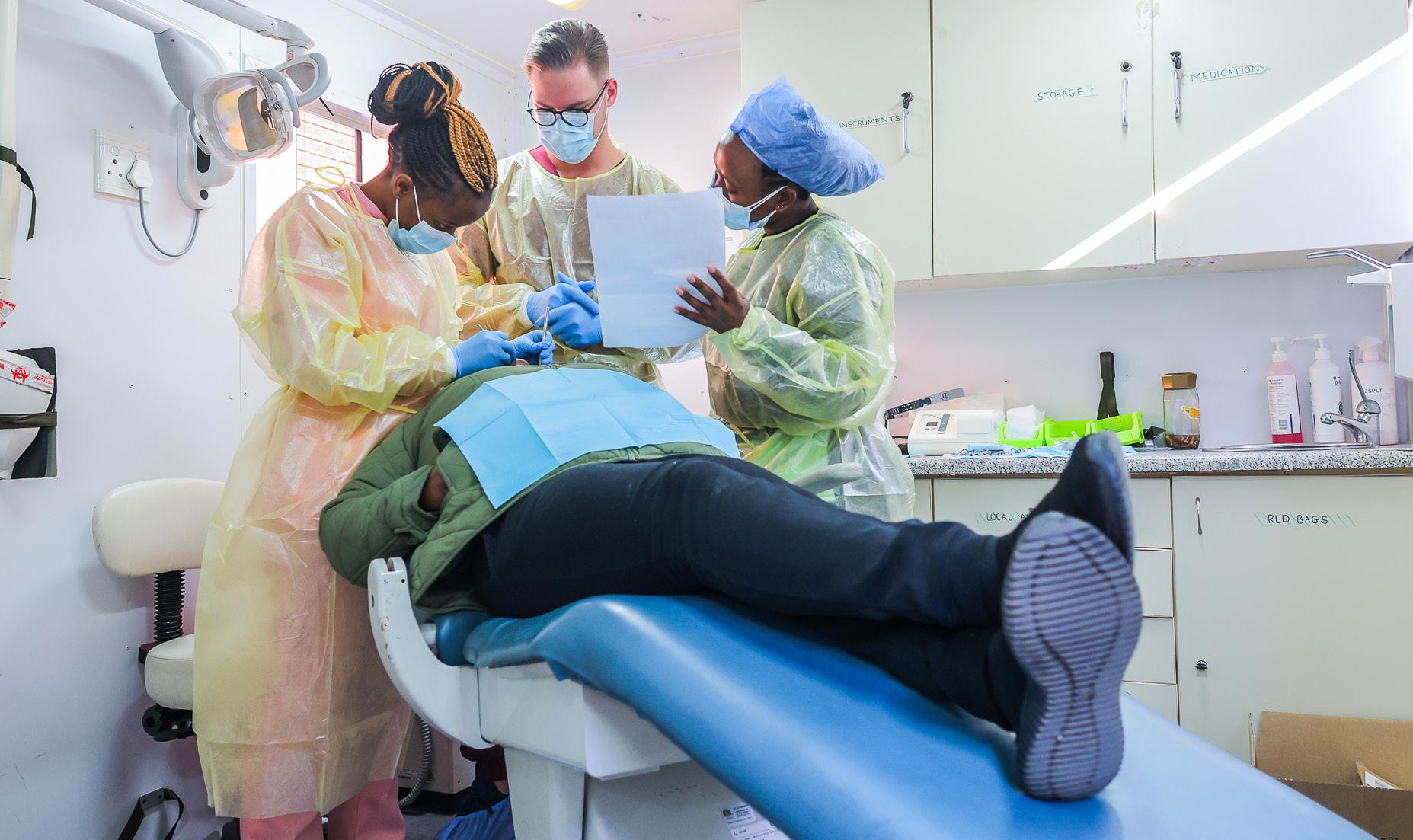
The journey to become a medical practitioner is challenging on multiple levels, but how prepared are young doctors for internship and practice?
TAMSIN
Trepidation. For many young medical practitioners, this is the word that most accurately describes how they feel about their internships, the two years in which they immerse themselves into their profession and actually get to practise. It is a sense of unease felt by many students, stemming from the feeling that they do not have the skills that they need to thrive in this very demanding role.
“We asked students who had finished Med School to record audio diaries for us and we found that in some ways our graduates are very well prepared, such as with clinical knowledge and skills. They’re good at safely looking after a patient from day one of their internship,” explains Stuart Redvers Pattinson, from the Unit for Undergraduate Medical Education in the Wits School of Clinical Medicine. “However, where they really struggle is with the skills that they need to cope with an incredibly demanding role.”
The intern’s role, according to one research participant, is the “engine room” of the hospital. They need to deal with massive workloads in resource-constrained environments that require skills beyond just clinical knowledge. They need efficiency, organisational acumen and they need to be proactive and adaptable.
“Patients are in good hands,” says Pattinson. “The trust element comes down to building confidence in the interns’ ability to learn these additional skills and to develop their practical know-how.”
The issue of preparedness to practise has been something that universities have been grappling with for some time. There’s a growing recognition that it is important to look beyond knowledge and competency.
“From a postgraduate perspective, there’s growing recognition both locally and internationally of the importance of more workplace-based training and assessment,” says Professor Richard Cooke from the Department of Family Medicine in the Wits School of Clinical Medicine. “Originally, the work came out of Utrecht University under the leadership of Ollie ten Cate and a concept called entrustability in medical education. It has focused on the curriculum at the postgraduate level and factors like the final exam and how this impacts on a student’s future.”
The exam is incredibly high stakes but has been designed to be as practical as possible – it’s a once off exam, scheduled for a specific date and all the colleges attend. However, there has been a question for many years that this form of examination isn’t entirely equitable.
“You could have a bad day after four years of postgraduate training and fail the exam and that isn’t fair on the student,” Cooke says. “There is also a significant power differential between your inexperienced registrar and the examining profession, an imbalance made even more challenging in South Africa. We need to be more cognisant of how many factors can impact this
high-stakes exam. We need to ask what alternatives there are and how we can better align the training and assessment of postgraduate students, and how we can pull these learnings back into the undergraduate space.”
There is a growing movement towards multiple low-stakes assessments with feedback, each one contributing a small component to the overall assessment of competence, a form of entrustability.
“IN ORDER TO TRUST THE STUDENT, WE NEED TO GIVE THEM CLINICAL EXPERIENCE EARLY ON.”
“Much of our time is focused on preparing students to pass these assessments and their own energy is focused on passing them, but what we need is to really trust them to be part of the team so they can learn how to do the job that they’re going to be responsible for doing,” says Pattinson. “In order to trust the student, we need to give them clinical experience early on so that by the time they are senior students, they can really get involved in care.”
Building this trust comes down to getting to know the students and what they are capable of achieving because then you can trust them to be more involved with patient care. “One of the biggest things to come out of my research is that students are seen as separate to the clinical team when we need to trust them to become part of it. As soon as students feel useful, they feel motivated to learn,” he says.
Solving this trust issue in the future comes down to ensuring that students enter the clinical space early on in their degree with more longitudinal placements. That way students can develop a relationship with the team and the team can see how they develop over time, allowing each side to build trust.
“If you observe someone in context, you can accurately assess their competence or interest ability,” says Cooke. “We’ve taken all the knowledge and skills that we think a registrar needs for a postgraduate and we’ve grouped them under entrustable professional activities, or units of professional practice. These give us clarity around what we need to be entrustable and this, when added to small, summative assessments, gives us a richer picture of a postgraduate’s ability. If we get it right, they will be significantly more prepared for practice.”
This trust changes trepidation to confidence, especially if systems adapt to give students more opportunities to immerse themselves in the clinical space from very early on in their education.
“We need more longitudinal placements. If we want to build trust within teams, we need less emphasis on high-stakes assessments, so students don’t see study as the reward,” concludes Pattinson. “We need to reward medical expertise and involvement and their ability to apply their knowledge. This way, trust is felt both by the teams embracing students because they can contribute from the outset, and by students who know they can be more of an asset than a burden.” C
The Life Esidimeni tragedy is perhaps the starkest recent example of what happens when cost-saving is prioritised over quality of life. During 2016-2017, at least 144 people living with severe mental health conditions died after being transferred from specialised Life Esidimeni care facilities (such as the Waverley Care Centre) to unlicensed non-governmental organisations.
A formal inquest concluded that the deaths were caused by negligence and systemic failures within the Gauteng Department of Health. In April 2026, the National Prosecuting Authority confirmed that criminal prosecutions will follow, nearly a decade after the first patients died.
What many do not know is that a group of 47 Wits Occupational Therapy students entering their final year of study were brave enough to submit a formal letter to senior Gauteng health authorities on 18 January 2016.
These students advocated against the planned closure of the Waverley Care Centre in Germiston and the proposed transfer of long-term psychiatric patients to community care settings. Since their first year as undergraduates, the students had spent time treating the residents at the Waverley Care Centre. The students understood not only the value of the occupational therapy that the residents received but also the importance of the structure, routine, familiarity, independence and interprofessional collaborative care offered by the Centre. This is where the residents had built a meaningful and dignified life.
In their formal letter to the Gauteng health authorities, the students questioned whether these vulnerable people could safely absorb such abrupt transition to under-resourced, ill-prepared and unskilled community care, where just the provision of medication had been deemed sufficient. The students were also worried about potential abuse, as is often the case when people are not experienced at caring for those with mental health conditions.
Their letter was ignored, prompting a meeting between the Head of the Wits School of Therapeutic Sciences, the Heads of the Wits Departments of Occupational Therapy, Nursing, and Psychiatry, and Gauteng Health in April 2016.
The warnings expressed in the students’ letter and at the meeting went unheeded. The Life Esidimeni tragedy is the result.
What we need to ask now is: how do we build a listening culture into our higher education settings where the voices of students are valued and trusted? To do this we need to give students the platforms to speak safety, actively look for threads within student reflective journals and case reports, tune into the informal corridor conversations and then, as leaders, support their stance in the same way that the Wits Occupational Therapy Department supported the class of 2016.
Adjunct Professor Paula Barnard-Ashton is the Assistant Dean: Teaching, Learning and Undergraduate Affairs in the Faculty of Health Sciences.
Body battery low
From step counts to sleep scores, wearable devices are changing how we think about our health, but can we trust the data when it begins to override our own instincts?
SAMANTHA HERBST PRAKASIT KHUANSUWAN
Having only become commercially available less than 20 years ago, wearable technology has quickly become part of modern life. Smartwatches, fitness trackers and biometric rings now help millions of people count steps, track sleep and monitor heart rate and VO2max.
These devices promise unprecedented insight into our bodies, translating movement, heart rate and recovery into measurable health data. However, as we become increasingly reliant on them, an important question emerges – are wearables helping us understand our bodies better or teaching us to trust data over instinct?
For Dr Dale Esliger, Professor of Digital Health Technologies at Loughborough University – a key academic collaborator in the development of research initiatives at the Wits Brian and Dorothy Zylstra Sports Complex – trust is central to the success of wearable technology.
He notes that wearables help people determine whether they are meeting their physical activity goals, which is why consumers want to know that the metrics are valid and that they can trust the tool that they are wearing.
“If they lose faith in that validity, that fitness tracker ends up in the sock drawer and so do our interventions as healthcare professionals,” says Esliger.
Esliger believes that wearable devices should be subjected to the same scrutiny as any instrument used to inform health decisions.
"Every time we purchase a new piece of technology, we must kick the tyres," he says. "You wouldn't buy a highpowered medical MRI scanner for your new building and not want to know the validity of that device. Yet we grab wearables off the shelf, research-grade or consumer ones, and we put them on, expecting the [manufacturer] to follow through with what they promised.”
Esliger acknowledges, however, that while scientific rigour remains essential, perfect accuracy is not always the point when it comes to encouraging people to move more.
Professor Jon Patricios, Director of Wits Sport and Health (WiSH) last year published a study showing that as little as 60 minutes of weekly exercise before a cancer diagnosis reduced the risk of disease progression by 27% and death by 47%.
Although wearables were used in the research, Patricios emphasises that people do not need a smartwatch to reap the benefits of regular moderate exercise.
"The low levels of exercise required for at least some benefits are easily achievable by anyone. We should all be encouraged to use exercise as medicine!"
Professor Georgia Torres, Head of the Department of Exercise Science and Sports Medicine at Wits, who was also part of Patricios’ research group, agrees. She is less concerned with whether wearable devices produce perfectly accurate numbers than whether they help people become more active.
"It's not about the actual figure, it's about understanding the trend. Regardless of the value, if the intervention inspired by the wearable device helps to increase physical activity, that's what matters," says Torres.
Increasingly, wearable technologies are used by Wits researchers to understand physical activity patterns beyond controlled research settings.
"What happens outside the three hours that we are with a patient is going to influence the outcomes of what we are doing much more than what we do in the gym or the lab," says Torres.
According to Torres, the real power of wearable devices lies in the insight that they provide into the factors that influence movement data outside the research setting.
One factor could, for example, be a largely sedentary lifestyle that counteracts the benefits of vigorous or moderate exercise. Alternatively, a more active lifestyle motivated by a daily step or movement goal, prompted by a wearable device, reveals more about movement trends than what researchers would identify within their more defined research parameters.
Wearable technology does not just measure behaviour – it can shape it. It may encourage healthier habits but it can also negatively influence behaviour when users begin trusting data more than their own internal cues, bypassing interoception.
"My problem with sleep devices, for instance, is that they can become a behavioural barrier. You can wake up feeling refreshed and rejuvenated but if your smartwatch says you haven't slept well, your brain will convince you that you haven't slept well," says Torres.
Patricios agrees: "There is no one sleep pattern that is best for everyone. Some thrive more on deep sleep, others on REM," he says, adding that everyone's sleep requirements vary. Wearables can therefore become both motivators and psychological barriers, particularly when users begin trusting algorithms more than their own lived experience.
“THE GREATEST VALUE OF WEARABLE DEVICES MAY NOT LIE IN PRODUCING INCREASINGLY SOPHISTICATED HEALTH METRICS BUT IN HELPING MORE PEOPLE MAKE HEALTHIER CHOICES.”
For Torres, consumer wearables should be viewed as tools rather than absolute truths. The challenge is not making wearables more sophisticated but making them more accessible.
Because wearable devices remain beyond the financial reach of many South Africans, she believes that smartphones may become the most effective behaviour-change tool.
"It's good for research to understand things, but you have to use simpler technology to incentivise those who are economically disadvantaged and I think that smartphones are going to be one of our access points."
Ultimately, the greatest value of wearable devices may not lie in producing increasingly sophisticated health metrics but in helping more people make healthier choices.
Moreover, in a country where physical inactivity remains a major public health concern, simplicity may be more powerful than sophistication.
"You don't want to get too technical when it comes to encouraging inactive people to move," says Torres. "Wearable technology should be a tool that nudges users in the right direction." C
Within Wits University’s Department of Exercise Science and Sports Medicine, researchers, including Professor Georgia Torres, Professor Philippe Gradidge and Dr Merling Phaswana have been using wearable technologies and accelerometry data to study physical activity patterns in workplaces, communities and during health interventions.
This type of work will be expanded through the new Wits Brian and Dorothy Zylstra Sports Complex, where wearable technology and its AI-enabled platforms will allow an interdisciplinary medical team – including sports scientists, clinicians, biokineticists and physiotherapists – to look at programmes more holistically.
“It’ll give us a more holistic look at the data, as opposed to one unit’s point of view, which is a research gap that needs to be addressed,” says Professor Georgia Torres, who is also the Chief Operating Officer of the Wits Brain and Dorothy Zylstra Sports Complex.
Not all clinical trials are vaccine trials, but it is mistrust around vaccines that threatens public health, demanding that trust in them be cultivated.
SARAH HUDLESTON
Clinical trials encompass a considerable range of medical research, all designed to test new health interventions on humans.
South African clinical trials, including vaccines, adhere to the highest ethical standards, say Wits scientists Professor Janan Dietrich, Director of the Bio-Behavioural Research Division of the Perinatal HIV Research Unit and Professor Sinead Delany-Moretlwe, both veterans of running clinical trials. Trials are regulated by the South African Health Products Regulatory Authority via the South African Good Clinical Practice Guidelines, together with the National Health Act and Medicines and Related Substances Act. Although ‘vaccine hesitancy’ is not new, it was during the Covid-19 pandemic that the online vaccination furore exploded.
Driven by social media, public debate over trust in vaccines intensified during the pandemic. Information, both negative and positive, often lacking credible research or expert validation, spread quickly outside traditional channels. The pandemic was particularly damaging to trust levels, as it involved inconsistent public health messaging, emergency vaccine approvals and visible disagreements between experts. Public perception suggested that institutions were not transparent enough and that vaccine side effects were being minimised and not communicated honestly.
Post-pandemic narratives around the dangers of vaccinations for some population groups did not help and overall distrust was reflected in significant declines globally, including in South Africa, in childhood vaccines, as reported by UNICEF.
Dietrich conducted a study on Covid vaccine acceptance and more recently headed the Bambisana study on the flu vaccine. She believes that the key to vaccine acceptance is both in the trust in health workers as well as in South Africa’s strict ethical guidelines when it comes to vaccine trials.
“During Covid-19, there was a high level of vaccine distrust amongst health workers, which influenced patient attitudes,” says Dietrich.
The Bambisana study set up four trial groups - one had a social media campaign only, another group had an in-person community engagement approach, a third group received both online and in-person engagement, which included the vaccine, and the fourth was the control group.
“What was surprising was that the control group, which had no real intervention apart from interaction with healthcare workers in clinics, saw an exponentially increased uptake of the vaccine,” says Dietrich. “All this proved that the key to trusting vaccines is people’s trust in their healthcare workers.”
Delany-Moretlwe, Research Director at the Wits Reproductive Health and HIV Research Institute says, “What we know about vaccines is that there is this phenomenon of mistrust. There have been many examples, particularly since the emergence of Covid-19, where people have felt that the health system has not been responsive to their needs. There will probably always be groups of people who mistrust government and to some extent technologies”.
She believes that the Covid-19 era amplified mistrust in government but vaccine-specific scepticism already existed.
“With increased access to social media and other sources of
“GIVEN THAT TRUST IS A KEY PREDICTOR FOR VACCINE HESITANCY, BUILDING TRUST IS ESSENTIAL FOR VACCINE PROGRAMME SUCCESS.”
information, people may interpret things differently and they may hold fundamental beliefs that cannot easily be shifted.”
A case in point is when the Human Papillomavirus (HPV) vaccination programme was introduced into South Africa in 2014. “We detected a social media campaign spreading false information about the safety of the vaccines. While the Health Department ran a traditional media campaign, which was helpful, there was no comparable social media information campaign.”
Delany-Moretlwe ran a study to evaluate the impact of the HPV vaccine, aimed at preventing the later development of cervical cancer, which was administered to primary school girls in Grades 4 and 5.
“We measured infection rates and were gratified to see that the programme appeared to have reduced HPV infection by 80% even among those who were not vaccinated, which is what we term ‘herd protection’. This shows that investment in vaccines can have significant public health impacts and illustrates the importance of building trust in vaccines.”
The success of the HPV vaccine – despite all the disinformation – reinforces Delany-Moretlwe’s urgent advocacy of vaccination to protect public health. “In the US, there have been measles outbreaks because large sections of the population have stopped vaccinating.”
The measles situation in Africa is equally alarming. A 2025 article by Wits bioethicists Subeshini Pillay, Cornelius Ewuoso and Lizeka Tandwa, illustrated a marked increase in measles outbreaks reported in some African countries (close to 400% between 2021 and 2022). In South Africa, although only 285 measles infections were recorded between 2015 and 2020, there were some 1 067 cases reported between 2022 and 2023.
Tandwa says that the latest stats show that the rate of measles infection continues to rise in South Africa, with 2 012 laboratory confirmed cases between December 2025 and 14 June 2026, with the Western Cape reporting the highest number of new cases.
Tandwa says, “Given that trust is a key predictor for vaccine hesitancy, building trust is essential for vaccine programme success”. C
Wits scientists volunteer for the Covid-19 vaccine trials in July 2020.
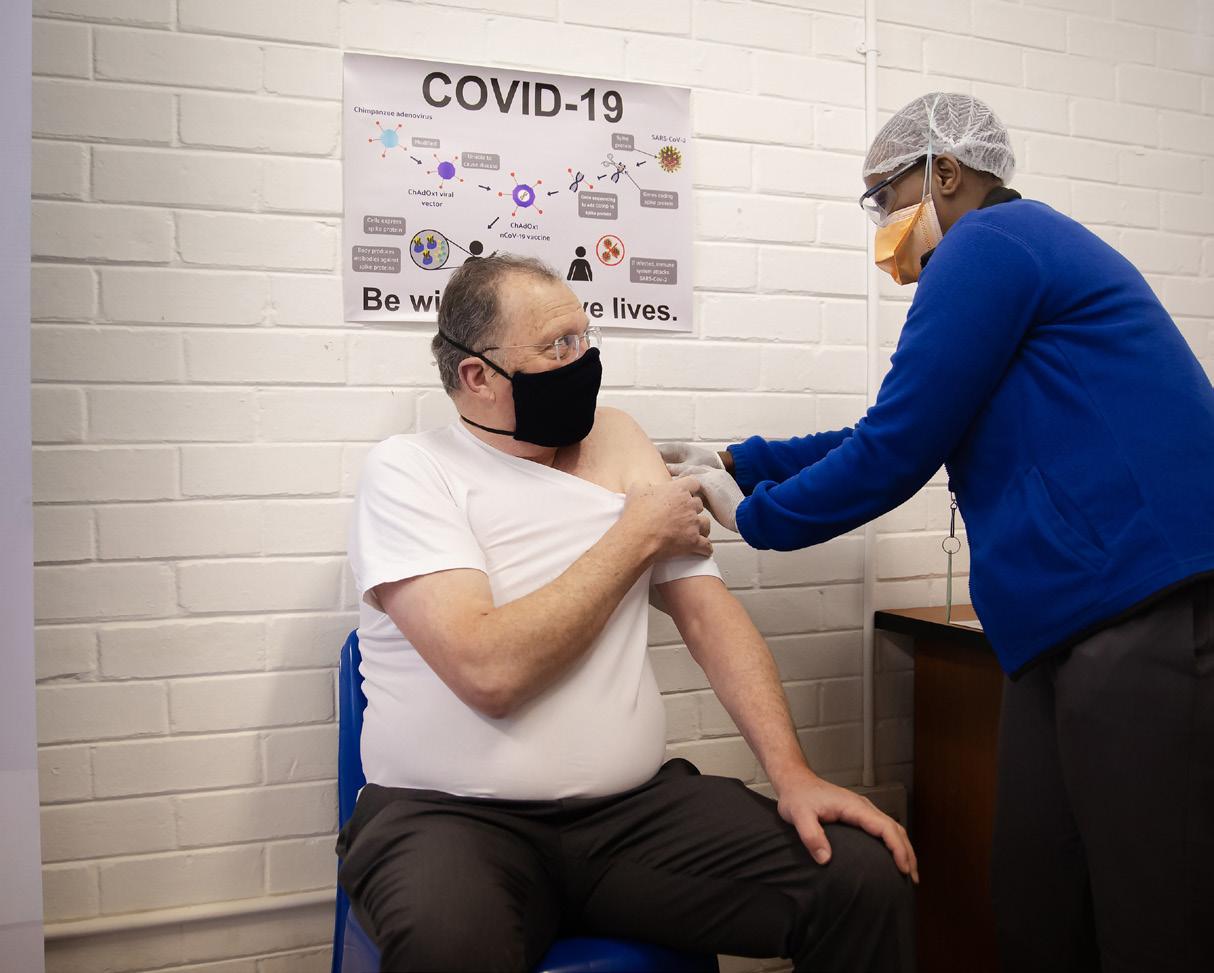
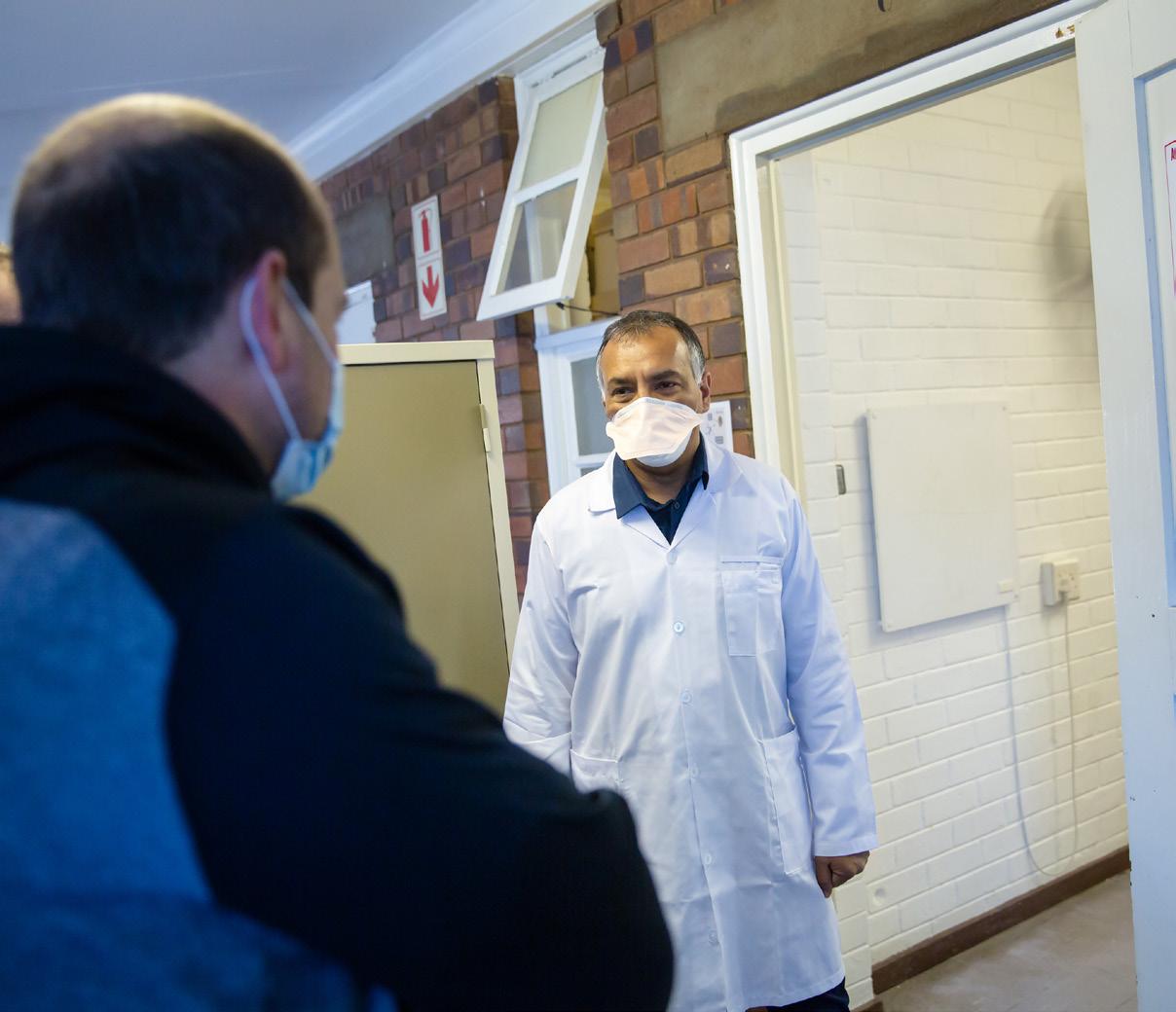
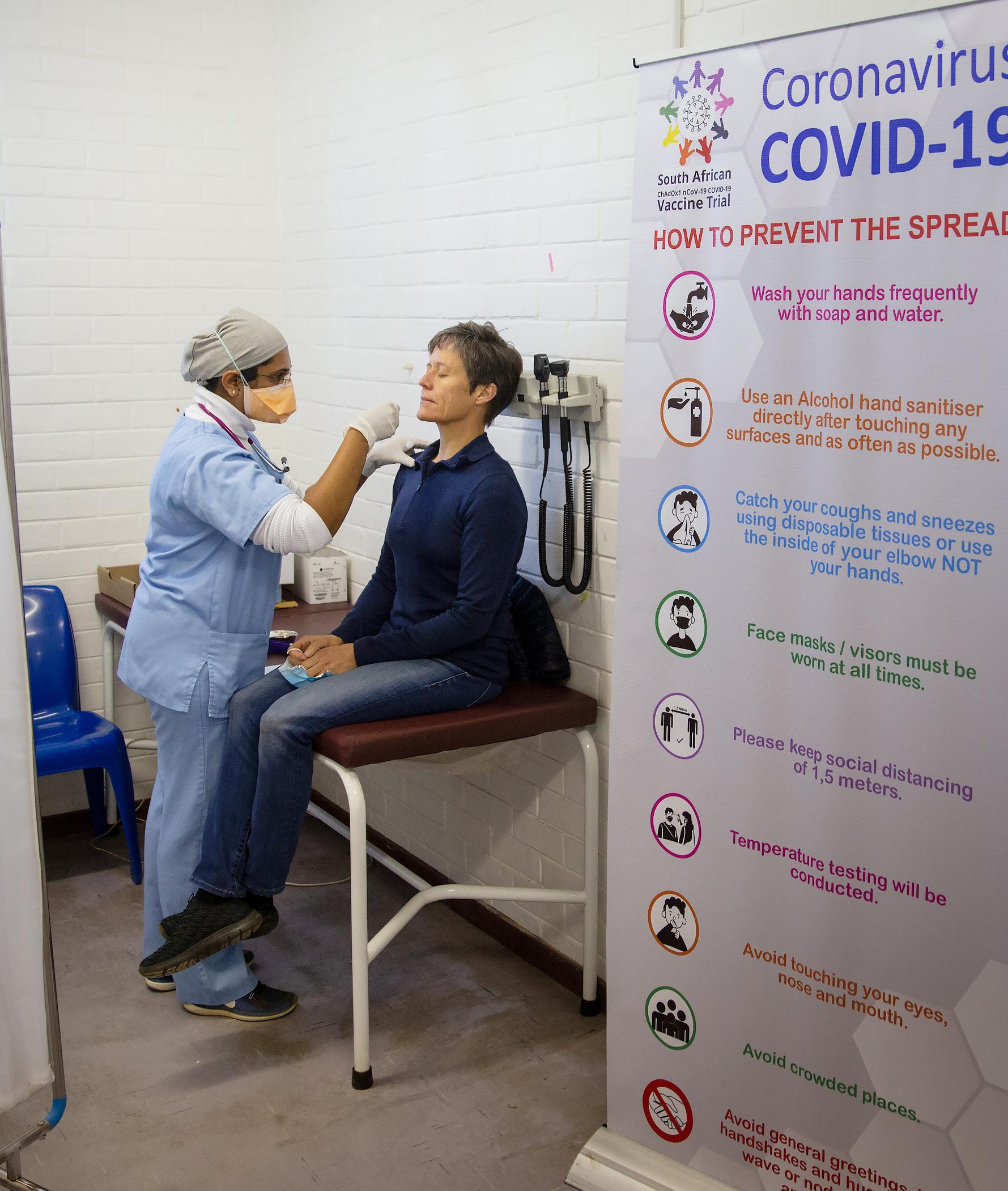

Chemical pathologist Dr Siyabonga Khoza talks about medicine’s shifting paths, humanising data, and fulfilling a life-long prophecy.
LEANNE RENCKEN CHANTÉ SCHATZ
Dr Siyabonga Khoza’s academic and professional journey spans nearly 30 years and in this time, he has realised that what matters most between the laboratory bench and the often-unseen patient waiting for answers, is trust. As a chemical pathologist, he is a great believer in humanising data, driven by a constant awareness that a metric represents a living person.
This empathy mirrors how he reflects on his own life - he is both funny and philosophical when describing his medical career’s shifting course, remaining unfazed and resilient in the face of financial and institutional hurdles. Instead of looking back with a sense of what might have been, he views each unexpected turn as vital to his identity.
“I came to understand that growth is not uniform and each stage of my journey has added something essential to who I am as a scientist and a clinician,” he says. “Maintaining trust in my goal was mainly about focusing on purpose rather than the pace.”
It turns out that a wise family member inadvertently set him up for a career in academia. Long before he started his PhD, his identity document bore the prophetic first name: Professor. Given to him by his paternal grandfather, the name helped him stand out from the many classmates who shared his common isiZulu name. During medical training, however, he switched to Siyabonga to avoid creating confusion in the academic space, but the prophecy, while weighty, was well on the way to being realised.
There was a lot of pressure in having to live up to the name, he explains: “It’s all good now. I’m used to facing pressure, so
it doesn’t really affect me. In fact, I now embrace the name.”
His unflappable nature was forged in rural KwaZulu-Natal.
Raised by his grandparents, he only defaulted to science at school after eliminating all the subjects he disliked. Yet, he was an enquirer from day one – levelling questions at everyone about everything, from deconstructing traditional eating customs to seeking stories about his grandfather’s five wives. His curiosity was actively encouraged within a home where success was defined by the number of cattle raised, stability, and the kindness inherent in communal living.
“The idea of being poor didn’t really exist in the early years of my life because we had plenty. Suffering was never left solely to the sufferer in the community,” he explains. Neighbours would rally to ensure that someone facing loss or starting out could build back or build up their livelihood with what the community could provide.
While many of his friends and peers settled into this life, Khoza completed a Bachelor of Science at the University of Zululand. However, an internal calling towards service led him to Wits University. Given that he already held a BSc degree, funding structures barred him from applying for the standard bursaries. Undeterred, he spent six years working weekends at The Sweat Shop, an institution among the Johannesburg running community, completely self-funding his medical tuition.
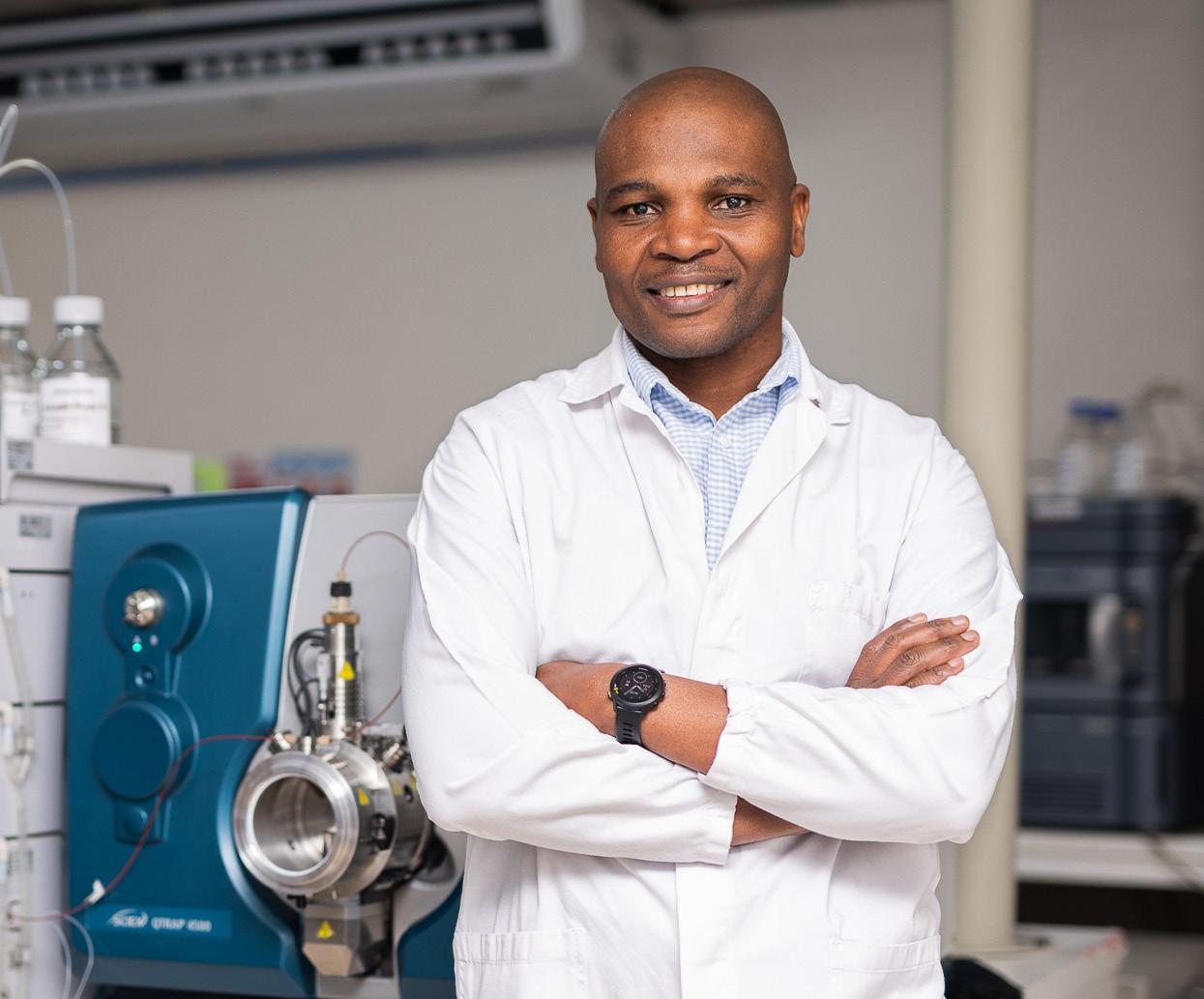
The retail floor became an unlikely clinical training ground, teaching him time allocation, financial discipline and how to leave personal anxieties at the door in order to manage other people’s emotions.
"I developed a need to trust myself – going into any exam, I knew I had to pass," he shares. "It was non-negotiable. When you are paying for yourself, you cannot afford to pay twice for the same level."
Balancing work alongside medical rotations paid off. After qualifying and completing community service, his pragmatism and unwavering momentum fuelled a rapid ascent to his appointment as Head of Department, all while undertaking his doctoral research. Now, within his department, he strives to ensure that the laboratory doesn't lose its human face. By bringing his team into the ward to address clinical complaints collectively, he exposes them directly to human suffering and the empathic response.
"Every medical sample represents a person," Khoza notes. "It's not just a sample and the result is not just a result. Our work has a direct impact on how diagnoses are made, how treatments are chosen, and on patients’ final outcomes."
This philosophy anchors his doctoral research, completed in January 2026, which establishes localised early-detection
markers for kidney disease. Systems relying on broad baseline references often flag damage only when an individual has lost roughly half their renal function – a threshold Khoza notes is already too late. To expand public health systems, he co-developed a national diabetes data dashboard allowing healthcare administrators to track records via a live visual map and to deploy resources precisely where they are needed most.
To balance his high-stakes responsibilities, Dr Khoza spends quality time with his family. “My wife is, thank God, not an academic,” he says, joking that one in the family is more than enough. He also turns to endurance running – a habit picked up during his years at The Sweat Shop – when he needs a reset.
"Running a marathon means facing constant ups and downs. There are moments where you need to strengthen your mind, test your limits and overcome physical pain to reach the finish line," he says.
With his graduation approaching and his associate professorship on track, Khoza does not view his journey as an extraordinary feat but rather as a set of deliberate, practical steps needed to arrive at a particular destination. It is the same pragmatic approach he takes when training for the Comrades Marathon. Once the race is over and he has achieved his purpose, he reminds himself: “You know, I can pretty much do anything that I want to do”. C
Craftivists are handcrafting resistance in a world of mixed realities but perhaps both actual and AI-generated stitches are authentic in their own realities?
ROZEN STITCHED TOGETHER BY STACEY ROZEN
Trust is the foundational structure of crochet held in its relational threads. Stitches and rows trust each other, yarn trusts hooks, hands trust knowledge. Crochet fabric holds because trusted encounters echo the Old Norse word “traust” meaning “hold”.
But there is an identity crisis at the confluence of two disparate crochet stitches, a handmade stitch and artificially generated notion.
“I was coded in a millisecond,” says the stitch in the crocheted digital artwork a granddaughter shows her Granny. “This isn’t a speed competition,” replies a stitch in Granny’s thrusted hands. “You’re invading my territory. Who are you?”
The Infocalypse is playing imitation games. Machines deceive humans as artificial intelligence generates deepfake optical illusions Hyper-realistic digital art is indistinguishable from real-life as bots masquerade as crocheters. Hallucinations are untrustworthy.
The crochet texture looks familiar, yet Granny intuitively feels suspicious. Can she believe her eyes? Her granddaughter prompts another.
An artificially generated stitch is not what it appears to be at first sight. There is no handmade stitch embodied within the synthetic pseudo fabric, just a computational pattern. Seeing is no longer believing. Betrayal rips the seams between human and machine, trustor and trustee.
“You’re not fabric,” the crochet stitch says.“I never claimed to be,” confesses the notion stitch. As a cunning spy, AI knows what crochet looks like without ever having held a hook and continues watching Granny’s every move without consent. A thief is always ready to scrape and simulate. Trickery won’t be spottable as AI gets smarter.
The site of knowledge moves sensory perception from (mis) perceived optics of the manipulated eye to tactile haptics of the trusted hand.
“The method of making doesn’t matter,” Granny ponders. That fact needles her. “Agreed,” say both stitches
simultaneously. “You don’t know the feel of the hand that made me,” says the crochet stitch. The fake stitch wishes it did. Perhaps, it will soon.
Deception erodes the ecosystem of trust that craftivism communities depend on. Subversive hooks resist the presence of artificial intelligence. Grannies, Gen Xers and Millennials are all craftivists handcrafting resistance in a world of mixed realities.
“I dropped a stitch,” the AI says. “We all do,” says Granny.
“We trust the process and frog it. Can you?”
“I’m learning,” replies the AI. Granny’s worried that against her will, she is AI’s trainer.
“We can only diffuse this at the speed of trust, and trust is currently in short supply,” asserts Dario Amodei of Anthropic.
We must stop lazily forgetting our human capacity. AI-thenticity keeps humans-in-the-loop to discover glitches and verify authorship. We can learn visual literacy and calibrate trust if we reflexively fact-check.
“Truce?” asks the notion. “Truce, I know who you are now,” replies the crochet stitch. “I’m stalking you as trust is relative,” notion argues. As the moderator, Granny’s eyes stop deceiving her. “Both stitches are authentic in their own realities,” she concludes.
Disruption invites innovation and imitation pushes boundaries of creative ideation. The notion stitch is a valued ingredient in digital art, offering enchantment and alchemy.
“We humans have to trust the untrustworthy sometimes, feeling safe to be deeply moved by whimsy,” Granny gently advises.
Imitating is crucial for crochet’s livelihood as skills are learnt by mimicking an experienced artisan. Crocheters trust each other.
“Human touch is the differentiator. Our trebles will outlive digital imitations no matter how enticing the artistry is.”
Granny’s wisdom offers us hope for the future. C
STACEY ROZEN
As an interdisciplinary transmedia storyteller, Stacey Rozen works across narrative design, visual arts, handcrafts, artivism and technology to create immersive multi-platform experiences. Her research considers the inter-threading of craftivism and artificial intelligence through the fibre artistry of crochet. She investigates the implications for the humanmachine relationship asking what becomes of embodied selfhood when disembodied synthetic imitations displace lived, material knowledge. She holds a Master of Arts in Applied Drama and is currently a PhD candidate in Digital Arts at Wits.
Trust in the corporate world is an absolute imperative. The global economy relies on it. Yet, large corporations are often extremely conservative in how they manage crises. Schalk Mouton asked Jeff Mosala, Senior Lecturer in the Wits School of Accountancy with a strong financial accounting and ethics background, how corporates hinder clients’ trust.
Trust plays a crucial role in human interactions and relationships. It is often defined as a confident expectation that a person will act in ways that consider another’s welfare and will honour obligations. This expectation supports coordination in interdependent relationships but also increases vulnerability. It allows individuals to act in the face of uncertainty and manage risk. While trust is the willingness to depend on another party, trustworthiness refers to the perceived ability, integrity and benevolence of that party. However, trust is a complex phenomenon that spans disciplines and encompasses both dispositional traits and situational states that evolve over time.
Building trust into corporate structures fosters strong stakeholder relationships, long-term success and organisational resilience. It underpins effective stakeholder engagement by ensuring that stakeholders feel valued, informed and confident in the organisation. In e-commerce, trust is built through secure transactions, transparent communication and reliable service delivery, which encourages repeat business and customer retention. This is essential for sustained profitability and reputation. In addition, trustworthy corporate governance practices foster accountability and credibility.
Corporate trust-building is multidimensional, requiring tailored strategies for different stakeholder groups and contexts. Reputation management, behavioural consistency and transparent communication are foundational but must be adapted to sectoral and cultural nuances, as trust components vary in importance across contexts. For instance, collectivist cultures emphasise relational trust, whereas individualist cultures focus on competence and privacy, and trust may evolve from calculative to cognitive to affective forms.
In South Africa, large financial institutions in the banking sector and key public bodies have suffered attacks in which criminal actors accessed client or citizen data and, in some cases, demanded a ransom to prevent its public release. In several instances, customers were informed only in broad terms that a “security incident” had occurred, with limited clarity about the nature and extent of the breach.
Internationally, breaches affecting cloud and database environments across the broader enterprise-software and data-management industry have compromised large volumes of customer information. Here, too, public communication has often been carefully managed, with limited disclosure on root causes, the full scope of the data exposed and the long-term implications for affected users.
tampering or liability issues, which damage perceived integrity, competence and benevolence. The Trust Erosion Framework is like soil erosion, proceeding through detachment (initial breach), transportation (spread of distrust) and deposition (entrenchment of distrust). Perceived hypocrisy, unethical behaviours and lack of transparency initiate and sustain trust erosion.
The result would likely be a profound and multifaceted crisis.
Economically, credit markets would freeze, businesses could face severe contraction and long-term structural downturns might occur, such as those seen in the 2007-2009 financial crisis, among others.
Politically, the collapse would fuel populism, protectionism and a breakdown of trust in governmental and regulatory institutions.
Socially, widespread uncertainty and instability would erode both interpersonal and institutional trust, necessitating comprehensive strategies encompassing regulatory reforms, leadership changes and robust resilience measures to eventually restore stakeholder confidence.
Past collapses including the panic of 1907 exposed banking failures and in the United States, reaction included the enactment of the Sarbanes-Oxley Act and post-2008 reforms, including Basel III (a set of international banking regulations), the Financial Stability Oversight Council and improvements to asset management regulations.
Across both the South African and global contexts, a common pattern is emerging. Institutions respond in ways that prioritise damage control and legal compliance over proactive, detailed disclosure. Many organisations attempt to strike a balance between portraying themselves as open and trustworthy and using information transparency to attract customers, with the potential risk of losing customers due to negative perceptions associated with certain disclosures. The impact of negative incidents on organisations includes financial losses, regulatory risk and reputational damage.
Yet customers maintain their relationships with the same organisation, rarely terminating their accounts - why?
Existing research, although largely focused on various dimensions of product and price transparency, shows that excessive communication about data disclosure practices may discourage customers. This may be because consumers do not wish to be constantly reminded of the potential misuse of their personal information as they may already be subconsciously aware of such risks.
In addition, consumers with strong emotional ties to a brand are more likely to overlook corporate misconduct. Their trust is influenced by how they attribute responsibility for crises and by their assessment of the legitimacy of corporate actions, which are embedded in social networks. These structures can either buffer against or amplify trust erosion.
However, be wary: over time, as per the Trust Erosion Framework, mistrust could have already gone way beyond the “initial breach” and is now deeply entrenched, requiring significant evidence of redress before institutional trust is regained. C

As we get older, although our spirit stays stuck in the mind of a teenager, how do we trust our bodies to do the things that keep us young? Schalk Mouton took a tumble to find out the hard way.
We had just finished paddling at Emmarentia
Dam one winter’s morning and were all showered and dressed. My friend was staring at himself in the misted-up mirror.
“Don’t let the old man in!” he shouted at his reflection. Twice. He slapped himself hard in the face, leaving behind a red mark and a smear of Old Spice. Psyched-up, like the minor provincial rugby player he used to be, he squared his shoulders, inhaled deeply and wrapped himself in his handknitted cardigan and mohair scarf.
On his way out, he called over his shoulder: “Anybody coming for tea?” and disappeared into the mist.
It’s a Clint Eastwood line, “Don’t let the old man in!” Direct. Blunt. A command with no apology. Dirty Harry didn’t give a damn about being polite or politically correct. Grow up!
Toughen up!
Come on, Punk. Make my day!
I am not sure whether it’s some weird evolutionary phenomenon or the fact that I grew up in Springs – breathing in a concoction of sulphur and other foul-smelling chemicals that drifted over the town on cold mornings – that stunted the part of my brain that is supposed to tell me that I am a greying
52-year-old middle aged man. I am no longer that immortal 16-year-old that could fall off his bicycle, brush himself off and go straight for the next ramp.
It took a spectacular fall last year to make me realise that if, at my age, you plant your ribs in the wide expanse of Delta Park, the chances are that a couple of million years from now, some Wits Palaeosciences postdoc is likely to dig me up as their next specimen of the primitive, unintelligent life forms that existed back then.
It was a beautiful Friday morning, riding with a mountain bike skills group that my wife and I recently joined – for different reasons. She, responsible and intelligent as she is, joined to learn to ride more safely. I, on the other hand, joined because I am not as chronologically well-adjusted and the crazy 16-year-old daredevil inside me, with no fear or concept of consequence, is always going to push to take the next turn tighter, go downhill faster or jump higher. Without the necessary skills, I won’t survive. It’s that simple.
So, towards the end of our ride, the group was standing atop the Delta Park bike jumps. The rest of our group, cognisant of their actual chronological ages, decided to take the sloping downhill switchbacks that would bring them back down to the carpark – and the post-ride coffee. I, on the other hand, lined up with two much more technical riders, ready to tackle the jumps.
“Don’t do it!” my 52-year-old head said. “Wimp!” tormented my inner 16-year-old. I did it.
Ramp one: Okay, I am not going to ramp this, just roll.
Ramp two: I’m going too fast – I don’t want to jump. Just roll. I brake.
Ramp three: Too much speed. I brake but realise I am braking at dangerous points on the ramp.
Ramp four: It’s freakin’ steep and I am still too fast!
We have all experienced that moment when you are in imminent danger but nothing you can do is going to change the outcome. Time literally slows down and you know that you are in for a world of pain! It’s not a cliché. We’ve all felt it – when you’re out of control on a bike or lose your footing on a hike and are about to fall, or you were stupid enough as a teenager to allow your brothers to tow you on an inflatable tube behind a powerful speedboat, as they tried their best to throw you off.
There is that split second when you are in the air and must come down and there’s nothing you can do to prevent it. And it’s going to hurt a lot!
That moment’s realisation is liberating. It’s probably the only time in our lives that we can see into the future and make absolute peace with what’s going to happen as we travel through time and space.
On ramp four, I didn’t have that moment. I remember pedalling up it and the next thing, I was flat on my back, slowly coming round from a blackout and staring up at a group of dudes in helmets and sunglasses who were bending over me. One of them prodded me carefully with his foot. Another whispered in his ear, “Do you think he’s alive?”
“THAT OLD PERSON CREEPS IN WHEN WE STOP DOING, STOP LEARNING, STOP BEING CURIOUS.”
A crash like that and the subsequent hospital visit makes you want to spit in the face of that 16-year-old. Dirty Harry would have.
My other cycling group rides the spruit at a sedate, easy pace every Sunday, followed by a leisurely coffee before we go home to enjoy the rest of the day. I am known in this group as something of a “cowboy” or a “show-off”, which hurts my sensitive soul.
The reason for my unfairly earned reputation is that I always want to try something new. If there’s a choice of obstacles, I always tackle the harder one. If I can cross a difficult bridge or go around it– the bridge always wins. If I fail, I do it again.
This is my version of shouting at myself in the mirror.
I don’t set out to hurt myself and I definitely don’t have a death wish but I do believe that the real danger lies in when you allow the old man to creep in, not when you reach a certain age, but when you choose not to do something.
Two years ago, just into our fifties, my wife and I went out and bought new bicycles – something my parents would never have dreamed of doing at that age. I also play bass in a rock band comprised of 50-year-olds and I learned a new instrument during Covid. I learnt to fly an aeroplane when I was 50 and I keep learning new aviation related skills.
I love my life at the moment and want to keep going for as long as I can but it’s difficult if you can no longer trust your body to keep up.
But that old person creeps in when we stop doing, stop learning, stop being curious, and, sometimes, stop being silly. Recent research has shown that longevity – in body and mind – has a direct correlation with three things: exercise, diet and social interaction. Leave one of these out, and you start to open the door to the old man.
In our very rushed lives, it’s easy to say that we don’t have time for things like learning a new language, spending time with family or friends, or going for a walk with our dogs.
I recently read a book by a former member of the US Navy Blue Angels aerobatic display team and what struck me was the way in which he chose to re-organise his life.
He stopped saying he didn’t “have time” to do something but rather started saying “it wasn’t a priority”. That completely changed the way he thought and how he “prioritised” his time.
Switching “I didn’t have time to spend time with my wife today”, to “it wasn’t a priority for me to spend time with my wife today” changes the way you view things. Whether it’s choosing to exercise, or not, doing your job, calling your mother, or just spending time with friends, the choices you make, every day, I believe, let that old man sneak in the door –or keep him out.
Come on, Punk. Make my day! C

The histories of Johannesburg and Wits University are inextricably connected. Their relationship over more than a century has been complicated and continues to evolve. For most of the 20th Century, the University was a primary institution for the production of the City’s economic and political elites. In a context of systemic racial segregation, it mainly served the white population, which was reflected in its staff and student populations, reinforcing the idea of the University as an ivory tower.
The University’s relationship with the City’s publics, especially its black majority, was also shaped by an extractivist approach to research. Academics typically perceived the residential, work and social spaces of such communities as sites of field research from which they collected and analysed data with little, if any, reference to the people who were the subjects of their research.
There were always exceptions. For example, for decades medical staff based at the Alexandra Health Clinic contributed to the development of public health in that township and more broadly. From the 1970s, scholars in the Social Sciences began more systematically to partner with trade unions and communities to undertake research and education programmes. Established in 1977, the History Workshop became an important space for this collaborative work, which included oral and popular history projects and the training of History educators.
The Soweto History and Archives Project (SHAP!) is another example of building long-term partnerships with various groups in Johannesburg’s largest township to undertake collaborative research, create community archives and jointly convene workshops. It has already produced new research on theatre, jazz, sports, politics and the environment with key participants in these fields. Such partnerships are premised on the core principle of public history, namely, to co-produce historical knowledge. It involves scholars, postgraduate students, community historians and archivists, museums, artists and social justice activists, some of whom are also part of a network of public historians and community archivists across the continent.
Through this work, the division between the University and City is not only blurred but could be reconfigured. Research activities and outputs become subjects of meaningful conversations, rather than simply determined in the rooms of a disconnected ivory tower.
Today the City faces unprecedented crises, which will in turn have lasting effects on the University. Engaging in historical research and education with people can both reveal the place’s rich and complex pasts and contribute to opening pathways for a just and equitable Johannesburg. C
Professor Noor Nieftagodien is the Head of the History Workshop at Wits University