The magazine for ALUMNI and friends of the University of the Witwatersrand
What’s your move?
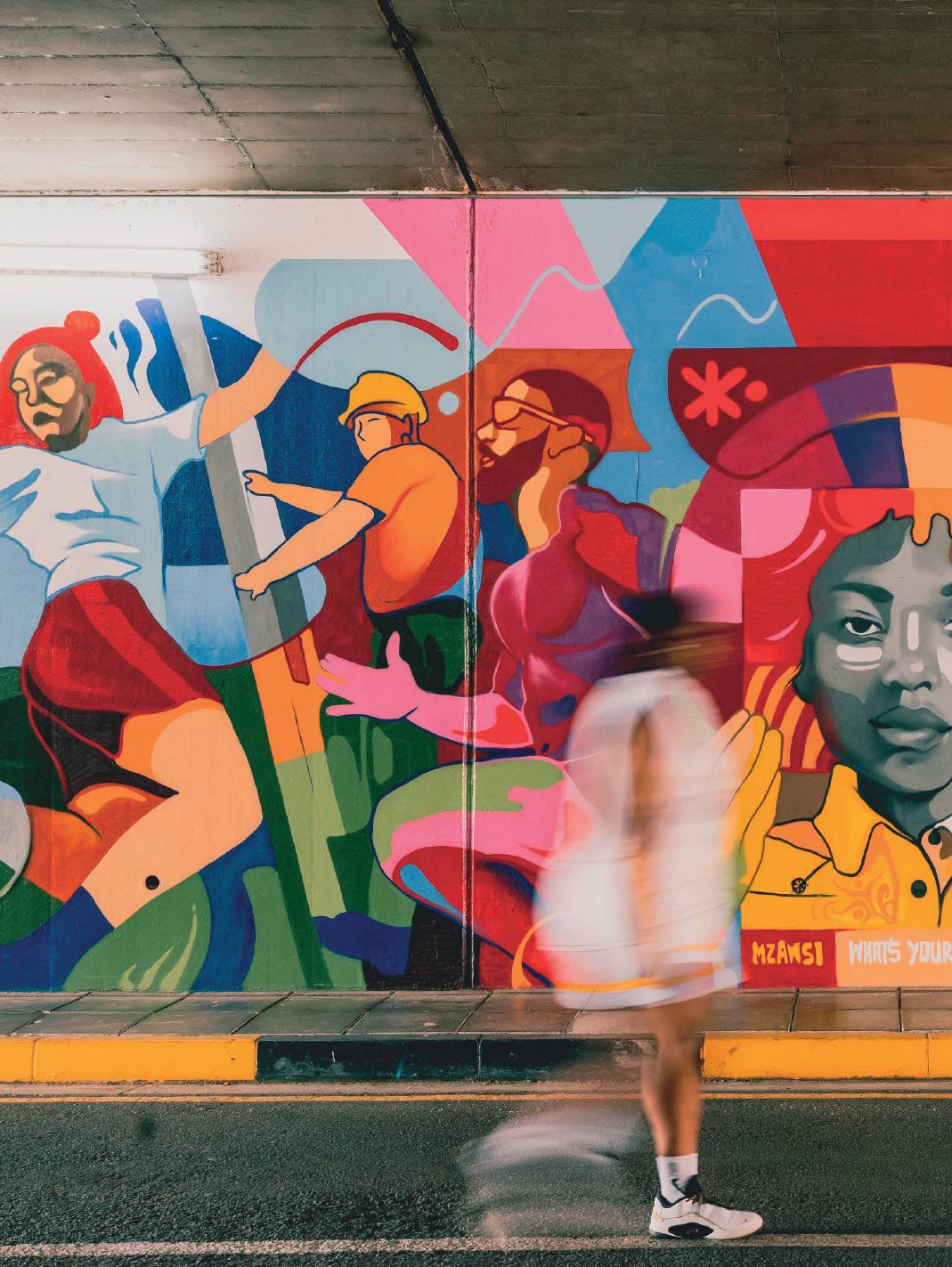
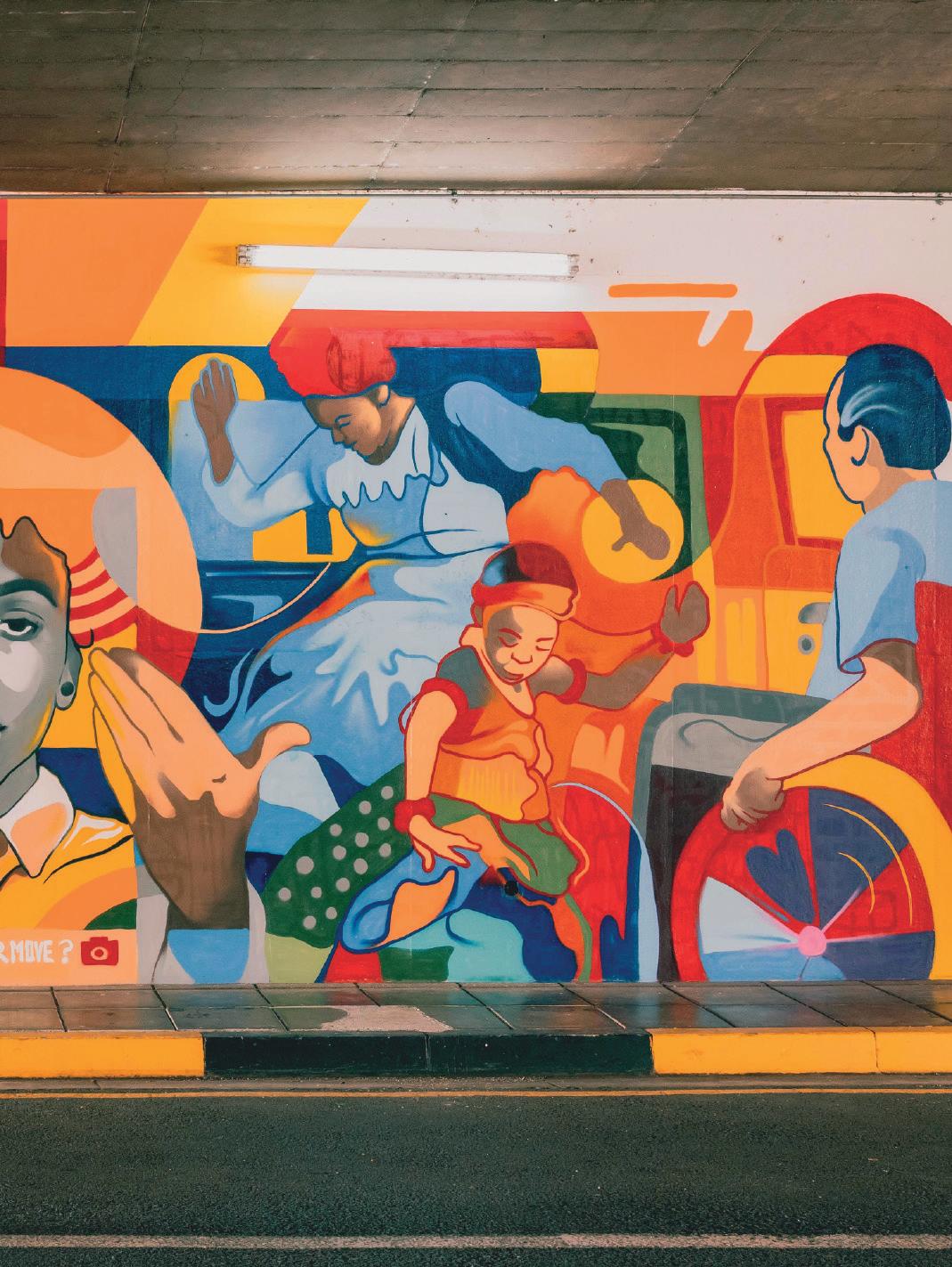
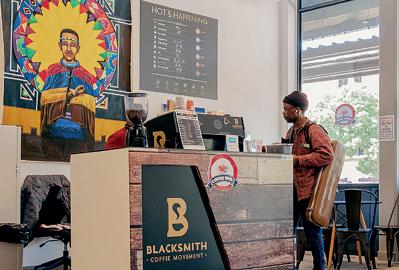
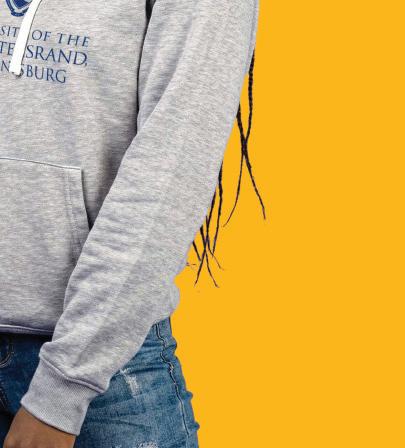
Our bodies are designed to be active, yet many of us move through the world in limited ways. Research by Dr Merling Phaswana (MScMed 2019, PhD 2024) and Prof Philippe Gradidge (MSc Med 2010, PhD 2016) from the Exercise Science and Sports Medicine department in the Faculty of Health Sciences points to health risks associated with sedentary behaviour in all walks of life and occupations in South Africa. Their commissioned artwork, in the tunnel connecting East and West campus, is a call to action for Witsies to share their “moves” in a campaign called Mzansi What's Your Move? Their research shows even brief, low-intensity movement can yield health benefits. The mural was painted by artists Jackalandhide, who love to make “walls talk”.
Image: Bongimpilo Zondi
42
Cover feature Memories to savour
From
60
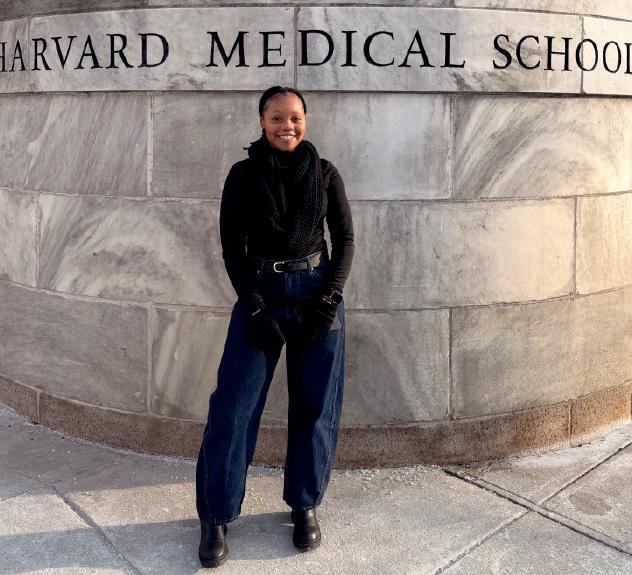
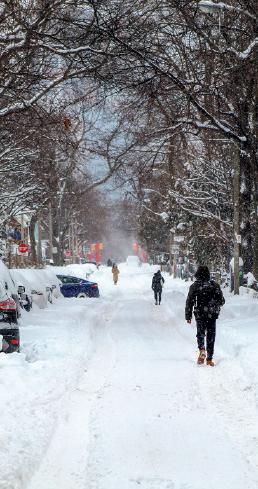
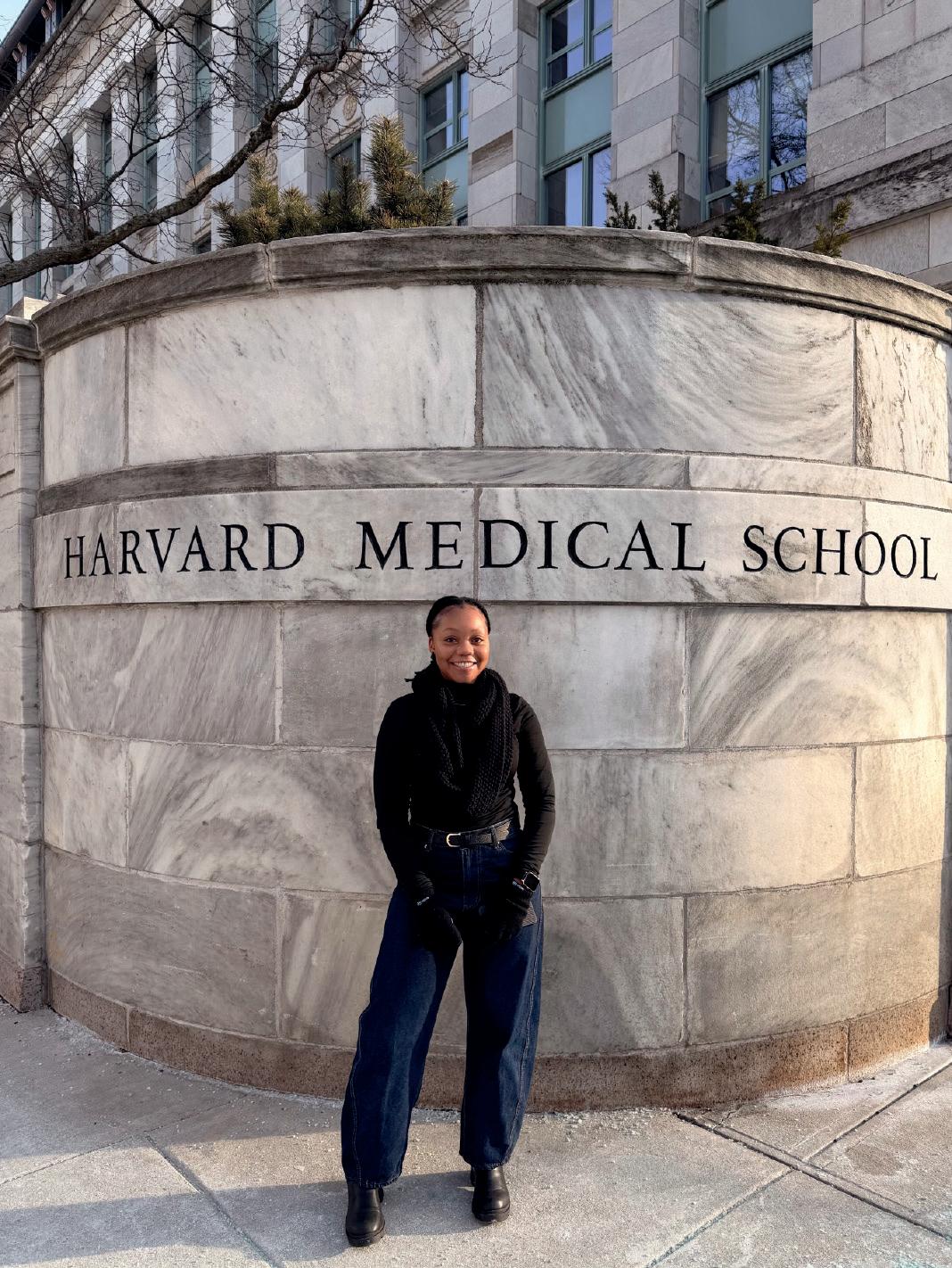
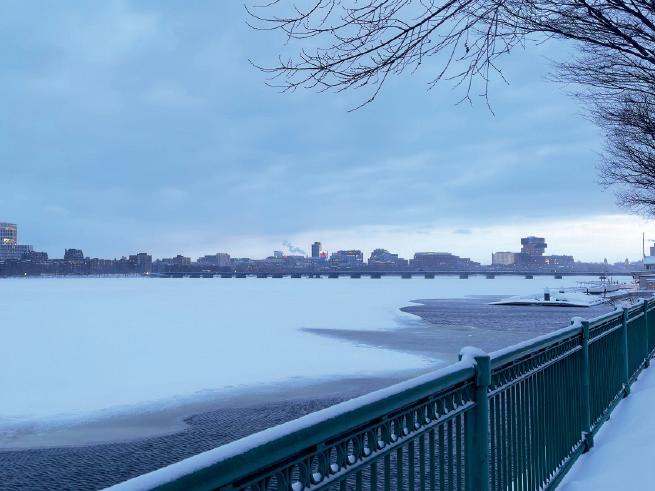
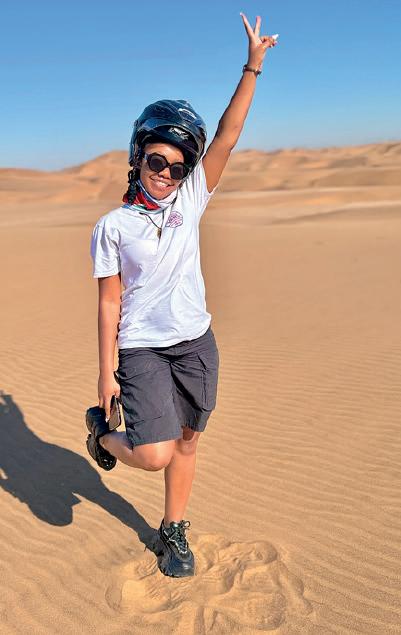
International Witsie Bontle Masango Fulbright scholar on adjusting to icy conditions and the fast-paced research environment in Boston
24
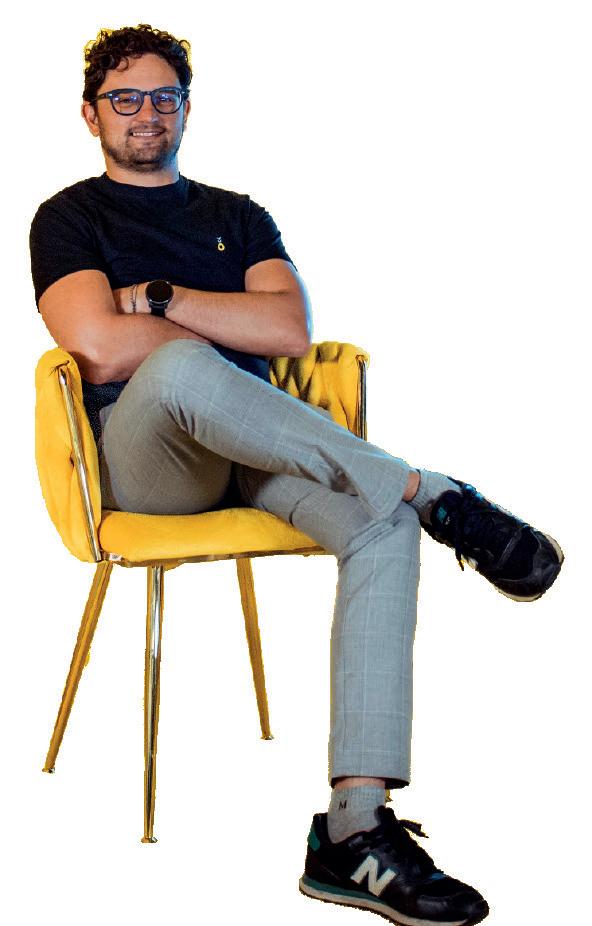
Witsie with Edge Matthew Smith How this insurance co-founder named his company after some fruit
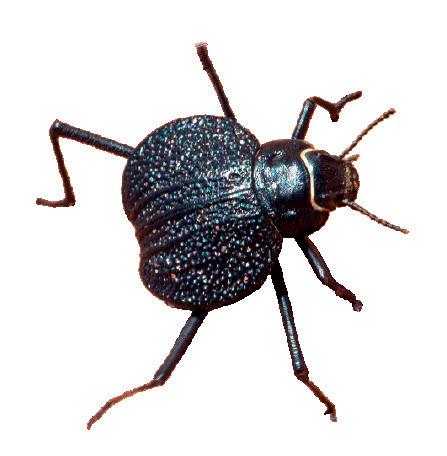
23 Research Cool under pressure How does this beetle
Wits Review Magazine, Volume 55, April edition 2026
Be the change
This year, 6 296 new first-year students joined a University community of more than 42 000. Each one arrives at Wits at a moment of transition, both in their own lives and in the broader world they are preparing to enter.
I always enjoy seeing first-years arrive on campus. Excited and curious, bringing with them a fresh energy that infuses the grounds, lecture halls and canteens.
There is nothing more uplifting than taking a walk on campus at lunchtimes in early February and hearing first-year female residence students singing on their way to the dining hall. This was not my experience as a student in the early 1980s and it made me reflect on the differences between then and now.
Peter Maher Director of Alumni Relations
typewriters, today’s students have artificial intelligence, virtual reality and constant connectivity. The notion of being unreachable has all but disappeared. In my time, it was entirely possible – indeed normal – to be out of contact for extended periods and to get lost. Today, being incommunicado or lost would likely induce mild panic.
“There is nothing quite like the first-year experience. It is intense, exhilarating and filled with possibility. ”
It is always fascinating to observe the subtle generational shifts. Fashions, attitudes, temperaments change from year to year, and each cohort of students leaves its own imprint on the University.
While campus life itself evolves gradually, some of the most significant changes lie beyond the gates of the University – in the broader global context. The world does not seem more cohesive or peaceful than it was during the Cold War. In many respects there is an inward-looking tendency shaping the environment of today’s students.
I can vividly recall my own arrival at university. University life felt like a sudden and exhilarating release – personal and intellectual freedom had arrived. There were fewer rules and constraints. It felt like stepping into a world of endless possibility.
Some aspects of student life remain unchanged. Friendships are still forged in lecture halls and libraries and on sports fields. Chance encounters in a coffee queue form the foundation of lifelong connections.
There has, of course, been a technological revolution since I was a student. Where we once wrestled with
For all our technological progress, though, it is not clear that the world has become a better place – only more complex. In the 1980s we were preoccupied with the “hole” in the ozone; today’s students face the impact of climate change. We were worried about overpopulation; today there’s concern about birth rates too low to maintain population stability.
With new scientific data, guidance on health and lifestyle has advanced. In the 1980s, we were encouraged to count calories and avoid fat. Margarine was promoted as the healthier alternative. Today, we’re avoiding excessive sugar and ultra-processed foods. Cultural norms have also changed. Tattoos are now commonplace, smoking is definitely no longer cool and almost everyone has a curated public persona. The learning experience itself continues to adapt. Online learning, lifelong learning, blended learning, and micro-learning now offer opportunities and flexibility that would have been unimaginable a few decades ago.
For all the change, one truth remains constant: there is nothing quite like the first-year experience. It is intense, exhilarating and filled with possibility. These students are not only pursuing an education; they are laying the foundation for lives of purpose and impact. The world they inherit may be changing, but they still have the capacity to shape it. ■
Stay in touch: Please share your news and remember to update your contact details. Email letters to alumni@wits.ac.za
A forgotten box of memories
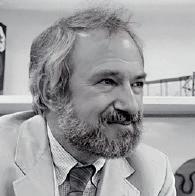
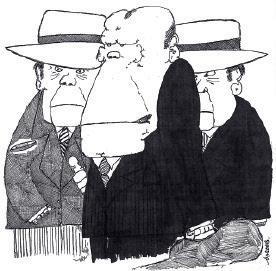
I studied at Wits between 1974 and 1978. During this time, I drew cartoons for various student publications. All these were political in content and all of them were banned. In the early 80s I packed them all in a box and forgot about them. A few weeks ago, I opened this box and saw the material after 40 years. It is a record of student activism at Wits at the time and part of our history and as such it might be of interest to Wits Review readers. I scanned and posted everything on Facebook.
I still have Jacaranda dreams
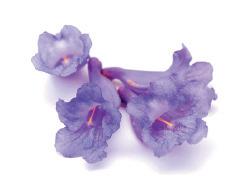
I keep going back to “Tribute to Trees” from the April 2025 edition of Wits Review. It’s the best article for me. At the age of 85, I have October dreams of writing exams. Always felt stressed because “I hadn’t studied enough”. During that time, when I saw a jacaranda in bloom, I ran around the women’s res lawns trying to get a bloom to fall on my head. You knew you would pass the exam if one fell on your head. Or so the story went. Great fun.
Lynette Douglas (BA 1962, UDipEd 1986)
FROM THE ARCHIVE
The one really competitive skill is the skill of being able to learn… We need to produce people who know how to act when they’re faced with situations for which they were not specifically prepared.”
Wits alumnus, AI innovator and Renaissance man Seymour Papert (BA 1950, PhD 1955, DSc Eng 2016) died 10 years ago in 2016. He co-directed the MIT Artificial Intelligence Laboratory, which emerged in 1968 from the Artificial Intelligence Research Group, and is regarded as one of the fathers of artificial intelligence.
First for innovation
Wits University is the top-ranked university in Sub-Saharan Africa for innovation performance in the 2025 Global Innovation Index, which measures the innovation performance of 139 economies worldwide, assessing how effectively nations translate knowledge, research, and technology into economic and social value. South Africa ranked 61st globally, maintaining its position as a regional innovation leader, with Wits at the forefront of that performance.
Constantinos Joakimidis (BA 1978)
“Energy access is not a luxury; it is foundational to dignity, development, and economic participation.”
Off-grid power solution wins global award
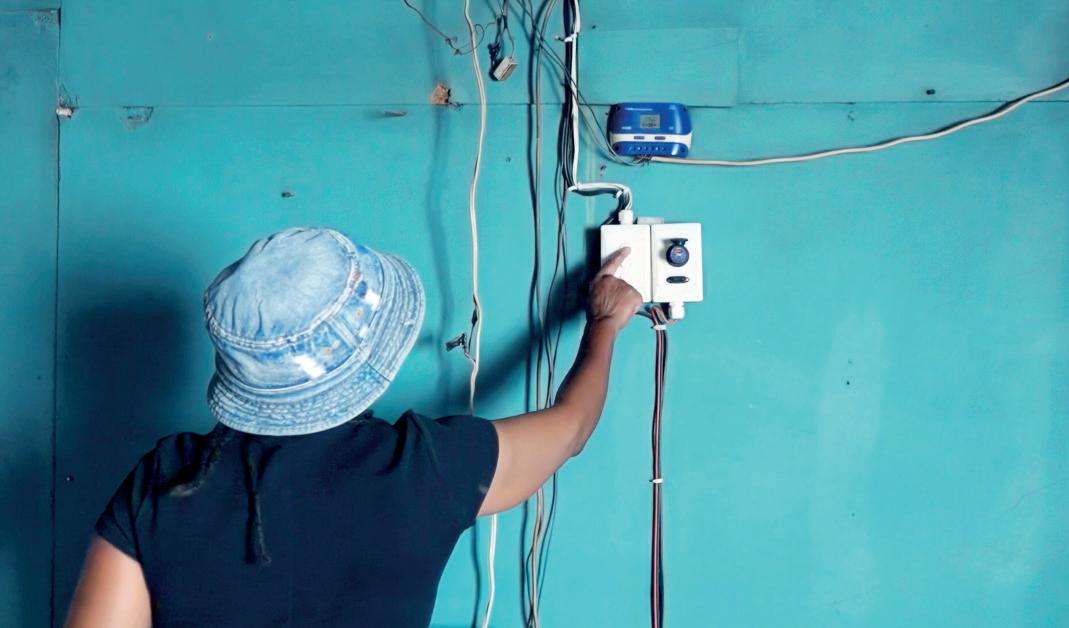
Peco Power, one of Wits’ innovative spin-out companies, was named the Energy Supply Track winner at the prestigious Institute of Electrical and Electronics Engineers’ 2025 Empower a Billion Lives competition. This global initiative recognises scalable solutions that expand access to electricity for underserved communities worldwide. For the competition, Peco Power presented a peer-to-peer electricity trading model built on its modular, off-grid power units.
The solution was demonstrated in the town of Ermelo, where Peco Power has already deployed standalone energy systems. Rather than operating as
Spin-out success
Three Wits spin-out companies were registered in 2025: AirSync, an AI-enabled air-quality monitoring solution; GreenEx, a patented moringa extraction technology; and Green Lipids an ionisable lipid solution that protects and delivers mRNA into cells for vaccines.
isolated units, households are enabled to share and trade electricity locally, forming a growing, community based energy network that expands organically as more units are added. This approach allows energy access to scale incrementally, one household at a time, without the need for large, centralised infrastructure investment. Peco Power received a US$50,000 prize. “Energy access is not a luxury; it is foundational to dignity, development, and economic participation,” said Professor Willie Cronje, one of the founders. “This award strengthens our ability to scale impact and reach more communities faster.” ■ Read more
Bringing power to Nomzamo Agri Village, Ermelo, Mpumalanga
Image: Adobe Stock
Living hydrogen lab at Wits
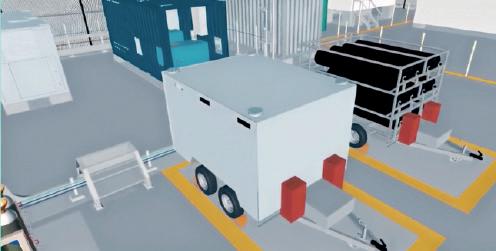
A R100 million modular hydrogen plant will be built at Wits to support research, training and clean energy innovation. The Wits-South Africa Hydrogen Localisation Initiative (Wits-SAHLI) research facility was launched on 27 February 2026 in partnership with global industrial gas company Air Liquide. It is described as a “living laboratory”. The facility will use solar energy to power an electrolyser that splits hydrogen and oxygen. The “green” hydrogen will be stored and later converted into power using fuel cells. Professor Rodney Genga (PhD 2014), assistant dean of strategic projects at Wits, said the biggest barriers to developing green hydrogen are technical expertise and finance. This pilot facility aims to produce about 200 kg of hydrogen every three to four days and 200 kilowatts of electricity. The system could eventually be scaled for industrial use. ■ Read more
New Earthscience ecosystem
Wits launched two initiatives that place Africa at the centre of global earth-science innovation. The Earth Observatory, housed in the Wits School of Geoscience, is the only facility of its kind on the African continent. Its facilities enable a range of cutting-edge geoanalytical techniques, including sample preparation and geometallurgy, as well as isotopic and geophysical analysis. For example, automated mineralogy and uranium-lead age-d ating systems will allow researchers, students, and industry collaborators to explore Earth’s deep history and identify resources vital to the clean-energy transition. The African Centre for Ore System Science (CORES) will lead the integration of economic geology, extractive processes, and data-driven innovation. ■
Read more
Professors pitch ideas to fintech leaders
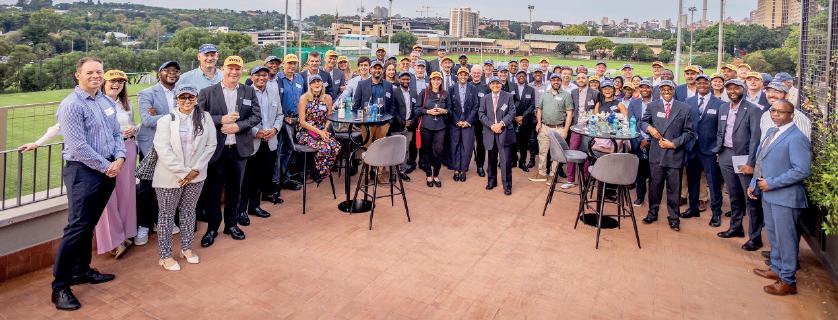
Senior leaders from the banking, fintech, and investment sectors gathered at the Wits Anglo American Digital Dome on 3 February 2026 for an invitation only fintech research showcase. The event brought together CEOs, alumni, and leading Wits professors to explore how AI, quantum computing, and emerging technologies are shaping the future
of finance. It also created a platform for deeper, longterm intellectual collaboration. The interdisciplinary platform underscored Wits’ leadership in advancing and critically examining cutting-edge fields including AI, quantum computing, blockchain, digital currencies, and data analytics, and their growing impact on finance. ■ Read more
Images: Adobe Stock
A prototype model of the plant
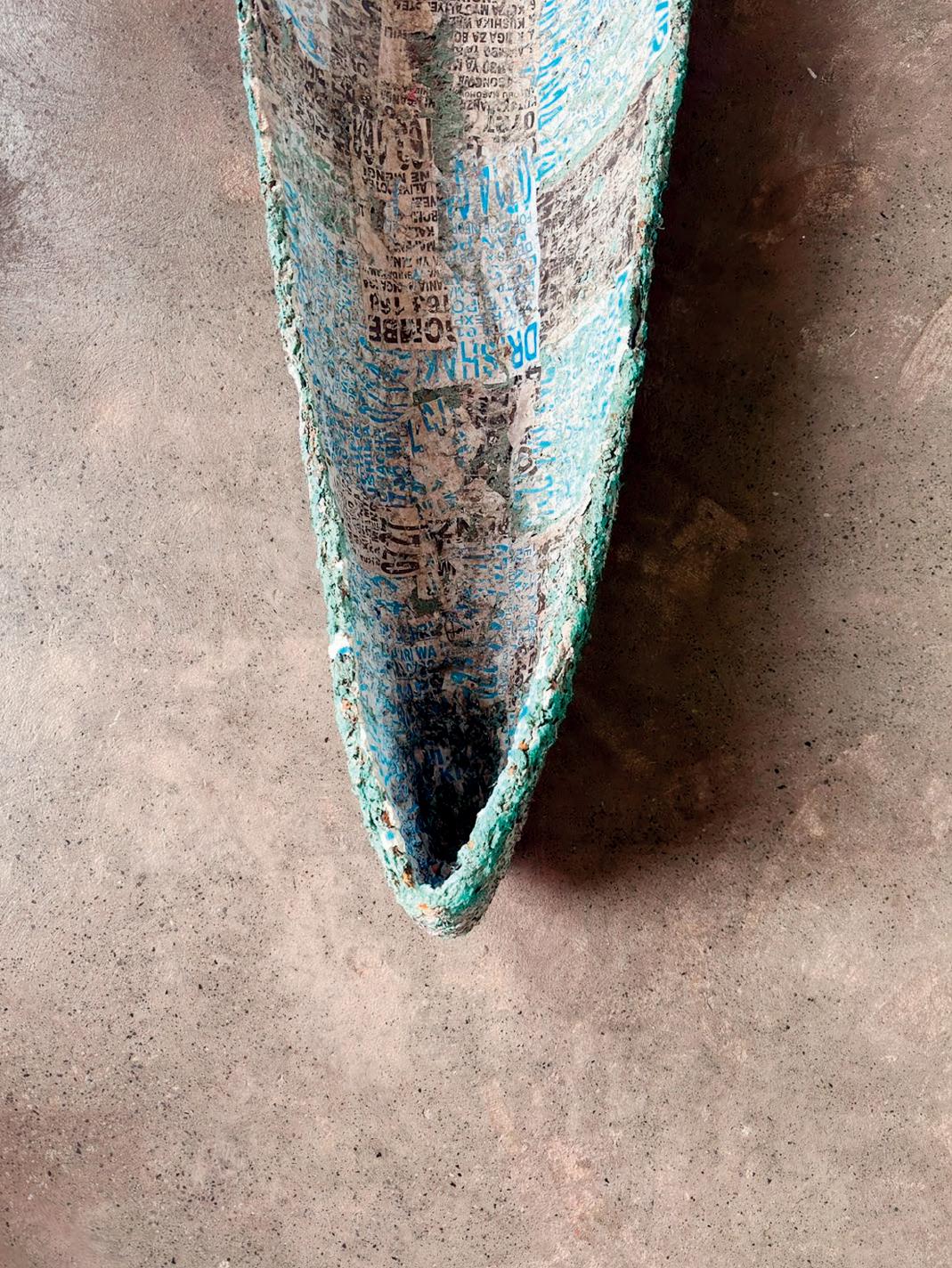
A papier-mâché canoe built in Nairobi from the street posters of prophets, healers, and miracleworkers that plaster the city’s walls
Image: Naadira Patel
The Atlas of Uncertainty
What if African cities aren’t behind the curve, but ahead of it? This is the central question of the collaborative project led by the Wits’ African Centre for Migration & Society and the Oxford/Wits Mobility Governance Lab, that opens at the Origins Centre on 18 April 2026.
“What Africa has on its side is that we have never been certain about anything, except uncertainty,” says Caroline Kihato (MUD 1997)
“It’s not just about resilience. It’s a way of being. Because we have had very little to rely on, there’s always been this looking at life otherwise — to make things work, and knit things up to survive. And that skill is what we have to offer the world.” ■
Read more
Origins Centre Years 2006–2026
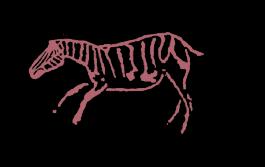
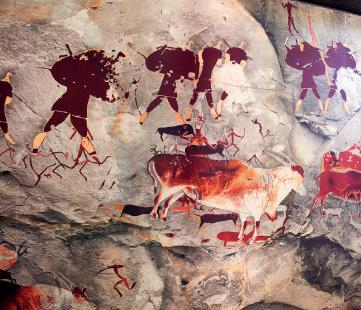
This year marks the 20th anniversary of the Origins Centre, which was opened on 7 March 2006 by President Thabo Mbeki. The centre explores human evolution, creativity, and belief systems, through archaeology, rock art, ethnography, and contemporary art.
The head
Dr Tammy Hodgskiss-Reynard (BA 2003, BA Hons 2004, MSc 2006, PhD 2013) is the beloved face of the Origins Centre. She was the former curator and now is its new head. She researches archaeological and historical ochres and mineral pigments: spend a lot of time with dirty (red) hands, showing people pretty rocks and sharing my love of exploring our past.”
In numbers
20 years of multidisciplinary storytelling
15+ number of featured South African contemporary artists
2
million-year-old stone tools, and hominin fossils
14 000–
19 000
visitors annually. Nearly 20 000 in 2025 alone
106
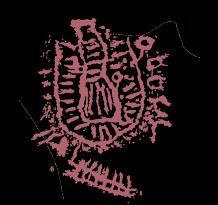
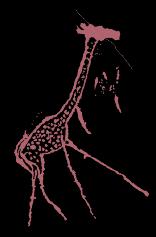
original rock art pieces – each a national treasure
9 number of unique event venues
Research
hub We are who we are because of who we were
Origins is growing as a research hub through its science communication master’s programme, student guide training and international research projects. The centre a ords schools, researchers, alumni and visitors the ability to view the richest visual heritage found in South Africa and learn about its history and meaning.
For more info:
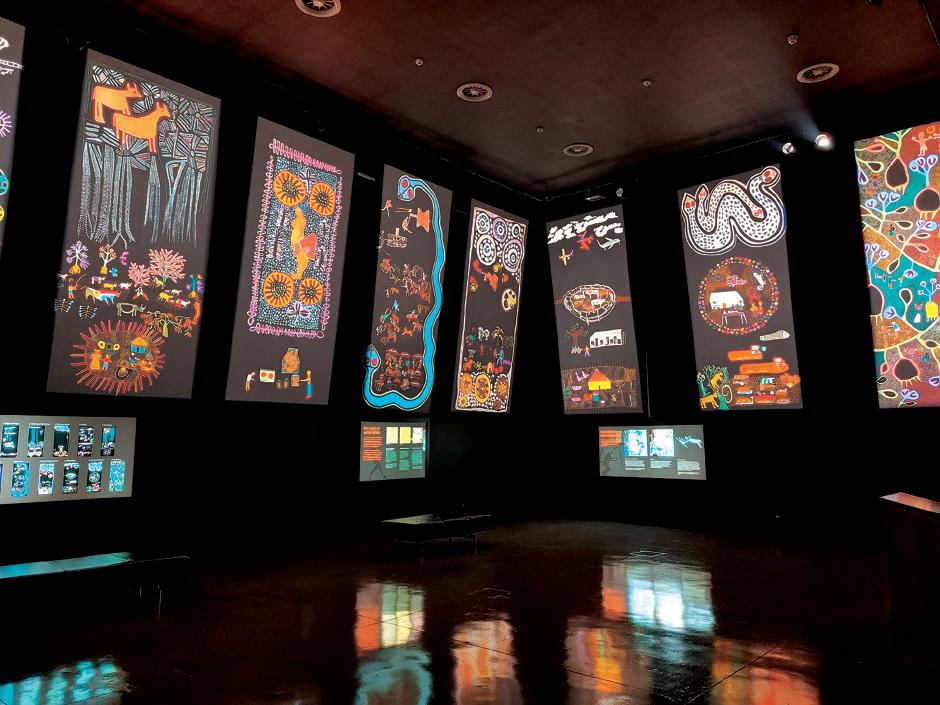
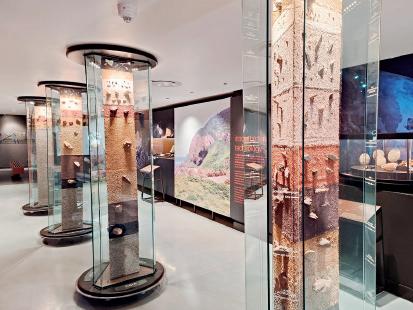
The Tapestry Room is the emotional heart of Origins Centre, bridging ancient knowledge with contemporary interpretation.
Image:
Tamar Mason
‘If this doesn’t excite you, you’re dead!’
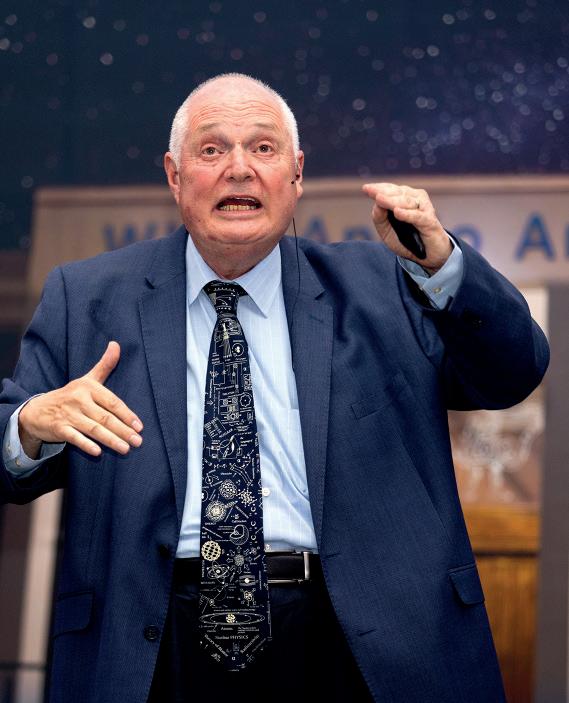
The first Professor Arthur Bleksley Memorial Lecture, titled The Poetry of Light: James Webb Space Telescope and the Dawn After Darkness, was delivered on 28 February 2026.
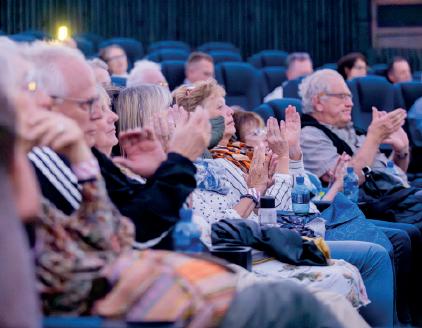
The much anticipated event at the Wits Anglo American Digital Dome brought together alumni, senior staff of the University, and residents of Johannesburg of all ages. It was an afternoon that dovetailed the passions of generations of Witsies.
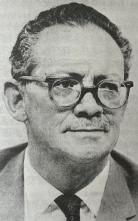
Bleksley was a popular public intellectual and professor of applied mathematics, who devoted large amounts of his time to educating the public on science and astronomy. He helped establish the Johannesburg Planetarium and introduced generations of students and visitors to the subject. Through public lectures, radio programmes such as Test the Team, and his teaching, Bleksley championed the belief that scientific knowledge should not remain inside universities but should be shared widely.
“The same spirit that drove Bleksley in the 1960s is a spirit that cries out today: scientists inspire, curiosity should be made available to all, knowledge should belong to everyone, while respecting the investment of the experts…
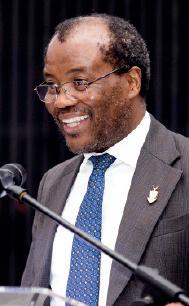
“It’s not only about remembering an individual, but also about leaving a tradition of public science, intellectual courage, and asking the big questions humanity can ask,” said Wits Vice-Chancellor and Principal, Prof Zeblon Vilakazi (MSc 1994, PhD 1998).
He said it was apt for the inaugural lecture to be given by Prof David Block (BSc 1975, BSc Hons 1976), as he too is a celebrated academic and entertaining
LECTURE : PROF DAVID BLOCK
Professor David Block
raconteur. “Few people have done more to keep the flame of cosmic storytelling alive in South Africa than Professor Block.
“Light tells the story of the universe – how we see the past, how we understand the origins, and how we remain connected across billions of years. In a sense, this is what this dome is all about: the continuity of light across generations, from Bleksley to Block,” said Vilakazi.
The audience was entertained by Block’s booming voice, which oscillated in volume and tone, interspersed with Latin phrases and a wry sense of humour. He shared anecdotes from Bleksley’s life and explained how the James Webb Space Telescope is transforming astronomers’ understanding of the early universe.
Launched in 2021, the telescope uses 18 gold plated mirrors and infrared instruments to detect extremely faint light from distant galaxies.
“Each photon carries the history of stars, the chemistry of nebulae, and the imprint of an expanding universe,” he said. “That is the poetry of light. But art tells us how light feels. Think of a roaring fire. Think of sharp shafts of sunlight through clouds of dust in a desert storm. Think about a stained-glass window by Marc Chagall. Do not these worlds of poetry and science meet, seamlessly, in the poetry of light?”
He described the excitement of observing light that had travelled across space for billions of years before reaching Earth and highlighted his long-running research on cosmic dust and how dust clouds shape the formation of stars and galaxies.
“Ladies and gentlemen, if this doesn’t excite you, you’re dead! This is cosmic dust at its very best… pinch yourself. You are made of the veritable stuff!”
Block said Bleksley believed education should inspire curiosity rather than simply deliver facts. “The mind is not a vessel to be filled, but a fire to be lit,” he said, quoting the ancient Greek philosopher Plutarch.
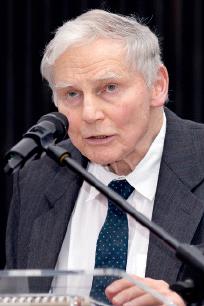
Emeritus Professor in the School of Computer Science and Applied Mathematics, David Mason, shared biographical details of Bleksley’s life, and Convocation Exco member Paul Taylor (BSc Eng 1962) provided sketches of Bleksley as a lecturer at Wits.
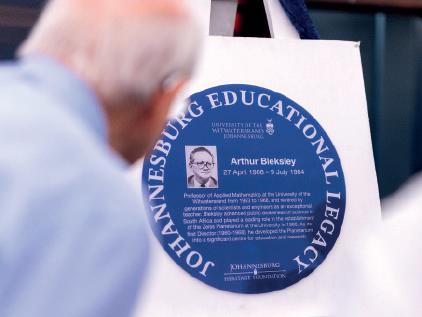
Flo Bird (BA 1964), founder of the Johannesburg Heritage Foundation, was present to unveil one of the organisation’s blue plaques in honour of Bleksley, as a tribute to his lifelong dedication to sharing astronomy with the public and inspiring future generations. ■
The Heritage Foundation’s blue plaque is a tribute to Bleksley’s lifelong dedication to sharing science with the public and inspiring future generations
Arthur Bleksley
Images: Chanté Schatz
Left: Professor David Mason shared biographical details of Bleksley’s life Right: Prof Zeblon Vilakazi says scientists should spark curiosity
Block enthralled audiences with his cosmic storytelling
FILM SCREENINGS
SHOOTING SARDINES IN A BARREL
30 OCTOBER 2025
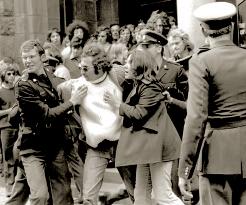
Wits Alumni Relations hosted a global webinar in which Shooting Sardines in a Barrel, a film by alumna, Dr Lieza Louw (MA 2006, PhD 2014) about anti-apartheid student protests at Wits from 1957 – 1987, was shown. The screening was followed by a discussion with Louw, Themba Maseko (BA 1988, LLB 1993), Yunus Ballim (BSc Eng 1981, MSc 1983, PhD 1981) and Mark Orkin (BSc Hons 1971, PhD 1990). Feedback from the alumni was overwhelmingly positive:
• Thank you Lieza! Appreciate all the work that must have gone into the research and compilation of this movie. It brought back many memories of my early years!
• Thank you for this documentary. I have very fond memories of David Webster, who was one of my lecturers. I also remember Craig Williamson and spotted him on a documentary I saw years ago on French TV.
• Oh yes! Craig Williamson walked around campus and pretended he was involved with NUSAS etc and we believed him!
• The secret police used to walk around campus in brick red or lime green safari suits with matching socks. Later they learned to disguise themselves, but initially they were very obvious. ■ Watch video
SAVE THE DATES
• 16 April: Humanities Masterclass and Networking
• 17 April: Global speaker Dr Craig Wing talk on “How to Lead the Future”
• 6 September: Founders’ Tea
• 10 September: London Alumni Reunion Enquiries: events.alumni@wits.ac.za
RFK IN THE LAND OF APARTHEID: A RIPPLE OF HOPE
2 DECEMBER 2025
Alumni enjoyed a special screening of the documentary RFK in the Land of Apartheid: A Ripple of Hope. This documentary explores Robert F Kennedy’s 1966 visit to South Africa during the height of apartheid. A discussion followed with the film’s producer and co-director Dr Larry Shore (BA 1972). Many alumni shared how their impressions of South Africa were shaped by this historic visit. Some comments included:
• I was a first-year student at Wits in 1966 and the visit by Robert Kennedy changed my thinking so profoundly that I became a NUSAS supporter and ended up as SRC President at JCE in 1969. This documentary brought back so many memories. – Dave Wilkinson (BA 1969)
• Thanks very much for this presentation. Amazing footage and, in these times, some much-needed inspiration. – Steven Bradlow (BSc 1977, BSc Hons 1980)
DIGIDOME FILMS
29 NOVEMBER 2025
WITS ANGLO AMERICAN DIGITAL DOME
To usher in the holiday season, Wits Alumni Relations welcomed alumni and their families back to campus for a special Digital Dome Alumni Family event. Guests experienced the immersive, state of the art projection system while enjoying two captivating screenings.
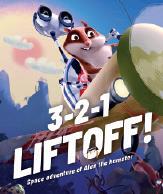
The afternoon opened with 3 2 1 Lift Off, which delighted younger audiences with the story of Elon, a hamster scientist who discovers a robot that has fallen into Earth’s orbit. Together, they must find a way to return it to its ship in time.
The second feature, Cosmic Collisions, showcased breathtaking visuals and explored the dramatic encounters that shaped our solar system. ■ Watch video
Golden Hoops
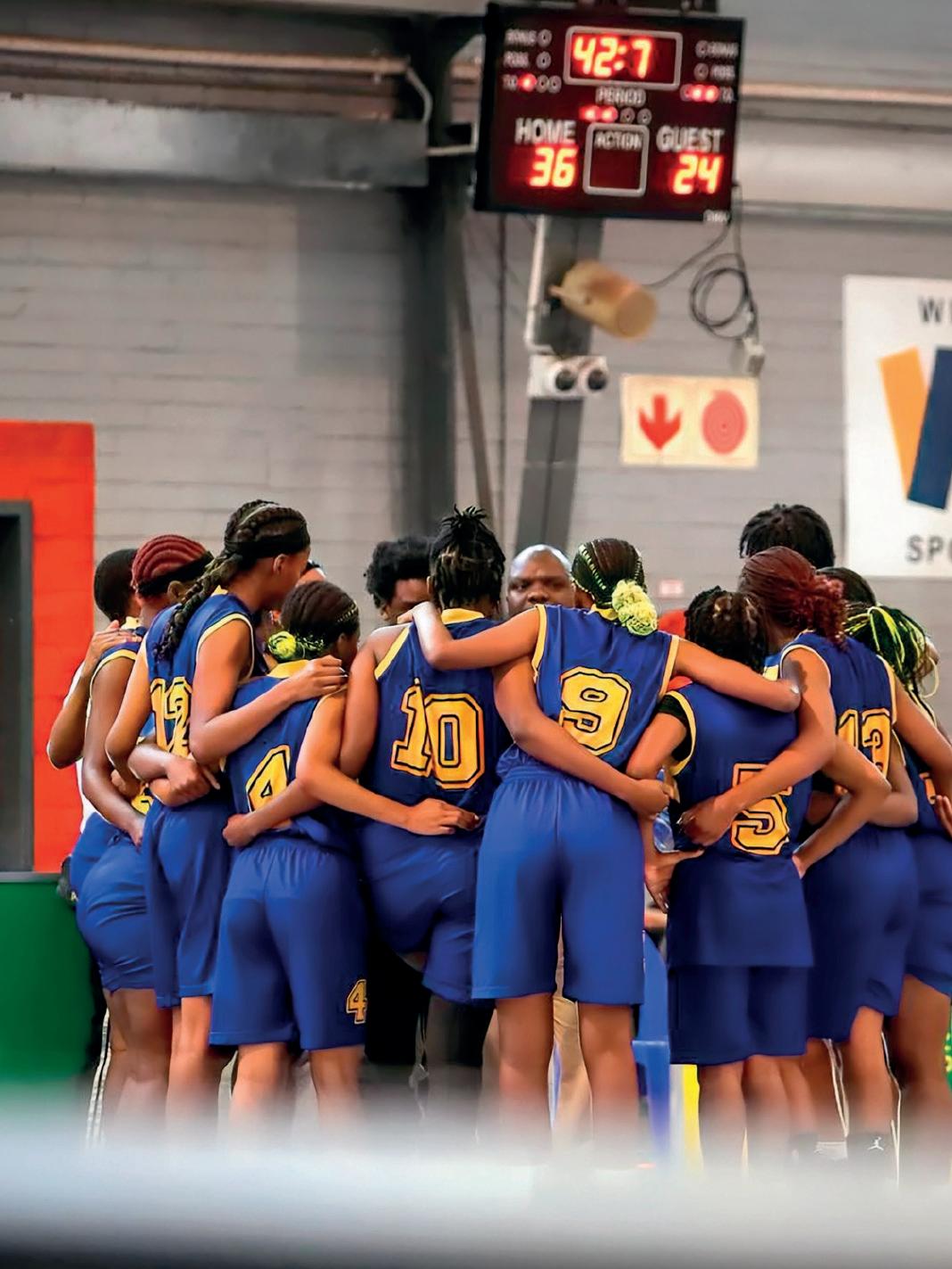
Wits basketball teams made historic runs at the 2025 University Sports South Africa competition held in early December 2025 on campus. Both the Wits men’s and women’s teams are the current national champions after beating Stellenbosch University in the finals. Wits Bucks defeated Maties 59-42, while the Lady Bucks defended their title and clinched a 64-61 win.
Image: Wits Sport
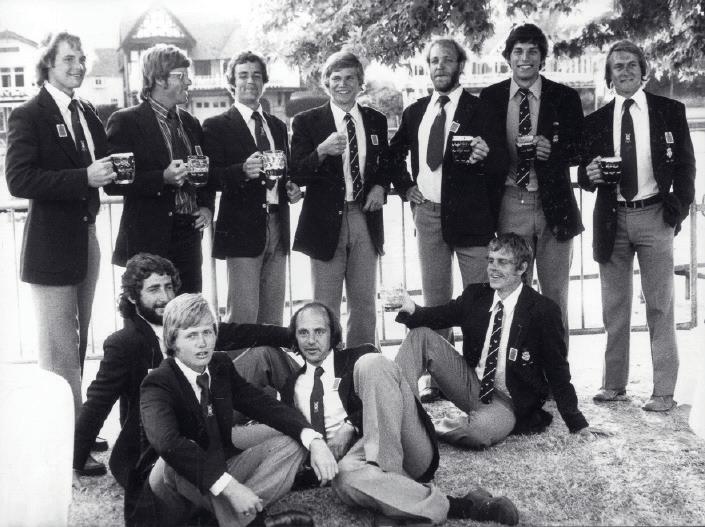
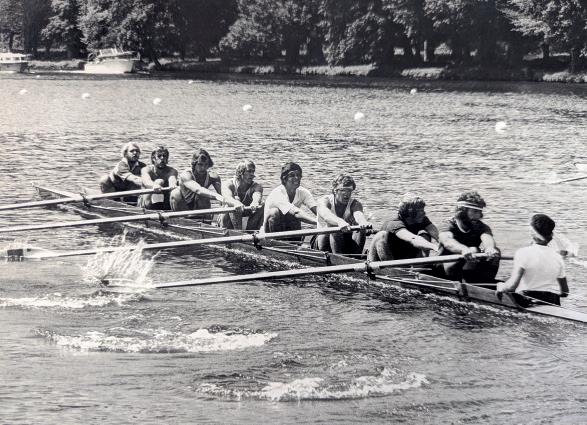
THE LEGENDARY 1975 ROWING CREW
Back from left: Wig Dreyer, Ian Woods, Rory King, Lothar Dann, Al McLaren, Dave van Rensburg, Gordon Prestedge Front from left: Matt Lankers, Dennis Rink, Derrick Read, and Graham Rabe
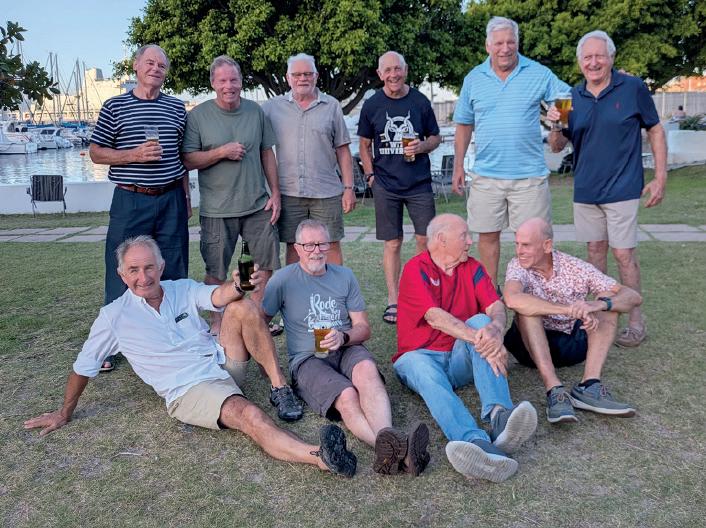
Second picture the same, absent Rory King
Images: Dennis Rink
ROWING REUNION
50TH ANNIVERSARY HENLEY ROYAL REGATTA IN 1975 / 21 FEBRUARY 2026
Nine alumni travelled from New Zealand, Australia, Canada, the UK, and parts of South Africa to meet up in Simonstown on 21 February 2026. They varied in stature, in nature and in experience. Despite time and distance, they’ve shared a special bond that has united them for the past 50 years.
Back in 1974, as Wits students and members of the boat club, this hard-drinking, hard-partying bunch thought rowing was an excuse for having a good time. But that year the University appointed Derrick Read (BA 1965) as the new rowing coach, who changed the group’s attitude to the sport. Derrick rowed in the South African national crew that posted a qualifying time for the 1968 Mexico Olympics but were unable to compete due to the international sports boycott. He also worked and rowed competitively in the UK, gaining invaluable experience that he unleashed on the unsuspecting students.
Wits first eight were transformed from average oarsmen to national champions who set a South African 2 000 metres record at Roodeplaat Dam. The crew went to England and Switzerland in June-July 1975, where they competed in several competitions, including Henley Royal Regatta. There the Witsies raced in the Ladies Plate, an event open to international academic institutions.
Racing at Henley was quite different from the multilane racing that South Africans are accustomed to: Only two boats race in each round, and the losers are eliminated. The Wits crew were elated after winning their opening round, beating First and Third Trinity, Cambridge. But in the next round they came up against MIT and were narrowly beaten. The consolation was that MIT went on to reach the final. Of little consolation was the Johannesburg newspaper that reported on the “Wits ladies” who were beaten at Henley.
Since that tour, and that heady year of rowing, the crew had reunited only once, at Henley in 2015. DENNIS RINK
Read more
The Bowside is a labour of love by members of Wits Boat Club that started out as an unfunded student and alumni project. It has grown into a registered non-profit company, producing a quarterly magazine which aims to “bring thoughtful, high-quality slow journalism to the South African rowing community”.
ENGINEERING REUNIONS
CLASS OF 1975 ELECTRICAL ENGINEERIN G
Old circuits re-energised
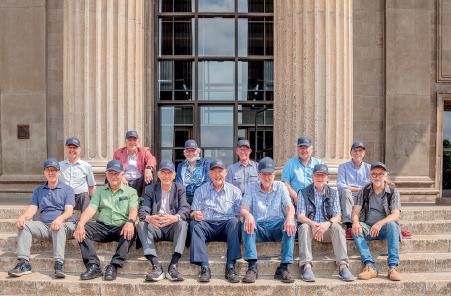
The 50th reunion proved to be a reflective and rewarding occasion, as alumni compressed five decades of shared history into a single weekend. Of the original 57 graduates, 13 attended in person, accompanied by their spouses. The programme included campus visits and guided tours led by Director of Advancement and Fundraising, Peter Bezuidenhout (BSc 1987, BCom 1992, MBA 1997), exploring the Wits Fossil Vault, the Origins Centre, the Anglo-American Digidome, and the Postgraduate Club. Prof Cuthbert Nyamupangedengu, Head of the School of Electrical and Information Engineering, hosted a tea in the atrium of the ARM Building. Attendees were treated to a brass quintet performance and a hosepipe blowing “competition”. The group also ventured through Braamfontein
to the Tshimologong Digital Innovation Precinct and the Wits Art Museum, and revisited landmarks such as the Great Hall. The second evening ended with a dinner. “It is a privilege to be able to reflect upon lives, families, and communities – a privilege simply to be able to reflect,” said Eroll Kerst, one of the key organisers. ■
CLASS OF 1975 CIVIL ENGINEERING
Solid bridge to their alma mater
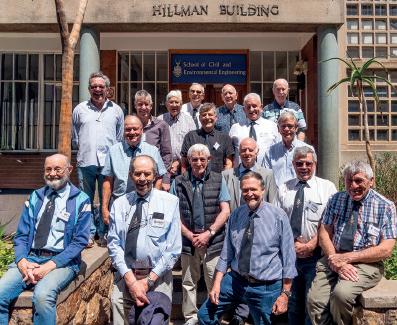
The School of Civil and Environmental Engineering proudly welcomed back the Class of 1975 for their 50th reunion on 17 October 2025 in the Hillman Building. Seventeen graduates, five spouses and the wife of a deceased classmate reconnected and revisited the School that shaped their careers. An address by the Head of School, Professor Adesola Ilemobade, shared news updates, and a nostalgic lecture by Emeritus Professor Yunus Ballim (BSc 1981, MSc Eng 1983, PhD 1994) highlighted the School’s evolution. Alumni received a booklet of shared memories, and engaged with staff during a guided tour. ■ See pictures
CHEMICAL AND METALLURGICAL ENGINEERING Watch video
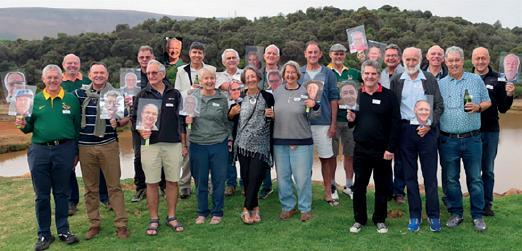
The 45th reunion of Chemical and Metallurgical Engineering graduates from the classes of 1976 to 1980 was held in the Magaliesberg over the weeked of 27/28 September 2025. Approximately half of the cohort travelled from across South Africa and abroad to attend. They also collaborated to create a commemorative yearbook
Image: Bongimpilo Zondi
Image: Bongimpilo Zondi
SPIRIT GAME 2026
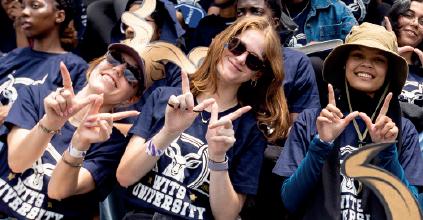
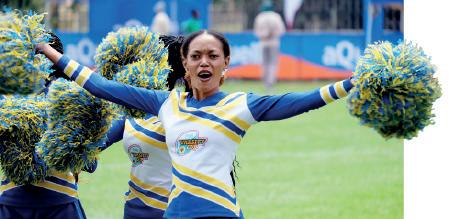
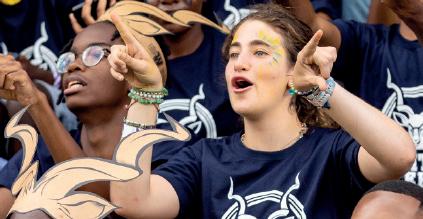
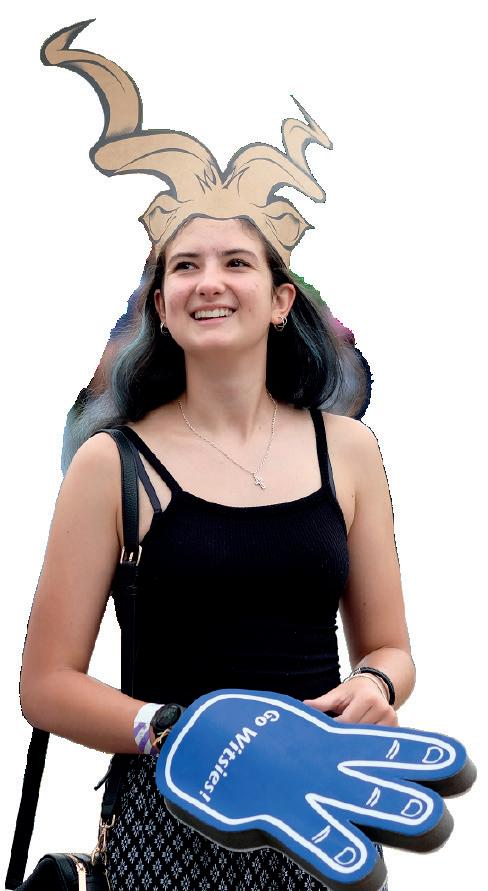
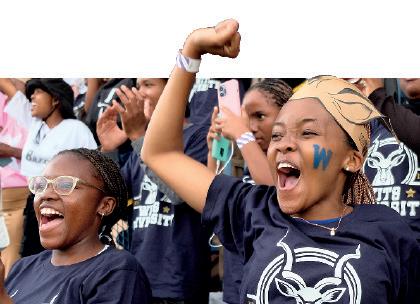
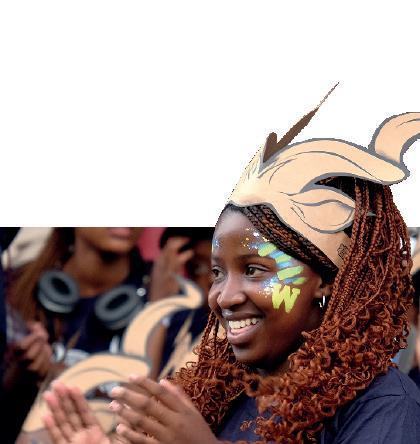
The annual Wits Spirit Game is an unforgettable rite of passage. On 30 January 2026, Jerome September, Dean of Students, officially “revealed” first-year students. New Witsies wore kudu horns, painted their faces, waved foam fingers and donned Witsie T-shirts as a proud symbol of becoming lifelong members of the Wits family. Watch video I See pictures
Images: Vivid
BAOBABS
New marvels from giant trees
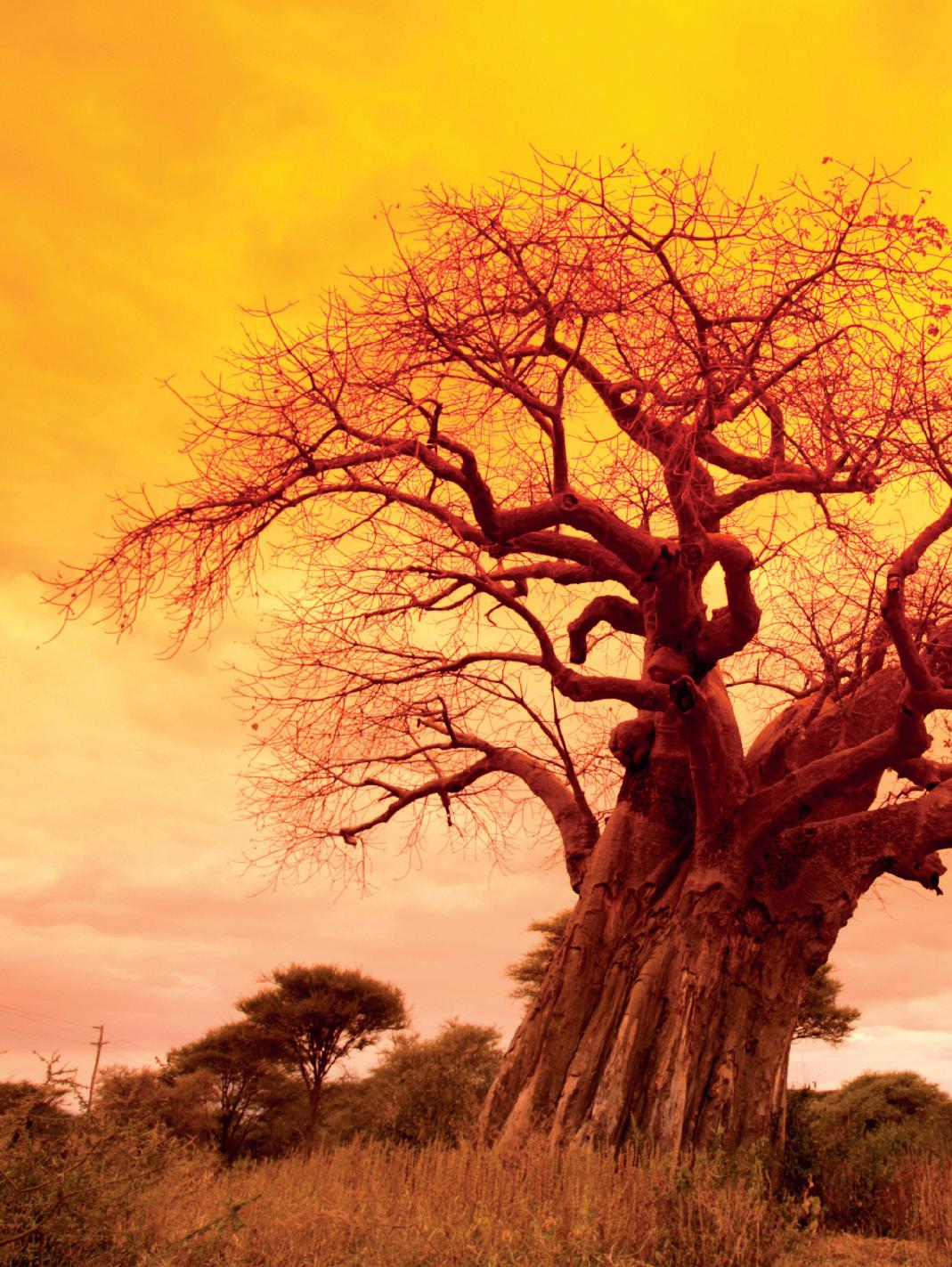
There are eight species of baobabs in the world, of which six occur in Madagascar, one in Australia and one in the drier savanna regions of Africa. Dr Sarah Venter (PhD 2012) has been involved in baobab research for more than 20 years and recently she produced two significant research papers about these iconic trees.
• A study of baobab trees in West and East Africa revealed that baobab trees are shaped by their pollinators. In West and East Africa, bats are key visitors, while in southern Africa, moths take over. These differences ripple through the trees themselves: flowers vary in size, scent, and nectar depending on who’s doing the pollinating. Bigger, nectar-rich blooms attract bats while smaller, more subtly scented ones suit moths. It’s a striking example of evolution in action.
Sources: The Conversation and Botanical Journal
• Baobab trees can live for thousands of years, but face a surprising new threat: a tiny invasive beetle. Known as the mango stem-borer, its larvae tunnel deep inside the tree, silently feeding until the structure collapses from within. First observed killing baobabs in Oman, the discovery has alarmed scientists, as these resilient trees were never thought vulnerable to insects. If the beetle spreads to mainland Africa, it could disrupt ecosystems and livelihoods, showing how even the mightiest trees can fall to the smallest invaders.
Sources: Science direct and The Conversation; Images: Adobe Stock
NEW SPECIES
Odd planteater with twisted jaws
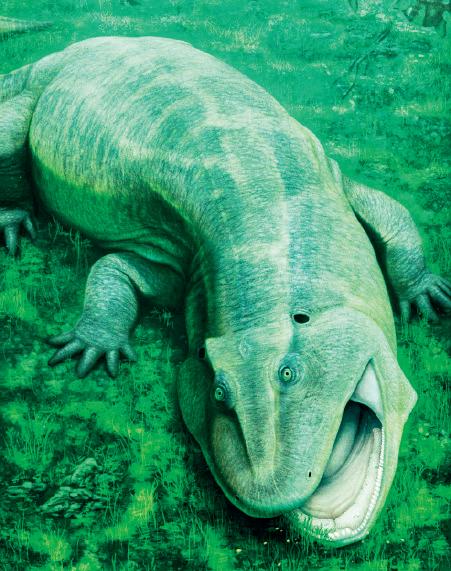
An international team of palaeontologists, including Professor Roger Smith (MSc 1982) from the Wits Evolutionary Studies Institute and Karoo Palaeontology, Iziko South African Museum, has discovered a new species of early four-limbed vertebrate from Brazil and named it Tanyka amnicola. Tanyka is from indigenous Guaraní language, meaning “jaw,” and amnicola means “living by the river.”
Scientists found nine isolated lower jaws, each about 15 cm long, in a dry riverbed in Brazil. This amphibian lived around 275 million years ago and is characterised by a unique, twisted lower jaw with sideways-facing teeth, suggesting it was herbivorous. The findings were published in the journal Proceedings of the Royal Society B.
Tanyka belongs to early tetrapods, which also include the amphibians, reptiles, birds, and mammals today. “The twisted jaws seemed unusual to us for a long time, but all specimens show the same pattern. It’s an anatomical feature, not a deformation,” says Dr Jason Pardo, lead author. The teeth point sideways rather than upward, and the inner surface of the jaw is oriented toward the roof of the mouth. When the animal closed its mouth, the teeth would have rubbed against one another, helping it to break down food.
Sources: Royal Society and Wits Research
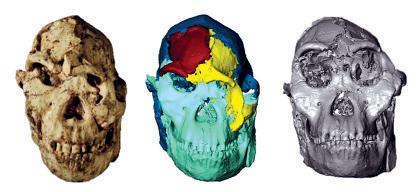
Virtual reconstruction of the face of “Little Foot”
Image: Comptes-rendus-palevol
LITTLE FOOT’S FACE
New look for old bones
Scientists have digitally reconstructed the face of “Little Foot”, the most complete Australopithecus skeleton ever found, discovered at the Wits Sterkfontein Caves in the Cradle of Humankind World Heritage Site and dating back over 3 million years. Using powerful synchrotron X-ray scanning and 3D modelling, an international research team led by Dr Amelie Beaudet and Professor Dominic Stratford (MSc 2008, PhD 2011) digitally reassembled the facial bones. The team analysed nine linear facial measurements and applied three dimensional geometric morphometrics to compare Little Foot to those of several other extant great apes as well as three other Australopithecus fossils. The published results describe Little Foot’s face with large eye sockets and a surprising mix of features. It shares traits with East African fossils, suggesting ancient human relatives across Africa may have been more connected than once thought. Beyond appearance, the study helps scientists explore how diet, behaviour, and environment shaped the evolution of the human face. “Only a handful of Australopithecus fossils preserve an almost complete face, making Little Foot a rare and valuable reference point. Little Foot’s face preserves key anatomical regions involved in vision, breathing and feeding, and its skull will offer further key elements for understanding our evolutionary history,” says Beaudet, an honorary researcher at Wits.
Sources: Wits research and The Conversation
Image: Vitor Silva
NAMIB DESERT BEETLE
Sprinting to stay cool
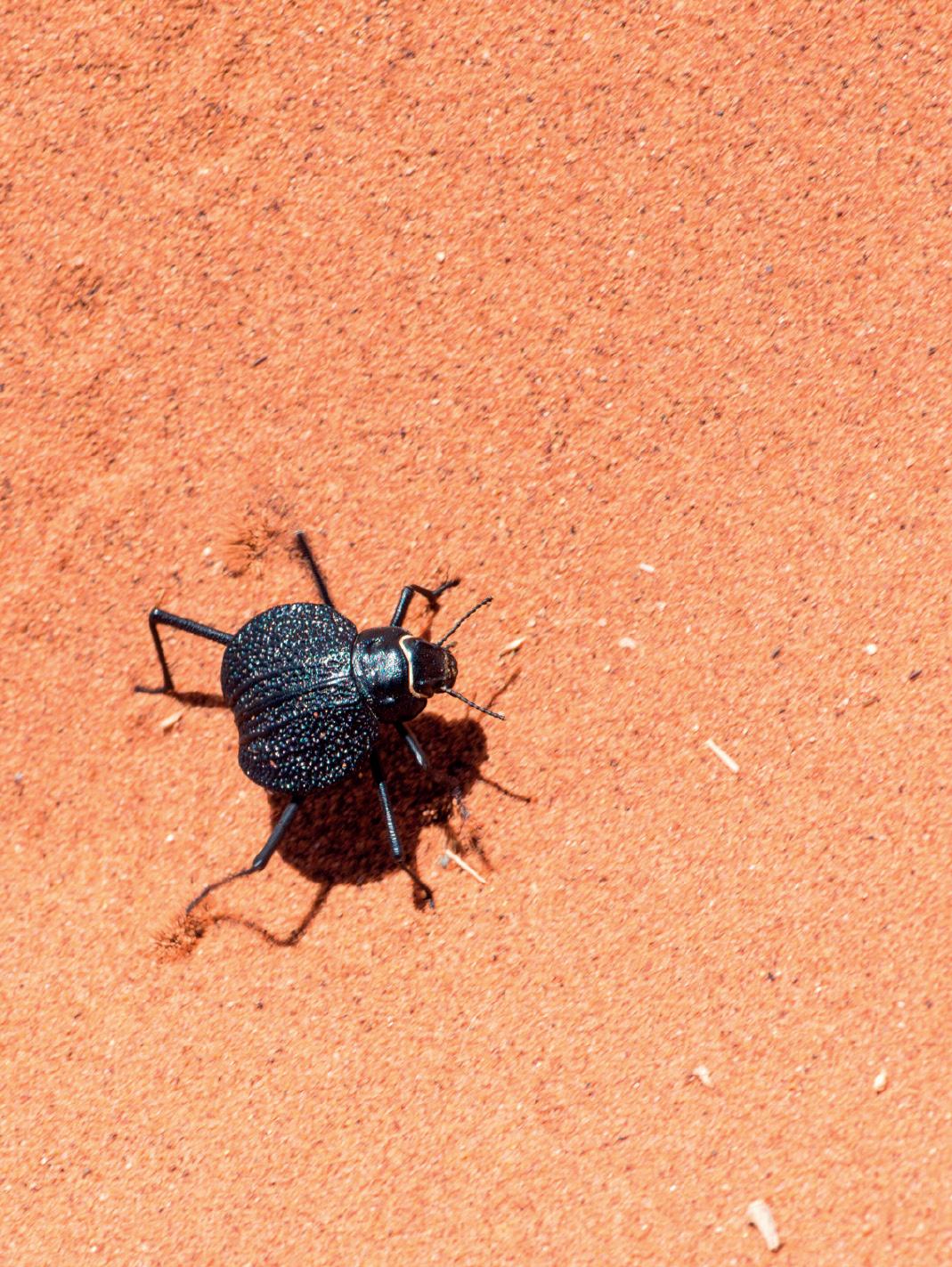
One tiny beetle breaks the rules of biology in the blistering Namib Desert, where the sand can exceed 50°C. The darkling beetle Onymacris plana is the fastest of all the invertebrates of the Namib desert and can run as fast as a human can walk. Emeritus Professor of Physiology Duncan Mitchell (BSc 1963, BSc Hons 1964, MSc 1967, PhD 1972, DSc honoris causa 2012) and a team of scientists wanted to know how these beetles achieved something that looked impossible physiologically: run in the Namib sun.
They attached a fine thermocouple thermometer fed through the end of a fishing pole. One researcher in the team followed the beetle while it was running in the sun, keeping the weight and drag of the thermometer off it. Most animals heat up when they move, but experiments showed these beetles got cooler. The solution lies in physics, not physiology. As the beetle dashes across the scorching sand, it creates its own breeze. Cool air from the Atlantic sweeps over its flattened, wing-like body, whisking heat away faster than the sun and muscles can generate it. Lab tests confirmed this wind can lower body temperature by over 10°C.
Sources: The Conversation and Journal of Experimental Biology;
Image: Nature Picture Library / Alamy Stock Photo
INNOVATOR
Matthew Smith
CO-FOUNDER PINEAPPLE INSURANCE
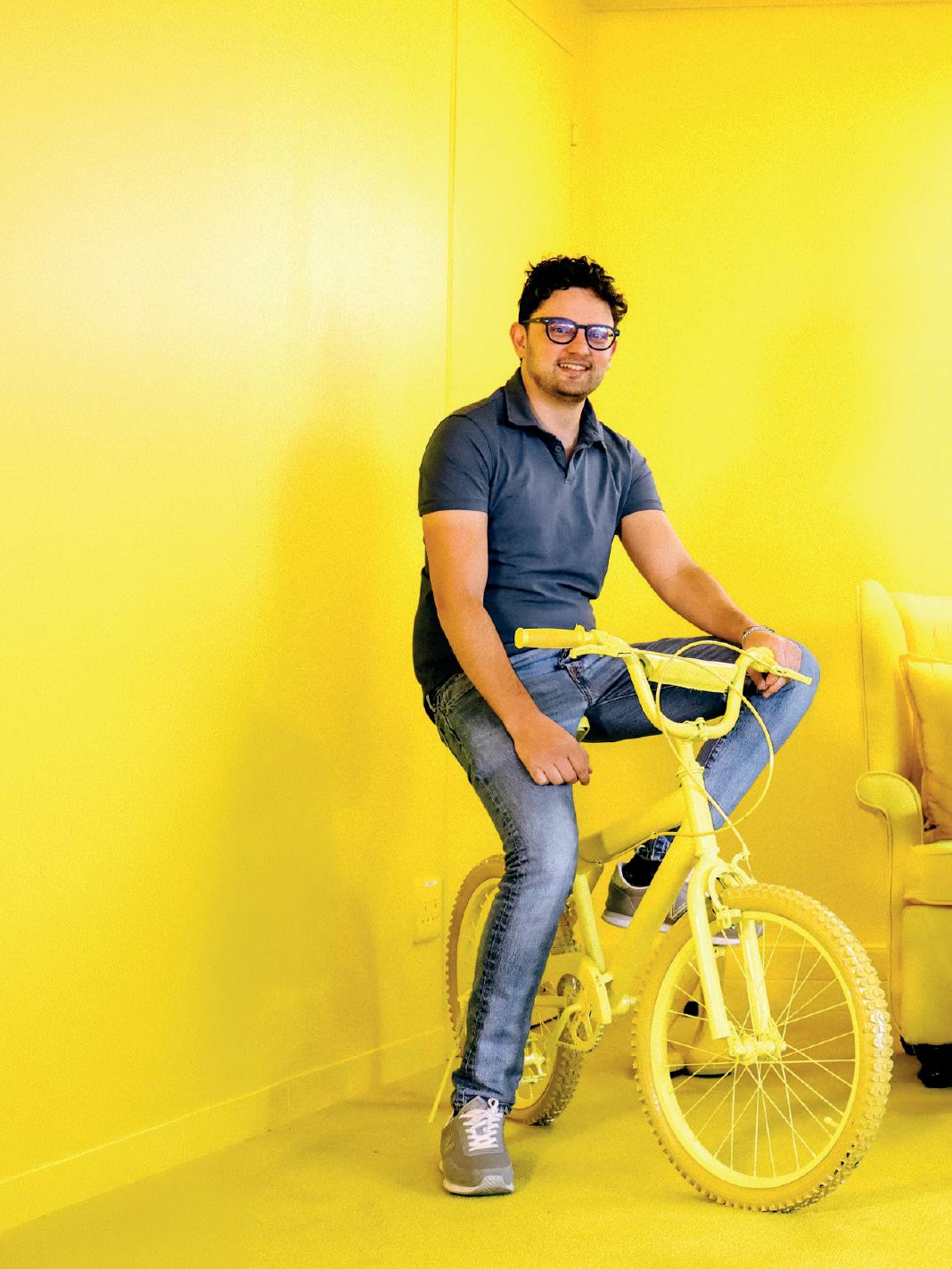
Matthew Smith (BSc 2015) started a business three years after graduating actuarial science and mathematical statistics. In 2018, with his co-founding partners, he established Pineapple, the insurance provider.
“It all started with a competition. After graduating, I was working as an actuarial analyst at Credit Guarantee when I came across a six-month global innovation competition run by one of the world’s largest reinsurance companies, Hannover Re, based in Germany. The CEO at the time, Achim Klennert, was instrumental in the competition, and in the selection of teams from each of the four participating cities: Johannesburg, Boston, Berlin and Dublin.
“Each team had to come up with a business plan,” Smith says. “I didn’t know my two team members before this. They were Marnus van Heerden, who has an accounting and law background and is a graduate of Stellenbosch University, and Ndabenhle Junior Ngulube, an accounting and software engineering graduate from the University of Cape Town (UCT).
“We all gave up our jobs to be part of this competition as we saw that it was 100% worthwhile and they also paid us a stipend for the six months,” says Smith.
“The three of us got on incredibly well from the outset. We didn’t win the competition but the business plan we presented ultimately became Pineapple,” They met a fourth founding partner, UCT graduate software engineer Sizwe Ndlovu, on the Gautrain on the way to a meeting.
“We decided on the name Pineapple because a pineapple is made up of many berries that come together to create a protective structure. Similarly with insurance, many people come together to make up the whole.” HEATHER DUGMORE
SCAN QR CODE FOR FULL INTERVIEW
INNOVATORS
Ben Myers & Cukia Kimani
CO-FOUNDERS OF NYAMAKOP
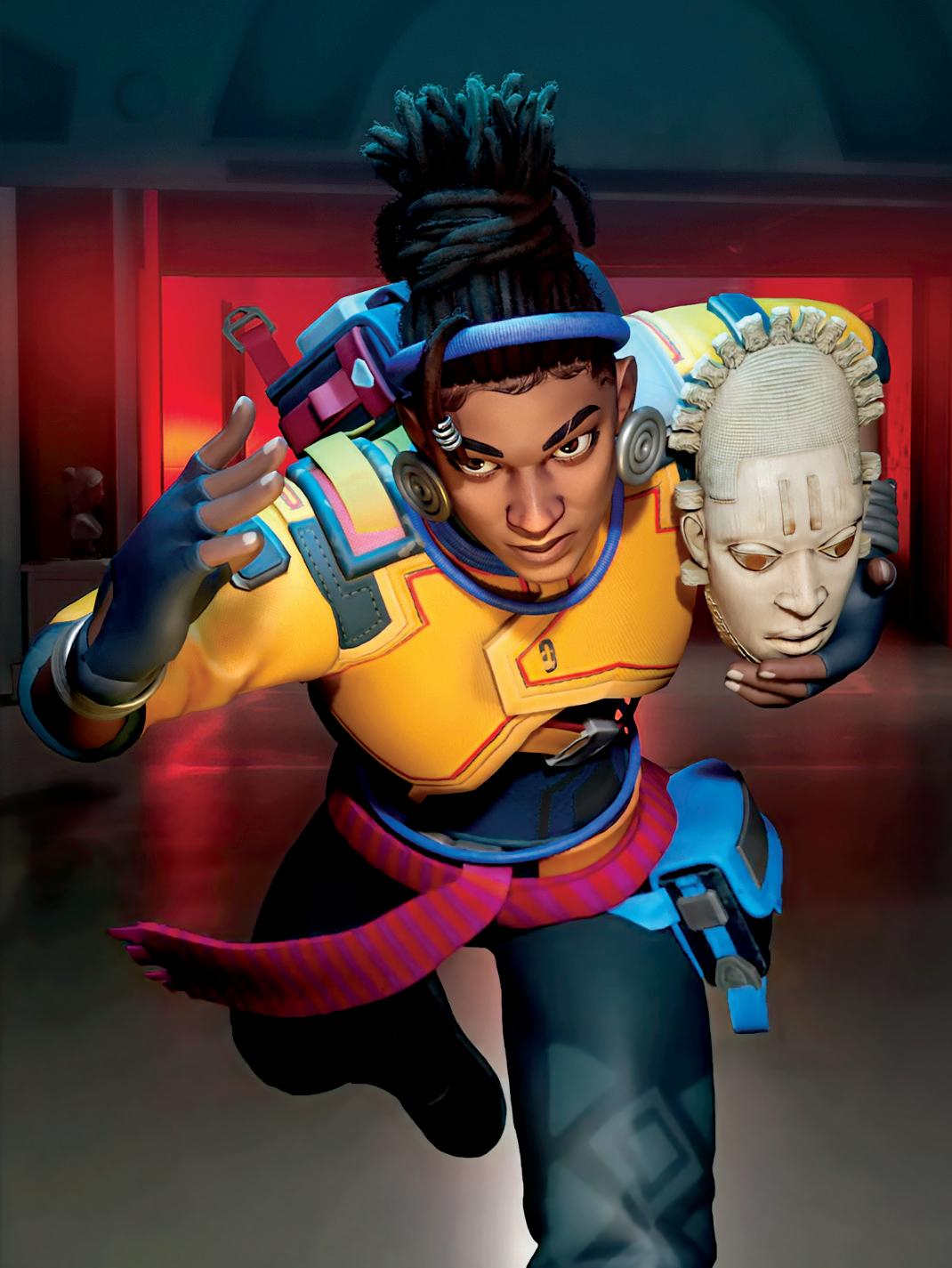
Game developer Nyamakop recently released Relooted, an Afrofuturist heist game where players “reloot” African cultural artefacts from European and American museums. Inspired by a French government report that estimated 90% of SubSaharan African cultural heritage is in the possession of Western collections, Nyamakop was co-founded by Witsies John “Ben” Myers (BA in Performing and Visual Arts 2016) and Gacukia “Cukia” Kimani (BSc 2014, BA Hons 2016) in 2016 with Judd Simantov. They released the game Semblance in 2018 and were hailed as the most promising developers in the African gaming industry.
Watch trailer
Image: Nyamakop
LEADERSHIP
Precious Matsoso
Precious Matsoso, who leads the Health Regulatory Platform at the Wits Health Consortium, was one of Nature’s top 10 people who had a role in some of 2025’s most significant moments in science. Her leadership played a critical role in steering global discussions to protect future generations from health crises. The list is compiled annually by editors of the prestigious and highimpact journal Springer Nature. She was also included in TIME magazine’s Titans of Health in 2026.
Athol Williams
A whistleblower who exposed state capture before the Zondo Commission and was forced to leave South Africa in 2021 after receiving threats to his life, Athol Williams (BSc Eng 1992), has been appointed as Poet Laureate at the Saïd Business School at the University of Oxford. It is a global first and signals how leadership is taught in global business education. In late 2025 he was also awarded the 2025 Oxford Saïd Teaching Excellence Award. “I think the complexity in the world demands new thinking and new approaches, especially in developing business leaders. Compassion, judgement, connection, are going to become more critical,” he said.
Vukosi Marivate
Director of the African Institute for Data Science and AI at the University of Pretoria, Professor Vukosi Marivate (BSc Eng 2007, MSc Eng 2009), is one of 40 experts appointed to the UN’s first global scientific panel on AI. He was selected from more than 2600 applicants across 140 countries. The panel will provide evidencebased scientific assessments on the technology’s impact. He said: “It feels like a vindication of the work that I and many collaborators across the continent have been doing. I take this responsibility very seriously.”
Image: Commonwealth Foundation
Image: Adobe Stock
LEADERSHIP
Wilhemina Ngcobo
TOP 100 INSPIRATIONAL WOMEN IN MINING
“Build the life you imagine. There will be a lot of noise along the way, but you have to believe in what you want to achieve,” says Wilhemina Ngcobo, née Manaso (BSc Eng 2005).
As the chief operating officer of Richards Bay Minerals (RBM), Ngcobo’s journey started in Hammanskraal and she has made her way to the helm of one of South Africa’s most complex mining operations, shaped by her life philosophy: you are the architect of your own future.
She is globally recognised for her leadership, including being named among the world’s Top 100 Inspirational Women in Mining. “My leadership style is based on respect and hands-on service,” she says. “Leadership begins with service, which requires a great deal of employee engagement to build a high-performing team from the frontline to the MD.”
Her approach has helped her succeed in an industry dominated by men. Early in her career she encountered some hostility, including incidents where certain colleagues questioned women’s place in mining. “It was never personal. It was about stereotypes and I had worked too hard at Wits to let this get to me. and I encourage all young women in mining to keep focused on what they want to achieve,” says Ngcobo, who is a mentor for the London-based International Women in Mining Programme.
At RBM she has championed partnerships with universities and organisations such as SoapBoxSA to connect students with the real-world challenges in mining, engineering and environmental sustainability, and to seek their input.
“Young people bring new models and new ways of thinking. Mining today is very different from how we studied it 20 years ago and we are partnering with the University of Zululand where undergraduate and postgraduate mining students propose projects for the mine, ranging from environmental projects to mining and smelting improvement projects to digitalisation innovations. They bring amazing ideas and challenge the status quo, which we encourage.”
HEATHER DUGMORE
VENICE BIENNALE 2026
Senzeni Marasela & Nolan Oswald Dennis
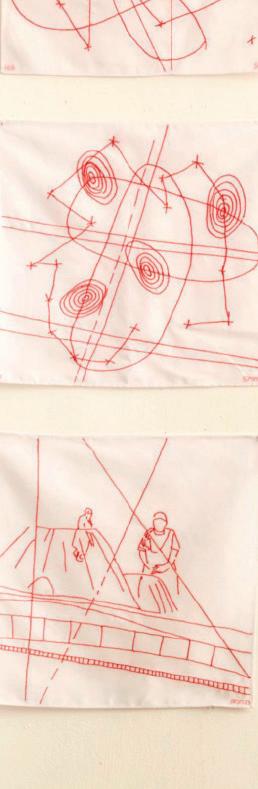
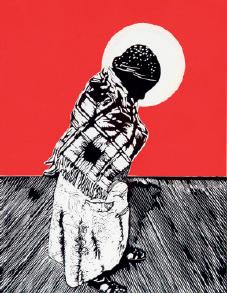
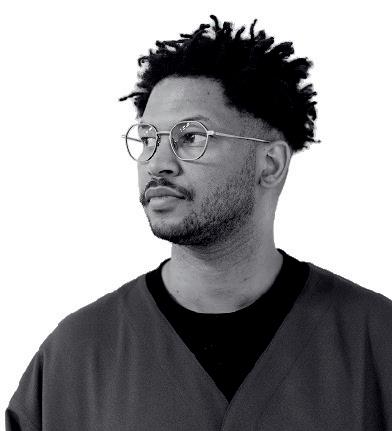
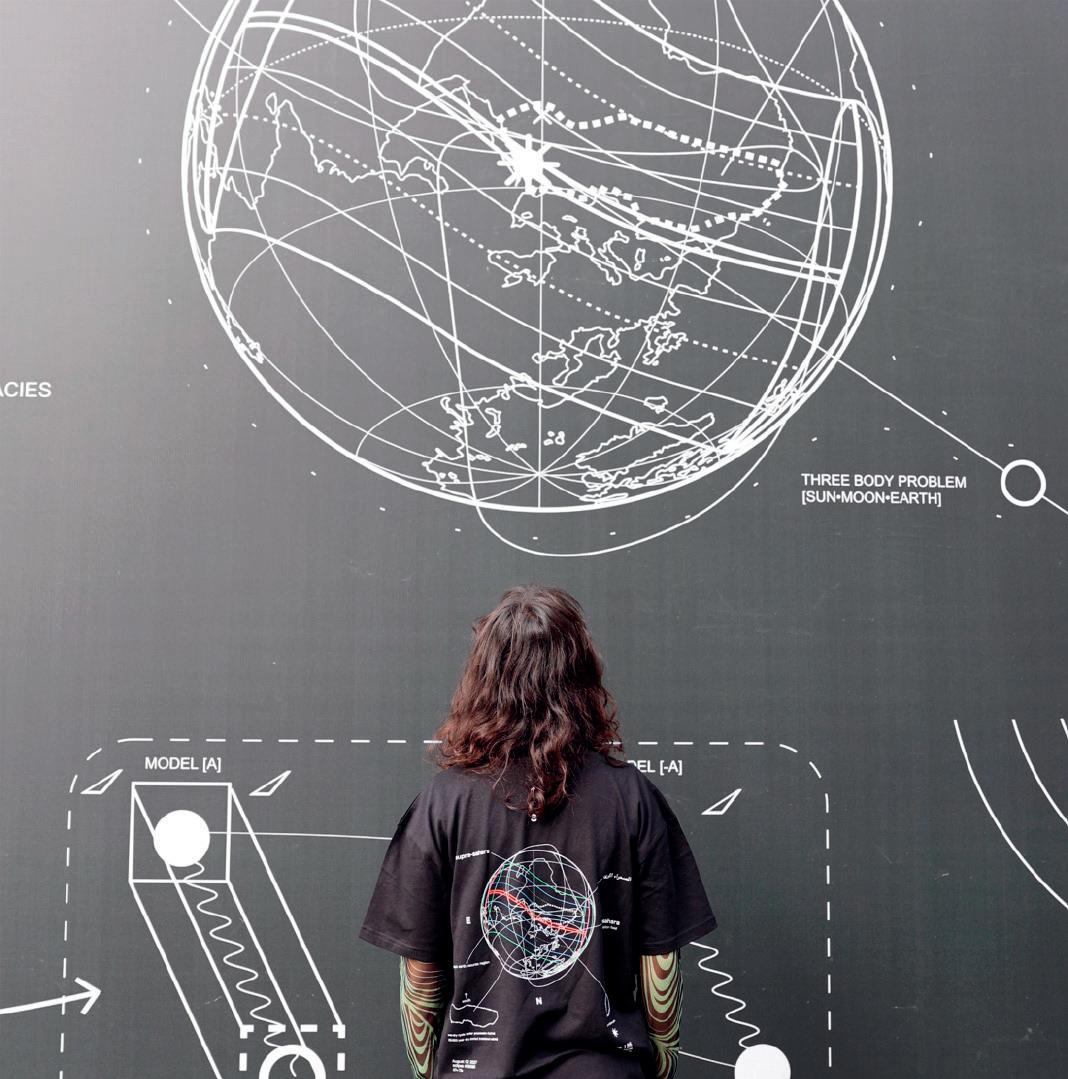
In Minor Keys is the title chosen for the 61st International Art Exhibition. Two Witsies, Nolan Oswald Dennis (BAS 2013) and Senzeni Marasela (BA FA 1999), are among the 11 South African artists invited to participate from 9 May till 22 November 2026. Dennis is an interdisciplinary artist and uses a language of diagrams, drawings and models. In 2025, he presented a solo exhibition at Gasworks London, and a first US institutional solo exhibition at the Swiss Institute in April 2025. Marasela works across a wide range of media, including drawing, painting, embroidery, photography, video, performance, and installation, frequently incorporating domestic materials such as fabric and thread.
Watch video (Nolan Oswald Dennis)
Gabrielle Goliath
At the South African pavillion for the 2026 Venice Biennale, Gabrielle Goliath (BAFA 2008, MAFA 2011) was to exhibit from her series Elegy, a collection of work commemorating individuals who have been subjected to violence.
However, the selection was cancelled by South Africa’s Minister of Sport, Arts and Culture Gayton McKenzie, who requested several changes to the work. Goliath refused. The 2019 Standard Bank Young Artist winner sued the minister for censorship and breaching her right to freedom of expression, but the North Gauteng High Court rejected her bid to reinstate her participation. The Arsenale, which would have hosted the South African pavilion, will be empty this year. Lawyers for the artist are challenging the high court judgment. Elegy will instead be shown for three months from 4 May as a video installation at the Chiesa di Sant’Antonin church in the Castello district, a venue in the vicinity of the main site that is not part of the Biennale.
Image: Kalashnikovv Gallery
NEWSMAKER
Senzeni Marasela
Right and below: Nolan Oswald Dennis and the work titled ‘a recurse 4 [3] world’, 2023
Left: Ijeremani Lam II, 2014 by Marasela
Image: Goodman Gallery
HONORARY DOCTORATES
“Remember, engineering is not interesting unless it solves problems for the people we serve... Engineering is ultimately about technology improving lives.”
Sir John Lazar
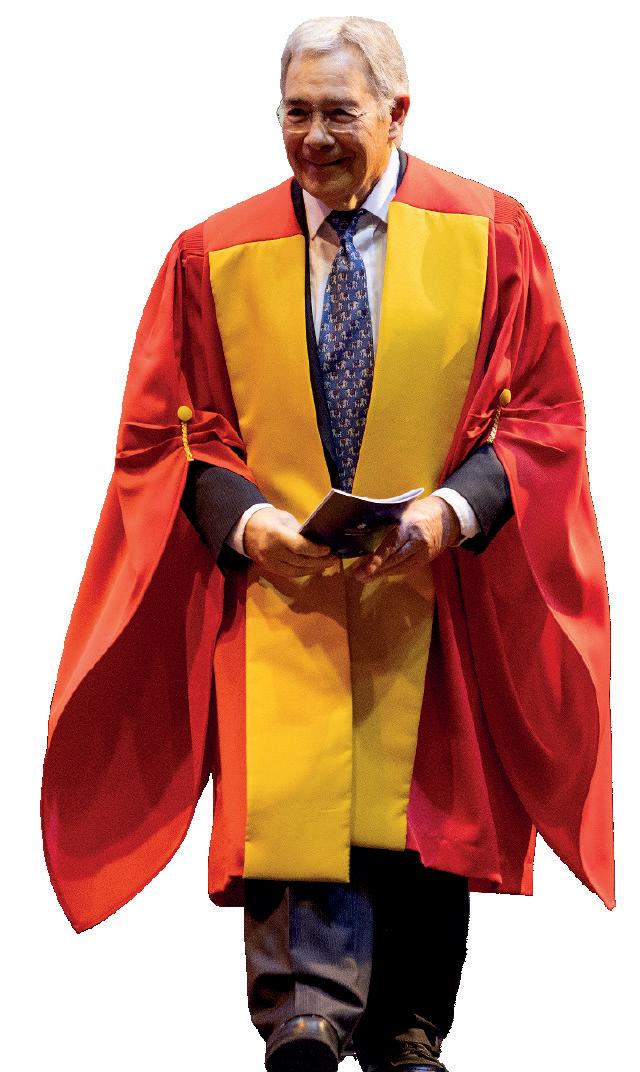
Technology pioneer and investor Sir John Lazar (BSc 1982, BSc Hons 1983) was awarded an honorary doctorate from Wits on 27 March 2026 for his global impact in engineering education, entrepreneurship and social advancement. In his acceptance speech, he paid tribute to the intellectual grounding he received at Wits. He also said: “Remember, engineering is not interesting unless it solves problems for the people we serve. Engineering is ultimately about technology improving lives.” While acknowledging AI’s potential, he urged that its tools should be used with rigour, critical thinking and scepticism. “We must retain cognitive endurance,” he said, arguing that true intellectual strength comes from sustained effort, and from grappling with difficult ideas, persevering through complex projects, and doing the hard work oneself. “That is how intellectual prowess actually happens.”
Bill Frankel
Anti-apartheid veteran, Bill Frankel received an honorary doctorate in law on 11 December 2025. He was known for his role as the secret legal advisor to the International Defence and Aid Fund, which channelled money from around the world into apartheid South Africa to fund the legal defence of political activists and support their families. He worked under the pseudonym “Mr X”. During his acceptance address he urged graduates to live by the values of fairness, justice and compassion and to build a just, equal and democratic South Africa. “Yes, build reasonably comfortable lives,” he said. “But do not forget those less fortunate, the deep inequalities that scar our society.”
“Yes, build reasonably comfortable lives, but do not forget those less fortunate, the deep inequalities that scar our society.”
Image: Chanté Schatz
Image: Jason Alden
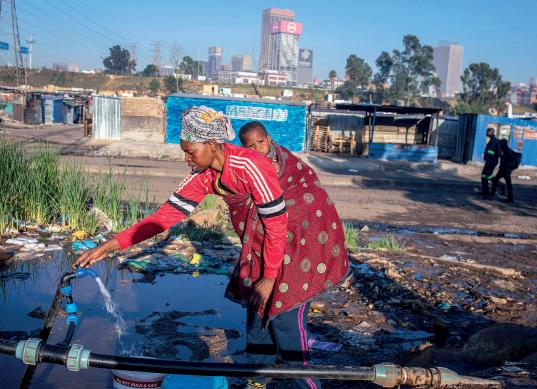
Q&A with Ferrial Adam ( BS c 1996 )
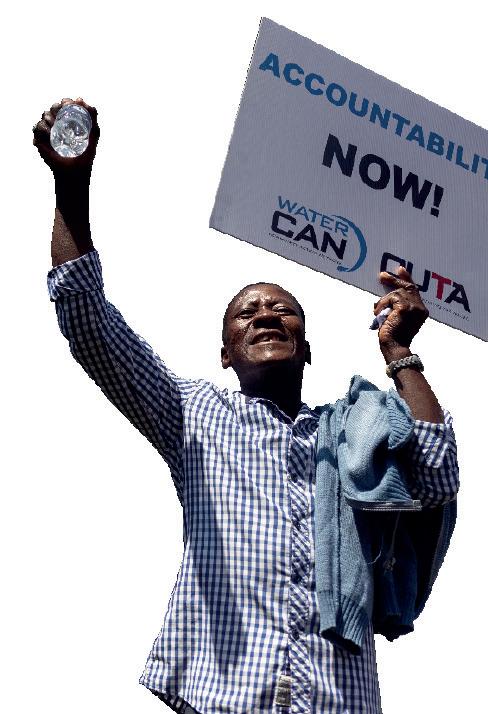
WaterCAN is an initiative to build citizen science that empowers civil society through water testing and monitoring. WaterCAN has developed a simple, inexpensive water-testing kit that tests for bacteria, pH levels and other indicators of water quality. The kits are user-friendly, reliable and widely used in schools, communities and by volunteer water warriors.
What draws you to the work that you do? I have been an activist for most of my life – first in the struggle against apartheid and later in the environmental justice movement. In many ways, activism is simply how I understand my place in the world. I have a deep desire for a better society – one that is equal, caring, and just. The kind of society we want does not emerge on its own. It is something people must actively build, defend, and imagine together.
How did your career unfold?
After graduating from Wits, I spent six years in the Department of Foreign Affairs and was posted to the South African embassy in Mexico. I realised it was not the right fit for me. I completed a master’s in environmental management at the University of Cape Town and joined an environmental justice organisation in KwaZulu-Natal. It was there that I first encountered what we would now call citizen science.
One of the tools they used was the Bucket method, which enabled ordinary people to monitor air pollution in their communities. The buckets were fitted with bicycle pumps and specialised bags to capture air samples. Community members used this method to challenge industries, and it contributed to changes in air pollution policy. It also stayed with me as an idea – could something similar be done for water? That possibility really excited me.
What inspires you? I am inspired by the possibility of change. When you work on environmental issues, you become aware of both the fragility and resilience of the natural world. It reminds me that what we are trying to protect is not abstract. Living eco systems sustain all of us.
Is there something about the work you do that others would find surprising? I guess maybe the work seems so focused on the technical, the data, monitoring but it is also about people and relationships. When you are dealing with serious issues – pollution, failing services, environmental degradation –there is also a lot of solidarity, humour, and humanity in the work. People still laugh, share food, dance, and support each other.
What was your experience at Wits like? It was a bit of a mixed bag. Academically, I studied geology, which at the time still felt very old-school and male dominated. But despite that, I loved the subject. The vibrant student politics, and a powerful sense of youthful optimism about the future shaped that period of my life.
EXECUTIVE DIRECTOR OF WATERCAN SCAN QR CODE FOR FULL INTERVIEW WATER WARRIOR
Watch video
WATERSHED
Walking on water
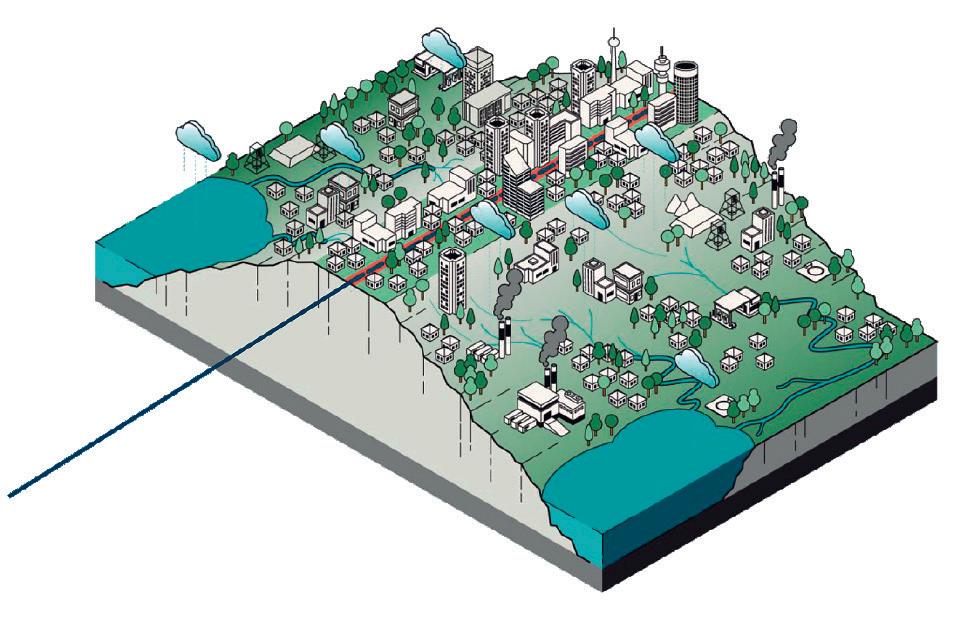
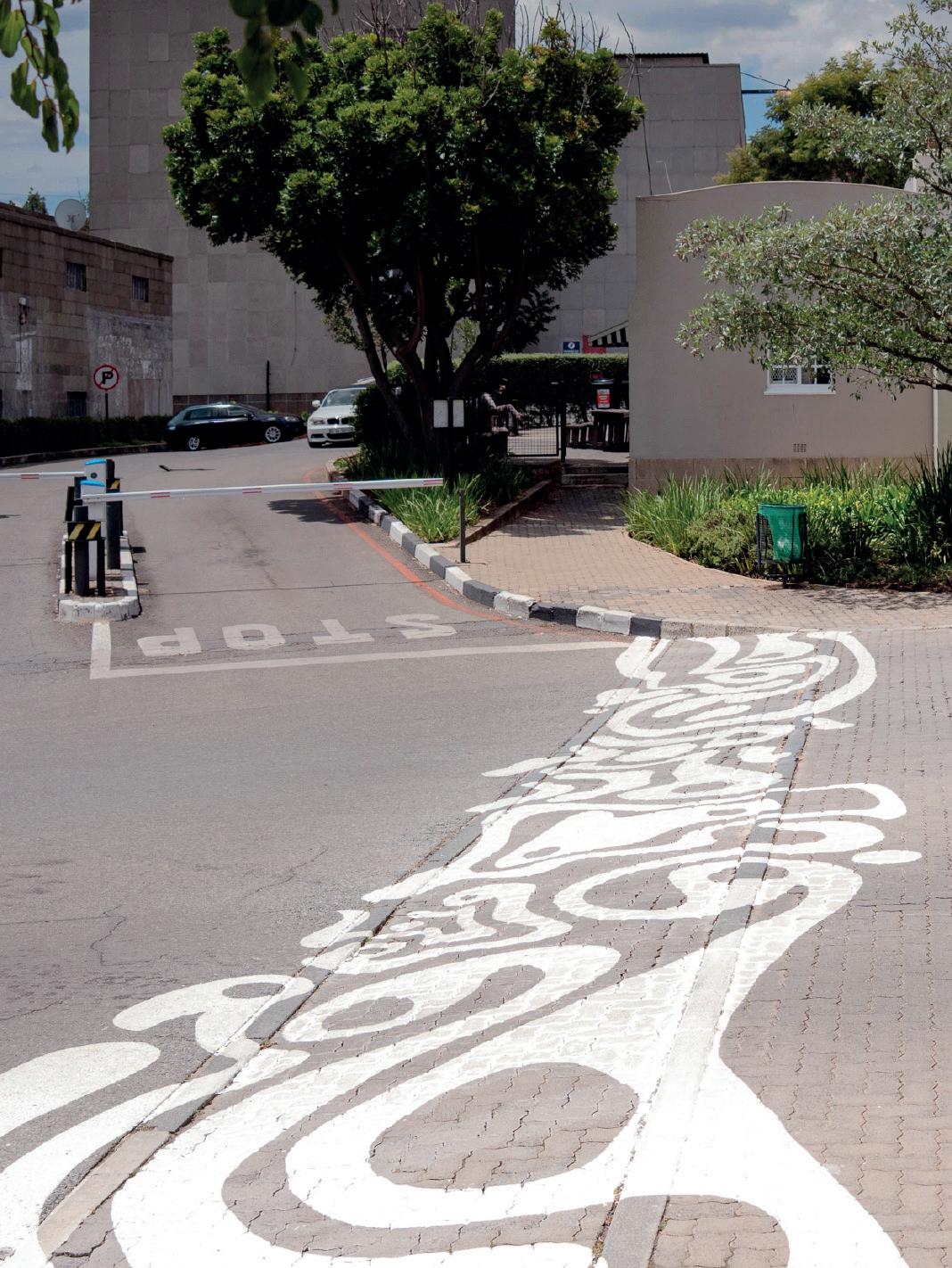
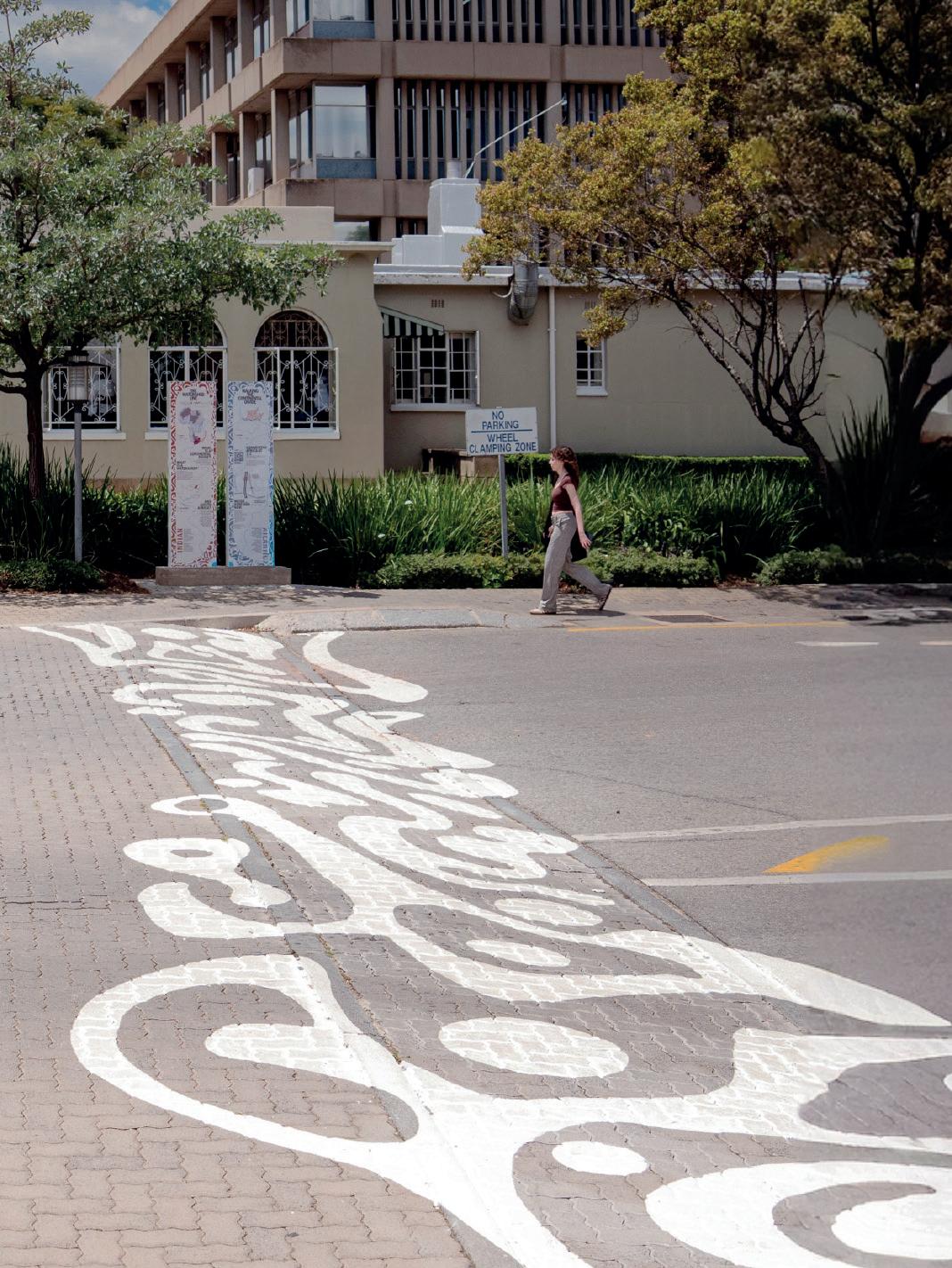
Wits is located right on top of the watershed that divides the Limpopo and Vaal-Orange River basins. A watershed is a geographical area where all water drains into a common outlet – such as a river, lake or ocean. This pedestrian crossing, along Yale Road, marks a local watershed as well as a continental divide. Rain that falls on the north of the pedestrian crossing will make its way to the Indian Ocean, via the Limpopo River, while the rain falling to the south will flow to the Atlantic via the Vaal River. This quirky watershed emerged hundreds of millions of years ago when the Supercontinent, Gondwana, broke into the continents of Africa, Antarctica, Australia and South America.
Source: Wits Water Image: Bongimpilo Zondi
Sources: GCRO, Watershed Boundaries of the GCR
Q&A with Chanel Pather
( BS c PROPERTY STUDIES 2019 )
PROGRAMME
MANAGER
AT SUNCASA
“I have a strong desire to see Johannesburg thrive”
Pather works for Scaling Urban Nature-based Solutions for Climate Adaptation in Sub-Saharan Africa (SUNCASA), which aims to deliver nature-based climate adaptation solutions in African cities. She manages the project funding and plays a coordinating role with funders, the City of Joburg and local partners such as Alexandra Water Warriors and Water for the Future. Their interventions include river and catchment restoration along the upper Jukskei through invasive alien plant clearing and riverbank rehabilitation, as well as large-scale tree planting.
What draws you to the work that you do? I have always been drawn to work that creates social impact and contributes to something greater than myself. I have a strong desire to see Johannesburg thrive. The work is community-led and closely connected to the health of local ecosystems in communities that are often the most vulnerable.
How did your career unfold?
I left Wits with the sole intention of working in inner-city property. Spending time walking the streets of the CBD, I began to see the city differently. I learned a great deal about the dynamics of urban spaces
and developed a growing interest in precinct management. Looking back, my career has been shaped by a series of pivots and shifts in direction, all driven by a desire to do meaningful work. I feel very fortunate to have been able to follow those passions.
What inspires you? The example set by my parents. I grew up watching them work extremely hard to create opportunities for me, often making significant sacrifices. It instilled a strong sense of responsibility to make the most of those opportunities.
Is there something about the work you do that others would find surprising? How much collaboration is required to plant a tree. It involves coordination between city departments, environmental specialists, community organisations, funders, and local residents.
What was your experience at Wits like? Wits gave me the freedom to think critically and creatively. The mix of learning, curiosity, and a bit of chaos taught me the value of working hard and collaborating with others to achieve shared goals. ■
Witsies. For Good
In this new series, Witsies4Good, we celebrate remarkable alumni who have chosen career paths grounded in service, innovation and compassion.
BY HEATHER DUGMORE
Neil Tabatznik
Co-founder of non-profit, Tshemba Foundation
“I fell in love with South Africa again.”
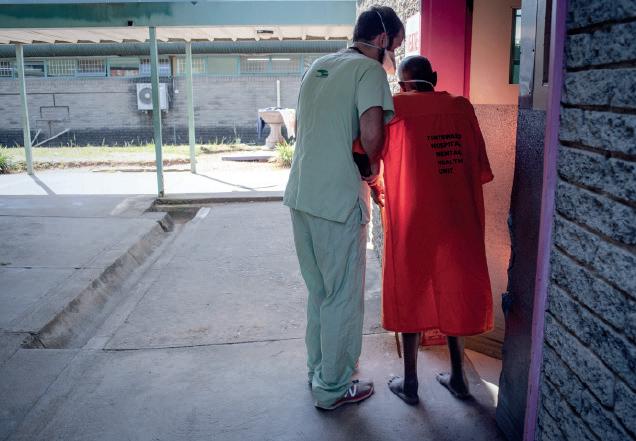
An elderly woman is led down a dusty road by her grandchild, who holds her hand. They are headed for the Tintswalo Hospital in Acornhoek, Mpumalanga, near Kruger National Park.
It’s a big day for the elderly woman, who has been completely blind for several years. Her turn has come to see the ophthalmologist who will be removing her cataracts. He is one of a team of highly trained medical and health professional volunteers across all disciplines.
They offer their services to a non-profit called the Tshemba Foundation, founded in 2014 by Neil Tabatznik (BA 1972), who funds it and is one of the directors.
Up to 20 volunteers at a time from all over the world, including South Africa, in partnership with the Mpumalanga Department of Health, are placed at the Tintswalo Hospital and the rural clinics in the region, serving well over 400 000 residents.
HELPING PEOPLE TO SEE
At the hospital is a state-of-the-art eye clinic and cataract operating theatre that Tshemba established as one of its flagship projects. Here, volunteer ophthalmologists, optometrists and eye theatre nurses have helped thousands of people in rural Mpumalanga to regain their sight.
The elderly woman is one of them, but she doesn’t know yet that the day after her operation she will see again. The procedure has been explained to her but she has lived without sight for so long that darkness is her familiar reality.
“Her profound emotional response, astonishment and joy when she can see again is just wonderful; her life completely changes in that
Tintswalo Hospital and the rural clinics in the region serve well over
400 000
residents
moment. And the same applies to all the cataract patients who are operated on by the best of the best at the clinic,” says Neil.
“Another of our flagships is the Hlokomela Women’s Clinic, which we built and opened in 2017 as women were needlessly dying of breast and cervical cancer.” The clinic provides all sorts of services, preventive care and treatments, including pap smears, cryotherapy and breast, pelvic, abdominal and pregnancy ultrasounds.
Neil explains these are just two of a wide range of medical and health issues the Tshemba volunteers address at the hospital and clinics, which have no specialist doctors and a severe shortage of senior doctors.
“The volunteers stay for a minimum of a month for South Africans and a minimum of two months for international doctors as they need time to get used to the very rural conditions, general lack of diagnostic equipment and range of medical conditions. Once they do, they make such a difference and find it so meaningful contributing
and also sharing skills and training the resident teams.”
Crowds of people wait to be seen every day. To make sure each patient is heard, they have a system of local nurses, whom they call medical translators, who communicate between the patient and the medical and health professionals.
HAPPY PLACE
Neil lives in Toronto but spends as much time as possible with Tshemba at their base near Hoedspruit. “It’s truly my happy place,” he says. The Tshemba team built accommodation on a wildlife estate called Moditlo near Hoedspruit, close to Acornhoek.
“We provide the volunteers with very comfortable accommodation in the bush, with elephants coming to drink at the swimming pool and wild animals all around. It enriches their experience and allows them to relax after their hectic day in the hospital and clinics.”
The volunteers are provided with free lodging but they pay their own way to get to Hoedspruit and give of their time for free.
I HATED MY COUNTRY
For political reasons, Neil left South Africa for London in 1971 straight after completing his degree. He did not attend his graduation ceremony, which was the following year. His brother, Anthony Tabatznik (BA 1969) had also left straight after university and gone to Washington. Both his sisters left South Africa before university.
“I left during the darkest periods of South Africa’s history, during the apartheid regime. I hated my country at the time but I loved being at Wits, it was such a liberating environment. I was part of the anti-apartheid protests, for which I was twice arrested, and part of the counter culture movement of the time, wearing caftans and flared jeans to campus.”
FROM LAW TO PHARMACEUTICALS
In London he first did a master’s in social work and then studied law at the College of Law, and became a barrister for 17 years, specialising in criminal defence advocacy, before moving to Canada. There, he switched professions and became Chair of GenPharm Pharmaceuticals, an international pharmaceutical company started by his late father, David Tabatznik (BA 1942). David became known as the “father of generics” in South Africa as he saw the opportunity to establish pharmaceutical companies that developed and sold generic pharmaceuticals.
In 1993 Neil sold GenPharm and, with Tony, established two other international pharmaceutical companies, Cobalt and Oryx Pharmaceuticals, which they sold about 15 years ago.
PRODUCING DOCUMENTARIES
His business side funded his passion
– producing documentaries. “I love documentaries,” says Neil, who was the co-founder with Steven Silver (BA 1989 BA Hons 1990) of the Blue Ice Group and a co-owner of the Blue Lake Media Fund.
Neil has worked with major actors, including Robert Redford, Cate Blanchett, Laurence Fishburne and John Cusack, and won two Emmys for two of his documen taries: Advocate and Abacus: Small Enough to Jail – about the only bank prosecuted during the 2008 financial crisis.
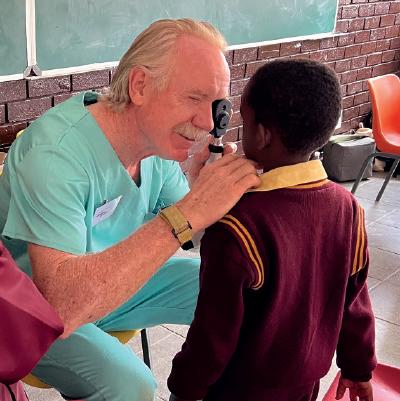
Tshemba volunteer Prof Bennett McAllister (USA) doing vision screening at a local school
RETURNING TO SOUTH AFRICA
After staying away from South Africa for 36 years he returned in 2007 for his son’s bar mitzvah. During this visit he went to Skukuza in the Kruger National Park and says that as he landed he was reduced to tears. “I felt such a deep emotional connection.”
He also went to a friend’s game farm, and during this visit the head tracker asked Neil if he would help them build a school that his village so badly needed. “They had already built a little brick one-roomed classroom and had employed a headmaster, so we helped them build an entire school.”
Neil then discussed building a clinic with the traditional leader, but after visiting a clinic that had recently been built by the government, he realised that the gap was more in human capital than in physical infrastructure. “While being shown around the clinic, they unlocked one room that revealed a fully equipped dental surgery still wrapped in plastic, but it remained unused because there were no dentists,” he recalls.
“What struck me was that the inequality between the urban and rural areas was so extreme that it was just not possible to turn a blind eye to it,” says Neil. “It was heartbreakingly clear to me that the difference between living and dying was based solely on where an individual lived. To me, this is utterly unconscionable.”
The result was the founding of the Tshemba Foundation.
Neil explains that recruiting volunteers was the hardest process for the first four years until they were better known. “It’s the same with any new venture. Even Robert Redford used to walk the streets giving away tickets to get people to come to Sundance when he first started it.
“The challenge now is to make the Tshemba Foundation sustainable. We have just set up a Canadian charity to raise funds for it.
“The beauty of the whole experience is that through Tshemba I fell in love with South Africa again. As much as I hated it during apartheid, helping others has reignited my passion for South Africa and I absolutely love the place. It’s my spiritual home.” ■
Above:
“Nature gives us the tools to rethink how we design and use materials.”
Marushka Soobben Scientist, biotech entrepreneur and educator
If you’re looking for Dr Marushka Soobben (BSc 2018, BSc Hons 2019, MSc 2020, 2024 PhD) on Wits campus, you’ll find her in the lab deciphering how proteins behave at a molecular level as part of her postdoctoral research in computational and experimental biochemistry.
There’s no microscope involved; she uses computer simulation. “At the molecular level we look at the crystal structures of proteins, and from this we can see all the atoms in the proteins. We then do simulations and experimental studies to see what is happening at the molecular level with the amino acids,” explains Marushka, who has a PhD in biochemistry and a specialisation in biotechnology.
“The aim is to design better therapeutics for diseases such as tuberculosis, malaria and cancer and for pathogens that cause infections such as pneumonia and are antibiotic resistant. Some, like staphylococcus, are commonly called ‘super bugs’ and can be caught in hospitals.”
She explains that through increased understanding at the molecular level, which all comes down to the physics and chemistry of atoms, “we can enhance and improve available and novel drugs”.
GREEN CHEMISTRY
“Protein-based biotechnology plays a key role in the global shift towards greener chem istry,” says Marushka. “By using enzymes as biological catalysts, we can reduce waste, energy use and reliance on harsh chemicals, thereby making industrial processes more sustainable.”
She says much of modern chemistry is shifting towards
greener approaches, including the use of proteins and enzymes from bacteria, yeast and plants to support more sustainable industrial processes. These biological catalysts are increasingly used across sectors such as pharmaceuticals, materials and manufacturing.
She adds that scientists have even found bacteria such as Ideonella
STEM Scholars, started by Dr Soobben, aims to educate learners, on how to be scientists and science entrepreneurs
sakaiensis that can break down certain plastics. While still largely at the research stage, these discoveries highlight how biology can contribute to tackling challenges like plastic pollution. “That’s why I love biology; nature provides everything,” she says. “It gives us the tools to rethink how we design and use materials.”
ASKING THE RIGHT QUESTIONS
This is Marushka’s ninth year at Wits, “so I clearly enjoy being here,” she laughs. “I love being in the labs, I love the culture of the university, the lecturers, the friends – it really is my second home.”
She is a scientist, biotech entrepreneur and educator. “I am very passionate about education and would actually like to redo the whole education system to excite learners about knowledge. That’s why I started a company called STEM Scholars,” she says. “My network of scientists and entrepreneurs go and speak to high school learners at both under-resourced and resourced schools as a lot of learners are afraid of maths and science, and aren’t aware of the broad variety of careers in STEM fields.
“Our goal is to show them these subjects are easy to understand if you ask the right questions. We set out to excite them about STEM and what you can achieve with a degree in any of the STEM subjects. And we encourage them to pursue maths and science at school so that they can go to university and/or start their own businesses, irrespective of where they come from.”
TRICHOME BIOTECHNOLOGIES
When Marushka decided she wanted to draw on biotech to find real-world solutions, from healthcare to environmental
Trichome’s aim is to use biotechnology to solve real-world problems at the intersection of health, sustainability, and access
sustainability, it motivated her entrepreneurial journey. This was further sparked by a visit to Lesotho with her PhD supervisor and two peers, Erin Flavell (BSc Eng 2022, MSc Eng 2024) and Wits biochemist Chanél Willemse.
“Lesotho has one of the biggest pharmaceutical cannabis export hubs in Africa, and we went to see how they operate. We met incredible people there, including a pharmacist and successful businesswoman, Melani Botes, who encouraged us to establish a company to innovate biotech products and solutions, based on our research.”
Trichome Biotechnologies, a protein-focused biotechnology and nutrition company, was established in 2022, with Marushka and Chanél as business partners. They have four biotechnologist interns. The name Trichome comes from the tiny, hair-like structure in plants that hold so much therapeutical importance and are crystalline and sparkly in appearance.
BURSTING WITH IDEAS
Early innovations explored applications in water purification and cannabinoid biochemistry. They haven’t taken them to market yet.
Above: Medical marijuana flower Portraits generated using AI
COMMUNICATING SCIENCE
AquiPure provides portable, clean water in a prototype water bottle they have developed with a double filtration system and a button you push to release a purification pill.
CannaConverter is an ecofriendly biochemical method of separating and converting cannabinoids for medicinal and therapeutic purposes. “We convert and separate out or lower the THC compounds to comply with regulations.”
Marushka explains: “Clinical evidence already supports the use of cannabinoids in symptom management and quality-of-life improvement for conditions such as certain forms of epilepsy, chemotherapy-induced nausea, and chronic pain. Ongoing research is also exploring their role in easing the symptoms of neurological disorders such as multiple sclerosis, Parkinson’s disease, ALS, and Tourette syndrome.”
Today, Trichome’s focus is on protein science in a partnership with the Protein Structure-Function Research Laboratory at Wits. “We offer research and development services in the protein space, working closely with academic infrastructure to support industry, startups and research groups.”
Another of Marushka’s skills is her ability to communicate science in a way that makes it interesting for the general public.
She was named the winner of the Science Communication Competition at BioAfrica 2023. “We had to speak about our research in an entertaining, engaging way and I spoke about my cannabis research, which lends itself to humour, and I won!” This earned her a threemonth fellowship with Dr Chris Smith at Cambridge University. Dr Smith is a world-renowned medical doctor and virologist with a podcast called The Naked Scientist.
She had to pay her own way for the internship and saved hard to get to Cambridge in 2025. As part of her internship, she had to find the top science news stories of the week, interview the scientists, write the articles and make podcasts about the topics. “I still help Dr Smith with some of this work.
I learnt so much at Cambridge during those three months,” she says. “It was one of the best experiences in my life and it really trained me up to be a strong science communicator.”■
Images: Adobe Stock
Image: Getty
Memories to savour
From Chelsea buns to hot chips and the Wits Special, campus food recollections remain vivid. Taste and smell memories come flooding back when alumni recall their student days.
BY UFRIEDA HO
We start this tale of tastes with two food heroes that have featured on the Witsie menu through the generations. They are the beloved carbs of student sustenance. And for all their dubious nutritional value, they are unapologetic go-to comfort foods – easy on student budgets and addictive quick fixes.
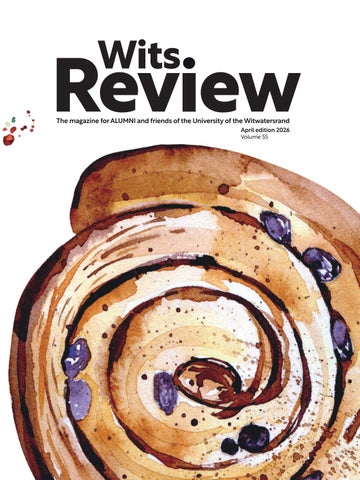
First mention goes to the CHELSEA BUN . Students from the 1980s and 1990s, like Yolanda Ho (BA 1992), remember these giant dough rolls dotted with raisins and sultanas,
rolled in cin namon and mixed spice, and coated with an icing sugar crust – sweet, sticky nostalgia.
Ho says the best buns were served at the ground floor SRC canteen, which, back then, was the Students’ Union on East Campus.
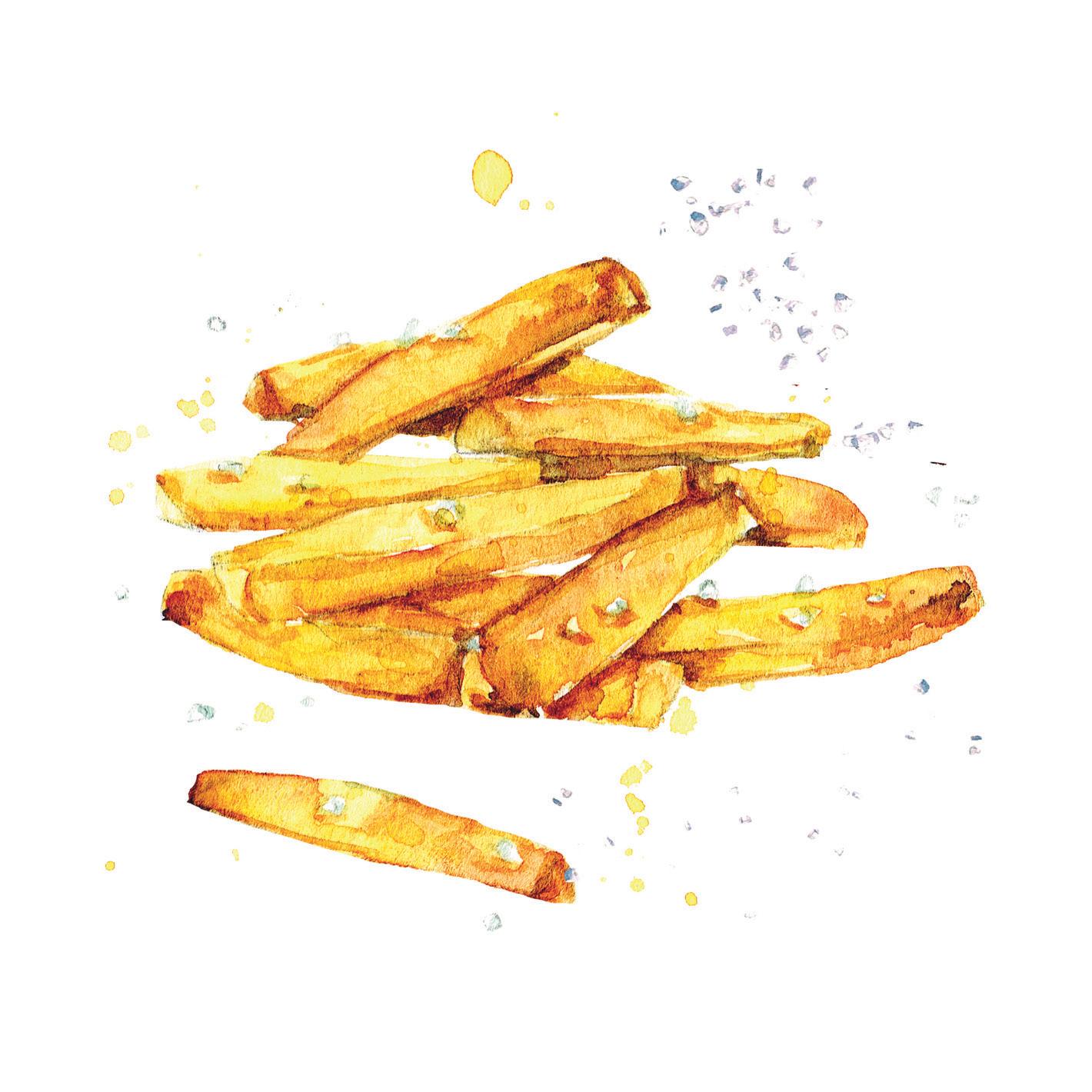
The second Wits food hero is HOT CHIPS, including the infamous, “Chips of Shame”, 1kg of slap chips at a very keen price at Chesa Nyama in the student centre. Charles Goldstuck (BCom 1982, BAcc 1983) recalls going to the canteen to get a plate of “slap chips”.
“The best in Joburg at the time,” he says. Anna Cox (BA 1982, BA Hons 1983, MA 1986) recalls: “It was cheap, and it kept us going.” The overflowing plates of deep-fried chips from the canteens were served up with squidges of tomato sauce that had enough red food colouring to stain the large intestine. There was also the electric yellow canteen mustard, or you could order your chips with a ladle of “brown sauce” – a mysterious and viscous, part tangy, part sweet, part salty concoction of yumminess.
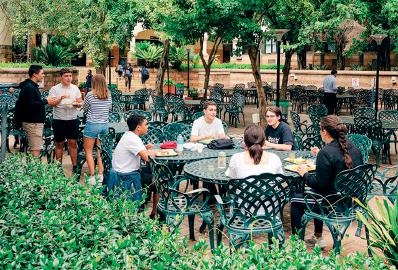
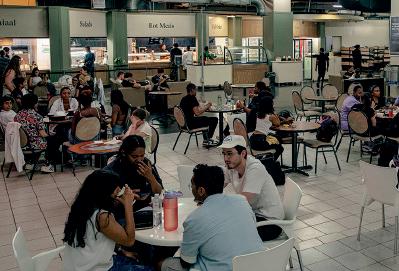
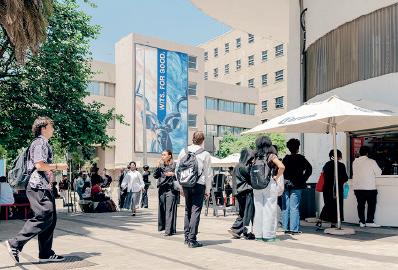
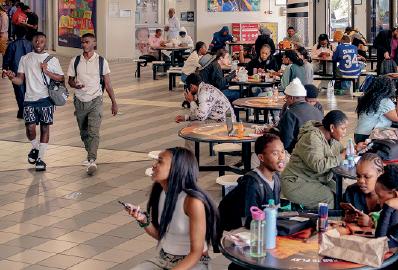
The canteens weren’t just places to get carbed-up, they were magnets for meet-ups, a central place to sit and scope student life and share whatever you could afford with a friend, and if outdoors, with carb addicted pigeons.
Today, the canteens are outsourced in line with the university’s move from around the 2000s to a variety of food vendors and franchises.
In the Matrix, for example, you’ll now find everything from sausages to fish and chips, curries and Chinese take-aways. What remains the same is the lunchtime crowd that still throngs there every weekday.
Whether it’s res meals or day student snacks, the aroma, taste, looks, and texture of campus food is a sensory stimulus that stays with us for a lifetime. Food is a flashback to our formative years: where first loves found each other at the Chelsea bun checkout; where projects were brainstormed over a shared plate of chips.
It’s how freedom tasted when your 19-year-old body demanded soda overloads, or too many beers and sulfuric shooters, with burgers and pizzas to soak them up.
Food sets the scene for late-night cram sessions, fuelled by caffeine in a can and party-pack crisps. It’s memories of instant noodles in mugs of hot water, blooming into late-night res-survival stomach fillers. Student food brings back halcyon days of sandwiches shared on the library lawns with a crush from Biology, or the day you first tasted a prego roll at a fundraising for RAG.
Psychologists call the heightened memory recall from the ages of 15 to 25 the reminiscence bump. Memories in this period – and university life falls right into the timeframe – are particularly vivid because they are about social bonding and ritual, intense emotions, and the experience of many firsts. First year often brings the “Freshman 15”: the 15 pounds (almost 7 kgs) that first-years could expect to pack on thanks to campus diets.
“The canteen became a place of comfort and stability – there were the same kindly staff and the same dishes every morning and evening meals were more predictable than grades. For value for money nothing could beat a plate of slap chips served with lashings of tomato sauce. And those Chelsea buns served in Senate House – delicious cinnamon snails with sticky icing – a meal for two on any cold morning after the first lecture.”
– Penelope Hawkins (BSc 1987, PGdipEd 1987, BA 1990)
For Shain Germainer (BA 2009, BA Hons 2010), adding to the extra kgs were the SPRING ROLLS at the Chinese Lantern in the Matrix – “almost two handfuls of deep-fried deliciousness” is how he describes them. With fillings of chicken, veg or beef, they were rolled in diaphanous rice paper, then battered and cooked in bubbling oil. The perfect hit of carbs, fats and salt – they fuelled compulsion and craving.
Rob Sharman, retired head of Campus Housing and Residence Life at Wits, recalls the days of the Main Dining Room, on the top floor of the Students’ Union Building, where a budget-friendly residence-style lunch was available to staff and day students, and until 2000 a grill room and pub in the Bozzoli Sports Pavilion that served great meals at student prices.
He also recalls Hofmeyr House, the former residence
of University Principals, which served as a Wits Staff Club from 1969, offering one of the best menus on East Campus at the time.
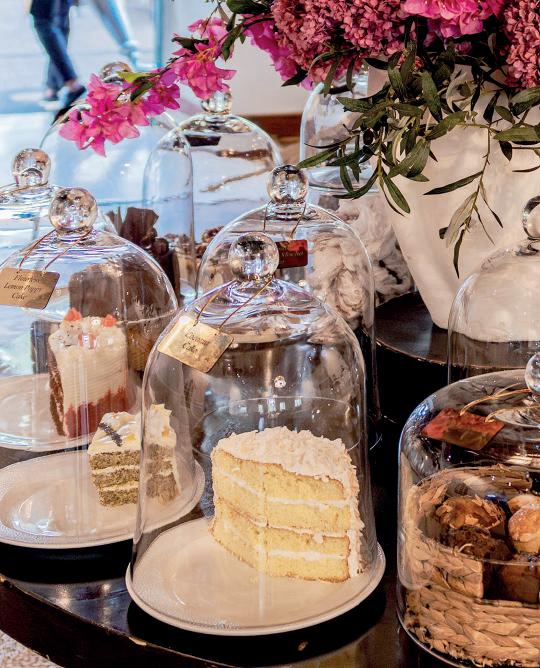
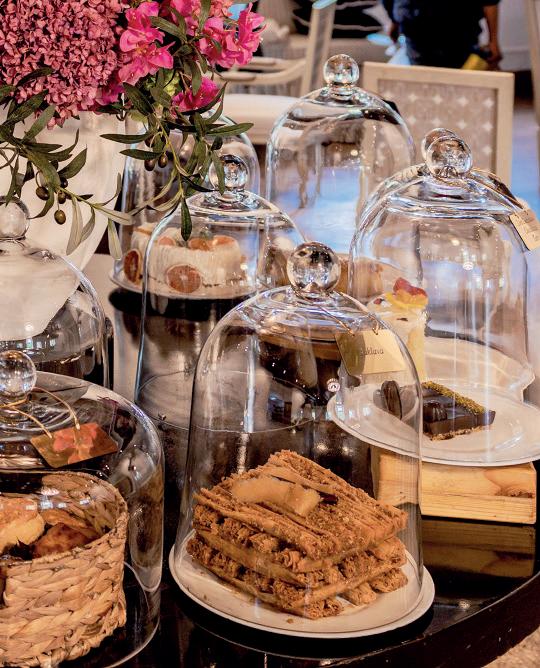
ANYONE VISITING OLIVES & PLATES FOR THE FIRST TIME IS OBLIGED TO CIRCLE THE TABLE OF CAKES – LITERAL TOWERS OF TEMPTATION
“The surprisingly palatable coffee at the old Medical School canteen. I partook of it in copious volumes especially before exams, in the vain hope that it would give me an intellectual and creative ‘edge’” – Erika Wentzel (BSc Physio 1985, MSc Physio 1992)
Today, students’ sense of self-control is constantly challenged by the easy availability of diverse, delicious food options, including Greek, Italian, Chinese, African, halaal and kosher offerings, among the 22 eateries on the various campuses.
Many universities also have a “signature” favourite, like Cornell University in Ithaca, New York, known for its ice cream from cows that are part of the university’s working and teaching dairy.
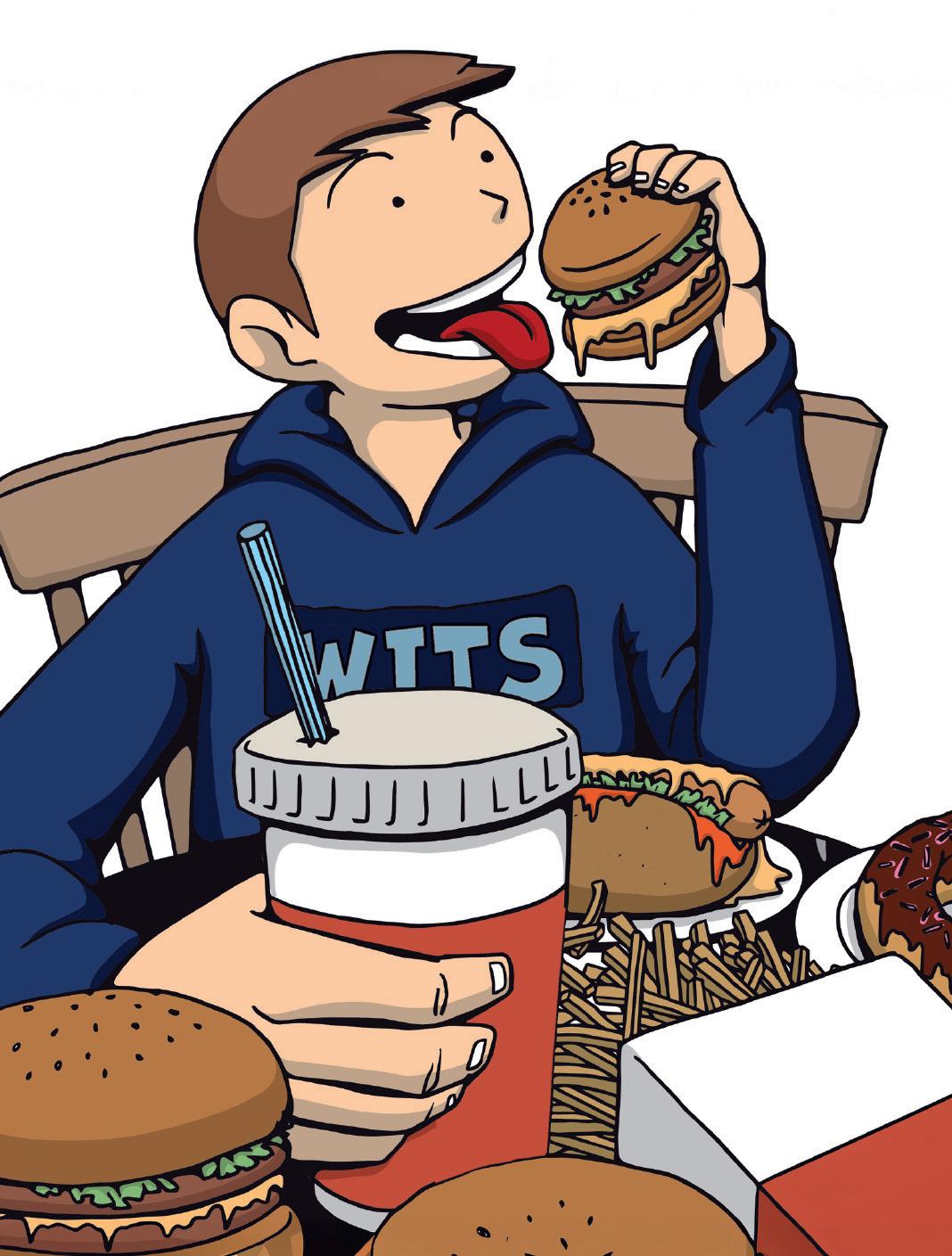
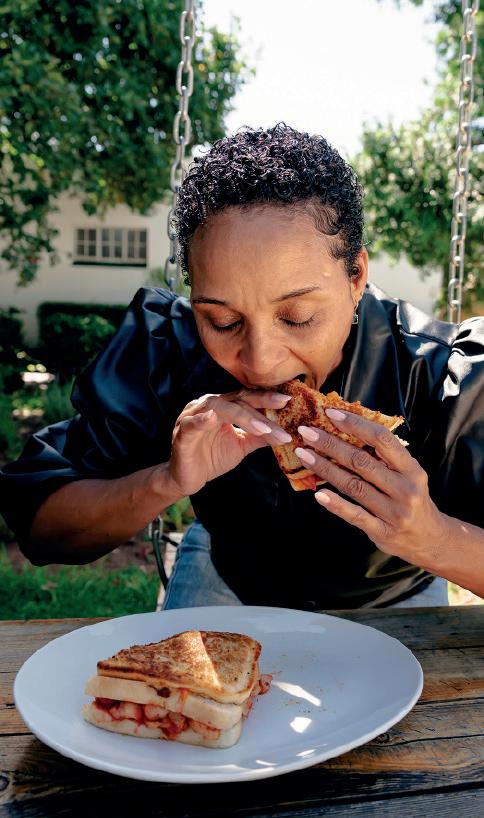
A few leagues less wholesome is a Wits student favourite today: the “WITS SPECIAL” sandwich. This is a mind-bending creation by Akhalwayas takeaways, featuring white bread filled with steak, polony, cheese,
Tucking into the mind-bending Wits Special
Left: Cake table at Olives & Plates, The Club complex, West campus
22 OUTLETS WITH DIVERSE OPTIONS R55 SPEND AVERAGE PER VISIT
340 STAFF employed at all campus retailers budget meals, salads, grab and go items
Most popular foods:
“The R9.00 spring rolls from the Chinese joint. Or the Kara Nicha’s vegetable briyani and two rotis. Enough for oneself for lunch and dinner or to share. Only R20 to boot. That Chinese place saved me many times from not being able to afford lunch at the end of the month.”
– Scott Greeff (BCom 2022, BCom Hons 2023)
chips, salad, tomato sauce and mustard. Gut health, heart health, cholesterol – be damned!
30 000 Busiest outlet’s best month CUSTOMERS
1 700 Smallest outlet’s best month CUSTOMERS
*All figures are estimates
Wits has a range of foodie partners such as Olives & Plates, with outlets throughout the University –from the Medical School canteen to Wits Business School to the Wits Club, set in the Cape Dutch style courtyard which the Alumni Office overlooks. Their Mediterranean meals are served as artworks in themselves, and anyone visiting Olives & Plates for the first time is obliged to circle the table of cakes – literal towers of temptation.
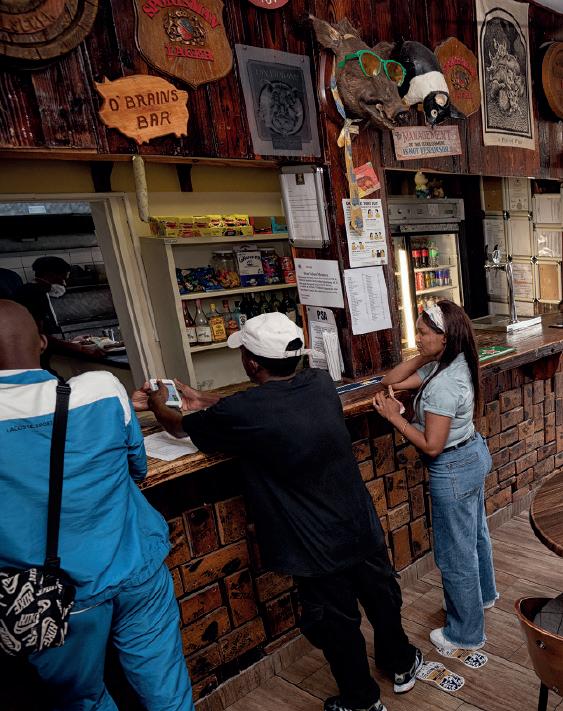
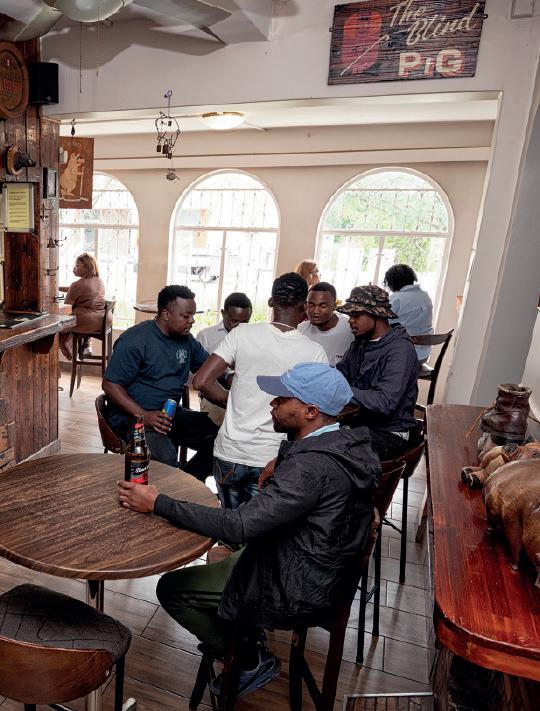
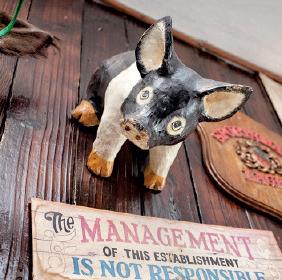
At the top end of Yale Road is the membership-based PG (Postgraduate) Club, also known as The Pig. The establishment has been around since the mid-1990s. It serves up
pub-style meals and is meant to be a social, relaxed, but members-only establishment serving postgraduate students, staff and alumni.
Chatter Hands Café, located on the ground floor foyer of the Thembalethu Building on the Wits Education Campus, employs deaf baristas as part of an entrepreneurship initiative at the Centre for Deaf Studies. The coffee shop breaks down barriers between hearing and deaf people. Hearing people learn the sign for their coffee orders. And with each interaction, communication and collegiality grows.
There are many other Wits food stories to share, and the Wits food tradition is an evolving reminder of our campus years. As much as it’s true that we are what we eat, we are also our memories: the first friend you made at Wits over shared spring rolls, or when you pulled up an extra chair for that hungry classmate, who’s now your business partner. Whatever your campus food story is, it’s bound to bring back memories ■
“My memories are dressing up in academic gowns for the termly formal dinners, getting tokens to exchange for lunch but mostly the great chance to socialise over two meals a day.”
– Jon Toohey (BCom 1985, BCom Hon 1986)
left: Olives & Plates – Wits Business School and Wits Medical School Middle: The Pig – East campus Right: The Tower – West campus; the Matrix – East campus and Chatter Hands Café – Wits Education campus
*Share your campus food memory: alumni@wits.ac.za
This article honours the memory of Ufrieda Ho and is published posthumously. The Wits Review team were shocked and profoundly saddened when Ufrieda passed away soon after submitting a draft of this story. A memorial tribute to Ufrieda appears on page 77.
Images: Bongimpilo
Zondi
Top
Images: Brett Eloff
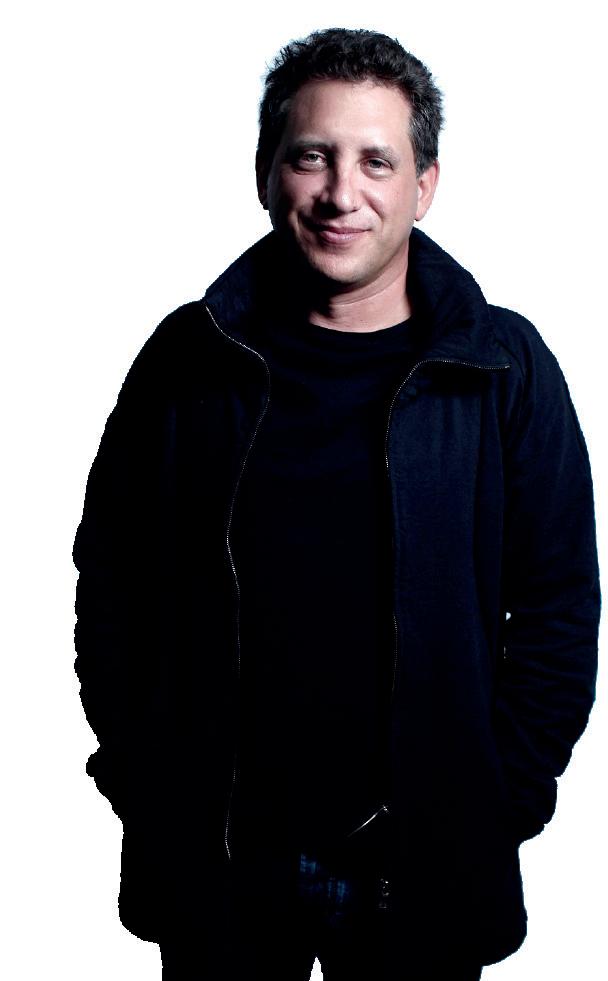
Former anti-apartheid student leader, Steven Silver (BA 1989, BA Hons 1990), shares how his past in filmmaking provides a lens for his work as a psychoanalyst.
BY HEATHER DUGMORE
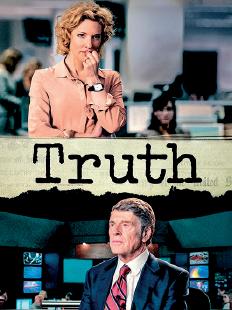
Above: Steven was one of the executive producers of the film Truth
starring Robert Redford and Cate Blanchett
There’s an old house in Toronto that has been converted into offices. On the third floor is a door bearing Steven Silver’s name. Inside are a psychoanalyst’s rooms, with a couch, just like in the movies. Here we find Steven writing notes from his last client. When he looks up and speaks, you’d think he was fresh out of South Africa as his accent is entirely intact. “I made sure never to lose my South African accent!” he smiles. “I love and miss South Africa. I was there in December, and intend to spend more time in the country. It’s still home after all these years.”
Five years ago, Steven enrolled at the Toronto Institute of Psychoanalysis for the six-year degree, and he now practises in Toronto as a candidate psychoanalyst in the final year of his training. Next year he graduates and becomes a fellow of the Canadian Psychoanalytic Association, an affiliate of the International Psychoanalytic Association.
CAREER CHANGE AFTER 19 YEARS
It’s a change from his 19 years in the documentary and film industry. From 1997
to 2016 he wrote, produced, directed and/ or financed a string of documentaries and films in South Africa, Canada and Hollywood. Some won international awards, like an Emmy for the feature-length South African documentary Gerrie and Louise (1988) which he wrote and co-produced, and the film Truth (2015), starring Robert Redford and Cate Blanchett, for which he was one of the executive producers.
“I’m interested in people and their life stories,” he explains. “I like the quest for truth or a kind of truthiness that documentary filmmaking involves, which is not unlike psychoanalysis – which offers an endlessly fascinating well of intellectual thought. You can spend a lifetime studying it and thinking about it. And I have a real passion for learning.”
FIRST SEEDS OF PSYCHOANALYSIS
It was at Wits that Steven first learnt about psychoanalysis and became fascinated by it. “A lecturer by the name of Sue van Zyl taught Freud in an extracurricular programme, and during my undergraduate studies I used to attend her lectures,” he explains.
“Today there is a resurgence in psychoanalysis, and we are seeing a lot more interest in the deeper kind of treatment it offers,” Steven explains. “It’s not a quick fix – it works to offer meaningful and hopefully permanent relief from the ways in which people find themselves stuck or in the grips of anxiety and depression.”
“During my time at Wits, South Africa was in turmoil and there were regular protest marches on campus that were often met with violent reactions from the police. Many students were detained and imprisoned; others went into hiding.”
He says therapists worldwide have seen a rise in clients coming to them with anxiety and depression. “We are living in a time which promises quick fixes and an obsession with wealth,” he explains. “Social media presents people with unrealistic ideas of how other people are living and there is an increase in social isolation. People spend a lot of time connecting on their phones, and while it can be useful, it doesn’t replace face-to-face and more meaningful forms of connection.”
ANTI-APARTHEID STUDENT ACTIVIST
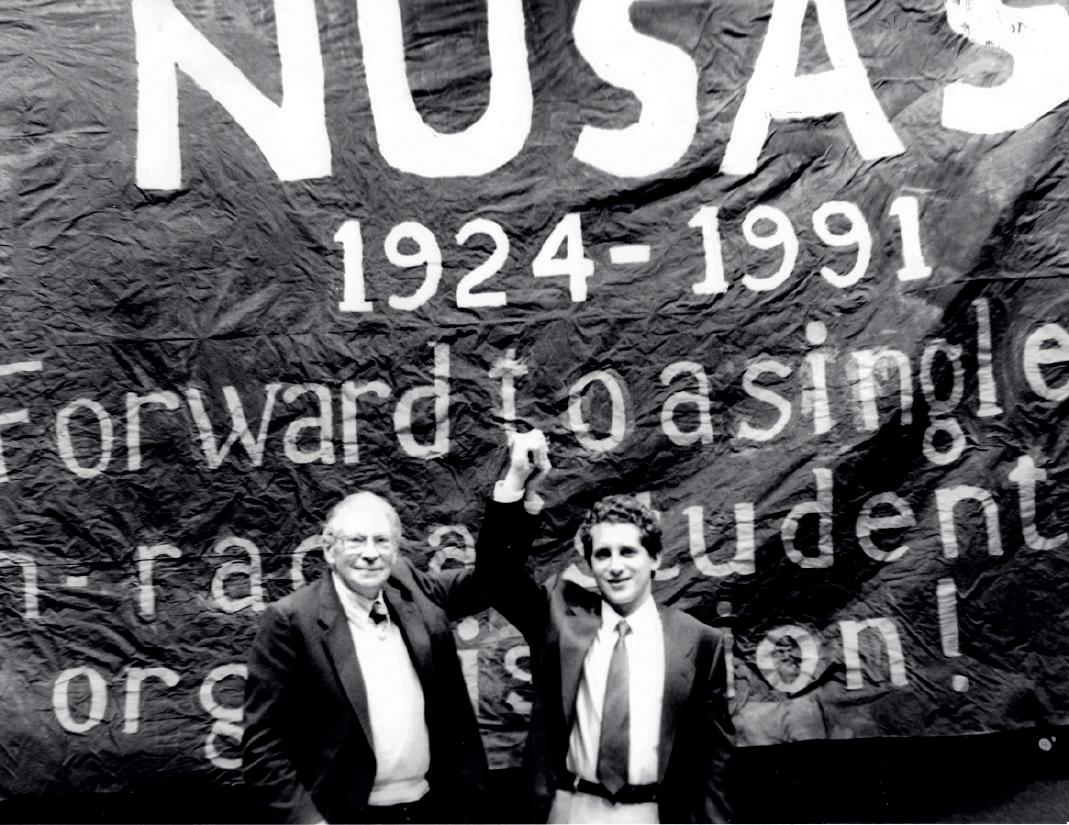
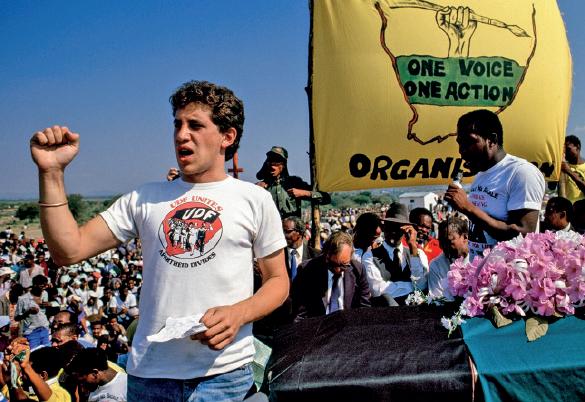
At Wits Steven was an anti-apartheid student activist on the Wits SRC and a regional and national organiser for the National Union of South African Students (NUSAS), serving as NUSAS President in 1990/1. This was during the period of the merger of NUSAS with the South African National Students Congress (SANSCO) to form the South African Students Congress
Above: Steven Silver and Beyers Naude at the last Nusas Congress
(SASCO) in September 1991.
“During my time at Wits, South Africa was in turmoil and there were regular protest marches on campus that were often met with violent reactions from the police. Many students were detained and imprisoned; others went into hiding.”
He says he chose the route of activism “because it made it easier to live in South Africa, as the injustice of apartheid was apparent to anyone who looked.”
AN EXTRAORDINARY INTELLECTUAL
He majored in psychology and industrial sociology “as I wanted to study under the late Professor Eddie Webster, an extraordinary intellectual and activist.”
Steven lived in Yeoville and would hang out in Rockey Street and venues like the legendary Jameson’s Bar in Commissioner Street in the city. It still had what was known as a Kruger liquor licence from the turn of the 20th century, which transcended the racially divided and time-restricted liquor laws of the day.
“There was an incredible range of South African bands and musicians that I loved, like the African Jazz Pioneers, Abdullah Ibrahim, Bernoldus Niemand (alter ego of Wits alum James Phillips) and his band The Cherry Faced Lurchers.” They were part of the surge in creativity and new reference points amid the violence.
After graduating with his Honours degree, Steven started an LLB as he could not serve as NUSAS President unless he was a registered student.
MOVING TO CANADA
Steven’s family had emigrated to Canada in 1986, and when his mother was diagnosed with a terminal illness he went there in 1994 and stayed. He is married to Wits alum Brynie Lacob, a practising psychotherapist. “We’ve been friends since we were 12. She had emigrated to Canada in 1988, married, had three children and then got divorced. We started to date, got married and now I have three wonderful stepchildren,” he explains.
He adapted well to life in Toronto and
got used to the city being buried under snow in winter. His practice is a 30-minute drive from home in the suburb of Thornhill.
The first documentary Steven made was in 1997, with Canadian filmmaker Sturla Gunnarsson, for the Canadian Broadcasting Corporation. It was the South African story of Gerrie and Louise and meant splitting his time between Toronto and Joburg.
“I had wanted to make a film about South Africa’s Truth Commission and was going to base it on the Cradock Four, who were assassinated by the apartheid security police in 1985. While researching this idea, Sturla and I came across Louise Flanagan and Gerrie Hugo.
“Gerrie Hugo was a military intelligence officer in the South African Defence Force. Louise was a left-wing journalist investigating the role of the South African Defence Force, and in particular men like Gerrie, in a range of apartheid era atrocities. As the film opens, you find out that she has been appointed to the Truth Commission as one of its chief investigators. This was the very commission where Gerrie was going to testify. You also find out that they had fallen in love and had just got married. The film tells the story of how all this came to be against the backdrop of the opening weeks of the Truth Commission.” The film won an international Emmy, Gemini and
Above: The funeral of activist Peter Nchabeleng, Apel, Sekhukhuneland Below: Toronto buried under snow in winter
Image : Adobe Stock
Writers Guild of Canada awards.
From then on, Steven created documentaries for the Canadian Broadcasting Corporation, as well as PBS, the History Channel and the Discovery Channel. They include Stories from the War Zone, Diameter of the Bomb, The Last Just Man (about the 1994 genocide in Rwanda), which won several international awards, and his first full-length feature film, released in 2011, called The Bang Bang Club.
WORKING IN HOLLYWOOD
His work took him to Hollywood for a while. “It was interesting and I thoroughly enjoyed my time there, being among so many people working in the same industry.
“I love making films; it’s an enterprise where all the people involved are pulling in the same direction, hyper-focused on one goal: getting your film made and getting it across the finishing line.”
During this period, Steven and
THE BANG BANG CLUB
Steven was the writer, director and producer of The Bang Bang Club, which premiered at the Toronto Film Festival in 2011. “It took about eight years to get made and I loved the project, the story and the time in which it was set as I had lived through it,” he says.
The movie was based on the book The Bang-Bang Club: Snapshots from a Hidden War co-written by Greg Marinovich and João Silva, who, with Ken Oosterbroek and Kevin Carter, were the South African news photographers known as the Bang-Bang Club.
In the film, Marinovich was played by Ryan Phillippe, Carter by Taylor Kitsch, Oosterbroek by Frank Rautenbach and Silva by Neels van Jaarsveld.
The four photographers operated in the volatile years of 1990 to 1994 in South Africa, when Nelson Mandela had been released from prison and became President of South Africa.
They captured violence and brutality up close and at huge risk. The life cost was considerable. Oosterbroek was shot and killed nine days before South Africa’s first democratic elections in April 1994. Three months later, Carter died by suicide.
Witsie Neil Tabatznik (BA 1972) were partners and co-founders of the Torontobased film and video production company Blue Ice Group Capital. In 2005, the duo bought into Barna-Alper Productions in Canada, where Steven served as president from 2005 to 2009, when it was sold to Entertainment One (eOne). Steven and Neil have also been key drivers of the Hot Docs Blue Ice Docs fund to finance documentary films made in Africa. They have been involved in this for several years, including helping to select the film projects.
BUILDING HIS MEDIA BUSINESS
Steven and industry veteran Peter Sussman became media financiers, founding the Kew Media Group (KMG) in 2017 on the Toronto Stock Exchange. By all accounts, KMG was set to be a force in global TV production and distribution, distributing successful series like Line of Duty and partnering in the popular Netflix series Dirty Money
“After selling to eOne, I had a front seat in its growth and extraordinary success. I wanted to see if I could do something similar,” explains Steven, who became a director of KMG. It was a special purpose acquisition corporation. “We raised US$90-million in the North American capital market and used it to buy several TV production companies from around the world.”
TURNING POINTS
Kew seemed to be succeeding “until we faced a set of challenges and did not have the support to carry on.
“A number of people were hurt by this,” says Steven, adding, “I remain profoundly grateful to the people who worked to try to save the company.”
It spurred his desire for the career change he had already been contemplating, and he started studying to be a psychoanalyst in 2021. “It was something I found deeply fascinating and I often thought I would like to grow old doing it,” he says. “Will I make more documentaries and films? Probably yes, I’m working on something now but it is far too early to talk about.” ■
LIFE WITH LOUIS
From a turbulent adolescence in Johannesburg to a phenomenal career, Louis Shakinovsky (BA 1968) continues to grow global businesses with an unlimited generosity of spirit.
BY HEATHER DUGMORE
At the age of 81, Louis roars around on his Indian Scout motorbike, meeting up with mostly ex South African fellow riders for adventures in the UK, ending with refreshments at one or another biker café. “Motorbiking offers a phenomenal sense of freedom,” he says.
Speaking from his favourite place, his study at his home in Virginia Water, Wentworth, surrounded by memories, photographs, memorabilia and his trumpets, which he recently learned to play, he says: “Pretty much everything that has happened to me can be seen in my study.”
Snappily dressed in a black polo neck and joggers, he strides around with the agility of men decades younger, then sits at his computer where he extracts dates and events from throughout his life, including a career of 51 years with Belron International, the world’s largest automotive glass repair
and replacement company, operating in 40 countries. Louis was part of the four-member executive team who built up the company, founded by a visionary South African entrepreneur, the late Ronnie Lubner.
“My approach throughout my life has been to try to do good things with great people; people with a generosity of spirit and sense of humour,” Louis says. “I love working in a team and everyone is an essential part of it. I respect people’s time and I also listen closely to what they say. Everybody has a story to tell and when you listen and look closely, you pick up what they are not saying, which is often the most important part.”
FROM CHAOS TO CLARITY
His success in life was a far cry from his teenage years, and we meander back through the decades to meet 15-year-old Louis living with his family in Linden,
Above: Louis loves flying helicopters; In the UK with his group of riders. Far right: Louis at 81
Johannesburg. “My early teenage life was disruptive and chaotic, and I was expelled from high school for being entirely unmanageable, defiant, and an academic failure. A reformatory might have been my next stop if it hadn’t been for my guardian angel – my mother – who persuaded my less-than-impressed father to give me one last chance. He reluctantly and understandably unhappily paid to send me to Damelin College, which was renowned for handling ‘unmanageable’ children.”
It was there that exceptional educators, including Dr Isaac Kriel and Max Neppe, uncovered potential in Louis that he hadn’t known he had. He matriculated with the highest mark in English in the country and grades to get him into medicine.
After nine months of military training and four months riding through Zimbabwe (then Rhodesia) and Zambia on a scooter, he was accepted by the University of Pretoria to study medicine. “But after completing my first year I left medicine as it wasn’t for me. What I wanted to do was to get a degree in law at Wits, which I combined with English and psychology,” Louis says. “I wanted to make sure I had a solid legal background without wanting to practise as an attorney or advocate.”
He loved the Law School: “Law teaches you a different way of thinking – how to look at things rationally and logically, to look for disconnects and to continually question. I also loved the eloquence of lawyers like Abraham Lincoln and Clarence Darrow. When asked by a client about the odds of winning his case, Darrow famously replied: ‘Do you see these thousands of court cases in these books on my shelves? One hundred percent of them thought they were right, and fifty percent were wrong.’ .”
LIFELONG IMPRESSIONS
Several academics made a lifelong impression on Louis, including the Dean, Professor Ellison Kahn (BCom 1941, LLB 1944, LLD honoris causa 1990) “Then there was Prof Paul Quentin Regnar Boberg (LLB 1955, LLM 1966, LLD 1978 ‘aka PQR’, who taught contract law with
inimitable style. He and profs Louise Tager (GDE 1967, LLB 1970, HDipTaxLaw 1975) and John Dugard (LLD honoris causa 2004) were my favourite law lecturers, and Professor Jan Scholtens, my Roman law lecturer, was a brilliant teacher.”
Financing his degree himself, Louis had to find work, which he did through Ace Employment Bureau in the Fatti’s & Moni’s building on Loveday Street. “They placed me at the mirror shop belonging to Plate Glass (PG), 217 Main Street, where initially I cleaned and loaded trucks with glass and mirrors from the factory floor and recorded mirror sales in a book. My title was ‘sales coordinator’ and I chose the job because it was just an eight-minute ride to Wits on my second-hand Itom SuperSport 50cc moped. PG generously allowed me to attend my lectures daily, but this meant very early mornings, late nights and Saturdays making up the hours.”
As a student, Louis regarded Wits as “an amazing cauldron of learning, of politics and creativity”. Studying and working fulltime, he didn’t have time to get involved in anything, but he would sit in the canteen and listen to students discussing the politics
“My approach throughout my life has been to try to do good things with great people; people with a generosity of spirit and sense of humour.”
“We work with schools and orphanages and hold monthly dental camps across India. Today, we run 20 charitable clinics, have conducted hundreds of free dental camps, and annually help over 300 000 people.”
Above: Hyderabad Conclave 2026, Louis inaugurating clinic no 715 in India with Amarinder Singh (right) and Dr Vimal Arora of Clove Dental; Ribbon cutting at clinic no. 600
of the day. Robin Margo (LLB 1974) was the Wits SRC President and there were lots of guest lectures with wonderful insights from people like Alan Paton. He was also on campus during Robert Kennedy’s visit in 1966 where he spoke about justice, change and confronting oppression.
“My wife Shirley shook Kennedy’s hand, but I didn’t know her then,” he adds. “We only met in 1975 on a TFC tour, married in 1977, and 50 years on we are extremely happy together, with five wonderful children who are married to five fabulous partners, and ten dearly loved grandchildren.”
After graduating on the same day as his late sister Charlotte (BAFA 1968) Louis was promoted to credit control and matters legal at Plate Glass, where he caught the attention of the chairman, and within a short period of time was made head of credit and legal. At 26 he was promoted
to Global Legal & Credit Counsel for Plate Glass.
“In addition to overseas legal experience, I was so fortunate to be exposed to the finest legal brains in South Africa when we consulted them as our attorneys or advocates for contractual and litigation matters, including Natie Werksman, Sydney Kentridge, Ernie Wentzel, Hiram Slomowitz, Issie Maisels, Basil Wunsh, Maurice Fluxman, Tony Behrmann and Philip Pencharz. Philip taught me so much. When I wrote a brief or letter for legal purposes, I had to pay him a rand for every redundant word he could remove, to teach me conciseness. Exposure to all these luminaries was a legal education second to none. My biggest business influencer was the genius Dr Ichak Adizes, whose methodology was my primary guide from 1979, when Dr Adizes oversaw the crucial split of the PG Group.”
RISING THROUGH THE RANKS
Plate Glass evolved into Belron through international expansion and restructuring, and from the age of 34 Louis became main board executive director and global head of legal M&A and everything legal.
“I operated alongside and under three extraordinary leaders: Ronnie Lubner, John Mason (from 1986), who is still my best friend, and Gary Lubner (from 2001).”
From the outset, Belron has been strongly committed to philanthropy. One of its many charitable initiatives is the Spirit of Belron Challenge, which sees hundreds of employees walking, running, cycling and swimming to raise tens of millions for Afrika Tikkun in South Africa – a nonprofit organisation transforming young lives through access to education, health services, nutrition, skills development, and personal empowerment.
“My years with Belron gave me unparalleled international exposure, education, challenge and adventure,” says Louis. “With my wife and children, I relocated to the UK in 1986 as Belron had become too large and complex to run from South Africa.” Louis remained on the main board until 2016, completing 51 years of unbroken service.
AN ENCOUNTER THAT CHANGED EVERYTHING
In 2000, a chance encounter on holiday in Klagenfurt in Austria brought him into contact with a remarkable Indian entrepreneur engineer and Harvard graduate, Amarinder Singh.
“We got chatting and he asked me if I gamble,” Louis recalls. “I replied with a smile that I don’t gamble, I invest in roulette. I proposed to him that he give me 50 euros, I would put in the same, and we would attend the Casino Velden and I would show him how my investment system worked. He was highly sceptical but agreed. I had learnt a method from Ronnie Lubner that works seven out of 10 times, bearing in mind that nothing works 100%. In the first spin we made 210 euros, the second spin 520 and the third 1050. He was astonished. I feigned nonchalance. Then I said to him: ‘Never again question my credibility and never play the system again without me.’ Which he did, of course, a few times, and lost!”
Following this encounter, Louis and
Amar became close family friends and in 2011 co-founded Clove Dental in Delhi, where he is an actively involved Group Chairman as well as chairman of the strategic governance and ethics committee. In 2015, India’s legendary dentist Lt-General Dr Vimal Arora joined as chief clinical officer. Prior to this, he served 40 years with the Army Dental Corps. Today, Clove Dental is the largest dental group in Asia, with 715 clinics, and on track to list by 2027.
“From the start, we focused on serving underserved communities. After meeting Dr Abdul Kalam in 2015, we pledged to care for those who need dentistry but cannot afford it. We work with schools and orphanages and hold monthly dental camps across India. Today, we run 20 charitable clinics, have conducted hundreds of free dental camps, and annually help over 300,000 people. Those who can pay visit regular clinics, while the underprivileged receive free or low-cost care at our charitable clinics.”
CHOOSING THE RIGHT PEOPLE
In addition to all this, Louis also developed a keen interest in clinical hypnotherapy and qualified through the Institute of Clinical Hypnotherapy at King’s College London. “I ran a practice at 10 Harley Street for a number of years and became a life member of the Royal Society of Medicine. I gained deep insight into the subconscious and this enabled me to mentor people facing complex emotional, relational, situational, business, strategic, financial, and legal difficulties,” he explains.
He also served as a guest lecturer at Warwick Business School for 17 years. “My lectures focused on how small companies can grow into global leaders, including successful mergers & acquisitions, and conflict resolution − an engagement with which I have a front row seat.”
For Louis, success in both his personal and professional life begins with careful “recruitment − choosing the right type of people with whom to associate and striving to be the right type of person others want to choose.” ■
Below: Louis and his late sister Charlotte graduating on the same day in 1968; Louis playing the trumpet; Louis and his wife Shirley married in 1977
Facing the blizzard
Bontle Masango (BSc 2021, BSc Hons 2022, MSc Med 2023) shares how she is adjusting to icy conditions and a fast-paced research environment in Boston, where her work aims to reduce the diabetes burden in South Africa.
BY HEATHER DUGMORE
Fulbright Scholar Bontle had never been to the US before flying into Boston this February. She’s there for a six-month exchange at the Broad Institute in Cambridge, Massachusetts, which brings together scientists from different disciplines and institutions to research diseases.
“I like to travel but it was a bit overwhelming to arrive in Boston and then find my way to the Broad, as it is called,”
she says. “My host and mentor there, Dr Miriam Udler, and my academic supervisor, Dr Tinashe Chikowore, had discussed all the orientation issues with me. They warned me not to be surprised if I arrived in a blizzard!”
She’s found her way, of course, and is staying in Cambridge, sharing an apartment with two other students, one from Spain and the other from the Philippines.
RESEARCHING TYPE 2 DIABETES
As a PhD candidate in computational biology in the Wits School of Clinical Medicine, she’s focusing on type 2 diabetes, the most common type of diabetes in Africa. Her interest in diabetes was sparked by her family’s medical history. “I wanted to understand what causes type 2 diabetes to become a generational burden,” she says.
During her time at the Broad she is undertaking advanced training and collaborating with leading researchers in genomics and biomedical science, while strengthening her research in the understanding and management of type 2 diabetes in African populations.
“The research environment here is fast-paced and intensive, and the equipment and facilities are just amazing for analysing biological data. I get to see the back end of how samples are taken to derive the digital data at the other end,” Bontle explains.
She heard about the Fulbright Scholarship through the National Research Foundation (NRF) as she is on an NRF Scholarship. The Fulbright is awarded to students of exceptional academic merit and leadership who demonstrate potential to contribute to global knowledge and societal impact.
“During my interview for the scholarship, I was asked about the impact I hope to make. I said I would like to contribute to reducing the burden that type 2 diabetes has on our healthcare system and on people’s lives; to raise awareness about the growing number of individuals living with undiagnosed type 2 diabetes; and to help develop tools and guidelines tailored for African populations. The purpose of my research is also to improve
THE FULBRIGHT IS AWARDED TO STUDENTS OF EXCEPTIONAL ACADEMIC MERIT AND LEADERSHIP WHO DEMONSTRATE POTENTIAL TO CONTRIBUTE TO GLOBAL KNOWLEDGE AND HAVE SOCIETAL IMPACT
the representation of African populations in type 2 diabetes research, and find better ways to predict who is at risk of developing the disease before serious damage happens.”
Bontle explains that many people only find out they have type 2 diabetes when it has already started causing complications such as heart problems, kidney disease, eye conditions causing blindness, and foot issues that might lead to amputations. It is alarming that more than 70% of people with type 2 diabetes in Africa do not know that they have it or that they are at risk.
“I would like my research to help healthcare providers in Africa to identify high-risk individuals and provide people with information to make lifestyle changes, as type 2 diabetes is both a genetic and environmentally caused disease.”
She adds that the management of the lifestyle aspects of the disease in Africa needs to be matched to affordability and cultural dietary patterns. Carbohydrates such as pap are central to people’s diets, along with high salt and sugar intake. Dietary guidance should encourage a shift towards plates
that are primarily composed of vegetables, with some protein and fruit.
ADVANCE IN LIFE THROUGH EDUCATION
From childhood Bontle has always studied hard. “I grew up in the small township of Ekangala near Bronkhorstpruit in Mpumalanga. My late dad was a crane driver and my mom a teacher. They taught me the way to advance in life is through education.”
She did her undergraduate degree in the Faculty of Health Sciences on a NSFAS bursary, and was later awarded postgraduate scholarships, mainly from the NRF for her postgraduate studies in the Faculty of Health Sciences, and now for her PhD.
She says the biggest adjustment during her time in Boston is being away from family and friends, and the weather. “I’m getting used to the weather, and you must have the right clothes. Good shoes are the way to go!”
She regularly speaks to her family and friends online. They are extremely proud of her
achievements and support her all the way.
As for her own diet, she had to find her way around the markets and get to know the brands. “I love to cook for myself here. I eat a lot of vegetables, chicken and ground beef. Meat is very expensive.”
She takes a bit of time off on weekends to explore the surrounding area. “There are amazing buildings and parks and I live right next to the Charles River, so I take lots of walks to make up my daily goal of 8 000 steps.” She also intends to visit Washington DC, New York and other cities in the States.
Travel-wise, she has been to Sweden for research and conferences, and has travelled to several African countries. “My favourite country so far, other than South Africa, is Namibia, where the desert meets the ocean. It’s just lovely!”
What she likes most about experiencing new places is that “it clears and frees your mind, and when you return home you are ready to focus again”. ■
Above: Bontle’s apartment in Cambridge overlooks the Charles River Right: Bontle quadbiking near Swakopmund Namibia
Kalahari Diaries Impressions of a desert people
ALLEN ZIMBLER
Paul Hoberton Publishing, 2025
As a schoolboy Dr Allen Zimbler (BA 1971, BA Hons 1972, MBA 1975, PhD 1983) was given a group project on nomadic hunter-gatherers of Southern Africa. This sparked an interest that stayed throughout his varied career as a psychotherapist, academic, business consultant and bank executive.
During his time at Wits as a junior lecturer in the 1970s, he met Izak Barnard,w who ran a small company called Penduka Safaris, which offered guided trips into Botswana. Zimbler joined many expeditions into the Kalahari Desert working as an assistant to Barnard, driving safari vehicles taking tourists into the bush during his university vacations. “Into a world of pristine nature, less than 500 km from the metropolitan world of Johannesburg,” he writes.
He kept a daily journal because “what I was seeing had a profound impact on me, not from a social science perspective, but because I didn’t want to forget the experiences,” he says. He was fascinated by how people managed to live in the Kgalagadi, Tswana for the land of thirst. “They pressed water from tubers and roots, they ate veld fruits and termites – and, hunting fortune provided, also game meat.” His notes “lay unattended for decades,” until he typed them out. Now these impressions have been transformed into stories and photographs as “Kalahari Diaries”, which paints a rich account of a desert people.
Zimbler provides a persuasive argument for “learning how to see” and “living without waste or leaving a trace”. The book offers a fascinating glimpse of a vanishing culture and invites the reader to consider a different, more harmonious way of living with nature. The illustrations in the appendix contain fascinating jewellery, everyday objects, toys and weapons. All crafted from what the Kalahari nature provided: bones, hides, eggshells, wood, pods and seeds.
He is chairman of the Ju/’hoansi Development Fund, a charitable organisation that raises funds for the building of schools for Khoisan children in the Nyae-Nyae Conservancy of northern Namibia, providing mother-tongue education in remote villages to help preserve the heritage for San children. The sale of the book aims to raise funds to build schools for one of the last remaining traditional communities in northern Namibia. ■
Rock Art of the Waterberg Rites and Transformation
LYN WADLEY & GHILRAEN LAUE
Wits Press, 2025
Based on 130 rock art sites, this is a landmark archaeological study that unveils the worldview and rituals practised by local groups living in the Waterberg area of the Limpopo province millennia ago. Many of the sites are photographed for the first time and discussed by two respected academics, Lyn Wadley (PhD 1987) and Ghilraen Laue (BSc 1998, BSc Hons 1999, MSc 2000, PhD 2019), revealing a complex story of human creativity and cultural interaction. The archaeological evidence suggests that diverse groups coexisted and influenced one another over two thousand years, challenging simplistic narratives of cultural isolation. It is a richly illustrated study that redefines our understanding of South African rock art and cultural heritage, offering scholars and enthusiasts an unprecedented journey into a forgotten world. ■
Four Future Seasons
How to anticipate and prepare for multiple potential futures
CRAIG WING
Penguin Random House, 2025
The hunger for clarity in a time of growing complexity led Wits-trained engineer Dr Craig Wing (BSc Eng 2002, MSc 2006) to write this book. Rooted in his PhD research, from the University of Johannesburg, it offers a guide to approach the future “as a spectrum of possibilities” drawing on three surprising frameworks: the Johari Window, Donald Rumsfeld’s infamous “unknown unknowns” and the Shiki Sansui Zhu four-season landscape garden. From these, he’s developed the Four Future Seasons model:
Summer futures are clear and data rich. We feel confident extrapolating from past trends, but this season can lull us into false certainty.
Winter futures are packed with the unknown. Data fails us. Precedent disappears. We must stay agile and open, navigating by entrepreneurial instinct as much as insight. Autumn futures are transitional. We begin to glimpse change. Leaders must act before clarity arrives, trusting early signals and preparing for disruption.
Somewhere
06h00 somewhere, and many hours later somewhere else
BARBARA ADAIR
Modjaji Books, 2025
Dr Barbara Adair (BA 1984, BA Hons 1985, LLB 1989) ditches the linear narrative of a traditional travelogue in her latest book. The reader can’t be sure if it’s a single trip to Namibia. Adair leaves this ambiguous, allowing the reader to become a co-pilot on a route charted by emotion rather than a map.
“Ever had a dream about a road trip? This book feels like that,” she says. “It’s for anyone who believes a journey is
Spring futures are regenerative. Often forgotten, they remind us of what we once believed possible. They emerge after shocks — like the 1976 Soweto youth uprising or a financial crash — that shake us out of inertia.
There is no ONE future to predict, but by using his method, Wing suggests individuals and organisations can map possibilities more systematically.
Wing has travelled extensively and has an impressive CV as global keynote speaker, entrepreneur, 2015 Desmond Tutu Fellow and over two decades of helping organisations, governments and individuals navigate change. The title’s acronym, FFS, may be what many mutter daily, but he argues resilience can be cultivated using this framework. “It’s not another book about the ‘what’ of the future, but rather ‘how’ to future,” he writes. ■
about the atmosphere, the fleeting moments, and the internal shifts, not just the destinations.”
She has collaborated with artist Mark Kannemeyer, a regular contributor to alternative comics In-Jusi, Bitterkomix and Insig. The illustrations are eerie, but enhance the text. It has been described as “fun, sad, and occasionally repellent. Often all at once.”
She previously practised as an attorney litigating on human rights issues and taught constitutional law at Wits as well as working at Wits Writing Centre. In 2022 she received a PhD in Creative Writing from the University of Pretoria. ■
THIS BOOK IS NOT ONLY FOR SEA WORSHIPPERS. IT PROMISES TO INSPIRE EVERYONE TO JUMP WITH JOY INTO THE WAVES
Deep Blue
Why we love the sea
VERUSKA DE VITA
Jonathan Ball, 2025
Veruska De Vita (MA 2012) has worked in public relations and communications for 26 years and lives in Johannesburg. She has a master’s in creative writing, and she says her obsession with the sea began at an early age. She has always felt at home in the deep blue. She explains the ocean’s attraction, sharing from those who’ve found healing, as well as elite athletes and scientists who study complex marine environments.
De Vita is a learner free diver and open-water swimmer. Her book also explores the deep connection people have with the ocean and the bliss of swimming, diving, dipping and simply being in salt water.
“Water is primordial. It gives life. It represents hope and renewal. This book is not only for sea worshippers. It promises to inspire everyone to jump with joy into the waves – offering reflections on our intimate relationship with the sea, which supports life on earth – and requests that we respect it.” ■
experienced him as “a man of sober habits and rigorous routine… each day had a well-defined and largely unwavering rhythm…
Darker Shade of Pale Shtetl to Colony
DEBORAH POSEL
Wits Press, 2025
“Silence and erasure from the historical record is at the heart of this project and the heart of the book,” Deborah Posel (BA 1977, BA Hons 1979) says of her latest work, which is “part memoir, part historical sociology and part meditation on the ways trauma shapes individual lives”.
Posel is Professor Emeritus at the University of Cape Town (UCT) and was the founding director of the Wits Institute for Social and Economic Research. She has written extensively on South Africa, but her focus turns more personal with this look at the life of her “inauspicious” paternal grandfather, Maurice Posel. She experienced him as “a man of sober habits and rigorous routine…each day had a well-defined and largely unwavering rhythm…Quick to take offence and unlikely to let it go. Maurice did not breathe easily in the world,” she writes.
Maurice’s seemingly insignificant life becomes a prism through which Posel maps the migration of Jewish families out of the Russian Empire and the Pale of Settlement to southern Africa. Like a detective, with only shards of information, she pieces together Maurice’s story. The discovery of a ticket dated from 1902 and permit granting admission to the Cape Colony opens the door to “a story completely untold” of Maurice’s three siblings and origins of his parents. Posel also finds two handwritten prayers on small pieces of paper which indicate “a small man steeped in his faith, crying out in fear.”
The struggles and disappointments of this ordinary man challenge the common narrative of Jewish immigrant success in South Africa. There are rich details of life in the status-obsessed shtetl, the racial hierarchies of the British Empire in the Cape Colony as well as the early years of Johannesburg.
One reviewer, Sally Schwartz from the Department of Psychology at UCT, writes that “it is a gripping, artful and elegantly written book, with a deep scholarly reach that directs the interested reader beyond its pages to a wealth of knowledge, both academic and biographical”. ■
She
Maurice Posel
Image: UCT
Image:
From Darker Shade of Pale
Imperfect Harmony: A memoir
KUTLWANO MASOTE
Xarra Books, 2025
Accomplished conductor, cellist and broadcaster Kutlwano
Masote (Licentiate in Mus 1995) started writing this memoir a few years ago before he turned 50. His is a remarkable story of a boy born in Soweto into a musical and political family. His father, Michael, dedicated his life to developing classical music, challenging perceptions about Africans’ alleged inability to perform work by Mozart, Handel or Haydn. His maternal grandfather, Zeph Mothopeng, was the long-term president of the Pan Africanist Congress, exiled to Robben Island.
Classical music was both a refuge and a calling during his youth. Masote was taught the violin and switched to the cello at the age of 13. Soon after his graduation from Wits, he was awarded a scholarship to the Menuhin Academy at Blonay in Switzerland. He was the first black person to be employed as a full member of South Africa’s National Orchestra. Over time, music served as a conduit for his progression to becoming a conductor, composer and a muchloved broadcaster.
Masote says the memoir is intended to inspire and encourage others. It is filled with hilarious and poignant anecdotes about fatherhood, marriage, friendship and even his battle with alcohol addiction. At the Johannesburg book launch, he said the title is fitting, because “life is imperfect, like music full of discords, empty bars and rests. We strive for harmony in an imperfect way.” ■
A Clergyman’s Daughter
HANNAH BOTSIS
Modjaji Books, 2025
Dr Hannah Botsis (PhD 2016) describes herself as a “lapsed academic”, mother and writer. She lives in Johannesburg and has released a debut memoir about growing up with her father, a Presbyterian minister in one of Cape Town’s northern suburbs over a period of more than 40 years. The church and the community it serves become an entry point and a microcosm of ordinary South Africans.
The publishers describe it as “a meditation on grace and belonging”, but it’s a beautiful examination of how faith and society come together and the enduring values she inherited from her father and his work. She says: “I wanted to draw attention to the moral complexity of being part of a church — something often overlooked by Christians. There is a tension between a church community’s beautiful ability to construct architectures of care, while at the same time the institution can be painfully exclusionary.”
The book is also a “love letter” to her parents. “When I was a young person, I told my father when I smoked weed, when I got too drunk, when I lost my virginity, when I f*ked up. I ran to him, knowing I would be loved. It was the love I wanted and was always freely given.” ■
IN MEMORIAM
We fondly remember those who have gone before us
Jennifer Glennie
Pioneering education leader Dr Jennifer “Jenny” Glennie died after being involved in an accident on 2 December 2025.
Born in Johannesburg in 1950, Glennie grew up in Vanderbijlpark along the banks of the Vaal River, south of Johannesburg and matriculated from Kingsmead College in Rosebank, where she was head prefect, Dux scholar and Victrix ludorum.
Soon after school she began her association with Wits, which lasted for over 50 years. She graduated with a first-class honours degree in pure mathematics in 1972. She later earned a master’s in education and development from the University of London in 1980.
Like many love stories that start at Wits, she met her husband and former SRC president Dr Mark Orkin (BSc Hons 1971, PhD 1990) in 1969 during a protest march along Jan Smuts Avenue on the 10-year anniversary of the Extension of University Education Act, which cemented higher education segregation. Both were later arrested for distributing pamphlets at a railway station and taken to jail, after which Mark asked her out on a date.
After three years teaching mathematics abroad, the couple returned to South Africa, consulting with historian Philip Bonner,
on how they could best contribute to the country. Bonner reportedly advised: “Identify that small section of the battlefront which you’re equipped to join and fight until you win.” Glennie embraced this advice with aplomb and an array of her abilities. From her teaching experience she understood that formal education didn’t diminish inequality but could worsen and sustain it. She believed the answer lay in adult and continual learning.
In 1974 she joined the South African Committee for Higher Education (SACHED), where she championed access to education during the apartheid era, producing innovative learning materials for out-of-school youth and leading
the organisation through turbulent times. For 15 years, and in various senior capacities within SACHED, she played a leading role in projects emphasising contextually appropriate, activity-based learning materials and a wide range of student support mechanisms – approaches that were unprecedented in South African distance education at the time. She set up the evaluation capacity at Wits for the new academic support programmes in several faculties and rejoined SACHED as deputy director. Over the turbulent 1980s, she guided SACHED’s sustainability and further growth, including new programmes such as Upbeat youth magazine and Khanya College, a
In 2025, Dr Jenny Glennie was awarded an honorary doctorate in education by Wits
1950 – 2025
BSc 1971, BSc Hons 1972, DEd honoris causa 2025
Image: Chanté Schatz
recognised preparatory year for university.
In 1993, Glennie became the director of the South African Institute of Distance Education (SAIDE), an NGO committed to strengthening distance education at the tertiary level to enable faster, more accessible transformation in the sector. She spearheaded initiatives that shaped national policy, improved student success, and embraced technology and open educational resources to expand access.
SAIDE’s pioneering African Storybook Initiative embodies Glennie’s commitment: using the concept of open educational resources and a technology platform, it provides children in multiple countries and 104 languages with contextually and culturally appropriate stories to read, setting them on a path to a life of reading and learning.
Timothy Evans
Former Preparatory School
Headmaster of St John’s College
Tim Evans passed away in Hilton on 30 November 2025.
Evans joined the school after a successful time as head of King Edward VII Primary School, from 1981 to 1987, during which he put in place several structures, such as a separate school magazine and a media centre – all secured through effective funding from parents. According to Walter MacFarlane in his history of the Prep, Greater
Through the Siyaphumelela “We succeed” programme, she facilitated collaboration across South African universities to analyse student data and support interventions that improved student success.
She was also instrumental in setting the tone for the governance culture at Sol Plaatje University in the Northern Cape. She was chosen as deputy chair of the inaugural Council from 2014 to 2022.
In 2007 she received the Chancellor’s Medal from the University of Pretoria for her contribution to education; and she received the African Council for Distance Education Legacy Service Award for exceptional contribution to the field of open, distance and e-learning in 2024. In March 2025, she was awarded an honorary doctorate in education by Wits for “her remarkable visionary and forceful leadership”. Throughout the memorial
Than We Know, Evans was given the mandate to “look particularly into the functioning of the staff and the general management of the school and to look into the complaints of the parent body”.
He was “well-liked by both his staff and the parents. He had a particular way of dealing with parents; firm, fair, and clear about
service, held in her honour at Wits, she was fondly remembered for her intellect, egalitarian values and exceptional leadership and enabling others to thrive. She had a rare combination of executive skills, yet remained supportive and inclusive. She was “a role model for educationalists everywhere”, never losing her temper, but showing fortitude through the toughest projects. She had a mischievous sense of fun. “She always met people at their level, despite being extraordinary herself. She never made anyone feel inadequate or less than. She made everyone feel seen and heard and most importantly valued.”
She is survived by her husband, Mark, children Andrew Orkin (BMus 2011) and Kate, and two grandchildren.
Sources: University World News, Wits archive, Tribute from minister of science, technology and innovation and Wits memorial service
where the line was drawn. He was a traditionalist by nature but also had a wicked sense of humour.”
He was passionate about sport and played several sports at 1st-league level. He loved coaching, even as Headmaster, and looked after the U9A cricket team for a few years. Outside of school, he was a cricket administrator, and he served as chairman of the Transvaal Primary Schools Committee. He also loved the bush and spent many of his holidays in the Kruger Park.
After leaving St John’s in 1996, Evans took up the headship at Cordwalles Preparatory School for Boys in Pietermaritzburg and at St Patrick’s College in Kokstad, respectively, until he retired.
Source: St John’s College
1932 – 2025
Terence
English
BSc Min Eng 1954, DSc Med honoris causa 2008
The pioneering surgeon who carried out the first successful heart transplant in the UK, Sir Terence English, died aged 93, six days after having a stroke on 23 November 2025.
Sir Terence was born on 3 October in 1932 in Pietermaritzburg. His father, Arthur, was a mining engineer and died from scoliosis when Sir Terence was a toddler. His mother Mavis, née Lund, was a nurse. He attended Hilton College and followed in his father’s footsteps working as a diamond driller in Zimbabwe first, then moving to study at Wits to complete his degree in mining engineering in 1954.
A family bequest of £2,000 changed his life. Influenced by his uncle Max Lund, a surgeon, he decided to follow his “true star”, turning to medicine and moving to the United Kingdom, training at Guy’s Hospital Medical School in London. He qualified in 1962 and married Ann Dicey in 1963. They had four children: Katharine, Arthur, Mary and William. He specialised in cardiac surgery and in 1973, he accepted a post at Papworth Hospital in Cambridgeshire as a cardiothoracic surgeon with a primary interest in heart transplantation. Between 1968 and 1969 there had been three unsuccessful heart transplantation attempts in the UK and a moratorium was placed on these surgeries for ethical reasons.
In August, 1979, he had one more chance on a patient, Keith Castle, a builder from London,
who was “not the best candidate” as a smoker, with peripheral vascular disease and an ulcer. “I very much had my back to the wall,” Sir Terence recalled in an interview in 2019. The patient lived for more than five years post-surgery and this opened the possibility for future heart transplants in the UK.
Under his leadership, the hospital achieved an international reputation for both heart and lung transplantation. For this and other contributions to surgery, he was made Knight Commander of the British Empire in 1991. In 1977 he helped the Society of Thoracic Surgeons set up a database that became the National Adult Cardiac Surgery Audit. This data helped to provide funding for heart transplants in 1985.
By the end of 1989 Sir Terence had carried out 342 heart transplants, and in 2004 he met hundreds of former patients returning to Papworth for the programme’s 25th anniversary.
He was elected President of the Royal College of Surgeons of England from 1989 to 1992 and, following his retirement from surgery, he served as Master of St Catharine’s College, Cambridge from 1993 to 2000, which “brought a new dimension of interest”.
After retiring, Sir Terence had
several “careers". He served as president of the British Medical Association and took on charity work. He was a trustee of International Disaster & Emergency Aid with Long Term Support and was founding patron of Primary Trauma Care, both organisations offering relief in areas affected by global conflict. He travelled to Gaza twice a year for 11 years where he and his colleagues supported many medical and educational projects. He was also committed to the legalisation of physician-assisted dying.
Sir Terence kept close ties with Wits and was awarded an honorary doctorate in medicine in 2008. He attended alumni reunions in Oxford and was a prominent supporter of the Wits Centennial campaign.
According to the Guardian, Sir Terence had a predilection for cars all his life – as a medical student he spent his £175 savings on a 1930s Rolls-Royce “to add to the pleasure of life”. In retirement he enjoyed adventurous trips to remote parts of the world, climbing Kilimanjaro on his 70th birthday and driving from London to Cape Town and across India and China in his Toyota Land Cruisers.
He divorced Ann in 2001, and she died in 2009. He married Judith Milne (now Lady English, Judith) in 2002, who became the principal of St Hilda’s College in Oxford. She survives him along with his children, eight grandchildren and his sister Elizabeth.
He published Follow Your Star (AuthorHouse, 2011), writing “Altogether, I consider myself most fortunate to have had such an interesting professional life, as well as enjoying many other diversions along the way.”
Sources: The Lancet, BBC and The Guardian
Image: Lancet
1940 – 2025
Richard Viljoen
BSc 1961, BSc Hons 1962, MSc 1964, PhD 1970
Renowned geologist Richard Vijoen died on 22 November 2025 following heart surgery at the age of 85.
Viljoen was former president of the Geological Society of South Africa (2007-2016) and made numerous contributions to geology and South Africa’s geological heritage. He and his twin brother Professor Morris Viljoen (BSc 1961, BSc Hons 1962, MSc 1964, PhD 1970) famously mapped large parts of the Barberton Greenstone Belt, which lies within the Barberton Makhonjwa Mountains, a UNESCO World Heritage Site. Morris died of COVID related complications on 19 August 2021.
Early in 2025 Richard published a memoir – co-authored with Morris – titled Reading the Rocks: Adventures of Twin South African Geology, which details a lifelong love for geology. Their journey with Wits began in 1958 as geology students who had similar interests in biology and geography, with “a penchant for maps and map making”. His undergraduate years were punctuated by field trips, along with Morris and with mining engineering students to various districts around Southern Africa. An important third-year geology mapping project was at Swartkops, north of Krugersdorp. “For the first time in our careers we experienced the achievement of producing our own geological map, of which we were very proud. This assignment was fundamentally important to all our careers.”
“We owe much to our alma mater and we value the stimulation and feeling of belonging that we continue to experience through alumni events ... We remain proud Witsies.”
In 1965 the twin brothers were offered a Council for Scientific and Industrial Research bursary to undertake a project entitled “Ultrabasics in fold belts in the Barberton area”, under the direction and supervision of Professor Desmond Pretorius of the Economic Geology Research Institute at Wits. The research involved a detailed geological, geochemical and economic study of areas in the Barberton region. These investigations led to the brothers’ co-discovery of a new class of igneous and volcanic rocks which were named “komatiite” after the Komati River. These studies led to the brothers being awarded doctorate degrees and several prestigious awards.
Richard spent 15 years as the chief consulting geologist for Gold Fields of South Africa. He helped develop several major mines,
including Northam Platinum and the Leeudoorn and Tarkwa gold mines. He also identified and developed a substantial platinum deposit in the Bushveld Complex for Akanani Resources, according to his son Anthony Viljoen (PDipEd 1988).
Beyond South Africa, Viljoen worked as an exploration consultant for mining companies in Canada, Mexico, Venezuela, India and China, covering base metals, gold and platinum projects, preparing numerous competent person’s reports for developments such as the Witwatersrand South Reef project, the Doon project, the Doornkop mine and the Uramin uranium project. In his later years, he worked as a technical adviser for VM Investment Company.
He was a loyal Witsie and acknowledged the role the University played in shaping the family’s career: “We owe much to our alma mater and we value the stimulation and feeling of belonging that we continue to experience through alumni events and the outstanding Wits Review magazine. We remain proud Witsies.”
Sources: Mining Weekly, Wits Review and Wits archive
Image: Creamer Media
Monica Singer
Trailblazing chartered accountant and senior executive Monica Singer died on 16 November 2025 from cancer.
The only daughter of a granite quarry miner in Uruguay, Singer left a formidable professional legacy. In 1983, she followed a boyfriend, whom she later married, to South Africa – escaping the sheltered South American country and a difficult family background. “I didn’t tell my parents until a week before I left and a friend paid for the ticket. That was my opportunity,” she told Wits Review in a 2021 interview. The family business was off limits to her as a woman. “I was kept away from business things. The thinking was women get married and a husband can look after them. With my personality I wasn’t going to settle for that.”
Accountancy suited her taste for order, and despite her limited English, she completed her articles by day at Arthur Young (now EY) and studied at night to qualify as a chartered accountant. She began at the Institute of Chartered Accountants in 1990 and within a year she became technical director representing South Africa on the international standards and auditing committees, a position she held until 1995 when she was poached by the World Bank.
On her return to South Africa in 1996, she turned to Roy Andersen (CTA 1972), Executive President of the JSE at the time, for guidance. He offered her the challenge of re-engineering the way financial markets worked in South Africa.
She became the founding CEO of Strate Ltd, the South African Central Securities Depository (CSD), and led the formidable task of bringing electronic settlement to the Johannesburg Stock Exchange, introducing transparency and efficiency. “When I started there were 4 000 trades a day. By the time I left there were 350 000,” she recalled. In 2012, the World Economic Forum ranked South Africa the most progressive central securities depository, largely due to her work and that of her team. She received numerous acknowledgements, the most notable being the first winner of the Conscious Company award in 2017.
At the time of her death, she was the South Africa lead at ConsenSys, one of the world’s biggest blockchain companies, based in the US. She was also a board member of the South African Institute of Chartered Accountants and the Accounting Blockchain Coalition. And in May 2019 she was appointed as a Professor of Practice
She was described as an excellent mentor who “pushed people hard because she genuinely believed in what they could become.”
in the School of Accounting at the University of Johannesburg. Since her 2018 appointment she had been one of the patrons of the Corporate Governance Framework Research Institute in South Africa and board member of the Global Legal Identifier Foundation based in Switzerland. She held numerous board and advisory positions: as vice president of the African Middle East Regional Association of CSDs and a member of the World Forum of CSDs. She was also involved in several charitable organisations including Strate Charity Shares and for 10 years chaired Afrika Tikkun Investment Trust.
She was described as an excellent mentor who “pushed people hard because she genuinely believed in what they could become. Her support was never soft or vague. It was specific, demanding, and often life changing. She opened doors; insisted people study further; encouraged women to take up space in boardrooms and technical fields; and refused to accept self-imposed limitations.”
Singer was a respected voice in the global conversation on financial market infrastructure, challenging poor processes, weak governance, and corruption. Her standards were high, and she expected people to live up to them.
She is survived by her two children, regarding them as her “most significant achievement”.
Sources: Wits archive and South African Jewish Report
1955 – 2025
Leonard Cohen
MBBCh 1978
Dr Leonard Cohen passed away in a motor vehicle incident in the Everglades, while viewing birds, on 26 October 2025.
According to a tribute from his family he had a heart that was “as expansive as his mind, he lived with passion, humour, and warmth,
a rare combination that made everyone who knew him feel seen, valued, and cherished”.
Neurology fascinated him since his time at Wits and when he relocated to the US in 1995, he completed his residency and became a board-certified neurologist. He focused predominantly on Alzheimer’s and Parkinson’s disease and practiced at the Aventura Hospital and Medical Centre in Florida.
Cohen was also passionate about sports in all forms; cricket, rugby, golf and tennis, both as a player and
an enthusiastic spectator. He lived by his values: passion, humility, and joy.
He is survived by his wife Melanie (BAFA 1979) and three children and grandchildren.
Sources: Legacy.com and Aventura
1945 – 2025
Ronald Byron Goldberg
BSc 1966, MBBCh 1969
Dr Ronald Byron Goldberg, a distinguished endocrinologist, died on 4 May 2025 in North Carolina, in the United States. Born in Johannesburg to Zena and Monty Goldberg, he emigrated to the US in 1977. After several years at the University of Chicago he joined the faculty of the University of Miami School of Medicine where he had a distinguished career specialising in diabetes prevention and lipid metabolism.
He held numerous leadership roles, including chief of the Division of Diabetes and Metabolism (1988–1999), director of the DRI Kosow Diagnostic and Treatment Center (1986–1999), and co-director of the DRI Clinical Research Laboratory. He was also a diplomate of the American Board of Clinical Lipidology.
Goldberg focused his research on preventing type 2 diabetes and its complications, particularly cardiovascular disease, as well as advancing the understanding of lipid metabolism and atherosclerosis. He was a principal investigator in a diabetes prevention programme and other National Institute of Health- and industry-sponsored studies. His collaborative work extended to major public health investigations, including research on stroke, HIV-related atherosclerosis, and the metabolic effects of environmental factors in immigrant populations.
He was also committed to medical education. He directed the Southeast Florida Diabetes Center Program from 1996 to 2008 and mentored students, residents, and fellows. His work with the University of Miami Lipid Disorders Clinic and his role as the American Diabetes Association’s representative on the cholesterol guidelines committee epitomised his dedication to translating science into practice.
At the age of 44, he became paraplegic following complications from spine surgery. He continued to excel professionally, contributing significantly to landmark research and providing empathic and effective care for his patients well into his 70s. He was a gifted pianist and a lover of music.
Goldberg is survived by his wife, Norma Jean Peck Goldberg; his three sons from his first marriage to Nathalie Rudy; and his four grandchildren. He is also survived by Norma’s three children; and by four additional grandchildren.
Sources: Morris family care group and Diabetes Research Institute
1939 – 2026
Athol McLachlan
BSc Eng 1962, BSc Hons 1963, PhD 1967
Dr Athol McLachlan – a zoologist who devoted his career to the study of tiny non-biting midges living in rock pools in tropical Africa and the UK – died on 16 February 2026 at his home on the Isle of Mull, Scotland at the age of 86.
He was born in Johannesburg in 1939 and developed an early fascination with plants and animals. During school holidays he hunted insects, snakes and lizards, developing the sharp observational skills that would define his scientific life. As a teenager he and his younger brother, Ian, earned money by catching venomous snakes, extracting their venom, and selling it to a local medical school for antivenom production.
He studied zoology and botany at Wits before beginning doctoral research on insects living in the sediments of Lake Kariba in northern Zimbabwe. His doctoral research sparked a lifelong fascination with chironomid midges, small flies that spend most of their lives as aquatic larvae before emerging briefly as adults. These flies form vast swarms, billions strong, that rise like smoke over Africa’s great lakes, but he was drawn instead to the smallest and most easily overlooked habitats: shallow rain pools that form in depressions in exposed rock. The pools fill
Dr McLachlan was drawn to the smallest and most easily overlooked habitats: shallow rain pools that form in depressions in exposed rock
after rain and persist for weeks or months before drying out, yet may recur in the same locations for thousands, perhaps even millions of years. He realised they offered a natural experiment in adaptation to predictable but transient environments.
McLachlan received his PhD from the Imperial College London in 1968. In 1970 he was appointed lecturer in zoology at the University of Newcastle-upon-Tyne, which remained his academic home for the rest of his career. In 1992 he was awarded the DSc degree from Imperial College London, in recognition for his achievements in freshwater ecology and animal behaviour.
At Newcastle he was an admired,
slightly enigmatic lecturer who emphasised curiosity-driven research and the puzzles hidden in everyday nature. He had a dry, laconic wit that sometimes took a moment to register. He was most at home on field courses, where his skills as a naturalist were on full display. For many years he taught on Great Cumbrae in Scotland, turning over rocks in streams and fields, probing anthills, pointing out battles between dung flies on cow pats and other small dramas of the natural world.
He found large evolutionary questions in animals most people barely noticed, showing how small creatures living in the briefest environments can illuminate the workings of natural selection. He is survived by his wife Charlotte and his niece Kate McLachlan.
Sources: Professor Michael Cant, University of Exeter
Ufrieda Ho
BA Hons 2008
A few days short of her 53rd birthday, much loved Joburg-based freelance writer and journalist Ufrieda “Chiu Ngaan” Ho died on 9 March 2026.
Her memoir Paper Sons and Daughters: growing up Chinese in South Africa (Picador Africa 2011, Ohio University Press 2012), intimately described coming of age during apartheid. Born to Chinese migrants in Johannesburg and growing up in Bertrams, in the east of Johannesburg, Ufrieda wrote: “My parents had arrived separately from Guangdong: my dad in the late 50s, as a stowaway, and my mother in the early 60s. My dad had been orphaned and China was in freefall. He just wanted to get to anywhere the ‘golden mountains’ had been
Darrell Comins
Former head of the Department of Physics, Emeritus Professor Darrell Comins, died on 4 March 2026, aged 83. His relationship with Wits began as a PhD student in 1964 and after graduating, he became an integral member of staff as mentor and teacher at all levels. In 1997, he became the WitsNRF Raman and Luminescence Laboratory director and, in 2003, he was appointed as professor of Solid
established – San Francisco, Melbourne, Joburg. In South Africa, my parents bought fake papers and changed their identities – they became ‘paper sons and daughters’. My parents were introduced and liked each another enough to marry. I’m the third of four children.”
She matriculated from the Johannesburg Kuo Ting School and chose to study journalism at the Pretoria Technikon. In 2008, she completed her honours in anthropology, parttime at Wits, with distinction. She was a talented and prolific writer, covering a range of subjects, from healthcare to social justice, environmental issues and the arts. In 2007 she was the recipient of the inaugural Anthony Sampson Foundation Award, a journalism award set up in 2007 in memory of the celebrated Drum editor Anthony Sampson. She had a
special relationship with Wits, writing features for the CURIOS.TY magazine, as well as Wits Review on whatever was required since 2017.
Ufrieda loved Johannesburg. She had the ability to capture the stories of her city and those of alumni with “generosity and insight”. She was an engaged citizen, who helped organise the monthly Kensington Moonrise walks. Her advice to newcomers was “Keep your cellphone out of sight and your mind open.”
She is survived by her mother, Fok Jouw Yee, siblings Kelvin (BCom 1992, BAcc 1993), Yolanda (BA 1992) and Unisda as well as her partner Shaun Smillie.
Sources: Wits Review archives, Joburg in Your Pocket; Paper Sons and Daughters: growing up Chinese in South Africa
State Physics as well as chairman of the Materials Physics Research Institute. From 2004 to 2007, he was director of the Department of Science and Technology/NRF Centre of Excellence in Strong Materials.
Comins was an A-rated researcher and leading expert on optical spectroscopy of solids –the study of the properties of materials by means of their interactions with light. He said: “The choice of my area of specialisation has been materials physics which includes fascinating and challenging science which has proved never ending in its scope but
also combines extremely important practical aspects and applications. For a country such as South Africa with its vast mineral resources these aspects are of great importance.”
Sources: Wits archive and Academy of Science of South Africa
David Quail
David Lockwood Quail, the 13th headmaster of Jeppe High School for Boys, passed away on 6 January 2026, following a long illness. He was 89 years old.
He matriculated in1954 as head boy of Jeppe and after completing his degree, he obtained his teaching diploma at the Johannesburg College of Education (JCE). Quail was appointed to teach Latin at King Edward VII School (KES), moving back to Jeppe in 1966.
While teaching, Quail completed his Honours and was appointed to the JCE as a lecturer in 1969. During this time he played top
level squash from 1965, including competing in the World Amateur Championships. He was selected to represent South Africa in 1971 on a tour to the UK. He was later appointed coach of the South African Squash teams that played in the World Championships in 1976 and in 1993. He was national team manager for SA teams at World Championships and international matches and vice chair of the South African Squash Association.
school headmaster giants who bridged the old and new eras. They drew on their collegial networks and vast experience and led school communities with courage, embracing change while preserving the schools’ traditions. He retired in 1997 and went into politics. He was elected to the provincial legislature and served from 1999 to 2009 as the Democratic Alliance’s Shadow MEC for Education.
Ismail
A prominent lawyer who represented Nelson Mandela and numerous anti-apartheid activists, Ismail Ayob died at the age of 83 on 17 December 2025.
He was known as one of the significant attorneys during the fight against apartheid, serving as the legal counsel to both Nelson Mandela during his imprisonment and to Winnie Madikizela-Mandela for many years. He was also part of the legal team representing the Timol family inquest in 1972, after the death of activist Ahmed Essop Timol, who was tortured
He was at JCE until 1978 when he was appointed headmaster of Jeppe High School for Boys.
In August 1990 the National Party government allowed state schools to admit pupils of all races for the first time.
Quail was one of the boys’
and murdered while in police detention on 27 October 1971.
Ayob was born on 3 January 1942 and attended the Methodist Coloured School until the age of 14, when he was sent to continue his schooling at the Pretoria Indian Boys High School until 1959. He moved to London, qualifying as a barrister at Gray’s Inn, and returned to South Africa as an attorney.
On the news of his passing, the DA paid tribute to him for his unwavering commitment. He will be remembered as “a great public servant who epitomised duty, professionalism, and willingness to engage constructively in the interests of the public.”
Source: Jeppe Boys
He discussed many of his experiences from that time with the Nelson Mandela Foundation, recalling in 2002: “This was at the end of 1969 and my cousin, Ismail Mohammed, arranged for me to get articles and clerkship with a law firm which still exists called
Cachalia & Leonard in Ferreirastown in Johannesburg city centre. It was a very small office, the two partners, one secretary.”
Ayob initially became Winnie Mandela’s lawyer during the 1970s, and later did the same for Nelson Mandela.
In the later stages of Mandela’s life, Ayob parted ways following an acrimonious dispute regarding disbursement of monies that had been paid to the Nelson Mandela Trust. He was married to Zamila and they had one son, Zayd Ayob (PDipLaw 2018) who survives him along with their extended family.
Sources: Nelson Mandela Foundation, IOL and eNCA news
Timeless tale
How do we respond to lessons from the past? Lecturers, like ancient poets, are burdened with sharing its lessons.
BY CHRIS THURMAN
The poet trying to recite his ancient story on the stage in front of me was weary. Bone-weary. World-weary. War-weary. He had been singing this song, he reassured the audience, for thousands of years. He knew it well ... too well. And yet, as he summoned the energy and the courage – the mental sharpness and the physical power, but also the emotional capacity – to tell the tale once
more, he was already faltering. Words were on the tip of his tongue but the names, the numbers, the messy details were a little hazy in his mind. And despite the urge to share his knowledge and his art, he also gave the impression that the greater part of him just didn’t want to do it all again.
I recognised this figure. Wasn’t it Homer? He was telling us the story of the Trojan War: the decade-long siege of the city of Troy on the edge of the Aegean sea, the squabbling among the Greek invaders, the heroism of Achilles and Hector. This is the material
of his celebrated epic, The Iliad, composed in the eighth century BCE – although we don’t really know if Homer was one poet or many, and we don’t know how much of the poetry had been in circulation for how long before it was attributed to him (at any rate, it was only written down a century or two later). Given the uncertainty over the poem’s creation, it was appropriate that the one-man show I was watching is called An Iliad, implying merely one version of events among many like it, and that its narrator-protagonist is not named Homer but merely “Poet”.
An Iliad was written by Lisa Peterson and Denis O’Hare, and first performed in 2010 (by Hans Altwies at the Seattle Repertory Theatre and Stephen Spinella at Princeton’s McCarter Theatre Center). Since then, a dozen or so actors have taken on the challenge of presenting this modern rendition of an ancient story, localising it for audiences in the United States, Australia and elsewhere. It was brought to South Africa by Alan Committie, a theatre maker best known for his comedy shows but with an impressive set of dramatic roles under his belt ranging from Shakespeare to Peter Shaffer and David Mamet.
Committie is devastating as the Poet in An Iliad, moving with ease from moments of humour to the furious bloodshed of battle and its heartbreaking aftermath. He evokes the pathos of grief and regret, of longing and mourning – both as experienced by the characters in the story and by the storyteller himself. There is a sustained, saddening meta-layer here: An Iliad is about “grim-visaged war”, but it is also about the burden borne by those who warn against it, those who know enough about the past to feel convicted in sharing the lessons it teaches.
The torment experienced by the Poet-figure is aptly described by playwright Peterson. The poet believes in the value of his story, she explains, and in its potential to make things better: “If only he could remember it perfectly, if only he could tell it just right,” he hopes, “human nature would change and warfare would cease.” But he also has to accept that, while people might listen, they cannot be fundamentally changed by what he has to say. Warfare, it seems, will never cease.
The play reaches a bleak and poignant climax as the Poet provides a lengthy, chronological list of wars from antiquity to the present. The list has been getting longer since 2010, and Committie’s Poet brought us all the way up to the US-Israeli bombing of Iran and Lebanon. This catalogue of brutality and suffering breaks him. He more or less gives up on his tale.
There was something else familiar about the Poet in Iliad. It was not just that he stood before us as a South African proxy for Homer. It was also that I recognised, in his passion and his deflation, another figure: the university lecturer. More specifically, I suppose, I identified in him a representation of the Humanities academic (although the sincerity of his speech and his underlying fatigue are by no means confined to one Faculty or scholarly field).
Listen! – we say to our students, to our friends and colleagues, to the public at large – We’ve got a story to tell you. It’s a story about everyone; about being human. We’ve got some ideas for making things better. We have concerns about the other stories you may have been told, stories sold to you by the zone-flooding, movefast-and-break-things, broligarchy crowd ...
Like the Poet, we find ourselves saying the same thing over and over, to different audiences, some eager, some indifferent. We start to wonder if we are part of the problem. Perhaps in our very attempts to convey lessons from the past, we have glorified those aspects of the human condition that are anathema to progress, peace and prosperity. An Iliad is anti-war. Yet war is, paradoxically, a precondition of the Poet’s vocation. No wonder he’s tired. ■
* Chris Thurman is Professor of English and Director of the Tsikinya-Chaka Centre in the School of Literature, Language and Media