The magazine for ALUMNI and friends of the University of the Witwatersrand
THINK THE MAGAZINE STRENGTHENS THEIR CONNECTION TO WITS are reminded of their experience at Wits when they read the magazine THINK THE MAGAZINE GENERALLY PRESENTS AN ACCURATE AND OBJECTIVE VIEW OF THE UNIVERSITY
INTERESTED IN ISSUES FACING HIGHER EDUCATION
A MAGAZINE TO CALL YOUR OWN
There is nothing more pointless and wasteful than producing a magazine that does not interest readers, has no credibility or is of poor quality, so I am very grateful to the 718 alumni who took the time to complete the recent reader survey. The survey tool was provided by the American-based Council for the Advancement of Education, which also allows us to benchmark the results with international university experience.
Overall, the results of the survey were very gratifying and the editorial team appreciated reading the comments. The quality of the content, writing, photography, and design and layout was rated as good or excellent by over 80% of respondents. However, it was sobering to compare the results in some areas to those of US alumni magazines, many of which are of outstanding quality and extremely effective at engaging their alumni.
The survey also identified areas needing improvement. Quite a few felt there should be more School-specific news, although this is a challenge with space in the magazine being limited. While 72% thought we generally portrayed an accurate and objective perspective of the University, some felt the magazine should more readily reflect divergent views and opinions and be more critical and open about challenges that face the institution.
Most readers acknowledge that our purpose is not to undermine or tarnish the reputation of their alma mater, but we do have a duty to be honest and respect the views of our readers. It is after all only the very insecure that cannot allow or acknowledge criticism.
One complaint raised by a few respondents was that the WITSReview does not give recognition to “ordinary” alumni in everyday life and contexts. The magazine does tend to focus on the “high flyers” and top achievers and so we plan to introduce a section possibly called “Class Notes” or “Where are they now” where we can briefly publish news on any Wits graduate who sends us their information. Readers are also welcome to suggest “unsung heroes” we could profile.
Finally, there is no point publishing an alumni magazine if alumni don’t actually receive a copy and so we pay a lot of attention to delivery of the magazine.
While only 32% said they prefer exclusively reading an electronic copy of the magazine, we have no choice but to send electronic copies to about 70% of contactable alumni due to budget constraints. However, getting past spam and virus filters and fighting for attention in the inbox presents a challenge. Our experience is that only 25% of each electronic issue gets opened (the international benchmark is between 15% and 30%).
As far as print copies go, 22% said they prefer receiving a print and electronic copy and 47% said they prefer reading a print copy only. We would like to ensure that all those who prefer a print copy receive one. To help us accomplish this we encourage alumni to subscribe. Currently a local subscription is only R20 per issue (subscription details are on the Contents Page). If you currently receive a print copy but would prefer an electronic copy just send an email to alumni@wits.ac.za and let us know.
Some of the survey results are illustrated alongside. To view all the results and comments go to www.wits.ac.za/alumni/readersurvey.
Thank you and I hope you enjoy this issue!
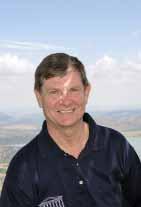
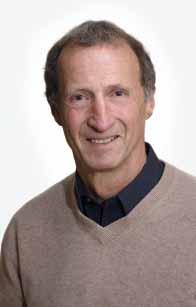
Peter Maher Director: Alumni Relations
Best
Best External Magazine 2012 (SA Publication Forum)
Best External Magazine 2012 (MACE)
Best External Magazine 2011 (SA Publication Forum)
Best External Magazine 2010 (MACE) Editor of the Year 2010 (SA Publication Forum)
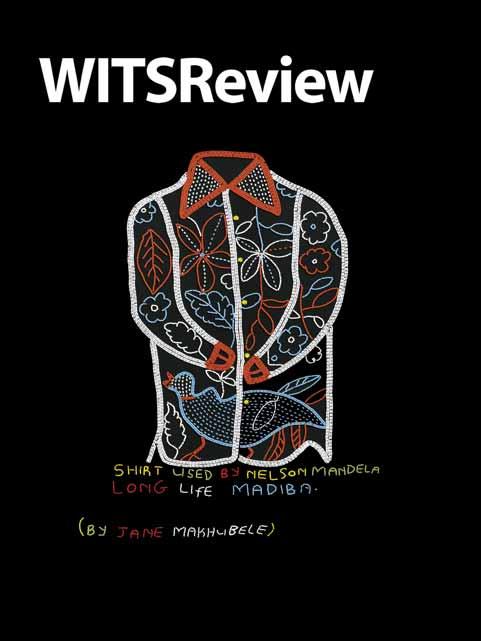
WITSReview
Editor: Peter Maher | peter.maher@wits.ac.za
Contributors: Deborah Minors, Heather Dugmore, Kathy Munro and Keyan G Tomaselli
SUBSCRIPTIONS: International subscribers: R100 per annum
Local subscribers: R80 per annum
PAYMENT OPTIONS:
Online payment using a Visa, Mastercard, American Express or Diners Club credit card at: www.wits.ac.za/alumni/payment or by electronic transfer or bank deposit to: First National Bank, Account No. 62077141580, Branch Code 255-005, Ref.No. 1142 (+ your name) or by cash or credit card payment at the Alumni Office.
For assistance with any payment or delivery problems please e-mail alumni@wits.ac.za or call +27 (0)11 717 1090/1/3/5
LETTERS TO THE EDITOR ARE WELCOME AND CAN BE SENT C/O THE ALUMNI RELATIONS OFFICE OR E-MAIL ALUMNI@WITS.AC.ZA.
Medical class reunions
Dear Editor,
I am an avid reader of the WITSReview. It brings a sense of nostalgia to me.
I marvel at the achievements of Wits alumni, teachers and students; I also feel saddened with the obituary section reading about the demise of so many wonderful World-renowned alumni and teaching staff.
Unfortunately I have a jealous tendency when I see articles and photographs of our overseas alumni. One sees literally hundreds gathering in places like the USA, Canada and Australia. Sadly, local alumni just do not bother to attend the infrequent (25-year, 40-year, 50-year) medical class reunions. Our 25-year reunion had approximately 25 alumni attendees. The 40-year event was graced by Dr. Ronald Levine, Dr. Herbie Wong, the late Dr. Anvir Adam and myself.
Many of our class are overseas: in the USA, United Kingdom and Australia. But, why is it that local residents do not bother to grace the reunion?
This year marks 50 years of our graduation. I wonder how many of my fellow classmates will take off just one or two days to re-unite not only with one another but also with the world acclaimed University of the Witwatersrand?
Editor replies: Anyone wishing to organise a Class Reunion can contact the Alumni Office at alumni@wits.ac.za
Elli’s experiences
Dear Editor,
According to the proverb “The road to H--- is paved with good intentions”, I have been meaning to contact you for the past many months. A few editions ago you reported the visit of Elli Gotz (WITSReview October 2012), who was in South Africa to lecture on the holocaust, having been incarcerated in a concentration camp for 4 - 5 years.
Elli arrived to do Electrical Engineering at Wits and stayed at the South African Hotel in Braamfontein, where Eric Lieberman and I were roommates. I must have been in 3rd year Electrical and Eric in 3rd year Pure Mathematics. In the evenings the three of us would gather and listen to Elli’s experiences, heart rending to say the least. Upon reading that WITSReview I was determined to establish contact and managed to find his e-mail address via the Internet. I was even more surprised and elated to get a reply from him within 24 hours and also to be told that his son and daughter-in-law were visiting Melbourne (where my wife and I have been for the past 13 years). Again via e-mail we made contact with Ruven and were delighted to have them visit us. Many thanks to the WITSReview
Percy Sheiman (BSc Elec Eng 1951, MSc Elec Eng 1991), Melbourne, Australia
Elli Gotz
Aging with Wits
Dear Editor,
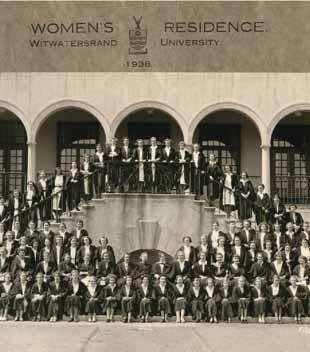
I read with interest the article about alumni the same age as Wits (WITSReview October 2013) and then realised that my mother Uris Joyce Barnett, lovingly known as Mom-Mom Joyce by her ten grandchildren and 15 great-grandchildren, might be the oldest living Witsie.
She is currently 93 and G-d willing will turn 94 on 16 January 2014.
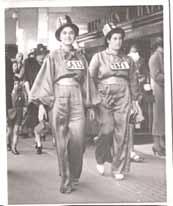
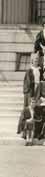
She entered Wits in 1937 and lived in the Sunnyside residence while at Wits as she came from Hopetown in the Cape. In the attached group photo she is the first person on the left standing on the stairs. Another photo is of her taking part in the Rag procession of 1938. She believes the other person in the photo is Sonja Kramer.
She graduated with a BCom degree in 1939 and did articles at the accounting firm Schwartz Fine. She was a partner in the family business, African Salt Works, until she retired in 1987. She moved to Toronto in 2000 to live with my brother, Derrick.
She currently resides there and still is very active doing superb needlepoint and crocheting, knitting blankets and sweaters whenever a new great-grandchild is born and is much sought out by her friends to play bridge. She also is still fluent in Yiddish after having taken a semester course in it at Oxford University.
Alan Barnett (BDS 1970), Philadelphia, USA
Sunnyside circa 1937
Update: Alan reports that Joyce lived through the frigid Toronto winter storms, celebrated her 94th birthday and remains in good health.
Preparing learners
Dear Editor,
As a Wits graduate who receives the WITSReview every quarter I was delighted to read about the achievements of some Wits graduates in the fields of business, engineering, health, education etc at home and in other countries. This indicates how a committed learning institution can prepare its learners to face challenges and transform any environment and turn it into a living place.
Raphael Setsubi (BEd Hons 2005) Olifantsfontein
1938 Rag procession
Collis surprise
Dear Editor,
Opening up my hard copy of the latest WITSReview (January 2014) there was indeed a great surprise waiting for me. Skimming through to decide what to read first, my eyes hit on the name Steven Collis. Goodness gracious me!! Can there be more than one Steven of the same name?? Impossible! The Steven Collis whom I knew was a shy little guy who attended the Oxford Nursery School, Riviera, way back in the late 60’s when I was still working in pre-school education and in charge of that school.
Reading a bit further I realised that this is decidedly the same Steven who received his early childhood education from those of us who were his teachers and I felt a great surge of pride and said to myself, Steven, among a few others, has proved that if a child has a good grounding from early childhood education the sky can be the limit in that child’s future.
R Re:Lettersle
Water polo memories
Dear Editor,
Besides this feeling of pride in Steven’s career and how he has become such a successful businessman, his family and I hail from the same small “dorpie” called Witbank. We caught up many years later when most of us matriculated, attended Wits University and went off to work in our respective careers. It was many years later when I met up again with Steven’s parents, Maureen and Julian and had the pleasure of schooling Steven and his younger sister Andrea.
We often talk about a “small world” and what are the chances of meeting up with old acquaintances or recognising names of individuals from the past. However, it was for me a most joyous feeling knowing that “shy and gentle Steven” had made such a great success of his career and his life and how wonderful ,”out of the blue”, to get this feedback of a young child whom one had tutored and schooled so many years ago.
Ray Wolder (BEd 1974) Corlett Gardens, Johannesburg
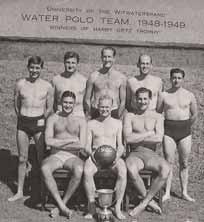
I was surprised and delighted to see a photo of the 1949 water polo team in the January 2014 WITSReview of which I was the captain. I thoroughly enjoyed Hilton Selvey’s letter. However the caption incorrectly named the individual on my left as David Cohen. He is in fact Desmond Cohen, known to all as Des. Des is one of the most remarkable sportsmen that Wits has ever produced. In 1948, while a 5th year medical student, he was selected to represent South Africa at the 1948 Olympic Games in London as a breast-stroke and butterfly swimmer. Des qualified MBBCh in 1949 and was then selected to represent South Africa as a water polo player in 1952 when the games were held in Helsinki. He is thus one the few Wits alumni (maybe the only?) who can claim to have represented his country in two separate sports in two different Olympic Games.
Des specialised in Gynaecology and Obstetrics and in the 60s emigrated to Houston, Texas.
George Albertyn (MBBCh 1949) Forest Town, Johannesburg
Editor replies: I apologise for the error and regret to inform readers that, according to our records, Des passed away in 2012.
Steven Collis
s etters
Dear Editor,
I was very interested to see the photograph accompanying the letter from Hilton Selvey in the January edition of WITSReview.
During the period 1948-1950 while I was doing my BA at Wits I used to cover the swimming and water polo news for the Johannesburg “Star” as a freelance reporter and I immediately recognised a number of the players in the Wits water polo team.
There was Abe Siritzky, Glen(don) “Mule” Basnett, Maurice Rosenberg whom I remembered well and Des Cohen.
David Pistorius (BA 1951) Umhlanga Rocks
Erratum: In the photo caption of the team G Bremner was incorrectly named as “Cedric Bremner”.
Creeping Americanisms
Dear Editor,
I wish to offer an alternative perspective to Brian Austin as well as Keyan Tomaselli regarding the so-called “Creeping Americanisms” into South African speech and writing (WITSReview January 2014, Letters).
In short order it is “So what”? In fact I think it is wonderful. South Africa gave up its colonial status over fifty years ago. It is an independent free, multi-cultured, vibrant society. The USA, warts and all (and after all which country does not have its warts), remains a wonderful dynamic, vibrant, innovative, freedom-loving country. It tries to spread its goodwill (although at times somewhat naively or misplaced) around the world and is and remains the bastion and beacon for all people who aspire to its many great attributes.
The constant evolution of the English language, which should be a reflection of dynamic societies that speak it, is normal and healthy. In this new era of globalization and instantaneous movement of information around the globe, and as the new, still young South Africa, seeks to make its independent positive mark on the world, it must take the best from all countries. As an American citizen for nearly forty years, who loves what his adoptive country is and does, I am delighted to see that South Africa is developing its own aspects of the English language, that partly reflect American influence. There is no harm in that. South African English is different from British English as it is from American English. It contains aspects of both and then some. No one has the right to expect South Africa to stick to colonial-era English.
Keyan you don’t have to apologize for your style of writing, nor do you have to change it. Embrace it, Americanisms and all! After all if Winston Churchill said that Americans and British are separated by a common language, then so too can the new South Africa be separated from England by a “common language”.
Cyril Mazansky (BSc 1966, MBBCh 1969) Newton Centre, Massachusetts
1949 Wits water polo team
Engineering high-fliers
Dear Editor,
In the January 2014 issue of WITSReview you published an article on page 11 regarding the 50-year reunion of the final year Electrical Engineering class of 1963.
Whereas the same issue provides copious information on the achievements of Wits alumni in other disciplines, particularly outside South Africa, I do not believe your readers can possibly appreciate the incalculable service the Electrical Engineers of 1963 have rendered, both overseas and in South Africa. I therefore provide the following information that will hopefully provide some insight into the achievements of these Wits alumni.
A number of these men have practised their professional skills for part or all of their careers in Europe, the UK, the USA, Australia, Israel, Canada and others, but the majority were willing to apply their knowledge and skills to the benefit of the people of this country.
It is important to note that this class was taught by some of the most eminent academics from the past, such as Prof Arthur Bleksley, Prof GR Bozzoli, Prof W Cormack, and others.
The last 50 years have seen probably the most rapid changes in electrical engineering technology than ever before. The infrastructure in South Africa developed at a rapid pace and there was a large input of electrical
skills required. In this time, members of the class of 1963 were directly involved at senior and executive level on projects in the gold, coal, cement, copper, platinum and diamond mining activities, construction of all the Eskom new-era power stations and transmission installations. The Orange river project, the Richards Bay railway line and coal terminal, and the Sishen Saldanha iron ore line; SA Post Office (Telkom); Iscor (Arcellor Mittal) expansions, the Sasol 2 and 3 “oil from coal” plant at Secunda; the Lesotho Highlands water scheme; the electrification of Soweto and subsequent projects; municipal electrification activities throughout South Africa, and many others.
Furthermore a number of the Class of ’63 were directly responsible for managing and developing electrical manufacturing capacity in South Africa, either in expanding multi-national companies such as ABB, Siemens, GEC/Alstom/Actom, the Altron Group, GE, CDC, NEI/Reyrolle, the CSIR, etc, or in expanding local companies. Several of the members successfully started their own companies and so diversified local technical capabilities. Some of the members served with great distinction in the academic world, both in South Africa and overseas.
In conclusion I must state that it is my subjective opinion that it will be difficult for any similar group of alumni to surpass the achievements of the class of 1963. We have kept in touch over the years and this was in fact our sixth reunion. We look forward to our next at 60 years.
PS: My wife and other acquaintances are very disappointed with the reunion photo you published.
Pierre Ballot (BSc Elec Eng 1964)
Mtunzini, KwaZulu-Natal
Editor replies: Thanks for elaborating on the incredible achievements of the Class of ’63, Pierre and a great challenge to other classes! My apology for the small size of the reunion photo published in the magazine. To view full-size images of the reunion go to www.flickr.com/photos/witsalumni/
Bright sparks: Class of ’63 electrical engineers
ALUMNI MASTER NETWORKING
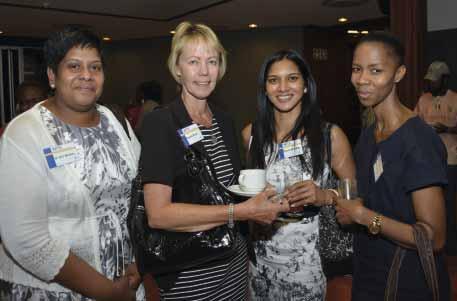
Seventy alumni crafted 60-second sales pitches about themselves and introduced each other at a networking event in Senate House on 30 January 2014. Alumna Helen Nicholson, CEO of The Networking Company, emphasised the importance of establishing and leveraging networks. In her presentation, Master the Art of Networking, she shared tips for alumni to enhance their personal brand using tools such as LinkedIn. Alumni enjoyed canapés and practised networking afterwards.
AFRICA’S FUTURE CONSIDERED
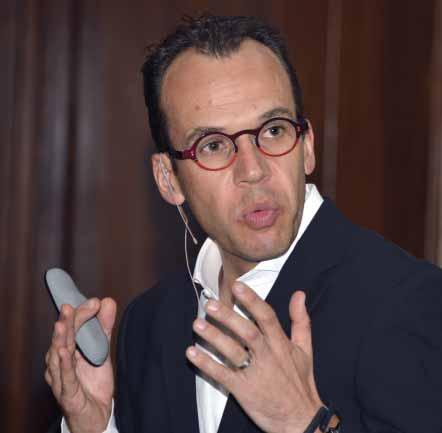
Economist Martyn Davies says South Africa must focus on African consumers, not ideology and “what’s in the ground”, to grow the economy. The CEO of Frontier Advisory, a consultancy specialising in emerging markets, addressed 70 alumni in Senate House on 19 February 2014. After his talk, entitled What is Africa’s Future? Arguments in Economics, Democracy and Development, alumni debated energetically with the self-confessed capitalist and each other.
Economist Martyn Davies (BA 1993, BA Hons 1994, MA 1996, PhD (International Relations) 1998)
Networker Helen Nicholson (BCom 1993)
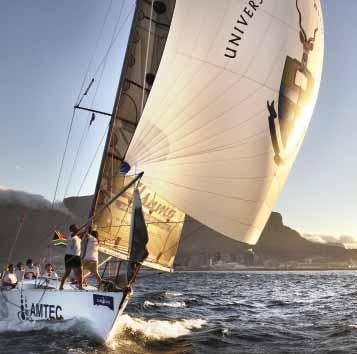
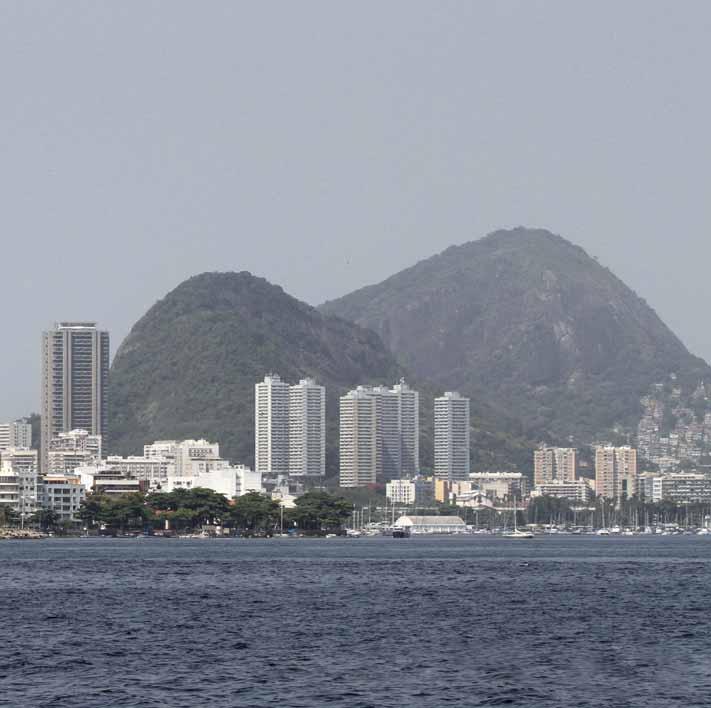
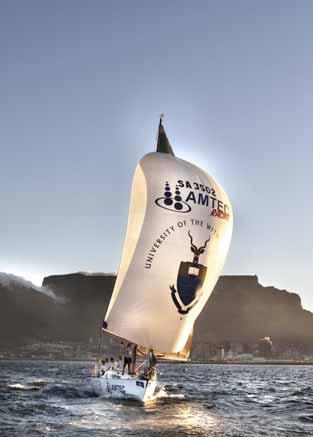
Amtec Wits Aladdin casts off from Cape Town and drops anchor in 6th place in Rio de Janeiro 23 days later
WITSEAS SAIL TO RIO
Five Witsies crossed the Atlantic to clinch sixth place in the 2014 Cape to Rio yacht race and won the Youth Sailing Award. They sailed a modified Farr 38ft yacht, Aladdin, 7 400km (4 000 nautical miles) from Cape Town, arriving in Rio de Janeiro after 23 days at sea. Team Amtec Wits was the only student team out of 35 yachts that entered. A Wits team last entered in 1984 and remains the only university team to have contested the Cape to Rio.
Crew included manager Brennan Robinson, 26, (MSc Eng 2013); skipper Bradley Robinson, 22, (BSc Geography 2014); trimmer Ricardo de Carvalho, 27, (BSc Eng 2011); watch captain Alistair Moodie, 26, (BSc Eng 2010); bowman Patrick Chappel, 22, fifth-year Medicine; and meteorologist Alexa Brown, 22, (BSc Geography 2014). Navigator Stuart Purchase, 24, was the only non-Witsie.
The crew raised R100 000 of the R350 000 required, which Wits matched. Sponsors Amtec Engineering and PPS Insurance contributed R100 000 and the crew’s ‘buy a R50 nautical mile’ initiative raised R50 000.
PHOTOS: TREVOR WILKINS PHOTOGRAPHY
Sport
WITS KUDUS HOOFED OUT OF VARSITY CUP
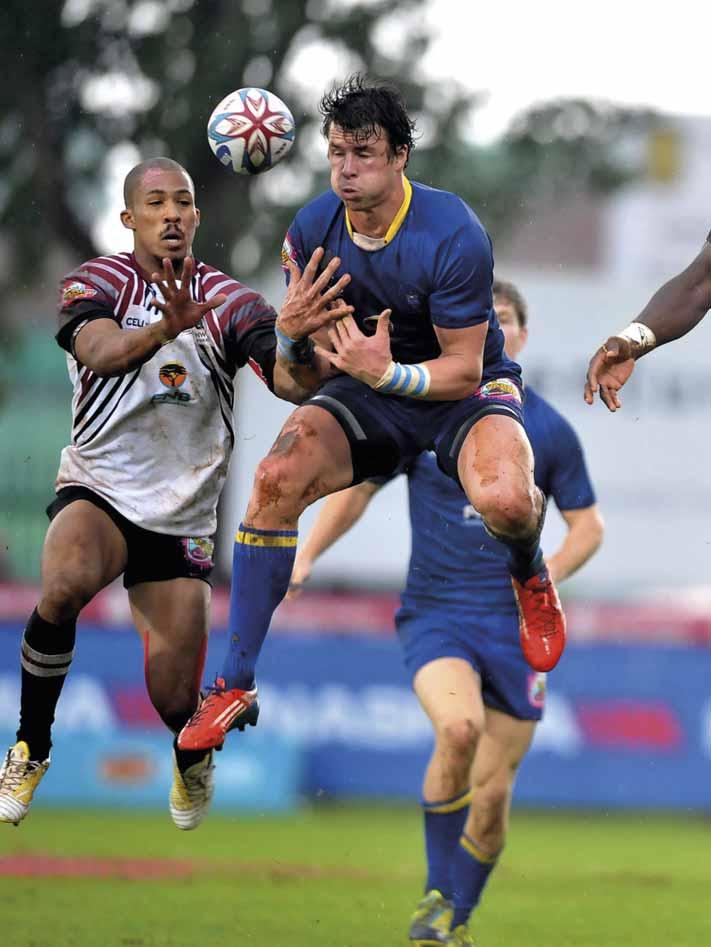
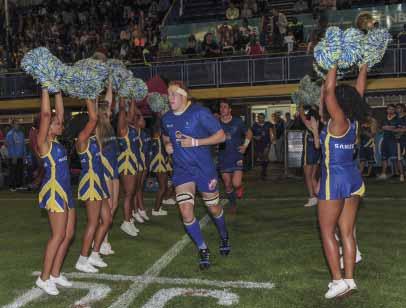
FNB Wits Rugby crashed out of the 2014 Varsity Cup after a 20-5 loss at home to UCT on 17 March. Their points’ position now relegates them to the 2015 Varsity Shield, with the next Varsity Cup opportunity at least two years away. However, Coach Andy Royle lauded the team’s overall gutsy performance and losses of just eight points or less in the last three games. This reflects an improvement on the team’s first foray into the Varsity Cup in 2013.
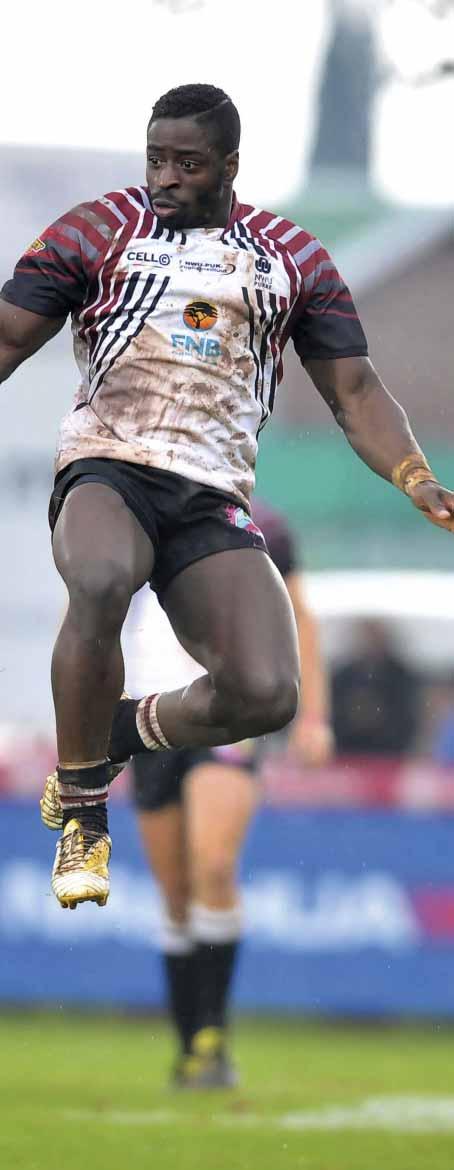
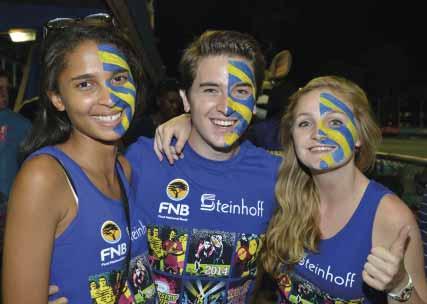
Left: Ruhan Nel of Wits Kudus fights for possession of the ball in an aerial clash with North-West University’s Luther Obi and Sylvian Mahusa on 10 March 2014 at North-West University. Photo: Mario van de Wall/SASPA Top: (l-r) Witsie fans Tselane Steeneveldt (Medicine), Matthew Henderson (Humanities) and Lara Clarkson (Occupational Therapy). Photo: Peter Maher Above: The Wits Spirit Squad cheer on the Wits Kudus at the start of the game against UCT held at the Wits Rugby Stadium on 17 March 2014. Photo: SASPA
News
NEW DATING FOR OLD BONES
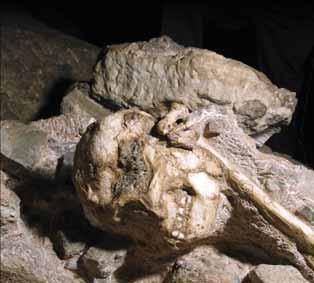
South African and French scientists have now convincingly shown that the Australopithecus fossil named Little Foot is probably 3-million years old and not 2.2-million years as has been claimed.
A paper published in the Journal of Human Evolution in March 2014, by Professor Ron Clarke, et al. from the Evolutionary Studies Institute at Wits, refutes previous dating claims that suggested Little Foot is younger.
French researchers specialising in limestone caves conducted the study resulting in the paper. They found that the Sterkfontein cave, in which Clarke and colleagues discovered Little Foot in 1997, had been subjected to ancient disturbance and that calcareous flowstone had subsequently filled voids formed around the displaced bones. Others claimed the flowstone represented the age of the skeleton. The rock strata study shows, however, that the voids were created by ancient erosion, concluding that the skeleton is probably older than the flowstone.
WITS BLOMBOS STAMPED
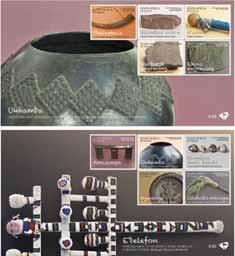
The South African Post Office in February 2014 included artefacts from the Blombos Cave in its stamp collection themed Symbols of South African Cultures. Witsie Christopher Henshilwood discovered the Blombos Cave, near Still Bay, Western Cape, in 1991. He is Research Professor in African Prehistory at the Institute for Human Evolution at Wits, and Professor of African Archaeology at the University of Bergen, Norway. Blombos is an archaeological site yielding insights into the origins of modern human behaviour. Henshilwood directs the project, which has unearthed ochre items engraved with abstract designs, 75 000-year-old beads made from Nassarius shells, and 80 000-year-old bone tools.
The cross-hatched ochre engravings, considered the oldest known artwork, feature on a stamp. Henshilwood unearthed these in 2000 and they represent the earliest symbolic behaviour of human beings. The shell beads, representing the earliest evidence for ornamentation in southern Africa, appear on another stamp.
FESTIVAL OF COLOUR
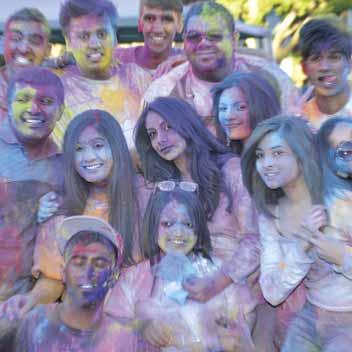
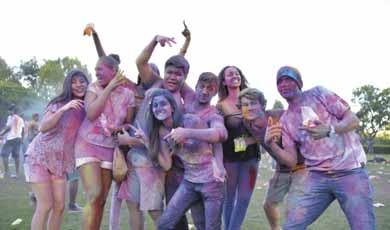
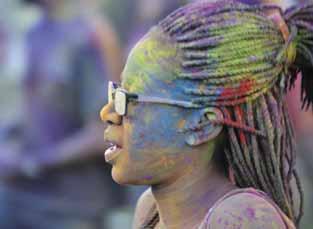
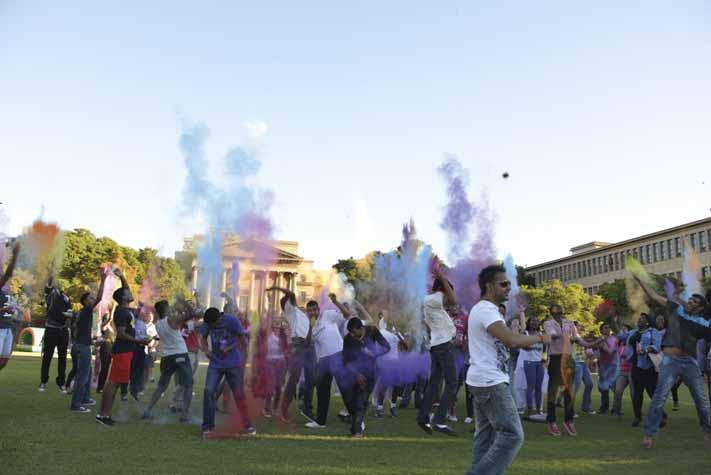
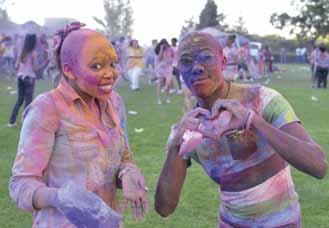
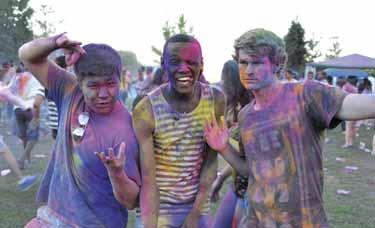
The Hindu Students Society and the Student Development Leadership Unit hosted a fun afternoon of activities on the Library Lawns on 20 March 2014 to celebrate Holi, also known as the Festival of Colours and the Festival of Love. The celebration ended with a free-for-all frolic with everyone being fair game for a dry-powder dousing.
PHOTOS: PETER MAHER
Precious Power
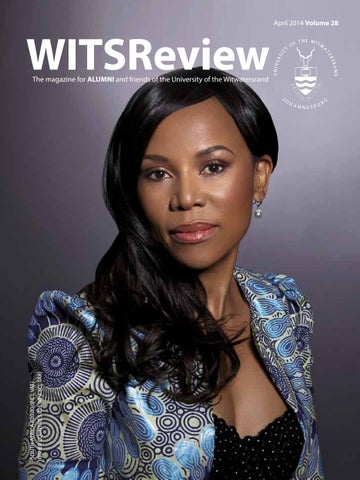
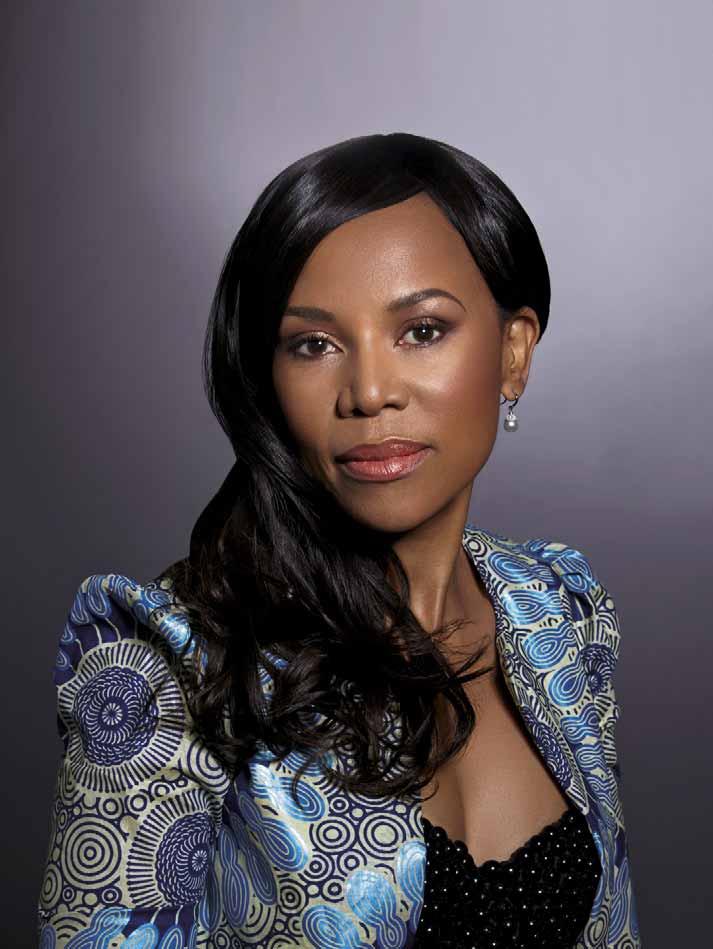
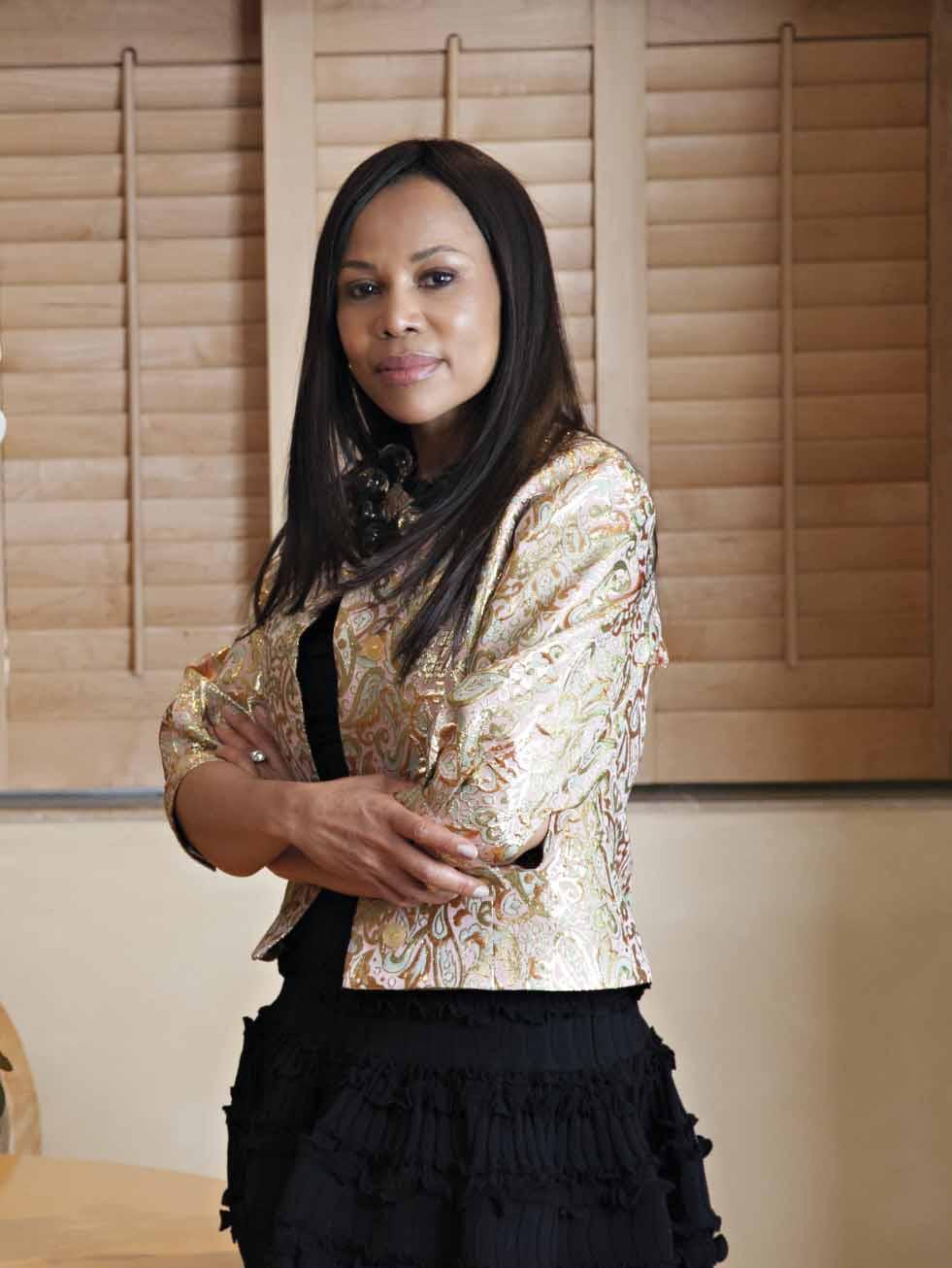
DR PRECIOUS MOLOI MOTSEPE
BY HEATHER DUGMORE
PHOTOS: FORBES WOMAN AFRICA AND TEREZA CERVINKOVA
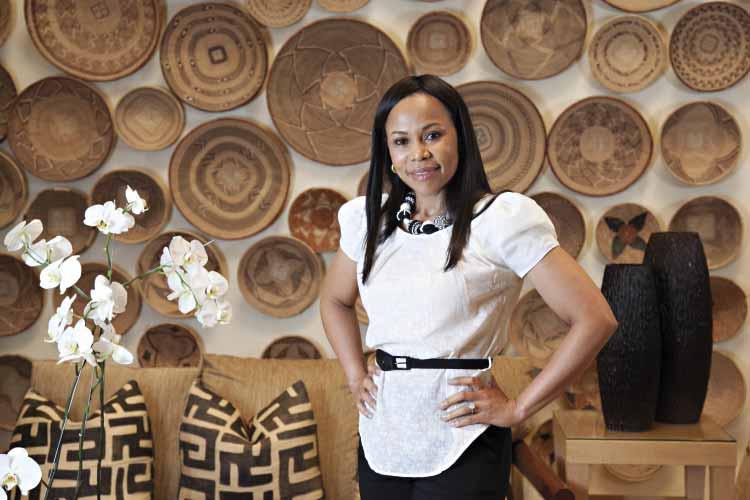
Dr Precious, as she is known, is a walking billboard for South Africa and the continent. Whether she is at Darfur talking world peace or at the supermarket with her sons, how she looks and what she wears speaks of South Africa and Africa’s dynamic cultures and of its exceptional artists and fashion designers.
“The creative sector, of which fashion is a part, is a powerful communicator of culture; it’s an extension of who we are or how we as South Africans and Africans choose to be perceived,” explains Dr Precious, who practised as a GP with a focus on women’s health for many years, then put aside her stethoscope and turned to business, women empowerment and fashion.
Who better to explain Dr Precious’ love of fashion than Coco Chanel: “Fashion is not something that exists in dresses only. Fashion is in the sky, in the street, fashion has to do with ideas, the way we live, what is happening.”
At a crossroads
“One only has to look at Fashion Weeks in New York, Paris and London to understand the economic activity and boost that these cities enjoy. New York Fashion Week annually brings in US$860-million in economic activity to the city of New York. Joburg and Cape Town have the potential to do the same,” says Dr Precious. As the Executive Chair of African Fashion International (AFI), she is playing a significant role in having designers from throughout Africa recognised by major international fashion houses and retailers.
“South Africa and Africa need to start portraying themselves in a positive light”, says Dr Precious Moloi Motsepe, international business entrepreneur, philanthropist and women’s empowerment champion, who graduated with her medical degree (MBBCh) from Wits in 1987.
“It is so important for South Africa and Africa to start portraying themselves in a positive light,” she says. “We are standing at a crossroads where each one of us needs to work towards this by improving our economy because if we don’t, no one else will.”
Speaking from her Sandton office, looking immaculate, she talks about the fashion and clothing industry’s importance to the economy: “It’s labour intensive and it attracts significant revenue and exposure for South Africa through international fashion events, such as the annual Mercedes-Benz Fashion Week in Joburg and Cape Town and our pan-African event, Mercedes-Benz Fashion Week Africa.
Fashion is big business
Fashion is big business and Dr Precious wants her home country and continent to capitalise on big business opportunities, and to start moving and shaking in the global mega-business world: a world with which she and her husband – Wits alumnus and billionaire business leader Patrice Motsepe – are entirely familiar.
Using her power, glamour and influence wisely, Dr Precious is no headline seeker. She rarely agrees to interviews, but will readily use her profile and networks to bring attention to the brand “South Africa” or more broadly, the brand “Africa”.
“We have the vision, talent and human resources and have started testing the market with refined African apparel and accessories, with some good results,” she says.
“THE CREATIVE SECTOR, OF WHICH FASHION IS A PART, IS A POWERFUL COMMUNICATOR OF CULTURE; IT’S AN EXTENSION OF WHO WE ARE OR HOW WE AS SOUTH AFRICANS AND AFRICANS CHOOSE TO BE PERCEIVED”
“I WAS FORTUNATE THAT MY PARENTS BOTH STRONGLY BELIEVED IN A GOOD EDUCATION AND THE VALUES OF UBUNTU, INCLUDING COMPASSION, HUMILITY AND CARE FOR OTHERS”
One of the many talents with whom AFI works is David Tlale, whose studio is in the Maboneng Precinct in Joburg’s inner city. Another is the doyenne of South Africa’s fashion industry, Wits alumna Marianne Fassler.
AFI’s business accelerator initiative AFI Fastrack is also nurturing a new generation of designers who understand the technical and business side of fashion.
On the corporate social investment front, AFI supports an NGO called The Clothing Bank, which empowers disadvantaged women from townships with financial skills and business tools to run their own small businesses.
Bono and BORNFREE
“Because of my background in health we are also supporting an initiative around breast cancer awareness and HIV prevention in collaboration with our global partners, including Bono and BORNFREE,” Dr Precious adds.
Early this year, at the World Economic Forum in Davos, Switzerland, the Motsepe Foundation donated R11-million to U2 singer and activist Bono’s (RED) campaign, which fights HIV/Aids.
“BORNFREE is an American campaign that has secured support from highly influential fashion industry leaders like Diane von Furstenberg, Stella McCartney, Victoria Beckham, Liya Kebede and Vogue Editor in Chief Anna Wintour to meet the Millennium Development Goal of no mother-to-child transmission of HIV by the end of 2015.”
Gender equality and women’s health and empowerment are driving forces in Dr Precious’ life.
Growing up in Soweto
There weren’t many educational and career opportunities available to young black women growing up in Tladi and Pimville in Soweto in the 1970s.
“I was fortunate that my parents both strongly believed in a good education and the values of ubuntu, including compassion, humility and care for others,” she explains.
“My father, Maurice Moloi, was a school teacher who went on to have a lucrative career in the fast-moving consumer goods sales industry. My mother, Martha Rose Moroesi Moloi, was a nursing sister at Chris Hani Baragwanath Hospital, who inspired me to work in the medical field.
“I wanted to follow in her footsteps and contribute to change in our community, and when I decided I wanted to study medicine and was accepted by Wits, I was supported and encouraged by my family.”
Wits and Glen House
She stayed at Glen Thomas House on the premises of the Baragwanath Hospital complex in Soweto, which was the official Wits student residence for black students as apartheid legislation did not permit black students to stay on campus. This meant catching a bus every day to campus.
“As black students we developed a strong bond because of this. I also met my dear husband at Glen Thomas. He was studying Law.”
Her proudest Wits memory and one that she holds dear to her heart was “having my parents watch me walk onto the stage to receive my certificate on graduation day”.
Over the years Dr Precious has frequently been asked to address Wits students and young women’s groups, and her advice to all is: “Knowledge is power!”
Never stop learning
“As our beloved Madiba said: ‘Education is the key that opens doors’. Never stop learning!”
She believes that each of us has “unique attributes and skills that the world needs” and that it is important to work out what drives us and what inspires us, and to pursue this. “Getting a good education was critical to getting me to where I am today, and I thank my parents and teachers for this, and for believing in me and supporting me.”
Today she is on the Harvard Kennedy School’s Women’s Leadership Board, which supports research, teaching and training, as well as its Women and Public Policy Programme in Gender Equality. She also sits on the World Economic Forum’s Global Agenda Council on population.
“Africa is home to seven of the fastest-growing economies in the world. It is also home to one of the fastest-growing populations, with high dependency ratios. This poses a challenge in terms of depletion of our natural resources and continuing poverty, but it is also an opportunity for the continent to reap a demographic dividend if accelerated and strategic investments are made in education, health (particularly reproductive and child health) and supporting small and medium enterprises in creating jobs,” explains Dr Precious.
DESIGNER WITSIE
Forbes Woman Africa
She is the first woman to be on the cover of Forbes Woman Africa, launched in October 2013. The publication focuses on women empowerment in Africa, based on the maxim that there cannot be an Africa Rising without women rising. “I agreed to be on the cover because I want to share my journey to inspire other women in Africa,” she says.
HER DREAM IS “TO SEE WOMEN IN AFRICA FREED OF THE INVISIBLE CHAINS THAT
ARE
HOLDING THEM BACK”
“As we celebrate 20 years of democracy, we have certainly made some significant strides in women empowerment as a nation, but there is room for so much more. The young generation, both women and men, need to cultivate, nurture and maximise the meaningful participation of all citizens in all sectors of the economy and the political arena. This is the best way to fight for social justice and to achieve a society where people have decent jobs and where women and children can feel safe.”
While working as a GP focusing on women’s health, Dr Precious dealt firsthand with injuries and afflictions suffered by women as a result of gender violence and inequity. “When women’s socio-economic conditions improve we will see improvements in the education levels and health of their children and families. This is crucial for meaningful and sustainable
human development,” says Dr Precious, who recently launched the Women’s Desk through the Motsepe Foundation.
The Women’s Desk
“The Women’s Desk is aimed at advancing the representation of women in the economic, political and social spheres and at empowering women to lead active, productive, successful lives,” she explains.
“Women still do not have the same access as men to opportunities and resources in our society. They still do not have the same access to capital to start a business, thus limiting them in their activities and impeding their dreams. Part of what we do through the Women’s Desk is to assist women to embark on an entrepreneurial path and offer them the support they need.”
Her dream is “to see women in African freed of the invisible chains that are holding them back. I dream of a continent where women have achieved full economic emancipation and reach their full potential.”
Motsepe Foundation
Her passion for women’s progress, education and health played a significant role in the creation of the Joburg-based Motsepe Foundation (www. themotsepefoundation.org), established in 1999 by Dr Precious and Patrice.
This philanthropic organisation supports educational, social, healthcare, women and youth empowerment and faith-based projects in South Africa and Africa to improve the lifestyles and living conditions of poor, disabled and marginalised people.
The Motsepes’ goal is to contribute to the building of a South Africa where people can achieve their potential instead of continuously struggling for survival.
In January 2013 they pledged to give half of the funds generated by their family assets – half a billion rand –
to uplift poor, disadvantaged and marginalised South Africans, as contributors to the Giving Pledge.
The Giving Pledge, initiated by American billionaires Warren Buffett and Bill and Melinda Gates, encourages wealthy families worldwide to give of their wealth towards a better life for all. The Motsepe family is the first African family to belong to this global group of giving alumni.
Global group of giving alumni
The Motsepe Foundation recently announced that 360 college and university students are receiving bursaries from the Foundation to help them further their education in the fields of Science, Technology, Engineering and Medicine. “Of these students, about 55% are women, and I am thrilled,” says Dr Precious.
She says she hopes her family’s pledge inspires others to do the same. “It also helps to dispel the perception that Africans merely wait for outside help and aid instead of taking proactive measures to deal with our problems ourselves. We appreciate the international communities’ help, but we must come to the table ourselves and commit resources to do things for ourselves if we are to turn our continent around.”
It’s a laudable philosophy but how does South Africa, with its frightening unemployment statistics, extract itself from the deepening jobless trench in which it finds itself?
Developing small businesses
“It starts with people developing their own small businesses in South Africa and throughout the continent,” she replies. “It starts with people doing in-depth research about their chosen industry and starting small with a view to expanding and growing.
“My advice to new entrepreneurs is to be unique and innovative in what they do in order to set themselves apart, and to remember that it is equally important to listen to their customers and clients. Take the time to understand what they want and give it to them in a way that creates value for the customers and for your business.”
Persevere beyond the odds
Her other piece of advice is to persevere beyond the odds. “If we look at the fashion industry, for example, it may look glamorous and easy from the outside. However, it is tough work and it only pays off if you give it your all and persevere.”
No matter what business you might want to start, she advises the following: “Do not underestimate your network. Your network is your net worth! You may not have access to finance at first but you have access to friends, family, mentors and people around you who can help you or support you or buy your product. There are also various private and government funds that you can access. Take the trouble to find out what is available and speak to people who manage funds or have experience in your field.”
Research, building relationships and working hard are three activities that Dr Precious believes everyone needs to practise throughout life. These, together with the values of respect for self and others and a sense of community, are something that she and Patrice try to instil in their three sons, aged 23, 16 and 10.
A normal life
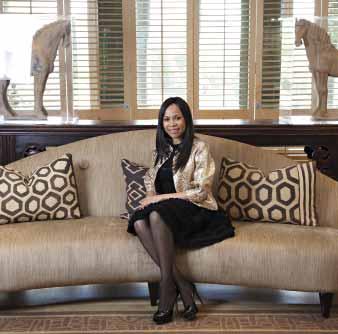
Dr Precious tries to offer her children as normal a life as possible, and keeps them out of the media, living a very private life in the family’s Bryanston home.
What she cannot live without is a well-organised diary. She travels extensively and has to work hard at achieving balance in her life, ably assisted by her diary and her two highly supportive personal assistants and house staff. She spends quality time with her family and “schedules time for family, friends and activities that help you recharge, like eating well, getting enough sleep and exercise,” she explains.
Though she is one of the privileged few who can go wherever she chooses and do whatever her heart desires, Dr Precious’ first choice has nothing to do with jetting between the fashion capitals of the world, or partying with the rich and famous; it’s to be at home. “My home is my favourite place! This is where I get to relax as a mother, neighbour, aunt and wife.”
“MY EDUCATION AT WITS LAID THE FOUNDATION FOR MY SUCCESS IN THE USA”
BY DEBORAH MINORS
Q&A with Gordon Klintworth
Gordon Klintworth is a Professor of Ophthalmology and Pathology at Duke University Medical Center. After 50 years at Duke, Klintworth, 82, reflects on his time at Wits, which awarded him four degrees.
Phillip Tobias was your supervisor. Do you have any anecdotes to share?
I believe I was Phil’s first PhD student after he became head of Anatomy. My research interest was beyond his main area of interest but he guided me in developing expertise in that subject. When it was time to prepare my PhD thesis, Phil was of immense help in correcting my grammar and in expressing ideas. After all, he was a prolific writer and a scholar of the English language par excellence.
What prompted emigration? Any regrets?
After the Sharpeville massacre on 21 March 1960 I decided to leave South Africa with many of my medical colleagues, because we were convinced the writing was on the wall. I personally thought South Africa was doomed to the worst blood bath. How wrong I was!
I have never regretted leaving South Africa to settle in North Carolina. It was a difficult decision, but in retrospect it was one of the greatest decisions I have ever made. I emigrated with a wife and 17-month-old baby. Although we left South Africa at a turbulent time, some American friends pointed out that we had gone from the frying pan into the fire. In the USA, we faced the Cuban missile crisis, the Kennedy assassinations, and that of Martin Luther King.
To what extent has Wits contributed to your success?
My education at Wits laid the foundation for my success in the USA. One of the most important events at Wits that influenced my life was when Professor Joseph Gillman, the head of Physiology, telephoned my father recommending that I take a year off from medical school and enrol for a BSc. This opportunity introduced me to research and to a close relationship with Tobias. If this diversion into science had not happened, I doubt I would have obtained a PhD and become a clinician-scientist.
You created www.eyepathologist.com. Your thoughts on technology?
I have been impressed by technological advances inconceivable when I was a student. Technology has speeded up communication and created networks and communities. Everyone needs to become proficient. You’re a “collector”. What do you collect?
For many years I have collected the pedigrees of people in my family and those with the surname Klintworth. I also collect stamps and coins, at present international stamps commemorating Nelson Mandela.
Do you retain links with South Africa?
I have retained strong links. One brother still lives there and I have visited many times to lecture.
Left: Gordon K Klintworth is the Joseph AC Wadsworth Research Professor of Ophthalmology and Professor of Pathology at Duke University Medical Center. Image: Curtis Scott Brown, courtesy of the Duke Eye Centre
Joburg ahJoburg
BY HEATHER DUGMORE
This is the first in a series on the state and future of Johannesburg’s inner city. Wits’ location alongside the inner city ties it to the fortunes of the City of Gold. In the course of the series we’ll be featuring a range of views from Wits academics and alumni, and we invite you to participate.
In this opening piece I offer an overview of Joburg’s inner city today.
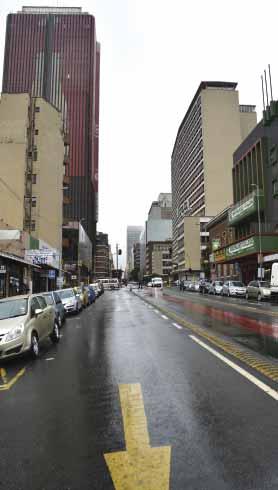
From the day it was founded on the discovery of gold 128 years back, Joburg has always lived on its wits – the city of the bold, the city of opportunity, the city on the make. For some, it’s Egoli where fortunes have been made; for others, the dream has dissolved into lives of inner city adversity, daily tested by crime, grime and toil.
Over the decades Joburg’s inner city has had its distinct ups and its undeniable downs. Many of us want to believe the down side of its bipolar character can be fixed and that it is once again on the rise. We want to believe that all the efforts of the City and all the contributions of the Wits academics and alumni who are committed to its restoration and reinvention will succeed. Right now though, the pendulum of hope and despair still swings between “It’s working!” and “It’s a disaster!”
Visitors to the inner city reflect this response. They either describe it as “dirty and dangerous” or an “exciting, unexpected find”.
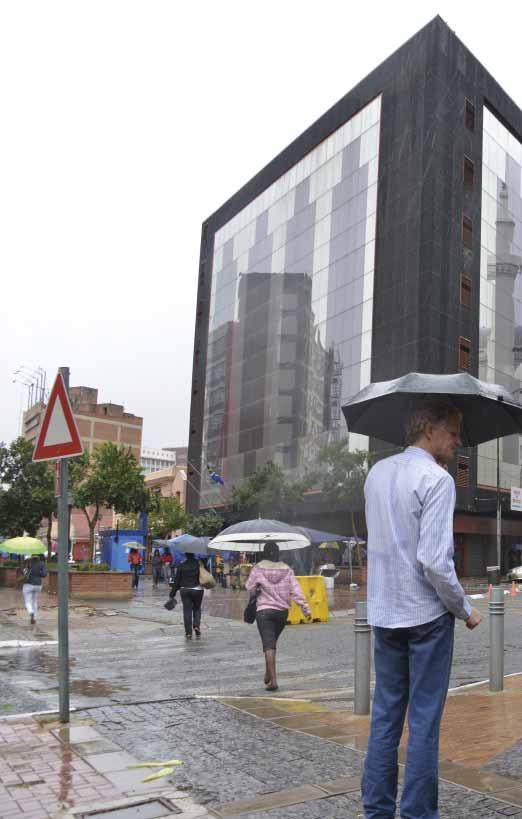
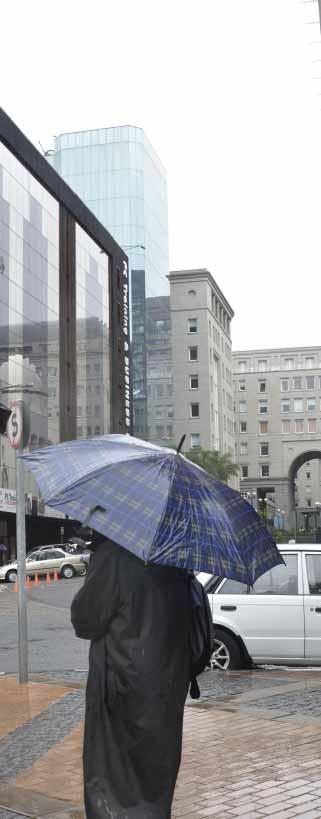
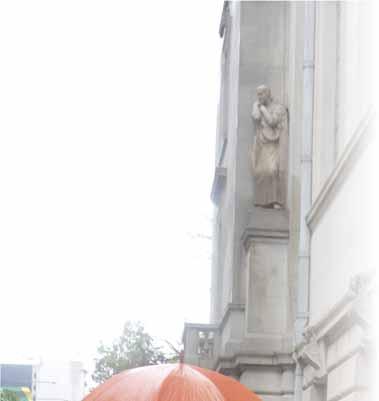
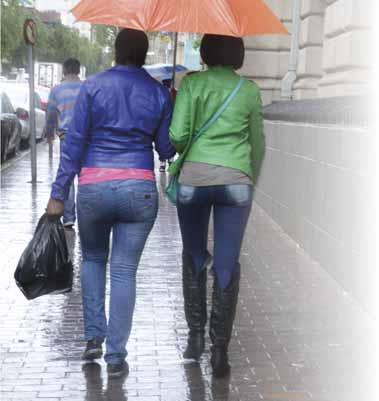
To get a firsthand feel, I head into the inner city with my WITSReview peers, Nicole Sterling on camera and Deborah Minors on street savvy, armed with umbrellas because it’s pelting down.
FOR SOME, IT’S EGOLI WHERE FORTUNES HAVE BEEN MADE; FOR OTHERS, THE DREAM HAS FADED INTO LIVES OF INNER CITY HARDSHIP...
We are fortunate to have as our guide urban designer Andrew Luke, a director at the Melville-based architecture and urban design company GAPP.
Luke graduated from Wits in 1989 with a BSc in Town Planning and subsequently did his Masters in Urban Design at the University of Westminster in the United Kingdom. He’s wholeheartedly committed to the inner city, where GAPP has done plenty of work – from the FNB Bank City to restoring old mining hostels and converting them from single quarters into family accommodation.
GAPP has also worked with the Johannesburg Development Agency on upgrading the public environment, including widening the city’s pavements and creating pedestrian walkways, seating areas, good lighting, artwork trails and people-friendly parks.
“Upgrading the public environment is imperative in cities because the population densities are so high that most people live outside the buildings and in the streets, which become their lounge, eating and meeting place and office,” Luke explains.
Upgraded urban environments also attract private sector investment because the area looks more appealing, and this leads to expanded areas of regeneration.
PHOTOS: NICOLE STERLING
Regrettably, the opposite has happened in parts of the inner city where large numbers of squatters have occupied former office and apartment buildings and created overcrowded informal settlements.
This raises a string of questions from here to Bree Street, but more of this later because we need to get started on our tour.
First stop Fordsburg
First stop is Fordsburg to get the lie of the land.
The inner city spans an area of approximately 1800 hectares and includes Johannesburg’s traditional central business district or city centre (where the Carlton Centre, 223 metres high, is still Africa’s tallest building), Joubert Park, Marshalltown, Braamfontein, Newtown, Fordsburg, Bellevue, Yeoville, Berea, Hillbrow, Troyeville, Bertrams and Doornfontein.
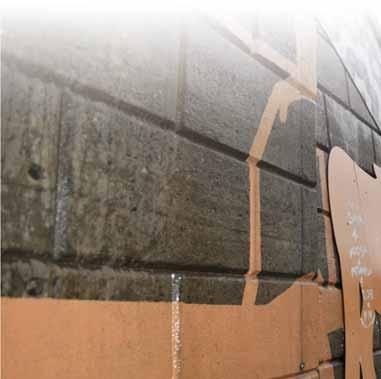
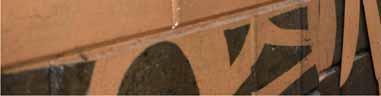
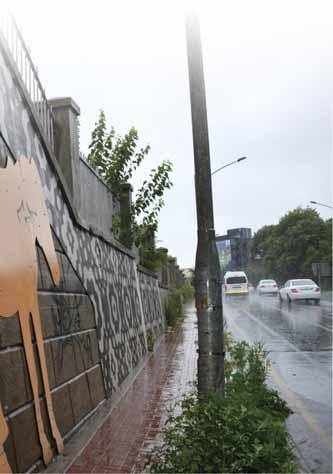
We head through the Fordsburg subway, where Luke surprises us with the delightful metal sculptures that line the old walkway.
A place called Fietas
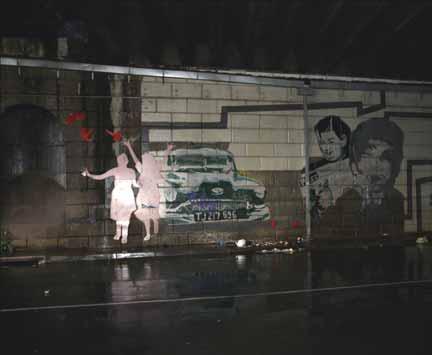
Fietas was one of the oldest communities in Johannesburg, and one of the first multi-racial areas established under the government of Paul Kruger in 1893. From the mid-1950s things changed dramatically when Fietas residents were forcibly removed to Lenasia and Soweto, and a lively community was destroyed. The subway sculptures pay homage to this community. Imbued with a strong sense of pathos, they feature a couple dancing, a woman feeding the pigeons and a vintage motorcar with a TJ number plate.
Alongside the subway is the first affordable housing project in the inner city, Carr Street Gardens. It was completed eight years ago and is a well-maintained, attractive place to live.
The Divine Bakery
We continue into Fordsburg, a thriving business and restaurant hub, with wonderful names and offerings, including the Cape to India Restaurant with its Bombay chicken pies and the Divine Bakery, where we stop for sweetmeats. The bakery is in an old church, hence the name, with much of the old architecture intact.
Peeopple who h once live v d in n the area a known as s Fieetas s would taake this s rooutte to the h shops s or r to see ee a mov o ie i at on o e thhe e fiive e cinnemas s in ne n igghbbououri r ng g Forordsdsbu b rg chicken pi p es and the Divine Bakeryy, where we stop p for sw sweeetmeats The is in an old ch chuurrch, he h nce e the e na n me me, with much h of the old architecttur u e intact.
Opposite page: Driving change: Historical art adorns the Fietas-Fordsburg subway This page: Heavy metal: Steel steeds in the Fordsburg subway
The five cinemas are long since gone and only the old Avalon’s sign bears witness to the past. Apart from this nothing remains of the Avalon, which is now The Sniper Store – a sign of the times.
Biggest development in 40 years
Our next stop is Newtown, where Joburg’s first bricks were once quarried and baked. Today it is a buoyant cultural precinct with theatres, music venues, museums, educational institutions, loft apartments, affordable housing, coffee shops and restaurants.
The inner city’s biggest investment in the last 40 years is currently under construction here, between Museum Africa on Mary Fitzgerald Square and Carr Street. Called Newtown Junction, it’s a R1.3-billion mixed-use development scheduled for completion by 2015.
It includes a 40 000 square metre shopping centre, offices, a hotel, a gym and four levels of basement parking providing 2 400 bays. A bank and several big retailers have all committed to being part of it.
The development also includes the old potato sheds erected in the early 1900s for Joburg’s early produce market. What is now Museum Africa was the old market building. The developers are required to retain the sheds’ structure for their heritage status.
The west side
We continue into the city, where we park between “China Town” and the Magistrate’s Court to explore the west side on foot, starting with Chancellor House, opposite the courts. This is where Nelson Mandela and Oliver Tambo practised as attorneys from 1952. In remembrance of this, a replica of their firm’s sign has been placed in the window.
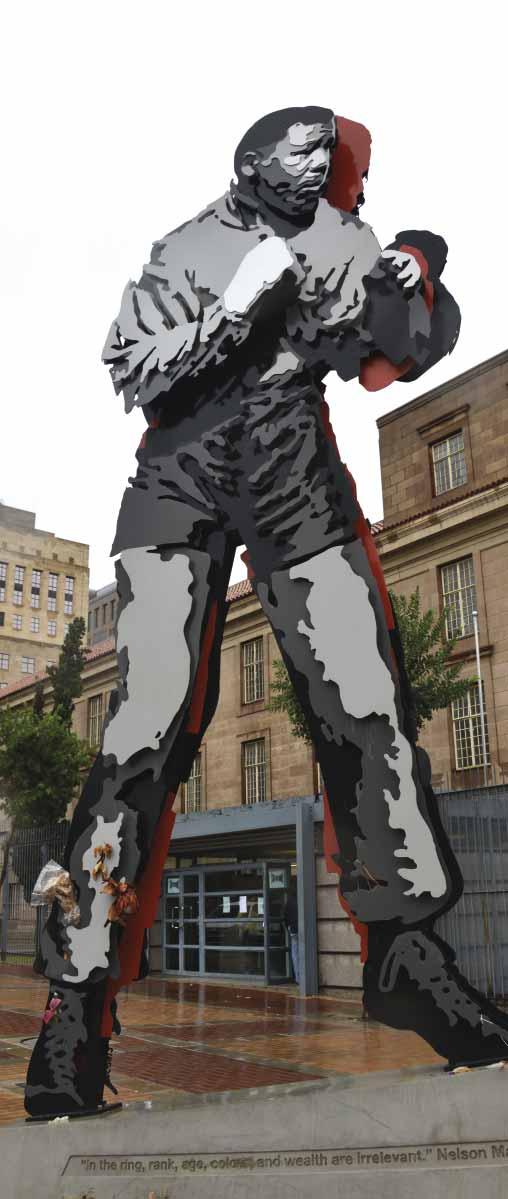
Outside the courts is the 5-metre tall metal sculpture of Mandela shadow boxing, by South African artist Marco Cianfanelli – a piece of brilliance. Inscribed on its base are Mandela’s words: “In the ring, rank, age, colour and wealth are irrelevant.”
“THE WEST SIDE IS A WONDERFUL EXPERIENCE, FILLED WITH THE MEMORIES AND ARCHITECTURE OF EARLY JOBURG”
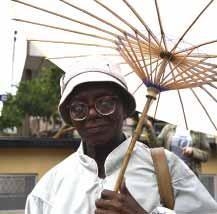
(Clockwise L-R): Former bioscope; original “Chinatown”; Sophie Skhosana; Ferreira Primary School. Opposite page: Mandela: Shadow Boxing by Marco Cianfelli
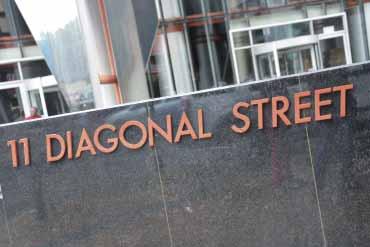
Up the road from here are Mandela’s friends Walter and Albertina Sisulu, captured in time in a sculpture in Diagonal Street.
The west side is filled with the memories and architecture of early Joburg and populated with small retailers with exotic names like Lavender Moon, offering bright fabrics, spices and traditional African medicinal cures.
Hidden gems
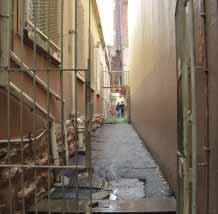
Luke shows us many hidden gems: he points down an alley that you would not otherwise notice. It’s the entrance to Ferreira Primary School. Not far from here is the city university CIDA, offering a sponsored Bachelor of Business Education Degree to talented, financially disadvantaged learners. These and thousands of other learners and students use the recently upgraded city library, now digitally archived.
Along the way we meet wonderful people like Sophie Skhosana, with her Japanese umbrella and goggle glasses, who sells underwear and who has come to meet her daughter in town. We have a spontaneous discussion about the differences between the impala and the springbok with a man outside Anglo American’s headquarters in Main Street. He initiates the conversation while we are admiring the exquisite sculpture of a herd of impalas jumping over a fountain here, titled Impala Stampede.
“IN THE RING, RANK, AGE, COLOUR AND WEALTH ARE IRRELEVANT”
Old pubs and new apartments
We pass the Guild Hall Pub, the oldest in Joburg, and take in the Cape Towers Studio Apartments – one of several renovated apartment buildings offering accommodation. At the new Cape Towers you can rent a secure, unfurnished studio apartment for R3 000 per month or a two-bedroom apartment for R5 500. Not cheap, but very convenient for those working in the city.
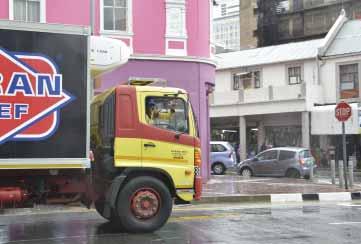
I’m ready to sing the inner city’s praises. But around the next corner my optimism sinks at the sight of the city’s other side: buildings fallen prey to dereliction, poverty and squalor.
A huge, huge problem
“It’s a huge, huge problem and city housing is one of the most important but least dealt with issues,” says Luke. “More than 50% of the world’s population now lives in cities and solutions are having to be worked on all over the world.”
People are pouring into the city and they need somewhere to live.
Nowhere is this more evident than in parts of Hillbrow, where the population has increased fivefold in the past 20 years. Many of the high-rise apartment buildings are now slums, in a state of dereliction and with drug dealers blatantly offering their goods outside on the streets. We see gutters and alleys piled high with putrefying refuse.
The obvious lack of law and order is a magnet for crime, and this is where families must bring up their children.
Normal life continues
Between the danger and filth, normal life continues. Children in neat school uniforms walk these streets, women carrying their grocery bags walk these streets, it’s home to a diverse population from far and wide, just as it has always been.
“PEOPLE NEED BASIC SERVICES – IT’S THE BACKBONE OF A WORKING CITY”
Witsie Andrew Luke and Heather Dugmore at FNB Bank City
Since 2004 there has been new investment in several blocks and buildings in Hillbrow as part of the eKhaya Neighbourhood Urban Regeneration Programme. Several streets have been cleaned up and buildings have been renovated and are under good governance.
“It shows that the inner city can be transformed into a well-managed, pleasant place to live,” says Luke.
The driving force behind this programme is Wits alumna Josie Adler, whom he greatly admires. “Her approach is that everyone – from building owners to residents, businesses and the City – has to take responsibility in order to establish a healthy, safe, clean and friendly residential environment that works for everyone.”
The cornerstone of this approach is that you can only start to build a strong civil society when people have a decent place to live.
People need basic services
“People need basic services – it’s the backbone of a working city. Whether they are living in a house or a building squat, they need sanitation, water, electricity and garbage collection, and they need green spaces and a safe environment,” says Luke.
Johannesburg Rising 2014
...NO ONE SHOULD BE PERMITTED TO TAKE OVER THE STREETS, AS THE STREETS BELONG TO EVERYONE
Reflections: Jozi Old and New
The informal economy and xenophobia in the inner city
This year Wits University’s Professor Rob Moore, Deputy Vice-Chancellor (Partnerships and Advancement), is leading a committee to oversee research for the City of Joburg on the informal economy and an anti-xenophobia strategy.
The aim is to help the city make informed policy decisions about its economy and transnational networks. Prof Moore points out that parts of the city’s economy “are not fully regulated by the state but are neither inappropriate nor without any organising structure”. The research will show how these systems work.
Some informal systems are harmless or constructive (for example, transnational trading in legal goods), some are socially and economically destructive (such as trade in drugs or other illegal goods) and others are a complex mixture, such as sex work.
He is working with engineers, water, sewerage and energy specialists, environmentalists and heritage people in the city in a multi-pronged effort to improve these basic services.
“We have actively engaged with inner city communities and they have all voiced the need for environments where they can walk safely on the streets, where their children can attend school and play in the park and where they don’t have a shebeen or drug dealer next door.
Pirate landlords
“But when you have pirate landlords taking over buildings, as they have done in parts of the city, and charging squatters rent without offering them basic services, then people start throwing sewage and refuse down the lift shafts or out of the window, and they use whatever equipment they have to cook or light their rooms, and the environment becomes unclean and unsafe.
“It is a major problem about how to get people who shouldn’t be living in buildings out and how to get owners to take responsibility when many have abandoned their own buildings.
Municipal neglect
“It’s also a problem when the municipality digs up the pavement to fix a water pipe and leaves a pile of rubble and broken paving stones instead of making sure the pavement is repaired before leaving. You are asking the residents to care about their city but you are not leading the way.”
So how should the City of Joburg tackle the housing problem?
It’s highly contentious. Some architects and urban planners say that if you provide basic services to the inner city’s informal settlements, they will naturally evolve into more formalised communities. This obviously requires a very different approach to bylaws.
A firm hand
Others say you need a firm hand in dealing with everyone from informal traders to criminal gangs and drug dealers. They say that no one should be permitted to take over the streets, as the streets belong to everyone.
Brazil used a firm hand to clean up their favelas – fastgrowing informal urban settlements which were ruled by drug traffickers and organised crime groups.
Realising that most people were simply trying to create a better life for themselves and that they did not choose to live in squalor and fear, in 2007 the government of Brazil started targeting the criminals at the same time as providing the residents with basic services.
The plan was first implemented in Rio de Janeiro, where US$1.7-billion was invested in security improvement. An elite police battalion cracked down on crime and then hundreds of newly trained police were stationed in the favelas as a permanent service to the community.
Is this the solution for Joburg?
Luke maintains that providing basic services is a definite need but he cannot see the City pumping in hundreds of extra police. This leaves the general safety of the streets up to the existing police and security services, in partnership with precinct-wide private security initiatives.
Natural form of policing
“When people can once again enjoy being on the streets and meet their friends there in safety, it immediately starts creating a safer neighbourhood. Once this happens, you get a natural form of policing and buildings start being designed to open onto the streets instead of barricading themselves away in fortresses as you see in many of the corporate structures in Joburg’s city centre,” Luke explains.
While the city has a long way to go to achieve this, it has nevertheless opened up access to a whole new generation of people. In this respect it’s already a thriving city.
“It all depends on your perspective as to whether the city is working or not,” Luke adds, explaining that the “white flight” from the city in the 1970s and 1980s created access for black people. And while those who knew the city as it once was will say it is in decline and decay, others will say it offers trading, entrepreneurial and accommodation opportunities it never had before. In the next issue we’ll explore more.
Anyone wanting to contribute to this series should contact Heather Dugmore at heather@icon.co.za
City Sightseeing
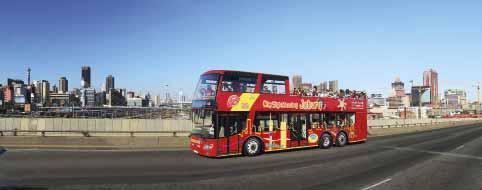
hop-on hop-off red bus now in Joburg
The red, open-top, double-decker buses for tourists that are a familiar offering in many other cities are now operating in Joburg’s inner city and Soweto. The commentary is interesting and the tour is very worthwhile. For City Sightseeing tour options, times, costs and stops along the route, visit the website on www.citysightseeing.co.za/joburg OR contact 0861 733 287 or +27 21 511 6000.
You can also get around Joburg on a Rea Vaya bus. The routes – recognisable by the red stripe on the road – connect the inner city with residential areas, work places and other forms of transport.
Peter Tshisevhe
BPROC IN 1995, LLB IN 1997 AND LLM IN 1999, CERTIFICATE COURSE IN PROSPECTING AND MINING IN 2004 AND POSTGRADUATE DIPLOMA IN COMPANY LAW IN 2012, ALL AT WITS.
This poverty shall pass – the journey of Peter Tshisevhe
Wits alumnus
Peter Tshisevhe’s story needs to be told. It is a story of hard work, determination, intellect and triumph. Numerous Wits alumni and academics play a part in this story, which offers the promise of a bold new South African future of which Wits can be proud.
BY HEATHER DUGMORE
Our story begins in the village of Tshakhuma in rural Venda in the mid-1980s, where a 16-year-old boy named Peter Tshisevhe tries on his first pair of shoes. Though his parents both work hard – his father is a farm worker and his mother a domestic worker – they have never been able to afford even basic necessities.
Peter has also worked on farms since the age of 11, picking litchis and mangos at harvest time to make a bit of money to help his parents, while at the same time diligently attending school.
This poverty shall pass
What sets him apart is his inbuilt determination to succeed. Despite the poverty around him he constantly tells himself: “This poverty shall pass. I am not going to live like this.”
He has no educational advantages – his junior primary school is taught under a tree. Despite this he does well and manages to secure a bursary from the Lutheran Scholarship Fund for his last two years of high school. From these funds he is able to buy his first pair of shoes.
He completes his matric and heads for Joburg in 1986 in those selfsame shoes.
PHOTOS: COURTESY OF TGR
A cleaner and packer for Pick n Pay
Tshisevhe picks up the tale. “Having found my way to Joburg I moved in with my brother Robert, who had a shack in Dobsonville in Soweto. I immediately started looking for a job and managed to find one at Pick n Pay in Brixton as a cleaner and packer in the fruit and vegetable department.”
Hard working, bright and capable, he was soon promoted to cashier by the store manager, Chris Reed, who encouraged him to study further.
Determined to improve his education and achieve a university entrance matric, which he did not get in Venda, Tshisevhe explored his options:
“I started asking about schools in the area and was directed to a private school in Fordsburg that was sponsored by the British government to counter the educational disadvantage of learners in the 1985/6 uprisings.
“I used the money I had saved from working at Pick n Pay to attend this school. It was run by a Mrs Mosala, who was a disciplinarian and very strict, which was good because it helped me to do well even though I was working and studying at the same time.”
Meeting Judge Cameron
During this time he met Edwin Cameron, who lived in Brixton and did his grocery shopping at the Pick n Pay where Tshisevhe worked.
“One day he asked me why I wasn’t at school. I replied that I was indeed at
school doing my matric, and that I had been conditionally accepted to study at Wits University, pending my results,” Tshisevhe recalls.
“He was such a humble man and told me he was lecturing law at Wits and encouraged me to study. As it turned out he lectured me in Labour Law,” continues Tshisevhe, who not only got the university pass he required but also a bursary from the British Council.
Wits and Wits alone
Tshisevhe knew there was but one university he wanted to attend, and that was Wits, where he enrolled at the age of 23.
“I’d first learnt about Wits from my academic rival in primary school, Aifheli Netshivhodza, who inspired me to achieve and who is now an architect. He attended a top science and maths school in Venda from Grade 8, where they were exposed to the leading universities. He brought home reading material about Wits and I fell in love with it.
“Wits had the top law school and it attracted top students, and that is where I wanted to be. I have always wanted to associate with people who inspire me and are doing better than me so that I can improve myself.”
Helen Suzman’s fight for justice
Of particular inspiration to Tshisevhe was the fearless fight for justice of Wits alumna Helen Suzman. A member of parliament at the time, in 1987 she took on a judge who had ruled on a case from the farming district where Tshisevhe had worked as a young boy.
“I HAVE ALWAYS WANTED TO ASSOCIATE WITH PEOPLE WHO INSPIRE ME AND ARE DOING BETTER THAN ME SO THAT I CAN IMPROVE MYSELF”
In this case the Johannesburg Bar in 1989 took the rare step of formally condemning Justice JJ Strydom’s decision that let a farmer off extremely lightly after he killed a labourer who had accidentally run over his dogs.
The farmer, Jacobus Vorster, and his friend, Petrus Leonard, were convicted of killing labourer Eric Sambo in 1987 after they tied him to a tree and took turns beating him to death over two days. Vorster was found guilty of culpable homicide and Leonard of assault. Neither went to jail; they were merely fined a few hundred rand.
Suzman bravely lobbied for Justice Strydom’s impeachment for what she called an “outrageous miscarriage of justice”. It did not happen but it certainly embarrassed the National Party government as the ruling was condemned worldwide.
“The case struck a deep chord in me about why some people’s lives are not valued at all and why there is such prejudice in our society,” says Tshisevhe. “It is not just between black and white, it is between all sorts of groups and cultures. One example is that we were treated as outcasts in our village in Venda simply because my Mom and Dad were from different cultures: my Mom is Zulu and my Dad is Venda.”
Competition for limited resources
At the heart of prejudice, Tshisevhe believes, is competition for limited resources. “People form tribes or groups or nations to compete for limited resources and they victimise or ostracise others to keep them from benefiting from those resources.
“THERE ARE SO MANY PREJUDICES WE STILL NEED TO OVERCOME BEFORE WE SEE EACH OTHER AS FELLOW HUMAN BEINGS”
“As South Africans we need to see ourselves as one people, men and women, and to learn to share our resources. But this is not happening because there is still so much inequality and mistrust.”
He believes that each one of us needs to work really hard at integrating our society. “There are so many prejudices we still need to overcome before we see each other as fellow human beings.”
Enrolling at Wits
Enrolling at Wits in 1990 was “a liberating experience” for him on many levels. The politics of the time were changing the course of people’s lives but on a personal level he loved having his own room and space at Ernest Oppenheimer Hall (EOH).
“It was all very new and foreign to me and I had no idea how anything worked. I did not even realise that the residence provided meals and ablution facilities,” he says.
For the first week he would travel to Soweto to wash and he bought his own groceries to make himself meals.
Learning how residence works
“Fortunately at the end of that week, while I was walking up Jan Smuts Avenue carrying my groceries, I bumped into a friend, Matodzi Mukwevho, who was from the same village as me and who was in his final year BCom at Wits. He, like me, grew up very poor but he did exceptionally well academically and is now a Chartered Accountant.
“Matodzi asked me why I had packets of groceries and I told him. That is when I learnt how the residence accommodation works.”
A powerful presence, with natural charm and leadership qualities, Tshisevhe made his mark on the predominantly white residence, and in his third year at Wits he was elected Chair of the EOH House Committee in 1992, becoming the first black person to assume the role.
A very tense time
“It was racially and politically a very tense time,” he recalls. “Mandela had been released from jail two years earlier; black people felt the victory while most white people were very scared.”
As Chair of the House Committee he needed to be highly sensitive to the mood in residence and to use his strong people skills to build bridges and unify the members. “I kept the peace through honest engagement and encouraging people to think twice about what they were saying or doing – whether it was talking loudly in the corridors when others were trying to concentrate on their studies, or having heated political arguments.”
I loved that car
Throughout his studies he continued working parttime at Pick n Pay as he was supporting his parents and siblings. He also managed to buy his first car at the age of 25. “I loved that car, a grey Toyota Corolla 1.6,” he smiles.
He also loved his little res room – P24. “Despite being a bit dark and cold in winter, it was my home and refuge for several years, and hence I was reluctant to move to the larger, far more comfortable room assigned to me when I became Chair.”
Wits Law Clinic
After completing his BProc he worked at the Wits Law Clinic under the supervision of Professor Peter Jordi in 1996.
Every student and candidate attorney dreaded working with Prof Jordi as his standards were impossibly high and he demanded meticulous attention to detail. Tshisevhe was the exception. He appreciated Prof Jordi’s standards and they got on extremely well and worked closely together, winning several cases against the police for brutality and torture.
“Attention to detail and proper preparation wins cases, the lack of it loses cases,” says Tshisevhe, who subsequently joined Werksmans Attorneys in 1997 to pursue his interest in corporate and commercial law.
Brilliant Wits alumni mentors
“I worked under Wits alumnus David Hertz, who was a brilliant mentor and teacher, as was the late Tony Behrman, a Senior Partner at Werksmans.”
In 2000 Tshisevhe moved to Edward Nathan Sonnenbergs (ENS), Africa’s largest corporate and commercial law firm, where he was mentored again by Wits alumni – ENSafrica Chair Michael Katz and Director Stephen Lewis – both of whom he greatly admires.
Such was Tshisevhe’s performance that one year later he was promoted to Director, skipping the Senior Associate level, the first person in the history of the firm to achieve this.
From 2003 until 2011 he worked at the highest professional echelon, advising on some of South Africa’s largest ever mergers and acquisitions.
To give back to “the institution that gave me the tools to be a professional” he lectured Commercial Law part time at Wits for 12 years. “Assisting young students reach their full potential means everything to me,” he explains.
Creating TGR
In 2011 Tshisevhe and two equally senior commercial lawyers, Sandanathi Gwina and Matodzi Ratshimbilani, decided to go it alone and created Tshisevhe Gwina Ratshimbilani Incorporated (TGR) – the largest Level 1 BEE commercial law firm in South Africa, with offices in Sandhurst.
“I had a really good experience at ENS but the time had come to create something of our own,” Tshisevhe explains. “It’s the first time in the history of South Africa that professionals from large firms have got together and created a commercial law firm that is truly representative of the racial demographic in our country.”
In three years TGR has grown from three to 26 professionals, including ENS’s former Financial Director, Bruce Schubach, a Wits Business School and Law graduate, who joined TGR a year ago as the CEO.
The basis of TGR’s rapid success is that business law excites all those who work there.
Black people needed to get into business
...THERE’S
LIGHT AND HONESTY IN HIS EYES AND HE’S ENERGETIC,
FAST-PACED AND ENGAGING
“I noted that a lot of black people in South Africa were into the human rights law space but for me the uncharted territory was business rights law because black people needed – and continue to need – to get into business.”
From buy-backs of shares to massive cross-border transactions, Tshisevhe transacts in the billions.
“We pride ourselves on working with professionals who are absolute specialists in their field, irrespective of their colour, gender or culture.”
He adds that “window dressing or doing favours for connections” is not tolerated. “There is far too much of this in our country’s corporate world and it creates unhealthy dependencies instead of transformational environments.”
Now 43, Tshisevhe has a life many universes from that Wits student in P24 or that Venda boy in his first pair of shoes. But he’s not blasé or boastful. He does not arch his back in his leather chair and spout egotistical opinions. Quite the opposite: there’s light
and honesty in his eyes and he’s energetic, fastpaced and engaging. Highly focused on his work and on building the company, Tshisevhe does not find it easy to balance his professional and home life.
Family life
“I try not to have any meetings on weekends. I also take our daughter to and from school every day. I have a rule not to take phone calls during this time. To make up time I get up at 04:00.”
His wife Simone Magardie is also a lawyer with her own law firm in Pretoria, Damons Magardie Richardson (DMR).
They live in Hyde Park and have a six-year-old daughter, Rendani, at Roedean School – one of Joburg’s top private schools – and a baby boy, Thendo.
“Naturally we want to give our children every educational opportunity possible,” Tshisevhe says.
Decency, ubuntu and hard work
He also wants to give his parents everything they never had, including the beautiful home he built for them in their home village in Venda. “I am really grateful to my mother and father because they instilled in me three basic values that have served me my whole life: they taught me about decency, ubuntu and hard work.
“I am equally grateful to all the people who have helped, encouraged and inspired me in my life, including Saul and Obed Raphalalani, who went out of their way to get me the Lutheran Church bursary while I was in high school. I can never thank them enough,” says Tshisevhe, who contributes financially to educating rural learners and takes care of 10 destitute but gifted learners from his former schools in Tshakhuma.
And so it is that his remarkable life has come full circle and his childhood mantra has come true: the poverty did pass, and while the journey has been long and hard, the young boy who grew up without shoes has never looked back.
PLEASE CONTACT THE OFFICE OF ALUMNI RELATIONS FOR MORE INFORMATION ABOUT ALUMNI EVENTS: TEL. +27 11 717 1091 OR EMAIL: ALUMNI@WITS.AC.ZA
ALUMNI EVENTS
NETWORKING TALKS
ALL NETWORKING TALKS TAKE PLACE AT 17:30 IN THE SENATE ROOM, 2ND FLOOR, SENATE HOUSE, BRAAMFONTEIN CAMPUS EAST, WITS
Networking talk by scenario-planner and strategist Clem Sunter
12 JUNE
Networking talk by alumnus Stephen Koseff, CEO of Investec Bank
REUNIONS AND EVENTS
10 JULY
Israel Alumni Reunion | Convener: Dr Les Glassman lesglassman@gmail.com | +972525522438
17 AUGUST
Varsity Kudus Annual Road Race
29 SEPTEMBER
KwaZulu-Natal Alumni Reunion, Durban
27 NOVEMBER
Founders’ Tea, Gavin Relly Green, West Campus, Wits
PHOTO: CONDE NAST
PAUL BALLEN
Ice Cream Dreams
BY HEATHER DUGMORE
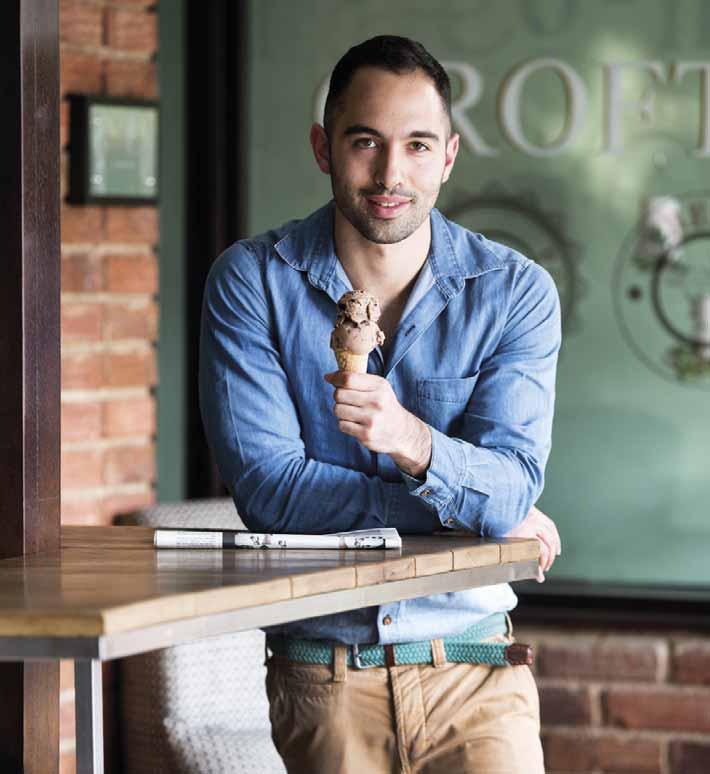
He’s known as Joburg’s Ice Cream King because he makes and sells wickedly delicious ice cream, but Paul Ballen, who has an Honours in Clinical Psychology from Wits and a Postgraduate Diploma in Management from the Wits Business School, is far more than ice cream.
Adouble scoop of Paul’s White Rabbit ice cream at Love Food in Braamfontein is just the ticket for a late summer’s day. Or any summer’s day for that matter, but as the leaves turn in Joburg, it’s my noon-gun salute to the changing of the seasons.
Indulging with me is Paul Ballen (24), who is the perfect example of a young entrepreneur who has used his network to build a new business in Joburg, based on a product he loved and wanted to share. The product is something we all take for granted: ice cream.
New York-style ice cream
“I’m half American and half South African, and I spent the hot summer months in New York City as a child, where wonderful ice cream stores with huge selections are part of everyday life,” he explains. “For me, South Africa lacked real, quality ice cream and I always wanted to take New York-style ice cream to my friends in South Africa.”
Which is precisely what he did when he received an ice cream maker for his 21st birthday. “I straightaway started making my own flavours and testing them on my family and friends. The feedback was so positive that I started selling it on a modest scale.”
In four years he has grown Paul’s Homemade Ice Cream into a coveted, personalised brand that has earned him his royal title.
“My approach is that if you’re passionate enough about something, pursue it. Use social media and use your networks,” says Ballen, who approached trendy delis like Love Food, Wolves Café in Illovo and Warm & Glad in Craighall Park to sell his product.
Using social media
He readily concedes the limited amount of ice cream he makes is not a money-spinner but what it has given him is invaluable exposure to running a small business: “I’ve used social media to promote and sell my product and I have had to hone my creativity to continue creating novel flavours that keep my customers interested, excited and coming back for more.”
Flavours like White Rabbit…those delicious, milky toffees wrapped in rice paper that you always find in Chinese takeaways. Reinvented as an ice cream ...delicious!
Farm fresh eggs, cream, milk and sugar
His basic ingredients are farm fresh eggs, cream, milk and sugar. Then come the flavours, which he gleans from his travels – he recently returned from a backpacking trip through Sri Lanka and Madagascar –as well as from cookery books, searching the Internet, and conjuring them from his imagination.
Some of his favourites are Cereal Milk, Green Tea & White Chocolate, Hazelnut & Stracciatella, Butter Popcorn, Maple Syrup & Caramelised Pecan, and Rooibos Tea & Dulce De Leche.
Currently, he makes his ice cream at his family home in Saxonwold, which he shares with his artist mother Lynda Ballen (who studied Fine Arts at Wits), his photographer father Roger Ballen and his twin sister Amanda Ballen, who graduated with an Honours in Clinical Psychology at the same time as her brother.
Amanda is pursuing a Masters degree in the Humanities at Wits while Paul is pursuing his interest in black and white photography and novel, start-up businesses.
Fit and trim
In the ice cream game, you’d imagine, it’s easy to pick up a few pounds. Not Ballen. He remains fit and trim and clearly doesn’t extend his tastings to a tub or two.
“I’m not producing enough for that,” he smiles. In truth, apart from the odd ice cream treat, he eats extremely healthily and follows the protein-focused Palaeo Diet – very similar to what Professor Tim Noakes advocates – and he does Crossfit and Olympic weightlifting with a coach at Wits.
“I was on campus until the end of last year when I completed my Postgraduate Diploma in Management. I learnt vital skills during my diploma at Wits Business School but I would like to have seen it focus more on entrepreneurialism and less on the corporate route,” he says.
The workplace has significantly changed
“I think the workplace has significantly changed and many people in my generation are more interested in starting their own businesses. I think the Internet, though it’s not a new thing, has changed the way people think and has made them aware of the extent to which opportunities are available.
‘Jerry’ – photo by Paul Ballen from his Joburg series.
This, coupled with the fact that the economy is not in a particularly good place and jobs are scarce, has triggered the need for people to go for it on their own and put their creative, entrepreneurial skills to the test.”
In pursuit of the self-styled route, Ballen is considering other “Paul brand” lines and he’s dedicated this year to working on a business expansion plan, his photography and moving out of home.
“No wonder I don’t have a girlfriend; I’m still living with my parents!” he smiles.
The property market
It’s costly to get a foot in the Joburg property market but in this regard he is seeking advice from his grandfather Hymie Moross – a well-known architect and Wits alumnus – as to where to invest.
“Precincts like Maboneng are really interesting and I enjoy going there, but my investment preference at the moment would be for a small apartment in a suburb like Rosebank. Being small, it wouldn’t cost much to furnish and it would have a high resale value,” says Ballen, who is in two minds about committing himself to serious responsibilities right now while he is still young and hooked on travel.
Travelling alone
“I’ve travelled alone the past couple of years, including through India two years ago, which was completely amazing. You are naturally more introspective when you are on your own, which deepens the experience.
“I witnessed ceremonies that are completely foreign to me, such as cremations on the Ganges, which is very different to my own culture of Jewish burial traditions. It’s an important part of Hindu culture, which I completely respect and found fascinating. It also evoked such strong feelings of the strangeness of human existence. Humans are such amazing creatures but at the end of this life we’re just bodies being buried or burnt on a river.”
Photos by Paul Ballen. Top: Kindred ice cream purveyor in the coastal town of Tangalle in the south of Sri Lanka Middle: A sleeping man on the promenade in the midday heat in Colombo, Sri Lanka Bottom: The women make beautiful embroidered cloth on Nosy Komba Island in the north of Madagascar.
2012 (MMACE) Best External Magazine 2011 (SA Publication Forum)
Best External Magazine
2010 (MACE) Editor of the Y Year 2010 (SA Publication Forum)
PAYMENT OPTIONS
Online payment: www.wits.ac.za/alumni/payment or electronic transfer, bank deposit, cash or credit card payment at the Alumni Office.
For assistance with payment or delivery queries or to apply for a complimentary copy please e-mail alumni@wits.ac.za.
SUBSCRIPTIONS: International: R100 per annum | Local: R80 per annum
The
for ALUMNI and friends of the University of the Witwatersrand
Witsies with theEdge
BY DEBORAH MINORS
“APARTHEID’S GLOBAL ITINERARY” RESEARCH GRANT
Dr Louise Bethlehem (BA 1985, PhD 2002) received the European Research Council Consolidator’s Grant in December 2013 for a five-year project entitled Apartheid – The Global Itinerary: South African Cultural Formations in Transnational Circulation 1948-1990. Bethlehem is Chair of the Programme in Cultural Studies at the Hebrew University of Jerusalem. Her project traces the global diffusion of South African cultural formations, whether textual, musical or visual, in a Cold War setting. Bethlehem’s research explores how the global contest over the meaning of apartheid and of resistance to it occurs on the terrain of culture.
PORTUGUESE GOVERNMENT GOLD
The Portuguese government awarded Jose Nascimento a Golden Medal of Merit in Lisbon in October 2013 in recognition of his work in the community. Nascimento speaks five languages. He holds a BProc (1981) and LLB (1987) from Wits and an LLM in International Law from UJ. His fields are human rights, international law, and Angolan and Mozambican investment law. The Mozambican government has retained Nascimento’s services for 20 years. In 2007, he received the Portuguese Diaspora Liberal Professional of the Year Award. He is Watching Brief for the Mozambican government and family of deceased taxi-driver Mido Macia, who in 2013 was tied to a police van and dragged.
TWIN AWARDS
Twin brothers Arthur and Charles Goldstuck both earned recognition in their respective fields in the same week in November 2013, continents apart.
The Institute of Information Technology Professionals South Africa awarded Arthur Goldstuck (BA 1984) its Distinguished Service in ICT Award on 7 November 2013, in Johannesburg. Arthur pioneered Internet use for productivity in South Africa. He has been a “role model, mentor and true stalwart of the South African information and communications technology industry, and made an exceptional contribution.” Arthur is a journalist and an ICT media analyst. He wrote South Africa’s best-selling IT book, The Hitchhiker’s Guide to the Internet: A South African Handbook, among others. He is Managing Director of technology market research organisation World Wide Worx, and Editor-in-Chief of Gadget
Charles Goldstuck, CA (SA) (BCom 1982, BAcc 1983) received the Courage and Commitment Award from the Multiple Myeloma Research Foundation (MMRF) in Ohio, USA, on 9 November 2013. Multiple myeloma is an incurable blood cancer. The MMRF, which Charles supports, funds research. Charles is President and Chief Executive of TouchTunes Interactive Networks. A renowned leader in the music industry, he previously served as President and Chief Operating Officer at BMG Music, and Executive Vice-President of Capitol Records and Arista Records. He sits on the boards of charities including the City of Hope Children’s Hospital Foundation and the United Jewish Appeal Federation.
KIDNEY RESEARCH AWARDS
The American Society of Nephrology awarded David Salant the John P Peters Award during Kidney Week in November 2013. The award recognises research contributions and achievements in academic medicine. Salant is Professor of Medicine at Boston University Medical Centre, where he has been Chief of Nephrology and Director of the training programme since 1987. He graduated from Wits with an MBBCh (1969) and then worked at Johannesburg Hospital’s Renal Unit. He joined Boston University in 1979 after completing a research fellowship. Salant also received the Jean Hamburger Award from the International Society of Nephrology at the World Congress of Nephrology in Hong Kong on 1 June 2013. The award recognises outstanding research in nephrology with a clinical emphasis.
WITSIES WITH THE WRITING EDGE
BY DEBORAH MINORS
FICTION
The Last Mentsch, by Peter Bayer
Peter Bayer is an author, poet, cartoonist, journalist and academic. He worked for the Rand Daily Mail as a reporter and sub-editor. After the Mail’s closure in 1985, he published educational newspapers for rural southern Africans before entering academia. He has just completed two children’s books, Tiny Tiger Toes and Grampa Grumblingspoon’s Proper Hectic Zoo. A former Visiting Associate in the Wits Journalism and Media Studies department, he holds a Masters in Creative Writing (2013), awarded cum laude. The Last Mentsch (Sun Dragon, 2014) was written in fulfilment of this degree. The novel, set in southern Africa from 1862 to 1985, tells the tale of South Africa’s embryonic Jewish community. Peppered with eccentric characters, it combines adventure, mystery, humour, madness, and tragedy. It was shortlisted for the 2013 European Literary Award, whose judges wrote that it “gallops us into a fast-paced roller coaster of immigrant survival.” Wits English Professor Michael Titlestad hailed its “rich, poignant and often hilarious celebration of story-telling” that “combines the historical novel and the picaresque to create a portrait of South Africa’s fledgling Jewish community.”
MEMOIR
Open Hearts: Memoirs of a Cardiac Surgeon, by Joseph B Borman
Described by peers as “a giant of Israeli medicine”, Professor Joseph B Borman performed the first heart transplant in Israel. He led the Department of Thoracic Surgery at Hadassah University Hospital in Jerusalem for 25 years. Borman was born in Krugersdorp in 1929. His interest in medicine was piqued when his sister, Hannah, studied Physiotherapy at Wits. Borman graduated from Wits with an MBBCh in 1951. He specialised in surgery in England, later settling and practising in Israel, where he pioneered coronary artery bypass surgery. Borman narrates the highlights of an accomplished life in Open Hearts: Memoirs of a Cardiac Surgeon (Gefen Publishing House, 2014). These include the emergency, life-saving surgery he performed on an injured soldier in 1967 — Doron Lancet, who went on to make a significant contribution in mapping the human genome. “Open hearts” refers not only to Borman’s surgical speciality but also to his trademark ethics, integrity and humanity, for which he is widely referred to as “the gentleman of the medical profession”.
GUIDEBOOK
Johannesburg in Your Pocket: February – April 2014, by Laurice Taitz
Journalist and Editor Laurice Taitz started the blog Nothing to do in Joburg besides… when she got tired of listening to people complain about an apparent lack of entertainment in Johannesburg. She has now published Johannesburg in Your Pocket, a quarterly guide to what to see and where to stay, eat, shop and play in Joburg. Contributors include Witsie Nechama Brodie, author of The Joburg Book, and actor Pieter Dirk Uys, an honorary alumnus. Also featured is eminent honorary alumnus Nelson Mandela, in “Mandela’s Joburg”. Johannesburg is the first city outside Europe to be granted publishing rights by In Your Pocket publishers, which covers 100 cities. This “insider’s guide” reveals Joburg’s “shiny gems”. The Times calls it “an intelligent guide to your favourite city”. Taitz holds three degrees from Wits, including a Masters in African Literature, and another Masters, in Journalism Leadership, from the University of Central Lancashire. Johannesburg in Your Pocket is available in print for R30 at selected Joburg bookshops and hotels or as a free PDF download at www.johannesburg. inyourpocket.com.
NON-FICTION
Durban: Once Upon a Time, by Franco Frescura and Barbara Maude-Stone
For the past three years Professor Franco Frescura (PhD 1986) has been carrying out a survey of the historical built environment of Durban, bringing together data drawn from field work, historical images, early maps, social registers, oral histories and land registers. This book represents the first publication of his findings. The result is an exploration of Durban during the post-colonial era, a collection of romantic images which, together with the memories of a number of Durban’s early residents, paints a picture of a time when life was conducted at a more leisurely pace. A life populated by shopping trips to West Street, milkshakes taken on Ocean Beach, dressing up for “the July” horse race and sailing to England on a stately mail ship. Or, if you choose, it begins to explain how the lower part of West and Pine Streets remained, for many years, “the preferred habitat of several species of waterfowl”, or why the Borough of Durban, in its pioneering years, was perpetually bankrupt. It also hints at the presence of a veritable herd of elephants that still inhabits Durban’s genteel living room.
BookReviews
INTO THE PAST: A MEMOIR
BY PHILLIP TOBIAS
Memorial edition, published by Picador Africa and Wits University Press, 2013
It was typical of Phillip Tobias that he should have dedicated his memoir, first published in 2005, to his 10 000 students along with his family, friends and academic colleagues. Professor Tobias was a small man with a giant intellect. He readily and generously acknowledged his intellectual debt to many. He was a world-renowned scientist and an illustrious son of Wits. His long life was dedicated to his discipline, to Wits and to African science over a 50 year period. His influence on his many students was enormous. If you were fortunate to be taught and inspired by Prof. Tobias you would never forget that experience. I treasure having been on a Geology 101 field trip to Sterkfontein and being thrilled and mortified to have Prof. Tobias point to my head resting against a rock and theatrically declaim “that is precisely where Mrs Ples was discovered”. Transported back millions of years, he had turned me into the fossil find of the century. How could one not be an adoring fan and decide that palaeoanthropology was the most glamorous of the sciences? I opened this memoir with a touch of sad nostalgia and keen anticipation.
WITS UNIVERSITY PRESS PUBLICATIONS ARE OFFERED AT A 20% DISCOUNT TO WITS STAFF, WITS ALUMNI AND WITS STUDENTS WHEN BOUGHT AT THE WITS UNIVERSITY PRESS OFFICE PREMISES.
Wits University Press publications can be ordered online from www.witspress.co.za | UK & Europe: +44 (0)20 7240 0856 www.eurospanbookstore.com | North & South America: Toll-free: (800) 888 – IPG1 (4741) | orders@ipgbook.com FOR MORE INFORMATION: www.witspress.co.za | Tel +27 (0)11 717 8700 | info.witspress@wits.ac.za
What’s new in this book? I had read the Tobias memoir when it had first appeared, but this time I reread it with a mix of affection and an appreciation of a completed life. Phillip Tobias passed away in 2012 and many obituaries appeared celebrating his career and many-dimensional life. We remembered him in a fitting and special tribute event in the Great Hall.
Into the Past is an autobiography (essentially covering the first 40 years of his life) but becomes a more complete work with a foreword by Nobel laureate and contemporary Sydney Brenner, the publication of the Hamba Kahle Wits Obituary (7 June 2012) and an appreciative prologue by Ron Clarke, a fine intellectual successor and heir. Tobias had intended to write a second volume of his memoirs but that project was never completed. He planned to write about his East African research and his involvement with the work of Louis and Mary Leakey, his headship of the Wits Anatomy Department, the Sterkfontein Caves excavations started with Alun Hughes in 1966, and his work in the Palaeoanthropology Research Unit, started as a programme in the Anatomy Department. I would have liked him to discuss the nature of change in the late 20th century university and the University’s fight against apartheid (in which he played a significant part). These phases of his life remain largely undocumented, at least by him. This is strange for a man who was so prolific in his scientific writing and who built such an extraordinary curriculum vitae. Many at Wits will recall Prof. Tobias as a ready protestor in political gatherings and the 2010 stand on Jan Smuts Avenue, protesting against xenophobia, saw him there, even in old age, in billowing red doctoral gown.
The epilogue in this book, just short of 40 pages of writing, is a fresh addition to his memoirs but only touches on the East Africa phase of his life. Clarke attempts an explanation as to why Tobias lost the enthusiasm to complete his memoirs. His view is that the closure of the palaeoanthropological research unit and the associated elements required to deliver on the research in the Department of Anatomy (later the School of Anatomical Sciences) following Tobias’s retirement as head marked the end of an era. He found it too difficult to write about recent painful events and structural changes in his University. But the very point about an enduring university is that it provides a framework for both institutional stability and dynamic change to nurture new approaches to research questions.
Autobiographies are a peculiar animal and are difficult to write. The reader is fascinated by what the author chooses to reveal about his life and the selection of personal insights committed to paper. Autobiographies also reveal through what is not discussed. The reader sometimes gratefully accepts the crumbs of reflection and life’s narrative by the author, but one also yearns for the missing insights and indeed chunks of life. In Prof. Tobias’s case the “sound” of his voice, his tone and his take on things that mattered to him bring him to life again in this memoir. I think that is the pleasure of this book. However, there is space for a capable biographer and the University historian to dissect the man and his contribution to Wits during a turbulent half a century.
Associate Professor Kathy Munro
ACADEMIC FREEDOM IN A DEMOCRATIC SOUTH AFRICA
BY JOHN HIGGINS
Published by Wits University Press, 2013
In 1957 the universities of Cape Town and the Witwatersrand published a small but important book, The Open Universities in South Africa. It was the outcome of a conference held in Cape Town to address and raise awareness of the intellectual disaster looming with the proposal of the apartheid government to segregate South African universities and use race as the grounds for admission. In 1959 the Extension of University Education Act (a peculiarly and inaptly named piece of legislation) was passed (repealed only in 1993) and it spelt a grave loss of freedom and an intellectual impoverishment for all South Africans; the open universities (UCT and Wits) were no longer free to admit students based on intellectual performance. These two universities resisted that Act and the loss of academic freedom in public protests, debate and commemoration. The book was important in raising the debate about the meaning of academic freedom in South Africa.
In opening John Higgins’s book of essays and interviews, Academic Freedom in a Democratic South Africa, I recalled that earlier classic statement of the case for academic freedom and institutional autonomy. Here, the case and its relevance in today’s very different world is re-examined and set within the tradition of the critical humanities. In a perceptive foreword, Nobel prize winner John Coetzee cuts to the crux of the matter: “Is a university still a university when it loses its academic autonomy?” and, equally importantly: “Is a university without a proper faculty of humanities still a university?”
ASSOCIATE PROFESSOR KATHY MUNRO, SCHOOL OF ARCHITECTURE AND PLANNING
It is fascinating to see parallels between the policies proposed by the African National Congress in 2012 and those of the National Party government of 1959 or even 1987, as universities face new threats to their autonomy and academic freedoms. In the past, separation and race was the overarching issue, whereas today the state seeks to extend its authority to determine the social and economic purpose of a university to promote the developmental state. This work has relevance in a wider world where governments everywhere grapple with issues of managed research, value for money, taxpayers’ rights and responsibilities. The philosophy and principles behind academic freedom face new threats where a tangible economic outcome is expected for an investment in fees and subsidies, and the Internet raises new questions of power over knowledge. What has happened to the common good, liberal ideals and an independent role for the humanities? It is for academics to raise debate and consciousness about what academic freedom means and it is important. Today, within universities, the rights of freedom of expression and protest in partisan student politics make this a book that should be read and reflected on by politicians, bureaucrats, university leaders and student activists.
Higgins has much to say that is meaningful today. He has brought within the pages of one book five essays, written at different times over a long career, about issues as diverse as the Conor Cruise O’Brien affair; state funding for universities and academic boycotts (referring to events that played out in 1987); the meaning of academic freedom in the new South Africa (an essay from 1997); NRF research policy and the views on sidelining the humanities (2004/2005); the shaping of institutional culture and its relevance to the management of universities in the context of transformation; and making the case for the humanities (2011). These essays reveal Higgins’s breadth of scholarship. Together with the detailed bibliography we have here the intellectual’s reference
book for a new generation of scholars and thinkers in South Africa. The essays show how Higgins grappled with the question of what a university is, the higher education issues of the day and the relevance of political pressures on the academy. Each chapter has a current introduction and a comprehensive set of notes that entices one to read further. I would have liked a broader discussion of why academic freedom is as relevant to the sciences and professional disciplines as it is to the humanities. In a university, academic freedom may be and sometimes has been qualified or constrained because of finances or economic resources but it is a subject that must be debated and fought for by all. Its importance should be understood as something of greater significance than an “academic” issue.
The second part of the book comprises interviews with Terry Eagleton (controversial international visitor to UCT and author of that rare thing, academic bestsellers on literary theory) and Edward Said (USPalestinian philosopher, intellectual, critic and activist) and finally an essay with Jakes Gerwel (much admired former Vice-Chancellor of UWC, Chancellor of Rhodes University and Director-General of President Nelson Mandela’s office). The conversations range over topics such as political transition, reflections on distinguished careers and intellectual growth, literature and literacy, human rights and the case for the humanities. Each interview has the immediacy of a spontaneous, intimate conversation (two of the three subjects have since passed away) but they do not cohere particularly well. Nonetheless a tight concluding chapter sums up the core themes and arguments and locates the book as a whole in a time context. The examination of the role of the humanities in higher education highlights the core theme of the social value of the university and why academic freedom is in the interests of all. That takes us back to the 1957 case for the preservation of the “open” university in South Africa. It is still an ideal worth championing.
Obituaries
WITS UNIVERSITY FONDLY REMEMBERS THOSE WHO HAVE PASSED AWAY
BY DEBORAH MINORS
DENIS SCHAFFNER (1922 – 2013)
Denis Graeme Schaffner died in Hobart, Tasmania on 18 October 2013, aged 90. He was a Wits Civil Engineering graduate (1942) and served in the South African Air Force as a fighter pilot. He then joined FE Kanthack & Partners to construct Witbank Dam and also worked with Ninham Shand on the Katse Dam in Lesotho. In 1961, Schaffner migrated to Australia. There he joined the Rivers and Water Supply Commission, becoming Engineering Member and Chairman. He was a member of the Australian Water Resources Council until his retirement in 1987. He enjoyed music, watercolour painting and writing. His wife, Megan, three children and six grandchildren survive him.
HYMAN GAYLIS (1921 – 2013)
Dr Hymie Gaylis died in San Diego on 5 December 2013, aged 91. Gaylis pioneered vascular surgery in South Africa. He was born in Boksburg on 17 December 1921 and held an MBBCh (1946) and MMed (Surgery) (1953) from Wits. He specialised abroad, becoming a Harvard University Fellow in 1957. He returned to South Africa and became a Professor of Surgery at Wits, completing a Doctorate in Medicine (1977). He earned global critical acclaim as a surgeon and scholar, but remained humble. In 1994 Gaylis emigrated, and volunteered at the University of California San Diego. His wife, Rhoda, and sons, Franklin and Brendan – both Wits Medical School alumni – survive him.
RUDI BRITS (1922 – 2014)
A former Dean of the Faculty of Commerce at Wits, Professor Rudolph ‘Rudi’ Nieuwoudt Brits died on 29 January 2014, aged 92. He was born on 13 August 1922. It was during his tenure in the 1980s that the New Commerce Building on the West Campus was built to accommodate the sudden growth in Commerce student numbers. He was also a great supporter of part-time study for working individuals. He co-authored Marketing in South Africa and worked for a period in the transport sector. His wife, Joan, and their sons, Peter and John, survive him.
PETER JACOBS (1934 – 2013)
Widely regarded as the founder of haematological oncology in South Africa, Professor Peter Jacobs died on 18 November 2013, aged 79. He was born on 21 March 1934 and held MBBCh (1959), MD (1966), and PhD (Medicine) (1973) degrees from Wits. He performed the first stem-cell transplant and was instrumental in the development of bone marrow transplantation in South Africa. He was Foundation Head of the Department of Haematology at UCT and directed bone marrow transplant units at Western Cape hospitals, earning international recognition. Peers lauded him as an ambassador for South African haematology and a role model for generations of younger haematologists. His wife, Di, and sons, Sean and Wayne, survive him.
GRAHAM MACKAY (1949 – 2013)
Former Executive Chairman of SABMiller plc, Ernest Arthur Graham Mackay died in Hampshire, England on 18 December 2013, aged 64. He was diagnosed with a brain tumour in April 2013.
Mackay was born in Johannesburg on 26 July 1949. He graduated with a degree in Electrical Engineering from Wits in 1973. His first job was as a computer technician with BRT, which took him to South African Breweries (SAB) in 1977. He rose rapidly through the ranks and became Group Managing Director in 1997. Mackay was highly regarded as a leader who led the firm’s rapid global expansion. During his tenure, SAB bought American brewery Miller, creating SABMiller. Mackay grew SABMiller into a Fortune 500 company. He was the longest-serving CEO on the FTSE 100 when he became Executive Chairman of SABMiller plc in July 2012.
Mackay had a penchant for physics and advanced mathematics. He enjoyed poetry and classical music, squash, tennis and bridge. His wife, Beverley, and six sons survive him.
STEWART SMITH (1921 – 2014)
Former Wits Registrar Colonel Stewart Cecil Smith died in Surrey, England on 30 January 2014, aged 93. Smith was born on 11 January 1921 in County Durham. He was an Anglo-Indian and an engineer. He served in the British Army for 32 years before Vice-Chancellor GR Bozzoli recruited him in 1973. Smith became Registrar: Research in 1975, then Registrar: Administration in 1982, responsible for the Performing Arts Administration, among others. He was Secretary of Council and Chairman of the Committee of Registrars of South African Universities. In 1986, he retired to Tenerife with his wife, Winifred. He returned to England after her death in 2001. His funeral took place with full military honours.
HESSEL UTIAN (1932 – 2012)
Dr Hessel Lionel Utian died on 26 February 2012, aged 80. He served Wits as senior consultant paediatrican for 50 years. Utian was born on 18 February 1932. He held an MBBCh (1954) from Wits and worked at the Johannesburg Fever Hospital after graduating. He obtained a Diploma in Child Health (London) in 1957 and worked at The Hospital for Sick Children. He returned to Johannesburg in 1959, to the Transvaal Memorial Hospital. He began consulting to Wits in 1962 as a lecturer and examiner. He was a Fellow of the Royal College of Physicians (Edinburgh, 1972). His wife, Norma (DOH 1958), four children and eight grandchildren survive him.
FOR ELECTED MEMBERS OF THE EXECUTIVE COMMITTEE OF CONVOCATION (EXCO)
The term of office of seven members of EXCO expires in 2014. Nominations are therefore open for seven positions, for 4-year terms (28/07/2014 - 28/07/2018)
NOMINATION FORMS
You can download nomination forms at: www.wits.ac.za/alumni/convocation/3561/ convocation_elections.html OR a Nomination Form can be posted to you on request. Elections will be held by electronic ballot.
CLOSING DATE FOR NOMINATIONS: FRIDAY 13 JUNE 2014
Enquiries: Justine Dangor
Justine.dangor@wits.ac.za Tel 011 717 1091
Witsies of the old type
BY KEYAN G TOMASELLI*
When I was a Wits Geography student in the early 1970s, the Department had a single cast-off manual typewriter. This machine was always in great demand as seven Honours and a number of MA students were required to type their quarterly seminar papers for formal oral presentation. Only the secretary had an electric typewriter and for the most part, essays were hand-written. Those were the slow, good old days, when with single index fingers we spent weeks typing, armed with Tippex to enable the endless corrections caused by our ham-handed keying. The great technological breakthrough occurred with the provision of two photostat machines in the Central Block lobby and one in the old Library, which used foul-smelling ammonia paper which faded after a few months.
With the onset of the photostatting age, gone were the days of laboriously, like monks of old, hand-copying notes from books and journals. Now, we waited in long queues to copy whole articles on the newfangled machines. We did not have cellphones, iPods, iPads or other i-gizmos to distract and atomise us, so we
actually talked to each other while queueing. We had a keen sense of being Witsies rather than, as is the case now, digital native netters. In the old days, we – the digital immigrants in the new information age – knew who we were. Nowadays, the digital natives construct virtual aliases for themselves – they present themselves as shadowy electronic subjectivities. These digital natives do not know what they are missing –interacting with real people.
In the late 1960s the new mainframe computer occupied a whole building. We spent many hours in it getting dizzy watching the banks of tape spindles whirring, and trying to make sense of Fortran, Cobol and other card-based programmes. The cards were clipped and then inserted into a feeder, which whizzed them through an electronic reader. We were mesmerised by these wonders. Nowadays, a single cellphone has more power than did that computer. Cellphones also are much easier to use. How on earth did NASA put a man on the moon in the pre-cellphone age? We had to book computer time and mistakes could cost months in delays.
One geography professor once got his co-ordinates wrong, and his crazed laughter could be heard throughout the Central Block as he bemusedly dragged half a mile of computer paper flapping in the draught behind him. This was Keith Beavon, a great wag with a wonderful wit. Yes, we still had miles in those days. Keith is still around.
The Planetarium screened TV footage of the first man on the moon, but had to close as riotous assemblies of out-of-control school kids could barely cope with this manic moon madness. Busloads from all over the Transvaal had to be turned away from Yale Road, which was then a public thoroughfare. I always think of the moon in monochrome, much like the TV footage being relayed in the Planetarium auditorium. This was in pre-TV days and the event must have seemed outlandish. History, of course, always occurred in black and white. Watching the History channel confirms that the past occurred mainly in monochrome.
Then, in 1972, Wits was permitted to purchase a knock-down black and white TV studio to begin educational video production. Cutting edge technology for South Africa at the time. I was signed on as a studio manager. Problem was, the TV equipment was already obsolete. And, in those days, taping had to occur in real time. If a mistake was made, tempers flared. On many occasions I had to break up fist fights between technicians, directors and academics because someone had made a mistake in the last minute of an hour-long programme, meaning that we had to start all over again. I could do this because I was on the Wits powerlifting team and I had a faded yellow belt in karate, awarded by none other than then world champion Stan Schmidt. I was the best of a “bad bunch”, he had observed after a grading on the grass at Wits. I was a better powerlifter.
The iconic heavyweight weightlifter, black belt karate ka and athlete supreme was Mel Siff, a six-foot muscular physicist then teaching in the Communica-
tion Studies Unit. The Wits lifters trained and played together; they offered a watchful eye when rightwingers threatened anti-apartheid protesting students, and they sometimes took out the odd security cop or two. For the rest of the time we were pumping iron in a rickety old wooden barracks, and later the new Old Mutual Sports Hall, next to the basketball court. Mr Mac, the fearsome black-belted sports officer, had a four-legged friend, affectionately named Mr Mac’s Dog. Only the dog was allowed on the grass adjacent to the swimming pool. For the rest of us it was Mr Mac’s booming voice, “Off the lawn!”
The original rusty gym equipment was more decrepit than the manual typewriter used by the geography students. We often hurt ourselves. We had none of the whirring treadmills and ergonomically designed machines that now equip the new gym. But we did have a number of doctors and orthopaedic surgeons training with us, so they offered emergency care when needed. Few in those days trained as manically as folks do now. Varsity sports clubs were largely drinking clubs, the rest got their limited exercise being chased across campus by policemen. Adrenaline-pumping stuff. Only the Wits weightlifters watched what they ate and drank.
We’ve come a long way since then: diets, training and health consciousness now prevail, while PCs and electronic communication devices now cause all kinds of joint, muscular, psychotic and addictive syndromes unknown in the age of manual and electric typewriters. Gotta go, my psycho-psychotic-physiotherapist awaits me.
*Keyan G Tomaselli set five intervarsity powerlifting records in 1969 when he represented Wits. It took him a month to recover. He is employed by the University of KwaZulu-Natal.
KEYAN G TOMASELLI IS A WITS GRADUATE. HE CAN BE BERATED AT TOMASELL@UKZN.AC.ZA