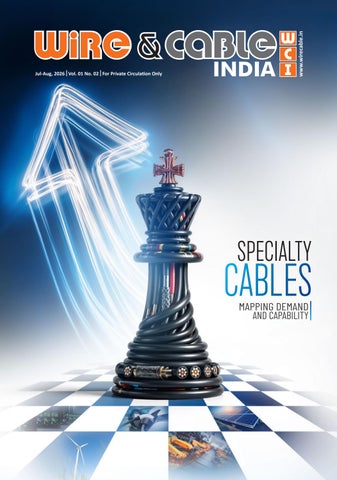

SPECIALTY CABLES
MAPPING DEMAND AND CAPABILITY


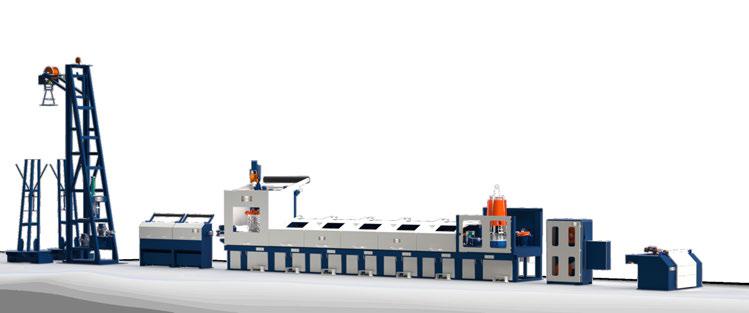
TURNKEY PROJECTS
• Plants For Galvanized Wires - Hot Dipped & Electro coated (High Speed Galvanizing Line With Nitrogen / Pad Wiping)
• Plants For M.S., H.B. & Binding Wires
• Plants For High Carbon & Alloy Steel Wires (40mm To 0.20mm)
• Plants For LRPC Wires & Strands
MANUFACTURING PROGRAMME
• Straight Line Wire Drawing Machines
• OTO Type Wire Drawing Machines
• Inverted Drawing Blocks (IVD)
• Vertical & Horizontal Bull Blocks
• Rod Break Down Machines
• Wet Wire Drawing Machines
• Furnace - Wire Annealing, Patenting, Stress Reliving
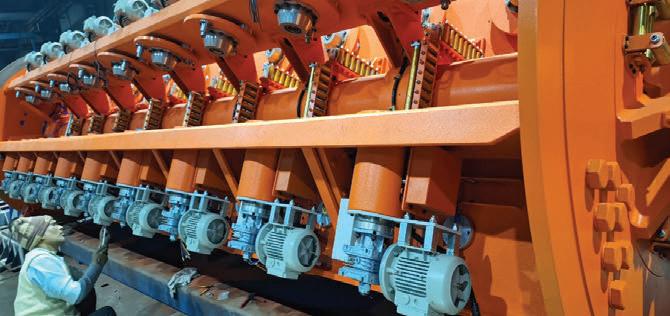
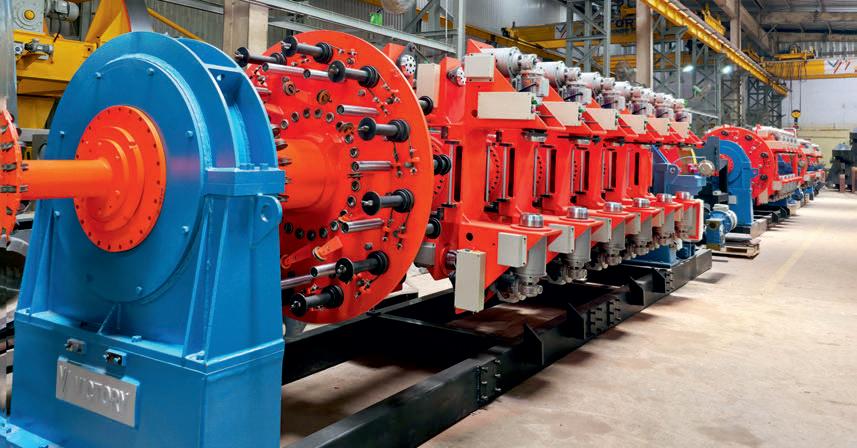
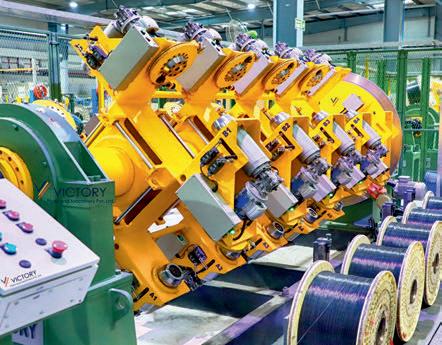
• Tubular / Skip Stranding Machines
• Vertical Drop Coilers (VDC)
• Dead Block Coilers (DBC)
• Wire Spooling Lines - Multi / Single Wires
• Wire Flattening Mills / Shaped Wire Mills
• TIG Wire Straightening Cutting Machines With Embossing
• Welded Wire Mesh Lines For Mesh Rolls Or Mesh Panels

• Plants For Stainless Steel Wires
• Plants For Cold Ribbed Wires / Deformed Bars
• Plants For Tire Bead Wire (Bronzing Lines)
• Plants For CO2 MIG / TIG / Saw Welding Wires
• Plants For Flux-Core Welding Wires
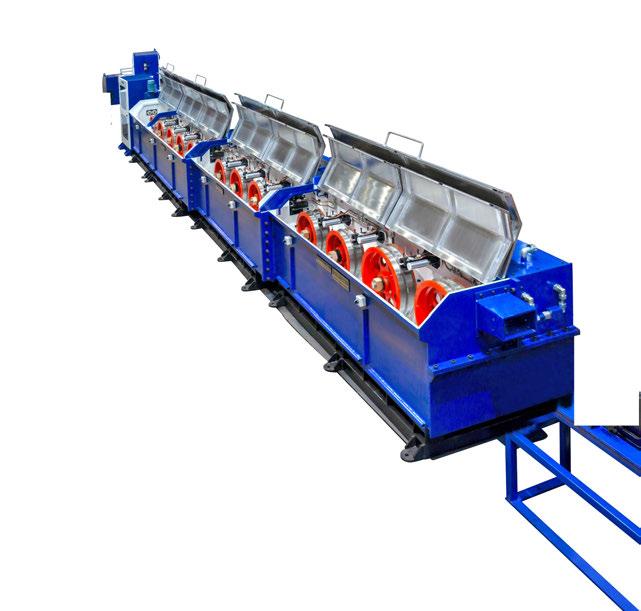
Rod Breakdown Machine Single / Double Wire (For Alloy / EC Grade Aluminium)
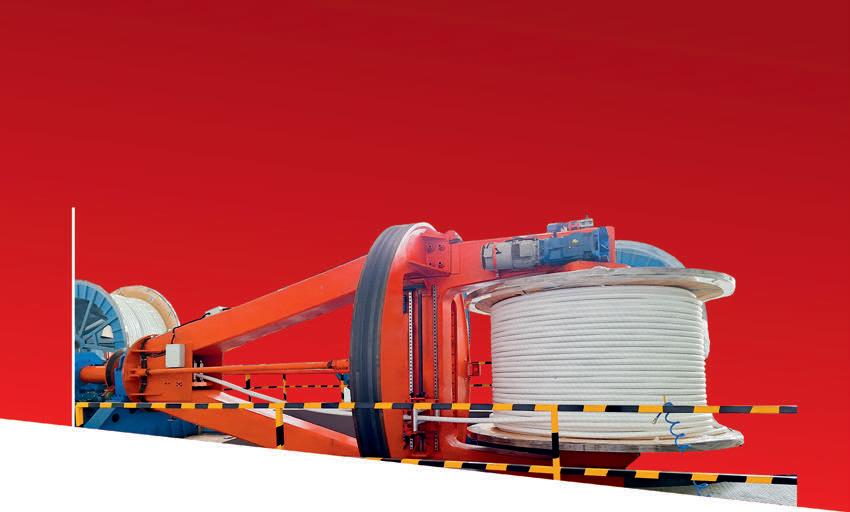
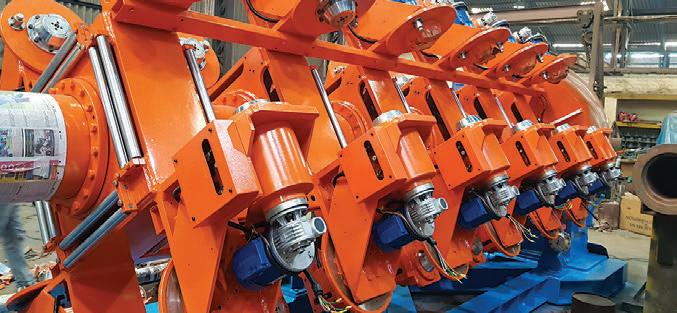
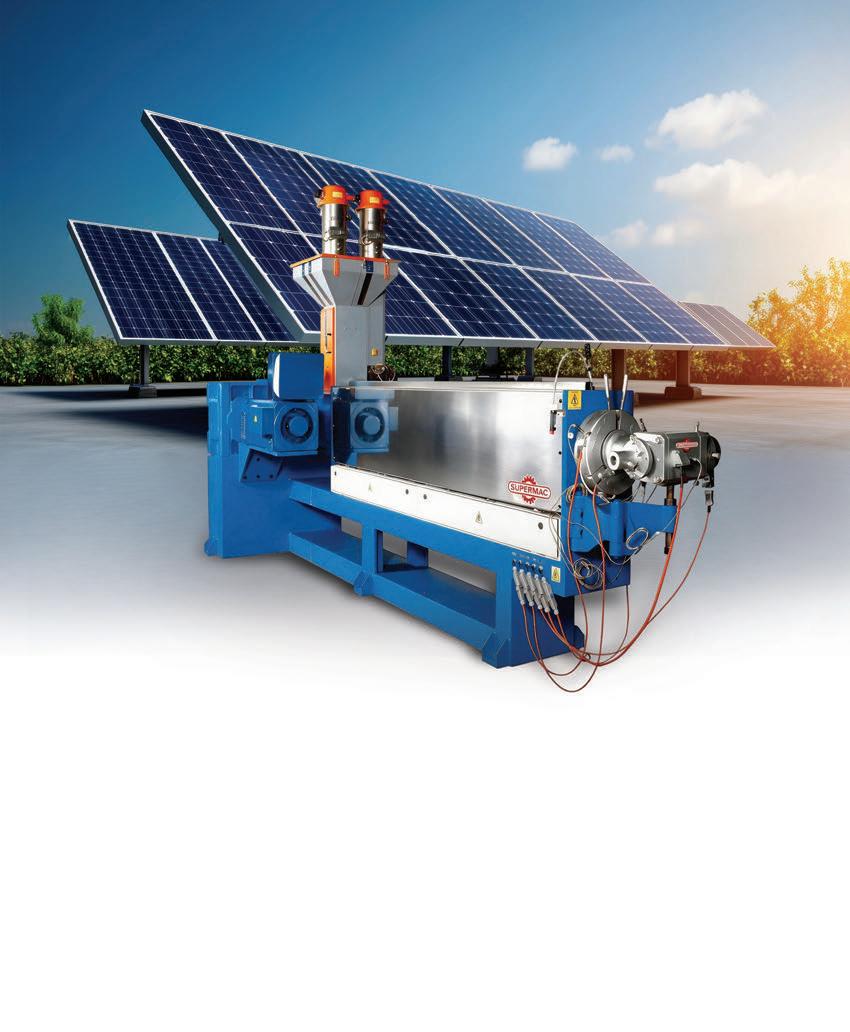
ADVANCED EXTRUSION TECHNOLOGY













Jul-Aug, 2026 | Wire & Cable India
96 | Fainplast Focuses on HighPerformance, Recyclable...
98 | Ddev Plastiks Industries Drives Innovation in Specialty Compounds...
102 | Teknor Apex Meets India’s Advanced Compound Demands...
108 | Mixer S.p.A. Elevates Its Specialty Compounds With High-Performance...
112 | Melos GmbH Shapes FutureReady Cable Compounds to...
114 | Taprath Elastomers Invests in R&D, Customer-Centric...
118 | KK Kompounding The Next Evolution in Medium Voltage...
122 | Takkar Polychem Develops Application-Specific Compounds...
128 | NAVANK Aims to Build USD 50 Million Globally Integrated Raw...
133 | Grand Tubes & Polymers Develops Advanced Compounds...
135 | From Wind Turbines to Data Centers: EKOPREN® MV Compounds for...











SPECIALTY CABLES













Cable Inaugurates Its Third Plant in Jaipur
Industries Appoints Rashmika Mandanna as Brand Ambassador



SPECIALTY CABLES
Mapping Demand and Capability
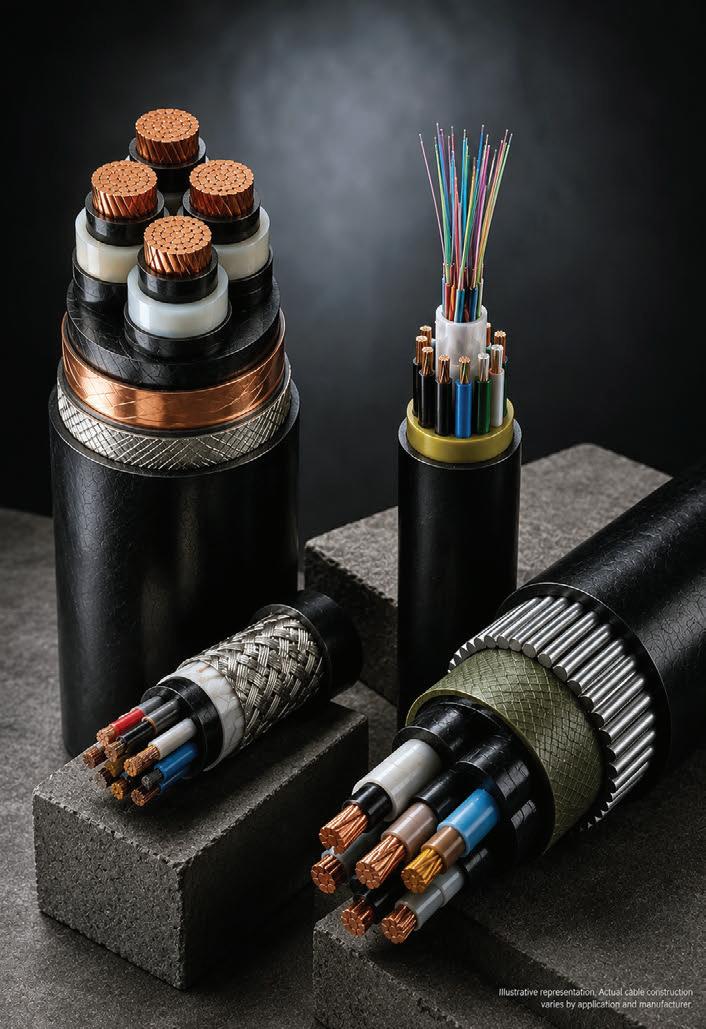
Specialty cables are engineered around the specific demands of the applications they serve. Meeting those demands increasingly depends on material innovation, manufacturing precision, rigorous qualification and commercially viable domestic capability.
Specialty cables do not follow a single demand cycle in India. Current demand spans data centres, railways and metro systems, industrial automation, renewable energy, electric mobility, defence, shipbuilding, oil and gas, mining, marine applications and process industries. The common label, however, conceals substantial differences in operating conditions, procurement, qualification and cable construction.
Mapping the Specialty Cable Market Manufacturers broadly agree that demand is expanding simultaneously across several infrastructure and industrial sectors, although each identifies a different mix of high-growth applications. Polycab reports strong demand from data centres, railways, EVs, shipbuilding and naval applications, and renewable energy. APAR places renewables and data centres at the front of current demand growth, while also seeing momentum in rail and metro infrastructure, automation, defence and nuclear power. KEI similarly identifies automation, renewables and railways among important applications, with data centres gaining relevance.




The market map widens across industrial applications. RR Kabel is seeing demand from automation, instrumentation, OEM applications, renewable energy, and data and communication infrastructure. Digitalisation in pharmaceuticals, oil and gas, food processing and packaging is adding requirements for signal and communication cables. Cords Cable identifies oil and gas, automation, renewables, metro rail and data centres among its strongest demand areas, including exports. Paramount Communications points to railways, automation, renewables, infrastructure, data centres and defence.
These are not interchangeable markets. As CS Shrotri, CEO, Cable Solutions, APAR Industries Limited, notes, “Each segment has distinct technical requirements.” A servo cable operating through repeated bending cycles, a fire-survival cable for a metro project, a submarine cable and an instrumentation cable in a process plant may all sit within the specialty segment. Their materials, constructions, testing and customer-approval requirements differ. Anurag Agarwal, CEO – Global Exports & New Businesses, Polycab




SPECIALTY CABLE
India Limited, describes such applications as having “unique operating conditions” requiring complex constructions against stringent Indian and international standards.
Within this dispersed market, data centres recur unusually often across the manufacturers’ discussions. Polycab, APAR, KEI, RR Kabel, Cords and Paramount identify the segment as a current or increasingly important demand area. Havells provides a more specific view of the engineering requirement. According to Manjit Singh Sethi, President & SBU Head – Cables, Havells India Limited, data centres require products across the 1.1 kV to 33 kV range, including flexible, control and HT cables. More importantly, “the modules where data is housed are becoming smaller but far more complex.”
Greater cable density within compact modules raises the importance of flexibility. “As equipment shrinks, connectors and cables must become much more flexible,” Sethi says. Teknor Apex sees the corresponding material requirement in AI infrastructure and higher fibre density: smaller cable diameters must retain mechanical integrity, flame performance and installation reliability.
Other demand areas are developing around different constraints. Automation and robotics increase requirements for repeated flex-life, shielding and compact construction. EV charging combines high electrical loads with communication and control functions. Rail and metro projects remain closely tied to fire performance and qualification. Renewable energy continues to generate substantial cable demand, although Havells makes an important distinction: much of the present requirement remains conventional DC and AC cable rather than inherently specialised products.
The specialty cable market is therefore better read application by application.
Application Conditions and Performance Requirements
Operating conditions vary widely across specialty cable applications. Data centres emphasise fire performance, signal integrity and uninterrupted service; robotics and automation require continuous flex-life; solar installations test long-term resistance to UV radiation, moisture and thermal cycling; and submarine, naval, mining, and oil and gas applications introduce pressure, chemicals, corrosion and mechanical stress.
Some conditions are unusually specific. Polycab cites longterm thermal endurance as a key qualification requirement in naval shipbuilding. In submarine applications, Agarwal says cables may have to withstand “pressure testing up to 72 bars.” Automation, robotics, railway rolling stock, mining and material-handling systems present a different problem: continuous movement places flexibility and fatigue
performance under scrutiny.
Industrial automation also adds electrical and communication requirements. Cords Cable links these applications to flexibility, signal integrity and EMI protection. RR Kabel identifies resistance to continuous mechanical movement as important in automation, while digital infrastructure places greater emphasis on “signal integrity, network reliability, and uninterrupted performance.” Moving cables must manage flexing and electrical continuity; instrumentation cables operating around industrial equipment may require EMI shielding; communication cables are additionally judged by transmission integrity.
Fire performance cuts across several applications, but the specifications and consequences vary. Rail and metro systems emphasise low-smoke performance, mechanical robustness and passenger safety. Data centres combine fire requirements with dense electrical and communication infrastructure and operational continuity. Oil and gas installations add hazardous operating conditions. APAR identifies “fire safety, low-smoke halogen-free performance, vibration resistance” and transportation-specific compliance among rail and metro requirements.
Outdoor energy infrastructure presents a different ageing problem. RR Kabel points to UV resistance, weatherability and long service life as central renewable-energy requirements. NAVANK reports continuous operatingtemperature expectations of 90°C to 120°C in solar, EV and industrial automation applications, while procurement specifications in infrastructure, renewable energy and utilities increasingly reference design lives of 25–30 years.
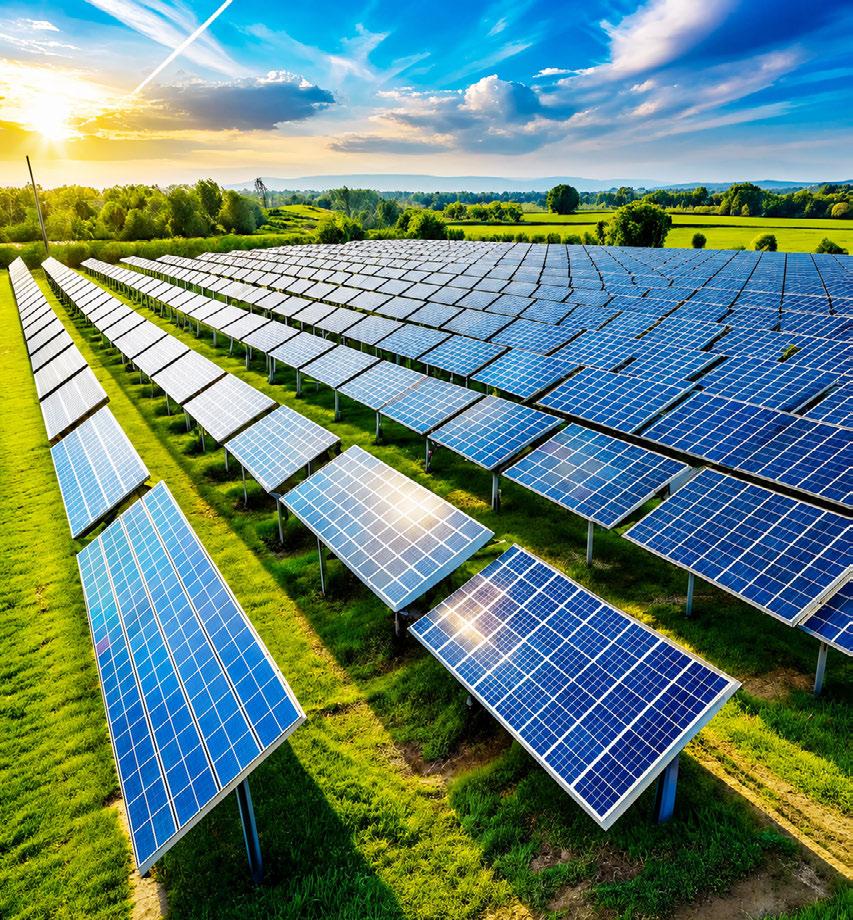
Solar is relevant here primarily as an outdoor-lifecycle case. UV exposure, thermal ageing and moisture act on insulation and sheathing over decades of expected service. The critical issue is long-term retention of electrical and mechanical performance.
EV charging shows how several stresses can converge. In his authored input, Sunil Upmanyu, President – Operations, Finolex Cables Limited, distinguishes charging loads from conventional household consumption. Fast and ultra-fast charging creates concentrated electrical loads over prolonged periods, increasing demands on conductor sizing, insulation and heat management. Outdoor chargers add sunlight, rain, dust and temperature fluctuations.
Upmanyu describes high-power charging cables handling currents “up to 600 amps,” with internal liquid cooling used in some systems to control heat while retaining handling flexibility. Embedded temperature sensors can add another safety layer. Thermal management here becomes part of the cable system rather than simply a property of the insulation.
APPLICATION







PRIMARY CABLE FEATURES
Chemical and mechanical exposure further differentiate applications. Oil and gas, mining and marine systems may expose cables to oils, moisture, chemicals and physical abuse. Automotive wiring combines heat, vibration and restricted installation space. Takkar Polychem sees rubberised PVC/ NBR PVC used where flexibility, oil resistance and cold-bend performance are required, with automotive formulations differing between interior harnesses and under-bonnet wiring.
As Naveen Sawhney, Chairman & Managing Director, Cords Cable Industries Limited, observes, “The importance of these parameters depends on the application.” A submarine pressure requirement does not translate into robotic flex-life; UV stability cannot substitute for shielding effectiveness. Complexity increases when several conditions
act simultaneously and the cable must also accommodate electrical, communication or monitoring functions.
Compact and Multifunctional Cable Architectures
Power transmission is increasingly being combined with control signals, data communication or fibre in selected specialty applications. Elsewhere, restricted installation space is placing greater emphasis on compactness and flexibility. The most visible examples come from automation, robotics, data centres and EV charging, although manufacturers also cite fixed power and subsea systems.
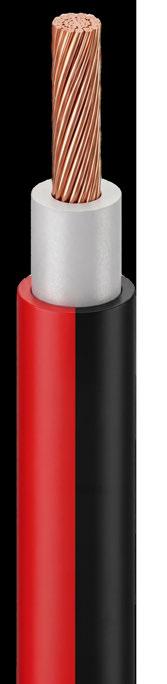
Polycab describes composite cables as a notable development in cable architecture. According to Agarwal, industrial automation and digitalisation are driving “composite cables that combine power, control, and data transmission


SPECIALTY CABLE
functions, including fibre, within a single cable system.” Polycab reports such constructions in automation, robotics and automotive sensor systems, as well as EHV underground and subsea power-data transmission.
APAR similarly links interconnected production environments with machine communication, control and operational continuity. KEI reports architectures combining power transmission and control functions through “enhanced shielding, optimized conductor designs, improved flexibility, and compact construction.” Cords says integration of power, control and communication is encouraging constructions that “reduce installation complexity while maintaining performance and reliability.” Paramount also points to hybrid solutions intended to simplify installation.
Compactness introduces its own constraints. Havells’ data-centre observations are relevant because smaller, more complex modules increase cable density within restricted space. Flexibility, current-carrying requirements and installation practicality must coexist. RR Kabel reports demand for “higher ampacity, compact cable designs, improved flexibility, and optimized space utilization.”
Teknor Apex sees the material consequence of the same requirement. AI workloads, greater fibre density and space limitations are increasing demand for smaller-diameter cables that retain flame performance, mechanical integrity and installation reliability. Reducing cable dimensions cannot mean simply removing material; conductor design, insulation and sheathing must still satisfy the operating specification.
EV charging provides another form of functional integration. Finolex describes modern charging cables as “intelligent, multi-functional systems.” Alongside high-voltage power transmission, integrated data lines allow the vehicle and charger to communicate on charging status, user authorisation and power-flow regulation. At higher currents, liquid cooling and temperature sensing may also be integrated.
Across these architectures, multiple functions are being resolved within tighter electrical, mechanical or spatial limits.
Sterlite Electric introduces another dimension through cable monitoring. Its Cable Monitoring System, CAMOS, addresses the cable as an operating asset. Frédéric Tréfois, CEO, Sterlite Electric, says the platform seeks to “embed intelligence directly into the cable system” through fibre-optic current sensing. The system measures variables including load currents, sheath currents, capacitive currents and insulationrelated parameters.
Continuous operating data can support predictive analytics, fault localisation and dynamic cable rating. In underground
networks, where physical access is difficult, visibility into electrical behaviour can improve loading and maintenance decisions.
Whether through integrated functions, compact construction or embedded monitoring, these architectures place greater demands on conductor design, shielding, insulation and sheathing. The material system must make these functions workable.
Materials, Compounds and Performance Tradeoffs
The growing number of performance and functional requirements places a larger burden on materials surrounding the conductor. Insulation and sheathing must preserve electrical performance while responding to heat, fire, movement, chemicals, weather and tighter dimensions.
Havells states the issue directly. “Fundamentally, the conductor doesn’t change very much. Most innovation is happening in compounds,” says Sethi. He points to fire-performance materials, flexibility and work around polypropylene-based compounds in HT cables. On thinner, more flexible cables, he adds: “That’s again largely a compounding challenge.”
Polycab’s material list extends across alloys, specialised shielding materials, fibres, advanced insulation and sheathing compounds, tapes and fillers. APAR similarly links multiple performance requirements with insulation systems, shielding technologies and specialised compounds. The material system is part of the cable architecture, not an interchangeable input.
The compounder views reveal the difficulty of combining several properties in one formulation. Tim Schnettler, Sales Manager, Melos GmbH, says “some key properties of our products are adversaries to each other.” High flame retardancy, he notes, “normally does not go well together with high mechanical and electrical performance.”
Teknor Apex notes that greater flame-retardant loading may affect flexibility, mechanical performance or processing. NAVANK identifies reduced flexibility and elongation as possible consequences of elevated mineral filler loading in halogen-free systems. Mixer S.p.A. says high filler loadings or specialised polymers can improve durability while reducing flexibility or complicating processing.
The trade-off becomes tangible on the extrusion line. Takkar Polychem says higher flame-retardant loading can affect “flexibility, elongation, surface finish and extrusion speed.” Amit Takkar, Managing Director, makes an important distinction between laboratory compliance and production suitability: “A compound is not successful only because it

SPECIALTY CABLE
passes a lab test.” It must provide “stable processing, less plate-out, good surface finish, low rejection and consistent batch-to-batch performance.”
Processability is therefore part of material performance. Taprath Elastomers identifies “batch-to-batch consistency” and efficient processing across different extrusion lines as continuing formulation concerns. Teknor Apex describes the compounder’s role as optimising the complete performance package while keeping the material practical and costeffective for cable manufacturers.
HFFR and LSZH compounds appear across railways, metros, data centres and public infrastructure. XLPO and other crosslinked systems address thermal and electrical requirements. Elastomeric and rubberised materials are relevant where flexibility, oil resistance or vibration are important. Silicone systems serve extreme-temperature and fire-survival applications, while semiconducting compounds form a specialised category in MV, HV and EHV constructions.
Additives and masterbatches address narrower field conditions. Takkar cites UV stabiliser, anti-rodent, antitermite and E-Beam masterbatches, along with silicone additives intended to improve lubrication, processability, abrasion resistance and dispersion. These interventions show how specific application requirements translate into defined
material functions.
Solar provides one example through XLPO and E-Beamcompatible halogen-free systems designed around UV exposure, thermal ageing and long outdoor service. Havells is investing in E-Beam capability at Alwar for specialised and solar cables, while KEI also identifies E-Beam among its manufacturing developments. Takkar says E-Beam can improve “thermal, mechanical and dimensional performance without depending on chemical curing agents.”
Thermoplastic insulation is another area of technical attention. Havells points to global work around polypropylene-based compounds in HT cables. Fainplast sees potential for PP to replace XLPE in certain applications because its thermoplastic nature makes recycling easier. This does not establish a wholesale replacement of XLPE, but indicates active development around insulation systems with different processing and end-of-life characteristics.
Melos cautions against searching for “the one next big thing.” PVC, HFFR/LSZH, XLPO, elastomers, silicone and emerging thermoplastic systems occupy different technical and commercial positions. The material question remains application-specific.
The challenge is to combine multiple performance requirements in formulations that process consistently and
INDIA’S SPECIALTY CABLE CAPABILITY LANDSCAPE
Current positioning across key application sectors
Industrial Automation
Strong capability in flexible, shielded and control cables for machinery, robots and conveyors.
Process & Instrumentation
Well-established manufacturing of instrumentation and control cables for process industries.
Rail & Metro
Mature capability in fire performance, low smoke and rolling stock cables meeting Indian and international standards.
Solar Cables
Strong domestic capability in solar PV cables with UV and weather resistance.
Data Centres
Rapidly growing capability in high-speed data, low smoke and high-density cable solutions.
EV Charging & Mobility
Capability expanding in high-current, thermal management, flexible and communication cables.
Smart Infrastructure & Hybrid Systems
Emerging capability in hybrid powerdata cables for smart infrastructure and connected systems.
Offshore Systems
Limited domestic capability for offshore platform and harsh environment cables with stringent fire and mechanical performance.
Subsea
High dependence on imports for umbilical, subsea and deepwater cables.
Aerospace
High reliability and lightweight cables for aerospace platforms remain a gap.
Advanced Defence Applications
Specialised cables for strategic and mission-critical defence systems require further development.
Nuclear
Qualification-intensive cables for nuclear power plants remain a capability gap.
ESTABLISHED












SPECIALTY CABLE
retain their properties throughout service life.
Manufacturing Precision and the Qualification Chain
Once the material system is defined, the finished cable must reproduce the approved performance across production batches. Specialty cable manufacturing therefore becomes a process-control problem. Tighter tolerances, complex shielding, specialised materials and multilayer constructions leave less room for variation.
Polycab traces the complexity from metallurgy and conductor design through alloys, shielding materials, fibres, compounds, tapes and fillers. Agarwal says, “Cable design and process engineering are critical stages because they define all performance parameters required for production, testing, and qualification.”
APAR identifies precision extrusion of specialised insulation and sheath compounds, tight dimensional tolerances, advanced shielding and consistency across multilayer constructions. Shrotri notes that in defence, nuclear, railways, data centres and automation, “even minor process variations can impact long-term performance.”
KEI identifies dimensional accuracy, shielding effectiveness, insulation consistency and material performance across batches as continuing challenges. RR Kabel places uniform insulation, shielding effectiveness and dimensional control among critical manufacturing considerations. Cords adds customer-specific construction as another source of variation. “Maintaining consistency from batch to batch is critical,” Sawhney says, particularly with complex shielding and tight tolerances.
Production and measurement systems are responding to this requirement. Havells has described automated diameter measurement and control at its Tumkur facility, where line parameters can be adjusted when variation is detected. KEI is developing VCV and CCV manufacturing for EHV cables and adding E-Beam technology. RR Kabel points to process automation and advanced testing infrastructure. The objective is to control variation before it becomes a finishedproduct failure.
Testing establishes whether the manufactured cable reflects the design intent. Electrical, thermal, mechanical, environmental, fire and endurance evaluations recur across the interviews. APAR notes that project-specific validation may be added to standard certification. Mixer makes the corresponding material-side point: testing must consider long-term behaviour under mechanical stress, high temperatures, chemicals and harsh environments.
Technical testing is only one stage of acceptance. Polycab describes “stringent qualification procedures, compliance
requirements, and homologation processes before products are approved for use.” Qualification can include witnessed testing and audits by customers or approving authorities. APAR also cites third-party certification, factory audits and long-term validation.
Railways, offshore projects, defence, automation and critical infrastructure may involve vendor approvals or project-specific qualification. Cords says “documentation and traceability are almost as important as technical performance” in many critical installations. RR Kabel notes that customer audits increasingly extend into manufacturing practices, process controls and quality-assurance systems.
KEI says customers increasingly seek transparency on raw materials, manufacturing processes, testing records and compliance documentation. At the compound level, suppliers report similar expectations around certificates of analysis, test reports and batch traceability.
Installed extrusion capacity alone therefore says relatively little about capability in a particular specialty cable category. A manufacturer may possess the equipment but still require application engineering, specialised process controls, testing infrastructure and an established qualification record. As Polycab puts it, acceptance in critical sectors depends “as much on compliance and traceability as it does on technical performance.”
The difficult requirement is not to manufacture a cable that works once. It is to reproduce the approved construction, document its performance and retain customer acceptance over successive production cycles. That requirement directly affects localization and commercial viability.
Localization, Capability Gaps and Commercial Reality
Localization in specialty cables cannot be measured simply by whether the final cable is manufactured in India. Critical polymers, additives, tapes, shielding materials or formulation technologies may remain imported. Conversely, a cable using a specialised imported input may still be engineered, manufactured, tested and qualified domestically.
Manufacturers broadly agree that Indian capability has expanded, but their lists of remaining gaps are specific. Polycab identifies aerospace, automation, offshore oil and gas, offshore wind, subsea, railway rolling stock, automotive and EV, and electronics among advanced categories where import dependence remains. APAR points to defence, nuclear, offshore, rolling stock and high-end industrial automation, citing stringent performance requirements, specialised materials and complex qualification.
Cords says many products earlier imported can now be manufactured domestically, while gaps remain in subsea
SPECIALTY CABLE
systems, certain defence applications and select advanced communication cables. KEI notes that “certain highly specialized cable categories, advanced compounds, and niche materials still rely on imports to varying degrees.”
Subsea and offshore systems combine specialised construction, materials and qualification. Rolling stock adds transportation standards, fire requirements and customer approvals. Defence and nuclear applications carry demanding environmental and validation requirements. The capability gap can sit across engineering know-how, material availability, testing and qualification rather than production capacity alone.
NAVANK argues that India’s capability is stronger in downstream compounding and application-specific customisation than in upstream specialty polymer production. It identifies specialty polyolefins, EVA and advanced LDPE systems used in XLPE, LSZH and semiconducting compounds as largely sourced from China, Korea and the Middle East. Flame retardants, antioxidants, peroxide crosslinking agents and UV stabilisers also remain connected to global supply chains. In NAVANK’s assessment, “the primary gap remains at the upstream specialty polymer manufacturing level.”
Other suppliers offer a less uniform picture. Taprath reports dependence on imported specialty polymers, performance additives and stabilisers. Teknor Apex says selected specialty polymers and formulation technologies continue to be sourced internationally for higher-performance applications. Fainplast, however, says the Indian market is “much less dependent on imported polymers,” with domestic players expanding their capabilities.
These assessments show that import dependence varies by material system and application rather than across polymers or compounds as broad categories.
Localization can also involve technology partnerships. Teknor Apex cites its PolyTek joint venture with Shriram PolyTech as a model “combining local manufacturing capabilities with global formulation and compounding technology expertise.” Such arrangements move production and technical support closer to Indian cable manufacturers without assuming that every formulation technology must originate domestically.
For manufacturers, developing a local cable is only part of the commercial equation. Engineering, prototypes, testing, certification, homologation and customer approvals can precede regular supply. Polycab describes specialty cables as requiring “long-term commitment, continuous investment in research and development, and deep technical expertise,” with significant effort required “before commercial success can be achieved.”
Customization adds cost and manufacturing complexity. KEI says qualification and customization costs can be significant in regulated sectors. RR Kabel links customised products with sustained investment in engineering, testing and quality systems. APAR notes that customers increasingly seek constructions tailored to particular operating environments.
These costs do not remove price pressure. Polycab reports increased competition and pricing pressure in railway rolling stock, automotive and EV, and shipbuilding and naval applications. KEI points to metal-price volatility. Paramount sees simultaneous pressure around pricing, customization and quality. NAVANK says customers increasingly expect improved technical performance “without proportionate cost escalation.” Fainplast says suppliers unable to offer the lowest price must compete through “high quality or deeper customization of products.”
Qualification expenditure may therefore precede commercial orders, while customer-specific products require engineering and manufacturing flexibility. Smaller batches can complicate procurement and scheduling, and testing infrastructure must be maintained even where individual categories do not offer mass-market volumes.
Manufacturers also differ in their assessment of margins. APAR argues that higher qualification costs and technical expectations can support margin sustainability for companies capable of differentiated execution because product development, testing and certification raise entry barriers. Polycab is more cautious, acknowledging pricing pressure while emphasising quality, reliability and consistent delivery.
Specialty cables are not automatically a high-margin business. Technical barriers may protect qualified suppliers in some applications, while competition and price expectations remain strong in others. Commercial viability depends on qualification intensity, customization, competitive depth and the ability to spread engineering and testing costs across viable order volumes.
The same economics influence localization. Import substitution is more feasible where domestic demand can sustain material development, testing, qualification and repeat production. It is harder where applications are technically narrow, qualification cycles are long and local volumes limited.
The more useful measure of India’s specialty cable capability is therefore specific: which applications can be engineered, materially supported, manufactured, tested and qualified domestically at commercially sustainable volumes? Across data centres, automation, rolling stock, defence, offshore systems, EV charging and other critical applications, the answers already differ.
KEI Industries Expands Capabilities for India’s Evolving Specialty Cable Market
Wire & Cable India: How do you currently define the specialty cable segment within your organization, and which application areas are presently driving the strongest business momentum for you?
Anil Gupta: At KEI, specialty cables are defined as application-engineered cable solutions designed to perform reliably under demanding environmental, mechanical, electrical, and operational conditions. These products are developed to meet stringent industry standards and specific customer requirements beyond conventional power and control applications.
India’s push toward smart infrastructure, industrial automation, and clean energy is creating strong demand for advanced specialty cables engineered for performance, reliability, and safety. In an exclusive interview with Wire & Cable India, Mr. Anil Gupta, Chairman & Managing Director, KEI Industries Limited, discusses the changing dynamics of the specialty cable market. He also shares KEI’s perspective on import substitution, emerging growth opportunities, and the company’s investments in advanced manufacturing technologies, in their recent expansion green field at Sanand, Asia’s tallest manufacturing plant which houses new VCV lines will cater to specialty cable requirements across the globe.
Currently, the strongest momentum is coming from sectors such as industrial automation, renewable energy, railways, data centers, oil & gas, and infrastructure projects. Increasing investments in industrial modernization, energy transition, and digital infrastructure are significantly expanding demand for highperformance specialty cable solutions.
WCI: Among automation, railways, renewables, data centers, EVs, oil & gas, mining, marine, or defense, which end-use sectors are generating the most meaningful demand
today, and how do their technical expectations differ?
AG: Industrial automation, renewables, railways, and Infrastructure are growing demand today in upcoming demand of near future data center will play a pivotal role. A lot of investment is planned in developing data centers in India.
Each sector presents unique technical requirements. Automation applications require high-flexibility, durability, and EMI resistance. Railways demand superior fire performance, low smoke and halogen-free properties, and long operational life. Renewable
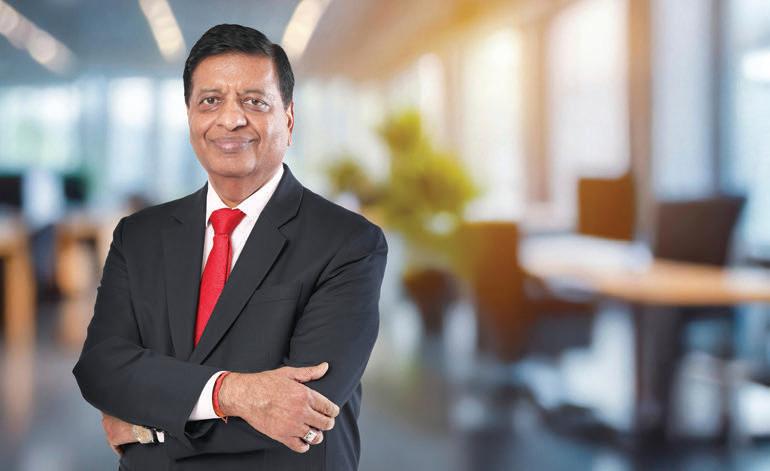
Mr. Anil Gupta , Chairman & Managing Director, KEI Industries Limited
energy projects require UV resistance, weatherability, and thermal endurance in upcoming demand of near future data centers will play a pivotal role. Oil & gas, mining, marine, and defense applications demand enhanced mechanical strength, chemical resistance, flame retardancy, and reliable performance under extreme environmental conditions.
WCI: What major shifts are you observing in customer expectations regarding performance, reliability, lifecycle requirements, qualification standards, and application-specific engineering?
AG: Customers are increasingly moving beyond price-focused procurement toward value-based decision-making. There is greater emphasis on lifecycle performance, operational reliability, safety, and compliance with global standards.
End users are seeking customized solutions designed for specific operating environments while expecting longer service life, lower maintenance requirements, and complete traceability. Qualification standards are becoming more rigorous, particularly in critical infrastructure, industrial automation, new age transmission & distribution networks led by IOT Solutions and energy sectors.
WCI: Which performance parameters are becoming increasingly critical in specialty cable design today, including flexibility, thermal endurance, fire performance, EMI shielding, chemical resistance, weatherability, or signal integrity?
AG: All these parameters have gained importance depending on the application. However, fire safety, thermal endurance, EMI shielding, flexibility, and signal integrity are becoming particularly critical across multiple industries.
SPECIALTY CABLE
As systems become more compact and interconnected, cables are expected to operate reliably under higher temperatures, increased electromagnetic interference, and demanding mechanical conditions. Additionally, resistance to chemicals, oils, UV radiation, and harsh weather environments is becoming essential for long-term performance.
WCI: How are industrial automation, robotics, high-flex applications, and the growing convergence of power, control, and data systems influencing product development and cable architecture?
AG: These trends are significantly transforming cable design and engineering. Modern industrial systems require cables that can simultaneously support power transmission and control functions. This has led to the development of advanced cable architectures featuring enhanced shielding, optimized conductor designs, improved flexibility, and compact construction. Robotics and continuous motion applications require products capable of withstanding multiple bending cycles while maintaining electrical performance and reliability throughout their operational life.
WCI: What manufacturing and process challenges are most significant in specialty cable production compared to conventional cable systems, particularly in areas such as precision extrusion, shielding, testing, qualification, and consistency control?
AG: Specialty cable manufacturing requires significantly higher process precision and quality control compared to standard cable production.
Maintaining dimensional accuracy, shielding effectiveness, insulation consistency, and material performance across production batches presents continuous challenges. Advanced
testing, validation, and qualification processes are necessary to ensure compliance with stringent customer and industry specifications. Additionally, customization requirements often demand greater engineering involvement and manufacturing flexibility.
WCI: How important have certification, traceability, and customer qualification requirements become in sectors such as railways, offshore, infrastructure, industrial automation, and critical installations?
AG: Certification, traceability, and qualification have become fundamental requirements in these sectors. Customers increasingly demand complete transparency regarding raw materials, manufacturing processes, testing records, and compliance documentation.
In critical applications such as railways, offshore projects, industrial facilities, and infrastructure installations, certifications provide confidence regarding product safety, reliability, and regulatory compliance. Traceability systems are also becoming essential for quality assurance and long-term asset management.
WCI: To what extent does India still remain dependent on imports for advanced specialty cable categories, and where do you see the strongest opportunities for deeper localization?
AG: India has made significant progress in domestic cable manufacturing capabilities. However, certain highly specialized cable categories, advanced compounds, and niche materials still rely on imports to varying degrees. The strongest localization opportunities exist in high-performance industrial cables, renewable energy applications, railway systems, data center infrastructure,
and advanced automation solutions. Government initiatives supporting domestic manufacturing and growing industry investments are expected to further strengthen local capabilities and reduce import dependence.
WCI: How do you assess the present competitive landscape in specialty cables, particularly in relation to pricing pressure, qualification costs, customization demands, and margin sustainability?
AG: The specialty cable market remains highly competitive, with increasing customer expectations and evolving technical requirements. While pricing pressures are largely driven by fluctuating metal prices, success
SPECIALTY CABLE
requirements can be significant, especially in highly regulated sectors. Therefore, sustainable growth requires continuous investment in R&D, all of these actions ensure the margins and timely delivery manufacturing excellence, quality systems, and customer-focused innovation.
WCI: Looking ahead, which specialty cable applications or technology areas do you believe will define the next phase of growth and development for the industry in India?
AG: The next phase of growth is expected to be driven by renewable energy, smart manufacturing, industrial automation, data centers, electric mobility, rail infrastructure,
systems, and digital infrastructure will create demand for increasingly sophisticated cable solutions. Products offering enhanced safety, higher efficiency, improved sustainability, and superior data transmission capabilities will play a critical role in supporting India’s industrial and technological growth journey.
At KEI factories, we are developing VCV (Vertical Continuous Vulcanization) cable manufacturing along with CCV (Catenary Continuous Vulcanization) for EHV cables, also E- beam technology. The E-beam technology significantly enhances cable durability, thermal stability, and operational reliability, enabling the development of high-performance
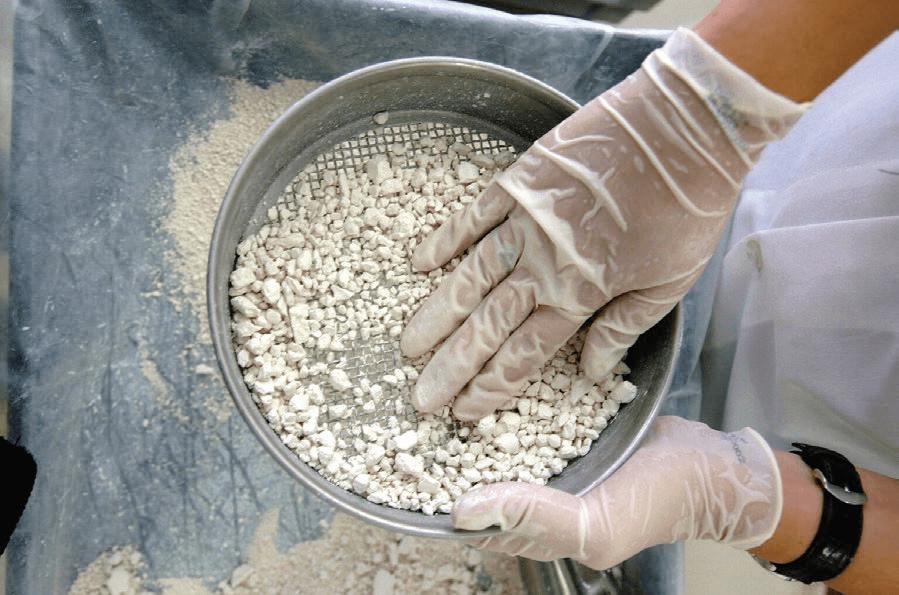
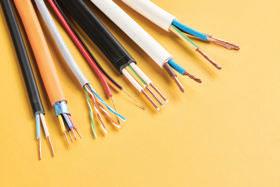
Applications: Mineral solutions for Reinforcement and Improved processing, Flame Retardancy and Volume Resistance in Wires & Cables
Elastomyn FR Shield is Non-Toxic, Non-Halogenated, Non-Brominated, alumino-silicate based Smoke Suppressant, Char promotion and Thermal barrier additive/Synergist which improves flame retardancy performance yet optimum cost components
Elastomyn MK is a dehydroxylated, high-purity with low Iron (Fe2O3), Titanium Dioxide (TiO2), and Potassium Oxide (K2O) high-performance metakaolin engineered for enhanced chemical efficiency and reactivity. Its optimized morphology and high aluminosilicate activity make it ideal for minimizing ionic conductivity, which is critical for volume resistivity in PVC cable compounds.
Polycab Powers Critical Industries with Advanced Specialty Cable Solutions
As India’s infrastructure, industrial automation, electric mobility, renewable energy, and digital ecosystems continue to expand, demand for high-performance specialty cables is accelerating across a wide range of critical applications. From data centres and railways to defence, shipbuilding, and EVs, these sectors require cable solutions that deliver superior reliability, safety, and long-term performance under demanding operating conditions. In an exclusive interview with Wire & Cable India, Mr. Anurag Agarwal, CEO – Global Exports & New Businesses, Polycab India Limited, discusses the evolving specialty cable landscape, emerging technology trends, increasing qualification and traceability requirements, the push for localisation under Atmanirbhar Bharat, and the company’s strategic focus on developing advanced, application-specific cable solutions for India’s next phase of industrial growth.
Wire & Cable India: How do you currently define the specialty cable segment within your organization, and which application areas are presently driving the strongest business momentum for you?
Anurag Agarwal: At Polycab, we define specialty cables as highly engineered products designed for niche and critical applications that operate in challenging environments and require performance levels beyond conventional cable systems. We manufacture a wide range of specialty cables for sectors such as railways, renewable energy, oil & gas, shipbuilding & navy, Automotive & EV, Data Centres, Defence, and Industrial Automation. Each of these segments has unique operating conditions and requires complex cable constructions designed to meet stringent Indian and international standards.
We are currently witnessing strong demand from Data Centres, Railways, EVs, Shipbuilding & Navy, and Renewable Energy projects. These sectors represent some of India’s key sunrise sectors and are driving the need for highperformance, application-specific cable solutions that deliver reliability, safety, and long operational life.
WCI: Among automation, railways, renewables, data centers, EVs, oil & gas, mining, marine, or defense, which end-use sectors are generating the most meaningful demand today, and how do their technical expectations differ?
AA: Demand is currently strongest from data centres, railways, renewable energy, EVs, shipbuilding & navy, and defence applications. While all these sectors require high levels of reliability and safety, their technical expectations
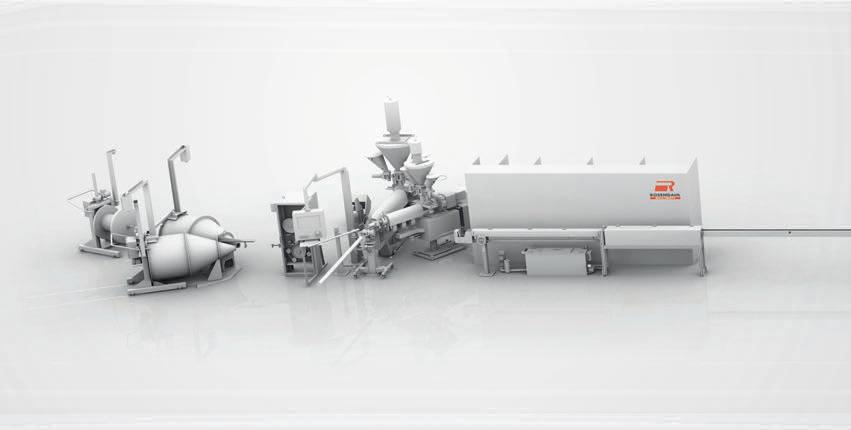
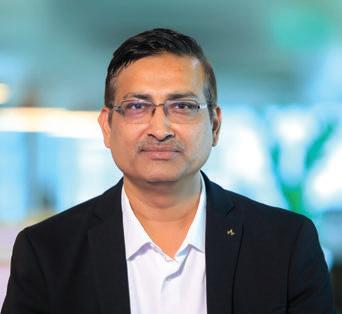
Mr. Anurag Agarwal , CEO – Global Exports & New Businesses, Polycab India Limited






SPECIALTY CABLE
Industrial automation and digitalisation are significantly influencing cable design and architecture. One of the most notable developments is the growing adoption of composite cables that combine power, control, and data transmission functions, including fibre, within a single cable system.
differ significantly depending on the operating environment.
For example, data centres prioritise fire performance, signal integrity, and uninterrupted operations. Railways require enhanced fire safety, durability, and compliance with stringent transportation standards. Renewable energy projects demand superior weatherability and long-term outdoor performance. EV and automation applications require high flexibility, compact designs, and thermal endurance, while marine, naval, and defence applications require resistance to harsh environmental conditions, vibration, corrosion, and mechanical stress. As applications become increasingly specialised, customers are looking for customised solutions tailored to their specific operational requirements.
WCI: What major shifts are you observing in customer expectations regarding performance, reliability, lifecycle requirements, qualification standards, and application-specific engineering?
AA: Customers today have significantly higher expectations compared to a few years ago. Specialty cable applications involve stringent qualification procedures, compliance requirements, and homologation processes before products are approved for use. In many cases, regular audits are conducted not only by customers but also by end users to assess manufacturing systems, quality controls, and process consistency.
There is also a stronger emphasis on lifecycle performance, traceability, and application-specific engineering. Customers increasingly expect manufacturers to collaborate closely during product development and
qualification. At the same time, India’s growing focus on self-reliance is creating opportunities for indigenous development of advanced cable solutions. Polycab continues to work closely with both Indian and global companies to develop specialised and import-substitute products that support complex applications while contributing to the Government of India’s Atmanirbhar Bharat vision.
WCI: Which performance parameters are becoming increasingly critical in specialty cable design today, including flexibility, thermal endurance, fire performance, EMI shielding, chemical resistance, weatherability, or signal integrity?
AA: The importance of specific performance parameters depends on the application, but all of these characteristics are becoming increasingly critical in specialty cable design. For example, longterm thermal endurance is a key requirement for naval shipbuilding applications and plays a major role in product qualification. In submarine applications, cables may be required to withstand pressure testing up to 72 bars. Enhanced fire performance is critical for railways, data centres, and oil & gas installations where safety and operational continuity are essential.
High flexibility is particularly important for automation and robotics, automotive and EV applications, railway rolling stock, mining, and material handling systems where cables are exposed to continuous movement and mechanical stress. We are also seeing growing interest in lighter-weight cable solutions that can meet or exceed existing performance requirements without compromising reliability, safety, or durability.
WCI: How are industrial automation, robotics, high-flex applications, and the growing convergence of power, control, and data systems influencing product development and cable architecture?
AA: Industrial automation and digitalisation are significantly influencing cable design and architecture. One of the most notable developments is the growing adoption of composite cables that combine power, control, and data transmission functions, including fibre, within a single cable system.
These solutions are increasingly being used in both dynamic applications such as automation, robotics, and automotive sensor systems, as well as fixed applications such as EHV underground and subsea power-data transmission systems. The growth of EV technology has further accelerated this trend, as charging cables today are essentially composite cables integrating power, earth, control, and signalling cores within a single design. As systems become more integrated and intelligent, cable architecture is evolving to support higher functionality, improved efficiency, and simplified installation.
WCI: What manufacturing and process challenges are most significant in specialty cable production compared to conventional cable systems, particularly in areas such as precision extrusion, shielding, testing, qualification, and consistency control?
AA: While the basic manufacturing processes may appear similar, specialty cable production is significantly more complex than conventional cable manufacturing. Challenges begin with metallurgy and conductor design, including the use of copper,
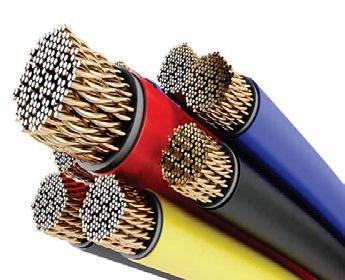
aluminium, alloys, specialised shielding materials, fibres, advanced insulation and sheathing compounds, and application-specific tapes and fillers.
Cable design and process engineering are critical stages because they define all performance parameters required for production, testing, and qualification. Maintaining consistency across electrical, mechanical, thermal, and environmental performance characteristics requires highly controlled manufacturing processes and specialised testing infrastructure. Qualification and homologation procedures often involve extensive testing witnessed by customers or approving authorities, followed by rigorous audits. In this environment, strong research and development capabilities form the backbone of specialty cable manufacturing and are essential for both innovation and longterm competitiveness.
WCI: How important have certification, traceability, and customer qualification requirements become in sectors such as railways, offshore, infrastructure, industrial automation, and critical installations?
AA: Certification, traceability, and qualification requirements have become absolutely critical across all specialty cable segments. In sectors such as railways, offshore energy, industrial automation, defence, and critical infrastructure, product acceptance depends as much on compliance and traceability as it does on technical performance.
Customers increasingly expect complete transparency across manufacturing processes, testing records, material traceability, and quality assurance systems. Any lapse in qualification, certification, or compliance can have significant business implications and may affect long-standing customer relationships. As applications become
SPECIALTY CABLE
more critical and safety standards continue to evolve, maintaining robust qualification and traceability systems is no longer optional but a fundamental requirement for participating in these markets.
WCI: To what extent does India still remain dependent on imports for advanced specialty cable categories, and where do you see the strongest opportunities for deeper localization?
AA: Indian cable manufacturers have made considerable progress in developing specialty cables that meet international standards across several application segments. However, the country continues to depend on imports in certain advanced categories such as aerospace, automation, offshore oil & gas, offshore wind, subsea applications, railway rolling stock, automotive & EV, and electronics.
At the same time, localisation opportunities remain significant. We expect to see strong progress in segments such as railway rolling stock, automotive & EV, and shipbuilding over the next few years. Growing investments in infrastructure, manufacturing, defence, transportation, and clean energy are creating favourable conditions for domestic capability development, while initiatives such as Atmanirbhar Bharat are accelerating the localisation of advanced technologies and specialised cable solutions.
WCI: How do you assess the present competitive landscape in specialty cables, particularly in relation to pricing pressure, qualification costs, customization demands, and margin sustainability?
AA: The specialty cable segment requires long-term commitment, continuous investment in research and development, and deep technical expertise. It is a business that demands significant effort in product
development, qualification, testing, and customer approvals before commercial success can be achieved.
While competition has increased in areas such as railway rolling stock, automotive & EV, and shipbuilding & navy, leading to some pricing pressure, we believe this is a natural phase of market evolution. Over the long term, success will depend less on pricing and more on quality, reliability, innovation, and the ability to consistently meet customer expectations. Specialty cables remain a highly technical segment where serious, quality-focused players with strong engineering and R&D capabilities are best positioned to succeed.
WCI: Looking ahead, which specialty cable applications or technology areas do you believe will define the next phase of growth and development for the industry in India?
AA: The next phase of growth for the specialty cable industry will be driven by India’s expanding sunrise sectors and advanced infrastructure requirements. We expect strong opportunities in offshore wind and hybrid energy projects, airports and baggage handling systems, shipbuilding including large vessels, offshore rigs, naval vessels and submarines, aerospace applications spanning commercial aviation, defence aircraft, drones and space vehicles, high-speed rail and rolling stock, and robotics and industrial automation.
In addition, emerging sectors such as data centres, semiconductor manufacturing, advanced power infrastructure, and electric mobility will continue to create demand for increasingly sophisticated cable solutions. As these industries evolve, specialty cables will play a critical role in supporting safety, reliability, connectivity, and operational efficiency across next-generation infrastructure and industrial ecosystems.


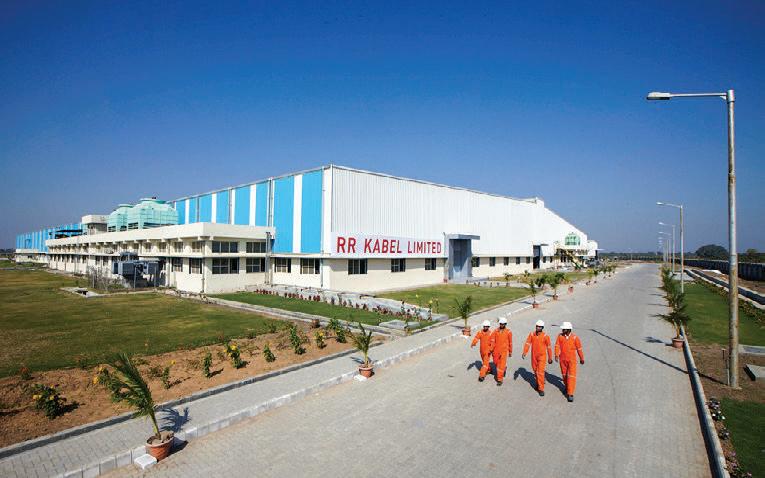
RR Kabel Sees Specialty Cables Driving Growth Amid Automation, Digitalisation Push
As India’s industrial and infrastructure sectors become increasingly automated and digitally connected, demand is shifting from conventional power cables to highperformance, application-specific specialty cables. Manufacturers are responding to rising customer expectations for reliability, longer lifecycle, fire safety, signal integrity and compliance with stringent qualification standards across industries such as renewable energy, railways, industrial automation, data infrastructure and process manufacturing. In an interaction with Wire & Cable India, Mr. Rajesh Kabra, Joint Managing Director, RR Kabel, discusses the evolving specialty cable market, the growing emphasis on customised engineering, localisation opportunities, changing competitive dynamics and the technologies expected to shape the industry’s next phase of growth.
Wire & Cable India: How do you currently define the specialty cable segment within your organization, and which application areas are presently driving the strongest business momentum for you?
Rajesh Kabra: At RR Kabel, specialty cables are defined as application-engineered solutions designed to meet specific electrical, mechanical, thermal, environmental, and communication requirements beyond conventional power distribution. These cables are developed to deliver reliable performance in demanding operating environments where safety, precision, and operational continuity are critical.
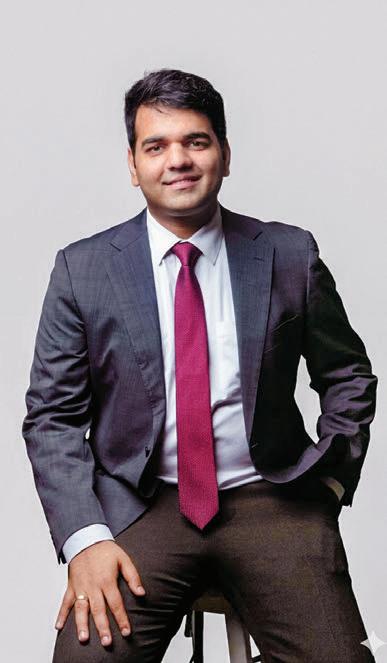
Mr. Rajesh Kabra , Joint Managing Director, RR Kabel
There is also growing demand for higher ampacity, compact cable designs, improved flexibility, and optimized space utilization. At the same time, customers increasingly prefer application-specific solutions tailored to their operational requirements.
Our specialty cable portfolio includes instrumentation, control, communication, data, servo, solar, fire survival, and industrial automation cables. Currently, strong business momentum is being driven by industrial automation, instrumentation, renewable energy, OEM applications, and data and communication infrastructure. Increasing digitalization across sectors such as manufacturing, pharmaceuticals, oil & gas, food processing, packaging, and infrastructure is driving demand for high-performance signal and communication cables. Increasing automation and digitalization across manufacturing environments are also creating greater demand for advanced communication and control cable solutions.
WCI: Among automation, railways, renewables, data
centers, EVs, oil & gas, mining, marine, or defense, which end-use sectors are generating the most meaningful demand today, and how do their technical expectations differ?
RK: Currently, some of the strongest demand is emerging from industrial automation, renewable energy, railways, process industries, infrastructure projects, and increasingly digital infrastructure applications. These sectors are undergoing rapid modernization and require highly reliable cable solutions capable of supporting increasingly sophisticated systems and operating conditions.
Each application brings distinct technical requirements. Renewable energy projects demand superior UV resistance, weatherability, and long
service life. Industrial automation requires flexibility, durability, and resistance to continuous mechanical movement. Digital infrastructure applications place significant emphasis on signal integrity, network reliability, and uninterrupted performance. Railways demand stringent fire safety characteristics, mechanical robustness, and compliance with rigorous qualification standards. As end-use industries become more specialized, the need for application-specific cable design and engineering continues to increase across the specialty cable segment.
WCI: What major shifts are you observing in customer expectations regarding performance, reliability, lifecycle requirements, qualification standards,







and application-specific engineering?
RK: Customer expectations have evolved considerably over the past few years, with decision-making increasingly centered on lifecycle value rather than upfront procurement costs. End users are seeking cable solutions that can deliver consistent performance, operational reliability, and long service life under increasingly demanding operating conditions.
Modern applications often require cables to perform in harsher environments, withstand elevated temperatures, and tolerate greater mechanical stress while maintaining electrical and communication integrity. There is also growing demand for higher ampacity, compact cable designs, improved flexibility, and optimized space utilization. At the same time, customers increasingly prefer application-specific solutions tailored to their operational requirements. Qualification
SPECIALTY CABLE
standards, performance testing, and documented validation have gained greater importance as industries place stronger emphasis on proven reliability, compliance, and long-term performance.
WCI: Which performance parameters are becoming increasingly critical in specialty cable design today, including flexibility, thermal endurance, fire performance, EMI shielding, chemical resistance, weatherability, or signal integrity?
RK: Specialty cable design today is increasingly driven by applicationspecific performance requirements, making evaluation criteria more multidimensional than ever before. As industrial systems become more connected and technologically advanced, multiple performance characteristics must work together to ensure reliable operation.
Mechanical robustness, flexibility, abrasion resistance, and extended flex-life have become critical for automation and continuously moving applications. Thermal endurance and chemical resistance remain important in industrial and process environments where cables are exposed to harsh operating conditions. Fire performance continues to gain importance in infrastructure and critical installations where safety requirements are becoming more stringent. Additionally, EMI shielding is increasingly important due to higher automation levels and sensitive electronic systems. Signal integrity is now one of the most critical requirements for data, communication, SCADA, Ethernet, and industrial networking applications. At RR Kabel, we continue to strengthen our testing and quality validation capabilities to ensure these critical performance requirements are consistently met across diverse specialty cable applications.


WCI: How are industrial automation, robotics, high-flex applications, and the growing convergence of power, control, and data systems influencing product development and cable architecture?
RK: Industrial automation and smart manufacturing are fundamentally changing the way specialty cables are designed and engineered. As factories become increasingly connected through sensors, robotics, intelligent controls, and real-time monitoring systems, cables must support both power transmission and seamless data communication.
This is driving demand for highly flexible cable constructions capable of withstanding continuous movement, repetitive bending, and demanding operating cycles. At the same time, the convergence of power, control, and data functions is encouraging more integrated cable solutions that support power, control, and communication requirements within a single installation environment. Enhanced shielding, signal integrity, compact designs, and improved mechanical performance are becoming essential requirements. As industrial automation adoption continues to expand, cable solutions will evolve to support increasingly connected and efficient manufacturing environments.
WCI: What manufacturing and process challenges are most significant in specialty cable production compared to conventional cable systems, particularly in areas such as precision extrusion, shielding, testing, qualification, and consistency control?
RK: Specialty cable manufacturing involves significantly higher levels of engineering precision, process control, and validation compared to conventional cable production. The complexity of these products often requires tighter tolerances, specialized material selection, and precise
SPECIALTY CABLE
manufacturing processes to ensure consistent performance across diverse applications.
Achieving uniform insulation properties, maintaining shielding effectiveness, and ensuring dimensional accuracy are critical manufacturing considerations. Testing and qualification requirements are also more extensive, with products often subjected to electrical, thermal, mechanical, environmental, and fireperformance evaluations. Maintaining consistency across production batches becomes especially important in mission-critical applications where reliability cannot be compromised. As performance expectations continue to increase, manufacturers are investing in advanced testing infrastructure, process automation, and quality systems to ensure reproducibility and long-term product reliability.
WCI: How important have certification, traceability, and customer qualification requirements become in sectors such as railways, offshore, infrastructure, industrial automation, and critical installations?
RK: Certification, traceability, and qualification requirements have become fundamental prerequisites across sectors such as railways, infrastructure, industrial automation, offshore installations, and other critical applications. Today, certifications are no longer viewed as differentiators but as basic qualification requirements that demonstrate compliance, performance, and reliability.
Customers increasingly demand complete product traceability throughout the manufacturing process, along with visibility into quality systems, testing capabilities, and validation procedures. Qualification processes have become more comprehensive, with customer audits extending beyond product specifications to
include manufacturing practices, process controls, and quality assurance frameworks. There is also growing emphasis on consistency, reproducibility, and documented performance validation. In parallel, sustainability considerations and responsible manufacturing practices are becoming increasingly influential in vendor selection and long-term partnership decisions.
WCI: To what extent does India still remain dependent on imports for advanced specialty cable categories, and where do you see the strongest opportunities for deeper localization?
RK: India has made significant progress in strengthening its domestic cable manufacturing capabilities, supported by growing investments in infrastructure, technology, and quality systems. While domestic manufacturers have expanded their capabilities considerably, opportunities remain to further localize certain advanced specialty cable technologies, specialized materials, and applicationspecific solutions.
The opportunity for localization is substantial. Continued investments in manufacturing infrastructure, testing facilities, research and development, and quality systems are enabling Indian manufacturers to address a broader range of specialty cable requirements. Areas such as industrial automation, communication networks, renewable energy, instrumentation, transportation systems, and advanced infrastructure applications present strong opportunities for deeper localization. As India’s manufacturing ecosystem continues to mature, the country is well positioned to strengthen self-reliance while also emerging as a globally competitive supplier of high-value cable solutions.
WCI: How do you assess the present competitive landscape in specialty cables, particularly
in relation to pricing pressure, qualification costs, customization demands, and margin sustainability?
RK: The specialty cable market continues to evolve toward a more technology-driven and performancefocused competitive landscape. While pricing remains an important consideration,ustomers increasingly recognize the importance of reliability, compliance, lifecycle performance, and application suitability.
At the same time, manufacturers face rising qualification costs, increasing certification requirements, and growing demand for customized solutions tailored to specific applications. These factors require sustained investments in engineering, testing infrastructure, product development, and quality systems. As a result, successful competition is
SPECIALTY CABLE
increasingly determined by technical capabilities, manufacturing excellence, and the ability to deliver consistent performance rather than price alone. Companies that focus on innovation, quality, and customer-centric engineering are likely to be better positioned to achieve sustainable growth and long-term value creation.
WCI: Looking ahead, which specialty cable applications or technology areas do you believe will define the next phase of growth and development for the industry in India?
RK: The next phase of growth for India’s specialty cable industry will be closely linked to the country’s ongoing infrastructure, digitalization, and industrial transformation initiatives. Several high-growth sectors are expected to drive demand for advanced cable technologies over the coming years.
Digital infrastructure, telecom networks, and high-speed communication systems will remain important growth areas. Renewable energy projects, energy storage systems, and grid modernization initiatives will continue generating demand for specialized cable solutions designed for durability and long-term reliability. Industrial automation and smart manufacturing will further accelerate the need for advanced control, communication, servo, and integrated cable systems. Emerging opportunities are also expected in defence, critical infrastructure, intelligent transportation, and advanced mobility applications. Continued localization of advanced specialty cable technologies will play an important role in strengthening India’s manufacturing ecosystem and supporting future industry growth.





APAR Industries Strengthens Focus on Application-Specific Specialty Cable Solutions
India’s specialty cable industry is evolving beyond conventional manufacturing as customers increasingly seek engineered solutions tailored to demanding operating environments. In an exclusive interview with Wire & Cable India, Mr. CS Shrotri, CEO, Cable Solutions, APAR Industries Limited, shares that growth is driven by renewable energy, railways, data centres, automation, defence and other critical infrastructure sectors, each with distinct technical requirements and stringent qualification standards. He notes that customer priorities have shifted from price and basic compliance to lifecycle performance, reliability, safety and customised engineering. As infrastructure projects become more complex and localisation gathers pace, manufacturers with strong design capabilities, advanced technologies and the ability to deliver applicationspecific solutions are well positioned to ride with the next phase of growth in India’s specialty cable market.
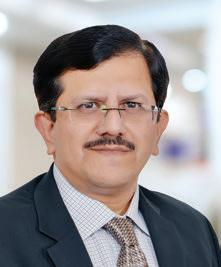
Wire & Cable India: How do you currently define the specialty cable segment within your organization, and which application areas are presently driving the strongest business momentum for you?
CS Shrotri: At APAR, we define specialty cables as highly engineered solutions designed for demanding environments where performance, reliability, safety, and compliance requirements exceed conventional cable standards. Our portfolio includes Solar PV, elastomeric, instrumentation & control, fire survival, railway & metro, defence, nuclear, marine, offshore & mining, data communication, and other highperformance cable solutions serving critical infrastructure and strategic sectors.
Growth momentum is currently being driven by renewable energy, rail and metro infrastructure, industrial automation, defence modernization, nuclear power, and data centres. A key focus area for APAR has been developing import-substitute
cable solutions, enabling domestic availability of advanced technologies that were traditionally sourced from global suppliers.
As India accelerates investments in energy transition and infrastructure, demand for premium cable solutions continues to rise. We see specialty cables emerging as a key value driver, supported by increasing localization, higher technical specifications, and stronger focus on lifecycle performance.
WCI: Among automation, railways, renewables, data centers, EVs, oil & gas, mining, marine, or defense, which end-use sectors are generating the most meaningful demand today, and how do their technical expectations differ?
CSS: Each segment has distinct technical requirements, although renewables and data centres currently lead demand growth.
Renewable energy projects require superior UV resistance, thermal
Mr. CS Shrotri , CEO, Cable Solutions, APAR Industries Limited


A key focus area for APAR has been developing importsubstitute cable solutions, enabling domestic availability of advanced technologies that were traditionally sourced from global suppliers.
stability, and long service life to withstand harsh outdoor conditions. Railways and metro systems prioritize fire safety, low-smoke halogen-free performance, vibration resistance, and compliance with stringent transportation standards.
Data centres and automation-driven industries focus on signal integrity, uptime, power efficiency, and communication infrastructure, while oil & gas, marine, and mining sectors require cables capable of operating under extreme temperatures, moisture, chemicals, mechanical stress, and hazardous environments.
Defence and nuclear applications demand the highest levels of reliability, environmental resilience, electromagnetic compatibility, and rigorous qualification standards.
As infrastructure becomes more complex, demand is shifting toward engineered cable solutions tailored to specific operating conditions, creating significant opportunities for manufacturers with strong design, engineering, and localization capabilities.
WCI: What major shifts are you observing in customer expectations regarding performance, reliability, lifecycle requirements, qualification standards, and application-specific engineering?
CSS: Customer expectations have shifted beyond price and basic compliance toward reliability, safety, lifecycle performance, and total cost of ownership. Demand for higher qualification standards, rigorous testing, enhanced fire and environmental performance, longer service life, and compliance
with evolving global standards continues to increase.
At the same time, advances in sectors such as renewables, railways, automotive, data centres, and industrial automation are driving more complex requirements for cables, harnesses, and connectors. Factors such as power density, space constraints, connectivity, and harsh operating environments increasingly require customized engineering and integrated system solutions.
As a result, customers expect manufacturers to act as technology partners, delivering solutions tailored to specific performance, qualification, and operational requirements.
WCI: Which performance parameters are becoming critical in specialty cable design today, including flexibility, thermal endurance, fire performance, EMI shielding, chemical resistance, weatherability, or signal integrity?
CSS: Key performance priorities today include fire performance, thermal endurance, environmental resistance, mechanical reliability, and signal integrity. As operating environments become more demanding, customers










As India accelerates investments in energy transition and infrastructure, demand for premium cable solutions continues to rise. We see specialty cables emerging as a key value driver, supported by increasing localization, higher technical specifications, and stronger focus on lifecycle performance.
expect consistent performance throughout the asset lifecycle.
For infrastructure, railways, metro, and data centre applications, fire survival capability, low-smoke halogen-free characteristics, and EMI shielding are essential. In renewable energy, marine, and outdoor environments, UV resistance, weatherability, moisture resistance, and thermal stability are critical. Industrial automation and communication-intensive applications prioritize signal integrity, low attenuation, and shielding effectiveness, while defence, nuclear, mining, and oil & gas sectors require exceptional mechanical robustness and chemical resistance.
Customers increasingly expect a single cable solution to meet multiple requirements for safety, durability, environmental resilience, and electrical performance. This is driving continuous innovation in conductor design, insulation systems, shielding technologies, and specialized compounds.
WCI: How are industrial automation, robotics, high-flex applications, and the growing convergence of power, control, and data systems influencing product development and cable architecture?
CSS: Industrial automation, robotics, and digital manufacturing are reshaping cable design. As production environments become increasingly interconnected, cables are evolving from simple power transmission components into critical enablers of machine communication, control, and operational continuity.
The convergence of power, control, and data systems is driving demand for integrated cable architectures that support higher data transmission
rates, signal integrity, electromagnetic compatibility, and reliable performance in compact installations. Robotics and high-flex applications also require cables capable of withstanding continuous bending, torsion, vibration, and dynamic movement over extended operating cycles.
These requirements are accelerating innovation in conductor stranding, insulation materials, shielding technologies, and hybrid cable designs. We are also seeing growing demand for solutions that combine flexibility, electrical performance, environmental resistance, and communication capabilities within a single system. As Industry 4.0 adoption expands, demand for advanced cable technologies will continue to grow.
WCI: What manufacturing and process challenges are most significant in specialty cable production compared to conventional cable systems, particularly in areas such as precision extrusion, shielding, testing, qualification, and consistency control?
CSS: Unlike conventional cables, specialty products require significantly higher levels of engineering precision, process control, and quality assurance. The challenge lies in consistently delivering performance under demanding operating conditions.
Key manufacturing challenges include precision extrusion of specialized insulation and sheath compounds, maintaining tight dimensional tolerances, advanced shielding configurations, and ensuring consistency across complex multilayer constructions. In sectors such as defence, nuclear, railways, data centres, and industrial automation, even minor process variations can impact long-
term performance.
Testing and qualification requirements are equally demanding, often involving extensive electrical, mechanical, thermal, fire, environmental, and endurance testing. Customers frequently require project-specific validation in addition to standard certifications.
As a result, specialty cable manufacturing requires significant investment in advanced production technologies, laboratory infrastructure, process automation, traceability systems, and technical expertise. Consistent quality and repeatability at scale remain key differentiators.
WCI: How important have certification, traceability, and customer qualification requirements become in sectors such as railways, offshore, infrastructure, industrial automation, and critical installations?
CSS: Certification, traceability, and qualification are now fundamental requirements, often carrying as much weight as product performance itself.
Customers increasingly demand complete traceability across the manufacturing value chain—from raw materials and process parameters to testing records and final validation. This ensures accountability, consistency, and reliability throughout the asset lifecycle.
Qualification processes have also become more rigorous, often involving extensive testing, third-party certifications, factory audits, and long-term performance validation. As reliability expectations continue to rise, robust quality systems, traceability frameworks, and compliance
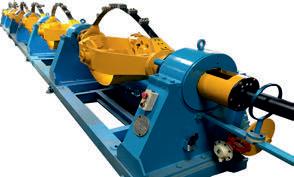
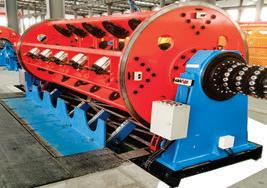
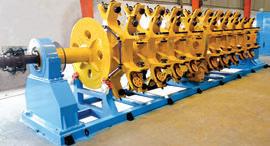
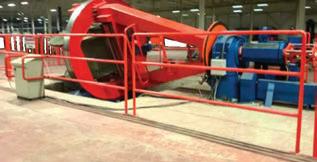
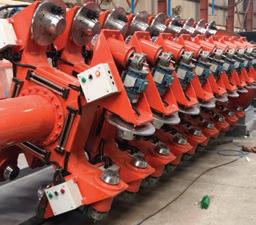
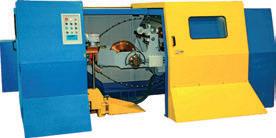

SPECIALTY CABLE
A significant opportunity lies in the localization of advanced specialty cable technologies. As India builds indigenous capabilities in strategic sectors, manufacturers with strong R&D, engineering expertise, and qualification capabilities will play a critical role in developing globally competitive solutions.
capabilities have become essential prerequisites for participation in highvalue projects.
WCI: To what extent does India still remain dependent on imports for advanced specialty cable categories, and where do you see the strongest opportunities for deeper localization?
CSS: India has made significant progress in domestic cable manufacturing; however, certain advanced specialty cable categories— particularly in defence, nuclear, offshore, rolling stock, and highend industrial automation—have historically relied on imports due to stringent performance requirements, specialized materials, and complex qualification processes.
The opportunity for localization remains substantial as India strengthens its focus on selfreliance, strategic infrastructure, energy transition, and advanced manufacturing. We see strong potential for import substitution across defence-grade cables, nuclear cables, specialized elastomeric and fire-survival cables, and marine and offshore applications.
At APAR, we have invested significantly in technology, product development, testing infrastructure, and manufacturing capabilities to develop world-class specialty cable solutions within India. Growing domestic demand, policy support, and increasing confidence in Indian engineering capabilities are creating a strong foundation for accelerated localization. Over the coming years, we expect India to become a globally competitive manufacturing hub for advanced cable solutions.
WCI: How do you assess the present competitive landscape in specialty cables, particularly in relation to pricing pressure, qualification costs, customization demands, and margin sustainability?
CSS: The specialty cable market differs significantly from the conventional cable business, with competition driven by technology, engineering capabilities, quality systems, and customer qualification rather than pricing alone. While pricing pressure exists, customers in critical applications continue to prioritize reliability, lifecycle performance, and compliance, creating opportunities for value-based differentiation.
At the same time, barriers to entry are rising. Manufacturers must invest continuously in product development, testing infrastructure, certifications, qualification programs, and engineering capabilities. Increasing customization requirements further add complexity as customers seek solutions tailored to specific operating environments and project requirements.
Although qualification costs and technical expectations continue to increase, they also support margin sustainability for manufacturers capable of delivering differentiated solutions. We believe the market will favour companies that combine engineering expertise, proven execution, strong quality systems, and localization capabilities. Sustainable growth will be driven less by scale alone and more by innovation, technical credibility, and customer trust.
WCI: Looking ahead, which specialty cable applications or technology areas do you believe will define the next phase of growth and development for the industry in India?
CSS: The next phase of growth will be driven by India’s energy transition, infrastructure modernization, digitalization, and self-reliance initiatives. Renewable energy, energy storage systems, green hydrogen, data centres, rail and metro networks, defence, nuclear power, industrial automation, and advanced manufacturing are expected to be key growth engines.
From a technology perspective, demand will increasingly shift toward cables offering enhanced fire safety, higher thermal ratings, superior environmental resistance, advanced shielding, and longer service life. We also foresee growing adoption of intelligent cable solutions supporting the convergence of power, control, communication, and monitoring systems.
A significant opportunity lies in the localization of advanced specialty cable technologies. As India builds indigenous capabilities in strategic sectors, manufacturers with strong R&D, engineering expertise, and qualification capabilities will play a critical role in developing globally competitive solutions. The future of the industry will be shaped by innovation, technology leadership, and reliable solutions for critical applications.


Praneetha EcoCables’ Focus on 100% Primary Electrolytic Copper for Solar Cables
India’s growing focus on renewable energy has led to a sharp rise in demand for solar cables, making them both a necessity of the times and a commitment to a more sustainable future. While the wire and cable industry continues to expand, one of the biggest challenges remains ensuring the longevity of solar cables, as installations are expected to perform reliably for over 25 years under increasingly harsh environmental conditions. In an exclusive interaction with Wire & Cable India, Mr. Pranjal Goel, Director, Praneetha EcoCables Ltd., explains how the company engineers its products not just for today’s operating conditions, but for the climate they are expected to endure over the next two to three decades. He also highlights Praneetha’s focus on 100% primary electrolytic copper, advanced Electron Beam Cross-Linking (EBXL) technology, and scalable manufacturing capabilities to deliver durable, high-performance solar cable solutions and to drive quality that creates customer delight.
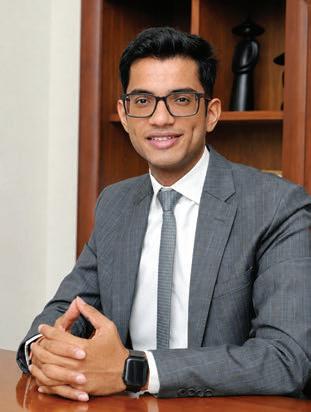
Wire & Cable India: Praneetha EcoCables has positioned itself around high-purity copper and sustainability. How does this philosophy translate into tangible performance benefits for specialty and solar cable applications?
Pranjal Goel: We have always believed that the quality of a cable begins with the quality of its conductor. That is why we will use 100% primary, high-purity electrolytic copper across our product range from our inception. While this reflects our commitment to quality, it also delivers a clear performance advantage than links directly with building a sustainable ecosystem. Higher purity copper along with superior conductivity means lower transmission losses and better energy efficiency. Better efficiency leads to lower power consumption which directly links to a greener tomorrow powered by pure performance.
This has become even more relevant today as the industry looks for smarter ways to optimize costs. With copper prices continuing to rise, EPC contractors are increasingly exploring the shift from conventional 4 sq.mm solar cables to 2.5 sq.mm cables wherever technically feasible. The higher conductivity of our copper enables this transition without compromising on electrical performance, helping customers improve overall project economics.
Beyond conductivity, high-purity copper also contributes to better thermal stability and mechanical strength, which are essential for cables operating in demanding environments. At the end of the day, our objective is simple—to provide cable solutions that create lasting value for our customers while supporting the evolving needs of our planet.
WCI: Could you please walk us through your current capacity, market footprint and product portfolio in brief?
Mr. Pranjal Goel , Director, Praneetha EcoCables Ltd.
With copper prices continuing to rise, EPC contractors are increasingly exploring the shift from conventional 4 sq.mm solar cables to 2.5 sq.mm cables wherever technically feasible. The higher conductivity of our copper enables this transition without compromising on electrical performance, helping customers improve overall project economics.
PG: At Praneetha, we have built our manufacturing capabilities with a long-term vision of supporting India’s growing demand for energy. Our current facility is designed to handle an annual copper consumption of 40,000 tonnes, with the infrastructure already in place to scale this up to 100,000 tonnes in the next few years as demand grows. We have invested in world-class manufacturing equipment sourced from leading global suppliers across the world, enabling us to maintain consistent quality while meeting international manufacturing standards.
Our growth strategy is equally focused on building strong market relationships. Through our trusted channel partners, particularly in the realty, solar and cement sectors, we are steadily expanding our presence across all verticals and strengthening our reach in key markets.
Our product portfolio is currently centred around copper-based cable solutions and includes building wires, solar cables, multicore flexible cables, automotive cables, and submersible flat and round cables. Every product we manufacture is designed with a clear focus on superior conductivity, safety, reliability, and long-term performance. As we continue to grow, our priority remains the same—to deliver products that combine engineering excellence with the quality and consistency our customers expect.
WCI: The solar sector is witnessing rapid growth in India. What specific design and material innovations have you incorporated into your solar cable portfolio to enhance efficiency, UV resistance, and long-term reliability in harsh
outdoor environments?
PG: One of the biggest realities the solar industry has to address is that installations are expected to perform reliably for over 25 years while being exposed to increasingly harsh environmental conditions. With ambient temperatures steadily rising across India year after year, the demands on solar cables have become far more stringent than they were a decade ago. As manufacturers, we have to engineer products not just for today’s conditions, but for the climate they will operate in over the next two to three decades.
At Praneetha, our design philosophy is therefore centred on longevity rather than just compliance. We use advanced formulated XLPO for both the insulation and the outer sheathing, which provides excellent resistance to UV radiation, ozone, moisture and weathering, while enabling the cable to operate reliably across a wide temperature range of -40°C to +120°C.
Another area we have focused on is conductor quality. We use highpurity tinned copper, with the tinning process carried out using imported precision equipment to ensure a uniform coating. This not only improves corrosion resistance but also enhances the long-term reliability of the conductor.
Perhaps the most significant differentiator in our manufacturing process is our exclusive use of Electron Beam Cross-Linking (EBXL) technology. EBXL delivers a much more uniform and efficient crosslinking of the XLPO insulation and sheathing compared to conventional methods. The result is superior thermal stability, higher mechanical strength, improved resistance to
ageing, and ultimately a longer service life for the cable.
WCI: Specialty cables serve diverse industries ranging from automotive and industrial automation to utilities and renewable energy. Which application segments do you see as the biggest growth drivers for Praneetha EcoCables over the next five years, and why?
PG: Over the next five years, I believe the strongest growth opportunities for the cable industry will come from two sectors—renewable energy and data centres. Both are witnessing unprecedented investment, driven by India’s infrastructure ambitions, rapid digitalisation, and the country’s commitment to building a sustainable energy ecosystem.
At Praneetha, we are particularly optimistic about the renewable energy segment. India’s clean energy transition is gathering remarkable momentum, with large-scale investments in solar, energy storage, EV and transmission infrastructure. As this ecosystem expands, the demand for high-performance, reliable cables will continue to grow, making renewable energy one of our most important focus areas.
At the same time, the rapid expansion of data centres across the country presents another significant opportunity. With hyperscalers like Amazon planning to come to India in a big way, these facilities require cable solutions that deliver high reliability, safety, and consistent performance, creating a strong demand for qualitydriven manufacturers.
Our strategy is to align our product

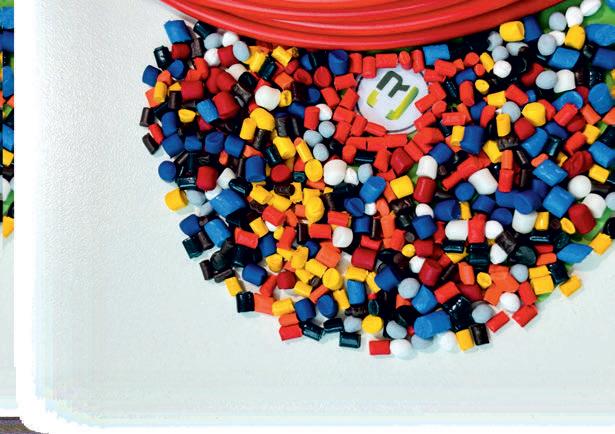


Our current facility is designed to handle an annual copper consumption of 40,000 tonnes, with the infrastructure already in place to scale this up to 100,000 tonnes in the next few years as demand grows.
development and manufacturing capabilities with these high-growth sectors. We believe that by focusing on quality, technological innovation, and long-term reliability, Praneetha is well positioned to contribute to India’s growth story while creating sustainable value for our customers.
WCI: With increasing focus on quality and safety standards in the cable industry, how is Praneetha ensuring compliance with national and international standards, particularly for solar and other specialty cable products?
PG: At Praneetha, quality and safety are not checkpoints—they are built into our processes from design to delivery.
With growing scrutiny on standards across the cable industry, we will adopt a comprehensive, systems driven approach to compliance. Our products will be engineered and tested in line with key national and international standards such as BIS, IEC, TÜV, and other globally recognized certifications, ensuring reliability across diverse applications.
For solar cables specifically, we will focus on meeting stringent requirements related to UV resistance, thermal endurance, flame retardance, and long-term weatherability. Every batch will undergo rigorous testing for electrical, mechanical, and environmental performance to ensure it can withstand 25+ years of operational stress in demanding outdoor conditions.
In specialty cables, particularly for industrial and infrastructure applications, we will emphasize fire safety, low smoke emission, and chemical resistance, aligning with evolving safety norms in critical environments.
Beyond certifications, we are investing heavily in advanced testing infrastructure, process automation, and traceability systems, which will enable us to maintain consistent quality and quickly adapt to evolving global standards.
Ultimately, our commitment is simple and that is to deliver cables that not only meet regulatory requirements but consistently exceed performance and safety expectations in real-world applications.
WCI: Praneetha EcoCables is building a technology-driven manufacturing ecosystem. Could you share how automation, digitalization, and testing capabilities are helping the company deliver consistent quality in specialty and solar cables?
PG: At Praneetha, we decided early on to build a future-ready manufacturing ecosystem rather than grow into one over time. We have invested in best-inclass machinery from globally reputed suppliers to create a highly efficient, assembly line-driven production environment where consistency and quality are built into every stage.
We have focused on minimizing losses in between steps of production to improve overall plant efficiency. This approach is being made possible through a stringent focus on system driven working wherein production tracking can happen in real time. Automatized systems driven approach can ensure consistency in all cables regardless of the personnel on the job making quality a byproduct of high output.
We are also focusing on digitization of process flows to provide an end-to-end traceability on all cables manufactured at our plant. Our customers and production team will have the option
to track every cable from raw material to finished product.
Since we use 100% primary, high-purity copper, this traceability reinforces our commitment to transparency and quality. For us, technology is not just about efficiency—it is about delivering reliable, high-performance cables that customers can trust.
WCI: Looking ahead, what are Praneetha EcoCables’ strategic priorities in the specialty and solar cable segments, and how do you plan to differentiate yourself in an increasingly competitive Indian wire and cable market?
PG: Our strategic priority is straightforward—to build a brand that is synonymous with purity, quality and performance. While the market will inevitably become more competitive, we believe long-term differentiation will come from consistently delivering products that perform reliably over their entire service life.
The operating environment for cables is changing rapidly. From the extreme cold of Leh to the intense heat experienced across many parts of India, solar installations today are exposed to far more demanding conditions than ever before. Our focus is therefore on engineering cables that not only meet industry standards but consistently exceed them, ensuring a service life of at least 25 years in realworld operating conditions.
At Praneetha, we are not looking to compete on price. We want to differentiate ourselves through superior materials, advanced manufacturing, and an uncompromising commitment to quality—because, in the long run, performance is what creates lasting value for our customers.





Automated Tumkur Plant, E-beam Technology Power Havells’ Cable Strategy
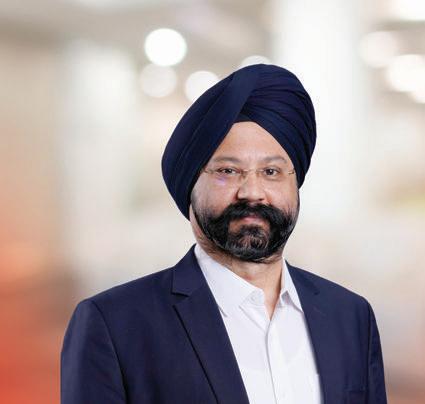
Wire & Cable India: Congratulations on the inauguration of the new HT cable manufacturing facility at Tumkur. Could you share the strategic vision behind setting up this facility and the role it will play in strengthening Havells’ cables business?
Manjit Singh Sethi: It’s a very strategic investment. If you look at the southern part of India, there are very few good cable manufacturers. We wanted to establish a strong presence in the South with our full product range and capture the market there. So, this investment is driven by the large market potential of the southern region. This is a state-of-the-art
Havells is entering its next phase of manufacturing expansion and product diversification. In an exclusive interaction with Wire & Cable India, Mr. Manjit Singh Sethi, President & SBU Head – Cables, Havells India Ltd., discusses the strategic significance of the Tumkur plant, ongoing capacity enhancement at the Alwar facility, and Havells’ plans to expand into extra-high-voltage (EHV) cables. He also outlines the company’s roadmap for introducing E-beam technology, scaling up its rubber cable portfolio, and aligning manufacturing investments with rising demand from infrastructure, industrial, renewable energy, mobility and data centre projects.
factory—fully automated, equipped with Manufacturing Execution System (MES), robotics, and several new technologies and machines. We’ve invested significantly in advanced manufacturing capabilities.
Earlier, our Alwar factory was catering to North, South and East India. Demand had grown so much that it became difficult to service every region efficiently. Having a manufacturing base in the South allows us to deliver faster, reduce logistics costs and become much more competitive. That was the strategic thinking behind this investment.
We’ve expanded wire manufacturing capacity in both Tumkur and Alwar.
The Tumkur wire plant is fully robotic, including packaging and stacking operations. At Alwar, we’re transforming the existing plant. It began as a five-acre facility in 1996 and has now expanded to around 140 acres. Extensive renovation is underway, and by the end of this year it will be a completely transformed factory. Since Alwar is an operating plant generating significant revenues, these upgrades are being implemented in phases.
WCI: You recently visited the Alwar plant and spoke about focusing on people and mindset rather than just numbers. Could you elaborate? MSS: Yes. What we’re trying to do is
Mr. Manjit Singh Sethi , President & SBU Head – Cables, Havells India Ltd.








change the mindset of people. With the same machines, we’re trying to extract much higher productivity. But productivity isn’t only dependent on workers. We’ve created crossfunctional teams involving sales, planning and factory personnel. Together they plan production in a way that maximises machine utilisation. For example, if similar conductor sizes are scheduled together for an entire
SPECIALTY CABLE
month, the machines run continuously with minimal changeovers. As a result, we’ve improved our operational efficiency (OE) by around 10%(variable figure) over the last five to six months, and we’re still improving. Ten percent is a significant improvement.
What’s encouraging is that it’s the same people delivering these results. They’re highly motivated. Every two
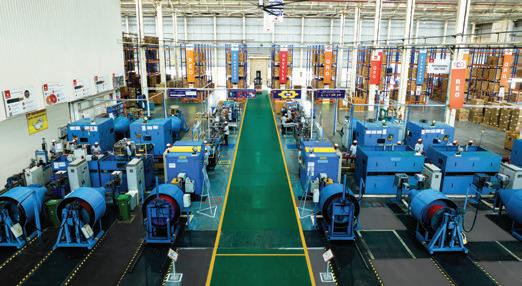
weeks we conduct reviews at the factory, and the teams themselves present what they’ve achieved and share their best practices. That ownership has made a big difference.
WCI: Could you elaborate on the scale of investment, manufacturing capabilities, product range and technological features integrated into the new facility?
MSS: The Tumkur facility is one of the key projects under the broader investment programme, and investments there are still ongoing. We initially started with LT, control and instrumentation cables. Those were the first factories we commissioned, and we operated them for about a year before moving into HT cables, which were recently inaugurated by our Chairman at Tumkur. We also have an EHV cable plant coming up at the Tumkur facility, which should
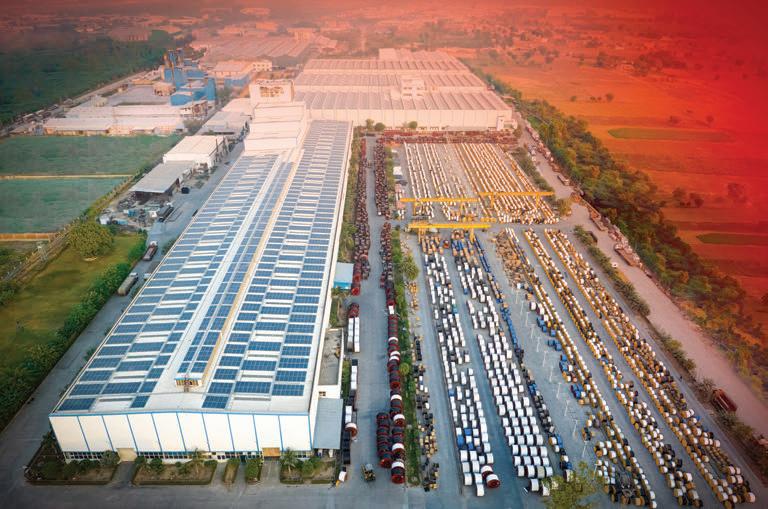
One of the biggest changes we have seen is that customers are no longer looking only at the initial purchase price. They are paying much more attention to reliability, lifecycle performance, and the overall value the product delivers over time.


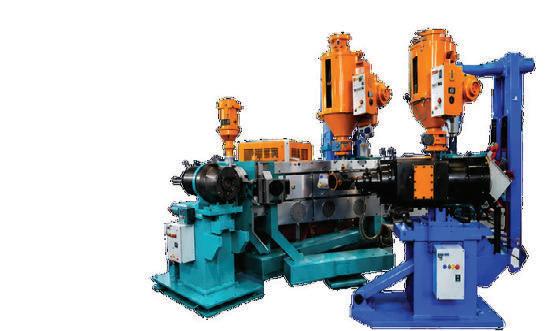
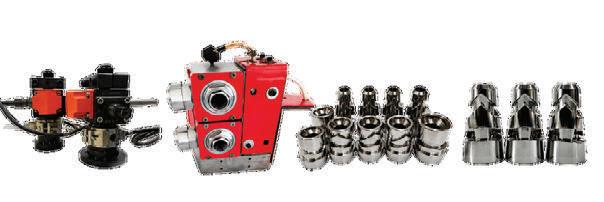




be operational by the end of this year. That will be another significant milestone for us, and you’ll see another inauguration when the plant is ready.
We are also investing in E-beam technology, which will make us much more competitive in the solar cable segment. We are not present in E-beam specialised cables today, but by the end of the year that capability should be available at our Alwar facility.
WCI: Which customer segments and application areas are driving the strongest demand for HT and specialty cables today?
MSS: We’re seeing very strong demand from data centres and renewables.
In data centres, virtually every type of cable is required—from 1.1 kV to 33 kV—including flexible cables, normal cables, control cables and HT cables. What’s changing is the architecture of data centres. They are increasingly becoming modular. The modules where data is housed are becoming smaller but far more complex. I recently visited one of the data centres in Hyderabad, and they explained how these units will continue to become more compact while handling significantly larger volumes of data.
As these modules become smaller, cable requirements increase. Greater flexibility becomes essential, and demand shifts towards specialised cables. Our R&D teams are already working on solutions to cater to those future requirements. Renewables continue to see steady growth. Most of the demand there is for conventional DC and AC cables rather than specialised products.
WCI: How are customer expectations evolving in terms of performance, reliability, s afety and lifecycle requirements for specialty cables?
MSS: The biggest change is the growing demand for fire-retardant cables. We’re seeing more fire incidents
SPECIALTY CABLE
these days, largely because poorquality wires and cables are being used. Even the government is looking at legislation to improve cable quality. Fire-retardant cables will become mandatory. Low-smoke, halogenfree (LSZH) cables are also becoming increasingly important.
Fundamentally, the conductor doesn’t change very much. Most innovation is happening in compounds. Even in HT cables, globally there’s movement from XLPE towards polypropylene-based compounds such as PP. So a lot of R&D today is centred around compounding. Specifications will become increasingly stringent, particularly from a fire safety perspective.
Green cables are also gaining traction due to regulatory requirements. These use environmentally friendly compounds with lower lead content and reduced hazardous materials. Again, most of the innovation is happening in the compound itself.
WCI: Havells has been investing significantly in research and development. Could you tell us more about your R&D priorities?
MSS: We have around 900 people in R&D and invest roughly 2-2.5% of our revenues into research and development. Historically, because Havells has a large consumer durables business, much of our R&D focused there. But now we’ve significantly increased our focus on cables and wires. We’re hiring global talent to work on new compounds and improvements in metals used within cables. Very few companies make these kinds of investments. Our promoters are extremely passionate about R&D. They’re constantly encouraging new initiatives.
Our teams are working across multiple areas—from new materials for air conditioners and fire-resistant materials to plasticisers and even artificial intelligence. For example, we’re using AI for quality inspection in cables and wires. These are very diverse
research areas.
WCI:Which performance characteristics are becoming increasingly critical in specialty cable development today, including fire performance, flexibility, thermal endurance, EMI shielding, weatherability, chemical resistance, and signal integrity?
MSS: Every area is evolving. Take flexibility, for example. That’s again largely a compounding challenge. As data centres become more compact, cables need to become thinner, more flexible and capable of twisting without breaking. Similarly, enormous investments are happening in fireretardant technologies such as LSZH and ZFFR compounds. Five or six different technologies have emerged over the last two to three years.
We’re also investing heavily in backward integration. We already manufacture PVC in-house. XLPE compounds for cables up to 33 kV will also move in-house. Once our E-beam facility becomes operational, we’ll have our own compounds as well. We’re investing substantially in imported European equipment and modern factories. Over the next three years, I believe you’ll see Havells make a significant leap.
WCI: As Havells expands its cable manufacturing operations, what are the key manufacturing challenges you are focusing on, and how are you addressing them?
MSS: Our focus is to automate as many processes as possible. For example, in extrusion, maintaining a perfectly consistent diameter is critical. At the new Tumkur plant we’ve installed digital instruments that continuously measure and automatically control the extrusion diameter. In older facilities, however, this depends much more on operator skill because automated measurement and control systems aren’t available. We’re exploring ways to retrofit external measurement and control systems onto

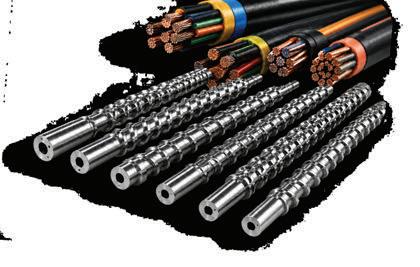

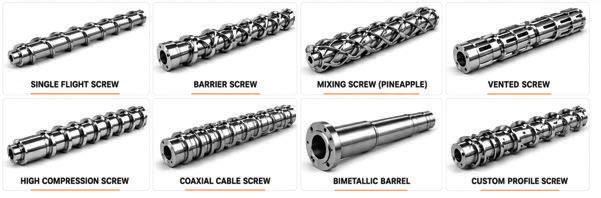
We are also investing in E-beam technology, which will make us much more competitive in the solar cable segment.
older machines. At the same time, we’re investing in worker training, especially at Alwar where experienced manpower is available.
Tumkur presents different challenges because it’s located in a relatively remote area, making skilled manpower harder to find. That’s why we’re introducing greater automation there. Infrastructure also matters. Reliable power supply is extremely important because if electricity fails during extrusion, the PVC freezes inside the machine and cleaning takes considerable time.
Power quality in South India is excellent, which is another advantage for Tumkur. Alwar is improving as well, and we’re upgrading our electrical infrastructure to reduce interruptions. Initially, there were challenges with raw material logistics and transportation in Tumkur, but these are gradually getting resolved. Talent attraction is another challenge. To address that, we’re building guest houses and dormitories for workers, providing transportation and creating better living facilities. Today’s workforce values quality of life, and if you provide good facilities, people become much more effective. Supervisors have already relocated from western India with their families, and we’re ensuring they have the infrastructure needed to settle comfortably. At Alwar, we’ve acquired another 40 acres, and discussions are ongoing for more land. The current 140-acre campus will eventually be fully utilised over the next four years.
WCI: How important have certification, traceability and customer qualification requirements become across infrastructure and industrial applications?
MSS: Certification is absolutely critical for any technical product. Without certification, nobody will buy it. Even
globally, certification is mandatory. In India, certifications like BIS are compulsory. Without BIS certification, you can’t manufacture or sell the product.
When we launched HT cables, the factory first had to begin production, manufacture the product and complete all testing before certification was granted. Until then, we couldn’t even invoice customers. These are positive developments because they ensure product quality. I also feel that, similar to consumer products where government star ratings have significantly improved energy efficiency, a comparable concept for cables could help improve quality across the industry.
WCI: Looking ahead, which specialty cable technologies and applications will drive the next phase of growth for the Indian cable industry, and how is Havells positioning itself?
MSS: E-beam technology will be one of the biggest growth drivers. We’ve already invested in it, and the facility should be operational within about six months. We’re also investing in rubber cable manufacturing, although that project will take a little longer.
E-beam significantly improves current carrying capacity and safety. Since the cable can withstand higher temperatures, it performs better from a fire safety perspective. That’s why every cable manufacturer is investing in it. I believe house wiring will increasingly move towards E-beam technology.
Flexible rubber cables will also witness strong demand because data centres are becoming increasingly compact. As equipment shrinks, connectors and cables must become much more flexible.
India’s future data centre requirements will be enormous, but land availability is limited. Compact designs will
become essential, and cable flexibility will become a major differentiator. Efficiency will also become increasingly important. Today, very few people in India measure cable efficiency, but in the future that will certainly change.
That’s precisely why we’re strengthening our R&D capabilities by hiring talent to work on improving metal performance, increasing current carrying capacity, enhancing efficiency and developing advanced compounds. These are the two areas where we’ll be investing very heavily.
WCI: Finally, what is one observation you’ve made about Havells and one goal you have for the future?
MSS: One thing I’ve really appreciated is the passion of the promoters. They give people tremendous freedom to work, while naturally expecting results. The culture is open, friendly and collaborative. That’s something I’ve genuinely liked. My hope is that this passion continues across generations as leadership transitions in the future. From what I see today, that culture is continuing, and I hope it remains that way.
The company has a very clear vision regarding where it wants to go, which product lines it wants to strengthen and how investments will be made. Every year, the investments are aligned with that roadmap. The review systems are also extremely strong.
During FY2025-26, the cables division registered net revenues of INR 8,677 crores and is a tremendous strength to the overall business. The brand image must be fully utilised, but equally important is customer confidence. If we’ve committed something to a customer, we must deliver it on time. Those are probably the two most important principles we work by.
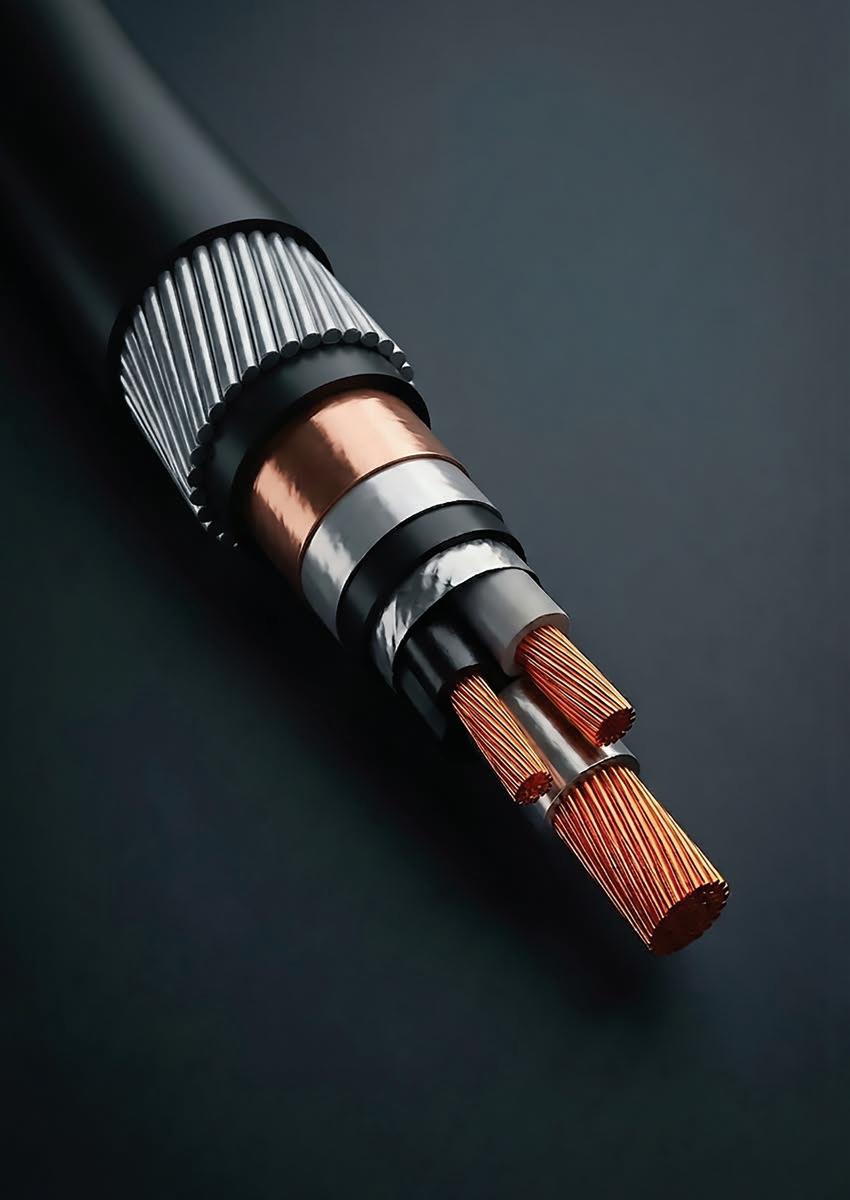

Paramount Communications Focuses on Performance, Precision & Reliability
As specialty cable applications become increasingly diverse, manufacturers are expected to deliver far more than standard connectivity. In an exclusive interview with Wire & Cable India, Mr. Sandeep Aggarwal, Managing Director, Paramount Communications Ltd., discusses the changing dynamics of the specialty cable market, the company’s focus on quality and innovation, and the opportunities emerging across railways, renewable energy, data centres, industrial automation, and defence.
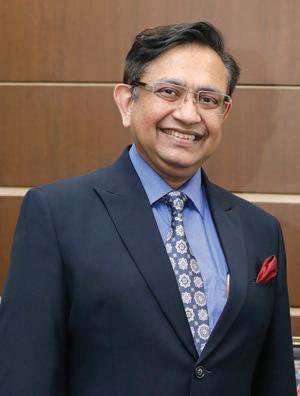
Wire & Cable India: How do you currently define the specialty cable segment within your organisation, and which application areas are presently driving the strongest business momentum for you?
Sandeep Aggarwal: At Paramount Communications, specialty cables are advanced cable solutions designed for specific applications and challenging operating conditions. These cables are developed to deliver higher safety, reliability, durability, and performance compared to conventional cables. Currently, sectors such as railways, industrial automation, renewable energy, infrastructure, data centres, and defence are generating strong demand for specialty cables in India.
WCI: Among automation, railways, renewables, data centres, EVs, oil & gas, mining, marine, or defence, which end-use sectors are generating the most meaningful demand today, and how do their technical expectations differ?
SA: Railways, renewables, industrial automation, and data centres are among the key sectors driving demand today. Railways require cables with high fire safety and long operational life. Renewable energy projects need UV-resistant and weather-resistant cables for outdoor applications. Automation and robotics sectors require highly flexible cables that can handle continuous movement, while data centres focus on reliability, fire performance, and signal stability.
WCI: What major shifts are you observing in customer expectations regarding performance, reliability, lifecycle requirements, qualification standards, and application-specific engineering?
SA: Customers today are focusing more on quality, reliability, safety, and long-term performance rather than only pricing. They expect
Mr. Sandeep Aggarwal , Managing Director, Paramount Communications Ltd.

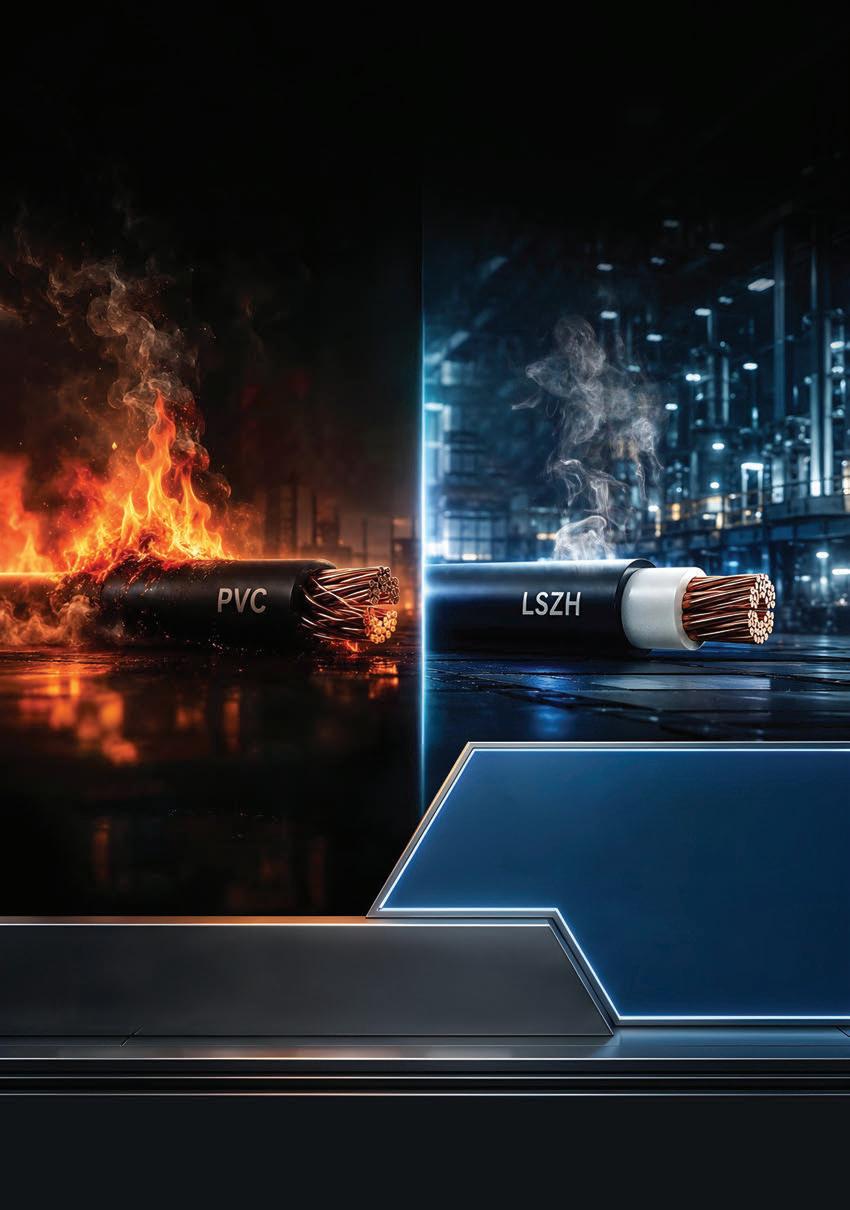




products that meet strict industry standards and perform consistently over a long lifecycle. There is also increasing demand for customised and application-specific cable solutions based on the operating environment and project requirements.
WCI: Which performance parameters are becoming increasingly critical in specialty cable design today?
SA: Parameters such as fire performance, flexibility, thermal endurance, EMI shielding, weather resistance, chemical resistance, and signal integrity are becoming increasingly important in specialty cable design. Today, industries are giving more importance to safety, uninterrupted performance, and reliable data transmission, especially in critical applications.
WCI: How are industrial automation, robotics, high-flex applications, and the growing convergence of power, control, and data systems influencing product development and cable architecture?
SA: Industrial automation and robotics are creating demand for compact,
SPECIALTY CABLE
data systems is encouraging the development of hybrid cable solutions that improve efficiency and reduce installation complexity.
WCI: What manufacturing and process challenges are most significant in specialty cable production compared to conventional cable systems?
SA: Specialty cable manufacturing requires higher precision and strict quality control compared to conventional cable production.
Challenges include maintaining consistency in extrusion, shielding, insulation performance, testing, and meeting demanding qualification standards. Since these cables are used in critical applications, product reliability and consistency are extremely important.
WCI: How important have certification, traceability, and customer qualification requirements become in sectors such as railways,
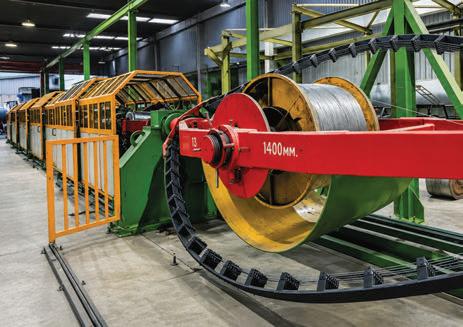
Customers today are focusing more on quality, reliability, safety, and long-term performance rather than only pricing. They expect products that meet strict industry standards and perform consistently over a long lifecycle.
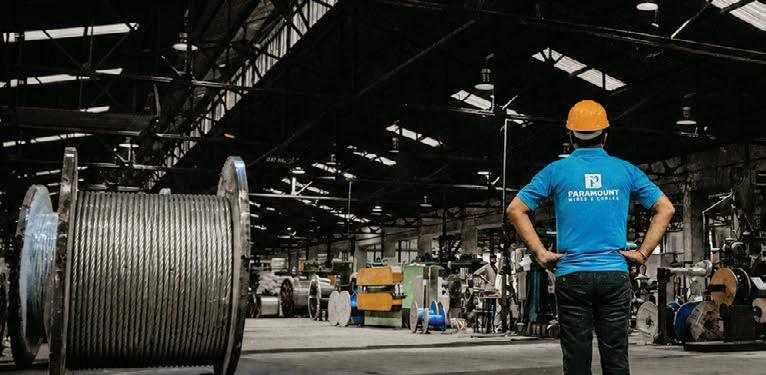





The future growth of the specialty cable industry in India will be driven by renewable energy, EV infrastructure, data centres, industrial automation, smart infrastructure, railways, and defence projects.
offshore, infrastructure, industrial automation, and critical installations?
SA: Certification, traceability, and qualification requirements have become extremely important today. Customers expect manufacturers to comply with international standards and provide complete quality assurance and product traceability. In sectors like railways, infrastructure, and industrial automation, certifications and approvals are often mandatory before product acceptance.
WCI: To what extent does India still remain dependent on imports for advanced specialty cable categories, and where do you see the strongest opportunities for deeper localisation?
SA: India has made significant progress in specialty cable manufacturing, but some advanced categories and specialised materials still depend on imports.
However, there is a strong opportunity for localisation, especially with the growth of renewable energy, defence,
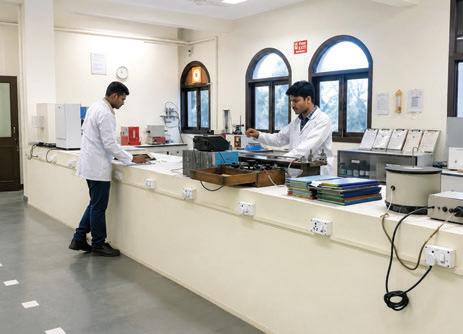
infrastructure, railways, EVs, and industrial automation. Increasing domestic manufacturing capabilities will further strengthen India’s position in this sector.
WCI: How do you assess the present competitive landscape in specialty cables?
SA: The specialty cable industry is becoming highly competitive,
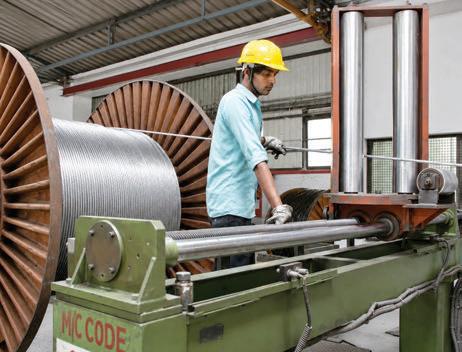
with increasing pressure on pricing, customisation, and quality expectations. At the same time, customers are looking for reliable partners who can deliver consistent performance and technical expertise. Companies that focus on innovation, quality, and customer support will continue to grow in this segment.
WCI: Looking ahead, which specialty cable applications or technology areas do you believe will define the next phase of growth and development for the industry in India?
SA: The future growth of the specialty cable industry in India will be driven by renewable energy, EV infrastructure, data centres, industrial automation, smart infrastructure, railways, and defence projects. As India continues to invest in technology and infrastructure development, the demand for advanced, reliable, and high-performance cable solutions will continue to increase.

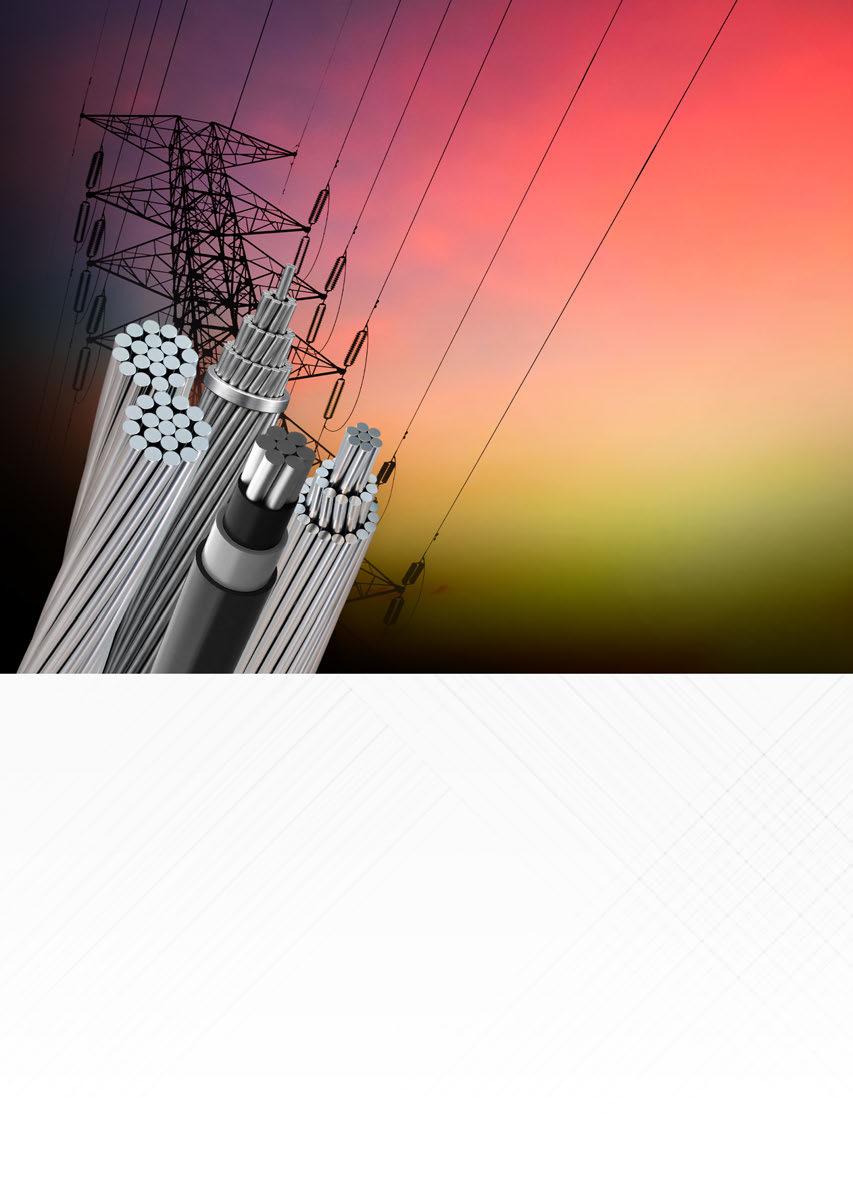
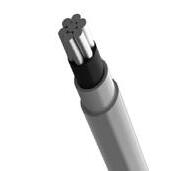

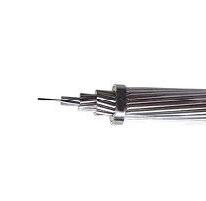
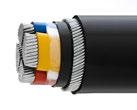

Cords Cable Industries Shares
Customer-Centric Approach in Specialty Cable
Cords Cable Industries shares that specialty cable manufacturing is ultimately about understanding the customer’s application and delivering a reliable solution for that operating environment. As India’s infrastructure, industrial, transportation, and digital sectors continue to expand, the demand for customized and high-performance cable solutions will continue to grow. The focus remains on engineering excellence, product reliability, and building long-term partnerships with customers by consistently delivering solutions that meet their evolving requirements. In an exclusive interview with Wire & Cable India, Mr. Naveen Sawhney, Managing Director, Cords Cable Industries Ltd., shares how understanding customer applications has become the foundation of specialty cable manufacturing. He discusses the sectors driving demand, evolving performance expectations, the growing importance of engineering excellence and opportunities for localisation.
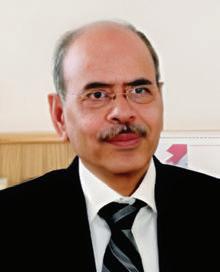
Wire & Cable India: How do you currently define the specialty cable segment within your organization, and which application areas are presently driving the strongest business momentum for you?
Naveen Sawhney: At Cords Cable Industries, we see specialty cables as application-specific solutions for environments where standard cables are not sufficient. These are cables built to meet particular performance, safety, environmental, and operational requirements, and in many cases they are developed for a specific project or end use.
Our portfolio includes instrumentation, control, thermocouple, railway signalling, power, and other customized cable solutions used across critical sectors. At present, we are seeing good traction from oil & gas, industrial automation, metro rail, renewable energy, power, and infrastructure projects. Across these segments, customers are increasingly looking for cables that are designed around the application rather than standard off-the-shelf products.
WCI: Among automation, railways, renewables, data centers, EVs, oil & gas, mining, marine, or defense, which end-use sectors are generating the most meaningful demand today, and how do their technical expectations differ?
NS: The strongest demand today is coming from oil & gas, industrial automation, renewable energy, metro rail projects, and data centres, both in the domestic market and in exports.
Each of these sectors has its own technical priorities. Automation applications call for flexibility, good signal integrity, and effective EMI protection. Renewable energy projects need cables that can perform reliably outdoors over long periods, with resistance to UV exposure, temperature variation, and moisture. Oil & gas, mining, and marine environments require cables that can withstand mechanical stress, chemicals, and harsh operating conditions. MetroRail projects place a strong emphasis on fire safety and reliability, while defence applications demand robust performance and compliance with
Mr. Naveen Sawhney , Managing Director, Cords Cable Industries Ltd.
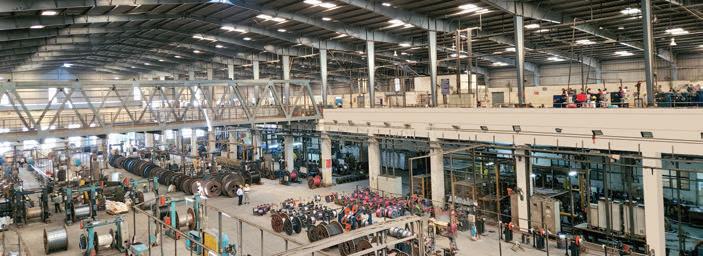
strict qualification norms. Data centres are also becoming increasingly important, where uninterrupted operation, fire performance, and reliability are critical.
WCI: What major shifts are you observing in customer expectations regarding performance, reliability, lifecycle requirements, qualification standards, and application-specific engineering?
NS: One of the biggest changes we have seen is that customers are no longer looking only at the initial purchase price. They are paying much more attention to reliability, lifecycle performance, and the overall value the product delivers over time. This is especially true in critical applications, where a cable failure can lead to downtime, safety issues, or project delays. There is also a much stronger focus today on qualification, traceability, documentation, and compliance with project specifications.
WCI: Which performance parameters are becoming increasingly critical in specialty cable design today, including flexibility, thermal endurance, fire performance, EMI shielding, chemical resistance, weatherability, or signal integrity?
NS: The importance of these parameters depends on the
application, but overall, we are seeing greater emphasis on flexibility, thermal endurance, fire performance, EMI shielding, chemical resistance, weatherability, and signal integrity.
As industrial systems become more connected and more complex, customers expect cables to perform reliably under tougher operating conditions. Fire safety requirements have become stricter across many sectors, while automation and communication-heavy applications place greater importance on signal integrity and electromagnetic compatibility.
At the same time, there is a clear preference for compact cable designs that can serve multiple functions while still being easy to install and dependable in service.
WCI: How are industrial automation, robotics, high-flex applications, and the growing convergence of power, control, and data systems influencing product development and cable architecture?
NS: Industrial automation and digitalization are having a direct impact on cable design. Modern manufacturing facilities increasingly need cables that can handle continuous movement, repeated flexing, and reliable transmission of both power and signals.
We are also seeing more integration of power, control, and communication functions within industrial systems. This is encouraging the development of more compact and efficient cable constructions that reduce installation complexity while maintaining
performance and reliability.
As operating environments become more demanding, application-specific engineering is becoming even more important in product development.
WCI: What manufacturing and process challenges are most significant in specialty cable production compared to conventional cable systems, particularly in areas such as precision extrusion, shielding, testing, qualification, and consistency control?
NS: Compared with conventional cable manufacturing, specialty cable production requires a much higher level of precision and process control. Many of these products are made to specific customer requirements, which means there is greater variation in materials, constructions, and manufacturing parameters.
Maintaining consistency from batch to batch is critical, especially when dealing with complex shielding, tight dimensional tolerances, and demanding performance specifications. Testing and validation requirements are also more extensive, often involving customer-specific qualification procedures and project approvals.
To meet these requirements consistently, strong process discipline, reliable testing facilities, and a continuous focus on quality are essential throughout the manufacturing cycle.
WCI: How important have certification, traceability, and customer qualification requirements become in sectors such as railways, offshore, infrastructure, industrial automation, and critical installations?
NS: Certification, traceability, and qualification requirements have become extremely important across
SPECIALTY CABLE
sectors such as railways, offshore installations, industrial automation, power, and infrastructure.
Today, customers expect full transparency on materials, manufacturing processes, testing, and compliance with applicable standards. Vendor approvals, projectspecific qualifications, and thirdparty certifications are increasingly becoming mandatory for participation in major projects.
In many critical installations, documentation and traceability are almost as important as technical performance because they give customers confidence in long-term reliability and compliance.
WCI: To what extent does India still remain dependent on imports for advanced specialty cable categories, and where do you see the strongest opportunities for deeper localization?
NS: India’s specialty cable industry has made good progress over the last decade, and many products that were earlier imported can now be manufactured domestically.
That said, there are still opportunities in highly specialized segments such as subsea systems, certain defence-related applications, and select advanced communication cable categories. These areas offer scope for further investment, technology development, and localization.
We believe the strongest opportunities will continue to come from Oil & Gas, renewable energy, transportation, industrial automation, and infrastructure development, supported by the broader push toward selfreliance and local value creation.
WCI: How do you assess the present competitive landscape in specialty cables, particularly in relation to pricing
pressure, qualification costs, customization demands, and margin sustainability?
NS: The market has become more competitive, with customers expecting higher performance, greater customization, and strong technical support, while at the same time keeping a close eye on cost.
Qualification requirements, compliance costs, and customer expectations are also rising. In this environment, sustainable growth depends less on competing only on price and more on delivering consistent quality, engineering support, reliable performance, and long-term customer relationships.
Manufacturers that can combine technical capability with operational discipline are likely to be better placed over the long term.
WCI: Looking ahead, which specialty cable applications or technology areas do you believe will define the next phase of growth and development for the industry in India?
NS: We believe growth will continue to be driven by oil & gas, metro rail expansion, renewable energy projects, industrial automation, defence modernization, and the continued growth of digital infrastructure.
The expansion of data centres, smart manufacturing facilities, and intelligent infrastructure will create demand for cable solutions that offer higher reliability, better safety, and stronger performance. At the same time, the energy transition will continue to support demand for specialized cable systems.
Going forward, customers will increasingly look for solutions that offer long service life, operational reliability, safety, and compliance while meeting the changing needs of modern infrastructure and industry.
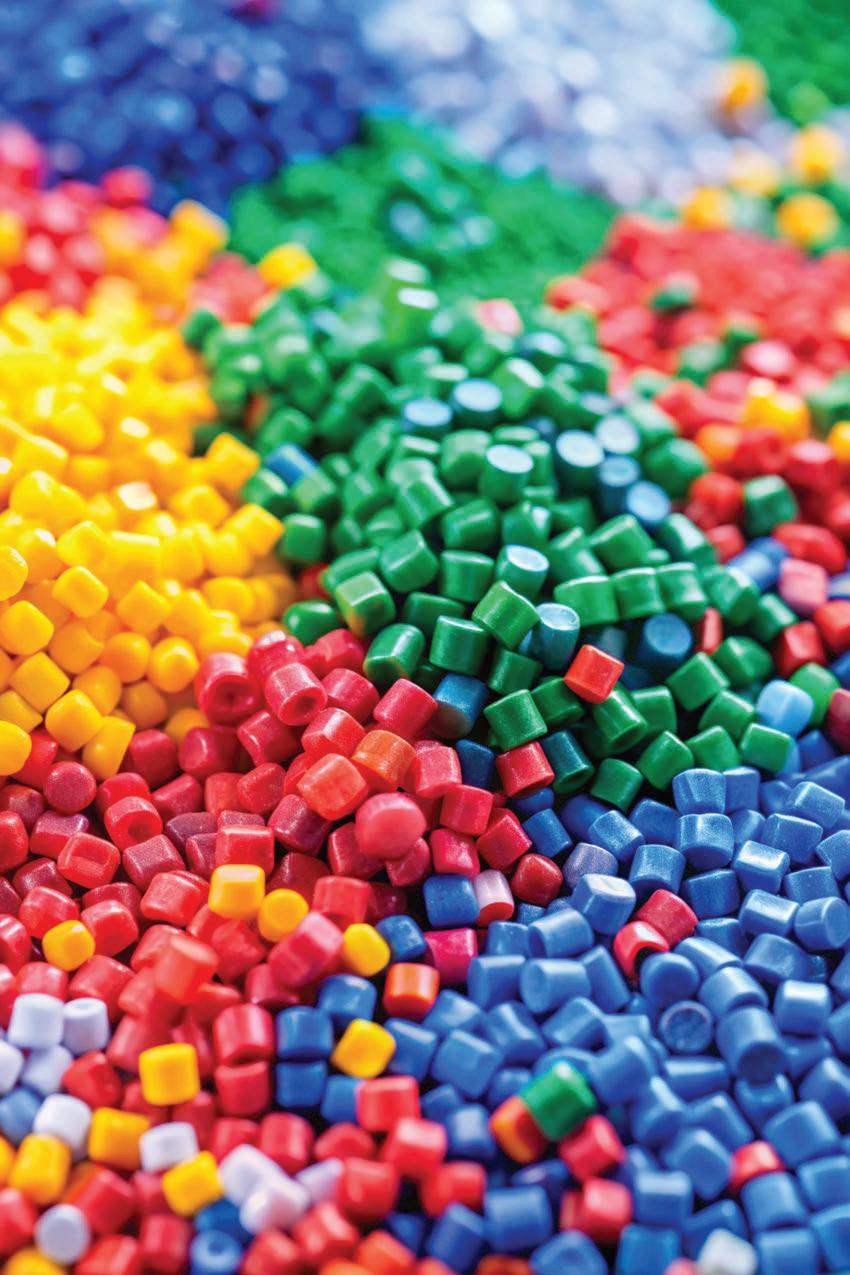
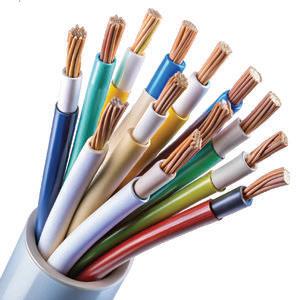
Sterlite Electric: Transforming Cable Infrastructure into Intelligent Grid Assets
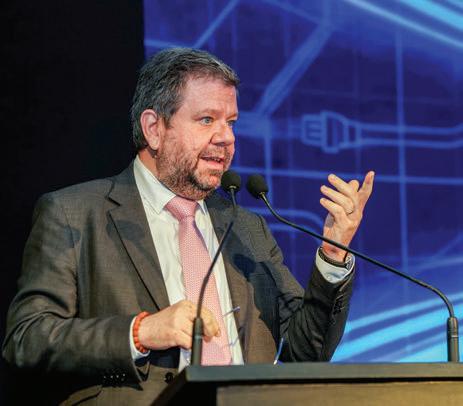
Wire & Cable India: Sterlite Electric recently announced the formation of Sterlumiq, a joint venture with Spain-based RDT Lumiker, focused on developing advanced (CAMOS). What strategic gap in the power infrastructure ecosystem is this partnership aiming to address?
Frédéric Tréfois: The formation of Sterlumiq is aimed at addressing a critical gap in today’s power infrastructure ecosystem, the disconnect between physical grid assets and real-time operational status.
As power grids become increasingly complex with the rapid integration of renewable energy, urbanization, and rising electricity demand, utilities are under growing pressure to improve network reliability while maximizing the performance of existing assets. This shift is accelerating the adoption of intelligent, data-driven infrastructure that provides realtime visibility into asset health, enables predictive maintenance, and enhances operational efficiency. Against this backdrop, Sterlite Electric has partnered with Spainbased RDT Lumiker to establish Sterlumiq, a joint venture focused on advancing cable asset monitoring through (CAMOS), an integrated fibre-optic sensing platform designed to transform conventional cable networks into intelligent, selfmonitoring infrastructure. In an exclusive interview with Wire & Cable India, Mr. Frédéric Tréfois, CEO, Sterlite Electric, discusses the strategic vision behind Sterlumiq, the role of advanced sensing and analytics in modernising power networks, and how intelligent cable infrastructure is helping utilities transition from reactive maintenance to predictive, data-driven grid management while building smarter, more resilient power systems.
Mr. Frédéric Tréfois , CEO, Sterlite Electric
INTERVIEW
“Through Sterlumiq, we are bringing together Sterlite Electric’s expertise in power transmission infrastructure and RDT Lumiker’s photonics and sensing capabilities to embed intelligence directly into critical grid assets.
As power networks become more complex with growing electricity demand, renewable energy integration, and increasing urbanisation, utilities are under pressure to maximise the performance of existing assets while maintaining reliability. However, most underground cable networks continue to operate with limited visibility into their realtime condition, forcing operators to rely on periodic inspections and corrective maintenance practices. This often leads to unplanned outages, inefficient asset utilisation, and higher operational costs.
Through Sterlumiq, we are bringing together Sterlite Electric’s expertise in power transmission infrastructure and RDT Lumiker’s photonics and sensing capabilities to embed intelligence directly into critical grid assets. At the core of this collaboration is CAMOS, an integrated cable monitoring platform that enables continuous visibility into asset health, electrical performance, fault conditions, and network behaviour throughout the cable lifecycle.
What this translates to is a fundamental shift in how utilities manage their infrastructure. Instead of reacting to failures after they occur, operators can proactively identify emerging issues, optimise network loading, improve maintenance planning, and enhance overall grid reliability. The technology also enables more efficient utilisation of existing infrastructure, reducing the need for premature capital investments while supporting the increasing complexity of modern power systems.
Ultimately, Sterlumiq is about transforming conventional
cable networks into intelligent infrastructure, helping utilities build more resilient, efficient grids.
WCI: Could you elaborate on how CAMOS transforms conventional cable infrastructure into intelligent, self-monitoring assets, and what differentiates the platform from traditional cable monitoring systems?
FT: CAMOS represents evolution in how cable infrastructure is managed and monitored. Traditionally, underground power cables have been treated as passive assets, with utilities relying on periodic inspections, maintenance schedules, and limited monitoring tools to assess their condition. While these approaches have served the industry for decades, they often provide only a partial view of asset health and leave operators reacting to issues after they occur.
What CAMOS does differently is embed intelligence directly into the cable system. Built on advanced fibreoptic current sensing technology, it enables continuous, real-time visibility into the operating condition of the asset throughout its lifecycle. Rather than monitoring a cable from the outside, CAMOS becomes an integral part of the infrastructure itself, continuously capturing and analysing critical operational data.
The key differentiator lies in what is being measured. Most conventional monitoring systems focus on indirect indicators such as temperature, vibration, strain, or acoustics. While these parameters provide useful information, they do not directly measure the electrical behaviour of the asset.
CAMOS is designed to measure the actual electrical variables that matter most, including load currents, sheath currents, capacitive currents, and insulation-related parameters. This provides utilities with understanding of cable health, transmission capacity, and network performance.
Combined with predictive analytics, fault location capabilities, dynamic cable rating, and integrated protection functions, CAMOS transforms conventional cables into intelligent, self-monitoring assets. The outcome is greater asset visibility, faster fault identification, improved reliability to grid management and operational decision-making.
WCI: What are some of the key operational challenges in power and cable networks today that solutions such as CAMOS are aiming to address?
FT: One of the biggest challenges facing power and cable networks today is the growing gap between network complexity and asset visibility. As grids expand and integrate larger volumes of renewable energy, utilities are expected to manage increasingly dynamic power flows while maintaining reliability, efficiency, and continuity of supply.
A significant portion of this challenge lies in underground cable networks. Unlike overhead assets, underground infrastructure is largely inaccessible, making it difficult to identify issues such as insulation degradation, localised overheating, joint failures, or abnormal current behaviour before they impact operations. In many cases, utilities continue to rely on periodic inspections and time-based maintenance practices, which often provide only a limited understanding of the actual condition of the asset
By embedding advanced fibreoptic current sensing and real-time analytics directly into cable systems, CAMOS enables continuous monitoring of asset health, network conditions, and transmission performance. The technology allows operators to detect anomalies earlier, localise faults with precision, and move from reactive maintenance to a more predictive approach.
The operational impact can be substantial. Limited visibility can lead to conservative asset utilisation, delayed fault identification, longer restoration times, unplanned outages, and higher maintenance costs. As demand continues to grow, utilities need to extract greater performance from existing infrastructure while reducing operational risk.
This is where solutions such as CAMOS are creating shifts. By embedding advanced fibre-optic current sensing and real-time analytics directly into cable systems, CAMOS enables continuous monitoring of asset health, network conditions, and transmission performance. The technology allows operators to detect anomalies earlier, localise faults with precision, and move from reactive maintenance to a more predictive approach.
What this ultimately translates to is improved grid reliability, better utilisation of existing assets, faster operational decision-making, and a network capable of supporting the evolving demands of modern power systems.
WCI: How are advanced sensing, monitoring, and analytics technologies transforming the way utilities
INTERVIEW
and industries manage critical cable infrastructure?
FT: Advanced sensing, monitoring, and analytics technologies are fundamenZtally changing how utilities and industries manage critical cable infrastructure. For us, this is about moving beyond traditional, reactive approaches to asset management and enabling a more intelligent, data-driven way of operating power networks.
Historically, operators have relied on periodic inspections and maintenance schedules, often with limited visibility into the actual condition of underground cable assets. Today, technologies such as fibre-optic sensing, real-time monitoring, and predictive analytics are helping bridge that gap by providing continuous visibility into asset performance throughout its lifecycle.
The impact is already becoming evident across power networks. By continuously monitoring critical parameters such as current, temperature, insulation health, and load conditions, utilities can identify anomalies much earlier, predict potential failures, and take corrective action before they escalate into major outages. This not only improves network reliability but also reduces maintenance costs, minimises downtime, and enhances operational safety.
When combined with advanced analytics and AI-driven insights, these technologies also enable operators to optimise asset utilisation and make more informed investment decisions. Rather than relying on conservative operating assumptions, utilities can manage assets based on real-time conditions, unlocking additional capacity while maintaining reliability.
What this translates to is a fundamental shift in infrastructure management - from periodic maintenance to continuous intelligence, from reactive
interventions to predictive decisionmaking, and ultimately from static networks to smarter, more resilient and efficient power systems.
WCI: What role do realtime monitoring, predictive maintenance, and fault localization capabilities play in improving operational efficiency and reducing downtime across power networks?
FT: Real-time monitoring, predictive maintenance and accurate fault localisation are becoming fundamental to the efficient operation of modern power networks. As grids expand, integrate more renewable energy and operate under increasingly dynamic loading conditions due to the increasing electrification, utilities can no longer rely solely on periodic inspections or respond only after an asset has failed.
Continuous monitoring creates visibility into the actual operating condition of critical cable infrastructure. By tracking electrical and thermal behaviour in real time, operators can identify anomalies and early signs of deterioration before they develop into major faults. This enables maintenance to be planned based on asset condition and risk, rather than fixed schedules, reducing unnecessary interventions while helping prevent unplanned outages.
Predictive maintenance also improves the way utilities allocate resources. Remote diagnostics and data-led alerts allow engineering teams to focus attention on assets that genuinely require intervention, reducing inspection visits, emergency repairs and associated operating costs. At the same time, a clearer understanding of asset health can help extend cable life and support more confident utilisation of existing network capacity.
When a fault does occur, precise localisation is equally critical.
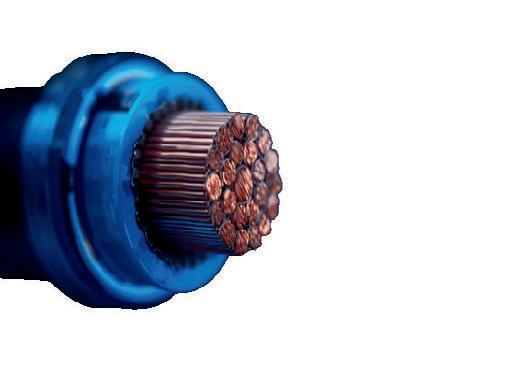

Special PVC Compounds for Power & Control Cable XLPE & FR-XLPE UL Certified Compounds


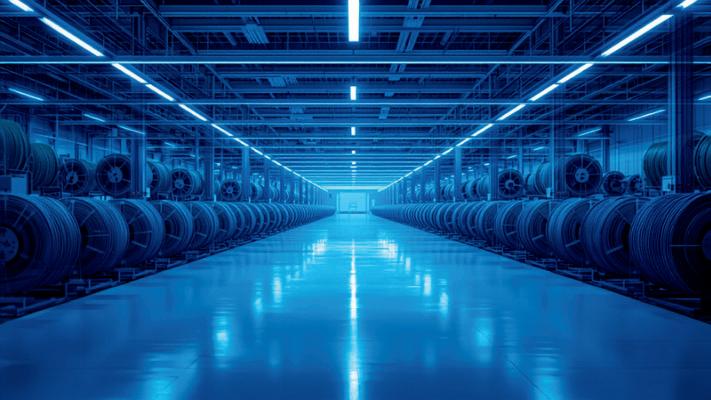
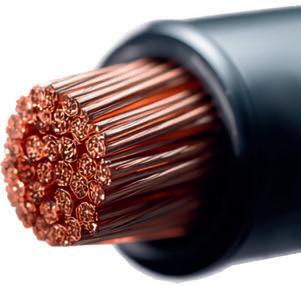
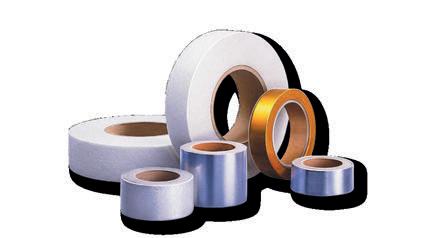

naval@navank.nl abhinav@navank.in anil@navank.in Pelikaanhof I 34 Leidschendam 2264 JL Netherlands

INTERVIEW
Historically, operators have relied on periodic inspections and maintenance schedules, often with limited visibility into the actual condition of underground cable assets. Today, technologies such as fibre-optic sensing, real-time monitoring, and predictive analytics are helping bridge that gap by providing continuous visibility into asset performance throughout its lifecycle.
Identifying the affected section quickly, including within underground or mixed overhead-underground networks, reduces the time spent searching for the problem and enables repair teams to respond with greater speed and accuracy. This can significantly shorten restoration times and limit the operational and economic impact of an outage.
Through Sterlumiq, we are bringing these capabilities together in CAMOS, an integrated fibre-optic sensing and analytics platform that transforms cables from passive infrastructure into intelligent, continuously monitored assets. Ultimately, the value lies in enabling utilities to see risks earlier, act faster and manage their networks with greater reliability, efficiency and precision.
WCI: What are some of the key technology and manufacturing capabilities required to develop advanced, high-performance cable systems for critical infrastructure applications?
FT: The requirements for advanced cable systems are evolving rapidly as power networks become larger, more complex, and increasingly dependent on renewable energy. Between March and May 2026, several industry developments reinforced the need for next-generation cable technologies. India’s transmission planning roadmap for integrating more than 900 GW of non-fossil fuel capacity by 2035-36 has highlighted the growing importance of high-capacity, reliable, and digitally enabled transmission infrastructure.
To meet these requirements, manufacturers need strong capabilities in extra-high-voltage (EHV) and
HVDC cable design, advanced insulation systems, precision conductor manufacturing, and rigorous testing and qualification processes. As utilities move more power over longer distances and through increasingly congested urban environments, cable systems must deliver higher efficiency, lower losses, and superior operational reliability. The recent commissioning of major HVDC infrastructure projects in India further demonstrates the growing role of advanced cable technologies in supporting large-scale power transfer and grid resilience.
Equally important is the integration of digital intelligence into physical infrastructure. With renewable energy curtailment and grid congestion emerging as industry challenges, utilities are seeking greater real-time visibility into asset performance. This is driving demand for fibreoptic sensing, predictive diagnostics, dynamic cable rating, and advanced analytics that enable operators to maximise asset utilisation and improve network reliability.
Ultimately, the future of critical cable infrastructure will be defined by the convergence of manufacturing excellence, advanced materials, and intelligent monitoring technologies— allowing utilities to build smarter, more resilient, and future-ready grids.
WCI: With increasing focus on grid modernization and infrastructure resilience, how important is intelligent and data-driven cable infrastructure becoming for the future of India’s power ecosystem?
FT: The increasing focus on grid modernization and infrastructure resilience is fundamentally changing how utilities think about cable infrastructure. As India continues to expand its transmission network and integrate larger volumes of renewable energy, the conversation is no longer just about adding more capacity—it is about making existing assets smarter, more visible, and more efficient.
India’s power sector is undergoing a significant transformation, driven by rising electricity demand, rapid urbanisation, growing industrialisation, and ambitious renewable energy targets. While substantial investments are being made in transmission infrastructure, utilities are also facing the challenge of managing increasingly dynamic power flows and ensuring reliable electricity delivery across more complex networks.
What this means is that traditional cable infrastructure alone is no longer sufficient. Utilities need real-time visibility into asset health, loading conditions, and network performance to make faster and more informed operational decisions. This is where intelligent, data-driven cable systems can create significant value. By integrating advanced sensing, monitoring, and analytics capabilities directly into cable infrastructure, operators can identify potential issues earlier, optimise asset utilisation, and reduce the risk of unplanned outages.
The impact extends beyond reliability. Better visibility allows utilities to defer unnecessary capital investments, improve maintenance planning, and maximise the performance of existing infrastructure.


Wired for the Future: The Unseen Infrastructure Powering India’s EV Revolution
As India accelerates towards electric mobility, the spotlight often remains on vehicles and charging stations. However, the real backbone of this transition lies in the evolving wires and cables ecosystem that enables safe, efficient, and reliable power delivery. In this exclusive article shared with Wire & Cable India, Mr. Sunil Upmanyu, President – Operations, Finolex Cables Ltd., highlights how specialized cabling, advanced materials, and forward-looking infrastructure planning are becoming critical to sustaining India’s EV growth story.
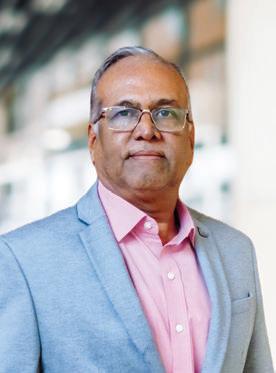
India’s electric mobility movement is no longer a distant promise; it’s a present-day reality. Our streets are buzzing with electric twowheelers, urban centres are seeing a steady rise in personal EVs, and commercial fleets are rapidly electrifying to slash operating costs. But behind this visible revolution lies a quiet, powerful force that will ultimately determine its success: the hidden infrastructure of specialized wires and cables.
As homes, offices, and public spaces install charging facilities, they are placing unprecedented demands on our electrical systems. The wiring that once powered lights and appliances must now handle higher power, longer cycles, and the simultaneous needs of multiple vehicles. This has created a new, critical demand for an unsung hero: the specialized cable, engineered specifically for EV infrastructure.
An EV charger is only as good as the cable that feeds it. Unlike regular household wiring, the cables required for EV charging are sophisticated pieces of engineering designed for extreme performance.
Think of it this way: a standard wire is built for intermittent, lowto-medium loads. An EV charging cable, however, must manage a continuous, heavy flow of power for hours on end without overheating. Unlike conventional consumption patterns, EV charging, particularly fast and ultra-fast charging, creates high, concentrated, and often non-linear electrical loads. For the fast-charging hubs that are becoming essential in our cities, the demands are even greater. These systems require heavyduty conductors, insulation that can resist intense thermal stress, and fire-safe materials that prevent the spread of flames in case of a fault.
For outdoor charging zones, the challenge is amplified. These cables must be tough enough to withstand relentless sun, rain, dust, and fluctuating temperatures, demanding materials built for long-term durability in the harshest conditions.
“A smooth EV transition requires confidence—not just in the vehicle, but in the everyday infrastructure that supports it.”
This technological shift is a defining moment for India’s cables and
Mr. Sunil Upmanyu , President – Operations, Finolex Cables Ltd.
wires industry. Manufacturers are being pushed to innovate, moving beyond traditional designs to meet a new standard of performance and reliability.
Factories are undergoing significant upgrades—expanding capacity, modernizing machinery, and introducing precision testing lines to meet EV-specific standards. There is a renewed focus on R&D, with investment pouring into highergrade copper and aluminum, more efficient insulation compounds, and designs that can safely handle rising kilowatt loads for prolonged durations. This is the industry’s opportunity to lead by creating smarter, safer, and more durable cables engineered for the future of mobility.
Today’s EV cables are more than just power conduits; they are intelligent, multi-functional systems.
High-Voltage Power Transmission: The primary role is transferring immense electrical energy to the EV battery, handling voltages up to 1000V in modern vehicle architectures.
Smart Communication: Integrated data lines allow the vehicle and charger to “handshake,” managing charging status, authorizing users, and regulating the power flow to protect battery health.
Advanced Thermal Management: To handle the intense heat of fast charging (with currents up to 600 amps), highpower cables often feature internal liquid cooling systems, keeping them safe and flexible for user handling.
Built for the Real World: These cables use advanced materials like TPE and XLPE to resist UV exposure, rain, oil, and even being run over by vehicles. Embedded temperature sensors
and flame-retardant casings provide critical layers of safety.
The real estate sector is also adapting. Where charging points were once a costly and complicated retrofit, developers of new residential and commercial buildings are now planning for EV capacity from the very first blueprint.
This forward-thinking approach involves laying dedicated electrical ducts, allocating sufficient power loads upfront, and designing spaces to support multiple chargers without straining the grid. This level of planning, built upon a foundation of high-heat-tolerance and robustly insulated cables, is quickly becoming the hallmark of future-ready real estate.
The integrity of this hidden infrastructure is paramount. When the wrong type of wire is used—either through poor specification or the infiltration of counterfeit materials—the entire system becomes vulnerable. Heat build-up, short circuits, and premature insulation breakdown are serious risks. Even a minor voltage drop from a poor-quality cable can degrade a charger’s performance and shorten its lifespan.
Because most of this crucial wiring is hidden behind walls or inside conduits, users often don’t realize a problem exists until a failure occurs. This is why verifying the authenticity and quality of materials is non-negotiable. As consumers prioritize safety and long-term performance, certified, highquality, EV-ready products from trusted manufacturers will become the gold standard.
For India to build an EV ecosystem that is not only widespread but also sustainable and dependable for years to come, we must invest in the quality of this quiet infrastructure. The wires and cables powering our electric future must be as reliable as the vehicles they charge.
Bharat Wire Ropes Restarts Chalisgaon Plant After MPCB
Approval
Bharat Wire Ropes has resumed operations at its Chalisgaon manufacturing plant after receiving restart approval from Maharashtra Pollution Control Board.
Jun 19, 2026
Bharat Wire Ropes Limited has resumed manufacturing operations at its Chalisgaon plant after receiving permission from the Maharashtra Pollution Control Board (MPCB) to restart production.The company said it received a communication dated June 17, 2026, digitally signed on June 18, 2026, from the MPCB permitting the resumption of manufacturing activities at the facility.




NIEHOFF Gruppe Expands Hyderabad Facility, Reinforces Long-Term Commitment to India
Germany-based Maschinenfabrik NIEHOFF GmbH & CO. KG (NIEHOFF Gruppe), a leading manufacturer in wire drawing machines and drawing lines, has inaugurated the expansion of its Hyderabad manufacturing facility, underscoring the company’s long-term commitment to India and its growing role within the global NIEHOFF Gruppe. New investment marks the next phase of growth for the wire and cable machinery major in India. The group has invested approximately Euro 5 million in its Indian subsidiary to date. Currently, NIEHOFF has presence in Germany, Brazil, Czech Republic, the USA, Japan, India, China, Singapore and Mexico.
The inauguration ceremony brought together senior leadership from the NIEHOFF Gruppe, shareholders, customers and industry stakeholders, highlighting the strategic importance of India as a manufacturing, engineering and service hub for the company.

Opening the event, Mr. Bernd Lohmueller, Managing Director / Chief Sales Officer, NIEHOFF Gruppe, reflected on NIEHOFF ’s nearly three-decade journey in India. “Our story in India began in the year 1997 when we made a decision to invest in this market and build a strong market presence. Looking back today, I can say with great confidence it was the right decision,” he said.
Over the years, NIEHOFF OF INDIA has evolved into a significant player in the Indian wire and cable industry, supplying a wide range of equipment including rod breakdown lines, multiwire lines, bunchers and, more recently, large stranders. Mr. Lohmuel-
ler credited the company’s success not only to its technology but also to its strong customer support capabilities. “In our industry, nowadays customers expect more than only good machines. They expect a fast response, technical expertise and reliable support. And this is exactly what this team has consistently delivered,” he noted.
He further emphasised the growing importance of the Indian subsidiary within the global organisation. “Its contribution goes beyond the local market. It brings strong technical capability, valuable market understanding, manufacturing strength and the flexibility that is so important in today’s business environment.”
Looking ahead, Mr. Lohmueller said the company sees India playing an even larger role across neighbouring regions and within the broader group structure. “Looking ahead, we see NIEHOFF OF INDIA play an even greater role in India, in the surrounding region, in Africa, in the Middle East and also within our group. We want to continue developing its strength in manufacturing, engineering and service, and we see a strong potential for NIEHOFF OF INDIA to support the group at a broader
level in the future.” He indicated that the latest expansion may not be the last. “This expansion is a clear sign that we are already looking into further investment opportunities in new land and new buildings,” he revealed.
Concluding his address, Mr. Lohmueller described the inauguration as a milestone in the company’s Indian journey. “Today, we are not opening just a new facility. We are opening the next chapter of our growth in India – with confidence, with ambition and together as a team that is ready for the future.”
Hyderabad Expansion Reflects Growing Confidence in India

Addressing the gathering, Mrs. Ursula Niehoff, Principal Shareholder, NIEHOFF Gruppe, traced the company’s long-standing relationship with India and the evolution of its local operations. “ NIEHOFF has always had a close relationship with India and the Indian
Performance is The Foundation Upon Which Trust is Built
UNIVERSAL POLYCHEM INDIA PVT. LTD.
RANGE INCLUDES
APPLICATIONS
Power Cables
House Wiring
Underground Power Cables
Flexible PVC Cables
Solar Cables
AB Cables
Electric Vehicle (EV)
MVCC Cable
APPLICATIONS
Communication Cables
Control Cables
Instrumentation Cables
Marine Cables
Building and Construction Cables
Automotive Cables
Solar Power Cables
Data Centers an IT Cabling OUR PRODUCT

EXPANSION
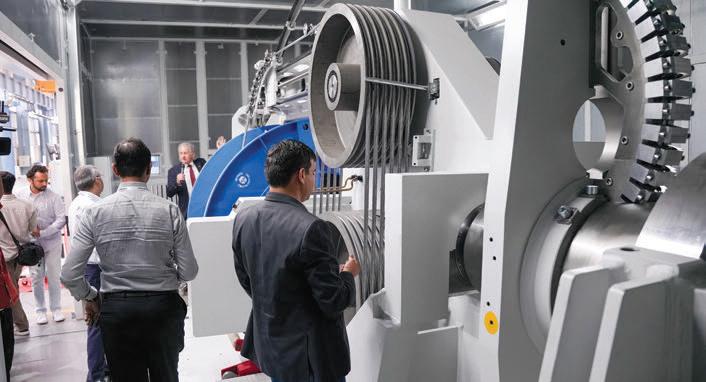
wire and cable industry,” she said, recalling the company’s engagement with the market dating back to the early 1990s.
She highlighted the group’s progressive expansion in India through agency partnerships, licensed manufacturing, joint ventures and ultimately a wholly owned subsidiary structure. According to the group, the decision to expand the Hyderabad facility was driven by the growing importance of the Indian market. “For the NIEHOFF Gruppe, India has always been a very important market. The necessity to invest in a new state-of-the-art factory in Hyderabad was evident to us.” The group has invested approximately Euro 7.5 million in its Indian subsidiary to date.
Drawing a symbolic comparison between the facility and the mango trees planted during the inauguration of the original factory in 2007, she noted how both have grown steadily over the years. “Just as the trees have grown over the years, our business has grown too, and we had to expand our factory in 2012, 2017, 2023 and now again in 2026.” The latest project continues a pattern of regular expansion at the Hyderabad site. “This means
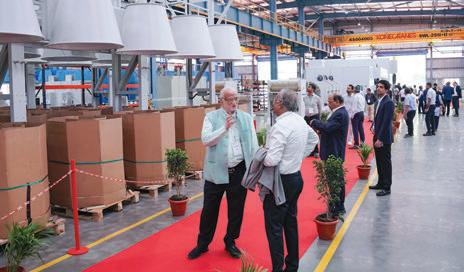
we have been expanding almost every five years,” she remarked, expressing confidence in continued growth and deeper collaboration with customers and partners in the years ahead.
A Collective Effort

In his closing remarks, Mr. Daniel Thomas, Managing Director, NIEHOFF OF INDIA PRIVATE LIMITED, acknow-ledged the contributions
of shareholders, group leadership, employees, customers, suppliers, government agencies and project partners who helped bring the expansion to fruition. He paid tribute to industry pioneers and former leaders who laid the foundation for the company’s growth in India, while also recognizing the multinational teams from Germany, the Czech Republic, Spain and India that collaborated on the new facility.
Mr. Thomas highlighted the strong support received from the Indian wire and cable industry, thanking customers for their continued trust and patronage. He
also acknowledged the role of Telangana’s industrial and regulatory authorities in enabling a stable and business-friendly operating environment. Addressing employees, he described the
OPEN HOUSE:
EXPANSION
Indian team as one of the company’s greatest strengths and encouraged them to continue striving for excellence.
The inauguration was followed by a ribbon-cutting ceremony and a guided tour of the expanded Hyderabad facility, offering guests a first-hand look at the company’s enhanced manufacturing capabilities and future growth plans.
At the Open House event, NIEHOFF introduced its latest state of the art large stranding lines types D 1251, D 1602, and D 2002, where salient features are furnished herein below:
With the addition of these new line of products, NIEHOFF has further broadened its product range, providing advanced solutions to their to meet the evolving needs of the cable industry.
These large stranding lines are engineered to improve operational efficiency, increase productivity, and support higher production capacities for cable manufacturers in India and across the globe.
Fainplast Focuses on HighPerformance, Recyclable Cable Compounds for Emerging Applications
In an exclusive interview with Wire & Cable India, Mr. Joshua Bruni, Foreign Sales Manager, Fainplast, shares that the company is witnessing increasing demand for specialty cable compounds in the renewable energy, data, and OFC sectors, with LSZH materials accounting for the highest demand. Looking ahead, he believes LSZH compounds will continue to capture a significant market share and also sees strong potential for polypropylene (PP) compounds as the primary insulation material in certain cable applications, owing to its high performance, thermoplastic nature and easier recyclability.
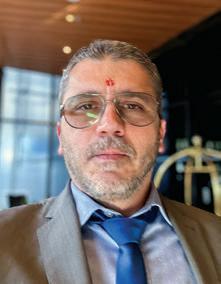
Wire & Cable India: Which specialty cable applications are presently generating the strongest demand for advanced compounds, additives, masterbatches, and specialty material systems?
Joshua Bruni: In the last few months, we have seen an increasing demand for PV cable insulation and sheathing materials probably as a consequence of crude oil cost and a renewed interest in alternative sources of energy. Additionally, last year, we saw a constant growing demand from data and OFC sectors.
WCI: What major changes are you observing in cable manufacturers’ material requirements in areas such as flame performance, flexibility, thermal endurance, UV stability, chemical resistance, and long-term reliability?
JB: We see an increasing demand for LSZH material, with significant fire performance to fulfill more demanding fire classifications.
WCI: How are automation, robotics, renewable energy, EV infrastructure, and other high-performance applications influencing compound
development and formulation strategies?
JB: The markets mentioned above are among the fastest-growing and most dynamic, generating strong interest from customers. As a result, we are focusing most of our efforts on developing new materials tailored to these markets.
WCI: What technical challenges arise while balancing performance, processability, compliance requirements, durability, and commercial viability within specialty cable compounds?
JB: The main challenge within the specialty cable compound is to improve fire performance of the material and at the same time guarantee good mechanical properties, thereby ensuring high cable productivity and low materials costs.
WCI: How has demand evolved for HFFR/LSZH, XLPO, silicone, elastomeric, and other advanced material systems across specialty cable applications?
JB: In sectors where such materials were once limited to niche demand, they are now becoming widely adopted.
Mr. Joshua Bruni , Foreign Sales Manager, Fainplast
COMPOUNDS
Indian market is much less dependent on imported polymers, with many new players strongly focusing on the domestic market while also expanding their presence in international market.
WCI: To what extent does the Indian specialty cable material ecosystem still depend on imported polymers, additives, stabilizers, or formulation technologies, and where do you see localization opportunities emerging?
JB: Today, the Indian market is much less dependent on imported polymers, with many new players strongly focusing on the domestic market while also expanding their presence in international markets.
WCI: How important have testing, certification, consistency control, and application-specific customization become in
today’s specialty cable material environment?
JB: For those who cannot always offer the lowest price to the customers, the guarantee of high quality or deeper customization of products represents a key for success, especially in markets like India, that are price sensitive.
WCI: Looking ahead, which material technologies, compound systems, or performance requirements do you believe will shape the next phase of development within the specialty cable segment?
JB: I believe LSZH compounds will continue to capture a significant share of the market from PVC as demand increases and prices become
WOYWOD – Manufacturer of the well-known PLASTICOLOR Brand presents:
DOUBLE DOSING SYSTEMS
(COLOR CHANGE)
· Cutting down on waste and rejects during production
· Instant color change during production
· Simple handling and operation
· Extreme small amount of pre-mixed material
· Reduction of setup/production cost
· Synchronized operation (speed of dosing unit synchronized with speed of production machine)
For further information, please contact us: Woywod Kunststoffmaschinen GmbH & Co. Vertriebs-KG Fon +49 (0) 89 854800 · info@woywod.de
For those who cannot always offer the lowest price to the customers, the guarantee of high quality or deeper customization of products represents a key for success.
more competitive. Additionally, I see strong potential for polypropylene (PP) to replace XLPE compounds as the primary insulation material in certain cable applications, owing to its high-performance and thermoplastic nature, which makes it easier to recycle.
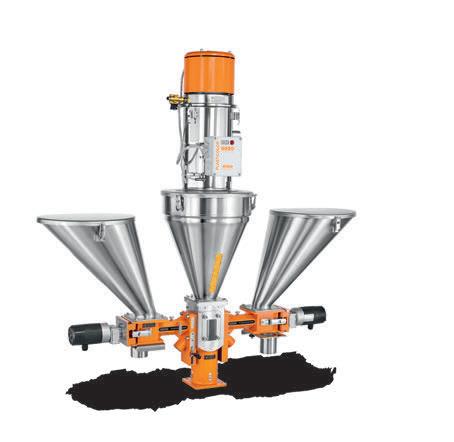
Endless Opportunities woywod.de/en
Dosing & Mixing Systems Made in Germany
Ddev Plastiks Industries Drives Innovation in Specialty Compounds With Sustainability, Performance, and Quality Compliance
In an exclusive interview with Wire & Cable India, Mr. Manoj Kumar Kothari, VP Marketing, and Mr. Prakash Sahoo, VP Marketing, at Ddev Plastiks Industries Limited, share that cable manufacturers are increasingly looking for high-performance, multi-functional material solutions such as HFFR, LSZH, XLPO, silicone-based, and elastomeric compounds for applications across power transmission and distribution, renewable energy, EV charging infrastructure, railways, data centers, industrial automation, and telecommunications. Ddev Plastiks Industries develops application-specific compounds to meet these growing demands. He further emphasized that the next phase of the specialty wire and cable industry will be driven by sustainability, material performance, processing efficiency, and compliance with global quality and safety standards, enabling the production of high-performance wires and cables under demanding operating environments.
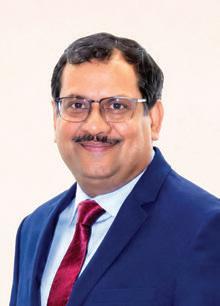
Wire & Cable India: Which specialty cable applications are presently generating the strongest demand for advanced compounds, additives, masterbatches, and specialty material systems?
Manoj Kothari: The strongest demand is coming from power transmission and distribution, renewable energy, EV charging infrastructure, railways, data centers, industrial automation, and telecom applications. These sectors require materials that offer superior electrical performance, flame safety, durability, and long service life under demanding operating conditions.
WCI: What major changes are you observing in cable manufacturers’material requirements?
Prakash Sahoo: Cable manufacturers are increasingly seeking multifunctional material solutions that
Mr. Prakash Sahoo , VP Marketing, Ddev Plastiks Industries Limited
Mr. Manoj Kumar Kothari , VP Marketing, Ddev Plastiks Industries Limited
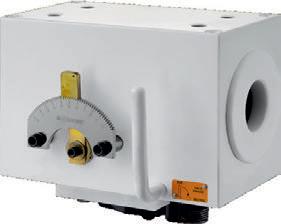



COMPOUNDS
While India has made significant progress in local manufacturing, certain high-performance polymers and specialty additives are still largely imported. However, there is strong potential for localization through increased R&D; technology partnerships, and domestic manufacturing capabilities, which will strengthen supply chain resilience and reduce import dependence.
combine enhanced flame retardancy, improved flexibility, higher thermal stability, UV resistance, and excellent chemical resistance. At the same time, consistency, regulatory compliance, and long-term reliability have become equally important considerations in material selection.
WCI: How are automation, robotics, renewable energy, EV infrastructure, and other high-performance applications influencing compound development and formulation strategies?
MK: These emerging applications demand compounds capable of performing reliably under higher temperatures, mechanical stress, and continuous operation. As a result, formulation strategies are evolving toward higher-performance materials that also offer improved processability, efficiency, and compliance with global quality and safety standards.
WCI: What technical challenges arise while balancing performance, processability, compliance requirements, durability, and commercial viability within specialty cable compounds?
MK: The key challenge lies in
Innovation focused on sustainability, performance, and compliance will define the next phase of the specialty cable industry.
achieving high technical performance without compromising manufacturing efficiency or cost competitiveness. Developing formulations that simultaneously meet stringent performance standards, maintain processing consistency, and remain commercially viable requires continuous innovation and close collaboration with customers.
WCI: How has demand evolved for HFFR/LSZH, XLPO, silicone, elastomeric, and other advanced material systems?
PS: The demand for HFFR/LSZH compounds continues to grow steadily due to increasing safety regulations. Similarly, XLPO, silicone, and elastomeric compounds are witnessing higher adoption in applications requiring superior thermal performance, flexibility, and environmental resistance, particularly in renewable energy, EVs, and industrial sectors.
WCI: To what extent does the Indian specialty cable material ecosystem still depend on imports, and where do you see localization opportunities?
PS: While India has made significant progress in local manufacturing, certain high-performance polymers and specialty additives are still largely imported. However, there is strong potential for localization through increased R&D; technology partnerships, and domestic manufacturing capabilities, which will strengthen supply chain resilience and reduce import dependence.
WCI: How important have testing, certification, consistency control, and application-specific
Developing formulations that simultaneously meet stringent performance standards, maintain processing consistency, and remain commercially viable requires continuous innovation and close collaboration with customers.
customization become?
MK: These aspects have become critical differentiators. Customers increasingly expect validated performance through rigorous testing, international certifications, consistent product quality, and customized formulations tailored to specific applications. At Ddev Plastiks, these remain central to our product development philosophy.
WCI: Looking ahead, which material technologies, compound systems, or performance requirements will shape the next phase of development?
PS: The future will be driven by safer, more sustainable, and higherperformance material systems. We expect continued growth in halogenfree flame-retardant compounds, advanced cross-linked polyolefins, recyclable materials, and solutions designed for higher operating temperatures and longer service life. Innovation focused on sustainability, performance, and compliance will define the next phase of the specialty cable industry.
Teknor Apex Meets India’s Advanced Compound Demands With ‘Glocal’ Manufacturing Ecosystem
In an exclusive interview with Wire & Cable India, Mr. Mike Patel, Director of Marketing, Teknor Apex, shares that the rapid expansion of AI workload, hyperscale, colocation data centers, as well as power distribution systems in India is encouraging the cable manufacturers to increasingly look for materials that can support higher performance in compact cable designs. As a result, global compounding company, Teknor Apex, has collaborated with Shriram Polytech to form a JV- ‘Shriram Teknor Ltd.’, combining its global formulation and technology expertise with local manufacturing capabilities to support India’s growing demand for advanced polymer compounds. By combining technical expertise, application knowledge, and strong regional support, the company is well positioned to help wire and cable manufacturers meet evolving industry demands related to mechanical integrity, flame performance, and installation reliability.
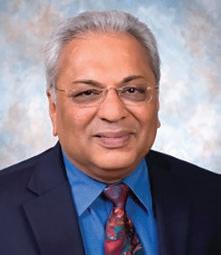
Wire & Cable India: Which specialty cable applications are presently generating the strongest demand for advanced compounds, additives, masterbatches, and specialty material systems?
Mike Patel: One of the strongest demand drivers today is data center infrastructure, particularly as AI workloads accelerate the need for higher fibre density, faster data transmission, and increased power requirements. The rapid expansion of hyperscale and colocation data centers is creating demand for use of advanced specialty compounds in high-performance connectivity solutions – both copper and fibre optic cables – as well as power distribution systems. These applications require materials that can support increasingly compact cable designs while maintaining mechanical integrity, flame performance, and installation reliability.
Beyond data centers, we continue to see robust demand from renewable energy, EV charging infrastructure, industrial automation, robotics,
transit, and harsh-environment applications. Across these segments, cable manufacturers are seeking materials that deliver flame performance, long-term durability, flexibility, and high-speed processing while meeting increasingly stringent performance and regulatory requirements.
WCI: What major changes are you observing in cable manufacturers’ material requirements in areas such as flame performance, flexibility, thermal endurance, UV stability, chemical resistance, and long-term reliability?
MP: The biggest shift is that cable manufacturers are looking for materials that can support higher performance in increasingly compact cable designs. In data center applications, higher fibre density and space constraints require compounds that enable smaller cable diameters while providing improved flame retardancy, thermal endurance, flexibility, UV resistance, chemical resistance, and long-term reliability. Rather than optimizing for a single
Mr. Mike Patel , Director of Marketing, Teknor Apex
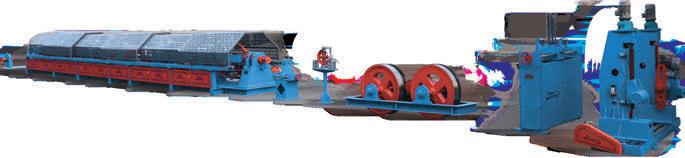
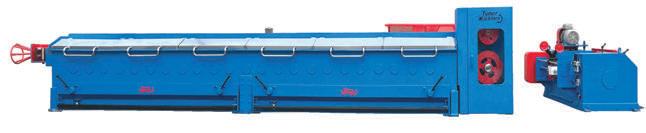
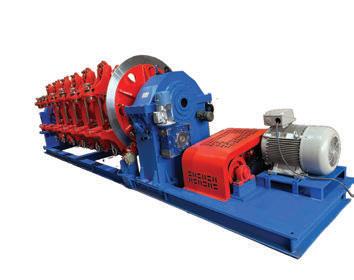

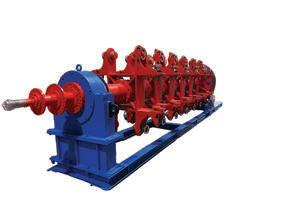


Unit I - B-5 & 6, Sector B-3, Tronica City, Loni, Ghaziabad, Uttar Pradesh - 201102
Unit II - C-5, Sector B-3, Tronica City, Loni, Ghaziabad, Uttar Pradesh - 201102
Unit III - C-42, 43 & 44, Sector B-3, Tronica City, Loni, Ghaziabad, Uttar Pradesh - 201102
COMPOUNDS
Beyond data centers, we continue to see robust demand from renewable energy, EV charging infrastructure, industrial automation, robotics, transit, and harsh-environment applications.
property, manufacturers are seeking balanced performance profiles that address multiple requirements simultaneously. The challenge is delivering these properties consistently without compromising processability, or commercial viability.
WCI: How are automation, robotics, renewable energy, EV infrastructure, and other high-performance applications influencing compound development and formulation strategies?
MP: These applications are pushing compounds toward higher durability and more specialized performance. Robotics and automation require exceptional flex-life, abrasion resistance, and resistance to oils and industrial chemicals. Renewable energy and EV infrastructure demand flexibility, weatherability, thermal stability, flame performance, and long-term mechanical and electrical reliability under extreme temperature operating conditions.
As a result, formulation strategies have become increasingly application specific. Material developers must optimize compounds not only for performance but also for installation requirements, service life expectations, and evolving regulatory standards.
WCI: What technical challenges arise while balancing performance, processability, compliance requirements, durability, and commercial viability within specialty cable compounds?
MP: The greatest challenge is that improving one property can often impact others. Increasing flame retardant loading, for example, may affect flexibility, mechanical performance, or processing characteristics. Enhancing chemical resistance or thermal performance can
add complexity and cost.
The role of the compounder is to optimize the complete performance package while ensuring the material remains practical for cable manufacturers to process efficiently and cost-effectively. Success requires a deep understanding of material science, processing behavior, regulatory requirements, and end-use performance expectations
WCI: How has demand evolved for HFFR/LSZH, XLPO, silicone, elastomeric, and other advanced material systems across specialty cable applications?
MP: Demand for LS HFFR compounds continues to grow across many specialty cable applications, particularly where low smoke and halogen-free performance are required for public and hardware protection considerations. XLPO and elastomeric systems are gaining traction in automotive applications that require enhanced thermal endurance, flexibility, and long-term durability.
At the same time, PVC remains highly relevant in many cable applications due to its balance of mechanical, environmental and flame performance, processability, reliability, and costeffectiveness. The market continues to evolve toward selecting the right material system for the specific application rather than relying on a single solution across all cable types.
WCI: To what extent does the Indian specialty cable material ecosystem still depend on imported polymers, additives, stabilizers, or formulation technologies, and where do you see localization opportunities emerging?
MP: India has made significant progress in developing local
compounding capabilities, but certain specialty polymers, additives, stabilizers, and formulation technologies are still sourced internationally, particularly for higherperformance applications and where demand is developing.
This creates a compelling opportunity for localization. The industry is increasingly focused on strengthening regional supply chains while maintaining access to advanced material technologies. Teknor Apex’s recently announced ‘Shriram Teknor Ltd.’ joint venture with Shriram Polytech, a subsidiary of DCM Shriram, reflecting this trend. By combining local manufacturing capabilities with global formulation and compounding technology expertise, the partnership is positioned to support growing demand for advanced polymer compounds in India while helping customers benefit from localized production and technical support.
WCI: How important have testing, certification, consistency control, and application-specific customization become in today’s specialty cable material environment?
MP: They have become critical differentiators. Specialty cable
Formulation strategies for compounds have become increasingly application specific. Material developers must optimize compounds not only for performance but also for installation requirements, service life expectations, and evolving regulatory standards.













manufacturers increasingly require materials that are not only engineered to meet performance targets but also validated through comprehensive testing, certification support, and rigorous quality control.
Consistency from lot to lot is essential, particularly for demanding applications such as data centers, industrial automation, transportation, and energy infrastructure. At the same time, application-specific customization is becoming more important as customers seek solutions tailored to their equipment, processing conditions, regulatory requirements, and end-use environments.
WCI: Looking ahead, which material technologies, compound systems, or performance requirements do you believe will shape the next phase of development within the specialty cable segment?
COMPOUNDS
MP: AI infrastructure, hyperscale data centers, and increasing fibre density requirements will be among the most significant drivers of innovation in specialty cable materials over the coming years. These trends will require compounds that support higher fibre density in smaller diameter cables, substantially improved flame performance, and long-term durability in increasingly demanding environments.
We expect continued growth in thermoplastic and thermoset LS HFFR technologies, higher-operating temperature material systems, advanced elastomeric compounds, and solutions supporting renewable energy and electrification initiatives. Sustainability, supply chain resilience, and localized manufacturing capabilities are becoming increasingly important alongside traditional performance requirements.
Ultimately, the next phase of development will be driven by customers seeking materials that deliver a combination of performance, reliability, compliance, and processability. Compound suppliers that can combine technical expertise, application knowledge, and strong regional support will be best positioned to help the industry meet these evolving demands.
Cable manufacturers are seeking materials that deliver flame performance, longterm durability, flexibility, and high-speed processing while meeting increasingly stringent performance and regulatory requirements.
Finolex Unveils INR 300-Crore Expansion Plan Across OFC, Solar and EHV Segments
Finolex Cables Limited has announced a INR 300-crore capex plan for FY27, including INR 200 crore for new capacity additions and INR 100 crore towards completing its optical fibre expansion project.
Jun 4, 2026
The company has commissioned its optical fibre preform plant and is on track to double fibre draw capacity from 4 million to 8 million fibre kilometres by Q2 FY27. It expects benefits from the expansion to start reflecting in the second half of the year.
Finolex will also double its solar cable capacity after witnessing strong demand and near-full utilization of existing facilities. Additionally, its EHV cable joint venture with Sumitomo Electric has turned profitable, prompting plans to evaluate further capacity expansion.
The investments are aimed at capitalizing on growing
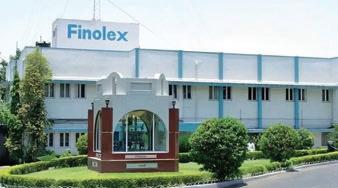
demand from data centers, AI-driven infrastructure, renewable energy projects and power transmission networks.
Mixer S.p.A. Elevates Its Specialty Compounds With High-Performance Stabilizer & Elastomers
In an exclusive interview with Wire & Cable India, Ms. Martina Serafini, PhD, Technical Customer Support, shares that the cable manufacturers are increasingly looking for compounds that offer flexibility, long-term reliability, and UV stability. To address these evolving demands, MIXER S.p.A. leverages its advanced stabilizer and elastomers to develop high-performance specialty compounds with enhanced safety, environmental compliance, and application-specific functionality, supporting the continued growth of the energy, mobility, and digital infrastructure sectors.

Ms. Martina Serafini, PhD , Technical Customer Support, MIXER S.p.A
Wire & Cable India: Which specialty cable applications are presently generating the strongest demand for advanced compounds, additives, masterbatches, and specialty material systems?
Martina Serafini: Medium voltage cable applications are generating the strongest demands for advanced compounds and specialty material systems.
WCI: What major changes are you observing in cable manufacturers’ material requirements in areas such as flame performance, flexibility, thermal endurance, UV stability, chemical resistance, and long-term reliability?
MS: Cable manufacturers are increasingly looking for flexibility, long-term reliability, and UV stability in cable materials/ compounds.
WCI: How are automation, robotics, renewable energy, EV infrastructure, and other high-performance applications influencing compound development and formulation strategies?
MS: Renewable energy, EV infrastructure, and other high performance sectors are focusing on advanced stabilizers and highperformance elastomers for better
quality cable products.
WCI: What technical challenges arise while balancing performance, processability, compliance requirements, durability, and commercial viability within specialty cable compounds?
MS: Improving functional performance typically requires the use of high filler loadings or specialized polymers. For instance, enhancing cable durability often involves using more robust materials, which may reduce flexibility or make processing more difficult.
WCI: How has demand evolved for HFFR/LSZH, XLPO, silicone, elastomeric, and other advanced material systems across specialty cable applications?
MS: There has been strong growth in HFFR/LSZH materials, primarily due to stricter fire safety and environmental regulations.
WCI: To what extent does the Indian specialty cable material ecosystem still depend on imported polymers, additives, stabilizers, or formulation technologies, and where do you see localization opportunities emerging?




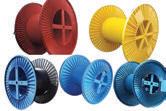




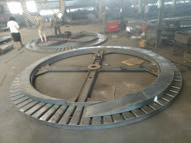

MS: The Indian specialty cable material ecosystem remains partially dependent on imported inputs, particularly in high-performance polymers, advanced additives, stabilizers, and specialized formulation technologies.
WCI: How important have testing, certification, consistency control, and application-specific customization become in
COMPOUNDS
today’s specialty cable material environment?
MS: Testing is now essential throughout the entire material lifecycle, not only to validate basic properties but also to ensure longterm performance under demanding conditions such as mechanical stress, high temperatures, and exposure to chemicals or harsh environments
WCI: Looking ahead, which material technologies,
compound systems, or performance requirements do you believe will shape the next phase of development within the specialty cable segment?
MS: Going forward there will be a need for materials that combine higher performance, improved safety, environmental compliance, and application-specific functionality, supporting the ongoing evolution of energy, mobility, and digital infrastructure sectors.
DICABS Commissions 8th MV/EHV Power Cable Production
Line at Vadodaara Facility, Gujarat
The commissioning of the new line strengthens the company’s manufacturing capabilities in the advanced MV and EHV underground power cable segment.
The company further announces two additional MV/EHV lines that are presently under installation and are expected to become operational on or before 31 March 2027. Upon completion, the company will operate a total of 10 MV/EHV lines at its Vadodara facility.
Jun 03, 2026
Diamond Power Infrastructure Limited (DICABS) has announced the successful commissioning of 8 th Medium Voltage (MV) / Extra High Voltage (EHV) power cable production line at its manufacturing facility at Vadodara, Gujarat. The company invested INR 30 crore in this new line through internal accruals.
With this new line, the company expects a proposed capacity expansion of 150 kms per month, adding to its existing capacity of 1050 kms per month. The commissioning of the new line strengthens the company’s manufacturing capabilities in the technologically advanced MV and EHV underground power cable segment used in power transmission networks, power generation projects, renewable energy evacuation systems, urban underground distribution networks, metro rail systems, airports, data centers and industrial infrastructure.
The company further informs that two additional MV/ EHV are presently under installation and commissioning and are expected to become operational on or before 31 March 2027. Upon completion, the company will operate
a total of 10 MV/EHV at its Vadodara facility.
Commenting on the development, Ms. Nivedita Pandya, Vice President – Projects, DICABS said, “The commissioning of our 8th MV/EHV Line marks an important milestone in Diamond Power’s expansion programme. The additional capacity strengthens our ability to serve the growing requirements of utilities, power generation projects, renewable energy evacuation systems and urban underground power transmission networks. With two additional Lines under implementation, the Company continues to strengthen its position in the MV and EHV cable segment.”
For twenty-eight years, Sai Extrumech has engineered wire & cable extrusion machinery for manufacturers who can't afford to stop. Complete lines, crossheads, screws and barrels —including our in-demand triple-layer Sioplas lines —precision-built in Faridabad, shipped across 30+ countries.




Machine Division

Screw & Barrel
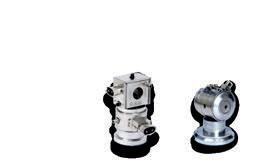
+91 84485 93192
95607 10160

Kharkana Bagh,
Melos GmbH Shapes Future-Ready Cable Compounds to Meet Evolving Needs
In an exclusive interview with Wire & Cable India, Mr. Tim Schnettler, Sales Manager, Melos GmbH, highlights the growing demand for advanced compounds in the cable industry, driven by increasing requirements for fire safety, low smoke emission, and reduced toxicity. He shares that Melos continuously scanning the global market for high-performance raw materials and is advancing its formulations to meet evolving industry needs. He further emphasizes the critical role of information technology and digitalization in compound development, enabling precise testing, certification, quality control, traceability, and on-demand customization that will play a key role in shaping the future of material innovation, balancing performance and cost.

Mr. Tim Schnettler , Sales Manager, Melos GmbH
Wire & Cable India: Which specialty cable applications are presently generating the strongest demand for advanced compounds, additives, masterbatches, and specialty material systems?
Tim Schnettler: Datacenter, aerospace & defense, green energy, automotive, and rolling stock are presently generating the strongest demand for advanced compounds, additives, masterbatches, and specialty material systems.
WCI: What major changes are you observing in cable manufacturers’ material requirements in areas such as flame performance, flexibility, thermal endurance, UV stability, chemical resistance, and long-term reliability?
TS: We see a general tendency towards increased flame retardancy combined with low smoke and toxicity emissions. Also, high levels of media resistance and sufficient mechanical values, combined with flexibility are key properties in specialty applications. MELOS Mecoline compounds are consequently designed to meet those challenging requirements.
WCI: How are automation, robotics, renewable energy, EV infrastructure, and other high-performance applications influencing compound development and formulation strategies?
TS: All specialty applications constantly seek for higher performance in every aspect, combined with the need for cost efficiency. Melos is therefore constantly scanning the world market for high performance, quality raw materials and is constantly evolving its formulations.
WCI: What technical challenges arise while balancing performance, processability, compliance requirements, durability, and commercial viability within specialty cable compounds?
TS: Of course, some key properties of our products are adversaries to each other. High performance comes usually not at a very low price. Also, high flame retardancy normally does not go well together with high mechanical and electrical performance. It is the main task of our R&D team to balance these properties carefully. Achieving very balanced formulations is what makes a good compounder.
WCI: How has demand evolved for HFFR/LSZH, XLPO, silicone, elastomeric, and other advanced material systems across specialty cable applications?
TS: The demand for HFFR compounds in the cable industry is constantly growing. This development is mainly driven by increased requirements for fire performance and low smoke and toxicity in case of fire. The need is mainly driven by European standards but we see a worldwide reference to these specifications.
WCI: To what extent does the Indian specialty cable material ecosystem still depend on imported polymers, additives, stabilizers, or formulation technologies, and where do you see localization opportunities emerging?
TS: As we do not employ a local production site, I am not an expert in the corresponding raw material strategies.
COMPOUNDS
WCI: How important have testing, certification, consistency control, and application-specific customization become in today’s specialty cable material environment?
TS: All of the said are essential to high degrees of quality control and assurance. IT is crucial for modern high quality compounders to provide specific testing , certification, control and on-demand-customization. Some industries even apply their own quality standards and systems like IATF for the automotive industry.
WCI; Looking ahead, which material technologies, compound systems, or performance requirements do you believe will shape the next phase of development within the specialty cable segment?
TS: We should not think in terms like “the one next big thing”. The application requirements will further
shape the material requirements for the future. For most applications there are already well established solutions and we will see a constant evolution towards increased performance and cost-effectiveness combined with updated lists of hazardous and banned raw materials.
We see a general tendency towards increased flame retardancy combined with low smoke and toxicity emissions. Also, high levels of media resistance and sufficient mechanical values, combined with flexibility are key properties in specialty applications. MELOS Mecoline compounds are the ideal materials for challenging applications.
Polycab India Announces Redesignation in Senior Managerial Team
Polycab India Limited has announced redesignation of key managerial positions, along with an extension for tenure.
Jun 09, 2026
Polycab India has announced changes in its senior management structure effective May 06, 2026. Mr. Ishwinder Khurana has been redesignated as Chief Executive Officer – B2C, while Mr. Hetal Shah has been appointed Chief Executive Officer – EPC.
Mr. Ashish D. Jain will serve as Chief Executive Officer –Telecom, and Mr. Rakesh Talati has been redesignated as Director (Non-Board Member) – Operations and Chief Operations Officer.
The company has also updated its list of senior managerial personnel following changes in the organizational reporting structure. Mr. Ritesh Arora, President & Chief Digital Officer, and Mr. Rakesh Rajput, President & Head – B2B Sales (North and East), have

been included in the revised reporting framework.
Additionally, the Board has approved the extension of Mr. Niyant Maru’s tenure as Chief Financial Officer from July 17, 2026, to April 16, 2027.
Taprath Elastomers Invests in R&D, Customer-Centric Formulations & Advanced Testing for Specialty Material Innovations
In an exclusive interview with Wire & Cable India, Mr. Abhishek Rathi, Founder & Director, Taprath Elastomers LLP, shares that the company is witnessing increasing adoption of HFFR/LSZH compounds, electron beam crosslinkable (EBXL) compounds, and functional additive masterbatches, driven by the growing need for enhanced safety, reliability, and compliance with stringent global standards. Solar and EV cables continue to be among the fastest-growing segments for these advanced compounds. He adds that the next phase of growth will be driven by higher-performance HFFR/LSZH compounds, advanced XLPO technologies, sustainable material solutions, and smart additive systems. Taprath will continue to invest in indigenous R&D, customer-centric formulation development, and advanced testing capabilities to support the next generation of specialty cable materials.
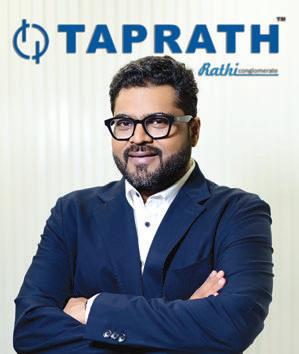
Wire & Cable India: Which specialty cable applications are presently generating the strongest demand for advanced compounds, additives, masterbatches, and specialty material systems?
Abhishek Rathi: At Taprath, we are witnessing robust demand from high-growth sectors such as renewable energy (particularly solar), electric vehicles (EVs), railway and metro infrastructure, industrial automation, data centres, defence, marine, and building safety applications. These sectors demand materials that offer superior thermal, mechanical, and fire performance while ensuring long service life under challenging operating conditions.
The increasing adoption of HFFR/LSZH compounds, electron beam crosslinkable (EBXL) compounds, and functional additive masterbatches is driven by the need for enhanced safety, reliability, and compliance with stringent global standards. Solar and EV cables, in particular, continue to be among the fastest-growing segments.
WCI: What major changes are you observing in cable manufacturers’ material requirements in areas such as flame performance, flexibility, thermal endurance, UV stability, chemical resistance, and long-term reliability?
AR: The industry has clearly shifted from cost-driven material selection to performance-driven engineering. Cable manufacturers now seek compounds that simultaneously deliver excellent flame retardancy, low smoke and zero halogen emissions, higher operating temperatures, superior flexibility, outstanding UV and weather resistance, improved chemical resistance, and extended service life.
Mr. Abhishek Rathi , Founder & Director, Taprath Elastomers LLP


MARTINAL® Fine Precipitated ATH
MAGNIFIN® Precipitated MDH
HYDRAL® Fine Precipitated ATH
KEMGARD® Smoke Suppressants

DOWLEX™ Linear Low Density Polyethylene
ELITE™ Linear Low Density Polyethylene
ENGAGE™ Polyolefin Elastomers
INFUSE™ Olefin Block Copolymers
FUSABOND™ Functional Polymers
ELVALOY™ Acrylate Copolymers
ELVAX™ EVA
POLESTAR™ 450 Metakaolin
POLESTAR™ 200R Calcined Kaolin
OP200R Calcined Kaolin
IMERCARB® Calcium Carbonate


ENSACO® Conductive Carbon Black
TIMREX® Primary Synthetic Graphite
C-NERGY™ Conductivity Additives for Li-ion Cells
C-THERM™ Thermal Conductivity Additives
CHARGUARD™ Organoclay Fire Retardant Synergist
COMPOUNDS
The industry has clearly shifted from cost-driven material selection to performance-driven engineering. Cable manufacturers now seek compounds that simultaneously deliver excellent flame retardancy, low smoke and zero halogen emissions, higher operating temperatures, superior flexibility, outstanding UV and weather resistance, improved chemical resistance, and extended service life.
There is also increasing demand for materials capable of meeting multiple international standards within a single formulation. Manufacturers expect compounds that offer consistent processing characteristics while delivering reliable longterm performance across diverse environmental conditions.
WCI: How are automation, robotics, renewable energy, EV infrastructure, and other high-performance applications influencing compound development and formulation strategies?
AR: These emerging sectors are significantly raising performance expectations. Automation and robotics require highly flexible cables capable of withstanding continuous movement and repetitive bending. Renewable energy applications demand exceptional UV, ozone, moisture, and thermal ageing resistance for decades of outdoor service. EV infrastructure requires compounds capable of handling elevated temperatures, higher current loads, chemical exposure, and demanding mechanical environments.
As a result, formulation strategies are increasingly focused on multifunctional performance, balancing mechanical properties, electrical performance, processability, and long-term durability without compromising manufacturing efficiency.
WCI: What technical challenges arise while balancing performance, processability, compliance requirements, durability, and commercial viability within specialty cable compounds?
AR: One of the biggest challenges is achieving multiple performance objectives within a commercially viable formulation. Enhancing flame retardancy, mechanical strength, weather resistance, and electrical properties often impacts processability or increases formulation costs.
Additionally, compliance with increasingly stringent international standards requires extensive formulation optimization, rigorous testing, and careful raw material selection. Maintaining batch-tobatch consistency while ensuring efficient processing across different extrusion lines remains a critical area of focus. Successful compound development therefore requires strong formulation expertise combined with close collaboration between material suppliers and cable manufacturers.
WCI: How has demand evolved for HFFR/LSZH, XLPO, silicone, elastomeric, and other advanced material systems across specialty cable applications?
AR: The demand for HFFR/LSZH compounds has grown rapidly due to increasing emphasis on fire safety
Formulation strategies are increasingly focused on multifunctional performance, balancing mechanical properties, electrical performance, processability, and long-term durability without compromising manufacturing efficiency.
across buildings, transportation, public infrastructure, and industrial installations. XLPO compounds continue to see strong growth in solar, railway, automotive, and industrial applications where higher operating temperatures and improved electrical performance are required.
Silicone and elastomeric compounds remain important for highly specialized applications involving extreme temperatures or exceptional flexibility. Overall, the market is steadily transitioning toward higherperformance engineered materials capable of meeting evolving global safety and reliability requirements.
WCI: To what extent does the Indian specialty cable material ecosystem still depend on imported polymers, additives, stabilizers, or formulation technologies, and where do you see localization opportunities emerging?
AR: While India has developed strong compound manufacturing capabilities, the industry continues to rely on imported specialty polymers, performance additives, stabilizers, and certain advanced formulation technologies.
However, the localization opportunity is significant. Under the Make-in-India initiative, increasing domestic R&D, stronger collaboration between polymer manufacturers and compounders, and investment in specialty additives can substantially reduce import dependence. At Taprath, we believe indigenous formulation development and application engineering will play an increasingly important role in strengthening India’s self-reliance in specialty cable materials.
WCI: How important have testing, certification, consistency control, and application-specific customization become in
COMPOUNDS
Taprath, we place strong emphasis on product validation, consistency, and close technical support to ensure our compounds perform reliably throughout the cable’s service life.
Future compound development will increasingly focus on higher thermal ratings, improved fire performance, lower environmental impact, enhanced recyclability where feasible, and longer


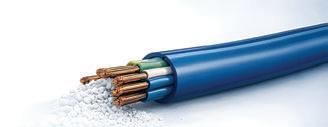



KK Kompounding
The Next Evolution in Medium Voltage Cables: Why K-Prene HTPE Matters Now
In an exclusive interaction with Wire & Cable India, Mr. K.G. Chandan, Managing Director, KK Kompounding Tech Giant Limited, shares that today’s wire & cable manufacturers require an intricate balance of high mechanical performance, processing efficiency, and environmental sustainability. To meet these evolving needs, forward-thinking compound manufacturers are moving beyond traditional crosslinked polyethylene. KK Kompounding is leading this transition with K-Prene HTPE, an advanced non-crosslinked alternative that delivers 100% recyclability, production efficiency and optimized dimensions, designing the next generation of energy infrastructure.
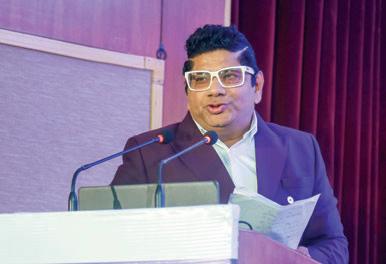
As global electrification accelerates and regulatory bodies tighten environmental frameworks, the power distribution sector finds itself at a critical crossroads. Medium Voltage (MV) power cables (typically operating in the 1–36 kV range) remain the backbone of modern energy infrastructure—powering utilities, massive industrial installations, renewable energy grids, and major infrastructure projects.
Yet, for wire and cable manufacturers, the modern landscape demands more than just electrical reliability. Today’s market requires an intricate balance of high mechanical performance, processing efficiency, and true environmental sustainability.
To meet these evolving challenges, forwardthinking manufacturers are moving beyond traditional crosslinked polyethylene (XLPE) and EPR/HEPR systems. KK Kompounding’s offering provides the industry shift toward a highly innovative, non-crosslinked alternative.
K-Prene HTPE: The Strategic Shift; Moving from XLPE to Thermoplastic Innovation
For decades, crosslinking was viewed as a necessary step to achieve the thermal and mechanical endurance required for MV
Mr. K.G. Chandan , Managing Director, KK Kompounding Tech Giant Limited
COMPOUNDS
insulation. However, the crosslinking process inherently introduces production bottlenecks, consumes massive amounts of energy, and results in a material that is notoriously difficult to recycle at the end of its lifecycle. By eliminating the need for crosslinking entirely, this technology- ‘K-Prene HTPE’ delivers a swift, streamlined manufacturing alternative while unlocking significant design advantages such as:
100% Recyclability: Unlike thermoset materials, K-Prene HTPE is fully recyclable, seamlessly aligning your product line with circular economy objectives.
Production Efficiency: Manufacturers can experience a drastic reduction in both energy consumption and processing time by removing the continuous vulcanization (CV) line from the equation.
Optimized Dimensions: The material allows for potentially smaller cable dimensions and higher power density, providing a competitive edge in material savings and handling.
Anatomy of a High-Performance TPE MV Cable
Architecturally, a K-Prene HTPE insulated cable mirrors the reliable, multi-layered geometry of standard XLPE designs. The primary, transformative distinction lies in the transition to TPE-based insulation and semiconductive screen materials;
This layer withstands demanding operating and transient voltages while maintaining excellent thermo-mechanical strength and reliable electrical performance at elevated temperatures. It introduces enhanced flexibility to the cable, making installation easier while remaining completely noncrosslinked.
Robust Metallic Screening & Outer Protection: A metallic screen (utilizing copper wires, copper tapes, or longitudinally applied overlapped aluminum foil bonded to a PE sheath) provides a secure ground plane and a path for fault currents. The system is finalized with high-performance polyolefin jacketing materials that offer low water absorption, exceptional weather resistance, and high abrasion defense. Manufacturers can also co-extrude a thin semiconductive skin layer over the jacket to streamline post-installation integrity testing.
Global Compliance and Harmonization
Adopting an innovative raw material requires absolute certainty regarding international standards. K-Prene HTPE systems are already recognized and deeply integrated into prominent national and regional specifications.
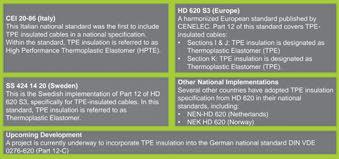
An Integrated Approach to Seamless Adoption
An engineered TPE system breaks down into these fundamental layers:
The Core Components: The current is typically carried by a cost-effective, weight-optimized aluminum or copper conductor, utilizing either a stranded (IEC 60228 Class 2) or solid (IEC 60228 Class 1) design.
Advanced Semiconductive Layers: Applied directly over the conductor (mandatory for cables rated 6 kV and above) and over the insulation layer, these semiconductive compounds ensure electrical stability. They smooth out strand irregularities, maintain a uniform radial electric field, and minimize electrical stress concentrations to prevent partial discharges. For the outer screen, manufacturers can choose between bonded or strippable formulations to facilitate effortless jointing and termination in the field.
The K-Prene HTPE Insulation Layer: The heart of the system.
Transitioning to a new material compound can feel daunting. Recognizing this, a truly impactful raw material provider doesn’t just ship compounds—they provide an integrated tech stack.
By combining advanced materials (semiconductive compounds, insulation, and jacketing) with precise compounding and processing know-how, manufacturers gain a one-stop technical partner from development through to full-scale production.
This collaborative approach stabilizes the extrusion process, accelerates product qualification timelines, enhances supply chain security, and ensures your operation successfully meets modern regulatory and sustainability expectations.
The future of medium voltage power distribution relies on smarter, cleaner, and faster production methods. By adopting K-Prene HTPE based MV cable systems, wire and cable manufacturers are not simply adapting to market changes—they are actively designing the next generation of energy infrastructure.
Conductor Conductor Screen
K-Prene HTPE Insulation
Insulation Screen
Metallic Screen
Outer Jacket & Skin
Takkar Polychem Develops Application-Specific Compounds & Masterbatches for High-Performance Wires & Cables
In an exclusive interview with Wire & Cable India, Mr. Amit Takkar, Director, Takkar Polychem Pvt. Ltd., shares that automation, robotics, renewable energy, EV infrastructure and other high-performance sectors are changing the way cable compounds are developed. With over three decades of experience in cable compounds and masterbatches, Takkar Polychem works closely with cable manufacturers across India to develop application-specific material solutions. The company is developing E-Beam and siliconebased masterbatches, and advanced compounds such as LSZH, FRLS, and ZHFR with improved flame performance, processing stability, UV resistance, flexibility, consistency and long-term reliability for high-performance wires and cables.
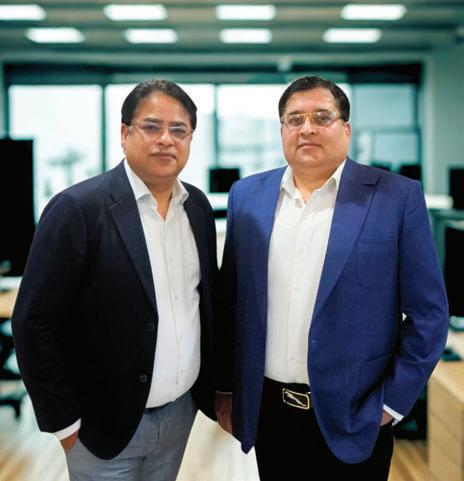
Wire & Cable India: Which specialty cable applications are presently generating the strongest demand for advanced compounds, additives, masterbatches, and specialty material systems?
Amit Takkar: The strongest demand is coming from applications where fire safety, durability, thermal performance, flexibility and protection from external damage are important.
We are seeing strong demand from building wires, FRLS house wiring cables, LSZH cables, lift and elevator cables, telecom and signalling cables, control cables, solar DC cables, automotive cables, E-Beam crosslinked cables, industrial flexible cables, and cables used in public infrastructure.
For these applications, customers are asking for LSZH compounds, FRLS PVC compounds, ZHFR and E-Beam ZHFR compounds, E-Beam masterbatches, UV stabilizer masterbatches, anti-rodent and antitermite masterbatches, rubberised PVC/NBR PVC compounds, siliconebased additive masterbatches, black PE
L TO R: Mr. Deepak Takkar , MD, and Mr. Amit Takkar , Director, Takkar Polychem Pvt. Ltd.






COMPOUNDS
E-Beam technology is influencing formulation development because it can help improve thermal, mechanical and dimensional performance without depending on chemical curing agents. Overall, these applications are pushing compound manufacturers to develop materials with better flame performance, processing stability, UV resistance, flexibility, consistency and long-term reliability.
masterbatches and high-performance colour masterbatches.
At Takkar Polychem Pvt. Ltd. (TPPL), our LSZH compounds are engineered for building wires, lift and elevator cables, telecom, signalling and control cables, and cable applications used in commercial buildings, public infrastructure and high-occupancy spaces. Our FRLS PVC compounds are used for house wiring, infrastructure wiring, control cables, high-rise buildings, tunnels, substations and data centers. We are also seeing increased demand for UV masterbatches for outdoor PVC, PE and EVA cable applications, especially solar and outdoor wires. Anti-rodent and anti-termite masterbatches are gaining importance in cables exposed to field, warehouse, rural and infrastructure environments.
Rubberised PVC/NBR PVC compounds are preferred where flexibility, oil resistance, cold bend performance and rubber-like feel are required. For hightemperature and crosslinked cable applications, E-Beam compounds, E-Beam masterbatches and siliconebased additive masterbatches are becoming more relevant.
WCI: What major changes are you observing in cable manufacturers’ material requirements in areas such as flame performance, flexibility, thermal endurance, UV stability, chemical resistance, and long-term reliability?
AT: Cable manufacturers are no longer looking only at basic PVC compounds. They now want compounds that solve real field problems.
In fire-sensitive applications, customers want low smoke, controlled flame propagation and safer
evacuation. LSZH compounds are preferred where human safety, visibility during fire and corrosion prevention are important. FRLS PVC compounds are expected to reduce smoke emission, control flame propagation and provide stable extrusion performance.
For outdoor cables, customers now ask for UV resistance, weather stability, colour retention and long-term surface protection. TPPL UVC-12903 is developed for PVC applications requiring UV stability, while UVE12909 is developed for PE, EVA and flexible polymer applications exposed to sunlight.
For flexible and oil-resistant cables, demand is growing for rubberised PVC/NBR PVC compounds because they offer better flexibility, oil resistance, cold bend performance and a rubber-like feel compared to standard PVC.
WCI: How are automation, robotics, renewable energy, EV infrastructure, and other high-performance applications influencing compound development and formulation strategies?
AT: Automation, robotics, renewable energy, EV infrastructure and other high-performance sectors are changing the way cable compounds are developed. These applications need cable materials that can handle heat, movement, electrical load, outdoor exposure, vibration and tight installation conditions.
For renewable energy and solar cable applications, E-Beam compatible ZHFR compounds are becoming more relevant. TPPL offers ZHFR-9018 (EB-I) for insulation and ZHFR-9033 (EB-S) for sheathing applications.
These grades are developed for E-Beam crosslinked wire and cable applications and are suitable for evaluation in solar cables, power and control cables, industrial automation cables, and railway signalling/communication cables. They are designed to support halogen-free flame-retardant behavior, low-smoke performance, stable processing, thermal ageing and outdoor cable requirements, subject to suitable cable design and processing conditions.
For automotive and EV-related wiring, materials must withstand heat, vibration, oil exposure, tight installation spaces and long-term electrical performance requirements. TPPL’s T2/T3 automotive PVC compounds and masterbatches are developed for thermal ageing, colour stability, mechanical integrity and electrical compatibility, with T2 for cabin/interior harnesses and T3 for engine compartment and underbonnet wiring.
E-Beam technology is also influencing formulation development because it can help improve thermal, mechanical and dimensional performance without depending on chemical curing agents. Overall, these applications are pushing compound manufacturers to develop materials with better flame performance, processing stability, UV resistance, flexibility, consistency and long-term reliability.
WCI: What technical challenges arise while balancing performance, processability, compliance requirements, durability, and commercial viability within specialty cable compounds?
AT: The biggest challenge is balance. If we increase flame retardant loading,


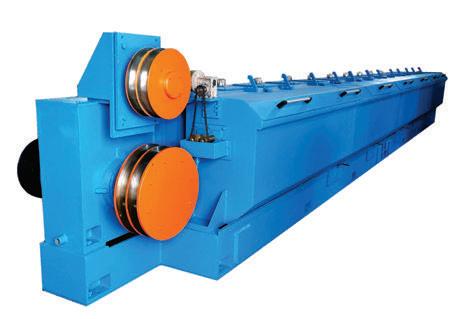

flame performance may improve, but flexibility, elongation, surface finish and extrusion speed can get affected. If we focus too much on cost, longterm ageing, consistency or field performance may suffer.
Specialty compounds must pass technical requirements and also run smoothly on the customer’s extrusion line. A compound is not successful only because it passes a lab test. It should also give stable processing, less plate-out, good surface finish, low rejection and consistent batch-tobatch performance.
For example, LSZH compounds must provide low smoke, zero halogen performance and smooth extrusion behaviour. Rubberised PVC must provide flexibility and oil resistance while remaining cost-effective and easy to process. FRLS compounds must balance low smoke, flame performance, thermal stability and stable extrusion.
WCI: How has demand evolved for HFFR/LSZH, XLPO, silicone, elastomeric, and other advanced material systems across specialty cable applications?
AT: Demand for HFFR/LSZH and ZHFR compounds has increased because cable manufacturers are focusing more on fire safety, low
Specialty compounds must pass technical requirements and also run smoothly on the customer’s extrusion line. A compound is not successful only because it passes a lab test. It should also give stable processing, less plate-out, good surface finish, low rejection and consistent batch-to-batch performance.
COMPOUNDS
smoke, zero-halogen performance and safer evacuation in buildings, infrastructure, public spaces, solar projects and export markets. LSZH materials are preferred where smoke reduction, non-corrosive gas behaviour and protection of people, equipment and infrastructure are important.
E-Beam and crosslinked cable materials are also growing in solar, automotive, industrial and hightemperature applications. TPPL offers ZHFR-9018 (EB-I) for insulation and ZHFR-9033 (EB-S) for sheathing applications. These grades are suitable for evaluation in E-Beam crosslinked cable applications where heat resistance, flame performance, ageing stability and outdoor durability are required, subject to suitable cable design and E-Beam processing.
Silicone-based additive masterbatches are also gaining demand in specialty cable compounds. TPPL’s silicone masterbatches are developed for E-Beam, TPE and TPU-based compounds. They help improve lubrication, processability, abrasion resistance, anti-scratch properties and uniform dispersion, which are important in high-speed and demanding cable applications.
Elastomeric and rubberised systems are growing where flexibility, oil resistance, vibration absorption, cold bend performance and rubber-like feel are required. TPPL’s rubberised PVC/NBR PVC compounds are used in flexible cables, pump cables, automotive wire applications, battery cables, industrial flexible cables, and insulation/sheathing applications where standard PVC may be too stiff and rubber may be too costly.
WCI: To what extent does the Indian specialty cable material ecosystem still depend on imported polymers, additives, stabilizers, or formulation technologies, and where do you see localization opportunities
emerging?
AT: India has made significant progress in PVC compounds, FRLS compounds, LSZH compounds, masterbatches and many customized cable material systems. However, some specialty additives, high-performance stabilizers, crosslinking systems, UV packages and advanced formulation technologies still have import dependence.
The opportunity for localization is strong in UV stabilizer masterbatches, anti-rodent and anti-termite systems, E-Beam masterbatches, silicone additive masterbatches, highperformance colour masterbatches, FRLS/LSZH compounds and rubberised PVC/NBR PVC compounds.
Indian cable manufacturers need suppliers who can provide not just material, but also technical support, customized grades, trial support, documentation and consistent batch quality. This is where Indian compound manufacturers can become stronger and reduce import dependence.
WCI: How important have testing, certification, consistency control, and application-specific customization become in today’s specialty cable material environment?
AT: Testing, certification and consistency control have become extremely important in specialty cable materials. Customers now expect compounds and masterbatches to be tested as per relevant standards and supported with proper technical documents, COA, test reports and batch traceability.
For LSZH and ZHFR compounds, testing becomes even more critical because these materials are used in safety-sensitive applications. Customers check flame performance, smoke behaviour, halogen acid gas generation, thermal ageing, mechanical properties, volume resistivity, UV resistance and
processing stability, depending on the final cable application. For E-Beam ZHFR compounds like TPPL ZHFR9018 (EB-I) and ZHFR-9033 (EB-S), consistency in formulation, extrusion behaviour and performance after suitable E-Beam processing is very important.
For FRLS compounds, customers mainly check smoke density, LOI, flame behaviour, ageing and thermal stability. TPPL’s FRLS range is developed to support low-smoke and flame-retardant cable applications with stable extrusion and batch consistency.
For anti-rodent and anti-termite masterbatches, performance depends on correct dosage, uniform dispersion and the final application. TPPL ARAT 12006 is designed for rodent and termite protection in wires, cables, pipes and films, with recommended loading depending on the risk level.
Application-specific customization is
COMPOUNDS
also very important. The same material may need adjustment depending on cable type, extrusion speed, screw design, colour, flexibility, flame requirement, UV exposure, E-Beam dose, insulation or sheathing design, and end-use conditions.
WCI: Looking ahead, which material technologies, compound systems, or performance requirements do you believe will shape the next phase of development within the specialty cable segment?
AT: The next phase will be shaped by safer, cleaner, more durable, RoHScompliant and application-specific cable compounds.
We believe LSZH, ZHFR, FRLS, E-Beam compatible systems, UVstable compounds, anti-rodent and anti-termite masterbatches, rubberised PVC/NBR PVC compounds, automotive cable masterbatches and silicone-based additive masterbatches
Tamil Nadu Signs INR 18,600-Crore
will continue to grow.
Future cable compounds will need to deliver more than one property. Customers will expect flame safety, low smoke, stable processing, UV resistance, flexibility, ageing performance, rodent/termite protection, RoHS compliance and commercial viability together.
For India, this is a strong opportunity. With growth in infrastructure, solar energy, EVs, automation, public safety projects and exports, the demand for advanced and compliant cable compounds will keep increasing. Companies that focus on formulation knowledge, testing, RoHS-compliant systems, consistency and customer support will lead the specialty cable material segment. At Takkar Polychem, we work closely with cable manufacturers to develop application-specific formulations that combine performance, consistency and compliance for evolving specialty cable applications.
MoU with L&T for Data Centre, Electronics and Other Projects
The Tamil Nadu government has signed a memorandum of understanding (MoU) with Larsen & Toubro for investments worth INR 18,600 crore across data centre, electronics manufacturing and shipbuilding projects, expected to generate around 8,200 jobs in the state.
Jun 4, 2026
The largest project involves a INR 15,000-crore expansion of a data centre facility in Kancheepuram district, reinforcing Tamil Nadu’s ambitions to emerge as a major digital infrastructure hub. The project is expected to create around 500 jobs.
L&T will also invest INR 2,500 crore in an electronics and electronic systems manufacturing facility in Coimbatore, generating approximately 2,000 employment opportunities. In the maritime sector, the company plans to invest INR 1,100 crore to expand its shipbuilding complex at Kattupalli in Tiruvallur district, a project expected to support offshore and marine infrastructure development.
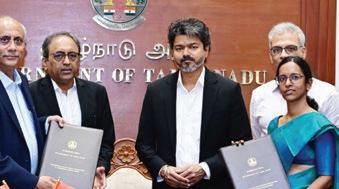
The investments are expected to strengthen Tamil Nadu’s position in emerging sectors such as digital infrastructure, advanced manufacturing and maritime engineering, while supporting the state’s long-term industrial growth strategy.
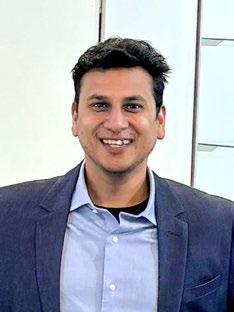
NAVANK Aims to Build USD 50 Million Globally Integrated Raw Material Platform by 2030
In an exclusive interview with Wire & Cable India, Mr. Naval Singhal, Chief Business Officer, NAVANK Cable B.V., shares that there is currently a strong demand for specialty compounds from three high-growth segments: renewable energy infrastructure, EV charging systems, and railway/metro projects, along with the optical fibre cable (OFC) sector. Mid-sized and large integrated wire and cable producers are widely adopting LSZH and HFFR compounds (advanced materials), and are demanding greater technical transparency. Compound suppliers are no longer evaluated solely on price or material availability; they are expected to function as technical partners. NAVANK acts as a technical and commercial bridge between global OEM material manufacturers and Indian cable producers providing manufacturers access to globally certified materials, application expertise, and supply-chain reliability. Looking forward, NAVANK’s vision is to build a globally integrated raw material platform exceeding USD 50 million in scale by 2030, with specialty cable materials forming a central pillar of this growth strategy.
Wire & Cable India: Which specialty cable applications are presently generating the strongest demand for advanced compounds, additives, masterbatches, and specialty material systems?
Naval Singhal: At NAVANK, we are currently witnessing the strongest demand from three structurally highgrowth segments: renewable energy infrastructure, EV charging systems, and railway/metro projects. These are no longer niche applications — they are rapidly becoming the primary volume drivers for specialty compound consumption in India.
In the renewable energy segment, solar cable manufacturers increasingly require UV-resistant FR-XLPE and E-Beam crosslinkable XLPO compounds capable of delivering reliable performance over a minimum 25-year service life under harsh outdoor exposure conditions. Wind energy applications similarly demand high thermal endurance, moisture resistance, and long-term electrical stability.
The EV charging infrastructure sector is creating an entirely new category of material requirements. These applications require halogen-free,
Mr. Naval Singhal , Chief Business Officer, NAVANK Cable B.V.
COMPOUNDS
At NAVANK, our OEM partnerships — particularly with Zhejiang Wanma Macromolecule Material Group Co., Ltd. — have enabled us to introduce specialized FR-XLPE and EV-grade compound systems engineered specifically for these complex performance requirements. Solar cable compounds have also emerged as a major focus area within renewable energy infrastructure.
highly flexible, abrasion-resistant, and heat-resistant compounds that comply with both Indian and international performance standards. The combination of flexibility, flame retardancy, and sustained high-temperature performance presents significant formulation challenges that were uncommon in conventional cable systems.
Railway and metro infrastructure projects continue to accelerate demand for fire-resistant, low-smoke, halogenfree compounds that comply with stringent fire safety and smoke toxicity norms. Public infrastructure projects today place far greater emphasis on passenger safety, evacuation performance, and compliance with international fire standards.
Another major growth engine is the optical fibre cable (OFC) sector. We have seen substantial demand expansion for LSZH compounds, particularly B2CA and UL-rated grades driven by FTTH expansion, hyperscale data centers, and telecom infrastructure investments. In 2025 alone, NAVANK supplied more than 5,000 tonnes of OFC compounds into the Indian market, compared to approximately 200 tonnes in 2018 — clearly illustrating the scale and pace at which this segment has evolved.
WCI: What major changes are you observing in cable manufacturers’ material requirements in areas such as flame performance, flexibility, thermal endurance, UV stability, chemical resistance, and long-term reliability?
NS: The evolution in material specifications over the past five to seven years has been both broadbased and exceptionally rapid. Requirements that were once limited
to export-oriented or highly specialized projects have now entered mainstream domestic procurement across India.
One of the most significant shifts has been the widespread adoption of LSZH and HFFR materials as baseline specifications. Today, manufacturers across the spectrum — from mid-sized regional producers to large integrated players such as HFCL, Polycab, KEI Industries, and Sterlite Technologies — increasingly expect advanced flame-retardant and halogen-free solutions as standard rather than premium offerings.
Beyond fire performance, three technical trends stand out prominently.
First, thermal endurance expectations are rising significantly. Solar, EV, and industrial automation cables are now routinely expected to maintain performance integrity at continuous operating temperatures ranging from 90°C to 120°C.
Second, UV stability has become a mandatory specification rather than an optional enhancement, particularly for outdoor power and solar installations across high-irradiance regions such as Rajasthan and Gujarat.
Third, long-term reliability expectations have become far more demanding. Procurement specifications increasingly reference operational design lives of 25–30 years, particularly for infrastructure, renewable energy, and utility projects.
In parallel, customers are demanding significantly greater technical transparency from material suppliers. Today, the market expects complete documentation packages including certificates of conformity, third-
party test reports, batch traceability, compliance declarations, and application-specific technical support. Compound suppliers are no longer evaluated solely on price or material availability — they are expected to function as technical partners.
WCI: How are automation, robotics, renewable energy, EV infrastructure, and other high-performance applications influencing compound development and formulation strategies?
NS: These high-performance application sectors are fundamentally reshaping compound formulation strategies. The industry is moving away from single-parameter optimization toward highly engineered multiperformance material systems.
EV charging cables are a prime example. These applications require compounds that simultaneously deliver high flexibility for repeated handling, halogen-free flame performance, elevated thermal resistance, abrasion durability, and compliance with UL and IEC standards. Achieving all these characteristics within a single formulation would have been technically difficult even five years ago.
At NAVANK, our OEM partnerships — particularly with Zhejiang Wanma Macromolecule Material Group Co., Ltd. — have enabled us to introduce specialized FR-XLPE and EV-grade compound systems engineered specifically for these complex performance requirements. Solar cable compounds have also emerged as a major focus area within renewable energy infrastructure. Modern solar installations demand compounds capable of withstanding extreme UV exposure, thermal
cycling, moisture ingress, and harsh environmental conditions over service lifecycles exceeding 25 years. This has significantly increased demand for Solar LSZH E-Beam compounds, EN 50618-compliant XLPO systems, and advanced UV-stabilized formulations that maintain electrical and mechanical integrity under prolonged outdoor exposure. In utility-scale solar parks, reliability expectations are exceptionally high, making long-term ageing performance and weather resistance critical formulation parameters.
Renewable energy applications more broadly present another set of longterm durability challenges. Wind and hybrid energy systems require exceptional oxidative stability, thermal endurance, and flame-retardant performance under continuously varying operating conditions. These requirements are accelerating innovation in crosslinked polyolefin technologies and next-generation halogen-free compound systems.
Automation and robotics applications introduce a different dimension altogether: flex-cycle endurance. Cables used in robotic arms, automated production lines, and dynamic industrial systems are subjected to millions of repetitive bending cycles. These environments require elastomeric and highly engineered flexible compounds with exceptional mechanical recovery and fatigue resistance.
Across all these sectors, the defining industry trend is clear: modern compound design must simultaneously satisfy multiple, often competing, technical requirements without compromising processability or commercial viability.
WCI: What technical challenges arise while balancing performance, processability, compliance requirements, durability, and commercial viability within specialty cable
COMPOUNDS
compounds?
NS: This remains one of the most technically demanding aspects of specialty cable material development.
In many cases, improving one performance characteristic introduces trade-offs elsewhere in the formulation. For example, achieving higher flame retardancy and halogenfree performance often requires elevated mineral filler loading, which can negatively impact flexibility, elongation properties, and extrusion processability. Similarly, crosslinking technologies used to improve thermal endurance introduce additional manufacturing complexity and capital investment requirements at the cable manufacturer level.
Compliance requirements add another layer of complexity. Today, many manufacturers must simultaneously satisfy multiple international standards including UL 1581, UL-44 XHHW, UL-4703 PV Cable, IEC 60332, IEC 60754, IEC 60092, BS 6387 CWZ, EN 50618, and RoHS directives. Designing formulations that consistently meet overlapping international standards requires highly precise formulation control, extensive validation testing, and robust quality systems.
Commercial viability remains equally critical, particularly in a highly price-sensitive market such as India. Customers increasingly expect enhanced technical performance without proportionate cost escalation.
At NAVANK, we address this challenge through a globally integrated sourcing and supply model. Our procurement network spans certified manufacturers across China, India, Europe, and Southeast Asia, supported by warehousing and distribution operations in Chennai, Mumbai, Delhi, and Portugal. This structure enables us to optimize procurement cycles, improve inventory responsiveness, and maintain competitive pricing while preserving technical integrity and
certification consistency.
Ultimately, the discipline lies in balancing performance engineering with scalable commercial practicality.
WCI: How has demand evolved for HFFR/LSZH, XLPO, silicone, elastomeric, and other advanced material systems across specialty cable applications?
NS: Among all material categories, LSZH and HFFR compounds have experienced the most significant and sustained growth trajectory in India.
When NAVANK initially began promoting LSZH materials in the Indian market, demand was largely concentrated among export-oriented OFC manufacturers supplying Europe and North America. Today, however, LSZH specifications are increasingly standard across domestic building wires, metro rail systems, data centers, airports, hospitals, and public infrastructure projects.
Our LSZH portfolio currently includes B2CA-grade compounds, UL-rated CMX and CMR/CMP grades for data communication cables, as well as IECcompliant industrial and infrastructure grades. Growth has been directly supported by smart city projects, hyperscale data center expansion, telecom infrastructure development, and stricter fire safety expectations across commercial construction.
XLPE and XLPO systems continue to represent our largest volume segment. NAVANK supplies XLPE compounds for power cable applications up to 500 kV, including FR-XLPE and solar E-Beam compounds compliant with EN 50618 and related international standards.
Silicone-based compounds, while comparatively niche in volume, remain strategically important for hightemperature, fire survival, aerospaceadjacent, and mission-critical cable applications where thermal
COMPOUNDS
At NAVANK, quality assurance and technical documentation are treated as core service deliverables rather than supplementary support functions. All products supplied through our platform undergo testing and certification validation prior to dispatch, with full traceability maintained throughout the supply chain.
performance at extreme operating conditions is essential.
We are also witnessing strong growth in semiconducting compounds used in medium-voltage and extra-highvoltage cable manufacturing. As Indian cable manufacturers continue expanding capacity for 11 kV, 33 kV, and EHV cable systems, demand for high-quality semiconducting materials is increasing correspondingly.
A particularly encouraging development for NAVANK has been the strong market acceptance of our 66 kV and 132 kV XLPE and semiconducting compound systems among leading Indian cable manufacturers. Over the past few years, several top-tier domestic customers have successfully adopted our XLPE Semicon materials for high-voltage cable production, driven by the need for consistent electrical performance, superior surface smoothness, controlled volume resistivity, and long-term reliability under demanding operating conditions.
As India continues investing heavily in transmission infrastructure, utilities, renewable integration, and urban power distribution upgrades, we expect demand for high-voltage semiconducting compounds to accelerate further.
WCI: To what extent does the Indian specialty cable material ecosystem still depend on imported polymers, additives, stabilizers, or formulation technologies, and where do you see localization opportunities?
NS: India’s specialty cable materials ecosystem remains substantially dependent on imported raw materials and formulation technologies, particularly at the upstream polymer
and additive level.
Critical base polymers used in XLPE, LSZH, and semiconducting compounds — including specialty polyolefins, EVA, and advanced LDPE systems — are predominantly sourced from China, Korea, and the Middle East. Similarly, many highperformance additive systems such as flame retardants, antioxidants, peroxide crosslinking agents, and UV stabilizers continue to rely heavily on global supply chains.
In this ecosystem, NAVANK’s role is to function as a technical and commercial bridge between global OEM material manufacturers and Indian cable producers. Through partnerships with companies such as Zhejiang Wanma Macromolecule Material Group Co., Ltd., Chhaperia International Company, Unitape Limited and Jiangsu Kemaite Technology Development Co., Ltd., we provide Indian manufacturers with access to globally certified materials, application expertise, and supply-chain reliability.
That said, localization opportunities are both real and strategically important. India already possesses strong compounding and downstream customization capabilities. Domestic manufacturers are increasingly capable of blending, modifying, and tailoring imported base polymers for application-specific requirements.
Mica tapes represent an area where India has achieved genuine global competitiveness, with manufacturers such as Chhaperia building internationally recognized capabilities.
The primary gap remains at the upstream specialty polymer manufacturing level, where capital intensity, technological complexity, and scale
economics continue to present major barriers. Accelerating localization in this area will require sustained longterm investment, technology partnerships, and supportive industrial policy frameworks.
WCI: How important have testing, certification, consistency control, and application-specific customization become in today’s specialty cable material environment?
NS: They have become central to supplier qualification and procurement decisions — often carrying equal or greater weight than pricing itself.
Over the past decade, the Indian cable industry has undergone a clear transition from transactional procurement toward compliancedriven sourcing. Today, any manufacturer supplying to metro rail systems, renewable energy projects, data centers, export markets, or critical infrastructure must ensure complete technical documentation and certification traceability.
The standard expectation now includes certificates of conformity, third-party test reports, MSDS documentation, RoHS declarations, and increasingly, batch-level traceability systems.
At NAVANK, quality assurance and technical documentation are treated as core service deliverables rather than supplementary support functions. All products supplied through our platform undergo testing and certification validation prior to dispatch, with full traceability maintained throughout the supply chain.
For example, our mica tape systems comply with BS 6387 CWZ standards and are tested at 950°C for three
hours — a critical benchmark for fireresistant cable applications used in transit systems, tunnels, and missioncritical infrastructure.
Application-specific customization has also become commercially essential. A formulation suitable for 11 kV power cable applications may require substantial optimization for 33 kV or EHV systems. Customers increasingly expect technical guidance, processing support, and application engineering as part of the supplier relationship.
This requires not only strong sourcing capabilities, but also deep technical understanding of cable manufacturing processes and end-use performance behavior.
WCI: Looking ahead, which material technologies, compound systems, or performance requirements do you believe will shape the next phase of development within
COMPOUNDS
the specialty cable segment? NS: We believe the next decade will be shaped by three major structural transformations.
The first is the continued acceleration of EV, Solar and other renewable energy infrastructure. The material requirements associated with EV charging systems — flexible, halogen-free, high-temperature, UV-resistant, and highly durable compounds — differ fundamentally from traditional cable applications. As India scales commercial charging infrastructure and renewable energy deployment, demand for advanced compound systems will continue to rise substantially.
The second major driver is digital infrastructure expansion. Hyperscale data centers, 5G deployment, FTTH expansion, and Bharat Net-scale fibre rollouts will sustain strong demand for LSZH B2ca compounds, CMR/CMPrated materials, and advanced OFC compounds. Data centers in particular
impose extremely stringent fire safety and reliability standards, making them strategically important markets for specialty material suppliers.
The third structural shift will come from India’s growing ambitions as a global cable manufacturing hub. As Indian manufacturers increasingly compete for projects across Europe, the Middle East, Africa, and North America, international-grade material specifications will become standard requirements rather than premium exceptions.
This transition will steadily move the market away from commoditygrade materials toward performanceengineered compound systems.
For NAVANK, this represents a major long-term strategic opportunity. Our vision is to build a globally integrated raw material platform exceeding USD 50 million in scale by 2030, with specialty cable materials forming a central pillar of that growth strategy.
HFCL to Invest Rs 950 Crore in Optical Fibre Cable Production
HFCL plans to invest INR 950 crore to increase its optical fibre cable production capacity over the next 2 years.
Jul 09, 2026
HFCL plans to invest INR 950 crore to enhance optical fibre cable production capacity over a period of next two years.
Mr. Mahendra Nahata, Managing Director, HFCL, said that there is a huge demand for optical fibre cables in the data centre segment, especially in the US, which is driving growth for the industry.
He emphasized that the company is expanding its manufacturing capacities of fibres, fibre optic cables, as well as backward integration of preforms, the primary raw material used in optical fibre production. The total capex includes preform production which is about INR
580 crore. The company plans to increase its optical fibre capacity to 40 million fibre-route kilometres (rkm) from 30 million rkm per year.
Grand Tubes & Polymers Develops Advanced Compounds For ‘CleanTech’ Applications
In an exclusive interview with Wire & Cable India, Mr. Ankit Aggarwal, Director, Grand Tubes & Polymers Limited (formely known as Sac Polymers), shares that cable manufacturers are increasingly demanding for flame-retardant, fire-survival, halogen-free and low-smoke formulations such as HFFR and LSZH, providing greater flexibility, thermal endurance, UV, weather and chemical resistance, longer service life, and compliance with international standards. He adds that future developments will be driven by advanced compounding technologies, sustainable and recyclable material solutions, better fire safety and temperature resistance solutions, smart materials, and specialized compounds for the rising ‘cleantech’ sectors such as EVs, renewable energy, and data centres.
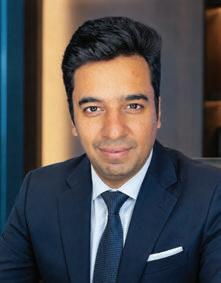
Wire & Cable India: Which specialty cable applications are presently generating the strongest demand for advanced compounds, additives, masterbatches, and specialty material systems?
Ankit Aggarwal: The strongest demand is currently coming from renewable energy cables (solar and wind power), EV charging and electric vehicle wiring systems, railway and metro infrastructure cables, data centers and telecommunication cables, industrial automation and robotics cables, oil & gas and mining cables, and building and infrastructure projects requiring fire-safe cables. These applications require enhanced flame retardancy, low smoke emission, UV resistance, flexibility, and long service life.
WCI: What major changes are you observing in cable manufacturers’ material requirements?
AA: Cable manufacturers are increasingly demanding higher flame-retardant and fire-survival performance, halogen-free and lowsmoke formulations (HFFR/LSZH), improved flexibility, greater thermal endurance, enhanced UV and weather resistance, better chemical resistance,
longer service life, and compliance with international standards such as RoHS, REACH, IEC, UL, and EN.
WCI: How are automation, robotics, renewable energy, EV infrastructure, and other high-performance applications influencing compound development?
AA: These sectors require compounds capable of continuous flexing, higher temperature resistance, improved abrasion resistance, lightweight construction, superior electrical insulation, and resistance to harsh environmental conditions. Development is increasingly focused on advanced and customized formulations.
WCI: What technical challenges arise while balancing performance, processability, compliance requirements, durability, and commercial viability?
AA: Key challenges include achieving high flame-retardant performance without affecting mechanical properties, maintaining processing efficiency, meeting regulatory requirements, controlling raw material costs, ensuring long-term durability, and balancing performance with
Mr. Ankit Aggarwal , Director, Grand Tubes & Polymers Limited (formely known as Sac Polymers)
competitive pricing.
HFFR/LSZH compounds are witnessing the fastest growth due to fire safety regulations. XLPO compounds are gaining acceptance in solar, EV, and industrial applications, while silicone and elastomeric compounds continue growing in specialized high-performance applications.
WCI: How has demand evolved for HFFR/LSZH, XLPO, silicone, elastomeric, and other advanced material systems?
AA: Demand has increased significantly. HFFR/LSZH compounds are witnessing the fastest growth due to fire safety regulations. XLPO compounds are gaining acceptance in solar, EV, and industrial applications, while silicone and elastomeric compounds continue growing in specialized high-performance applications.
WCI: To what extent does the Indian specialty cable material ecosystem still depend on imported materials, and
where do you see localization opportunities?
AA: India continues to depend on imports for specialty flame-retardant additives, advanced stabilizer systems, high-performance polymers, and certain processing aids. However, significant localization opportunities exist in HFFR compounds, PVC and XLPO formulations, masterbatches, specialty additives, and customized cable compound solutions.
WCI: How important have testing, certification, consistency control, and application-specific customization become?
AA: These factors have become extremely important. Customers increasingly expect comprehensive
testing, compliance with standards, batch-to-batch consistency, traceability, quality assurance, and customized formulations tailored to specific applications.
WCI: Looking ahead, which material technologies and performance requirements will shape the next phase of development?
AA: Future developments will be driven by advanced HFFR and LSZH technologies, high-performance XLPO systems, sustainable and recyclable compounds, low-carbon material solutions, enhanced fire safety, higher temperature resistance, smart materials, and specialized compounds for EVs, renewable energy, and data centres.
Adani, IRH to Invest INR 1.08 Lakh Crore in Odisha for Integrated Aluminium Project
Adani Enterprises and IRH will jointly invest INR 1.08 lakh crore to develop a greenfield aluminium project, creating over 53,500 jobs.
Jul 03, 2026
Adani Enterprises Ltd. and International Resources Holding (IRH), an IHC Group company, have signed a memorandum of understanding (MoU) with the Odisha government to develop an integrated greenfield aluminium project worth INR 1.08 lakh crore (USD 11.5 billion).
The project will be executed through a 50:50 joint venture between Adani Enterprises and IRH and will be developed in two phases, involving investments of INR 66,000 crore and INR 44,000 crore. The integrated complex will include a 4 million metric tonnes per annum (MMTPA) alumina refinery, a 2 MMTPA aluminium smelter, a 4,000 MW captive power plant, and a 1 MMTPA downstream manufacturing park with supporting infrastructure.
According to the company, the proposal is expected
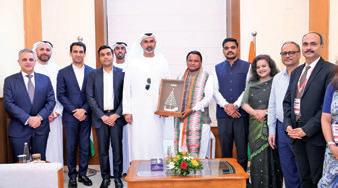
to be Odisha’s largest foreign direct investment (FDI) and India’s largest FDI in the metallurgy sector. The downstream manufacturing park is expected to attract industries catering to transport, construction, power, packaging, renewable energy, and advanced engineering, while supporting the growth of MSMEs in the state.
EKOPREN® MEDIUM VOLTAGE INSULATION COMPOUNDS FOR WIND TURBINES AND DATA CENTERS
From Wind Turbines to Data Centers: EKOPREN® MV Compounds for Cable Performance
Mixer S.p.A. has developed rubber-based compounds for cables under the trademark EKOPREN®, designed to meet a wide range of requirements for different applications and operating environments. All of the EKOPREN compounds operate at a temperature between 90105°C for both single-core or multicore cables, and are compliant with national, international, and US standards like CEI 20-13, IEC 60502, and UL 1072, respectively.
Across power distribution systems, performance is increasingly shaped by how components respond to operating conditions. In this landscape, Mixer S.p.A. developed rubber-based compounds for cables under the trademark EKOPREN®, designed to meet a wide range of requirements for different applications and operating environments.
Nowadays, medium voltage (MV) cable systems play an essential role in power distribution and electrification infrastructure. Among the various insulation materials available, rubber-based compounds, especially elastomeric systems such as EPR (Ethylene Propylene Rubber) and EPDM (Ethylene Propylene Diene Monomer), are gaining momentum thanks to their flexibility especially at low temperatures, thermal stability (continuous operation up to ~ 90 - 105 °C), and excellent dielectric properties.
Traditionally used in standard MV power cables, these rubber-based solutions have demonstrated remarkable versatility and reliability in more demanding applications such as wind turbines and data centers. In both contexts, they offer a unique combination of dielectric strength and thermal stability, ensuring consistent operation even under fluctuating loads. Their ability to handle thermal stress contributes to preserving efficiency while reducing the risk of material degradation.
In wind turbines, EPR cables are particularly valued for their exceptional flexibility and resistance to mechanical stress, enabling them to withstand continuous torsion, vibration, and environmental exposure, including salt, moisture, and UV radiation, especially in offshore installations. In data centers, the same flexibility facilitates easier installation in confined spaces and complex routing layouts, reducing mechanical strain and improving system reliability.
COMPOUNDS
Medium voltage (MV) cable systems play an essential role in power distribution and electrification infrastructure. Among the various insulation materials available, rubber-based compounds, especially elastomeric systems such as EPR (Ethylene Propylene Rubber) and EPDM (Ethylene Propylene Diene Monomer), are gaining momentum thanks to their flexibility especially at low temperatures, thermal stability (continuous operation up to ~ 90 - 105 °C), and excellent dielectric properties.
In response to these diverse applications, Mixer S.p.A. developed EKOPREN® rubber-based compounds both leaded and lead-free, designed to be employed as insulation materials. Over the years, the R&D department has carefully investigated and finely tuned its solutions to perform under continuous bending and twisting conditions typical of dynamic components. All of the EKOPREN® compounds meet the specifications for 90°C and 105°C operating temperature for both single-core or multicore cables and are compliant with national, international, and US standards like CEI 20-13, IEC 60502, and UL 1072, respectively.
In applications where movement, temperature variation, and environmental exposure converge, material behavior becomes a defining factor, directly shaping performance long
before installation, starting at the compound development stage. With over 30 years of experience, Mixer translates its expertise into its EKOPREN® portfolio of innovative rubberbased solutions, supporting cable manufacturers across diverse and demanding applications worldwide.
Mixer translates its expertise into its EKOPREN® portfolio of innovative rubber-based solutions, supporting cable manufacturers across diverse and demanding applications worldwide.
RR Kabel Invests INR 1200 Crore in ‘Project RRise’
RR Kabel has announced a three-year growth strategy titled ‘Project RRise’ spanning 2025-28, to accelerate the expansion of both the W&C and FMEG segments.
Jun 23, 2026
RR Kabel has announced a three-year growth strategy titled ‘Project RRise’ spanning FY 2025-26 to FY 2027-28, to accelerate the expansion of both the W&C and FMEG segments while transforming the company’s revenue and profitability profile.
As a part of this project, the company will invest INR 1200 crore capex for building healthy and sustainable margins for the company through cost optimisation, improved product mix and greater operating efficiency. The company will also deepen its B2B partnerships with industrial and corporate customers through wider reach, stronger engagement and consistently reliable, highquality products.
The company with its united team and a strong commitment will create long-term value for all the stakeholders. Notably RR Kabel’s wires & cables segment margins expanded materially over the year,
advancing from 7.4% in FY 2024-25 to 8.9% in FY 202526, with further improvement targeted through ‘Project RRise’ progress.
The expansion project embodies a bold and well-defined strategy with measurable targets, positioning RR Kabel as a stronger, more competitive, and future-ready organisation, and laying a solid foundation for long-term value creation.
Royle Reflect on the Development of CCV Technology
Extruding continuous innovations since 1855
Mr. Reji Koshy Daniel, Executive Director, Royle Extrusion Systems Private Limited (wholly owned subsidiary of Royle Systems Group (USA)) shares that today’s cable industry is characterized by a wide range of insulation materials and manufacturing technologies, each developed to address specific application requirements. Royle with its 7 decades of experience in manufacturing and supplying CCV lines, has overcome several challenges in the extrusion and curing processes and enabled the development of high-performance, quality cables. He further emphasized that as the demand for high-performance cables continues to grow across renewable energy, transportation, mining and industrial sectors, the CV and CCV technology has become a foundation of modern cable manufacturing.
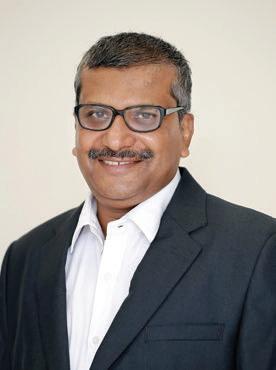
Mr. Reji Koshy Daniel , Executive Director, Royle Extrusion Systems Private Limited (wholly owned subsidiary of Royle Systems Group (USA), with inputs from Mr. Paulson T Kunjukunju , Chief Technology Officer, Royle Extrusion Systems Private Limited and Mr. John C Ramsey (Chairman, Royle Systems Group -USA)
Since our founding in 1855, Royle has developed process and machinery innovations which have contributed to the growth of industry in the rubber and cable sectors. Royle patented the world’s first screw type extruder in 1885, which revolutionized the process of cable manufacturing in the world. Royle, in cooperation with the Western Electric Division of Bell Telephone, pioneered the continuous vulcanization (CV) process for insulation of rubber cables in 1938.
Royle patented the Catenary Continuous Vulcanization (CCV) process in 1958, which is still, nearly 70 years later, the primary foundational process for the manufacture of cables for many applications and range of voltage from LV to EHV.
As an insulation material, rubber and its thermosetting variants provide many advantages for cable insulation, including excellent flexibility, resistance to mechanical fatigue and reliable performance in demanding operating environments. These characteristics make it suitable for applications where cable movement, vibration and physical abuse are required.
Rubber compounds require vulcanization after extrusion onto cables to achieve their final physical properties. Traditionally, before CV, this was a separate batch process after extrusion that required the finished cable reels to be moved to large autoclaves, where low pressure steam cured the rubber insulated or sheathed cables. Separation of curing from extrusion limited production efficiency and consistency of quality of the vulcanized cable.
Royle addressed these limitations by developing several types of CV processes, which integrated extrusion and curing into one process. This overcame the limitations of the separate extrusion and curing processes and provided significant improvement in efficiency of performance, quality of cable and control of process. Over the years, CV and CCV became a foundational technology of modern cable manufacturing.
New materials and manufacturing technologies are often introduced to address specific functional requirements, but foundational technologies like the Royle CV are able to adapt and serve new applications as their capabilities remain advantageous. Over the last century, the cable industry has evolved from natural rubber compounds to a wide range
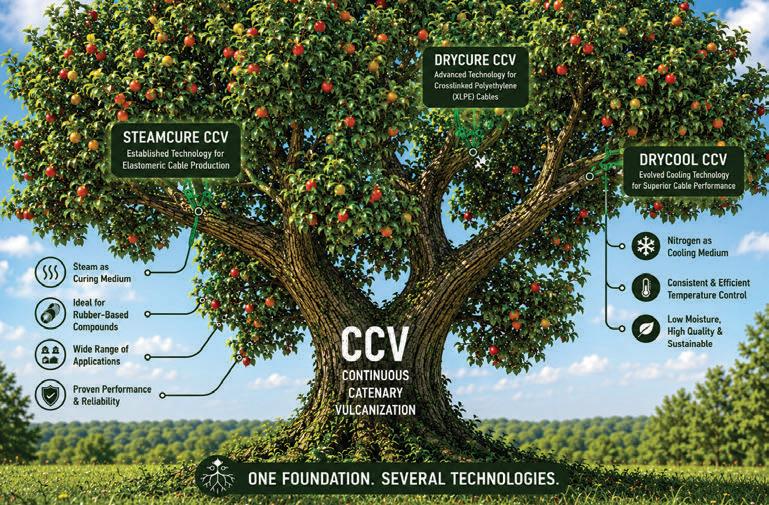
of high performance thermosetting copolymer elastomers. These copolymers are produced using the latest technology that allows these thermosetting materials to bridge the gap between thermoplastics and rubbers, as they combine the rubber-like qualities of flexibility, elasticity and mechanical durability of traditional elastomers. Understanding how these technologies evolved, and why they continue to coexist, provides useful insight into the direction of today’s cable market.
The Development of Steam Cure and Dry Cure Technologies
The growth of CCV technology created opportunities for different curing methods to emerge. Steam CCV systems became the established solution for elastomeric cable production. This process provided efficient curing of rubberbased compounds and supported the manufacturing of a wide range of industrial, mining, marine and power cables.
As demand for power transmission infrastructure increased, the industry adopted crosslinked polyethylene (XLPE) and ethylene propylene rubber (EPR) insulation for medium voltage (MV) and high voltage (HV) applications. These materials offered attractive electrical properties and became increasingly important as power networks expanded around the world.
This shift contributed to the development and adoption of Dry Cure technology, which uses nitrogen as the pressurizing medium and radiant heat for curing instead of high pressure steam. Dry Cure became widely used for XLPE and EPR insulation, as these materials withstand higher curing temperatures, so Dry Cure improves productivity and overcomes
potential disadvantage of moisture from curing in steam.
The growth of Dry Cure CCV technology is sometimes viewed as a transition away from rubber and steam CCV. In fact, steam CCVs for rubber cables are actually a growth sector. Dry Cure is a diversification of CV technology to embrace new materials and applications.
The Dry Cure CCV has been further developed to the Dry Cure - Dry Cool CCV with nitrogen also used as the cooling medium for High Voltage (HV) and Extra High Voltage (EHV) cables, which positively eliminates water-treeing during the vulcanization process. The elimination of water cooling also saves gallons of water, an environmental side benefit
Rather than replacing Steam CCV technology, Dry Cure - Dry Cool CCV technology expanded the industry’s capabilities to process new insulation materials by using new curing technologies. The CCV process evolved to serve different performance requirements and created a broader range of manufacturing options for cable producers.This development of CCV technology can be visualized as a tree. The CCV process developed by Royle is the trunk, while the development of Steam CCV and Drycure CCV are two branches that have evolved to support market demand for new materials and applications.
Why Rubber Still Remains Important
Despite the growth of XLPE-based power cable production, demand for rubber-insulated cable has remained strong and is experiencing renewed growth in several sectors.
The future of cable manufacturing will not belong to one type of insulation system or one type of curing technology. Growth will continue to be driven by the ability of different technologies to serve different application requirements.
Recent market research reflects that trend. According to DataIntelo, the global rubber insulated cable market was valued at USD 12.8 billion in 2025 and is projected to reach USD 22.6 billion by 2034, representing a compound annual growth rate (CAGR) of 6.5%. The study also reports that low-voltage cable applications accounted for 52.4% of market demand in 2025, while Asia-Pacific represented 38.5% of global market revenue. These figures fit within a broader expansion of the cable industry.
Analysis by Global Market Insights estimates the global wire and cable market at USD 267.8 billion in 2024, with projected growth of 7.3% CAGR through 2034. Similarly, Fortune Business Insights forecasts the global power cable market to grow from USD 252.7 billion in 2026 to USD 414.7 billion by 2034, driven largely by grid modernization, electrification and renewable energy investments.
The data suggests that rubber is not simply maintaining a legacy position within the industry—it is growing alongside wider investments in electrification, infrastructure and energy transition projects. One reason is that the properties that made rubber attractive historically remain difficult to replicate in many demanding applications.
Mining and Industrial Applications
Mining cables, trailing cables and welding cables operate in some of the harshest environments encountered by electrical systems. These products are frequently dragged across abrasive surfaces, exposed to impact, wound onto reels and subjected to repeated flexing. In many cases, elastomeric insulation and sheath compounds remain the preferred solution because they provide the combination of flexibility, toughness and durability required for reliable operation. For many mining, welding and trailing cable applications, rubber remains the benchmark against which alternative insulation systems are measured.
Renewable Energy
The continued growth of renewable energy projects has also increased demand for robust cable systems. DataIntelo identifies renewable energy investment as one of the principal drivers of growth within the rubber-insulated cable market. Offshore wind installations, for example, expose cables to moisture, salt, ultraviolet radiation, ozone and continuous mechanical stress. Elastomeric materials are often selected because of their ability to withstand these conditions over extended service lives.
The broader market outlook supports this trend. According to the International Energy Agency (IEA), global renewable
energy capacity additions between 2025 and 2030 are expected to reach approximately 4,600 GW, representing one of the largest infrastructure expansions in the energy sector’s history. As renewable energy projects move into increasingly demanding environments, durability and environmental resistance become as important as electrical performance.
Electric Vehicles and Transportation
The transportation sector is another area where elastomeric materials continue to play an important role. DataIntelo also identifies electric vehicle manufacturing as a major driver of demand for rubber-insulated cable.
Electric vehicles require cable systems capable of tolerating vibration, movement and elevated operating temperatures while maintaining long-term reliability. Materials such as EPR, EPDM and silicone rubber are increasingly used in applications where flexibility and durability are important performance requirements. This trend is expected to continue. According to the International Energy Agency, global electric vehicle sales are projected to exceed 20 million units in 2025, accounting for more than one quarter of all new vehicle sales worldwide.
As transportation becomes increasingly electrified, demand is growing for cable systems capable of operating reliably in compact, high-temperature and highly dynamic environments.
New Considerations for Cable Manufacturers
As cable markets become more specialized, manufacturers are increasingly required to support a diverse range of products and applications. Selecting the correct manufacturing technology depends on several factors, including cable design, insulation material, target markets and long-term production objectives.
Producing high-quality elastomeric cable requires more than extrusion capacity alone. Compound behavior, curing characteristics, process control and line configuration all influence product quality and manufacturing efficiency. Successful elastomeric cable production depends as much on process knowledge as it does on equipment selection.
For this reason, manufacturers entering or expanding elastomeric cable production often seek technology partners with experience across both equipment design and material processing. At Royle, our experience spans more than 140 years of cable manufacturing technology development and hundreds of CV installations worldwide. Our systems support a wide range of elastomeric insulating and sheathing
National and international norms are now getting stricter towards Industry 5.0 priorities. Institutions are now mandating stringent process and performance controls that can be achieved only by advanced processes with due clarity in technology and care in manufacturing.
materials, including EPR, EPDM, CSP, PCP, silicone rubber and other specialized compounds, by applying tandem, single-layer, dual-layer and triple-layer extrusion configurations.
By working closely with cable manufacturers during the selection of a CV line, design and commissioning, Royle helps to ensure that production systems are aligned with both current requirements and future plans for growth.
Looking Ahead: Is CCV In Your Future?
Today’s cable industry is characterized by a wide range of insulation materials and manufacturing technologies, each developed to address specific application requirements.
CCVs will continue to play a central role in all sectors of the cable industry, because elastomeric insulation materials remain essential in sectors where flexibility, mechanical durability and environmental resistance are critical performance requirements.
The development of cable insulation technologies has largely been additive rather than replacement-driven. Steam CCV and Dry Cure CCV technologies each occupy important positions within the industry by supporting different
materials and serving different markets.
The future of cable manufacturing will NOT belong to one type of insulation system or one type of curing technology. Growth will continue to be driven by the ability of different technologies to serve different application requirements.
National and international norms are now getting stricter towards Industry 5.0 priorities. Institutions are now mandating stringent process and performance control that can be achieved only by advanced processes with due clarity in technology and care in manufacturing.
As demand continues to grow across renewable energy, transportation, mining and industrial sectors, CV technology, existing and new, is a necessary component of the global cable manufacturing landscape.
References
DataIntelo, Global Rubber Insulated Cable Market Report, 2025. International Energy Agency (IEA), Global EV Outlook 2025. International Energy Agency (IEA), Renewables 2024 Market Report. Global Market Insights, Wire and Cable Market Analysis. Fortune Business Insights, Power Cable Market Report.
Bansal Wire Secures Trial Order for Steel Tyre Cord from Leading Tyre Manufacturer
Bansal Wire Industries marks a key milestone with a trial order for steel tyre cord, strengthening its growth and market position.
Jun 16, 2026
Bansal Wire Industries Ltd. (BWIL) has secured a trial purchase order for its steel tyre cord product from one of the industry’s largest tyre manufacturers, following a successful evaluation of its product samples. The company said the order reflects customer confidence in the quality and suitability of its offering.
BWIL noted that the development represents an important step toward its growth objectives and highlights its capabilities in meeting the stringent quality standards and approval requirements of the highly technical tyre cord segment. The company believes the recognition
further reinforces its focus on quality, innovation, and competitiveness in the market.
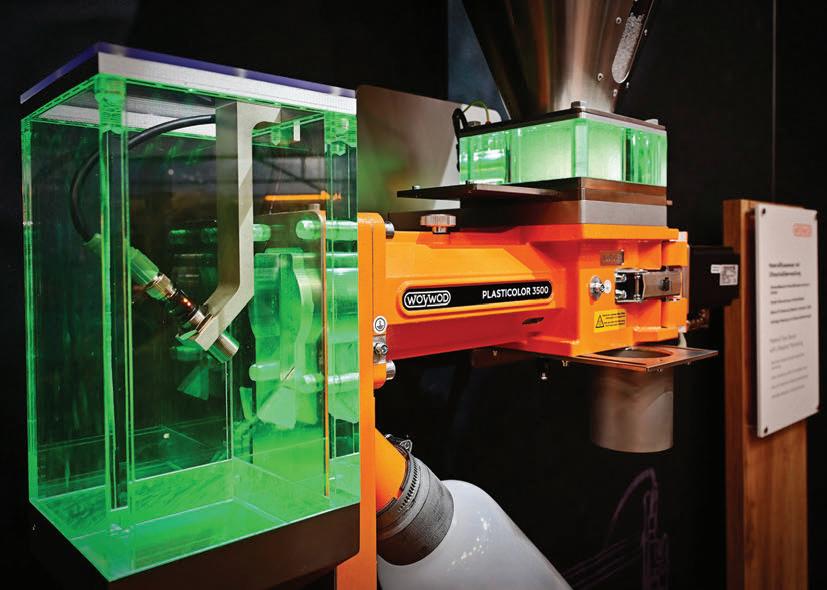
WOYWOD: Real-time Monitoring of Material Flow at Screw Dosing Units Using Ultrasonic Sensors
Reliable monitoring of material discharge at screw dosing units presents a challenge in plastics processing that has so far only been inadequately addressed. With volumetric and gravimetric systems, malfunctions such as bridging in the hopper, missing material or mechanical misalignments can prevent material from being conveyed – without this being immediately detected.
Even when using gravimetric measurement routines, the necessary verification of the measured values introduces a time lag. This lag
depends on the setpoint: the smaller the setpoint, the greater the delay. Therefore, several minutes can pass before it is detected that no material is being discharged and the control system issues a corresponding error message – a significant quality risk in the ongoing production process.
A newly developed solution enables real-time monitoring of material flow: The firmware, jointly developed by WOYWOD and a Swiss sensor manufacturer, utilizes advanced ultrasonic sensors to precisely monitor the material flow after dosing at the dispenser’s outlet.
The ultrasonic sensor is capable of handling various types of granules (in terms of shape, colour, grain size and material quantity). Continuous measurement verifies in real time whether material is actually being dispensed – independent of target values or the delay effects of conventional weighing systems.
This offers users a clear advantage: Production errors are detected early and can be corrected immediately. This reduces downtime, defective batches and customer complaints – a crucial step toward greater efficiency and quality in plastics processing.
Mikrotek Enamelling Dies: Driving Defect-Free Coating & Superior Insulation Performance
In today’s competitive magnet wire industry, product excellence begins at the tooling level. Enamelling dies — precision instruments governing every pass of enamel onto copper and aluminium conductors — are the decisive factor in insulation quality, winding performance, and long-term conductor reliability.
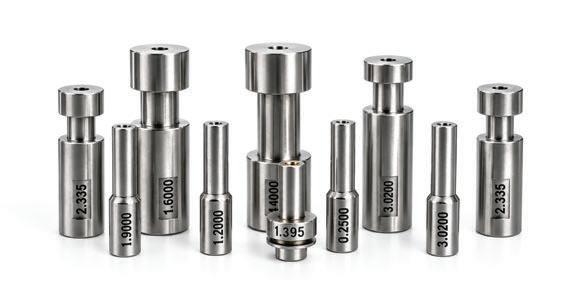
THE CRITICAL ROLE
In the wire enamelling process, the conductor passes through multiple coating and curing stages, with the die precisely controlling the amount of enamel applied at every pass. This critical function ensures uniform insulation thickness, consistent surface quality, and reliable electrical performance throughout the finished conductor.
“More than a tooling component, enamelling dies are a critical quality-control element that directly influences conductor performance, manufacturing productivity, and process reliability.”
THE COATING PROCESS
Each conductor pass follows a precise sequence — from initial feed through enamel application, metering, curing, and multi-pass insulation build-up. The die governs the critical metering stage at every pass.
Far more than a simple production component, the enamelling die is a key quality-control element within the process. Its bore geometry, surface finish, and dimensional accuracy directly influence coating consistency, process stability, and overall magnet wire quality. Even with advanced enamels and modern production lines, the final performance of the wire depends significantly on the precision of the enamel die.
As demand intensifies for energy-efficient equipment and higher-voltage EV systems, manufacturers are under increasing pressure to deliver enamelled conductors that meet the most exacting dielectric and thermal specifications making die quality more consequential than ever.
MATERIAL EXCELLENCE
Solid enamelling dies are manufactured from three premium materials, each selected to match the demands of specific production and wire specifications:
• PCD Enamel Dies (PCD): PCD Enamel Dies offer closer tolerances, superior wear resistance, and excellent dimensional stability due to their mirror-polished surface, as well as significantly longer service life compared to conventional TC Enamel Dies.
Furnace Curin
Build-Up Layers
DIES
• They are highly recommended for sizes below 1.500 mm, and their exceptional durability makes them ideal for highspeed enamelling machines, ensuring consistent enamel build, reduced downtime, and reliable wire quality. It is also suitable for sizes above 1.500 mm.
• TC Insert Enamel Dies (TC): TC Insert Enamel Dies are an economical solution for enamelling applications and are widely used for wire sizes above 0.200 mm. They provide reliable performance and cost-effective operation for standard production requirements.
• Natural Diamond (ND): Renowned for its exceptional hardness and ability to deliver a superior mirror-like surface finish, ideal for ultra-fine conductors and premium-quality wire production.
DEFECT PREVENTION
Optimised die geometry systematically eliminates the root causes of coating failure. Each defect type is addressed by a specific aspect of die design and surface engineering:
• Pinholes & Voids – Mirror-polished bore enables uninterrupted enamel flow.
• Surface Blistering – Optimised approach angle and precise bore geometry.
• Uneven Insulation Build – Exact concentricity and dimensional stability under heat.
• Surface Irregularities – Smooth, continuous enamel metering across full circumference.
CONFIGURATION & CUSTOMISATION
To accommodate diverse manufacturing, enamelling dies are available for both vertical and horizontal enamelling machines. Body configurations include steel, aluminium, brass, and custom designs. For specialised applications, die profiles and body dimensions can be fully tailored to specific machine parameters, ensuring optimum process performance and coating consistency at every production speed.
INDUSTRIES & APPLICATIONS SERVED
Magnet wire & motor windings, Power transformers, Renewable energy, Aerospace & defence, Telecommunications, Industrial machinery, Consumer electronics, Generators & Compressors, etc. An enamelling die is one of the smallest components on the production line, yet its impact is among the most significant. The manufacturer who controls die quality controls coating quality, and the manufacturer who controls coating quality controls everything downstream: winding performance, insulation integrity, product reliability, and customer trust.
Crompton Enters House Wires Segment with Launch of Armor Wires
The company targets India’s fast-growing residential wiring market with a South India-first rollout focused on safety and performance.
June 16, 2026
Crompton Greaves Consumer Electricals Ltd. has entered the residential house wires segment with the launch of its new Crompton Armor Wires range, expanding its portfolio beyond fans, pumps, lighting, and appliances. The launch marks the company’s entry into a market valued at nearly INR 1.25 lakh crore, with an initial focus on Tamil Nadu, Telangana, and Karnataka.
The Armor range includes multiple variants tailored to different household requirements, with the premium Armor Ultra featuring 10% more copper and the ability to operate at temperatures of up to 90°C. The wires are designed with low-smoke, flame-retardant, anti-termite, and anti-rodent properties, while complying with RoHS and national safety standards.
Crompton said the move aligns with its strategy of
premiumization and consumer-centric innovation, while leveraging its extensive distribution network and strong relationships with electricians, contractors, architects, and builders. The company also launched the Crompton Saathi App to support electricians with product information and incentive programs.
ZUMBACH Introduces New AI-Driven SIMAC® Surface Testing System
Zumbach Electronic is advancing surface inspection technology with the launch of the next-generation SIMAC® Surface Testing System. Designed for cables, tubes and hoses, the new SIMAC® solution moves beyond traditional defect detection and uses artificial intelligence-based detection engine to recognise surface abnormalities instantly and reliably.
Zumbach Electronic is advancing surface inspection technology with the launch of the next-generation SIMAC® Surface Testing System, now empowered by AI-driven Intelligence.
Designed for cables, tubes and hoses, the new SIMAC® solution delivers a breakthrough in accuracy, adaptability and on-line quality assurance. Built on deep-learning innovation, the system moves beyond traditional defect detection to provide manufacturers with actionable insights, continuous learning capabilities and an unprecedented level of process transparency.
On-line Detection
At the core of the new SIMAC® platform is its artificial intelligence-based high-performance detection engine, developed to recognise surface abnormalities instantly and reliably, and has many benefits.
It detects surface defects inline at full production speed, and requires no defect labelling, because it is trained entirely on defect-free images. It provides adaptive behaviour, automatically compensating for process drift, and allows fast model recalibration for new production conditions. It also includes adjustable sensitivity, enabling a configurable precision/recall balance depending on customer requirements. This means that operators no longer need to manually tune thresholds or define defect rules. Instead, the
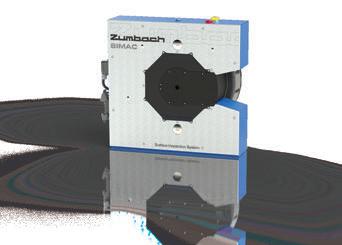
deep-learning engine continuously evaluates the product surface, flagging any deviations from expected patterns.
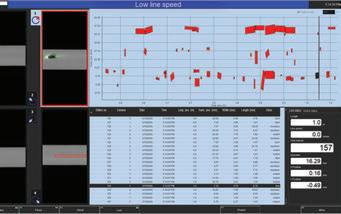
Intelligent Classification
Detection is only the first step. With SIMAC®’s new intelligent classification module, users also gain clarity about what type of defect has occurred. The system can automatically assign defects to predefined types. It provides precise defect localisation on the product and supports the introduction of new defect types, when combined with model retraining.
It also offers adjustable sensitivity for enhanced precision or broader coverage. And lastly, it applies a “one-for-all” model,
SIMACMASTER Main Screen
INNOVATION
meaning a single trained model can serve multiple products.
This unique AI-driven defect classification tells us exactly what is wrong, enabling engineers to better understand production issues rather than just reacting to alarms.
Continuous Improvement
One of the most forward-looking capabilities of the new SIMAC® is its ability to evolve. The system’s continuous improvement framework allows it to become increasingly accurate, consistent and adapted over time.
The key features include:Fast recalibration of the detection model, re-classification and correction of mis-detected defects, incremental enrichment of training datasets, full retraining when introducing new defect categories, and ongoing optimisation of thresholds and system behaviour.
Because the new SIMAC® is not based on fixed rules, it evolves with production, positioning itself as a future-proof solution that grows alongside customer processes, raw materials and quality requirements.
Advanced Process Analysis
Beyond detection and classification, the SIMAC® introduces a powerful process analysis module that helps manufacturers
Tata Power Unveils INR 15,000 crore Mumbai Transmission Expansion Plan by 2031
Tata Power has announced an INR 15,000 crore transmission network expansion plan by 2031 comprising a 400 kV transmission network across Mumbai.
Jun 20, 2026
Tata Power has announced an INR 15,000 crore transmission network expansion plan for the Mumbai Metropolitan Region. The expansion project includes the development of a 400 kV transmission network across Mumbai in a ring topology and includes 18 new substations.
The key nodes of the ring network include Vikhroli, Dharavi, Mahalaxmi, Sewri, and Trombay. Additionally, the company will double its capacity of Battery Energy Storage Systems (BESS) from 100 MW to 200 MW by FY27 to ensure green power uninterrupted green power distribution in the region.
understand not only what defects occur, but why. The module offers statistical monitoring of defect frequency and distribution, trend analysis over production length and time, correlation between defect type and position, identification of periodic or localised patterns, and filtering of non-critical defects based on type
With these capabilities, factories can trace recurring issues back to root causes, such as tooling wear, material inconsistencies or periodic mechanical vibration. The provision of filtering and statistical visualisations highlight how operators can quickly isolate relevant defect categories.
From Detection to Decision
The combination of AI-based detection, intelligent classification, continuous learning and deep process insights transforms SIMAC® from a traditional inspection tool into a comprehensive decision-support system. Operators can react faster, engineers can analyse more effectively and production managers gain reliable data for optimising output quality.
Zumbach’s next-generation SIMAC® Surface Testing System sets a new benchmark for the industry: smarter detection, deeper understanding and adaptive performance that keeps pace with the dynamic environment of wire, cable, tube and hose manufacturing.


Finolex Cables Appoints Mahesh Viswanathan as Chief Executive Officer
Finolex Cables Limited, one of India’s leading manufacturers of electrical and communication cables, has announced the appointment of Mr. Mahesh Viswanathan as its Chief Executive Officer (CEO).
Finolex Cables Limited has appointed Mr. Mahesh Viswanathan as its CEO. A qualified Chartered Accountant with over four decades of professional experience, Mr. Viswanathan has been an integral part of Finolex Cables’ leadership team for more than 17 years. During his tenure, he has played a key role in strengthening the company’s financial and operational foundation, supporting its expansion across business segments and contributing to its long-term growth strategy.
His appointment comes at a significant juncture for the company as it continues to strengthen its position in the electrical and communication cables industry while expanding its presence in fast-growing segments such as consumer electrical products, smart home solutions, and allied categories.
Commenting on his appointment, Mr. Mahesh Viswanathan, Chief Executive Officer, Finolex Cables Limited, said, “Finolex Cables has built a strong legacy of trust, quality, and innovation over the decades. I am honoured to take on this responsibility and lead the company at a time of significant opportunity. As we look ahead, our focus will be on strengthening our core businesses, expanding into high-growth categories,
driving operational excellence, and delivering greater value to our customers, partners, shareholders, and employees. Together, we will continue building on the company’s strong foundation and pursue sustainable, long-term growth.”
The appointment reflects Finolex Cables’ continued focus on leadership continuity and its commitment to strengthening the organisation for future growth. With a strong market presence, diversified product portfolio, and robust distribution network, the company remains wellpositioned to capitalize on emerging opportunities across India’s evolving infrastructure, housing, industrial, and consumer markets.
Oswal Cable Inaugurates Its Third Plant in Jaipur
Oswal Cables inaugurated its third plant at Mahindra SEZ, Jaipur that will produce HT and EHV cables.
Jun 30, 2026
Oswal Cables celebrated the inaugural of its third plant at Mahindra SEZ, Jaipur. This new plant focuses on the production of HT and EHV cables.
‘’Feeling proud and happy to be a part of one of the biggest cable manufacturing plants in India,’’ posted Mr.Sunil Singh, President Marketing-Domestic & International Business, Oswal Cables on his social media handle.
Oswal Cables is an integrated manufacturer of cables and conductors, serving critical energy infrastructure across 28 countries. With over 1,000 products and a wide voltage spectrum, Oswal Cables delivers solutions
worldwide. The company has two existing manufacturing facilities in Bagru, Jaipur and Medak, Telangana.
Mr. Mahesh Viswanathan, CEO, Finolex Cables Limited
KEI Industries Appoints Rashmika Mandanna as Brand Ambassador
Actor to lead integrated marketing campaign under a two-year partnership. The partnership is part of KEI’s broader brand-building strategy, leveraging Rashmika Mandanna’s widespread appeal and strong connect with audiences.
Jun 25, 2026
KEI Industries Ltd. has appointed actor Rashmika Mandanna as its brand ambassador for a two-year term, reinforcing the company’s efforts to enhance brand visibility, strengthen customer engagement, and expand its reach across domestic and international markets.
The partnership is part of KEI’s broader brand-building strategy, leveraging Rashmika Mandanna’s widespread appeal and strong connect with audiences. The company believes the association aligns with its values of quality, innovation, and trust while supporting its long-term growth aspirations.
Commenting on the collaboration, Chairman-cumManaging Director Mr. Anil Gupta said the partnership brings together Rashmika’s popularity and KEI’s reputation for delivering quality products and services. Director Ms. Archana Gupta highlighted that Rashmika represents the spirit of an empowered woman, reflecting the company’s commitment to excellence and innovation. Executive Director Akshit Diviaj Gupta added that her energy and authenticity would help deepen consumer

engagement and strengthen the brand’s connection with a wider audience.
As part of the association, KEI will roll out an integrated 360-degree marketing campaign featuring Rashmika Mandanna, including a new television commercial scheduled to launch next week. The campaign is expected to further reinforce KEI’s position as a trusted manufacturer of wires and cables while creating stronger emotional connections with consumers.
Shyam Steel Opens First Overseas Manufacturing Facility in UAE
Shyam Steel Group has inaugurated its first international manufacturing facility in Sharjah, marking a major milestone in its global expansion strategy.
Jul 08, 2026
Shyam Steel Group has established its first international manufacturing facility outside India at the Hamriyah Free Zone in Sharjah, UAE, through its subsidiary Shyam Middle East FZC. Set up with an initial investment of AED 60 million, the 215,000 sq. ft. facility has an annual production capacity of 30,000 tonnes of recycled aluminium and copper alloys and will cater to markets across the Middle East, GCC, Africa, Asia, and Europe. The project marks the beginning of the Group’s global expansion roadmap, with plans for phased investments of up to AED 150 million. During the inauguration, officials toured the facility’s recycling systems, alloy manufacturing lines, quality assurance laboratories, and advanced
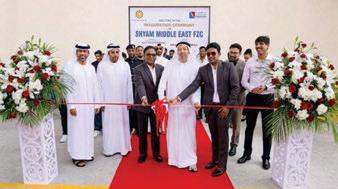
industrial technologies designed to enhance operational efficiency, product quality, and sustainability.
Laser Power and Infra Eyes INR 742 Crore IPO
Laser Power and Infra Pvt. Ltd. has announced the launch of its INR 742 crore IPO on July 09, 2026, aiming to secure funds via public offerings.
Jul 06, 2026
Laser Power and Infra Pvt. Ltd. has announced the launch of its IPO on July 09, 2026. The IPO comprises a fresh issue of shares worth INR 542 crore, and offer for sale (OFS) shares worth INR 200 crore. The company has set up a fixed price band of INR 203-214 per share.
The company plans to utilise INR 490 crore from the fresh issue proceeds for repayment of its borrowings while the remaining amount will be used for general corporate purpose.
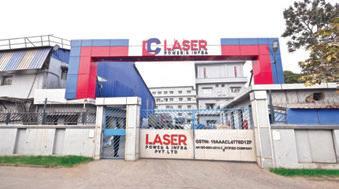
SIKORA Launches ‘Line Performance Optimizer’ Software for Cable Industry
SIKORA has launched a new software program- Line Performance Optimizer (LPO) that detects quality fluctuations in cables at an early stage during production, ensuring product quality and low process variation in cable manufacturing.
Jun 24, 2026
Increasing demands on the signal and transmission quality of data cables require precise insights into manufacturing quality and sources of interference. In cable production, consistent product quality and low process variation is a key condition for consistent cable quality.
Keeping this in mind, SIKORA presents a new software program- Line Performance Optimizer (LPO) that detects quality fluctuations in cables at an early stage during production. It was first unveiled to the public at the Wire Düsseldorf 2026 tradeshow.
SIKORA’s new Line Performance Optimizer (LPO) software program is based on individual values with extremely high accuracy, which are not subject to any averaging. The individual values are available in every SIKORA measuring device and are consolidated in a connected Ecocontrol processor system. This provides a transparent overview of the quality level of the entire line. Deviations, known as noise levels, can be detected at an early stage, clearly localized, and specifically remedied
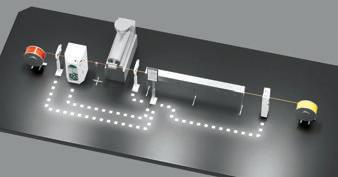
ThemeasuringvaluesoftheSIKORAdevicesareconsolidatedina connectedECOCONTROLsystem
with the operator‘s experience – for a stable process and consistently high production quality. Production quality is clearly visualized on the ECOCONTROL processor system.
The software program uses precise individual measurement values to reveal the full picture of irregularities in an extrusion process. Thus, it provides information about the source of any interference and assists in resolving the issue.
Sterlite Electric Bags First 220kV Power Cable Export Order from Sri Lanka
The order comprises 1C 630 sq. mm. XLPE-insulated power cables for a substation project in Colombo.
Jun 23, 2026
Sterlite Electric announced that it has won the first 220kV power cable export order from Sri Lanka, reflecting the company’s growing capabilities in the EHV cable segment and its focus on meeting the technical and quality requirements of customers across different markets.
The order comprises 1C 630 sq. mm. XLPE-insulated power cables for a substation project in Colombo for National Transmission Network Service Provider Pvt. Ltd. (NTNSP), formerly known as the Ceylon Electricity Board.
‘‘As we continue to expand our global power cable business, each new market and delivery strengthens our journey towards enabling reliable power infrastructure and electrification everywhere,’’ posted the company on its
social media handle.
Sterlite Electric further attributed the expertise and the collective efforts of its team, for the successful execution of each and every project, and its deliveries.
Dayachand Engineering Industries Commissions MIG Wire
Production Facility in Gujarat
Dayachand Engineering Industries Private Limited has made significant investment in commissioning a new state-of-the-art MIG welding wire production facility in Halol, Gujarat.
Jul 13, 2026
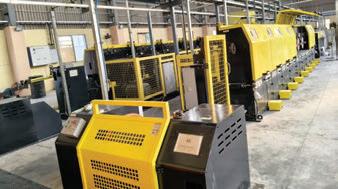
Dayachand Engineering Industries Private Limited, a manufacturer of mild steel welding electrodes, MIG welding wires and stainless steel tubes, is commissioning a new state-of-the-art MIG welding wire production facility located in Halol, Gujarat. This facility is expected to make durables, high-tensile MIG welding wires and stainless
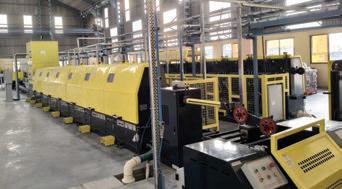
steel wire grades.
‘’This expansion represents a significant investment in our ability to serve our customers better and meet the growing demands of our market,’’ posted Mr. Amit Jain, Executive Director, Dayachand Engineering Industries Private Limited.
SETIC & POURTIER Drives Asia’s Cable Industry With Its High- Performance Rotating Machines
SETIC & POURTIER will showcase high-speed double twist bunchers, single twist take-up with backtwist payoffs, and various complete stranders solutions that will boost productivity and reduce operating costs for cable manufacturers.
SETIC & POURTIER, a global leader in stranding and cabling solutions, is proud to announce its participation in Wire China 2026 in Shanghai, China from September 21– 24, 2026. As the first European cable machinery supplier getting into the Chinese market since 1999, the group will exhibit under its new unified brand identity within the French Pavilion (Booth E1 D15) at the Shanghai New International Expo Centre (SNIEC).
This edition marks a historic milestone with the presentation of its unified logo under the signature: ‘Wire and cable solutions powering a changing world’. This convergence of industrial expertise allows the group to support its customers through profound digital and energy transformations and as a global strategic partner for stranding and cabling solutions.
To meet the global technological demands in the automotive industry, which include all-electrical cars and subsequent needed infrastructure, SETIC & POURTIER is leading the field with new development which has improved its already high-quality rotating machines. Enhanced high-speed double twist bunchers, single twist take-up with backtwist payoffs, and various complete stranders solutions are perfectly adapted for the production of EV charging, batteries and data cables for this industry. They are perfect replies to needs for industrial data cables, IIoT, robots and strong growth in the global LAN market.
Mr. Kelvin Wu, Area Manager, SETIC & POURTIER, who will be present at the booth to support regional partners, emphasizes the importance of this unified presence. He says, “Our wide range of compacted 61 wires copper/ aluminum large double twist machines (up to 1250 MCM / 630 mm² and reel diameters up to 2600 mm) offers decisive advantages like over 40% increase in productivity, less than 30% reduction in energy consumption compared with traditional methods. These machines can manufacture multiple LV/MV cable sections from a single input wire dimension, making them perfect to boost productivity and reduce operating costs.’’ He adds, ‘‘We will present the machinery for high quality industrial cable with backtwist payoff + single twist machine. It is high technology to high productivity with 5-6 times faster than traditional methods.’’
The company continues to expand its wide range of offerings with a higher number of wires up to 169 for rigid stranders together with pulling capstan up to 80 tons, and XL Drum Twisters up to 60 tons. All of these machines are Jun 25, 2026
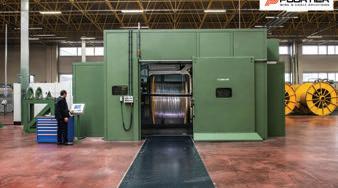
designed and manufactured with the highest standards in design and manufacturing to produce all types of high-voltage and extra-high-voltage power cables. From overhead cable (including ACCC™, ACSS-TW and ACSRTW) to submarine or land cables AC type (using high quality Milliken conductor) or DC type (using large round compacted conductor or profiled “Keystone” wires).
Technological Showcase
SETIC & POURTIER will showcase a DSD631-4-6M Single Backtwist Pay-off directly at the booth. Specifically dedicated to industrial cable as control, instrumentation, and data cables, this equipment offers exceptional flexibility for sensitive products and high-demand dynamic applications, including EV charging and battery cables.
Sustainable Productivity
SETIC & POURTIER also connect its customers to all energy sources. It has the most advanced solutions to meet the challenges for sustainable clean energy and infrastructure. The company proposes heavy-duty stranders, cablers, screening, planetary and armouring lines. Its high efficiency revolutionary multiwire concentric stranding line is also widely used to boost the productivity for low and medium energy cables.
The group’s “Green” commitment is driven by the innovations of the C2S Customer Services division, which optimizes equipment lifespan through sustainable upgrades, and Bow Technology, whose patented GreenBow2 closed-bow model enables energy savings of up to 30%.
Meet SETIC & POURTIER’s experts at Wire China 2026 French Pavilion – Booth E1 D15 Shanghai New International Expo Centre (SNIEC).
SETICPOURTERlargedoubletwiststranders,upto2500mm
Maillefer To Showcase Technology Leadership, Partnership, and Sustainable Innovation in Cable Production
Jun 25, 2026
Maillefer welcomes visitors at ‘Wire China 2026’ in Shanghai, China from September 21– 24, 2026, to discover how decades of expertise, continuous innovation, and strong customer partnerships are shaping the future of wire and cable manufacturing.
Built around the theme “House of Experts,” Maillefer’s presence will highlight the company’s role as a trusted technology leader, delivering advanced manufacturing solutions that help producers improve productivity, quality, and sustainability across the cable industry.
Visitors will have the opportunity to explore the equipment on display, featuring Siccon and the THC 70/150 HE. Virtual displays will include a 3D interactive monitor, which gives visitors insight into VCV line operations. The displays provide a firsthand look at how intelligent process control and user-centric design contribute to efficient, reliable, and high-quality cable production.
The booth will showcase several key technologies and solutions, including:
Intelligent Induction: An advanced heating technology supporting precise and efficient cable production.
Automatic Crosshead Centering (ACC): Enabling faster setup, improved concentricity, and enhanced production consistency.
PP Multipurpose Line: A versatile solution designed for polypropylene (PP)-based medium-voltage cables, supporting next-generation cable insulation materials.
Round Premium: Enabling high-speed curing performance while maintaining exceptional product quality.
EHV VCV Line: An advanced vertical continuous vulcanization technology for the production of extra-highvoltage power cables.
Celebrating Partnership and Aftermarket Excellence
Partnership remains at the heart of Maillefer’s approach. Beyond delivering world-class production technology, the company supports customers throughout the entire lifecycle of their investments through comprehensive aftermarket services, upgrades, process optimization, and technical expertise. This commitment helps manufacturers maximize uptime, improve operational performance, and adapt to evolving market demands.
Driving Sustainable Growth
As the global energy transition accelerates, Maillefer continues to develop solutions that support renewable
energy infrastructure and more sustainable cable manufacturing. Visitors can learn how the company’s technologies contribute to increased efficiency, reduced waste, and reliable production of cables essential for modern power networks.
Celebrating 40 Years in China
A dedicated exhibition wall will commemorate Maillefer’s 40-year journey in China, highlighting the company’s longstanding commitment to the market and the partnerships that have contributed to its growth and success over four decades.
Meet the Experts
Whether discussing new production investments, process optimization, sustainability goals, or aftermarket support, visitors will find our experts ready to share insights and explore opportunities for future collaboration.
Visit Maillefer at ‘Booth E1 C11’ and discover how technology leadership, partnership, and innovation continue to power the future of the cable industry.


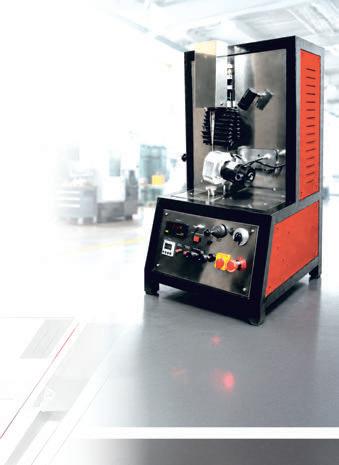
DICABS Charts Multi-Segment Capacity Expansion to Meet Growing Power Infrastructure Demand
The company is expanding capacities across cables and conductors to strengthen its position in power transmission, distribution and renewable energy markets.
Jun 01, 2026
DICABS has announced a capacity expansion programme across its cable and conductor businesses to cater to growing demand from power, infrastructure and clean energy sectors. The company plans to increase its low-voltage (LV) cable capacity from 34,300 circuit kilometres (CKM) to 52,300 CKM, significantly enhancing its manufacturing footprint.
In the medium- and high-voltage (MV/HV) cable segment, DICABS currently operates a capacity of 19,500 CKM and is undertaking further debottlenecking initiatives to improve throughput and efficiency. The company is also strengthening its extra-high-voltage (EHV) cable business, where existing capacity stands at 2,000 CKM, with additional MV and EHV production lines planned.
On the conductor side, DICABS has an installed capacity of 250,000 metric tonnes per annum (MTPA) and is pursuing expansion focused on next-generation conductors, including high-ampacity and advanced
transmission products designed for grid modernisation and renewable energy integration.
The expansion aligns with the company’s long-term growth strategy and increasing opportunities arising from India’s investments in power transmission networks, data centres, urban infrastructure and renewable energy projects.
Ducab Appoints Matteo Bavaresco as Group CEO
In his new role, he will lead the company’s strategic decision, operations, and growth initiatives, supporting Ducab’s continued expansion across the energy and industrial sectors.
Jul 09, 2026
Mr. Matteo Bavaresco has been appointed as Group Chief Executive Officer at Dubai Cable Company - Ducab. In his new role, he will lead the company’s strategic decision, operations, and growth initiatives, supporting Ducab’s continued expansion across the energy and industrial sectors.
Prior to joining Ducab, he served as CEO UK and CEO China at Prysmian, leading large-scale business transformation, operational optimization, and strategic growth across key international markets.
He has a decade-long experience with Danieli Group including senior leadership roles such as CEO APAC, CEO China, CFO APAC, and CFO China, driving the company’s expansion, manufacturing operations and
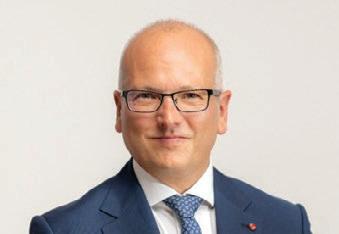
Mr.MatteoBavaresco,GroupCEO,Ducab
financial performance across Asia and the Middle East. He initiated his career as a manager in KPMG Italy.
Adani Group to Invest INR 2 Lakh Crore Over Next 5 Years in Power & Transmission Sector
The Adani Group has unveiled ambitious power and transmission expansion plans, targeting significant capacity growth backed by multi-billion-dollar investments.
Jun 24, 2026
The Adani Group has outlined its expansion plans in the power and transmission sectors, with Adani Power set to invest over INR 2 lakh crore over the next five years to expand its generation capacity to 45 GW.
The company currently has an ongoing capital expenditure programme of around INR 72,000 crore for projects under implementation. The broader investment will support future capacity additions while creating significant opportunities across the power equipment, EPC, and transmission infrastructure segment.
Announcing the expansion roadmap, Adani Group Chairman Mr. Gautam Adani said the investment will strengthen India’s energy and transmission infrastructure, support new thermal power projects, and cater to rising electricity demand driven by industrial growth.
The planned capacity addition will significantly expand Adani Power’s generation portfolio, reinforcing its position as India’s largest private thermal power producer while accelerating investments across India’s power generation and transmission ecosystem.
Rajoo Engineers Advances Manufacturing Excellence Through Upgrade of Shree Yantralaya
With the successful completion of a major technology upgrade, Shree Yantralaya further strengthens Rajoo’s in-house manufacturing capabilities and enhances its ability to deliver world-class machine components with greater precision, consistency, and productivity.
Jun 18, 2026
Rajoo Engineers Ltd., a global leader in plastics extrusion machinery, has completed a significant upgrade of Shree Yantralaya – The Machine Shop, strengthening its position as one of India’s most advanced manufacturing facilities dedicated to extrusion technology.
The upgrade includes the commissioning of advanced machining technologies from globally renowned machine tool manufacturers Okuma, Huron, and Jyoti, creating a robust manufacturing ecosystem capable of producing large, complex, and high-value machine components with
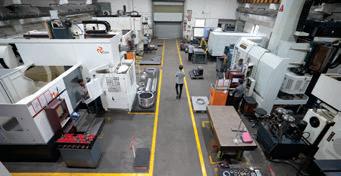
exceptional accuracy and consistency entirely in-house.

Polycab Highlights Electrical Infrastructure’s Role in India’s Renewable Energy Transition
On World Environment Day, Polycab India emphasized the importance of robust electrical infrastructure in supporting India’s ambitious renewable energy and sustainability goals.
Jun 05, 2026
Mr. Anurag Agarwal, CEO Global Exports & New Businesses, Polycab India, highlighted the critical role of electrical infrastructure in enabling India’s clean energy transition as the country accelerates investments in renewable energy, energy storage, and electric mobility.
He said, “India’s renewable energy journey is gathering unprecedented momentum. With a target of achieving 500 GW of renewable energy capacity by 2030 and scaling it further to 1,800 GW by 2047, the country is undertaking one of the most ambitious energy transitions anywhere in the world. While much of the focus is rightly on generating renewable power, equal attention must be given to the infrastructure that carries that power to industries, businesses, and households.
He further added, “As investments in solar, wind, energy storage, and electric mobility continue to accelerate, the need for reliable and efficient electrical infrastructure will become increasingly critical. At Polycab, we see this as a long-term responsibility. Through our portfolio of electrical
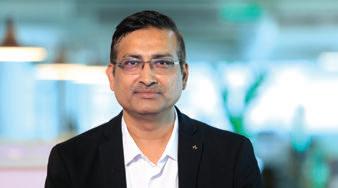
and solar solutions, we are helping build the infrastructure backbone required for India’s energy transition. Our own sustainability journey reflects this commitment, with renewable energy initiatives helping avoid over 31,300 MTCO2e of emissions in FY25. Sustainable progress is built through thousands of decisions across the value chain, and the quality of infrastructure that connects clean energy to end users will play a defining role in shaping India’s growth story.”
JD Cables Strengthens Growth Outlook with Expansion Plans and INR 515 Crore Order Book
JD Cables is expanding its manufacturing footprint and strengthening revenue visibility with strategic capacity additions and a robust INR 515 crore order book.
Jun 23, 2026
JD Cables Limited is accelerating its growth strategy through capacity expansion, product diversification, and a robust order pipeline. As part of its infrastructure expansion, JD Cables has acquired a new industrial facility in Dankuni spanning nearly 1.18 lakh sq. ft. to support future capacity growth and operational efficiency. Alongside this, the company is adding new product lines, including MVCC, AL-59, HTLS conductors, and HT cables, enabling it to cater to a wider range of applications across the power and infrastructure sectors.
Further reinforcing its growth visibility, JD Cables reported a healthy order book of approximately INR 515 crore as of March 2026, providing a strong revenue pipeline for the coming quarters. The company has also diversified
into the Engineering, Procurement and Construction (EPC) segment, leveraging opportunities arising from India’s expanding infrastructure and power development programs.
Rosendahl Nextrom Makes Largest-Ever Acquisition with TBS
Engineering Limited
Rosendahl Nextrom has taken a major strategic step by acquiring TBS Engineering, strengthening its battery industry capabilities and accelerating growth.
Jun 05, 2026
Rosendahl Nextrom has announced the acquisition of TBS Engineering Limited in what it describes as the largest acquisition in the company’s history. The move marks a significant milestone in Rosendahl Nextrom’s long-term growth strategy.
The acquisition brings together TBS Engineering Limited and BM-Rosendahl, combining extensive expertise in the battery industry, strong market positions, and a shared focus on delivering long-term customer value. Rosendahl Nextrom said it is pleased to welcome TBS Engineering to its group and looks forward to leveraging new growth opportunities
and industry synergies arising from the partnership.
Prysmian Introduces New Burial Tool For Submarine Cable
Prysmian has introduced a new generation heavy-duty burial tool used for burying submarine cables at a maximum of 5 meters beneath mean seabed level.
Jul 08, 2026
Prysmian has introduced a brand-new burial tool, a new generation heavy-duty plough used for burying submarine cables deep under the seabed. The tool has been created in close-collaboration with SMD and is Prysmian’s most powerful and largest tool, one of two that have been procured from North East England based SMD.
It will be used for the burial of power cables at a maximum of 5 meters beneath mean seabed level and will make cable burial more effective and protected. The burial tool will be deployed for operation on Prysmian’s latest-generation deep-sea cable installation vessels, the Monna Lisa and the Alessandro Volta.
Prysmian’s Middlesbrough Marine base takes the lead in the planning, procurement and deployment of Prysmian’s burial operations, and plays a central part of Prysmian’s global operations to deliver key British submarine projects.
Commenting on this innovation, Mr. Peter Watson, Middlesbrough Marine base & Offshore Subsea Assets at Prysmian said, “With accuracy, precision and efficiency, the tool enhances our ability to tackle increasingly challenging seabed conditions and achieve cable burial
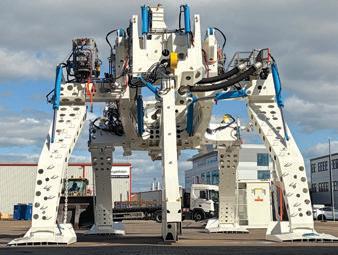
depths of up to five meters, depending on seabed characteristics….This long term partnership of technical know-how and understanding with our partners at SMD reflects how vital the supply chain of technology is in North East England to deliver energy security for the UK and Europe.’’
The partnership between Prysmian and SMD underlines the win-win situation for British energy investments in the submarine space, creating a positive ecosystem of knowhow and employment.