

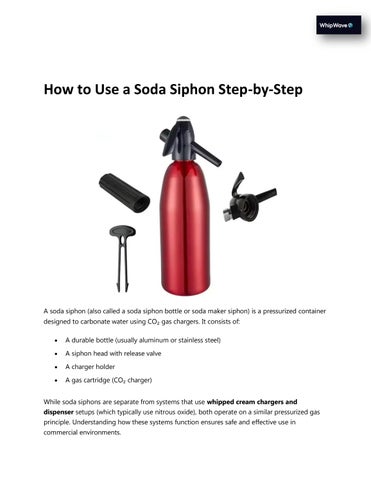
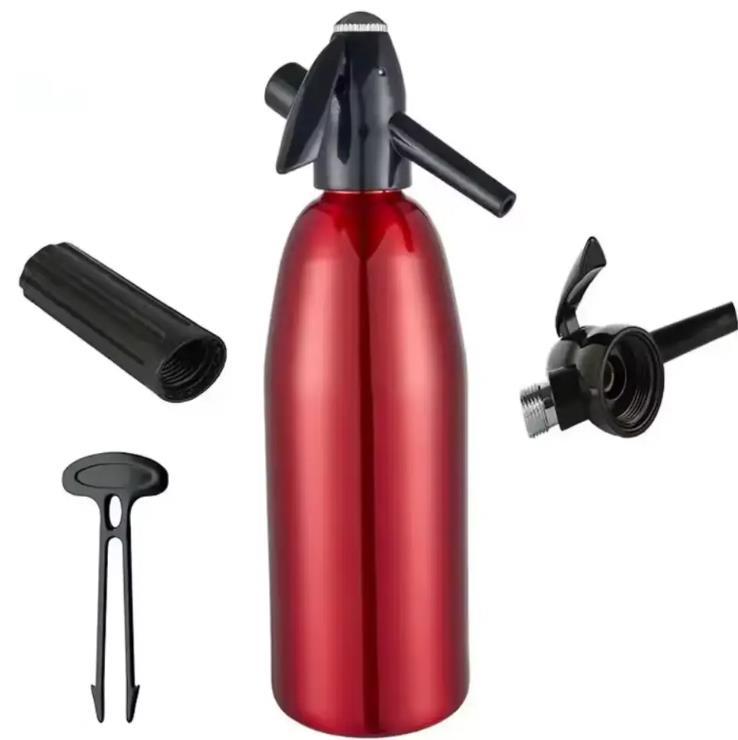
A soda siphon (also called a soda siphon bottle or soda maker siphon) is a pressurized container designed to carbonate water using CO₂ gas chargers. It consists of:
A durable bottle (usually aluminum or stainless steel)
A siphon head with release valve
A charger holder
A gas cartridge (CO₂ charger)
While soda siphons are separate from systems that use whipped cream chargers and dispenser setups (which typically use nitrous oxide), both operate on a similar pressurized gas principle. Understanding how these systems function ensures safe and effective use in commercial environments.
Commercial soda siphons offer several advantages for U.S. hospitality operations:
Instead of purchasing pre-bottled sparkling water, you can carbonate on demand, reducing recurring beverage costs.
2.
You control carbonation levels and freshness at the point of service.
3.
Using refillable siphons reduces plastic bottle waste. a growing priority for American businesses focused on sustainability.
Quick carbonation improves workflow in busy bars and restaurants.
Follow these steps carefully to ensure safe and professional operation.
Step
Before each use:
Check the bottle for dents or damage.
Inspect the gasket and head assembly.
Ensure the release valve moves freely.
Confirm you are using the correct CO₂ charger (never substitute with other gas types).
Never mix soda siphon parts with components designed for whipped cream chargers and dispenser systems, as they use different gases and pressure levels
Unscrew the siphon head.
Fill the bottle with cold water only
Do not exceed the maximum fill line (usually marked on the bottle).
Cold water carbonates more efficiently because gas dissolves better at lower temperatures.
Important: Never overfill. Overfilling increases pressure risk and may cause malfunction.
Step 3: Secure the Head Firmly
Screw the siphon head onto the bottle tightly.
Ensure a proper seal.
Do not cross-thread.
A secure seal ensures proper pressurization.
Step 4: Insert the CO₂ Charger
Place a CO₂ cartridge into the charger holder.
Screw the holder onto the siphon head until you hear the gas release into the bottle.
You will typically hear a brief hissing sound. this indicates the gas has been injected properly. Do not remove the charger holder immediately. Wait a few seconds to ensure full gas transfer.
Step 5: Shake the Bottle
Hold the siphon firmly.
Shake vigorously 5–10 times.
This helps the CO₂ dissolve evenly into the water, creating consistent carbonation.
Step 6: Let It Rest Briefly
Allow the siphon to sit for 30–60 seconds. This stabilization period improves carbonation quality and reduces excessive foam during dispensing.
Step 7: Dispense Properly
Hold the siphon upside down.
Press the lever gently to release carbonated water.
Always dispense while inverted. This allows internal pressure to push the liquid out properly. Release pressure gradually to control flow.
Because soda siphons operate under pressure, proper handling is critical.
Never attempt to use nitrous oxide cartridges designed for whipped cream chargers and dispenser systems. Mixing gases can cause malfunction and safety hazards.
Over-tightening the head or charger holder can damage threads and seals.
Do not attempt to unscrew the siphon head until all pressure is released. Always depress the lever until no gas escapes before opening.
Do not expose to temperatures above 122°F (50°C). Excessive heat increases internal pressure.
Replace Worn Seals Gaskets and O-rings wear out over time. Replace them regularly to maintain safety and performance.
Warm water reduces carbonation efficiency and creates inconsistent results.
2. Overfilling
Ignoring the fill line is one of the most common operator errors.
3. Using the Wrong Gas Type
Confusing soda siphon CO₂ chargers with nitrous oxide used in whipped cream charger recipe systems can cause operational failure.
4. Not Shaking Enough
Insufficient shaking leads to flat or weak carbonation.
5. Improper Cleaning
Neglecting cleaning can lead to buildup and clogging.
Store in a Cool, Dry Area
Avoid high heat or humidity.
Keep Chargers Separate
Store CO₂ chargers in original packaging in a dry cabinet.
Do Not Store Under Pressure
Always release pressure before storing the siphon long-term.
Operational Flexibility
Carbonate water instantly during peak service.
Improved Beverage Margins
Reduce reliance on bottled sparkling water.
Professional Presentation
Fresh carbonation enhances perceived quality.
Compact Equipment
No large soda machines required.
To maximize ROI:
Replace seals annually.
Avoid dropping or denting the bottle.
Perform monthly inspection checks.
Keep extra CO₂ cartridges in stock.
Preventative maintenance reduces replacement costs and service interruptions.
Soda siphons are ideal for:
Cocktail bars
Coffee shops
Hotels
Catering companies
Event venues
Mobile beverage services
Any business aiming to improve beverage quality while controlling costs can benefit from this tool.