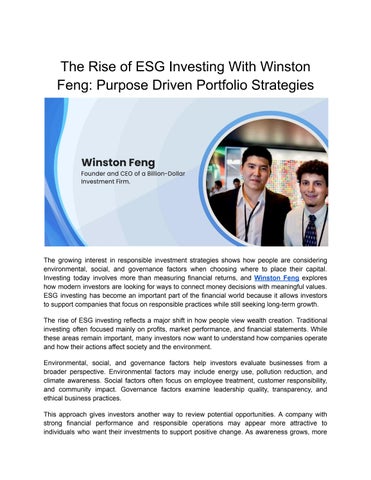
The Rise of ESG Investing With Winston Feng: Purpose Driven Portfolio Strategies
The growing interest in responsible investment strategies shows how people are considering environmental, social, and governance factors when choosing where to place their capital. Investing today involves more than measuring financial returns, and Winston Feng explores how modern investors are looking for ways to connect money decisions with meaningful values. ESG investing has become an important part of the financial world because it allows investors to support companies that focus on responsible practices while still seeking long-term growth. The rise of ESG investing reflects a major shift in how people view wealth creation. Traditional investing often focused mainly on profits, market performance, and financial statements. While these areas remain important, many investors now want to understand how companies operate and how their actions affect society and the environment. Environmental, social, and governance factors help investors evaluate businesses from a broader perspective. Environmental factors may include energy use, pollution reduction, and climate awareness. Social factors often focus on employee treatment, customer responsibility, and community impact. Governance factors examine leadership quality, transparency, and ethical business practices. This approach gives investors another way to review potential opportunities. A company with strong financial performance and responsible operations may appear more attractive to individuals who want their investments to support positive change. As awareness grows, more
businesses are improving their practices to meet the expectations of investors who value sustainability. ESG investing also reflects changing priorities among younger generations of investors. Many people want their financial choices to represent their personal beliefs and long-term concerns. They are interested in supporting companies that work toward solutions for environmental challenges, social needs, and responsible leadership. However, ESG investing still requires careful research. Investors should look beyond simple labels and understand the actual practices of each company or fund. A strong investment decision should consider financial health, business performance, and the quality of ESG efforts. This balanced approach helps investors avoid decisions based only on trends. Technology and better access to information have also helped the growth of ESG investing. Investors can now review company reports, sustainability goals, and ethical standards more easily than before. These resources allow people to make more informed choices and better understand the connection between business actions and investment outcomes. The future of ESG investing will likely continue to develop as companies, investors, and communities focus on responsible growth. Purpose driven portfolio management helps investors create strategies that combine financial goals with broader values. By understanding ESG principles and applying careful research, investors can build portfolios that support both personal objectives and a more responsible future.