
GROWING TOGETHER
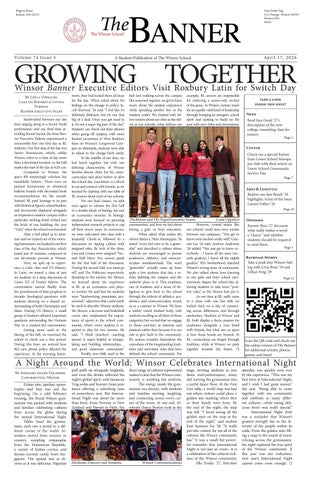
Winsor Banner Executive Editors Visit Roxbury Latin for Switch Day
By Leela Uppal1ri, L ara ,o Ro-ario 2 Lo1i-a F1r3an Banner
e4e51.i6e
S.a77
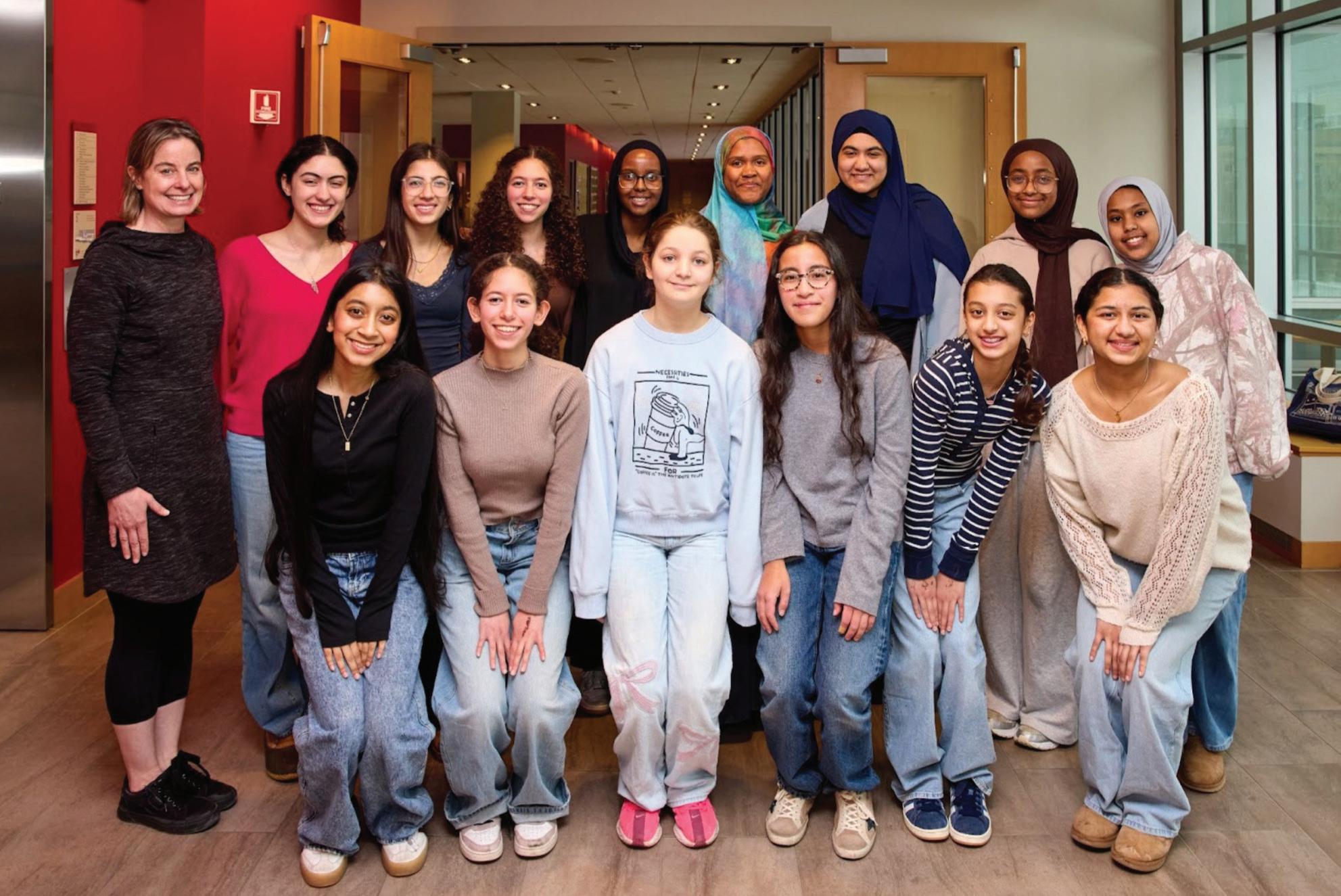
Sandwiched between our last time singing along to a Senior Small performance and our final time attending Banner layout, the three Banner Executive Editors experienced a memorable first: our first day as RL students. Our first stop of the day was Senior Homeroom, which, unlike Winsor, refers to a time of day more than a decorated location, as the bell marks the start of the day at 8:20 a.m.
Compared to Winsor, the space felt surprisingly colorless but beautifully historic. There were no painted homerooms or whimsical bulletin boards with decorated book recommendations for the month. Instead, RL paid homage to its past with historical figures, school leaders, and documents displayed alongside an impressive outdoor campus with a particular striking detail etched into the brick of one building: the year “1645,” when the school was founded.
After a bell jolted us to attention and we rushed out of the morning homeroom, we headed to our first class of the day: Postcalculus, which lasted just 45 minutes, compared to our 60-minute periods at Winsor.
Next, we split up to experience a Latin class and US History. In Latin, we joined a class of just six students in a deep discussion of Canto XX of Dante’s Inferno. The conversation moved fluidly from the punishments of false prophets to broader theological questions, with students drawing on a shared understanding of both Christianity and Islam. During US History, a small group of students debated important questions surrounding the Vietnam War in a student-led conversation.
Getting more used to the blaring of the bell, we traversed the school to check out a free period. During this time, we noticed how RL’s new phone policy affected the experience. At the morning home-
room, they had locked them all away for the day. When asked about his feelings on the change in policy, Jacob Shrowny ’26 said, “I feel like it’s definitely different, but it’s not that big of a deal. Once you get used to it, it’s not a super big part of the day.”
Students can check out their phones when going off campus, with more limited excursions in West Roxbury than on Winsor’s Longwood Campus, so ultimately, students were able to adjust to the change fairly easily.
In the middle of our days, we had lunch together, but with one defining characteristic of Winsor lunches absent: clubs. For RL, extracurriculars take place before or after the school day. Lunchtime is a block to eat and connect with friends, as we learned by chatting with our table of RL seniors about each of our schools.
For our final classes, we split once again to witness the first half of a double-block of biology lab and an economics seminar. In biology, students were focused on pursuing independent research projects to cap off their senior years. In economics, we were welcomed into class with a Jeopardy! Check-in, followed by a discussion on tipping culture with assigned roles. By luck of the draw, Lara and Louisa were assigned “Second Half Hero: You cannot speak for the first half of the discussion. During the second half, you must go off,” and The Politician, respectively.
Speaking to the teacher, Mr. Brown, we learned about his experience at RL as an economics and physics teacher. He said that his students were “hardworking, passionate, perseverant,” adjectives that could easily be used to describe Winsor students.
Mr. Brown, a lacrosse and basketball coach, also emphasized the importance of sports in the school community, where every student is required to play for two seasons. He said, “I think [teachers’ coaching sports] is super helpful in triangulating and building relationships… and good classroom community.”
Finally, now fully used to the
bell and walking across the campus like seasoned regulars, we got to learn more about the student experience while spending another free in the student center. We chatted with fellow seniors about our roles as the oldest at our schools, what defines our
example, RL seniors are responsible for enforcing a senior-only section of the grass. At Winsor, seniors reach for an equally valid kind of leadership through bringing an energetic school spirit and seeking to build on the past with new clubs and innovations.
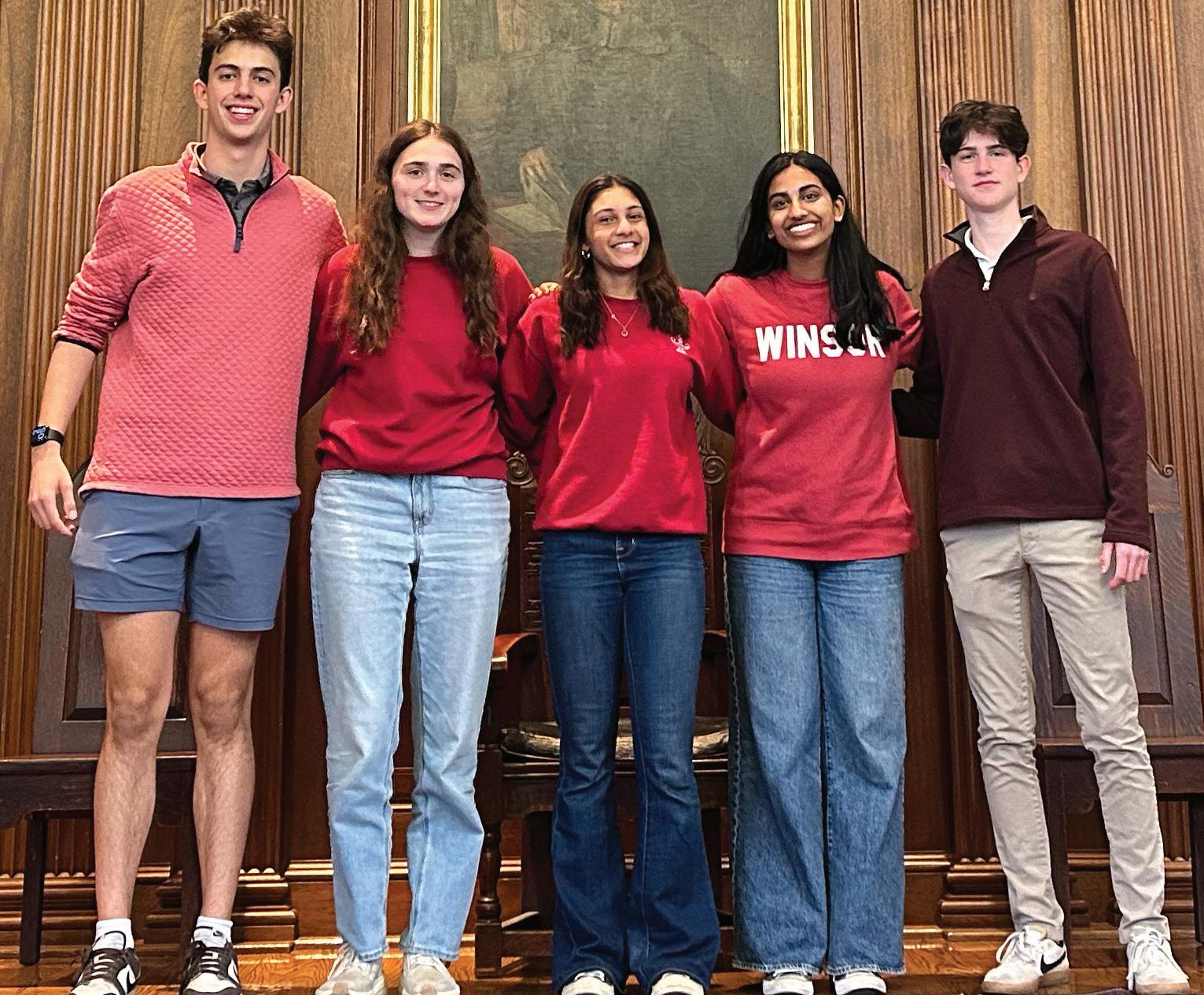
communities, and how we feel about having a girls or boys education.
When asked what makes the school distinct, Nitin Muniappan ’26 stated “every kid tries to be a generalist” and described a culture where students are encouraged to pursue academics, athletics, and extracurriculars simultaneously. The word “generalist” actually came up from quite a few students that day, a refrain defining the campus and the students’ place in it. This emphasis, one of tradition and a sense of obligation to give back to the school through the trifecta of athletics, academics, and extracurriculars, struck us as a contrast to Winsor. We have a widely varied student body, with students excelling in all three of those categories, but we feel that we engage in those activities as interests and passions rather than because it is our role to give back to the community. RL seniors consider themselves the custodians of the longstanding traditions and unwritten rules that have defined the school community. For
However, central tenets like our schools’ small sizes were similar between our campuses. “You get to know your teachers really well,” Grayson Lee ’26 said. Andrew Anderson ’26 added, “You just get to know everybody… I know all the sixes [seventh graders]; I know all the eighth graders.” RL’s brotherhood matched Winsor’s strong sense of community. We also talked about how learning in our girls and boys school environments shapes the school day, allowing students to take more “positive risks,” as Mr. Brown had put it.
As our time at RL sadly came to a close with one last bell, we looked back on a day of connecting across differences and through similarities. Students at Winsor and RL both display a fierce passion for academics alongside a true bond with friends, but what sets us apart is how those bonds are formed. At RL, connections are forged through tradition, while at Winsor, we push together towards the future. !
Read Jaya Goud ’27’s description of the new college counseling class for juniors
3
Check out a special feature from Lower School Newspaper club with their article on Lower School Community Service Day
7
Beatrix van den Bosch ’29 highlights Artist of the Issue Lauren Folker ’26
10
Bonnie Shao ’27 discusses what really makes a novel a “classic” and whether students should be required to read them.
5
Take a peak into Winsor Sailing with Livia Bene ’29 and Lillian Feng ’29
12

Scan the QR code and check out the online version of for additional articles, photos, games, and more!
A Night Around the World: Winsor Celebrates International Night
By Angeliki Agape Volan,eCon.ri01.ing Wri.er
Za’atar pita, japchae, spanakopita—and that was just the beginning. On a cold February evening, the Brock-Wilson gymnasium was packed with students and families celebrating cultures from across the globe during the annual International Night. Tables lined the gymnasium, each one a portal to a different corner of the world. Attendees moved from country to country, sampling empanadas from the Dominican Republic, a variety of Indian curries, and durian-coconut candy from Singapore. The spread was as diverse as it was delicious. Nigerian
puff puffs sat alongside tanghulu, and even the drinks reflected the night’s global spirit, with Jamaican Ting sodas and Korean Asian pear juices offering a refreshing taste of somewhere new. But International Night was about far more than food. From Norway to New Zealand and Hawaii to Haiti, the

sheer range of cultures represented makes it clear that the Winsor community is anything but uniform.
The energy inside the gymnasium was electric, with students and families moving, laughing, and connecting across every corner of the room. At one end, Afrobeats Dance Boston took to the

stage, inviting students to join them mid-performance; many did, turning the gymnasium into a joyful dance floor. At the First Gen table, a world map was laid out where visitors could place a golden star marking where they or their family were from. By the end of the night, the map was full. “I loved seeing all the golden stars on the map at the end of the night,” said student host Summer Gu ’28. “It really put into context for me all of the cultures the Winsor community has.” It was a small but powerful reminder that International Night is not just an event—it is a celebration of the cultural richness of the Winsor community. Ella Troalic ’27, first-time
attendee, was quickly won over by the experience. “This was my first time at International Night, and I wish I had gone sooner,” she said. “Being able to come together with my community and celebrate so many different cultures—while eating delicious food—was really special.” International Night 2026 was a reminder that Winsor’s greatest strength lies in the diversity of the people within its walls. From the golden stars filling a map to the sound of music echoing across the gymnasium, the night captured the true spirit of the Winsor community. If this year was any indication, next year’s International Night cannot come soon enough. !
The Banner and The Tripod Executive Teams Leela Uppaluri
Afrobeats Dancers and Students Winsor Communications
A Student Publication of e Winsor School
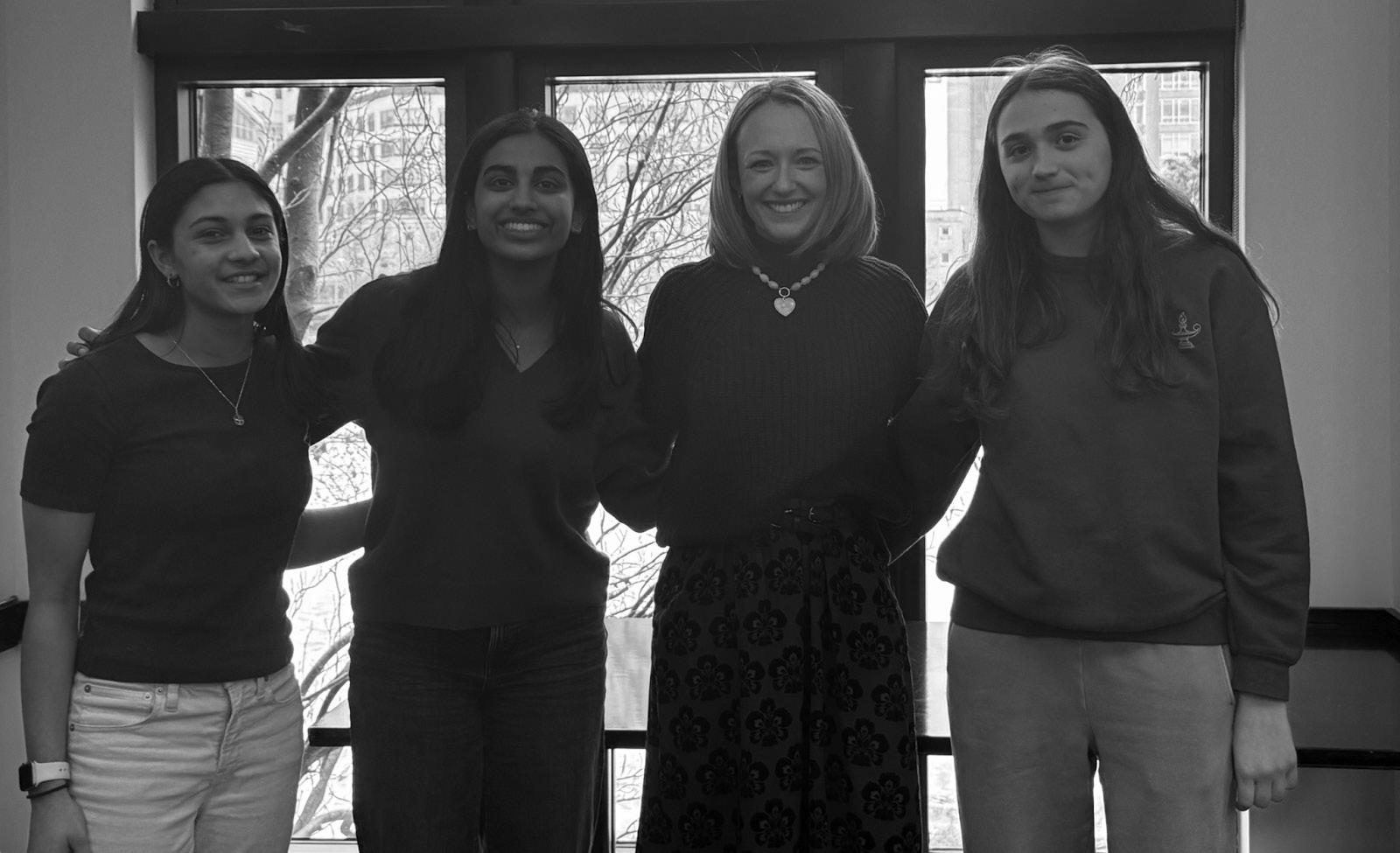
Beyond The Banner with Journalist Hilary Burns
By E%.ee- Lee Ba--e( S&a22
On March 3, The Banner welcomed Hilary Burns, a reporter for The Boston Globe, who connected student journalists with the professional world through her talk. From re:ections on her career to thoughtful advice about navigating modern media, Burns offered students a clearer sense of the value of their experience on The Banner and how it can translate into journalism beyond the school newspaper. She emphasized that professionals rely on the same core skills student journalists practice every day: conducting in-depth interviews, following leads, balancing speed with accuracy, and building credibility through thoughtful, human-centered storytelling.
“I grew up… on Cape Cod and went to Barnstable High School,” Burns recounted. “I knew I’d like to write and pictured myself doing something with writing someday, but I didn’t know exactly what that looked like, until I stepped into a journalism class. Having permission to ask questions is what really hooked me.” ,at early curiosity eventually led her to Wake Forest University’s student
newspaper and, later, to a career spanning business reporting and, more recently, higher education reporting.
Now covering colleges and universities for The Boston Globe, Burns described her work as both dynamic and unpredictable, ranging from breaking news stories written in a single day to long-term investigations that take months to complete. With the rise of social media and arti9cial intelligence, Burns acknowledged that capturing readers’ attention has become more di cult but also more important.
Still, she emphasized, “We’re going out and hearing real people’s stories, connecting dots, and adding context… in a way only humans can do.”
,e event was organized to provide students with practical insights into journalism. Louisa Furman ’26, Executive Editor of The Banner, explained, “We spend a lot of time learning to be student journalists… but we thought it’d be really cool to see what that looks like on the professional level.”
Lillian Feng ’29 re:ected, “One thing that really stuck with me was how much participating in her high school newspaper motivated [Burns] and sparked her interest in journalism. It made me realize how early experiences
and opportunities can really shape the kind of journalist you become.”
Bonnie Shao ’27 recalled that Burns’ talk changed her understanding of journalism, particularly regarding the perseverance required in a professional setting. “Burns’ story about having to get an interview from someone who initially didn’t take her seriously, and how she had to perse-
vere even when people didn’t want to talk or give a statement, taught me just how much grit and tenacity you need to work in journalism,” Shao said.
Burns concluded her presentation by o;ering advice to aspiring student journalists. “Don’t be afraid to do tough stories,” she said. “If it’s a good story, if you’re really interested in it, it’s easier to make someone else
interested.” “Some stories you have to do regardless, but when you have the option… pick something that surprises you,” and most importantly, something “you’re interested in pursuing.” Her visit le Banner journalists with a clear responsibility: to pursue meaningful stories with courage, intention, and a willingness to push beyond their comfort zones. ☐
How ZIP Codes Dictate Grocery Bills in Boston
By Ca%&.%- Wee6s
Co-&(%74&%-8 W(%&e(
In 2024, an investigation led by Boston youth volunteers from non-pro9t organization Hyde Square Task Force revealed substantial pricing discrepancies between Stop & Shop locations in Massachusetts. ,e volunteers exposed the food corporation for charging 18% more for identical grocery staples at locations in Hyde Park, a predominantly working class and minority neighborhood, than in the wealthier town of Ded-
ham. A more recent study produced in late 2025 by Hyde Square Task Force also reveals overcharging in other predominantly minority communities around Boston, including Jamaica Plain, Grove Hall, Mission Hill, and South Bay. ,ese pricing disparities place signi9cant 9nancial burdens on already struggling consumers, forcing families to spend thousands of dollars more on groceries annually.
Although Stop & Shop is one prominent example, this inequality re:ects a larger issue of predatory pricing practices used
by many major grocery corporations across Boston. In a community like Winsor, where many students are deeply engaged with social justice, this news is particularly concerning. As Evangelia Volandes ’32 stated, “It’s surprising to see America, and especially Boston, entering an era where companies can act so inhumanely towards people who do not have as much.”
Currently, Stop & Shop has begun to lower prices on thousands of items across its 88 Massachusetts locations. ,e store has also recently added yellow tags to


highlight new prices compared to the previous ones. Examples of these price reductions include 30 cents o; a pound of pasta, 40 cents o; 48-ounce cartons of ice cream, and 70 cents o; a 32-ounce container of chicken broth. Despite these changes, this situation raises important questions about accountability. Hannah Ahn ’28 wondered, “Would [Stop & Shop] have taken steps to rectify the situation if they hadn’t been caught? And are there other grocery stores doing the same, but simply haven’t been discovered yet?”
Shockingly, many Bostonians are unaware of Stop & Shop’s pricing disparities. For Volandes, this lack of awareness highlights the importance of “taking action.” She believes “some sort of protest or stand on social media” could both hold corporations like Stop & Shop accountable for their discriminatory practices and bring public attention to the issue. By increasing public awareness, consumers become better equipped to make informed decisions about where they shop and how they choose to advocate for change in their community. ☐

Ed%&o(-I--C0%e2
Leela Uppaluri ’26
E3e14&%5e Ed%&o(s
Lara do Rosario ’26
Louisa Furman ’26
News Ed%&o( Elina Suri ’26
A(&s Ed%&o( Elyse Hychong ’26
Ass%s&a-& Ed%&o(s Jackie Belliveau ’27
Aya Goldwasser ’27
Jaya Goud ’27
Bella Holt ’27
Anaisha Mallik ’27
Bela Patel ’27
Iris Shen ’26
S&a22 W(%&e(s Eunha Basu ’28
Nina Gersen ’27
Izzy Lai ’27
Molly Ma ’28
Charlotte Wheler ’27
Fa14.&y Ad5%so(s
Erin Cantos
Samantha Simpson
Tom Wensink
Cindy Jin ’28
Isabella Nguyen ’28
Lilac Nguyen ’28
Sophie Chan ’27
Co)y Ed%&o(s
Yara Kaafarani ’27
S)o(&s Ed%&o( Emma Birdsong ’26 O)%-%o-s Ed%&o( Bonnie Shao ’27 O-.%-e Ed%&o(s Sophie Kim ’26
Eileen Lee ’28
Ella Paterniti ’26
Stop & Shop Pricing
Caitlin Weeks
Hilary Burns with Executive Editors
Eileen Lee
Winsor’s College Class: Approaching the Process
By Jaya Go4d Ba--e( S&a22
As the college admissions landscape becomes increasingly complex, Winsor has introduced a new class designed to give students structured support as they learn about applications during junior spring: Approaching the College Process.
“ ,e goals of this class are to provide dedicated time for students to re:ect, research, and prepare to
apply to colleges,” says Director of College Counseling Ms. Graham. “Applying to college is a big task but one we o en don’t make time for in our curriculum.” In the past, students relied on limited homeroom sessions with college counselors or optional summer workshops, but “not all students can participate in the summer,” she noted. ,e new class ensures that every student “receives the same information in a timely manner.”
Importantly, the course is
not a replacement for Winsor’s existing college counseling program. Students will still meet individually with counselors throughout junior spring and senior fall and receive personalized support with essays, college lists, and 9nancial aid. By covering broader topics—such as researching schools or navigating the Common Application—in a group setting, the class allows counselors to focus more deeply on each student’s individual needs during one-on-
one meetings. Elena Bird ’27 remarked, “[It] has been very helpful in terms of time management—I don’t think I would have spent my free time doing things like 9lling out the Common App otherwise.” ,e curriculum was developed by the college counseling team, composed of Ms. Graham, Ms. Iwanik, Mrs. Powell, and Ms. Jackson, who bring together experience in college admissions, essay writing, and years of working with Winsor students. ,ey
also consulted other schools and outside resources to help shape the direction of the course. As Ms. Graham stated, “ ,ere is so much information out there now about applying to college, but much of it is too general to be truly helpful.” ,e goal is to provide guidance that is both relevant and tailored speci9cally to Winsor students. ,eir e;orts represent a proactive step toward making the college process more accessible, informed, and supportive for all students. ☐
Student Equity Board Civil Discourse E;orts
By Emma B%(dso-8 Ba--e( S&a22
What does civil discourse look like at Winsor? Well, on February 20, 2026, Winsor’s Student Equity Board (SEB) had a big job ahead of them: during assembly, they would attempt to answer that question as they guided the Upper School in “exploring topics such as cancel culture, political polarization, and respectful disagreement.” ,e initiative was part of an e;ort aiming to spark student engagement in conversations that, while o en avoided, are relevant to the Winsor community.
As the SEB assembly began, they outlined what civil discourse looks like in practice, emphasizing active listening, openness to di;ering perspectives, and the importance of mutual respect. To move from
theory to practice, SEB introduced an interactive activity designed to capture the real-time climate of political discussion at Winsor: a word cloud. Students submitted words that described how they felt about civil discourse at Winsor via their phones, and those words were projected on a large screen on stage. ,e most prominent word was not the most optimistic: in the center in large, bolded font, “censored,” stared back at every member of the audience. While responses varied, a problem was made clear: political conversation at Winsor feels limited.
For members of SEB, this was expected. Liana Min ’26, a head of SEB and one of the assembly’s panelists, explained that the e;ort had two primary goals: “one, to explain what civil discourse is… and two, to spark discussion about civil discourse at
Winsor, to have people examine how they interact with civil discourse, and to hopefully interact with it more.”
Min described Winsor’s political discussion climate as structured but constrained: “Winsor has very speci9c regulated environments in which civil discourse occurs, and outside of that it’s hard to engage with it,” she said. She emphasized that this limitation is not because of disinterest. Rather, it is because while many students may want to engage, they o en don’t know how to begin or whether others are open to participating.
Sophie Chan ’27 o;ers a different view of Winsor’s political discussion climate, adding, “I believe that civil discourse is nearly nonexistent despite the presence of clubs like Debate, Model UN, and Current Events and Politics Club, as political
conversations rarely spill into everyday student life.” According to Chan, this silence isn’t imposed but chosen. She suggests that students may avoid political topics and self-censor to preserve social harmony, particularly in a community where friendships and shared spaces feel more immediate than abstract disagreements. At the same time, Chan points out that Winsor’s culture might really be re:ecting a broader societal decline in belief that individual actions have any impact. “Politics a;ects everyone,” she says, “but I think many people don’t feel that impact directly, especially in a school setting.” For some students, particularly those focused on non-political 9elds, engaging in political discourse may seem unnecessary or even irrelevant. ,e question is, then, whether
an assembly like this can meaningfully shi that mindset. Chan o;ers a measured response: “Yes and no.” While any e;ort to address the issue is a positive step, formal, schoolwide discussions might feel forced. Still, the prominence of words like “censored” and “none” in the word cloud suggests a collective awareness that something is missing. ,erefore, any and every exposure to political discourse (or even to its existence) is a good 9rst step towards change. While SEB’s assembly did not resolve the complexities of political discourse at Winsor, it didn’t need to. Instead, it did the best it could: the assembly opened a conversation. And while this conversation may be uncomfortable, conversation is how communities start sharing ideas, then opinions, and then, civil discourse might not be that far away. ☐
,e Secret Story Behind Taking a Picture
By Da-%e.a A-&(as Ba--e( S&a22
Picture this: you’re driving home from sports practice one evening when you catch a glimpse of a gorgeous sunset. You quickly pull out your phone and open the camera app to snap a picture. Modern technology has gotten everyone used to this quick and easy way of taking pictures, but one art class at Winsor allows students to consider the true complexity behind this art: Darkroom Photography. ,e Darkroom Photography curriculum at Winsor introduces students to a process of taking photographs that goes beyond the simplicity of creating digital pictures. Producing a print in Darkroom Photography takes many steps; one must take well-exposed pictures on a 9lm camera, remove and process the 9lm, use a device called an enlarger to project the image, expose
light-sensitive paper to this image, and develop the photograph in various chemicals to end up with a 9nal print. According to Darkroom Photography student Evie Cleary ’28, “It’s much more rewarding than digital photography because there are so many more steps that you have to take just to get a single print.” Similarly, Visual Arts Faculty Ms. Rosenblatt believes this process is special because “it slows you down” and notes that since one roll of 9lm can only contain 36 pictures, “you really have to stop and plan and think about how you want to use those frames.” Additionally, Darkroom Photography is unique because its process helps students explore the medium’s underlying principles. Ms. Rosenblatt notes, “It makes people really understand how a camera works. We all have these cameras in our phones, but there isn’t this understanding of ‘why does this work?’ and ‘how does this work?’” Cleary

similarly mentions, “You have to think about so many di;erent factors like exposure and timings.” In a world where taking a
picture takes no more than a few seconds and a click of a button, classes like Darkroom Photography encourage us to slow down and
produce careful, thoughtful photographs and appreciate the true complexity behind such an automatic and seemingly simple action.
Adventures on Artemis II: Orion Space Launch
By Co(de.%a So-8, J4.%a--a S0%, ? So)0%e Wa-8
Co-&(%74&%-8 W(%&e(s
On April 1, 2026 four astronauts on the Orion spacecraft embarked on the Artemis II mission, setting off the first lunar flyby in half a century. The purpose of this mission was to test the spacecraft for the National Aeronautics and Space Administration’s (NASA) Artemis Program for future land -
ings on the moon. The Artemis Program is NASA’s next step to send humans back to the moon. It is broken into five missions, each increasingly more difficult. Broadcast coverage began at 7:45 a.m. on April 1. The crew members—Commander Reid Wiseman, pilot Victor Glover, and mission specialist Christina Koch from NASA, alongside mission specialist Jeremy Hansen from the Canadian Space Agency (CSA)—planned to
spend about 10 days aboard the craft, first orbiting the Earth to test Orion ’s systems, before traveling around 4,700 miles beyond the far side of the moon. This is the first mission around the moon and into deep space with a person of color and a woman on the crew. While they will not land on the moon, this mission will be the farthest humans have ever travelled from Earth, paving the way for a lunar landing in the future. The first lunar
landing was in the summer of 1969, followed by five other successful Apollo missions, capping off the Cold War era Space Race; over 50 years later, Artemis II marks another impressive milestone in space exploration. The successful test run will open the door for potential future missions. NASA plans to test moon landing capabilities for the Artemis III mission in 2027.
In order to launch the Orion capsule, the new 322-foot
Space Launch System (SLS) rocket weighing 5.74 million pounds generated 8.8 million pounds of thrust. It is the only fully constructed rocket able to send Orion , astronauts, and cargo directly to the moon in a single launch. This new space launch reminds us that we are always improving and growing. As new inventions alter the direction of our futures, where will this path take us? Anika Gupta ’29 “hope[s] they will find an alien.” ☐
Evie Cleary
Darkroom Photograph
Evaluating Gradeless Education in the Lower School
By So%hi( Ch)n B)nn(r S,)--
Since letter grades were rst introduced in the late 18th and early 19th century, the extent of their worth and accuracy in measuring student performance has been continuously proven to be unreliable and inadequate. Author and lecturer Al e Kohn, one of the strongest critics of grades, has long argued that grades only motivate students extrinsically. Extrinsic motivation stems from external factors and intrinsic from natural desire. In the case of education, extrinsic motivation undermines the bene t of raising life-long learners. Kohn has argued that grading creates an overemphasis on achievement that can undermine the process of learning and lead students to prefer the easiest tasks.
Around the turn of the 21st century, though, a new form of evaluating student achievement began to gain traction. e new model was termed gradeless learning and proposed evaluation
By B(ll) Hol, B)nn(r S,)--
On March 15, 2026, the cast and crew of paraded onstage at the Dolby Theater in Los Angeles to receive their award for Best Picture—the most anticipated award of the night. Despite being lauded by critics for its gripping action and having received several awards since its release, the film has fallen into controversy on social media. While some praise its themes of protest, others have criticized its fetishization of its Black female characters and compared it to the far more commercially successful Best Picture nominee, . While I also agree with these criticisms, I want to highlight one major flaw in the movie that I believe, conversely, won it the Best Picture Oscar over : its convoluted, ambivalent, and unoriginal political message.
highlights the story of an ex-revolutionary, Bob, and his daughter, Willa. The first 30 minutes
without the use of the traditional letter grade. Instead, teachers would replace grades with comments or rubrics. Winsor uses a form of gradeless learning in its Lower School, where students are given a checklist with comments instead of or in addition to letter grades. e checklist breaks down a grade to di.erent skills or content that a student is supposed to learn from a course, such as analytical writing, evidence, or participation for a humanities course.
My conversations with teachers revealed that the choice to go gradeless focused heavily on motivation. “Our desired goal is to provide feedback in an age-appropriate way that supports student well-being and emphasizes the learning process rather than the end result,” says Learning Specialist Ms. Crowley.
Institutional Researcher Ms. Labieniec added that grades “can, especially when students are young, set in and not have students develop those skills of resilience and growth-oriented learning. People want to be able
to push kids more [to] try hard things.”
Additionally, she stated, when the Lower School created checklists, there was “a lot of discussion and a lot of good, healthy debates with the faculty about whether, without grades, students would be motivated, and how [we could] communicate growth to students and families in a way that made sense.”
Students di.er in their views on the e.ectiveness of gradeless learning in evaluation and in preventing stress and competition. It should be acknowledged that the sample size for these interviews was incredibly small and did not provide an accurate representation of the views of the entire Lower School population.
Some students, like Zola Tierney ’29, expressed that checklists still provide a source of stress. She stated that when she was a Lower School student, “Checklists weren’t really private—people still compared them. Even though it wasn’t a letter grade, it was hard not to compare myself to others.”
However, other students praised the checklists as a source of constructive feedback. “It’s a lot easier to figure out what you need to improve on without it being like you’re doing this wrong,” said Ria Vartak ’31. Alma ChavezShirman ’33 agreed, saying that checklists tell students “exactly what things [their] teachers think that [they] should improve.” She described checklists as solely a source of improvement rather than pressure: “I don’t think I’m usually stressed because my teachers are always trying to help and not judge me.”
Students also provided some ways they thought the checklists could be improved. “I don’t think it always tells the full story,” said Tierney. “It can feel limiting since there are only a few categories, and it doesn’t always re0ect how much e.ort you put in or how much you’ve improved.” Vartak also commented that rubrics can be restrictive for certain courses with more subjective requirements, like English. While it would be di1cult
to ascertain for sure whether the gradeless model has had an overall positive or negative e.ect, the Lower Schoolers I talked to showed that the model has been successful in achieving many of its goals. Of course, evaluation can always be improved, and as Ms. Crowley acknowledges, “if we change our grading system every time there is a new trend, we’d be changing it annually, and that doesn’t seem healthy for the students either.” I do believe that there is room to improve within the current system. Restrictions caused by rubrics could be supplemented with comments for each mastery point rather than an overall comment. Additionally, teachers could add subpoints for each main mastery point to provide further clarity on what factors are considered for “analytical writing” or “problem solving.” Do you have strong opinions on grades at Winsor? Please email me your thoughts at sophie.chan@winsor.edu. 2
Review: for Best Picture
of the movie follow the downfall of the French 75, a far-left revolutionary group where Bob and Willa’s mother met. As we watch the group free immigrants from detention centers, break into banks, and set off bombs, sets itself up as a story with a strong political undercurrent linked to currentday issues.
However, the rest of the movie proves to be little more than an action movie with an afterthought of racial and political tension. Talia Ziblatt ’27 noted that “the beginning was really interesting…but then it was just a completely different movie. I was kind of confused because it no longer had to do with the revolutionary aspect.” With so little context for the French 75’s ideology, structure, and goals, the movie’s political messaging falls flat. Still, the political aspect of the movie seems to be the most praised attribute of the movie, perhaps because of how surfacelevel its commentary is.
In a recent interview, critic Naveen Kumar
explained, “[ ] paints in broad strokes—deportation bad, revolution good—and doesn’t feel galvanizing. is more allegorical, addressing race and power dynamics in America in an imaginative, sophisticated way (with vampires).” Where ’s politics are vague, ’ story of cultural preservation and appropriation is intentional in every choice and specific in its allegorical message. Lower School English Teacher Ms. Stringfellow attributes ’ cultural and box office success to its versatility: “There are people who enjoyed it just as a horror…it’s also a movie that is historical…[and makes] commentary on lots of different aspects of class, race, cultural integration.”
As fantastic as is, it lends itself to a more specific audience that is willing to engage with all of its nuanced themes. On the other hand, the accessory and unspecific nature of ’s political message allowed more people to resonate with its story, and likely won it its Best Picture Oscar. 2

Winsor Club Distribution: Does it Work?
By Cin3y Jin B)nn(r S,)--
e 200s hallway is bustling every day during Upper School lunch as students head toward clubs. ere, they review Science Olympiad studying tips, play poker to win candy, or discuss current political events. Winsor’s Upper School has 53 clubs this semester, ranging from high-commitment clubs like Speech and Debate and Mock Trial, to lower-commitment ones like Gardening Club and Sweetstakes. While Winsor o.ers a wide variety of clubs for students to explore their interests, the organization of the current club schedule
can make it di1cult for students to attend all the clubs they are interested in.
Winsor’s wide range of clubs has allowed me to practice skills and discover interests beyond the classroom. Participating in Science Olympiad has helped me thoroughly explore new scienti c elds and concepts, while Model UN has greatly improved my ability to improvise in public speaking. Many other students feel satis ed with Winsor’s current club distribution, including Lillian Feng ’29, who notes “there’s a good balance between humanities, STEM, and more low-commitment clubs.”
Chrissy Mayer ’28 agrees and
adds, “I like how every day at least one [STEM and one humanities club] meets.”
However, the recent change in the club schedule can make it di1cult for students to take advantage of all of the opportunities that Winsor’s broad range of clubs offers. While previously, many highcommitment clubs were spread across multiple days, this year, they are mainly concentrated on Day 1. is schedule change has brought some challenges to my personal club attendance; all the high-commitment clubs that I joined last year fall on Day 1 this year. is con0ict has made it difcult for me to participate in each
one consistently. Feng has also found di1culties with the new schedule: “I [do] and Science Olympiad, and they meet on the same day. Some meetings were required for both clubs, [which made it tough] to prioritize.”
While this aspect of the schedule can feel frustrating, Sisi Ansari ’28, a current Collect representative, explains that Collect “[didn’t] want to put high-commitment clubs on the same days as low-commitment [ones]” to prevent low-commitment clubs from being overshadowed. Additionally, some students, including Mayer, support this change, saying, “I like having all the high-commitment
clubs on the same day because you can only do so many high-commitment clubs before you have too much work to do; so, naturally, people are going to be limited in the number of high-commitment clubs [they can attend.]”
Perhaps one possible solution could be to distribute highcommitment clubs across two or three days, giving students the opportunity to participate in more than one without overshadowing all low-commitment clubs. However, it is ultimately impossible to create a perfect club schedule for everyone, and students may have to make the most of the opportunities that they have time for. 2
Seen at the Oscars Bella Holt
Taking Gold: Women’s Sports’ Fight for Visibility
By Lil)4 N56y(n 7
N56y(n
I8)9(ll)
B)nn(r S,)--
On February 19, 2026, the country erupted in celebration. All eyes were on the U.S. Women’s Ice Hockey team, which had snagged the gold medal in the Milano Cortina Winter Olympics after defeating Canada 2-1 in a sudden-death overtime game. The team dominated to earn a decisive victory, proving what excellence looks like on ice. Moments like these feel like proof that women’s sports have finally claimed their place under the national spotlight, but the spotlight, as it turns out, is faulty and fleeting.
Just days later, the U.S. Men’s Ice Hockey team triumphed over Canada in a similar victory, taking home their first gold medal in four decades. Amidst the barrage of clips, interviews, and articles praising the
team’s skill and launching the male players into stardom, another video emerged. While celebrating their win, the team received a call from President Trump, who invited them to the White House and said he would “have” to invite the women’s team or else he would “probably be impeached.” What should have been a moment of national pride instead became a national wakeup call as many of the players subsequently joined the president in mocking their female counterparts. Perhaps the most revealing aspect of the debacle was not the blatant misogyny itself but rather the ease with which the players repeated their demeaning rhetoric in what they thought was a private space. It seems, even in 2026, a historic gold medal and an impeccable record of wins still cannot earn female athletes the respect they deserve.
A report from Utica Univer-
sity reveals that during the Olympics, women’s sports have received more primetime coverage than men’s in seven of the past eight games. On paper, this may sound like progress—a shift in priorities and a recognition of talent that is long overdue. After all, eight of the 12 Team U.S.A. gold medals in the most recent Olympics were won by women. Yet the Olympics are unfortunately the exception. For a few weeks every two years, women’s sports are ephemerally elevated, celebrated, and broadcast to millions. And then, just as quickly, they are sidelined again. But even during this event, the talented female athletes who honor their countries are the victims of ridicule and misogyny as old as the sports themselves.
However, the U.S. Men’s Ice Hockey Team’s locker room incident proves that the need for reform in the professional sports world is
not limited to more media coverage or equal resources. Rather, respect and recognition start with the language used around women’s sports, and getting rid of the misogyny still apparent in that discussion is just as important, if not more important, than the tangible gains themselves. Media coverage often uses infantilizing terms like “girls,” highlights marital status or appearance over athletic performance, refers to women by their first names much more often than men, and frames women’s sports as charity causes. Even if women’s sports finally get the same number of broadcast minutes, this more subtle form of discrimination is just as effective at promoting the viewpoint that female athletes are lesser than their male counterparts.
Promoting equitable language around women’s sports begins at institutions like Winsor, where young female athletes are never taught that
their contributions are any less important. As Allegra Catalino ’28, a member of the Winsor Crew Team, shares, “having so many girls on these teams has made me more confident in doing sports because I’m around so many strong female athletes each day.” Winsor’s Ice Hockey Coach, Ms. Burke, asserts that Winsor pushes its students “to challenge [their bodies] beyond what [their minds] think is possible.”
Female athletes are not the punchline of an unfunny joke. They are no less deserving of the spotlight, and their broken records are no less consequential because of their gender. In the words of a true professional hockey player, Olympic Gold Medalist Hilary Knight, “when our world is telling girls and women who they should be, it is critical that we empower those girls and young women to be confident with who they are.” 2
“Classic” Literature: An Unfruitful Debate
By B onni( Sh)o B)nn(r S,)--
What defines a “classic” novel in America? Is it age? Prestige? Or is it the literary traditions that a book follows, the morals and cultural values it upholds, and the people that it does and does not represent?
In English classrooms across the United States, many teachers and school administrators are currently debating whether or not students should be required to read the “classics.” Yet, the very meaning of “classic” literature is fraught. As someone raised in the United States, I grew up viewing a particular group of works as so-called classics. This category included books like , , and
While I eventually read and enjoyed many of these books, I consistently found myself somewhat at
odds with the themes and characters depicted within them. From the individualism of to ’s discussions of the American Dream, most of these books represented largely Western ideologies that, as a Chinese American student, I could not entirely relate to.
I am not alone in this experience; in 2023, around 42% of the U.S. population identified as non-white, and this number is only growing. Schools across the country must, in turn, adapt their curricula to reflect their changing student demographics instead of requiring their students to read stale novels that do not necessarily encompass their own experiences.
This is not to say that schools should completely reject older works. Reading such texts contains a myriad of benefits. As English Department Chair Ms. Jackson
noted, certain older texts “have influenced a lot of recent writers,” and “because so many of these texts are referred to and alluded to” throughout contemporary works, the sidelining of such works presents “a loss for understanding later literature, and also for understanding culture—very broadly defined.”
Thus, perhaps the question that schools should be debating is not whether students should read the “classics” at all, but how schools might expand their definitions of classic literature beyond the Western canon. As Head of Bookmarked (Winsor’s Book Club), Sisi Ansari ’28, argued, in order to ensure representation in their English classes, schools should “make sure to actually have a diverse selection rather than just the most popular classics…the classics don’t have to be defined by one specific plot or style.”
Ms. Jackson shared the Win-
sor English Department’s policy on curriculum construction: “We’ve basically gone away from talking about the word ‘classic’ at all. The way we’ve thought about it instead is, ‘how do we make sure that we are offering a variety of voices and cultures and backgrounds and time periods and genres?’” She continued, “We’ve acknowledged that it’s impossible to cover it all, so we do a little bit of a lot. Then, students can learn the skills to approach a culture’s literature that’s unfamiliar to them and apply that in later classes, or when they’re reading books from another culture outside of school.”
This philosophy is especially evident in Winsor’s Global Studies courses, which allow students to venture outside the Western canon of literature. In Indian Literature this past fall, for instance, students read texts such as the , a classic Hindu epic that
is viewed as a foundational text throughout much of India. Such experiences expose students to philosophies and literary traditions that they may not have previously encountered and encourage them to approach unfamiliar experiences with an open mind.
The process of creating an English curriculum in the 21st century requires striking a delicate balance between preserving the largely Eurocentric literature that has defined English classrooms of the past and providing windows and mirrors to America’s ever-diversifying population. In curating their students’ reading lists, English teachers should consider moving away from arbitrary definitions of “classic” writing and focus on choosing works—no matter the time period, subject, or style—that equip students with the skills to interact with a diversity of people, traditions, and literature in today’s modern age. 2
How Can Winsor Cultivate Civil Discourse?
By Ay) Gol3:)88(r
B)nn(r S,)--
On February 20, the Student Equity Board held an assembly dedicated entirely to civil discourse. For me, the most memorable part, ironically, was the widespread agreement on Winsor’s lack of said discourse. An interactive word cloud revealed students’ ideas about what might be causing this disconnect, with the most popular reasons emerging as self-censorship, fear of cancel culture, or a collective hesitation to navigate difficult conversations. I myself have self-censored, and I recognize the fear in bringing my own ideas to a discussion, not knowing whether my perspective will be accepted or even listened to.
According to a 2021 survey from College Pulse, more than 80% of college students report self-censoring at least half the time on campus. Additionally, a mere 40% of students said they felt comfortable disagreeing with a professor, which College Pulse notes is down five points from its previous survey the year before. These statistics represent a growing trend among the
youth of our generation of an unwillingness, or worse, a fear, to participate in healthy disagreements.
So, why is self-censorship at Winsor a problem we should tackle? I think it’s because the benefits of healthy conflict far outweigh the “risks” we may perceive. Two people both being able to listen to one another can change their opinion on an issue entirely. Even if an argument doesn’t fully change their mind, it can at least inform them of someone else’s perspective, ideas, and the context of their opinion.
The best result of civil discourse, however, is the effect it would have on our community as a whole. Making the leap to have the first conversation can make the subsequent conversations feel less scary until we as a school become truly comfortable with the idea of disagreeing and talking through our contrary beliefs. If we can integrate this practice into our daily lives, we can enrich our academic environments, social experiences, and maybe feel a little more like ourselves and less like we’re holding back from others who just want to listen.
Commenting on this dis-
connect, Director of Community and Inclusion and History Faculty Mr. Braxton acknowledged how “it can be easy to fall into the assumption that everyone thinks the same way.” Especially in a seemingly homogenous community like Winsor, this assumption “makes it harder to engage with and seek out different perspectives.” However, he also noted the importance of trying to “actively seek out different ways of thinking,” especially during political discussions.
Liana Min ’26, a member of the Student Equity Board, mentioned that, through surveys and conversations, she “can firmly say that Winsor students want to talk about what’s going on beyond 103 Pilgrim Road” but that we sometimes “don’t know how to start those conversations.” Min shared the board’s goal to “cultivate a safe space at school that invites students to share their opinions and experiences.”
Overall, we should keep in mind that self-censorship extends beyond Winsor. It’s generational, and it affects not just ourselves but how we interact with each other and the world at large—but don’t
feel overwhelmed. As it stands, I think the best thing we can do is to “be the change we want to see.” It may sound corny, but it’s true. At Winsor, there’s plenty of ways to engage in civil discourse, whether through attend-
ing a Current and Political Events Club meeting, trying out for Debate or Mock Trial, or discussing what’s going on in the world in a casual setting. Even if just one person decides to make a shift, the rest will fall into place. 2
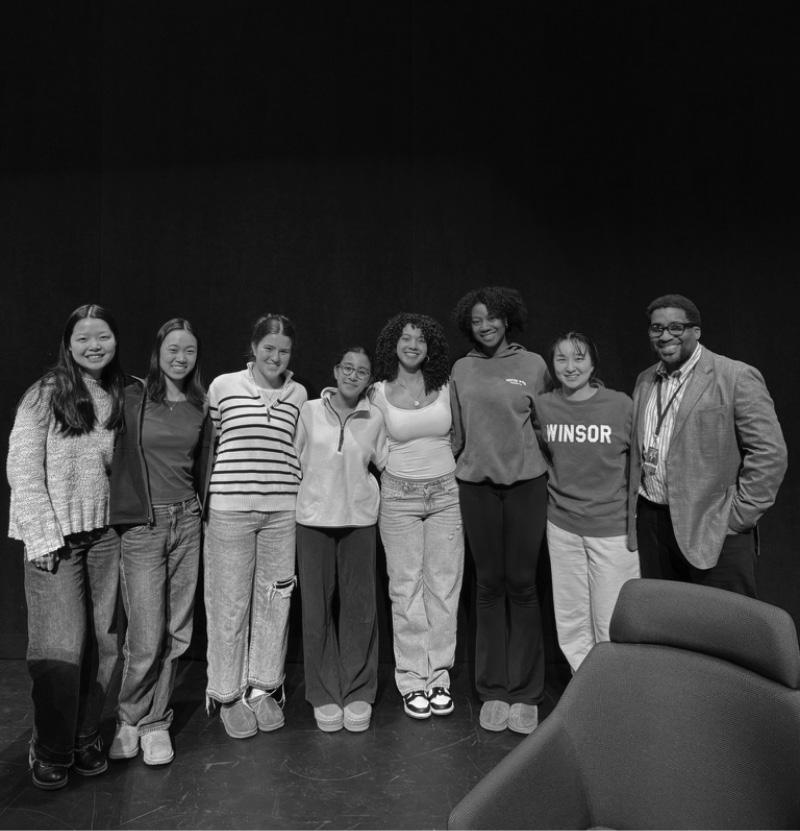
Student Equity Board with Mr. Braxton
Liana Min
By L..l% U22%l,ri B%)).r St%11
Every year, Muslims around the world observe Ramadan, the ninth month of the Islamic calendar. According to Islamic tradition, Ramadan marks the period when the first verses of the Quran were revealed to the Prophet Muhammad. During this month, many Muslims fast from dawn to sunset, engage in prayer and reflection, and focus on charity and community. This year, Ramadan was observed from approximately February 17 through March 19. Eid al-Fitr, beginning at sunset on March 19, marked the end of fasting for the month and is an exciting celebration to conclude Ramadan. Winsor’s Muslim affinity group, Ummah, and the group’s active focus on inclusion are an important source of support for students observing this religious month.
Ummah is a close-knit community, or “small family,” of Muslims as Co-head Hamna Chowdhry ’26 describes it. During Ummah meetings, Muslim students gather to talk about current events, share goals, plan
By Ni)% G.r0.) B%)).r St%11
“Just to play the devil’s advocate…” is a phrase all Winsor students know well. In one class or another, we’ve all heard it. Usually, it earns an eyeroll from classmates. Yet despite the eyerolls, these brave contrarians continue with their hot takes through statements that contradict the main opinions and narratives in the conversation. I, too, used to roll my eyes at this phrase, seeing it as a ploy for participation points, and was frustrated by the idea of someone arguing
assemblies, and “chill” together.
As Chowdhry states, “The group creates a space where students can connect over shared experiences without needing to explain or justify them.”
At the same time, the school has taken steps to make observing Ramadan easier during a busy school day. For example, Lower School students who are fasting are allowed to go to designated spaces during lunch instead of remaining in the dining hall. This flexiblity offers them a more comfortable environment to be in rather than one that is centered around food. The school also reserves the yoga studio during lunch for students who wish to pray and has provided prayer rugs to support this practice. While these accommodations may seem to be small, they reflect a growing recognition of students’ needs.
At Winsor, as Yasmeen Alam ’27, Ummah co-head states, “Muslim students feel recognized without having to ask.” Ummah has also worked to expand conversations about identity and faith within the broader school community. Visiting author Autumn Allen
a point they didn’t even believe. However, recently, I’ve grown to appreciate these moments of controversial conversation and wish that more people were willing to play the devil’s advocate.
This fall, I spent the semester at the School for Ethics and Global Leadership (SEGL) in Washington D.C., where “growth discourse” is a foundational part of the curriculum. I spent three months surrounded by debate champions and Model UN delegates with whom essentially every conversation turned into an argument. Though this tendency frustrated me at first,
spoke about her experience as a Black woman who converted to Islam in her 20s at this year’s Ummah Assembly in March. Her experience navigating both race and religion showed that Muslim identities are not monolithic and highlighted the importance of making space for a range of voices within the community.
She also pushed back against the expectation that Muslim writers should explain themselves to non-Muslim audiences and readers, noting “I don’t overexplain in my novels” and that she writes primarily for those who already share or understand aspects of her identity. By educating the larger school community about
Muslim identity, Ummah has expanding understanding of Ramadan and other Muslim traditions for the Winsor community. Ummah’s collaboration with Winsor has created spaces for Muslim students, and increased education has helped foster an environment where belonging is a natural outcome. ☐
after returning to Winsor, I’ve missed this argumentative spirit and can truly attest that these moments of “devil’s advocacy” are actually some of my fondest memories of my time at SEGL.
Even when the people that I was debating did not actually disagree with me, they were committed to fully testing my every argument. By doing so, they forced me to consider the foundations behind the beliefs I had never thought to look past and ultimately helped me develop well-thought-out opinions supported by thorough research and evidence.
Though I have witnessed many “devil’s advocate” moments at Winsor, I’ve found that these moments are not often wellreceived. Rather than genuinely listening to a counterargument, we brush it off rather than try to understand it. Winsor’s Student Equity Board (SEB) conducted a survey to understand how Winsor students feel about expressing dissenting opinions as a part of their civil discourse initiative. When asked, “In general, do you think there are consequences to sharing a dissenting opinion in an academic setting?”
69.8% of respondents said yes.
Co-chair of the SEB Curriculum Committee, Yasmeen Alam ’27, expressed “it’s frustrating to see how people react to opinions. It feels like we will never be able to have productive conversations because no one is listening to anyone who disagrees with them.” It is this attitude towards dissenting opinions, towards devil’s advocates, that inhibits us from strengthening our own views. The idea that anyone who voices a different opinion is advocating for the devil creates enough stigma around different opinions; we must not further this stigma by refusing to listen to them. ☐
Experiencing a Sports Analytics Conference
By Emily Y%koo(i%) Co)tri(,ti)- Writ.r
On March 7, I attended the 2026 NHSSAA (National High School Sports Analytics Association) Summit, a conference co-chaired by Ginny Choe ’27. Choe played an important role in organizing this exciting event by helping plan the conference, coordinating student presentations, recruiting speakers, moderating discussions, and helping with marketing.
Mike Zarren, the Vice President of Basketball Operations for the Boston Celtics, emphasized the importance of finding something that you are both passionate about and great at in the first keynote address as he shared insights about his career path with the conference.
Next up was Daryl Morey, president of basketball operations of the Philadelphia 76ers. Because the conference didn’t allow recording, speakers like Morey could share candid re -
sponses and detailed perspectives that wouldn’t typically be heard elsewhere. For example, he shared the thought process behind trading Jared McCain and the factors that go into similar decisions.
Next, students shared sports analytics research, including a project analyzing the optimal base lead-off distance in Major League Baseball (MLB). Choe says, “I always look forward to
the student presentations. They are impressive, and it’s rewarding to give high schoolers a platform to share their research because it’s hard to find events like this.”
Later, sports content creator Andrew Fenichel led a discussion on whether March Madness is too random for analytics to matter. The odds of predicting the perfect bracket are only 1 in 9.2 quintillion, and a poor shoot -
ing day, an injury, or a breakout performance can end the season for even the most favored teams. Fenichel concluded that analytics are valuable, even if they cannot fully account for the chaos of the single-elimination tournament.
One particularly inspiring moment was hearing from Caiti Donovan, head of growth strategy of the WNBA. I asked about the league’s growth and her thoughts

on Unrivaled—a 3-on-3 professional women’s basketball league that many WNBA players play in during the winter. She believes Unrivaled has an “all positive” effect on the WNBA as it promotes the players and expands visibility for women’s sports. Likewise, Choe emphasized the importance of including women in events like the NHSSAA conference. Despite challenges in securing women presenters this year, Donovan’s inspiring insight as the only female speaker and one of the few women at the conference ensured that female perspectives were represented. After a day of learning about sports analytics, I am so glad I got to attend this engaging experience with other high schoolers passionate about sports and really interested in sports analytics. The conference brought together so many different students and taught me important lessons about how new technology and the rise of sports analytics are forever changing sports. ☐
Winsor Illumina Performs With RL’s Glee Club
By Elyse Hychong Banne, S-a..
On Sunday, March 1, the David E. and Stacey L. Goel Theater was filled with the sound of voices reverberating against the wooden sound panels. It was the highly anticipated joint Winsor and Roxbury Latin chorus concert, a performance Illumina and Glee Club members had been busy preparing for and which students had been excited to attend for months.
Every year, Winsor and Roxbury Latin’s choruses combine for a joint spring concert. Winsor’s Illumina and RL’s Glee Club both perform individual set lists as well as a joint choir work together. This joint piece is typically a long classical work, performed in full; the past three years, the schools have sung Faure Requiem Op. 48, Bach Cantata BWV 4, Christ lag in Todes Banden, and Schubert Mass No. 2 in G Major. In a slightly new take on this decade-long tradition, this year, we sang Will Todd’s “Jazz Missa Brevis.” This piece uses the same Latin Mass lyrics and traditional movement structure but sets it in jazz. The familiar Kyrie first movement is reimagined as swinging jazz, while Gloria is upbeat and accompanied by drums. Indeed, we were thrilled to welcome five guest jazz musicians, including incredibly talented alum Talya Le ’24. Annie Frigerio ’26 reflected, “The joint mass that we do every year is always one of
my highlights of Illumina. This year, when we found out we were singing a jazz mass as opposed to one that is more classical, I was curious and a bit apprehensive. But, like most challenges
Mr. Marshall throws our way, I ended up loving it. Our guest artists were incredible, and it was awesome to hear Illumina take on a new sound…all in all, I’m happy we tried something new.”
Other highlights of the concert included Senior Small’s performance of Stevie Nicks’s “Dreams” and Olivia Dean’s “A Couple Minutes.” This year, Senior Small and the seniors of
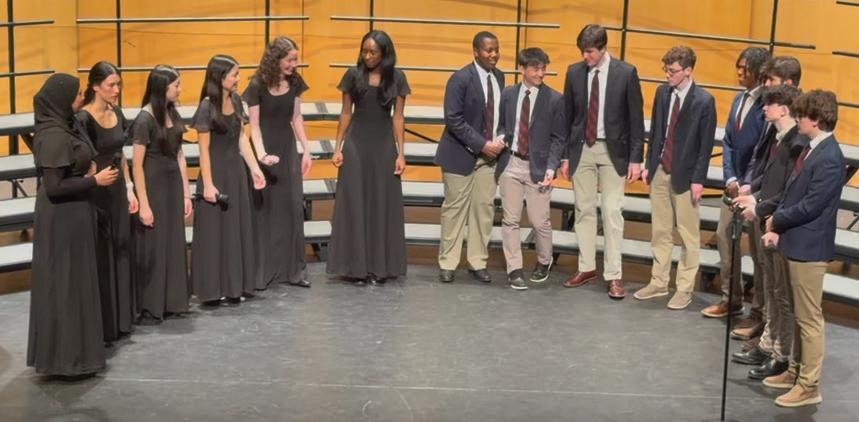
Winsor’s Senior Small Sings with RL Seniors
RL’s Latonics also collaborated to sing Daniel Caesar’s “Best Part” together—a decision made by all the seniors but especially spearheaded by Liana Min ’26. She shared, “I’ve always wanted to work with outside groups. Though we hear amazing voices at Winsor, from a musical perspective, having lower voices can deeply enrich a sound, and we, as an ensemble, can pursue a whole new style of music. Honestly, it was pretty difficult to arrange. It’s never easy to coordinate with our brother schools, but when it happens, it’s worth it. I’m so glad we did it, and I hope the tradition lasts in the years to come.”
“A Couple Minutes,” “The Best Part,” and many other pieces in the Illumina repertoire were all arranged by our talented Choir Director Mr. Marshall. From arranging to conducting to teaching us to performing with us onstage, Mr. Marshall has supported us every step of the way with his trademark humor, commitment to the score, and care for each of us. Min exclaimed, “He’s a marvel. And watch out for him at Carnegie Hall next year!” Readers of The Banner can listen to the joint concert at the Vimeo recording attached to the Weekly Update on March 7, 2026. Illumina also performed at Winsor’s Spring Concert on March 10 and will perform again at the Parents’ Concert and at graduation. We hope you will enjoy the concerts! !
Lower School in the Wild: Community Service
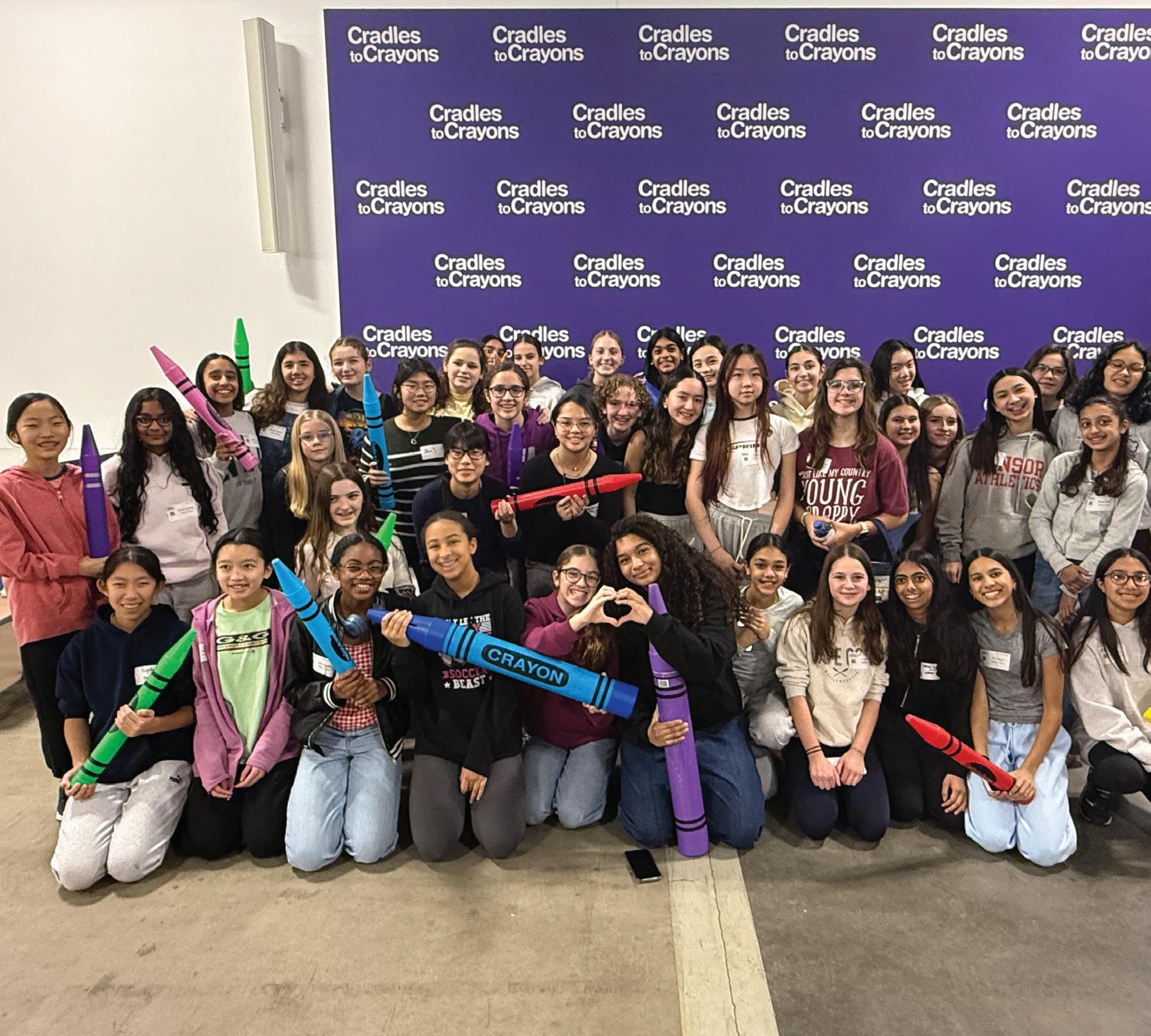
On January 22, 2026, Lower School students traded their textbooks for work gloves. The recent Community Service Day at Community Servings and Cradles to Crayons reminded Winsor’s Lower School community that for many children and families in Massachusetts, the struggle for basic essentials is a daily reality.
Winsor students often hear about food stamps or housing assistance, but Cradles to Crayons focuses on a crucial basic need: clothing. One in three Massachusetts children lives in low-income or homeless situations. Poverty isn’t just a number; it’s a child not having shoes that fit, a coat for the winter, or a backpack for school. Without these, kids face “unfair barriers” and don’t feel valued. Students embodied the organization’s motto “It’s More Than a Cause, It’s a Kid” as they hand-picked outfits and school supplies for others, knowing that their work would directly help a peer feel “ready to learn” and “safe.”
Many Lower Schoolers have volunteered at Cradles to Crayons before and have mixed opinions on whether or not they will be returning as volunteers in future years. The majority of contributors feel as if they did make an impact on clothing
insecurity, yet some feel like they only helped a small portion of the community. Despite this minor downside, the experience changed the majority of students’ views on community service and most students noted that they would come back in future years.
Avery Wisz ’ 33 and Sara Arango Ortega ’ 31 spoke to
the Lower School Newspaper Club about Community Service day. Wisz shared, “I have never gone to Cradles to Crayons, but I learned that they donate clothes to kids that can’t afford them.” Arango Ortega replied, “I learned that it takes a lot to process donations.” Both girls said they didn’t know what to
expect but enjoyed it overall. When asked if Cradles to Crayons changed their perspective of community service, Wisz said, “I thought community service was cleaning the street or trimming your neighbor’s bushes.” Meanwhile, Arango Ortega added, “It made me think of doing this as a
hobby.” Both girls mentioned that while volunteering at Cradles to Crayons had not been their first thought when considering community service, they realized the organization’s importance through Community Service Day.
Meanwhile, in Jamaica Plain, Class IV jumped into the kitchens at Community Servings, an organization that’s dedicated to the belief that “food is medicine.” Walking into the building, the energy was high. Class IV students worked to package, label, and sort food. Seeing the care that goes into a meal for someone battling a chronic illness made the concept of “health equity” feel much more personal than just a term in a textbook. Several members of the Lower School Newspaper Club attended Community Service Day. Elena Catalino ’ 30 reflected on the “importance of learning how [she] and [her classmates] can help make a difference in the community and help others.” “It felt like a bonding experience for our class,” Lucy Mohan ’ 30 added. While Classes I, II, and III do community service all together, Class IV gets their own experience. Volunteering at Community Servings introduced the eighth graders to more responsibility and allowed them to reflect on the numerous service opportunities available to them as older community members. !
By Lowe, School News0a0e, Con-,123-1ng W,1-e,s
Lower Schoolers at Cradles to Crayons
On in Ice: Olympic “Redos” Weaken Competition
By Charys Liu Contri,utin- Writ.r
e sounds of the blades cutting across ice, the intensity of the Olympic competition, and the expectation of near-perfect performances—events like the Winter Olympics are supposed to represent the highest level of athletic achievement. is year, however, attention has shi ed away from the athletes themselves and toward an unexpected issue: reports that the ice was too so for the Men’s Short Program in Figure Skating and led to a number of mistakes, including gold medalist Ilia Malinin’s two falls. Some have argued that competitors affected by these conditions should be given the chance to redo their performances. While that reaction may seem fair at rst, allowing redos would ultimately undermine the integrity of the competition.
e biggest issue with granting a redo is fairness. Olympic athletes train for years, knowing that not every factor will be within their control. Ice conditions, much like the weather in outdoor sports, are part of the environment. Even if the ice was so er than expected, every skater performed on the same surface. If
one athlete is allowed a second attempt, it raises di cult questions about consistency. Would every minor 3aw in conditions justify another chance? At that point, the competition becomes less about performance and more about negotiating ideal circumstances.
Unpredictability is part of what elite athletes must train for. e Olympics are not just about executing skills perfectly under ideal conditions; they are about adapting under pressure. A slightly so er surface may a ect speed or stability, but the ability to adjust in real time is part of what separates good athletes from great ones. If competitors are given redos whenever conditions aren’t perfect, the element of resilience is lost.
Some students at Winsor agree that redos would go too far.
Molly Ma ’28 said, “It’s de nitely unfortunate that the ice isn’t what the skaters expected, but everyone performed under the same conditions. It wouldn’t be fair if someone got a second chance while others didn’t.” Additionally, Esther Zhang ’28 pointed out that “part of sports is handling and adapting to things you can’t control. If you start redoing events, it takes away from what makes the Olympics the Olympics.”
In addition to fairness and
the competitive atmosphere, there are also logistical challenges. Olympic events run on tight schedules, with millions of viewers watching around the world. Allowing redos would delay competitions and create confusion for judges, athletes, and audiences alike. More importantly, it could undermine con dence in results and raise doubt about whether scores truly re3ect an athlete’s ability.
Of course, none of this means that the concerns about ice quality should be ignored. Organizers have a responsibility to provide the best possible conditions, and athletes deserve a fair and safe environment. However, once the competition begins, the conditions, imperfect as they may be, are part of the event.
While the idea of a redo might seem like a fair solution in the moment, it ultimately shi s the focus away from resilience and toward perfection. e Olympics are compelling not because everything goes right, but because athletes rise to the challenge when things don’t. Instead of redoing performances, we should recognize the skill it takes to compete through uncertainty, and accept that imperfection is part of what makes competition real. ☐

Athletes Should Express eir Political Opinions
By Charlott. Wh.l.r Bann.r Sta22
As prominent gures in popular culture, top athletes are heavily scrutinized by the public. As a result, their political statements reach a large audience and o en attract criticism from people who believe athletes should remain neutral about
political matters. I believe, though, that it should be normalized for athletes to freely share their political opinions.
At a press conference at the Winter Olympics this February, American freestyle skier Hunter Hess said, “Just because I wear the 3ag, it doesn’t mean I represent everything that is going on in the U.S.” Following these statements,

President Trump called him “a real loser.” Hess’ comments also provoked backlash from the American public and Congressman Tim Burchett, who said that Hess should “shut up and go play in the snow.”
Burchett’s comment carried no actual weight because American athletes are legally entitled to free speech. Still, some believe that athletes like Hess should “stay in their lane” and only discuss matters relevant to their athletic pursuits. Athletes, however, are more than just their competitive personas; they can be both erce competitors and voices for political change. For their part, fans should be able to support and admire athletes as competitors, regardless of whether they agree with their political opinions. As Mr. Brooks-Hedstrom shared, “We want our heroes to be perfect, and for many people that means they want their heroes to think like they do. We need to let go of that.”
Additionally, athletes have a long track record of using their platforms to support meaningful political changes. For example, Billie Jean King, a former tennis player who won 39 Grand Slam titles, used her fame and unique perspective as a high-level female athlete to rally support for the passage of Title IX. She even testi ed before Congress in support of this law, which would encourage women to compete in sports at all levels following its rati cation. Athletes have created meaningful change by straying from their lanes in the past.
Of course, athletes are not always allowed to express their political opinions. e Olympic Charter prohibits athletes from making political commentary on the playing eld, in the Olympic village, and during Olympic ceremonies. e International Olympic Committee has stated, “It is a fundamental principle that sport is neutral and must
be separate from political, religious or any other type of interference.” If athletes do not follow the Olympic Charter’s guidelines, they may be barred from competition. I agree that athletes should keep politics separate from sports while play is happening to preserve the integrity of the game. However, I see no harm in athletes taking a political stand before or a er a sporting event. Audiences and other athletes should be mature enough to respect the athlete during competition, whether or not they appreciate the athlete’s political statement.
As Elena Bird ’27 opined, “sports are inherently political… they are a re3ection of societal values.” In a society where everything is increasingly politicized, it seems unfair to criticize athletes for sharing their opinions—especially given that their political advocacy has bettered our society in the past. ☐
Student-Led Conferences: Helpful Or Not?
By Esth.r Z hanContri,utin- Writ.r
When it comes to the effectiveness of student-led conferences for Winsor’s Upper School, opinions are mixed. e initial approach sounds great: instead of parents sitting with an advisor to discuss the academic goals of a student, the students take initiative and discuss what they truly want to accomplish throughout the year. Students can talk about a variety of topics, such as what excites them in class and where they’re struggling. Instead of grades and teacher comments, the conferences are a perfect chance for students to organize their thoughts and actually
re3ect on their school and personal life. Charis Liu ’28 commented, “Student-led conferences are a good way for me to present my work and goals for the school year, and I enjoy the process of working on it during advisory sessions.”
Not everyone is convinced that the bene ts outweigh the costs.
Some students feel that prepping for these conferences eats up free periods that are already too short, especially under the new schedule.
What might feel like a meaningful exercise in self-advocacy to some can feel like the same old assignment, just recycled for another year.
Personally, I think conferences are a good opportunity for students to present their work
and skills from this year. However, will I admit that they might seem quite redundant, especially considering the fact that the themes are relatively similar each year for the students. If Winsor were to make these conferences optional, students interested in showcasing their works could share their accomplishments, while others who do not desire to participate would also be respected. At the end of the day, whether these conferences work comes down to how the student prepares for and handles their conference. When they’re thoughtful, they can be genuinely meaningful. But when they feel rushed or scripted, they start to feel like a perfor-

Guess the Senior by !eir Class I or Class II Emails
By Elyse Hych()g Ba))e, S-a..

Spring Flower Quiz
By Bela Pa-el Ba))e, S-a..





NYT Strands and Crossword
By Ayaka Ha-abu & G,ace Whi-w(,-h-Neu.eld & Abby Sheu
C()-,ibu-i)g W,i-e,s
Try your hand at this issue’s puzzle! From clever wordplay to tricky clues, these -inspired games are designed to challenge and entertain. Whether you’re a crossword pro or just getting started, there’s something here for everyone. Grab a pencil and see how far you can get. If you’re procrastinating homework or competing with friends, these games are the perfect way to challenge your brain (and maybe prove you’re the smartest one in the room).

One hint for the : try to think of required reading books in the Upper School! / Strands Puzzle Ayaka Hatabu

Across:
6. Seen in Tom Holland’s Rihanna recreation
7. DC comic sidekick/o en seen during springtime
9. Animal associated with spring
10. You nd them in your stomach
11. Whirlwind (literally)
12. April’s 9ower
13. Man’s best friend
14. ___, ____go away! Come again another day!
15. Nature’s florist
17. They can fly backwards Down:
1. What DC and Japan have in common
2. Common e:ect of pollen
3. Common misspelled version of senior speeches
4. Received on Valentine’s Day
5. Spring hangout spot at Winsor
8. A decorated animal product
10. Annual poetry reading
16. Winsor tradition in the courtyard
/ Top (le to right): Hannah Minn, Yoijin Choi, Alessa Andrews and Lilly Yunus
Bottom (le to right): Angelina Fang, Alessa Andrews
Crossword Puzzle Grace Whitworth-Neufeld and Abby Sheu
Winsor’s Trips from Chihkan Tower to Herculanem
By Kat0y Wang Contri12ting Writer
This past March break, Upper School students from Latin and Mandarin classes took their knowledge out of the classroom and into two unforgettable journeys to Italy and Taiwan. While one group immersed itself in the traditions and landscapes of Taiwan, the other ex-
plored ancient ruins where Roman emperors and poets once walked.
Both groups returned with precious memories and new perspectives.
The Taiwan trip began in Taipei, where students explored a wide range of cultural and historical sites, including Yangmingshan National Park and the lively neighborhoods of Ximending and Dadaocheng.
Ms. Tu, an Upper School Mandarin
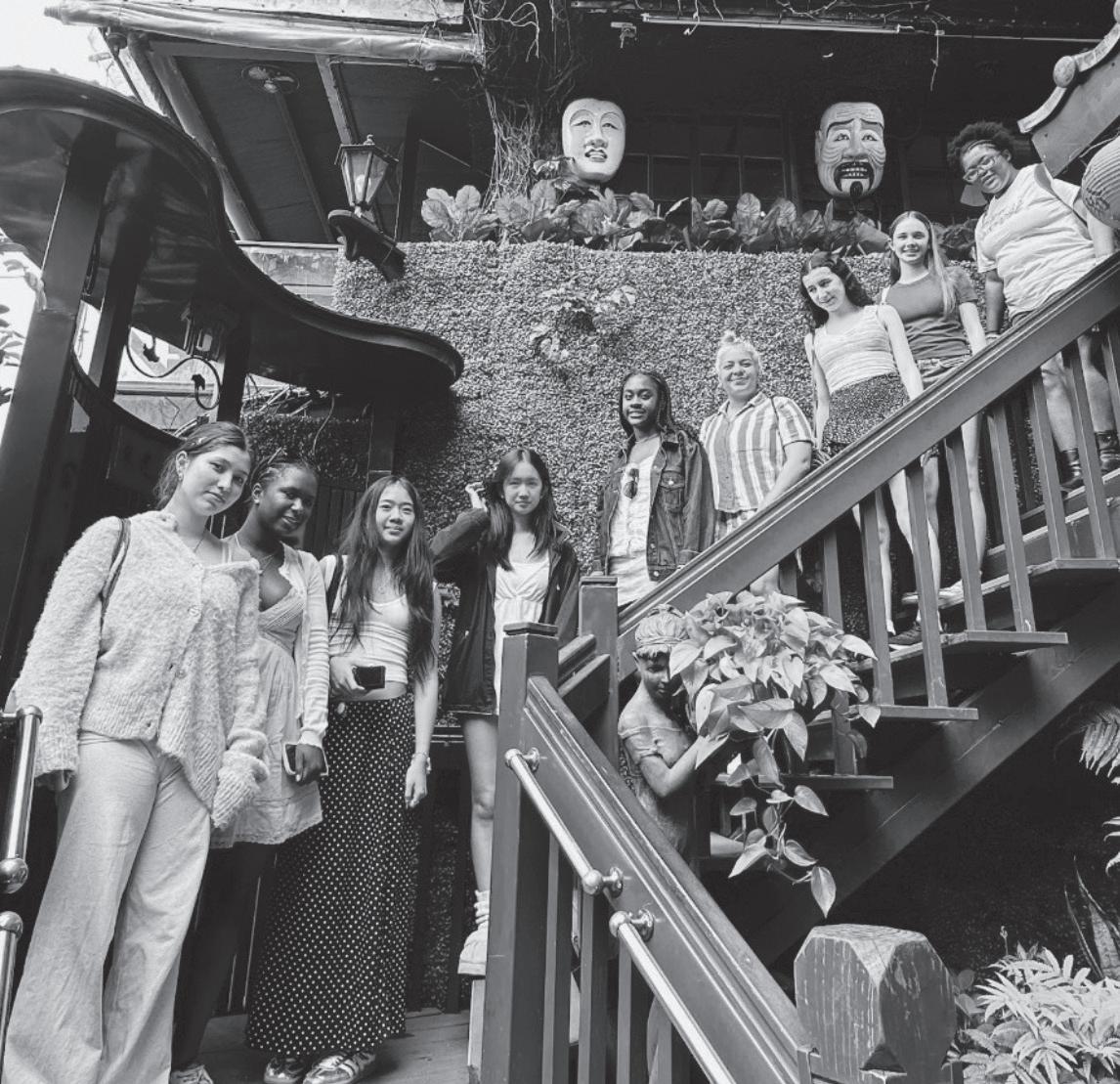

teacher, explained that the trip was “designed to connect with what students learn in Mandarin class while also helping them engage more meaningfully with the wider Chinese-speaking world.” The group also traveled to Sun Moon Lake and learned about Indigenous culture while taking in the natural beauty of the area. Mandarin student Anaïse Saint Fleur ’29 remarked that “the highlight of the trip was listening to the tour guide’s fascinating explanation on various prayers and their meanings” at a Buddhist temple.
In Tainan City, students explored historical sites like AnPing Castle, Koxinga Shrine, and Chihkan Tower, all of which offered insight into Taiwan’s rich past. Along the northern coast, visits to Yehliu Geopark and Jiufen gave students the chance to experience the beauty and local tradition of Taiwan. At Shifen Old Street, they released sky lanterns, a traditional activity that symbolizes hope for the future.
The Taiwan trip also highlighted modern achievements in a visit to National Taiwan University and Hsinchu Science Park. Cody Villanueva ’28 particularly enjoyed “viewing photos of past presidents and seeing the history of National Taiwan University.”
Several thousand miles away, the Latin students were having equally enriching experiences in Italy. Their trip began in Rome, touring famous historical sites like the Pantheon, the Colosseum, the Forum, the Trevi Fountain, and more. After three days in Rome filled with gelato and exploration of ancient history, the Latin students traveled by train to Naples, where they visited Herculaneum, a remarkably well-preserved city that was impacted by the eruption of Mount Vesuvius in 79 CE.

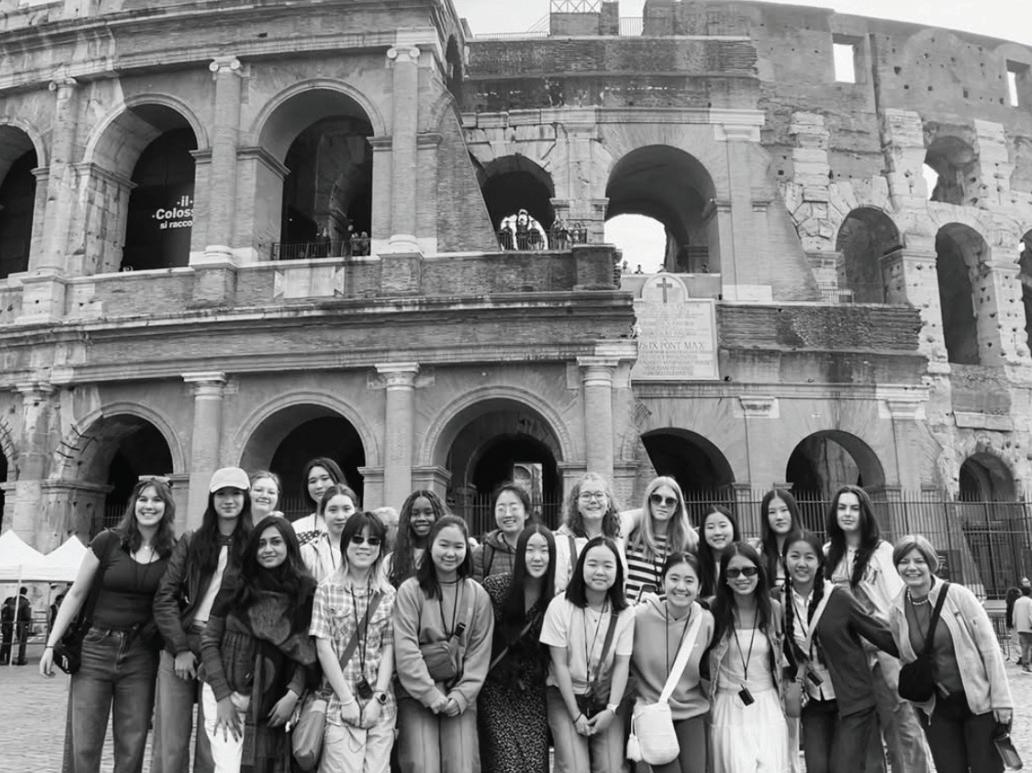
Walking through the ruins, Chrissy Mayer ’28 described the experience as “surreal.” She was especially struck by a small wine shop where the original clay containers still sat.
The Latin students spent the remainder of the trip in Sorrento, a small, scenic coastal town overlooking the Bay of Naples. Day trips to Puzzoli and Cumae allowed students to see ancient architecture, including Greek temples. At Cumae, students stood in the cave of Sibyl, a prophetess featured in Virgil’s , the very text AP Latin students have been translating in class all year. Standing in the same dark passage where Sibyl was said to have guided Aeneas to the
underworld, the classroom and the real world became intertwined. Julica Hatabu ’28 reflected that “it was amazing to see layers of history all throughout the country, from the way Rome is literally built on top of the past to the limestone cliffs along the Amalfi coast to the excavated ancient sites of Herculaneum.” To close out the trip, students visited Oplontis, famous for its beautiful preserved wall paintings of rich garden landscapes and architecture. From visiting a Buddhist temple in Taiwan to exploring ancient ruins in Italy, students returned to Winsor with a deeper connection between their classroom materials and the cultures behind them. !
Femininity and Menstrual Products: Lauren Folker
By Beatri, -an .en B osc0 Contri12ting Writer
In AP Art and Design at Winsor, one artist is famous for her thought-provoking work: Lauren Folker ’26. Folker is a talented artist both as a figure skater and a photographer; just by walking down the hallway, you’re likely to see her artwork on display. was delighted to have an opportunity to speak with Folker about her art.
My usual artistic medium is photography–I’ve actually been

pretty focused on digital photography since around eighth grade. But recently, I’ve also been getting into sculpting! Right now, I’m working on creating sculptures using menstrual products, specifically pads and tampons. Since it’s my senior year, I want to take advantage of the opportunity to expand and push my boundaries by exploring new media forms.
Using such an unconventional material definitely brings about its challenges. There’s no real guide to how to make clothes and jewelry out of pads and tampons.

Every time I make a new piece, I spend a lot of time experimenting and trying to figure out how I can create forms out of the menstrual products. I had some experience with sculpture, but I had never worked with these kinds of materials before. It takes a lot of creativity: I’ve deconstructed pads to make them thinner to make flowers; I’ve cut up tampons to make beads.
I was really interested in exploring the idea of femininity through my work. I found the juxtaposition between these stereotypical feminine forms and the

pads and tampons that were used to make them. Menstruation is a very real part of the female experience, but it’s often met with a lot of discomfort. My hope was to kind of stir up those uncomfortable feelings when the viewer looks a little closer and realizes all of the forms are made out of menstrual products.
I think having the confidence to just jump right in is most important. Every time I make a new form I have to figure out how I’m going to construct it out of pads and tampons, there’s a lot

of experimentation and trial and error. I think what helped me the most is knowing that I was capable of figuring it out even if it felt new and uncomfortable at first.
Folker encourages people to address topics that are sometimes uncomfortable to discuss and put topics like mensturation, which are often shunned, center stage. This empowerment takes both talent and courage. Folker’s experience in AP Art and Design demonstrated that she was ready to change her mind and try something new. She learned how to develop concepts and create something meaningful to both her and the viewer. !

A Matcha Made in Heaven: Phinista Cafe
B) Leil, P,n
Con(ri.u(in0 Wri(er
Twelve minutes. That’s how long it takes to walk from Winsor to Fenway’s Phinista Cafe on Peterborough Street. The Fenway location of this French-Vietnamese cafe opened in 2020. The cafe also has a location in Porter Square. Driving around Fenway, I stumbled upon Phinista after a long hour of travel from my home. I was totally exhausted,
ed, and ready
cludes selections

of báhn mìs, drinks, and crepes. Although I struggled to choose among the many enticing options on the menu, I finally landed on the strawberry matcha and the BBQ pork báhn mì, after seeing many customers order the same. While waiting for my order, I took a seat. Although the cafe is small, it has great ambience and there are plenty of comfortable seats to relax or study in. Now that the weather is getting sunnier, there’s even outdoor seating opening up. The cafe was bustling, filled with groups of college students and friends hanging out together.
Soon enough, my name was called, and at last, I could finally eat. The first sip of matcha blended the sweet, refreshing strawberry with the strong earthy flavor of matcha. As Sarah Finkelstein ’28 put it, matcha “has to be made out
of high-quality matcha powder; otherwise, it can taste kind of off.”
Elena Catalino ’30 added that the drink must “be the perfect ratio of milk versus matcha, and it can’t be too sweet.” In my opinion, Phinista’s strawberry matcha checked every
box and was the perfect balance of flavors and textures. The milk added a creaminess and countered the richness of the bitter matcha. After visiting Phinista, Catalino recommended the “pandan matcha,” which she found “super delicious.”

Moving on to the BBQ pork báhn mì, I found that the meat was not too sweet, unlike others I have had, and the bread was just chewy enough to add a nice texture and crisp to the bite. The crunchy jalapeños also added a great kick to cut down the saltiness of the meat, and the size of the sandwich felt proportionate to the price of $12.50.
If you’re ever on campus after school or don’t have match-a to do, Phinista Cafe is a great place to try new foods! Whether you get the strawberry matcha or a pork báhn mì, you’re guaranteed unique, flavorful, and delicious experience. 2
Masako Miki’s Whimsical and Welcoming Yokai
B) Y,$1een Al,1 B,nner S(,--
In at the MassArt Art Museum (MAAM), artist Masako Miki offers her interpretation of the Japanese folklore of he event, a nocturnal procession of y3kai (spirits), has been depicted in Japanese art for centuries on handscrolls, woodblocks, paintings, and more. Unlike most traditional renderings, which are grotesque and nightmarish, presents an alternative, whimsical, and welcoming version of the y3kai to remind viewers of the importance of celebrating otherness, rather than rejecting peculiarities. was shown at the Institute of Contemporary Art San Francisco (ICA SF) in 2025. Its recent display at the MAAM marks the first time that this Berkeley, California-based artist’s work has been on display in Boston. The exhibition occupies a two-floor gallery space, with the ground level housing 20 needle-felted sculptures
and a wraparound balcony featuring a selection of Miki’s work in other media, including three painted bronze sculptures and two works on paper reminiscent of the Memphis Group’s style of art. Immediately upon walking into the space, a feeling of peace washed over me. The dark light-
ing and selective spotlights create an otherworldly atmosphere that encourages curiosity. As I walked alongside these y3kai, I had an overwhelming urge to touch the playful forms. Fortunately, docents do have samples of the needlefelted material for visitors to touch. Overall, my visit to
was a really enjoyable experience, and I loved learning about each of the colorful, wool characters. However, my most meaningful takeaway came from the message behind the exhibition. In an interview with Juxtapoz Magazine, Miki shared that “diversity and collaboration are key concepts to

better building our society. These ideas can lead to synthesis of dichotomies.” As Student Equity Board (SEB) co-chair Liana Min ’26 shared in February’s civil discourse assembly at Winsor, “the purpose of civil discourse is to reach a fuller understanding of another person or their opinions, not to convince them of your own.” As groups like Student Equity Board work to expand civil discourse within the Winsor community, Zaara Mehra ’26 shared that she found “Miki’s work to be a huge source of inspiration for a greater future where diversity of thought, disagreement, and dialogue are embraced.” MAAM is the only free museum of contemporary art in the city of Boston, and only a short tenminute walk from Winsor’s back gate. If you have 30 minutes to spare over these last two months of the school year, and step into Miki’s imaginative world. Masako Miki’s exhibit is on display until May 31 at the MassArt Museum, located at 621 Huntington Ave. 2
A $200 Billion Pay Gap: Art Prices and Gender
B) Bel, P,(el
B,nner S(,--
If you think about the pay gap between men and women, your mind may jump to professional athletes or physicians. However, did you know that the pay gap between male and female artists is estimated to be over 200 billion US dollars since 2008? In most auctions and galleries, male artists dominate the marketplace. Most artworks sold are by male artists, and the prices they are sold for are significantly higher than the prices of works by female artists. In November 2025, Frida Kahlo’s ( ) was sold for $54.7 million, breaking the record for the most expensive artwork by a female artist. However, Kahlo’s painting is nowhere near the price of the most expensive artwork by a male artist. In 2017, Leonardo da Vinci’s sold for
a whopping $450.3 million. This trend carries over for living artists: female artist Jenny Saville’s painting (1998) holds the record at $12.4 million, but the record for male artists is held by Jeff Koons’ , which sold for $91.1 million.
So why is this pay gap so prominent? Some historians think that the problem lies in historical barriers for women artists. Before 1983, the number of practicing male artists exceeded that of female artists. During this time, female artists were less likely to sell art, but those who did sell art had higher auction prices than men. The Yale School of Management theorizes that, due to institutional obstacles, women likely needed to produce higherquality artwork than their male counterparts in order to break into the market. After 1983, once the number of artists in each gender was about the same, average auc-
tion prices stabilized. However, women were still mentioned less frequently and were less popular.
Ms. Valenza, Visual Arts faculty said, “Unfortunately, the art world is a reflection of the wider world and economy. If they had
the agency to do so via galleries, women who value their time, materials, expertise, and their voice would price their work accordingly.”
The continued disparity in art highlights how the value of art is not shaped only by aesthetic quality or talent but also by the artist’s visibility and the public’s recognition of their work. Reconsidering whose work is promoted, collected, and remembered is vital to closing the gender pay gap and reshaping the future of the art world. 2
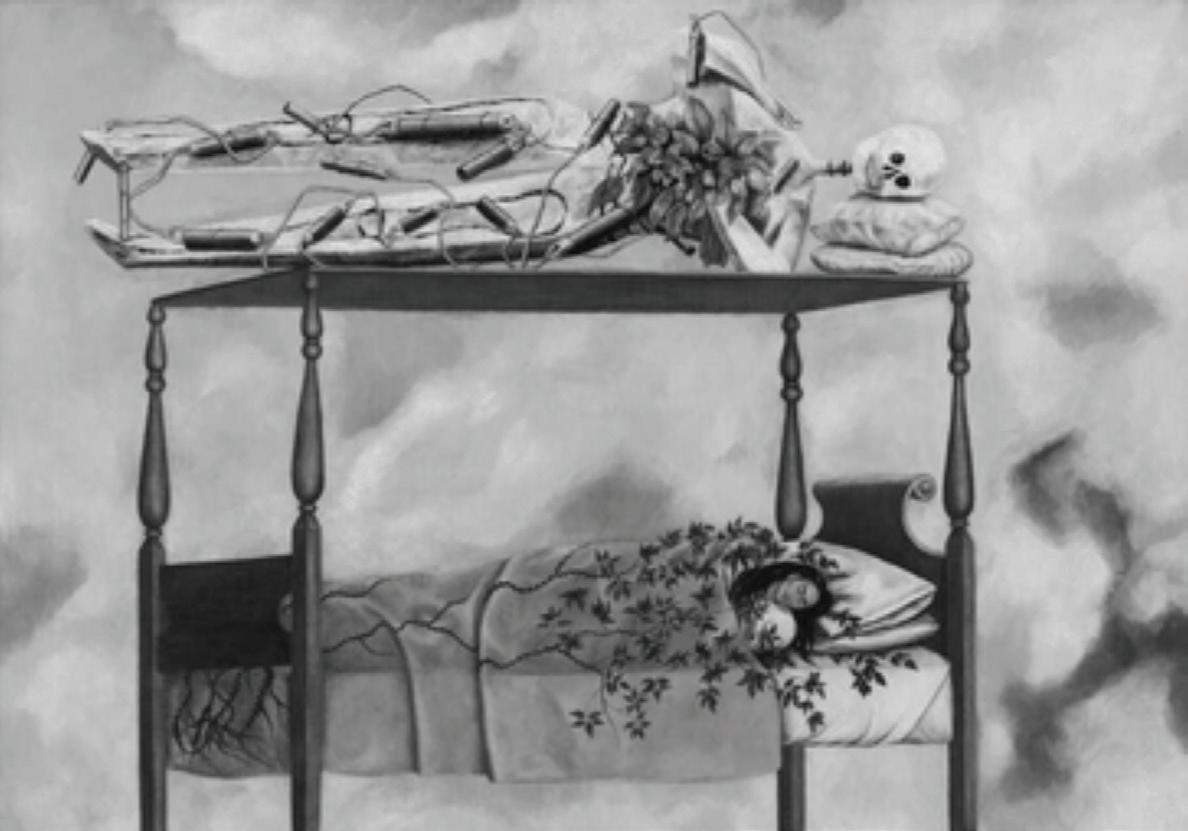

Báhn Mì
Exhibition View of Midnight March Exhibit
Winsor Athlete of the Issue: Lucy Condron ’26
By Ella Pate'()t) Ba((e' Staff
If you nd yourself on campus a,er school in the fall or spring, you’ll probably see Winsor’s Varsity Soccer and Lacrosse Teams practicing and playing games on the turf. A key member of both teams, Lucy Condron ’26, has been a captain of the Varsity Lacrosse Team since her sophomore year.
e Banner recently had the chance to talk with her about her Winsor sports experience. When did you start playing soccer and lacrosse?
I've always been a sports player. I started playing town lacrosse and soccer, and I continued soccer through high school, though I never joined club soccer. I picked up club lacrosse in fourth grade and got pretty
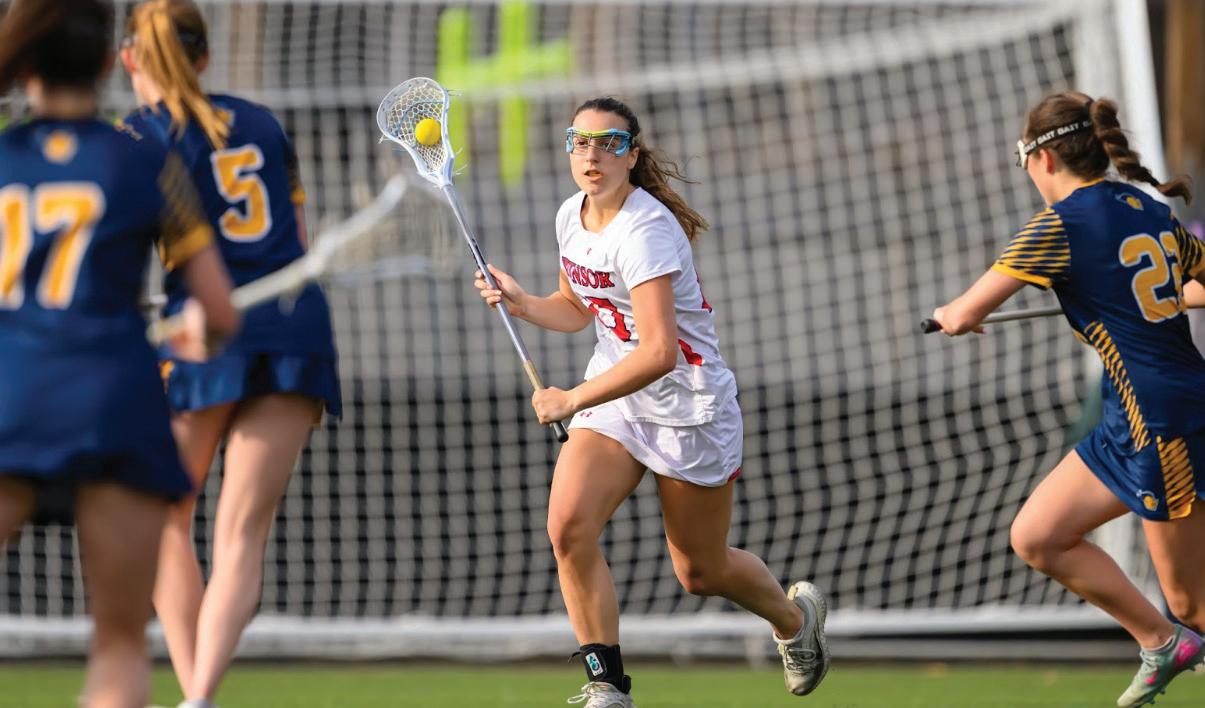
serious in sixth and seventh grade. What’s the best part about being on Winsor's athletics teams?
I feel a sense of community. I know that's such a broad answer, but I think that was important when I started playing Varsity Lacrosse in eighth grade. At rst I was really nervous playing with a bunch of older girls: it was less about experience and more about just playing with high schoolers. But I really, really enjoyed it and I think there was community from the get-go. I think that it was really nice to get a sense of high school and also feel super welcomed. Same with the soccer team. I was on JV in ninth grade, and then I started playing Varsity sophomore year. I really liked all the seniors on the team and my favorite part was knowing the older girls. I felt so cool! I feel, probably more for lacrosse than soccer, playing with older, more
experienced girls was so good for my skill set and lacrosse IQ. I think sports opened up a new part of the community at Winsor. In the Lower and Upper School, I feel like you’re sometimes contained to your own grade. -e diversi cation of grades within a sports team is so magical, especially with the mentorship that happens.
What are your favorite memories from Winsor sports?
I think that my favorite memory on the lacrosse team was in eighth grade. We did a lot of team bonding. We all went to the Tu,s game because a bunch of girls from the year before all were on that team, so we went to watch them play. I think that was a very cool moment because in that moment I thought I was going to be recruited for lacrosse, although I found a di.erent path in life. We also did fun team bonding, like one time we did
a T-shirt making competition.
Do you have any advice, either for your younger self or for students looking to join Winsor sports teams?
My advice would be to enjoy every moment because it’s going to go by really fast. I’ve been playing lacrosse at Winsor for ve years now, and I feel like I haven’t played that long at all. For any student-athlete at Winsor, my advice is to try a new sport or just try out for any team! I really didn't think I would make Varsity Lacrosse in eighth grade, but I would not change it for the world. Although it sounds insane, I think that playing eigth-grade lacrosse was my peak Winsor experience. -ank you to Lucy for taking the time to talk about her Winsor sports experience. e Banner wishes her and the Varsity Lacrosse team luck this spring season! !
By A(()e F)t/0at')12
C3(t')45t)(6
On March 25, peanuts and Cracker Jack vendors everywhere rejoiced at the start of the 2026 Major League Baseball (MLB) season! Opening Day featured a heated matchup, where the New York Yankees won against the San Francisco Giants 3-1.
Baseball fans are especially eager to watch this season after the gripping World Baseball Classic
in March, where Venezuela beat Team USA in the final, which was watched by a record-breaking 10 million viewers, according to Fox Sports Public Relations. This season, MLB fans can expect a change in how they watch games: on Opening Day, the MLB installed a new Automated Ball-Strike (ABS) Challenge System. ABS allows catchers, pitchers, or batters to instantly challenge home plate umpire ball and strike calls with a
limited two incorrect challenges per game. The system uses 12 different cameras to measure whether a pitch crosses the strike zone, with accuracy down to a sixth of an inch. The ABS challenge system has been tested in minor league Triple-A games since 2022 and was used in this year’s spring training. Winsor Softball Coach Rob Cooper P'29 says, “It is going to change the game…Balls and strikes will be more accurate because technol -
ogy is better than the human ability to distinguish those millimeters on or off the plate.”
Members of the Winsor community have been eagerly tuned into the 2026 season. Los Angeles Dodgers fan, Leena Devendran ’29 predicts, “The Dodgers are for sure going to win. They are heavily favored, despite injuries, and ready to bring home their third World Series title in a row.” Meanwhile, Red Sox supporter, Grace McDonnell ’30, exclaims, “I can’t wait for the season and will always root for our hometown team. Go Sox!” Although it’s still early in the season, Devendran’s predictions seem to be more accurate, with the Dodgers’ current record being 7-2 versus the Red Sox’s rough 2-7 start of the season. Despite the Dodgers having a dominant start the lengthy MLB season allows for ample time for unexpected contenders, like the Red Sox, to emerge. !
By L)7)a Be(e 8 L)ll)a( Fe(6
C3(t')45t)(6
Picture yourself walking along the Charles River. Suddenly, brightly colored sails speed past you as the Boston skyline creates a stunning backdrop for the regatta. As the boats near, you can hear the distant shouts of sailors skillfully grappling with lines. This, perhaps, is your first look at the Winsor Sailing Team, deep in competition with other Massachusetts Bay League schools.
Winsor’s Sailing Team has
recently had a resurgence of success. Co-captain Paige Fenton ’26 explains, “Before I entered ninth grade, we hadn’t won the title since 1993, but in 2023 and 2024, we came in first. And last year we came in second, and it was down to the last race.” Co-captain Alisa Ross ’26 adds, “This year, we’re on a revenge arc where we really want to win our division again, because we have really good sailors.”
Beyond winning, both captains have set goals for the team centered on fostering team spirit and unity. Of the 11 athletes, six are current ninth graders. Ross notes that, with so many new sail -
ors, building cohesion and teaching the specifics of competitive racing will largely fall to the captains. For Fenton, one of the main
goals is “making sure that the level of teamwork we've had in the past continues into this season.”
Both captains hope to leave

a strong foundation for the team in future years. Fenton shared, “I'm excited about the team that we’ve built and the success we’ve had, and I would love to continue these victories and also lay the foundation to keep this team winning once I move on. It’s my senior season, and I would love to go out with a bang and get back on top.” We can’t wait to see the Winsor sailing team take to the water this season and prove once again why they’re a force to be reckoned with. It’s going to be an incredible season, and we’ll be cheering them on every step of the way! !
By A7e'y Fa(ta9)a 8 Elea(3' M59t3
C3(t')45t)(6
After breaking a National Women’s Soccer League (NWSL) record with 30,207 fans at their inaugural home opener, the Boston Legacy FC has quickly established its place within the Boston sports dynasty. Boston was approved for a NWSL team in 2023, and Boston Legacy debuted on Saturday, March 14, 2026, at Gillette Stadium against New Jersey/New York Gotham FC. Despite an unfortunate 0-1 loss, fans rated the matchday experience an average of 8.11 out of 10, a reaction which
demonstrates the team’s instant success in connecting with their fanbase. The team’s record currently stands at 0-4; however, they have shown promise and skill since their first goal against the Utah Royals on March 28. The Banner interviewed Boston Legacy Chief Revenue Officer and Winsor alum Amina Bulman ’11 about her experience with the club. Bulman reflected upon the impact of women’s sports, saying, “I know the power firsthand women’s sports has to change lives, and [I] wanted to be a part of that.” For her, Boston Legacy was more than a soccer team: it was an opportunity to “build something from the
ground up.” Bulman mentioned the theme of the season, “community joy,” and expressed her opinion that “Boston’s really ready for women’s sports.” She said the city can “show the country what a great women’s sports culture looks like.” The club’s goal is for the whole Boston community to love the team, fans and players alike. Bulman mentioned that one of her favorite moments “was watching the players … and feel[ing] like we built something of the scale they deserve.” Already, the team has added to Boston’s strong sports history and inspired girls across the area. Winsor soccer player Grace McDonnell ’30 reflects, “Being a

female soccer player in Boston, it’s great to see a team of amazing role models I can not only look up to but also resonate with.”
Bulman, reflecting on the lasting impact these athletes will have on the next generation, affirmed “If you can see it, you can be it.” !