The Oldest Independent Livestock Monthly in Nevada
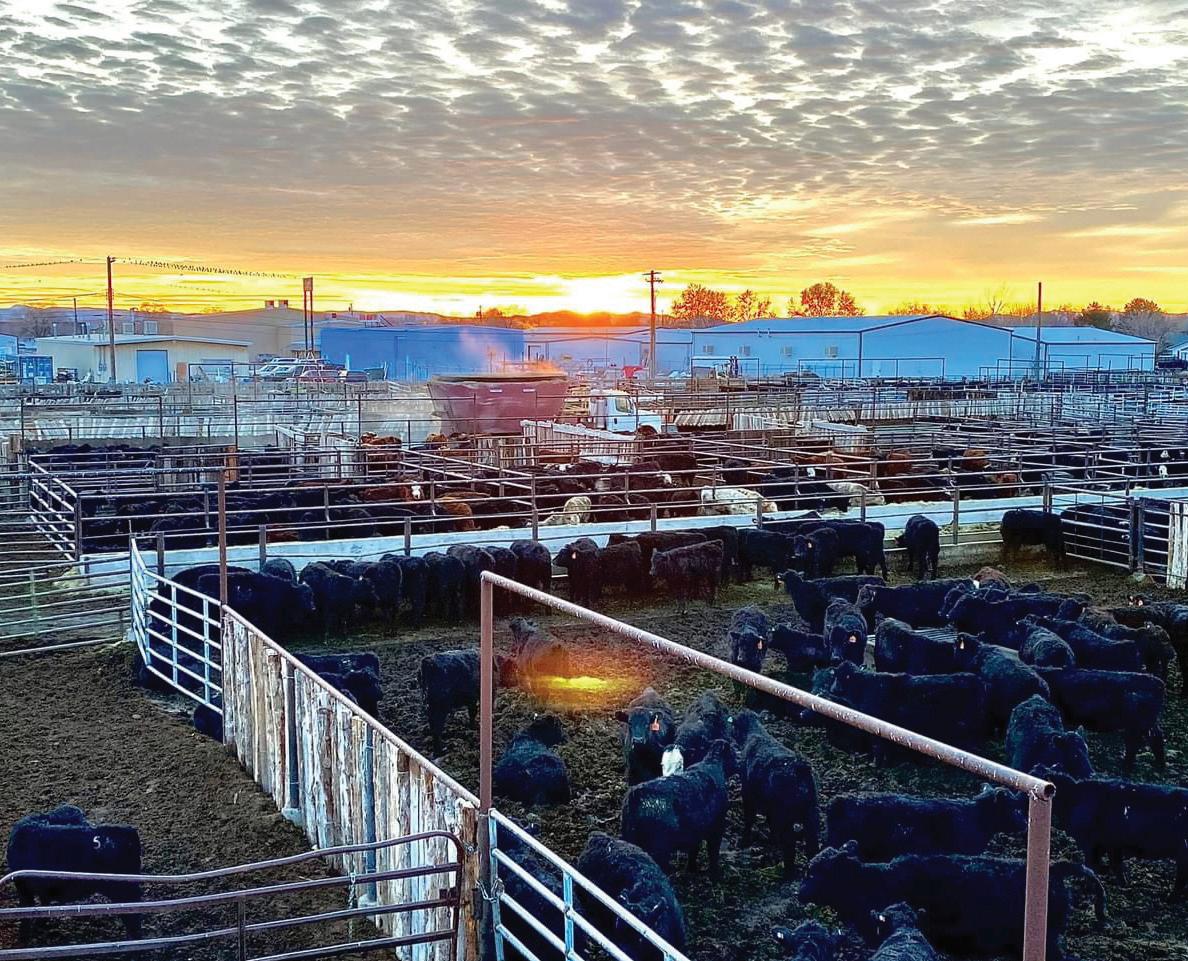
Feeder Sale, Friday March 20th 5258 head from 127 consignors
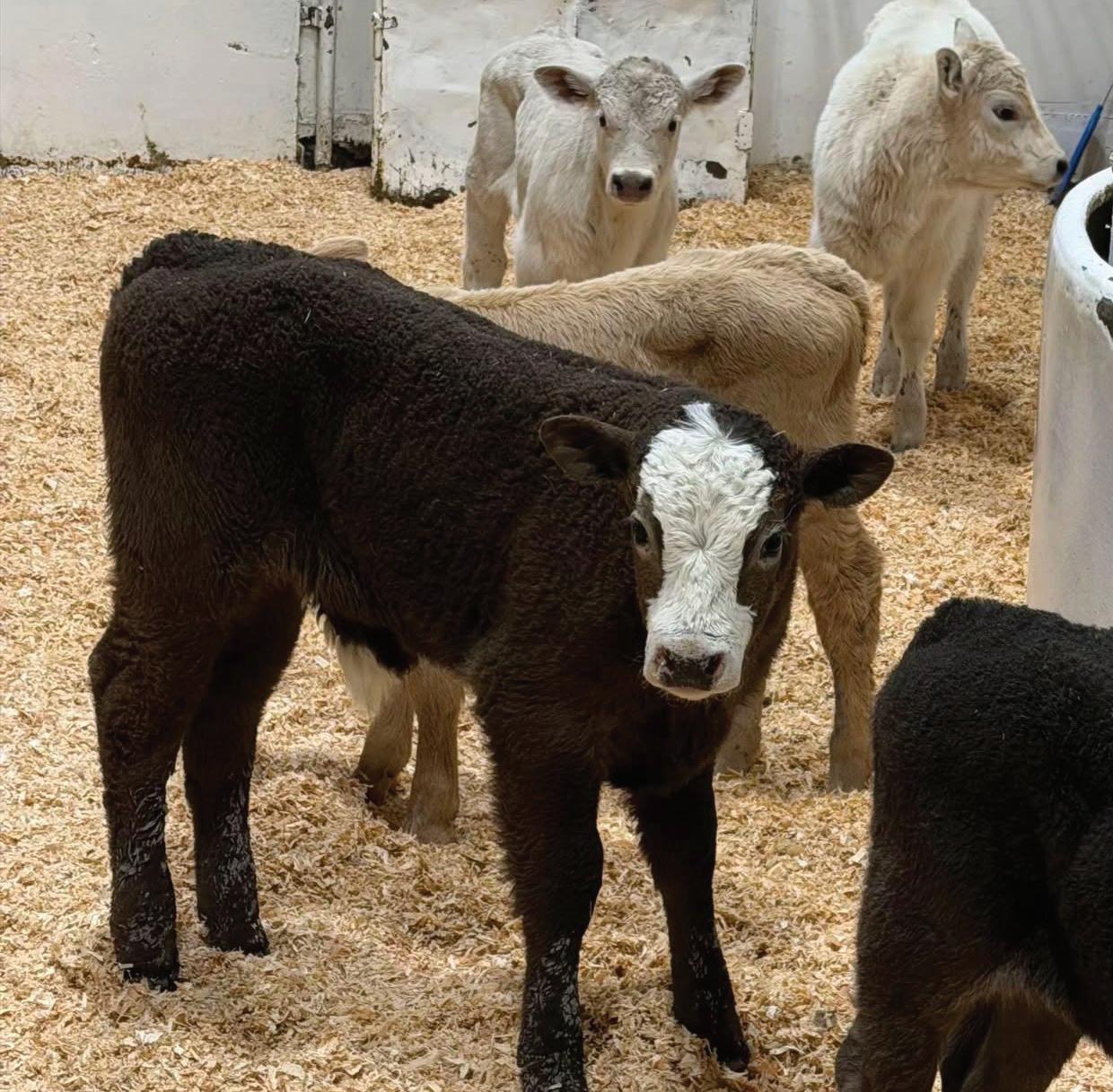
Market was considerably better than expected especially on cattle under 750 pounds. I heard one buyers say either grass calves are way too high or yearling are too low. An 8 weight steer and a 550 basically bring the same money. If you are feeding your cattle to get them bigger, you might consider saving the hay for next year, as dry as it is there may be less hay around.
6’7” from DailyWire was here and got some great footage and interviews. Thank you for taking time to answer their questions and inform them on the issues we face. They went to Walmart and did consumer interviews about beef and beef prices. They said the consumers did not blame the ranchers for beef prices, but instead said it was the processors and other middlemen raising prices.
Next feeder sale Friday April 17th. If you want your cattle advertised on our Facebook page please send information to 661 305 2699.
CLARA LIVE: Nevada Livestock Marketing: Top 5-Wt Sale in U.S. History; New All-Time Highs for 4 & 6 Wts
“Nevada Livestock Marketing set a new benchmark on March 20, 2026, posting the highest 5-weight steer sale in U.S. history for groups of 30 head or more, with 104 head averaging 513 lbs bringing $571.50. Combined with another top-ranking 5-weight sale earlier this year, Nevada Livestock Marketing is the only barn with two sales inside the national top 10 for that weight class.
The sale showed broad strength across all weight classes. In the 4-weights, 442 lb calves at $642.00 and 459 lb calves at $630.00 rank 1st and 3rd in barn history. In the 6-weights, four barn records were set, including 603 lb steers at $490.00 and multiple drafts of 600–620 lb cattle from $459.00 to $470.00, establishing a new high for the barn.
The 8-weight run added three new top 10 records, led by 35 head at 806 lbs bringing $351.00, 25 head at 805 lbs at $350.00, and 77 head at 824 lbs at $349.50. Heavier cattle followed suit, with 15 head at 907 lbs bringing $336.00 and 30 head at 992 lbs at $323.00, both ranking among the top 10 9-weight sales at the barn.” By DV Auction Nevada Livestock Marketing
LBS
300-400 LBS
400-500 LBS
500-600 LBS
600-700 LBS
700-800 LBS
800-900 LBS
900-1000 LBS
710 Grass Valley Rd | Winnemucca, N V 894 45 775- 623-5053| 775-304-1503 | ronsseed@gmail.com
Your Seed, Fertilizer & Chemical Headquarters for Nevada
Orchard Grasses
Tall Fescue
Italian
Grass
Teff Grass
Mountain Meadow Brone
Smooth Brome
Annual Rye Grass
Perennial Rye Grass
Climax Timothy New
PASTURE MIXES
Ron’s Elite
Ron’s Pasture
Horse Pasture
University w/ No Clover
Ron’s Dryland Mix
Ron’s Rangeland Mix GRAINS
Ron’s
Manhattan
E E V E RY TU E S D AY
April showers bring May flowers, we pray.
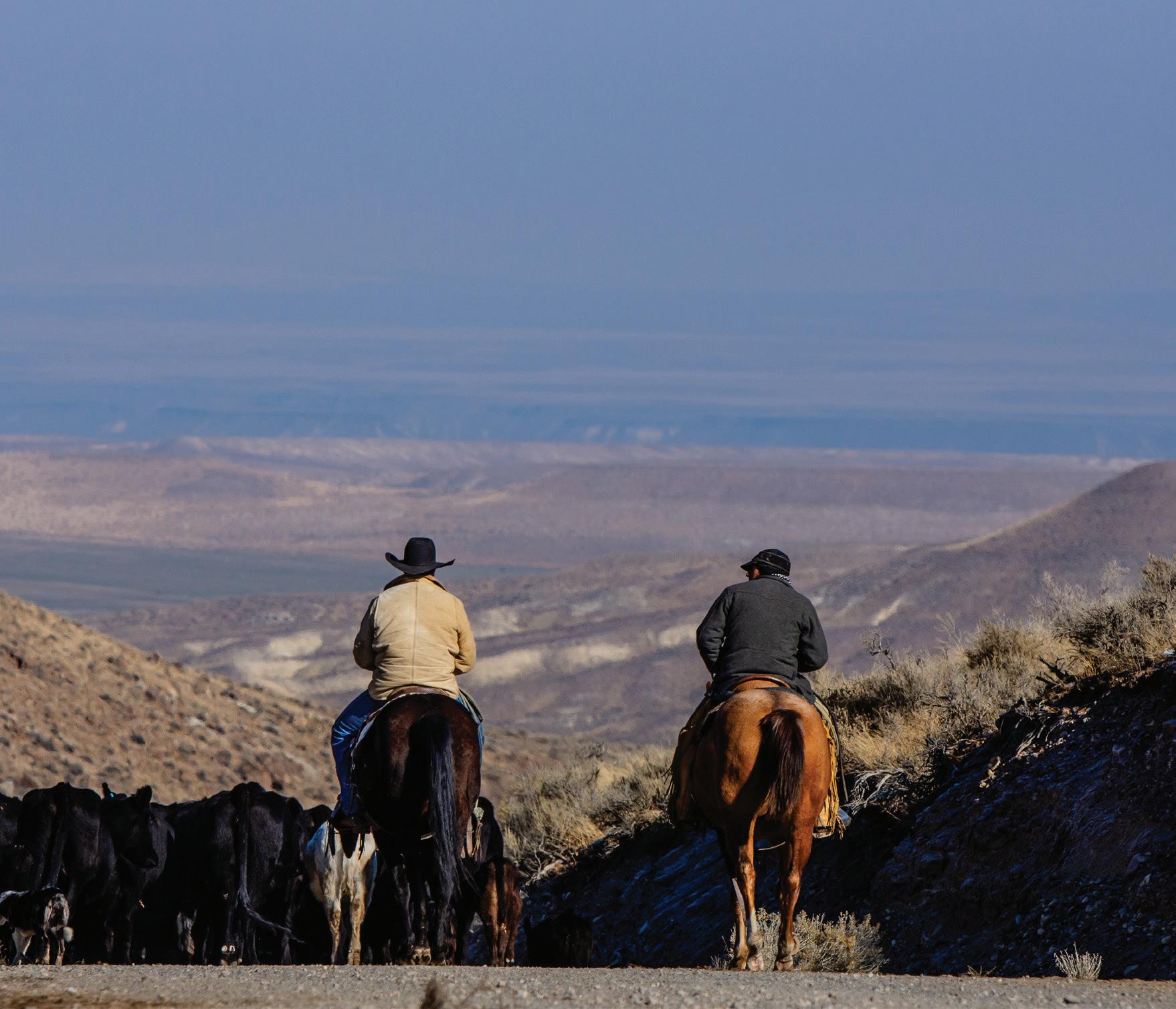
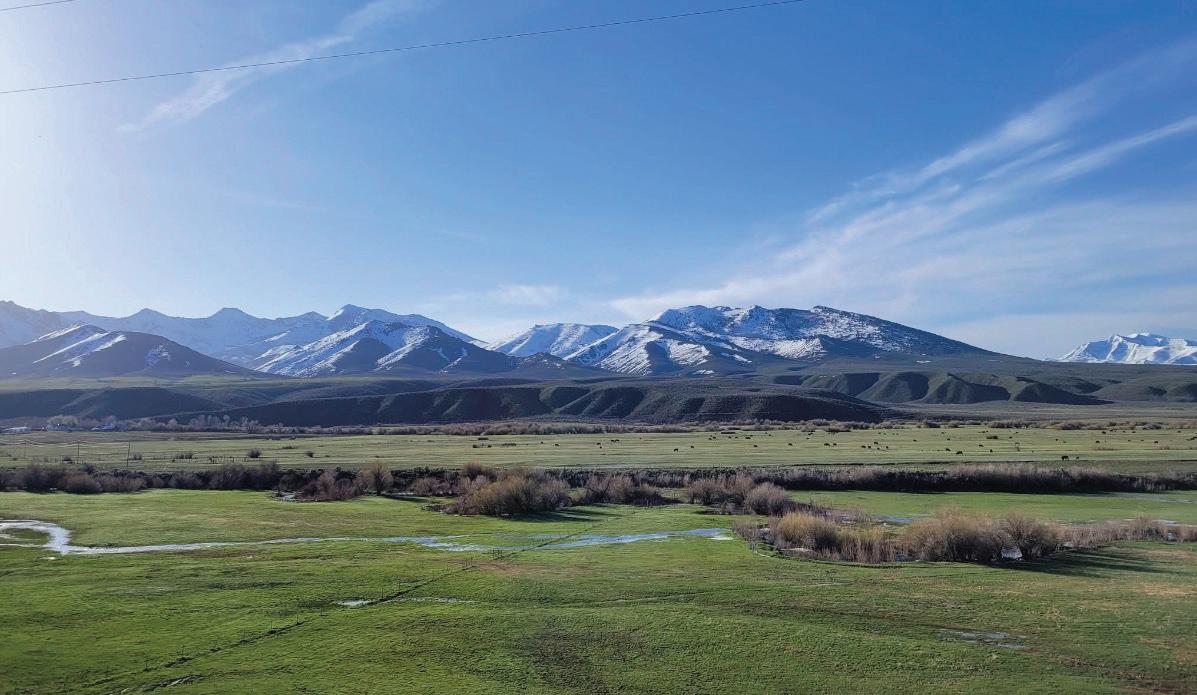
Spring on Nevada ranches signals a season of grit and renewal. Water breathes life into rangeland as calving gets underway, branding time fills schedules and wives become creative with meal planning. Producers balance early forage with careful grazing plans, while repairing fences and readying water systems.
We made it through the Winter days (or lack of a Winter) with longer days ahead and the excitement of green-up brings optimism.
Across the range, neighbors lend a hand, sharing work, and experiences on drought wisdom as the season unfolds.
In this edition you will find bull sale results as the season wraps up, insight on post calving nutrition and industry happenings.
You may have heard some exciting news, we have a new owner!
Rachel Dahl owner of Fallon Media Company has purchased the entirety of Winnemucca Publishing, this includes the Nevada Rancher Magazine. I am excited for the new leadership. I can now sell advertising into the RANGE magazine.
Thank you for the continued support.
I hope you enjoy this issue!
-Ashley
• Nevada Cattlemen’s Association Update
• How to Identify and Manage Deadly Hemlock
• Bull Sal Results
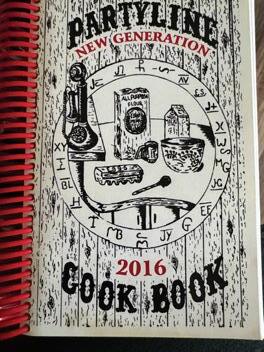
• Jackson Mountain Homemmaker’s Recipe — Flan Subscribe today for Just $16 per year! (775) 623-5011 Read back issues digitally: issuu.com/winnemuccapublishing7 www.greatbasinsun.com
The Nevada Rancher (ISSN 0047-9489) (USPS #003-257)
Published monthly by Fallon Media Co./Winnemucca Publishing, 1022 S. Grass Valley Road, Winnemucca, NV 89445
Call us toll free at (866) 644-5011
Periodical Postage Paid at Winnemucca, 89445
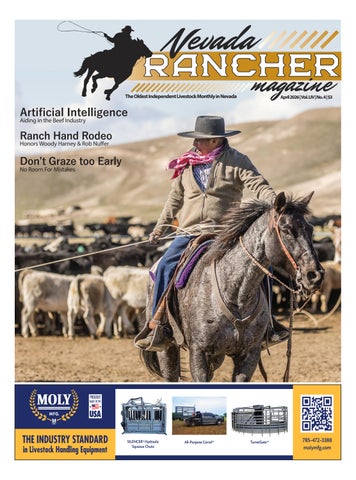
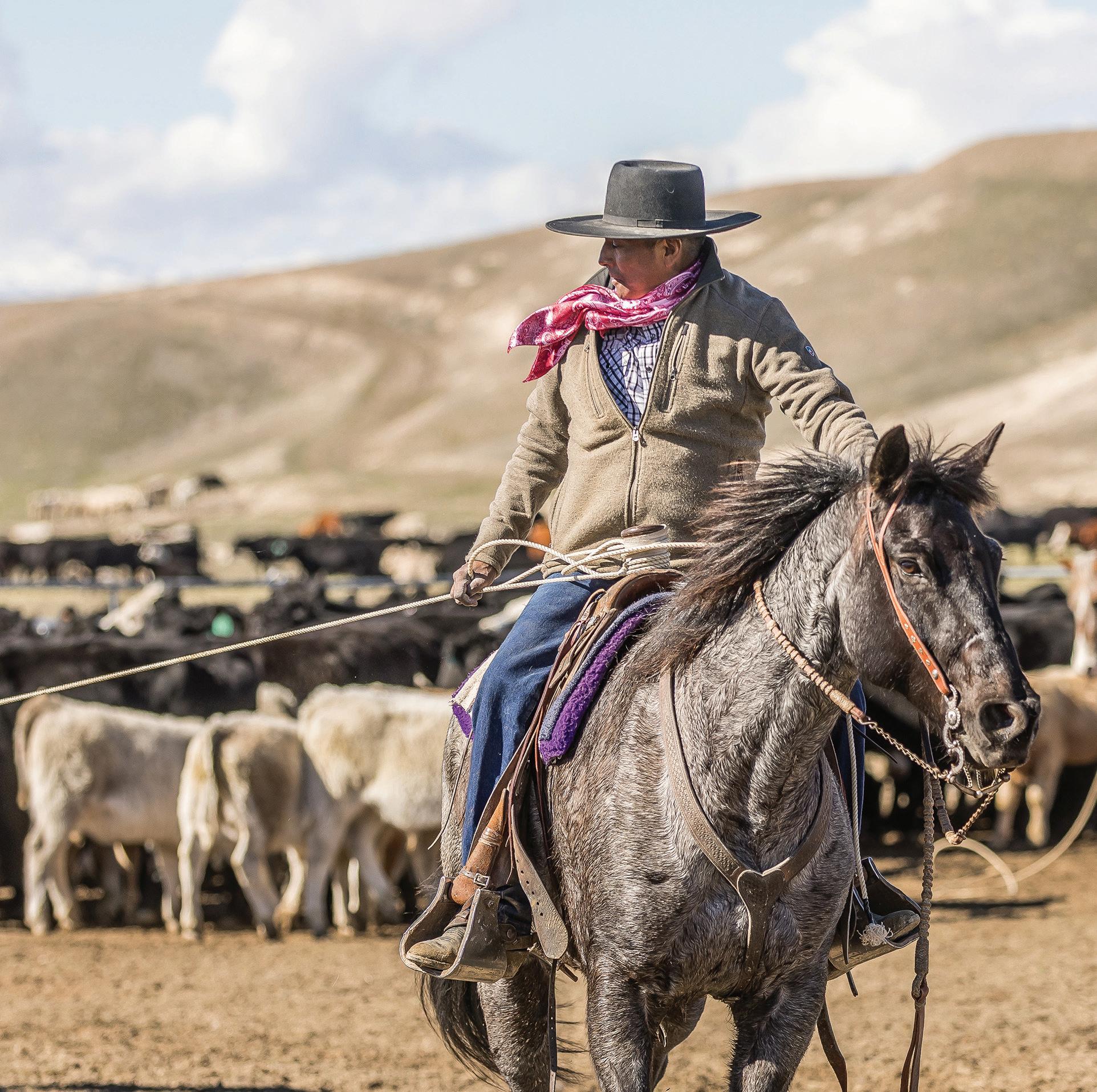
ON THE COVER:
In Loving Memory.
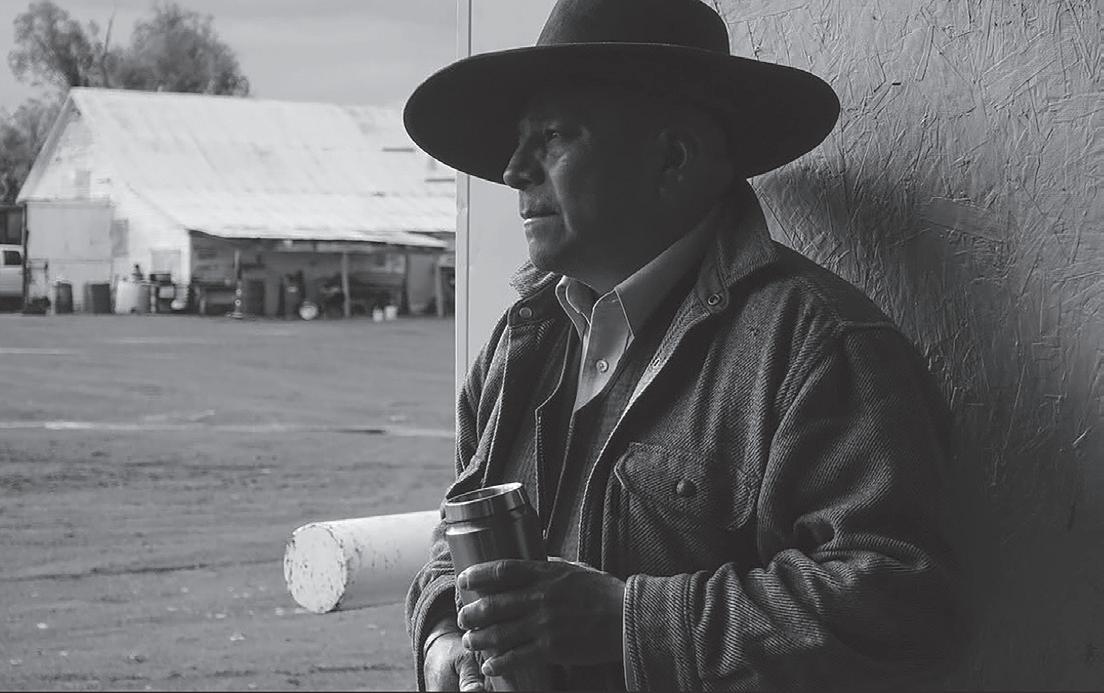
On the cover is the legendary, Woody Harney.
It’s often said that legends never die, and in Woody’s case, that sentiment feels especially true. The memories he created and the lessons he so passionately shared will continue to live on in the people who knew him. Those cowboys fortunate enough to ride alongside him didn’t just learn a job—they learned a way of life. From quiet horsemanship to honoring tradition, and even finding joy in laughter, Woody left a lasting mark. His story, told in Western Horseman Magazine through Jennifer Denison’s “Buckaroo Boss,” now stands as a tribute to a life deeply felt and remembered. Woody taught many things that cowboys that they uses daily in life.
Here’s to Woody!
Photo by Nicole Poyo-Brennan | www.nicolepoyo.com
-Ashley
President: Rachel Dahl
Publisher & Editor: Ashley Buckingham
Sales Representative: Ashley Buckingham
Office Manager: Tracy Wadley
Graphic Design: Ashley Buckingham
Joe Plummer
Emily Swindle
Jen Anderson
Contributors
Martin Paris
Randi Johnson
Heather Smith-Thomas
Kirstin McSharry
The Nevada Rancher does not assume responsibility for statements by advertisers nor products advertised within, and The Nevada Rancher does not assume responsibility for opinions expressed in articles submitted for publication. The publisher reserves the right to accept or reject advertising or editorial material submitted for publication. Contents in The Nevada Rancher may not be reproduced, in whole or in part, including, but not limited to original contents and original composition of all ads (layout and artwork) without prior written permission. Subscription rate: $16.00 per year. All content copyrighted, March 2026.
POSTMASTER: Send address changes to: The Nevada Rancher, Winnemucca Publishing, 1022 S. Grass Valley Road, Winnemucca, NV 89445
Roping and Squeeze Chutes, Smarty and Heelomatic Roping Dummies in Stock. S&S TACK SHOP 559-779-5856
Happy Spring!
Martin Paris, Executive Director Nevada Cattlemen
I hope everyone has some shiny new calves and wet weather on the way. While the Nevada Legislature is not in session this year, there is still plenty going on at the Nevada Cattlemen’s Association. On the docket for April, NCA will be sending a contingent to Washington D.C. for the annual Public Lands Council/National Cattlemen’s Beef Association Legislative Conference. This is a good opportunity for NCA to meet face to face with our Congressional representatives as well as leadership at the U.S. Department of Agriculture, Department of the Interior, Environmental Protection Agency, and other agency officials.
We intend to discuss a laundry list of items including, but not limited to, the overpopulation of wild horses, maintaining our state’s sovereignty over its water, Endangered Species Act reform, flexible grazing practices, and how these government agencies and representatives can better support Nevada ranchers. As we head into election season, NCA intends to keep the foot on the gas to ensure progress is made regardless of whatever election outcomes may be. The responsibility of carrying your message from the countryside to Washington DC is
not something that is taken lightly and NCA greatly appreciates the opportunity to represent you on the issues that matter.
This month I wanted to highlight something
that likely flies a bit under the radar, but is a big deal for those operating on BLM or Forest Service allotments. A new memorandum of understanding (MOU) regarding cooperative monitoring has been agreed to between the Public Lands Council and the Bureau of Land Management. This agreement establishes a formal framework f or cooperative monitoring on BLM grazing allotments and outlines mutually approved data-collection methods. It also creates a clear pathway for permittee-collected data to be incorporated into agency decision-making with the same weight as agency-collected information.
Notching Some Wins
Much the same as a similar agreement with the U.S. Forest Service in 2022, this new MOU reinforces the shared commitment to recognizing permittee expertise and expanding rangeland monitoring capacity at a time when federal agencies face significant resource constraints. I would highly recommend that BLM permittees take advantage. For those interested in learning more, please check out the MOU at tinyurl.com/2suv6dd4. For those interested in learning more about the U.S. Forest Service Cooperative Monitoring MOU, it can be found here: tinyurl.com/2yxpvxhk.
As a bit of housekeeping, NCA recently sent out member dues renewal notices. A big thanks to all those that have renewed their membership and your continued support. If you have not done so, please contact our office, or dues can be easily completed on our website at nevadacattlemen. org/membership. If you have neighbors, friends, or young folks that should be getting involved, please give them a nudge. NCA is your voice, and we want to hear from you. We strongly encourage participation in helping guide Nevada’s livestock industry forward. I cannot stress enough the importance of being engaged in the many issues that affect your livelihood- it matters. Till next time.
By Dave Baker, President –Nevada Cattlemen’s Assoc.
When times are good in the ranching business, they are very good. Calf prices are at a record high, input costs feel manageable, the grass is about to come on strong, and markets hum along without major disruption. In times like that, it can be hard to feel any urgency about protecting the ranching industry. After all, when there are no obvious fires to put out, why keep hauling water?
The National Cattlemen’s Beef Association and state groups notched numerous wins in 2025. Those didn’t happen by accident. They happened because ranchers like us kept the organizations funded, the relationships warm, and the voices loud –even on quiet days.
Ranching has always been cyclical. Markets rise and fall. Weather patterns shift. Policy winds change direction. A single legislative session, ballot initiative, trade dispute, or animal health issue can reshape the business landscape in a matter of months. History reminds us that industries rarely decline because of one dramatic event; more often, they
erode slowly when stakeholders grow comfortable and disengaged.
When threats are immediate and visible, motivation comes naturally. If a restrictive regulation is proposed or a disease outbreak looms, producers rally. Meetings are packed. Associations grow overnight. But in quieter years, participation drops. Membership dues feel optional. Attending policy meetings competes with fencing, calving, and family time. It becomes easy to assume someone else will handle it.
The challenge is that effective industry protection is not reactive work – it is relationship work. It is the steady cultivation of trust with lawmakers, regulators, consumers, and neighboring landowners. Those
relationships cannot be built overnight when a crisis appears. They are formed over years of showing up, engaging respectfully, and contributing expertise. If ranchers step back during calm periods, the industry’s voice weakens precisely when strength is needed most.
Maintaining organizations –whether local grazing boards, state cattlemen’s associations, or national advocacy groups – requires sustained commitment. Staff must be retained. Legal counsel must be accessible. Agency and research partnerships must be nurtured. Public education efforts must continue. These structures are like well-built corrals: they may sit quietly for years, but when pressure comes, they must hold.
There is also the matter of public perception. Many consumers today are generations removed from agriculture. Their understanding of land stewardship, animal care, and food production often comes from media narratives rather than lived experience. In the absence of consistent outreach from ranchers themselves, misconceptions can take root. When ranchers participate in industry organizations, they help shape messaging that reflects the realities of respon-
sible production and environmental care.
Perhaps the hardest part is that this kind of engagement rarely delivers immediate, tangible returns. You do not see a direct line from attending a policy meeting to a higher weaning weight. You cannot measure relationship-building on a scale ticket. But over time, those efforts help preserve grazing rights, protect water access, sustain fair market structures, and defend the freedom to operate.
The ranching industry is built on generational thinking. Fences are built to last decades. Herd genetics are improved over years. Land stewardship plans span lifetimes. Protecting the industry itself deserves that same mindset. We need to ensure that the next generation inherits not just land and cattle, but the voice that protects them.
The absence of immediate threats should not lull us into complacency. Instead, it should be viewed as an opportunity – a season to strengthen organizations, deepen relationships, and prepare for whatever comes next. By staying engaged when times are quiet, ranchers ensure that when challenges inevitably arise, the industry stands ready, unified, and resilient.
How to identify and manage Water Hemlock
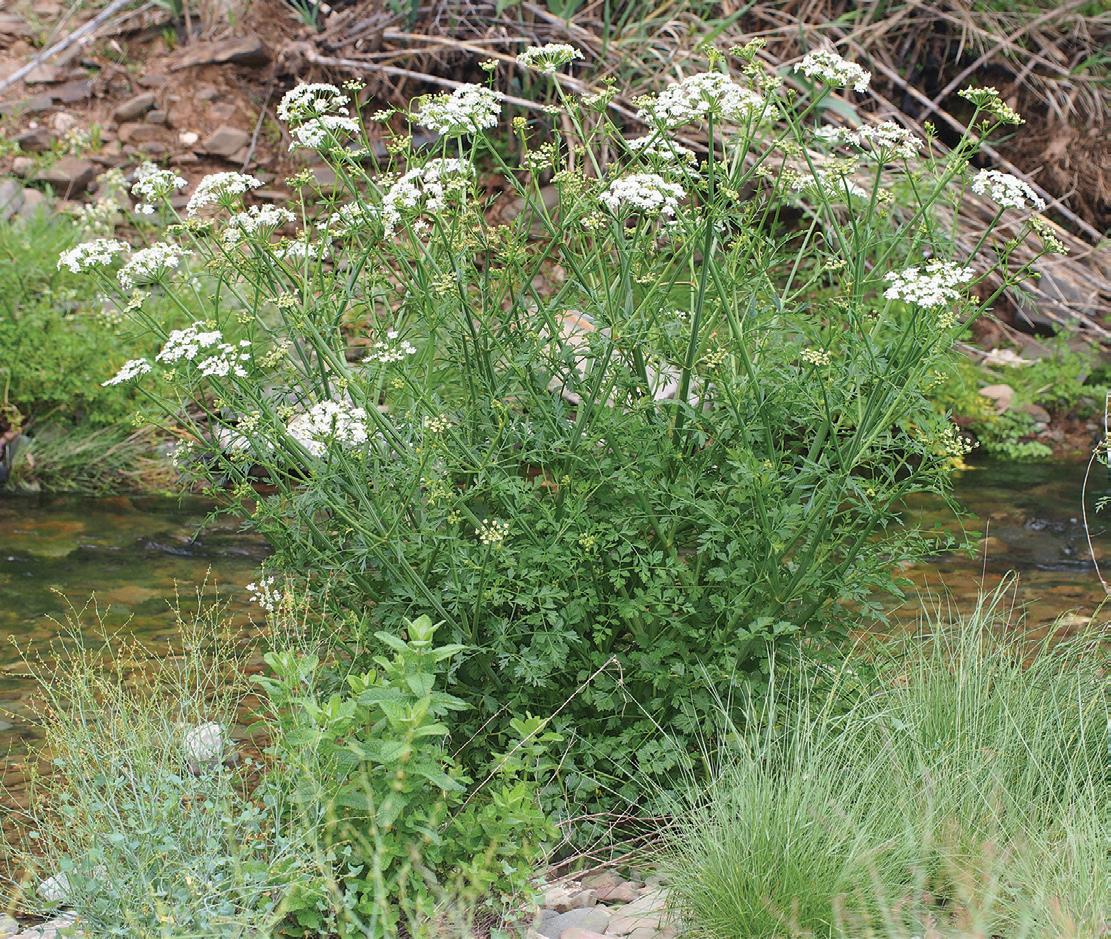
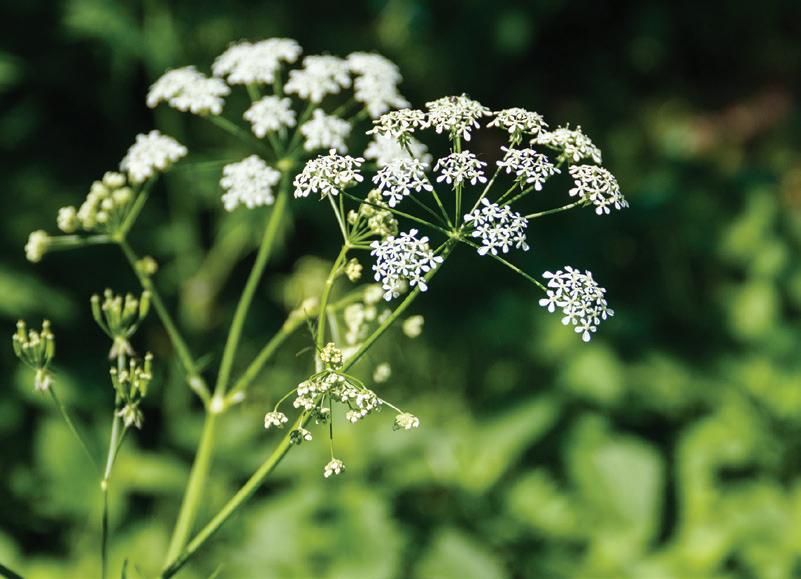
Water hemlock has small, white flowers that grow in umbrella like clusters. Side veins of the leaves lead to notches, not to tips at the outer margin. The thick rootstalk of water hemlock contains a number of small chambers. These hold a highly poisonous brown or straw-colored liquid that is released when the stem is broken or cut. Thick, fleshy tubers and slender individual roots grow from the bottom of the rootstalk. Water hemlock grows in wet seepage areas of meadows, pastures, and in streams. It reaches a height of 0.5 to 1.0 meters. The plant is a perennial in the carrot family.
Water hemlock may be confused with poison-hemlock because of the similarity in names;
however, these two are different plants that cause different types of poisoning. It has also been confused with wild parsnips, other herbs, and medicinal plants. In cases of water hemlock poisoning in humans, contact a poison control center and obtain emergency medical assistance as quickly as possible. Poisoning results in severe seizures and convulsions that must be controlled to preserve normal ventilation and cardiovascular function.
Animals will eat water hemlock early in spring and graze on the green seed heads later in the season. The roots; however, are more palatable and animals have been poisoned when the roots are exposed by plowing or cleaning ditches or when animal tramp in the streambeds. The underground portions of the plant, especially the tuberous roots, are highly toxic and very dangerous. Green seed heads have caused death losses in cattle.
The toxic substance in water hemlock is cicutoxin, a highly poisonous unsaturated alcohol that has a strong carrot-like odor. It is found principally in the tubers, but is also present in the leaves and stems during early growth. Leaves and stems lose most of their toxicity as they mature; however, green seed heads are poisonous.
Where and When It Grows
Water hemlock, a wetland plant, is commonly found in wet meadows and pastures and along the banks of streams. It starts growing in the spring. In the higher elevations, water hemlock flowers in June or July.
How to Reduce Losses
The toxic substances act so rapidly that an affected animal can seldom be saved. Treatment consists of preventing seizures with barbiturates or tranquilizers and supporting respiration. Gastric lavage, activated charcoal, or saline cathartic may be helpful. To reduce losses, keep animals away from places where water hemlock grows. The stems and leaves of water hemlock increase in palatability immediately after being sprayed with herbicide. Therefore, keep animals away from treated plants for 3 weeks after spraying. Most losses occur early in the spring or after the plants have been sprayed with 2,4-D. The plants, which usually grow in small patches, are easy to locate. Spraying or grubbing can eradicate them. Actively growing plants can be controlled with 2,4-D applied at the rate of 1 kg per acre of acid equivalent. Repeat spray treatments until eradication is completed. Follow all precautions for handling herbicides. If you grub water hemlock, be sure to get all of the plant, including roots. Gather and burn every part.
Thank you to these bull sales who trusted the NV Rancher with their advertising dollars.
Iron Lorenzen Cattle Company Annual Bull Sale March 21 st , 2026 Central Oregon Livestock Col. Trent Stewart
116 Bulls $11,793
30 Commercial Fall Bred Cows $5,200
Top Bulls: Lot 2- $60,000; ILCC Profit Check 5024, Bieber Checkmate X WFL Profitmaker; White Cattle Company, Otis Creek Ranch, Murdock Cattle Company, Stegall Cattle Company, 3K Land and Cattle, and RA Brown Ranch.
Lot 4-$40,000; ILCC Prominent N164, LSF SRR IDENTITY X RREDS SENECA; Wesphal Red Angus Grass Range, MT Lot 43- $27,000; ILCC IDENTITY N115, LSF SRR IDENTITY X RREDS SENECA; White Cattle Company Atwater, CA Lot 38- $21,000; ILCC LIMIT UP 5027, ILCC Steg Limit Up 5027 X Lorenzen Insight 9917; Otley Bros Diamond, OR Lot 1- $20,000; ILCC Diplomat N103, PIE Hollywood X Brown Final Answer
Photo by Ashley Buckingham
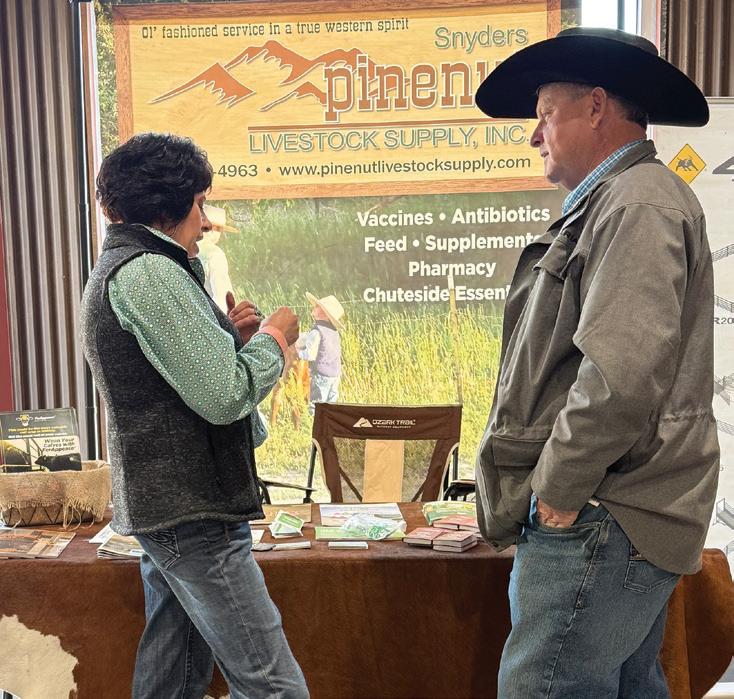
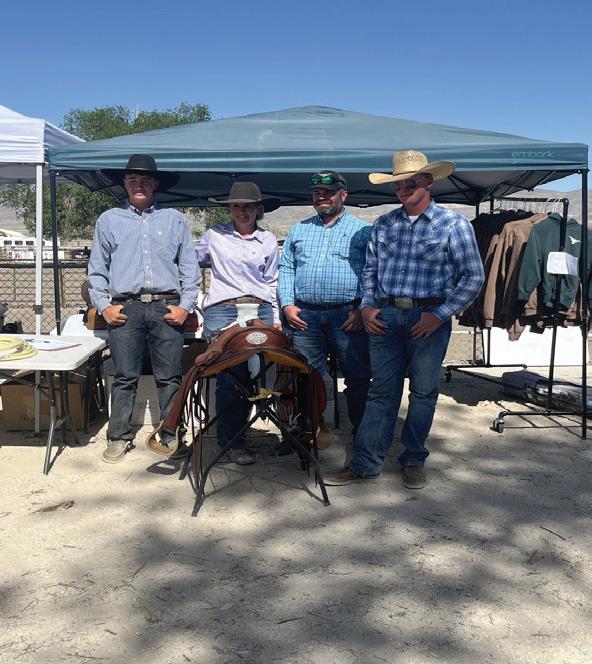
Snyders Pinenut Livestock Supply was among the many vendors
Calving & Post Calving Nutrition
By: Wes Klett
Part 2 of a 5 part series. Read part 1 in the February 2026 edition.
In my previous article, I discussed that during a 12-month period, there are specific physiological stages a cow progresses through and certain opportunities, challenges and goals we need her to navigate, to ensure we optimize our productivity. This issue we will specifically discuss the Calving/Post-Calving Period.
This timeframe is approximately 90-100 days in length and the single most important objective is for the cow to give birth to a live and healthy calf. There are many things to consider in advance of this period, but this calf is our revenue from this cow for this year. Our feeding program needs to be at its best during this period as the cow’s nutrition requirements are at their highest due to lactation. Additionally, it is one of our major goals that this feed program be strong enough
to sustain peak lactation as long as possible. In beef cows this is normally 75-90 days. A final challenge during this period is to recondition the reproductive tract for breedback. All elements of the feed and supplementation program (protein, energy, minerals and vitamins) must be in the right amounts and proportions to ensure optimum nutrition during this critical stage. If nutrition requirements are not met, lactation will be reduced and colostrum quality may be lower resulting in a compromised immune system in the calf.
Nutrient partitioning is a concept in cattle best described as priority of nutrient utilization. Sixty percent of a cow’s daily intake goes to maintenance. Once this physiological condition is met, nutrients are allocated to lactation, then weight gain and body condition development. After these 4 “buckets” are nutritionally filled, there needs to be enough nutrition remaining to fill the fifth bucket, reproduction.
Junction *Ag-residential District *Breathtaking Views *Build your Dream Home *30 minutes north of Winnemucca.
$20,000
Parcels 2, 3 & 4
Starr Valley, Nevada
Rare opportunity to own Parcels 2, 3 & 4, each are beautiful 1-acre homesites in Starr Valley near Death, Nevada. Lots offer some of the most desirable views overlooking open meadow ground with the Ruby Mountains rising in the distance. Enjoy wide open space, unforgettable sunsets, and the peaceful rural lifestyle Starr Valley is known for.
$125,000-$150,000 each.
Segura Ranch
Spanning approximately 970 deeded acres with two 120-acre pivots, one 60-acre pivot & an additional 50 acres of gravity-fed irrigation. Supported by strong groundwater and springs on both deeded and BLM land, the ranch can produce up to 1,000 tons of feed annually. It offers access to nearly 500,000 acres of contiguous grazing, supporting about 350 cows and 2,500 sheep. Includes a 40' x 200' sheep handling facility & an off-grid manufactured home.
$7,500,000
Parcel #s 08-0591-35, 08-0591-36
Humboldt County, Nevada 10 acres Fenced with a gate, river views, great for cattle and horses, close to town. Located about 10 miles from Winnemucca, Nevada via I80 and a little less miles to Golconda, Nevada. This property is fenced, surveyed into (2) 5 acre parcels, and power on the far corner.
$70,000
View Complete listings at www.ARanchBroker.com
to allow 2-2.5% body weight intake.
Energy is the single most frequent limiting nutrient in winter range cow diets. Forage TDN is typically low and the animal’s thermo-normal status is constantly challenged by the variations in temperature and moisture during the season. It has been reported that energy requirements can increase by 1% when ambient temperature departs 1 degree from thermo-normal and 2% if the temperature change is combined with moisture (high humidity, rain, or snow). Therefore, the need for supplemental energy, consistent with a forage-based diet, is critical. Finding energy supplements which stimulate cellulose digesting microbes versus starch digesting microbes in the rumen, is important to ensure efficient utilization of the energy found in an animal’s primary feed source.
Protein’s contribution to meeting requirements and satisfying these physiological functions is what drives the animal. Good quality forage (hay or grass) in required quantity is what feeds the rumen microbes to increase digestibility and utilization. Supplemental nitrogen is also required when these standing or harvested forages have a protein of less than 7%, to ensure rate of passage of feed through the rumen is quick enough
Once these nutrient categories have been met, focus should move to ensuring proper mineral levels, forms and ratios. A forage analysis is an inexpensive way to determine the specific minerals needed to compliment the levels either in, or missing from the feed. Additionally, forage samples can identify potential antagonists. Supplements formulated with some inorganic trace minerals, along with hydroxychlorides and chelates offer the most comprehensive nutrition package to overcome any shortcomings in the basal diet.
In today’s beef industry, we just don’t have the luxury of making mistakes. Unlike the poultry and hog industries, we get one progeny per year and it is incumbent on us to ensure our cost decisions are properly balanced with our production goals to optimize performance and profitability during this phase when we can affect this year’s revenue generator as well as ensuring successful breedback for next season’s calf.
OPTIMIZE PERFORMANCE
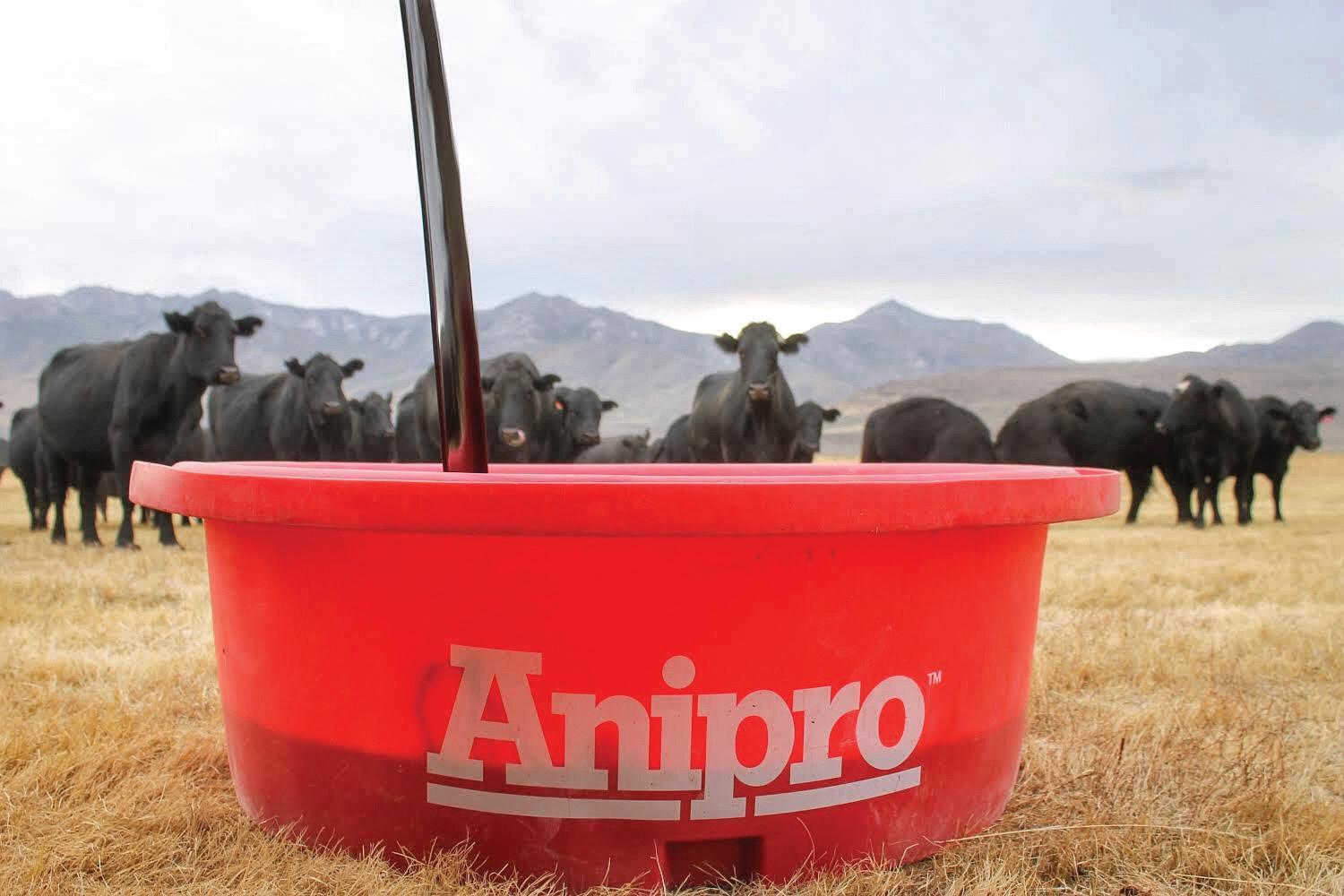
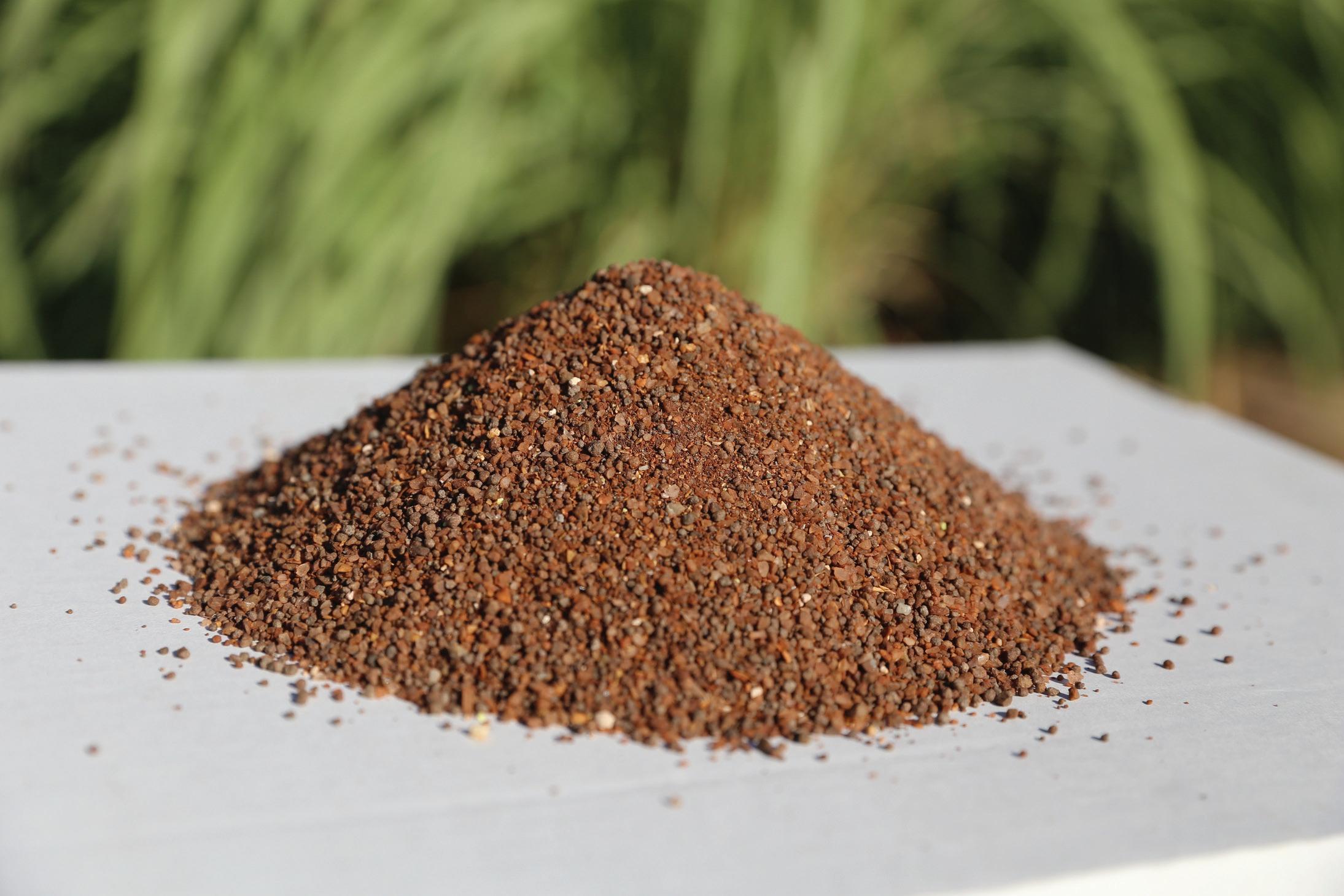
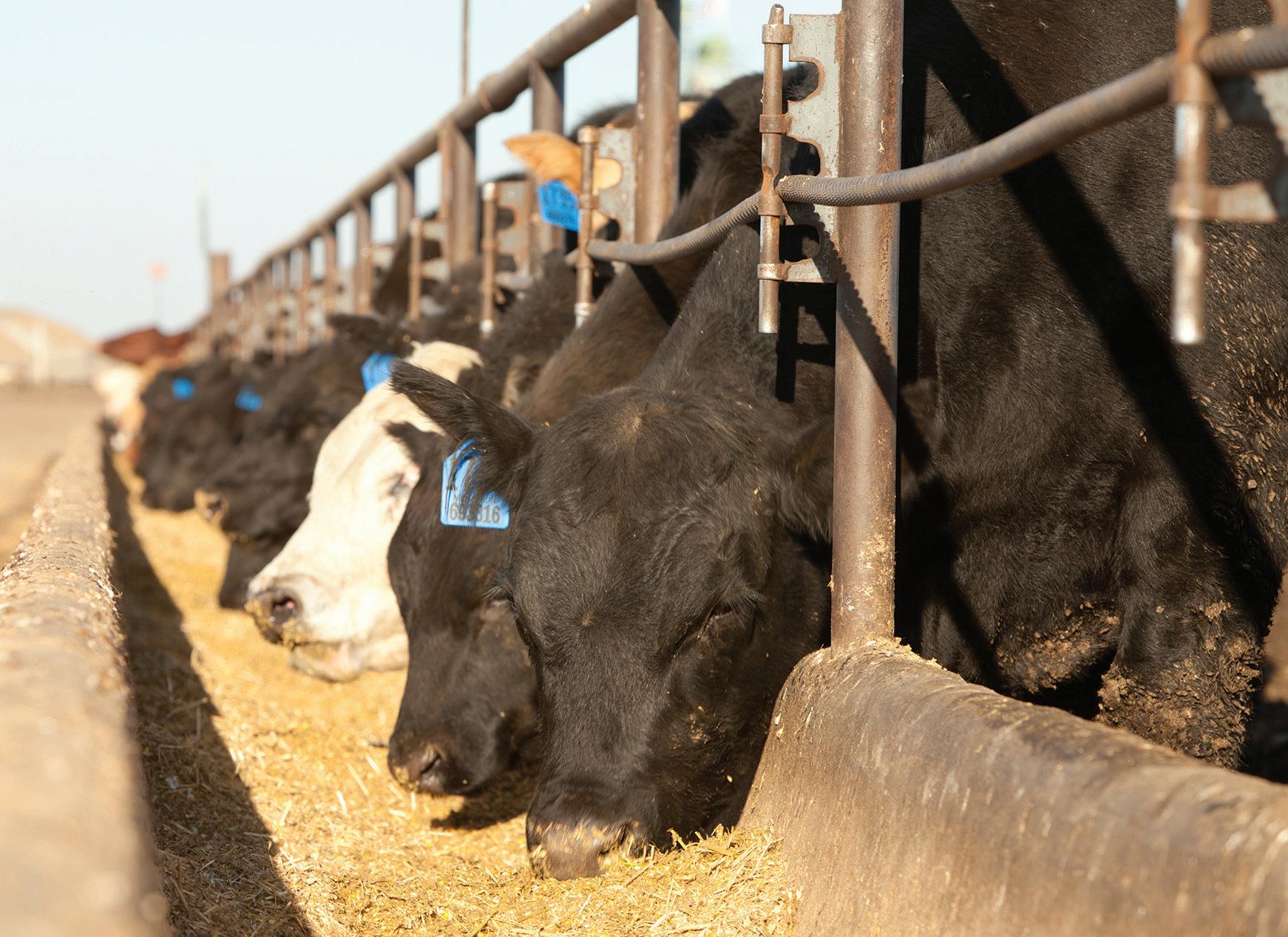
As forage quality drops, proper supplementation becomes critical. Anipro delivers protein, energy, and fortified minerals through Liquid, Mineral, and Tub formulas tailored to boost cattle health and profitability across all operation types.
OVER 35 YEARS OF PROVEN NUTRITION
Anipro Xtraformance Nutrition combines premium quality ingredients with expert consulting and unmatched service. Trust our seasoned nutritionists to optimize your herd’s performance and increase your profitability.
By Heather Smith Thomas
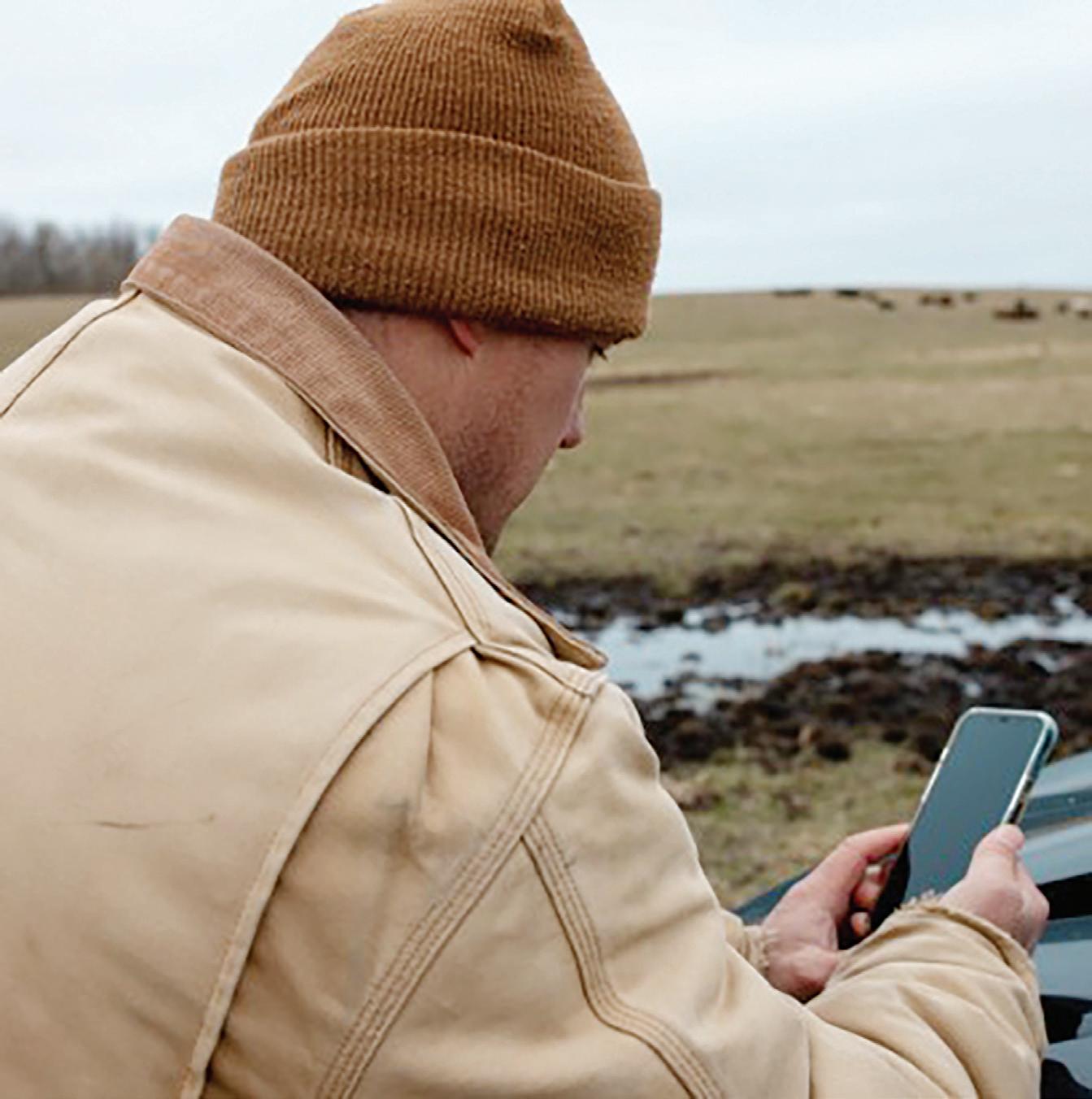
There is no simple definition of artificial intelligence because AI tools are capable of a wide range of tasks. In many industries, including agriculture, AI is a way to utilize data to increase efficiency and production. Row crop farming technology has benefited in efficiency gains for years, and the beef industry is catching up.
Dustin Balsley, Co-founder of Performance Livestock Analytics and his partner started their company to solve problems on their own family cattle operations. “Our Performance Beef platform helps feedlot producers capture nutritional, health and financial information, which is stored within the platform, and can be used to create numerous reports for producers to evaluate their operation. This gives them a good pulse on their business, including financials and inventory levels,” he says.
Performance Beef is an easy-to-use cattle management software to help simplify feeding, performance and health data recording. The all-in-one
technology works with the latest wireless technology and electronic identification tags to eliminate the need for complicated software. “Users can access their account from a phone, tablet or computer from anywhere, at any time — CONTINUED ON FOLLOWING PAGE —
[CONTINUED] and can share access with their nutritionists, financial advisors, veterinarians, etc. to help them consult through the platform,” says Balsley.
Information is crucial today in agriculture, to know where you are going. “If you don’t have the data and insights, it’s like walking through a fog. Having data at your fingertips shows you what worked or didn’t work in the past.”
Artificial intelligence (AI) is a fast-growing, fast-advancing technology. “It is extremely powerful when used properly, but is constantly evolving. AI won’t solve all your problems instantly. There are ways you can use it on your operation, whether it’s a feedlot, ranch, nutrition company or any ag industry. It can be extremely powerful but it is not the silver bullet that everybody is looking for; it does have limitations,” he says.
“On my family farm in north Iowa we have also been using AI to help with challenging data analysis like heifer selection. We do ultrasound and genetic testing on all our heifers but analyzing all that data is difficult.”
Balsley uses AI to sift through many data points on each animal rather than spending hours in spreadsheets trying to rank animals. “You can quickly plug the data into an AI system and give it a little direction on what you are looking for in heifers to keep as replacements. It can compile all that information and give you a detailed report on what it thinks is best, based on the parameters you gave it,” says Balsley.
AI provides information but you still have to make your own decision. “I would not fully trust everything AI says. It’s something you can use and then verify it. You still have to use your own
judgement but using AI to compile and organize data can save you many hours. It can makes large amounts of data easier to evaluate and you might find things it did really well; maybe it showed a couple heifers that you were not aware would be top performers, but based on the data, you realize it is correct. Then you might come across a few that you know are not right, based on your own working knowledge and experience.” AI is a good first draft, but Balsley says that everyone who uses AI tools should consider it a good start and closely review what it produces.
Some industries have been using AI longer, but the beef industry is catching up. “Technology started earlier with row crops but now nearly everyone has jumped on board because there’s a tremendous amount of resources. You can plug in spread sheets, contracts, legal work, etc. and get a first draft response or quick dissemination of that information,” says Balsley
“Some of the customers we work with want to export data out of Performance Beef and import it into an AI tool, give it xyz prompts to create additional detailed reports based on the information they collected through Performance Beef,” he says.
AI technology is growing faster than any other technology he has seen. “The internet was a huge leap, but it took a lot of time for it to catch on across the country. especially urban to rural. Today there is a lot of investment into AI technologies, making it faster and smarter,” says Balsley.
Balsley also sees AI as an opportunity for more customization in software development. Custom software is very expensive, so people
AI provides information but you still have to make your own decision. “I would not fully trust everything AI says. It’s something you can use and then verify it. You still have to use your own judgement but using AI to compile and organize data can save you many hours. It can makes large amounts of data easier to evaluate and you might find things it did really well; maybe it showed a couple heifers that you were not aware would be top performers, but based on the data, you realize it is correct. Then you might come across a few that you know are not right, based on your own working knowledge and experience.” AI is a good first draft, but Balsley says that everyone who uses AI tools should consider it a good start and closely review what it produces.
have been building software tools that work for the majority of users. With AI, however, we can build customer ports that are very specific to your operation.”
AI is a new frontier and will come with some bumps in the road at first, but Balsley believes it will continue to become more usable and helpful, allowing cattle producers to trust it more.
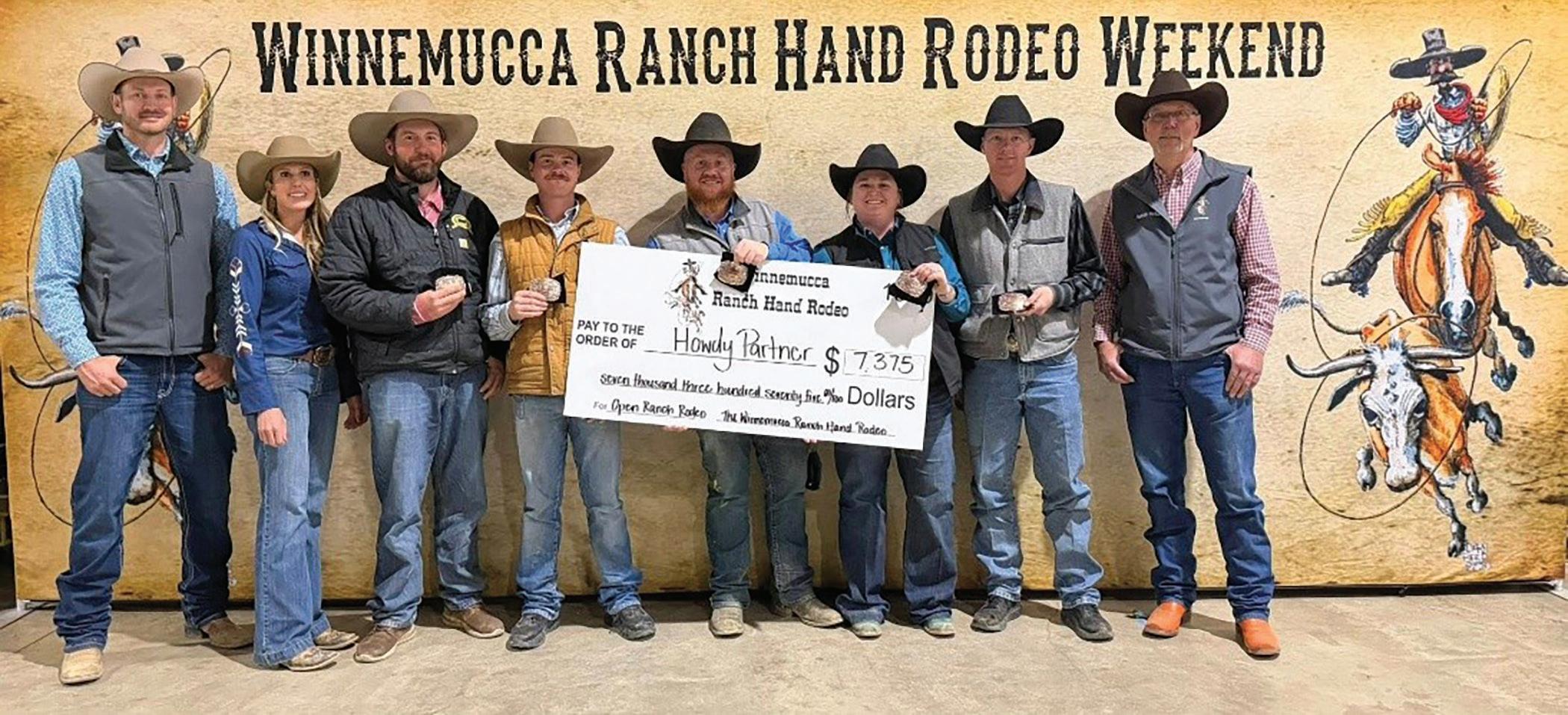
Overall 2026 Winnemucca Ranch Hand Rodeo Team Results
1st- Howdy Partners – Idaho Falls, ID
2nd- CS Cattle – Lovelock, NV
3rd- Eldridge Ranch – Torrington, WY
4th – Torvik Ranch – Fallon, NV
5th – Jones Outfit – Fallon, Nv
6th – Jim Ranch – Klamath Falls, OR
7th – Rock Creek – Golconda, NV
Event Champions
Top Hand Award – Britt Newman – Howdy Partner – Idaho Falls, ID
Top Women Award – Sandy Kiel – CS Cattle –Lovelock, NV
Team Branding – Ride em Slide em – Bruneau, ID
Ranch Doctoring – Eldridge Ranch – Torrington, WY
Rope & Tie – NV/Id Gang – Winnemucca, NV
Trailer Loading – Blossom Ranch – Elko, NV
Team Roping – Torvik Ranch – Fallon, Nv
Steer Stop – Kindee Kananen – Howdy Partner – Idaho Falls, ID
Ranch Bronc – Bryor Bassett
All around Bronc – Cahl Williams
Overall 2026 Winnemucca Women’s Ranch Hand Rodeo Team Results
Overall Women’s Champions - Long Drinks –Winnemucca, NV
Reserve Champions – Kiel Livestock – Lovelock, NV
Event Champions
Team Roping – Long Drinks – Winnemucca, NV
Muley Roping – Flying M – Imlay, Nv
Branding – Kiel Livestock – Lovelock, NV
Trailer Loading/Doctoring – Long Drinks –Winnemucca, NV
Steer Stopping – Hannah Ranch – Winnemucca, NV
2026 Winnemucca Cow Dog Trials
Brace Class –
1 Cindy Campbell - MISR Tux & Maverik 180 2:50
2 Stockton Wight - MISR Hawk & MISR Stix 180 3:47
3 Jeannie Biggers - MISR Zuki & Got Beth 150
6:00
Open Class –
1 Brian Jacobs - Jolene 180 2:53
2 Carter Harris - Leah 180 2:55
3 Brian Jacobs - Klem 180 3:00
4 Brian Jacobs - Rue + 180 3:54
5 Brian Jacobs - SBC Ivanka 180 3:55
Intermediate Class –
1 Lauren Anderson - ROW Ricky 180 3:13
2 Rex Shippy - Vic 180 4:23
3 Cindy Coleman - MISR June 150 6:00 Novice Class –
1 Lance Knudsen - Rena 180 4:08
2 Mike Duce - Choc 150 6:00
3 Melody Voskuil - LB3 Jane 120 6:00 Nursery Class –
1 Gilberto Valdez - TL Lace 180 2:22
2 Brian Jacobs - Rue + 180 3:44
3 Paul Andersen - PDA Squirt + 180 4:51
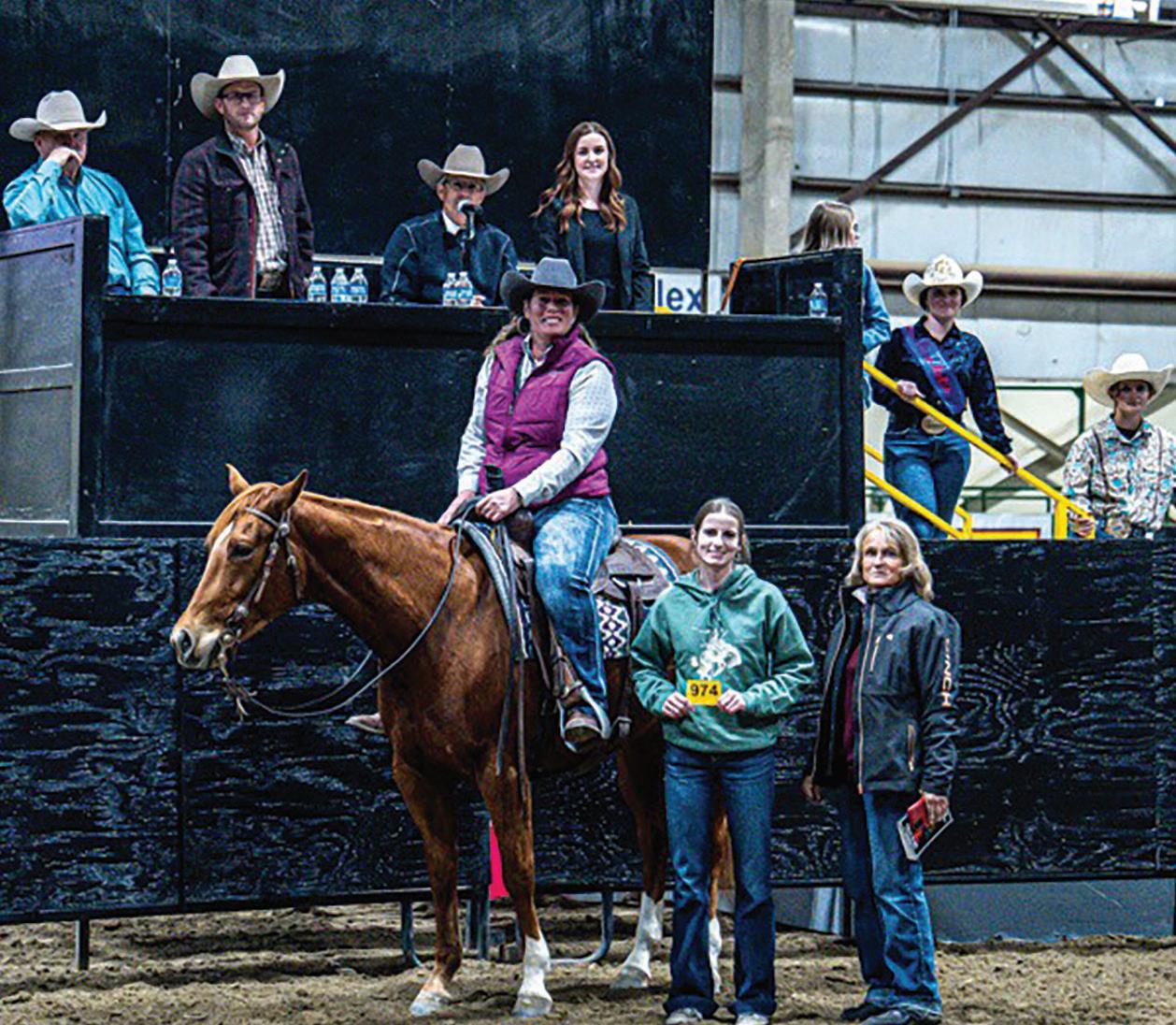
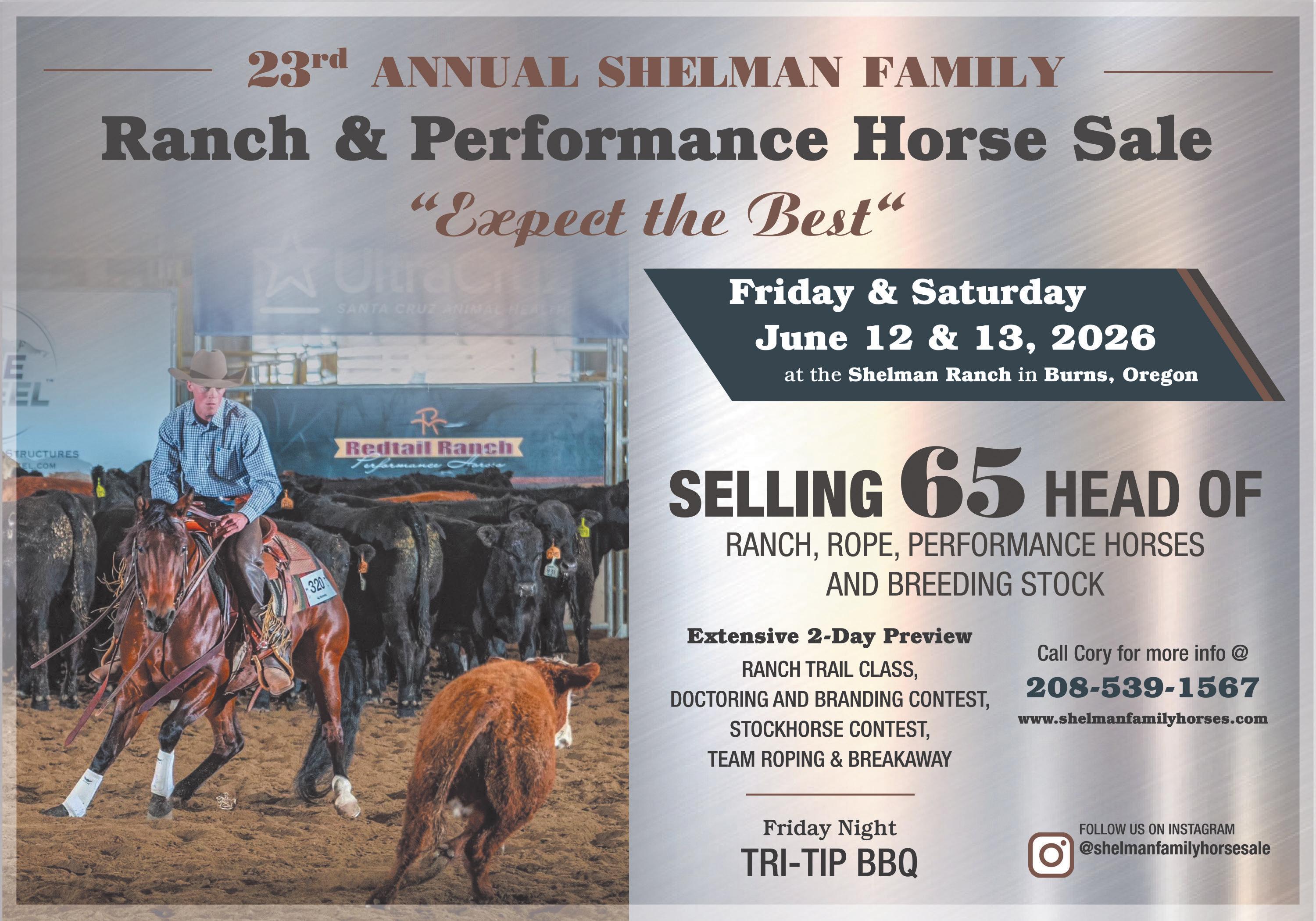
2026 Winnemucca Ranch, Rope & Performance Horse Sale
Overall Sale Average: $ 16,500
Top 10 Sale Average: $ 24,200
Overall Sale Total: $ 346,500
Horse Swwwale
Top Selling Horse $35,000 –PD Shes A Smart Cat “Cat” – Consigned by Peggy Davis
– Buyer Fee Ranch Inc. from Fort Bidwell, CA For
Chairmen: Josef & Monel Bilant, Howdy Partners Team, Director: Mike Mieras
In Humboldt County, ranching is more than a livelihood — it is a way of life built on grit, faith, family, and hard work. Robert “Papa Rob” Nuffer has embodied those values for a lifetime. Throughout his career, Rob worked at Quinn River Ranch, Saval Ranch, Paiute Meadows, Big Creek Ranch, C Punch Ranch, DeLong Ranches, and Tim DeLong Ranch. At each stop along the way, he earned a reputa-tion for being steady, dependable, and willing to do whatever the day re-quired. He built his life and his name the old-fashioned way — by show-ing up, working hard, and doing things right.
Rob and his beautiful wife, Delia, later purchased Woodward Ranch from Delia’s parents and Dennis Woodward. More than land or livestock, Woodward Ranch was heritage — a place rooted in family history and built on tradition. Located 81 miles from town, it became a gathering place for family and friends from far and wide. The long drive was al-ways worth it. Visitors knew they would be welcomed with Delia’s fabu-lous cooking, warm hospitality, and the kind of laughter that only comes from shared history.
Of course, a visit often included a little work.
Before sitting down to eat, guests might find themselves feeding, fixing fence, or helping with what-ever chore Rob had lined out for the
day. No one seemed to mind. That was part of the experience — fellowship, food, and the satisfaction of honest work done together.
CONTINUED ON PAGE 14
Director: Mike Mieras, Rob’s Son Brandon Niffer, Delia and Rob Nuffer and grandchildren, Ruby and Gemma.
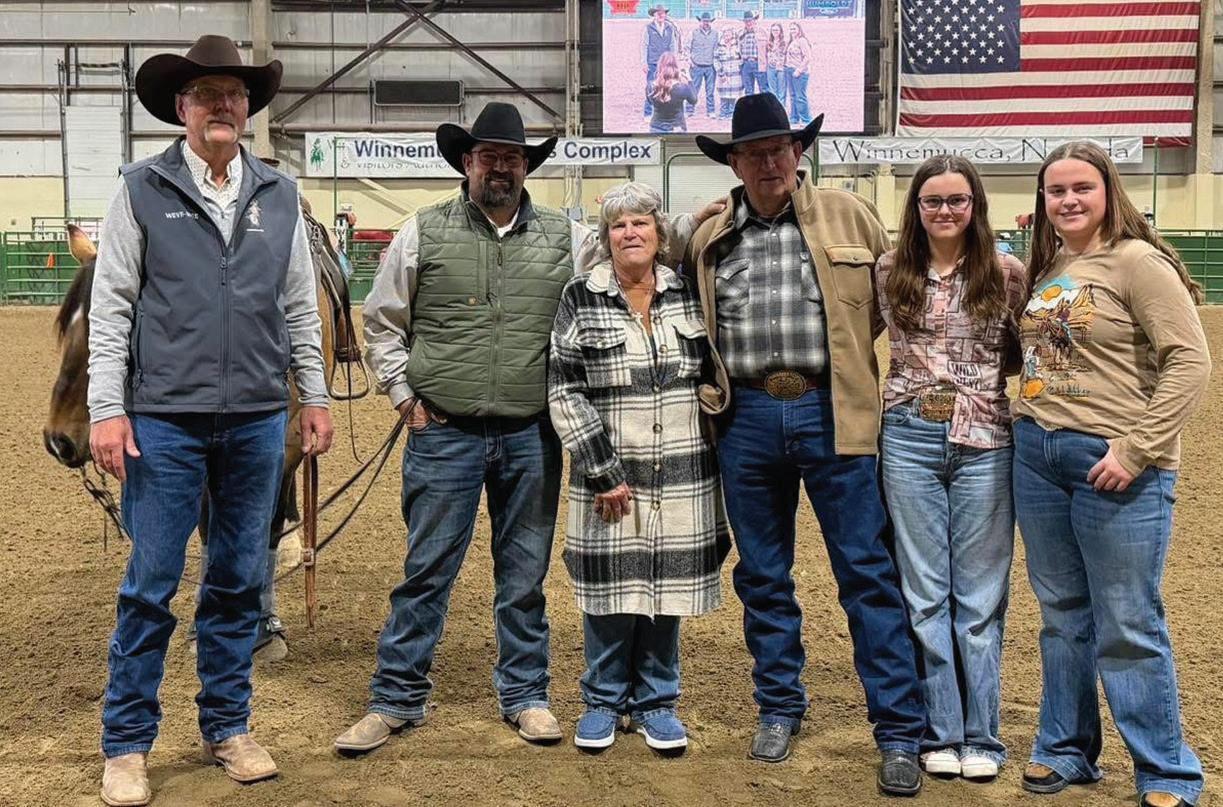
Though Rob and Delia have since sold Woodward Ranch and he is offi-cially retired, ranching has never left him. Today, Rob continues to help brand calves across Humboldt County, lending a hand wherever he is needed. He remains a steady presence in the branding corral, often run-ning the chute for the “gang of girls” who gather at his home. His pa-tience and quiet encouragement continue to shape the next generation.
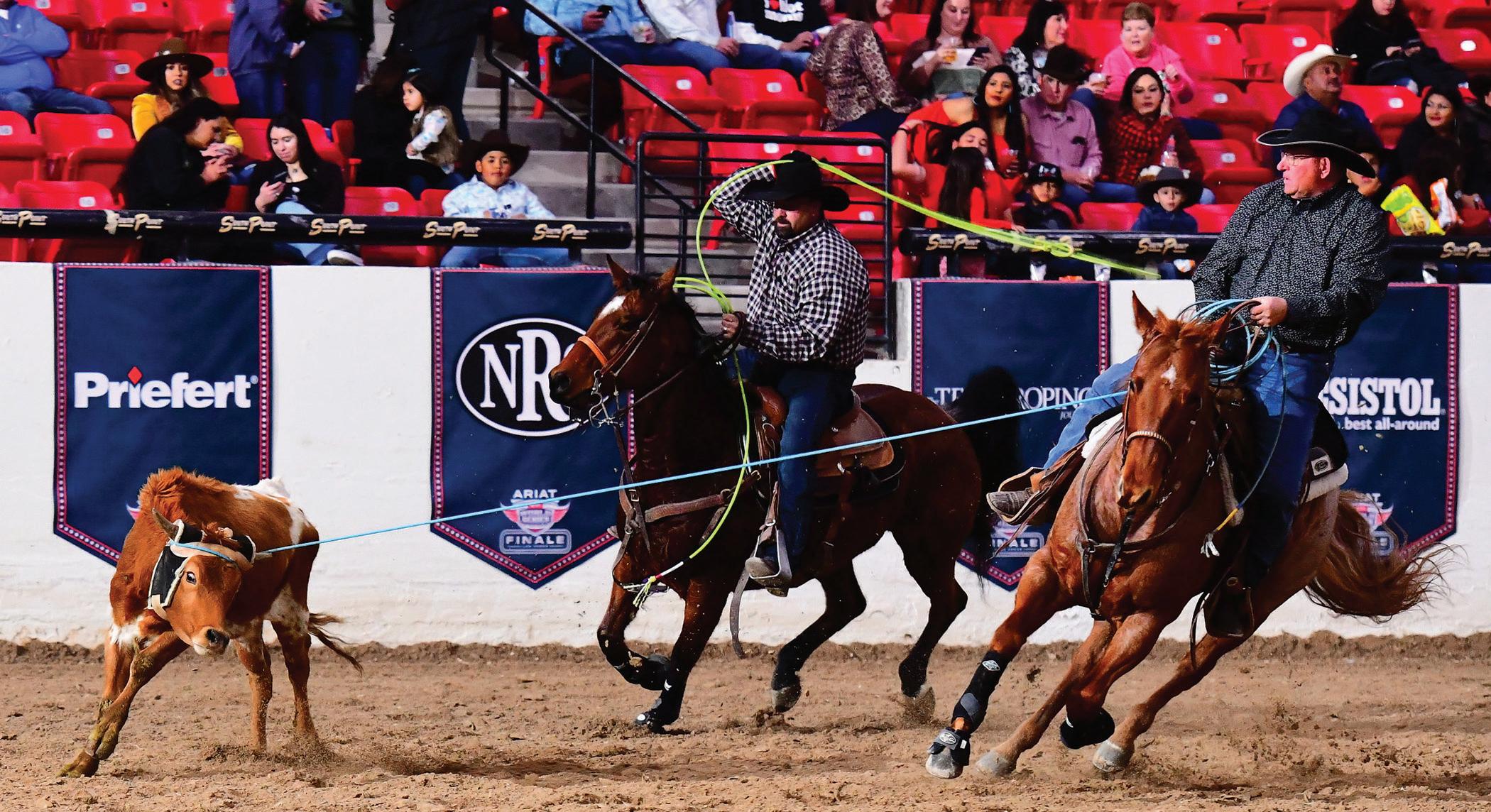
Since retiring, one of Papa Rob’s favorite pastimes has become team rop-ing. He especially enjoys heading for the young guys and girls
— giving them a solid shot, steadying the run, and cheering them on from the other end of the rope. It’s just another way he invests in the next generation, trading long days in the saddle for moments that build confidence and keep tradition alive.
Rob is blessed with six grandchildren who are the pride of his life. Right next door on the “compound” live his son Brandon and his favorite daughter-in-law, Katie, along with their daughters, Gemma and Ruby. Those two granddaughters have certainly helped Papa Rob grow in pa-tience. He may ask Ruby to wear “real
CONTINUED FROM PAGE 13
clothes” and Gemma to wear boots when she’s roping — and they may not always take that advice — but when it comes to halter breaking colts or working cattle, they are all ears. Those are the lessons that matter most, and the ones Papa Rob is always ready to teach.
His son Jared lives in Kansas and is raising his four children — Doc, Ha-zen, Kamble, and Hazley — who proudly carry on the family’s ranching spirit from afar. No matter the miles between them, Papa Rob’s influence reaches each one.
Through every season and every chapter, Delia has been by his side — building a home wherever they were planted, cooking for crews, welcom-ing neighbors, and saddling up when the work demanded it. Together, they built more than a ranching life; they built a family grounded in hard work, loyalty, humor, and love.
Papa Rob’s impact is not measured in acres or cattle numbers. It is meas-ured in the strength of his family, the respect of his community, and the generations who proudly follow in his footsteps.
The Winnemucca Ranch Hand Rodeo is honored to recognize Robert “Papa Rob” Nuffer as the Winnemucca Ranch Hand of the Year.
A Cowboy’s Church
Woody Harney was honored at the 2026 Winnemucca Ranch Hand Rodeo.
In Loving Memory of Woody Harney Sr.
January 11, 1971 –April 3, 2025
Woody Harney Sr. was more than a cowboy — he was a legend, a true buckaroo, and a hero to everyone who knew him. Born and raised with the grit and heart of Owyhee, Nevada, Woody stepped into the cowboy life early, starting his journey at just 13 years old. By 17, he had left home, fully committed to the life he loved, riding forward with lifelong friends and an unshakable devotion to the land, the horses, and the work.
Woody didn’t just do the job — he lived it. Cowboying wasn’t something he clocked in and out of; it was who he was. Over the years, he worked on some of the most respected outfits in Northern Nevada, including the IL Ranch, YP Ranch, King’s River, TS Ranch, and numerous large outfits throughout the region. Along the way, he rode and worked beside well-known cowboys such as Chan Catches, Nathan Kelly Senior, Riley Brown, Jake Brown, Frank Dominguez, Tub Blanthorn, Hezzie McGarva, Sam Marvel and Ramon Cordova — friendships and partnerships built on long days, hard work, and mutual respect.
From ranch work to rodeos, from long days at cow camp to riding fine bridle horses through town, Woody carried himself with pride, skill, and authenticity. His horsemanship spoke for itself — he could take a horse and make it right, shaping them with patience, talent, and a deep understanding that only a true buckaroo could possess. His flashy horses didn’t just turn heads; they carried the unmistakable mark of the
cowboy who made them, and they rode around withpride carrying that amazing cowboy aside. He was known just as much for his laughter and friendliness as for his skill. Woody’s inside jokes, quick wit, and welcoming nature made people feel at home wherever he went. And of course, his famous saying — “By golly, I don’t mean maybe” — summed him up perfectly: a man of his word, steady, honest, and true.
Above all else, Woody was a devoted father and grandfather. He was endlessly proud of his two children, Megan Harney and Junior Harney, and nothing brought him more joy than watching Junior ride broncs and seeing his grandchildren grow. Wade, Tinsley, Tucker, and Logan Jones didn’t just look up to him — they followed him, loved him deeply, and saw him as the hero he truly was. Summers spent taking his oldest grandson, Wade, out to cow camp were moments he cherished, passing down the ways of the cowboy life and the values that defined him.
Woody was known for a good time, a strong hand, a kind heart, and a life well lived. His legacy lives on in the horses he made, the outfits he rode for, the cowboys he stood beside, the stories that will be told for generations, and the family who carries his name with pride.
He rode hard, laughed loud, loved deeply, and left his mark on the West — a true buckaroo, forever remembered
You’ve all heard of cowboy church, probably been a time or two,
With a Bible college graduate in a cowboy hat trying to relate to you,
But have you been to a cowboy’s church?
In a tiny ranching town,
One that’s hot in the summer and chilly when the snow is coming down, Where the second-hand pews are as scuffed as the boots that shuffle into them, And the threadbare Baptist editions fall open to your favorite hymn,
The preacher plays a guitar that he pays around cow-camp fires too,
And the organ sits silent for lack of a player, none of the local ladies do,
But you sing loud and joyful, and wildly off-key,
Amazing grace follows the bell’s ringing across the wide valley,
The message is simple, straight from the living word,
And it’s welcoming, compelling, more hopeful than others you’ve heard, And it doesn’t sound corny when he uses ranching analogies,
Because you know he’s lived it, scared hands, grey mustache, twang in his guitar strings,
You’re close to Heaven as the closing prayer seeps into the rafters,
Pick up your hat from the stack by the door, and join us for the potluck after.
Happy Easter!
Randi Johnson, 2021
The Cowboy’s Daughter Randi Johnson
By Harley Naumann, Grazing Specialist Special to the Rancher
By late February and early March, most producers are more than ready to be done feeding hay and thinking about turnout. Still, not so fast, cautions Harley Naumann. “Late-winter grazing pressure on cool-season pastures can compromise spring regrowth,” he says. “It’s important not to start grazing too early—right at green-up, for instance.” Turning cattle onto fresh growth too soon can reduce total forage production, drain carbohydrate reserves in the roots and weaken plant stands. “Pair that with the ever-present threat of drought, and you can set a pasture up for failure in a hurry,” Naumann says. “Even if you’re tired of feeding hay, it pays to hold off and delay turnout to protect pasture health and productivity.”
Use late winter for preparation
Rather than grazing, put this window to work. Walk fences, check water systems and evaluate paddock layout. Pay close attention to setting proper rest and recovery periods—arguably the most critical factor in pasture performance. That also means planning to monitor residuals based on your forage utilization goals to avoid the all-too-common trap of rotational overgrazing. Be ready to adjust as conditions change.
Take stock of forage supplies
Late winter is also a good time to inventory your forage base. “Many farms and ranches come out of winter with tighter hay and stockpiled forage than they expected,” Naumann says. “It takes grass to grow grass, and that’s especially true this time of year.” Grazing stockpiled forage too hard can weaken stands heading into spring. Build a forage budget, spot
deficits early and line up contingency plans—whether that’s supplementation, alternative forages or early weaning.
Consider frost-seeding to improve stands
If pastures need a boost, late winter offers an opportunity for frost-seeding, particularly with legumes. Cool-season grasses usually provide adequate protein and energy in spring, so adding a warm-season legume can help carry quality into the summer. Annual lespedeza is one option that can be frost-seeded now, offering long-term gains in forage quality along with nitrogen fixation.
Patience pays
“As spring approaches, pa tience and planning can pay dividends all season long,” Naumann says. “Delaying turnout, protecting early growth and making thought ful adjustments now leads to healthier pastures and more resilient forage systems.” A few well-timed decisions in late winter can be the difference between getting by and setting your operation up for longterm success.
We ar e exper ts in State of Nevada Water Rights. We pr ovide a wide r ange of water right and r esour ce development ser vices that can be customized to meet your needs.
Our team wor ks dir ectl y with you to develop the best solution for your far m, r anch, business or home.
By Honorine Pedroli
3/4 c. sugar
Burn sugar over medium heat, stirring constantly, until melted and light brown in color. Pour at once into baking dish. Do this quickly because it will get hard in a hurry. Let cool until it cracks. Scald 8c. milk.
Mix together:
12 eggs
11/2 c. sugar
1/2 tsp. salt
2 tsp. vanilla
Strain egg mixture into scalded milk. Pour on top of cooled sugar. Cook in a water bath at 350 until firmabout 1 hour.
Custard is done when a knife blade into the center comes out clean.
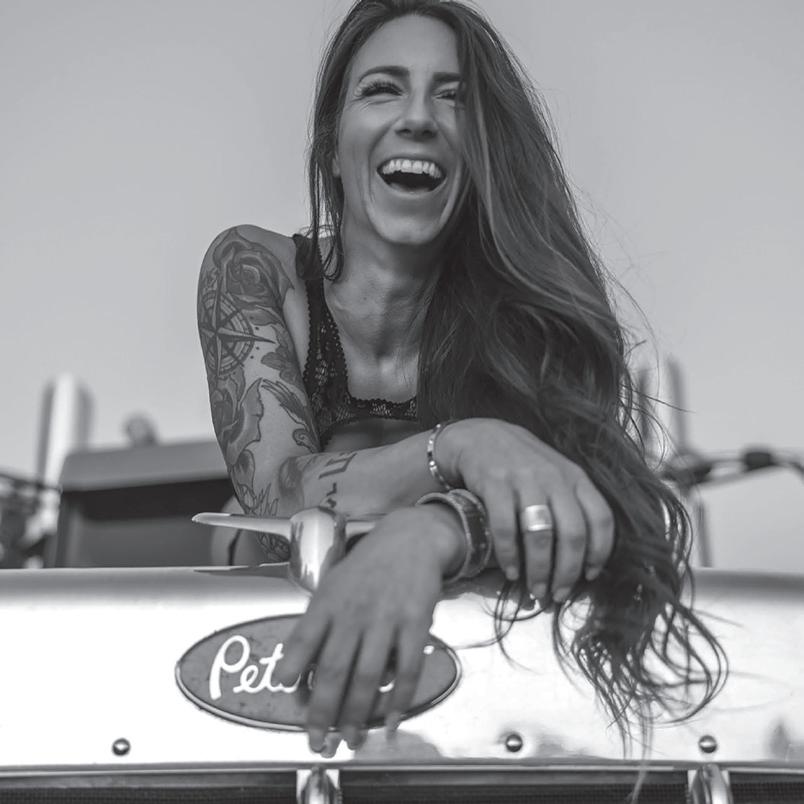
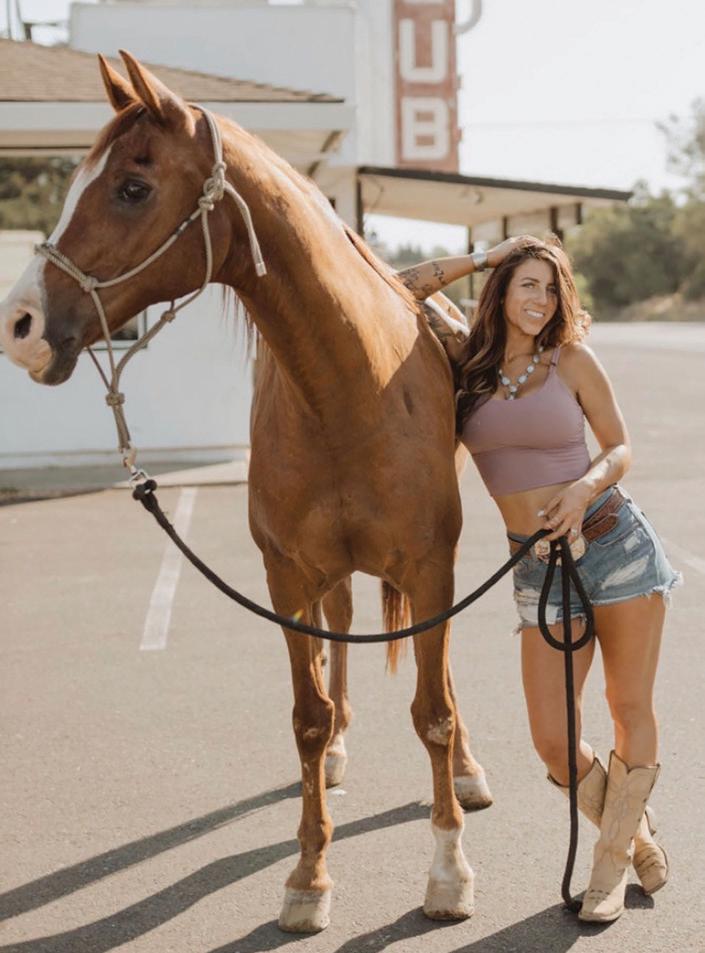
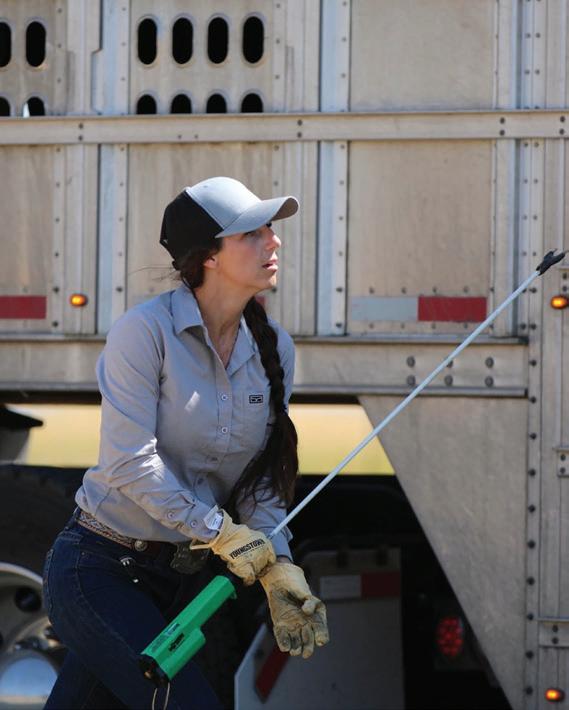
“The sun is shining & the grass is growing which brings us into the beau-tiful season of spring; I am very excited to introduce a really bright light to you this month. Rachel Shackelford is an amazing young lady with so much talent and one heck of a work ethic; I met her last spring when re-ceiving weaner calves…I set the gates and patiently waited for the truck driver to get out and give me their numbers… I was shocked when a pe-tite woman crawled down from the driver seat. After unloading the calves, we were able to visit for a bit and I was impressed to say the least! Rachel has accomplished so much in her life thus far and I am so excited to see what she will achieve in the future. Please enjoy getting to know Rachel, she truly is a fantastic person.”
- Kirstin McSharry Lady Rancher Founder
FEATURING:
Rachel Shackelford
Ijust recently moved from Lincoln, California to Torrington, Wyoming! You’ll catch me in my black 389 Peterbilt out on the interstate hauling cattle. Commonly known as a “Bull hauler” I be-came an owner/operator last year and haul cattle across the country, proving that you don’t have to be one of the guys to fit in the field.
I believe God puts certain callings on your heart, and this life was one of mine. I grew up homeschooled on acreage, and with animals. Learning from a young age how to drive tractors, using various different types of equipment and pulling different types of trailers. I traveled all over the US with my family competing in endurance racing with our horses. The responsibilities of tending to both the animals, on and off the road, on top of the property, It was one of those things I stepped into at the time
and didn’t really know how far it would continue to take me. I started my own training career after high school and helped many kids and adults learn a different perspec-tive to communication and life skills through reading the body language of horses. When health issues arose 12 years later, inhibiting me from continuing, I retired from training and quickly piv-oted, getting my CDL and hit the ground running.
I spent 7 years behind the wheel from logging, heavy haul, oversize, pipeline and even hauling equipment on the line for fire support before finding myself back with animals, just in a different way. Since then I’ve always been drawn to the grit, and the kind of work that demands every-thing you have. Moving livestock on a larger scale has filled that itch and then some!
It’s hard to think of just one person that’s been the most inspiring, as I’ve been blessed by so many influential people. These people have been rooted in their faith and keep showing up no matter what. The ones who don’t need recognition to do the right thing, that’s the kind of strength I admire, and the encouragement I get from the mentors I have.
My most memorable moment…ooofff this is a tough one. I’ve got a lot. It’s not just one moment, it’s little moments that add up over time for me. The early mornings, when no one else is up, watching the sunrise and sunset in two different states behind the windshield. The long miles, qui-et prayers over desolate country, the hard days with rewarding endings when you can mcguiver your way through a truck repair just to make it to the next destination. The sleep depri-vation and fighting weather, driving through the toughest of storms that you feel
you won’t sur-vive, pushing your limits and knowing when to back off. Knowing you’re trusted with something that matters. Those are the moments that remind me this isn’t just a job, it’s a calling and a way of life that you have to possess a special kind of something that keeps you coming back for more day after day.
My hobbies include anything that puts a smile on my face or wind in my hair! Everything outdoors! My horses, endurance racing and traveling the country exploring untouched trail. I also am a true adrenaline junkie, and love going snowmobiling in the backcountry mountains, dirt bik-ing through single track trails, zipping through California twisty canyon roads on a streetbike, jumping waves behind a boat on a jet skiing wake surfing to a good banger, but above all, any-thing I can include or bring along my animals in is a win for me.
My favorite food would have to be a good steak after a long day, the only other thing that can top it is an uncrustable. You can’t beat it. I’m a proud recovering addict of those tasty yet so delicious little muffins of yum. (peanut butter and jelly sandwiches)
My favorite color, if anyone had to guess by the way I dress they would probably guess black or grey. But I love light violet or a vibrant red/orange like my favorite flower Indian paintbrush.
My favorite animal? ALL OF THEM. If I could afford to be Mrs. Noah, I would. Trust me. God has already spoken to me that I need 2 of everything,
convincing my bank account on the other hand…. But by far my favorite would be horses, they teach patience, respect, and grit all at once. A tough 2nd would be pigs, don’t think you can have a bad day when you have a snout nudging you or the simple joys of listening to oinking, seeing the flopping of the ears or the only loud, open mouth chewing that is considered adorable.
I’ve been very fortunate to have more than just one “once in a lifetime heart horse” although they all have passed and I don’t have any in my current herd, they hold a very special place in my heart. There’s one that outshined the rest. A true underdog. Ray, a dark liver chestnut with brin-dle spots and a “Pharos thumbprint on his neck” I wear his face and blaze on a custom necklace around my neck everyday. This gelding was misunderstood by many but once you earned his trust he gave you his entire heart. He taught me the most, and challenged me to eve-ry end, humbled me and really gave me a different perspective when it came to training. He was the most talented, underestimated and most sensitive horse I’ve ever been around. I became the horsewoman I am today from the gift that came from that incredible athlete of an equine I was lucky enough to call one of mine.
My biggest pet peeve is a lack of work ethic and people who don’t stand behind their word. Whether that be from integrity or action. Say what you’ll do and do what you will say. And for the love of God please do not whistle out of boredom!
My favorite quote is actually a bible verse “God is within her, she will not fail, he will help her at the break of day.” Psalms 46:5 has many meanings to me. It was one of my nana’s favorite verses and is one I have tattooed on me and on the back of my semi as well. No matter what, I know God has my back, and every day we have a new beginning, and to trust his guidance through whatever we face.
When I need to clear my head I go out on the road, be with my horses, a simple phone call with one of my closest girlfriends or a solo hike with my dogs. Sometimes those 4 things have more power and influence than one would think. Sometimes somewhere quiet, moving your body to get out of your mind and picking up a daily devotion and prayer can change my perspective.
My dream vacation is being home with my animals. Sounds silly, but when you spend your life out on the road, the simple joys of cooking at home in the kitchen, tossing feed to your
animals and snuggling up on the couch catching up on your favorite show with the fireplace on…Pure bliss. There’s something about seeing the joy on my dog’s face, the free-dom of space that my horses have to roam as a herd, and truly being able to know that the lifestyle I live in order to provide the life they deserve is one of the most rewarding things. Being able to be home to see it, and benefit from happy animals, living their best lives is truly better than any vacation.
My future goals are to build a life that gives me balance between home & on the road. I would like to see my brand not just a business but some-thing that eventually builds what I started years ago.
Something I would tell my younger self is, “Being different from the rest just makes you unique and will one day be one of your greatest strengths. You don’t have to have it all figured out. Stay faithful, work hard, and trust that God is already ahead of you.”
NEVADA AGRICULTURAL FOUNDATION RECEIVES OVER $500,000 DONATION
CREATING THE JAMES R. MORGAN MEMORAL FUND
The late James Morgan endowed the Nevada Agricultural Foundation (NAF) with a gift of over $500,000. James’ son, Steven Morgan, facilitated this very generous gift. This gift will provide signi cant ongoing support to Nevada students pursuing an agriculture-related degree as well as support agricultural research and development grants awarded by the NAF.
James Morgan lived and farmed in south Mason Valley. He was very involved in Northen Nevada agriculture and was an active member of the NAF. He was a board member and member of the NAF Scholarship Committee for over a decade.
The NAF’s mission is to “Promote and Strengthen Agriculture in Nevada by Providing Financial Assistance to Deserving Groups or Individuals Involved in Research or Education.” This very generous endowment will signi cantly enhance the Foundation’s ability to achieve its mission and goals. The Nevada Agricultural Foundation awarded over $100,000 in scholarships and grants in 2025.
Frank Bishop, President of NAF said, “We are thrilled and so appreciative of this gift provided by James Morgan. We look forward to helping Nevada students and providing funding for agricultural research long into the future.”
The NDA is accepting grower applications for native seeds
The Nevada Department of Agriculture (NDA) Division of Plant Health and Compliance is accepting applications from producers to grow native seed and enhance Nevada's seed supply for restoration efforts.
Through the Foundation Seed Program, the NDA provides free quality native seeds to producers to cultivate and support seed production. In return, participants agree to return a portion of their yield to sustain the program, and may keep or sell the remainder of the seed. The goal of this program is to provide source-verified seeds that are in high demand across different markets and to help growers transition or diversify cultivation by providing free seed.
Deadline: May 1, 2026 at 5:00 p.m. Questions may be directed to seed@agri.nv.gov. For more information, including the application, please visit the NDA website.
Spring Cattle Work CHECKLIST
Vaccines
Minerals
Antibiotics
Needles: (Size)
Syringes: (Type and Size)
Syringe Repair Kit: (Gaskets, Tubes, Rings, etc.)
Wormer & Applicator
Ear Tags: (Brand, Color, Size, Custom?)
Ear Tag Applicator and back up
Branding Iron and Heat Source (Remember to Fill Your Propane)
Scour Control Meds or Bolus
Bolus Gun
Screw Worm Spray
Sharp Knife and Knife Sharpener
Banding Equipment/Bands
Dehorning Equipment
SeanMiller Memorial
Ranch Rodeo Ranch Rodeo
USDA Launches ‘One Farmer, One File’ Initiative to Better Support Farmers
USDA
At the Commodity Classic Convention in San Antonio, Texas, U.S. Secretary of Agriculture Brooke L. Rollins announced the “One Farmer, One File” modernization, another action putting Farmers First with sweeping technological improvements at the U.S. Department of Agriculture (USDA). Through “One Farmer, One File,” USDA’s mission is to create a single, streamlined record that follows the farmer — no matter where they go in the USDA system.
“Every single day at USDA, our focus is on making life easier, more profitable and more rewarding for the American farmer,” said Secretary Brooke Rollins. “Our government for the people by the people should be modern, efficient, and respect taxpayer dollars. This modernization of old, duplicative, wasteful systems has one goal in mind, improve our customer service so the people we serve are able to farm and feed America and the world. ‘One Farmer, One File’ prevents our farmers from duplicating tasks while increases their productivity and time in the field.”
CUTTING RED TAPE AND MAKING GOVERNMENT MORE EFFICIENT
Deregulatory Agenda for American Agriculture and Consumers can be found online as a pdf file: https://www. usda.gov/sites/default/files/documents/ usda-de-reg-agenda.pdf Read the file to learn more about the programs. Including: “Implementing the Farmer Bridge Assistance Program (Farm Service Agency): USDA published a final rule implementing $11 billion in one-time bridge payments to American farmers under the Farmer Bridge Assistance Program. Sign-ups run until April 17, 2026. This program is designed to deliver financial relief quickly and simply so that farmers are better able to respond to market disruptions and increased production costs that are still impacted by the lack of foreign market access and heavy regulation of the prior Administration. “
2025 and plans to greatly advance the effort in 2026. USDA anticipates completing the project in 2028.
USDA’s Farm Service Agency (FSA), Natural Resources Conservation Service (NRCS) and Risk Management Agency (RMA) work with agricultural producers on a wide range of programs and services, from establishing a farm number to reporting acres planted, and from getting capital to recovering from disasters.
The goal of “One Farmer, One File” is to reduce the administrative burden for farmers. Additionally, this effort will make program delivery more efficient, save time for USDA staff, and decrease spending on disparate information technology systems.
The “One Farmer, One File” initiative is part of a broad modernization effort to unify all FSA, NRCS and RMA systems. This uniformed system will retire legacy systems and remove agency silos. USDA began work on this system in
The “One Farmer, One File” initiative and broader modernization effort are just one example of how the Trump Administration is committed to simplifying and streamlining programs for producers. For example, USDA is using Login.gov to expedite Farmer Bridge Assistance (FBA) payments to producers. The Administration is also streamlining its conservation programs to make it easier for producers to bundle and apply for the practices needed on their farms.
While in San Antonio, Secretary Rollins also visited Texas Farm Bureau President Russell Boenig’s farm to launch the Deregulatory Agenda for American Agriculture and Consumers, which is a package of deregulatory actions taken by the Trump Administration to cut red tape, unleash innovation, and increase affordability for farmers, ranchers, and consumers. In just one year, President Trump cut 129 regulations for every new one resulting in $211.8 billion in net cost savings.
California’s livestock marketing leader
The Parnell family
CALIFORNIA REPRESENTATIVES
Jake Parnell 916-662-1298
Walter Schalla, Manager .... 719-252-6607
George Gookin ....................... 209-482-1648
Rex Whittle............................... 209-996-6994
Mark Fischer ............................ 209-768-6522
12495 E. STOCKTON BLVD., GALT, CA Office 209-745-1515
Fax 209-745-1582
Website/Market Report www.clmgalt.com
Web Broadcast www.lmaauctions.com
Top Consignments from throughout California and Nevada will be Showcased in these Specials:
CLM FEEDER SPECIALS Join Us Ringside at 12 p.m. WEDNESDAYS
APRIL 15 • APRIL 29 MAY 13 • MAY 27 • JUNE 10 • JUNE 24
CATTLEMEN’S FEEDER SPECIALS sponsored by the Amador-El Dorado-Sacramento Cattlemen Consignments Welcome from All CA Cattlemen’s Associations with a Donation Being Made Back to the Local Association MONDAYS
MAY 4 • MAY 18 • JUNE 1
PAIR & BRED COW SALES
WEDNESDAYS: MAY 20 • JUNE 17
CALL TO CONSIGN TO THESE WESTERN VIDEO MARKET SALES:
April 10 – Harris Ranch Resort, Coalinga, CA
CONSIGNMENT DEADLINE: APRIL 1
May 1 – Paso Robles Inn, Paso Robles, CA CONSIGNMENT DEADLINE: APRIL 23
May 20 – Cattlemen’s Livestock Market, Galt, CA
JOIN US ON THE SEATS OR ONLINE LIVE FROM Cattlemen’s Livestock Market CONSIGNMENT DEADLINE: MAY 12