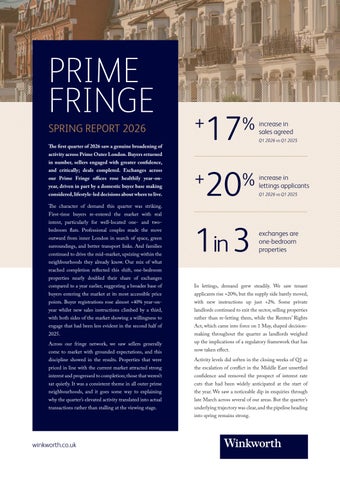
PRIME FRINGE
SPRING REPORT 2026
The first quarter of 2026 saw a genuine broadening of activity across Prime Outer London. Buyers returned in number, sellers engaged with greater confidence, and critically; deals completed. Exchanges across our Prime Fringe offices rose healthily year-onyear, driven in part by a domestic buyer base making considered, lifestyle-led decisions about where to live.
The character of demand this quarter was striking. First-time buyers re-entered the market with real intent, particularly for well-located one- and twobedroom flats. Professional couples made the move outward from inner London in search of space, green surroundings, and better transport links. And families continued to drive the mid-market, upsizing within the neighbourhoods they already know. Our mix of what reached completion reflected this shift, one-bedroom properties nearly doubled their share of exchanges compared to a year earlier, suggesting a broader base of buyers entering the market at its most accessible price points. Buyer registrations rose almost +40% year-onyear whilst new sales instructions climbed by a third, with both sides of the market showing a willingness to engage that had been less evident in the second half of 2025.
Across our fringe network, we saw sellers generally come to market with grounded expectations, and this discipline showed in the results. Properties that were priced in line with the current market attracted strong interest and progressed to completion; those that weren’t sat quietly. It was a consistent theme in all outer prime neighbourhoods, and it goes some way to explaining why the quarter’s elevated activity translated into actual transactions rather than stalling at the viewing stage.
+17% increase in sales agreed
Q1 2026 vs Q1 2025
+20% increase in lettings applicants
Q1 2026 vs Q1 2025
1in 3 exchanges are one-bedroom properties
In lettings, demand grew steadily. We saw tenant applicants rise +20%, but the supply side barely moved, with new instructions up just +2%. Some private landlords continued to exit the sector, selling properties rather than re-letting them, while the Renters’ Rights Act, which came into force on 1 May, shaped decisionmaking throughout the quarter as landlords weighed up the implications of a regulatory framework that has now taken effect.
Activity levels did soften in the closing weeks of Q1 as the escalation of conflict in the Middle East unsettled confidence and removed the prospect of interest rate cuts that had been widely anticipated at the start of the year. We saw a noticeable dip in enquiries through late March across several of our areas. But the quarter’s underlying trajectory was clear, and the pipeline heading into spring remains strong.
FRINGE SALES
SPRING MARKET
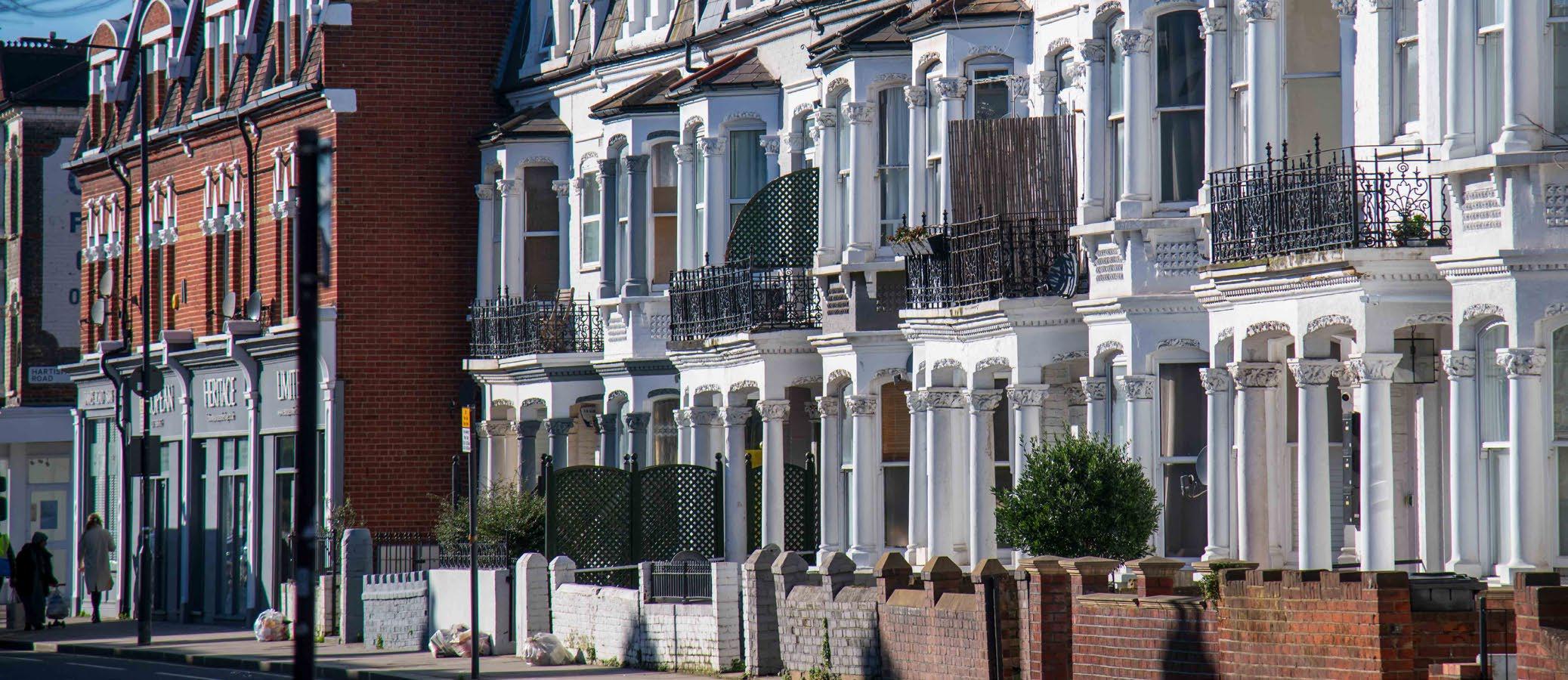
The sales market across our Prime Fringe network started the year with genuine momentum. Viewings rose meaningfully year-on-year, sales agreed climbed +17%, and the exchange figures confirmed that interest was converting into completed transactions at a rate well above the previous year.
The most active segment was the accessible midmarket. First-time buyers returned with intent, drawn particularly to well-located one- and two-bedroom flats, while professional couples made the move outward from inner London in search of space and a different pace of life. Allison Steele, Sales Director at Chiswick, described the shift: “The market from £500,000 to £700,000 was especially busy, with record sales agreed on quality two-bedroom apartments. We’ve also seen a plethora of professional couples looking at the £1.5 million level for three-bedroom houses as they move out from East London and Hackney. The main focus is to be close to excellent transport while enjoying a friendlier pace of life.”

Q1 felt a little more selective than the end of 2025. Wellpriced stock moved, while anything ambitious tended to sit. Presentation and pricing mattered more than ever.
Ben Ainsworth, Director, Winkworth Clapham
That first-time buyer energy was equally visible in Fulham. Florence Clarke, Sales Negotiator at Fulham & Parsons Green, reported strong demand for two-bedroom flats around £550,000, with working-from-home reinforcing the need for an extra room. Doer-uppers around £1 million were also attracting committed buyers thinking long-term. “Pricing is really sensitive — things priced too high aren’t getting the footfall,” she noted. “But a lot of our properties are going for over asking.”
Families remained the backbone of the market across much of the network, and it was the house market in particular that reflected the depth of this demand. In Barnes, where stock shortages are chronic and residents rarely leave the area, upsizers drove activity, often selling and buying within the same neighbourhood. In Clapham, families and upsizers similarly led demand, with well-presented two-bedroom garden flats and mid-market family houses drawing the strongest interest. Across several of our areas, doer-upper houses around the £1 million mark attracted buyers willing to take on renovation projects for long-term value: a sign of genuine commitment to these neighbourhoods rather than speculative interest.
At higher price points, the picture was more measured. Above £2.5 million, the buyer pool narrowed and deals took longer to materialise. In St John’s Wood, the house market remained subdued, weighed down by stamp duty and a retreat of international buyers, though the flat market between £500,000 and £2 million was seen as offering genuine value and attracting growing interest. The contrast within individual areas between a busy mid-market and a quieter top end was one of the quarter’s defining features.
The quarter’s activity was underpinned by a consistent message: sellers who came to market with sensible expectations found buyers, and those who didn’t found themselves waiting. Ben Ainsworth, Director at our Clapham office, captured the tone: “Q1 felt a little more selective than the end of 2025. Wellpriced stock moved, while anything ambitious tended to sit. Presentation and pricing mattered more than ever.” Across our POL network, our achieved prices averaged ~97% of asking, a ratio that held steady from a year earlier even as the wider prime London market saw discounts widen — suggesting that, in our neighbourhoods at least, the conversation between buyers and sellers remained a constructive one.
FRINGE LETTINGS
SPRING MARKET
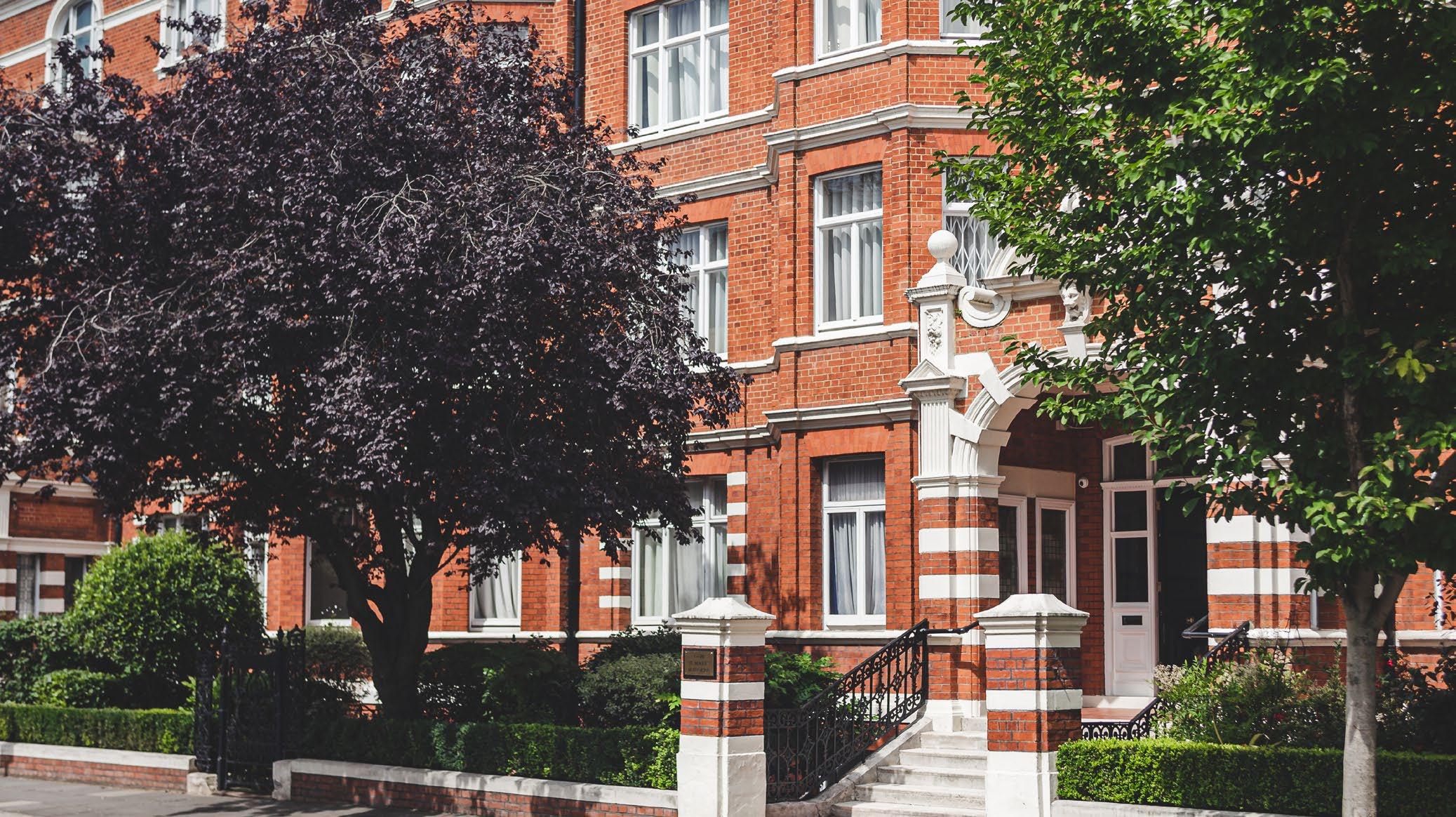
The lettings market across our POL offices in early 2026 was shaped by two forces pulling in opposite directions. Tenant demand continued to grow: applicant registrations rose +20% year-on-year, while new supply barely moved. New lettings instructions were up just +2%. The result was a market that remained tight in most areas, but one that felt markedly different from the frenzy of recent years.
The post-pandemic rental surge has clearly run its course. Rental growth across London’s prime fringe areas has outpaced both central and inner prime London since 2020, reflecting the strength of domestic tenant demand in these neighbourhoods. But the pace has moderated, and in some pockets has begun to reverse. Jason De Sousa, Lettings Manager at our North Kensington patch, described a market returning to more conventional patterns: “Landlords who were getting record rents are now reducing for the first time in two years. The anomaly after lockdown has normalised — there isn’t the same level of demand anymore.” His patch, where young European professionals make up much of the tenant
base, saw one-bedroom flats continue to move quickly but demand for larger properties softened. He expects rents to remain flat or see marginal corrections heading into summer.
Elsewhere, the tenant profile was different but demand remained firm. In St John’s Wood, corporate relocations and postgraduate students provided a steady flow of interest, with a roughly even mix of domestic and international tenants. Neil Sloam, Managing Director at our St John’s Wood office, reported that tenants were not especially price-sensitive: properties were letting on a first-come, first-served basis rather than through competitive bidding. But the supply picture was shifting beneath the surface: “A lot of private landlords are selling up. Institutional buyers are stepping in, but there’s a big lack of property regardless.” That structural shift, smaller private landlords exiting, professional or institutional owners gradually taking their place, was visible across several of our POL neighbourhoods, with some buy-tolet stock finding its way onto the sales market as owners reassessed the new economics of holding rental property.
Market Change
In Barnes, lettings demand remained exceptionally strong, driven almost entirely by families. Donovan Kelly, Director of Winkworth Barnes, noted that many tenants were renting at high values simply to secure a foothold in the area, often while waiting for a purchase opportunity to arise. The mix was roughly even between domestic and international families, with the latter drawn by the area’s concentration of international schools in this prime enclave. “Lettings are still flying for high values,” Kelly observed; a contrast to the more tempered picture in other parts of the network.
The Renters’ Rights Act, which came into force on 1 May, cast a long shadow over the quarter. Although it had not yet taken effect during Q1, landlord behaviour was already adapting. Many focused on securing quality tenants ahead of the new rules, keen to ensure their properties were well-tenanted before the regulatory landscape shifted. The abolition of no-fault evictions and restrictions on rent bidding represent a meaningful change in the landlord-tenant relationship, and across our network the prevailing sentiment was one of caution rather than alarm. For committed, professional landlords, the fundamentals remain sound. But for those on the margins, the calculation has shifted and the gradual thinning of private rental supply looks set to continue.


A lot of private landlords are selling up. Institutional buyers are stepping in, but there’s a big lack of property regardless.
Neil Sloam, Managing Director, Winkworth St John’s Wood

LOOKING AHEAD
SUMMER OUTLOOK
Prime London’s two markets are moving at different speeds. Across Prime Central London, activity continued in Q1 but under strain; weighed down by taxation, the retreat of international buyers, and pricing adjustments that are still working through the system. Prime Fringe, by contrast, entered the year with genuine forward momentum, driven by domestic buyers with clear reasons to move and sellers willing to meet them on price. Together, the two halves tell a fuller story: one market recalibrating from the top down, the other building from the bottom up.
Whether that momentum holds through Q2 depends on factors largely outside anyone’s control. The prospect of rate cuts that had been anticipated at the start of the year has faded, the geopolitical backdrop has introduced uncertainty, and some of our offices describe confidence as month-to-month, responsive to headlines on rates, inflation and the geopolitical backdrop. First-time buyer demand has so far proven resilient despite a less favourable mortgage environment, which provides a floor for the accessible end of the market. But the summer months will test that.
In lettings, the early months under the Renters’ Rights Act will set the tone, with the first signs already emerging across our network. The gradual exit of smaller private landlords looks unlikely to reverse, though several of our areas expect a seasonal pick-up in tenant activity. For landlords who stay committed, the returns are still there, but the landscape has changed permanently.

Dominic Agace, CEO, Winkworth Franchising Limited
Demand for houses at the higher end of pricing in these areas has been tempered by rising costs and tighter budgets. But the vibrancy of these neighbourhoods has only grown since the COVID lockdowns, and their appeal is proving resilient as rental supply remains tight and families look to set up home in these bustling communities.
With affordability in the flat market improving, wage growth outstripping inflation and anticipated changes to pension inheritance rules encouraging the bank of mum and dad to release funding sooner rather than later, we are seeing more firsttime buyers than for several years. That can only improve the energy of these areas and help drive movement up the housing ladder.
WINKWORTH
BARNES
+44 (0) 20 8255 0088 barnes@winkworth.co.uk
WINKWORTH
CHISWICK
+44 (0) 20 8994 7096 chiswick@winkworth.co.uk
WINKWORTH
CLAPHAM
+44 (0) 20 7871 4822 clapham@winkworth.co.uk
WINKWORTH
FULHAM & PARSONS GREEN
+44 (0) 20 7731 3388 fulham@winkworth.co.uk
WINKWORTH
ST JOHN’S WOOD
+44 (0) 20 7586 7001 stjohnswood@winkworth.co.uk
WINKWORTH
NORTH KENSINGTON
+44 (0) 20 7792 5000 northkensington@winkworth.co.uk
winkworth.co.uk