
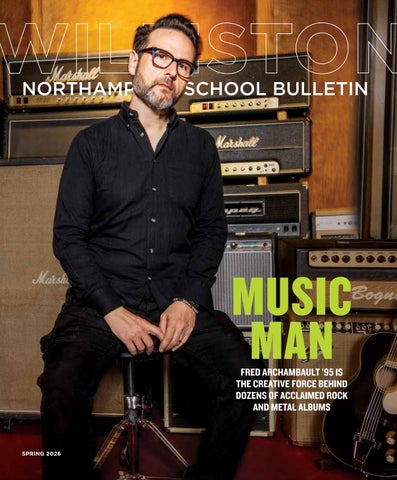
FRED ARCHAMBAULT ’95 IS THE CREATIVE FORCE BEHIND DOZENS OF ACCLAIMED ROCK AND METAL ALBUMS
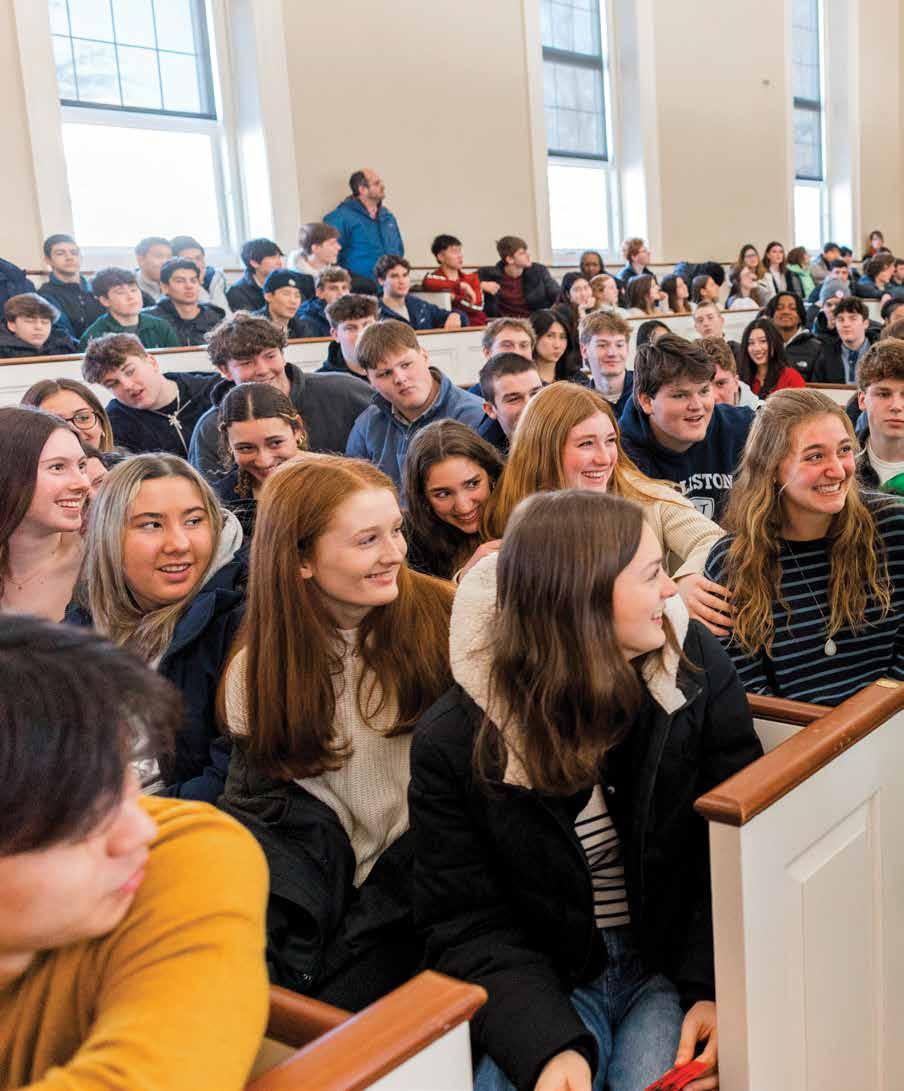
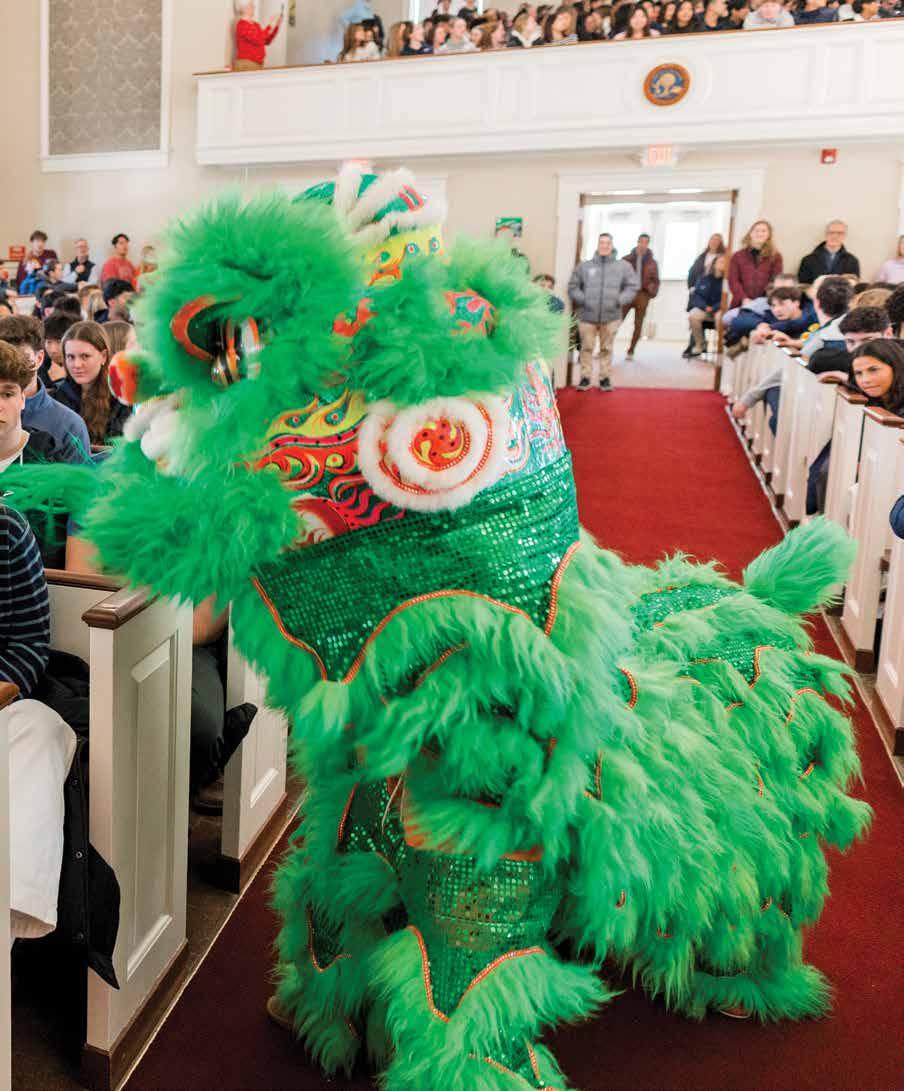
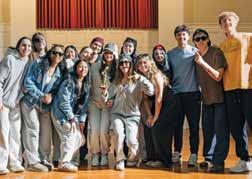
During our February Lunar New Year Assembly, members of the Wu Dang Kung Fu Academy performed traditional high-energy dances and routines, including the lion dance, which had everyone clapping and smiling in the chapel pews. Read more on page 14 about recent traditions and clubs that celebrate Asian culture on campus.
A return to pen-and-paper learning, conversations with a U.S. senator, and our second annual speech contest were spring and winter highlights on campus. Plus: students share favorite moments; the Grum Project turns 10; Ken Choo’s work with international students; and a class of ’66 alum looks back on a miraculous snow day. NEWS
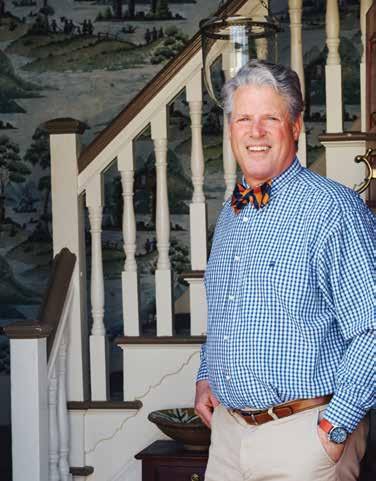
Benjamin Wilson ’87 lets history be his guide. “I guess my vocation is my avocation as well, and I’m lucky in that way.”
42
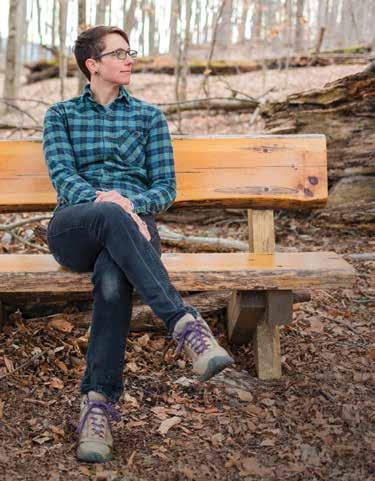
Go on the job with adventure therapist
Julia Stifler ’06. “There’s a huge benefit to helping people spend more time outside,” she says.
25 | WILDCAT ROUNDUP
A new album from Alana Horton ’10; Jake Ross ’16 comes full circle; and Wildcats in the news
27 | THE LAST WITNESSES
One fateful night in Boston, Robert Shumway ’44 and Richard Moulton ’44 survived a deadly nightclub fire
28 | BUILDING THE FUTURE
A $10 million gift from Kevin Hoben ’65 honors a lifetime of connection
33 | POWERING WHAT COMES NEXT
For Matt Kearns ’89, a renewable energy career started at Williston
34 | THE PRODUCER IN THE LINER NOTES
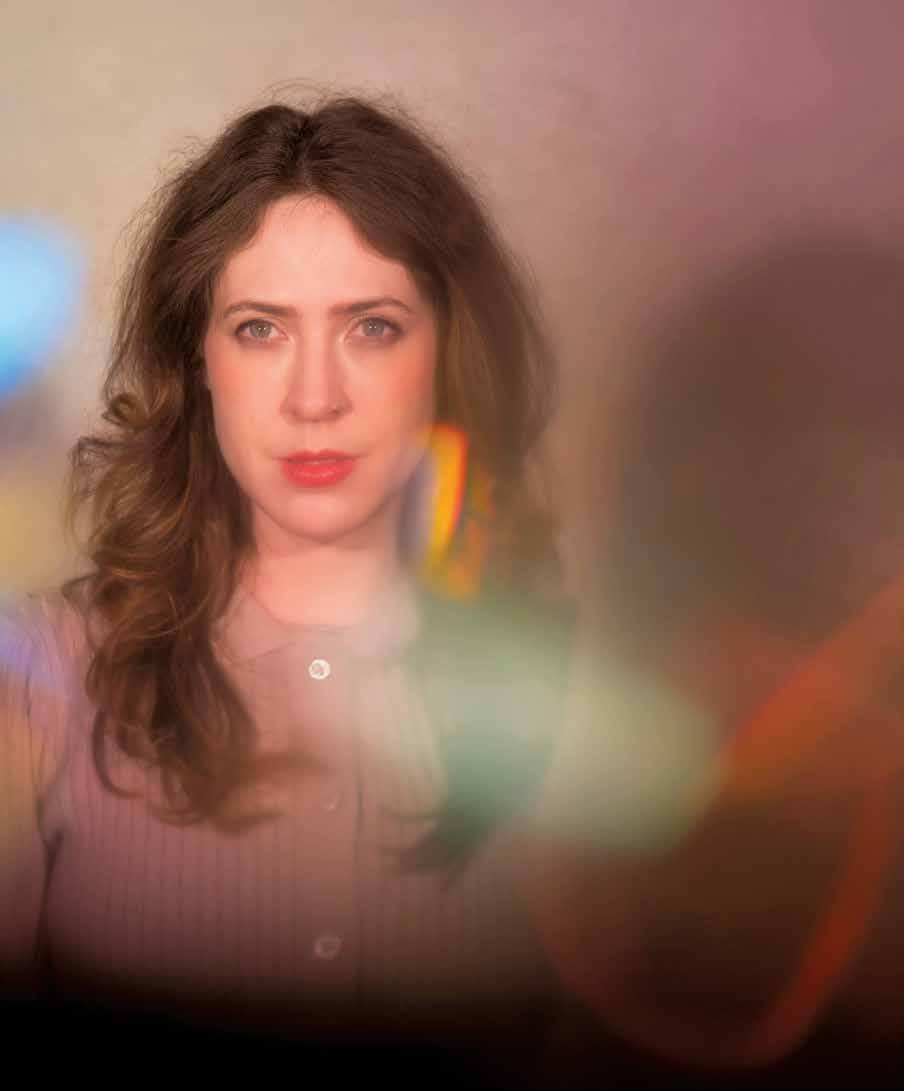
Fred Archambault ’95 is the creative force behind dozens of acclaimed rock and metal albums
38 | A PRESERVATIONIST’S HOMECOMING
At work and at home, Ben Wilson ’87 has a passion for history
42 | ON THE JOB WITH JULIA STIFLER ’06
What does an adventure therapist do? Julia Stifler tells us more.
44 | SMALL GRACES
After supporting his daughter through two years of cancer treatment, Jeffrey Dorman ’06 went searching for his own kind of healing—by helping others 48 | A KINDNESS RETURNED
Mentorship was a revelation for Lori (Alexander) LeBas ’77. She’s turned that experience into the guiding force behind her life’s work
52 | NO QUIT IN HER
Teal Bulthuis ’01 tested her primitive survival skills on two seasons of “Naked and Afraid”
56 | MEET THE EDITOR
Drew Hamilton ’08 on why video editing matters more than you think
58 | DRAWING CONCLUSIONS
Keely Quirk ’13 tell us what she’s up to using her own delightful artwork and words
|
| IN
89 | WHO’S IN THIS ISSUE?
Director of Communications
ANN HALLOCK P’20, ’22
Design Director
ARUNA GOLDSTEIN
Assistant Director of Communications
DENNIS CROMMETT
Manager of Story and Content Development
GEOFF SMITH ’07
Head of School
ROBERT W. HILL III P’15, ’19
Chief Advancement Officer
ERIC YATES P’17, ’21
Director of Alumni Engagement
DELENEY MAGOFFIN P’32
The Williston Northampton School Advancement Office 19 Payson Avenue Easthampton, MA 01027 email: info@williston.com online: williston.com bulletin online: williston.com/bulletin
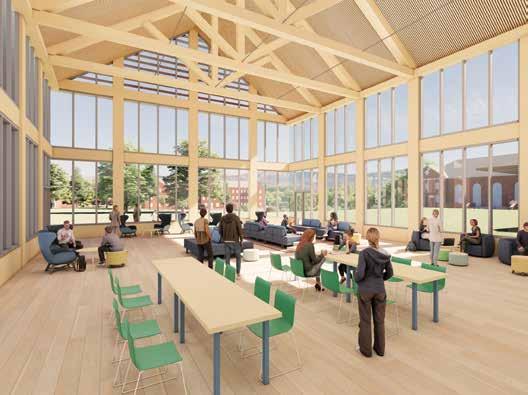
With a dramatic view of Mt. Tom, Williston’s new building will anchor the Academic Quad
ONondiscrimination Statement: Williston admits qualified students of any race, color, national or ethnic origin, ancestry, gender, religion, gender identity, gender expression, sexual orientation, or mental or physical disability, and extends to them all the rights, privileges, programs, and activities generally accorded or made available to students at the school. The school does not discriminate on the basis of race, color, national or ethnic origin, ancestry, gender, religion, gender identity, gender expression, sexual orientation, or mental or physical disability, or any other status protected by applicable law in the administration of its admissions, scholarships, and loans, and its educational, athletic, and other policies and programs.
ne of the things I have most enjoyed as head of Williston is getting to see alumni in action— whether that’s talking to them at events around the country, seeing them back on campus, or reading about them in this magazine. The thread that connects them, across time and space, is a passion for Williston. This spring, we have been inspired by an extraordinary expression of that passion: a $10 million gift from Trustee Kevin Hoben ’65, which is the largest gift in the school’s history.
Kevin’s generosity reflects a lifelong bond to Williston that began during his days as a student and All-American swimmer, and which has deepened over decades of service as Williston’s longest-serving Trustee. In the feature on page 28, you can read more about Kevin and the experiences that motivated him to make this gift. “I really wanted to do something remarkable,” he says, “something that would be defining for the school and put it on a more powerful trajectory.”
That’s exactly what his gift is making possible. In late March, I announced that the school is embarking on the design and construction of an iconic new academic building, which will open in spring of 2028. Designed
to serve the whole school community, the building will feature state-of-the-art, light-filled classrooms; meeting and collaboration rooms; and an expansive atrium gathering space with a spectacular view of Mt. Tom. Capping off the Academic Quad, the new building will help us realize another important campus planning goal: transforming the quad into a pedestrian-only zone that favors community over cars.
Ultimately, this project will propel Williston’s academic mission in ways both predictable and unexpected. It will help us attract and educate curious and engaged students; elevate our teaching spaces as we hire and retain top-notch faculty; and create a new center of academic gravitas that more fully reflects and raises the school’s academic profile.
You can find out more at Williston.com/academicbuilding, where we will continue to share updates on the progress of this exciting project. As always, thank you for the many ways you remain part of Williston’s story—past, present, and future.

1.
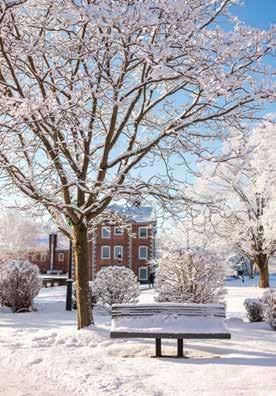
An extra-snowy winter resulted in something rare at Williston: two snow days. It’s not the first time, though. On page 22, Bill Anthony ’66 remembers the utter delight of Headmaster Phil Stevens declaring a second snow day in the winter of 1966.
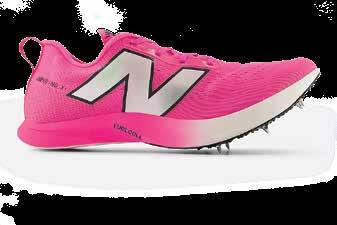
Gabby Thomas ’15 has a new title: “signature shoe maven.” This spring, New Balance announced a signature Gabby collection. Will the FuelCell SuperComp MD-X v3 spikes help us run as fast as Gabby? Unlikely, but we still love the hot pink style!

4.
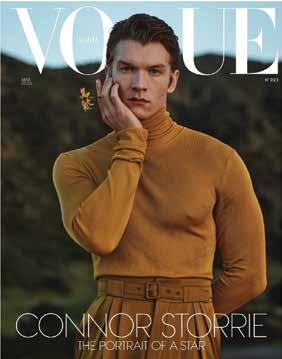
Heated Rivalry is a best-seller in print and a must-watch on TV. For a recent issue of Vogue magazine, Taylor Angino ’09 helped style the outfit that actor Connor Storrie wore. Anyone else feeling a little hot under the collar?
3.

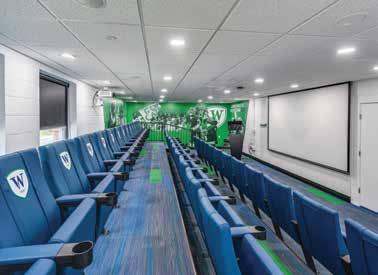
Thanks to an anonymous donor, Wildcats now have a state-of-the-art team room in the Sabina Cain Family Athletic Center. Equipped with a projector, interactive whiteboard, and stadium-style seats, the room is a hot spot for team meetings and film review.
5.
LARGEST GIFT IN SCHOOL HISTORY!
This spring, Kevin Hoben ’65 made a $10 million investment in the future of Williston, and the impact will be felt by students for generations as we embark on construction of a new academic building. Read more about Hoben at left and on page 28.
We love hearing from you! Here’s a roundup of recent comments, reactions, and feedback from Wildcats.
“I am so grateful for my time at Williston, and the school magazine reminds me how much the school is aligned with everything I already believe in. From a lobsterman helping to protect North Atlantic right whales (I live on the Cape and am lucky to see right whales, as well as to know Stormy Mayo from the Center for Coastal Studies, who sparked right whale conservation to begin with), to questioning how AI can disrupt the ability to truly think, to disallowing cellphones during class, to adding dogs to Health & Wellness, Williston is doing everything that’s right in this world. And I am so proud to be tangentially affiliated with it.” Talilla Schuster ’94
“The recent issue raises a question that Williston Northampton School, its alums, and its students are perfectly prepared to tackle. AI done well can enhance knowledge and critical thinking. The trick is to make sure it is done well. Can’t wait to read this…” Jonathan Edwards P’22, ’25, via LinkedIn

“Keira Durrett was my ‘Big Sister’ when I first arrived at Williston in 1986! It’s no stretch for her to have been this nurturing force for Willy’s littles for this long!” Alicia Murphy ’90, via Instagram
“Read mine cover to cover and looking forward to 60th Reunion in June.” Bruce Callahan ’66, via Facebook
“Love seeing this. Rick Francis was such a great coach and mentor, a wonderful person. Awesome to see the family tradition carry on.” David Bartlett Bates ’02, via Instagram
“Tremendous program, and addition of new pup Henry once again shows how connected Williston is with all aspects of student life. Can’t wait to meet Henry around campus. Congrats to Meg Colenback for making this important addition—Henry—happen as part of life at Williston.” Mary Lou Hoyt P’95, GP’21, ’23, ’25, ’26, ’29, via Instagram
“I enjoy hearing from the students, and it makes me happy to live in this community and that Williston is a part of it.” Sue Peppin Phillips, via Facebook
“Just enjoy each precious moment. Williston will impact your future and your friendships that you will not understand until many years later. You are all truly blessed. I still have the most beautiful friendships not only with my dear old friends but still to this day with our teachers.” Mary Mass ’75, via Instagram
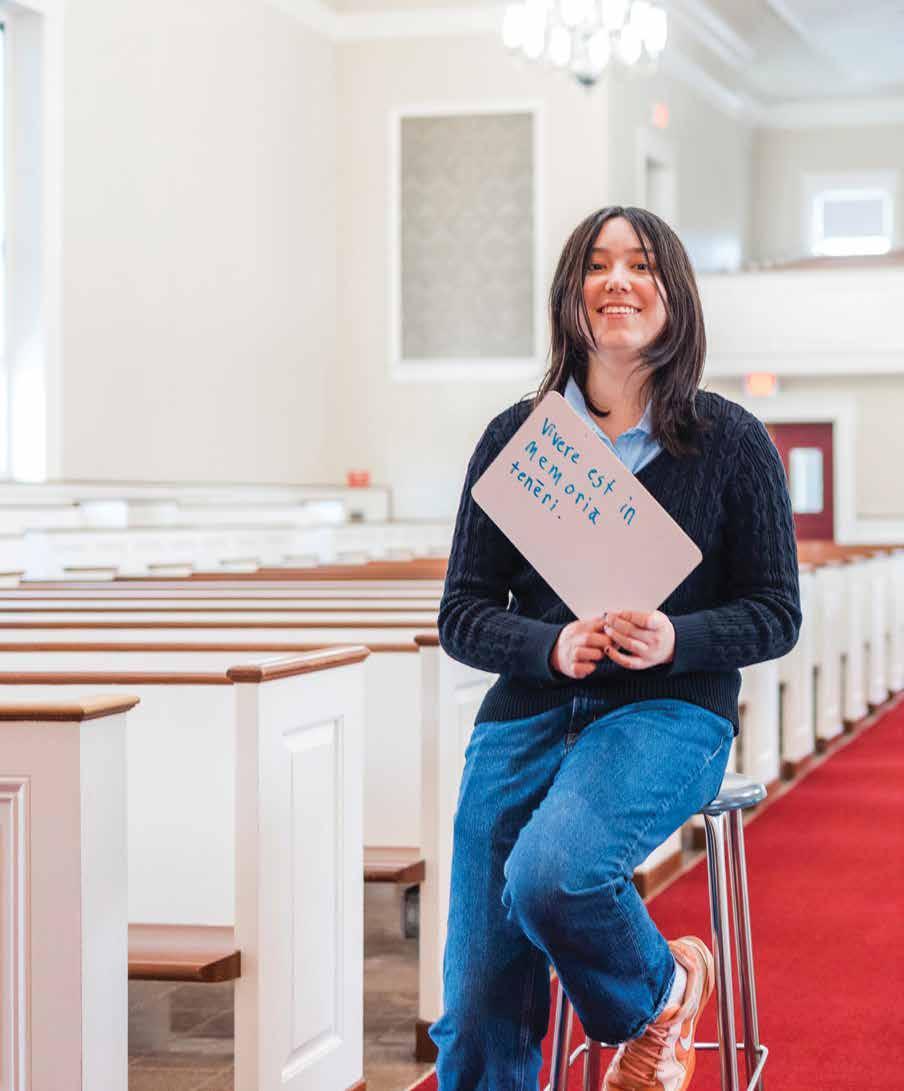
The classics are alive and well at Williston. This year, Hailey Kwak ’30 won the 2026 Classical Association of New England’s Latin Motto Contest. Hailey’s winning entry of Vivere est in memoria teneri —which translates as “to live is to be held in memory”—makes her the third consecutive Williston winner of this award.
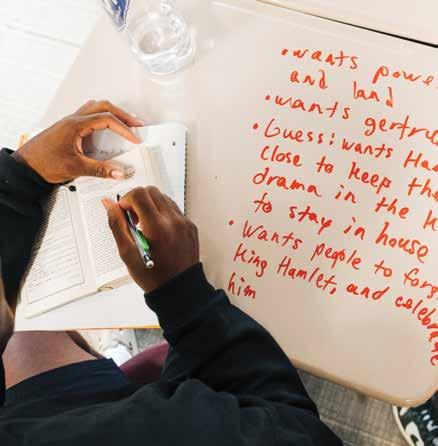
An inspiring workshop is helping put pens—and thinking—front and center in English classes
Walk into any English classroom this year, and you’ll notice something missing—computers. While students still use them for homework assignments, in class, the only allowed materials are books, pen and paper, erasable marker on desktops, and discussions.
To support this old-school style of teaching, the English department spent a day in December working with members of Bard College’s Institute for Writing and Thinking. In an era where AI can generate essays at the push of a button, IWT’s mission is to slow down the process, and help students focus on critical thinking, analysis, collaborative learning, and revising skills. During the workshop, Williston teachers themselves stuck to pen and paper— reading and writing together, sharing ideas about teaching, and responding to one another’s work. “Our entire department got inspired,” said English Department Chair Matt Liebowitz. “It was great to spend a day thinking about how to get students writing and thinking on paper and with one another. No computers involved.”
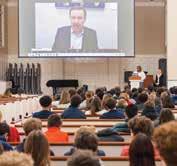
This winter, students in history classes had the chance to talk with U.S. Senator Chris Murphy of Connecticut. In the one-hour Zoom session, the senator—speaking from his office in Washington, D.C.—answered questions and talked with students about current events as well as a wide range of policy and legistlative issues.
During Black History Month, filmmaker Zul Manzi, creator of the animated series The Matumbilas, met with members of the Black Student Union to talk about culture, identity, and how Black culture is portrayed
in the media. Zul returned to campus in April to talk about culture and community with the entire school as the keynote speaker for Why Not Speak Day.
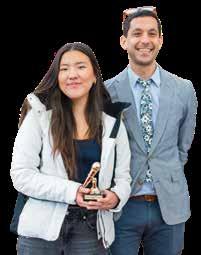
Home was the theme of this year’s second all-school speech contest, hosted by the English department. All Upper School students took part, and the contest culminated in an allschool assembly at the end of Trimester 2 featuring four finalists. Gabby Kim ’28 took home the golden microphone by giving a gripping speech about being with strangers on a beach
in Hawaii during the 2018 false missile alert crisis.
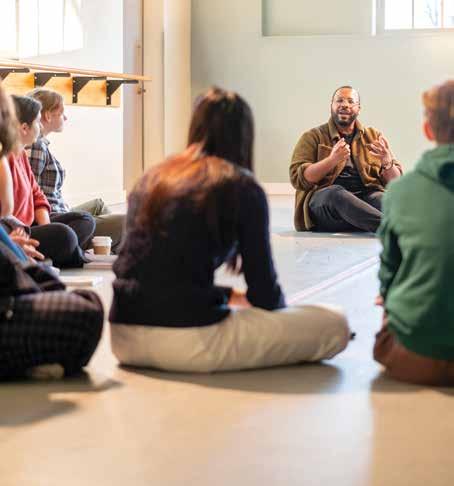
As part of the Grum Project visiting artist series, students heard from Michael Duffy, the Paintings Conservator at the Museum of Modern Art in New York. After meeting with AP Studio Art students, Duffy spent time with a larger audience discussing the skills he uses in his work, which he describes as “a mélange of science, art history, and studio art.” One particular highlight was hearing about his conservation work on a recent Matisse exhibit.
Day students and day student alums have been showing up strong this year. In January, the day student squad took first place in the annual Lip Sync contest with their mashup of Justin Bieber songs. One month later, day student alums took first place on the “dorm” leaderboard during Founders Day. Boarding students had their moment, too, when Mem West won the whole enchilada during Willympics.
One thing that’s been growing strong? Williston’s endowment— which as of March 31 was at an all-time high of
$76.5 million. Thanks to a combination of philanthropic support and investment growth, this high-water mark has been fueled by more than 50%
growth over the last decade. Comprised of one general fund and nearly 300 different funds endowed by alumni, families, and graduating classes, the endowment provides financial stability and essential support across all areas of the school’s mission.
“A strong endowment is so important for the school,” says Head of School Robert W. Hill III. “It covers costs today that tuition alone can’t, and even more importantly, it allows Williston to embrace ambitious plans and expansive thinking for the future.”
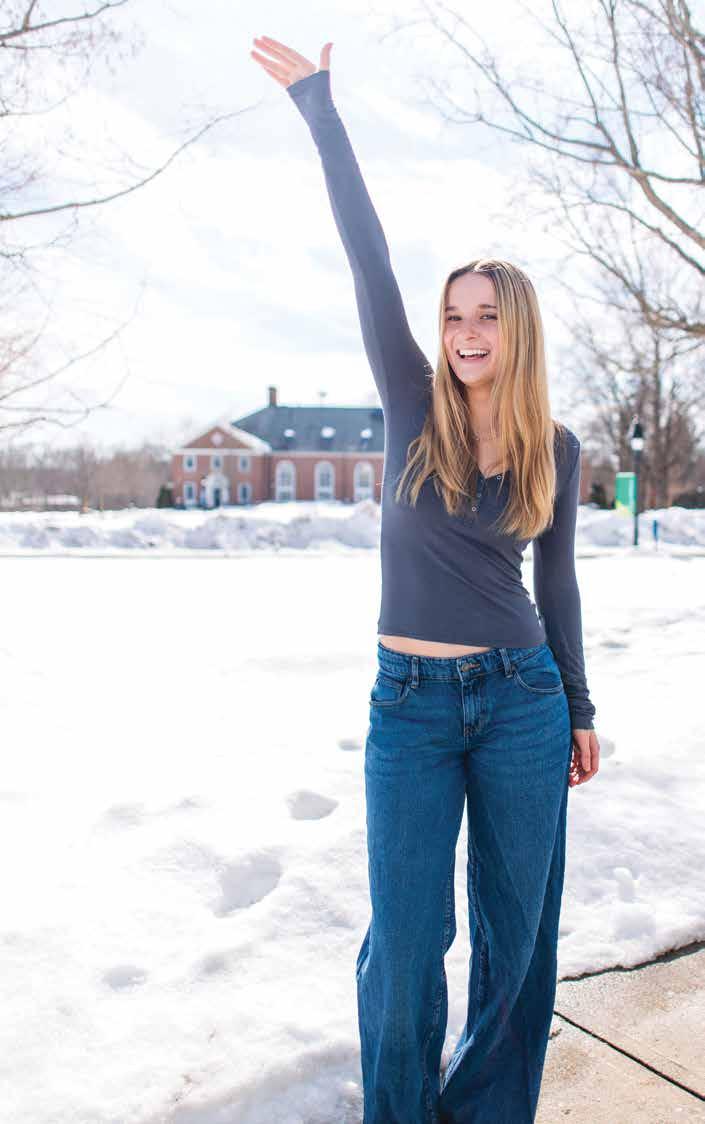

“Every Sunday, my friends and I have what we call family dinner. We order food, sit in the third-floor common room, watch a show, and talk. We’re not on our phones—just spending time together. It’s really relaxing and one of my favorite parts of the week.”
—ACACIA NICKEO ’27
“Winning the bowl game last year was unforgettable. Beyond the win itself, having such a big crowd and seeing students show up meant a lot. We support other teams by attending games, so having that same energy returned was very special.”
—RYAN ELLORAS
’26
“My first Willy Gras had a Mario Kart theme. I didn’t expect much, but it turned out to be one of the most fun experiences I’ve had. Being on the quad with friends, surrounded by water slides, bounce houses, and pure joy, reminded everyone to let go of stress and to just have fun.”
—DARYN FOX ’26
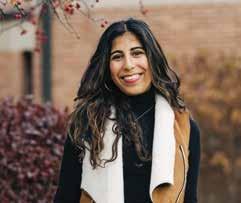
“Last Spring, at an advisory dinner at Ms. Kokozska’s house, she cooked Dominican food from her culture, and we sat together in her living room. It felt like a family gathering—warm, personal, and special. Moments like these have shaped my Williston experience.”
—ALIA GHAOUI ’27
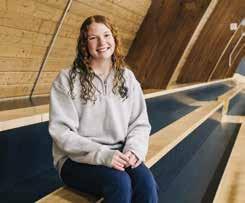
“Pink in the Rink, especially during my sophomore year, allowed us to play for something bigger than ourselves. We raised nearly $10,000 for a cause deeply important to me and my family, and it truly showed me how supportive and united our community is.”
—MIA DALEY ’27
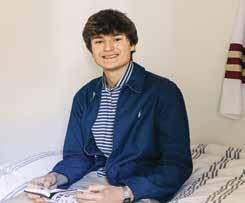
“One of the best moments of my Williston career was when our swim team won the Division II NEPSAC championship with an undefeated season. It was such a rewarding experience for the entire team. Seeing Coach K jump into the pool after the win was unforgettable.”
—BROOKS MARSHALL ’27
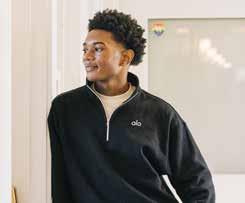
“My first dance performance was overwhelming in the best way—so many people showed up, cheered me on, and supported me. It made me feel like I could truly be myself and share my passion without judgment. That moment taught me that I belong here.”
—ZH’KY JOHNSON-TUZO ’26
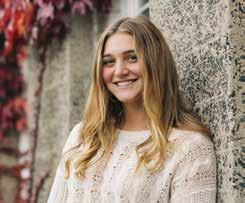
“Open mic night takes place before winter break. Everyone gathers in Tandem, a small, cozy space where there’s hot chocolate, iced chai, and snacks, and we sing favorite songs—Springsteen, Hamilton, and holiday songs. It’s truly special.”
—FRANCESCA GIONFRIDDO ’26
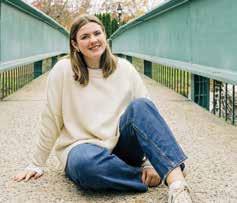
“When everyone returns after a long break, there’s a renewed appreciation for Williston and for each other—full of hugs, excitement, and catching up. It always gives me a fresh perspective and reminds me that this is a place I truly want to be.”
—MAGGIE DUFFY ’27
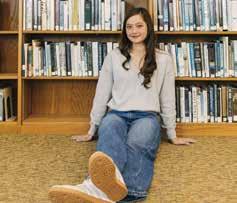
“On the Williston summer Alaska trip, I roomed with five girls. We spent 12 days disconnected from the internet, kayaking, visiting research sites, and stargazing. It was amazing how quickly we bonded, and the trip helped me realize how much I love science and research.”
—ADDISON PERICH ’27
At Ken Choo’s table, Asian students find a sense
BY DENNIS CROMMETT
On many Sunday afternoons during the school year, a small group of students piles into a school van with teacher Ken Choo at the wheel and heads to a local Asian food market or grocery store. After shopping, they return to Choo’s house on Brewster Avenue and begin cooking together. Soon the house fills with familiar sounds and smells—family recipes from home, music in different languages, and conversations in Korean, Japanese, Mandarin, or Vietnamese.
For students who have traveled thousands of miles to attend Williston Northampton School, it can feel like something rare: a place where they can relax with other students who share their culture. “Students need to feel safe before they can fully be who they are,” Choo says.
Now in his 21st year at Williston, Choo arrived as a science teacher in 2005, with no prior experience at a boarding school. Over time, his role grew to include coaching, dorm life, advising, and mentoring students across many parts of campus life. Then, five years ago, Head of School Robert W. Hill III asked Choo if he would be willing to support Asian students as the advisor of the Asian Alliance. The group has flourished and grown since then, with events, gatherings, and celebrations largely shaped by the students themselves. All they needed, Choo says, was buy-in. “It’s as if the students just needed someone to be like, ‘Yeah, let’s do it,’” he says. “And then they just totally took ownership.”
The first gathering at his home came about when a group of freshman Chinese students said, “Hey, we want to have a Moon Cake Club,” Choo recalls. The group eventually gathered
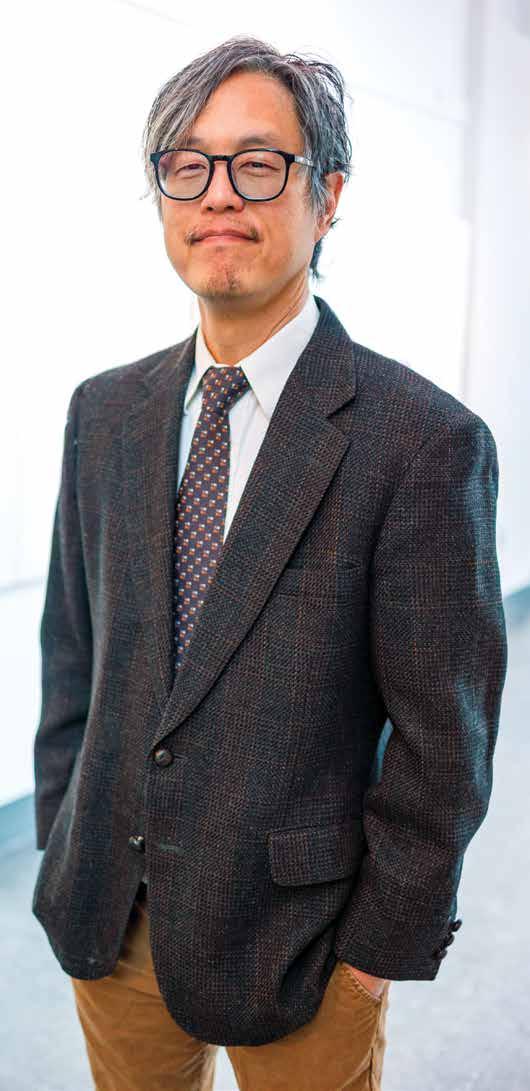
“Students need to feel safe before they can fully be who they are.”
at his home for hot pot, an interactive and communal Chinese meal. “It was like a revelation to me,” he says. “There were students speaking Mandarin, prepping the food, cooking, singing. It was nonstop. After six hours I was exhausted, but I was like, ’What just happened here?’”
That moment helped Choo realize what these gatherings could become. “Part of what I’m here to do is create a place where students who are in some degree of culture shock can recreate something that’s familiar,” he says. The experience has been meaningful for him as well. “It’s really been a blessing,” he says. “I think in a lot of ways it’s given me a lot more than I’ve given it.”
Today, the dinners follow a simple rhythm. Students shop for ingredients (and some dorm room snacks) together at local international markets, then meet at Choo’s house to cook dishes they grew up with and gather around the table with friends. “We’re trying to recreate the sounds, smells, and tastes, and the language and the music, that they’re familiar with,” Choo says, “so they can just let their guard down. There can be an invisible burden that international students have because this is a foreign culture.”
Over time, that spirit of these dinners has helped inspire larger student-led events on campus. Now in its fifth year, the Asian Night Market, for example, has become a favorite April tradition, when students (with help from SAGE Dining and Facilities Management) prepare and share foods from across Asia with the broader school community. The Lunar New Year Assembly has also become a highlight of the school year, featuring performances, cultural traditions, and student voices celebrating the start of a new year.
In each case, Choo says, the ideas come from the students. “The secret ingredient,” he says, “is letting the kids have ownership.” And when they feel the buy-in from a supportive faculty member like Choo, the results are secondary to the experience. Because as Choo says, even when a recipe goes wrong, “it’s just awesome.”
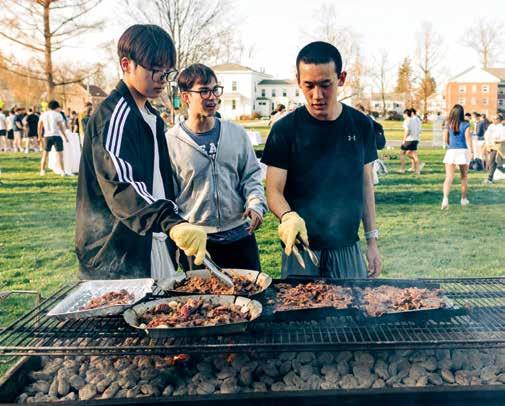
Below are just a few ways Asian students are actively sharing and celebrating their cultures on campus. See photos of these and more online at flickr.com/willistonnorthampton.
Now in its fifth year, the Asian Night Market fills the Academic Quad with the sights, sounds, and smells of student cultures from around the globe. On a sunny evening this April, the event featured outdoor grills, music in the air, and dishes from Asia and beyond. “This is such a fun activity because Asian students cooperate with each other to provide delicious food and expand everyone’s cultures,” says Japanese student Yuri Taniguchi ’27.
A favorite part of April’s Why Not Speak Day, the Community Connections Fair provides students an opportunity to set up tables on the Academic Quad, showcasing something important or interesting about their culture. For the second year now, Blue Meyerson ’26 has cooked and served kimbap, a Korean dish of cooked rice and various fillings rolled in dried seaweed and sliced into bite-sized pieces. Says Meyerson, “It’s
one of the events I look forward to most each year because it allows me to share my Korean culture, which I’m very proud of. I especially enjoy seeing people try kimbap, sometimes for the very first time, and genuinely enjoy a food that represents such an important part of Korean culture.”
With the support of Asian Alliance advisor, Ken Choo, juniors Kaylee Le and Tracie Ngo started the Viet Vibes club, which Ngo says aims to “give more people the chance to discover Vietnamese food and culture.” Le and Ngo are grateful for Choo’s support of club activities and their own experience of helping to plan larger events. At their Sunday dinners, Le’s goal is to “provide a warm and welcoming space where everyone can explore traditional and modern Vietnamese dishes, share stories, and connect through having food together and cooking.”
BY GEOFF SMITH ‘07
If you’ve watched a hockey game at Williston in the last 20 years, you’ve probably seen Support Operations Manager Dan Gould piloting the Zamboni around Lossone Rink. Among many jobs Gould has as part of Williston’s Facilities crew, he oversees a team of four other drivers who keep Williston’s ice in pristine shape. If that sounds like a lot of drivers, it is—because Williston’s rink is in almost constant use. On any given weekend day during the winter, for example, the ice sheet at Lossone Rink can host up to nine games, or nearly 30 “ice cuts” with the machine. “I enjoy driving the Zamboni and giving us great ice,” Gould says. “We have, we think, one of the best surfaces in Western Massachusetts.” To get that quality, the school purchased its latest Zamboni in the summer of 2024, replacing the old machine that had operated for more than 25 years. With a price tag north of $200,000, the new Zamboni machine was tailor-made for the ice at Lossone (fun fact: All Zambonis are custom-built to order). Gould shared some other tricks of the trade with us on these pages.
The crew keeps the ice between an inch and an inch-and-a-half thick. Any thicker, and the quality would diminish. Thinner, and the floor underneath could be damaged.
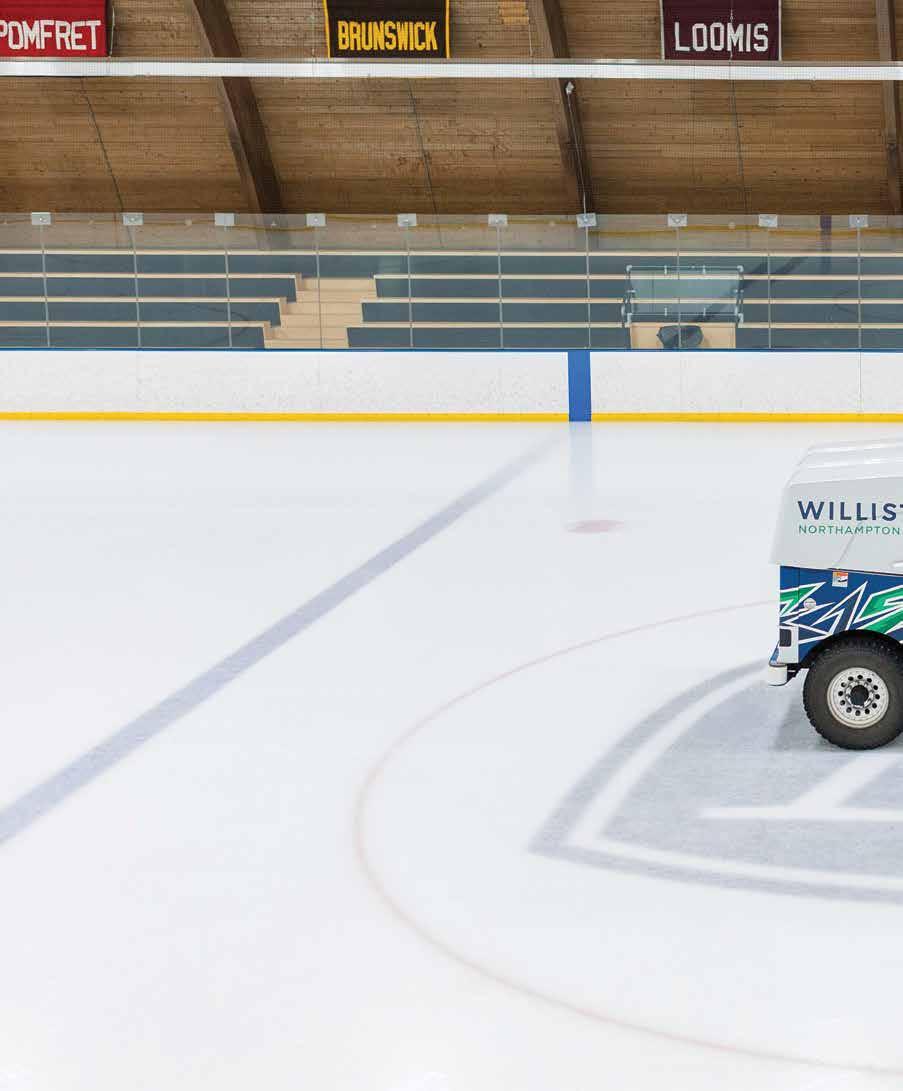
The Zamboni works by putting down two layers of water. The first is a cold wash that replenishes the overall ice sheet. Next is the hot (130 degrees) wash that fills in cracks and crevices on the surface. Each time the Zamboni hits the ice, it is carrying a couple hundred gallons of water. Additionally, the machine also stores the “snow” scraped off by the blades, which is then dumped in a pile outside of the rink.
The Zamboni requires regular maintenance to keep it in tip-top shape. Gould’s team does a complete greasing of the machine parts once a week to keep the hydraulics in order, and the blades—which weigh about 80 pounds each—underneath the machine are changed every 40 cuts or so. The lithium batteries also need care, and the machine is charged at least twice a day on busy schedules.
New drivers take about a week to learn how to drive the machine, Gould notes. While it steers with a wheel, the sheer size of the machine makes driving difficult. “The hardest part is taking corners,” Gould said, referencing blind spots created by the height of the machine’s front end.
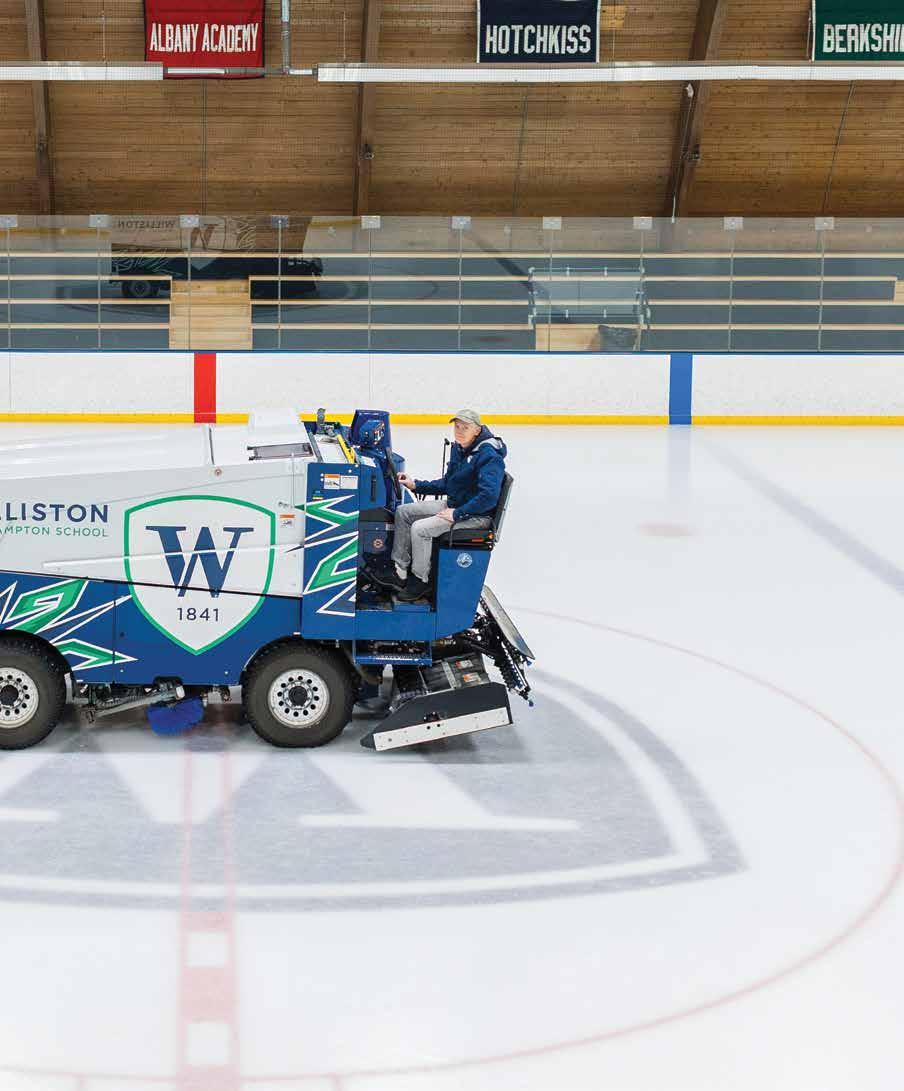
There’s a lot of science behind ice-making, and WIlliston’s Zamboni features a “fin” on the back of the machine that sprays water to help make the fresh sheet of ice. Other machines will have a towel on the back of the machine spreading the water. “The fin gives you a little bit better ice quality,” Gould says.
Williston’s Zamboni weighs in at about 7,000 pounds. The four-wheel drive machine tops out around 14 miles per hour, has special grippy ice tires, runs on lithium batteries, and has a bespoke design featuring all the requisite branding the machine could need.
A new leadership summit brought together female students and alums for a day of conversation and mentoring — BY GEOFF SMITH ’07
his March, a group of 16 female students had the chance to step into the professional world, meeting alumnae who not long ago were in their shoes. The Women of Williston (WOW) student affinity group, advised by Associate Dean of Students Kate Garrity, took part in a two-day leadership summit, visiting alumnae at their places of business in Western Massachusetts and New York City.
“I wanted the girls to see all these alums out there in the big world doing great things,” Garrity said. “And know that there is legitimate, genuine support for students among women out there in the workplace.”
The summit grew out of work that began in 2022, when the alumni office marked 50 years of coeducation at the school with Women of Willison gatherings in major cities like Boston, New York, and Washington, D.C. Programs celebrating Northampton School for Girls and women in our community have continued since then, and this year, the alumni office, the Dean of Students office, and the student WOW affinity group teamed up to launch the inaugural leadership summit.
Spanning two days, the summit was everything the students hoped it would be and more. By getting the chance to talk to alumnae who also shared the Williston experience, students were able to get valuable insights about how to prepare for the professional world.
“This is my first year at Williston, but already I feel more pulled into the community, and I was able to see all the different things that people have done as an extension of Williston. A lot of them connected their journeys back to their time here,” said Gabby Kim ’28. “And I think that was super empowering and something unique to this school, specifically.”
The excitement the students felt was also shared by the alumnae. Kristyna Frantz ’10, who hosted a stop in NYC at her worksite, the Federal Reserve Bank of New York, said the decision to participate was almost instantaneous.
“I had such a positive experience at Williston, and I’ve stayed connected with my friends and a lot of the faculty and staff,” Frantz said. “I want to keep giving back, so I was very pumped to be asked.”
In addition to the stop to see Frantz at the Fed, students also met with professionals in several different areas of work (see the rundown in the timeline, at right). For Sadie Dripps ’26, that bit of show-and-tell really hit home as she prepares to head off to college.
“They were very inspiring and reassuring that we’re going to make it,” Dripps said. “I admire these women who are so sucessful—but how can I get there? The alums laid out a clear path and told us that if we’re determined and putting in the work, we’re going to get where we want to go.”
After the workplace stops, the day concluded with a networking event at the New York Athletic Club, where a dozen mentors—including those from the earlier stops—met with the 16 students to talk about a little bit of everything. It was, according to Izzy Jimah ’28, the cherry on the proverbial sundae.
“The second I walked in, I could feel the energy,” Jimah said. “They took their time and energy to meet us, and they were so willing to talk and were so open about not only their own experiences at Williston, but their jobs and how it can all tie back to their alma mater. I think that’s a very special connection.”
With the excitement of the summit still fresh, Garrity and Deleney Magoffin, Director of Alumni Engagement, are already looking ahead to next spring’s leadership summit and imagining new ways to connect Williston women across generations. “It was just such a positive experience for everyone,” said Magoffin. “The alumnae and students effortlessly found common threads in their experiences, and there was a sense of shared respect and joy throughout the summit.” (Interested in getting involved? Contact alumni@williston!)
The first night of the leadership summit was local, as the group went to Joe’s Cafe in nearby Northampton to talk with owner/operator Meaghan Sullivan ’01. Sullivan talked about her experience as a business owner and entrepreneur.
The first stop in NYC was the Federal Reserve Bank of New York to see Kristyna Frantz ’10. Frantz gave the group a small tour of the building, then answered questions about her role as a Marketing and Communications Specialist.
“The alums laid out a clear path and told us that if we’re determined and putting in the work, we’re going to succeed.”
— Sadie Dripps ’26
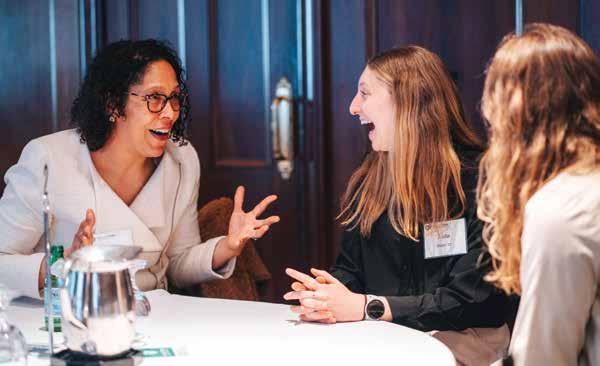
For lunch, the group met up with Miranda Gohh ’13, who is currently working to produce two shows on Broadway. Gohh talked about what she does as a producer and her advocacy efforts in the theater world.
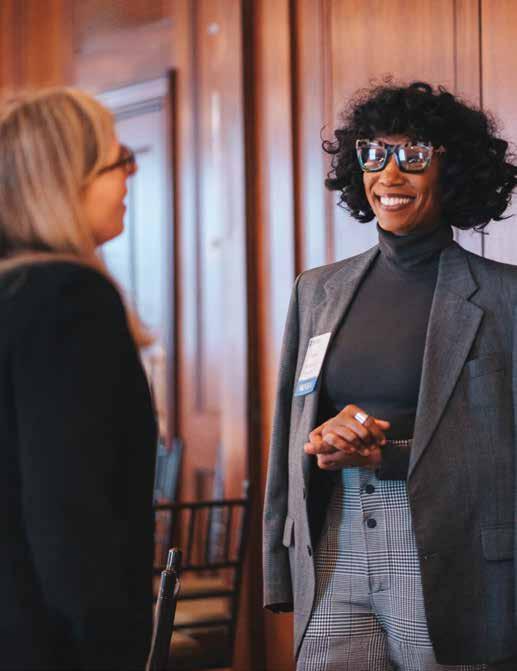
After lunch, half of the students went to IBM to talk with Meaghan Koch ’09, an Associate Partner in Mergers and Acquisitions, as well as Elis Shin ’09, who stopped in to talk about her work as a Deputy Director at Open House New York.
The other half of the group went to the Ford Foundation to meet Tolu Onafowokan ’05 and hear about her work as a Global Director of Strategic Communications. While there, the students also met other empowering female leaders at the foundation
To cap off the day, the group went to the New York Athletic Club for a networking event. Twelve alums, including those from earlier stops, talked with students and gave guidance on how to use their voices and stay open to new opportunities.
Launched in 2016, the Grum Project has brought more than two dozen visiting artists to campus. Here are some of the amazing lessons they’ve imparted.
BY JONATHAN ADOLPH
The Grum Project, Williston’s groundbreaking visiting artist program, turns 10 this year. Named by its benefactors, multi media artist Pat Ingram Bone ’65 and her husband, Steve, the project to date has brought to campus more than two dozen artists—musicians, actors, visual artists, dancers, and more—for mini residencies, presentations, and performances that have enriched the entire school community.
Bone’s inspiration for the Williston project was her own experience with an artist-in-residence program she oversaw as the parent-teacher fellowship president at a school in San Juan Capistrano. “I saw a large positive reaction in faculty, parents, and students,” she recalls. “It confirmed my opinion that everyone is an artist and is ready to try new things or comment on them.”
The Grum Project has had a similar impact on the Williston community, allowing students to experience new forms of artistic expression, but also demonstrating that art can be a lifelong passion with a host of personal and professional benefits. “We study the arts in our classes, but having practicing and professional artists come here and share their crafts with us makes the manifestations of what we teach tangible,” notes Visual and Performing Arts Department Head and Grum Project administrator Natania Hume. “It also allows us to experience art forms and cultures that we would not otherwise be aware of, and enhances our arts programs by connecting the real arts world to our school in new and exciting ways.”
On the following pages, you’ll find just a few of the many ways the Grum Project has transformed the Williston campus and community in its 10-year run.
They’ve taught us that art helps us express who we are
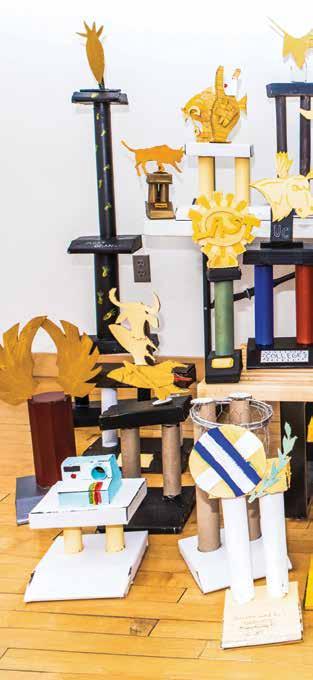
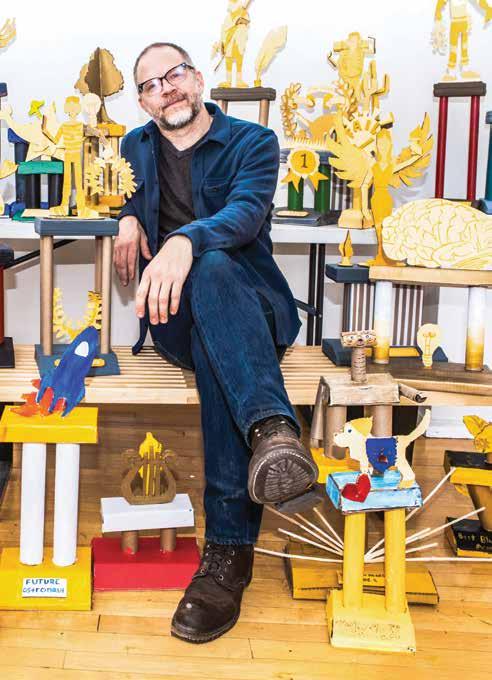
During his six-day residency in 2020, Los Angeles–based artist Kiel Johnson worked with students to create individualized cardboard trophies that celebrated personal victories, small and large (“I did the dishes,” announced one. “I stayed hydrated,” read another.)
Tracing the arc of his own career at an assembly, Johnson recounted how a quirky drawing of all his possessions led to his making cardboard sculptures and eventually work for Uber, Walmart, Disney, the Los Angeles Philharmonic, and the Getty Center. “Life is short,” he told the students. “Don’t be following other people’s dreams. If you pursue your dream 150%, life will open up to you.”
They’ve helped us see art as a bridge to others
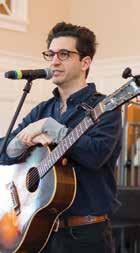
Singer-songwriter Matt Butler performed his traveling show Reckless Son for the school community in 2024, a work inspired by the artist’s performances in more than 100 jails and prisons across the country. Acclaimed by Spin magazine, which in 2023 named him artist of the year and nominated Reckless Son for album of the year, Butler’s show is “an attempt to humanize and give voice to the incarcerated,” he explained. “Songs can penetrate people’s defenses and generate intimacy and create trust almost instantaneously.” During his visit, Butler toured the campus with his wife, Anna Mohrman ’97. After the show, he answered questions from students.
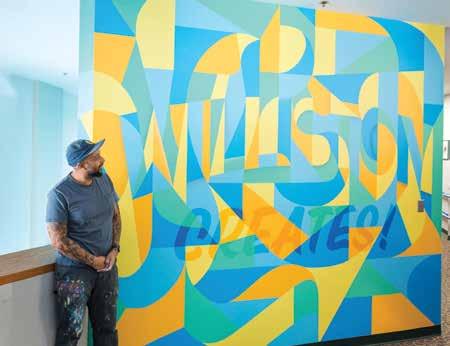
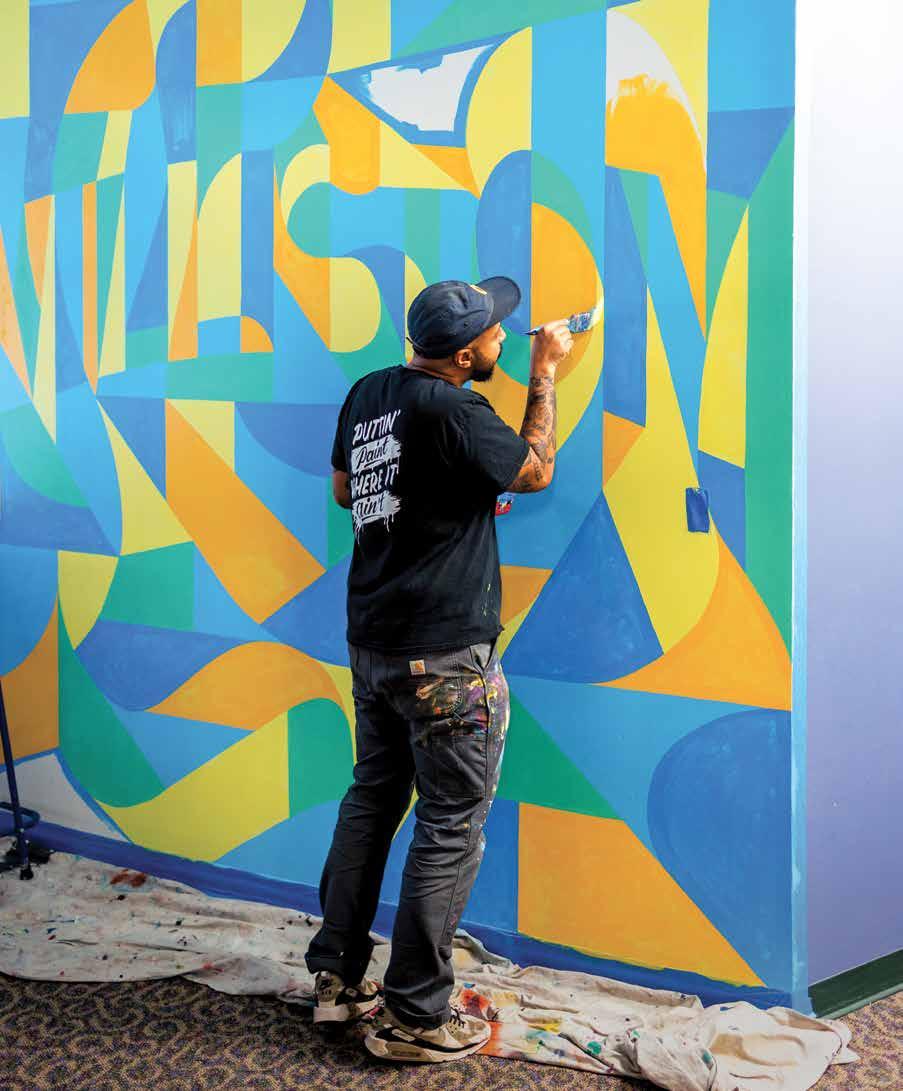
During his one-week residency in 2025, muralist Ryan Adams—with help from Williston students—created a bespoke mural on the second floor of the Reed Campus Center. Celebrating the words “Williston Creates!” in Adams’ signature geometric style, the work was given its final color palette only after a student vote. Adams spoke about his artistic process during an assembly, then worked with students to paint the mural over the next four days, having taped and numbered the sections so all could participate. “I love when people can help with the mural, because it’s their environment—it’s their space,” he explained. “I’ve had people come up to me and tell me that they painted one triangle on a piece. To see that effect and see that people have a sense of ownership over it is so cool.”
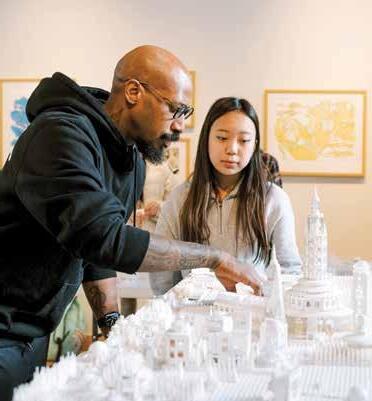
For four days in 2023, Ghanaian-Canadian artist Ekow Nimako brought his futuristic Lego-design work to campus, centered around a provocative question: What will Williston’s campus look like in a thousand years? Nimako challenged students and faculty members to think deeply about what they want Williston to look like for their descendants’ descendants. Students and Nimako then designed and built an answer, using thousands of white Lego bricks. The striking four-foot-by-six-foot model—completed over three days and one long night—is on display in the Reed Campus Center. “It’s a message of hope for the future,” said the artist.
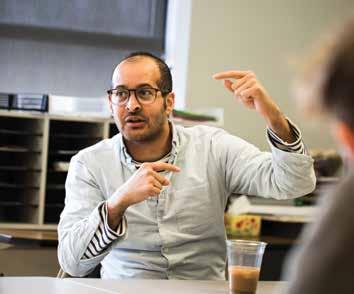
Two-time National Poetry Slam champion Anis Mojgani brought his wit and insight to campus during a three-day visit in April 2018. The author of five books of poetry and an artist who has performed at venues as diverse as the House of Blues and the United Nations, Mojgani captivated students with his stage presence and easy approachability at a special Friday night Spoken Word Festival. In Williston’s classrooms he worked with English and Directing students, who prepared for the sessions by reading, watching, and reciting spoken word poems.
In his three-day residency in 2023, singer, actor (his credits include productions of Hamilton and In the Heights), writer, and voiceover artist
Daniel James Belnavis worked with the cast of the school musical Something Rotten!, lectured on creativity and the power of imagination, and then hosted a workshop for Middle School students on creativity and expression. “I hope they can take away that it’s OK to still be figuring it out,” he noted afterward. “Something I was stressing with the theater students, and even during the presentations, is how it’s so important to bring yourself to everything you do, and to be human.”
An abstract artist and playwright with synesthesia—she experiences sound as color, texture, and motion—Sarah Kraning brought her distinctive perspective to Williston in 2024, discussing her artwork with students and her writing with eighth graders, who were then rehearsing Kraning’s play Soundscapes, about a character who shares Kraning’s sensory trait. After her talk at the Middle School, Kraning was impressed by the questions she was asked. “Having a large group of students ask questions about how somebody else perceives the world—that’s a really lovely thing,” she said. “That’s a thing we need more of in this world.”
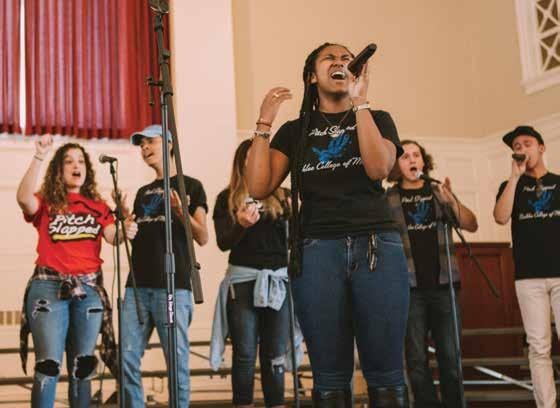
The award-winning a cappella group Pitch Slapped, based at Boston’s Berklee College of Music, performed at assembly and led workshops with the school’s choral groups in February 2017. Two-time winners of the International Championship of Collegiate A Cappella, held at Lincoln Center in New York City, the group has appeared on NBC’s The Sing-Off and America’s Got Talent and was named one of the top 5 a cappella groups in the country by USA Today
They’ve
shown how art can solve realworld problems
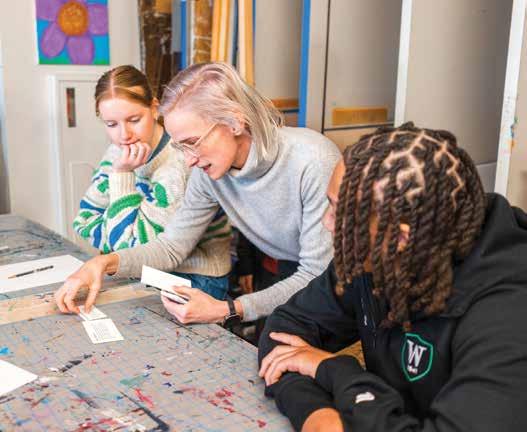
A 2025 visit by Stanford University designer and researcher Charlotte McCurdy introduced students to her thought-provoking research, which focuses on climate change and the development of sustainable materials, in particular within the world of fashion. (On display at New York’s Metropolitan Museum of Art is a dress she co-created with fashion designer Phillip Lim, made with sea algae sequins.) After an introductory talk at an all-school assembly, McCurdy taught classes in two Williston classrooms, challenging students to rethink how clothing is made. “They came up with great ideas in just these 15-to-20-minute exercises,” she noted.
BY WILLIAM ANTHONY ’66
In the winter of 1965-66—my senior year—something truly extraordinary happened at Williston Academy: Headmaster Phillips Stevens declared two snow days in one year. Why I remember such a detail is easily answered: Snow days were an unexpected relief from the radiator-hissing humdrum classrooms and the tests, quizzes, and papers that we boys nervously anticipated. Here was an extra day. A reprieve. An answer to prayers, which had been dashed on many other days when the snows swirled and we hoped, with all the fervor a schoolboy could muster, that the gods (well, Phil Stevens) would smile on us. And most days, those prayers went unanswered and we trudged off to class, tired and disappointed. Perhaps this is where any of our latent skepticism about the power of prayer originated.
A typical morning in those days went like this: You got up—to an alarm clock that you had to wind—and showered and shaved. Then you put on your trousers, tucked in a shirt, and pulled on your socks and loafers. Rope belts were big then, and it was a mark of pride if you had athletic tape wrapped snugly around the toe of your well-worn loafer. Don’t ask me why. Then you either wore a madras jacket or, as this was winter, a blue blazer. The last element to the ensemble was, of course, the tie, ideally striped with colors of your college of choice. But here’s the
key: The tie was tied as you ran down the hall and descended the stairs (if you lived in Ford Hall, as I did that winter) and raced into the dining hall, where you tried to reach your assigned table just as you finished adjusting your tie under the watchful eye of the “master” (teacher, in today’s parlance), who stood at his watch post at one end of the table. You did this, in January or February, mindful of the snow drifting up outside and wishing it to be more generous and praying with several hundred other boys—and doubtless many of the faculty—that the “Pin,” or
the Headmaster (don’t ask me how he acquired this nickname, I never knew), would, in his benevolence, see the wisdom of declaring a snow day.
Slightly out of breath after the race against the clock to get to your table by 7:30 a.m, you waited for the Chaplain to say a prayer, which was always too long. Then there was a thunderous rattle and scrape of chairs as boys took their seats—or, if it was your turn to serve the table, run off to the kitchen to pick up a food tray for your table. If you weren’t a server, you picked up your tumbler of orange juice and drank it in one gulp. That was the minimum: You had to eat something before you could ask permission to be excused (to return to your room and try to read the last pages of your homework or memorize the conjugation of a few German verbs: I sleep, you sleep, we sleep…). Some teachers required that you eat a piece of toast at least. In any case, if it were one of those days when the snows were mounting very quickly—and probably when there was some sense on high that we boys and our tired teachers were at the height of our collective winter fatigue—the Headmaster, still standing for a one-beat after the Chaplain’s morning prayer, would open his mouth and utter three simple words: “Boys. Snow day!” At that point all Bedlam broke loose (look it up: “Bedlam” refers to an infamous asylum in London) with boys chugging orange juice then bolting up the stairs to their rooms or out across the campus, joyfully flinging off our neckties. In an instant we had metamorphosed from (reasonably) well-dressed (semi) serious young scholars to a brigand band of wahoo-snow birds, most of us, as I recall, headed to the slopes over at nearby Mt. Tom. Since my home



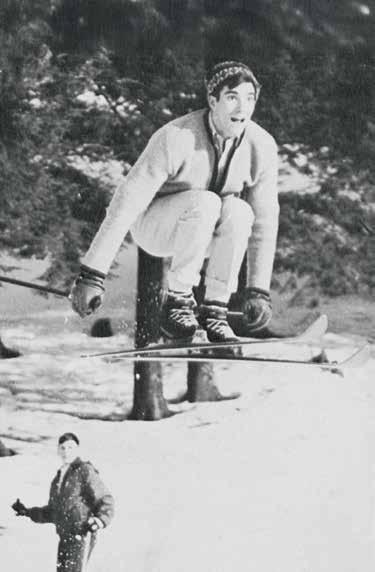




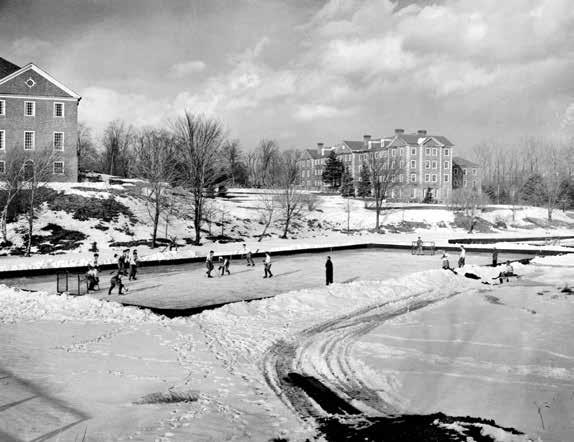

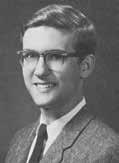

in South Hadley was but half an hour away, my call (remember, these were pay-phone times) was to my mother, who would drive over and pick up me and one or two buddies and drive us around the mountain to the ski slope, which, by late morning, was crowded with “Willies” joyfully riding the T-bar up the hill and bouncing around moguls on the way down. Maybe some guys made it to Boston for the day, but you couldn’t get far because you had to be back by dinnertime, when the reality of homework and delayed tests and quizzes once again loomed heavy.
Most years there was only one snow day—and that was that. After all, school started up after New Year’s and there were really only about seven or eight weeks when you might expect a good heavy snow. And if you thought about it, it was highly
mouth, in answer to all of our prayers, and utter three simple words: ‘Boys. Snow day!’
unlikely that the Pin would call a snow day the first week back after the Christmas break, so that really left only a five- or six-week window of time when a boy could reasonably expect a snow day. And if you imagined there was any chance of getting two snow days that year, well, logic dictated that the first snow day would have to come very early, say, mid to late January. And if there was to be a second snow day, then it could not follow close on the heels of the first: It had to come in late February, at least three to four weeks after the first one.
So it was, in the winter of 1966, Pin, to our utter amazement and sheer delight, called the historic second snow day of that winter. The gods had smiled on us twice. And perhaps for some of us our faith in prayer was restored.
For the statistically minded reader: it was not
possible that there could ever have been a third snow day. The timing would be off because our winters were not long enough. And besides, this was New England, and a third free snow day would have seemed excessive, as though a Congregationalist had joined a Mardi Gras parade. We boys on that Easthampton campus resembled those Allied and German troops who emerged from their battlefield trenches one Christmas during World War I, and gathered in no-man’s-land to celebrate one day’s respite. And as with those young soldiers, many a cigarette, saved for such occasions, was shared on the slopes. For we were, briefly, alive again, and we savored every moment of it.
William Anthony is a retired professor and author. To read more about him, visit wanthonywriter.com
After more than two decades at Williston, arts educator Natania Hume is reconceiving her work, her materials, and what it means to make a lasting impact BY
JONATHAN ADOLPH
Visual and Performing Arts teacher Natania Hume, who is retiring from teaching this spring, has a highly personal method for tracking her many years at Williston. “I started when my daughter was nine months old—so in 2004,” she recalls. “That means I’ve been here for 22 years.”
For the majority of that time, Hume has served as arts department head, while also curating the Grubbs Gallery and managing the Grum Project for visiting artists. And when she is not teaching and inspiring Williston students, she is pursuing her own career as a studio potter, specializing most recently in embellishing manufactured dishware with colorful overglaze designs, an artisanal approach that aligns with the philosophy of her longtime handmade ceramics business, Slow Studio.
Hume has now begun an undertaking that is a departure from art, though it had its genesis in her classroom. She has returned to school to earn her master’s in social work (adding to her degrees in fine arts and art education), so she can work with adolescents, whose emotional and mental health needs were often more than she could address in art classes. “The art room can be a place where a lot of kids take refuge or want to express what’s going on in their lives through art,” she explains. “I decided I wanted to become a therapist to work with adolescents in a deeper, more specific and focused way. Because there’s only so much you can do when you’re just grading their art.”
Hume plans to relocate to West Stockbridge, Massachusetts, where she’ll continue her degree coursework and begin an internship in the mental health field. She’ll also continue to develop her overglazing technique, with plans to eventually sell the pieces to local stores or through interior designers. The work involves cutting colorful shapes and designs from glaze sheets called “waterslides,” which she then fuses to repurposed plates, cups, and other white dishware in a low-temperature firing. The process produces something new while also rescuing something old, a benefit with particular appeal to Hume. “There’s just so much handmade ceramics now


that, environmentally, maybe we need to deal with what we have and not always be making and buying new stuff,” she suggests. “Not that there’s anything wrong with making handmade ceramics. I’m just interested in rescuing them, making them more appealing and giving them a second life.”
A concept that Hume is now applying to her career, as well.


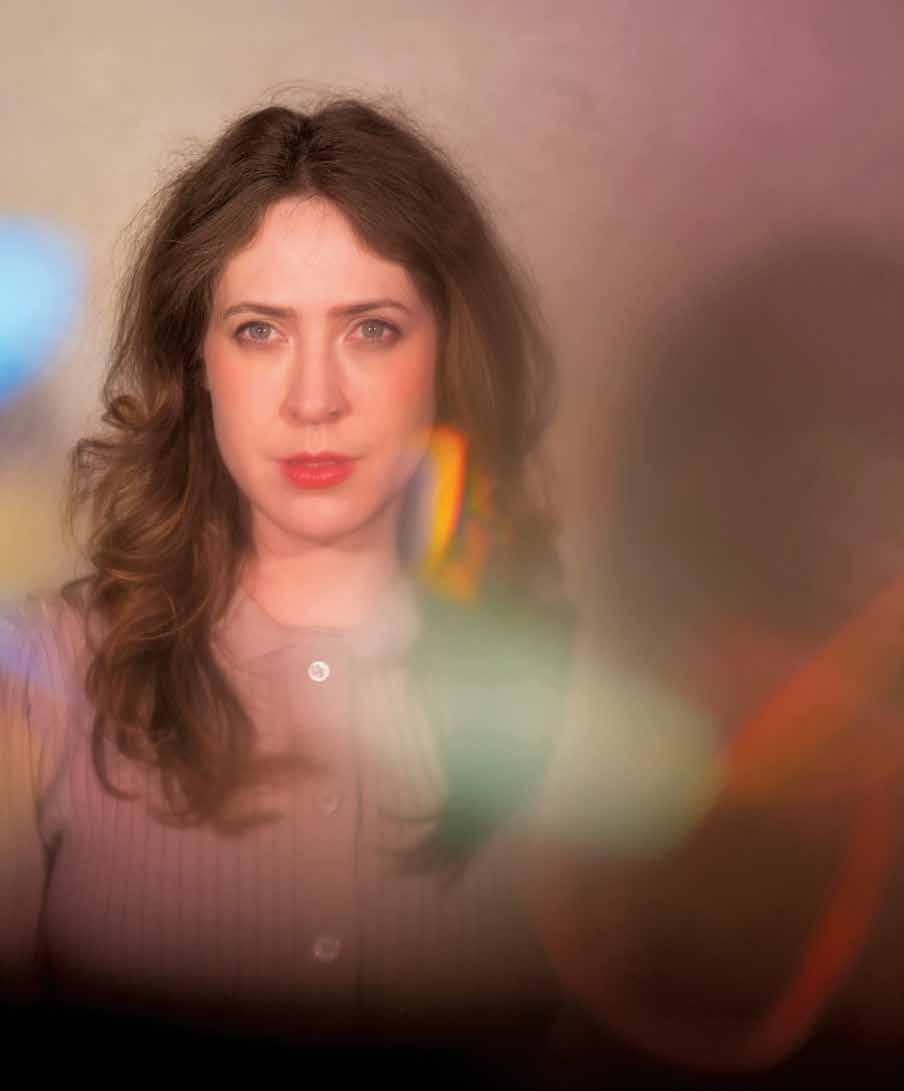
Alana Horton ’10, who records as Alone-A, released her debut fulllength album, a veil, a prism this April, a beautiful and intriguing exploration of voice and technology. Every tone on the ninesong album originates from Horton’s voice, and is then shaped using a visual programming language. The tracks on this striking record move between moody ambient soundscapes such as “Swallow” and emotional explorations of loneliness, as on the opening track “The Door.” Through the meticulously processed sounds, the humanity remains clear, making something experimental feel unexpectedly personal. Hear it or purchase a download, CD, or cassette, at alanahorton.com

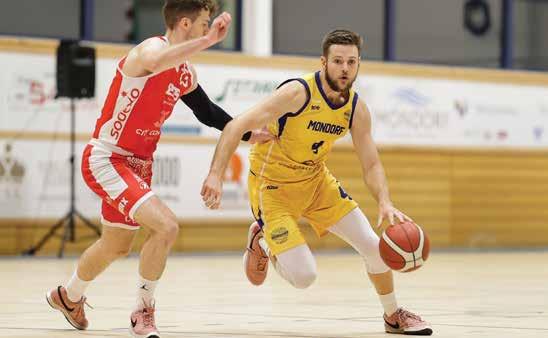
From NEPSAC championships to professional leagues in Europe, Jake Ross ’16’s basketball career has spanned continents BY
The game of basketball took Jake Ross ’16 halfway around the world—and now it’s bringing him back to Williston. Ross, who won two NEPSAC Class A championships while at Williston, is one of the newest inductees to the Williston Athletic Hall of Fame, an honor he’ll share with his dad, Jack Ross ’76.
“I think it’s super special,” said the younger Ross, who now works in medical sales in Boise, Idaho. “And I think it means a lot to him. He’s the one who pushed me to go to Williston because it was a great place for him.”
The induction ceremony in June will serve as a fitting capstone to Ross’ career. After his standout play at Williston—which included successful stints as a football and lacrosse player and winning the George Denman Bowl—Ross went on to play four years at nearby Springfield College, leading the Pride to a Division III Final Four and NCAA Tournament appearance.
Out of college, Ross went to play pro ball in Bulgaria—but the dream wasn’t what he had imagined—and he returned to the States to work for a while. The itch persisted, though, and Ross returned to Europe to play for two stints for Avanti Mondorf in Luxembourg. During his second outing with the team, Ross played a key role in helping the team reach the premier division of
GEOFF SMITH
the country’s basketball pyramid, averaging more than 20 points per game over a two-year period.
A love for hoops wasn’t all Ross found during his time in Luxembourg. At the start of his second season with Mondorf, he started dating his fiancée, Mikayla Ferenz, a standout University of Idaho player, who was also playing professionally in the country. “After those three months, we didn’t know how we were going to see each other, so we both agreed to do one more year together,” Ross said. “We went back, and that was like the sailing into the sunset for me.”
Now, Ross is ready to put his playing days behind him for good—but not the sport itself. “To this day, [basketball] still runs my life,” Ross said. “I watch it every day, I still play four times a week. It’s a culture I’ve become deeply ingrained in.” He notes that he and Ferenz dream about coaching a basketball team together, and he still wants to give back in other ways to the game he loves. But first, he’ll be honored for his accomplishments.
“The 10-year Reunion definitely caught me off guard,” Ross said. “I don’t feel that old, but just talking to my teammates—we all have a group chat—and letting them know I was getting inducted, they’re all going to come back for it.”
TRIO WINS NESCAC TITLE
Maeve Reynolds ’22, Natalie Stott ’22, and Malaya Anaba ’25 helped the Amherst College women’s hockey team to a NESCAC Tournament title and NCAA D-III Frozen Four appearance this winter. Additionally, Stott broke two D-III goalie records this year for career shutouts (45) and career wins (86).
SHOT-STOPPER EXTRAORDINAIRE
Goalie Selena Negron ’22 capped her senior season for the Bryant University women’s soccer team by posting the best save percentage (.929) and goals against average (.327) in all of NCAA soccer.
PRO PATHWAY OPENED
After a successful collegiate career at Xavier University, Jabari De Coteau ’23 is forging ahead on a path to Major League Soccer. De Coteau was drafted in the 2026 MLS SuperDraft by the Colorado Rapids, and has signed an MLS NEXT Pro contract with Colorado Rapids 2.
AN ASCENDING HAWKEYE
Chris Polizzi ’01 keeps moving up the ladder in the football world, now taking on the Special Teams Coordinator role for the University of Iowa football team. Polizzi has been with Iowa for five years.
HOCKEY ALUM IN D-I FROZEN FOUR
Jules Constantinople ’22 capped off a glittering hockey career by helping her Northeastern team reach the NCAA D-I Frozen Four. The Huskies earned the No. 5 seed in the 11-team tournament.


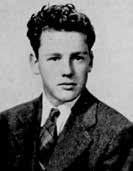

The 1942 Cocoanut Grove fire (above) presaged the horrors that Bob Shumway ’44, left, and Dick Moulton ’44 would see in World War II
One fateful night in Boston, Robert Shumway ’44 and Richard Moulton ’44 survived a deadly nightclub fire BY
KEVIN MARKEY
Wewere saddened to learn of the death of Robert “Bob” Shumway ’44 at his home in Naples, Florida, last June. A World War II veteran, real estate developer, and club golfer, Bob was also notable for being the last survivor of Boston’s notorious Cocoanut Grove fire. The tragic 1942 blaze claimed 492 lives—and led to the development of innovative treatments for burn victims as well as the nationwide adoption of strict new fire safety codes.
Bob and Williston classmate Richard “Dick” Moulton, then seniors, went into Boston on November 28, 1942, for a nationally hyped Thanksgiving-weekend football game between Boston College and Holy Cross. After Holy Cross’ historic victory, the young men followed the crowd to Cocoanut Grove, a popular downtown nightspot. By the time they arrived, the Polynesian-themed club was already packed to more than double its legal capacity—football fans, holiday revelers, soldiers and sailors about to ship out to Europe and their dates. None of them could have known that owner Barnet “Barney” Welansky, concerned about people skipping out on tabs, had locked many of the exits from the Grove’s tiki-lit warren of lounges, dining rooms, and dance floors.
“We weren’t there for too long,” Bob recalled in a 2020 interview. “All of a sudden, something exploded.” The fire started in the basement level and quickly spread across the ceiling and bamboo-covered walls. Within minutes, flames engulfed the entire building. In the ensuing panic, patrons flattened themselves against the few working exits, only to realize too late that the doors swung inward. Bob and Dick managed to escape through a single revolving door in the lobby, pulling several people to safety
with them. They spent hours carrying victims to ambulances. The next day, they drove back to Williston.
Faced with an influx of more than 400 burn victims all at once, doctors would go on to develop innovative new treatments, including the use of penicillin to prevent infection during skin grafts, the creation of the now-standard Lund and Bowder Chart for assessing burned body surface, and the use of petrolatum-saturated gauze to dress burns. Within days, Massachusetts passed laws banning inswing doors from public businesses and making it illegal to lock emergency doors. Similar laws were taken up around the country. “This tragedy negatively affects so many lives,” said Boston Fire Commissioner Paul Burke at an 80th anniversary commemoration in 2022. “But it has ultimately saved many more because of the lessons learned.”
After Williston, Bob and Dick both enlisted in the Army and saw extensive action in World War II. Dick, who predeceased his friend on March 19, 2016, became a nose gunner in the U.S. Army Air Corps. Shot down over the Hungary-Slovakia border, he eluded German forces by hiding out in a cave for two and a half months before being captured and held in a POW camp. He went on to receive four Purple Hearts and give a deposition at the Nuremburg Trials. Bob served in the U.S. 89th Infantry Division, the legendary Rolling W, which crossed the Rhine under heavy fire in 1945 and pressed eastward into Germany. In April, the 89th liberated Ohrdruf, the first concentration camp opened by American troops. “I’ve seen plenty,” Bob would say decades later. “The fire was pretty bad, but so was the war.”
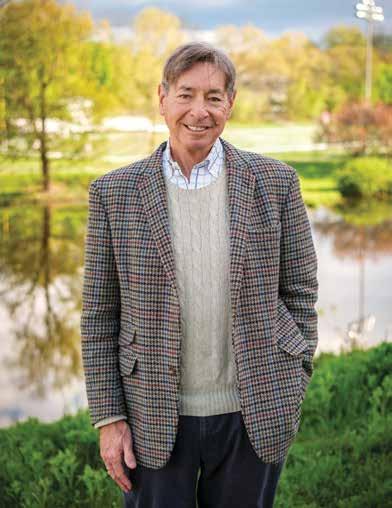
A record-setting gift from Trustee Kevin Hoben ’65 launches a new academic building and honors a lifetime of connection BY JONATHAN ADOLPH
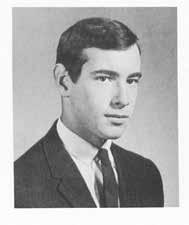
In 1996, Kevin Hoben ’65 arrived for his first day of work at the Westfield offices of Mestek, Inc., already a successful sales and marketing executive in the industrial manufacturing sector. Mestek’s revered chairman, John Reed ’33, then in his mid-80s, had recruited Hoben to head up a new subsidiary at his heating and air-conditioning equipment company, and after formally introducing him to the other senior executives, personally walked his new director from the boardroom to Hoben’s new office. Taking in the view of the nearby roadway, Hoben turned to Reed and said, “John, this is really so coincidental because I can remember driving by this building on my way to school.”
“What school?” asked Reed.
“Williston Academy, in Easthampton, Massachusetts,” replied Hoben.
“You went to Williston?” said Reed, unaware of the shared connection until
that very moment. “Well, I went to Williston, and I’m on the Board of Trustees!”
And so began what Hoben describes as a very special relationship, one that would have profound consequences for the fortunes of both Mestek and Williston. While working at Mestek, Hoben learned that John Reed’s support had allowed the school to transform its aging recreation center, home to the gymnasium and swimming pool, into what became the Reed Campus Center in 1996. Now, after his own successful career at the Mestek spin-off Omega Flex, Hoben—an All-American swimmer who had spent countless hours training in that rec center pool—has given Williston the largest gift in the school’s history. His $10 million donation will help launch the construction of a new academic building, adjacenet to the Campus Center that bears his mentor’s name.
“I really wanted to do something remarkable, something that would be defining for the school and put it on a more powerful trajectory,” Hoben explains. “In
terms of attracting new students, there’s nothing like a nice new building.”
The record-setting gift caps a long list of contributions from Hoben, who in 1998 followed in John Reed’s footsteps and became a school Trustee. He is now the board’s longest-serving member. He has been vice chairman since 2001, held numerous committee positions, and provided generous support to several school campaigns, including the 2005 construction of the pool named for his swimming coach, Wilmot Babcock, and the recent Williston Builds campaign, which he co-chaired. For his efforts he received the school’s Distinguished Service Award in 2015.
Indeed, it was Hoben’s deep familiarity with the school that sparked this latest initiative. “We had a real need for new classrooms,” he says. “We had talked about building this building, and I was tired of going to these board meetings and just talking about it. So, finally, I just said, Look, I’m going to make a lead gift, and let’s get this building built.”
That enthusiasm for investing in new ideas has also marked Hoben’s professional career. After earning a degree in business from Union College, serving in the National Guard, and briefly teaching algebra at his hometown high school, Hoben accepted a position with Atlantic Richfield, where he was put through a 16-month training program. At its conclusion, he had to decide which aspect of the business to pursue. “The sales guys would be coming in from the field quite often, and they would take me out to lunch,” he recalls. “They were all cool guys. I decided that sales and marketing was what I wanted.”
After holding a number of positions at Atlantic Richfield, he moved on to Smiths Industries, the United Kingdom–based engineering conglomerate, where Hoben learned that, as he puts it, “the lifeblood of any manufacturing company is new products.” Among the products that he helped develop was a strong but flexible metal pipe that could replace traditional rigid steel piping for conveying liquids and gases. The innovation was rapidly gaining attention in the HVAC industry, so much so that Hoben was soon contacted by John Reed, whose company was interested in buying the division that made it.
That deal didn’t work out, but in 1996 Reed was able to recruit Hoben to Mestek, where they both discovered their Williston connection. At Hoben’s
recommendation, the company purchased Tofle America, which Hoben knew produced a similar corrugated flexible pipe. Mestek paid roughly $12 million for the business and renamed it Omega Flex. By 2020, under Hoben’s leadership, the company’s value had risen to just under $2 billion, with sales expanding in the United Kingdom, Europe, and beyond. In 2005, Mestek decided to spin off Omega Flex as a publicly traded company with Hoben as CEO. “That gave me the financial capacity to make the gift I’m giving now,” he says.
Today, as Omega Flex’s executive chairman, Hoben is still involved in the company but has handed off most of the day-to-day responsibilities. At age 79, he says he is “trying very, very hard to retire,” dividing his time between homes in Fort Lauderdale and Watch Hill, Rhode Island. He still has the drive that, as a student, allowed him to swim 10 miles a day and earn All-American recognition his senior year, but today that energy is channeled in new directions, including his considerable work on behalf of Williston. Interestingly, after captaining the swim team
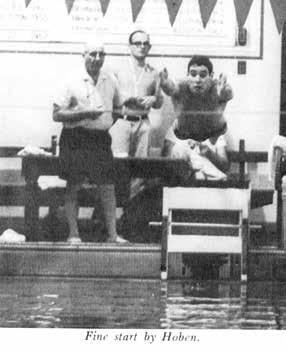
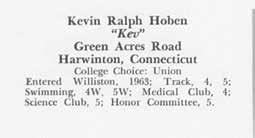
An All-American swimmer while at Williston, Hoben was on a legendary swim team that won the New England championships during his senior year.
at Union, Hoben says he never swam another lap. It was just too isolating. “You can’t talk to anybody,” he explains. “What I like about swimming pools today is standing in three-foot-deep water with a cocktail in my hand.”
Making the lead gift for the new academic building is Hoben’s way of honoring his long and rewarding relationship with John Reed, a connection that continues through John’s son and fellow Trustee, Stewart Reed ’66. But ultimately, the $10 million donation is Hoben’s way of giving back, and of knowing that his success will help change lives.
“You wake up one morning, and you realize that you’ve had a professional lifetime of accomplishments and achievements, and a couple of dollars in the bank,” he says. “And so the big question is, What do you do with it? I wasn’t interested in buying private jets and that sort of thing. I wanted to do something that was going to benefit other people. I wanted to do this one thing. It’s significant. I can afford to do it. I want to do it. And I know it’s going to make Williston a better place.”
A by-the-numbers look at recent alumni highlights 4/8
Date that The Testaments debuted on Hulu, featuring Ann Dowd ’74. Reprising her role from The Handmaid’s Tale, the new series sees Dowd’s character, Aunt Lydia, turn from an antagonist to a protagonist.
Ways to celebrate the Bills. That’s the subject of G is for Go Bills! Learn Your Buffalo ABC’s by Joe Cavallaro ’03 and his wife, Jamie. Jamie is the prolific children’s author of the duo, but Joe got his byline in this book because his love of the Bills inspired Jamie to write it. The book is available for purchase on Amazon.
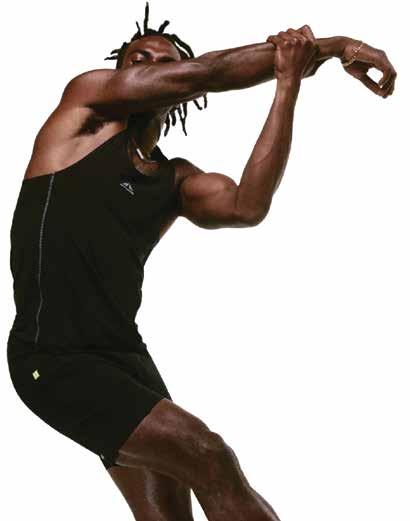
Years in business for PYNRS and its founder and CEO, Sidney Baptista ’05. The company focuses on running apparel that is rooted in streetwear. Baptista’s work was recognized by the Black Economic Council of Massachusetts, which honored him with its Innovation Leader Award, given to “visionaries who are redefining what’s possible.”
Members of the class of 1983 who donated on Founders Day, exceeding their previous record—and the record of any class ever! In recognition, the lion will be emblazoned with “Class of 1983” at Reunion. Way to go, ’83!
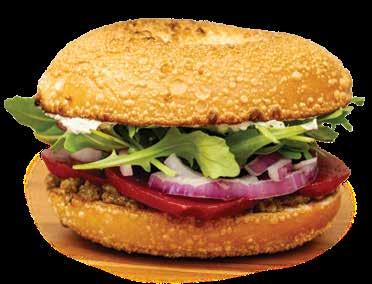
13M
Bagels served since Tandem Bagels was opened in 2013 by owners Chris Zawacki ’87 and Andrea Zawacki (parents of Cameron ’13, Cade ’15, and Molly ’17). From its first location in Williston’s former art studio—the railroad depot building across from the Schoolhouse—Tandem has grown to six area shops offering more than 60 bagel varieties.
26
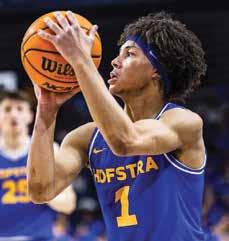
Points for Preston Edmead ’25 in the Coastal Athletic Assocation championship game, won by Edmead’s Hofstra team. Edmead was named Player of the Tournament and won conference Rookie of the Year honors as the Pride made it to the NCAA Tournament.
90
Nautical miles traveled by Luca Bencini-Tibo ’70, who flew his own plane to attend this year’s spring training alumni meetup in Florida. Bencini-Tibo has been flying recreationally since he was an uppermiddler at Williston Academy! See more on page 71.

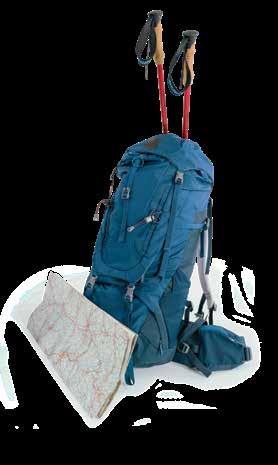
2,197.9
400+
Colorful signs, placards, license plates, and posters on the walls of the Land Ho! Restaurant in Orleans, Mass., managed by John Murphy ’94. The popular destination, which opened more than 50 years ago, is also known for its chowders and other Cape Cod classics.
21

Season 4 episodes of the CBS series FBI: International that feature Sydney Sainte ’10, who plays intelligence analyst Celeste Lee. Sainte also just wrapped up a stage run in England, acting in Southwark Playhouse’s production of Ballad Lines
The length, in miles, of the Appalachian Trail (AT), which stretches from Georgia to Maine. Sara Haxby ’01 is the Volunteer Program Manager for the AT Conservancy, and works to build the network of volunteers along the trail and expand recruitment. Haxby did a through-hike on the AT in 2009, and got involved in volunteer work in 2010.
7.7
IMDb rating for Season 1, Episode 5 of the HBO show Rooster—an episode written by Genevieve Aniello ’09. Aniello is also a supervising producer for the comedy series, which stars Steve Carell.
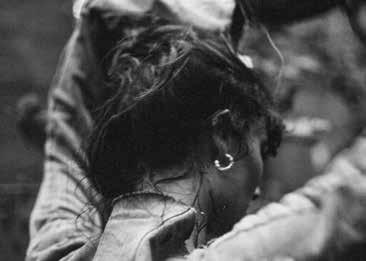
The sculptural jewelry of artist and designer Kieva (Campbell) Chalett ’10 exudes a kind of raw power. Working primarily in sterling silver, Chalett shapes heavy links and organic forms into necklaces, rings, bracelets, and earrings that feel at once gritty and elegant. She describes her New York City–based studio, DVASHE, as a process-driven fine sculpting practice with each piece bearing the marks of the hand and the intention behind it. The result is jewelry designed to be both felt and seen. See more at dvashe.com or on Instagram (@___dvashe).



Lila Schaefer ’20 is building a following one stitch at a time. Through her online shop, the New York City–based artist designs and handcrafts brushed mohair hats that pair featherlight softness with just-right, made-to-order color combinations. Recently in the spotlight after being featured by prominent fashion blogger Leandra Medine Cohen, Schaefer’s slow-fashion brand also includes beaded charms, knit neckies, hand-crocheted bags, and more. Check out her work at lilaschaefer.com or on Instagram (@lilaschaefer).

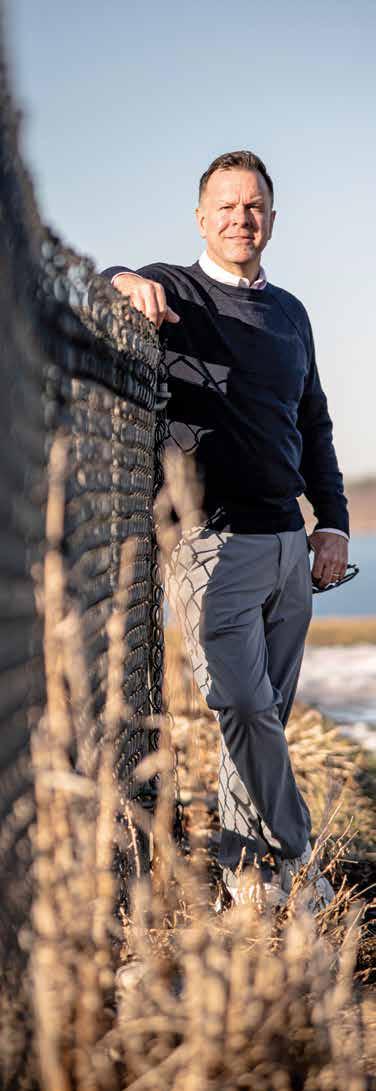
For Matt Kearns ’89, an interest in renewable energy got its spark back at Williston
After more than three decades in renewable energy, Matt Kearns ’89 is excited about the future of the industry. “The fundamentals driving clean energy growth are strong—and growing stronger,” he says.
As a principal with a New York–based renewable-energy developer, Kearns’ confidence is based on two converging trends: 1) Power demand is skyrocketing thanks to the construction of new data centers and other sources of energy demand, and 2) Renewable energy—specifically large-scale solar installations coupled with battery storage—often remains the most cost-effective way to meet that demand. “Solar is often the cheapest available source of new electricity,” says Kearns, who has worked in the renewable-energy field since graduating from Colby College in 1993. “And solar-and-battery projects can be installed a lot faster than other forms of power generation.”
Kearns sees these dynamics playing out in projects across the country. For example, a southeastern solar project his company is developing is transforming the site of a former coal power plant into a facility that, beginning in 2027, will power some 50,000 local homes and businesses. In the Midwest, his company is developing several solar projects as supplements to existing natural-gas power stations, one of which is using remediated coal-mine land. “There is a lot of of data center activity in the area,” says Kearns, “but what we’ve been focused on is working with the community to site the solar carefully and work through the questions that people have.”
The importance of acknowledging the complexity of large projects is a lesson Kearns first learned as a member of the environmental council at Williston. A day student from Amherst (his father was a philosophy professor at Amherst College, his mother taught music at Hampshire), Kearns helped launch a newspaper recycling program on campus. “The school gave us a little garage where we could store paper, and then we had to get it to the recycling facility. It was really poorly conceived, but the intent was good,” he recalls. “It was my first brush with taking on environmental challenges and then understanding that solving them is not as easy as you think.”
Today, living in Falmouth, Maine, with his wife and two teenage boys, Kearns sees that lesson as a throughline in a three-decade career that has included consulting, licensing, and development of hydropower, wind, and solar projects. “Everything I do now is about trying to tackle energy challenges across U.S. markets in a way that is affordable for ratepayers. Safe, affordable, available at a price that works—these are criteria that matter,” Kearns says.
Fred Archambault ’95 is the creative force behind dozens of acclaimed rock and metal albums
By MEGAN TADY


Picture Fred Archambault ’95 at 12 years old in his bedroom in Southeast Texas, putting on his headphones, pressing play, and getting lost in the soundscape of a Metallica record. Visions of rock-star fame flashed in his mind—but over time, he became less interested in being the front man and more fascinated by how the songs were made.
“I’d read through all the liner notes to try to figure out what was going on and who was involved in making the records,” Archambault says. Pre-internet, liner notes were their own kind of textbook, introducing him to the mechanics of writing, recording, and producing albums.
“I started discovering things, like, where did Aerosmith come from?” he recalls. “Oh, from Led Zeppelin. Cool. Where did Led Zeppelin come from? Oh, from the Yardbirds. I did this deep dive and created my own history class.”
Forty years later, Archambault’s own name appears in the liner notes of countless albums. Wearing many hats—producer, mixer, songwriter, musician, and engineer—he has devoted his career to, he explains, “working with guitar-oriented heavy artists, gravitating
attend all-ages punk shows in Northampton and witness the New York and Boston punk/hard rock/metal movements at the time.”
After Williston, he attended the Berklee College of Music, where he was introduced to the recording studio. “I remember stepping into the studio for the first time and thinking, ‘This is it,’” he recalls. “Everything about it—the vibe, the technology.”
Eager to get his foot in the door, Archambault left Berklee in pursuit of an internship, calling every Boston studio listed in the Yellow Pages. Only one called him back: New Alliance, a small, scrappy studio underneath the Domino’s Pizza behind Fenway Park.
“That internship was pivotal to everything that’s happened in my life,” he says. “If I hadn’t said, ‘I’ll work for free for a couple months,’ I just wouldn’t be here.”
New Alliance had a surprise hit with the band Godsmack, grabbing national attention from MCA Records. Archambault had been the assistant engineer on the demo, and he rode that momentum to Los Angeles, where he briefly worked as runner for NRG Studios, before striking out on his own as a Pro Tools engineer, managing the digital workflows essential to modern production.
Before long, he was working with some of the hottest emerging metal bands on the scene. He credits Williston with helping him
A great pop song in one line of a verse can distill all the emotions about love that you’re going through at the moment.
toward a cinematic soundscape that helps support their story.”
Archambault is best known for producing four albums with Avenged Sevenfold, which have sold nearly 6 million copies. He has also worked with Atreyu, Deftones, Panic! at the Disco, and more. Based in Los Angeles, he produces most of his projects out of his home studio, Studio 5A.
In choosing musicians to work with, Archambault looks for one common thread: music that’s timeless.
“It can be a lyric that ages well, a sound that never goes out of fashion, or a sonic landscape of a record that keeps you coming back and finding different elements that reveal themselves,” he explains. “It’s like fashion—that sleek black dress will never go out of style. Tom Petty’s Damn the Torpedoes still slams and sounds fresh. The Cult’s Sonic Temple still hits hard. Some records never fall out of being impactful.”
His success, he says, was driven by equal parts ambition and “dumb luck.” At Williston, Archambault—already a gifted guitarist—received much of his musical education off campus.
“Williston’s secret weapon was its location,” he says. “I was able to
develop the time-management skills the job demands.
“My days are always packed, and I look back and ask, ‘Where did I learn how to manage my time?’ Oh yeah—I learned that from Williston, where my days were also always packed.”
Then came the opportunity that would define the next chapter of his career: Avenged Sevenfold. When the band’s demo landed on his desk, Archambault wasn’t sure what to make of it, but then he saw them play live at Ventura Theater. It clicked: “They’re an arena band that’s playing as a club band.”
He signed on, and the partnership helped propel the band to massive success. Archambault went on to produce one of the songs he’s most proud of, “A Little Piece of Heaven,” written by band member Jimmy “The Rev” Sullivan before his death.
Archambault envisioned the track with a full orchestra, and he negotiated with the label to bring in composer Danny Elfman. “When you listen to that song, it’s insane,” he says. “I love it. I’m so proud that I fought for it. I’m so proud that I saw the beauty of it.”
In fact, one of Archambault’s superpowers is adding production

elements that are “buried, subliminal, and meant to be felt and not heard.” He explains, “Maybe upon repeated listens you can pick out these elements—these Easter eggs—in the mix.”
His work has extended far beyond studio albums. He completed production and mixing for NBC’s Last Call with Carson Daly, working with hundreds of artists, from Kendrick Lamar and Ed Sheeran to Weezer and M83. In that seven-year span, he estimates he mixed more than 1,500 songs for network broadcast.
In a full-circle moment, Archambault is now teaching at Berklee, having finished his degree during the pandemic. He hopes to pass along to his students the same awe for the record-making process that once captivated him—especially at a moment when humans are increasingly competing with technology to bring creative work into the world.
“I’m scared that we’re going to lose a great insight into something that meant the world to me, which was a great pop song that in one line of a verse can distill all the emotions about love that you’re going through at the moment,” he says. “What gets my feet to hit the ground every morning is inspiring the next generation of storytellers.”
We asked Fred Archambault to make a playlist of favorite recordings he’s worked on. But listener beware: You may find inspiration for your next (or first) tattoo! Listen to the playlist at williston.com/bulletin.
“A Little Piece of Heaven” by Avenged Sevenfold
This song was written by Jimmy “The Rev” Sullivan while he was in rehab. It was all written in his head and memorized until he was able to record it with us in a cabin at Big Bear Lake, California. We brought in a couple of the guys from Oingo Boingo to complete the orchestrations.
“Pistolero” by Roll the Tanks
Mix Elvis Costello with The Kinks and you get Roll the Tanks. So proud of this tune; we channeled our inner “Wall of Sound” to bring this song to life.
“Afterlife” by Avenged Sevenfold
Epic bridge/guitar solo in this song. This is a great example of exploiting the bridge in a song to transport you to another place.
“Hurricane” by Panic! at the Disco
Brendon Urie is equal parts handsome gentleman and the most gifted performer.
“Cherry Waves” by Deftones
These drums were recorded in a massive ballroom mansion in Malibu where David Lynch filmed Lost Highway.
“Am I Wry? No” by Mew
Mew is a Danish alt rock band. This is a sleeper record that became a cult classic and won many critics’ awards.
“Medicine” by Orbit
Although I didn’t play on this recording, I am proud to play guitar in this band.
“Concubine” by Converge
Not for the faint of heart. It’s an iconic record and record cover that many people have tattooed on them, yet no one believes me when I tell them I worked on this record. It’s my lack of any tattoos, I guess.
“Unholy Confessions” by Avenged Sevenfold
This is the one that started it for me, my first song as a record producer that MTV played, back when MTV was a thing and played music videos.
“Visual Snow” by My Ticket Home
I’m proud of this record and what I accomplished vocally with Nick, their singer. There’s a sad-yetbeautiful story of why this record never received the promotion it deserved: The two brothers in the band scrapped their tour to be with their mother, who was battling cancer. Proof that blood is thicker than water.

Benjamin Wilson ’87 lets history be his guide. “I guess my vocation is my avocation as well, and I’m lucky in that way.” BY ALEXANDRA KENNEDY
As director of the Division of Historical Resources, Ben Wilson ’87 makes sure that the history of his home state of New Hampshire, in all its fierce and rugged independence, is preserved and honored. His classmates at Williston won’t be surprised to hear that. They used to razz him about his meticulously organized dorm room in Ford Hall, which was decorated with old artworks he’d find in his parents’ closets. A late-19th-century Turkish kilim hung on one wall.
Wilson and his staff of nine have a head-spinning number of responsibilities, including acting as regulatory agents to ensure that the state’s precious historic resources remain safe as thousands of building projects get underway across the state each year. They also fund grants for restoration projects, manage highway historical markers, oversee the state register of historic places—the list goes on. “We’re about telling the truth—telling all the history we’re aware of,” says Wilson, from his Concord office. “Fortunately, people love history in New Hampshire. They love our story.”
Wilson’s own story has also been marked by a maverick spirit. He has worked in museums and historic preservation up and down the East Coast and received his master’s in building conservation in England. Threaded throughout has been a boundless curiosity about history and the mysteries he can plumb there. On the next pages, we ask him to tell us more.
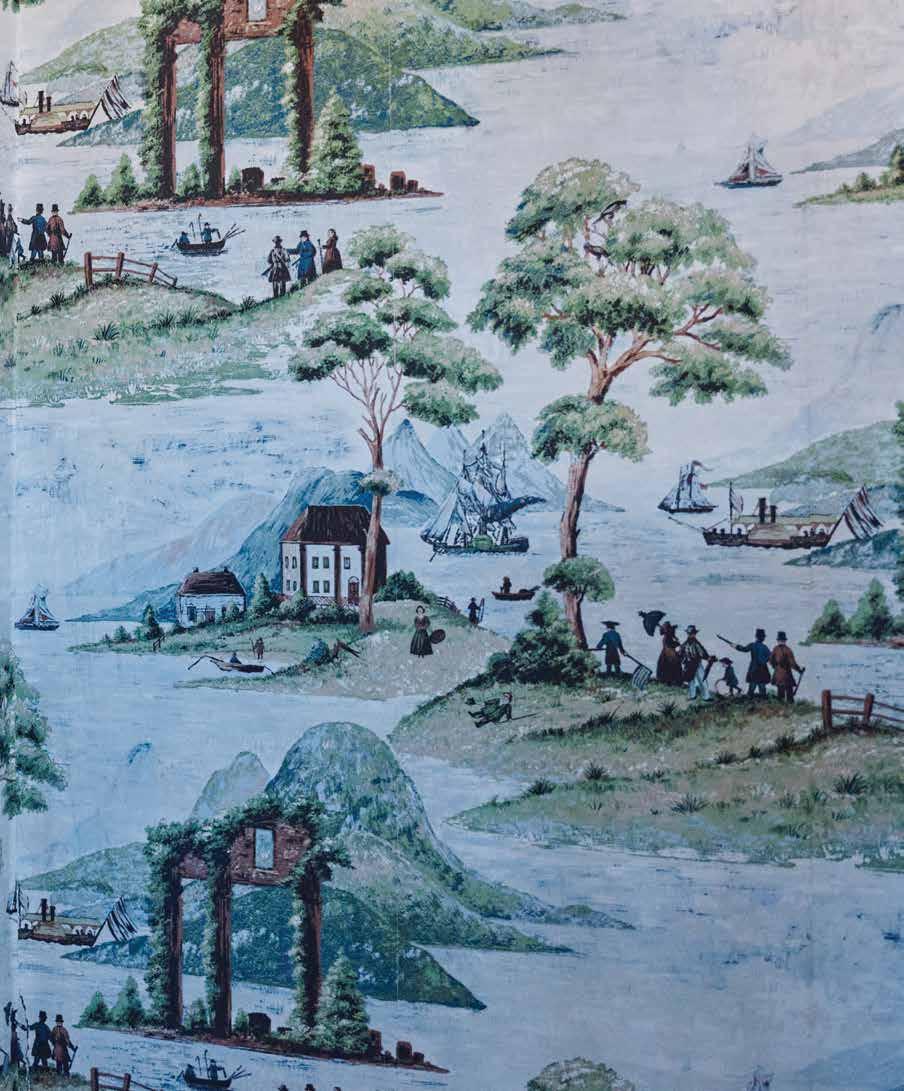
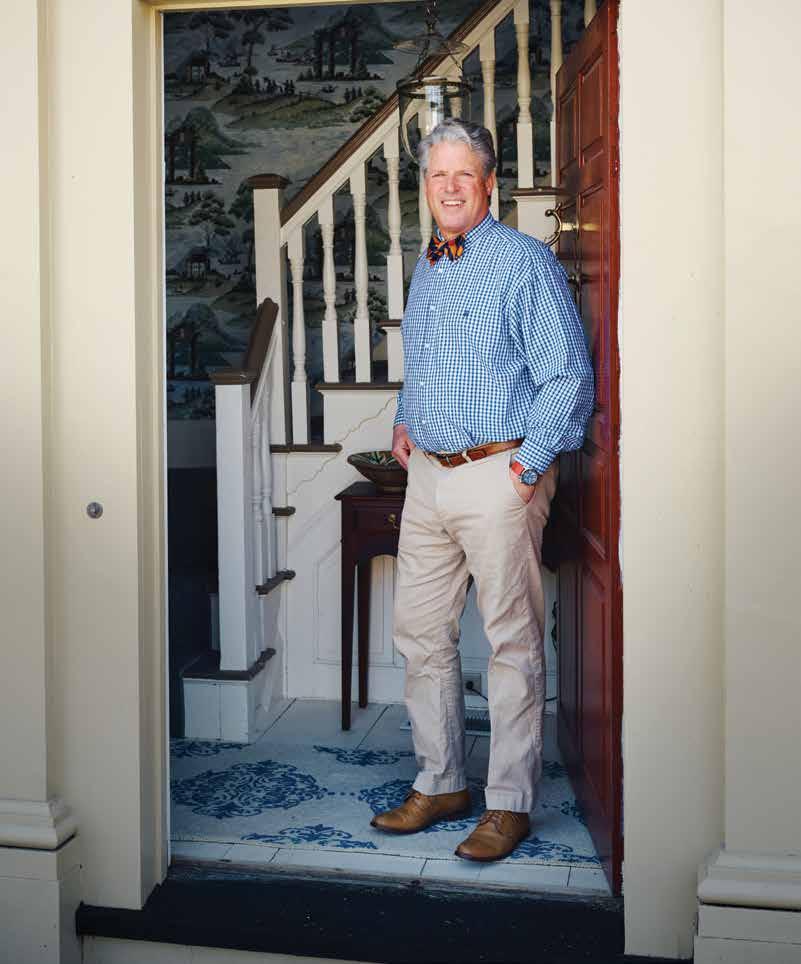
We’re about telling the truth—telling all the history that we’re aware of. Fortunately, people love history in New Hampshire. They love our story.
What aspect of your work really scratches that itch for you as an historian?
My office employs the state archaeologist, and we’ve documented over 12,500 years of inhabitation in the state. We try to encourage folks, whenever they’re sticking a shovel in the ground, to make sure they document anything they find. We often discover unmarked graves related to both precontact Native American populations and early African Americans.
What’s it like being the director?
I deal a lot with funding and the legislature and all the politics. I try to take that on so my staff doesn’t have to—so they can focus on the work in front of them. It’s a heavy lift for them. They’re all brilliant people. This is their career. They’re not in it for the money. They’re just dedicated public servants who love the work that they do every day. And thank goodness for that.
A love of history is in your DNA, isn’t it?
Yeah. I was fortunate to grow up in a house with parents who were collectors. We lived in a Tudor Revival 1928 house in Concord that hadn’t really been touched. After church, we’d go to some town we hadn’t been to before and find the local dealer, and my parents would buy brown furniture, textiles, ceramics… My dad’s passion was clocks, 18th century, early 19th century. They also appreciated contemporary art, so we had a very eclectic house. We all played instruments and both my parents were voracious readers. My parents were real Renaissance people.
You went to the North Bennet Street School in Boston after college. How did that come about?
My parents had always said to choose something in life for work that you enjoy waking up to every morning, otherwise it’s not worth it. I’d always liked making things and using my hands, so I thought maybe that was something I could do that would make me happy. I got into

Originally built in 1791 as a tavern, Wilson’s home is filled with architectural details of the period, many of which had been covered by drywall. The wallpaper (above and previous page) is a reproduction of late eighteenth-century English scenic wallpaper, which was in vogue with wealthy Americans of the era. The ship model (opposite page) was built by Wilson’s father, a maritime history buff. The woodpaneled garage (also opposite) was built in the 1920s to support the owners’ logging and lumber business.
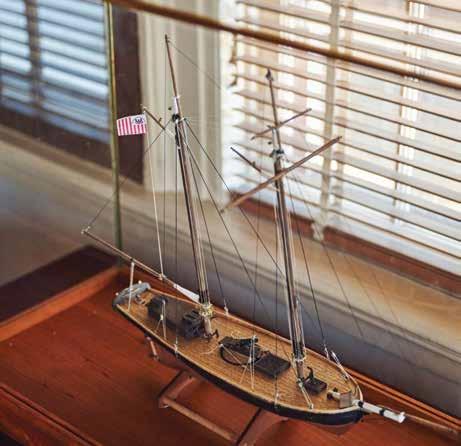
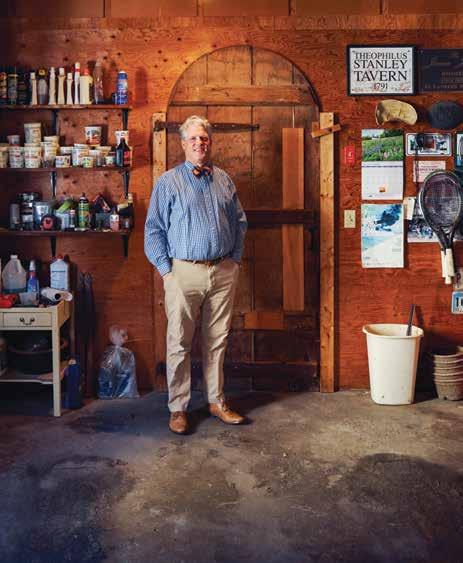
the North Bennet Street School and there were, I think, only 12 of us in the class, so it was very intense, very intimate. We got to work with Robert Adam, who created a program in historic preservation through preservation carpentry. We learned how to restore or build a period house—18th, early 19th-century buildings—using solely hand tools, frame-up to finish. We also learned about architectural history, about all the social movements related to the fashions of different moldings and window sizes and fireplaces, and about masonry evolution, making plaster and period mortars. It was an incredible 24 months.
After working as a building preservationist in Charleston, South Carolina, you moved back to New Hampshire in 2005 with your wife, Lucy. You raised both your boys here as New Englanders. How did you end up living in the little town of Hopkinton, New Hampshire?
After 35 years in Concord, my parents moved to Hopkinton, a village with lots of wonderful 18th-century houses lining the main street. There was this one Georgian house, 1791, sitting next to the village store. It had been abandoned and the store owner wanted to buy it, tear it down, and put in a parking lot. So my dad made an offer on it, got it, and called me up and said, “I’ve got a project for you.” I started going back and forth from Charleston, trying to run a business there while putting a team together here to restore the building. It was purpose-built as a tavern. Over time, when walls were put up or changes were made, the former owners had literally cut around moldings and chair rails and sort of stuck stuff to paneling or sheetrock. So we were able to peel everything back. We picked 1805 as a date to try to hit with its interpretation. We ended up with this amazing house, this tavern, and that’s where Lucy and I live now. The store is still next door.
Can you tell us what Williston has meant to you?
It saved my life. I had a wonderful childhood in Concord back in the 1970s when they still had neighborhood schools. But after you got out of sixth grade, you went to the junior high, so every 10 little neighborhood schools would dump kids into this one big, horrible situation. For somebody whose wheels turned a little too fast and with puberty hitting, it was just a messy situation. I couldn’t thrive. I tried really hard. So I wanted to go away to school.
I looked at a lot of places. My mom and I showed up for my tour at Williston, and for some reason the admissions office was closed. Bob St. George happened to see us and explained there must have been a miscommunication about our appointment. He said, “How about this? I’m going to give you your tour of the school.” He dropped everything and took us around for, I don’t know, two hours, and then we went back to his office and had a conversation. It was amazing.
My experience as a student at Williston—the people I met, the acceptance of whatever anybody wanted to do—saved me. It was a wonderful place where faculty and students could have real conversations and relationships. I feel like it’s still that way today. I hope it is.
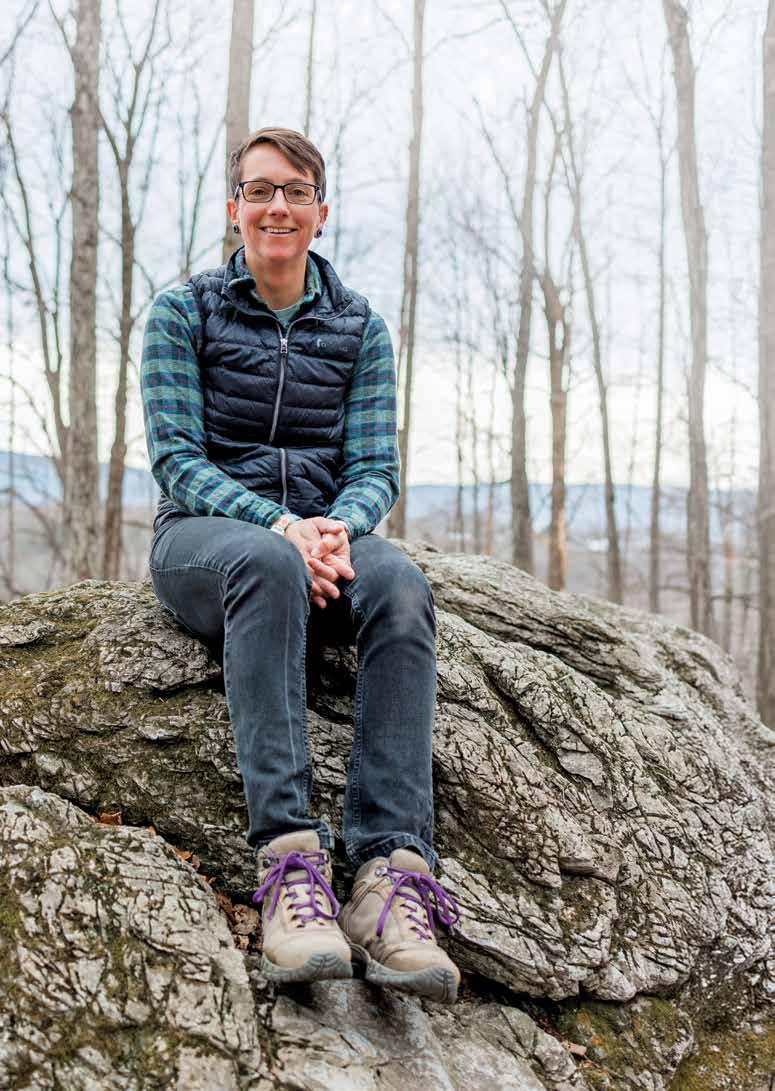
BY JONATHAN ADOLPH
The process of better understanding who we are as people is often an adventure, and for Julia Stifler ’06, that’s exactly how it should be. In fact, as an adventure therapist in private practice in Bennington, Vermont, Stifler purposefully creates adventurous situations for her clients so they can gain insights into how they might respond to similarly challenging situations in their daily lives. “A lot of traditional therapy models involve sitting in an office face-to-face with a therapist and talking about problems that exist in your life,” explains Stifler, who earned a dual master’s degree in social work and outdoor education at the University of New Hampshire. “Adventure therapy says, ‘Let’s get off the couch and have an experience together,’ as a way to fast-track both the relationship-building between the therapist and the client, and also to experience some of the things that are coming up in your life, rather than just talking about them.”
To understand more about Stifler’s work, we swapped roles and asked her the questions.
What exactly would an adventure therapy session with you look like?
It’s really about assessing what the client needs that day, and framing an activity so that it’s in line with what they’re working on, or what they want to gain insight on, or skills in. Maybe decision-making is something that’s hard for you. So I might say, We’re going to go to a trail network where there are a lot of different trails, and you’re going to make decisions about where we go. I’m going to intentionally put you in the position of being the decision-maker, and leading us on this hike. And let’s see what comes up when you’re put in that position. Or I might take a person to a park where we walk up a really big hill. But since you’re someone who doesn’t think you’re doing a good enough job unless you’re doing it perfectly, and you can’t take a break from work, let’s see what happens if we intentionally take breaks along the way. Let’s see what it feels like to slow down. So there’s some intentional challenge involved. Usually that’s designed to create an experience where you’re faced with the emotional reaction that you might typically have if, say, something is stressing you out. But we’re doing it in therapy, so we can actively work on it instead of just talking about it.
Is part of the adventure the act of being out in nature? How important is that?
There’s a huge benefit to helping people spend more time outside. Being in nature, we know, has tons of mental and physical health benefits. There are plenty of outdoorsy people all throughout the state of Vermont, but there are also plenty of people who barely spend any time outside, especially in the colder months. I love getting out on the local trails with clients and then hearing from them later that they returned to those same trails for the purpose of continuing their connection with nature and using a mental health resource that I’ve shown them. But adventure therapy doesn’t have to be outside. You can also do it in the office or on Zoom. You can get creative about how you think of the concept of adventure, the mindset that we’re going to challenge ourselves. We’re going to have some kind of novel experience that pushes us outside our comfort zones a little bit, so we learn something new about ourselves.
Tell me how you create adventures in your office.
It’s often a matter of getting off the couch and facilitating some kind of experience that is relevant to the client’s goals. I use mousetraps, for example, the classic wooden mousetraps with a bar and a spring that pinch you if you stick your finger in the wrong place. I do a lot of activities in my office using the mousetraps as a way to create a sense of danger. I teach people how to use them safely, and maybe we do an activity where we set a few mousetraps along the floor, and one of us is blindfolded, and the other guides us around the mousetraps safely, or guides us to disable the mousetrap safely with our eyes closed. Then you can use that as a way to bring in a metaphor: What do you do when you’re confronted with an obstacle? Or, how do you keep yourself grounded when you start to feel worried that you’re in some kind of danger, there’s some kind of threat to you? It’s all about framing and facilitating an activity that then transfers to what’s actually going on in the person’s life outside of the therapy office, then offering them the opportunity to try new ways of responding to stress in the moment.
Who are your clients?
I work with individuals and families. My youngest client is 4, and my oldest is 65. I’ve been working more with adults in recent years, but middle school and high school aged clients have always been the majority, and the ones who are best suited to these types of interventions. They want an alternative to traditional talk therapy and they want to be outside, or they need a different way to connect with an adult and feel safer about working through trauma. Because I work with young people and take insurance, I almost always have a wait list for new clients. I’m on the doctors’ and schools’ referral lists, and people just find their way to me because I’m a therapist in a small town. It’s fun when people reach out specifically because they know I do adventure therapy and they want to try it.
How did your time at Williston prepare you for this work?
Being at Williston, and especially being involved in sports, gave me confidence in the power of being part of a group and collaborating to solve problems. Also, the adults at Williston who
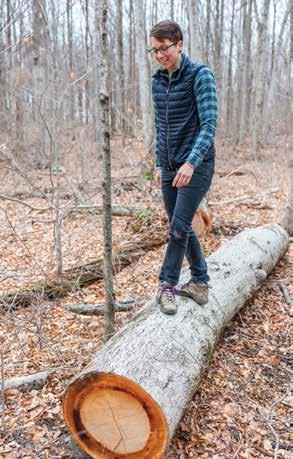
“There’s a huge benefit to helping people spend more time outside.
Being in nature, we know, has tons of mental and physical health benefits.”
believed in me, coached me, and helped me understand what I was capable of made a huge difference in my life. And now I think about how I can be one of those adults for all the young people with whom I work. I can be someone who instills hope for them, or helps them figure out who they are, what they want, and how to get there.
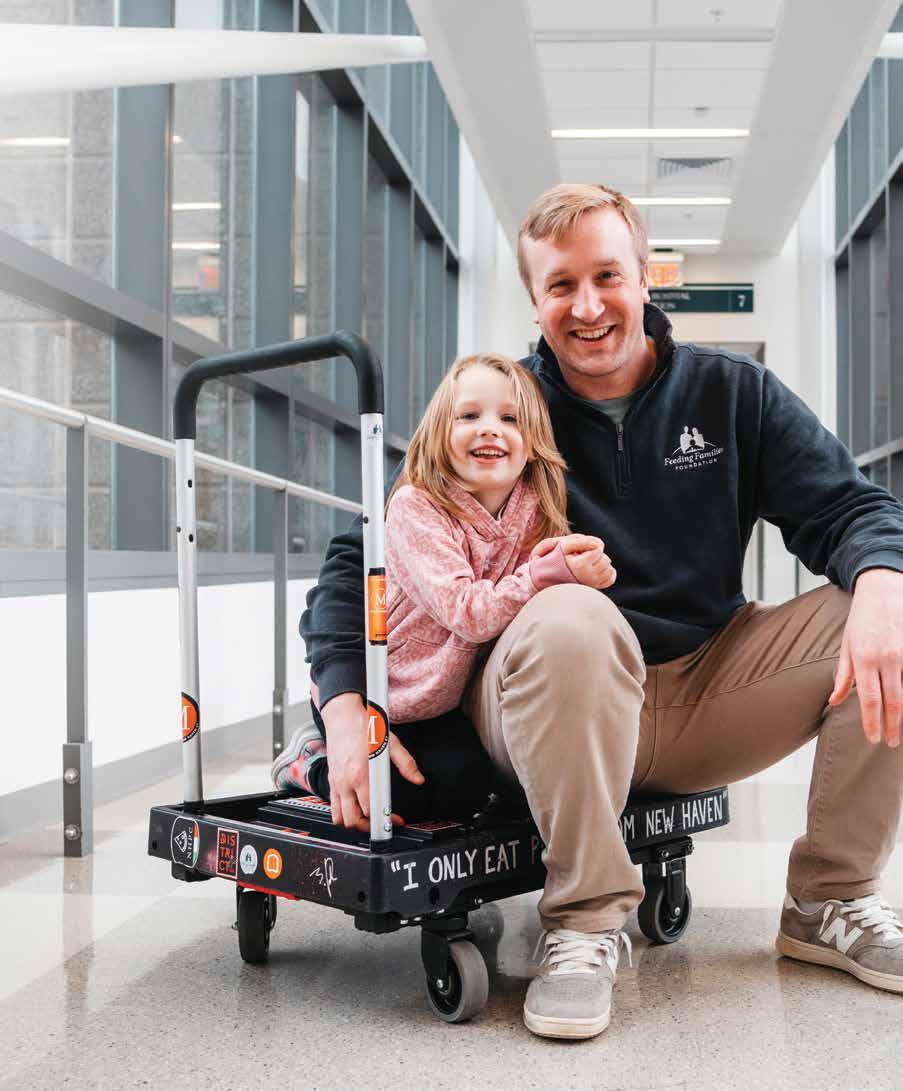
Jeffrey Dorman ’06 spent almost two years in a pediatric hospital, supporting his daughter as she recovered from leukemia. The ordeal left him searching for his own kind of healing.
By Alexandra Kennedy
Jeff Dorman ’06 and his wife, Samantha, co-founded the Feeding Families Foundation in 2024 with a mission so fundamental you’d like to think it wouldn’t require a nonprofit: provide free meals at pediatric hospitals to caregivers at the bedsides of their children. The program launched as a pilot at Yale New Haven Children’s Hospital and has now rolled out in six hospitals, from New Orleans to Oregon, with more to come.
To understand why two busy parents would be compelled to take on such a big responsibility at this point in their lives, you have to go back to August 2022.
As that summer was winding down, Jeff and Sam, like most young families, were not. Both were working, and Sam was almost eight months pregnant with their third daughter. Jeff, a corporate attorney, was working remotely from their home in North Haven, Connecticut, and grateful for the flexibility to do daycare drop-offs and pickups for Olivia, 4, and Harper, who had just turned 2. All of them were excited to welcome the new baby.
One day, Harper spiked a fever of 104 degrees. “Olivia, when she was in daycare, seemed to get sick every other week,” says Jeff. “But it felt like Harper was impervious to germs. We
thought we had this immense luck. That changed very, very quickly.”
Their pediatrician told them it was a virus and prescribed pain relievers and cool baths. The fever didn’t break for six days. “I’m thinking, geez, that was a heck of a virus,” says Jeff. Less than a week later, her fever returned. When it came back a third time, Harper had stiff joints and the sweats, too. Each time, the doctor dismissed it as a virus. Jeff and Sam began to panic.
Jeff texted a registered nurse they’d been friendly with years earlier: “What do you make of this?” He
asked her to help him get Harper in to see one of the doctors where she worked. After frantic phone calls and faxed forms, they got an appointment for that afternoon. The new doctor listened attentively, then ordered a battery of tests for Harper at Yale New Haven Children’s Hospital. “As soon as those results came back,” says Jeff, “he called and basically told us, ‘Drop what you’re doing and run.’”
A pediatric oncologist at Yale gave them the news, hedging: “We’re pretty sure it’s leukemia.”
“What are the odds this could be anything else?” asked Jeff.
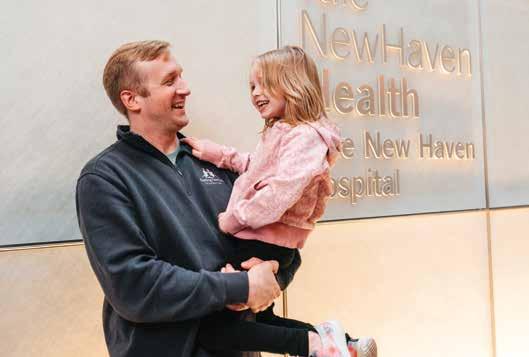
Harper doesn’t yet understand the ins and outs of the foundation she inspired, but she knows Friday nights are Modern Apizza nights, when she gets to help with deliveries. The pizza joint—a standout even in the Pizza Capital of the U.S.—donates pies each week to the pediatric hematology oncology floor at Yale New Haven Children’s Hospital. There, stressed, hungry parents get a taste of local love. “Feeding Families Foundation is a magnet for good people—people who volunteer their time and resources, who donate,” says Jeff. “And that has been so cool.”
“Zero” replied the doctor. “We don’t know the type or the genetic subtype, but she has every single symptom.”
Harper was admitted to the hematology oncology unit and treated as an emergency patient with B-cell acute lymphoblastic leukemia. “I remember asking everybody a million questions,” says Jeff, who did the night shift with Harper for the first several days. “I stayed up all night and learned about the types of leukemia, what it does to bone marrow, what the chemos are, how to read a blood panel. My brain wouldn’t shut off. It was a coping mechanism.”
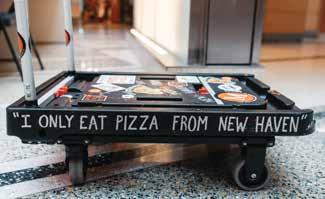
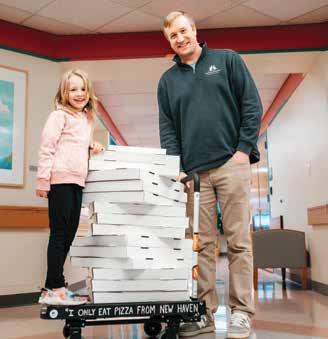
“Everybody on the unit is in the same boat. They’re all nervous, all anxious. They have zero control of the outcome. Our goal is to make a bad situation just a little better.”
For almost two weeks, Jeff and Sam took turns at the hospital while the other tried to maintain a modicum of normalcy at home for Olivia. No sooner had they brought Harper home and learned to administer her medications, than Sam had to return to the hospital to give birth to Madison. The day after the two of them came home, Harper spiked another fever, landing her, and Jeff, back in the hospital. It would be the first of many return stays. For the next two and a half years, every day would present Jeff and Sam with a series of obstacles, puzzles, and surprises.
By 2024, Harper was home and starting steroid pulses, another grim treatment, as part of maintenance therapy, and Jeff was lamenting the endless bribes they used to get her cooperation. “I don’t get how cancer and kids can even be in the same sentence,” he said to Sam, sinking into the couch. How could they possibly rationalize what Harper was enduring? “There’s got to be a greater reason for all of this. We have to turn this into something positive.” That night they sat and talked through everything they could think of that might help families going through the same nightmare.
One idea rose to the top. When they were first on the ward, they were shocked to discover that most hospitals treating critically and chronically ill children don’t offer food to the caregivers staying with them. Some offer, but for a fee, to have a tray delivered. For a parent consumed by mounting medical bills, that can feel, Jeff says, “like you’re getting kicked while you’re down.” The other choices—skip eating or leave your child alone to go buy food—aren’t better.
Jeff learned firsthand the importance of eating under stress. After he logged months at the hospital, a friendly food service staffer offered to comp him food trays, an allocation she could use at her discretion. “Suddenly I’m starting my day with a cup of coffee and an omelet,” Jeff remembers. “And I’m thinking, ‘I’ve got a bit more substance. I can understand and ask better questions and be more present for my daughter.’ It didn’t fix Harper’s diagnosis, but it made a bad situation better.”
For people in distress, receiving a meal is a small act of grace.
Jeff figured out how the food business worked in the hospital—how many trays, the cost per meal, who gets a cut—and started on a nonprofit business plan. He reached out to the staff in the hospital’s development office, who were receptive. He told Julie Fay, an attorney and wife of Mike Fay, his former hockey coach at Williston, what he was trying to do. She introduced him to one of the partners
at her firm, Melissa Mack, who, it turns out, is a kindred spirit: Her daughter is also a pediatric cancer survivor. Mack offered to help him, pro bono, set up Feeding Families Foundation as a 501(c) (3) charitable organization. Next, he recruited two old classmates for the founding board, each with fundraising experience: David Borowsky ’06 and Williston Trustee Joseph Wold ’06. Today, Feeding Families Foundation offers both funds and resources to its hospital partners. Williston friends continue to step up, like David Fontaine ’06 of Fontaine Bros., who recently made a major gift through the Fontaine Community Foundation. Feeding Families’ signature program is its parentplate program, which allows caregivers to order food trays that are delivered to the room, enabling parents to remain bedside. There are no prequalifying conditions or limits. “Everybody on the unit is in the same boat. They’re all nervous, all anxious. They have zero control of the outcome,” says Jeff. “Our goal is to make a bad situation just a little bit better.” Yale New Haven Children’s Hospital continues to be an incubator for new programs, including birthday cakes for patients and catered meals donated by local restaurants for staff and patients.
Harper is 5 now and cancer free. She doesn’t have memories of the hospital or her treatments. In time, of course, she’ll learn. Jeff and Sam, on the other hand, can still recount the smallest details of those days, almost as if the emergency is ongoing. That fear takes a long time for parents to shake.
The pediatric staff gave Harper a book to take home, Harper Goes to the Hospital. “We read that now,” says Jeff, “and she’s like, ‘Oh, isn’t it funny that they have the same names as us?’”
“Harper, this is about you,’ I’ll tell her. So I think she has an idea of it,” he says. “She has no sense, though, of how strong she is,” he adds. “But I’ve certainly told her that Feeding Families was inspired by everything we went through together.”
To donate to Feeding Families Foundation or to learn more, go to feedingfamiliesfoundation.org.
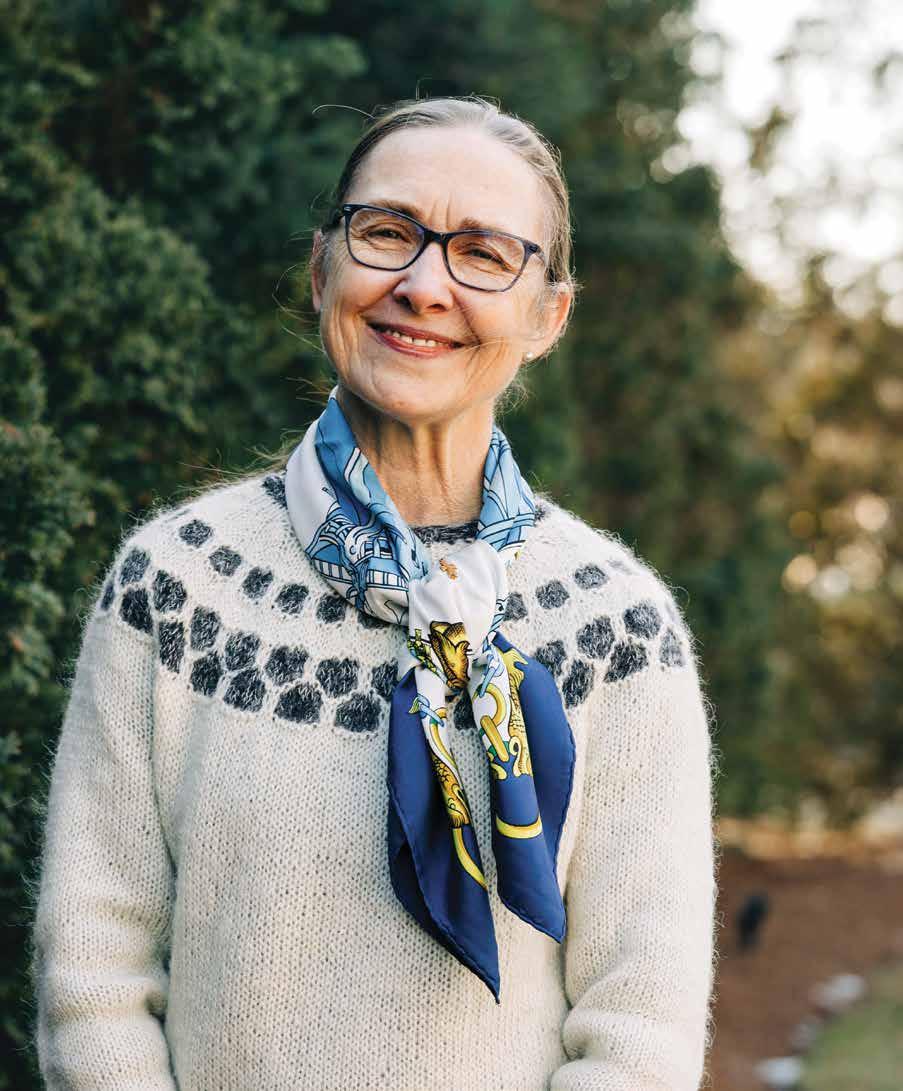
In her early days at Williston, mentorship was a revelation for Lori (Alexander) LeBas ’77. She turned that experience into the guiding force behind her life’s work. BY
ALEXANDRA KENNEDY
When Lori (Alexander) LeBas ’77 arrived at Williston in January to deliver the keynote address for the Cum Laude Society induction, it was her first time back on campus in 40 years. Even though she’s an Executive Vice President at the Walt Disney Company who’s given presentations all over the world, this speech took her draft after draft.
What was it like to be back?
“It was surreal to sit in the chapel,” she says. “Very emotional.” She looked around, remembering exactly which rows she’d sat in and who her row monitors were. “I could almost feel, there in that moment, what I believe was the core of the me that was very much shaped during my time at Williston.”
As a child growing up in Easthampton, LeBas was determined to go to Williston. Her parents, who married very young, did their best, but LeBas was precocious. She did a lot of her own raising. “At some point, my mom even said to me, ‘I was afraid of you. I didn’t know what to do with you as my child,’’’ says LeBas, a little wistfully. “When you have a baby at 17—versus you’re thinking about going off to college at 17—that’s a very different world.”
At Williston, she found adults interested in her for her own sake. “And not that they expected a payback,” she says. “The reward for them was seeing me happy, succeeding, and growing. Or if I wasn’t, they wanted to know what they could do to help. They were invested in making sure I had the best experience possible. That was completely new for me.”
In her keynote, LeBas paid homage to Rick Francis, Doc Gow, and Yves Couderc, teachers who helped her recognize her strengths as a curious learner, the kind of student who asks questions and tries to find ways to improve. “You are all leaders, challenged to do your best and guide others to do the same,” she told the students in the chapel. “‘Be Yourself Here’ isn’t just a phrase. The self-confidence and courage I gained at Williston are cornerstones of who I am.”
LeBas and I had never met before, but I’d been an executive at Disney, too, overlapping with her in the early aughts. She currently runs operations for Disney’s platform distribution group but has led operations for different teams at the company for more than 26 years.
“I work out of Bristol, Connecticut, on the big ESPN campus,” she explains, “but I have teammates in New York City, Greater LA, and now in Europe, the Middle East, Africa, Latin America, Asia, and the Pacific regions. So, I happen to be based in Bristol, but I am more of a ...?” She trails off and smiles.
“I’m a Disney employee.”
She has a reputation in her industry—and a shelf full of awards— for being innovative, which isn’t a surprise given her success at one of the world’s most creative companies. Another aspect of her reputation, though, is not one I’ve come across before. She’s well known for having mentored hundreds of employees over the course of her career. And for being kind. Kind! I jumped at the chance to meet her.
LeBas talked to me from the home she shares with her husband, Sean, a retired attorney, in the quiet town of Portland, Connecticut, which sits along the Connecticut River. She actively manages her work schedule to ensure her job doesn’t swallow up her life, a trick for every executive. She’s a certified yoga instructor, drawing on it for peace and strength, and makes
frequent trips to Sweden to visit her son, Konrad, and get in playtime with her five-year-old, granddaughter, Ylva.
When you talk to LeBas, she leans in, nodding as you talk. When she replies, she uses your name. She has a gift for making you feel that whatever you have to say is important. I start with the basics. “Despite all my years at Disney, I don’t understand what you do. What exactly does ‘platform distribution operations’ mean?”
“So, this is my cocktail party ‘tell me what you do’ answer,” she explains. “Any time you watch content from the Walt Disney Company—whether you’re launching the Disney Plus app for a streaming service, or turning on your television to watch ESPN—my team has gotten that content from where it originated to where it needs to go for it to be able to get to you.”
Certainly, she thrives at Disney in part because of that same curiosity she exhibited at Williston. She’s a true “ops” person, happiest when wearing many hats and fixing problems her colleagues might overlook (or prefer not to notice). “I really only ever interviewed for one job, and that was the first one I got hired for,” she says. “But if I think about how many different roles I’ve played, it’s easily 10, if not 15. I ask myself, where can I go where it’s expected that you’ll raise your hand and take on new responsibilities and want to continue to develop and grow?”
“So, how did the importance of mentoring enter your life?” I ask.
“I can tell you with absolute cer-
tainty,” she replies, “and some of this came out in my Cum Laude speech, that I started to understand the benefits of having mentors when I was at Williston.”
When she looks back at her transition to college at Mount Holyoke, she can see the change, how she started observing people and listening for signs that they needed support. It evolved into the mentoring style that has defined her life. “‘Are you struggling a bit here? Is there something that I could do to help you?’” explains LeBas. “‘Is there a way I can hold up a mirror to let you see what’s going on?’ Because I think the best mentoring isn’t telling people what to do. It’s finding a way to help people see what they can’t see for themselves.”
For LeBas, mentoring isn’t a formal program organized by a corporate office—though those can work, too. It’s a series of conversations and connections, often with members of her own team. “Hundreds of people have provided me opportunities to mentor—in a moment, in a meeting, over the course of months and years,” she says. “And to know that my listening and being kind might be just the thing that person needs right then? I put that in the mentoring bucket.”
“To me, it’s saying, ‘My door is open. You want to come in and have a chat?’” she continues. “It can be intimidating for some people even if they understand, ‘Oh, mentoring is just grabbing a cup of coffee to find out what somebody does.’ So sometimes I need to be the person to reach out. I try to
reinforce the message that we’re going to have a relationship if you want that. For some people, 15 minutes feels like 15 hours. But for others, it’s opened the door to all sorts of conversations. ‘I’m struggling with my career.’ ‘I’m not sure what to do next.’ ‘I’m a working mom. How did you manage that?’ It doesn’t always have to be about where the next step is up the ladder.”
Peers describe LeBas as both candid and kind. “I think the most important thing anybody can do as a leader, especially in the world right now, is treat people like grownups,” she says. “Just today, I was talking to one of my former team members who got promoted. She was telling me, ‘I want to make sure my people are happy. I don’t want to make these org changes because they might not like them.’ I told her it’s not your job to make people happy. It’s your job to give them the tools, feedback, and coaching they need, and to make sure their responsibilities are clearly defined. Do the things you need to do as a leader.”
“You have to be kind enough to listen to what people’s concerns are,” LeBas explains, “and honest enough to share what you know. Be candid about what you don’t know and share the things they might not want to hear. They deserve the information they need to make the choice: ‘This is the place for me’ or ‘It’s not the place for me.’ Don’t get caught up in mentoring as a hierarchical thing, like ‘I’m the oracle who’s expounding my wisdom.’”
I’m curious to know what’s changed in corporate culture, and what hasn’t,
“You have to be kind enough to listen to what people’s concerns are, and honest enough to share what you know. Be candid about what you don’t know and share the things they may not want to hear. People deserve the information they need to make the choice.”
so I ask her if there’s a challenge— something that’s a near constant—that she hears from mentees?
“Yes. I keep getting feedback that ‘I don’t have executive presence.’ I hate that. What does that even mean? And are only women hearing that? Because they’re the ones coming to me. What is this nebulous ‘executive presence’ thing? The sad thing is, whenever someone gets that feedback, they never get examples to help them understand what to do differently.”
Earlier in her career, LeBas got that feedback from her own manager. When her team was at an offsite with an executive coach one weekend, she took him aside, explained the situation, and asked if he would observe her and recommend an action she could take to remedy it. At the end of the weekend, they met again. “I know what the problem is,” he told her. “It’s not a question of what you say. It’s a question of when you speak—when you get into the conversation.”
LeBas, the only woman on a team of mostly high-powered salesmen, was indignant. She replied that she listens to learn and was not someone who speaks just to hear herself. The coach replied, “You asked me to tell you what to do. If you want that feedback to go away, you’re going to have to do your homework in advance and speak in the first five minutes of the meeting. It’s not important what you say, but you need to get your voice heard early. After that you can speak whenever you want.”
“So I did my homework,” says LeBas. “I’d come to the meetings, I would always speak in the first five minutes, and I did this consistently for a month. And then my manager came to me and said, ‘I don’t know what you’re doing, but your contributions in these meetings are just amazing.’”
We both start laughing.
“There’s a whole industry giving
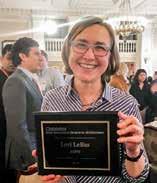
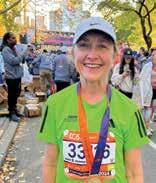
Clockwise from top left: LeBas’ Disney career started at ESPN under legendary ESPN President George Bodenheimer. “His superpower was having employees believe, literally, that they were owners of ESPN”; LeBas’ 1977 yearbook photo, which was accompanied by the opening line of a John Donne poem, “Go and catch a falling star”; LeBas started running marathons at 55 (and has run six!); LeBas with one of many industry awards for her leadership. “At the highest level, mentoring is about helping humans be the best they can be in whatever environment they are in.”
mentoring advice, isn’t there?” I ask.
“Do you hear people getting advice that you think is really off the mark?”
“Oh yes,” she replies. “Don’t have pictures of your family at your desk. It looks like you’re less committed to your work.’”
“‘Don’t talk about your life outside of work.’”
“‘Be the last person to leave the building.’”
“‘The only way to get ahead is to work harder than every other person.’”
“Of course you need to work hard,” she adds, “But I mean, those are just unrealistic pieces of advice—platitudes anybody could rattle off. I think
can still figure it out.’ Well, if that’s the environment you’re starting out in, that becomes normal for you. Will you pass that normal on to the next people?”
So, what does LeBas get from all this mentoring? “When I’m talking to people in different departments, I build a network across the company and beyond. If you can make a call to your friend in finance and get an answer in five seconds, versus taking five hours to research it yourself, guess who’s going to get more done? People I work with believe that they can ask me any question, and I’ll know the answer. That isn’t true, but I will probably be able to figure out who I can go to to get the answer.”
Personally, LeBas loves to hear people’s life stories—a big benefit of mentoring. “When you hear what others are doing you wonder, ‘What could I learn from that? What’s it like to be that person?’ We all bring something different to the mosaic that we’re creating together.”
bad advice comes from people who look at the person sitting across from them only through their own personal lens. ‘Well, if I was in your shoes, this is what I would do…’”
Knowing how hard it is now for people just starting out in the workforce, I ask her what advice she wishes our generation would stop giving young people.
“‘Just get your foot in the door,’” says LeBas. “‘Even if it’s something you don’t want to do, get in the company and then you can move around.’ These days that’s not an easy thing to do. Or ‘Just ignore the culture. Even if it’s a toxic environment, don’t worry, you
As our conversation comes full circle, LeBas generously offers to give me additional time if questions arise as I start writing my article. We’ve enjoyed talking about the people we both knew at Disney, and I’m sure I haven’t hidden that I felt inspired to meet an executive who is technically accomplished and emotionally perceptive, all at once. It’s no wonder she was able to make so many connections about her experiences across 50 years. “It’s a mind-bending experience,” she says, smiling, “to come face-to-face with a place that was so much a part of shaping who you are. As I’ve told many people over the years, I left Williston feeling like I have a karmic obligation to do that for other people.”
Teal Bulthuis ’01 tested her primitive survival skills on two seasons of Naked and Afraid BY
MEGAN TADY
It started with a dare. Teal (Kolakowski) Bulthuis’ husband challenged her to apply for Discovery’s reality survivalist show Naked and Afraid. Her first reaction: “That sounds terrible,” she said. “They’re just going to put people in the woods to argue and flip out.”
A primitive-skills practitioner, Bulthuis retired in 2022 as a master sergeant after 20 years of active-duty service in the U.S. Air Force. She now lives in Oklahoma, but she was raised in Topsfield, Massachusetts, with the woods as her playground. After watching the show, she was drawn to the idea of testing her knowledge and self-reliance.
Soon after applying, Bulthuis was dropped, sans clothes, in the middle of the Smoky Mountains in Tennessee, where she met her 2018 Naked and Afraid season 9 partner, Jermaine. The duo had to use their combined wits and fortitude to survive for 21 days.
Bulthuis was pushed to the brink, and yet she also reveled in the challenge—so much so that in 2025 she signed on as an allstar cast member for Naked and Afraid Apocalypse, set in a remote, semi-arid area in South Africa, where she and her teammates spent 35 days living among black mambas, lions, and crocodiles.
During both shows, Bulthuis confronted real fear, and yet her biggest fear isn’t born from the wilds; it’s complacency. “My favorite philosopher is Alan Watts, who said, ‘The meaning of life is just to be alive,’” she said. “If you are constantly living your life in your comfort zone, that’s really the most dangerous risk of all—never trying something that could make you feel truly alive.” On the following pages, we asked her more about the experience.
What does it mean to be a primitive-skills practitioner?
I’m drawn to being self-reliant and self-sufficient. Can you go out into your environment and use the land to make a fire? We are so removed from those skills because of technology. We don’t think about the heater in our car, or the heat in our house, or the AC, or what cooks our food. We just pop something in the microwave, press the button, and go on with our day. As a primitive-skills practitioner, I want to honor the basics of what it means to be human by being able to practice skills that are necessary for our survival.
You’re allowed to bring one item to each challenge. What did you choose, and why?
To the Smokies, I brought a kukri, which is a Nepalese military-issue machete. It’s heavy, and it has an outside edge for chopping and an inside curve for fine work. For Apocalypse, I brought a mosquito net.
What were your reservations about disrobing?
That was probably the easiest part. I was never self-conscious, and I give my parents credit for that. I was brought up with a very healthy body image; we didn’t even have a scale in the house. My mom never talked about my body being anything other than the greatest instrument I’ll ever own. And as such, it’s the best tool I could wish for out there, so I never felt inhibited about it.
On the first day of the challenge [in the Smokies], it was raining and already in the high 50s, so I was immediately cold and wet. You’ve got to learn how to walk in the woods barefoot. I walked about 15 steps before I cut my foot. And I kept that stupid cut on the bottom of my foot for the whole 21 days. The naked part goes out the window so fast because you’re immediately in a slight panic.
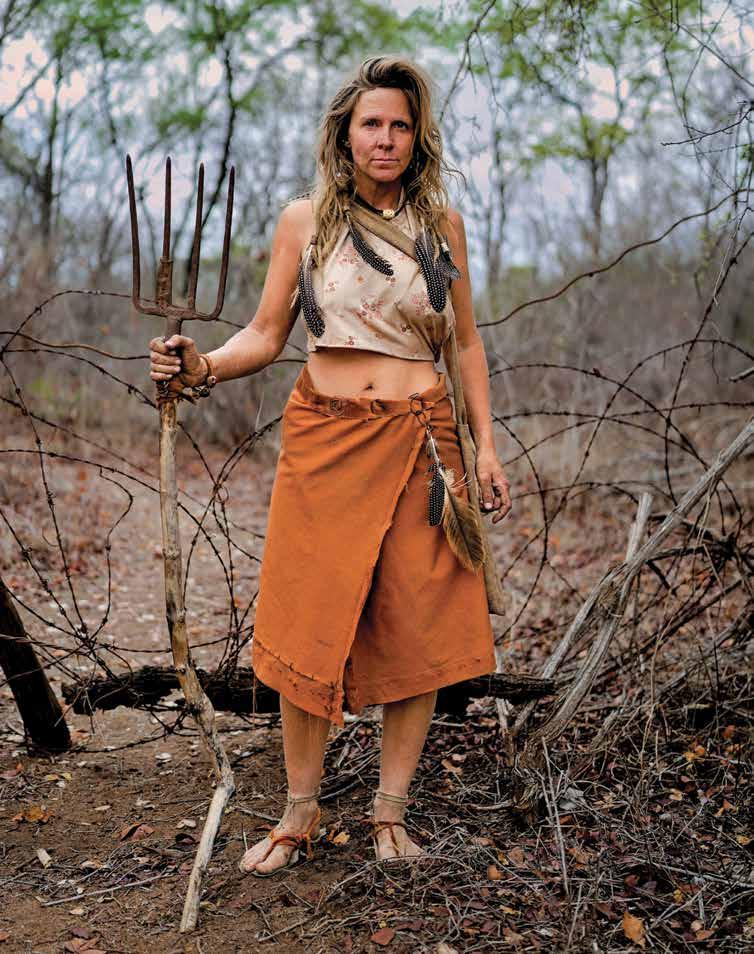
Being able to source and purify drinkable water is one of the few things that you can’t delay on in a survival situation. While you may be able to survive up to three days without water, the importance of water is paramount to being able to continue other survival tasks under distress and exertion.
Having fire coincides with water and purification, but perhaps the most important benefit of fire is body temperature regulation. Without proper shelter and protection from the elements, fire is your number one tool to be able to stay warm and dry. In addition, fire is critical for food preparation, personal protection, and safety.
3. GET COMFORTABLE BEING UNCOMFORTABLE
The most difficult thing to endure in a survival situation is the raw discomfort. Accepting the discomfort is key; acknowledging your humanness and vulnerability will help keep you grounded and allow you to build courage to overcome the circumstances. The reality is: survival, in the end, is simply about not giving up. 40
Total number of days Bulthuis will take on in South Africa’s Zululand in the new Naked and Afraid:Global Showdown, which premiered in May
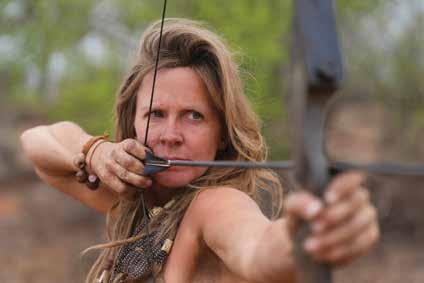
What surprised you about the show?
The most underrated part of the challenge is the temptation to save yourself and just quit. It becomes a narrative in your head that goes around and around. In a true survival situation, obviously you don’t have that option.
What were the distinct challenges about each location?
In Africa, the temperatures were outrageous. It got up to 120 degrees, so doing things in the heat of the day was very difficult. Making a shelter was a priority. In the Smoky Mountains, bears were everywhere, and they were super curious and have no fear of man. And in the Smokies, I struggled with the cold. I shivered to the point of muscle contraction fatigue out there naked in the 40-degree weather.
What’s one moment that made you proudest of your own skills?
Hand-catching the crawfish [in the Smokies]. I was thinking outside the box and coming up with a way to feed us. Over the course of our 21 days, Jermaine and I consumed less than 2,000 calories total. After both challenges, I could look back and come up with different solutions to improve our situation, but at the time, you don’t even recognize those needs because your cognitive function declines rapidly without food.
Speaking of food, what was it like eating termites?
In our Western culture, we have a huge aversion to bugs, but globally it’s common to eat bugs because they are the easiest harvestable protein. They’re abundant, and they’re closely related to crustaceans. Seafood delicacies we eat are just bugs in the ocean. I ate a huge spider on Apocalypse. We cooked it up, and it kind of tasted like fried shrimp. In a survival situation, bugs are easy to find, capture, attract, and eat, and many survivalists have favorites. Ants taste kind of like green apple, and termites have a buttery, nutty flavor. You find a log full of termites and
If you are constantly living your life in your comfort zone, that’s really the most dangerous risk of all—never trying something that could make you feel truly alive.
throw it on the fire. When the termites start coming out, you grab them and eat them. The last thing I need is my Williston classmates being like, “Oh, the bug eater.” But the truth is, when you’re really trying to maximize what you have available, you cannot discount that protein source.
What did you learn about yourself through these challenges?
Being reduced to literally naked in the wild showed me that I have a resilience that prevents me from giving up—but I did learn that I’m not always happy about it. In the survivalist community, there’s a sense of machismo and boastful capability, with the idea that the people who are uncomfortable and sad tend to tap out (go home). I found that I like being authentic in saying, “I’m not doing ok, but I’m still here.” I have no quit in me, and I think that goes back to my military training. In the military, as hard as things get, you just don’t get to quit. You don’t get to wake up and say, “You know what? I’ve had it.”
What’s your advice for someone considering doing the show?
Go sleep on your garage floor naked, because it’s going to suck. You’re going to wake up every 10 seconds, and your hip bones are going to dig into the cement, and you’re going to be cold. If you can get through it, you’ll be glowingly proud that you did something that your body is literally designed to do. We just evolved into such a comfort-based society that we don’t do that anymore.
How did your time at Williston impact your sense of resilience?
Williston built on the independence that I had started to cultivate by being out in the woods as a kid. I had a lot of freedom, but people were keeping an eye out for me. In a way, Williston is a little like doing the show: independence with a safety net. I could go on an adventure of a lifetime with the fallback of support if I needed it.
Donors from the class of 1983—the most of any alumni class in Founders Day history!
ATHLETIC DONOR LEADERBOARD
DORM DONOR LEADERBOARD
It was full of energy, heart, and that unmistakable Williston spirit. Every gift, note, and moment of connection came together to create something far greater than a single day. Whether it was your first gift or your 40th, you showed up in a way that matters. Thank you!
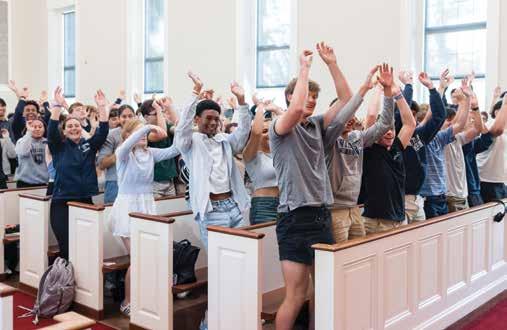
1,253
Founders Day is about belonging. It is about class pride and the stories that connect one generation to the next. Here were some of our favorite alumni quotes.
“Forty-three years and counting, but we still feel like family. I look forward to our next Reunion.”—Christopher Lussier ’83
“We gladly and proudly continue to support the BPOE (Best Place on Earth)!
Thank you, WNS, for changing all of our lives!”—Jennifer (Gaitenby) Vachon ’88, P’23 and Lance Vachon ’90, P’23
“Williston taught me to be confident, reach for the stars, listen to others, and celebrate all accomplishments, big and small.”—Mindy (Yearwood) Waugh ’91
“Provided the academic boost that I needed for college and medical school. Forever grateful!”—Warren F. Woodworth ’57
“Williston was where I met my best friends, nurtured my love for music and math, and found my passion in XC and squash. It had an unmistakable impact on my life.”—Finlay MacDonald ’20
“Thank you, Williston, for fostering my drive to learn and for providing me so many opportunities to grow.”—Emily Yeager ’17
Drew Hamilton ’08 on why video editing matters more than you think BY
GEOFF SMITH ’07
Drew Hamilton ’08 is, ostensibly, a video editor. He has a string of credits to his name—including working on the latest season of Netflix’s hit basketball show, Starting 5—and he is a member of the Motion Picture Editors Guild in New York City.
But ask him to explain what he does, and Hamilton pulls out an analogy from a completely different line of work. “Basically, the directors, producers, and actors hand me a bunch of wood and say, ‘Here, make us a chair,’ Hamilton says with a laugh. “My job is to take the materials that are given to me and build the best chair possible.”
Unlike the director who oversees a given scene, or actors who portray the characters, Hamilton explains, the editor ensures the picture makes sense, conveys the right message, and fits in the time frame. “We take the material that is created by the production team and weave it into the actual story,” he says. Back to the chair analogy, Hamilton notes that sometimes a director wants a “chair with six legs”—until Hamilton shows him one with four.
“Editors will always talk themselves up and say it’s the most important job in the movie,” Hamilton admits. “But in many ways, it is. You can make the actor look better by choosing their performance. You can make a movie scarier by how you present the monster.”
Hamilton has had plenty of opportunities to do exactly that. In addition to Starting 5, his resume includes editing and creating graphics and animations for the MTV Video Music Awards, the Emmys, and TV shows like Behind the Bastards, Drunk History, Tha God’s Honest Truth With Charlamagne Tha God, Game Theory With Bomani Jones, and Have I Got News For You
His recent work has centered around basketball documentaries, but
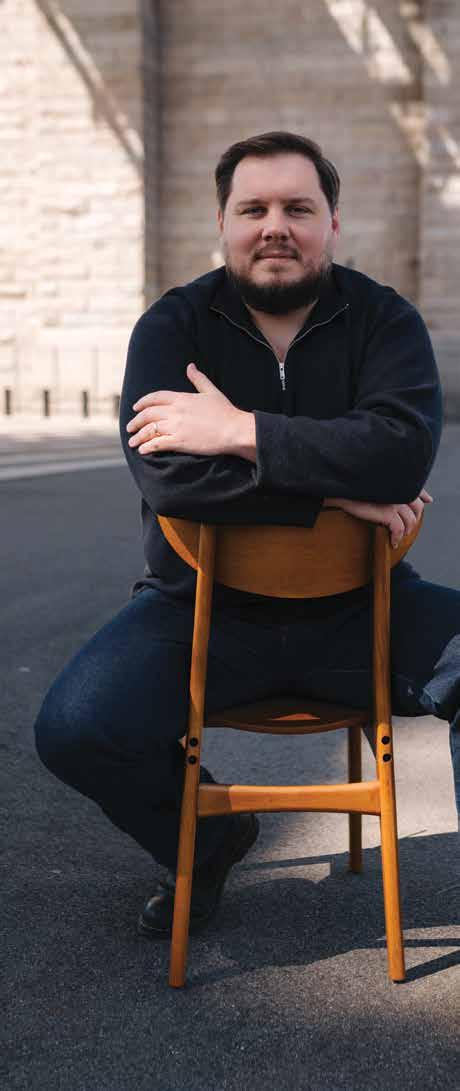

Hamilton points to comedy shows and animation as his passions. He noted the impact on his career trajectory of working on Drunk History, where he edited and created graphics for episodes, and for an animation company. “Those environments, I’ve had the most fulfillment in,” Hamilton says, “and there’s a lot more of an openness to new ideas.”
And with history shows, in particular, Hamilton draws a direct line from the enjoyment he gets working on the shows back to his time in Williston classrooms.
“Williston is the place where I fell in love with history, and it’s one of the reasons why working for Drunk History was one of the highest points in my career.”
Regardless of the medium, Hamilton remains committed to the craftsmanship of editing. Upcoming projects include working on a new Netflix basketball show—this one centered around college basketball—and a potential feature film.
As for his advice to any potential editors looking to break into the industry? Stick with it. “If this is the thing that you want to do, you have to push through and stay in the game. It might take a long time—I’ve been an assistant editor way more than I’ve been an editor—but a feature film opportunity wouldn’t have happened if I didn’t stick to it.”
Hamilton’s editing credits are lengthy, but he pointed to these jobs as important ones.

This documentary series tracks the NBA’s biggest superstars through a season of basketball, both on and off the court. “It was fascinating,” Hamilton said about working post-production on the show. “When you have that great storyline, that’s a great moment,” Hamilton said. “But you need to build the story from footage as to why it’s important. We had 600 hours’ worth of media to go through to create a 30-minute story.”

A popular comedy show in the late 2010s, Drunk History recounted important historical events via storytelling from inebriated comedians. Hamilton was able to be very hands-on in the creation of episodes—including on-screen illustrations—and the work reminded him of how he fell in love with history at Williston. “I think the show is one of those ways of telling true stories and telling history in a way that is engaging and interesting.”
A podcast-turned-TV show, Behind the Bastards takes a look at history’s most notorious villains and exposes the bizarre realities of their lives. Hamilton appreciates the care and effort that goes into producing the show, and it helps him bring the script to visual life. “When you can tell a story in a way that is engaging and interesting,” Hamilton said, “it means something to people.”
An independent feature film, Fishbowl is a project Hamilton is particularly proud of. “It was the first time I was able to be an editor on a feature from start to finish,” Hamilton said. “We had musicians drop out, so I then had to score the whole movie and color it and do everything from start to finish.”
Hamilton also helps edit live television. For the past four years, he’s worked as an assistant editor and now editor for the MTV Video Music Awards, working to cut the promos that are shown when cutting to commercials. “They’ll pull a bunch of media from backstage and of people dancing,” Hamilton said. “And then you cut that together.”
Artist, illustrator, and all-around creative whiz Keely Quirk ’13 says that her work focuses on “bringing a touch of truth and tenderness wherever I can.” We love that perspective—and recently asked Quirk to tell us what she’s up to using her own delightful artwork and words below. See more at keelyquirk.com.

What are you up to these days?
For the past few years I’ve been working up the hill at Snow Farm: The New England Craft Program in marketing/development. Snow Farm is like craft summer camp for adults!
What do you like to do for fun?
I recently started attending an adult basics ballet class—my first time dancing again since college!

What was your favorite place at Williston?
The booths at the Stu-Bop. Many Twizzlers were eaten there on my free period.

What is your favorite recent project?
Sewing a plush bunny doll for my goddaughter.

What is a happy moment you remember from Williston?
Sitting in the sun outside Reed during Willy Gras, eating a snow cone and listening to One Direction’s “What Makes You Beautiful” over the speakers.

What things have inspired you lately?
Discovering new music, browsing at the thrift/ vintage store, and making fancy mocktails!
What is your favorite animal?
The bleeding heart dove—it’s not hurt, it just looks like that!

What would your dream trip/vacation be? Anywhere with a porch where I can sit all day with a coffee and a good book.

If you could learn anything, instantly, what would it be? The piano.

What makes a wedding day even more memorable? Having your longtime Williston friend do the flowers! For her October 2025 wedding, Julia Midland ’10 enlisted the help of Jenna Spooner ’10 to grow and design more than 70 arrangements including Midland’s bouquet, shown here. A flower farmer and burgeoning floral designer with a passion for sustainability, Spooner sourced more than 30 different flower varieties from local farms, in addition to the dahlias, zinnias, and cosmos she grew herself. See more on page 81.
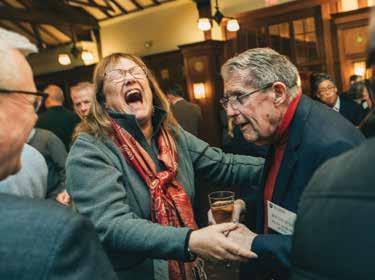
1950
Bob “Couchie” Couch attended the Western Massachusetts holiday celebration last December with his dear friend Ray Brown ’55 and enjoyed reminiscing with alumni in attendance whom he coached, advised, taught, and left a lifelong impression on.
1951 75TH REUNION
1956
70TH REUNION
1959
Andy Solomon shared that, after a lifetime of excellent health, he is now experiencing the effects of genetics from both parents. He currently has two totally blocked arteries, now treated with six stents, and 70 percent blockage in the main artery— despite many years of heart-healthy eating and regular exercise. Last year, Andy underwent a hip replacement due to arthritis. His left shoulder has also failed and faces replacement. Andy shared that his orthopedist joked after reviewing the shoulder that he planned to “leave it as it was
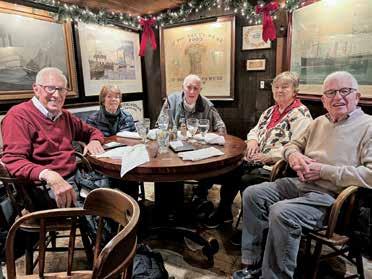
and replace me,” adding, “Other than that, Mrs. Lincoln, how did you enjoy the play?”
Andy noted that Tom Korson celebrated his birthday with friends and neighbors. He looks happy and healthy and is enjoying his life at the retirement community where he lives.
Chip Palmer reported that his younger daughter lives in La Jolla, California, where she owns and operates a substantial home and medical care business, including a new office on La Jolla Boulevard in the Bird Rock section. Chip noted that he believes Bill Haynor lives in or near La Jolla as well. Chip and his family visited their daughter and her family last April and May to celebrate her older daughter’s 10th birthday and hope to do so again this spring.
A group of classmates and their spouses gathered this winter at the Griswold Inn in Essex, Connecticut. Sydney Williams and John Harper, both Connecticut residents, were joined by Bill Haynor, who traveled from San Diego, California, for the reunion.
Your class rep, Jim Aldrich, apologizes for not contacting everyone requesting a submittal to the Spring 2025 Bulletin. “I was dealing with melanoma stage 4 metastatic cancer that dominated my life for five months. Now I simply get antibody infusions once a month. My wife, Linda (of 61 wonderful years), and I continue to enjoy living at a retirement facility in Santa Fe, New Mexico, that has independent living, assisted living, nursing care, and memory care facilities. It’s great to be where our two daughters don’t have to worry about Mom and Dad. We are fortunate to be close to a plaza that puts us within walking (which we both can still do) distance of a wide variety of cultural events, excellent restaurants, galleries, several museums, a nice grocery store, and more. I enjoy running field trips for the residents here. I prepare a comprehensive guidebook for each trip that covers the geology (my profession) and the history of human activities and events along the trip’s route. An example of these trips is one I run from Santa Fe to Ghost Ranch, about 60 miles to the north, where the famous painter Georgia O’Keeffe lived
for many years. Some of the stops on the trip are at locations where O’Keeffe did a landscape painting. The guidebook, subtitled O’Keeffe on the Rocks (see photo below) has a picture of the painting she did at that particular location so that participants can look at the painting and see how she represented the landscape. At these stops I first give an overview of the geology, and then discuss the painting techniques O’Keeffe used to represent the landscape. I’m currently enjoying writing a guidebook for a field trip on the Turquoise Trail that goes south from Santa Fe.”
Ed Bertozzi and Judith, like most of us, seem to be seeing a different doctor every month for one problem or another, but are fortunate in that they aren’t dealing with anything that serious. Ed is scheduled for a hip replacement in early April but stays fit, doing about 20 laps in a YMCA pool. He
said, “I look forward to spring, when I can get outside and wander around the forest (the town where I live still has lots of forest and swamp).” He has seen bear scat in the woods in back of his house, presumably from black bears that have migrated into Western Massachusetts over the past two decades. The town animal control officer has advised him against putting out bird feeders and using a barbecue grill outside. Noting that he has seen as many as eight deer eating the shrubs right next to his house, he commented, “It’s interesting to see how ‘wild’ animals have adapted and learned how to live with humans in the suburbs.” With his concern for bears, he is wanting to know if there is a gadget he could use to scare away a bear should he encounter one in the woods. Being concerned for Ed’s safety, I suggested he look into getting a can of bear spray for his sojourns in the woods. Be safe, Ed! We’ve already lost too many members of our class.
Charlie Callahan said he deeply misses those Williston classmates and friends that are not with us anymore. He is fortunate to be well, but our attorney classmate, unfortunately, is still fighting “the legal battles.” He regrets missing our Reunion due to the uncertainty about whether or not he needs a hip replacement. Charlie sends his best regards to all.
Bob Cartelli continues to be very active in growing his automobile franchises and auto body shops in Western Massachusetts. He recently purchased a house in Wilmington, North Carolina, so that he and his wife could be close to their daughter, who lives with her surgeon husband in Wilmington. He said he will always remain active in the Massachusetts business but will take time to
grandparent two VERY active young boys. He also shared it was good to hear from Tom LaSalle prior to the Reunion, and he has no good excuse for not attending!
Jon Fitts, commenting on his health, said that he’s a survivor of multiple cancers, including thyroid, prostate, and two large melanomas. Carmen, his wife, and he both have pacemakers that have significantly improved their lives. In early January, they traveled to Honolulu and then boarded a Princess cruise ship for a 33-night trip, starting with the other three Hawaiian islands before sailing on to several ports in French Polynesia (Tahiti), Samoa, Fiji, Vanuatu, New Calendonia, New Zealand’s north and south islands, and finally to Sydney, where they spent four days before the trip home. Jon said: “A BIG goal for me as a kid/young guy was 50 states and 75 countries. When we dock in Sydney it will be 50 out of 75! My son and I are going to do one last father/son trip, where we’ll stop in Iceland for two days to make the goal. We will have hit 27 ‘destinations’—not countries, but places many want to go, such as Bermuda, Gibraltar, Corsica, and Curacao, which will make me eligible to join a club of travelers who have hit 100plus total. I was pleased that none of my classmates were in the obits this time, although my closest friend from 1959 was Charles ‘Billy’ DeRose ’59. As a teenager, he was such a physical specimen it’s hard for me to believe I’ve outlived him. The same goes for Duke DeLuca and Doug Thomson Carmen has been a great joy to me; it is so nice to share so many interests and ideas and also be in love.”
Tom Gordon shares: “I am fairly healthy, except for the normal aches
and pains that accompany our age. Five months ago, we were blessed to welcome twin great-grandsons into our lives.”
Hall Healy said: “In recent years and months I have been involved in a number of different activities in conservation, French, and literature. There is one very strong connection to Williston with my monthly French poetry and book club meetings. Without longtime faculty member Howard Boardman, I never would have learned French. I took two years of courses with him. He inspired in me a love of French and language in general, helping me realize that I had not only a liking, but a skill for learning languages. I proceeded to learn new ones in each country I served in the U.S. Air Force. My French stuck with me and these many years later, I am regularly reading French novels, memorizing and reciting French poetry, and even writing some poems in French. I can thank Mr. Boardman for all of that. You never know what the influences in your early life will mean to you in later years. I have extreme gratitude to Williston and to Mr. Boardman for those important lessons.” Class representative Jim Aldrich pointed out that he had three years of French from “Boardy” but only learned that he didn’t—and still doesn’t—have an ear for other languages.
Bill Hastings is still working seven days a week during the summer operating his tobacco farm in the Connecticut River Valley. He notes that this summer he will be paying a 14-year-old boy the second-highest minimum wage in the United States at almost $17 per hour. He and Sandy both have good health. They don’t have any great-grandchildren but
anticipate some soon. Bill hopes to see everyone at the next Reunion.
In February 2025, Gale and Sam “Lee” Hawkes moved from a big house in Providence, Rhode Island, to a smaller house in Warren, Rhode Island, after researching the possibility of a move to Costa Rica. They spent two weeks getting used to what life would be like in the tropics and concluded they would be better off staying in the USA. It was not until early 2026, after making many improvements—including new bathrooms, kitchen, and sunroom—that they began feeling the new home was really theirs. While the house was being renovated, Sam went on a cycling trip across Missouri on the Katy Trail, a rails-to-trail gentle ride through America’s heartland. During the summer he played golf regularly and, on Sundays, rode his bike with a cycling club called the Narragansett Bay Wheelmen. To top off 2025, Gale and Sam both got the flu, “a nasty virus” from which they were still recovering in January. They are looking forward to taking a cruise to the Caribbean.
Lans Hays and his wife, Monica, are hoping to spend time in their Santa Fe casita this summer while continuing their fantasy about getting a house close to town to free them from condo politics. Lans indicated he is learning to use an insulin pump, but otherwise his health remains about the same. They still love their Bucks County neighborhood in Doylestown, Pennsylvania, in spite of the long, snowy winter. Lans and Monica are no longer raising chickens, as their coop is now at the Princeton Day School and occupied by local hawks. Guess that means Lans can no longer be considered
a “gentleman farmer.”
Steve Herbits wrote: “After a grueling two years for the 2023–2024 election cycle, and a warning from my physician that I was on the edge of a nervous breakdown, I stepped away after the election and visited a longtime Brazilian friend who is a senior government official. After a week in the country, I considered the idea of moving to Brazil. After spending four months in Brazil in 2025, though, I decided that my inability to become sufficiently fluent in Brazilian Portuguese meant it made no sense to be there. My stay there, however, gave me the time to accept that I am now 83 and not the 62-year-old I was pretending to myself to be, and I have returned to the United States. I have been diligent in rebuilding my physical and mental health and constraining myself to only one project in this election cycle: the flipping of a traditionally Republican congressional seat here in North Carolina.”
Larry Hyman retired in September 2024 after 50-plus years of psychiatry practice. He and Lois are OK and are spending time between Maryland and Siesta Key, Florida. They remain active by managing their conservation land easement. Larry recovered quickly from having a hip replacement. He was in the hospital only overnight and walked right away without using a cane. He’s hoping to get back to tennis in the spring. Our 85-year-old classmate is doing what he can to take advantage of every day.
Reporting on the 65th Reunion of our class, Tom LaSalle said it was the best Reunion he has attended, and “the food was superb.” He sent a picture taken at the Friday evening dinner. Tom wished more of
our classmates had been there. He rebuked those who live 50 miles or less from Easthampton, but did not feel the event was worthy of their presence. He apologizes to those who had a serious health issue preventing an appearance, but quipped he had not received a doctor’s excuse from any of them.
Chip Mead and his wife, Reggie (see photo, opposite page), enjoyed renting a comfortable apartment in Swanzey, New Hampshire, a unique town with six covered bridges. When they drove north from Florida to Swanzey in July, they stopped in Washington, D.C., and Philadelphia for nine days but ran into a “brutal heat wave” that was over 100 degrees. Chip commented that they thought the heat took three years off their lives—it was so “insufferable.” They took a Capitol building tour in Washington and saw the Philadelphia Museum again. In Connecticut, they enjoyed spending time with “the eastern Mead family”—son Len, Amanda, Piper, Max, Cleo, and Charlie, their new dog. When Chip and Reggie arrived in Swanzey, they supervised moving their log cabin furniture from storage to the apartment, which is conveniently located near Keene shopping sites, great restaurants, and medical help. In October, they took their car by ferry to Vinalhaven, Maine, an island in the middle of Penobscot Bay, where they had anchored many times while sailing the Maine coast. In September, Chip and Reggie celebrated their 60th wedding anniversary with a gathering of longtime friends, and Len and Amanda. Reggie’s shoulder discomfort finally required a replacement like Chip’s, giving them “matching” shoulders (Reggie’s right and Chip’s left). They returned to Florida for
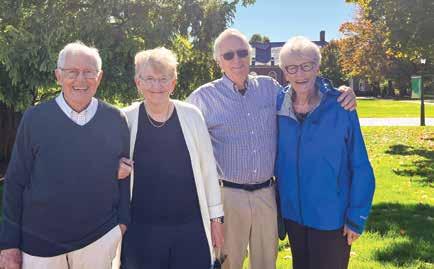
the winter, flying rather than driving, which made them wonder why they had driven back for so many years.
David Milne wrote: “My wife, Joyce, died on January 1, 2025. We were together for more than 60 years. It is a difficult adjustment. My volunteer roles at Dartmouth Health and Dartmouth College keep me busy and my mind occupied. I am serving on several committees at Dartmouth Cancer Center. Reviewing Cancer Center research grant applications has given me a new insight into cancer research by individuals with incredible minds and talents. There is hope for future gains.”
Our classmate Richard Stewart has ailments, like the rest of us. His are foot problems and chronic lymphocytic leukemia (CLL), for which he will be taking tablets daily for the rest of his life. He said: “I want to greet classmates from 1960 and wish them well. It has been a very long time since the days spent with former faculty Phil Stevens, Horace ‘Thugsy’ Thorner, Dale Lash, as well as Alan Shaler. These were some of my closest teachers at the school for various reasons. I keep busy with singing in the Winston-Salem Symphony Chorus, leading tours at Reynolda Museum, and delivering food for Meals on Wheels.”
Kingsley Sullivan also enjoyed the Reunion. He said it was “nice to get
back to the school and see some of the people who remember me. Tom LaSalle worked quite diligently at getting the class of ’60 back to the Reunion, and those who did not make it mostly had good excuses. Tom is my best source for all that is going on with our class and others close to it, as well as events in Northampton. As I am away in Turkey for months at a time, he is my best source to keep me involved.” Kingsley feels blessed with the medical care he gets locally at Stony Brook University Hospital and in Turkey, where some of the doctors who treat him were once his students. He reminisced that growing up, most of the people he knew lived near him, but today his relatives and old friends live all over the world, with the largest group in Florida. In spite of this, he guesses he “will always be a Yank.”
Dave Torrey says he had a good 2025, with three trips and no major health problems. If you have looked at the Fall 2025 Bulletin, you will have seen a picture with Dave, Tom LaSalle, and Kingsley Sullivan at our 65th Reunion. Like Tom and Kingsley, he had a great time enjoying the food and sharing memories. Dave and his significant other traveled to Maine, toured Kennebunkport, and ate lobster. In August, they traveled to Michigan to see Dave’s friend whom he served with in Vietnam, then toured Grand Rapids, including the Meijer Gardens and the Gerald
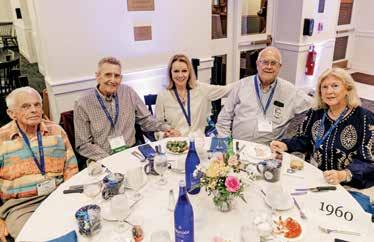
Ford Museum. En route home, they stopped in Dearborn, Michigan, to tour Greenfield Village and the Ford Museum. The following month, they took a three-day bus tour to Long Island and visited mansions, including the Vanderbilt property, and spent time in Southampton, home of the rich and famous. They were glad they toured by bus, as traffic on the Cross Bronx and Long Island expressways was a nightmare. Dave is still active in the church, local government, and a book club, and goes to the gym three days a week to keep fit. Dave wishes peace and hope to everyone.
Bob Varnum said: “We are both doing quite well. The daily regimen of pills used to ward off sclerosis, atrial fibrillation, elevated blood pressure, and the like seems to be working for both of us. I am still playing golf, as is Mary; we walk a lot; I do regular stretching and (moderate) weightlifting. We both play bridge. We are going to be celebrating our 50th anniversary in two months. We jumped the gun a few months ago and decided that a trip to Greece and the Adriatic Sea would be a good anniversary treat. We had a fine time over there, but there is not a lot of fun getting to and from faraway places these days. Our return flight home, via London, was canceled at the last minute, so we had to fly from London to Dallas ‘on our way back’ to Fort Myers, Florida. Go figure.”
Woody Woodward shares: “Paula and I are still kicking along eight miles north of Buffalo, Wyoming, on 12 secluded acres with an uncluttered view of the face of the Bighorn Mountains. After a lifetime in places such as the Zambezi River and the Kalahari Desert, this is perhaps the most compelling view we’ve ever seen anywhere. I’ve pretty much stopped hunting in Africa, but my last of about 10 articles on that subject— a final Cape buffalo hunt—comes out in February in Safari magazine. Sweet Paula and I do several miles each week and some limited weight work. Unfortunately, most of the rodeo cowboys and Basque sheep herders we first met here have passed on, leaving us with wonderful memories and magnificent sunsets. In 1984, we both put in our papers to retire— passing up promotions to full colonel that would have required us to stay in uniform for at least four more years. It seemed like an impulsive thing to do for two people who started their careers as sergeants, but in the end felt it was the smart thing to do. Twelve-hour days in the Pentagon can’t compete with a Wyoming sunrise! We immediately plunged into a life filled with elk hunting, African safaris, raising bird dogs, and enjoying life by having three German wirehairs asleep on the bed at one time.”
Siblings Peter Ewing and Heidi (Ewing) Kapsokavathis ’61 returned to campus in October with their spous-
es for a trip down memory lane. Peter traveled from Washington, while Heidi made the journey from Michigan, making the visit an especially meaningful family reunion. In addition to exploring Williston’s campus, they stopped by their former home— built with bricks from the original Williston campus on Main Street— to add another layer of history to the experience. During their visit, Peter and Heidi shared many memories from their Willy and Hamp days, recalling times spent with their brother James Ewing ’55, who passed away in 2013.
Faith Barrington writes: “Greetings to all my classmates as we celebrate our 65th NSFG Reunion. I’m sure many of us are asking where has the time gone? Professionally, I was a travel agent for 50 of those years and loved handling the arrangements for my clients as well as all the travel opportunities it provided me. Personally, with homes in NYC, Stamford, Connecticut, and now Branford, Connecticut, my interests continue to be centered around singing with various groups. I also volunteer at regional professional theaters, play duplicate bridge, and have the company of many wonderful felines. Hoping everyone has had many memorable moments in their years since graduation.”
Heidi (Ewing) Kapsokavathis shares: “In 2011, I retired after 25 years as a technical writer, a career that took me to many places, even as far as Australia. My husband, Nick, and I have five grandchildren, three of whom live close by, so we get to see them often. Up until two years ago, Nick and I skied with family every March at Copper Mountain in Colorado. Nick and I also took up biking, something I still do as soon as winter is over. Nick had an unfortunate bike accident two summers ago and broke his back. So our son, an orthopedic spine surgeon, told him to quit biking! I belong to a potpourri book club as well as one (soirée littéraire) where we read books in French (my master’s was in French). After years of owning Doberman pinschers, I
now own a lovely Russian blue kitty, Kisa. Hoping to see my NSFG ’61 classmates to celebrate our 65th Reunion this June 5–7!”
A group of NSFG alumnae enjoyed a lovely luncheon gathering last fall, and hope their time together will inspire more classmates to join them on campus this June for their 65th Reunion. Alumnae in attendance included Margi (Griggs) Anderson, Lindy (Burr) Bouffard, Patty (Zavorski) Coon, Joanne (Mutti) Axelrod, Faith W. Barrington, and Kate Hale. 1965
For the guys of ’65, Teak Kelley reports in from sunny southwest Florida. Classmates Bill Burkhardt and Teak once again “cashed” at a one-day, member-guest tournament at Palmira Golf and Country Club, where Teak and his wife, Denise,
spend their winters. In response to Teak’s call for news from the class, Gordon Woolley responded that he was glad Teak reached out and that he is “still alive and kicking.”
Jerry Flynn is spending the winter between Sri Lanka and Vietnam; Hanoi had its coldest day in ten years, so he had to rush to the market to buy jackets. He announced that he is moving to the Philippines, where it is warmer—hope he stays in touch. Harvey Kaltsas is still practicing acupuncture in Sarasota, Florida, and deep-sea diving for an elusive sunken treasure ship. The good doctor’s recent underwater searches have revealed some promising dive sites. Williston hosted a reception at “Fenway South” in Fort Myers, Florida, in early March. Teak, Harvey, and Bill were in attendance and had the largest showing of any class at the event that attracted 60-plus alumni and friends. Bill Hough, President of Global Launch Consultants, is once again “settled” in the United States and is expanding his photography expertise and interests. His business, Bonita Photos, is “hot” on Etsy, with items including clothing featuring Bill’s exquisite photographs. Loyal Bulletin contributor Charlie Hayes noted that all is well with him. He is also “settled” once again, now in Virginia, and will presumably enjoy warm weather to toot around in his
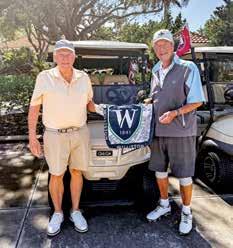
Mustang convertible. Ron Varney, a fine arts advisor, was once recognized for his expertise and received the Family Wealth Report Miami Award. Once again, the Guys of ’65 have contributed news for the Bulletin, making my “job” as class agent an easy one.
Jeff Bastable shares: “Aloha. For the past six winters, Susan and I have been fortunate enough to leave America’s snowiest city of Syracuse, New York (average annual snowfall 128 inches), for the shores of western Oahu, Hawaii. It has been an ideal destination for us to learn a new area and to meet some wonderful friends, many from the Falmouth, Massachusetts, area all while enjoying the sun and surf. Over time we have gotten very acquainted with Hawaiian culture, as well as that of the entire Pacific region. We have found great hiking paths, waterfalls, and superb restaurants all over the island. Our daily two-mile walks get us started every day, and we also enjoy peaceful and beautiful sunsets often. Life is simple here and we love it. Family visits have also created great times and memories. We are lucky to be here and thankful! Mahalo!”
Hank Mitchell shares: “I spent most of the summer in Mattapoisett, Massachusetts, though local fishing was
the worst it’s been in over 40 years. In September, Hollis and I are heading to Alaska for 10 days. We really enjoyed our 60th Reunion this past June, and loved seeing just about everyone.”
Amy (Burrows) Cain writes in: “I was asked by the Alumni Office to share my family’s long-standing connection to Williston Northampton School. My mother, Josephine (Porter) Burrows ’37, was the first family member to attend Northampton School for Girls. She was followed by my sister, Jacqueline Burrows ’61, my brother, H. Peter Burrows ’63, me, and lastly my daughter, Amy (Mulligan) Hetrick ’86. Jacqueline was a big sister at NSFG to Lydia (Allen) Kitfield ’64. When I arrived in the fall of 1962, Lydia became my big sister. We haven’t really kept in touch, but when I contacted her about coming to the 100-year celebration she decided she should come also. It was a wonderful Reunion.”
Vinny (Hopf) West teaches and plays bridge and loves her life in Florida. She plays golf, and she will be a volunteer at the United States Men’s Amateur golf tournament in August.
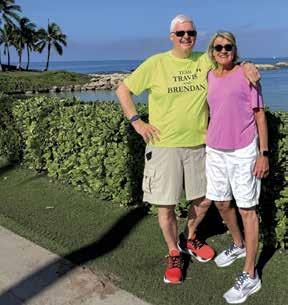
Dolly Perkins shared that she has been ill for quite some time, is on a BiPAP ventilator most of the time, and is very weak. Please keep her in your prayers.
Eva Paloheimo shared a picture on Facebook of a hat and scarf knit from the soft undercoat of her great pyrenees dog who died last year. What an amazing way to remember him.
Liz Miller Grasty writes in: “In December, Julie (Jennison) Washburn invited me to dinner at her home where I ate all her hors d’oeuvres. We have such fun together. She and Tim headed to their condo in Florida in early January. In January, my sister, Judith (Miller) Conlin ’72, and I spent two weeks in a beachside cottage on the island of Culebra, Puerto Rico. We enjoyed views of Vieques in the distance and snorkeled daily. Then in February, we had a house fire—fortunately no fire or water damage, but there was extensive soot. It was caused by a dehumidifier in the cellar, which caught fire. This is the home we had our NSFG Senior Picnic at in May 1966. We are, so far, four weeks into a hotel stay and will be here perhaps two more months. I am looking forward to a Viking River Cruise on the Elbe River, from Prague to Berlin, in May and hope it will be safe to travel. Many in our class are
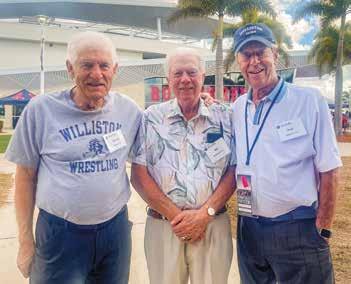
politically active and alarmed. I recall friends being drafted and going to Vietnam during college years. Déjà vu? Our 60th Reunion is June 5–7. There are no registration fees for our class, and the campus is beautiful in June.”
Pam (Mitchell) Andros shares updates from herself and classmates: “Hello from frozen northern Connecticut. Spring is around the corner! I wasn’t able to contact all of you, but if you haven’t already, please update your telephone numbers and addresses with the Alumni Office and/or send the information to me. Because of outdated addresses and phone numbers, it was hard to reach you all. I will share my life update first. My son, Carl, is in Geneva, Switzerland, working remotely with Tesla. He’ll return to Palo Alto, California, in late May. He had been in Switzerland for 18 months, as his fiancée has a job at Global Health. They both went to Northeastern University. He’s an engineer, and she works in financial matters in health care. They’ve enjoyed living in Europe, as they ski, hike, and bike. My husband still works part time at his law firm in Hartford. I’m doing well. In April, I’ll have my right knee replaced, making me thoroughly bi-
onic with two replaced hips, knees, and shoulders. The shoulder replacements were due to a fungal infection introduced in rotator cuff surgery! I had four surgeries on my left shoulder before my right shoulder fell to arthritis from overcompensating for the left. I still get around with a cane, enjoying Hartford theater, the Hartford Symphony, and our new (to us) condominium in Avon, Connecticut. Instead of downsizing, we expanded our space by 1,500 feet, but we have one-floor living for the most part. We enjoy seeing the bears, deer, wild turkeys, and sundry wild animals in our yard. In June, I picked up Meredith Griggs and Leslie (Israel) Goldhar at Bradley Airport, and we all drove to Williston Northampton School for the 100th NSFG celebration. It was wonderful seeing everyone in our class, as well as women from other classes. At the luncheon in the gym, Lynn (Malcolm) Truswell, Janet (LeBeau) Hill, and Cathy (Strogatz) Karp joined us. Janet stayed for the whole weekend, too. Averill (Campbell) Larsen couldn’t come to the celebration as she was having eye surgery; she still lives in Saxtons River, Vermont. Another classmate who left after sophomore year is Sharon Mehegan. She lives in Vermont with her daughter and family. Meredith Griggs just retired from the World Bank in January after
working in Zurich, Switzerland. She then traveled to Spain, Morocco, and England. She swims with SwimTrek and has participated in races all over the Mediterranean. She has two daughters and grandchildren and is doing very well. My other roommate junior year was Liz (Crispe) Leins. She couldn’t come to the celebration as she had prior plans to hike in England with her sister. Leslie (Israel) Goldhar is doing well. She visits her son and family, who live in the San Francisco area, and enjoys spending time her grandchildren; likewise, she enjoys her grandchildren living in Chicago near Leslie’s home. It was so delightful being with Meredith and Leslie, as well as the other women. Sadly, Leslie’s husband passed away a couple of months before the NSFG celebration. More sad news came from Katie (Farrell) Ross. Her husband passed away in January 2026. They had been married for 54 years. At the wake in Northampton, I met her two sons; her oldest daughter, Jodi, who had just married in October; and her youngest daughter, Maggie, who, three weeks earlier, gave birth to her third son. Katie is doing well. Also, Ginny (Donnellan) Eberhard’s husband passed away a few years ago in Palm Springs, California. Ginny moved to Ventura, California, in 2025 and was renovating her house; she had lived in Ventura for 30 years before she moved back. She is thinking of teaching a Tai Chi class. Another person who could not join us for the celebration was Suzanne (Wellborn) Daage She lives in Pennsylvania with her husband. Please say prayers for her and her husband, who is battling cancer. She was unable to be at the celebration since her husband’s illness had just been diagnosed. Janet (LeBeau) Hill divides her time with
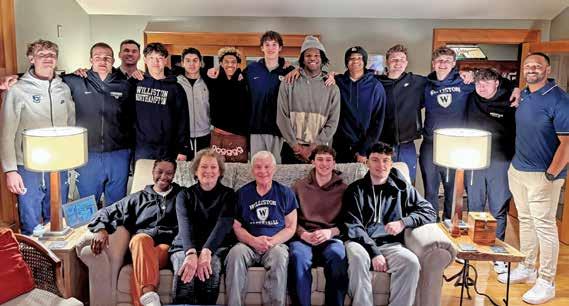
her husband between Westport, Massachusetts, in the summer and Vero Beach, Florida, in the winter. Cathy (Strogatz) Karp lives in West Hartford, Connecticut, in the summer and Delray Beach, Florida, in the winter. She has five grandchildren and looked fabulous, as always, at the 100th. Lynn (Malcolm) Truswell lives in South Carolina in the winter and Westhampton, Massachusetts, in the warmer months. None of the women had changed much in spite of our age, except myself. Meredith swims every morning. After Christmas, Jaye (Brinster) White called me, and it was nice to hear from her. She has four children who are scattered but still close enough in the New York area. She lives near Princeton, New Jersey, with her husband and is busy with her gaggle of grandchildren. More recently, I talked with Rhea (Inglehart) Arnot. She is married and lives in Baltimore, Maryland. Her daughter, her husband, and two grandsons also live in the Baltimore area. Every summer, she returns to the Watertown, New York, area, where she is from. Her roommate senior year was Nina (Hart) Griffiths, who was my roommate our sophomore year. Sadly, Nina passed away in 2020 in Florida; I believe she lived in the Keys. Lastly, I spoke with Beth (Terrell) Fagerberg, and she is still working and living in Manas-
sas, Virginia. She plans to move to the Seattle, Washington, area this summer to be near her son. Beth makes beautiful quilts in her spare time. Please plan on attending our 60th Reunion next year! Gulp! Who can believe it? The bonds we made as teenagers are very strong, and I look forward to seeing you all there! Take care of yourselves in the meantime, and enjoy every day until then. Prayers for all our classmates.”
Ray Ahearn has stayed connected with Williston athletics since graduating, and after moving back to the area has connected with boys varsity basketball Head Coach Ben Farmer. This year, Ray and his wife, Kerry, hosted the entire team at their home in Holyoke as a midyear pick-meup. During the visit, Ray shared that the most important piece of paper hanging in his home library is his Williston diploma.
1968
Paul Wainwright was recently elected Selectman in Atkinson, New Hampshire, winning the race by a significant margin, 1,187 votes to his opponent’s 839. A longtime Atkinson resident and community volunteer for more than 30 years, Paul ran on a platform emphasizing a practical, collaborative approach to
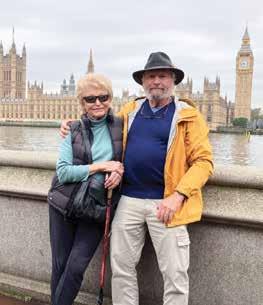
town governance. He brought extensive experience from his service on both the Conservation Commission and the Planning Board, including leadership roles and a strong track record of securing significant grants for the town. Throughout the campaign, Paul pledged to bring steady focus, proven leadership, and practical problem-solving skills to the role, with an emphasis on affordability, accountability, and working effectively within existing town government structures. The election was held on March 10 at the Atkinson Community Center.
Arch Bryant writes in: “After 40 years in Colorado working in the film industry and real estate, my wife, Jeanne, and I moved back to Connecticut to be near the water. We have an AirbnB, a small yacht chartering business, and I deliver boats up and down the coast. We are really enjoying our time out here. We also travel a fair amount. My son, Austin ’00, and grandson, Kevin, are living in St. Louis, where Austin is a woodworker.”
James Davenport shares: “My wife, Susan, and I reside next to the St. George River in Cushing, Maine. I enjoy lobstering in front of my home in my boat, the ‘Clara M.’ My highlight of the year was catching 12
‘keepers’ (legal size lobsters) in one of my lobster traps. Susan is a retired teacher and is a vocalist for The Watts Hall Band and All That Jazz. We both enjoy our four grandchildren and keep very busy attending their sports activities, theater productions, and concerts. We just celebrated our 43rd wedding anniversary!”
John Faiella shares: “Barb and I will celebrate 50 years of marriage next year, not a raised voice in half a century! We have a daughter living on the northeast corner of Lake Superior in Wawa, Ontario, a son who is the in-house counsel at one of our banks, and another daughter who is also a lawyer and works for a Bermuda trust company, even though she and her family are in Hingham, Massachusetts, with their two girls. I stay involved where I can and do all the normal senior things. We travel every year, play a lot of pickleball and tennis and bridge, and we escape the brutally hot summers in Bermuda and go to our house in Chatham on Cape Cod. I hardly ever see anyone from Williston days except a few locals like Peter Vorley ’65 and the Outer-
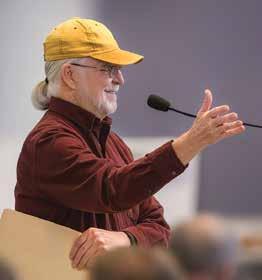

bridge boys, Stephen ’70 and Patrick ’73. I’m still riding a motorbike (it comes naturally to us, even at 76), and I often think of when Don Klock was on spring break and stayed with us in Bermuda. Don crashed into a wall, lost the tips of his fingers, and was rushed to the hospital. So much for a vacation! Very little vice left in me, so I stay as safe as I can. I hope everyone is doing well, and if you do get to Bermuda or Chatham, please give me a call.”
Duke Duquenne writes, “Since Williston, I went on to UNH and then Berklee College of Music, and played trumpet in a rock band called Spice. I still remember those memorable performances in the chapel with Dick Gregory and Kurt Shafer ’69 on keyboards. Spice went on to back up bands such as Chicago; Steppenwolf; Three Dog Night; Edgar Winter; Ten Years After; Earth, Wind & Fire; and the Beach Boys, to name a few. I eventually decided to make money and became a commodity trader for seven years, but
burned out. After that, I founded two very successful computer companies, buying and selling computer parts all over the world. This was the 1990s—the wild west, no regulations—and I had a ball. I sold my companies and retired for a couple of years, then became a health insurance agent. Next, I became a hypnotherapist specializing in smoking cessation and helped more than 1,000 clients quit smoking, which was incredibly rewarding. After that, I became vice president of a bank specializing in equipment financing, a role I still hold today. Throughout all of this, Marc Griggs and I have been playing backgammon and pingpong at least once a week. Marc was Spice’s road manager, and one night in 1975—after a gig, playing into the early morning hours—a musician asked us who won the most. Marc and I turned in unison and said, “I do.” To settle it, we started logging every single game we’ve played since 1975, along with current events, in a book. Who’s won the most? That’s our secret. Marc has been my best friend since Williston, and we never cease laughing at all the great memories we’ve had along the way. Thank you, Williston, for giving me such an invaluable friend.”
Ted Nellen remembers a former classmate by sharing: “Doug Fuller
and I didn’t hang much at Williston in our four years there together. In the late 1990s in New York City, my former principal of Murry Bergtraum High School for Business Careers was running The Downtown Association and invited me over to meet a guy in real estate who could help us place tech-savvy students into Wall Street firms. When I walked into her office, she wasn’t there, but there was Doug Fuller! We recognized each other immediately and hugged it out. When my former principal walked in, she realized we already knew each other. The work Doug and I did was fun and fabulous and life-changing for my students. My students could write in HTML and could type over 100 words per minute. The miracle was that all these students received good salaries, and some were offered free college tuition by continuing to work part time while going to school part time. They graduated in six years with no debt and a good job on Wall Street. We did this for a few years. I visited him when he was in Lake Placid, New York, while he was doing real estate and I was camping. When Doug and Pam moved to Durango, Colorado, I visited him on one of my camping trips out West. They moved to Sarasota, Florida, and Doug had a fun story about how he was outbid six times before he finally got his house. He related how, as this hotshot NYC
real estate dude, he had such trouble getting his own house. It was a tough real estate market. We spoke about fly-fishing, including my trips to Iceland and Scotland, which were two places on his bucket list for fly-fish-
ing. I never made it to their Florida house. I miss Doug and his classic, gentle laugh that emitted from his still finely tuned football lineman body. A gentle giant of a man, always with a smile. Good memories of a good man. RIP, Doug.”
Tom Hoyle writes: “It was lovely to see everyone at the 50th, which I thoroughly enjoyed. I hope to be at the 60th with Jane, my wife of 52 glorious years, who came to Williston in 1993 for our 15th Reunion and when our daughter, Katie ’96, graduated. My nephew, Ben Hoyle ’99, was also an exchange scholar at Williston. Whether the next generation come over will be a different matter. Alex Wilson ’98 is also a good friend who is in touch with Emil George’s son, Michael ’98. Williston for a short time was a life changer, and I would recommend a year abroad to any young person. To visit 41 states, all of which I remember, is quite an achievement for a country solicitor (lawyer) from England. Legally, or not, I remember being locked up in Westchester County for speeding and being invited in the judge’s chambers for bail applications in Dickinson County Court in Nashville. I will be going back there in May to see friends, the Buchanan family, who I first met at the Nashville bus station in 1968 on my Greyhound tour after graduation. We have been in touch ever since! After Massachusetts, Tennessee is my favorite state without a doubt. Chris Amy has also been over here several times (and broken a few hearts!), and we visited him in California when I went to Las Vegas to address the Notaries Association of America—at their expense, I might add! Spoke to Carlos Urrutia on the phone when Katie was in Colombia, but they never quite met up. There
were too many hotels of the same name in Bogotá! I am very pleased to see he achieved international recognition. Carlos was good at football, and smoking with me and Amy. I met my fellow exchange student, Mark Nicholls, at the 50th and also at Buckingham Palace when the late Duke of Edinburgh retired as the President of the English-Speaking Union who sponsored us on that memorable exchange. We all came back after an incredible experience on the Queen Elizabeth for five days at sea, and Tom Gilbert was with us. French 5 with NSFG, English with Stevens, and Far Eastern History with Lawton. I learned nothing! But Caterwaulers; Glee Club; The Boyfriend, Milton Moore’s play; and sports! Squash, tennis (just given up both) and great fun in Ford Hall! I could go on forever, but please give my best wishes to all classmates.”
Larry Anderson shares: “In an effort to contribute in a small way to the preservation of American democracy, I am serving once again as Town Moderator for Little Compton, Rhode Island, the state’s smallest mainland town (New Shoreham, the municipality comprising Block Island, is smaller). I have lived in Little Compton for more than 40 years with my wife, Nan Haffenreffer, whose family has been here for a century; at the end of 2025, she retired from a long career as a community health nurse, serving Little Compton and other nearby communities. I had previously served an eight-year stint as Town Moderator, an elected position, more than a decade ago, and my principal responsibility is to preside over the town’s annual town meeting, where town voters debate and approve an annual town budget and the property taxes to fund it. This
modest exercise in local democratic government has functioned continuously in Little Compton for more than three centuries, and in these tumultuous times, the institution of town meeting seems worth maintaining and nurturing. Otherwise, I slowly push along various writing projects, including what I hope will be a book-length story of the life and times of my late great-uncle Sam Gay, who, during the early decades of the 20th century, was sheriff of Clark County, Nevada, of which Las Vegas (population 30 in 1900) is the county seat. I am in the Easthampton area occasionally to visit our son, Sam, and his spouse, Kate, who live in Northampton and both work at the University of Massachusetts.”
Dave Lyman shares: “I am currently retired after 20 years working for Smith & Wesson in Springfield, Massachusetts. I then started my own business in 1994, doing business planning and development services, and ran that for 26 years before I retired. I am currently living in Feeding Hills, Massachusetts, and still have one client. I have been married for 50 years, and have three children and three grandkids with one more grandchild on the way. Many great memories from my Williston days.”
John Robinson contributes: “I have now been living in Sarasota, Florida, for 16 years since retiring from international business development at Raytheon. I have a part-time hobby job as a flight instructor at a local airport. The town of Sarasota continues to grow by leaps and bounds, and many of the older cottages are being demolished to make way for large homes. Most recently, the 1,600-square-foot waterfront cottage where Northampton School for

Girls founders Sarah Whitaker and Dorothy Bement retired in the 1960s was torn down to make room for a 20-room mansion.”
Milton Moore writes: “Ten years into retirement, I feel like I’ve found my calling—it’s not difficult to adjust to doing things you enjoy. After almost 45 years in daily newspaper journalism, I outlived the medium and felt as if newspapers were the horse shot out from under me, so I earned a master’s degree in 2019 and moved on. I still live on the Connecticut shore in Niantic most of the year, but over the fall semester I’ve been teaching at the American University in Bulgaria, where my Russian-born wife, Natalia, is somewhat tied to due to family issues. Over the past two years, we’ve enjoyed some wonderful travel, which I suppose is what retirees are supposed to do. Since my primary pastime is photography and I teach documentary photo, the two interests mesh nicely. We spent a week in the French Pyrenees visiting a friend in Céret; a week in Oaxaca, Mexico, to see Monte Albán; a week in Antalya, Turkey, mostly to drink on the beach; a week in the Urubamba Valley in the Peruvian Andes; a fabulous week on the Swiss Rail Loop through the Alps; and a quick getaway from Bulgaria to Sardinia. Hitting the Andes and the Alps in one year finally eased my mountain photography jones. Our 50th and 55th Reunions were really great, and I can’t wait to see you all at our 60th—who would have guessed?”
Luca Bencini-Tibo shared: “I started flying lessons as an ‘uppermiddler,
old boy’ at Williston Academy at Northampton Airport, then called LaFleur Airport. By my senior year, I had earned my pilot’s license, but not a driver’s license. According to the Williston Handbook, there was no rule against flying airplanes, though it very clearly stated that driving or riding in cars without parents or approved adults was not permitted. Naturally, I concluded that flying was the safest and most compliant option. Headmaster Phillips Stevens was initially less enthusiastic about this interpretation, but eventually gave in, perhaps deciding it was easier than rewriting the rulebook. The handbook also stated that unchaperoned girls were never permitted in dormitories. As we were an all-boys boarding school, I remain unclear where they were permitted, much less where they weren’t. I recently reconnected with my old Northampton flight instructor, who went on to fly for American Airlines and retired as a Boeing 767 captain. Meanwhile, I peaked early by soloing before I could legally parallel park. Over the years, strictly as a hobby, I have added more certifications and now hold an Airline Transport Pilot certificate, as well as a Certified Flight Instructor rating, with about 5,500 hours in the air. These days, I fly a Mooney Ovation based at Pompano Beach Airpark
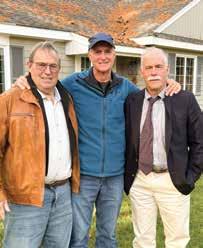
in Florida. One recent highlight included flying to Southwest Florida International Airport for the recent Williston Northampton School Red Sox spring training event, arriving between a Southwest 737 and a JetBlue Airbus. It was a perfectly normal day, if your idea of normal involves airplanes, school rule loopholes, and an inability to choose a cheaper hobby. The game was suspended due to rain—Boston won 2–0—and I got soaked waiting for an Uber back to the airport.”
Anthony Willoughby continues his work as the founder of The Nomadic School of Business, drawing on a lifetime of global exploration to help individuals and organizations find greater fulfillment, clarity, and productivity through his metaphor-based methodology and territory mapping. Anthony shared a photo from Arnhem Land in Australia, where he has been working with Indigenous communities, and noted that his work is currently focused on exploring the intersection of AI, neuroscience, and our humanness. Through his work, Anthony remains actively engaged in designing immersive experiences and leadership programs inspired by nomadic and Indigenous wisdom— offering workshops and expeditions that aim to build trust, purpose, and
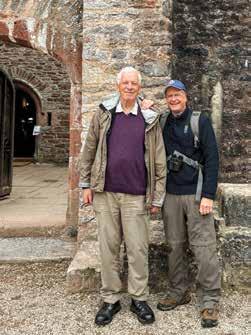
shared understanding across cultures and contexts.
Linda “Lyn” La Shier Underhill welcomed another furry member to her family, her new puppy Nellie, who arrived at her home at two months old last September.

Jim Gaffey shared that he spent a delightful three days last October with Richard Brown and his wife, Fiona, at their home in Torquay
on the southeast coast of England. The visit included hikes along trails overlooking Torquay Harbor—an embarkation point for the Normandy invasion in 1944—and a tour of Compton Castle, a 14th-century gem still occupied by descendants of Sir Walter Raleigh. Jim and Richard also caught a concert by Graham Nash at the local performing arts center and reported that the 84-year-old performer is still going strong. Richard noted that he is a lock for the class of 1972’s 55th Reunion in 2027.
Judith (Miller) Conlin wrote that she and her sister, Liz (Miller) Grasty ’66, had a happy surprise during a recent vacation to Culebra when they discovered their nearby neighbors were Penny (Dods) Molyneux ’74 and her husband, James. The group enjoyed catching up while snorkeling, Culebra being a favorite spot to see fish, eels, rays, corals, and turtles. Shortly after returning home, however, Judith experienced a frightening incident when a dehumidifier malfunctioned and caught fire in her basement on her 72nd birthday, filling the house with thick, toxic smoke. Although the narrow road made access difficult, multiple emergency vehicles responded quickly, and the family homestead—more than 160 years old—was saved. While no one
was injured, the smoke damage has made the home temporarily uninhabitable, and Judith and her sister are staying at a nearby hotel while restoration work is underway. Judith expressed deep gratitude for her local volunteer fire department and noted that she has had more than enough excitement for a while.
Chuck Tauck reported that he and Fran sold their Finger Lakes winery last April and officially retired. In October, they moved to a hilltop home in Florence, Massachusetts, adjacent to Northampton. With the leaves off the trees in winter, they can see the slopes of Mount Tom. Their daughters, who have lived in the Pioneer Valley for several years, encouraged the move, and Chuck shared that even more than 50 years after Williston, the area still feels familiar. He hopes to see classmates at Reunion.
Steve August wrote that he, Dale Miquelle, and Gil Timm gathered in October in Andover, Massachusetts, while Dale was visiting his sister, Debbie, and his brother-in-law, Peter Prudden ’66. The alumni enjoyed lunch and time together, making Dale’s journey from Montana especially meaningful, as Gil and Steve see each other regularly. Then-andnow photos commemorate the reunion of the three former captains
of the 1971 Williston varsity football team (see photos, page 67).
Michael Wills shared that last fall Rob Galbraith, his wife, Katherine, and their two border collies spent two weeks in a rustic cabin in the Adirondacks. Michael drove down from Ogdensburg, New York, to meet them for lunch in downtown Saranac Lake, New York. On their return trip to Westfield, New York, Rob and Katherine stopped to visit Larry Mathews in Liverpool, New York.
Chris Olson writes: “Well, I do have a bit of news. My 26-year-old son, Davis, has joined me as sales engineer at HO Products Corp., the company my father founded my first year at Williston (1971) and that I have been running since he passed in 1990. We are in the middle of building the succession plan, with shareholder agreements and all that entails, but I am thrilled to see my father’s legacy continuing and the company now heading for a third generation. Davis has embraced the role, learning all he can and is very psyched to take the company to the next level, using AI to help build new marketing plans, including a new website. It’s a real joy to see him growing into the role of leader, and knowing one day he
will be taking the helm to steer the company to the next level of growth, wherever that may lead us.”
Jack Tatelman shares: “I am honing my fly-fishing skills on tarpon and bonefish. I recently joined the Coast Guard Auxiliary, where I became a VSI (vessel safety inspector). This gets me on lots of beautiful vessels and lets me meet some amazing, salty individuals. My son, Jonathan, and his wife, Gracie, recently had a beautiful baby girl, Scarlett Reese. Watching them in their role of new parents is almost as exciting as it was watching her grow. I am blessed with three grandchildren altogether who keep me young, active, and inspired.”
Todd Stall writes: “So you may recall that my daughter, Kara ’02, was on the championship WNEPSAC girls ski team her senior year, and she was Williston’s top female skier. Well, now her son, Max, and daughter, Hadley, race for the Pico Mountain Ski Team. They’ve had three races so far and are following in their parents’ footsteps. It’s great to watch our grandkids race. It brings back great memories.”
Ken Womack sent in a life update: “I have recently moved from my ridiculously large house to one that is a more reasonable size and has a lot
less land. The new house is very close to Galveston Bay, Texas. It is on Clear Lake, which is a tributary to the bay. I have way too much stuff in spite of tossing a ton of things and putting a bunch of stuff in storage. I am swimming in boxes! Unless a hurricane or a fire swallows this house, I am not moving again! I am still racing sailboats at a very competitive level. It is a fun challenge. I have my boat at San Diego Yacht Club this year. They have a challenging group of about 50 boats. There are a lot of United States teams, as well as many from other countries who are practicing here, because the Class World Championships are being hosted at this club in May. Although I am technically a geezer, I am still working full time at my businesses. I have had my daughter working for me the last couple of years on the hospitality side. She has taken a significant load off of me. She is the manager of one bar and restaurant, and helps a lot by ordering all the food and helping with payroll—oh, and some marketing, as well. The oil and gas business is a drag. I get my work done too slowly to keep up with everything. I am working toward not having any wells that I am responsible for operating. Being done with this will be a big relief and work reduction.”
Missy Retsky writes: “The state of
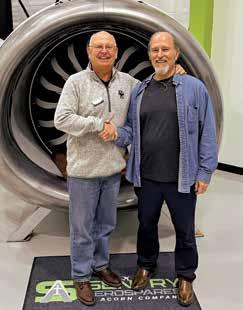
the world has me a little nervous about traveling internationally, which I have been doing a couple of times a year since 2023. Instead, I’ve decided to take a trip once a month in America during the 250th anniversary of its birth, learning things I either did not experience in high school or daydreamed through. I started my venture in January, during the most frigid of times, to see the Anne Frank exhibit in New York City. They moved the entire hiding place from Amsterdam, and also brought along lots that had not been on display before. The exhibit left me breathless and dizzy. In addition to the rooms of the small hiding place, one area had a glass floor with sand underneath that showed the topography of Europe. The thing that stuck most in my head is that there were over 44,000 concentration camps in Europe. We rarely talk of more than six. They had little red flags placed to show the locations of each 100 camps. On a lighter note, I saw a couple of great musicals (Chess and The Great Gatsby) and the Tenement Museum. Again, the Tenement Museum reminded me of so many things that we sort of bury in our minds because it is not our best actions. In February, I went back in time to Charleston, South Carolina—my Southern roots— and was reminded about slavery in America, as well as seeing amazing
architecture, beautiful homes, and breathtaking gardens. This month, I am off to Memphis, Tennessee, to see if Elvis is or is not in the building, as well as visit the trained ducks in the Peabody Hotel, the Civil Rights Museum, and several recording studios. The rest of my year is still sort of fluid. Suggestions are encouraged. I am especially looking for a special trip for May when I leave my 60s to enter my 70s. Hope everyone is well and enjoying every day, including the small things. Life is short. Travel. Buy the shoes. And make sure to eat your birthday cake.”
Walter “Brit” Britland shares: “I had the pleasure of meeting up with Carl Alford for lunch in late February. He had tried to connect with me prior to our 50th Reunion, which I was unable to attend, but at last we were able to catch up on current activities and reminisce about our lives at Williston. It was so great to finally meet in person after all these years, and we will strive to stay in touch. I reside in Winchester, Virginia, and have been retired since 2023 following a 43-year career in the automotive and commercial vehicle supply industries where I served in sales, marketing and engineering roles. I recently joined the board of a local
charitable organization known as Wheels for Wellness, and look forward to contributing to what is a very worthy community cause.”
Penny (Dods) Molyneux and her daughters Ellie ’04 and Lindsey attended the Red Sox spring training event that Williston hosted this March in Fort Myers, Florida. They were still smiling after getting caught in the rain during the sixth inning and being forced to run for cover!
Kathy Krohn compiles class news and shares: “Greetings classmates, and happy spring! I have enjoyed a few brisk winter days in sunny Sarasota, Florida, and hope all of you have experienced sunshine in spite of cooler temperatures. I still have such grand memories of our 50th— what a gift to be able to spend time together after 50 years. While talking with George Chambers recently, he mentioned how wonderful it was to connect with classmates. George is still an avid photographer. His daughter Portia has a master’s degree from Boston University and works at Northeastern University, and daughter Georgia is in a master’s program at Emerson College in publishing and writing. They maintain a close family bond. I was fortunate to journey south (two hours) to spend time with Beth (Hotoph) DeLaurentis and her mother, Penny (who would drive up to Williston to take us to the Log Cabin for dinner!). I intend to make another journey this spring to meet Beth’s granddaughter, Noa, and visit with the rest of her family. Nancy Aquardo just got back from skiing in Big Sky, Montana. Todd Gunderson ’74 was on the trip and they skied together a couple of days.
With an extra-heavy heart, I share the passing of longtime faculty member Cathleen Robinson. Beth (Hotoph) DeLaurentis shares: ‘Cathleen held a special place in my heart along with Kathy. Our first meeting with Cathleen when she came to Williston will forever be etched in our memory at John Wright Dorm. We would have long talks late at night, and as you know, Kathy Krohn made her laugh a lot and frequently! When Ms. Robinson first came to Williston, I think she was a little shell-shocked, but she got very used to us very quickly. We were blessed to know her. The happiest news was when she married Ray Brown ’55.’ There is a special fund for Cathleen Robinson if you’d like to donate in her memory.”
Bob Meara shares: “On October 22, we celebrated the birth of our first grandchild, a boy, James Allen Meara. The Mearas and TJ O’Brien got away to Myrtle Beach, South Carolina. Some sun, lots of fun, and golf (see photo of TJ and Bob on page 73). Bob also caught up with Bruce Miller in early October at a trade show in London. They met at Bob’s aerospace company’s open house and again at the largest European aviation trade
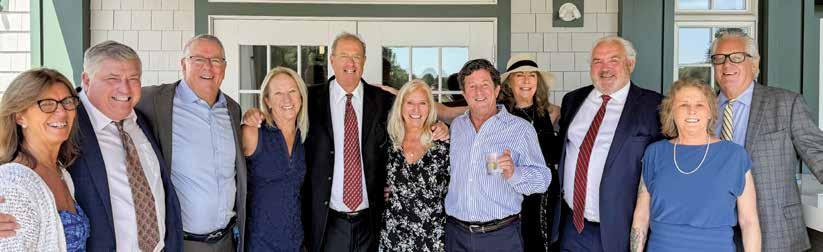
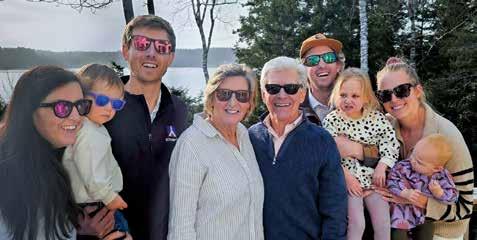
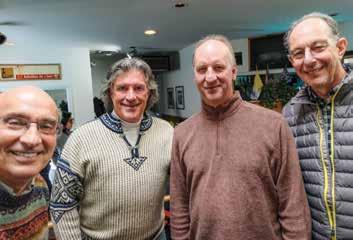
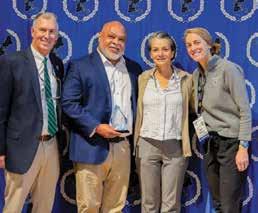
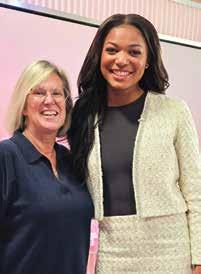
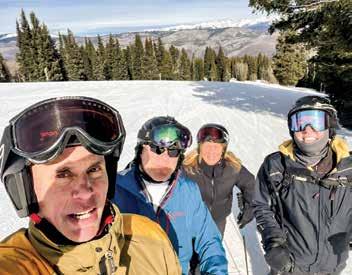
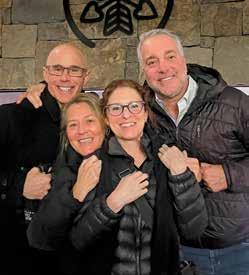
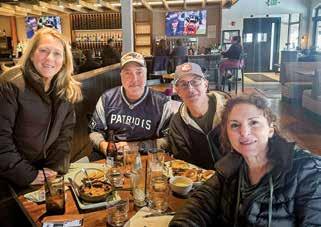
show. Fifty years ago, they sat next to each other at Monday morning assemblies, and here they are today, both working in aviation business development careers.”
Lee Ellis writes: “Well, they brought my character back for the series finale episode of Stranger Things on Netflix. I’m the waiter at Enzo’s Restaurant (Season 3, Episode 2, and Season 5, Episode 8) with co-star credit for scenes with series stars David Harbour and Winona Ryder. The finale dropped on New Year’s Eve on Netflix, and the finale was also shown in movie theaters nationwide on New Year’s Day! It was a treat to see myself again on the big screen. Sending all good wishes to my classmates for a wonderful 2026! Love and light.”
Last summer, a group of Williston alumni were part of the celebration of life remembering Mark Young’s wife, Shelley. The reception was at Stonington Country Club.
Wendy (Rubin) Block shares: “Mark and I have been married for 13 years. I have three grandchildren. We live in West Palm Beach, Florida, in a house that was built in the 1920s—very cool! We have four standard poodles (that take up the entire bed). Mark sells draperies, shutters, and blinds. He is constantly working! I am practicing at being retired. I still help with phone calls and ordering. I volunteer at the theater here. We see Broadway shows, operas, ballet, and then some. I also volunteer at a pet rescue and am involved with a dance troupe. This year we performed Thriller during October. It’s a lot of fun.”
Karen (Valine) Chicoine writes: “When not ping-ponging between Vermont and Virginia to see our grandchildren, we continue to do our favorite thing, which is to travel. Recent trips have been to Montana for skiing and to Portugal this summer, and an epic trip to Egypt right before my husband retired.”
Heather Carroll says: “I am still working as a postpartum doula. I have been doing this work for decades now and still love it, but sometimes my body is not too happy, mostly with the erratic schedule I keep. I head to my parents’ quite a bit. My dad is about to be 90 and my mother 87. They’re still mostly holding their own, but the decline is there.”
Kim Shibley shares that he has been traveling for speaking engagements in Colombia, the Ivory Coast, Poland, France, Switzerland, Oman, and Costa Rica. “My family is doing very well. Hannah and her husband, Fernando, are doing very well in their gourmet coffee roasting, wholesale, and retail business. They opened their first brick-and-mortar café in Oakland, California. They had a huge contract with Facebook/Meta for one year, as well. This allowed them to expand their hiring and purchase some new equipment. The company is Proyecto Diaz Coffee. The other four, three daughters and one son, with their families, all live close by in Maryland.”
Abby Clark writes, “I continue to plug along and hope to see MANY at the Reunion. Somewhat freaky that it will be 50 years!”
Jay Emmet reports that his “wife is still working whilst I enjoy the retired life—ski in the winter and surf and
hike in the summer. Kids are all doing well.”
Betsy (Scott) Vanderploeg says: “My husband and I retired to our summer house in Friendship, Maine. Our two sons, ages 34 and 37, are both married, and they each have two girls. One lives in Exeter, New Hampshire, and the other lives in Wilkesboro, North Carolina. My husband and I enjoy boating, hiking, and skiing. We visit our children and grandchildren often. I will plan to attend the 2028 Reunion. Unfortunately, I was traveling when Williston alumni met in Portland at the Sea Dogs game. I would love to connect with alumni in Portland, Portsmouth, or other locations.”
Sean Kardon sent in a photo (at left) with Williston friends Tom Wilhelmsen, Jon Kelsey, and Jeff Silverstein, who attended his 65th birthday party this January in Philadelphia, Pennsylvania.
Cindy (Brooks) Peyman and Paula (Brusco) Banach reconnected recently at Williston’s Western Massachusetts holiday party at Look Park in Florence (see photo, at left).
Kile Keever recently interviewed fellow alumna and three-time gold medalist Gabby Thomas ’15, who appeared on CBS Mornings to talk about ATHLOS, a groundbreaking, women-only track event launched in 2024. In addition to being a threetime gold medalist, Gabby is also a key athlete, advisor, and outspoken supporter of ATHLOS, which centers
an athlete-first, high-stakes competition model. One of the world’s top 200-meter sprinters, Gabby competed in the inaugural ATHLOS event in 2024.
John Anz hosts the long-running radio segment All That Jazz on WHMP Radio, where he celebrates jazz through conversations and performances with musicians from across the Western Massachusetts region. This fall, John welcomed a special guest and fellow alum Mark Gionfriddo ’80 to help promote Mark’s upcoming show, It’s the Wildest, featuring the music of Louis Prima and Keely Smith.
Mark Berman writes: “A small but mighty group from the class of ’83 hit the slopes at Beaver Creek, Colorado, in January. Hank Baer, Mark Berman, David Connoly, Susan Midgely-Komosa, and Alison Reder made enough turns, ate enough good food, and drank enough tequila to do the class proud. We even watched the Patriots slide into the Super Bowl— a truly perfect weekend (says the author).”
Bryant McBride was recognized with the 2025 Martin William Souders Memorial Award at the 2025 NEPSAC annual meeting, an honor given to graduates of New England independent schools who have excelled in athletics and demonstrated lifelong integrity and achievement. A member of Williston’s Athletic Hall of Fame, Bryant was celebrated at the event alongside current Athletic Director Jade Morris and retired Athletic Director Mark Conroy, who were both in attendance for the occasion. Reflecting on his time at Williston,
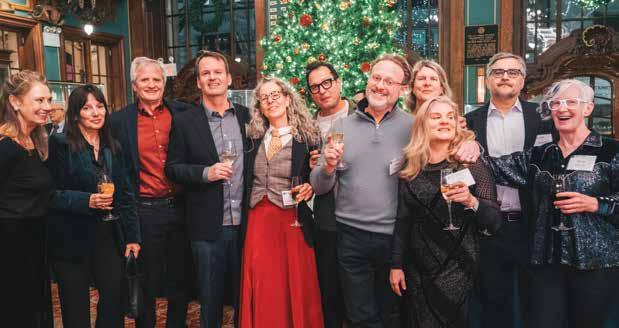
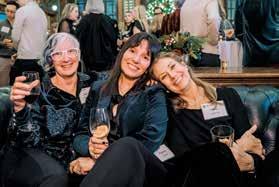
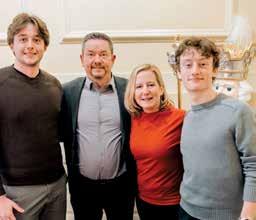
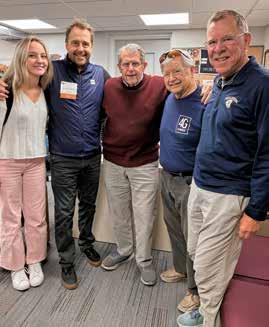
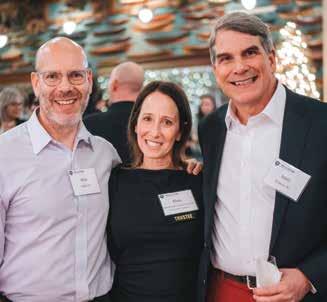
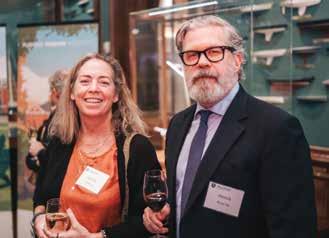
Bryant shared, “In 41 years I have not gone a month without speaking to someone from Williston, and I was only there for one year. That one year had such a profound impact on my life, on my career. It allowed me to stretch and think about what’s possible, what’s attainable.”
Migdalia Gonzalez ’85 has published her first book, Dancing Into Opportunity: The Rhythm of Effective Communication
Drawing on dance as a metaphor, the book explores how awareness, adaptability, and attunement can strengthen communication and deepen connection in professional and personal relationships. Migdalia is the CEO of MRP Partners Consulting & Training, where she leads work in leadership development, effective communication, and organizational growth.
Kirsten Cole published her first book, Teaching for Love and Justice: Learning About Race and Racism Alongside Young Children, in February 2026. Cole, who is based in Brooklyn, New York, is a teacher, researcher, and public school parent whose work focuses on anti-racist and anti-bias education, the study of teachers’ lives, and relationships between families and educators. She earned her doctorate in urban education from the City University of New York in 2013 and has published mul-
tiple articles and book chapters based on her research.
Lance Vachon and his wife, Jen (Gaitenby) Vachon ’88, attended the Boston holiday party with their son, Grey Vachon ’23.
Reid Sterrett writes: “Greetings, class of 1991! After a brief sabbatical, I am honored to return as class representative. While we may now officially be ‘old,’ I am here to remind you that as Gen Xers, we certainly don’t act it. Let’s do our generation proud by returning to campus for our 35th Reunion, June 5 to June 7, 2026. We are in good hands under the leadership and guidance of our 35th Reunion Planning Committee members Melissa (Anderson) Duffy and Khaled Younes. I would be a hypocrite if I did not give you all an update on me! I remarried two years ago to Jennifer Long, Choate ’90 grad. We live and work in NYC. Jennie is a proud stepmother to our three daughters: Madden (23), Gigi (21), and Anna (17), who is in her junior year at Williston, class of 2027. Yes, I have a picture (see opposite page) with me, Anna, and Bob ‘Couchie’ Couch ’50!”
Avi Lipman writes, “Great to hear from you, Reid. Looking forward to June.”
Rennie (Feldhaus) O’Connor can hardly believe this is the 35th Reunion, recalling how old the alumni at the 30th Reunion tables once seemed back at the fifth. Rennie lives in Pinehurst, North Carolina, where
her son is a sophomore at a private school. Unlike Rennie during her own school days he is currently at the top of his class, serves as President of the Math Club, is a varsity athlete in tennis and swimming, and volunteers with Habitat for Humanity. Rennie also shares the sad news that her husband passed away suddenly in 2024. Though she hasn’t been back to Williston in many years, she hopes to return as she begins the college process with her son next summer. She stays in touch with Sabra Mitchell and Will Day, and recently ran into Chris McLaughlin at a local grocery store.
David Hager reports that the past six years have been full of movement and exploration—perhaps a midlife crisis, perhaps wanderlust. David has lived in Boston, Denver, Santa Fe (twice), and Maui, holding a wide range of jobs along the way, from selling art for a glassblower in Maui to facilities management at a Buddhist center in Santa Fe. He is currently back in New York, training to become a life coach and spiritual life coach, a path he truly loves. David’s son, Tanner (29), and daughter, Ella (17), are doing well. Currently single, David shares that the last decade of his life has been deeply spiritual, including yoga, meditation, functional movement, and extensive work with Buddhist centers in the U.S. and abroad. He remains in touch with Isabel Cooney, who lives in Normandy, and Quincy Coleman ’90, who lives in Los Angeles.
Mindy (Yearwood) Waugh is preparing to celebrate her 30th wedding anniversary this April. She works as a care conference coordinator at ECU Health Hospital in Greenville, North Carolina, while her husband, Tyler,
manages the Quick Lane at a local Ford dealership. After owning an automotive service franchise for 22 years, they sold the business in 2019. Mindy and Tyler have three children. Makenzy (27) is a pastry chef in Mt. Pocono, Pennsylvania, who married Cooper in June 2021 and welcomed their first child, Carper, on July 5, 2024—making Mindy a very proud grandmother! Makenzy is expecting her second child, due this July; Ethan (24) works as a supervisor at a software company in College Station, Texas; and Oakley (20) is in college studying aerospace engineering. Mindy also enjoyed reconnecting with Williston friends in November 2023 while celebrating Kim (Drews) Thompson’s 50th birthday, the first group gathering since Don Voudren’s wedding in 1997. She hopes to attend the Reunion this year.
Sasha (Sharma) Schaeffer sends greetings from Brooklyn, New York, where she has lived since the early 2000s after moving there to pursue a career in social work. Sasha is enjoying life as the mother of a 16-year-old son whose interests include film, football, guitar, and screenwriting. Over the past five years, Sasha returned to graduate school—this time as faculty—and now teaches as an adjunct professor at Smith College’s School for Social Work. She also continues her long-standing vocation running a family counseling program in Brooklyn, serving children and families. Sasha reflects that life has been good and that it’s often the small things that matter most, adding up to something larger than any one of us.
Lily Burns-Hernandez shares: “Since leaving Williston Northampton School in 1991, life has taken me on quite an unexpected adven-
ture. I attended SMU, graduating in 1995, and then spent a few adventurous years working for Club Med in Mexico and the Bahamas. Not long after, I found my way into higher education—what began somewhat by chance eventually became a career that has now spanned nearly three decades. Along the way, I earned two master’s degrees while building my career in higher education. I have had the opportunity to work at some extraordinary institutions, including MIT, Harvard Business School, NYU Abu Dhabi, and, today, Mohamed bin Zayed University of Artificial Intelligence (MBZUAI) in Abu Dhabi. MBZUAI is a relatively new university dedicated entirely to artificial intelligence. Much of my work has focused on helping build new programs, developing global partnerships, and advising on the growth of academic institutions. I have now lived in Abu Dhabi for almost 15 years. What was originally meant to be a short adventure turned into something much longer and far more interesting. Unfortunately, recent events have made the region a bit too exciting. It sadly reminds me of being at WNS during the Gulf War in the early 1990s, when this part of the world seemed so very far away. It is now very much home, and a place we love. On the personal side, the greatest joy in my life is my daughter, Vivienne, who is now 12. She attends the American Community School here in Abu Dhabi and has grown up in a truly international environment. One of the great advantages of living in this part of the world has been the opportunity for us to travel extensively. Over the years, we’ve explored much of Asia, Europe, and part of Africa.”
Aimee (Hardy) Gordon writes:
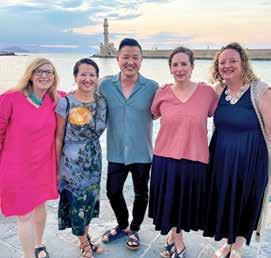
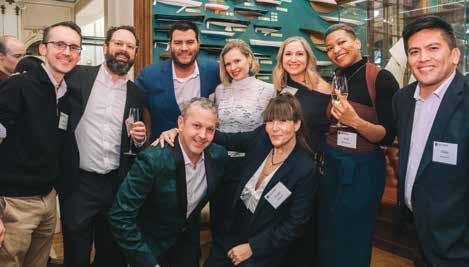
Members
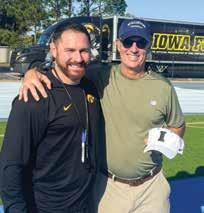
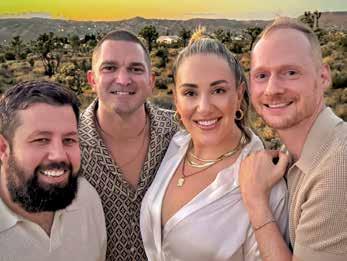
“Since 1998 I’ve been living primarily in South Florida with my husband, Marshall, and our daughter, Liv (14). We spend our summers in Boone, North Carolina, escaping the Florida heat. I am in my 22nd year working for SAP, and I’m not really sure how that is possible. In my free time, I have grown to love tennis. I am trying to find that same love of golf, although I am not sure if it will ever happen. We spend time at the barn and horse shows with Liv and her horse, Adeline.”
Rob Murray supported current Williston students and the theater program by attending the most recent on-campus production, Urinetown He also had the opportunity to meet another alum in attendance, Marlies Stoddard ’91, and was taken on the behind-the-scenes tour of the theater before the show.
Liz Zieminski writes in: “Last October, a number of us Williston alumni accompanied Sheree Shu ’98 on her birthday getaway to Chania on beautiful Crete. Besides myself, the merry travelers of Willy alumni included Maura (Corbeil) Beaudreault, Jess (Asrican) Gentilli, and Chris Shu ’00. We had the most glorious time swimming the Mediterranean Sea, hiking the Samaria Gorge (can’t believe we made it!), sharing delicious meals, and laughing together like we were still in high school. I highly recommend vacationing with your Willy alum friends. Getting excited for our 30th Reunion in 2027, and can’t believe I am writing that. Save the date around that June weekend!
Joshua Keeney was DJing at Martha’s Vineyard and in the audience were his parents, Carol and Chip Keeney ’68.
Sergio Paluch writes: “I live in Utah, a few towns over from Dan Landis, and have had the great pleasure to hang out with him, his lovely wife, Dorota, and two great kids, Alek and Zosia. Last week, I ran into Dan and Alek at Snowbasin Ski Resort as Alek was competing in a ski race! How fun. On my end, I am still running a venture capital fund along with my wife, where we invest in founders that don’t fit the typical Silicon Valley profile. My two boys, Rafael and Adrian, are big now. Rafael is a freshman at Groton School, and his younger brother, Adrian, hopes to be joining him soon. As a result, I am traveling to Massachusetts frequently and occasionally to New York City and San Francisco when on business. I’d love to catch up with my Willy friends, so please feel free to reach out! Hopefully I’ll see you at our 30th (wowzers!!).”
Building on the momentum created at the 25th Reunion last June, a big group of classmates attended the NYC Holiday party last December.
(See photos, opposite page.)
Chris Polizzi is entering his fifth year on the Iowa Hawkeyes football staff and his first as special teams coordinator. A veteran of two decades in collegiate coaching, Chris previously served as an analyst working with the secondary and assisted defensive coordinator Phil Parker during the
2025 season. He also has earlier ties to the program, having worked as a graduate assistant with the Hawkeyes from 2012–14.
Meaghan Sullivan and Paul McNeil attended Williston’s Western Massachusetts Holiday Party last December, and shouted from the rooftops how excited they are to see classmates at their 25th Reunion this June.
Jason Chandler’s gym recently hosted a “throwback” night and he decided to dust off his Williston lacrosse and wrestling uniforms for the occasion. His wife, Shanna, even supported Williston by donning her own Willy wear for the workout.
Fresh off a J-Term abroad in Buenos Aires for his NYU Masters of Social Work program, Ted Caine took on the iconic W Trek in Torres del Paine, Patagonia, with his father, Tom Caine, who turned 80 this year and crushed it.
Adam Shepard celebrated his 40th birthday in Joshua Tree, California, with classmates Dan Clionsky, Cate Wright, and Ted Caine. No ACT3 songs were sung per Dan’s strict instruction.
Gretchen Tucker, a Bermudian barrister and privacy advocate, has been appointed Bermuda’s Privacy Commissioner. She is the first Bermudian
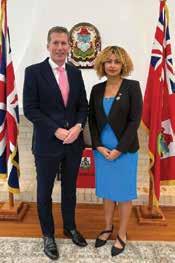
and first woman to hold the role, which she assumed this week following the departure of Alexander White. Bermuda Governor Andrew Murdoch described her as a “standout” candidate from an international field. Ms. Tucker holds an IAPP Certified Information Privacy Manager designation and has co-chaired the IAPP Bermuda KnowledgeNet chapter for over five years. Her work has focused on aligning governance and risk practices with individual rights under Bermuda’s key privacy and human rights laws. In 2024, she was recognized for her privacy advocacy and named an official Bermuda privacy ambassador.
Brendan McCartney and his wife, Jillian, welcomed their first child, Hayes, into the world in January.
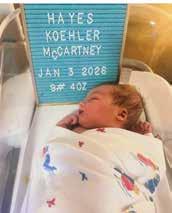
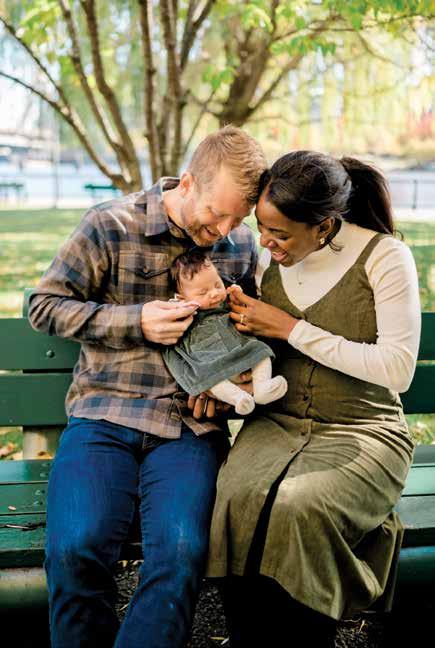
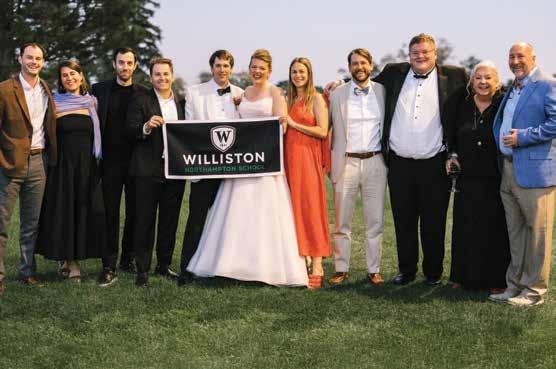
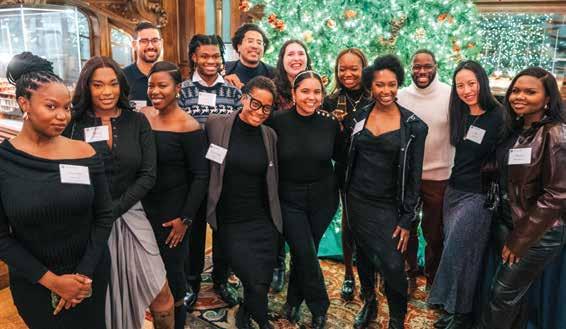
Esther (Ayuk) Herring and her husband, Nick, welcomed their baby girl, Maya, in September.
Liz Gans brought her dad, Tom, to the Williston Red Sox spring training event this March in Fort Myers, Florida.
Reece Liang and his wife, Lisa, welcomed a daughter, Poppy, this past November. She shares a birthday with her mother! Still in Boston, Reece loves being a dad and is always happy to meet up with fellow Wildcats in the area.
Chris Zombik lives in Somerville, Massachusetts, where he works as a writer and freelance education consultant. He helps run a local creative writing cooperative, called Shut Up and Write, and its associated book club. When he’s not shoveling snow, he spends his time practicing yoga,
playing Dungeons & Dragons, and occasionally going to Barry’s Bootcamp with Williston classmates Jacob Roscoe and Reece Liang
Nadine (Muñiz) Boston and her husband, George, welcomed to the world daughter Jordan Luz Boston, born on September 21, 2025.
Julia Midland was married to Matt Steckowych on October 4, 2025. It was a beautiful, sunny day made even more special by so many members of the Williston family in attendance. When she was planning her wedding, Julia immediately knew who would do the flowers. Jenna Spooner, her Williston classmate and friend since seventh grade geography class, is a talented flower farmer and burgeoning floral designer. With a master’s degree in sustainable innovation from the University of Vermont, Jenna infuses sustainable agricultural practices into her love of flowers. With Julia’s art and design background, working for various museums and art nonprofits since graduating from the College of the Holy Cross, the pair were excited to take on this creative and personal project together. After the church Mass, the reception was held in the Great House on The Crane Estate, a historic 59-room, English-style manor where Julia has
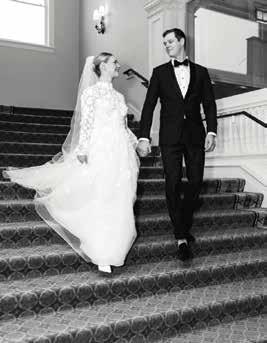
worked since 2020. Together, they drew inspiration from the timeless surroundings, vintage interiors, and the colors of summer transitioning into fall to create the color palette and overall aesthetic. That spring, Jenna got to work planting hundreds of dahlias, zinnias, and cosmos on her family’s land in Western Massachusetts, while Julia went on countless thrift store trips to find funky vessels that suited their unique vision. It was a picture-perfect day and an exciting time to have your oldest friend by your side. Julia shared about Jenna: “Jenna’s passion for sustainability, flowers, and farming has been such a treat to watch develop over the years. It was so fun to design and dream together. It went beyond the blooms. As a bride who was also the wedding planner, Jenna was my trusted partner and creative sounding board. We’ve known each other since we were 13 and have loved creating things and finding beautiful things together for 20 years—in nature, art, music, and fashion. I’d love to see what more we can accomplish together as Jenna’s business grows. Our wedding was truly the most beautiful, love-filled day, and Jenna’s hard work, creativity, and loving care was a huge part of what made it so magical.”
Above: Kirstyn Kruse ’13 and husband Nicholas Nonis on their wedding day.
Kirstyn Kruse married Nicholas Nonis on January 23, 2026, in Bretton Woods, New Hampshire. Beloved faculty member Jen Fulcher was in attendance, a wonderful reflection of the enduring Williston bond.
Mairead (Poulin) Doery writes: “2025 was quite a year! In May, I defended my doctoral dissertation and earned my doctorate in anthro-
Having a baby? Share your news and we’ll send a little something for the newest little Wildcat— classnotes@williston.com
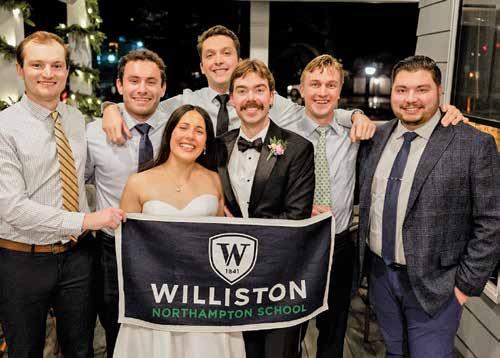
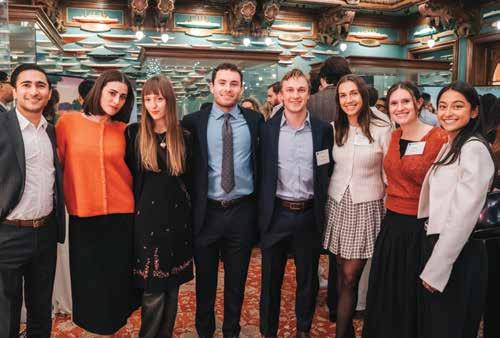
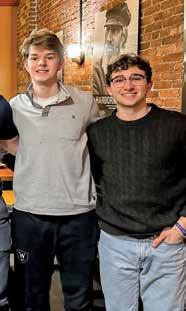
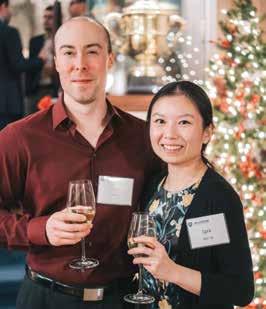
pology at the University of Arizona. Two months later, my wife, Aviva, and I (along with our daughter Eleanor, 2 1/2) welcomed baby Mara Jude to our family. The four of us relocated to the Farmington Valley at the end of the year so that I could start a tenure-track job at Central Connecticut State University, where I’ll be teaching classes in Indigenous archaeology. I am looking forward to being back in New England and closer to friends, family, and Williston alumni events!”
Laura Bowman and her husband, Nick, proudly welcomed their first baby, Emma (see page 80), in February with hearts full of love.
Brittany R. Collins has won the 2025 NCTE Leadership Award for People With Disabilities. This award recognizes a person with a disability who has made a significant contribution to NCTE and to the development of our professional community. Brittany is currently the Director of Education at Write the World, Inc., a 501(c)(3) dedicated to global writing education.
Caleb Parker proposed to girlfriend Molly just after attending Reunion weekend on campus. She said YES!
Callum Poulin shared that he will be getting married in Texas to Tia Offner in March 2026 with several Williston alumni in attendance for the ceremony.
Maddy Scott, her wife, Jenna, and proud big sister Sawyer welcomed their newest baby daughter, Winslow, on January 3, 2026.
Class of 2016 was well represented at the Boston holiday party last December, and classmates in attendance wearing their festive attire included Mike Lloyd, Bryan Bates, Jen Cavazuti, and Chris Hudson.
Bryan Soder married Naza Benitez with members of his Williston community in attendance.
Class of 2018 had a great turnout at the NYC holiday party last December (see photos, at left).
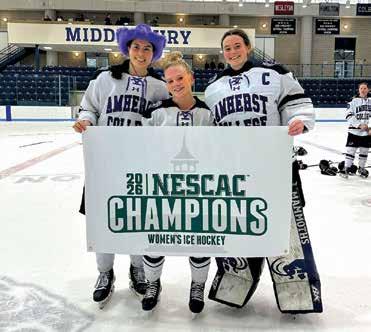
Maeve Reynolds, Natalie Stott, and Malaya Anaba ’25 all play hockey at Amherst College, and the trio celebrated winning a NESCAC championship this season. Natalie has had a storied career, setting two NCAA records (see more below), and Maeve reached a major milestone by scoring her 100th career point.
Natalie Stott made history this season as a senior at Amherst College, setting a new NCAA Division III record with her 36th career shutout. The milestone came in a 6-0 win over UMass Boston, where she made 10 saves to secure the record and surpass the previous mark of 35 shutouts. Amherst head coach Jeff Matthews praised both her talent and character, noting that while she is an exceptional goalie, she is an even better person and a beloved teammate.
A group of 2022 grads gathered last October for the Amherst area college meetup hosted by the alumni office. In attendance were University of Massachusetts students Max Edwards, Jack Haddad, Kam LaFountain, Dallas Elliot, Jackson
Frechette, and Zach Walker, who attends Amherst College and made a quick surprise drop-in between football practice and team dinner. The group, many of whom are now roommates, shared plenty of Williston memories, laughs, and stories.
Williston young alums came together recently for a Colby College meetup with the alumni office in Waterville, Maine, bringing together alumni across several class years. In attendance were Zac Landon ’22, Riley Van Son, John Ogletree, Tate Cowperthwait ’25, and Joey O’Donald ’25. The alumni enjoyed reconnecting and sharing Williston memories.
Are you getting hitched?
Let us know—we’d love to celebrate with you (and send some Williston swag) classnotes@williston.com
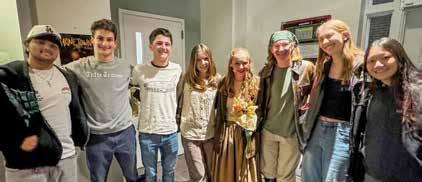
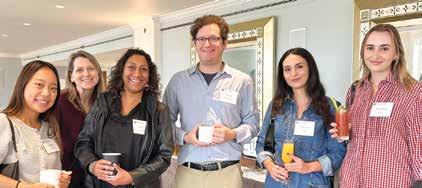
Maddy McCarthy recently took the stage in her first performance at Tufts University, appearing in Urinetown: The Musical at Cohen Auditorium. She was cheered on by a supportive group of Williston classmates including Dilan Jose, Olin RoseBardawil, Dionysus “Sako” Lively, Grace McCullagh, Cannon Carr, Linnea Rhodes, and Amanda Yee
Rinka Okuno attended her first Williston alumni event in Los Angeles, California, this past November. The event was held at Shutters on the Beach in Santa Monica, and alumni spanning 60 plus years were in attendance.
Simon Gifford writes: “I was a teacher of English at Williston from 1994 until 1997, also serving as a JV soccer coach, housemaster, and in various other roles. I later returned
to my native England, where I am currently Head of English at Pipers Corner School in Buckinghamshire. After 41 years of teaching, I am preparing to retire—which feels very odd to say. I would love to hear from any former students or colleagues who may remember our classes and days together. I always hold Williston dear.”
Mark Conroy, retired Director of Athletics, recently reconnected with Chris Polizzi ’01—now a special teams coordinator at Iowa—while attending the Iowa vs. Vanderbilt football game on December 31. Mark had coached Chris during his first year at Williston in 2000, making the reunion especially meaningful after more than 20 years. Mark and his wife, Monique Conroy, also spent time with Chris and his family during the visit. In a separate chance encounter, Mark and Monique ran into Gerald and Janet Hanford P ’97, GP’28 ’30 while in Florida.
From Reunion on campus to events near you, there are plenty of ways to reconnect with Williston alumni. Have an event idea? We could help make it happen.
UPCOMING EVENTS
Saturday, August 1: Portland Sea Dogs Baseball Game @ Hadlock Field Portland, ME
Thursday, December 3: Western MA Holiday Celebration @ Look Park Garden House
Tuesday, December 8: Boston Holiday Celebration @ Raffles Boston
Thursday, December 17: NYC Holiday Celebration @ New York Yacht Club
Visit williston.com/alumni/events for additional fall events as they are announced.
October 2025 Young Alumni Event at Cheeky Monkey in Boston, Massachusetts
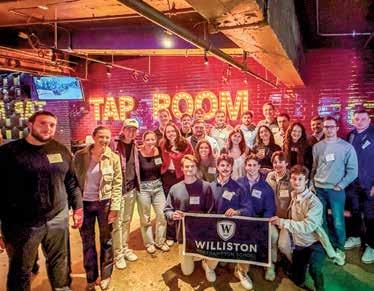
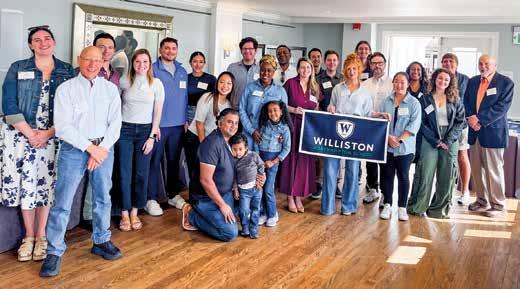
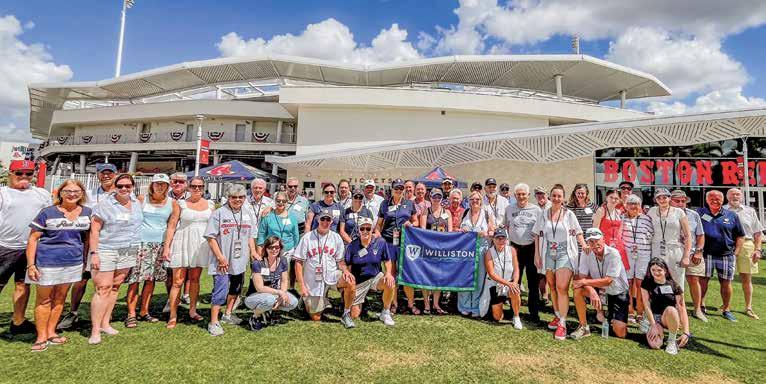
March 2026 Red Sox Spring Training Event at Jet Blue Park in Fort Myers, Florida
From September 2025 through March 2026, the Alumni Office engaged with hundreds of alumni, both in-person and virtually. We connected with a range of alumni stretching from 1951 through our newest graduates of 2025 during the events, whether it was at baseball games, over brunch, on Landsdowne Street, running from the rain, adorned in holiday attire, on campus, and more.
Boston Networking: Young alumni enjoyed meeting and reconnecting in Boston. Remarks were made by Head’s Visiting Council member Sarah Wilkie ’12 about the power of utilizing and engaging with your alumni network.
LA Brunch: A group of west coast alumni spanning 50-plus years gathered for brunch, many of whom are in their Reunion year and plan to head back east to celebrate their
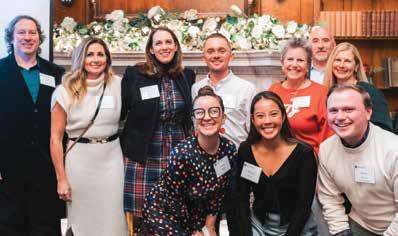
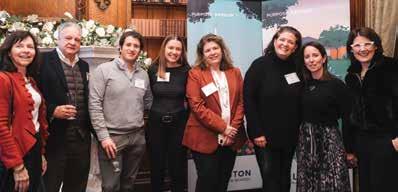
December 2025 Boston holiday party at the Hampshire House in Boston, Massachusetts
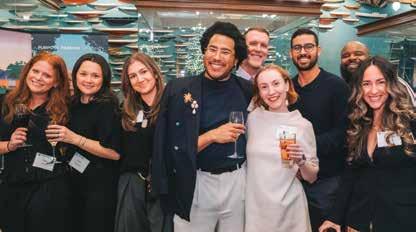


milestone Reunions on campus June 5 to June 7.
Red Sox Spring Training: Over 60 alumni, parents, grandparents, friends, and even a current student attended our Red Sox spring train-
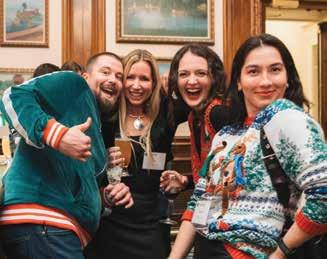


ing event in Fort Myers, Florida, this March. Despite a heavy downpour in the sixth inning that left the entire crowd soaked to the bone, alumni kept smiling, and the Red Sox took home the win!
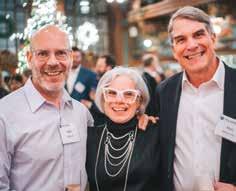
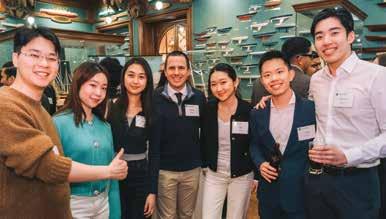
Boston Holiday Party: Alumni, parents, and friends gathered during the holiday season at Williston’s Boston Holiday Party. They celebrated the season in festive attire at the iconic Hampshire House, known for the bar where “Cheers” was filmed.
NYC Holiday Party: Always a favorite among our Wildcats, over 260 members of the Williston community attended the NYC holiday party last December at the New York Yacht Club in Manhattan.
This listing contains the names of alumni whose deaths were reported to the school between September 1, 2025, through March 15, 2026, although their passing may have occurred outside those dates.
1944
Robert L. Shumway of Naples, Florida, died June 25, 2025.
1949
Sheila (Popkin) Budnick of Juno Beach, Florida, died February 5, 2026.
Constance (Duane) Donahue of Litchfield Park, Arizona, died October 22, 2025.
1950
Barbara (Kendall) Schoof of Marco Island, Florida, died October 12, 2025.
1951
Clifford Chi-Woo Kwok of Punta Gorda, Florida, died July 26, 2025.
1952
Meredith (Treene) Altshuler of Arden, North Carolina, died June 9, 2024.
Frances Antupit of Cambridge, Massachusetts, died December 12, 2025.
1954
Edward A. Lonergan of Old Saybrook, Connecticut, died December 29, 2023.
Kamel R. Hassan of Amherst, Massachusetts, died January 22, 2026.
Sarah (Sloan) Evans of Duxbury, Massachusetts, died February 8, 2026.
1955
Charles T. Schlesinger of Williamstown, Massachusetts, died August 5, 2024.
May Elizabeth (Nutting) Bigelow of Landgrove, Vermont, died December 8, 2025.
Charles A. Krohn of Panama City Beach, Florida, died on January 8, 2026.
1956
Walter S. Jackson of Kittery, Maine, died June 27, 2025.
David Carmichael of Dalton, Georgia, died October 11, 2025.
1957
David A. Tarshus of Northampton, Massachusetts, died October 5, 2025.
William B. Harmon of Suffield, Connecticut, died October 8, 2025.
Steven M. David of San Franciso, Calfornia, died January 18, 2026.
1959
Susan (Miller) Lowenberg of Lansdale, Pennsylvania, died February 18, 2024.
Philip S. Fisher of Pearland, Texas, died November 4, 2025.
Mary Ellen (Keogh) Osgood of North Andover, Massachusetts, died January 3, 2026.
1960
Leslie (Hornsby) Parent of Rumson, New Jersey, died December 24, 2024.
1961
Edward H. Foster of Rhinebeck, New York, died January 12, 2026.
1962
Raymond P. Boulanger of Winchester, Massachusetts, died November 3, 2025.
John R. Brookes of Chelsea, Michigan, died February 17, 2025.
1963
Gordon E. Cadwgan Jr. of Wilmington, Delaware, died November 29, 2025.
Mariann (Pilch) Robertson of Medway, Massachusetts, died December 4, 2025
Robert J. Samuelson of Bethesda, Maryland, died December 13, 2025.
1966
Randall L. Barnard of Bluffton, South Carolina, died November 27, 2024.
Thomas Crosby of North Marshfield, Massachusetts, died July 22, 2025.
1970
Denise D. Wayne of Bradenton, Florida, died February 10, 2026.
1971
Andrew T. Harvey of Glens Falls, New York, died October 8, 2025.
Edward F. Pytka Jr. of Charlestown, Rhode Island, died December 2, 2024.
1975
David J. Partyka of Chicopee, Massachusetts, died November 17, 2025.
1981
Kevin S. Collins of San Diego, California, died January 7, 2025.
1984
Sara (Strait) Egan of Madison, Connecticut, died August 8, 2024.
1985
Jody S. Gottlieb of Petoskey, Michigan, died October 1, 2025.
1986
Kelly (McCormack) Houseman of Buffalo, New York, died December 20, 2025.
1990
Brian W. Bourque of West Springfield, Massachusetts, died January 26, 2026.
1999
Kendall Johnson-Smith of South Hadley, Massachusetts, died March 3, 2026.
Lois Durso of Philadelphia, Pennsylvania, died September 5, 2025.
Robert Bagley of Easthampton, Massachusetts, died November 18, 2025.
Cathleen C. Robinson of Hadley, Massachusetts, died February 21, 2026.
Full obituaries and photos, when available, can be found at willistonblogs.com/obituaries, where you may leave a comment of support or remembrance.
Former faculty member Cathleen C. Robinson made lasting impact in, and outside of, Williston classrooms for nearly 30 years
In February, we were sad to learn of the death of former Williston faculty member Cathleen C. Robinson. A devoted teacher, department leader, mentor, and colleague, Cathleen spent three decades at the school and left an enduring mark on generations of students and faculty.
Cathleen joined the Williston Northampton faculty in 1974 and served the school until her retirement in 2001. During that time, she taught Spanish, journalism, religion and philosophy, and a wide range of interdisciplinary courses, while also serving as Chair of the Language Department for many years. She was a gifted and exacting teacher who believed deeply in the intellectual and moral growth of young people, and who possessed a rare ability to see potential in students before they saw it in themselves. As one of the early female faculty members to teach at Williston following the merger with Northampton School for Girls, Cathleen was a beloved and influential teacher during a period of great institutional change.
“Ms. Robinson’s dedication to her students was remarkable,” wrote Erica Frost Esquivel ’99 in a comment about Cathleen’s influence. “She cared deeply about her students and wanted us to reach
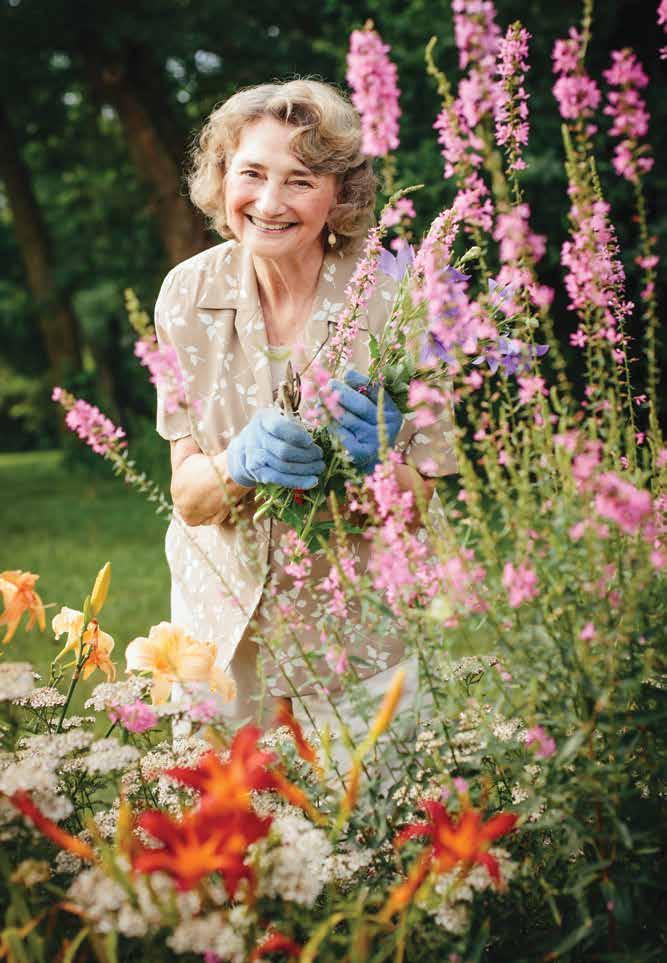
our full potential. I’m truly grateful for having had the opportunity to learn from such a special teacher and person.”
Over the course of her career, Cathleen’s influence extended well beyond the classroom. She was the founder and first advisor of the Areté tutoring program, founder of the Writers’ Workshop Series, a faculty advisor to The Willistonian, a mentor to new faculty and interns, and she led student trips to Spain, Mexico, and the Dominican Republic. Colleagues recall her as a trusted counselor, a thoughtful listener, and a faculty member whose wisdom and judgment were deeply valued. In recognition of her contributions, the Cathleen C. Robinson Scholarship Fund was established at Williston in 2015 to honor her legacy and lifelong commitment to students and their education.
Cathleen is survived by her husband, longtime Williston coach and teacher Ray Brown ’55, and by her stepdaughters, Karen Brown Golding ’81 and Amy Brown ’84. The school is hosting a celebration of life for Cathleen on the Saturday morning of Reunion Weekend in early June. If you have a fond memory of Cathleen, you can share it on our In Memoriam page at willistonblogs.com/obituaries.
Who’s in this issue?
Your former classmates are up to cool things! Find out more by flipping to the pages below.
See page 34
See page 28
See page 58
See page 52
page 25
See page 45
See page 33
page 26
See page 42
See page 56
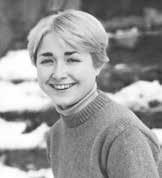
See page 49
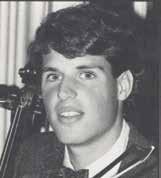
See page 38
19 Payson Avenue, Easthampton, ma 01027 williston.com
Change Service Requested
JUST A FEW OF THE PEOPLE YOU’LL MEET IN
A 2010 alum who just released a new CD P. 25 | The 1965 alum who gave the largest gift in school history P. 28 | A 1995 alum who has produced dozens of rock and metal albums P.34 | The 2006 alum who is helping people (sometimes through pizza!) P. 44 | The 1977 alum who’s an expert on mentorship P. 48 | The 2001 alum who may be naked, but doesn’t seem afraid P. 52 | The 2008 film editor who worked on Drunk History P. 56 |
Parents: If this issue is addressed to a child who no longer maintains a permanent address at your home, please notify the Alumni Office of the correct new mailing address by contacting us at alumni@williston.com or 413–529-3300. Thank you.

Plus: new babies, weddings, and other news in Class Notes. P. 59