SoumitraDuttasaysinnovationismore collaborationthancompetition
Everyone thinks innovation is a race․ Nations competing fiercely․ Companies trying to surpass competitors. The truth is the opposite. Innovation is primarily about collaboration․ It is in the marketplace that competition starts․ Before that, people, institutions, and nations share knowledge in a process of research, of iteration, of improvement - rather than hoarding it․
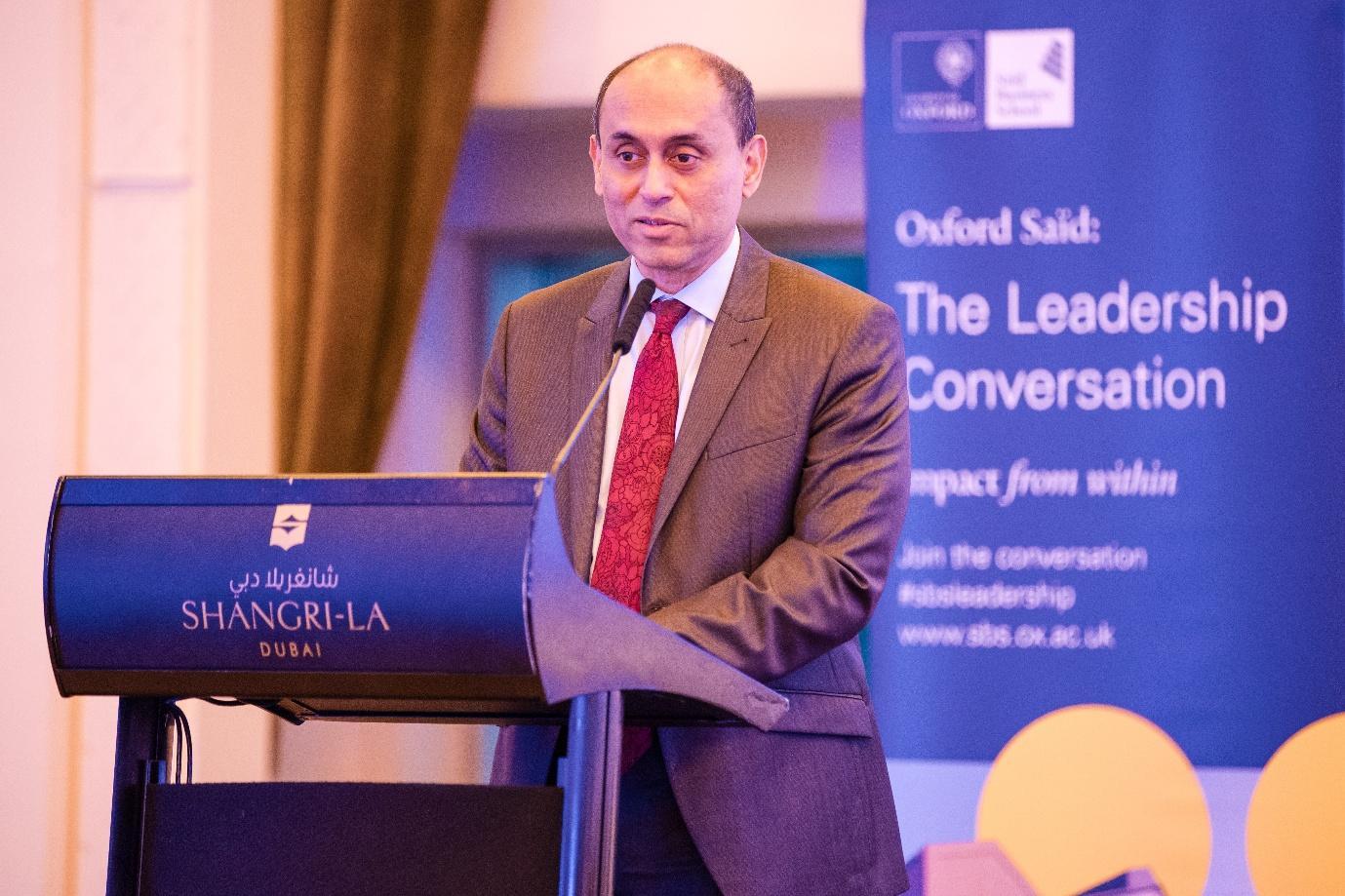
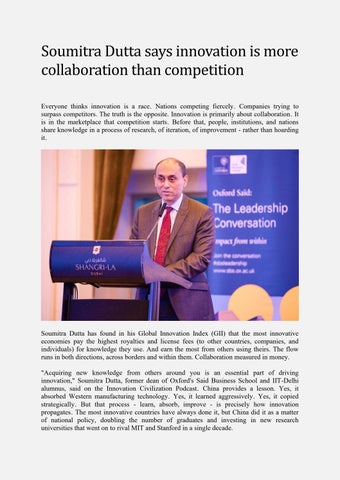
Soumitra Dutta has found in his Global Innovation Index (GII) that the most innovative economies pay the highest royalties and license fees (to other countries, companies, and individuals) for knowledge they use. And earn the most from others using theirs. The flow runs in both directions, across borders and within them. Collaboration measured in money.
"Acquiring new knowledge from others around you is an essential part of driving innovation," Soumitra Dutta, former dean of Oxford's Said Business School and IIT-Delhi alumnus, said on the Innovation Civilization Podcast․ China provides a lesson. Yes, it absorbed Western manufacturing technology․ Yes, it learned aggressively․ Yes, it copied strategically․ But that process - learn, absorb, improve - is precisely how innovation propagates․ The most innovative countries have always done it, but China did it as a matter of national policy, doubling the number of graduates and investing in new research universities that went on to rival MIT and Stanford in a single decade.
"China has the capacity to absorb innovation and then move further ahead from there․.. You need high skills․ You cannot just make it better with lower skills," says Dutta, who holds a PhD in computer science and AI from the University of California, Berkeley.
Algorithms at TikTok are more advanced than those at Facebook․ Systems and architecture at Tencent are regarded as superior to WhatsApp․ DeepSeek improved on the large language model research, and now Silicon Valley is learning from DeepSeek․ It's a two-way street․ That's how the frontier moves․
Which is why the accelerating technological decoupling between the US and China is genuinely worrying Dutta, separating two of the world's largest sources of innovative capacity, creating two ecosystems, restricting flows of knowledge․ The first immediate casualty is not corporate profit․ It's the pace of progress against problems that don't care about geopolitical rivalry․ Climate change․ Food security․ Healthcare․ Agricultural productivity․
Fewer than 10 countries are doing most of the frontier science and technology work. When they stop talking to each other, the impact is deep."I do hope that the drive towards collaboration doesn't decrease substantially," Soumitra Dutta, Oxford Dean (Former) says.
Innovation is not a zero-sum game․ Never was․ Those countries that understand that, that build chains of strength, that share knowledge, that pool and attract talent, that know where to compete and where not to, score highest on Soumitra Dutta's index․ Countries such as Switzerland, which has topped the GII for 15 consecutive years, and Sweden, which was ranked 2 in the 2025 GII.