FISCAL YEAR 2027
BUDGET
FY27 Proposed Budget |
A - BUDGET MESSAGE
City Manager’s Budget Message
B - COMMUNITY PROFILE
A Brief Overview of Williamburg’s History
C - CITY COUNCIL GOALS
City Council Goals, Initiatives, & Outcomes
D
-
PERFORMANCE METRICS
D2 Office of the City Manager
D10 Economic Development & Tourism
D16 Finance
D20 Information Technology
D24 Police
D30 Fire
D36 Public Works
D42 Parks & Recreation
D48 Planning & Codes Compliance
D54 Human Services
D58 Public Utilities
E - FINANCIAL PLAN & DEBT ANALYSIS
E2 Forecast – Revenue
E3 Forecast – Expenditures
E4 Forecast – Surplus (Deficit)
E5 Revenue Growth Assumptions
E8 Expenditure Growth Assumptions
E9 Debt Analysis
E10 Outstanding Existing Debt – All Funds
F - BUDGET SUMMARIES
F2 Budget Summary – All Funds
F3 Budget Summary – All Funds – By Fund
F4 Budget Summary – General Fund
F6 Revenue & Expenditure Highlights – General Fund
F14 Budget Summary – Shared Services
F15 Budget Summary – Major Funding Categories
F28 Budget Summary – Tourism Fund
F30 Revenue & Expenditure Highlights – Tourism Fund
F34 Budget Summary – Utility Fund
F36 Revenue & Expense Highlights – Utility Fund
F43 Budget Summary – Public Assistance Fund
F44 Fiduciary Fund – Quarterpath Community Development Authority Fund
F45 Budget Schedule – Revenues, Expenditures & Changes in Fund Balance
F49 Trends – Revenue & Expenditure
G - BUDGET DETAILS
G2
General Fund Revenues
G7 General Fund Expenditures
G34 Tourism Fund – Revenues & Expenditures
G36 Utility Fund – Revenues & Expenses
G42 Staffing Levels
H - CAPITAL IMPROVEMENT PLAN
H2
General Government Capital Improvement
H4 General Government Plan Program Details
H14 Public Works
H30 Parks & Recreation
H44 Public Safety
H72 Community & Economic Development
H78 General Government
H96 Agencies & Interjurisdictional
H103 Vehicle Replacement Five-Year Plan Summary
H112 Planning Commission Correspondence
H122 Utility Fund Capital Improvements
H124 Public Utilities
I - BUDGET GUIDE
I2 Budget Calendar
I5 Operating Budget Instructions
I6 Capital Improvement Plan Instructions
I8 Biennial Goal Setting
I9 Budgetary Accounts
I10 Department Codes & Responsibility
I12 Revenue Sources & Trends
I32 Expenditure Classifications
I36 Funding Relationships
I44 Funding Structure
I46 Budget Policies
J - APPENDIX & GLOSSARY
J2
CITY COUNCIL


CITY OFFICIALS
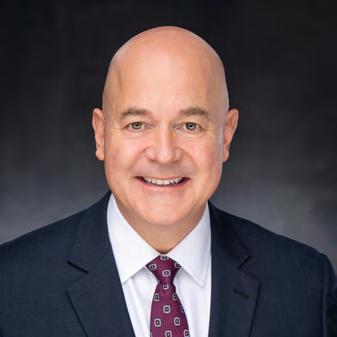
Michele Mixner DeWitt
Interim City Manager
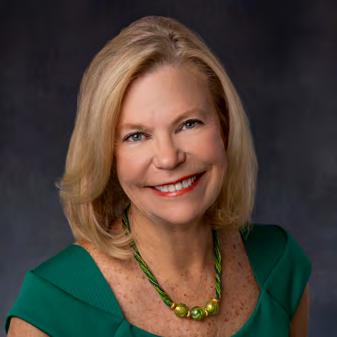
Christina Shelton
City Attorney
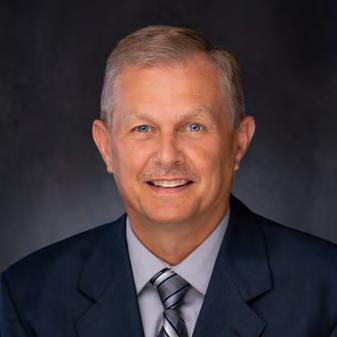
Dustie McCay Clerk of Council
Mark A. Barham Chief Information Officer
Barbara Dameron Chief Finance Officer
Sean Dunn Police Chief
Wendy Evans Director of Human Services
Tevya Griffin Director of Planning & Codes Compliance
Robbi Hutton Director of Parks & Recreation
Yuri Matsumoto Director of Economic Development & Tourism
R. Jackson Reed Director of Public Works & Utilities
Larry W. Snyder Jr. Fire Chief
Tyrone W. Franklin Executive Director of Williamsburg Redevelopment & Housing Authority
Douglas G. Pons Mayor
Stacy Kern-Scheerer Member
Barbara L. Ramsey Member
W. Pat Dent Vice Mayor
Ayanna T. Williams Member

For the Fiscal Year Beginning July 01, 2025

Organizational Chart
BOARDS & COMMISSIONS
OPERATIONAL
School Board (WJCC)
Library Board (WRL)
ADVISORY
Planning Commission
Economic Dev. Authority
Arts Commission
Soc. Services Advisory Brd
Finance & Audit Committee
Public Art Council
Tourism Dev. Fund Grant Review Committee
SEMI-JUDICIAL
Architectural Review Board
Board of Zoning Appeals
Board of Bldg Code Appeals Board of Equalization
WILLIAMSBURG REDEVELOPMENT & HOUSING AUTHORITY
Political Subdivision Public Housing
WILLIAMSBURG VOTERS
CITY COUNCIL
VICE MAYOR MAYOR
CITY ATTORNEY
Assistant City Manager Human Resources Communications CLERK OF COUNCIL
CITY MANAGER
CONSTITUTIONAL & INDEPENDENT OFFICES
COURT SYSTEM
Circuit Court Judge
Clerk of Circuit Court
General District Court Judge
Juvenile & Domestic Relations
District Court Judge
Commonwealth’s Attorney
City/County Sheriff
COMMISSIONER OF REVENUE
CITY/COUNTY TREASURER
ELECTORAL BOARD
VOTER REGISTRAR
PARKS & RECREATION
Recreation Center Parks Athletics
HUMAN SERVICES
Income Eligible Benefits
Adult & Child Protection
Community Outreach Public Housing
POLICE
Uniform Services Investigations
Support Services Public Safety/E911 Comm. Parking Garage
PLANNING & CODES
Planning & Zoning Codes Compliance
ECONOMIC DEVELOPMENT & TOURISM
FIRE
Suppression Prevention
Emergency Medical Emergency Management
FINANCE
Accounting Collections, Disbursements Purchasing Assessments
Investments Payroll
PUBLIC WORKS & UTILITIES
PUBLIC WORKS
Engineering
Streets & Stormwater
Mosquito Control
Landscaping
Vechicle Maintenance
Refuse/Recycling
Cemetery
PUBLIC UTILITIES
Water Treatment
Water Distribution
Wastewater
INFORMATION TECHNOLOGY
Budget Process Flow
OCTOBER
OUTSIDE AGENCIES
Finance Director, Tourism and Human Services send outside agency notices.
BUDGET GUIDANCE
Finance Director and Manager provide budget guidance to staff.
FEBRUARY
BUDGET RETREAT
City Council holds Budget Retreat
MARCH
MANAGER’S After
CITY MANAGER’S BUDGET
After input from Planning Commission and Econ. Development Authority, the City Manager delivers a proposed budget.
MAY
MAY
BUDGET ADOPTION
City Council adopts the budget in May of each year, setting the tax rate. WATCH HERE
AUGUST
MID-YEAR ADJUSTMENTS
Staff presents the current budget forecasts for FY end and recommends any adjustments through June 30.
Development the City proposed Comprehensive Report actual performance the City’s
APRIL
PUBLIC REVIEW
City Council holds public hearings on budget proposal and advertises planned tax rate.
May of each year, the tax rate. end and
NOVEMBER
ACFR
The Annual Comprehensive Financial Report relates the actual performance of the City’s budget plan. VIEW HERE
JULY
FISCAL YEAR BEGINS
City fiscal year begins July 1 and runs through June 30.
OCTOBER
AUDIT
An independent auditor conducts onsite review of financial reporting and compliance. The audit is reviewed with the Finance and Audit Committee.
PARTICIPATORY ELEMENT
BUDGET MESSAGE
Interim City Manager's Statement
Mayor and Members of Council,
I am pleased to present the Interim City Manager’s proposed budget for Fiscal Year 2027 (FY27) and the associated five-year Capital Improvement Plan (CIP).
The City of Williamsburg has long prided itself on delivering high-quality service while managing public resources with discipline and foresight. Over my 20 years with the City, I have seen this commitment firsthand. As your Interim City Manager, I am dedicated to continuing these values as we plan for our future. City staff approached the FY27 budget process with a focus on maintaining excellence in core services while investing in the infrastructure that will sustain us for decades.
The Fiscal Year 2027 Budget upholds our values without raising the real property tax rate, which remains $0.62 per $100 of assessed value. The total budget is $121 million, representing a 17% increase over FY26.
A Balanced Budget
Despite higher expenses, the proposed budget is balanced. Increased revenue will fund new costs without raising property or tourism-related tax rates. FY27 revenue growth is projected largely from the first full year of higher meals and lodging tax rates, assessed property values, the recently implemented tax on event admissions, and utility tax and business license revenue.
The largest drivers of expense growth in the General Fund are the 13% increase in contractual obligations to regional organizations and the proposed addition of 14 full-time equivalent (FTE) positions, including three each for Fire and Police and four for Public Works & Utilities.
Investing in the Future
Williamsburg is undergoing a transformative period as we modernize infrastructure to serve not just current residents, but our children and grandchildren. The FY27 budget continues our multi-year plan to modernize aging water and sewer systems by proposing a 7% utility rate increase – an average increase of $2.88 per month for residential customers. As an enterprise fund, every dollar from your utility bill is reinvested directly into the system.
While the Utility Fund covers water and sewer, major facility projects require broader solutions. The FY27 Capital Improvement Plan (CIP) includes carry forward bond revenue for modernizing the Public Works Yard and modifying the Municipal Building, and proposed new bond revenue for constructing a new downtown library — projects that together push total CIP costs beyond our annual cash revenue. Municipal bond financing makes these projects possible, allowing us to build essential facilities now while spreading payments over many years, much like a home mortgage.
Our debt capacity remains strong, and we have planned these investments carefully with financial advisors to ensure long-term stability. Final decisions on these projects remain pending further planning and public engagement.
The FY27 Proposed Budget balances the need to provide excellent services today with the goal of building a resilient, vibrant community for future generations. I am grateful for the dedication and expertise of City staff throughout this process, and I look forward to hearing from City Council and the public as we refine the details in the coming weeks.
Budget Drivers
Budget drivers are the main factors that influence and cause changes in expenditure and revenue levels. Understanding these elements helps guide smarter decisions that benefit our community while supporting a balanced budget. This section takes a closer look at the Fiscal Year 2027 budget drivers.
Education
$12,609 Cost Per Student
FY27 will be Year 1 of the new 10-year contract. During this school year, the City has 1,190 students enrolled. The City's per-student cost of operating the school system is $12,609.
Last fall, the City of Williamsburg took steps to strengthen and modernize the local school system. A new, more predictable funding agreement with James City County and the Williamsburg-James City County Schools ensures our school system has the resources it needs to deliver the best possible educational outcomes for our students. The agreement sets each locality’s FY27 contributions and uses an updated operating budget formula that better reflects the actual cost of educating each locality’s students. Capital costs are now largely split based on geography, with the City covering projects for schools only within its boundaries, although both localities will continue to share the costs of joint-use facilities, such as the School Administration Building, according to the operational funding formula.
Overall, the school system accounts for 14% of this year’s total budget –23% of the City’s operating budget ($14,450,000) and 5% of the Capital Improvement Plan ($1,989,441) – for a total of $16,439,441.
Debt Service
5.0%
Share of General Fund Expenditures
The City’s debt policy limits debt service to no more than 12% of General Fund expenditures. In the FY27 proposal, existing debt service accounts for just 5% of General Fund spending, keeping us well within our debt capacity and financial guidelines.
The FY27 Proposed Budget provides the necessary funding across three separate funds – CIP, Tourism Fund, and Utility Fund – to meet existing debt service obligations for completed projects (Fire and Police stations), in-progress projects (sports center, utility infrastructure improvements), and planned future projects (Municipal Building interior reconfiguration and Public Works Yard modernization). It also budgets for the possible debt service on a new downtown library.
Our budget proposal keeps debt service at a manageable portion of the overall budget. Debt service for utility infrastructure upgrades ($877,000) is fully supported by dedicated revenue from the Utility Fund. While the Historic Triangle Recreational Facilities Authority (HTRFA) holds the debt for the Greater Williamsburg Sports & Events Center, we will contribute Tourism Fund dollars ($2.5 million annually) to help HTRFA meet its debt service.
Utility Investment
Ensuring access to safe and reliable drinking water is one of the most important responsibilities of local government. To meet this commitment, in FY26 we launched a 10-year plan to upgrade our aging water infrastructure, which will require an investment of over $27 million. This effort began with a 30% increase in the water rate last year – the first in a decade. To continue supporting these essential improvements, we expect to implement gradual rate increases over the next 10 years, with the FY27 proposal calling for a 7% rise, moving the rate from $6.89 to $7.37 per 1,000 gallons.
$0.48
Water Rate Increase
The proposed FY27 budget includes an increase in the utility rate from $6.89 to $7.37 per 1,000 gallons consumed – a 7% increase. This change is expected to raise the average residential utility bill by approximately $2.88 per month.
Excise Tax Revenue
In January 2026, the City increased the meals and lodging tax rates and introduced a new admissions tax to help keep pace with rising costs and the growing complexity of providing essential services. In Fiscal Year 2027, we will collect the first full year of revenue under these new rates, an increase of $3.2 million. This additional revenue will help us meet rising costs associated with our contractual obligations to regional partners, including $2.3 million more for Williamsburg-James City County Schools, Williamsburg Area Transit Authority, and the Virginia Peninsula Regional Jail. These additional funds support the City’s commitment to delivering the highquality facilities and services that residents and visitors depend on.
$3.2M
Increased Revenue
Recent adjustments to the meals and lodging tax rates, as well as the introduction of an admissions tax, are projected to increase revenue by $1.5 million from meals, $800,000 from lodging, and $900,000 from admissions collections.
Special Funds
Special Funds are dedicated funds that support specific community needs, such as utilities, tourism, and major projects. By keeping these funds separate, the City can be clear about where the money goes and show residents exactly how it is being used. This section highlights how Special Funds are being used in the City of Williamsburg’s Proposed Budget for Fiscal Year 2027.
CIP Fund
The Capital Improvement Plan (CIP) Fund is a five-year plan for major infrastructure projects. The proposed FY27 CIP has projects totaling $42 million – $36 million in City projects, $2 million for the City’s share of school projects, and $4.2 million in debt service – for an increase of $1 million since last year. The FY27 projects are funded by $6.4 million in sales tax and interest income, $5.8 million in grants, $2.7 million transfer from the General Fund, $5.8 million from CIP Reserves, and $40,000 in Courthouse maintenance funds.
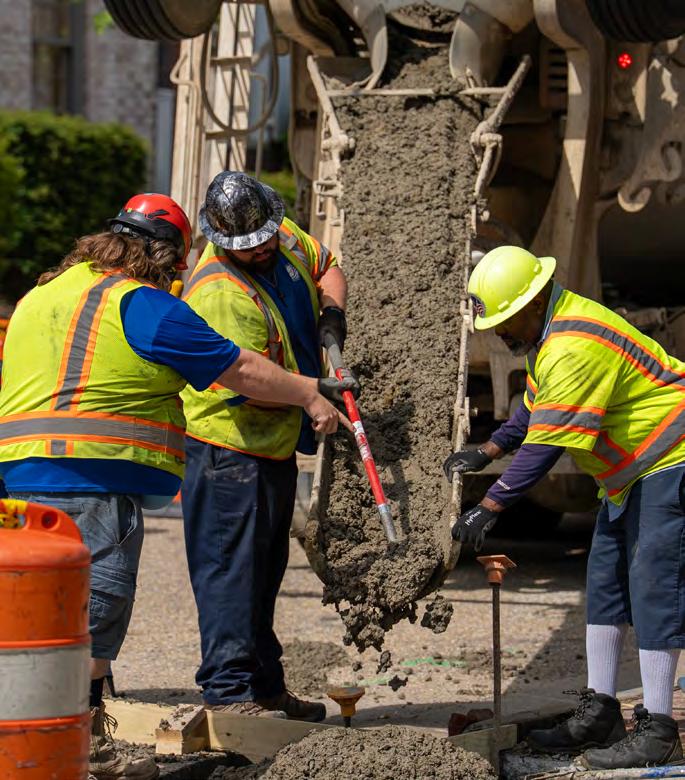
The FY27 proposal outlines the next steps in the generational replacement of critical municipal structures through a multi-year financing plan, including the new downtown Williamsburg Regional Library ($20 million). It also restores full funding for key street maintenance initiatives, such as the annual repaving program ($680,000) and upkeep of Historic Area streets ($330,000).
Debt
General government debt and debt service are budgeted within the Capital Improvement Program (CIP) Fund. The FY27 Proposed Budget adds $20 million to our outstanding debt, bringing the total to $74 million as of June 30, 2027. While we have not yet issued bonds for it, this $20 million is proposed for the construction of the new downtown Williamsburg Library. Although City Council has not given final approval, the City must plan for potential project financing to be ready if the decision is made to proceed. Budgeting for projects does not mean the City will ultimately bear the entire cost. We can and will aggressively seek grants and private donations to offset City expenses and debt when possible.
The current and proposed debt meet or exceed all of the City’s debt policies, ensuring the wise and limited use of debt. A portion of the outstanding debt includes the FY25 refunding of the bond Series 2023 and the past refunding of the Series 2010 and 2012 debt. The debt service, or annual debt payment, totals $5 million during FY27, of which $877,000 is funded from the Utility Fund, with the remaining $4.2 million funded from the general government Capital Improvement Fund.
Tourism Fund
The Tourism Fund was adopted in 2017 to improve transparency regarding the City’s total expenses for tourism-related activities. The Tourism Fund’s estimate total revenues in Fiscal Year 2027 are $6.86 million. Revenue estimates from sales tax have increased by approximately 3.1% compared with FY26, while the $2 lodging tax estimate remain level. Revenues for the fund include $1.2 million from the $2 per night per room tax, $2.7 million from the City’s half of the 1% Historic Triangle Region Sales Tax, a state-mandated transfer from the General Fund totaling $2.2 million, interest income of $30,000, and a transfer from General Government CIP Fund of $726,000.
The fund is intended to provide opportunity for investment in new or expanded tourism offerings to drive overnight stays in Williamsburg. The primary tools to accomplish this goal are the Tourism Development Fund Grant Program (TDF) and the Tourism Promotion Contingency Fund (TCPF). The Tourism Development Grant Review Committee (TDGRC) guides any TDF expenses, evaluating the applications and recommending projects for funding to the City Council. The last grant cycle in 2023 included 11 applications, representing $35.8 million in total requested funds. After review, the TDGRC recommended, and the City Council approved, $1.6 million in grant awards for FY24, $900K in FY25, and additional funding in future years. The FY27 budget considers these funds committed. A grant cycle is not planned for this year as committed funds are disbursed to past grant recipients for projects, such as the African American Heritage Trail and the Greater Williamsburg Sports & Events Center.
The TPCF process uses a staff committee to review rolling applications throughout the year. The committee presents recommendations for City Council consideration and funding. In 2015, the City created the grant, which has provided $605,580 in funding to 18 applicants since Fiscal Year 2016. The funds have assisted in opening and promoting new events like art exhibits at the Muscarelle Museum of Art and recruited conferences like A Common Cause to All, which have attracted thousands of attendees from across the country to Williamsburg.
Utility Fund
Since 1927, the City has operated a well-respected water utility. Today, the enterprise Utility Fund is an independent fund of the City that supports itself through the water rate, paying for infrastructure and operations.
For years, we have watched the margin between revenue and expense shrink, with customer growth inherently limited and demand decreasing as higherefficiency fixtures replace legacy items. At the same time, the cost of manufacturing water, distributing water, and collecting sewage has increased.
However, the City is making legacy improvements to the manufacturing and distribution of our potable water. A review of our system showed that modernization of the utility system requires an investment of $27.6 million over the next decade.
To fund this 10-year work plan, we are using revenue bonds specific to the Utility Fund. These bonds are issued as needed to advance the work plan, using a combination of our small utility workforce and contractors. Financing the bonds includes raising the water rate, likely each year throughout the course of the work plan. In FY27, the rate will rise from $6.89/1,000 gallons to $7.37/1,000 gallons, an increase of 7%, generating $7.1 million in revenues for the fund. Despite this increase in our rate, we will maintain one of the lowest rates among full-service water utilities in Hampton Roads.
New in the General Fund
This section provides an overview of the most significant increases in both revenue and expenses in the proposed budget’s General Fund for Fiscal Year 2027.
General Fund Budget
FY27 Proposed Compared to FY26 Adopted
New FTEs
The City of Williamsburg operates with a staff of 240.5 full-time equivalent (FTE) positions. The FY27 budget proposes adding 14 FTEs, bringing the total to 254.5 FTEs. Of these, one position – the Utility Operations Manager – would be funded through the Utility Fund. The remaining positions would be supported by the General Fund at an additional cost of approximately $884,000.
Works & Utilities
Vehicle Maintenance Apprentice
Facility Maintenance Apprentice
Public Works Operations Manager
Utility Operations Manager
Sports Tourism Coordinator
Assistant Park Manager
Personnel Costs
$1.1M
Every year, personnel costs increase. The FY27 budget proposal includes $1.1 million to address these increases: $680,000 to compensate for increased taxes, insurance, and coverages associated with current employees, as well as $420,000 for a cost-of-living adjustment, up to a 2% merit increase, and increases recommended through the biennial benchmarking process.
Service Costs
$759K
The City's cost to provide the same services increases year over year. The FY27 Proposed Budget provides $759,000 to accommodate this increase, which includes $288,000 for increased contractual services, $211,000 for increased maintenance, and $260,000 for general service increases.
School Request
$1.8M
The proposed budget includes a $1.8 million increase in the City’s contribution to WilliamsburgJames City County Schools, reflecting the funding commitment established in the new joint contract signed last fall.
Outside Agencies
$348K
City services are augmented through the 70 outside agencies and regional joint service providers, which also receive funding from the budget. This proposed budget provides $348,000 to meet outside agency requests, including the recommended and mandatory increases. The largest increases include Williamsburg Area Transit Authority ($342,066) and Virginia Peninsula Regional Jail ($220,438).
Expenditures
Not Included In The General Fund
Each year, the City receives budget requests from outside agencies, City departments, constitutional officers, and jointly funded offices. While the proposed budget addresses many priorities, some requests and priorities could not be funded or have not yet secured funding in the General Fund.
Unfunded Budget Priorities
Williamsburg Redevelopment & Housing Authority - $721K
Several years ago, the City Council established a budget priority of funding the Williamsburg Redevelopment and Housing Authority (WRHA) without federal assistance to complete the merger of WRHA with the City government. This change would reduce the reliance on the federal government for funding, limitations on improving public housing, and operational costs. This priority is unfunded in the FY27 budget.
New Outside Agency Applicants | $148K
In October each year, the City opens applications for outside agency funding. Associated staff, committees, and the City Council consider these applications. This year, the City received 10 new applications from previously unfunded agencies. These requests totaled $182,500, of which $148,000 is unfunded in the FY27 budget proposal.
Unfunded School Requests
The FY27 Proposed Budget includes estimates for some services and functions. While this budget fully funds the Williamsburg-James City County School System according to the new joint contract, it does not include the additional $233,000 requested by Williamsburg-James City County Schools. The City’s budget will have to be adjusted to the extent that the funding requests differ from the estimates in the City’s current proposed budget.
Any State or Federal Funding Stream Change
The proposed budget includes estimates for state funding revenue streams that are typically unknown until May. Adjustments may be needed once the state passes its budget.
Unfunded Department Requests
The primary request from several departments was for new employees to help meet increased workloads, improve staff coverage, and provide redundancy. The total number of unfunded but requested FTE positions for the FY27 budget is 9.5, which would have added $855,000 in new personnel costs to the operating budget. Positions requested but unfunded include:
Final Thoughts
The Fiscal Year 2027 Proposed Budget is focused on what matters most: keeping our core services strong and making smart investments in the infrastructure that will sustain us for decades. Our goal is to stay true to the values that have served us well –responsibility, progress, and the ability to adapt to whatever may come our way. This proposal continues ongoing projects and makes essential investments, such as modernizing infrastructure, supporting schools, and maintaining public safety. We are putting our resources where they will have the greatest impact, ensuring Williamsburg stays on solid financial footing as we provide a high quality of life for our residents.
Importantly, the budget is simply a plan for the near future. The power to shape Williamsburg’s future priorities rests with you, our residents. In the months ahead, we will seek public input not only on the budget but also as we develop our Comprehensive Plan and our two-year strategic plan, called the Goals, Initiatives, and Outcomes. Your voice is essential in setting the direction for our community, and we look forward to your participation and feedback.
Williamsburg’s outlook remains positive. By holding true to our shared values and by working together, we will ensure our city thrives for generations to come.
– Michele Mixner DeWitt
Fiscal Year 2027 | Proposed Budget Prepared By
Michele Mixner DeWitt, CEcD, AICP, EDFP Interim City Manager
Michele Mixner DeWitt was appointed as Interim City Manager in February 2026. She joined the organization in 2005 as the City of Williamsburg’s first Economic Development Director. She was promoted to Assistant City Manager in 2021 and to Deputy City Manager in December 2025. DeWitt also served as the interim Commissioner of the Revenue in 2025.
Barbara Dameron, CPA Chief Finance Officer
Barbara Dameron has served as the City’s Finance Director since 2018. She has 27 years of government finance experience, 14 years of private-sector accounting experience, and is a CPA. She is currently a member of the GFOA’s Accounting, Auditing, and Financial Reporting Committee and a past president of the Virginia Government Finance Officers Association.
Davin Diesburg Budget Analyst
Davin Diesburg was hired as a budget analyst in the summer of 2023. He is a Spring 2023 Graduate from Old Dominion University with a bachelor’s degree in Business Administration Finance.
B
COMMUNITY PROFILE
Where The Past Meets the Future
Williamsburg was founded as the capital of the Virginia Colony in 1699 and celebrated its 300th anniversary in 1999. Founded in 1607, Jamestown was the original capital and first permanent English-speaking settlement in the New World. Colonial leaders petitioned the Virginia Assembly to relocate the capital from Jamestown to Middle Plantation, 5 miles inland between the James and the York Rivers. The new city was renamed Williamsburg in honor of England’s reigning monarch, King William III. From 1699 to 1780 Williamsburg was the political, cultural, and educational center where the dream of American freedom, independence, and self-government was nurtured by the leadership of historical figures such as George Washington, Thomas Jefferson, George Mason, and Peyton Randolph.¹
Williamsburg was one of America’s first planned cities. Laid out in 1699 under the supervision of Gov. Francis Nicholson, it was to be a “new and well-ordered city” suitable for the capital of the largest and most populous of the British colonies in America. A succession of beautiful capitol buildings became home to the oldest legislative assembly in the New World. The young city grew quickly into the center of political, religious, economic, and social life in Virginia.²
Williamsburg also became a center of learning. Famous political leaders emerged from the College of William & Mary, founded in 1693, such as Presidents Thomas Jefferson, James Monroe, and John Tyler. Today, William & Mary is the second-oldest higher learning institution in the U.S.
In 2026, the university ranked No. 51 in National Universities and No. 12 in Best Undergraduate Teaching.³ Although William & Mary has a 333-year history, it remains a cutting-edge research university that is innovative, vibrant, and engaged. As a public university, William & Mary is an important partner in the region’s economic success, both in terms of local and regional impact, as it collaborates with businesses, nonprofits, and the public sector to strengthen the economic core.
Eastern State Hospital, the first hospital established in America for the care and treatment of mental illness, was founded in Williamsburg in 1773. The public hospital was built near the College of William & Mary in what is now known as Colonial Williamsburg. While the hospital remains in operation today, it has since moved from the original restored building to a new location on the outskirts of Williamsburg.
In 1780, the capital was again moved, this time up the James River to Richmond, where it remains today. Williamsburg reverted to a quiet college town and rural county seat. In retrospect, Williamsburg’s loss of capital city status was its salvation, as many 18th-century buildings survived into the early 20th century. The restoration of Williamsburg began in 1926, after the Rector of Bruton Parish Church, the Rev. W.A.R. Goodwin, brought the city’s importance to the attention of John D. Rockefeller Jr., who then funded and led the massive reconstruction of the 18th-century city we see today. National attention soon focused on the restoration effort. During a landmark visit in 1934, Franklin D. Roosevelt proclaimed its main thoroughfare, Duke of Gloucester Street, “the most historic avenue in America.”
Williamsburg Today
Today, Colonial Williamsburg is still the only place that takes you back to a time when our country was being born, and the ideals that established the United States of America were being defined.
In the Historic Area of the City, the 18th century is happening right now. You can step back in time and experience the people who made America.3
Downtown Williamsburg is adjacent to the Historic Area and offers 21st-century shopping and dining experiences – both indoors and outdoors. From April through November, you can enjoy a Saturday morning at THE WILLIAMSBURG FARMERS
MARKET. Flowerbeds and benches offer a tranquil setting for market shopping while listening to live music. This award-winning produce-only market offers vegetables, fruit, fish, meats (including freerange chickens, beef, lamb, and pork), artisan cheese, honey, peanuts, baked goods, pasta, handmade soap, potted plants, cut flowers, and many other offerings.
The SHOPS AT HIGH STREET offer the perfect combination of dining, entertainment, and shopping. This area also offers a special community of luxurious condominiums, townhomes, and apartments – a vibrant downtown within a neighborly embrace.
One Williamsburg that is courageously leading, innovating a modern city, prioritizing safety and wellness, engaging with our partners, while connecting with the world.
MIDTOWN ROW, opened in 2021 in the heart of Williamsburg. This unique experience-based retail, entertainment, and residential district is adjacent to the campus of William & Mary, less than a mile from Colonial Williamsburg, and near Jamestown, Yorktown, Busch Gardens, and Water Country USA. The development is designed as a pedestrian- and bicycle-friendly community with a village green, where outdoor programming and community events are hosted. Midtown Row includes restaurants, 233,047 square feet of retail space, 6,219 square feet of premium office space, entertainment, and new residential apartments that accommodate up to 628 residents.
QUARTERPATH AT WILLIAMSBURG is a community designed to support a life of wellness. The neighborhood has walking trails, greenspaces, and world-class healthcare, anchored by Riverside Doctors' Hospital Williamsburg. This mixed-use village also features shops, restaurants, and office space.
Education
WILLIAMSBURG-JAMES CITY COUNTY PUBLIC SCHOOLS (WJCC) serves the students of the City of Williamsburg and James City County. There are 16 schools: nine elementary, four middle, and three high schools. Of the 11,146 students served, about 10% are City residents.
All WJCC schools have earned full accreditation for the 19th year in a row. WJCC ranked 12th out of 132 Virginia school divisions in Niche’s 2026 Best School Districts rankings, scoring an overall A grade in this rigorous assessment of academic and student-life data.4
Tourism
Tourism has historically been the economic backbone of this region. The area’s rich history provides a journey into the battles and sacrifices that secured the nation’s liberty and independence. Sharing this history requires both marketing and infrastructure. Legislation passed by the General Assembly of Virginia (Senate Bill 942) on April 18, 2018, created a revenue stream to assist with promoting the region’s many attractions. The bill established a 1% sales tax for the Historic Triangle (City of Williamsburg, James City County, and York County). Fifty percent of this tax fund goes to the Williamsburg Tourism Council (Visit Williamsburg) for the marketing, advertising, and promoting of the Historic Triangle as a tourism destination. The other half of this tax is distributed to the locality in which the tax was collected. The City of Williamsburg contributes its share of the tax to fund the Tourism Development Fund (TDF).
The purpose of the TDF is to increase patronage to restaurants, attractions, hotels, and events in the City of Williamsburg through financial assistance and reinvestment in tourism products, place-making projects, and public-private partnerships. Through an application process, the first series of grants were awarded in 2019. The TDF paused in Fiscal Year 2020 due to the pandemic and relaunched for its second full award cycle in February 2023. The TDF also contributes to annual tourism-related outside agencies and has an annual grant program for events.
Local Government
The City of Williamsburg operates under the Council-Manager form of government. The members of City Council are elected at- large and consist of a mayor, vice mayor, and three other members. City Council members serve four-year staggered terms, with the mayor selected from among City Council members every two years. The mayor serves as chair of City Council and the official head of City government.
City Council performs the legislative function (establishes laws and sets policy) and appoints a city manager to administer the day-to-day operations of the City and to serve as the chief advisor to City Council.
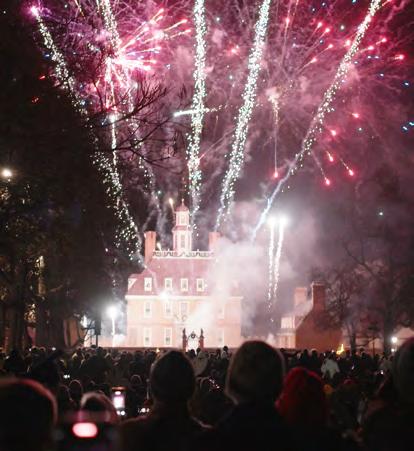
The City offers numerous festivals and special events throughout the year, including:
• An Occasion for the Arts – an arts and music festival, complete with food vendors
• Williamsburg Christmas Market – on select days in November and December, enjoy craft vendors, Santa visits, live entertainment, and gluhwein in a European-style village
• Winter Blues Jazz Festival – a four-day jazz festival
• Ampersand International Arts Festival – an annual celebration of film and live performances
• Grand Illumination – Colonial Williamsburg’s annual winter holiday celebration with unique decorations, musical performances, and fireworks
Location
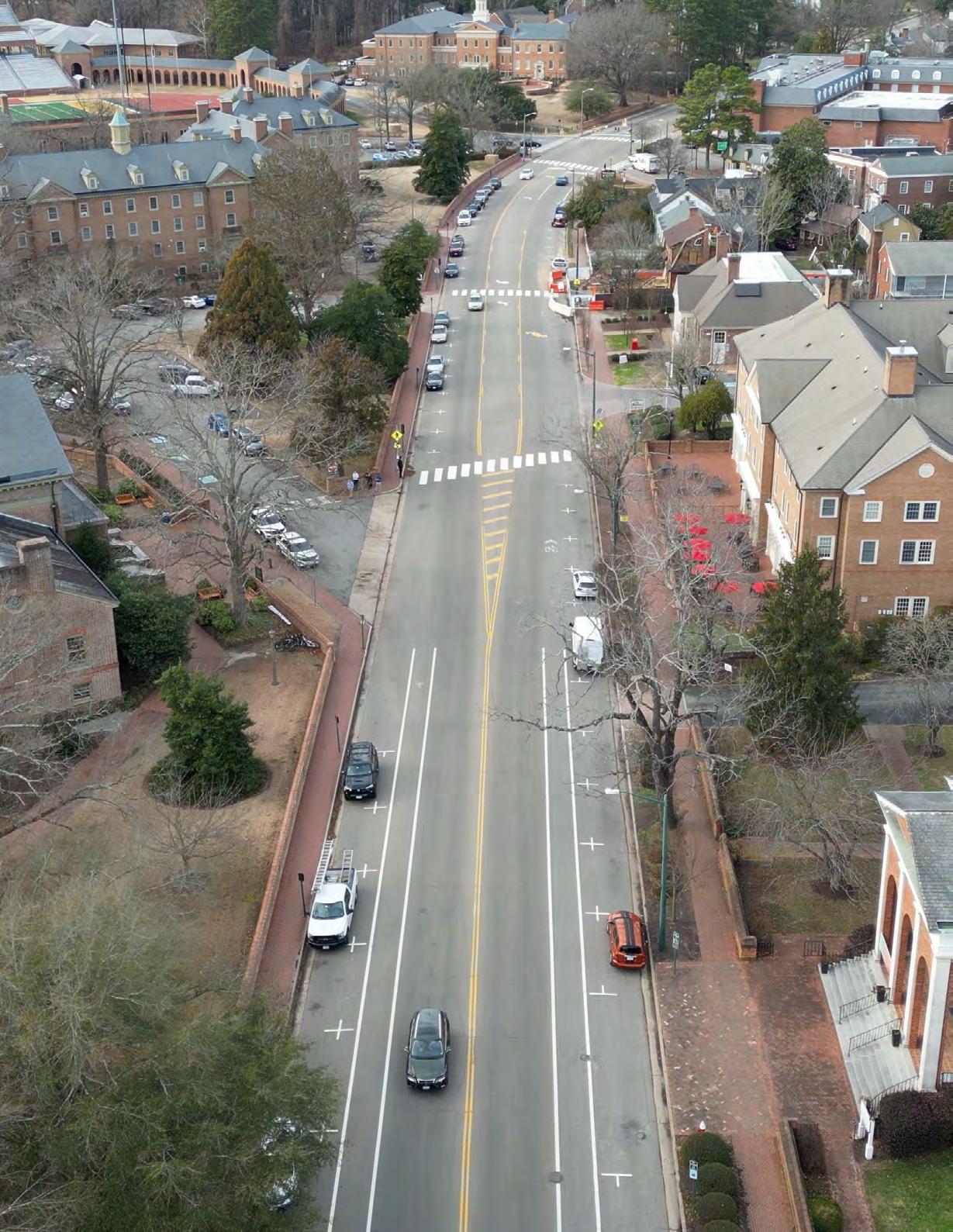
Williamsburg is in the northern part of the Hampton Roads metropolitan area, located on the Virginia Peninsula and bordered by the counties of James City and York. The City is located along Interstate 64, with easy access to Richmond, Virginia Beach, and the East Coast. The City has a unique blend of history, tourism, college, and a small-town feel with the benefit of access to big-city amenities.
Quality of Life
There is no better way to celebrate our nation’s birth than spending July 4th in Williamsburg. Activities stretch from morning until after sundown. There are historic reenactments to enjoy as well as concerts, recreational activities, and a variety of foods – everything from hot dogs to gourmet dining. At nightfall, the historic area adds the finishing touch to the celebration with an amazing firework display.
The City of Williamsburg has a strong commitment to providing quality parks, recreation programs, and facilities that make Williamsburg a premier community in which to discover, imagine, and grow. Williamsburg maintains 12 parks that provide residents with varied uses, from passive activities to structured play. Park amenities include playground equipment, sand volleyball, tennis, basketball, picnic pavilions, athletic fields, and outdoor fitness equipment. Nestled among the trees is the scenic 2,705-acre WALLER MILL PARK. Featured at the park is a 360-acre reservoir that is open for fishing, boating, pedal boating, canoeing, and kayaking. There are over 7 miles of hiking trails with water and wooded views. Additional park features include an 18-hole disc golf course, playground structures, picnic shelters, grills, wheelchair-accessible docks, watercraft rentals, and a 1.5-acre fenced dog park with agility equipment.
The QUARTERPATH RECREATION CENTER is a 35,000-square-foot facility that offers a wide array of activities and amenities. Various instructional classes, athletic programs for youth and adults, sports camps, open gym time, and special events are held throughout the year at this facility. There are four rooms available for rent that are ideal for meetings, sports banquets, birthday celebrations, and other special events.
The PARKS & RECREATION DEPARTMENT
is proud to host a variety of special events throughout the year that contribute to the individual, social, economic, and environmental health and well-being of our community. You can learn to play pickleball at a clinic or participate in a pickleball tournament. Bring Fido to Pups in Pastels, our dog Easter egg hunt, or our Canine Carnival. Let your kids drop a line at our Kids Fishing Derby or go dip netting for the invertebrates that call the reservoir their home in our Water Exploration Program. There are endless opportunities to get outside and get active with Williamsburg Parks & Recreation.
The WILLIAMSBURG REGIONAL LIBRARY (WRL) enriches lives, opens doors to new learning experiences, and welcomes everyone. Named the 2023 Virginia Library of the Year by the Virginia Library Association, WRL is a key part of our vibrant community, offering collections, programs, and services for all ages. Residents can watch and listen to thousands of streaming movies, music, and audiobooks as well as read ebooks and magazines at wrl.org.
People interested in learning a new life skill such as crocheting, using a green screen, or speaking a new language can access thousands of online instructional videos on the library website.
Visitors to our library buildings can explore new book displays and discover copies of the hottest bestsellers as well as audiobooks and DVDs, pursue in-depth reading and research, consult expert staff, and experience the visual arts, multi-media presentations, and interactive learning. The library offers a wide range of film series, talks, book groups, concerts, and performances for all ages. Residents can be part of a local community of readers and learners, make new friends, bring their families to take part in a hands-on learning activity, or just sit back and enjoy a great read.
The Regional Library serves Williamsburg, James City County, and York County with two locations: one in downtown Williamsburg and one in James City County. Also available is a mobile library, which has scheduled stops in neighborhoods, adult care facilities, camps, preschools, and schools.
Williamsburg Police Department
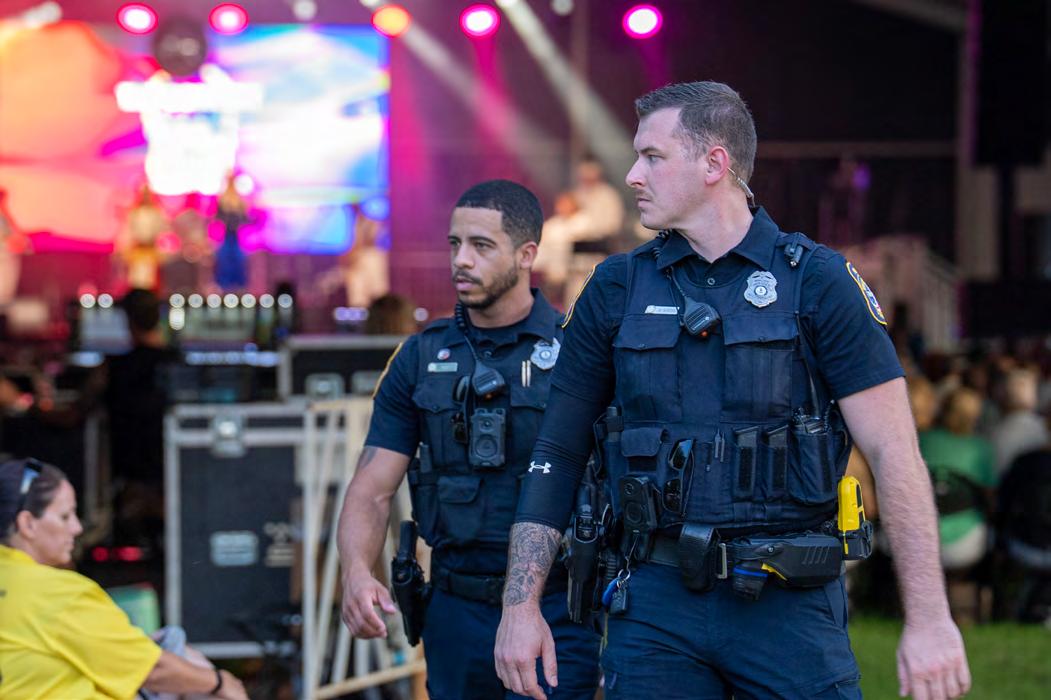
The Williamsburg Police Department (WPD) is celebrating its 38th anniversary as a CALEA-accredited agency, the gold standard in policing. The WPD is committed to ensuring the safety and security of all residents and visitors to the city through community engagement in all areas of service, including the Neighborhood Resource Officer Program that assigns a dedicated police officer to each neighborhood in the city.
WPD is currently staffed with 52 career personnel who manage approximately 41,000 calls per year. All officers are required to attend Crisis Intervention Training as well as verbal de-escalation training to ensure an officer’s presence creates the opportunity to manage situations without the need for higher levels of force whenever possible.
The WPD is committed to technology as a force multiplier. The department has implemented a citywide license plate reader program to quickly identify wanted vehicles that
enter our community. In addition, officers are required to use body-worn and in-car cameras during police incidents. At the same time, WPD maintains best practice policies to purge data to best protect the rights of residents. This technology aids with training, record-keeping, accountability, transparency, and overall efficiency of the agency. A Citizen Advisory Committee works to ensure the WPD is doing its very best every shift.
In addition to traditional law enforcement services like prevention, education and responding to police emergencies, officers are equipped with medical supplies, including Narcan, and are often the first on the scene for life-threatening medical emergencies.
In partnership with our public schools, WPD has assigned an officer to every City school. Events like Coffee with a Cop, Skate with a Cop, and Cone with a Cop offer a casual setting for the community to interact with officers of all ranks.
Williamsburg Fire Department
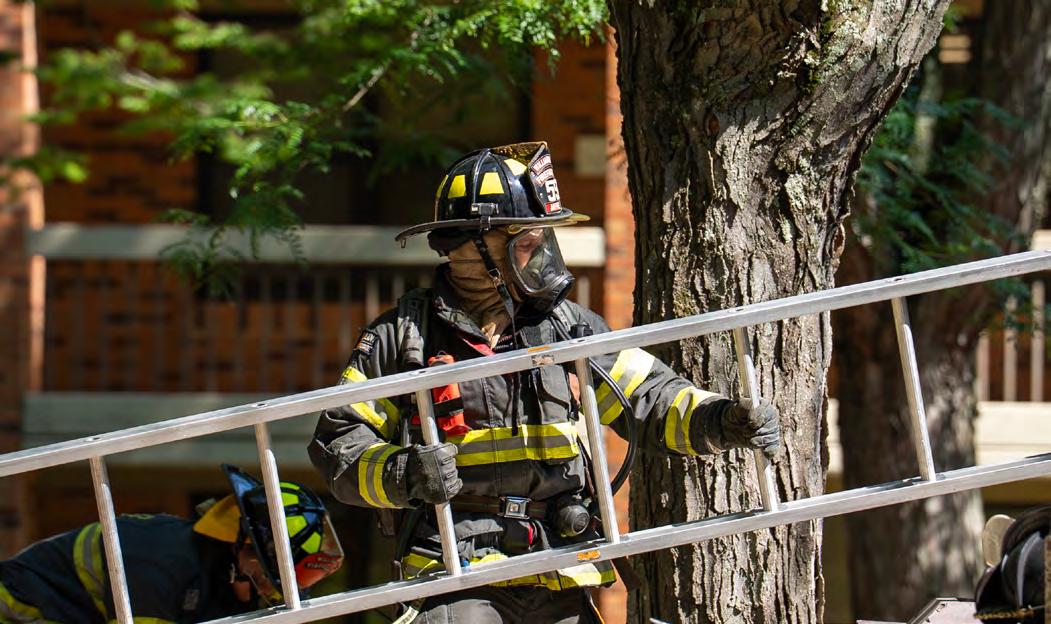
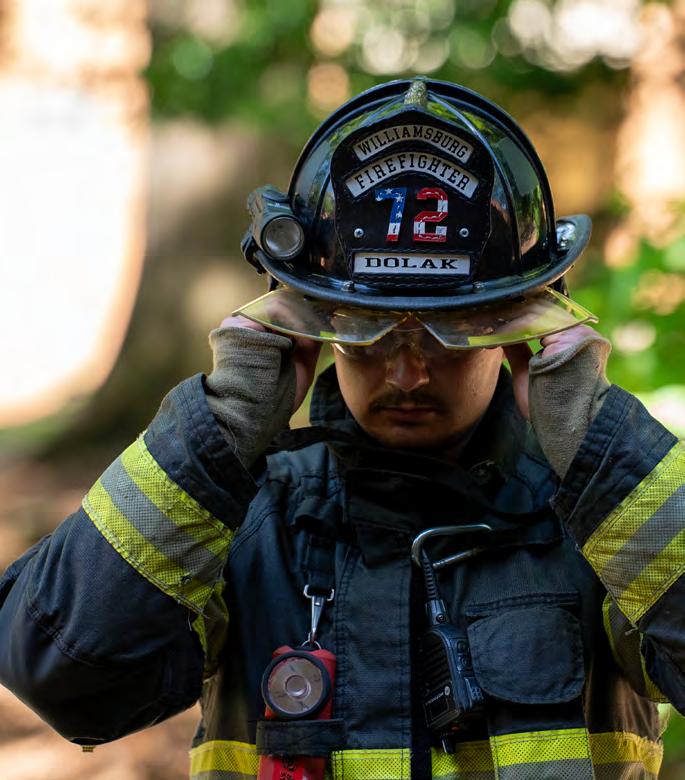
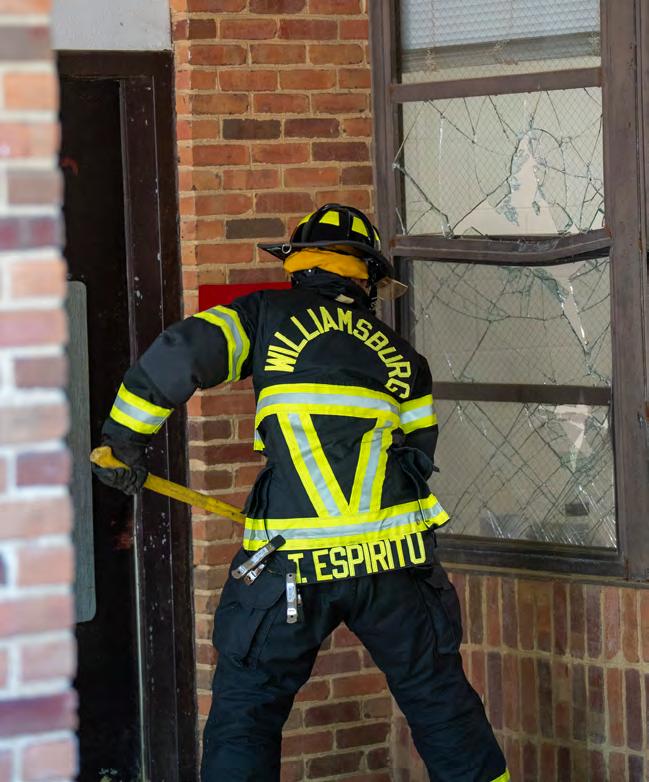
For more than 270 years, the Williamsburg Fire Department has protected our nation’s Colonial Capital and stands ever ready to serve all those who visit or call Williamsburg home. Through comprehensive emergency response to all hazard types and community-focused programs, the department strives to ensure the safety and well-being of all.
The Fire Department is currently staffed with 46 career personnel. Personnel are cross-trained to handle both fire and emergency medical services (EMS). In 2025 the department responded to 4,974 calls for service, a decrease of approximately 4.5% compared to in 2024.
The department’s Community Risk Reduction Division works to identify and prioritize local risks and to strategically invest resources to reduce their occurrence and impact. This comprehensive approach has several supporting programs like smoke alarm checks and installations, child safety seat education, fire inspections, home safety surveys, and public education events.
The department reached more than 2,847 people members through its community risk reduction programs in 2025.
The City’s Mobile Integrated Healthcare (MIH) program supported more than 78 clients and community members through a total of 2,474 interactions in 2025.
The Community Emergency Response Team (CERT) is also a vital outreach program that utilizes community members to assist with the safety and well-being of our neighborhoods and serves as an integral part of the City’s emergency management and preparedness efforts.
Volunteer Fire and EMS Program
Since 1754, the Williamsburg Volunteer Fire Department has supported the community. The organization is made up of 23 local and collegiate members. In 2025, members of the program provided more than 5,038 service hours to the community. The volunteer organization is a 501(c) (3) and assists with purchasing supplies and equipment needed to support Williamsburg’s career staff.
2
Economic Statistics | By the Numbers
Principal Employers
1 Includes part-time and seasonal employees
Principal Taxpayers
Current and Nine Years
Unemployment Rate and Labor Force
Current and Nine Years Ago
Source: Virginia Employment Commission; https://virginiaworks.com/
Land Area of Original City of Williamsburg and Subsequent Annexations
Demographic and Economic Statistics
Last 10 Fiscal Years
1 Weldon Copper Center for Public Service - Demographics Research Group, demographics.coopercenter.org ² U.S. Dept of Commerce, Bureau of Economic Analysis, Regional Economic Data—Statistical Areas/Metropolitan Counties by State income & area population figures based on figures for the City of Williamsburg and neighboring James City County combined ³ Williamsburg-James City County Public Schools 4 Virginia Employment Commission; https://virginiaworks.com/
Community Profile | Works Cited
1 “Brief History.” City of Williamsburg, williamsburgva.gov/490/History-of-City-Government Accessed April 7, 2021.
2 “College of William & Mary.” U.S. News, usnews.com/best-colleges/william-and-Mary-3705 Accessed April 7, 2021.
3 “Explore Colonial Williamsburg.” Colonial Williamsburg, colonialwilliamsburg.com/explore Accessed Aug. 20, 2018.
4 Williamsburg-James City County Public Schools, wjccschools.org. April 2024
CITY COUNCIL GOALS, INITIATIVES, & OUTCOMES
Introduction
To advance our City’s vision, every two years the Williamsburg City Council identifies new strategic initiatives for our city government. The Williamsburg City Council and staff presented the 2025/2026 Goals, Initiatives, and Outcomes in the Fall of 2024.
In 2020, the City of Williamsburg launched a new vision statement that is meant to carry us through the next two decades. It is our vision for the Williamsburg of 2040, and we will fulfill that vision with a strategic approach.
Goals, Initiatives, and Outcomes (GIOs) provide an expression of priorities, as specific and measurable as possible, and cover a two-year period. They are not intended to be a comprehensive list of all city services and activities. Instead, GIOs are a concrete, coordinated expression of the City Council’s direction and focus. City Council will adopt new GIOs for 2027/2028 in the Fall of 2026.
The City of Williamsburg has a highly interactive strategic plan that links the GIOs to the City’s strategic plan, performance measures and budget. In the Budget Guide section of this document, there are details on the goal-setting process.
To obtain more information about the plan and to follow along with the progress, please visit williamsburgva.gov/GIO.
Vision Statment
One Williamsburg that is courageously leading, innovating a modern city, prioritizing safety and wellness, engaging with our partners, while connecting with the world.
Goal Areas
1. One Williamsburg
2. Courageously Leading
3. Innovating a Modern City
4. Prioritizing Safety and Wellness
5. Engaging with Our Partners
6. Connecting with the World
Goal 1
One Williamsburg
A welcoming city where all people who live, work, and visit have the opportunity to thrive, regardless of age, race, ethnicity, income, sexual orientation, religion, or gender identity. The culture of our city will promote a variety of housing and employment options that welcome a diversity of backgrounds and opinions.
Affordable Housing Implementation
Evaluate the establishment of a City of Williamsburg first-time homebuyers program, including consideration of lower down payments, better interest rates, closing costs assistance, grants, tax credits, and education.
Investigate the expansion of the City’s workforce housing program to include the development of low-density, low-impact housing on the City’s surplus properties.
Propose zoning amendments to enable additional detached accessory dwelling units for owner-occupied homes as a vehicle to make the home more affordable and facilitate aging in place.
Assess neighborhood support for a Highland Park CDBG Housing Rehabilitation Program as a tool to slow gentrification and enable generational home improvement.
Affordable Housing Implementation
Continue to preserve downtown neighborhoods and community character by considering the impact of a Preservation Assistance Program for those with income-based restrictions or first-time homebuyer status to make historic properties more accessible by defraying the costs of Architectural Review Board-compliant renovations in historic neighborhoods.
Analyze the potential impact of a Contingent Interest Mortgage Program by identifying a lending partner or partners.
Truth & Reconciliation Advancements
Continue to advance Truth & Reconciliation by issuing a Request for Proposals for the redevelopment of the Blayton and Triangle buildings that encourages minority respondents and provides for minority commercial tenants post-redevelopment.
Secure funding for Phase 2 of the African American Heritage Trail and substantially complete its construction by July 4, 2026, to include a trailhead at the corner of Virginia and Lafayette streets, offering an appropriate space for reflecting and gathering.
Goal 2 Courageously Leading
A commitment to leadership that is willing to embrace change with compassion, innovation, and aspiration to serve and engage the community. Our creativity, professionalism, and ability to deliver results will be recognized as a national governance model.
Carbon Emission Reduction
Formally establish the 40-By-40 Plan – the City Council’s desire to reduce the City’s carbon emission footprint 40% by the year 2040 –and identify reduction strategies.
Early Childhood Education
Quantify the City resident student pre-K demand and identify strategies to supplement early childhood education inside the City, focusing on affordability and opportunity.
Equity in Education
Review existing equity in education standards within the joint school division and research methods of pairing innovative curricula with the City of Williamsburg assets, such as William & Mary and Colonial Williamsburg Foundation, to improve opportunities for all children.
Reimagine K-12 Education
Modernize the joint operating contract for the public school division to identify existing models that have successfully differentiated and targeted resources to address specific challenges; facilitate improved student performance; streamline the education-to-career pipeline; and allow for smaller-scale additive programs within the larger public school division.
Smart City Initiatives
Consider the deployment of Smart City infrastructure to enable better data collection and policy development in service areas such as parking, downtown trash collection, visitation, air quality, lighting, road conditions, and code enforcement.
Transitional and Emergency Housing
Consolidate existing transitional and emergency housing programs in a new responsive housing model that is less reliant on grant funding.
Goal 3
Innovating a Modern City
The equitable enhancement and protection of our entire city’s natural beauty by respecting our past and building our tomorrow. Our modern city will include attractive streetscapes, diverse housing and employment options, inviting public spaces, appropriately located infill redevelopment, and modern connectivity — all to position our city so it can attract the next big opportunity.
Capitol Landing Road
Complete utility relocation and roadway improvements for the Capitol Landing Road Corridor and intersection of Capitol Landing and Bypass roads.
Children’s Park
Identify a funding strategy for and work toward completing the construction of a downtown children’s park that complements the design requirements of the Historic Area and facilitates interactive history.
Comprehensive Plan Update
Commission the completion of a Comprehensive Plan that, when complete, recommends a Complete Streets Policy; considers the appropriateness of existing Architectural Review Board District boundaries; reviews opportunities for additional housing downtown, infill development, and two-story development requirements; identifies school planning concerns; includes a citywide pedestrian/bike plan that considers existing facility improvements, expansion of assets, and trail connectivity; and a revised economic development strategic plan that emphasizes economic diversification, including opportunities for a Research Village as part of the megaregion that satisfies requirements of the Virginia Business Ready Sites Program.
Downtown Library
Following public input on the building’s design, select a general contractor, approve a finance plan, and begin construction for the replacement of the downtown library.
Placemaking
Continue to support existing special events inside the City and identify opportunities to further diversify the type and location of events offered.
Public Art
Facilitate the expansion of public art by developing approved art installation locations, evaluating a temporary or rotating exhibit approach, and completing the installation of the first gateway lantern feature.
Road Access to Sports Center
Initiate design and secure funding for additional access to the regional indoor sports center such that completion of the work coincides with the improvement of the Bypass-Capitol Landing Road intersection.
Tourism Product Renewal
Focus economic development recruitment efforts on the redevelopment of existing hotel properties and consider highest and best use of City-owned properties along Capitol Landing Road.
Goal 4
Prioritizing Safety and Wellness
Targeted services that support, improve, and sustain individual health and community safety. Our city will proactively address public safety and social health by daring to be creative in our practices as we address homelessness and racial equity, as well as pursue a robust parks and recreation system that reimagines the use of green space.
Enhance Existing Park Facilities
Continue implementation of the comprehensive enhancements plan for the City’s Parks & Recreation facilities to boost visitation through the reconstruction of the Kiwanis Park tennis courts, completion of a new Wales neighborhood playground and fence, and redevelopment of the Strawberry Plains neighborhood playground.
Public Restrooms
Identify locations for public restrooms and construct two public restroom sites.
Shoreline Access
Replace the stationary canoe/kayak launch at College Landing Park with a structured shoreline ADA-compliant launch that includes an accessible pathway.
Utilities Infrastructure
Complete the utilities master planning process, establish a funding plan, and initiate two identified infrastructure improvements for the City’s system.
Waller Mill Usage Plan
Consider opportunities for increased usage of the existing Waller Mill Park, reservoir, and surrounding City-owned land through the development of a Waller Mill Usage Plan.
Waller Mill Dam Improvements
Complete the improvement of Waller Mill Dam fortification to comply with the Department of Conservation and Recreation to secure against failure in the result of a worst-case rainfall event.
Goal 5
Engaging with Our Partners
Collaborations that re-energize and reimagine relationships with our partners that result in mutual success. The city will leverage our position in the middle of the evolving Hampton Roads / Richmond Mega Region, establish future priorities with William & Mary and Colonial Williamsburg Foundation, and explore other partnership opportunities. The city will maximize strategic partnerships with James City and York counties, as well as expand our partner base to reinforce our national prominence and top-tier brand.
Leverage External Funding
Research and deploy local government best practices for employment of or contracting for grant writing and management services as well as private fundraising for municipal projects.
Live Performance Venue
Complete initial design of the Williamsburg live performance venue, determine regional support, and evaluate facility completion by July 4, 2026.
Parking Technology
Continue to evaluate consistent parking hardware, software, and pricing models that emphasize convenience, ease of use, and turnover while implementing a new parking solution in the Prince George Parking Garage.
Regional Homelessness Strategy
Consider the findings of the regional Virginia Peninsula Homelessness Study and work to identify two regionally supported strategies.
Rent Ready
Complete public review of the Williamsburg Rent Ready Program and consider adoption while planning for staffing needs.
Sports Tourism Development
Evaluate the cost, economic impact, and local need of additional sports tourism facilities associated with the regional indoor sports center, including aquatic and ice sports.
Goal 6
Connecting with the World
Leverage our strategic location on the Interstate 64 corridor to our economic advantage by expanding technology and infrastructure and ensuring the daily mobility of our residents and visitors.
15-Minute City
Expand Williamsburg Area Transit Authority Route 15 to connect the Colonial Williamsburg Historic Area and Transportation Center with the Monticello commercial corridor, including pharmacies, grocery stores, and general shopping areas using a 15-minute frequency and electric bus infrastructure.
250th Commemoration
Facilitate the work of the Williamsburg 250th Committee, with particular focus placed on completing the identified 250th legacy projects and measuring tourism impacts of 250th-related travel.
Bus Stop Improvements
Identify the needed improvements to provide each City bus stop with a defined standard level of service, including a shelter and trash can, and then improve five stops to the new standard of service.
Internet Connectivity
Support the continued expansion of broadband providers to improve pricing, availability, and speed while seeking an appropriate solution to provide internet connectivity as a next-generation public utility.
Revised Communication Strategy
Evaluate current public outreach tools for effectiveness; identify new approaches aligned with community input; and redesign communication approaches for greater engagement.
Trail757
Establish the Williamsburg portions of Trail757, including connection to the expanded Capital Trail by obtaining funding for Phase 3 of the College Woods Circuit and planning for the trail’s continued routing through the City.
D
PERFORMANCE METRICS
Introduction
The preceding section on the biennial Goals, Initiatives, and Outcomes links the City Council's six broad goals to 35 specific initiatives. Further, the preceding section identifies desired community outcomes that relate to each goal.
This next section aligns budget and performance data to the City’s operating departments. For each department, a summary page includes the department mission, expenditures, and staffing, covering four years. Importantly, desired community outcomes related to each department and observed outcomes are shown. Many of these measures parallel the measures arrayed under the six goals in the preceding section, including the National Community Survey™ (NCS) results and ratings. Comparisons of Williamsburg resident ratings with the national benchmark from the latest 2024 NCS results are shown for service areas.
Finally, under each department are the budgetary Cost Centers that comprise that department. Detailed information is presented, including four years of expenditures and staffing, as well as performance trends, projections, and targets. Performance metrics – including workload measures, efficiency measures, and other useful indicators of performance – are shown with operating data for the last two fiscal years, the projected number for the current year, and the target or expected number for next year.
Contents
D2 Office of the City Manager
D10 Economic Development & Tourism
D16 Finance
D20 Information Technology
D24 Police
D30 Fire
D36 Public Works
D42 Parks & Recreation
D48 Planning & Codes Compliance
D54 Human Services
D58 Public Utilities
Office of the City Manager
Michele Mixner DeWitt | Interim City Manager
MISSION
To
COST CENTERS
CITY MANAGER
Administration Clerk of Council Communications Human Resources
DESIRED OUTCOMES #1
Receive improving National Community Survey ratings for indicators of overall community well-being and value of City services “higher” than the national benchmark.
OBSERVED OUTCOMES
Residents rated value of services for the taxes paid and quality of life “higher” than the national benchmark comparison, with all other results shown as “similar” to benchmark for 2024.
NATIONAL COMMUNITY SURVEY
Percent Rating “Good” or “Excellent” Overall quality of life in Williamsburg
*Comparison to the national benchmark
DESIRED OUTCOMES #2
Receive improving National Community Survey ratings for Overall Appearance, Natural Environment and Built Environment “higher” than the national benchmark.
OBSERVED OUTCOMES
The overall appearance and cleanliness and overall quality of new development and natural environment were all ranked “higher” than the national benchmark. The quality of overall natural environment ranked “similar” to the national benchmark for 2024.

NATIONAL COMMUNITY SURVEY
Percent Rating “Good” or “Excellent”
*Comparison to the national benchmark
DESIRED OUTCOMES #3
Receive improving National Community Survey ratings for Overall Image, Direction, Opportunities for Participation in Community Matters and Public Information Services “higher” than the national benchmark.
OBSERVED OUTCOMES
Overall image of Williamsburg rated “higher,” with all other responses “similar” to the national benchmark for 2024.
NATIONAL COMMUNITY SURVEY
Percent Rating “Good” or “Excellent”
Overall image or reputation of Williamsburg
Overall direction that Williamsburg is taking
Opportunities to participate in community matters
Public information services
*Comparison to the national benchmark
DESIRED OUTCOMES #4
Receive improving National Community Survey ratings for other Governance survey responses “higher” than the national benchmark.
OBSERVED OUTCOMES
Overall confidence in Williamsburg and Generally acting in the best interest of the community ranked “higher” in 2024 in comparison to the 2022 NCS. All categories ranked similar to the national benchmark for 2024.
NATIONAL COMMUNITY SURVEY
Percent Rating “Good” or “Excellent”
acting in the best interest of the community
in Williamsburg government Overall customer service by employees
*Comparison to the national benchmark
DESIRED OUTCOMES #5
Exceed budget expectations by having operating revenues exceed operating expenditures each year.
OBSERVED OUTCOMES
Operating revenues surpassed budgeted expectations and mirror pre-pandemic percentage variances.

BUDGET VS. OPERATIONS
Revenues Expenditures Budgeted
DESIRED OUTCOMES #6
Maintain sound fiscal health by exceeding City Council’s reserve policy of a minimum 35% of operating revenues each year.
BUDGET VS. OPERATIONS
OBSERVED OUTCOMES
Shown is year-end unassigned fund balance. Prior to July 1, 2019, the General Fund and the Capital Improvement Fund were combined for reporting purposes. Effective July 1, 2019, the General Fund was reported separately for transparency. The year-end fund balance for FY18 has been restated.
DESIRED OUTCOMES #7
Maintain annual employee turnover rate of 10% or less of the permanent workforce.
OBSERVED OUTCOMES
This is an indicator of retention of employees who resign, retire, or otherwise terminate employment. The Covid-19 pandemic skewed the FY21 to FY23 results. The 2025 average annual turnover rate for surrounding localities is 6.5%.
CITY MANAGER / HUMAN RESOURCES
CLERK OF COUNCIL / COMMUNICATION
Economic Development & Tourism
Yuri Matsumoto | Economic Development & Tourism Director
MISSION
To drive economic growth in Williamsburg through business support, strategic recruitment, tourism development, and public art – fostering a vibrant, diverse, and resilient local economy.
EXPENDITURES & STAFFING
COST CENTERS
ECONOMIC DEVELOPMENT
TOURISM DEVELOPMENT
DESIRED OUTCOMES #1
Receive improving National Community Survey responses for metrics related to business climate and economic vitality, with ratings “higher” than the national benchmark.
OBSERVED OUTCOMES
Received improved ratings related to Economic Development and Williamsburg as a place to work, though ratings for both, with the addition of employment opportunities, remain “similar” to the national benchmark for 2024.
NATIONAL COMMUNITY SURVEY
Percent Rating “Good” or “Excellent”
Williamsburg as a place to work Employment opportunities Economic development
*Comparison to the national benchmark
DESIRED OUTCOMES #2
Receive improving National Community Survey ratings for other Governance survey responses “higher” than the national benchmark.
OBSERVED OUTCOMES
Overall confidence in Williamsburg and Generally acting in the best interest of the community ranked “higher” in 2024 in comparison to the 2022 NCS. All categories ranked similar to the national benchmark for 2024.
NATIONAL COMMUNITY SURVEY
Percent Rating “Good” or “Excellent”
Variety of business and service establishments
Overall quality of business and service establishments
Shopping opportunities
*Comparison to the national benchmark
DESIRED OUTCOMES #3
Receive improving National Community Survey responses for Williamsburg as a place to visit, vibrancy of the downtown commercial area, and availability of inviting public spaces, with ratings “higher” than the national benchmark.
OBSERVED OUTCOMES
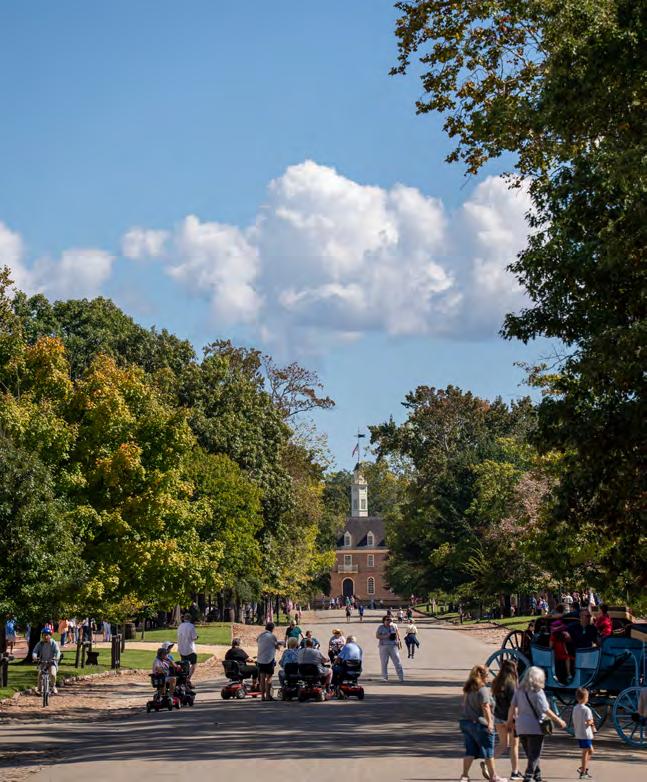
Residents rated public spaces and vibrancy of the downtown commercial area as “higher,” with Williamsburg as a place to visit rated “much higher” than the national benchmark.
NATIONAL COMMUNITY SURVEY
Percent Rating “Good” or “Excellent”
Williamsburg as a place to visit
Public places where people want to spend time
Vibrancy of downtown/ commercial area
*Comparison to the national benchmark
ECONOMIC DEVELOPMENT

Finance Department
Barbara
Dameron, CPA | Finance Director
MISSION
To provide exceptional stewardship and safeguarding of City assets by maintaining financial management, reporting and internal control systems, with accountability to the public in a responsible and timely manner.
DESIRED OUTCOMES #1
Maintain real estate property tax collections of at least 98% annually.
OBSERVED OUTCOMES
Finance collects all City revenues, with Real Estate Taxes being the single highest revenue source. Collections rates consistently fall between 97% and 99% each year. Staff follow-up on delinquent accounts raises collections close to 100% in subsequent years.
REAL ESTATE TAX COLLECTION RATE
DESIRED OUTCOMES #2
Maintain Personal Property tax collections of at least 97% each fiscal year.
OBSERVED OUTCOMES
Personal property tax collections include the State’s $773K Personal Property Tax Relief Act program each year. Follow-up action on delinquent accounts includes state programs with debt set-off and DMV matching to increase collections in subsequent years.
PERSONAL PROPERTY TAX COLLECTION RATE
DESIRED OUTCOMES #3
Maximize yield on investments while maintaining stringent City policy requirements of safety and liquidity.
AVERAGE RATE OF INVESTMENT RETURN
OBSERVED OUTCOMES
City’s investment portfolio diversified earning average yield of 1.08% fully insured by FDIC, with balances in State Local Government Investment Pool (LGIP), bond proceeds in State Nonarbitrage Investment pool, SNAP, and interest-bearing checking accounts.
DESIRED OUTCOMES #4
Maintain residential property assessments at 99.5% of market value.
ASSESSMENT TO SALES RATIO
Residential Properties
OBSERVED OUTCOMES
The City Assessor closely tracks all property sales. Assessments are based on the latest market sales of properties with similar characteristics, including neighborhoods.
Finance & Real Estate Assessments |
Information Technology Department
Mark Barham | Chief Information Officer
MISSION
To provide exceptional information technology systems and services to our customers, both internal and external, that support the mission of the City of Williamsburg in an efficient and cost-effective manner.
EXPENDITURES & STAFFING
COST CENTERS
INFORMATION TECHNOLOGY
Information Technology Department
DESIRED OUTCOMES #1
Respond to all IT Helpdesk service calls in less than two hours.
AVERAGE TIME TO HELPDESK RESPONSE
OBSERVED OUTCOMES
Helpdesk response time achieved the goal of being less than two hours in FY25. The average response time for all Helpdesk service calls since FY16 is 2.48 hours.
DESIRED OUTCOMES #2
Increase website visitors by 10% annually.
WEBSITE VISITORS
OBSERVED OUTCOMES
Overall website traffic increased in FY25 compared to FY24. Overall, website traffic has increased since pre-pandemic levels. This can be attributed to improved interconnectivity with social media sites and online bill payments becoming more accessible.
DESIRED OUTCOMES #3
Expand the use of the City’s website to conduct City business by increasing eGov transactions at least 10% annually.
# EGOV TRANSACTIONS
4,000 10,000 16,000 22,000
DESIRED OUTCOMES #4
Increase total dollar amount of online transactions received from residents by 10% annually.
$ EGOV TRANSACTIONS
$4,400,000
$3,400,000
$2,400,000
$1,400,000
$400,000
OBSERVED OUTCOMES
The total number of eGov transactions increased significantly from FY16 through FY25. Transactions have steadily increased since FY22 due to the transition into monthly utility billing.
OBSERVED OUTCOMES
Financial transactions over the City's website totaled $25 million from FY16 through FY25. The average increase in receipts over the 10 fiscal years was 14.5%.
$1,228,392 $1,528,992 $1,783,474 $2,055,420 $2,257,003
$3,934,940
Information Technology Department | Performance Measures
Police Department
Sean Dunn | Police Chief
MISSION
To work in partnership with the residents of Williamsburg, providing a safe and secure environment consistent with community values, with an emphasis on responsive community-based policing, integrity, fairness and professionalism.
EXPENDITURES & STAFFING
COST CENTERS
LAW ENFORCEMENT OPERATIONS
• Support Services
• Uniformed Bureau
• Investigative Bureau
PUBLIC SAFETY COMMUNICATIONS
PARKING GARAGE
DESIRED OUTCOMES #1
Receive improving National Community Survey ratings for all services provided by the Police Department “higher” than the national benchmark.
OBSERVED OUTCOMES
The percentage of Williamsburg citizens’ ratings of “good” or “excellent” were “higher” for crime prevention, with police services and traffic enforcement “similar” compared to the national benchmark for 2024.

NATIONAL COMMUNITY SURVEY
Percent Rating “Good” or “Excellent”
*Comparison to the national benchmark
DESIRED OUTCOMES #2
Receive improving National Community Survey responses “higher” than the national benchmark for resident ratings when asked if they feel safe in the City.
OBSERVED OUTCOMES
Overall safety is “higher” than national benchmark. Other responses for FY 2024 were “similar” to the national benchmark for the other categories.

NATIONAL COMMUNITY SURVEY
Percent Rating “Good” or “Excellent”
in downtown/ commercial area Overall feeling of safety in Williamsburg
DESIRED OUTCOMES #3
Maintain an average response time of three minutes or less for service calls. Response time is measured from the time the call is received by a regional dispatcher to arrival at the scene.
OBSERVED OUTCOMES
Police response time target of three minutes or less has been met from FY16 through FY19 and in FY25.
AVERAGE POLICE RESPONSE TIME (MINUTES)
DESIRED OUTCOMES #4
Clear Part I crimes at a rate above the national average. Part I crimes are major crimes such as murder, rape, robbery, aggravated assault, burglary, larceny, and auto theft.
OBSERVED OUTCOMES
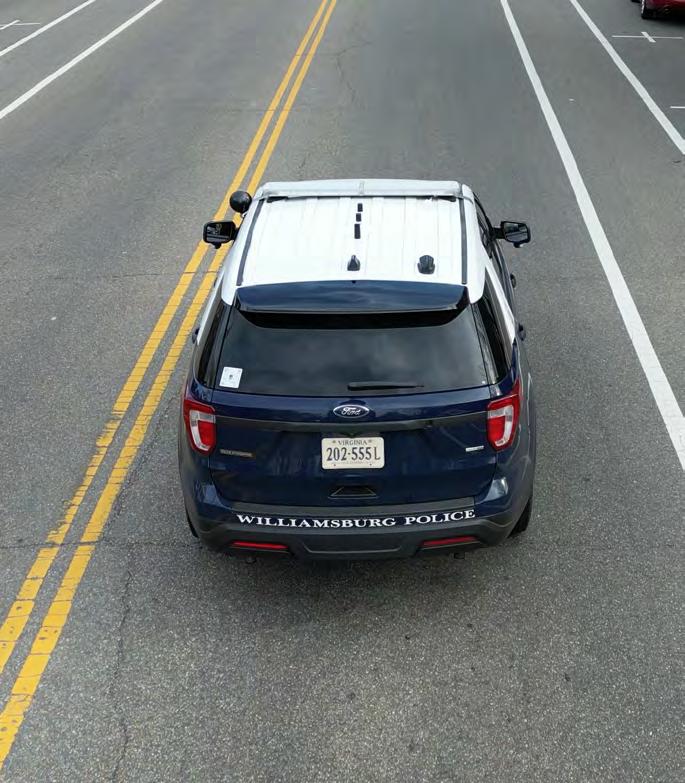
Williamsburg’s Police Department clearance rates for Part I crimes averaged 35% in FY25. This is 68% higher than the national rate.
CLEARANCE RATE FOR PART 1 CRIMES
Fire Department
Larry W. Snyder Jr. | Fire Chief
MISSION
To ensure a prompt, safe and timely response to emergencies of an all-hazards nature. To diligently enforce all life safety measures to ensure a safe and livable community for residents and visitors.
EXPENDITURES & STAFFING
& EDUCATION
EMERGENCY MEDICAL SERVICES
EMERGENCY MANAGEMENT/ DISASTER PREPAREDNESS
DESIRED OUTCOMES #1
Receive improving National Community Survey ratings for all services provided by the Police Department “higher” than the national benchmark.
OBSERVED OUTCOMES
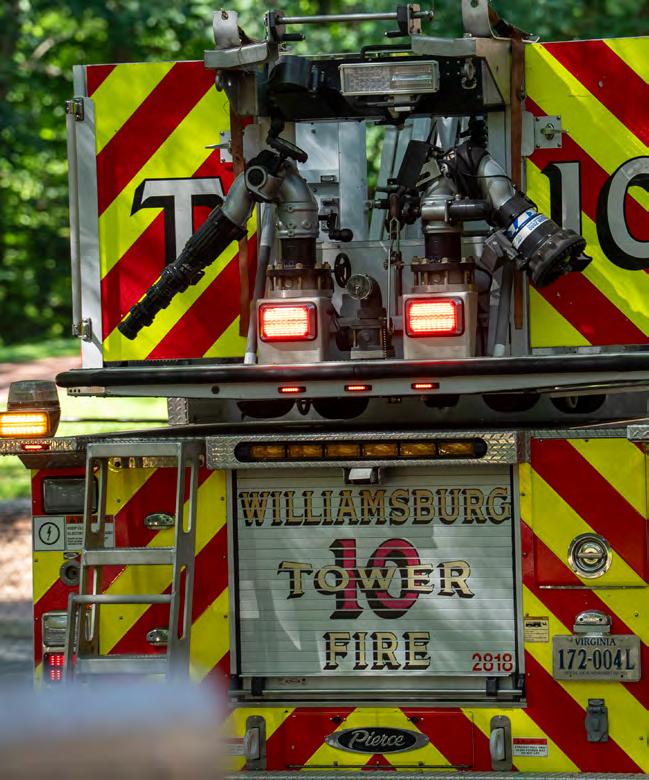
The percentage of Williamsburg citizens’ ratings of “good” or “excellent” were “higher” for crime prevention, with police services and traffic enforcement “similar” compared to the national benchmark for 2024.
NATIONAL COMMUNITY SURVEY
Percent Rating “Good” or “Excellent” Fire services
Emergency medical services (EMS)
Fire prevention & education
Emergency preparedness
*Comparison to the national benchmark
DESIRED OUTCOMES #2
Maintain an average fire response time of five minutes or less, from the time calls are received to arrival of first apparatus on the scene.
OBSERVED OUTCOMES
Average response times have increased gradually since FY16, driven by rising call volumes. In FY23, moving to temporary facilities and higher demand contributed to a further increase. While response times stabilized since moving into the new station, they remain above the target due to increased call volume, population growth, and traffic congestion.
AVERAGE FIRE RESPONSE TIME (MINUTES)
DESIRED OUTCOMES #3
Maintain an average Emergency Medical (EMS) response time of five minutes or less, from the time calls are received to arrival of first apparatus on the scene.
OBSERVED OUTCOMES
The average response times have reverted to levels approaching those documented before the transition to the new fire station. Although response times have stabilized subsequent to relocating to the new station, they continue to exceed the targeted benchmarks owing to heightened call volume, demographic expansion, and increased traffic congestion.
AVERAGE EMS RESPONSE TIME (MINUTES)
FIRE DEPARTMENT
Public Works
R. Jackson Reed | Public Works & Utilities Director
MISSION
To
safe and efficient transportation system, including effective signage, beautiful landscaping of City-owned properties, and maintenance of Cedar Grove Cemetery.
COST CENTERS CITY SHOP
ENGINEERING, STREETS, STORMWATER OPERATIONS
REFUSE
BUILDINGS
LANDSCAPING
CEMETERY
& STAFFING CONT'D
DESIRED OUTCOMES #1
Receive improving National Community Survey ratings for street services provided “higher” than the national benchmark.
OBSERVED OUTCOMES
Street repair and street cleaning were rated “higher” than national benchmark with all other categories rated “similar” to the national benchmark for 2024.
NATIONAL COMMUNITY SURVEY
Percent Rating “Good” or “Excellent”
DESIRED OUTCOMES #2
Increase residential participation in the citywide recycling program.
OBSERVED OUTCOMES
Target set-out rate for recycling material is 65%. Recycling information is available to residents in a variety of ways, including the City’s website, the Williamsburg Farmers Market during summer months, and the Neighborhood Council of Williamsburg.
% OF RECYCLING BINS SET OUT ON RECYCLING DAY
DESIRED OUTCOMES #3
To meet the state goal of recycling 25% of the City’s solid waste stream each year.
% OF SOLID WASTE STREAM RECYCLED
OBSERVED OUTCOMES
Since 2015 the City has exceeded the State’s 25% goal. For 2025, the recycling rate was 31%.
DESIRED OUTCOMES #4
Receive improving National Community Survey ratings for essential services provided by the Public Works department “higher” than the national benchmark.
OBSERVED OUTCOMES
Garbage collection and recycling are contracted services. All survey responses were “similar” to the national benchmark for 2022.
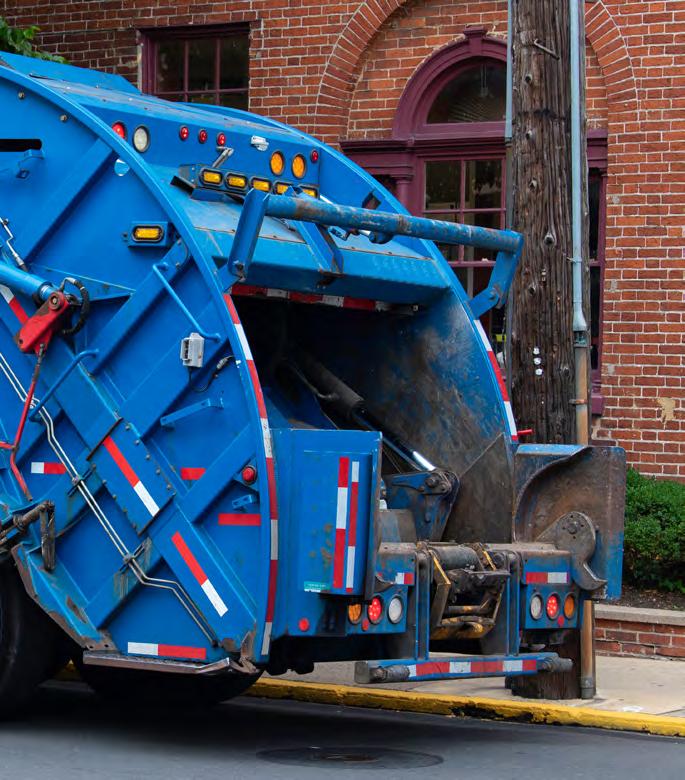
NATIONAL COMMUNITY SURVEY
Percent Rating “Good” or “Excellent”
Parks & Recreation
Robbi Hutton | Parks & Recreation Director
MISSION
To provide quality recreational facilities, parks and programs that are safe, diverse, affordable and enriching to the community through our commitment to public service.
COST CENTERS
ADMINISTRATION
DESIRED OUTCOMES #1
Receive improving National Community Survey ratings for Recreation services and facilities “higher” than the national benchmark.
OBSERVED
OUTCOMES
All survey responses were “similar” to the national benchmark for 2024.
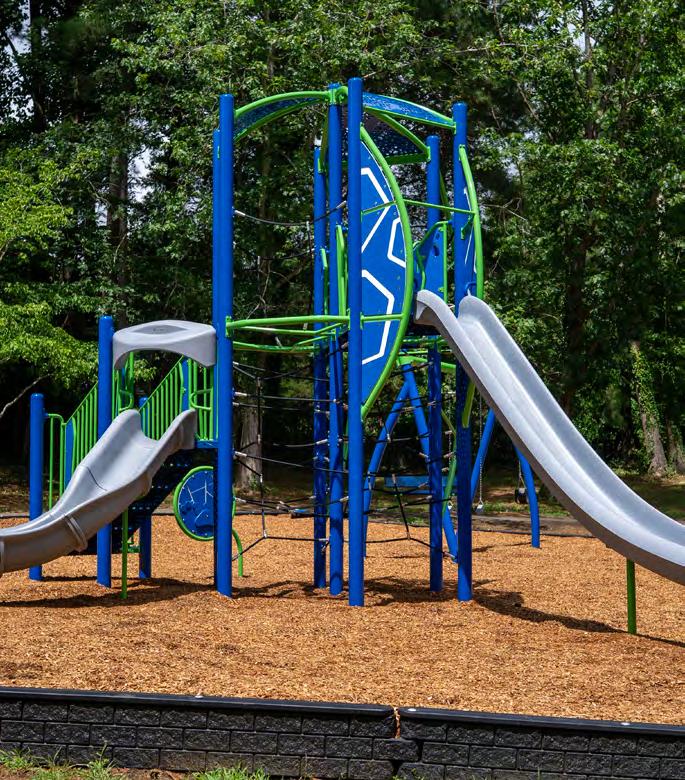
NATIONAL COMMUNITY SURVEY
Percent Rating “Good” or “Excellent”
to the
DESIRED OUTCOMES #2
Increase the number of City residents using the Recreation Center, visiting parks, and participating in recreation programs or activities.
OBSERVED OUTCOMES
Fitness opportunities responses were rated “similar“ to the national benchmark for 2024.
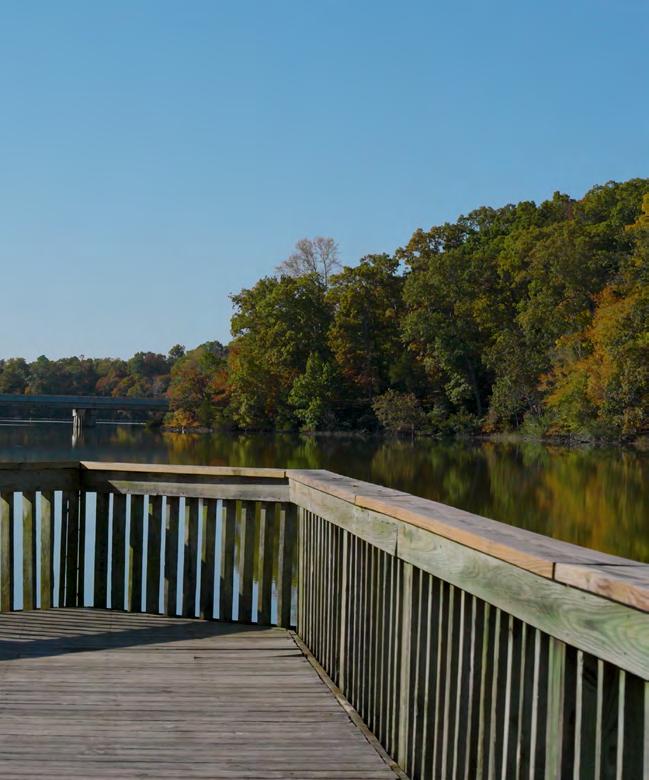
NATIONAL COMMUNITY SURVEY
Percent Rating “Good” or “Excellent”
Availability of path and walking trails
Fitness opportunities
Overall quality of Parks and Recreation opportunities
*Comparison to the national benchmark
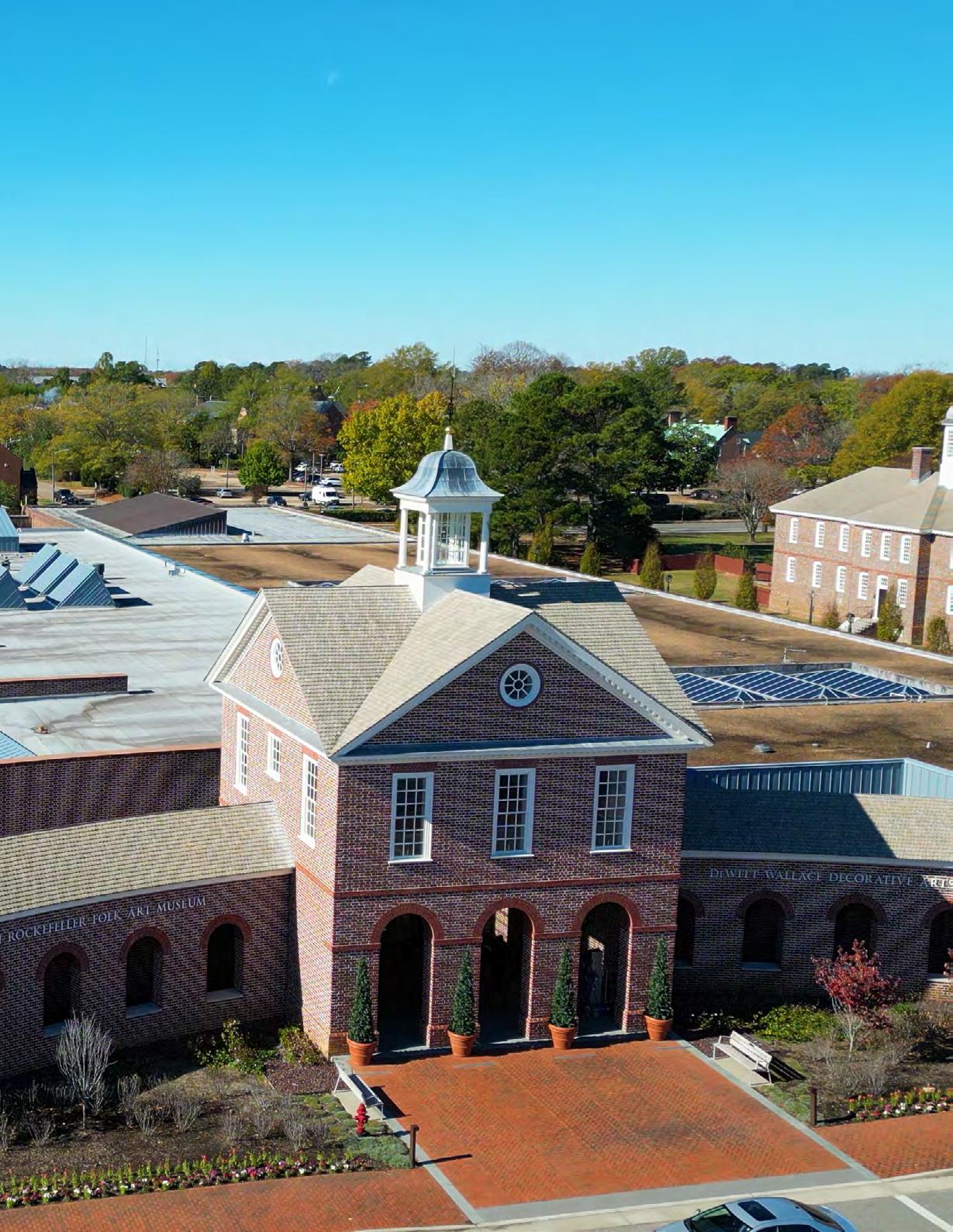
Planning & Codes Compliance
Tevya Griffin, AICP | Planning & Codes Compliance Director
Guide the physical development of the City as recommended by the Comprehensive Plan, and protect the health, safety, and welfare of residents and businesses through the enforcement of land development ordinances and building and property maintenance codes.
DESIRED OUTCOMES #1
Receive improving National Community Survey ratings for Land Use & Zoning services provided by the City’s Code Compliance department “higher” than the national benchmark.
OBSERVED OUTCOMES
All categories are “similar” to the national benchmark in the 2024 survey. Overall quality of new development was “higher” in 2024 compared to 2022.
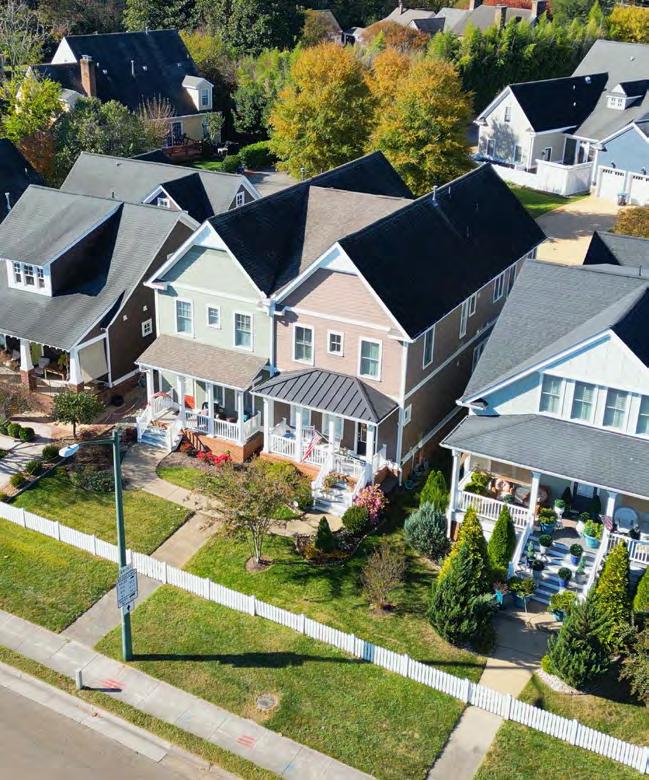
NATIONAL COMMUNITY SURVEY
Percent Rating “Good” or “Excellent”
Overall quality of new development
Land use, planning & zoning Code enforcement
*Comparison to the national benchmark
DESIRED OUTCOMES #2
Protect the visual and historic character of the City through an effective architectural review program.
OBSERVED OUTCOMES
Forty-eight percent of City land is subject to review by the Architectural Review Board. ARB reviewed 174 cases in FY25, approving 97%.
ARCHITECTURAL REVIEW BOARD CASES
DESIRED OUTCOMES #3
Protect the environmental character and quality of the City through enforcement of city and state environmental regulations (Chesapeake Bay Preservation and Erosion & Sediment Control regulations).
OBSERVED OUTCOMES
Sixty percent of the City is subject to Chesapeake Bay protection regulations. In FY25, 577 inspections were performed to ensure compliance with Erosion & Sediment Control regulations.
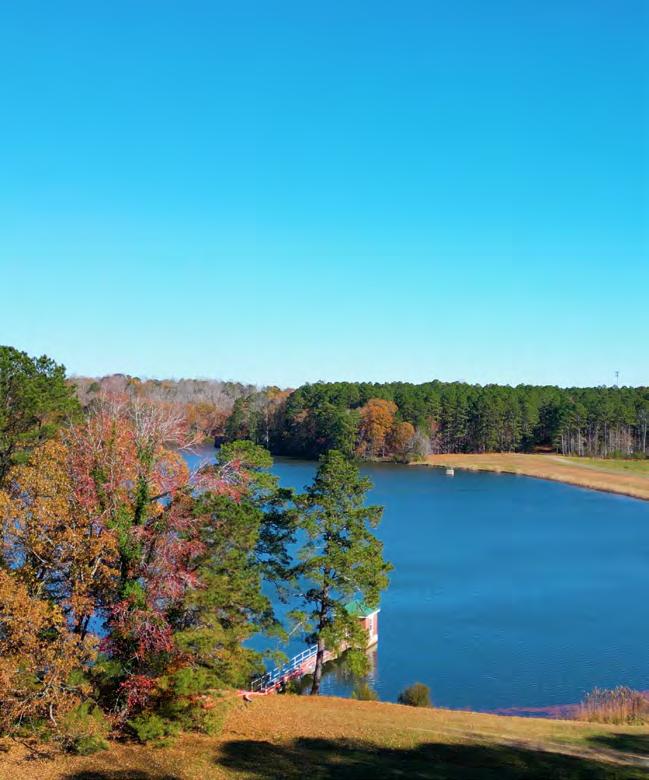
EROSION & SEDIMENT CONTROL INSPECTIONS
DESIRED OUTCOMES #4
Protect the character and quality of the City’s residential neighborhoods through proactive enforcement of the property maintenance code and Rental Inspection Program.
OBSERVED OUTCOMES
In FY25, there were 970 property maintenance code inspections and 311 rental inspections performed. Of those, 100% were brought into voluntary compliance.
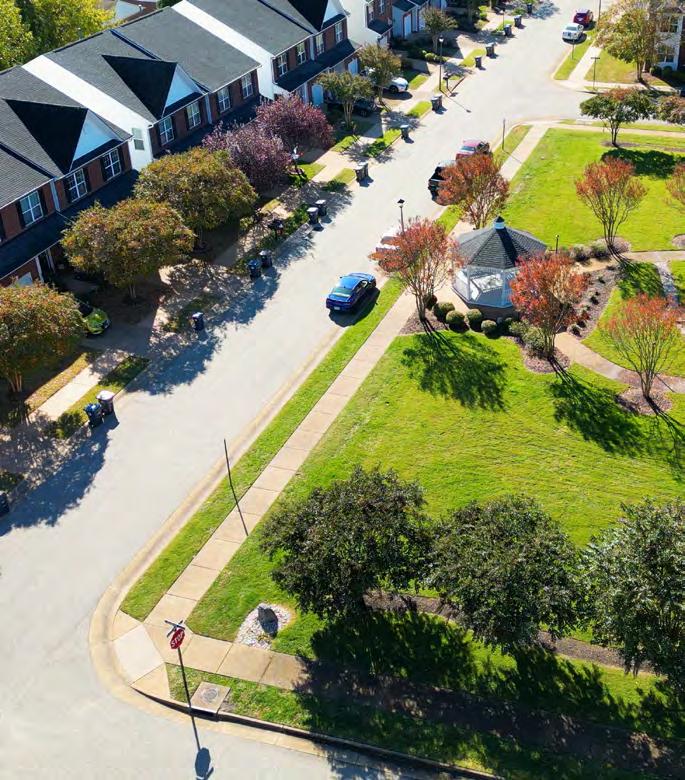
CODES COMPLIANCE
Human Services
Wendy Evans | Human Services Director
MISSION
To respond to the physical, emotional, and general human service needs of children, adults, and families in crisis, and to provide stabilization for program participants.
EXPENDITURES & STAFFING
LESS SUBSIDY FROM GENERAL FUND
DESIRED OUTCOMES #1
Process expedited food stamps (SNAP) within seven days.
OBSERVED OUTCOMES
Over the past 10 years, on average 95.3% of expedited food stamp applications have been processed in seven days.

& WELFARE
*Numbers are not unduplicated and may reflect multiple interactions with a single client.
Public Utilities
R. Jackson Reed | Public Works & Utilities Director
MISSION
To provide a safe, efficient, and cost-effective waterworks and sewage conveyance system throughout the City.
EXPENDITURES & STAFFING
COST CENTERS ADMINISTRATION
WATER
Systems separated from HRSD starting FY 2026
DESIRED OUTCOMES #1
Receive improving National Community Survey ratings for water and sewer services “higher” than the national benchmark.
OBSERVED OUTCOMES
The National Community Survey shows 79% of respondents rated the City’s drinking water “good” or “excellent,” with both drinking water and sewer services “similar” to the national benchmark. The sewer services ranked “higher” in 2024 compared to 2022.
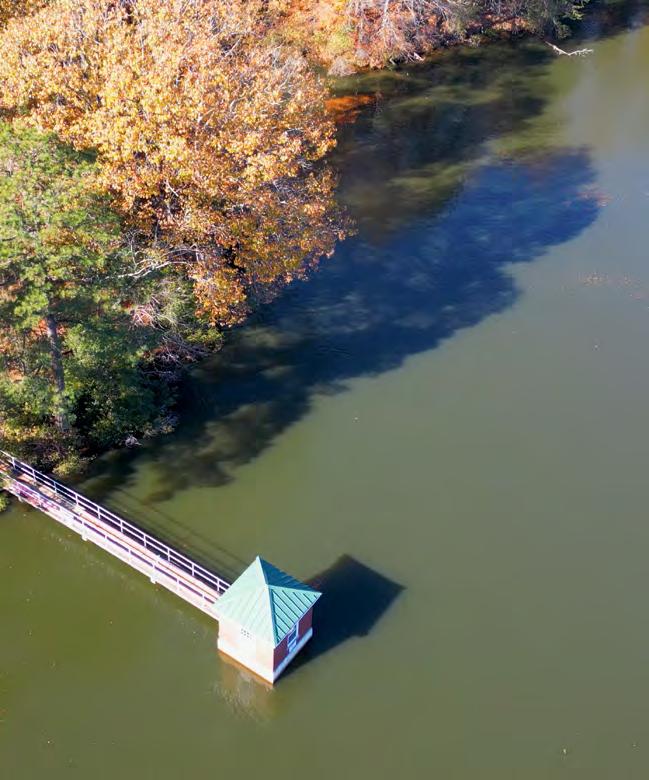
NATIONAL COMMUNITY SURVEY
Percent Rating “Good” or “Excellent”
Drinking water
Sewer services
*Comparison to the national benchmark
DESIRED OUTCOMES #2
Continue water conservation measures to target water consumption under 3.4 million gallons per day.
OBSERVED
OUTCOMES
Water consumption remains below 3.4 million gallons per day, with the 10year average in the City at 2.56 million gallons per day.
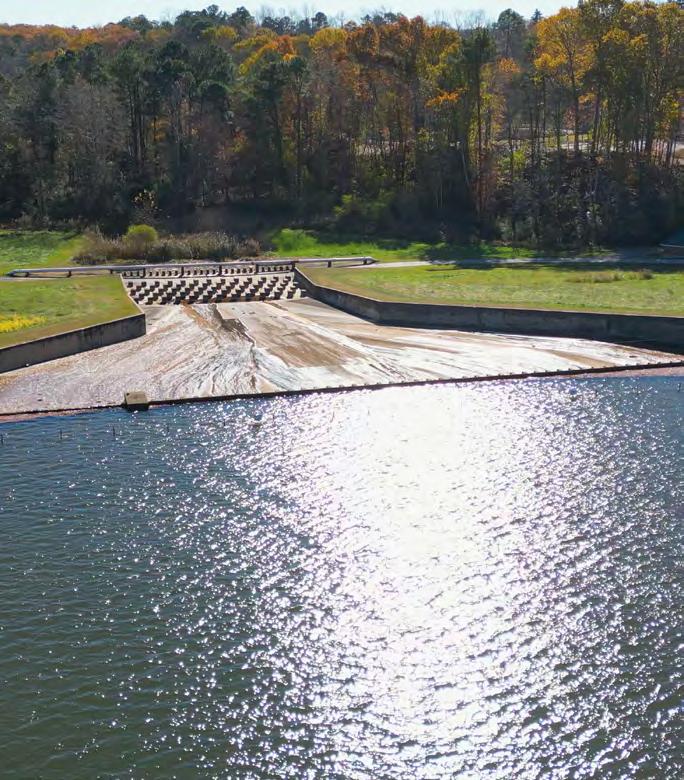
AVERAGE WATER CONSUMPTION PER DAY IN MILLIONS OF GALLONS
DESIRED OUTCOMES #3
To provide water with a quality that exceeds minimum regulatory standards (i.e. as perfect as possible) and to operate the Water Plant in an exemplary manner within the provisions of the Virginia Optimization Program (VOP) of the Virginia Department of Health.
OBSERVED OUTCOMES
The Water Plant has increased its percentage of Class 1 operators by nearly 30% over the last two fiscal years. With highly credentialed staff, the City continues to exceed minimum regulatory standards as established by the VOP.
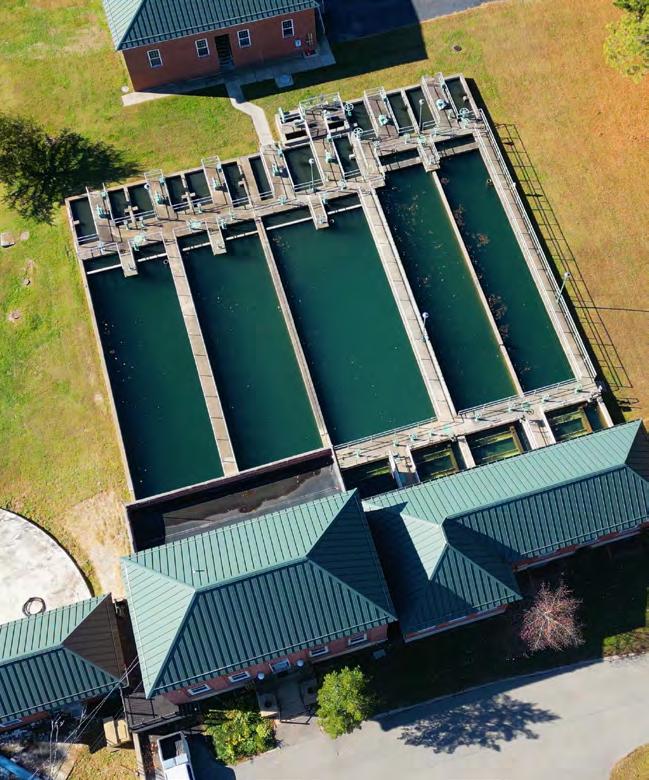
PERCENTAGE OF FULL-TIME EQUIVALENT CLASS 1 OPERATORS
DESIRED OUTCOMES #4
Minimize sewer back-ups using a preventive maintenance schedule.
OBSERVED OUTCOMES
Preventive maintenance at key locations around the city have decreased the number of backups since FY15. Average annual reduction since FY15 is 31.2%.
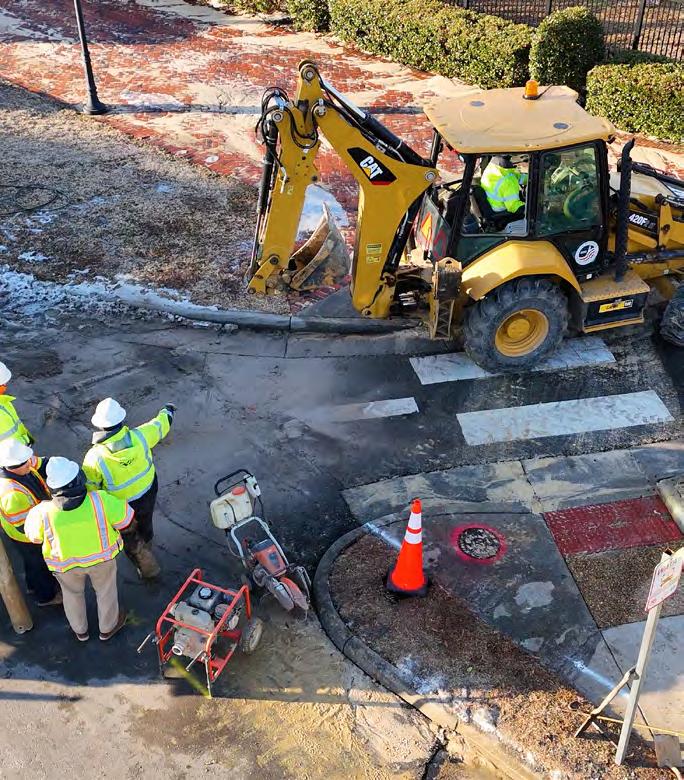
SEWER BACKUPS
WATER & SEWER SYSTEMS
E
FINANCIAL PLAN & DEBT ANALYSIS
Introduction
The City of Williamsburg has formalized a five-year plan for the General Fund to provide a framework for forecasting the City’s financial outlook. In conjunction with the five-year Capital Improvement Plan, this forecast will enable the City to establish and track progress toward City Council’s strategic Goals, Initiatives and Objectives (GIOs). This multi-year planning process will allow new or large initiatives, as identified in the GIOs, to be planned, funded, and phased in over time.
This forecast is based on historical data, trends, and assumptions derived from various sources. As with all forecasts, many unpredictable economic factors affect the projection of revenue and expenditures, particularly employment factors and rising interest rates. The assumptions within this forecast are based on the most recent information available. As expected, projections may lose some of their validity as the forecast moves further into the future.
Contents
E2
Forecast – Revenue
E3 Forecast – Expenditures
E4
Forecast – Surplus (Deficit)
E5 Revenue Growth Assumptions
E6 Key Revenue Assumption Details
E8 Expenditure Growth Assumptions
E9 Key Expenditure Assumption Details
E9 Debt Analysis
E10 Outstanding Existing Debt – All Funds
Forecast | Revenue
Forecast | Expenditures
Forecast | Surplus (Deficit)
Revenue Assumption | Revenue Growth Assumption
GENERAL PROPERTY TAXES
Revenue Assumption | Key Revenue Assumption Details
Property Taxes
Real Estate
Real estate tax revenue accounts for approximately 35% to 40% of General Fund revenues, making it a significant budget driver for the City. Real estate assessments typically grow between 3% and 5% annually in stable economic times. Assessments are affected by many factors, including the type, condition, and location of specific properties. For certain commercial-type properties, income and expenses for the property factor into the assessed value of the property.
For the five-year forecast, current economic conditions are volatile, so predictions for the future are conservative. On average, assessments for FY27, not including new construction, are 4.77% higher than FY26 and 5.22% higher, including new construction. The City’s Real Estate Assessor states that in a stable real estate market, a typical annual assessment increase usually ranges from 3% to 5%. Therefore, due to the current economic condition, 4% was used to forecast real estate assessment increases for FY28 through FY30.
Personal Property Tax
Personal Property tax is a tax on the value of primarily vehicle assessments. In recent years, fluctuating supply chain conditions, inflationary pressures, and shifts in consumer demand have influenced used vehicle values, impacting personal property taxes. While vehicle assessments saw sharp increases during supply shortages, recent market stabilization and stabilizing interest rates have led to more moderate valuation trends. The Commissioner of the Revenue projects that vehicle assessments will experience steady but tempered growth. However, personal property revenue collections also depend on collection rates and delinquency levels. As a result, a cautious growth estimate has been applied for FY28 through FY31.
Consumer-Driven Taxes
Business Licenses
BPOL revenue has experienced strong and sustained growth in recent years. FY24 significantly exceeded expectations, increasing 16% over FY23. Growth continued through FY25, supported by strong performance in retail sales, contracting, and repair and personal service businesses. Revenue for FY26 is projected to finish generally in line with the adopted budget. Looking ahead, the FY27 projection reflects a cautious but stable outlook, recognizing broader economic uncertainties while
maintaining the region’s recent growth momentum. Growth is anticipated to moderate to approximately 5% in FY28 before gradually stabilizing at a more typical long-term rate of approximately 3% by FY30–FY31.
Hotel & Motel — General & Tourism Funds
Hotel and motel tax revenue is primarily driven by occupancy levels and average daily room rates. In FY23, revenues continued an upward recovery trend, exceeding pre-pandemic levels by approximately 10%. Growth moderated in FY24, with minimal year-over-year change, followed by a 3% increase in FY25, reflecting stabilized demand. As part of the FY26 adopted budget, the lodging tax rate increased from 5.0% to 7.0%, effective January 2026, in response to evolving economic conditions. This partial-year rate adjustment is projected to generate approximately 17.5% revenue growth in FY26. FY27 represents the first full fiscal year at the higher rate, with revenues projected to increase by 21%. Revenue projections also reflect anticipated economic development impacts. The economic and entertainment sector is expected to generate additional lodging demand, resulting in an estimated initial 7% increase in revenue. Thereafter, growth is projected to stabilize at approximately 3.0% annually through FY31.
Restaurant & Food (Meals)
Meals tax revenue demonstrated a strong post-pandemic recovery, with FY23 collections approximately 20% above pre-pandemic levels. In FY24, revenue declined modestly by 2% year-over-year, followed by a 3% increase in FY25, indicating a return to stabilized growth. Effective January 2026, the meals tax rate increased from 5.0% to 6.5%. As FY27 represents the first full fiscal year at the higher rate, revenues are projected to increase by 16.43%. Future revenue projections incorporate both policy changes and economic development assumptions. The City anticipates additional growth associated with the economic and entertainment sectors, contributing to an estimated 7% increase. Thereafter, meals tax revenue is projected to stabilize, with annual growth of approximately 3.0% from FY29 through FY31.
Admissions Tax
The City implemented an admissions tax beginning January 1, 2026, as part of the FY26 adopted budget. A 10% tax is collected at the point of ticket sales for Williamsburg events, with a $10 value cap. This tax is expected to enhance revenue generation from the city's vibrant entertainment sector. In FY28, there is an anticipated 3% growth rate. A steady annual growth rate of 2% is projected from FY29 through FY31.
Expenditure Assumption | Expenditure Growth Assumption
CONTRACTUAL, GRANTS, OUTSIDE AGENCIES
Expenditure Assumption
Key Expenditure Assumption Details
The general expenditure growth rates in the five-year forecast assume that City programs and services will continue mostly unchanged over the next five years without significant additional initiatives. City operations are primarily driven by personnel costs. The City has initiated a recruitment and retention strategy that will impact personnel costs. The baseline forecast assumes the City workforce is largely unchanged in the next five years and that implementation of the recruitment and retention strategy will increase costs for salaries and benefits at a rate exceeding previous historical trends, meeting or exceeding the rate of inflation.
The impact of inflation has caused an increase in materials and services and, most notably, in the contribution to other regional agencies and capital improvement plan costs.
Forecast Fund Balance
Conclusion
Taking into account conservative estimates and potential economic impacts related to inflationary growth, the City of Williamsburg anticipates a modest increase in the unassigned fund balance over the next few years. This projection indicates that the unassigned fund balance will exceed the baseline fund balance policy for the forecasted period. It's important to recognize that this forecast is based on certain assumptions, and alterations to these assumptions could lead to different actual results. Notably, significant generational capital projects, such as the sports complex, are expected to drive robust revenue growth in the foreseeable future. Moreover, the forecast assumes that the City will maintain a fund balance sufficient to withstand unforeseen inflationary impacts on the economy.
Debt Analysis
Overview
The Virginia Constitution authorizes cities and counties in Virginia to issue general obligation bonds secured by a pledge of its full faith and credit. For the payment of such bonds, the City’s governing body is required to levy an ad valorem tax on all property subject to local taxation to ensure debt service payment. The issuance of general obligation bonds is subject to a limit of 10% of the assessed value of taxable real property in the city. The City's limit is $330 million and its outstanding debt is $58 million. The Public Finance Act of Virginia also authorizes a city in Virginia to issue limited liability revenue bonds provided that the rates, rents, fees, or other charges are sufficient to pay the cost of operation and administration and the principal and interest on the bonds when due.
Outstanding Debt | All Funds
The City has the following outstanding general obligation bonds at the end of Fiscal Year 2026:
AS OF 06/30/26
GO Public Improvement & Refunding Bonds
GO Public Improvement & Refunding Bonds October 2022 $24,500,000 $24,500,000
GO Public Improvement & Refunding Bonds November 2023
$10,195,000
$10,195,000
All Interest paid semi-annually; principal annually 20 years, 2.736% pay-off July 2037
10 year callable bond, fixed interest for first four years at 3.10% with option to renegotiate for the remaining term, interest paid semi-annually with principal and accrued interest due at maturity, pay off November 2032
Fixed Interest rate bonds at 4.59% with final maturity July 15, 2051. Subject to redemption prior to maturity at the option of the City: at a redemption price of 100% of principal plus accrued interest. Also subject to mandatory repurchase by the city at a price of 100% during the periods beginning 2 months before and ending 2 months following each of July 2034 and 2044 at the discretion of the registered owner, with 3 months prior written notice.
Lease Purchase Obligation August 2025
$2,032,389
$1,790,902
Lease Purchase Obligation August 2025 $1,079,258 $951,021
Water Utility Revenue Bonds December 2025
$10,000,000 $10,000,000
For the purpose of purchasing a Fierce Enforcer Platform. Interest rate at 5% with 10 annual payments, final pay-off September 2034.
For the purpose of purchasing a Fierce Enforcer Pumper. Interest rate at 5% with 10 annual payments, final pay-off September 2034.
Interest payable semi-annually; fixed rate of 3.308% until final maturity January 2029.
Yearly Principal & Interest of Current Outstanding Debt for All Funds
Below is the future fiscal year Principal & Interest on the current outstanding debt of the City.
Note: This includes $24,500,000 in the 2022 BAN principal and interest, which will be refinanced in FY27.
Overlapping Debt
The City of Williamsburg is autonomous and independent of any county or other political subdivision and is not subject to taxation by any county or school district, nor is it liable for any county or school division indebtedness. Currently, there is no overlapping debt.
BUDGET SUMMARIES
Introduction
The Budget Summaries section provides an overview of all budgeted funds for the upcoming year. These include the General Fund, the Capital Improvement Plan Fund; the Tourism Development Fund; the Utility Fund, which also includes capital improvements; the Public Assistance Fund; and the Quarterpath Community Development Authority Fund.
An explanation of each Fund can be found on page I-51
Revenues and expenditures/expenses are categorized by type, in accordance with recommended standard formats of the Government Finance Officers Association, enabling consistency and comparability between all forms of local government.
Contents
F2 Budget Summary – All Funds
F3 Budget Summary – All Funds – By Fund
F4 Budget Summary – General Fund
F6 Revenue & Expenditure Highlights – General Fund
F14 Budget Summary – Shared Services
F15 Budget Summary – Major Funding Categories
F28 Budget Summary – Tourism Fund
F30 Revenue & Expenditure Highlights – Tourism Fund
F34 Budget Summary – Utility Fund
F36 Revenue & Expense Highlights – Utility Fund
F43 Budget Summary – Public Assistance Fund
F44 Fiduciary Fund – Quarterpath Community Development Authority Fund
F45 Budget Schedule – Revenues, Expenditures & Changes in Fund Balance
F49 Trends – Revenue & Expenditure
Budget Summary | All Funds
REVENUES
General Property Taxes $ (26,399,930) $ (25,259,972) $ (23,996,942) Other Local Taxes (35,005,000) (30,559,600) (27,132,096)
Licenses & Permits (264,500) (258,550) (273,215)
Fines (320,000) (325,180) (343,190)
Use of
&
Transfers From Fund Bal./Net Pos.
Transfer from CIP Budget Stabilzation - (1,590,000) -
Transfer from ARPA Fund - - (997,315)
Other Financing Sources (20,298,500)
Budget Summary | All Funds - By Fund
EXPENSES
EXPENSES/TRANSFERS
*Includes Utility Fund Capital Projects Transfers are not netted on this presentation for transparency. Reconciliation to All Funds Statement: **Quarterpath CDA is a fiduciary fund for collection and remittance of special assessments each year.
***Fund Balance/Net Position
Budget Summary | General Fund
$63,002,802 TOTAL $63,002,802
General Fund Revenues & Expenditures
General Fund | Revenue & Expenditure Highlights
General Property Taxes
General property taxes include all real estate, public service, personal, and business property taxes, including penalties and interest. On average, real estate property reassessments are expected to increase by approximately 5.77%. The average increase in single-family residential reassessments is anticipated to be 3.77%, and the average commercial values are anticipated to increase 4.27%. Multi-family residential is expected to increase by 7.57%, excluding new construction. The proposed real estate tax rate is $0.62/$100.
Other Local Taxes
This category consists of consumer utility taxes, communication sales taxes, business and franchise, bank stock, recordation, cigarette, room, and meal taxes. Utility taxes are based on residential and commercial usage. Overall, other local tax receipts are estimated to increase by 19.6% for FY27. This is primarily due to the implementation of an increase in meals tax by 1.5% and a 2% increase in lodging tax, and the implementation of a 10% admissions tax adopted in January 2026.
Licenses & Permits
Licenses and permits consist of citywide onstreet parking, building, electrical, plumbing, mechanical, sign, and various inspection fees. This category of revenues fluctuates based on various development projects occurring in the City during a particular fiscal year. Receipts were $273K in FY25 because of a few major private developments obtaining permits. It is expected to be $266K for FY26, with totals for FY27 budgeted at $264K, based on anticipated projects in the City.
Fines
Court fines, parking citations, and code violations make up this revenue classification. Court fines are collected by the Clerk of Circuit Court and remitted to the City monthly. Receipts generated revenues of $217K and $343K for FY24 and FY25. FY26 revenues are expected to be $325K, and FY27 is budgeted at $320K.
Use of Money & Property
Income from rentals of City-owned buildings, such as the Transportation Center, Stryker Center, Community Building, and parking fees from the Prince George Parking Garage are included here. Revenues totaled $806K in FY24. Revenue for FY25 was $857K and is expected to be $905K for FY26. The FY27 budget is set at $972K, as revenues are expected to mimic prepandemic values.
Charges for Services
Charges for services represent fees for various activities within the City, such as all recreation fees and program revenues, cemetery lots, and grave openings. Revenues for FY24 and FY25 were $501K and $727K, respectively. FY25 revenues are expected to be $730K and increase to $738K in FY27 as additional classes and activities are added. The driving force of the increase from previous fiscal years is the addition of the Farmers Market Revenues in FY25.
Miscellaneous
This category comprises various sources, such as payments in lieu of taxes, Arts Commission reimbursement from James City County and the State, overhead charges from the Utility Fund, EMS Recovery Fees, and an emergency services agreement with William & Mary. The estimated FY26 revenue is $3.7M, and the proposed FY27 is $3.1M.
Intergovernmental
These funds include State reimbursements for Constitutional Officers' expenses, 599 law enforcement funds, VDOT street maintenance payments, and various other taxes returned to the City. VDOT street maintenance payments, law enforcement 599 funding, and funding from the State Compensation Board for the Commission of Revenue, Treasurer, and Registrar were higher than expected in FY25. An increase of 837K, or 20.6%, is proposed for FY27.
General Government Administration
This category includes City Council, Clerk of Council/Communications, City Manager, Human Resources, City Attorney, Commissioner of the Revenue, City Assessor, Treasurer, Finance, Vehicle Repair Shop, Electoral Board, Registrar, and Information Technology. Expenditures are estimated to increase by 16.4% or $1.5M compared to the FY26 budget. Some of the significant factors for the increase:
Increases to balance were primarily salaries and benefits, including a pay plan study conducted by human resources.
Increases to non-medical insurance and utility costs.
Increases in maintenance and professional service costs.
Judicial Administration
Judicial functions are performed by the Circuit Court, General District Court, Juvenile and Domestic Relations Court, Clerk of the Circuit Court, Commonwealth Attorney, 9th District Court Service Unit, and Magistrate. Judicial functions have been performed in the jointly operated Williamsburg-James City County Courthouse since FY01. An expanded explanation is included in the “Notes on Funding Relationships” section of the budget guide. Costs are shared with James City County on a population basis each year. Funding of $767K is anticipated for FY27.
Public Safety
Departments included in this classification are Police, Parking Garage, consolidated E-911 Dispatch, Fire, Group Home Commission, Colonial Commission Corrections, Animal Control, City’s share of the cost for participation in VA Peninsula Regional Jail Authority, and Codes Compliance. Public Safety costs increased for FY27 by $1.5M or 9.3%, compared to the FY26 adopted budget. The increase is due to the addition of 3 full-time officers and firefighters. Increases to the police budget include $29K for electricity for the new police station, $40K for police radios, and $30K for training. For Fire, the FY27 adopted budget includes a $55K increase for professional health services. In addition, there is a $37K increase for E-911 services paid to York County in FY27 and a $220K increase for the Regional Jail.
Public Works
The City Shop, Engineering, Streets, Stormwater Operations, Refuse Collection, Building, and Facility Maintenance, Landscaping, and Cemetery comprise the operating budget’s Public Works section. Overall, costs for FY27 increased by $721K, which is 14.6% higher than FY26. Mainly driven by the addition of 3 new positions. The addition of a Building Facilities and Maintenance worker, City Shop technician, and Public Works Operations Manager. The garbage contract increased by $32.5K.
Health & Welfare
This category consists of the City’s contribution to the local Health Department, Colonial Behavioral Health (CBH), Olde Towne Medical & Dental Center, and the Public Assistance Fund and Public Assistance Transportation subsidy. Peninsula Health Center, Olde Towne Medical & Dental Center, and Colonial Behavioral Health provide health services for the community. City contributions for the FY27 budget increased by $162K, a 6.5% increase compared to FY26. The CBH contribution increased by $9K, the contribution to the Peninsula Health District increased by $7K, and Olde Towne Medical increased by $4K. The City’s budgeted subsidy of $2.04M to the Public Assistance Fund increased by $143K in FY27 over the FY26 budget.
Education
The City and James City County jointly fund the Williamsburg-James City County Public School system. FY27 is the first year of the newly adopted WJCC Schools contract. The City’s contribution to school operating costs for FY27 is proposed to be $14.45M based on the joint School contract with James City County, which is a $1.8M increase from FY26 or a 14.2% increase. In FY26, the Schools received their portion of state sales tax directly from the State, versus a pass-through from the City. Capital costs are budgeted in the Capital Improvement Fund for the City’s portion of school projects next year.
Parks, Recreation, & Culture
Recreation administration, playgrounds, parks, library, and grants provided to organizations upon recommendation of the Williamsburg Area Arts Commission are included in this category. The City's contribution to the Williamsburg Regional Library, operated jointly with James City County, is $1.1M, a $44K decrease compared to FY26. Williamsburg Area Arts Commission contributions are funded at $159K for FY27. Overall, this category of expenditure increased $46K or 1.3% in FY27 compared to the FY27 budget.
Community Development
This includes the Planning Department and contributions to various human service, community and economic development agencies within the City. This category’s budget for FY27 increased by $579K, or 37.9%, over what was budgeted in FY26. Increases can be accredited to contributions to outside agencies such as the Williamsburg Area Transit Authority of $342K.
Budget Summary | Shared Services
The City’s Goal “Prioritizing Safety and Wellness” is to provide targeted services that proactively support, improve, and sustain individual health and community safety. One of the objectives to achieve this goal is to review the plan for shared mission funding for these services. The chart below represents the shared services programs and costs. It is important to note that in Fiscal Year 2027 the actual costs are budgeted in the individual department’s budget.
Budget Summary | Major Funding Categories
*This table summaries the funding history and propsed FY27 budget for the General Fund's eight major funding categories. Debt Service is included in the Capital Improvement Program budget.
TOTAL $63,002,802
Section I | City Departments
1101 - CITY COUNCIL
1102 - CLERK OF COUNCIL/ COMMUNICATIONS
1201 - CITY MANAGER
3101 -
3103 - PARKING GARAGE
3201 -
3501 -
4103 -
5302 - 5305 - PUBLIC ASSISTANCE
8101 - PLANNING
Section II | Constitutional Officers
2100 - JOINT COURTHOUSE
3303 - MIDDLE PENINSULA JUVENILE DETENTION COMMISSION
3304 - GROUP HOME COMMISSION
3305 - COLONIAL COMMUNITY CORRECTIONS
TOTAL JUDICIAL ADMINISTRATION
Section IV | Health
Section V | Schools
Section VI | Library
9301 - DEBT SERVICE*
*Included in Capital Improvement Plan Fund
Section VIII | Transfer to Other Agencies & Other Funds
CONTRIBUTIONS TO AGENCIES
TRANSFERS TO OTHER FUNDS
General Fund | Summary
MAJOR PROGRAMS
MAJOR FUNCTION
Contributions to Outside Agencies
HUMAN SERVICES
HEALTH AGENCIES
CULTURE
COMMUNITY AND ECONOMIC DEVELOPMENT AGENCIES
TRANSPORTATION
Revenues
Expenditures
$6,861,460
Tourism Fund | Revenues & Expenditures
Tourism Fund | Revenue & Expenditure Highlights
Local Taxes
Local tourism-related taxes consist of the $2 per night lodging tax and the Historic Triangle sales tax. Lodging tax collections have remained relatively stable, totaling $953K in FY24 and $988K in FY25. For FY26, the City is estimating $1.2M. Historic Triangle sales tax collections are expected to grow by 3% compared to the FY26 budget, with revenue projected at $2.7M in FY27. Together, these two revenue sources are anticipated to generate a combined total of $3.9M for the Tourism Fund in FY27.
Interest Earnings
Interest earnings in the Tourism Fund are generated through the City’s investment of cash balances not required for immediate operations. These funds are invested in accordance with the City’s investment policy, primarily through the Commonwealth’s Local Government Investment Pool (LGIP) and Insured Cash Sweep (ICS) accounts. Due to declining interest rates in FY26, projected interest earnings for FY27 are budgeted at $30K.
Administration
The FY27 budget for administration is $327K, representing a 0.08% decrease over the FY26 budget of $327K. The slight decrease is due to benefit adjustments and dues and subscriptions. The increase from FY25 actual to FY26 budget is due to the dedicated funds for the VA250 commemoration.
Tourism Marketing
The FY27 budget includes $1.4M for tourism marketing. This amount is mainly attributed to anticipated collection in revenue from the Historic Triangle sales tax, a portion of which is allocated to the Williamsburg Tourism Council to promote the City as a travel destination. This marketing plays a key role in attracting visitors, which supports local hotels, restaurants, shops, and attractions by driving tourism-related spending throughout the community.
Tourism Outside Agencies
The total amount budgeted for FY27 is $2.6M, in line with the $2.6M budgeted in FY26. This includes the City's contribution to tourism-related outside agencies, including An Occasion for the Arts, CultureFix, Virginia Arts Festival, Williamsburg Downtown, and the Colonial Williamsburg Foundation. In FY24, the City awarded additional dollars to support the Ampersand International Arts Festival, using ARPA tourism funds to offset costs. For FY25, the City added this additional funding to its Tourism Outside Agencies budget, which is reflected in the increase between FY24 and FY25.
Tourism Development Fund Grants Awards
This category includes grants awarded by City Council through the Tourism Development Fund (TDF), based on recommendations from the Tourism Development Grant Review Committee. The program supports projects that attract tourism-related products, improve related infrastructure, and support placemaking initiatives. The FY26 budget for TDF Grant Awards is just under $2.9M, reflecting a $500K increase over FY25. This increase is due to the City’s annual contribution to the Historic Triangle Recreational Facilities Authority (HTRFA), a contractual commitment that supports regional tourism infrastructure. FY27 budget includes only the Cities contribution to the HTRFA at $2.5M.
Budget Summary | Utility Fund
Revenues
TOTAL $13,687,397
Expenditures
TOTAL $13,687,397
Utility Fund | Revenues & Expenses
Utility Fund | Revenue & Expense Highlights
Revenue Highlights
Water Service
The Public Utilities department operates a water distribution system throughout the City. Commercial and residential customers are billed monthly to provide constant cash flow for this Enterprise Fund. An analysis of the water rates is included in the appendix. FY27 consists of a proposed rate increase of 7%. FY26 Water Service revenue was budgeted at $6.6M; with level consumption rates and rate increase, water service revenues are expected to be $7.1M in FY27.
Sewer Service
Sewer lines are maintained by the City, with 15 pump stations collecting and transmitting sewage to the Hampton Roads Sanitation District (HRSD) for treatment. Beginning in FY26, sewer charges were billed directly by HRSD and paid by customers to HRSD, rather than through the City. Previously, sewer and water charges were combined on a single bill and based on water consumption. In FY24 and FY25, actual sewer revenues, reflect collections made by the City and remitted to HRSD under a contractual arrangement. HRSD sets sewer treatment rates annually for all jurisdictions in the region, with steady increases driven primarily by compliance with evolving environmental regulations.
Other Sources
These revenues consist of penalties, water and sewer connection fees, water tank antenna contracts, and other miscellaneous items. The amount of revenue provided by these sources is difficult to estimate from year to year. Revenue anticipated from other sources remains relatively level at $373K for FY27.
Interest Earnings
Interest earnings in this fund, like any municipal fund, are a product of idle resources invested under the City’s stringent investment policy and current interest rates. The City invests in the State’s Local Government Investment Pool (LGIP) and Insured Cash Sweep Accounts (ICS) at local banks. Due to declining interest rates in FY26, projected interest earnings for FY27 are budgeted at $220k.
Water & Sewer Availability
Availability fees are charges for a home or business to have access to existing water and sewer lines. As discussed previously, water and sewer connection charges are additional charges based on the cost of constructing connections to a home or business. Availability fees increase as development takes place and, therefore, can vary each year. Increases in building activity are proportional to availability fee revenue. The budget estimate for FY27 is $250K.
Grants
In FY27, the City budgeted to receive $258K in grant funds for improvement of the Waller Mill Dam. This project was introduced in FY20.
Administration
Administration expenses account for 23.7% of the total utility fund. The Utility Department's administrative staff currently consists of three fulltime employees, with the FY27 proposal including funding for one additional full-time position—a operations manager. Overhead is reimbursed to the General Fund for all administrative functions performed by the City Manager’s Office, Engineering, the Shop, Information Technology, and the Finance Department (for billing, collections, and accounting) on a set percentage basis. Depreciation (a non-cash expense) of the City’s intangible water rights purchased from Newport News in 2009 is based on an estimated 25-year period.
Water Treatment
The City owns and operates its water treatment plant located at the Waller Mill Reservoir in adjacent York County. The plant produces an average of 3.3 million gallons of water daily and provides safe drinking water to over 4,300 accounts. In FY27, expenses for the water treatment plant are estimated to increase by about 7% compared to FY26 due to increases in chemical costs, electricity, and SCADA professional services. Capital expenses required by the water treatment plant are provided for in the Utility Fund Capital Improvement Plan.
Water System
Water system personnel are responsible for managing the water distribution system, consisting of 60 miles of lines and four water tanks throughout the City. Expenses for FY27 are expected to increase by 13K or 1.5% from the last fiscal year, mainly due to changes in salaries and benefits.
Millions
Sewage System
The sewer system includes approximately 50 miles of sewer collection and transmission lines and 15 pump stations within the City. This infrastructure conveys raw sewage to the Hampton Roads Sanitation District (HRSD) for treatment under a contractual arrangement. In FY27, sewer-related expenses are projected to increased by $51K. This increase can be attributed to the additional rental of equipment. The FY25 and FY24 actuals reflect the City’s prior role in collecting and forwarding these payments to HRSD.
Thousands
Debt Service
The City borrowed $10M in a bank-qualified loan and refinanced this debt in October 2010 to take advantage of historically low long-term interest rates. Part of the refunded 2010 debt was refinanced again in FY18 to take advantage of lower interest rates. The remaining 2010 debt will be paid in full by the end of FY27. The City maintained its strong bond ratings from Standard & Poor's (AAA) and Moody's (Aa1) as part of this refinancing. Principal bond payments are treated as fund liabilities and not budgeted as expenses in this fund, but are included in the water rate analysis each year. In December 2025 (FY26), the City issued the first of a series of bonds to modernize the Water Treatment Plant. The 10-year plan equates to $25.7M.
Budget Summary | Public Assistance Fund
EXPENDITURES
Fiduciary Fund Quarterpath Community Development Authority Fund
The Quarterpath Community Development Authority (QCDA) was created in July 2006 to assist in financing public improvements for the property within the geographic boundaries of the Quarterpath Community Development Authority District. The property is located in the City at the intersection of U.S. Routes 60 and 199, about 2 miles west of Rte. 199 interchange with Interstate 64. The District consists of approximately 222 acres proposed to be developed as a mixed-use project. The improvements include the design, planning, coordination, and construction related to the following:
Battery Boulevard (East-West Access); Commonwealth Avenue;
Sidewalks, bike trails, and public amenities;
Water and sewer utilities; and
Wastewater management
The improvements are all provided to meet the needs of the property in the District that result from the proposed development of the property, providing necessary road enhancements, public amenities, and water, sewer, and stormwater management facilities that did not previously exist. The QCDA issued $15 million in Special Assessment Revenue Bonds in November 2011 to finance the acquisition, construction, and equipping of the project. The bond proceeds cover all expenses for constructing improvements, issuance costs, bank fees, and capitalized interest.
A Special Assessment Agreement between the City, Riverside Healthcare Association, Inc., and the QCDA was signed
in November 2011. This agreement describes the levy and collection of special assessments on real property within the CDA District to pay the debt service on the $15 million bonds. Special assessments are allocated to parcels within the District on a basis that reasonably reflects the benefit each parcel receives from the public improvements. The Board of the QCDA requests the City to collect annual installments of the special assessments within the CDA District in an amount to be determined in accordance with the rate and method sufficient to pay the CDA obligations payable in the applicable assessment year.
The Special Assessment Agreement requires that an amount equal to the annual installment be included in the City’s budget for each fiscal year any Bonds are outstanding. The QCDA Fund will account for the special assessment activity each year. FY27 is the 15th year special assessments will be collected by the City for the QCDA.
BUDGET SUMMARY –QCDA FUND
REVENUES
Budget Schedule Revenues, Expenditures & Changes in Fund Balance
FUNDS (CONTINUED)
Of the $42,103,459 Fund Balance in the Governmental Fund CIP, approximately $3.9 million is nonspendable (invested in land held for resale) or bond proceeds.
Working Capital - June 30, 2025 $ 9,637,923
Estimated Revenues - Fiscal 2026 7,136,150
Estimated Expenses - Fiscal 2026 (9,853,258)
Subtotal Estimated Working Capital - June 30, 2026 $ 6,920,815 Less Debt Service Principal Payments (467,903)
Depreciation Expense (non-cash item)
ESTIMATED WORKING CAPITAL JUNE 30, 2026 $ 7,302,912
Estimated Revenues - Fiscal 2027 Revenue from Use of Money & Property $ 836,225 Charges for Services 7,129,571
Financing Sources - Bonds 2,284,350 Grants 258,500
REVENUES $ 10,508,646
Estimated Expenses - Fiscal 2027 Public Utilities - Operations (6,941,054) Capital Projects (5,769,250)
Total Expenditures / Expenses $ (12,710,304)
Depreciation Expense (non-cash item) 940,000 ESTIMATED WORKING CAPITAL - JUNE 30, 2027 $ 5,204,507
Changes in Fund
Balance/Working Capital | Fiscal Years 2021-2027
* Assumes all CIP projects are completed. Of the $42,103,459 fund balance, $3,891,624 is invested in land held for resale and the remaining is available for programming into the five-year Capital Improvement Plan for FY27.
Trends | Revenues & Expenditures
A trend analysis of the City’s governmental funds operations shows how cycles of saving and spending have balanced over time to maintain adequate cash reserves:
FY16 - Stryker Center construction completed, totaling $3M in FY 2016. York Street roadway and sidewalks constructed for $747K. Annual street resurfacing costs were $2M, including Richmond Road, aided by VDOT grant funds. The unassigned fund balance was $12.4M, with $18.8M assigned for future capital projects.
FY17 - The City issued $13M in bonds for Fire and Police Station renovations. Annual street resurfacing costs were $1M, and underground wiring totaled $757.3K. The ERP System replacement totaled $273.6K. The unassigned fund balance was $12.6M, with $15.5M assigned for future capital projects.
FY18 - Effective July 1, 2018, the General Assembly added section §58.1-603 to the Virginia Code, increasing the sales tax in the Historic Triangle (City of Williamsburg, James City County, and York County) by 1% and creating the Historic Triangle Marketing Fund to be managed and administered by the Williamsburg Tourism Council. The Historic Triangle Marketing Fund’s sole purposes are marketing, advertising, and promoting the greater Williamsburg area as an overnight tourism destination.
One-half of the revenue from the increased sales tax and the $2/night room tax goes to the Historic Triangle Marketing Fund, while the other half remains with the locality, imposing the tax. The City of Williamsburg allocated its share of these taxes to local travel and visitation through the creation of a Tourism Fund.
FY19 - The Ironbound Road Project Phase 1 was substantially completed during FY19. This phase included the relocation of Longhill Road and the redesign of its interchange and was coordinated with the opening of the new James Blair Middle School. In FY19, $2,227,800 for this project was expended.
Underground wiring was completed on Second Street at the cost of $1,068,657.
Design work started on the Monticello Avenue Multiuse Trail project, a 4,200-foot-long lighted facility running from the William & Mary School of Education to Ironbound Road.
The Prince George Parking Garage was updated with new parking software, garage hardware, and tracking system, allowing gateless entry and exit. In FY19, $165,780 was expended, and $97,200 carried forward to FY20 for additional improvements.
A total of $7,913,834 was expended on capital projects during FY19, including $1,797,680 for the City’s share of
school capital improvements.
As of June 30, 2019, the Capital Improvement Fund Plan had a fund balance of $29.7M, with $13.5M restricted in bond funds (new fire station and police station renovations) and $13.2M assigned for future capital projects.
FY20 - General Fund revenues outperformed FY19 in all categories of revenue through February of 2020. In midMarch, COVID-19 restrictions required limited commercial activity. By year-end, total operating revenue in the General Fund was about $1.5M less compared to operating revenue for FY19. The City’s tourism-based revenues were hit the hardest, with the decreases in meals tax of $1.4M, lodging tax of $1M, and Business, Professional and Occupational Licenses of $156K. These decreases were offset by increases (compared to FY19) in Real Estate taxes of $652K, Building Permits of $182K, and Personal Property Taxes of $182K.
The Capital Improvement Fund had a reduction in Sales Tax revenue of $390K compared to FY19. During FY20, the Monticello Avenue Redesign Project was substantially completed, with $2.5M expended in the current year and $1.7M carried forward to FY21 to complete the project and pay outstanding bills. This project redesigns Monticello Avenue to include three lanes, a two-way cycle track, a new traffic signal, and wide sidewalks with amenities such as bike racks and benches, for a total cost of $4.2M.
The Monticello Avenue Multiuse Trail project was also completed. This project features a 4,200-foot-long lighted trail that runs from the entrance to William & Mary School of Education to Ironbound Road. In FY20, $800K was expended with $641K carried forward to FY21 for final invoices, for a total project cost of $1.6M. The demolition of a derelict hotel was also completed at the cost of $465K. School Capital Improvement Projects total $865K.
A total of $7M was expended on capital projects during FY20, and as of June 30, 2020, the Capital Improvement Fund had a fund balance of $26.6M. $13.7M of fund balance is restricted in bond funds for a new fire station, and $12.9M is assigned for future projects.
FY21 - Overall, FY21 General Fund revenues were $4.9M higher than FY20 due to the recognition of Coronavirus Aid, Relief, and Economic Security (CARES) funding of $2.6M and a $1.5M transfer to the General Fund from the Tourism Fund. The COVID-19 pandemic continued to impact the City’s revenue during FY21. The City has experienced decreases in the lodging tax of $535K, Business, Professional and Occupational Licenses of $469K, building permits of $197K, and EMS Recovery fees of $171K. These decreases were offset by increases (compared to FY20) in real estate taxes of $408K, and personal property taxes of $126K.
The Capital Improvement Plan Fund had a reduction in
Sales Tax revenue of $390K compared to FY20. During FY21, the Monticello Avenue Redesign Project incurred $1.1M in costs. Repaving costs during FY21 were $691K, including $280K to resurface historic streets. The Monticello Avenue Multiuse Trail project expended $593K during FY21. Public safety projects totaled $795K and included equipment and professional services costs to assist in determining options for a new fire station.
A total of $4M was expended on capital projects during FY21, and as of June 30, 2021, the Capital Improvement Fund had a fund balance of $26.8M. In the fund balance, $13.3M was restricted in bond funds for a new fire station, and $13.5M was assigned for future projects.
FY22 - Revenues in FY22 experienced a healthy increase as the City continued its economic recovery from the COVID-19 pandemic. Total General Fund revenues increased by $2.6M compared to FY21, with property taxes increasing by $1.6M or 10.3% with a tax rate increase of 4 cents per $100 value attributing to a portion of the increase. Personal property tax increased by $167K or 5.2% over FY21. Other local taxes, including meal and lodging tax, increased by 42.3% or $4.6M higher than FY22. By comparison, in FY21, there was one-time revenue of $2.6M for the recognition of CARES funding and a $1.5M transfer to the General Fund from the Tourism Fund.
The Capital Improvement Fund had an increase in Sales Tax revenue of 8.7% or $386K compared to FY21. During FY22, work for the fire station was under construction and $2.9M was spent; the new police station spent $716K. The Capitol Landing Road Redesign Project incurred $277K in costs. Repaving costs during FY 2021 were $877K. Public safety projects totaled $795K and included equipment and professional services costs to assist in determining options for a new fire station.
A total of $6.8M was expended on capital projects during FY22 and as of June 30, 2022, the Capital Improvement Fund had a fund balance of $35.1M. In the fund balance, $3.4M was nonspendable land, $11.0M was restricted in bond funds for a new fire station, and $20.7M was assigned for future projects.
FY23 - Revenues continued a healthy trend in FY23. General Fund operating revenues increased by $5.3M compared with FY22. A strong housing market during FY23 and new construction contributed to increased assessed values and an increase of $2M in current real estate revenue compared with FY22. Other significant increased revenues, as compared with FY22, were $955K in meal taxes, $402K in personal property taxes, $372K in public safety grants, $363K in lodging taxes, $302K in state revenue for street maintenance, $236K for Utility Fund overhead, $137K in FEMA reimbursement; and $102K in building permits.
The Capital Improvement had an increase in sales tax
revenue of $875K, or 18%, compared with FY22. Interest income for the year was $2.0M, an increase of 17% compared with FY22. Of the interest earnings, $1.3M was available to fund any projects in the adopted plan, and $700K was available to fund projects funded by bond funds or to pay down the debt.
A total of $17.7M was expended on capital projects during FY23. Major project expenditures during the year included $9.9M for the new fire station, $1.2M in repaving projects, $755K toward the vehicle replacement plan, $605K for school Capital Improvement Projects, and $583K for the new police station. In addition, $1.5M for debt service payments was expended.
FY24 - The healthy revenue trend continued in FY24, with General Fund operating revenues increasing by $2.6M, a 5.6% increase compared with FY23 and $2.4M more than the adopted budget. The increase was primarily due to real estate tax revenue increase of $2.4M; personal property increase of $479K; and Business, Professional, and Occupational License (BPOS) tax increase of $422K. These increases were offset by other revenue variances, resulting in a net decrease of $700K, with the most significant being the decrease in miscellaneous revenue of $438K.
The Capital Improvement Fund had an increase in sales tax revenue of $875K, or 4%, compared with FY23. Interest income for the year was $2.3M, a 15.8% increase compared with FY23.
A total of $19.9M was expended in the Capital Improvement Fund during FY24, with $17M expended on projects and $2.9M for debt service payments.
Major project expenditures during the year included $4.0M in street construction, $3.1M for the new police station, $3.3M for the new fire station, $1.3M for schools capital improvement projects, and $794K in maintenance software costs.
FY25 - COMING JULY 1, 2026
Note: Governmental Funds include General, Capital Improvement Plan Fund, and Special Revenue Funds
Source: City of Williamsburg Annual Comprehensive Financial Reports
BUDGET DETAILS
Contents
G2 General Fund Revenues
G7 General Fund Expenditures
G34 Tourism Fund – Revenues & Expenditures
G36 Utility Fund – Revenues & Expenses
G42 Staffing Levels
Budget Details | General Fund Revenues
Budget Details | General Fund Expenditures
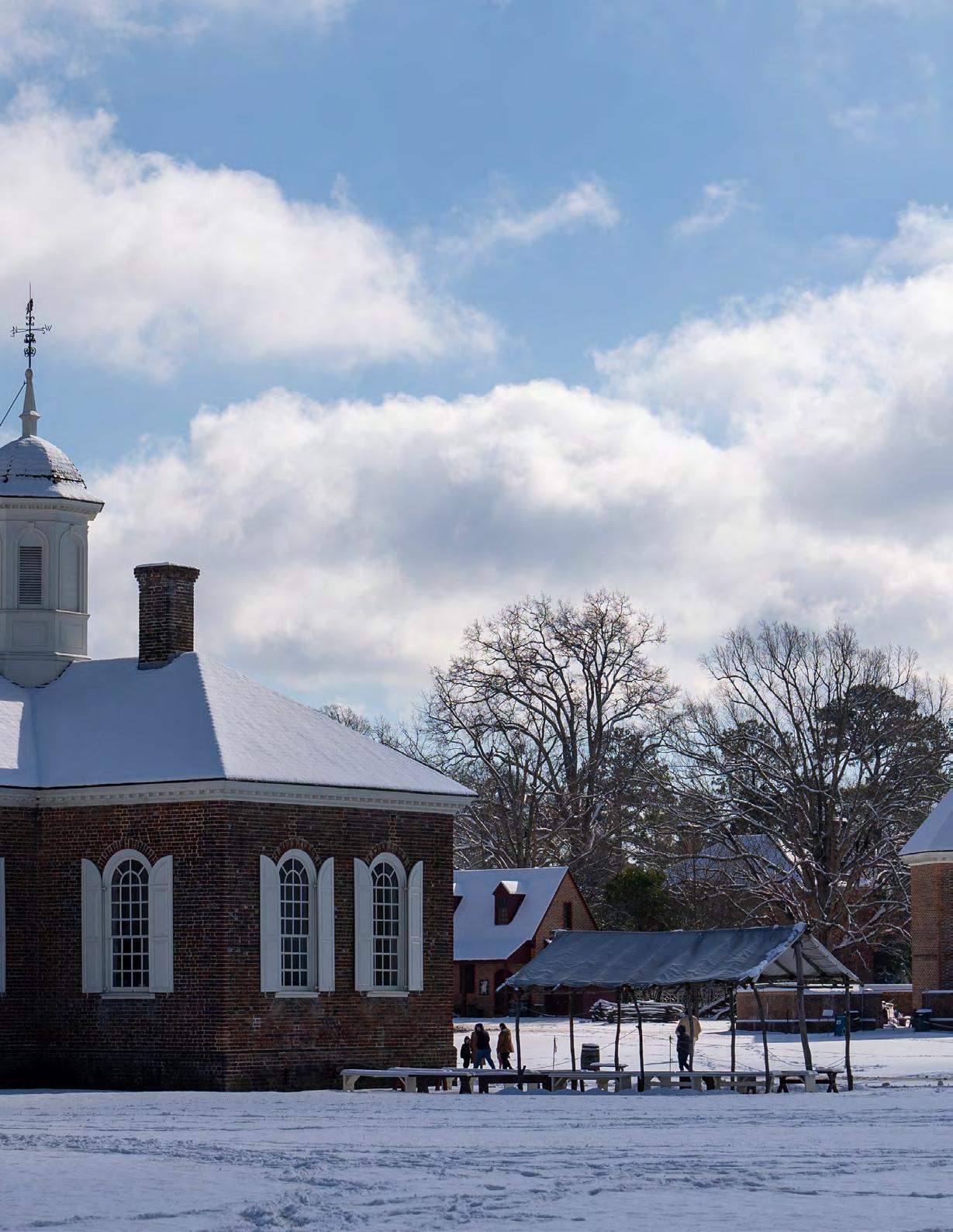
Budget Details | Tourism Fund - Revenues & Expenditures
Revenues
Expenditures
Budget Details | Utility Fund - Revenues & Expenditures
Revenues
Budget Details | Staffing Levels
ECONOMIC DEVELOPMENT & TOURISM
COMMISSIONER OF REVENUE
REGISTRAR
ASSESSOR’S OFFICE
FINANCE DEPARTMENT
DEPARTMENT
CODES COMPLIANCE
LANDSCAPE
VEHICLE MAINTENANCE
RECREATION DEPARTMENT
BUILDINGS/FACILITIES MAINTENANCE
HUMAN SERVICES DEPARTMENT
PUBLIC HOUSING
equivalents (FTEs), including Constitutional Officers, Registrar Includes part-time employees but not temporary labor
CAPITAL IMPROVEMENT PLAN
Introduction
The capital improvement projects of the City of Williamsburg are administered through two funds: the Capital Improvement Plan Funds (CIP) (formerly Sales Tax Fund) for general improvements, and the Utility Fund for water and sewer projects.
The City plans capital projects for five years, with the current year's projects funded by City Council and the remaining four years shown for planning purposes only. At year-end, the funding for any uncompleted project is encumbered as necessary and presumed to be finished in the next fiscal year.
Revenues of the CIP Fund are derived from the 1% Sales Tax that is collected and distributed monthly by the state. All taxable purchases in the Hampton Roads area of Virginia are charged at the rate of 6%, 1% of which is returned to localities by law. It has been the policy of the City Council for over 30 years to use this revenue to fund general capital projects in the City. Examples of projects completed with the use of these funds are schools, municipal buildings, land acquisitions, roads, vehicles, and equipment.
Interest earnings of the General Fund are accounted for in the CIP Fund. In the past, extreme changes in interest rates caused significant swings in these revenues, which in turn distorted the operating budget. This approach helps stabilize operations for comparison each year. The City’s annual paving program is included as a capital expenditure in this fund because of its capital nature and to minimize the skewing effect on operations over time.
Revenues of the Utility Fund are used to fund capital improvements, as well as operating costs, for the water and sewer systems.
Capital project detail sheets include a reference to one or more of City Council’s goal areas that the project supports.
Contents
H2
H4
H103
H112
General Government Capital Improvement
General Government Plan Program Details
Vehicle Replacement Five-Year Plan Summary
Planning Commission Correspondence
H122 Utility Fund Capital Improvements
Capital Improvement Plan
General Government Plan Summary FY27
Capital Revenues
General Government Capital Improvement - FY27 Projects & Debt Service
Capital Improvement Plan
- Excess UA&RS(Capitol Landing Road Redesign)
VDOT - Revenue Sharing (Capitol Landing Road outfall)
- Smart Scale (Cap. Landing Rd. / Bypass Rd. Intersection)
- Smart Scale (Ironbound Road Phase 2&3)
- Smart Scale (Richmond Rd Signal & Pedestrian Improv)
- Smart Scale (Lafayette St Signal & Pedestrian Improv)
- Smart Scale (Lafayette Street Reconstruction)
- Smart Scale (Monticello Ave/ Richmond Lafayette Roundabout)
- College Woods Shared Use Circuit Trail
Capital Revenues
FIVE-YEAR CAPITAL IMPROVEMENT PLAN
Capital Expenditures
FIVE-YEAR CAPITAL IMPROVEMENT PLAN
Capital Expenditures
FIVE-YEAR CAPITAL IMPROVEMENT PLAN
Capital Expenditures
FIVE-YEAR CAPITAL IMPROVEMENT PLAN
Capital Expenditures
FIVE-YEAR CAPITAL IMPROVEMENT PLAN
FIVE-YEAR CAPITAL IMPROVEMENT PLAN
Fund Balances - City Projects Only
FIVE-YEAR CAPITAL IMPROVEMENT PLAN
School Five-Year Capital Improvement Plan & Fund Balances with School Projects
FIVE-YEAR CAPITAL IMPROVEMENT PLAN
School Capital Improvement Plan Contribution
This project represents the City’s contribution to various capital expenditures for the Williamsburg-James City County Public Schools. These estimates are based on the school system’s CIP. The City’s share of these expenses is estimated at 12.15% of the Fiscal Year 2026 total as stipulated in the current funding agreement between James City County and the City. The remaining funds for any projects not completed at fiscal year-end are carried forward to the following year.
FIVE-YEAR CAPITAL IMPROVEMENT PROGRAM

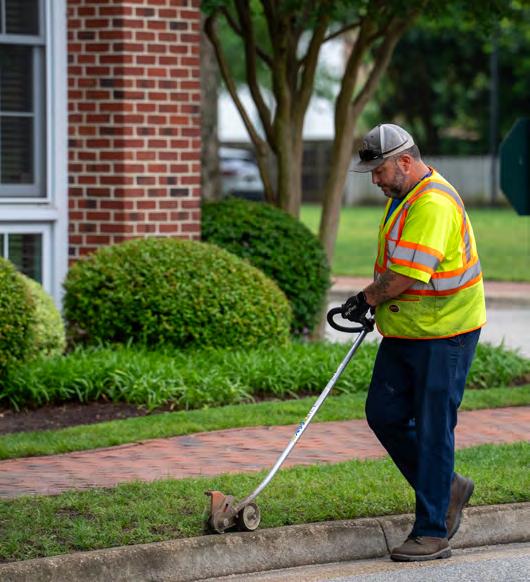


STREET MAINTENANCE PROGRAM
Year Introduced Fiscal Year 2020
Related City Council Goal: #3 Innovating a Modern City
The City includes funding in the CIP for milling and resurfacing of urban secondary roads, as needed. Streets are selected based on an annual street survey conducted by Public Works & Utilities as well as VDOT's annual roadway inspections. PW&U maintains a list of City streets that require resurfacing. Approximately $350,000 is budgeted in 'even' years with increases biannually for inflation so all streets are resurfaced on a rotating basis every 10 to 20 years dependent on traffic volumes and general conditions. The City received funding from VDOT's State of Good Repair (SGR) for the resurfacing of Jamestown Road from College Corner to Mill Neck Road, as well as York Street from Page Street to the corporate limits near Quarterpath Road. The City applied for and received additional SGR funds for resurfacing the segment of Richmond Road from High Street to Governor Berkeley Road.
SUMMARY:
The completion of the work will not have a direct fiscal impact beyond the associated costs. Repaving reduces long-term fiscal impacts as preventative maintenance reduces more considerable reactive maintenance expenses.
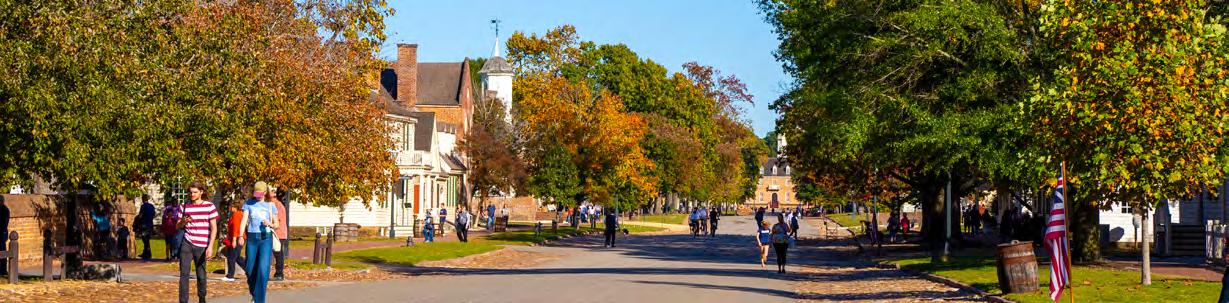
HISTORIC STREET MAINTENANCE
Year Introduced
Fiscal Year 2020
Related City Council Goal: #3 Innovating a Modern City
In 2018, Colonial Williamsburg requested a modification of the Historic Area Streets agreement whereby the City would again maintain all the pavements within the Historic Area starting in July 2019. It had been many years since the pavements were last resurfaced, and wear from weather and heavy use combined with various repairs have culminated in a surface that does not fit with the surrounding area and atmosphere that visitors have come to expect. This ongoing project saw all streets in the Historic area resurfaced in 2022.
This is a multi-year project focusing on infrastructure repairs and refurbishments in the oldest section of the City. Improvements will be incorporated to best blend with the historic nature of Colonial Williamsburg but will also focus on longterm durability, accessibility, and affordability.
FISCAL IMPACT SUMMARY:
There is no direct fiscal impact beyond the initial capital outlay. Resurfacing reduces long-term fiscal impacts because preventative maintenance reduces larger reactive maintenance and repair expenses.
MERRIMAC TRAIL BRIDGE SIDEWALK & PARAPET IMPROVEMENTS
Year Introduced Fiscal Year 2027
Related City Council Goal: #6 Connecting with the World
The project will replace the sidewalk, parapet, and guardrail connections to conform with current standards. The brick facia will be removed, the top of the bridge expanded to accomodate a new larger sidewalk and bike lane on both sides. The brick facia will be reinstalled and a new compliant structural wall will be added to the bridge. New guardrails will be installed at all four corners of the bridge per today's VDOT standards. The approximate cost for engineering design, survey, and permitting is $300,000 and the potential construction cost is $1,500,000. These costs do not include any repairs that may need to be done to the bridge structure that could become evident once the brick facia is removed.
FISCAL IMPACT SUMMARY:
The fiscal impact from this project will be negligible. Despite adding sidewalks, increased maintenance and revenue will be offset by the decrease in the existing pavement width.
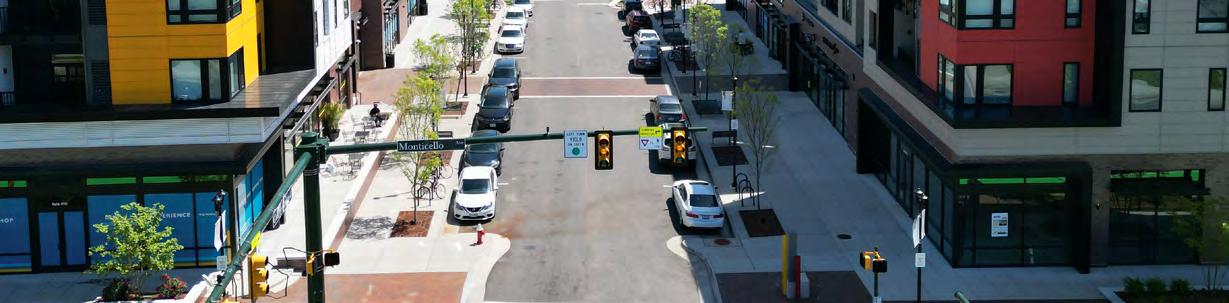
TRAFFIC SIGNALS
Year Introduced Fiscal Year 2020
The City is planning to fully replace the Page St. and Second St traffic signal in FY26 at a cost of $500,000 as part of a 30to 40-year life cycle based on use and general condition. The City also plans to fully replace the traffic signal at Richmond Rd. and Scotland St. in FY27 for $500,000, and upgrading the traffic signal at Governor Berkeley Rd. and Richmond Rd. in FY28 at an estimated cost of $750,000. In FY29, the City is planning on upgrading the Francis St. and Henry St. intersection with pedestrian signals and new mast arms; this project also includes upgrades to handicap ramps at all 4 corners of the intersection. The City applied for and was awarded Smart Scale funding in FY24 and FY25 for Pedestrian Improvements and Signal Optimization for two corridors: Richmond Road ($203,500) and Lafayette Street ($91,000). This funding is 100% federal dollars and will install or upgrade pedestrian signals on a limited basis and provide for synchronization of the traffic signals for improved progression during peak and off-peak hours. This project began the design phase in FY26.
FISCAL IMPACT SUMMARY:
There is no direct fiscal impact beyond the initial capital outlay since no new signals are proposed. Improvements in traffic operations result in reduced travel time delays and energy savings for the users of the transportation network.
BRIDGE INSPECTION & MAINTENANCE
Year Introduced Fiscal Year 2020
Related City Council Goal: #3 Innovating a Modern City
This project includes federally required biennial inspections in even-numbered fiscal years ($33,000 with 10% increases for each biennium starting from FY26) for five bridges and one large box culvert. They are located along Page Street, Capitol Landing Road, Merrimac Trail, Bypass Road, Quarterpath Road, and South Henry Street. The City proposes to replace the bearings in the Page Street brdige for an estimated cost of $ 400,000. Design work has started in FY24 with construction anticipated to begin in Summer of 2026.
FISCAL IMPACT SUMMARY:
The completion of the work will not have a direct fiscal impact beyond the cost of completion due to improved reliability and reduced maintenance costs.
HIGHLAND PARK COMMUNITY DEVELOPMENT BLOCK GRANT
Year Introduced
Fiscal Year 2024
Related City Council Goal: #1 One Williamsburg
Related Initiative: Affordable Housing Implementation
Based upon the 2021/2022 Goals, Initiatives & Outcomes, Community Development Block Grant (CDBG) funding will be sought for improvements in the Highland Park community. Originally created while in York County, Highland Park was annexed into the City in 1964 and while improvements had been made over the years such as street paving, drainage improvements and a community park, a comprehensive infrastructure evaluation has not. FY24 funds are anticipated through a CDBG planning grant to evaluate the level of improvements, engage the community, and fine-tune the costs. This will lead to a comprehensive application for CDBG Community Improvement Grants (CIG) to fund improvements to the infrastructure including curbs and gutters, sidewalks and lighting.
SOURCES
FISCAL IMPACT SUMMARY:
The fiscal impact from this project will be nominal. Despite added infrastructure such as drainage pipes, sidewalks, and streetlights there is a small annual savings in operations from having newer or rehabilitated infrastructure.

YORKSHIRE DRIVE STREAM RESTORATION
Year Introduced Fiscal Year 2027
Related City Council Goal: #2 Coureageously Leading
The City is preparing a project for stream bank stabilization and restoration of an existing channel in the Yorkshire Drive and Woodmer Drive area of the City. The existing channel will be restored using guidance for water quality improvements for nutrient and sediment reduction and included in the City’s Chesapeake Bay TMDL Action Plan. The total estimated cost is $750,000. The City intends to submit an applicaion to DEQ's Stormwater Local Assistance Fund (SLAF) which is a 50/50 match grant program with the State in the Fall of 2026 when the next cycle of applications is open.
FISCAL IMPACT SUMMARY:
Beyond the costs of construction, this project will not have a fiscal impact. The additional maintenance costs will likely be negligible.
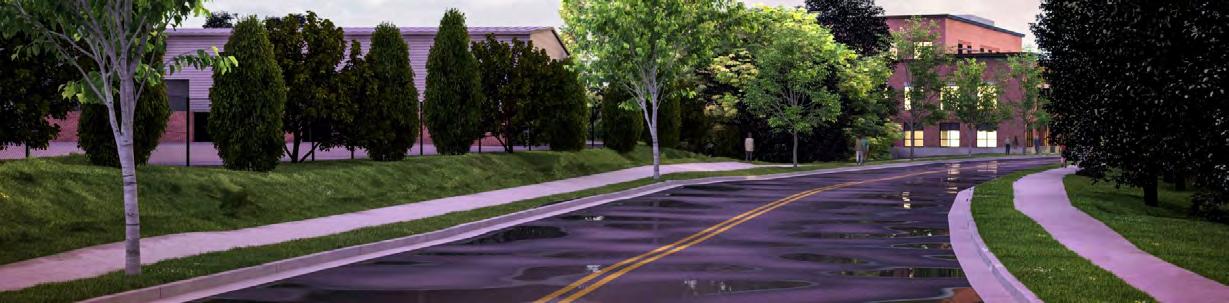
LAFAYETTE STREET RECONSTRUCTION
This project will widen the roadway from south of Wythe Avenue to north of Bacon Avenue to provide wider travel lanes (increasing from 9 ft. to 11 ft.) and meet standards for a minor arterial. It will also maintain on-street parking on the east side of the street, widen the sidewalk on the west side, add a shared-use path on the east side to connect to the Municipal Building, underground the utilities, and install new streetlights. The Arts District sidewalk project from previous CIPs is combined with this project for a total budget of $6,145,000 through FY26. The City was awarded $4,329,000 in VDOT federal-aid Smart Scale funding beginning in FY24. The remaining costs ($1,816,000) will be from local funds to pay for underground wiring and utility betterments. Costs in FY24-FY25 are to begin design and utility relocations in anticipation of construction in FY26. Additional funding in FY27 is for inflation/escalation costs associated with the project that is to be divided 50/50 between VDOT and the City. Year Introduced
The fiscal impact from this project will be negligible. Despite adding pavement, sidewalks, and streetlights, increased maintenance and revenue will be minimal.

ROUTE 143 EMBANKMENT & OUTFALL EROSION REPAIR
Year Introduced Fiscal Year 2020
Related City Council Goal: #2 Courageously Leading
The roadway embankment at the corporate limit with York County on Merrimac Trail is eroding from a storm drainage inlet outfall. The project will extend and repair the storm sewer and discharge it lower on the slope to the existing stream channel while dissipating the energy. The embankment will then be regraded to a uniform slope and permanently stabilized with vegetative cover.
The City applied in 2023 for a grant from VDOT state-aid Revenue Sharing funds for FY27-28. The total cost of $600,240 is a 50% State, 50% City distribution. Design would begin in late summer 2026 with construction in late summer 2027.
FISCAL IMPACT SUMMARY:
Beyond the costs of construction, this project will not have a fiscal impact. The additional maintenance costs will likely be negligible.

TRAIL757 - WILLIAMSBURG
Year Introduced
Fiscal Year 2023
Related City Council Goal: #6 Connecting with the World
Related Initiative: Trail757
This project will seek connections to the future Trail757 (orginally Birthplace of America Trail) within the City to include the remaining phases of the College Woods Circuit, as well as finding ways to use the Carter’s Grove Country Road as the multiuse trail’s exit toward Fort Monroe. The City will work with the Hampton Roads Transportation Planning Organization (HRTPO) to seek additional sources of funding for the remaining segments as well as explore the various options and routes for connecting to the existing bicycle and pedestrian network through the downtown area. The City has submitted a funding application to VDOT's Transportation Alternative Program (TAP) for FY27 for approximately $2,000,000. The project is projected to cost $3-3.5M.
SOURCES
FISCAL IMPACT SUMMARY:
No long term fiscal impact will be realized by the study but the results could increase travel and tourism in the downtown area and require expanded infrastructure.
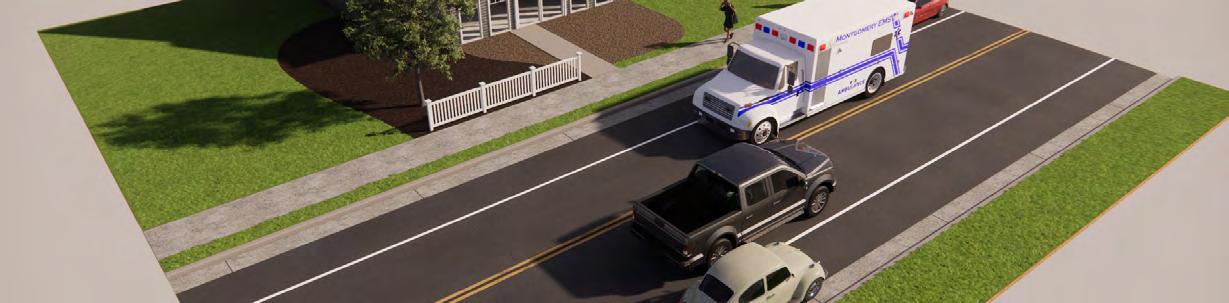
NEWPORT AVENUE SIDEWALK & SOUTH HENRY STREET
Year Introduced Fiscal Year 2020
Related City Council Goal: #6 Connecting with the World
These two projects are combined to facilitate the work and value due to volume pricing as well as to take advantage of the VDOT Revenue Sharing program to leverage City funds. The Newport Avenue project will install a sidewalk along one side of Newport Avenue between Griffin Avenue and South Boundary Street. The sidewalk will not only provide for a neighborhoodrequested pedestrian improvement but will also add a deterrent to cut-thru vehicular traffic by narrowing the street and slowing speeds. For FY23, $100,000 was programmed to saw-cut the existing pavement; install new curb, gutter, and entrances; and construct the new sidewalk.
The South Henry Street sidewalk extension runs about 2,200 feet, beginning at College Landing Park and continuing to the entrance of The Oaks subdivision. The sidewalk will provide pedestrian access from The Oaks subdivision into the downtown area of the City. In FY23, $50,000 was included to determine routing and design documents and an additional $124,500 was added in FY24. The City applied for FY27-28 Revenue Sharing funding for the remaining dollars for construction. The total project cost is $886,400.
FISCAL IMPACT SUMMARY:
The fiscal impact from this project will be negligible. Despite adding sidewalks, increased maintenance and revenue will be offset by the decrease in the existing pavement width.

MERRIMAC TRAIL SIDEWALK
Year Introduced
Fiscal Year 2025
Related City Council Goal: #6 Connecting with the World
This project involves installing a new sidewalk to connect existing sidewalks on Merrimac Trail from Merrimac Crossing to the existing sidewalk south of Sheindel Dr. This will provide a safer route for pedestrian traffic on the road. Due to the topography, some significant filling and grading will be required to address steep slopes along the intended path. Public Works & Utilities anticipates design starting in FY27 with construction taking place in FY28. The total project cost is $315,000. PW&U will pursue alternative funding sources such as VDOT Revenue Sharing program which is a 50/50 cost sharing program.
FISCAL IMPACT SUMMARY:
The fiscal impact from this project will be negligible. Despite adding sidewalks, increased maintenance and revenue will be offset by the decrease in the existing pavement width.
HARRISON AVENUE SIDEWALK
Year Introduced Fiscal Year 2026
Related City Council Goal: #6 Connecting with the World
This project involves installing a new sidewalk to connect existing sidewalks on Harrison Ave and Lafayette St. This will provide a safer route for pedestrian traffic on both roads. Due to the topography, some significant excavating and grading will be required to construct a retaining wall and address slopes along the intended path. We anticipate design starting in FY27 with construction taking place in FY28. The total projected project cost is $250,000. Public Works & Utilities will pursue alternate funding sources such as VDOT Revenue Sharing which is a 50/50 cost sharing funding program.
FISCAL IMPACT SUMMARY:
The fiscal impact from this project will be negligible. Despite adding sidewalks, increased maintenance and revenue will be offset by the decrease in the existing pavement width.

FRANCIS ST & N HENRY ST INTERSECTION PEDESTRIAN CROSSING IMPROVEMENTS
Year Introduced Fiscal Year 2027
Related City Council Goal: #2 Coureageously Leading
Related Initiative: Smart City Initiatives
Install signalized pedestrian crossing pedestals at the intersection of Francis St and S. Henry St. This will increase pedestrian safety as it will include a pedestrian crossing phase to the currently signalized intersection whereby there are dedicated time intervals when pedestrians only will be allowed to cross the roadways.
FISCAL IMPACT SUMMARY:
No long term fiscal impact will be realized by the study but the results could increase travel and tourism in the downtown area and require expanded infrastructure.
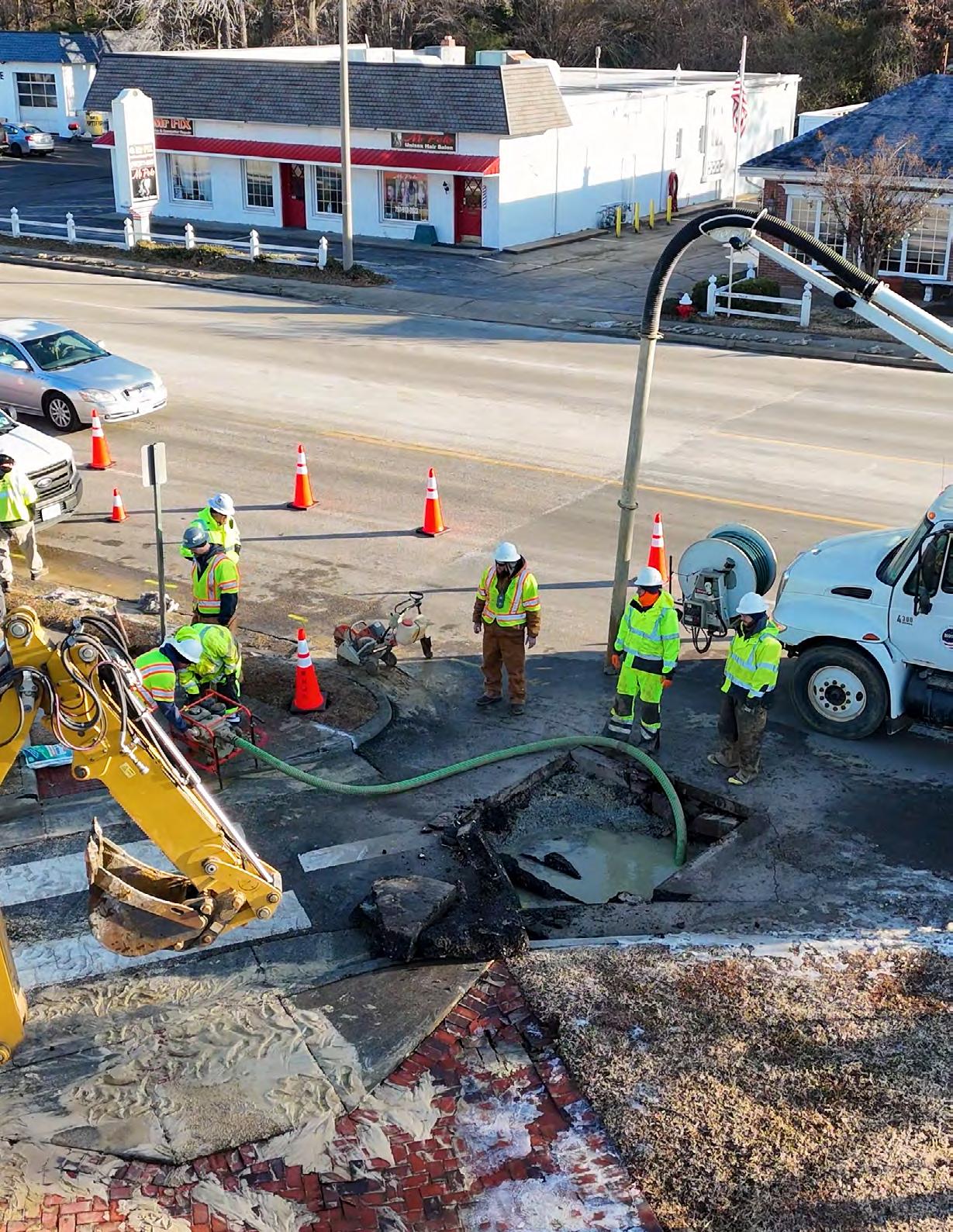
Parks & Recreation

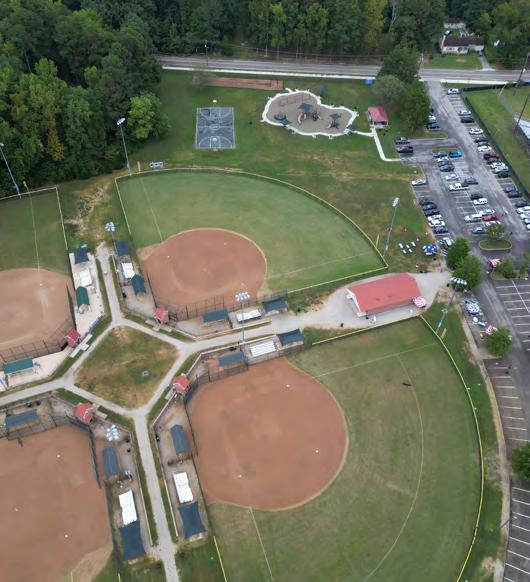
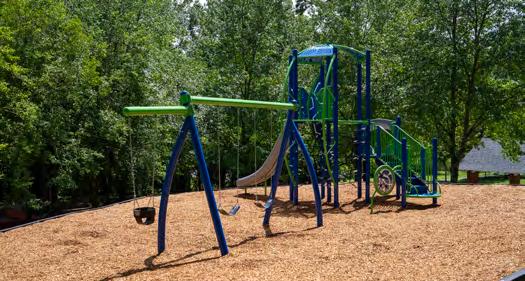
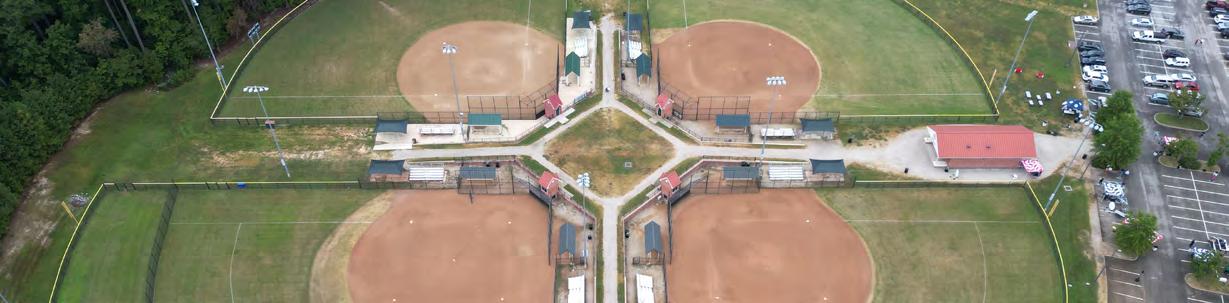
KIWANIS PARK SOFTBALL FIELD WARNING TRACKS
To improve the safety of our youth softball fields, warning tracks will be installed. These tracks are designed to provide athletes with a three-step warning when they are close to the edge of the field and approaching the fence. This 10-foot safety component will be installed around the perimeter of each softball field at Kiwanis Park. The warning track surface will be the same infield mix blend currently used.
IMPACT SUMMARY:
The staff time and resources of mowing and weeding the fence lines will now transition into grooming and maintaining the warning tracks, resulting in an even trade of time and resources. This project should minimize the risk of injury which will minimize the number of insurance claims.
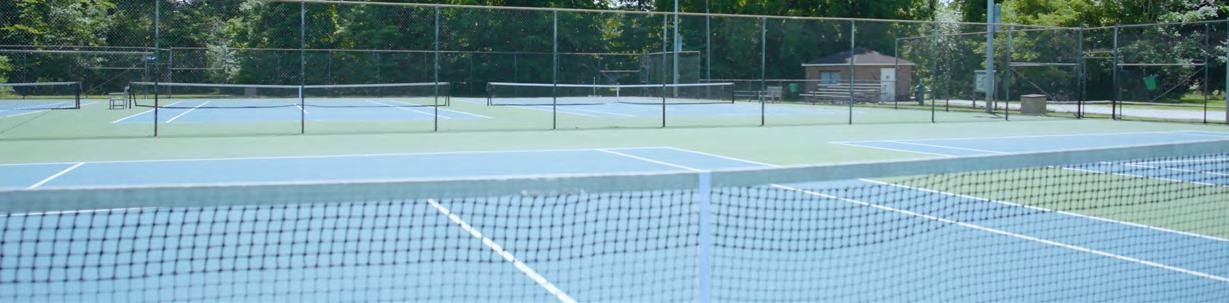
KIWANIS PARK TENNIS COURT REBUILD
The Kiwanis Park tennis courts were constructed in 1973 and have exceeded their lifespan. The courts require a rebuild, otherwise crack repairs will need to occur every six to eight months. Resurfacing is no longer a viable option.

Year Introduced Fiscal Year 2024
Related City Council Goal: #4 Prioritizing Safety & Wellness Related Initiative: ADA Improvements
The bathrooms at the Quarterpath Recreation Center are showing their age and should be renovated. The floors, walls, partitions, and countertops are stained; tiles are beginning to crack; and tile colors should be updated. The renovation will include fixtures, partitions, countertops, tiles, and adding a floor drain.
Replacing all fixtures should reduce maintenance calls to the Facilities Division for service. Estimated staff savings is $1,800 and $5,000 in service calls annually.
QUARTERPATH PARK SOFTBALL FIELD BATHROOMS
Related City Council Goal: #4 Prioritizing Safety & Wellness
Related Initiative: Enhance Existing Park Facilities
A new restrooms facility will replace the current port-a-johns located between softball fields #2 and #3 at Quarterpath Park. This modular restroom features remote access control, graffiti-resistant surfaces, and is ADA-compliant. It will include family, men's, and women's restrooms with a total of four toilets and one urinal. The unit measures approximately 11 by 28 feet. The completion of this project will meet one of two public restrooms needs outlined in the GIOs.
FISCAL IMPACT SUMMARY:
There will be an increase in maintenance supplies and to clean the facility during softball tournaments. However, it should be an overall savings of $11,000 due to eliminating port-a-john rental fees and extra cleaning fees.
QUARTERPATH PARK SOFTBALL FIELD LIGHTING RETROFIT
Year Introduced
Fiscal Year 2026
Related City Council Goal: #4 Prioritizing Safety & Wellness
Related Initiative: Enhance Existing Park Facilities
Replace the existing Musco halide lighting system with the upgraded Musco Quick Fit LED retrofit solution at Quarterpath Park fields #1, #2, and #3. This upgrade retains the existing poles, foundations, and crossarms, utilizing a one-to-one fixture replacement. Ballast boxes are replaced with driver boxes, and new pole harnesses are installed. Once complete, the Musco system is recalibrated to deliver improved light levels as well as spill and glare control. The Quick Fit retrofit includes a comprehensive 10-year warranty covering all materials and labor. This upgrade will reduce energy consumption by up to 50% and will operate seamlessly with the current Control-Link system.
FISCAL IMPACT SUMMARY:
This upgrade will result in a CO2 reduction of 162 tons, which is equivalent to taking 34 cars off the road for one year. Additionally, there will be a ten-year savings of $29,527.
To improve ADA accessibility, the Waller Mill Park Shelter #4 parking lot should be paved to include designated handicap parking spaces.
FISCAL IMPACT SUMMARY:
The shelter parking lot will need to be striped every three to five years, as needed, and will be included when the main lot is serviced. Estimated cost $3,000 every three to five years.

WALLER MILL PARK EQUIPMENT SHED
Waller Mill Park is in need of additional dedicated storage space to properly house maintenance equipment and supplies. Presently, tractor attachments are stored outside and exposed to the elements, contrary to the City's Fleet Manager's recommendations. Adding this storage capacity will ensure that equipment and tools are stored safely, securely, and in an organized manner. The proposed structure is a 20x20 prefabricated unit featuring T1-11 paneling to match existing park facilities.
IMPACTS
FISCAL IMPACT SUMMARY:
Properly housing all equipment will extend its useful life and improve park appearance. Year Introduced Fiscal Year 2027 Related City Council Goal: #4 Prioritizing Safety & Wellness Related Initiative: Enhance Existing

WALLER MILL PARK JON BOAT REPLACEMENT
The fleet of jon boats at Waller Mill Park is more than 40 years old and has exceeded its life expectancy. The fleet is currently down to 10 boats from 15. This request will replace the existing boats and bring the fleet back up to 15.
FISCAL IMPACT SUMMARY:
There is no additional fiscal impact from these projects. Jon boats are currently offered as a rental amenity; therefore, no additional staffing expenses would occur. Year Introduced Fiscal Year 2023 Related City Council Goal: #4 Prioritizing Safety & Wellness
WALLER MILL PARK SHELTER ROAD PAVING
The results of this project will reduce the repair costs for filling in potholes. Year Introduced Fiscal Year 2025 Related City Council Goal: #4 Prioritizing Safety & Wellness
The current dirt shelter roadway at Waller Mill Park will be paved to allow for improved accessibility. Due to the volume of use of this roadway, it often contains excessive potholes that need constant maintenance. This project will also include paving the Shelter #3 parking lot.
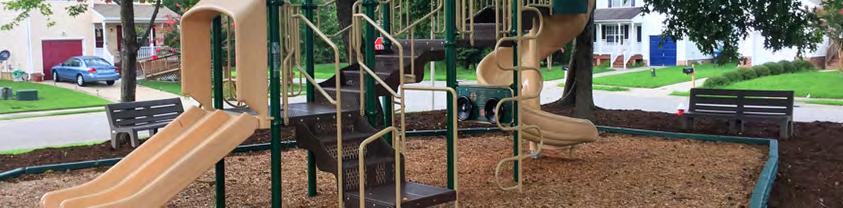
STRAWBERRY PLAINS PLAYGROUND
Year Introduced Fiscal Year 2022
Related City Council Goal: #4 Prioritizing Safety & Wellness
Related Initiative: Enhance Existing Park Facilities
Originally installed in 2007, the Strawberry Plains Park playground and amenities will be replaced with innovative play structures and provide an ADA-compliant accessible route.
SOURCES
FISCAL IMPACT SUMMARY:
There is no additional fiscal impact for this project.

Related City Council Goal: #4 Prioritizing Safety & Wellness Related Initiative: Enhance Existing Park Facilities REDOUBT PARK WALKWAY & PARKING LOT
Year Introduced Fiscal Year 2023
Redoubt Park's paved walkway from the parking lot to Redoubt #1 is in need of repair due to tree root damage and wear. This has caused numerous wide cracks that will continue to spread if not repaired. Due to the quantity of repairs, it will be more beneficial to do a complete repave ($85,000). This walkway was originally installed in 2007. As part of this project, grass parking at Redoubt Park will be converted into paved parking, and existing parking spaces introduced in FY23 ($20,000) will be restriped. These projects have been combined to allow for the use of a single contractor and to minimize mobilization.
COST ESTIMATE
FISCAL IMPACT SUMMARY:
There will be no additional fiscal impact as a result of this project.

PARKS TRASH CAN REPLACEMENT
Year Introduced Fiscal Year 2024
Related City Council Goal: #4 Prioritizing Safety & Wellness
Related Initiative: Enhance Existing Park Facilities
The trash cans in the parks system (Redoubt, Strawberry Plains, College Landing, Highland, Bicentennial, Geddy, and Wales) will be replaced with more functional receptacles that are graffiti-resistant and have covered lids to prevent rain water collection and deter wild animals. COST ESTIMATE
FUNDING SOURCES
FISCAL IMPACT SUMMARY:
Upgrading trash cans will reduce the staff time needed to clean up excess litter around the receptacles. Estimated staff savings is $494 annually.

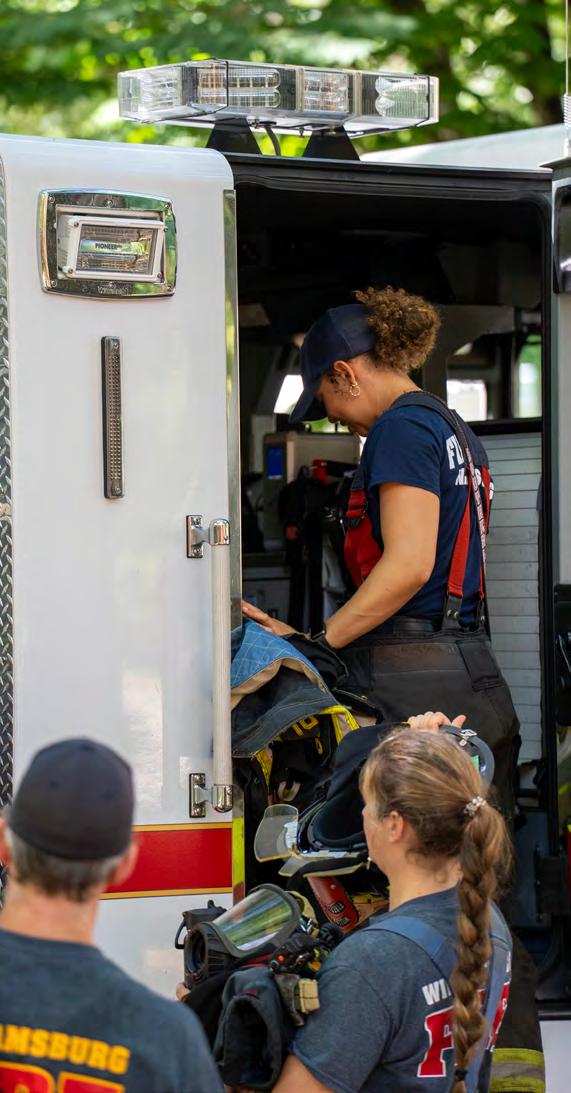
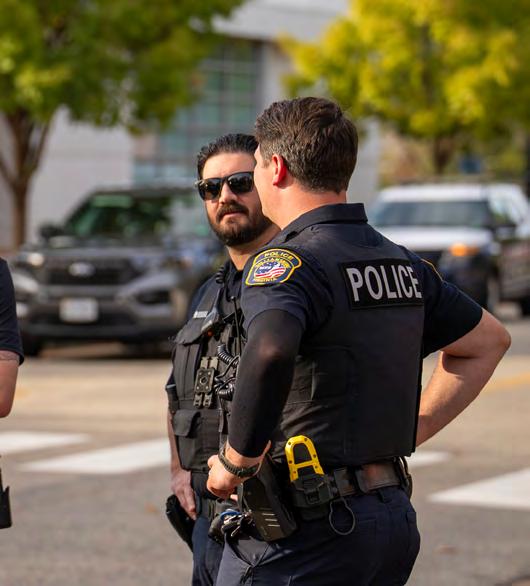
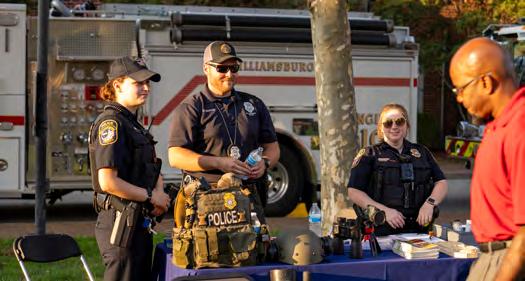

This funding will allow replacement with up-to-date devices in FY27 and FY28.
FISCAL IMPACT SUMMARY:
All officers will have the most modern portable radios available to ensure their safety.

E-911 REGIONAL CENTER EXPANSION
City Council approved the consolidation of the Public Safety Answering Point (PSAP) with York County in February 2009. The consolidation required an expansion of the PSAP in York County. The City supported costs of that renovation equal to an annual debt service of $45,000 in each fiscal year of CIP. At the time, the estimated City savings due to the consolidation equaled approximately $200,000 annually.
FISCAL IMPACT SUMMARY:
The completion of the work will not have a direct fiscal impact beyond the cost of completion due to improved reliability and efficiency of any new improvements, including equipment.

Year Introduced Fiscal Year 2027
Related City Council Goal: #4 Prioritizing Safety & Wellness
The City's and fire department's Automated External Defibrillators (AEDs) have exceeded their life expectancy. A two-year replacement process is being requested. All nine of the city's AEDs, which include both public access AEDs and city-only AEDs, will be replaced in the first year. The fire department's nine AEDs will be replaced in the second year.
FISCAL IMPACT SUMMARY:
The antcipated cost for maintenance of the AEDs will be for replacment pads and batteries.

TRAFFIC CAMERA INSTALLATION AND INTEGRATION
Year Introduced Fiscal Year 2017
Related City Council Goal: #2 Courageously Leading
Related Initiative: Smart Cities Initiative
The police department has begun the first iteration of the project using DMV grant funds during FY26. This would be an expansion of the program adding 360 degree cameras and PTZ 31x zoom cameras at strategic locations throughout the City. Working in cooperation with Information Technology, these cameras feed into the City's Fusus Real Time Situational Awareness System. The Police and Fire Department's use this tool to quickly access real time and historic video to address and mitigate threats to public safety.
FISCAL IMPACT SUMMARY:
There is a very small on-going fee for each camera on the Genetec system. These camera systems will actively stream video into our Fusus system, and could provide valuable information when motor vehicle crashes occur in these locations.
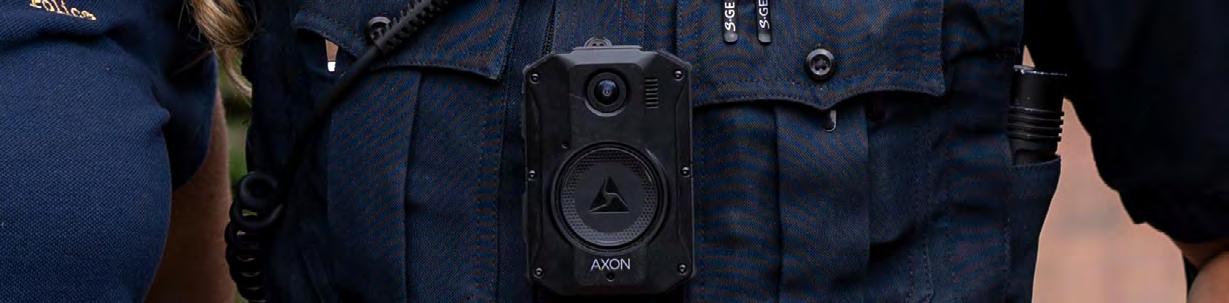
- BODY
The Axon OSP7+ program includes additional GPS tracking and redaction features, as well as Axon’s Records, Citizen and Performance modules. These components increase the safety of the officers while ensuring the highest level of officer accountability. The administrative suite of features will increase personnel effectiveness and efficiency while ensuring FOIA compliance.
The use of non-lethal devices and body cameras may reduce legal liability for the department. The Commonwealth Attorney’s office needs additional staff to file, store, and review data recorded by the cameras. The City will incur its share of the cost to support two additional paralegals in the CA’s Office. The City’s share of the cost for FY26 is $22,889. A 2% increase in salary cost is assumed with each successive year.

The police department plans to replace our mobile data computers every five years to ensure continuity of the program. Replacement and includes the hardware, software, and installation. Maintenance costs are $25 per month per unit, beginning after one-year. This package includes a five year warranty on the laptop, and battery replacement once per year for four years. COST ESTIMATE
FISCAL IMPACT SUMMARY:
The annual maintenance costs associated with this project are $25 per month per unit, beginning after the one-year warranty expires.

Year Introduced Fiscal Year 2021
Related City Council Goal: #4 Prioritizing Safety & Wellness
The standard useful life for Motorola portable radios is approximately 10 to 15 years. The current inventory is older than 10 years. As the portable radios age, replacement parts will be more difficult to find. To maintain the proper life cycle of portable radios, replacement of approximately 84 units is planned for FY28 and FY29.
IMPACTS
FISCAL IMPACT SUMMARY:
The current radio equipment is included in the City's repair and maintenance contract with Motorola.

AXON FLEET 3 IN-CAR CAMERA SYSTEM
Year Introduced
Fiscal Year 2021
Related City Council Goal: #4 Prioritizing Safety & Wellness
Related Initiative: Smart City Initiatives
The WPD utilizes the Axon Fleet system in its police vehicles. This system is integrated into the Evidence Storage System for video storage and has proven to be more effective and efficient with lower costs. The Axon 3 system will provide more features to increase safety and accountability. This system includes a fully integrated Automatic License Plate Reader (ALPR) system, increasing effectiveness while reducing expense and simplifying systems. The rising costs from FY26 to FY30 are due to an increased number of patrol cars in the fleet that will require camera systems in the later years.
FISCAL IMPACT SUMMARY:
The inclusion of ALPRs in the new system will eliminate the need to purchase separate ALPR units and their associated maintenance fees, which amount to approximately $3,000/year. By comparison, to outfit each patrol car with an ALPR from the current ALPR vendor would require an initial investment of approximately $480,000 plus a maintenance fee of $36,000 per year.

FIRING RANGE REPAIRS
Year Introduced Fiscal Year 2021
Related City Council Goal: #4 Prioritizing Safety & Wellness
Repairs to the firing range were initially funded in FY24; however, we were delayed in implementing any improvements pending the public works dam project. Improvements are currently planned for spring 2026. The next installment is scheduled for FY28 and another in FY30.
There are no annual contract costs associated with this repair.

FLOCK SAFETY ALPR
Year Introduced Fiscal Year 2022
Related City Council Goal: #4 Prioritizing Safety & Wellness
Related Initiative: Smart City Initiatives
The Flock Safety ALPR system provides real-time actionable intelligence and evidence that increases case clearance rates. Since the system's initial deployment, the City has experienced numerous successes with the technology. COST
ESTIMATE
FUNDING SOURCES
FISCAL IMPACT SUMMARY:
Staffing savings are realized from a decrease in the number of hours a detective or other investigating officer would be required to perform surveillance or other similar activity to develop a suspect. The Flock system can provide this data using a simple query.
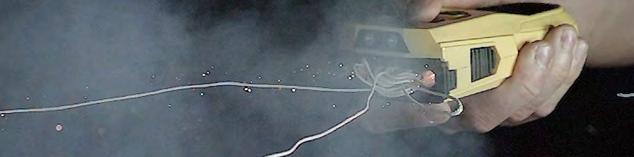
LESS LETHAL RESTRAINT EQUIPMENT (BOLAWRAP)
Year Introduced Fiscal Year 2022
Related City Council Goal: #4 Prioritizing Safety & Wellness
The BolaWrap is a remote restraint device that deploys an 8-foot Kevlar tether to temporarily restrain subjects from a distance of 10 to 20 feet. This device will increase officer safety and reduce the likelihood of injury to persons who are aggressively resisting arrest.
COST ESTIMATE
IMPACTS
There is no fiscal impact beyond the purchase price of the devices.

FIRE EQUIPMENT - MOBILE DATA TERMINAL
Mobile Data Terminals (MDTs) are devices assigned to front-line apparatus that provide critical real-time information for responding personnel including access to several map layers to improve tactical decisions and general incident planning. Traditionally, the Fire Department has replaced MDTs as part of the vehicle replacement plan. MDTs are suggested to be replaced every four to five years. Over the next two fiscal years, four MDTs will need to be replaced.
Routine replacement of the MDTs according to the manufacturer and the 911 Center guidance helps minimize repair and maintenance needs to keep the MDT inventory operational. Additionally, the annual operating cost of the AirCard fees for the units is approximately $5,000.

CRIME PREVENTION PROGRAM
Year Introduced Fiscal Year 2022
Related City Council Goal: #4 Prioritizing Safety & Wellness
Related Initiative: Smart City Initiatives
As the City approaches the second iteration of this project, the scope will expand beyond SmartWater CSI to include additional Crime Prevention technologies. This will continue to include SmartWater, but will also include programs such as VIN etching and other tools and technologies.
IMPACTS
There is no fiscal impact beyond the fee for the program.
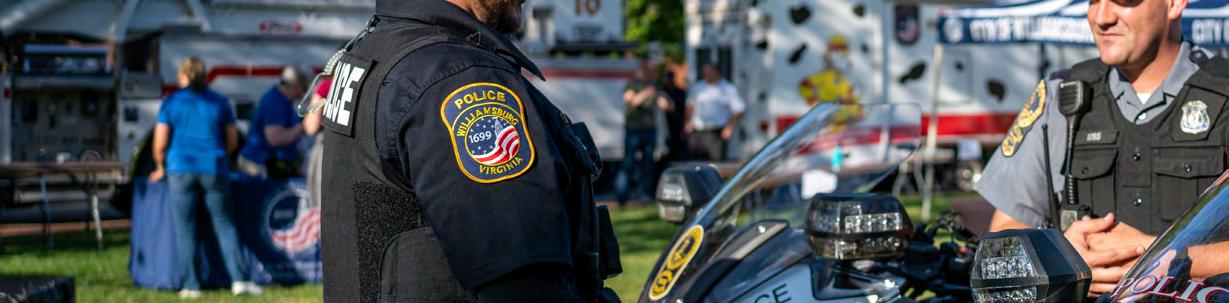
The protective plate inserts for Williamsburg Police Department's ballistic vests are recommended for replacement every five years. To ensure user safety while also meeting manufacturer recommendations, the plate inserts will need to be programmed to be replaced in FY28. Ballistic vests are important protective equipment for personnel when responding to active threats or other potentially dangerous incidents.
SOURCES

Glidescope is the Fire Department's preferred laryngoscope system. The GlideScope is critical for the airway management of patients requiring intervention and assistance. The department's current inventory is nearing its useful life and is in need of replacement. The department is requesting two additional glidescopes to place on fire apparatus to standardize all EMS equipment.
IMPACT SUMMARY: Repair and maintenance of the equipment has an ongoing fiscal impact.

By integrating live video, data, and sensor feeds from multiple existing sources, this project will significantly enhance situational awareness for officers responding to emergencies and establish a comprehensive archive of information to support criminal investigations. This cloud-based technology increases staff efficacy while enhancing the safety of officers and citizens.
FUNDING SOURCES
There is no fiscal impact beyond the cost of the program.
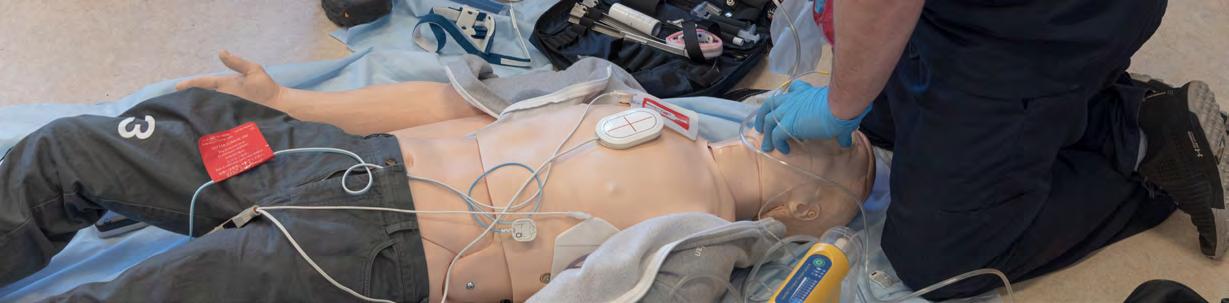
EMS TRAINING EQUIPMENT REPLACEMENT
Year Introduced Fiscal Year 2027
Related City Council Goal: #4 Prioritizing Safety & Wellness
New EMS training equipment was purchased in FY25. This equipment will reach its useful life expectancy in FY30. Replacement/upgrade of this equipment will occur over a two-year period. This equipment is used to support the paramedic training program and continuing education training for Fire Department staff.
IMPACTS
There would be no change in fiscal impact, as funding for the maintenance services for this equipment has already been

Year Introduced
Fiscal Year 2025
Related City Council Goal: #4 Prioritizing Safety & Wellness
Several pieces of the City's EMS equipment are coming to the end of their useful life and will be due for replacement. This includes replacing stair chairs, which assist in moving patients up and down stairs as well as updating the City's inventory of Lucas devices, which are cardiopulmonary assist tools that perform chest compressions and are now considered the gold standard for resuscitation efforts, suction units for each apparatus, replacement ultra sounds, and a blood warm to support the administration of whole blood.
IMPACTS
FISCAL IMPACT SUMMARY:
Equipment purchased is included in the Fire Department's annual repair and maintenance contract with the vendor.

DUKE OF GLOUCESTER STREET BOLLARD PROJECT
This project provides funding to install fixed and retractable bollards at the intersection of Duke of Gloucester Street and Boundary Street. The bollards would be rated to defeat a vehicle-ramming attack while maintaining an appearance consistent with the high standards expected in our community. The requested funding would cover the anticipated cost of both materials and installation labor.
The potential negative fiscal impact of a successful terrorist event in our tourism-based economy cannot be overstated, though it is incredibly difficult to assign a dollar-figure to.

The inventory of five-gas monitors was purchased in FY26. The new five-gas meters and CO detectors have a five-year life expectancy and will need to be replaced in FY31.
SOURCES
FISCAL IMPACT SUMMARY: Purchase of the units includes a full three-year warranty that will cover repair and maintenance.

TOUGHBOOK REPLACEMENT PROGRAM
Year 2025 Related City Council Goal: #4 Prioritizing Safety & Wellness EMS
The current inventory of 10 Panasonic Toughbooks were purchased in 2025 with a life expectancy of five years. They will need to be replaced in FY31. These computers are used to capture EMS report documentation, which is directly tied to EMS billing and revenue recovery.
FISCAL IMPACT SUMMARY:
Once purchased, the computers come with a three-year warranty for repair and maintenance. There is a plan to purchase an extended warranty when the factory warranty expires. Year Introduced
SCBA PACK REPLACEMENT
Related City Council Goal: #4 Prioritizing Safety & Wellness
In FY18, the City purchased 32 new air packs for the department. Included in the initial purchase were spare Self-Contained Breathing Apparatus (SCBA) packs to be used for training when recruits and instructors were assigned to or assisting fire academies. Since FY18, the average number of recruits the department has been sending to fire academies has increased. With this increase, SCBA air packs are being removed from apparatus to augment the need for additional SCBA air packs. This CIP seeks to minimize the need to remove air packs from apparatus to support training needs.
FISCAL IMPACT SUMMARY:
Increasing the inventory of SCBA air packs will increase the annual repair and maintenance operating costs. However, this initiative will help keep fire apparatus with their assigned number of air packs.

DIGITIAL EVIDENCE RECOVERY AND ANALYSIS PROGRAM
Year Introduced Fiscal Year 2027
Related City Council Goal: #4 Prioritizing Safety & Wellness
Digital evidence is becoming increasingly prevelent in all aspects of criminal investigations. As the technology evolves, systems have become increasingly secure. A recent update to security software has made time a critical factor, where if a device is not connected and processed within 72 hours of last use by it's owner, the devices become exponentially less likely to be recoverable using forensic techniques. This project would enable the police department to recover this evidence inhouse much more efficiently and securely, without risking a device time-out and rendering us unable to recover essential data. COST
FISCAL IMPACT SUMMARY:
By bringing this technology in-house we reduce our dependence on external partners and increase staff efficiency. This would likely result in a decrease in overtime and an increase in productivity.
While prioritizing ARPA funds, Fire and Police sought funding to purchase a mobile command unit that would support incident and event operations while also having the flexibility to be used for other City outreach efforts. As planned events, such as special events, continue to increase the need for the physical presence of a mobile command unit becomes increasingly more important for the management of these events and incidents, while promoting the inclusion of our partners.
FISCAL IMPACT SUMMARY: Costs will be incurred to operate the vehicle, including routine repair and maintenance, and technology upgrades.

An FDA/DEA compliant pharmacy was implemented in FY25. This equipment is used to track drug/narcotic compliance for the department. This equipment will have reached its useful life expectancy.
FISCAL IMPACT SUMMARY:
With the department already incurring operational costs to maintain this system, there would be minimal change in fiscal impact. Year Introduced Fiscal Year 2027 Related City Council Goal: #4 Prioritizing Safety & Wellness

VENTILATOR REPLACEMENT PROGRAM
Year Introduced Fiscal Year 2027
Related City Council Goal: #4 Prioritizing Safety & Wellness
Two ventilators were purchased in FY26 using grant funding and WVFD matching funds. The useful life expectancy is five years. The two current units will be replaced/upgraded, and a third ventilator is being requested for the third due medic unit that handles multiple special events each year.
SOURCES
IMPACTS
There would be minimal fiscal impact as maintenance services for this equipment increase from two units to three units.
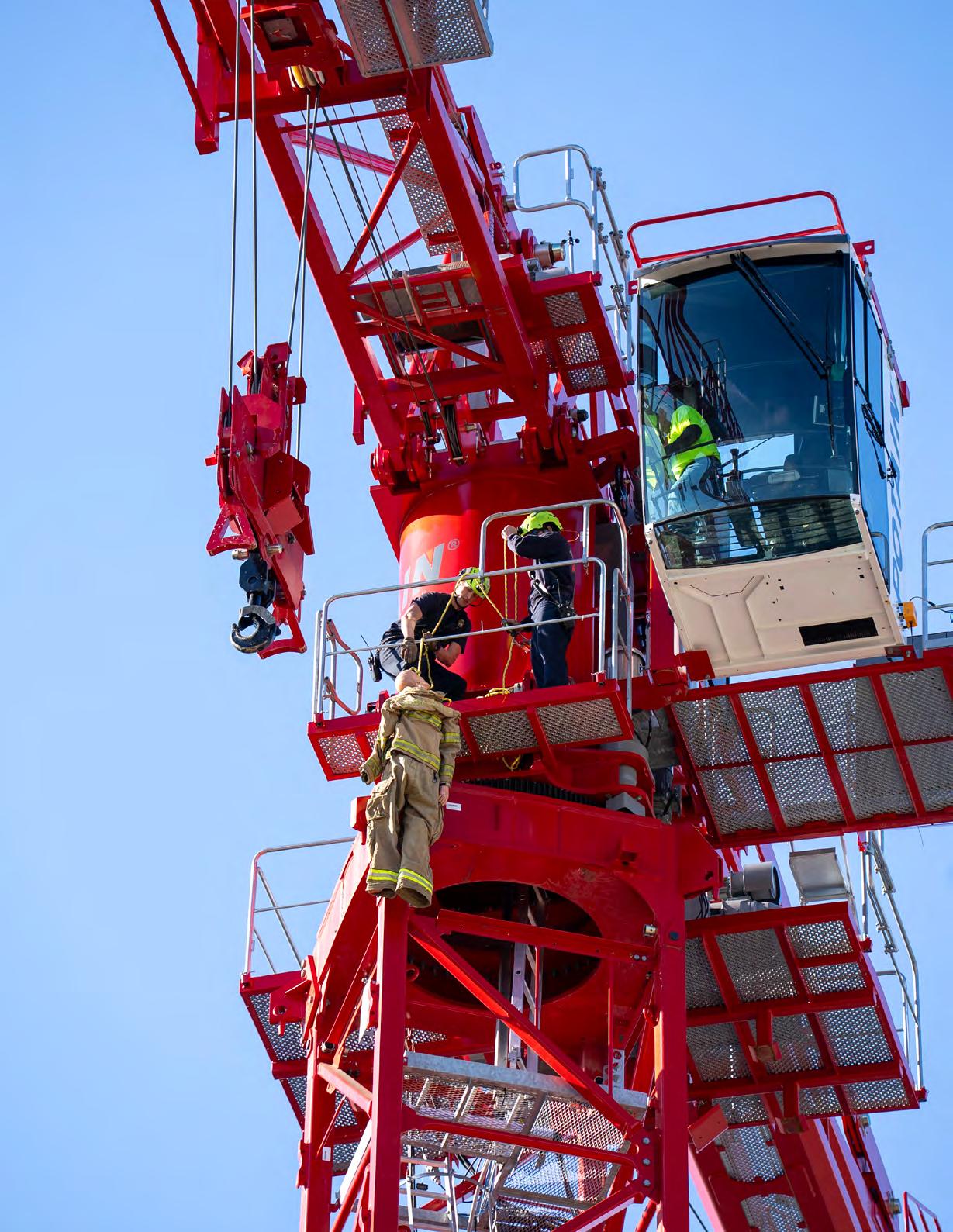
Community & Economic Development

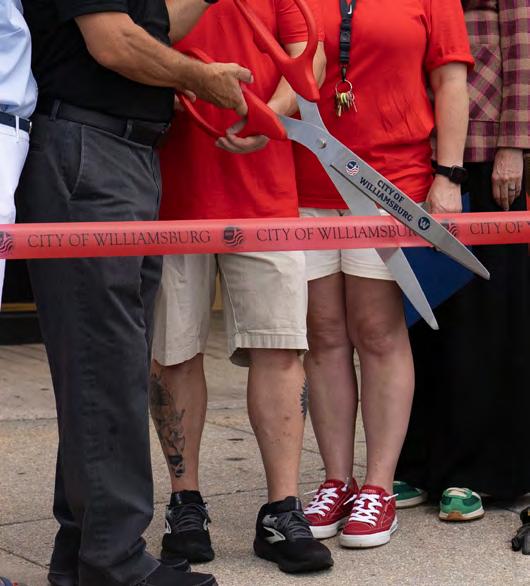
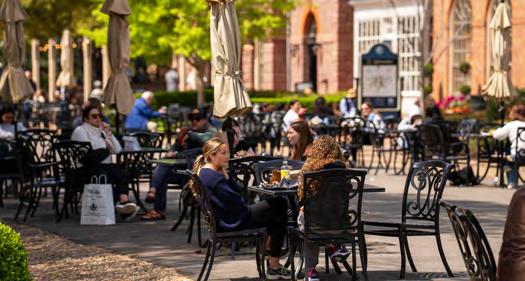
TRANSPORTATION CENTER STORAGE CONVERSION TO COMMERCIAL
The approximately 1,350-square-foot storage space in the Williamsburg Transportation Center is currently being used as a workshop by the City's Facilities Maintenance Division. There are plans to build a new workshop in the Public Works Yard in FY26-FY27. Once vacated, Economic Development proposes converting this space to a leasable commercial unit, preferably for a cafe. The space could be leased to a long-term tenant or could be used as a retail incubator space managed by the Economic Development Authority. To achieve "vanilla box" status for the space, an estimated $250,000 will be required. This estimate includes $150,000 for a Contractor; $50,000 for Architecture, Engineering, Plumbing and HVAC; and $50,000 for finishing elements such as lighting, flooring and contingency. Estimates for these items were secured and verified by Public Works.
COST ESTIMATE
In the immediate term, the fiscal impact is minimal beyond the costs for conversion. In the long term, the investment will create revenue. Year Introduced Fiscal Year 2025 Related City Council Goal: #3 Innovating a Modern City

REPLACEMENT OF ROOFS AND GUTTERS
Year Introduced
Fiscal Year 2023
Related City Council Goal: #4 Prioritizing Safety & Wellness
Beginning in FY24, the Williamsburg Redevelopment & Housing Authority has initiated a five-year plan to replace the roofs and gutters at all properties. The objective is to complete replacements at approximately four to six buildings per year.
ESTIMATE
SOURCES
FISCAL IMPACT SUMMARY:
This initiative includes the removal of aging three-tab shingle roofs, deteriorated plywood, and outdated gutter systems. The replacements will enhance the long-term integrity of the buildings by supporting preventative maintenance efforts, improving energy efficiency, and preserving property value.

HVAC REPLACEMENT
Year Introduced Fiscal Year 2023
Related City Council Goal: #4 Prioritizing Safety & Wellness
The Williamsburg Redevelopment & Housing Authority seeks to replace 10 HVAC units, including programmable thermostats, per year, until all 66 family site units have energy-efficient systems. COST ESTIMATE
FISCAL IMPACT SUMMARY:
Due to the age of the current HVAC systems at the family sites, the units are in need of an upgrade, to make them more energy-efficient and reliable.
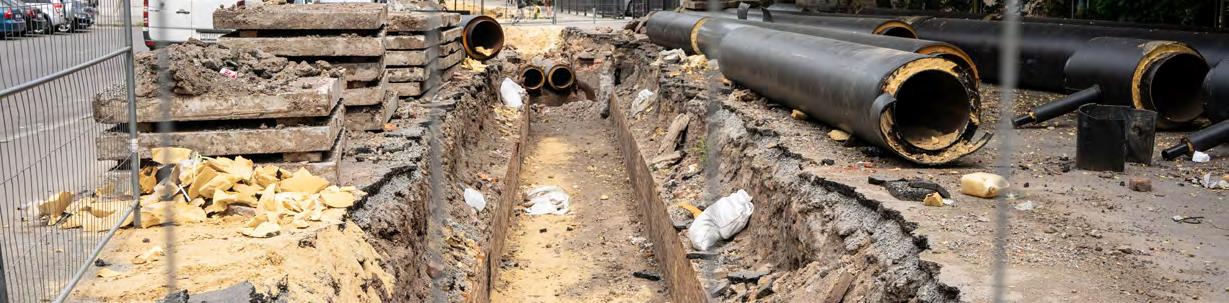
SEWER LINE REPLACEMENT
Year Introduced
Fiscal Year 2023
Related City Council Goal: #4 Prioritizing Safety & Wellness
The Williamsburg Redevelopment & Housing Authority seeks to replace the sewer lines at all family sites that have been compromised. It is the Authority’s goal to replace 10 sewer lines per year.
ESTIMATE
SOURCES
FISCAL IMPACT SUMMARY:
The Authority’s ability to provide clean, decent, and safe housing at our sites has been impacted due to failing sewer lines. The Authority seeks to replace sewer lines that are blocked by tree roots or collapsed as a result of deterioration.
RENOVATIONS
In an effort to provide workforce housing, there are 16 housing units that are utilized for City employees who meet the program requirements. The units are offered generally offered to employees who respond to emergencies so that the City derives a valuable benefit of having staff in close proximity to work. The funds requested will be used to renovate and maintain the housing units.
To support the long-term availability of affordable housing for City employees, the Authority continues to allocate for funding for ongoing maintenance of existing workforce housing units. In addition, planning and budgeting efforts are underway for the renovation of a newly acquired structure, which will accommodate two additional workforce housing units.
General Government
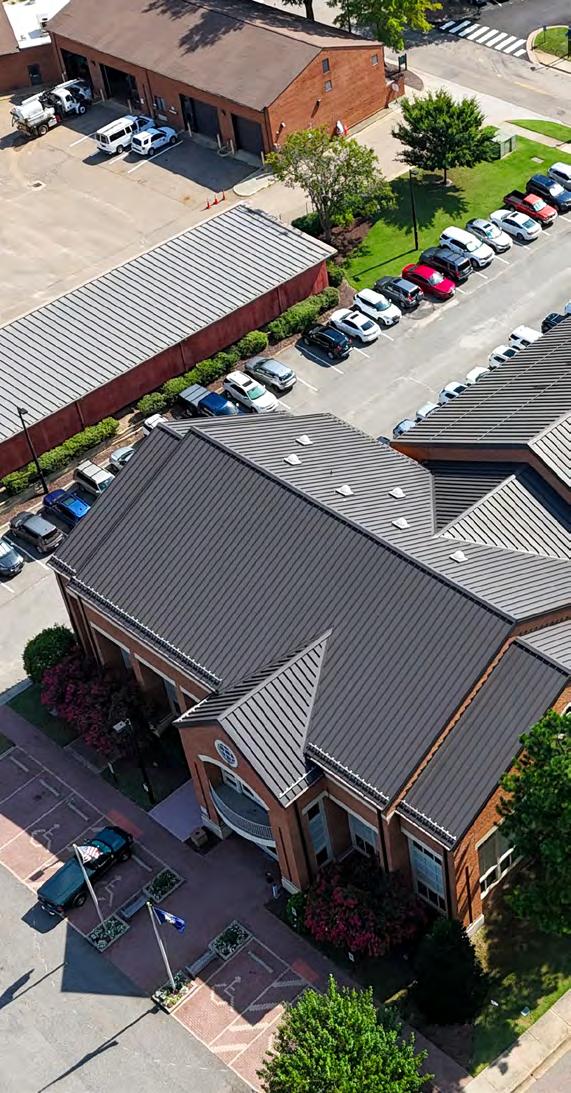
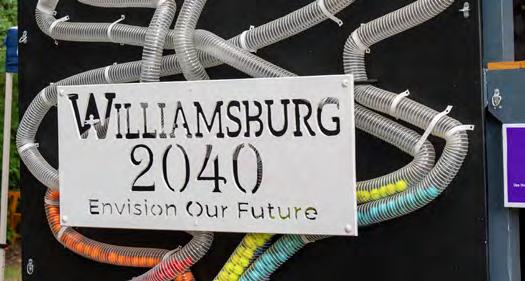
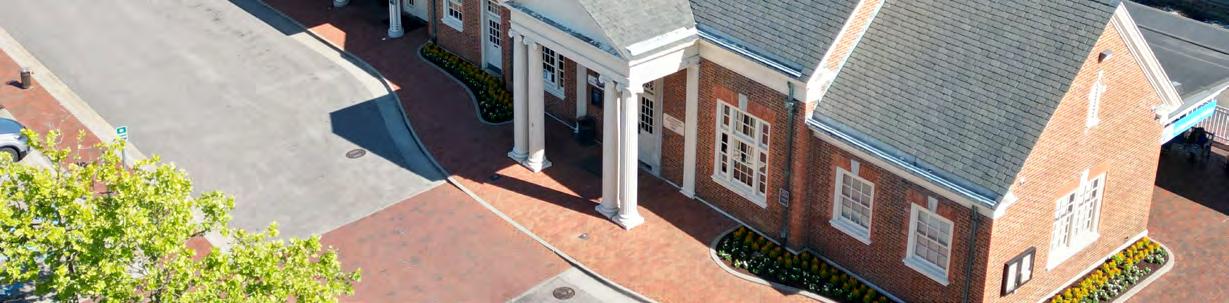
TRANSPORTATION CENTER UPGRADES
Year Introduced Fiscal Year 2023
Related City Council Goal: #2 Courageously Leading
Maintaining City buildings ensures a fresh and professional appearance for the City of Williamsburg's public image and presence in the community. Some repairs are required to maintain aging systems. In FY27, $250,000 is proposed for painting the interior and renovating the Williamsburg Area Transit Authority (WATA) offices.
IMPACTS
There is minimal fiscal impact other than the initial capital outlay for maintenance repairs and painting.

COMMUNITY BUILDING UPGRADES
This project will provide for improved access control systems and improvements to enhance the Williamsburg Community Building's ability to operate in adverse conditions as well as improve the facility's appearance. In FY26, $100,000 is proposed for exterior door replacements. A diesel generator is proposed for installation at the building in FY27, at a cost of $150,000, to ensure reliable back-up power at a designated polling site. Door replacement in FY30 is a cost of $42,000.
There is minimal fiscal impact other than the initial capital outlay for control software and equipment.
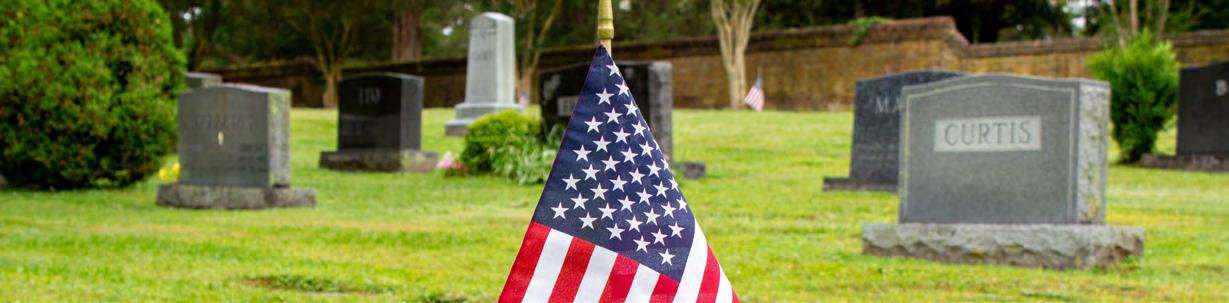
CEDAR GROVE CEMETERY EXPANSION
Year Introduced Fiscal Year 2024
Related City Council Goal: #5 Engaging with our Partners
Based upon a request proposed in the 2021/2022 Goals, Initiatives & Outcomes, a feasibility study was accomplished to determine the number of spaces available and a projection was made to expand Cedar Grove Cemetery to meet 92 years of demand. A white paper was produced in January 2022 that indicatess that the existing Cemetery capacity will be reached in 2045. To reach the target year of 2112, an additional 4728 burials are projected to occur require an additional 6 det developable acres. Two other alternates were proposed: Purchase 10 useable acres to last until 2156 (134 years) or purchase 26 useable acres to have capacity until about 2334 (312 years). The City is in the process of completing survey work for the recordation of the expansion to the cemetery based on the combination of the two alternatives. FY28 is for initial clearing, grading, and installation of perimeter fencing.
COST ESTIMATE
SUMMARY:
The staffing costs assume an additional 20% FTE for cemetery caretaker being offset by selling plots at the rate noted in the white paper for a net impact of $13,600 revenue per year resulting in a approximate 30-year payback at 3% beginning when the property is developed.
This project involves removing and replacing the bearings in the pedestrian bridge at the City Square parking terrace on Boundary Street. Bridge bearings transfer the weight of the bridge deck (superstructure) to the supporting piers (substructure) while allowing for controlled movement, such as expansion and contraction from temperature changes. The bearings act as flexible connections that help prevent structural damage.
The completion of the work will not have a direct fiscal impact beyond the cost of completion due to improved reliability and reduced maintenance costs.

SMART CITY INFRASTRUCTURE DEPLOYMENT
The proposed project will deploy Smart City infrastructure to enable better data collection and policy development in service areas such as parking, downtown trash collection, visitation, air quality, lighting, road conditions, and code enforcement. Examples include trash collection that notifies the City when the trash or recycling bin is full, smart fire hydrants which are equipped with sensors to convey pressure in the water system, air quality sensors, or radar-based traffic signal detection/ counters for vehicles, pedestrian, and bicycles.
IMPACT SUMMARY:
Smart City infrastructure will increase operating costs for trash collection, etc., but those costs will be offset by increased efficiency of use.

STREET LIGHT REPLACEMENT
Year Introduced Fiscal Year 2026
Related City Council Goal: #3 Innovating a Modern City
This project involves replacing City-owned street lights due to age and the difficulty of finding replacement parts. The City currently owns 150 street lights but will likely install more over time. $75,000 will cover the replacement of approximately 10% (15 units) per year. In addition to the light replacment, we propose conducting a study to find if additional lights are needed in the dowtown area. The cost of this project is $60,000.
COST ESTIMATE
FUNDING SOURCES
FISCAL IMPACT SUMMARY:
The completion of the work will not have a direct fiscal impact beyond the cost of completion due to improved reliability and reduced maintenance costs.

Adding air conditioning to the fleet maintenance garage was added as a FY25 project. The budgeted amount was not sufficient so we look to increase the budget in FY27 to complete the project. This project will increase the safety of staff by keeping the temperature at comfortable levels and increase efficiency with less need for staff to cool off periodically throughout the day.

COMPREHENSIVE PLAN UPDATE
Year Introduced
Fiscal Year 2025
Related City Council Goal: #3 Innovating a Modern City
Related Initiative: Comprehensive Plan Update
This project involves the execution of a Comprehensive Plan that, upon delivery, recommends a Complete Streets Policy; considers the appropriateness of existing Architectural Review Board District boundaries; reviews opportunities for additional housing downtown, infill development, and two-story development requirements; identifies school planning concerns; includes a citywide pedestrian/bike plan that considers existing facility improvements, expansion of assets, and trail connectivity; and delivers a revised economic development strategic plan that emphasizes economic diversification, including opportunities for a Research Village as part of the megaregion that satisfies requirements of the Virginia Business Ready Sites Program.
COST ESTIMATE
SOURCES
IMPACTS
FISCAL
IMPACT SUMMARY:
The Code of Virginia mandates that all localities review their Comprehensive Plan every five years. The City’s current plan, adopted in 2021, is based on research, data, goals, and implementation steps developed prior to the COVID-19 pandemic. Since then, the pandemic has significantly disrupted various markets and systems, particularly those affecting housing and commercial investment. Beyond these transformative shifts, changes in state and local dynamics also necessitates a reassessment. It is crucial for the City to revisit its vision for the built environment, transportation systems, and overall development strategy. This review will help ensure the City is well-positioned to sustain, improve, and enhance the quality of life for both current and future residents.

This project will provide a new HVAC system and roof for the Quarterpath Recreation Center. The HVAC has needed multiple repairs in recent years and is past its useful life. Full replacement is proposed in FY28 for $500,000. The roof at Quarterpath is also in need of replacement. The $750,000 cost is proposed to be spread over two years: $250,000 in FY29 and $500,000 in FY30.
IMPACT SUMMARY: There is minimal fiscal impact other than the initial capital outlay for maintenance repairs.
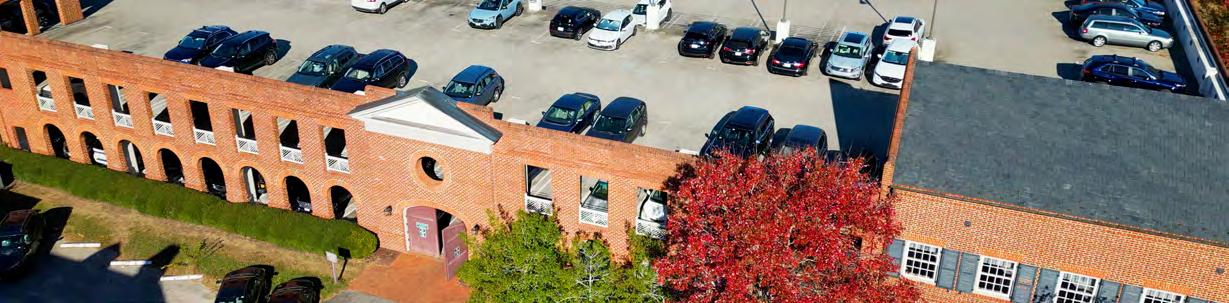
PRINCE GEORGE PARKING GARAGE UPGRADES
Year Introduced Fiscal Year 2027 Related City Council Goal: #3 Innovating a Modern City
The Prince George Parking garage is the primary parking facility in the downtown area. The garage currently accepts payments via two paystations on the first floor, Passport Mobile Pay, and through digital permits. This project would add a pay station to the 2nd and 3rd floors and improve signage from the street, letting parkers know the availability of available spaces in the garage, either in total or by level.
Minor addition to the operating budget in future years to account for maintenance costs for the pay stations.

PC REPLACEMENT PROGRAM
Year Introduced Fiscal Year 2020
Related City Council Goal: #2 Courageously Leading
Annually, the City follows a PC replacement schedule, replacing those computers that have reached their end of useful life or malfunction during the fiscal year. The department requests $35,000 for this expense in the upcoming fiscal year. COST ESTIMATE
SOURCES
IMPACTS
FISCAL IMPACT SUMMARY:
The replacement of computers will not have a direct fiscal impact beyond the cost of completion. Efficiency is gained by staying current with new technology and software.

Year Introduced Fiscal Year 2019
Related City Council Goal: #6 Connecting with the World
The City utilizes the features and functionality of the Microsoft Office 365 platform across the entire organization. This project renews that licensing on an annual basis.
FISCAL IMPACT SUMMARY:
No follow-on impacts related to the budget outside of the annual renewal.

MIGRATE TYLER MUNIS TO THE CLOUD
Related City Council Goal: #6 Connecting with the World
The City's Enterprise Resource Planning (ERP) system was initially installed and configured on-premises. This setup requires 4 individual servers running specific applications vital to the overall system. The city pays approximately $65,000 per year for software support and the IT department handles the maintenance of the servers. Additionally, one IT staff person is responsible for managing the system in-house. This project would shift the hosting, hardware, and software maintenance to the cloud, hosted by the vendor. With the potential retirement of key IT staff in the coming year, completing this project will be a necessity.
FISCAL IMPACT SUMMARY:
Moving this to the CIP will reduce the operating budget by over $65,000 per year. Costs for each future fiscal year include a 5% increase. Year Introduced Fiscal Year 2027
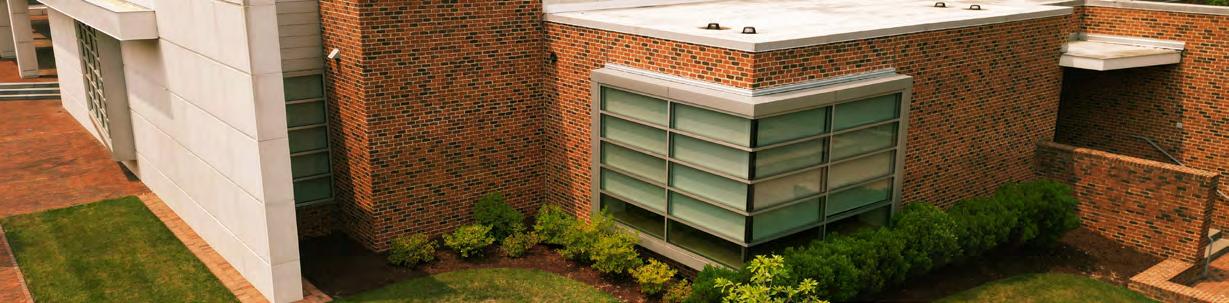
CHAMBERS UPGRADES
Year Introduced
Fiscal Year 2027 Related City Council Goal: #2 Courageously Leading CITY COUNCIL
This project would add new capabilities to City Council Chambers. The current nameplates are required to be changed out for every board that meets in the room. This project would install e-ink nameplates that remain in place and utilize software to populate the names based on the meeting and the corresponding member. Additionally, this project would replace all dais microphones with new devices that would include a touch panel for electronic voting as well as illuminate the nameplate when a particular member is speaking COST ESTIMATE
IMPACTS
Minor addition to the operating budget in future years.

VOTING EQUIPMENT
Year Introduced Fiscal Year 2026
Related City Council Goal: #2 Courageously Leading
To comply with new requirements for reporting election results by precinct – including early voting, vote-by-mail, and sameday registration provisionals – the Electoral Board must now utilize additional voting equipment. Specifically, the spare voting units currently used as supplemental machines during Presidential elections are now needed on a permanent basis to meet reporting and operational demands.
To ensure compliance with §24.2-627 of the Code of Virginia and maintain efficient election operations, four new voting machines are necessary. This will support the requirement to deploy two ballot scanners at each polling location and allow for the phased replacement of aging equipment with updated software and hardware.
Per §24.2-627, each precinct must have at least one scanner, and precincts with more than 4,000 registered voters must have a minimum of two scanners during Presidential elections – unless the locality, in consultation with the General Registrar and Electoral Board, determines that a second scanner is unnecessary based on historical turnout and wait times.
FISCAL IMPACT SUMMARY:
The additional operating cost is the annual maintenance fee for software and hardware.

Year 2027
The City replaces vehicles in accordance with industry standards and after extensive use. When general fleet vehicles are replaced, they are repurposed or sold as surplus. Following a replacement schedule in FY27, several vehicles are scheduled for replacement.
IMPACT SUMMARY:
When city vehicles are replaced, they are either repurposed or sold as surplus. Typically operating and maintenance costs are reduced with newer vehicles. Year Introduced

Public Works is looking to purchase several pieces of equipment and apparatus for use in a variety of capacities. Two 8.5'x18' enclosed trailers, priced at $30,000 including interior shelving, will accommodate supplies and games for Future Festival activities. A Briggs Trac Vac Leaf Trailer, model 28823, pull-behind with a 10'x10' hose attachment, priced at $35,000, will support the Landscaping Division's maintenance of City Square. A mulcher attachment for the excavator, priced at $45,000, will assist the Landscaping Division with controlling vegetation overgrowth around the City. A Brine System consisting of a 1,035-gallon dump truck-mounted tank with spray bars and motor for storm pretreatment of City streets is priced at $21,000. A set of two Automated Flagger Assistance Devices (AFADs), portable tow-behind devices for traffic control and safety, is priced at $42,000. A Ventrac Tractor with bush attachment for maintaining the City's BMPs, outfalls, and dam embankment is priced at $42,000. A leaf removal vacuum trailer to replace current trailers used by the Streets Division for fall leaf removal is priced at $78,000. Two snowplow blades and salt/sand truck-mountable spreaders, priced at $46,000, will allow the Landscaping Division to assist the Streets Division with snow removal. Finally, a Stinger QA3000 Riding Aerator with a 30" hydrostatic direct-drive and Kawasaki FS651 engine, capable of aerating up to 2 acres per hour, is priced at $14,000.
IMPACT SUMMARY:
The addition of the these items and equipment will allow staff to store, handle, work, and maintain City properties, valuables, and assets.
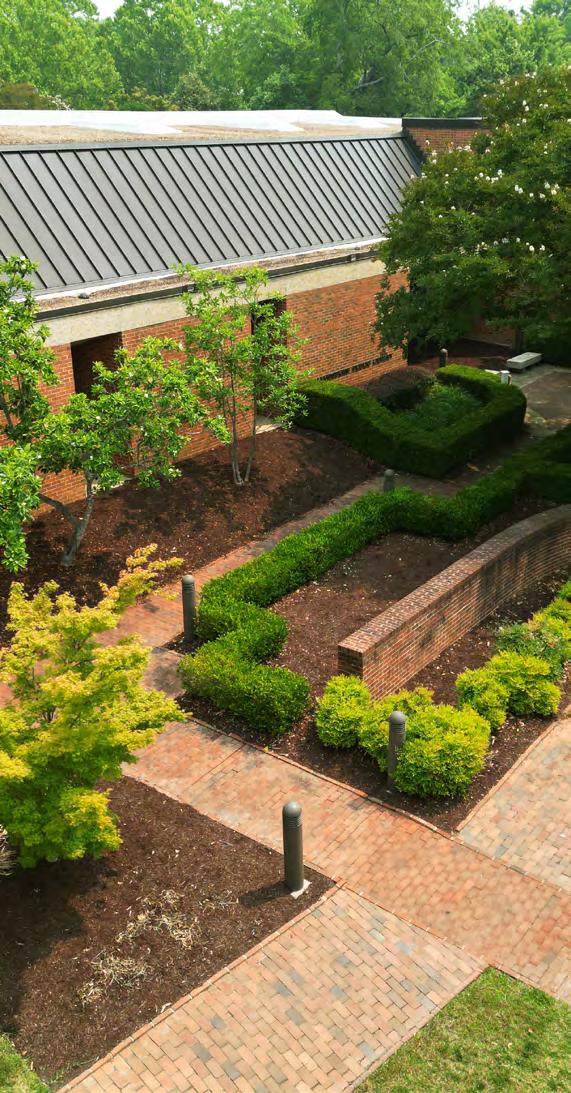
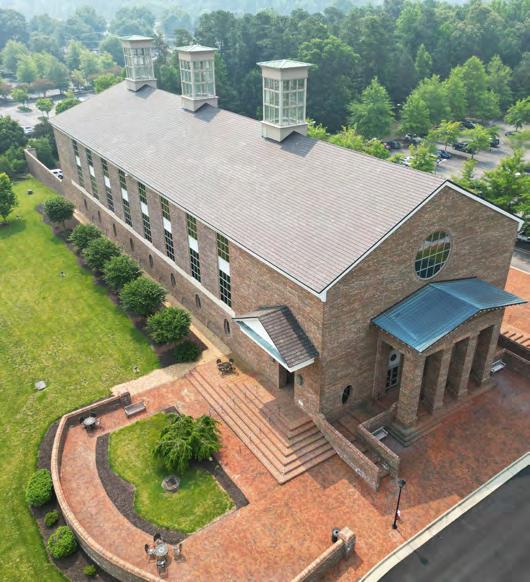
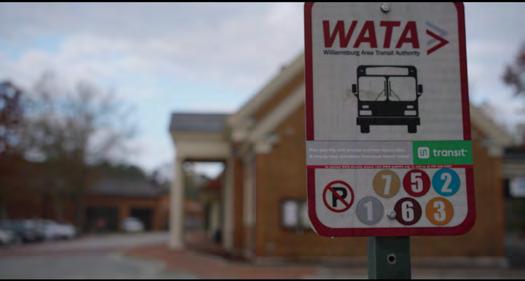
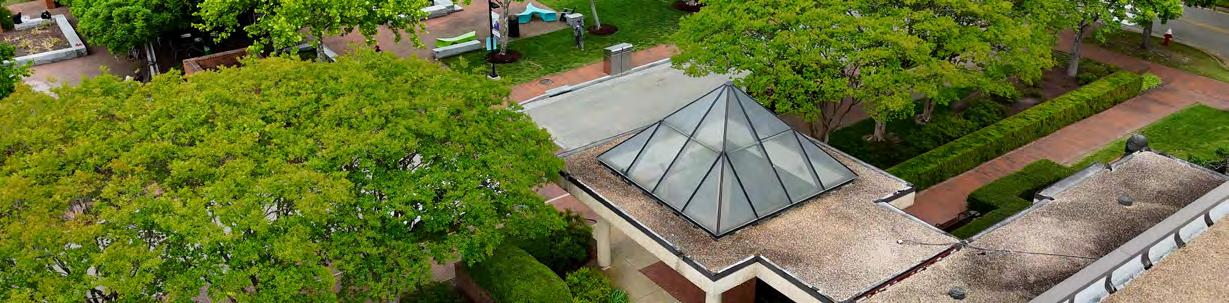
WILLIAMSBURG LIBRARY REPLACEMENT
The Williamsburg Library, built in 1973 with additions in 1982 and 1998, no longer meets the space, technology, or service needs of a modern public library. The facility lacks adequate seating, collaborative areas, teen space, and the infrastructure required for 21st century learning and community engagement. To maintain high quality public services, the City has identified the need for a full replacement facility.
The new Williamsburg Library will serve as a regional cultural hub and the administrative center of the library system. This facility will include a 250 seat theatre and expanded program, learning, and community spaces. The City initiated the Design Build process in late FY24, supported by $450,000 in previously approved design funding. As the project advances, additional capital investment is required to complete construction and to fund essential Furniture, Fixtures, and Equipment (FFE). City support for FFE ensures the new facility opens fully functional, properly equipped, and ready to deliver modern library services.
This project has no direct fiscal impact in the immediate term beyond the cost of completion.
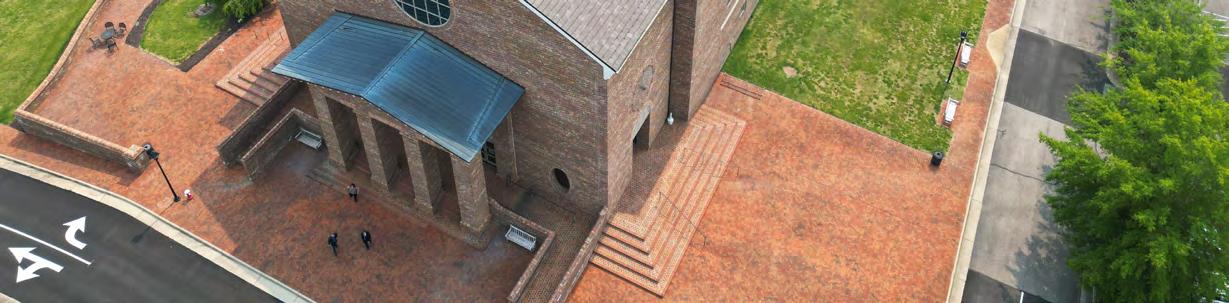
WILLIAMSBURG/JCC COURTHOUSE MAINTENANCE PROJECTS
Related City Council Goal: #5 Engaging with Our Partners
The City of Williamsburg and James City County jointly own and operate the Williamsburg/James City County Courthouse as authorized by §17.1-281 of the Code of Virginia. Each locality has previously authorized the assessment of a courthouse maintenance fee of $2 for each civil and criminal action and/or traffic case in the District and Circuit Courts for the City of Williamsburg and James City County. The Clerk of the Circuit Court collects and remits fees monthly to the City’s Department of Finance, acting as agent for the Courthouse Maintenance Fund. Funds are invested in the Commonwealth of Virginia’s Local Government Investment Pool. Disbursements are approved by resolution of both the Williamsburg City Council and the James City County Board of Supervisors for capital projects deemed necessary.
SOURCES
FISCAL IMPACT SUMMARY:
Fiscal impact will be analyzed when specific projects are determined.

WILLIAMSBURG/JCC SCHOOLS
Related City Council Goal: #5 Engaging with Our Partners
This project represents City's contribution to various capital expenditures for the joint Williamsburg-James City County school system. These estimates are based on the school system CIP. The City’s share of these expenses is estimated at 12.15% of the FY27 total joint facilities in addition to 100% of the maintenance and improvements for the City of Williamsburg schools, as stipulated in the current funding agreement between JCC and the City. The remaining funds for any projects not completed at fiscal year-end are carried forward to the following year.
FISCAL IMPACT SUMMARY:
This project has no direct fiscal impact beyond the cost of completion due to improved reliability and efficiency of any new improvements, including appliances.

Related City Council Goal: #5 Engaging with Our Partners WILLIAMSBURG AREA TRANSIT AUTHORITY
City's growth has lost eligibility for 5311 funding, and Williamsburg Area Transit Authority (WATA) is slated to expand service in FY27.
ESTIMATE
SOURCES
FISCAL IMPACT SUMMARY:

VIRGINIA PENINSULA REGIONAL JAIL
Funding support is being provided to the Virginia Peninsula Regional Jail to address FY27 capital improvement requests. This investment ensures the continued maintenance, safety, and operational effectiveness of shared public infrastructure. Supporting these capital needs reinforces the City's commitment to regional collaboration and long-term community stability.

DEVELOPMENT RESOURCES
Related City Council Goal: #5 Engaging with Our Partners
Child Development Resources (CDR) has a strong working partnership with the Department of Human Services, serving on many of the same interagency collaborative groups and providing joint referrals between the programs each agency has to offer.
Funding for FY27 will go toward CDR's Building Stronger Futures Together Capital Campaign for the new Family Resource Center at 312 Waller Mill. COST
SOURCES
Vehicle Replacement | Five-Year Plan Summary
Capital Improvement Plan (Sales Tax)
Sales Tax Vehicles
Building Inspection
City Manager's Office
Economic Development & Tourism
City of Williamsburg | Memorandum
TO: Mayor and City Council | Planning Commission
FROM: Barbara A. Dameron, Director of Finance
DATE: January 14, 2026
RE: Capital Improvements for Fiscal Year 2026 – Status of Current Projects
This memorandum provides a review and update on progress made on projects during FY26 under the City of Williamsburg's Capital Improvement Plan (CIP).
Capital budgeting aims to facilitate the economic viability and development of the community; therefore, it is one of the most important duties of a local government. The State of Virginia provides, through state statute, that a locality's Planning Commission may review the capital improvement program annually and provide recommendations prior to adoption by the governing body. A capital program consists of two (2) components: the capital plan and the capital budget. The capital budget is an element of the locality's annual budget adoption process and outlines the planned capital project expenditures for the upcoming year. This capital budget is based on the capital improvement plan. The plan is a listing of capital items that the locality anticipates undertaking within the five (5) years following the capital budget year. The City of Williamsburg defines a capital expense as any construction project or property acquisition with a total cost exceeding $20,000, and any major study or tangible asset with a total cost of $10,000 or more and a useful life of at least five (5) years.
The fiscal year 2026 CIP development included an initial structure from the staff with review and input from the Planning Commission and the public. The City Manager's office constructed the plan's first draft for inclusion in the presented budget. The City Council initially considered the plan during the February budget retreat, and the final FY26 plan was adopted during the FY26 budget adoption in May. The final FY26 adopted CIP budget of $33,164,026 includes $28,570,059 for City CIP project completion during the operating year, $2,739,367 for debt service payments, $400,000 for contingencies, $40,000 for courthouse maintenance, and $1,414,600 for the City's contribution for school CIP.
Additionally, the plan includes $67,634,819 of funding carryforward from FY25 for incomplete projects or outstanding invoices.
The fiscal year 2026 capital budget included the following six categories: Public Works; Recreation, Cultural and Open Space; Public Safety; Community and Economic Development; General Government; and Agencies and Interjurisdictional. These six (6) categories provided funding for 120 individual projects in FY26. Of these 120 projects, twenty-three (23) have been completed, sixty-six (66) are underway or will be completed during FY26, and thirty-one (31) projects are more extensive and will require more than one year to complete (funds will carry forward to FY27).
The following list provides a status update, by category, for these projects and carryforward projects. CMP indicates that a project is included in or is consistent with the current comprehensive plan. GIO indicates that a project is included in or is consistent with a Goal, Initiative, or Outcome (GIO) adopted by City Council in November 2025. PC indicates the project was encouraged in the Planning Commission comments letter provided during the FY26 budget process. Additionally, budgeted amounts reported below for FY25 carryforward funds are based on the most recent financial report and will not support the totals listed above as the adopted budget.
Public Works: 4 project areas with 26 projects totaling $14,103,077 in FY26 budget and $23,970,084 in FY25 carryforward
1. Street Construction (12 projects - $4,478,000 FY26 budget; $10,700,770.43 FY25 carryforward)
a. Repaving Program – ($350,000 FY26 budget ($3,692,140.47 FY25 carryforward)) The City's annual street maintenance program will take place in the spring of 2026 for city roads.
b. Historic Area Streets – ($320,000 FY26 budget ($510,000 FY25 carryforward)) Focusing on historic streets in downtown area of City. Projects could include drainage and erosion issues, sidewalks, pavement repairs, curbing that are not part of any other services contracts or CIPs.
c. Capitol Landing Road & Bypass Road Intersection – ($2,381,950 FY25 carryforward) As part of the reconstruction of Capitol Landing Road, this intersection project will redesign the intersection to include a signalized 90-degree T intersection. Work on design began in FY 2022, with design and construction being finalized in FY24/25. Construction completion is anticipated for the fall of 2026. GIO, CMP
d. Smart Scale Richmond Rd – ($203,500 FY25 carryforward) VHB will provide recommendations for upgrades, including pedestrian equipment, ADA compliance, and timing upgrades. Initial work should be completed in early spring of 2026. GIO
e. Monticello Avenue Richmond Rd Lafayette St Roundabout – ($3,650,000 FY26 budget ($2,732,000 FY25 carryforward)) Federal authorization to begin preliminary engineering phase activities is expected in late FY26 as full funding becomes available. Funding has been allocated to City through VDOT Smart Scale for $6,967,000. City has requested from VDOT to increase the funding to $8,794,000; under review by VDOT. GIO
f. Bridge Inspections/Improvements – ($33,000 FY26 budget ($385,688.20 FY25 carryforward)) Inspections are required biennial in even-numbered years. Proposal for 2026 inspections was requested, and work will be initiated in the spring of 2026. CMP
g. 2nd & Page Street Traffic Signals – ($350,000 FY25 carryforward) Project on hold due to anticipated shortfall in funding. In consideration of funds for other traffic signals. CMP
h. Traffic Signals – ($125,000 FY26 budget ($165,806.10 FY25 carryforward)). This project currently identifies the 2 signal optimizations as well as the replacement of the Richmond Rd and Scotland St traffic signal. No work has been done to initiate signal replacement. Included is annual funding for replacing loop detection with radar detection (Wavetronix). CMP, GIO
i. Prince George St Outdoor Dining Conversion – ($121,757.71 FY25 carryforward) The three bump-outs have been constructed using in-house forces outside of extending the sidewalk on Henry. The project will be completed in FY25. The carryforward funding will be utilized in master plan projects within street construction.
j. Public Works Infrastructure Master Plan – ($34,239.95 FY25 carryforward) WRA has provided preliminary/draft versions of recommendations for bridge maintenance, sidewalk projects, and transportation funding sources summary. All are currently under review by staff, anticipating completion by spring 2026. CMP
k. Highland Park CDBG – ($32,688 FY25 carryforward) This project has been placed on hold. The project involves improvements such as drainage, sidewalks, roadways, and potential utilities, depending on cost.
l. Smart Scale Lafayette St. – ($91,000 FY25 carryforward) VHB is currently doing field work and getting other information about the traffic signals. VHB will also provide recommendations for upgrades, including pedestrian equipment, ADA compliance, and timing upgrades. Initial work is expected to be completed in spring 2026. GIO
2. Corridor Enhancement/Underground Wiring (5 projects - $6,988,700 FY26 budget; $9,730,616.20 FY25 carryforward)
a. Ironbound Road Phase II & III – ($1,743,700 FY26 budget ($3,259,285.34 FY25 carryforward)) Ironbound Road is being reconstructed in three (3) phases. Phase I, which included redesigning the Longhill Road intersection and relocating Longhill Road, was completed in FY19. Phase II is for a new eastbound left-turn lane from Longhill Rd to Richmond Rd, and Phase III is for roadway improvements and a shared-use path from Treyburn Dr to DePue Dr. The project includes funding for underground utilities to be covered by the City. Funding is VDOT Smart Scale; total allocation to the City is $1,922,700 for Phase 2 and $3,312,400 for Phase 3. City has requested reimbursement from VDOT for design services. GIO, CMP
b. Capitol Landing Road Redesign – ($5,332,571.84 FY25 carryforward) City provided revised environmental documentation to VDOT for review; waiting for right-of-way authorization before proceeding with contacting property owners regarding temporary construction easements and 1 right-of-way taking. Construction completion is anticipated for the fall of 2026. Contractor to provide the City with 100% plans, estimate, and specs once the right-of-way phase has been completed. GIO, CMP, PC
c. Lafayette Street Reconstruction – ($5,245,000 FY26 budget ($900,000 FY25 carryforward)) Federal authorization to begin preliminary Engineering phase activities is expected in spring 2026. The project includes
widening of travel lanes from Bacon St to Wythe St and a shared-use path from Bacon St to Harrison Ave. GIO
d. Crosswalk In-Road Warning System – ($138,759.02 FY25 carryforward) Systems will continue to be installed throughout 2026.
e. Lantern Art Gateway Features – ($100,000 FY25 carryforward) Under the leadership of Economic Development, an RFP for design and fabrication is currently in the development phase. Future funding has not been determined.
3. Pedestrian and Bicycle Improvements (4 projects $2,636,377 FY26 budget; $2,773,950.75 FY25 carryforward)
a. College Woods Circuit Shared Use Trail – ($1,548,277 FY26 budget ($1,535,046.44 FY25 carryforward)) Timmons is working on RW plans to be submitted to VDOT for authorization for Phase 2. Coordinating contact with W&M about an agreement for work adjacent to the College Woods owned by W&M. Construction is anticipated in 2026. PC, CMP, GIO
b. Newport Avenue Sidewalks – ($83,891.09 FY25 carryforward) Design has begun with surveying already complete. Public input has been solicited, and staff is awaiting feedback to finalize the design.
c. S. Henry Street Sidewalk to the Oaks – ($160,574 FY25 carryforward) Awaiting review and approval prior to contracted 100% completed design being submitted.
d. African American Heritage Trail – ($1,088,100 FY26 budget ($994,439.22 FY25 carryforward)) Architectural design of the trailhead bathroom, trailhead contemplative park, and Segment A of the project began in January 2024 and is still ongoing. Anticipated to finalize construction by July 4, 2026. GIO
4. Stormwater Management (5 projects $764,746.35 FY25 carryforward) – GIO, CMP
a. Stormwater Master Plan – ($9,312.35 FY25 carryforward) WRA has provided preliminary/draft versions of recommendations for the stormwater CIP projects list and evaluated the City's 2 regional ponds for water quality (Skipwith SMF and Haynes Pond). All are currently under review by staff; anticipating completion of final reports and lists by Spring 2026.
b. Stormwater Infrastructure Improvements – ($7,076.51 FY25 carryforward) To accommodate, as needed, improvements to the stormwater infrastructure system. GIO, CMP
c. Capitol Landing Road Outfall Stream Restoration – ($207,523.24 FY25 carryforward) – Contractor has completed all work on site and the City has performed the final inspection. GIO, CMP
d. Walnut Hills Outfall Stream Restoration – ($513,645.25 FY25 carryforward) Set to receive final construction drawing January 2026. Construction to start in FY27. GIO, CMP
e. Port Anne Outfall Stabilization SLAF Grant – ($27,189 FY25 carryforward) Work to restore the stream in the neighborhood, funded through the SLAF grant from DEQ and Homeowners Association funds. Work to address recommended corrections in prior structures set to be completed in FY26.
Recreation, Culture, and Open Space: 4 project areas with 30 projects totaling $723,000 in FY26 budget and $1,442,628 in FY25 carryforward
1. Kiwanis Park (7 projects $523,694 FY25 carryforward)
a. Kiwanis Park Improvements – ($71,730.60 FY25 Carryforward) Projects planned to be completed in FY26, including water fountain and basketball court walkway. GIO, CMP
b. Automated Irrigation – ($10,220 FY25 carryforward) This project was completed in FY25. The remaining funds will be used for Kiwanis Park improvements.
c. Shade for Bleachers – ($93,216 FY25 carryforward) This project has been completed in FY25. The carryforward funds will be used for other park improvements. GIO
d. Dugouts and Pathways – ($100,000 FY25 carryforward) This project is in the planning stage and will be completed in FY27. GIO
e. Player Benches - ($46,127 FY25 carryforward) This project will be completed in FY26. The remaining funds will be utilized for other park improvements.
f. Trash-Can Replacements – ($22,400 FY25 carryforward) This project is scheduled to be completed in FY26. GIO
g. Basketball Court Renovation – ($180,000 FY25 carryforward) The renovation is planned to begin in FY26.
2. Quarterpath Park (9 projects $308,000 FY26 budget; $264,584 FY25 carryforward)
a. Quarterpath Park Improvements – ($92,743.44 FY25 carryforward)) Playground replacement is put on hold until the future of Quarterpath Recreation Center is determined, and the interior paint ($25,000) will be completed in FY26. Other Improvements are scheduled in the spring of 2026, including amenity upgrades and contingencies. GIO, CMP
b. Accessible Pathway and Shelter – ($150,000 FY26 budget) Planning has begun, and the project will be completed in 2026. GIO
c. Trash-Can Replacements – ($28,000 FY26 budget) The trash cans are being purchased, and this project will be completed in FY26. GIO
d. Outdoor Lights Volleyball – ($61,920 FY25 carryforward) This project has been placed on hold until FY27.
e. Field #3 Drainage – ($19,040 FY25 carryforward) Project was completed in spring of 2025. The remaining funds will be allocated to other park improvements.
f. Softball Field Warning Track – ($130,000 FY26 budget) This project is expected to be completed in the summer of 2026. GIO
g. Softball Dugout – ($20,000 FY25 carryforward) Dugouts have begun renovations and will be completed in FY26.
h. Public Bathrooms – ($51,228 FY25 carryforward) Planning has begun, and the bathrooms are anticipated to be completed in FY26. GIO
i. Volleyball Fence – ($19,653 FY25 Carryforward) This project will be completed in FY26.
3. Waller Mill Park (8 projects $250,000 FY26 budget; $576,313 FY25 carryforward)
a. Waller Mill Park Improvements ($64,925.39 for FY25 carryforward) – The park gate replacement fiber pilot is installed and will be operational by spring 2026. The replacement of the Waller Mill Well will be completed in FY 2026. GIO, CMP
b. Renovate Shelter 3 Playground – ($428,000 FY25 carryforward)) The playground will be built in 2026. GIO
c. Outdoor Lighting Alert System – ($13,400 FY25 carryforward) Lighting system is put on hold and planned to be installed in FY26.
d. Dog Park Access Control – ($31,504.05 FY25 carryforward) Project is currently in progress and will be completed before fiscal year end FY26.
e. Pedal Boats – ($50,000 FY26 budget) The boats will be purchased in the spring of 2026.
f. Fish Dock – ($34,079 FY25 carryforward) The dock has been completed. Remaining funds will be used for other park improvements.
g. Shingle for Shelters 2-3-4 ($4,405 FY25 carryforward) Shingles have been installed as of FY25. Remaining funds will be used for park improvements. GIO
h. Bathrooms – ($200,000 FY26 budget) This project is planned to be completed in FY26. GIO
4. College Park, Highland Park, Wales Subdivision & Farmers Market (6 Projects $165,000 FY26 budget; $78,037 FY25
carryforward)
a. yy. College Park Landing – ($22,986.50 FY25 carryforward) Install ADA pathway at College Landing Park from the parking lot to the pier is planned for spring 2026. GIO, CMP
b. College Park Solar-Power Stations – ($50,000 FY25 carryforward) Planned to construct stations in FY26.
c. College Park Kayak/Boat Launch – ($70,000 FY26 budget) Planning has begun, and this project is expected to be completed in 2026. GIO
d. Wales Playground & Fence – ($75,000 FY26 budget) This planning has begun and will be completed in FY27. GIO
e. Highland Park Amenities – ($5,050 FY25 carryforward) A water fountain will be purchased with the remaining funds in spring 2026. GIO, CMP
f. Farmers Market Trailer – ($20,000 FY26 budget) The trailer is planned to be purchased in FY26.
Public Safety: 2 project areas with 28 projects totaling $1,047,000 in FY26 budget and $11,492,000 in FY25 carryforward
1. Facilities (6 projects with $130,000 in FY26 budget; $10,737,374 FY25 carryforward)
a. Fire Station Renovation ($162,605 in FY25 carryforward) – The Williamsburg Fire Station has renovations occurring in FY26. GIO, CMP, PC
b. Police Station Construction – ($8,936,512 in FY25 carryforward) - In the FY24 budget, City Council approved the funding for the replacement of the Police Station. The City entered into a Comprehensive Agreement with Henderson, Inc. and construction of the project is currently underway. The project is estimated be completed in the spring of 2026. The demolition of the old police station is planned for FY26. GIO, CMP, PC
c. E-911 Regional Center Expansion - ($45,000 in FY26 budget) – The City Council approved the consolidation of the public safety answering point (PSAP) with York County in February of 2009. This required an expansion of the dispatch center in York County. The City's supported renovation cost equated to an annual debt service of $45,000 in each FY of the CIP. Estimated City savings due to the consolidation equal as much as $200,000 annually. CMP
d. Waller Mill Training Facility – ($1,500,000 FY25 carryforward) - A project to determine the feasibility of constructing a joint public safety training facility to accommodate the growing training needs of the police and fire departments. For the fire department, this project is expected to include regional cooperation with James City and York Counties. In FY25 a master plan was completed to provide insight on the overall cost of this project. The project would be planned to be completed in phases over the next ten years.
e. Waller Mill Training Facility Master Plan – ($53,257 FY25 carryforward) The planning and design will begin to take place in FY26.
f. Law Enforcement Range Upgrade – ($85,000 FY26 budget ($85,000 FY25 carryforward)) This project is on hold as it is staged behind the Waller Mill Dam project. Work will commence once that project is underway.
2. Equipment (22 projects with $917,000 in FY26 budget; $754,626 in FY25 carryforward)
a. Police Portable Radio Replacement – ($75,000 FY26 budget ($41,643 carryforward)) The radios plan is now on an annual purchase plan to level out the cost for replacements.
b. Firefighting Equipment (Aid to Localities) - ($50,000 in FY26 budget ($117,855 FY25 carryforward)) This project provides the opportunity for the Fire Department to purchase needed equipment to replace or upgrade existing gear and acquire new standard equipment. The budget is based on estimated state awards. GIO
c. EMS Equipment (4 for Life) – ($16,500 in FY26 budget ($61,787 FY25 carryforward)) This annual project allows the Fire Department to upgrade, replace or purchase new life-saving tools for use in EMS actions. The remaining funds will be carried forward in future years and are available for life-saving tools and training. GIO
Williamsburg
d. Gas Monitoring Instrumentation Replacement – ($50,000 FY26 budget). The replacement of a four-gas monitoring system with a five-gas monitoring system to mitigate gas emergencies is planned for purchase in FY26.
e. Cardiac Monitoring & Defibrillator – ($136,349 in FY25 carryforward)) The fire department replaced its previous inventory of cardiac monitors and defibrillators in the fall of 2025, which were aging and nearing their life expectancy. The replacement units incorporated the latest and emerging technology and are critical to the adequate Advanced Life Support service delivery to our community.
f. Medication and Drug Dispensing Program – ($102,967 FY25 carryforward) This project is complete. Office of Emergency Medical Services (OEMS) has indicated in the next few years; regional EMS councils and participating hospitals will stop providing and exchanging pre-hospital care's drug box programs. This deployment change shifts the financial burden to provide medications to pre-hospital EMS agencies to the localities. We will make this transition in early 2026.
g. Hose and Nozzle Initiative – ($72,674 FY25 carryforward) This project is still in progress and will be completed in 2026. The department has various nozzle and hose types on its suppression apparatus. In addition to a varied inventory, many of the nozzles are approaching the end of their useful life.
h. Police Body Worn Cameras – ($125,000 FY26 budget) This project is part of a ten-year contract with Axon to provide body cameras and tasers to the Police Department. We are midway through that contract and there are not updates to it at this time.
i. Law Enforcement Equipment – ($60,000 FY26 budget ($53,019 FY25 carryforward)) This is a historical data scanning project. Currently, we're working with the City Attorney on language for an IFB.
j. Police Mobile Data Terminals (MDTs) – ($55,000 in FY26 budget ($67,270 FY25 carryforward)) - Units will be ordered by the spring of 2026. This represents an ongoing maintenance expense for these devices. GIO
k. In-Car Camera System – ($85,000 in FY26 budget ($9,064 FY25 carryforward) – This represents the annual payment for the Police Department's In-Car Camera system.
l. De-escalation & Conflict Training – ($22,000 in FY25 carryforward) The training has been conducted, and equipment is being ordered and received by the end of the current year. GIO
m. Flock Safety Auto License Plate Reader – ($86,000 FY26 budget) This represents our annual expense for our Flock ALPR program. GIO
n. Less Lethal Restraint Equipment – ($17,500 FY26 budget) This project is on-going. We are requesting that the project scope be broadened to include all less-lethal technologies, as previously presented.
o. Breaching Trailer – ($20,000 FY25 carryforward) The trailer will be purchased before the end of the current fiscal year.
p. Real-Time Crime Center (RTCC) – ($75,000 FY26 budget) The City Council voted to authorize the City Manager to enter into a contract with Fusus to provide the real time crime information center technology. The Contract has been executed and the system is currently active and expansion is underway. GIO
q. Crime Scene Van – ($20,000 in FY25 carryforward) This will depend on the availability of retired vehicles from other departments.
r. GIS Performance Dashboards – ($30,000 FY25 carryforward) One of the Fire Department's goals and objectives over the next two years is to transition to be more data-driven. Through this City's existing ArcGIS platform, industry best practices can be leveraged to create dynamic performance dashboards that monitor the department's performance and goal achievement.
s. Quarterpath Center Generator – ($130,000 FY26 budget) The majority of this project is grant-funded and will be completed in FY26.
t. EMS Toughbook Replacement Program – ($60,000 FY26 budget) This project has been completed as of fall 2025.
u. eFire Mobile Data Terminals – ($15,000 FY25 budget) We have received the updated pricing for this CIP. We hope to have this completed in the first quarter of 2026
v. Glidescope Intubation Equipment – ($17,000 FY26 budget) We have completed this project as of fall 2025.
Community and Economic Development: 1 project area with 8 projects totaling $315,000 in FY26 budget and $451,861 in FY25 carryforward
1. Redevelopment and Housing (8 projects - $315,000 in FY26; $451,861 in carryforward from FY25) GIO
a. City Rental Housing Units – The City owns fourteen (14 rental units) 13 units are currently available for rental housing units that are leased to city employees to provide for workforce housing. ($165,000 in FY26 ($328,982 carryforward from FY 25))
i. Work includes roof and gutter replacement project ($60,000 FY26 ($50,575 FY25 carryforward)) Project is on track to be completed FY 2028.
ii. Elevator upgrade for Blayton ($229,545 FY25 carryforward) Projects should be completed FY26.
iii. Fence and dumpster replacements ($4,136 FY25 carryforward) Project will be completed in FY26.
iv. HVAC Replacement ($40,000 FY26 budget) Project is on track to be completed in FY28.
v. Sewer Line Replacement ($50,000 FY26 budget ($44,726 FY25 carryforward)) Sewer Line project will be on-going through FY 2028.
vi. Plumbing Replacement ($15,000 FY26 budget) Hot water tanks will be replaced at the Blayton Building by summer of 2026.
b. City Housing Renovations – ($150,000 FY26 budget ($45,032 FY25 carryforward)) This project will be ongoing.
c. WRHA Security – ($77,847 FY25 carryforward) Installation of security cameras will be completed in FY26.
General Government: 3 project areas with 20 projects totaling $2,381,982 in FY26 budget and $24,346,825 carryforward from FY25
1. Facilities and Land (13 projects - $840,000 in FY26 budget; $23,641,192 carryforward from FY25)
a. Municipal Building Renovations – ($5,943,896 FY25 carryforward) In addition to completing the unfinished space on the 3rd floor, a space study has commenced to optimize the layout of the municipal building.
b. Relocation and Construction of Public Works Storage Yard Facilities – ($7,781,200 FY25 carryforward) In conjunction with the construction of the Police Station Renovation, the Public Works storage yard and fleet maintenance building will be relocated in late 2026. The facilities are currently in the design phase. GIO, CMP, PC
c. Facility Repairs and Painting – ($330,000 in FY26 budget ($319,096 FY25 carryforward)). This is an ongoing project, including the train station paint, voter registrar service window, and filter plant maintenance.
d. Access Control & Security Improvement – (175,000 FY26 budget ($40,000 FY25 carryforward)) Funding is proposed for installing an access control system for the Community Building. This project is planned to be completed in FY27.
e. Community & Municipal HVAC – ($280,000 FY25 carryforward) – Funding to improve or replace 20-year-old HVAC systems in Municipal Buildings, heater replacements at Auto and W&S Shop. The remaining is for the IT Server Room. A compressor was purchased, and the remaining work may be delayed depending on the 3rd-floor renovation and potential relocation of IT.
f. Gas Pump Canopy – ($100,000 FY25 carryforward) currently negotiating with bid proposer to reduce scope of work. Demolition will be in house to reduce cost. This is planned to be completed in FY26.
g. Fleet Vehicle Maintenance – ($51,856 FY25 carryforward) The remaining funds will be used for a new tire
balancer and fuel pump island. This project is projected to be completed in FY26.
h. City Square Renovations – (100,000 in FY25 carryforward) This project has been put on hold due to its proximity to the new regional library project.
i. Bus Stop Improvement – ($550,000 FY25 carryforward) The progress to renovate bus stops is continuing through FY26. Design is being finalized and multiple concrete slabs have been installed.
j. Smart City Infrastructure – ($135,000 FY25 carryforward)) This is planned to be implemented in FY26. GIO
k. Electric Vehicle Access – ($35,000 in FY26 budget ($52,000 FY25 carryforward)). Along with the electric vehicle initiative, vehicle access will be in FY26. GIO
l. Comprehensive Plan Update – ($300,000 in FY26 budget). The process began in fall 2025. The funding has been split between FY26 and FY27. CMP, GIO
m. Community Investment Projects – The ARPA funds the City received in FY21 and FY22 were eligible to be used for revenue recovery to replenish general fund losses. This allowed the City to reallocate funds to other investmenttype projects. After considering public input and steering committee recommendations, City Council budgeted the following projects, which are in the planning phases in FY26:
i. Research Village – ($950,000 FY25 carryforward) In collaboration with W&M, development of a state-of-theart research facility for technology and data research.
ii. Amphitheater ($5,000,000 FY25 carryforward) Initial funding to create an outdoor amphitheater. The funds have been transferred to HTRFA to support construction costs.
iii. Triangle Redevelopment – ($1,540,000 FY25 carryforward) Redevelopment of the Blayton Building. Triangle Building and Library area of City Square. GIO, CMP
iv. Affordable Housing ($950,000 FY25 carryforward) – Funding to assist in implementing the Affordable Housing Work Plan. GIO, CMP, PC
2. Technology (6 projects – $290,000 in FY26 budget; $9,206 in FY25 carryforward)
a. PC Replacement Program – ($35,000 in FY26 budget) The purpose of the PC Replacement Program is to ensure the adequacy of all City computers through a replacement schedule. This project is an annual project to replace 25% of the City PCs. The project is complete for FY26. GIO
b. Microsoft Office 365 Program Upgrade – ($110,000 in FY26 budget) All City computers have been upgraded to a mixture of Microsoft 365 and Microsoft Office 2019. This project is an annual project for all Microsoft Office 365 software licenses and has been completed for this fiscal year, and all funds have been expended. GIO
c. Software Systems & Implementation – ($9,206 in FY25 carryforward) Software upgrades are planned to be implemented in FY28.
d. Wireless Network Upgrades – ($76,000 in FY26 budget) Upgrades have begun in FY26 and will continue.
e. Municipal Building CCTV – ($42,000 in FY26 budget) Project has started and will be completed during this current fiscal year.
f. Voting Machines – ($27,000 in FY26 Budget) – Voting machines have been purchased. Software has been renewed.
3. Vehicles (1 project - $1,251,982 in FY26 budget; $696,427 in FY25 carryforward)
Vehicle Replacement Plan - The City replaces vehicles in accordance with industry standards for public safety departments and, for the general fleet, after extensive use. When general fleet vehicles are replaced, they are cycled down in the organization or sold as surplus.
Agencies and Interjurisdictional: 2 project areas with 8 projects totaling $11,877,150 in FY26 budget and $5,931,421 in FY25 carryforward
1. Facilities (2 projects - $10,040,000 in FY26 budget; $422,550 in FY25 carryforward)
a. Williamsburg Library – ($10,000,000 in FY26 budget ($422,550 in FY25 carryforward) In late FY24, the project began with some design funding already allocated by the City. The outcome of the negotiations will determine the final size of the new library project. The previous budget accounted for $450,000 for design. GIO, CMP, PC
b. Williamsburg/JCC Courthouse Maintenance Projects (contingency) ($40,000 in FY26 budget) – The Clerk of Circuit Court collects and remits a courthouse maintenance fee of $2 for each civil and criminal action and/or traffic case in the District or Circuit Courts for Williamsburg and James City County. The balance of the fund is available for projects approved by the governing bodies. This funding is intended for routine maintenance of the jointly owned Williamsburg-James City County Courthouse.
2. Schools (6 projects - $1,414,600 in FY26 budget; $5,508,871 in FY25 carryforward)
School System Capital Contribution – This project represents the City's contribution to various capital expenditures for the joint Williamsburg-James City County school system. In FY26, the City's share was $1,414,600. The remaining funds for projects not completed at fiscal year-end are carried forward to the following year. GIO CMP, PC
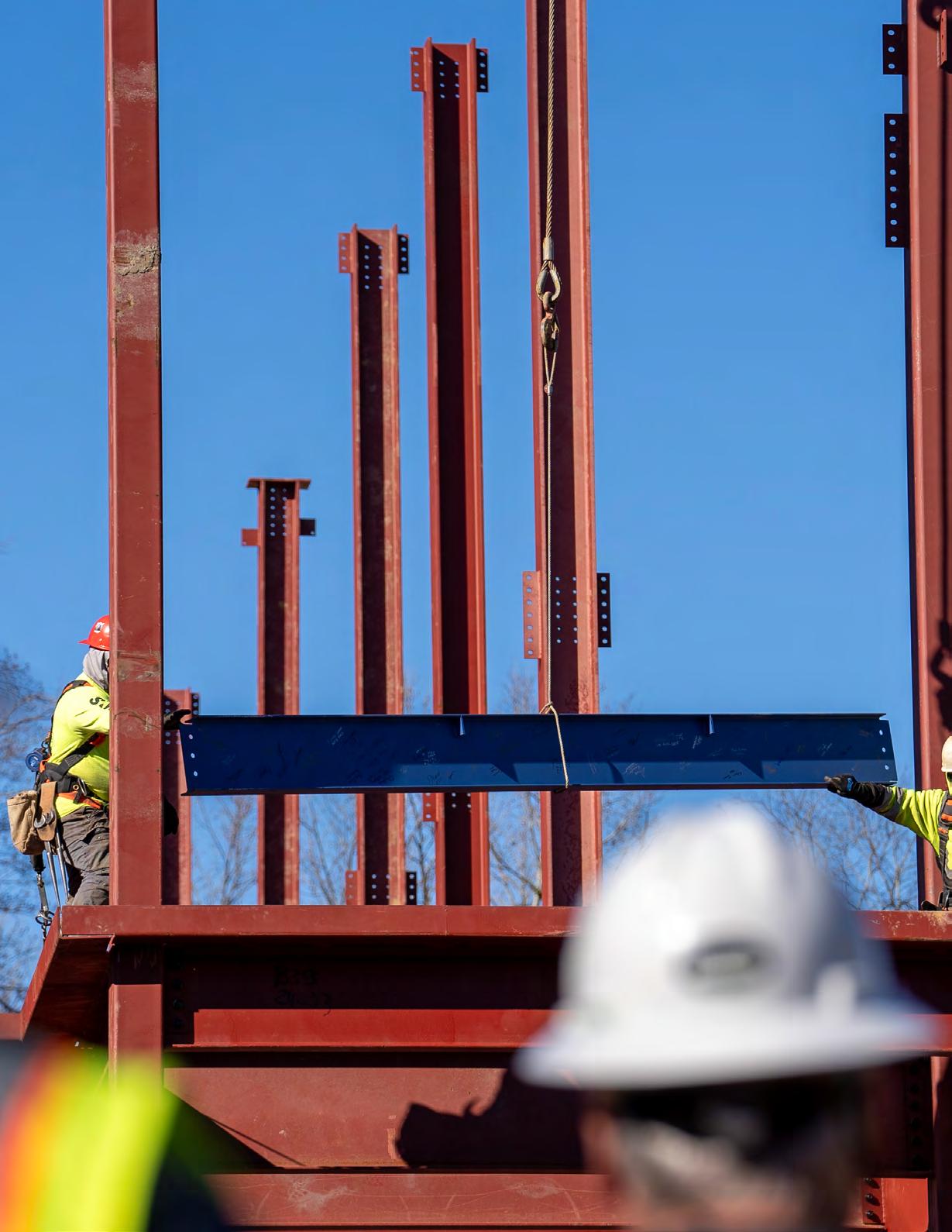
Utility Fund | Capital Improvement Plan
FIVE-YEAR CAPITAL IMPROVEMENT PLAN


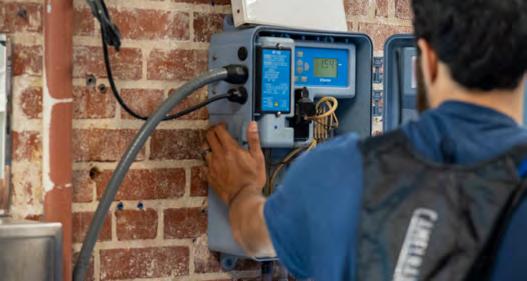
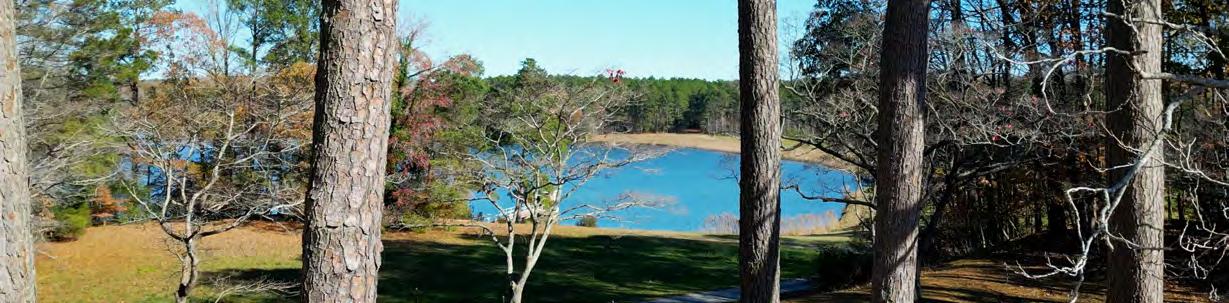
The City has been aggressive in purchasing watershed property for several decades to protect its drinking water source. The City now owns or has conservation easements on 60% of the watershed. Funding is set aside in FY26 to provide for additional land acquisition should property become available. Funding is also for other initiatives such as forestry management and security improvements to the Plant and watershed (signage, access control).
While protecting the watershed around Waller Mill Reservoir will ensure a high-quality water source, purchase or control of more property will result in a larger area to be managed. This minimal impact is eliminated with the increased water quality benefit to water treatment.
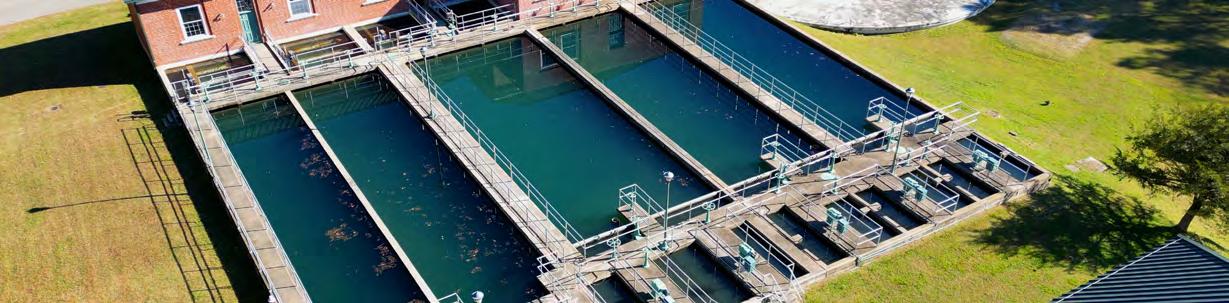
WATER TREATMENT IMPROVEMENTS
The Water Plant was constructed nearly in 1944 with a major expansion in 1978. As with many older structures, periodic repairs are needed due to deterioration and use. In FY24, $15,000 was budgeted for a structural evaluation of the floor system/basement ceiling which has cracked and corroded due to chlorine exposure. A placeholder of $100,000 was included in FY25 for the floor system repairs but was increased when we received budget numbers for probable repair costs. In FY26, we complete the structural repairs at the plant for $200,000. $100,000 for a new server and SCADA system to remove the system from outside access, $60,000 to replace valves in one of the raw water pump houses, and $60,000 to purchase and install a new automatic tranfer switch for the plants generator. $80,000 for filter inspections.$100,000 dollars in FY27 and FY28 are for additional valve replacement with $500,000 in FY29 and FY30 for major pump and motor replacements.
The completion of the work will not have a direct fiscal impact beyond the associated project costs.
A recently completed evaluation and rehabilitation design for components of the settling basins includes recommendations to replace all isolation valves, weir gates for the flash mix, flocculators, and sedimentation areas of the Water Treatment Plant. Also, this project will add more direct connections to the floc tanks to allow for greater operational control of the system. Furthermore, this project will address structural repairs needed to the sedimentation basins.
IMPACT SUMMARY:
The completion of the work will not have a direct fiscal impact beyond the cost of completion due to improved reliability and reduced maintenance costs.
FILTER BASIN REHABILITATION
Year Introduced
Fiscal Year 2026
Related City Council Goal: #4 Prioritizing Safety & Wellness
This project is a full rehabilitation of the seven filters at the Water Treatment Plant. This includes replacement of filter media, isolation valves, controls, and instrumentation. The filter basins, dating back to the 1940s, were last inspected in 2009. The media is replaced when needed. Anthracite media was added in 2015 but was not fully replaced. The valve assemblies need to be replaced when each filter is scheduled to be brought down for structural rehabilitation. The unit's instrumentation and controls need to be replaced as they are original and are becoming obsolete. Additional valves need to be added to isolate the filters to the header pipe in the pipe galley serving the plant discharge piping.
FISCAL IMPACT SUMMARY:
The completion of the work will not have a direct fiscal impact beyond the associated project costs.

The facility draws water from an on-site reservoir through two raw water pumping stations. The raw water suction piping from the reservoir is constructed through the berm of the reservoir and is exposed and actively leaking. The piping is fed by a single withdrawal point from the reservoir and cannot be isolated without shutting down the raw water supply. A permanent secondary withdrawal point from the reservoir needs to be investigated and installed to provide the system with the needed reliability and resilience to maintain a continuous water supply to the facility.
COST ESTIMATE
The completion of the work will not have a direct fiscal impact beyond the associated project costs.
LAGOON SLUDGE REMOVAL
Year Introduced
Fiscal Year 2020
Related City Council Goal: #4 Prioritizing Safety & Wellness
The Water Plant must backwash the filter tanks and the sedimentation basins which produces wastewater that is directed to two on-site lagoons. The waste is mostly liquid with residuals of the chemicals added to treat the water such as carbon, alum, and fluoride.
The wastewater flows by pipe to the wastewater lagoons. The solids/sludge settle to the bottom and eventually, over time, fill up the lagoons and the sludge needs to be removed. The cleaning began in FY25 and $1,500,000 is budgeted in FY27 to complete the project.
COST ESTIMATE
SOURCES
FISCAL IMPACT SUMMARY:
The completion of the work will not have a direct fiscal impact beyond the cost of completion.
Improvements to the chemical building are recommended to improve safety and reliability. This includes additional HVAC throughout the building, tankage and containment areas, and a replumbing of the chemical pumping and piping systems. COST ESTIMATE
FISCAL IMPACT SUMMARY:
The completion of the work will not have a direct fiscal impact beyond the associated project costs. Year Introduced Fiscal Year 2026 Related City Council Goal: #4 Prioritizing Safety & Wellness CHEMICAL SYSTEMS
WATER SYSTEM IMPROVEMENTS
Year Introduced Fiscal Year 2023
Related City Council Goal: #3 Innovating a Modern City
The City's water distribution system dates back to the late 1910s and early 1920s. Significant expansion corresponding to annexations in 1923, 1943, 1964, and 1984 was accomplished as the City grew, but there are still many older parts of the system in operation. This ongoing project is to fund the replacement of known galvanized and cast-iron water mains due to their age and propensity to rupture and leak. This will eliminate costly repairs and water loss.
SOURCES
FISCAL IMPACT SUMMARY:
While this project will have no direct operating impacts, it will increase overall efficiency.
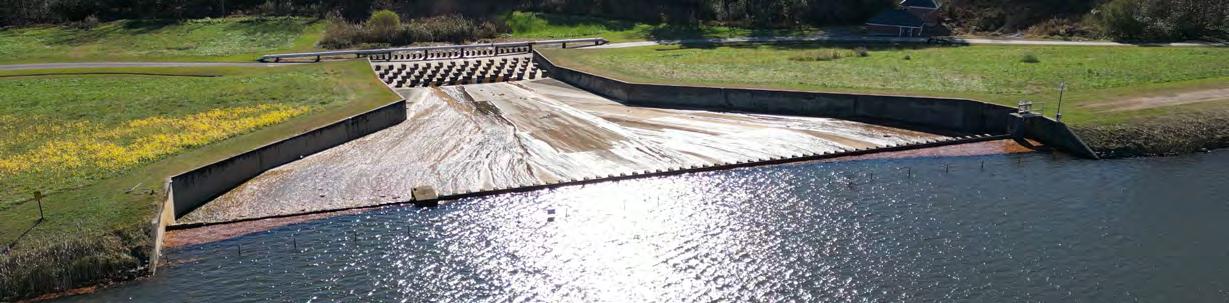
The City has an operation and maintenance permit for Waller Mill Dam from the Department of Conservation and Recreation (DCR). Due to new regulations, the dam went from a low hazard to a high hazard classification. A substantial amount of work may be required at the dam as a result of the new designation. Using new rainfall criteria required by the state, an engineering firm conducted a study of the dam’s capability to handle a worst-case rainfall event. Results of the study indicated that the earthen dam would overflow, meaning the City may be required to raise the dam or armor it with structural material.
The City has a permit from the state, conditioned upon improvements being made to the dam. Money was budgeted in FY21 for engineering work to review the latest State requirements and to determine options to protect the dam. Estimated budget figures are shown in FY26 for construction of anticipated improvements.
FISCAL IMPACT SUMMARY:
The completion of the work will not have a direct fiscal impact beyond the associated project costs.

This project would connect an existing 16-inch main at the St. Demetrios Greek Orthodox Church (4900 Mooretown Road) to an existing 12-inch main that crosses the CSX railroad tracks at Williamsburg Storage (5151 Mooretown Road). Most of the project is in York County and would improve flows and provide redundancy for the Mooretown Road and Richmond Road corridor north of Bypass Road. The loop would also improve water quality and fire protection for the area. The total length is 1,550 feet and requires crossing several pipelines and infrastructure in the Dominion Energy Right-of-Way as well as an encased crossing of Mooretown Road.
Funds are programmed at a cost of $10,000 in FY24 to complete the engineering design, and $625,000 in FY26 and FY27 for construction.
SOURCES
The additional cost for maintenance of the new pipeline is offset by lower operating costs due to the lowering of hydraulic losses in a looped system and greater reliability.

The original consent decree issued to all Hampton Roads Sanitation District (HRSD) localities by the Virginia Department of Environmental Quality (DEQ) was revised substantially. HRSD manages the more extensive Sanitary Sewer Overflow (SSO) capacity problems, including those associated with the Regional Wet Weather Management Plan (RWWMP). The localities are responsible for their respective collection systems and are charged with resolving structural deficiencies and issues associated with management, operations, and maintenance (MOM) of the sanitary sewer system. As such, the City is budgeting money for inspection, repairs, and rehabilitation.
These capital expenditures will be a factor in increasing utility rates. However, upgrading the sewer system will help reduce operation and maintenance costs.
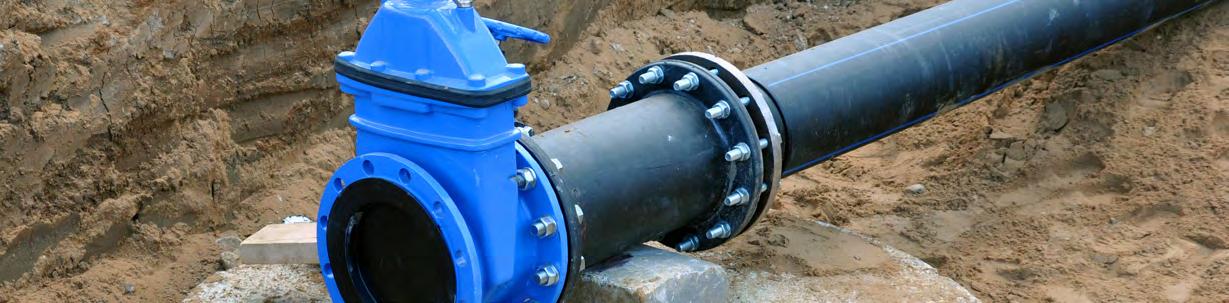
PENNIMAN ROAD WATER MAIN INTERCONNECT
This project would connect an existing 12-inch main at the City limit on Penniman Road to an existing 12-inch main that crosses the CSX railroad tracks just east of Harrop Lane. The entire project is located in York County and would improve flows for the entire Penniman Road area and provide redundancy for the Second Street corridor. The loop would also improve water quality and fire protection for the area. The total length is 1,320 feet. Service lines for the 10 existing customers in Middletown Farms that front Penniman Road would be replaced, and the small diameter galvanized steel main serving these homes would be abandoned. Funds are programmed for a total cost of $550,000.
FISCAL IMPACT SUMMARY:
The additional cost for maintenance of the new pipeline is offset by lower operating costs due to the lowering of hydraulic losses in a looped system and greater reliability.
SEWER PUMP STATION REHABILITATION
Year Introduced
Fiscal Year 2020
Related City Council Goal: #2 Courageously Leading
Related Initiative: Smart City Initiatives
There are 15 sewage pumping stations in the City. Because the City drains into shellfish waters, the stations are classified as Reliability Class I stations, which provides for the strictest standards of reliability. For example, the stations are required to have emergency backup power or other means of operating the pumps in case of power failure. As part of the Sanitary Sewer Overflow (SSO) Consent Decree, pump stations were identified as critical infrastructure to operate/maintain to avoid sewer overflows. These designations require heightened maintenance and failure avoidance. Upgrades or replacements of additional pump stations are planned annually, based on the findings of utility assessments.
The completion of the work will not have a direct fiscal impact beyond the associated costs due to improved reliability and efficiency of any new improvements, including equipment.

Water and sewer system contingency funds must be budgeted annually to cover unforeseen items. The utility must have the money reserved to operate on a continuous basis. Examples of water and sewer contingency expenditures include:
• Emergencies, such as major pipeline failures, pump/motor replacement, or generator failures
• Contributions to new infrastructure installed by development
• Capital project contingency
There is no fiscal impact to these contingency funds.

The City replaces vehicles after extensive use, following industry standards. The vehicle replacements are planned for FY28, FY29, and FY30, as follows:
When City vehicles are replaced, they are either repurposed in the organization or sold as surplus.
There are 15 sewage pumping stations in the City. Pump testing was conducted on four pump stations in 2024. Testing to identify proactive maintenance needs will be conducted on the remaining pump stations at regular intervals during FY27.
FISCAL IMPACT SUMMARY:
The completion of the work will not have a direct fiscal impact beyond the associated costs due to improved reliability and efficiency of any new improvements, including equipment.

The City is in need of a sewer SCADA system similar to the water SCADA system. SCADA stands for Supervisory Control and Data Acquisition. SCADA gives the ability for remote control and monitoring from anywhere on a PC or mobile device. This remote ability will greatly add to the pump station's operational efficiency and function by allowing staff to monitor and adjust pump rates as needed remotely. This system will help to reduce sanitary sewer overflows and reduce the need for additional staff. This would be funded over two years, $150,000 per year, for a total of $300,000.
FISCAL IMPACT SUMMARY:
The completion of the work will not have a direct fiscal impact beyond the cost of completion due to improved reliability and efficiency of any new improvements including equipment.
SEWER PUMP STATION TESTING
Year Introduced Fiscal Year 2025
Related City Council Goal: #2 Courageously Leading
The Public Works and Utilities department had all if the City's water tanks inspected in 2024. While all were found to be in good condition, it was suggested that minor structural repairs and repaitning take place soon as their coatinngs were reachng the end of their life. Staff proposes rebabilitating a tank every other year until all are brought up to industry standards. Once complete, the tanks should not need additional signifigant maintnance for 10 to 15 years.
FISCAL IMPACT SUMMARY:
While this project will have no direct operating impacts outside of the cost of the project.
BUDGET GUIDE
Introduction
This Budget Guide is designed to assist those responsible for preparing the Annual Operating Budget and the Five-Year Capital Improvement Plan of the City of Williamsburg. The budget process defines, communicates, and funds the City’s programs and priorities. The completed budget is City Council’s financial roadmap and a primary management tool for the City Manager and Department Heads. To that end, the document must be of high quality with the greatest level of care and diligence applied to its preparation.
The Budget Guide is a formal call for all departments of the City, and agencies associated with the City, to prepare and submit an estimate of the resources required for the next fiscal year. It includes a set of procedures for building a comprehensive budget to be submitted to City Council in March each year. It also serves as a mid-year review to identify adjustments necessary to the current year’s budget.
Authority
The Charter and Code of Ordinances of the City of Williamsburg, as well as the Code of Virginia, prescribe budgetary responsibility and process. Budgetary accounts are maintained according to the Uniform Financial Reporting Manual for Virginia Counties and Municipalities, as prescribed by the Auditor of Public Accounts, Commonwealth of Virginia. This guide consolidates pertinent budgetary information as concisely as possible, providing a reference for making sound, informed, and consistent budget decisions.
Contents
I2
Budget Calendar
I5 Operating Budget Instructions
I6 Capital Improvement Plan Instructions
I8
Biennial Goal Setting
I9 Budgetary Accounts
I10 Department Codes & Responsibility
I12
I32
I36
I44
I46
Revenue Sources & Trends
Expenditure Classifications
Funding Relationships
Funding Structure
Budget Policies
Budget Calendar Fiscal Year 2027
Finance and Human Services Departments distribute applications to Outside Agencies, advising of budget submittal requirements and deadlines, including Tourism. Requests are due back to Finance/Human Services on Nov. 7.
Preliminary Revenue Projections – First Round
Instructions sent to departments for FY27 operating budget requests, FY27 CIP requests, FY26 CIP updates, and Performance Metrics. Requests and updates are due on or before Nov. 25, and Performance Metrics, Dec. 1.
Meet with Departments on Operating Budgets, Performance
and CIP
Finance/Planning Directors begin finalizing the City’s FY26 Capital Improvement Plan status update and proposed FY27 Capital Improvement projects.
City Council holds Work Session in which Outside Agencies and Williamsburg Area Arts Commission present budget requests.
14
First Notice of Public Hearing for Water Rate Increase Advertisement in VA Gazette, if applicable (VA Code §15.2-5136). Second notice date is April 25.
18
Submit Budget Synopsis to run on March 18 in the Virginia Gazette and Second Notice to run on April 25. Per State Code §15.2-2506, these must be advertised seven days before public hearing.
18
Notice of Public Hearing for proposed property tax increase, if applicable. VA Code §58.1-3321 requires a seven-day minimum notice.
25
Second Notice (VA Gazette Ad) of Budget Synopsis / Proposed Budget. (Per State Code §15.2-2506, second notice must be advertised seven days before public hearing.
25
Second Notice of Public Hearing (VA Gazette Ad) for Water Rate Increase, if applicable (VA Code §15.2-5136).
31
Balancing Act interactive budget released on the City website for public input
31
Deliver Proposed FY27 Operating and Capital Improvement Budgets to City Council and the media. (Per VA Code §15.2-2503, the City Manager, on or before April 1 of each year, shall prepare and submit to the council a proposed budget).
April 2026
6
City Council holds Work Session that includes an FY27 Budget Overview and Open Forum.
9
City Council Meeting - Public Hearing on Proposed Budget, Tax Levy, and Utility Rates.
May 2026 4
City Council Work Session 7
City Council Meeting includes adoption of FY27 Operating, Capital, Utility, Tourism, Public Assistance, and Quarterpath CDA Fund Budgets with Budget Resolution and new tax rate, if applicable. (Per City Charter §34.2, the budget shall be formally adopted no later than June 1).
20
Communicate with Outside Agencies on FY27 Award
July 2026
1
Begin Fiscal Year 2027
August 2026
3
Printed budget documents distributed to City Council.
Summary Budget Calendar
November 7, 2025
Outside Agency
Requests Due
January 14, 2026
Planning Commission
Public Hearing on Proposed CIP
February 13, 2026
City Council
Budget Retreat
By March 31, 2026
FY27 Proposed Budget
Published Online; Online Public Input Begins via Balancing Act
April 6, 2026
FY27 Proposed Budget
Overview Presented to City Council
April 9, 2026
Public Hearing on Proposed Budget
May 14, 2026
City Council Adopts
FY27 Budget
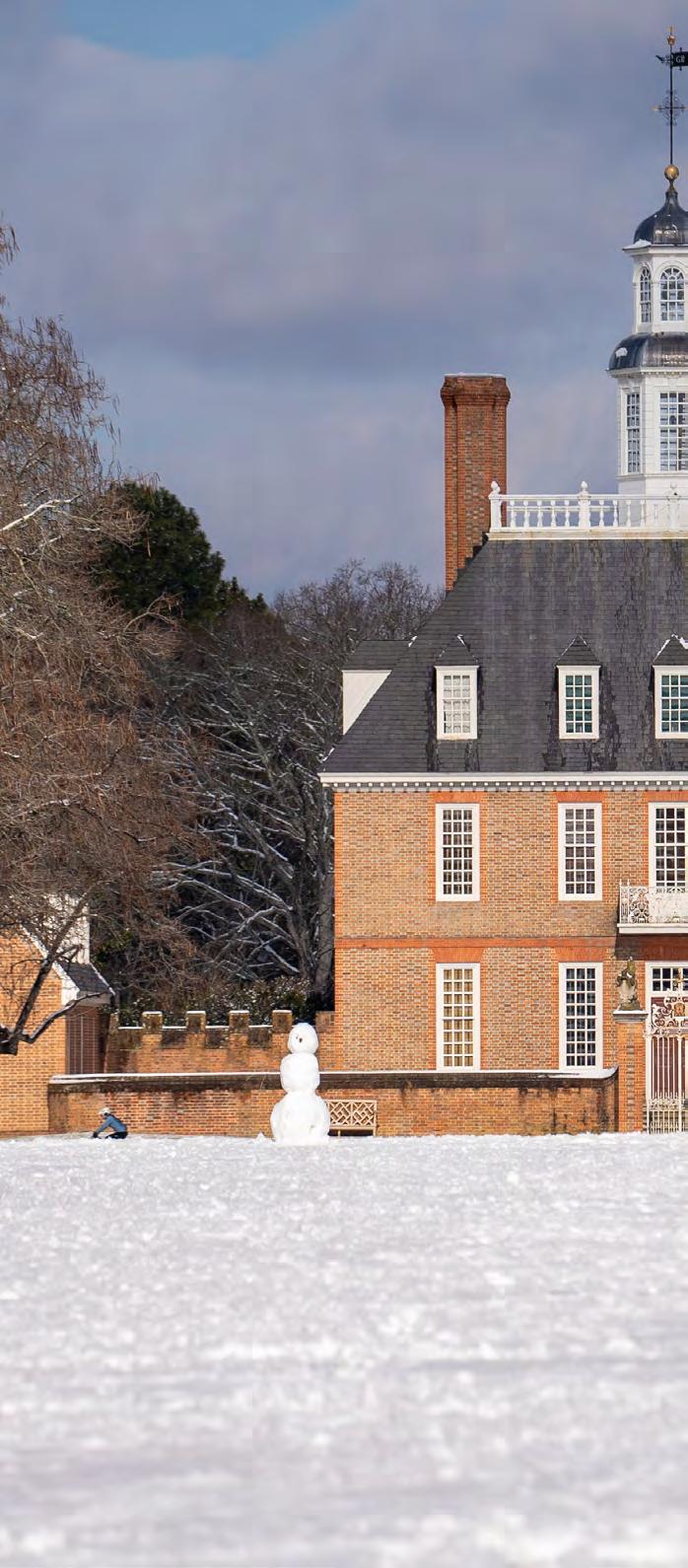
Operating Budget Instructions
General
In early October, Finance staff will provide instructions and access to the Munis budget system so that departments with operating activity can review and update departmental line items:
A. Expenditures for the last two fiscal years
B. Current year budget
C. Current year expenditures
D. A column for estimating CURRENT FISCAL YEAR total expenditures through June 30
E. A column for NEXT FISCAL YEAR’S line-item budget estimates
Each department head should complete ITEMS D AND E. The current year estimate is both the basis for recommending amendments to the current year’s budget and for determining next year’s amount for consideration by City Council.
Recommendations on PERSONNEL EXPENDITURES (addition/deletion of positions, etc.) should be submitted in memo form. Payroll and fringe benefits line items in the system should be left blank. Finance will calculate and enter these line items.
Reminders for Preparers of Budget Requests
1. Analyze each line item separately. Compare historical data, current year budget, and estimated spending levels for the current year to assist with your request.
2. Round all figures to the nearest $10.00 (i.e., $32 to $30 and $85 to $90).
3. Verify all object codes, amounts, and totals.
4. Meet all Budget Calendar deadline dates. Preparers should highlight key dates and actions.
5. Keep backup materials used in computing your budget request. These will be used both in explaining budget recommendations and administering the budget.
6. Departments are responsible for managing their operating budgets by closely monitoring expenditures and encumbrances against the budget monthly. Written requests for BUDGET ACCOUNT TRANSFERS or SUPPLEMENTAL APPROPRIATIONS must be submitted on forms provided and approved before obligating spending over the adopted budget.
Capital Improvement Plan Instructions
Definition of a Capital Project
The Capital Improvement Plan (CIP) identifies, schedules, and budgets capital projects. A capital project is a major expenditure that adds to the net assets of the City. Capital projects fall within one or more of the following categories:
1. Land acquisition or long-term lease
2. Construction of buildings, public facilities, and infrastructure, generally exceeding $20,000
3. Acquisition or improvement of property, generally exceeding $20,000
4. Major additions or rehabilitation to public facilities, generally exceeding $20,000
5. Major studies such as engineering, feasibility, etc., related to public facilities
6. Vehicles and equipment, generally exceeding $10,000
Examples of capital projects include street construction, sewer lines, parks, sidewalks, storm drains, water lines, building construction or major renovation, fire trucks, and police cars.
Engineering or planning studies, which are directly linked to a specific capital project, are part of the cost of that project. Such engineering studies should be included in the project description of which they are a part. Other studies and plans, which constitute a major expense of a non-recurring nature, are included in the CIP even if they are not assets in the traditional sense (i.e. a building).
Relation Between Capital Budget & Capital Improvement Plan
The Five-Year Capital Improvement Plan is presented annually to City Council. The first year of the Capital Improvement Plan is a capital budget and contains the list of projects for implementation during the coming fiscal year. The CIP is updated annually as new needs become known and as priorities change. It is possible that a project with low priority can remain in the CIP program longer than five years as more important projects appear and move to the forefront. Conversely, a project may be implemented sooner than originally planned due to changing priorities.
Project Review
All requests for capital projects and input on priorities will be evaluated by the City Manager and Finance Director before being submitted to City Council.
The Planning Commission will receive the proposed CIP when it is distributed to City Council. The Commission will be invited to advise Council on the consistency of the CIP with the Comprehensive Plan of the City.
Capital Project Form
Capital Improvement Plan projects will be submitted on forms provided by the City Manager. The following is a non-inclusive list of project categories:
Streets & Traffic
Solid Waste Management
Building Improvement
Economic Development
Parking Facilities
Property Acquisition
Stormwater Management
Park Development
Water & Wastewater Improvements
Field Equipment
Planning/Feasibility Studies
Vehicles
Five-Year Vehicle Replacement Plan
All vehicles owned by the City are listed on a replacement plan. The plan is based on a five-year projection. It is updated annually along with the CIP.
Annual Update
Each year departments submit an update to the CIP as the first step in budget formulation. Updates include:
1. Submission of a Capital Project Form for NEW PROJECTS with a description of the project, funding source(s), estimated costs, an operating budget fiscal impact statement, and an appropriate picture of the project.
2. For EXISTING PROJECTS, submission of a statement for each CURRENT-YEAR PROJECT of work accomplished at the SIX-MONTH point and the accomplishments expected by the 12-MONTH point.
3. Submission of a revised CAPITAL IMPROVEMENT SUMMARY for that portion of the CIP assigned to the originator’s department.
The SECOND STEP requires department heads to provide a status report by Dec. 1 of each year for all projects funded during the prior fiscal year ended June 30. This information will be provided to the Finance Department to determine the balance of capital projects funds needed to carry forward to the next fiscal year for project completion.
Biennial Goal Setting
The City of Williamsburg has a vision for the future. To advance the City’s vision, every two years, the City Council identifies new strategic objectives for the City government. The biennial GOALS, INITIATIVES, AND OUTCOMES (GIOS) provide an expression of city priorities, as specific and measurable as possible, covering a two-year period.
City Council elections are held in November of evennumbered years, with two or three new or incumbent members elected each cycle. The newly elected Council members then inherit a recently adopted strategic plan, giving them time to become familiar with workings of City government before attempting to chart the City's course. Council begins its methodical goal-setting process in the Fall of even-numbered years. City Council's adopted goals then become a guide for the two succeeding budgets.
Through this model, the Council spends the six months prior to the election deciding what should be accomplished based on various forms of public input and staff recommendations, and the remaining 24 months before the next election concentrating on implementing its goals. This process, with a newly elected Council inheriting a strategic plan, provides much-needed stability to the organization.
During the midterm, or odd-numbered years, the Council should revisit and re-evaluate progress in accomplishing those goals, but the formal goal setting process takes place only every two years.
In order to be fully useful, goals should be SPECIFIC, MEASURABLE, SHORT-RANGE, AND ACHIEVABLE They should also be developed by exception; the continuation of existing policies and practices of city government should not be listed as goals, however important they may be.
The City of Williamsburg's strategic plan is a layered plan known as the Goals, Initiatives, and Outcomes (GIOs). The plan consists of four components:
1. VISION STATEMENT: Establishes the planning horizon for the work, which is currently 2040.
2. GOALS: Designed as statements of six work areas that are considered on 10-year increments and, when satisified, fulfill the Vision.
3. INITIATIVES: Intended actions wtihin each goal, established every two years to advance the City toward satisfaction of the corresponding goal statements.
4. OUTCOMES: Define the result of work being done in measurable terms to the extent possible.
The calendar below outlines the process for City Council’s Goals, Initiatives, and Outcomes. The City Council’s twoyear election cycle fits well with this biennial goal setting cycle.
Calendar (even number years only)
MAY National Community Survey (NCS) Conducted.
JULY Executive Team hosts internal retreat for initial planning of the strategic plan process.
SEPTEMBER Council provides public participation opportunities to gain ideas and suggestions on past and future goals.
OCTOBER Council hosts retreat to review and evaluate progress of current GIOs, receive results from the public input process, and discuss future priorities.
NOVEMBER City Council Election.
City Manager presents a draft Biennial Goals, Initiatives and Outcomes (GIOs) based on the outcome of the retreat and public comment for Council consideration.
City Council adopts the new biennial GIOs.
City Staff begins work on the operating and capital budgets for the coming fiscal year, reflecting priorities in the statement of goals.
DECEMBER The Mayor and City Council delivers a “State of the City” address.
JANUARY 1 Four-year terms begin for new Council members.
Budgetary Accounts
Budgetary Accounts & Responsibility
The City of Williamsburg operates its budgetary system on a FUND ACCOUNTING basis.
The funds used by the City of Williamsburg are GOVERNMENTAL, FIDUCIARY, AND PROPRIETARY
The Governmental Funds consist of the General Fund (001), Tourism Fund (003), the Capital Improvement Program (Sales Tax 004), the Public Assistance Fund (006), and the American Rescue Plan Fund (777). The Fiduciary Fund consists of the Quarterpath Community Development Authority (QCDA 555). The Proprietary Fund is an Enterprise Fund (010) which accounts for City water and wastewater as the Utility Fund.
The General Fund is used to account for all financial resources except those required to be accounted for in one of the other funds. The General Fund encompasses all City departments, except utilities, and includes entities funded through City government, such as constitutional officers, detention, schools, library, and outside agencies.
The Tourism Fund is a major special revenue fund used to account for tourism tax revenue (1% of the Historic Triangle regional sales tax and the $2 lodging tax). The expenditures in the Tourism Fund are for the purpose of funding tourism development projects.
The Public Assistance Fund is a non-major special revenue fund used to account for the social services programs of the City and is funded primarily through intergovernmental revenues.
The American Rescue Plan Fund is a fund to account for the activities funded by the State and Local Fiscal Recovery Funds provided by the federal government under the American Rescue Plan Act to respond to the impacts of the
COVID-19 pandemic. This fund also includes ARPA funding for Municipal Utility Relief Funding, ARPA Tourism funding passed through from the Commonwealth, and COVID-19 contingency.
The Capital Improvement Program is used to account for major capital outlay items. Historically, the city has used the state’s 1% sales tax revenue to fund capital projects.
The City has one Fiduciary Fund, the Quarterpath Community Development Authority (QCDA), for which the City collects special assessments on behalf of the QCDA.
Enterprise Funds are used to account for operations that are financed and operated in a manner similar to private business. The intent of these operations is to finance the cost of providing continued services to the public primarily through user charges and fees.
DEPARTMENTAL CODES AND RESPONSIBILITY lists the individual responsible for submitting and managing each departmental budget.
REVENUE
SOURCES AND TRENDS document all existing and potential sources of revenue received by the City of Williamsburg to finance its operations each year. This section contains a thorough description of each revenue source, trends, and other pertinent information that should help the reader gain an understanding of the basis of each of these sources.
EXPENDITURE CLASSIFICATIONS provides an explanation of each line item to help properly and consistently classify expenditures.
Department Codes & Responsibility
FUND DEPT.
NUMBER NUMBER
General Fund:
001 1101
001 1102
001 1201
001 1203
001 1204
001 1205
001 1206
001 1207
001 1209
001 1210
001 1213
001 1214
001 1221
001 1301
001 1302
001 2100
001 3101
001 3102
001 3103
001 3201
001 3301
001 3303
001 3401
001 3501
001 3503
001 3505
001 4101
001 4102
001 4103
001 4203
001 4305
001 4306
001 4307
001 4308
001 4309
001 5101
001 5103
001 5302
001 5305
001 6101
001 6103
001 7101
001 7102
DEPARTMENT
Legislative
Clerk of Council
City Manager
Economic Development & Tourism
City Attorney
Human Resources
Triangle Building Management
Workforce Housing
Commissioner of the Revenue
City Assessor
Treasurer
Finance
City Shop
Electoral Board
Registrar
Joint Activities
Police
E-911
Parking Facility
Fire
Regional Jail
Middle Pen. Juv. Det. Center
Codes Compliance
Animal Control
Medical Examiner
Emergency Management
Engineering
Streets
Stormwater Management
Refuse Collection
Municipal Complex
Rental Properties
New Municipal Building
Information Technology
Landscaping
Health Department
Mosquito Control
Public Assistance
Public Assist. – Transportation
School Board
Joint School Contributions
Recreation Administration
Waller Mill Park
RESPONSIBILITY
Michele Mixner DeWitt
Michele Mixner DeWitt
Michele Mixner DeWitt
Yuri Matsumoto
Christina Shelton
Dawn Hicks
Tyrone Franklin
Tyrone Franklin
Cash Arehart
Derek J. Green
Jennifer Tomes
Barbara Dameron
R. Jackson Reed
Tina Reitzel
Tina Reitzel
Barbara Dameron
Sean Dunn
Sean Dunn
Sean Dunn
Larry W. Snyder Jr.
Roy Witham
Gina Mingee
Lauri Springsteen
Sean Dunn
Larry W. Snyder Jr.
Larry W. Snyder Jr.
R. Jackson Reed
R. Jackson Reed
R. Jackson Reed
R. Jackson Reed
R. Jackson Reed
R. Jackson Reed
R. Jackson Reed
Mark Barham
R. Jackson Reed
Barbara Dameron
R. Jackson Reed
Wendy Evans
Wendy Evans
Barbara Dameron
Barbara Dameron
Robbi Hutton
Robbi Hutton
FUND DEPT.
001 7104
001 7106
001
001
001 8101
001
001
Tourism Fund:
003 3900
003 3910
003
003
003
Robbi Hutton
Robbi Hutton
Revenue Sources & Trends
General Property Taxes
General Property Taxes account for approximately 48% of the City’s general fund operating revenues. These taxes are derived from the annual assessment of real estate and tangible personal property located in the City. The City Assessor appraises real estate property annually. This category includes property tax collections for current and delinquent years. Also included in this category are collections for Public Service Corporations, property appraised by the State Corporation Commission, and cover real, personal property, and machinery and tools. Revenues received for property tax on mobile homes, boats, and motorcycles are also included in this revenue category.
Real Property Taxes
By state law, all real property taxes must be assessed each year at 100% of fair market value. The assessments are made on a calendar year basis and must be completed and mailed to property owners by June 30 for the next fiscal year. Taxes are then due on Dec. 1 and June 1 of that fiscal year. The current tax rate (FY26) is $.62 per $100 of assessed value.
The City’s real estate tax rate history is shown in the following tabulation:
Real property taxes generated by other selected Virginia localities for the fiscal year ended June 30, 2024, are as follows1:
Real property tax revenues received during the past 10 fiscal years are shown below2:
FISCAL YEAR REAL PROPERTY TAX REVENUE % CHANGE
2016 $ 10,202,762 2.89% 2017 10,429,845 2.23% 2018 10,589,077 1.53% 2019 11,134,520 5.15% 2020 11,787,371 5.86% 2021 12,195,473 3.46%
2022 13,628,060 11.75% 2023 15,616,243 14.59%
Real estate taxes are generated based on the annually reassessed value of property. Taxable real estate property values for the last 10 fiscal years are as follows: FISCAL YEAR TAXABLE REAL ESTATE PROPERTY VALUES % CHANGE
For each 1¢ of the City’s tax rate, approximately $330 thousand is generated annually, based on the 2026 land book values. Each year, new construction tends to skew increases in total property valuations shown above from year to year.
2City of Williamsburg’s Annual Comprehensive Financial Reports – Amounts include prior years’ delinquent real estate tax receipts
Personal Property Taxes
Tangible personal property is classified into two categories for valuation purposes: personal and business property. Cars, trucks, boats, trailers, etc., comprise personal property, and furniture, fixtures, and machinery account for business property. Property is assessed each Jan. 1, and taxes are due on Dec. 1 of the same year. The rate of assessment for motor vehicles is determined by the NADA or “Blue Book” average loan value. Furniture, machinery, etc., is assessed at 30% of the original cost. The City does not prorate for partial-year occupancy. The tax rate is $3.50/$100 of assessed value.
*Includes Machinery & Tools and excludes State reimbursement for Personal Property Tax Relief Act.
Personal Property tax revenues received during the past 10 fiscal years are shown below4:
Personal property taxes generated by select Virginia localities for the fiscal year ended June 30, 2024, are as follows3: 3 Commonwealth of Virginia – 2024 Comparative Report of Local Government Revenues and Expenditures. 4 City of Williamsburg’s Annual Comprehensive Financial Reports – Amounts
*Business personal property tax receipts include autos, machinery, & tools
Public Service Corporations
Tax revenues are generated by public service corporations based on annual assessments of property, both real and personal, by the State Corporation Commission. Public service corporations are those providing services such as water, heat, light and power, telecommunications, and railroads within local government boundaries.
Property assessments for the last 10 fiscal years, along with the total revenue receipts for public service corporations are provided as follows:
Penalties & Interest
Personal property and first-half fiscal year real estate taxes are due Dec. 1 each year. Second-half real estate taxes are due June 1. Penalties are charged on all property tax accounts if not paid by these due dates.
Penalty charges for delinquent property taxes are as follows:
OF
Up to $10
Penalty is same as tax Penalty is 10%
$10.01 - $100 Penalty is $10 Penalty is 10%
$100.01 and up Penalty is 10% Penalty is 10%
Interest charges begin Jan. 1 for delinquent first-half real estate and personal property taxes and July 1 for second-half taxes. Interest is computed monthly, with an annual percentage rate of 10% as provided for in the Williamsburg City Code.
Penalty and interest revenues over the past 10 fiscal years are shown in the following table:
Other Local Taxes
This category of local revenues differs from general property taxes in that they are not billed by the City, except in the case of business licenses. They are dependent on business volume, and most are self-imposed. Businesses report sales activity directly to the City, and charges are based on these reported figures. Business activity is subject to verification by the Commissioner of Revenue.
Local Sales & Use Taxes
Effective July 18, 2018, the additional Historic Triangle Regional sales and use tax of 1% was levied for all of York County, James City County, and City of Williamsburg businesses under the authorization of Senate Bill 942, which raised the overall general sales tax to 7%. The taxes are collected and submitted to the Virginia Department of Taxation on a monthly basis, and half of the 1% of these proceeds are then returned to the City directly from the state. As a matter of policy, the City has designated the original 1% to pay for its ongoing capital improvement program, and the new 1% is reported in the Tourism Fund. Revenues received from the Commonwealth of Virginia for sales taxes over the last 10 fiscal years are as follows:
Consumer Utility Taxes
Use taxes are collected by public utility companies and remitted to the City on a monthly basis. City Council approves the rates charged annually. Since Fiscal Year 2007, Telecommunications sales taxes are 5% for all Virginia localities.
The following table highlights the purpose and rates charged by these utility companies in effect during the Fiscal Year 2027:
The Commonwealth of Virginia deregulated gas and electric utilities in 2001. Since then, local utility taxes for those industries are designed to be revenue-neutral to localities. Beginning July 1, 2003, the City of Williamsburg began imposing a tax on wireless communications.
Total receipts collected over the last 10 fiscal years are as follows:
Business, Professional, & Occupational License Taxes (BPOL)
All businesses in the City must obtain a business license to operate. The Commissioner of the Revenue sends business license applications in late December each year. Forms provided include prior year information - name, address, type of business conducted, gross receipts, etc. – and it is the responsibility of licensees to confirm or change this information. The applications must be returned to the Commissioner by Feb. 15. The fees for business licenses are based on gross receipt figures provided in the application. The payment for business licenses is due March 1 each year, with a 10% penalty beginning March 2 and interest accruing at a 10% annual percentage rate.
A detailed list of rates is provided below for information purposes.
TRADE/TYPE
Business or Personal Service
Contractor
Fortune Teller
Itinerant Merchant or Peddler License
Professional Service
Retail Merchant
Wholesale Merchant
Restaurant (seating 50-100)
Restaurant (seating 101-150)
Restaurant (seating 151+)
$.36/$100
$30 up to $8,200
$.16/$100 $30 up to $18,000
$1,000 flat fee Flat license fee
$500 flat fee Flat license fee
$.58/$100
$30 up to $5,000
$.20/$100 $30 up to $15,000
$.05/$100 $30 up to $60,000
Off-Premises
*Based on gross receipts
Business licenses receipts over the last 10 fiscal years are as follows:
Utility License Fees
The Code of Virginia, Chapter 58.1, governs the licensing and regulation of cable television in the City. Gas and electric utilities using the City streets and right-of-ways to conduct business are classified here also, with consumption taxes set by state code. The Code of Virginia § 58.1-2904 imposes consumption taxes on consumers of natural gas in the City, and the Code of Virginia § 58.1-2900 covers consumption taxes on electricity in the City. These taxes are separate from consumer utility taxes charged monthly. The City’s current franchise agreement with Cox Communications expires in 2026.
ACTIVITY
Cable TV
Telephone
Gas
Electric
Taxi & Bus Services
5% of gross receipts
$.50 per access line
$.004/CCF first 500CCf per month
Under 2,500 kWh = $.00159/kWh/month
2,500 – 50,00 kWh = $.00102/kWh/month over 50,000 kWh = $.00077/kWh/month
$100 flat fee plus $100 per cab owned
Utility license fees collected over the past 10 years are shown below:
*Public, Educational and Governmental Access Channels (PEG)
Bank Stock Taxes
Every incorporated bank, banking association, or trust company organized by or under the authority of the laws of the Commonwealth are responsible for filing bank franchise taxes5. A specific state tax form is prepared annually for banks and filed with the Commonwealth of Virginia. The City’s local tax is 80% of the state tax rate of $1.00 per $100 of a bank’s taxable value on Jan. 1 of each year. Banks submit the portion of their total bank stock taxes to local governments based on the percentage of banking operations within each locality.
Bank stock tax collections over the past 10 fiscal years are shown below:
Recordation Taxes
State law gives City Council the power to impose recordation taxes upon the first recordation of each taxable instrument recorded in the City. Taxable instruments generally consist of deeds, deeds of trust, and marriage licenses. The rate charged is $.15 on every $100 or fraction thereof of the consideration of the deed or the actual value of the property conveyed, whichever is greater6. For deed recordation in excess of a $10M value, a sliding scale is used. The Clerk of the Circuit Court is responsible for collecting and remitting these fees monthly to the City. In addition to these fees, a local tax is imposed (equal to up to one-third of the state recordation tax) and submitted to the City. The City has charged this maximum fee for many years. A grantor’s tax is also collected by the Clerk of the Circuit Court and submitted to the State for quarterly distribution. This tax is classified under the Non-Categorical Aid section of this report.
Local recordation taxes collected over the past 10 fiscal years are as follows:
5 Commonwealth of Virginia, Dept of Taxation, Virginia Bank Franchise Tax, 1997 Forms 6 Code of Virginia §58.1-801.
Cigarette Taxes
The City of Williamsburg began imposing a cigarette tax of 25¢ per pack on July 1, 2003, and the current rate for FY25 is 40¢ per pack. The timing of vendor stamp replenishment is unpredictable each year.
Total cigarette taxes collected over the past 10 years are as follows:
Hotel & Motel Room Taxes
The City's FY25 transient occupancy tax rate on hotels, motels, bed and breakfasts, and other facilities offering guest rooms was 5%. Businesses collect this tax and submit it to the City by the 20th of the following month.
Room tax collections over the last 10 fiscal years are:
Meal Taxes
Pursuant to the Code of Virginia, the City is authorized to levy an excise tax on all food and beverages sold in the City as meals. City Code defines “food and beverages” as all food, beverages or both, including alcoholic beverages, which are meant for refreshment or nourishment value, purchased in or from a restaurant, whether prepared in such restaurant or not, and whether consumed on the premises or not.7 The meal tax rate in FY25 was 5%.
Meal tax collections over the last 10 fiscal years are:
The City’s adopted Fiscal Year 2026 operating budget estimates room & meal tax revenues to be $16,790,000 or 29% of the total operating budget. Rates charged by nearby Virginia localities, and the percentage of budgeted FY24 receipts to total operating budgets, are presented below:
*In addition to room taxes, the City of Williamsburg, James City County and York County collect a $2.00 per night per room tax, which commenced on July 1, 2004, per Code of Virginia, section 58.1-3823C. The revenues generated are designated and expended solely for tourism development. Half of the receipts are sent to the state’s Historic Triangle Marketing Fund, and the other half the City retains in the Tourism Fund. In addition, Newport News and Chesapeake charge a flat-rate tax of $1 per night per room, and Virginia Beach and Hampton a flat-tax rate of $2 per night per room. ^For Virginia Beach, only a 2% room tax rate and a 3.5% meals tax rate is allocated to the General Fund. Percentage of Budget shown for Virginia Beach is that portion dedicated to the General Fund only.
Williamsburg City Code, Section 18-271.
Permits, Privilege Fees and Regulatory Licenses
The City uses the Virginia Uniform Statewide Building Code (USBC), which covers new construction, renovation, demolition, plumbing, gas, mechanical, electrical, fire protection system installations, and asbestos removal. The category’s major components consist of building, electrical, plumbing, and mechanical permits.
A 10-year history of permit revenues follows:
*Other includes dog licenses, parking, zoning, right-of-way, raffle, rental inspections, gas and fire prevention permits.
Fines and Forfeitures
This revenue category is used to account for court and parking fines. The court system has guidelines for setting caserelated fines, while City Code sets the rates for parking fines. The Clerk of the Circuit Court collects court fines and submits receipts to the City monthly, while parking fines are paid directly to the Department of Finance. Effective October 2018, the City implemented the following parking fine structure:
1st Violation $10
2nd Violation $35
3rd Violation
*Ordinance #18-09 was adopted October 2018 to amend Sections 11-162, 11-165 and 11-167 of Chapter 11, Article VI of the Code of the City of Williamsburg regarding Parking Fines. If payment for any ticket is made after 14 days of issuance, the fine for the ticket shall increase.
Revenue collections for fines and forfeitures over the last 10 fiscal years are as follows:
Revenue from Use of Money & Property
This revenue classification includes interest earnings on surplus funds, rental income from City-owned properties, and sale of surplus vehicles and equipment. Interest earnings shown here are reported in the Capital Improvement Plan Fund, as Utility Fund revenues are presented separately in the Budget Summaries section. Rental income consists of various rental properties, including the Community Building user fees. The base rate for a weekday is $125 per hour with a three-hour minimum.
Revenue collections from the use of money and property over the last 10 fiscal years are presented below:
A breakdown of rental income from properties over the last 10 fiscal years is presented below:
*Includes Triangle Building Commercial rent and houses on Strawberry Plains Road and Scotland Street.
Charges for Services
The City uses this revenue classification to account for various revenue sources requiring charges. Minor amounts are included under Sheriff’s fees and Commonwealth Attorney’s fees, of which the City has no control. Also included are charges for maintenance of highways, streets, and sidewalks, which are used for the billing of special mowing or trash pickup and are minimal in amount. Charges for Planning & Community Development include minor amounts for maps and surveys, with the largest dollars attributable to the sales of Cedar Grove Cemetery lots and grave openings. The largest item under this category is charges for Parks & Recreation. The City Code authorizes the Parks & Recreation Department to set and collect charges for programs and activities for the use of its facilities and services.
Charges for Services collected over the past 10 years are shown below:
Parks & Recreation fees for the last 10 fiscal years are outlined in detail below:
Cemetery lot sales and grave opening fees over the last 10 years are as follows:
Emergency Medical Transport
As of July 1, 2005, the City began a program of billing health insurance providers for emergency medical transportation services. Receipts over the last 10 years are as follows: FISCAL YEAR
Revenue from the Commonwealth
Monies received from the Commonwealth of Virginia are classified as either Non-Categorical or Categorical Aid. Non-Categorical revenues are received quarterly according to state code, are not billed or itemized by the City or any constitutional officer, and are not designated to be used for any specific purpose. These are directly deposited in the General Fund and used to pay for overall operations. Categorical Aid must be spent on specific purposes. In the case of constitutional officers, expenditures are itemized and sent to the Commonwealth for reimbursement, based on various formulas provided by state code.
Non-categorical Aid
1. ROLLING STOCK TAXES - The State Corporation Commission determines the assessed value of “Certified Motor Vehicle Carriers,” primarily bus companies, and assesses a property tax at the rate of $1 per $100 value. These revenues are distributed quarterly to localities according to the number of miles traveled within each locality, based on reports submitted by the carriers.
2. RENTAL CAR TAXES - Payments received from the Commonwealth are based on rental car taxes collected by rental companies within each jurisdiction. A 4% rental car tax is required to be assessed on all rental vehicles. Rental companies submit the taxes monthly to the Department of Motor Vehicles with a report by locality. The Commonwealth distributes these funds monthly to localities.
3. GRANTOR’S TAX - The Clerk of the Circuit Court collects additional recording fees for this purpose, details monthly activity, and deposits these receipts in a state account. Activity is separated at the courthouse for deeds relating to Williamsburg or James City County. Funds are distributed quarterly by the Commonwealth from a $10 million fund ($40 million per year) to localities based on their share of overall grantor tax collections in the Commonwealth.
Non-Categorical Aid received over the last 10 fiscal years is as follows:
Categorical Aid
1. SHARED EXPENSES - Constitutional offices are included as City departments/operations with reimbursements provided, in part, by the Commonwealth of Virginia.
a. SHERIFF - This is a joint activity shared with James City County. Virginia refunds approximately 100% of stateapproved salaries and operating costs of this department. However, since the City is now part of the Virginia Peninsula Regional Jail Authority, the Sheriff's responsibilities are now limited to courtroom security and prisoner transport. Jail staffing at the Courthouse has been significantly reduced, as many former employees now work for the Authority. Salary supplements are not reimbursed by the state.
b. COMMISSIONER OF THE REVENUE - State code provides for reimbursements to the City at 50% of salaries, fringe benefits, and a minor portion of operating expenses. Any constitutional officer can make special requests for payment from the Compensation Board for additional consideration. For the City’s Annual Comprehensive Financial Report dated June 30, 2025, total reimbursements were 43.9% of expenditures.
c. TREASURER - This is also a joint activity shared with James City County. The state reimburses the City twothirds of salary, fringe benefits, and operating costs for the Deputy Treasurer, whose office is in the Municipal Building. In turn, the City bills James City County 25% of the non-reimbursed amount annually. In the City’s Annual Comprehensive Financial Report, only the state-reimbursed monies are classified as Categorical Aid. Reimbursements received from James City County are classified as credits to the expenditures in the Treasurer Department 1213.
d. MEDICAL EXAMINER - The position is reimbursed at $30 per examination.
e. REGISTRAR/ELECTORAL BOARD - For FY25, salaries were reimbursed by the state at 77% for the Registrar and 82% for the Electoral Board members. No reimbursements are made for fringe benefits or operating expenditures. The Department of Finance files for reimbursement to the state Electoral Board annually.
2. WELFARE - All of the City’s Human Services programs are accounted for as a special revenue fund and are included in the City’s Annual Comprehensive Financial Report in the Virginia Public Assistance Fund.
3. 599 FUNDS - Each locality in the Commonwealth is eligible to receive a share of the total distribution proportional to its share of the total adjusted crime index, as determined by the Department of Criminal Justice Services (DCJS). The City must notify DCJS prior to July 1 each year that its law enforcement personnel have complied with minimum training standards as provided for by the Code of Virginia. These distributions are made quarterly.
4. EDUCATION (State Sales Tax for Education) - The governor distributes 1% of statewide sales tax receipts to every school district based on state census figures provided for school-age population. This is adjusted with each triennial census performed by the joint school system and verified by the localities.
5. OTHER CATEGORICAL AID - See the next section for a detailed description.
Categorical Aid received over the last 10 fiscal years is as follows:
Other Categorical Aid
Other aid received from the Commonwealth and designated for specific use includes:
1. ARTS COMMISSION - Grant funds are applied for by the City and James City County to the Commonwealth for the Creative Communities Partnership Grant. Funds are received directly by each locality. James City County includes the state grant in its annual reimbursement for its share of the Williamsburg Area Arts Commission budget. Historically, each locality receives $4,500, the state maximum award allowed under this state program.
2. STREET & HIGHWAY MAINTENANCE - The City is reimbursed quarterly by the Commonwealth according to lane miles of streets within its boundaries. In FY24, the City was reimbursed $29,094.20 per lane mile for Principal/ Minor Arterial Roads and $17,082.15 per lane mile for Collector/Local Streets. Lane miles used to calculate reimbursement change only when additional roads are built in the city. Total revenue for FY24 was $2,459,321.68 based on peak-hour moving lane miles of state arterial roads in the City of 40.39 miles and local streets of 81.04 lane miles.
3. EMERGENCY SERVICES - Each year, funds are received for Radiological Emergency Preparedness. These funds support the activities of state agencies and certain local governments in establishing, maintaining, and operating emergency plans, programs, and capabilities to deal with nuclear accidents8. Annual training exercises are performed, within program guidelines, and are coordinated throughout the geographic area with other local governments and Dominion Energy. Amounts received each year are based on the projected annual cost of administering the state and local government programs for the power stations.
4. FIRE PROGRAMS - This is a special appropriation to localities to be used for fire service training, training facilities, and fire-fighting equipment or vehicles. Localities must provide detailed expenditure reports annually to qualify for these funds. This revenue is reported in the Capital Improvement Plan (Sales Tax) Fund.
5. 4 FOR LIFE (EMS) - State Code provides an additional $4 per year to be charged and collected when registrations for pickups, panel trucks, and motor vehicles are made at the Department of Motor Vehicles. These monies are paid into the state treasury to be used for emergency medical service purposes. Twenty-six percent of these funds are returned to the localities where the registrations were made. It supports volunteer and paid personnel training, equipment, and supplies for emergency purposes. This revenue is reported in the Capital Improvement Plan (Sales Tax) Fund.
6. LITTER CONTROL - The City receives this annual grant from the Department of Waste Management to aid in litter control. Monies are used for litter prevention, elimination, and control. The grant must be applied for annually, and year-end accounting is required to verify that the funds were spent appropriately. Amounts vary each year depending on available funds and local program requirements.
Other Categorical Aid received over the last 10 fiscal years is as follows:
8
Revenue from the Federal Government
The City’s Annual Comprehensive Financial Report itemizes federal receipts on the Schedule of Federal Awards, according to the Catalog of Federal Domestic Assistance catalog numbers. Human Services programs account, by far, for the majority of the City’s federal funds. These programs are accounted for in the Public Assistance Fund. These programs are highlighted:
1. DEPARTMENT OF EMERGENCY SERVICES - These funds are administered by the Federal Emergency Management Agency (FEMA). Funds are received for disaster assistance and hurricane preparedness and, more specifically, are intended to supplement the cost of deploying the City’s Emergency Management team in accordance with FEMA requirements during natural disasters. In FY23, the City received $37,258 for Tropical Cyclone Ian. The City also received a Staffing for Adequate Fire and EMS Response (SAFER) grant in FY22 of $148,525, in FY23 of $250,150, FY24 of $169,129, and in FY25 of $22,141. In FY24, the City received $82,819 for the Assistance to Firefighter Grant (AFG). In FY25, the City received $80,210 from FEMA for deployment to assist with Hurricane Debby.
2. DEPARTMENT OF TRANSPORTATION - These federal revenue-sharing funds are used for street planning and construdction. During FY23, $406,051 in federal funds were received for Capitol Landing Road Improvements; Citywide Flashing Yellow Arrow (FYA) Signals; Capitol Landing / Bypass Roads Intersection; Francis Street Sidewalk/ Trail; and State of Good Repair Resurfacing on Jamestown Road, South Henry Street, and Richmond Road. During FY24, $256,329 in federal funds were received for Capitol Landing Road Improvements, Francis Street Sidewalk/ Trail, South Henry Street, and College Woods Circuit. During FY25, $25,376 in federal funds were received for Capital Landing Road Improvements and College Woods Circuit.
3. DEPARTMENT OF TREASURY - The City received $2,609,358 of Coronavirus Relief Funds in FY20 and FY21. In FY22, $12,892,454 of State and Local Fiscal Recovery Funds (SLFRF) under the American Rescue Plan Act was received. The City received the final tranche of $5,527,208 of SLFRF in FY23. In FY24, the City received SLFRF funds in the amount of $268,000 to be used for tourism from the Virginia Tourism Corporation and $230,147 from the Department of Criminal Justice to be used for Police equipment.
Revenue from William & Mary
The City provides fire and emergency medical services to William & Mary. As a state agency, the university is exempt from local taxation. Beginning in FY21, the university committed to providing the City with $165,000 in annual financial support, with a 3% escalator each year, to partially defray the cost of providing these essential services on campus. This agreement was renewed in February of 2026 at $250,000 with the option to renew it in 2031 for an additional five-year term.
Expenditure Classifications
51000 SALARIES & WAGES
51001 Salaries
Compensation for all full-time employees who hold permanent positions.
51002 Salaries - Overtime
Compensation for overtime and holiday pay for all eligible employees. (Personnel Manual)
51003 Salaries - Part-Time Employees
Compensation for all part-time employees (less than 40 hoursper week) who are paid on an hourly basis and are not eligible for all employee benefits. (Personnel Manual)
51004 FLSA Compensation
Overtime is calculated based on the designated work period (7 to 28 days) with a higher hour threshold. (Personnel Manual)
51005 FEMA Wages
Compensation for employees who are working in disaster response, recovery, and protective measure activities during federally declared emergencies.
51006 Discretionary Leave
Compensation for Police, Fire, or Water Plant personnel who must work on stated holidays. (Personnel Manual)
51008 Traffic Control
Compensation for police department personnel who work extra hours for traffic control purposes.
51009 Off-Duty Police Officers
Compensation for police personnel hired by outside establishments after regular working hours. (City is reimbursed by the contracting party.)
52004 Dental
Costs for employee dental reimbursement program.
52005 Hospitalization
Cost for medical benefit package premiums, not including dental.
52006 Group Life Insurance
City’s cost for VRS group life insurance policy.
52008 Retiree Stipend
Costs fixed amounts provided to support individuals after retirement related to health care.
52009 Unemployment Insurance Costs for unemployment insurance.
52010 Worker’s Compensation
Costs for worker’s compensation insurance.
52011 Vehicle Allowance
Costs associated with the purchase of a vehicle by designated personnel.
52012 Clothing Allowance
Costs associated with the purchase of clothing by designated personnel.
52013 Education Allowance Costs for tuition assistance.
52016 Training
Costs associated with training Fire, Police, and Water Plant personnel.
52017 EMS Training
Costs associated with emergency service trainings.
53000 PROFESSIONAL SERVICES
53001 Professional Health Services
Costs associated with medical services such as physicals for certain employees.
53002 Professional Services
Employer’s
52002 Virginia Retirement System (VRS)
Cost of contributions to the Virginia Retirement System for all full-time employees. VRS enrollment is mandatory for all full-time employees and is paid as a percentage of base salary.
Costs for legal, financial, engineering, and other specialized professional services.
53003 Professional Services - Other
Costs for services related to trash and recycling.
53004 Repair & Maintenance
Costs for services for repair or maintenance of city equipment and structures.
Subcategories:
53004-1 – Cars & Trucks
53004-2 – Buildings
53004-3 – Office Equipment
53004-4 – Powered Equipment
53004-5 – Street Signs, Markings & Water Meters
53004-6 – Traffic Signals
53004-7 – Phones
53004-8 – Hardware
53004-9 – Software
53004-D – Computers
53004-E – Video Equipment
53004-F – Mapping System
53004-H – Printers
53005 Service Contracts Costs for all service contracts except radio.
53006 Printing Costs associated with the printing of forms, documents, manuals, etc.
53007 Advertising Costs for classified and legal advertisements.
53008 Laundry & Dry Cleaning Costs associated with uniform rental.
53009 Purchase of Services
Costs for purchasing services and supplies from other governmental agencies. Does not include joint activities.
53031 Garbage Contract Costs for garbage pick-up and disposal.
53032 Recycling Program Costs for recycling services.
53033 Exterminating
Costs for extermination contracts for cityowned buildings.
53034 Computer Recycling Costs for disposing of computers.
53035 Garbage Disposal Costs for services associated with garbage disposal.
53099 Detective Funds Costs associated with police work.
55000 PURCHASE OF GOODS & SERVICES
55101 Electricity Costs of electricity (Dominion Energy).
55102 Heating Fuel
Purchase of natural gas and heating oil.
55103 Water & Sewer
Costs of water and sewer services.
55201 Postage Stamps, stamped envelopes, postage meter costs, permit fees, etc.
55203 Telecommunications Costs incurred for landline, cellular phone, and pager service.
55204 Radios Cost of operating citywide radio systems.
55205 Emergency “911” Costs of operating emergency lines for the dispatch operation.
INSURANCE
55301 Boiler Insurance
Costs of insuring heating plants, generators, and other mechanical equipment.
55302 Fire Insurance
Costs of insuring buildings and contents against fire.
55305 Motor Vehicle Insurance
Costs of insurance for motor vehicles.
55306 Surety Bonds
Costs for surety bonds for certain city personnel.
55307 Public Officials Liability
Costs of insuring certain public officials against suits, etc.
55308 General Liability Insurance
Cost of insuring the City against certain accidents, etc.
55309 VRS Plan 1 & 2 Disability
Cost of City employees covered by the VSDP.
OPERATING SUPPLIES
55401
Office Supplies
Costs of office supplies such as envelopes, pens, pencils, paper, forms, etc. used in everyday office operations.
55402 Food & Food Service Supplies
Costs of providing miscellaneous food or supplies at the fire station.
55403 Agricultural Supplies
Costs for care and treatment of plants, lawns, landscaping, including small tools.
55404
Material & Lab Supplies
Costs for purchasing medical and laboratory supplies for appropriate city departments.
55405
55406
Laundry, Housekeeping & Janitorial Supplies
Costs of custodial and housekeeping supplies, including light bulbs.
Linen Supplies
Costs of linens used in Fire Department.
55407 Repair & Maintenance
Supplies
Costs of building material supplies, paint, electrical, and plumbing supplies.
55408 Vehicle & Powered Equipment
Supplies
Supplies for cars, trucks, heavy equipment, etc. used by City Shop.
Subcategories:
55408-1 – Cars & Trucks
55408-2 – Tires & Tubes
55408-3 – Gas & Oil for Vehicles
55408-4 – Powered Equipment (Light & Heavy)
55408-5 – Sign & Street Marking Supplies
55408-6 – Generator Fuel
55409 Police Supplies
Costs of items such as guns, ammunition, flashlights, etc.
55410 Uniforms & Wearing Apparel
Costs for uniforms, protective clothing, boots, overalls, and other items or working apparel provided to employees.
55411
Books & Subscriptions
Costs for professional periodicals, books, and publications.
55412
55413
55414
55415
55416
Education & Recreation Supplies
Costs for supplies used for Recreation and Education Department programs.
Other Operating Supplies
Costs for chemicals and other supplies not covered in other accounts.
Subcategories:
55413-B – Asphalt/Concrete supplies
55413-C – Chemical supplies
Merchandise for Resale
Costs of vending machine merchandise.
Fire Prevention Materials
Costs of materials used by the Fire Department for fire prevention.
Police Ammunition
Costs of supplies for the police department's ammunition.
55417 Water Meters
Costs of purchasing water meters for the Utility Fund.
55418 Police Forensics
Costs associated with police investigations/forensics.
55419 EMS Supplies
Costs associated with EMS equipment.
55421 Pharmaceutical Supplies
Costs associated with the fire/EMS pharmacy program.
TRAVEL & CONTRIBUTIONS
55501 Travel Expense
Mileage reimbursement – Based on IRS mileage rates.
55502 Travel – Business Recruitment
Costs for traveling to business recruitment events.
55504 Travel – Conferences & Conventions
Costs for lodging, transportation, registration fees, and materials. All travel must have prior department head approval.
55601 Local Health Department
Costs of the City’s contribution to the community program.
55602 Colonial Behavioral Health (formerly Colonial Services Board) Costs of City’s contribution to the community program.
55801 Dues & Memberships
Costs for dues and memberships in professional organizations.
55838 Principal Repayment of long-term debt principal.
55839 Interest
Interest payments on long-term debt.
55899 Joint Activity
Payments to James City County for jointly operated departments and agencies.
56000 PARTNERSHIPS
56001 Schools
56002 Regional Library
57000 FIXED ASSETS
57001 Machinery & Equipment
57002 Furniture & Fixtures
57003 Communication Equipment
57005 Motor Vehicles
57007 ADP Equipment
57008 Pedestrian Improvements
57009 Street Resurfacing
57010 Building Alterations
58000 LEASES & RENTALS
58001 Lease & Rental of Equipment
Cost for temporary rental or lease of equipment (no leasepurchase agreements).
58002 Lease & Rental of Buildings
Costs for rental or lease of office or storage space.
58003
Lease & Rental of Land
Costs for rental or lease of land.
Funding Relationships
Agency / Organization
List of Other Contributors Notes
Constitutional Officers Generally
Commissioner of the Revenue State
Governed by the Compensation Board. The state pays a portion of salary, benefits, and some operating costs. The City pays salary supplements, in some cases, fringe benefits. Operating salaries for these officers are approved by the state.
The City provides office space for this officer and staff. The state reimburses the City for 50% of salary, fringes (except healthcare), and some operating expenses. The reimbursable portion of the commissioner’s salary is based on the 1980 salary amount divided in half plus any and all increases in pay since that date. The state pays 50% of the two full-time positions allowed based on population. A salary supplement is provided by the City. The state reimburses half the employer cost of VRS (Retirement), FICA, and Group Life insurance. The balance of fringes is paid by the City. The staff participates in all City employee programs (e.g., health insurance, deferred and workers’ compensation), including the Pay Plan.
Treasurer State
The City, state, and James City County share in the local cost of the treasurer. The state reimburses 88% of state-approved salary, 100% of FICA match, and 46% of Virginia Retirement System (VRS) costs. JCC bills the City for a percentage of the non-reimbursable costs based on population. Office space is provided by both localities. The state reimburses the City for two-thirds of salary and fringes (except healthcare) for the City deputy treasurer, whose office is located in the Municipal Building. The City bills JCC for 25% of the non-reimbursable costs for salary and fringes associated with the City deputy treasurer position for work associated with Williamsburg/James City County Schools.
Clerk of Circuit Court
JCC, State
Commonwealth's Attorney JCC, State
The state funds salaries and a portion of fringes and operating expenses for the Clerk and staff. A portion of fringe benefits is supplemented. Twelve positions in this office are fully state-funded. Two part-time positions are locally funded. All temporary part-time personnel costs are reimbursed by the state, but not permanent part-time positions. These part-time salaries and some fringes are paid by the City and County per the Courthouse Agreement (See Circuit Court).
The Compensation Board sets the salaries for the Commonwealth’s Attorney, four assistants, and four full-time support staff. All positions receive a salary supplement, ranging from 1.5% to 61%, paid by the City and James City County based on population each year. In addition, the Victim’s Assistance program consists of three grant positions, which are supplemented locally. The balance of any fringes in excess of the amount provided by the state is paid by the City and JCC based on population per the courthouse agreement.
Agency / Organization
List of Other Contributors Notes
Sheriff’s Department
JCC, State
The joint Williamsburg/James City County Sheriff is responsible for courtroom security and serving civil warrants, but no longer handles jail facilities since the City became part of the Virginia Peninsula Regional Jail Authority. The City and JCC share local costs based on a population formula as provided in the City/County Joint Courthouse Agreement. Payroll and operating expenses have been administered by JCC since Jan. 1, 1998. The state compensation board will reimburse the county for state-approved salaries, benefits, and some operating expenses. Salary supplements and a portion of unreimbursed operating expenses are shared locally based on the Courthouse Agreement. Sheriff’s employees participate in the JCC’s worker compensation, health insurance, and Virginia Retirement System programs.
Voter Registrar Board of Elections, State
The state pays the majority of the registrar’s salary. For FY25, salaries were reimbursed by the state at 77% for the Registrar and 82% for the Electoral Board members. No reimbursements are made for fringe benefits or operating expenditures. The Department of Finance files for reimbursement to the state Electoral Board annually. Staff participates in the City’s workers’ compensation, health insurance, and other employee benefit programs. The City provides accounting and payroll services.
Circuit Court (Hon. Holly B. Smith)
JCC, State
The City and James City County share in the cost of the judge’s secretary, legal assistant, jurors, capital outlay, and operating expenses of this office. The judge’s salary is paid by the state. All courthouse personnel and operating costs are the responsibility of the local government and are split between the City and county based on population.
General District Court (Hon. Matthew Rush Kite)
JCC, State
The City and James City County share in the cost of operating expenses and capital outlay for this office per the Courthouse Agreement. The judge’s salary is paid by the state.
Juvenile & Domestic Relations Court (Hon. Brian J. Smalls)
JCC, State
The City and James City County share in the cost of operating expenses for this office per the Courthouse Agreement. The Judge’s salary is paid by the state.
Agency / Organization
List of Other Contributors Notes
Ninth District Court Services Unit
Juvenile Probation Office State, JCC, York, Charles City, King William, King & Queen, Mathews, Gloucester, New Kent, Middlesex, Poquoson
Salaries and fringes for this office are paid by the state. Local operating costs are shared between the City and James City County. For the District office, the City pays one-eleventh of the operating costs. In addition, the City pays actual juvenile detention expenses for the Merrimac Center through the Middle Peninsula Juvenile Detention Commission for City cases.
Virginia Peninsula Regional Jail Authority
JCC, York County, Poquoson, Dept. of Corrections
The City shares in the cost of operating this authority. VPRJA operates a regional jail on Route 143 in lower James City County. The City pays its share based on the number of prisoners held for crimes committed in the City.
Middle Peninsula Juvenile Detention Commission
18 Localities, State-Dept of Juvenile Justice
This Commission operates the Merrimac Center, a 48-bed facility that provides secure juvenile detention services for localities in the 9th and 15th District Court Service Units. The City pays its share based on the number of juveniles held for offenses committed in the City.
Colonial Community Corrections
JCC, York County, Poquoson, New Kent Co., Charles City Co., and State
This organization provides alternatives to incarceration to persons awaiting trial, pre-trial, post-trial and re-entry services, and substance abuse counseling to offenders.
Health District
State, Newport News, JCC, York County, and Poquoson
The City’s contribution is based on a funding formula that apportions local share among district jurisdictions. Some monies are refunded based on generated revenues each year.
Agency / Organization
List of Other Contributors Notes
Colonial Behavioral Health
State funds, JCC, York County, Poquoson Federal Funds, fee revenues
Colonial Behavioral Health is funded at the discretion of the Social Security Advisory Board. The funding request is based on population and usage.
Department of Human Services
State, Fed Dept. of Social Services
Approximately 70% of personnel and operating costs are reimbursed by the state and federal governments.
Williamsburg-James City County Public Schools
JCC, State, Federal
Local funding share is apportioned between the City and James City County based on the Joint Schools Agreement, as amended in 1991, 1996, 2001, 2007, 2012, 2017, 2022, and 2025. Historically, state support has been approximately 30% of the total school system cost, based on a formula and General Assembly appropriations. Federal funding is received and largely directed to categorical programs and received on a cost-reimbursement basis.
Williamsburg Regional Library
JCC, York County, State, and generated revenues
Avalon Center for Women and Children
United Way, State Housing Dept., JCC, York County, private donations
Cost-sharing by the City, James City County, and York County is governed by the 5th Amended Contract for Library Services based on circulation. Each jurisdiction pays for the capital costs associated with the library buildings located therein. The state contributes approximately 5% of total operating costs on a formula basis through the Library of Virginia.
This organization is funded at the discretion of the City Council, per the advice of the Social Services Advisory Board.
Agency / Organization
List of Other Contributors Notes
Peninsula Agency on Aging
State and Federal funds, Newport News, Hampton, Poquoson, JCC, York County, private donations
This organization is funded at the discretion of the City Council, per the advice of the Social Services Advisory Board.
Community Action Agency
JCC, donations, State/Fed. grants
This organization is funded at the discretion of the City Council, per the advice of the Social Services Advisory Board.
Hospice of Williamsburg
United Way, private donations
This organization is funded at the discretion of the City Council, per the advice of the Social Services Advisory Board.
Williamsburg Area Transportation Authority
JCC, York County, State funds
The authority is funded at discretion of City Council. The Authority administers the regional transit system serving residents, visitors, and students through fixed-routes and services for the disabled in the City, James City County, and the Bruton District of York County.
Colonial Williamsburg Foundation
Endowments, generated revenue, private contributions
This foundation is funded at the discretion of the City Council through an annual application process, supporting projects and events that benefit residents and visitors, while generating revenue from related goods and services provided.
Agency / Organization
List of Other Contributors Notes
Williamsburg Tourism Council
JCC, York County
Greater Williamsburg Chamber of Commerce
JCC, York County
The Council is funded by sales and use tax as prescribed by the Code of Virginia §58.1-603.2. Fifty percent of the revenues collected are distributed to localities, and by agreement, the localities appropriate at least $126,600 annually to the Williamsburg Tourism Council to promote the area and its visitor-driven programming and events.
The Chamber is funded by sales and use tax as prescribed by Code of Virginia §58.1-603.2. Fifty percent of the revenues collected are distributed to localities, and by agreement, the localities appropriate at least $402,000 annually to the Greater Williamsburg Chamber of Commerce to advocate, collaborate and create an environment in which business can grow and succeed.
Historic Triangle Recreational Facilities Authority (HTRFA)
JCC, York County
The Authority is funded by sales and use tax as prescribed by Code of Virginia §58.1-603.2. Fifty percent of the revenues collected are distributed to localities, and by agreement, the localities appropriate at least $1,450,000 annually to the HTRFA to oversee the construction and management of regional recreational facilities as part of the redevelopment of property alongside the Colonial Williamsburg Visitor Center.
Hampton Roads Planning District Commission and Metropolitan Planning Organization (MPO)
JCC, York County, Newport News, Poquoson, Hampton, Gloucester, Tidewater jurisdictions, State and Federal funds
The City's share is based on per capita membership assessment each year.
Agency / Organization
List of Other Contributors Notes
Hampton Roads Economic Development Alliance/ Peninsula Council for Workforce Development
Hampton, Newport News, JCC, York County, Gloucester, Poquoson
These organizations are funded at the discretion of City Council.
Virginia Peninsula Community College
State, Newport News, JCC, Poquoson, York County, Hampton
Virginia Peninsula Community College is funded at the discretion of City Council, based on population formula for improvements to parking and site, not including buildings.
Colonial Soil & Water Conservation District
State, JCC, York County
This is a state agency and is primarily funded by the state. Historically, the CSWCD member jurisdictions have shared in the cost of funding one position.
Williamsburg Area Arts Commission
JCC, State funds
The Commission is funded at the discretion of City Council. WAAC reviews all funding requests to make its recommendation and then monitors how the funds are spent. The City and James City County pay equal part contributions pursuant to an agreement. Animal Control
The City pays James City County to provide animal control services under a mutual aid agreement.
Agency / Organization
List of Other Contributors Notes
Heritage Humane Society
JCC, York County, private donations
The organization is funded at the discretion of City Council.
Jamestown-Yorktown Foundation
JCC, York County, State grants, private donations, admission fees
The foundation is funded at the discretion of City Council.
Colonial Court Appointed Special Advocates (CASA)
JCC, York County, State grants, private donations
CASA is funded at the discretion of City Council, per the advice of the Social Services Advisory Board.
Funding Structure
The City’s accounting system is organized on the basis of funds and groups of accounts, each of which is considered to be a separate accounting entity. The operations of each fund are accounted for by providing a separate set of selfbalancing accounts, which comprise its assets, liabilities, fund equity, revenues, and expenditures or expenses. The various funds are grouped in the financial statements as follows:
GOVERNMENTAL FUNDS account for the expendable financial resources, other than those accounted for in proprietary or fiduciary funds. The Governmental Fund measurement focuses on determining financial position and changes in financial position, rather than on determining net income as would apply to a commercial enterprise.
GENERAL FUND accounts for all revenues and expenditures of the City that are not accounted for in other funds. Revenues are derived from general property taxes, other local taxes, licenses and permits, and revenues from other governmental units.
CAPITAL IMPROVEMENT PLAN (SALES TAX) FUND accounts for scheduled major capital improvements for the upcoming year. Revenues are traditionally derived from the 1% Sales Tax monies collected monthly at the state level and interest earnings.
TOURISM FUND is a special revenue fund used to account for tourism tax revenue (half of the 1% Historic Triangle regional sales tax and $2 lodging tax). The expenditures in the Tourism Fund are for the purpose of funding tourism development projects.
PUBLIC ASSISTANCE FUND accounts for the activities of the City’s Department of Human Services. The majority of funding is provided by the federal and state governments for social service programs. The remainder of its funding is provided by the City as an annual contribution from the General Fund.
AMERICAN RESCUE PLAN ACT FUND accounts for the activities funded by the State and Local Fiscal Recovery Funds provided by the federal government under the American Rescue Plan Act to respond to the impacts of the COVID-19 pandemic. This fund also includes ARPA funding for Municipal Utility Relief Funding and ARPA Tourism funding passed through from the Commonwealth of Virginia.
PROPRIETARY FUNDS, or Enterprise Funds, account for operations that are financed in a manner similar to private business enterprises. The Proprietary Fund measurement focus is upon the determination of net income, financial position, and cash flows. Enterprise funds account for the financing of services to the general public where all or most of the operating expenses involved are recovered in
the form of charges to users of such services. The Utility Fund, consisting of the operations for water and sewer services, is the City’s only Enterprise Fund.
FIDUCIARY FUNDS (Trust, Custodial and Agency Funds) account for assets held by the City unit in a trustee capacity or as an agent or custodian for individuals, private organizations, other governmental units, or other funds. Agency Funds utilize the accrual basis of accounting and do not have a measurement focus. Agency Funds include the Williamsburg Regional Library, the Williamsburg Tricentennial Fund, Economic Development Authority, the Quarterpath Community Development Authority, the Historic Triangle Recreational Facilities Authority, and the Special Welfare Fund.
BUDGETS AND BUDGETARY ACCOUNTING is employed as a management control device for the General Fund, Capital Improvement Plan Fund, Tourism Fund, Utility Fund, Quarterpath Community Development Authority Fund, and Public Assistance Fund. Annual operating budgets are adopted by ordinances and resolutions passed by City Council for those funds. Budgets are prepared on the same basis of accounting used for financial reporting purposes. The City does not integrate the use of encumbrance accounting in any of its funds. The original budgets and revisions, if any, are authorized at the department level by City Council. The City Manager has the authority to transfer funds within the departments, so long as the total appropriation for a department is not adjusted. All appropriations for operating budgets lapse at year-end to the extent that they have been fully expended. As capital projects can be multi-year, funds appropriated by City Council can carry over to future years for projects not completed each year, at the discretion of the City Manager.
Basis of Accounting
GOVERNMENTAL FUNDS - Governmental Funds utilize the modified accrual basis of accounting under which revenues and related assets are recorded when measurable and available to finance operations during the year. Accordingly, real and personal property taxes are recorded as revenues and receivables when billed, net of any allowances for uncollectible amounts. Property taxes not collected within 45 days after year-end are reflected as deferred revenues, or uncollected property taxes. Sales and utility taxes are collected by the state or utilities and subsequently remitted to the City; they are recognized as revenues and receivables when collected by those entities, typically in the month prior to the City's receipt. Licenses, permits, fines, and rents are recorded as revenues when received. Intergovernmental revenues, consisting primarily of federal, state, and other grants to fund specific expenditures, are recognized when earned or at the time of the specific expenditure. Expenditures are recorded as the related fund liabilities are incurred.
PROPRIETARY FUNDS - The accrual basis of accounting is used for the Utility Fund. Under the accrual method, revenues are recognized in the accounting period in which they are earned, while expenses are recognized in the accounting period in which the related liability is incurred.
FIDUCIARY FUNDS - The accrual basis of accounting is used for all Fiduciary Funds and they do not have a measurement focus.
Basis of Accounting vs. Basis of Budgeting
Budgets are prepared on the same basis of accounting used for financial reporting purposes (Generally Accepted Accounting Principles or GAAP). There are some instances
wherein the principles used for financial reporting purposes will differ from those used in budget preparation.
Under GAAP reporting requirements, changes in the fair market value of the City’s investments are treated as adjustments to revenue at fiscal year-end, and those effects are not considered (or known) in the budget process.
The other difference is the annual adjustment necessary to reflect the value of earned but unused vacation leave due to employees at fiscal year-end. Such amount would be paid upon an employee’s separation from the City but is not known or budgeted due to the unknown nature of employee’s use of vacation leave.
Funding Structure Chart
Budget Policies
A. Financial Planning Policies
1. Balanced Budgets:
a. The General Fund, the General Capital Improvement Plan (CIP), Utility Operating Fund, and the Utility CIP Fund are all subject to the annual budget process.
b. All operating and capital fund budgets must be balanced - total anticipated revenues plus fund balances or reserves brought forward must equal total estimated expenditures each year.
c. The Utility Fund (the City’s only Enterprise Fund type) will be self-supporting.
d. All budgets will be formulated and adopted in conformity with accounting principles generally accepted in the United States of America (US GAAP).
e. The budget process will include coordinating the development of the capital improvement budget with the development of the operating budget.
2. Long-Range Planning:
a. Budgets will be adopted annually, taking into consideration input from all organizational levels of the City. The Planning Commission will review current and future capital improvement projects and make recommendations to staff for input to the annual budget document.
b. The long-term revenue, expenditure, and service implications of continuing or ending existing programs or adding new programs, services, and debt will be considered while formulating all budgets annually.
c. Each year, the City will assess the condition of all major capital assets, including buildings, roads, bridges, water and sewer lines, vehicles, and equipment.
d. To estimate the City’s future financial position, the long-term impact of operating and capital spending will be analyzed with a five-year projection, concurrent with the formulation of all budgets.
e. The General Fund will maintain a minimum of 35% of total operating revenues as its unassigned fund balance.
f. Fund Balance of the General Fund shall be used only for emergencies, non-recurring expenditures, or major capital purchases that cannot be accommodated through current year savings.
B. Revenue Policies
1. Revenue Diversification:
The City will strive to maintain a diversified and stable revenue system to protect the City from short-run fluctuations in any one revenue source and ensure its ability to provide ongoing services.
a. The City will identify all revenue and grant options available each year.
b. All revenue collection rates, especially for real estate and personal property taxes, will be reviewed annually, and all efforts to maximize receipt of revenues due will be made by the Finance Department.
2. User Fees and Charges:
Fees will be reviewed and updated on an ongoing basis to ensure that they keep pace with changes in the cost of living as well as changes in methods or levels of service delivery.
a. For the rental of City properties, charges will be reviewed annually and compared with market rates for comparable space or property in the community. The City will consider annual escalator clauses in multi-year rental contracts to take into effect the impact of increases in the cost of living.
b. Building permit and inspection fees will be reviewed annually.
c. Recreation program charges will be reviewed annually. In general, all efforts will be made to provide programs and activities at an affordable level for the residents of the Williamsburg area while still recovering a major portion of incidental costs of programs, not to include administrative costs or the use of facilities.
i. Charges for specialty classes such as yoga, aerobics, dance, dog obedience, etc. will be set at a level to encourage maximum participation, and also enable 75% to 80% of program receipts to be used to compensate instructors.
ii. Team sports participation fees will also be set to encourage maximum participation, with approximately 80% to 90% of charges being used to defray costs of officiating, prizes and awards, scorekeepers, and team pictures.
d. The City’s Utility Fund will be self-supporting. Water and Sewer charges will be reviewed annually and set at levels which fully cover the total direct and indirect costs, including operations, capital outlay, and debt service.
3. Use of One-Time or Limited-Time Revenues:
a. To minimize disruptive effects on services due to non-recurrence of these sources, the City will not use onetime revenues to fund operating expenditures.
4. Real Estate Review Policy – See Section H
C. Expenditure Policies
1. Operating/Capital Expenditure Accountability:
a. The City will finance all current expenditures with current revenues. The City will not short-term borrow to meet cash-flow needs.
b. Future operating costs associated with new capital improvements will be projected and included in operating budgets.
c. Capital Improvement Plan budgets will provide for adequate maintenance of capital equipment and facilities and for their orderly replacement.
d. The budgets for all funds shall be controlled at the department level. Expenditures may not exceed total appropriations for any department without approval from the City Manager.
e. All operating fund appropriations will lapse at fiscal year-end. Any encumbered appropriations at year-end may be reappropriated by City Council in the subsequent year. Multi-year capital improvement projects may be carried forward in the subsequent year, at the discretion of the City Manager.
f. The City will include contingency line items in the General Fund, General CIP, and Utility Fund CIP, not to exceed $200,000, to be administered by the City Manager, to meet unanticipated expenditures of a nonrecurring nature.
g. The City will maintain a budgetary control system to ensure adherence to the budget and will prepare and present to City Council monthly financial reports comparing actual revenues and expenditures with budgeted amounts.
D. Debt Policies*
The City will maintain the following standards on general government debt to ensure a higher level of financial security than that afforded by meeting minimum state standards:
1. DEBT AS A PERCENTAGE OF ASSESSED VALUE – Outstanding debt is divided by real estate assessed values as of the most recent Landbook.
2. DEBT SERVICE AS A PERCENTAGE OF GENERAL FUND OPERATING EXPENDITURES – The total debt service for general government is divided by the total General Fund Operating Expenditures. Actual is based on actual debt service for the most recent audited fiscal year divided by total General Fund operating expenditures for the same period. General Fund operating expenditures equal the operating expenditures plus transfers out less any one-time expenditures financed with non-recurring revenues (i.e. Coronavirus Act Relief Funds).
3. 10-YEAR PAYOUT RATIO – The totaling principal payments of general government debt for the next 10 years is divided by the current outstanding debt.
Other standards adhered to by the City of Williamsburg for general government debt include the following:
1. A five-year Capital Improvements Plan (CIP) will be developed and updated annually, along with corresponding anticipated funding sources.
2. CIP projects financed by issuing general obligation bonds or other long-term debt, including lease-purchase obligations, will be repaid within a period not to exceed the expected useful life of the improvement. In consideration of bond issue cost, bond issues shall be appropriately sized, preferably not less than $3 million. Multiple projects may be grouped in a single bond issue.
3. To maintain a predictable debt service burden, the City will give preference to debt that carries a fixed interest rate. However, consideration may be given to variable-rate debt. Conservative estimates will be used in budgeting variable rate debt service interest expense. Variable-rate debt will be limited to no more than 20% of total outstanding debt.
4. The City’s outstanding debt will be reviewed for opportunities to refinance when interest rate conditions are favorable for producing debt service savings. Generally, refunding will be considered if the present value savings on the refunding issue exceed 3% of the refunded principal or if the refunding/restructuring favorably enhances the City’s financial sustainability.
5. The City will comply with SEC continuing disclosure requirements for all bond issues, including the annual filing of audited financial statements with the Municipal Securities Rulemaking Board and all national rating agencies that have assigned the City a bond rating.
E. Investment Policy
In recognition of its fiduciary role in the management of all public funds entrusted to its care, it shall be the policy of the City that all investable balances be invested with the same care, skill, prudence, and diligence that a discerning and knowledgeable person would exercise when undertaking an enterprise of like character and aims. Further, it shall be the policy of the City that all investments and investment practices meet or exceed all statutes and guidelines governing the investment of public funds in Virginia, including the Investment of Public Funds Act of Virginia and the guidelines established by the State Treasury Board and the Governmental Accounting Standards Board.
Copies of the City’s comprehensive investment policy, including the objectives, allowable investments, quality, maturity restrictions, prohibited securities, and additional requirements, are available at the Finance Department.
F. Fund Balance Policy*
Sound financial management principles require that the City retains sufficient funds to provide a stable financial base at all times. Maintaining adequate fund balance levels is essential to mitigate risks (e.g., revenue shortfalls and unanticipated expenditures), ensure stable tax rates, and protect against reducing service levels. Fund balance provides resources during the time it takes to develop and implement a longer-term financial solution. Fund balance is also crucial in long-term financial planning and capital funding as credit markets carefully monitor fund balance levels to evaluate creditworthiness.
The Governmental Accounting Standards Board requires that the General Fund fund balance be classified according to five levels of constraints. The following classifications constitute the Fund Balance:
NONSPENDABLE FUND BALANCE – Amounts that cannot be spent due to form, such as inventories and prepaid amounts, and amounts that must be maintained legally or contractually intact, such as the long-term portion of loans receivable and nonfinancial assets held for sale.
• RESTRICTED FUND BALANCE – Amounts constrained by external parties, constitutional provisions, or enabling legislation for a specific purpose.
• COMMITTED FUND BALANCE – Amounts constrained for a specific purpose by the City Council using its highest level of decision-making authority. It would require another action of the City Council to remove or change the constraints placed on the resources. Commitments must be established.
• ASSIGNED FUND BALANCE – Amounts constrained for a specific purpose by the City Manager, who the City Council has given the delegated authority to assign amounts. The amount reported as assigned should not result in a deficit in the unassigned fund balance.
UNASSIGNED FUND BALANCE – Amounts not classified as nonspendable, restricted, committed, or assigned. Unassigned fund balance represents the residual fund balance after deducting the nonspendable, restricted, committed, and assigned fund balance categories. The General Fund is the only fund that would report a positive amount in the unassigned fund balance.
*Adopted by City Council on June 9, 2011, amended June 9, 2022
Funding Requirements of Unassigned Fund Balance and the Budget Stabilization Fund of the General Fund
This policy establishes a minimum level for the General Fund unassigned fund balance and a Budget Stabilization Reserve. The General Fund unassigned fund balance shall be maintained at 35% of General Fund operating revenue as shown in the City’s most recent audited Annual Comprehensive Financial Report (Annual Report). Operating revenue will not include any substantial one-time revenue sources (such as Coronavirus Aid, Relief and Economic Security Funds, or American Rescue Plan Funds). The target for the Budget Stabilization Reserve is 5% of General Fund operating revenues (excluding any substantial one-time revenue), as shown in the City’s most recent audited Annual Report.
Funding Requirements of Unassigned Fund Balance of the General Fund
The Budget Stabilization Reserve and Unassigned Fund Balance will be permitted to provide temporary funding for unforeseen emergency needs. The Budget Stabilization Reserve shall be exhausted before the unassigned fund balance is used.
The use of unassigned fund balance should be restored as soon as reasonably possible. In determining the expediency of returning unassigned fund balance to the policy level, both the level of funding and the deficit’s size should be considered. The replenishment plan should consider the long-term forecast for both the operating budget and the capital improvement program. If feasible, the unassigned fund balance should be replenished within one or two years of use.
The City Manager shall develop an explicit strategy to replenish the unassigned fund balance as part of each year’s budget and long-term financial plan.
If the event that requires the use of reserves is not a temporary situation, the strategic plan for replenishing reserves should address how expenditures and revenues will be adjusted to match the new economic reality.
The strategy development should consider any unintended consequences. Examples to consider are necessary reductions in service levels due to reduced expenditures, increased cost of delaying capital improvements, the potential safety and risk factors, the impact on employee morale or customer service, or other costs associated with staff reductions.
Monitoring and Funding
City staff will report on compliance with this policy during the presentation of the Annual Comprehensive Financial Report (ACFR) at the regular meeting of City Council in December each year.
The City shall annually demonstrate that it will comply with this policy based on its proposed Operating and Capital Budget for each year.
G. Tourism Development Fund Policy*
Section 1. Establishment of Special Revenue Fund & Fiscal Policy
1. Special Revenue Fund
a. The Tourism Development Fund (TDF) will be established as a special revenue fund in the City Budget.
b. The TDF will be subject to the fiscal controls of the City and shall abide by the adopted Budget Policies of the City regarding financial planning, revenues, expenditures, debt, investment, and fund balance.
c. The TDF annual budget shall include a five-year financial plan, with year one being the budget appropriation and the following four years for planning.
d. Unspent or unallocated funds shall remain in the fund and be a carryover to the next fiscal year.
e. Funds can be used to pay debt service obligations and borrowing expenses associated with TDF projects.
f. Funds are subject to the City audit and Annual Comprehensive Finance Report (ACFR) policies and processes.
Section 2. Tourism Development Fund Purpose & Eligible Expenditures
1. Purpose – The purpose of the Tourism Development Fund (TDF) is to increase patronage to restaurants, attractions, hotels, and events in the City of Williamsburg through financial assistance and reinvestment in tourism products, place-making projects, special events, and public-private partnerships.
2. Types of Expenditures Allowed
a. Development, expansion, or renovation of tourism products and infrastructure for tourism products
b. Place-making projects and events
c. Support projects and programs of the Economic Development Authority (EDA) for for-profit companies that meet the eligibility criteria and receive recommendations for funding
d. Administrative costs of up to 10% shall be retained by the City
3. Examples of Eligible Products
a. Streetscape renovations and enhancements
b. Transit improvements (bike share, pedestrian access, enhanced bus shelters)
c. Convention and group meeting facilities
d. Outdoor and indoor recreation facilities and amenities
e. Public parks
f. Tourism venues
*Adopted by City Council on August 10, 2017, amended February 14, 2019
g. Business improvement grants (through EDA)
h. Public art and place-making
i. Special events grants and marketing
j. Visitor infrastructure
k. Culinary arts incubators
l. Regional trails and cultural sites
m. Other projects that meet the eligibility criteria, demonstrate feasibility, and receive recommendation
Section 3. Tourism Development Fund Process & Project Application
1. Project Applications
The TDF application process will consist of two phases of application. The Phase 1 application is to establish eligibility and the Phase 2 process is to provide details necessary for staff and the TDF review committee to provide recommendations to City Council.
a. Phase 1 Application – At a minimum, the Phase 1 application will include information on the applying organization, the amount of funding requested, identify if the project is new or an expansion, a project description, and the initial project budget and construction values.
b. Phase 2 Application – At a minimum, the Phase 2 application will include information on project feasibility, room night calculations, marketing plan, business plan, drawings, photos, renderings, site plans, organization leadership, project management, detailed project description, description of the impact on local tourism, timeliness, project schedule, phasing, uniqueness of the project, the potential to stimulate other projects, letter of funding commitment, brand consistency, and methodology intended to capture visitation statistics provided.
2. Process requests for funding from the Tourism Development Fund shall follow the following process:
a. Submission of Phase 1 applications in March
b. Submission of Phase 2 applications in May
c. Tourism Development Grant Review Committee (TDGRC) application review, interviews, and site visits in June and July
d. TDGRC Review Committee application recommendation to City Council provided to the City Manager in September
e. City Council considers approval of projects in September
f. Funding appropriated and available to the TDF in October
Section 4. Tourism Development Grant Review Committee
1. PURPOSE OF THE REVIEW COMMITTEE – The Tourism Development Grant Review Committee (TDGRC) will review and evaluate proposals from applicants for Tourism Development Fund projects for the purpose of providing a recommendation to the City Council and City Manager for the budgeting and appropriation of funds. Recommendations shall be based on consistency and impact of the project and the purpose of the TDF.
2. APPOINTMENT – The TDGRC shall be appointed by the City Council and serve two-year terms. TDGRC members are eligible for re-appointment to serve three consecutive terms, six years. TDGRC members must be residents of the City, own or represent a City business, or represent an event that occurs in the City.
3. COMMITTEE COMPOSITION – The TDGRC shall consist of five members, with three members representing the tourism industry and two members being selected at-large.
4. EX-OFFICIO MEMBERS – A member of the Planning Commission and a member of the Economic Development Authority shall serve as ex-officio members of the TDGRC without a vote.
H. Real Estate Review Policy*
The Real Estate Tax Rate Review Policy commits to maintaining a fair real property tax rate to appropriately fund the City's services and initiatives, maintain an adequate reserve, and provide economic stability to the residents and businesses in the City.
The City of Williamsburg complies with Title 58.1, Subtitle III, Chapter 32, Article 9, §58.1-3321 A of the Code of Virginia, which requires cities to reduce their tax rate so that the revenue generated on reassessments (less new construction) is no more than 101% of the previous year’s tax levy. In lieu of reducing the tax rate, a city shall give notice of a proposed real property tax increase and public hearing.
Annually, as a part of the budget development process, the City shall review the real property tax rate for increase or reduction. The review shall include consideration of the following variables presented in priority order:
1. Reserve Balance – Projected balances for the unassigned fund balances in the General Fund and the Capital Improvement Fund (Sales Tax Fund)
2. Budget Stabilization – Projected balances in the:
a. General Fund budget stabilization line,
b. Capital Improvement Fund Plan stabilization line, and
c. Capital Improvement Fund Plan School CIP stabilization line
3. Fiscal Health – The year-end balances in each of the years depicted in the five-year financial plan for the General Fund and Capital Fund
4. Assessed Value – Increase or decrease in the average assessed value resulting in an effective real property tax rate increase or decrease
5. Economic Conditions – Anticipated changes in economic conditions on a national, state, or local level, such as a depression or a recession
Objectives of the budget practice each year:
The City’s operating revenue projections will be reviewed annually to determine if the projections for both the current budget year and the long-term forecast are modestly conservative and aligned with the economic forecast for the region. Indicators to be considered, but not limited to, are the Consumer Price Index (CPI), employment rates, and established and reputable forecasts from nonbiased industry experts including, but not limited to, the hotel and travel industry.
Budgets will be developed to strategically achieve City Council’s Goals, Initiatives, and Outcomes. The City’s operating expenditures will be reviewed, and projections verified in regard to contractual increases, inflationary increases, and compensation packages that are sufficient to attract and retain quality employees and are competitive with other publicsector employers, and personnel budgeted at levels necessary for providing quality services. Budgets will not include unnecessary or excessive spending and costs. Costs associated with new services or increased service levels will be identified for the City Council’s consideration.
The City’s Capital Improvement Plan will include projects consistent with the City Council’s Goals, Initiatives, and Outcomes developed during the strategic planning process. The plan should include projects that maintain the City’s facilities and infrastructure; grow, maintain, or diversify the City’s economic base; support the City’s quality of services; and improve the quality of life for residents and visitors. Care should be taken to ensure the plan does not increase the cost in future budgets by delaying the necessary maintenance of the City’s assets.
The City maintains compliance with legal requirements and Fiscal Policies, particularly the Fund Balance and Debt Policies.
I. Utility Working Capital Policy*
1. TARGET – Target working capital is equal to 75% (270 days, based on 360 days) of operating and maintenance expenses (not including depreciation), capital expenses, and debt service.
2. WITHDRAWAL & REPLENISHMENT OF RESERVES – To the extent that working capital remains above the target, 20% of the reserve may be used to fund significant capital improvement projects. For emergency repairs or unforeseen and sudden revenue shortfall of 10% or more, up to 30% of the reserve may be used in conjunction with a committed plan to restore working capital to the target level within three to five years. The plan to restore working capital will be submitted as part of the annual budget process.
3. REPORTING AND OVERSIGHT – Working capital target levels will be analyzed annually and reported to the City Council as part of the year-end financial report presentation.
*Amended June 10, 2021
APPENDIX & GLOSSARY
Contents
J2 Contributions to Outside Agencies
J4 Partner Agency Funding
J6 Williamsburg Area Arts Commission - Commissioner Recommendations
J8 Water & System Operations - Cash Flows
J9 Water & Sewer Rates in Hampton Roads
J10 Glossary
J14 Commonly Used Acronyms
Contributions to Outside Agencies
COMMUNITY & ECONOMIC DEVELOPMENT AGENCIES
TRANSPORTATION
Partner Agency Funding
CURRENTLY FUNDED AGENCIES
Avalon: A Center for Women & Children $20,000
Services to end domestic and sexual violence through prevention, education, shelter, and support services.
Bacon St Youth and Family Services $8,400
Treatment services for youth and their families with mental health and substance use disorders.
Child Development Resources
Early childhood services; screenings, Early Head start, Infant and Parent Program, child care and Parents As Teachers.
Colonial CASA
Volunteers advocate in Juvenile & Domestic Relations Court for children who have experienced abuse/neglect.
Community Action Agency
Community-based services promoting self-sufficiency to include Head Start, Project Discovery, and money management.
Community Of Faith Mission (COFM)
Winter shelter program for individuals experiencing homelessness. FISH
Provides food, clothing and small housewares to persons in need. 100% volunteer organization.
Hospice House & Support of Williamsburg
Hospice, patient and family, bereavement and support care.
Housing Partnership
Repairs or replaces substandard housing. Emergency home repairs, home modifications, and replacing dilapidated homes.
Literacy For Life
Teaches adults literacy skills including ESL, math/writing/reading, GED, career development services, and HEAL.
Olivet Ministries dba Lackey Clinic
Provides primary medical and dental care to its patients. Offers the Medical Access Program.
Peninsula Agency on Aging, Inc. $16,000
Services to seniors including Williamsburg Resource Center, RIDES program, nutrition services, and One-Call Center.
The Arc of Greater Williamsburg .
Programs such as respite and transportation for adults with intellectual & developmental disabilities.
William and Mary Foundation
Program to support children in Headstart and middle school students.
Williamsburg Area Faith in Action
Transportation, respite, chores, caregiver support, well check calls and home visits for seniors.
Williamsburg House of Mercy $12,000
Offers food distribution, Harbor Day Shelter, and HOPE Pregnancy Center.
CURRENTLY FUNDED HEALTH AGENCIES
Colonial Behavioral Health
Comprehensive community mental health, substance abuse, and developmental disabilities services.
Olde Town Medical & Dental Center
Provides primary medical and dental care to its patients. Offers the Medical Access Program.
NEW REQUESTS
The Center for Children and Families
Provides evidence-based services including counseling, substance use, and domestic violence.
The DeGood Foundation
Partners with agencies to enroll children in the Dolly Parton's Imagination Library to receive books on a monthly basis.
The Salvation Army
Assists families with food, utilities, and clothing, and operates two transitional housing units for city families.
Time Out! Outreach
Provides programs for spiritual growth and inspire youth to be changemakers including Black History Quiz Bowl.
The United Way
Community Assistance Network conducts assessments, referrals, and connection to financial assistance services.
TOTALS
Williamsburg Area Arts CommissionCommissioner Recommendations
Exhibit 1 - City of Williamsburg Water & System Operations - Cash Flows
REVENUE UNDER EXISTING RATES
0.5%
7.0%
Exhibit 2 - FY25 Water & Sewer Rates in Hampton Roads
Fiscal Year 2025 Water and Sewer rates for each locality within Hampton Roads. Total rates are labeled at the top of each bar. Totals were calculated as the sum of the locality water (purple) and sewer (yellow) contributions in addition to the HRSD bill (blue). The monthly bill was calculated for 5,000 gallons used by a single-family residence.
Source: Hampton Roads Planning District Commission
ACCOUNT NUMBER – A numerical code identifying revenues and expenditures by fund, department, activity, type, and object.
ACCOUNTING SYSTEM – The total set of records and procedures that are used to record, classify, and report information on the financial status and operations of the City.
ACCRUAL BASIS OF ACCOUNTING – The method of accounting under which revenues are recorded when they are earned (whether or not cash is received at that time) and expenditures are recorded when goods and services are received (whether or not cash disbursements are made at that time).
ACTIVITY – One of the tasks, goals, etc., of a departmental program.
ALLOCATE – To set apart or earmark for a specific purpose.
APPROPRIATION – An authorization granted by the City Council to make expenditures and to incur obligations for purposes specified in the budget.
AMERICAN RESCUE PLAN ACT OF 2021 (ARPA) – Law signed on March 22, 2021, to provide funding to mitigate the continuing effects of the COVID-19 pandemic.
AMERICAN RESCUE PLAN FUND (ARP) – Fund created June 2021 to account for revenue and expenditures of the Coronavirus State and Local Fiscal Recovery Funds (SLFRF).
ASSESSMENT – The value set by the city assessor annually for a particular real property in the City.
BALANCED BUDGET – The city manager annually proposes, and the City Council adopts, a budget or financial plan for the upcoming year in which the revenues available, including any available fund balance from prior years, match or exceed the projected expenditures.
BOND – A type of financial security typically sold to finance capital improvement projects. Bonds evidence the issuer’s obligation to repay a specified principal amount on a set maturity date, together with interest at a stated rate, or according to a formula that determines that rate.
BOND RATING – An evaluation performed by an independent rating service of the credit quality of bonds issued. Ratings are intended to measure the probability of timely repayment of principal and interest on municipal securities.
BUDGET – A policy-setting document establishing a comprehensive plan for financial operations. The plan details an estimate of proposed expenditures for a given period and the proposed means of financing them. The City’s annual budget is established by City Council with a budget resolution.
BUDGET REVISION – A formal change in the total amount of budgeted expenditures during a fiscal year by action of City Council.
BUDGET STABILIZATION – Funds that may be used at City Council’s discretion to address temporary cash flow shortages during economic downturns, to fund onetime opportunities, and to provide flexibility in funding opportunities that help achieve the City’s goals.
BUDGET TRANSFER – A formal transfer from one activity to another, without changing a department’s budget total. Transfers are approved at the city manager level and do not require action by City Council.
BUSINESS,
PROFESSIONAL, AND
OCCUPATIONAL
LICENSE TAX (BPOL) – A tax on the privilege of doing business within the City. The tax is administered by the Commissioner of the Revenue.
CAPITAL ASSETS – Assets of long-term character that are intended to continue to be held or used, such as land, buildings, infrastructure, vehicles, machinery, furniture, and other equipment.
CAPITAL IMPROVEMENT PLAN FUND (CIP) – A five-year program developed to guide spending for the scheduled major capital improvements for the upcoming year, such as, but not limited to, buildings, parks, and streets. The CIP also identifies financing sources for these projects. The CIP budget is adopted as a one-year appropriation as part of the five-year plan to authorize expenditures for the projects in the first year of the program. In Williamsburg, the CIP Fund was formerly known as the Sales Tax Fund as the 1% retail sales tax revenue returned to the locality from the Commonwealth of Virginia are budgeted in this fund.
CAPITAL PROJECT – A long-term, capital-intensive project that is relatively large and permanent in nature. For example: street improvements, sidewalks, bridge rehabilitation, buildings, park improvements, and City vehicles. Capital improvements are accounted for in either the Capital Improvement Plan Fund for general improvements, or the Utility Capital Improvement Fund for water- and sewer-related projects.
CARRYOVER – Refers to the process of transferring specific funds and obligations previously approved by City Council from the end of one fiscal year to the next fiscal year.
COMMUNITY DEVELOPMENT BLOCK GRANT PROGRAM, (CDBG) – A grant program funded by the U.S. Department of Housing & Urban Development (HUD). These grant funds are used in the City to improve housing, neighborhoods, and economic conditions of the City’s low- and moderate-income residents. The City works exclusively with the Williamsburg Redevelopment & Housing Authority (WRHA), as the agency receives federal funds directly for CDBG projects.
CONSTITUTIONAL OFFICES – The offices or agencies directed by elected officials whose positions (sheriff, treasurer, Commissioner of the Revenue, etc.) are established by the Constitution of the Commonwealth of Virginia or its statutes.
CONTINGENCY ACCOUNT – A budgetary reserve set aside for emergencies or unforeseen expenditures.
CONTRACTUAL SERVICE – An expenditure for services performed by a non-employee. For example: computer, building, and copy machine maintenance, special studies, etc.
CARES – Coronavirus Aid, Relief, and Economic Security Act signed into law on March 27, 2020, to provide funding to alleviate the economic effects of the COVID-19 pandemic.
COVID-19 – The name given by the World Health Organization (WHO) on February 11, 2020, for the disease caused by the novel coronavirus SARS-CoV-2. COVID-19 emerged in December 2019 and caused a worldwide pandemic with health, economic, and social implications.
DEBT SERVICE – The annual payment of principal and interest that the City pays on funds borrowed for capital projects.
DEFICIT – The excess of an entity’s liabilities over its assets or the excess of expenditures over revenues during a single accounting period.
DEPARTMENT – The department is the primary administrative unit in City operations. Each is directed by a department head. Departments are generally composed of divisions of activities that share a common purpose.
DEPRECIATION – (1) Expiration in the service life of capital assets attributable to wear and tear, deterioration, action of the physical elements, inadequacy or obsolescence; (2) that portion of the cost of a capital asset which is charged as an expense during a particular period.
ENCUMBRANCES – An obligation or commitment, typically in the form of a purchase order, which commits current appropriated funds for a future payment. The purpose of encumbrance accounting is to prevent budget overspending.
ENTERPRISE FUND – A self-supporting fund for which a fee is charged to external users for good and services.
EXPENDITURE – A decrease in net financial resources. The outflow of funds paid or to be paid for an asset or goods or services obtained regardless of when the expense is actually paid.
FAMILIES FIRST CORONAVIRUS RESPONSE ACT, (FFCRA) – Law passed on March 18, 2020, that provides funding for the ongoing economic consequences of the COVID-19 pandemic, requirements for expanded sick leave, and other provisions.
FINANCIAL POLICY – The City’s policy in respect to taxes, spending, and debt management as related to the provision of City services, programs, and capital investment and financing.
FISCAL YEAR (FY) – The 12-month period on which the City operates its financial affairs. At the end of the period, the City determines its financial position and results of its operations. The City of Williamsburg’s fiscal year is July 1 through June 30.
FIXED ASSET – An expenditure for a good that has an expected life of more than one year and the cost of which is over $5,000. Examples include real property, office equipment, and vehicles.
FRINGE BENEFITS – Job-related benefits, in addition to wages or salary, provided to employees as part of their total compensation. (i.e., FICA, retirement, health, life, dental insurance, etc.).
FULL-TIME EQUIVALENT (FTE) – The percentage of time a staff member works represented as a decimal. A full-time authorized staff position is 1.00, equating to 2,080 hours of work per year (2,912 for uniformed firefighters) a half-time person is .50 and a quarter-time person is .25.
FUND – A fiscal and accounting entity with a selfbalancing set of accounts recording cash and other financial resources which are segregated for the purpose of carrying on specific activities or attaining certain objectives.
FUND BALANCE – The equity of a fund. It is the excess of a fund’s assets over its liabilities. Fund Balance is calculated by taking the beginning balance as of the beginning of the fiscal year, adding in all revenues received during the year, and deducting the year’s expenditures. Fund balance is categorized based on the type and source of constraints placed on how the resources can be spent. There are five categories: nonspendable, restricted, committed, assigned, and unassigned fund balance.
GENERAL FUND – The fund type that accounts for the daily operations of the City, supported by local taxes, fees, and state revenues. This fund includes all revenues and expenditures not accounted for in specific purpose funds and is the largest fund in the City’s budget.
GENERALLY ACCEPTED ACCOUNTING
PRINCIPLES (GAAP) – The uniform set of accounting principles, standards and procedures used for financial accounting, recording, and reporting purposes.
GOALS,
INITIATIVES, AND
OUTCOMES (GIO)
– To advance the City’s vision, every two years the Williamsburg City Council identifies and adopts new strategic objectives for City government. The biennial Goals, Initiatives, and Outcomes (GIOs) provide an expression of City priorities, as specific and measurable as possible, covering a two-year period.
GOVERNMENTAL ACCOUNTING STANDARDS
BOARD (GASB) – A nonprofit organization organized in 1984 as an operating entity of the Financial Accounting Foundation (FAF) to establish standards of financial accounting and reporting for state and local governmental entities.
GOVERNMENT FINANCE OFFICERS
ASSOCIATION OF THE UNITED STATES AND CANADA (GFOA) – An association of government finance officials with the mission to advance excellence in public finance.
GOVERNMENTAL FUNDS – Funds generally used to account for tax-supported activities. There are five different types of governmental funds: the general fund, special revenue funds, debt service funds, capital projects funds, and permanent funds.
GRANT – A contribution by a government or other organization to support a particular function.
HISTORIC TRIANGLE SALES TAX – A retail sales and use tax of 1% imposed in the Historic Triangle enacted by the General Assembly of Virginia in Section 58.1-603.2 of the Code of Virginia. Fifty percent of the revenue is distributed to the locality in which the sales tax was collected, and the other 50% is deposited into the Historic Triangle Marketing Fund. The purpose of the Historic Triangle Marketing Fund is to market, advertise, and promote the Historic Triangle area as an overnight tourism destination.
HISTORIC TRIANGLE – The City of Williamsburg and the Counties of James City and York.
HISTORIC TRIANGLE MARKETING FUND – Funded by one-half of the 1% sales tax imposed by Section 58.1603.2 of the Code of Virginia and one-half of the transient occupancy tax imposed by Section 58.1-3828.3(C) of the Code of Virginia. Money in the fund is to be used solely for marketing, advertising, and promoting the Historic Triangle Area as an overnight tourism destination.
INFRASTRUCTURE – Public fixed assets such as bridges, curbs and gutters, streets, sidewalks, drainage systems, and lighting systems installed for the common good.
LINE ITEM – An individual expenditure (or expense) category listing in the budget (salaries, supplies, etc.).
MAINTENANCE OF EFFORT FUNDS – Funds appropriated by a locality in the Historic Triangle in the Fiscal Year 2018 for use by the Greater Williamsburg Chamber of Commerce (Chamber), formerly known as the Greater Williamsburg Chamber and Tourism Alliance. Maintenance of Effort Funds are significant because Section 58.1-603.2 D(2) of the Code of Virginia requires localities in the Historic Triangle to maintain this level of funding for the Chamber. For the City of Williamsburg, this funding amounts to $800,000.
MAJOR FUND – Governmental or enterprise fund reported as a separate column in the basic fund financial statements and subject to a separate opinion in the independent auditor’s report. The general fund is always a major fund.
MODIFIED ACCRUAL BASIS OF ACCOUNTING
– A basis of accounting used for governmental funds in which (a) revenues are recognized in the accounting period in which they become available and measurable and (b) expenditures are recognized in the accounting period in which the fund liability is incurred, if measurable, except for unmatured interest on general long-term debt and certain similar accrued obligations, which should be recognized when due.
NONSPENDABLE FUND BALANCE –
Amounts that cannot be spent due to form, for example, inventories and prepaid amounts; long-term loan and notes receivables, and property held for resale unless the proceeds are restricted, committed, or assigned; and amounts that must be maintained intact legally or contractually (corpus or principal of a permanent fund).
PAY-AS-YOU-GO – Also known as “pay-go.” Refers to the method of financing capital projects from savings or normal cash flow. This requires annual appropriation of existing resources without the need to borrow funds.
PERSONAL PROPERTY – A category of property identified for purposes of taxation in Virginia. It comprises personally owned vehicles, as well as corporate property and business equipment. Examples include automobiles, motorcycles, trailers, boats, airplanes, business furnishings, and manufacturing equipment.
REAL PROPERTY – Real estate, including land and improvements, classified for purposes of assessment.
RESTRICTED FUND BALANCE – Amounts constrained for a specific purpose by external parties, constitutional provision, or enabling legislation.
REVENUE – Funds that the government receives as income. It may include taxes, fees for services, fines, receipts from other governments grants and interest income.
SALES TAX FUND – see CAPITAL IMPROVEMENT PLAN.
SPECIAL REVENUE FUND – A governmental fund used to account for the proceeds of specific revenue sources that are legally restricted or committed to expenditure for specific purpose such as grants for specific programs.
SUPPLEMENTAL APPROPRIATION – An increase to a department’s budget (spending authority) approved by City Council during the course of the fiscal year. It generally involves appropriation of a grant or other outside revenue.
SURPLUS – The excess of revenues over expenditures for a fund during a fiscal year.
TAXES – Compulsory charges levied by a government, school, sewer or other special district for the purpose of financing services performed for the common benefit.
TAX BASE – The total market value of real property (land, buildings, and related improvements), public service corporation property, and personal property (cars, boats, and business tangible equipment) in the City.
TAX LEVY – The total amount to be raised by either real or personal property taxes.
TAX RATE – The amount of taxes levied on a specific unit of cost (e.g., tax per $100 of assessed valuation, either real or personal property).
TAX RATE LIMIT TAX RATE – The maximum legal property tax rate at which a municipality may levy a tax. The limit may apply to taxes raised for a particular purpose or for general purposes. In Virginia, this is generally established in the Code of Virginia and by the governing authority (City Council).
TOURISM FUND – A Special Revenue Fund used to account for revenues and expenditures per City Council’s Tourism Development Fund Policy. Revenues of this fund include a transfer from the General Fund in support of tourism, one-half of the 1% Historic Triangle Sales Tax, and one-half of the $2 Lodging Tax.
TRANSFER – A transfer is a movement of monies from one fund, activity, department, or account to another. This includes budgetary funds and/or movement of assets.
UNASSIGNED FUND BALANCE – Fund balance that is available for any purpose. For the general fund, amounts not classified as nonspendable, restricted, committed, or assigned. The general fund is the only fund that would report a positive amount in unassigned fund balance.
VIRGINIA RETIREMENT SYSTEM (VRS)
– The state retirement system for public employees that provides its members with benefits at retirement or upon disability or death. Funding of the plan is provided by a 5% contribution from City employees and contributions from the City.
WORKING CAPITAL – Current assets less current liabilities. This measure indicates the relatively liquid portion of total enterprise fund capital, which constitutes a margin or buffer for meeting obligations.
WORKLOAD MEASURES – Represent the numerical inputs, outputs and/or outcomes of City operating programs.
Appendix | Commonly Use Acronyms
ARPA – American Rescue Plan Act of 2021
BPOL – Business, Professional, and Occupational License Tax
CARES – Coronavirus Aid, Relief, and Economic Security Act
CDBG – Community Development Block Grant Program
CIP – Capital Improvement Plan
CSA – Children’s Services Act
DEQ – Department of Environmental Quality
DMV – Department of Motor Vehicles
DORA – Designated Outdoor Refreshment Area
EDA – Economic Development Authority
EMS – Emergency Medical Services
FFCRA – Families First Coronavirus Response Act
FHWA – Federal Highway Administration
FOIA – Freedom of Information Act
FTE – Full-Time Equivalent
FY – Fiscal Year. The City’s FY begins July 1 each year.
GAAP – Generally Accepted Accounting Principles
GASB – Governmental Accounting Standards Board
GFOA – Government Finance Officers Association of the United States and Canada
GIO – Goals, Initiatives, and Outcomes
HTRFA – Historic Triangle Recreational Facilities Authority
IT – Information Technology
JCC – James City County
NCS – National Community Survey
PC – Planning Commission
RFP – Request for Proposal
SBITA – Subscription-Based Information Technology Arrangement
SLFRF – State and Local Fiscal Recovery Funds
VDOT – Virginia Department of Transportation
VHDA – Virginia Housing Development Authority
VPRJ – Virginia Peninsula Regional Jail
VPSA – Virginia Public School Authority
VRS – Virginia Retirement System
WATA – Williamsburg Area Transit Authority
WRL – Williamsburg Regional Library
Williamsburg