A message from President Herman J Felton, Jr on a year of measurable growth and accountability
Purpose Finds a Home: The Krysta Thomas Story
How one graduate honored a promise to her late father and finished what she started
and Enrollment
Strengthening the pipeline, a surge that signals something larger
and Future Pathways
New programs, Wiley University's first doctoral degree, and the people building what's next.
The grants, gifts, and relationships strengthening Wiley University's future
Alumni success stories, new athletic programs, and a championship season.
Queen of the Yard: Pazetta Berryman Mallette, Class of '59
A 1959 homecoming queen reflects on six decades of an unfinished story.
This Story Goes
Wildcat athletics, remembering our Wildcats, and the impact of giving.
LetterfromthePresident
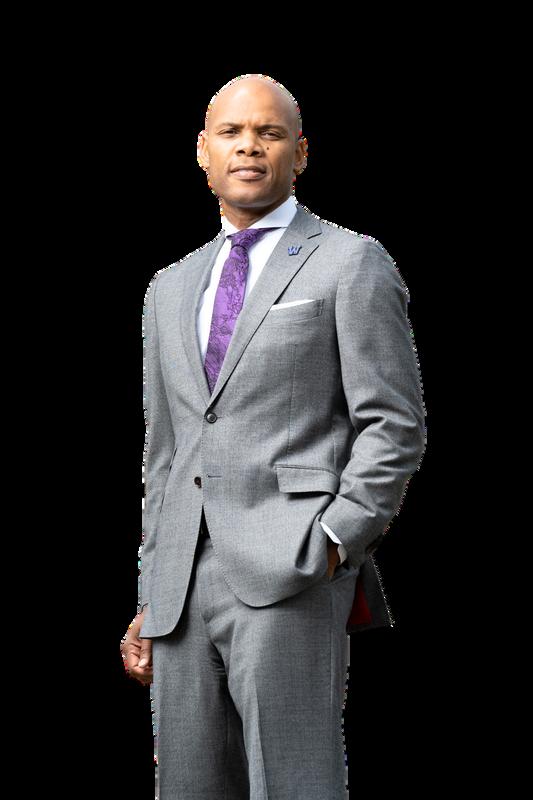
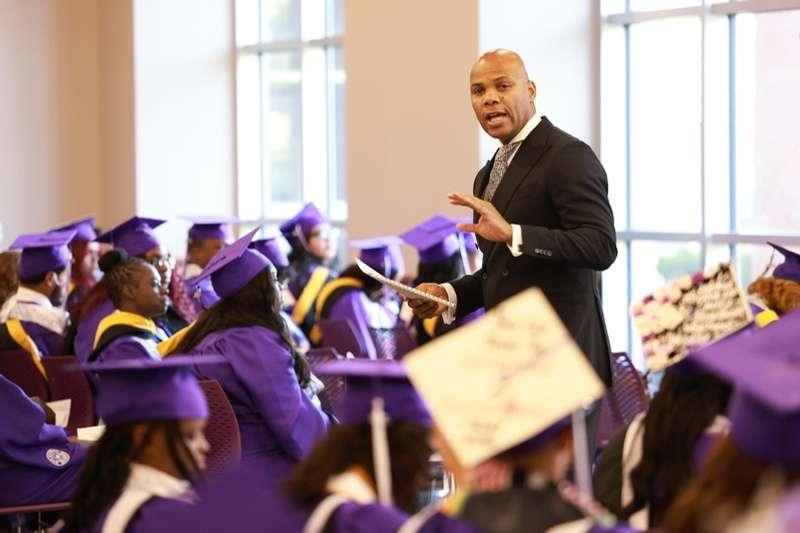
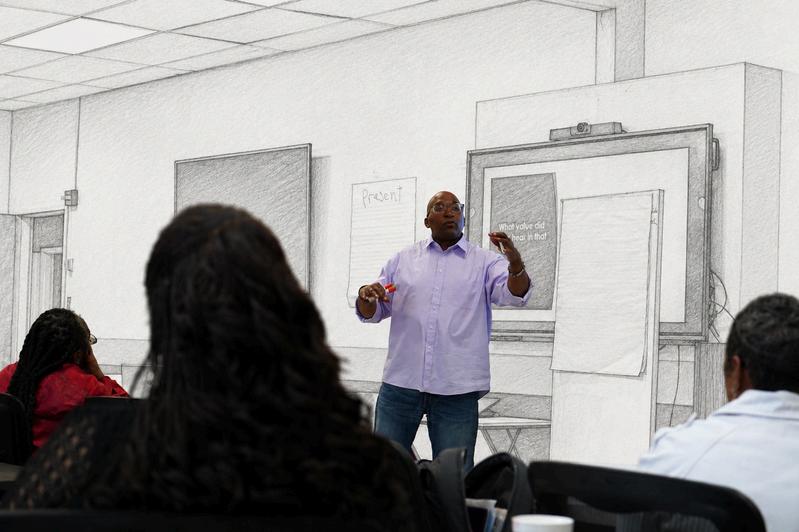
As I reflect on the 2026 academic year, I am proud to share a story defined not by aspiration alone, but by measurable achievement. Wiley University has continued to demonstrate that Historically Black Colleges and Universities remain among the most transformative forces in American higher education, and the data bears that out. This year, we saw meaningful gains in student retention, degree completion, and post-graduate placement, reflecting the direct return on investment that students, families, and partners receive when they choose Wiley University Our commitment to excellence is not abstract; it is tracked, evaluated, and continuously strengthened through evidence-based strategies that put student outcomes at the center of every institutional decision
The impact documented in the pages that follow is the result of deliberate, disciplined work across every division of this University. From expanded research partnerships and workforce-aligned academic programs to increased access to financial aid and investment in campus infrastructure, Wiley University is curating an experience that continues to deliver lasting value to its students and the communities it serves We remain focused on the metrics that matter most: social & economic mobility, academic rigor, and institutional sustainability Our students deserve nothing less than a university that holds itself accountable to the same high standards it sets for them. I am grateful to our faculty, staff, alumni, and partners whose contributions made this progress possible, and I look forward to the even greater impact we will achieve together.
Inspirata Procedunt,
Herman J. Felton, Jr., J.D., Ph.D
17th
President & Chief Executi
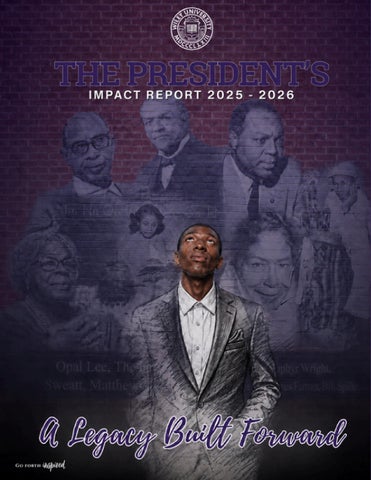
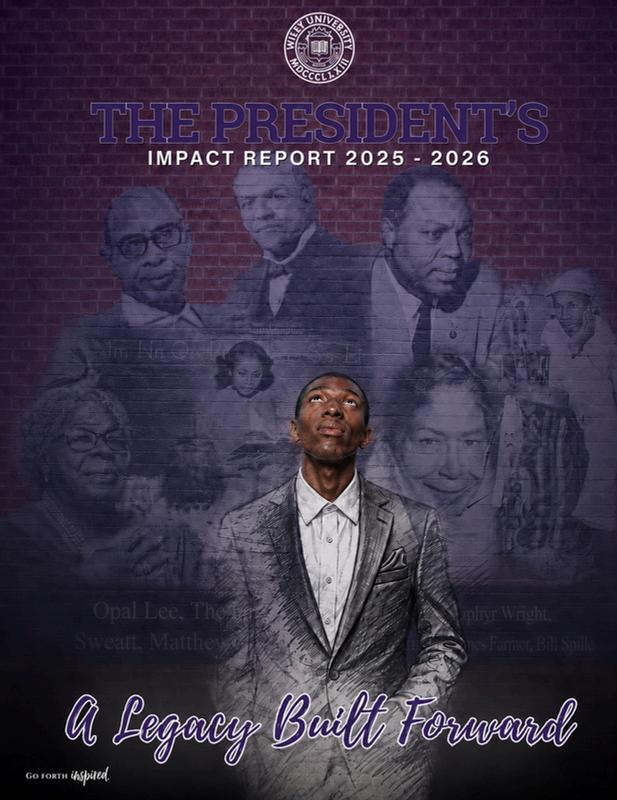
THE PRESIDENT’S IMPACT REPORT
This report is published by Wiley University’s Office of the President and Office of Marketing, Communications, and Brand Strategy.
View the digital version of the 2026 edition at wileyc.edu/the-presidents-impact-report.
THE PRESIDENT'S EXECUTIVE CABINET
Dr. Tashia L. Bradley Executive Vice President & Chief Operating Officer
Dr. Morris Thomas Provost & Vice President for Academic Affairs and Professor of Higher Education Administration
Mr George A Stiell Sr. Vice President for Business, Finance, and Strategic Retention
Dr Danielle Sims Brooks Vice President for Enrollment Management and Strategic Retention
Dr Runell King Vice President for Institutional Effectiveness, Research, and Strategic Retention
Dr. Miron Billingsley Vice President for Student Development and Strategic Retention
Ms Jewelette Christopher Vice President for Institutional Advancement and Strategic Retention
ut with s of the ethodist e oldest er The ccess to nd laws way
iversity with an ision is duals to es and ated the und by od and whose , Wiley tion for ntention you the e
WherePurposeFindsaHome:TheKrystaThomas'26Story
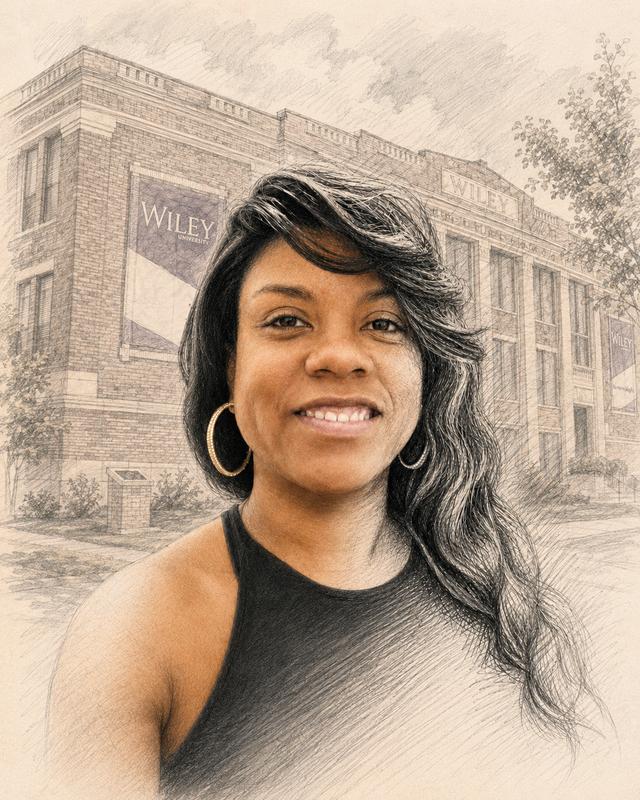
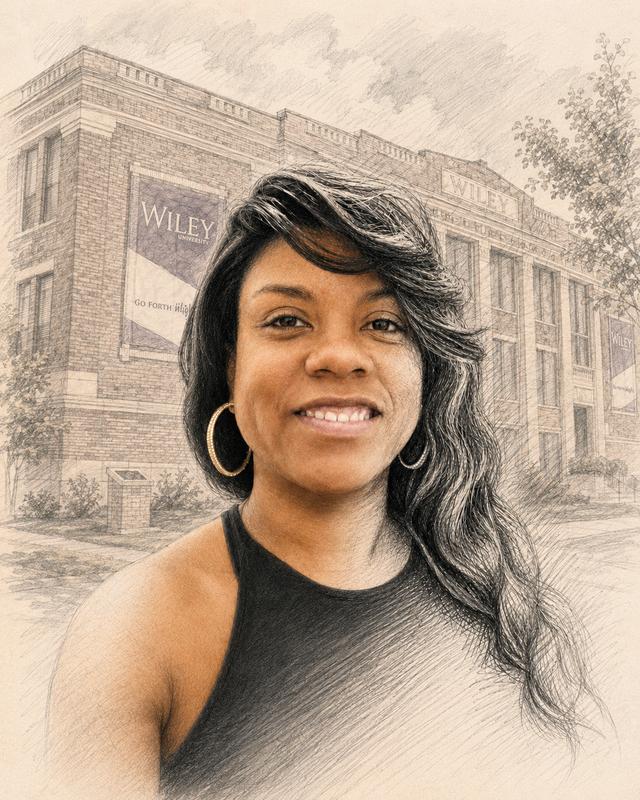
Some degrees are earned in classrooms Others are earned in life Krysta Thomas earned hers in both There is a photograph Krysta Thomas carries in her memory She is fifteen years old, seated at a breakfast table, and across from her is Rosa Parks Around her, the weight of history is almost visible: a journey through the American South, tracing the footsteps of the Civil Rights Movement from site to hallowed site She had met Ms Coretta Scott King days before. She had heard her speak with the kind of quiet authority that does not need volume to fill a room. "She was poised, kind, yet firm in her message about what we should strive to accomplish in life," Krysta recalls. "Her words stayed with me, even though my path took longer than expected." That path, winding, interrupted, and ultimately triumphant, is exactly the kind of story Wiley University was built to hold.
The Promise She Carried
Krysta came to the program with Ms. Coretta Scott King, carrying more than a transcript. She carried grief. In 2019, she lost her father, and before he passed, the two of them had a conversation about her finishing school. That promise became a compass. When the pandemic brought the world to a standstill in 2020, it brought Krysta something she had not had in years: stillness And in that stillness, clarity
"I had time to reflect on my life and those early experiences," she says "I realized I needed to do more with my life and live up to the values that had been poured into me "
The choice to enroll at an HBCU was not accidental. It was intentional, rooted in the same conviction that had taken a teenage girl to visit Montgomery, Selma, and Birmingham decades earlier. "I wanted to attend an HBCU and support institutions that have such a strong cultural and historical impact in our communities. As a working professional who traveled frequently, the online format of Wiley University’s Adult Degree Completion Program (ADCP) gave me the flexibility and accessibility I needed to continue my education But it was the institution's mission that made it meaningful "
She made quiet sacrifices to see it through. She took a lower-paying job to create space in her life for school, trading short-term comfort for long-term possibility. She leaned on her faith. She thought of her daughters. "I wanted to show them that no matter what life throws at you, it's never too late to start again and finish what you began." She graduated on May 2, 2026.
Scholarship in Service of Community
Ms. Thomas has come full circle. As a proud member of Wiley University's inaugural cohort of senior thesis completers, she not only crossed the finish line, but she also set the standard for those who will follow Her academic work reflected the depth of her thinking and the breadth of her compassion For her senior thesis, Krysta chose to examine the late diagnosis of autism in African American adults, a topic that sits at the intersection of medical equity, cultural stigma, and human dignity Her research challenged long-held misconceptions and reframed the conversation around neurodiversity in Black communities, arguing that what is often pathologized is sometimes simply a different, and powerful, way of engaging with the world.
"There is often stigma in the community, which can prevent people from seeking evaluation or speaking openly," she explains "Through my research, I learned how broad the autism spectrum truly is Many individuals on the spectrum are highly capable and achieve at very high levels " The depth and impact of that work earned Ms Thomas the Senior Thesis of the Year Award, the highest honor bestowed upon a graduating thesis student at Wiley University More than a distinction, it was a validation of her voice, her scholarly rigor, and her unwavering commitment to research that serves people. It is precisely the kind of work Wiley University's mission calls for: scholarship that does not stay on the page, but reaches into communities and changes how people see themselves and each other.
Forward: Next Chapter Meharry Medical College
As a programmer, Ms. Thomas was trained in precision, writing only what the code requires. Academic writing at Wiley University pushed her in a different direction, asking her to open up her thinking so that anyone could follow it. That skill, she says, will carry her forward as she enters her next chapter as a graduate student at Meharry Medical College. She will study a Master of Science in Artificial Intelligence, a field where the ability to translate complexity into clarity is not optional. It is the work.
The throughline of her story, from a fifteen-year-old on a freedom tour to a daughter honoring a promise to a graduate walking into one of the nation's most prestigious medical institutions, is no coincidence It is character Wiley University's mission calls for an intentional focus on social good and leadership In Krysta Thomas, that mission found a living example. She studied to honor the ancestors and to inspire the living. She chose a thesis topic to learn how to reduce stigma and open doors for people who may have been unseen. She is entering a field where she will have the power to shape systems that either include or exclude entire communities.
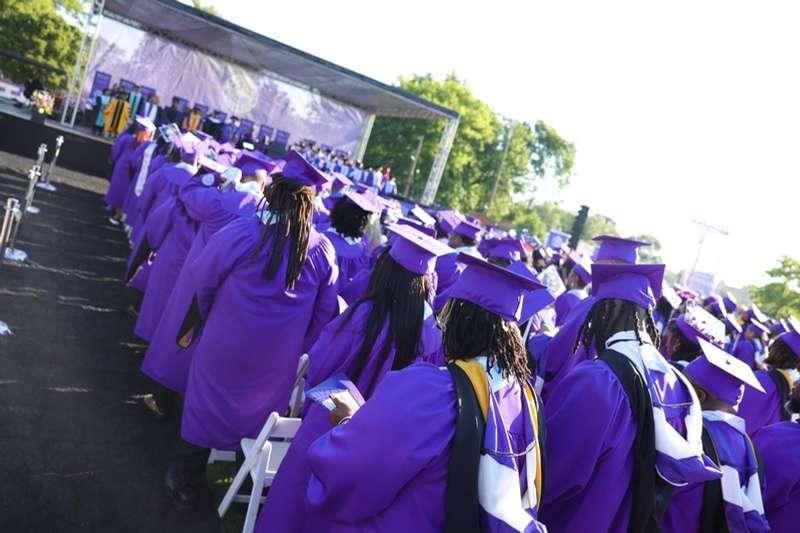
She is not just a graduate She is the legacy, built forward "You are never too old to continue your education," she says "Life may interrupt your plans, but you can always return and move forward You only truly fail when you stop trying " Ms Coretta Scott King once told a group of teenagers to think carefully about what they would accomplish with their lives One of them was listening Decades later, she walked across the stage at Wiley University, diploma in hand, daughters watching, and the legacy she had been building all along finally had a name.
Krysta Thomas is a 2026 graduate of Wiley University's Adult Degree Completion Program, Senior Thesis of the Year Award recipient
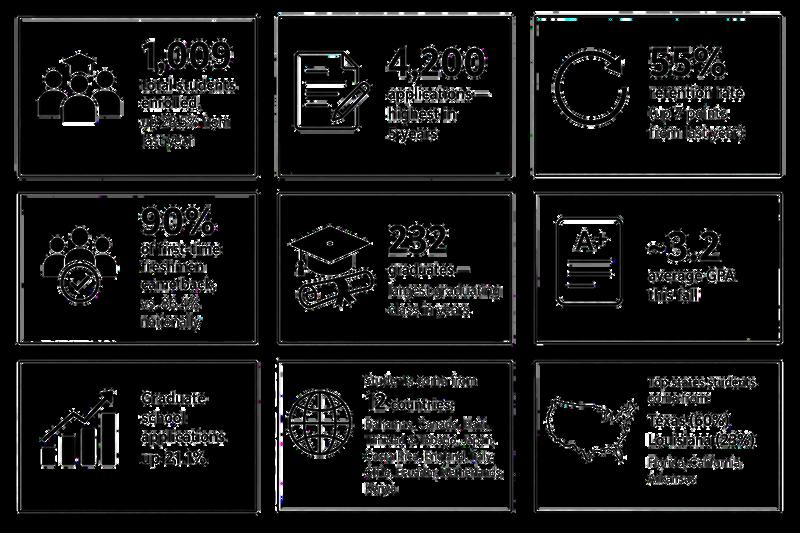
232 graduates largest graduatingclassin recentyears
Studentsenrolled fromacross14 countries UnitedStates,Anguilla, Bahamas,Canada,Haiti, Trinidad&Tobago, Japan,CostaRica, England,Italy,Chile, Ecuador,Netherlands, Kenya
Strengthening the Pipeline: A Surge that Signals Something Larger...
"The University has been trending toward this moment since the COVID-19 pandemic," said Dr. Danielle Sims Brooks, Vice President for Enrollment Management and Strategic Retention. "Each year we have seen increases in our enrollment, and this year we have succeeded in hitting our goal of 1,000+ students, taking us back to pre-COVID enrollments."
When the Division of Enrollment Management reported fall 2025 numbers, it signaled that the University had reached a milestone that few small, private HBCUs have achieved in the current national landscape: 1,014 students enrolled, representing a 29.2% increase and the highest enrollment total since 2018.
More than 230 new students joined the campus community Graduate enrollment reached 149 students, including 106 who were new to their programs. In an era when many colleges and universities are contracting, Wiley University is growing. That growth represents a more than 50% increase over four years, a trajectory that positions the University firmly in the national conversation about what is possible for small, private HBCUs when they commit to both access and excellence.
"The University has been trending toward this moment since the COVID-19 pandemic," said Dr. Danielle Sims Brooks, Vice President for Enrollment Management and Strategic Retention. "Each year we have seen increases in our enrollment, and this year we have succeeded in hitting our goal of 1,000+ students, taking us back to pre-COVID enrollments. What is happening at Wiley University is not accidental The institution has intentionally focused on increasing retention and completion rates as it marches toward the 1,000-student benchmark. Central to Wiley University's identity is the ability to balance affordability at $17,500 and accessibility while serving a wide range of students, from those who are the most underserved and underprepared to the highest-performing scholars. What we have done here is recognize the importance of HBCU culture and leverage it in new ways to generate outstanding outcomes.
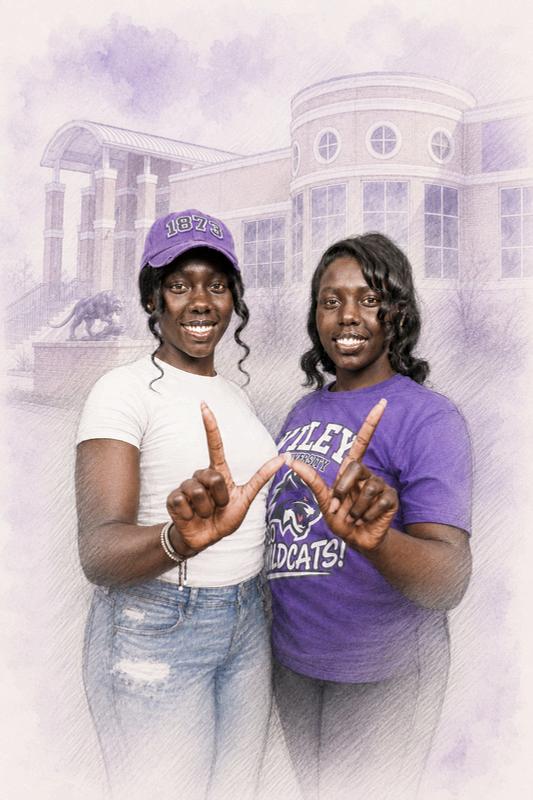
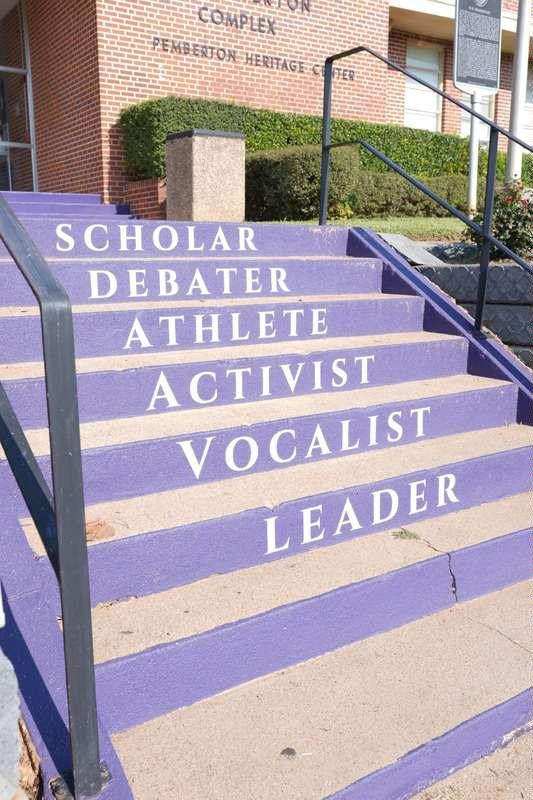
Our student body reflected representation from 14 countries: Anguilla, Bahamas, Canada, Haiti, Trinidad & Tobago, Japan, Costa Rica, England, Italy, Chile, Ecuador, Netherlands, and Kenya, alongside a student population that is 60% Texas residents and draws significantly from Louisiana, Florida, California, and Arkansas. This is not just enrollment growth. It is the University's community of scholars, debaters, activists, leaders, vocalists, and athletes, expanding in real time.
A Convening of Leaders: A Commitment to the Black Liberal Arts Tradition
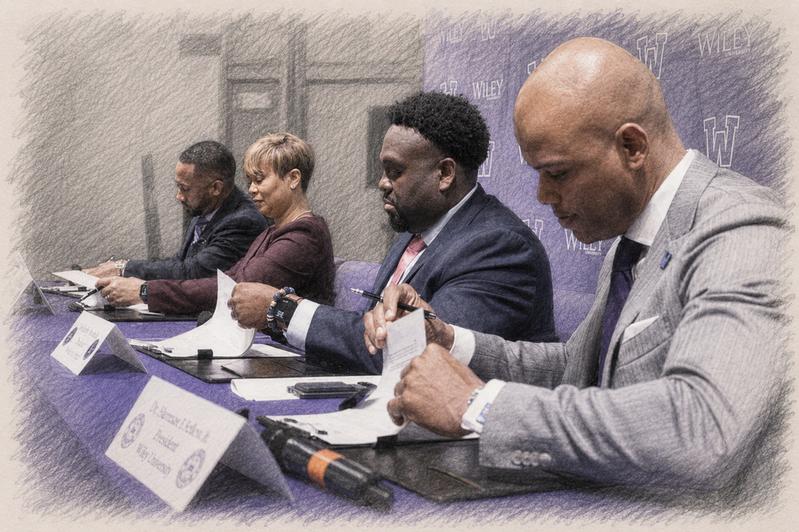
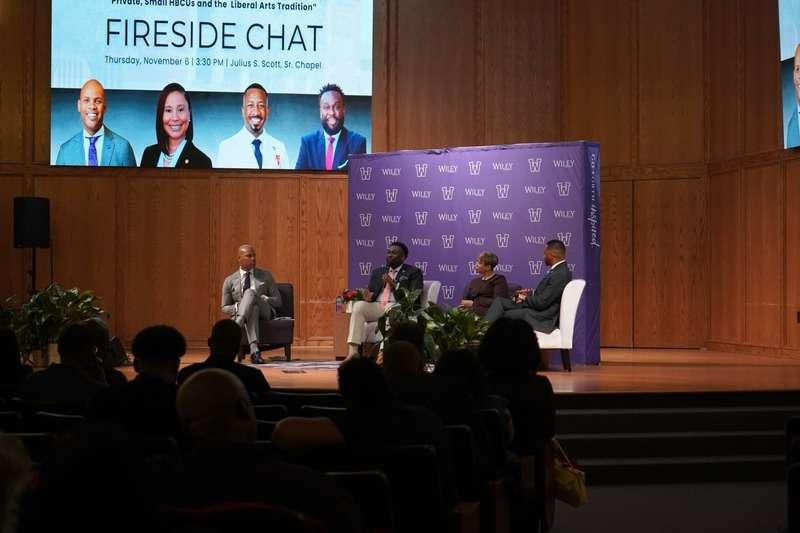
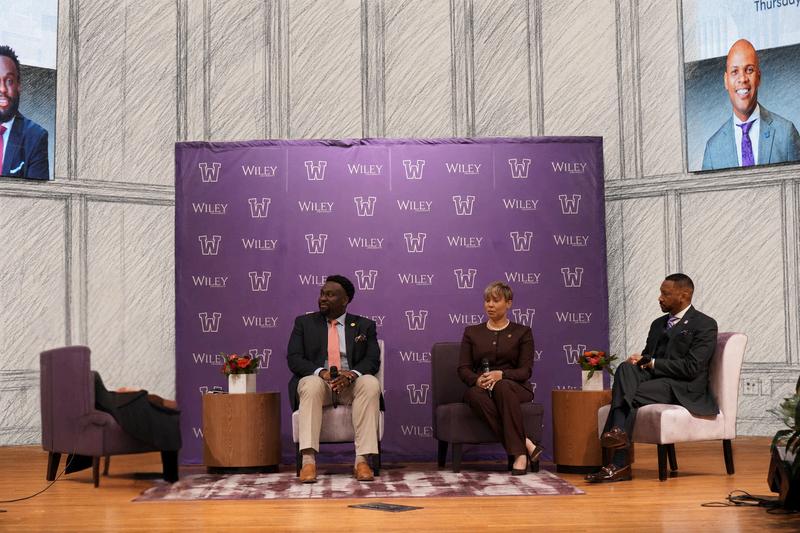
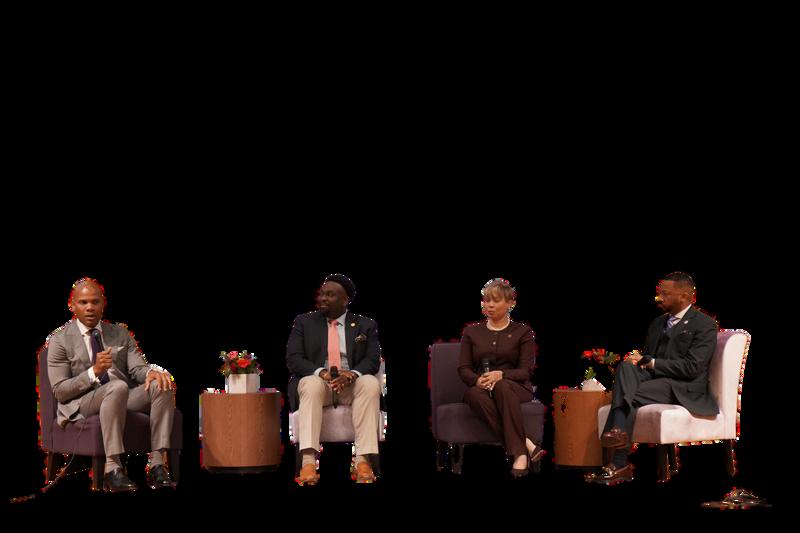
Institutional growth also means knowing your place in a larger story In November 2025, Wiley University welcomed leaders from Clinton College, Shorter College, and Morris Brown College for a two-day gathering centered on the transformative power of liberal arts education within the HBCU tradition. The convening brought together presidents, provosts, faculty, students, and guests for strategic dialogue on the role of small, private HBCUs in preparing students for lives of purpose, leadership, graduate study, and service The fireside chat, "There is a Model of Excellence: Private, Small HBCUs and the Liberal Arts Experience," set the tone for conversations about the value of liberal arts institutions in today’s economy and society. A Provost's Roundtable on classroom innovation and technology followed, exploring the evolving landscape of teaching, learning, and the academic enterprise
The gathering concluded with the signing of a Memorandum of Understanding to expand pathways for students from partner institutions into Wiley University's graduate programs It was a moment that meant more than an institutional agreement It was a declaration that the future of the Black liberal arts tradition depends on collaboration, on HBCUs choosing to build together rather than compete for survival.
For Wiley University, conversations like these are both strategic and sacred. The liberal arts tradition at HBCUs has always been about more than content knowledge. It has been about forming human beings who know how to think, question, communicate, lead, and serve. That tradition is alive at Wiley University, and it is being carried forward through every partnership and pathway the University builds.
Launch of New Executive Ph.D. $55,000 full program 20 months Fully online Starts Spring 2027
114 students enrolled in the graduate program $822,642 generated Beating the enrollment goal by 27.5%
99.4% of students and faculty are participating in the iWiley Digital Learning Initiative D2L Brightspace Transition Transitioning to learning platform to D2L Brightspace Gained $150,766 in
The Academic Enterprise at Wiley University Grows
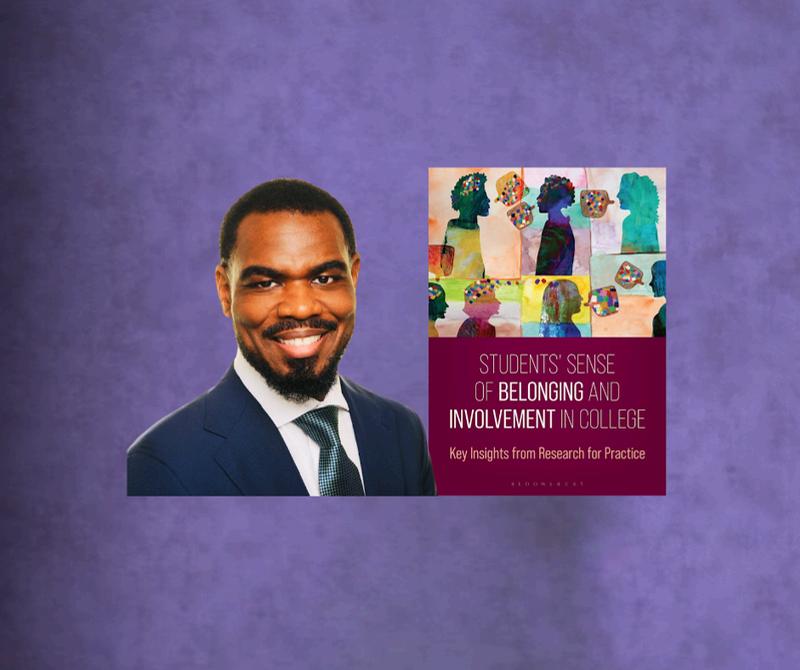
Narrating Our Own Excellence: HBCU Belonging in the National Spotlight Wiley University's commitment to transformational learning found a national stage this year when Dr. Morris Thomas, Provost and Vice President for Academic Affairs, contributed a chapter to Students' Sense of Belonging and Involvement in College: Key Insights from Research for Practice (Bloomsbury), edited by leading belonging scholar Dr. Terrell L. Strayhorn. Written with Cindy Philpot, the chapter, "The Trifecta: The WHOLE Student Experience, Sense of Belonging, and Historically Black Colleges & Universities (HBCUs)," applies Dr. Thomas's original WHOLE Experience Framework, which stands for Welcoming, Holistic, Open, Liberating, and Empowering, to examine how HBCUs cultivate the kind of belonging that determines whether students persist and thrive. More than a scholarly milestone, the chapter reflects a conviction at the heart of Wiley University's mission: that HBCUs should author their own story with rigor and evidence, and that belonging, practiced daily by faculty, staff, and leadership, is what empowers students to leave Wiley University not only credentialed but affirmed, ready to Go Forth Inspired.
D2L Brightspace: Reimagining the Digital Classroom
Learning does not happen only in classrooms. It happens on phones and tablets during lunch breaks, in homes after children are asleep, between meetings and shifts and family responsibilities. Wiley University's commitment to meeting students where they are demanded a digital learning environment built for the full complexity of their lives.
The transition to D2L Brightspace Learning Management System represents exactly that commitment. As Wiley University's primary learning management system, Brightspace provides a modern, intuitive platform that brings consistency, accessibility, and a richer online learning experience to every course the University offers. For a student body increasingly navigating hybrid and online coursework, and for a faculty committed to delivering instruction that is both excellent and flexible, the shift to Brightspace is not merely a technical upgrade It is a pedagogical statement: every student deserves a learning environment built for how people actually learn today Under the leadership of the Center for Teaching and Learning and Provost Dr Thomas's academic vision, the Brightspace transition has been paired with intentional faculty training, Communities of Practice, and professional development designed to ensure that the platform becomes a true learning tool, not simply a content repository The integration of Brightspace with iWiley, the initiative that places an iPad Air and technology bundle in the hands of every degree-seeking student, creates a digital learning ecosystem that connects device, platform, and curriculum in a seamless student experience
Three Signature Initiatives Solidify Wiley University’s Academic Student Success Strategy
The iWiley Digital Learning Initiative places an iPad Air and technology bundle in the hands of every undergraduate degree-seeking student, making technology the center of the learning experience and working to close the digital divide on campus
The Wiley University Completion Promise Campaign reaches former students who did not finish, offering debt forgiveness, credit for prior learning of up to 24 credit hours, and a clear, supported pathway to graduation recognizing that the journey to a degree is not always linear, but it is always meaningful.
The 120 Wiley University's Pathway to Academic Momentum provides the structure every student needs to complete 30 credit hours per year, stay engaged, and graduate on time through coordinated advising, summer and winter completion options, microcredentials, and student success coaching.
An Update on Our QEP Progress
Wiley Cares: A Roadmap to Student Success is the University's five-year Quality Enhancement Plan, developed as part of Wiley University's reaffirmation of accreditation with the Southern Association of Colleges and Schools Commission on Colleges More than a policy document, it is a re-imagination of the student experience, one that integrates career readiness, leadership development, and holistic support into every aspect of campus life.
"As we engage in the re-imagination of Wiley Cares, we are reinforcing our role in each student's journey," said Dr Ouida McAfee, Assistant Provost of Innovation and QEP lead "This plan is about preparing every student to reach and actualize their dreams. We're integrating leadership, service, and career readiness into the fabric of student life so that each Wiley University graduate can truly Go Forth Inspired!"
"Student success means preparing graduates to lead, serve, and thrive in a rapidly changing world."
Dr.OuidaMcAfee AssistantProvostforInnovation
The plan operates through three core pillars: helping students persist to graduation through enhanced support practices; creating meaningful co-curricular learning opportunities in leadership and civic engagement; and equipping students with career pathways and post-graduate preparation Each pillar reflects a conviction that has always been at the heart of Wiley University's mission that education is not only about what students know, but about who they are becoming.
The Inaugural Research & Career Symposium: Where Curiosity Becomes Leadership
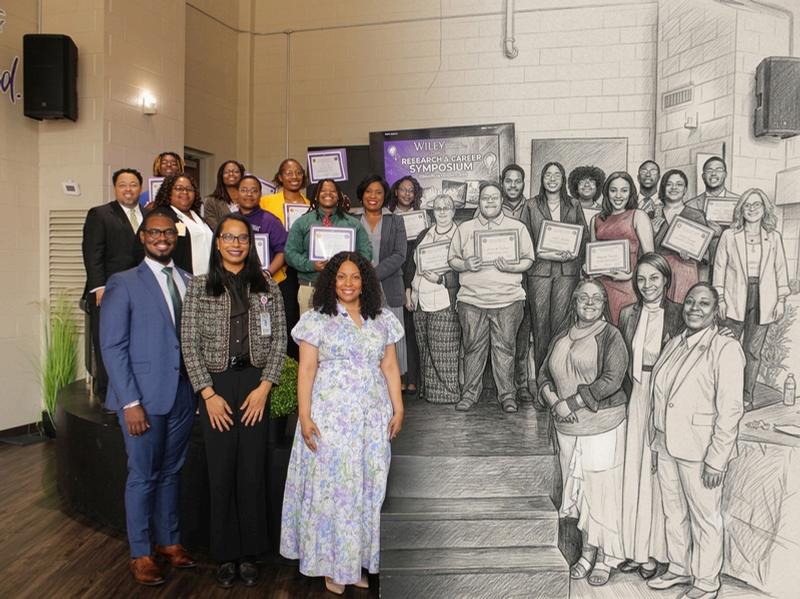
Wiley University continued to expand its platforms for student scholarship with the announcement of its inaugural Research & Career Symposium, organized by the Henry Cecil McBay Center for Teaching and Learning Excellence and held on March 31, 2026, in the Fred T. Long Student Union Ballroom.
Designed as an annual signature event, the symposium reimagined the traditional research experience by centering digital storytelling and multimedia video, podcasts, infographics, digital portfolios, and iPadenabled projects as the primary modes of scholarly presentation Rather than the familiar row of poster boards, students brought their work to life in formats that reflect how ideas are actually communicated in today's workforce.
The event also featured Wildcat Tank, a live innovation pitch competition in which students presented threeminute solutions to real-world challenges, a direct embodiment of the kind of bold, future-focused thinking Wiley University is committed to cultivating.
"This symposium is innovative because it brings research into the modern digital learning environment," said Dr McAfee "Students present their work through multimedia platforms, which better reflects how research and ideas are communicated in today's workforce " Participants also had the opportunity to earn digital micro-credentials in research communication, digital innovation, leadership, and AI literacy tangible credentials that follow students into their careers.
The symposium's deeper purpose is connection: helping students see the direct line between what they study, what they create, and who they are becoming. "Our Quality Enhancement Plan challenges us to ensure that students graduate with a clear vision for their future," Dr McAfee explained "By combining research with career exploration, this symposium helps students see how their academic work can translate into leadership, innovation, and community impact " The goal, she added simply, is this: "We want students to dream, become, and lead."
LEAP: Leading Educators through Accelerated Pathways
Transformative Answer to a National Crisis
Texas is running out of teachers Across the state, classrooms sit without certified educators Schools serving students in underrepresented communities face the steepest shortages. And for many of the people most qualified to fill those classrooms are paraprofessionals and instructional aides who have spent years working alongside students, adults whose college journeys were interrupted by life, career changers answering a call the traditional path to certification has been slow, rigid, and designed for someone else Wiley University's answer is LEAP: Leading Educators through Accelerated Pathways
Launched in March 2026, LEAP is a fully approved educator preparation program that leads working adults to a Bachelor of Science in Elementary Education and eligibility for Texas teacher certification in as little as 65 weeks It is hybrid, accelerated, and built specifically for people who cannot pause their lives to pursue a traditional degree The program runs on six accelerated five-week terms, allowing students to complete 6 to 9 credit hours per term, and includes the 490-hour supervised clinical teaching experience required for certification in TEA-approved Texas schools
LEAP is not a shortcut It is a better-designed road Students complete 120 credit hours across general education, educator preparation, and content coursework They can pursue certification in EC-6 Elementary Education, Health EC-12, Physical Education EC-12, 4-8 Social Studies, or 4-8 Science And for those whose path changes mid-journey, LEAP offers built-in off-ramp options, such as a Bachelor of Arts or Bachelor of Science in Interdisciplinary Studies, a Child Development Associate credential, or a Fitness Trainer Certification, ensuring that every student who starts leaves with something meaningful
The story of Wiley University's innovation is not about chasing trends. It is about faithfulness to a mission that has always been ahead of its time: preparing people who were overlooked by other institutions to lead in every space they enter What changes is not the mission What changes is the architecture built to carry it forward
Provost Morris Thomas named what is at stake plainly: "Black educators and educators from other historically underrepresented communities are essential to ensuring that every student in America sees themselves reflected in the front of the classroom The LEAP program is our response: a flexible, accelerated pathway to educator certification designed for working adults, career changers, and degree completers who are ready to answer the call "
Professor Marsanell D Butler, M Ed , Director of Educator Preparation Programs, brought the mission closer to home: "We are opening doors for passionate, driven individuals to become the highly qualified teachers our students deserve, faster than ever before This is not just a program; it is our commitment to the future of education "
LEAP reflects something important about how Wiley University thinks about access. Access is not simply admitting more students. It is designing structures that make success possible for people whose lives have never fit the traditional mold. Every paraprofessional who earns their certification through LEAP carries the full weight of Wiley University's legacy into a classroom that needs them.
Unlocking New Possibilities: Wiley University Ph.D. in Business Administration
There is a moment in the life of every great institution when vision stops being a document and becomes a destiny On June 11, 2026, Wiley University crossed that threshold Let me be clear about what happened: our accreditation body, a body charged with holding some American higher education institutions accountable to its highest standards, looked at this institution, looked at our work, looked at our audacity, and said yes But I also want to say plainly: this did not happen by accident This happened because we dared to embrace the Bold and Audacious Vision
From Roots to Reach
Not long ago, we made a decision that some thought was sentimental We changed our name back From Wiley College to Wiley University, not as a rebranding exercise, but as a reclamation We were recovering something we had always been in spirit: a university in the fullest sense, a place that does not merely prepare students for the world as it is, but equips leaders to reshape the world as it ought to be That name change was the first declaration The master's degree was the second The Executive Ph D in Business Administration is the third, and it is the loudest
Theory Becoming Reality
We want to acknowledge something important about how this became possible Transformational change does not emerge from ambition alone It requires architecture The Higher Education Leadership Foundation helped us do something that institutions rarely pause long enough to do: think carefully about how change actually happens
Through a theory of change lens, we were challenged to work backward from the future we envisioned, not simply asking what we wanted to offer, but whom we were trying to serve, what outcomes we were committed to producing, and what conditions had to be created for those outcomes to take root That discipline sharpened our proposal It sharpened our thinking And I believe it is a significant reason our accreditors saw in our submission not just a new program, but a coherent institutional vision with legs
The Bold and Audacious Vision was never just a strategic plan It was a theory of change, a belief that if Wiley University invested in its people, reclaimed its identity, and reached boldly into spaces where HBCUs are underrepresented, we could add value not just to Marshall, Texas, but to the entire ecosystem of Black higher education in America
What We Are Building and Why It Matters
The Executive Ph D in Business Administration, launching Spring 2027, is not a traditional doctoral program It was never meant to be This is a 24-month, online executive format designed for accomplished leaders, people who are already doing consequential work in the world and who need a credential and a community that can match their pace and deepen their impact It is anchored by in-person intensive residencies right here on Wiley University's campus in Marshall, Texas And that is not incidental; that is intentional We will draw leaders from across the country to a place that has been producing world changers since 1873 There is something about this soil, something about this legacy, that affects people That is part of the curriculum
The program will be offered in three concentrations: Data Science, Artificial Intelligence and Business Innovation; Entrepreneurship; and Faith-Based Administration Each concentration was chosen not because it was fashionable, but because it speaks directly to where leadership is being demanded and where Black institutions and communities have historically been underserved at the highest academic levels
Consider what this means economically Doctoral programs generate sustainable, recurring revenue streams that strengthen an institution's financial foundation in ways that undergraduate enrollment alone cannot An executive format attracts working professionals with the resources and the resolve to invest in their own development This is not simply an academic offering; it is a revenue strategy in service of a mission Every cohort that walks through this program strengthens Wiley University's ability to serve the next generation of undergraduate students, to recruit world-class faculty, and to compete at a level consistent with our ambitions
One hundred fifty-three years ago, our founders planted a college for the formerly enslaved in the piney woods of East Texas. They dreamed of literacy. Today, their dream confers doctorates.
But imagine bigger than Wiley University
The HBCU ecosystem has long been the beating heart of Black intellectual life in America, and yet too few of our institutions hold doctoral-granting status. Too few sit at the table where research agendas are set, where the next generation of scholars is minted, where the peer-reviewed conversations about AI, entrepreneurship, and faith-based leadership are being shaped. When Wiley University takes its seat among doctoral universities, we are not just elevating ourselves; we are expanding what the world believes is possible for HBCUs.
Every scholar who earns their Executive Ph D from Wiley University becomes an ambassador for what Black excellence at the doctoral level looks like Every CEO, nonprofit leader, faith community shepherd, and data scientist who carries a Wiley University doctorate into their boardroom, their community, their classroom carries with them proof that HBCUs do not just prepare students for the existing world We prepare them to build the next one
This is the HBCU ripple effect. And Wiley University intends to make waves.
The Institution of James Farmer, Jr. Takes Its Seat
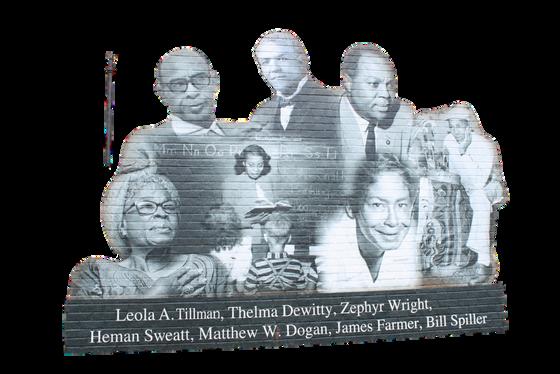
The institution that produced James Farmer, Jr., the man who stood before power and refused to be moved. The institution whose debaters, immortalized in The Great Debaters, taught America that Black voices belong in every arena of intellectual life That institution now takes its seat among doctoral universities
This is not a departure from who we are This is the fullest expression of who we have always been We did not arrive at this moment by lowering our standards or compromising our identity. We arrived here by doing the hard, slow, disciplined work of building an institution worthy of the trust that our students, our community, our ancestors, and our accreditors have placed in us.
To the class that will begin in Spring 2027, we have been waiting for you. To the leaders across this country who have been looking for a doctoral home that understands where you come from and believes in where you are going, Wiley University is ready And to this institution, this is your achievement
Now, let us get to work.
Wiley University Graduate Programs Provide A New Opportunity
Not every legacy at Wiley University starts on the physical campus This one started in a nightclub Nineteen years later, that idea has a name, NAZELL, a Wiley University MBA behind it, and a multimillion-dollar future ahead of it Ordinary until the moment it wasn't, it is exactly the kind of opportunity that the Wiley University MBA is designed to power
From a Dusty Nightclub to the Wiley University MBA Program to a
National Market
Some alumni stories prove that a degree is worth just as much on the day it's earned as in the years that follow. In May 2026, Verdell Evans and his wife, Shawn Welch Evans, walked across the Wiley University stage together, both earning their MBAs, with a multimillion-dollar idea already in motion
The idea began in 2007, while the Evans were renovating a nightclub they had just purchased Working through clouds of dust, Mr Evans looked for a better way to clean his nasal passages and found nothing on the market designed for the job The answer came to him during an ordinary morning routine: a toothbrush for the nose That idea became NAZELL, a battery-powered nasal hygiene device
NAZELL Development paused for nearly two decades while the couple focused on raising their adopted children, a choice that reflects the values behind their 37-year marriage. When the time was right, they enrolled in Wiley University's MBA program, and the curriculum gave NAZELL its real runway. In their capstone course, Strategic Management, taught by Provost and Vice President for Academic Affairs Dr. Morris Thomas, the Evans presented their product to a panel of seasoned industry executives and received candid feedback that sharpened their pitch
"We are developing innovators and entrepreneurs who solve real problems and build real ventures," Dr Thomas said of the experience "Watching Mr and Mrs Evans refine NAZELL in our Strategic Management capstone is exactly what our MBA is designed to do "
National recognition followed. Kevin Harrington of Shark Tank has called NAZELL a multimillion-dollar product, and the Evans have secured backing from investor Brandon T. Adams, along with a production team that includes a multi-Emmy Award-winning director, for a commercial campaign set to film in Tampa, Florida.
The Wiley University connection runs deeper than one degree. Shawn Welch Evans earned her bachelor's degree from Wiley University in 2002, and the couple's daughter is expected to follow her parents across the same stage, earning her own Wiley University MBA in 2027
"Wiley University has been a blessing to my family and me," Shawn Welch Evans said "We're glad to be Wildcats, and we're ready to give back "
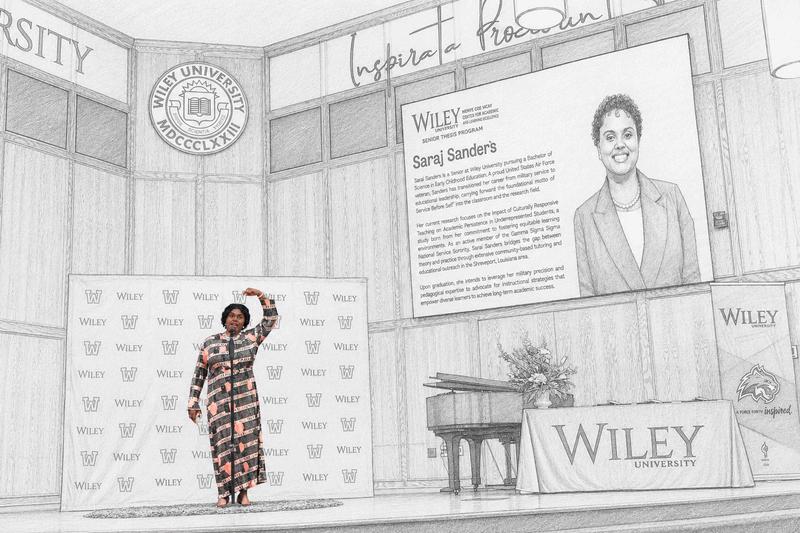
From the Classroom to the Stage: The Senior Thesis Chapel Experience
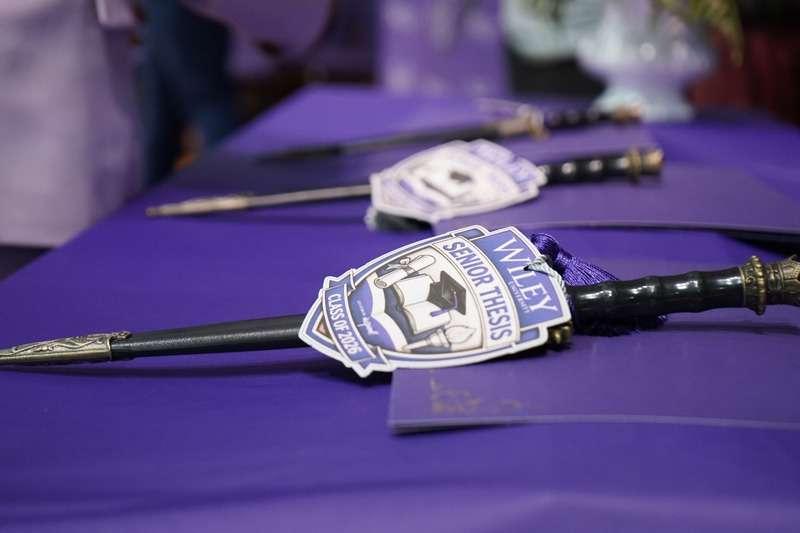
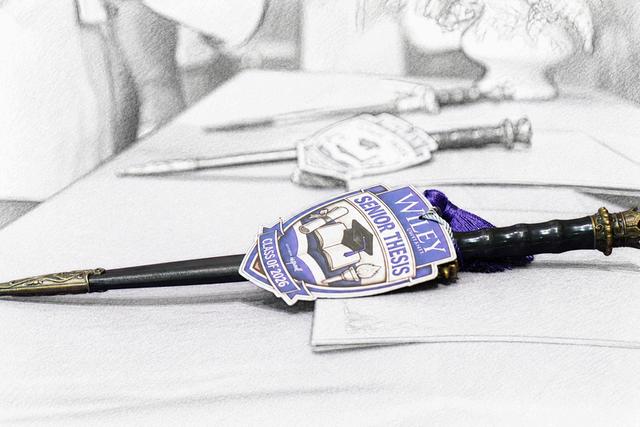
One of the most powerful expressions of Wiley University's academic momentum happened not in a conference room or a strategic plan; it happened in a chapel For the first time, senior students were given a public platform to present their thesis research to the entire University community: peers, faculty, staff, administrators, and guests
The presentations were more than an academic requirement fulfilled They were a demonstration of what a Wiley University education actually produces
Ms Karisma Hightower, one of the students selected to present, spoke to the weight of the moment Being selected "showed that my work and my voice mattered," she said "It made me feel seen not just as a student but as someone with a message worth sharing " Her thesis work connects directly to mental health awareness and her business, Echo24, which she is building into a platform where people can feel seen, understood, and supported She hopes to grow it into a full facility eventually "I came in one way," she reflected, "and I'm leaving more confident, more aware, and more sure of myself "
Ms Saraj Sanders began her presentation journey with nerves "I honestly was nervous, scared, and unsure if what I had written down was going to connect," she said What carried her through was a conviction that took root through prayer and mentorship: "I have a gift, and I should not be scared to share my gift and let my presentation come to life " Balancing 18 credit hours, student teaching, and her senior thesis as an Early Childhood Education major, she showed herself and everyone watching what she was capable of. The moment she treasures most is publicly honoring her mother, reflecting aloud on the words instilled in her from childhood: You are smart, you are intelligent, you are pretty, you are incredible, and you can do anything.
These presentations mark the beginning of something worth building on: a strengthened culture of student scholarship in which research moves beyond the page and into public life, and student voices are not only assessed but genuinely heard.
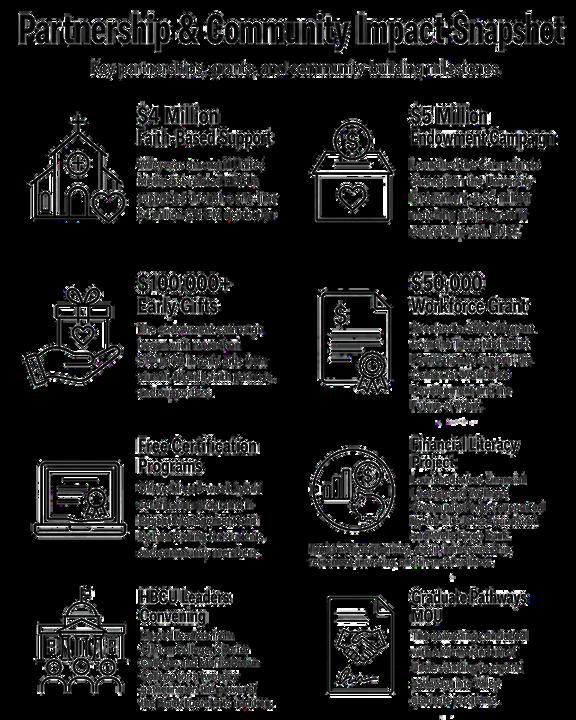
$364,000
Faith-Based One-time Distribution Support
Wiley University was among 11 United Methodist-related HBCUs supported through a one-time GBHEM distribution
ING THROUGH COMMUNITY
$5 Million Endowment
Campaign Launched the Campaign to Strengthen the University Endowment, a $5 million matching program in partnership with United Negro College Fund (UNCF)
Workforce Development Certification Programs
Offered free 5-week hybrid certification programs in project management and Python Coding for students and community members.
$50,000 Workforce Grant
Received a $50,000 grant from the Texas Methodist Foundation to support the Center for Workforce Development and the Future of Work
Partners for Rural Impact
University participated in the Partners for Rural Summit and was selected for the inaugural cohort on place-based strategies
Building Community through Space and Beautification
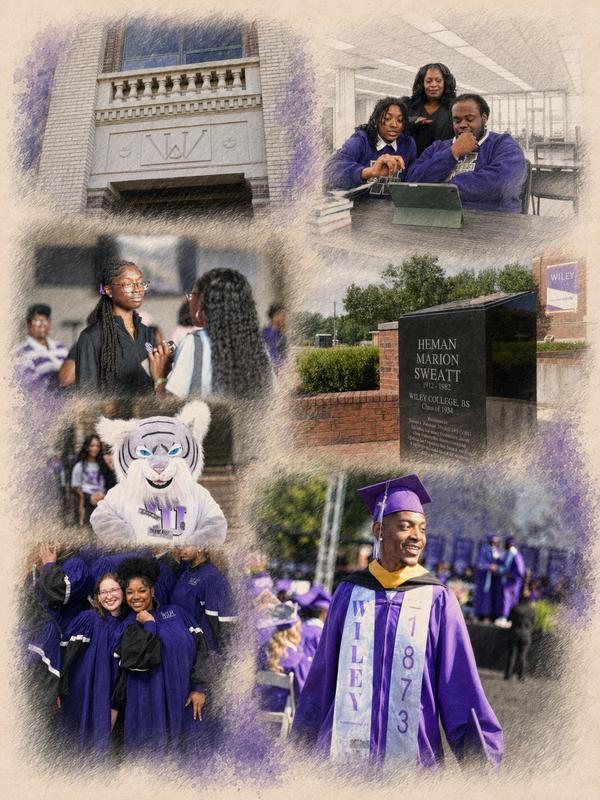
The Wiley University campus has always been beautiful, but under the care of First Lady Katherine Bush Felton, that beauty has become an invitation. Her work installing the Rose Garden in Heman Sweatt Plaza marks the latest chapter in an ongoing beautification effort, one rooted not only in sustainability, but in creating spaces that are visually inspiring and genuinely welcoming. Through this work, Mrs. Felton has expanded the university’s capacity for gathering, giving the campus new spaces where community can be built and sustained.
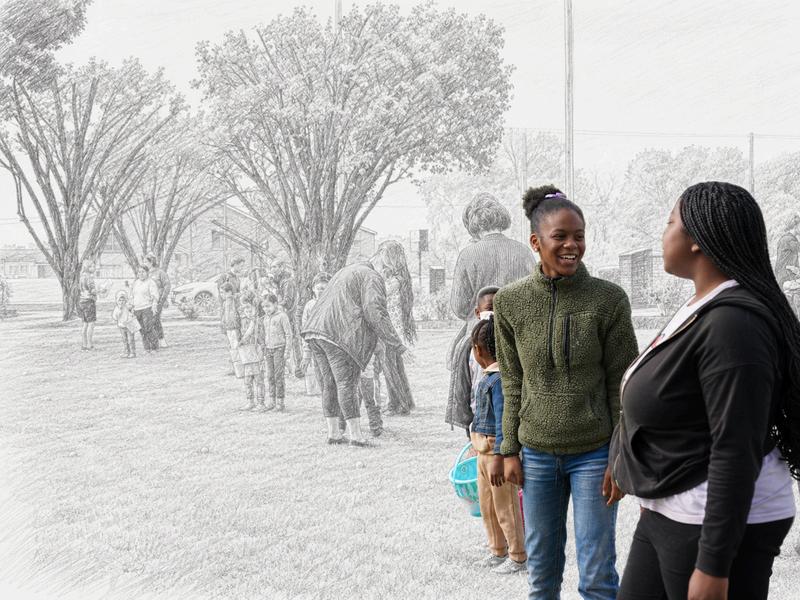
That spirit of partnership has also appeared in quieter, more intimate ways First Lady Katherine Bush Felton and the Wiley University Royal Court welcomed families and community members to Heman Sweatt Plaza for the Community Easter Egg Hunt, a morning of celebration, fellowship, and connection that reminded neighbors that Wiley University is not only a place of learning, but also a gathering place for joy and shared experiences. Moments like these matter. They build the trust and relationships between a university and its surrounding community that no grant or press release can create.
The Rose Garden Work Party brought renewed attention to the beauty and history of Wiley University’s grounds, reflecting a shared commitment to preserving what has been built while preparing it for future generations. The garden has also become a setting for the university’s major donor receptions, extending its role from a place of community gathering to one of institutional celebration These visible, physical, and ongoing efforts are reminders that legacy must be tended It does not simply endure on its own
H.E.L.F. - Investing in the People Who Carry HBCUs Forward
The Higher Education Leadership Foundation, known as H.E.L.F., has spent ten years building programs for HBCU leaders This summer, H E L F celebrated its tenth anniversary,
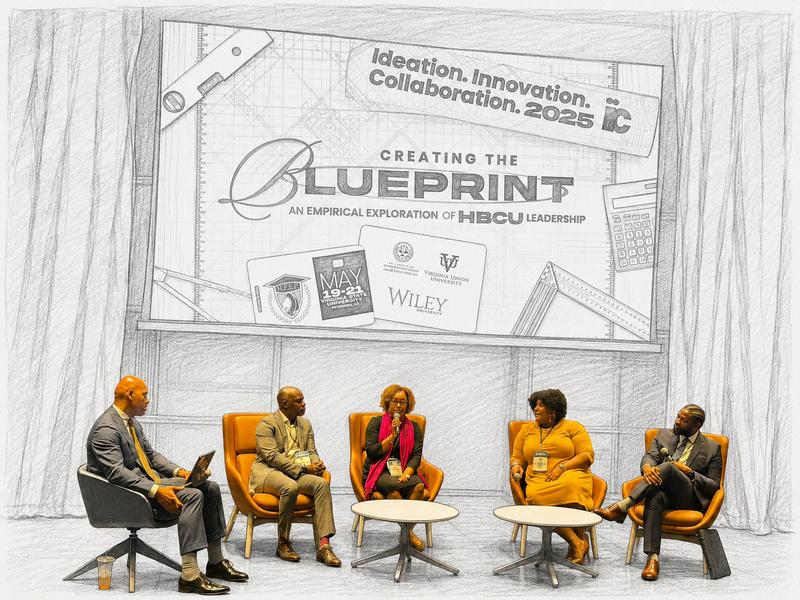
Last summer, H.E.L.F. began its journey to celebrate its 10-year anniversary by convening From Creating the Blueprint. This summer, the HBCU 2030: Mapping Our Future Symposium in Charlotte, North Carolina, convened more than 200 HBCU advocates, presidents, faculty, and supporters to ask what the HBCU landscape will look like in the next decade. Higher education scholars, including Dr. David Rosowsky (Senior Advisor to the President at Arizona State University), Dr Daniel Greenstein (Chief of Industry Transformation at Ellucian), and Dr Freeman Hrabowski (President Emeritus, UMBC), led conversations that challenged attendees to build new pathways for HBCUs not merely to survive, but to thrive.
In its tenth year, H.E.L.F. also moved into the technology space with the launch of Ask The Oracle, an AI-powered tool available free at helf10 com designed to answer questions about every aspect of HBCU
The Mighty Middle
There is a group of people who make universities run that rarely appears in impact reports They are not the senior administrators or the named faculty They are the enrollment counselors, the student success coaches, the administrative assistants, the residence life coordinators, the front-line staff whom students see every single day. They carry out the directives They hold the institutional memory They are the backbone of the university
The Mighty Middle is a program that understands something essential about institutional strength: when the people in the middle grow, the whole institution rises.
The Mighty Middle Leadership and Professional Development course was created specifically for HBCU staff members in middle management and below. Over 12 two-hour sessions over six months, led by 11 Faculty Fellows, the Mighty Middle Alpha Cohort gathered on Zoom during their lunch hours to engage in data analysis, grant writing, decision-making, and the broader academic enterprise The program was deliberately give these professionals, the boots on the ground of every per understanding of the full institution they serve.
were memorable In one, Dr Danielle Sims Brooks, Wiley Vice President of Enrollment Management, offered a phrase ed: "You are the thermostat not the thermometer " In on Dr. Chaz Gipson of Morehouse College reminded the they already possess 80% of what they need to write a ederal grant: data, people, and vision Several Wiley aff members were part of the Alpha Cohort
H.E.L.F., like the future of the institutions it serves, shines
Building the Blueprint: Wiley University and the Future of HBCUs
In May 2025, history was made on the campus of Claflin University One hundred leaders, thinkers, educators, and advocates from across the HBCU ecosystem gathered for the Higher Education Leadership Foundation (H.E.L.F.)
Creating the Blueprint Summit, a convening built on a singular, urgent question: What does it take for Historically Black Colleges and Universities to transform, thrive, and lead in a new era of higher education?
The summit brought together participants representing every sector of HBCU life: faculty, administrators, trustees, alumni, policymakers, and community partners, united by a shared investment in institutional renewal Over the course of the convening, participants did not simply listen They contributed, challenged, investigated, and designed. They brought the full weight of their experience, the successes and the setbacks, to bear on the work of imagining what is possible and charting how to get there.
That work bore fruit In June 2026, the culminating publication from the summit was released: The HBCU Blueprint: A Strategic Guide to HBCUs Transforming and Thriving Drawing on proven frameworks in strategy, leadership, and organizational resilience, the guide translates the collective wisdom of the convening's 100 participants into a practical roadmap for institutional transformation. It is, at its core, a document shaped by real voices, voices committed to the enduring relevance and excellence of HBCUs.
For Wiley University, the Blueprint is more than a resource. It is a reflection of our values. Our leadership in H.E.L.F. has always been rooted in the belief that HBCUs are strongest when they move together, sharing knowledge, naming hard truths, and building solutions that serve the whole community The summit at Claflin University embodied that belief, and The HBCU Blueprint carries it forward
As Wiley University continues its own work of transformation and growth, we remain committed to the broader HBCU ecosystem, lending our voice, our leadership, and our experience to the collective effort to ensure that these institutions not only survive, but lead.
The Wiley Economic Improvement Zone (WEI pronounced WE)
The WEI Zone is more than a redevelopment site; it is a commitment It is a defined area within the Newtown Neighborhood that Wiley University has designated for intentional, coordinated investment: in the physical space itself, in the people who call the surrounding neighborhood home, and in the local economy that has waited too long for a reason to grow here again. Where the area has long been marked by vacancy and disinvestment, the WEI Zone represents a deliberate reversal, a place where buildings, programs, and people are being redeveloped together, not as separate initiatives but as one shared effort.
Why We Are Building It
We are pursuing this work because blight is never just a physical condition; it is a signal. Left alone, an empty lot or a shuttered storefront tells a neighborhood what it is not allowed to become We reject that signal We believe this space can be reclaimed, that vacancy can be replaced with purpose, and that the people who live closest to this ground deserve to be its first beneficiaries, not its last consideration
That belief is why this work has never been done alone. Over the past period, we have had conversations with the Brookings Institution, drawing on national research and best practices in equitable community redevelopment to ensure our approach is sound, not just well-intentioned. And we have been meeting consistently with the Newtown Community itself, because a redevelopment plan is only as strong as the residents who help shape it. Their input is not a formality in this process It is the foundation of it
The Progress We Are Making
Progress on the ground is real, and we want to report it plainly, including where the work is still unfinished
Fundraising. Phase I of the WEI Zone campaign set a $3.5 million goal to fund the first stage of redevelopment. As of this report, we have raised just over $2 million, meaningful momentum, and also a clear signal of what remains to be done. We are not there yet, and we say so because transparency is part of how we intend to earn this community's continued trust.
Workforce Development More than 75 participants have completed Workforce Development courses and earned certificates that translate directly into opportunity Each one represents a person who invested their time in a program built specifically for this community, and came out the other side with something to show for it
This year we will open the doors to the Center for Digital Excellence and Workforce Development, the first major facility completed within the WEI Zone. It stands as proof that this vision is not theoretical. It is a functioning space, already serving the community for which it was built.
The Vision Ahead
What we are working toward is a dynamic community: a WEI Zone that is reclaimed from blight and repositioned as a place of continued opportunity, activity, and pride That means continued investment in the physical space, continued expansion of workforce programs that meet people where they are, and continued partnership with institutions like Brookings that bring research and rigor, and with the Newtown Neighborhood Association whose voice helps us make decisions about the ground they live on. We are not announcing a finished project. We are announcing a direction, and the evidence that we are already moving in it.
The Wiley Economic Improvement Zone
A Legacy Built in through Relationship
In fall 2025, a $50,000 Texas Methodist Foundation grant fueled a bridge connecting campus to community through employer surveys, workforce needs assessments, and partnerships across Newtown Community. The Texas Methodist Foundation grant affirmed that the region sees Wiley University as an anchor. The funding provided free, five-week hybrid certifications in Project Management and Python Coding to community members and students alike, removing barriers to career-ready credentials.
Across every partnership, one truth holds: legacies are not built by institutions alone; they are built in relationship The Texas Methodist Foundation grant affirmed that the region sees Wiley University as an anchor The T D Jakes Foundations' continued investment in the Wiley Economic Improvement (WEI) Zone affirmed that national partners see Wiley University as a proven site for turning capital into community revitalization, homeownership, entrepreneurship, and integrated learning built into the neighborhood surrounding the campus. The opportunity to participate in the Partners for Rural Impact place-based cohort brings us closer to understanding the possibilities. As Dr. Tashia L. Bradley put it, "Partnerships help us move from vision to impact. They strengthen our ability to serve students, invest in innovation, and build an institution prepared for the future." In this house that legacy built, every partnership becomes part of the foundation, every gift an act of belief, evidence that Wiley University is not only preserving what was given to it but building forward, together, for all that is still to come
"Partnerships
help us move from vision to impact. They strengthen our ability to serve students, invest in innovation, and build an institution prepared for the future."
Knowing the Story in Order to Tell It: The NETVUE INSTITUTIONAL SAGA PROJECT
At the center of all institutional growth is a question that every university must ask honestly: Do we know who we are? And can we tell that story with the clarity it deserves?
During the 2025-2026 academic year, Wiley University faculty and staff participated in a workshop to explore these important questions. NetVUE Institutional Saga Workshop, a meaningful experience centered on identity, story, and the shared responsibility of articulating institutional purpose The workshop featured Hasan Davis, J.D., an internationally recognized speaker, author, advocate, and "Hope Dealer," whose own journey challenged the Wiley University community to think deeply about who they are, whose stories they carry, and how the University's narrative is shaped by every person who serves within it.
The workshop reinforced a truth that is easy to overlook in the midst of growth: institutional momentum is not just about strategy and structure. It is about shared understanding. It requires every faculty member, staff member, administrator, and student to see themselves as part of the same story and to feel the weight and the privilege of carrying it forward.
Wiley University's story is not carried by one office or one leader. It is carried by everyone who teaches, advises, recruits, serves, gives, communicates, and believes. And when that story is told with clarity and pride, it does not simply describe the institution. It draws people toward it.
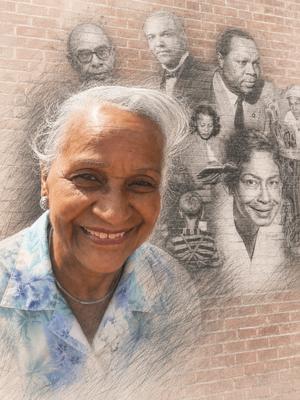
There is a photograph that does not exist anywhere in this magazine, but it lives clearly in the memory of nearly everyone who was on campus in the fall of 1958 A young woman from Marshall, crowned in front of her own hometown, stepping out to lead a homecoming that, in more ways than one, was about to collide with history Sixty-seven years later, at 90, Pazetta Berryman Mallette ‘59 still remembers exactly what it felt like
"That feeling of pride that you get from Wiley University, that you belong," she said "You feel that you can go out into the world and make a difference "
Mrs Berryman Mallette, who arrived at Wiley University not quite sure what she would study, and left having changed her major, buried a sister mid-semester, watched friends get arrested for the civil right to sit at a lunch counter, and carried every bit of it into a life that is still, by her own account, not finished telling its story
A Hometown Girl Who Almost Went Elsewhere
Mrs. Berryman Mallette grew up in Marshall, born in Louisiana before her family settled in the same town that has always been Wiley University's home. Her sister-in-law worked as the executive secretary to Wiley University’s director of public relations, and that connection became the deciding factor in a choice many young women in her position had to make: Wiley University or Bishop College. Without the means to go away to school, she chose to stay close, and she chose Wiley College. She arrived with a plan: home economics, with dreams of becoming a fashion designer. After her freshman year, the University discontinued the major. It was a fork in the road that could have sent her across town to Bishop instead. She stayed, and switched to mathematics with a minor in biology, a decision she credits to an excellent high school foundation and to a Wiley University professor everyone simply called Dean Thompson. "He never made you feel bad or stupid," she said of him. "I will always remember him."
Crowned in Her Own Hometown
In 1958, Mrs. Berryman Mallette became a Kappa Sweetheart, was voted most beautiful on campus, and was crowned Miss Wiley University, a campaign process that, by her account, looks remarkably similar to how it works today: a speech, a campaign period, a student vote. Coming from Marshall, she may have been the first homecoming queen the town itself had ever produced, and the community rallied around her in a way she still describes as overwhelming.
But the role came with a heartbreak no one could have prepared her for. During her reign, her sister passed away the same week the queen was expected to present medals at a track and field event. She was unable to attend. A fellow student, Miss Senior, stepped in to perform the duties in her place. It is a detail easy to miss in a story about crowns and campaigns, and exactly the kind of detail that makes a sixty seven year old memory feel like it happened last week.
An Education That Almost Slipped Away Twice
What Mrs. Berryman Mallette remembers most clearly about Wiley University in the late 1950s was not the size of the campus, which was small, or the buildings, which were few. It was the atmosphere. Classmates who could not afford the latest fashion were never mocked. Students studied together without being asked. The institution, in her words, was there to give an education, full stop, regardless of what a person showed up wearing or owning.
That spirit extended to her own finances. After a partial scholarship covered her freshman year and her brother helped with her sophomore year tuition, she arrived at her junior year with no way to pay and nowhere left to turn, short of dropping out to work. She went directly to the University president, a man from a small town in Louisiana not far from where she was born. He let her enroll without paying that year, on the condition that she work over the summer and pay it back, which she did. Her senior year, a new president was in place and that same flexibility was gone. It was her mother, who worked as a maid for a wealthy white family in town, whose employers paid the remaining tuition so she could finish.
"How many colleges today would do that?" she asked. "I would like to see them do exactly that for some other student."
Mrs Berryman Mallette's years at Wiley University ran directly through the early conversations about desegregation, conversations she remembers starting in high school and growing louder on campus She married shortly after finishing college, and that same summer, sit-ins began at lunch counters across the South Friends of hers were arrested She admired their courage even as it was hard for her to watch
She remembers a white priest on campus who stood with students and with the broader Black community during that period, offering support wherever he could It is the kind of detail that rarely makes it into an official institutional history, and exactly the kind of detail an alumni interview is built to preserve Her advice to students today reflects the training she described in her own era: be aware that you can make a difference, do so peacefully, and never represent Wiley University in any way other than positively
A Life That Kept Building
After Wiley University, Mrs. Berryman Mallette supported her husband through graduate school at Penn State, raised three children, and eventually became a stay-at-home mother in Nashville. Decades later, a cousin's offhand comment sent her down a genealogical path she never expected: a great-grandfather who married the first known white child born in the Republic of Texas, a lineage that includes Native American, white, and African American branches, and ultimately, her own membership in the Daughters of the American Revolution.
That membership turned into a second calling. Mrs. Berryman Mallette has spent years researching and lecturing on contributions to the American Revolution that were left out of the history books, including a Jewish financier who personally helped fund and save George Washington's Continental Army, and a Oneida woman who fed and cared for sick and wounded soldiers during the same crisis. Neither appears in most textbooks. Telling their story, she says, is its own form of setting the record straight, a theme she clearly recognizes from her own life.
Still Going Forth Inspired
Mrs. Berryman Mallette plans to return to campus, this time with items from her years at Pemberton High School that she hopes to donate to the school's new heritage wing. She has already offered to connect her own family research with the work being done there, one more thread tying her story back into the University's larger one.
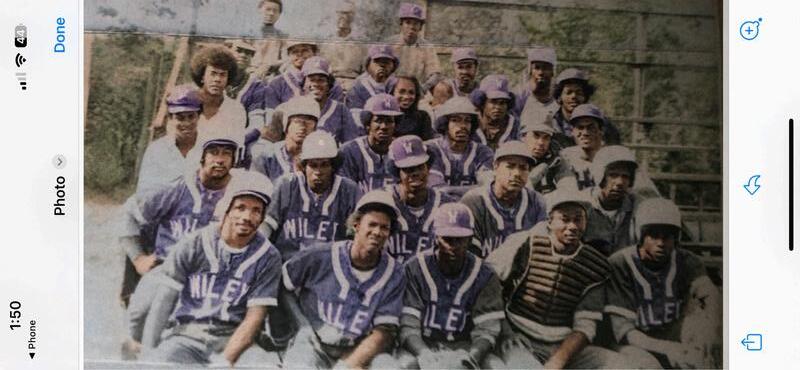
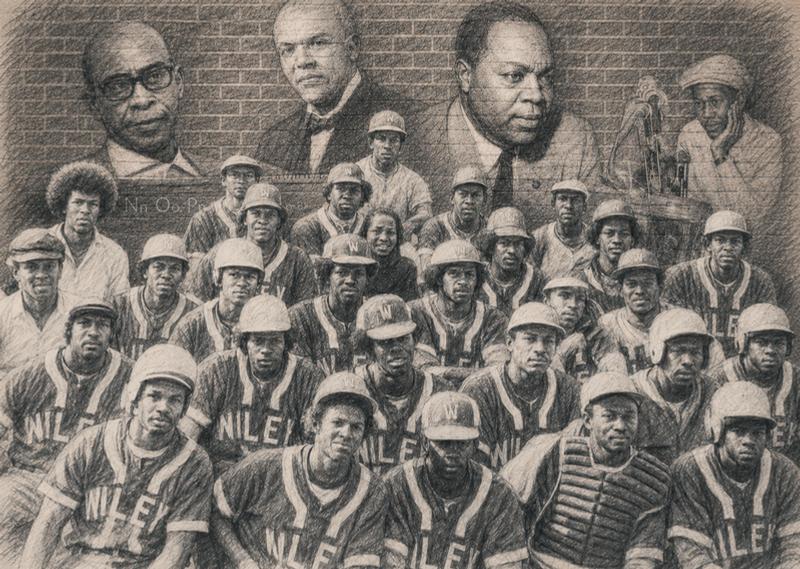
1976 Wildcat Championship Baseball Team: A New Standard in A Desegregated League
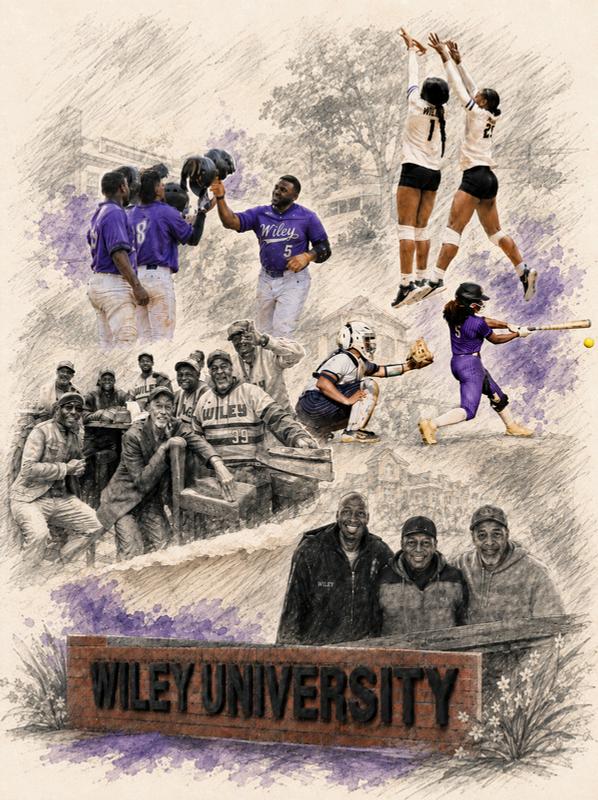
In 1976, Wiley University entered a new era, joining the newly desegregated athletic leagues for the first time. That season, the Wiley University baseball team went on to win a championship, not the baseball program’s first, but one that would make history in a different way: as champions of the new desegregated era.
It's hard to imagine a more turbulent time, a period that was, quite literally, a fight for life and liberty All around our students, the demand for full citizenship and participation was playing out in real time, and they found themselves among the first to compete in a desegregated league The hostility that had divided a nation didn't disappear because of legislation; it lingered, waiting, as our students took the field What happened next was more than a game; it was an act of defiance
The 1976 championship team didn't just beat the odds that season; they set the standard Members of that historic team recently shared their memories, recalling the seriousness of the moment alongside the camaraderie and laughter that carried them through it, "playing University of Dallas to claim the championship in the Texas Ranger Stadium to represent Wiley University along with my teammates and under the leadership of Coach Sutton, was one of the highlights of my life," shared Aubrey James Jessie Jr. (A.J.). Led by Coach Walter Sutton, Sr., the team became a symbol of resilience during one of the most difficult chapters in our nation's history. This team was scheduled to serve as the featured speakers at the Wiley University Giving Luncheon, but a citywide power outage forced the postponement of Founders Weekend events. Over the years, the team has been honored on several occasions, most recently during a Houston Astros game. Wiley University will now honor them further by inducting them into Wiley University's Hall of Fame, which recognizes the accomplishments of graduates during their time as students. Efforts are also underway to secure their recognition.
The 1976 team stands as a testament to where we have been, and a nod to what is still possible Go Forth Inspired!
Donnie Beasley
erald y
ssie Jr. (A.J.) well
(*Deceased)
A Legacy of Champions Continues...
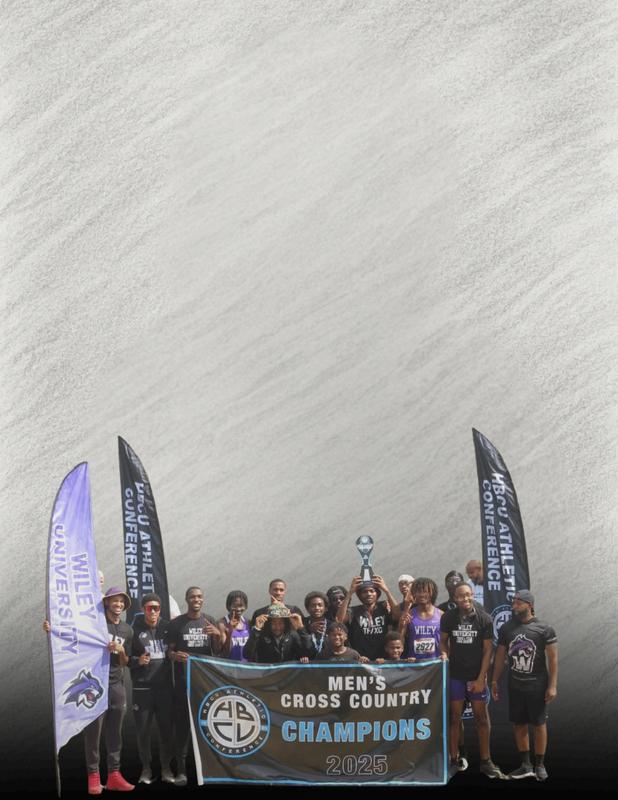
Men's Cross Country claimed the 2025 HBCUAC Championship in October, its first conference title since 2014, then advanced to the NAIA National Championship for just the second time in program history, with head coach Christopher McConnell earning HBCUAC Coach of the Year.
Men's Track and Field placed third at the HBCUAC Outdoor Championship, winning five events outright, with Javoun Goldsby completing a three peat in the 4x800 meter relay and defending his title in the 5,000 meter run. No Wildcat had a bigger year than junior hurdler Ronald Garrett Jr , who became the first Wiley University athlete to qualify for the NAIA Indoor National Championship, repeated as HBCUAC champion in both hurdles, and missed an outdoor national final by just 0 15 seconds.
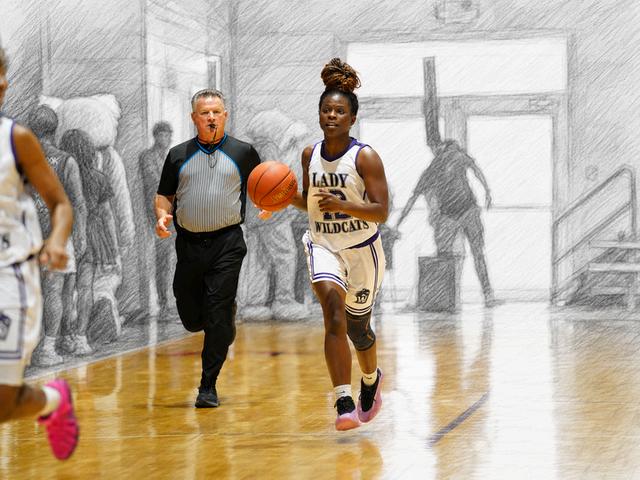
Winter and spring kept the momentum going Women's Basketball won the HBCUAC West Division and finished 16 and 8, its best record under head coach DeWitt Mandley
Men's Soccer defeated Huston Tillotson 4 to 2 for the program's first ever HBCUAC title, with sophomore Anthony Ulloa earning NAIA All-American Third Team honors, a first for the program Women's Soccer reached the HBCUAC semifinals for the third time in program history and set a program record with 75 goals scored
We Got Next: Wildcat Athletics Newest Chapter
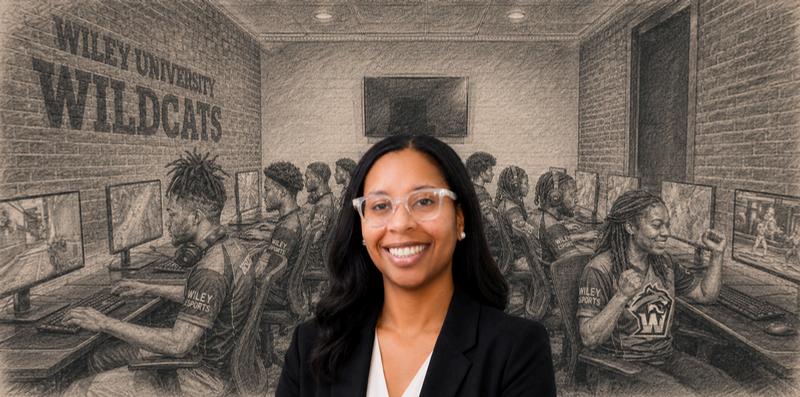
Esports found its leader in June, with the appointment of Ms. Taylor Smith as inaugural head coach. A Spelman College alumna, data scientist, and Marshall, Texas, native, Smith has professional experience as a Senior Analyst on Uber Technologies' Generative AI team and previously contributed to AI research at Google She began her career as a middle school teacher before beginning a doctorate in Educational Leadership and Policy, with a concentration in Artificial Intelligence, from the University of Texas at Austin Her appointment also places her among a small but growing number of women leading collegiate esports programs nationwide. This year she was a visiting instructor in the Business Dept.
"There is nothing like feeding inquisitive minds," Smith said of taking on the role. "That collaborative, forwardthinking mindset is exactly what I plan to inject directly into this esports program "
Major Grants & Gifts
UNCF
GBHEM
Hope Pierce Tart Scholarship
Strada Education Network
EDA
T.D. Jakes Foundation
$1,015,456
$793,562
$210,000
$61,200
$600,000
$250,000
Texas Methodist Foundation WEI ZONE Workforce Development
J. Jack and Blanche Ingram Fund
Dr. Warren Scott Fund
$50,000 $171,00
Council of Independent Colleges Netvue Institutional Saga Grant $20,000 $171,345,45
Legacy is not something Wiley University inherited once and set on a shelf. It is something built each year again, by hands both seen and unseen. This year, more than $4.3 million in grants and gifts added a new layer to that foundation. It became the President's Promise, placing a scholarship in the hands of every undergraduate student and keeping this education within reach of the families who need it most. It kept the daily life of this university strong. It brought the Pemberton West Wing, the athletic wing, and Jackson Hall back to life, so that students now walk through the same halls our founders dreamed into being, restored for a generation those founders would never meet. And it carried our purpose past our gates into the Newtown community, where neighbors and students alike earned workforce certifications in the Wiley Economic Improvement Zone, and the Center for Digital Excellence and Workforce Development opened its doors to all
When we reflect on what giving made possible this year, we see what it has always made possible here since 1873 Every gift joins a long line of belief, from the freedmen who built this place on faith to the givers whose generosity fills these pages A legacy is not built by institutions alone It is built in relationship, gift by gift, year by year, forward And in this house that legacy built, there is room in the story for you
Go Forth Inspired!
In Memoriam:
John "Doc" Harvey '66
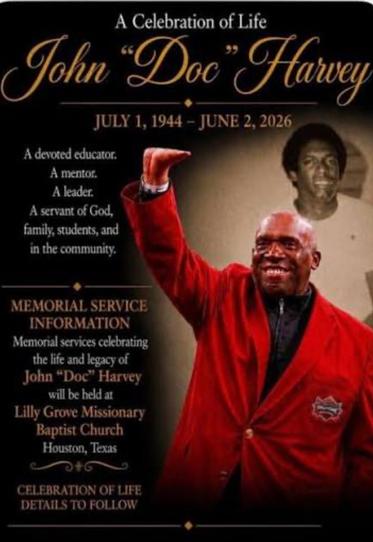
John "Doc" Harvey '66, a Houston native and one of the most respected athletic trainers in Texas collegiate sports history, began his academic journey at Wiley College, where he earned his bachelor's degree in 1966. That foundation launched a distinguished 50-plus-year career in athletic training, including 41 years as head athletic trainer at Texas Southern University, stints with the NFL's Houston Oilers and the World League of American Football, and honors such as the NATA Most Distinguished Athletic Trainer Award and induction into the SWAC and SWATA Halls of Fame Doc Harvey, who passed away on June 2, 2026, stands as a testament to the caliber of leaders Wiley College sends into the world; his Wiley College education set the stage for a lifetime spent mentoring generations of athletic training professionals across Texas.
Not every story this year ended in celebration. Just a few months after his appointment as Wiley University’s men's and women's Head Golf Coach, he unfortunately passed away. Coach Swanson is survived by three sons.
Marlon Geron Sanders, Sr. '26
Wiley University joins the Sanders family and all who knew and loved Marlon Geron Sanders, Sr. in mourning his passing. A recent graduate of our M.B.A. Higher Education program, Marlon was a gifted musician, educator, mentor, and coach whose life and work touched countless people. As an elementary school music teacher, he used music, encouragement, and compassion to uplift students and inspire young minds.
Dr. Warren A. Scott '65
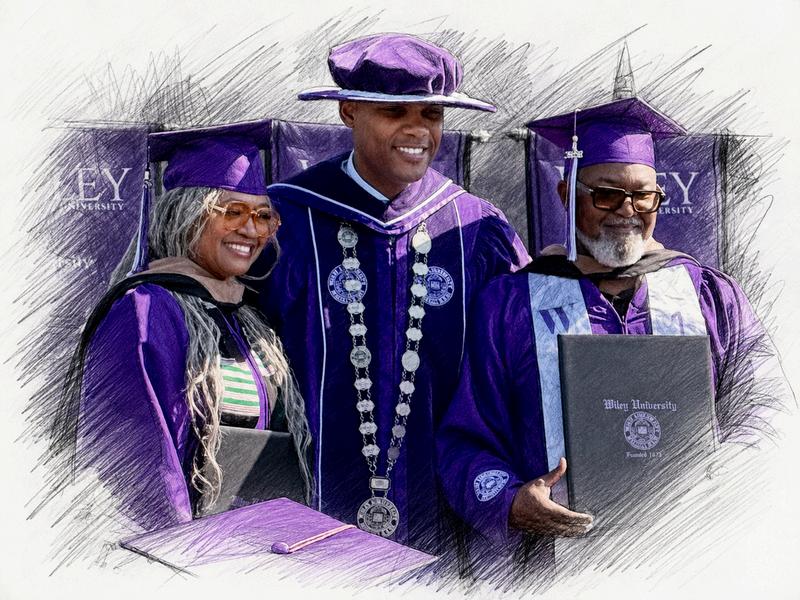
Although Warren A. Scott is no longer with us, his impact continues. A distinguished chemist, 1965 honors graduate of Wiley College, and Trustee Emeritus of Wiley University, his generous giving continues to strengthen the institution and create opportunities for generations of Wiley students At the 2026 Commencement, Wiley University honored his remarkable life and service with a posthumous Doctor of Humane Letters.
ReprintedfromTexasSouthernUniversity
Coach David Swanson
In Memoriam:
Mr. Jeff Aycock
Mrs. LeKeith Biggs 1998 & 2026
Mr. Kenneth Leroy Cooks 2005
Ms. Freddie D. Ferguson 1969
Ms. Lillie Ann Griffin
Ms. Jocelyn McGhee Kelso Friend of the University
Dr. Dewey Ordric Mays III 1975
Ms. Fannie Lue Neal McClure 1951
Mr. Michael Mitchell 2012
Ms. Betty Jean Morgan 1957
Dr. Thomas D. Peters II 1969
Ms. Daisy Ella Price 1955
Mr. Hollis E. Reese
Mrs. Joyce Upshaw 1986
We extend our heartfelt condolences to the families, friends, colleagues, and loved ones of those we have lost. Their lives, contributions, and connection to the Wiley University community will be remembered with gratitude and honor. May their legacies continue to inspire us.