SETTING NEW STANDARDS IN WARMTH AND LIGHTWEIGHT PACKABILITY.
A RIPSTOP FACE FABRIC PROVIDES ADDED PROTECTION FROM RUGGED GLASSING TERRAIN.

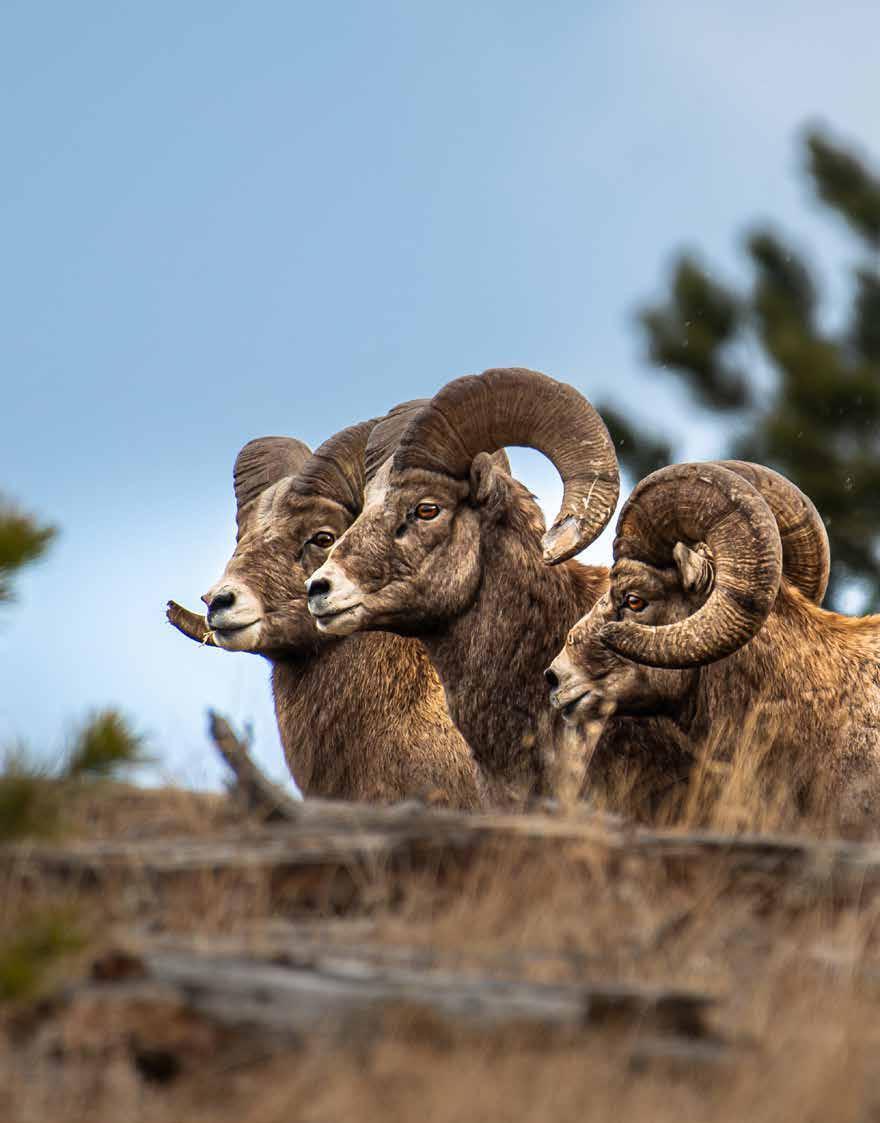

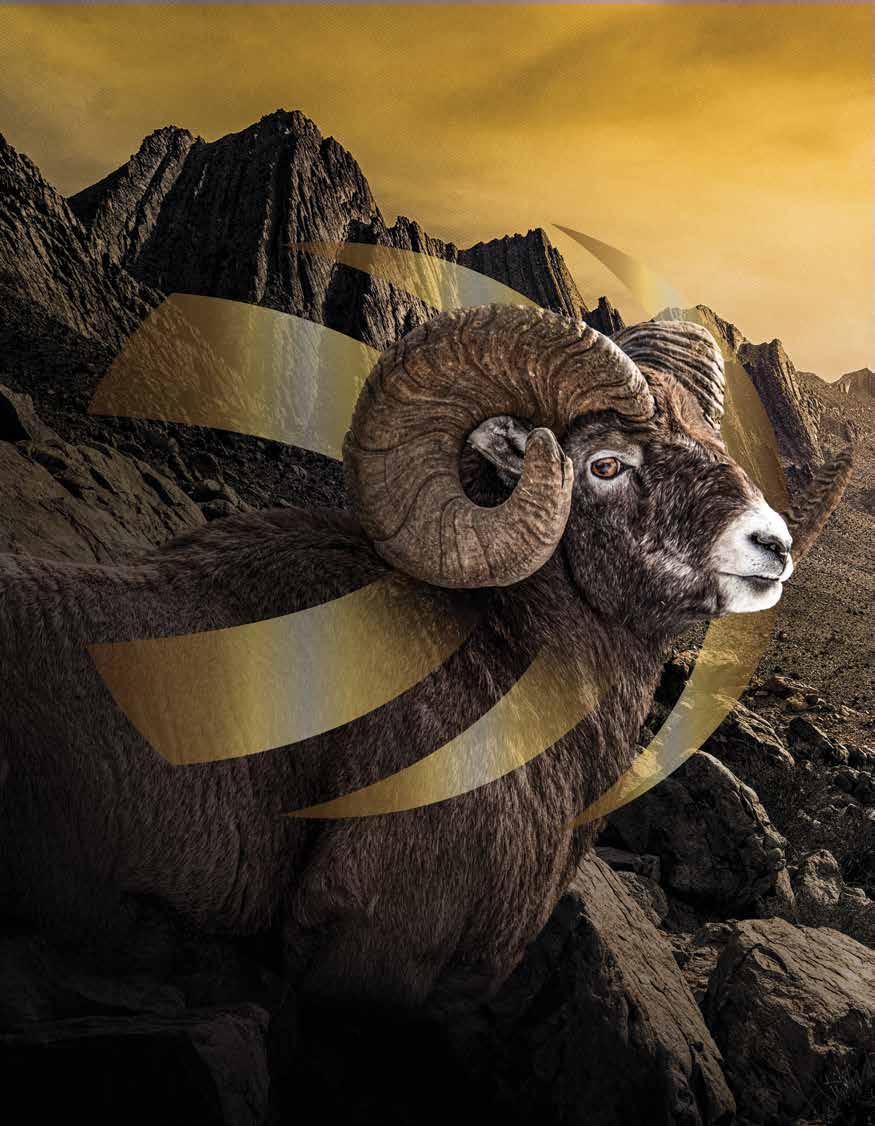
On the Cover:
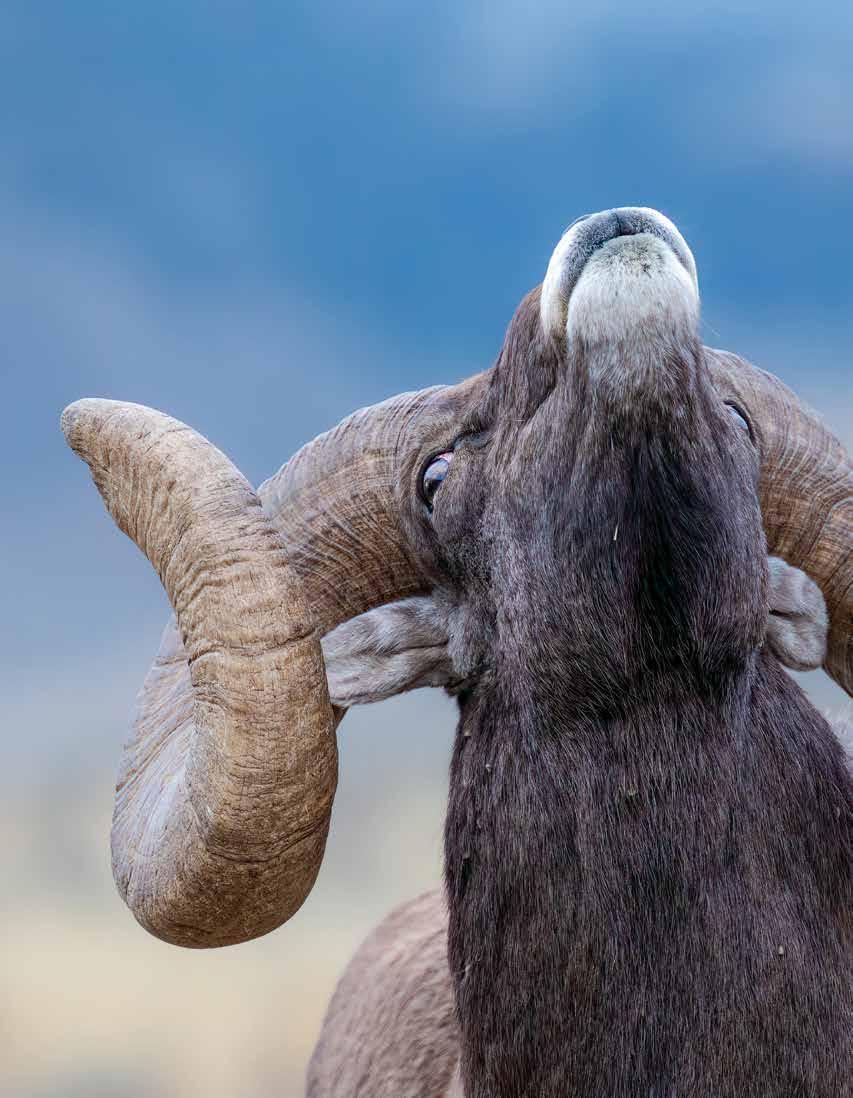
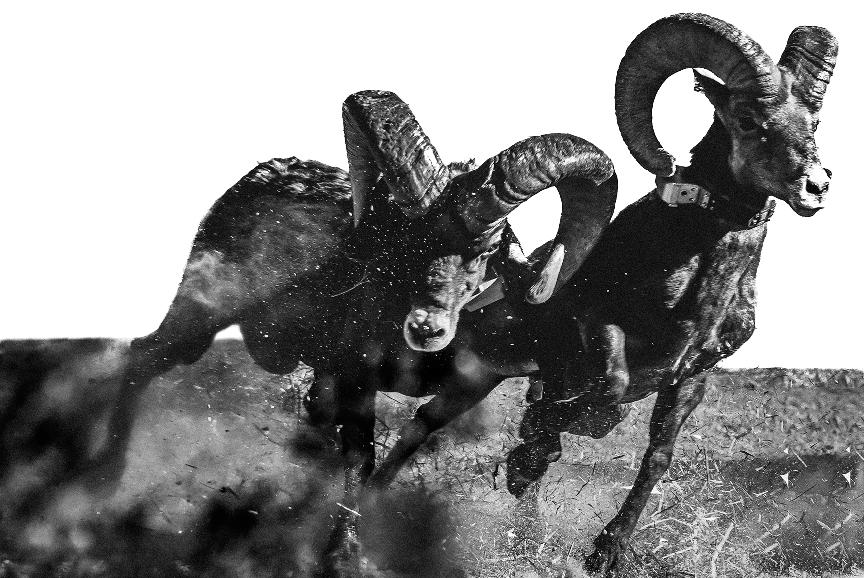
Photographed in the northern reaches of Yellowstone National Park, this ram belongs to the well-known Cinnabar herd—one of the park’s most visible and frequently observed groups of bighorn sheep. The area has long been a favorite destination for wildlife watchers, and interest in the herd continues to grow each year. For many visitors, sightings like this offer a first glimpse into the lives of wild sheep and the landscapes they call home.

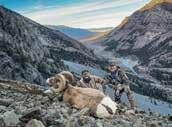
Bagging a Rocky at 82 years of
Ram Revival! by Chester Moore
The Conservation movement behind the big wave of record-breaking bighorns.
A Legacy Still In Motion by Chester Moore
The Wyoming Wild Sheep Foundation’s enduring impact in the Equality State.
The Grand-Sire Of Six-Fives For Sheep by Wayne Van Zwoll
It predated the .270, felling game in Europe, Asia, and Africa while stateside hunters ogled the .30-30.
Annuli: A Photo Essay
Selections from the 38th Annual Duncan Gilchrist Photo Contest.
Official publication of The Wild Sheep Foundation
WSF World Headquarters: 412 Pronghorn Trail • Bozeman, MT 59718 • 406-404-8750
Cody Office: 1285 Sheridan Avenue, Suites 260/275 • Cody, WY 82414 • 406-404-8750
INTERIM CHAIR: Kyle Stelter • kstelter@wildsheepfoundation.org
SECRETARY: Jann Demaske • demaskes@msn.com
TREASURER: Larry Jacobs • lljacobs4@aol.com ...................................................
Clint Bentley • sheepspotr@aol.com ........................................................................
Bralli Clifford • bclifford@wildsheepfoundation.org
Sam Cunningham • scunningham@wildsheepfoundation.org
Kevin Kehoe • kkehoe@wildsheepfoundation.org .....................................................
Larry Johns • ljohns@wildsheepfoundation.org ........................................................
Emilio Rangel W. • emiliorw@me.com • rangel@wildsheepfoundation.org
Logan Richard Young • loganyoung270@gmail.com
Term Expires 2028
Term Expires 2026
Term Expires 2027
Term Expires 2027
Term Expires 2028
Term Expires 2027
Term Expires 2028
Term Expires 2028
Term Expires 2027
Term Expires 2026
PRESIDENT & CEO Gray N. Thornton • gthornton@wildsheepfoundation.org
PRESIDENT & CEO - EDITOR IN CHIEF, WILD SHEEP ® MAGAZINE: Gray N. Thornton • gthornton@wildsheepfoundation.org • Bozeman HQ
Corey Mason, Chief Operating Officer & Executive Vice President of Conservation Certified Wildlife Biologist® cmason@WildSheepFoundation.org Carrollton, TX
Kim Nieters, VP of Operations - Auction Director knieters@WildSheepFoundation.org Cody, WY
Terry Ziehl, Finance Director tziehl@WildSheepFoundation.org Cody, WY
Keith Balfourd, Director of Marketing & Communications keith@WildSheepFoundation.org Bozeman, MT
Julie Tripp, Awards & Publications Director jtripp@wildsheepfoundation.org Lolo, MT
Paige Culver, Development Manager pculver@WildSheepFoundation.org Bozeman, MT
Maddie Richards, Membership Manager/ <1 Clubs Manager mrichards@WildSheepFoundation.org Bozeman, MT
Justin Phillips, Graphic Arts & Design Jphillips@wildsheepfoundation.org Cody, WY
Megan Costanza, Banquets & Events Manager mcostanza@WildSheepFoundation.org Reno, NV
Mike Aiazzi, Expo & Exhibits Manager maiazzi@wildsheepfoundation.org Reno, NV
Gray N. Thornton, Editor in Chief
Julie Tripp, Editor
Scott Morrison, Art/Design Director
Justin Phillips, Graphics/Design
Jaime Teigen, E-Commerce & Office Administrator jteigen@wildsheepfoundation.org Bozeman, MT
Matt Dwonch, Marketing and Content Strategist mdwonch@wildsheepfoundation.org Bozeman, MT
Rebecca Anne Tuthill, Assistant (PT) rrebrovich@wildsheepfoundation.org Bozeman, MT
Margie Forster, Registration Assistant (PT) mforster@wildsheepfoundation.org Reno, NV
Morgan Stuart, Development Asst. & Program Coordinator (PT) mstuart@wildsheepfoundation.org Bozeman, MT
Stirling Elliott, Accounting Assistant (PT) selliott@wildsheepfoundation.org Bozeman, MT
CONTRACT & CONSULTANTS
Kevin Hurley, Vice President of Conservation—Emeritus Certified Wildlife Biologist® khurley@WildSheepFoundation.org Boise, ID
Dr. Ryan Brock, Youth Education Coordinator rbrock@wildsheepfoundation.org Reno, NV
Greg Schildwachter, Lobbyist greg@watershedresults.com Washington, DC
Charlie Booher, Lobbyist Associate Wildlife Biologist® charlie@watershedresults.com Missoula, MT
Ken Nowicki, Field Editor
Chester Moore, Writer
Ashley McEnroe, Writer
Wayne van Zwoll, Contributor
Contributing photos, articles, stories, and research pertaining to wild sheep or the interests of the members of WSF are always welcome. Contributed material will be published at the editor’s discretion. Please include a selfaddressed stamped envelope if you wish materials to be returned.
Kurt Alt, Conservation Director—International Programs altwildlife@yahoo.com kalt@wildsheepfoundation.org Bozeman, MT & Brussels, Belgium
Pat Cummings, DNWR—NTTR Project Lead Patrickcummings1002@gmail.com Las Vegas, NV
Maureen Jefferson, Conservation Permits Jm_hullinger@sbcglobal.net Las Vegas, NV
Bill Jex, Thinhorn Sheep Program Lead RPBio BC bjex@wildsheepfoundation.org Smithers, BC
Kevin Martin, USFS & BLM Planning Kevindmartin63@gmail.com Pendleton, OR
Ashley McEnroe, Staff Writer aoliverio@gmail.com Big Sky, MT
Shane Mahoney, Special Conservation Consultant shane@conservationvisions.com St. John’s, Newfoundland Chester Moore, Staff Writer chester@chestermoore.com Orange, TX
Scott Morrison, Editor & Designer, Wild Sheep® magazine scott@morrisioncreative.com Livingston, MT
Steve Rosenstock, Grant Writer Certified Wildlife Biologist® steve@wildsheepfoundation.org Flagstaff, AZ
Greg Schildwachter, Columnist
Morrison Creative Company, Inc.
Magazine Design/Production
Advertising & Editorial Submissions
Wild Sheep Foundation Headquarters
412 Pronghorn Trail, Bozeman, MT 59718
ATTN: Editor

For more information on submission guidelines, meetings and convention information, and service, conservation and hunting award criteria, please visit our website at www.wildsheepfoundation.org. All membership dues include $28/year for a subscription to Wild Sheep® magazine.
The Wild Sheep Foundation’s mission is to enhance wild sheep populations, promote scientific wildlife management, and educate the public and youth on sustainable use and the conservation benefits of hunting while promoting the interests of the hunter. The tradition began on a November weekend at Mt. Horeb, Wisconsin, in 1974. Thirteen wild sheep enthusiasts passed the time by sharing stories about their encounters with the majestic mountain creatures. After realizing how fortunate they were to have all shared such incredible experiences, they decided it was time to give something back. They forged FNAWS so men and women everywhere could get more involved in the positive management of wild sheep. It was incorporated as a non-profit corporation in Iowa on September 14, 1977, and began accepting paid memberships in 1978 as more people joined the cause. The commitment and noble spirit of FNAWS quickly helped the foundation become the fastestgrowing wildlife conservation organization of its kind.
DISCLAIMER While Wild Sheep Foundation strives to attract quality advertisers and donors, it cannot be responsible for the ultimate quality of the products which they may present to our members and buyers. Neither the Wild Sheep Foundation nor its Officers or Directors is a guarantor of your satisfaction with the products it makes available to you. Our dedication is to the wild sheep of the world and not to policing our advertisers or donors. We cannot, under the law, reject an advertiser or donation simply because of a prior complaint from a dissatisfied consumer. We will strive to make available quality merchandise and hunts, but without warranty or guarantee.
WILD SHEEP FOUNDATION®, WSF, FOUNDATION FOR NORTH AMERICAN WILD SHEEP®, <1 CLUB®, <1ICLUB, CHADWICK RAM SOCIETY®, MARCO POLO SOCIETY®, MOUNTAIN ROYALTY SOCIETY, LEGENDS SOCIETY, PINNACLE SOCIETY, TODAY, TOMORROW, & FOREVER FOR WILD SHEEP, FNAWS, CHRIS KLINEBURGER MOUNTAIN HUNTER HALL OF FAME AWARD®, PUTTING AND KEEPING WILD SHEEP ON THE MOUNTAIN®, SHEEP SHOW®, SHEEP WEEK®, SHEEP FEVER®, TAKE ONE PUT ONE BACK®, THE SHEEP SHOW®, RAM LAY-AWAY PROGRAM®, WILD SHEEP® MAGAZINE, COME FOR THE SHEEP, STAY FOR THE PARTY®, FULL CURL®, WIHI®, WOMEN HUNT®, WH®, WOMEN IN HUNTING®, WOMEN IN HUNTING INITIATIVE® and their respective logos are Registered trademarks and cannot be used, commissioned, or otherwise displayed without permission of the Wild Sheep Foundation.
GRAND SLAM® is a registered trademark of Grand Slam Club/Ovis. Used with permission.
Wild Sheep® (ISSN: 2329-7891), USPS Publication #009-460, is published quarterly for $28 a year by Wild Sheep Foundation, 412 Pronghorn Trail, Bozeman, MT 59718. Periodical Postage Paid at Bozeman, MT and at additional mailing offices.
POSTMASTER: Send address correction to Wild Sheep Foundation, 412 Pronghorn Trail, Bozeman, MT 59718.


15 Yards
85%
160


400 Yards
91%

997 Yards
99%


To be the best managed, most respected, influential, and relevant conservation organization benefitting wild sheep worldwide.
To Put and Keep Wild Sheep on the Mountain.
We enhance wild sheep populations and their habitats, promote scientific wildlife management, and educate the public and youth on sustainable use and the conservation benefits of hunting while promoting the interests of the hunter.
Values The principles that guide us
Honesty Teamwork Accountability Integrity Positive Attitude Stewardship Respect for Others Respect for Wildlife Loyalty Hunting Ethics
Putting and Keeping Wild Sheep on the Mountain Since 1977



by Gray N. Thornton President & CEO
The conclusion of our annual convention is always one of mixed emotions. Volunteers and staff are relieved, happily tired, always grateful for the incredible support, but also a bit melancholy after the adrenaline rush of Sheep Week® and the months running up to it.
This year especially so. While our 2026 convention set new records on many fronts including sponsor support, expo attendance, evening banquet attendance, raffles and auction sales—and this member-driven success will fund record levels of wild sheep conservation in the coming months—looming over our heads was that 2027 will be our 50th.
We are so thankful and appreciative of the support WSF received, once again, during our recent Sheep Show®. We are also grateful to the support and enthusiasm we are already receiving and experiencing for our 50th, set for February 3-6, 2027 in Reno. It will be HUGE!
2027 represents fifty years of FNAWS and WSF leadership, shoulder-to-shoulder with our many partners of wild sheep conservation. The 2027 convention also marks our 50th convention hosted. What started in 1978 as the first convention with the then Foundation for North American
Big Game in Memphis, Tennessee, became FNAWS in 1979 in Minneapolis, Minnesota, setting a stage for many to follow. For 2006, FNAWS invited Mule Deer Foundation, struggling at the time, to join it for the 2006 Sheep Show® at the Grand Sierra in Reno. Then, FNAWS teamed with Mule Deer Foundation and Sportsmen for Fish & Wildlife, and moved the 2007 FNAWS convention to Salt Lake City to create the Western Hunting and Conservation Expo (WHCE), where were stayed as a partnership for three years through 2009. Also in the fall of 2007, the Foundation for North American Wild Sheep (FNAWS) changed their name to Wild Sheep Foundation. I joined the Foundation as President & CEO May 1, 2008. Due to overwhelming member requests in 2008, after fulfilling our three-year WHCE commitment with the 2009 show in Utah, WSF exercised our option to leave the partnership, and moved the convention back to Reno and our well-known brand as the Sheep Show® for 2010, where we have been since.
The Sheep Show® has been in Memphis, Minneapolis, Houston, Phoenix (2x), New Orleans, San Diego (2x), Honolulu, Nashville, San Antonio (2x), Philadelphia, Salt Lake City (3x) as WHCE, and of course, Reno—33 of our now 49
conventions. 2027 will be our 50th Anniversary show and the 34th in The Biggest Little City in the World. While this walk down memory lane might be nostalgic for some, it is likely novel to many others. This is new news to at least 50% of our membership as we have doubled our membership in the past decade. While I’m anxious and tempted to share a peek behind the curtain for our incredible plans for the 2027 show, I’ll save that for the summer issue, as this issue is rightfully chock full of celebration of our 2026 show. And what a show it was. A hearty and heartfelt “thank you” for the exceptional team of volunteers, staff, sponsors, exhibitors, donors, members, guests, and supporters who helped make the 2026 show so successful. WSF prides itself as a family. A family of friends and wild sheep advocates and hunters who come together each year in celebration of this special species of wildlife. And, as always, you all come with your enthusiasm pegged and wallets open. Thank you.
Your support will enable WSF to fund the impactful conservation initiatives and projects we’ve budgeted to fund before our June 30th fiscal year end. More than $11 million dollars of funding planned, and the third year in a row of this legendary altruism towards a resource.

I also want to congratulate our many members who were recognized during the show for their philanthropic, conservation, and hunting accomplishments. This recognition is so deserved and earned. Well done!
Lastly, with some melancholy, but more so admiration and appreciation, I want to thank our immediate past Chair, Charlie
Kelly, who stepped down a month or so early from his post due to health and personal reasons.
Thank you Charlie for your tireless dedication to wild sheep, to WSF, to your fellow board members, and to your staff. We will continue to Move the Needle for Wild Sheep in your honor.
Enjoy this spring issue of Wild Sheep®.WS
Gray N. Thornton President & CEO, Wild Sheep Foundation
Editor-in-Chief, Wild Sheep® magazine
Marco Polo Society® Member
Summit Life Member
Chadwick Ram Society® Member
Legacy Society Member
Summit Life Member
by Kyle Stelter Interim Chair
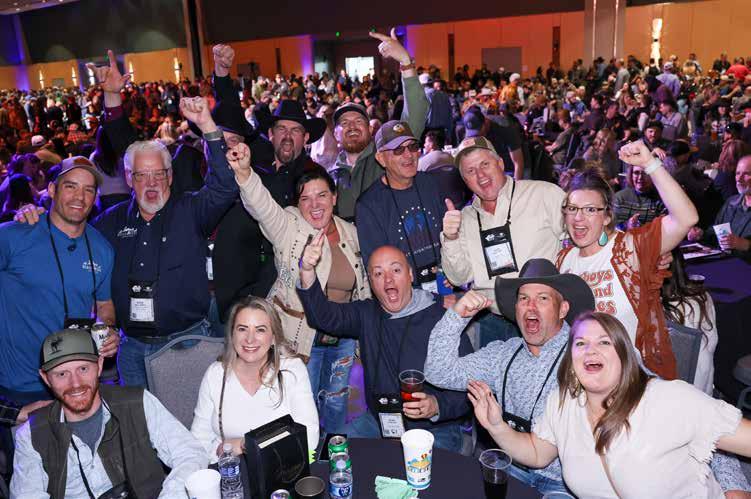
Sheep Show® 2026 was another incredible experience. The show floor, banquets, and events were filled with energy.
The foundation is blessed with such a dedicated core of conservationists who show up, support the mission, and ensure we are fulfilling our purpose of Putting and Keeping Wild Sheep on the Mountain®. I want to thank each one of you for your commitment and for helping ensure we continue to support the wild sheep resource.
We are all working tirelessly behind the scenes as we are now just ten months away from our fiftieth anniversary. When we look back on the history of the wild sheep movement, we see humble beginnings, when thirteen dedicated sheep hunting enthusiasts met in Mt. Horeb, Wisconsin—thank goodness these dedicated conservationists came together and continued to pour their support into what was then the Foundation for North American Wild Sheep.
With our fiftieth anniversary rapidly approaching, I urge you to become more involved this year. With 11,000 members, undoubtedly some of you have not yet attended Sheep Week®, and I would encourage you to make the trip. This year will be one for the books, as Wild Sheep Foundation staff, supported by your board of directors, are working tirelessly behind the scenes to ensure this year’s wild sheep celebration befits this momentous
occasion. We hope to see all of you in Reno, February 3–6, 2027.
In writing my inaugural Interim Chair message, I want to thank outgoing Chair, Charlie Kelly, for his incredible dedication and leadership to the Wild Sheep Foundation. Charlie has been an inspirational leader, tirelessly dedicated to wild sheep conservation, and his commitment has left a notably-positive impact on this organization. Charlie, thank you for your service.
As we wish Charlie well in his departure, I am greatly encouraged by our 2026 board of directors. We have a talented cadre of individuals dedicated to our foundation and to the wild sheep resource itself. I am excited about the coming year and want to assure our membership that this organization’s stewardship is in excellent hands. I have every confidence that this will be our best year yet.
I also want to recognize our hardworking staff for their commitment to the Wild Sheep Foundation. Each year, we see firsthand how hard our staff work during Sheep Show®, but what we do not see are the countless hours spent behind the scenes to put on this world-class event. We truly could not do what we do without you. Thank you.
Your board of directors will continue to focus on the wild sheep resource and on ensuring we are delivering impactful, on-theground projects that benefit wild sheep. While we often talk about
how much we invest, I am laserfocused on impact and on ensuring we are investing in projects that truly make a difference. For me, back home in British Columbia, watching the impact the Fraser River Test and Remove Project has had on those iconic herds, or the work being done through the ION Partnership, it is hard not to be inspired. These projects are at the core of our mission delivery.
In closing, I want our dedicated membership, partners, donors, and sponsors to know that your board of directors is here to serve you, and that this is your Wild Sheep Foundation. I have an open-door policy, and every single one of your voices matters. We, the directors, are elected by you, we serve you, and we listen to you. With that, I encourage you to be proactive and not hesitate to communicate with us, whether it is about a wild sheep issue or even just a concern. We are always seeking ways to improve this world-class organization.
The Foundation was built on the backs of our membership—it was built by you, organically. It was built by members who cared, who wanted to see healthy wild sheep populations, and that is how we will continue to build into the future. With so many dedicated members who continue to care deeply for wild sheep, it is that enthusiasm that will elevate the foundation to the next level. WS
Kyle Stelter

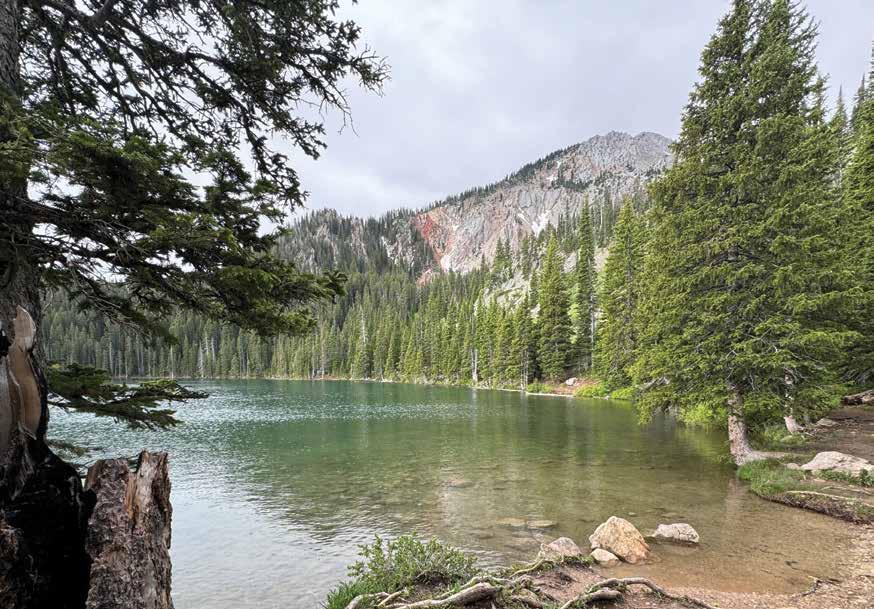
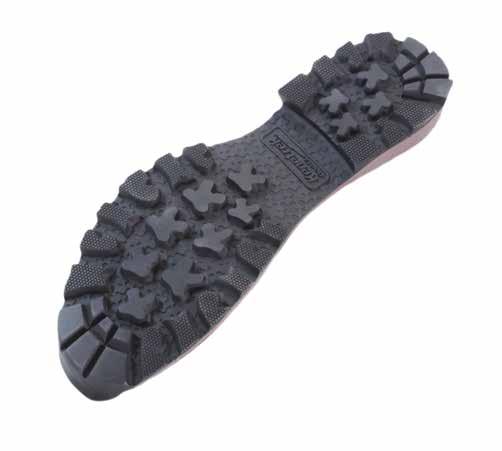
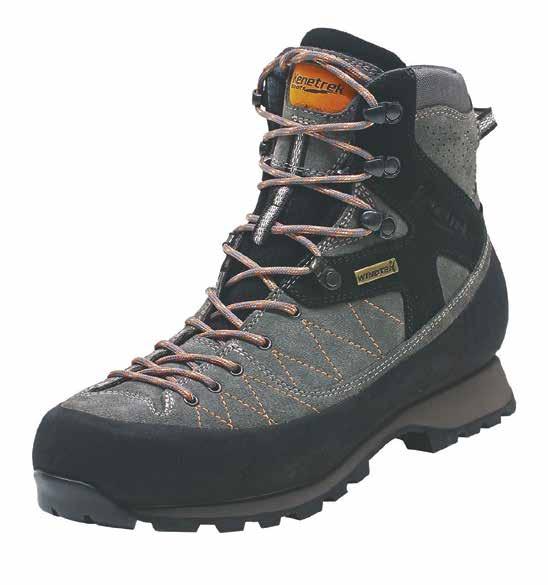
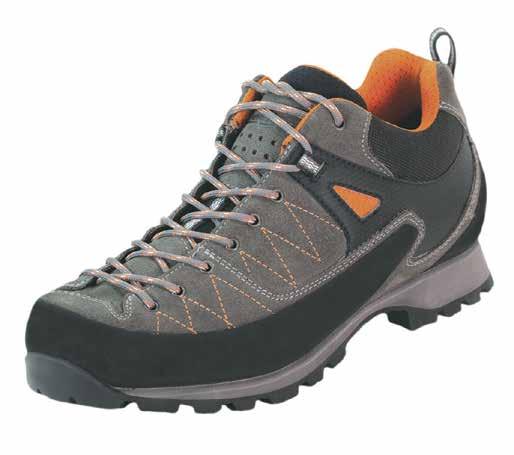
You know that feeling… when your feet barely touch the ground as you glide over uneven terrain… and whether you’re racing across trails or running errands, super-light and exceptionally tough gets you there without a care in the world. With bedrock support in a feather weight platform, the waterproof High or the easy breathing Low will be your best friend every day.

by Kevin P. Hurley
Wild Sheep Foundation Vice-President of Conservation – Emeritus
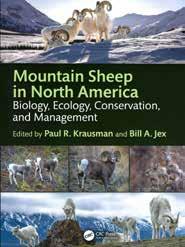
s I noted in the Preface for this outstanding new reference book—MOUNTAIN SHEEP IN NORTH AMERICA: BIOLOGY, ECOLOGY, CONSERVATION AND MANAGEMENT compiled and Edited by Paul R. Krausman and Bill Jex—these are challenging and rapidly evolving times for wild sheep. I am so grateful that Paul Krausman and Bill Jex took on the enormous task of soliciting, pursuing, and editing the written products of multiple authors and experts. Congratulations and thanks to them for this effort, and of course, thanks to the many authors, reviewers, photographers, and others who volunteered their time and knowledge to share their individual and collective expertise on mountain sheep in North America.
Having been a wildlife biologist for nearly 50 years, and having worked more than 45 years on mountain sheep conservation in both the public (i.e., agency) and private (i.e., NGO) sectors, I recognize and greatly admire the combined expertise of academic and agency/ministry contributors to this book, to not only look back and describe the rocky path mountain sheep have taken, but to also lay out their collective vision and describe hoped-for trajectories for future wild sheep management. The list of contributors to these chapters is a veritable “Who’s Who” of mountain sheep experts; I am awed by what they have done
in their careers and what they have shared here. I am not aware of a comparable collection of knowledge and experience incorporated into a single reference book.
Alarmingly, and widely accepted, by 1960, when Helmut K. Buechner published his monograph on “The Bighorn Sheep in the United States: Its Past, Present and Future”, bighorn sheep numbers were somberly estimated at only 15,000-18,000 remaining in a dozen western states. Buechner identified multiple factors that solely, or in combination, contributed to the catastrophic decline of bighorn sheep; unregulated hunting (to provide sustenance for wagon trains, railroad workers, and early miners/ settlers), competition for forage with livestock, pathogens/parasites inadvertently transmitted from domestic livestock to mountain sheep, and early western settlement that adversely impacted mountain sheep and their habitats. Many of those challenges identified 65 years ago by Buechner remain relevant and worthy of conservation concern today.
Wild sheep conservation is not for the faint of heart, but it is such critically important work.
In March 1960, the legendary outdoor writer Jack O’Connor, whom many consider the grandfather of wild sheep hunting, posited:
“The sheep hunter is willing to climb until his lungs are bursting, to walk until his legs are dead and weary,
to grow hungry and thirsty for great rewards. There is no halfway. After his first exposure, a man is either a sheep hunter or he isn’t. He either falls under the spell of sheep hunting and sheep country, or he won’t be caught dead on another sheep mountain.”
Comparatively, wild sheep managers, researchers, and conservationists have been fully engaged for decades. The exceptional authors of the chapters in this book have gone to great lengths and have no doubt made great sacrifices during their careers to document and describe the challenges that mountain sheep have endured over the past two centuries.
We have all learned and will continue to learn much from these mountain sheep experts; I thank them for their individual and collective contributions to the conservation and management of the most fascinating animals that roam the mountains, canyons, deserts, and ridgelines of the West.
For the love of wild sheep, for these authors, for the legions of wild sheep conservationists, there truly is no halfway. We are all in. Willingly. Devour, digest, and enjoy these chapters!
Order your copy today! WS





WSF’s Legacy Society recognizes individuals, families and foundations making testamentary bequests or contributions of major gifts, gift annuities or other charitable-giving instruments. Since inception of the Ensuring the Future of Wild Sheep (ETFOWS) campaign, 51 Legacy Society members have been recognized through WSF’s Legacy Society for contributions or pledges of future gifts.
Bequests made through the New Beginnings Campaign* or other bequests may be recognized through the Legacy Society by contacting WSF. For more information on the Legacy Society or Estate Planning resources available through WSF, please contact Paige Culver at 406.404.8758 or PCulver@WildSheepFoundation.org.




Anonymous Anonymous
Lee & Penny Anderson
Jack, Jr. & Cindy Atcheson
Derek Blake
Derek W.O. Berry
Mike Borel
Cabela’s Outdoor Fund
David W. Campbell
Rick & Heather Carosone
Dr. Robert W. & Cynthia Cassell
David & Sona Combs
Monty & Becky Davis
Howard & Mary Deters
Doug & Patty Dreeszen
Buddy DuVall
Tom Grimes
Eric & Sue Hansen
Robert & Arlene Hanson
Dr. Paul F. & Kathy J. Havey
Zach & Amber Higgins
John R. & Mary Ann Justus
Kevin & Eileen Kehoe Blair A. &
Victoria M. Kenewell
Robert M. Martin, Jr.
Robert and Lisa Mays
Roger McCosker
Kyle & Joanne Meintzer
Chuck Middleton
David Mode
Gordon Nelson
John & Leslie Pearson
Brad R. Plaga
Robert L. & J.P. Puette
Kevin & Janine Rinke
Lanny Rominger
Louis & Pauline Rupp SCI Foundation - Hunter Legacy Fund (HLF-100) Roger Segebrecht
Kasie and Jason Sheridan
Tim & Roxane Shinabarger
Steve & Sue Skold
Curt & Marcia Thompson
Gray & Renée Thornton
Steve & Carrie Thompson
Jim Travis
Tim & Ruth Van Der Weide
The Estate of Robert B. Johnson
Zachary Walton
Wayne W. Webber
The William H. Donner Foundation, Inc
1998-2003.

by Kurt Alt Conservation Director, International Programs, WSF
The Wild Sheep Foundation has developed strong and enduring partnerships within Mongolia’s wildlife expertise and outfitting community through its two key affiliates—the Argali Research Center and the Mongolian Wildlife Association. Our affiliates also work closely with the Ministry of Environment and Climate Change. These collaborations reflect a shared commitment to responsible stewardship of Mongolia’s mountain ungulates. Together, these partners are dedicated to advancing sciencebased conservation, habitat restoration, and the sustainable use of mountain ungulate populations. This effort is exemplified by the following report of Mongolia’s success in restoring Siberian ibex provided below led by E. Magsarjav, Executive Director, Mongolian Wildlife Association.
Mongolia Successfully
Reintroduces the Siberian Ibex
Mongolia has achieved a major conservation milestone with the successful reintroduction of the Capra sibirica (Siberian ibex)—a keystone mountain ungulate essential to the health and balance of alpine and steppe ecosystems. The project was jointly
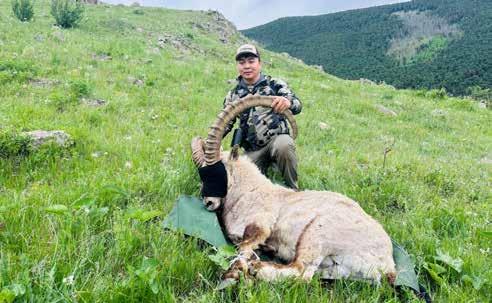
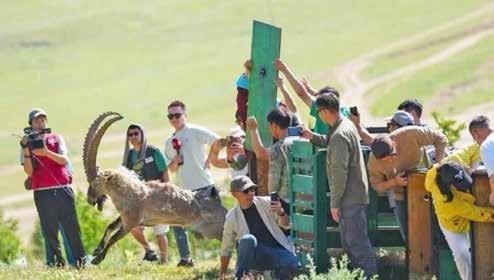
During the Siberian ibex reintroduction project—project leader E.
with a captured ibex.
implemented by the Mongolian University of Life Sciences (MULS) and the Mongolian Wildlife Association, led by E. Magsarjav, Executive Director of the Mongolian Wildlife Association. The Mongolian Wildlife Association is one of two formal Wild Sheep Foundation Affiliates in Mongolia.
The donor population was selected from the Bogd Khan Mountain Strictly Protected Area near Ulaanbaatar, where strong protection had allowed ibex numbers to exceed local
carrying capacity. Rather than risk habitat degradation, conservationists relocated surplus animals to two ecologically suitable sites in the Khangai Mountains—areas where ibex historically occurred.
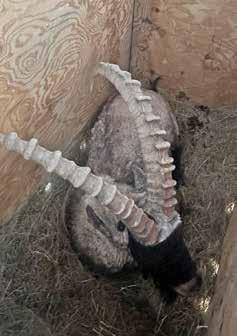
Between 2023 and 2025, 81 ibex were captured, transported, and released following IUCN guidelines, with comprehensive veterinary care and post-release monitoring. GPS tracking and field surveys enabled continuous assessment of movement, habitat use, and survival.
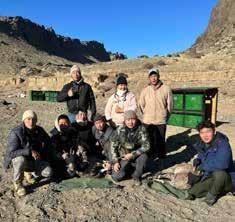
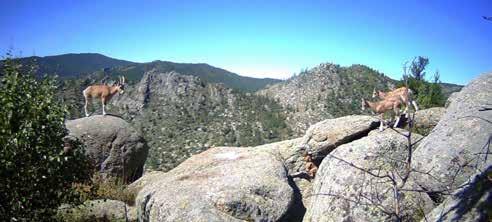
Monitoring confirms strong outcomes:
• Successful adaptation to new habitats
• 23 kids born in 2024–2025, demonstrating rapid establishment and reproduction
• Only one mortality, indicating low translocation stress
These results validate reintroduction as an effective, lowrisk tool for restoring mountain ungulates when guided by science and careful planning.
This initiative highlights Mongolia’s growing capacity to conserve, manage, and sustainably use mountain ungulates. By relieving pressure in an overdense protected area and restoring ibex to former range, the project delivers benefits for ecosystems, biodiversity, and long-term wildlife stewardship.
The success of the Siberian ibex reintroduction aligns closely with the mission of the Wild Sheep Foundation, offering a replicable model for mountain ungulate
conservation across Central Asia and beyond. WS
Contact: Mongolian Wildlife Association NGO
Project: Siberian Ibex Reintroduction
Email: mongolwildlife@gmail. com

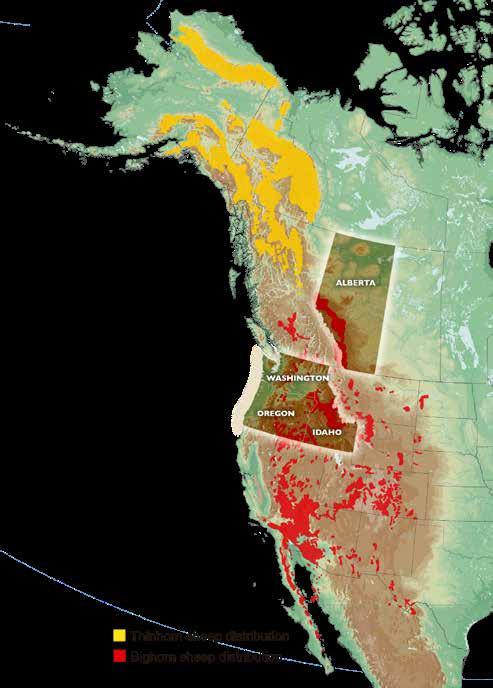
In this installment of Sheep Stats, we’ll be covering Alberta, Idaho, Oregon, and Washington. This geographic area has both Rocky Mountain bighorn and California bighorn populations. To accommodate magazine page counts some charts and graphs are not shown. Click on the QR code at left to download the complete 2025 Range-wide Status of Bighorn and Thinhorn Sheep in North America PDF.
Rocky Mountain Bighorn Sheep Populations
There is an estimated 9,000 Rocky Mountain Bighorn Sheep in Alberta (2024), of which 6,000 occur on provincial lands and 3,000 in federal National Parks. This estimate is based on minimum aerial survey counts conducted every 2-5 years on known winter ranges. Overall, the provincial population has been stable to slightly decreasing since 2000.
To be legal for harvest, rams must meet or exceed a 4/5 curl (‘Trophy Sheep’) or full curl requirement (“Full-curl Trophy Sheep”). In 2024, there were 58 special licenses available to Alberta residents through a limited entry draw / lottery system, as well as 114 outfitter allocations. In addition, 2113 resident Albertans purchased a general license to hunt rams. This license provides an “over the counter” hunting opportunity (with 1 license/hunter and an unlimited
number of licenses available).
In 2024, 121 rams were harvested by resident hunters, consistent with the 10-year average of 124 rams. Overall, 160 rams were harvested in 2024 by all licensed hunters (resident, non-residents, non-resident aliens), down from 200 rams in 2023 but consistent with other years.
Hunter success is typically 5% for resident hunters and approximately 40-50% for hunters accompanied by an outfitter. Since 2010, the ram harvest rate

has averaged about 2.6% of the estimated population on provincial lands (range 2.0 – 3.3%). Harvest in some sheep management areas exceeds 50-70% of available legal rams annually, with 70-90%+ of rams harvested the first year they become legal. The percentage of legal rams observed in aerial surveys in many areas has consistently been low (1-3%) for the last 10 years or so.
Ewes, or male bighorn sheep < 1 year of age, can be hunted under a special license (limited entry hunt) in non-trophy areas. These areas include 14 of a possible 31 wildlife management units (WMUs) with bighorn sheep. Approximately 135 non-trophy sheep licenses were available in 2024, down from the 5year average quota of about 260. A total of 114 hunters purchased non-trophy licenses in 2024. The non-trophy harvest rate typically averages about 1% of the estimated population on provincial lands.
Prior to February 2023, there had not been a known pneumonia outbreak in Alberta since 2000. In February 2023, 9 rams were found dead in the Sheep River Provincial Park west of Black Diamond in southern Alberta. An additional 7 rams were observed coughing and were culled by wildlife managers to prevent transmission to a nearby group of 95 bighorn ewes and young animals. Fourteen of the 16 rams tested positive for Mycoplasma ovipneumoniae (MOVI). Of the remaining two rams, samples were unavailable for one and necropsy revealed that the other had severe respiratory pneumonia.
A subset of bighorn sheep in the adjacent herd of 95 were subsequently tested for Mycoplasma spp. and all 42 were negative. Eight young rams in this herd were also radio-collared for several months to track their movements; none moved into areas
with domestic sheep or goat farms. Since the 2023 event, no pneumonia outbreaks have occurred, and all bighorn sheep tested for MOVI have been negative as tested.
— Anne Hubbs, Alberta Environment and Protected Areas
In Idaho, bighorn sheep exist in both small, isolated populations and in interconnected metapopulations. For management purposes, these populations and metapopulations have been divided into 21 Population Management Units (PMUs). Currently, an estimated 3,780 bighorn sheep occupy about 15.5% of the state. Historical and recent data indicate that most PMUs can sustain higher populations of bighorn sheep and overall management direction will be to increase population levels where feasible. To attain this goal, IDFG will write an annual action plan to describe in more detail planned activities to address management directions and strategies in this plan.
Rocky Mountain bighorn sheep (approximately 3,380 animals) occur in 16 PMUs in central and southeastern Idaho. Fifteen out-of-state translocations and 16 in-state translocations were conducted between 1969 and 2005 to restore Rocky Mountain bighorn sheep populations to historically occupied habitat. Translocations have successfully expanded the distribution of bighorn sheep, but most of the largest populations are still native Rocky Mountain bighorn sheep that were never extirpated in the Salmon River drainage. In south-central and southwestern Idaho about 400 California bighorn sheep occur in 5 PMUs (Figure 2). Bighorn sheep were completely extirpated from this part of the state, and current populations are the result of 12 translocations with bighorn
sheep from outside Idaho and 18 translocations with bighorn sheep from within the state between 1963 and 2004.
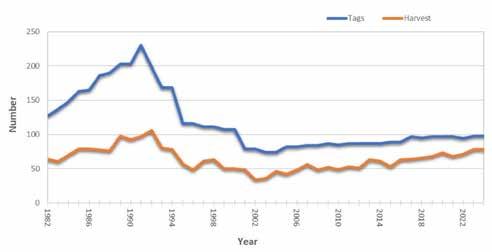
Over the last 85 years, ram tags and harvest have varied considerably with changes in populations (Figure 1). Diseaserelated die-offs that have impacted large portions of Idaho’s bighorn sheep populations typically resulted in large reductions in tag levels, followed by slow increases in tags if populations recovered.
Beginning with the 1991–95 bighorn sheep management plan, hunting was not recommended unless a population was estimated at >100 animals. However, a 100-animal minimum may preclude legitimate ram-only harvest opportunities in some smaller populations where habitat carrying capacity prevents achieving minimum population size or risk of catastrophic, all-age die-off is high.
In Idaho, harvest was restricted to ¾-curl or larger rams from 1970–1983 and ¾-curl or larger rams or rams >4 years old (≥3 annual growth rings on horns) from 1984–2006.
In 2007, regulations were changed to allow harvest of any ram. Data gathered since 1994 indicate this change had no effect on the average age of harvested rams in Idaho.
Since 1991, management direction is to set tag levels so that harvest is ≤20% of class III and IV rams (¾curl or larger) observed during the most recent survey for each hunt area. This conservative harvest strategy ensures adequate mature rams for harvest and biological-behavioral requirements (social dominance hierarchy, genetics, mature male:female ratios, etc.).
The current timing of bighorn sheep seasons avoids hunting during the breeding season. Most bighorn sheep seasons start 30 August and continue until 8 October for California bighorn sheep and until 13 October for Rocky Mountain bighorn sheep. Some late-season hunts exist; for example, some hunts for Rocky Mountain bighorn sheep extend through 31 October.
Reduction of ewe numbers may be necessary when sheep numbers have increased above population objectives, including when habitat degradation is possible due to
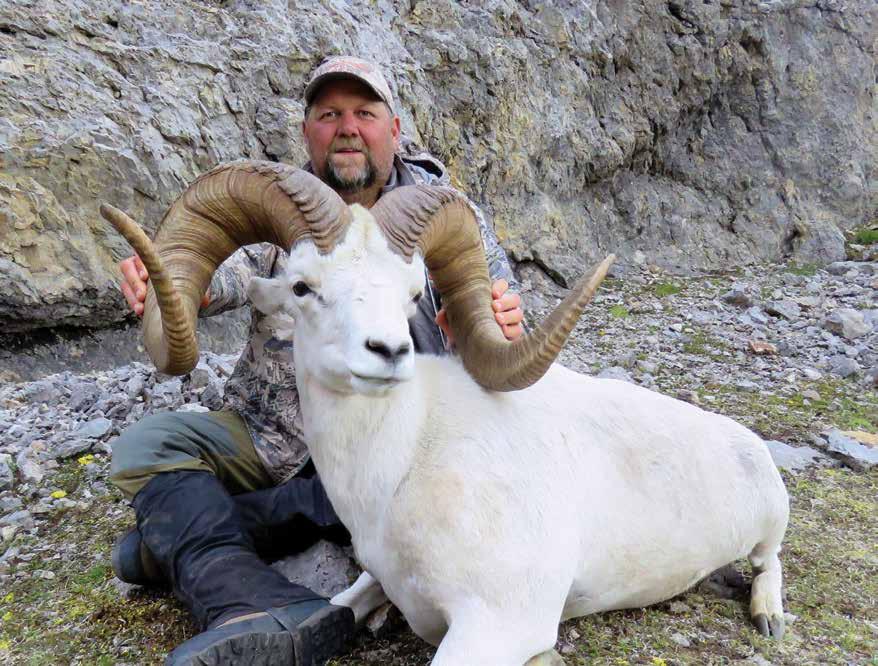
The Conklin Foundation board is pleased to announce the 2026 winner of the Conklin Award. Jeff Demaske is the 24th winner of the “Tough Man” award, named after the late Dr. James Conklin, a Weatherby Award winner, who liked to pursue difficult animals throughout the world.
Jeff began hunting in Wisconsin as a young boy. He went to the University of Illinois on a football scholarship. After college he moved to Colorado where he met his wife, Jann. They started construction, excavating, and property management companies and together raised two daughters, Madeline and Elizabeth.
Jeff has shot 13 FNAWS/Grand Slams, as well as most of the mountain animals of the world. He was nominated amongst these other great hunters: Barbara Sackman, Lee Anderson, Jan Dams, Wayne Farnsworth, and Gervasio Negrete.
The Conklin Foundation would like to gratefully acknowledge and thank the following businesses and individuals for their generous donations. The support of donors makes it possible for the Conklin Foundation to continue its efforts to educate youth about hunting.
• Go with Bo
• Canada North Outfitting
• Brilliant Stars
• Mexico Hunting Specialists
• Giuseppe Carrizosa
• Spanish Mountain Hunts
• Fernando Saiz
• Vidale Safaris
• Aland & Barbara Sackman
• Baranoff Jewelers
• Lake Albert Safaris LTD.
• Herederos Hunting
• Iberian Hunters
• Kevin Downer Sporting
risk of contact with domestic sheep and goats. Removal of ewes can be accomplished through capture and translocation (in-state or to other jurisdictions) or regulated harvest. Ewe removal is generally not recommended when populations are below habitat carrying capacity, newly reintroduced, or suppressed by a mortality factor (e.g., disease). There is currently no ewe harvest in Idaho.
All bighorn sheep hunting in Idaho is allocated via a controlled hunt (random drawing) system. Currently, nonresidents are limited to ≤10% of all bighorn sheep tags and not more than 1 nonresident tag can be issued for controlled hunts with ≤10 tags (≤10% to nonresidents in hunts with >10 tags). Chances of obtaining a bighorn sheep tag generally declined over time as interest and demand have increased (Figure 2).
Disease and Herd Health
Population health is an essential component of bighorn sheep restoration and management. Historically disease was an important factor contributing to
declines and extirpation of bighorn sheep in much of their range and disease continues to limit bighorn sheep numbers today. Not only does disease affect populations directly, risk of disease transmission also affects where and how IDFG manages for bighorn sheep in Idaho.
The primary limiting factor for Idaho bighorn sheep populations is disease, although other factors including habitat, genetics, climate change, predation, and hunting can also be important. The disease that has the most widespread and severe impacts on bighorn sheep population abundance is a microbiologically complex pneumonia triggered by the bacterium commonly referred to as “MOVI”.
In December 2023, MOVI and pneumonia were detected in Hells Canyon bighorn sheep for the first time in over 5 years. Pneumonia appeared to peak in January 2024 and the number of mortalities observed has declined since then, although MOVI is still present. Detections of MOVI and pneumonia have been limited to populations along the Snake River in Idaho, Oregon, and Washington.
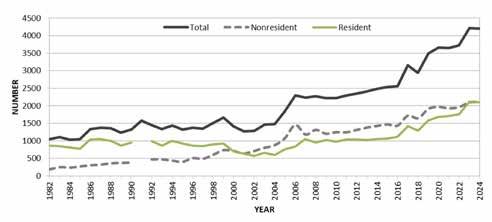
Figure 2. Resident, nonresident, and total number of applicants for bighorn sheep tags 1982–2024, Idaho.
As of April 2024, we have received strain-typing results from WADDL on 12 MOVI detections and all were identified as strain BHS-056. This strain has never been detected in Hells Canyon before. It was first identified in a 2020 pneumonia outbreak in the Lookout Mountain and Burnt River bighorn sheep populations in Baker County, Oregon, and was detected in Salmon River bighorn sheep above Riggins from 2021-2024. In December 2024 and February 2025, 70 total bighorn sheep were captured in Hells Canyon. We are continuing to monitor and plan to use information from this capture to guide management.
IDFG is currently conducting test and remove research/adaptive management to clear MOVI from multiple infected bighorn sheep populations. This includes testing and removing infected sheep in the Lower Salmon, Lower PantherMain Salmon, and the South Beaverhead PMUs. We are also gathering baseline data in other populations.
— Hollie Miyasaki, Idaho Department of Fish and Game
Rocky Mountain Bighorn Sheep Population
Oregon currently has 11 Rocky Mountain bighorn sheep herds, three of which are viable. All extant Oregon herds are the result of re-introductions. Since the first successful release of 20 animals from Alberta, Canada in the Lostine River in 1971, 31 additional releases of 410 animals from 7 state or provinces including Alberta, British Columbia, Colorado, Idaho, Montana, and Oregon have occurred.
Release size has averaged 13 but has ranged from a low of 2 or 3 animals to as high as 29 animals.
The combined annual population estimate for Rocky Mountain bighorn sheep in Oregon has averaged 600–900 animals over the last 22 years) with a 2024 estimate of around 1,100 animals. Fluctuations are primarily the result of pneumonia induced, die-offs followed by variable degrees of population recovery. There are currently three Rocky Mountain bighorn sheep populations with active MOVI induced mortality.
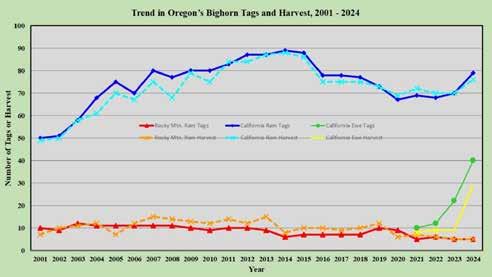
Since Oregon began hunting Rocky Mountain bighorn sheep in 1978, over 450 animals have been taken. Harvest has been primarily rams. Since 2001, an average of 8 controlled tags, 1 special auction tag, and 1 special raffle tag are allocated annually (Figure 1). Average harvest is 11 rams annually but has declined in response to disease induced population declines.
California Bighorn Sheep
Oregon currently has 32 extant herds of California bighorn sheep all of which are the result of reintroductions. Since the first successful release of 20 animals from British Columbia, Canada onto Hart Mountain National Antelope Refuge, 101 additional relocations of 1,343 California bighorn sheep from Oregon have occurred. Seventy-one of these releases (1,020 animals) were conducted within Oregon. Twentyseven relocations (374 animals) were Oregon animals released in 4 other jurisdictions (Idaho, Nevada, Washington, Wyoming).
The combined annual population estimate for California bighorn sheep in Oregon has averaged about 4,500 animals in recent years with a 2023 estimate of 4,730 animals. Fluctuations are
primarily the result of pneumoniainduced die-offs followed by variable degrees of population recovery. At time of writing 4 distinct herds are experiencing MOVI. induced mortality.
Since Oregon began hunting California bighorn sheep in 1965, over 2,700 animals have been taken. Harvest has been primarily rams, but ewe harvest began in two herds beginning in 2021. Since 2001, an average of 85 controlled ram tags are allocated annually (Figure 1). Ten and 12 ewe tags were allocated in 2021 and 2022, respectively. Annual average harvest is 85 rams annually.
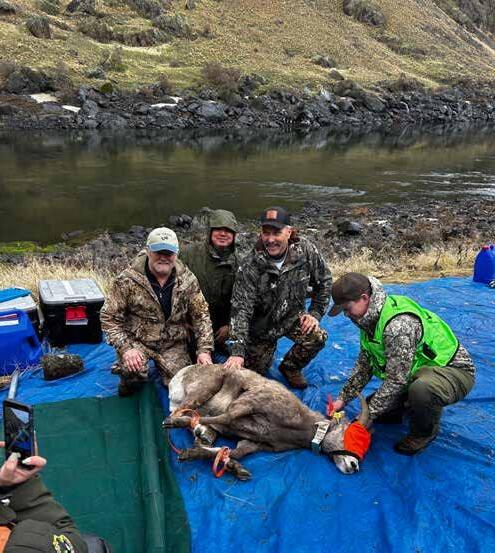
Oregon is currently conducting test and remove operations in 4 California bighorn sheep populations and 2 Rocky Mountain bighorn sheep populations. Pneumonia induced by MOVI. was first detected in the RattlesnakeTenmile California bighorn sheep herd in southeastern Oregon in 2012, with detection of mortalities beginning in 2015. During late winter 2019-2020, MOVI. induced pneumonia was detected in the Lookout Mountain herd of Rocky Mountain bighorn sheep along the Snake River in northeastern Oregon. By fall of 2020 the disease had crossed Interstate 84 to the west and MOVI. was detected in the Burnt River California bighorn herd. In January 2024 MOVI. also was detected in the lower Snake River herds. Because of the connections among these herds in three states (Oregon, Idaho, and Washington), all three states are paying extra attention to wild sheep in this area. The disease has moved north along the river into Washington and northeastern Oregon. Most mortalities, however, have occurred in Idaho and Washington.
— Don Whittaker, Oregon Department of Fish & Wildlife
Rocky Mountain Bighorn Sheep Population
Washington Department of Fish and Wildlife WDFW) manages 17 bighorn sheep herds that occupy a portion of their historic range within the eastern two-thirds of the state. Bighorn sheep were extirpated from Washington by 1935, and these herds are the result of reintroductions, which began in 1957 (Johnson, 1983) and continued until 2004. Herds associated with the eastern foothills of the Cascades and Okanogan Highland are designated as California bighorn (twelve herds), while those in the Blue and Selkirk mountains are considered Rocky Mountain bighorn sheep (five
herds). One herd, Tieton, remains under the Department’s purview but contracted pneumonia and was depopulated in 2013 to reduce the risk of disease transmission to the adjacent Cleman Mountain herd.
WDFW attempts to survey each herd biennially using aerial or ground approaches, which are not corrected for detection bias; therefore, in most circumstances, results should be considered minimum counts. However, in certain situations, when collars (i.e., marks) are distributed within a given herd, mark-resight methods may be utilized to generate abundance estimates. All aerial and ground surveys are typically
conducted between late fall and early spring to estimate population size, lamb recruitment, sex ratio, and proportion of mature rams in the population. The Department estimates that nearly 1,700 bighorn sheep are distributed throughout these herds, slightly less than the lower short-term population bound of 1,995 defined in Washington’s 2015-2021 Game Management Plan.
The Department manages harvest through a special permit system which promotes a highquality hunting opportunity; therefore, the number of permits is set at a level to maintain longterm herd sustainability, low
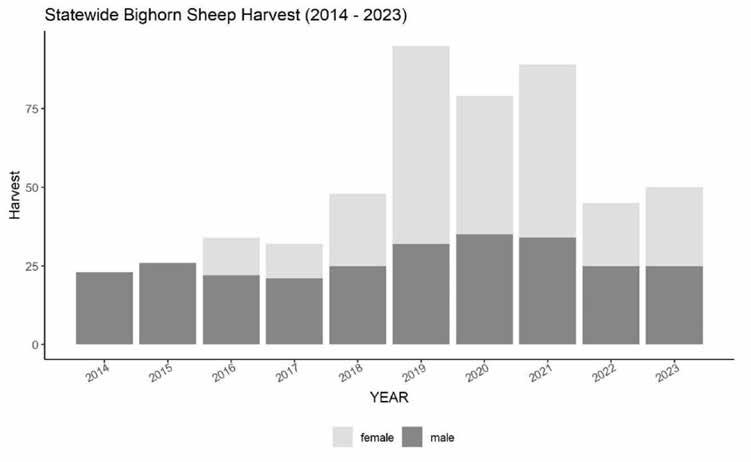
hunter densities, and long seasons to promote high success rates whether permits are “Any Ram,” “Adult Ewe,” or “Juvenile Ram.” In addition, allocation levels of permits classified as “Any Ram” consider the population size, ramto-ewe ratio, and the number of older age-class males to ensure a high-quality hunting experience is available when an individual is selected. Permits classified as either “Adult Ewe” or “Juvenile Ram” still maintain a high-quality hunting experience but are intended to reduce herd abundance (e.g., to maintain herd objectives or reduce the risk of contact between wild and domestic sheep), foray probability (decrease overall ram abundance by harvesting juvenile males given their higher probability of foray), or agricultural damage potential. Ram harvest has remained consistent over the last ten years, although overall harvest has fluctuated with the initiation of ewe and juvenile ram permits beginning in 2016, with dramatic increases between 2019-2021 associated with Test and Remove management in the Umtanum and Selah Butte herds (Figure 1 previous page).
The most significant threat to Washington’s bighorn sheep populations is exposure to the bacterium Mycoplasma ovipneumoniae (MOVI), a primary agent associated with pneumoniarelated die-offs that have contributed to both contemporary population declines and historic extirpations. MOVI has been documented in eight of the 17 bighorn sheep herds managed by WDFW. The most recent transmission occurred in December 2023 which has
spread throughout the Black Butte, Mountain View/Wenaha, and Asotin segments of the Blue Mountains Complex within Hells Canyon. These outbreaks are ongoing, with acute illness still being observed; the extent of overall mortality is yet to be determined. Previous transmission events and persistent pathogen presence have been recorded in the Umtanum/ Selah Butte herd (2009), Tieton (2013), Mount Hull (2019), Cleman Mountain (2020), and Quilomene (2021). The Department conducts routine MOVI surveillance during all captures, harvests, and opportunistic encounters (e.g., roadkilled animals).
Additional population-level concerns have emerged with the detection of psoroptic mange in the Sinlahekin, Mount Hull, and more recently, the Vulcan Mountain herd. This condition is caused by a nonburrowing ectoparasitic mite of the genus Psoroptes, which produces scabby lesions and alopecia, and is suspected to contribute to population decline (Hering et al., 2021). Research suggests the parasite spilled over from rabbits, originating in Canada and spreading to the Sinlahekin herd in 2011. It was detected in the Mount Hull herd during captures in January 2023 and in the Vulcan Mountain herd in February 2025. Further research is necessary to quantify the full impact of this parasite on herd health and population dynamics.
Finally, Bluetongue virus has been documented in several bighorn sheep populations, with severe shortterm declines observed in the Sinlahekin, Mount Hull, and Vulcan herds. While the disease has also been detected in
other herds, those populations have not experienced significant declines to date.
The Department actively participates in the Bighorn Sheep Restoration Committee, a collaborative group that includes multiple state fish and wildlife agencies, universities, and the Wild Sheep Foundation. This partnership coordinates research and funding efforts to support bighorn sheep conservation. Current research priorities focus on expanding the knowledge base needed to inform effective management strategies for populations exposed to MOVI. The Department is currently engaged in projects involving herds in the Blue Mountains, Umtanum, Selah Butte, and Cleman Mountain, and has increased monitoring efforts in the Mount Hull and Vulcan herds.
Statewide, bighorn sheep populations are expected to decline due to disease impacts across several herds, including those in the Blue Mountains, Cleman Mountain, Quilomene, Sinlahekin, and Mount Hull. However, there is optimism that ongoing Test and Remove management efforts in the Umtanum and Selah Butte herds will lead to population increases in the future. The Department’s primary objective is to enhance understanding of disease dynamics, implement measures to prevent transmission, and support the persistence of disease-free herds to promote long-term population stability and growth. WS — Will Moore, Washington Department of Fish and Wildlife


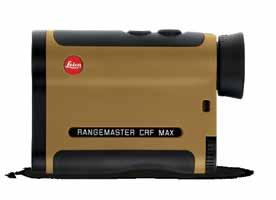
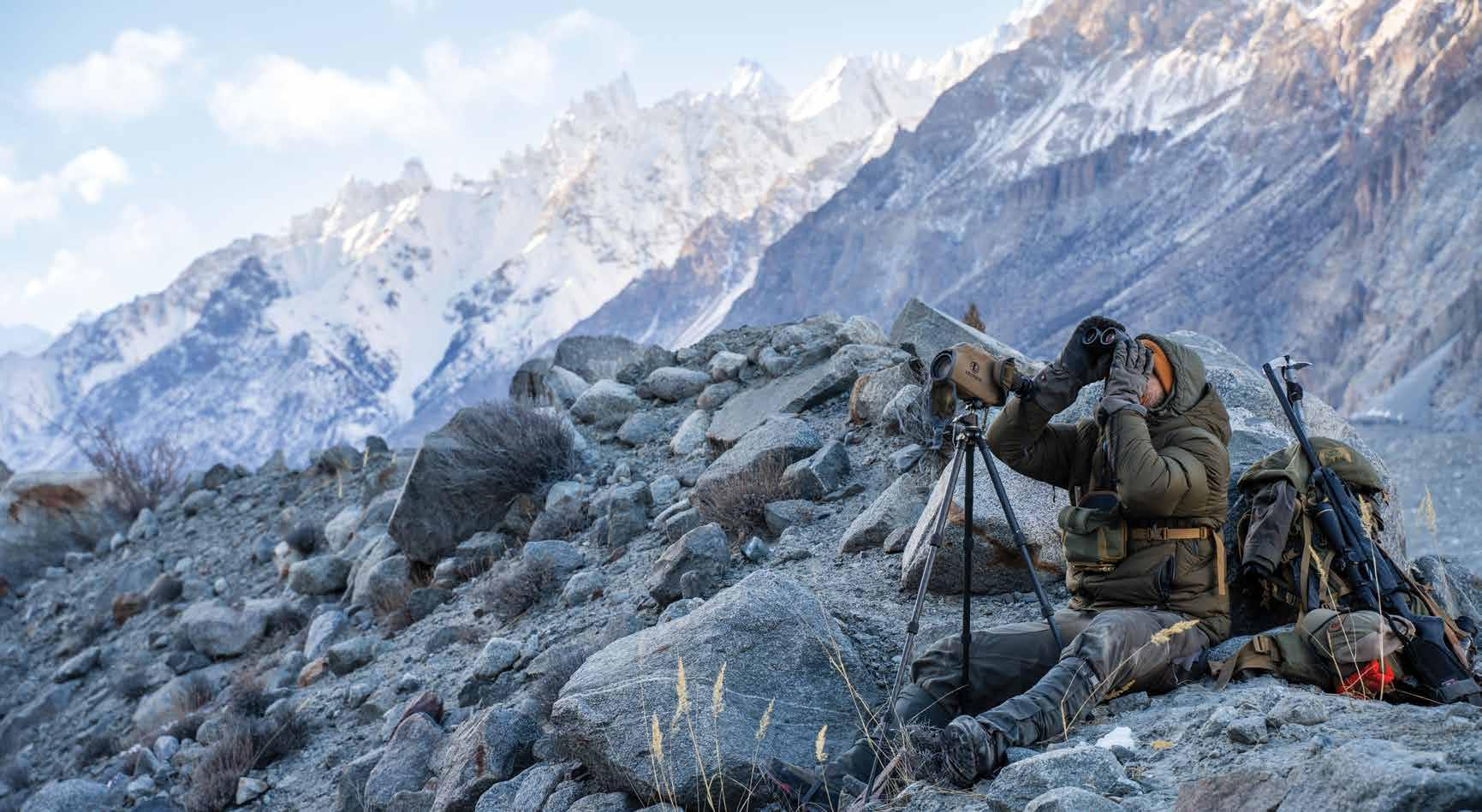
Meet Leica CRF MAX—the compact rangefinder that changes the game. With pro-grade ballistics, GPS target marking, the brightest, fastest display, unrivaled optics, and onX integration all packed into one product. Know Where You Stand And Where to Go. Integrates With


In 2013 the Wild Sheep Foundation (WSF) launched a legacy campaign, Ensuring the Future of Wild Sheep, that includes tax and estate planning opportunities, counsel and advice, major gifts, and giving societies to raise the funds required to ensure the future of the wild sheep resource by directing even more dollars to wild sheep restoration, repatriation and conservation. Our vision is to build a series of funds from which a targeted annual offtake of ~4% will allow WSF to direct 100% of our convention fundraising to mission programs. Our goal is $5 to $6 million annually in mission focused Grant-In-Aid and other funding to “Put and Keep Wild Sheep on the Mountain.” With your help we can achieve this vision and goal.
The Marco Polo Society was established in 2008 as WSF’s premier giving society. To compliment the Marco Polo Society and expand this giving concept to ALL WSF members and wild sheep advocates, WSF created a new giving society in the fall of 2013 – the Chadwick Ram Society with five benefactor
levels enabling tax-deductible, donor directed gifts from $250 to $5,000 per year to mission areas of the donor’s desire. Donations can be made to the WSLF Endowment Fund, WSF Conservation Fund, our annual Convention and/or Area of Greatest Need to fund specific programs and initiatives. Chadwick Ram Society members are recognized with a lapel pin displaying their Copper, Bronze, Silver, Gold or Platinum benefactor level. Members may also “upgrade” their benefactor levels within the Chadwick Ram Society as well as to the Marco Polo Society.
For more information on the Chadwick Ram Society, Ensuring the Future of Wild Sheep campaign, or the Keep Climbing Campaign contact WSF President & CEO, Gray N. Thornton, Development Manager, Paige Culver, or visit our website.
We cordially invite you to join the Chadwick Ram Society and help Ensure the Future of Wild Sheep!

CRS MEMBERS ARE LISTED IN ALPHA ORDER BY BENEFACTOR LEVEL
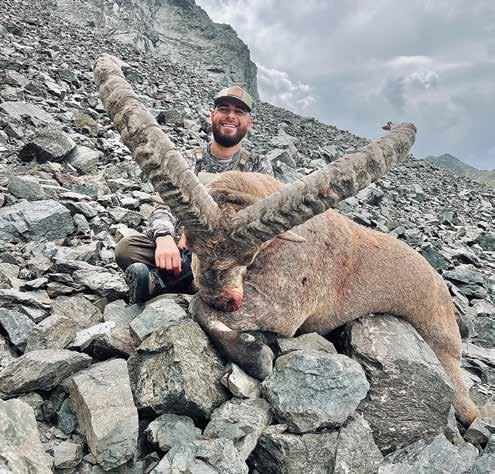
I chose to support the Wild Sheep Foundation through my membership in the Chadwick Ram Society because of the deep respect I’ve developed for Wild Sheep and the places they live. My first encounter in 2019 with Wild Sheep in the wild left a lasting impression, watching a band of Rams navigating steep mountains of Alaska with power and grace reminded me of how fragile yet resilient these animals are. That moment made me realize how important it is to give back and ensure they remain on the landscape for generations to come.
For me, joining the Chadwick Ram Society wasn’t just about being part of a group, it was about taking action. This commitment is a way to support the conservation work that truly makes a difference: habitat protection, disease research, and programs that introduce youth to the outdoors. Knowing that my contribution helps keep sheep on the mountain motivates me to stay involved. Hunting has always been about more than the harvest; it’s about stewardship, connection, and respect for the wild. Through the Chadwick Ram Society, I can help preserve those values while supporting the animals and traditions I care so deeply about.
- Marcus Gores
(January 1, 2026 - Press Time)
PLATINUM - $50,000
Eyas Foundation (WY)
GOLD - $25,000
Paul Greene (CO)
Don Martin (CA)
Greg & Marjorie Pope (WY)
Zachary Walton (CA)
Jim Wilson (NJ)
SILVER - $10,000
Sandra Fields (FL)
Jesse & Dawn Riggleman (NC)
Paul Schultheis (CA)
Robert Wallock (WI)
BRONZE - $5,000
Jeffrey Davis (TX)
Gary & Elizabeth Ingersoll (TX)
Patrick & Shelby Mansfield (ID)
Charles Monson (ND)
Henry & Amy Noss (PA)
John Pestorich (CA)
Mark Riether (NJ)
Matthew Riether (NJ)
COPPER - $2,500
Doug Bennett (VA)
John Bowman II & “The Bowman Boys” (VA)
Montegomery Brewer (NV)
Clayton DeLong (ID)
Nicholas & Celeste Fantanarosa (PA)
Kyle Gemas (TX)
Shane Gilthvedt (AK)
Bryan Johnson (SD)
Mary Mason (AZ)
Terry Mehlhaff (NV)
Adam Ratner (ID)
Jeremy & Mindy Schaad (WY)
Charles Trett (NY)
Adam Uhl (IN)
Timothy Uhl (IN)
by Paige Culver WSF Development Manager
You have fought for wild sheep in your lifetime in many ways. You have climbed the mountains. You have supported conservation. You have stood shoulder-to-shoulder with others who believe wild sheep belong on the landscape—not just in history books. For that commitment, we are deeply grateful.
Through your membership and your support of our giving societies, you have helped restore and protect wild sheep populations, secure habitat, and strengthen the partnerships that make long-term conservation possible. Because of you, wild sheep are on the mountain today.
Many of you have invested years—if not decades—into this mission. At Sheep Show® this year, I asked a simple question: What will wild sheep conservation look like in 50 years, when the faces filling our banquet and expo halls look very different?
For those who want their conservation values to extend beyond their lifetime, planned giving offers a meaningful and practical solution. A planned gift is one of the most powerful conservation tools you can use— and it is often much simpler than people expect. It does not require complex strategies or affect your current financial security. In many cases, it is simply a decision that ensures wild sheep and wild places endure.
Gift planning allows you to
support your family and maintain financial stability while also establishing a lasting commitment to conservation. For some, that means including the Wild Sheep Foundation in a will or trust. For others, it may involve naming the foundation as a beneficiary of a retirement account or life insurance policy. The right approach depends on your individual goals and circumstances.
We understand that estate planning can feel overwhelming. That is why we are committed to making the process straightforward, relaxed, and constructive. Our team is available for confidential, no-pressure conversations to help you explore options and determine what makes sense for you and your family.
Members who have taken this step often share that what once felt intimidating became manageable once they had clear information and guidance. Planned giving is not about complexity—it is about intention. It ensures that the work you have supported throughout your life continues with strength and stability.
Through the Legacy Society, members are already making that commitment. Their leadership allows us to plan beyond annual cycles, invest in long-term conservation strategies, and respond to future challenges with confidence.
Legacy commitments provide stability. They make it possible
to Put and Keep Wild Sheep on the Mountain® Today, Tomorrow, and Forever.
If you have considered how to continue your support into the future, we encourage you to begin with a simple conversation. There is no obligation—only the opportunity to align your longterm plans with the conservation values you have lived by. You remain in control at every step. Thank you for believing wild sheep belong on the landscape. Thank you for helping ensure they remain there for generations to come. WS
For more information or to join today—contact Paige Culver, WSF Development Manager. Ph: 406-404-8748
Email: pculver@ wildsheepfoundation.org

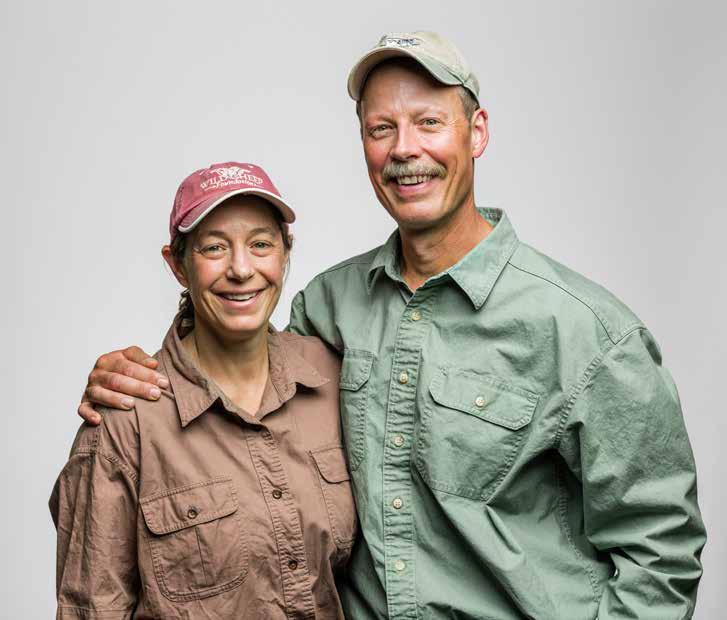
Roxane and I have been proud supporters of the Wild Sheep Foundation for many years. When it came time to prepare our will, we were very pleased to include the foundation in our
planned giving. Both of us being avid hunters, wildlife enthusiasts, and I being an artist, we wanted to give back to conserving the wildlife that have brought us so much pleasure over the years.
Knowing that our contribution will keep working for wild sheep and the wild lands they inhabit into perpetuity is very fulfilling. It feels good to know that we can have a lasting impact. WS
Lee & Penny Anderson (FL)
G. Thomas & Patricia Lang (FL)
Kevin & Janine Rinke (MI)
Tim & Ruth Van Der Weide (IA)
John & Jane Babler (MN)
Gary Romain & Jude Siddall (WA)
Kip & Sue Slaugh (UT)
Matt Tomseth (OR)
Keep Climbing campaign society members may direct gifts to where they feel it is needed most, consistent with our Today, Tomorrow, and Forever for Wild Sheep conservation focus. However, to ensure wild sheep conservation and the Wild Sheep Foundation succeeds in perpetuity, 33% of all Keep Climbing Society gifts will be directed to the Wild Sheep Legacy Foundation Endowment Fund.
Bryan Judge (MI)
Robert Hall & Jane Link (FL)
Terry Rathert (TX)
Mike Snider (MI)
Matt Tomseth (OR)
Mike J. Borel (CA)
Peter & Wendy Burchfield (PA)
Kevin Hurley & Connie Sturdavant (ID)
Wayne & Denise Lennington (TN)
Derek & Harbor Blake (AK)
Oscar & Valerie Carlson (MN)
Darin & Tonya Fiedeldey (OH)
Zach & Amber Higgins (ID)
Hank Raats (NV)
David Reed (TX)
Christopher Ring (TX)
Jason Soulliere (MI)

by Greg Schildwachter WSF Lobbyist
The Trump Administration’s conservation agenda is taking shape. As with any administration, this one has critics—both fair and not so much. Also, many other issues got a head start in the headlines. Still, 2025 was a single year and there are three more coming: there is no time to waste.
Mountain conservation requires cold, clear focus and execution to Put and Keep Wild Sheep on the Mountain®. Here are the opportunities and challenges going into 2026.
There are several positives. In October 2025, Administrator Zeldin of the Environmental Protection Agency directed states to allow more prescribed fire smoke within air quality limits. In January 2026, Interior Secretary Burgum opened all Interior Department lands to hunting and fishing with sensible exceptions. In February, Secretaries Burgum and Rollins (Agriculture) reallocated existing funds to create the largest funding round for migration habitat improvements since that program began in 2018. Also in February, the White House launched a Make America Beautiful initiative for conservation including stewardship, economic growth, access, environmental management, and wildlife.
Prescribed fire smoke is, technically, air pollution. But without prescribed burning, a lot more smoke is likely from big fires and habitat loss is certain. The EPA directive allows for smart trade-offs and states can now authorize more prescribed fires.
Hunting is fundamental to
wildlife conservation and requires access. The Interior Secretary’s Order recognized this and sped up and expanded the previously annual, incremental process of opening new hunting areas.
The Western Big Game Migration Habitat Initiative of 2018 took the direct approach to landscape scale conservation that promotes work on the ground instead of prohibitions lined out as no-touch zones on a map. The latest funding round acknowledges that paying outside partners to do this work is a higher and better use of funds than funding agency programs that indirectly improve habitat.
The Make America Beautiful Again Commission is this administration’s way of coordinating all government agencies toward conservation goals. It combines the efforts of all departments—particularly Interior, Agriculture, EPA, and Defense —with White House Councils on Domestic Policy, Budget, and Environmental Quality.
Issues more specifically important to WSF are developing, such as grazing regulations and public land sales and exchanges. There are many more issues we would like to advance. WSF is engaging closely with the administration to support its comprehensive approach and fill it with attention to our issues.
Two realities make this difficult. The first, as always, is the shortness of time. The other, which is more evident now than usual, is the tension between developing resources and caring for them.
To make the best use of time,
WSF and our partners are engaging with the new hires of this administration and offering our time and ideas for regular work in developing issues. We are finding open doors.
Managing tension is more difficult. Since conservation began in the Theodore Roosevelt administration, it has required disciplined decisions on how to meet needs today and provide for needs in the future—and to include in “needs” the wildlife resource along with commodities.
While TR advanced wildlife, he irrigated the West and began controlling how, where, and when (not whether) timber, minerals, and forage would be used.
He explained: “Conservation means development as much as it does protection. I recognize the right and duty of this generation to develop and use the natural resources of our land; but I do not recognize the right to waste them, or to rob, by wasteful use, the generations that come after us” (New Nationalism speech, 1910).
While the Trump administration develops oil, gas, and minerals, it is re-energizing forest management and now, wildlife issues.
The WSF family brings an exceptional ability to engage. It’s called Thinking Like A Mountain, from the Aldo Leopold essay about how only mountains have lived long enough to be objective about the here and now. We advance our mission, give credit where due, and advocate for the discipline of active management and restraint that conservation has been since the beginning. WS
The Marco Polo Society® (MPS) is the Wild Sheep Foundation’s premier major giving “society” whose members have given and/or pledged a minimum of $100,000 to the Foundation. These donors have played a key role in the Wild Sheep Foundation’s success over the last 16 years. Quite frankly, this special group of donors has led the way in achieving our purpose of “putting and keeping wild sheep on the mountain”.
WSF SALUTES OUR MARCO POLO SOCIETY® MEMBERS TO DATE - Alphabetical Order
Shane & Angela Alexander (TN)
Lee & Penny Anderson (FL)
Anonymous
Anonymous
Stanford & Pamela Atwood (CA)
John & Jane Babler (MN)
Bryan & Barbara Bartlett (NM)
Scott & Erica Barry (MI)
Brian & Debbie Benyo (OH)
Gary Bogner (MI)
Dan & Kathy Boone (TX)
Louis & Patti Breland (AL)
Jerry & Amy Brenner (NC)
Steve & Jackie Bruggeman (MN)
Peter & Wendy Burchfield (PA)
Tony & Virginia Caligiuri (IA)
Ron & Billi Carey (AB)
Oscar & Valerie Carlson (MN)
Michael Carpinito (WA)
Walt & Joan Coram (TX)
Guinn & Betsy Crousen (TX)
Sam & Tracy Cunningham (TX)
Denis & Diane Dale (AB)
Dean & Paige Darby (MI)
Monty & Becky Davis (TX)

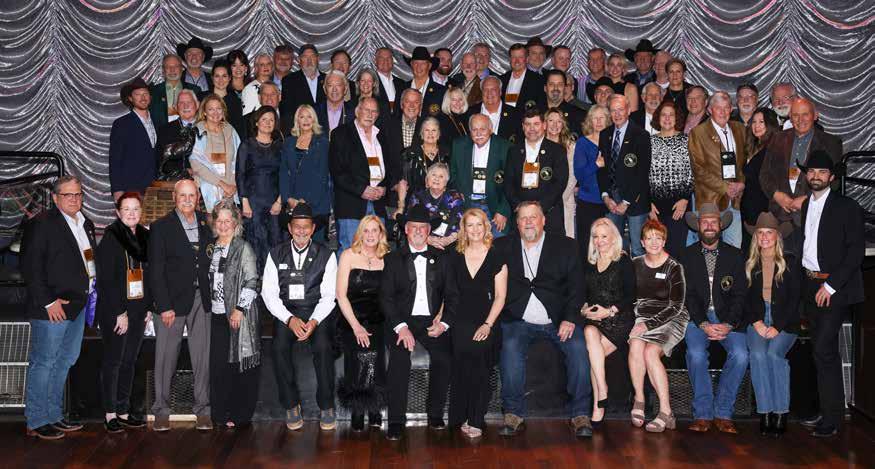
Since its inception in 2008, $11 million in MPS gifts/pledges have been directed to WSF and mission programs. We are so proud to announce that the Marco Polo 100 member goal was achieved at the 2024 Sheep Show when a group of generous Marco Polo members purchased the #100 member spot for a whopping $1 Million Dollars to be directed to the Wild Sheep Legacy Foundation’s Endowment Fund. We are so humbled and proud to witness the Wild Sheep Family come together to create history and we have never been more excited and hopeful for the future of wild sheep worldwide.
Jeff & Jann Demaske (CO)
Chris & Jaimie Dianda (NV)
Mike & Julie Dianda (NV)
Mark & Janice Dickson (CA)
Billy Dunbar (AK)
The Fiedeldey Family (OH)
Tom Foss (AB)
Ronald S. Gabriel, MD (CA)
Kevin Gilbert (MT)
Paul Greene (CO)
Brian and Susan Ham (AZ)
Marc & Cheryl Hansen (PA)
Jim & Sue Hens (NY)
Charles Herron (AL)
Tom & Denise Hoffman (NY)
Steve & Jill Hornady (NE)
Larry & Jane Hunts (OR)
Kevin Hurley (ID)
Ross & Nicole Jackson (CO)
Scott Jesseman (IL)
Kaan & Nurgul Karakaya (TUR)
Roger Kenner (ND)
G. Thomas & Patricia Lang (FL)
George & Kelly Lawrence (WA)
Doug & Dana Leech (WV)
Thomas Lemmerholz (GER)
Wayne & Denise Lennington (TN)
Jeff Lindgren (MN)
Robert Hall & Jane Link (FL)
Paul Mattes (MI)
Kyle & Joanne Meintzer (NV)
Joe & Christine Michaletz (MN)
Craig & Therese Mueller (ID)
Richard & Linda Murphy (NM)
The Olmstead Family (BC)
Mark & Gabriela Peterson (MI)
Ron & Vicki Pomeroy (WY)
Larry & Brenda Potterfield (MO)
Rancho La Palmosa (MEX)
Joni & Gary W. Raba (TX)
Terry Rathert (TX)
Gary & Yvonne Rigotti (OR)
Christopher Ring (TX)
Kevin & Janine Rinke (MI)
Alan & Barbara Sackman (NY)
Doug & Shelly Sayer (ID)
Roger Segebrecht (WI)
Steve & Sue Skold (IA)
Kip & Sue Slaugh (UT)
Kevin & Tuesdy Small (CA)
Dan Smith Jr. (CA)
Dan Smith III (CA)
J. Alain Smith (WA)
Mike Snider (MI)
Jeff Sorg (MT)
Daryll & Shauna Southwick (CO)
Brandon & Kristi Stokes (OR)
Rick Taylor & Carole Danyluk (BC)
Jelindo & Sandee Tiberti (NV)
Gray & Renée Thornton (MT)
Matt Tomseth (OR)
Mark Watkins (MN)
Tim & Ruth Van Der Weide (IA)
Ken & Anna Vorisek (AK)
Neal & Jody Wanless (AZ)
Mark Watkins (MN)
Jay & Martha Webster (TX)
Craig West (NC)
Steven & Ardyce Whisler (MT)
Clayton & Modesta Williams (TX)
Lyle & Jennifer Wood (AB)
Russ & Debi Young (TX)
Gary & Penny Young (WV)
Alan Young (YT)
#100 - $1M to the Endowment
You’ve climbed the mountains.
You’ve supported conservation. You’ve stood shoulder-to-shoulder with others who believe wild sheep belong on the landscape—not just in history books. What happens to that commitment someday?
A planned gift to the Wild Sheep Foundation is one of the most powerful conservation tools you will ever use. And it may be far simpler than you think.
No complex strategies.
No impact on your current financial security.
Just a decision that ensures wild sheep and wild places endure.

Let’s have a confidential, no-pressure conversation about what makes sense for you and your family. Visit WSFLegacy.org
Or contact us today: Gordon L. Nelson, CPA, CFP® giftplanning@wildsheepfoundation.org 435-213-9986
“IF THE DWR TOLD YOU THAT YOU COULD TURN YOUR TAG BACK IN, WOULD YOU? WITHOUT ANY HESITATION, I SAID, “DEFINITELY.”
BY BILL BURBRIDGE
One of the biggest days every year is putting in my application for Utah’s big game hunts. Each year, I labor over which units to apply for. It was a little easier to apply this year since I couldn’t apply for a limited entry deer tag since I drew a Paunsaugunt tag last year. So, I applied for a limited entry elk tag, a Zion deer tag (that is automatic with my lifetime license), and a Rocky Mountain bighorn sheep tag for the Oak Creek Fillmore unit, which I can remember people saying was not too difficult for harvesting a ram. Toward the end of May, we all started checking our credit cards to see if there had been any charges by the Utah Division of Wildlife Resources (DWR). One by one, my sons Bill and Brian and I painstakingly and
slowly reviewed our emails from the DWR. My son Bill in Virginia was the first; no luck. Brian was next with the same result. Of the “three amigos”, I was the last to check. I slowly looked at my results, and not too surprisingly, Rocky Mountain bighorn sheep— UNSUCCESSFUL. Limited entry elk, the same. I was disappointed primarily because at the age of 82, my future years of being able to hunt a Rocky Mountain bighorn sheep are probably limited.
Summer was good, especially with the rebound in the Kokanee salmon population and improved fishing success at Flaming Gorge where we spend many of our summer months. However, I would miss the fishing for most of August since my wife and I were going on a trip to Rome and spending
three weeks on a cruise ship in the Mediterranean Sea; my wife’s dream of a lifetime. While on the cruise ship one evening upon returning to our room, I looked at my phone and saw a voicemail from the Utah DWR. They said that if I wanted a bighorn sheep tag for the Oak Creek-Fillmore Unit to notify them by August 25th. My first thought was that it was a prank from one of my buddies. I called the DWR and it was legit. I was thousands of miles from Utah in the middle of the Mediterranean Sea with no land in sight and I got a once-in-a-lifetime coveted tag for a Rocky Mountain bighorn sheep. Someone turned it in and I was next in line. I was lucky to see that message since my friends and family will tell you that I don’t check my phone messages regularly.
We returned to our Ogden home from our trip in late August and all I could think about was my sheep hunt. I was euphoric about hunting a “Rocky”. The October 4th season opener did not leave me too much time to prepare. One of the first things I did was purchase a new rifle scope with a red dot reticle to help my aging eyes. My 6.5 Creedmoor was sighted in at about two inches high at 100 yards and I was placing bullets inside each other at the range. I was walking and hiking several miles a day, but I was concerned about not being able to handle the steep mountains the Oak Creeks are known for. I also pride myself on being in good physical condition,
but on February 5th, 2019, that all changed. That fateful day while alone in Manila, Utah, a building that was under construction blew over during a windstorm landing on top of me. After an ambulance ride to Rock Springs, WY, a LifeFlight to the University of Utah hospital and having to be brought back to life several times, the University of Utah Medical Center became my home. My back had been broken in two places, my femur broken, my ribs crushed, my lungs collapsed, and my liver lacerated. I was released in a wheelchair a little over a month later. Fortunately, I am still able to enjoy all my outdoor pursuits with just a few physical limitations.
At this point, I don’t know if my aches and pains are due to my accident or just the aging process an 82-year-old experiences.
Even though I spent about seven years as the public land’s representative on Utah’s Board of Big Game Control touring every nook and cranny of Utah, I was not familiar with the FillmoreOak Creek unit other than its reputation as being physically tough. One year I applied there for a limited entry mule deer buck tag but was not drawn; everyone told me that I was fortunate that I didn’t draw because of its rough country. I never applied there again, until now. I needed to learn more about the country I would
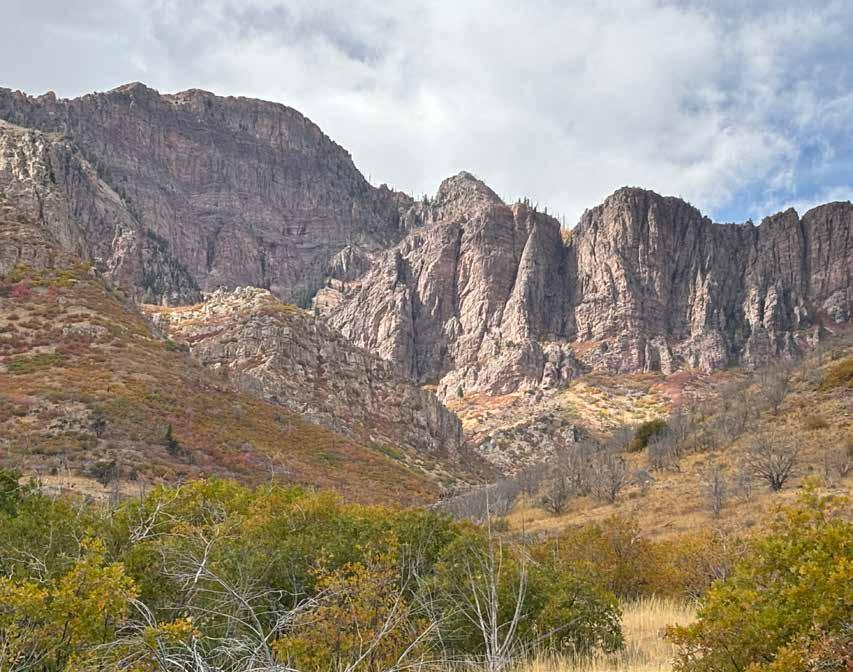
be hunting, so about three weeks before the hunt, I drove down to the unit to familiarize myself with the area. A friend went with me because my wife did not want me to go alone. We arrived at the town of Oak Creek at first light. We drove up the canyon anxiously glassing and scouring the lower slopes for sheep. We went to the top of Oak Creek Canyon as far as we could, only seeing a few does and fawns but no sheep. We drove several side roads with similar results. We talked to several campers and individuals scouting for deer, and when asking them about sheep, their responses were not encouraging. We thought that perhaps driving down the canyon would give us a better vantage, but we saw no sheep. Near the bottom of the canyon, we saw a young man glassing the hillside with a spotting scope. I wasn’t sure how he would react when I infringed on his space and asked, “What are you seeing?” To my surprise and with lots of excitement in his voice he responded, “This is terrific!” as he was watching a small group of bighorns near the top of the canyon slopes. I couldn’t see them in my binoculars or spotting scope; I could barely see them through his. He showed us another small group further up the canyon. They were also in a very remote, steep, inaccessible location. The young man then accompanied us up to the mouth of Cascade Canyon where we glassed for an hour spotting a small group of sheep at the very top of the canyon. All three of us pondered how we could access those sheep, and we concluded that maybe the best
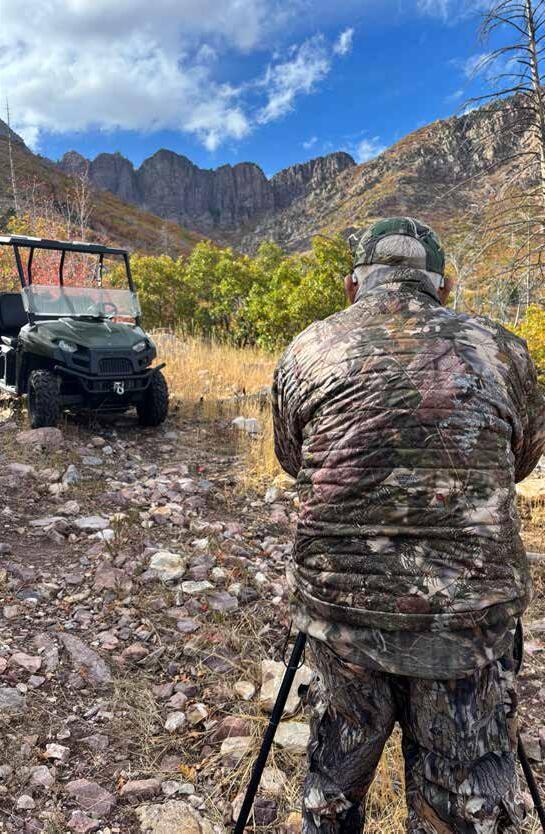
idea was to find a way to gain elevation other than hiking up from the bottom. When I returned to Ogden, I was pretty bummed, wondering about my physical ability to harvest a ram in the daunting ruggedness of the Oak Creek unit.
Time is a great healer. A few days later my doldrums and spirits were transformed into enthusiastic optimism. I was going to spend a day scouting with my son, Brian. Sheep hunters comprise a wonderful fraternity. We contacted everyone we could think of for
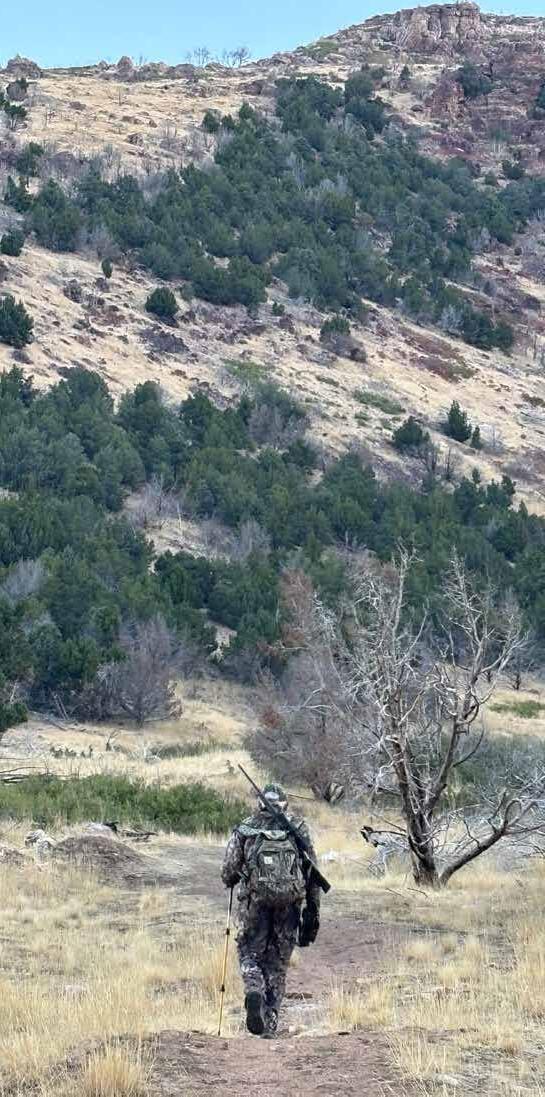
advice; from taxidermists and an outfitter, Forest Service wildland firefighters, and especially DWR biologists and conservation officers. They were all extremely helpful and perhaps even more important; encouraging. Our “hot tip” was to glass from a fairly high elevation site on the north side of the canyon. At first light, we traveled to that location with my son’s UTV and glassed for several hours but spotted no sheep. Going back down, we ran into a group of muzzleloader deer hunters. It was their last day and they hadn’t shot a deer, and the only sheep they saw had been a month ago. Again, my euphoria began to wane. We ran into more deer hunters and they said they hadn’t seen many sheep, but did watch a mature ram on the east side of the Oak Creek range. After talking to them, we went up the Fools Creek Road to its end and up Dry Fork spending considerable time glassing without seeing any sheep. The country looked great, but again, no sheep. We went back to Ogden not feeling very optimistic, especially with the October 4th season opener quickly approaching.
A few more calls after getting back home, especially to the DWR, provided some encouragement. They said we are in the right places and to spend as much time as possible “behind the glass”. Others said that if you are patient, some rams will often come down to the bottom of the canyon to water.
Northern Utah received record rains both on October 3rd and on October 4th, the season opener. We decided to skip the opener and instead leave Ogden early on
Sunday the 5th, prepared to spend at least four days hunting. My other son Bill would be driving to Utah from Virginia to spend the second week with us. We decided to stay in a motel in Delta (1520 minutes away) since we also wanted to watch the Phillies and Dodgers play in the postseason playoffs.
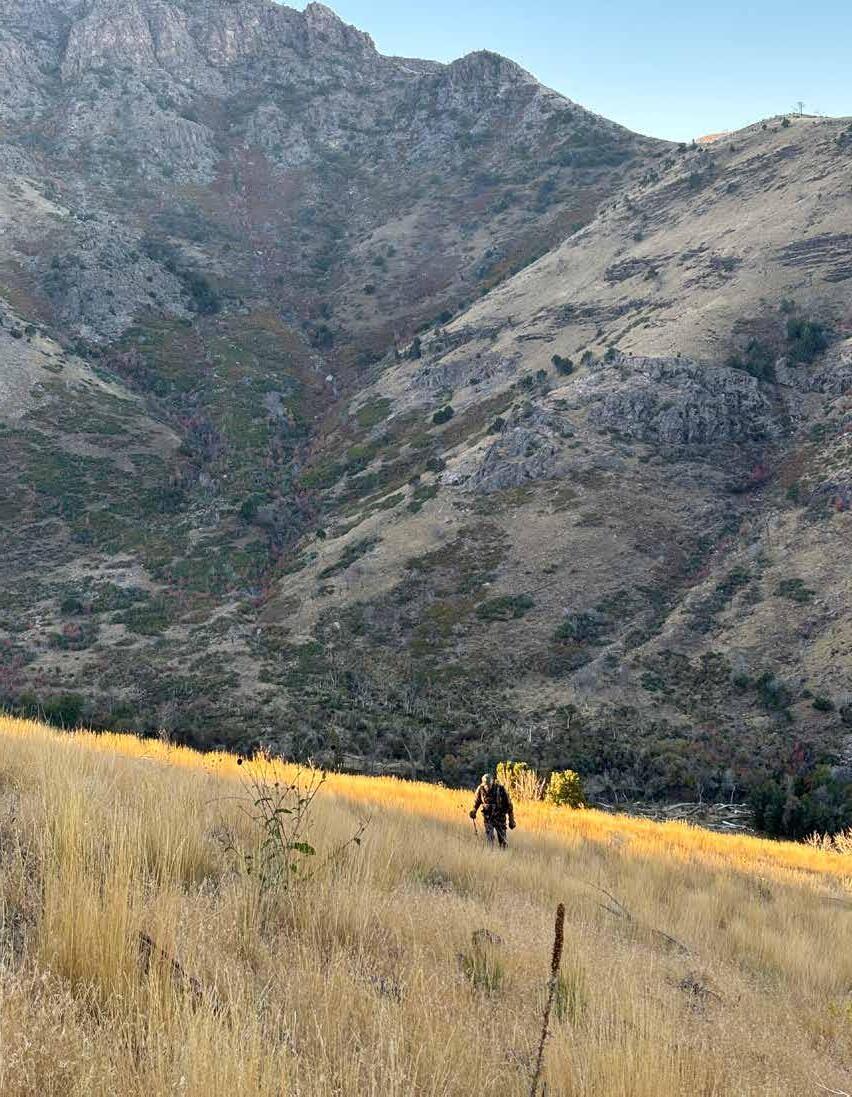
Brian and I took off early Sunday with all of our gear, lots of food, and the UTV. We were optimistic because we were going to check out Cow Canyon where the deer hunters had previously seen a pretty decent ram on the east side of the Oak Creeks. The Oak Creeks received some rain, but nothing like the monsoonal moisture we received in Ogden. We had driven a long way across some sagebrush flats before reaching the Oak Creek foothills. We unloaded the UTV and headed up Cow Canyon. The road was getting rougher and rockier the further up we went, however, the upper basin looked promising. When we couldn’t go any further, we hiked up to a ridgeline and glassed for about an hour. We tried hiking further up the canyon but couldn’t make it very far due to a rock wall and waterfall. We decided to head back to Oak City and glass the western side before darkness set in.
When we got to Oak City, we still had adequate light to glass the country above Cascade Spring and we were able to find some sheep up high. But again, the challenge would be “How are we going to get up there?” Driving up Oak Canyon in diminishing light, Brian spotted a decent ram right on the skyline. I was excited; finally, I was able
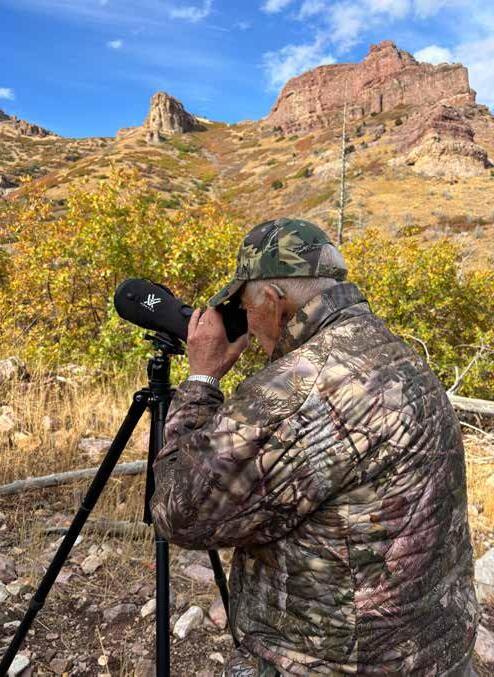
to get a good look at a ram with binoculars. Knowing it was going to be a tough hike to get to that ram, we formulated a plan to start hiking first thing in the morning. Once again, my spirits were lifted even though the Dodgers beat the Phillies, and our traditional first meal of fried chicken was terrible (there was enough breading on that bucket of soggy chicken to coat a hundred chickens).
As planned, at first light the next morning, we began our climb.
After almost two hours of hiking, we took a break. My son Brian, who has spent most of his career as
a wildland firefighter with the US Forest Service, continued up the mountain to see if he could spot the ram we saw the previous night. He returned after about an hourand-a-half and said that we were still a long way from where we saw that ram the previous night. Also, he did not see any sign of sheep. He suggested we turn around and head back to the truck, where we relaxed, ate some lunch and pondered our next move. Quite frankly, that climb was tough on my old broken body.
It is amazing how some food and rest can revitalize a person
There is no question that that moment will be etched in my mind forever, especially each time I look at that beautiful animal.
mentally and physically.
Our next move was to take the UTV up to the same high vantage point where we spent considerable time looking during one of our scouting trips. It was a very clear afternoon with a slight breeze and a spectacular vista with the sun shining on Fools Peak. We glassed
for several hours without seeing any sheep. Even if we spotted sheep, accessing them would likely be difficult considering the country we were glassing. Although it was emphasized by everyone that I needed to spend as much time glassing as possible, my patience was running out. I was ready to do
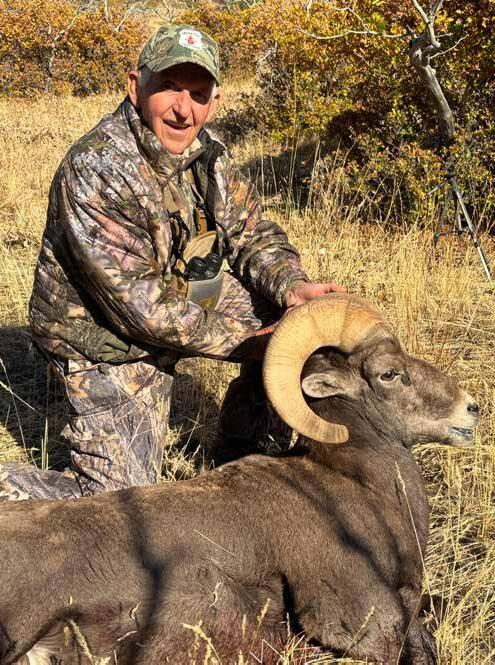
something else. About that time, Brian approached me and said, “If the DWR told you that you could turn your tag back in, would you?’ Without any hesitation, I said, “Definitely.” Not only because the hunting was difficult, but because I was starting to feel bad about keeping my son Brian away from his family for who knows how long—and my entire family was insistent that I not hunt alone. Also, my other son Bill was driving all the way out from Virginia to hunt with us the second week and I was pretty pessimistic about the prospects of success. Although it was only two days into the hunt, I was beginning to feel some pressure. We were done glassing at that spot, so we put the spotting scopes away and took off down the ridge feeling somewhat stymied. Five days of scouting and hunting under my belt without seeing an accessible ram. After going less than 50 yards, my son excitedly indicated there were four rams below us in the bottom of the canyon. They were starting to make their way up the opposite side. I was so excited that I momentarily forgot my rifle.
Finally, with rifle and tripod I got into a shooting position. I had some difficulty spotting them right away. When I finally found them, we both agreed that the last ram of the bunch was the biggest. Brian whispered, “320 yards, Pop.” I was so excited that I had a hard time not shaking. I tried to calm myself and took a deep breath and squeezed off the shot. Brian said, “You hit him,” although I did not feel great about the shot. The other
three rams ran off up the hill while my ram headed back down toward the bottom of the canyon. He was hit high in his right leg and was hurt. He disappeared into a pocket of oak trees. I slowly went down the slope toward the canyon’s bottom to get a glimpse of him. I was able to get a clear look and finished the job.
Walking up and seeing that ram was one of the most emotional and inspirational moments I have ever had, and to be able to share that experience with my son was a moment I will never forget. The coffee-colored cape on that ram and the contrast with its white muzzle was astonishing in the late afternoon sun. There is no question that that moment will be etched in my mind forever, especially each time I look at that beautiful animal.
After hugs, high fives, and some inspirational quiet moments together, the job of taking care of the meat and the skinning began.
When we finished, darkness was quickly setting in and we didn’t think we could make the climb out in one trip with our packs, the meat, and the head. So, we hung the meat in sacks and hiked back to the top of the ridge.
The next morning, we went back and retrieved the meat and headed back to Ogden where I finished caping the ram. The cape and horns of that beautiful animal are now in the care of a “noted” taxidermist and perhaps will someday adorn the walls alongside a desert ram I shot in 2011, and Rocky harvested by my son Bill in the same year.
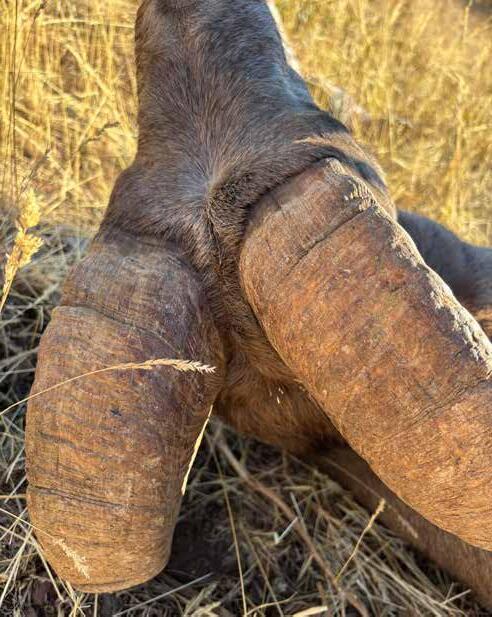
There are many people I would like to acknowledge that played a role in this memorable experience. First, my loving wife Barb or “Grammy Babs” who supported, encouraged, and most importantly, tolerated my behavior throughout this experience. I thank Bill Mammales and Brett Caldwell for their advice and encouragement. Bill’s willingness to spend a day scouting with me; and to Brett for his knowledge and recommendations, although I did not heed his advice by shooting the first decent ram that I saw; Dominic Harding, the young man I met spotting sheep during my first trip to the Oak Creeks. His youthful enthusiasm and love of wildlife was contagious; Mike Wardle,
DWR wildlife biologist, and Stetson West, DWR conservation officer for their advice, knowledge, encouragement, and responsiveness taking my several phone calls; the Utah Wild Sheep Foundation for their passionate commitment—and most of all to my son Brian, for dedicating so much of his talent, coaching, support, time, and his companionship throughout this experience. All the money in the world could not have provided me with a better guide. Without his “savvy”, his brawn, and his eyes, this hunt would not have resulted in this great outcome. Our time spent together during this hunt and when we reached that fallen ram in the waning light of that October afternoon will never be forgotten. WS
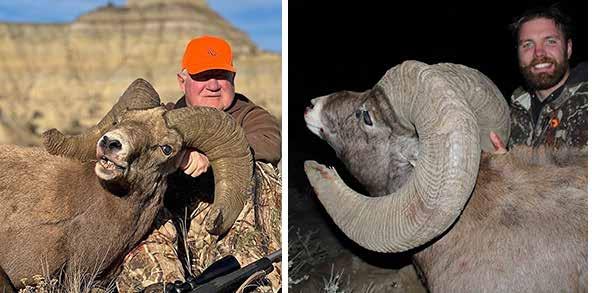
BY CHESTER MOORE
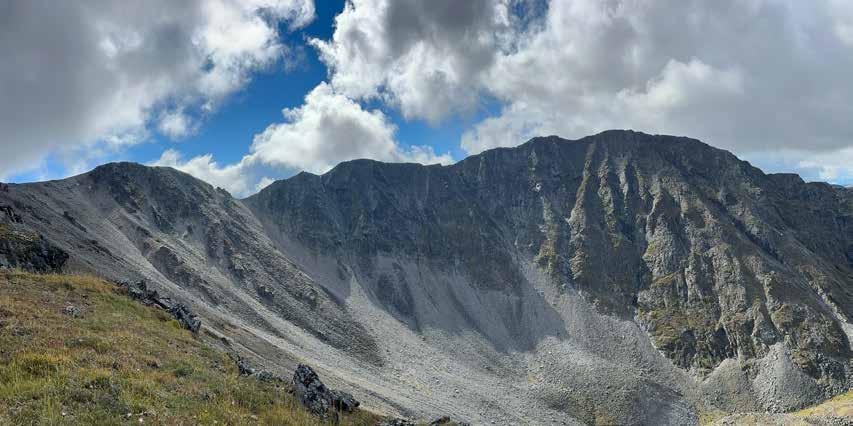
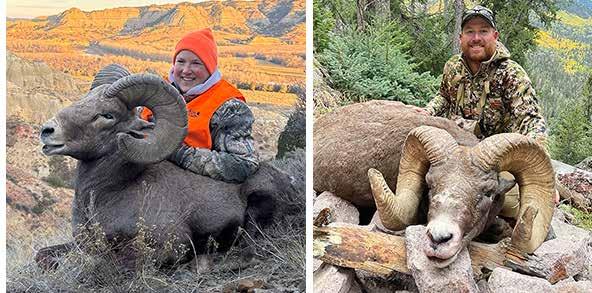
For eight years, North Dakotan Nick Schmitz put his name into the state’s once-in-a-lifetime bighorn sheep draw, never truly expecting to pull the tag.
When he finally did, he called his friend and fellow sheep hunter David Suda, the man who had taken North Dakota’s previous state-record ram in 2020 with an absolute giant measuring 186 3/8 Boone and Crockett (B&C).
If anyone understood the rugged, stair-stepped terrain of the Badlands and what a truly mature ram looked like, it was Suda. Schmitz made three scouting
trips before the season opened, driving from the far eastern side of the state into the western Badlands where the sheep live.
“I live on the eastern side of North Dakota, and the sheep are all on the western side of the Badlands,” he said.
His early trips were quiet with warm weather, little movement, and rams still bunched up.
He arrived a week before the opener to scout and stay close to the unit. Somewhere in that country lived a heavy ram they’d seen in photos, one Suda who had joined him for the hunt believed had true potential.
On opening day, late in the afternoon, Suda, walking a bit ahead, caught movement ahead.
“He turned back to me and said, ‘Hey, get down. We have some sheep over here,” Schmitz said.
At first, he saw only ewes. Then the ram stepped out.
“Just from the naked eye, I could tell he was massive and we knew it was the one we were looking for and that’s when the nerves set in,” he said.
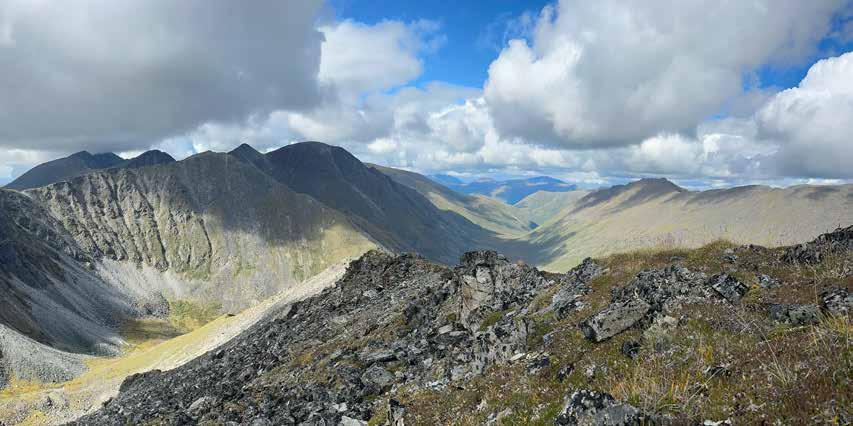
The moment that followed was the kind sheep hunters dream of, with quiet air, fading light, and a big ram standing broadside.
It took a few moments for
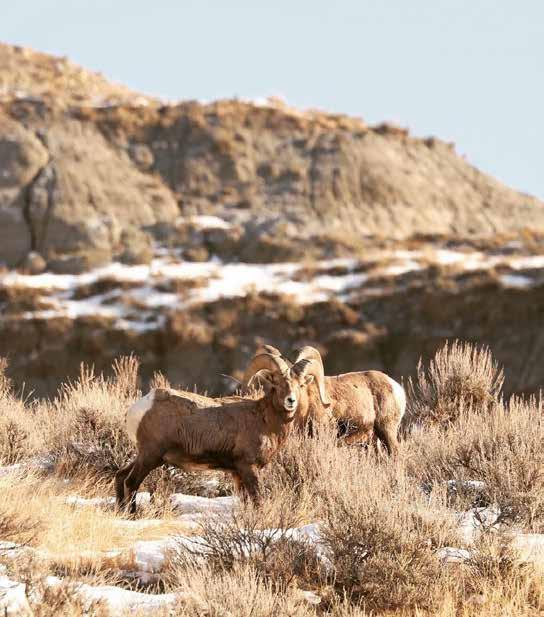
Schmitz to collect himself and take the shot, and the first one…missed.
The second shot connected, and after an insurance shot, the tough, old ram fell.
At this point Schmitz felt everything at once: the years of applying, the long drives west, the scouting trips, and the privilege of hunting beside a friend who had once stood in his shoes.
When biologists tallied the ram’s green score at 197 6/8 B&C, Schmitz realized he had taken a pending North Dakota state record, surpassing even Suda’s remarkable ram from four years earlier. It was a truly massive animal weighing 264 pounds with the head-only scaling out at nearly 50 pounds.
What he didn’t yet know was
that his ram wasn’t an anomaly. It was part of something much larger happening across the West, a conservation-driven resurgence producing more old, heavy rams than we’ve seen in years.
From Canada to Mexico, hunters have taken truly giant rams in recent seasons, but for now, we’re zeroing in on a handful of record-breakers that define this new era.
The modern wave of giant bighorn sheep didn’t start with a dramatic hunt, but quietly with two rams from Montana’s Wild Horse Island in 2016.
Their B&C scores of 205 2/8, 209, and ultimately a 216 ⅜, ram that still stands as the world-record
Rocky Mountain bighorn.
A hunter didn’t take them; they were pick-ups. Wild Horse is a state park and a nursery herd for translocations of surplus animals. Still, it revealed the importance of age, quality habitat, and genetics–genetics that have been transferred across the West. Age structure for one was returning to specific areas in sheep country, and the very top end of the population curve was growing.
In 2018, South Dakota delivered a giant of its own when Clayton D. Miller arrowed a 209 1/8 Badlands ram that was the largest hunter-harvested Rocky Mountain bighorn ever recorded.
The wave crested again in 2019.
In Idaho’s Hells Canyon, Doug Sayer harvested the ram known as “The Duke,” an old monarch officially scoring 200 1/8 B&C, a benchmark for the state and still the official Idaho state record.
Pennsylvania hunter Gary Guerrieri took the new Washington state-record Rocky Mountain bighorn in Asotin County in 2021. The ram scored 202 4/8.
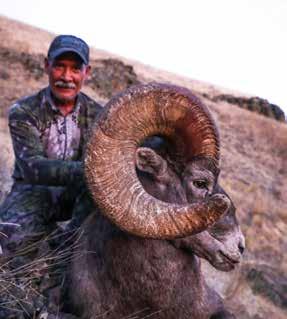
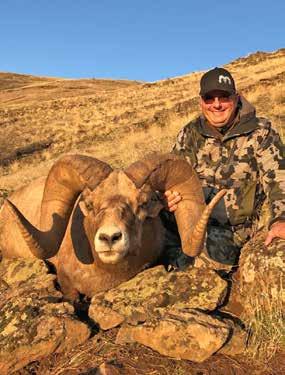
The massive animal, with measured horn lengths of approximately 44 and 44 2/8 inches and bases exceeding 17 inches, came from rugged terrain near the Grand Ronde River in the Columbia Plateau region.
Even states with smaller or once-struggling herds began joining the trend.
In 2021, Nebraska added one of the most surprising record rams in modern memory with a Banner County brute officially recorded at 201 5/8 B&C. The hunter, Grant Smith, had been scouting with longtime biologist Todd Nordeen, whose decades of work in the
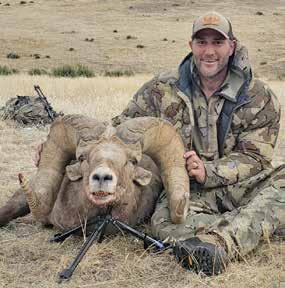
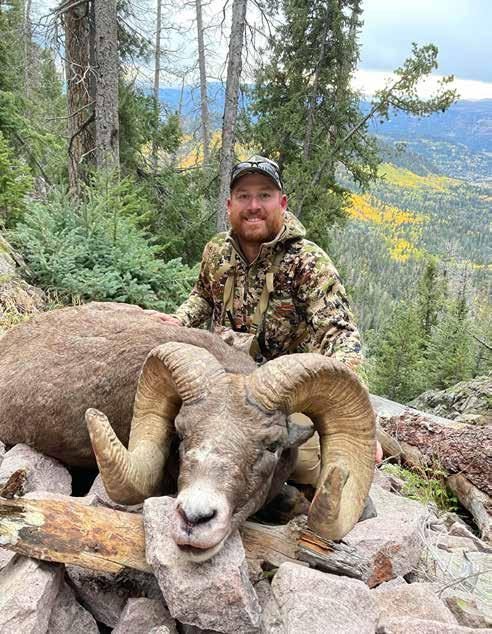
Panhandle helped rebuild a herd many once believed would never produce a ram of that caliber.
“It’s always impressive to see a big ram, but for a state like ours on the fringe of bighorn territory to produce a ram like this was special for us,” Nordeen said.
Meanwhile, Colorado’s story surged past expectations.
According to B&C officials, the state had gone more than two decades without a new record ram and then saw two numberone rams within weeks, pushing Colorado into the 200-point class for Rocky Mountain bighorns for the first time.
In 2022, Kevin Neil spent 21 days in the backcountry and killed a 200-inch ram that held the state
record for roughly two weeks before a Fremont County pickup ram surpassed it a few weeks later by four inches
Mike Kinney’s California bighorn sheep, taken in 2022 in Oregon’s lower John Day River region, was confirmed by Safari Club International as the new world-record California bighorn with an official score of 191 5/8 inches.
Boone and Crockett does not differentiate between Rocky Mountain and California bighorn sheep, but SCI does.
Just as Oregon proved what restored habitat could produce for California bighorns, Texas demonstrated the same for desert sheep.
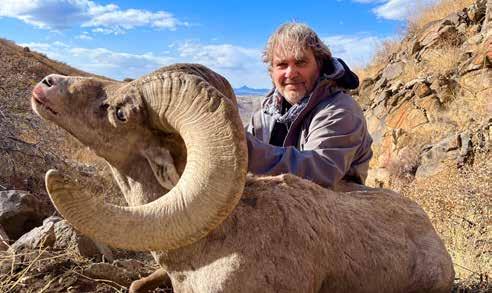
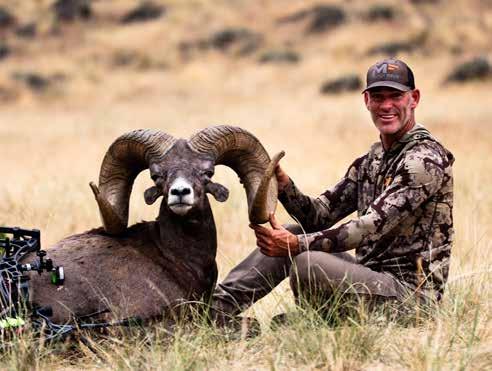
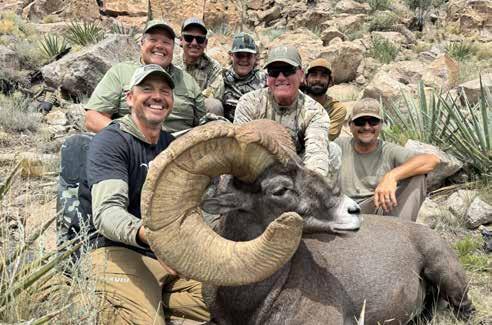
In 2022, after more than forty years of desert bighorn restoration, Texas’s Elephant Mountain Wildlife Management Area produced a ram that rewrote the state record books. Hunter Robert A. Theis harvested a 187 2/8 desert bighorn.
“That giant ram represented many years of effort,” said Texas Parks & Wildlife biologist Cody McEntire.
In 2024, Jon Pynch set the Oregon state archery record for Rocky Mountain bighorn sheep with a Pope and Young score of 201 1/8 inches.
He harvested the ram in Wallowa County, and the hunt was later documented in the Leupold short film RED. At the time it was entered, the ram’s score ranked second in the world for archerytaken Rocky Mountain bighorns.
The Southwest carried that energy into New Mexico. In 2024, the Jimmy John Liautaud ram, a Rocky Mountain bighorn scoring 208 1/8 B&C, became the new state record.
It was the kind of sheep that instantly signaled the trajectory of the herd: deep-based, broomed, and carrying the kind of mass that only comes from age, habitat, and genetics converging all at once.
What made the year especially extraordinary was that the Liautaud ram wasn’t a one-off. Another ram from the same mountain range soon followed at 201 B&C, proving the unit was producing true, top-end age class. Taken together, these rams weren’t random anomalies. They were a clear signal that multiple states were producing old sheep
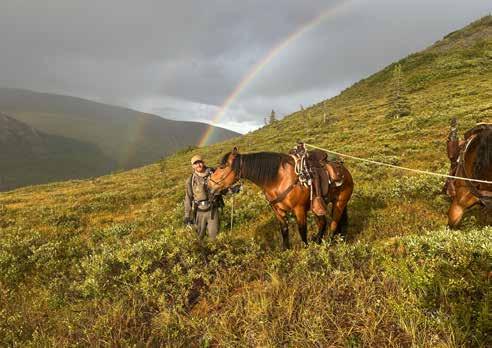
with exceptional horn growth.
To understand what this surge truly means, you have to step back into the long-view world of the B&C record book. And no one knows that landscape better than Michael Opitz, Chairman of the B&C’s Records Committee.
To Opitz, rams like the pending North Dakota record aren’t simply big.
They’re meaningful.
“A big part of our record book, what we believe our record book indicates or reflects is not only the health of the herd, but the health of the habitat in which they reside,” he said.
When multiple states begin producing old, heavy-based rams in the same few years, Opitz doesn’t chalk it up to chance. He points to two key variables working together: habitat quality and herd condition. When both are strong, sheep live long, and when sheep live long, luck tag holders encounter big rams, and the record book inflates.
This philosophy is why B&C has always accepted legally obtained animals of every method, including rifle, bow, muzzleloader, and even pickup heads.
“We don’t care about the weapon as long as it’s legal, including pickups,” Opitz said.
The world-record Rocky Mountain bighorn found dead on Wild Horse Island is proof that the book tracks biological peaks, not just hunting feats. And because bighorn sheep are among the few animals whose age can be determined with remarkable accuracy from their horns, every mature ram included in the book strengthens the conservation dataset.
And it allows hunters to go the extra mile in their conservation efforts. By taking only the oldest rams, even when big, legal-sized rams present an opportunity, they enable younger rams to keep breeding and grow to epic proportions.
Opitz has a deep connection to sheep conservation rooted in this growing ethic.
Last August, he spent twelve punishing days in the Yukon’s Ruby Range on a Dall’s sheep hunt, glassing forty-seven rams, riding one hundred miles on horseback, and walking another seventy on foot. Several large, younger, legal rams were within range.
He passed them all. His outfitter insisted they pursue only a fully mature ram, at least 9 years old.
After days tracking an ancient
Dall’s through steep basins, the old ram winded them and vanished. Opitz never fired a shot.
“I didn’t get a ram, but it was one of the greatest hunts of my life,” he said.
That hunt reminded him why old sheep matter and why letting younger rams walk is one of the quiet but powerful conservation decisions hunters make every season.
If the record book shows what’s happening, people like Glen Landrus, former Wild Sheep Foundation Chair, can explain why.
A lifelong hunter and agricultural educator, Landrus has spent decades watching sheep along the Snake River corridor. When asked why so many giants have appeared lately, he starts with one word: habitat.
“There are a few things at play, and the first is habitat. On the Snake River Corridor, we’ve had kind of a series of summer burns over the last decade or so, and those burns have created lots of high-quality forage out there,” he said.
Fire opened escape terrain, reset old brush, and launched new growth. Rams responded almost immediately.
Disease management also played
“It’s crazy. Quality habitat, underutilized forage, healthy sheep, and boom, you start seeing these giant rams,” Landrus said.
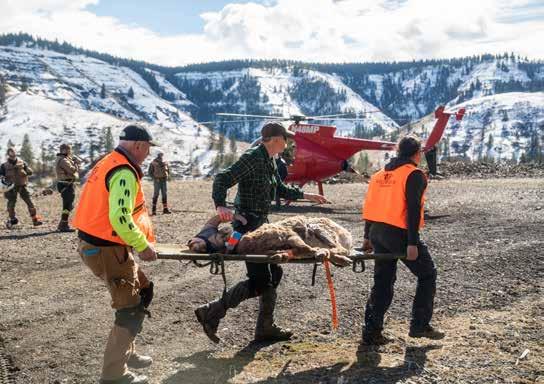
a major role.
In the Washington unit that produced its state-record ram, test-and-remove strategies were implemented early, thereby reducing the number of chronic carriers of Mycoplasma ovipneumoniae. With disease pressure eased, habitat gains finally translated into horn growth.
But Landrus is quick to point out it’s easy to focus on the triumphant, inspiring, and important moments of translocations.
“Everybody loves to see that gate swing open, but we can’t transplant our way to a more sustainable population. It also requires habitat work, disease monitoring, and an overall conservation ethic,” Landrus said.
Landrus said these same principles underpin the Wild Sheep
Foundation’s Grant-In-Aid program, which has increasingly focused on landscape-level conservation.
Funding prescribed fire, timber thinning, post-burn restoration, and forage improvement as well as managing disease through test and removal aligns perfectly with what Landrus sees in the field: when habitat resets, rams grow big.
He saw this firsthand in New Mexico’s newly opened Rocky Mountain bighorn unit. A massive wildfire scorched the mountain, and when it greened back up, the habitat exploded. Transplanted sheep moved in and thrived.
“It’s crazy. Quality habitat, underutilized forage, healthy sheep, and boom, you start seeing these giant rams,” Landrus said.
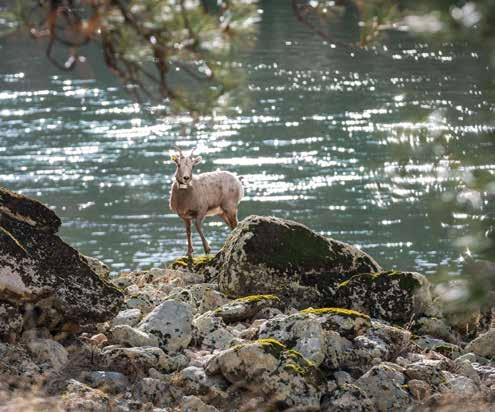
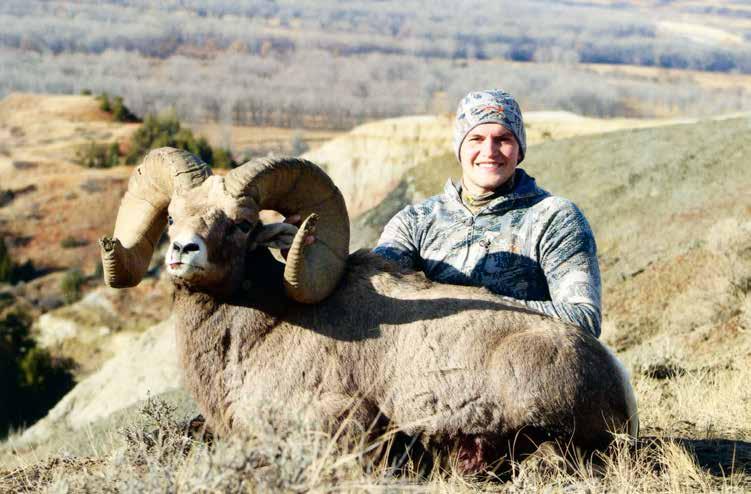
Back in the eroded clay and broken cliffs of the North Dakota Badlands, all the ideas behind modern sheep conservation: age structure, habitat, selective harvest, and stewardship came together in one deeply personal moment.
When Schmitz pulled the trigger and the ram went down, it didn’t feel like a personal conquest. It felt shared.
David Suda came down the ridge smiling, not because a record had fallen, but because he had helped a friend experience the same rare miracle he once lived, and in doing so, embodied the true spirit of sheep hunting.
Suda’s own connection to North Dakota’s sheep is long and deep.
He began applying for the oncein-a-lifetime tag at age 13 and eventually drew his tag at 22. He spent six intense weeks scouting for the ram that would become the
previous state record.
Now he was standing beside the hunter who had surpassed that mark with a ram born of the same canyons, shaped by the same storms, and lifted by the same conservation climb.
Reflecting on it later, Suda remained humble.
“I couldn’t be prouder. I’m just very grateful that I’ve gotten the opportunity to be a part of these hunts during these big years,” he said.
He’d watched the herd rebound, watched rams grow older and heavier, and saw conservation work turn into measurable results on the ground. Seeing his friend take a ram of this caliber felt like a continuation of his own story rather than a replacement.
To Suda, every great sheep is the product of many hands: hunters, biologists, tribal nations, landowners, and
conservation groups all pulling in the same direction.
“I’m very, very happy with the North Dakota Game and Fish Department, bighorn sheep biologist Brett Wiedmann, and everything they are doing for wild sheep. Yeah, there’s some pretty incredible stuff going on out there,” he said.
The Schmitz ram may become a North Dakota record, but the story behind it belongs to all the hunterconservationists whose expertise, manpower, funding, and ethics have strengthened wild sheep populations across the range of these great animals.
And sometimes that work reveals itself in the simplest of ways, with a ram stepping into view at last light, carrying a lifetime of wildness in its horns and proving what’s possible when conservation is kept in focus. WS
“Record
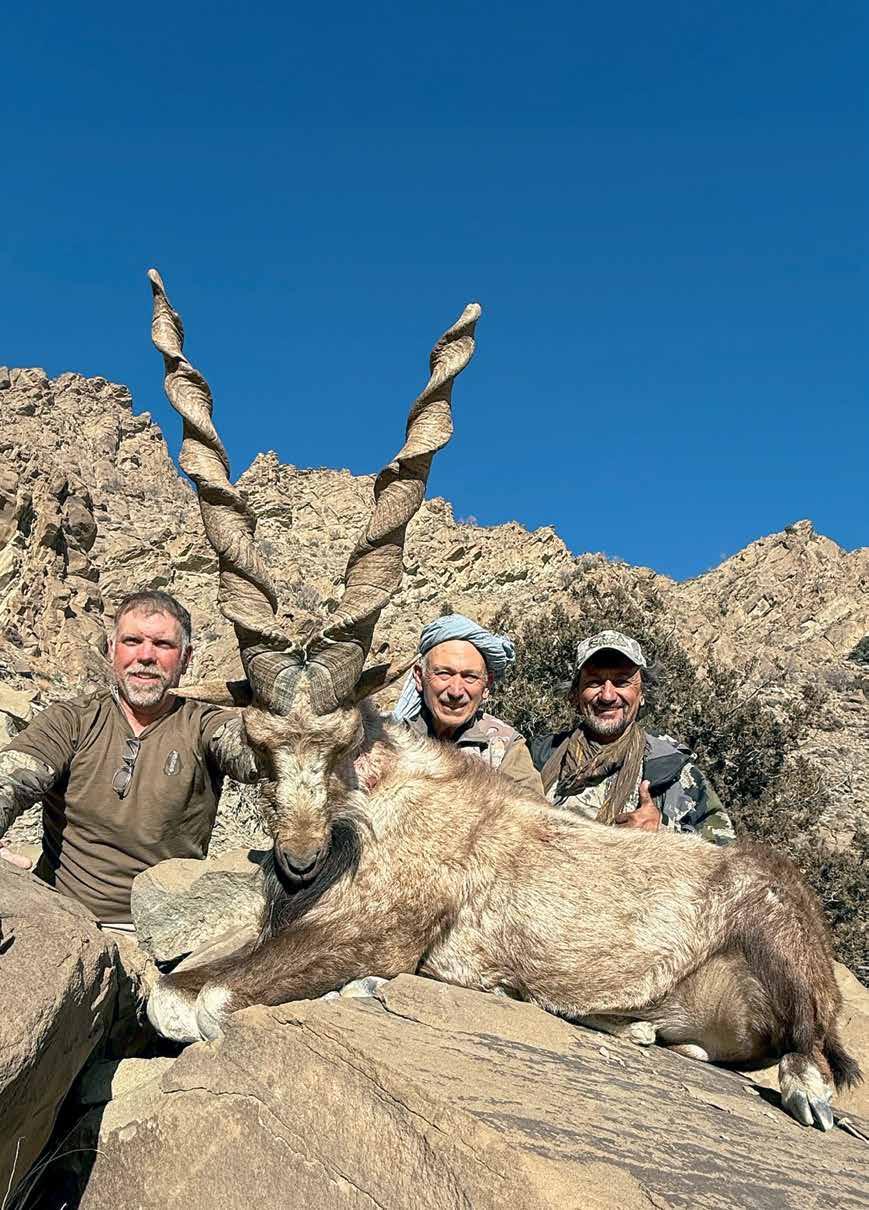
The SL3 is a distinctive shotgun within Beretta’s premium portfolio, in which design elegance meets superior Beretta technology. Beautifully crafted in Gardone Val Trompia by master gunsmiths, the SL3 features a superior locking system, an exceptional firing mechanism, and a beautiful design. Discover how craftsmanship, passion, and the pursuit of perfection lead to outstanding performance in the field.

For more information contact one of our Premium Dealers or the Beretta Galleries
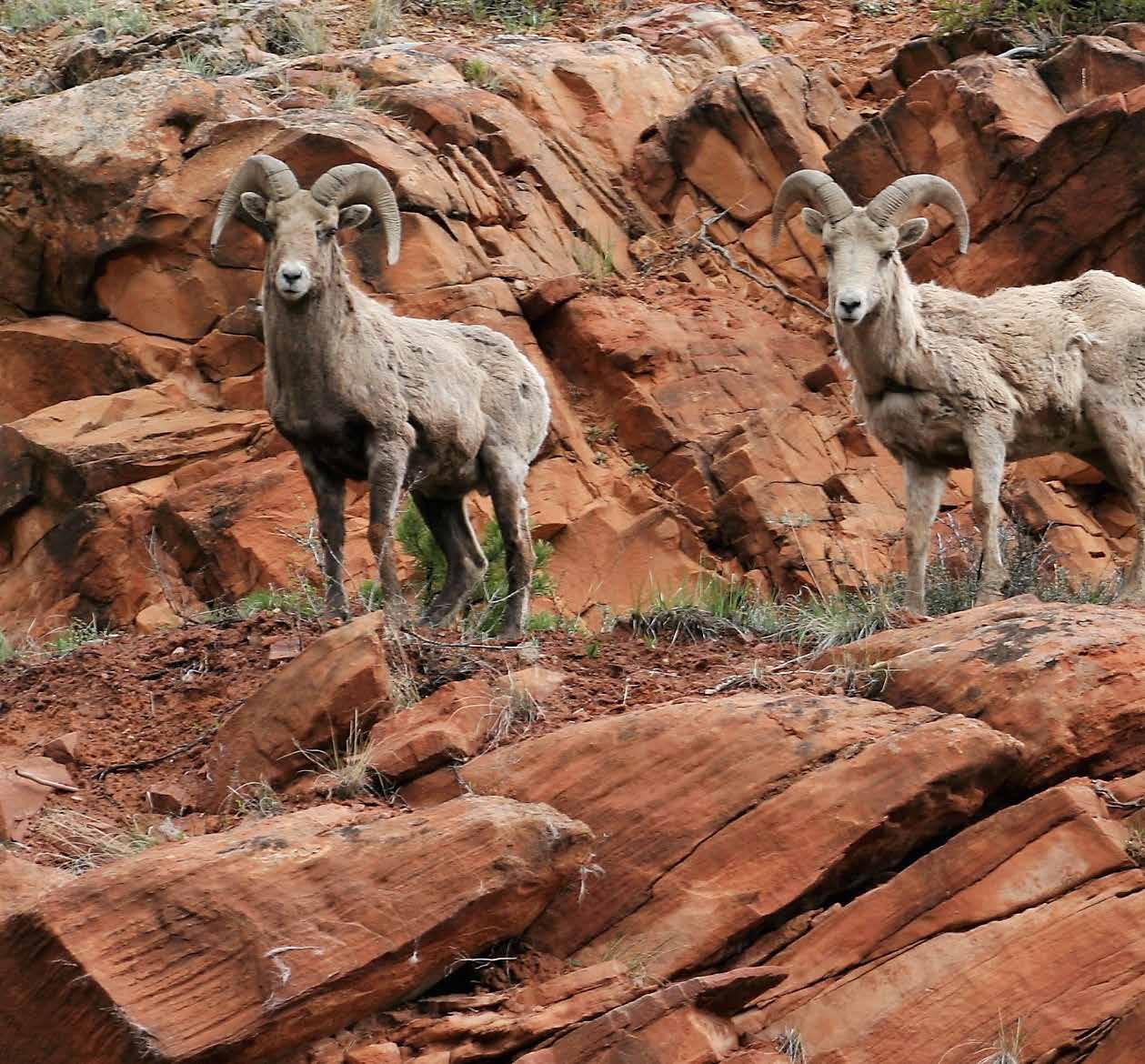
BY CHESTER MOORE
At first light, a Rocky Mountain bighorn ewe stands motionless on a narrow limestone rim above Wyoming’s interior, a lamb pressed close at her side. Wind moves steadily across the slope, but she does not rush. She studies the country below, pausing at the same break in the rock before stepping onto a descent she has clearly used before.
When she finally moves, the
lamb follows without hesitation, hooves landing where the ewe’s have worn shallow depressions into the slope. They cross the face of the hillside slowly, stopping where she stops, waiting where she waits, using a route shaped by repetition rather than chance.
For wild sheep, survival depends on decisions made deliberately and reinforced over time. Knowledge of
the landscape is passed quietly, one step at a time.
The Wyoming Wild Sheep Foundation (Wyoming WSF) was formed in 1983 with a clear purpose of conserving wild sheep and making way for scenes like that to play out for generations to come. What began as a small group of hunter-conservationists raising funds and volunteering their time has grown into one of North
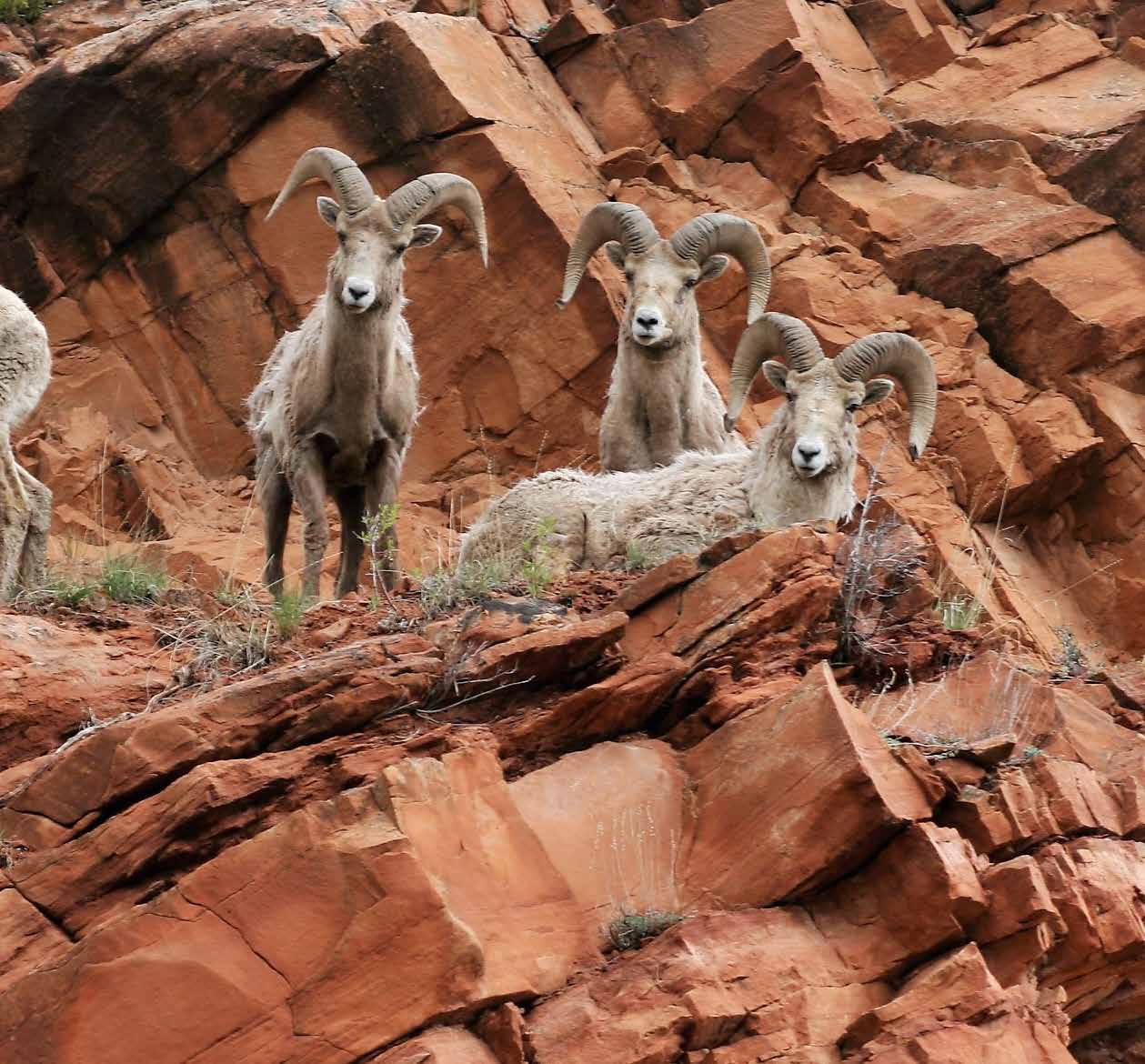
America’s most influential state wild sheep organizations.
Today, the chapter’s impact is seen in restored habitat, stabilized herds, funded research, mentored youth, and long-term management shaped through ongoing involvement.
According to Katie Cheesebrough, that focus has always been about what happens where sheep actually live.
“Wild sheep don’t respond
to talking points,” said Cheesebrough, the organization’s executive director.
“They respond to what’s happening on the ground—habitat quality, connectivity, disease pressure. That’s where the work has to happen.”
From the beginning, the organization positioned itself as a partner rather than an outside voice. Early members worked
closely with Wyoming Game and Fish biologists, volunteered labor on habitat projects, and stepped in to fund projects when agency budgets fell short. That cooperative model became a defining trait of the chapter and remains central today.
Bralli Clifford, a board member of both the Wyoming WSF and the national Wild Sheep Foundation, sees that approach as essential to
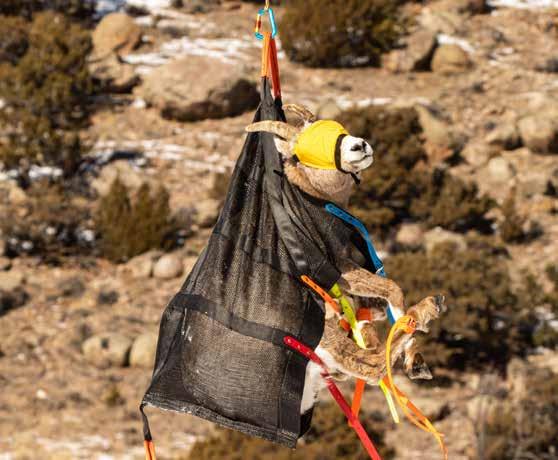
the chapter’s long-term relevance.
“If you want wild sheep to persist in Wyoming, you can’t work in isolation,” Clifford said.
“You have to think beyond individual projects and look at the whole landscape and who’s using it, how it’s changing, and how we move forward together.”
Grant-in-Aid funding became the chapter’s main way to act. The program shifted from one-time efforts to long-term investments, selecting projects by biological need, durability, and ability to strengthen systems, not just sites.
“That’s where discipline matters,” Cheesebrough said.
“We’re not just asking if a project sounds good this year. We’re asking whether it still makes sense ten years from now.”
Habitat has become the largest single investment category for Wyoming WSF, accounting for roughly a third of the chapter’s budget. That emphasis reflects a growing recognition that even the
best disease management strategies cannot succeed without healthy, resilient landscapes.
“In the end, everything comes back to habitat,” Cheesebrough said.
“If the landscape isn’t functioning, nothing else we do is going to hold.”
Invasive cheatgrass now poses a major threat to Wyoming’s sagebrush ecosystems. Warmer winters and frequent disturbance have allowed it to move higher, changing fire cycles, boosting wildfire intensity, and replacing diverse native plants with monocultures of little use to wild sheep.
Clifford views that threat through a longer lens.
“We’re still in a position where we can protect some of Wyoming’s best remaining landscapes,” she said.
“But that window doesn’t stay open forever. If we don’t act early, we end up trying to fix things after they’ve already unraveled.”
Wyoming WSF has taken a proactive stance, funding aerial treatments with Indaziflam, a newer herbicide that provides longerlasting control while minimizing impacts on native shrubs.
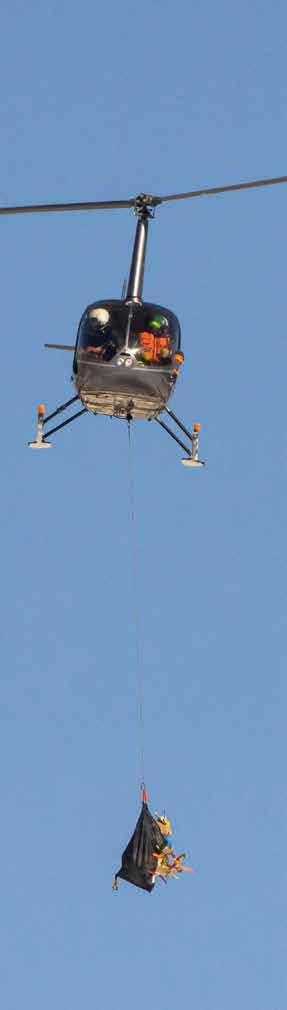
Translocation has played a role in Wyoming’s broader wild sheep recovery, but it has never been treated as a shortcut.
The goal, as Cheesebrough describes it, is defending the core, protecting Wyoming’s still-intact sagebrush systems before they resemble degraded landscapes elsewhere in the West.
Prescribed fire supports this effort. GPS collar data before and after major burns track sheep use of the new habitat and highlight where invasive grasses threaten the progress made by disturbance.
“In places where the habitat response is right, sheep will use it,” Cheesebrough said.
“The data shows us that. But it also shows us where follow-up work is critical.”
Science on the Move
Research and monitoring are a major part of Wyoming WSF’s work, especially GPS collaring studies. These collars have revolutionized wild sheep management by providing realtime insights on movements, habitat use, and responses to natural and human-caused change.
“Collars give us answers we simply didn’t have before,” Cheesebrough said.
“They help us understand not just where sheep are, but why they’re there and what might put them at risk.”
Beyond basic location data,
collars identify migration corridors, detect forays into highrisk areas, and trigger mortality signals that alert biologists to predation events or disease outbreaks. That information helps managers prioritize habitat projects, adjust harvest strategies, and respond quickly when problems arise.
Disease research remains a critical focus, particularly respiratory disease events that have historically devastated bighorn populations. Wyoming WSF has supported sampling, longterm monitoring, and nutrition studies that allow managers to
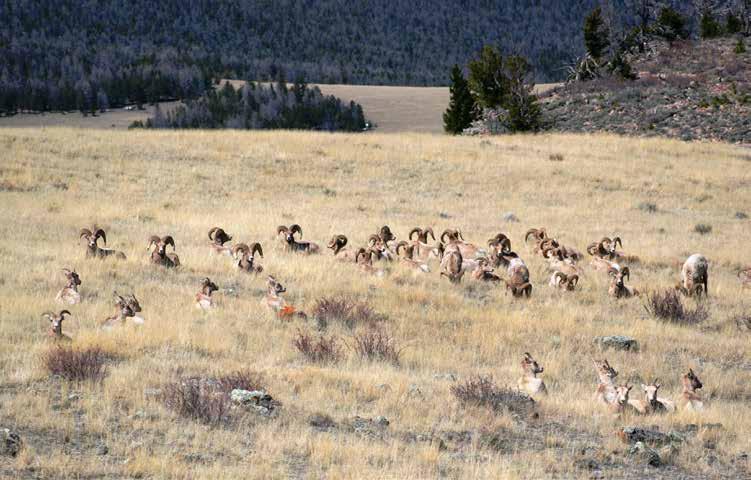
identify patterns rather than react only to symptoms.
The Ferris–Seminole herd stands as one of Wyoming’s notable wild sheep conservation success stories, reflecting decades of careful planning, disease prevention, and science-based management rather than a single project or moment.
“That herd represents what’s possible when patience and science align,” Cheesebrough said. “It didn’t happen quickly, and it didn’t happen by accident.”
Ferris–Seminole was established through deliberate translocation efforts and intensive monitoring, guided by a long-term commitment to suitable habitat and disease prevention. From the beginning, managers treated the herd as a system that would require continued oversight as it grew and interacted with surrounding landscapes.
Translocation has played a role in Wyoming’s broader wild sheep recovery, but it has never been treated as a shortcut. Wyoming WSF has supported translocation efforts where biological conditions, habitat quality, and long-term management capacity aligned, recognizing that moving animals is only the beginning of a much longer commitment.
Success depends not on the act of release, but on sustained habitat protection, disease prevention, and monitoring long after sheep leave the trailer.
As the Ferris–Seminole population expanded, new challenges followed.
Young rams began dispersing farther across the landscape, increasing the risk of contact with herds carrying disease. Protecting the herd’s health while allowing it to function naturally has required continued discipline and data-driven decisionmaking—an acknowledgment
that conservation success does not mark an endpoint, but a new phase of responsibility.
Wyoming is also home to several core native bighorn sheep herds, including the famed Whiskey Mountain population. These herds have never been augmented or reintroduced, retaining genetic lineages shaped entirely by natural selection and long-term adaptation to Wyoming’s landscapes.
“These herds carry value you can’t replace,” Clifford said.
“Once they’re gone, they’re gone. Protecting them is foundational.”
Core native herds occupy a unique place in Wyoming’s wild sheep conservation framework. Their importance extends beyond
population numbers, representing continuity across generations and landscapes that have never been rebuilt or supplemented through human intervention.
Whiskey Mountain is designated as a core native herd under Wyoming’s collaborative management framework, the Wyoming Plan. That status places it at the highest level of conservation priority when conflicts arise between wild sheep and domestic livestock use.
Few issues in wild sheep conservation are more sensitive than interactions with domestic
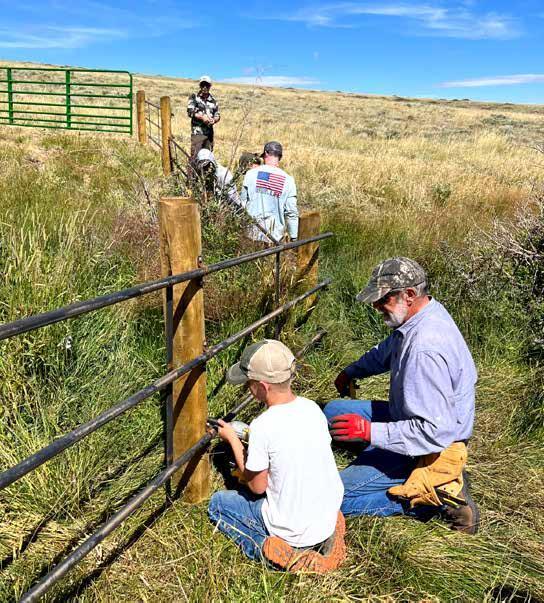
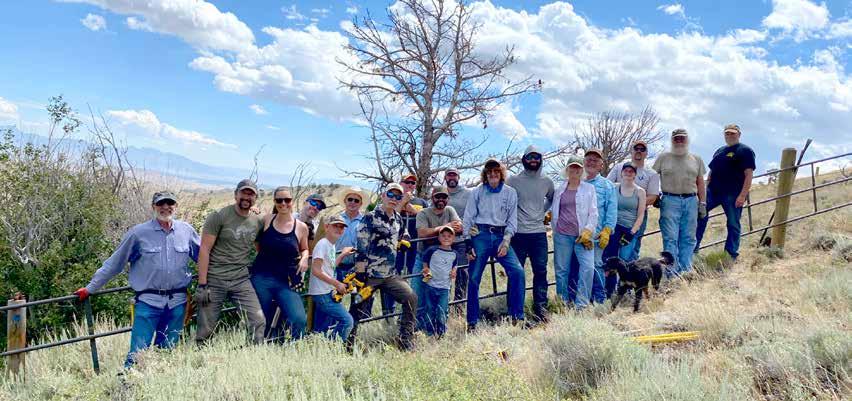
livestock. Disease transmission from domestic sheep and goats remains the single greatest biological threat to bighorns.
Wyoming’s Interaction Working Group brings together agricultural producers, wool growers, Wyoming Game and Fish, federal agencies, and Wyoming WSF to address those conflicts directly. The group meets face-to-face, often for fullday sessions, to work through problems that cannot be solved from a distance.
That collaboration has led to practical, sometimes controversial solutions. One recent example involved funding a $10,000 doublefencing project for a domestic sheep producer in the Pedro Mountains.
While some initially questioned why a wild sheep organization would fund fencing for domestic livestock, the project reduced disease risk, built goodwill, and opened the door for future habitat access.
“If we want these landscapes to work for everyone, we have to be willing to sit at the table and invest in solutions that benefit both sides,” Clifford said.
Wyoming Wild Sheep Foundation members and partners support a wide range of projects designed to reduce risk and improve habitat function across bighorn sheep range.
Guzzlers, although most often noted in the desert Southwest, play a role in parts of Wyoming’s high desert where natural water sources are limited.
Multiple guzzlers have been installed or supported through Wyoming WSF funding, with monitoring confirming use by bighorn sheep and other wildlife. While not appropriate in every setting, they remain a targeted tool where water availability constrains habitat use.
Fence projects serve a similar purpose. Removing unnecessary fencing or modifying existing structures reduces entanglement risk and improves movement across seasonal ranges. In some cases, these projects also strengthen relationships with landowners by addressing shared concerns and improving overall land function.
Between 2005 and 2025, the chapter directed more than $2.1 million in Grant-in-Aid funding to projects across Wyoming, supporting both statewide initiatives and county-level efforts tailored to local needs.
Habitat restoration accounts for the largest share of grant investment, roughly a third of total funding. Population monitoring and management account for another significant portion of funding.
Grant-in-Aid support also extends beyond habitat and research. Education and outreach are recognized as essential investments in longterm conservation, particularly as participation in hunting and wildlife management continues to change.
Programs such as Camp Bighorn, operated by the National Bighorn Sheep Center in Dubois, Wyoming, along with Wyoming WSF’s partnerships with the Center and youth-focused activities at
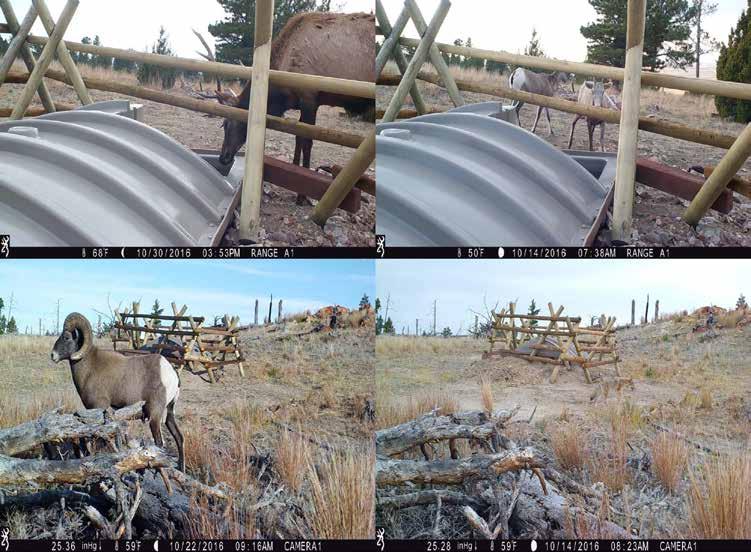
chapter events, introduce young people to the biology of wild sheep, conservation challenges, and management principles. These efforts emphasize understanding rather than advocacy, helping participants see how science, habitat management, and regulated harvest fit together within modern wildlife conservation.
One example often cited within the organization involves a young girl who drew a ewe tag, an experience that challenged long-held assumptions within her own family about ewe harvest. Through preparation, time afield, and engagement with the biological rationale behind the hunt, perspectives shifted.
The experience underscored how education grounded in firsthand experience can reshape understanding and inspire young people to pursue a lifestyle of
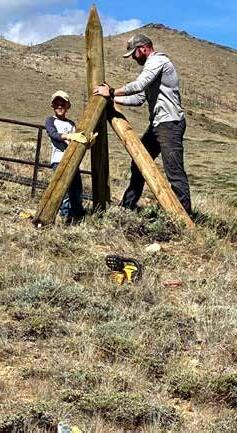
hunting and conservation.
Collaboration underpins all of this work. Wyoming WSF partners with wildlife agencies, landowners, agricultural producers, conservation organizations, and federal land managers to implement projects that no single group could accomplish on its own.
“Wyoming WSF does a great job of engaging numerous aspects of wild sheep conservation and has had a tremendous impact on the resource as well as hunters in the state,” said Gray N. Thornton, Wild Sheep Foundation President & CEO.
Whether improving habitat, funding research, or supporting education, these partnerships reflect the shared responsibility required to conserve wild sheep across Wyoming’s working landscapes.






Later that day, as shadows stretch back across the same limestone rim, the ewe first seen at dawn climbs toward the narrow shelf where the morning began, the same lamb, a young ram, still close at her side.
He lags briefly, then slips back alongside her at the familiar break in the rock, following the route she has shown him since his first weeks on the slope. In time, with space to roam and the country holding together beneath him, he may grow into one of the heavy-horned rams Wyoming’s mountains are known for.
Nothing about the hillside draws attention to the years of planning and restraint that shaped it. The ground holds. The route remains open. The risk is manageable. That is the measure of success in Wyoming’s wild sheep conservation.
Each decade brings new challenges, but Wyoming WSF’s role remains steady: providing stability, funding, and support so wild sheep management stays proactive rather than reactive. Whether restoring habitat, funding research, or engaging in policy discussions, the organization operates with a long view measured in generations, not seasons.
The continued presence of that ewe and the young ram learning how to use the country she knows reflects decades of effort by the Wyoming Wild Sheep Foundation, its members, and its partners. When conservation is done well, it creates the conditions for animals not just to persist, but to mature, disperse, and reach their full potential.
The presence of bighorn sheep in Wyoming is not accidental. It is the result of sustained commitment, carried out through collaboration with biologists, landowners, and agencies dedicated to keeping wild sheep where they belong—in the wilds of Wyoming. WS
Founded in 1983, the Wyoming Wild Sheep Foundation (Wyoming WSF) is governed by an all-volunteer board and is powered by members who contribute time and funds. Beyond Grant-in-Aid support for habitat and research, the chapter offers hands-on volunteer opportunities in the field, from installing water developments and modifying wildlife-friendly fencing to helping with restoration projects across Wyoming’s ranges. Education and mentorship are also core priorities. Through youth outreach programs, partnerships with organizations such as the National Bighorn Sheep Center, and events like Camp Bighorn, the foundation connects new generations to wildlife biology and conservation principles. These avenues provide not only learning, but ongoing engagement and mentorship for young hunters and outdoor enthusiasts.
Wyoming WSF also provides technical input on federal and state land-use plans, ensuring wild sheep needs are considered early in the planning process.
A permanent conservation fund provides financial continuity, allowing long-term investment in wild sheep and their habitat and inspiring future conservationists, regardless of annual fundraising fluctuations. WS
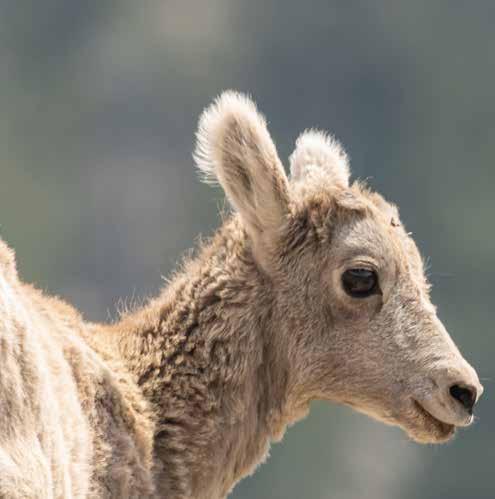
Austin’s Magnificent Hangay Argali – Mongolia
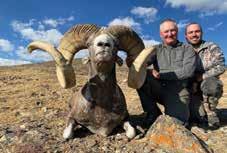
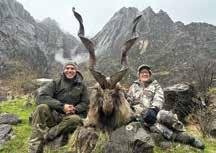
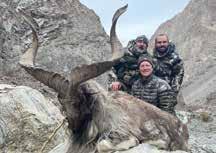
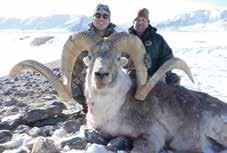
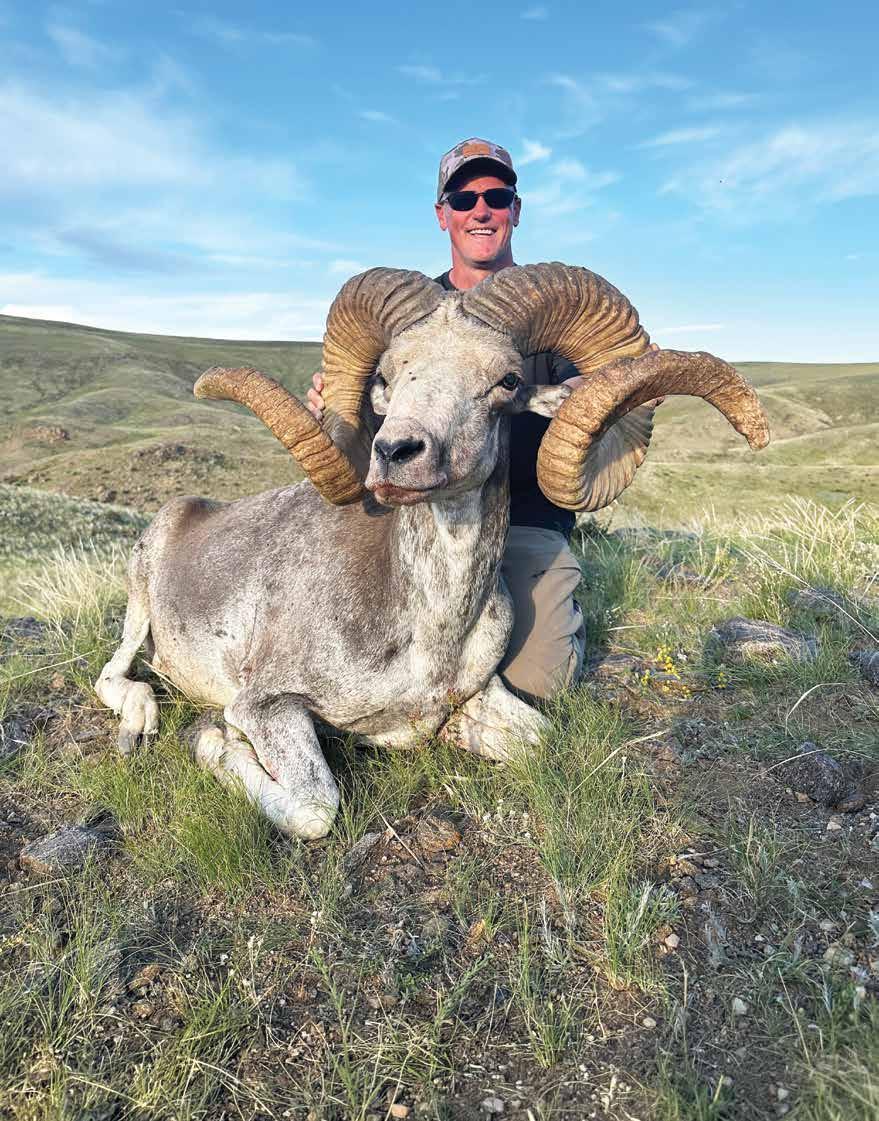

RPS Bancard LLC is the preferred merchant services provider for the Wild Sheep Foundation, and proud participating partner of the WSF WE GIVE Program.
RPS provides Retail and E-Commerce businesses with ultracompetitive rates for credit/debit card processing.
RPS will help minimize your company’s merchant services fees while maximizing your support of WSF, as RPS donates a percentage of your processing fees to the WSF Conservation Revolving Fund.
Join RPS in supporting the WSF WE GIVE Program, and support our shared passion for “Putting and Keeping Wild Sheep on the Mountain®”.

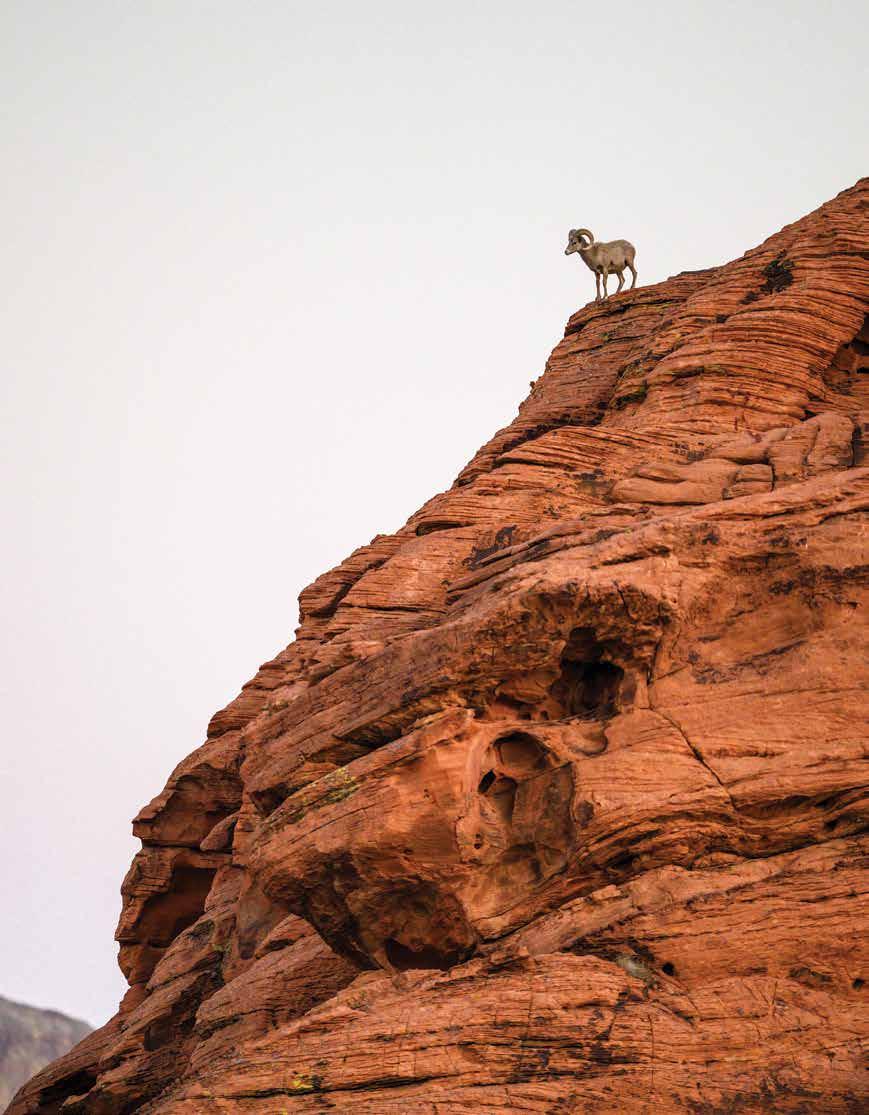


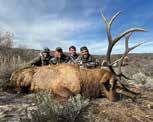
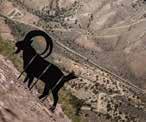
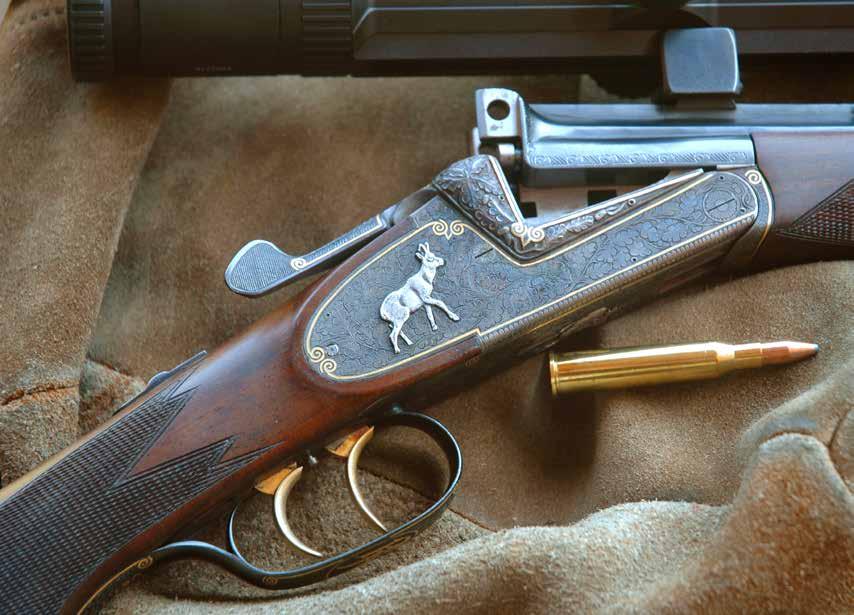
IT PREDATED THE .270, FELLING GAME IN EUROPE, ASIA AND AFRICA WHILE STATESIDE HUNTERS OGLED THE .30-30.
BY WAYNE VAN ZWOLL
The 6.5x54 wasn’t the first of its kind—just more celebrated and longer-lived than its contemporaries. This fine Austrian kipplauf (stalking rifle) fires the effective if not popular 6.5x57R cartridge, circa 1894.
His explorations in the Far East drew an invitation from Ohio-born Harry Caldwell, a missionary in China’s Fukien Province since 1900. Roy Chapman Andrews obliged early in 1916. Nine days of river travel on a motor launch brought him from Shanghai to the rural outpost. Harry’s knowledge of China’s cultures would prove a boon to Andrews in his expeditions for the American Museum of Natural History. Both men were avid hunters. Caldwell’s use of a .303 Savage rifle to kill tigers had inspired the gunmaker to ship him rifles at no cost,
provided he’d share photos and testimonials in Savage ads. When a Model 1899 in .22 Hi-Power arrived, he tumbled a big tiger with the tiny bullet. Andrews got the same deal from Savage and would later call the .250-3000 “the most wonderful cartridge ever developed.” But Andrews also hunted with a 1903 MannlicherSchoenauer carbine in 6.5x54 M-S, a cartridge fashioned in 1900 by Steyr’s Ferdinand Ritter von Mannlicher and Otto Schoenauer from the 6.5x53R Mannlicher of 1892. The Greek army adopted the 6.5x54 in 1903 for the M-S rifle of that year. Both would
shed their uniforms, however, and make their mark in the high haunts of wild sheep.
Velocities listed for 160-grain 6.5x54 military loads ranged from 2,230 fps to over 2,400. Some of that variation may reflect differences in barrel lengths. The 1903 M-S cavalry carbine had a 17.7-inch barrel, but those of military rifles then were much longer. With a maximum average breech pressure of 40,700 psi, the 6.5x54 hurls 156-grain bullets from 1:7.8 rifling in 24-inch barrels at 2,460 fps—like the 6.5x55 Swedish, circa 1894. Handloads with slow powders wring 2,500 fps from such
A Uganda ranger named Banks reportedly took three elephants with a single bullet from his 6.5x54. The stricken bull fell against two others, and all toppled off a cliff!
long, hefty bullets. Norma clocks flatter-flying 120- and 140-grain missiles at up to 2,800 and 2,630 fps respectively.
All U.S. ammunition companies loaded the 6.5x54 Mannlicher until WW II. In ‘41 Western listed a 129-grain bullet at 2,370 fps, a 160-grain at 2,160.
Early 20th century explorers and hunters favored the 6.5x54 (or, as Brits say, the .256 Mannlicher) in large part because the 1903 M-S carbine was a delight to carry, quick to point and smooth and reliable in cycling. Its roots lay in a rudimentary bolt-action: the Dreyse Needle Gun, which begat the Mauser of 1871. Both had a split bridge, the bolt handle sliding through it in cycling. An updated design by Prussian ordnance officers emerged as the Gewehr 1888, or “Commission Rifle.” Its carbine version, for cavalry, featured a full-length stutzen stock. Ferdinand von Mannlicher’s Model of 1891, with the split bridge and en bloc clip of its predecessors, was adopted by Rumanian and Dutch armies in 1892 and ‘95. Meanwhile, Paul Mauser re-engineered the action, giving it a solid bridge, and a box magazine.
In 1900 the first MannlicherSchoenauer rifle arrived, its bridge still slotted but the clip replaced by Schoenauer’s rotary magazine. Portugal tested it, but like all other countries except Greece, demurred—at least partly because a 1903 M-S cost nearly twice as much to produce as a Mauser rifle. Just 300,000 military 1903s were manufactured over the next 30 years.
Sporting rifles with the 1903 action sold in half-stock rifle as
well as popular carbine form. M-S would offer updated versions into the 1960s, when the complicated machining and hand-fitting endemic to the mechanism became too costly.
The nimble 40-inch, 5-pound M-S carbines of yore served above their station in game fields from Africa to the Far North. F.C. Selous and W.D.M. Bell used theirs to brain elephants, the long solid bullets
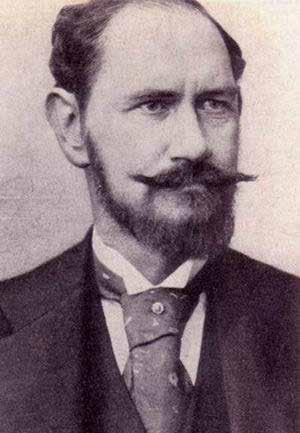
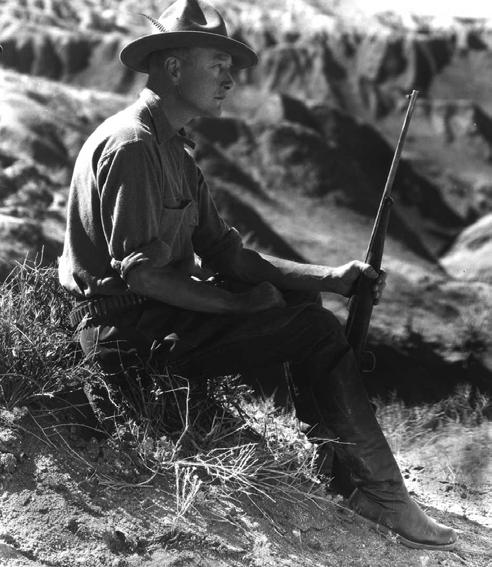
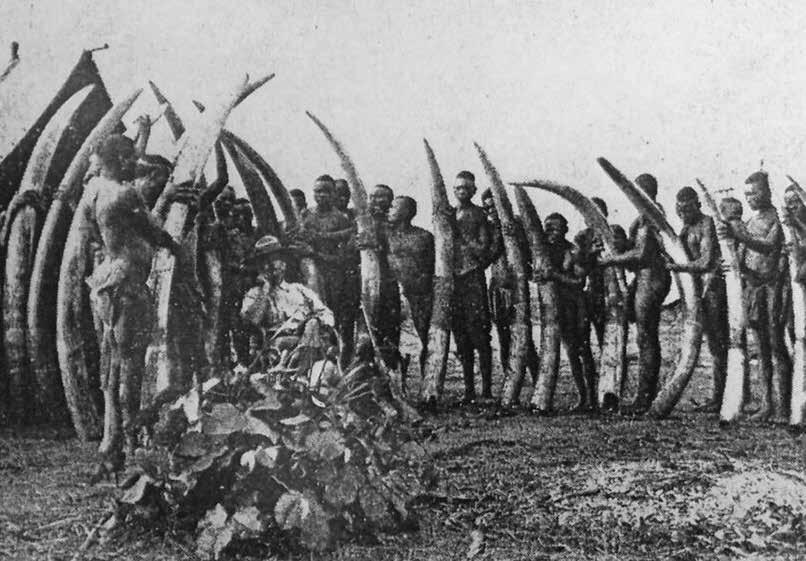
driving nose-on through thick, honeycombed skulls. A Uganda ranger named Banks reportedly took three elephants with a single bullet from his 6.5x54. The stricken bull fell against two others, and all toppled off a cliff!
Roy Chapman Andrews carried his M-S carbine into the hills of northern China after wild sheep. From a sunny slope one day, he and Na-mon-gin spotted three rams in a distant valley. Then: “Panyang!” hissed the guide. “Stay still.” A ram with wide-sweeping horns walked within 100 yards and paused. But Na-mon-gin gave no signal. Itching to fire, Andrews held the shot and his tongue, as “what that Mongol did not know about the ways of sheep wasn’t worth learning.”
The hunters then trekked toward the three far-off rams. Closing, they climbed a spine to peer into the valley. Suddenly a gust of wind shotgunned their scent. A clatter of rocks, and three argali dashed up the opposite slope. “No shoot! One more!” Na-mongin’s whisper was urgent. But all three had stopped, just 200 yards away. Two seemed enormous. This time Andrews followed his instincts. The biggest ram fell to a shot through the shoulders. The others sprinted a few yards, then slowed. The last bullet in Roy’s carbine rolled the best of those. But Na-mon-gin was apoplectic. “Not right! The big one!” Into the valley galloped another ram, age-bleached fore-quarters bearing up under enormous horns. Bugeyed, Andrews fumbled a pair of cartridges into the breech—and missed with both.
His guide was disgusted. “Do you know nothing of sheep? Did you not know the ram that walked by earlier would join the three?”
A fit, persistent hunter, and keen for another chance, Andrews would find redemption elusive.












































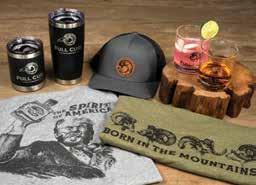








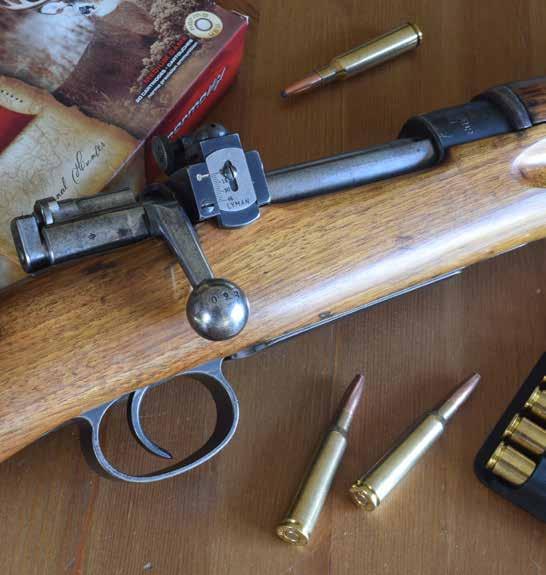
The popular 6.5x54 is similar to a contemporary, the 6.5x55 Swedish (here), still a hit in Scandinavia.
A long sneak put him and Namon-gin below a fine ram bedded on a ledge. The guide peeked and nodded. Expecting a 20-yard shot, Andrews eased his rifle up and over—and almost into the ram’s nose! He could have touched it with a fly-rod! What else to do but fire? The rifle’s blast launched the ram forward, great horns almost clipping the prostrate hunter. Unbelievably, however, his bullet had missed! “Never have I been more humiliated,” he wrote. Not to be denied, he insisted his guide over-night with him in the peaks. Shortly after sun-up, Andrews spotted the animal, crept close, aimed carefully through the 6.5’s aperture sight and sent a bullet through its heart.
Northern China tempted him with other game. The ma-lu (“horse deer”) is the Asiatic twin to our elk. While locals hunted the bulls when their velvet antlers brought steep prices for medicinal purposes, Andrews and Harry Caldwell craved sport and museum specimens. In the wake of WW I they arranged to hunt in Shansi Province.
The country was steep, great granites spires spilling to rugged gorges. Ragged swatches of birch scrub fought for footing in boulder fields. To Andrews’ eye “there was hardly enough cover to conceal a rabbit!” But soon after he and Caldwell separated, a bull and three cows burst from that cover and dashed away. Harry’s rifle popped
thrice in the distance. Flat in the grass, Andrews and his Mongol guide waited. Three cows, then the big branch-antlered bull plunged toward them off the horizon.
“Wait!” said the Mongol, as Andrews aimed, certain the bull would angle into cover. The animal came on. At 300 yards it turned side-to and stood. The Mannlicher’s bark brought the “thud of the bullet striking flesh.” The bull lurched forward, pausing behind a rise. When three bullets sailed over the visible sliver of its back, Andrews scrambled uphill to see the full torso. The ma-lu fell to his shot.
Additional horse deer proved harder to bag than that first day’s hunt suggested. But roebuck were plentiful. After counting 76 the second day, the men focused on roebuck the third. Andrews swung on one crossing below him but held the shot until the animal scaled the opposite slope. It pitched forward, dead. His rifle claimed another as it topped a tall ridge. His guide was impressed.
After more hard days on the hill, Andrews and Caldwell were walking toward camp, when Harry exclaimed: “Great Scott, Roy! That’s a ma-lu!” Andrews looked up and saw the bull 90 yards up a nearby slide. By then a bullet from Harry’s rifle was on its way. But in the fading light with an open sight he shot high—and repeated the error. Andrews’ aperture sight gave him better aim. At the snap of his 6.5 the elk collapsed and rolled down the hill.
The mountains of northern China also held goral, serow and takin. Like Europe’s chamois and the North American mountain goat, they’re members of the sub-family Rupicaprinae, which Andrews called the goat-antelope clan. In the rough Tsing Ling range
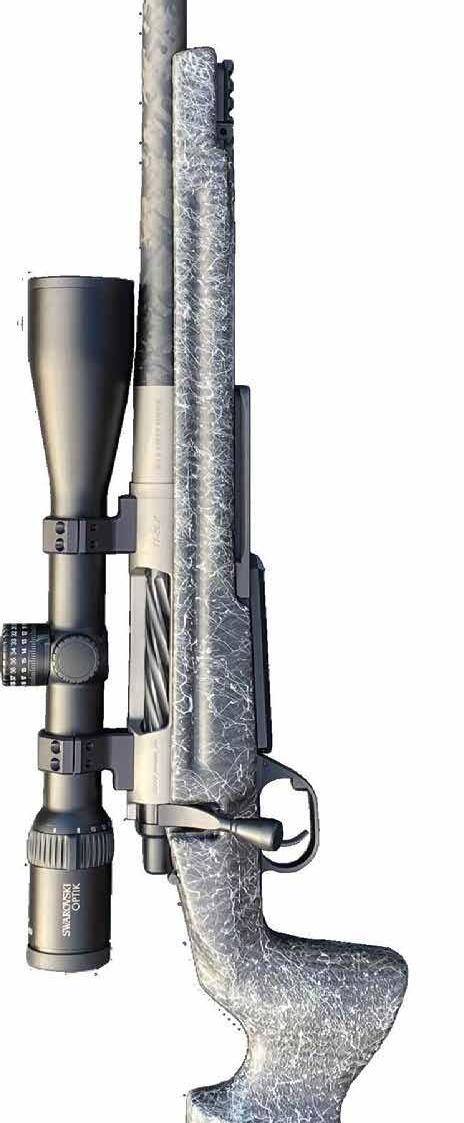
- Chris Lyon
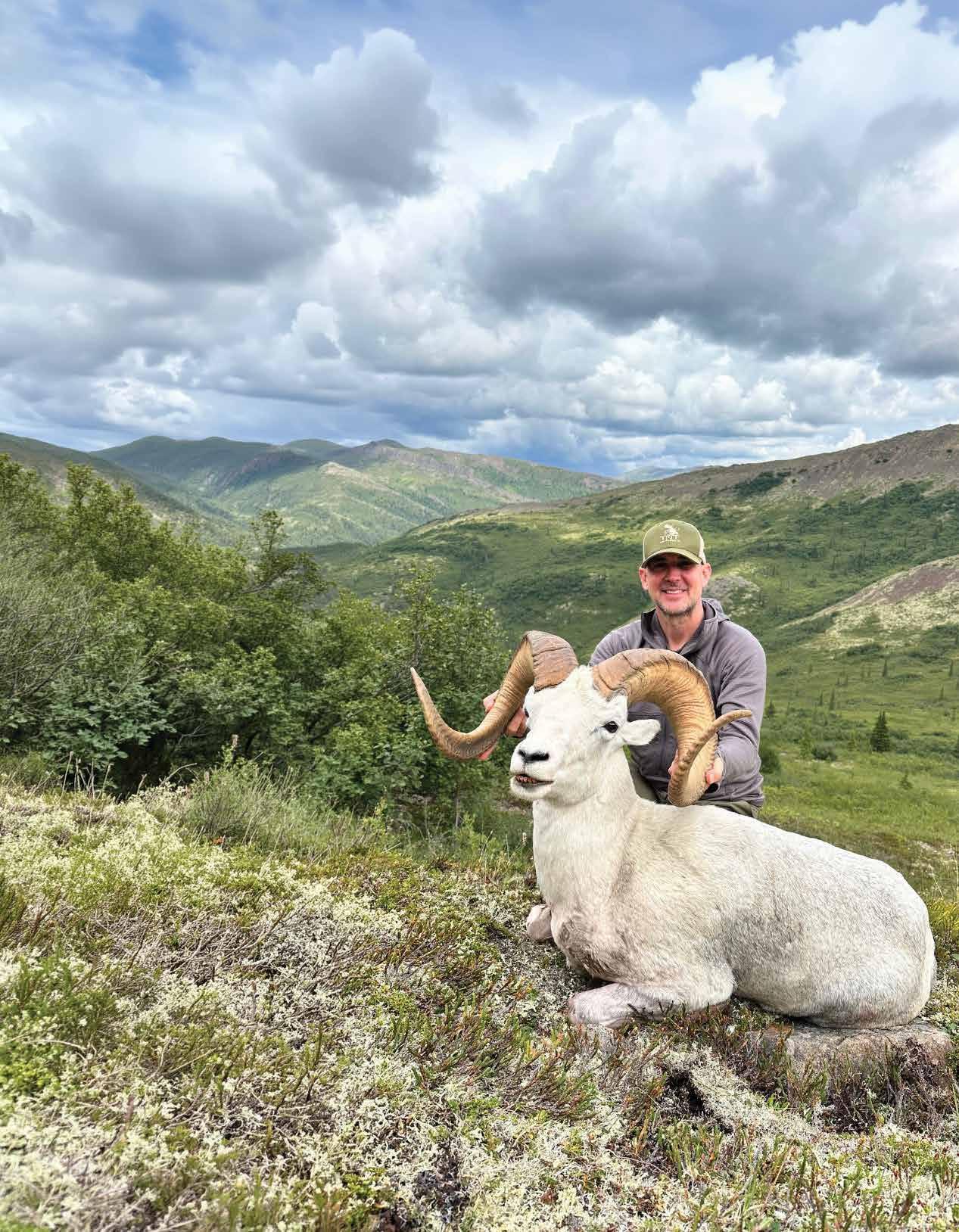
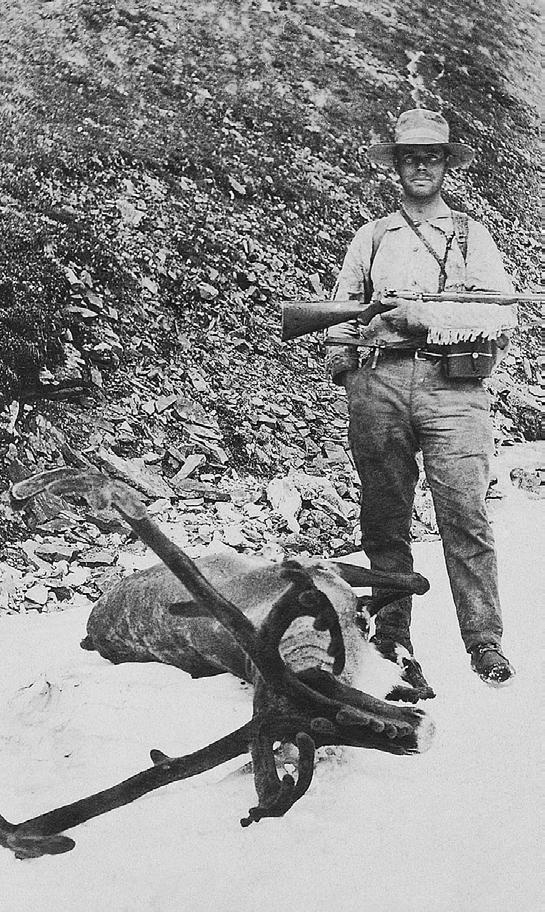
he hoped to collect a takin or yehniu (“wild cow”). This 500-pound, yellow-hued creature with a roman nose and musk ox-like horns lived at 10,000 feet in rocky jungles of rhododendron and bamboo. He spied his first animals far away on “a slope so steep they seemed to be hanging by their horns.”
As the hour was late, he sent a packer down for food and sleeping bags. Neither arrived until dawn. Chilled and sleepless, he and his guide found takin tracks at sun-up and followed them across precipitous terrain. On a ledge Andrews’ coat snagged a spur. One foot feeling for the shelf, he “frantically grasped three bamboo stalks …. Had they not been tough as rawhide, I’d have plunged [onto] jagged rocks 300 feet below.”
His chance—a straight-down shot into a thicket—came minutes later. As the Mannlicher’s bead centered tawny ribs, he pulled it to belly-line to adjust for the steep angle. The takin collapsed to the shot. Suddenly several of the beasts burst like quail from cover. He missed one cow, dropped the next. Then all was silent. At his feet: a “magnificent creature lying in the sunlight like a great lump of shining gold.”
Sheep and goat hunters in the Canadian North were also sweet on the 6.5x54. During five months in the summers of 1931 and ‘32 William Sheldon and Richard Borden explored and collected zoological specimens in remote British Columbia—while probing the steeps for rams. Each man carried a 6.5x54 rifle, neither scoped. Borden’s M-S carbine used “rimless cartridges loaded individually in the magazine.”
Sheldon’s, a “Jeffery purchased about 1900, [fired] rimmed cartridges loaded from clips of five each.” It had been his father’s rifle. Charles Sheldon (1867-1928) explored and
wrote about the upper Yukon and Denali and was instrumental in establishing Denali National Park. Chambered for the 6.5x53R on which the 6.5x54 M-S was based, the Steyr-built Jeffery had a three-leaf open sight and a cocking-piece “peep.”
The adventurers endured harsh weather and difficult travel, and slept mostly under a light fly. But their trips were cheap. In 1931 their hired packer charged $5 a day. “The charge for horses [three saddle stock, seven for packing] was 75 cents each a day …. We paid little more than $30 for food for 90 days.”
Sheldon was 19, Borden a couple of years his senior.
On August 8 they crept within rifle range of a pair of rams, one with heavy horns. But the sheep were bedded, facing Sheldon as he positioned himself to fire. Borden stood to bring the animals to
their feet. They remained bedded. Wearied by the wait, eyes straining to keep his rifle’s bead on the big ram, Sheldon fired instantly when at last it rose. It ran off and, though wounded, increased its lead on the men struggling after it. Sheldon’s follow-up shot missed. It was the last chance he would get.
As if that calamity weren’t enough, the Jeffery slid unnoticed from its scabbard on a rough ascent during their afternoon search for the ram. Retracing his steps, Sheldon found it intact.
Two days later, still brooding over his failure to finish the animal, he spotted six rams 200 yards below on a shale slope. One had the thick horns and dark face he wanted for the museum. Re-positioning, he reeled in a few yards. While the shot still seemed long, “the bead did not cover as much of the animal as [I had] expected.” His rifle’s report alarmed the sheep; but unsure as
to its direction, they just walked away. Despairing, Sheldon managed to put that miss out of mind as he waited for the rams to pause. The biggest took two bounds after his next shot, then collapsed.
Some days later the hunter saw a distant band of ewes stare toward a basin’s head. His binocular picked up a grizzly. Quickly he scrambled downwind to post himself in front of the beast. When a half-hour’s wait yielded nothing, he considered moving. Then shale clattered. The bear appeared at 200 yards and vanished again. Ducking behind rocks, Sheldon hurried closer and braced for a shot.
“Suddenly there he was … 75 yards above me! …. At the crack of the rifle he cuffed himself and toppled off the cliff, rolling over and over” to stop 40 yards away, dead. If his lithe 6.5 could kill a grizzly with one shot, he reasoned, it would take any game in the North!
PREP LIKE A PRO HUNT LIKE A FOOL LEARN MORE

But Sheldon’s quest for sheep wasn’t over. Late one August afternoon on Keily Creek above the Prophet River, he spied two old rams far off but moving in his direction. So he sat, elbows on knees, and waited for a closer shot. The target animal fed up a mound and turned side-to.
“Taking careful aim with my open sight,” he wrote, “I slowly pressed the trigger.” The ram spun and leaped off the mound. Dismayed, Sheldon stood to look beyond. To his astonishment, the ram hadn’t placed the blast and was again moving toward him! At 50 yards Sheldon’s 6.5 bullet ended the hunt. The sheep “carried the most massive, closely curled set of horns of any [we’d shot]. They measured just under 40 inches on the curl.” It was a stunning specimen, with mottled brown face, white neck and dark body.
In the summer of 1932 Sheldon and Borden took the trail of Alexander McKenzie to explore the headwaters of the Sukunka
River. Around the first of August they came upon a trapper’s cabin and set up for a night’s stay. Moose tracks nearby beckoned. Within an hour they spied the bull on a bar in willows. Sneaking close, Sheldon sat to fire. Both bullets landed well. “Although his horns were in velvet, he was a large moose and just what we desired for the museum. However, I felt no … elation, as comes … after the stalking and killing of a mountain sheep.”
The 6.5x54 soon got a tougher test. Climbing to find goats on August 20, the hunters met a thick cloud-bank. But later, after a partial descent, visibility improved. Sheldon spied three goats, at the hem of the mist 400 yards off. “We could undoubtedly have approached to within …150 yards, but we wanted to test our rifles at long range.” So they crept to 325 and let fly.
Both first shots struck; neither was fatal. The wounded animals started struggling away. Sheldon missed the third animal twice as it
ran. “My third shot was the only decent one [of] eight. I aimed for [the goat’s] head at 200 yards and [hit] him well forward on the body….” Borden had sent seven bullets; but the two injured goats were still moving off when Sheldon caught up with one and shot it dead.
Above the other, Borden jumped on it and used his knife.
“This is a stunt I shall never try again,” wrote Sheldon, ashamed of betting an animal’s life on his ability to kill beyond the sure reach of his sights or marksmanship.
Neither Sheldon nor Borden revisited the Sukunka drainage they had explored in 1932, though in ’38 Borden explored the Prophet River, glassing peaks later noted for fine sheep hunting. Sheldon sought rams abroad, notably in China’s Szechuan Province near where, 15 years earlier, Roy Chapman Andrews had hunted. In the interim Winchester introduced the .270, to be hailed decades on as a “classic” sheep cartridge. It came 25 years after the first. WS

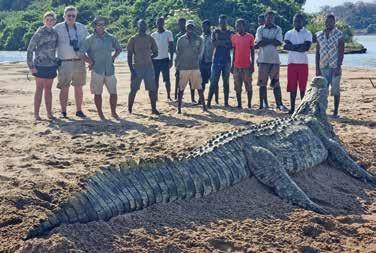
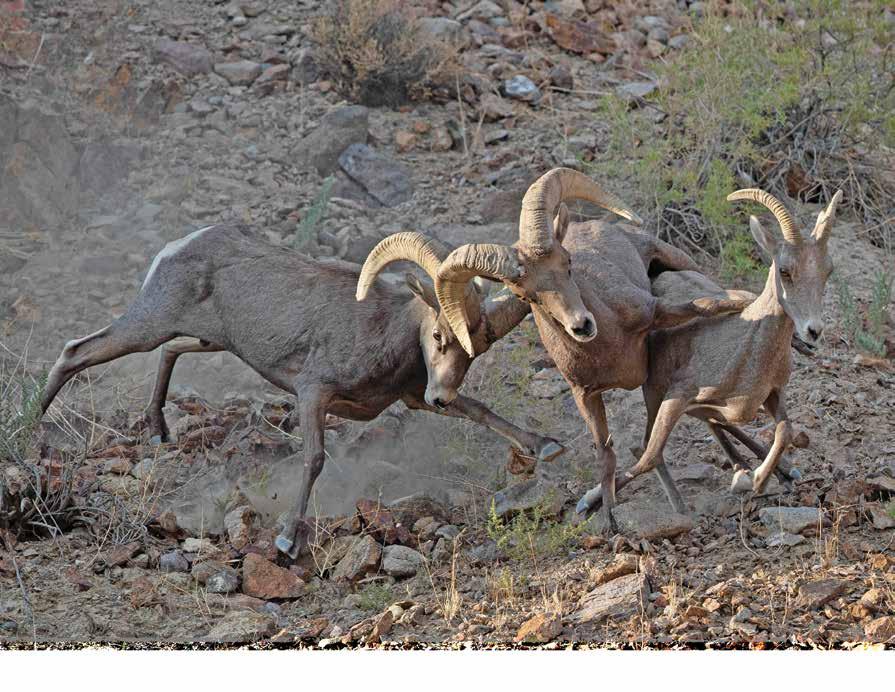


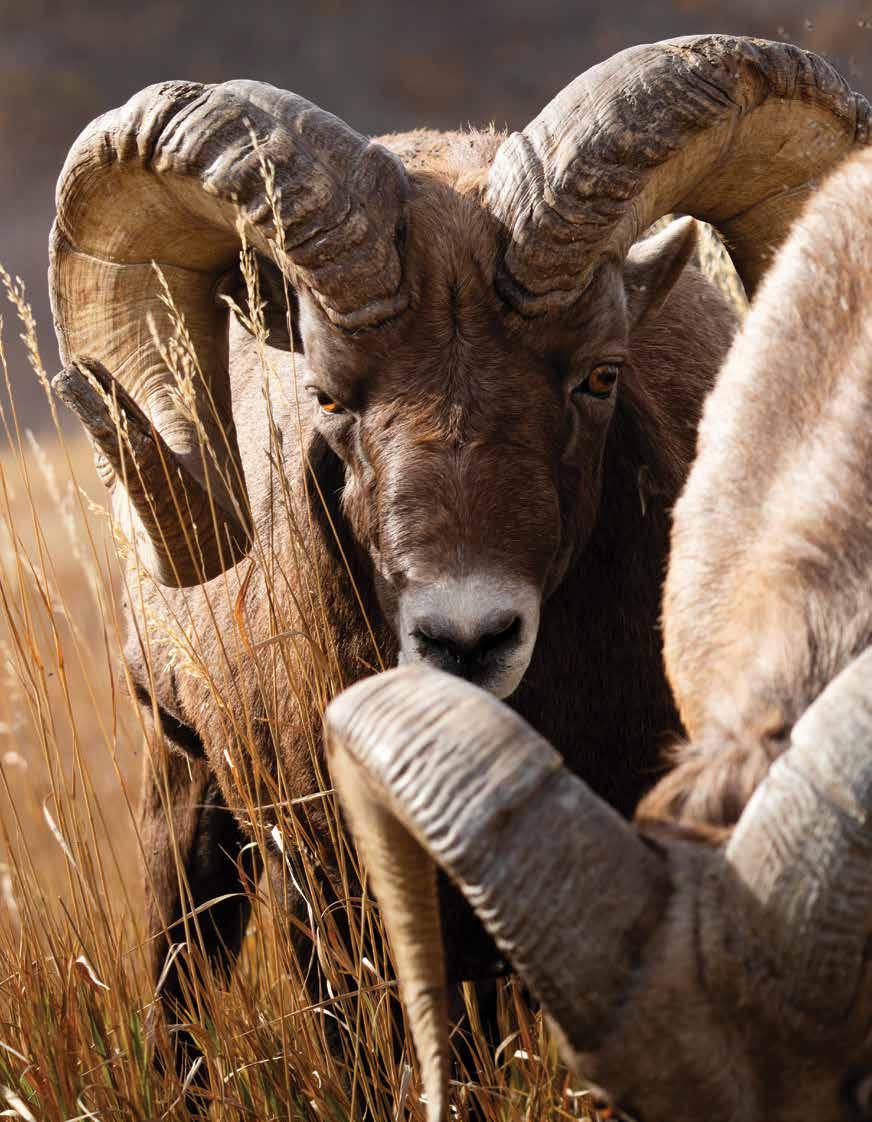
SPONSORS ARE CURRENT AS OF PRESS TIME
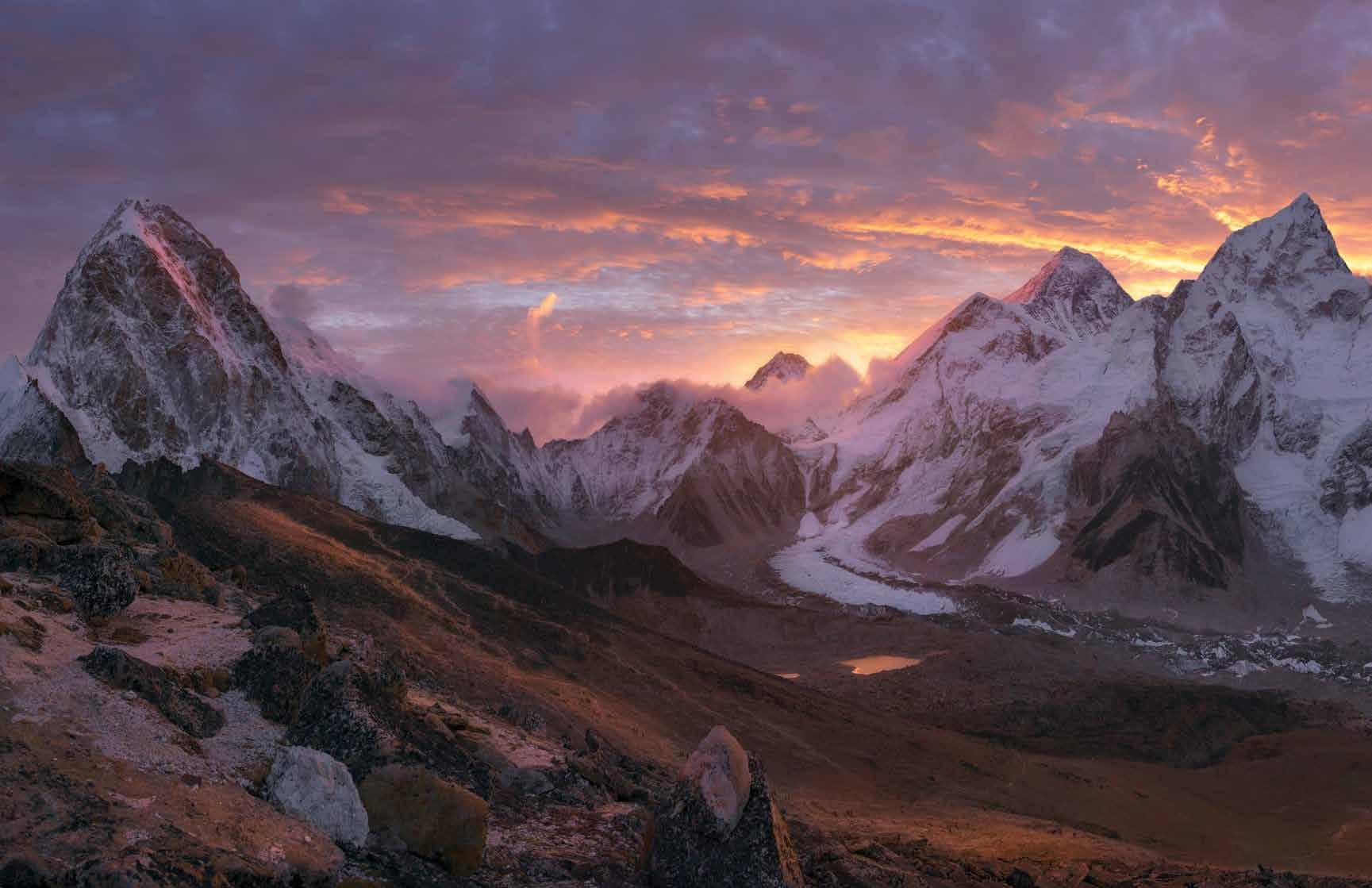
WE ENCOURAGE YOU TO PATRONIZE THOSE WHO SUPPORT THE WILD SHEEP FOUNDATION

PRESENTING SPONSORS DIAMOND SPONSORS







GOLD SPONSORS




Kevin & Tuesdy Small
Jeff & Jann Demaske
Wayne Lennington
Doug & Shelly Sayer
Kevin & Lauri Gilbert
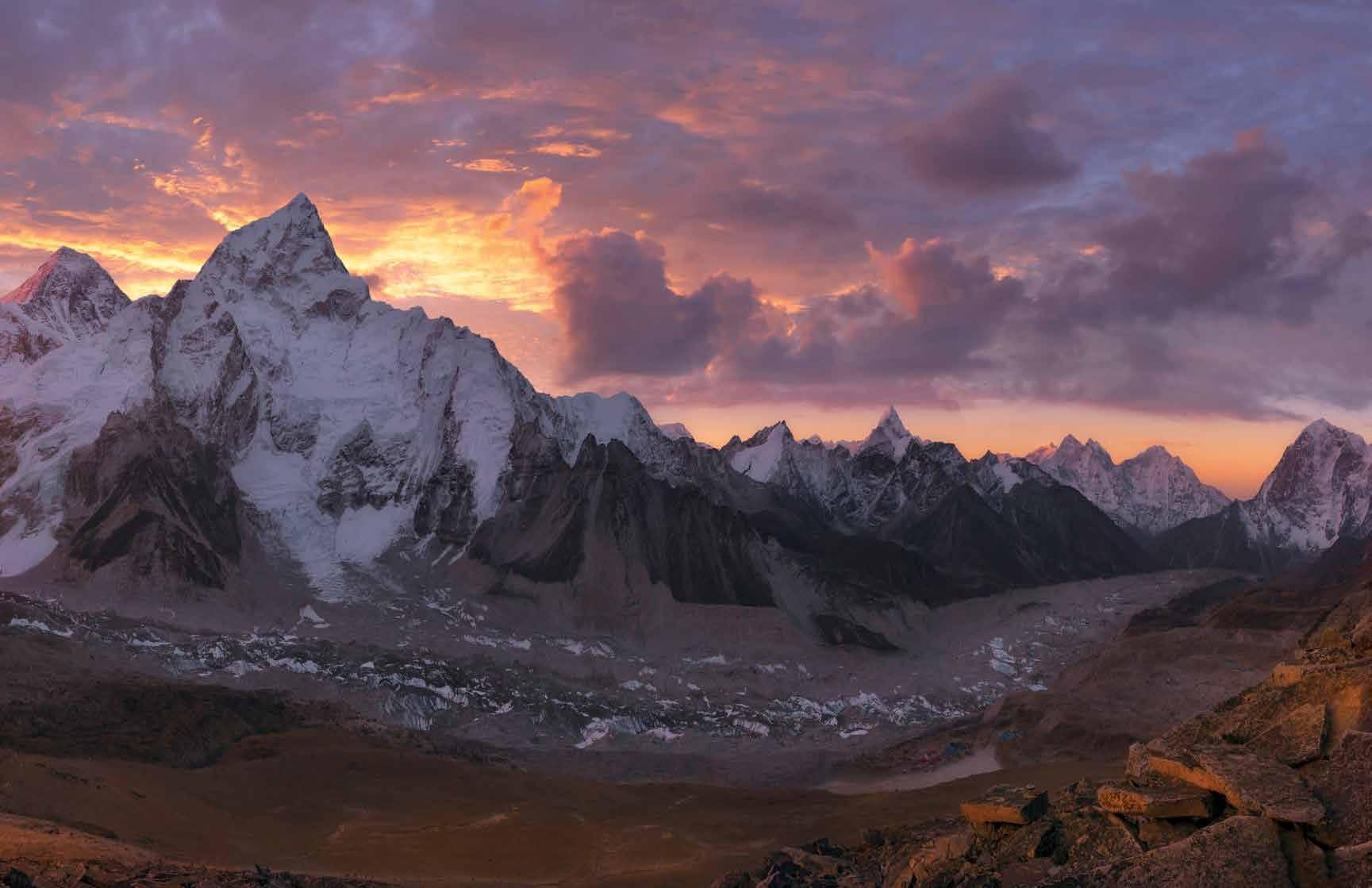
Max Banwell
Mike Borel
Peter Burchfield
Sam & Tracy Cunningham
Denis Dale
Chris Dianda
Jeff & Jann Demaske
Eastern Chapter WSF
Sandra Fields
Linda Demmer
Tom Foss Idaho WSF
Marcus Gores & Shay Law
Zach Higgins
Tom & Denise Hoffman
Shad & April Hulse
Kevin Hurley
Larry & Gay Johns
Kevin Kehoe
Terry Rathert
RA Evans
Robert Vlach
Robert Rose Foundation
Kris Kohlhoff
Rob Mullins
Hank Raats
Terry Rathert
Dustin & Heather Roe
Steve & Sue Skold
Kip & Sue Slaugh
Kevin Small
Lyle Wood

WAVE SPONSORS







The 2026 Sheep Show was another amazing success for wild sheep, our members, and guests. Our photographers also did an amazing job capturing all the happenings.
Use the QR code to view nearly 2,000 images cataloged by event. And feel free to download and share your favorites.
Make your calendars for our 50th Anniversary celebration, February 4-6, 2027. IT WILL BE EPIC!

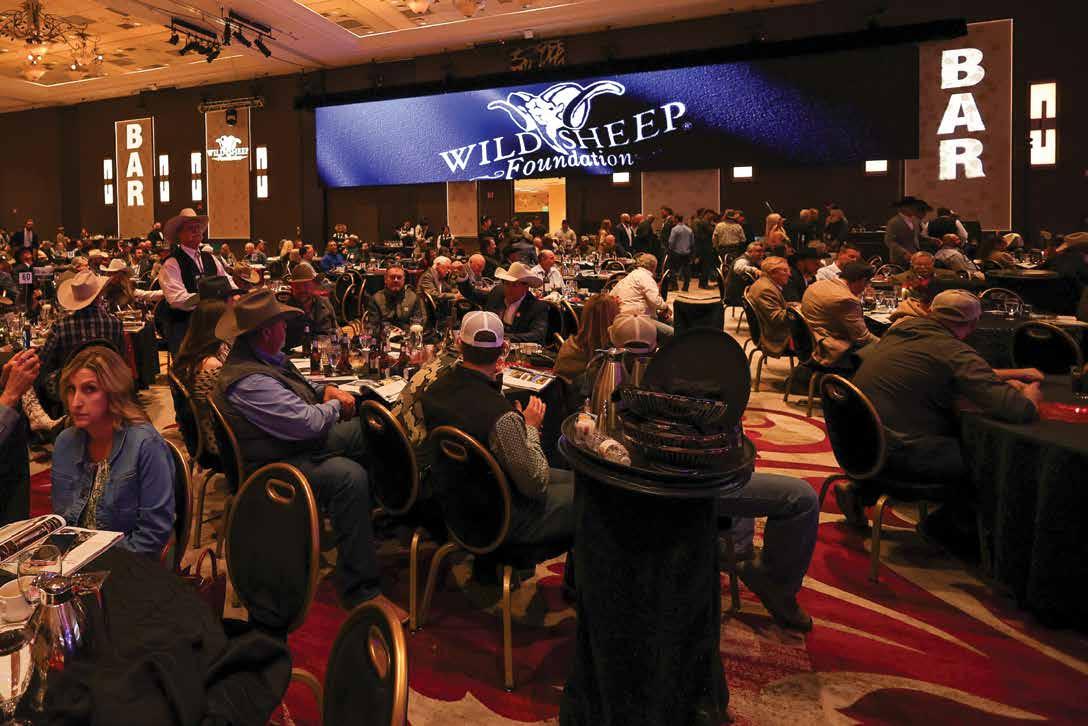
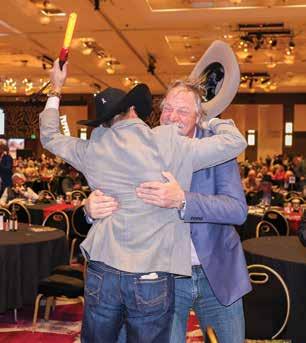
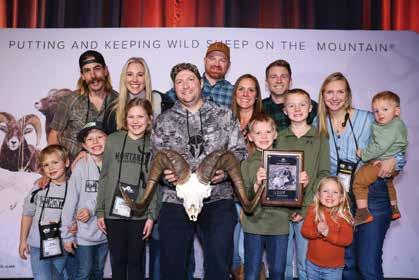

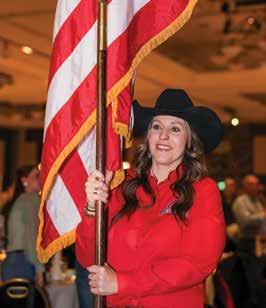


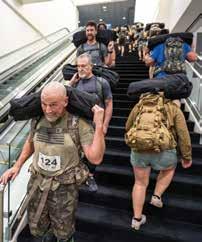


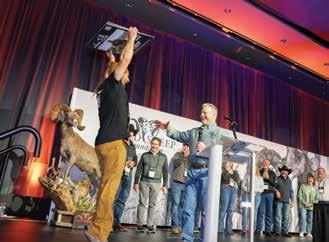
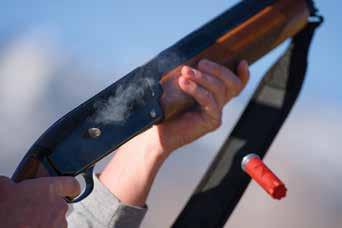
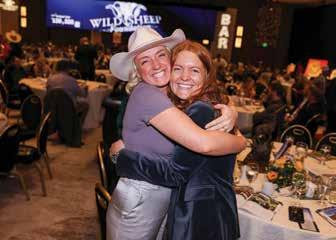
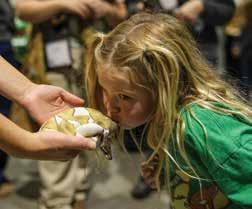
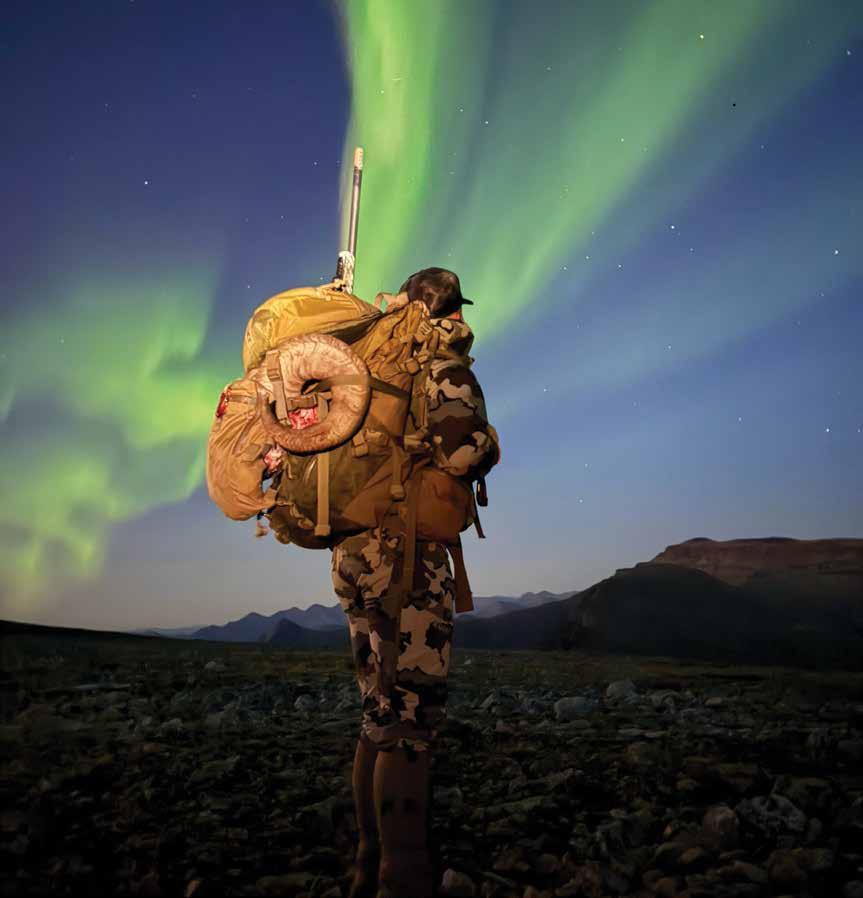
1st
2nd
3rd
1st
2nd
2nd
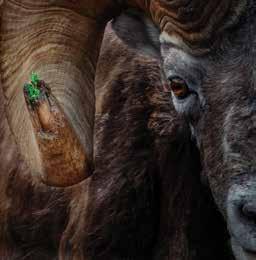
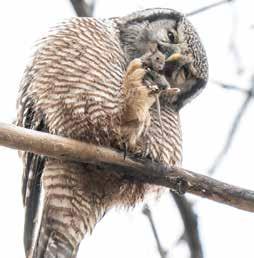
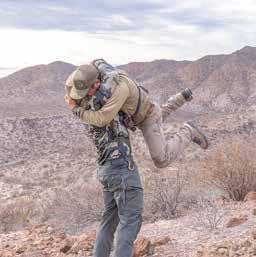
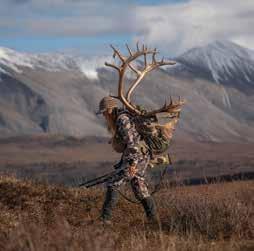
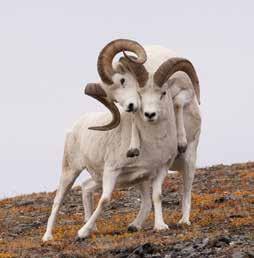
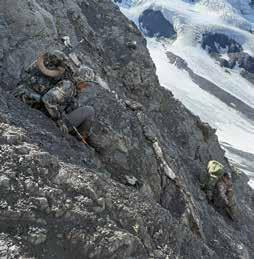
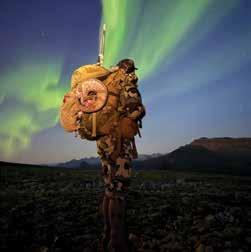
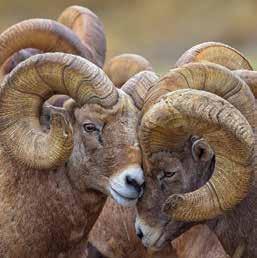
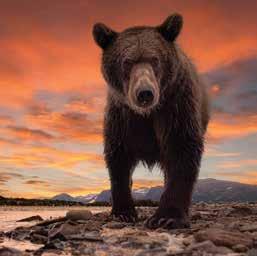
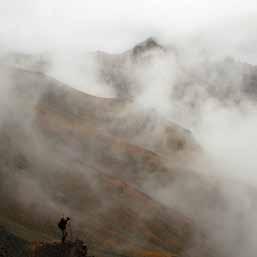
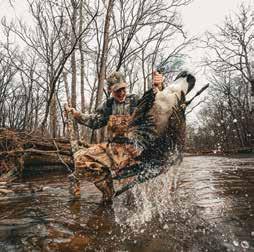
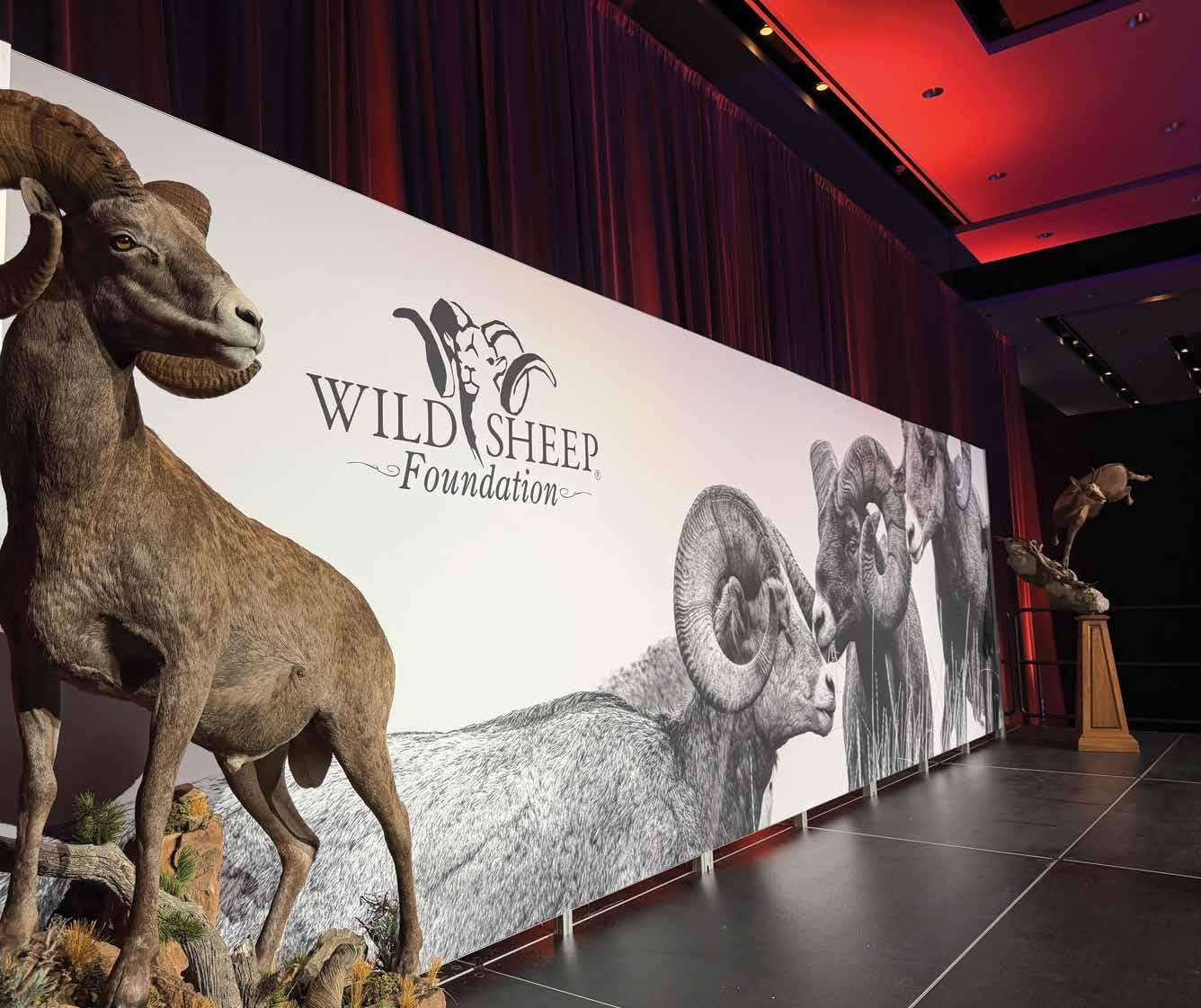
Members of the Wild Sheep family gathered in Reno to celebrate the 2026 award winners and another remarkable year for wild sheep.
“Amazing” is the word that best describes the 2026 Sheep Show and Ram Awards held this January at the Reno-Sparks Convention Center.
First, I would like to thank the dedicated committee members who oversee both the North American and International Awards. Their time and commitment make this program possible. I would also like to recognize the person who truly keeps everything running behind the scenes—organizing meetings, managing submissions, coordinating plaques and buckles, arranging the awards luncheon, and keeping the entire program on track. Julie Tripp, on behalf of the committee, thank you for everything you do.
Congratulations to all of our 2026 award recipients. Whether you achieved your FNAWS, earned an international award, celebrated a youth accomplishment, or were recognized for taking an exceptional ram, your dedication and passion for wild sheep deserve recognition. This year we presented nearly 100 awards and welcomed nearly 650 attendees to the awards luncheon—making it one of our best years yet.
A sincere thank you also goes to the many volunteers who helped set up the luncheon and assisted throughout the awards presentation. Events like this would not be possible without their support.
In the following pages, you’ll see photos of our 2026 Gold Award winners, hunters whose accomplishments represent the highest levels of achievement in the Ram Awards program. Be sure to explore the links and QR codes to learn more about these honors and the full list of Wild Sheep Foundation awards.
As always, we welcome ideas and suggestions to help improve the awards program. Please feel free to reach out to me or any member of the committee.
And finally, don’t forget that next year marks the Wild Sheep Foundation’s 50th anniversary—and we’re already planning an even bigger and better awards luncheon.
Thank you to all WSF members for being part of the greatest sheep family out there. Cheers, Dave Turchanski, Ram awaRds ChaiR


BELT BUCKLE / OUTFITTER PLAQUE SPONSORS
SUPER PATRONS
Max Banwell | Mike Borel | Peter Burchfield | Sam & Tracy Cunningham | Denis Dale | Chris
| Jeff & Jann Demaske |
Chapter WSF | Sandra
| Tom Foss | Idaho WSF |
Gores & Shay Law | Zach
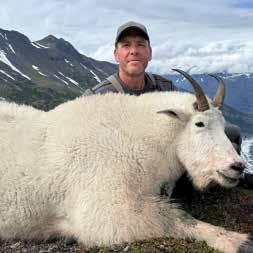
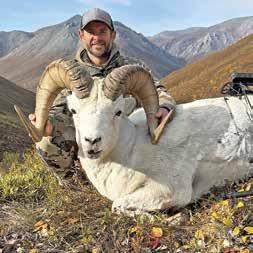
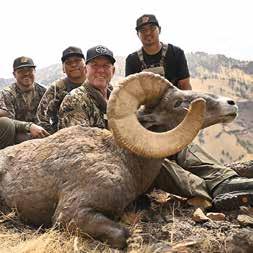
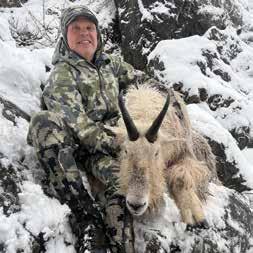
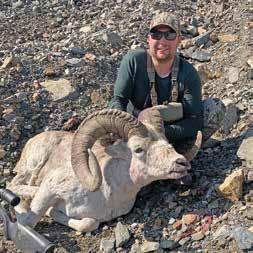
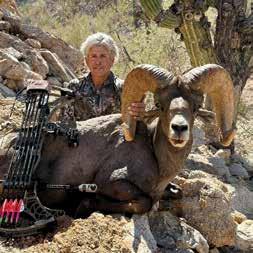
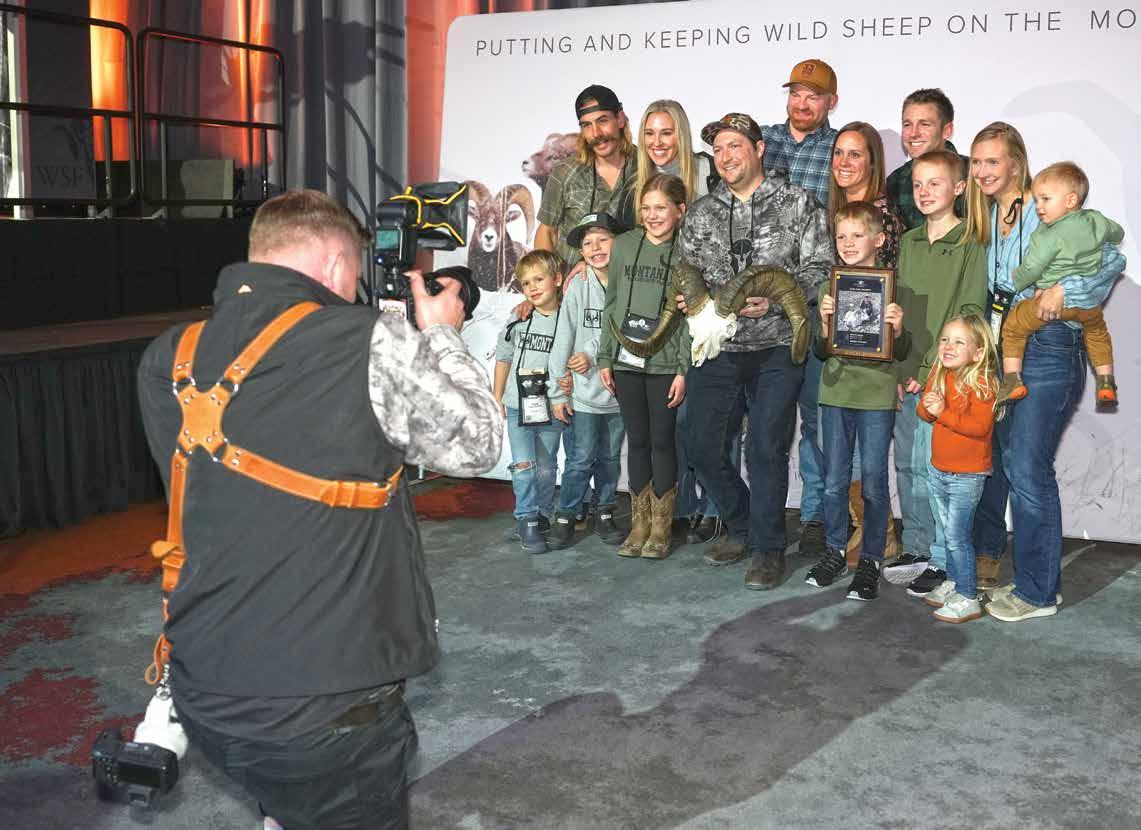
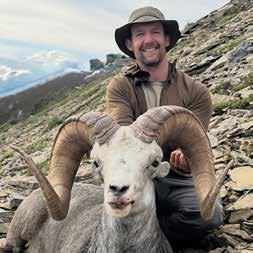
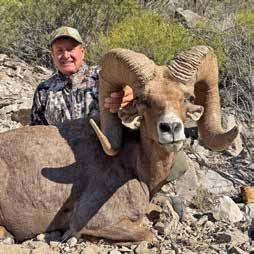
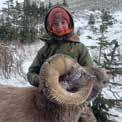
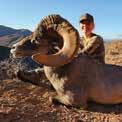
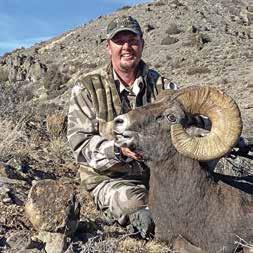
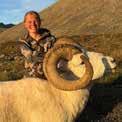
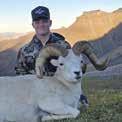
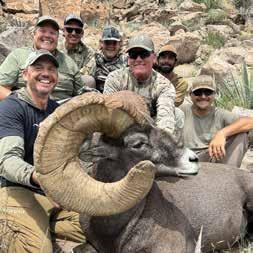

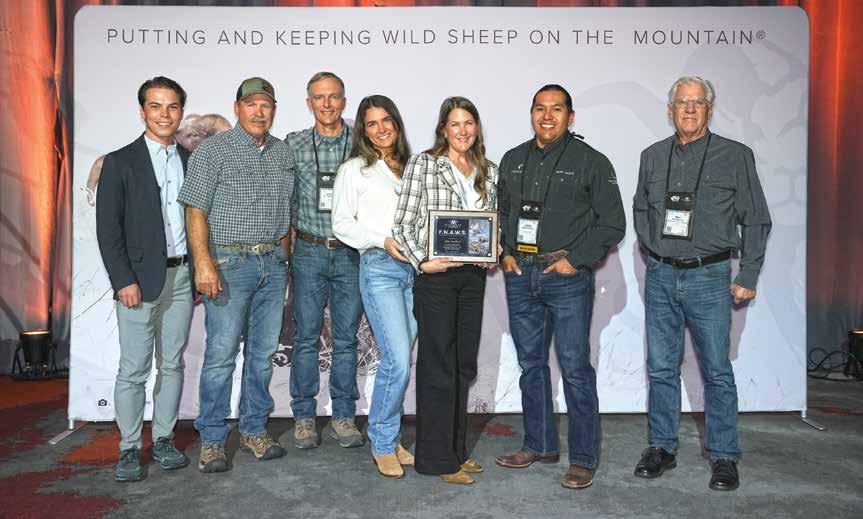
The FNAWS recognizes those members who have harvested the four North American Wild Sheep. Completion of a FNAWS is one of the most sought after accomplishments for North American sheep hunters and a FNAWS is highly respected throughout the hunting community.
To qualify for a FNAWS a member must have legally and ethically harvested all four sheep in a free-range environment. Each sheep harvested must be recorded with WSF using the Hunt Report Form and submitted with a field photograph.
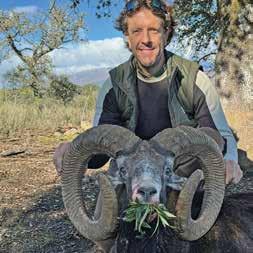

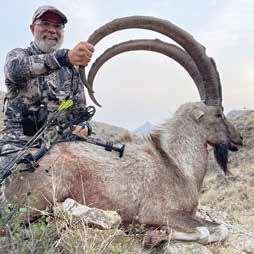
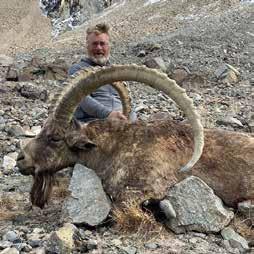
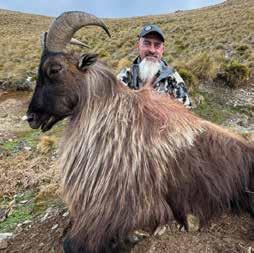
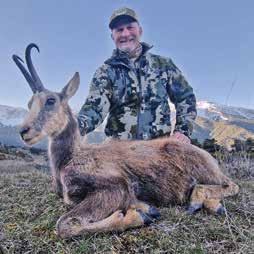
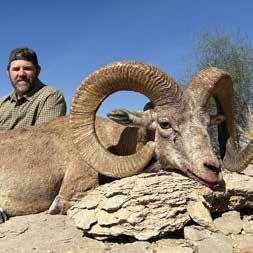
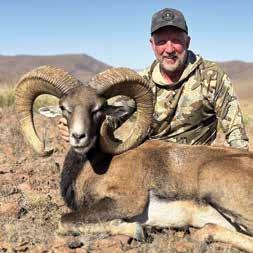
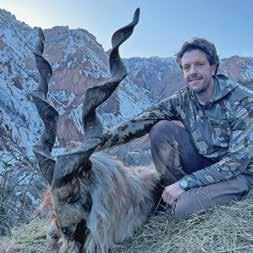
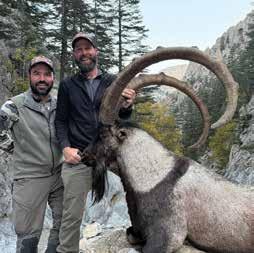
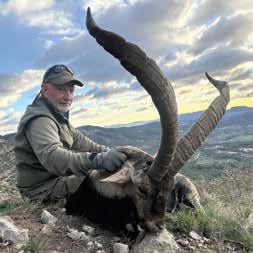
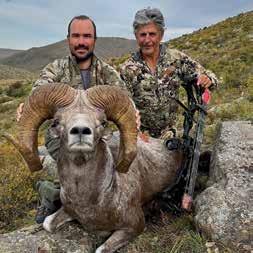

The Wild Sheep Foundation’s Annuli Photo Contest continues to showcase the remarkable places, wildlife, and people connected to wild sheep conservation. Each year, we receive an incredible volume of submissions—far more outstanding images than we can possibly recognize through the contest alone. The depth and quality of those photographs inspired this new photo feature in Wild Sheep® magazine, giving us the opportunity to share more of the compelling moments captured by our community in the field. Looking ahead to next year’s contest, we’ve
refined the categories to better reflect the stories behind the images. Photographers can submit to Live Sheep and Goats (North American and international), Hunter in the Field (packing in or out, camp life, and field photos), Sheep Country (mountain hunting scenery and landscapes), and Wildlife (species other than wild sheep and goats). The 39th Duncan Gilchrist Annuli Photo Contest is now open—scan the QR code on the top of this page to submit your images and share the landscapes, wildlife, and experiences that define your time outdoors. WS
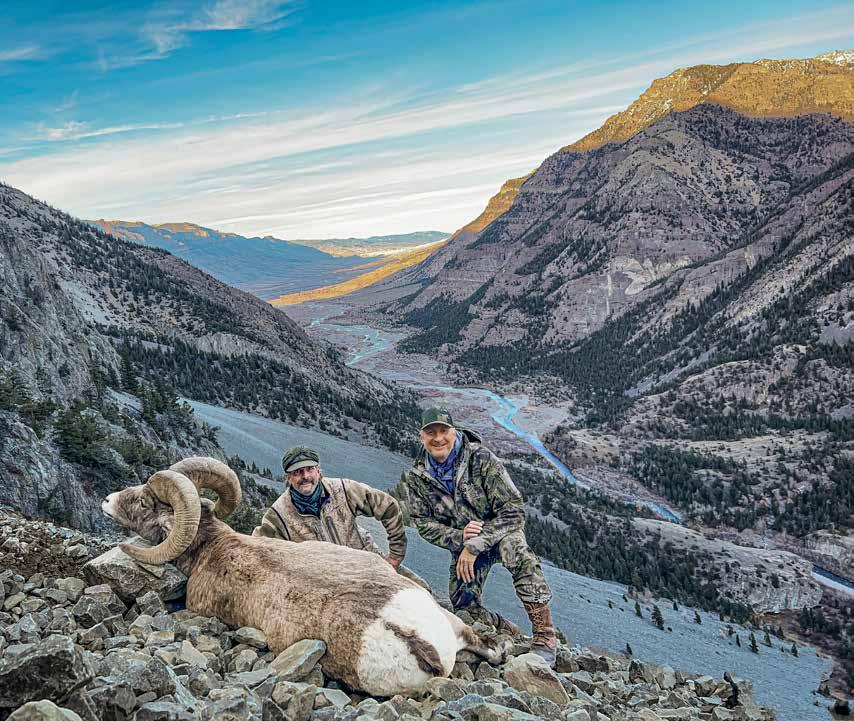
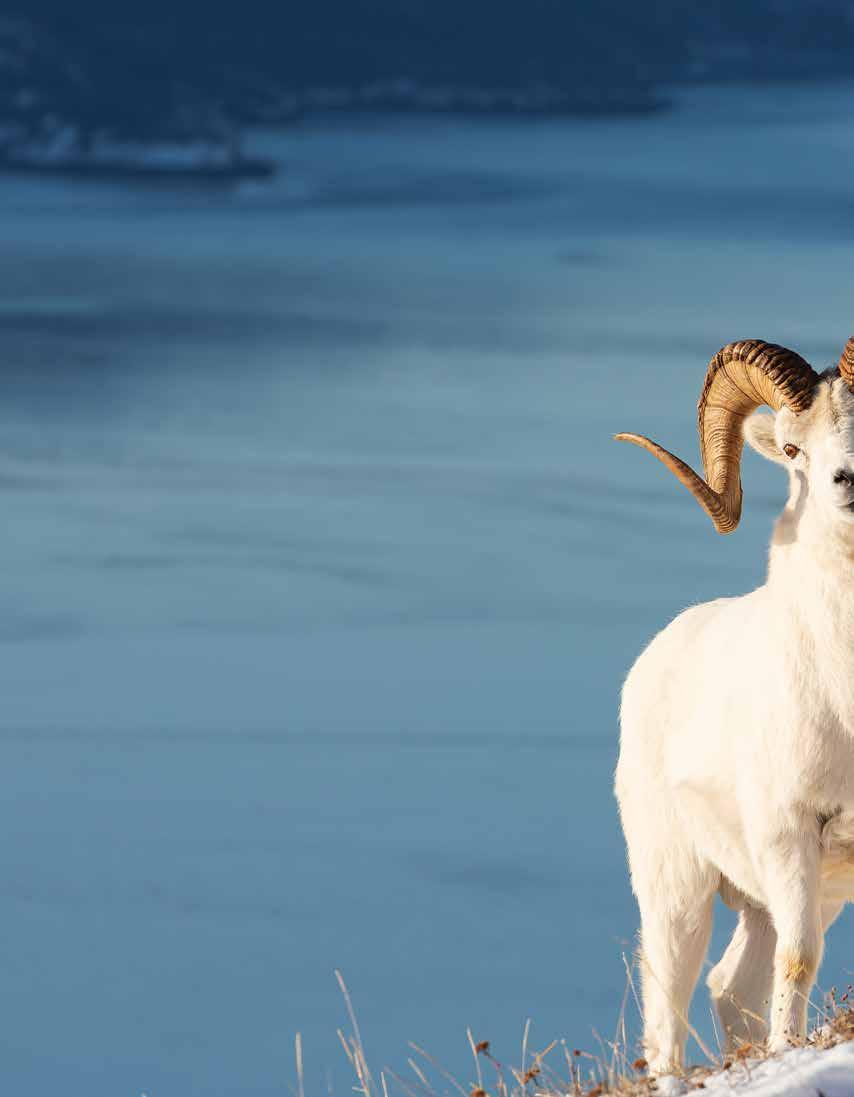
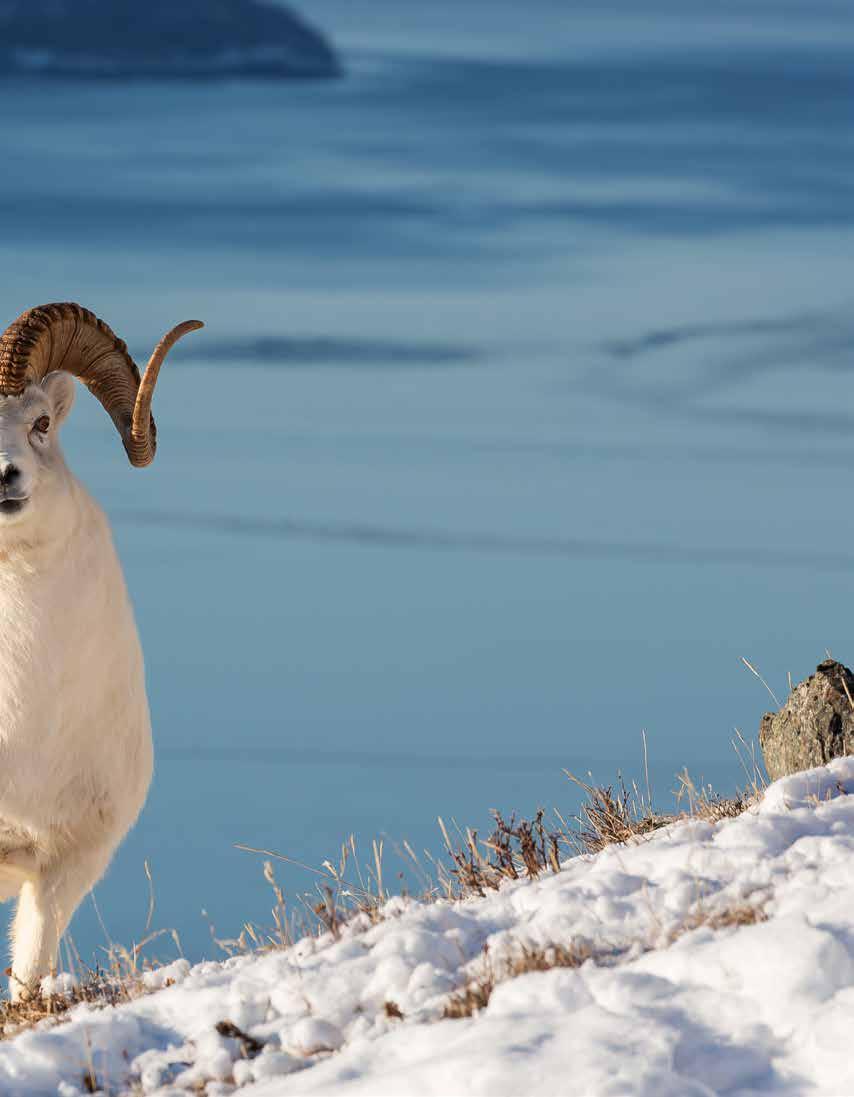

JAN . 22 - 24
10-Day Dall’s Sheep Hunt
GANA RIVER OUTFITTERS LTD.
Patrick Mansfield (ID)
14-Day Alberta Bighorn Sheep Hunt
GARRETT BROS OUTFITTING
Mark Evatz (NV)
12-Day Stone’s Sheep Hunt in BC
SPATSIZI RIVER OUTFITTERS
Bobby Smuin (UT)
10-Day Sonora Desert Sheep Hunt
SIERRA EL ALAMO
Wyatt Olson (WA)
7-Day Late Season Alas-
ka Mountain Goat Hunt
ULTIMA THULE OUTFITTERS
Charlie Dercks (WI)
13-Day AK Brown Bear Hunt
KODIAK OUTDOOR ADVENTURES
Brogan Oswald (OR)
5-Day Alaskan Caribou Hunt
ALASKA HUNTING EXPEDITIONS LLC
Rory Shogren
7-Day Cougar Hunt
KIFARU OUTFITTERS
Louis Balenko
10-Day Moose Hunt
MIDNIGHT SUN SAFARIS
Scott Bosy (CA)
8-Day Spring Muskox Hunt
Ultimate Florida Alligator Hunt
BIENVENUE OUTDOORS
Dan Cramer
Louis Vuitton Bag
IHUNT & WSF
Adam Hairston (ID)
Boswell’s Custom 7mm PRC
BOSWELL’S CUSTOM RIFLES
Dave Colclough
6-Day Alberta Whitetail Hunt
CARTER OUTFITTING
Alex Russell (MT)
Weatherby Orion SxS Shotgun Package
Jim Voeller (WY)
12 Gauge Orion SxS Shotgun
Robert Viach (WI)
20 Gauge Orion SxS Shotgun
Cameron Scolari (NV)
.410 Gauge Orion SxS Shotgun
Alan Hermann (OR)
28 Gauge Orion SxS Shotgun
Braydin Hipple (IN)
Mark V Backcountry 7mm PRC
David Middleton (NV)
307 Alpine MDT Carbon 7mm PRC
Jim Lancaster (CAN)
DOOR PRIZES
$2,500 Floor Credits
Mike Opitz (WA)
Josh DeLong (ID)
MKC Boning and Breaking Combo Set
Teresa Knight (ID)
$1,000 Kifaru Gift Certificate
Brent Williamson (VA)
Christensen Arms 6.5 PRC
Trijicon Riflescope / Fiocchi Ammo
Jeffry Staley (CO)
Balkan Chamois Hunt
Safaris International Macedonia
Zeiss Binoculars
Adam Urban (NV)
FULL REGISTRATION “GO IN LIGHT” GEAR PACKAGE
Andrew Pratt (TX)
SHEEP SHOW 50/50
B. Joe Coy (WY)
FLOOR CREDITS
Thursday $1,000
Wayne Hunt (CAN)
Lori Hunt (CO)
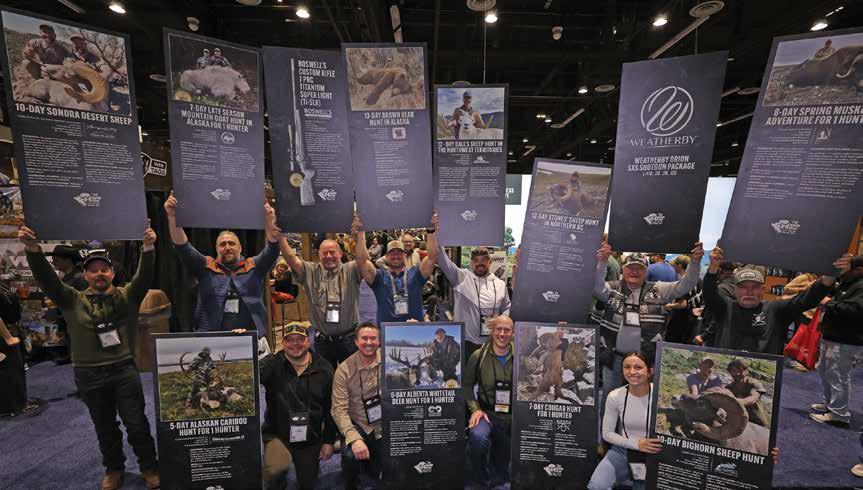
Friday Floor Credits
$2,500
Lance Banning (CO)
Jacilyn Wallace (MO)
Saturday Floor Credit $5,000
Tim Garey (TX)
BERNIE FIEDELDEY ONE MORE FOR FOUR DRAWING
Joe Toy (IN)
MEMBERSHIP BOOTH
HOWA/LEGACY RS TARGET MASTER RIFLE
6.5 PRC – NEW & UPGRADING MEMBERS
Patrick Mansfield
WSF ENDOWMENT PACKAGE
MOUNTAIN LION HUNT WITH FRONTIER OUTFITTING + GEAR PACKAGE
Neil Wanless
La Palmosa Sheep Hunt & Wildlife
Gallery Custom Pedestal Mount
Steven Ominksi (MI)
PATRON PRIZES
Mystery Ranch Package
Laurie Gilbert
Bantam HD 6.5x32 Binocular
Paul Greene
Tom & Denise Hoffman
Paul Baird
Dan & Jessica Kluth
Viper 10x42 HD
Alan Hayes
Razor HD 13-39x56 Spotting Scope
Kevin Kehoe
YETI Hondo Chair
Hank Raats
$500 Boswell Custom Rifle
Gray and Renée Thornton
Weatherby Shotgun 18i
Jamie & Janice Wisley
Weatherby Shogun Sorix
Gordon Lyons
Decanter Set
Dustin Roe
Browning 1911-.22
Larry Johns
Browning Bar MK4 Hunt 30.06
André Van Hilten
Stan Reynolds Paperweight
Mark & Sue Schall
YETI Roadie 24
Kevin Gilbert
Stan Reynolds Scrimshaw
Jim Wilson
Schnee Beartooth Boots
John & Jane Babler
Kifaru $1,000 Certificate
Kris Kohlhoff
Life Member YETI Tote
Sam & Tracy Cunningham
Summit Life Member YETI
Cam Foss
Lancaster Archery Bow
Scott & Jackie Callaghan
Silencer Central Banish 30
Robert Logan
Montana Metal Art Display
Robert Wallock
Purse
Zackery Moorman
IN RUT - Full Curl Custom Rifle
James M.
HAT RAFFLE - $2,500 FLOOR CREDITS
Vortex - Eli Garcia
SITKA - Steve Gingras
Kryptek - Adam Morandi
Stone Glacier - John Alexander
Barney’s - Scott Hushbeck
LADIES LUNCHEON
Christensen Arms 300 PRC
Jaime Gringas
Christensen Amrs 6.5 PRC +
Silencer Central Suppressor
Cole Boardman
Ruger Mark IV Pistol 22 LR
Erica Spalin
WOMEN HUNT
Weatherby Rifle 307 Alpine
MDT in 6.5 Weatherby RPM
Tiffany Osburn (TX)
Silencer Central Banish 30 Gold-V2
Caitlynn Slocum (CO)
Weatherby Orion 20-Gauge Shotgun
Kathy Hill (WA)
Mathews Bow
Dallas Matson (BC)
WH Prize Package
Rick Garzoli (CA)
Peppermill $200 Spa Gift Card
Lynne Love (MB)

DON’T MISS YOUR CHANCE TO WIN AT THE 2027 SHEEP SHOW. MORE PRIZES... MORE CHANCES TO WIN! RENO, NV – FEBRUARY 4-6, 2027
WOMEN HUNT BOOTH GIVEAWAY
Full Curl Brands - Package of Four
Russ Vranken (NV)
CAMP CHEF CULINARY CORNER GIVEAWAY
Camp Chef Woodwind 24 Pellet Grill
Lacie McAfee (NV)
<1 CLUB RECEPTION
BUCKET RAFFLES
onX Lifetime Elite Membership
Kristian Bisiar
Mystery Ranch Package
Chad Rattenbury
Kenetrek Bridger High Boots
Avery Coller
Stone Glacier Pack
Joel Bodine
Weatherby Shotgun
Kathleen Scobie
YETI Tundra 45
Alan Day
Bridger Watch
Rafael Cruz
SITKA Package
Addison Tregellas
Schnee Packer Boots
Alyssa Tenbrink
Montana Metal Art Display
Sam McVay
Silencer Central Banish Backcountry
James Perkett
MKC Knife
James Ray
$25K Auction/Floor Credit
Luke Coccoli
<1 ICLUB HUNT WINNERS
Mouflon - Herederos Hunting
Robyn Collier
Chamois - Spain Safaris
Tim Garey
Tahr - Blackstone Outfitters
Sal Piazza
<1 CLUB HUNT WINNERS
Dall’s Sheep - Northcurl Outfitters
Robert Burandt
Desert Sheep - Sierra el Alamo
Cody Barnes
Desert Sheep - Ranch La Guarida
Christopher Horton
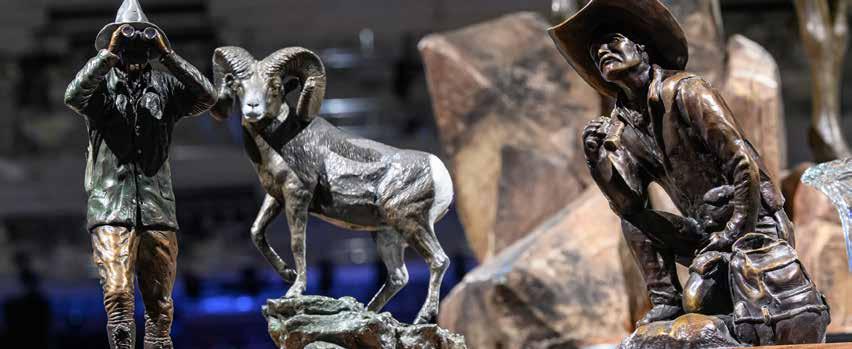
WSF New Mexico Chapter longtime member and officer Jim Travis received the Gordon Eastman Grass Roots Award, created to honor devoted WSF chapter and affiliate members whose work often goes unrecognized. A leader, mentor and tireless advocate, Travis has advanced conservation, fundraising and community engagement for over 42 years. He organized and personally funded the first WSF Life Member Breakfast, which has since grown into one of Sheep Week® ’s hallmark events.
Travis became a NMWSF member in 1993, shortly after the chapter was incorporated and dove into every aspect of the chapter’s work. This includes fundraising at the New Mexico chapter’s annual banquet and both planning and producing the yearly New Mexico bighorn sheep hunt raffles. In the communication realm, Travis assisted in writing and reviewing the chapter’s submissions published in Wild Sheep magazine. In public advocacy, Travis has advised on position papers the
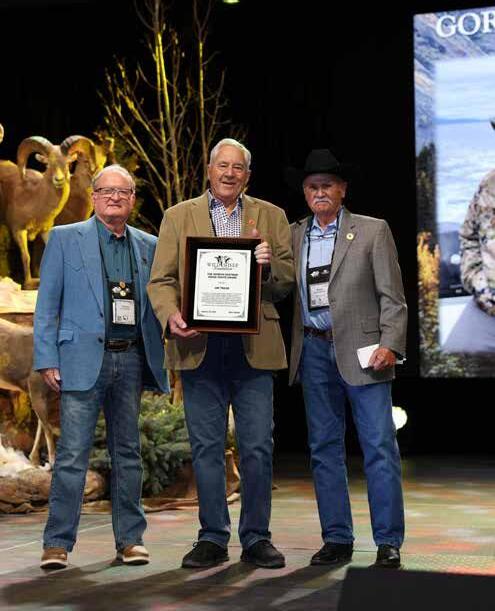
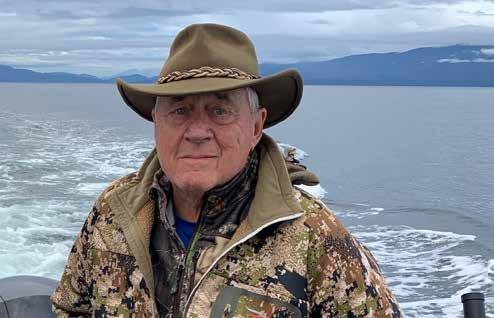
chapter sent to New Mexico’s congressional delegation, the state game commission and the US Forest Service.
On the ground, Travis has
The Outstanding Conservationist honor calls out a wild-sheep hero: a person or entity who stands apart for their outstanding, exemplary and longterm contributions to wild sheep conservation and management.
Chris Barker has dedicated more than 30 years of labor, passion and leadership to benefit the wild sheep of British Columbia and throughout North America. His conservation journey began with the Victoria Chapter of the Rocky Mountain Elk Foundation, where he served as cochair for two years. His passion for wild sheep soon led him to the Wild Sheep Society of British Columbia (WSSBC), where he joined as a director in 1996. After only two years on the board, he was elected treasurer and went on to serve an unprecedented
energetically supported and contributed to the New Mexico chapter’s iconic Wildlife Water Development partnership with the BLM, WSF and several other
NGOs. He is also a fundraiser and advocate for El Ranchito de Los Ninos, a home for displaced children in New Mexico that is operated by its founders, WSF Chadwick Ram Society member Mike Mechenbier and his wife Kathy. Each year, WSF auctions a trophy New Mexico elk hunt to benefit the children who call El Ranchito home. The hundreds of thousands raised through this auction have been life-changing.
As the New Mexico chapter president, Bryan Bartlett, wrote in nominating Travis for the award, “With his many years of sheep hunting, his friendships with wild sheep hunters and his successful business ventures, when Jim Travis speaks, we all listen.” WS
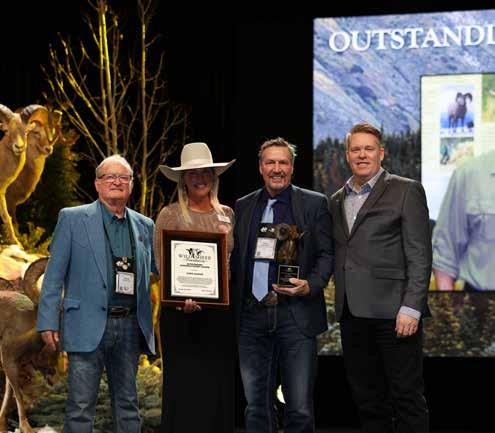
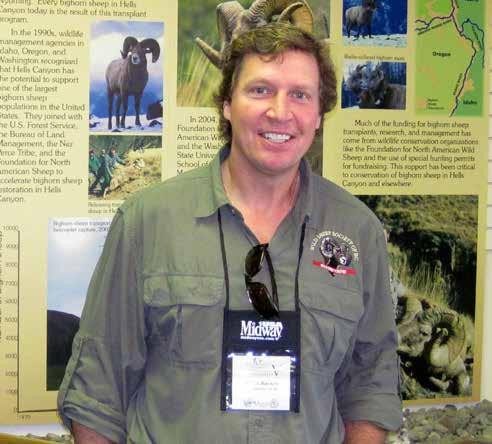
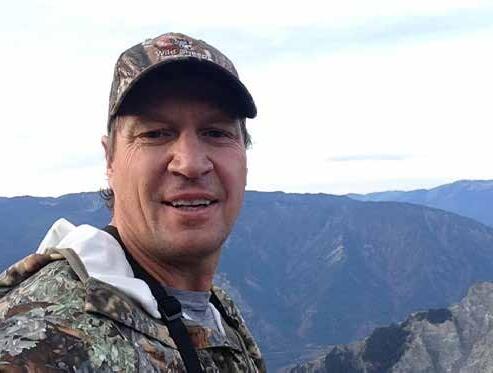
29-consecutive years on the board of directors, including his current role as vice president. Beginning in 2013, Barker also served on the WSF board of directors, where he
was elected secretary and provided national leadership for wild sheep conservation. He has continued his service on numerous WSF committees and working groups.
Under Barker’s leadership, WSSBC invested over $700,000 into wild sheep projects in the last fiscal year alone. He has been a driving force in advocacy, regularly meeting with government ministers to push for stronger policy and legislation to protect wild sheep from disease and habitat threats. His unique approach has been highly effective, according to Dr. Helen Schwantje, BC’s retired provincial wildlife veterinarian. This includes “making phone calls to anyone at all hours from his work desk or, especially from his incredibly noisy truck” and “literally haunting and taunting bureaucrats to aid in their policy building and decision making . . .”
In addition, Barker is a director of the Mountain Wildlife Conservation Society, a registered Canadian charity focused on supporting mountain sheep.
A dedicated volunteer, Barker is often the first to step up, whether in chairing a committee, organizing events or hauling wild sheep in his own horse trailer during translocations.
“I know few people that have fought harder, used all resources available, pushed boundaries, and given more of himself than Chris, leading, following and volunteering for the betterment of wild sheep in British Columbia,” said former WSF Board of Directors Chair Brett K. Jefferson in nominating Barker for the award.
“There is no one who works harder and more tirelessly to advocate for wild sheep in British Columbia under the banner he helped to create, the Wild Sheep Society of BC, than Chris Barker. Except for the sheep themselves: they work even harder,” wrote Dr. Schwantje in her nomination letter. WS
AIBAT MUZBAY, EXECUTIVE DIRECTOR OF THE ARLAN FOUNDATION, VICE CHAIR OF WISPA-CA AND ORYNBASSAR SHAIMUKHANBETOV, CEO/PRESIDENT OF THE ARLAN FOUNDATION
For their dedication to sustainable use management and their unrelenting efforts in advancing wild sheep research, management and restoration in Kazakhstan, Orynbassar Shaimukhanbetov and Aibat Muzbay, respectively the CEO/ president and executive director of the Kazakhstan-based Arlan Foundation, received this year’s Outstanding Achievement Award. Through their work for the Arlan Foundation, a WSF affiliate since 2023, Aibat and Orynbassar were leaders in establishing the first Wild Sheep Partnership for Central Asia Working Group (WISPACA), linking field efforts across five Central Asian countries to benefit argali populations and habitat.
“These are the guys in the trenches in Central Asia working hand-in-hand with WSF to move conservation forward in Central Asia,” says WSF Conservation Director for International Programs Kurt Alt. “They are a true team, and they’re both two of the best biologists I’ve ever worked with.”
WISPA-CA is bringing together governments, researchers and local communities to restore wild sheep across borders. Supported by $200,000 in WSF grants-in-aid, WISPA-CA forges partnerships across Central Asia to strengthen habitat connectivity, reduce conflict and promote shared stewardship of mountain ecosystems.
Dedicated to wildlife conservation, particularly for wild argali and goat species, the Arlan Foundation was WSF’s
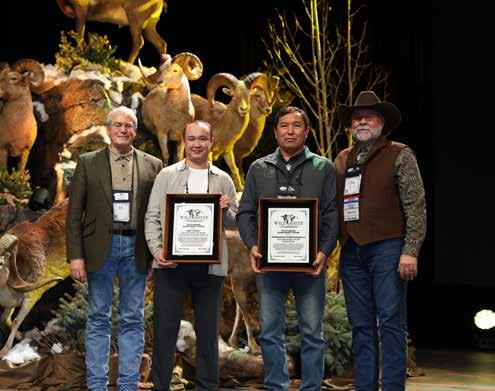
first Central Asian affiliate. Orynbassar’s involvement with WSF dates back to 2018, with Aibat joining forces with WSF in 2019. Both have graduate degrees
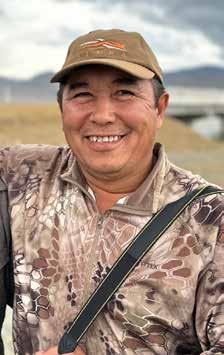
in wildlife management. WSF has brought them to North America to exchange expertise with biologists in the West. The WSF-funded professional collaboration has
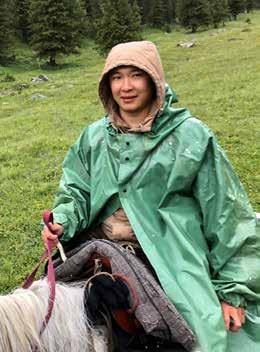
resulted in meaningful advances for Central Asian wild sheep species. With the involvement of Aibat and Orynbassar and their colleagues, this past December saw the first collaborative, onthe-ground argali survey in Kyrgyzstan. This built upon Aibat and Orynbassar’s prior argali survey collaborations over the past several years throughout Central Asia and Mongolia.
Kazakhstan argali have not been open to hunting since the 1990s, Alt explains, and now the country, with guidance from Orynbassar,
“Tonight, we would like to recognize an elected leader who not only gets it, but is one of us: a proud member of the wild sheep family,” said WSF President and CEO Gray N. Thornton in presenting the State/Provincial Statesman Award to Minister Todd Loewen of the Ministry of Forestry & Parks, Alberta.
Born and raised in rural Alberta, Loewen is a hunter, farmer, hunting outfitter and an unapologetic promoter of the hunting, angling, trapping, shooting and outdoor heritage. Before being sworn in as the Minister of Forestry and Parks in 2023, Loewen served as the minister of Forestry, Parks and Tourism. He was first elected to the Legislative Assembly in 2015. As a businessman and representative of Alberta’s and Canadian citizens, Loewen promotes hunting, angling and his province’s natural resources internationally as one of the finest examples of eco-tourism.
His passion for Alberta’s bighorn sheep inspired Loewen to actively engage in improving the
Aibat and their colleagues, is seeing the value of sustainable wildlife resource use to generate revenue and enhance species. This future vision for argali has a precedent with Kazakhstan’s saiga antelope success story. One of conservation’s greatest triumphs, the saiga rebounded from a 2003 population low of only 21,000 to 4 million today as a result of various wildlife management practices, including scientifically regulated hunting. Hunting revenue funds programs that extend the success of saiga conservation.
According to Alt, Orynbassar and Aibat are currently working with the Kazakhstan Ministry of Ecology and Natural Resources to implement a project to restore a subspecies of argali, with funding coming from conservation permits. The project will entail intense field work, including GPS collars to determine argali movements and migration corridors. Data management and data sharing are all baked into the plan. These are all firsts for Kazakhstan, with more projects— and the dream of more Central Asian argali—on the horizon. WS
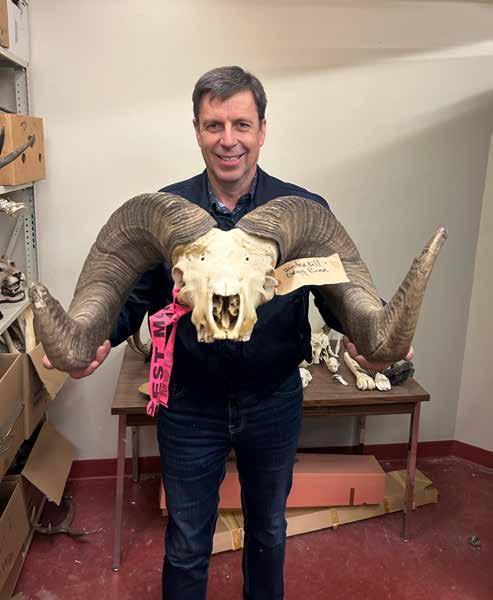
funding mechanisms for bighorn conservation in Alberta. His personal involvement in promoting the Alberta Minister’s Special License has resulted in nearly
Agency partners are critical to WSF’s mission, with Tribes and First Nations especially noteworthy as indigenous stewards of wildlife and wild lands. Living with and conserving wildlife and our natural resources for millennia, these indigenous organizations bring vast historical knowledge combined with contemporary scientific expertise—a powerful combination that makes them effective and bold wild-sheep managers.
The Confederated Tribes of Warm Springs, represented by its Director Austin Smith, were honored with WSF’s Federal Statesman Award for their stewardship of both tribal and co-managed lands and wildlife in
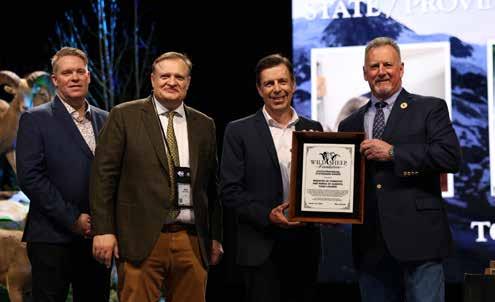
doubling the auction value of the Alberta Minister Permit. This has produced critical funding for Alberta wild sheep conservation.
“He and his Ministry are
innovative, proactive and are unafraid to push the needle for wild sheep and other wildlife,” Thornton said. WS
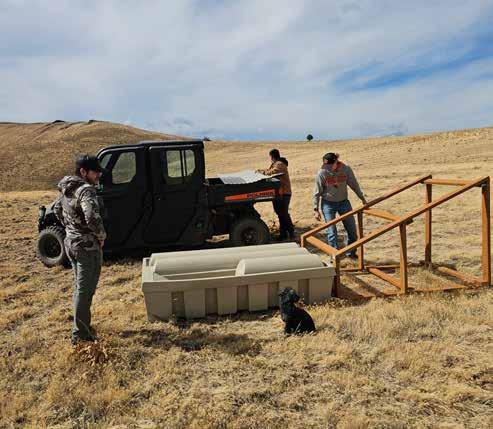
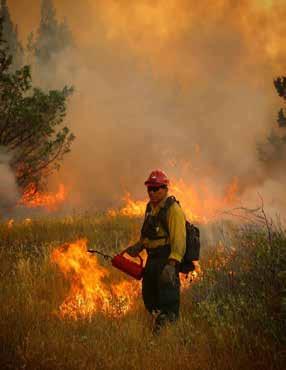
Oregon. The Confederated Tribes have been leaders in advancing the conservation of California bighorn sheep on tribal and co-managed lands through sustainable use. To fund conservation efforts, the Confederated Tribes implemented a non-tribal conservation permit, which has been enormously successful. As it envisions a future for wild sheep, the Confederated Tribes are also developing the next generation of tribal wildlife managers and stewards.
In an extraordinary conservation partnership, private landowners James and Patti Rinehart donated 40 acres of a former Arizona mining claim to the Arizona Desert Bighorn Sheep Society (ADBSS) for the creation of a water catchment facility to benefit desert sheep.
Designed and constructed by
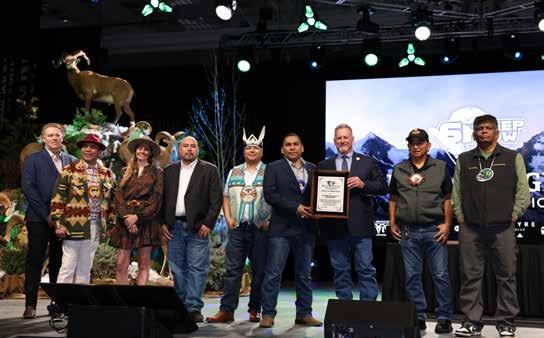
In 2025, Smith joined WSF’s delegation at the IUCN World Conservation Congress in Abu Dhabi, where he gave and participated in more than 20 presentations on sustainable use, showcasing not theory but realworld, on-the-ground success. Smith presented “Co-Managing Wildlife with Indigenous Cultural Knowledge and Science: The Warm Springs Tribe Story,” illustrating how combining Traditional Ecological Knowledge (TEK) with modern
ADBSS, the Rinehart-Newlon Water Catchment was completed last spring, and thanks to good rains, the catchment’s 12,000-gallon tanks are now full.
“This is the first privately owned catchment built by ADBSS in its 58-year history,” said WSF Board Chair Charlie Kelly in announcing the award.
In the arid expanse of Arizona’s Harcuvar Mountains, the catchment is designed to provide year-round water for desert bighorns and other wildlife along
science leads to lasting conservation outcomes rooted in culture, community and collaboration.
During the Sheep Show®, the Confederated Tribes of Warm Springs offered, for the third year, a non-tribal-member auction tag, which sold for $250,000. Over the past three years, this auction tag has brought in $760,000, a boon for conservation funding to benefit Oregon’s tribal and co-managed land and wildlife. WS
a crucial 10-mile corridor linking the Western Harcuvars and the Granite Mountain catchment. Producing over 1,600 gallons of water per inch of rainfall, the Rinehart-Newlon Water Catchment will serve as a vital oasis in an area prone to extreme drought and heat. That oasis will benefit all local wildlife, from sheep to honey bees, foxes, deer, tortoises and quail.
ADBSS President Eric Hunt said, “We are deeply grateful to WSF for the $100,000 grant-in-aid
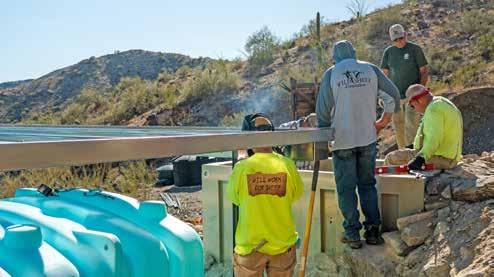
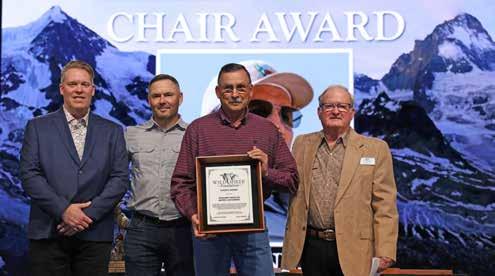
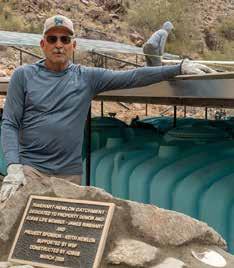
a lot of sheep but it’s a stepping stone for a herd to the west and a herd to the east, and we’re hoping the water in the center will start drawing more sheep into the area and expand the population in the Harcuvars,” McCasland said.
“If we build it, they will come,” echoed past ADBSS president TJ Baehre.
“We’re being creative in working within the rules, and that’s what makes things happen,” said James Rinehart, a ranch realtor and longtime Wyoming Wild Sheep Foundation member. “Agency projects typically take four to five years. We did this in one.”
that has directly supported onthe-ground conservation. That support, combined with projects like permanent water development, habitat work, transplants and management efforts, is helping keep sheep on the mountain and herds moving in the right direction.”
Facing weather delays and impassible roads, the RinehartNewlon Water Catchment ADBSS volunteers showed grit and heart. Cutting out part of a mountainside to place the tanks and catchment system required moving massive rocks, leveling the site and compacting soil with
heavy machinery. Helicopters flew in supplies when fourwheelers couldn’t.
Keith Newlon, an ADBSS member and supporter, secured title work through his company Pioneer Title at no cost. He later purchased the project’s naming rights at a fundraiser auction for $30,000, providing impactful support for the catchment.
Despite the daunting location, from start to finish the project took just a year, according to past ADBSS president Dave McCasland. “It’s in a mountain range that hasn’t historically held
In addition to the direct benefit for wildlife, the catchment stands as a living model of how partnerships can be a powerful force for good and an inspiration for other landowners and wildlife advocates.
“Wildlife conservation is not about what we take from the landscape, it’s about what we leave behind. It’s about making sure that, long after we’re gone, wild sheep still roam these mountains, drink from these waters and inspire the next generation of conservationists, hunters and outdoor stewards,” ADBSS President Hunt said in accepting the award on behalf of the organization. WS
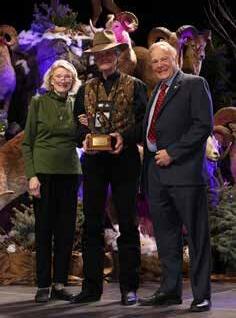
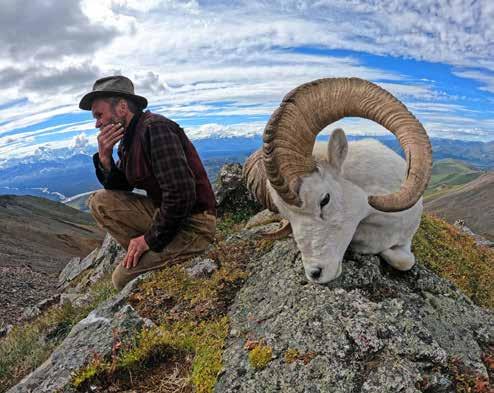
Hunting celebrity Jim Shockey was once asked about his most daunting experience, and he named not only the hunt but also the guide who led it: this year’s GCF Dalziel Outstanding Guide. “For me, that was a hunt back in the early ‘90s for Dall’s sheep in the Yukon with a guide named Rod Collin, one of the greatest guides I’ve ever been with, one of the toughest—a tough, tough, tough guide,” said Shockey.
Shockey’s story defines what it means to be a GCF Dalziel Outstanding Guide. After the hunt went longer than planned, they had run out of backpack chow and resorted to eating gophers. The extreme weather and terrain completed the misery. When a modest ram finally came into view, Shockey was ready to shoot and get it over with. Then, Shockey
explained, “Rod (looked at me) and said, ‘You can shoot that (ram), but then you’re going to look at it for the rest of your life on your wall, and you’re going to know that you quit, that you quit on this hunt. You got the animal but that doesn’t mean anything, that’s not success, that’s not the measure of success.’
“ This forced Shockey to plumb his soul and discover he could keep going. “I realized that there’s nothing, nothing out there, that I can’t overcome, nothing that I can’t face, nothing that I’m afraid of.”
Life-changing moments are one of the specialties clients have learned to expect from Collin, a lifelong north-country cowboy guide. With over 45 years of guiding, he is famed for his field wisdom and steely mettle.
Raised on a farm in central Alberta, Collin was inspired during his teen years by a book that described “the perfect day” of hunting with a horse outfit. At 18, he began guiding, and in 1982
he met an outfitter and character named Charlie Stricker whom he wrangled for then started guiding for in pursuit of bighorn sheep. Collin guided several bow hunters for Charlie out of Canmore, Alberta, the first being the legendary Jack Frost, who was working on a FNAWS. In the mid-’80’s, he headed to BC to join Charlie’s new hunting outfit guiding backpack and horseback hunting trips for Stone’s sheep, mountain goat, caribou, moose and bear. In winter, he built two log cabins in the wilderness and used a dog team to run trap lines.
In 1989, Charlie bought the rugged, remote Bonnet Plume area, which would launch Collin’s Yukon guiding career. With a crew and pack string of horses, he was responsible for getting people, animals and equipment safely across wild mountains and raging rivers. Collin spent nearly two decades working for Charlie until he sold the area.
In 2002, Collin began his next Yukon chapter with Dickson Outfitters. For the ensuing decades, Dave and Teena Dickson and their children have been running their family operation with Collin as one of the tribe.
Collin is old-school to the core, which is part of his infinite charm. “From what I can tell, Collin has only three pieces of modern equipment: his cellphone (for photos), a Swarovski 60X spotting scope (for aging rams), and a satellite phone (for calling his wife on her birthday). The rest of his gear seems to be from the
Outfitting since 1998, GT Nunn of Frontier Outfitting is the embodiment of the ideal Frank Golata honoree: a North American outfitter specializing in mountain game whose entire career has exemplified the honor and dignity of their proud profession.
A WSF life member and 12-year Sheep Show® exhibitor, Nunn has provided WSF with $81,000 in fully donated hunts over the past 26 years. A lifelong New Mexico resident, he started big-game guiding in the early 1990’s with friends and family in the industry. In 2003, Nunn established Frontier Outfitting, guiding resident and nonresident hunters in pursuit of elk, mule deer, Coues deer, pronghorn, black bear, mountain lions and both desert and Rocky Mountain bighorns.
The premier bighorn sheep outfitting organization in New Mexico, Frontier Outfitting and Nunn have, over the past 22 years, helped their clients harvest over
’80s or earlier,” wrote hunter Alex Robinson in his nomination letter. “Like (Jack) O’Connor, Collin believes that rams should be killed at relatively close ranges—300 yards and in. This is to ensure that a mature, legal ram is taken with a quick killing shot.” As Collin maintains, “There’s almost always a way to get within 300 yards. It just might not always be right away.”
This coming fall, Collin’s 48th season of guiding moose hunts, he is expected to dust off his vintage gear and head out to camp, determined to wring another season out of it. After
guiding hunters to over 100 rams over the years, Collin retired in 2023 from that aspect of the business and the 140-pound pack loads it required him to carry for miles out of the backcountry.
As for those 100-plus rams, the humble cowboy mountain man, as Collin is described, doesn’t notch his trophies: When “how many” comes up in conversation, Collin usually turns the conversation to the hunter’s tales instead. Humility: another hallmark of a genuine GCF Dalziel Outstanding Guide. WS
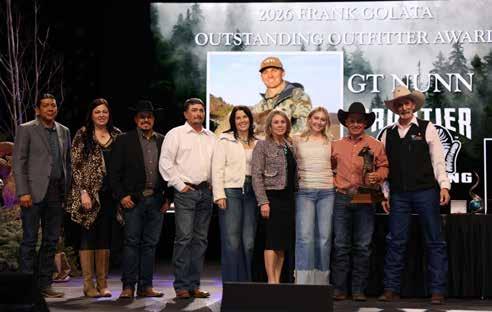
175 desert and Rocky Mountain bighorns. Since 2011, Nunn has been the official outfitter for the Taos Pueblo Division of Natural Resources Rocky Mountain bighorn permit. Nunn annually volunteers his time to assist Taos Pueblo and the New Mexico Department of Game and Fish with their spring and fall bighorn sheep surveys and was
instrumental in getting a game fence installed along a major highway in northern New Mexico to protect bighorns from vehicles. He has assisted on numerous habitat improvement projects and with disease surveillance in both herds managed by Taos Pueblo.
“The hunt program at Taos Pueblo saw an immediate shift forward in the caliber of hunts
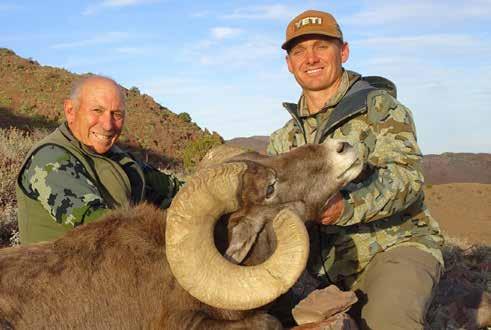
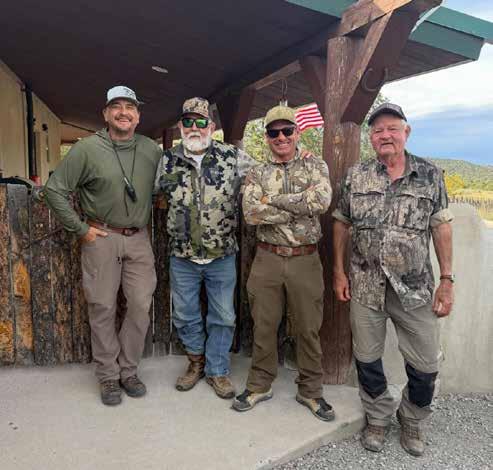
that they provided following the partnership with G.T., with nearly every hunt on Taos Pueblo surpassing the entry scores for Boone and Crockett,” wrote Taos Pueblo Hunt Manager Michael A.
Martinez in his letter nominating Nunn. “His knowledge not only of hunting sheep, but also conservation of bighorn sheep has been instrumental in helping manage both herds on our Pueblo. Taos
Pueblo is also truly thankful for the conservation work he has done for our tribe and these great animals.”
Because wild sheep ranges are spread throughout New Mexico, Nunn is respected as an expert in the logistics and field knowledge that allow his hunters to succeed in each far-flung region. He personally takes part in almost every Frontier Outfitting hunt statewide.
For over a decade, Nunn has actively served on WSF’s New Mexico chapter board of directors, where he assists with fundraising and is known as the go-to on all bighorn sheep issues, from herd health to hunting quality across the state’s ranges. For 15 years, he has served on the board of directors for the New Mexico Council of Outfitters and Guides (NMCOG), where he was treasurer for over a decade and now is director at large. While ensuring the industry in New Mexico is managed with the highest standards, Nunn’s work on the NMCOG board also helps to raise funds for the council and promotes outfitter-guide communication.
“There is no doubt GT has brought millions of dollars into New Mexico through his outfitting and guiding organization. This is especially true for the bighorn sheep part of the organization,” said Bryan Bartlett, president of the New Mexico WSF chapter in nominating Nunn for the award. “His reputation has also influenced the New Mexico bighorn sheep tag sales at the annual Sheep Show® live auction. In most cases the higher bidders have already made up their mind to hunt with Frontier Outfitting before the auction even starts. As you would assume, GT’s list of clients is long and notable.” WS
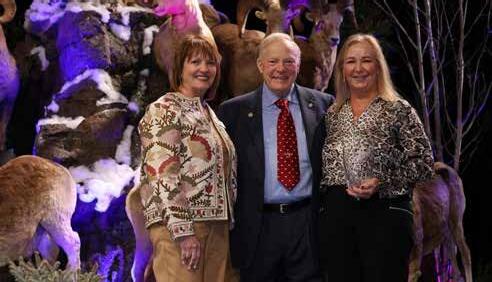
This year’s Artemis is wellknown to the WSF family as everything the award is intended to honor: an outstanding woman leader and mountain hunter who has made significant contributions to WSF, wild sheep and other mountain game resources.
Quoting Maya Angelou, this year’s Artemis, Shelly Sayer, said, “I am grateful to be a woman. I must have done something great in another life,” to shouts of approval at the Grand Finale banquet. “And I am proud to be a woman, to be a woman hunter, and to be a woman conservationist.”
Starting her hunting journey later in life, Sayer has accomplished a long lifetime’s worth in the field, including taking her first FNAWS with one shot for each ram. Her sheep-hunting experience informed her passion for conservation work, with Shelly and her husband Doug borrowing money to make a guzzler project happen many years ago. They
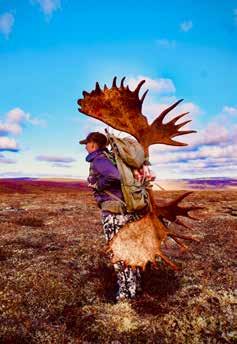
didn’t stop there. Most recently, just a few weeks before this year’s Sheep Show®, Shelly donated the transplant boxes for Idaho Fish and Game to transfer bighorns from Oregon to Idaho’s Jack’s Creek wilderness area in the Owyhee Canyonlands.
Shelly and Doug are Marco Polo Society members, longtime WSF donors and, in their home state, ardent supporters of WSF’s Idaho chapter, where she served on the
board of directors. She is a current Idaho chapter Centennial Life Member. In addition to generous financial contributions, Shelly has volunteered for the chapter and served as an advocate for fair chase and hunters’ rights.
Artemis is not Shelly’s first WSF award. In 2010, Shelly won WSF’s Outstanding Conservationist Award. She is the only living woman member of the Grand Slam Club-Ovis “700 Club,” and now has attained it twice. In 2020, Shelly achieved her third FNAWS. To date, she has received 11 individual WSF Ram Awards, her most recent a silver for her desert bighorn taken in 2023. Her harvests to date include 21 entries in the Boone and Crockett record book for an array of species, including a mammoth Alaska grizzly bear.
In addition to a colorful career in worldwide hunting, Shelly is the mother of two daughters and board chair and CEO of Premier Technology, Inc., headquartered in Blackfoot, Idaho.
“Never give up, don’t settle for average and always push yourself to the limit,” Shelly said on the Sheep Show® stage in Reno.
After several grueling Tiburon Island hunts where he saw her in action, Craig Martin of Tucannon Outfitters can attest that Shelly lives this advice.
“Shelly has followed me on foot with her carrying her own backpack in 80 and 90 degrees for many, many days of hunting sheep,” Martin said. “We would sleep on the ground in a backpack tent. Shelly never complained one bit or ever quit on me. That woman is tougher than a lot of men sheep hunters I have had. She is the real deal.”
And a real Artemis. WS
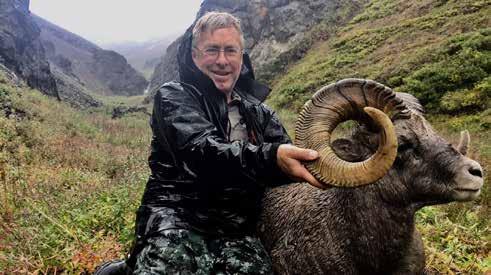
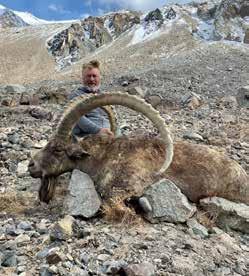
In presenting this year’s winner, WSF Board of Directors ViceChair Kyle Stelter said the Chris Klineburger Mountain Hunter Hall of Fame isn’t about scores, numbers or trophy photos, but instead, “honors a life lived in the high country, the passion, commitment and character that has shaped our culture.”
An icon of the sheep-hunting community, WSF Summit Life Member Darryl Hosker received the honor for his over five decades in pursuit of mountain game “not as a checklist, but as a calling,” Stelter said. Over half a century, Hosker has harvested 41 different ovis species, 37 different capra species and over 100 mountain animals worldwide, with 44 diverse species in North America alone.
“Those numbers are extraordinary, but numbers are not what defines his legacy,” Stelter explained. “What defines it is how he does these hunts: With respect for the animal, with reverence for the landscape and with a deep understanding that mountain hunting carries responsibility, not entitlement.”
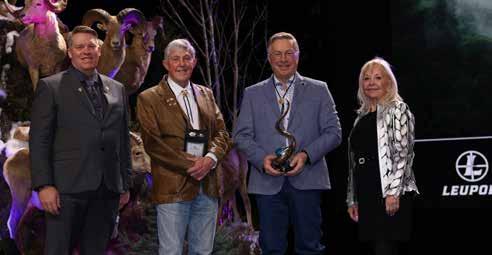
From 2000 thru 2026, Hosker has made over $100,000 in WSF auction purchases to support wild sheep conservation. He was an active volunteer for the Sheep Show®’s Ram Awards committee, including many years as a belt buckle sponsor. A Monarch Platinum member of the Wild Sheep Society of British Columbia, Hosker also serves as director of the Mountain Wildlife Conservation Society based in British Columbia.
Hosker’s work as a director, donor and volunteer has always demanded hands-on work to assure good governance, proper
funding and assurance that the work gets done, Stelter said. All the while, Hosker has always made time for other hunters seeking his advice and guidance and younger hunters, whom he takes into the field to show them not just how to hunt but how to carry themselves as a genuine mountain hunter.
The award’s namesake, the late Chris Klineburger, an obsessed mountain hunter, a founder of Safari Club International and a pioneer who opened worldwide hunting to future generations, would be proud Hosker now carries the award representing his life’s mission. WS
The Conklin Foundation presents its Conklin Award, aka the “Tough Man” award, annually at the Sheep Show® to recognize the world’s greatest active hunter who pursues game in the most difficult terrain and conditions, while abiding by the highest standards of ethics and fair chase and advancing wildlife conservation. This year’s winner, Jeff Demaske, is a big man who has dared to live out big dreams on the world hunting stage. Yet, he started small as a Wisconsin farm kid stalking squirrels and whatever critters he could find.
Jeff’s international hunting journey began in 2010, and since then he has traveled to six continents and 42 countries, including over 20 trips to Africa, a dozen trips to Europe, over 20 trips to Asia and more than 30 trips to Mexico. His favorite sheephunting destination, Canada, has seen him return over 30 times.
Years ago when he first heard about sheep hunting, at first Jeff thought it might not be for a big guy like him. Some people doubted he could climb the mountain to get a sheep. That doubt is exactly what fired him up. Jeff booked a 10day Dall’s hunt in the Northwest Territories. The hunt happened to conflict with the 14th birthday of his youngest daughter, Elizabeth, which initially didn’t go over well, but Jeff ended up taking a “birthday ram” for her, and all was forgiven. Jeff sums up the experience with, “I lost my mind on sheep hunting.”
Mountain hunting is Jeff’s strong suit and the challenge he loves most. To date, he has hunted 36 ovis species, harvesting more than 91 rams. To date, he has earned
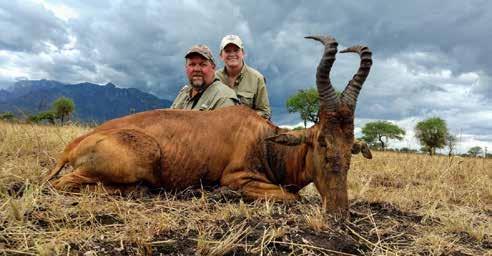
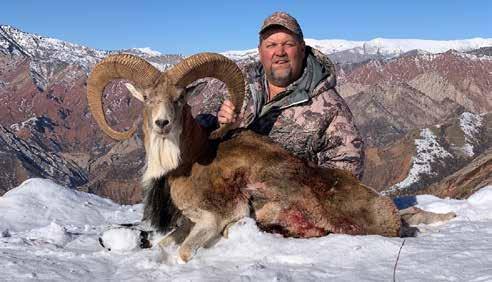
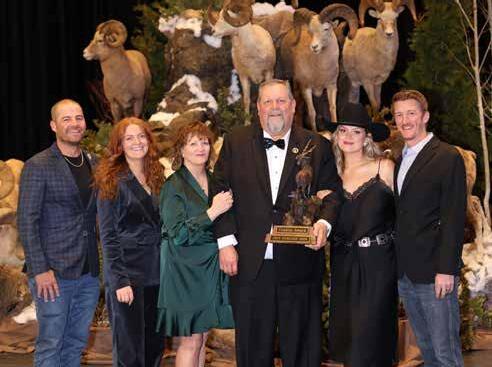
11 FNAWS. Jeff has successfully harvested 38 capra species, with over 50 total billies. In total, he has taken more than 300 species around the world.
Atop his proudest—and most epic—accomplishments: Booking a beyond-ambitious hunt for three different markhor species in Pakistan. Enduring Himalayan hikes and sleeping in the snow at times, he took two (Sulaiman and Kashmir) of the three, plus an Afghan urial. He returned to bag the third, an Astor markhor, on a subsequent journey. Markhors are near and dear to Jeff: a decade ago in Tajikistan, he took a Bukharan, which ended up being the first of its kind imported into the US. Since then, the number of legal hunting permits and US import permits for markhor have risen, as have the benefits for the wildlife and people of Central Asia. Thanks to community-
based conservation areas, over the past two decades, markhor numbers have soared from a few hundred to thousands in both Pakistan and Tajikistan. Quality of life for local people has risen with markhor numbers.
“Now, there are more markhor and there are schools and water systems for the local people, all made possible by hunters. I’ve seen it with my own eyes in Tajikistan. I’ve been to Pakistan around eight times, and you can see the benefits to local people since markhor hunting started there.”
Over the years, Jeff has been honored with a mounting list of awards, including WSF’s Chris Klineburger Mountain Hunter Hall of Fame at the 2025 Sheep Show®.
“Jeff is an overachiever,” says Jeff’s wife Jann, who serves on the WSF board of directors. “He always wanted to be the best at whatever he did. When he’s out in
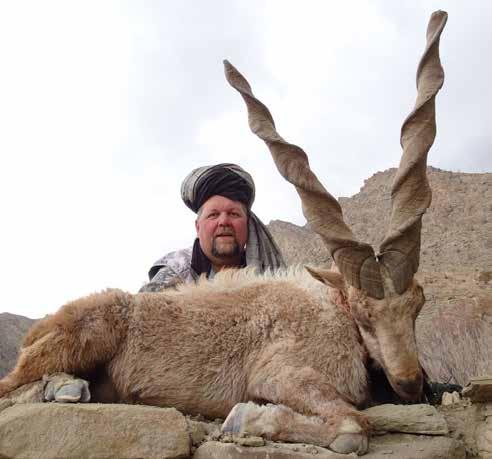
the wild, that’s where you really get to see him.”
“The Conklin honors those who go the furthest and chase the hardest animals,” said Jeff’s hunting partner and oldest daughter Madie, who works as an attorney for Safari Club International. “From the moment he learned about it in 2019, he knew he had to win it.”
For Jeff, the awards are secondary to his true motivation. “I just want to go hunting. And I like to climb mountains. The most thrilling part of climbing a mountain is seeing what’s on the other side of that one, and the next one. And the next one.”
Beyond his dedication to hunting, Jeff is a staunch conservationist. He is a WSF life member, a dual member of the WSF Marco Polo Society (#29 and #100) and gives back by 100% donating hunts to the <1 Club as well as a Dall’s sheep hunt to a United States Marine Corps and Purple Heart recipient. Since 2000, Jeff and his family have donated over $3,200,000 to WSF.
When asked about his legacy— how Jeff wants to be remembered— this year’s Tough Man reveals he’s really a gentle giant. “Mostly, that I was a good guy, and I was fun to hunt with.” He points to the loving family behind him: Jann, Madie and Elizabeth, who clearly adore him and refer to him as their best friend. All of them became part of his hunting-conservation passion through the years: Jann through service to WSF, Madie through hunting, WSF involvement and her legal profession, and Elizabeth in her interest to go deer hunting with dad.
Beyond all the trophies and awards, love and family are the achievements he’s most proud of. WS
Well-known for his popular “Dream Rams” book series, which includes Dream Rams of British Columbia and Dream Rams of the North, Bill Pastorek received the Jack O’Connor Writers Award for his story entitled, “The Old Boy’s Retro Hunt,” published by the Wild Sheep Society of British Columbia.
To honor the dean of outdoor writers, the Jack O’Connor Hunting Heritage and Education Center and WSF present the Jack O’Connor Writers Award each year to the author of the best published article about wild sheep, with special focus on hunting and/or conservation.
Pastorek’s poignant story about his self-guided sheep hunt captured the bittersweet essence of sheep hunting, mountain suffering, witnessing an elusive great ram and bidding farewell to a lifetime passion.
“It’s a story of my final sheep hunt, which took place one and a half years ago. It ended up being an unsuccessful California bighorn hunt that took place along the Fraser River in British Columbia. Unsuccessful in the fact that I came out light. Very successful in the fact that I could have taken rams, chose not to, and ended up almost getting a last-minute monster ram. There’s a lesson there for all you newer sheep hunters,” Pastorek said in receiving the award. “The story was an emotional journey for me through a lifetime of over 30 mountain sheep hunts.”
Pastorek might be done with sheep hunting (or so he says), but his “Dream Rams” series continues, with Pastorek currently gathering material for the third installment. Publishing books about sheep
hunting, or actually doing it— those missions and the glorious heartbreak they demand were encapsulated in the final paragraph of the award-winning story that Pastorek read on the Conservation Night stage:
“You never know where the trapdoors are in life. For me, one was applying for a sheep tag early on . . . and getting it. Sheep
hunting and sheep conservation became a big part of my life. Though I didn’t take a ram on this hunt, I’d still call it a great success. After all, how often do you get to lay eyes on a ram you know would rank high in the record books? And how often do you get to go on a final sheep hunt? . . . There are tears in my eyes. I may never see rams again.” WS
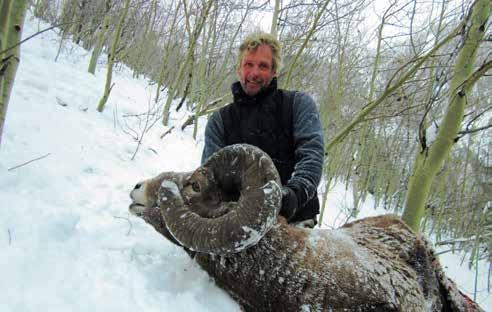
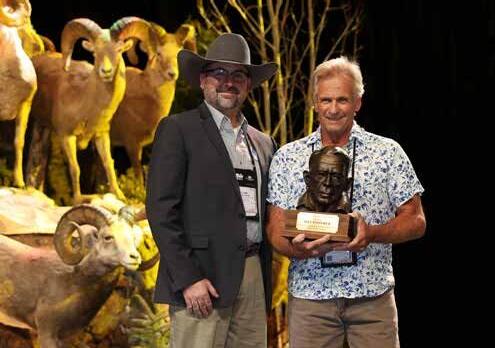
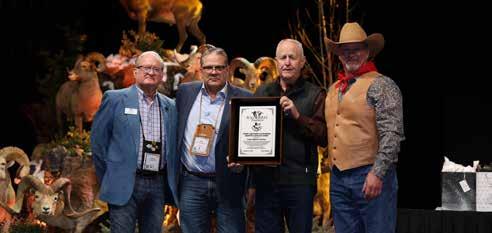
WSF currently has 16 chapters, 52 affiliates and two technical advisory affiliates, for a total of 70—a vast network of hearts and hands to get work done. The Tommy Caruthers Outstanding Chapter and Affiliate Award was created with those hearts and hands in mind. It recognizes the important work WSF chapters and affiliates are doing to accomplish substantial and lasting improvements to the wild sheep resource. This year’s inaugural winner is the Texas Bighorn Society.
The award’s namesake, Tommy Caruthers, a Texas oil man, was a founding member of the Texas Bighorn Society, and served on the board and as a volunteer. A life member of WSF dating back to when it was called FNAWS, Caruthers helped organize conventions and was instrumental in revitalizing the Sheep Show® when it moved back to Reno. He was an active servant for other conservation groups including Dallas Safari Club,
for which he was a director and convention chair, and Boone and Crockett. Before this award could be conferred, Tommy passed in September 2025, but WSF knows his inspiration will live on with the chapter and affiliate recipients of this award.
In accepting the honor, Texas Bighorn Society President Clay Brewer said, “Tommy Caruthers was the best. A perfect gentleman.”
The Texas Bighorn Society received the award for delivering one of the most significant wild sheep translocation projects in North America: releasing desert bighorns into the Franklin Mountains north of El Paso. This yearslong effort, funded by WSF grant-in-aid, included constructing new water catchments, installing monitoring equipment, public outreach and elimination of all disease risks.
While desert bighorns were native to Texas’s Trans-Pecos Region, which includes the El Pasoarea Franklin Mountains, they had died out due to human activities by the 1960s. When desert sheep recovery efforts in the region were just taking off, a M. ovi outbreak, carried by aoudad (Barbary sheep),
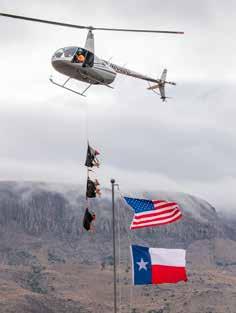
struck in 2019, and devastated bighorn herds statewide. With the Franklin Mountains translocation, Texas now has a second diseasefree source population from which a surplus number of bighorns can be drawn to support future translocations of desert sheep into suitable Trans-Pecos habitats.
Led by the Texas Bighorn Society and the Texas Parks & Wildlife Department, the Franklin Mountains State Park desert bighorn sheep restoration was supported by several conservation partners. Funding for the transplant was provided by WSF, Bass Pro Shops & Cabela’s Outdoor Fund, WSF’s Midwest Chapter, CampFire Club Conservation Fund, WSF’s Eastern Chapter and the Houston Safari Club Foundation. Funding for two water guzzlers came from the Texas Bighorn Society, the Panhandle Chapter of Dallas Safari Club, Idaho WSF, Oregon WSF, Washington WSF and the Water for Wildlife Foundation.
“With this translocation, we felt really proud that Tommy would smile down and approve,” said Texas Bighorn Society Vice President Sam Cunningham. WS
To honor and acknowledge the passion, commitment and vision of those men and women dedicated to sound biological management of, and hunting opportunities for, North America’s wild sheep, the Wild Sheep Biologist’s Wall of Fame is sponsored by Kevin and Kyle Hurley of Boise, Idaho. This year saw the 19th inductee into the Wall of Fame: Brett Wiedmann, the bighorn sheep biologist for the North Dakota Game and Fish Department (NDGFD). For 24 years, Wiedmann has specialized in bighorn sheep for the department, and for 13 years represented the department on the WAFWA (Western Association of Fish & Wildlife Agencies) Working Group.
A Fargo kid, Wiedmann has been an outdoorsman his entire life. In 2002, NDGFD hired him to save the state’s dwindling bighorn population. It’s been a success: bighorn sheep numbers have tripled over his tenure.
“He’s not solely responsible, but he’s been the drive behind it,” said WSF Vice President of Conservation, Emeritus, Kevin Hurley in conferring the award.
On Wiedmann’s watch, the quality of bighorn rams has increased, including a new state record set in 2020, superseded by an even bigger 2025 ram with a whopping 197-plus Boone and Crockett score. Trophy quality has inspired soaring lottery applications and skyrocketing auction prices to hunt the state’s rams, with a commensurate surge in conservation funding. To date, according to Wiedmann, the North Dakota bighorn tag auctioned by the Midwest
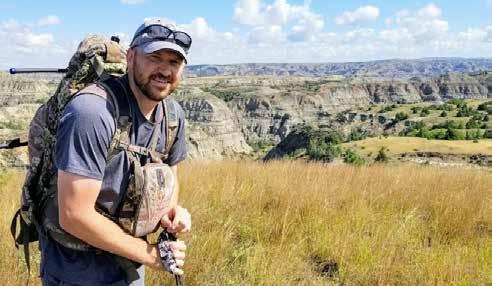
Chapter has brought in over $2 million for conservation.
“In 1999, the Midwest Chapter stepped up and said ‘We’ll provide the funding. Let’s make things happen for bighorn sheep.’ It’s been an overwhelming success,” Wiedmann noted.
Wiedmann also credits the citizens and agencies in Alberta, British Columbia, Idaho, Oregon and Montana that offered translocation stock to seed the state’s high-quality rams.
“Without their generosity, we would have zero bighorn sheep in North Dakota,” Wiedmann said.
In response to heartbreaking roadkill of bighorns on US Highway 85 in western North Dakota, Weidmann collaborated with the state’s Department of Transportation to install a concrete underpass tunnel and adjacent fencing to funnel wild sheep safely beneath the busy, hazardous roadway.
To build future bighorn herds, Wiedmann has led the wild sheep program of the Mandan, Hidatsa and Arikara Nations (MHA Nation), which began a bighorn release program in 2020. In 2025,
the Nations issued two bighorn permits, one to a tribal member and one through a state resident lottery, with hunter Daunte Sage harvesting the first ram in 150 years, Hurley believes. As this magazine goes to print, WSF’s Midwest Chapter is preparing to auction the first-ever MHA Nation permit at its March banquet in Minneapolis.
“Brett says there’s some awesome rams coming, and he’ll work hard to make sure they’re on the landscape when that hunt happens,” Hurley said. WS
Charlie Abel
Michael R. Ambrose
Jason Anderlite
Jamison Anderson
Joaquin Arizpe
Scott Baisinger
Julie Baisinger
Carl Barner
Russell Barngrover
Tamar Bartz
John Beardslee
Rob Beaven
John Bloomer
Donna Boddington
Chace Boggs
Victoria Bowers
Tamra Boyce
Steve Boyce
Amanda Brock
Preston Broesder
Homer Brown
Kevin Buckley
John David Bullock
Ryan Butler
Angela Cain
Jackie Callaghan
Travis Canning
Paul Cavin
Peter Ceponis
Paul Chambers
Matt Clark
Vince Cocciolo
Michael Cole
Matthew Coleman
Amy Coleman
Robert Crumrine
Kyle Davidson
Aaron Degnan
Jeff Denny
Jason Devore
Joey Dianda
Nicholas Dicianno
Cody Drake
Trevor Dunlap
Kenneth Elliott
Nathaniel Emery
Christy Enfield
Dale Evans
Keith Fessler
Devin Fisher
Cole Flander
Miles Fortner
Jake Franklin
William Garren
John Giles
Patrick Ginder
Jason Gravelle
Myles Astle
Clayton Atkinson
Gary Aufrance
Jessie Baguley
John Bloomer
Chace Boggs
Matthew Boyer
Scott Callaghan
Dale Campbell
John Cessford
Matt Clark
Dave Colclough
Matthew Coleman
Randell Cotta
Timothy Curry
Aaron Degnan
Bill Dement
Nicholas Dicianno
Jack Dilts
Edward Dwyer
Christy Enfield
Keith Fessler
Randy Fox
Jaime Gingras
Steven Hagan
Jeff Hahn
Andy Hodder
Nathrop CO
Vancaville CA Santa Cruz CA Lakeview OR Eagle Pass TX Lake Forest CA Lake Forest CA Auburn WA
Waxhaw NC
Bismarck ND Cody WY Fort Nelson BC
Enumclaw WA
Paso Robles CA
New Ulm MN
Ash Fork AZ
Spring Creek NV Spring Creek NV Reno NV Carroll IA White Bird ID Idaho Springs CO West Lake Hills TX Helena MT Deming WA Castleton VA Dawson Creek BC Washoe Valley NV Ridge NY Hinton AB Meridian ID Grasmere BC Auburn CA Lewiston ID Lewiston ID Lakeview OR
Pincher Creek AB North Pole AK
LaGrande OR Steele ND Reno NV Carson City NV
Horseshoe Bend ID
Virginia Beach VA Caldwell ID
Wasilla AK
Fallon NV
Billings MT Pine Grove PA
Foothills AB Eagle River AK
Gillette WY
Shandon CA Franklin NC
West Haven UT
Casper WY
Grasmere BC
Hay River NT
Casper WY Peoria AZ
Puyallup WA Enumclaw WA New Ulm MN Concord NH Castleton VA
LaGrande OR Ely NV Meridian ID Novato CA Lewiston ID San Mateo CA Reno NV North Pole AK
Jackson TN
Carson City NV
Albuquerque NM
Yerington NV Fallon NV Pine Grove PA Winchester OR Hayden ID Sisters OR
Potomac MT Oldtown ID
Eric Haeker
Mike Hairston
Forest Halford
Ashley Halloran
Casey Hande
Kyle Hardee
Shawn Hardeman
Jacob Hastings
Will Hinchey
Andy Hodder
Nick Hoffman
Christian Hogg
Steven Hunter
Jordan Jakubow
Edson Johnson
Thomas Johnson
Mitchell Jonas
Dave Jones
Kirk Kaiser
Corey Karcz
Brent Kelly
Josh Kemph
Jeremy King
Charlie Kingrey
Andrey Konev-Menta
Kris Kooistra
Kolten Krystal
Cole Kubinchak
Erik Labrie
Kensen Lee
Kenn Loch
Bradly Lynch
Matt MacMillan
Ronnie Madison
Patrick Mansfield
Sam Marshall
Gavin Massey
Ansel Massey
Glenn Mau
Quenton McEntee
James McKelvie
Rex McKnight
Josh Metten
James Middendorf
Michael Miller
Jesse Molnick
Jesse Monson
Brian Morris
Jonas Mueller-Gastell
Rafa Navazo
Paul Neess
Steven Nelson
Thomas Nelson
Neil Nelson
Brian Nesvik
Paulo Neves
Jacob Oberheu
Savannah MO Anza CA
Gardnerville NV
Great Valley NY
Bowman ND Phoenix AZ
Albuquerque NM
Farmington ME
Edson AB Oldtown ID
Portland TN Helena MT
Livermore CA
Edson AB
Healy AK
Evans WV
Sparks NV Somers MT
Shawnee KS
Anchorage AK
Delta BC Manhattan MT
Calhoun GA
Kinder LA Albuquerque NM Blaine WA Enilda AB
Coronation AB Slave Lake AB Las Vegas NV Katy TX Elko NV Jackson WY Lubbock TX Emmett ID Marshall MN Marshall AR Marshall AR
Soratoga CA
Sioux Falls SD Missoula MT
Montrose CO
Laramie WY
Clayton CA
Granbury TX
Stanwood WA
Heber City UT
Loomis CA Kingston WA Galapagar
Verona WI Grass Valley CA
Wasilla AK Boise ID
Glendo WY
Ferndale NY
Delta CO
Randy James
Peyton Jenkins
Thomas Johnson
Loren Keisling
Jill Killorn
John Thomas Larkin
Jane Link
Bradly lynch
Athena Lyons Antley
Gina Maack
Jeffrey Mancuso
Patrick Mansfield
Jim Marshall
Shay McGowan
James McKelvie
Mitchell Miller
David Mode
Brian Morris
Jonas Mueller-Gastell
Joseph Mulcahy
Rafa Navazo
Karl Okerman
Royce Patterson
Tim Pedtke
Samuel Petersen
Alan Piombo
Lee Rankin
Karl Okerman
Robert Orndorff
Tim Pedtke
Samuel Petersen
Terri Anne Pierce
Todd Pitsenberger
Louis Polish
Marcel Powell
Austin Pradon
Gabriel Rainford
Boyd Ratliff
Eric Reichert
Steve Reincke
Matthew Riether
Cassie Rosa
Kyle Roth
Mark Rowenhorst
Gina Sadowski
Sam Sarbacher
Cameron Scolari
Dallas Sears
Thomas Shaffer
Wyatt Sheardown Waugh
Mark Sheldon
Jim Shelton
Jacque Sims
Miranda Smith
Brian Smith
Scott Smith
Jered Snow
Rylee Solan
Deagan Solan
Casey Stemler
Johnathon Storter
Kevin Taylor
Jeff Taylor
Alyssa Tenbrink
Chad Tenbrink
Elda Tenbrink
Antonio Teruel
Jake Theule
Seth Thiele
Dan Thiele
Kristen Volz
Kurtis Voorhies
Peter Wagner
Steve Wagner
Julie Wagner
Guy Weaver
Alan Weeks
Robert Weir
Adam Welbon
Brett Wiedmann
John Derek Wiese
Kyle Wilcoxson
Tyler Wood
Ashley Yellachich
Glennville CA
Wasilla AK Evans WV
Eagle River AK
Belgrade MT
Willow Park TX
Vero Beach FL Elko NV
Klamath Falls OR
Mountain Home ID
Cotopaxi CO
Emmett ID
Basalt CO
Grand Island NE
Missoula MT
Eagan MN
Roswell GA
Loomis CA
Kingston WA
Cheyenne WY
Galapagar
Blanchard ID
Quitman TX
Ashley IL
Lake Whales FL
Sparks NV Reno NV
Blanchard ID
Smithsburg MD
Ashley IL Lake Whales FL Calgary AB Churchville VA Las Vegas NV
Wasilla AK
Fair Oaks Ranch TX
Pincher Creek AB
Spring Creek NV
Scottsbluff NE
Las Vegas NV
Williamstown NJ
Bozeman MT
Middleton ID Orange City IA Hugo MN Belgrade MT Reno NV Wasilla AK
Barbara CA Athabasca AB Coos Bay OR Bend OR Cody WY
IN
CO Redmond OR Reno NV
MT
MT
CO Anchorage AK Stuttgart AR Verdi NV Fairfield CA Fairfield CA Fairfield CA Lorca MU Dorr MI Rock Springs WY Buffalo WY Rose Prairie BC Springville IN Chehalis WA Tacoma WA Chehalis WA Hummelstown PA Tulsa OK Calgary AB Kiowa CO
Dickinson ND
Anchorage AK
Wills Point TX
Eden UT
Mauldin SC
Boyd Ratliff
Eric Reichert
Mark Riether
Donald Roberts
Tavis Rogers
John Rosa
Ben Rossetto
Colleen Smith
Jered Snow
James Stormer
Johnathon Storter
Bart Taylor
Jeff Taylor
Scott Tilzey
Tanner Tuggle
David Tuttle
Timothy Uhl
Adam Uhl
Robert Vlach
Jim Voeller
Peter Wagner
Julie Wagner
Justin Ward
Adam Welbon
Kyle Wilcoxson
Ashley Yellachich
Spring Creek NV
Scottsbluff NE
Williamstown NJ
Aubrey AR
Sonora TX
Bozeman MT
Kalispell MT
Mineral VA
Reno NV
Ridgeway WI
Anchorage AK St. George UT Verdi NV Reno NV
Laramie WY
Rathdrum ID New Salisbury IN
Cheyenne WY
Chehalis WA
Chehalis WA
Burley ID
Kiowa CO
Wills Point TX
Mauldin SC
Idaho State Record



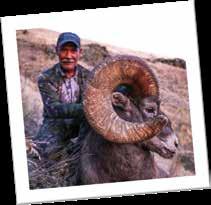



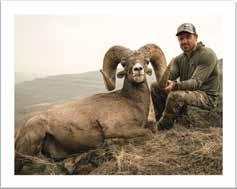


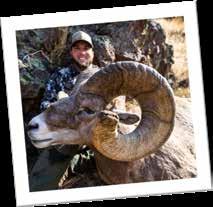


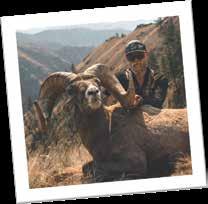

The 2026 Lottery Tag is valid for use in any open controlled bighorn hunt, INCLUDING U NIT 11
“Tickets” are controlled hunt applications and all controlled hunt rules apply. The tag is non-transferrable.
Drawing will be conducted July 24, 2026.
O NCE - IN - A - LIFETIME RULE IS WAIVED FOR THIS TAG .
Do not need not be present to win. Deadline to enter is July 20, 2026. Additional rules apply. See official rules at www.idahowildsheep.org. 1 FOR $20
FOR $166.75 25 FOR $250 No limit.

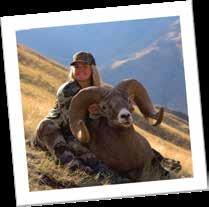













Dup of Charlie Kelly (AZ) – Chair, Kyle Stelter (BC) - Vice Chair , Bralli Clifford (WY), Sam Cunningham (TX), and Kevin Kehoe (AK) worked to bring the WSF Bylaws up to date.
The last update had been in 2020, and while there were no major governance changes needed nor addressed, the use of technology for meetings, voting, and communications, as well as additions reflecting new programs, needed to be updated to current processes. The proposed changes were then presented to the board of directors for review, and after the minimum 30 days bylaws mandated review, they were adopted by the
The newly adopted bylaws are available for review on the WSF website or by clicking the QR Code at upper right. WS
A summary, although not exhaustive of the changes per Articles and Section are as follows:
ARTICLE II
Reference to WSF world headquarters.
ARTICLE III
Updated to current Mission Statement.
ARTICLE IV – Section 3
Improved language, grammar on upgrading membership and voting.
ARTICLE V – Section 6(c & i)
Language clarifying the use of virtual meeting technology (Zoom & Teams.)
Language clarifying electronic voting.
ARTICLE VI – Section 1 & 2
Improved language on director qualifications & eligibility of Director Candidate Evaluation Committee Chair (a Chair running for office is not eligible to chair DCEC.)
ARTICLE XI
Budget & Finance Committee name clarified.
ARTICLE XVII
Registered Trademarks, logos, and seals updated to current.
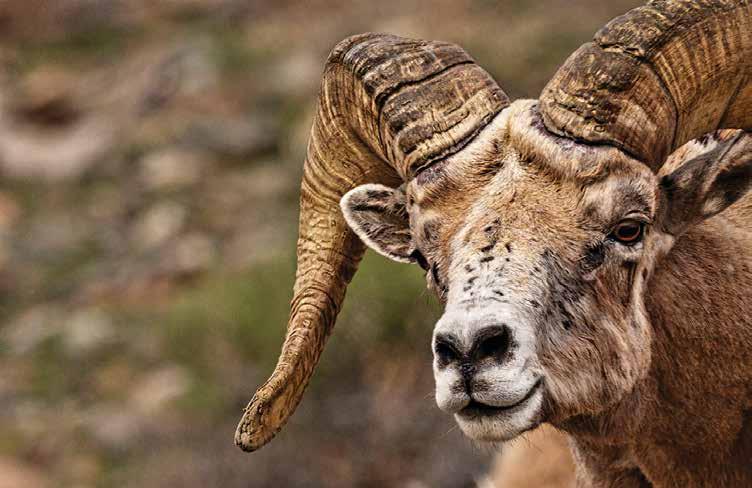
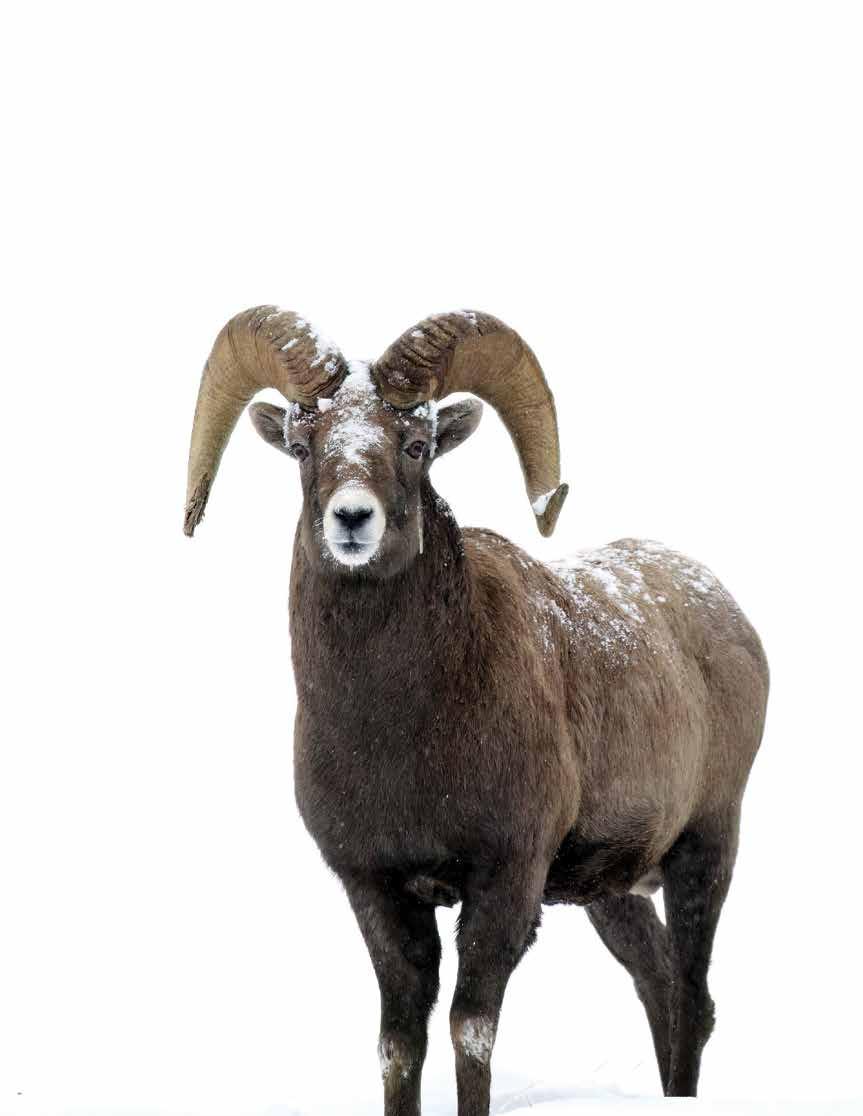


NOTE: bold/italics font denotes a joint WSF membership Chapter/Affiliate. Membership in these chapters and affiliates include membership in Wild Sheep
FOR COMPLETE CONTACT INFORMATION GO TO: www.wildsheepfoundation.org/memberships/chapters-and-affiliates
ALASKA WSF
Kevin Kehoe, President 907-441-6323 president@akwildsheep.org
Molly McCarthy-Cunfer, Executive Director 907-615-2104 executivedirector@akwildsheep.org
WSF ALBERTA
Mike Smith tel:403-700-7746 mike@wsfab.org www.wsfab.org
WSF ALBERTA Chapter Office
Deena Arychuk, Chapter Staff info@wsfab.org 403-845-5544
CALIFORNIA WSF
Donald C. Martin, President 310-766-3921 Don-martin@earthlink.net
CALIFORNIA WSF Chapter Office
Beverly Valdez, Chapter Staff 650-472-3889 forthesheep@gmail.com www.cawsf.org
EASTERN CHAPTER WSF
Henry Noss, President Noss-s.mt.redbones@olive.com 610-223-8798
EASTERN CHAPTER WSF
Chapter Office
Bill Carter, Office Manager info@ecwsf.org and bill@ecwsf.org 814-656-1831 www.ecwsf.org
IDAHO WSF
Triston Warner, President Live2hunt13@hotmail.com 208-604-2244
Tracy Rowley, Chapter Staff 208-345-6171 info@idahowildsheep.org www.idahowildsheep.org
IOWA FNAWS
Craig Nakamoto, President 402-650-1383 nakamoto01@sbcglobal.net iowafnaws@gmail.com www.iowafnaws.org
WSF—MIDWEST CHAPTER
Al Holland, President 651-492-2985 caholl@msn.com www.midwestwildsheep.com
WSF—MIDWEST CHAPTER
Mike Bouton, Executive Director 612-940-1979 mikeboutonmidwestwsf@gmail.com www.midwestwildsheep.com
MONTANA WSF
Alex Russell, President 406-570-7121 alex@montanawsf.org
Ty Stubblefield, Executive Director 406-696-3003 ty@montanawsf.org www.montanawsf.org
MONTANA STATE UNIVERSITY
STUDENT CHAPTER OF WSF
Janessa Kluth, Chapter contact 208-420-4240 montanastatewsf@gmail.com facebook.com/MSUWSF
NEW MEXICO WSF
Bryan Bartlett, President (575) 635-3499 BartleBC@yahoo.com newmexicowildsheep@gmail.com
OREGON WSF
Kevin Martin, President (541)969-6744 Kevindmartin63@gmail.com www.oregonfnaws.org
SOUTHEASTERN WSF
Jesse Riggleman, President 919-358-4483 jlriggleman4@gmail.com
UTAH WSF
Travis Jenson, President 801-641-5453 tjenson@xmission.com www.utahwsf.org
UTAH WSF Admin
Hadli Sorenson, Executive Director 435-840-0786 hadlisorenson@gmail.com www.utahwsf.org
WASHINGTON WSF
Garrett Grant, President grant16garrett@hotmail.com www.washingtonwsf.org
WYOMING WSF
Bralli Clifford, President 307-438-2043 bralli@wyomingwildsheep.org
Wyoming WSF Chapter Office
Katie Cheesbrough, Executive Director 307-399-4383 katie@wyomingwildsheep.org www.wyomingwildsheep.org
YUKON WSF
Spencer Wallace, President 867-689-2074 yukonwsf@gmail.com www.yukonwsf.com
2% For Conservation
Jared Frasier, Executive Director 406-221-3102 contact@fishandwildlife.org www.fishandwildlife.org
Alaska Professional Hunters Association
Deb Moore, Executive Director 907-929-0619 Deb@alaskaprohunter.org www.alaskaprohunter.org
Alberta Outfitters Association Kevin Stanton, President 403-762-5454 aoa@albertaoutfitters.com www.albertaoutfitters.com
Alberta Professional Outfitters Society Jeana Schuurmaan, Executive Director 780-414-0588 jeana@@apos.ab.ca www.apos.ab.ca
Argali Wildlife Research Center Bamgalanbaatar Sukh, Game Biologist and head of “Argali Wildlife Research Center” +976-99176580 amgalanbaatarsukh@gmail.com
Arizona Desert Bighorn Sheep Society, Inc. Sam Gorton, President 480-285-7155 Samgoar15@hotmail.com admin@adbss.org
Association of Mackenzie Mountain Outfitters Tavis Molnar, President 867-633-4934 info@arcticred-nwt.com
Bear Trust International Logan Young, Executive Director 406-595-6583 logan@beartrust.org www.beartrust.org
Blackfeet Fish & Wildlife
Gerald “Buzz” Cobell, Director 406-338-7207 gcobell@blackfeetnation.com http://blackfeetfishandwildlife.net/ Cody Country Outfitters and Guides Association Lee Livingston 307-527-7416 Livingston@tctwest.net
Colorado Outfitters Association Kelly Nottingham, Office Manager 970-824-2468 office@coloradooutfitters.com www.coloradooutffiters.org
Custodians of Professional Hunting & Conservation—South Africa Adri Kitshoff-Botha +27 0 83 6500442 ceo@cphc-sa.co.za www.thecustodians.co.za
Elko Bighorns Unlimited Cory Mahan, Vice President 775-397-4465 cmahan@ram-enterprise.com
European Federation for Hunting and Conservation (FACE) David Scallan 00353-879504563 David.scallan@face.eu www.face.eu
Fraternity of the Desert Bighorn Patrick Cummings, President Patrickcummings1002@gmail.com www.fraternityofthedesertbighorn.com
Fundacion De Vida Silvestre En Sonora, A.C Jacobo Artee, President 011-52-662-212-5510, 011-52-662-217-4119 jacoboartee@prodigy.net.mx
Grand Slam Club/Ovis Jason Price, Executive Director 903-466-2195 gsco@wildsheep.org www.wildsheep.org
Guide Outfitter Association of BC Scott Ellis, CEO 604-541-6332 ellis@goabc.org www.goabc.org
Ilbirs Fund
Zairbek Kubanjchbekov, Director +996 558271081 zkubanychbekov@ilbirs.com www.ilbirs.org
International Caribou Foundation
Cheryl Lind, Executive Director 406-404-1297 cheryl@internationalcariboufoundation.org www.internationalcariboufoundation.org International Professional Hunters’ Association Rob Kern, President 540-336-6359 rob@huntcon.com https://internationalprohunters.com/ Lubbock Sportsmans Club, Inc. Dan Boone, President 806-733-0590 dfb@sonoramfg.com
Mongolia Wildlife Association Magsarjac Erdenebat, Executive Director mongolwildlife@gmail.com
Montana Outfitter & Guides Association
Will Israel, Executive Director 406-449-3578 info@mogamt.org www.montanaoutfitters.org
National Bighorn Sheep Center Amanda Verheul, Executive Director 307-455-3429 amanda@bighorn.org www.bighorn.org
Navajo Nation Department of Fish & Wildlife Jeff Cole, Wildlife Manager jcole@nndfw.org 928-871-6595
Nebraska Big Game Society Jim King (402) 430-6566 jim@glsbinc.com www.nebiggame.org
Nevada Bighorns Unlimited Evan McQuirk, DVM, President 775-224-5264 emcquirk@hotmail.com www.nevadabighornsunlimited.org
Nevada Bighorns Unlimited, Fallon Jay Lingenfelter, President jay.lingenfelter@cccomm.co 775-427-1254
Northern BC Guides Association Craig Kiselbach, President terminusmtn@gmail.com 250-442-7103
Northern Nevada SCI Chapter Gavin Chodera, President 916-960-8518 gchodera@nnsci.com www.nnsci.com
Northwest Guides & Outfitters Association
Colin Niemeyer, President 250-306-8624 hunting@kawdyoutfitters.com
Northwest Sportsman’s Club Nate Perrenoud 509-994-6795 www.northwestsportsmansclub.com
Purkersdorfer Jagdklub Gunther Tschabuschnig, Vice President 011-43-676-496-6691 info@jagdklub.eu www.jagdklub.eu
Pyramid Lake Paiute Tribe
Donna Noel, Director of Natural Resources 775-574-0101 Ext: 17 www.plpt.nsn.us
Rocky Mountain Bighorn Society Ben Ramaker (785)760-1374 benramaker@hotmail.com www.bighornsheep.org
Terry Meyers, Executive Director 970-640-6892 meyers.terry@gmail.com
Rocky Mountain Goat Alliance Marvin Kwiatkowski, Chairman marvin@goatalliance.org www.goatalliance.org
Contact: Kendrick Chittock, Fundraising Coordinator kendrick@goatalliance.org info@goatalliance.org
Safari Club International 520-620-1220 info@safariclub.org www.safariclub.org
Sheep Hunters of the World (SHOW) Billi Carey, Administrator 480-292-1674 www.sheephunters.com
Shoshone & Arapaho Fish and Game
Arthur Lawson, Director lawson@windriverfishandgame.com www.windriverfishandgame.com
Society for the Conservation of Bighorn Sheep Steve Marschke, President 310-339-4677 info@sheepsociety.com www.desertbighorn.org
Spanish Professional Hunters Association Bruno Rosich 346-559-01611 Bruno@TrophyHuntingSpain.com www.spanishprofessionalhunters.com
Tahltan Guide Outfitters Association Rudy Day, President 250-235-3395 Dayrudy84@gmail.com
Taos Pueblo
Michael Martinez, Hunt Manager 575-758-7410 hunting@taospueblo.com
Texas Bighorn Society Clay Brewer, President 325-792-4177 Claybrewer1@outlook.com www.texasbighornsociety.org
TBS Administrator Kathy Boone, Office Admin O: 806-745-7783 C: 806-438-3939 kboone@sonoramfg.com
The Confederated Tribes of the Warm Springs Reservation of Oregon (CTWS) Camille Brooks 541-553-2029
Camille.brooks@ctwsbnr.org https://warmsprings-nsn.gov
The International Council of Game and Wildlife Conservation (CIC) Sebastian Winkler office@cic-wildlife.org https://www.cic-wildlife.org/ Wildlife Stewardship Council John Henderson, President sirjohn55@gmail.com wildlifestewarship@gmail.com www.wildlifestewardshipcouncil.com
Wild Sheep Society of British Columbia Greg Rensmaag, President 604-209-4543
Rensmaag_greg@hotmail.com
Wild Sheep Society of British Columbia Office & Staff
Kyle Stelter, CEO 250-619-8415 kylestelter@gmail.com www.wildsheepsociety.com
Hana Erikson, Executive Assistant 604-690-9555 exec@wildsheepsociety.com
Wyoming Outfitters & Guides Association Jeff Smith, President 307-265-2376 wyoga@wyoga.org www.wyoga.org
Yukon Outfitters Association Mac Watson, President 867-668-4118 (Office) info@yukonoutfitters.net www.yukonoutfitters.net
Yukon Outfitters Association Staff Shawn Wasel, Executive Director 780-213-4301 (Cell) swasel@mcsnet.ca Brenda Stehelin, Office Manager info@yukonoutfitters.net
Northern Wild Sheep and Goat Council
Kevin Hurley, Executive Director 307-899-9375 info@nwsgc.org www.nwsgc.org
Desert Bighorn Council
Patrick Cummings, Chair Nevada Department of Wildlife (Retired) (702) 486-5127 patrickcummings1002@gmail.com www.desertbighorncouncil.com
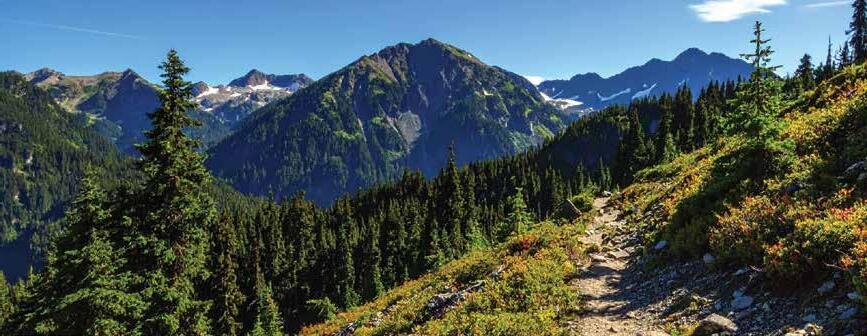
At the request of WSF supporters and consistent with the 2% for Conservation program of which WSF is a Founding Partner, we have launched the WSF Conservation Revolving Fund “We Give” campaign. Watch for WSF “We Give” partners who proudly include the “We Give” logo in their advertisements and/or promotions as those advertisers, exhibitors and businesses give a percentage or portion of their sales to the WSF Conservation Revolving Fund. 100% of WSF Conservation Revolving Fund contributions are directed to initiatives benefiting wild sheep and the habitat they call home.
Proceeds are tax deductible to the full extent allowed by law and are directed to Grant In Aid and other specific conservation projects to Put and Keep Wild Sheep on the Mountain.
Participants to date include:
1. Jack Atcheson & Sons
2. The Journal of Mountain Hunting
3. The Wildlife Gallery
4. Backcountry BC and Beyond, Ltd.
5. Stone Glacier
6. RPS Bancard, LLC
7. YETI
8. SITKA Gear
9. Benchmade Knives
10. Kenetrek
11. Full Curl Spirits
12. RMP Rifles
13. 5.11 Tactical
14. Best of the West/Huskemaw Optics
15. Clarke—“1% For Tomorrow”
16. Brown Precision
17. Diamond Outfitters of Arizona
18. Black Rifle Coffee
19. Eventgroove
20. iHunt Apparel

For more information and to become a part of the “We Give” team, please contact Gray N. Thornton at 406-404-8750 or gthornton@ wildsheepfoundation.org






Taxidermy & Trophy Shipping costs should not be a surprise. If you want to save money and hunt more, TTS will help you do both. An A-Z service offering hunters one point of contact in Africa. From the time you have finished your safari, with whoever you have hunted, we collect country wide. Taking accountability, where one of our 3 taxidermists, offers dip & pack, tanning, or fully processed mounts. After crating, we export and ensure your after-hunt experience is smooth with no surprises. TTS will change the way you look at taxidermy and shipping of your trophies from Africa.






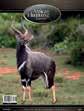


Understanding the needs of hunters, this business was launched by the founder of African Hunting Gazette.




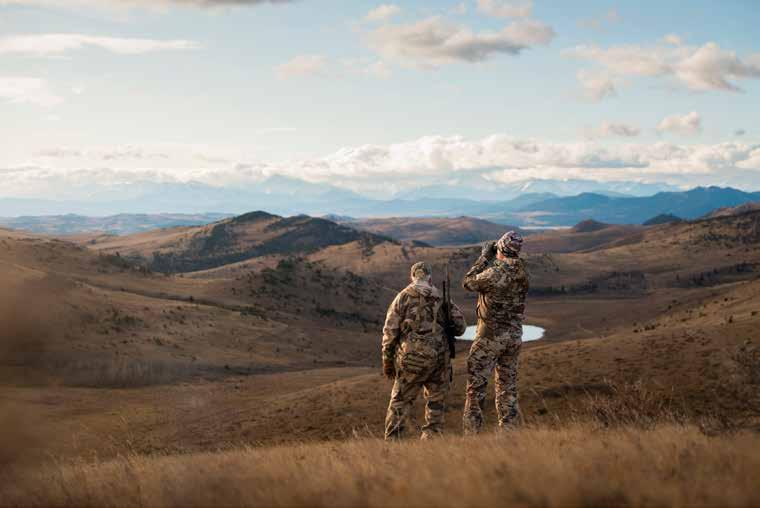



NOTE: Dates noted are as of press time. Please check C&A websites for updates.
Sheep Week® .................................January 19-24 ...................... Reno, NV
Sheep Show®..................................January 21-24
Icons of Conservation Gala ...... April 29-May 1 ........ New Orleans, LA Roosevelt Hotel
WSF Thinhorn Summit IV May 5-7 Prince George, BC WSF C&A Summit XVIII .................. May 14-16 ... Grand Junction, CO
WSSBC Jurassic Classic ..................... Aug 21-23 ............. Chilliwack, BC
Chapter
Date
Location
Alaska WSF April 10-11 Anchorage, AK
California WSF April 25 Sacramento, CA
Eastern Chapter WSF ....................................... Feb 27-28 ............................... Lancaster, PA
Idaho WSF ............................................................ March 21 ....................................... Boise, ID
Iowa FNAWS March 20-21 Des Moines, IA
Midwest Chapter WSF March 20-21 Minnetonka, MN
Montana WSF March 6-7 Bozeman, MT
New Mexico WSF .......................................... Raffle Only
Oregon WSF.......................................................... April 25 ...................................... Bend, OR
Southeastern Chapter WSF TBD TBD
Utah WSF March 21 Salt Lake City, UT
Washington WSF ................................................ March 14 ................................ Tacoma, WA
WSF Alberta ...................................................... March 6-7 ............................... Red Deer, AB
WSF Alberta—Yellowhead April Edson, AB
Wyoming WSF June 5-6 Casper, WY
Yukon WSF................................................................... TBD
Affiliate
Arizona Desert Bighorn Sheep Society May 9 Scottsdale, AZ
Elko Bighorns Unlimited ............................................ TBD
Fraternity of the Desert Bighorn .............. May 17 TBD ............................. Las Vegas, NV
National Bighorn Sheep Center July 3 - Anniversary Dubois, WY Nov 1—Big Horn Bash
Nebraska Big Game Society ............................ March 20 ................................. Lincoln, NE
Nevada Bighorns Unlimited .................................. April 3 .....................................Reno, NV
Nevada Bighorns Unlimited - Fallon TBD Fallon, NV
Nevada Bighorns Unlimited - Midas TBD Midas, NV
Northern Nevada SCI Chapter ............................... TBD .....................................Reno, NV
Rocky Mountain Bighorn Society ................ April 17-18 ............................. Loveland, CO
Rocky Mountain Goat Alliance
Society for the Consv. of Bighorn Sheep N/A
Texas Bighorn Society June 6 San Antonio, TX
Wild Sheep Society of BC—Northern ............... Jan 31 ................... Dawson Creek, BC
WS Society of BC – Salute to Conservation... Feb 27-28.................................. Penticton, BC
NOTE: No date listed = Date not yet determined or provided by C&A
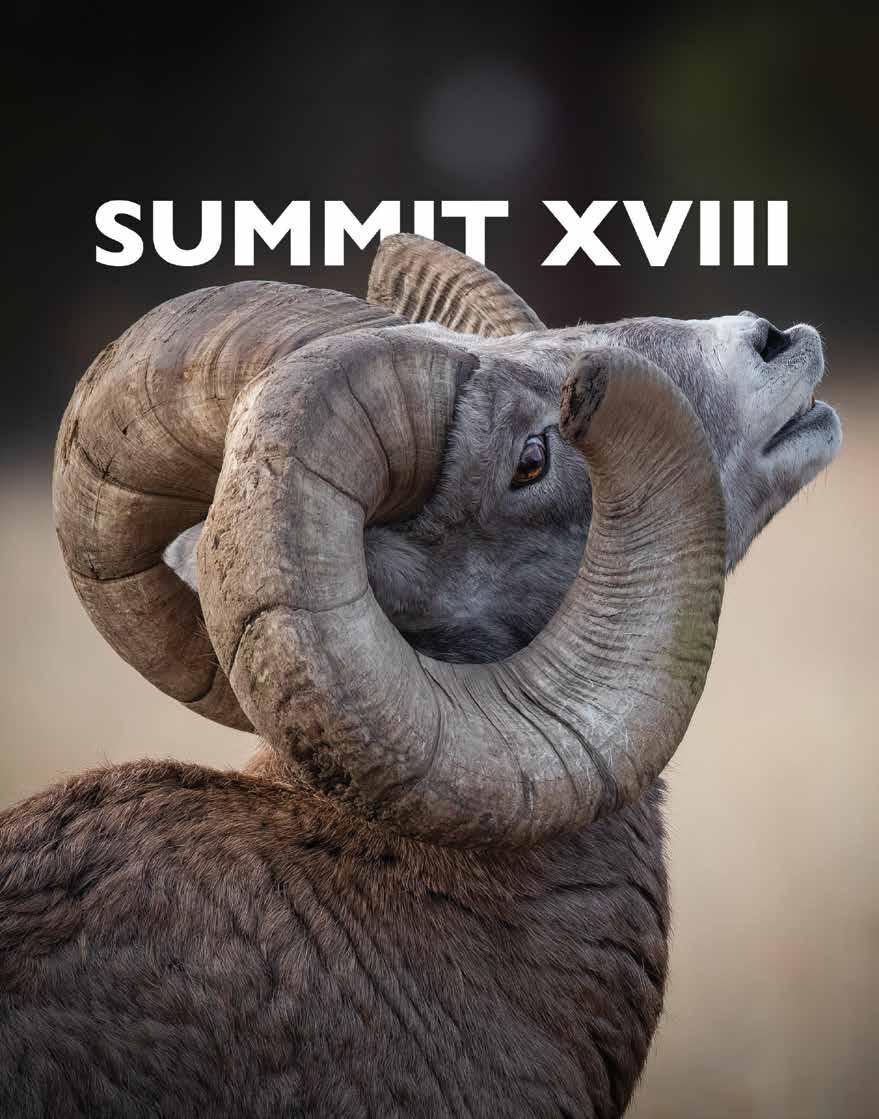
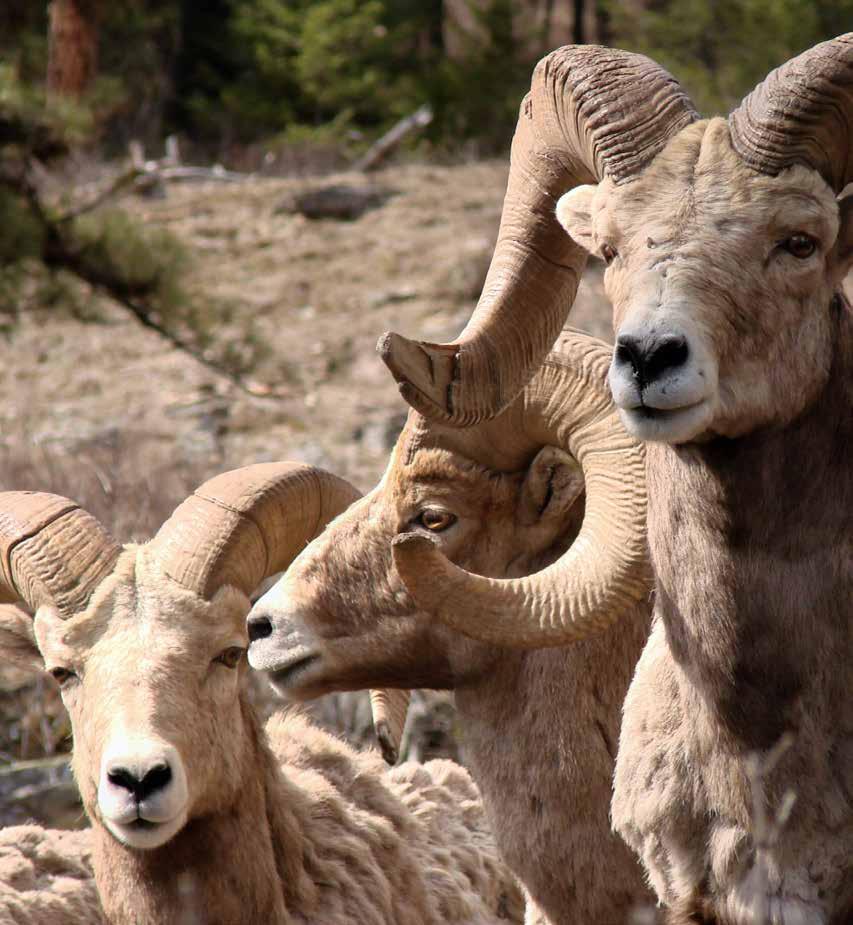
GRAND JUNCTION, CO | MAY 14-16, 2026

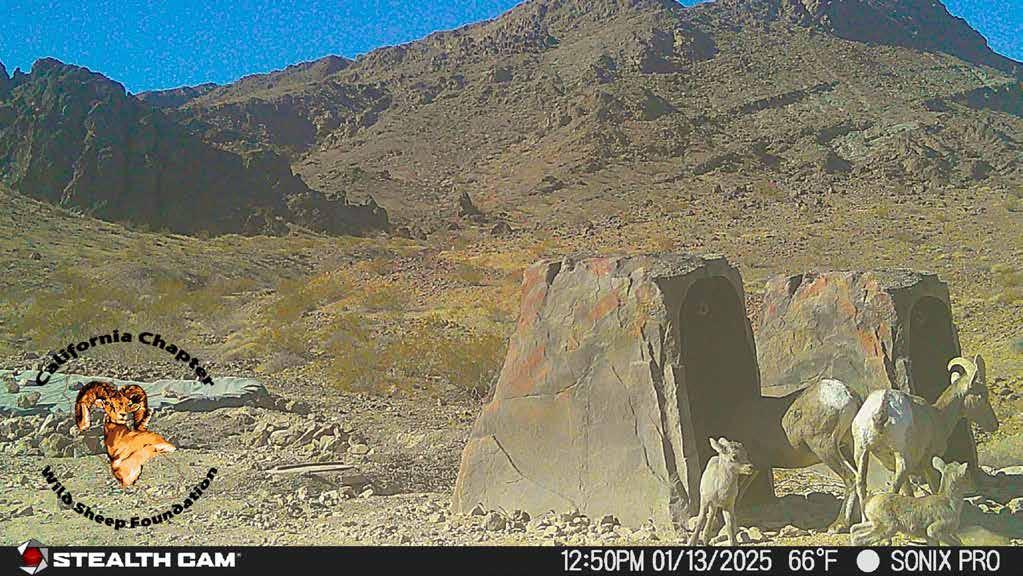





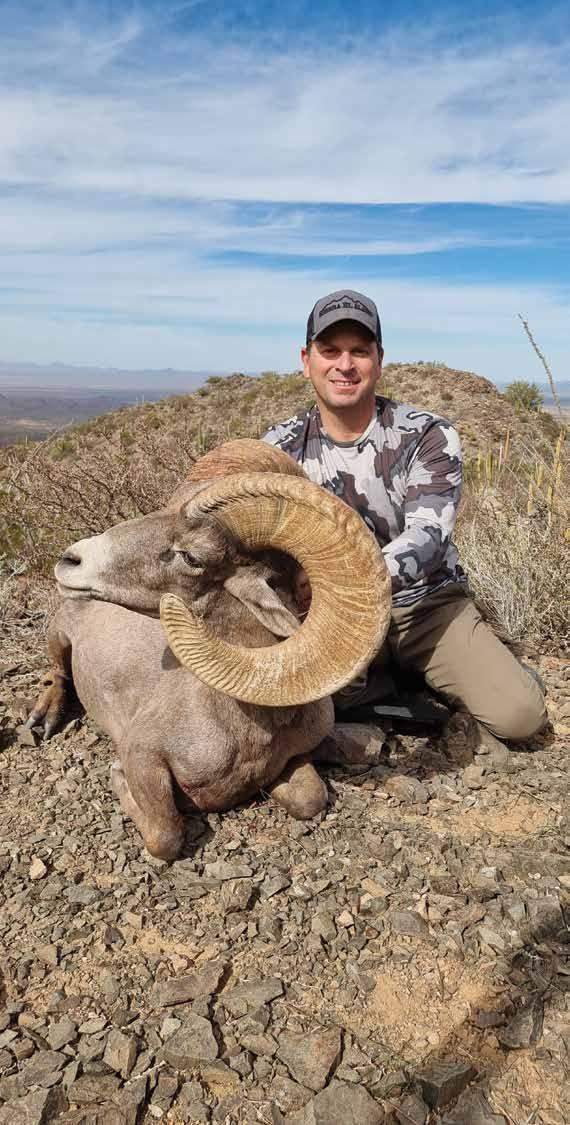
The Javier Artee family is proud to continue our strong partnership with the Wild Sheep Foundation in restoring free-ranging desert bighorn sheep to historic habitat within Sonora, Mexico. Established in 2017, Sierra El Alamo spans over 80,000 acres and is located approximately 160 miles south of Tucson, AZ, 180 miles north of Hermosillo, and 30 miles east of the Sea of Cortez. The bighorn population is strong and growing. Desert bighorn sheep hunting was reinstated within the area in 2017 following a 12-year prohibition.
• Renew your Annual Membership for additional years and receive additional entry for each additional year purchased.
• Upgrade to a 3-year membership and receive 3 entries
• Upgrade to Life Member and receive 10 entries.
• Upgrade your Life Membership to Summit Life Member and receive 25 entries.
• Sign up or refer a new member to receive 1 entry per new member.
• Sign up or refer 5 to 10 new members and receive 12 entries.
• Sign up or refer 10 or more new members and receive 25 entries.
WSF members can purchase additional entries:
• $50 for 1 entry
• $250 for 6 entries
• $500 for 15 entries
Full hunt details and sign up here.

by Corinne Boettcher Women Hunt Graduate, Field to Fork Class of 2025
We’re on the rifle range when it happens. A November wind kicks up over the Texan hills, and one of our instructors announces over the headsets, “She did it.”
“What?” I throw my head back. All of us are neck-deep in the latest lesson: shooting on sticks. It’s the final morning, and Tim, the ranch owner, has given the green light for one last cram session. Only one of us is missing from the lineup.
“Kennedy got her doe!” Victorious whoops ricochet off the hills.
On that Tuesday, Kennedy was our last lady standing in an unprecedented weekend of successful hunts, and she’d actually done it standing. While we were all being taught, Kennedy had to learn on the fly how to stand and steady the rifle scope. She welcomed everyone back to the lodge with twin streaks of blood on her cheeks and the biggest grin in Texas.
It was official: The Class of 2025 was twelve for twelve. Twelve women, with little to no experience and only four days of training, had all successfully hunted and achieved a new Women Hunt record that can now only be matched. Given, the four days had been near round-theclock instruction conducted by the same guys that teach special forces teams from around the world, but even the best teacher can’t teach without receptive students. Luckily, we had all taken Renée Thornton’s words
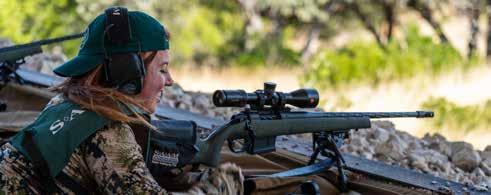
to heart and “surrendered to the experience.” That commitment created the magic.
That same Tuesday is graduation night. Lasha, a brain tumor survivor, has her stunning Women Hunt artwork unveiled by Renée. With a prepared, signed-and-voice-assisted speech, Lasha turns a formal evening into a room of glassy-eyed family.
Amidst the applause, one of our instructors, Doug, unwinds a spool of tissue and hands it to our host, Tim Fallon. Tim laughs through his tears. The entire hall joins him.
So how does a women-focused
non-profit, a ranch of Texan cowboys, and twelve women who’ve never met, come to cry openly together? And how does it happen in five days?
Day one: We arrive at FTW Ranch and file directly into the classroom. Overwhelmed, I adopt a “fake it till I make it” strategy. But faking it doesn’t make it on the rifle range.
The moment my strategy fails, I have live ammunition loaded in my firearm and everyone watching. Ten seconds. Two targets. When the drill comes down to me, I freeze. Swallowing tears, I turn to the nearest instructor.
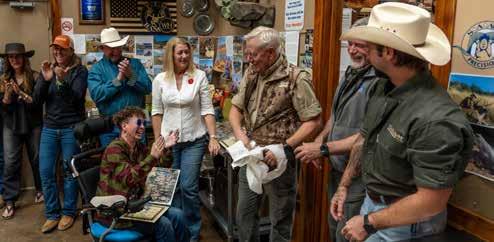

“Efrain. I don’t know what we’re doing.”
He kneels by my shoulder. “I got you, ma’am. What’s up?”
Just like that, the pressure eases. Everyone slows down until I catch up.
By applying to this course, we must admit one thing: We need help. Kennedy couldn’t magically know how to perform a neverbefore-seen maneuver. Lasha
wasn’t asked to spend three months drawing an art piece that now resides in Bozeman as an emblem of Women Hunt. But when we show up, they show up. Trust is earned, then compounded. By the end, tears flow.
By graduating from this course, we are now part of the Women Hunt family. I held my reservations about this. And then the moment came when I had to turn around
and admit my limitations. When Kennedy had to entrust her success to her guide. When Lasha was accepted into a physically demanding hunting course without reservation. These are just three of many stories that illustrate what it means to be part of the Women Hunt family: No one gets left behind. If you fall behind, we will come and get you. All you have to do is ask. WS
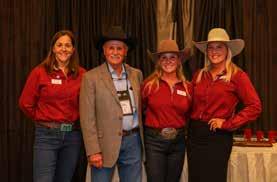
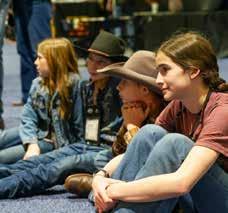
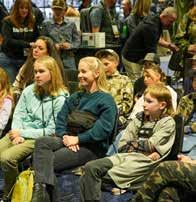
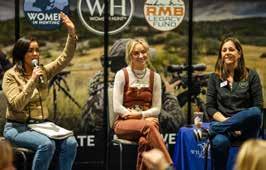
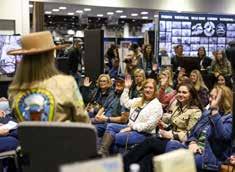
Great questions from so many attendees!
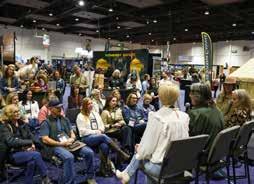
There’s a lot of interest in hunting on the African continent!
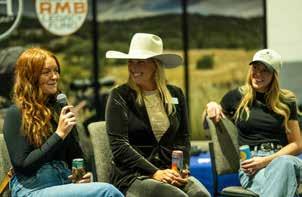
Caption: With (from L to R): Special guest Madie Demaske, Rachel Ahtila (moderator) and special guest Jen Loree.
With (from L to R): Renée Thornton (moderator) and special guests Donna Boddington, Sylvia Greeff and Danene van der Westhuyzen.
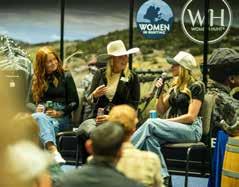
Great conversation from these trailblazing women!
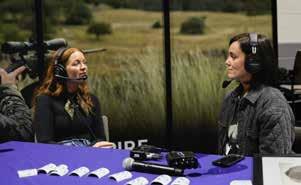
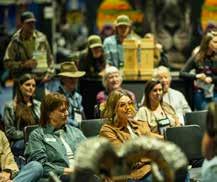
Enjoying trailblazing stories!
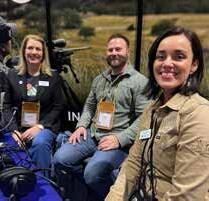
Co-host Renée Thornton
Meet the Wild Sheep Foundation’s Women Hunt® and RMBLF Committees: Bios and photos at: www.wildsheepfoundation.org/about/ women-hunt-committee
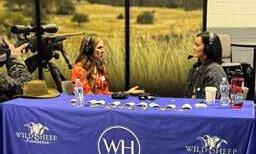
Women Hunt® wants to hear from you!


https://www.wildsheepfoundation.org/ What-We-Do/Women-Hunt womenhunt@wildsheepfoundation.org @womenhunt @women_hunt
by Joshua Schwencke WSF & Women Hunt® Executive Chef in Residence
The Wild Sheep Foundation has a long history of igniting the next generation of sheep hunters This offering gives each young hunter a firsthand look at the hard work and dedication it takes to keep our passion for hunting and conservation alive and thriving. Fourteen-year-old Luke Briant is a shining example of that legacy. Growing up in a Nevada hunting family, Luke has spent more time in the mountains, along streams and rivers, and behind a rifle than most other young hunters his age could ever dream of. I had the opportunity to meet Luke and enjoy dinner with him and his family following a past Sheep Week® in Reno. I quickly saw his passion not only for hunting, but for feeding himself and others with his harvest—something rare for someone his age.
Following that dinner, I proposed the idea of him joining me onstage at the following year’s Sheep Show® in the Camp Chef Culinary Corner. With a silent smile and a nod from his parents, we began dreaming up ways to showcase his passion. Throughout the year, Luke and I stayed in touch, talking about what we could pull from his hunts. It was important to both of us that what he prepared onstage came from his own harvest, by his own hands, and was wrapped in his story from the mountains. After a quick inventory of his game freezer, Luke was excited to feature a bull moose he had harvested himself
and built a recipe that had become a Briant family favorite: Marinated Moose Kabobs.
When the day finally came, an eager young cook stood beside me near the stage. We both looked out over the sea of camo-clad sheep hunters making their way through the Sheep Show®. “You’ve got this,” I said in a reassuring voice. Luke looked back at me with a grin and replied, “This is going to be a blast.” That’s the heart of it, isn’t it? Not only a young hunter raised to appreciate the hunt and the conservation that supports it, but someone with a passion for cooking for himself and others, and the courage to do it onstage.
If you joined us for that half hour onstage at this year’s Sheep Show®,
you know what a great time it was. Luke, cool-headed and composed, entertained the crowd with the story of his moose harvest, holding the attention of hunters who sat amazed. With tongs in hand, through the smoke and sizzle of the kabobs, young Briant walked the audience through his preparation. I stood next to him, happy just to be along for the ride.
Luke turned the kabobs carefully on their sides, searing each cut to a beautiful crust. This was finished with a herbed compound butter that, once hitting the pan sizzled, releasing the aroma of his creation into the expo hall. This undoubtedly got the attention of the majority of hungry hunters throughout the convention center.

Protein
4 lbs. Moose back strap or hind quarter-diced into 1-inch pieces
1½ cups soy sauce
¾ cup Worcestershire sauce
6 tbsp. brown sugar
1 tbsp. garlic powder
1 tbsp. onion powder
1½ tsp black pepper
Vegetables
1 red bell pepper, cut into 1 inch pieces
1 green bell pepper, cut into 1 inch pieces
2 onions, cut into 1 inch pieces.
Compound Butter
1 pound salted butter, softened
2 tbsp. fresh thyme
2 tbsp. fresh rosemary
1 tbsp. chopped garlic
2 tsp. fresh cracked pepper
As the demo came to a close, I jokingly suggested that Luke would be signing caps at the side of the stage. I turned to see a line already forming, hats in hand. With a look of pure joy, Luke signed every cap, then looked back at me and said, “Now that was a blast.”
Though Luke’s opportunity to wow a crowd with both his cooking skills and his hunting stories may be uncommon, his path started with something simple: a love for wildlife, hunting, and conservation.

Scan here for the Mountain to Plate Video Series with Chef Josh Schwencke
Prepare the compound butter but mixing the butter with the herbs, garlic and pepper in a large bowl. Reserve some for the recipe and store the rest for later in an air tight container in the freezer. Use this for any and all wild game cooking.
Cube wild game protein into 1-inch pieces. Combine ingredients for marinade into a large bag and submerge protein, covering completely. Allow to marinate for 12-24 hours.
If using bamboo skewers, soak in clean water for 20 minutes to ensure they do not burn. Remove protein from the marinade and place onto skewers, alternating between onions and peppers.
Prepare a grill or cast iron by bringing it up to a high heat. Place kabobs onto grill or cast iron surface and allow to cook for 1-2 minutes on each side.
Once all sides are cooked and a crust has formed on the protein, turn the heat down to low and add the compound butter. Using a spoon, baste the butter onto the kabobs. Remove from heat and allow to rest for 1 minute.
Every moment alongside his father in the field, every target practice, and every chance to cook for his family laid the roadmap for this journey. That is my challenge to hunters of any age: look for those in your life who would benefit from the hard work, dedication, fireside chats, and cold mornings that shape us as hunters. Doing so doesn’t just preserve the culture we love; it helps secure the future of the animals we cherish.
All of this is made richer when
we feed each other from our hunts. Beyond spices, marinades, and cooking techniques, the story of the harvest is a main ingredient. Luke told that story with pride—and with moose kabobs. If you missed seeing Luke in person, you are invited to join us at next year’s Sheep Show ® to find out what he cooks up next. Bring the young hunters in your life, bring a hunger for knowledge, and don’t forget a baseball cap for him to sign. WS

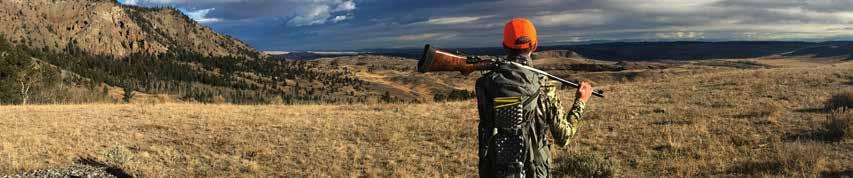
by Ryan Brock, Ph.D. WSF Youth Education Coordinator
“Ihad a great time at the Y.W.C.E. shooting arrows and kayaking. The Y.W.C.E. made learning fun, and I hope everyone gets a chance to experience what I did!” shared Lyra Wilson after her class attended this year’s private learning experience.
Now in its 15th year, the Youth Wildlife Conservation Experience (Y.W.C.E.) has become a cornerstone winter community event in Northern Nevada. Although planned and executed by the Wild Sheep Foundation, its continued success is a direct reflection of the individuals, agencies, and organizations that bring it to life each year.
This year’s event began early Thursday morning during Sheep Show® as the first school group arrived at 8:45 a.m. Because their school day started earlier than others attending, a customized morning program was created to maximize their hands-on learning opportunities. With support from the Nevada Department of Wildlife (NDOW), students participated in an hour-long archery clinic,
learning to shoot both compound and recurve bows at 3D, field, and aerial trap targets.
As additional schools arrived, students gathered at the youth area’s main stage for a welcome presentation focused on wildlife conservation, with special emphasis on wild sheep. From there, participants selected from 12 outdoor-career seminars, attending three sessions based upon interest. During lunch, Wild Sheep Foundation scholarship recipients delivered an inspiring keynote highlighting educational pathways and conservation careers.
Meanwhile, hundreds of homeschool students and youth from local charter schools toured the expo hall that morning.
Concurrent with the lunch keynote, approximately 100 younger students attended a private, ageappropriate presentation led by the National Bighorn Sheep Center and NDOW’s Operation Game Thief program.
Following the midday sessions, the educational hands-on stations opened. A total of 43 interactive
learning stations offered youth the chance to explore wildlife, conservation, outdoor recreation, and the shooting sports. Students who attended the morning program also had the opportunity to visit the exhibit hall with chaperones. At this time, the youth area opened to the public as well, welcoming an additional 67 youth with their families. In total, 572 youth participated on Thursday alone, with Friday delivering a similarly impactful experience.
Saturday brought expanded public programming and an influx of volunteers supporting the full-day event. By the 10 a.m. opening, hundreds of youth and parents were already lined up to attend. New this year were two conservation keynote presentations on Saturday, both centered on wild sheep and modern conservation challenges and research.
The popular Tracks Program also returned on Saturday, targeting youth ages 12–17. Participants received special raffle cards and followed sheep tracks placed throughout the
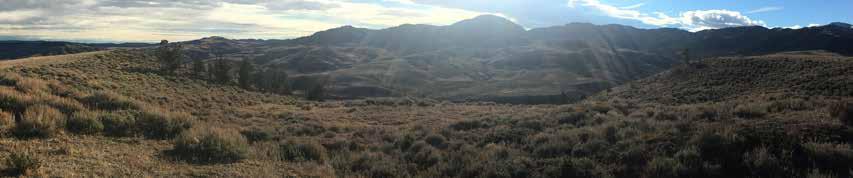
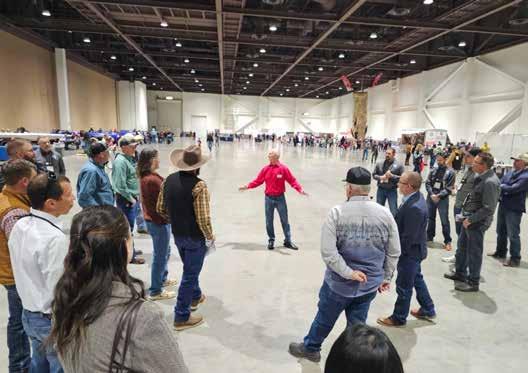
exhibit hall floor, leading them to participating vendors who shared insights about outdoor skills, gear, and conservation. The program was originally conceptualized by Leica more than a decade ago, and they continue to serve as the primary sponsor.
Additional participating organizations of Tracks included Kenetrek Boots, the Nevada Department of Wildlife, Northern Nevada Safari Club International, Wonrate Gear, and Bear Trust International. Mystery Ranch contributed a backpack prize despite being unable to attend in person. Other top raffle prizes included Leica binoculars, Kenetrek boots, and camouflage outerwear from Wonrate Gear.
The Y.W.C.E. itself was first envisioned by Larry and Brenda Potterfield of the MidwayUSA Foundation, whose founding donation 15 years ago helped launch
the program. This year, significant support for student transportation and meals were provided by the Nevada Wildlife Record Book Foundation and the Nevada Division of Outdoor Recreation.
An added bonus this year involved the Nevada Board of Wildlife Commissioners coming for a personal tour of the Y.W.C.E. This presented a unique opportunity to show the Commission how the Wild Sheep Foundation and this particular youth event introduce kids to wildlife conservation. The fortyfive minute tour to the nine board members and guests gave them an insight into all aspects of the event.
The scope of the event extends far beyond opening the doors to youth attendees. It truly takes a village to operate the 88,550 square feet dedicated to the youth area. Forty-two organizations assisted with hands-on stations,
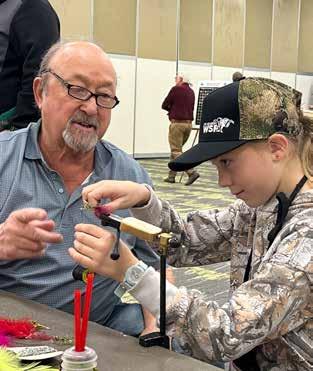
career seminars, and the Tracks Program, in addition to countless independent volunteers and postevent contributors.
Several weeks after Sheep Show®, follow-up opportunities continued the momentum. A Learn-to-Shoot Archery Clinic was hosted at the High Desert Archery indoor range for youth—and interested parents —who registered during the event. Additionally, in partnership with the Hot Shots youth shooting team, four sessions of a Learn-to-Shoot Trap clinic were conducted.
The Youth Wildlife Conservation Experience is designed to spark curiosity and inspire the next generation of conservationists, outdoor enthusiasts, and responsible wildlife stewards. It is through the collective efforts of hundreds of dedicated volunteers, partners, and supporters that this program continues to shape the conservation leaders of tomorrow. WS
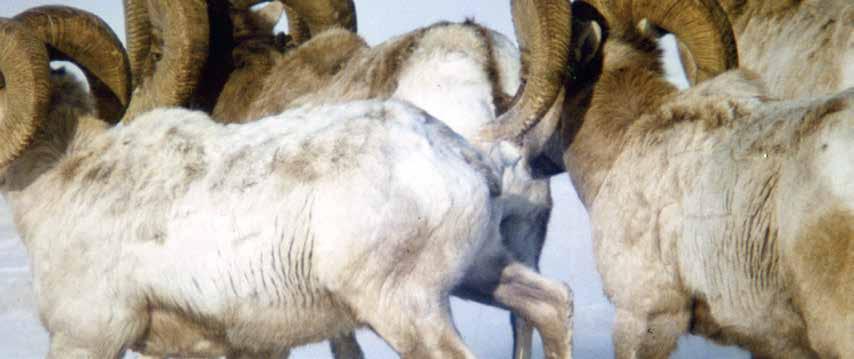
by David Voth
We awoke before dawn on a cold morning in the Alps of western Italy. The activities of the day were focused around one of my favorite pastimes, mountain hunting. Valle Maira is known for excellent alpine chamois hunting and our outfitter, Montefeltro, is known for providing their clients with high quality hunting experiences all over the world. Needless to say we were excited to start hunting. After some hot coffee
and a traditional Italian breakfast, we hopped in an old Defender and bounced up the mountain road to find our chamois.
As the sun broke over the white rocky spire known as La Bianca, the opposite mountain faces were lit up like an artist’s palette with the changing colors of fall in the alpine. The ground cover was fiery red with streaks of yellow and the rocks studding the landscape appeared like white lily pads, specially placed
to traverse the colorful lake of fall foliage. Big stands of larches, a special kind of deciduous conifer native to the Italian Alps, dotted the mountain side before thinning and shortening into the low lying alpine scrub. The lower areas of the mountains were criss-crossed with the trails of Piedmontese cattle, a hearty all-white variety of cow known for its flavorful meat but also its milk, which in used in the region’s famous Castelmagno cheese.
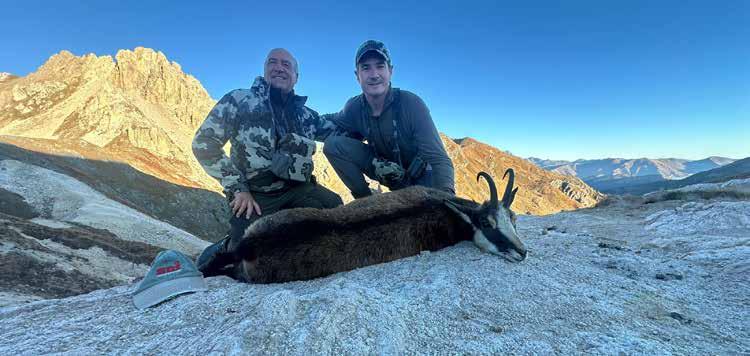
With the sun rising and the sound of cow bells chiming, we spotted our first alpine chamois. The small group of females and yearlings was feeding in the shady fold of ridge that ran from the top of the peak to the valley below. The older animals’ coats appeared darker than the tan colors of the yearlings. Without the trained eyes of our guides the group would have been difficult to spot. We began spotting more and more small groups as our eyes became accustomed to the brightening day. The chamois seemed to be concentrated to certain parts of the mountainside. As we glassed, another group came into view, and this group had our attention immediately.
At first glance, even the untrained eye could tell this group of three chamois was different than the other groups we had seen. Their coats were dark and they were higher on the mountain than the others. They were feeding adjacent to an impassable rocky chute where they could quickly escape any danger that may present from below. One of the males was an animal the guide had seen before, and after some discussion with my outfitter Luca Bogarelli, it was decided we would try to harvest this animal out of the group. My rangefinding binoculars returned a yardage of 980 which meant some hiking would be needed to reach the group of males. The face of the mountain was broken up by a series of rocky ridges running vertically from top to bottom along the otherwise grassy ground. It was steep but footing was good, and before long I was huffing and puffing behind my guide as we made our initial approach using one of the rocky ridges as visual cover from the chamois. After twenty minutes of steep walking, we crept up behind the last rock on the skyline that would conceal us from the group of males. At this point, one misstep or
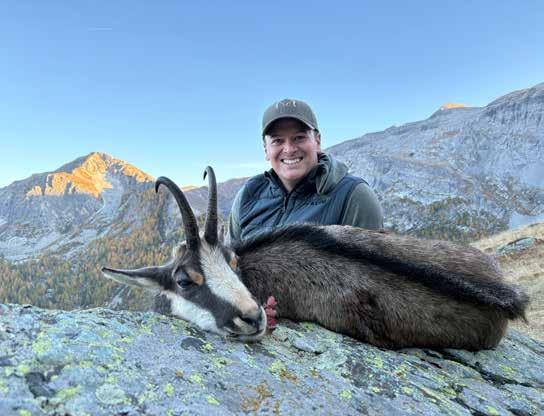
careless motion could alert the chamois to our presence, so extra care was taken to be deliberate with our actions. With the wind in our face, we peeked out from behind the gray, lichen covered rock. The group of males was calmly feeding in the same spot where we last saw them from the valley below. At a range of 285 yards, I laid down my backpack and chambered a round. I made myself comfortable in the prone position while my guide and I located the correct male to harvest. I seated the rifle into my shoulder, settled my breathing, switched off the safety and squeezed the trigger. The crack of the rifle shot broke through the mountain air like a stone falling into a glassy pond. Time seemed to stand still as I waited for any indication that my bullet had found its mark. Only a moment later, a sharp report of the bullets impact echoed back to us and the male chamois collapsed and began a slow roll into the shallow ravine next to his feeding zone. My hunt was over. The emotions I feel during a moment
like this always seem to be the same no matter what species I am hunting, from relief, thankfulness, happiness, reverence, sadness and excitement, it is always a cacophony in my heart and mind.
After some brief, “grazie milles” and handshakes with my guide we collected our gear and began the short but steep descent and ascent to retrieve my chamois. We snapped a few photos and then field dressed the animal to lighten the load for the downhill slide off the mountain. Within an hour we had the animal loaded into our vehicle and were on the way down the mountain.
My hunting partner and fellow Life Member, O.E. Burke IV, and I were fortunate to be on this trip with our wives. The celebration of a successful hunt continued into the evening with a wonderful dinner, and of course, some delicious Italian wine. I am truly blessed to be able to share these adventures with the people I love, and successful or not, the quest and comradery is what makes hunting such a unique and special pastime. WS
by Justin Greene
Every sheep hunting story is unique, and for many of us, these tales keep the dream alive between rare adventures.
I’ve spent countless hours reading others’ accounts, imagining myself in their boots. After years of encouragement from friends like Colton, I realized it was time to share my own story—to inspire
fellow hunters and keep the spirit alive until the next hunt.
My passion for mountain hunting began years ago, fueled by dreams of wild places. Living in Idaho, I’ve been fortunate to hunt elk, deer, and bear across big mountains, but the truly extreme hunts—mountain goats and sheep—are once-in-a-lifetime tags
here. In 2011, I scheduled my first mountain goat hunt in British Columbia. My wife, Hanah, joined me on that trip, and together we came home with a fine billy. That hunt lit a fire I couldn’t put out. I knew I needed more of that country, more of that challenge— more of the mountains themselves. Fast forward to 2018, when
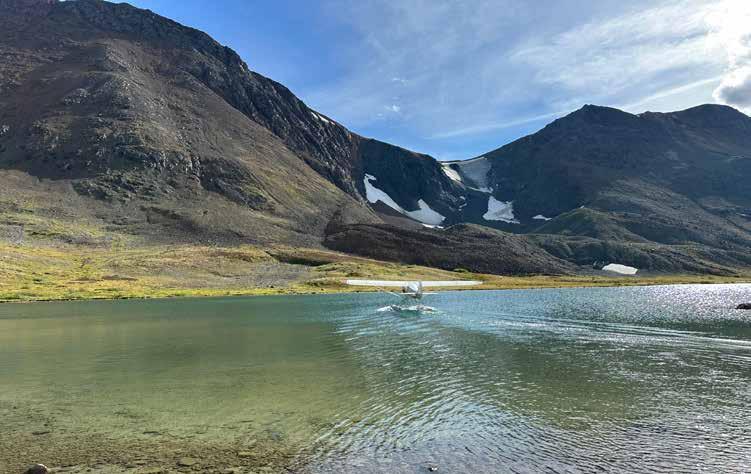
my wild and adventurous friend Andy invited me to join him and his brother in Alaska for a sheep hunt. Andy’s brother was a resident, and Andy knew my backcountry experience and gear would be helpful. We didn’t succeed in harvesting a ram that year, but the fun and camaraderie hooked me completely. When I returned home, I immediately booked a hunt for Dall’S sheep in 2022, knowing I’d need time to save for it. That trip with Hanah was everything I’d hoped for, and more. We were successful, and the experience only deepened my obsession. That’s a story I have yet to write.
After returning home, I knew I had to find a way onto a Stone’s sheep hunt before prices were out of my reach. Through years of attending sheep shows and expos, I’d come to know many outfitters and their operations. Eventually, the folks at Gundahoo suggested I talk to Blake Williams at Golden Bear Outfitting—a family-run outfit that they thought would fit my style, especially since Hanah was coming with me. At the Sheep Show®, I met Blake, shared some stories and photos of our previous adventures, and before long, we made a deal. In 2023, I booked the hunt for 2025. Every day after that, I counted down—starting somewhere around 900 days.
Hanah and I spent the summer of 2025 backpacking, logging miles, and preparing for the hunt. When August finally rolled around, we loaded the pickup, packed the freezer and generator, and pointed north toward British Columbia.
From the moment we arrived, it felt like we were among friends. Blake and I greeted each other with giant smiles and a strong handshake, and soon we were flying into base camp by bush plane, one at a time, across miles of wilderness. We settled in quickly, helping with camp chores and swapping stories with the crew. Our guide was Ross,
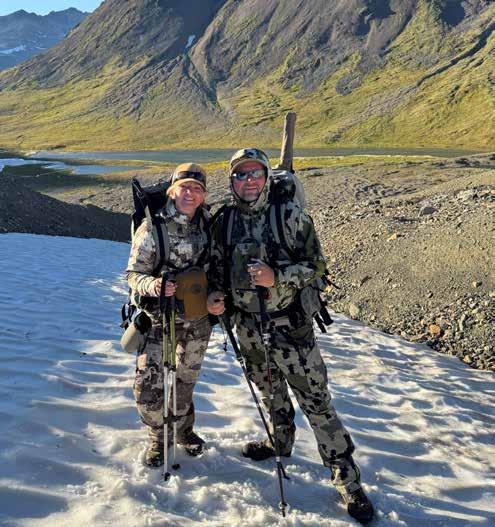
a wiry mountain goat of a man, 6’7” or 6’8” tall with size 15 boots. Hanah, at 5’1”, and I, at 5’8”, knew we’d be challenged to keep up!
Our first push was about seven miles to camp, and then another couple miles deeper as we searched for a ram Eli had glimpsed earlier in the season. On the second evening, just as we finished dinner, Ross froze and hissed, “Ram!” There he was—a mature ram, just 100 yards from our tents, broadside. My heart pounded as I chambered a round. Could it really be this easy? My first Stone’s sheep, right here, right now? Ross studied him through the glass. “Seven years,” he said. “Not legal.” I exhaled. Relief, oddly enough. I wanted this to be an earned hunt, not one that ended so quickly or so easily.
We moved camps, landing in a new basin by floatplane with our new friend and pilot Dustin “The Wingmaster”. It was our first time taking off and landing on floats, an adventure in itself. We found a few rams, but none were legal. The
weather was hot, unnaturally so, and by the time we’d glassed every ridge in the valley, our faces looked more like we’d been to Mexico than the mountains of B.C. Sunscreen had never been on the gear list for our Stone’s sheep hunt!
Ross told us we’d worked our way backward through his hunt plan— the C spot first, then B. The last and hardest was the “A spot,” deep and remote. “It’s a grind to get there,” he said, “but if anyone can, it’s you two.” That was all I needed to hear.
We saddled up the next morning, joined by another guide, Sam, who happened to be Ross’s girlfriend. Horses carried us through river crossings, steep sidehills, and even through a nest of angry bees. My horse named Killer, and I became fast friends after I took a few stings meant for him. Eventually, we reached the end of the horse trail. From there, it was all on foot. We crossed rivers waist-deep, clawed up loose rock, and camped in a notch canyon. The climb to Ross’s high
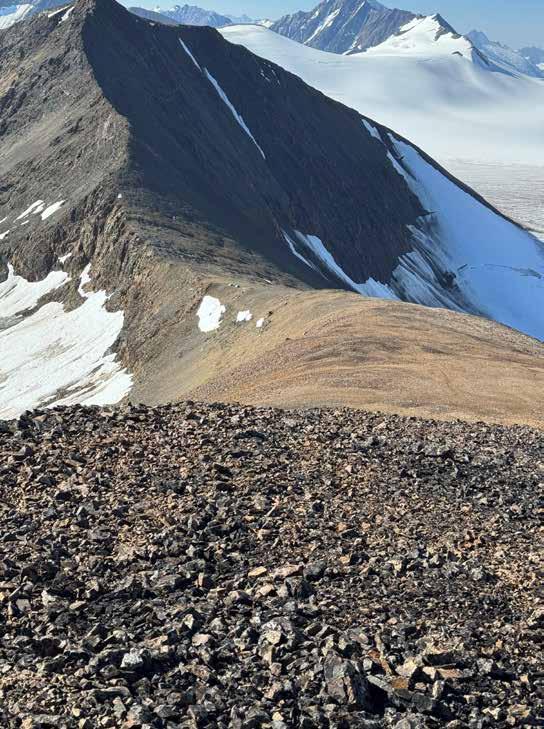
saddle the next day was brutal— steep, loose, endless. Each of us silently repeated the same mantra: Don’t quit. When we finally reached the top, it felt like the edge of a new world. We scratched out our beds like sheep do for our tents. Right at last light Ross and Sam spotted some rams down the canyon.
At dawn, we found the rams again—one clearly legal. The only catch? He was almost pure white. I’d dreamed of a dark, chocolatecolored Stone’s. But this was a shooter, and we nicknamed him White Chocolate. We packed camp and dropped down the glacier to
get in position. But by the time we got there, the sheep had vanished. Hours later, they reappeared—the same four, including the white ram, on the other side of the glacier. Tomorrow, we’d make our move.
At first light, we began our stalk, moving slowly across the glacier, glassing constantly. Then, the wind shifted. Ross climbed a scree pile to relocate the rams. “I’ve got them,” he whispered. “Lead ram. Nine years. When you’re ready.” I dialed the scope. 385 yards—a chip shot for me. Quartering to. “Take him,” Ross said. I squeezed. “Miss!” I blinked. What? We adjusted, ranged again. 400-something. Another shot. “Miss!” My mind raced. Could my rifle be off? We pushed to a better spot—550 yards. I shot again. “Miss!” I couldn’t believe it. I’d shot that exact distance hundreds of times. Another range: 700, then 815. Every shot—clean miss. Finally, the rams disappeared over the ridge. Ross threw his hat. I sat down, hollow, the kind of empty that only comes from giving everything and watching it fall apart. Ten days into a twelve-day hunt, and I’d just missed the only legal ram we’d seen. We tested the rifle. It was dead on. The truth hit hard—the kind of gut punch that makes a grown man cry.
I sat on my pack, head in my
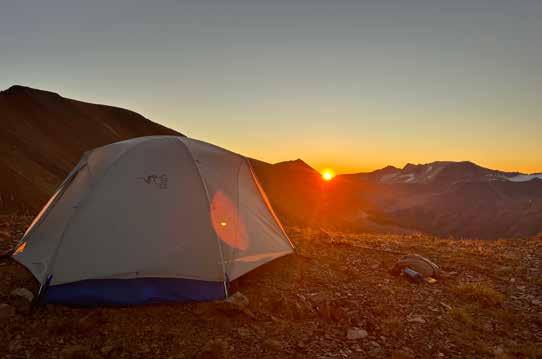
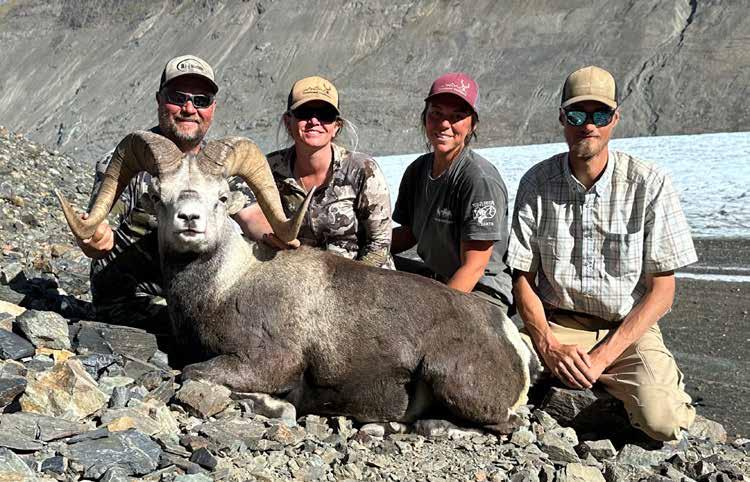
hands, tears running down my face. I’d failed—not just myself, but my guide, my wife, everyone. After digging a basement in rock bottom, I heard Ross yell, “Shoot this ram!” I didn’t even look up. I thought he was joking. Not funny, too soon, I thought. “Shoot this ram now!” he said again. I turned, and there he was—a dark chocolate ram, staring down at us from a couple hundred yards away. I shouldered my rifle, still sitting in the same pile of tears, and fired offhand. The ram disappeared over the ridge in a cloud of dust. Ross said, “I think you missed.” At this point, I may have said a few choice words, while thinking there was no way that I missed again! Ross sprinted up the rocks. A moment later, he came back over the rise, grinning ear to ear, pointing up to the sky. I fell to my knees, overcome. When I reached him, I saw my ram, a dark chocolate Stone’s with a curl that breaks over his nose and heavy
mass. Perfect. Beautiful. Unreal. The emotional swing was almost too much. I’d gone from the lowest low to the highest high in about fifteen minutes.
There’s a reason this story carries it’s title. Earlier that summer, a close friend’s first-born baby had fallen gravely ill with meningitis. I’d prayed for her, even told God I’d give up my sheep—that if her healing meant I had to turn in my ram, so be it. She recovered. And up on that mountain, after missing five impossible shots with a rifle that never misses, I realized what had happened. That white ram—White Chocolate—was never meant to be mine. Some prayers get answered in ways we can’t explain. The dark ram—my ram—stepped out only after the storm of failure, just when I’d let go. It was, truly, out of my hands.
That hunt marked another chapter in what Hanah and I call our “+1 Club.” She’s been
by my side for every mountain hunt—the 2011 goat, the 2022 Dall’s, and now the 2025 Stone’s. Hunting as a team, sharing every brutal climb, every hard-earned mile, every moment of misery and triumph—that’s already a FNAWS in my book. Someday, we hope to finish the full FNAWS together. But even if we don’t, I already have everything I could ever want: a wife who climbs mountains with me and memories that will outlast us both. Special thanks to Blake Williams of Golden Bear Outfitting for believing in us, Ross “Ram Master” Milton, and Sam “Apprentice Ram Master” for their grit and guidance. As Ross said, no woman had ever been in that basin before—let alone two. That alone made the story worth telling. If there’s one thing I’ve learned from the mountains, it’s this: sometimes the best moments come when we least expect them—when it’s out of our hands.WS
by Don Valerio
A brutal desert hunt becomes a story of endurance, friendship, and a recovery fit for mountaineers.
After 20 years of applying for desert sheep, I finally drew the tag-of-a-lifetime Utah’s San Juan North unit. Looking back, what stands out is not just the ram we found, but the sheer scope of the journey it took to get there. This was a hunt measured not only in miles, elevation, or days on the mountain, but in the determination, grit, and heart of every person who stood by my side.
From the beginning, things felt promising. On day one we located a ram almost immediately. We worked in closer for a better look, and for a moment I wondered if my hunt would end before it really began. But once we saw him clearly, it was obvious there were bigger, more impressive rams in the unit. Earlier in the season, I had seen a photo of a collared ram that caught my attention —not a ram I was set on—but one I admired. I also knew other giants were out there. In the end, we passed on that first day’s ram, and I am grateful we did. What followed was an expedition unlike anything I have ever experienced. Over the course of the hunt, we logged more than 500 foot-
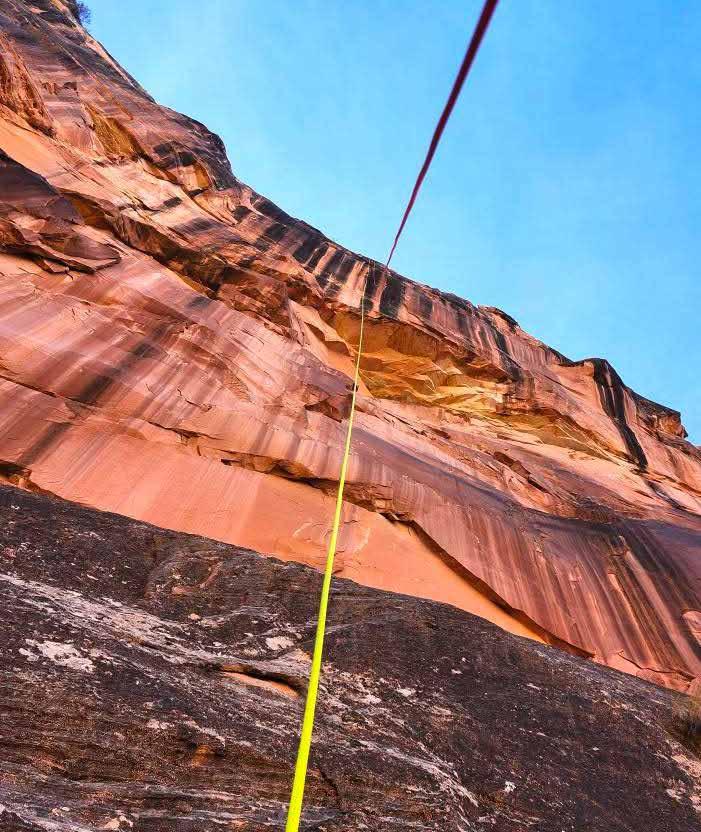
miles through some of the harshest terrain imaginable country that humbles you quickly and reminds you why sheep tags are so coveted. I went into this hunt thinking I was in good shape. I trained hard and felt prepared. But the mountain has a way of showing you new limits. There were days when my legs felt like cement, when every climb demanded more than I thought I had. I needed to stop often to catch my breath, settle my legs, and push through exhaustion I did not expect. I was tired, worn down, and at times completely spent. But every time I needed a moment, the team waited, encouraged, and pushed right alongside me. That support meant more than they know.
Between my time in the field and the days put in by guides, friends, and family, we totaled 18 hunting days and countless hours from those who came just to help. We covered nine different canyons and glassed from more points than I can count. Across that rugged landscape, we found 37 sheep, including 11 rams. For perspective, the most recent survey for the entire unit estimated 43 total sheep and 14 rams. We were finding nearly every sheep that existed out there. Even so, nothing came easy. We pursued several promising rams only to have them slip away or present conditions that did not feel right. And though the collared ram from the photo crossed our minds occasionally, we were not chasing him specifically. We were simply hunting the right ram whoever he turned out to be.
As the final day of the season arrived, I will admit: the pressure was real. We had poured everything we had into finding the right sheep, and time was running out. Then, as if the mountain had been saving him for last, we found our 11th ram of the season, the very same collared ram from the
photo I had admired before the hunt began.
With spotters in place, I followed Josh’s guidance and moved into shooting range. At 230 yards, nearly straight down into the canyon, time seemed to pause. The shot broke clean. Relief washed over me, followed quickly by excitement and gratitude. But the hunt was not over—not by a long shot.
The terrain was so technical that recovery required an entire extra day and a full team. Eight strong individuals, plus Josh on rope, assembled for an operation that was part mountaineering, part miracle. I watched as he rappelled more than 400 feet straight into the canyon to reach the ram. Once he secured it, the team hauled the sheep up the cliff, then sent the rope back down to help Josh climb out. Watching
that effort… I do not think I will ever fully find the words to express what it meant to me.
The ram is incredible but the people who helped me get him are what made this hunt unforgettable.
To Josh Nielson, and to spotters Lloyd Nielson, Kody Henrie, Rob Strasburg, and Brad Turner: thank you for your skill, grit, and dedication. To my father-in-law, Dave Pehrson, my son, Kohlbin, and the friends and family who put in miles, days, and heart—this accomplishment belongs to all of us. And to the remarkable young men who came out just to help with the recovery: you showed strength and character I will remember for the rest of my life.
This truly was a hunt for the ages. I am honored and humbled to have lived it. WS
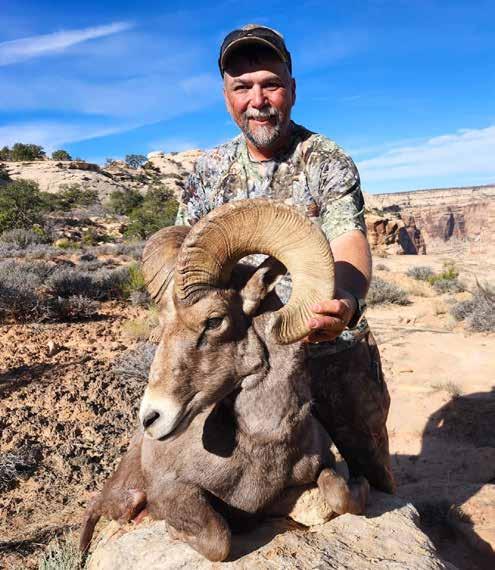
by Scot Jenkins
Q:How often do three generations of hunters show up together in wild sheep hunt photos?
A: Not very often. Perhaps fewer than 5% of wild sheep hunts include three generations of hunters.
The remote, rugged locations where wild sheep typically live
make it logistically unlikely for juniors, seniors and tag holders to all participate.
Too often treasured dreams remain elusive throughout a lifetime. Fortunately for Paul Jenkins his bighorn sheep dream finally came true on August 30, 2025 in the mountains west of
Salmon, Idaho. And better yet, those priceless memories were shared with a tight group of family and lifelong friends. Thanks and forever gratitude to Andrew, Greg, Tim and “Team Jenkins”. Also a shout out is offered to the Wild Sheep Foundation, IDFG, countless volunteers and other
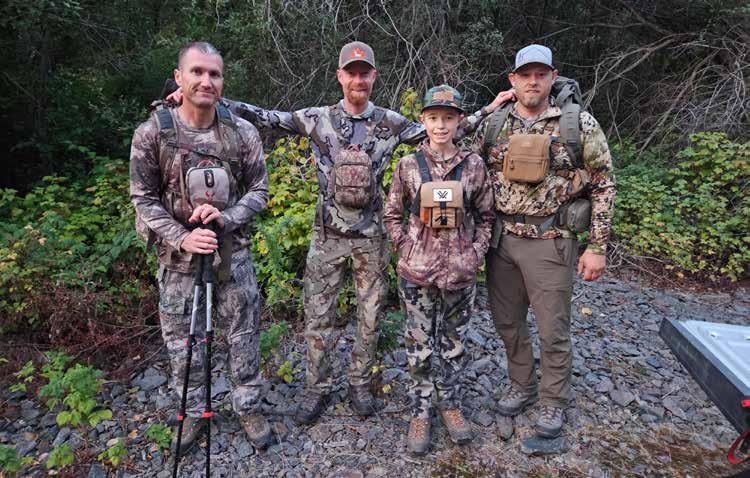
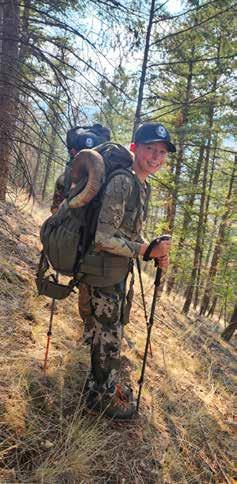
conservation organizations whose tireless efforts keep these noble but fragile wild sheep populations at sustainable levels.
For more than half his life, Paul Jenkins has diligently applied for wild sheep drawing tags in multiple states. His 26 years of sheep preference points in Wyoming seemed to be his best chance for a bighorn tag. That was true until Wyoming disappointingly decided nonresidents no longer deserved 25% of available tags, but reduced the allocation to only 10%.
Then a miracle happened! In 2025, Paul once again applied for a bighorn sheep tag in his home state of Idaho, and this time his name was drawn for one of only two tags issued for Hunt Unit 28-2. Yeehaw, Team Jenkins was going sheep hunting near home, self-guided for only the price of gas and diesel fuel! To put in perspective the incredible market value of this opportunity, a prominent booking agency
offered a 2025 over-the-counter guided bighorn hunt in Alberta for $110,000. Add the costs of international travel, a nonresident alien license and tag, GST, hotels, tips, misc. costs, etc., and it quickly becomes apparent what an amazing opportunity Idaho had provided.
Scouting commenced in earnest during the summer and several 1st day shooters were located and photographed along with dozens of lambs, ewes and younger rams. The area was pretty well dialed-in long before opening day—camp was set up and the team was ready. Lifelong friend Andrew Ford had demonstrated his superpowers (including “death marches”) during early season scouting and dedicated many days and vertical miles doing thorough scouting. In years prior, many of Andrew’s “friends” had discontinued hunting for shed antlers with him each spring, out of concern for the well-being of their own knees, hips ankles and feet. Despite having the area figured out, Andrew was compelled to do one, final ten-mile-plus solo scouting sortie the day prior to the season opener. Andrew is the real life embodiment of what Tracy Lawrence sang about in his timeless Country classic “You find out who your friends are…Somebody’s gonna drop everything…never stop to think what’s in it for me…they just show on up with their big ol heart…” We all wish to have a friend like Andrew! Each of us should follow his example and just BE that kind of a friend for our loved ones.
At dark-thirty opening day, team members headed out in several directions with headlamps. Thirteen lambs and ewes provided entertainment early that morning and Greg was the first one to put eyes on a “shooter” several canyons away. When the team eventually assembled at Greg’s glassing location, quality optics confirmed at 800 yards that he’d found an old ram worthy of Paul’s valuable tag.
Due to shifting and swirling winds, the cross-canyon long shot was a no-go. To minimize noise, scent and movement, the elite forces team chosen for the stalk consisted of Paul, Andrew and Tim. The rest of the team would remain across canyon with eyes on a young ram traveling with the older target ram. The sniper team went “Beast Mode” dropping down the canyon; they crossed a river on fallen logs and ascended approximately 1,000 vertical feet in elevation up a steep mountainside remaining hidden in old growth forest cover. At 300 yards despite best efforts at stealth, the younger ram visually busted the team. Surprisingly, the older ram seemed to mostly ignore the anxiety and unease of his younger friend. However, the old warrior moved steadily grazing up a cliff-strewn steep hillside frequently slipping out of sight behind spires, ravines, towers and cliffs. He topped out briefly in a high, small, cliff saddle. Tim spotted the ram’s new higher location and Paul quickly got prone behind his “Big-30” (Weatherby 30-378). A single precision shot rang out and fortunately the big ram toppled off the steep sloping backside rather than the cliffs in front. It took a while for the rest of the team to cross the canyon and join the happy crew for photos.
After the appropriate photo session was complete, the team quickly caped, quartered, and boned out the ram. Team members worked with precision and little conversation. Soon the ram was distributed among team members and the crew headed off the mountain back to camp. Fourteen year old Logan rose to the occasion and used an Exo Mountain Gear backpack to haul out the heavy cape, skull and horns all by himself. Of course the curiosity of the boys (Johnny & Logan) required them to inspect eyeballs, entrails and other interesting items. They learned and experienced
much. Both have hunted often with family and they are now totally addicted to the outdoor lifestyle. They are each poised for futures full of backcountry adventures and excitement.
Back at camp that evening, Greg prepared a gourmet meal for the ages, including fresh back straps of course, along with other delicious morsels. Even such an incredible meal wasn’t enough, however, to restrain Andrew’s restless spirit. He quickly packed his gear and drove his truck off towards Challis, ID that night because another friend also had an unfilled sheep tag. Andrew parked his truck at a trailhead and hiked off into the darkness with a headlamp headed for a remote GPS sheep camp location. The very next day he assisted friend Tyler in also taking an excellent mature ram. Paul
and Tyler are truly lucky to count Andrew among their solid, reliable friends. Andrew displayed his superpowers the weekend of August 30, 2025, by assisting two friends in completing their dreams with backto-back kills on consecutive days in different Idaho hunt units. Nicely done Andrew! Your unselfish and priceless contributions remain to be repaid in the future.
The torch continues to be passed to the next generation around countless hunting campfires. Logan is a now an accomplished sixthgeneration Idaho hunter, along with a sizable collection of cousins and his brother Austin. R.I.P. great grandfathers Dan, Keith and Vaughn Jenkins. Your Idaho homesteader, farmer, rancher and conservation heritage remains very much alive and well and is in solid hands for the future.
Priceless memories were shared in the mountains west of Salmon, Idaho during 2025. Paul will remember the vivid details of this dream-come-true adventure whenever he looks at the amazing mount in his home. Taxidermy treasures are the keepers of cherished memories.
Dreams CAN come true although persistence and patience is often tested. Pursue dreams with determination and your efforts just might eventually pay off BIG TIME!
Congrats Paul, and Team Jenkins. Notice in the photos we are proudly wearing our IWSF “lids”. A tilt of the camo hat to WSF, IWSF volunteers and all those “giving back” so that wild sheep might continue to roam wild places and live on in our dreams…out there! Well done all! WS
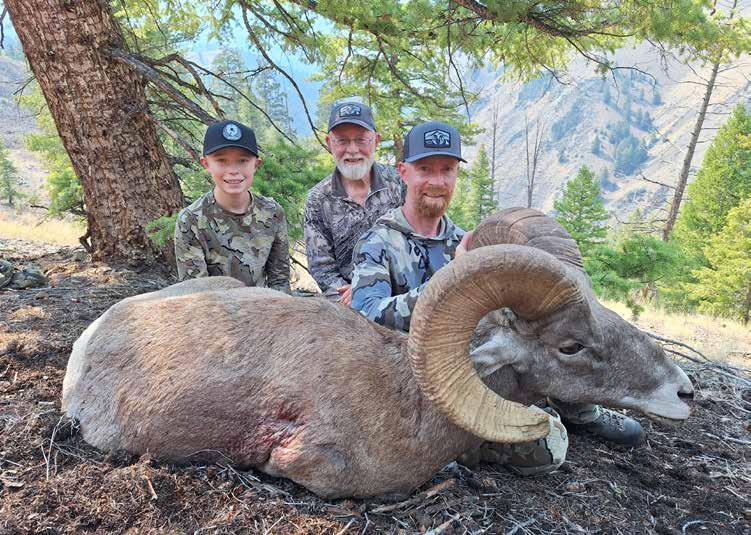

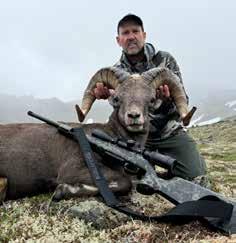
Species: Kamchatka Snow Sheep
Outfitter: Club Ibex
Guide: Alexy Podtyazhkin
Location: Kamchatka Russia
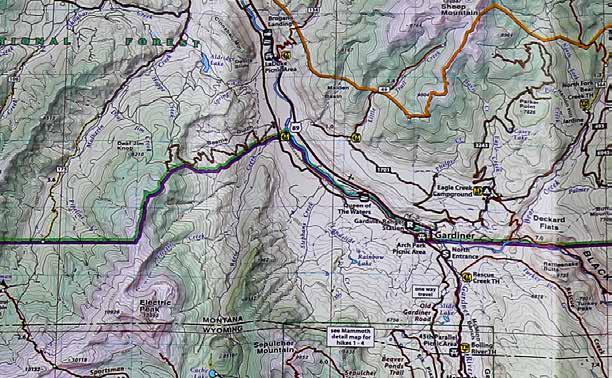
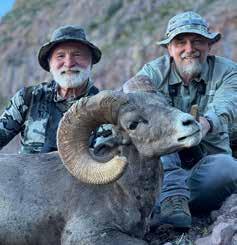
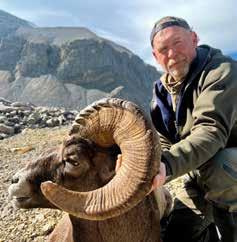
Species: Desert Bighorn
Outfitter: GowithBo
Guide: Eduardo Canett-Arce, Bo Morgan
Location: Baja California Sur
My first true mountain hunt quickly proved one thing—it’s not easy, but it’s incredibly addictive.
That morning we climbed high to glass but didn’t see anything at first. We kept moving, walking and glassing along the mountain until we finally spotted a small group of rams far in the distance. My guide, Alexy, looked at me and said, “Let’s try.”
We side-hilled across loose rocks and boulders for what felt like forever until we finally reached a good position above them. Taking our time, we picked out the biggest ram in the group. When the shot connected, a wave of relief set in. Then it hit me—we still had to walk all the way back.
It was an incredible hunt and a great first mountain experience. Special thanks to Jay Link and Alexy Podtyazhkinfor making it such a memorable adventure. WS
The hunt started the way most sheep hunts do—climb high, find a vantage point, and glass. Late the first evening we spotted a “potentially interesting” ram at long distance with four ewes. Another team located a second ram on the opposite side of the mountain, and after another day of glassing we made our choice.
Getting to him meant a big climb up the back side of a volcanic mountain. With Eduardo’s mule and a few burros carrying gear, we reached a high camp within striking distance of the pass.
The next morning we found the ram, but he stayed hidden in cover all day. After a restless night on the rocks, we relocated him at first light only a few hundred yards away. At 200 yards we waited. When he stood at 7:30 a.m., two shots anchored an old, heavy fullcurl ram—my 28th sheep species.
Special thanks to Bo, Jerrin, Eduardo, and the team. WS
SPECIES: Bighorn
OUTFITTER: Willow Creek Outfitters
GUIDE: André Van Hilten
LOCATION: Alberta
I had the opportunity to book a 14-day Rocky Mountain bighorn sheep hunt with André van Hilten of Willow Creek Outfitters in Alberta. André, along with his exceptional wranglers, Thomas and Peter, went above and beyond to provide one of the best hunting experiences I have ever had.
The hunt was rugged and tested me both physically and mentally, yet the raw wilderness, towering mountain terrain, and breathtaking vistas made every challenge worthwhile. The camps, horses, food, and most importantly, the people exceeded all my expectations. Throughout the entire experience, I felt like I was hunting with friends who constantly encouraged me to push beyond my comfort zone. That support and camaraderie ultimately enabled me to harvest an exceptional Rocky Mountain bighorn ram and complete my FNAWS.
This hunt made me a better person, and I will be forever grateful to André and his team. WS
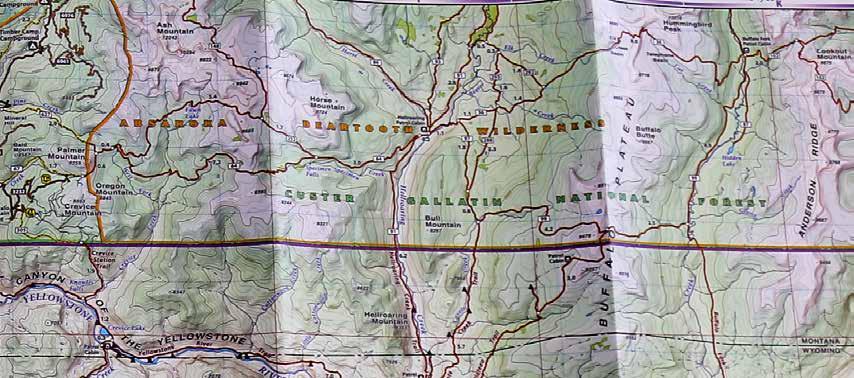
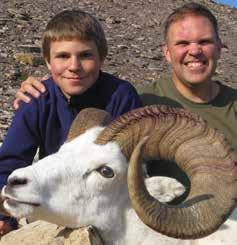
SPECIES: Dall’s Sheep
OUTFITTER: Mackenzie Mtn Outfitters
GUIDE: Glen Stevens
LOCATION: Northwest Territories
This was my second Dall’s sheep hunt with Mackenzie Mountain Outfitters. My son accompanied on this hunt. Our goal was to harvest an old, mature ram. Towards the end of this hunt after relocation to a different area, we identified this ram all by himself. The next morning we hiked to the mountain that he was on. After climbing, we saw him escaping up a rock slide as he had seen us. I was lucky that he stopped to look at us and made a good shot at 300 yards. He fell right there. WS
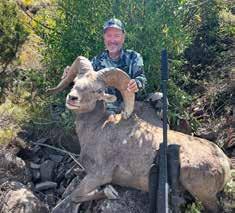
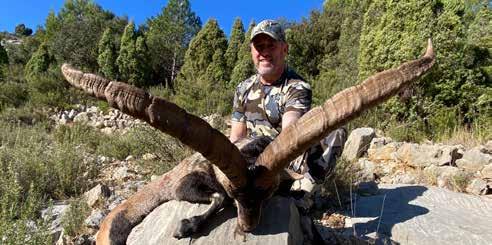
SPECIES: Beceite Ibex, Gredos ibex
OUTFITTER: Iberian Hunters
GUIDE: Luis Ruiz Del Olmo
LOCATION: Spain
I traveled to Spain in December at the tail end of the ibex rut for an unforgettable mountain hunt.
We began in Collado Hermoso pursuing Gredos ibex. The first day tested us with clouds, rain, and low visibility. We hiked nearly 10 kilometers through steep country and saw plenty of billies—just not the one we were after.
The second morning, we found him. A great 12-year-old billy, a Silver Medal trophy. After a careful stalk, we
SPECIES: California Bighorn
OUTFITTER: Self Guided
LOCATION: Oregon
We looked at lot of country and saw numerous rams. I was fortunate to have my three sons as well as three friends helping with scouting and glassing. In the end, we found the one I wanted. WS
closed the distance to 70 yards. One steady, well-placed shot brought the Gredos hunt to a successful close.
Afterward, we headed east to the Beceite ibex area. Word came that a guide had spotted a big billy, so we started early the next morning. By early afternoon we had him in sight. We made a careful stalk to 280 meters and got set up.
One perfectly placed shot later, I harvested an outstanding Silver Medal Beceite billy measuring 88 centimeters wide—a tremendous animal and a perfect finish to an incredible Spanish adventure. WS
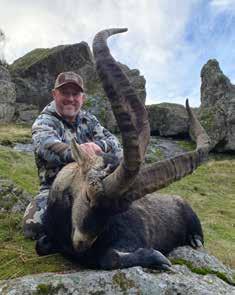
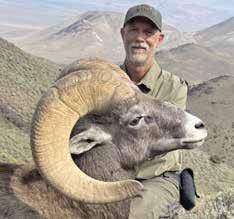
SPECIES: California Bighorn
OUTFITTER: Nevada High Ridge Outfitters
GUIDE: Mike McKinnon
LOCATION: Nevada
After taking my third desert bighorn in 2023, I needed a California bighorn to complete my third FNAWS. I applied everywhere I could, and against the odds, drew a Nevada California bighorn tag.
Hunting the early September opener with friend and guide, Mike McKinnon, we looked over 24 rams in four days. One stood out. On the second morning, we found him at 700 yards, stalked to 400, and with one well-placed shot, the ram was down.
He was everything we hoped for— mature, heavy, and long-horned. After photos, we loaded our packs and headed off the mountain.
As we hiked out, I thought back 36 years to packing my first sheep with my dad. Different mountain, same feeling. What a ride.WS
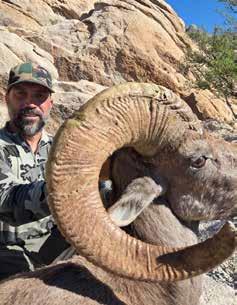
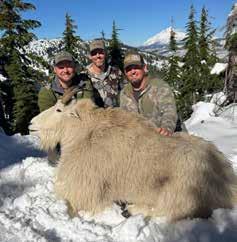
SPECIES: Rocky Mountain Goat
OUTFITTER: Sheep Mountain Outfitters
GUIDES: JAMISON & BOB
LOCATION: Oregon
An early high-country snowstorm delayed our hunt, leaving us with only a short window of a few days to make it happen.
We glassed billies on both sides of the unit before finding a true dandy on the east side. We caught a glimpse of him the evening before the hunt, and the next day we picked up his track in the fresh snow.
Following those tracks through the high country led us to our opportunity. One well-placed shot, and the hunt was complete.
He officially scored 54” Boone & Crockett—No. 2 in the record book— an incredible Oregon mountain goat and a hunt I’ll never forget. WS
SPECIES: Desert sheep
OUTFITTER: Extreme Desert Outfitters
GUIDES: Silvia Torres and Francisco “Pancho” Rivera
LOCATION: Sonora
I won this hunt through a raffle offered by the Utah WSF. This was my first trip to Mexico and having the outfitter meet us in Phoenix and drive us across the border and to the hunt area made things very easy. The weather was perfect with the mornings being in the low 40s and the afternoon getting close to 70 degrees. The outfitter was amazing and we got to experience not only freerange hunting but also all the culture and experiences that hunting in Mexico has to offer! WS
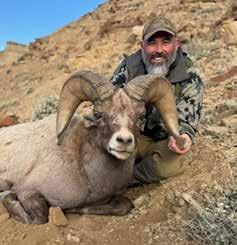
SPECIES: Bighorn sheep
OUTFITTER: Mossback Guides
GUIDE: Neil Clayton Jeremy Harness
LOCATION: Utah
This was my fourth attempt and first successful Rocky hunt. We spent 15 days hunting looking for a special ram and found this guy. He was the best one we saw. We saw him far off and hiked in for him three times, but he kept evading us. I finally got him, finishing my FNAWS on a hard hunt with some great guides and friends. WS
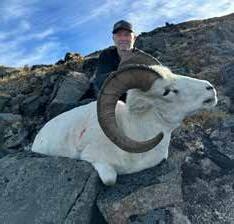
SPECIES: Dall’s sheep
OUTFITTER: Kusawa Lake Outfitters
GUIDE: Zachary Zinghini
LOCATION: Yukon Territories
I was dropped off by float plane at the lake. We hiked with full packs up to the top of the mountain. Zach spotted rams right away. We set camp and started the hunt that evening. I harvested the ram on Day 2 at approximately 10 a.m. We packed the ram back to camp. We also hunted for a wolverine off the carcass, but a grizzly carried off the whole thing on day three. We packed camp and the sheep back to the lake on Day 4. WS
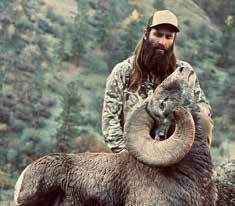
SPECIES: Bighorn Sheep
OUTFITTER: Self Guided
LOCATION: Washington
I shared an incredible six days hunting with a close friend near the Grande Ronde. We were on the hunt for a Rocky bighorn for the first time. I managed to kill what I would consider a very old, heavy, mature ram, estimated at 15 years old. His green score was estimated in the high 180s to low 190s B&C. His horns have mass for days! WS
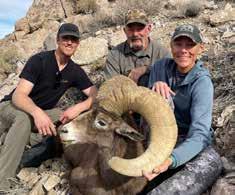
SPECIES: Desert sheep
DIY – SELF GUIDED
LOCATION: Nevada
I was lucky enough to win the Nevada Dream Tag Raffle for desert sheep in my home state. I was beyond excited because if I was successful on this hunt, it would finish my second FNAWS. We started hunting November 1, 2025. We hit different open areas but couldn’t find a good ram. We decided to go hunting over Thanksgiving down by Beatty, Nevada. A couple days after Thanksgiving we found a nice old ram that made my heart flip, so we went after him. We harvested him at 8:00 a.m. and that ended my quest for my second FNAWS. WS





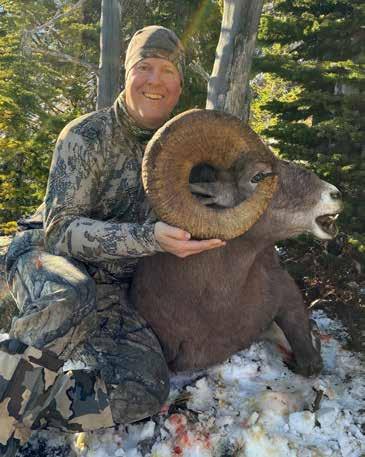
Scott
Ellis — Rocky Mountain bighorn
On Monday, we re-located the rams and made plans to hike on Tuesday morning. In the dark, with only the aid of a headlamp, my guide Tyler Leuenberger and I began our ascent. It started steep and got steeper. It didn’t take long to reach the slippery, wet snow—it was a little treacherous.
Then we got a call on the radio from guide outfitter Steven Leuenberger.
“Thumper is not there. I can see five rams, but he’s not there. I repeat, Thumper is not there.”
Tyler and I discussed our options and agreed to go back down the mountain. I was pleased with that decision—I only had one of those hikes in me.
That afternoon, Tyler checked the mountain to the left. The rams weren’t there. So, the plan was to walk to the lookout in the morning and see if the rams had moved to the mountain on the right. Shortly after reaching the lookout, Tyler said, “He’s there.”
He asked, “Do you have gas in the tank for this? It probably means spending a night on the mountain.”
I said, “Let’s go.”
Tyler grinned and asked, “Do you have another gear?”
I replied, “No—four low is all I have.”
Four and a half hours later, we were at the same elevation as the rams, waiting for them to feed back up to their bedding area—where Tyler had spotted them that morning. As predicted, they did, and Thumper was leading the way. He came into view at 265 yards.
Seeing a big ram go down is a beautiful thing. WS You are Kicked Out in first gear fashion, Scott!

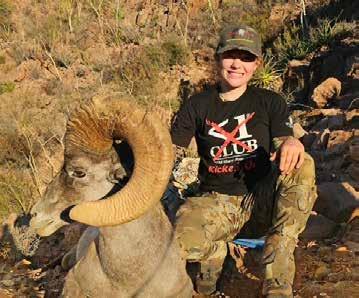
On February 4, 2023, I was officially kicked out. My desert sheep hunt was a once-in-a-lifetime opportunity, It all started when my dad met his now good friend, Derick Lopez, while hunting in Sonora. Derick suggested that my dad and I come hunt with him on Tiburon, with me being the hunter, for desert sheep and Sheldoni mule deer. Derick said that I would be the youngest, non-native, hunter to have ever hunted the island, let alone a young girl. The planning was on and we settled on February 1st10th, 2024.
We flew into the Hermosillo airport on January 31st and were met by my guide, Milan Marcetta, Derick’s camp/hunt manager, Andres Araiza Flores, and a friend of my dad’s, Elijah Anderson, who had guided on Tiburon in previous years and would also be helping on this hunt.
We immediately drove to Derick’s beach house, adjacent to the Seri Reservation, on the Sea of Cortez. This is when I first saw Tiburon Island and was amazed at how huge it looked. From the house, we watched the sun set over the peaks of the mountains on the island. After the sun set, Andres drove us to a local village, Kino Nuevo, where we had our first taste of seafood harvested from the Sea of Cortez. It was super yummy. Early the next morning, we loaded everything up into a pickup and drove onto the beach where we met our ride to the island—a panga! ( kinda sketchy)
The ride across the Sea of Cortez was about 30 minutes and super smooth. The mountains on the island continued to get bigger as we approached.
We were met on the island’s beach by some of Derick’s camp staff with side-by-sides; loading all our stuff up and headed to base camp. We were met in camp by Derick’s chef and staff; greeting us with appetizers and drinks. We checked the zero on my
rifle, settled into camp for the night and made plans for how we were going to hunt for the next 10 days.
We arose early the next morning, ate breakfast, loaded our packs with all our gear needed to backpack hunt for the next eight days.
We drove the side-by-sides to the end of a two-track trail for about 30 minutes where we commenced to put our packs on and start hunting. Our group was my dad and I, Milan, Elijah, and one of Derick’s staff to help us pack water, supplies, and hopefully, a ram.
Every other day, four of Derick’s packers would bring bottled water into us, finding us by Inreach wherever we were at, taking all of our empty water bottles and trash back out with them. There’s no fresh water on the island, so having them pack water to us was the only way possible to continue backpacking around the island.
On the 4th afternoon Milan and Elijah spotted a group of three rams with one of them needing a closer look. We made a two-mile loop using the dry arroyos as cover to get to a closer position to size the rams up.
Once we topped the ridge across from where we’d last seen the rams, we located them after about 45 minutes. They were pretty low on the hillside across the canyon from us and didn’t know we were there. After much discussion, we decided that one of the rams was definitely a shooter. I made a shooting nest by moving bigger rocks around, which had a scorpion or two under every one of them!
Once all the rocks and scorpions were moved, Milan started calling out distance and my dad started telling me how many MILS to dial my scope. The ram moved up the hill feeding out of the brush, and at 440 yards, he stopped moving long enough for me to take the shot. I hit him! He ran up the hill and to the left about 50 yards, stopped, I shot and hit him again! He ran about 20 yards to the left and then tipped straight over backwards.
We celebrated by high fives and hugging. After gathering our packs up, we hiked down, across the canyon and up the other side to my ram. We celebrated some more, then took lots of pictures. My dad packed a <1 Club® “kicked out” t-shirt in his pack, just for this moment, so weneven took more pics with the shirt.
We made it back down to the base of the hill and pitched our tents about 2 hours after dark.
Over the next 5 days, we hunted Sheldoni Mule deer and I shot a really nice 5x6 buck. We ate like kings while deer hunting, compliments of Derick’s chef. The hatchet scallops from the Sea of Cortez are heavenly!
Thank you Dad, Derick, Andres, Milan, Elijah and all those who helped me got KICKED OUT! WS You are Kicked Out Keetin! Scorpions and all!
The Wild Sheep Foundation is excited to announce the launch of a brand-new Sheep Fever podcast miniseries, “Kicked Out.”
Hosted by WSF Membership Manager, Maddie Richards, Kicked Out spotlights members of the <1 Club® who have officially been “kicked out” after harvesting their first wild sheep ram. These intimate and inspiring conversations dive deep into what it means to chase a dream that often takes years, or even decades, to achieve.
Each episode offers a front-row seat to the trials and triumphs that define a sheep hunt. From the first spark of inspiration to the moment a hunter lays hands on their first ram, Kicked Out captures the emotion, determination, and respect that makes sheep hunting unlike any other mountain pursuit.
Listeners will hear firsthand how preparation and perseverance come together on the mountain and how these stories fuel the passion that drives our conservation mission forward. The series also shines a light on the strength of the <1 Club® community and the shared bond that connects every sheep hunter, whether they’re still chasing their first tag or celebrating a lifelong dream fulfilled.
Through Kicked Out, WSF continues its mission to inspire, educate, and celebrate the people who make wild sheep conservation possible - one story, one hunter, and one mountain at a time.
Listen to Kicked Out on the Sheep Fever podcast: available on Apple Podcasts, Spotify, and wherever you get your podcasts.
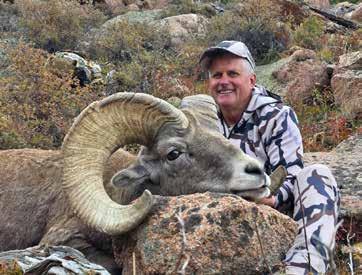
Larry Clark — Rocky Mountain bighorn
“Whenever you’re ready, tell us when you are going to shoot,” is what they were going to say if I had given them the chance. Instead I had pulled the trigger before “ready” had left their mouths. In less than a second my Rocky Mountain bighorn sheep would hit the ground. One minute before, we were stacking packs for a rest and with the sheep in my scope, for the first time in my hunt, I had no doubts. Spotting the other rams two minutes prior, I was scared we would be seen and the whole thing would be blown. I would have never been in the position to see them though, if I had never insisted we wait just a bit longer rather than taking a shot like my brother told me to five minutes before.
Two months before I read the words that would make me scream louder and jump higher than I ever would in my life.
Eight months before, I applied once again, with my kids telling me I should bother with something that might actually happen, maybe a hunt I could actually take them on.
Thirty-five years before, I applied for this hunt for the first time, the same year I bought my first legal beer in a bar.
Living my entire life on the back side of Pikes Peak, I have spent every free moment scouting the mountain for any wildlife, but my eyes have always been set on bighorn sheep. The past three years though, one ram has been on my radar and I called him “Chip Horn Ram”. I watched him slip through three years of hunts, and at this point, I felt I was more on his side rather than seeing him as a target considering drawing a sheep tag was such a foreign concept to me. This all changed when I drew a tag of my own though, and although I knew he was who I was after, there was another hunter that had a shot at him for two weeks before I would.
I joined the Colorado Parks and Wildlife on their sheep count and my lifelong scouting seemed to finally have paid off. I had the herd’s every move tracked down. That was until the first season started and I watched everything start to shift. Suddenly every sheep on the mountain had been displaced from where I had them figured out to be. I watched the other hunter push the herd around until eventually he filled his tag with “Chip Horn Ram” in his hands. I was then back at square one and had a week to refamiliarize myself with my backyard. This was going to be more than tough. I was told by the Colorado Parks and Wildlife that there were 120 sheep on the mountain, but it somehow seemed bare. This mountain that I was so comfortable with, suddenly felt like uncharted territory. Five days into my fresh hunt, I put eyes on a ram that seemed to have the same genetics as “Chip Horn”. I was beyond excited to see him and his seven brothers. I watched him, trying to figure out his pattern as best I could, but before I could get very far, a storm rolled in. The storm that pushed me out of the drainage was one of the worst
I have ever seen on that mountain and I was forced to bail on my only sense of hope at this point of my hunt. As I went home that night, all I was left with was wondering whether or not he would hang in there until opening day of my season.
The first day of the season, September 19, 2025, started at 4:45 a.m. My brother, Todd, two friends, Terry and Jared, and myself knew those eight rams were somewhere on the mountain and we were after them. On our way up into Pikes Peak everyone was so calm, it was almost alarming. Once we parked the trucks, we glassed up into the drainage and there sat the rams up against a rock wall, as if they had been set there just for us to see. They had been feeding and were on their way to the water. We strapped on our packs and began our ascent to where we knew where to find them. After a half hour of walking along the old mining trail, we spotted moose tracks and rounded the corner to see the beasts responsible for them. Being chased by a bull, a cow moose jumped into the lake right in front of us and we watched her swim all the way across. Watching the bull jump in and out, and the cow swim in circles, it was as if they were just calves playing around. For a moment it even felt as if we were just as young as we sat in awe and forgot entirely about the task ahead of us.
After a few minutes of watching them, we continued our trek into the willows, stopping periodically to glass. We knew that we were coming close to a point where we would have to go out of sight of rams for a good thirty minutes, which also meant we would lose sight of them. As we gained elevation, the willows turned to dense forest. As we approached rocks, we could hear a stream roaring off to our right…the same stream that the band of rams was heading to earlier.
Suddenly Jared spotted a ram laying down, facing away from us, about 300 yards away. All four of us got as low as possible either hunching down or crawling, in an attempt to stay out of sight. Todd said, “That’s him, shoot him now,” but despite being told to take the clear shot at the ram in front of me, my heart was still set on the one I had seen three days before. With our packs in position, we watched for the legend I spoke of, and once again as if he was put there just for me, I watched as he marched right into my spotting scope. “Shoot that ram,” Todd told me.
“What do you want to do?” Terry asked, but I didn’t need either of them to say anything for me to already know what I wanted to do.
“I’m gonna shoot that ram,” I told them. I pulled the trigger on the 276-yard shot before they could finish their next sentence, because now it was just between him and I. He fell and tumbled in my scope four times. The surrounding rams jumped up and that was when I knew I had harvested the biggest one.
I was calm until Terry jumped up and said, “I can’t see
him anymore and I don’t know if he’s moving.” He ran behind us up onto the hill to see the ram from a higher elevation with his binoculars. I followed in case I had to get ready for another shot. Once we spotted him, we could tell he was still, and that’s when I started to shake. We got our packs together and although everyone was still calm, it felt as if we couldn’t get there fast enough. I had so much anticipation to just put my hands on him, and though I had him down, we still felt so far. The stream brought us to this animal in the first place, but it was now the obstacle keeping us apart. The rocks lining it seemed to be coated in snot and we struggled to find somewhere to cross. At this time, the sun was starting to crest into the drainage. Time was not stopping for us, and there were signs. Once again, we had to lose sight of our target, this time as we went through a dip in terrain. Once we gained sight of the rocks again, however, it was immediately apparent that they all looked the same It was not until the last 50 yards that we once again had eyes on him.
Respectfully, everyone wanted me to put my hands on him first and it wasn’t until I was up close that I realized how big he really was. This ram is everything and more than I could have ever asked for. I felt so blessed in that moment and never wanted it to end. Once I had my moment, everyone came to touch him and we said a prayer to express our appreciation and respect for this beautiful animal. It was then that I noticed how calm the valley was, and I couldn’t hear a sound, not even the stream. We took our pictures, of course, and life size caped him before packing him up. There wasn’t one empty pack as we made our 2½-mile walk back to the trucks in beautiful weather.
I faced the same song and dance as many hunters for 35 years of applying every February for my dream and hearing every April that it wouldn’t happen. As hard as it is to face this constant rejection, I wouldn’t change a thing about my story. There isn’t one piece of me that doesn’t believe I drew this tag right when I was supposed to. If I had drawn it in 2017 when I was traveling for hunts and in my prime, I would have had to turn it in after being diagnosed with Valley Fever that I acquired from another hunting trip right before. If I had drawn it in 2020 when my dad passed away and I was forced to change careers to take over the family business, I would have had to turn it in to put my family first. Instead, I was forced to wait, and although at the time I was sure it was bad luck, I now know it was anything but. I am now more than grateful for the opportunity I have been given and for everyone who made it possible. And more than anything, I am grateful for the beautiful Rocky Mountains that I get to call home. WS
Patience is truly a virtue to be rewarded Larry, but you are Kicked Out!
$25entry(includesT-shirt)MUSTjoinorbeacurrent memberofWSF&NEVER harvestedawildRam sign up to win your
$25entry (includes T-shirt) join or be a current member of WSF & NEVER harvested a wild Ram
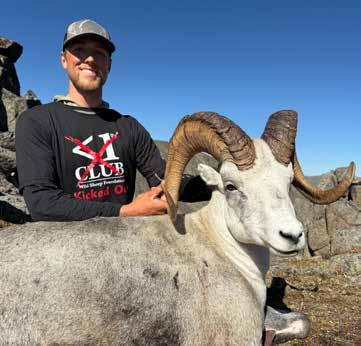
Jesse Edgar
— Dall’s sheep
signuptowinyourFIRSTsheephunt! ADall’sandFanninsheephuntwillbegiventotwo<1Clubmembers
saying that she had earned herself an 11-year-old ram. Filled with joy, even if I didn’t fill my tag, it was all worth it since my mom had earned her second Dall’s sheep.
DrawingFebruary1st 2013 GrandSierraResort&Casino. Reno,NV
Pleasesupport ourgenerous sponsors midnightsunout ing.com MidnightSunOut ttingLtd YUKON facebook.com/LazyJBarO sitkagear.com kenetrek.com mysteryranch.com minox.com wout ers.com
August 9th rolled around and my guide received a message from the outfit owner saying that we are to finish off the last bit of food we have and head down to the river to get picked up a day early. I figured that I must REALLY have the worst luck if my hunt is getting cancelled early. Only then did my guide look to me and say “Looks like we’re going Stone’s hunting boys. Hope you know how to ride a horse!”.
sitkagear.com kenetrek.com wout ers.com
On August 14th, we left the main cabin on horseback to a camp roughly 15 miles away. I had been given the opportunity to hunt Stone’s sheep for 10 days with one of my previous guides from the Dall’s hunt.
On July 28th, 2025, my parents and I made our way from northern Nevada to Yukon, Canada in hopes that my mother and I could both earn ourselves a Dall’s sheep. This trip, however, was a redemption for me since I was unsuccessful in harvesting a Dall’s ram in 2023. To my surprise, my mom and I were both sent to our previous area. I got a pretty good chuckle out of that, since normally, the hunter doesn’t tell the guides about the area and what to look out for. The next 14 days of that hunt and what happened after never would have crossed my mind in a million years. Being that it wasn’t my first time in this area, I was very comfortable with the ascent to our camp that I had used back in 2023. With two weeks of putting on countless miles of hiking and glassing, we were certain that I must have had the worst luck ever with this area. Not a single ram had come into our sights.
On August 8th, my mom sent me a text via satellite
After a few days of learning about the new area and working off my saddle sores, we finally found three, full curl rams about a mile away from our glassing point. As quickly as they came into sight, they disappeared. We found them again even further away in the tops of jagged cliffs that seemed physically impossible. With the last two days of the hunt coming near, we watched as these rams bedded peacefully with over a mile of country between us that’d make you hurt just by looking at it for too long. Until the very end, we watched the rams’ every move. Hoping that some way they’d work their way down to where we’d have the slightest opportunity of putting in a stalk. That time never came. With low spirits, we packed up camp, loaded horses, and worked our way back to the main cabin. Even with a second unsuccessful hunt, I was still happy that I could say that I got to chase sheep for over three weeks in the Yukon backcountry. Upon arriving at the cabin, the owner of the outfit came up to me and said something that made chills run down my spine. “Want to go again? I have one more area I can send you to if you’re up for it. You’re not leaving the Yukon without a ram Jesse!”
On August 25th, we set out yet again on a hunt for
Stone sheep. This time our group consisted of my first two guides from my Dall’s hunt, and another guide who had just come off a successful Stone’s hunt with a different hunter. Four days in, my time to shine had presented itself. We stumbled across a lone ram in a valley not too far from our camp. After side-hilling across hundreds of boulders, we finally were able to make out nine annuli and enough length to make a full curl. This was it. Inching our way forward, we set up my first shot at 260 yards. With heart beating out of my chest, I gently set my turret to the proper yardage, steadied my aim, and pulled the trigger with crosshairs directly behind his shoulder. My jaw hit the stock of the gun when my bullet flew over a foot above his back. Thinking to myself, “how could I miss such an easy shot!? I’ve practiced this exact scenario more times than I could count!” Of course, the ram took off uphill, but we were hot on his tracks. In a flash we were able to set up to take another shot while he worked his way through a rocky chute. As he stopped in a broadside position, I let off another round that sounded perfect but seemed to not slow him down at the slightest. The anger set in as we watched this ram slowly break over the skyline and disappear out of sight.
This was it. The lowest of lows. The straw that broke the camel’s back. I was completely fed up with sheep hunting. I figured it just wasn’t meant to be, and I should stick with what’s available to hunt in Nevada. Even with low spirits, we made our way up
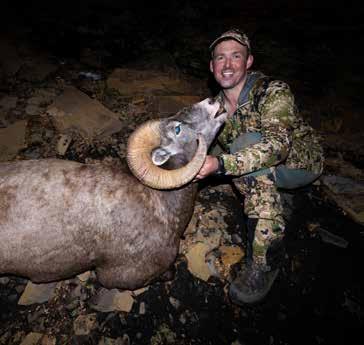
Brandon Thome-Neitzel — Rocky Mtn. bighorn
Jack O’Connor said it best: “There is no half way. After his first exposure, a man is either a sheep hunter or he isn’t. He either falls under the spell of sheep
the mountain to ensure that there wasn’t a blood trail following the ram. Around halfway up the next boulder field, I decided to investigate the chute he walked through with my binoculars. Something had caught my eye as I did. Being uncertain that what I had spotted was just a miscolored rock or an illusion, I asked my guide to use his spotting scope for a better view. Without a sliver of hope, I sat there and waited for his response which was, “I’m sorry to tell ya Jess...” Instantly I responded, “It is a rock isn’t it?” With a grin from ear to ear he said, “You got yourself a ram.”
Smiles filled our faces as we all raced to the top of the mountain. Backpacks felt weightless. Walking sticks deemed useless with every nearing step to where my ram laid. While working my way through the jagged rocks, I saw my first glimpse of his golden horns and grey coat. The pain in my legs washed away instantly as my adrenaline propelled me closer.
I did it. Very far from the pretty vision I had in mind of how I would get my first ram, but it had meant nothing as I sat there with his horns in my lap. 29 days, freezing nights on the mountain, patched clothing that outgrew me, and nearly 200 miles of hiking felt less than worth it to be in this moment. That was when the quote I had heard from countless people over the years really hit me. “You’re either going to love hunting sheep. Or you’ll hate it”. Thankful to say, I love hunting sheep.WS
The only bad luck is being Kicked Out Jesse!
hunting and sheep country, or he won’t be caught dead on another sheep mountain.”
Growing up, I’ve always had a tremendous amount of respect for sheep hunters and the mountains they climb. I’d watch my father embark on his own sheep hunts over the years, and have always had the desire to someday be in the mountains hunting sheep with a tag of my own in my pocket.
Thankfully, 2025 was finally the year, and it certainly didn’t disappoint! We covered many miles both by foot and on horse, and saw some of the most spectacular scenery that the world has to offer. It’s never just about the hunt; it’s about the journey, the shortness of breath, the incredible views that you earn one step at a time, and the friendships and memories made that’ll last a lifetime.
This hunt was one of the most challenging, yet rewarding hunts that I’ve been on thus far, and I couldn’t be happier with this bighorn sheep from the mountains of Alberta! I can’t thank Tyler McMahon and the entire Sherwood Outfitters crew enough for everything they did to help turn this lifelong dream into a reality! WS
Well done Brandon! But you are Kicked Out!
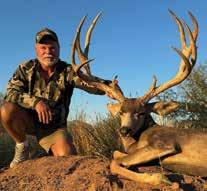
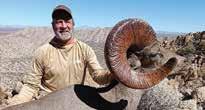
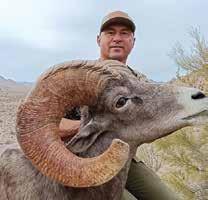
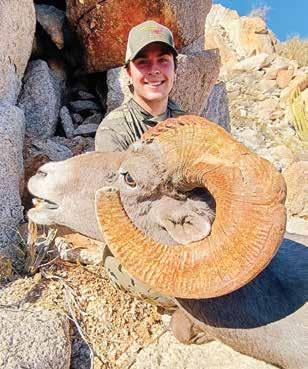
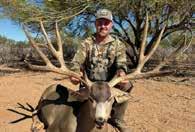
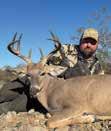


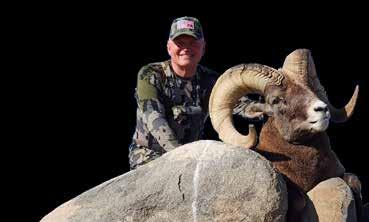
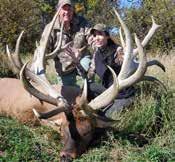



Lowell E. Baier, 85, passed away peacefully on November 21, 2025, at his home in Potomac, Maryland. Mr. Baier was the founder and president of Baier Properties, Inc., a Washington, D.C. area commercial real estate development company for more than half a century, a practicing attorney, and an awardwinning legal and environmental historian and author. Mr. Baier had a reputation for never backing down from a worthy challenge, and tenaciously pursued each with unbridled passion.
Lowell E. Baier was born in Chicago, Illinois on January 6, 1940, and grew up on a farm in rural Indiana. He was Jasper County, Indiana’s first recipient of the Eagle Scout medal awarded by the Boy Scouts of America. As a result, he became a Page Boy to the United States House of Representatives (86th Congress, 1956). An Army infantry reservist for eight years, he was a 1961 graduate of Valparaiso University (B.A.), and Indiana University School of Law in 1964 (J.D.), and admitted to the bar in Indiana, Maryland and the District of Columbia.
In 2015, Indiana University awarded him with a Doctorate in Humane Letters, and subsequently named their law school building Baier Hall. He also holds an honorary Doctor of Legal Letters (LL.D.) degree awarded in 2010, and a Doctor of Public Service awarded in 2019. He completed his work for a Doctorate in Environmental History at the University of St. Andrews in Scotland in 2020.
A dedicated activist in wildlife conservation and natural resources management, Mr. Baier was asked in 1988 to draft the wildlife
conservation agenda for President George H.W. Bush’s administration, and continued to advise on this topic for all successive presidential administrations. Mr. Baier served on numerous fraternal and civic boards, committees and commissions, and served as an active member of many conservation organizations. He published numerous book chapters and separately six books that won many awards. The Boy Scouts of America honored him in 2015 with the Distinguished Eagle Scout Award for his life of public service.
In 1968, Mr. Baier married Bonnie C. Fahs in Upperville, Virginia. Survivors include his wife, Bonnie, his brothers, Alan and Bruce Baier, from Colorado and Arizona, and his sister, Bonnie Baier Rupe, from Ohio.
Funeral services were held Saturday, December 13, 2025 at 11:00 AM at Our Lady of Mercy Catholic Church, 9200 Kentsdale Drive, Potomac, Maryland 20854. Internment was private. In lieu of flowers, contributions may be made to the National Wildlife Federation, 11100 Wildlife Center Drive, Reston, VA 20190-5362. WS



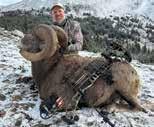
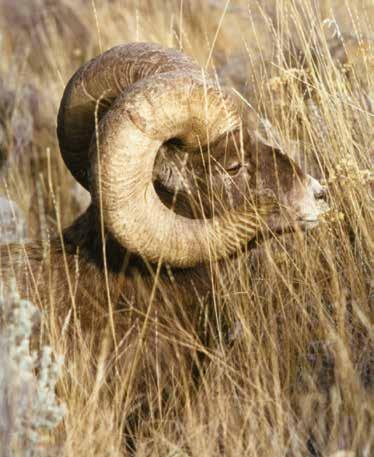
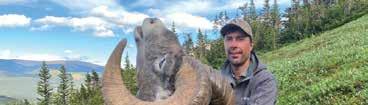







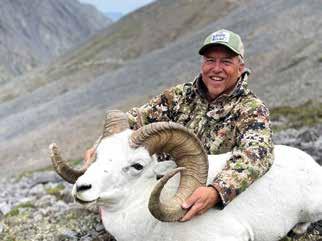
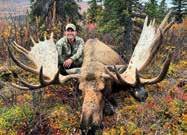
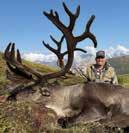
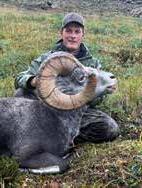

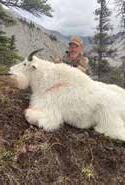
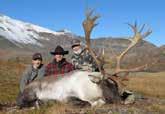
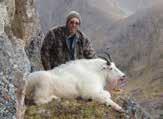
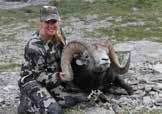

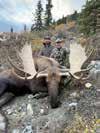
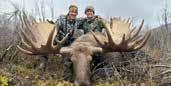
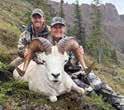

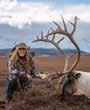
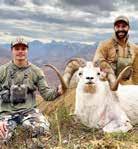









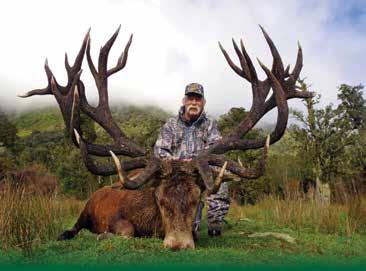



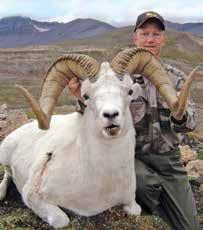



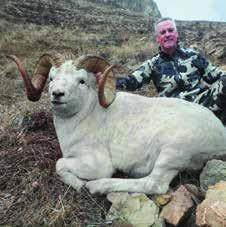
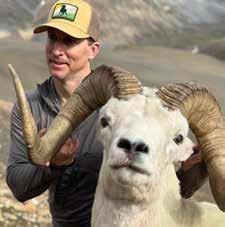




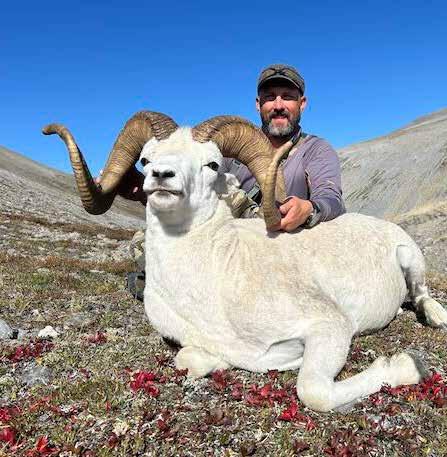




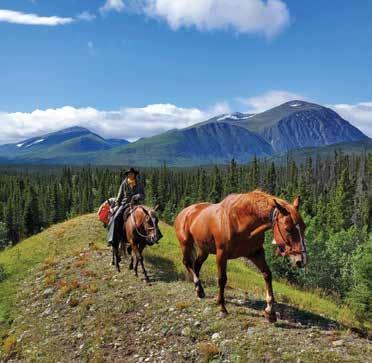
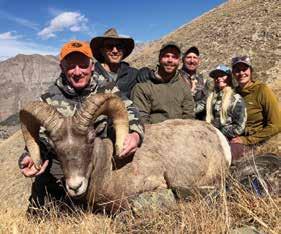
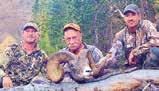
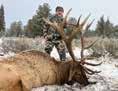




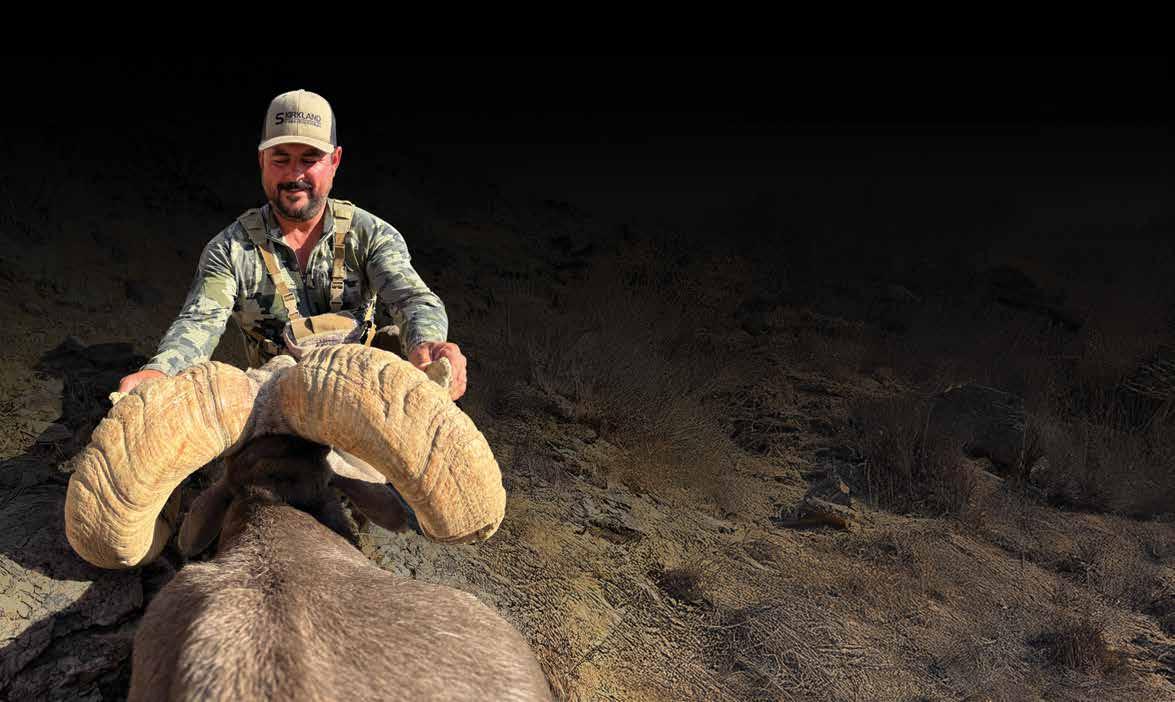
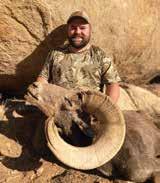
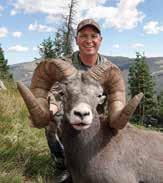
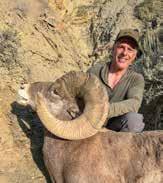
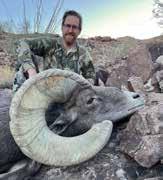
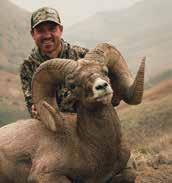
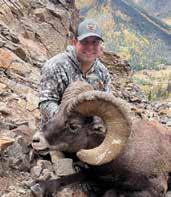
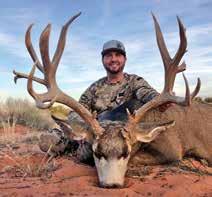
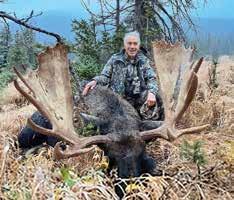
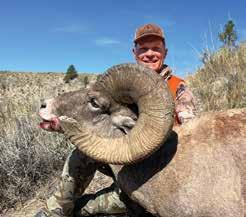
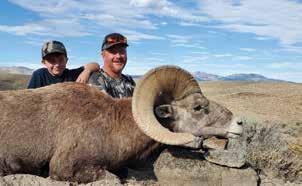
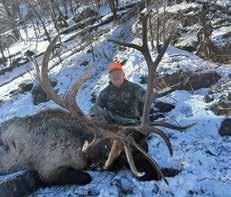
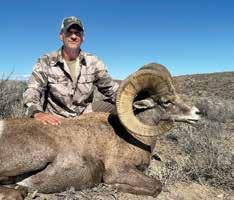
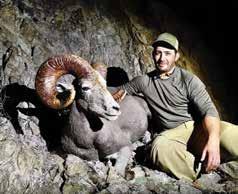


by Ken Nowicki
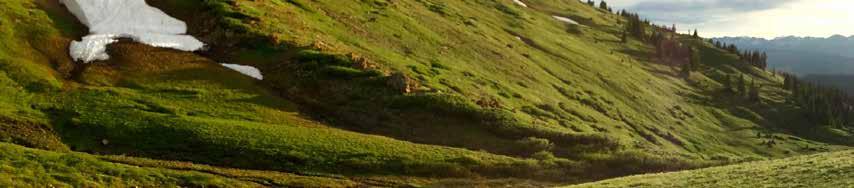
*1984 by GeorGe orwell
“Ruby’s has internet now,” I proclaimed. “We can Google.” I proudly displayed my phone to my outfitter pals Lead-On Highfee and Packtrain MacNamee. They never deigned to look up. Both were enraptured by a piece of pie.
I buy them coffee and pie once or twice a week. It can be an ordeal. Both of them smell “past their prime”, which is understandable given their age. They make me sit between them on Ruby’s counter stools and they shout to each other right in my face. I have to lean back on the spinning stools to get away from the spittle and chew. Some days they forget to install a set of dentures.
They both are hard of hearing. Packtrain still has a little dude ranch and a string of old nags, as Lead-On likes to call them. He smells horsey. Lead-On wears woolen sweaters that may never have been washed. It can get pretty funky around there.
Ruby’s Café is in the heart of the Kootenay Country and the favored place for the men and women who work in the mountains around town. There is coal mining, logging and ranching, and of course guiding and outfitting. Every second truck has a dog box and a lot of these folks are hard core hunters. Everyone has respect for Lead-On and Packtrain who account for over 100 years combined hunting for bighorn sheep, Stone’s sheep and Dall’s. Lead-On was an expert
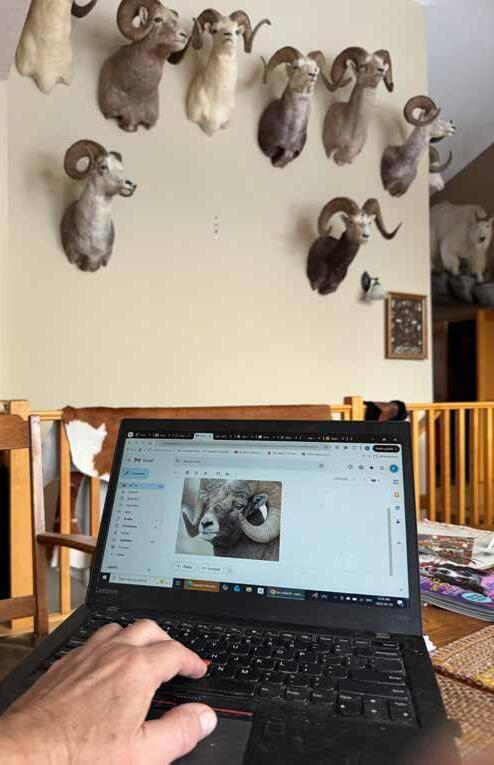
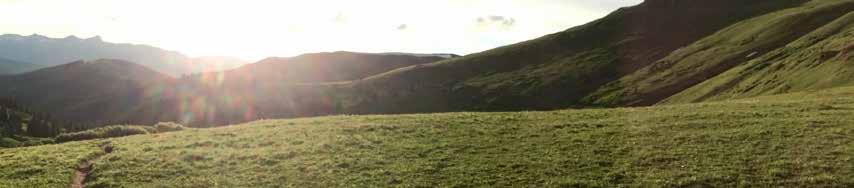
pilot and could finesse a Supercub onto a postage stamp. He and his guides would then backpack for sheep. Packtrain specialized in horseback hunting in the timehonored tradition.
These days my pals like to amble into Ruby’s Café and I like to visit with them and try to pry a few tips on sheep hunting out of them. Some of their advice is getting dated, and I probably know as much as they do about long-range shooting and pairing my binoculars by Bluetooth. What I really want is some tips on “where-to” go to find big rams.
It has been a struggle to get them talking about those hidden pockets where they used to snipe big record book rams for clients from all over the world. More than once they told me it was folly to ballyhoo some of the big rams they took. “When you put those pictures in the foundation magazine it just brings a flood of residents,” Lead-On said. “I favored getting the big ones for European hunters. They was a long way from home. They favored age over size and I never saw them care much for sheep trophies if we got them a bear. And I never took a resident hunter. They are bigmouths.”
“But what about the guides,” I once asked? “Wouldn’t they come back and want to hunt for themselves?”
“There’s an unwritten rule Boy,” said Packtrain. “You ride for the brand and you can’t never go back when you leave. I used to enforce it with this.” He brandished his gnarly old fist, scarred up from horse shoe nails and calloused from a lifetime stretching rope and hammering iron shoes.
“When you sell an outfit you got a non-disclosure clause, even with a handshake deal,”
he said. He gave me one of his classic scowls. I knew all about one of his deals done on a paper napkin right on Ruby’s arborite countertops. It resulted in several years of litigation over a clause that allowed the former owner (Packtrain) to bring trail rides into his old hunting cabins. The new outfitter accused Packtrain of guiding residents out of those camps. I believe they settled it with fisticuffs when they both realized the lawyer bills were getting outrageous. I guess they figured it was a form of arbitration to vent some frustration with no cost other than a few chipped teeth. Around the Kootenai’s that is a favored form of dispute resolution among the mountain people.
“There must be a limitation on that. What if the outfit got sold a second or even a third time? Surely you don’t owe that code of secrecy forever?” Some times I push a point but I am always wary that I’ll get noogied.
Sure enough, I got it from both directions. They were spinning me on the stool and knuckling my noggin with those big bony hands. It got me screeching, “OK, OK. I know what you mean.”
We settled down, and I took a few big gasps and rubbed my scalp. There were giggling like a couple of teenagers. I happen to know they won’t hurt me too bad because they like it when I come and pay for coffee and pie. But it worried me. What would it take to get some tips on getting a ram?
It chaps me that they won’t give me a few locations for finding rams. I was sulking and staring at my phone when it hit me. I had an epiphany of
sorts. Let me tell you, I was excited. What if I used AI?
“Hey, do you guys know about the CHAT AI,” I asked them? “You can use it to do just about anything. It’s going to make life so much easier for everybody.”
“How’s that you say? Eh? Aye Aye! They were mocking me. “What are you gibbering about now?”
“Uh well, uh, uh, well, I guess it’s called artificial intelligence. And they say it’s capable of making computers and machines as smart as people. It can solve problems and make life easier. You won’t need books any more. You can learn everything there is right on your phone. And I bet it knows all about sheep hunting.”
“You is always looking for an easy way, Boy,” shrugged Lead-On. “That figures.”
“You don’t know what you’re talking about,” humphed Pactrain. “No way a phone can tell you how to hunt sheep.”
“I bet I can get the answer to any question. That’s what AI is supposed to do,” I burbled. “It will speed up communications and research and even enable the government to save money on calculations and implementations. And Ruby could use it to file her accounting requirements in a jiffy.” I was reading some of it right off my phone. Ruby was topping off our coffee. But I palmed my cup. I needed to get out of there fast. She was scowling.
“Oh that sounds real goodeliminate jobs and raise taxes.” Both Lead-On and Packtrain were fixing me with steely glares. “That’s all we need. Just like Covid kept people home and every Tom, Dick and Harry bought a hunting license.”
“And next thing you know the government will be sticking it’s nose into things we don’t want. Like what guns we own and where we make our phone calls.” Later, I realized that Lead-On had obviously read extensively and had a grasp on Big Brother from the book 1984.”
I ignored his negativity. I was thinking about how it might help me find sheep if I asked Artificial Intelligence the questions. My mind was spinning with possibilities.
“Hey I better bounce, I have some research to do.” I was excited to get back to the computer and ask it my burning question—where can I find a big ram?
I paid for the coffee and pie with a flourish and big tip for Ruby. For a moment it occurred to me that it was free money I was giving Ruby—no tax on tips anyway. But what about
outfitters and guides? They schlepp for tips like doormen.
Not my problem. I was floating on air. I could hardly wait to get back to my computer and fire up the
Editor’s Note
• Nowicki reports that he has had some limited success with his research using AI. Apparently the technology is still evolving. Like Nowickilinks, a program he is trying to develop which will assist hunters in planning for hunts, it requires accurate inputs to enable the computer to respond with sensible outputs. Some of the information you can obtain from AI needs to be fact checked with encyclopedia’s or reference material. Some of the answers are pretty generalized. Nowicki advises he has acquired a vast collection
Artificial Intelligence programs. As I hit the door I heard them call out.
“Stick around with us Boy, you might learn something.” Then I heard them roaring with laughter.WS
of the best sheep hunting books. Some of that data needs to be entered onto the web. He also reports that AI facial recognition abilities may allow biologists to identify and follow individual rams throughout their lifetimes and that law enforcement will also benefit from this technology. He is concerned about some of the ethical and moral and legal issues relating to the use of AI and he is working on a discussion seminar for presentation for the next Sheep Show® in Reno. WS
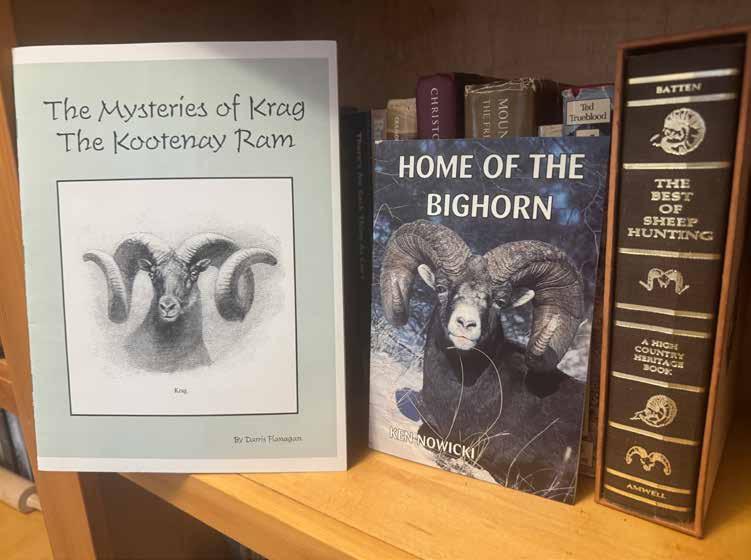

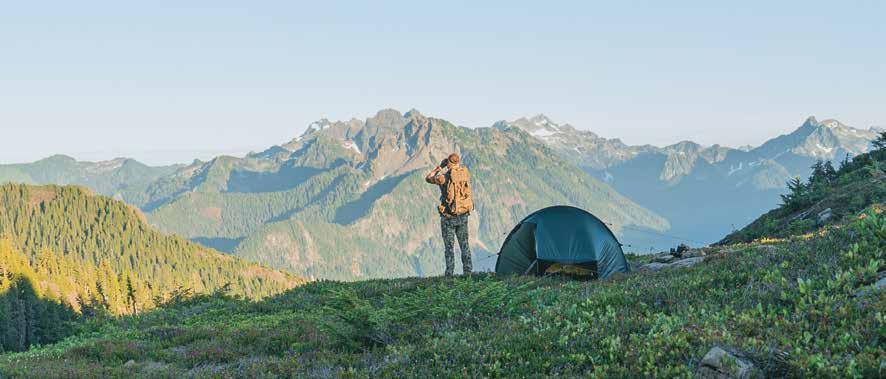
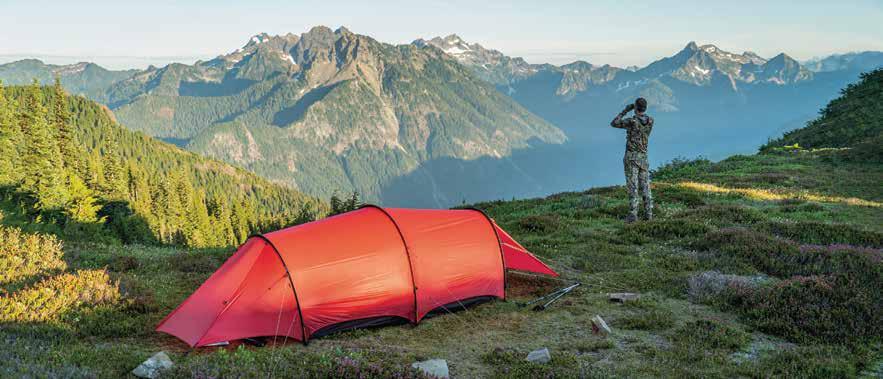
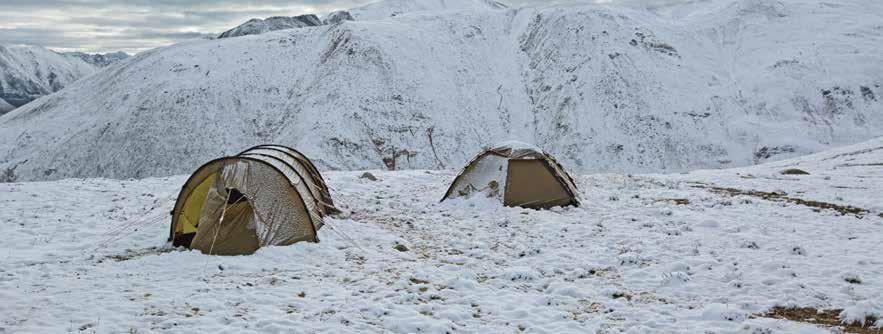
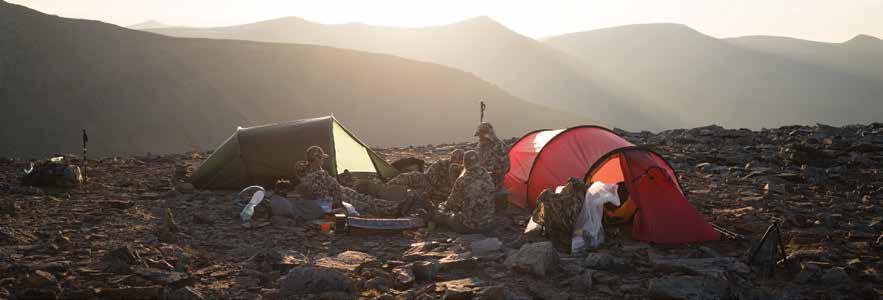

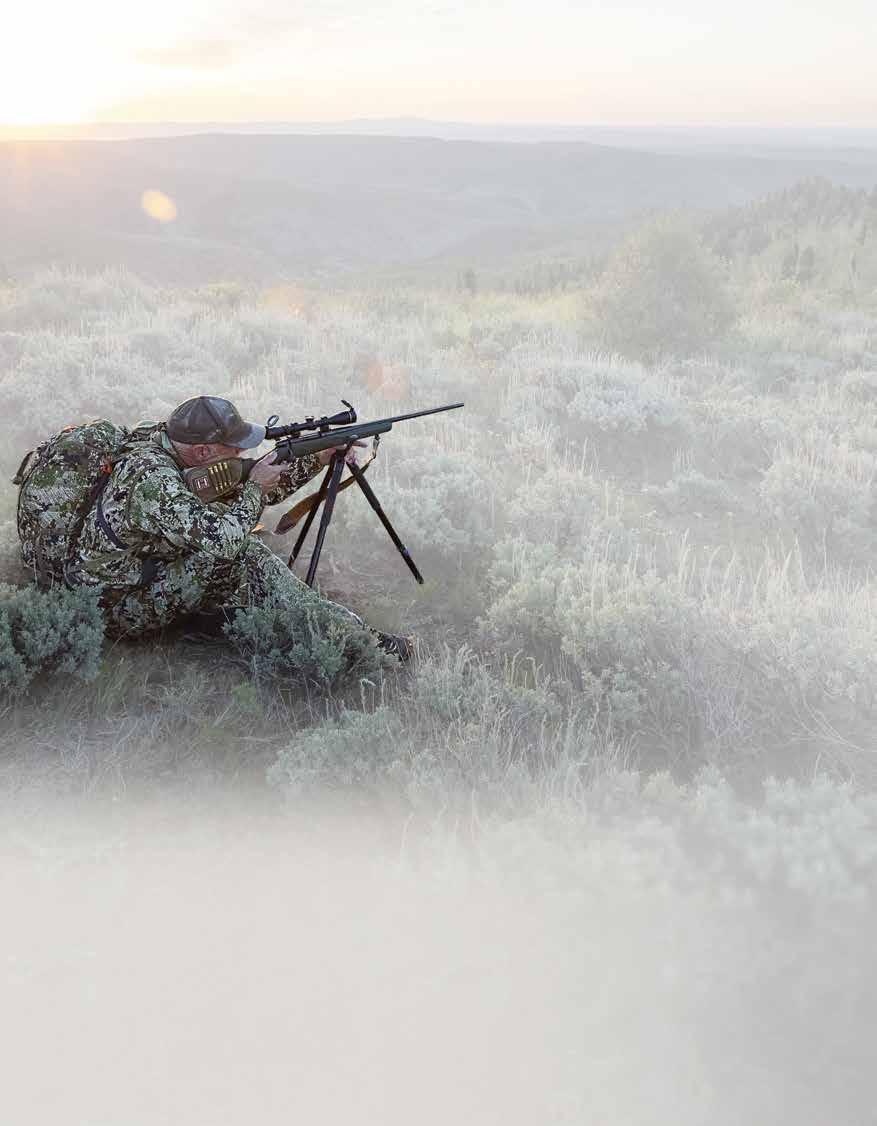

When you set out to exceed the limits of what is expected of hunting ammunition, you don’t do it by guessing what should happen. You test, evaluate and refine until you arrive at Hornady ® Precision Hunter ® ammunition, loaded with our ballistically advanced ELD-X® bullet with Heat Shield® tip. Engineered specifically to deliver match accuracy and lethality at all practical ranges, Hornady ® Precision Hunter ® ammunition is the best ALL-RANGE hunting ammunition.