Discover some of the UK’s largest moths

Chief Executive of The Wildlife Trusts Craig Bennett makes waves with his thoughts on summer
“Welcome
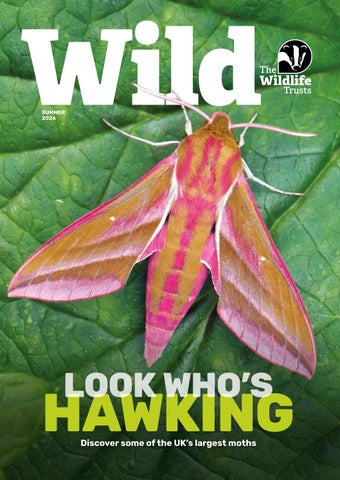
Discover some of the UK’s largest moths
Chief Executive of The Wildlife Trusts Craig Bennett makes waves with his thoughts on summer
“Welcome
your summer natural world”
Hot summer days have many of us thinking of the seaside. But how often do you think of the wildlife that lives in our waters? The UK’s marine life is incredible. We have sharks, dolphins and colourful fish that wouldn’t look out of place in any tropical sea. But sadly, these fantastic creatures don’t always get the protection they deserve.
In spring, a new report from The Wildlife Trusts highlighted the many issues faced by whales, dolphins and porpoises in UK waters. These range from disturbance by noisy human activity to entanglement in fishing gear.
Another report from Wildlife and Countryside Link (of which The Wildlife Trusts is an active member organisation) revealed the shocking scale of bycatch in our seas, with more than 10,000 seabirds, 1,000 whales and dolphins and hundreds of seals dying each year.
There are protected areas in our seas, but those protections don’t always go far enough. Take, for example, bottom trawling. Heavy nets and chains are dragged along the sea floor, indiscriminately destroying everything in their path as they target just one or two species. Shockingly, this damaging activity is still permitted in many of our Marine Protected Areas (learn more on page eight).
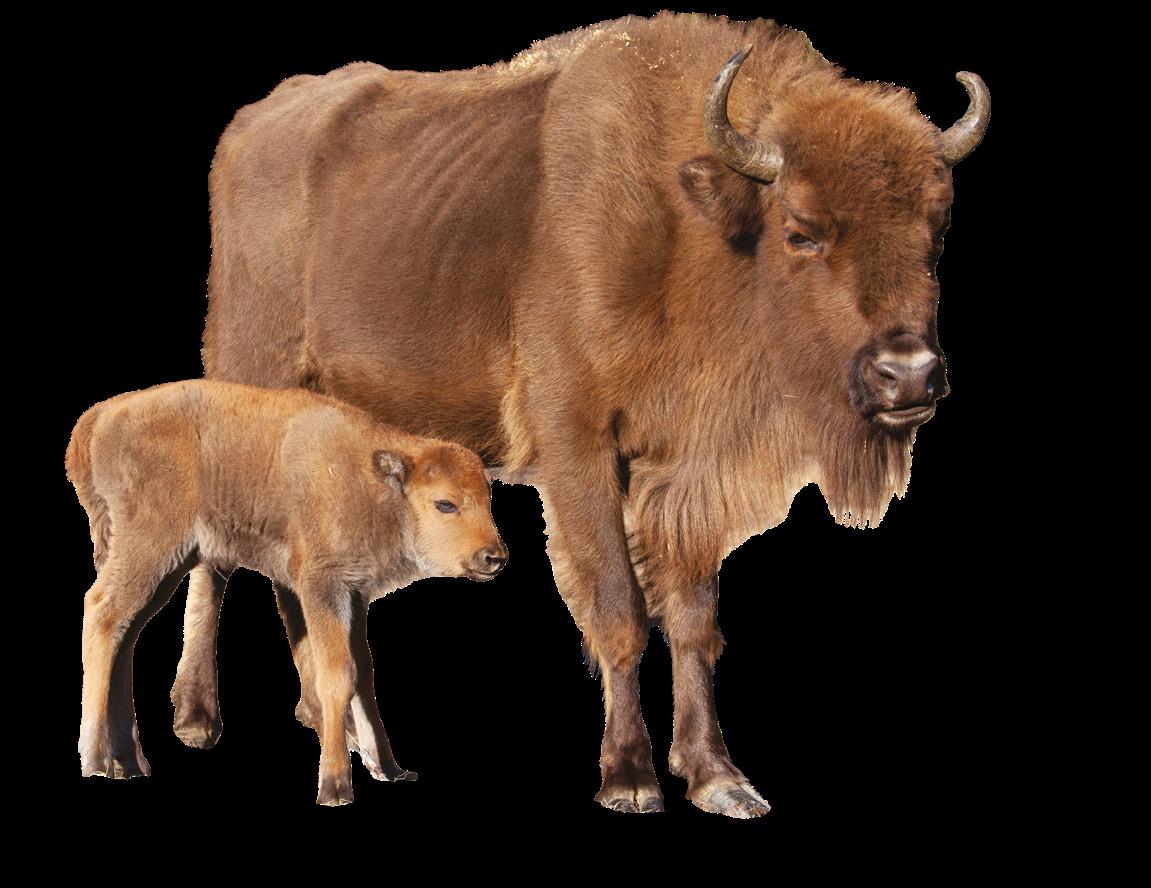
The good news is, we know that protections work if they are ambitious enough. Our seas can and will bounce back if we give them the opportunity. That’s why The Wildlife Trusts proposed The Ocean Emergency Bill as part of our alternative ‘King’s Speech for Nature’. This was alongside seven other bills that would put legal boosters under efforts to restore nature, including protecting peatlands, reviving rivers and reintroducing large herbivores to boost nature’s recovery. Nature isn’t nice to have, it’s essential. We need policies that reflect that.
9 The big picture
Get to the bottom of bottom trawling, and find out what we can all do to protect our seas.
12 Close up on...
Big moths and even bigger impacts. Join us as we discover some of the UK’s largest moths. FEATURES
15 14 6 4
4 Wild spring
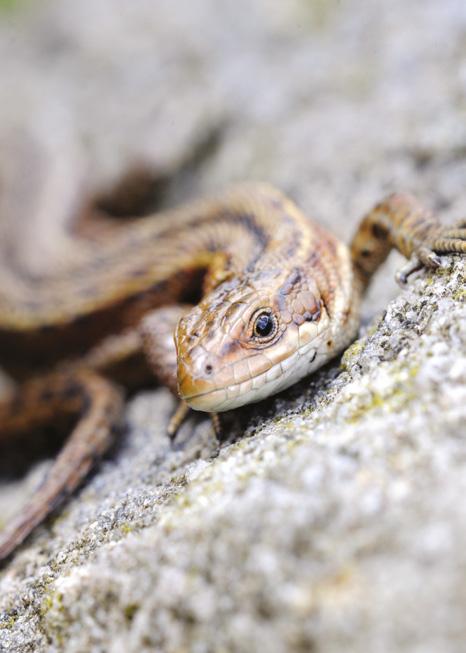
Listen in to the secret world of bats, and find out how to bring an easily overlooked reptile to your garden.
6 Wild action
Read about the latest news from across the UK, and the amazing work Wildlife Trusts are doing to combat nature's decline.
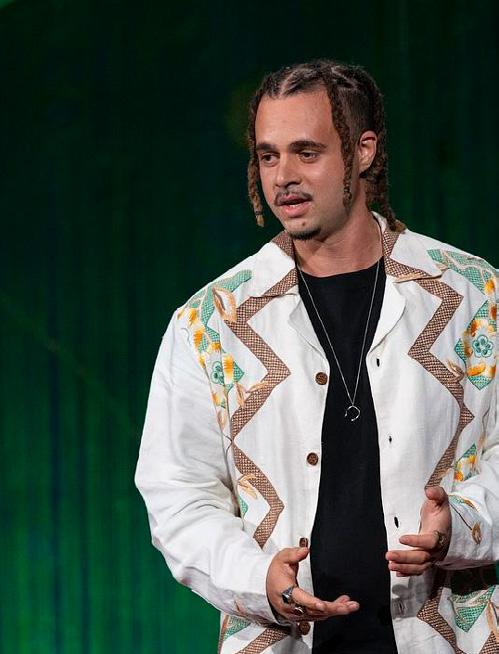
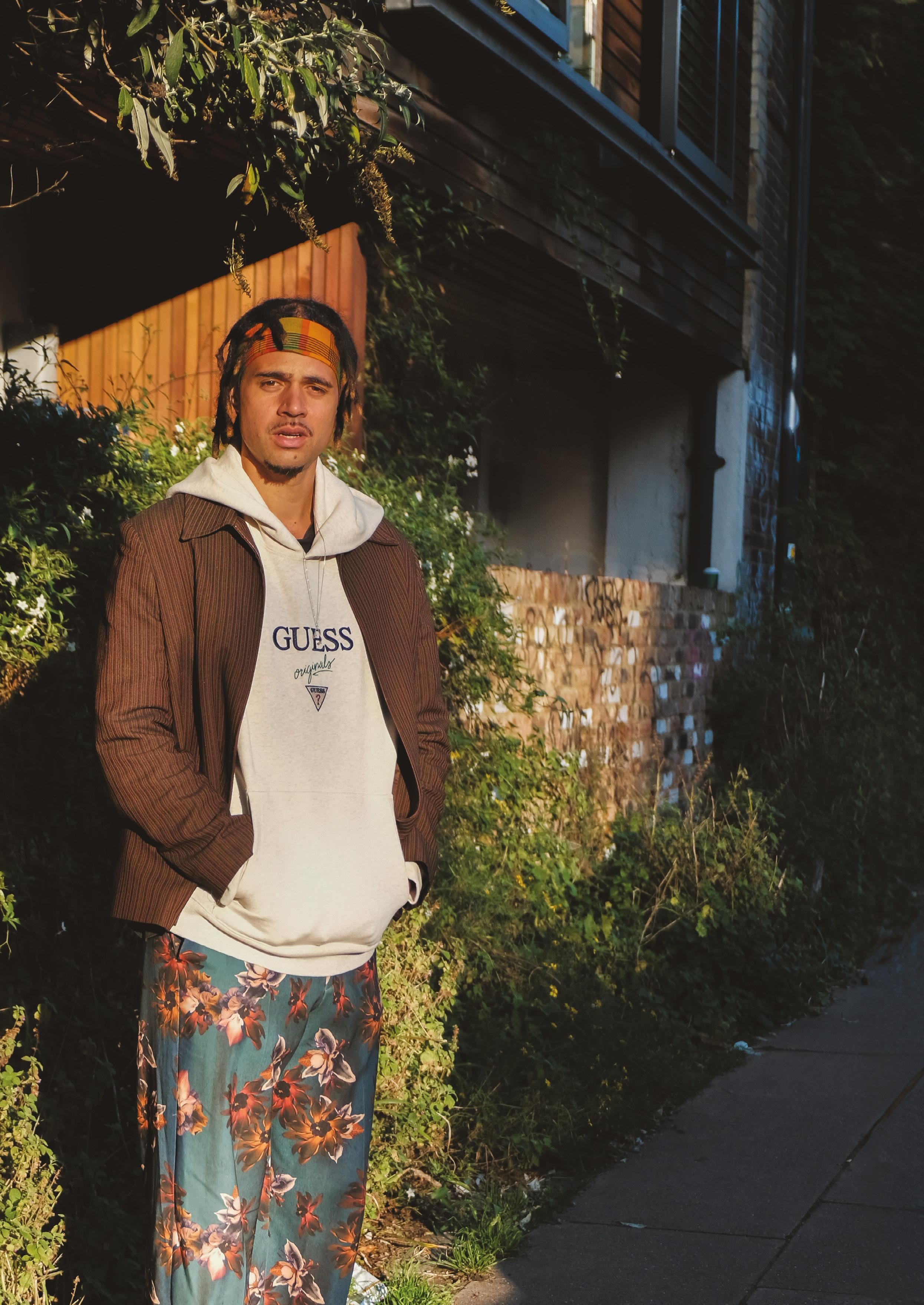
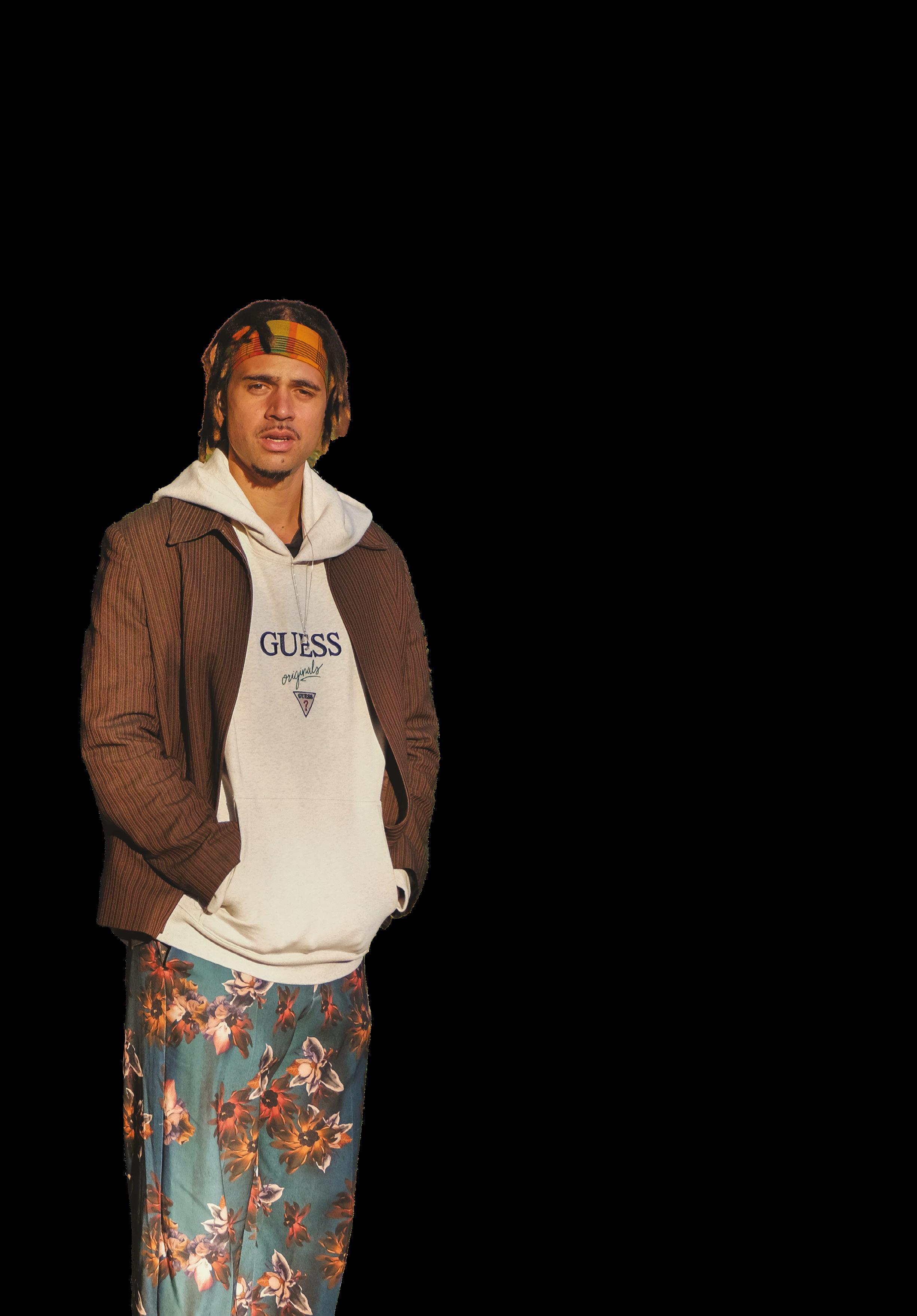
14 The wild according to... Musician, zoologist and Wildlife Trust Ambassador, Louis VI helps us tap into the sounds of nature.
15 Spot the difference
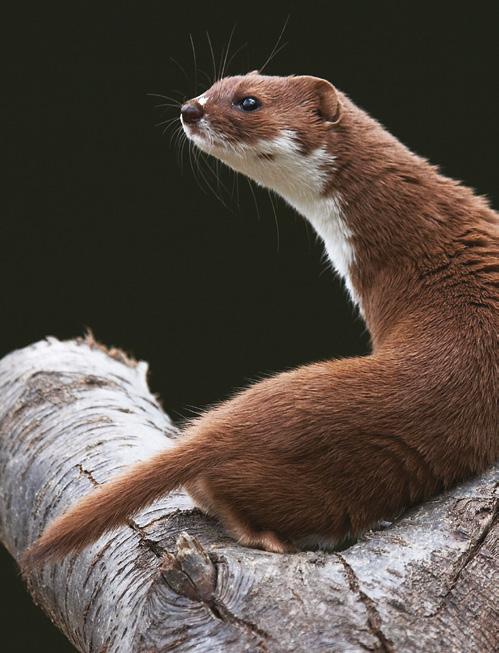
Find out the stoat-ally different looks of these two common mustelids.

We’d love to hear from you, whether sharing your thoughts on the magazine or your adventures in nature across the UK.
The Wildlife Trusts @thewildlifetrusts @wildlifetrusts
@TheWildlifeTrusts
@TheWildlifetrusts wildlifetrusts.org info@wildlifetrusts.org 01636 677111
The Wildlife Trusts, The Kiln, Mather Road, Newark, Nottinghamshire. NG24 1WT
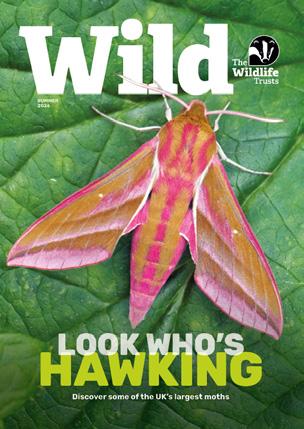
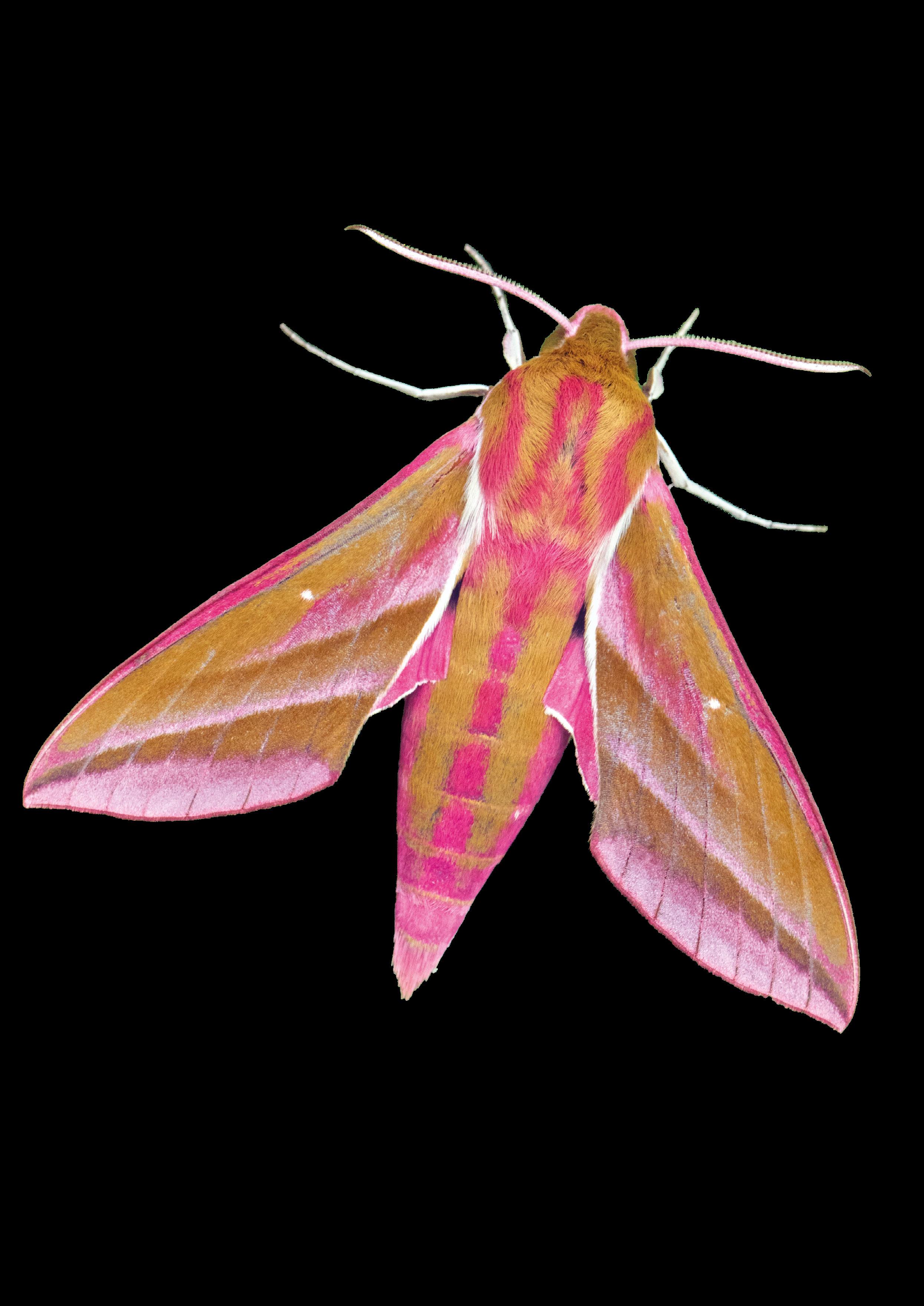
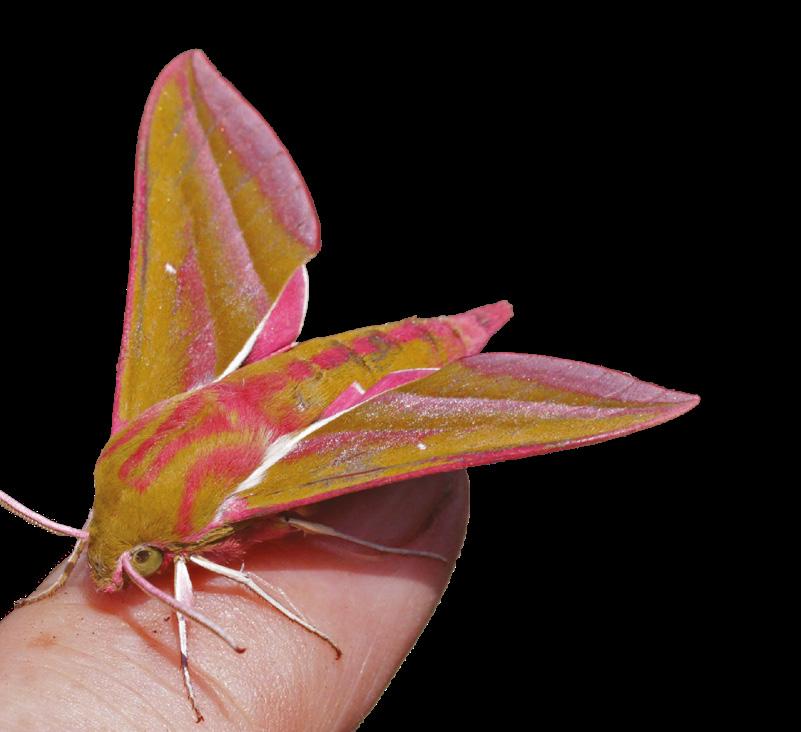
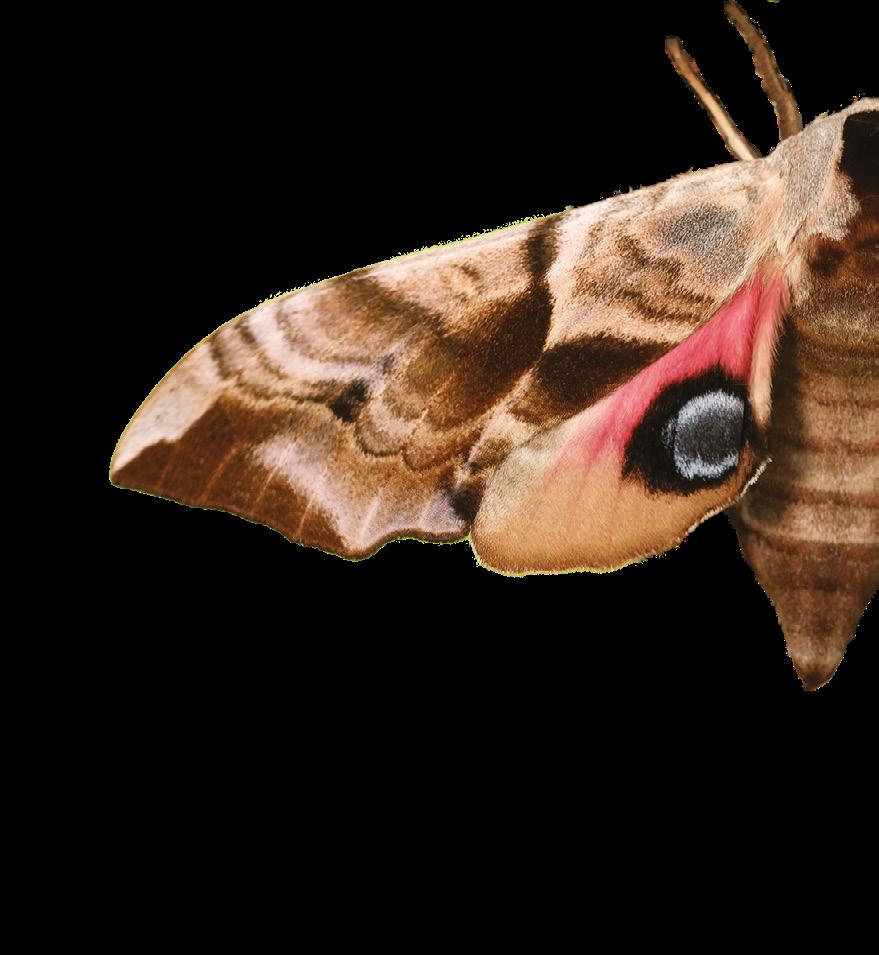
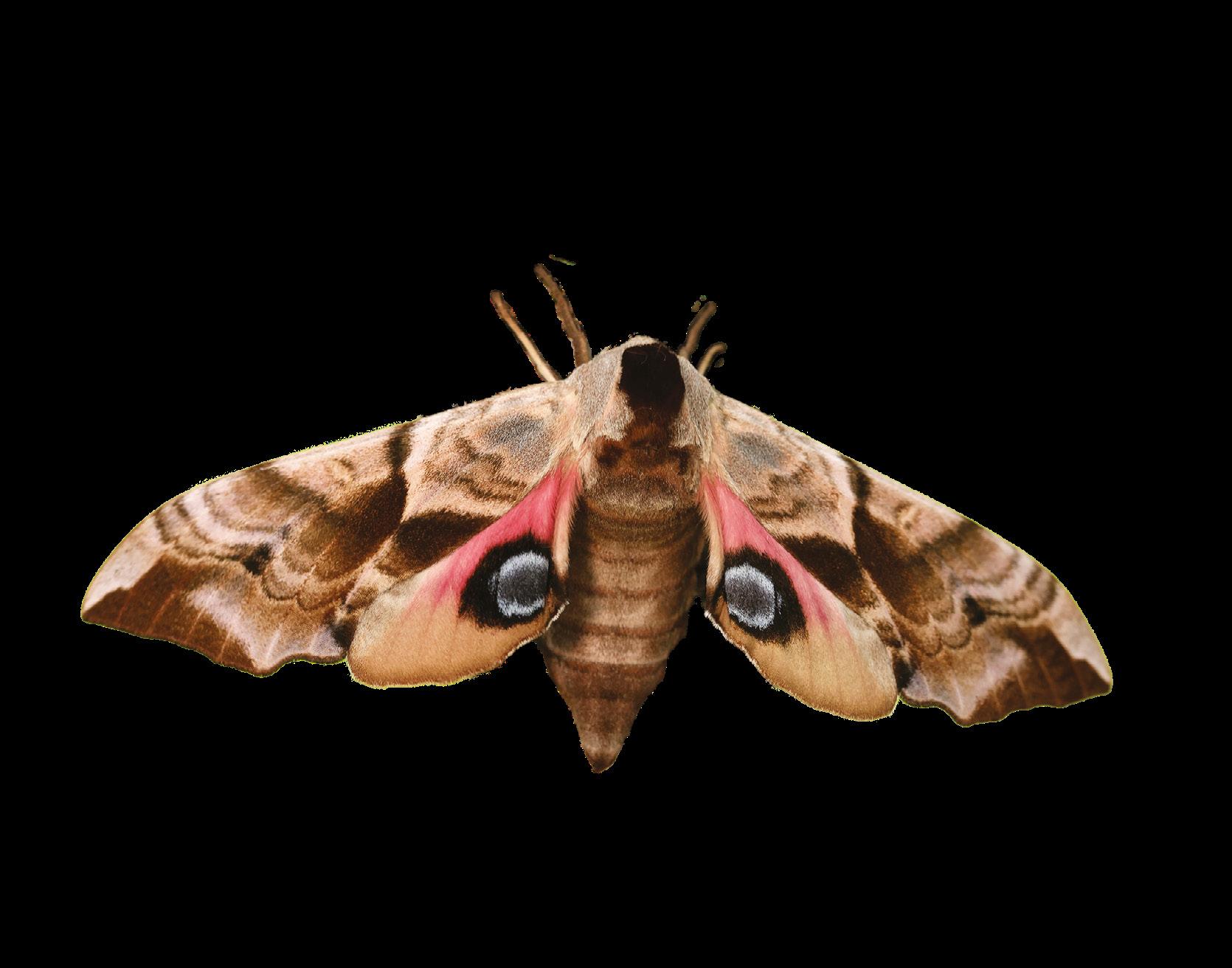
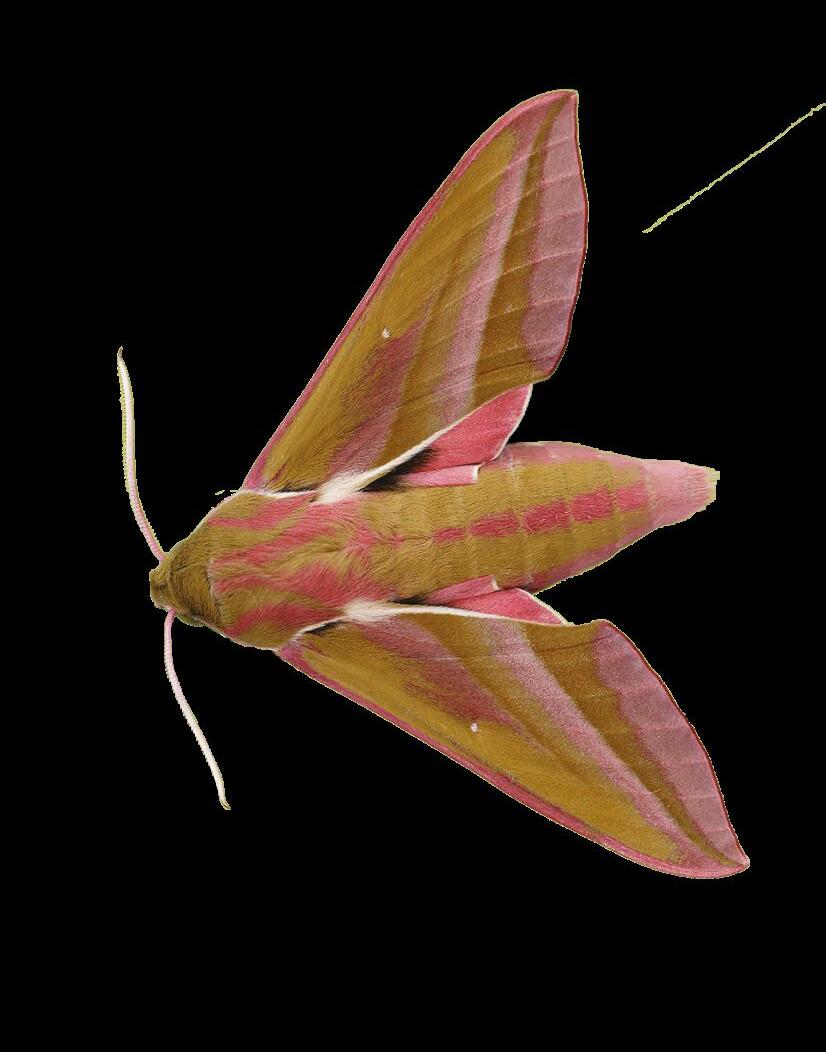
Bright pink elephant hawk-moths are named for their caterpillars, which look like an elephant’s trunk. For more on the UK’s hawkmoths, turn to page 12.

Dr Kim Wallis, head of nature reserves and natural capital for Essex Wildlife Trust, has been a bat rehabilitator for over 20 years
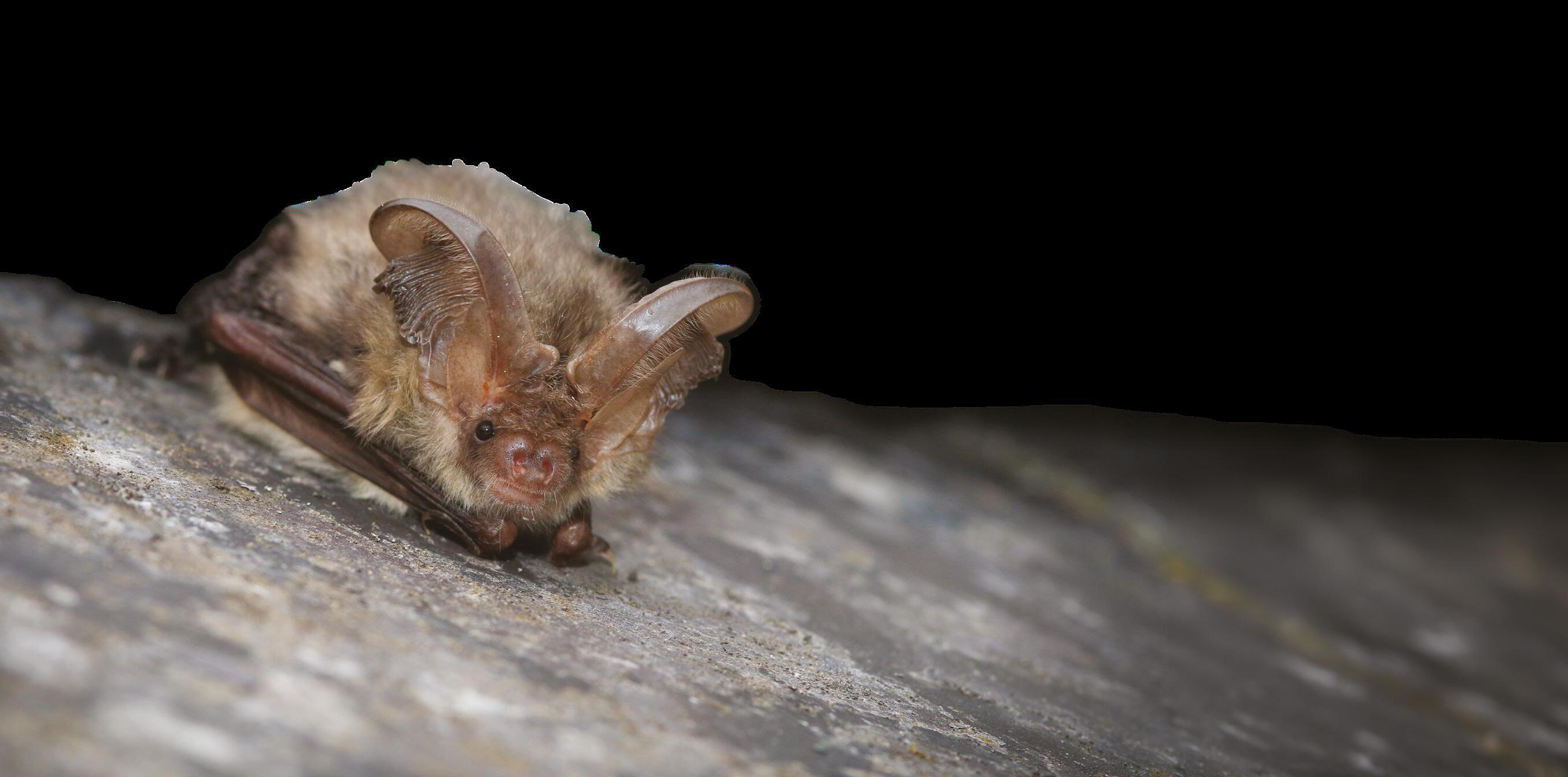
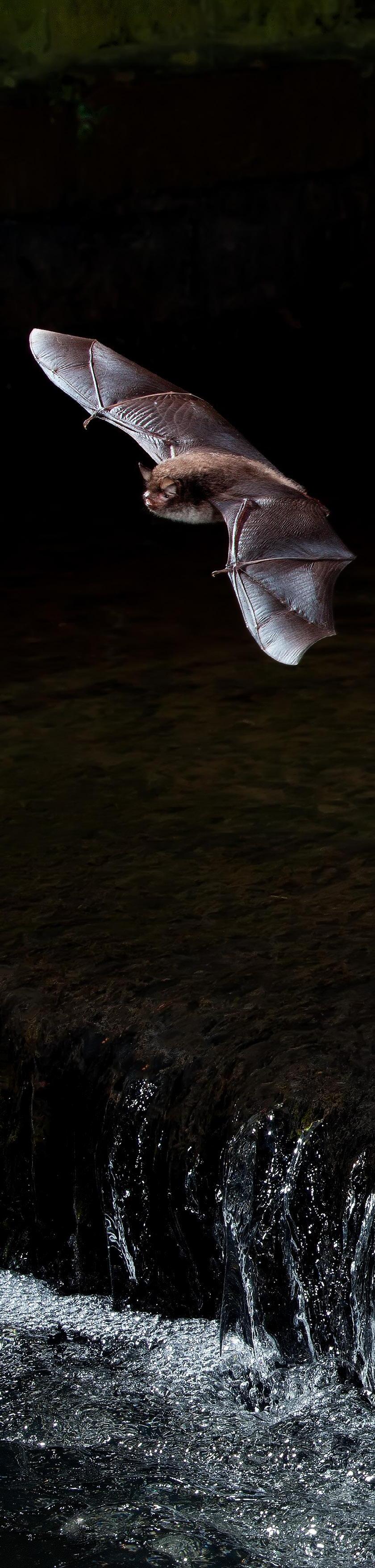
BATS HOLD A SPECIAL PLACE in my heart. There is nothing better than watching a bat weave, dive and dance across the skyline, or seeing them emerge from their roosts (home in bat speak). Here are my top tips to begin your bat watching journey.
The best time to see bats is around dusk, in warm and calm weather conditions. During the summer, female bats form maternity roosts to raise their young (called pups). Amazingly, the pups are born approximately one third of their mum’s size.
Eyes up! Bats need bugs and rely on natural features such as hedgerows, woodlands and water bodies to feed and to navigate. Find these features and you’ll find bats around them.
Eyes down! You don’t need any equipment to enjoy bat watching, but it can help you identify them. Bat detectors turn bat echolocation calls into sounds we can hear. Each bat species produces a slightly different sound, which can be used to identify the species.
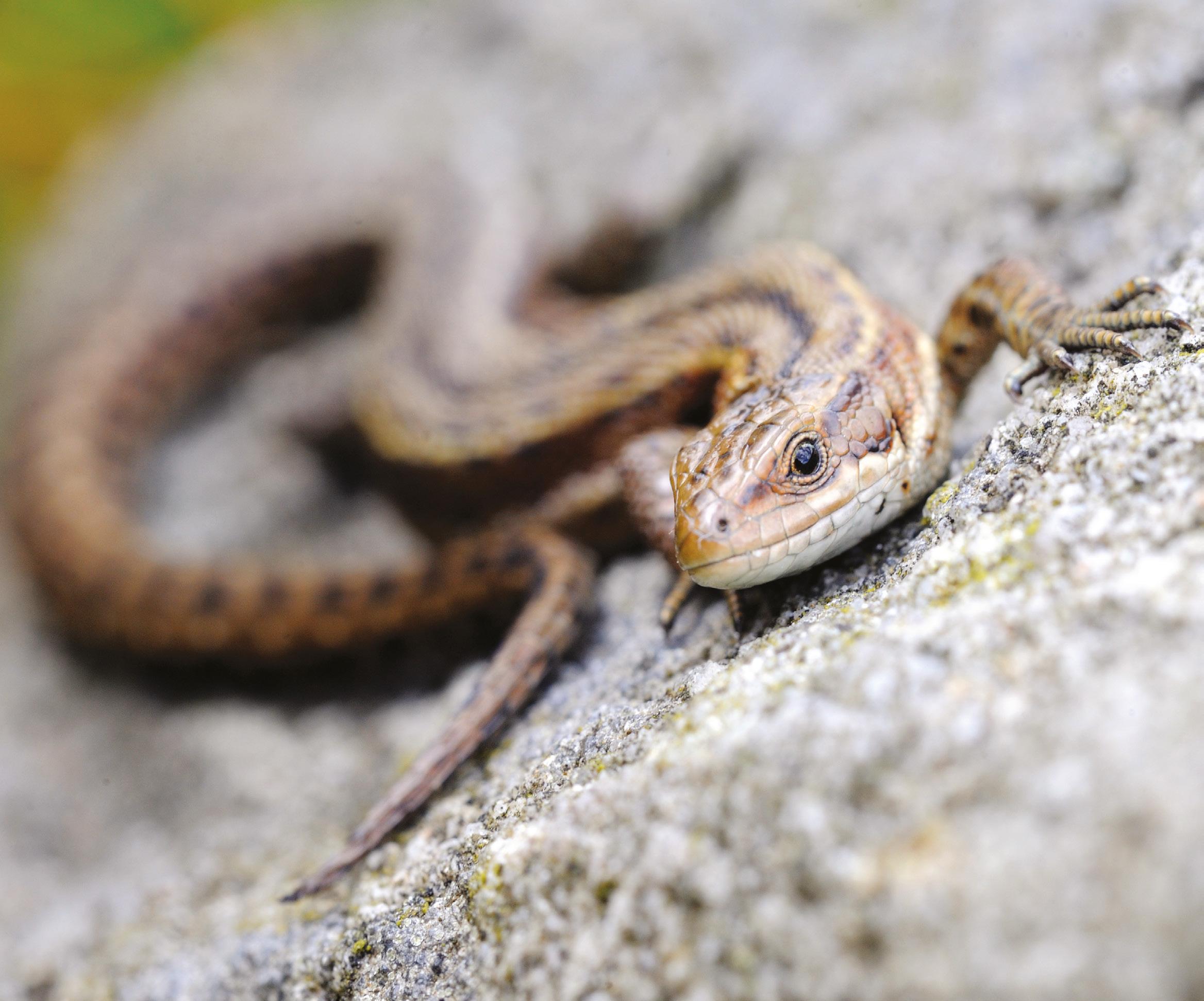
Reptiles aren’t a guarantee in a garden. They’re more likely to move in if you live beside suitable habitat, such as a railway embankment or heathland. But the steps you take for reptiles will benefit many of your other wild neighbours, too.
1
The first step is to make sure reptiles (and other wildlife) can get into your garden. A hedge is a better garden boundary for wildlife than a fence, providing shelter and letting small animals pass through. If a hedge isn’t an option, consider cutting a small hole in the bottom of your fence.
4
Composting is more than just a great way to recycle garden waste. Slowworms will slither through a compost heap in search of slugs. It might even serve as a natural incubator for the eggs of a grass snake—avoid turning compost from June to late September to avoid damaging them. Place your heap in a sunny spot, ideally by a hedge or long grass.
2 5
Nothing attracts wildlife like water. Add a pond to your garden, wildlife will come. If you’re lucky, grass snakes might even hunt there, searching for frogs and other amphibians. They’re excellent swimmers, wriggling through the water with ease.
Leave an area of lawn to grow wild, providing cover for reptiles. If you need to cut some long grass, walk through it first to give any hiding reptiles the chance to move.
3 6
Reptiles bask to raise their body temperature. Grass snakes and common lizards like open spots, so a sun-drenched rock or log could be perfect. Slow-worms prefer to warm up under cover. A piece of slate, wooden board or roofing felt could make a great slow-worm sauna. Place it in a southfacing, sunny position, on top of vegetation rather than bare ground.
A log pile is the ultimate multi-use facility. It can offer shelter for reptiles to hide away over winter, attract insects and other wildlife that reptiles feed on, and provide a prominent perch for basking in the sunlight.
Snake or fake
Get tips for separating snakes from the snake-like slow-worm at wildlifetrusts.org/identify-snakes
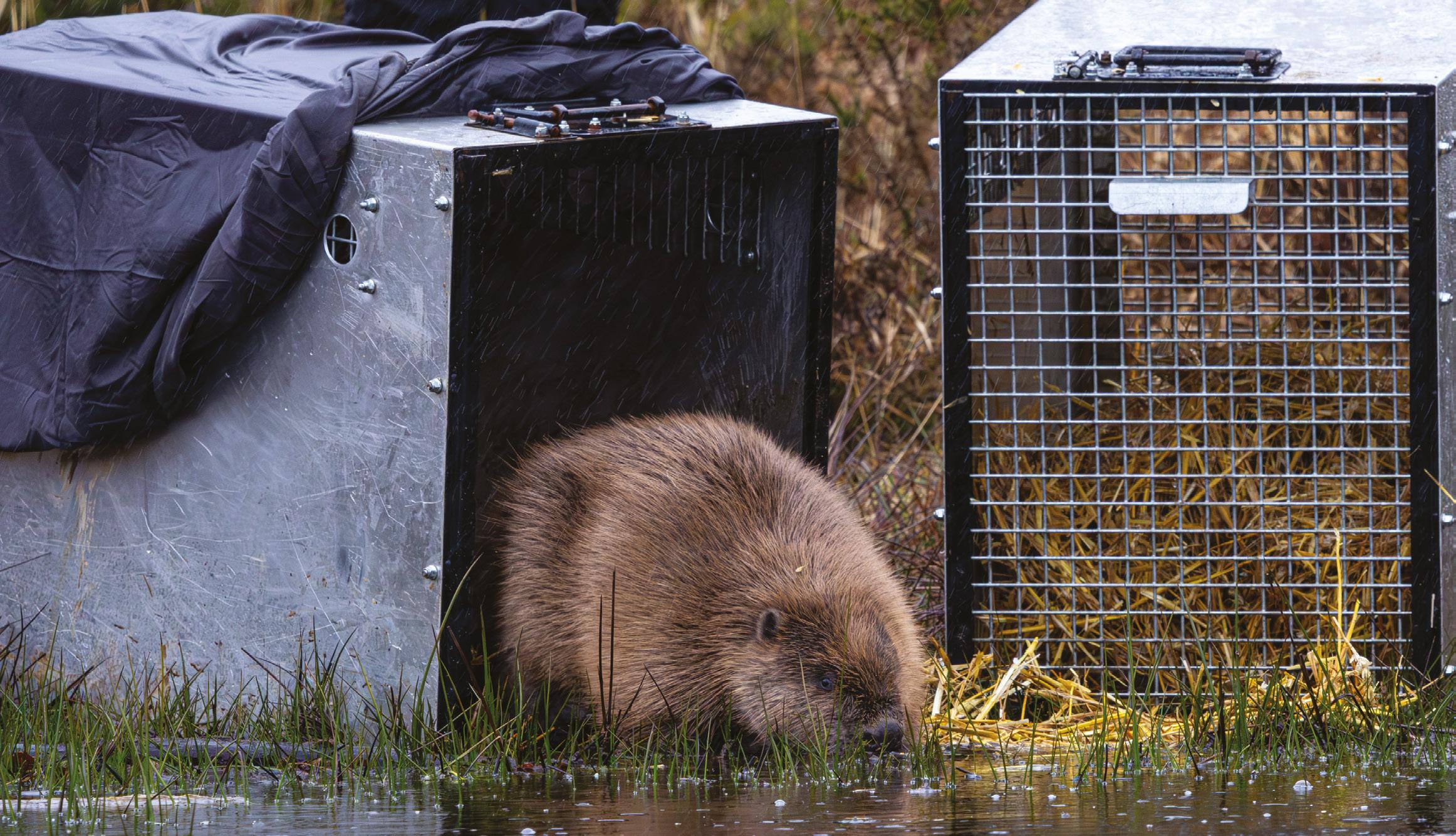
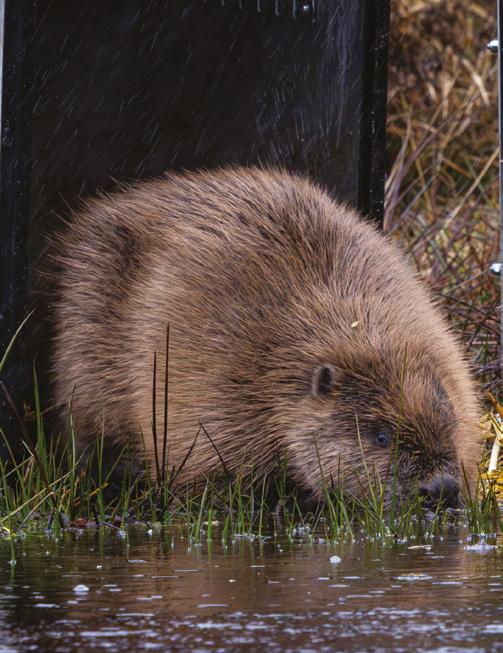
HIS SPRING, THERE WERE SEVERAL important moments for Britain’s beavers. In February, Cornwall Wildlife Trust released two pairs of beavers into Cornish river catchments. This was the first wild beaver release in England to go through the formal application process. Wildlife Trusts are involved in over twenty beaver reintroduction programmes and hope to release around 100 beavers in the near future. The south of England is the currently the beaver hotspot, with ten more Wildlife Trust projects in Devon, Dorset, Isle of White and Kent given the go ahead by Natural England to apply for wild release licences after a successful process of Expression of Interest. Many neighbouring Wildlife Trusts have also teamed up to form beaver partnerships, working across catchment areas. This includes groups
for the Severn, Humber, Thames, and East Anglia. This approach will make it possible to release larger numbers of beavers, creating healthier populations with more genetic diversity..
A few weeks later, on the 4th of March, new legislation from the Welsh Government came into force, recognising beavers as a native species and granting them protected status. This is a major milestone for restoring beavers in Wales, bringing legislation in line with the protection afforded to beavers elsewhere in Britain. The beaver was granted protected status in Scotland in 2019 and England in 2022.
Alicia Leow-Dyke, Welsh Beaver Project officer for the Wildlife Trusts in Wales, says: “We have been working towards this goal of legal protection for beavers in Wales for many years, so we are delighted with this brilliant outcome. Beavers play a vital role in our ecosystems and formally recognising
Through the Wild About Gardens partnership, The Wildlife Trusts and the RHS are encouraging gardeners to make space for moths. These incredible insects are important pollinators, a vital link in many food chains and an indicator of healthy environments. wildaboutgardens.org.uk
them as a native species is the right thing to do. We thank the Welsh Government for listening to all the evidence and making the right decision.”
Beavers are ecosystem engineers, meaning they alter the landscape in which they live and bring benefits to the wildlife around them. The wetlands they create help to reduce flooding, improve water quality and store carbon. They also provide a home for a wealth of wildlife, including water shrews, water voles, otters, kingfishers, dragonflies and fish. Bringing beavers back to Britain isn't just the reintroduction of a species, it's the reintroduction of an entire ecosystem that's been lost. Their return can help tackle both the nature crisis and the climate crisis.
See the moment beavers were released into Cornish rivers at wtru.st/Cornish-beaver-release
Actor, ecologist and podcaster David Oakes has stepped up from ambassador to vice president of The Wildlife Trusts, following years of support. The Wildlife Trusts also welcomed two new ambassadors: Inka Cresswell, a marine biologist and ocean wildlife filmmaker; and Louis VI, a musician, zoologist and nature activist. tru.st/ambassadors
Head of Public Affairs for The Wildlife Trusts, Matthew Browne tells us why the UK Government needs to give nature more respect.
HOW HAVE ENVIRONMENTAL PROTECTIONS come under threat this spring?
The UK Government has been fruitlessly looking for growth amidst a pile of shredded nature protections. Some people in power have fallen for the myth that if nature protections are reduced, growth will follow. Last year’s Planning and Infrastructure Act attempted environmental deregulation and hot on its heels came the Nuclear Regulatory Review. The Review made recommendations to increase nuclear power deployment, including proposals to change the law to make it easier for developers to cause damage to wildlife.
Why was the Nuclear Regulatory Review flawed?
The Review’s nature recommendations stemmed from a flawed case study of the Hinkley C nuclear project. The case study minimised the project’s environmental impact, claiming that only 550 fish would be killed per year when the real number was well over 4.5 million, and maximised the costs of the measures needed to avoid these outcomes. These distortions were intended to portray nature protections as an unreasonable burden. In reality, nature protections and the mitigation measures they require typically cost only 0.1% of the budget of a nuclear project.
How did people react to this news?
Nature lovers in their thousands wrote to their MPs to tell them that weakening nature protections would do little to nothing to boost nuclear deployment, but would risk the current nature crisis turning into a catastrophe. Many MPs listened and acted. Over 120 parliamentarians urged the UK Government not to proceed with the nature recommendations from the review.
The UK Government has pulled back on some changes, but is there still cause for concern?
This pressure paid off. In March the UK Government announced that it would not legislate to weaken the laws that protect wildlife. However, it did commit to issuing new guidance on how those laws should be applied. Whilst we have successfully defended the legal core of nature protections, Ministers are still tinkering around the edges.
What happens next?
The Wildlife Trusts continue to make it clear to the UK Government that nature protections are not blockers to growth, but rather are the guarantors of the wild spaces that we need to maintain and restore if we are to avoid ecosystem collapse. Such collapse threatens unparalleled environmental, social and economic disruption. Thank you for standing with us, as we continue to warn those in power that diminishing nature protections will have disastrous consequences.
Leicestershire and Rutland Wildlife Trust is celebrating 30 years
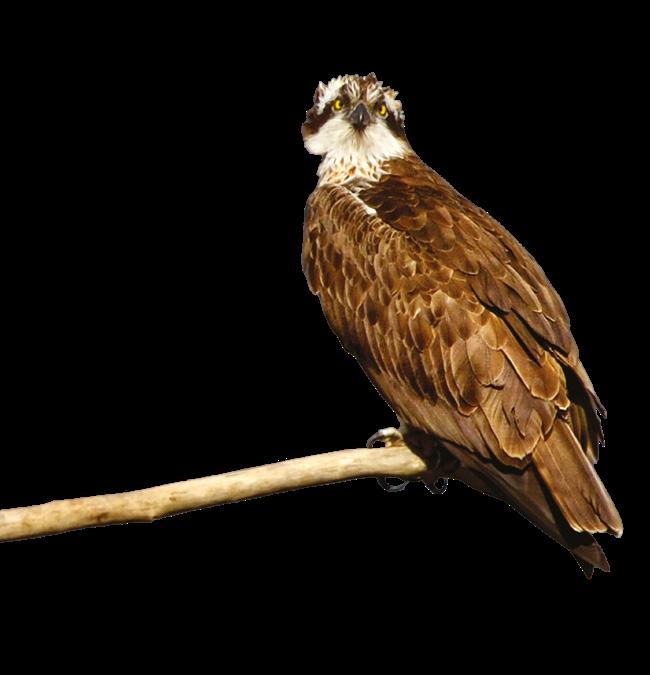
250,000 records of squirrels have been collected by Saving Scotland’s Red Squirrels, a partnership project led by the Scottish Wildlife Trust.
ways your support is making a difference
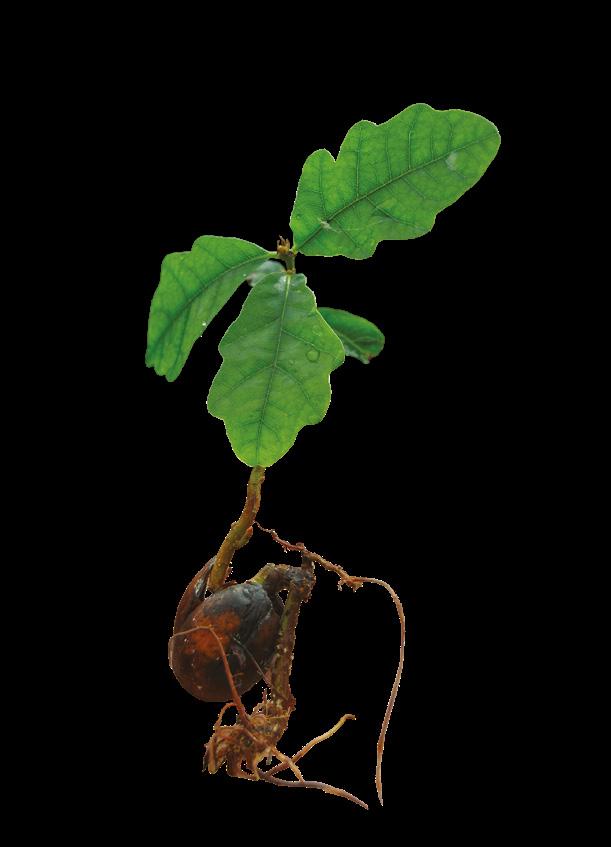
Cornwall Wildlife Trust planted the first of
28,000 trees on an ambitious project to restore temperate rainforest in south east Cornwall.
Norfolk Wildlife Trust purchased
336 acres in Wood Norton for one of the most significant habitat creation projects in their 100-year history.
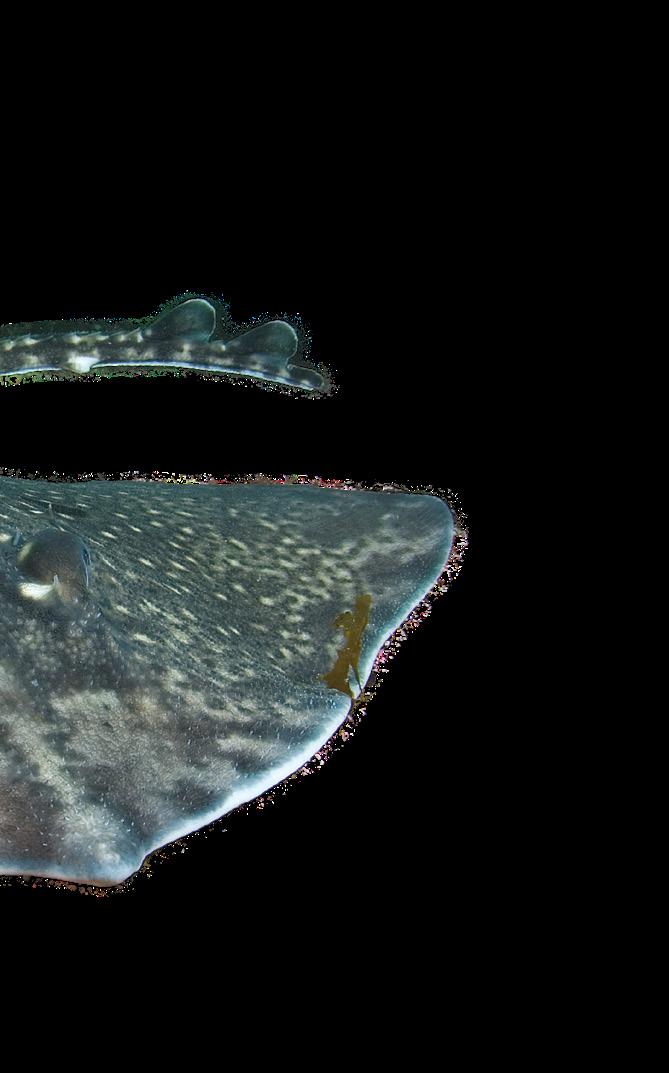
These small sharks are found all around our coasts, sticking close to the seafloor. They are often accidentally caught during bottom trawling.
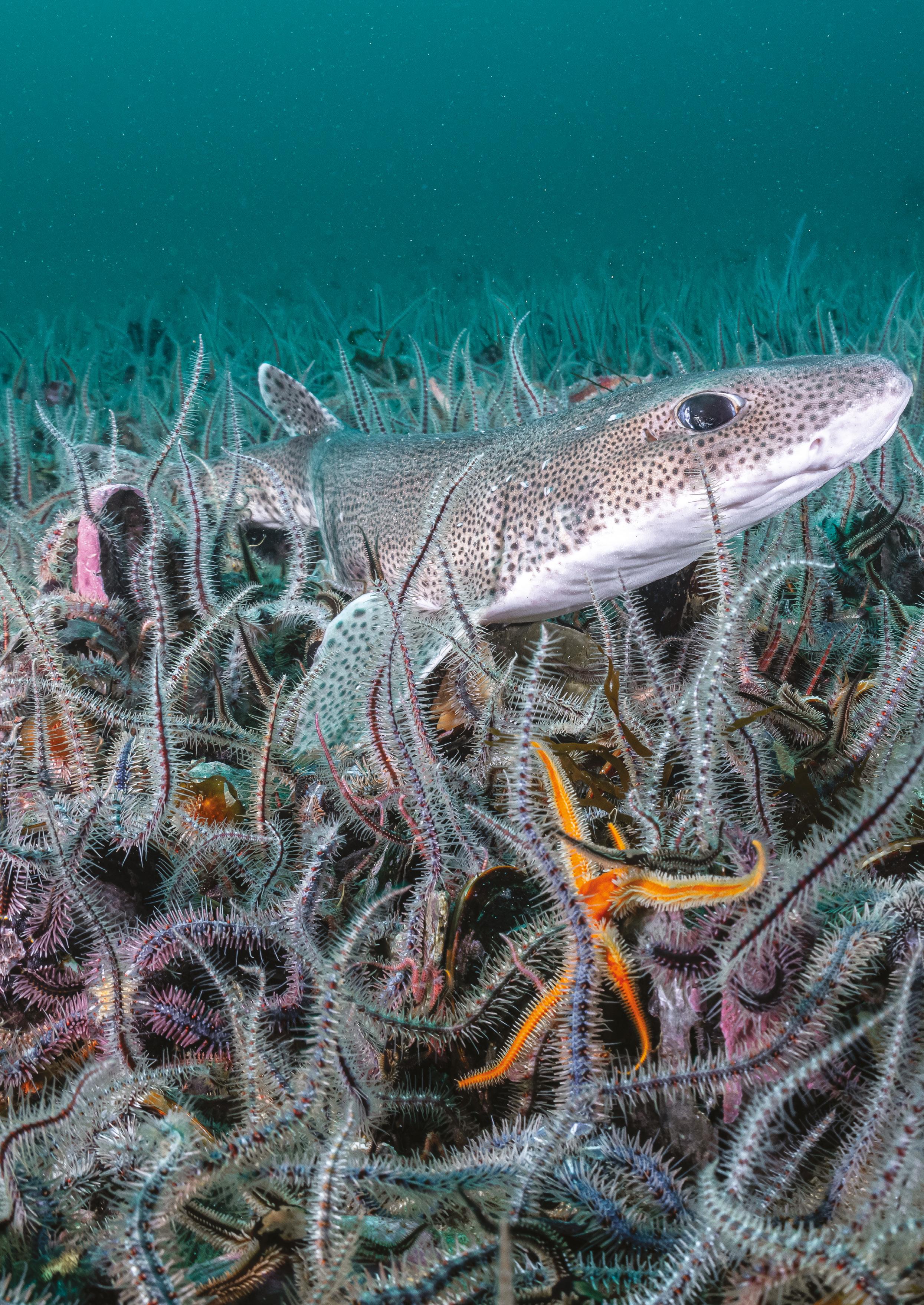
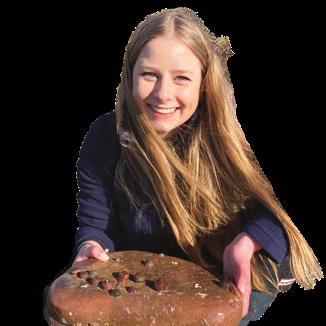
Get to the bottom of bottom trawling with Daniele Clifford, marine conservation officer for The Wildlife Trusts.
I’ve known about the impacts of bottom trawling for years. But like many others, last year I sat in the cinema watching Ocean with David Attenborough, stunned to see the reality of this fishing method on the big screen. The giant net and heavy chains bulldozing the seafloor, stirring up sediment and destroying the burrows of countless creatures in seconds. Fish and other wildlife of all shapes,
sizes and ages swimming for their lives… only to be sucked into the vast yawning net and later discarded, dead, back into the sea.
This incredible footage has stuck with me and millions of others around the world. For too long the impacts of bottom trawling have been out of sight and out of mind. Thankfully the tide is starting to turn, but we still have a long way to go.
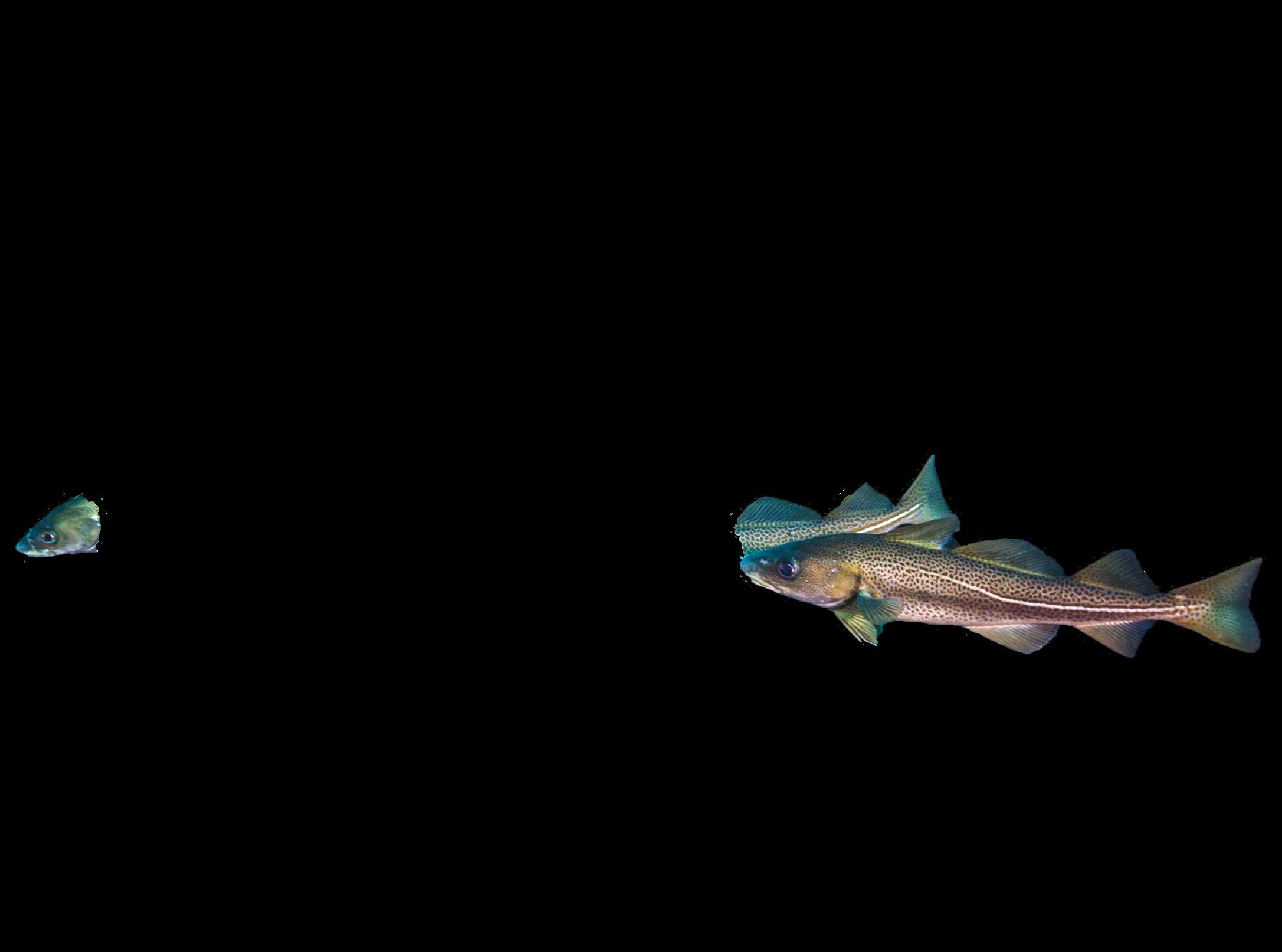
Bottom trawling is often used to target cod, which is one of the UK's most popular commercial fishes.
What is bottom trawling?
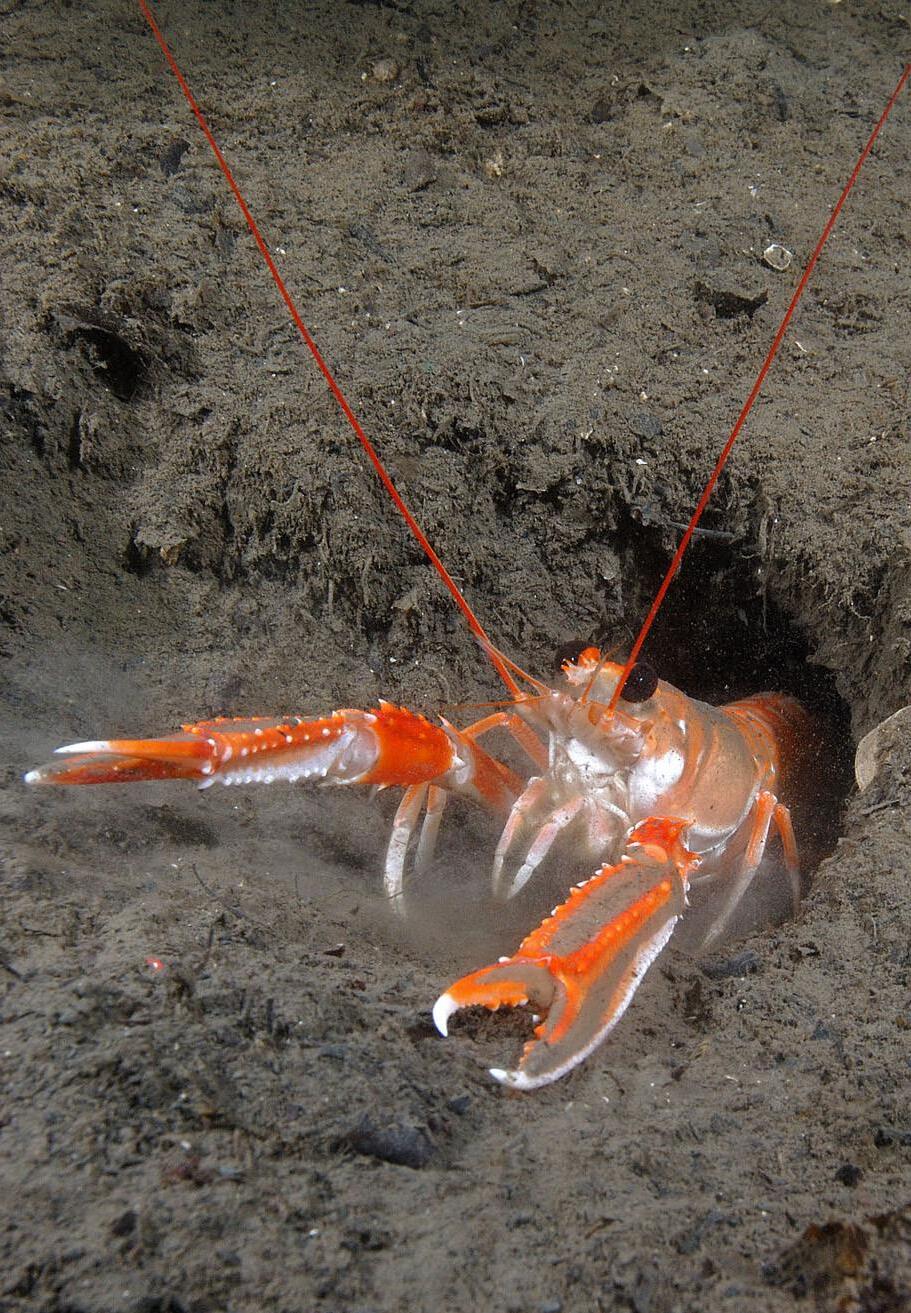
Bottom trawling is a method of fishing that drags heavy nets and chains along the seafloor. It is used to catch fish or shellfish that live within or just above the seabed. Bottom trawling is largely used as it enables fishers to catch large amounts of high-value fish, including whitefish like cod, haddock and hake, and flatfish such as halibut and sole. Shellfish like nephrops and shrimp are also targeted using this method.
Discards and destruction
Fishers using bottom trawling often only want to capture one or two fish species (the ‘target species’), but the nets catch almost everything within their path. Everything the fishers don’t want is thrown back into the sea (called ‘discards’). This may be more than three quarters of the catch! These discarded fish and other wildlife may be killed, injured or at least extremely stressed by the process.
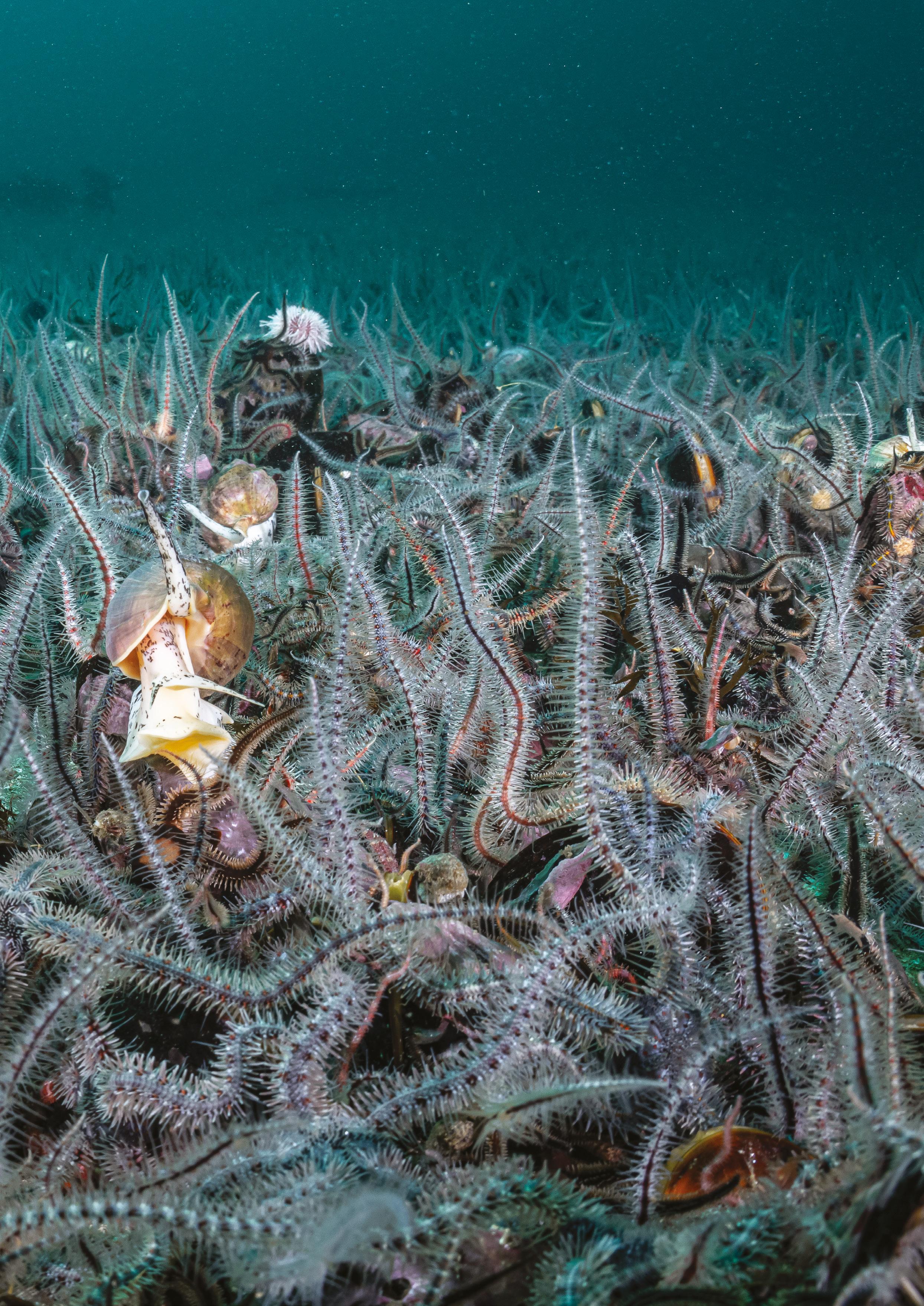
Intensive trawling also causes damage to the seabed. It reduces the diversity of wildlife, wiping out long-lived species, damaging or removing fragile reef-forming animals and destroying the 3D structures they create. The many surfaces and crevices of a healthy seabed provide key nursery, feeding and refuge areas for wildlife, including commercially important fish and shellfish. When these are destroyed, entire ecosystems begin to unravel.
There are potential implications for the climate, too. It’s estimated that there are around 240 million tonnes of carbon in the top 10 cm of seabed sediments in the UK and Isle of Man’s seas mostly in our marvellous marine mud.
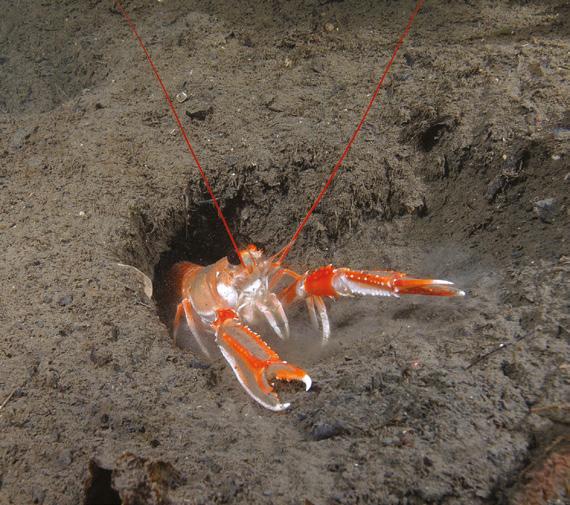
Also known as nephrops or Dublin Bay prawns, they live in burrows and are targeted by bottom trawls to make scampi.
When trawling disturbs sensitive carbon-rich sediments, it risks releasing this carbon.
Our seas are a shared resource. Unsustainable fishing not only harms wildlife, but also the other people and economies that rely on healthy seas for their livelihoods, cultures and recreation.
Seabed sanctuaries
The UK has 377 Marine Protected Areas (MPAs), created to protect special habitats and wildlife at sea. This is an impressive number, but sadly many still allow damaging activities within them. Some progress has been made, but many MPAs with important seabed habitats are still partially or totally open to bottom trawling. This needs to change.
Our marine ecosystems can bounce back spectacularly when properly protected. Banning bottom trawling in MPAs would be a strong step in the right direction. There’s a wealth of scientific evidence that shows well managed and enforced MPAs are a vital tool for restoring ocean health. But they are only effective if damaging activities are not allowed within them.
The Wildlife Trusts have been campaigning for the banning of bottom trawling in seabed MPAs since these special sites were designated, many more than 10 years ago. Recently, we have seen some progress, but we need to keep the pressure up!
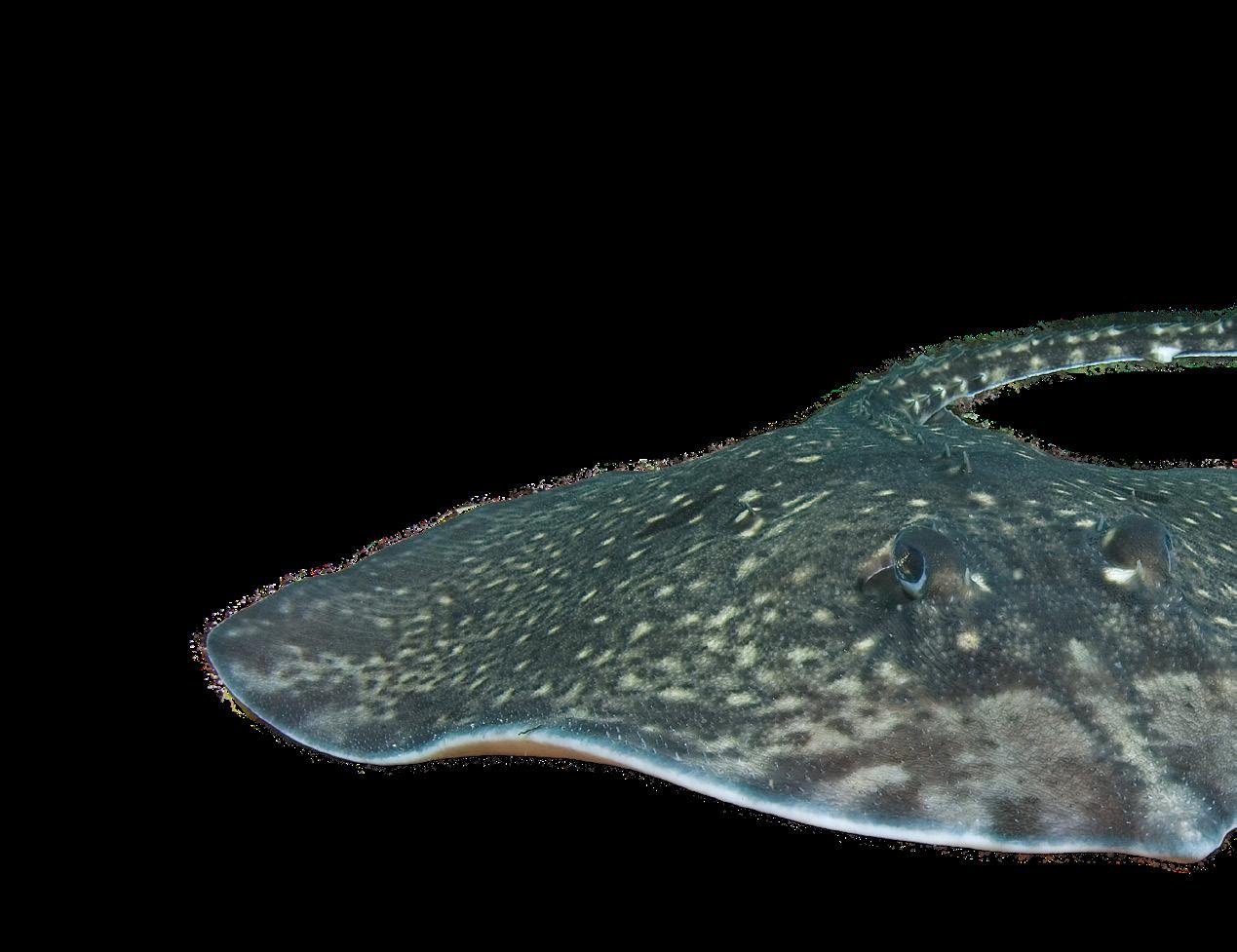
These beautiful rays may be targeted or accidentally caught in bottom trawls.
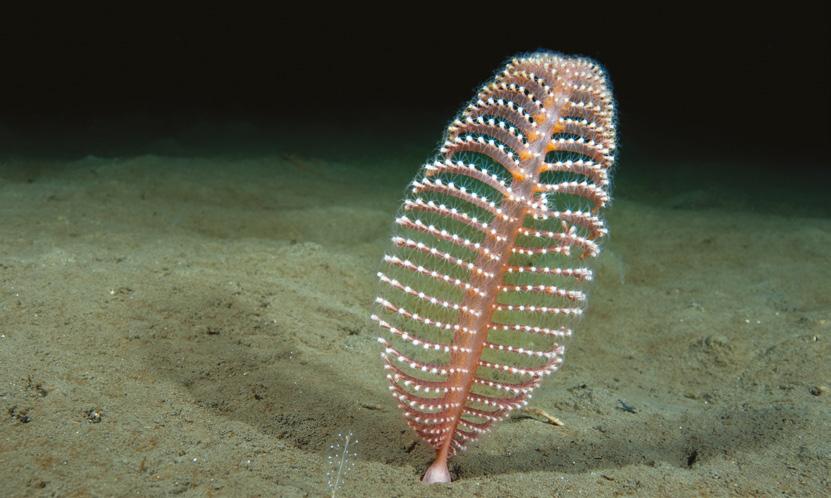
Sea pens are colonial animals that resemble old-fashioned quills. They are highly vulnerable to physical disturbance and impacted by bottom trawling.

• If you eat fish, use The Good Fish Guide (www.mcsuk.org/ goodfishguide/) to choose more sustainable seafood.
• Write to your MP and ask them to support banning bottom trawling in Marine Protected Areas and a just transition for fisheries.
• Sign up for our Friends of Marine newsletter to stay up to date with marine news and ways you can help protect our seas: wtru.st/marine-mailing
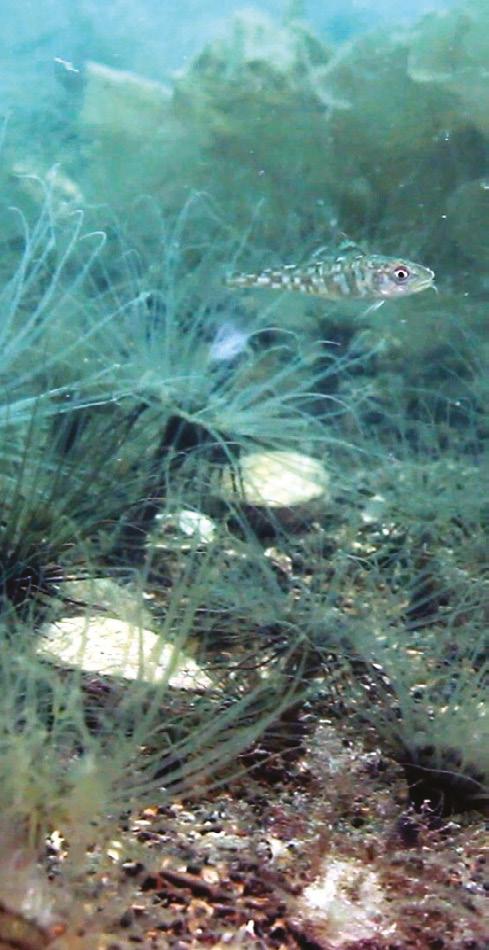
A healthy seabed in its natural state.
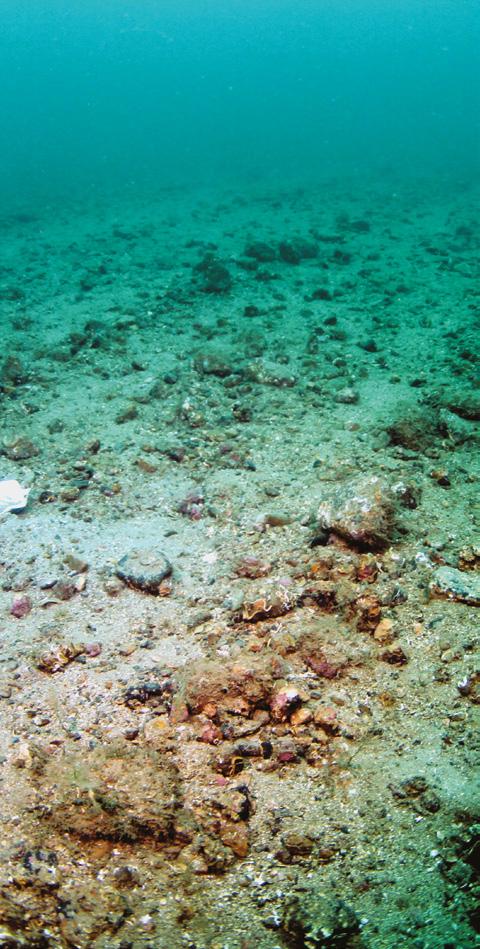
A seabed destroyed by bottom trawling.
Bottom trawling is only banned from one area, around Skomer Island. Some progress has been made for inshore MPAs, but offshore sites remain unprotected.
Bottom trawling was banned from certain areas of Scottish offshore MPAs in October 2025. However, gaps remain and there have been delays in implementing bans in inshore MPAs.
Progress is slowly being made for offshore seabed MPAs in England, thanks to the 18,000 people who responded to our call to action in Summer 2025 asking the Government to ban bottom trawling in these sites. Gaps remain in inshore MPAs.
Protecting our seas doesn’t mean leaving fishers behind. We need a just transition where fishing communities, scientists, governments and other stakeholders work together to shape the future of fishing across our wider seas. This includes finding innovative ways to reduce the environmental impact of fishing gears and practices, as well as supporting and incentivising fishers to transition to these more sustainable methods. This is essential, not just for wildlife and carbon, but for the people who depend on our seas.

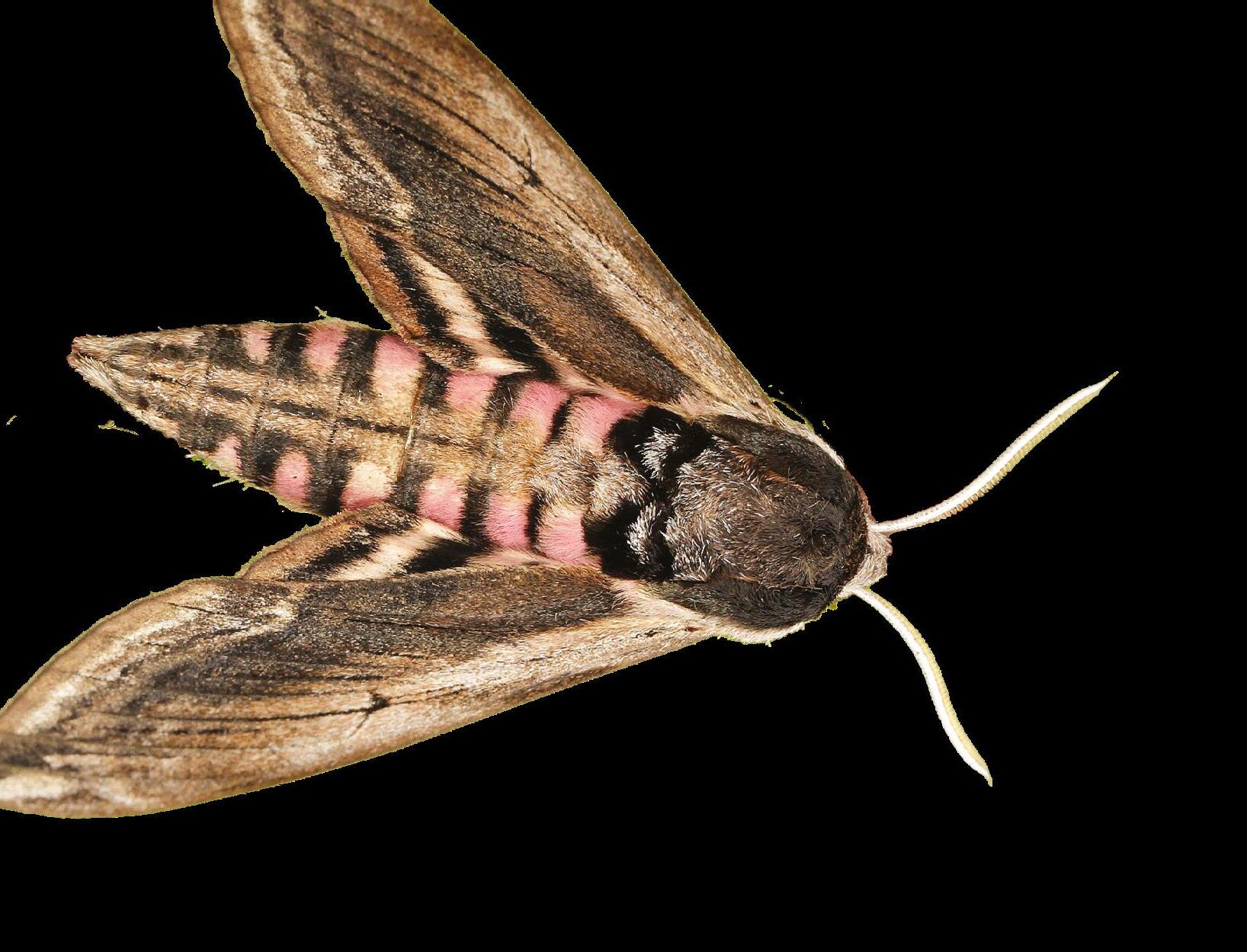
Scarce and mostly found in southern and eastern parts of England, especially on heathland and woodland rides. Caterpillars
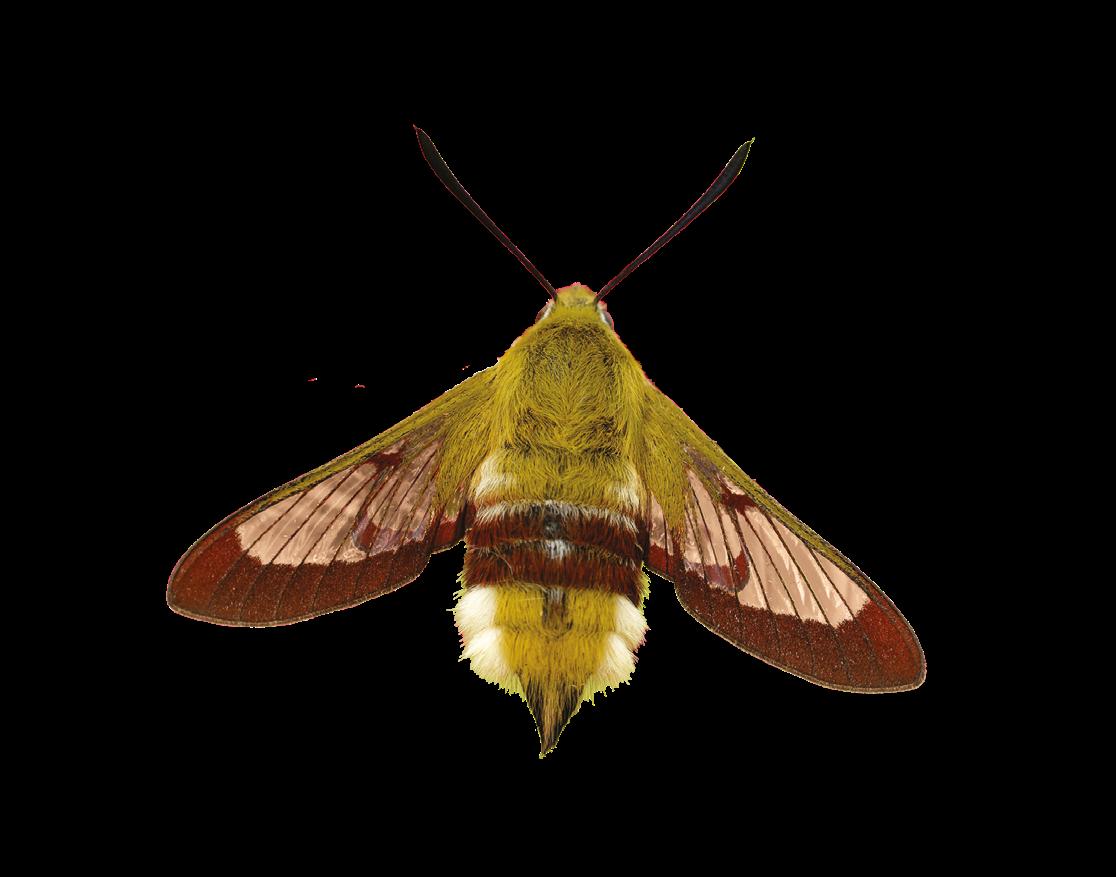
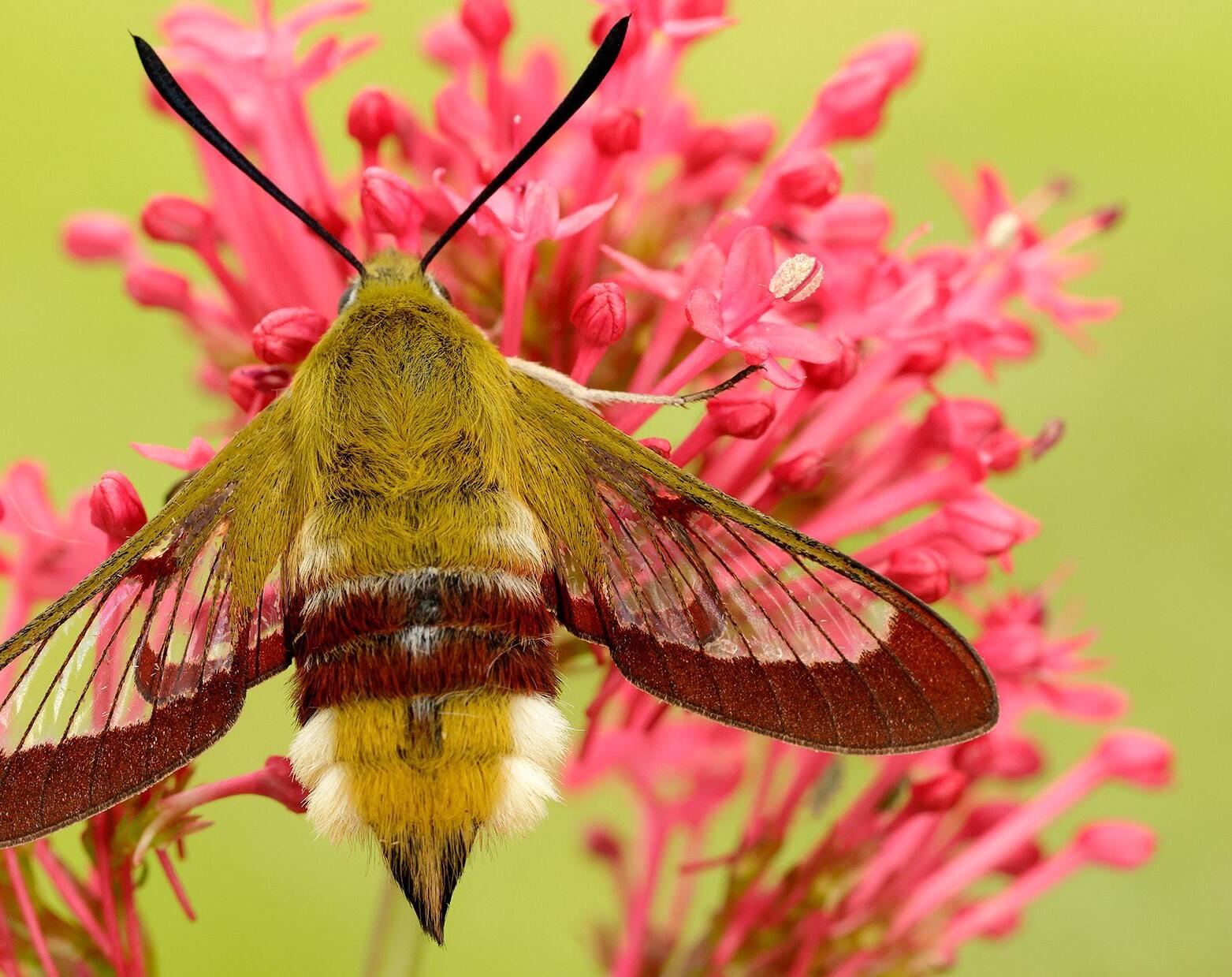
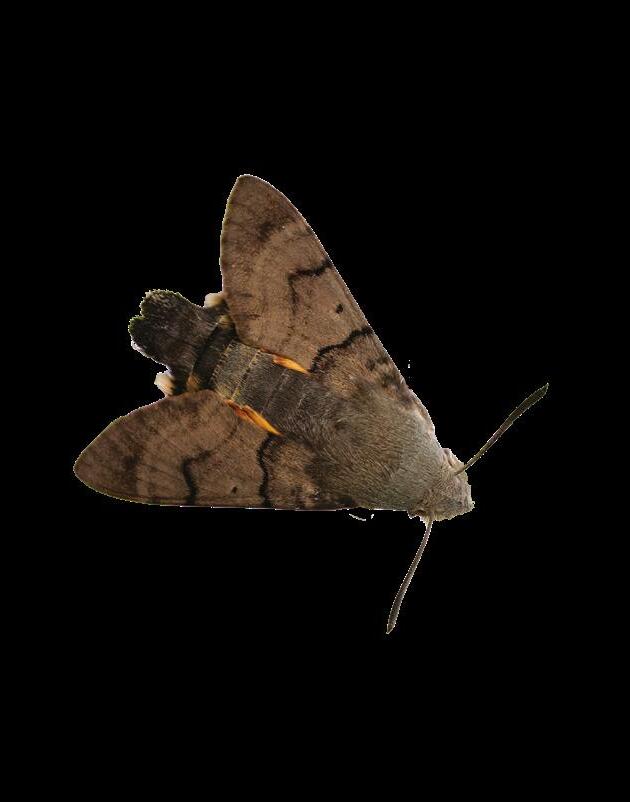
Migratory, reaching all parts of the UK. Frequently seen nectaring at flowers, hovering like a hummingbird. Caterpillars feed on bedstraws.
Found in woodland and heathland across England, but away from the far west and north. Caterpillars feed mainly on Scots pine.
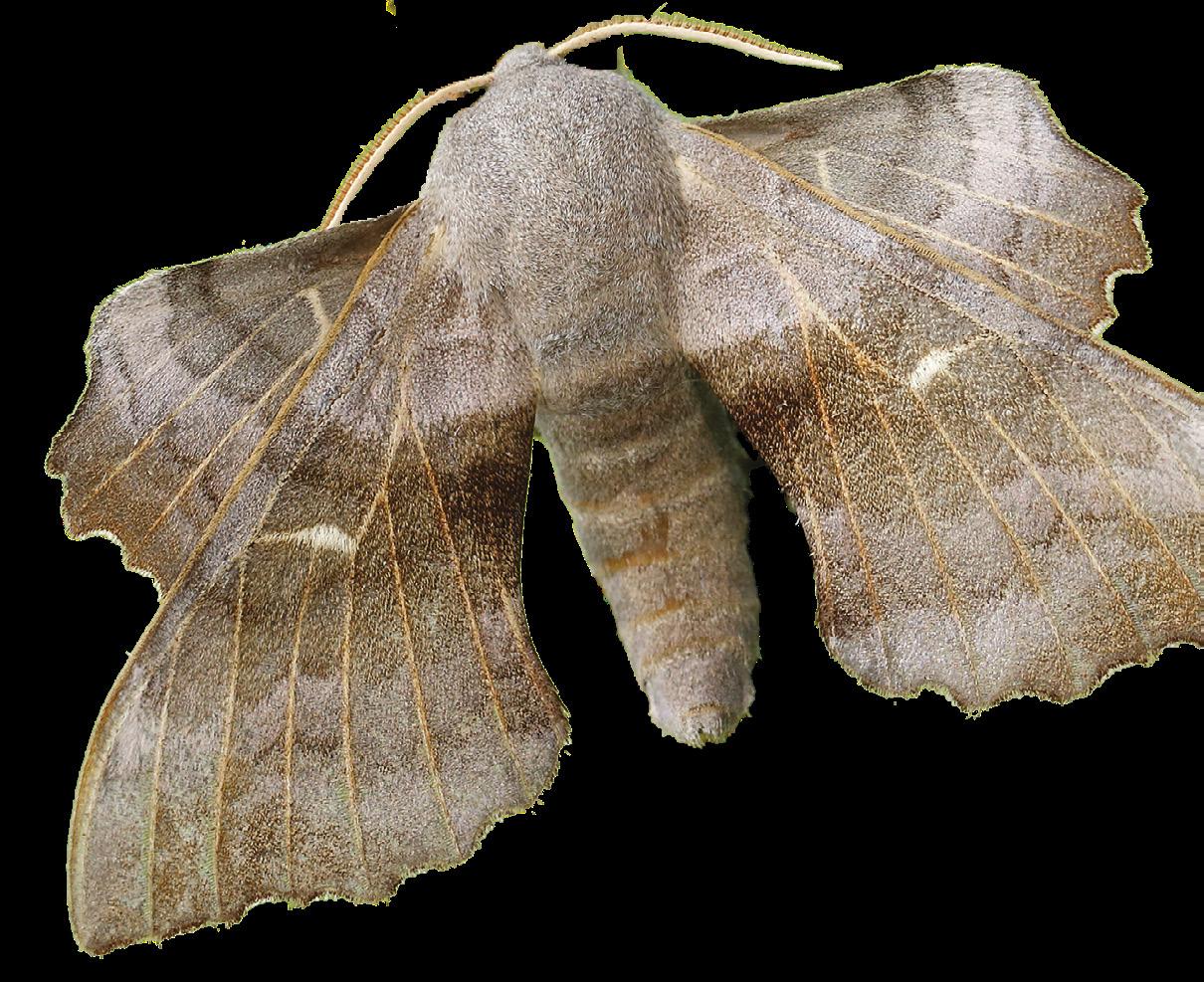
Common throughout the UK. Caterpillars feed on poplars and willows.
Discover some magnificent moths with Barry Henwood, co-author of Field Guide to the Caterpillars of Great Britain and Ireland and volunteer with Devon Wildlife Trust

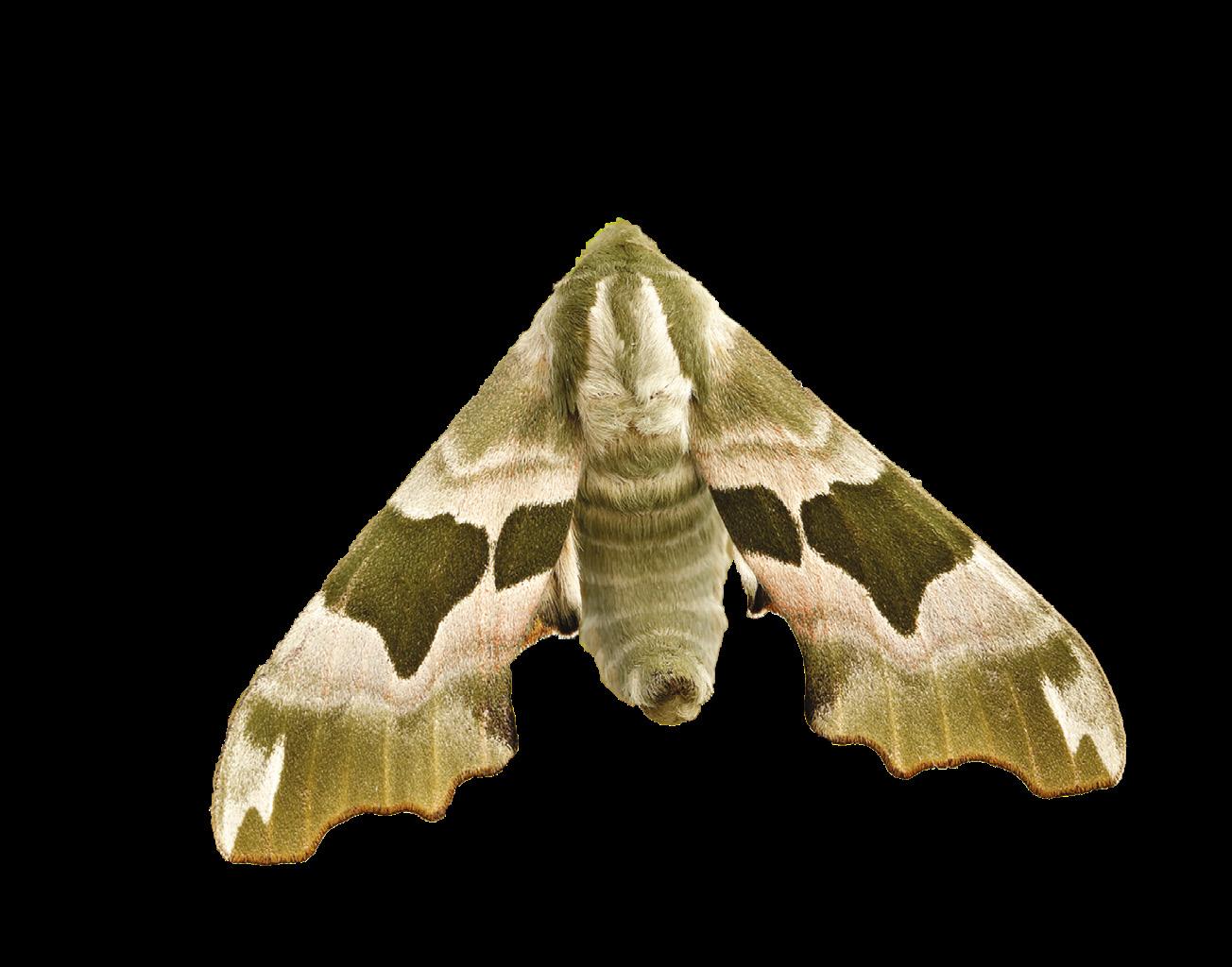
hawk-moths includes the largest species found in the UK. They’re a diverse group, but one characteristic they all share is that the caterpillar has a horn at the end of its abdomen.
Nature Reserve
Yorkshire
Wildlife Trust
This peninsula on the Yorkshire coast isn’t just great for migrant birds, but migrant moths too. Following southerly winds, look out for humming-bird hawk-moths or, if you’re really lucky, something much rarer, such as convolvulus or death’shead hawk-moths.
Where:
Kilnsea, HU12 0UH
Avon Wildlife Trust
The woodland and wildflower meadows are home to lots of moths, including elephant hawk-moths. Adults are regularly attracted to lights during surveys, but you might find a chunky caterpillar crossing a path in late summer.
We have nine resident species, with a further nine migrating here from Europe. But of these migrants, only the humming-bird hawk-moth is able to survive our winters. Most spectacular is the death’s-head hawk-moth, an uncommon migrant. Its short, stubby tongue is specialised for taking honey from the nests of honey bees. It emits an audible squeak, thought to be a form of communication that helps it cheat the bees.
Some hawk-moths fly by day, such as the two species of bee hawk-moth and
by lights, but you may find them resting by day, perhaps on fence posts or trees. They are camouflaged, but if disturbed by a bird some species flash their colourful hindwings. The poplar hawk-moth displays a red patch, whilst the eyed hawk-moth reveals bright colours and eye spots. These serve to startle the bird and make it flee. The elephant hawk-moth is particularly colourful, but more often its caterpillar is found in gardens. It has a swollen first abdominal segment and large eye spots, giving the illusion of a snake. Caterpillars of other species can be found by searching their foodplants and looking for stripped leaves on branches or their droppings beneath.
Where:
Bristol, BS39 4DW
Slievenacloy
Nature Reserve
Ulster Wildlife
This grassland paradise in the Belfast Hills is Ulster Wildlife’s largest nature reserve. It’s home to a stunning variety of wildlife, including visiting humming-bird hawkmoths and the rare narrow-bordered bee hawk-moth.
Where: Lisburn, BT28 3TE
WHY ARE NATURAL SOUNDS so important to you?
Nature has always been my safe place. But it’s only in the last five years I’ve come to understand how sound connects us to nature. We are evolutionarily hardwired to nature’s sonic language. The sounds of birds, frogs and insects all trigger our parasympathetic pathway to make us feel relaxed. But modern life often drowns this out. Our ancestors survived by listening to nature. Sounds can tell you where to find food, water, safety—but also danger. Silence often meant a predator was around. By drowning out nature, we’re forcing ourselves to live in that “danger silence” and the evolutionary stress that comes with it.
How has nature influenced your music?
Music likely predated human language, inspired by sounds from nature. So nature has influenced all music, not just mine. Nature is the original artist. That’s why I was honoured to be one of the first musicians to feature nature as an official artist in my music, alongside Brian Eno and his charity Earthpercent.
What excites you as a new Wildlife Trust ambassador?
I’m really excited about reframing what “nature” is in the UK. Showing that Nature Ain’t a Luxury (the title of my film with The Wildlife Trusts) but a necessity. I hope it awakens a sleeping herd of young people, particularly from lower economic backgrounds and diasporas, to reconnect to nature. But on a bigger level, I hope we put nature at the heart of our national identity and culture. We can bring nature back, restore our wild places and make nature a source of immense national pride.
What message would you like to send as an ambassador?
Nature is for all of us, no matter where you live or what you look like. It’s your right because you are an animal that evolved as part of nature. We all need it to be healthy, not just the people that can afford to get into it. I hope young people see me, a mixed race guy, from a rough part of North London that's had all the experiences that they have had and yet is a massive nature geek; and see themselves. It doesn't have to be a massive step, but you need nature and it needs you. Start by listening—even if it's listening online on headphones first, you can go to my website (natureaintaluxury.com) there's loads there, or come to one of my exhibitions if the real thing is hard to hear in your area. But soon I promise you won't be able to help seeking it out in the real world, and you'll know it because, guess what, we're all fluent in nature, it just takes listening a little again to reignite that fluency.
Hear more from Louis VI in his TED Talk Louis VI: The language you're fluent in— but forgot how to hear at: wtru.st/Louis-VI-TED-Talk
SPOT THE
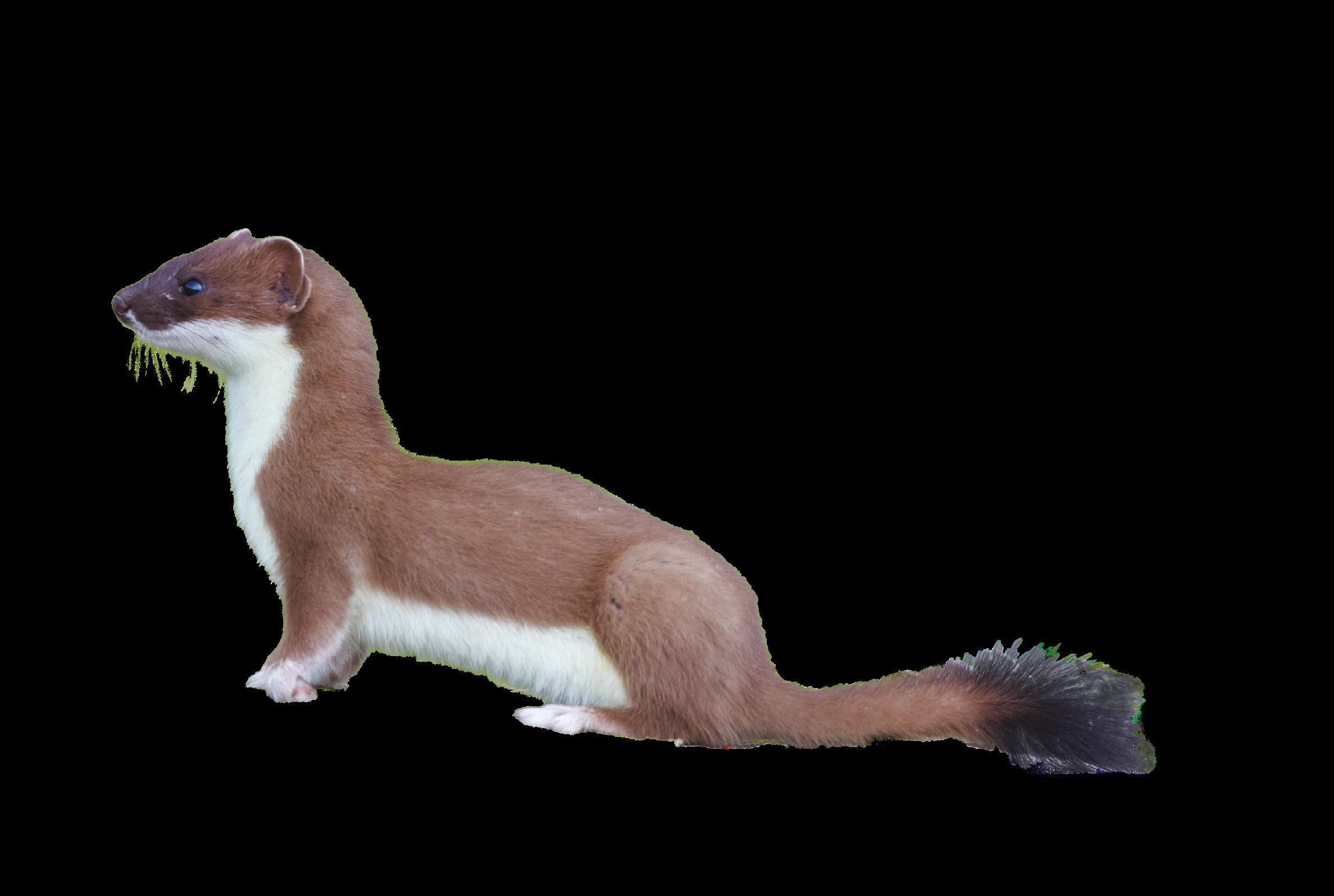
Coat The division between the brown back and pale belly is neat
Tracks larger footprints with a more irregular heel pad
Mustela erminea
Length Around 24-31 cm body length, with a 9-14 cm tail
Weight 140-445 g (males are around twice as heavy as females)
Tail Long, with a bushy black tip
Movement Often bounds along with a strongly arched back
Diet mostly eats rabbits, as well as rodents, birds and their eggs and other food
Length Around 17-22 cm body
length, with a 3-5 cm tail
Weight 55-131 g (males are around twice as heavy as females)
Tail shorter than a stoat’s and completely brown
Movement usually scurries low to the ground
Diet Specialises in hunting mice and voles, but may also eat small rabbits, birds and their eggs and other food
Tracks smaller footprints with a more rounded heel pad
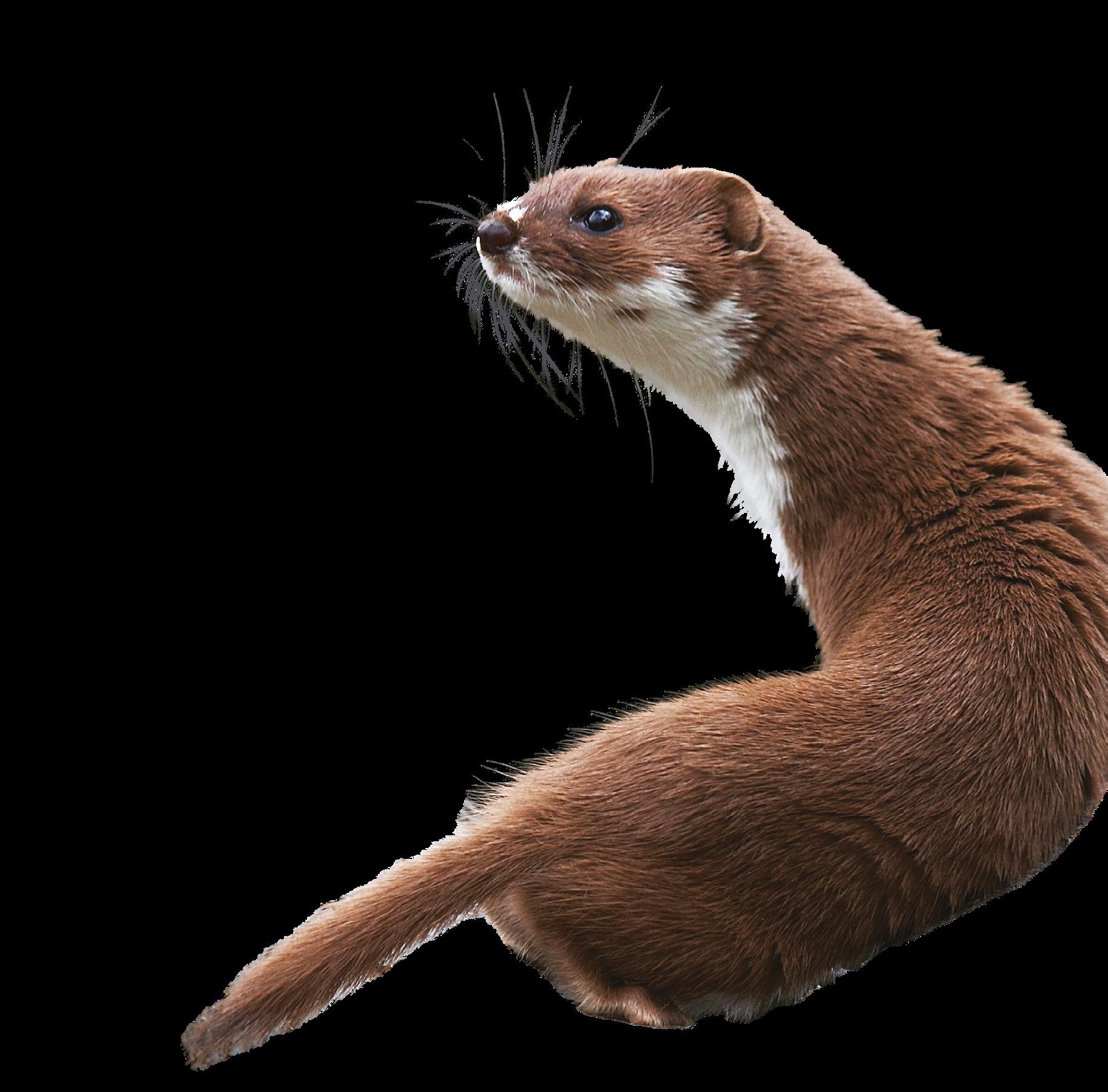
Coat The division between the brown back and pale belly is jagged and patchy