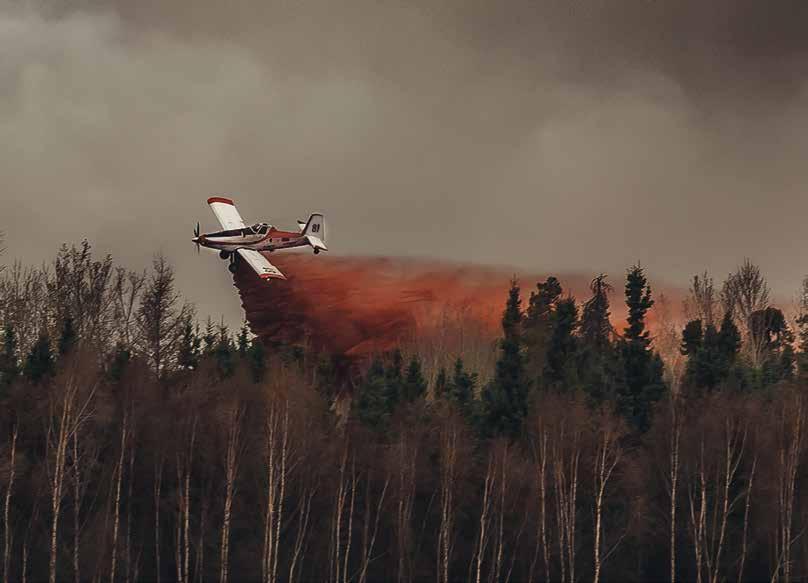
Agile, forward-attack aircraft are effective tools for rapid, direct initial air attack. AT-802F SEATs can launch quickly from regional airports near fire zones. Once over the fire, they can drop water, gel or retardant to hold fires until crews arrive.
EDITORIAL
Laura King managing editor laura@iawfonline.org
BUSINESS
Mikel Robinson administration execdir@iawfonline.org
Kim Skufca advertising associate Kim@iawfonline.org
Shauna Murphy graphic design
Century Publishing, Post Falls, Idaho
COMMUNICATIONS
COMMITTEE (IAWF)
Amber Lynn Scott, chair
David Bruce
Amy Christianson
Lucian Deaton
Jennifer Fawcett
Ariadna Goenaga
Scott Goodrick
Xinyan Huang
Richard McCrea
Tiago Oliveria
Mikel Robinson
Kim Skufca
Ron Steffens
Michele Steinberg
Gavriil Xanthopoulos
Ciaran Nugent
David Shew
Laura King
ASSOCIATE EDITORS
David Bruce (Australia)
Scott Goodrick (United States)
Michael Scott Hill (United States)
Michelle Huley (Canada)
Richard McCrea (United States)
Diogo Miguel Pinto (Portugal)
Lindon Pronto (Germany)
Daniel Ricardo Maranhao Santana (Portugal)
Anthony Robert White (Australia)
BOARD OF DIRECTORS
Trevor Howard (Australia), president
Ciaran Nugent (Ireland), vice president
Sarah Harris (Australia), secretary
Tamara Wall (United States), treasurer
Amy Cardinal Christianson (Canada)
Meg Dolman (United States)
Scott Goodrick (United States)
Kerryn Little (United Kingdom)
Claire Lötter (South Africa)
Tiago Oliveria (Portugal)
Joaquin Ramirez (United States)
Amber Lynn Scott (United States)
David Shew (United States)
Allistar Smith (United States)
Naomi Eva Stephens (Australia)
Vivien Thomson (Australia)
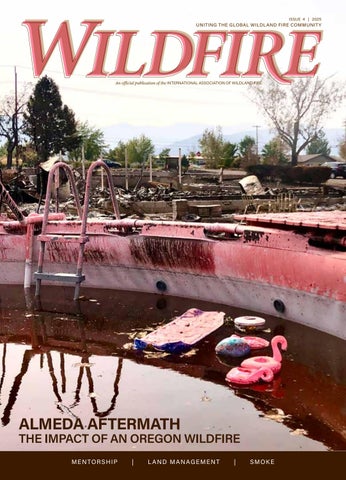
We always strive for diversity of stories – science, news, training, land management, Indigenous culture and practices, and other informative topics. Sometimes, a piece lands unexpectedly, like Jennie Englund’s cover story (page 20), about the Almeda fire in Southern Oregon in 2020, that provides a different perspective.
Englund isn’t a firefighter, but her husband Dave is, so the lens through which she viewed the fire that ravaged a community may be new to Wildfire readers.
As a captain on the Almeda fire, Dave made dozens of decisions, supported by years of training.
But as Jennie notes, there’s no training for the impact on firefighters and their families.
“I sat at the kitchen table with the guys I’d known for almost 20 years – C-shift – Dave’s shift, back on duty,” Jennie writes. “And yet I didn’t know them anymore. The fire changed them.”
Jennie’s story about Dave, the crew, the impact, and the aftermath of a brutal fire is exactly why so many researchers are working to strengthen training, reduce fuel, improve programs, understand fire behavior, and share information.
Anthony White, a Wildfire associate editor in Australia, is working to protect firefighters from the dangers of wildfire smoke. His piece (page 26) tees up the possibility of mobile, in-field nasal-sample collection to understand the immediate impact of smoke on firefighter health.
Josh Hyde and a team at the University of Idaho manage application support for the Interagency Fuels Treatment Decision Support System; they’re gathering user feedback to improve the program (page 14).
Decision support systems are an important tool for fuel treatment planning. Historically, Hyde says, development of fuel-treatment planning systems lacked coordination; the existence of multiple frameworks led to inefficiencies.
Now, user data is being analyzed, and changes have been recommended to help to reduce overlap and develop a better system.
Another resource for the wildland fire community has been developed by IAWF members Eric Everson and Max Levy.
Everson, a science communications specialist with the North Atlantic Fire Exchange, and Levy, who was working on a hand crew in Idaho, were paired as mentor and mentee (page 32).
Remarkably, the two learned that they both have twin siblings, share a birthday, and want to use their knowledge and passion to help others in the field.
Thus, the Wildland Fire Resources Library was born – https:/ wildlandfire.org/ – of experience, collaboration, and the thrill of a chance meeting that enhanced enthusiasm for a bigger outcome. Have a look!
Leadership columnist Mike DeGrosky (page12) agrees that mentors, not just mentees, enjoy significant takeaways from these types of partnerships, and advises what to look for in a mentor-mentee relationship.
The IAWF mentoring program regularly seeks mentors and mentees; this year’s program runs February through July. Applications for the next round will be available at https:// www.iawfonline.org/mentoring-program/
Our anchor story (page 44) is an opinion piece by longtime associate editor Mike Hill. Mike’s experience with the US Forest Service as an administratively determined crew member spans decades and significant change. Change, of course, is always challenging, particularly, perhaps, when people give their time, effort and expertise alongside regular paid personnel.
Readers outside the United States – and many within – are likely unfamiliar with the administratively determined crews, or ADs, who help staff federal resource agencies on emergencies. Mike’s heartfelt explanation of the evolution of the program, some challenges, and a potential way forward with added understanding and recognition makes for good reading.
Our next issue of Wildfire magazine begins IAWF’s transition to a digital-only model and will appear online only. Don’t worry. The digital edition will be easily accessible; we’ll send you links and highlight stories through our social channels, and via the Wildfire Today website. We’ve committed to ensuring value for readers and advertisers and providing a high-quality digital product and more promotion of the remarkable stories told by IAWF members around the globe.
Managing editor Laura King is an experienced international journalist who has spent more than 15 years writing and editing fire publications. She is the Canadian director for the National Fire Protection Association (NFPA), works closely with FireSmart™ Canada to help residents build resilience to wildland fire, and has participated in the development of the Canadian wildland fire prevention and mitigation strategy.

BY TREVOR HOWARD
I recently attended the IAWF wildfire summit in Calgary, Alberta, an event that combined the 7th Human Dimensions of Wildland Fire Conference with the 18 th International Wildland Fire Safety Summit. With 400 delegates from 20 countries including parts of Africa, South America, Asia, Europe and Oceania, the summit was truly an inspiring and inclusive international gathering of experts with diverse perspectives.
While other folks will have taken away different lasting memories, several things stood out for me. The welcome, opening address, fireside chat and wisdom imparted by Blackfoot Elder Dr. Mike Bruised Head permeated my thoughts throughout the entire conference. For me, it was a reminder to take a long-term view of where we’ve come from by understanding the natural, cultural and historical forces that have shaped our landscape, livelihoods and lifestyles, as well as an outlook for the future
that envisions a new relationship with land and fire, one informed by the distant past.
But many of our shared fire challenges also occur in shorter timeframes, and the session on the 2024 wildfire impacts on the town of Jasper, Alberta – within Jasper National Park –highlighted the importance of community preparedness, emergency response and incident management, as well as disaster recovery and resilience. The field trip to Banff National Park, led by Parks Canada, also demonstrated the need to ensure the safety of residents and the public, and the protection of roads, railways and other critical infrastructure, while not losing sight of the bigger picture. The proactive use of fire in that mountain landscape remains essential for managing, maintaining and sometimes restoring ecosystems and habitat that numerous plant and animal species depend upon – such as aspen, Douglas fir, elk and grizzly bear.
It was also an immense privilege for me to be involved in giving IAWF awards to several outstanding recipients: Steve Lemon from Canada for the Wildland Fire Safety Award; Juliane Baumann from Germany for the Firebreak Award for Excellence in Fire Management; Nico Semsch also from Germany for the Early Career Award in Fire Operations; and Dr. Stephen Pyne from the United States for the Ember Award for Excellence in Wildland Fire Science. These presentations in Calgary followed a similar event at Berkely, California, earlier in 2025, when Dr. Zinyan Huang from China received the Early Career Award in Fire Science.
While human factors are often associated with leadership, communication, safety, community engagement and Indigenous knowledge, the human dimensions of innovation, technology and equipment design for wildland fire management are equally important. The Wildfire Summit in Calgary was supported by 32 sponsors and exhibitors, including large corporations, research and education institutions, government agencies and local startups and innovators. As I engaged with folks at the trade tables, some of whom were young and entrepreneurial, I was constantly impressed by the work done by non-government organisations and the private sector in solving operational problems, developing safe and efficient equipment, and finding better ways to harness data, technology and systems to support planning, decisions, monitoring and improvement.
We live in an era in which technological advancements often outpace our ability to fully understand, assess, adopt, adapt and apply. Cultural and cognitive biases also influence risk identification and assessment, while communication and consultation and the right conversations remain important for effective risk management, decision making, and monitoring of outcomes. Machine learning and artificial intelligence, for example, offer enormous benefits for all aspects of wildland fire management, but we can’t remove human oversight. The Rt. Hon. Lord Justice Richard Haddon-Cave, in
a 2013 speech to the Piper 25 Oil & Gas Conference in Aberdeen, Scotland, provided seven lessons from the formal inquiry he headed into the tragic loss of a British Nimrod aircraft during military operations in Afghanistan. Finding a long history of organizational failures, including the outsourcing of a safety case that missed obvious risks and contributed to the accident, Haddon-Cave’s wise words were “if you have to outsource, it is important not to outsource your thinking and to remain an intelligent customer.” This lesson remains immensely relevant to the current and future adoption and management of digital technologies, especially artificial intelligence.
This edition of Wildfire magazine includes some excellent articles on leadership, human health, and mentoring, and follows the launch in Calgary of the latest IAWF position paper dealing with health and wellbeing in our sector. The IAWF is deeply committed to developing and supporting people across all fire management disciplines – operations, aviation, ecology, policy, training, research, technology – with a regular mentoring program that is tailored to the unique needs of individual mentees (see story on page X). As well as focusing on technical matters and subjects, we must also be mindful of essential and timeless skills in leadership, strategic thinking, scenario development, inquiry, critical questioning, relationship building, dialogue and debate. Even for those with an orientation to the design, development and application of new technologies, these skills will be just as important for the future as they will be to those leading people, field operations and community engagement.

Trevor Howard is the national manager, prescribed burning strategy, with the Australasian Fire and Emergency Service Authorities Council (AFAC). Based at the Bushfire Centre of Excellence in Western Australia, Howard leads national capability developmentfor prescribed burning and supports rural fire services, land management agencies and non-government organisations with continual improvement.

BY BEQUI LIVINGSTON
Every wildfire season brings a multitude of U.S. wildfire fatality anniversaries. The anniversaries start in June with the Dude Fire, which took the lives of five members of the Perryville, Arizona, inmate crew and a corrections officer on June 26, 1990. In 2024, a memorial park was dedicated to the Dude Fire victims – with a documentary coming out soon – allowing survivors, friends and family time to grieve.
Shortly after, on June 30, comes Yarnell Hill, which claimed the lives of 19 members of the Granite Mountain Hotshot crew in 2013, also in Arizona.
The anniversary of South Canyon, Colorado, fire follows on July 6; it claimed the lives of 14 elite firefighters in 1994.
There are so many more, including Rattlesnake (California 1953), Thirtymile (Washington, 2001), Battlement Mesa (Colorado 1976), and of course, Mann Gulch (Montana, 1949). There are others tucked in among them – too many to recall, yet every single event requires remembrance and a time of
contemplation for those who were lost and injured, and those left behind to grieve.
How can we find personal ways to honor and nurture our grief, especially during these moving times of remembrance? Whether you were personally affected by these tragedies, or perhaps they are just another day in the timeline of wildland fire fatalities, we all share the human emotion of grief. I know many wildland friends, including my former self, who relish the fact that wildfires can easily distract us from feeling what we need to feel. Yet, we then circumvent our own unique human journey, by avoiding these remembrances, thinking that we are doing a great job of compartmentalizing these events. Believe me when I say that grief always finds a way sooner or later.
Grief is a powerful natural emotion, one that can be felt often over a lifetime. Sometimes, grief brings us a solemn remembrance of someone who was lost, while other times it takes us to our knees. Grief is not an emotion that should be hidden away, compartmentalized for another day, or shamed. In its

purest form, grief breaks our hearts wide open, into a million tiny pieces, scattered on the floor, just like Humpty Dumpty, should we allow it. For many of us, grief can be terrifying. It reminds us of mortality and frightens us of what could happen. I was terrified to feel my grief because I felt that if I did, I might never quit crying. It took me 57 years to fully feel my grief, and by then, it came out sideways.
On Memorial Day in 2024 I had the honor of being the keynote speaker at the annual remembrance commemoration at the New Mexico Fallen Wildland Firefighter Memorial, settled in the serene Smokey Bear Historical Park, where Smokey Bear is buried in Capitan. Here, among the pines, is a bronze statue of a wildland firefighter, aside the plaque naming those who lost their lives in New Mexico wildfires. For several years, the Smokey Bear Historical Park hosted this commemorative event for the families and friends of the fallen, remembering those who have been lost while supporting those left behind to grieve. The celebration is by invitation only to the families and friends of the fallen, along with local wildland firefighters and special guests, allowing a safe a sacred space to be together.
The 2024 event started with a bagpiper escorting people to their seats, followed by a welcome and prayer, and then my keynote speech, which I had to read line by line to keep my focus with all the emotions it brought up, especially grief. My daughter, Amity, was among the group, representing the Bernalillo County Sheriff’s Office, which lost three crew members and one Bernalillo County Fire Department crewmember on the Metro One sherrif’s office helicopter while supporting a wildfire in northern New Mexico on July 16, 2022. My daughter had been on the air unit, having decided to take time off to focus on her work as a deputy; otherwise, she could have easily been on that helicopter. Remembering that event took this mother to her knees; tears welled in my eyes as I spoke, glancing up often to see my daughter seated in front of me, giving me strength and encouragement to be courageous in speaking my truth. My daughter
Grief is not an emotion that should be hidden away, compartmentalized for another day, or shamed.
became my touchpoint of hope, helping to support and ground me when I was really struggling to get my words out. The event was beautiful, with each name being read, slowly, to the chime of the bell, as the bagpipe touched our heartstrings. Grief, laughter, tears, and joy were all welcome in this special place. Somehow, when we grieve together, it makes it less lonely and fearful.
• Grief is a normal human experience, unique to each of us, just like a fingerprint.
• Grief is never linear; it’s like a toddler scribbling on a chalkboard as you go through the process.
• Grief is a process; it’s never a race to a predetermined finish line.
• Grief is a need; no matter how much we grieve, we need it to be witnessed.
• Grief oftentimes reminds us how much we loved and were loved.
• There is no timeline for grief; grief takes the time it takes.
• Honoring our grief, and the grief of others, is a courageous thing to do, with empathy, love and compassion.
• If you don’t take time to grieve, grief will eventually emerge and sometimes come out sideways.
Author and grieving expert David Kessler put it this way: “Life gives us loss. Our job is to experience it fully when it gets handed to us. Avoidance of this loss (grief) has a cost. Having our grief seen, and seeing grief in others, is a wonderful medicine for body, heart and soul.”
May you honor those who have been lost in a way that is meaningful to you. I invite you to take time for silent contemplation and stillness on any anniversary of loss, or any other occasion that triggers memories, sitting with your own grief, in whatever way feels safe and supportive. We do such a good job, in this wildland culture, to let these important moments pass us by, busying ourselves to not feel our own grief.
May this inspire you to take time for your self-care first and perhaps become a touchpoint of hope for somebody else that might need support. Be safe, be brave and take good care of YOU.
The phrase touchpoints of hope comes from Mary Lavin, manager of the Smokey Bear Historical Park in Capitan, New Mexico. The meaning behind the phrase is that we can always find something tangible to hold on to that provides a sense of hope, especially in our darkest hours.

Bequi Livingston was the first woman recruited by the New Mexico-based Smokey Bear Hotshots for its elite wildland firefighting crew. Livingston was the regional wildfire operations health and safety specialist for the U.S. Forest Service in Albuquerque, New Mexico. Contact her at bequilivingstonfirefit@msn.com





BY MIKE DEGROSKY
As I was applying to be a mentor for the next round of the IAWF mentoring program, I reflected on what a great member benefit the program is, one that is valuable to mentees and mentors alike.
Eric Evenson reinforces this in his article on page 32, in which he describes his mentorship experience with his mentee, Max Levy. Evenson is the science communications specialist for the North Atlantic Fire Science Exchange. Levy was working on a wildland fire hand crew for the state of Idaho when the two were randomly matched through the IAWF. Evenson describes how he and Levy immediately made a deep and surprisingly personal connection.
I think of mentoring as an act of helping people draw out, reinforce, or affirm their ideal selves and it was fun to read about Evenson and Levy’s relationship that grew out of the IAWF program.
I am increasingly interested in the experiences of mentees, because that perspective seems to be less prevalent. A quick review of the leadership literature reveals that mentoring programs are mostly talked about from the mentors’ perspectives. Coincidentally, I have had conversations with friends and colleagues contemplating whether or not to seek a mentor, which led me to start thinking about what advice I should offer a person seeking a mentor. I
knew what advice I had offered in the past but also wanted to see what the current wisdom is among the experts.
I unexpectedly found a fascinating article on the National Institutes of Health website, summarizing the book The Science of Effective Mentorship in STEMM, edited by Angela Byars-Winston and Maria Lund Dahlberg. I also discovered a cool resource called Mentoring Statistics You Need To Know –2025 by Grace Winstanely with the organization Mentorloop.
Evenson’s Wildfire article, combined with my foray into current thinking on mentoring and mentorship, helped me focus on four key pieces of advice to offer anyone thinking about the benefits of having a mentor.
First, know what you are looking for from a mentoring relationship before seeking a mentor. Are you looking for psychological and emotional support? Help with problem solving? A role model? Career guidance? Help with goal setting? Skill development? Sponsorship? While mentoring is often idealized, one does not have to look very deeply into the popular business and leadership media to learn that mentees are often left disappointed by the experience. Unsatisfying mentorships are often
I would counsel any person seeking a mentor to have a solid idea of their needs and motivations beforehand.
rooted in the fact that the mentor and the mentee had different expectations of what the relationship might achieve. Knowing that, I would counsel people seeking mentors to have solid ideas of their needs and motivations beforehand.
I recently experienced this when I asked a friend and former colleague to mentor me in an area in which I want to update my knowledge and gain some confidence. My friend, who I expected to readily accept, instead had questions, including “What do you hope to accomplish?” and “Why me?” We typically approach potential mentors because they have life experience and acquired knowledge that can help us grow and accomplish goals. The catch is that experienced and knowledgeable people we trust and admire are very often busy, and busy people want to know that your request will be an effective use of their time. Anyone approaching a potential mentor should be ready to make a case for the desired mentoring arrangement.
I must admit that my friend’s screening questions surprised me, but I soon thought “That’s so smart; my friend has a big job, a young family, lots of interests, and not much spare time.” I imagine that not only did my friend want to make good use of limited time, but also to know that my friend was the right person and would not let me down. I’m glad I was ready to make my case, and I have a new mentor!
My current mentor is 20 years my junior, so the second piece of advice I would offer is to embrace the possibility of mentoring relationships that may seem to be unconventional. In my case, the conventional wisdom that mentors are always the senior individual is not the case. I’d offer that any extended, reciprocal, relationship can evolve into an effective mentoring partnership and that such a partnership can prove mutually beneficial. I think it’s important to remember that the research tells us
that most mentorships do not result from a formal ask but evolve from other relationships.
My third piece of advice has been, and will remain, to purposefully seek mentors in both technical disciplines and the interpersonal and human relations dimensions of our work. It is important to understand that the two may not overlap. In other words, you may need more than one mentor.
And finally, I would counsel that anyone, regardless of organizational role or level, can benefit from having a mentor. I always enjoy encountering leaders who are simultaneously mentoring and being mentored. While we often think of mentors as experienced senior leaders and mentees as upand-comers with potential, the research I’ve seen consistently shows that senior leaders benefit from being mentored.
Mentoring is a vital leadership and career development tool, as reflected by its popularity. According to Mentorloop, most U.S. Fortune 500 companies, including all U.S. Fortune 50 companies, have mentoring programs and 76 per cent of people surveyed think mentors are important.
IAWF members are so fortunate to have access to a formal, industry specific mentoring program as a free member benefit, and I hope members are taking full advantage. Information about the IAWF mentoring program is at www.iawfonline.org under What we do.

Mike DeGrosky is a student of leadership, lifelong learner, mentor and coach, sometimes writer, and recovering fire chief. He taught for the Department of Leadership Studies at Fort Hays State University for 10 years. Follow Mike via LinkedIn.
BY JOSH HYDE, EVA STRAND, PETER NOBLE AND KIM ERNSTROM
Land and fire managers are often tasked to plan complex fuel treatments and apply the best available science across jurisdictions to prioritize, plan, and conduct prescribed burns and other fire mitigation tactics.
Decision support systems – information systems designed to support management decision making –are a key tool for fuel treatment planning.
Historically, models and systems for fuels management have been developed independently without a great deal of coordination, leading to varying degrees of overlapping functionality.
Additionally, as Gail Wells noted in the December 2009 issue of Fire Science Digest, the onus of reviewing, selecting, and using a specific tool often falls on the fire manager.
To increase efficiency, reduce redundancies, and make the tool-selection process easier for fire managers, a solution was needed that incorporated several fuels management tools in one framework.
The Joint Fire Science Program, a collaborative initiative led by U.S. federal agencies and researchers to sponsor and deliver science to the fire management community, initiated a study to design a system to meet these needs. The result was the Interagency Fuel Treatment
Decision Support System (IFTDSS). Initially, a proof of concept was developed by the consulting firm Sonoma Technology in concert with Joint Fire Sciences. Later, the system was approved for use by federal agencies in the United States and was redeveloped by IBM under the stewardship of the interagency Wildland Fire Management Research and Development Applications team in 2017.
In the United States, the National Cohesive Strategy in 2014 emphasized the importance of fuel treatments to proactively address wildland fire concerns. The Wildland Fire Crisis Strategy of 2022 built on this and other approaches by outlining a vision of largescale fuel treatments over millions of acres of land of various ownerships, supported by funding from the Infrastructure Investments and Jobs Act passed the prior year.
In 2022, the National Prescribed Fire Program Review by the US Department of Agriculture recommended better training and incorporation of spatial modeling for contingency planning.
Fuel-treatment strategies often require detailed and collaborative planning across multiple agencies and ownerships. The importance of detail was underscored in the spring of 2022 when escaped prescribed fires in New Mexico burned several square miles and forced a 90-day pause on USDA Forest Service prescribed fires. The pause triggered a National Prescribed Fire Program Review and among its recommendations were better training and incorporation of spatial modeling for contingency planning.
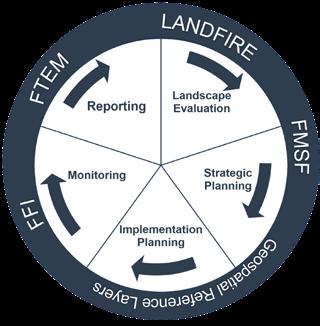
The system uses a landscape planning cycle approach to fuels management to bring together tools for fuels planning and decision support, including national geospatial landscape data from the LANDFIRE program, fire behavior models from the Fire Modeling Services Framework program, and several geospatial references layers used by land management agencies to help inform decision making. For those tasked with monitoring on federal lands, the system also allows users to enter data into a Fuel Treatment Effectiveness Monitoring repository. All these are included in one convenient online system (Figure 1). Managers can model and examine results in a map, export data for planning documentation, and create stand-alone summary reports for documentation, presentations, and briefings (Figure 2).
In the United States users may also be familiar with decisions support systems designed to support multiple land management activities, such as Vibrant Planet’s Land Tender or those intended to support wildfire such as the Wildland Fire Decision Support System (WFDSS). The Interagency Fuel Treatment Decision Support System differs from these applications in that it is purpose built for cross-boundary planning of fuel treatments and is developed by an interagency team of fire management practitioners who are experts in planning and implementation; this is reflected in the affiliations of the more than 8,000 user accounts in the system. Roughly 60 per cent of users are federal, state, and local government, with most being United States Forest Service users. The remainder are nongovernment users including non-profits, universities, utility companies, and others. The system may be used for public and private lands, and anyone may access the system regardless of their affiliation, at no cost; this facilitates interagency collaboration by removing any cost and agency-specific barriers.
The development of the Interagency Fuel Treatment Decision Support System is ongoing and is informed by the needs of the fuels and wildfire management community, so user feedback is key. During the operational life of the system, feedback has been solicited in several ways. In 2023, a formal survey was commissioned through University of Idaho partners who conducted hour-long interviews with 47 system users from a variety of agencies and backgrounds. The goal was to gain a better understanding of a) how users employ the system b) what they find valuable, c) what they would like to see changed, and d) how they prefer to learn to use the system. That information provides an overall snapshot of how the fuels management community learns and uses the system and how well it supports the needs of the users in the field. What follows are the key findings from a recent report to the team that develops the system; the full-length version is at https://www.frames.gov/ catalog/70455.
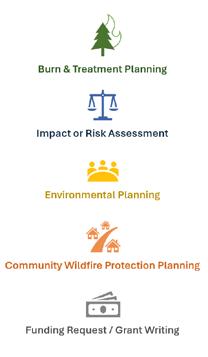
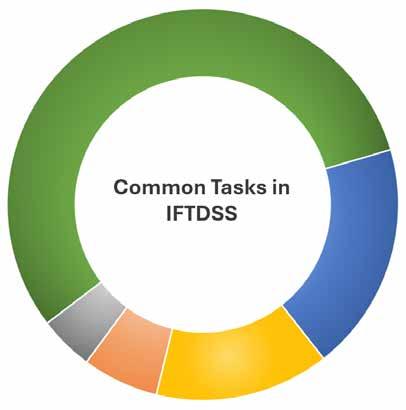
The most widely reported use of the Interagency Fuel Treatment Decision Support System among interviewees was prescribed fire planning and treatment planning, followed by National Environment Policy Act planning, and risk assessment (Figure 3). Other uses included drafting community wildfire protection plans, developing prescriptions, assessing potential treatment impacts, and estimating contingency resources. Some interviewees also noted the use of the system in developing materials for funding or grant proposals to support fuel projects.
Participants in different positions tend to use the system for different goals. Those who worked as fire management specialists and assistant fire management officers tended to use the system more for prescribed fire planning and National Environment Policy Act planning, while those in fire management officer positions use the system more for treatment planning and risk assessment. For those who worked in a private or consulting role, risk assessment was typically their primary goal.
When participants described their use of the system, the primary aspects they found valuable included the following.
Participants described the layout of the system as simple and navigable, especially compared to existing modeling and mapping systems, an example being the way in which tasks were laid out in a process that approximates the landscape planning cycle.
“So the way that the steps are set up, as in, it’s pretty clear from the get go. You can get in there and say, ‘start here’. Build the landscape, then do this, then do that, so the way that it’s laid out leads you through the entire process pretty clearly.”
The most common feature interviewees found useful was the relative ease of learning and using the system. Participants felt the quantity of data readily available in one system, combined with
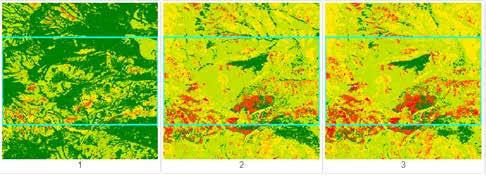

User interface for comparing fire behavior outputs under various weather conditions.
the relative ease of generating summaries, helped make the system easier to use. This was aided by the availability of helpful information in the system.
“There is an excellent set of resources and guides, along with [the system] that are very understandable in terms of what the inputs are, what inputs are required, what they mean and working through that is very good and easy.”
• Increased efficiency
Several interviewees indicated the system saved time. Time savings came from the ease of use discussed above, the availability of existing data within the system such as landscape layers, and the ability to quickly create summary reports. Instead of implementing multiple systems, participants could save time by using one.
“I don’t have to go to Landfire and figure out an extent for a fire or project and then request that information. [The system] does that for me. It saves some time and saves some confusion with that.”
• Facilitating communication and collaboration
Communication was also among the top areas in which users found value. Interviewees often spoke positively of the visual aids produced by the system reports and their utility in communicating potential fuel treatment alternatives and the reasoning behind them. Fuels planning is often a collaborative effort in which multiple landscape values must be discussed among experts from several fields. When discussing communication using the system, multiple participants noted the benefits of being able to visually demonstrate their plans and the reasoning behind them to convey information to planners and collaborators regardless of whether they had background in wildland fire.
“It has helped us defend our scale of treatments on the forest. By having the tool available to us, it allows us to defend why we want to do the treatments we want to do to the public and to internal, both.”
“I really think that it’s just such a better visual tool to communicate what we expect with fire behavior in both the burn unit and the adjacent fuels outside
the burn unit. Hands down, it’s just simpler and everyone can understand it regardless of specialty or training or education.”
When asked about what changes they’d recommend, interviewees tended to focus on features to enhance analysis capabilities or better facilitate collaboration among individuals using the system.
•
Many participants wanted more weather and contingency planning features, such as querying weather data to generate fuel moisture and weather conditions within specific percentiles. Users also recommended having more control over which weather stations data was retrieved from, often expressing these as ways to better utilize data from within a single system.
Additional features for containment and contingency planning were also recommended. Participants explained the need to calculate resources needed to contain a prescribed fire in the event of an escape, an especially pertinent need following the prescribed fire escapes in 2022.
“So [containment] is the big one that’s being promoted right now because of the prescribed fire- the lens that prescribed fire is being looked at through right now.”
•
The Interagency Fuel Treatment Decision Support System provided a way to easily edit landscape information by creating custom edit rules or using a simplified set of editing rules. These simplified rules were appreciated by users but were found to be lacking in availability. They could only be used with older landscapes and several users recommended updating and expanding these rulesets. Suggestions included offering a wider range of thinning treatments to the rules and allowing them to project out for longer periods of time to help model fire behavior further into the future.
• Collaboration
The ability to share data with other account holders, as can be done with the Wildland Fire Decision Support System (WFDSS) was another common suggestion. Participants suggested this would increase efficiency by reducing duplicated efforts among team members and ensuring everyone was working from the same dataset.
Time isn’t just spent using a system but also learning to use it. Interviewees commonly described the methods they used to learn the system such as videos, the system’s online knowledge base, experiential learning, and online courses.
Videos were one of the most often cited learning methods that were used, preferred by users, and recommend for new users. Some participants found short videos focused on a specific task to be helpful, others found value in the way in which steps were laid out as part of a process.
“I’d have to say that’s probably one of the things that I like about where [the system] has put effort and time, is in the training. I could find and watch a video. I’ve become a big fan of watching a YouTube video.”
Experiential learning was another common method –logging into the system, exploring the interface, and running through various tasks. If needed, users would draw on additional learning methods such as an online knowledge base, videos, or consulting others. Some participants also noted the benefit of example tutorials to use as an overall framework into which they could substitute their own data and learn the system.
“I like watching things demonstrated, but I learned by doing and getting to really put that stuff together myself. I really like those step-by-step tutorials.”
Courses and workshops, in-person or online, were the fourth-most cited way of learning the system for participants. When it came to recommended methods for new users, courses, workshops, and instructional videos were most frequently recommended. In-person classes and workshops tended to be preferred to online
ones. Some valued the dedicated interruption-free time that comes with an in-person environment, others found it an easier environment in which to ask questions. Self-led methods such as the online knowledge base and tutorials were also mentioned here, but less frequently than classes, workshops, or the use of videos.
Interagency Fuel Treatment Decision Support System users interviewed perceived value in a system that is easy to use and enhances efficiency and communications. But more work is needed. Interviewees recommended additional capabilities in the system to help them perform their duties, allowing them to do more within a single system and better collaborate with others.
Interviewee feedback has been invaluable in better understanding the needs of the fuels management community. Because fuels management evolves over time, the system and other tools must do the same. As these needs evolve, continued dialogue with system users to involve them in development, will ensure newly developed features are addressing the users’ needs and providing the services they require for collaborative fuels management planning and actions into the future.
To summarize key interview points:
• There were multiple reasons users employed the system, depending upon their roles.
• The aspects interviewees valued most from the system included ease of use, efficiency, and facilitating communication.
• The most recommended changes involved adding capabilities that would allow users to do more within the system, which would reduce the need to use multiple systems or models and provide more of a one-stopshop approach.
• Multiple methods are used to learn the system, often in combination with each other.
Thank you to all the interview participants who generously provided their time, input, and perspective to inform the development and enhancement of the Interagency Fuel Treatment Decision Support System for the wildland fire community.

Josh Hyde works for the University of Idaho developing and managing application support for the Interagency Fuels Treatment Decision Support System. Hyde collaborates with the Wildland Fire Management Research Development and Applications team to help ensure user success, assist with training and outreach, and learn more about user experiences.

Eva Strand is a Professor in the Department of Forest, Rangeland, and Fire Sciences at the University of Idaho. She teaches landscape ecology and rangeland ecology in the classroom and online. Strand’s research focuses on post-fire succession in rangelands and forests, and her most recent work describes changes in fire regimes in dryland ecoregions of the United States. To study landscapes in space and time, Strand uses geospatial tools such as geographic information systems, remote sensing and image interpretation, GPS, and landscape scale modeling.

Peter Noble works for the US Forest Service in Salt Lake City, Utah, as a fuels assistant fire management officer. He combines science and technology products with operational fire experience to design and implement prescribed fire and hazardous fuels mitigation projects as well as respond to wildland fire incidents.

Kim Ernstrom recently retired from the National Park Service (Wildland Fire Management Research Development and Applications team). Ernstrom was the technical lead for training and technology transfer and assisted in developing the Interagency Fuels Treatment Decision Support System. In retirement, Ernstrom continues to do part-time work in advanced fire behavior applications, long-term fire planning, and decision support, and is continuing to work with the government team. Ernstrom has a passion for training members of the fire management workforce, especially in fuels management and fire behavior.
BY JENNIE ENGLUND
The Ashland Pond, a riparian area at the foot of Southern Oregon’s Cascade and Siskiyou mountains, was just waking up on the morning of Sept. 8, 2020. Red-wing blackbirds’ throats warmed in the rustcolored wind, and a family of otters slid over the dry bank to find food. The creatures were oblivious to the Red Flag warning issued by the National Weather Service.
High winds and heat, and low humidity prompted critical fire conditions. But should an extreme weather event occur, the local fire service couldn’t count on help to protect the pond — or anything in the two districts of 45,000 citizens. Already, 2,000 structural firefighters from 179 agencies were responding to five megafires and a dozen others around the state. No extra resources were available.
The day fell on a C-shift for Jackson County Fire District 5. My husband, Dave, an engineer, had moved up to the captain’s seat. Around 11 a.m., when a grass fire was called in near the pond, three blocks from our house, he was immediately concerned.
“This is gonna go big,” Dave told his crew as they drove toward the point of origin. He read the smoke column: gusts lay it down, pushing hard with the potential to move it fast and far.
While I knew Dave would prioritize safety, I also knew he’d give everything to saving the people and
property he was called on to protect. This was his community, where our kids rode bikes and went to school, where our friends lived, where, for decades, he had immobilized broken femurs, defibrillated cardiac patients, treated diabetic complications, and started IVs. Dave knew every street, every address in the urban and rural areas of our agriculturally rich region. He was no stranger to swift water and ropes rescue, to motor vehicle incidents, to grass and structure fires.
For 33 hours, Dave worked the Almeda Fire. Sustained 40 mph winds fueled flames through nine miles of the Bear Creek corridor’s cottonweed, poplar, and blackberry bushes. More than 3,000 structures burned. Three lives were lost.
Almeda became Oregon’s most destructive wildfire in recorded history.
When the big blazes were finally out, Dave came home — grit in the lines around his sad eyes, in his knuckles, under his nails.
“We all worked hard,” he half-answered my attempt to gauge how hard he’d worked, the extent of what he’d been through.
The bottoms of his feet were bruised, his shins splinted, he told me when I pressed, and he “pulled a lot of hose.” That meant he worked his tail off.
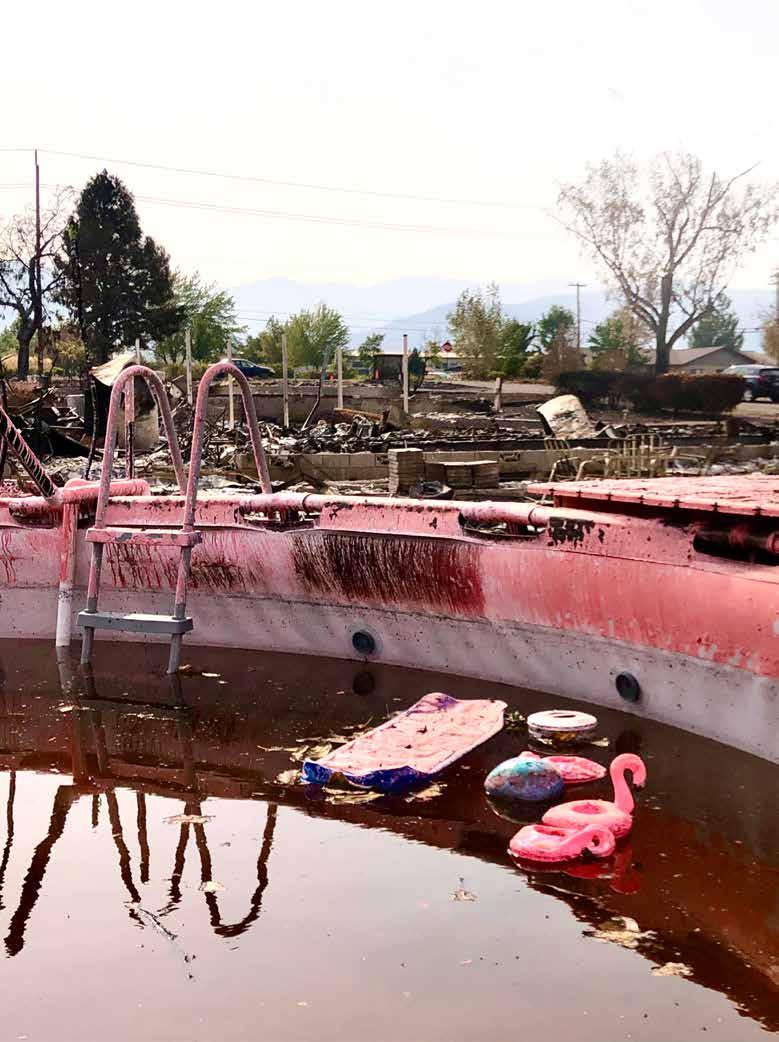
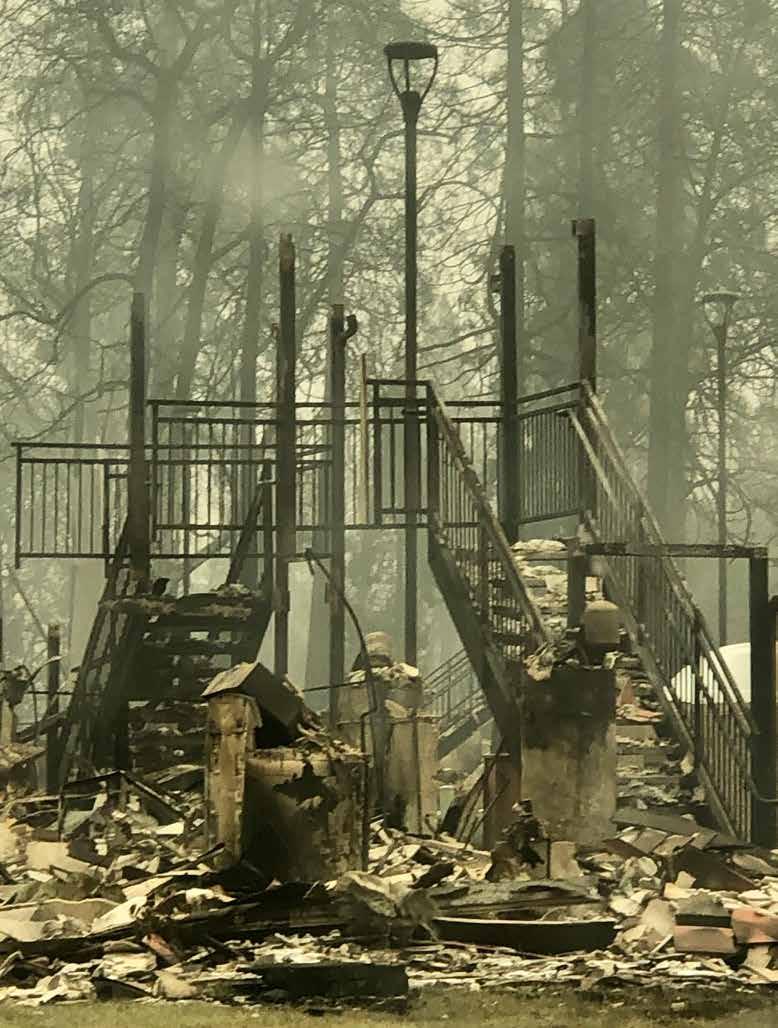
Two-thousand structural firefighters from 179 agencies were responding to five megafires and a dozen others around Oregon before the Almeda fire started. No extra resources were available. The fire ate up bike shops, an auto repair business, a Burger King, half of one of the fire department’s stations. Neighborhoods were flattened. Skeletal staircases climbed to nothing. Photos by Jennie Englund.
“I brought you a present.” Dave lined four perfect peaches on our kitchen table. Then, he went to bed.
He slept for a couple of hours. When he got up, he said things like “Colver Road.” And “Mobile Estates.”
Were these places that didn’t make it? I minimized my questions. The more I ask, I told myself, the less he’ll be able to process his own thoughts.
As the day went on, Dave was quieter, more withdrawn.
“What did you save?” I did ask, because the answer was a lot, and I wanted him to see it — the proof was right there on areal footage on TV. But he didn’t see it; he saw what he didn’t save, what he held himself responsible for not saving.
Five heavy days later, the sky was orange, and
Ashland’s air quality was 495 — hazardous — from the Labor Day weekend fires, Oregon’s historically deadliest and most devastating.
It was Dave’s 49th birthday; he’d taken off the shift during vacation-bidding rounds nearly a year before.
“Wanna go on a drive?” he asked. The offer was a trip to his station to wash Almeda from his turnouts.
I took it.
Colver Road. He wanted me to see it, I didn’t know why. Was it an exceptionally hard loss? Homes he had responded to? Citizens he knew?
On the way to the station, Dave was required to show his badge at checkpoints and roadblocks staffed by the National Guard and the Department of Transportation.
“It’s still a crime scene,” he told me. “It could’ve been arson. No one’s been arrested yet. They’re preventing looting, too.”
Police and sheriff vehicles wove through empty streets.
We drove past mounds of melted metal, rubble and soot. The fire ate up bike shops, auto repair, a Burger King; it swallowed half of one of the fire department’s stations. Custom homes, rentals, middle-class and working-class neighborhoods were flattened.
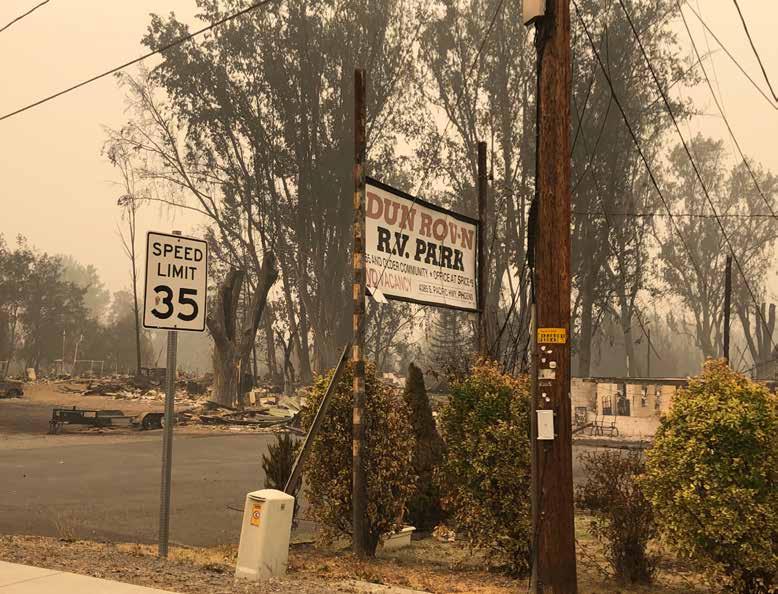
The sign sagged over the wreckage of an RV park that seemed to have never existed. “No Vacancy.”
Up the road, skeletal staircases climbed to nothing.
A hunched man watered his fence. Just in case.
“Some people stayed here, they never left,” Dave sighed. “They’re still here.”
By the Minute Market, Urban Search and Rescue (USR) teams stood out in their white helmets, puffy suits against the gray wreckage around them.
“Body count,” Dave said.
I felt like telling him, ‘They don’t belong here,’ but I didn’t belong there either.
“Colver Road,” Dave repeated.
We couldn’t get in; the street was barricaded. I wouldn’t see what he wanted me to.
Along Highway 99, water was being restored. Utility crews pulled power lines from wreckage, re-strung them between poles in the haze.
“The bees made it!” Dave was uncharacteristically ecstatic about a Hymenoptera swarm. He took a picture — proof of life.
At the station, as Dave put in his laundry, I watched a relief crew from Portland hosed off their rigs.
“They came from the Obenchain Fire,” a District 5 captain explained. “You wash off where you came from; you leave that dirt behind.”
A half-eaten breakfast burrito wilted on the station
counter. I sat at the kitchen table with the guys I’d known for almost 20 years — C-shift — Dave’s shift, back on duty. And yet, I didn’t know them anymore. The fire changed them.
One guy in particular looked really worked over. A weightlifter who coached his kids’ baseball teams, I’d never seen him like this — beat down.
“Have you slept?” I asked, and though he said yes, I could tell it wasn’t true. Adrenaline, nightmares, and physical pain would make sleep impossible for a while.
“This looks like actual food!” An engineer, giddy over a donated salad, grabbed a box and joined the crew at the table: another engineer, two captains, a few firefighters, and a seasonal hire who’d gotten more than he’d signed up for.
Help had final come. Out-of-area strike teams helped mop up hot spots. A crew from the northern part of the state helped run District 5’s calls — to cardiac arrest, nosebleed. A visiting officer vacuumed. Another rolled up an American flag.
The table talk was of cats — some missing, others found. And then, talk of blisters. Bruises.
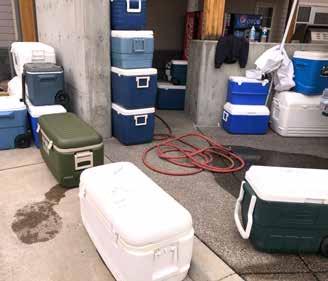
Not all a firefighter’s wounds, I reminded myself, are visible Some of these lives wouldn’t seamlessly continue. Things could fall apart — marriages, knees, health, community, even the department itself. No one was immune to the trauma, displacement, and physical, emotional and financial stress. The what ifs – terror, regret, blame, and grief – could stack like the coolers around the station.
Those coolers crammed the kitchen, the patio, the barbecue area; they covered counters and floors, leaning against every wall, spilling out toward the bay. Folks had brought them, with cookies and cards, candies and baskets, bell peppers from their gardens — how, with the road closures?
The coolers had stayed behind — boxy, burdensome, empty. Lurking. Unsettlingly permanent.
“No resources . . .” The talk of blisters and bruises prompted more about the fire.
“That was nonstop!”
“Those blackberry bushes . . . ”
“Colver Road . . . ”
“My feet hurt so bad!”
“How’d you get your boots to dry out?”
“No resources . . . ”
“Where’s your family staying?”
“The baby’s off his schedule.”
“Do you think you’ll move back when it’s rebuilt?
Where’s Dave? I wondered. I should leave the station to the crew, let them grieve and heal together, I thought. The crew was finally able to eat fresh food, to get off their feet, and I was as out of place as the USR team — all white suit, moon boots.
Thankfully, Dave walked in. “On the drive here,” he told C-shift, he’d thought about the houses they’d saved in the past. “Once, we put out those house fires, now it’s all for nothing.”
Heads nodded in unison.
“Well, let’s go,” Dave told me.
It was hard to know what I should say to the crew. I said the only thing I knew. “Look for the flowers. They’ll come back; I saw them last spring after Paradise.”
The crew knew Paradise, the site of the Camp Fire — California’s deadliest and most destructive wildfire. The blaze ignited less than two years before, only three and a half hours south.
The worked-over guy’s hope surprised me. “Really?” he asked. He wanted it to be true.
“Wild roses, hollyhock, poppies,” I promised.
A few months before Almeda kindled, I had stopped in Paradise on my way back to Oregon from Chico. I hoped to see recovery efforts and share them with the fire officer academy recruits I taught.
“Rebuilding the Ridge,” Paradise’s welcome sign pledged. An impeccable Taco Bell perched on perfect pavement beyond a patch of dirt. A few new frames dotted flattened
neighborhoods. Family camps cropped up under skeletal pines. The town had a long way to go.
But the fire hadn’t stopped spring’s arrival. Pinks, purples, yellows, reds pushed through char. Peony, snap pea, lilac, butterfly bush — I tucked the blooms in my memory.
In the hours, days, weeks, months after Almeda, crews reviewed, debriefed, detoxed, wrote reports, restored vehicles and equipment; they were offered physical examinations, peer support, equine therapy, massage therapy, cryo-therapy, meals, thank-you notes.
The cumbersome coolers were returned one by one to their owners, and the station’s counters became clear again, the stacks on the patio and against walls shrinking little by little.
Spring was months away. But it would come. In an extraordinary occurrence, Willamette daisies — pink, purple, white— would ring the Ashland Pond.

Jennie Englund is an award-winning author and veteran teacher whose work has appeared in literary magazines and news outlets. A Harvard Global Studies scholar in climate and culture, Englund is a National Endowment for the Humanities fellow and a Vashon Artist Resident alum. Englund’s memoir, Sap-Souled: A Personal History on Lake Tahoe, is forthcoming.
The authoritative platform used by agencies worldwide for their operational decision making and wildfire intelligence.
• Assess initial and ongoing incidents with real-time wildfire spread predictions using high-resolution data and advanced global models.
• Prepare in advance with daily wildfire risk forecasting, based on millions of simulations validated with actual fire behavior.
• Manage the entire lifecycle of an incident and exhance situational awareness with mobile-first capabilities and a multi-hazard common operational picture.

Learn more about our wildfire solutions for Fire Agencies.
BY ANTHONY WHITE
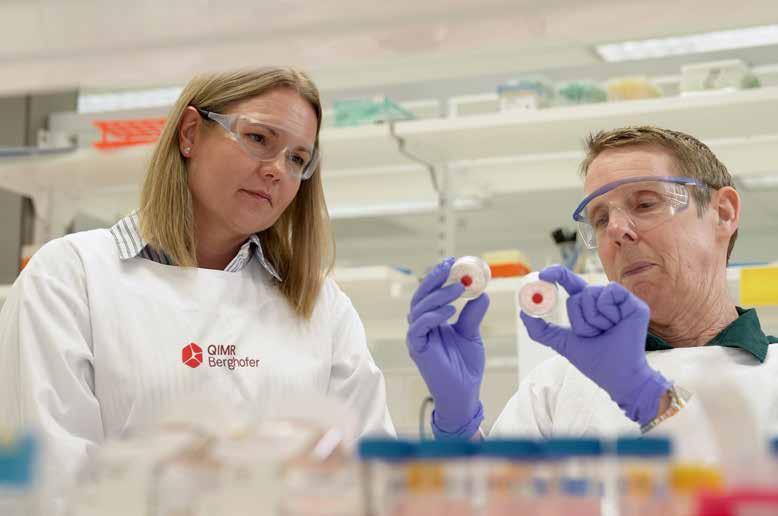
At a laboratory in Australia, researchers are trying to develop rapid, accessible tests that can protect firefighters, military personnel, and the wider community from the escalating health burden of wildfire smoke and polluted air.
The olfactory tissue, located high in the nasal cavity, directly connects the outside world to the brain, making it uniquely vulnerable to toxic particles in polluted air and wildfire smoke. By studying cells and molecular changes in this tissue, researchers can potentially identify early biological warning signs of harm before symptoms appear.
The team at the White Lab in the QIMR Berghofer Institute is pioneering the use of the nose as a frontline sensor of environmental harm. Using cutting-edge approaches such as stem cell-derived models, advanced imaging, and profiling of genes, and proteins, the lab investigates how air pollutants trigger inflammation, damage protective barriers, and accelerate risks for neurological diseases such as Alzheimer’s, Parkinson’s, and motor neuron disease. This work is helping to establish olfactory tissue as a powerful, non-invasive biomarker source for
monitoring exposure and predicting long-term brain health impacts.
Where there’s fire, there’s smoke, and our noses have been reading that signal for millions of years. Smell is one of our most primal senses, hard-wired to memory and survival. Fire first burned on Earth about 360 million years ago and has been shaping animal, and then human, behaviour ever since.
In Australia, for example, bushfire smoke awakens Gould’s long-eared bats, and fat-tailed dunnarts from rest, triggering escape behaviours. Other species detect smoke and fire in different ways; birds of prey follow smoke columns for hunting opportunities, while fire beetles actively seek out burnt wood to lay their eggs. By about 300,000 years ago, humans were managing fire themselves. For Indigenous cultures across the planet, fire and smoke became a part of seasonal rhythms and land stewardship. Cultural burning practices were designed not only to manage vegetation but to protect biodiversity, including giving animals time and cues to move
away from danger. For many early people, the scent of smoke wasn’t just a warning, it was the smell of home. But in today’s climate, as wildfires become more frequent, intense, and prolonged, and smoke plumes drift across continents, what does the smell of smoke mean to us now? Can our noses still help us make sense of this modern environmental threat?
Smoke Pollution Alert – Public Health Notice : Air quality in your region has reached hazardous levels due to wildfire smoke. Children, elderly adults, and people with heart or lung conditions should stay indoors. Avoid physical activity outside. Use air purifiers if available. The smell of smoke may be present even when skies appear clear. We see alerts like these more often now. But why do we need such warnings? What’s in the smoke that makes it so dangerous?
Wildfire smoke is more than just the scent of burning wood, it’s a complex, shifting mix of thousands of gases and particles. Fine particulate matter (PM₂.₅) is especially concerning; these microscopic particles are small enough to bypass the nose and lung natural defenses and enter deep into the bloodstream. Mixed into this airborne soup are harmful gases such as carbon monoxide, formaldehyde, acrolein, and benzene, many of which are known to damage cells, irritate tissues, and disrupt bodily systems. The specific chemical makeup of the smoke can also change depending on what burns: forest, grassland, peat, or homes and vehicles packed with synthetic materials. This matters, as these pollutants can trigger asthma, bronchitis, and cardiovascular issues. They can damage blood vessels, and some have been linked to changes in brain function, increasing the risk of neurological disease with prolonged exposure. Our noses may register that familiar campfire aroma but science tells us it may be a toxic warning signal.
The nose is more than a breathing gateway, it’s a carefully tuned chemical detection system and our first responder to air pollution. As we inhale, air passes through narrow nasal passages lined with mucus and tiny hairs (called cilia) that trap particles and pathogens. But higher up, near the roof of the nasal cavity, lies a key tissue: the olfactory epithelium. This small, specialized patch of nasal cells contains olfactory (nasal) receptor neurons, cells capable of detecting thousands of different airborne molecules, including those in wildfire smoke. When these molecules bind to the receptors, they trigger electrical signals that travel directly to the brain’s olfactory bulb, bypassing many of the
filtering systems other senses rely on. This fast-track connection to brain regions controlling emotion and memory explains why the scent of smoke (and other aromas) can evoke vivid memories or instinctive fear. The nose also plays a frontline protective role, filtering harmful particles and engaging the immune system in response to what we inhale. In the context of wildfire smoke, this makes the nose not just a detector, but a biological barrier, and the first to suffer damage when we breath toxic air.
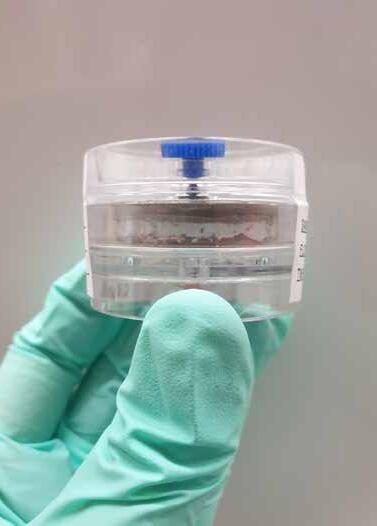
The nose doesn’t just react to smoke; it also records what’s coming in. Inside its delicate lining, wildfire smoke can leave behind markers of biological changes, like a molecular fingerprint of exposure. Researchers can potentially use this, turning the nasal passage into a powerful site for non-invasive health monitoring. Using simple tools like a nasal brush or swab, scientists can gently collect cells from the olfactory epithelium, the same region that detects smell. This is similar in practice to a COVID-19 nasal test. In some cases, specialists may also perform a nasal mucosal biopsy, using a small surgical tool under local anesthetic to collect a more in-depth tissue sample. Once gathered, researchers can apply techniques such as RNA (gene) sequencing, protein analysis, and microscopy to uncover how smoke is affecting cellular responses.
The nasal lining responds quickly to environmental insults, and wildfire smoke is no exception. When exposed, nasal cells may begin to express what researchers call biological clues (or biomarkers) –measurable signs that the body is reacting to harm. These clues can include inflammation signals like cytokines (inflammatory signal proteins released by cells), oxidative stress (free radical) markers, and DNA injury. In high-risk groups, these changes often show up earlier and more locally in the nose than in blood or lung samples, making nasal testing a potentially powerful, and accessible tool.
The brain is normally thought of as well-protected, shielded by a blood-brain barrier (a layer of cells that
frontline with limited respiratory protection, season after season. Military veterans, particularly those with past exposure to burn pits or combat environments, may carry additional respiratory and neurological vulnerabilities, especially when they transition into firefighting roles. But the risk is also wider. Children, whose lungs and brains are still developing, older adults, whose systems are more fragile, and people with asthma, cardiovascular disease, or diabetes, are all more sensitive to smoke, even at levels lower than what firefighters face.
That’s where nasal testing could make a difference. By identifying early biological changes in the nose, scientists may be able to detect exposure impacts before damage becomes irreversible. These tests could help guide rest periods, determine when a responder needs support, or help families make informed decisions about smoke exposure in high-risk regions.
The idea is simple: a quick, low-cost test using a nasal swab that could reveal whether smoke exposure has begun to take a toll on your body, before you feel sick. This could be done in clinics, field stations, or potentially as part of mobile testing units deployed during major fire seasons.
Researchers are developing tools that can read inflammatory markers, stress signals, and other biological clues in nasal tissue to understand how smoke exposure is progressing. The goal is to offer real-time feedback for those on the front lines, and early reassurance (or warning) for the broader public.
With climate change driving longer fire seasons and heavier smoke loads, early detection could become a cornerstone of future health response, and the nose, the unlikely frontline of wildfire resilience.
Protecting ourselves from wildfire smoke starts at the source. Indigenous cultural burning has long
offered a safer, smarter way to reduce fuel loads, protect biodiversity, and minimize smoke intensity. Supporting these methods, alongside prescribed burns, forest restoration, and land-use reform, helps tackle the problem before it reaches our lungs.
For those on the front lines, modern protective tools, from high-quality respirators and improved shelter infrastructure to air quality monitors and ventilation systems, are crucial. Researchers are also exploring nasal sprays, filters, and anti-inflammatory treatments to help reduce harm where exposure starts.
At the public health level, early warning systems, clear air-quality messaging, and potentially even nasal-based health testing could offer communities more agency and real-time decision-making during fire season. By protecting the nose, we may be able to help safeguard the brain, lungs, heart, and future health of those most affected by our changing air.

Anthony White obtained a PhD in neuroscience from Murdoch University in 1996, then undertook a postdoctoral position at University of Melbourne investigating dementia and related disease. He then worked at Imperial College of Medicine, UK, in 2001 studying immunotherapeutic approaches to infectious prion diseases. White obtained a federal government fellowship (2004-2008) and established a research group at the Department of Pathology, University of Melbourne investigating the role of metals in brain disease and development of metal-based drugs for treatment of these disorders. White received a federal government Future Fellowship in 2011, was recruited to QIMR Berghofer Medical Research Institute in 2016, and was awarded an NHMRC Senior Research Fellowship in 2017. White’s research has contributed to the development of first-in-class metal-drugs as a potential new therapeutic approach to treat motor neuron disease. He is currently developing new human patient-based models of neurodegeneration and has established a new research direction examining the impact of wildfire smoke on the human brain.
SUBARU BELL 412EPX
The most reliable work trucks are transformed and reborn year after year for decades. When you’re fighting wildland fires from the sky, critical moments require experienced and renewed solutions. The upgraded transmission of the new 412 EPX provides 11% more shaft horsepower at takeoff, resulting in a 15% boost in the hot and high hover. Add in an unprecedented increase for internal, external and cargo hook with 1100 payload pounds added. Proven operational readiness now with more payload, more firemen and women, more water…and more power to fight fire.
bell.co/publicsafety
BY ERIC EVERSON
I recently had the good fortune of taking part in the International Association of Wildland Fire’s mentoring program.
I was just a year into my role as science communications specialist with the North Atlantic Fire Science Exchange, which is part of the Joint Fire Science Program’s Fire Science Exchange Network.
I had mentored young professionals in my many years with the National Weather Service. In the IAWF mentoring program I was randomly paired with Max Levy, who at the time was working on a wildland fire hand crew for the state of Idaho.
To help ensure this six-month mentor-mentee partnership would work for both of us, we were encouraged to have a get-to-know-each-other meeting. That meeting took place on May 29. You are probably wondering about the relevance of the date to the mentoring program and this story. Well, toward the end of our initial productive meeting, during which we agreed to work together over the next six months, I happened to mention that it was my birthday. Remarkably, Max said it was his birthday too. I said we couldn’t be twins because I already have a twin sister, but we could be triplets. And Max
countered with the incredible fact that he too was a twin – having a twin brother. What are the odds we would be randomly paired, hold a meeting on our shared birthday, and find out we both had twin siblings? I remember saying we definitely had to work together. And that is exactly what we did.
In our initial meeting, Max indicated he was very interested in community preparedness and resilience. He already had a solid knowledge base on the topic but wanted to expand on it. He also wanted to learn, in general, about experiences others had on wildfires. I knew this was going to be one of my favorite aspects of the mentoring program because I would be learning just as much from Max as he would learn from me.
My background was not in community preparedness and resilience, but I did serve 22 years as an incident meteorologist working on wildfires across the United States. Another aspect of our partnership that I was excited about was that we agreed on the importance of helping other young professionals. One of the goals of the Joint Fire Science Program is to ensure we support the next generation with their growth and knowledge of the fire and forestry community. Even though I worked with the fire and forestry
community in my roles with the North Atlantic Fire Science Exchange and the National Weather Service, my eyes were opened at a National Cohesive Strategy Workshop as to just how many entities are connected to this community. Max felt strongly we should ensure young professionals are aware of all that is out there for them as they decide on potential career paths. Thus, our goal was to create a resource document with relevant information for a variety of users by the end of our six-month commitment.
Max and I would typically meet once or twice a month, catch up on life and work, share wildfire stories, and talk about the resources we were adding to our document. The document was filled with relevant resources on several topics that would benefit the fire and forestry community, especially young professionals.
Our six months went by quickly and our document was complete. But the story does not end there,
thanks to Max’s leadership. Max wanted to take our project to the next level and turn our resource document into an online web resource. And so, our partnership continued beyond the required six months.
Over the next four months, amongst life conversations and career advice, work was done to create the Wildland Fire Resources Library –https:/wildlandfire.org/. The library is a centralized hub for the wildland fire community, providing access to valuable resources, opportunities, and information. The content focuses on building community resilience and providing a starting point for young professionals to gain further knowledge of the fire and forestry community. The core topics that can be found on the site include community resilience, fire information, smoke monitoring, climate and weather resources, student assistant programs, employment opportunities, wildfire training, and fire and forestry groups. We welcome

your thoughts about the resource we have put together.
I am grateful the IAWF offers the mentoring program. Young professionals, now more than ever, would greatly benefit from your leadership and guidance. And it will be a wonderful learning experience for you too.
Working with Max has helped in my role with the North Atlantic Fire Science Exchange. For that I am extremely lucky and glad I do not have to consider Max as a mentee, but rather a friend.
I am also happy to report Max worked on a helitack crew for the Washington Department of Natural Resources this season, and I look forward to hearing and sharing more wildfire stories with him.
Please check out the IAWF mentoring program at www.iawfonline.org (under What we do) and consider making a difference. It can be every bit as good as our May 29 experience!

Eric Evenson is the science communications specialist for the North Atlantic Fire Science Exchange. Evenson spent 33 years with the National Weather Service, which included stops in Maine, Montana, Missouri, Idaho, and Vermont. For 22 years, Everson served as an incident meteorologist, communicating critical fire weather information at large wildfire incidents. As an incident meteorologist, Evenson was part of the training cadre and mentored trainees. As a lead forecaster with the National Weather Service in Burlington, Vermont, Everson was part of the fire weather team communicating and coordinating with the local fire and forest community. In addition, Everson served as the National Weather Service liaison to the fire science working team of the Northeast Forest Fire Protection Commission. Everson has always enjoyed sharing and communicating scientific information to the fire and forest community and is excited to continue that work by serving those in the North Atlantic Fire Science Exchange region.





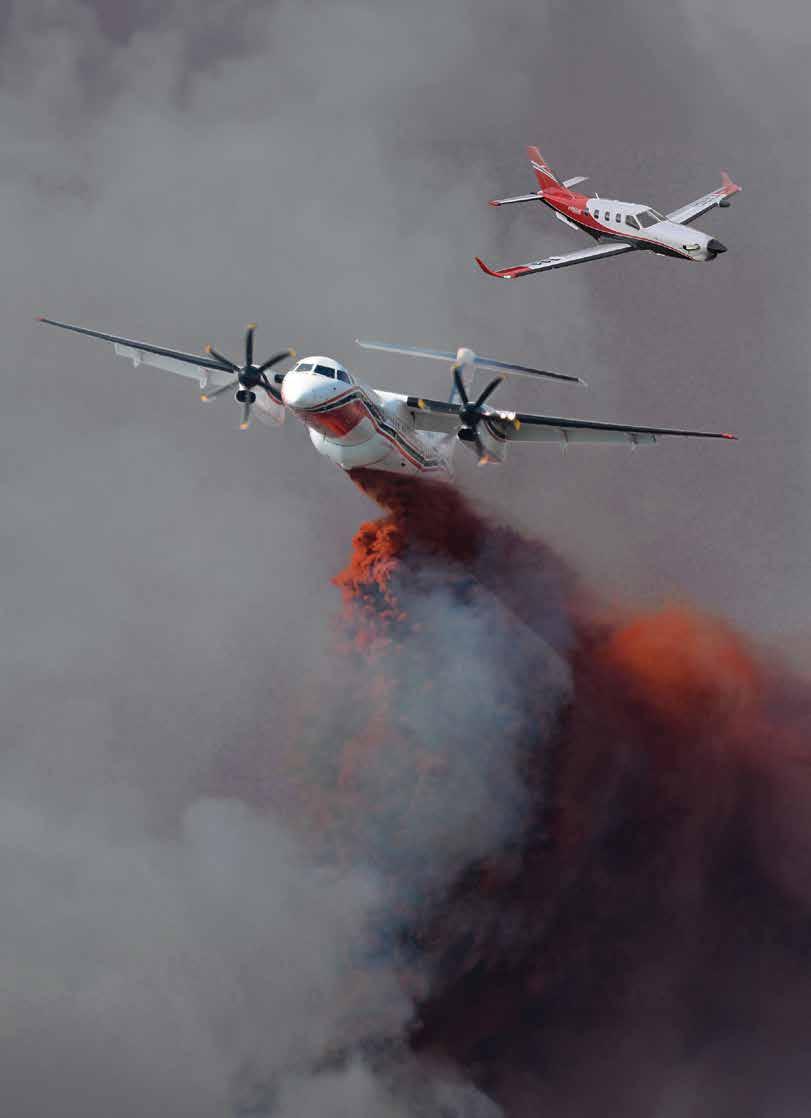
A tactical team of aerial firefighting aircraft for fast and effective operations. Innovating for a sustainable future.
BY JAN SUDMERSEN AND DETLEF MAUSHAKE
Germany is a little smaller than California but has almost twice as many people, about 84 million. Though the country is densely populated and industrialized in large areas, about 30 per cent is defined as forest land – half the trees are conifers – and 50 per cent of Germany’s land mass is used for agriculture. There is a lot of vegetation.
A first glance at available data shows no real wildfire problem in Germany, but the country faces more wildfires and an increase in fire intensity. In addition, wildfires on military ranges with unexploded explosive ordinance (UXO) contamination from two world wars and the training areas used during the Cold War create significant problems.
Fires on UXO-contaminated areas are difficult to fight considering that ground forces must stay away 1000 meters from the fire because of the imminent risk of exploding UXOs; the use of aircraft is hampered by
the high altitude at which they must fly, for the same reason.
The long-lasting drought from 2018 to today – which resulted 2022 being the first real fire season in Germany with several large campaign fires – has led to predictions that the fire regime and fire behavior from the Mediterranean areas will extend slowly but steadily north in the next 20 to 30 years or even sooner.
In Germany, fire suppression is generally provided by municipal fire departments. Beside the armed forces fire service there are no federal- or state-owned fire resources due to Germany being decentralized by the allies after the Second World War.
Most fire departments are volunteer – there are about one million volunteer firefighters and just 30,000 paid firefighters in Germany. There are also 330,000 members of the Jugendfeuerwehr, fire explorers for young people from age 10 to 16.
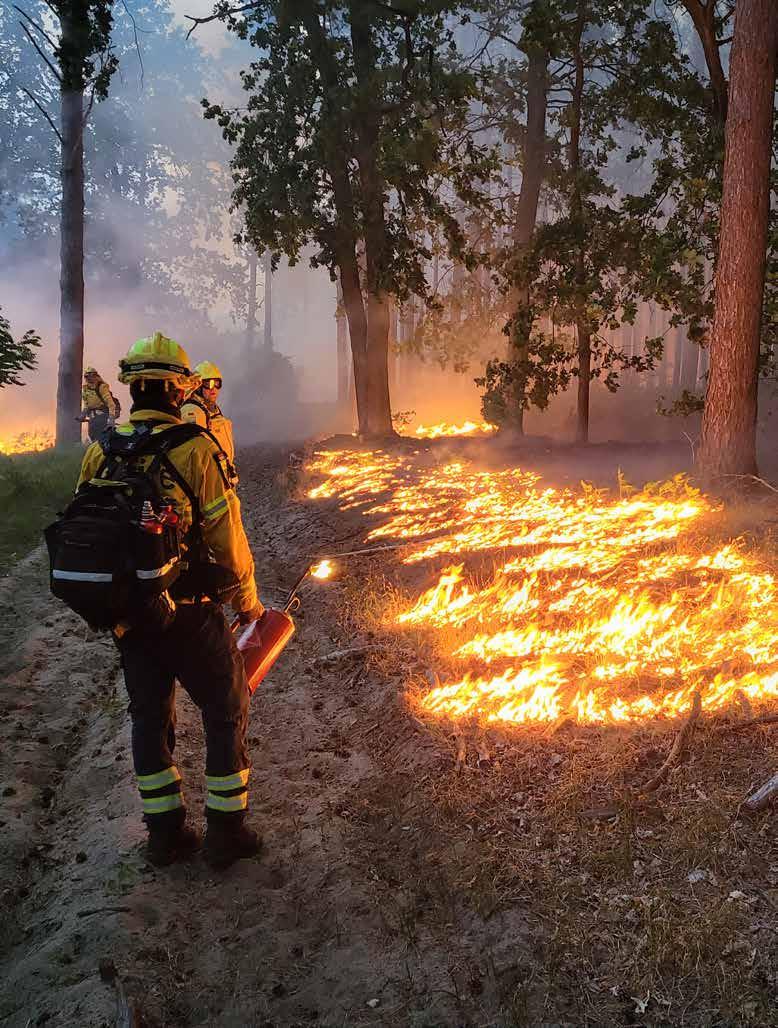
Wildfires on military ranges with unexploded explosive ordinance (UXO) contamination from two world wars and the training areas used during the Cold War create significant problems.
Wildland fire tactics rely heavily on the use of fire engines and tenders, of which there are 40,000 in Germany; specialized brush trucks are still rare and not standardized. The use of handlines exceeding the capability of water shuttle operations is one of the main reasons firefighters lose a lot of battles. A new training curriculum was put together by a working group over four years that offers guidance in the use of LACES (Lookouts, Anchor Points, Communication, Escape Routes, and Safety Zones) and safe tactics as a base for the general firefighter in Germany.
Regarding air operations, there is only one fixed wing (a PZL 18 Dromader on seasonal contract in one county) and helicopters must be ordered from the army, police or contractors – if they are available, and even if they are, there may be a two-to-six-hour response time. The same applies to heavy equipment such as dozers, which are not commonly used or even considered by incident commanders.
The concept of an autonomous working handcrew is not known to the German fire service so far, because there are simply none (yet). Although many fire departments purchase hand tools such as Pulaskis and combination tools like the Gorgui, members are not sufficiently trained to cut handlines for a prolonged time, and there is no utilization of tactical fire.
Predicting the need for specialized units such as handcrews, the non-profit @fire was founded in 2002, followed by Waldbrandteam in 2015; both are non-governmental, independent organizations. The founding teams collected a lot of experience and knowledge from internships with several handcrews and fire services in the United States, Canada and Southern Europe.
Coming from outside the traditional fire services (even though the majority of the members in both NGOs are firefighters too), we were mostly considered rogues in the beginning; this did not stop us from continuous networking and providing wildland fire training for hundreds of fire departments (there was no specialized wildland fire training available until 2020), which resulted in
more acceptance and integration. Both organizations built an international network, trained members according to international standards such as those of the U.S.-based National Wildfire Coordinating Group, and sent them on internships to gain experience – without any federal funding and by 100 per cent volunteering. Both NGOs have the status of fully accepted civil protection measures by German law.
During the 2022 fire season our NGO-handcrews were requested for several deployments, which clearly pointed out the need for specialized handcrews in Germany. Feedback from the fire departments working with the NGOs on the 2022 fires was positive given the fact that the work was in conjunction with local
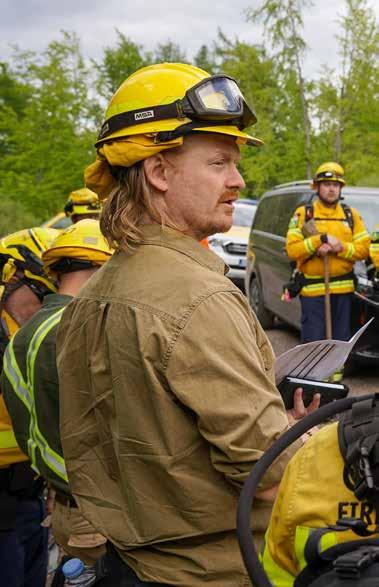
resources and that the experience was also for training and an exchange of experiences.
In the aftermath of the 2022 fires, things started to shift. Being Germans, the focus was on purchasing specialized fire trucks, a discussion that resulted in a new variety of brush fire trucks based on the French medium forest fire tanker trucks, but again with no nationwide standardization.
Finally, post-2022, some fire departments started to build specialized units similar to handcrews, following the example of the NGOs. Being asked for advice and training for these units, Waldbrandteam
and @fire developed and published a guideline for handcrew capacity building https://www. at-fire.de/veroeffentlichung/fachempfehlungloeschmannschaften/ (Fachempfehlung Löschmannschaften).
Applying National Wildfire Coordinating Group standards adapted to the German and European setting, we defined two types of handcrews: Type A and B.
Type A handcrews mainly support engine crews with long-distance hoselays and mop-up operations. The idea is that these crews are widespread regional teams organized and founded at the county level with limited
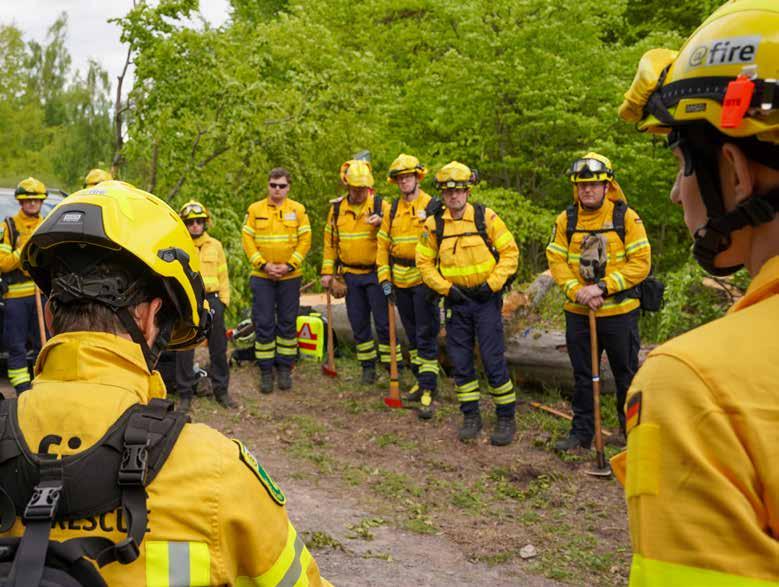
training and equipment, so that they are easy to build and to maintain.
Type B handcrews are essentially copies of National Wildfire Coordinating Group Type II Initial Attack crews made for working autonomously, nationwide and even internationally. This requires:
• Adapting fitness standards (pack test, work capacity test)
• Language capabilities (everybody must speak English)
• (Online) NWCG courses: NWCG S-100/130/190/270/ L-180, S-211 and S-212
• Field days or even weeks depending on the level of expertise and training to harden the knowledge
• Personal gear including a line pack
• International deployment preparedness (vaccines, cultural awareness, safety and security)
• Building a tool and logistics cache
• Being self-sufficient for at least 24 hours
• Training with their own tools, but also knowing tactics and tools in Europe
Both @fire and Waldbrandteam are in the process of establishing Type B handcrews.
Type A handcrews: There is a growing number of fire departments interested in building Type As. The NGOs, @fire and Waldbrandteam, are building a network, mentoring, and training these new crews. Both organizations are also supporting state fire academies, forestry units and helicopter companies in establishing
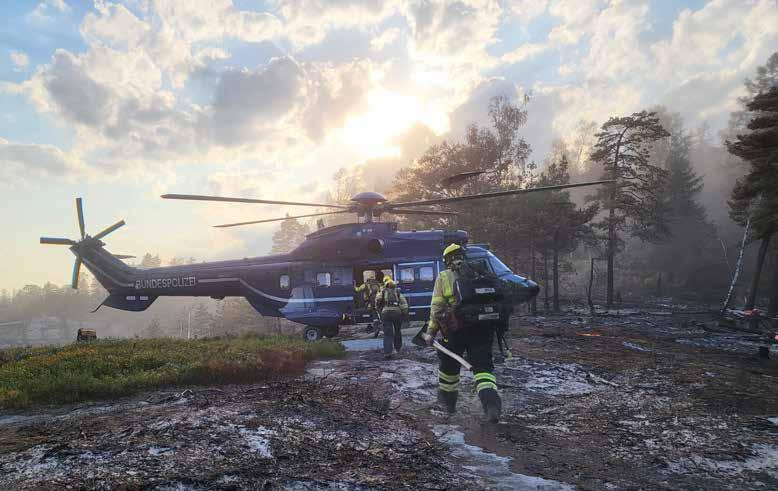
The concept of an autonomous working handcrew is not known to the German fire service so far, because there are simply none (yet).
specialized training to work with the handcrews.
Type B handcrews: The NGOs can deploy their own Type B crew, or a combined crew from both @fire and Waldbrandteam. There is some discussion about incorporating and cooperating with qualified personnel from larger fire departments and applying to become a certified module of the European Union Civil Protection Mechanism.
Besides funding, the biggest challenge in building the handcrews is to provide (volunteer) members with firsthand training, and then to gain experience on the fireline. It is very difficult to explain the idea and goals plus the structure of the NGO crews to governmental agencies abroad. Often the combination of the terms NGO and volunteers lead to a break in communications and the misunderstanding that that there is a lack of professionalism due to this combination.
A big step forward was the signing of a memorandum of understanding with CalFire in 2024; @fire was given the opportunity to attend classes and send some members to internship with various handcrews.
At this point, the NGOs are reaching out to the international wildland fire community looking for more possibilities for training and internships.
Seeing the numbers in Germany you might think that there is a deep conflict between paid and volunteer firefighters, because if you have enough volunteers, you just don’t need paid firefighters.
Honestly, we can’t claim that conflict doesn’t exist. But, beside our passion for wildland fire fighting, we both are members of paid and volunteer fire departments and from our experience, we regularly see the synergy
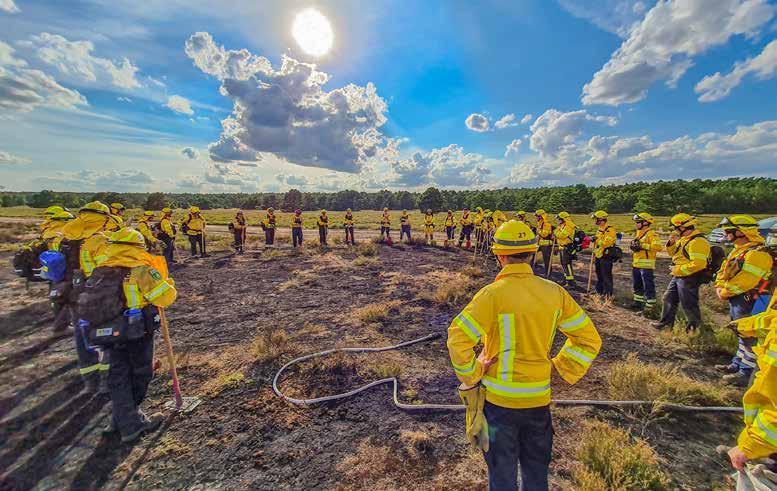
of those systems working together. Not only are volunteer fire departments very successful at providing fire protection for most German communities, but there is also a large number of combined fire departments, where paid firefighters provide the initial response and volunteer firefighters provide manpower at bigger events and specialized units with backup for the full-time, career firefighters. It works!
Beside using volunteers in supporting roles, volunteer handcrews – well trained (to the same standards!) and led by experienced crew captains – could be valuable assets in initial attacks and structure defense, especially in large-scale events or intense fire seasons where resources are stretched.
Volunteers are not a substitute for paid, full-time crews because of their limited availability and limited deployment length of 24 to 72 hours.
We are aware that there are many more points for or against this idea, so we invite you to open your mind and discuss it.
What would Ben Franklin (or, in Germany, Conrad Magirus) think of implementing volunteer handcrews to protect their communities?
Jan Südmersen is division chief for the City of Osnabrück Fire Department and the founder of @fire Germany.
Detlef Maushake is a captain with the City of Salzgitter Fire Department and the founder of Waldbrandteam. Maushake was the recipient of the 2019 IAWF Firebreak Award for Excellence in Wildfire Management.
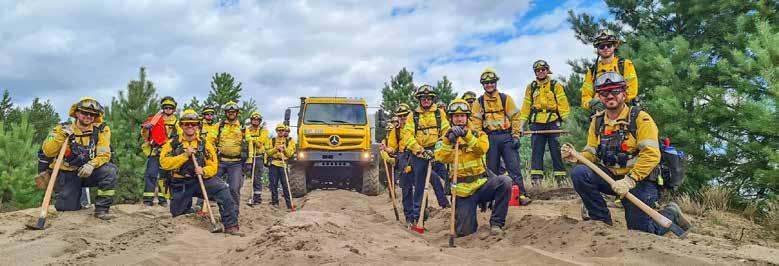
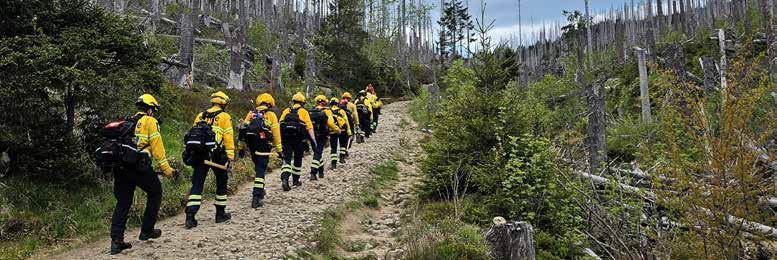
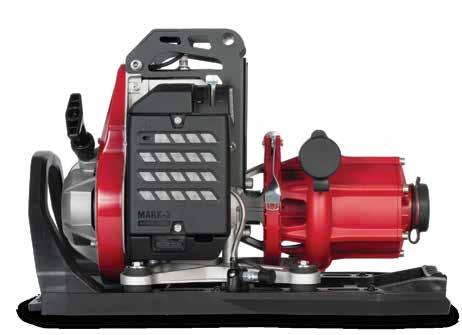
The MARK-3® Watson Edition carries forward the legacy of the original MARK-3® with cutting-edge innovation. Precision-engineered for maximum performance, it’s built to deliver unmatched power-to-weight ratio and reliability in the most extreme conditions. Trust the pump that wildland firefighters have relied on for decades—now reimagined for the challenges of today and tomorrow.
BY MICHAEL SCOTT HILL
While being briefed pre-season on changes to the wildfire staff for U.S. federal resource agencies, I realized that many people don’t understand the United States Department of Agriculture Forest Service and Department of Interior AD system.
We’re called ADs but few people realize the acronym stands for Administratively Determined; we’re the hidden resource of federal fire response, the steady backbone that helps to staff federal resource agencies on emergencies year after year. ADs are managed by local federal administrative units but deployed to assist on federal responses to nationwide emergency events.
In the early days of the Forest Service’s responses to local wildfires and other emergencies, employees were often required to wear two hats. One of the hats was a person’s primary job, such as being a ranger or forester; the other role was crew boss or fire engine operator.
The Forest Service was young and many of its remote offices were far from each other. At times, extra help would be hired and brought from nearby communities to assist with fire emergencies; the extra personnel were released from employment once the need passed.
This loose emergency-responder militia structure, with its ability to swell by accessing the Forest Service’s professional but non-fire workforce and then bring in contract people quickly afterwards, is unique. Having worked around other international fire agencies and the military in Afghanistan, my sense is that the flexible fireresponse militia is a hidden strength for the Forest Service and its related federal agencies with wildfire response commitments.
Neither the US military nor other international fire agencies can deploy such an efficient, low-paid workforce, coiled and ready to respond at a moment’s notice, to the range of wildfire and national emergencies to which the Forest Service’s ADs respond and then quickly fade back into the civilian landscape. Indeed, even US National Guard members do not deploy as frequently as the federal ADs, nor do they face the range or volume of risks that ADs regularly experience.
The idea of an AD workforce that is deployed then quickly released when no longer needed is built on a labor force supply of retired, or separated, federal employees who maintain their federal response qualifications.
Many people believe all ADs are retired employees with full federal retirement benefits; some ADs fit that description. However, others who became ADs had left their federal employment for various reasons then began working as ADs, making annual salaries of only tens of thousands of dollars, with no retirement or other benefits from the Forest Service or its sister federal agencies, while being sent to the front lines of federal emergencies more often than most US military units.
I have been in the AD ranks for years and have helped to save countless communities and lives from wildfires; I’ve also served with US military forces overseas in war zones. I have seen how US military service members are honored for taking sometimes only a fraction of the risks experienced each summer by many ADs and other federal forces, who are on call for the Forest Service, risking their lives and potentially damaging their health during national emergencies.
The official guidance for land management agencies supports AD hiring to:
1. Cope with a sudden and unexpected emergency caused by a fire, or extreme fire potential, flood, storm, or any other all-hazard emergency that threatens damage to federally protected property, has the potential to cause loss of life, serious injury, public health risk, or damage to natural or cultural resources unless brought under immediate control.
2. Provide emergency assistance to states under formalized agreements.
3. Meet mission assignments issued by the Federal Emergency Management Agency (FEMA).
ADs fill in seamlessly at the side of federal and state employees on the front line of federal disaster responses. ADs staff many federal incident management teams organized to provide leadership in emergency response. ADs manage firefighting crews, conduct federal aviation operations, and fill in elsewhere, often having advanced skills and qualifications.
ADs face the flames and other dangers including floodwaters, often right next to the active federal employees but without the security net of retirement benefits, job protections or decent annual salaries, while cumulative health damage takes its toll on the future quality of our lives.
Being an AD has its benefits. As temporary on-call federal employees, ADs can feel part of the federal emergency response force while still going about our normal lives and finding regular employment. We are free to take assignments for which we are available, and we have the freedom to decline those for which we are not. We can use and hone skills and qualifications developed during lengthy careers in various aspects of federal emergency response. Many ADs enjoy the comradery of the work, the travel it offers, and the satisfaction of assisting during emergency responses.
The Forest Service’s AD world has experienced challenges. In 2017, there was a push at the national level to terminate the ADs hired locally by USFS units, seemingly due to cultural changes as a new generation of management began to fill gaps left by Baby Boomer retirements. In
response to this 2017 push, the USFS relationship with its ADs became formalized.
Post 2017, as ADs were a federally deployed national resource, some local AD managers began to view as unnecessary the extra work it took manage the ADs.
In some cases, local AD managers began to prune their AD ranks, even going outside federal polity to do so. As there is no mechanism for ADs to file complaints against their full-time federal managers, many ADs walked away. Because there is minimal employment protection for ADs, their sponsorship can easily be terminated, even after years of service.
During this era, policy was enacted requiring ADs to live in the same geographic location where they were sponsored by an AD unit. The policy, combined with the new management culture, resulted in the loss of many experienced ADs.
In some cases, managers have seemingly put personal projects ahead of long-practiced policy. One example was someone who wanted to make the fire ground safer and championed a formalized medical screening process for ADs to ensure they were fit enough to go to the firelines. In theory this was a great idea that could save lives. However not all ADs have health insurance, and the screening policy resulted in the loss of many more good ADs.
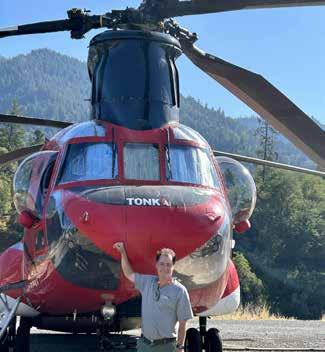
There is talk within the Forest Service about reorganizations and staffing cuts. My purpose for writing this piece is to ensure ADs are not forgotten as the federal resource agency’s hidden force multipliers. ADs, with their knowledge and federal emergency qualifications, are and have long been a valuable part of the federal work force. I would argue that if the AD role remains during any reorganization of the US federal wildfire efforts, the framework of AD management in place since 2017 should be reviewed.
In my opinion, ADs should be offered some buffer as temporary federal employees so they can activate the federal grievance system if necessary. I also believe the geographic location hiring rule for ADs should be discarded, as ADs are used by the Forest Service at the national level.
Wildfire professionals who have given their lives to emergency response work – often at great personal cost –
deserve respect, fairness, and procedural integrity. When experienced ADs can be dismissed with no avenue for review, it sends a message that dedication and expertise count for nothing. In an updated AD program that serves our national goals, former ADs who have been removed from the program should be able to have their AD sponsorships reviewed and renewed at a national level, as we are national resources.
In return for their call-when-needed roles, ADs should be provided pay, protections and allowances equal to the risks they undertake. Thus, we should consider the simplest solution – to make the federal AD program national, based under one umbrella, or convert the program from individual ADs into a group of federal contractors who are employed by private companies. Then all the above concerns can be covered within the contract.
The AD system is and has always been of tremendous value to the whole of the Forest Service and related agencies. It’s time this loyal workforce is better understood, recognized and valued.