ISSUE 2 | 2026
UNITING THE GLOBAL WILDLAND FIRE COMMUNIT Y
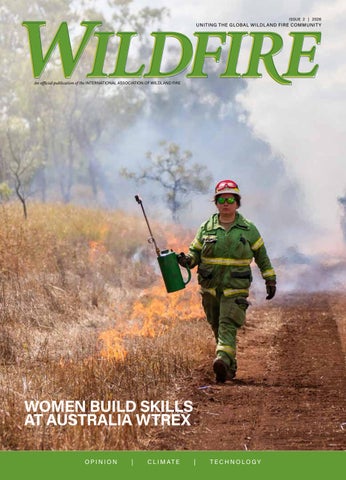
WOMEN BUILD SKILLS AT AUSTRALIA WTREX OPINION
|
C L I M AT E
|
T E C H N O L O Giawfonline.org Y
|
wildfire
1
ANYWHERE ANYTIME A GROWING FLEET TO FIGHT WILDFIRES Fast. Effective. Efficient. A reliable response every time.
aerofliteinc.com
NEWS AND OPINION
FIRELINE...............................................................................................5
OPENING OUR MINDS TO NEW IDEAS BY LAURA KING
PRESIDENT’S DESK..............................................................................6
GLOBAL WILDFIRES, INTEROPERABILITY, AND INTEGRATED FIRE MANAGEMENT
EDITORIAL Laura King managing editor laura@iawfonline.org
BY TREVOR HOWARD
THOUGHTS ON LEADERSHIP............................................................8
THE DARK SIDE
BY MICHAEL DEGROSKY
WHO GUARDS THE GUARDIANS?.......................................................10
AUTONOMY WITHOUT ACCOUNTABILITY IS A RISK WILDLAND FIRE CANNOT AFFORD
BUSINESS Mikel Robinson administration execdir@iawfonline.org Shauna Layton graphic design Century Publishing, Post Falls, Idaho
BY MICHAEL HILL
FEATURE STORIES COVER STORY
INDIGENOUS WOMEN BUILD SKILLS...................................................... 14
FIRST AUSTRALIAN WTREX PROGRAM DEVELOPS CONFIDENCE AND COMMUNITY BY DAVID BRUCE
ASSOCIATE EDITORS David Bruce (Australia) Scott Goodrick (United States) Michael Scott Hill (United States) Richard McCrea (United States) Lindon Pronto (Germany) Anthony Robert White (Australia)
PREVENTION AND MITIGATION
BEYOND FIRE SUPPRESSION..................................................................... 22
BUILDING WILDFIRE RESILIENCE IN THE INDIAN HIMALAYAS BY AMIT KUMAR VERMA
FIRE BEHAVIOUR UNDERSTANDING A CRTICIAL FIREGROUND SAFETY THREAT......28
OBSERVATIONS OF VORTICITY-DRIVEN LATERAL SPREAD IN A WILDFIRE BY RICK MCRAE
TECHNOLOGY
FIRE INTELLIGENCE..................................................................................... 34
USING CAMERAS AND ALLIED TECHNOLOGIES BY RICK MCRAE
WEATHER
THE IMPORTANCE OF INFORMATION..................................................... 40
CONNECTING RESEARCH AND OPERATIONAL NEEDS IN THE WILDFIRE COMMUNITY
BY SAMANTHA KRAMER, BRIAN POTTER, CRYSTAL MCCLURE, NATE BENSON, SHIHMING HUANG, AND MEGAN SCHILL
CLIMATE
BOARD OF DIRECTORS Bob Bale (United States) Trevor Howard (Australia), president Ciaran Nugent (Ireland), vice president Sarah Harris (Australia), secretary Tamara Wall (United States), treasurer Amy Cardinal Christianson (Canada) Meg Dolman (United States) Scott Goodrick (United States) Kerryn Little (United Kingdom) Claire Lötter (South Africa) Tiago Oliveria (Portugal) Mika Peace (Australia) Amber Lynn Scott (United States) David Shew (United States) Allistar Smith (United States) Vivien Thomson (Australia)
THE EMENY BELOW.................................................................................... 48
WHY THERE ARE PEATLAND FIRES IN NEW PLACES BY ANTON BENESLAVSKIY
COMMUNICATION
HOW ONE SCIENFIIC PRINCIPLE TANSLATES TO ANOTHER................. 54
USING INOCULATION THEORY TO IMPROVE WILDFIRE MESSAGING BY JOSH COMPTON
Cover: Angeline Thalasinos, with the Djandak Fire & Forestry in Bendigo, Victoria, participates in the Australia WTREX training event in Queensland in September 2025 (story page 14). Djandak Fire & Forestry is run by the Dja Dja Wurrung Traditional Owners and restores Country through traditional cultural burning and land management. Photo courtesy of Queensland Fire Department.
iawfonline.org
|
wildfire
3
AT-802F & 802F FIRE BOSS
Initial Attack Slows Fire Spread. Air Tractor AT-802F maneuvering agility, rapid climb rates, and compact size make it ideal for mountainous terrain, narrow flight corridors, and wildland-urban interface areas. Dollar for dollar, pound for pound, the AT-802F is the most efficient, effective air tanker flying.
Strike Early. Strike Fast.
F I R E LI N E
OPENING OUR MINDS TO NEW IDEAS BY LAURA KING
The variety of stories in this issue of Wildfire magazine is what we strive for in every edition. Rick McRae’s two pieces – on vorticity-driven lateral spread in wildfires (page 28), and the use of cameras to gather and process fire intelligence (page 34) – provide details about research and technology that help us stay current, better understand what’s changing in fire behaviour, and how to capture that knowledge. McRae is a regular contributor to Wildfire and his website – https://www.highfirerisk.com.au/ – is a treasure trove of information, insight and wildfire intelligence. Similarly, Beyond Fire Suppression, Building Wildfire Resilience in the Indian Himalayas by Amit Kumar Verma (page 22) provides an insightful overview of the use of technology to detect wildfires but the need to balance that with local knowledge and response capability. “Technology works best as a bridge between national monitoring and local action,” Verma says. “It should strengthen field judgement rather than replace it. A technically sophisticated platform has limited value if frontline personnel cannot access, interpret or act on its information.” Verma is convinced the Indian Himalayas can be more fire resilient by connecting national capabilities with local knowledge; a similar theme emerges in our cover story, about the fabulous Women-in-Fire Prescribed Training Exchange (WTREX) in Australia (page 14). This story by David Bruce, the IAWF program manager, looks at a research report about the Queensland-based training session and its impact on the 30 Indigenous women who participated. The Monash University researchers determined that the all-female training sessions helped the women gain confidence in their firefighting abilities, thereby strengthening the country’s wildland firefighting force. Comments from the participants about the value of women teaching – and inspiring – women support the WTREX model. The story also provides insight into the art of leadership and the importance of leaders understanding the people they’re leading, a theme in Michael DeGrosky’s Thoughts on Leadership column (page 8). DeGrosky is a relentlessly positive writer and a guru of leadership strategies and tactics; this time, though, his focus is toxic leaders and the dark side of the people in
charge of others. Remarkably, DeGrosky notes, research links toxic leaders and psychopathy – which includes abusive supervision, authoritarian control, manipulation and emotional unpredictability. DeGrosky offers practical actions to mitigate the risks of toxic leaders on page 9. Michael Hill, a longtime firefighter and leader in U.S. fire management agencies, builds on the idea of leadership accountability in his guest opinion column (pages 10-12). Hill, an associate editor of Wildfire magazine, considers the struggle by some U.S. forest fire managers with administrative oversight and the desire to have more authority. “The question is not whether fire managers are capable of exercising greater authority,” Hill says. “Many unquestionably are. The question is who ensures accountability once that authority exists.” The issue, Hill says, is who guards the guardians. A couple of other pieces in this issue provide great information for fire managers. Samantha Kramer and a team of researchers looked at the importance of weather information and how far in advance details are relevant (page 40). At a workshop in Boise, researchers and wildland fire managers considered what is important to the fire and fuels community three months before the fire season, one month before, and seven to 10 days before the fire season. The responses ranged from a desire for lots of lead time for information about precipitation, fuel moisture, wind, temperature and lighting well to help fire managers prioritize areas to pre-position resources, to the need for accurate, shorter-term reports to help develop public communication about conditions. Communication to the public can often be challenging. Josh Compton, a professor of speech at Dartmouth College, explores the inoculation theory of communication (page 54) as a way to help fire managers and organizations communicate important safety messages to residents in the wildland-urban interface. Keep an open mind when reading this piece!
Managing editor Laura King is an experienced international journalist who has spent more than 15 years writing and editing fire publications. She is the Canadian director for the National Fire Protection Association (NFPA), works closely with FireSmart™ Canada to help residents build resilience to wildland fire, and has participated in the development of the Canadian wildland fire prevention and mitigation strategy. iawfonline.org
|
wildfire
5
PR E SI D E N T ’S D E SK
GLOBAL WILDFIRES, INTEROPERABILITY, AND INTEGRATED FIRE MANAGEMENT BY TREVOR HOWARD
With increasing frequency and severity, we are seeing large-scale wildfires and cascading consequences across the globe. In the 2026 summer fire season in Europe, major conflagrations occurred in Mediterranean and southern regions with lives and properties lost across Portugal, Spain, France, Italy, Greece, Belgium, and Turkey. Albania, Germany and other countries have been affected, and the potential remains for more widespread conflagrations. Further north, Ireland and the United Kingdom had wildfires of a scale and complexity well beyond the historic norm. These wildfires were preceded by periods of rainfall and growth in vegetation in some areas while prolonged drought occurred in others, followed by significant and widespread heatwaves disrupting European economies and lifestyles and baking landscapes and vegetation. Across the Atlantic, Canada again experienced extensive wildfires in several provinces, impacting populated areas, remote and Indigenous communities, and vulnerable boreal forests. Over the border, the United States experienced a similar situation of escalating wildfire commitments and impacts, with many parts of the country in a state of high risk even if ignitions have not occurred. As with Europe, properties and lives have 6
wildfire
|
ISSUE 2
2026
been lost including fire crews and aviators. Indonesia, along with other parts of Asia, is dealing with major wildfire threats and impacts. Across all fire affected countries and continents, smoke accumulations and greenhouse gas emissions are disrupting more distant places as well as atmospheric dynamics. This situation is unsustainable. Formal instruments for cross-border and international assistance have been activated, including mutual response and coordination agreements within the European Union, and longstanding resource sharing arrangements among Australia, New Zealand, the United States and Canada for firefighters and incident management teams. Such agreements require many issues to be addressed including training, experience and qualifications, fitness standards, deployment conditions, fatigue and safety management, national polices and cost recovery. Even for well-established relationships – e.g. between Australia and the United States – cross-walking processes to align roles, skills, competencies and training continue to be reviewed and refined each year so the expectations of resource providers and recipients are met when firefighters and incident management personnel are deployed.
PR E SI D E N T ’S D E SK
The United Nations Global Fire Management Hub (UN Fire Hub), formed under the Food and Agriculture Organisation headquartered in Rome, established an Interoperability Working Group in 2025 that is tackling many current and emerging issues and making good progress. However, these challenges will be with us for a very long time and at different scales in different places. While some countries have relatively mature wildfire response and management arrangements, others are yet to develop, especially where large wildfires are a relatively recent phenomenon and fire services are localised rather than national. Many of the interoperability issues go well beyond highlevel agreements, intelligence and data sharing, and the like. Metropolitan fire services are generally organised, trained and equipped for structural fires, while forestry and park services have different cultures, equipment and skillsets for dealing with fires in vegetation. In some countries the military is involved, while the aerial firefighting sector also involves many corporations and private-public partnerships. The ability for different agencies and organisations to work together in planning and preparedness, and to establish command and control, develop operational strategies and tactics, deploy resources including aircraft for effectiveness and efficiency, and ensure the safety and wellbeing of their personnel, can be a significant challenge. This coordination requires mutual respect, communication at all levels, a common operating picture, training and exercising together, the ability to recognize and use specialist skills regardless of service or rank, and often long-term cultural change within each organisation. Fundamentally, wildfires occur in vegetation. The point of origin may be remote and in difficult terrain. Directly applying water to burning materials from hoses and trucks, as in metropolitan contexts with reticulated water supplies and hydrants, will only ever be practical at small scales, in accessible areas, and for the protection of built assets. Hose lays and sprinkler systems can be effective for protecting landscape features of significant value, especially in difficult terrain where water sources such as collar tanks (or flexitanks) can be inserted by helicopter, and water remains useful for mopping up smouldering materials. Aerial firefighting, whether dropping water and
suppressants on the fire edge, or retardants on unburnt vegetation, will always be limited by scale, cost, aircraft availability and proximity to refilling points. Even dry fire fighting, involving managing fuels using hand tools and earthmoving machinery to cut mineral breaks, separate areas of flammable vegetation, and create access for vehicles, has many constraints. While rapid fire detection and multi-agency emergency response are essential, as well as international and continental mutual-aid agreements, there will never be enough firefighters, water, trucks, aircraft and earthmoving equipment. Modern building standards and materials are also essential but do very little for historic towns, older suburbs, remote communities and disadvantaged populations. As global fire regimes change and conflagrations have bigger impacts, the lessons to be learned and the strategies needed are old, not new. The use of fire for strategic and tactical backburns, and to burn out fuels between constructed or natural breaks and the wildfire edge, remains a powerful tool for fire fighting in the right hands, but can be a significant risk without expert judgment and skills. Beyond fire fighting, the use of fire in the landscape for prescribed burning is essential for managing vegetation and fuels at a range of scales, as well as for learning and development so that firefighters and managers acquire a practical understanding of fire behaviour. After successive unsustainable wildfire seasons in Canada, there is now a national prescribed fire training program that is expanding its focus and program delivery nationwide. The UN Fire Hub is also actively promoting Integrated Fire Management so that all aspects of living with and managing fire in the landscape are given prominence, including prescribed burning and land management. To protect life, property and the environment from wildfires, we need to better manage the environment before wildfires start.
Trevor Howard is the national manager, prescribed burning strategy, with the Australasian Fire and Emergency Service Authorities Council (AFAC). Based at the Bushfire Centre of Excellence in Western Australia, Howard leads national capability development for prescribed burning and supports rural fire services, land management agencies and non-government organisations with continual improvement.
iawfonline.org
|
wildfire
7
T H O U G H T S O N LE A D E R SH I P
THE DARK SIDE BY MICHAEL DEGROSKY
When I was a leadership studies master’s student, faculty reserved the word leader for people doing positive, constructive things. My professors certainly weren’t alone. Indeed, models that most influence the practice of leadership almost exclusively treat leadership as an altruistic endeavor. But much has changed. Contemporary leadership scholars now acknowledge that leadership is not exclusively positive and constructive but also has a dark side. Understanding destructive leadership is now a significant research focus, and there is growing awareness that a range of harmful behaviors – collectively referred to as toxic leadership – is common in contemporary workplaces and has far-reaching negative consequences for people and organizations. Academically, the study of toxic leadership is an emerging sub-discipline and, frankly, it is a fragmented work in progress. However, the unfinished nature of the research should not prevent individual leaders or organizations from taking action to mitigate the risks posed by toxic leaders and leadership. Not all bad leadership is toxic leadership. An overburdened and stressed leader micro-managing a team is not leading well. An under-prepared leader emulating a poor role model is unlikely to succeed. These are examples of bad leadership, but they are not the persistent destructive behaviors of the Machiavellians, narcissists, and psychopaths who find their way into leadership roles. Stunningly, the research consistently associates toxic leadership and psychopathy, a personality trait characterized by manipulation, lack of empathy, and unethical behavior. 8
wildfire
|
ISSUE 2
2026
I like the framing of toxic leadership offered by Adbesi Inako Akinyele and Zinguang Chen who, in their 2004 article in International Studies of Management and Organization, call toxic leadership “a multi-faceted and destructive leadership style characterized by negative managerial techniques.” Behaviors associated with toxic leadership include abusive supervision, excessive authoritarian control, manipulation, and emotional unpredictability. Writing in Psychology Today in 2023, Ronald Riggio called out specific destructive techniques and tactics associated with toxic leaders, including abusing power to command and control, demanding unquestioning loyalty and blind obedience, creating fear, and manipulating dependent and unwary followers to do their bidding. Riggio, an organizational psychologist, is the Henry Kravis Professor of Leadership and Organizational Psychology at Claremont McKenna College in California. Other researchers have cited verbal abuse, bullying, gaslighting and other psychological manipulation, hoarding and centralizing power, and micro-management as characteristics of toxic leaders. The consequences of toxic leadership are wide-ranging for individuals and organizations. The research shows that people subjected to toxic leaders experience low morale, diminished job satisfaction, declining commitment and motivation, emotional exhaustion, stress that impacts physical and mental health, and burnout. Organizationally, toxic leadership in the workplace leads to declining productivity, teamwork, alignment, and ethical behavior, increased turnover, organizational dysfunction, and exposure to reputational and legal harm. As the understanding of leadership has improved, it has become clear that character is the bedrock of effective leadership. Writing in the October 2022 edition of
T H O U G H T S O N LE A D E R SH I P
The consequences of toxic leadership are wide-ranging for individuals and organizations. the MIT Sloane Management Review, Mary Crossan, William Furlong and Robert Austin call character “the foundation of all judgment and decision making.” Connecting the work of various scholars studying leader character and those studying the problem of toxic leadership, we can summarize toxic leadership behaviors as emanating from failures of character, arising from either deficiencies or excesses in important dimensions of character. While credible research suggests that psychopaths are over-represented in organizational leadership compared to the general populace, I do not want readers to think that all negative leadership is toxic leadership or that all toxic leaders are malignant narcissists and psychopaths; many are just regular people overwhelmed by the pressures of their responsibilities, struggling with burdens in other parts of their lives, or who have become intoxicated by the power and status of their position. For those people, Crossan frames toxic leadership not as an absence of character, but as character imbalances, allowing that even a leader whose leadership attempts have created a hostile workplace can be strong, perhaps even too strong, in one or more dimensions of character but deficient in others, leaving their strengths unsupported. This framing leaves open the possibility that struggling leaders, through character and leadership development, may become aware of their shortcomings and work to improve them. We must also look at toxic leadership through the lens of organizational culture. Toxic leaders cannot exist unless their organizations have, intentionally or unintentionally, created conditions in which their destructive behaviors go unnoticed or uncorrected. In organizations favoring short-term results over longterm sustainability, behaviors creating hostile work environments are often overlooked, enabled, or even encouraged. When high-level leaders model destructive leadership behaviors without consequence, others
emulate them, toxicity can become the norm and pervade the organization’s culture. What practical actions can we take to mitigate the risks that toxic leaders and leadership pose? I have four thoughts. 1. Individual leaders and organizations must recognize that leadership is a specific and essential skill set, with character at its core, for which organizations must recruit and hire, and that leadership must be developed and actively supported. 2. Organizations must purposefully and continuously prepare leaders with a focus on character and ethics through leadership development systems that prioritize empathy, accountability, and psychological safety. 3. Organizations should ensure that they have strong human resources practices, particularly recruitment, hiring, and promotion, with a focus on detecting toxic leaders already in the workplace as well as preventing them from entering the workforce and rising into positions of authority. 4. Every organization and organizational leader must actively attend to culture. Since no unified definition of toxic leadership or list of toxic leadership behaviors exists, organizations would be wise to identify and communicate unwanted leadership behaviors and be prepared to hold leaders accountable when those behaviors are detected. Mike DeGrosky is a student of leadership, lifelong learner, mentor and coach, sometimes writer, and recovering fire chief. He taught for the Department of Leadership Studies at Fort Hays State University in Kansas for 10 years. Follow Mike via LinkedIn.
iawfonline.org
|
wildfire
9
O PI N I O N
WHO GUARDS THE GUARDIANS? AUTONOMY WITHOUT ACCOUNTABILITY IS A RISK WILDLAND FIRE CANNOT AFFORD BY MICHAEL HILL
For most of my career in the U.S. federal government, I worked within a wildland fire organization that valued centralized leadership, standardized policy, and institutional accountability. Particularly within the U.S. Forest Service’s aviation program, our operating procedures were not simply administrative requirements – they were the accumulated lessons of decades of experience, many written in response to accidents, fatalities, and investigations. Every policy represented someone else’s hard lesson so that others would not have to learn it again. It was not a perfect system. No organization is. But it was a robust one. It provided consistency across forests, regions, and agencies while establishing checks and balances that protected both the mission and the people carrying it out. Lately, however, I have begun to see a different philosophy emerging. Recently, I sat quietly through a meeting involving the newly organized U.S. Wildland Fire Service and a tribal partner. While the discussion covered organizational relationships, what I heard beneath 10
wildfire
|
ISSUE 2
2026
the surface was something larger. Agencies are trying to define themselves in an increasingly complex fire environment while simultaneously seeking greater organizational independence: each wants more freedom to make its own decisions, establish its own priorities, and operate with less outside influence. That conversation reminded me of one I’d had several months earlier with a US Forest Service Forest assistant fire management officer; he described an effort within the Southern Region where some Forest fire management officers want to free themselves from the administrative oversight of their forests. The forest fire management officers’ reasoning is straightforward: they believe that only fire professionals truly understand the complexities of managing a local fire program. Therefore, they argue, fire managers – not line officers or administrative leaders – should have greater authority over fire operations and program management. At first glance, the argument is compelling. Wildland fire has become extraordinarily complex. Fire managers possess specialized knowledge that few
O PI N I O N
The question is not whether fire managers are capable of exercising greater authority. Many unquestionably are. The question is who ensures accountability once that authority exists. outside the profession fully understand. Fire managers often make critical decisions under extraordinary pressure, and many of them understandably become frustrated when administrative structures appear disconnected from operational realities. Greater autonomy can encourage innovation, accelerate decision making, and allow local leaders to tailor programs to local conditions rather than forcing every situation into a national template. But there is another side to the discussion that deserves equal attention. The question is not whether fire managers are capable of exercising greater authority. Many unquestionably are. The question is who ensures accountability once that authority exists.
One lesson I have learned over a career in public service is that organizations should never rely solely on the character of individuals, no matter how competent or well-intentioned they may be. Some leaders enter management because they genuinely want to improve their organizations. Yet history – both inside and outside government – shows repeatedly that concentrated authority, when left without effective oversight, eventually produces uneven outcomes. Sometimes those outcomes are relatively minor. Other times they affect careers, organizational culture, operational safety, or public trust. Checks and balances exist for precisely this reason. For decades, centralized administrative oversight served as a counterweight to individual authority.
iawfonline.org
|
wildfire
11
O PI N I O N
Policies, independent reviews, financial controls, aviation standards, safety boards, and multiple layers of supervision were not obstacles to good leadership. They were safeguards against human nature. They protected employees from favoritism, taxpayers from waste, and agencies from becoming collections of independent fiefdoms.
Wildland fire is entering an era that demands flexibility. Fire seasons are longer. Interagency coordination is more complicated than ever. Partnerships with tribes or First Nations, states, local governments, and nongovernmental organizations continue to expand. Local leaders need room to adapt. But flexibility without accountability is not resilience: it is vulnerability.
Many of those traditional structures are changing. As fire organizations become increasingly decentralized – whether intentionally or through organizational evolution – we risk creating administrative vacuums. Nature abhors a vacuum, and so do organizations. Authority rarely disappears; it simply shifts. Without carefully designed systems of accountability, oversight can gradually be replaced by localized power structures where policies vary, standards drift, and decisions become increasingly dependent upon the personalities of individual leaders rather than institutional principles. History offers no shortage of examples. Whenever centralized institutions weaken without replacing their oversight functions, authority tends to fragment. The result is often not greater freedom but the emergence of independent power centers, each operating according to its own priorities. In political history, these have been called warlords. In organizations, they become isolated kingdoms with little external accountability. That comparison may sound dramatic, but the underlying organizational principle is universal.
The debate should never be framed as centralization versus decentralization. Both have strengths. Instead, we should ask a more important question: How do we preserve the institutional safeguards that generations before us built while giving today’s leaders the flexibility they genuinely need? Every generation of firefighters inherits more than aircraft, engines, and equipment; we inherit organizational structures that were shaped by the successes, and often the tragedies, of those who came before us. If we dismantle those structures in pursuit of autonomy, we have an obligation to replace them with equally effective systems of oversight. Otherwise, we risk losing not only consistency but also the institutional integrity that has allowed federal wildland fire organizations to serve the public for generations. The issue is not whether local leaders deserve greater authority. Many do. The issue is who guards the guardians. That question has challenged governments, militaries, and public institutions for thousands of years. It remains just as relevant to wildland fire management today.
Michael Hill has worked as a hotshot, helicopter rappeller, smokejumper and fire aviation specialist within the United States fire management agencies. He is an Australian firefighter and has a strong background in worldwide contract military aviation. Hill is an associate editor for Wildfire magazine and hosts a YouTube channel at https://www.youtube.com/@ TalkingWildfireWithMichaelHill. 12
wildfire
|
ISSUE 2
2026
Wildfire intelligence that protects lives, land, and communities.
Mission-critical platform for wildfire risk intelligence and incident management.
TECHNOSYLVA.COM iawfonline.org
|
wildfire
13
TRAINING
INDIGENOUS WOMEN BUILD SKILLS FIRST AUSTRALIAN WRTEX PROGRAM DEVELOPS CONFIDENCE AND COMMUNITY BY DAVID BRUCE
A fire training program for Indigenous women in Australia has resulted in increased confidence and knowledge among participants, a broader network of colleagues, and a commitment to share ideas and techniques.
usually here at work, our ops are mainly males . . . and I get a bit nervous to ask, can I help out or try to do this stuff? I feel like I’m going to get criticised or judged or if I do something wrong, I’m going to get into big trouble.”
The 12-day Australia Women-in-Fire Prescribed Training Exchange (AUS WTREX) in May 2025 was evaluated by researchers from Monash University in Melbourne and included interviews with participants.
AUS WTREX participants gathered in North Queensland and burned in both the savannah and rainforest landscapes; they shared their knowledge, built their skills, talked about their challenges, and supported each other as fire practitioners.
The evaluation report, First Nations women, cultural fire knowledge, wellbeing and memory, includes comments from some of the 30 First Nations women who participated in the program. Participants are identified in the report by number rather than by name. “You’re around other women and they always push you and they show you new things that you didn’t know, and they didn’t degrade you if you didn’t know, or if you didn’t know an answer you could ask that question,” said Participant 8. Participant 16 agreed that the majority-women program created a comfortable environment. “I just felt it was just amazing being in there because
The WTREX program, from its beginnings in North America, has resulted in the growth of an international network of women in fire management. WHY AUSTRALIA? Following the destructive bushfires of 20192020 across eastern and southern Australia, the Royal Commission into National Natural Disaster Arrangements highlighted the potential of cultural burning to reduce fuel load and risk and to offer cultural and ecological benefits. The Australian WTREX event, hosted by the Queensland Fire Department and Queensland Parks
Zoe Schultz, researcher with the National Indigenous Disaster Resilience project through Monash University in Melbourne, and Abby Gonzalez, originally from Mexico and is now with Karuk Department of Natural Resources in California. Gonzalez was a participant in the Women-in-Fire Prescribed Training Exchange (WTREX) event in Karuk and then helped with the Queensland training. All photos courtesy of Queensland Fire Department. 14
wildfire
|
ISSUE 2
2026
TRAINING
“First Nations women are driving incredible initiatives to protect community and Country, but they are often doing it without adequate support. This research proves that investing in culturally supportive, women-led programs isn’t just a win for gender equity – it directly strengthens our national workforce on the frontline against climate disasters.”
iawfonline.org
|
wildfire
15
TRAINING
and Wildlife Service, provided an opportunity for researchers to document and evaluate how such initiatives brought a cultural benefit to First Nations women working or volunteering in Caring for Country, and fire- and land-management roles. Caring for Country is an Australian Indigenous worldview – the understanding that if you look after Country, Country will look after you. (Country is a term often used by Indigenous peoples of Australia to encompass lands, waters, seas and skies, and the relationships held within Country; this means that if Country is sick or unwell, the people connected to Country are also sick or unwell.) The WTREX evaluation report highlights the profoundly positive impacts of a culturally responsive professional development program on First Nations women. The report was compiled by Monash University’s National Indigenous Disaster Resilience (NIDR) project and funded by Natural Hazards Research Australia. The research team was led by associate professor Bhiamie Williamson, a Euahlayi man and academic in
Indigenous disaster resilience, and included Nell Reidy, Zoe Schultz and Jess Walters. Canadian researcher Amy Cardinal Christianson advised the team; Christianson is Métis from northern Alberta and an IAWF board member. Prescribed Fire Training Exchanges (TREX) were developed by the North American-based organization Fire Networks for intensive, hands-on training. In 2015, some female fire managers who participated in a TREX event in North Carolina adapted the program for women, and there have since been WTREX events in the United States, Canada, Portugal and South Africa. In 2022, the first Indigenous women’s WTREX was hosted by the Karuk Tribe in the Klamath Mountains of northern California – the first time in more than 200 years that the Karuk people had been able to conduct cultural burning on their ancestral lands. Four Indigenous Australian women from Queensland – Chloe Swiney, Kylee Clubb, Evelyn Ivey and Alex Lacey – were supported by their workplaces to participate in
Mary Hawes, California State Parks, Isabel Bodnar, a British Columbia forester, and Kaitlyn Booth, with Queensland Parks & Wildlife, during the Australia Women-in-Fire Prescribed Training Exchange event. Participants incidated in a research survey that working with women with various experience helped them recognize their own potential and gave them confidence to ask questions during training.
16
wildfire
|
ISSUE 2
2026
TRAINING
the Karuk WTREX; it was their first experience in such a program, and it inspired them to bring WTREX to Australia. Lacey, a Ewamian woman and Undara Volcanic National Park ranger, is a co-author of the report along with Swiney and Lacey, and the Monash team. In the report, Lacey describes the event as life changing. “To have worked with my sisters in fire to bring AUS WTREX to life, and then to see the powerful effect the program has had on other Indigenous women and firefighters from across the world, fills me with pride that we contributed to this growing international network of empowered Indigenous women in fire.” TWELVE DAYS WITH FIRE ON COUNTRY In Queensland, the women enhanced their fire practitioner skills and shared cultural and western burning knowledge. The participants, who ranged in age from 19 to 60-plus, came from a range of
professions and workplaces, including fire and land management roles within government agencies and Traditional Owner corporations. (Traditional Owner corporations are legal entities representing Indigenous Peoples who hold traditional rights and responsibilities to a specific area of land and waters (Country).) Participants learned about incendiary burning, native plant species, the history of savannah and rainforest burning from Traditional Owners, took up roles in the incident command system, and practised traditonal Indigenous weaving with a range of materials. Researchers used interviews, participant journals, and participant observation to evaluate the program, specifically looking at how First Nations women-led spaces and cultural knowledge exchanges impact wellbeing and memory. According to the researchers’ report, there was a shared passion among the women toward culture and fire, with some participants describing cultural burning as cleansing. Deeper messages also emerged related
Aneeka Jackon, with Djandak Fire & Forestry in Bendigo, Victoria, participated in the 2025 AUS WTREX, the first Women in Prescribed Fire Training Exchange to focus on Indigenous participants.
iawfonline.org
|
wildfire
17
TRAINING
to experiences of sexism, fear-based relationships with fire, and the impacts of colonisation and government laws, policies and practices on individual and family wellbeing. The AUS WTREX participants spoke to researchers about the program as a safe and supportive space alongside other women in fire; this sentiment was particularly significant for those who said they were often the only woman, or the only Indigenous person, in their workplaces. “The whole [AUS WTREX] program was really a big discussion of what challenges as women we face,” said Participant 3. “ . . . women in the fire service [are few], but Indigenous women, even [fewer],” said Participant 5. The research report indicates that participants became more confident through the act of teaching others. “When I was there, I think it made me realise I actually know a lot of the stuff, especially the fire stuff,” said
Participant 16. “It built me with a lot of confidence in wanting to go and be more than just an operational ranger, which I’ve been for most of my working career, and wanting to go into those even more male-dominated spaces,” said Participant 1. Participants exchanged knowledge about different burning techniques, learning from women who practice cultural and western-style burning across varied landscapes throughout Australia and overseas. Some participants said they were in awe of other Indigenous women who conduct aerial burns from helicopters. “So, they were incendiary burners and they’re young women, young Aboriginal women that are doing this. And it’s like, wow, look that they’re out there in the choppers doing incendiary burnings,” said Participant 4. A SAFE, SUPPORTIVE PROGRAM The evaluation found that the AUS WTREX program was
Jessica Rosado (Evergreen Fire Recue, Colorado), Abby Barrios Gonzalez (Karuk Deptartment of Natural Resources, California) & and Zoe Schultz, research fellow with Monash University’s National Indigenous Disaster Resilience program, during AUS WTREX. Research by Schultz and her colleagues shows that investing in culturally supportive, women-led programs strengthens the national workforce on the frontline against climate disasters.
18
wildfire
|
ISSUE 2
2026
TRAINING
highly valuable, providing a safe and supportive space for First Nations women to build confidence, step into leadership roles, and exchange critical fire skills. Swiney, the manager of bushfire mitigation for the Rural Fire Service Queensland and one of the event organisers, said the program went far beyond traditional training. “By bridging the gap between western hazard reduction and cultural burning, the program allowed women to protect cultural heritage while fostering deep personal healing and lifelong professional networks rooted in shared lived experiences,” Swiney said. “For many, it was their first opportunity to participate in a cultural burn or use their skills to protect cultural heritage. “The impact went beyond networking and skills development. These women found companionship within a workforce that can be challenging and isolating for First Nations women. They returned to their communities changed and empowered, though the
real challenge now is ensuring their workplaces actually recognise and value their expertise when they return.” The researchers said they hope their report provides a practical framework for the wider emergency management sector; they believe the evaluation demonstrates that investing in targeted, culturally supportive programs directly strengthens workforce capability and wellbeing. The report concludes that as Australia faces increasingly complex climate challenges, learning from this model offers government agencies a clear pathway to building a more inclusive and resilient frontline workforce. Schultz, the lead author of the evaluation report and a research fellow with the National Indigenous Disaster Resilience program, said that while gender equity has improved in fire and land management, targeted professional development and support for First Nations women remains scarce. “While some programs recruit young women into
Instructor Maura O’Connor with The Nature Conservatory North America Fire Team, from Brooklyn, New York, and WTREX participant Ivana Fuller, with Queensland Parks & Wildlife.
iawfonline.org
|
wildfire
19
TRAINING
the fire sector, specific professional support for First Nations women already on the frontline is virtually non-existent,” Schultz said. “As Australia faces more frequent and severe fires and floods, we cannot afford to ignore such a highly capable and valuable part of this workforce. “First Nations women are driving incredible initiatives to protect community and Country, but they are often doing it without adequate support. This research proves that investing in culturally supportive, women-led programs isn’t just a win for gender equity – it directly strengthens our national workforce on the frontline against climate disasters.” Swiney – speaking in the report as a representative of supportive partner organisation Rural Fires Service Queensland – said she hopes the program has a strong future in Australia.
“AUS WTREX created a space for connection, learning, and knowledge sharing, grounded in respect for culture and Country. I hope this research helps inform and inspire First Nations women in fire, recognising this is just the beginning of something much bigger.’’
David Bruce is the program manager for the International Association of Wildland Fire and is based in Melbourne, Australia. He works closely with the IAWF executive director on all IAWF activities including conference organisation, board and committee governance, and communications. He edits the Wildfire Today/Fire Aviation online news site and manages the association’s social media accounts. Previously, David was communications manager for Natural Hazards Research Australia, the Bushfire and Natural Hazards Cooperative Research Centre, and the Bushfire CRC.
Kylee Clubb with the Rural Fire Service Queensland (Tinaroo Rural Fire Brigade), one of the AUS WTREX coordinators. Rural Fire Service Queensland comprises 28,000 volunteer members who make up the 1,400 rural fire brigades.
20
wildfire
|
ISSUE 2
2026
David oversaw the development and implementation of the branding and communications of these organisations and led a small team managing publications, online media, stakeholder relations, media relations and events. He is on the IAWF Communications Committee and is an Associate Editor of Wildfire magazine, produced by the International Association of Wildland Fire. His working life began as a journalist and news editor with Melbourne’s daily broadsheet The Age and News Limited’s community newspapers, and later as the Communications and Media Manager at Monash and Deakin universities.
RUR
S E R VI
W
FIRE
C
AL
iawfonline.org
|
wildfire
21
E
NS
PR E V E N T I O N A N D M I T I G AT I O N
BEYOND FIRE SUPPRESSION BUILDING WILDFIRE RESILIENCE IN THE INDIAN HIMALAYAS BY AMIT KUMAR VERMA
22
wildfire
|
ISSUE 2
2026
PR E V E N T I O N A N D M I T I G AT I O N
Each spring, smoke rising above the Himalayan foothills signals the return of a familiar emergency. Forest departments mobilize crews, communities protect homes and grazing areas, and public attention turns briefly toward fire. Once the monsoon arrives, however, the urgency often fades. This seasonal cycle has encouraged a response system built primarily around detection and suppression. Those functions remain essential, but they are no longer enough. Climate change is intensifying this challenge. Warmer conditions, irregular precipitation and longer dry periods can extend the window during which litter and vegetation are dry enough to burn. At the same time, road access, tourism, grazing, biomass collection and other human activities create numerous opportunities for ignition. The resulting fire risk is shaped by the interaction of climate, fuels and people. Acting only after ignition addresses just one part of the problem. The challenge is particularly complex where forests, villages, roads and livelihood activities occur within the same landscape. Fire-management decisions must therefore consider not only vegetation and weather but also local dependence on forest resources, access for firefighting crews and the capacity of institutions to maintain preventive measures. These conditions make the Indian Himalayas an important setting for integrated approaches that connect scientific risk assessment with practical field action and community preparedness. The Indian Himalayan foothills form a highly diverse transition from the low-elevation Shiwalik ranges to the middle Himalayas; they combine steep and dissected terrain, highly variable weather, scattered settlements, subtropical broad-leaved forests and extensive chir pine (Pinus roxburghii) landscapes that support water security, biodiversity, fodder, fuelwood and local livelihoods. The wider Indian Himalayan Region covers approximately 53.3 million hectares (131.7 million acres) – about one-sixth of India’s geographical area – and extends from these foothills to temperate broad-leaved and conifer forests, alpine landscapes and the cold trans-Himalaya. Fire activity is concentrated mainly at lower and middle elevations during the dry pre-monsoon season. Data
reported by the Forest Survey of India (FSI) in the India State of Forest Report (ISFR) show that five Himalayan states and Union Territories collectively recorded 106,067 Suomi National Polar-orbiting Partnership Visible Infrared Imaging Radiometer Suite (SNPP-VIIRS) forest-fire detections during the five fire seasons from 2019-2020 to 2023-2024. 2023-2024, of which 37,152 were in 2023-2024 alone. The figures represent satellite detections rather than an equivalent number of individually verified wildfire events. Himalayan forest fires are predominantly small, patchy and fast-moving surface fires that spread through dry pine needles, leaf litter, grasses and understory vegetation; they are generally of low to moderate intensity, although strong winds, steep slopes, prolonged drought and heavy fuel accumulation can produce rapidly spreading, higher-intensity events. Ground fires and large, stand-replacing crown fires are comparatively uncommon. Fire in this landscape is therefore more than an operational problem: it is an ecological and social risk that develops long before ignition and continues well after the flames are extinguished.
FROM RESPONSE TO RESILIENCE Wildfire resilience does not mean eliminating fire from every forest. Fire plays different ecological roles across Himalayan vegetation types, and no single management prescription can be applied equally to subtropical pine forests, moist broad-leaved forests and high-elevation ecosystems. Resilience means reducing the likelihood that fire will become destructive, preparing institutions and communities to respond safely, and enabling affected landscapes to recover without creating new vulnerabilities. Building resilience requires a year-round cycle: assessing risk, reducing hazardous fuels in priority locations, preparing crews and communities, detecting and responding to fires rapidly, evaluating their impacts, restoring affected sites and incorporating lessons into future planning. Suppression remains an essential part of this cycle, but it should not be its sole organizing principle.
Smoke and flames over a Himalayan pine landscape during the pre-monsoon fire season. Photo by Amit Kumar Verma. iawfonline.org
|
wildfire
23
PR E V E N T I O N A N D M I T I G AT I O N
MANAGE FUELS STRATEGICALLY The accumulation of dry litter and understory biomass can increase fire intensity and make access difficult. In chir landscapes, fallen dry needles – locally known as pirul – are often treated as the most visible component of the fire problem. Yet complete litter removal is neither practical nor ecologically desirable. Forest litter protects the soil, conserves moisture, reduces erosion and contributes to nutrient cycling. A better approach is targeted fuel management. Priority areas may include settlement edges, roadsides, evacuation routes, firelines, frequently burned slopes and locations with a high probability of ignition. Fuel breaks must also be maintained rather than merely created. The northern state of Uttarakhand has attempted to connect fuel reduction with local livelihoods and renewable-energy development. The state’s Policy for
Power Generation from Pine Leaves and Other Biomass 2018 encouraged the collection and use of pine needles as feedstock for decentralized energy projects. More recently, the Pirul Lao-Paisa Pao initiative introduced financial incentives for local people to collect dry pine needles and deliver them to designated collection centres. These programmes illustrate how hazardousfuel reduction can be linked with community participation, rural income and productive biomass use. Such initiatives, however, depend on reliable collection centres, safe working practices, affordable transportation, sustained demand and viable processing facilities. Pine-needle removal should therefore be concentrated in strategically selected high-risk areas rather than promoted as indiscriminate forest-floor clearance. Briquettes, compost, livestock bedding, handicrafts and energy production may provide supporting markets, but reducing fire risk should remain the primary objective; commercial utilization is an enabling opportunity, not a universal solution.
Forest staff and community members participating in pre-season fire preparedness or fuel management. Photo by Amit Kumar Verma.
Oak trees dominate the local fuel types.
24
wildfire
|
ISSUE 2
2026
PR E V E N T I O N A N D M I T I G AT I O N
PUT COMMUNITIES AT THE CENTRE Many Himalayan fires are first detected, and often initially addressed, by people living near forests; their knowledge of access routes, water sources, wind behaviour and previous fire locations is operationally valuable. Community participation, however, should extend beyond calling volunteers after a fire has started. The Sitlakhet model in Almora district, Uttarakhand, illustrates a preventive, community-based approach. Local groups in the Syahi Devi–Sitlakhet area have worked with villagers and other stakeholders to encourage the timely and safer management of oan – the customary burning of dried weeds and agricultural residues during field preparation – before the peak fire season. The initiative also promotes village-level awareness, early reporting, fire-line maintenance and coordinated local action. The Sitlakhet model demonstrates how traditional practices can be reorganized to reduce the risk of escaped fires while strengthening community responsibility for surrounding forests. Such participation must be planned and adequately supported. Villages need clearly defined roles, locally understood warning systems, basic safety training, protective equipment and reliable communication with forest officials. Joint mapping can identify assets at risk, safe assembly points and priority locations for fuel reduction. Women, pastoralists, forest-dependent households and young people should be included because their knowledge, exposure and capacities differ. Community engagement must never expose untrained residents to fast-moving fires on steep slopes. The objective is a supported partnership in prevention, preparedness, early reporting and safe initial action – not the transfer of institutional responsibility or hazardous firefighting duties to local communities.
TECHNOLOGY AS A BRIDGE TO ACTION Satellite-based alerts, weather information, geographic information systems and mobile communication have transformed wildfire monitoring in India. The Forest Survey of India (FSI) plays a central role through
its Near Real-Time Forest Fire Monitoring system. Fire-hotspot data detected by NASA’s Moderate Resolution Imaging Spectroradiometer (MODIS) and SNPP-VIIRS sensors are initially processed by the National Remote Sensing Centre and subsequently processed by FSI to generate location-based alerts for state forest departments and registered users. The Van Agni Geo-portal also provides access to active fire detections, large-fire events, fire-prone areas and forest-fire danger information. These systems can reveal recurring hotspots, support the tracking of large fires and help managers prioritize field verification and resource deployment. Their value, however, depends on what happens after an alert is generated. Information must reach the relevant forest beat quickly and be translated into patrol routes, crew positioning, fuel-treatment priorities and requests for additional support. Satellite alerts have operational limitations. Detection depends on satellite overpasses and can be influenced by cloud cover, fire size and the accuracy of forest-boundary information. Alerts must therefore be verified through field observations and local communication rather than used as the sole basis for tactical firefighting. Technology works best as a bridge between national monitoring and local action; it should strengthen field judgement rather than replace it. A technically sophisticated platform has limited value if frontline personnel cannot access, interpret or act on its information; a simpler system embedded in routine decisions may contribute more effectively to timely and safe fire response.
RECOVERY IS PART OF FIRE MANAGEMENT The end of active suppression is not the end of fire management. Burned slopes may experience accelerated erosion, loss of soil moisture and nutrients, invasive-plant expansion, damage to natural regeneration and disruption of soil and water processes. Restoration should therefore begin with a rapid assessment of burn severity, slope, soil condition, surviving vegetation and regeneration potential. Not every burned area requires plantation; iawfonline.org
|
wildfire
25
PR E V E N T I O N A N D M I T I G AT I O N
lightly affected sites may recover effectively when protected from repeated fire, grazing and further disturbance. The post-fire eco-restoration model developed by the Indian Council of Forestry Research and EducationForest Research Institute for fire-affected subtropical pine forests places assisted natural regeneration at the centre of recovery. The approach protects surviving native seedlings and resprouting vegetation, improves microsites through mulching and soil-moisture conservation, and controls invasive plants that compete with natural regeneration. On erosion-prone slopes, contour or staggered trenches, small check dams and vegetative barriers can help slow runoff, retain sediment and improve moisture availability. Where natural regeneration is inadequate, carefully planned gap planting or seed-based restoration may be used to reintroduce site-suitable native trees, shrubs and herbs. Species selection should favour ecological compatibility, local diversity and resilience to future fire rather than simply increasing
tree numbers. Post-fire treatment should also reduce hazardous fuel continuity without completely removing the litter needed for soil protection and nutrient cycling. Recovery must be monitored over several seasons to assess plant survival, invasive-species recurrence, soil stabilization and the return of native diversity. These observations allow managers to adjust restoration measures and use each burned site as a source of learning for future prevention, preparedness and ecological recovery.
BUILD CONTINUITY, NOT CAMPAIGNS One of the largest barriers to wildfire resilience is institutional discontinuity. Research, funding and management activity often expand after severe fire seasons and contract when the immediate crisis passes. Short-term projects can generate useful maps, equipment and training, but lasting resilience requires sustained funding, dedicated personnel, maintained equipment, long-term monitoring and coordination among research institutions, forest departments, disaster-management agencies and communities. Standard operating procedures can help convert research and field experience into consistent practice. ICFRE-Forest Research Institute has developed forest-fire management standard operating procedures (SOPs) for five vulnerable forest types: tropical dry deciduous; tropical moist deciduous; tropical semi-evergreen; subtropical pine; and subtropical broad-leaved forests. The procedures recognize that prevention, preparedness, suppression and post-fire action must be adapted to differences in fuels, vegetation, terrain and ecological response. The value of SOPs depends on their field application; they should inform working plans, pre-season training, equipment allocation and post-fire reviews, and should be periodically updated using frontline experience and new research. Success should therefore be measured by more than the number of fires extinguished. Response time, hazardous-fuel
Graphic by Amit Kumar Verma.
26
wildfire
|
ISSUE 2
2026
PR E V E N T I O N A N D M I T I G AT I O N
treatment, community preparedness, firefighter safety, repeated-fire frequency, ecological recovery and the use of research in operational plans are equally important.
A SAFER HIMALAYAN FUTURE Fire will remain part of the Himalayan landscape. The practical question is whether each dry season will be treated as another emergency or managed through a continuous programme of prevention, preparedness, response, recovery and learning. The second path is more demanding because it requires coordinated action before smoke appears and sustained commitment after public attention has moved elsewhere. Moving beyond suppression does not diminish the courage or importance of frontline firefighters. It supports and protects them by reducing avoidable exposure, improving access to timely information and creating landscapes in which extreme fire behaviour is less likely. Strategic fuel management, community participation, satellite-based monitoring, locally adapted operating procedures, ecological restoration and sustained research must therefore work as parts of one system. The Indian Himalayas cannot be made entirely fire free, but they can become more fire resilient. By connecting national capabilities with local knowledge and turning lessons from each fire season into better preparation for the next, Himalayan states can move from repeatedly reacting to wildfire towards living with fire more safely and sustainably. Note: This article was completed before the tragic August 2026 floods and debris flows in the Nepal–Tibet border region, which affected steep Himalayan terrain comparable to that of the nearby Indian Himalayas.
Amit Kumar Verma is a senior technical officer at ICFRE-Forest Research Institute, Dehradun, India. His work focuses on forest-fire science, geospatial and machine-learning applications, fire-impact assessment, firefighting tools and safety equipment, and climate-driven fire vulnerability. Verma also contributes to research coordination, technical methodology development and capacity-building programmes in forest-fire management.
PRACTICAL PRIORITIES • Map risk at the local level and update prevention and response priorities before each fire season. • Reduce hazardous fuels strategically around settlements, roads, firelines and recurrent hotspots while retaining enough litter to protect soil and nutrient cycling. • Link pine-needle collection and productive use with safe practices, dependable markets and clearly targeted fire-risk reduction. • Strengthen community-based prevention and early reporting using lessons from initiatives such as the Sitlakhet model, without exposing untrained residents to hazardous firefighting. • Translate Forest Survey of India satellite alerts, fire-danger information and predictive models into rapid field verification, crew deployment and locally informed action. • Apply forest-type-specific standard operating procedures and assess post-fire recovery according to burn severity, erosion risk and natural-regeneration potential. • Prioritize assisted natural regeneration, soil and moisture conservation, invasive-species control and native gap planting where intervention is necessary. • Maintain trained personnel, protective equipment, institutional coordination, funding and ecological monitoring beyond individual projects and severe fire seasons.
iawfonline.org
|
wildfire
27
F I R E B E H AV I O U R
UNDERSTANDING A CRITICAL FIREGROUND SAFETY THREAT OBSERVATIONS OF VORTICITY-DRIVEN LATERAL SPREAD IN A WILDFIRE BY RICK MCRAE
In September 2024, the Airport Fire burned on a wooded range of hills that sits within the outer suburban areas of greater Los Angeles (Figures 1a and 1b). The fire did something both spectacular and remarkably dangerous. Field fire crews operating in hilly or mountainous terrain with forest, woodland, or perhaps even heathland fuels need to understand what happened, as do their supporting technical specialists and incident management team leaders.
Shortly after 10 a.m. the fire reaches that ridgetop. You discuss it with your crew. Suddenly the smoke goes dark and the flames become visible even though they are two miles away. The fire starts spreading sideways just below the ridgeline at right angles to the wind – straight toward your crew. In the next few minutes, you see spot fires starting downwind of this and running backwards uphill as well as upwind. The fires quickly merge.
Imagine you were a crew leader in the headwaters of the valley below and west of Santiago Peak. Sometime in the morning you would have seen smoke rise up as the fire burned onto the far side of the ridge to your south-west. It is a long way off to the side, and the wind was nowhere near blowing the fire toward you. You could see several fire aviation units swooping in on that area. There is so much happening that you call in a situation update.
You discuss your safety and egress options. The decision is made to leave. It is a half-mile walk up a steep slope to the trucks.
28
wildfire
|
ISSUE 2
2026
By the time you reach the trucks and stow your gear, the fire is half a mile away at right angles to the wind, but it spans the valley downwind to your south. The fire is moving toward you with a massive, rotating black plume and spotfires everywhere. Embers hit the trucks as you finally drive off.
F I R E B E H AV I O U R
This is a scary scenario; it is know that this type of event has occurred a number of times, leading to . several burnovers and catastrophic outcomes. (It is possible that the Yarnell Hill Fire in Arizona on June 30, 2013, was such an event.)
Noteworthy known and suspected catastrophic VLS events:
In the United States • Mann Gulch Fire (Aug. 5 1949, at −111.9°, 46.9°) • Yarnell Hill Fire (June 30, 2013, at −112.6°, 34.7°) In Australia • Linton Fire (Dec. 2 1998, at 143.6°, −37.7°) • Canberra Firestorm (Jan. 18 2003, at 149.0°, -35.5°) There are many more.
Welcome to the strange world of vorticity-driven lateral spread, or VLS. I discovered VLS just after the 2003 wildfires devastated Canberra, Australia’s capital city. In airborne infrared imagery, the fires were clearly spreading sideways at up to three miles per hour (five km/hr) as well as downwind with lots of dense spotting on a landscape scale. It took a few years for the science to peg the actual mechanism. It is now confirmed in models and wind tunnel tests. As an aside, VLS had been seen before 2003, but without high-quality imagery it had neither been identified nor understood. In fact, many events had been explained afterwards using “normal” concepts – banging the round peg into the square hole. This is true for both Australia and the United States, and probably also Canada. Wind blows straight up the windward side of a steep ridge arranged nearly at right angles to the prevailing wind. If the wind exceeds about 15 mph (25 km/hr) it goes over the ridge top but cannot drop down quickly; it rises off the ground, and a lee-slope vortex or eddy wind forms in the gap underneath. Here the lee-side surface wind is also blowing upslope! If the fine fuel moisture content is under, say, five per cent of oven dried weight, then spotfires can
Figures 1a and 1b. Location map. Black arrows show movement of vorticity-driven later spread (VLS) edges. Grey areas are urban. The High Performance Wireless Research and Education Network (HPWREN) cameras are on Santiago Peak at 117.53° 33.71°.
start easily. If fire burns into the eddy, lots of embers swirl around inside it; the fire heats up and gets unstable. As the eddy is a “closed system”, low oxygen burning occurs, but embers are nevertheless ejected downwind to start spotfires. The Airport Fire did all of this within view of the pre-existing high-resolution High Performance Wireless Research and Education Network (HPWREN) fire camera of the Santiago Peak Communications Site. We got the best ever record of what goes on. This happened downwind on Sept. 9 and, separately, upwind on Sept. 10. I have been able to do photogrammetry on the second VLS event and measure it. The numbers are scary. iawfonline.org
|
wildfire
29
F I R E B E H AV I O U R
HPWREN: The High Performance Wireless Research and Education Network (HPWREN), a University of California San Diego partnership project led by the San Diego Supercomputer Center and the Scripps Institution of Oceanography’s Institute of Geophysics and Planetary Physics, supports Internet-data applications in the research, education, and public safety realms. https://www.hpwren.ucsd.edu/
WHAT DID WE SEE? The lateral rate-of-spread (ROS) along the ridgeline started at 0.4 mph (0.7 km/hr) then rose to about 2 mph (3 km/hr) when the plume got active – an overall average of 1.2 mph (1.9 km/hr). Once high ground on the side of the valley nearer the cameras got involved things sped up – to 12 mph (20 km/hr) – sideways! When the spotfires got started near the camera, it took one minute for things to get nasty. The downwind rate of spread of the fire envelope (a line around all of the merging spotfires) was 28 mph (45 km/hr). When fire got very close to the camera, we could track smoke and embers.
Imagine that you were in our hypothetical ground crew and couldn’t reach your trucks, and that you were forced to activate burn-over protection protocols in a fire like this. If the Santiago Peak event is truly typical, then this is what you would experience: Thirty-one minutes of ground-hugging, often dense smoke.An ember storm with the first smoke; all the embers were following the ground, not ballistic. Three pulses of heavy smoke, every 10 minutes, each lasting eight minutes.Seven ember storms, three minutes apart on average, each lasting on average two minutes.
View looking west over Los Angeles toward the coast (the left-hand arrow in Figure 1). Each red line shows 10 minutes of lateral spread. Prevailing winds are blowing generally right to left but becoming head on to the right of the wide-angle image. Base image: HPWREN frame.
30
wildfire
|
ISSUE 2
2026
F I R E B E H AV I O U R
There was a spotfire recorded below Modjeska Peak. It ran uphill for 500 yards (450 metres) and burned 12 acres (five hectares). Extrapolated to an hourly value, that gives a slope-affected headfire rate of spread of nine mph (15 km/hr) and a burn rate of 150 acres/hr (60 ha/hr) just after ignition. Another key observation was of an ember storm. In Figure 2, two video frames, 10 minutes apart, are overlaid after strong filtering. Spotfires have started just below the camera and are rapidly merging. The black dots are embers. They are radiating outward from a single point in the images (from a wide-angle camera). They are flowing in a layer over the terrain. This is called an ember storm. It is very different from ember (or firebrand) attack with a ballistic trajectory – falling out of the sky. Ember storms can blow under your fire truck or get sucked into the engine’s air intake. So, if you are on a fireground where VLS might occur, there will need to be backroom technical specialists who are tasked with keeping you safe; they will need to be able to do the terrain and wind modelling to tell if there is a chance of VLS occurring and, if so, where and when. They need to model fine fuel moisture content to see if dense spotting can occur. They need to be embedded in an incident management team that immediately understands and acts when the fire behaviour analyst says “all crews must leave Sector Charlie immediately due to a threat of VLS.” They also need to understand the futility of retardant drops on VLS fire – they don’t work as the fire just spots past the purple drop lines! Also, critically, a VLS event can suddenly put new community elements at risk and compromise any evacuation options. Effective prior warnings must use VLS potential. These insights come about because of the hill-top fire cameras. The cameras are run by HPWREN out of the University of California San
A laboratory demonstration of VLS in action. The wind is blowing toward the camera, and ignition was mid-slope at the far right. Figure from: Sharples, J.J., Viegas, D.X., Rossa, C.G. & McRae, R.H.D. (2010). Small-scale observations of atypical fire spread caused by the interaction of wind, terrain and fire. Proceedings VI International Conference on Forest Fire Research.
On [Sept.] 9, the cameras recorded the first VLS event passing right to left and downwind, below the ridgetop while also spotting away from the camera. This is what a VLS plume looks like. Note the dense spot fires below it, on the far side of the valley. Image: HPWREN frame.
The large spot fire racing up Modjeska Peak at 11:33 in the lee-eddy wind, while new spot fires are racing in the opposite direction toward the camera. Image: HPWREN frame.
Figure 2. A highly filtered mix of two camera frames. The black dots and streaks are embers heading toward the [wide-angle] camera. They are radiating out from a single source and are rising parallel to the ground. Source: HPWREN frames. iawfonline.org
|
wildfire
31
F I R E B E H AV I O U R
The VLS wind-terrain model: In general, the following characteristics are necessary for VLS: • A ridgeline arranged within 40 degrees of being at right-angles to the prevailing wind. • Slopes generally above 25 degrees. • A rapid change in slope. Typically, this is a ridgetop (with a switch to opposite aspects), but it can happen without a change in aspect such as at a clifftop. • Winds generally above 15 mph (25 km/hr). • Fine fuel moisture content below about 5%. VLS rarely occurs in flashy fuels, such as most grasslands; they do not produce enough heat to interact with the lee-eddy.
Diego and by Alert California. We have started using such cameras here in Australia. We desperately need to record more events like these. We do not know if this event was typical; future numbers may also be much larger than those in any training material. In Australia, we need to get a set of these numbers and observations under our belts to better learn what to expect. More observations, more scientific validation of ideas, more fireground safety.
A word of caution: everyone linked to the IMT might need to understand velocity-driven lateral spread to some level of detail. Solo action may seem to be a good thing, but for legal reasons actions need to be sanctioned by the system that you work in. Here at the University of New South Wales Canberra we’re doing what we can to help. Climate change is making everything so much harder and will continue to do so. Let’s try to adapt fast enough to stay safe. This article is based on a recently published paper: McRae, R.H.D. (2026). Observations of vorticity-driven lateral spread in a wildfire. Fire 2026, 9(2), 79; https://doi.org/10.3390/fire9020079 Rick McRae served as a headquarters technical specialist in what evolved to become the ACT Emergency Services Agency in Canberra from 1989 until his recent retirement. He worked in business planning, arson investigation, multihazard risk assessment, as planning officer for major incidents, weather specialist, and as a research scientist focussing on extreme wildfires, and especially pyroCbs. McRae has conducted case studies, described new phenomena, and developed predictive tools. He maintains a website that aims to present operationally useful material on extreme wildfires –https://www.highfirerisk.com.au/. McRae is now an adjunct professor with the Bushfire Research Group at UNSW Canberra.
An interpretation of what the HPWREN cameras saw. The wind is blowing right to left. Embers are forming on the lee of the ridge-top and from spot-fires. As new spot-fires take hold, the plume lifts up. As the fires change intensity the plume can drop lower, and then drops more embers onto the ground underneath, both inside of and outside of the lee-slope eddy. The new ignitions lift the plume up again, repeating the cycle but with further sideways movement of the activity.
32
wildfire
|
ISSUE 2
2026
New Perspectives Shared Solutions 10–11 November 2026 Headingley Stadium, Leeds
Secure your spot at the UK’s largest multi-agency wildfire conference Welcoming up to 300 delegates across two days, Wildfire2026 is bringing together experts from across government, responders, research, land management and more. Network, collaborate and learn about the latest wildfire research and innovations in prevention, preparedness, response and recovery. Delegates will enjoy full access* to the plenary sessions and exhibition, as well as the drinks reception, awards ceremony and gala dinner.
ukwildfireconference.co.uk/attend Photo credit
hello@ukwildfireconference.co.uk iawfonline.org *some tickets will not include access to the drinks reception and gala dinner
|
wildfire
33
T E C H N O LO GY
FIRE INTELLIGENCE USING CAMERAS AND ALLIED TECHNOLOGIES BY RICK MCRAE
In wildfire management, operational officers constantly make decisions that reflect what the fire is doing, or what it might do. The decisions are based on intelligence products, although, unlike military personnel, fire managers rarely use the term intelligence products. The products use sets of information created from what has become in recent years a flood of data.
require new planning?” The operations officer might ask “Is my action plan still valid if there is a new fire nearby?” The fire behaviour analyst might ask “If there is fire on Bloggs Peak could it form vorticitydriven lateral spread (VLS) this shift?” Each question is asked to support the making of a decision that may become mission-criticalmission critical.
Fire services tend to be much better at data than at intel. But new intelligence products that better meet the needs of wildland fire managers are being used to monitor the landscape. Several product developers participated in the trade show at the IAWF’s 8th International Fire Behaviour and Fuels Conference in Hobart, Tasmania, in April, and I spoke with them about their technology.
This diversity of potential questions is founded on access to a range of datasets. Data may be accessed from fire towers operators, cameras, aircraft, drones, air and ground observers, satellites, weather stations and radar, and weather services. The relevant datasets are processed, often (hopefully) following endorsed doctrine. The resulting information products are further analysed into intel products to support decision making.
HOW IT WORKS Imagine there is a suggestion of a new fire ignition on fictional place we’ll call Bloggs Peak, near another fire that is in Day 3 of suppression operations. The duty officer may ask “Is there a new, confirmed fire near Bloggs Peak?” The incident controller might ask “Is there a new fire west of Charlie sector that could 34
wildfire
|
ISSUE 2
2026
The growth in technology in these processes may, if done correctly, bring a set of benefits including faster processing, different processing using artificial intelligence, a better record of the decision-making processes (for legal matters or for after action reviews, for example), and support of service improvement for future incidents.
T E C H N O LO GY
My own research has shown how high-resolution fire cameras permitted the first ever detailed parameterisation of a major burn-over event caused by vorticity-driven lateral spread (see Understanding a Critical Fireground Safety Threat, page 28, and read research paper here: https://doi.org/10.3390/ fire9020079). For some years now, a consortium linked to the University of California, San Diego, has run a data network in the hills and ridges of California. The High Performance Wireless Research and Education Network (HPWREN) provides a data backbone for use by a range of environmental monitoring projects and includes fire cameras. Each site has four wide-angle, colour cameras , and each provides an image every minute, with metadata visible in the images. The photos are made available in near-real time and as a video every six hours. The global research collaboration looking at fire thunderstorms (known as pyroCbs) has made good use of HPWREN data, and other new science on extreme wildfires has been validated using the system’s imagery.
A fire camera view of the city of Canberra. The complex interface between urban lands and the bush necessitates good fire detection capabilities. (https://centralwatch.watchtowers.io/au)
A data ingestion system being described by a technology company in 2004. Training in these systems is essential. Photo by Rick McRae.
WHAT’S HAPPENING Across Australia, jurisdictions are progressing a range of fire camera initiatives, from simple enhancements to existing tower infrastructure with single cameras, through to fully integrated innovative systems. The Australia and New Zealand Council for fire and emergency services (AFAC) supports information sharing, coordination, and sector-wide collaboration rather than prescribing or endorsing specific solutions. AFAC’s executive director for national capability, Sandy Whight, indicated in Hobart that national forums such as conferences and collaboration groups provide valuable opportunities to share insights, lessons learned, and emerging practices. A key focus is strengthening coordination across jurisdictions, including consideration of project development and funding challenges to maximise collective capability and avoid duplication of effort. An example project is the work of a consortium of technology companies – AEM, FTS, and ESS Earth
Using merged data feeds on a nighttime fireground exercise in 2004. Exercises are vital to gaining maximum benefit from such systems.
A rural fire north of Canberra as seen by a fire camera. Note the fire vehicles in action. (https://centralwatch.watchtowers.io/au) iawfonline.org
|
wildfire
35
T E C H N O LO GY
Sciences. ESS has decades of experience setting up portable automatic weather stations (PAWS) for fire services, land managers, and researchers. The company’s meteorology sales manager, Tim Cookes, said there can be challenges adding new capabilities and technology to the PAWS platforms, which are well suited to remote sites but therefore carry limits on communications networks and power supply. However, Cookes said ESS is advancing the storage and downloads needs that are required if a camera is added to the system. It is worth noting that field-deployed cameras are engineered to specifications for wavelength bands, fields of view, resolution, time to get each image to the user (latency), and repeat time. All this technology can lead to new hardware needs, which creates a delicate balancing act when cameras are in remote areas. Example of fire tower triangulation challenges. The heavy lines are fire tower sightlines: the red lines are to where the fire was, the yellow lines are to where the smoke became visible as it rose and was pushed along by a northwest valley wind. The cross hatched outline shows areas not visible to any of the four local fire towers. Reducing this area should be a goal of new technology. The base map shows 100 metre elevation contours and a 10-kilometre map grid.
The Fire Foresight and Indicium Dynamics companies have tackled this challenge andto developed a purpose designed system that is being deployed for land managers Tasmania Parks and Wildfire Service and Sustainable Timber Tasmania, as well as for largeasset owners around the world. Indicium’s Elizabeth McDermott said the units carry a high-quality camera and Automatic Weather Station, and use AI for intelligence generation, and have a power generators and communications. The AI can access datasets on lightning detection and registered burns. Assessed new ignitions are passed to duty officers to verify. A recent case study showed the camera system’s value. While two wildfires were being suppressed in eastern Tasmania, the system reported a new ignition in the same area. Without rapid detection, the new fire may have negated suppression actions for the original fires.
SEEING FIRE It is worth knowing that there are three infra-red frequencies used for fire detection, especially with satellites. The 2.8µm band is close to visible and, similarly, it is easily blocked by smoke and dust. The 3.9µm band is often called the “fire band” because it The then new One Tree Hill Fire Tower on the northwest edge of the city of Canberra in 1994. Photo by Rick McRae.
36
wildfire
|
ISSUE 2
2026
T E C H N O LO GY
works so well. It is prone to reflections and scattering. The 10.8µm band is a thermal band – it indicates the temperature of something. It is useful for smoke plumes. In Australia, communities tend to be in flat or undulating countryside where it is easy to see smoke or even flames, there is typically a useful road network, and locals are keen to catch a fire before it grows legs. However, there are challenges for fire detection in rugged or remote terrain, starting with the need for access to vantage points for installation and servicing. Good communication is also needed. Then there is efficacy.
A thunderstorm approaches a fire camera in the high country west of Canberra. (https://centralwatch.watchtowers.io/au)
Ken Hall, operations director for the Australian Capital Territory Rural Fire Service, said its camera system has multiple applications, including early detection and situational awareness for the incident management teams, call-taking centre, and field crews. ACT also has its emergency services starting to look at rain and storm cells as they develop.
OTHER SYSTEMS Some fire monitoring capabilities are being developed using concepts from modern military systems. Many military aviation platforms use a range of technologies to achieve sensor integration. For future fires, a camera may see a candidate for new smoke, and the system may assess that a field crew nearby is best placed to investigate it. The crew’s sector leader would get a request to divert the crews to that task, and that request may be both automated and approved by the ops officer. The system may suggest a need to put more crews into the original sector while confirmation of the new smoke is awaited.
Drones are more frequently being used for firefighting operations.
In addition to camera monitoring, new drone technology is being developed. Dan Williams from FireChain, an Australian-designed aerial firefighting platform, said water-carrying drones can reduce both the final area burned and the sensitivity to the effects of climate change. Other drones can be used for detection systems and for ignition work. For a glimpse into the future, University of California San Diego’s ALERTCalifornia research program’s
A map of ALERTCalifornia’s network of more than 1,200 fire cameras. The red cross shows the location of Santiago Peak, the site of the 2024 vorticity-driven lateral spread event. Graphic courtesy of ALERTCalifornia. iawfonline.org
|
wildfire
37
T E C H N O LO GY
network of more than 1,200 natural-hazard monitoring cameras shows what can be achieved. ALERTCalifornia works alongside HPWREN to run the continuously growing camera network used by emergency
managers across the state. By collaborating with firefighting experts, the network incorporates the latest technologies, such as AI detection and nearinfra-red cameras, making it an essential emergency response tool in California.
LOOKING AHEAD As with anything done on the fireground, there are societal, political, and legal consequences should bad outcomes occur. Therefore, several factors must be considered in the design of fire monitoring systems.
A spectacular event on Santiago Peak – the Holy Fire on Aug. 9, 2018. This BlowUp Fire Event (BUFE) arose from flame attachment. Note the truck headlights in the foreground for scale. Image: HPWREN.
Only science endorsed through agency doctrine should be used. New lessons must be endorsed in pre-season planning. Management must stay up to speed with the science.
On the Fireline, Every Decision Matters. In federal wildfire operations, decisions made in minutes can be examined for years. FEDS Professional Liability Insurance provides essential coverage for the unique legal and professional exposures federal wildland firefighters face. Wildland firefighters may be reimbursed up to half of the annual premium by your agency.
866.955.3337 FEDSPROTECTION.COM ©2026 CRC Insurance Services, LLC d/b/a FEDS Protection CA Lic No 0778135. No claim to any government works or material copyrighted by third parties. Nothing in this document constitutes an offer, inducement, or contract of insurance. Financial strength and size ratings can change and should be reevaluated before coverage is bound.
38
wildfire
|
ISSUE 2
2026
T E C H N O LO GY
Society has a mix of welcoming of and fear for artificial intelligence. Decision makers need to remain cognisant of this. All fire services are increasingly using and providing out-of-area assistance, both interstate and international. Not all crews will be familiar with local systems. If we collect more high-quality data, then who knows what new learning we might generate. While this benefit does not show up on annual budget sheets, it is of immense value if just one fire crew avoids a dangerous loss of situational awareness and ensuing consequences.
the unexpected observations that are of critical importance. Rick McRae served as a headquarters technical specialist in what evolved to become the ACT Emergency Services Agency in Canberra from 1989 until his recent retirement. He worked in business planning, arson investigation, multi-hazard risk assessment, as planning officer for major incidents, weather specialist, and as a research scientist focussing on extreme wildfires, and especially pyroCbs. McRae has conducted case studies, described new phenomena, and developed predictive tools. He maintains a website that aims to present operationally useful material on extreme wildfires –https://www.highfirerisk.com.au/. McRae is now an adjunct professor with the Bushfire Research Group at UNSW Canberra.
It is essential that field data be made available to the researchers studying fire behaviour. It is often
QUANTITY PRICING
PRP F5318T NFPA 1977
skid units
PRODUCTS MARKED WITH 6+ (OR SIMILAR QUANTITIES)—BETTER PRICING ON MORE GEAR.
clothing equipment
ppe hand tools
wildland gear
CLO CU92WFC ASTM F 1897-20
TNG FBD100
CALL OR VISIT TO ORDER:
800.423.8347 nationalfirefighter.com
3500 Commercial Avenue Springfield, or 97478
SHIPPING NATIONWIDE iawfonline.org
|
wildfire
39
W E AT H E R
THE IMPORTANCE OF INFORMATION CONNECTING RESEARCH AND OPERATIONAL NEEDS IN THE WILDFIRE COMMUNITY
40
wildfire
|
ISSUE 2
2026
W E AT H E R
BY SAMANTHA KRAMER, BRIAN POTTER, CRYSTAL MCCLURE, NATE BENSON, SHIHMING HUANG, AND MEGAN SCHILL
On April 15, 2024, 39 researchers, fire weather forecasters, and wildland fire managers gathered in Boise, Idaho, for a two-hour workshop with a clear goal: to close the gap between fire weather research and the people who rely on it every day in the field. The workshop, Gathering User Input for Longterm Fire Weather Outlooks, was hosted at the 7th International Fire Behavior and Fuels Conference by Brian Potter, a research meteorologist with the USDA Forest Service, and Samantha Kramer, an air quality and fire weather researcher now at the Atmospheric Interdisciplinary Research Institute, with funding support from National Oceanic and Atmospheric Administration’s Office of Oceanic and Atmospheric Research (OAR) Weather Program Office. The aim was to improve communication between fire weather researchers and the wildland fire and fuels management community, and connect research priorities directly to the needs of the people using that research on the ground. Scientists Crystal McClure and Nate Benson also supported the workshop as dedicated observers and recorders.
WORKSHOP STRUCTURE The workshop began with a presentation on the state of fire weather forecasting, the tools, displays, and forecast models available, and the needs and misconceptions researchers often encounter across the wildland fire and fuels community. From there, participants broke into six discussion tables and then reconvened as a full group, working through a series of wildland fire forecasting scenarios. Input was captured by note-takers at each table, and additional feedback forms were passed out and collected at the door. The forms turned out to be
The main thread of the workshop was a series of questions for three weather forecast lead-time scenarios to gauge what is important to the wildland fire and fuels community three months before the fire season, one month before the fire season, and seven to 10 days before the fire season.
Figure 1. Distribution of primary work foci selected by participants. If multiple selections were identified by the participant, the count was added to each (n=66). The “other” category allowed for write-in answers, which were aggregated when possible (e.g., wildfire mitigation, community scale wildfire prevention, fire mitigation, and prevention were gathered to the mitigation category).
iawfonline.org
|
wildfire
41
W E AT H E R
especially useful: they highlighted concrete steps researchers can take to make sure their products align with end-user priorities. What follows starts with that feedback, since it best captures how participants see the field, before moving into the scenario discussions. To ensure the workshop met expectations to bridge gaps across research and wildland fire and fuels management sectors, participants were asked for their work affiliation and primary work focus based on broadscale categories. These selections are selfidentified primary sector(s) of employment and role(s) in wildland fire and fuels management. Federal affiliations were the largest group that participated in the workshop, followed by academic, local, state, and private industry, respectively. Most participants had only one affiliation, with a few having multiple affiliations across sectors. Therefore, participants largely represented different sectors involved in wildland fire management. Participants were primarily from the United States, with a few international attendees. Self-identified work foci were grouped into four categories (research, tool development, fire operation planning, and incident response) as well as an “other” category with write-in details (Figure 1). Of 39 participants, 16 opted for other work foci in addition to, or instead of, the categories provided. Most write-ins converge on pre-fire planning and
long-term solutions (e.g., training, fuels or land management, mitigation, resiliency). While most participants identified single affiliations, 49 per cent identified two to four primary work foci. Academic affiliations commonly identified two foci: research and tool development. Federal and local affiliations primarily identified a single work focus. Every state affiliated participant reported multiple job foci.
QUESTIONS The main thread of the workshop was a series of questions for three weather forecast lead-time scenarios to gauge what is important to the wildland fire and fuels community three months before the fire season, one month before the fire season, and seven to 10 days before the fire season (Figure 2). The fire season in the United States varies by region, but generally runs from spring to fall, with a peak in summer and early fall months. For each scenario, the questions discussed at each table were: what decisions participants have to make at that point; if weather plays a role in those decisions; what other factors such as staff, equipment, budget, or public engagement influence the decisions; which weather and climate factors matter most; whether participants
Figure 2. Description of wildland fire community decisions at each forecast window. The arrows indicate the increasing requirement for precision and confidence in weather information as the available decision and action window narrows.
42
wildfire
|
ISSUE 2
2026
W E AT H E R
and practitioners need precursor, current, or forecast information about those factors; what spatial and time scales matter for that information, both in span and resolution; what precision or confidence level participants need in that weather information; what tools and products participants currently use for weather information; and how well those tools succeed or fail to meet the needs just described.
RESULTS Results were summarized using designated recorders notes from the discussions and through the feedback forms. These questions were then combined by fire weather timescale scenario.
THREE MONTHS OUT Responses ranged widely on whether precision or confidence was more important for fire weather forecasts, with some participants even indicating that neither needed to be very high, likely in part because many indicated they had few or no reliable sources of information three months before fire season. Lightning and dry thunderstorms were mentioned many times, and participants noted that no tools are currently available to predict these conditions further than a few days ahead of time. Multiple respondents highlighted the importance of lead time that was multiple months before fire season. Having better information on conditions like precipitation, fuel moisture, wind, temperature, and lightning in advance would help fire managers at the local, regional, and national levels prioritize areas to pre-position resources. Several respondents also noted that greater lead time on fire weather information could improve public education and increase the percentage of communities that would take warnings seriously. In general, individuals who were directly responsible for wildland fire response in government, private industry, or at non-profit organizations were more likely than those who were affiliated with research to highlight a longer lead time as important.
ONE MONTH OUT Most respondents expected to have more reliable information one month before the start of fire season than three months prior to the start. Participants indicated that the one-month mark is when training and preparation begin to transition into operations. Fuel moisture and vegetation conditions were mentioned by 12 participants as being important for planning one month prior to fire season, as conditions are less likely to change significantly at that point than three months before. Participants were split on whether spatial scales should be regional to national or local, suggesting that tools capable of providing both would likely see better adoption.
SEVEN TO 10 DAYS OUT The weather factors that were mentioned for the seven to 10 days before and into fire season scenario tended to be more immediate and included specific conditions like flash draught, lightning, probability of red flag warnings, wind shifts, wind drops, and the presence of drying winds. Three respondents specified that while one-month and three-month forecast tools were important for general, longer-scale weather patterns, seven-to-10-day forecasts are used to adjust to changing weather patterns. At this stage forecasts help fire managers and emergency response react effectively and efficiently to changing conditions. Twelve out of 34 participants who responded to this scenario said that the seven-to-10-day forecast drives critical public communications, so the forecast needs to be precise, accurate, and easy to communicate. One participant even mentioned using the information for social media posts, which suggests a tool suitable for this stage may increase its visibility and use. After the workshop discussion of the three time-frame scenarios was completed, the participants were shown a final list of three over-arching questions for group discussion and on paper feedback forms: whether it mattered if the tool used to answer the three-month questions was the same one used for the 10-day questions; how they evaluate a product or source; and what training or support they wanted for new tools or changes to existing ones. iawfonline.org
|
wildfire
43
W E AT H E R
Here are summary comments from this discussion. On tool preference: More than half of the participants indicated they did not feel it mattered whether the model used to answer three-month and 10-day questions was the same. Many participants said having more information in one place made a tool more user friendly and increased the chances that their colleagues would use it. Several also indicated that if information was reliable, they did not care what model was used to answer questions. Several participants were split on whether the model mattered and answered that they use as many tools and data sources as they can to try to assess data convergence. Furthermore, several of participants said they verify the accuracy of information based on agreement among tools instead of building trust in a single resource. Respondents who provided more technical or specific data-related reasons for their points of view were more likely to suggest different models for each timescale was preferred. One respondent said three-
month predictions focus on climatological information while 10-day forecasts focus on weather, which means different models will ensure both questions are answered with the same level of reliability. On evaluating new products: Most respondents said they evaluate products and sources through comparison, either to published literature, existing tools they trust, or actual observed conditions. This indicates new products and sources may have difficulty gaining traction but published papers and strong correlation to observed events can help build trust. Few participants said they evaluated a source based only on the opinions of their colleagues and scientists in the field, indicating responsibility for selfassessment when possible. A handful of respondents also said the user-friendliness of the tool was the most important metric for evaluating a product; these participants were less likely to cite the accuracy or performance of the product alongside useability. Nearly one-third of participants reported valuing
“Cut Line in Less Time!” Super P 40 Super P Pro
Pounder II 40
Chingadera Hoe 40
Scalper 48
Chingadara Hoe 40
Designed by Professional Wildland Fire Captain. Proprietary Steel Formation Holds Sharpened Edge Longer and Resists Chipping. Universal Neck Allows for all Parts of Tool to be Fully Replaceable and Interchangeable.
Mcleod 48
M O R E P RO D U C T S AVA I L A B L E AT:
Bigfoot 40 44
wildfire
|
13058-B Loma Rica Dr. • Grass Valley, Ca 95945 • (530) 272-1444 ISSUE 2
2026
Wire Fire Broom 48
W E AT H E R
non-technical features of a tool, which suggests that cosmetic features and usability contribute significantly to the adoptability of forecast products and tools. On training and support: The responses to this question were the widest ranging, spanning “no idea” to “seven-day” training. Five participants indicated that a demonstration of the model would be helpful, either recorded live or laid out in a written document. Comparison was again mentioned as helpful, and numerous workshop participants said they would like the tool developers to give a snapshot of how their product compares to other currently available tools and to articulate the gap that they feel their model would fill. A few respondents mentioned that training on the “under the hood” workings of new models would be useful for helping them understand the limitations and biases. Multiple respondents also said having access to a user support line would be helpful to receive training in real time, but one participant noted that funding for this would likely be a challenge. While responses varied widely, most participants indicated that an interactive element would be helpful, and it seemed that training that was directly applicable to individual use cases was most desired. For this reason, recorded training and written materials may be more effective when paired with live webinars, phone calls, or in-person training so that users can get answers to their individual questions. Finally, a respondent provided this direct feedback: “in my opinion, one of the biggest challenges is sifting thought all the guidance (tools, data, etc.) [to] see what is useful and for what purpose. Make sure we are actually creating guidance that solves the questions we have.” Whatever format is used to create training materials, multiple workshop participants indicated that unclear or verbose training material can negatively impact a tool’s adoption. At the end of feedback forms, workshop participants were asked for any information they would find helpful three months, one month, and seven to 10 days before fire season. These sections were useful for highlighting critical gaps in fire weather prediction tools. Lightning was mentioned 34 times
across the workshop participant feedback papers. One respondent wrote that “an analysis of future lightning events could be modeled looking at past years where major lightning has occurred” would be helpful, as he and his coworkers currently rely on local news for this information. His work is affiliated with prescribed burning at the federal level, and the local news does not have the level of scientific rigor or consistent accuracy necessary for fire weather forecasting. Another topic that was repeatedly referenced was moisture content of fuels and overall precipitation levels. Significant rain events can signal the end of fire season, and participants indicated that this information could impact how they manage fuels and prescribed burns, so accurate information and forecasts is important. Participants were able to request continued communication from the project team regarding future data availability, prototype forecast products, and training opportunities. Most participants requested follow-ups for all updates regarding fire weather data, forecasts, and training. Those affiliated with state agencies were less interested in data and forecast prototypes, possibly due to having multiple work-foci and therefore less capacity to use these items. Academics conversely were less interested in webinars and demonstrations, as their primary focus involves research and not operations.
FINDINGS The workshop highlights the benefits of open communication between fire weather research and wildland fire and fuels management communities. Key points are: • Continued engagement benefits researchers and end-users, and should begin during project planning • There are overwhelming amounts of data and numbers of tools, but also an overall lack of key information needed to transfer those products to use in the field • Fire weather forecast reliability and precision thresholds for decision making change depending on lead-time, as management objectives and impacts are different iawfonline.org
|
wildfire
45
W E AT H E R
• Fire weather data need to be easily interpretable for public communication and education in addition to management decision making • Adoption of new products and tools relies heavily on directly applicable use cases, comparison to existing products, and training opportunities • There is a need to combine different forecast products across timescales into a single resource for easy cross-comparison and ease of use • It is common for the wildland fire weather community to have multiple work foci and therefore different and specialized forecasting needs • Prediction of lightning and information on current and predicted fuel moisture are key missing factors at all time scales. The authors would like to acknowledge all participants in the workshop. These insights are a direct result of their engagement, feedback, and efforts to improve communication in the fire weather community. This work is supported by the National Oceanic and Atmospheric Administration Office (NOAA) of Oceanic and Atmospheric Research (OAR) Weather Program Office (WPO) Innovations Fire Weather Competition, Award #NA23OAR4590383.
Samantha Kramer is applied atmospheric scientist with expertise in wildfire smoke, aerosol pollution, climatology, and subseasonal prediction. Kramer leads crosssector research focused on improving fire weather data accessibility and evaluating forecast products for decision-maker use and provides scientific analysis and technical support for federal and private litigation. Kramer’s work emphasizes collaboration across agencies and institutions to translate complex science into meaningful outcomes for public health, policy, and environmental planning. Kramer is the founder and principal scientist at the Atmospheric Interdisciplinary Research Institute, a small women-owned independent research group. Brian Potter is a research meteorologist with the US Forest Service, studying fire-atmosphere interactions for the US Forest Service since 1994. Potter serves on the Interagency Wildfire Air Quality
46
wildfire
|
ISSUE 2
2026
Program’s Air Resource Advisor Teaching Cadre and the Pacific Northwest Region’s Teaching Cadre for Advanced Fire Behavior Calculations. Potter was a member of the USDA Forest Service National Prescribed Fire Program Review team. His past research has focused on atmospheric processes associated with wildfire growth, including the Hot-Dry-Windy Index and Fires of Unusual Size. Potter’s current research focuses on weather needs for safe and successful prescribed burning, serving as the research group leader for the Central Washington Pilot Project. Nate Benson is the senior fire ecology and fuels specialist at Spheros Environmental. Benson’s 38-year career with the National Park Service spanned field operations at Glacier, Yellowstone, Great Smoky Mountains, and Everglades national parks, focusing on prescribed fire and wildfire management. Benson served at the National Interagency Fire Center as the NPS national fire ecologist and program lead for wildland fire science and ecology. Benson was instrumental in developing the Monitoring Trends in Burn Severity (MTBS) Program and FEAT/ FIREMON Integrated software application; he also chaired the Joint Fire Science Program (JFSP) governing board. Crystal McClure is an atmospheric scientist and wildfire expert with more than 15 years of experience in scientific research and project management. McClure is adept at analyzing complex data and developing innovative solutions to address environmental challenges. McClure is a principal scientist at the Atmospheric Interdisciplinary Research Institute. ShihMing Huang is the smoke management specialist for the U.S. Wildland Fire Service headquarters, addressing wildland fire smoke issues for the Department of the Interior since 2024. Previously at Sonoma Technology, Huang developed and conducted projects and research that advanced the understanding of wildfire and prescribed fire smoke emissions and their impacts on air quality and public health for 16 years. Megan Schill is a scientific and technical writer with more than 15 years of experience communicating complex environmental and scientific information for technical, regulatory, and public audiences. Schill’s work has focused on the synthesis and presentation of multidisciplinary research, requiring expertise in technical editing, scientific communication, and the translation of complex data into clear, precise language.
iawfonline.org
|
wildfire
47
C LI M AT E
THE ENEMY BELOW
WHY THERE ARE PEATLAND FIRES IN NEW PLACES BY ANTON BENESLAVSKIY
I fought my first peat fire in 2020 while working as a volunteer firefighter. We poured a lot of water onto it. Despite repeatedly spraying the blackened area, the peat continued to smoulder. That was my first encounter with the trickiest wildfire. Later, while working for Greenpeace Russia’s fire prevention programme, I fought peat fires in Siberia and the European part of Russia, from Buryatia in the east to the radioactive marshes of the Bryansk Oblast. In 2016, we launched a similar programme in Greenpeace Indonesia, where I tackled some of the most impressive peatlands I have ever seen. What have I learned? Peat fires are tricky, hard to detect and suppress, and it’s difficult to be sure the work is done properly. Peat fires can pop up weeks after fire crews have left the scene, convinced that there is no burning in the soil. Greenpeace Russia has now been banned, and I fled
my country to settle in the United Kingdom. What I see now is so similar to what I saw previously. Wildfires across Europe are breaking records. France, Spain, Greece, Germany, Austria, Belgium, the UK and Ireland are affected. Lives lost, nature destroyed, people evacuated, houses burned. The media is full of images of terrifying flames. In the flood of fire information, we overlook a threat that is less spectacular but no less terrifying: many UK and Irish fires, including the biggest ever in Belgium, are burning in peatlands, creating a high risk of longterm smouldering peat fires. THE EMISSIONS Peatlands are incredible wetland ecosystems that can accumulate up to 600 gigatons (Gt) of carbon in their soil, making them crucial for climate regulation; they can be found in the boreal zone and throughout the tropics. Peatlands are an integral part of Northern European natural landscapes and are critical to some
A Greenpeace Russia volunteer works on a peatland in the Smolensk region in 2016. Greenpeace Russia is now banned. All photos courtesy of Greenpeace Russia.
48
wildfire
|
ISSUE 2
2026
C LI M AT E
iawfonline.org
|
wildfire
49
C LI M AT E
In the flood of fire information, we overlook a threat that is less spectacular but no less terrifying: many UK and Irish fires, including the biggest ever in Belgium, are burning in peatlands, creating a high risk of long-term smouldering peat fires. of the world’s most important forest ecosystems. Peatlands are home to a wide variety of species. However, peatlands can present a significant challenge in the event of a wildfire. Human activities are damaging peatlands through drainage, peat harvesting, and conversion into agricultural land and plantations; this leads to the emission of 1.3-1.9 Gt of carbon dioxide equivalent (CO₂e) each year. Peat fires also emit 0.2-1.5 Gt CO₂e annually. In the UK, peat fires have been responsible for 90 per cent of annual wildfire-related carbon emissions since 2001. Peat accumulation is a slow process, taking centuries, so even if burned peat could be restored, it would take far more than the time available for climate mitigation. In addition to fuelling climate change, large-scale peat fires cause severe damage to public health by producing smoke haze. The peat fires in Indonesia in 2019 are estimated to have caused 87,000 excess deaths. Today, more peatlands are at risk of burning, while the effectiveness of peat fire suppression is far beyond what is necessary. After working on the issue of peat fires for more than 10 years, both as a firefighter and an environmentalist, I have concluded that a peat fire is the trickiest enemy a wildland firefighter can face: it is not the most terrifying or the most powerful, but it is undoubtedly the trickiest. 50
wildfire
|
ISSUE 2
2026
THE FUEL What makes peat fires so special? The fuel. Peat is formed in specific conditions in peatlands from sphagnum moss and other species. Limited oxygen during formation slows decomposition, but its high carbon content makes it highly flammable. Peat can smoulder underground without oxygen. Even with a 5:1 water-to-peat ratio, smouldering can continue. During smouldering, peat converts into a solid substance that prevents wetting. Suppression requires large amounts of water (at least one ton per 1 m2) and a high-pressure water jet to destroy smouldering peat conglomerates. The relative flammability of peat depends on multiple factors. Long-term droughts, a lack of humidity and intensive surface fires altogether create ideal conditions for peat ignition. Therefore, we can expect an enormous number of smouldering peat spots in areas where the fire has passed through the peatland surface. Once ignited, peat smoulders often without visible flames, and in the early stages of small-scale burning spots, it produces a very low amount of smoke, making it hard to detect without special technical devices such as portable thermal infra-red or special thermometers. THE CHALLENGE Although peat fires spread slowly, they still present a serious challenge to firefighters because they’re difficult to detect, size up, control, and monitor post-fire. In addition, there are hot caves filled with smouldering peat and ash, toxic smoke, high carbon monoxide levels, and fires that can start again in random places. Fighting peat fires requires application of specific LACES protocols (lookouts, anchor points, communication, escape routes, safety zones). Even a small particle that continues to smoulder can reignite a peat fire days or weeks after firefighters have left the scene. In the most basic terms, peatland firefighting is 90 per cent mop-up. It is dirty, hot and unglamourous work. While for most wildland
C LI M AT E
firefighters mop up is only the last stage of battling flames and is definitely the least fancy one, the mop up is the main and sometimes the only way to put out a peat fire. Climate change now ruins usual fire dynamics and assumptions, and this is true also for peat fires. For a long time, most peat fires occurred only in drier drained peatlands where the peat was exposed to surface vegetation fires; today even undrained peatlands in their natural state are catching fire. When peat fires cease to be a rare, exotic phenomenon and become a regular occurrence – as has long been the case in Russia and Indonesia – they will become a real disaster for many countries in Northern Europe.
THE SITUATION Ireland is an interesting study case in point: Peatlands in Ireland cover an area of around 1.66 million hectares (approximately 23 per cent of the country’s territory), and their depth varies considerably depending on the type of bog – raised bogs have an average depth of 7.5 metres (with maximum depths of up to 12 to 13 metres), while blanket bogs in mountainous and lowland areas have an average depth of between two and four to six metres. By contrast, Peatlands in the United Kingdom cover around three million hectares (approximately 12 per cent of the country’s land area). The depth of the peat layer varies considerably: in mountainous blanket bogs it ranges from one to five metres, while in lowland raised bogs it reaches five to 10 metres or more.
A Greenpeace Russia firefighter suppresses a reignition in a peatland in the Central Federal District in 2019. Climate change has led to peat fires in new regions.
iawfonline.org
|
wildfire
51
C LI M AT E
Peatlands comprise an enormous amount of fuel that is potentially exposed for ignition due to climate change, and emissions from these fires become a climate change contributor in their own right. Again, Ireland becomes a useful study point – according to EFFIS (European Forest Fire Information System) between July 15 and Aug. 14, 2026, more than 2220 hectares of mainly peat-based wildfires produced almost 170,000 tonnes of carbon dioxide, that was previously sequestered within the peat fuels affected by these fires. This represents a significant increase on expected average annual levels of approximately 90,000 tonnes arising from wildfire activity. Recent fires in Ireland also prove that the new reality has come: if fires of this scale are possible in the country with traditionally humid and cool weather, then what should we expect elsewhere? There are no large-scale wildfires in peatlands reported in Germany, Belgium, Netherlands and Scandinavian states, but we are still in the middle of the season, and drought conditions continue to climb daily. So, we are dealing with fires that come to the new areas due to climate change, that are easy to start, hard to detect and size up, hard to suppress, and hard to control. At the same time these fires are out of the scope of many fire services. There is no significant experience of managing this type of wildfires outside of a very few countries, and even regions within these countries, and as a result there are no internationally standardised methods, no strategies, no guides and no special equipment. We are a little more than halfway through the fire season, but the total area affected by wildfires on peatlands in Ireland in 2026 has already reached approximately 2950 hectares, of which 2200 hectares is the area affected by problematic peat fires – that is, fires that were thought to have been extinguished but have flared up again. A similar situation exists in Scotland. The fire services carried out the operations in accordance with current standards. However, these standards do not consider the specific nature and suppression requirements of underground peat fires.
52
wildfire
|
ISSUE 2
2026
Reignition is caused by active and widespread underground peat burning. Small pockets of fire can survive initial extinguishing efforts, even when water is used, and cause the fire to reignite once the surface fire has been deemed extinguished. Detecting a peat fire at an early stage is difficult, but particularly so in recently burned areas while firefighting efforts are ongoing. Smouldering vegetation in the wake of the fire masks the peat fires, which emit relatively little smoke. However, even at an early stage, extinguishing a peat fire is difficult – it requires a large volume of water, delivered under pressure directly into the centre of the fire. Simply spraying the burning peat with a mist of water will certainly not be enough – after all, peat has evolved to absorb and hold water. THE TOOLS My experience fighting peat fires in Russia and Indonesia shows we must adapt to deal with this threat. Greenpeace fire crews have developed technologies and skills for early detection, effective triage, proper use of resources and comprehensive post-fire control. This meant our small team could respond to and prevent multiple peat fires. GIS systems and software allowed us to identify surface fires and prioritise potential fires. This enabled us to react quickly with small crews and provide onground reconnaissance with infrared-vision drones and portable infrared systems to identify all the burning spots. If this work was done in early spring, each burning spot required limited resources and time to be suppressed. Specialised thermometers and infrared devices allowed us to effectively control post-fire reignitions. Our teams were small, mobile and properly equipped, and had relevant experience. This gave them serious advantages over regular fire units. If the way we fought peat fires in Russia and Indonesia could be implemented by firefighters in Northern Europe, and if a proper peatland firefighting culture can be developed and adapted, we will be better prepared when peat fires became a regular occurrence in this part of the world.
C LI M AT E
Anton ‘Benny’ Beneslavskiy is a systemslevel wildland firefighting strategist and a globally recognized expert in the management and suppression of complex wildfire scenarios, with specialized expertise in high-impact peat fires. As a cofounder of the Pyrocene Alliance, Beneslavskiy bridges the gap between ground-level tactical training and systemic ecological solutions. Beneslavskiy career is defined by a decade of high-level environmental leadership. He served as a project lead and forest campaigner at Greenpeace Russia (2012-2019), where he revolutionized volunteer training and incident response, before advancing to capacity development advisor at Greenpeace International (2019-2021). During these years, Beneslavskiy pioneered wildfire response standards, trained
volunteer brigades across Russia, Indonesia, and Europe, and co-authored the Guide for Volunteer Wildland Firefighters. Beneslavskiy’s professional life is matched by a commitment to principle. In 2022, Beneslavskiy openly protested the war in Ukraine, a courageous political stance that led to his forced migration from Russia to the UK in 2023. A certified forest fire incident commander, Beneslavskiy remains an influential author and educator, recently leading innovative training initiatives such as the Hameln Youth Prison Wildfire Training program. From coordinating multi-national brigades to advising on systemic wildfire policy in Central Asia and beyond, Beneslavskiy continues to drive global efforts to transform how we perceive and prevent the growing threat of climate-driven fires.
A special team of Greenpeace firefighters fights a peat fire in a radioactively contaminated marsh in Bryansk Oblast in 2019. Strategies used to fight peat fires in Russia and Indonesia could be implemented by firefighters in Northern Europe if and if a proper peatland firefighting culture can be developed and adapted.
iawfonline.org
|
wildfire
53
C O M M U N I CAT I O N
HOW ONE SCIENTIFIC PRINCIPLE TRANSLATES TO ANOTHER USING INOCULATION THEORY TO IMPROVE WILDFIRE MESSAGING BY JOSH COMPTON
I’ve never seen a wildfire up close. Living in Vermont, I’ve mostly imagined wildfires through news coverage, social media, and movies. The image in my mind was dramatic: a wall of fire barreling toward a neighborhood. My perception was more cinematic than accurate. Only recently did I learn that homes in wildfire-prone areas are often threatened not by a dramatic wall of flame but by embers carried by the wind – small points of fire that can ignite vegetation, decks, leaves in gutters, or other combustible materials near a structure. The danger I had imagined as a wall often begins much smaller. My incomplete understanding of wildfires doesn’t put me at much greater risk. Of course, that’s not true for others. For those living in wildland-urban interface (WUI) communities, misunderstandings of wildfires can put them and their communities in danger by influencing real decisions: what to store, or not store, near their homes; what to clear from their land; whether and when to evacuate; and more. It is important, then, to keep WUI residents well informed about wildfire risks. 54
wildfire
|
ISSUE 2
2026
INNOCULATION THEORY An established communication theory could help municipalities, fire departments, and wildland agencies with these efforts. It’s called inoculation theory, and I’ve spent my career studying and applying it across contexts and issues, including politics, health, and public relations. While inoculation theory isn’t new – it was formally named in the early 1960s – it is seeing new applications, especially around misunderstandings, misinformation, and other communication challenges. The premise of inoculation theory is right there in its name. A medical inoculation protects against future, stronger challenges by introducing a weak version of that challenge into the system: weak enough not to make the person sick, but strong enough to make them care. Communication inoculation works similarly, by introducing a weakened version of a challenge people may encounter later, such as misunderstandings about wildfires, in a communication message. Editorials, memes, websites, brochures – many forms of media can carry an inoculation intervention message. What might some of these wildfire misunderstandings sound like? Some might stem from a false sense of security, such as the belief that because a fire is miles
C O M M U N I CAT I O N
EXTENDED ZONE
10 m to 30 m
INTERMEDIATE ZONE 1.5 m to 10 m
IMMEDIATE ZONE 0 m to 1.5 m
HOME IGNITION ZONE
FireSmart, Intelli-feu and other associated Marks are trademarks of the Canadian Interagency Forest Fire Centre (CIFFC).
FireSmart™ Canada’s Home Ignizioin Zone mesasging focuses on positive actions homeowners can take to quikly, easily and affordably make their properites more resiliant to wildfires; this dispels the myth that everying in a neighbourhood has to do something to make the process work by explaining one or two easily do-able actions will make a difference, and therefore the messaing campaign falls into the catoegry of innoculatoin theory. Image courtely of FireSmart™ Canada (www.firesmmartcanada.ca).
away from my house, I have plenty of time to escape. Others might reflect perceived helplessness, such as the belief that there’s nothing I can do to mitigate wildfire risk on my property. Still others might resemble the misunderstanding I had – that wildfire danger always looks like a wall of fire consuming entire neighborhoods. CRAFTING MESSAGES A common way communicators develop an inoculationbased message is to present it as a two-sided message: here’s what you might hear, followed by here’s why that’s wrong. We see this basic form in messages that pair misunderstandings with facts, or in some FAQ content where the questions raise misperceptions and the answers serve as clarifications. This pairing of misperception with clarification expands an educational message – here’s what you should, or shouldn’t, do – to include reasons people might otherwise think
differently. “You should evacuate as soon as experts tell you to” becomes “It’s easy to fall into the misperception that a wildfire is miles away and you have plenty of time to evacuate. But conditions can change quickly, and evacuation guidance is based on more than how close the fire looks from where you are.” The key difference is that a one-sided message strategy covers what to do, while a two-sided message also acknowledges why someone might hesitate to do it. There’s also a small edit that can make these messages even more likely to function as an inoculation: before addressing specific misperceptions people might have, include an explicit forewarning that their beliefs may be challenged. As a two-sided message, “There are many things you can do to prepare for wildfire risk” becomes “Many people think there’s little they can personally do to reduce wildfire risk. But actually, there are several steps we can take right now to keep ourselves safer.” By
iawfonline.org
|
wildfire
55
C O M M U N I CAT I O N
too large and unpredictable for individual preparation to matter. But actually, residents can take meaningful steps before fire season, such as learning local guidance, making a household plan, and talking with neighbors about what to do if conditions change.” We can think of adding a forewarning as a kind of accelerator for inoculation, because forewarning people about future challenges can trigger the most important feature of communication inoculation: threat. Threat in inoculation doesn’t mean what many people assume the word threat means. Threat in inoculation isn’t a physical thing – like a wildfire – but a response to a message: a feeling of vulnerability. When people feel vulnerable after an inoculation message, it often motivates more thinking, more talking, and more information gathering about the issue. Threat is what sparks the responses that become resistance.
FireSmart™ Canada’s Home Ignition Zone poster and the Firewise™ USA checklist provide information that can be paired with inoculation messages, such as “It can be convenient to store firewood near the house, but convenience isn’t worth the added risk of keeping combustible material close to the home. Move firewood away from the house,”
adding a forewarning, it could look more like this: “We like to think of ourselves as informed, prepared people, ready for challenges that head our way. But sometimes we fall into misunderstandings that keep us from taking precautions. For example, many people think wildfire is 56
wildfire
|
ISSUE 2
2026
The increased talk that follows is particularly important. Like misperceptions, inoculation messages can spread through social networks. A resident who is warned about a common misunderstanding may discuss that warning with a spouse, a neighbor, or a friend. In that way, the message doesn’t stop with the first person who receives it. Imagine, for example, a social media message intended to encourage immediate evacuation when instructed by authorities. It goes beyond one-sided instruction (immediately evacuate when instructed) and instead adopts an inoculation approach. “You may be tempted to hunker down to protect your property, but that can be a deadly mistake. Immediately evacuate when instructed, because local authorities can see a bigger picture of the threat than we can.” Such a message could supplement resources such as the FireSmart™ Last-Minute Checklist for Protecting Your Home and Property from Wildfire or the Home Ignition Zone system that helps residents understand how to make their homes and yards more resilient to wildfire. Inoculation research suggests that such an approach can affect not only individuals’ beliefs and behaviors but also how they talk to others about the issue, spreading the message along social networks. TAKING ACTION Inoculation messages can do more than get people talking. They can also strengthen commitment to take action. To date, much research about inoculation
C O M M U N I CAT I O N
Understanding inoculation theory could be especially useful for wildfire communication – the shifts in thinking, talking, and doing. For municipalities, fire departments, and wildland agencies, inoculation offers a way to address dangerous misunderstandings before residents make decisions under pressure. Messages don’t need to wait for a wildfire emergency; they can – and should – happen beforehand. An important feature of inoculation theory is that it helps guide a proactive rather than a reactive strategy. I hope inoculation theory has something to offer municipalities, fire departments, and wildland agencies in their communication efforts. The practical value of the theory is straightforward: forewarn residents that their assumptions may be challenged, identify a misunderstanding they might encounter, offer a clear correction, and link that correction to a safer action.
Gaston Mélingue’s 1879 oil painting titled Edward Jenner vaccinating James Phipps, a boy of eight, on May 14, 1796, depicts the historic moment the English physician performed the first experimental smallpox vaccination using cowpox matter from a milkmaid named Sarah Nelmes. Inoculation theory has myriad applications, including communication for wildfire preparedness.
theory has focused on political behaviors – voting, donating to campaigns, and related actions – but the theory isn’t limited to political behavior. For wildfire communication, relevant actions might include preparing earlier, following evacuation guidance, or making household plans before fire season. NFPA’s Firewise USA® Home Ignition Zone Checklist offers several actions that can make a property safer from wildfire threats, such as repairing shingles and keeping flammable materials away from external walls. These steps could be converted into an inoculation message by pairing them with reasons one might consider not taking these actions. “Don’t store firewood near the house” can become “It can be convenient to store firewood near the house, but convenience isn’t worth the added risk of keeping combustible material close to the home. Move firewood away from the house,” for instance. Inoculation research suggests that developing these one-sided approaches out further, like pairing reasons to do something with reasons one might not, increases intentions to follow through on the behavior.
The theory has already helped me. I was warned that my understanding of wildfires might be incomplete, shown an example of my misunderstanding, and taught a more accurate perspective. For those living in wildland-urban interface communities, similar messaging could shape not only how people understand wildfire risk, but also what they do before and during periods of danger: how they prepare, what they clear, what they keep near their homes, and how they respond to evacuation guidance. Josh Compton, professor of speech at Dartmouth College, has published more than 85 peer-reviewed studies, many exploring inoculation theory’s adaptability in unexpected places. Compton’s work has examined topics as varied as nicotine vaping and conspiracy messaging, Stephen King adaptations, loyalty among struggling hockey teams, and communication about stochastic terrorism. Alongside more traditional studies in health, politics, and education, this breadth highlights inoculation’s wide reach and ongoing relevance. Compton’s research has sparked dialogue with audiences from NATO officials to medievalists, and he continues to welcome collaboration, treating inoculation as an open and evolving conversation across fields.
iawfonline.org
|
wildfire
57
58
wildfire
|
ISSUE 2
2026