A Seismic Inflection Point
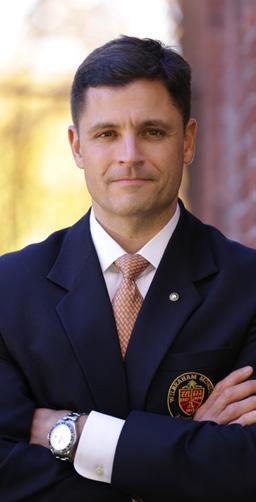
by brian p. easler Head of School
EEvery independent school can look back at its history and identify periods of time when its trajectory changed positively and powerfully.
For WMA, that time is now.
We are at an inflection point. This era will represent a seismic shift in the upward trajectory of Wilbraham & Monson Academy, and it will be clear to future generations of Titans that those who came before them set the example of what it means to be diligent caretakers of a shared learning community which will be their responsibility to uphold.
Starting in 2016 with the creation of our Campus Facilities Master Plan, Wilbraham & Monson Academy has benefited for nearly a decade from the increasing confidence and generosity of alumni, parents and friends to fund significant campus facilities upgrades to support our mission. Milestones within this progress include the $6 million Griffin Athenaeum project and the $1 million Gorski iLab project.
Now I’m pleased to announce that donors have committed $20 million to complete the next phase of the Campus Facilities Master Plan: the construction of a new kitchen and servery, and the renovation of the Chapel into a stunning new dining commons.
This initiative was driven by two of the Academy’s largest single alumni gifts, of $7.5 million and $5 million. It was propelled forward by a small group of generous donors who made significant gift commitments. With this remarkable milestone, the Academy has entered an unprecedented era of donor confidence and generosity. I’m writing now to give you the history of the plan that we are following and our objectives for subsequent phases.
The Why
c ampus Facilities m aster p lan Objectives
In 2017, students, staff, parents, alumni and friends of WMA came together to wrestle with three key questions:
• What facilities do we need to best support our program?
• Where should things be situated on campus?
• What is the optimal order of priority for completing projects?
This collaborative process resulted in the Campus Facilities Master Plan and a clear delineation of objectives for the work ahead. These guiding objectives are our lodestar. Through the shifting terrain of changing needs and circumstances, they keep us on track with an overall intent for campus projects. They help us determine what serves our students and our community best.
Here are t H e FO ur key O bjectives:
1. Community Facilities Objectives
We must focus on developing intentional community spaces throughout the campus, where students and adults can study, converse, deliberate, relax and learn together outside of the classroom.
Two specific facilities objectives within this category were identified as the addition of a new kitchen, servery and dining facility; and the addition of a purpose-built auditorium space for the performing arts and community building, all-school gatherings.
2. Residential Facilities Objectives
We must focus on consolidating student housing in close proximity to food service. This will entail the addition of two new dormitories at the back of Smith Hall, near the new Dining Commons location.
One will be a girls dormitory to replace Wallace Blake; the other will be a boys dormitory to reduce capacity in Rich Hall and facilitate its eventual renovation. These two new dormitories will each have five faculty residences, while Wallace Blake will be renovated into faculty housing to increase the number of faculty residences by five.
This will radically improve the attraction and retention of the highest quality boarding school faculty.
3. Academics & Arts Facilities Objectives
We must focus on creating classrooms that are appropriately sized for the subject and the students, and increasing overall teaching space to better support academic departments in fulfilling our mission of teaching and learning.
4. Facility Reorganization Objectives
We must focus on managing the interplay with Main Street by consolidating more of the campus facilities on the east side.
A more powerful sense of campus identity will be communicated with the creation of a quintessential New England campus quad; the east side should look and feel like a campus, while traffic and parking will be pushed to the perimeter and athletic fields consolidated on the west end of campus. Story continued on pg. 2 •
e dit O r
Teddy Ryan
a ss O ciate e dit O rs
Russ Held
Bill Wells
art direct O r Chris Tinnesz
a dvis O ry bO ard
Mark Aimone
Melissa Earls
Brian P. Easler
Heather Hamel ’08
Don Kelly
Janet Moran
Sean Valentine
c O ntributin G W riters
Melissa Earls
Brian P. Easler
Heather Hamel ’08
Russ Held
Mingjun “Max” Li ’27
Janet Moran
Colin Moussette ’26
Andy Petkun ’64W
Sean Valentine
Bill Wells
d esi G n Stoltze Design
p rintin G Puritan Capital
p HO t OG rap H y
Paul Bloomfield
Copperhound Photography
Chris Evans
Heather Hamel ’08
Russ Held
Dave Roback
Bill Wells Various contributing photographers
bO ard OF t rustees
Scott B. Jacobs ’75, Chair
David A. Reeves, Vice Chair
Mark R. Shenkman ’61M, Vice Chair
Caitlin S. Flynn ’06, Treasurer
Bonnie Faulkner Ryan ’82, Secretary
Raymond J. Anton ’61M
Christopher C. Antonacci ’06
John J. Baker
Melissa M. Besse
Linda B. Griffin
William R. Guerin ’89
John LaCrosse
Robert F. Little
Andrew P. Mele
Stephanie T. Robbins ’10
Craig A. Rubin ’63W
Paul J. Sullivan ’91
t rustees e meriti
Eric W. Anderson
Michael J. Flynn
Richard S. Fuld ’64W
James E. LaCrosse ’50W
Benjamin F. Wilson ’69W
l i F e t rustee
William E. James ’64W
Donald J. Stuart ’73
Alumni, we’d like to hear from you! Send your current contact information and news to alumni@wma.us.
“Academy World” is published in the spring and fall for alumni, parents and friends of the Academy. Please direct comments and letters to:
Wilbra H am & mO ns O n a cademy
m arketin G & cO mmunicati O ns O FF ice
423 m ain s treet
Wilbra H am, ma 01095‑1715
marketin G @ W ma.us
Our m issi O n
Wilbraham & Monson Academy offers a transformational experience where students become challenge - seeking citizens and leaders of an evolving world.
Wilbraham & Monson Academy does not discriminate on the basis of race, religion, color, national origin, age, sex, disability, sexual orientation, genetic information, military status, gender identity, and any other categories protected by federal, state or local law.
Get Social with u S !
@wilbrahammonsonacademy
@WMAalumni
@wilbrahammonson
Wilbraham & Monson Academy
@wilbraham_monson
@wmaalumni


iFc A Seismic Inflection Point
alumni in acti O n
30 Young Entrepreneurs
34 Alessandra (Mele) Corbett ’09 36 John Moran ’11
38 Haley Godin ’18
40 Greg Balicki ’07
42 Helen Assefaw ’14
44 Nick Leone ’17
46 Claire Bi ’11
48 Giorgi Mumladze ’23
W ma sp O tli GH t
28 Fall Semester Photos 62 Years of Service
W ma alumni
52 50th Reunion 54 Advancement events
56 Senior Stone: Beth Byrne ’81
58 Reflection: Andy Petkun ’64W
66 Class Notes student secti O n
50 Student Investment Seminar
60 Travel: France
61 Travel: Spain & Portugal departments
8 News from the Hill
11 Fine & Performing Arts
16 Titans Victorious 18 Athletics Highlights
26 Middle School
in mem O riam
70 We Remember arc H ives
72 Old Academy turns
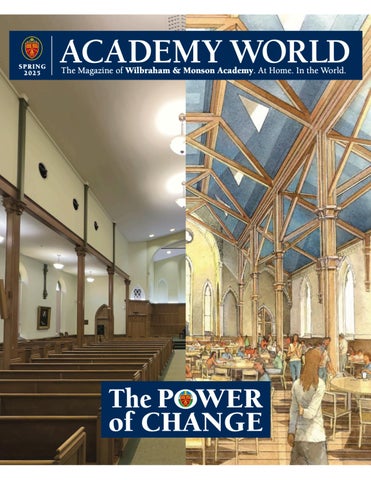
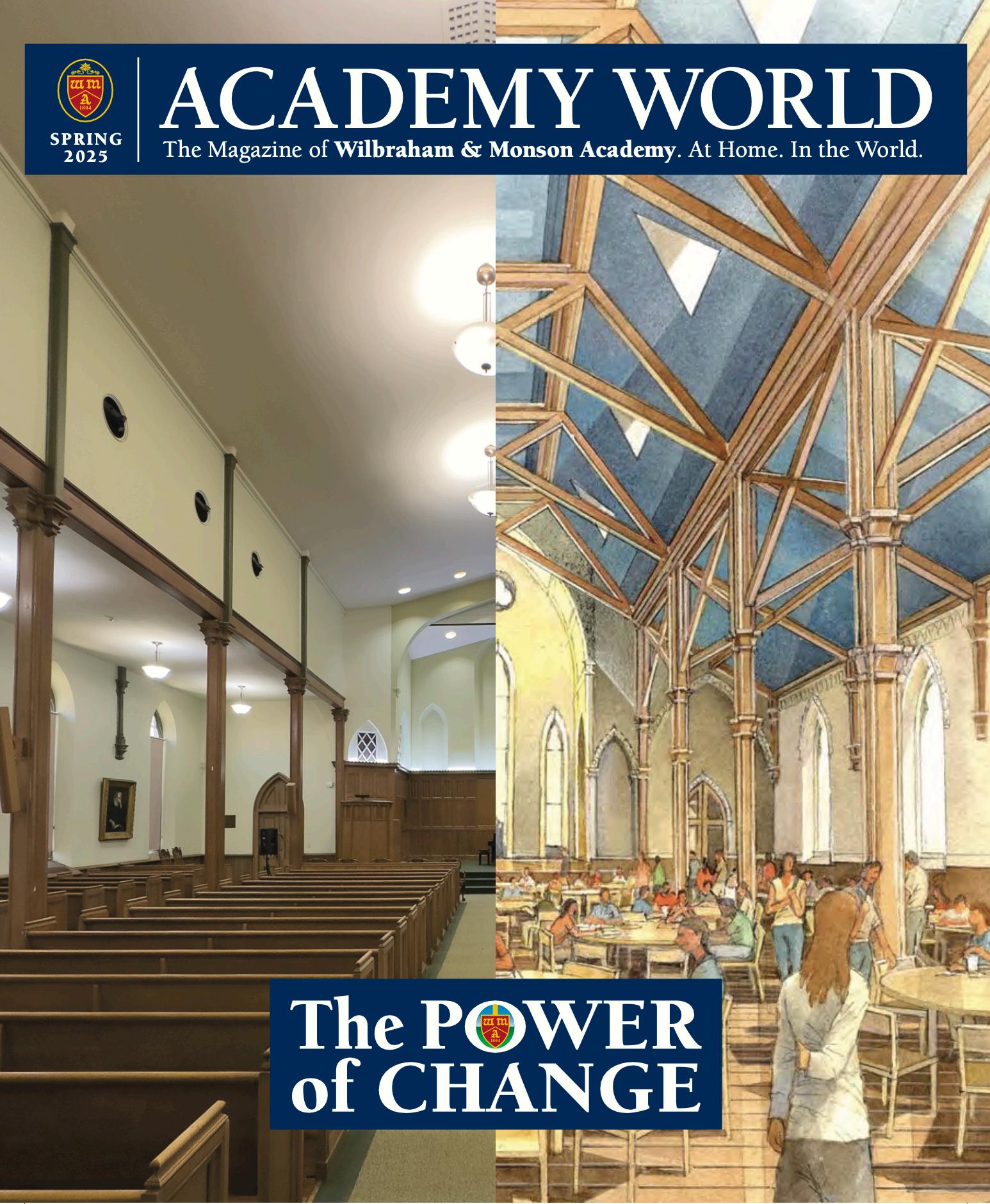
Art Director Chris Tinnesz shares a split-page look at the changes (in progress) to Alumni Memorial Chapel. As part of the Campus Facilities Master Plan, the Chapel as a meeting and event space (left) will be soon be transformed into a stunning dining commons (rendering, right).
The POWER of CHANGE
Chapel Renovation to Dining Commons
W I LBRAHAM& MONSONACADE M Y MASTER PLAN - PHASEII
The What and The When
c ampus F acilities
m aster p lan Overvie W
Phase I: The Griffin Athenaeum
The construction of Griffin Athenaeum checked two big boxes on the Campus Facilities Master Plan Objectives. It provided transformational community space and a significant upgrade in academic square footage, and it unlocked our ability to engage in Phase II.
By moving the library out of Gill Memorial Hall and into Griffin Athenaeum, the full footprint of the Chapel is now available to be renovated into the new dining room.
Phase II: The Dining Commons
In Phase II, we will build a new kitchen and servery behind Griffin Athenaeum and adjacent to the Chapel.
The kitchen will feature a modern, open-concept “country kitchen” and be outfitted with the best culinary resources available to serve our school community.
The servery will seamlessly integrate the modern kitchen design with the Chapel’s historic external redstone wall, highlighting both elements and exemplifying a key advantage of the project.
The combination of restoring the Chapel to its original historic splendor with the addition of a modern, welcoming and purpose-built kitchen and servery will be a stunning testament to our collective commitment to both the Academy’s history and its future.
The renovation of the Chapel into a dining commons will result in a host of significant community benefits:

• We will expose all of the original beams, trusses and stained-glass dormers, currently hidden behind sheetrock, and return the historic space to its original stunning magnificence.
• The new dining room will be a remarkably welcoming, sophisticated and elegant dining space, elevating the function of sharing meals together and sending a message about who we are as a community.
• Moving the dining hall will shift the community center of the campus to the east side of Main Street, closer to the core of academic life and resulting in roughly a 70% reduction in daily student street crossings.
• The Chapel, arguably the most architecturally stunning building on campus, has for decades
been severely underutilized. Most weeks, it was filled with students for only about an hour. Now it will be used all day, every day as the literal and figurative heart of the school.
• During meal times, the full footprint of the Chapel will be available for meal seating. Outside of meal times, the Gill end of the dining room will become an extension of Griffin Athenaeum and be an additional study space with healthy snack and beverage options.
The impact of Phase II on the WMA community is hard to quantify. Not only is the renovation of the Chapel into a dining commons true to its intended purpose of gathering people together, but it will literally transform our campus community and culture. Story continued on pg. 4 •
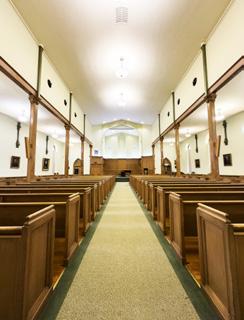
• Current day view from the back of the Chapel.


• A rendering of the new dining commons eating area, as seen from the back of the current Chapel looking toward the stage.
• An
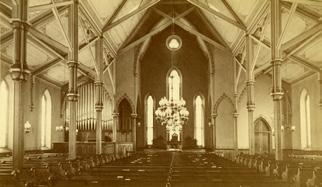
archival view of Alumni Memorial Chapel, circa mid-20th century.
WILBRAHAM & MONSON ACADEMY
Phase III: The Performing Arts Center
Once we begin construction on the Chapel, we will need a new space for the school meetings that have occurred there. School meetings are a vital part of community building and help to maintain a healthy campus culture. In the interim, we will meet as a school in Greenhalgh Gymnasium.
Over the last several years, we have outfitted the Gymnasium with new bleachers and a new audio system, which make the space more functional for meetings. It is not ideal for the long term. Therefore, it is critical that we progress immediately from the completion of Phase II to Phase III when we will renovate the dining room into a multipurpose community meeting space and performing arts center.
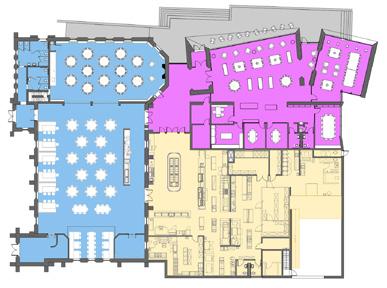
• A layout of planned changes:
Current Alumni Memorial Chapel and Gill Memorial Hall, with new dining commons layout.
Current Griffin Athenaeum
New kitchen and servery area.
• A view of the proposed Performing Arts Center, looking toward Faculty Street.

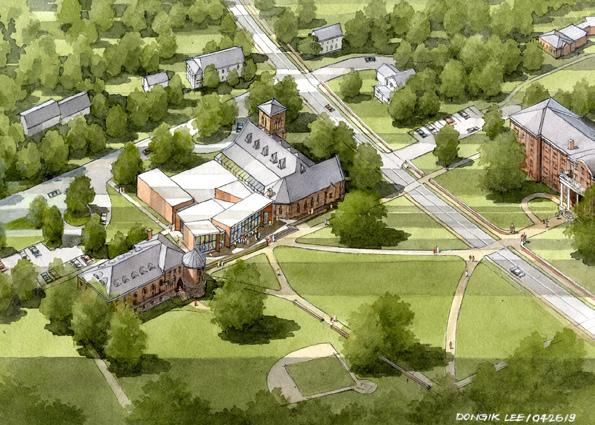
• A bird’s-eye rendering from 2019 of the finished product, looking south from above the academic buildings. Rich Hall is pictured at right.
This complementary project comes with its own list of benefits for the community:
• Located adjacent to the music department, the new modular community space will beavailable all day, every day outside of school meetings as a convenient music instructional and rehearsal venue.
• A new ramped entrance and appropriate bathroom facilities will permit student performances and campus events to be accessible to everyone in the WMA community.
• In school meeting configuration, stadium and floor seating will accommodate the entire upper and middle school, with unobstructed views and comfortable seats for 550 people.
• In performance configuration, floor seating will be removed and stadium seating moved forward for a more intimate seating capacity of around 350 people.
• With the stage on the east side of the room, where the serving area currently exists, and with the addition of a new mid-audience entryway, the current kitchen facilities will become an extensive “back of the house” for our performers, complete with green room, costume and practice rooms, chair and staging storage, etc. Direct access from backstage will truly expand student performance and event potential.
• As a purpose-built performance venue, the
new performing arts center will have a dramatic positive impact on our Fine & Performing Arts Program, and it will allow us to renovate the current Black Box Theater in Fisk Hall and create four new classrooms.
One of the most attractive aspects of Phase II and Phase III is the sustainability of the approach. We will be repurposing existing structures, using spaces more effectively and efficiently with minimal new construction. The approach is environmentally conscious and a responsible use of donor-provided resources.
Of all the potential projects in the Campus Facilities Master Plan, Phase II and Phase III combined will have the most dramatic impact on the Facilities Objectives and on the broadest cross section of the WMA community.
The two projects will significantly increase community spaces, add a needed new kitchen and servery, repurpose to a stunning new dining room and performing arts space with dramatic effect, increase academic and arts spaces, and take a huge step toward reorganizing the campus meaningfully.
These two projects will literally impact everyone and improve the Academy forever, but the massive positive impact on the daily lives of our students is what makes us most excited. With $20 million already committed to Phase II
now, and $5 million needed for Phase III, we are within reach of making all of this happen.
We have plans in place for Phase IV, the dormitory projects. We will provide more information on that project as Phase II and III progress.
While these capital projects will be transformational for our community, we recognize that strengthening our endowment to support the operating budget is critical to our long-term sustainability.
To that end, and in addition to raising endowment dollars specific to supporting these new facilities, we have also embarked on the “Legacy of Excellence” campaign to raise $50 million in bequests and estate gifts directed toward our endowment. Building on a historic $15 million alumni bequest, we now have roughly $40 million in commitments. These intentions are a testament to the confidence our stakeholders have in the future of the Academy.
I couldn’t be more proud and excited to be part of this work. Now is the time. I hope you will join me.
Respectfully,
Alumni Memorial Chapel & Gill Memorial Hall
As we move on to the next chapter of one of our most iconic buildings and meeting spaces, we share a few scrapbook memories of Alumni Memorial Chapel and Gill Memorial Hall.
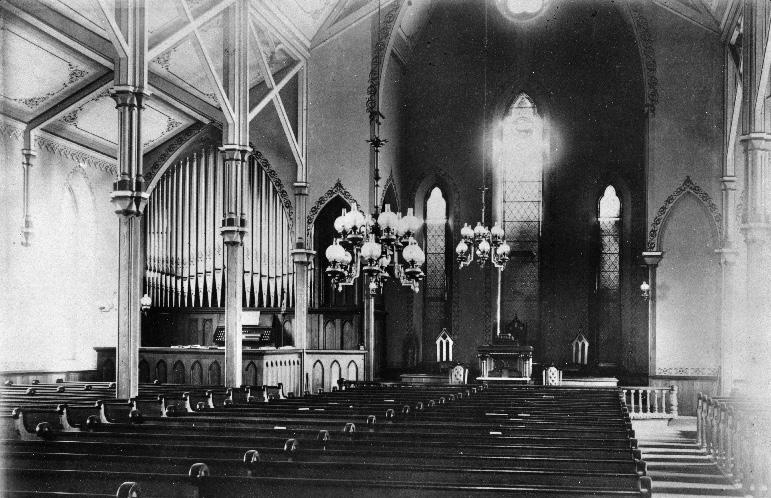
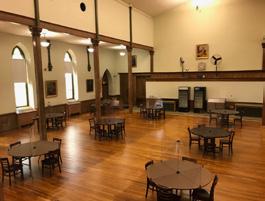
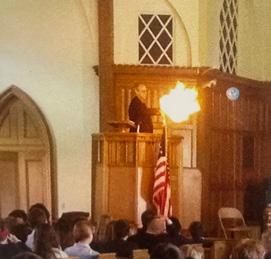
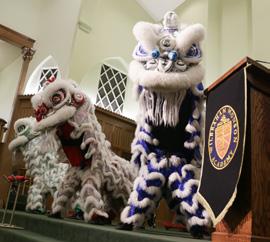
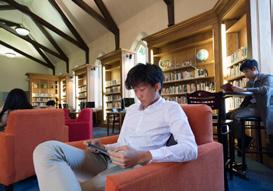
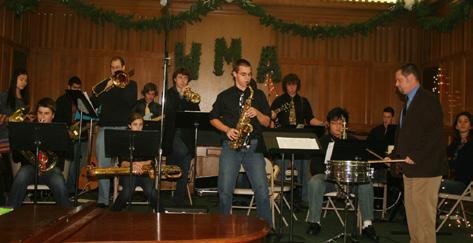
1 Alumni Memorial Chapel as a Methodist church, circa 1880s, a decade after its dedication. 2 Faculty member Paul Ekness explodes a balloon during a science demonstration at school meeting in Alumni Memorial Chapel in 2009. 3 Lunar New Year celebration in Alumni Memorial Chapel, 2018. 4 Gill Memorial Library, 2017.
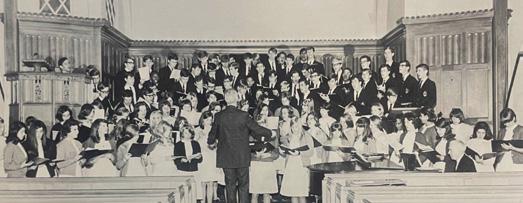
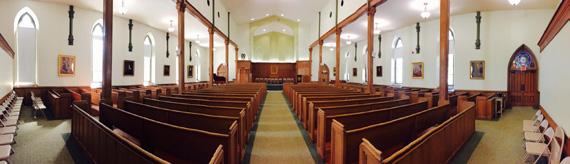
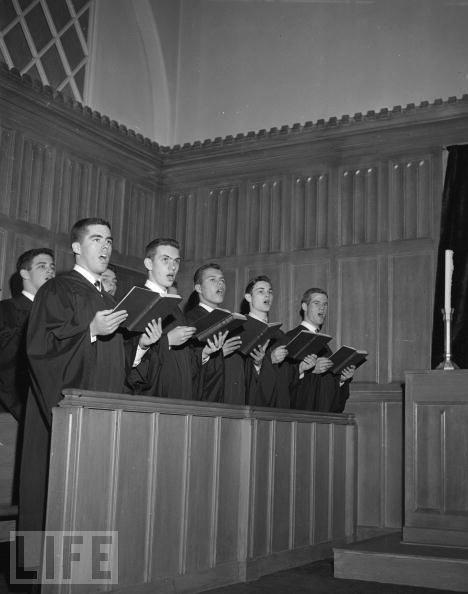
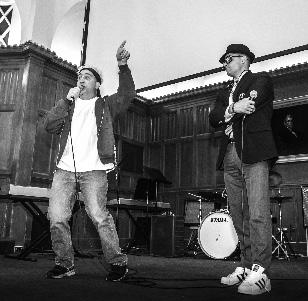
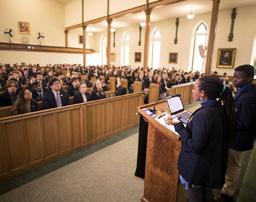
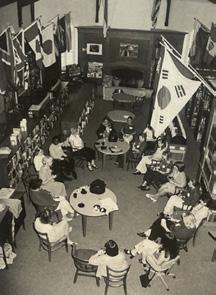
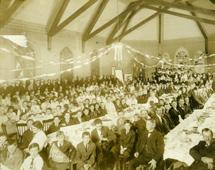
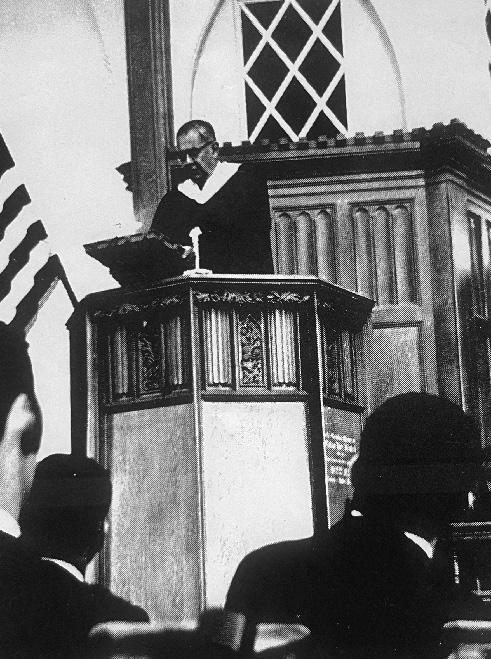
5 Temporary use of Alumni Memorial Chapel in 2020 as an alternative dining hall during COVID-19. 6 Glee Club in Alumni Memorial Chapel, 1966. 7 Panoramic view from the back of Alumni Memorial Chapel, 2015. 8 A meeting in Gill Memorial Library during reunion in 2001. 9 A slice of campus life, published in LIFE magazine during the 1960s. 10 Gill Memorial Hall, in 1915, which later served as the Academy’s library for 60 years. 11 Holiday Concert in Alumni Memorial Chapel, 2011. 12 Faculty member Charlie D’Avanzo, left, and Head of School Brian P. Easler rap during a school meeting skit in Alumni Memorial Chapel in 2019. 13 View from the podium at school meeting, 2019. 14 Dr. Vincent B. Coffin, the first president of the University of Hartford, speaks at Commencement in 1964.
This is the only place on campus that is part of the WMA collective experience you share together as a student body, and in spirit with those that came before you and (in the past) will come after you. There is nowhere else on campus like it and never will be again.”
Kara Thayer Miller ’95
News from the Hill
Model UN experience nets 2 major awards
Only four percent of the high school students who attended the Yale Model United Nations earned awards.
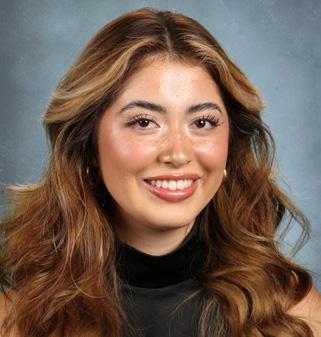
Wilbraham & Monson Academy had two students Ximena Perez Garcia ’26 and Colin Moussette ’26 win honors, which speaks volumes for the school’s Model UN and Model Congress programs.
The grueling four-day event held in late January at the Yale University campus in New Haven, Connecticut, hosted roughly 2,100 students from around the world, including more than two dozen from WMA.
“Students enjoyed their experience quite a bit at Yale, as they got the opportunity to test their academic and relationship skills against a cadre of top students,” explained Dr. Anthony Kandel, the program’s Faculty Advisor. “Learning how to navigate the process and working on passing resolutions requires focus, skill and good cheer.
“In addition to the committee work, many students develop excellent friendships with people they meet at the conference and often reconnect at Harvard in a month or next year. This conference also provides the chance to meet students from literally all over the globe, as many foreign nations send delegations.”
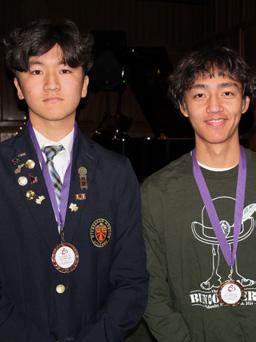
Ximena earned a Gold Medal, winning “Best Delegate” as a representative for Malta on the European Union committee.
Colin won a Silver Medal for his efforts as a delegate of the Republic of Korea in the World Health Organization.
WMA shines at Harvard Model Congress
Colin Moussette ’26 was named a Best Delegate, and four other Wilbraham & Monson Academy students won Honorable Mention awards at this year’s Harvard Model Congress in February.
Twenty-eight Titans participated in this year’s four-day HMC, which drew 1,500 eager high school students to Boston from throughout the country. Roughly five percent so 75 of the 1,500 won awards.
“Students get an intense immersion into the ‘business’ of legislation,” stated Dr. Anthony Kandel, WMA’s Faculty Advisor. “For those interested in politics, there is no better experience. They develop skills in negotiation, tact and public speaking, meet many new friends and have a lot of fun as well.’’
“Winning the Best Delegate Award is a huge honor,” Colin said. “It was a great experience, and being recognized for my commitment to the program is very humbling. As a first-year (student) at WMA, it wouldn’t have been possible to win without the support of my close friends, my family and Dr. Kandel.”
Colin served as a Representative of Peru at The World Bank, which focused “on financial initiatives for Latin American infrastructure, with the goal of international cooperation on economic initiatives in mind,” Colin explained.
Also winning awards for WMA were: Ha Anh Nguyen ’25, Ryan Cooley ’26, Ximena Perez Garcia ’26 and Vicky Luo ’28.
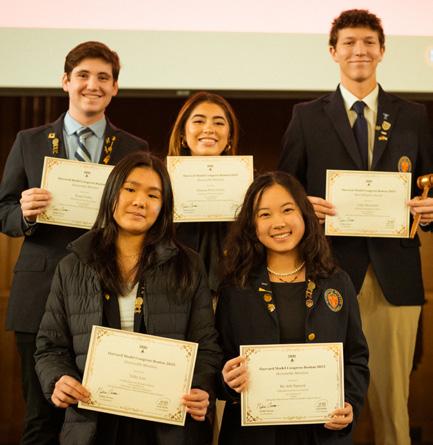
FrOm leF t, tOp rOW: Ryan Cooley ’26, Ximena Perez Garcia ’26 and Colin Moussette ’26; bottom row: Vicky Luo ’28 and Ha Anh Nguyen ’25.
Academic awards highlight 20 students
Students from Wilbraham & Monson Academy earned 20 academic awards for their respective performance on recent national exams.
Seven of the awards went to five students in the Class of 2025. They were honored at School Meeting in September. The other recipients were in the Class of 2024.
Ji Min Hong ’25 placed as a semifinalist in the 2025 National Merit Scholarship Competition for his effort on the PSAT; he advanced to the finalist round. Meanwhile, Breslin Grozio ’25 received a Letter of Commendation.
“One of the best things that WMA as a school offers, that has also helped me academically, is the advisory system,” Ji Min said. “I believe that checking in with an advisor every Monday helps to get me on the right track for the coming week. Additionally, most teachers happily met with me during Office Hours or my free blocks to help with any material that I needed extra help with.”
Breslin added: “WMA has provided me with an inclusive learning environment where I can consistently ask questions, reach out to my teachers and talk to my peers about my courses. WMA provides a setting in which I can study and learn to my heart’s content. I love to learn, but I often find it hard to do so on my own. At WMA, I find myself motivated to learn by my teachers and fellow classmates.”
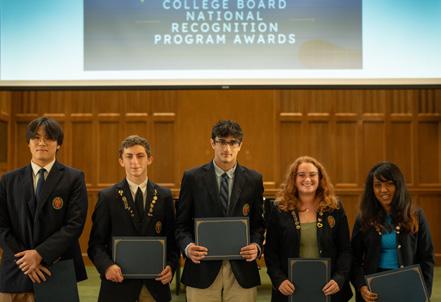
Four students in the Class of 2025 earned awards from The College Board. Breslin was granted an AP Capstone Diploma, while Madison Goodwin ’25 received an AP Seminar & Research Certificate.
“I think my favorite thing about the WMA academic program is the teachers,” Madison stated. “All of the teachers are there for you, are passionate about their job and want to help you learn. If you need help you can easily go to Office Hours or email your teacher. All of them are so sincere and care about their students, which makes learning much easier and sets us up for success.”
Pair flies high at Science Olympiad tournament
Yuxiao “David” Zhou ’26 hatched the idea of a Bird Club at Wilbraham & Monson Academy at the start of the school year.
In mid-November it was time for David to test his wings to see if he was ready to fly. He was ready.
Teaming with Jayden Lee- Choi ’26, David placed sixth in the Ornithology Category in November at the Cornell Science Olympiad Invitational Tournament in Ithaca, New York.
WMA sent 13 students to the event, which included 26 categories at the competition that drew 58 high schools.
“Science Olympiad allows students to explore science much more in depth,” explained Dr. John Strauss, WMA’s Science Olympiad Faculty Advisor. “They get to demonstrate their talent and understanding against the country’s brightest. There are no leagues; invitationals are
and Vaishnavi “Vivi”
Also, three members in the Class of 2025 Breslin, Noah Stich ’25 and Vaishnavi “Vivi” Venkat ’25 were named AP Scholars with Distinction, granted to students who receive an average score of at least 3.5 on all AP Exams, as well as scores of 3 or higher on five or more exams.
Class of 2024 award winners:
AP Capstone Diploma: Xuanyi Chen, Marisa Cyboron, Callie Dunbar, Sally Geoghegan
AP Seminar & Research Certificate: John O’Connor
AP Scholar with Distinction: Arielle Chechile, Marisa Cyboron, Han Do, Sally Geoghegan, Hillel Kofsky, Kent Neureiter, Zhongwang Wang, Hanser Yoon by application. There is a single state tournament where the top team goes to regionals, then nationals.”
For David, who started a Bird Club at WMA this school year, an opportunity to participate in a competition regarding ornithology at an Ivy League school of all places was too good to be true.
“I’m so excited to have won an award in ornithology at the Cornell event,” David beamed. “It’s incredible to see my love for birds turn into something tangible. This event was a great chance to test my knowledge and learn even more about ornithology. I’m really proud of this achievement.”
“Winning an award at the Cornell event was a really exciting and validating experience,” Jayden added. “It was rewarding to see our hard work pay off, especially in such a competitive environment. The event pushed us to think critically and problem-solve under pressure, which made the recognition feel even more meaningful.”
FrOm leF t: Ji Min Hong ’25, Breslin Grozio ’25, Noah Stich ’25, Madison Goodwin ’25
Venkat ’25.
Jayden Lee-Choi ’26, left, and Yuxiao “David” Zhou ’26.
Emma Landry ’25, Sally Geoghegan ’24
lead French honorees
Nous aimons notre français à la Wilbraham & Monson Academy.
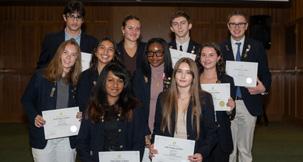
Thirteen students in WMA French courses received a Global Seal of Biliteracy based on their respective scores from an exam taken in the spring of 2024.
“Students were tested not on their knowledge of grammar, but on their skills (reading, listening, speaking and writing),” said Madame Dubois, WMA’s World Languages Chair. “Some students received the highest score in reading and listening, which corresponds to the level Advanced High. This was very rewarding for me to see.”
Two students Emma Landry ’25 and Sally Geoghegan ’24 earned the Working Fluency Award, the highest honor possible.
“The Global Seal is an accolade that can be very useful to our students when they apply for internships, college or jobs,” Madame Dubois continued. “It’s a certificate of proficiency that is internationally recognized. To get the seal, students take the AP test or the AVANT test, which is a computer adaptive test that I proctor at school. Students are then informed of where they are with each language skill, and they are given suggestions on how they can improve. And, this serves as their final exam. It’s a win-win.”
Functional Fluency Award
Katarina “Kiki” Brook ’26
Callie Dunbar ’24
Cooper Dwyer ’25
Breslin Grozio ’25
Katie Hutcheson ’26
Rebecca Kakule ’25
Working Fluency Award
Sally Geoghegan ’24
Kayla Makkiya ’25
Mariana Mujica ’25
Lillian Ricci ’26
Noah Stich ’25
Vaishnavi “Vivi” Venkat ’25
Emma Landry ’25
Talent of Math Team adds up to success
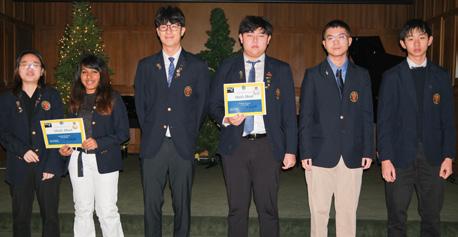
Wilbraham & Monson Academy’s effort at a math competition added up to the best results possible as the Titans placed first and second at an 11-team competition at Westfield High School in December.
“It was great to see our students do so well at this small event,” Faculty Advisor Mark Fischer said. “The first-place team was made up of our school’s Math Team Leadership Team. Their hard work organizing, planning and working on practice problems prepared them to handle the competition questions with ease. The competition was made of six individual rounds and a group round. Each student participated in four of six of the individual rounds. (Phuong) Stefanie (Nguyen ’25) stood out as our top scorer though everyone did well.”
The winning team consisted of Nguyen, Vaishnavi “Vivi” Venkat ’25 and Donggyun “Dion” Suh ’25, while the runner-up group included Qingxuan “Jack” Wang ’26, Sang Nguyen ’26 and Yucheng “Tony” Sheng ’28.
“The Math Team meets every Sunday in the Athenaeum,” Mr. Fischer added. “It is open to any student in Grade 9 –12. It is for students who enjoy puzzling over mathematics and/or enjoy competitive challenges. There are a range of questions so a student does not have to be off-the - chain good at math just someone who enjoys the topic and likes socializing with like -minded people.”
Sophia Najeebi ’25 strikes gold
The Gold Award is the most prestigious honor a Girl Scout can receive. It requires thoughtfulness, planning and dedication. Perhaps the most valuable lesson learned during the process is the importance of seeing something to the finish.
Wilbraham & Monson Academy’s Sophia Najeebi ’25 accomplished all of the above, and then some.
For her Gold Award project, Sophia made “Craft and Caring Boxes” for children who are members of Christina’s House, a Christian nonprofit in Springfield, Massachusetts, that provides support to women and children who are homeless or near homelessness. Most impressively, both churches that Sophia attends have already agreed to continue the project upon its completion.
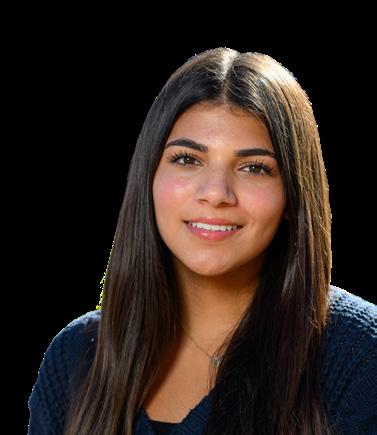
FrOm leF t: front row Vaishnavi “Vivi” Venkat ’25 and Lillian Ricci ’26; middle row Katie Hutcheson ’26, Mariana Mujica ’25, Rebecca Kakule ’25 and Emma Landry ’25; top row Noah Stich ’25, Kayla Makkiya ’25, Breslin Grozio ’25 and Cooper Dwyer ’25.
FrOm leF t: Phuong “Stefanie” Nguyen ’25, Vaishnavi “Vivi” Venkat ’25, Donggyun “Dion” Suh ’25, Qingxuan “Jack” Wang ’26, Yucheng “Tony” Sheng ’28 and Sang Nguyen ’26.
Fine & Performing Arts
Singer receives elite invite
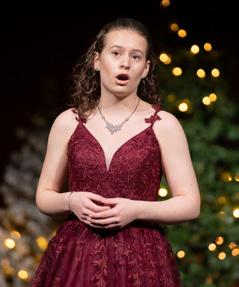
For three weeks this summer, Wilbraham & Monson Academy’s Avah MacDonald ’27 was among the most passionate high school singers in the country.
Most impressively, she had to earn her spot in that talented group. Actually, she had to sing her way into that group.
Mr. Seibold fulfills Big (E) dream
After all these decades, Wilbraham & Monson Academy’s Fine & Performing Arts Department member Clark Seibold still gets a rush playing on stage.
And when it comes to this part of the state, there are few bigger stages than the one in West Springfield, Massachusetts.
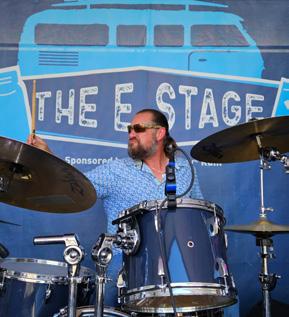
Mr. Seibold and his band, King Saison, performed in September at the Big E. The world’s only multi-state fair, representing all six New England states, set multiple attendance records in 2024.
“We all grew up around the area and attended the Big E, especially to see the bands that would come through,” Mr. Seibold explained. “It was sort of all of our desires to play the stage at the Big E one day. Also, the Big E is a great place for
Avah was one of 33 students selected to participate in the High School Classical Vocal Program at the prestigious Brevard Music Center in North Carolina.
“I knew over the summer I wanted to attend a music institute for voice, specifically classical,” Avah said. “In researching the camp, I fell in love with not only the scenery, but the many opportunities at BMC.”
Brevard offers students of many musical disciplines the opportunity to be mentored by A-list performers. She had to record a pair of solo pieces, answer a number of essay questions and provide information about her background in order to be considered for the program.
“I learned more about myself as a vocalist and as an individual. In each class, whether it was music theory or a master class, I was always learning something new,” she beamed.
Avah developed a passion for classical music in middle school and has been taking vocal lessons since Grade 6.
“(Since) the voice is an instrument that is part of each individual, I feel that I am able to connect to who I am when I sing,” Avah explained. “I also really enjoy performing, as the music becomes much more about the story and less about the notes.”
exposure to large numbers of people, especially for those not from around here.”
With Mr. Seibold on drums, King Saison played mostly originals, dipping into eclectic jam, hippie country funk and good old-fashioned rock.
“Being able to finally play at the Big E was stellar,” Mr. Seibold said. “We had a large crowd who were into us from start to finish. There must have been thousands who saw us as people were also walking by hearing us. Of course, after our show, the band had to take the big slide down the giant yellow slide together!”
Mr. Seibold played his first live gig when he was in high school.
“Performing live is a big rush,” Mr. Seibold admitted. “I love it when you look out and see everyone dancing, smiling and having a great time. This, I feel, is my contribution to giving back to my community and I love it.”
I hope I will be able to sing professionally one day, so I do plan to continue my vocal studies after high school. Although I do not know what the future holds, I hope I will be able to sing.”
avah MacDonal D ’27
Avah is a member of WMA’s Chorus. She sang the “Star- Spangled Banner” in October prior to a Girls Volleyball match.
“I hope to continue exploring who I am as a musician,” she said. “I am grateful to be part of such a wonderful community here and I hope I can share my love of music with others. I am excited to work alongside other like-minded students.
Avah MacDonald ’27
Experience is music to Ms. Camenga’s ears
For Wilbraham & Monson Academy Fine & Performing Arts Department member Lynne Camenga, it doesn’t get much better than playing her violin with a symphony.
In September, things got better.
Performing for the Vermont Symphony Orchestra for their opening concert of its 90th season, Lynne played with musical giants Béla Fleck and Adolphus Hailstork at a pair of shows.
“A lot of the repertoire we individually have played a number of times,” Ms. Camenga explained. “‘American in Paris,’ ‘Rhapsody in Blue,’ these Gershwin pieces are standards within the repertoire. Although I was familiar with William Grant Still’s ‘Afro Symphony,’ it was the first time I played it in context of the full orchestra. For me, the new piece was Hailstork’s ‘American Port of Call.’ I will say that one had a fair amount of tricky passages. It was a high- energy, great concert opener.”
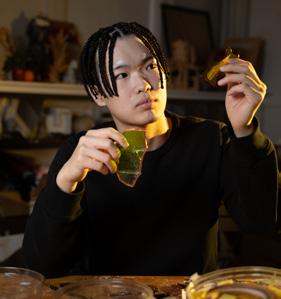
The trip was a bit of a homecoming for Ms. Camenga, who last played with the Vermont Symphony 17 years ago.
“I was pregnant with Avah,” said Ms. Camenga, referring to her oldest child. “To be back, although under a new conductor/music director, it feels like home. It is the same group, with a heart for connecting to the audience and creating a collaborative experience within the orchestra.”
Ms. Camenga said she loves performing live because she has the “best seat in the house. I also love the collaboration of the musicians and the process of working together. Practicing alone is one thing. Having the opportunity to play with 70 -plus other musicians, it’s incredible. The whole program was great music. I loved the repertoire.”
And she loved playing with Fleck, regarded as one of the greatest banjo players of all time. He has amassed 17 Grammy Awards.
“I have played hundreds of concerts over my career thus far and there are a handful I will always remember,” Ms. Camenga admitted.
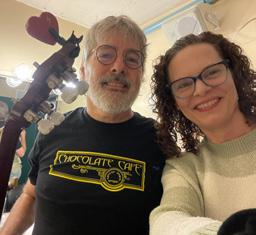
“This one is definitely in the category of special memories and I will always remember. Béla took all the good things about the piano improvisation solo and transcribed it for banjo. I don’t know if anyone thought of the idea to bring the banjo to the center of the symphony prior to this.”
Yougun Yang ’25 wins national gold, 7 state awards; Yvonne Xu ’28 also shines
Wilbraham & Monson Academy’s Yougun Yang ’25 spent the majority of his summer tediously working on his portfolio in hopes of getting into an elite art school for college.
His efforts were rewarded all winter long.
Yougun’s hard work was first rewarded in December when he was accepted into the Rhode Island School of Design, one of the most selective art colleges in the country. Confirmation of his talents were again confirmed in January when he won seven yes, seven honors at the state’s Scholastic Art Awards competition, including four at the highest level.
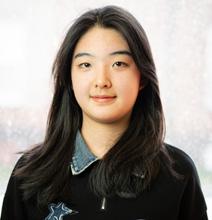
The Academy’s Kexin “Yvonne” Xu ’28 also earned two awards.
Along with the four gold, Gun totaled a silver and two honorable mentions. The national results brought even more accolades. Gun won a gold medal for “Veil Behind the Power” and a silver medal for “Fragile Facade.’’
“I wanted to participate in the Scholastic contest because I spent my entire summer break working on my portfolio practically 24/7, creating about eight pieces,” explained Gun, who became interested in art as a Grade 9 student at WMA. “Other than using them for my college applications, I didn’t have many opportunities to showcase them. I wanted to give meaning to all my time and effort, and see how far my work could go.
“I honestly wasn’t expecting medals, so I was really surprised when a number of my pieces were selected, and four are now moving to the national level. It’s an exciting and humbling experience, and I’m grateful for the opportunity.”
Gun entered pieces into the Sculpture (four), Drawing & Illustration (one), Expanded Projects (one) and Portfolio (one) categories.
Yvonne, meanwhile, earned silver and honorable mention honors.
“At first, I participated in Scholastic for the writing competition, but I accidentally came across the art contest,” described Yvonne, who start to take forms of art seriously in Grade 2. “I realized that I had taken so many photographs over the years, so I decided to enter.
• Lynne Camenga, right, with 17-time Grammy Award winner Béla Fleck.
Yougun Yang ’25, top, and Kexin “Yvonne” Xu ’28.
Music program sends 5 to the Western District Senior Festival
In yet another sign of the growing music program at Wilbraham & Monson Academy, five students were selected to participate at the 2025 Western District Senior Festival, sponsored by the Massachusetts Music Educators Association.
After a pair of seven-hour rehearsals, the members performed at a concert in January at Minnechaug Regional High School.
Ms. Lynn Camenga of WMA’s Fine & Performing Arts Department offered the following quotes on the students who earned a coveted spot for Western Districts:

Ji Min Hong ’25 violin
“Ji Min is a great violinist who has achieved a very high level of performance. He hadn’t had the opportunity to play in a large orchestra yet (prior to Western Districts). Ji Min was awarded a seat in the first violin.”

Jayden Lee - Choi ’26 clarinet
“Jayden is a returning performer to the Senior District Festival this year. He was also accepted last year. As this is quite a competitive festival, Jayden did not take his acceptance for granted. Jayden performs with the Springfield Symphony Youth Orchestra on a regular basis as the first chair clarinet.”

Jingyi “Angie” Huang ’28 choir
“This was Angie’s first experience in a large choir and her first experience to sing classical choir music. Angie has been very enthusiastic about participating and growing her music since her arrival on campus. She’s a fantastic member of choir, is working on her vocal for winter musical, and we’re thrilled to provide her this new opportunity to sing with a full, large concert choir.”

Zheng “Neil” Lian ’27 violin
“Neil is an incredible musician who is both a very high-level pianist as well as violinist. He has been very active in our musical offerings since arriving to campus. He performed in the musical brunch on both piano and violin.”

Avah MacDonald ’27 choir
“Avah is somewhat of a veteran singer, having sung for the Florida All-State Middle School Choir as an eighth grader. Avah has sung for solo Federation competitions in Florida, sung solo and in concert choir this past summer at Brevard Summer Music Center, and currently sings in church choir as well as here at WMA.”
Rebecca Kakule ’25, Kayden Chhoun ’25 earn top recognition
As seniors, Wilbraham & Monson Academy’s Rebecca Kakule ’25 and Kayden Chhoun ’25 knew coming into the school year that they would have to write a personal statement for their college essay.
But a personal statement for Ceramics? Really?
Their writing statement and artistic ability were so well done that their pieces will be displayed at the virtual Massachusetts Amazing Emerging Artist Recognition Exhibit in March. The contest, which included 11 categories, was open to students in Grades 9 –12 from Massachusetts.
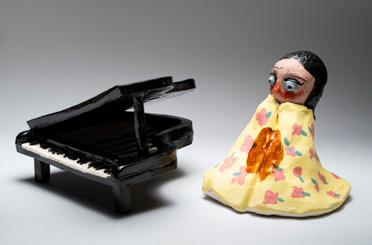
Accompanied by a written statement, Rebecca and Kayden completed the artwork in roughly six classes for an assignment on the topic of memorabilia in Ms. Theresa Chianese’s Ceramics class.
Rebecca’s piece, titled “Blanket,” drew back to her childhood while she endured a long stretch of poor health.
Kayden was looking to push himself on this assignment, a piano he titled “Time Capsule.”
Seven WMA Middle School students also earned recognition for their ceramic pieces: Jessie Wang ’29, Jiaying “Mary” Chen ’29, Isabelle Graham ’29, Sophia Gormally ’30, Callan McMahon ’30, Maggie Comeau ’30 and AJ Vartabedian ’30.
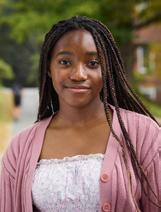
Rebecca Kakule ’25
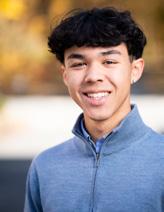
Kayden Chhoun ’25
“Time Capsule” by Kayden Chhoun ’25, left; “Blanket” by Rebecca Kakule ’25.
Fall & Winter Performances and Events
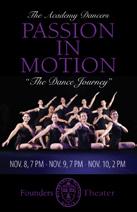
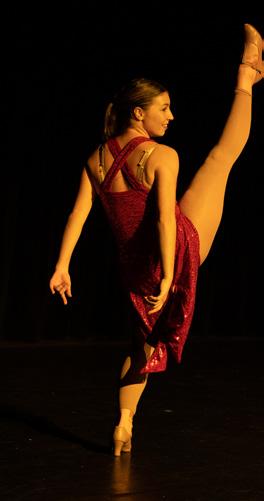
Our talented Fine & Performing Arts students entertained our community with a number of performances during the fall and winter trimesters. All aspects of our talented FPA programs joined together to dazzle with their Holiday “Luminations” show in Alumni Memorial Chapel. The Academy Dancers performed “Passion in Motion: The Dance Journey” in November and “Dancing for a Better Tomorrow” in February. Academy Players were brilliant in “Night of the Living Dead” in the fall and “The Lightning Thief: The Percy Jackson Musical” in February.
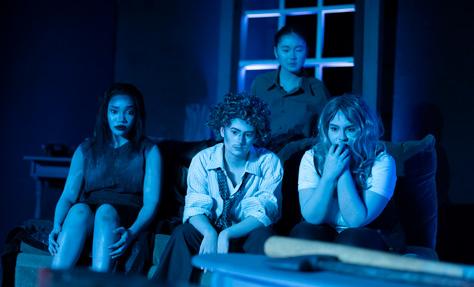

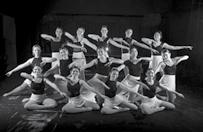
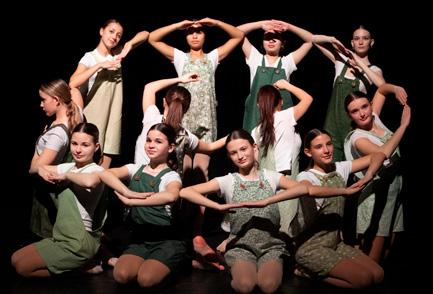
• The Winter Academy Dancers during “Dancing for a Better Tomorrow.”
• FOreGrOund, FrOm leF t: Rebecca Kakule ’25, Avah MacDonald ’27 and Madison Goodwin ’25.
back rOW: Ha Anh Nguyen ’25.
• Isabelle Rivera ’25 performing in “Passion in Motion: The Dance Journey.”
• Ben Gamba ’27 in “The Lightning Thief: The Percy Jackson Musical.”
The Academy Players present:

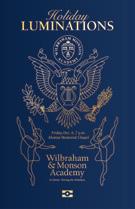

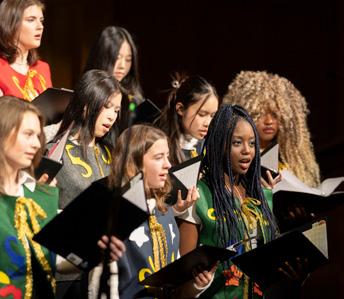
• Members of the WMA Chorus teamed up for a memorable performance at our “Luminations” Holiday Show.
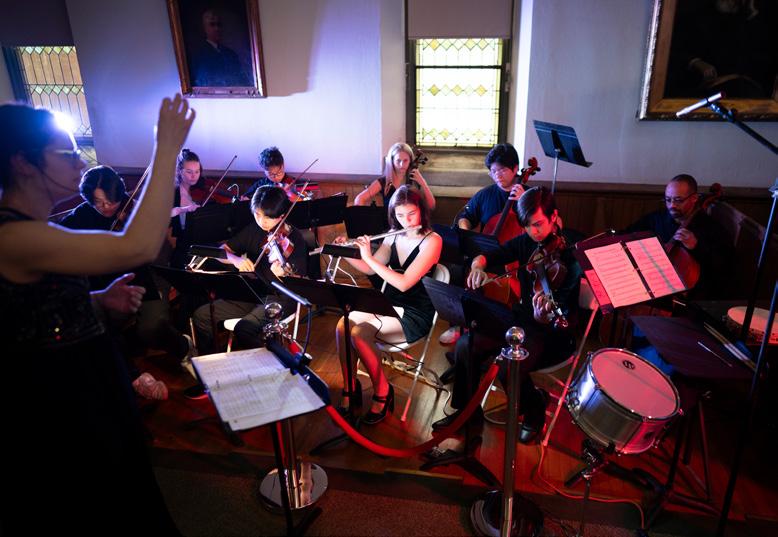
Kiki Brook ’26, center, plays the flute as part of the Jazz Ensemble during “Luminations.’’
WILBRAHAM & MONSON ACADEMY
riflery
Titans win 6th straight state championship
They make it look so easy.
It isn’t not even close.
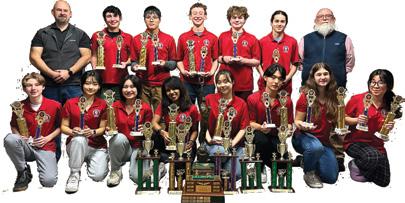
For the sixth year in a row, the Wilbraham & Monson Academy Riflery team won the Connecticut High School State Shoot-Off.
The Titans topped a field of five schools at Blue Trail Range in Wallingford, Connecticut, on Feb. 26, beating the second-place team by seven points with a five-person score of 934 (of 1,000).
“I’m very proud of the team,” first-year Coach Erek Machowski stated. “Their hard work and dedication throughout the season paid off. With over half of them being first-year shooters, what they’ve accomplished together is commendable.”
“This win resulted from the hard work we have put in all season,” added Julia Choi ’26. “During the match, everyone stayed composed under pressure and executed their shots with precision. Although we were five points behind until the last match, Vivi (Venkat ’25) had an outstanding result, leading us to the championship win.”
Vivi and Julia posted the best scores for the Titans with 194 (of 200) points. Also scoring in the top five were Yuka Okuma ’25 (183), Nikos Kratimenos ’28 (182) and Yejun Lee ’27 (181).
“During the progression of the six-relay match, I knew each team member was shooting at or above their current average, so I had confidence we would do well,” Coach Machowski explained. “It wasn’t until seeing the live breakdown before the last relay that it was clear the winning team would be decided by that final relay of shooters. Everyone made solid contributions toward the win, but Julia’s PR (personal record) in the first relay of 194 and Vivi’s final relay of 194 were the bread of a championship sandwich.”
The league championship came a week after the Titans earned the Gallery Match trophy. The regular season, though, had its ups and downs, largely due to so many new shooters on the team.
“The regular season was definitely a tough one,” Vivi said. “With 70 percent of the team completely new to the sport and the loss of many of our veteran shooters, our margin for error was way smaller than in previous years. On top of that, we had a head coach change, which put the team in a transition phase, along with the challenge of the new team members adapting to different ranges we shot at this season. But despite all that, one thing stayed constant I could always count on my team to give their all in every practice and every match. Everyone put in the work, and that effort really showed as the season went on.”
riflery
Vivi Venkat ’25 on the mark
Traditional prep school riflery is held inside in a controlled environment. An open competition in Connecticut last fall was held outdoors, but it proved the same result Vaishnavi “Vivi” Venkat ’25 doesn’t miss too often.
In a field of 28 shooters, which included adults, Vivi finished with a winning score of 1,582 points of a possible 1,600 (98.8%) at the President’s Match in Norfolk, Connecticut Vivi, who placed second at the same event last year, won by 18 points.
“The match was grueling, especially toward the end,” Vivi admitted. “Outdoor conditions are always more challenging, with the sun overhead and the wind affecting shots. I had a solid performance throughout, making each shot as precise as possible. However, the hardest part was the last relay, which involved 40 shots at 100 yards the farthest distance of the day. Holding the position steady became tough as my arm fatigued from using the sling, and I had to put the gun down and change position slightly before continuing to finish the match during the relay.
“Still, because of the lead I had accumulated in the earlier relays, I managed to secure the win. Having placed second in this competition last year, I was determined to win this time, so I practiced with harder targets (USA’s) during training to prepare.”
Julia Choi ’26 (1,481, 12th place) and Christian Sanchez ’27 (1,462, 14th) also competed for the Titans.
• Vaishnavi “Vivi” Venkat ’25
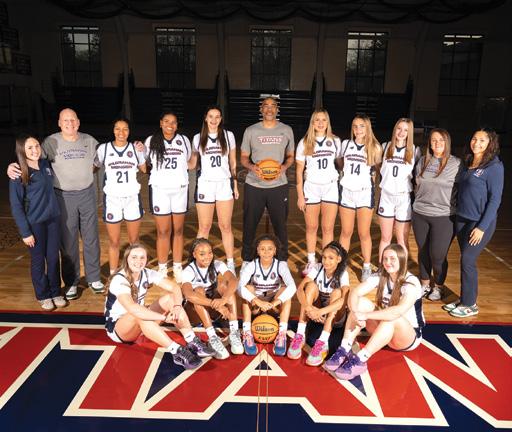
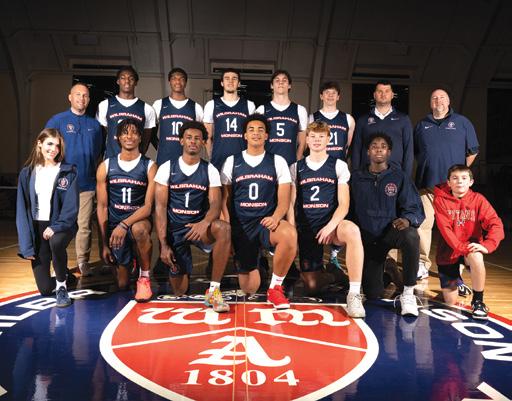
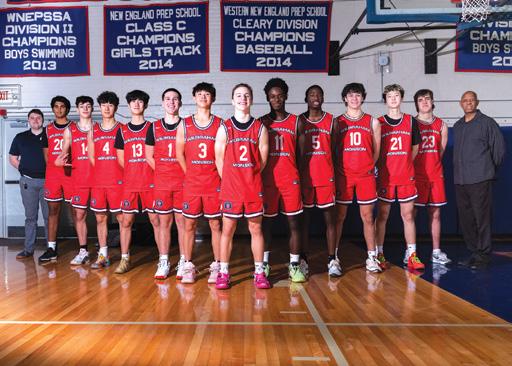
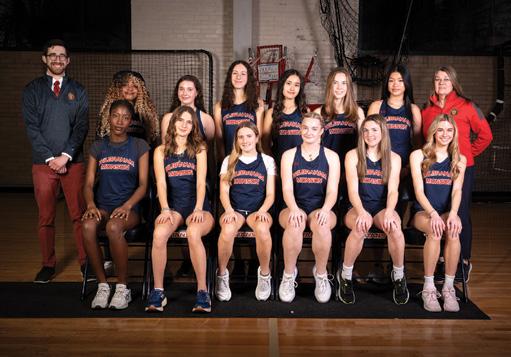
G irl S ba S ketball
Selah Prignano ’26 reaches milestone Wilbraham & Monson Academy’s Selah Prignano ’26 hit a major milestone during the 2024–2025 season, and she did it in standard Selah fashion.
Selah drove from the top of the key and scored on a finger roll early in the third quarter of a win at Cheshire Academy in February, making her the eighth 1,000-point scorer in program history.
“Reaching 1,000 career points made me reflect on my basketball journey from 0 –1,000,” Selah explained. “I’ve had a lot of lows and highs over the course of my high school career. I worked hard, and poured so much time and energy into this sport to continue to grow into a great player. All of it brought me to where I am now, and I honestly feel very proud of myself and my accomplishments.”
“One thousand points is quite the milestone in basketball,” Coach Durelle Brown stated. “Everyone would like to achieve it, but few understand the work, the determination, the commitment, the trust and the dedication that it takes, let alone the skill, consistency and luck with health during your career.
“Selah, a reclassified junior, has accomplished the feat within her four years, which is also a strong statement. I am proud of her and her journey. It was not always daisies and sunshine on the court, but she came here to WMA, trusted our school, our culture and community, and embraced it all. Then the basketball part came easy. Selah trusted and embraced our WMA Girls Hoops culture, and with her work ethic, (along) with our (coaches) know-how, melded together to make quite the successful career.”
The athletic guard from Newington, Connecticut, has been named to the All-NEPSAC team after both of her years at WMA. She also earned Class C Defensive Player of the Year as a junior, when she helped lead the Titans to their first New England Championship.
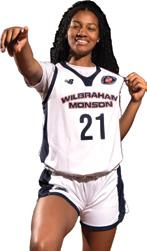
C atulati s!
#10
CATERINA RAVOSA
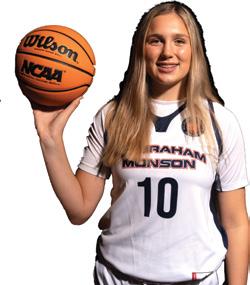
Caterina Ravosa ’26 continues to set high standards
Scoring 1,000 career points is a monumental feat for any high school basketball player.
Two thousand points is borderline unfathomable.
Wilbraham & Monson Academy’s Caterina Ravosa ’26 reached that rarest of rare numbers … as a junior.
The two-time All-NEPSAC selection hit career point 2,000 in February, while scoring 37 points during a game against Cushing Academy in Ashburnham, Massachusetts.
“Reaching 2,000 career points is a testament to Coach (Durelle) Brown and the culture he has created here at WMA,” explained Caterina, who plays forward. “With his guidance and the help of my teammates, I was able to achieve this milestone.
“In practice, my teammates push me every day to work harder and to get better so that I can reach my full potential and achieve all my goals. Without them and all my teammates throughout the last few years, this achievement would not be possible. Reaching 2,000 points is also a testament to all the sacrifice and work I have put into becoming the best version of myself both on and off the court.”
The fifth-year varsity player has certainly been a positive influence on
the program, and then some, leading the Titans to the New England Prep School Athletic Council Class C title last season the program’s first New England championship.
Coach Brown knew he had a program-changing player in “Cat” when she started at WMA as a seventh grader.
“This is a special, special achievement in the basketball world,” Coach Brown said. “Two thousand career points is an astronomical feat. You need a lot of things to swing your way: health, consistency, drive, skill. But most importantly, you need great teammates. Caterina has been consistent with her care and love of this program since seventh grade when she arrived.
She has enjoyed playing on all of her teams (five including this season) as a Titan, learning valuable lessons along the way from each season. She also adores the players who have played before her in our program, her ‘big sisters,’ and she looks up to them with pride. Caterina became the program’s seventh 1,000-point scorer last year, attaining the feat in the first game of the season.
WMA reached the semifinals of the highly competitive Class AA Championship in 2024–2025.
ketball











Middle School News
Future City Competition
The futuristic Straightway City has created a direct path to success for a group of Grade 7 students from the Wilbraham & Monson Academy Middle School.
WMA won Future City events on back-to-back weekends in January to advance to the highest level of competition.
With a design of “Straightaway, Singapore,” the 10 -person team of Tanner Cavanaugh ’30, Callan McMahon ’30, Mackenzie Clancey ’30, Olivia Collins ’30, Gordon “Tre” Goldsmith ’30, Cooper Haluch ’30, Caroline Harvey ’30, Quintus Kim ’30, Tommy Lee ’30 and Joseph Odei-Boateng ’30 won the local event at WMA in mid-January before placing first at the regional competition a week later in Boston.
“At the local event, the team stole the show,” said Mr. James Gouin, WMA’s Faculty Advisor for the program. “I was very proud of them. Their model looked amazing, they wowed the judges, and were knowledgeable about their solutions to building a floating city.
“At the New England event, Straightway handled the big time like no other team that we have had in the past participating in this competition. They were composed when being asked tough questions from a larger panel of judges in a hall filled with an audience of 200 people.”
The team competed at the international championship in Washington, D.C., in February. More than 70,000 middle school students throughout the world participated in the

competition. WMA’s 10 students are among just 300 who earned a spot at the championship round. The Titans did not place in the top five.
Future City is part of the Grade 7 curriculum, but the competitions are outside school hours. In short, teams design a city 100 years into the future.
“Future City is a hands- on cross- curricular educational program that brings STEM to life for students in Grades 6 –8,” explained Mr. Gouin, referring to Science, Technology, Engineering and Mathematics. “Students are doing things that engineers do building cities of the future. Students learn to use the Engineering Design Process and project management skills, showcasing their solutions to a citywide sustainability issue.
“This year’s challenge asked students to build a floating city and provide two innovative examples of how a floating city works while keeping its citizens healthy and safe.”
WMA certainly did that. Most impressively, Callan won “best essay” at the local event.
“They are very talented presenters and model builders,” Mr. Gouin said. “Joseph, Tre and Callan are the lead presenters and impressed both rounds of judges with their talents. This team is knowledgeable in their subject matter and comfortable being on the big stage to present.”
• FrOm leF t: Front row TJ Lee ’30, Callan McMahon ’30 and Tanner Cavanaugh ’30; Middle row Cooper Haluch ’30, Joseph Odei - Boateng ’30, Quintus Kim ’30 and Caroline Harvey ’30; Back row Olivia Collins ’30, McKenzieClancey ’30, Faculty Advisor Jamie Gouin and Tre Goldsmith ’30.

Robotics team makes it look easy
A very long day was worth it for a group of Titans in the Wilbraham & Monson Academy Middle School.
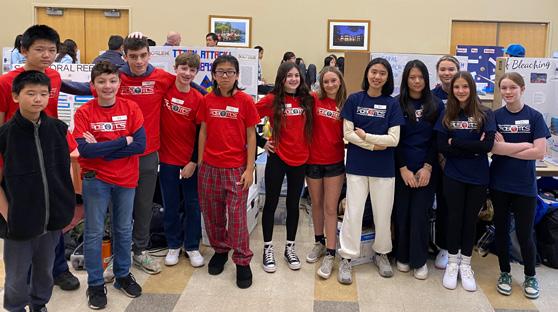
Leaving the Academy before sunrise and returning after sunset, 13 students on the school’s Robotics Team competed at The First Lego League Qualifying Event in Worcester in December.
“Titans Blue” finished as the Robot Design Award Second Runner-up, qualifying the members for the state First Lego League West Championships.
“Both Titan teams had a similar base robot, which is part of the SPIKE training system,” explained Faculty Advisor Luke Pelletier. “We modified the SPIKE design by rotating the control hub by 90 degrees, which made the wheelbase narrow compared to the original design. This narrowed footprint allowed the programmer more options to move around the board.
“The coaches are not allowed in the presentation room; I didn’t see firsthand, however, our students felt that the judges liked the different
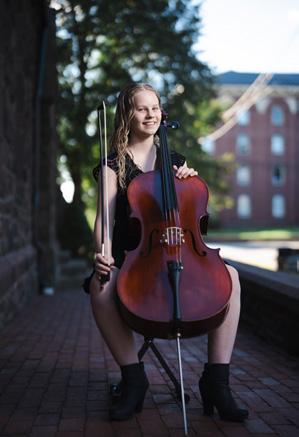
Noelle MacDonald ’31 qualifies for Junior Districts
Wilbraham & Monson Academy’s Noelle MacDonald ’31 is a Grade 6 student. She sure doesn’t act like it, especially when it comes to music.
Noelle auditioned and was selected to play the cello at the Junior Festival of Western Districts, sponsored by the Massachusetts Music Educators Association. After two rehearsals, a concert was held at Minnechaug Regional High School in Wilbraham in March.
“I love playing the cello because I get to connect with people all over the world,” Noelle said. “With all of the competitions, orchestras and concerts that I have been in, I have been able to connect with many different people that all have the same love and interest: music.”
“I wanted to try out for Junior Districts because I wanted to push myself and show myself
that I could do it. I love trying for things like this because I get to play the cello while also having to work hard to get in.”
Junior Festival was open to students in Grades 6 – 9 to audition.
“Noelle started playing the cello when she was four years old,” explained WMA Fine & Performing Arts Department member Lynne Camenga, who is also Noelle’s mom.
“She has played cello at Hartt Suzuki Institute as well as Ogontz Suzuki Summer Intensive. Noelle was in the Florida Youth Symphony Program Chamber Division in Grade 4 and earned assistant principal cello for the Symphony Division last year in Grade 5. Noelle competed in the Florida Federation of Music Clubs five years in a row, earning straight superior ratings all five years, and at the state level winning for Solo and Chamber Music Divisions.”
attachments that we built that pop on and off the robot depending on which mission we are completing.”
Titans Blue consisted of: Jessie Wang ’29, Olivia Collins ’30, Abbi Whittier ’31, Mary Chen ’29, Maggie Comeau ’31, Olivia Macklin ’29, Hayden Lonczak ’30 and Damian Hutchinson ’31.
Titans Red included: Matteo Perniciaro ’30, Callan McMahon ’30, Quintus Kim ’30, Allan Peng ’29, Eric Peng ’29, Brooklyn Cherry ’30, Molly Mahan ’30 and Charlie Proctor ’31.
• FrOm leF t: Eric Peng ’29, Alan Peng ’29, Charlie Proctor ’31, Matteo Perniciaro ’30, Callan McMahon ’30, Quintus Kim ’30, Molly Mahan ’30, Brooklyn Cherry ’30, Jiaying “Mary” Chen ’29, Jessie Wang ’29, Olivia Collins ’30, Maggie Comeau ’31 and Abbi Whittier ’31.
Fall Semester 2024
The 221st year of the Academy opened with enthusiasm and optimism that was evident from Day One. Our enrollment of approximately 400 students represented 28 different nations, including: Austria, Bangladesh, Brazil, Czech Republic, India, Kazakhstan, Nigeria, Russian Federation, Turkiye, Ukraine, United Arab Emirates and Zimbabwe.
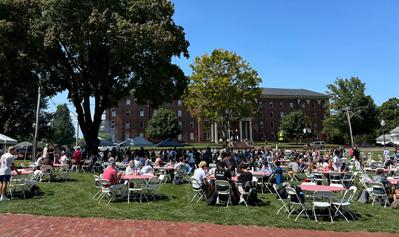
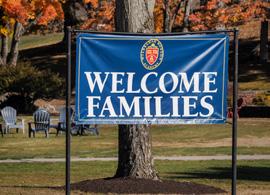
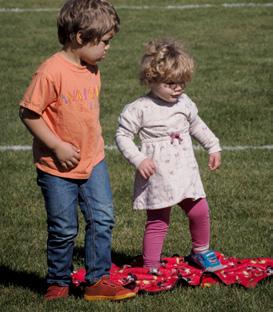
1 A sign of the times. 2 Never too young to be a Titan. 3 Titan gear on sale at the “Merch Tent” at Corbin Field.
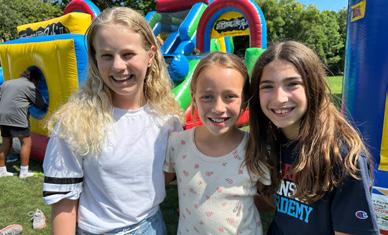
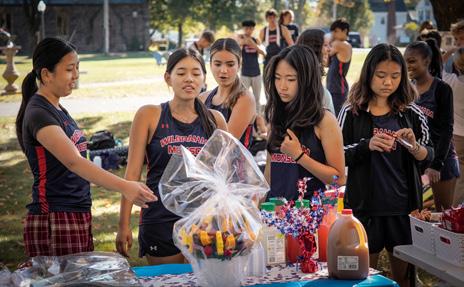
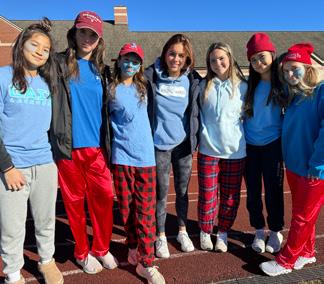
4 BBQ lunch time during Titan Fest, an all-school event during the first week of classes. 5 Smiles all around for (from left) Noelle MacDonald ’31, Colleen Chesky ’31 and Emily Salema ’31 at Titan Fest. 6 Healthy snacks await the Girls Cross Country team at Family Weekend. 7 Fun and fashion at the Bunion Derby. 8 Titans are ready to roll before the 80th Bunion Derby. 9 Senior Pride at the Fall Pep Rally. 10 School- colored balloons at the Sun Dial it must be Titan O’Clock.


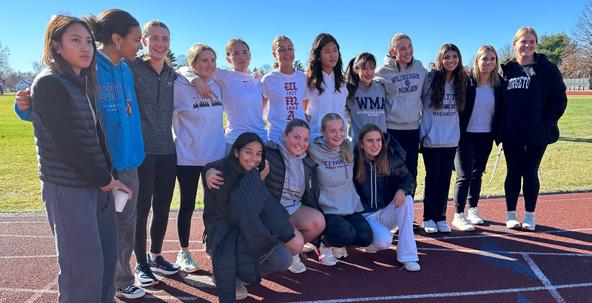
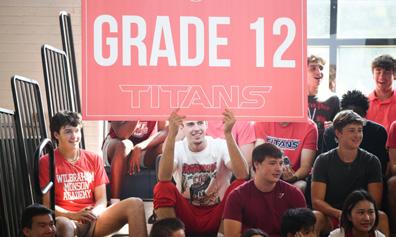

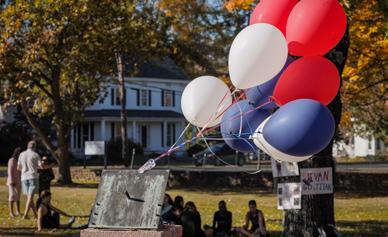

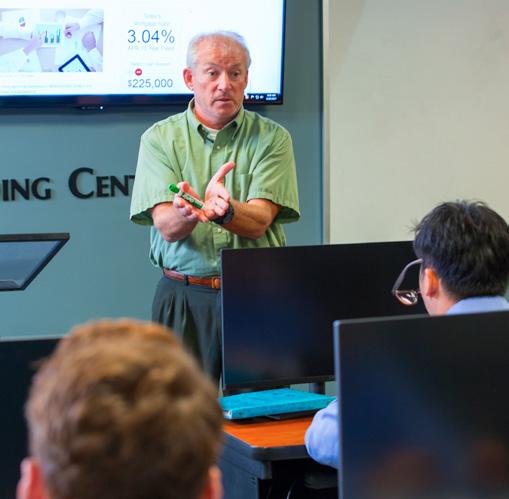
Incorporating entrepreneurship, economics and finance into a secondary school curriculum offers CEEF students a distinct advantage.
These subjects teach analytical thinking, problem-solving and decision-making skills that transcend the classroom and apply to virtually any career. College admissions officers increasingly value applicants who demonstrate real-world acumen, and students with exposure to financial literacy, business planning and market analysis enter higher education with an early advantage.
The Center for Entrepreneurship, Economics & Finance at WMA
Empowering generations: Past, present and future
A signature academic program for more than two decades, the current-day Center for Entrepreneurship, Economics & Finance is one of the defining reasons Wilbraham & Monson Academy is set apart from its competitors.
What began as the first-of-its-kind Center for Entrepreneurial & Global Studies in 2003, and six years later was bolstered by a state-of-the-art Trading Center, now serves as inspiration and a pipeline for successful career paths in the entrepreneurial world. In this issue, we highlight a handful of alumni who have used this program as a springboard.

b y Melissa e arls Associate Head of School, Dean of Academics alu M ni in ac T ion
Despite the increasing complexity of global markets, the promise of entrepreneurial opportunities and the evolving professional landscape, a majority of students graduate
high school without foundational knowledge in entrepreneurship, economics or finance. A robust pre-college program dedicated to these disciplines, if created and implemented successfully in our secondary schools, would empower students with the skills, confidence and knowledge necessary for success in higher education and in the business world.
Welcome to the Center for Entrepreneurship, Economics & Finance at Wilbraham & Monson Academy, more commonly known as CEEF: the only award-winning, pre-college business program of its kind.
The lack of financial literacy remains a widespread issue among our youth, with studies showing that many young adults struggle with budgeting, credit management and investment basics. A well-structured secondary school curriculum in finance including classes such as Financial Planning and Honors Behavioral Finance teaches students how to manage money responsibly, understand the implications of debt and build wealth over time. By equipping students with these skills early on, schools play a critical role in fostering financial independence and mitigating the long-term consequences of illinformed financial decisions.
As students gain financial literacy, they also encounter an evolving economic landscape where traditional employment is no longer the only path to financial stability. The rise of the “side hustle” economy, remote work and digital entrepreneurship has created a landscape where traditional career paths are no longer the only route to success. Introducing entrepreneurship education in high school, through courses like Global Entrepreneurship and Social Entrepreneurship, encourages students to think creatively, develop resilience and take calculated risks.
While entrepreneurship fosters creativity and adaptability, a deeper understanding of economic principles is essential for navigating the broader financial landscape. Understanding economics is not just about supply and demand it is about comprehending the forces that shape societies, influence policies and impact global markets.
A robust pre-college economics program, including classes such as AP Macroeconomics and AP Microeconomics, enables students to critically analyze economic systems, consider the ethical dimensions of financial decisions, and engage in informed discussions about topics such as inflation, trade and economic inequality. When students grasp these concepts early, they become more engaged citizens and contribute meaningfully to policy discussions.
To make these subjects truly resonate, schools must move beyond textbooks and incorporate experiential learning. The crown jewel of the CEEF program is the wildly popular Student Investment Seminar.
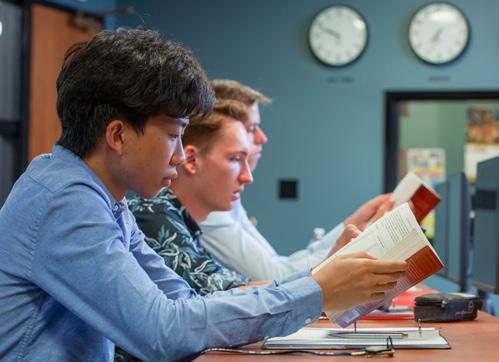
Students enrolled in SIS meet weekly in teams to conduct research across the 11 market sectors before selecting a specific stock to present to an Investment Advisory Committee for potential purchase. Team recommendations become part of a growing student-managed stock portfolio, valued at well over $100,000, representing an 80% return on original investment.
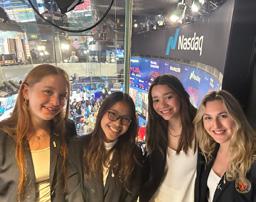
In the past, select students from the SIS program have also enjoyed the opportunity to visit Shenkman Capital and the NASDAQ floor in Manhattan, New York, to complement their authentic learning experience.
As both a means of motivation and a reward for students’ consistent, concentrated interest in the CEEF program, this year we introduced a Diploma Certificate for those students who enroll in at least three classes offered by the department, and participate in at least one Student Investment Seminar presentation.
These energetic future entrepreneurs, economists and financial analysts will receive special recognition at Commencement. But the real reward for their efforts will come at the post-secondary level, in business school or on places like Wall Street, when they apply the foundational knowledge and skills acquired at WMA to their next successful endeavors.

From the Chair
“In my 43 years as an independent school teacher, our CEEF program is unmatched among prep schools in terms of the depth of classes offered at the introductory to advanced levels. WMA graduates indicate they have a significant leg up in their college classes as a result of the courses and club activities available to them at WMA. And, parents constantly confirm this sentiment. Our Student Investment Seminar class is comparable to college-level investment programs.”
ji M irzy K , chair, ceef
watch ceef video: Scan the QR code to watch a two-minute video about CEEF!
Introduced for the 2003–2004 academic year as “an innovative program of study in entrepreneurial and global market studies the first of its kind to be offered at the secondary school level.’’
ori G inal cla SS e S
Intro to Macroeconomics
Intro to Microeconomics
International Financial Markets
Entrepreneurialism
Global Economic Issues
Leadership and Ethics: Theory and Practice now 12 Courses
different students, including 190 female students, have taken at least one CEEF class during the last five years.
The Finance, Entrepreneurship & Business Society is a student-run organization that promotes financial literacy, business, economics and entrepreneurship among students, faculty and members of the WMA and local community. More information can be found at: www.wma.us/CEEF then

Intro to Economics
Financial Planning
Entrepreneurship
Global Entrepreneurship
Social Entrepreneurship
Portfolio Management
Stock Market Analysis
Honors Behavioral Finance
Business

young en T repreneurs
Alessandra (Mele) Corbett ’09
‘Without WMA, I don’t think I would have received the immersive creative experience’
by h ea T her h a M el ’08 Director of Alumni Relations
For Alessandra (Mele) Corbett ’09, art and design have always been at the heart of her personal and professional pursuits.
Yet it wasn’t until her time at Wilbraham & Monson Academy that she realized she could transform her love of drawing, color and layout into a fulfilling career and eventually, into a business dedicated to uplifting local entrepreneurs.
As founder of The Homegrown Studio, Ms. Corbett collaborates with farms, small businesses and community-focused organizations, weaving storytelling, strategy and design into brands that help local economies flourish.
Early roots at WMA
Ms. Corbett’s affinity for art began long before WMA, but it was her Academy experience that gave her the creative confidence to explore design more deeply.
She recalled how: “I was always interested in being creative and making art; my favorite classes were in the Binney art studio with Mr. (Paul)
Bloomfield. Even so, it was hard for me to see how art could translate into a career, and I didn’t seriously consider it at first.”
Her turning point arrived when she joined the yearbook staff.
“I was co-editor of the yearbook my senior year,” she said. “That’s where I first learned how to use graphic design programs and started playing with layout, typography and color. I was using creativity in an entirely new way and having a lot of fun with it.”
She suddenly realized that art could be much more than a hobby it could have practical applications and shape the visual identity of an entire publication.
Through her work on the yearbook, Ms. Corbett met freelance designer Jan Reynolds Ziter, who at the time was designing WMA’s marketing materials, including the Academy World magazine.
A path in design takes shape
Inspired by this mentorship, Ms. Corbett decided to study studio art at Hobart & William Smith College, complementing her curriculum with graphic design internships. Each summer, she returned to Western Massachusetts to apprentice with Ms. Ziter, assisting with design work for local businesses, including WMA and Academy World.
After college graduation, Ms. Corbett built upon these skills through roles at larger advertising agencies and corporate consumer goods companies in New York and Massachusetts. She gained experience in design, marketing and branding, all the while holding onto her dream of someday running a studio of her own.
The leap into freelance
The opportunity came sooner than expected when Ms. Corbett was unexpectedly laid off from her corporate job.
“It felt like the end of the world at the time,” she admitted. “But looking back, it was the best thing that could have happened. I received the push I needed to try running my own studio full time.”
Within six months, she formalized her Wilbraham-based business and set out to build a niche helping local farms with their branding and marketing efforts.
Soon, Ms. Corbett was partnering with local farmers’ markets and organizations like Community Involved in Sustaining Agriculture, which helps connect local farmers with grants earmarked for marketing.
Offering to design market logos, signage and brand elements in exchange for referrals helped her build a network and, through CISA, she began connecting directly with farms looking to revamp their brand identities.
“That partnership was a game-changer for my business,” she said. “It brought in a consistent stream of projects, allowed me to price work appropriately, and allowed me to see the impact that thoughtful branding could make on a local economy.”
The Homegrown Studio: Mission and Vision
Today, The Homegrown Studio specializes in branding and design for small- to medium-sized businesses, many of which are community focused.
Ms. Corbett described her setup not as a large agency but as a focused, nimble operation: She handles the creative aspects, while her colleague, Sara Esthus, leads marketing strategy, web design and other more technical elements.
From the earliest stages of a client relationship, The Homegrown Studio emphasizes developing a solid marketing strategy, which means talking through business goals, key audiences, market differentiators and visual inspiration.
“Marketing doesn’t have to be a big scary business school concept,” she explained. “We prefer to make it very approachable and accessible; we want our clients to feel empowered to apply these strategies right away. Then, we translate that plan into a cohesive design system.”

Once a brand’s core identity is established logos, typography, color palette, illustrations and other visual elements Ms. Corbett and Ms. Ethus apply it across a client’s marketing tools. This might include packaging design, websites, social media graphics, business cards, merchandise and more. Their hallmark is taking a storytelling approach to brand identity: “We’re all about creating a strong narrative that connects emotionally with an audience,”
Ms. Corbett said.
Creativity, Community and Balance
Ms. Corbett’s path has included twists and turns, especially now as she’s navigating motherhood alongside running a creative studio.
While challenging, the transition to parenthood has helped her refine her processes and even adopt new ways of working. Her “Brand in a Week” program both optimizes her workflow and offers an expedited timeline for clients in a hurry.
She also acknowledged the importance of returning to her own artistic roots. Outside of client work, Ms. Corbett indulges in printmaking and painting, which she originally fell in love with during her WMA art classes.
“It’s very grounding,” she notes. “I really need that analog creative time to remind myself that this is where it all started. It’s especially important to me now with my son around; I think a lot about his perception of creativity, and I want him to see me engaging with art in this tactile way.”
Full circle and looking ahead
While Ms. Corbett’s story extends far beyond WMA’s campus, she’s quick to credit her high school experience for sparking her passion for design in the first place.
“Without WMA, I don’t think I would have received the immersive creative experience you get in Binney Hall, I wouldn’t have had the confidence to pursue leadership in yearbook, and I certainly wouldn’t have connected with the mentors and teachers who encouraged me to pursue my creative interests,” she reflected.
Though The Homegrown Studio continues to flourish, Ms. Corbett isn’t necessarily seeking exponential growth. She’s more excited about “making design accessible” to local entrepreneurs and forging genuine relationships that help the community prosper.
“My dream for the future isn’t to build a big agency it’s to stay close to what matters:
doing fulfilling work, raising my family and helping the people and businesses that make our communities vibrant,” she said. “If I can achieve that balance, that’s success in my book.”
Corbett also shared the WMA experience with siblings Brooke (Fernandes) ’11 and Andrew ’15.
As for her advice to current WMA students and fellow alumni, she shared: “Even if it feels difficult to see a clear career path, don’t ever dismiss your passions follow the thing that excites you and throw yourself into it. Creative problem solving is a desperately needed skill in our communities and in our world, and WMA is exactly where that kind of thinking is nurtured.”

Scan QR code to read the full version of the story on our digital Academy World pages.
learn more about ale SS andra website: thehomegrownstudio.com
Instagram: @thehomegrownstudio
email: alessandra@thehomegrownstudio.com
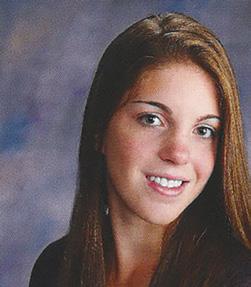
Senior photo, 2009
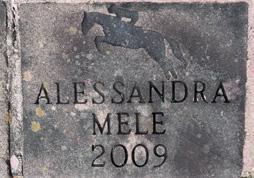
Senior Stone
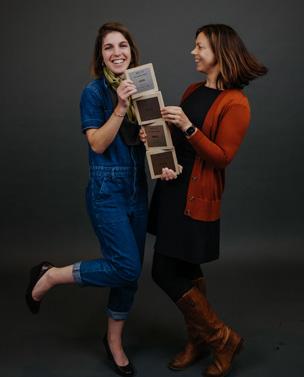
Alessandra (Mele) Corbett ’09 celebrating awards with Sara Ethus, right.
young en T repreneurs
John Moran ’11
‘The school taught me a lot about leadership and being part of a community’
by sean valen T ine Director of Stewardship & Planned Giving
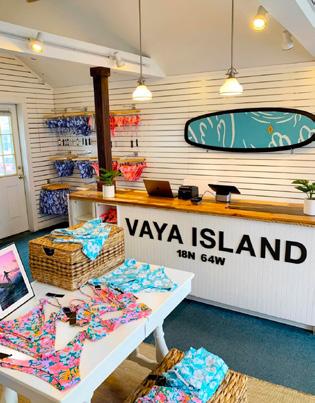
Walk down Main Street in Chatham, Massachusetts, and one will come across the storefront for Vaya Island, a lifestyle brand with a foundation based on high-quality men’s and women’s swimwear. The brick-and-mortar store is relatively new, but the brand goes back to 2014 and is the brainchild of John Moran ’11 … which he started in his college dorm room.
“I didn’t set out to make women’s swimwear,” said Mr. Moran, who grew up in Springfield, Massachusetts, and attended Merrimack College in North Andover, Massachusetts.
“I worked at Springfield Country Club during college, and had friends who were lifeguards on the Cape,’’ he said. “I loved landscape and surfing photography, so I’d visit whenever I could and post photos on my Instagram page. A friend suggested I might be able to sell my images, so I used my golf club earnings to have a small batch of phone cases made with my photos on them, and sold them out of my backpack and dorm room.”
Within a few years of graduating from college, Mr. Moran moved from phone cases to nautical-themed jewelry (with help from an uncle who owned a jewelry manufacturing business). He had built an Instagram following of more than 11,000 and had a small but successful business named Vaya Island selling his wares online.
A turning point came when Instagram launched its polling feature. Mr. Moran asked what his followers and customers wanted Vaya Island to offer next. Surprisingly, they said “swimwear; make bikinis.”
One problem, Mr. Moran didn’t know how to do that.
“I had no experience with sourcing manufacturers,” he said. “What I did know is that they had to be good quality. That’s what I kept hearing from customers as I dug a little deeper.’’
With a desire to give his customers what they wanted, Mr. Moran turned to Alibaba, a giant marketplace for manufacturers, and requested sample suits from different suppliers. He examined each batch, asked friends for feedback and torture-tested the samples. Eventually, he settled on a supplier whose product was soft, well made and got the thumbs-up from testers. He paired the base suits with custom prints, ordered some and promoted them through his social media and website. They sold out in a month.

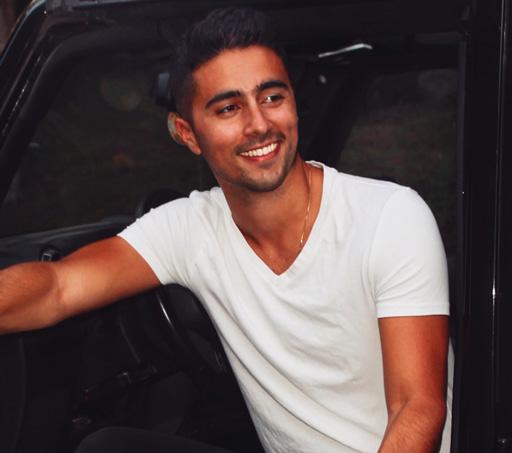
I loved WMA. And (I) had so many great faculty members. I had a class with Mr. (Brian) Easler in my senior year and loved that.”
j ohn Moran ’11
“Most of my customers and followers were women because of what I’d been offering already,” Mr. Moran said. “They were loyal to the brand and open to our questions. So in 2017, I liquidated what was left of my jewelry and accessories and ran with the swimwear.”
Since then, Mr. Moran has built Vaya Island (the name comes from a lyric of a Zac Brown Band song and the Caribbean island of Saint John for which John is named) into one of the top independent swimwear brands.
“We make swimwear that is both sporty and stylish,” Mr. Moran said. “We don’t try to be a surf brand or high designer brand, but we’ve had pro athletes like Aryna Sabalenka (World No. 1 in women’s tennis) wear our suits as well as influencers like Hannah Brown from The Bachelorette. Versatility, comfort and our unique vibrant patterns are what our products are known for.”
But before Mr. Moran became a titan of swimwear, he was a WMA Titan. He enrolled in Grade 9 in 2007, after his parents introduced him to the idea of the Academy.
“WMA was one of the schools my parents wanted me to apply to coming out of eighth grade,” he said. “They introduced me to the idea. I really hadn’t considered it before, though I knew the school a little bit because my aunt and uncle lived in Wilbraham and so we’d drive through campus a lot and say how beautiful it was. I was drawn to that and it helped me pick WMA in the end.”
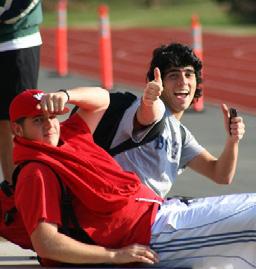
A day student from Springfield, Mr. Moran was very athletically focused while at the Academy. He was on the varsity basketball team, ran cross country at the varsity level and was captain of the varsity lacrosse team.
“I loved WMA,” he said. “And (I) had so many great faculty members. I had a class with Mr. (Brian) Easler in my senior year and loved that. Dr. (Paul) Ekness’ science classes were great. I recall reading ‘The Great Gatsby’ in Ms. (Meg
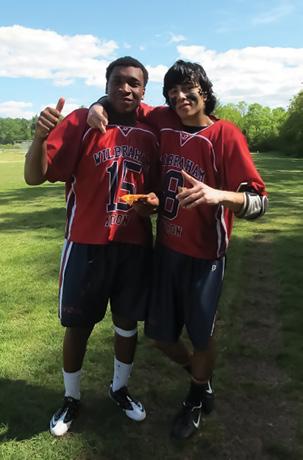
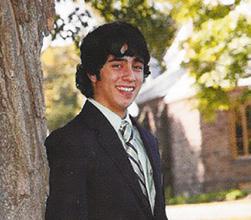
Lenihan) Hutcheson’s class. I had Ms. (Jamie) Palmer for art. Ms. (Sandi) Scott was my college counselor. Coach (Jeff) Vartabedian was my lacrosse coach and such a great guy.
“I met some of the best people there. I am very close with Steve (Marcus ’10) and Ben Marcus (’12). I saw Jackie Smith (Norton) ’11 and her mom (Caroline Smith) at the shop over the summer. Sports gave me friends in grades above and below me too, which was great.”
Mr. Moran credits the Academy for many core skills inherent to any successful enterprise.
“The campus atmosphere and amazing faculty definitely prepared me for college,” he said. “The school taught me a lot about leadership and being part of a community, which I have definitely used in my business, especially now as I start to hire people and expand into new areas.”
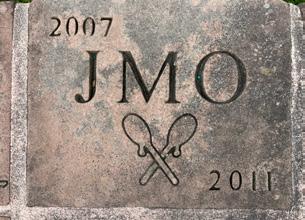
So what’s next for Mr. Moran and the brand?
“Back in 2019, we were 100% ECOM,” he said. “Now we’ve diversified into wholesaling and opening our own stores. We opened the first Vaya Island store in Chatham in 2024 with plans to open a second in the next one to two years. We are introducing our first clothing line, kid’s collection and expanding our men’s line. We are also using more sustainable materials to make our suits, primarily with recycled polyester. We also have collaborations with two big name influencers (can’t disclose just yet) coming this summer.”
check out vaya i S land at: website: vayaisland.com Instagram: @vayaisland
• Vaya Island store in Chatham, Massachusetts.
• Senior Stone
• John Moran ’11 with Nafiu Ayatu-Abu ’10, left.
• John Moran ’11 with Ben Marcus ’12, left.
• Senior photo, 2011
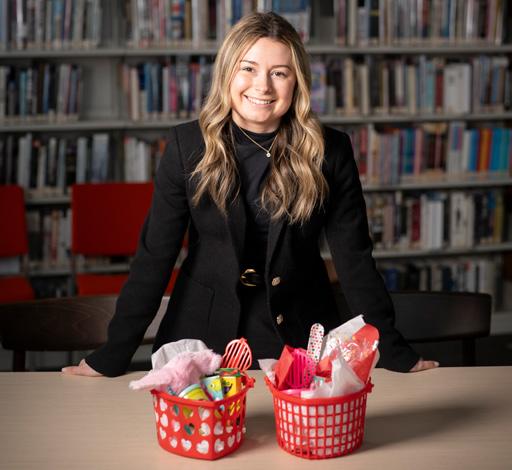
young entrepreneurs
Haley Godin ’18
WMA ‘was the perfect place to figure out what I cared about and how I could turn that into something real’
By Heat H er Hamel ’08 Director of Alumni Relations
Twice a year, the Wilbraham & Monson Academy Office of Advancement reaches out to alumni who are eager to reconnect and share their journeys in this magazine.
Among these enthusiastic graduates is Haley Godin ’18, an inspiring young entrepreneur whose desire to make a difference
led her to found The Little Smiles Foundation, a 501(c)(3) organization dedicated to bringing moments of joy to children coping with lifethreatening illnesses.
Ms. Godin’s story is one of passion, perseverance and heart a testament to how Wilbraham & Monson Academy students can harness their creativity and compassion to make a lasting impact long after graduation.
A spark of inspiration
Ms. Godin’s path to philanthropic work began with an unexpected detour in her own childhood.
In 2012, Ms. Godin was diagnosed with a brain tumor. After undergoing surgery and making a full recovery, she felt a deep calling to repay the kindness she experienced while in hospital.
“That experience introduced me to the incredible work of Child Life Specialists,’’ Ms. Godin said. “Even as a kid, I could see how much of a difference it made to have someone there to distract you or bring you a small comfort item.”
Although her early hospital stays were challenging, Ms. Godin’s experiences would one day fuel her passion for helping other children who find themselves in the same situation.
Throughout her teenage years, Ms. Godin remained inspired by the memory of those Child Life Specialists. They weren’t just handing out toys; they were delivering hope, normalcy and small moments of fun amidst beeping machines and clinical routines.
“That was where it all started,” she reflected. “I knew I wanted to give back, but I wasn’t quite sure how.”
Growing Confidence at WMA
Upon arriving at Wilbraham & Monson Academy, Ms. Godin found an environment that nurtured her emerging interests. Small class sizes and close relationships with teachers allowed her to gain confidence not only in the classroom but also as a person with a mission.
“WMA gave me the freedom to explore,” she recalled. “You really get to try so many things sports, arts, service and feel genuinely supported. It was the perfect place to figure out what I cared about and how I could turn that into something real.”
Ms. Godin eagerly embraced volunteering opportunities. She joined what was then known as WMA Action, an early version of today’s Titans For Change, where she helped organize a local toy drive.
Ms. Godin discovered that investing her time and energy in others brought immense fulfillment. She also formed meaningful friendships with faculty and staff, who showed her how a supportive environment can help transform difficult circumstances into manageable ones. These lessons would ultimately guide her approach to founding The Little Smiles Foundation.
The College Connection
At Providence College, Ms. Godin joined a campus club associated with Love Your Melon, a student-driven organization that raises funds for pediatric cancer research. Through this group, she visited Hasbro Children’s Hospital in
Providence, delivering winter hats and small gifts to young patients.
“I loved it,” she said. “We ran fundraisers, delivered hats and got to see the immediate impact on these kids. It was an incredible feeling.”
After she finished college and moved to Boston for work at Massachusetts General Hospital, Ms. Godin missed the spirit of campus clubs and philanthropic events.
The birth of Little Smiles
Eager to recapture the camaraderie and goodwill she’d enjoyed in college, Ms. Godin decided to host a holiday fundraiser at a bar in Boston, inviting friends and family from her new city and her hometown.
She organized a raffle, partnered with local businesses and was “blown away” by the turnout and generosity.
“We ended up raising around $3,000,” she recalled. “I didn’t expect that kind of success for a first event, and it made me realize how passionate I was about this.”
Ms. Godin began exploring ways to formalize her efforts so they could reach even more children in need. Encouraged by her family, she filed the necessary paperwork to become a registered 501(c)(3). It took months to finalize the legalities and administrative details, but by August 2023, The Little Smiles Foundation was official.
Making a Real Impact
Today, The Little Smiles Foundation focuses on bringing joy to children in hospitals through small acts of kindness. Ms. Godin assembles themed “baskets” tailored to various times of
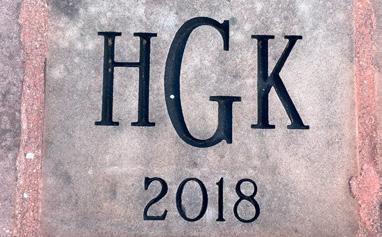
the year Halloween, Valentine’s Day, summer vacation that contain small toys, books, crayons or other simple items.
“Child Life Specialists distribute these baskets so kids can have a little bit of that normal childhood feeling,” she explained. “Sometimes they open them in the hospital, other times they’ll take them home. Either way, I want them to feel cared for.”
Although she got her start by donating to the pediatric outpatient floors at MGH, Ms. Godin has since expanded to Baystate Medical Center in Springfield, Massachusetts, the hospital where she received treatment as a child.
“Being able to come full circle feels incredible,” she said. “I actually got to tour their children’s floor a few weeks before Christmas, and it brought back so many memories. It’s wonderful to help kids in the same place where I was helped.”
Partnerships and Growth
Ms. Godin’s ultimate goal is to grow The Little Smiles Foundation to a point where she can devote herself to it full-time. While her work at MGH has provided invaluable experience she recently transitioned from a finance role into a more patient-facing operational role her heart remains firmly anchored in bringing comfort to children facing hospital stays.
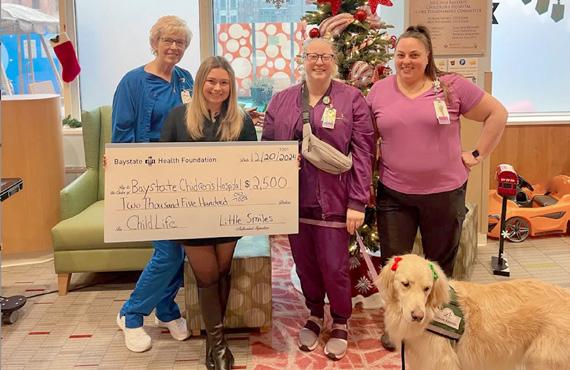
Looking Ahead
Ms. Godin is looking into applying for small grants, reaching out to potential corporate sponsors like Crayola and Hasbro for bulk donations, and continuing to grow her volunteer base. But no matter how large the organization becomes, she wants to maintain the personal touch that inspired her in the first place.
“When I think back to being in the hospital, what I remember most is that feeling of someone caring,” she explained. “You can’t replicate that without real human connection.”
With each themed basket delivered, each holiday toy drive sponsored and each family impacted, Ms. Godin honors the community values instilled in her at WMA.
“It’s not just about handing out toys; it’s about showing these kids they’re not alone,” she said. “WMA taught me the importance of a closeknit community. Even now, that’s what I want The Little Smiles Foundation to embody a community of people willing to help each other, even when times are tough.”
Final Thoughts

Standing at the crossroads of personal passion and professional growth, Ms. Godin exemplifies the spirit of Wilbraham & Monson Academy’s young alumni entrepreneurs. From her days as a curious, service-oriented student to her current role as founder and director of The Little Smiles Foundation, her journey shows the transformative power of empathy and action.

Scan QR code to read the full version of the story on our digital Academy World pages.
learn more about haley: website: thelittlesmiles.org instagram: @littlesmilesfoundation email: littlesmilesfound@gmail.com
Senior Stone
Senior photo, 2018

young en T repreneurs
Greg Balicki ’07
Journey is a testament to hard work . . . and a deep connection to his community
by jane T M oran Director of Archives
Wilbraham & Monson Academy has a long history of fostering innovation and leadership in its students. One distinguished alumnus, Greg Balicki ’07, has built a thriving career by blending his passion for sports, turf management and entrepreneurship.
From a record-breaking soccer player to the founder of Balicki Property Management, his journey is a testament to hard work, adaptability and a deep connection to his community.
A Foundation in leadership and sports
Mr. Balicki’s path to success began on the soccer field at WMA, where he played a pivotal role in the boys program’s historic dominance in the Western New England Prep School Soccer Association.
Under the guidance of Coach Gary Cook, the Titans won the Ray Brown Bowl as regularseason champions for four consecutive seasons. As team captain in 2006, Mr. Balicki led the Titans (13– 0 –3) to victory in the New England Class B tournament, earning numerous accolades, including the Massachusetts High School Player of the Year and All-American honors from the National Soccer Coaches Association of America and Adidas.
His soccer career continued at the University of Rhode Island, where he played Division I soccer while majoring in Turf Management. At URI, Mr. Balicki discovered his passion for high-quality sports surfaces, a realization that would later shape his career.
From Golf Courses to Entrepreneurship
Mr. Balicki’s professional journey started in the golf industry, where he spent five years working on golf courses and two years selling golf irrigation systems. Though he loved the industry, the demanding hours left little room for a personal life.
Looking for a change, Mr. Balicki transitioned to a role as an operations manager for a large-scale landscaping company in Springfield, Massachusetts. Despite the stability of his new position, Greg missed hands-on work.
Encouraged by his wife, Ali Mapplethorpe ’07, he took a leap of faith and launched his own business Balicki Property Management in 2019. Initially focused on residential and commercial landscaping, the company quickly gained traction. In its first month, Mr. Balicki secured 15 customers and, by the end of the second, that number had nearly doubled.
Innovating with Home Golf Greens
Mr. Balicki’s love for golf never faded, and he found a way to integrate it into his business. The idea for artificial home golf greens came when he and a friend discussed how great it would be to practice golf at home. Realizing that maintaining a natural golf green was impractical,

Greg Balicki ’07, right, with wife Ali (Mapplethorpe ’07) and daughter Peyton and son Camden.
Greg, left, proposed to Ali on campus, at their Senior Stones, in 2018
Mr. Balicki researched synthetic options and decided to install one in his backyard.
The project caught the attention of potential customers, but many wanted to see more before committing. Mr. Balicki’s first official putting green installation came through a connection with fellow alumnus Nate Lee ’10. Since then, demand has grown, and Mr. Balicki now takes on one or two putting green projects annually, providing homeowners with high-quality, low-maintenance practice spaces.
Ties to WMA and the Local Community
Mr. Balicki credits WMA for shaping both his personal and professional life. Not only did he meet lifelong friends and his wife, he also built a strong professional network.
Today, nearly 10 of his customers have WMA ties, and he has employed four current and former students. Reflecting on his time at WMA, Mr. Balicki recalled how the Academy helped him develop social skills and confidence.
He also remembers taking Center for Entrepreneurial & Global Studies classes with Mrs. Melissa Donahue, a teacher he loved and whose class he described as a unique and engaging learning experience that did not feel like he was taking a class.
Building a Future in Turf Design
Now based in Wilbraham with Ali and children Camden, 4, and Peyton, 1, Mr. Balicki continues to grow his business. While residential and commercial landscaping remain the core of Balicki Property Management, the artificial golf greens division has become a fulfilling extension of his original passion for golf.
Mr. Balicki’s journey from soccer captain to successful entrepreneur illustrates the power of combining passion with expertise. His story is an inspiration for young professionals looking to carve their own paths, proving that with determination, adaptability and a strong network, success is always within reach.
Celebrating alumni like Mr. Balicki is a reminder of education’s vital role in shaping the next generation of leaders. His achievements are a testament to the power of ambition and the enduring impact of a WMA education.
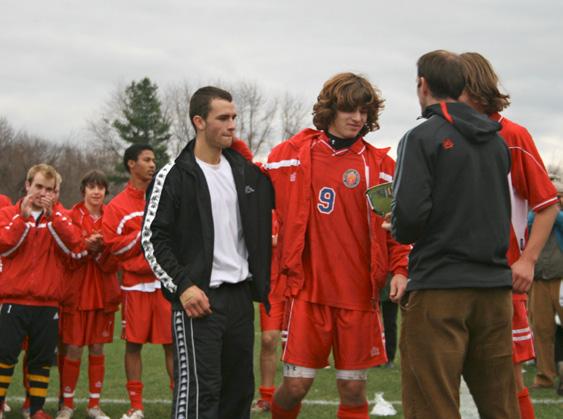
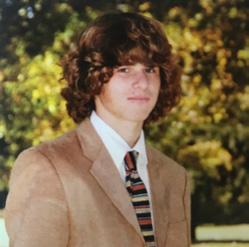
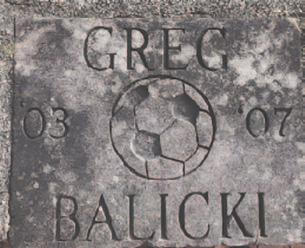
learn more about G re G : instagram: @balicki property management email: balickipm@gmail.com

Greg Balicki ’07, wearing No. 9 jersey, receives the Ray Brown Bowl for the Boys Soccer team’s success.
Yearbook, 2007
Senior Stone, 2007
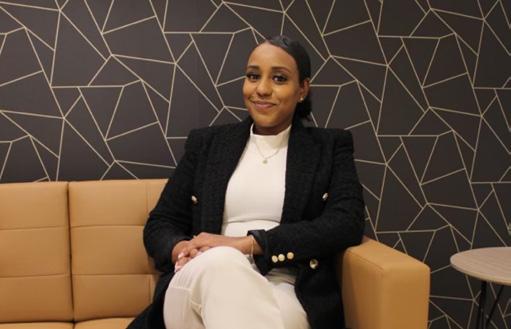
‘Entrepreneurship isn’t just about making money; it’s about using your resources to build others up. I saw that firsthand at WMA … It changed my life’ young en T repreneurs
Helen Assefaw ’14
Director of Alumni Relations
When Helen Assefaw ’14 reflects on her journey, she can hardly believe how much ground she’s covered since graduating from Wilbraham & Monson Academy.
As a real estate investor, small business owner and founder of a consulting company that creates training and compliance programs for private organizations, Ms. Assefaw exudes an undeniable passion for forging her own path.
Although she speaks casually about her many ventures, her entrepreneurial spark is anything but ordinary. Instead, it’s a testament to her resilience, her appetite for challenges and the foundational experiences she had at WMA.
Discovering the Entrepreneurial Spark Ms. Assefaw’s first foray into entrepreneurship began shortly after college. She’d spent time exploring potential careers medical school, among them but soon realized she needed a role with greater autonomy.
“I just couldn’t see myself working for someone else,” she admitted. “I’ve always been drawn to leadership, but it’s hard to find a place that lets you spread your wings at a young age.”
It wasn’t until Ms. Assefaw met a mentor through WMA who opened her eyes to the possibility of business ownership. This mentor suggested she look into replicating his model for designing and implementing training modules and compliance programs, especially for private institutions. The work demanded meticulous organization and a willingness to “deal with hard things and manage people,” but something clicked for Helen. If she could power
through the details, there was real promise.
Her big break came when her mentor handed her a cohort of initial accounts. From there, word spread quickly.
“Compliance is tedious for anyone dealing with strict regulations,” she said. “By delivering quality work, I built my reputation.”
Building a Brand
Energized by her early traction, Ms. Assefaw formalized her venture: Signature, a training and compliance consulting company.
She assembled a team of three employees, used a WeWork common area as their unofficial office and got down to work.
“There’s not much overhead in the beginning,” said Ms. Assefaw, who is based in the Washington, D.C., area. “You just need people willing to tackle endless details policies, safety guidelines, staff procedures and then implement regular updates.”
At her firm, the process follows a straightforward roadmap. First, Ms. Assefaw and her team pitch their services to potential clients. Once a contract is signed, they spend 10 –11 days onsite, observing daily operations, meeting employees and carefully noting each organization’s needs.
Ms. Assefaw’s career evolved into 40-plus employees, and she found herself stepping into a more supervisory role.
Expanding Into Real Estate
Ms. Assefaw’s “elsewhere” evolved into real estate investing.
“I didn’t have a family or big personal expenses,” she explained. “So I decided to use my income to invest in properties. I think when you’re really young, you can live off of very little. It’s the best time to invest in your plans for the future.”
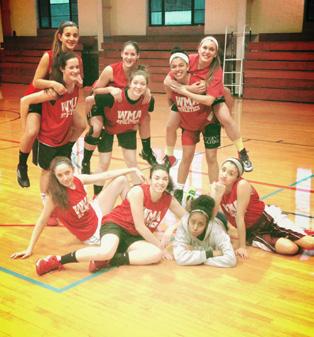
• Helen Assefaw ’14, second from right in front row, with her basketball teammates.
Over the last few years, she’s purchased several multifamily buildings, steadily accruing between 15 and 20 units across a handful of sites.
Looking Ahead: A Coffee Shop Dream
With her business thriving and her real estate portfolio on solid footing, Ms. Assefaw is free to dream up her next venture.
“I’d love to own a coffee shop/bookstore,” she said. “Something low-key, maybe with a floral or greenhouse side. I realize it might not be a huge moneymaker, but it would be a passion project. I want to enjoy what I do.”
She’s realistic about the financial side her mentor and personal experience taught her that small margins can be tricky.
“But that’s OK. I’m at a point in my life where I can afford to try something that is still, where not everything is moving a mile a minute even if it’s not the biggest profit driver.”
The WMA Influence: “They always had my back” Ms. Assefaw lights up when asked how Wilbraham & Monson Academy shaped her outlook.
She remembers the day she got her acceptance call from Director of Admissions Kate Gaw. Although thrilled, she wondered if she could afford to attend. The Academy made it happen.
“I just kept seeing people extend themselves for me,” the boarding student recalled, referencing the financial and personal support she received things like covering team fees or ensuring she didn’t miss out on a Disney trip with the softball team.
“It wasn’t just staff, either,” Ms. Assefaw said. “Everyone was so generous I realized everyone’s family seems to own businesses, they invest in property, and they have the flexibility to show up to our games and extracurriculars. They’re not punching a clock somewhere, they have ownership of their time. Suddenly, the idea of owning something myself didn’t feel so foreign.”
Ms. Assefaw also credits the community for instilling in her a strong desire to help others.
“People joke about boarding schools being elitist, but WMA never made me feel less than,” she said. “I felt more comfortable there than at my old public school. Folks looked out for me. It’s like they were saying, ‘Don’t worry, we’ll figure it out together.’”
That spirit of generosity directly impacted Ms. Assefaw’s business philosophy.
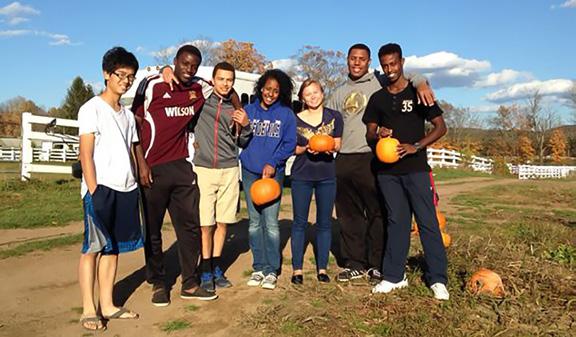
“I want to be in a position to do that for someone else,” she said. “Entrepreneurship isn’t just about making money; it’s about using your resources to build others up. I saw that firsthand at WMA the way teachers, coaches and even classmates rallied around me. It changed my life.”
Paying It Forward
In many ways, Ms. Assefaw’s trajectory is guided by the principle of giving back. Whether she’s teaching interns how to navigate in the corporate space or helping her tenants secure better home environments, Ms. Assefaw sees beyond the bottom line.
“I’m proud of the money I’ve earned, but it’s not the point,” she said. “The point is being able to say ‘Don’t worry, I got you’ the same way WMA did for me.”
The same drive extends to her future dreams. While the coffee shop may not be the next big income generator, it’s a place where she envisions fostering community, hosting events and creating a space for people to feel supported.
“That’s what WMA taught me,” she said. “You can use your resources, whatever they are, to leave people better off than when you found them. Communities do not just exist, they are built.”
Final Thoughts
From designing compliance programs to maneuvering the ups and downs of property management, Ms. Assefaw epitomizes the adaptable, community-focused spirit that WMA instills in its students. She’s living proof that entrepreneurship can be a powerful vehicle for personal growth, financial stability, reclaiming your time and, most importantly, service to others.
Ms. Assefaw’s advice to current students and young alumni?
“Don’t be afraid to chase big ideas no such race without a finish line,” she said, “But remember to give back. You never know whose life you’ll touch and how it’ll come full circle to shape your own.”
Her story one of grit, generosity and unwavering ambition reminds us that success is more than a path to personal gain. It’s the chance to pay forward the support we once received, ensuring the next generation can thrive just as boldly.
And in Ms. Assefaw’s case, that next generation might be enjoying a latte in her future coffee shop, flipping through books among lush green plants and planning their own dreams under the gentle glow of possibility she learned to nurture at Wilbraham & Monson Academy.
Scan QR code to read the full version of the story on our digital Academy World pages.
learn more about helen: Website: edgeconceptsinc.com LinkedIn: @Helen-Assefaw
• Helen Assefaw ’14, center, during a school activity with friends.
• Senior Stone

young en T repreneurs
Nick Leone ’17
‘Entrepreneurship class definitely encouraged me to look at business schools’
b y b ill Wells Director of Student Promotion
Like Italian food? If yes, Leone’s Restaurant is the place to eat in Greater Springfield, Massachusetts, and has been since 1988.
And in part to Nick Leone’s ’17 experience at Wilbraham & Monson Academy, Leone’s is growing.
Leone’s Marinara Sauce, Mr. Leone’s creation in 2024, sold more than 2,000 jars in less than a year. The product, made with tomatoes imported from Italy, is available in 12 local stores as well as online.
“One of my favorite things is watching someone try the sauce for the first time and being genuinely blown away at the quality,” Mr. Leone said. “We’re proud of that. I think it’s why we’re seeing lifelong fans of the restaurant order from
across the country, and why we’re seeing a fan base quickly grow for the retail line.”
Mr. Leone started working at the Cooley Street establishment as a bus boy in fifth grade, bouncing from one position to another through high school. He enrolled at Babson College upon graduating
from WMA. His plan, as well as his family’s, was for him to not work at the restaurant.
“I think my family worked so hard in the restaurant to send me to school so that I wouldn’t have to work in the restaurant,” Mr. Leone explained. “They didn’t go to college, not many people in my family did, so it’s kind of a: ‘Why do you need a degree to do what we’ve been doing? We want you to use that degree’ sort of thing.”
Mr. Leone graduated from Babson in 2021 and landed a job in Boston. Much to his surprise, though, he missed the restaurant.
“I really missed the family business,” he said. “It’s a really special thing to be able to work with your parents, uncles and cousins. I didn’t realize how special it was until I was away from it. I thought starting a retail line would be a great way to stay involved without needing to be physically at the restaurant.”
But a retail line in what? Early in 2024, Mr. Leone got his idea to sell the family sauce, which in turn created Leone Specialty Foods.
With a legitimate product and known brand, Mr. Leone put his entrepreneurial spirit into action.
“I’ve always liked the idea of starting a business, even if it’s a small one,” he described. “I’ve also learned that entrepreneurs need some type of built-in advantage to do well. That can be preexisting connections, pre-existing capital, skill or a valued brand name. For us, it’s the name. We’re in over a dozen stores now, and I don’t think we could have done that without the restaurant’s legacy the family has worked so hard to build.”
Within a short period of time, Mr. Leone knew he had a winner or, in the least, something worth continuing.
“I can say that this sauce has made us all very happy,” he said. “I get to use my business education, we get our name out there more, and
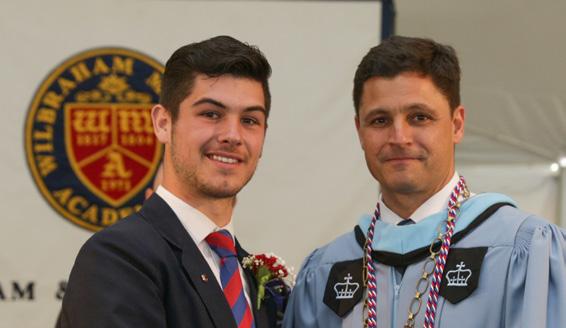
All smiles behind jars of Leone’s Marinara Sauce.
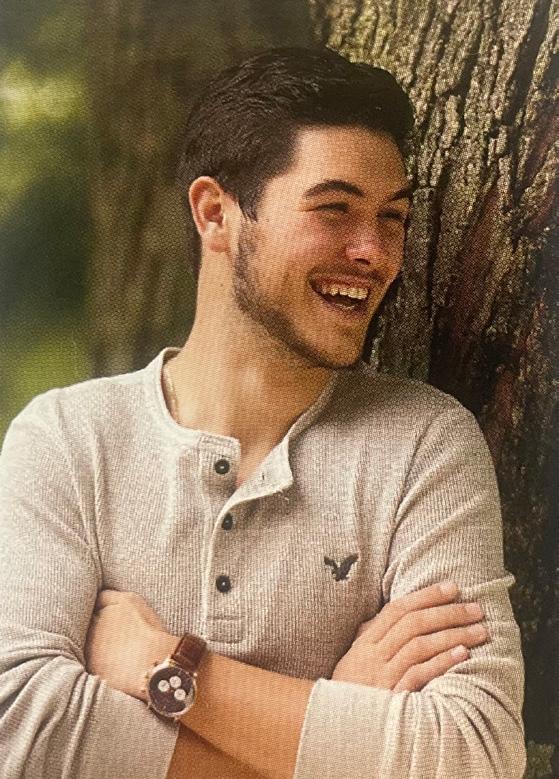
we get to use it as an opportunity to meet so many great people in the community, whether that be at farmers markets, grocery stores, delis or just food enthusiasts.”
Academically, Mr. Leone’s business education began at WMA, taking numerous classes in the school’s Center for Entrepreneurial & Global Studies program, the precursor to the Center for Entrepreneurship, Economics & Finance.
“Shout out to Mrs. (Gayle) Hsiao and Mr. (Jim) Irzyk,” Mr. Leone praised. “I took entrepreneurship
and investing. The entrepreneurship class definitely encouraged me to look at business schools.
“Mr. Irzyk’s investing class was personally much more valuable than most of the finance classes at Babson. I’ve forgotten most college courses, but I always remember lessons from Mr. Irzyk’s class whenever I do any investing, personally or for Leone’s. I’m sure he’d be happy to read that I am still a Dollar-CostAveraging disciple.”
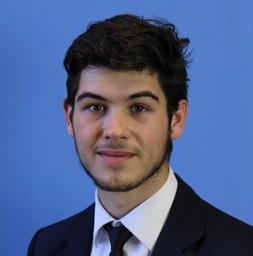
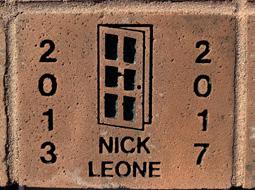
And that WMA disciple is helping shift Leone’s once a basic grinder and pizza business just trying to keep its head above water in the late 1980s onto a more global stage.
“I think Italian-American restaurants like ours, like the meatball, pizza and chicken parm kind of restaurant, are often underestimated,” said Mr. Leone, whose grandmother started the business. “It conjures up an image of mediocre ingredients being hidden by overwhelming amounts of garlic and oregano. We’re not like that. We only have four ingredients, and use only the best tomatoes, which are imported straight from the NocerinoSarnese area of Italy.
“I think anyone that knows me know that I’m always getting involved in some random side thing. They normally don’t last too long; it’s honestly a little embarrassing. But with the sauce, I tried it and just received positive signal after positive signal. The family loves it, the stores love it, the customers love it, even our distributors love it. The momentum from everyone just keeps this so enjoyable. I don’t even care if it makes money. I just love seeing our family name on shelves something that I can point to and go ‘that’s ours.’”
• At Commencement, with Head from Head of School Brian P. Easler, right.
Yearbook, 2017
Senior Stone
Senior year, 2017
young en T repreneurs
Yu ‘Claire’ Bi ’11
WMA ‘environment motivated me to dream bigger and work harder’

b y s ean valen T ine
Director of Stewardship & Planned Giving
Yu “Claire” Bi ’11 is someone who follows her passions and jumps in with both feet.
Whether starting a school in her home country of China or taking over her family’s business, Ms. Bi is an entrepreneur who commits every ounce of herself to making her vision a reality. Wilbraham & Monson Academy caught up with her earlier this year to chat about what she’s accomplished, where she is going and how her experience at WMA shaped her outlook on life and business.
WMA: Let’s start with the school — JPED Academy you founded in China. That is quite an undertaking. How did that come about?
Ms. Bi: “After completing my master’s degree at Columbia in 2017, I took a job at a Finnish academy that aimed to bring Finland’s education system and pedagogy to China. I was inspired to reflect on how my early education differed from the Chinese education system. This motivated me to introduce a different pedagogical approach in China; a school that focused on projectbased learning, providing an alternative to the traditional test-based education system in China.
“Fortunately, I found a partner who shared a similar experience and vision. She had majored in education policy and graduated from Brown and, together, we began our journey.”
How many students did you start with?
“Thirteen. People often asked us why parents chose our academy, especially as a new and unproven school. The answer was simple parents recognized our unwavering determination, strong sense of responsibility and genuine faith in our vision. They could see how deeply we cared about their children’s education and future. Their trust in us became a powerful source of motivation, helping us overcome obstacles and move forward with confidence.”
What did it take to get the school off the ground?
“It was incredibly challenging in the beginning. We faced numerous obstacles, including navigating education policies, financial challenges, marketing and convincing parents to trust us with their children. As co-founders, we had to balance multiple responsibilities simultaneously: meeting with investors, resolving concerns from parents, supporting our students and handling the daily operations of the academy.
“Every hour of our day was carefully planned and utilized to ensure we could meet the demands of running a growing school. The situation became even more difficult during the COVID-19 pandemic. Looking back, I think what kept us moving was our unwavering faith and our ability to lead with influence. We believed we could solve problems one by one, and we trusted each other to find solutions. This discipline and focus allowed us to steadily build a strong foundation for our academy, even in the face of overwhelming challenges.”
How is the school doing today?
“It is expanding to a larger campus, now covering both elementary to high school levels. We already have graduates, and the school is becoming a well-established institution, which allows us to focus more on teaching quality and class design. We’re integrated into the local public system and they are adopting many of our practices.
“I’m still on the Board, and while I wouldn’t call it a complete success just yet, we’ve come a long way from starting with nothing to building a thriving academy!”
Before you founded your school, what were you doing?
“I worked in the U.S. at a visual effects film company called Digital Domain as an operations assistant. We were working on a VR project that allowed people to use VR glasses to watch live

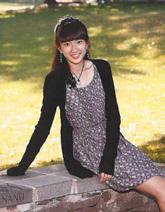
Senior photo, 2011
Senior Stone
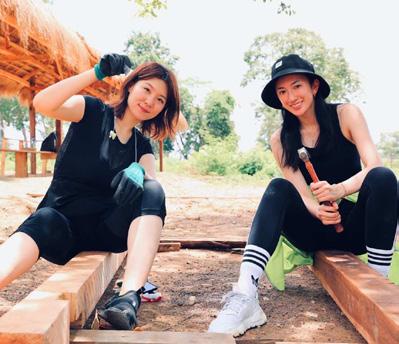
shows, such as concerts. I found this internship while I was at UCLA, during a phase in my life when I was exploring different interests and discovering what I truly enjoyed. I realized that I wanted to create meaningful things in my life.”
You mentioned UCLA and Columbia. How did WMA prepare you for college?
“I believe WMA prepared me well academically, teaching me important skills like self-discipline, how to make new friends and how to be openminded. However, UCLA had much larger class sizes compared to WMA. In a public university setting, I needed to be clear and goal-driven to make the most of the available resources.”
What comes to mind when you think back to your WMA days?
“The sense of freedom I felt at WMA was unlike anything I had experienced before. Coming from a more traditional and structured educational system, I suddenly found myself in an environment where I was encouraged to explore, grow and make choices for myself. This extended to how I spent my time, how I connected with others and how I discovered my own identity. Every day, I found myself learning in the classroom and through conversations with classmates from all over the world. It was a place where creativity and curiosity were celebrated, and that environment motivated me to dream bigger and work harder.”
We talk a lot about WMA as a community. Did you feel that when you were here?
“Absolutely. It wasn’t just a school; it felt like a family. The friendships I made and the bonds we built during those years were incredibly meaningful. There was a sense of belonging that

made WMA feel like home. The faculty played a huge role in this. They weren’t just teachers; they were mentors who genuinely cared about our personal and academic growth.”
Did you have a favorite faculty member or class?
“My favorite faculty members were Mr. (Tim) Harrington and Mr. (Mark) Fischer. In 11th grade, I took English Literature with Mr. Harrington, and as an international student, I vividly remember reading “The Scarlet Letter” and “The Awakening.” With Mr. Fischer, my math teacher, I truly admired his teaching style. I remember how he would invite us to solve problems on the whiteboard, often working in teams. It wasn’t just about math it was about sharing our thought processes and collaborating to find solutions.”
You were on the swim team, right?
“Yes, though I had never participated in competitive sports before. Being on the swimming team was both challenging and demanding. It required me to constantly push myself to meet personal goals and overcome my own limits. However, every time I accomplished something the sense of pride I felt was deeply rewarding. Coach (Dan) Moran helped me understand that achievement comes through consistent effort and determination, and that hard work does pay off.”
Do you keep in touch with your classmates?
“I have kept in touch with many of my classmates, yes! I currently live in Shanghai, and it’s wonderful that we still meet up regularly. Not only do I stay connected with classmates from my own class, but I’ve also maintained friendships with those from
other classes and even from different countries across Asia. I’ve realized that, in many ways, we are quite similar, and it’s heartwarming to see how we welcome each other into our lives and genuinely share in each other’s happiness.”
So you are on the Board of JPED Academy, but I understand you are now in the chemical products industry. How did that change come about for you?
“This career path came to me of a strong sense of responsibility to take care of my family, especially as my parents are getting older and they want me to continue their business. They run a chemical trading company, as well as a logistics company. For them, it’s not just about running a business but also about fulfilling a social responsibility.
“At the moment, I am focused on sustainable chemical products. My parents have always instilled in me the belief that running a business is about ensuring the continuity of the business for the benefit of others. I hope to take over and continue their legacy one day.”
Did your WMA experience help prepare you for all these things you have accomplished?
“My time at WMA was a beautiful mix of freedom, inspiration and connection, with a hint of bittersweetness that made the memories even more meaningful. It was a chapter of my life that shaped me in ways I’ll always carry with me.
“Of course, not everything was perfect. There were moments of homesickness, challenges to overcome and the occasional failure that felt discouraging at the time. That’s the bittersweet part of it all. But looking back, even those struggles were valuable. They taught me resilience and helped me grow into the person I am today.”
• Claire (at right) in top left photo and standing center (in top right photo) leading a volunteer program at JPED Academy.
young en T repreneurs
Giorgi Mumladze ’23
‘WMA gave me the essential skill sets’
b y b ill Wells Director of Student Promotion
Giorgi Mumladze ’23 has certainly “retained” what he learned during his time at Wilbraham & Monson Academy, whether that was as a student in the Center for Entrepreneurship, Economics & Finance or simply an international boarder.
After a poor experience at a café in his home country of Georgia, Mr. Mumladze and his friends wanted to pass along a message to management. That didn’t seem like such a big ask, but it was.
Mr. Mumladze and his mates broke down the problem and came up with a solution. Would it be viable to create a software that gave customers the ability to send a note to management without jumping through hoops?
“The first step was to start researching, whether we were the only ones that have faced the issue of not being able to connect to the management in charge,” explained Mr. Mumladze, a sophomore at Boston University. “We found out that almost everyone has had the same experience with not being able to share their voices in an establishment that they attended.
In our everyday life in WMA, classes and athletic commitments, we learned the importance of discipline and consistency, which was essential for developing a successful product.”
“After realizing that there was a gap in the market, it was time to start the realization of our idea. We started with brainstorming and creating the MVP (minimum viable product), which entails the most basic explanation and features of the idea an answer to the question, ‘What does your company/app do?’”
Great, but what was this going to cost? Was this product sound financially? With a relatively low cost and a clear need in the market, Mr. Mumladze and his friends took the next step.
“After generating designs, writing code, troubleshooting and weeks of tests, it was time to send an application to investors,” Mr. Mumladze said. “Luckily, we were successful in winning a
major Venture Capital competition, which helped us avoid major loans with banks and individuals. This set us off to an early start of implementing the software in Tbilisi, Georgia.”
Keep in mind, Mr. Mumladze took on this project during the second half of his senior year at WMA. A month after he graduated from the Academy, he and his partners launched the company Retain.
“I was able to maintain contact with my team for design corrections and market entry plan,” Mr. Mumladze described. “The most important part of the plan was to exactly know which customers we would need to approach and when. Once we would have entered the market, other companies would be more than likely to produce the same product, but with much more resources. Therefore, we had to take over as many clients as we could so other companies would not be able to compete with us.”
This was an uphill climb. Rightfully, potential companies wanted to see how Retain worked. A pitch at a meeting is one thing for a startup, but providing long-term results to a major client is another.

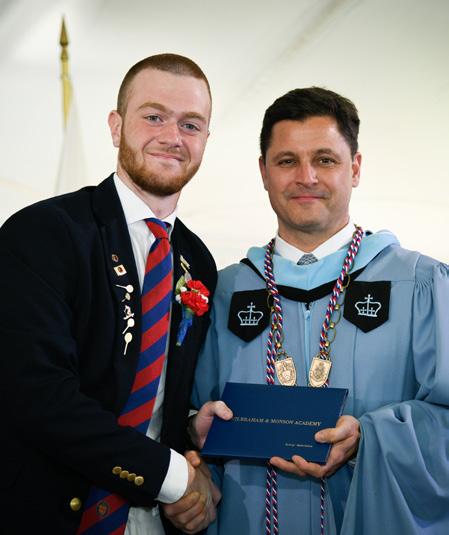
“The issue was how can we sign clients if they require past experience, and how can we have experience with clients if they require already signed companies?” Mr. Mumladze revealed. “The solution was to find companies that we had acquaintances with, and that is where we realized the importance of having a strong network. Once we started to reach out to our friends in other companies, we started signing clients.”
And this is where WMA came more into the picture.
“Having the chance to meet people from all over the world, I was able to reach out to former students of WMA and ask them for advice and help with expansion of our products to different countries,” Mr. Mumladze said. “Once again, this proved the importance of having a strong network, which can help a person to communicate with representatives of countries all over the world.”
Who he knew, though, was only part of what Mr. Mumladze took from his lessons learned at the Academy.
“WMA also gave me the essential skill sets of being able to create an organized pathway of the company’s development,” he stated. “In our everyday life in WMA, classes and athletic commitments, we learned the importance of
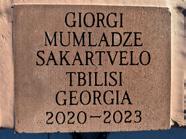
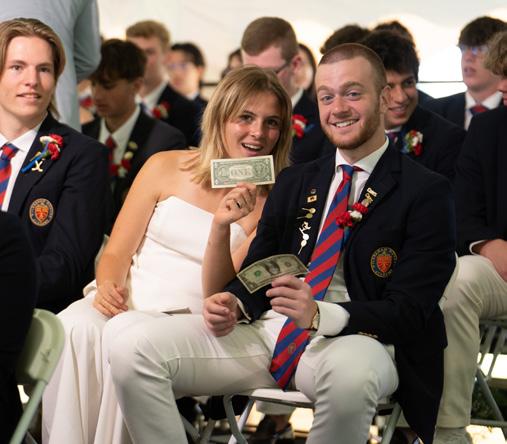
discipline and consistency, which was essential for developing a successful product. Whether it was a room check at 7:30, lights out at 10 p.m. or Monday weekly meetings with the school, we learned how important it was to maintain a steady schedule.”
Retain serves more than 500 clients in Georgia and hopes to expand globally to companies such as airlines and banks.
“The company (has) turned out to be a major success, as many organizations have experienced the same issue as the one I described,” Mr. Mumladze said. “We started expanding to schools, banks, hospitals, gyms, etc. We expanded our team, and even crossed the borders of Georgia. We currently have around 10 clients internationally.”
Giorgi Mumladze ’23 with Marghe Negri ’23, left, during an interactive exercise at Commencement.
Giorgi Mumladze ’23 receiving his diploma from Head of School Brian P. Easler, right.
• Senior Stone
• Senior year, 2023
young en T repreneurs
Student Perspective
Current students Mingjun “Max” Li ’27 and Colin Moussette ’26 share about their experience in the Student Investment Seminar class.
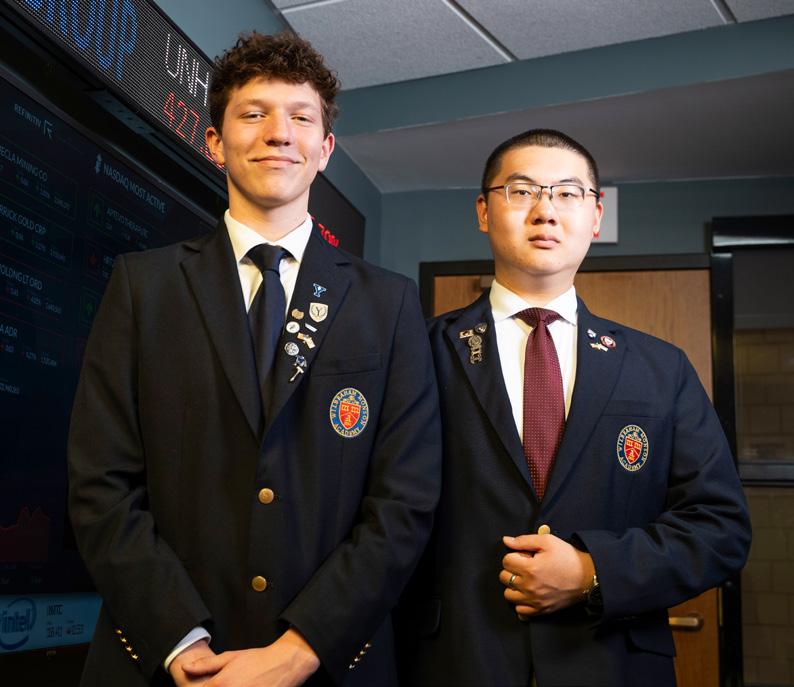
‘SIS has fundamentally changed my perspective’
b y c olin Mousse TT e ’26

As a new student to the Academy, I cannot speak more highly of my experience at the Student Investment Seminar with Mr. Jim Irzyk and my peers at the Center for Entrepreneurship, Economics & Finance.
This seminar has been one of the most eye-opening and transformative experiences of my time here, teaching me the importance of collaboration, analytical thinking and communication in both academic and professional settings.
From the outset, SIS challenged me to think critically, work diligently and engage with others in ways I had never experienced. My team and I conducted in-depth research and stock analysis, learning not only about investment strategies but also about the power of teamwork.
Through this process, I forged some of my closest friendships at the Academy bonds that
‘From Confusion to Confidence:
My 3-Year Transformation in SIS’
b y Mingjun “Max” l i ’27

In Grade 8, my first experience with the Student Investment Seminar left me completely lost; by 10th grade, I led my team to its greatest success. The reason behind this transformation was not merely the passage of time, but a profound shift in mindset, teamwork and leadership.
That first year, my team selected Harmony Biosciences, but our approach was chaotic. Lacking a clear investment thesis and with inconsistencies in our analytical depth, our discussions hardly ever reached a consensus. Moreover, my limited English skills made effective communication difficult. As a result, our proposal was not competitive compared to those from other teams, and our team was not selected.
By the fall of Grade 10, I had undergone a complete transformation.
extend beyond the classroom and have enriched my daily life. More than just a finance seminar, SIS fosters personal growth, teaching students how to articulate their ideas, defend their perspectives and embrace challenges with confidence.
Mr. Irzyk’s guidance made the experience even more impactful. He encourages students to think creatively, challenge their assumptions and refine their analytical skills. Under his mentorship, we were not only pushed to conduct rigorous research but also to navigate constructive criticism and adapt our strategies accordingly.
Before this experience, I never considered myself someone who would find value in the CEEF Center, given my aspirations in political science and law. However, SIS has fundamentally changed my perspective. It reinforced that no matter one’s field of study, the ability to research, analyze and communicate effectively is indispensable. I now see finance as an integral part of understanding global systems knowledge that will undoubtedly shape my future endeavors.
Colin is a first-year boarding student from Massachusetts. As part of WMA’s Model United Nations program, Colin won a silver medal at the Yale Model United Nations, and earned Best Delegate honors at Harvard Model Congress.
Leading my team in proposing Lockheed Martin, we ventured into an entirely unfamiliar industry defense and aerospace starting from scratch. To avoid the previous disorder, we together established a clear analytical framework, refined and standardized our approach. Every team member adhered to the same logic: What are the key growth drivers? Do the financials support a long-term investment? How does the company compare to its competitors? This structure made our discussions far more efficient, ensuring that every viewpoint was evaluated on the same level.
At the same time, I learned to harness individual strengths within a team, enabling that the team operated cohesively within a unified framework. Unlike the fragmented efforts of Grade 8, our team functioned as a true collective force. Ultimately, our investment analysis received high praise from the committee, making it one of the most successful and remarkable proposals in SIS.
From my early failure to our success last fall, SIS has taught me more than just investing. It has shown me how to align a team’s thinking, how to leverage individual strengths and how to find clarity amid uncertainty.
Max is a third-year boarding student from Beijing, China. He is a member of WMA’s Global Scholar program. As part of Student Investment Seminar program, Max has led his team to success three times.
S tudent
inve S tment
S eminar
(1 credit)
Trimester-Fall and Spring Level: Intermediate
Prerequisite: Department permission
This is an evening class (6:30–8 p.m.) on Thursday
Are you interested in being part of a student-centered investment team that will be accentuated by the proposition of trading stocks with real money and real risk? Working as a team to select a specific stock among the 11 stock sectors is a central component of this credit class that will teach students the skills involved in buying stocks using a fundamental analysis approach to investing. The culminating experience is an end-of-trimester presentation to an Investment Advisory Committee. Buy recommendations and investment rationale will be presented and defended at the presentation to the committee.
Last fall, WMA welcomed back alumni from the Class of 1974 and earlier for a memorable 50th & Beyond Reunion celebration. We had more than 70 alumni come back for everything from nostalgic campus tours to heartfelt reunions with classmates and faculty. The weekend was filled with laughter, reflection and shared stories spanning generations. Looking forward to our next 50th & Beyond Reunion on Oct. 24–25.
1 Members of Wilbraham Academy’s Class of 1964 seated, from left: Andrew Petkun, Douglas Brian, Korn Dabbaransi, William “Wilber” James, Robert Melikian. Standing, from left: Werner Fasslabend, Craig Meadows, Jose Mendoza, Sir Stuart Hampson, David Hilsman, Richard Fuld, Morrison Huston Jr. and Robert Armell.
2 FrOm leF t: William “Wilber” James ’64W, Scott Jacobs ’75 and Eric Jacobs ’74.
3 Korn Dabbaransi ’64W performs in Griffin Athenaeum following Reunion dinner.
4 Kong Dabbaransi ’95, center, and his father Korn Dabbaransi ’64W, far right, visit with current Thai students Pristine Rithy ’26, Benjamin “Tiger” Rithy ’28 and Pattaranunt “Elle” Poonsornsiri ’25 outside Rich Hall. 5 From left: Raymond Anton ’61M and Richard Taylor ’62W prepare to “duke it out “ over whose Corvette is faster. (No one was harmed). 6 Richard Morgan ’59W, left, and William Tychsen ’59W. 7 Members of Wilbraham’s Class of 1964 reminisce over yearbooks in Griffin Athenaeum. 8 FrOm leF t: Trustee Linda Griffin, Timothy Gallagher ’73 and Peter Fiorentino ’74. 9 Mitchell Garabedian ’55W, center, enjoys a refreshment with his daughters Gayle Bettinger, left, and Karen Baglio prior to dinner.
10 A firsthand look at the renovations happening in Greenhalgh Gymnasium.
11 At the Senior Bridge (a gift from the Class of 1964), from left: Robert Melikian ’64W, Morrison Huston Jr. ’64W, David Richheimer ’64W, William “Wilber” James ’64W (standing), Robert Armell ’64W, Andrew Petkun ’64W, Sir Stuart Hampson ’64W, David Hilsman ’64W, Werner Fasslabend ’64 (standing) and Edward Heffernan ’64M. 12 Jonathon Nicholls ’65M, right, and his sister Judy, center, pose with Head of School Brian Easler.

Alumni Events
of
David Kakule ’23, Madaket Stoltz ’23 and Gabby Pierce ’24 reconnected with Head of School Brian P. Easler.
A mix
generations honored, FrOm leF t: ShaCor Privott ’14, Khalil Kamara ’21, Sean Seymour ’22, Liam Murphy ’20, Matthew Filipowski ’22, Quion Sneed ’20, Sterling Hall ’74, Ben O’Connor ’74, Tim Gallagher ’73, Bob Martin ’74, Bruce Albert ’73, Peter Fiorentino ’74 and Rick Meehan ’69W.
From the 1973 championship team, FrOm leF t: Ben O’Connor ’74, Dana Gahres ’74, Bob Martin ’74, Tim Gallagher ’73, Bruce Albert ’73, Peter Fiorentino ’74 and Sterling Hall ’74.
Attending members from the 2019–2020 championship team. FrOm leF t: ShaCor Privott ’14 (former assistant coach), Khalil Kamara ’21, Sean Seymour ’22, Liam Murphy ’20, Matthew Filipowski ’22 and Quion Sneed ’20, with Sterling Hall ’74.
Washington, D.C., Event
Alumni gathered at The Imperial in Dupont Circle for an unforgettable evening of delightful connections and memorable experiences in mid-September.


WMA Giving Days
Our Office of Advancement launched an 1804 Minutes of Giving campaign in mid-February. The challenge, named for our founding year of 1804, was deemed a big success over the duration of 30-plus hours.
by the number S
Money raised: $62,404.33
Participants: 150 Donors
First-time donors: 14% (21)
Alumni matches: All five $5K Alumni Matches were met
Largest single donation: $10K
Head of School Brian P. Easler offers appreciation to supporters of WMA at the Supporters’ Soiree.
Dr. Symin Charpentier ’07 performs at the Supporters’ Soiree.
Supporters’ Soiree, Dec. 4, 2024, at The Starting Gate at Greathorse.
Ruska Mumladze ’19, left, and Maggie Kuhn ’20
From left: Colin O’Brien ’16, Asaiah Edwards ’16 and Morayma Linarez ’16
Xavierra Webb-Spann ’04, Peter J. Jurgens ’06, David Kramar, Sarah A. Richard ’07
From left: Alex Muench, Jessie (Smith) Muench ’14 and Head of School Brian P. Easler

Every Stone has a Story: Beth (Sharpe) Byrne ’81
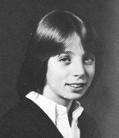
b y sean valen T ine Director of Stewardship & Planned Giving
Beth (Sharpe) Byrne ’81 sat down via Zoom to talk about her Senior Stone and her WMA experience.
WMA: What do you remember about the process of making your stone?
Ms. Byrne: My favorite teacher at WMA was Mr. (John) Elias, who was the art teacher and also my advisor. He coached me and my friend Kaoru (Tominaga) White ’81 through the whole process. Kaoru was an amazing artist and she decided to carve a self-portrait relief for her stone.
It inspired me to do a relief of my name because it was a lot easier than my face! We soaked our stones for maybe a week, and then got drills and chisels and set to work. It was a very tedious process; I don’t know how many weeks it took. At the very end, I did something to chip off part of the “e” in my “Beth” and I nearly cried. Mr. Elias came to the rescue with super glue and he
glued it back on. Every time I go back to campus I expect to see the glue has come off and part of my “e” will be gone, but it’s been over forty years and it’s still holding on. Remarkable.
What else did you consider when designing your stone?
I knew I wanted to carve it by hand. We had access to a company but I thought doing it by hand was a bit more interesting. My name is Beth, but people always ask me “Oh is that short for Elizabeth?” and I’d say no, just Beth. So I thought it appropriate to use just “Beth” and no last name. Also, I chose to use the lowercase “b”. A lot of people thought my “b” broke but I did it intentionally. I was studying E.E. Cummings at the time in English, and he was all about no syntax. I was very inspired by that.
What role did the stones play in graduation?
We had a procession with them but not at graduation. I don’t recall when exactly. We weren’t told to line up in any specific order that I recall. I think it was just however we wanted to line up and they cemented the stones in that order.
So if you wanted your stone to be next to your friend you just stood next to them in line? Yes, exactly. It’s so fun to go back and see them. One of my classmates put something on his stone about him and his girlfriend at the time, and now it’s there in stone forever! No one approved our stone beforehand I don’t think, though it may have been a good idea.
So, how did attending WMA come about for you? I grew up in Wilbraham and I had an older brother who enrolled (Andrew Sharpe ’80). He’d flunked out his junior year from public school and hid his report card from our mother. Somehow she found it and dragged him down the street to see (former Head of School) Mr. (Mike) Casey and sign him up. I was always a pretty decent student, and I thought ‘Well if he gets to go to school there, I should get to go to school there.’ I kind of insisted and my parents realized they probably had to in order to be fair. I came in as a junior and was only there for two years, but it really changed my world. I embraced it and soaked it all in. I loved everything about it.
There must have been something you didn’t like. Well, I didn’t like having to run the triangle every day for sports.
Senior Stone, 1981
Yearbook, 1981
I had classmates from all over the world and now I have friends all over the world. WMA was just such a remarkable experience for me, and I think most of my classmates feel the same. It was a period in our lives that was just very special.”
b e T h ( s harpe) b yrne ’81
You had to run the triangle EVERY day? Sometimes, yeah. For gym and then as part of your sport. But because I was a local kid and I hated running so much, sometimes my public school friends would be driving home and they’d give me a lift. I got caught doing that a few times. I found a route through the woods too, so the coach started checking my sneakers for mud.
On
Who were the faculty who made an impression on you?
Mr. Elias was my favorite teacher. He left the same year I graduated, and I reconnected with him years later. Kaoru came for a visit from Japan and we visited his studio in Westport, Massachusetts. Mr. Casey, of course. So much personality. Mr. (Thomas) Schuett was my English teacher and Mr. (Craig) Colgate was my tennis coach. I had Mr. (Stanley) Fri for math, which was never my favorite subject but he made it click for me. Ms. (Emily) Mobley taught science and was known for taking her students spelunking. I remember Mr. (Gale) Giles and Mr. (Fred) Watts. I never had either of them but they enhanced my prep school experience in a huge way. Both super quirky, interesting and loved the students. We had so many great teachers who knew you and wanted the best for you.
When you think about your time at WMA, what comes to mind?
WMA did a lot for me. It opened my world. Wilbraham felt very homogeneous, and I had never traveled. So the experiences I had at the Academy were just amazing, and so were all the people. I mean we had a prince from Iran! You
were never going to meet a person like that at Minnechaug. I had classmates from all over the world, and now I have friends all over the world. WMA was just such a remarkable experience for me, and I think most of my classmates feel the same. It was a period in our lives that was just very special.
Beth Byrne is a realtor and Vice President of Advisors Living, a real estate company in Wellesley, Massachusetts. She was recently honored as the fourth highest-producing broker in the company, which has 15 offices in New England and 276 agents.

every S tone ha S a S tory, and we want to hear your S ! Email us at alumni@wma.us to share your Senior Stone story and maybe you’ll see it in future issues of the magazine.
• Beth with Virginia Salem ’82, left, in London
vacation in California with daughters Hannah and Brenna
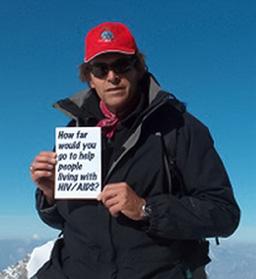
Andrew Petkun ’64w
‘The opportunity to . . . use my mind in the pursuit of knowledge’
RRecently, I celebrated my 60th reunion with 13 of my classmates from the Class of 1964 (Wilbraham) including one from Honduras, one from England, another from Austria and another from Thailand who made the trip to Wilbraham. The fact that so many of us out of a class of just 52 made the trek back to the place we’d spent an important part of our youth was a testament not only to the bonds forged so many years before, but to the impact and influence that Wilbraham had on all of us.
When I was 14 years old in 1964, I was enrolled at Wilbraham Academy for a chance to learn the fundamentals of living a productive life. I wasn’t there because I was an exceptional student or a gifted athlete but because my parents were counseled to send me to boarding school if I was to have any chance of becoming a fully functioning human being.
I grew up in a dysfunctional family, learning from and modeling everything after my only sibling, an older brother who was mentally and emotionally challenged, unaware that it was leading me down a path of awkwardness, insecurity and inadequacy.
Wilbraham offered the opportunity to be “normal,” to begin to use my mind in the pursuit of knowledge rather than self-absorption.
It was a very difficult transition because I was awkward and not easily accepted by my peers. It took four difficult years to become someone who had a chance of someday living meaningfully as an adult. For a kid who was thoroughly disliked, for good reason when I enrolled as a freshman, I took great pride in learning how to live with others, to the point of being accepted, even liked, by the end of my journey.
So, for me, reunions are deeply personal and immensely gratifying. I discovered that they are more than just nostalgic gatherings; they are invaluable opportunities to reconnect, reflect and rejuvenate old connections that have stood the test of time. They offer a singular opportunity to step back into the past and relive the cherished moments that shaped our formative years.
The joy of reconnecting with my classmates after so many years cannot be overstated. The boys I knew became extraordinary men of great talent and accomplishment, and I was honored to bask in the glow of their friendship. Our common prep school experience at Wilbraham and the resultant bond have enriched my life immeasurably.
I learned long ago that the quality of one’s relationships defines, in significant ways, the quality of one’s life.
Having spent many years burnishing relationships that began as an adolescent, reunions became an important touchstone in


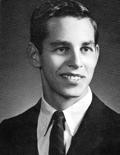
measuring my own personal growth, reflected in the friendship and affection of my classmates. The experience taught me to appreciate the opportunity that Wilbraham granted me, and I have been unreservedly grateful ever since. Many of the friendships that were formed then, and cemented in the many years since, have remained central to my sense of happiness and well-being.
Most significant was the connection I made with my dear friend and classmate Bill (aka Wilber) James.
Many years after graduation, I had the opportunity to devote my energies to giving back to those far less fortunate than I would ever be. I was invited to photograph people living with HIV/AIDS in sub - Saharan Africa by a personal friend, the U.S. ambassador to Tanzania, and that led me to a number of assignments in several African countries on behalf of the State Department.
When Bill learned of my activities, he called James Wolfensohn, the president of the World Bank in Washington, D.C., who, following up on Bill’s suggestion, decided to host an exhibition of my photographs.
It was a singular honor for me and one which would never have happened if it weren’t for Bill. It was just one of many kindnesses that he and his wife, Janet, have bestowed on me over the years, which would never have occurred if we had not met so many years before.
So, I have not only Bill and Janet but Wilbraham to thank for the honor I received. For it was at Wilbraham that that bond, and so many others, was first formed, and which I am grateful to celebrate when we come together.
For me, reunions have presented a unique opportunity to acknowledge the joy of connection and reflect on the abundant blessings which Wilbraham has bestowed on us all.
Atop the Alps on behalf of the Kenyan National AIDS Control Commission.
Andrew Petkun ’64W, left- center in middle row, smiles with a group of children during a six-year stretch in which he traveled to 13 African countries on behalf of the American State Department.
• Senior photo, 1964
• Senior Stone, 1964
In Kenya, holding the baby who has been named after him by a rural village elder.
The Hall of Fame is back!
The Wilbraham & Monson Academy Athletic Hall of Fame has returned, celebrating the outstanding athletes, coaches, teams and contributors who have shaped our storied athletic history.
For generations, Wilbraham, Monson and WMA athletes have demonstrated excellence, teamwork and sportsmanship now it’s time to honor their legacy. Two induction classes in 2007 and 2009 were recognized with on-campus celebrations, and we’re thrilled to reignite this tradition.
The Class of 2025 will be announced on May 31 as part of our WMA Alumni Day celebration on campus. An Induction Ceremony is planned for Oct. 11.

Find details and registration information through our QR code.
Celebrate WMA Alumni Day!
Join us on Saturday, May 31, for an unforgettable Alumni Day at WMA where friendly competition meets lifelong connections. This year, we’re combining the excitement of Alumni Games with the joy of Reunion, bringing together generations of alumni for a day of sports, celebration and camaraderie.
Whether you’re lacing up your cleats, reconnecting with classmates or simply soaking in the WMA spirit, there’s something for everyone including great food, campus tours and a first look at our groundbreaking of the new dining hall! Families are welcome, and we can’t wait to see you back on campus!

Find details and registration information through our QR code.


A sampling of photos from the Traveling Titans’ tour of France that began in Lyon, continued through Annecy and concluded in Paris.
Spain & Portugal
Snapshots from the Traveling Titans and their March trip through Granada and Seville in Spain, and Lisbon and Porto in Portugal.
t ravelin G titans: s pain & pO rtu G al
Years of Service Awards
Each year, WMA honors faculty and staff who reach milestones for their years of service to the Academy. The following 26 people are recognized through the end of the 2024 calendar year.
Cheryl Feder Director of Human Resources
Assistant Director of Admission
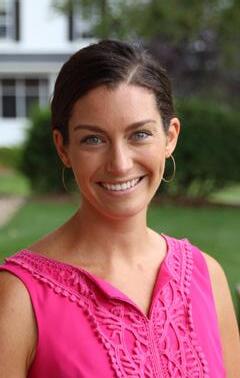
Kelsea Lewis Faculty, Science
Roy Fink
Reese Laviolette Faculty, Math
Facilities Department members, from left: Matt Mol (Supervisor), Steve Tousignant, Jim Cooley (Director), Ian Brunelle and Cody Marra.
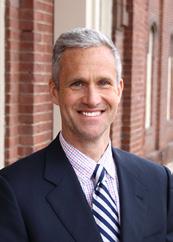
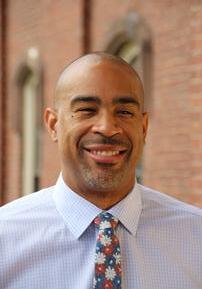
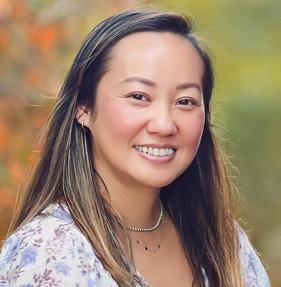
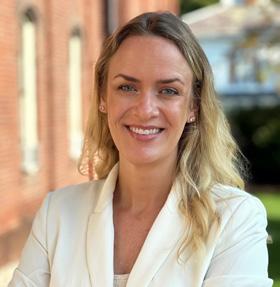
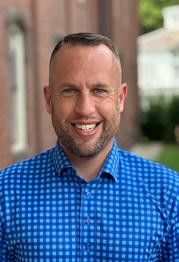
“Over the last 15 years, Mike’s dry sense of humor and unwavering moral compass have had a tremendous positive impact on our community. He works tirelessly to support students’ goals and aspirations while upholding the values and expectations of the community.” l iz s quin D o, Dean of Students
Chris Tinnesz
Jamal Makkiya Security
Chuck Hannington Facilities
Todd Regnier Faculty, Math
Gary Marshall Accounts Payable
Janet Moran Director of Archives
Teddy Ryan Director of Marketing & Strategic Communications
Julie Chan Deans Office, Administrative Assistant
Durelle Brown Assistant Director of Admission
Mike Mannix Leadership Giving Officer
Auf wiedersehen. Au Revoir.
In short (and English) … goodbye.
Fluent in four languages and after 12 years in various roles around campus (and the world) Kevin Kane is retiring effective June 30.
Mr. Kane has served as WMA’s Dean of Studies for the last six years. The native of upstate New York had previously been Chair of the World Languages Department for six. A lifelong educator, Mr. Kane has co-led WMA student trips to Peru, Ecuador, Cuba, Italy, Greece, Spain and Portugal.
We asked Mr. Kane a few questions in advance of his retirement date.
What impact do you hope/ believe you have left here?
“In my work as the Dean, I like to use the analogy of driving the bus. When a student leaves us, are they ready to be in charge of their own learning? Do they understand who they are as a learner and what they need to put in place to be successful at the next stage of their academic career. Additionally, I have worked to improve existing processes, like organizing final exams, SESH (Supervised Evening Study Hall), recording of attendance practices and penalties, assisting students’ reintegration to campus after a leave, etc.
“In my work as Department Chair, we updated our curriculum and moved our use of technology forward. Madame Dubois continues to lead the department positively in those areas. We also created our PostAP program and added to our travel program opportunities as well.”
What do you think/hope students took from taking classes with you?
“Learning a language is not like learning math or like learning science. The mental skills acquired from learning a language well are additional tools in a student’s arsenal.
“In the classroom, I hope that students see that another language is an opportunity to see the wider world in a different way. They see it as novel, but in an interesting way. I hope to have inspired some curiosity to explore the world and had some fun along the way. “
What will you miss most about WMA?
“We have made some great friends here and had many great experiences and opportunities. I will miss the people I have been lucky enough to work with on a regular basis. We accomplished a lot and had a lot of laughs as well.”
What’s next for you (at least immediately)?
“We (with wife, Maura) will be living in Saratoga (N.Y.) and getting ready to do some traveling. We will be visiting our son (Brendan ’17), who is currently in Seattle (Wash.) and doing some international adventures as well. We are both avid skiers as well.”
Michael Dziura Faculty, English
“Michael is the teacher our students go to when they are in need of a listener. He is open, intelligent and thoroughly committed to our community. In the class, in the theatre and in small groups, Michael is never a loud voice … yet always one that carries support, reason and influence.”
Wally sWanson, Dean of Faculty

Tim Harrington ’73 Faculty, English
“Tim has helped our students develop their writing and their voices through his time here. He is our most prolific college recommendation writer and combines his love of language with his equal affection for the poetic brutality of rugby. It has been one of my great pleasures to coach alongside him.”
Wally sWanson, Dean of Faculty
Paul Bloomfield Fine & Performing Arts, Chair
“Paul is the foundation of our arts program. He brings his camera and a passion for helping students achieve at high levels. He ensures that in the busy world of 21st century teenagers, that they continue to create with their hands, and take time to stop, reflect and appreciate.”
Wally sWanson, Dean of Faculty
Adios.
kevin kane S et for retirement
Wally Swanson
Dean of Faculty
“I think Wally Swanson has done a remarkable job as Dean of Faculty. I feel that Wally’s vision as an educator and as an administrator can be seen in the performance and contributions of the many new teachers Wally has hired and added to our faculty. Our teaching faculty at WMA is very strong and very committed to excellence. We owe this to Wally Swanson!”
Don Kelly, Faculty Marshal
Caroline Smith Executive Assistant to the Head of School
“Everyone at WMA knows Caroline Smith as the perennially upbeat, genuine and thoughtful matriarch of Rich Hall Lobby and the Head’s Office. Her care and concern for others is so sincere that it permeates every interaction she has, and it consistently attracts people to her warm and inviting presence. She doesn’t just know people, she learns about their families and their lives and demonstrates honest interest in their well-being. That is why everyone who knows Caroline loves her. What some may not know, because so much of it happens quietly behind the scenes, is the pivotal role she plays at WMA with the Administrative Team and the Board of Trustees. Caroline’s tireless attention to detail, organizational skills, moral compass and work ethic, and her wonderful sense of humor, make her an absolutely invaluable member of the WMA Team. She is truly a gem, and I am thankful every day to know her and work with her.” b rian p. e asler, Head of School
Lucie Ziemba Health Services, R.N., B.S.N.
“Lucie Ziemba, R.N., has been a fixture in the Health Office for 25 years. She started before PowerSchool, cell phones and social media. It was a time when students came to the Health Office to check in and visit because they missed their families and just needed time to be heard. Students knew that when they came in, Mrs. Ziemba gave them an ear to listen to, helped them problem solve and encouraged them to be their best selves. Lucie was here on 9/11 and helped organize a schoolwide support plan. She was present for many student and employee emergencies and injuries that she handled with calm and professionalism. Over the many years at WMA, Lucie tended to our students’ physical needs, she had excellent assessment skills and took the time to establish the best treatment with the input from the student whether it was a physical or mental health issue. The care of the student and their well-being always came first. Lastly, her dedication to the nursing profession, constant presence and commitment to the Wilbraham & Monson Academy community is something Lucie should be very proud of. I know the Wilbraham & Monson Academy Health Services Office will always appreciate her hard work.”
r ose p o W er, Heath Services R.N., B.S.N
Todd Jenkins
Facilities, Compliance Manager
“Todd Jenkins, from our facilities team, has been with WMA for 35 years! No one has more knowledge of each building and its systems. He has worn many hats, most recently keeping the mail and packages running smoothly for our campus. He is an incredible asset and is always quick with a pun!”
j i M c ooley, Director of Facilities
Class Notes
1952M
Capt. John Woodhead III writes: “Still rattling around with four cats and a second wife after a 38-year career as an aviation educator, military and civilian. Relatively active in Intertel, Experimental Aircraft Association and Silver Wings Fraternity. I didn’t realize it then, but my 3.5 years at Monson were some of the best years of my life, thanks to two Georges Morrow and Rogers. WMA looks exceptionally successful and powerful; continue the good work.”
1955W
Olli Timi P. Kokkonen writes: “I am still in reasonably good physical condition and actively trying to keep it up by walking regularly in the neighborhood and occasional travel abroad. Would be happy to receive news of my Wilbraham 1955 classmates. Greetings to everybody from Olli. One year older, still going reasonably strong! Warm greetings to class and school mates at Wilbraham in 1955. It was an unforgettable year for me. Would love to hear from you. Merry Christmas & Happy New Year 2025! Olli.”
1 Grant J. Renier is working hard to build his AI company, IntualityAI. Full-time employment keeps him mentally cognizant. Grant was a long-ago, semi-pro cyclist and continues to ride. He writes: “The older I get, the faster I was! I still reflect on my meaningful experiences at Wilbraham, the legendary faculty devoted to my education and the lifelong friends I made there. I believe everyone attending Wilbraham & Monson Academy will realize, as I have many years later, the positive life-defining moments of that experience. Thanks you, again. And good luck to everyone.”
1958W
John J. Donovan writes: “After traveling with my wife, Phyllis, to 76 countries since our 1962 wedding, my body said “STOP” so we have.
I had a long career in technology, ending up as an Assistant VP for Telecommunications at Aetna Life & Casualty in Hartford, Connecticut. We were able to visit all seven continents and Greenland, traveling sometimes twice a year and a few years, three times. We’ve got about 35,000 pictures to show for it and memories that will last forever. I left Aetna in 1991 to start my consulting business and finally retired in 1998. In 2018, we permanently moved to Boca Raton, Florida, from Connecticut; we walk for exercise and enjoy our life and our family as much as ever.”
Charles B. Rosevear writes: “I am fine and enjoying retirement. Sandy and I have moved and now live in a condo in Mt. Arlington, New Jersey. We have five grandchildren who are finishing college and two to start.”
1959W
Carlton Alan Chambers writes: “Retired and living in Hingham, Massachusetts, as I was when I attended Wilbraham way back when. I started my career as a Boston banker and finished in a securities field covering Wall Street for two California companies. Following my retirement (forced not voluntary, security conditions caused by the disastrous 2005 market collapse!), I taught high school, was elected chair of assessment in town and tried to remain productive. On a lark, I tried auditioning for a movie and wound up being in 16 films, all shot in Boston. I have married twice, and I have five
children who are scattered around the country all adults and successful in a variety of careers. Now, at age 84, I am happy and in reasonable health for my age. I have fond memories of Wilbraham, which gave me a fresh start at 16 and the occasional kick I needed at that time. I remain friends with my roommate David Witherbee of Concord, Mass., who puts me to shame as an active sportsman.”
1964W
2 Stephen A. Rozwenc writes: “I am honored to report that ‘The Mailer Review’ recently published 22 of my haiku poems and three of my longer poems in its Volume 15. ‘The Mailer Review’ is a literary publication with an international audience. My poetry has been published in the United States, Europe and Asia. Four of my books are currently available on Amazon Books. To my knowledge, I am the only living graduate of Wilbraham Academy writing and publishing poetry. I also have published a collection of translations of famous Russian poets.” In a more updated note, Stephen informed us that in China he will publish 20 of his haiku poems in English with Chinese translations in its 2025 volume. Hardcopies of the anthology will be distributed in 16 Asian countries. The book will also be available from Amazon Books.
1965M
Since 2018, Thomas C. Crafts and his partner DD have been capturing the American landscape through photography, traveling from Yellowstone Park to the Florida Keys, and sharing their experiences and the beauty they’ve seen. Professionally involved in photography for nine years
and deeply rooted in the arts through his family, Tom has also contributed significantly to the Venice Art Center. Despite their commercial success, for Tom and DD, the joy of photography remains in the creative process and shared adventures rather than the accolades or sales.
1965W
Richard D. Carreno recently wrote and published his seventh book,” The Inventive Life of George H. McFadden (Camino Books).” The book was published on Sept. 10, 2024, and is available on Amazon. Richard is an accomplished biographer and art critic.
1969W
Four years ago, Robert T. Goodman became the director of Wintermute Biomedical, Inc. The company has developed an amazing topical formulation that extensive testing suggests it is broadly effective against bacterial, fungal and viral infections. It has demonstrated efficacy without developing antimicrobial resistance. Currently, it is in a Phase 1b clinical trial as a topical treatment for shingles. Optimistically, this formulation could solve the serious world health problems associated with antimicrobial resistance.
1971M
W. Lee Palmer Jr. is working as the interim town manager in Berlin, Connecticut, and is very much enjoying it. He wishes all of the Academy students much success, health and happiness. He writes: “Be incredibly thankful for the opportunity you have been given to get such a wonderful education and foundation for what comes ahead.”
1974
Since it was the 50th reunion for the Class of 1974, Milton F. Meissner Jr. wanted to give us all an update since he could not attend the reunion. He writes: “Currently, I am living in the Atlanta area and running my own stock market research business. Before this I was the Technical Research Analyst for Robinson- Humphrey here in Atlanta for 11 years, and also served in the same capacity at Merrill Lynch in New York City for seven years. Oddly enough, I ran into James Downey at the Fairway Supermarket on the Upper West Side several times, as well as at one Wilbraham event in the city! I must say I am delighted to be out of NYC, never really liked it, even as a kid, and my sweetheart and I are happily working with rescue dogs (we saved 24 this year), traveling and otherwise enjoying life. In addition to equity research, I have been in several movies, playing everything from a crackhead to a judge. Those passing through Atlanta can email me at my Wilbraham email Animus49691@mypacks. net and we can visit if you’d like.”
3 Leslie Ann Oleksowicz, M.D. writes: “It is difficult for me to believe that 50 years have passed since my graduation. As you may know, I am a Hematologist/Oncologist, in practice for over 35 years. Following my faculty appointment at Saint Louis University, where I reached the rank of Professor of Medicine, I started Leslie Oleksowicz, M.D. LLC in 2015. Within my business, I function as an expert witness and provide medical intelligence on oncologic pharmaceutical assets. My focus includes intellectual property disputes, breach of contract and patent infringement. Presently, I combine both clinical practice and my work as a legal consultant. I live with my husband in a quiet Cincinnati suburb along with our two yellow labs, Lilly and Jasper, who enrich our lives enormously. I met my husband,

Craig Rubin ’63W, left, and William “Wilber” James ’64W got together in Florida with their wives for dinner in January the first time they’ve seen each other since leaving the Academy after they graduated.
who holds a Ph.D. in Informatics, in NYC when he was working on Wall Street at the time I just started faculty practice. As we approach retirement age, my husband decided to semiretire from his University appointment while I enjoy focusing more on my business. Thanks for the opportunity to provide this brief bio update. I have remarkable memories of Wilbraham & Monson Academy, which for me, a second generation immigrant on almost full scholarship, was the start of everything.”
1987
4 Bruce J. Baker writes: “I worked on Capitol Hill in the ’90s, then became a social studies teacher in the USA in 2001 and in 2010 moved to Xiamen, China, and have been teaching in China ever since (Xiamen, Wuhan, Dongguan). I got married and have two dogs a Springer Spaniel and a Poodle. I have traveled all over the world this year was Malaysia and Bali, Indonesia. I go to Hong Kong and Shanghai at least 3–4 times a year. Great cities. Joe’s Pizza from NYC is in Shanghai (AMAZING!!), and there is
great Indian food in Hong Kong. I had a great email exchange with Mr. “Nick” (Nicholson) 2–3 years ago. So proud he became a “lifer” at WMA. I often think of the late Tim Jessup, who was a great teammate and classmate. This summer (2025), my wife and I are hoping to travel with my sisters and their husbands to either the Adriatic Coast of Italy from Bari to Venice, then to Vienna, Austria, or meet in Japan or Singapore still deciding. I miss all my friends and classmates. My house is your house ALWAYS. Hi TIFFANY!!!”
1989
Joel M. Ackerman is a Tax Principal leader of CliftonLarsonAllen’s Garden City, Long Island office. He is one of the tax leaders in the retail industry. Since his days at Wilbraham, he has been very busy in the community as an active board member of EPIC Long Island (Epilepsy Foundation of Long Island) and can be seen on the community theater stage. He is married to Terri Ackerman living in Commack, New York, on Long Island.
1996
5 “I am Masa (Fukuhara) from Japan and I graduated WMA (in 1996, and) I live in Kuala Lumpur right now.”
2008
Over Labor Day Weekend in 2024, Rosalyn C. Santabarbara and her husband welcomed baby No. 3! His name is Finn Gregory Santabarbara.
2009
6 Caitlin A. Mitchell writes: “Since January 2023, I have been working for
the U.S. Department of Defense as a civilian attorney. I represent soldiers who are being medically discharged from the U.S. Army to help ensure that they receive the best benefits available from the Army and VA. I was recently recognized with the top prize for civilian attorneys, who work in the Army the Civilian Service Achievement Medal. The award states, among other things, that it was presented by Brigadier General George Smawley for “providing outstanding legal support to over 215 Soldiers undergoing the Disability Evaluation System” in 2023. At the same time, I was also recognized with the 2024 ICE Awards, which are awarded to three of about 120 attorneys (civilian or military) who also represent Soldiers who are being medically discharged. The ICE (Interactive Customer Evaluation) Award recognizes the top three attorneys who receive the most, voluntary and positive feedback from their clients.”
2010
Caitlin C. Charette writes: “I am currently working as a Pediatric Nurse Practitioner at a primary care

office in Rhode Island. I recently finished a two -year contract with the National Health Service Corps, providing healthcare to children in an underserved community in rural Florida. I just celebrated my four-year wedding anniversary with my husband. We have a 3-year- old son, a 6 - month - old daughter and a feisty cat. Go Titans!”
2012
On Sept. 1, 2024, Hannah E. McDonald and Frederick welcomed a baby girl into the world. Her name is Ava Ellinor McDonald.
2017
7 Marissa Fabbo and Courtney Fallon were sworn into the Massachusetts Bar together on Nov. 14, 2024.
2021
8 Aidan Held finished a four-year career playing football and club hockey at Hamilton College in Clinton, New York. WMA’s 2021 Cora Pease Chandler Award winner was a team
captain in football and earned AllNESCAC Sportsmanship honors. He spent his junior year spring semester studying abroad in Australia, and the Dean’s List student will graduate as an Environmental Studies major. He will be working at an upscale ranch in Wyoming for the first four months following graduation.
2022
9 Kyle Filipowski was a second round draft pick of the Utah Jazz in the 2024 NBA Draft. The 6-foot-11 forward averaged 9 points and 5 rebounds through the first 60 games of his professional career. He started 15 of those games and posted a singlegame season-high of 25 points. He was the Massachusetts Gatorade Player of the Year at WMA and led the Titans to the New England Class AA Championship in 2019–2020. He later earned All-America Honorable Mention honors during his two seasons at Duke University. Kyle took a moment for a photo with WMA Faculty member Jim Irzyk during a game against the Boston Celtics in March.

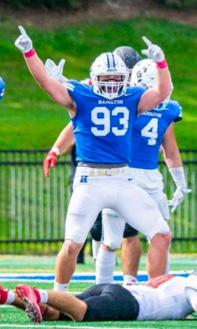
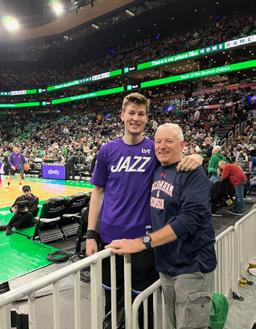
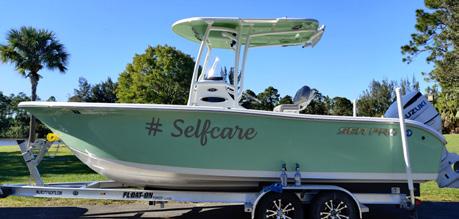
emily drom G old ’17
Technically, Emily Dromgold ’17 wrote the first draft of her book in three months.
In reality, though, it took a lifetime.
Ms. Dromgold, a former student and current faculty member at Wilbraham & Monson Academy, had her book, “The Dog with the Flute in its Mouth,” published in November by Finishing Line Press.
“This collection is the culmination of my graduate school thesis from 2022, but I began writing when I was little,” said Ms. Dromgold, who penned the book under the name Emily Anna King. “In some ways, it took my whole life to have the experience, perspective and intention to write this collection which is so personal and special to me.
“I wanted to write a book since I was in fifth grade. I feel incredibly grateful to have my story in the world, especially this one. While publication provides an unbelievable sense of validation, I think my most fulfilling aspect of writing this collection comes from the process of drafting, the adventures, travels and moments I’ve shared with my friends and family and those important to me, and all of the living needed to both become more ‘me’ and also become the writer I am today with a story I feel is worth telling.”
The story she felt was worth telling dealt with heritage, identity, relationships and family. In turn, it became a practice in healing and an expression of love.
“It is also an origin story I cannot know about myself,” Emily stated. “For most of my life, I did not embrace the Chinese part of my heritage being an adoptee from China until meeting role models and having other opportunities to learn to celebrate this part of myself in places including America, China, Ireland and more. Embracing this part of my history and my identity falls within a long and challenging path that I will grow with my entire life.”
William Brown ’78: Living the high life in Florida.
We Remember
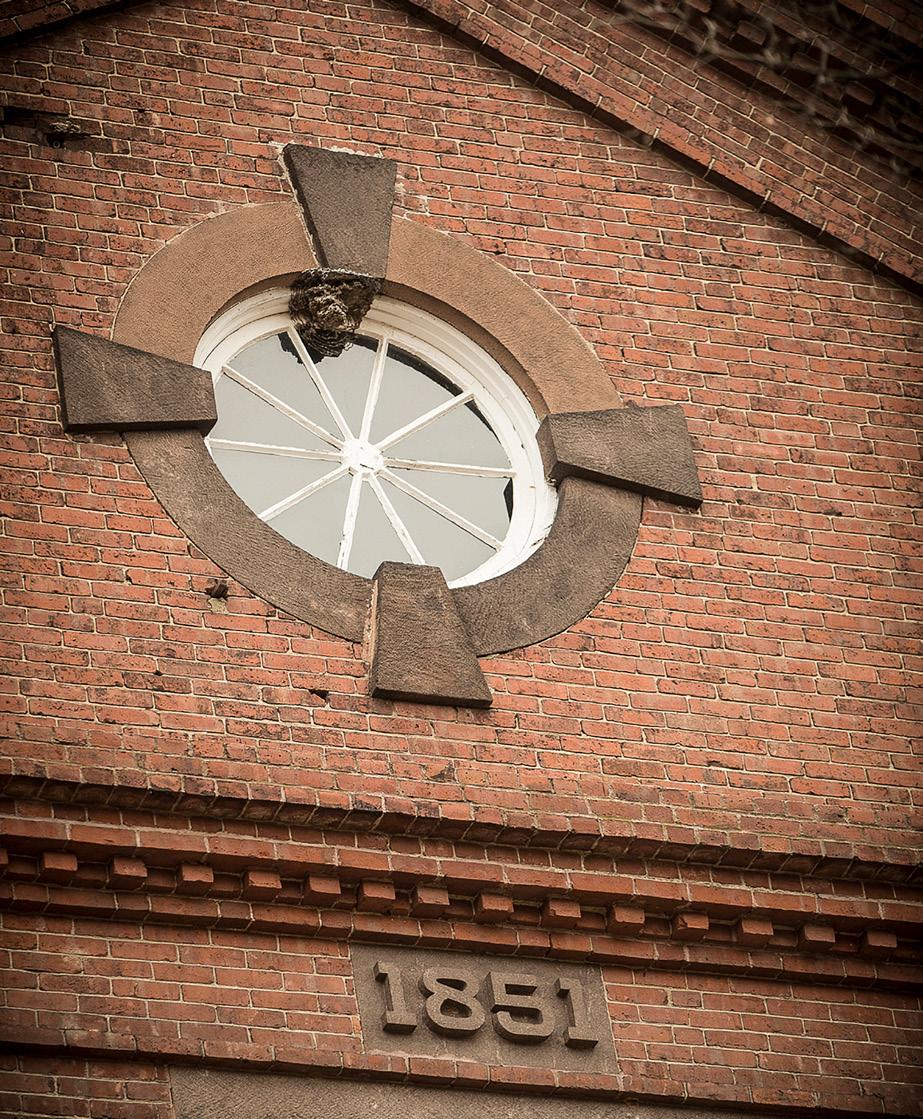
W ilbraha M & M onson aca D e M y
ALUMNI
Mr. Michael A. Guardione ’87
Mr. Kent E. Heintz ’85
Ms. Jennifer J. Mattingly ’75
W ilbraha M aca D e M y
ALUMNI
Mr. Stephen L. Balser ’63
Mr. Richard S. Bellows ’48
Mr. James L. Brown IV ’55
Mr. Russell Cook ’57
Mr. Richard P. Eastman ’66
Mr. Mitchell Garabedian ’55
Mr. Neal H. O’Connell ’45
M onson aca D e M y
ALUMNI
Mr. Hascal O. Dodge ’60
Mr. William J. Ellithorpe Jr. ’57
Mr. H. Neil Harris ’59
Mr. Anthony D. Maloni Sr. ’63
WM a co MM uni T y
ALUMNI GRANDPARENT
Mrs. Marjorie H. Fisher
CURRENT GRANDPARENT
Mr. Michael C. Mannix
CURRENT PARENT
Mrs. Nancy M. Goodwin
FORMER FACULTY
Mr. Kent L. Gatling
Mr. Brian A. Latessa
Support the Atlas Fund to help us create opportunities for students like Gavin now and in the future.

“The Student Investment Semin was an in edible p tunity to pl e and dem s ate my l e f finance and enhance my kn ledge of the stock m ket.”
Gavin W. ’26
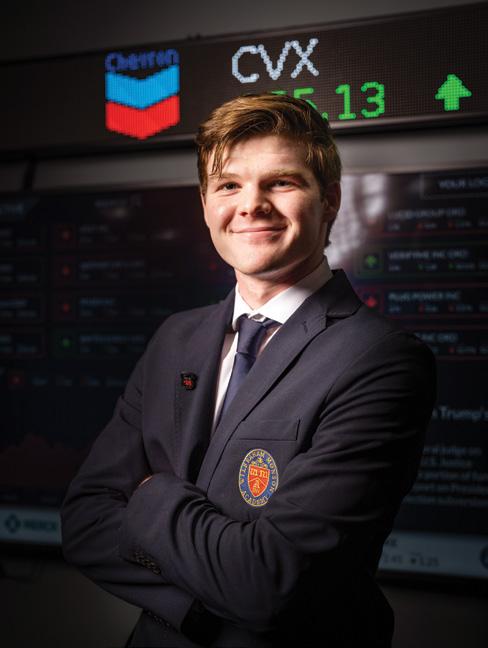

Scan the QR code or visit www.wma.us/give and make your best gift today. Be our partner in progress.
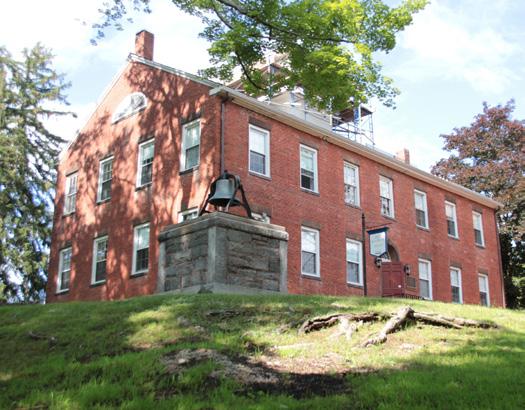
fro M T he archives
Celebrating the Historic Legacy of Old Academy
200 Years of Tradition
b y jane T M oran Director of Archives
TThroughout 2025, Wilbraham & Monson Academy proudly commemorates the 200th anniversary of Old Academy Hall, a cornerstone of local history and educational excellence. From its humble beginnings to its current role as a vibrant academic institution, Old Academy is a testament to the enduring values of learning, community and resilience.
The Birth and a Legacy:
The early days of Old Academy Old Academy was constructed in 1825, a year after Wesleyan Academy relocated from Newmarket, New Hampshire, to Wilbraham.
The Methodists, drawn to the town for its central location and alignment with their religious mission, envisioned an institution that could serve as a beacon of education and moral leadership.
Old Academy became the heart of the new campus, housing classrooms and administrative offices. The building’s Georgian-style architecture reflected the design trends of the early 19th century, with its symmetrical façade,

large windows and sturdy brick structure.
The simple, yet elegant, design embodied the Wesleyan Academy’s mission: Accessibility, integrity and a focus on education.
Construction of Old Academy utilized locally sourced materials, including brownstone from a nearby quarry in Wilbraham.
Brownstone was a popular material in the 19th century, valued for its durability. In addition to the brownstone, the construction would have likely incorporated timber framing, a common practice at the time. The brownstone used along with the brick façade had great workability features, making it ideal for building foundations, walls and ornamental detailing.
The building’s exterior has remained unchanged since its construction, preserving its historical integrity. The cost to build Old Academy in 1825 was approximately $4,000 (approximately $125,000 today).
The bell of Old Academy was an integral part of the building and its operations. Installed shortly after the completion in 1825, the bell signaled the start of classes and other events. It likely served as a central timekeeper for students and staff in the early days.
The stairwell leading to the basement of Old Academy.
It was customary for such a bell to be made of bronze, combining copper and tin, which produced a resonant and durable material. Bells of that era were often cast locally, as was the case here.
Historical records from the State House of Massachusetts have records and receipts of a purchase from the Academy for a Paul Revere bell. Paul Revere, renowned for his midnight ride during the American Revolution, was also a skilled artisan who expanded into bell casting in later years.
Between 1792 and 1828, his foundry in Boston produced 398 bells installed in various churches, schools, and public buildings across New England. Sadly, in time, the bell had to be repaired and the Paul Revere bell was lost, perhaps melted down for a new bell to save money.
Historical Background
The Academy’s roots trace back to two separate institutions: Monson Academy, established in Monson, Massachusetts, in 1804, and Wesleyan Academy (1817).
In 1825, the Wesleyan Academy commenced operations in the newly constructed Old Academy, marking the beginning of its educational journey in Wilbraham.
It was funded and built under the leadership of local Methodists and early Academy supporters following its relocation. The project was a community effort involving significant contributions from Methodists in the region, who were dedicated to creating a center for higher learning.
Old Academy is among the older school buildings in the country still in use today. However, it is not the oldest continuously used schoolhouse in the country. Boston Latin School, founded in 1635, is the oldest.
In 1912, the institution underwent a significant transformation, reopening as Wilbraham Academy, “A School for Boys,” with a renewed mission and faculty.
In 1971, it merged with Monson Academy, consolidating its heritage and expanding its educational reach as a coeducational school.
Despite these changes, Old Academy has remained a constant presence on campus, symbolizing the academy’s rich history and adaptability through centuries.
As Wilbraham & Monson Academy commemorates the 200th anniversary of Old Academy, it reflects on a legacy of education excellence and historical significance. The building represents the Academy’s storied past and honors the countless students, educators and leaders who have passed through its doors, and stands as a beacon for future generations of students and educators.
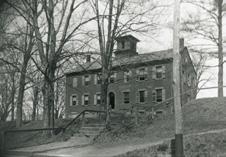
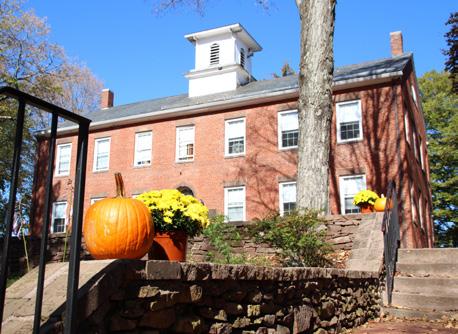
The building, which served as the Academy’s central hub, is now preserved as a historic site. It reflects early educational ideals and remains a point of pride for the Wilbraham community. Wilbraham & Monson Academy has been listed on the National Register of Historic Places since 1979.
A lost time capsule
In the late 1800s, students and faculty buried a time capsule on the Academy grounds to commemorate a significant anniversary. However, its location has been lost to time. Every few decades, the idea of uncovering the capsule resurfaces, sparking interest among alumni and amateur historians.
The Lantern Signal
Before modern communication, a lantern was hung in the upper window of Old Academy to signal important announcements to the town. Whether it was a visiting dignitary, a celebration or news of national importance, townspeople would look to the lantern as a beacon of information.
The Forgotten Orchard
The land surrounding Old Academy was once home to a sprawling orchard maintained by the students as part of their agricultural studies. While the orchard is long gone, remnants of it can still be seen in the form of old apple trees scattered across campus.
Ghost Stories in Old Academy
Old Academy is steeped in history, and with that comes tales of paranormal activity. Students and faculty alike have reported unexplained footsteps, mysterious cold drafts and the sound of faint bells ringing at odd hours. One popular ghost story involves a former headmaster who allegedly walks the halls, ensuring students remain studious and respectful of the Academy’s traditions.