

























Valmet’s lifecycle partnership gives you a structured way to keep your line reliable and competitive across every stage – from early planning to daily operations and future improvements. We support you through proactive collaboration and open dialogue, backed by industry expertise, digital services, and a connected team. Partner with Valmet to maximize the long-term value across the full lifecycle.
valmet.com
Welcome to the May-June issue of Pulp Paper & Logistics, incorporating Green Packaging International.
As problems in the Middle East continue the stress on the pulp and paper industry continues with interrupted energy supplies and rising costs that are being passed through to customers.
Volatile energy costs combined with requirements to meet carbon dioxide emission directives is putting huge strain on the industry. This again highlights the need to maximise production and reduce costs in areas such as drives, steam production and electricity consumption. With continued insecurity, more mills are making significant investments with on-site energy and steam production and often from renewable sources such as biomass to try and mitigate potential future energy disruptions.
Looking forward to our next issue – July-August 2026 – we will be featuring machine clothing developments, kraft paper production for packaging, paper conversion and recycling processes. Contributions should arrive no later than 20 July and emailed to; pulppaperlogistics@virginmedia.com .
Vince Maynard, Publisher and Editorial Director


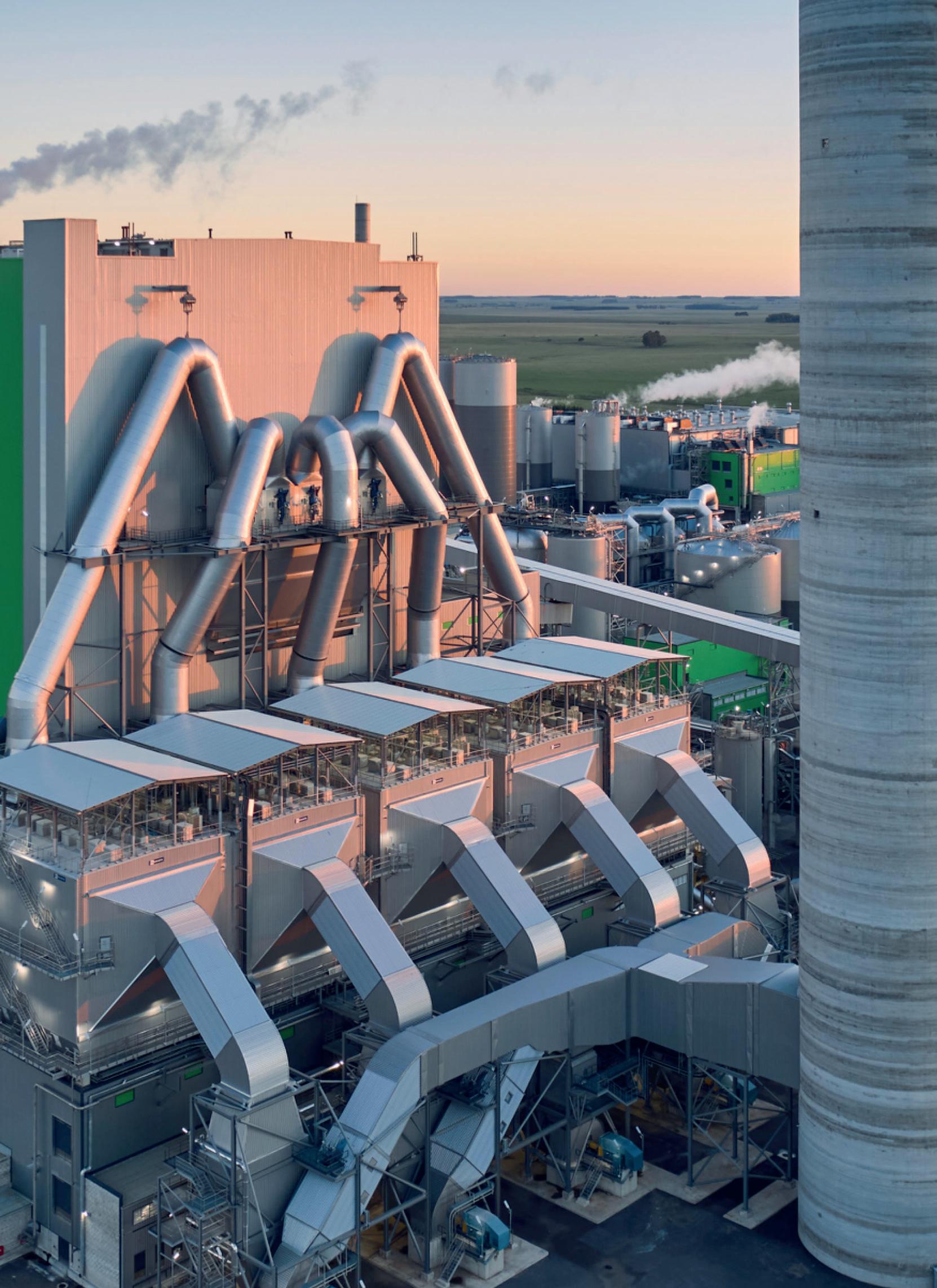
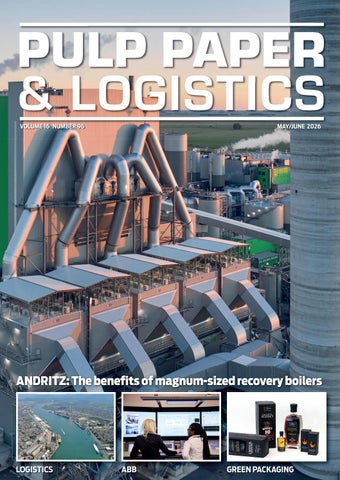
Front cover image credit: Andritz
16 Issue No. 96, May/June 2026
ISSN 2045-8622 (PRINT)
PUBLISHER & EDITORIAL DIRECTOR
Vince Maynard
Tralee, Hillcrest Road, Edenbridge, Kent, TN8 6JS, UK
Tel: +44 (0) 1732 505724
Mobile: +44 (0) 7747 002286
Email: pulppaperlogistics@virginmedia.com
Email: pulppaperlogistics@outlook.com

+44 (0) 1732 868071
+44 (0) 7860 221486
johnnutting47@gmail.com
+44 (0) 1737 551687
+44 (0) 7785 796826
Wiffen
+44 (0) 1460 261011
+44 (0) 7851 612799
anton_print_1@mac.com

To expand its capabilities in North America, International Paper (IP) has made strategic two acquisitions, in the containerboard and corrugated sectors.
In April, IP agreed to buy containerboard manufacturer North Pacific Paper Company (NORPAC), from private equity group One Rock Capital Partners, for US$360m.
In May, IP acquired Delmarva Corrugated Packaging in Dover, Delaware, saying that the facility would enhance its capabilities, expand its market presence, and increase its capacity to produce the highest-quality sustainable packaging for customers.
NORPAC is based in Longview, Washington, and employs around 500 at its paper mill, where it operates three machines that yearly produce about one million tons of containerboard and other grades. IP said the facility will complement its existing mill system, increasing system flexibility, reducing costs and expanding capabilities to support growing customer demand for lightweight, high-performance recycled containerboard.
“This acquisition is a strong
An explosion at Nippon Dynawave Packaging’s mill in Washington state on 26 May killed one with nine others missing, according to local authorities.
Nine more were injured in the spill after a 3.4-million litre tank ruptured.
As PPL went to press, the tank
strategic fit for our business and supports our long term value creation priorities,” said Tom Hamic, IP’s chief executive of Packaging Solutions North America. “NORPAC’s attractive customer base, location and operational capabilities strengthen our ability to serve customers in the growing West Coast region. We look forward to partnering with the mill team and its customers to deliver a safe, seamless integration.”
Tony Lee, co-founder and managing partner of One Rock Capital Partners added: “NORPAC is a high-quality business built on the strength of its first-rate management team and employees.
“We are proud to have achieved together a years-long transformation of NORPAC during our ownership. We believe this transaction with International Paper underscores the value created at NORPAC and positions the company for continued success as part of a larger platform.”
Commenting on the Delmarva Corrugated Packaging acquisition, the value of which was not revealed, Hamic said: “This acquisition strengthens our footprint in the region and
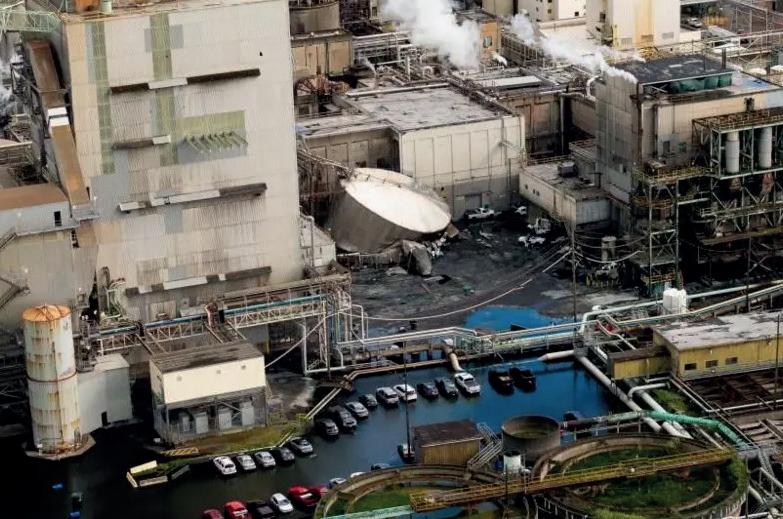
remained unstable, according to the Longview Fire Department.
In a statement Nippon
supports our long term growth strategy.
“The Dover facility’s strong customer base and strategic location expand our ability to deliver high-quality, sustainable packaging solutions with greater speed and reliability. We look forward to welcoming the team and working closely with customers to ensure a smooth and successful integration.”
Chief executive of Delmarva Corrugated Packaging Dennis D Mehiel added: “We are extremely pleased to see IP step into ownership of the Delmarva Corrugated assets.
“We cannot think of an organisation better suited to help the team in Dover achieve the full potential of the business, and we are highly confident this transaction will benefit all of DCP’s stakeholders.”
Global sales at IP in the first quarter of 2026 for IP were US$5.97 billion, 13.4 percent up on the same period in 2025, during which it acquired Europebased DS Smith for US$7.2bn. IP now operates in two segments, North America and EMEA. In North America, first quarter sales were down 2.1 percent at

US$3.62bn, with operating profit up 75 percent at US$242m, while in the EMEA region, sales were up 49.9 percent at US$2.32bn, but with an operating loss of US$51m, compared with a profit of US$46m in the same period a year earlier.
Commenting on the results, International Paper’s chief executive Andy Silvernail said: “This quarter, we delivered meaningful progress across the business. In North America, our commercial actions are gaining traction and helping us outgrow the market, while we advance cost-out efforts and make solid gains in mill and box plant productivity.
“In EMEA, we’re accelerating commercial and cost initiatives while a small core team is focusing on the planned separation.
“We still have work to do to improve consistency and reliability, but the primary pressures this quarter came from a tougher macro environment, including ongoing inflation and the severe winter storm [in North America].”
Dynawave said the explosion occurred due a “rupture of a tank containing white liquor”.
“Recovery efforts remain complex due to ongoing safety concerns at the site,” the fire department said later.
The pulp and board mill produces pulp and packaging products including liquid
cartons, cups and trays.
Operating since 1953, the Longview mill currently produces three-layer bleached paperboard using co-extruders that manufacture products with oxygen barrier properties and LDPE coating of various thickness in both single-side or double-side coated board.
Essity has opened a £30 million-plus recycled fibre processing facility at its Prudhoe mill in Northumberland. The investment is Sweden-based global group Essity’s biggest in the UK for a decade, reinforcing its position as Europe’s biggest user of recycled fibre in tissue production.
The opening significantly expands Essity’s recycled fibre processing capability, increasing capacity at Prudhoe to more than 105,000 tonnes per year and bringing the company’s total annual UK recycled fibre capacity to approximately 190,000 tonnes.
The facility has been built next to Essity’s existing Prudhoe mill, the company’s largest manufacturing site in the UK and a key part of its European tissue production network.
Covering 4,150 sqm, it replaces the former Unifibres complex with modern, high-efficiency technology designed to process a wider range of recovered papers, including lower-grade paper and board.
It will also improve the segregation of contaminants such as plastics, reduce the risk
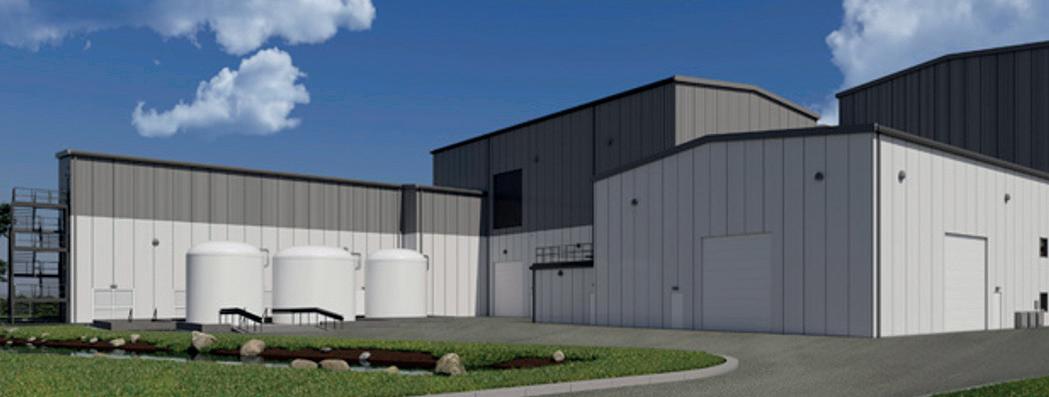
of waste being sent to landfill and support improved energy efficiency across operations.
The opening further strengthens Essity’s position as the UK’s largest user of recycled fibre in household tissue products and the leading user of recycled fibre for tissue production in Europe. The facility will support the sustainable supply of tissue products for brands including Cushelle, Velvet and Tork.
The investment is the company’s largest capital investment in its five UK sites in the past decade, underlining the company’s longterm commitment to British manufacturing, sustainable hygiene production and the North East as a centre for technical development.
Sales at South Africa-based paper maker Sappi for the three months to the end of March were US$1.33 billion, slightly down on the US$1.35bn from the same quarter in 2025, but up on the quarter ended in December. Sappi said the quarter was characterised by persistent
macroeconomic headwinds: subdued consumer demand, ongoing geopolitical trade tensions and the escalating conflict in the Middle East.
Although sales volumes increased year-on-year, selling prices declined across all regions. Result was that Sappi made a net loss of US$413
The facility will also provide a platform for testing fibre innovations that help reduce reliance on virgin wood pulp and support the use of recycled and alternative raw materials in paper production, while maintaining the hygiene and quality standards required for essential tissue products.
Martin Hallissey, site manager at Essity’s Prudhoe mill, said: “The opening of this recycled fibre facility is a proud moment for everyone at Prudhoe. It’s a significant investment in our site and our people, and it strengthens our ability to source recycled fibre while improving efficiency and reducing waste. This facility puts Prudhoe at the forefront of sustainable tissue
million in the quarter.
High spot was in North America where paperboard volumes increased 27 percent yearon-year, reflecting continued progress with the ramp up of the Somerset Mill’s PM2 line.
Commenting on the outlook for the third quarter, Sappi chief executive Steve Binnie said: “Against a backdrop of continued market uncertainty
manufacturing in the UK.”
Völker Zoller, president of consumer tissue at Essity, added: “This investment demonstrates Essity’s clear commitment to sustainability and circularity. Being the UK’s largest user of recycled fibre for consumer tissue, and the leading user in Europe, brings responsibility as well as opportunity.
“The Prudhoe facility strengthens our recycled fibre supply, supports our customers’ sustainability ambitions and reinforces our leadership in sustainable tissue production. In short, we are delivering genuine sustainable solutions for our customers and ultimately a clear sustainable choice for consumers.”
arising from ongoing trade tensions, escalating geopolitical conflicts, and their broader indirect effects on global macroeconomic conditions, input costs and currency movements, we are adopting a cautious outlook. On this basis, Adjusted EBITDA for the third quarter of FY2026 is likely to be below that of the second quarter of FY2026.”
Aterminal services agreement has been signed between pulp producing giant Suzano and Avondale Global Gateway (AGG) that will return wood pulp imports back to a US port in Louisiana for the first time in more than 30 years.
Under the five-year deal, the upgraded port at Avondale will serve as one of Suzano’s terminals in the Central Gulf Coast for pulp shipments arriving from Brazil, to be distributed in North America by rail. The first vessel was scheduled to arrive at AGG in the first week of May.
The agreement is said to mark a significant milestone for both Louisiana and Suzano, the world’s largest pulp supplier and one of Brazil’s biggest exporters, and which has been present in the American market for more than 40 years.
The move aligns with Suzano’s expansion into North America,
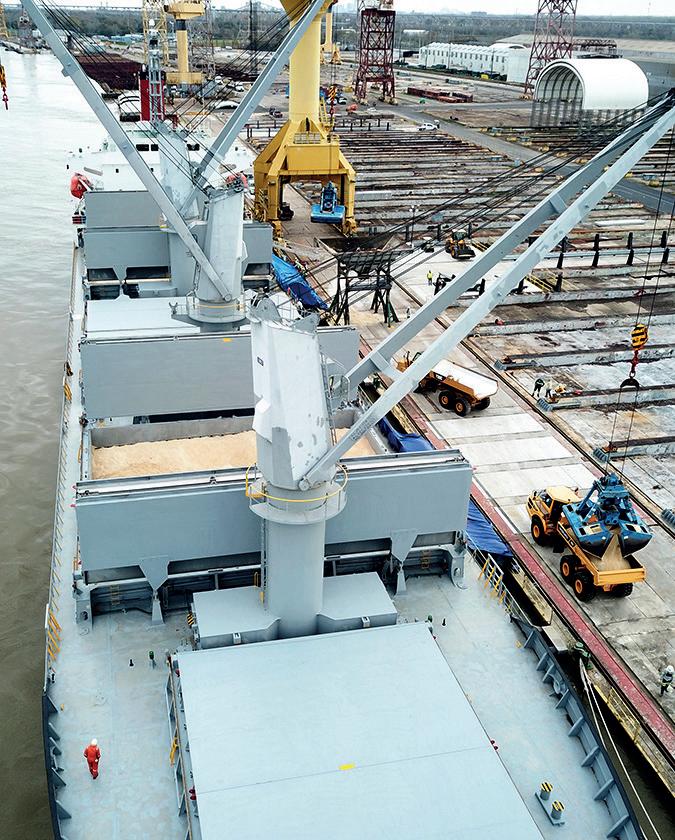
Suzano will be expanding its exports into North America through the Avondale Global Gateway
marked by its 2024 acquisition of paper mills in Arkansas and North Carolina from Pactiv Evergreen. The Avondale operation supports this strategy with a more centralised logistics footprint on the Gulf Coast.
Commenting on the deal, Juliana Vizintim, operations chief at Suzano, said: “An efficient and
resilient supply chain is essential to our business, and Avondale offers the combination of river access, rail connectivity, port infrastructure, and operational flexibility we were looking for.
“This partnership strengthens our Gulf Coast logistics platform and enhances supply assurance and efficiency for our customers across North America. At Suzano, we believe it is only good for us if it is good for the world, and we view this milestone as a foundation for long-term value creation—benefiting the local community, our business partners, and our customers. Suzano and Avondale share a common vision focused on collaboration, growth, and building a sustainable future together.”
To support the new operation, AGG has completed major upgrades to 245,000 square feet of warehouse space. These were made to meet Suzano’s
Sweden-based hygiene tissue maker Essity is supporting its industrial decarbonisation with the commissioning of biomass energy plants at two of its mills in France. The investments support Essity’s science-based climate targets and its near-term focus on reducing emissions from its own operations, while staying on track toward achieving net zero by 2050.
The newly-inaugurated installations at Essity’s mills at Kunheim in Alsace and Le Theil-sur-Huisne in Normandy
enable a significant share of the energy used for paper hygiene production to be generated from renewable, locally sourced biomass, replacing fossil fuels.
The biomass installations have capacities of 7.0 and 5.8 megawatts respectively, and supply between 70 and 75 percent of each mill’s steam requirements.
These projects are expected to reduce the sites’ natural gas consumption by up to 53 percent and cut the carbon footprint of paper machines by up to 42 percent. The renewable
energy generated supports the manufacturing of privatelabel paper hygiene products, including toilet paper, paper towels and tissues, primarily for the French and European markets.
“Decarbonising our operations is a key pillar of Essity’s sustainability strategy and a core part of delivering on our sciencebased climate targets,” said Sahil Tesfu, strategy and sustainability chief at Essity. “By scaling up renewable and locally sourced energy across our production sites, we are driving measurable
operational requirements.
In parallel, a $13 million rail expansion is under way at Avondale, funded in part through Louisiana Economic Development’s FastSites programme. Together with other site improvements, total investment tied to the Suzano operation is expected to exceed US$20 million over time. The project is also expected to support 50 full-time jobs.
“Bringing wood pulp back to Louisiana is a major milestone,” said Adam Anderson, chief executive of T. Parker Host, parent company of Avondale Global Gateway. “This is new activity for the state, new jobs, and meaningful investment at Avondale. It reflects the kind of long-term industrial growth we believed this site could support and shows what’s possible when the right partner, infrastructure, and location come together.”
● More logistics news: see page 9
emissions reductions today while strengthening the resilience and competitiveness of our industrial operations.”
Beyond reducing Essity’s own operational emissions, these investments lower the carbon footprint of the manufacturing stage of private-label hygiene products, says the tissue maker. This, it adds, helps retail customers reduce the overall footprint of their product ranges and offer consumers paper hygiene products with a continuously lower carbon dioxide impact.























ENABLING SUSTAINABILITY IN PULP & PAPER MILLS’ ENTIRE LIFECYCLE Pulp &






Anew qualification for the UK paper industry has been launched by the Confederation of Paper Industries (CPI).
CPI said the SIAS Level 2 Certificate Fundamentals of Paper Technology, will help train the operators of today and provide greater security for the industry of tomorrow.
Like many UK manufacturing businesses, the paper sector is facing a challenge with longserving experts leaving the industry, creating a need to replace them.
To address this issue CPI has also established an apprenticeship
scheme for papermakers.
The comprehensive Level 3 programme brings together core papermaking skills with broader process and manufacturing knowledge, helping to strike the right balance between technical expertise and wider industry understanding.
The paper making content is well established but needs to be updated for a developing industry, and a working group was formed to review the entire curriculum across both Level 2 and 3.
The aim of the revised Certificate is to provide students with a structured introduction to the paper making industry,
including the main raw materials, chemicals and processes used to make paper, and the stages of production and quality control. The qualification helps students understand how operations affect product quality, safety, environmental performance and sustainability, and introduces the key legal, regulatory and health and safety responsibilities associated with working in the sector.
Commenting on the development, Andy Barnetson, CPI’s executive director for competitiveness, said: “We are delighted to be launching this important paper making

The CPI’s Andy Barnetson: “an important step”
qualification. This approach supports both apprentices and employers by developing practical, future ready capability. This qualification is an important step in securing the training and career opportunities for the future of this important industry.”
The SSK paper mill in Birmingham, UK, could be closed by Smurfit Westrock as part of an ‘asset optimisation’ programme.
The mill manufactures and supplies around 200,000 tonnes of fluting and liner to the UK and Irish corrugated markets. Smurfit Westrock said that relocation of production to other mills would enable it to “continue supporting its customers with a strong focus on service, quality and innovation, while maintaining a sustainable, longterm presence in the UK paper market.”
Consultations on the future of the mill’s 130 staff have already begun.
In Smurfit Westrock’s financial results to the end of
March, first quarter sales were fractionally higher compared to the same period a year earlier at US$7.66bn, but net profit dropped to US$63m, compared with US$382m a year ago.
A fall in sales of 3.9 percent in North America, Smurfit
Westrock’s biggest market, was compensated by a rise Europe MEA and APAC of 7.3 percent, and in the LATAM region of 7.6 percent.
Chief executive Tony Smurfit, commenting on the results, said: “We are focused on unlocking
the full potential of North America, while continuing to outperform in EMEA & APAC, and delivering dynamic growth and strong margins in LATAM. Today, we see a stronger and a generally better industry operating environment.”
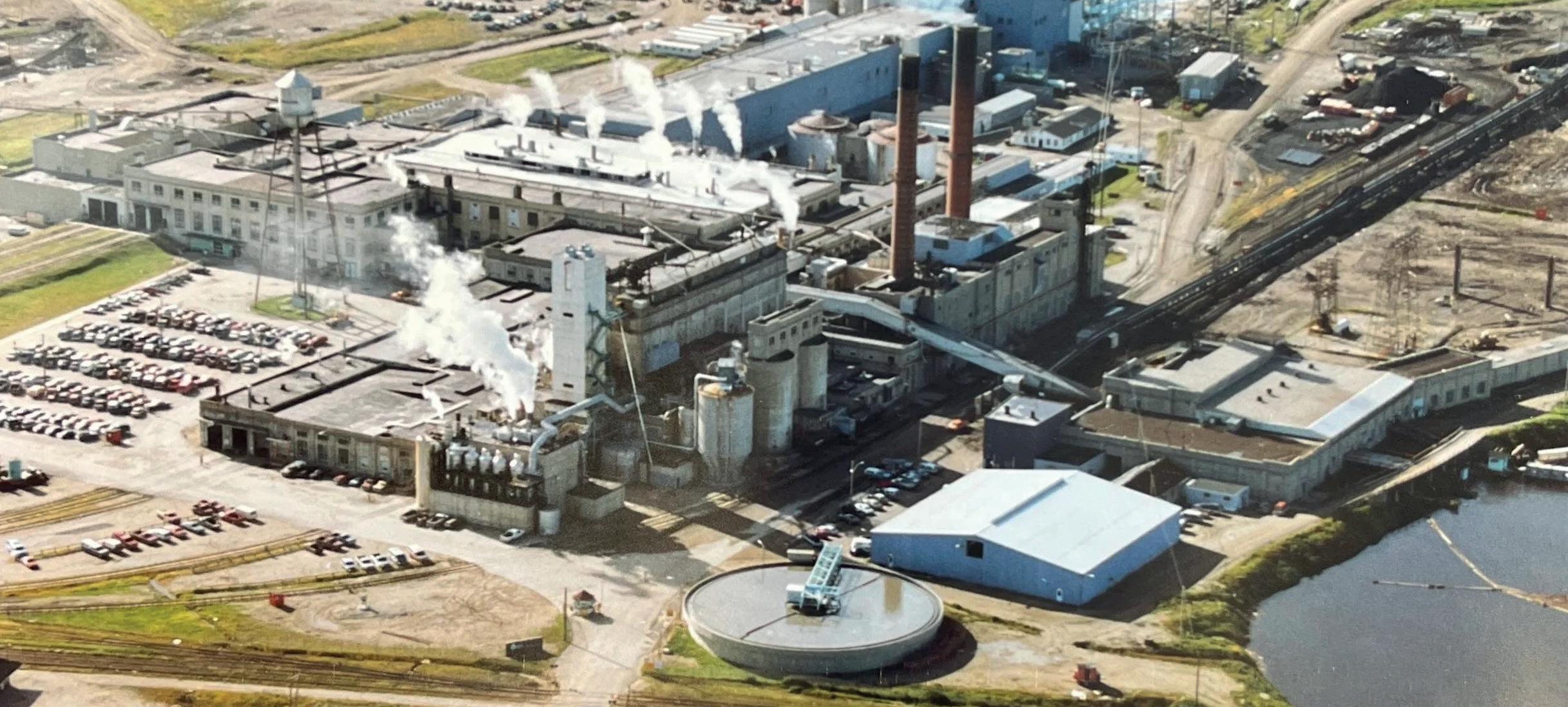
The scale of the challenges facing GreenFirst Forest Products, which in Canada owns sawmills and the Kap Paper mill in Ontario, were revealed in its first-quarter 2026 results.
Bad weather over the winter hit Greenfirst’s wood shipments, resulting in a drop in sales to C$60.6 million, 16 percent down on the same quarter in 2025. The company also made a loss of C$20.6m, which followed a loss of C$32.8m in the final quarter of 2025.
In October 2025, Greenfirst’s sawmills and the Kap Paper mill at Kapuskasing were idled for a week. The Canadian government provided a grant of C$10m, which enabled the paper mill to continue operating and saved 300 jobs.
Since then, in February the government confirmed C$7.5m in funding through the Strategic Response Fund to support a Front End Engineering Design (FEED)
study for a proposed new facility in Kapuskasing.
Kap Paper said the proposed facility would build on the mill’s long-standing role as an integrated partner to the regional forestry sector, while positioning it to compete in growth markets that value engineered wood products and advanced manufacturing.
Kap Paper will now proceed with the FEED study and engage stakeholders as part of its evaluation process.
“This support allows us to do the rigorous planning work needed to make a responsible, long-term investment decision,” said Terry Skiffington, chief executive of Kap Paper. “The FEED study is a critical step toward diversifying our product offerings, strengthening demand for regional fibre, and ensuring the Kapuskasing mill continues to be a cornerstone employer in north-east Ontario.”
Kap Paper also acknowledged the continued support of the
Additional paper machines and associated converting equipment are part of investments planned by Georgia-Pacific for its mills in North America so that it will be able to better meet growing customer and consumer demand for premium bathroom tissue and paper towels. The Atlanta-based paper maker says it has begun final engineering and planning after
evaluating its facilities in the central and western regions of the US.
It expects to shorten project schedules and optimise capital use by using existing site infrastructure.
Georgia Pacific anticipates beginning construction following completion of the engineering, with a first machine targeted to begin operations in late 2028 and a second machine
following thereafter.
“These efforts reflect our continued confidence in the long term growth of premium paper products and our commitment to invest alongside our customers to meet that demand,” said Vivek Joshi, executive vice president of Georgia-Pacific’s Consumer Products Group. “They also underscore our longstanding track record of investing in
federal government for the northern Ontario forest economy, including previous investments announced through FedNor.
“We appreciate the confidence shown by the Government of Canada and Minister Mélanie Joly in the future of our operations and our workforce,” Skiffington added. “This investment recognises the importance of keeping mills viable, people working, and communities strong.”
our manufacturing network, expanding our m’’arket presence and creating lasting value for our customers.”
Georgia-Pacific says it is committed to its brands such as Angel Soft, Quilted Northern, Sparkle, and Brawny, while continuing to grow its premium private brand partnerships. In recent years, the company has invested in new paper machines in Naheola, Alabama (2018); Palatka, Florida (2020); Green Bay, Wisconsin (2024); and Wauna, Oregon (expected 2026).
Indian paper maker
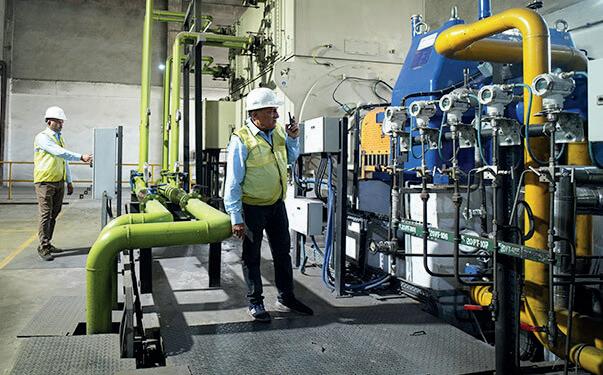
Kuantum is in the process of expanding capacity at its mill at Saila Khurd, in the district of Hoshiarpur, Punjab.
With a project called Nirmaan, the upgrade with closed-loop automation was expected to increase paper production capacity from 450 to 675 tons per day by March, potentially raising yearly capacity to more than 225,000 tonnes.
For the 2024-25 financial year Kuantum Papers limited (KPL) reported that it had delivered “steady operational performance despite a challenging external environment”. KPL maintained consistent production levels throughout the year, it said, supported by its integrated manufacturing model and strong focus on efficiency. While revenues were impacted by weaker market prices and higher input costs, Kuantum protected its core margins through
disciplined cost controls, process improvements, and effective use of local raw materials.
Despite the challenges KPL produced a record paper output in 2025 of 160,861 tonnes, up from 153,058 tonnes a year earlier.
KPL says that this was achieved by strong process stability and full capacity operation of its four paper machines. Both wheat straw and hardwood pulp mills operated at optimum levels, ensuring sustainable and cost-effective
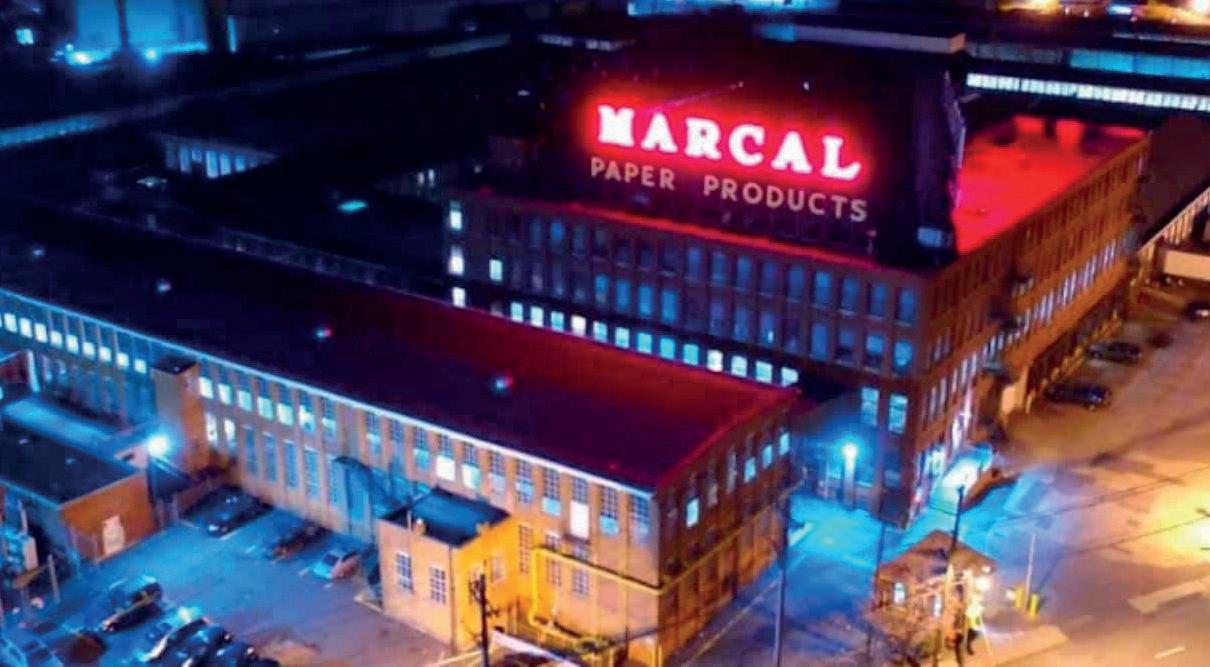
US-based Marcal Paper has completed the acquisition in Ontario of the St Catharines Tissue Mill, a premium speciality paper producer, from BiOrigin Specialty Products. The value of the deal was not revealed.
Founded in 1912, the St Catharines mill produces high-quality through-air-dried (TAD) tissue parent rolls used in premium at-home and awayfrom-home paper towel and
bath tissue products, alongside a broad portfolio of speciality paper grades.
“St Catharines is a remarkable asset with a remarkable team behind it,” said Rob Baron, chief executive of Marcal. “Adding the complementary mill to our platform is a natural step for Marcal – it strengthens our ability to deliver the premium tissue products our customers expect, while bringing in a deeply
pulp production. The installation of twin roll presses in both pulp lines significantly improved washing efficiency, reduced chemical consumption, and enhanced fibre yield, contributing to both cost reduction and environmental performance. Energy is being conserved by investment in a co-generating plant. With commissioning of a backward integration project the mill has installed two new turbines from Siemens, increasing
total capacity to 38 MW. A new boiler has also been installed, increasing the total steam generation capacity to 190 tons per hour.
Commenting on the results, management said: “Kuantum Papers continues to draw strength from its core capabilities, which help us stay steady and competitive in a dynamic business environment. Our fully backwardintegrated manufacturing operations ensure consistent product quality, efficient cost management, and reliable supply across product categories.
“With a wide range of products in writing and printing, copier and speciality papers, we are well equipped to serve diverse needs across education, publishing, office stationery, and packaging segments. Our long-standing pan-India dealer network plays a crucial role in sustaining sales volumes and adapting to evolving market conditions.”
experienced workforce and a speciality paper business with a long heritage of innovation.
We’re proud to welcome the St Catharines team to Marcal and committed to investing in the
mill’s continued success.”
Starting 90 years ago as a family-owned business Marcal is now based at Elmwood Park, New Jersey. Marcal operates nine mills in the USA.
Pulp producers Arauco and CMPC Celulosa are moving forward with logistics investments to support new pulp mills in Brazil, strengthening railways and port terminals with a focus on exports. Chilean-based Arauco has begun construction of a railway in the state of Mato Grosso do Sul. The company is investing US$540 million in the project to connect what has been described as one of the biggest ever pulp mills at Sucuriú in Inocência.
Brazil’s Ministry of Transport said in a statement: “The project calls for the implementation of a new 47km railway section, which will connect Arauco’s new mill to the Malha Norte. From this connection, the trains will continue to the Port of Santos, in São Paulo, bound for international markets, especially the United States, Europe, and Asia. The infrastructure has been designed to handle up to 3.5 million tons of pulp per year, through the operation of trains with up to 100 wagons.”
Railway construction began in late 2025 and is scheduled for completion in the second half of 2027. The company is also

considering using rail to transport wood from forests located about 100 km away and is evaluating the Tietê-Paraná waterway.
As part of Arauco’s Sucuriú Project, the railway must be completed by the second half of 2027 to coincide with the mill’s startup.
The Brazilian National Waterway Transport Agency (Antaq) has authorised Chilean pulp producer Arauco to acquire control of Alempor and take over the Private Use Terminal (TUP) in the Alemoa district, at the Port of Santos. To complete the transaction and carry out the necessary upgrades, the company will invest R$2 billion in dredging works, construction of a berth, storage facilities, and road-rail access. Environmental licenses are still pending. The deal also depends on approval from
the Minister of Ports and Airports, expected within 90 days.
According to Alberto Pagano, Arauco’s logistics director, the company had been evaluating port alternatives since 2022 and identified the terminal as the most viable option. The site covers approximately 200,000 sqm and will have the capacity to handle 3.55 million tonnes of pulp per year, matching the mill’s production..
Representing an investment of US$4.6 billion, the Sucuriú Project will produce bleached eucalyptus pulp. Construction is almost half complete, with start up expected in 2027.
Arauco currently produces 5.2 million tonnes per year from its operations in Chile, Argentina, and Uruguay. The Brazilian unit will match the company’s total
Special guest at the UK’s Chartered Institute of Logistics and Transport Partnership Day was HRH The Princess Royal, who is the oganisation’s patron.
The event marked the launch of CILT(UK)’s forthcoming Centenary celebrations, recognising 100 years since the Institute was awarded its Royal Charter
and celebrating a century of supporting and advancing the logistics, transport and supply chain profession across the UK. Attending the event were partners, industry leaders and public sector bodies for a full day of insight, discussion and collaboration focused on strengthening partnerships, driving innovation and promoting excellence across the sector.
production in Chile.
The project is part of a wave of new investments in the pulp sector in Latin America, including initiatives by Bracell, CMPC, Eldorado, and Paracel.
In January, Chilean pulp and paper producer CMPC announced the start of a 1.5bn reais investment for the construction of a port terminal in the state of Rio Grande do Sul.
The project is part of the Natureza Project, which includes the construction of a multi-billion pulp mill in Barra do Ribeiro.
The terminal, under a 25-year concession contract, will have two berths for ship docking, two berths for barges, and a warehouse with a static capacity of 194,000 tonne of cellulose. The construction will be carried out through a joint venture between CMPC and Neltume Ports.
CMPC Celulosa SA, a division of integrated wood company Empresas EMPC which controlled by the Chilean Grupo Matte, is a global cellulose producer with total production capacity of 4 million tons a year from its four mills, three of which located in Chile and one in the Brazilian state of Rio Grande do Sul.

Discussions centred around the themes of change, culture and collaboration, exploring how organisations across logistics, transport and supply chain can work together to navigate transformation, accelerate sustainability, strengthen workforce capability and shape the future of the profession.
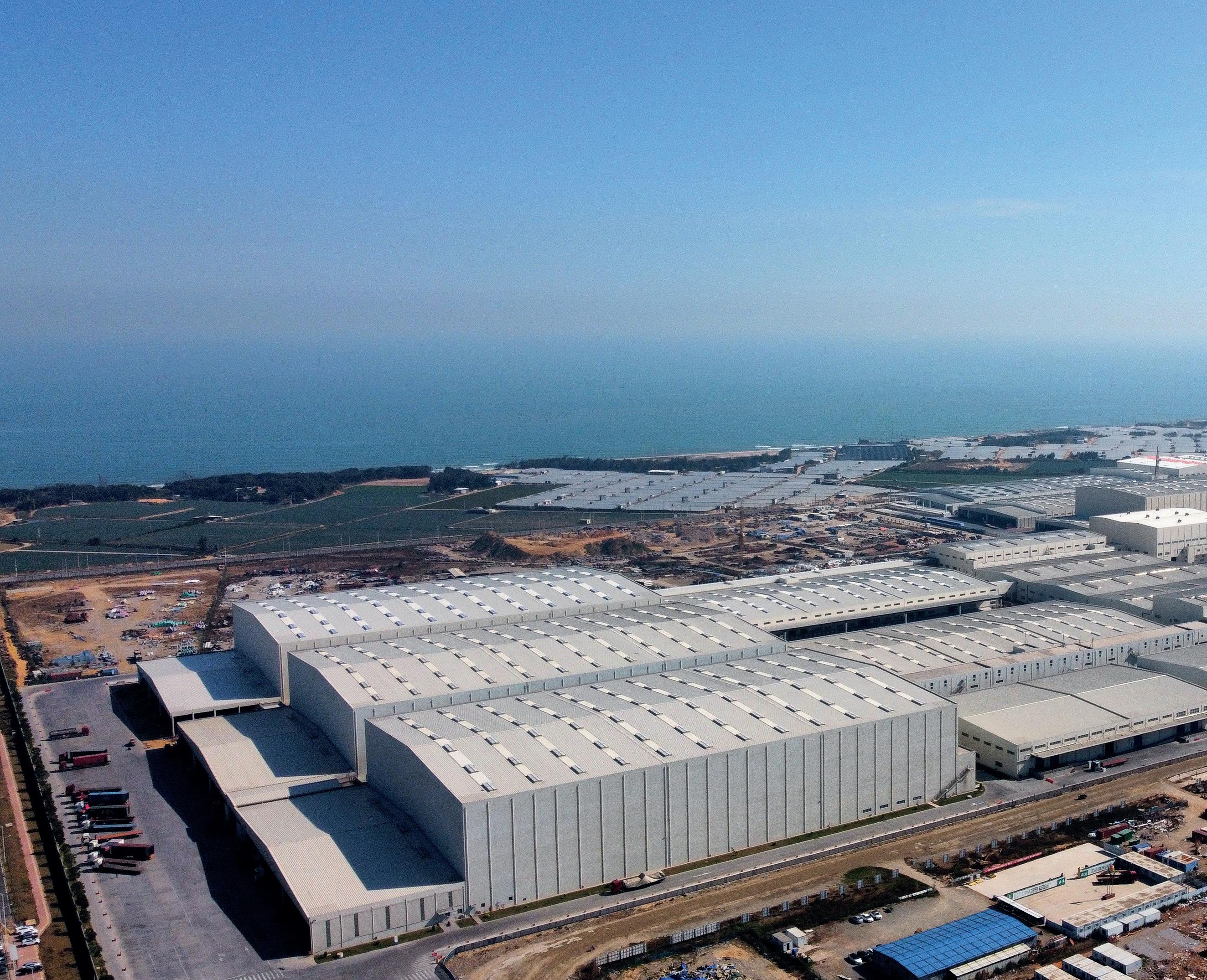


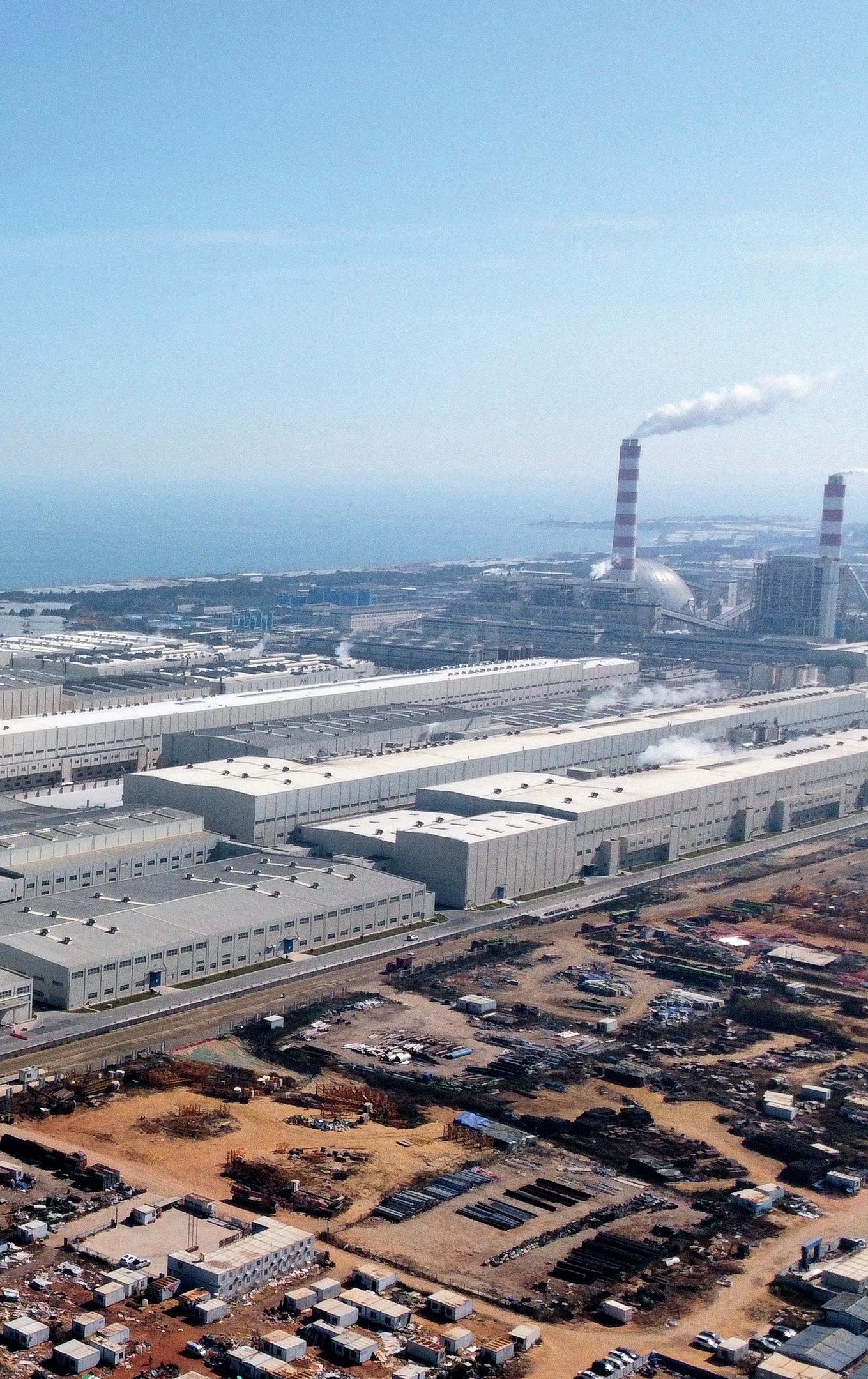
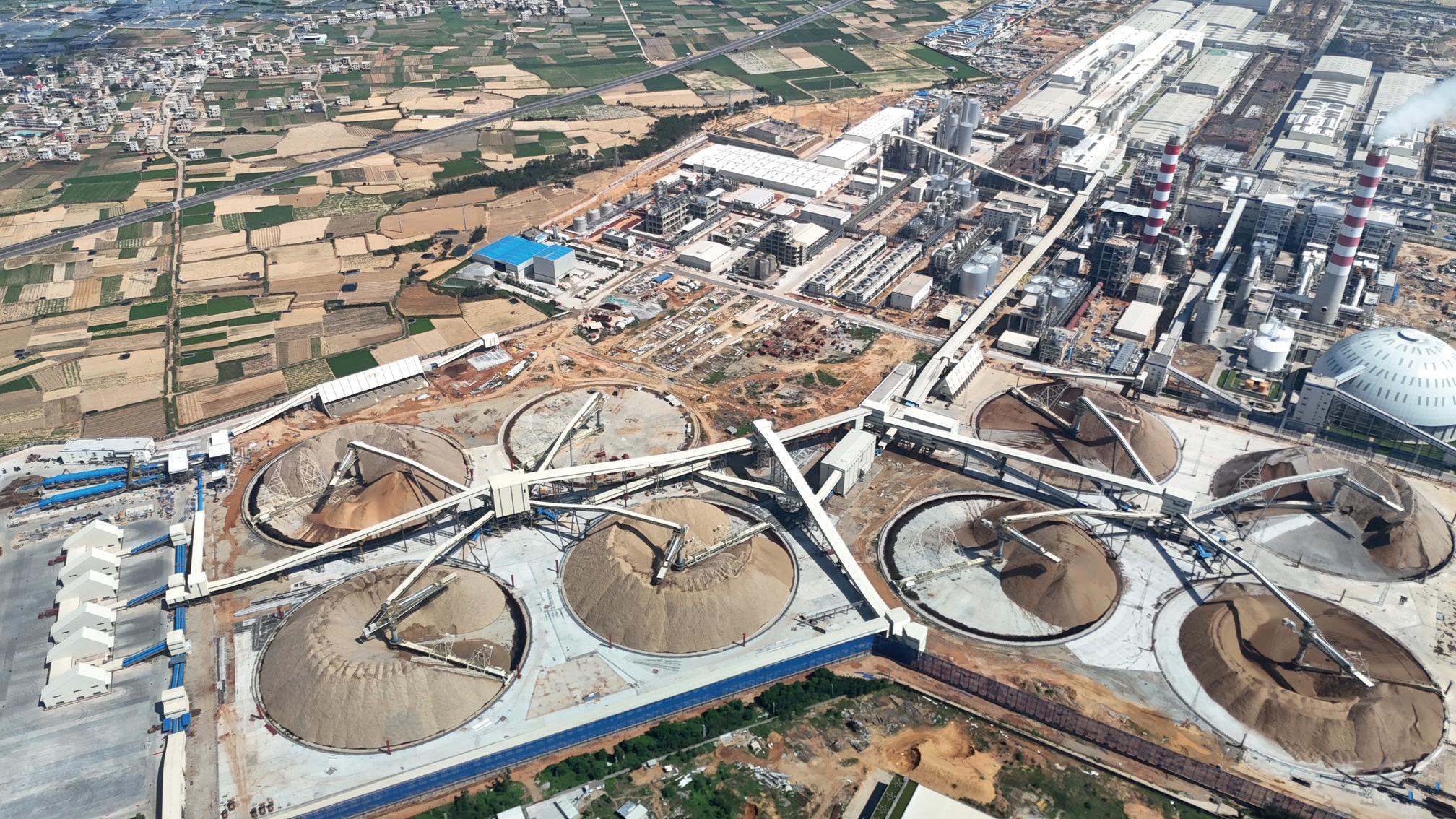
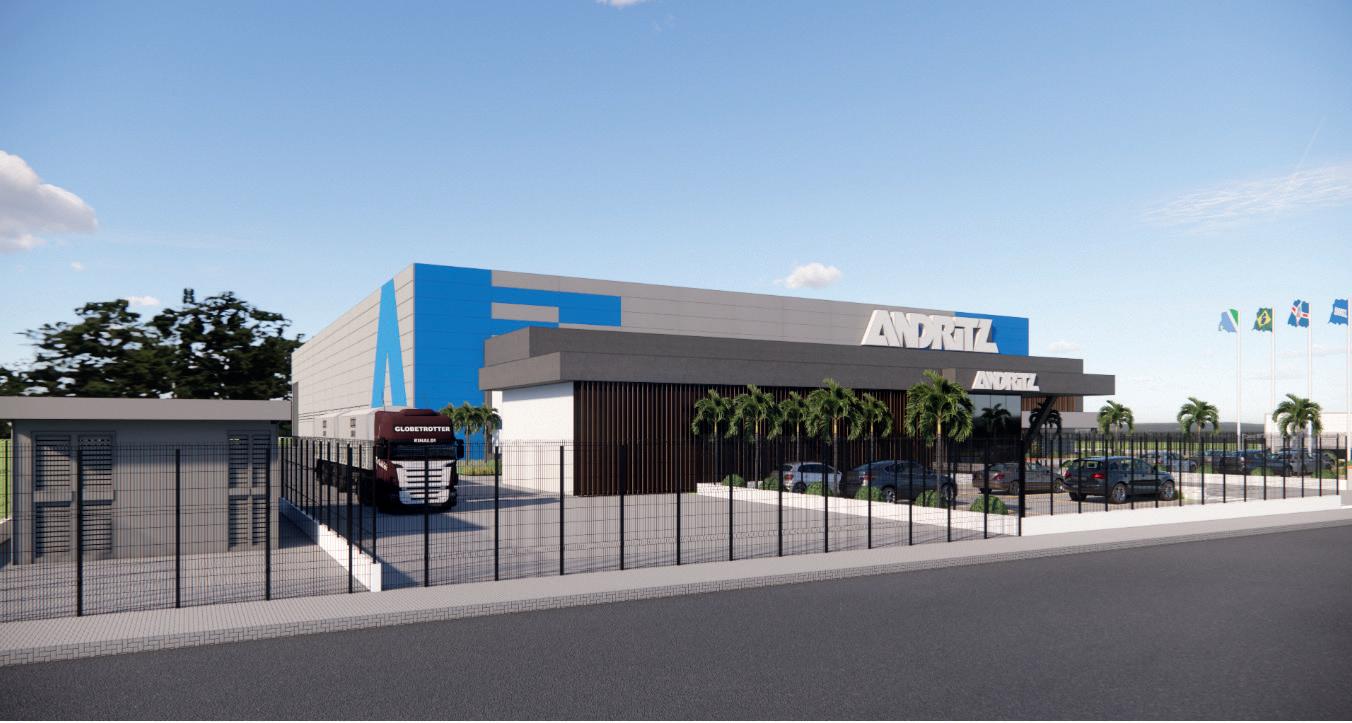
The building of China’s largest pulp mill was the most recent ambition for Liansheng Pulp & Paper to complement its paper and tissue operations, using Andritz technologies. PPL reports
Liansheng Pulp & Paper (Zhangzhou), which is located in the southeast coast of China in Fujian province, decided it needed a pulp mill to integrate with its newly-installed paper, cartonboard, and tissue production facilities, which now have a total production capacity of 3.9 million tons a year. The family-owned enterprise
has rapidly emerged as one of China’s most dynamic operators in the pulp, paper and tissue sector. Liansheng Pulp & Paper entered the pulp and paper industry in 1998, and has grown to be a significant producer of board, paper, and household products, with an emphasis on large-scale integrated pulp and paper operations and a focus on environmentally-friendly production.
In 2021, Liansheng Pulp & Paper decided that it would be a wise commercial decision to set up an integrated mill, including a kraft pulp facility, at an adjacent 300-hectare site in Zhangzhou, which would supply pulp to its newly set-up packaging and tissue operations.
Thomas Schmitz, president of Andritz China, says: “This mill is
very special in lots of ways. The owners are extremely ambitious, and the site has grown very quickly to produce coated ivory board, printing and writing paper, and has launched into tissue with two Andritz PrimeLine machines.”
The two tissue lines, TM1 and TM2 each with a design speed of 2,000 metres a minute and a working width of 5.65 metres, were started up at the Zhangzhou
mill in April 2023 and represented a milestone in Liansheng Pulp & Paper’s entry into the tissue industry.
Commenting on the integration, Schmitz continues: “The decision to set up a kraft mill as the centre of this integrated mill made perfect sense. The mill is close to the sea for the import of chips, and also close to plantation areas for the supply of eucalyptus and
for 1.6m tonnes a year.
Andritz was chosen to supply equipment for all the main process islands with an impressive lineup of ground-breaking technology. The full scope of supply included a chip handling plant with the world’s largest 360° Stacker Reclaimers, the very first complete fibreline with Compact Press wash presses, China’s largest recovery boiler, the world’s largest single lime kiln plant by capacity, and the world’s largest gasification plant.
Xue Rongjun, general manager at Liansheng Pulp & Paper, explains, “The choice of Andritz to participate in the Liansheng chemical pulp project is mainly based on its profound technical accumulation and rich project experience in the chemical pulp field. Andritz ’s equipment stands out in terms of stability, energy consumption control, and environmental protection performance, which can meet our production requirements for high capacity and green environmental protection.”
“This was a special project in all kinds of ways,” adds Schmitz. “The customer was extremely demanding in terms of technology, which needed to be the best when it came to capacity, efficiency, and environmental footprint, and all had to be packaged within a competitive price range.”
comes to lower effluent discharge, and being manufactured in China makes them cost competitive.
“Furthermore, a mill this size would usually have two lime kilns. However, in this case we have supplied the world’s largest lime kiln by capacity, enhanced by Andritz ’s LimeFlash-H – an innovative, high-efficiency technology.”
In May 2023, Andritz also received a follow-up order for the mill to supply two debarking and chipping lines, including horizontally-fed HHQ-Chippers.
Success from start to finish
The kraft pulp mill project had been announced in March 2020 and was started up just over four years later.
acacia logs – China holds the largest plantation areas outside of Brazil, so fibre challenges are not an issue here.”
Liansheng Pulp & Paper proved its ambitions for the future by committing to build the largest kraft mill in China – with capacity
Zhang Yong, vice president & general manager for Pulp & Power at Andritz China, confirms, “The technology at the mill pushes the limits in terms of capacity, efficiency, and sustainable operations. For example, the recovery boiler enables the pulp and paper production facilities to be virtually self-sufficient in energy. The Compact Press wash presses in the fibreline are a valuable asset, as they are extremely advantageous when it
The supply by Andritz covered the chip handling plant, the complete fibreline equipped with Compact Press wash press technology, and the chemical recovery systems, including China’s largest HERB recovery boiler to maximise energy generation from the recovery process. Also included was the white liquor plant, equipped with a biomass gasification system to enable fossil-based-fuel free operation of the single lime kiln plant – the world’s largest by capacity. A mill-wide incineration system has been installed to treat all types of non-condensable gases, and two sets of DeNOx scrubbers reduce NOx emissions to mill standards.
Liu Junwei, vice general manager for chemical pulping at Liansheng Pulp & Paper, says: “The overall progress has been smooth, and it has now basically reached the designed production capacity. The Andritz team demonstrated strong professionalism and a collaborative spirit. From the design, installation, to the
commissioning stage, they could respond quickly to our requirements. Their technical support and on-site services were timely and efficient. The smooth communication between the two sides ensured the timely completion of key project milestones.”
Liu adds, “Andritz provided advanced technical equipment support. Coupled with the experience of the Liansheng team, it has outstanding performance in pulp line efficiency and energy consumption optimization. We would like to express our gratitude to Andritz ’s professional team.”
For Andritz the project was unique in that it was the first time the Chinese project team had embarked on a mission of such a scale. Zhan Zhiyan, project director (today general manager of Pulp Services at Andritz China) says, “This was a really successful project from start to finish. The
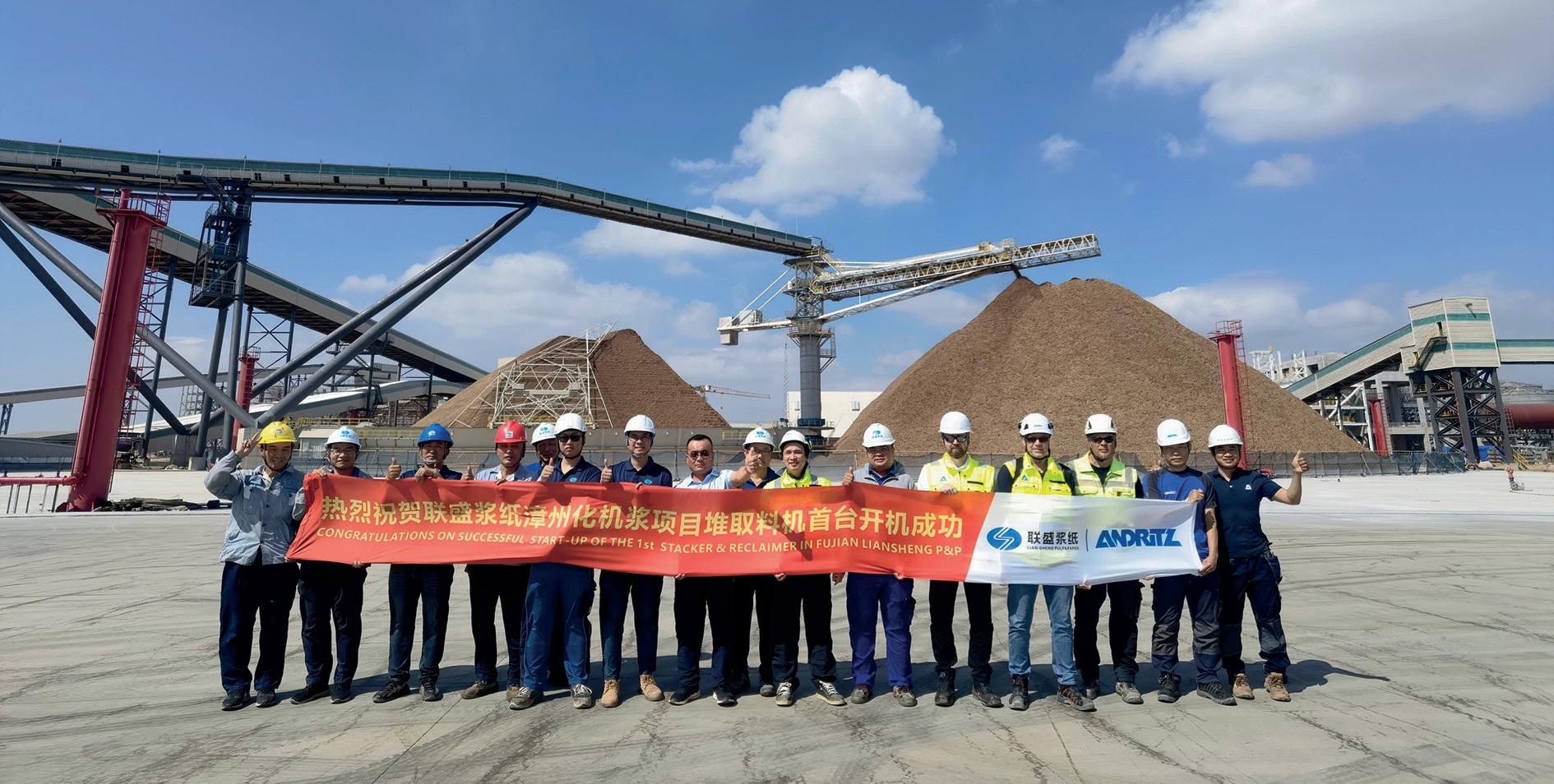
key factors in the success are down to working under the ‘One Andritz Way’, which maintains a strong customer focus, openness of communication, and quick action, and establishes solid relationships across the whole project.
“The entire production line at the mill was started up and put
into production 27 months after the contract was signed. Currently, the mill is running very well and is close to the full production capacity,” says Zhan.
Schmitz concludes: “Despite a few equipment supply challenges related to the pandemic at the early stages of the project, we succeeded in starting up the mill
on schedule with the first chips cooked in the digester in July 2024.
“Liansheng Pulp & Paper is now ready to fulfill its ambitious plans for new paper, board, and tissue machines, and Andritz is delighted to be part of growth that really matters to our pulp and paper customers.”
Stop collecting paper samples!






















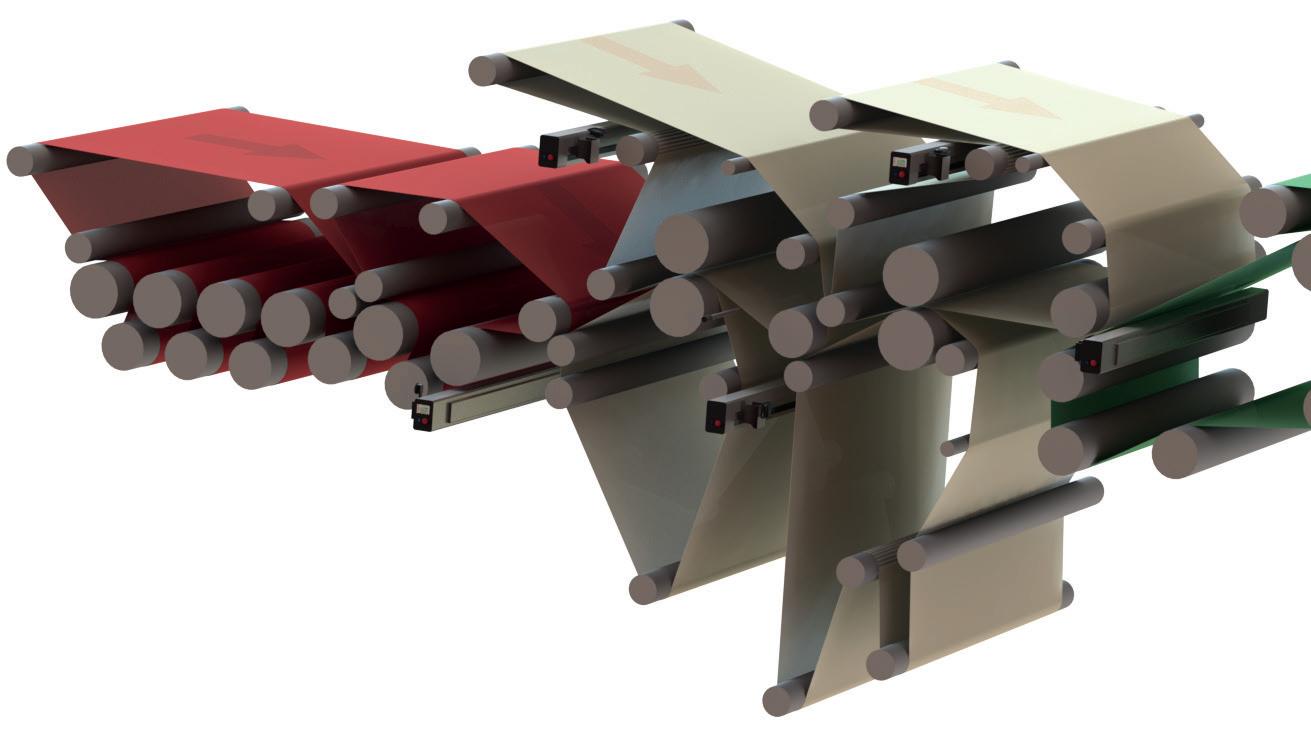
Improve your press section efficiency! SmartScan™ contactless sensor accurately measures paper web dryness after the press section 24 hours a day, 7 days a week. Using a proprietary microwave technology, it is developed to overcome the typical limits of the NIR (near-infrared) sensors. SmartScan™ is available both for fixed point positions or traversing web scan. To save hundred of thousands of Euros in energy costs, stop collecting samples, choose the safe accuracy of SmartScan™ technology.
Giuseppe Cristini S.p.A. Diagnostic Systems Via Bombardieri, 5 – 24020 Fiorano al Serio (BG) Italy Tel +39 035 715 111 Fax + 39 035 711 451 email diagnostic.systems@cristini.it website www.cristini.com
Making pulp mills future proof so that they are capable of using wider ranges of fibre sources without disrupting operations is the key to better reliability, consistency and productivity. Wilson Monteiro* explains how to improve processes with this aim
Awide variety of fibres have always been central to the papermaking process, but they aren’t taken straight from the tree or plant to the paper machine; they are transformed step-by-step into a controlled industrial material.
Modernisation programmes for paper mills are becoming essential due to tighter margins, raw-material variability, rigorous sustainability goals, and the use of data as a product asset. In response to these pressures, advanced automation, electrification and digital technologies are being deployed to achieve efficiency and environmental gains.
Fibre plays a critical role in ensuring long-term resource security for the pulp and paper industry. As climate patterns change and environmental pressures increase, the availability and quality of virgin sources may become more variable in certain regions, creating a strategic need to build greater resilience into supply chains.
This centres around modernisation; diversifying sources, improving recovery rates, and strengthening the ability of mills to adapt to different fibre inputs without compromising product quality.
The regulatory landscape is also acknowledging this shift. The EU Regulation on Deforestation-free Products (EUDR) has reflected the
growing policy focus on traceable, sustainable fibre supply chains (Ref 1). This is especially pertinent given that EU consumption of forest-
risk commodities could otherwise drive nearly 250,000 hectares of deforestation per year by 2030 without regulatory inventory.
Fibre exists today as an increasingly variable, circular and strategic asset. As a result, pulp and paper manufacturers

are under growing pressure to deliver consistency, efficiency and sustainability simultaneously.
To do this, innovation must be embraced. Large and complex infrastructure lies at the heart of the industry and in pulp and paper production, practical innovation and automation are key to enabling operators to optimise processes, improve product quality and importantly, reduce environmental impact. Modernisation without disruption is a lever in bringing futureready capabilities that support both operational reliability and productivity. Yes, innovation is about staying competitive, but it is also about enabling the industry to do more with less, with greater consistency and transparency.
The use of technology interventions – how modernisation stabilises performance Mills that embrace modernisation and adjust to varying fibres are better positioned to maintain stable operations under changing external conditions, with this adaptability creating the competitive edge.
Intersecting interventions like technology, workforce expertise, and operational decision-making determine how efficient resources are transformed into finished products. With margins tight, a business case must be made for sustainability.
Partners should help producers use forest resources responsibly, cut energy consumption and reduce waste, turning insights into operational results. The most sustainable progress comes from starting small, proving value, and scaling improvements over time, creating resilience. modern systems hold the key to unlocking raw material capabilities.
Coordination across the entire value chain is central to modernising production. Increasingly, digital traceability systems are being used to track from forest to final product, ensuring transparency and enabling more sustainable sourcing decisions.
Modern paper mills are vast, complex environments where thousands of data points are generated every second throughout their operations. Historically, much of this data was locked within individual systems or interpreted manually by experienced operators. Today, in efforts to modernise, digitalisation and advanced automation are making it possible to transform this data into actionable insights that support process control and more consistent, efficient, and sustainable production.
Businesses need to support producers to cut energy consumption, reduce waste, and turn insights into tangible operational results. Progress comes from starting small, proving value and scaling improvements over time. Meeting these expectations requires not only new technologies, but also smarter ways of operating existing infrastructure.
There is a defining opportunity for engineers and mill operators alike to shape industry by modernising, ensuring that fibre remains both a renewable and responsibly managed resource. Only then will operations become more productive, resilient, and environmentally responsible for generations to come.
*Wilson Monteiro is global business line manager for pulp, paper and fibre in ABB’s Process Industries Division
Ref 1: https://transition-pathways.europa.eu/agri-food/legislation EU Deforestation Regulation (EUDR)
By promoting the consumption of ‘deforestation-free’ products and reducing the EU’s impact on global deforestation and forest degradation, Regulation (EU) 2023/1115 on deforestation-free products aims to reduce greenhouse gas emissions and biodiversity loss.
The Regulation is part of a broader plan of action to tackle deforestation and forest degradation first outlined in the 2019 Commission Communication on Stepping up EU Action to Protect and Restore the World’s Forests.
Deforestation and forest degradation are the result of the expansion of agricultural land, which is linked to the production of specific commodities covered by Regulation (EU) 2023/1115 on deforestationfree products. As a major consumer, the European Union (EU) plays a crucial role in mitigating its contribution to global deforestation and forest degradation by ensuring that the products it consumes, along with their associated supply chains, are free from deforestation.
The Regulation, which entered into force on 29 June 2023, establishes binding rules for EU operators and traders who place or export certain commodities, namely wood, rubber, cattle, coffee, cocoa, palm oil, and soy, on or from the EU market.
The regulation’s impact assessment suggests that, without this regulatory intervention, the EU’s consumption and production of these commodities alone could result in almost 250,000 hectares of deforestation each year by 2030. According to the new regulation, any operator or trader dealing with these commodities within the EU or exporting them from the EU must demonstrate that their products do not come from recently deforested lands or contribute to forest degradation.
The new rules aim to:
l avoid that the listed products Europeans buy, use and consume contribute to deforestation and forest degradation in the EU and globally
l reduce carbon emissions caused by EU consumption and production of the relevant commodities by at least 32 million metric tonnes a year
l address all deforestation driven by agricultural expansion to produce the commodities in the scope of the regulation, as well as forest degradation
The Commission has a specific FAQ and Guidance Document to help with the implementation.
Ref 2: https://new.abb.com/pulp-paper/abb-in-pulp-and-paper
ABB: The Future of Fibre Measurement
To remain both competitive and profitable, mills must harness their supply chains to optimise their products, processes, organisational set-ups and business models. For many paper producers, these big themes can be addressed by looking more closely at some of the smallest components – the fibres from which their products are made.
Zeta potential is a key parameter that indicates the capacity of fibre to react with added chemicals. Sandra Vogt* explains the importance of its automatic measurement
Ahigh degree of automation and production monitoring increases the efficiency of the complex and dynamic paper manufacturing process. Starting in the wet-end of paper production, continuous monitoring of the charge environment is of great importance for resource consumption and product quality. This is especially so when using different process chemicals and additives or when changing grades regularly, when information on the zeta potential is essential for correct dosing.
The zeta potential value indicates the capacity of the fibre to react with the chemicals added. In the best case, all additives remain attached to the fibres; in the worst case, they are lost with the white water. Knowing the zeta potential is key to optimising the dosage of additives. Traditionally, zeta potential analysis can be performed using a laboratory measuring device.
As automation and digitalisation play an increasingly important role in the paper industry, automatic online measurements that provide reliable and accurate real-time data on the process are becoming indispensable for meeting sustainability, environmental, and resource efficiency requirements.
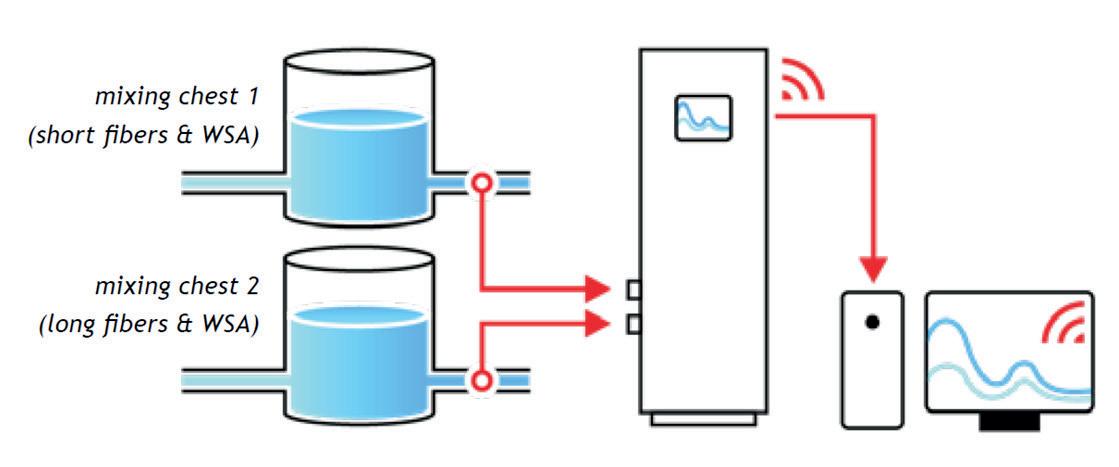
One measuring device for automatic zeta potential analysis is the emtec FPO Fiber Potential Analyzer Online: once installed directly on the paper machine, it independently performs sampling, measurement, and cleaning, requires very little maintenance, and can take samples alternately from two connection points, such as before and after a dosing point. The FPO performs a maximum of six measurements per hour and continuously transmits the measurement data zeta potential [mV], streaming potential [mV], conductivity [mS/cm], temperature [°C] and the pH value [pH] to the process control system or, optionally, to a secure data cloud for worldwide remote access.
The following case study – optimisation of wet strength agent dosing at a tissue paper mill – demonstrates the benefits and efficiency of using the emtec FPO. Three end products are manufactured: toilet paper,
low-quality kitchen paper (type 1), and high-quality kitchen paper (type 2) using a dual headbox for long and short fibres as well as recycled material. Regular production changes require adjustments to the pulp composition and the type and quantity of chemicals used.
Due to staff shortages, continuous monitoring in the laboratory was not possible, which led to poor quality end products. In addition, there were problems during the production process and wastewater treatment due to overdosing.
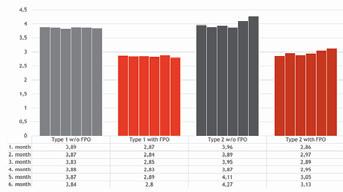
For continuous process monitoring, the emtec FPO was installed directly after both mixing chests before the dual headbox for six months (Figure 1). The process was stabilised despite frequent changes in production, wastewater treatment was improved, and WSA consumption was reduced by 25 percent (Figure 2).
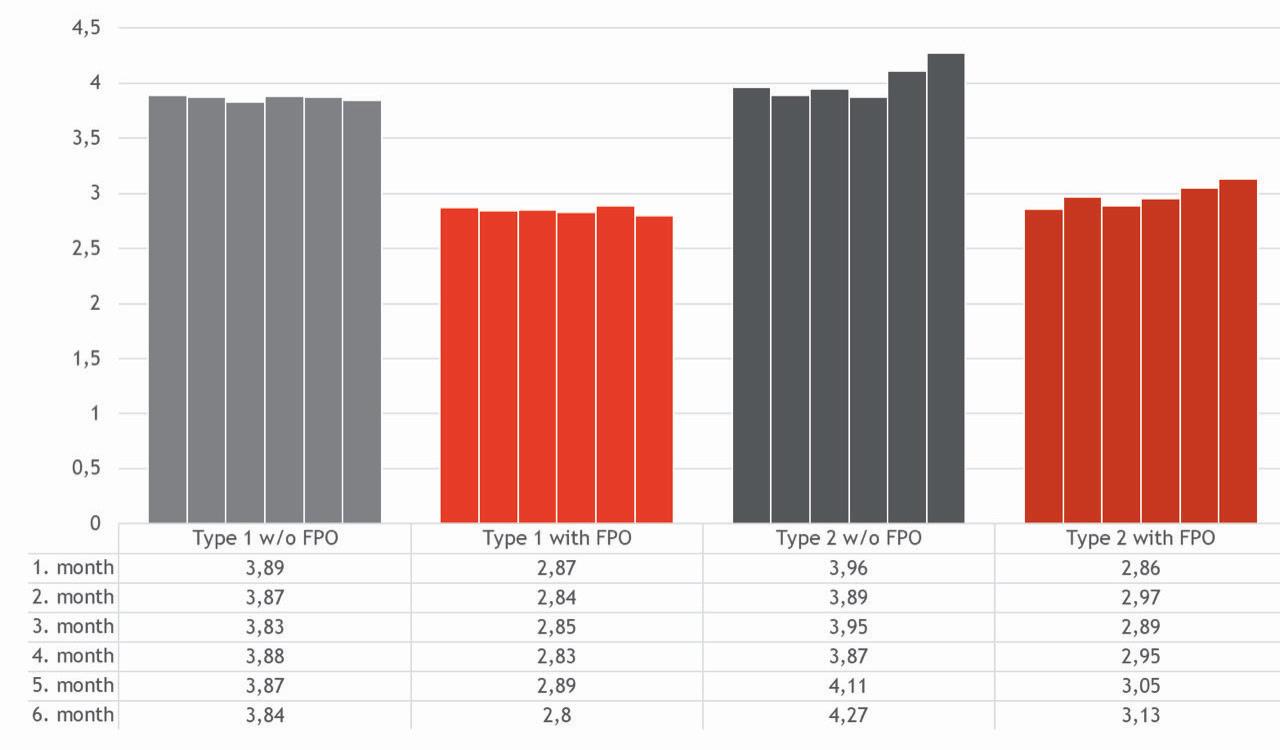
Figure 2: Wet strength agent consumption (percent per ton) without and with constant FPO monitoring over six months
Application: a new paper product within five hours
Another specific application example also demonstrates the advantage of using FPO, as a new paper product was manufactured within five hours to the customer´s complete satisfaction: a paper mill switched its production to gypsum wallboard paper. This involves using a Fourdrinier machine with a lower and upper headbox, which is normally used to produce liner and fluting paper for corrugated board. The desired new product is a two-layer paper for the front of gypsum wallboards.
(The gypsum wallboard is manufactured using a gypsum core and two different paper webs, which are responsible for strength and appearance. The front is made of two-material yellow board – cream face – consisting of a white top and brown back. Single-layer gray board, or grayback, is used for the back of wallboards.)
The advantages of process-integrated and automatic monitoring of the zeta potential, conductivity, and pH value in the wet-end area during the production conversion process prompted the plant personnel to conduct a trial with the emtec FPO in order to adapt the production process to the new product more quickly and easily.
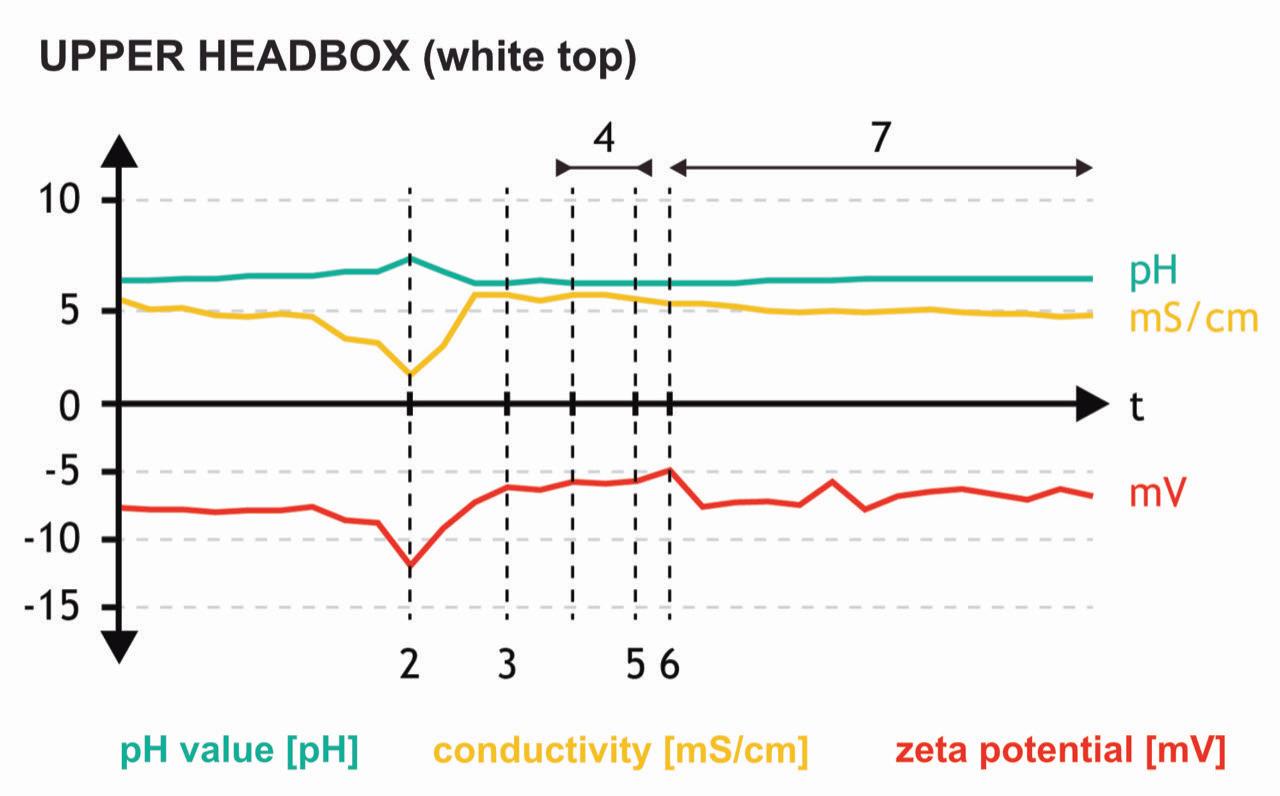
The online device was installed at the inlets of the lower and upper headboxes, and production ran during the trial with half-full reel drums. The specific aim of the trial was to find the right chemical dosing concept for the new kind of paper, whereby the pulp was to retain a larger amount of cationic charge carriers during retention.
The planned chemicals to be added to the suspension and their expected effects:
Process chemical
Retention aid to increase additive retention during the production process
Additives (remain in the final product)
Sizing agent ASA (alkenyl succinic anhydride) to improve the hydrophobic properties of the paper product
Wet and dry strength agent G-PAM (glyoxylated polyacrylamides) for the strength properties of the paper product
1 Start with conversion of the required raw materials and dosing of chemicals
2 Dosing of retention aid to improve retention capacity of pulp until desired target values (required to increase the additive retention during production process)
= The zeta potential value is no longer sufficient for the planned additives to achieve the desired paper properties (-6 to -4 mV).
3 Addition of anionic polymer to increase the fibre capacity for the planned ASA and G-PAM addition
4 Addition of sizing agent ASA for hydrophobic properties of paper product (adjustment by gradually increasing the dosage)
5 Addition of wet and dry strength agent G-PAM for strength properties of paper product (standardised dosing quantity)
= The strength property is not as desired and required. The dosing quantity of G-PAM must be increased, but the zeta potential is already close to zero (0 mV).
6 Addition of anionic polymer to increase the fiber capacity for G-PAM addition
7 Doubling of the dosing amount of G-PAM possible, strength properties achieved retention zeta potential COBB/sizing zeta potential
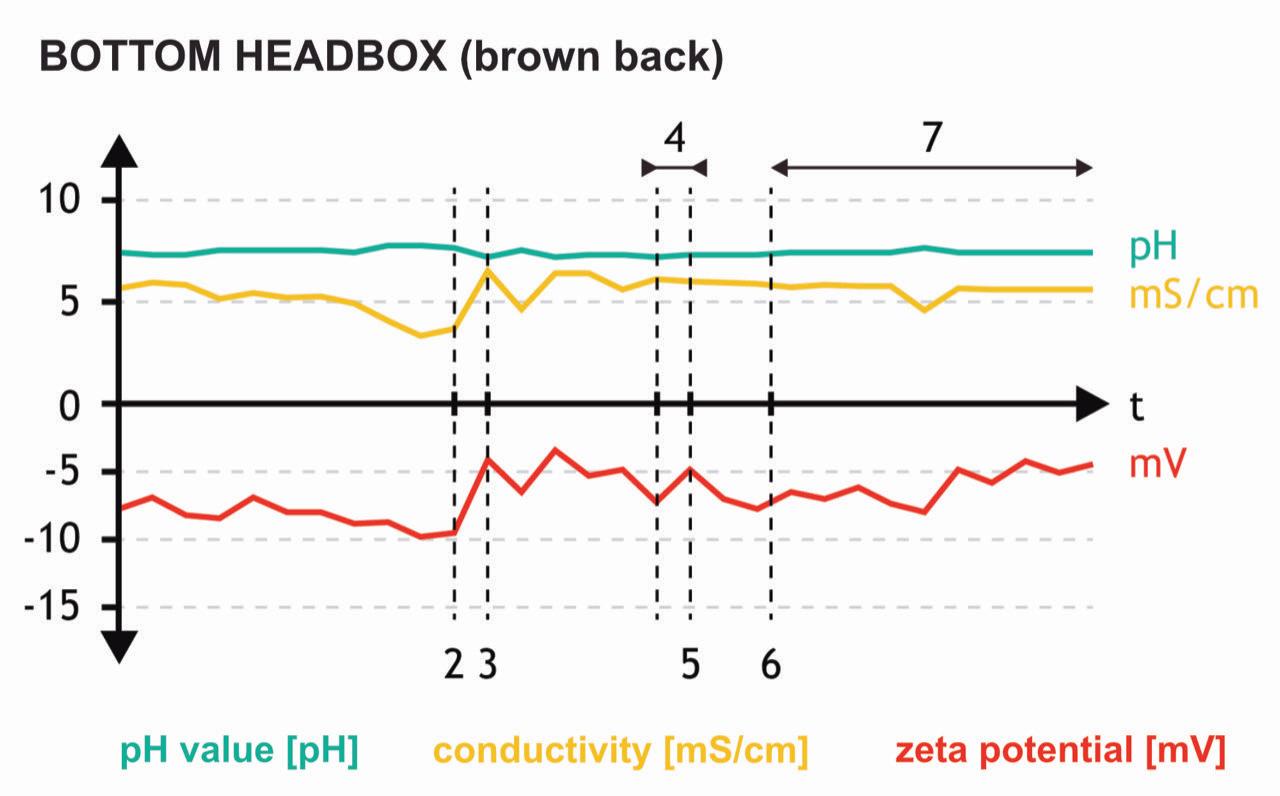
Within five hours, a chemical dosing concept was created for a new paper product that met all the desired and required quality characteristics! And in the end, the customer said: “Please don´t change a thing!”
The advantages of FPO for paper mills

In addition to saving resources, time, and energy, FPO´s continuous and automated measurements also provide insights into past results. Real-time risk monitoring and immediate intervention in the process can reduce large fluctuations and stabilize the process. Automatic data transfer enables remote working.
Since there is no longer any need for personal sampling at the paper machine, the workplace becomes safer and the process more efficient: working time is saved and all the necessary data is still available.
advantages
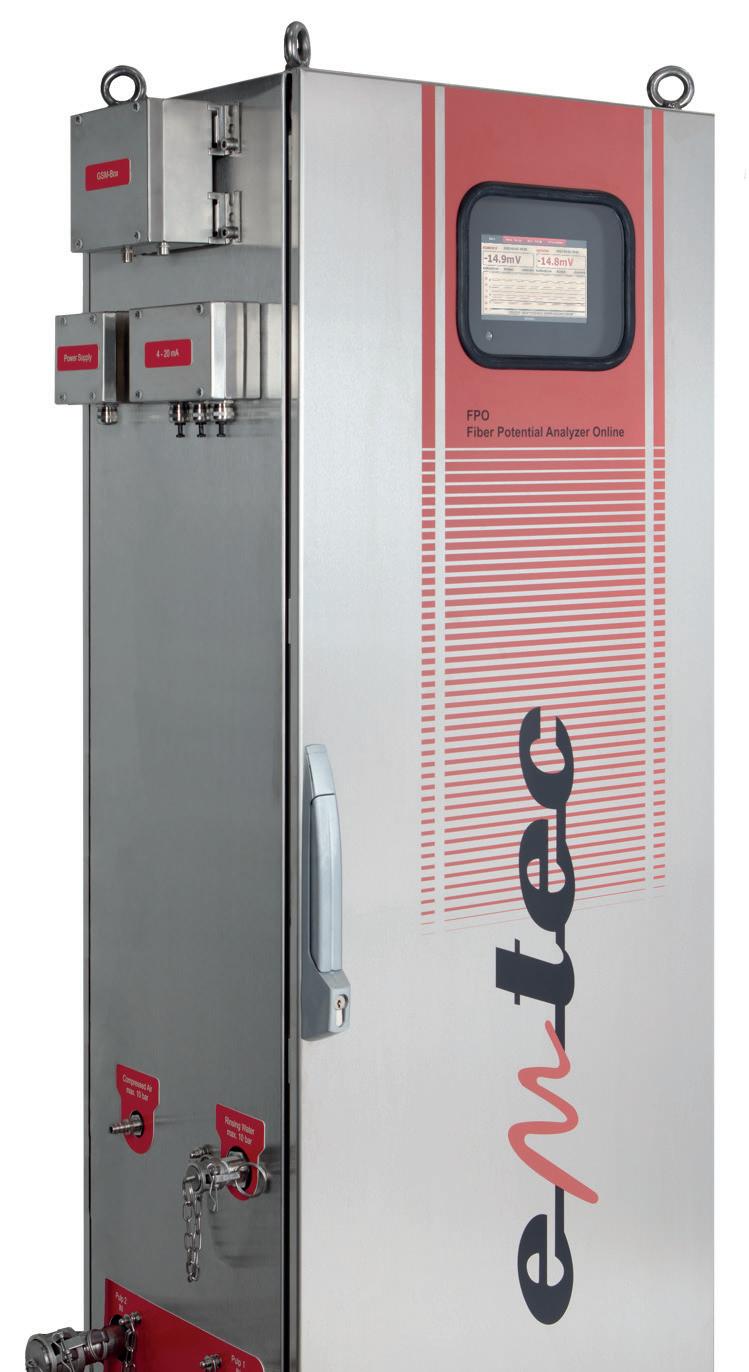
Constant monitoring of the customer process is made possible by remote access to measurement data, but also by insights into historical measurement data on site, as automated measurements are continuously taken and stored. This facilitates quick and informed responses to customer complaints and simplifies troubleshooting. *Sandra Vogt is Global Marketing Manager at emtec Electronic GmbH




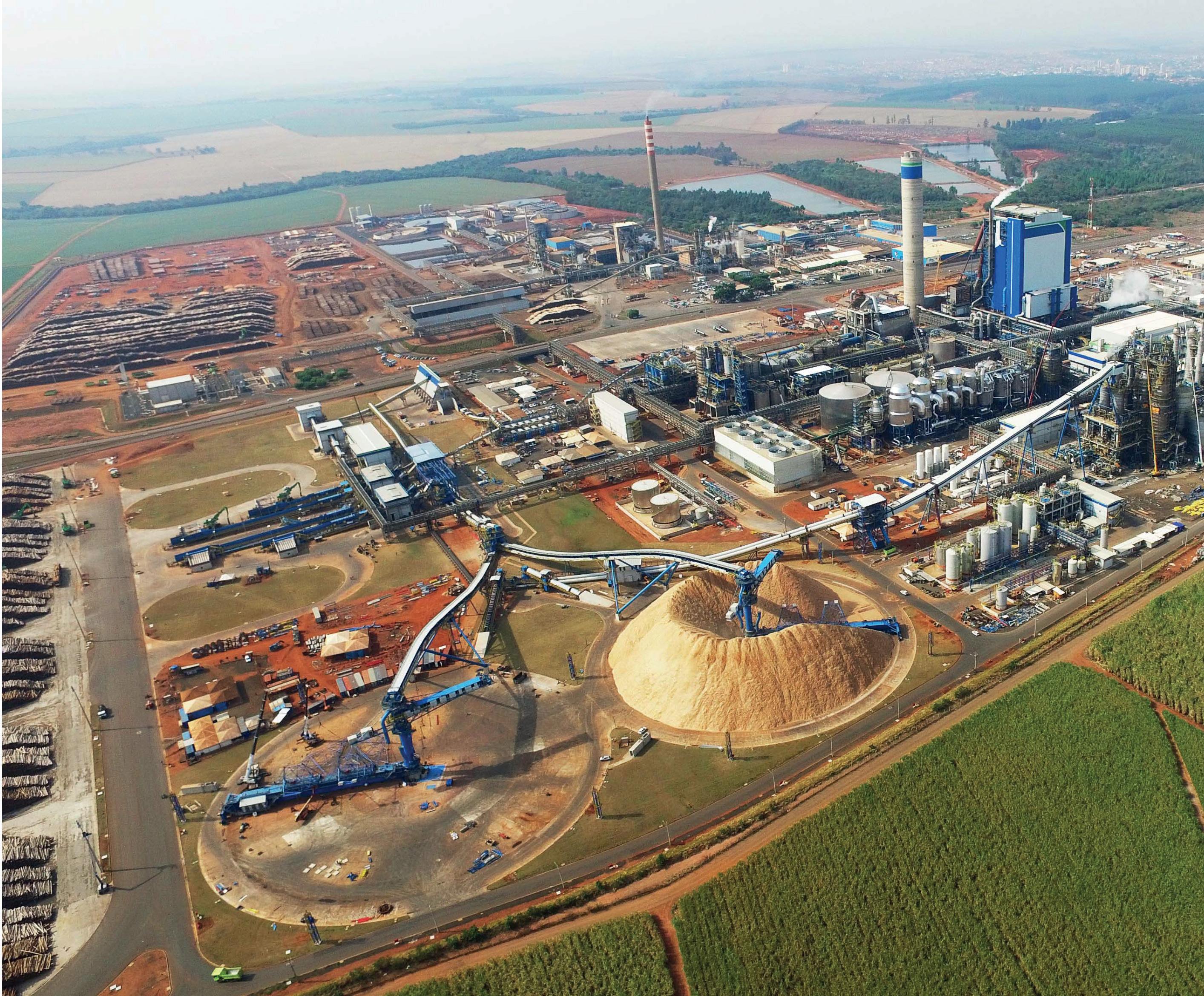
The larger a recovery boiler the better, because they enable the creation of giant pulp mills with attendant economies of scale. Two experts in the field from engineering group Andritz explain more
Andritz is the global leader in the supply of recovery boilers to the pulp and paper industry. Furthermore, its decades of experience in designing, building and operating large boilers, with 8,000 upwards installed has allowed pulp mill operators to construct the true
giants of the industry that we see today in Latin America and Asia.
The main benefit Andritz brings with its larger recovery boilers is the ability to super-size pulp mills in terms of capacity – a growing trend particularly in Latin American countries including Brazil and Uruguay, and in Asia countries including Indonesia and
China. Andritz is the only supplier on the market having proven recovery boiler references of more than 8,000 tds/d, the largest being in operation for a number of years at Bracell’s mill in São Paulo State, Brazil.
Ageu Silva, LATAM divisional director for Pulp & Power at Andritz, says, “Up until relatively
recently the size of the recovery boiler limited the capacity of the fibreline at pulp mills. The reason for this limitation was due to availability, as when recovery boilers go down, all production at the pulp mills stops.
“Due to our decades of experience in design and installation, we now supply
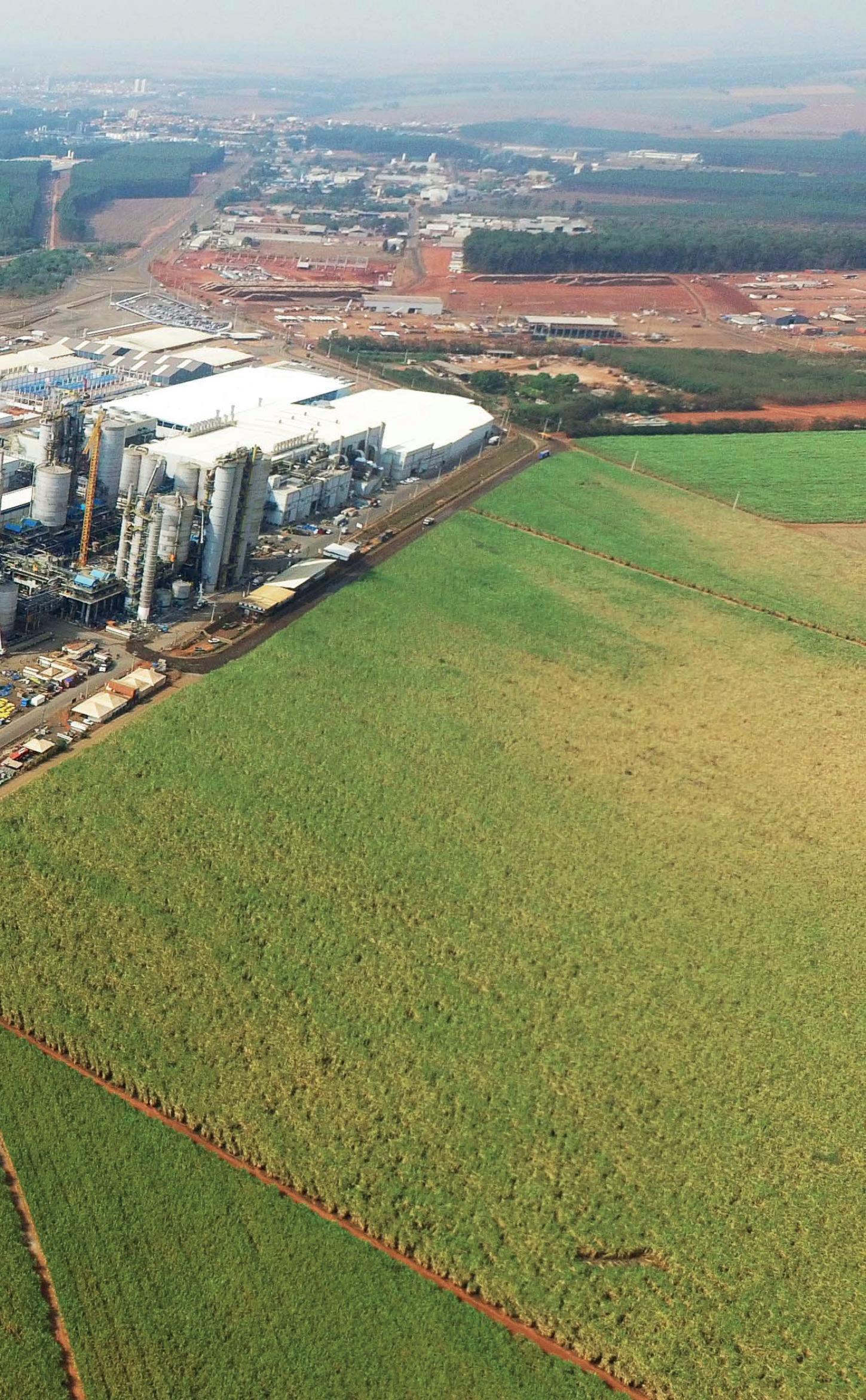
recovery boilers that have the world’s highest availabilities. This means that much larger boilers have become more viable, and mills can now run multiple fibreline utilising just one large recovery boiler. This ability results in major savings on capex and opex as one large recover boiler is a lot less expensive than installing and operating two smaller ones.”
Timo Lindh, LATAM senior commercial and technical manager for recovery boilers at Andritz, adds: “The good news is that we can go even bigger,

confident that we will deliver our customers magnum-sized recovery boilers that are safe, efficient and reliable well into the future.”
Adapting technology for safety and efficiency
While increasing capacity, there are several examples of how Andritz has improved the technology required for larger boilers over the years. One such example is the introduction of an increased tube size diameter for furnace walls to improve circulation and avoid leakages. The larger diameter of the tubes creates less pressure drop and allows the water to circulate better, cooling down the tubes more effectively.

Furthermore, Andritz has introduced added automation and robotics to enhance safety and improve efficiency of the larger boilers.
Silva says: “We have successfully installed various digital technologies and robotics, including Smart Smelt Spout Robots which improve the safety of the furnace area of the recovery boiler and our vision systems that convert process images into digital data for improved operational performance, and less manual intervention.”
Maximising ramp-up speed and quality of ongoing service
UPM Paso de los Toros, the biggest pulp mill in Uruguay, is equipped with an Andritz magnum-sized recovery boiler to maximise steam production for power generation. Image: Foto Behrendt
up to 20,000 tds/d. However, designing of a magnum boiler does not mean simply building a larger boiler. We have hands-on experience from several magnumboiler projects over the last ten years, and this has enabled us to continuously improve our design and delivery concept. Through this process, we are extremely
Silva adds, “Due to the greater size of the boiler furnaces Andritz considers larger diameter tubes as the only safe solution to avoid leakages and possible explosions.”
Another example is the location of the soot blowers in the boiler bank which ensures the boiler is kept clean for maximum uptime.
Lindh explains: “For larger recovery boilers a boiler bank with two soot-blower cavities is supplied to ensure the range covers all areas. Andritz has also created a solution that contains a wider boiler bank spacing in order to prevent fouling or plugging in this critical area.”
With the experience of having seven of the largest recovery boilers in operation or under construction around the world, Andritz prides itself in fast startup and ramp up speeds,
“The speedy ramp up to full design capacity is a very important issue for our customers,” says Silva. “Our experience in the installation, start-up and ramp up of recovery boilers and complete mills is second to none, and our installations are ramping up faster and faster, often reaching nominal capacity in record times. When it comes to service, Andritz has located its service
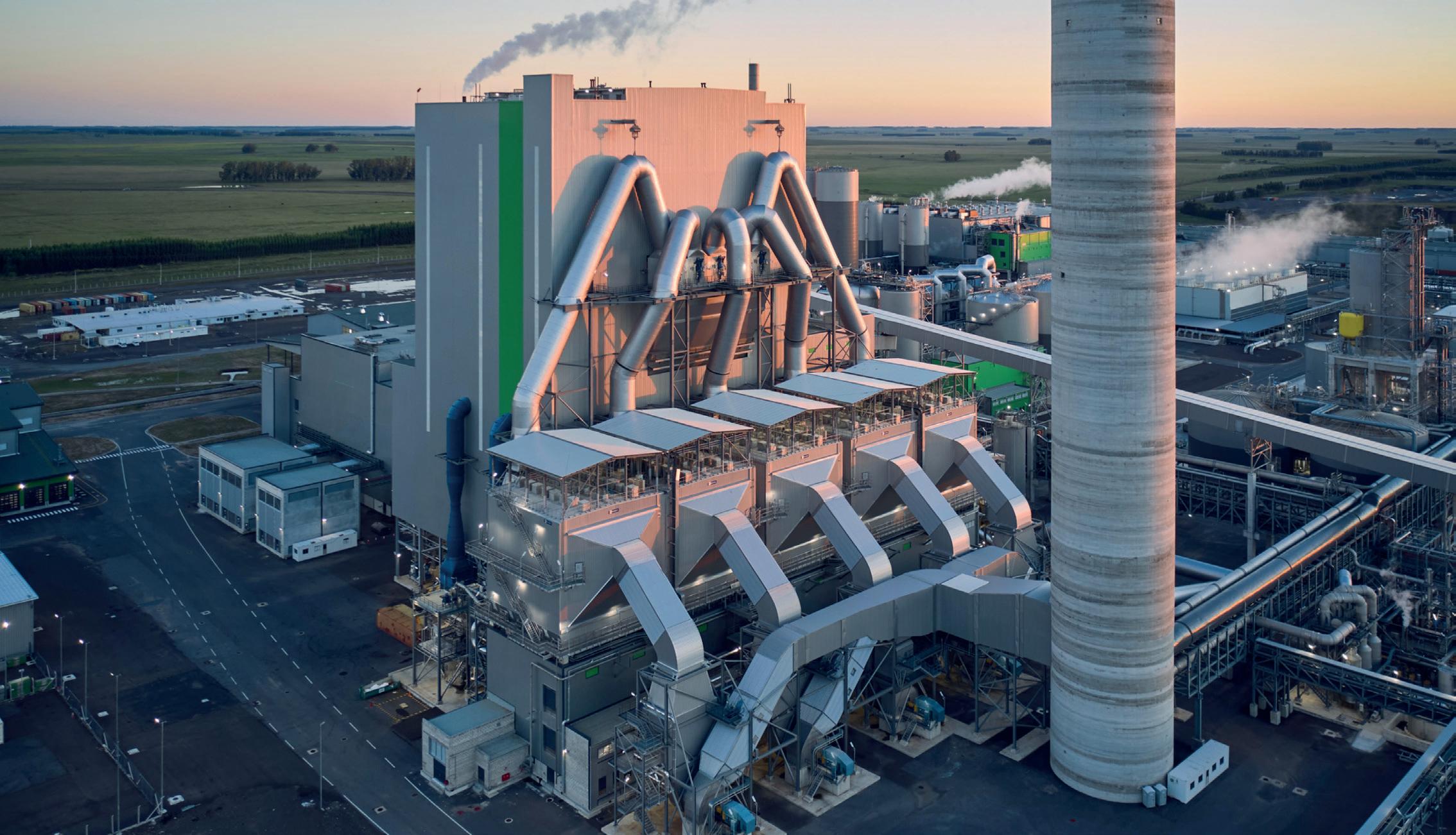
The world’s largest recovery boiler in operation, with capacity of 13,000 tds/d, started up in 2021 at Bracell’s pulp mill in São Paulo State, Brazil.
centres with skilled engineers and spare parts close to customers’ mills to ensure maximum lifetime service levels.
The latest developments include an upcoming modern service centre located at Três Lagoas in Mato Grosso do Sul state, Brazil, in addition to the outstanding existing service centre at Araucaria in Paraná state. Another development is a brand-new service centre at Palembang on the island of Sumatra in Indonesia, which will be fully operational at the end
of the year. The centre will allow Andritz to service the larger mills on the island as well as provide services to other mills in SouthEast Asia.
Silva concludes, “Our customers are delighted with our exponentially growing service offerings, particularly at the heart of large, new pulp mill expansion areas. We now have the ability to manufacture spare parts for large recovery boilers, as well as for parts across the rest of the mill, ensuring maximum uptime and quality maintenance and service.”
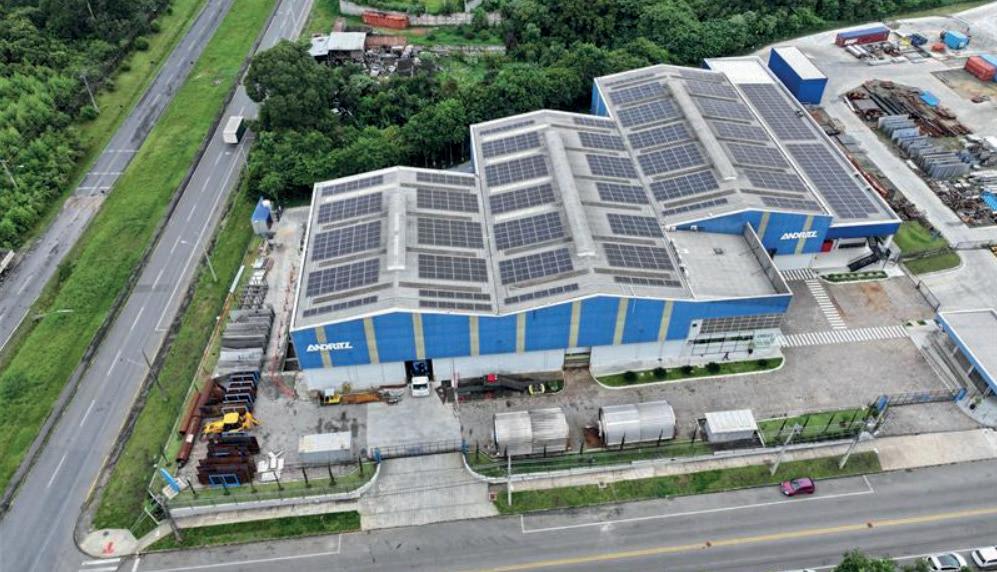
The list of magnum-sized Andritz recovery boiler installations is impressive, and includes some of the most prominent, flagship pulp projects in the industry:
l The world’s largest recovery boiler in operation, at Bracell’s mill in Sao Paulo State, Brazil with the capacity of 13,000 tds/d, which started up in 2021
l The largest recovery boiler in China, at Liansheng Pulp & Paper Fujian, Zhangzhou, China, which started up in 2024
l Suzano’s Ribas do Rio Pardo mill in Brazil with the capacity of 11,150 tds/d, which started up in 2024
l UPM’s Paso de los Toros mill in Uruguay, which started up in 2023
l Suzano’s pulp mill at Três Lagoas (MS), Brazil with the capacity of 8,250 tds/d, which started up in 2017.
l OKI Pulp & Paper Mills, Palembang, Indonesia with the capacity of 12,000 tds/d, which started up in 2016.
Ovoko, an online marketplace for automobile parts, has worked with Mondi to produce packaging tailored to the demands of its eCommerce supply chain, which is usually associated with small parcels and lightweight products. Yet customers selling spare parts online often require specialised packaging for large and fragile components.
Ovoko approached Mondi to solve the challenge of shipping
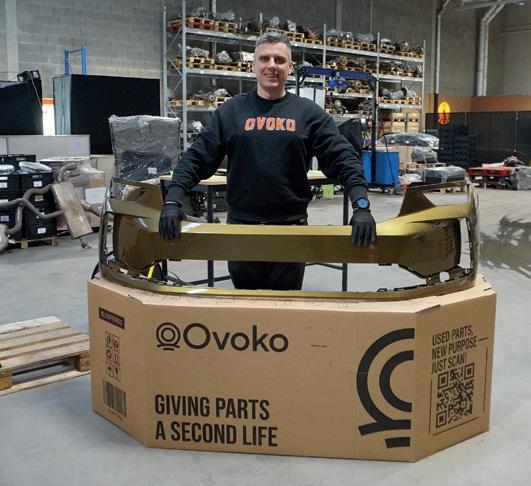
Companies selling automotive spare parts online often require specialised packaging
automobile bumpers. The previous packaging was costly and offered inadequate protection, leading to
product damage and additional operational effort.
Mondi adapted proven heavy-duty packaging from its automotive portfolio, precisely shaping it to the bumper’s geometry. This eliminated empty space and reduced material use. The result is a 42 percent reduction in unit packaging costs, improved operational efficiency and more responsible material use.
Following successful testing under real-life conditions, the
design was approved and the first trial order delivered within two weeks. Agnius Skudutis, packaging project manager at Ovoko, commented: “At Ovoko, we needed packaging that was simple to assemble, cost-effective, and tough enough to protect everything we ship. Mondi listened carefully to our needs and proposed a solution that allowed us to reduce packaging costs while improving product protection.”
More information from www. mondigroup.com
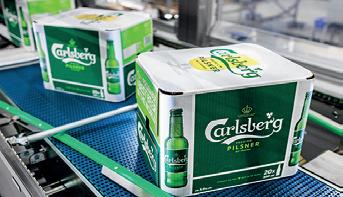
A packaging design based on SCA’s Arcwise technology has been created by DS Smith and KHS, the German manufacturer of drinks filling and packaging systems. Brewer Carlsberg has launched an eye-catching premium multipack with rounded corners, with the project starting with Poland.
When Carlsberg considers packaging designs, the focus is on the consumer. Packaging innovation director Marine Andre explains: “For us, consumer experience has top priority. In the store, we have less than two seconds for our products to be noticed on the shelf. If you’re not conspicuous, you’re not there.
“It has been estimated that a consumer passes about 300 products per minute in a supermarket. Market research has discovered that sustainability is something consumers expect, but don’t actively ‘reward’. They’re not willing to pay a premium for it. It’s thus more important that sustainable
packaging is both functional and gets brands noticed.”
“We’re consciously trying to break down the barriers between sustainable packaging, optimised costs and the perfect consumer experience,” continued Andre.
“If a system doesn’t score with at least two of these criteria, it’s doomed to fail.”
One example that shows how Carlsberg is exploring new avenues is DS Smith Round Wrap, a cardboard multipack with curved corners for beer bottles. It provides added value on three counts. Firstly, it gives the brand a greater visual presence, upgrades the pack and boosts its impact on the shelf. This has been proved by scientific studies carried out by the Harvard Medical School, among others: they show that objects with round shapes are perceived as being more attractive than those with square corners and edges.
Secondly, this new style of secondary packaging uses less material, has a smaller
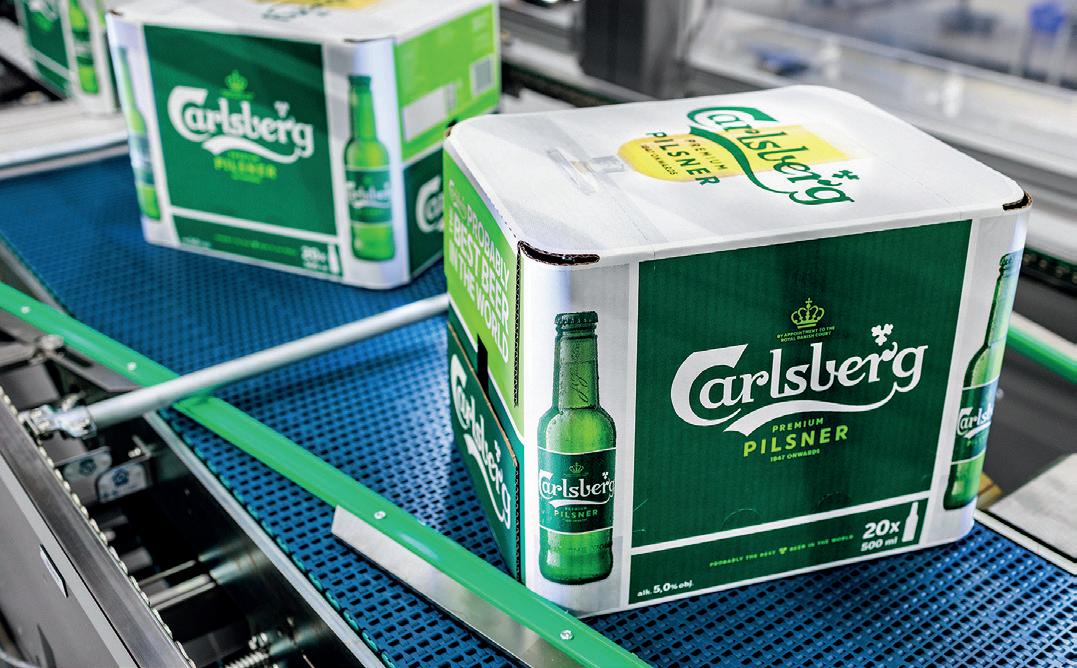
carbon footprint and is better protected against damage during transportation.
Thirdly, as the pack can be produced on existing packaging machines, no large investments are needed, with the consumer not having to pay a higher price.
The finished secondary packaging is being well-received by retailers and consumers.
On the one hand, the rounded corners are less susceptible to damage during transportation, in the warehouse and at the point of sale. On the other, the curved
design already appears to be enhancing sales.
This is confirmed by a consumer study commissioned by DS Smith which showed that an average 77 percent of those surveyed would be more willing to purchase a product with the improved rounded wrap-around design than another type of packaging. This could lie in the fact that the rounded corners provide additional space for brand promotion.
More information from www. dssmith.com
Specially-designed recyclable corrugated packaging for roller shutter motors has been developed by paper maker DS Smith and customer SOMFY, which makes automated and connected home and building equipment including automated shutters, blinds, curtains, and gates.
For better security during shipping, the paper maker produced corrugated inserts in the industrial packaging to replace polystyrene versions.
The innovation has resulted in a significant step forward for SOMFY in its move to more sustainable and circular industrial packaging.
Led by the DS Smith design teams in Kunheim in close collaboration with SOMFY, the project has addressed a single objective: to replace plastic and improve the recyclability of packaging without compromising on the quality of product
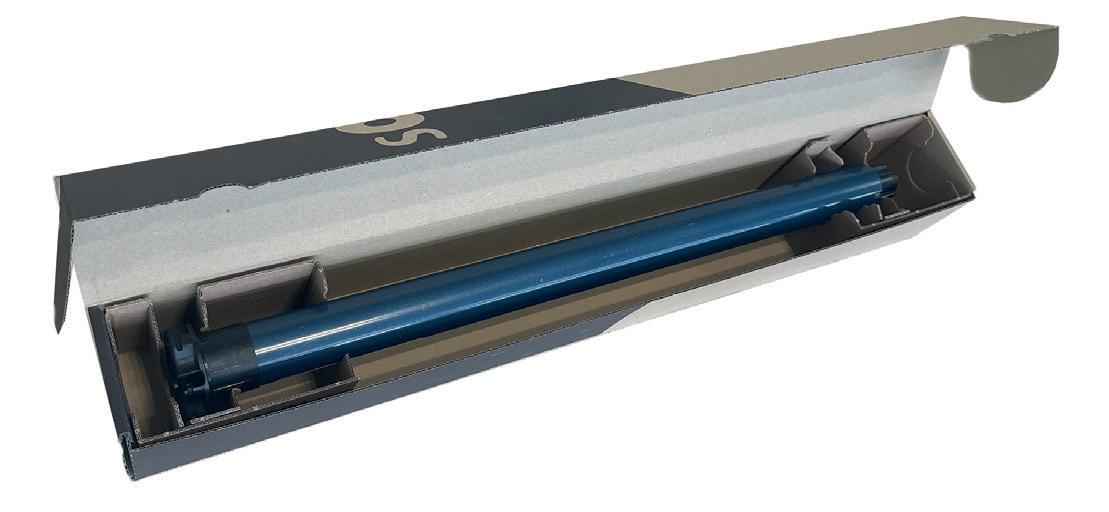
protection throughout storage and transport.
Made from Kraft EE (Electrical Grade) corrugated board, the cardboard inserts guarantee robustness and durability. Designed to be modular, the system accommodates 34 different types of lengths and can be adapted to four box sizes, contributing to a significant reduction in logistical complexity. The quick and easy assembly process is designed to meet industrial production rates and requirements.
In addition, the compactness of the cardboard compared to
Engineered corrugated inserts are replacing expanded polystyrene for industrial packaging of shutter motors
expanded polystyrene (EPS) enables a significant reduction in storage volume, generating immediate space savings at warehouses. Following a successful trial order, the project is currently during its operational phase and demonstrating the packaging solution’s successful performance under real-world conditions.
Benjamin Chedal, director of sales, marketing, and innovation at DS Smith Packaging France, says: “This innovation fully illustrates DS Smith’s ambition to support its customers in developing increasingly
Food manufacturer RUF Lebensmittelwerk has taken another step towards sustainable packaging by using Koehler Paper’s NexPlus Seal Pure MOB for its porridge oats pouches. The flexible packaging paper is heatsealable, features integrated oil barriers and is especially well-suited for use as flexible packaging for dry food. The barrier paper provides the necessary product protection while fulfilling demanding sustainability requirements: the Confederation of European Paper
Industries (Cepi) has confirmed that the material can be recycled as waste paper, meaning that it can be seamlessly processed with existing recycling infrastructure. RUF Lebensmittelwerk and Koehler Paper worked together to create packaging that would meet both the requirements of the products being packed and RUF’s ambitious sustainability objectives. By switching to paper-based packaging, RUF is reducing its use of materials that contain plastic, boosting circular economy practices and complying with the legal
requirements in the Packaging and Packaging Waste Regulation (PPWR).
“This new paper packaging will enable us to get much closer to our sustainability objectives,” says RUF’s packaging procurement team leader Martina Baumann. “And at the same time, we’re making sure that the corresponding quality, product protection and processing characteristics remain at the same high level that we’re used to.”
More information from www. Koehler.com
sustainable packaging solutions. We are very proud of the rollout of this concept, which has been adapted to numerous SOMFY product formats, demonstrating its modularity, relevance, and long-term viability, both in terms of innovation and the materials used.”
Project chief at SOMFY Tony Faure, added: “The ecodesign of our products and the sustainability of our practices are at the heart of the SOMFY Group’s decarbonisation strategy. We are delighted to have collaborated with DS Smith on the deployment of this cardboard packaging solution: it marks an important step that facilitates handling and recycling for our professional customers, is made from renewable material, and does not compromise on the quality and protection requirements of our products.”
More information from www. dssmith.com

Anew end-to-end packaging service designed to help brands improve the impact, sustainability and efficiency of their packaging has been introduced by Antalis Packaging.
The service offers an all-round service for businesses looking to review, redesign and manage branded packaging across their operations. Aimed at companies of all sizes, eCommerce retailers and specialist businesses, the service supports companies from initial packaging review through to design, production and stock management.
The service begins with a consultative packaging audit, in which the Antalis team reviews a company’s existing packaging to identify opportunities for improvement. This includes assessing current materials, structures and supply chains to determine what works well and where alternatives could offer
better protection, improved sustainability or stronger brand presentation.
The team evaluates factors such as substrate selection, packaging performance, recyclability and cost efficiency before recommending suitable alternatives.
Once opportunities have been identified, the Antalis Premium Packaging team is able to support the development process, from structural and graphic design through to prototyping and production. This helps simplify procurement and reduces the need
for multiple suppliers.
Drawing on Antalis’ extensive portfolio of creative papers, graphical boards, packaging materials and visual communications products, the team recommends and sources suitable materials while ensuring packaging remains both functional and visually-aligned with a brand.
In addition to production, Antalis manages packaging inventory and holds stock on behalf of customers, enabling businesses to order packaging items when needed.
Antalis’ Premium Packaging
Ultra-high barrier paper
packaging suitable for pet food treats and snacks has been launched by UPM Specialty Materials and pet food producer Royal Vaassen.
As the EU Packaging and Packaging Waste Regulation (PPWR) introduces more strict PFAS requirements, brandowners need products they can rely on. The PFAS-free, recyclable, fibre-based packaging supports compliance with regulatory requirements without compromising performance or brand value.
Pet treats are often oily and aromatic and have traditionally
relied on plastic or aluminium laminates or papers with a PFAS-based grease barrier. Royal Vaassen’s fibre-based Barryrwrap design does not compromise the performance required for such a demanding end-use and is designed to meet the strictest requirements, including aroma, grease, light, moisture and oxygen barriers.
Sales manager at Royal Vaassen
Mark Gerritsen explains: “Barryrwrap Everest is the highestperformance barrier in our range, suitable for premium pet treats. It preserves freshness, aroma, and taste throughout shelf life. It enables pet food brands to replace
traditional aluminium laminates with a more sustainable, circular packaging without compromising on performance, food safety or a premium consumer experience.”
UPM Solid Lucent packaging paper provides an ideal foundation for high-barrier, PFASfree Barryrwrap. Its excellent convertibility, combined with exceptional surface smoothness and high density, allows low coating weights while delivering the strength needed for efficient performance on high-speed lines. A range of weights is available to meet different applications.
Heli Borgström, packaging director at UPM Specialty
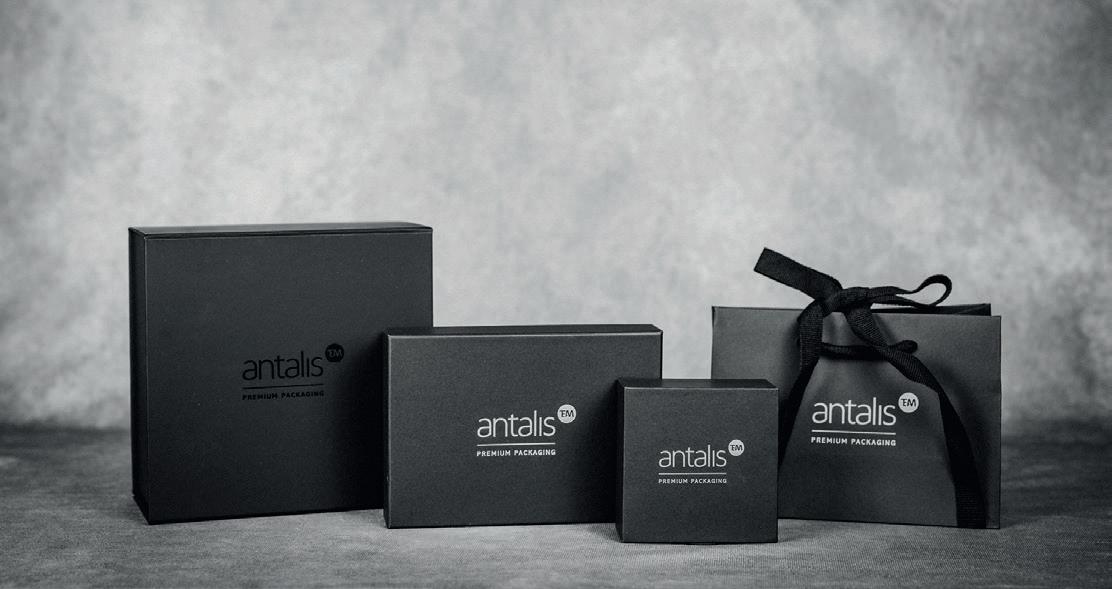
covers a broad range of formats, from luxury retail packaging to eCommerce products. These include rigid and flat-pack boxes, corrugated and carton board packaging, branded bags, reusable fabric packaging, mailing bags and protective packaging. Accessories such as ribbons, tissue paper, stickers and packing materials are also available to support a cohesive brand presentation.
Antalis believes that the service will be particularly valuable for businesses that want high-quality branded packaging, but don’t have the internal resources to manage design, sourcing and production across a range of suppliers. By providing expertise across materials, design and supply, the Premium Packaging team helps firms create packaging that protects products, strengthens brand identity and improves the customer experience.
More information from www. antalis.co.uk

Materials, says: “With its smooth surface and consistent quality, UPM Solide Lucent delivers reliable printability that helps brand-owners achieve strong shelf impact. Its natural paper look and feel enhances the overall packaging experience, helping brands communicate sustainability in a way that resonate with today’s sustainability-minded consumers.”
More information from www. upmspecialitymaterials.com
As retailers and brands work to reduce reliance on vinyl, synthetics and single-use plastics in store environments, demand continues to grow for signage materials that meet sustainability goals without compromising visual impact. Monadnock Paper Mills offers Ultrahide PC 100 Blockout Poster as a paper-based, recyclable alternative designed specifically for in-store signage, window graphics and retail promotional displays. Engineered to replace PVC and other synthetic substrates commonly used in retail signage, Ultrahide is made from 100 percent postconsumer recycled fibre, is FSC-certified and processed chlorine-free. The substrate was developed to give retailers a more responsible material choice while maintaining the print quality and durability required for high visibility in-store campaigns.


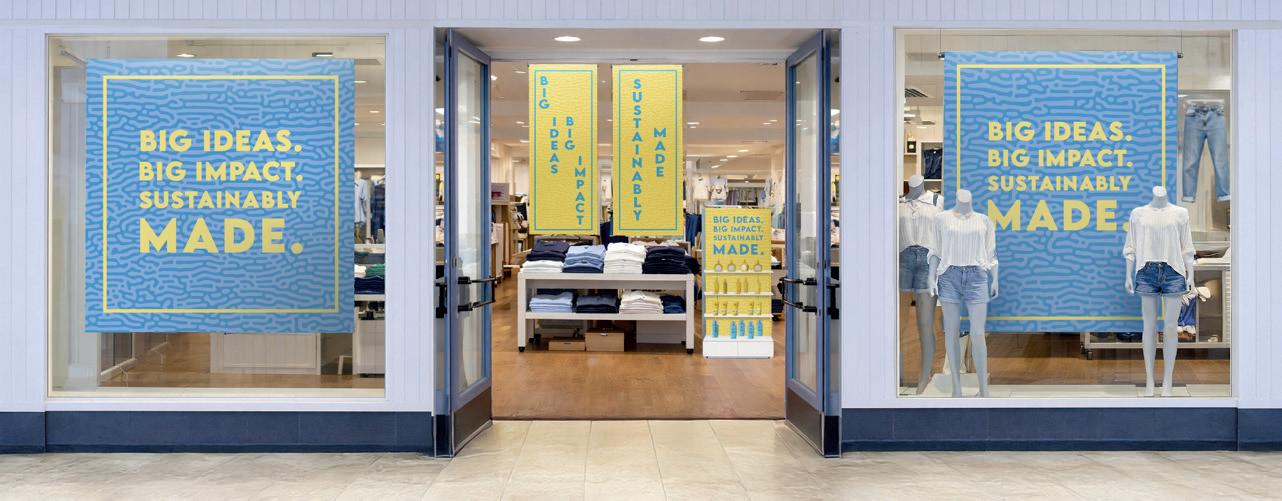
Ultrahide PC 100 delivers 100 percent opacity to prevent show-through in double-sided applications. Its smooth, uncoated matt surface supports demanding graphics, accurate colour reproduction and high-resolution image quality in a range of wide-format printing technologies. To support large-scale retail campaigns and




measuring up to 96.5 inches wide by 500 feet long, making it the only paper-based, non-PVC blockout poster substrate available at this width. The format enables seamless oversized graphics, such as double-wide windows for retail environments, while helping print providers optimise production efficiency and reduce trim waste.






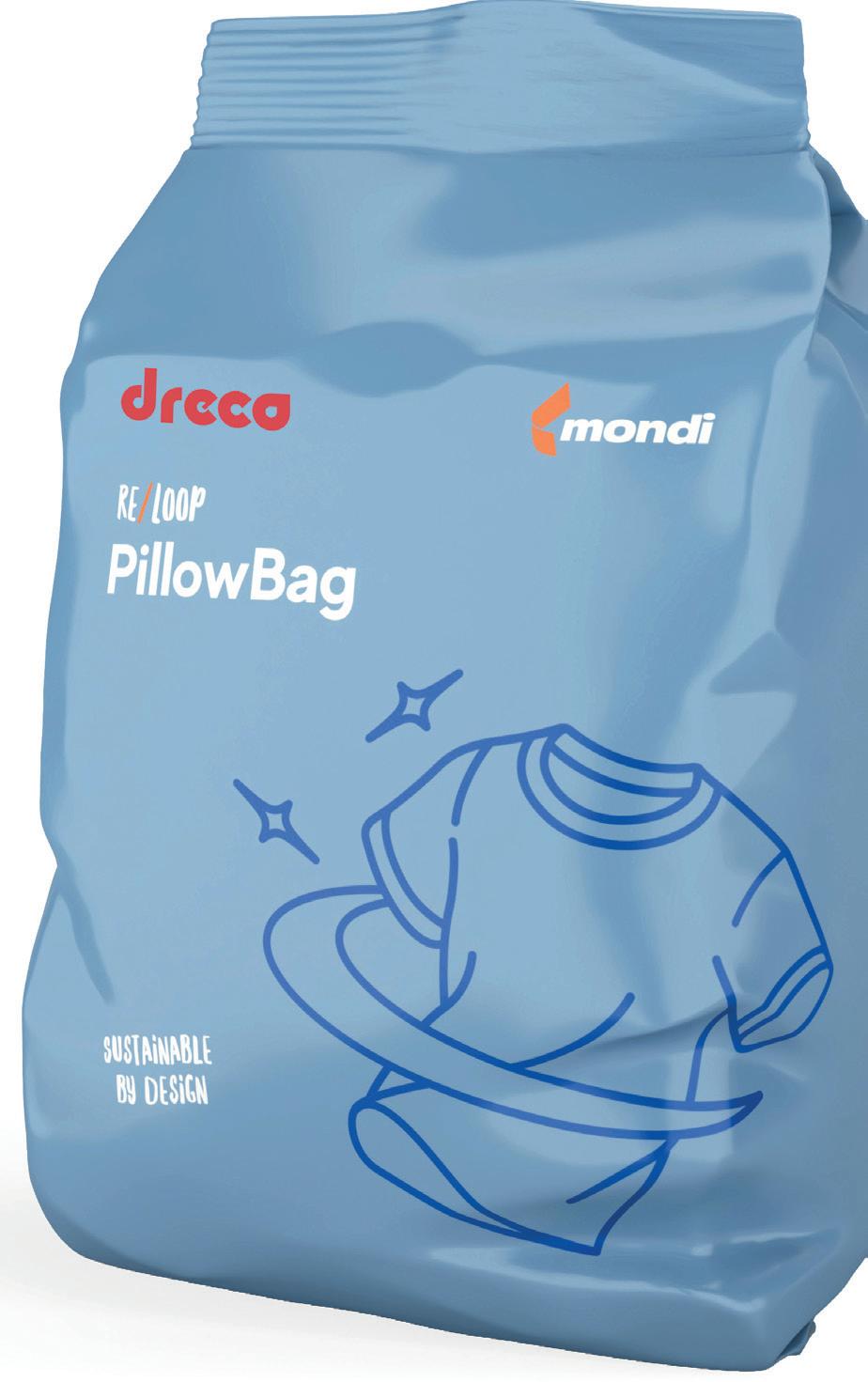
In partnership with Dreco, a German producer of private label brands of washing, cleaning and household products, Mondi has developed packaging for powder detergents that contains post-consumer recycled (PCR) materials, while maintaining the high level of product protection required for moisture-sensitive products. Packaging for powder detergent must protect the product effectively against moisture and water throughout its lifecycle. Mondi’s re/loop PillowBag shows that high levels of recycled content can be successfully integrated into flexible packaging for demanding FMCG applications, without compromising performance, quality or consumer convenience. From the beginning of 2030, the EU Packaging and Packaging Waste Regulation (PPWR) has set a target of 35 percent recycled content from post-consumer plastic waste for this category of plastic packaging. With 50 percent recycled content, the re/
loop PillowBag is well-positioned to support future compliance with this target and significantly reduces the use of virgin plastics. The packaging has already been launched in retailers in Germany, positioning Dreco as an early adopter of futureready packaging, well ahead of regulatory deadlines.
To ensure transparency and traceability across the value chain, Mondi applied a mass balance approach under its ISCC PLUS certification, enabling traceable allocation of PCR materials throughout its supply chain. In line with Mondi’s MAP2030 sustainability framework, re/ loop PillowBag is designed for recycling and has been assessed according to Mondi’s Path to Circularity Scorecard and the CEFLEX D4ACE guidelines. The structure is considered compatible with established polyolefin (PO) mechanical recycling streams, supporting effective end-of-life processing.
Alongside its sustainability
credentials, the packaging has been designed with endconsumer convenience in mind. The easy-opening bag supports practical handling and everyday use, while highquality print designs ensure strong shelf presence.
Milo Drehsen, owner and managing director of Dreco, says: “Reducing the environmental impact of our packaging is a key priority for us, but performance is critical for products like powder detergent. Working with Mondi has enabled us to combine high recycled content with the protection our products require.”
More information from www. mondigroup.com
Brown box packaging has been produced by DS Smith, part of International Paper, to contain Pernod Ricard’s Absolut Vodka, and its wider spirits product range.
The new packaging is comprised of recyclable fibre-based corrugated cardboard and is designed to provide robust protection for Absolut Vodka bottles during their transit to customers in stores and outlets or direct to consumers worldwide. The range of brown boxes
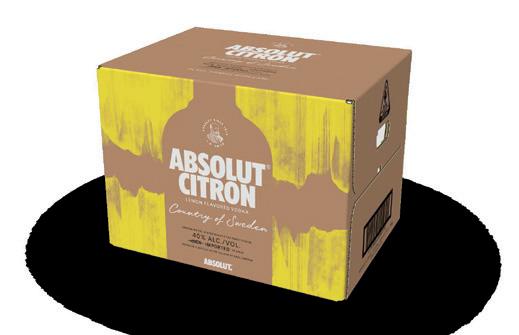
A ‘brown box’ of
Citron vodka
features differing structural designs for a variety of Absolut Vodka products and flavours –from lime and citron to pear and watermelon.
The flavours are represented by
colour coding and artwork on the external surface of the packaging with the bold on-brand Absolut Vodka typeface. By contrast, previously, the traditional packaging for the Absolut Vodka range was created with a white glossy coating – an original design that is currently still used for and applied to a variety of flavours in the Absolut flavoured vodka product range.
Key account manager at DS Smith Anton Bengtsson says: “We changed the ink and branding
Mondi’s PillowBag has 50 percent recycled content
on the exterior of the Absolut Vodka packaging to complement the aesthetic of the new brown boxes. This allows the packaging to withstand pressure and resist crushing, while simultaneously providing effective cushioning for the glass bottles during transit, shipping, and handling. We are delighted for the opportunity to collaborate with and support Absolut Vodka in their packaging requirements.”
More information from www. dssmith.com
Two validated paperbased packaging designs have been co-developed by UPM Specialty Materials, Michelman and Bobst for brands navigating the EU packaging rules, such as the SingleUse Plastics Directive (SUPD).
By combining fibre-based materials, bio-based coatings and coating line expertise, the three companies have built ready-toimplement structures that deliver strong barrier performance and heat sealability with a wide sealing window.
“Fulfilling strict expectations demands scalable solutions. Our base papers are developed to support co creation and reduce unnecessary complexity. Combining them with the right chemistry enables partners to arrive at fit for purpose packaging solutions faster,” says Mika Uusikartano, senior manager for product portfolio management at UPM Specialty Materials.

The concepts combine UPM’s packaging papers with Michelman’s bio based coatings and Bobst application know-how to deliver functional performance while supporting recyclability and, where relevant, compostability across selected applications.
Senior scientist at Michelman Iulia Mihai says: “There is a growing market demand for SUPD-compliant packaging solutions. At the same time, barrier performance must remain equivalent to existing market
solutions and proposed materials must be fully compatible with current packaging lines, without the need for major equipment modifications.”
From an implementation perspective, the collaboration takes into account process requirements and runnability to support efficient industrial production.
Luca Nespolo, competence centre manager at Bobst, says: “When materials and application parameters are developed together, packaging converters
Sappi North America has launched LusterFSB OGR, an oil- and grease-resistant (OGR) solid bleached sulphate (SBS) food-service board available in 12-20 pt calipers.
The barrier technology delivers medium oil- and greaseresistance without polyethylene film, making it recyclable and home-compostable. It is purposemade for quick service, take-out and bakery applications where thick polymeric coating is more than the job requires.
“Food service packaging is under pressure to move away from plastic and we’re excited to bring a sustainable option to market,” says Paul Bortolan, sales and marketing chief at Sappi North America. “LusterFSB OGR is a testament to our R&D team’s ability to develop innovative solutions that meet genuine customer needs. It delivers the barrier performance food service requires while supporting the sustainability goals our customers and brands are
working toward.”
Made with fresh fibre and produced on one of the mostadvanced paperboard machines in North America – PM1 at Sappi’s Somerset Mill in Skowhegan, Maine – LusterFSB OGR features a smooth clay coating on one side for exceptional print quality and a proprietary grease barrier coating on the reverse. The barrier side also accepts printing, offering converters design flexibility for applications where two-sided
can implement new solutions more easily while achieving stable performance and production efficiency.”
The collaboration showcases two concepts. The first supports SUPD compliant paper packaging for applications such as tea bags, oatmeal and sugar stick packs, incorporating bio based coatings that impart good moisture and mineral oil barriers, together with good heat-sealability. Packets and wrappers are among the product categories in the scope of the EU’s SUPD, which aims to reduce the environmental impact of certain plastic products that are used once and discarded.
The second concept is designed for applications requiring an improved oxygen barrier level, such as single-serve cookies and chocolate, while enabling lower coating weights and improved material efficiency.
More information from www. upm.com
printing is an advantage. The grade is designed for applications like bakery boxes, fried chicken and chicken nugget take-out containers, burger and sandwich clamshells, as well as French fry trays and scoops.
LusterFSB OGR is SBS-based construction means converter scrap and offcuts can be baled with standard SBS, eliminating the special segregation requirements that come with poly-lined alternatives and reducing plastic use in line with retailer and consumer sustainability expectations. More information from www. sappi.com
Biedronka, one of Poland’s largest supermarket chains, has developed an innovative collection box with Mondi in support of a new deposit return system.
Called Recyklobox, it is a specially-designed container for collecting returnable packaging covered by the scheme. It is made from five-layer corrugated board, ensuring durability and stability. The structure consists of two main components: the lower section, where bottles fall in, and the lid, which features a corrugated attachment enabling the installation of a scanner as well as an opening for inserting bottles. The corrugated board used in the production of Recyklobox is made from a mix of 80 percent recycled paper and 20 percent virgin fibre. With the use of recycled materials and the possibility of reprocessing them at the end of the product’s lifecycle, Recyklobox aligns with both companies’ sustainability goals.
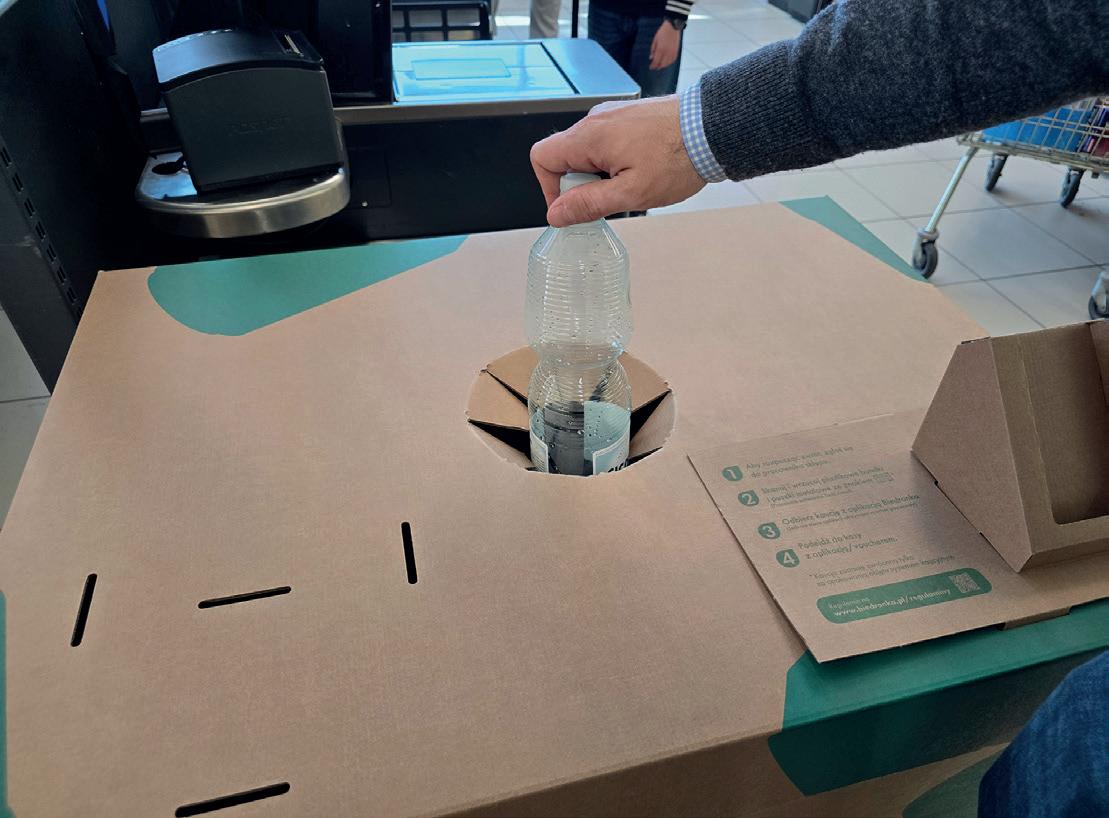
Mateusz Buchowiecki, national key account manager at Mondi, commented: “At Mondi, our ambition is to create solutions that go beyond packaging, as we understand the real impact these have on how modern retail operates. By developing Recyklobox, together with Biedronka, we have combined functionality, environmental responsibility and rapid
implementation. We are pleased that together we have created an innovation that effectively responds to specific market needs.”
Recyklobox stands out for its simple logistics and ease of assembly, enabling swift use in many retail locations. Compared with traditional machines used within the deposit return system, it is a significantly more cost-
Premium liquors need sophisticated packaging that matches their exclusivity. With two whisky projects – one for ‘Preussischer Whisky’ and another for ‘Salzatal Whisky’ –the black recycled paper from Koehler Paper’s Greenium brand shows exactly how to deliver on this need while combining sustainability and diversity of design with a premium look. The packaging for both whiskies uses black recycled paper that is said to make an extremely compelling case due to appearance, feel and subsequent processing properties. The design is said to employ a
minimalist presentation in which the black paper underscores the timeless value of these products, and functions as a platform on which the brands are placed under a spotlight. Finishing details create vibrant contrasts between the matt surface and
accentuated elements. This reinforces the visual depth of
effective method while delivering the same functionality. This introduction enabled Biedronka to collect more than 29 million returnable bottles by the end of March, ahead of installing traditional machines in all its stores.
This is not the first joint initiative of the two companies. Previously, Mondi and Biedronka successfully implemented a closed-loop programme, demonstrating that cost efficiency, functionality and care for the environment are not mutually exclusive.
The new project marks another step towards building a more sustainable retail model in Poland. With the synergy between Mondi’s experience in designing innovative products and Biedronka’s operational scale, it has been possible to develop an idea that meets legal requirements, while also genuinely supporting consumers.
More information from www. mondigroup.com
the corresponding packaging, and emphasises the exclusive nature of the whiskies.
More information from www. koehlerpaper.com

Two whiskies, with one signature, from Koehler Paper’s Greenium brand
Adeflaker designed to meet the increasing demands of modern stock preparation and wet end processes in pulp mills has been launched by Voith.
As part of the BlueLine portfolio, the InfibraDeflaker focuses on operational flexibility, resource efficiency and ease of maintenance while ensuring reliable fibre processing across a wide range of applications.
Developed with more than six decades of deflaking expertise, the InfibraDeflaker enables paper producers to adapt their operations quickly to changing production requirements. The machine can be configured in single-disc or double-disc operation, allowing processing volumes of up to 1,000 or 2,000 litres per minute, depending on process needs and filling selection. The modular concept supports flexible capacity management without requiring additional machines.
A central design feature is a water-cooled cartridge bearing, which allows the complete bearing unit to be replaced
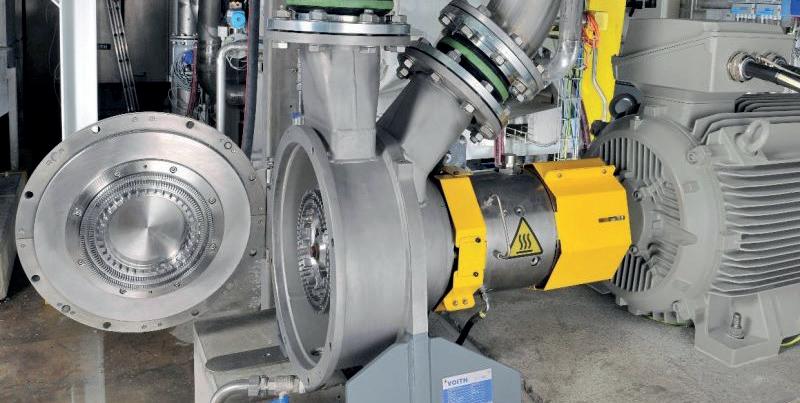
quickly and directly on site. This approach significantly simplifies maintenance work and helps reduce unplanned downtime. In addition, the integrated mechanical seal contributes to lower maintenance effort and supports long-term, stable operation.
The InfibraDeflaker also addresses efficiency targets in fibre processing. Optimised acceleration and deceleration of fibres improve fibre breakdown while preserving fibre quality, making the system particularly suitable for
OCC screening applications and production reject preparation. At the same time, the design supports resource-efficient operation and consistent machine runnability.
“With the InfibraDeflaker, we have deliberately focused on practical advantages for day-today mill operation,” said Steffen Bassmann, head of product management for fibre systems at Voith Paper. “The combination of flexible configuration, simplified maintenance and robust design allows customers to stabilise their processes while reducing
As part of SKF’s annual virtual Tech & Innovation Summit in June, the bearing manufacturer will launch an AI tool for the pulp and paper industry.
The Summit brings together industry leaders and experts to showcase technologies and products designed to help close the energy efficiency gap in industrial operations.
SKF group chief executive
Rickard Gustafson says:
“Electrification, digitalisation and the rapid growth of energy intensive infrastructure are transforming industries. Customers are under increasing pressure to improve performance while reducing energy use. Closing the energy efficiency gap by moving from energyefficiency ambition to measurable operational impact is crucial for
In the pulp and paper industry, speed and confidence matter, says SKF. Its AI powered Product Assistant is said to help engineers and maintenance teams quickly access SKF knowledge about products and applications right when they need it. In this case AI is not about replacing deep engineering expertise, but about removing everyday friction by
operational complexity.”
The InfibraDeflaker replaces previous deflaker designs within the portfolio and supports Voith’s strategy of offering modernised, resource-efficient system for stock preparation. Its sturdy housing, accessible design for filling changes and compatibility with existing process layouts allow straightforward integration into both new and existing lines.
A rebuild adapter is available to replace a Voith Deflaker E2000 without having to make any changes to the foundation.
answering questions instantly, guiding product selection, and supporting reliable decisions in demanding operating environments. The result is higher productivity, improved uptime, and more sustainable operations, helping the industry run smarter, safer, and more efficiently.
For more information contact Aparna Srivastava at SKF Technology Communications: tel +46 707 576 468; email aparna. srivastava@skf.com
Apulping system designed to process recycled paper and board processing has been launched by Aikawa Fiber Technologies (AFT). Called MaxPulping, it offers paper makers a complete pulping system that includes core equipment, wear parts, and related services. Developed to meet the growing demands of recycled fibre processing, MaxPulping combines modern system design with operational flexibility, helping mills improve efficiency, maintain fibre quality, and optimise production performance. The modular system can be adapted to a wide range of raw material grades and mill requirements, making it suitable
for both new installations and rebuild projects.
The key benefits of MaxPulping system include:
l Operational flexibility –adaptable to different furnishes, raw material grades, and production targets
l High efficiency – optimised design supports strong pulping performance and contaminant removal
l Energy savings – advanced rotor and process design reduce power consumption
l Easy maintenance – MaxPulping equipment is designed for safe and quick service, reducing required maintenance downtime
l Complete support – backed by
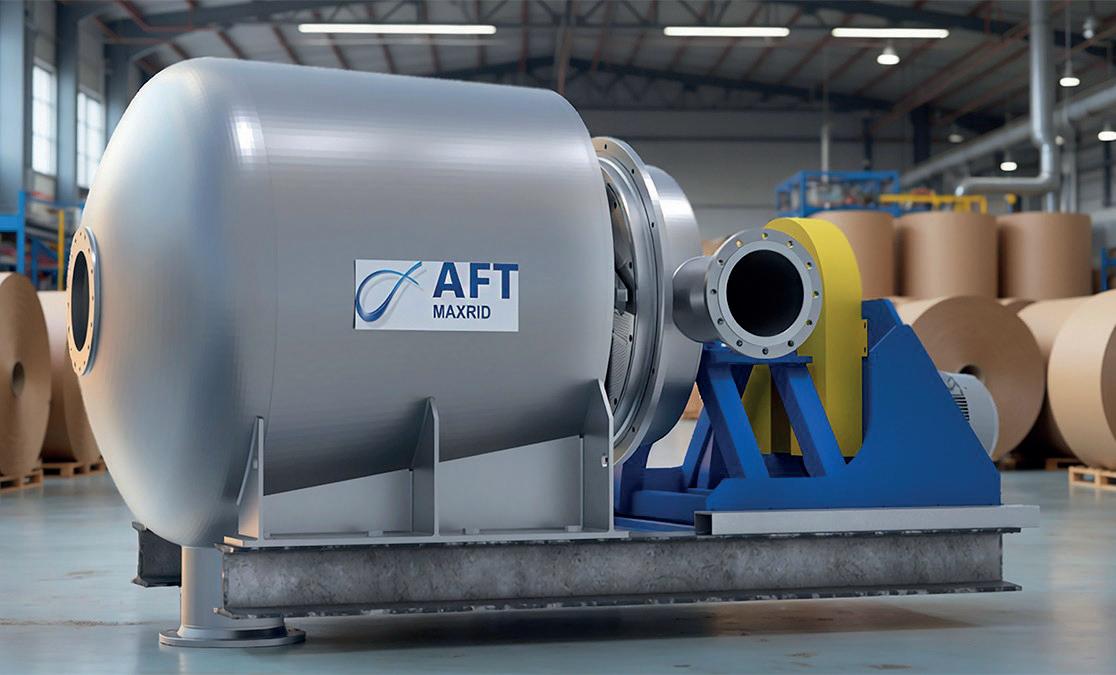
AFT’s wear parts expertise and service capabilities
AFT says that the first customer installations are under way.
“MaxPulping is an important step in the continued expansion of AFT’s product portfolio,” says Timo
Koivisto, technical chief at AFT. “It allows us to support customers with a complete solution for recycled fibre pulping, backed by our expertise in stock preparation, wear parts, and process optimisation.”
To help pulp makers in South America reduce downtime and improve production efficiencies, Voith Paper has launched a number of new products, including Infinity ToughLine 6S, a new doublespliced felt, and the CellPress, a roll covering designed to withstand the critical conditions to the production process. Together, the two products help to reduce machine downtime, and boost productivity.
Daniel Quintella, applications and sales manager at Voith Paper, expIains: “Felt is an essential component in the pulp industry, playing a key role in the efficient removal of water and the optimisation of production processes. Modern felts must have a high void
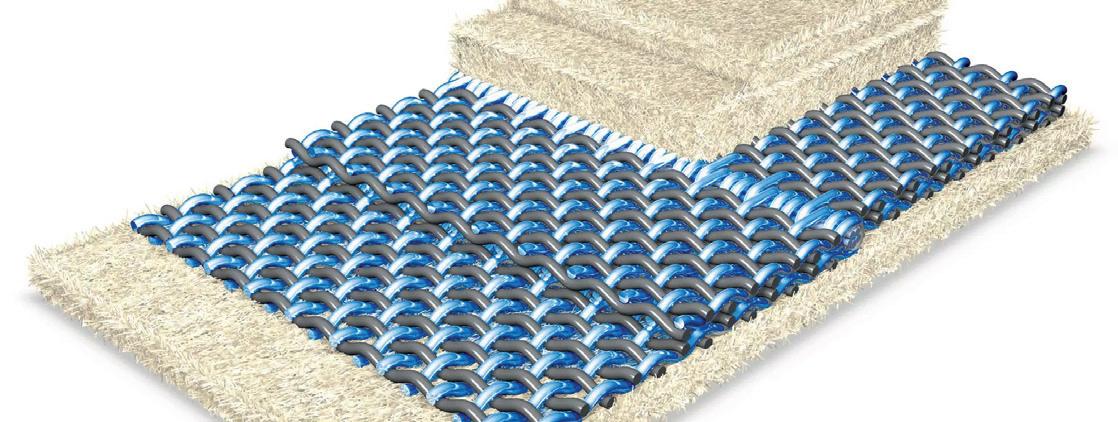
Voith’s Infinity ToughLine 6S features a double splice for quicker changes
volume to efficiently absorb water from the pulp sheet, as well as offering resistance to compaction, chemical exposure and high temperatures.”
The Infinity ToughLine 6S features a double splice, which provides greater operational stability and facilitates the installation process. Unlike traditional double seam felts, the new technology allows better-aligned seams over the whole width.
This enables faster felt changes and longer operation. As replacing this component requires the machine to be shut down, taking up to six hours, this represents significant gain for manufacturers.
Also new is CellPress, a roll cover developed specifically for pulp machines. The product is designed to withstand the severe conditions of the process, in which the rolls are
constantly exposed to high temperatures and aggressive chemicals.
These conditions can cause premature wear, leaks and damage to the roll cover, often leading to the need for early replacement. CellPress is specifically designed to increase the durability of these components, extending their service life and enabling longer operational runs.
“The key advantage of CellPress is that it was developed specifically for the needs of the pulp production process. This significantly increases the durability of covers and reduces the risk of failures that could cause unexpected downtime,” says application and sales engineer Tiago Chiaratti.
In Algeria, General Emballage has ordered a complete paper making line from Andritz which will include the widest and highestcapacity paper machine in Africa. The PrimeLine line will be installed at the mill being constructed on a greenfield site at Naama, with expected start up in the fourth quarter of 2028. Value of the project is said to be in the “low three-digit million” euro range.
With this investment, Algeria’s largest corrugated packaging producer is implementing its first paper production line, which will produce testliner and fluting paper grades. The paper machine will have a capacity of 350,000 tons per year, a web width of 7.5 metres, and a design speed of 1,200 metres per minute.
Andritz will supply the complete paper production line, including stock preparation, winder, automation and digitalisation package, spare and wear parts, and service contracts. The line will be designed to support General Emballage’s key strategic goals, including minimal fresh water consumption, high energy efficiency, and maximum plant availability through advanced automation and digitalisation systems.
Ramdane Batouche, chief executive of General Emballage, said: “This investment is a milestone for us, so we were very careful in choosing our partner. Andritz convinced us not only with its outstanding technology, but also with the way it responded to our specific situation and needs. We expect a fruitful and
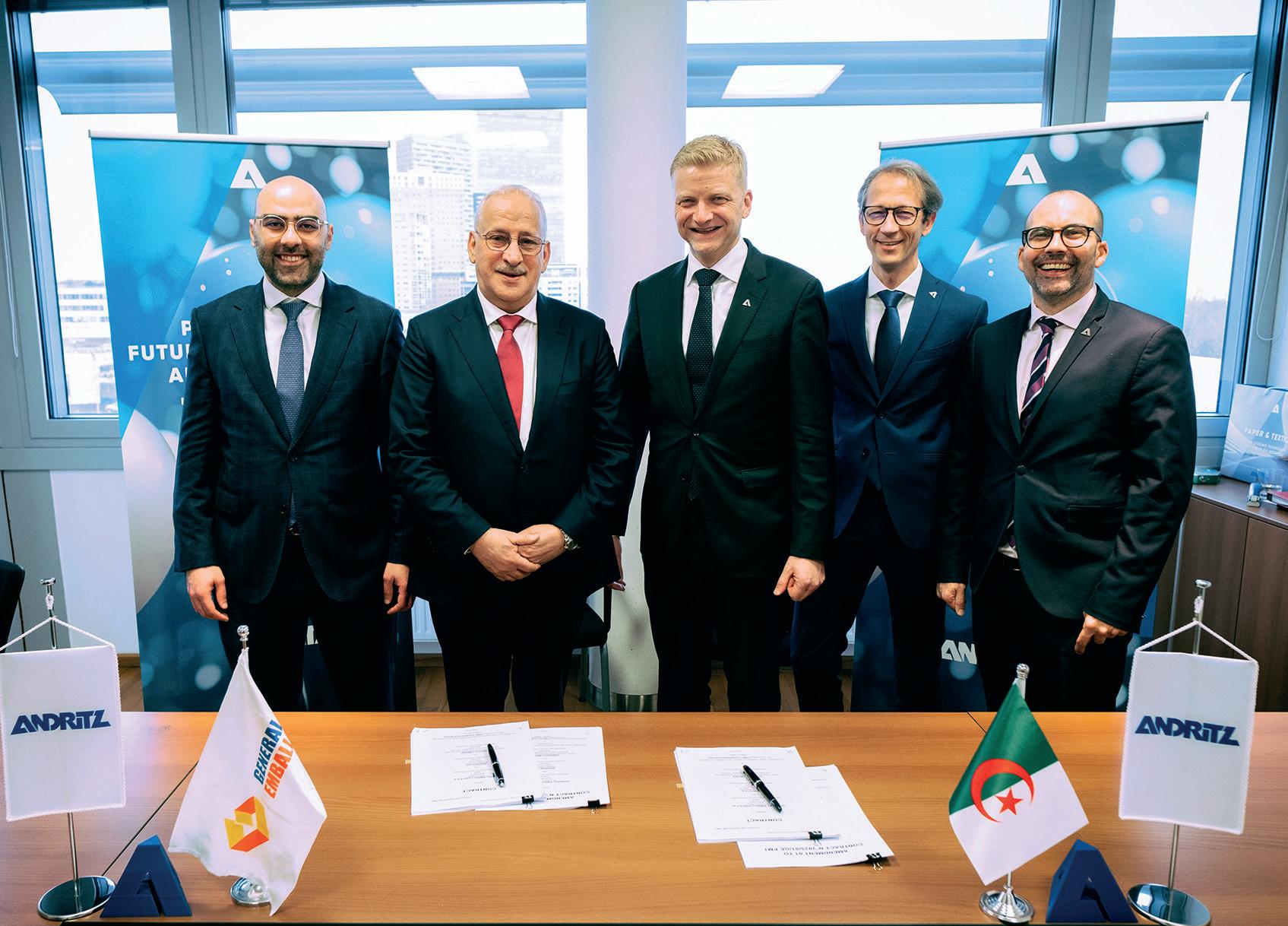
long-term partnership between our two companies.”
Gerald Steiner, senior vice president for Paper & Tissue at Andritz adds: “With this major project, Andritz underscores its commitment to being a reliable, and sustainable partner supplying complete paper production lines to the industry – today and in the future.”
The order includes state-ofthe-art equipment and systems designed to maximise efficiency, product quality, and sustainability: l Stock preparation: The stock preparation line is optimised for efficient processing of 100 percent OCC to provide consistently high-quality fibre. It enables efficient contaminant removal, optimised fibre development,
and high operational stability, while miminising specific energy and fresh water consumption.
l Paper machine: The core of the production line is the headbox and gap former concept. Andritz will supply a two-layer PrimeFlow AT headbox with an accelerating tube design and optimal turbulence control at minimum energy and water consumption. This will be combined with a PrimeForm TW shoe-blade gap former designed to deliver excellent mechanical properties of the recycled furnish at maximum dewatering rate. The order list also includes roll covers and machine clothing.
l Automation and digitalisation: The line will be equipped
with a comprehensive package of systems to drive efficiency, sustainability, and operational excellence. The Metris Automation & Digitalisation Allin-One platform provides realtime insight, intelligent control, and data-driven optimisation of paper quality and machine performance.
The project also includes an advanced operator training simulator called Procemex for quality assurance and material tracking, high-performance NAF control valves, and a fully-integrated distributed control system (DCS). Together, these technologies transform operational data into actionable intelligence, enabling reliable operation and a future-ready production line.
Turkish paper maker
Aquakraft Kağıt ve Ambalaj is having the paper machine at its Ferizli mill comprehensively rebuilt by engineering group Voith.
The rebuild at the mill, located around 170km east of Istanbul, will increase production capacity by 60 percent when it is started up in the fourth quarter of 2027.
Bekir Yemsen, general manager at Aquakraft, commented: “With this rebuild, we are preparing our paper machine for the next stage of growth. Our goal is to significantly increase capacity, broaden our product portfolio while at the same time reducing energy consumption. Based on our positive experience with Voith in the past and their standing as a market leader for complex rebuilds, they are the best partner to support us with this project.
The rebuild is designed to substantially modernise the existing production line and enable Aquakraft to produce a wider range of containerboard and kraft paper grades, strengthening
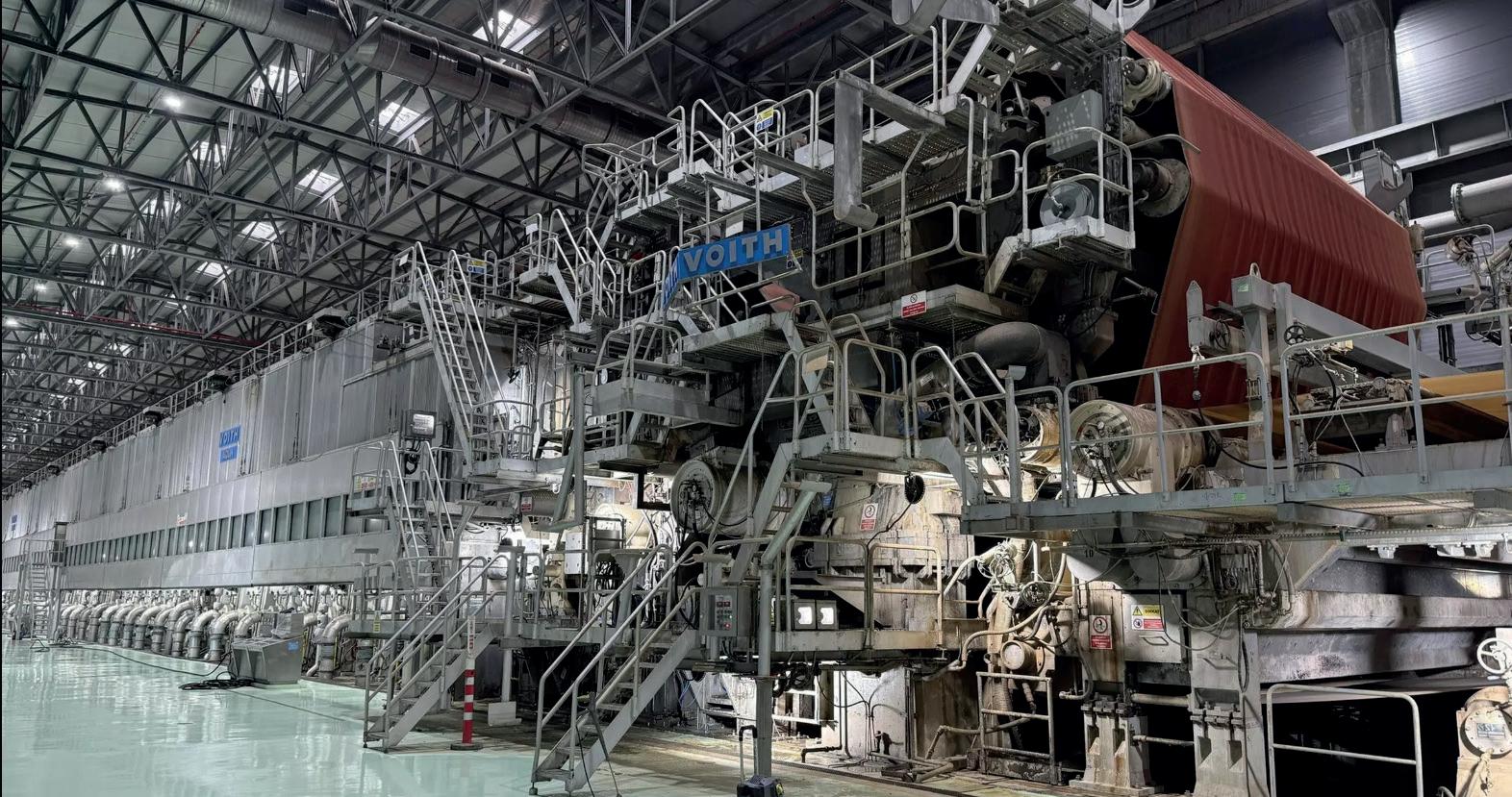
its market position, flexibility and profitability. Voith will also provide upgrades along the production line that directly support these goals:
In stock preparation, the rebuild of the existing recycled fibre line focuses on improved detrashing based on the BluePulp concept, a new coarse and fine screening system equipped with IntegraScreens and high-efficiency C-bar Vertecs screen baskets as well as heavy weight cleaning based on Voith’s InduraCleanerTechnology. Existing equipment will be upgraded and integrated into a new line for bleached and unbleached kraft pulp. To provide
Metsä Fibre, part of the Metsä Group, is planning to modernise the cooking system at its Kemi bioproduct mill in Finland with support from technology group Andritz.
The updated cooking system is scheduled to start up during the fourth quarter of 2026.
“The modernisation will support the availability and material efficiency of the Kemi bioproduct mill, increase flexibility in raw material usage and support the mill’s planned production levels,” says Metsä Fibre’s chief executive Ismo Nousiainen,. The project continues the long-
the mill with the necessary process water qualities and regain fibres Aquakraft will rely on Voith’s InfiltraDiscfilter technology.
On the paper machine, the rebuild includes a modernised approach flow system and the implementation of a new two ply forming system, featuring a high performance MasterJet 4Tec headbox and TopFormer F configuration with DuoShake DG800 shaking unit. A revamped press section with NipcoFlex shoe press technology will further enhance paper quality, runnability and resource efficiency. Additional upgrades in the dryer and end sections will improve operational
safety, reliability and overall line performance.
Following the rebuild, the paper machine will produce corrugating medium, testliner, high performance testliner and white top liner grades in a basis weight range from 80 to 200 g/ sqm, with a design speed of up to 1,200 metres per minute.
The machine was originally supplied by Voith in 1992 as the Zanders PM3 line in Moenchengladbach, Germany and relocated to Turkey in 2025. After successfully starting it up and producing first commercial containerboard in September 2025, Aquakraft decided to further develop the line with Voith.
“The rebuild extends the lifetime of the existing asset while bringing performance, product quality and energy efficiency to state of the art levels,” says Philip Schnellinger, senior technology manager at Voith Paper. “It perfectly shows how customised rebuilds can drive sustainable growth and lasting competitiveness in a tough market. We are excited to start this long-term collaboration.”
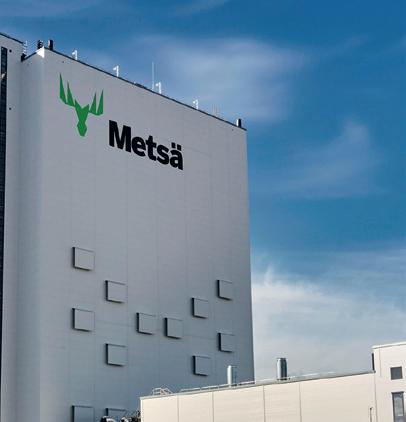

standing cooperation between Metsä Fibre and Andritz, which previously delivered a number

An ash crystallisation plant is being installed at Mercer’s Stendal mill at Arneburg in Germany by Valmet.
The investment – the amount wasn’t revealed – is part of Mercer’s long-term plan to further reduce the mill’s emissions and improve its performance.
Ash crystallisation plant contributes to this target by helping to close the mill’s chemical circulation, reducing the need for make-up chemicals, and by helping to extend the recovery boiler maintenance intervals to 24 months and beyond.
Mill manager Dr Martin Zenker explained: “Since the mill started up in 2004, we have systematically invested in improving its performance and sustainability. Our sustainability efforts are guided by the Mercer vision and values and our long-standing philosophy of responsible business practices that encompass sustainability, safety, financial responsibility, and strong leadership.
“The new ash crystallisation plant will help us to further improve both operational and environmental performance. We chose Valmet to deliver this project based on both their technical expertise and our previous joint projects.”
The ash crystallisation plant will recover valuable sodium salts and remove non-process elements, primarily chloride and potassium, from the mill’s liquor cycle. This reduces plugging and corrosion in the mill’s recovery boiler which enables longer intervals between
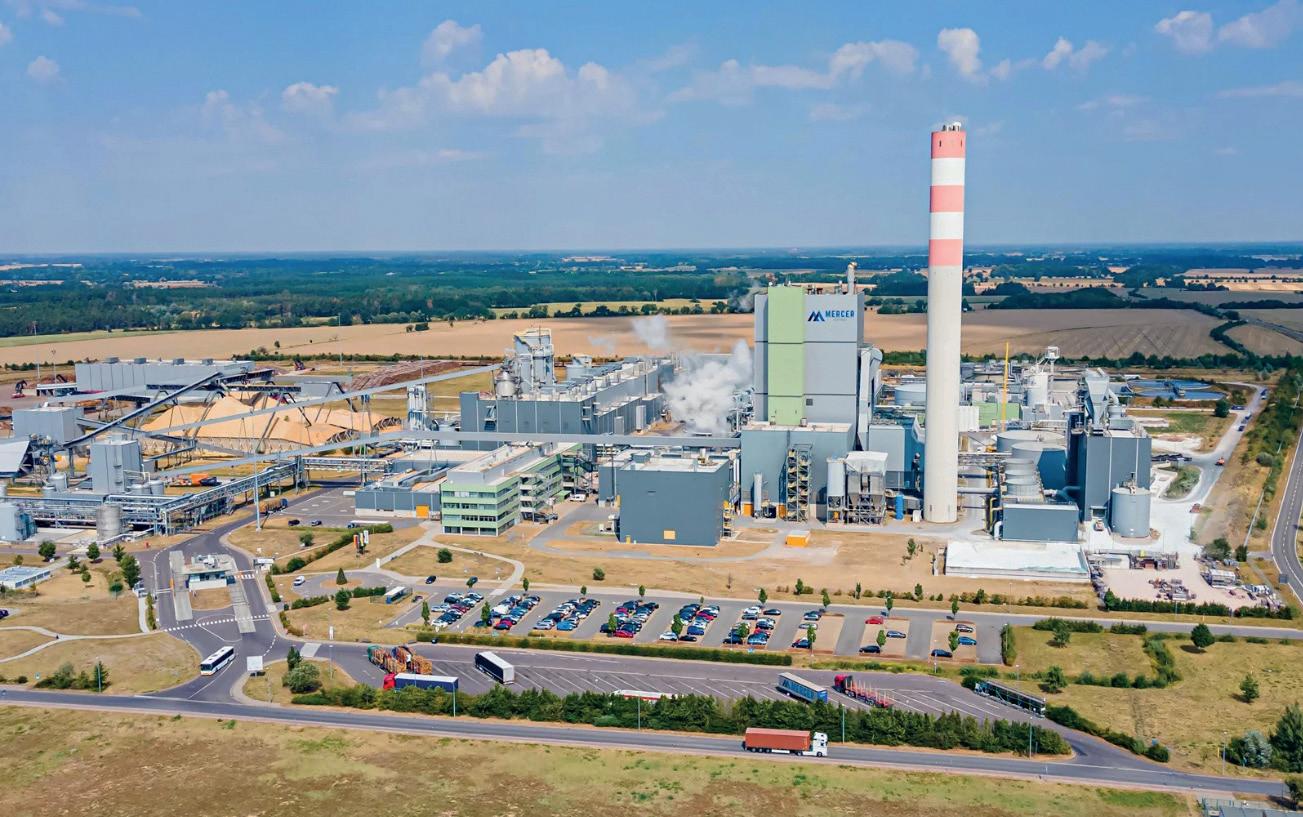
maintenance shutdowns, increasing the recovery boiler’s long-term availability.
Removing these non-process elements with Valmet’s Ash Crystallizer eliminates the need for ash dumping, which in turn reduces wastewater and lowers costs through decreased make-up chemical demand. This process delivers clear environmental benefits by reducing associated emissions.
Claus Jensen-Holm, director for white liquor and evaporation in pulp mills at Valmet, commented: “We are committed to advancing circularity and resource efficiency. Delivering a new ash crystallisation solution to an existing mill is very much in line with these targets and brings several operational and environmental benefits.
“This project showcases that the ash crystallization solution is not
only suitable for new large mills but also brings significant benefits to existing mills. We truly value our cooperation with Mercer and the Stendal mill in finding longterm solutions to optimise the mill’s performance.”
Start-up is scheduled for the fourth quarter of 2027.
The Ash Crystallizer plant will have capacity to process 140 tonnes of ash per day. The order covers the complete plant with extensive delivery scope including electrical and instrumentation systems, steel structures, and erection. Valmet will also expand the existing mill-wide DNA automation system.
Mercer’s Stendal mill in Arneburg, Germany was started up in 2004 and today has a capacity for 740,000 tonnes per year of bleached softwood kraft pulp.
● Mercer reported that in the
first quarter of 2026 sales were US$489 million, down from US$507m in the same quarter a year earlier, while making a net loss of US$52m,
Chief executive Juan Carlos Bueno commented: “Our pulp sale realisations showed resilience this quarter as softwood pulp markets held steady, while hardwood pulp performance trended upward on favourable demand-supply dynamics.
“However, elevated fibre costs across our supply chain and a slower-than-anticipated recovery in prices continued to weigh on our results. As a result, we recognised a non-cash impairment of US$22m against pulp and fibre inventory. We are starting to see supply responses to prevailing market conditions and currently expect a more balanced market in the latter half of 2026.”
Anew pulp mill is being built by Chinese paper maker Wuzhou Special Paper at Hukou County in Jiujiang City, Jiangxi Province, with key technologies and equipment being supplied and installed by Andritz.
Start-up of the pulp mill is scheduled for the first quarter of 2027.
Wuzhou Special Paper operates a number of paper machines which will be supplied by the pulp mill to ensure a self-sufficient and environmentally responsible pulp supply, and reduce reliance on external sources. The investment – the value of which was not revealed – is said will strengthen Wuzhou Special Paper’s longterm cost competitiveness while supporting compliance with increasingly stringent environmental regulations.
Zhao Lei, chairman of Wuzhou Special Paper, said: “We are proud to take this important step toward sustainability and selfsufficiency with our new pulp mill. Our positive experience with
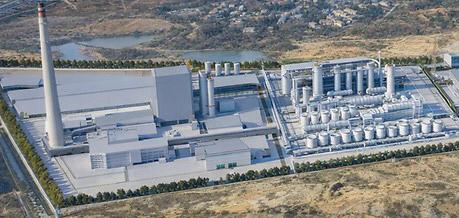
Andritz technologies gave us full confidence in choosing it as our partner, and we look forward to a successful collaboration.”
The order covers the core value-creating areas of a modern pulp mill, including the fibreline, chemical recovery, energy generation, and decarbonisation technologies.
The Andritz order includes:
l A complete fibreline featuring LoSolids continuous cooking, efficient brown stock washing, screening, two-stage oxygen delignification, and a four-stage ECF bleaching plant. Advanced washer technologies – including DD-Washer drum displacer washer and Compact Press wash
press – ensure environmentally compatible performance with low operating costs.
l A recovery boiler with steam parameters of 515 deg C and 105 bar(g) after the superheaters, designed for low flue gas emissions and featuring energyefficient flue gas cooling, air preheating, and feedwater preheating technologies to maximise power generation.
l A complete white liquor plant with integrated gasification, enabling fossil-free lime kiln operation and an optimised carbon footprint. The recausticising plant includes a high-efficiency LimeWhite-H filter, while the Andritz lime
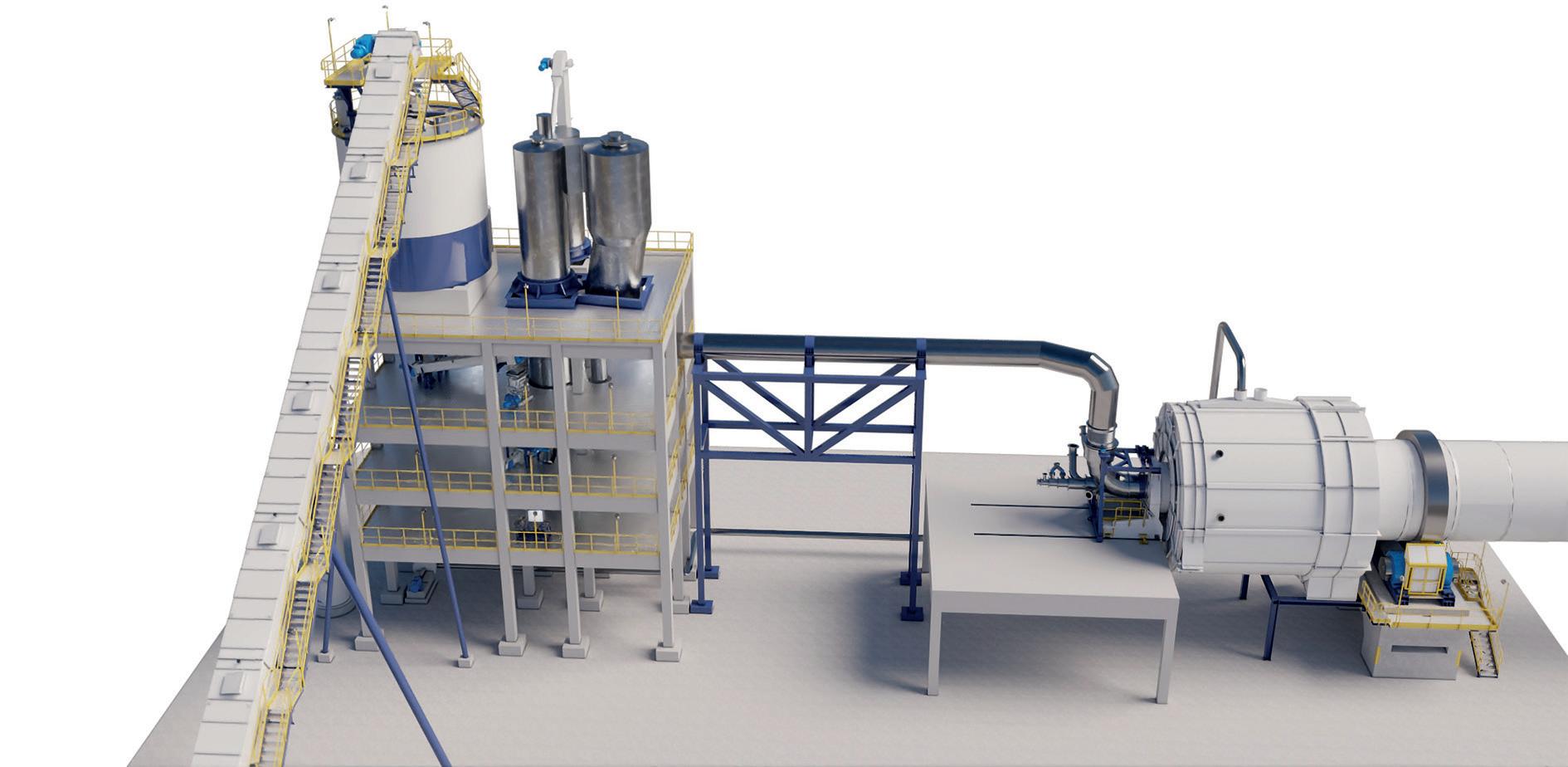
kiln is designed for excellent performance and energy efficiency.
l A biomass gasification plant, including a dried biomass handling system, an Andritz circulating fluidised bed (CFB) gasifier, and ash handling systems.
l An ash re-crystallisation (ARC) system to treat ash from the electrostatic precipitator by reducing chloride and potassium content while recovering sodium and sulphate. Based on evaporative crystallisation with mechanical vapour recompression (MVR), the Andritz ARC system has been successfully implemented in several pulp mills in China.
l A mill-wide non-condensable gas (NCG) system for safe collection and incineration of diluted and concentrated gases. Combustion in a dedicated low-NOx boiler minimizes odorous emissions and, with an integrated sulphur dioxide recovery feature, further enhances environmental compliance and operational safety.
This order further strengthens the partnership between Andritz and Wuzhou Special Paper. In 2024, Andritz started up the world’s largest single high-capacity chemithermomechanical pulping system for the customer.
Wuzhou Special Paper (Jiangxi) Co, founded in 2014, is part of Wuzhou Special Paper Co, one of China’s leading manufacturers of food packaging paper as well as one of the largest producers of glassine and tracing paper.
AFT (Aikawa Fiber Technologies) has successfully started up a MaxEdge150 refiner with AFTLinx diagnostic service on the PM5 at Essity’s Mannheim tissue mill in Germany.
The project is AFT’s first refining project with Essity. The new system supports Essity’s goal of improving tissue quality at its largest mill in Europe which is a key hub for hygiene brands such as Zewa and Tempo.
As an integrated mill, Essity Mannheim processes primarily beech pulp, which had not previously undergone refining.
The goal of the project was to improve the softness of end products, requiring a carefullytuned approach to the fibre treatment process. Beech pulp is particularly sensitive and must be handled gently, which presents a challenge.
To meet this need, AFT supplied its MaxEdge150 refiner equipped
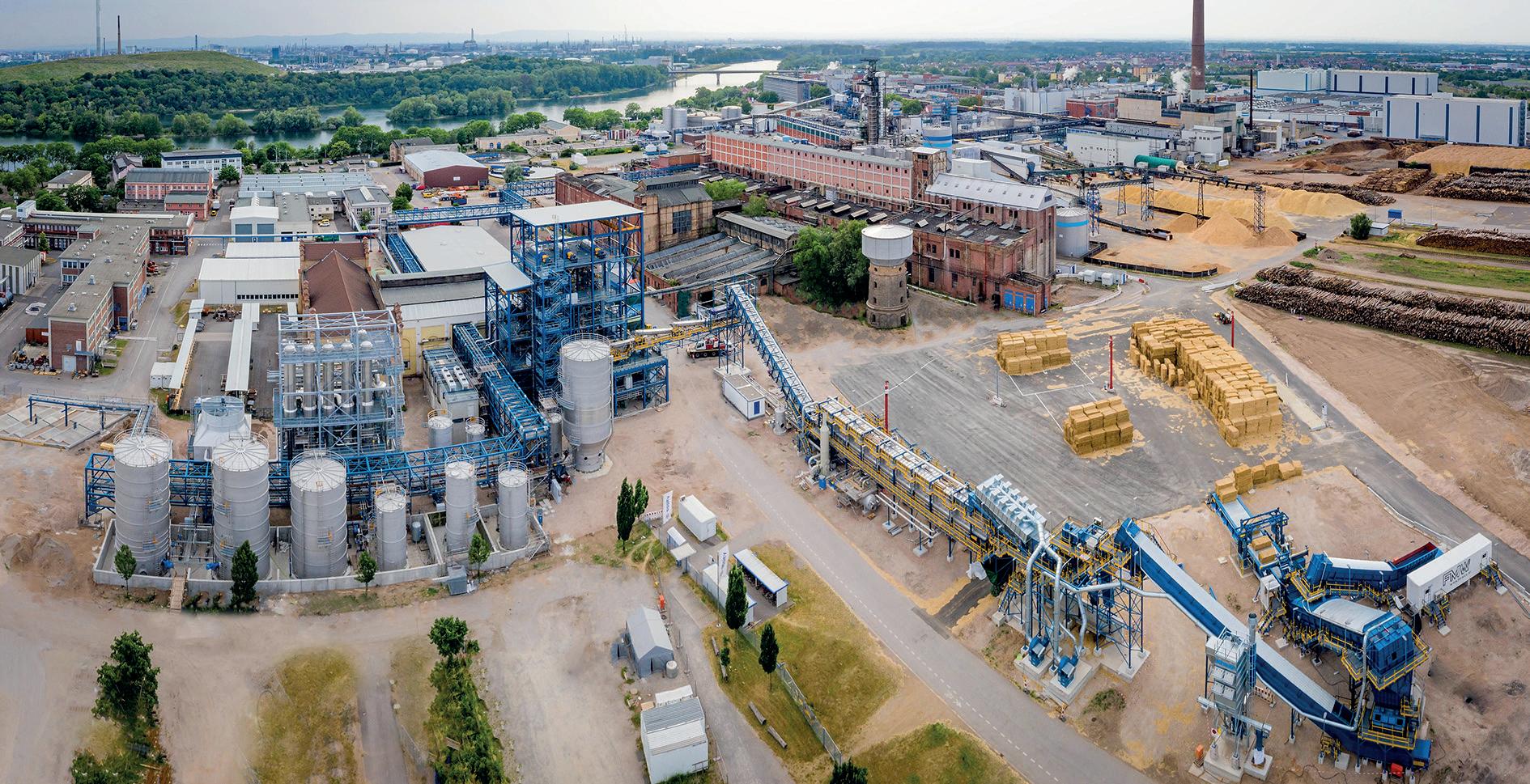
with Finebar refining plates for low intensity and energyefficient fibre development. The installation was extended with AFTLinx, AFT’s IoT-based diagnostic platform, to enable real-time monitoring and process optimization. AFT also provided erection, start-up, and ongoing optimisation services, ensuring
smooth commissioning and maximum value for the customer.
“At AFT, our focus is always on solving our customers’ process challenges and delivering real results,” said Olli-Pekka Riippa , product manager at AFT.
“Helping Essity with their refining challenges and achieving their quality goals has been a rewarding
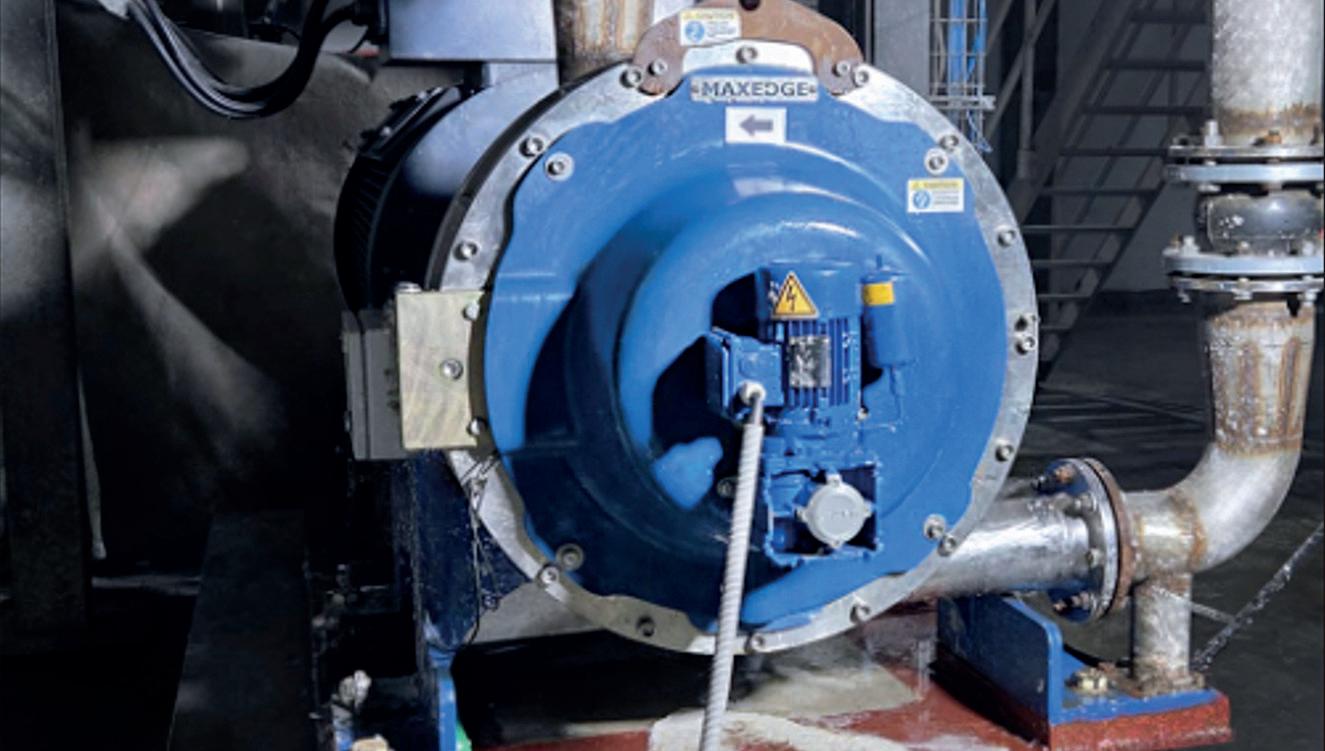
example of this partnership in action. Our ultimate goal is a satisfied customer.”
Marco Maier, production manager for papermaking at Essity Mannheim, added: “Introducing refining for beech pulp at our Mannheim site was a major step, and AFT proved to be a reliable and supportive partner throughout the project,
“They helped us navigate each process challenge and made the implementation easy. We’re very pleased with the results and the continuous collaboration.”
The Mannheim mill, founded in 1884, plays a leading role in Essity’s sustainability strategy, having achieved a 22 percent reduction in carbon dioxide emissions since 2005 and a 20 percent cut in energy consumption since 2007.
The addition of AFT’s refining system supports this ongoing commitment by improving product quality without compromising energy efficiency.
India packaging paper manufacturer Pakka Paper has made a key management appointment after committing to a revised US$77.8 million plan to expand its operations. Pakka has named Mayank Jindal as its new business head. In a statement, Pakka said: “Throughout his career, Jindal has demonstrated expertise in mill operations, process optimisation, and
continuous improvement, consistently driving efficiency, scale, and performance across organisations. His global experience and industry insight position him to contribute meaningfully to Pakka Limited’s operational excellence and sustainable growth initiatives.”
The expansion plan, called the Jagriti Project, is aimed at increasing capacity and the upgrade of existing facilities at its Ayodhya, Uttar Pradesh,
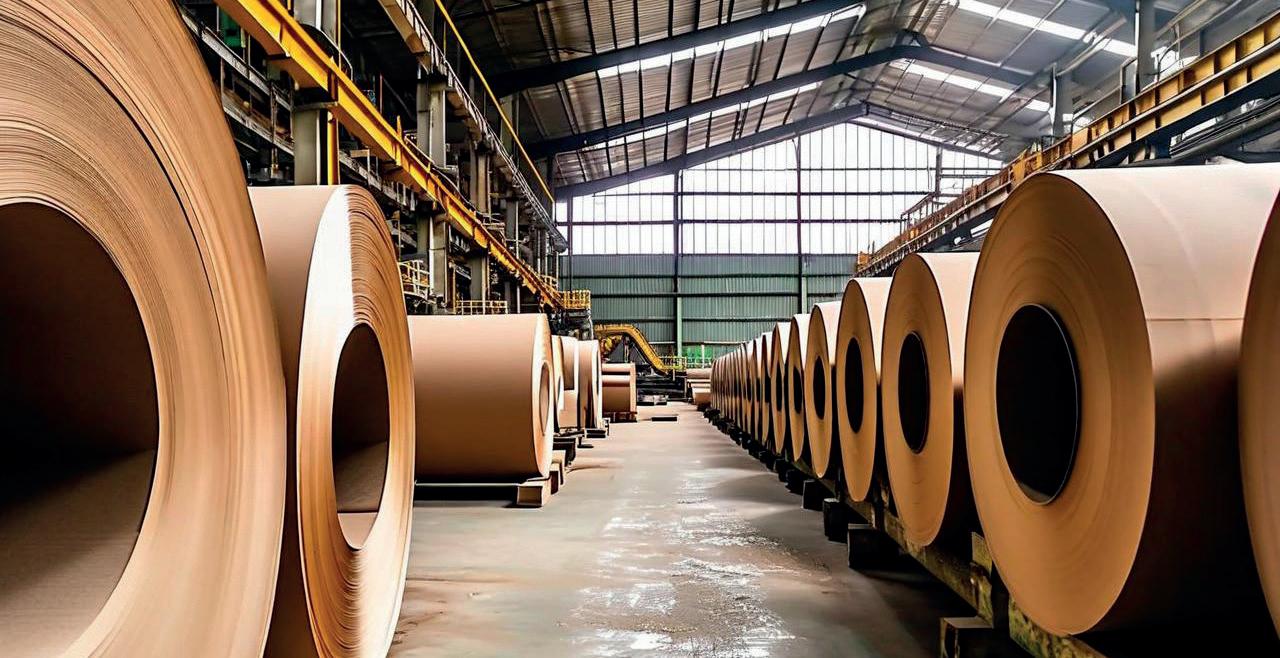
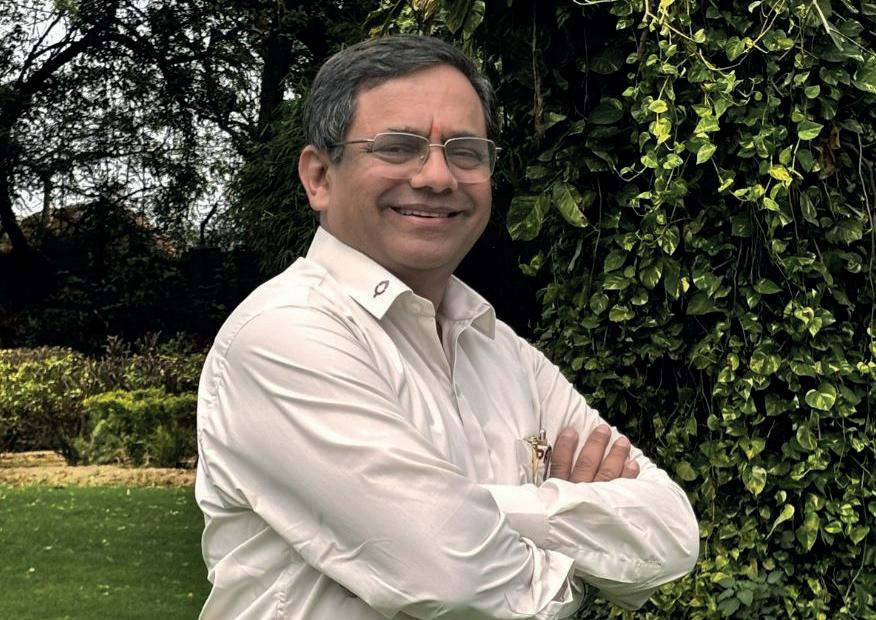
The project includes the installation of a new paper machine PM4, the upgrade and debottlenecking of its existing paper machines including its PM3, the modernisation of the pulp mill and allied processing facilities, the installation of captive power
WCP Solutions, which offers a range of paper products and services to customers in the north west US, has made a number of leadership promotions.
As part of WCP’s long-term leadership planning, Jon Thompson will move to a new role as manufacturing & print sales chief, to focus on manufacturing strategy and continued alignment between manufacturing, print, and sales efforts while remaining an active member of WCP’s executive leadership team. The move is the first step in a planned changes as Thompson prepares for retirement.
Jeff Zimmerman becomes sales & marketing chief. He has been with WCP since 2011 and brings a strong understanding of the company’s sales culture, customer relationships, and day-
to-day operations.
Tamara Ferguson has been promoted to vice president of vendor management. With more than 20 years of industry experience, she has played a key
generation plant, the chemical recovery, evaporation and related process systems, development of chemical recovery, evaporation and related process systems, and an upgrade of the effluent treatment plant.
Pakka Paper has annual global sales of about US$100 million.
role in supplier development, product strategy, and partner relationships across several areas of the business.
Jeff Larson becomes operations & IT chief, overseeing operations, purchasing, facilities, freight, and technology across the organisation.
“These changes reflect the strength of our leadership team and our continued focus on the future of WCP,” said chief executive Amy Swanson. “Each of these leaders has played an important role in the company, and we’re excited about the experience and direction they bring to these positions.”
















Pamela Murphy European Operations Manager
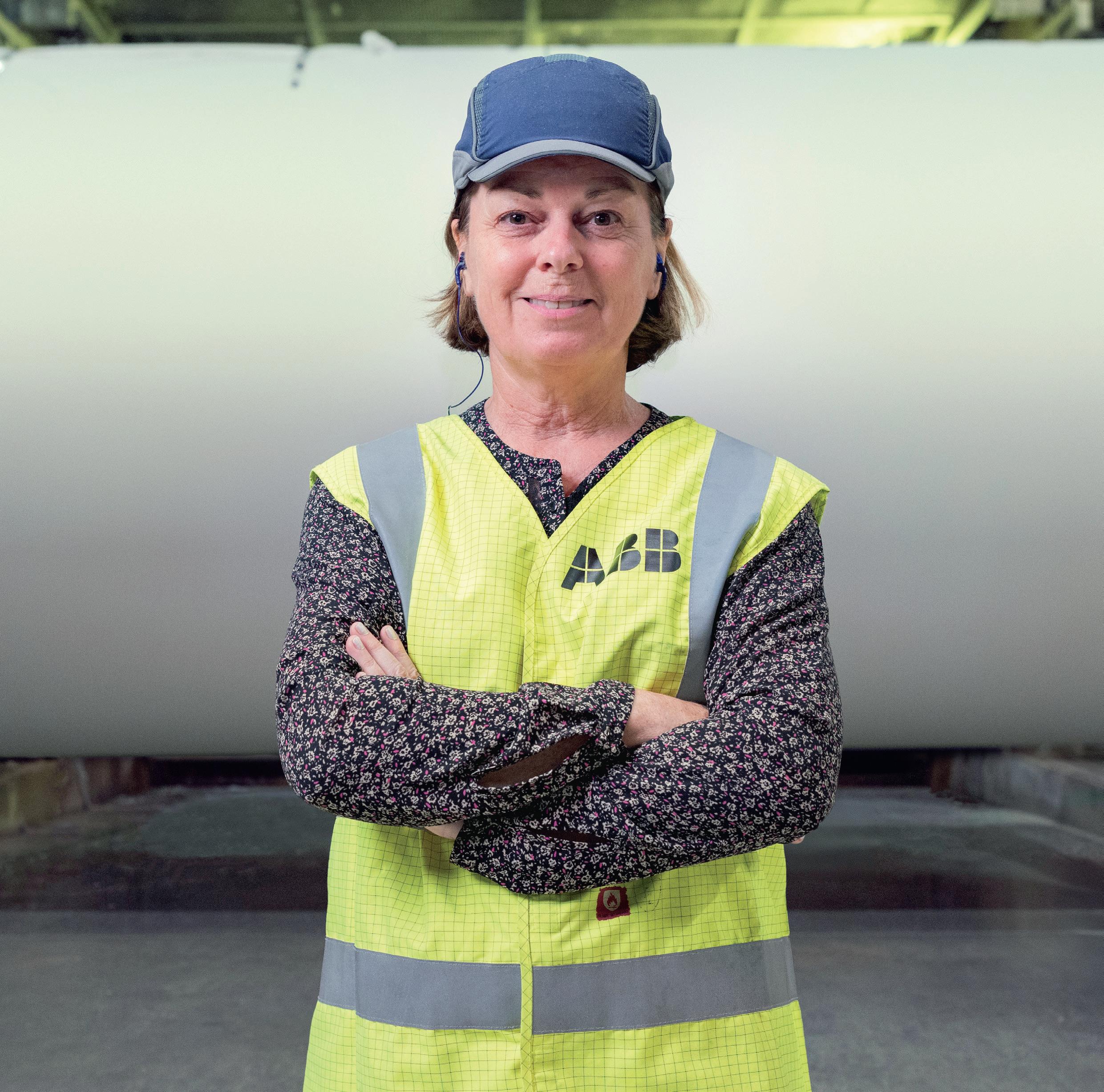








WE ARE GENERATION PAPER


In the world of pulp and paper, it’s people who unlock the greatest value.
Our 1,500 experts across 40 countries with their specialist knowledge and
Scan the QR Code to discover more
multi-generational experience, work shoulder to shoulder with customers to understand, consult and solve their biggest challenges.