


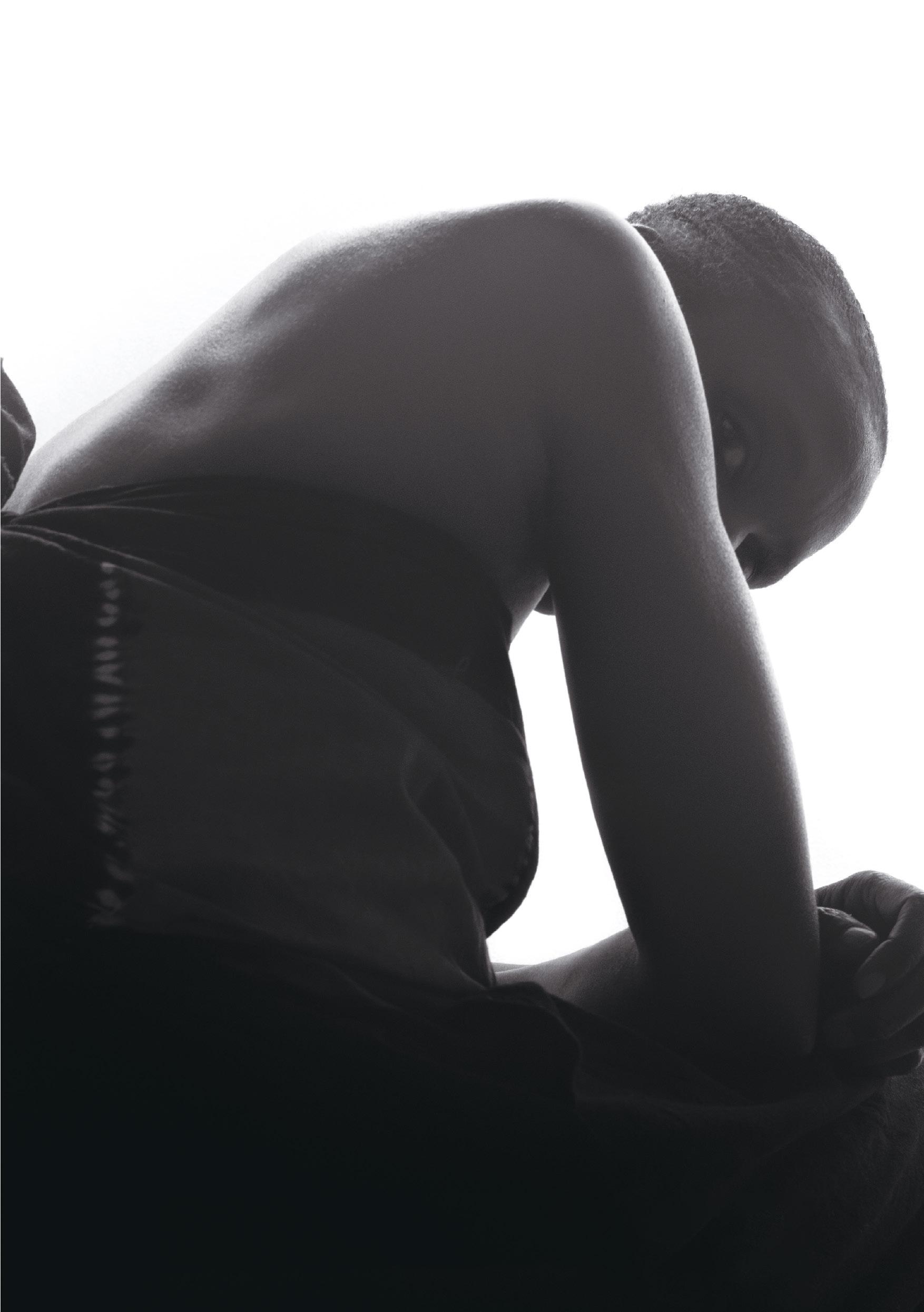

In 1692, Salem was the site of probably the most infamous ‘witch trials’ in North America. The playwright and screenwriter Zora Howard is giving a stage to one of the first accused in a rousing monologue: Tituba, a slave. Tituba had largely been forgotten by history before she became sadly renowned thanks to Arthur Miller’s The Crucible. In The Master’s Tools, she resists the many masters who have claimed her story for themselves –Tituba becomes the mistress of her own legend. There emerges a figure between horror and humour, between good and evil, with new words and new tools. For, as writer and activist Audre Lorde put it, ‘the master’s tools will never dismantle the master’s house’.
“Those of us who stand outside the circle of this society’s definition of acceptable women; those of us who have been forged in the crucibles of difference; those of us who are poor, who are lesbians, who are Black, who are older, know that survival is not an academic skill. […] It is learning how to take
our differences
and make them strengths. For the master’s tools
will
never dismantle the master’s house!”
Audre Lorde


27 / 28 / 29 May, 7 pm, 30 May, 6 and 9 pm
Theater Nestroyhof Hamakom
English
German surtitles approx. 50 min.
Please note
Recommended for ages 14+ Strobe effects will be used during the performance.
Q&A
28 May, following the performance
Text, Direction Zora Howard With Portia (Tituba), Julian Rozzell Jr. (Sound performer) Creative producer Martin Meccouri Scenography, Light design Reza Behjat Sound design Steven Leffue Costumes Raphael Regan
Stage Management Maimouna Camara Action choreography Sordelet Inc. Dialect coach Bibi Mama Translation surtitles, Surtitles Almut Mölk
Production Butler Electronics Supported by Wiener Festwochen | Freie Republik Wien, The Flea (New York City), Brown Arts Institute (Providence), The Perelman Arts Center (New York City), The New York State Council on the Arts, Chelsea Factory (New York City), Mercury Store (New York City), Kunstenfestivaldesarts (Brussels)
executed by the team of the Wiener Festwochen | Freie Republik Wien
Premiere May 2024, Wiener Festwochen | Freie Republik Wien
IN CONVERSATION WITH ZORA HOWARD
Tituba is a historical person from the era of the Salem Witch Trials at the end of the seventeenth century. What do we know about her? What drew your attention to this figure and fascinated you?
I am deeply intrigued by those characters in the American literary canon that exist in the margins, just outside of the action, witnessing all. Most widely known as a tertiary character in Arthur Miller’s 1953 play The Crucible, Tituba was a seventeenth-century Black woman enslaved by the Reverend Samuel Parris in Salem, Massachusetts. When rumours of witchcraft plagued the puritanical town, Tituba was amongst the first to be accused and imprisoned for her involvement in the ‘Black arts’. Though her influence on the witch trials was substantial, she is mostly forgotten in the historical record as well as the literary imagination. I was always curious to know more about her version of events. I imagined she would have so much to say about it all, if only someone thought to ask.
You then wrote a solo for Tituba herself to speak. Why exactly did you choose this form?
I chose this form in part because it was new challenge. I’d never written a one-person play and I was excited to learn its traps, to find my voice in the style. More than the writing challenge, however, the character herself is what drew me to the form. I wanted to hear Tituba’s singular voice and at length. In The Master’s Tools, Tituba alone will speak, defying the many masters that have laid claim to her story, centring instead her own subjectivity, her own violent truth.
You wrote and published the text a few years ago (when it was also staged for the first time), now you have decided to do your own staging of the text. How do writing
and directing come together in your artistic practice? How are these two forms of artistic expression related for you?
When writing The Master’s Tools, there were certain parts of the piece that were very clear in my mind’s eye: the specificity of Tituba’s workstation, the sounds of the environment around her and how they expand to become another character in the play. Those elements aren’t written in the text, and were worth exploring through direction, which for me is a very collaborative process. The playwright says: this is the story. My job as the director is to figure out how to honour that story and make it come alive.
The Master’s Tools as a title refers to Audre Lorde’s famous quote and text ‘The Master’s Tools Will Never Dismantle the Master’s House’. Could you elaborate a bit on this choice of title?
In her essay, Lorde posits that as the tools of the oppressor were built to uphold his systems of oppression, they cannot be used to dismantle what he has wrought. Thus, according to Lorde, we must find different tools, different methods by which to fight against those who oppress us. But Tituba has studied her oppressors for a long time, and she has studied their tools. And she has a different idea about it all …
What is Tituba’s role as a historical person for the future, what is her legacy?
Tituba disrupts the notion that the claim over history is a right reserved for a privileged few, encouraging each of us to be the agents of our own mythmaking.
Zora Howard is a playwright, performer, and director. She is rooted in the iterative processes of witnessing and telling. Her work centres around the themes of diaspora, Black cultural traditions, and relational intimacy. Often with a strong and incisive narrative voice, Zora commits to rendering lived truths not only legible but tangible on the stage. Her plays include STEW, BUST, HOLDING, and GOOD FAITH. Her projects have been developed at SPACE at Ryder Farm, The Lark, Ojai Playwrights Conference, Escola do Largo, and Cape Cod Theatre Project, among others. In 2020, her feature film Premature premiered at the 2019 Sundance Film Festival and was nominated for the Film Independent John Cassavetes Award, which she co-wrote with filmmaker Rashaad Ernesto Green. Zora Howard is inaugural Judith Champion Fellow at Manhattan Theatre Club, a former Van Lier New Voices Fellow at the Lark Theatre, a 2022 Lilly Award and Helen Merrill Award recipient and is currently under commission from the nonprofit theatre Seattle Rep, the Manhattan Theatre Club and Wessex Grove.
PUBLICATION DETAILS Owner, Editor and Publisher Wiener Festwochen GesmbH, Lehárgasse 11/1/6, 1060 Wien P + 43 1 589 22 0, festwochen@festwochen.at | www.festwochen.at General Management Milo Rau, Artemis Vakianis Artistic Direction (responsible for content) Milo Rau (Artistic Director) Text credits Original contribution, the interview was conducted by Iris Raffetseder (Dramaturgy Wiener Festwochen | Freie Republik Wien) in May 2024, Quote: extract of The Master’s Tools Will Never Dismantle The Master’s House by Audre Lorde, comments at “The Personal and the Political” Panel (Second Sex Conference, October 29, 1979) Translation Almut Mölk Picture credit Cover © Courtesy the artist Produced by Print Alliance HAV Produktions GmbH (Bad Vöslau)



 Main sponsors Public sponsor
Hotel partner
Main sponsors Public sponsor
Hotel partner
