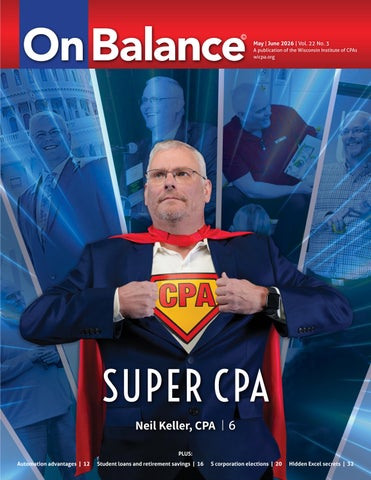
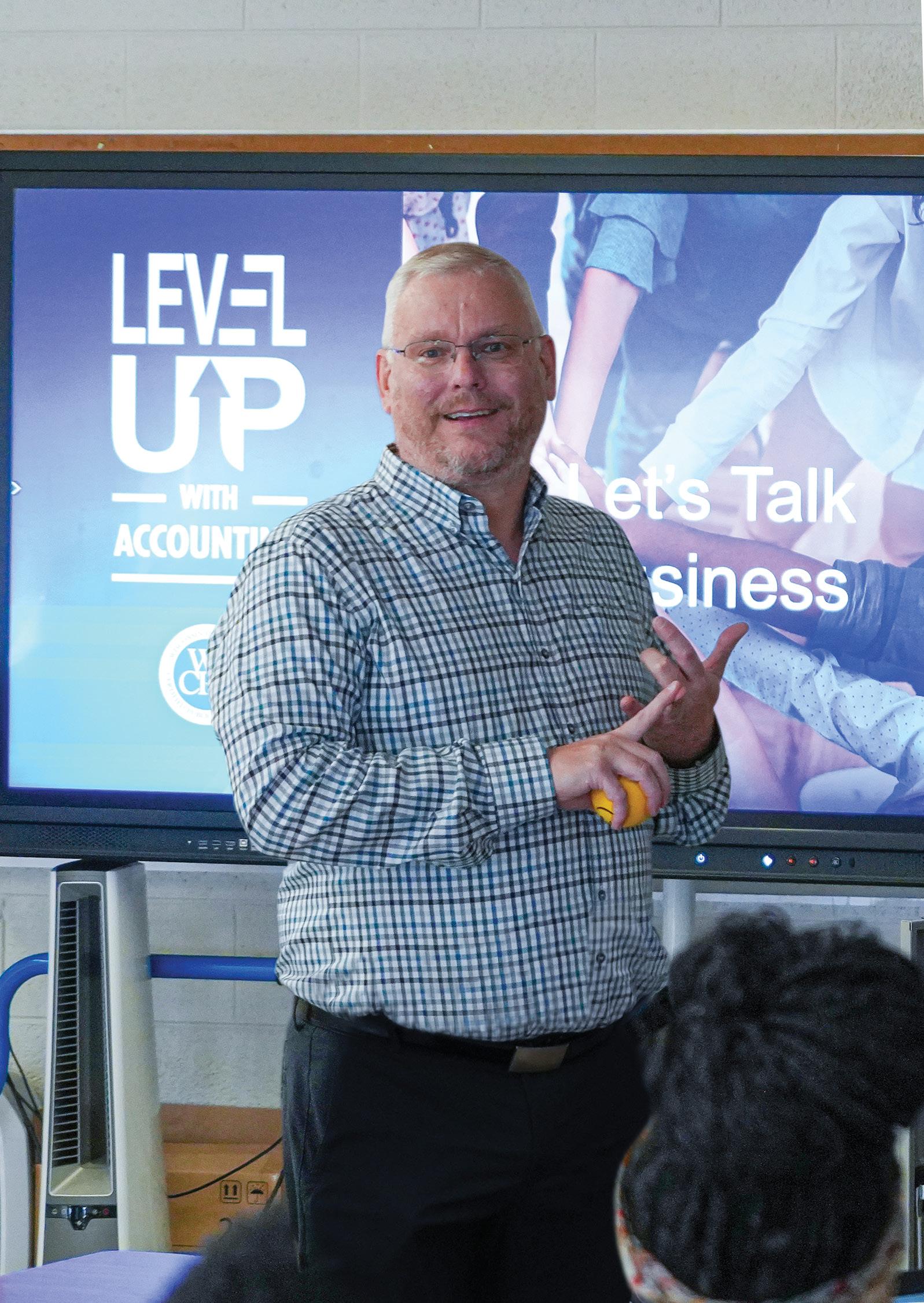
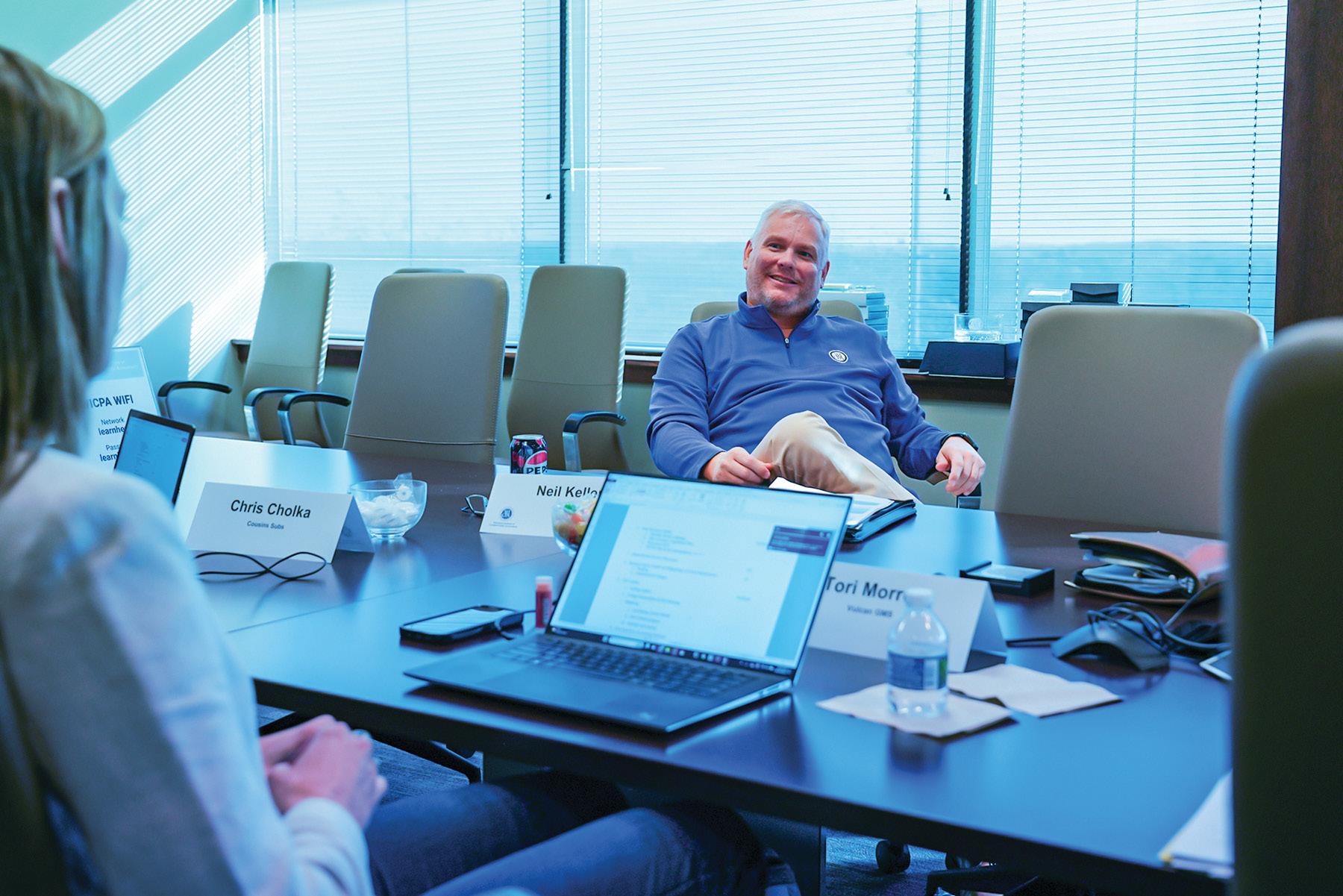
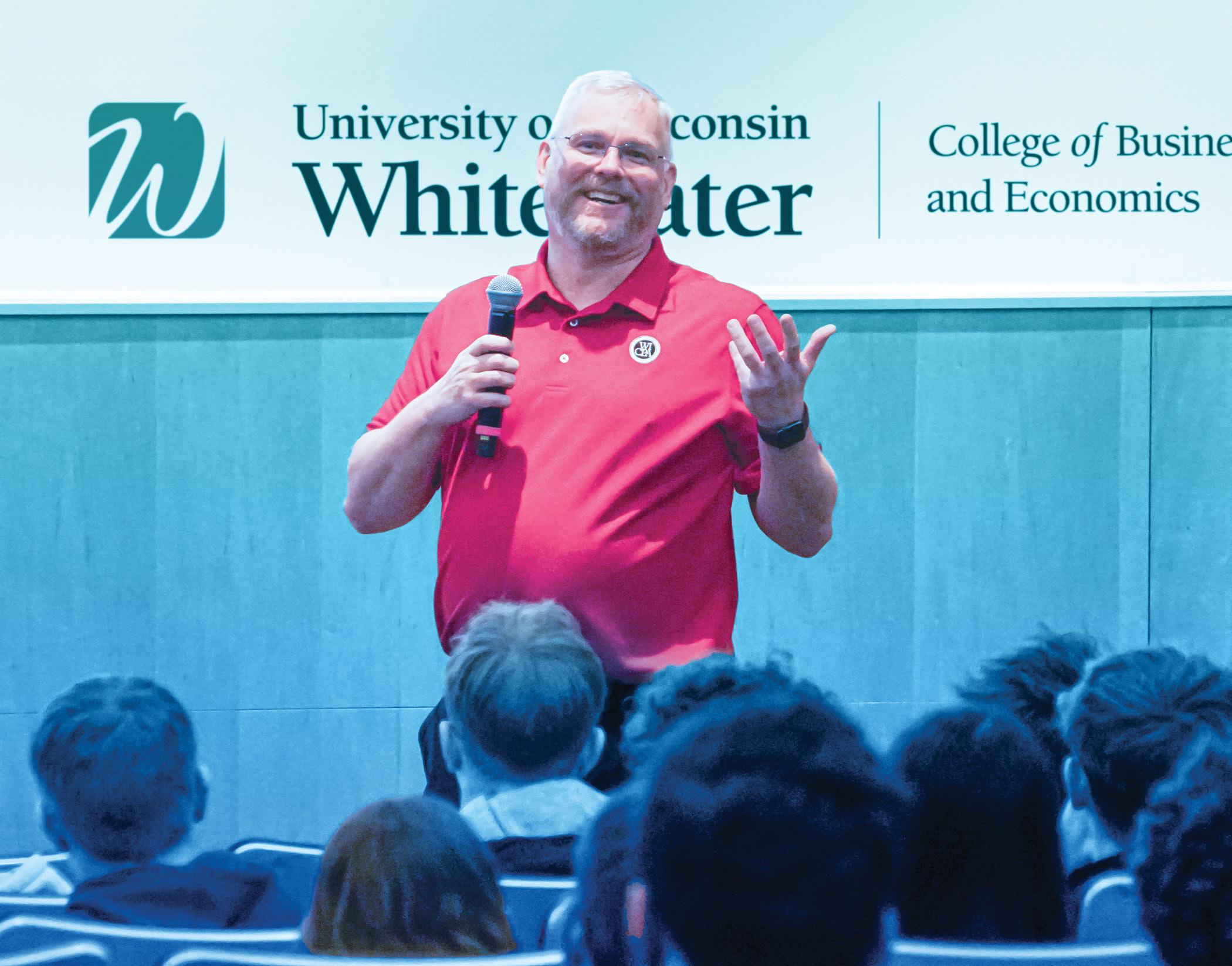
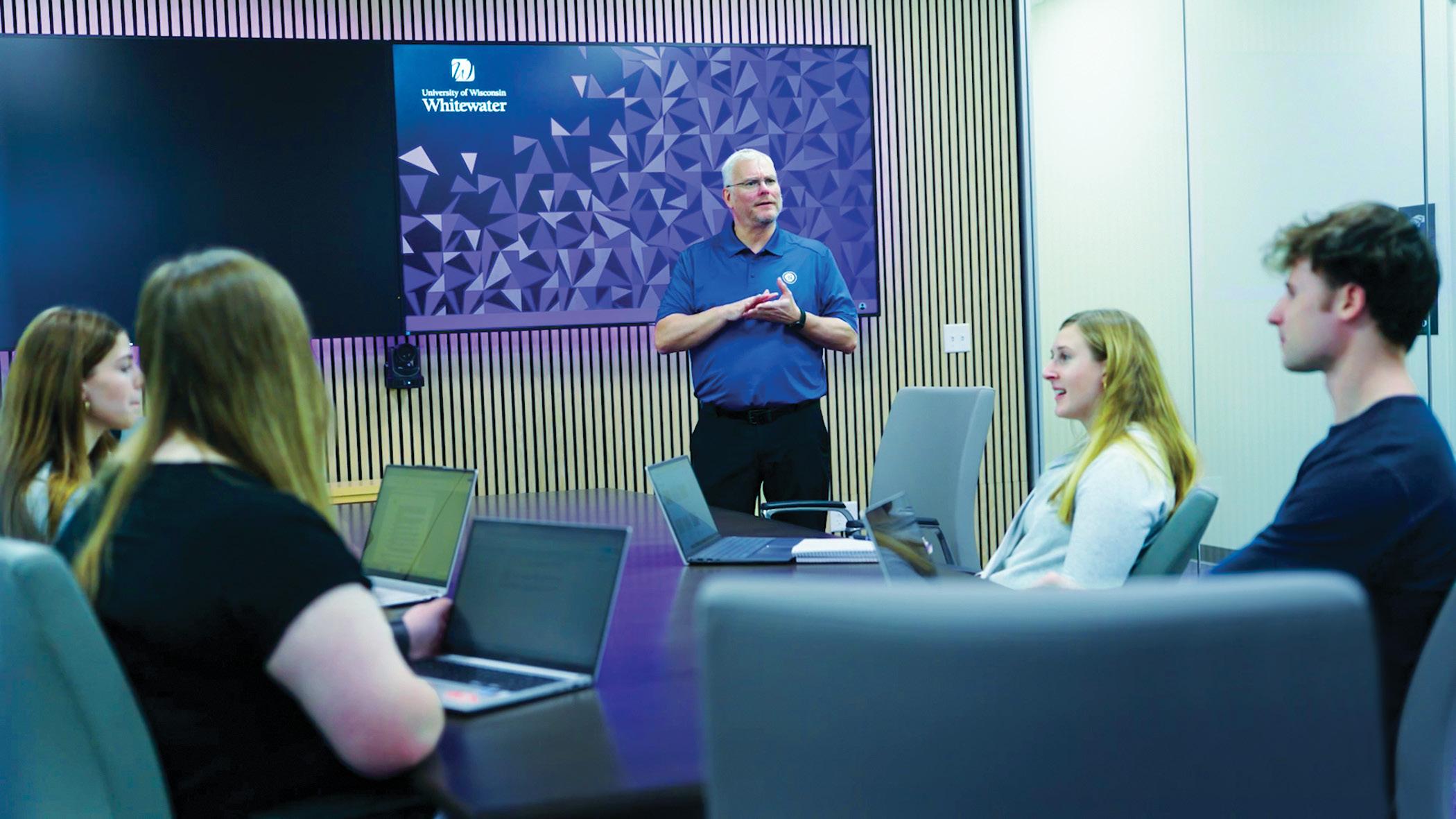
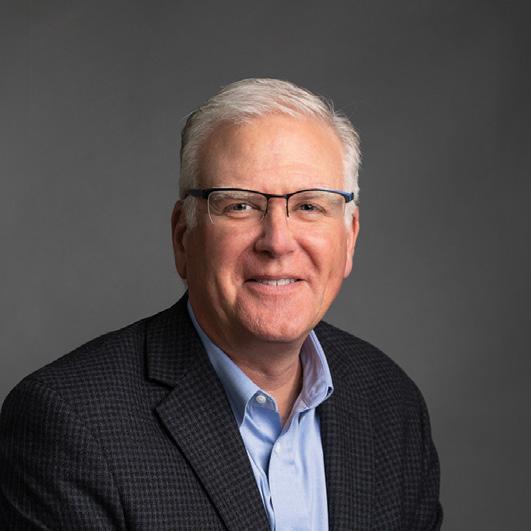
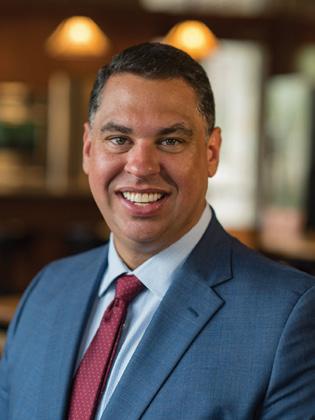
Neil Keller, CPA, lucked into the accounting profession and considers himself fortunate to serve again as WICPA board chair. Some CPAs knew as early as high school that their career paths would eventually lead to accounting, but for Neil Keller, it took a bit longer to reach that point.
By Brent Roberts
12 Decoding Agentic Automation:
From Ideas to Reality
Manual data entry, reconciling brittle spreadsheets and pulling data from disconnected legacy systems just to close the books is work performed simply to keep the business running. It offers zero strategic advantage to your organization.
By Mitchell Suter
16 When Student Loans Compete with Retirement: A Qualified Plan Design Solution
For millions, retirement savings is not competing with discretionary spending, it is competing with student loan payments.
By
Jon Hafemann,
CPFA, NQPC, (k)RS, CEPA
20 Setting the Record Straight on S Corporations
Making the jump from limited liability corporation to S corporation isn’t the right strategy for every business.
By Brian Kearns, CPA,
CFP, RIA
26 FINANCIAL REPORTING
Staying Ahead of the Curve: Key FASB Updates for 2026
This year brings several new FASB accounting updates, with a particular focus on changes affecting private companies.
By Angie Storm, CPA
28 TAX UPDATES
Hot Tax Practice, Procedure and Ethics Issues for 2026 and Beyond
As tax practitioners move through 2026, the practice environment is being reshaped by a number of converging forces: a recalibrated IRS enforcement staff, a fundamental shift in administrative law following a Supreme Court decision and continued scrutiny of professional conduct.
By Michael G. Goller, Esq.
32 TECHNOLOGY TIPS
Peeking Between the Parentheses to Discover Excel’s Underutilized Capabilities
Excel is underused — not because it lacks capability but because people may not seize opportunities to leverage its abilities.
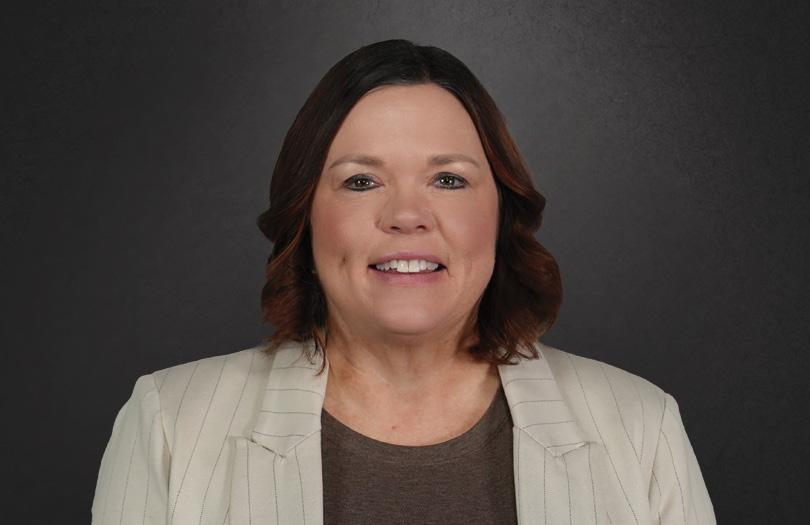
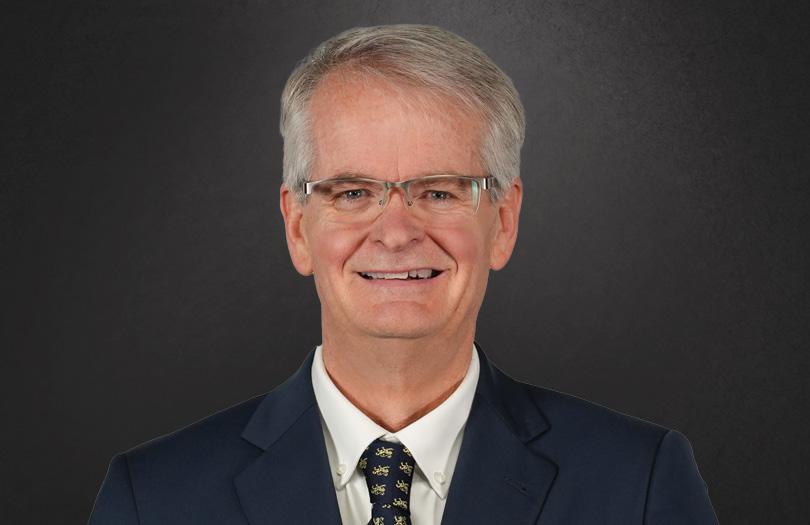
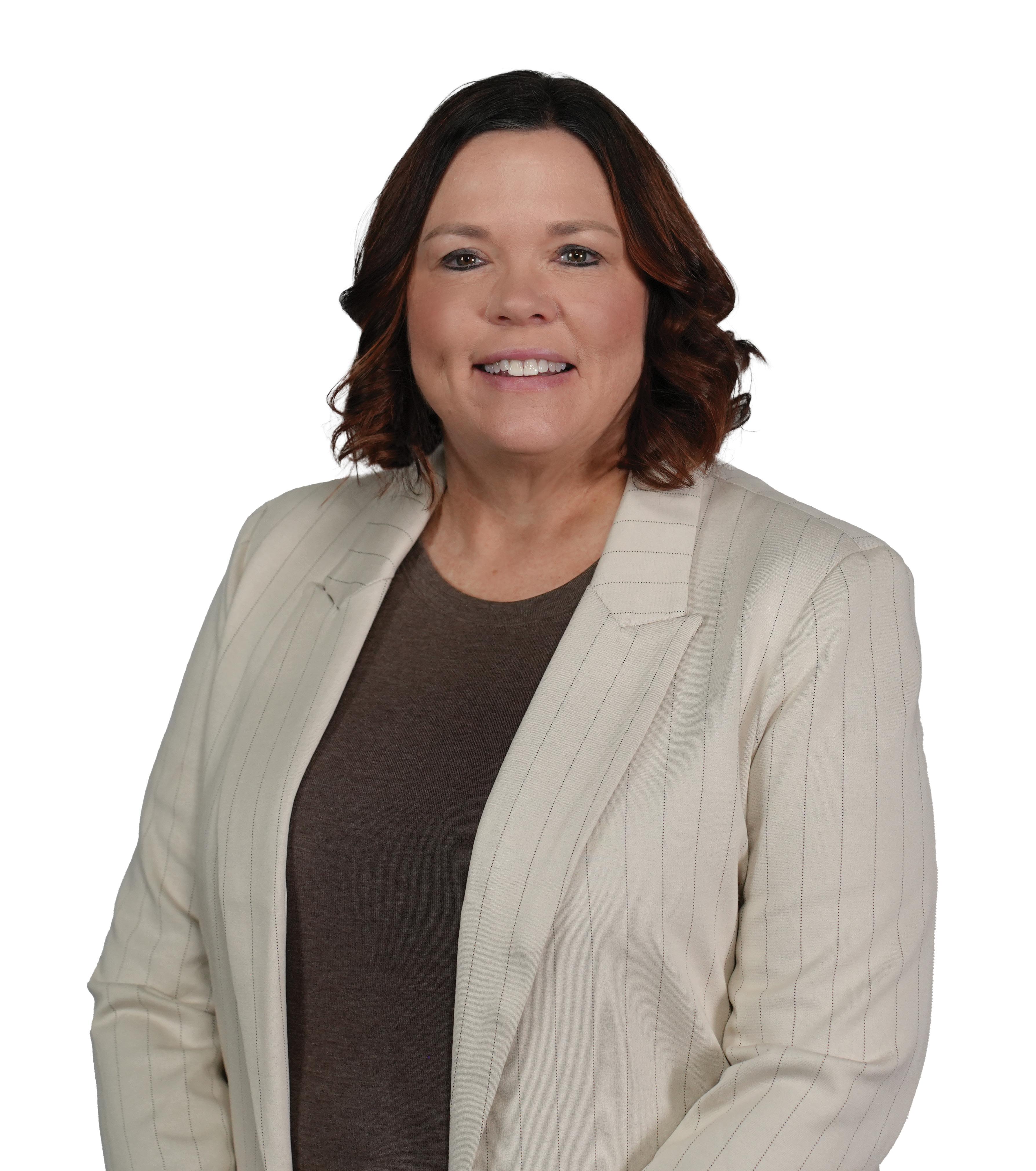
By Christopher Harper, DBA, CPA, MBA
36 FAMILY BUSINESSES
Truth, Tensions and Transitions: The CPA’s Role in Family Business Dynamics
Truth is often stranger than fiction — especially in family businesses. CPAs are regularly called into situations where the balance sheet is the least complicated part of the engagement.
By Jay Levine, CPA, CGMA
Outlook | chair’s letter
In Touch | president & CEO’s message
Memorials | departed members 25 Welcome | new members 35 Kudos | members in the news
If you have not yet renewed your 2026–2027 membership, visit wicpa.org/renew for quick and easy online payment to keep your valuable member benefits coming, including On Balance magazine.
Pay your dues in the “My WICPA” section on the WICPA website. For information regarding your membership, contact Grace Hein at 800-772-6939 ext. 4517 or membership@wicpa.org.
“With the rapid changes happening in the accounting profession, like AI or the new CPA pathway, I want to make sure that the CPAs of today leave the profession better than we found it.”
What Is Your Why?
By Neil Keller, CPA
As I look forward to the upcoming year, I have had a lot of people ask me why I wanted a second term as board chair. Great question! If you are fortunate to have a long career in public accounting, it is likely that your “why” changes as you evolve. My “why” is not a singular concept but a journey I’ve taken in my 30 years in the profession.
Early in my journey, I was focused on my career and what I needed to do to be successful. My “why” was focused almost solely on myself. I joined a WICPA committee to help make decisions that would better me. I joined the board because of how I thought it would look on my résumé. I attended events to meet people who could build my network.
I guess there is nothing like being young and ignorant. What I found is that I didn’t really enjoy what I was doing, my ideas lacked the substance to be useful, and I really didn’t make the connections I thought I would. However, even amid what I would consider a failure, I not only learned what not to do but also the power of being involved in your career. With that newfound wisdom, I was ready to try again.
As I advanced in my career, I quickly learned that our profession was less about numbers and more about relationships. As I got more involved with the WICPA, I learned about the great things the organization was doing for accountants to keep our profession safe. I was hooked. I rejoined the board, this time with my “why” focused on the profession. This period was the most rewarding time I have had professionally. I got involved in lobbying at the state and federal level and really felt like I was making a difference. I met so many people during that time period and built strong friendships, which then more naturally became good business relationships. This period culminated in my first term as WICPA board chair.
We were doing so many great things and had so much momentum as a profession … and then, COVID. The
accounting world we all knew changed in a way none of us could have fully comprehended. In the face of this, I was even more determined to be involved in leading the profession through these uncharted waters. I knew the WICPA would call on me whenever they most needed me, and the WICPA knew that I wouldn’t say no.
Then something happened that once again changed my “why.” My children did the unthinkable … they got involved in the accounting profession! Even after assuring us for her whole life that she would NEVER be an accountant, my youngest daughter is now an accounting major at UW–Whitewater, from which both my wife and I graduated with accounting degrees. My oldest daughter kept her promise to never be an accountant, but she does share my passion for the profession and the organization she grew up with — as the membership outreach coordinator with the WICPA. From then on, my WICPA involvement had a whole different meaning. While I still wanted what is best for today, my “why” had changed to focus on the future path for the profession.
With the rapid changes happening in the accounting profession, like AI or the new CPA pathway, I want to make sure that the CPAs of today leave the profession better than we found it. That is my motivator to have the opportunity for a second term and will be my guiding light during this critical and exciting time.
I encourage all of you to think about your “why.” Be a helping hand in keeping the accounting profession strong now and into the future. Individually, we can be successful, but together, we can be unstoppable!
Neil Keller, CPA, is a principal at Sikich and the WICPA board of directors chair. Contact him at neil.keller@sikich.com or 262-317-8578.
“As
your professional association, our role is clear: to support you, advocate for you and help you thrive — no matter where you are in your career or how the profession evolves.”
A New Fiscal Year, a Renewed Commitment to Our Members
By Tammy J. Hofstede
As we begin a new fiscal year, I want to take a moment to thank you — our members — for the strength, integrity and professionalism you bring to the profession every day. Your work matters. It matters to your clients, your organizations, your communities and the future of our profession.
The past year reminded us that change is no longer an occasional disruption — it is a constant. From evolving standards and regulatory pressures to rapid advances in technology and shifting workforce expectations, our profession continues to adapt at an unprecedented pace. Through it all, CPAs have remained trusted advisors and steady leaders. That is no small accomplishment.
As your professional association, our role is clear: to support you, advocate for you and help you thrive — no matter where you are in your career or how the profession evolves.
Priorities for the year ahead
This new fiscal year is grounded in purposeful action, guided by member feedback, volunteer leadership and a clear commitment to delivering value at every stage of your career.
Advocating for the profession
Strong advocacy remains central to our mission. We will continue to represent CPAs at the legislative and regulatory levels, protecting the CPA license, promoting sound policy and ensuring the profession’s voice is heard. Your credibility as CPAs gives weight to that advocacy, and we are proud to carry it forward on your behalf.
Elevating professional excellence
We are committed to delivering high quality education that is timely, relevant and practical. This includes supporting both technical competence and the expanding advisory role of CPAs. From evolving standards and tax developments to technology, leadership and emerging service areas, our goal is to help you stay ahead in a changing profession.
Strengthening the CPA pipeline
The future of our profession depends on the next generation. This year, we will continue investing in student and candidate outreach, educator partnerships and early career engagement. We are also actively supporting pathways into the profession that are flexible, inclusive and reflective of today’s realities.
Building a connected, supportive community
Beyond education and advocacy, our association is a place to belong — it’s a professional home. In the year ahead, we will continue creating spaces — through events, committees, conferences and networking experiences where members can learn from one another, build relationships and lead together.
Leading with purpose — together
One of our greatest strengths is our volunteer leadership. Members who step forward to serve on boards, committees and task forces bring real world insight that keeps our work grounded and relevant. This year, we will continue listening closely, measuring outcomes and adjusting where needed — because member value must always guide our decisions.
We also recognize that work–life sustainability, mental well being and workplace culture are no longer side conversations; they’re business imperatives. Our programming and resources will continue to reflect that reality. WICPA remains committed to supporting the whole membership — professionally and personally.
Looking ahead with confidence
The profession has weathered economic cycles, regulatory shifts and technological revolutions before — and each time, it has emerged stronger. With your talent, adaptability and ethical foundation, I am confident in what lies ahead for the profession and for the WICPA.
On behalf of our board, volunteers and staff, thank you for your continued trust and engagement. Your membership strengthens not only this association but also the profession itself.
Here’s to a new fiscal year filled with opportunity, progress and impact!
Together, we lead the profession forward.
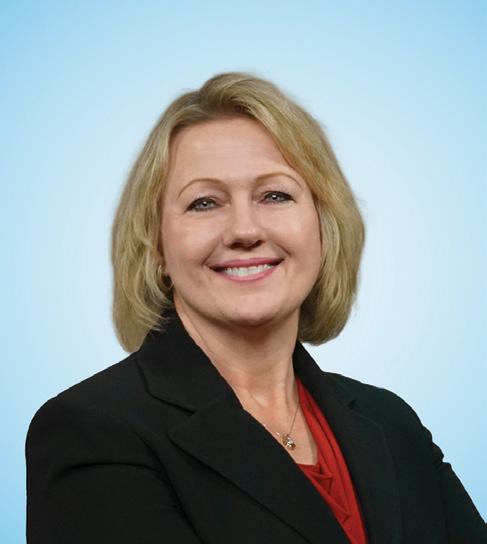
Tammy J. Hofstede is president & CEO of the WICPA. Contact her at 262-785-0445, ext. 4518, or tammy@wicpa.org.
Thank you to our Reading Makes Cents & Accounting Careers Month volunteers!
Brian Barrett
Allison Buchholz
Paige Dassow
Erin Dombeck
Ellyn Dunne
Collin Eichinger
Lynn Fischer
Sheila Fisher
Jessica Fritz
Lisa Hansen
Chad Helminger
Patricia Holland
Neil Keller
Thom Kieffer
Angela King
Nicole Kraus
Lynn Krueger
Brittany Leonard
Amanda Linehan
April Menz
Kayla Nabbefeld
Terra Naumann
Christopher Olson
Carin Pardun
Kale Post
Valerie Schroeder
Andrew Schuessler
Sali Sheafor
Denise Statz
Angela Thomas
Brenna Van Rooy
Denise Vandenbush
Julie Wolfe
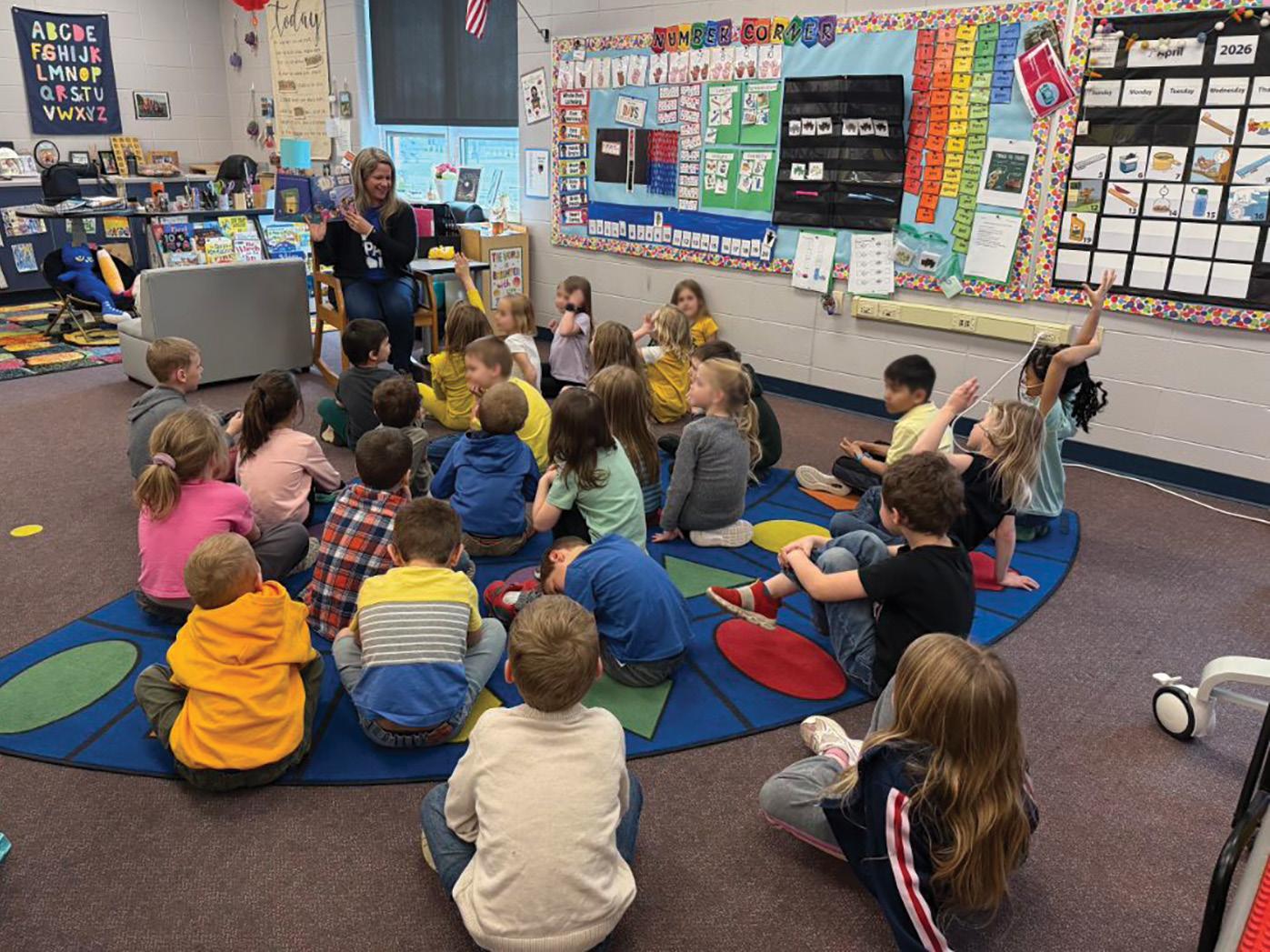
WICPA member Sheila Fisher, CPA, reads to young students about money and saving for the Reading Makes Cents program.
Neil Keller, CPA, lucked into the accounting profession and considers himself fortunate to serve again as WICPA board chair. “
By Brent Roberts
Some CPAs knew as early as high school that their career paths would eventually lead to accounting, but for Neil Keller, CPA, incoming chair of the WICPA’s board of directors, it took a bit longer to reach that point.
Keller recalled, “I lucked into it. I did not take any accounting classes in high school. Coming out of high school, I knew I wanted to do something in business, which is why I picked University of Wisconsin–Whitewater … I knew they had a good business program.
“I actually thought I was going to be an international business major since I had four years of Spanish, and I knew I wanted to do something in business, so I figured, Let’s combine those two together, and it will be great; I’ll use my Spanish to make the world a better place.”
A major decision
During his senior year of high school, Keller received a WICPA scholarship, and the key requirement was that he had to be an accounting major, which, according to him, “wasn’t a big deal because the courses were really the same for both accounting and international business majors, so I declared as an accounting major.”
He added, “Then a funny thing happened after I got to Whitewater. I took my first Spanish class and absolutely hated it even though I did well; then I took my first accounting class and absolutely loved it. Everything made sense, and it just hit home for me. I never really looked back. So, I truly did luck into it, which is why I’m so passionate about speaking at schools — I want to make sure that others are aware of the profession and know that it’s a viable career, so they don’t just have to luck into it, as well.”
As Keller reflected further about talking to young people, he said, “I think there’s some misconception when you talk to students. If you ask them about what a doctor does or what a lawyer does, they have a pretty good idea, but when you ask what a CPA does, maybe not as good. So, there’s a little bit of misconception, but there’s a lot of I don’t knows, and I was at that place in high school, too, so I like to tell my
So, I truly did luck into it, which is why I’m so passionate about speaking at schools — I want to make sure that others are aware of the profession and know that it’s a viable career, so they don’t just have to luck into it, as well.
story — why it’s a great career — and encourage them to keep moving forward with it.”
A journey on the tax path
Keller started his career at Vrakas, Blum & Co. as an intern, got a job offer and went back there right out of school. He did both audit and tax and got exposure to other areas of accounting like valuation, cost segregation and some IT consulting but ultimately kept coming back to tax, and he did that for the first 13 years of his career. From there, he became a tax partner at Kolb & Co. and headed up their tax department until they were bought by Sikich (which is where he is now), and then he became head of tax for all of Sikich. He held that role for about 10 years, including navigating them through the pandemic, and in 2024 shifted back into more of a compliance and client-facing role until “the leadership bug bit me again, and I was asked to be the tax leader of the manufacturing service pillar.”
Rewarding relationships
While the strategic, tactical and technical aspects of the profession have always appealed to Keller, it’s the people that really keep him inspired.
“I love the role I’m in now because it focuses on how much of the profession is relationship driven,” he said. “Whether that’s building trust with my clients or my team,
we’re working together to move forward to success, so it’s a nice role because I get both the team and the client aspect, and I’m a relationship guy, so building that trust and confidence on both sides is really important to me. When I see that success, for example, a staff person moving up the ranks to become partner one day, or I see the client become very successful, I have self-satisfaction.”
Keller also expressed gratitude for his varied experiences.
“If I came up straight through tax, I think I would have known the tax stuff really well, but I might have missed some of the other stuff, like when I’m talking to a client about succession planning,” he noted. “If I didn’t have that valuation background, I would probably be coming from a different place. I do like the fact that I’m a little bit more well rounded, and even just my time in audit — being able to tell you the debits and credits of the transaction — oftentimes allows for solving the problem.”
Big changes and bigger opportunities
While some aspects of accounting have remained largely unchanged over time, other areas have evolved by leaps and bounds.
“Technology is the big one for me,” Keller said. “It blows my mind, and it really blows the students’ minds when I tell them that when I started, we shared a desktop computer and had to reserve time to work on it. And now I’ve got my
“
Own your profession. I’ve always had intellectual curiosity, meaning I always wanted to know the ‘why’ behind things.
laptop, my phone, my three monitors — the speed of technology and the advancements we’re seeing, not only with hardware and software but with AI, are moving so rapidly, and it’s a really big challenge to stay on the right side of it.
“Students now are very comfortable with technology, and they’ve seen the changes for themselves firsthand, so they’re very adept at trying new things. That gives them a great advantage as long as they lean into it and take ownership of that technology.”
Beyond the advice to take ownership of technology, Keller also advocates that students think even bigger. “Own your profession. I’ve always had intellectual curiosity, meaning I always wanted to know the ‘why’ behind things. For example, AI. Somebody comes in, and they have intellectual curiosity about AI, and they want to know all
Photos provided by the WICPA
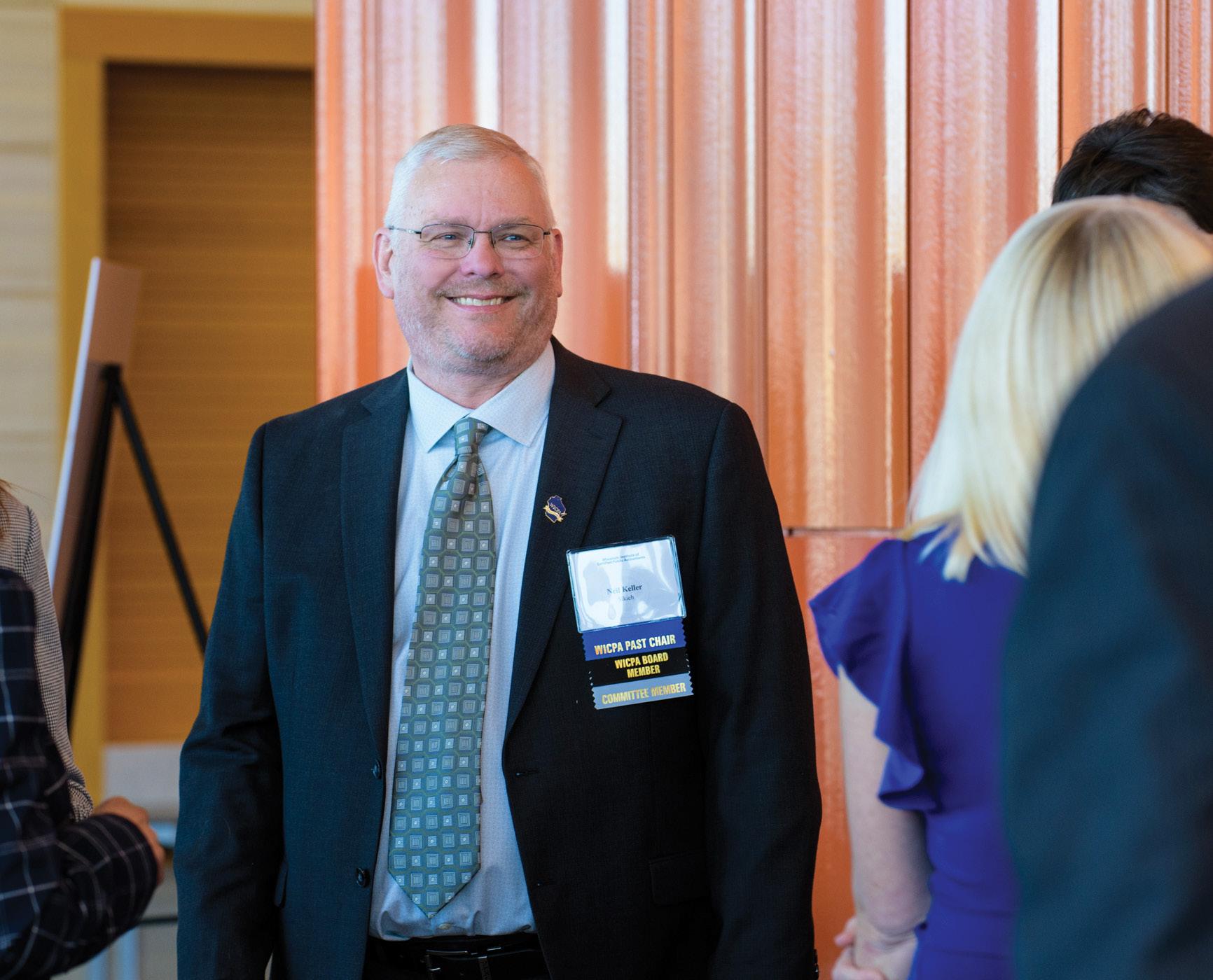
Keller speaks with UW–Whitewater accounting students about the accounting profession.
better our profession, the economy, the community or anything else within my sphere of influence at the CPA level, is incredible. People put a lot of trust in us, and they’re relying on us to make sure things run smoothly.”
As for the motivation behind serving as board chair for the second time, Keller noted, “My last term ended pretty abruptly with COVID, and I feel like I’ve got a little bit of unfinished business. Also, there are so many rapid changes going on in the profession, like the new pathway to becoming a CPA and AI and the speed of technology, and I think all of my involvement at so many different levels has put me in a really good position to help lead the profession through this time of change.”
What can WICPA members expect from Keller during his tenure?
they can about it. Don’t be afraid it’s going to replace your career; it won’t if you own it and use it to your advantage.”
Keller also cited involvement as a great way to enhance professional opportunities. “I think the WICPA is a perfect way to do that,” he shared. “My involvement started with just joining a committee. It became very obvious to me that I could help lead the path to where the profession is going, or I could just follow what somebody else was doing, and for me, I always wanted to help lead that path.”
So, what are the best parts about being actively involved with the WICPA?
According to Keller, “The first thing I think about is that there have been a ton of really great people, and that has helped me professionally but more so with building strong relationships and friendships along the way.
“I’ve spoken to classes and brought awareness to the profession and shared information about financial literacy. I’ve been actively involved with lobbying at both the federal and state levels, and being involved with pending legislation to help protect and advance the accounting profession is something that’s very meaningful to me. I’ve played a lot of different roles, and each one has had its own value.”
He added, “What we do is really valuable, and it does impact businesses, and that is something we have to take very seriously. From my perspective, anything I can do to help
“The members, and others, can expect that I will always approach accounting with a smile. I’m very positive about the profession. I’ve been blessed with a great career, and I don’t take that lightly. I believe in the profession. I’m passionate about the profession. I’m going to be looking for every chance I get to be in front of members and students and whoever will listen to me, sending the message about just what we have here in the profession.”
As Keller continues finding ways to inspire his colleagues and the next generation of accountants, he also recalls with fondness someone who inspired him during his career.
“There have been many, but one who influenced me at various points in my career was the late UW–Whitewater accounting professor Robert Gruber. I was lucky to have him as a teacher and, later in my career, a peer when he was the WICPA board chair. What I really took from him was just how much he cared for the profession and the people he
“
It became very obvious to me that I could help lead the path to where the profession is going, or I could just follow what somebody else was doing, and for me, I always wanted to help lead that path.
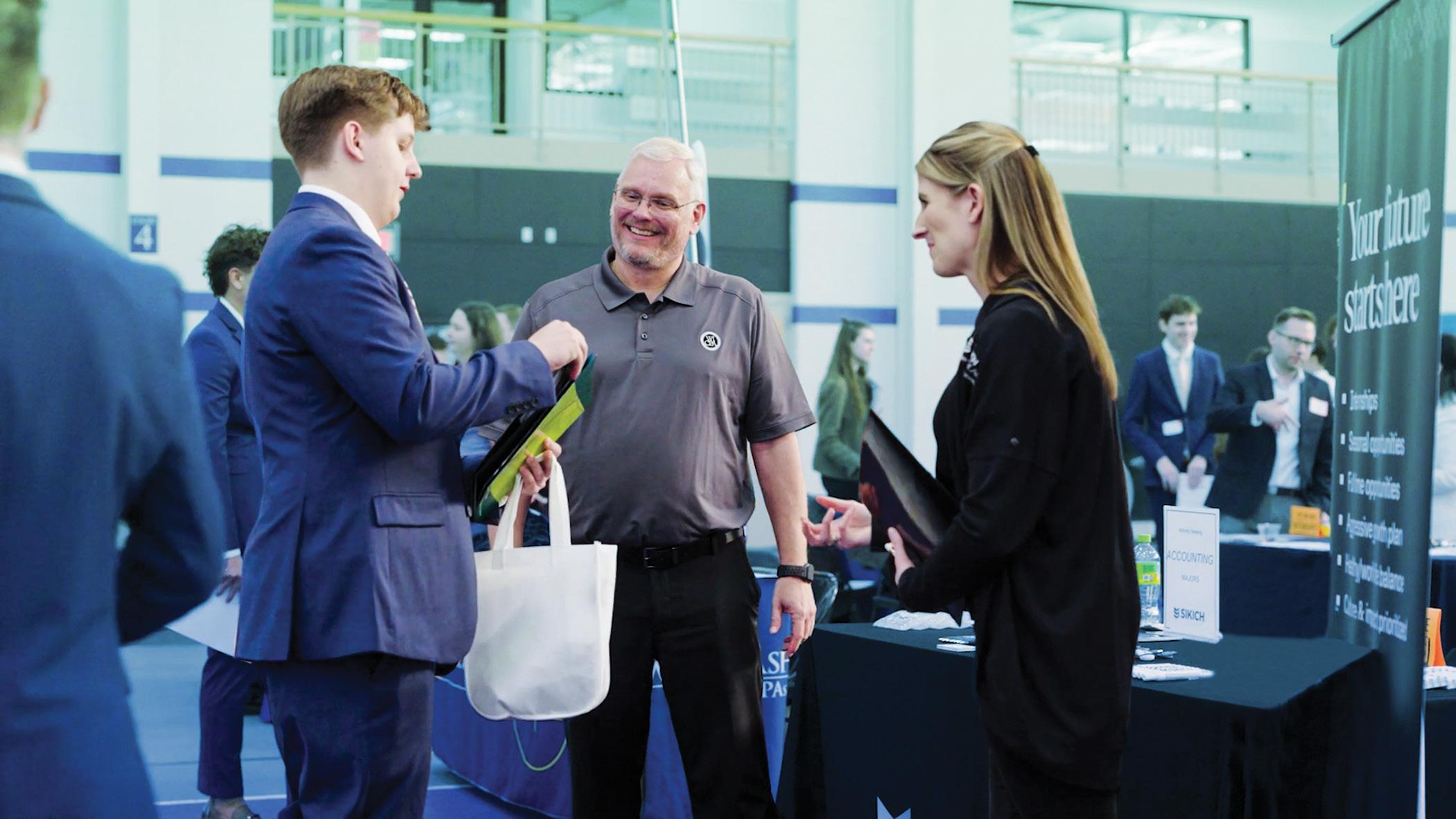
Keller talks to a student about accounting at the UW–Whitewater Career Fair.
interacted with, and that was very powerful to me and made me want to carry on that passion.”
When he’s not in the office or volunteering, Keller strives to balance work and fun with the same consistency he uses to balance debits and credits.
“I love video games! To me, they’re a great stress relief, and they really help me think strategically. It’s also a good reminder that if something isn’t working, you can’t solve the problem doing the same thing over and over again, and you need to do something different and think outside the box to get to an answer.”
In Keller’s case, video games aren’t the only kind that have
“
My goal now: When I actually do end my career in accounting and move onto whatever is next in my life, I want to look back and honestly say that the profession is better now than when I found it.
Registration Now Open!
4-PERSON SCRAMBLE
$95 per Golfer
$380 for Foursome
REGISTRATION INCLUDES
18 Holes of Golf With Cart
Practice Greens & Driving Range
Continental Breakfast & Lunch
Beverage Vouchers
Hole & Event Contests
Entry in Prize Drawings
Awards Reception & Appetizers Register
SCHEDULE
8:30
& EVENT PRIZES
$1,000+ in Drawing Prizes
$500+ in Individual Prizes
$500+ in Team Prizes
$500 Inside the Circle Contest
STRENGTHEN YOUR NETWORK
Consider creating a team with co-workers, clients or other professional connections for some quality time out of the office.
Introducing your 2026–2027 WICPA Board of Directors
The WICPA board of directors provides strategic governance in accordance with the WICPA strategic plan, mission and vision. The board ensures the WICPA serves the diverse needs of members, enhances professional competency, promotes the value of members and the profession, advocates on behalf of the profession and builds community among members. New members began serving after they were elected May 8, 2026, at the Member Recognition Banquet and Annual Business Meeting.
Neil R. Keller, CPA, Principal, Sikich LLC, Brookfield
Shareholder, Scribner,
Michael D. Donahue, CPA,
DIRECTOR
Jeffrey T. Lemmermann, CPA, CITP, CISA, CEH, senior information assurance auditor and consultant, SynerComm Inc.
Kale Post, CPA, MPA, Sr. Manager, Dwayne Johnson & Associates
Principal, Baker Tilly
SECRETARY/TREASURER
Christopher M. Cholka, CPA, CGMA, Controller, Cousins Subs
DIRECTOR
Sali L. Sheafor, CPA, Managing Partner, TAP Consulting LLC
Northland CPAs S.C.
Decoding Agentic Automation: From Ideas to Reality
By Mitchell Suter
Imagine it is the early 1900s, and you own a successful brewery in Europe. You have a spectacular recipe and loyal customers, but you face a critical problem: The public power grid is incredibly unreliable. Out of sheer necessity, you buy a massive generator, hire a team of electricians and sink a huge chunk of your capital and operational bandwidth into sourcing coal just to keep the production lines moving.
But here is the harsh reality of that investment: Generating your own electricity did not make your beer taste one bit better than your competitor’s. It was simply undifferentiated heavy lifting
Look around your own organization today. Out of that same necessity, how much of your team’s time — how much of your time — is spent on the modern equivalent of generating electricity? Manual data entry, reconciling brittle spreadsheets and pulling data from disconnected legacy systems just to close the books is work performed simply to keep the business running. It is undifferentiated, and it offers absolutely zero strategic advantage to your organization.
The agentic enterprise and mission-critical impact
Over the last few years, we have seen an explosion of promise and expectations around large language models. Yet for all their brilliance, they have mostly been confined to passive roles — acting as desktop copilots and overeducated autocomplete tools for drafting polite emails.
In the Agentic Era, we must safely integrate these reasoning capabilities directly into our core operations to build a scalable digital workforce. This is not about replacing your team; it is about augmenting human work. By allowing autonomous agents to handle the undifferentiated heavy lifting, your organization is finally free to focus its human expertise on driving the outcomes that actually matter — whether that is maximizing market share or delivering critical services to the public.
“
By allowing autonomous agents to handle the undifferentiated heavy lifting, your organization is finally free to focus its human expertise on driving the outcomes that actually matter.
The bonfire of capital
Unfortunately, the initial corporate rush to embrace AI has largely missed this promise. A recent MIT study, “The Gen AI Divide,” revealed a staggering reality: Global enterprises have spent between $30 and $40 billion on AI in the last few years, yet 95% of them are seeing absolutely zero measurable ROI.
That is a bonfire of capital.
This massive failure happened because companies treated generative AI as a software purchase rather than a strategic transformation. They bought disconnected point solutions, chased “glamour” projects in marketing instead of tapping the highly measurable back-office ROI, or tried to build complex AI infrastructure from scratch.
To avoid becoming part of that 95%, you need a transparent accounting of exactly what it takes to drive real outcomes. To avoid this trap, I am going to provide you with the blueprint — the Agentic Enterprise Framework — which is built on three non-negotiable pillars:
Pillar 1: the strategic blueprint
Pillar one is the strategic blueprint, marking the official end of isolated AI science projects. It acts as your strategic rule book, ensuring your organization is structurally and financially prepared for a digital workforce before spending a single dollar on technology. To build this foundation, your blueprint must lock down four core components:
• The readiness assessment confronts your operational and data reality to determine if workflows run on documented procedures or tribal knowledge; it also ensures your data is structured and accessible rather than trapped in PDFs, preventing you from simply automating chaos.
• The opportunity matrix replaces guesswork with a data-driven road map, prioritizing deployments based on impact to secure immediate, measurable ROI.
• The target operating model redefines employee roles from manual executors to strategic exception handlers, ensuring you capture the financial value of their reclaimed time.
• The economic model applies a strict “CFO check” to your plans, guaranteeing that “hours saved” translates into hard P&L impact like cost avoidance or margin expansion.
Let’s bring this to life in a quote-to-cash transformation. Your leadership team has determined that transforming your quote-to-cash process will establish true cost leadership as a strategic advantage, permanently decoupling operational costs from revenue growth so the business can scale without ballooning back-office headcount.
First, your readiness assessment reveals a split reality: Your standard invoicing data is clean and structured, but custom contract approvals rely on unstructured PDFs and undocumented tribal knowledge. Armed with this insight, you use the opportunity matrix to sequence your deployment intelligently. You purposefully deploy agents to automate the highly structured invoice-matching process first, capturing immediate ROI while buying your team time to document those complex contract rules for phase two.
With digital agents absorbing that baseline work, your target operating model officially shifts your Accounts
Receivable team’s focus away from manual data entry and toward resolving complex billing exceptions and managing high-risk accounts. Finally, the economic model validates the entire effort, proving to the board that this specific sequence allows the firm to process 30% more transaction volume this year with zero added headcount — translating those hours saved directly into gross margin expansion.
Pillar 2: enterprise architecture
Pillar two is enterprise architecture. Relying on isolated point solutions or single-vendor AI add-ons ignores a fundamental enterprise truth: Real business processes aren’t confined to a single system. You need a cohesive architecture that spans your organization, establishing common capabilities that create a flywheel where your technology investments actively compound. To build this environment, your architecture must include three core components:
• The orchestration backbone acts as a centralized nervous system that manages cross-functional workflows, dictating where work goes and providing the data required to measure business metrics.
• Unified data access bridges information silos to ground your agents in reality, granting them seamless access to proprietary context like your chart of accounts and vendor master data.
• Secure core connectivity establishes a governed bridge allowing digital agents to natively execute transactions within legacy systems of record without risking a system crash or violating access controls.
Let’s return to our quote-to-cash transformation.
Your strategic blueprint is locked, but your digital workforce needs a governed environment to actually execute the work. Because real billing workflows naturally cross your CRM, billing systems and banking portals, you establish the orchestration backbone to seamlessly manage the entire end-toend process, intelligently orchestrating every step, system hand-off and complex exception between humans and agents. Crucially, this backbone provides the end-to-end visibility needed to measure the metrics that drive your critical outcomes.
But agents cannot operate in a vacuum. Even the smartest AI model knows nothing about your business without context. You provide unified data access to ground your agents in reality, granting them seamless access to your proprietary customer data and compliance rules so they can make accurate, autonomous decisions.
Finally, you establish secure core connectivity into your legacy ERP. If your agents cannot natively interact with your legacy ERP to execute critical transactions, you are simply automating at the edges and failing to capture the real value of your transformation.
Ultimately, by extracting this workflow and decisionmaking into your enterprise architecture, you initiate a powerful long-term play, gradually hollowing out those rigid legacy applications until they are reduced to simple, commoditized databases.
Pillar 3: continuous optimization loop
Pillar three is the continuous optimization loop. Launch day is not the finish line; it is just the beginning. The business world is dynamic, and treating your agentic transformation as a static, “set it and forget it” software installation guarantees day two failure. To ensure your digital workforce adapts and scales profitably, your operating model must include three core components:
• Agile value delivery abandons the 18-month “big bang” IT deployment trap by targeting specific bottlenecks to capture immediate, hard-dollar ROI and build compounding momentum.
• Rigorous sustainment transitions from reactive IT maintenance to real-time telemetry, detecting process drift and instantly aligning your digital workforce to centralized logic updates.
• Centralized cost and risk controls act as an enterprise control tower, intelligently routing tasks to the most cost-efficient AI models while maintaining a 100% transparent audit trail for compliance.
Let’s return to our quote-to-cash transformation for the final phase.
You abandon the standard IT reflex of spending millions to perfectly automate the entire end-to-end mega-process before pushing it live. Instead, you embrace agile value delivery. You target the first 10% to 20% of your volume, deploying an agent simply to match standard payments to open invoices. You push it live, prove the financial math in weeks, capture the ROI and sprint toward 80% straight-through processing.
Once live, traditional automations often suffer from silent decay as underlying systems change. Because your workflows now run on a unified backbone, you transition to rigorous sustainment. You detect process drift in real time — catching an anomaly in how invoices are routing long before it turns into a month-end reconciliation nightmare. When billing logic evolves, you update it once, and your entire digital workforce instantly adapts.
Finally, as you expand this workforce across the enterprise, fragmented AI can create bloated transaction costs and massive compliance blind spots. You implement centralized cost and risk controls to intelligently route every task to the most cost-efficient AI model, protecting your unit economics. Simultaneously, this control tower maintains a 100% transparent audit trail of every agent action, ensuring
“
Free your human workforce to focus entirely on the missioncritical work that actually drives your competitive advantage.
that your financial policies and compliance standards are strictly enforced across the entire operation.
The Monday morning mandate
The Agentic Era is already here, but getting started doesn’t require a massive, multiyear IT overhaul. Your Monday morning mandate is simple: Stop funding isolated AI science projects and start building your strategic blueprint. Pick one critical, high-volume process — like quote-to-cash — and run the readiness assessment. Establish a unified orchestration and data backbone that actually connects your siloed systems, and deploy your first digital agent to capture immediate, hard-dollar ROI.
Remember, the ultimate goal of an agentic transformation isn’t to build the most complex AI architecture in the world; it’s to systematically strip away the undifferentiated heavy lifting that suffocates your talent. Let your digital workforce handle the routine invoices, the system hand-offs and the legacy data entry. Free your human workforce to focus entirely on the missioncritical work that actually drives your competitive advantage. Let the agents run the back office, and you go make better beer.
Mitchell Suter is the chief innovation officer at Naviant, a workflow automation and AI consulting company serving over 500 customers coast to coast. Contact him at masuter@naviant.com.
New Member-Only Benefit
WICPA Association Group Health Plan
Affordable flexible health coverage designed for accounting firms.
Providing quality health coverage is one of the most effective ways to attract and retain talent. The WICPA Association Group Health Plan gives member firms access to a new option for affordable, flexible coverage designed to meet the needs of accounting professionals and their teams.
Coverage is provided by Wisconsin Physicians Service Insurance Corporation (WPS Health Insurance) using the Statewide Network, Wisconsin’s broadest and most inclusive health provider network. Eligible firms can enroll at any time, not just during a traditional open enrollment period.
Unlike traditional ACA small group plans that rely on community rating, eligible offices may be underwritten based on their own risk profile, potentially leading to more competitive rates and plan options.
Key Features Include:
• 13 health plan options, including traditional copay plans and high-deductible health plans compatible with HSAs
• Flexible employer contributions
• Access to in-state and national provider networks
• Telemedicine services
• In-network preventive care covered at no cost
• Wellness programs and resources
Eligibility
Your firm may be eligible for the WICPA Association Group Health Plan when:
• You employ at least two non-family employees
• Eligible employees work at least 26 hours per week
Solo practitioners without at least one non-family employee are not eligible under current association health plan rules. Employees who meet eligibility requirements must be offered coverage but may decline if they choose.
Choosing the right health plan involves balancing coverage needs, provider access and budget. The Professional Insurance Programs team can help you evaluate your options and determine what works best for your firm.
To view the 2026 Plan Brochure, see the available 2026 Plan Options and to learn more about this new member-only benefit, visit wicpa.org/grouphealth or scan the QR code. For more information or to request a quote, contact the Professional Insurance Programs benefits team:
u Christine Nadolski l Benefits Manager l cnadolski@profinsprog.com l 414-755-4172
u Wendy Block l Senior Account Manager l wblock@profinsprog.com l 414-755-4185
Scan the QR code to learn more!
When Student Loans Compete With Retirement: A Qualified Plan Design Solution “
By Jon Hafemann, CPFA, NQPC, (k)RS, CEPA
Maria is 32, steadily advancing in her career, and finally earning enough to feel some financial breathing room. Her employer offers a generous 401(k) match. She knows she should contribute. But she also carries $68,000 in student loans. Each month, the math feels unforgiving: Contribute to retirement and slow down loan repayment — or focus on debt and miss the employer match.
For Maria and millions like her, retirement savings is not competing with discretionary spending. It is competing with student loan payments. The trade-off is real, immediate and often unavoidable.
Employers recognize this tension. They offer competitive 401(k) matching contributions designed to encourage longterm savings, yet some employees simply cannot afford to participate. The result is predictable: Employees miss out on employer contributions during some of the most powerful compounding years of their careers.
Recent IRS guidance has opened the door to a plan design approach that may help address this challenge. As with most structural retirement plan decisions, however, success depends less on the feature itself and more on how intentionally it is designed and administered.
On August 17, 2018, the IRS issued Private Letter Ruling 201833012. The ruling addressed whether a retirement plan sponsor could amend its plan to provide an employer nonelective contribution tied to an employee’s student loan repayments without violating the “contingent benefit” prohibition under Internal Revenue Code §401(k).
Under the proposed structure, employees who deferred at least 2 percent of compensation received a 5 percent employer match, including a year-end true-up. Alternatively, employees who made student loan repayments equal to at least 2 percent of compensation could receive a 5 percent employer nonelective contribution — referred to as a Student Loan Repayment contribution. Participants could both defer and repay loans during the year but would receive either the match or the SLR contribution for a given pay period — not both. If an employee opted out of the SLR program before reaching the repayment threshold and began deferring into the plan, matching contributions would resume prospectively.
For Maria and millions like her, retirement savings is not competing with discretionary spending. It is competing with student loan payments. The trade-off is real, immediate and often unavoidable.
The central question was whether conditioning a nonelective contribution on student loan repayment violated the contingent benefit rule, which generally prevents other benefits from being conditioned on an employee’s decision to defer. The IRS concluded that the proposed structure did not violate the prohibition. While a Private Letter Ruling applies only to the requesting taxpayer and cannot be relied upon as precedent, it offers meaningful insight into how the IRS analyzes these arrangements.
At its core, this design responds to a practical workforce reality. Employees carrying significant student debt often feel they must choose between accelerating loan repayment and contributing to retirement savings. When they prioritize loans, they forgo employer matches. Over time, that missed contribution — and its compounding effect — can materially affect retirement readiness.
An integrated SLR design provides a practical bridge. It allows the employer to effectively replace the missed match with a nonelective contribution tied to loan repayment. Employees are not forced to choose between competing financial priorities. Instead, the plan adapts to their circumstances while preserving long-term savings momentum.
For employers, this approach can enhance recruitment and retention, improve perceived benefit value and better align retirement plan structure with workforce demographics. For employees, it reduces financial friction and reinforces the message that retirement readiness does not need to be postponed during debt repayment years.
Careful plan architecture, however, is essential.
The IRS was explicit that all other qualification requirements remain fully in effect. Nondiscrimination testing, coverage rules, top-heavy requirements, deductibility limits and
operational compliance must still be satisfied. The structure outlined in the ruling was intentionally straightforward — one repayment threshold tied to one contribution formula.
That simplicity matters. Because SLR contributions are nonelective rather than matching contributions, introducing multiple tiers can create separate testing populations and increase administrative complexity. What appears to be a flexible enhancement can quickly become a testing and documentation challenge if not structured carefully.
This is where specialization becomes important. Generalist benefit conversations often focus on features or participation rates. Structural design decisions — particularly those affecting testing mechanics, contribution classification and qualification standards — require deeper technical coordination. Working with experienced, credentialed retirement plan advisors who specialize in qualified plan design and fiduciary governance helps ensure innovation does not unintentionally create compliance exposure.
Before adopting a student loan repayment-integrated structure, plan sponsors should evaluate workforce demographics, projected testing outcomes, administrative feasibility and coordination with recordkeepers and thirdparty administrators. These are architectural decisions within the qualified plan framework. They require precision, documentation discipline and ongoing oversight.
“
Nondiscrimination testing, coverage rules, top-heavy requirements, deductibility limits and operational compliance must still be satisfied.
From a broader advisory perspective, the conversation extends beyond benefits administration. It intersects with compensation strategy, tax deductibility planning, fiduciary responsibility and long-term workforce planning. For CPAs and financial advisors, these discussions are most effective during proactive plan design reviews rather than year-end compliance cycles. Early modeling allows sponsors to evaluate testing outcomes, align contribution structures with tax objectives and avoid reactive adjustments.
There is also a strategic dimension beyond compliance. As a Certified Exit Planning Advisor, I emphasize value acceleration — the alignment of financial, human, structural and strategic capital to build a more transferable enterprise.
Retirement plan design contributes directly to structural capital. Thoughtful plan architecture influences employee retention, leadership continuity and workforce stability — factors that affect enterprise value and eventual exit outcomes. When retirement plan design evolves in response to workforce realities, it supports both employee well-being and long-term business durability.
Student loan repayment-integrated designs can therefore serve dual purposes. They provide meaningful support to employees while reinforcing a disciplined, forward-looking approach to workforce and enterprise management. When designed and administered with guidance from experienced, credentialed retirement plan advisors focused on structural plan design, they can preserve employer contribution intent, maintain cost efficiency and strengthen compliance confidence.
Private Letter Ruling 201833012 is not formal guidance and cannot be relied upon as precedent. It does, however, offer insight into how the IRS views these arrangements. Sponsors considering similar structures should work closely with experienced, credentialed retirement plan advisors to ensure testing, documentation, fiduciary oversight and operational requirements are addressed appropriately.
Retirement plan design continues to evolve alongside workforce realities. Student loan debt is no longer a peripheral
issue — it is a structural financial factor influencing participation and long-term savings behavior. The question is not whether this tension exists. The question is whether plan design will simply react — or whether it will be deliberately engineered to reflect both employee realities and the longterm value of the enterprise.
Jon Hafemann, CPFA, NQPC, (k)RS, CEPA is a retirement plan architect at High Point Capital Group in Milwaukee. He specializes in tax-efficient, fiduciary retirement plan design for business owners and employers, integrating plan governance, structural design, tax strategy and value-acceleration principles to support long-term business and exit outcomes. He can be reached at jhafemann@hpcg.com or 414-253-4632.
References
Internal Revenue Service, Private Letter Ruling 201833012 (Aug. 17, 2018).
This material was created to provide accurate and reliable information on the subjects covered but should not be regarded as a complete analysis of these subjects. It is not intended to provide specific legal, tax or other professional advice. The services of an appropriate professional should be sought regarding your individual situation.
Securities and investment advisory services offered through Osaic Wealth, Inc., member FINRA/SIPC. Osaic Wealth is separately owned and other entities and/or marketing names, products or services referenced here are independent of Osaic Wealth.
ACR# 4026667 12/21 Content Provided by RPAG
Heavyweight Tax Challenges?
Let us get in the ring for you. The Tax Section at von Briesen is known for effectively resolving federal, state and local tax controversies. Our team of experienced professionals handle all aspects of tax challenges including complex audits and audit support, administrative appeals, the courts and tax collection for businesses, business owners or individuals. The bottom line? We get results.
To learn more about our Tax Section, please contact Dan Welytok at daniel.welytok@vonbriesen.com. Milwaukee • Madison • Neenah • Waukesha Green Bay • Chicago • Eau Claire • Naples
vonbriesen.com/tax
Theodore Gunkel, CPA (1931–2026)
Theodore Gunkel, CPA, age 94, passed away on Monday, Feb. 23. He was born and raised in Madison. As a young man, Gunkel served as a supply sergeant with the U.S. Army during the Korean War. Gunkel later graduated from the University of Wisconsin–Madison’s Wisconsin School of Business. He was licensed as a CPA in 1960 and joined the WICPA in 1961. An entrepreneur at heart, Gunkel founded a consulting business, Madison Valuation and Associates, and lectured at the University of Wisconsin Law School, where he shared his knowledge and expertise with young professionals. Gunkel was preceded in death by one daughter, one son, three sisters and one brother. He is survived by his wife of 70 years, Linda; two daughters; one son; 13 grandchildren; 16 great-grandchildren; and other relatives and friends.
John F. Suby, CPA (1935–2026)
John F. Suby, CPA, age 90, passed away on Sunday, March 1. Suby was born in Nunda, South Dakota, and earned a degree in accounting from Luther College in Decorah, Iowa. Early in his career, he worked in both public accounting and for the IRS. After earning his CPA license and joining the WICPA in 1972, Suby started his own Madison-based practice, John F. Suby & Associates, SC. In 1974, he merged his firm with one led by Terry Von Haden, forming Suby, Von Haden and Associates, SC (now SVA). Under Suby’s leadership, the company grew to hundreds of employees across multiple states. In 2009, John F. Suby & Associates, SC was reborn and, along with affiliated wealth management and restaurant accounting companies, became known as the Suby Group. He was preceded in death by his wife of 62 years, Donna; two sisters; and one brother. He is survived by one son, one granddaughter and many friends.
If you are aware of a member obituary and believe it should be included in Memorials, please send a copy of the obituary or contact John Rasche at john@wicpa.org.
Setting the Record Straight on S Corporations
Making the jump from limited liability corporation to S corporation isn’t the right strategy for every business. Here’s what CPAs should help their clients consider before making the switch.
By Brian Kearns, CPA, CFP, RIA
I’ve seen all kinds of memes on social media lately about S corporations.
Many of these contain titles like “How the Rich Use S Corps to Explode Their Wealth!” and “Switch Your LLC to an S Corp for HUGE Tax Savings!” Many business owners I’ve met talk about the S corporation election as a means to reduced self-employment taxes. But the S corporation election can be way more complex than just minimizing the effect of a payroll tax, and it’s our job as fiduciaries to communicate that to a broader audience.
Yes, minimizing the unpleasantness of a 15.3% levy for self-employment is very attractive. After all, one can easily see the allure of “HUGE Tax Savings!” But going from the flow-through taxation of a limited liability company to an S corporation carries other ramifications that, down the line, can have real adverse tax consequences for a business owner if handled improperly.
In other words, considering S corporation status requires a decades-long view. This is especially true for startups, whose future appreciating assets will be impacted by their entity structure and long-term tax planning.
As a certified public accountant, you can play a key role in helping your clients determine if crossing the realm of 1040 personal taxation into the corporate tax and legal system makes sense for them. Here are a few insights to consider.
Does the math make sense?
The S corporation election should be considered on a case-by-case basis. It’s important to keep in mind that once a client goes over the Federal Insurance Contributions Act limits ($176,100 for 2025), the self-employment tax issue has less impact and may not make a material difference in the final tax bill.
Now that the 20% qualified business income deduction is permanent, there’s also a balancing act to consider
“
But the S corporation election can be way more complex than just minimizing the effect of a payroll tax, and it’s our job as fiduciaries to communicate that to a broader audience.
between minimizing self-employment tax and maximizing the QBID. For example, S corporation owners who are working in the business receive a salary for services performed and flow-through income based on their ownership percentage. However, the salary paid to the S corporation shareholder isn’t considered qualified business income. A key difference is that an LLC owner’s entire share of the business’s ordinary income is considered qualified business income, and there’s no exclusion for a salary. This could potentially result in a higher QBID. Conversely, W-2 wages (which an S corporation is required to pay) can sometimes enable a larger QBID than an LLC owner would receive. However, this depends on the specific income level and business characteristics.
Also, don’t forget — different states do things differently. For instance, in Illinois, S corporations are subject to a 1.5% entity-level tax on flow-through income. This offsets the benefit of S corporation non-salary distributions not being subject to the 1.45% Medicare tax.
Additionally, your clients need to consider the balance sheet. It’s not overly dramatic to say that a cornerstone of the future after-tax value of a business starts with entity selection and continues with asset placement in the proper entity. Remember, a client’s business may be new and growing year after year, but they need to weigh whether the restrictions of
an S corporation election are worth the limited advantage of lower self-employment tax.
Try to keep real property out of it
While it’s true that the pass-through nature of an LLC allows for greater flexibility in managing the allocation of income, losses and distributions, it’s common practice to keep real property out of S corporations.
“Real property can generally be distributed from an LLC partnership or LLC disregarded to the member(s) without tax consequence. But when appreciated assets are distributed out of an S corporation — to the extent the value of the asset exceeds its adjusted basis — the entity will recognize gain, which will be passed through to the shareholder(s) or, in an LLC that’s taxed as an S corporation, to the member(s),” explains Jessica Oldani of Oldani Entrepreneurial Law PC. “Typically, business owners don’t wish to pay tax on the gain from receipt of assets developed in their own businesses.”
Real and tangible assets are usually easy for owners to envision as appreciable property, but intangible assets may be the things that accelerate in value at a breathtaking rate. Think of it this way: There was a time when people didn’t say, “I’ll have a Coke,” “Let’s Google it,” or “I’ll take an Uber.” Yet these are now multibillion-dollar words.
“These days, the majority of business value consists of intellectual assets. Most businesses, even the smallest, have brand names, logos, databases, processes, expertise, websites and other original content. We expect all this intellectual property to appreciate, and often, it’s self-created,” Oldani stresses.
She adds that many entrepreneurs have big plans for growth and expansion or for the eventual sale of their businesses and may benefit from staying flexible in order to move things around as needed, including to potentially distribute certain intellectual property to themselves (e.g., using it to consult for a few hours per month in retirement).
“We’re thoughtful before making an S corporation election that might make things more difficult and costly for our clients in the long run,” Oldani says. “If our clients need to minimize self-employment tax or include W-2 wages in the tax equation, there are multiple strategies to consider — an S corporation election might be among them, but the client needs the full picture to make an educated decision.”
The S corporation election is a one-way ticket
Oldani stresses that for an LLC taxed as an S corporation, you can’t just revoke your S corporation election to get back to your original LLC tax type. “I can get you back into a partnership LLC or disregarded LLC, but I have to do some legal gymnastics to get you there.”
As she further explains, “When you make your S corporation election, the IRS deems you to have first made a C corporation election underneath it. So, if you revoke or
“ Real and tangible assets are usually easy for owners to envision as appreciable property, but intangible assets may be the things that accelerate in value at a breathtaking rate.
lose your S corporation election, you end up as an LLC taxed as a C corporation, not your original pass-through LLC.”
Be careful with agreements
Lastly, when making the S corporation election, owners must be mindful of the LLC operating agreement. For instance, Oldani says that if language in the operating agreement isn’t aligned with the S corporation requirements, it needs to be updated to preserve the election. Suffice it to say, considering an S corporation election requires more than a very narrow employment tax withholding lens.
Overall, while electing S corporation status can provide some real benefits to certain businesses, it isn’t the solution for every client. CPAs need to work with a good business lawyer and proactive financial planner and advisor to counter the recent viral ‘’HUGE Tax Savings” narratives with balanced, asset-aware guidance.
Brian Kearns, CPA, CFP, RIA, is founder of Haddam Road Advisors. Contact him at brian@haddamroad.com.
Reprinted courtesy of Insight, the magazine of the Illinois CPA Society.
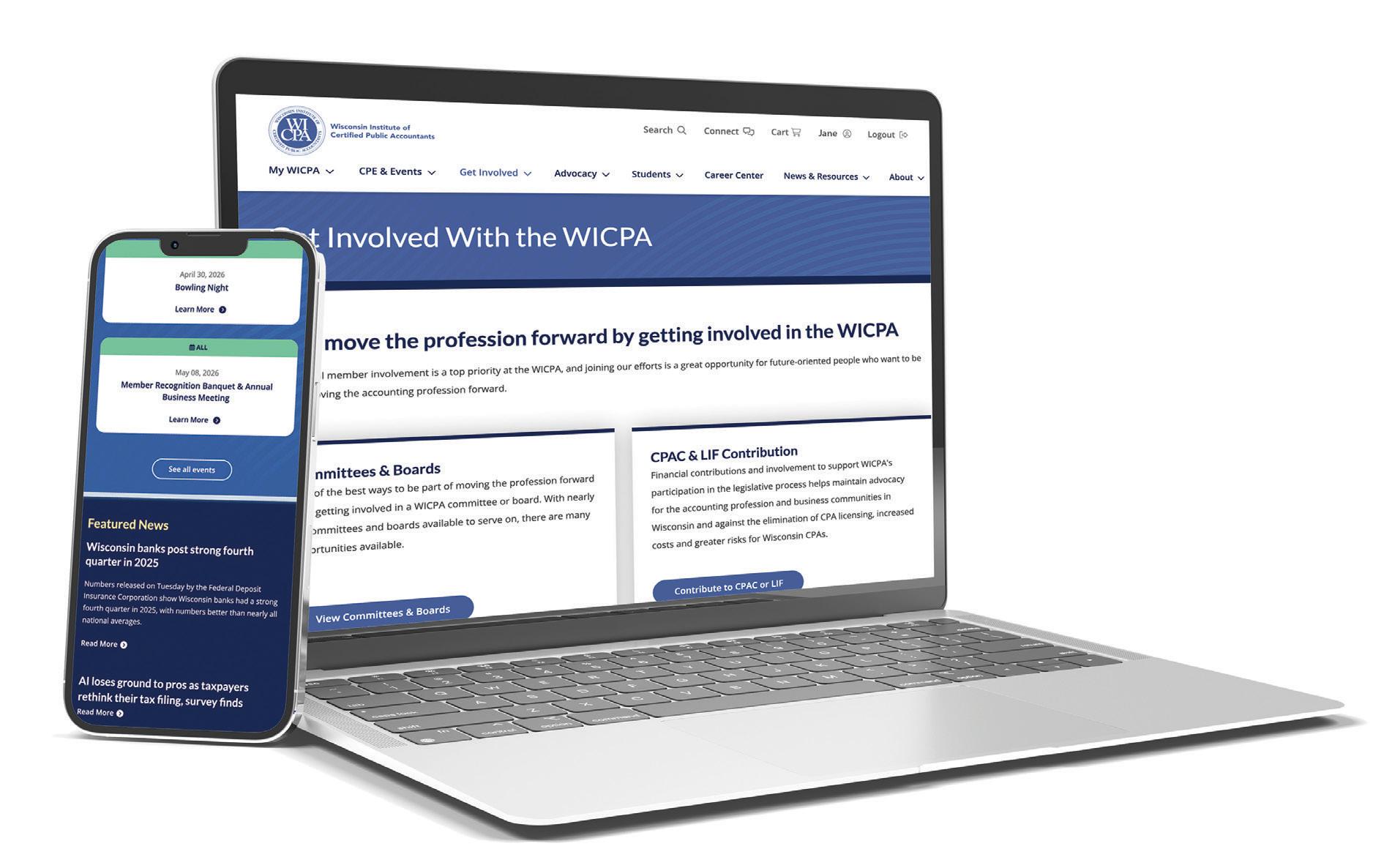
Your Personalized Dashboard
Everything you need, all in one place.
• Account alerts and important updates
• Quick access to your upcoming events
• CPE tracking for your current renewal period
• Committee participation and resources
• Saved payment methods for faster checkout
We’re excited to launch the redesigned WICPA website, built to better support your work, your firm and the evolving CPA profession. Explore the improved navigation, enhanced tools and a more connected member experience.
New & Improved CPE Catalog
Find the right CPE for you, faster than ever.
• Streamlined course listings with key details upfront
• Featured events pinned so you never miss out
• Advanced filters to quickly find what you need
• Bundles, promotions and special discounts
• Flexible formats that work for you, including in-person conferences, on-demand replays, livestreams and free member events
Start exploring: wicpa.org/cpe
Tip! Be sure to check your cart for additional event promotions.
WICPA Connect
The social platform designed specifically for the CPA profession.
Features include discussion forums, private messaging, resource sharing, the ability to personalize your profile, control your settings and more!
Get Connected! Visit wicpa.org/connect or find it next to your cart
Firm Management
Powerful tools for firm admins.
Pay dues, add new or invite existing employees, track employee CPE and event registrations, update firm information and more!
Start managing your firm at wicpa.org/my-firm
Post a Classifieds Ad
Looking to purchase, lease or sell? Seeking an Audit RFP? Post an ad in our Classifieds section!
Browse the latest at wicpa.org/classifieds
Pro Bono Volunteer Opportunities
Want to use your expertise to give back? Our new Pro Bono section allows organizations requiring assistance to post a request for volunteers.
Head to wicpa.org/pro-bono to see how you can help
WICPA Career Center
Your one-stop resource for accounting and finance careers.
Search for open positions, post a job opening, set up alerts, manage resumes, browse career advice and more!
Take your next step at wicpa.org/careers
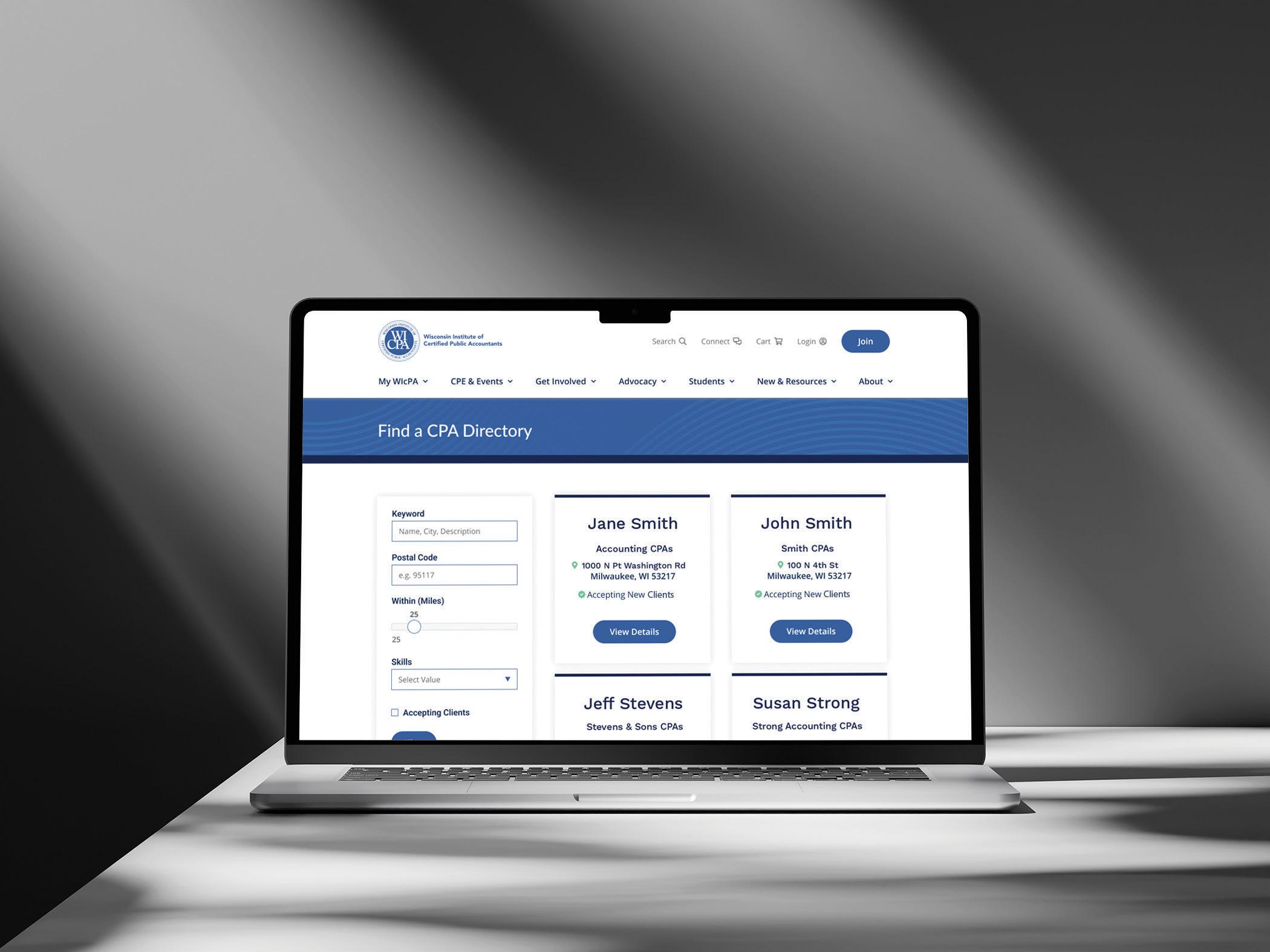
Find a CPA
A new way to promote yourself to prospective clients.
Publicize your contact info, the services you offer and the industries, cities and regions you serve. Plus, post your availability to accept new clients!
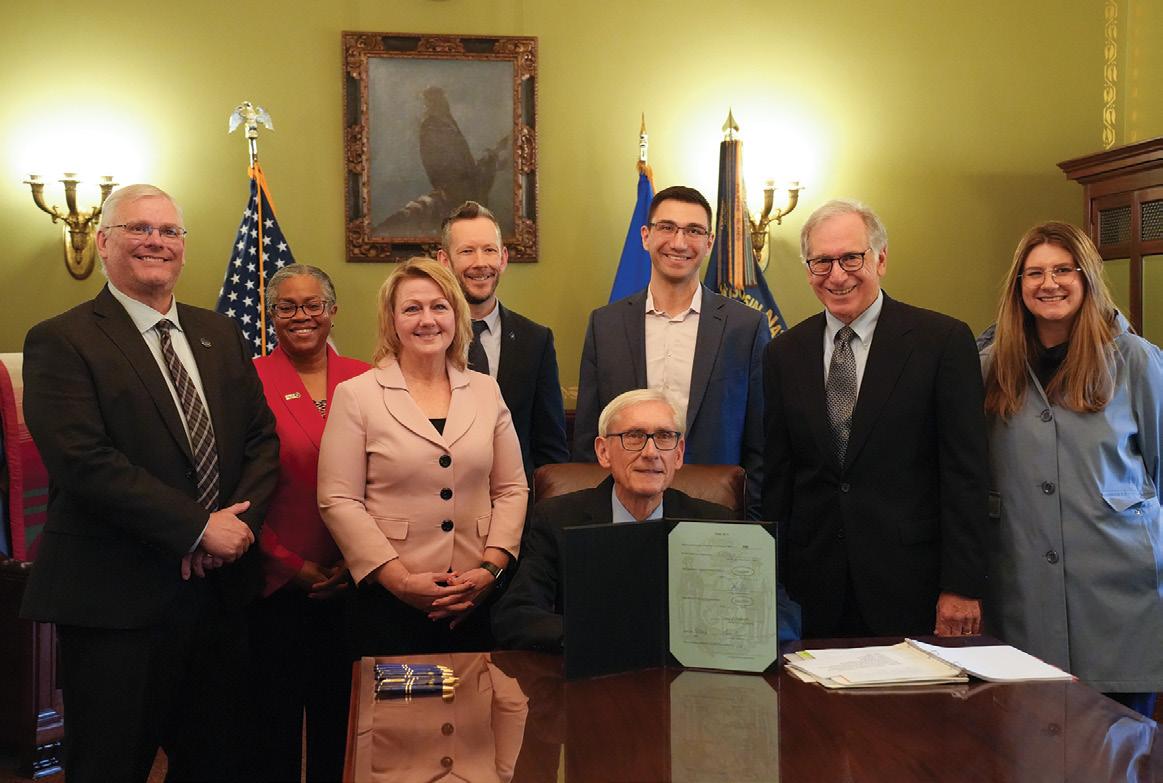
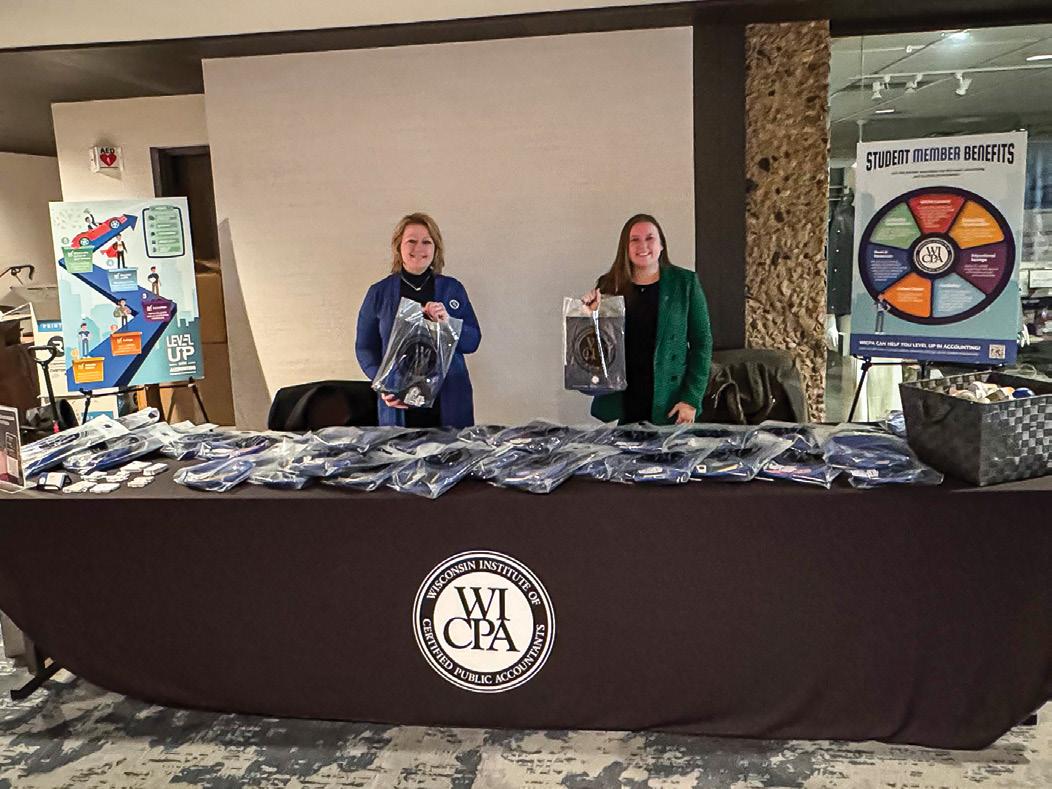
WICPA President & CEO Tammy Hofstede, Board Chair Stacy Stinson, CPA, MBA, Board Chair-Elect Neil Keller, CPA, and Accounting Examining Board Member Michael Friedman, CPA, JD, attended the bill signing of 2025 Wisconsin Act 166, which created a third pathway toward CPA licensure.
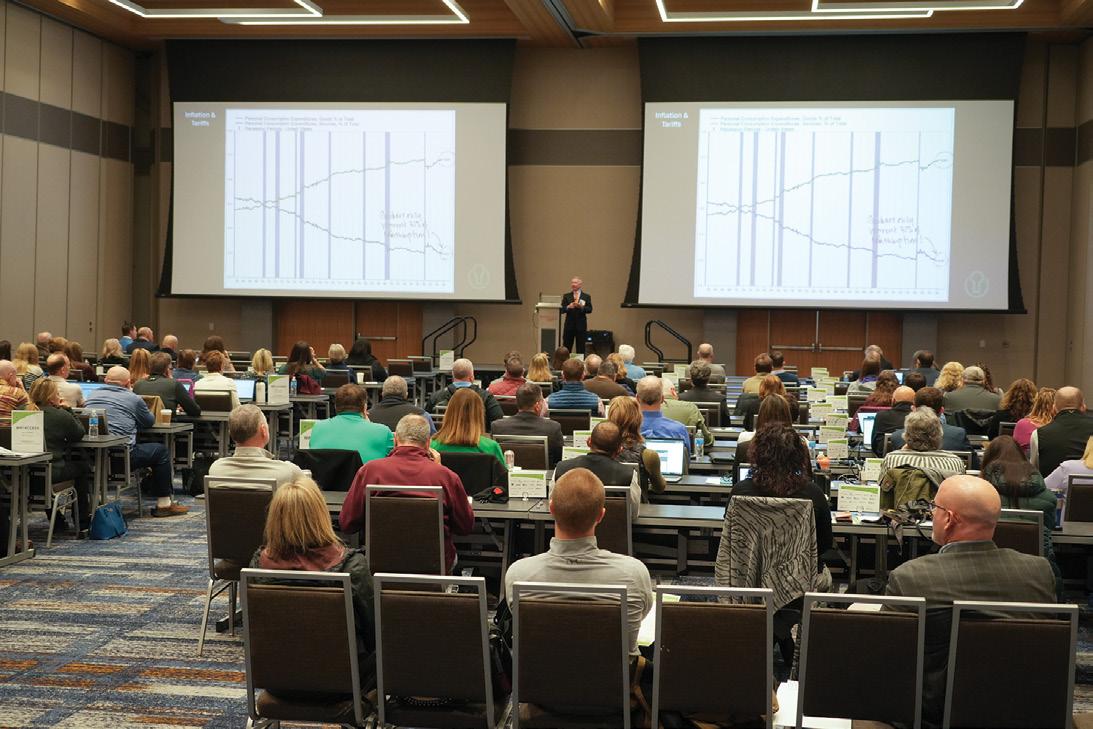
More than 200 attendees, both in person and virtual, joined us for the 2026 Business & Industry Spring Conference to hear updates on current and emerging issues shaping today’s rapidly evolving business landscape.
Neil Keller presented on “Owning Your Career in Accounting” at UW–Whitewater Beta Alpha Psi’s Mock Interview Night alongside Lily Keller.
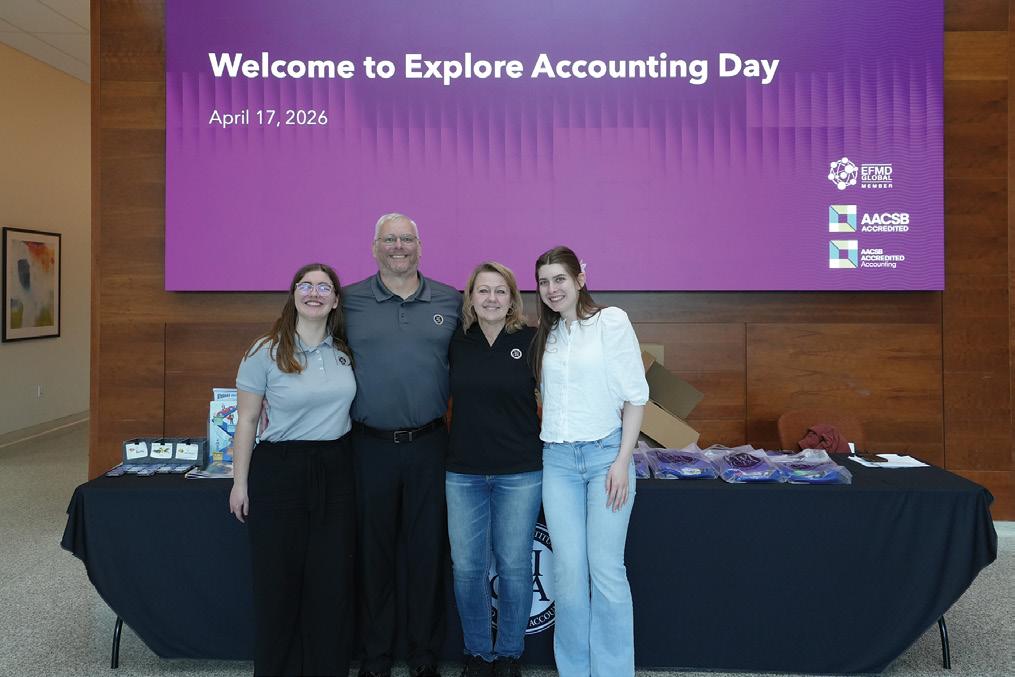
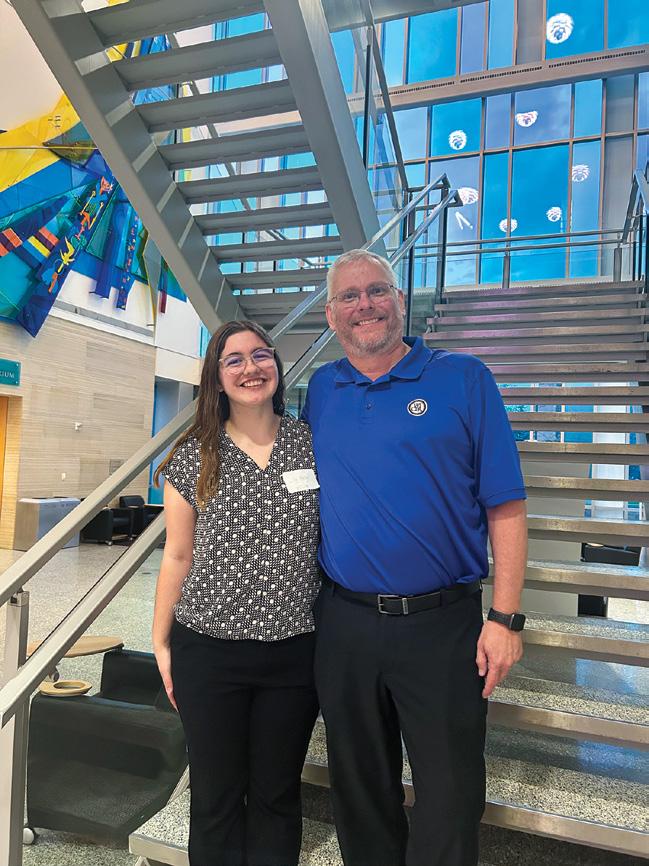
Tammy Hofstede, Neil Keller, WICPA Membership Outreach Coordinator Lily Keller and Administrative Intern Olivia Perez spoke with students and teachers at UW–Whitewater’s Explore Accounting Day.
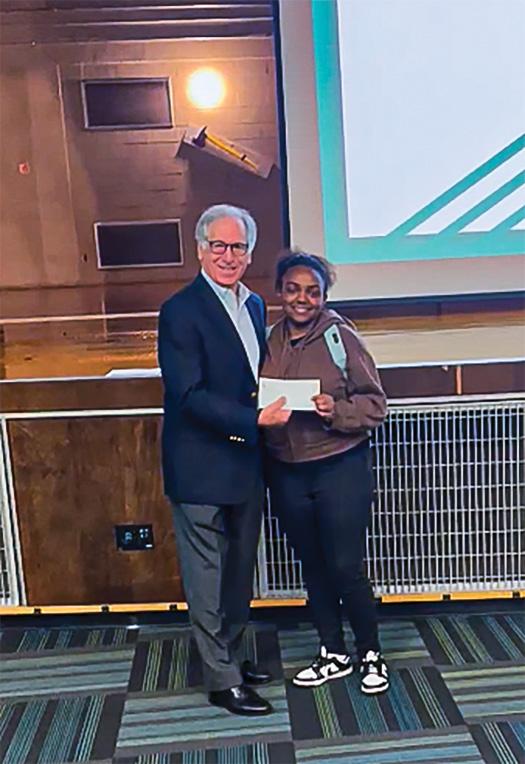
Michael Friedman presented a scholarship check to Kalise Williams, a student at Alexander Hamilton High School in Milwaukee.
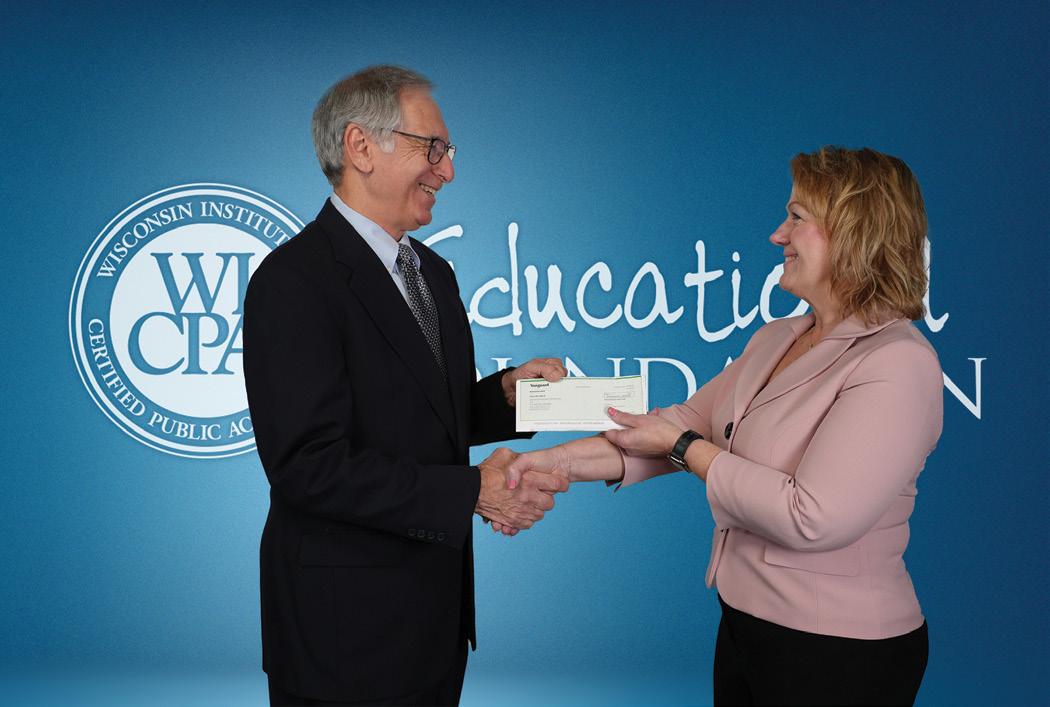
Tammy Hofstede thanked Michael Friedman for his generous donation to the WICPA Educational Foundation to establish new high school scholarships.
Tammy Hofstede and Ally Hofstede, CPA, represented the WICPA at the 2026 Wisconsin DECA State Career Development Conference in Lake Geneva.
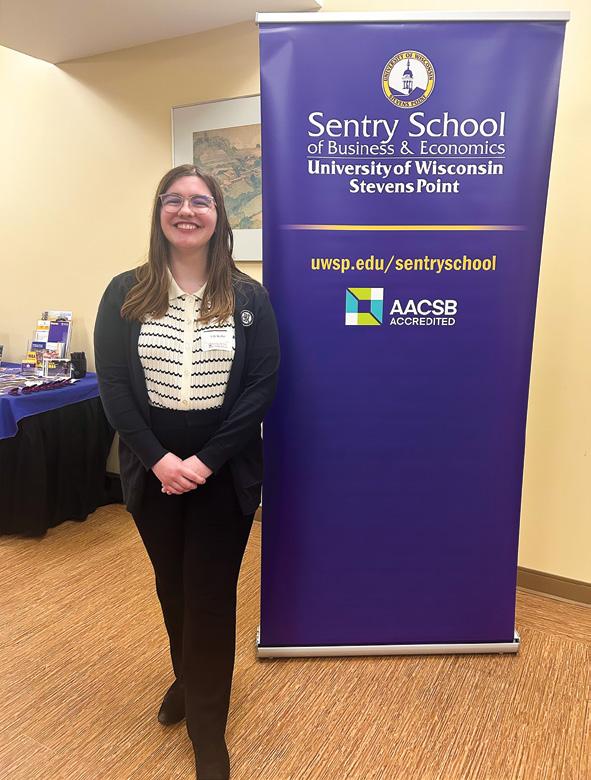
Lily Keller spoke with students, accountants, alumni and faculty members at the UW-Stevens Point Sentry School of Business and Economics’ first Accounting Networking Night.
Lily Keller and WICPA Young Professionals Committee Member Brenna Van Rooy, CPA, MBA, spoke with students at the 2026 Wisconsin FBLA High School Leadership Conference in Green Bay.
Recognizing accounting professionals for their leadership and dedication to
Young Professional Award
Sophia Karlovich
Woman to Watch Award
Victoria Thayer
Accounting Educator Award
Brett Killion
CPA in Public Accounting Award
Emily Kneiser
Distinguished Career Award
Michael Friedman
Emily Braatz
Julie Duckett
Robert Flannery
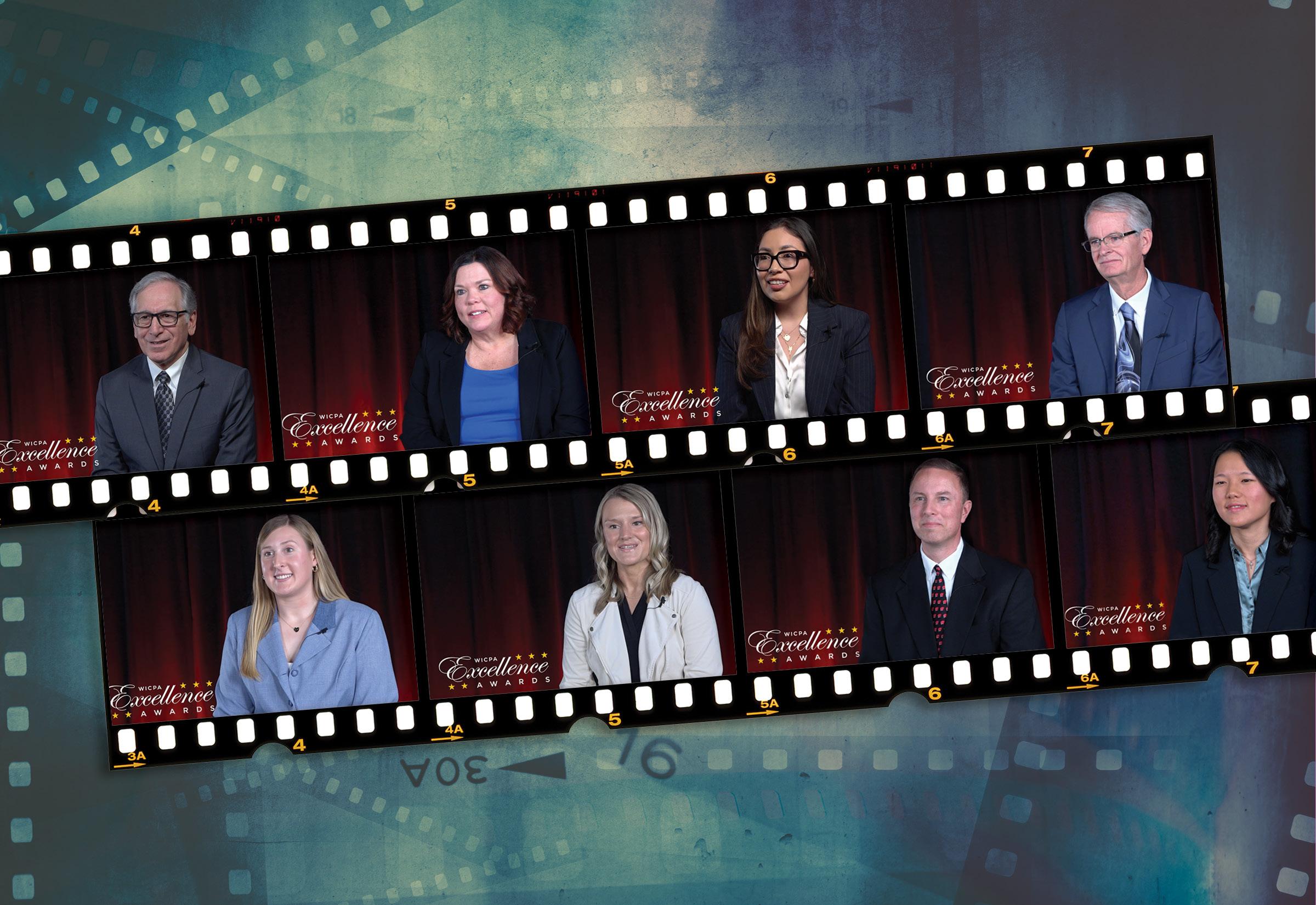
Congratulations to the 2026 WICPA Excellence Award recipients! This honor reflects your hard work, dedication, and passion for the profession. Thank you for your inspiring commitment to excellence.
Stacy A.
Stinson,
CPA,
MBA 2025–2026 WICPA Board Chair
Excellence Award Descriptions
Accounting Student Award
This award recognizes a college accounting student for their commitment to success in the accounting field. The recipient has demonstrated leadership skills, involvement in an accounting or business club and contributions to the community.
Accounting Educator Award
This award recognizes an accounting or business educator for their contributions in academia and the accounting profession. The recipient has demonstrated innovative techniques in teaching and motivating students.
Young Professional Award
This award recognizes an individual age 35 or under who serves as an emerging and dynamic leader in the accounting profession. The recipient has demonstrated involvement within the community, has been engaged in one or more professional organizations and has served as an example for others entering the profession.
Woman to Watch Award
This award recognizes a female accounting professional. The recipient has demonstrated superior leadership, mentored other professionals and made significant contributions to their workplace and the profession.
CPA in Public Accounting Award
This award recognizes an individual who is a CPA working in public practice. The recipient has demonstrated significant achievements that have contributed to the success and growth of a firm.
Community Service Award – Individual
This award recognizes an individual for their dedication and commitment to community service activities at the local, regional or state level. The recipient has demonstrated leadership and positively impacted the community.
Business & Management Award
This award recognizes an individual working in an accounting role in business and management. The recipient has demonstrated blending information technology, financial decision-making and progressive management techniques that have helped a business move forward.
Distinguished Career Award
This award recognizes an individual for outstanding achievements and efforts throughout their career. The recipient has demonstrated exemplary leadership and ongoing commitment of service to advance the accounting profession, the WICPA and the community.
Emily Braatz Accounting Student Award
To me, receiving the WICPA Accounting Student Excellence Award provides recognition for the combination of personal initiative, thoughtful decision-making and the strong support system that has helped me grow along the way.
This award has given me further reassurance about two of the most important decisions I have made so far — choosing where to pursue my education and deciding to follow a career in accounting. I am incredibly grateful to have selected a university that has provided many opportunities and encouraged me to strive for excellence both inside and outside of the classroom.
This honor also serves as an affirmation of the time and effort I have put into my education and professional development. Most importantly, it motivates me to continue working hard and setting high goals as I move forward in my career as a CPA.
Brett Killion, CPA Accounting Educator Award
Receiving the WICPA’s 2026 Accounting Educator Award is both humbling and deeply meaningful to me. Early in my career, I knew I wanted to be in the classroom. After a short stint in public accounting, I returned to school to pursue my teaching certification in business education.
When I began teaching accounting at Luxemburg-Casco High School in 2003, my goal was simple: help students see that accounting is more than numbers on a page. Over the past 22 years at the high school level, at Lakeland University, and now at UW–Madison that mission has remained the same: build a strong foundation, connect learning beyond the textbook and make accounting come alive.
This award reflects the passion, creativity and commitment I have poured into my teaching. It represents the countless lesson plans, the high school visits across Wisconsin, the case competitions, the VITA clients served and the lasting relationships built with students who have gone on to meaningful careers.
Most of all, it affirms my belief that accounting education can change lives. I feel a deep responsibility to continue promoting the profession, mentoring future CPAs and helping the next generation see that accounting can be both engaging and full of opportunity. I am truly grateful to be part of Wisconsin’s accounting community and honored by this recognition.
Young Professional Award
Sophia Karlovich, CPA
Receiving this award is both humbling and deeply meaningful. When I learned that I had been selected for this recognition, I was genuinely surprised. Being only three years removed from college, I do not always think of myself as a leader. Youth can make it easy to rely on phrases such as “I just started,” “There is time to improve,” and “It is not my responsibility.” Yet this recognition serves as a reminder that leadership is not defined by years of experience, but by a willingness to act with integrity, serve others and pursue excellence.
This award motivates me to continue learning and growing. Looking back at the beginning of my career, I can see how far I have come while recognizing the many opportunities ahead to further develop professionally and within the community. I have witnessed firsthand the impact one person can have, as many individuals have profoundly influenced my own journey. Their examples encourages me to refine my skills, broaden my perspective and continue growing in my profession.
I am deeply appreciative of the support and encouragement of my family, friends, coworkers and mentors, whose guidance and belief in me have shaped my life and career. I am honored by this recognition from the WICPA and remain committed to embracing new opportunities and leading in ways that create meaningful, lasting impact.
Victoria Thayer, CPA Woman to Watch Award
Receiving the WICPA Woman to Watch Award is an incredible honor, affirming my commitment to shaping the future of accounting with innovation, leadership and a focus on mentorship. This recognition motivates me to continue pushing boundaries, empowering others and fostering a more inclusive, diverse profession.
Mentorship has always been close to my heart. I actively champion the empowerment of women and underrepresented groups in our field, offering financial literacy resources to Latino entrepreneurs and mentoring young professionals through the AICPA’s Emerging Professionals Initiative. Empowering others is a core value that fuels my passion for leadership.
Receiving this award is a reminder that resilience, hard work and a commitment to positive change can make a lasting impact. It encourages me to continue inspiring others, leading with purpose and demonstrating what’s possible for women in accounting.
in Public Accounting Award
Emily Kneiser, CPA
Receiving the CPA in Public Accounting Award is deeply meaningful to me because it reflects not just individual effort, but also the people and community who have shaped my career.
This recognition also feels like a tribute to my family. I’m especially grateful to my mom, the first woman on her side of the family to go to college, who taught me that “to whom much is given, much is expected.” I also think of my grandpa, a retired CPA, who was a big reason I first considered this career path and what it could make possible.
I’m thankful for the mentors and educators who have invested in me along the way. As my career progresses, I’m grateful for the opportunity to lead, give back, and create an even bigger impact.
Community Service Award – Individual
Julie Duckett, CPA, CFE, CFHP
When I chose accounting as my profession so many years ago, I never imagined how deeply I would come to love this field. What began as a career choice has become a lifelong passion. Accounting offers endless opportunities to grow, contribute and make a meaningful impact. When I speak to students exploring the profession, 30 years of excitement comes rushing back. Helping an organization find financial clarity and success remains incredibly rewarding.
At BayCare, that purpose feels even more significant. My work supports the patients and families of northeast Wisconsin, and I am proud knowing that strong financial leadership helps us provide exceptional care to our community.
I will always remember the determination it took to pass the CPA Exam and the pride I felt becoming part of the WICPA. To be honored by an organization that elevates and strengthens our profession is truly extraordinary. Receiving the WICPA Excellence Award is more than recognition — it is affirmation. It affirms my dedication to ethical leadership, my love for this profession and my commitment to mentoring future accountants.
Being honored specifically for community service carries profound meaning. As a mental health advocate, my work with organizations addressing the mental health needs of our region is deeply personal. This award tells me that the effort matters — that we are making progress and creating hope for those who need it most. I am truly and profoundly honored. Thank you for this extraordinary recognition.
Business & Management Award
Robert Flannery, CPA
Anytime you receive a recognition award, it is gratifying. But when you receive a recognition award from a nomination made by a professional peer, it is humbling.
I am honored to receive the WICPA Business & Management Award, which allows me some introspection and the ability to recall so many people who have made an impact on my personal and professional life.
I am grateful for those who played a role in this recognition. I grew up in rural Wisconsin on a dairy farm, which instilled in me humility, integrity and hard work. Those attributes have been part of my professional and personal life ever since.
With my gratitude and appreciation for this award, I say thank you.
Distinguished Career Award
Michael Friedman, CPA, JD
Iam truly honored to receive the Distinguished Career Award. I have had the good fortune to experience working with a large international CPA firm as a senior tax partner at EY and now with a local firm as a tax director at Scribner, Cohen and Company, S.C. From my experience of more than 45 years in public accounting, I have learned that tremendous opportunities exist in firms of all sizes.
One of my greatest sources of pride is seeing many of the individuals I have mentored go on to become partners themselves. It is a reminder that the future of our profession is in good hands.
I would especially like to thank the WICPA for its collaboration in promoting and advancing the CPA profession. During my time as president of the WICPA Educational Foundation, we worked together to strengthen the scholarship program and encourage more students to pursue accounting degrees.
I was honored to serve on the Wisconsin Accounting Examining Board, where I later had the privilege of being elected chairman. Most recently, I testified before an Assembly committee in support of an alternative pathway to becoming a CPA. I hope this effort helps make the profession more accessible while maintaining our standards of excellence.
Looking back, I am proud to have contributed in small ways to help the profession evolve and improve over the years. My career has been both challenging and deeply rewarding. Receiving the WICPA Distinguished Career Award is certainly the highlight of my career.
Sikich
Nicholas J. Alburg
Menomonee Falls High School
Mya Allen
CLA
Justin Baehler
Johnson Block & Co. Inc.
Clare Bargender
KerberRose S.C.
Janis Barnett
Donna Barrette
U.S. Bancorp Fund Services LLC
Spencer S. Borley
CLA
Hayden L. Bradley
UW–Whitewater College of Business & Economics
Kevin Byrne
Johnson Block & Co. Inc.
Brinley L. Christensen
CLA
Traiden B. Clary
Lauren H. Corazzari
Menomonee Falls High School
Ty Corcoran
RSM US LLP
Katie Cortez
Waukesha North High School
Olivia Crabtree
UW–Stevens Point School of Business & Economics
Abigail Curry
CLA
Mason E. Dettmers
Menomonee Falls High School
Katherine Dubester
CLA
Courteney Duchow
CLA
Brenda Lee Dvorachek
CLA
Brendan Ellefson
CLA
Jennifer L. Engroff
Sarah M. Ensz
Mayville Engineering Co. Inc.
Mason A. Everts
Carson W. Fox
Menomonee Falls High School
Parker Franke
CLA
Trent Freit
CLA
WELCOME NEW MEMBERS!
February 1 – March 31, 2026
Drew Giesen
CLA
Amanda P. Giombi-Lorenz
Deloitte & Touche LLP
Drew Goebel
Bauman Associates Ltd.
Melissa Greiner
Racine Unified School District / Case High School
Madison Hageness CLA
Constance Hansen
CLA
Elizabeth G. Herrmann
Menomonee Falls High School
Andrew M. Hintz CLA
Sarah G. Hoehnke CLA
Daniel Ihrig CLA
Kristina Jagielo
Johnson Block & Co. Inc.
Rachel K. Kiekhafer
Bauman Associates Ltd.
Jarod Kimmes
CLA
Orr S. Klein
CLA
Christie Klun
Arrowhead High School
Thomas G. Kopp
Cade S. Kosnick
Menomonee Falls High School
Kelsie Kostuchowski
CLA
Anna Lakomiak
Jacob Liethen
Johnson Block & Co. Inc.
Nina M. Lindenberg Chortek LLP
Nicholas A. Lopez Leon
Menomonee Falls High School
Mitchell Lyons CLA
Ramiro A. Mai
Messmer High School
Dylan Manteufel
Bauman Associates Ltd.
Brooke Mayer
CLA
Olivia Mikulski
Johnson Block & Co. Inc.
Jonathan G. Mleziva
Bauman Associates Ltd.
Josh Moreau
Manitowoc Public School District
Ethan J. Mueller
Menomonee Falls High School
Veronica L. Nelson CLA
Matthew B. Nemec
Menomonee Falls High School
Allison Olson
CLA
Natalie Olson
CLA
Karen Oram
Northern Star Tax &
Accounting Inc.
Hilton Oswald
Menomonee Falls High School
Braden J. Overholser
Menomonee Falls High School
Addison P. Paeske
CLA
Kanika Pathela
Grant Thornton Advisors LLC
Antigone Pauling
Johnson Block & Co. Inc.
Adysen L. Pennings
Menomonee Falls High School
Jamie Peterson CLA
Blake Petrik RSM US LLP
Jacob Rajkovich CLA
Jamey G. Rappis CLA
Madeline Reschke CLA
Robyn Rogalski CLA
Thomas Ruiz RitzHolman CPAs
Lynn Scharff CLA
Amelia M. Schumacher Chortek LLP
Steven Sellers CLA
Camryn Senske
Thomas Sheahan Meicher CPAs LLP
Melanie Shimek
Manitowoc Public School District
Karly Skaletski CLA
Luke Snodgrass CLA
Cooper Stengel
Jonny Steppe CLA
Jadyn R. Syverson CLA
Joel Taft CLA
Michael D. Timm CLA
Elizabeth Turnquist
Johnson Block & Co. Inc.
Benjamin Uitti RitzHolman CPAs
Logan Q. Vande Zande
Menomonee Falls High School
Ethan T. Vanden Boom
Menomonee Falls High School
Danielle VanDenHeuvel CLA
Tieler C. Vang
Menomonee Falls High School
Isabella Vardon
UW–Stevens Point
Leah Wagner CLA
Adam Wamsley Oregon High School
Susan M. Wawrzyn CLA
Diane L. Weinheimer-Webber
Watertown High School
Bridget Weishaar
Arrowhead High School
Grant E. Wheat
Kohler Credit Union
Rachel L. Wiedmeyer Cohen & Company
Jayden Williams
Erickson & Associates S.C.
Jessica Wilson CLA
Courtney N. Wynia Case High School
Staying Ahead of the Curve: Key FASB Updates for 2026
By Angie Storm, CPA
As we shake off the early spring chill and settle into another fabulous summer in Wisconsin, it’s a great time to gear up for the 2026 financial reporting season. This year brings several new FASB accounting updates, with a particular focus on changes affecting private companies. Understanding these developments now is key to smooth adoption and ensuring companies are well prepared for the season ahead.
Income tax disclosures
A significant focus area over the last year was income tax disclosures, driven by the release of the FASB’s standard on the topic (ASU 2023-09). Public companies tackled these new rules for their 2025 reporting, while private companies were given until 2026. With the final deadline soon approaching, the focus shifts to how private companies will successfully navigate adoption of these new principles.
At its core, the standard requires a more disaggregated view of the rate reconciliation — the calculation that bridges the gap between the statutory tax rate and a company’s unique effective tax rate. This means companies have to provide more detailed breakdowns of the factors contributing to their effective rate.
At the federal level, this includes the effect of federal tax credits, cross-border taxes and nontaxable or nondeductible items, along with changes in tax laws (or rates) and valuation allowances. At the state and local level, it involves disclosing the effect of state and local taxes and, for public companies, providing a narrative disclosure about which states represent the majority of their state tax expense. Beyond that, the standard calls for disclosing effects from foreign taxes, changes to unrecognized tax benefits and reconciling any items large enough to have a 5% or greater impact.
Last year, public companies reworked their data, systems and controls to varying degrees to meet this new level of granularity. Now, in 2026, the spotlight turns to private companies as they adopt the standard. While they must report
“
This year brings several new FASB accounting updates, with a particular focus on changes affecting private companies.
on the same categories and jurisdictions, there is some relief: Instead of a quantitative reconciliation, private companies are allowed to provide a qualitative disclosure that explains the key factors driving their effective rate while still being required to:
• Specify total income tax paid into federal, state and local taxes;
• Name individual jurisdictions where income taxes paid exceed 5% of total income taxes paid; and
• Present pretax profit and income tax expenses separately for domestic and foreign operations.
For private companies, smooth adoption hinges on a proactive strategy, grounded in close collaboration between tax and financial reporting teams. This is especially important when it comes to deciding how the new disclosures will be presented and applied (prospectively or retrospectively). They will also have to work closely to validate the data itself, confirming the right processes and controls are in place to prevent inaccuracies. Lastly, draft disclosures will have to undergo a final review cycle that ensures all key stakeholders, from upper management to auditors, have thoroughly vetted and approved them.
Simplifying credit loss estimates
Beyond new disclosures, the FASB introduced changes to simplify a complex area of accounting: measuring credit losses for accounts receivable and contract assets. The standard, ASU 2025-05, offers two options that companies may be able to take advantage of in 2026 if their financial statements have not yet been issued.
What else is new for private companies
Several other noteworthy standards are taking effect for private companies this year:
ASU 2024-01: Clearer guidance on profits interest provides examples to help companies determine if their “profits interest” awards should be accounted for as stock compensation. It aims to reduce complexity and create more consistency in how these types of awards are reported.
ASU 2024-04: New rules for convertible debt settlements clarify how to account for convertible debt when it’s not settled under the conversion terms that were originally agreed upon. It focuses on providing a clearer road map for complex or nonstandard debt settlements.
ASU 2024-02: Codification improvements remove references to “concepts statements” from the official, authoritative accounting rulebook (the Codification). This change clarifies the line between official rules and conceptual guidance and will likely have little to no impact on financial reporting for most companies.
ASU 2018-12, ASU 2022-05: Changes to insurance alter the rules for how insurance companies recognize, measure and disclose long-duration contracts like life insurance and annuities. The goal is to improve the quality and transparency of financial reporting for insurance companies.
On the horizon for 2027
• Relaxed economic forecasting: The first simplification is a practical option available to all companies that allows them to measure their allowance for credit losses by assuming that current economic conditions will persist. In other words, companies no longer need to develop complex and subjective forecasts of future economic conditions for these assets — potentially saving significant time and effort.
• Accounting policy election: The second option is an accounting policy election available exclusively to private companies. It allows them to consider cash collections received after the balance sheet date (but before financial statements are issued) when estimating credit losses. Grounding these estimates in actual collection experience rather than just historical data is a major benefit for businesses with quicker cash turnaround.
While these options offer valuable flexibility, transparency is key: Companies using either (or both) of the options must clearly disclose it in their financial statements.
Looking ahead, next year will bring interesting updates to several complex accounting areas. This includes new guidance for purchased loans, scope refinements for share-based consideration in revenue contracts, clarifications for sharebased consideration payable to customers and a more detailed framework to determine accounting acquirers in variableinterest entity acquisitions.
The consistent theme is a drive for greater clarity, reinforcing the need for companies to remain proactive and prepared for a financial reporting landscape that is always evolving.
There’s a lot on our minds as we travel the winding roads to Fourth of July celebrations, Summerfest and, hopefully, another Brewers playoff run — but being prepared will help you stay ahead of the curve!
Angie Storm, CPA, is the chief accountant in the Department of Professional Practice of KPMG LLP. She has more than 25 years of audit and accounting experience and can be found on LinkedIn.
Hot Tax Practice, Procedure and Ethics Issues for 2026 and Beyond
By Michael G. Goller, Esq.
As tax practitioners move through 2026, the practice environment is being reshaped by a number of converging forces: a recalibrated (i.e., reduced) IRS enforcement staff, a fundamental shift in administrative law following the Supreme Court’s decision in Loper Bright Enterprises v. Raimondo and continued scrutiny of professional conduct under Circular 230 and related ethical standards. Together, these developments demand greater strategic judgment, procedural discipline and ethical rigor. Practitioners are again faced with questions surrounding what issues are “hot,” which practice traps to avoid and what will be the next tax hill to climb.
A practice environment defined by risk management
Tax practice has always involved managing uncertainty. Ethical issues increasingly arise not from aggressive planning alone but from failures in diligence, supervision and communication. Circular 230, the AICPA Statements on Standards for Tax Services, the ABA Model Rules of Professional Conduct, Tax Court Rules and the Internal
“
Practitioners are again faced with questions surrounding what issues are ‘hot,’ which practice traps to avoid and what will be the next tax hill to climb.
Revenue Code provide a framework, yet many of the most consequential traps occur in gray areas where judgment is required. Malpractice exposure and ethical violations often travel together.
IRS enforcement: Fewer audits, higher stakes, specific and focused issues
Despite well-publicized hiring initiatives in 2023 and 2024 (followed by highly publicized staff reductions in 2025), IRS audit activity has evolved. Audits, however, have not expanded evenly across the taxpayer population. Routine examinations have slowed, while more targeted audits have
increased; audits involving high-net-worth individuals, complex partnerships, research credits, family offices and pass-through entities are often deeper, broader and more resource intensive.
Valuation disputes, cost segregation studies, audits, personal aircraft usage, real estate professional status and high-dollar refund claims continue to attract sustained attention. Practitioners should assume that when the IRS engages, it will do so with a more focused gaze and a longer time horizon. Recent legislation has created opportunities but also inevitable “hot spots” that can draw IRS scrutiny.
Loper Bright and the end of Chevron deference — A “hot” tax issue
The Supreme Court’s decision in Loper Bright Enterprises v. Raimondo marks a watershed moment in administrative law. By overruling what was often referred to as Chevron deference (i.e., in most cases courts were bound to follow government regulations), the Court reaffirmed that it is the judiciary — not administrative agencies like the IRS — that determines the best reading of a statute, even where statutory language is ambiguous.
For tax practitioners, this represents a profound shift. Treasury regulations no longer enjoy near-automatic judicial deference. While respect for agency expertise remains, IRS interpretations must now prevail on the strength of their reasoning rather than command compliance by default.
What survives after Loper Bright
The demise of Chevron does not render IRS regulations irrelevant. Courts may still accord weight to agency interpretations that reflect careful analysis, consistency and expertise. However, regulations that attempt to rewrite unambiguous statutory text or expand agency authority beyond congressional intent are increasingly vulnerable. Early post-Loper Bright decisions indicate that courts are willing to draw sharper lines between permissible gap-filling and impermissible lawmaking.
Recent tax cases have already begun to illustrate these dynamics in the COVID-19 disaster-relief context, with potentially significant implications for limitations periods, penalties and interest. In Abdo v. Commissioner, 162 T.C. 148 (2024), the Tax Court held that § 7508A(d), as enacted in 2019, provides a mandatory and self-executing postponement of federal tax deadlines during a federally declared disaster and that the COVID-19 national emergency triggered an automatic postponement of these deadlines beginning January 20, 2020.
Importantly, while Abdo invalidated restrictive IRS regulations and confirmed the self-executing nature of § 7508A(d), it did not conclusively define the outer limits of the postponement period. These issues were further addressed by the U.S. Court of Federal Claims in Kwong v. United States, 179 Fed. Cl. 382 (2025), which held that the entire COVID-19 disaster-relief period plus the statutory restart period must be excluded when computing the refund-suit limitations period under § 6532(a).
Why this matters
The Abdo and Kwong decisions may affect taxpayers whose statutory deadlines were running during the COVID-19 disaster-relief period. In addition to permitting refund suits that might otherwise appear untimely, the decisions raise questions about interest and penalties assessed during that period.
Family offices and high-net-worth audits
Family offices and high-net-worth issues remain a focal point of IRS enforcement. Common issues include whether the family office constitutes a bona fide trade or business, the tax treatment of profit interests and the application of §§ 162 and 183.
Cost segregation: Opportunity meets ethical risk
Cost segregation remains a powerful planning tool, particularly with the resurgence of enhanced bonus depreciation for qualifying property. Yet it has also become a frequent audit target. Ethical issues arise when studies
Valuation and appraisal pitfalls
Valuation disputes continue to drive significant litigation and penalty exposure, particularly in estate, gift and charitable contribution contexts. Courts scrutinize not only methodology but also the independence and integrity of the appraisal process.
Conclusion: Judgment as the defining skill
Effective tax practice requires more than technical mastery of the Internal Revenue Code. Practitioners must navigate a post-Chevron regulatory landscape; an enforcement environment focused on complex taxpayers; and an ethical regime that demands vigilance, documentation and transparency.
Michael Goller, JD, is a shareholder in Reinhart’s Corporate and Tax departments, where he served as Tax department chair for more than 10 years. He leverages his more than three decades of experience, accounting degree and strong relationships within the IRS and various state departments of Revenue to be an especially effective lawyer. Contact him at mgoller@reinhartlaw.com. are rushed, poorly supported or conducted by professionals who lack expertise.
EXHIBIT A
Protective Claim Statement – Interest Abatement (Attach to Form 843)
This is a protective claim for refund and/or abatement of underpayment interest. The taxpayer files this claim to preserve rights pending final administrative and judicial resolution of controlling authority concerning the accrual of federal tax interest during the COVID-19 disaster period.
Tax period(s) at issue: [____]
Interest assessed and/or paid on: [____]
The taxpayer seeks relief only for interest attributable to the period January 20, 2020, through July 10, 2023, or such other period as determined to apply under IRC § 7508A(d).
The taxpayer requests that the IRS abate any unpaid underpayment interest attributable to the COVID-19 disaster postponement period and refund any such interest previously paid, together with statutory interest.
Peeking Between the Parentheses to Discover Excel’s Underutilized Capabilities “
By Christopher Harper, DBA, CPA, MBA
You don’t know what you don’t know! Excel is underused — not because it lacks capability but because people may not seize opportunities to leverage its abilities. Given Excel’s vast and evolving capabilities, even seasoned users will find novel use cases.
This article encourages intellectual curiosity by showing how an inquisitive mindset unlocked Excel resources to solve five real-life problems. The focus is not a deep technical dive into specific Excel capabilities; such an article might never end. Rather, I aim to foster a mindset that encourages exploration of possibilities. Each subsequent example conveys a story of someone spinning their wheels before Excel rescued the decision-maker from analytical paralysis. I am confident that these illustrations will inspire you to discover new ways to use Excel for your own purposes.
A professor’s quizzical dilemma
Excel users are lifetime learners. Even if you think you know Excel’s most salient capabilities, you can unearth novel ways to harness its power. Years ago, I decided to drop students’ two lowest quiz scores in a managerial accounting course. I knew that =MIN would provide the lowest quiz score, but
Excel is underused — not because it lacks capability but because people may not seize opportunities to leverage its abilities.
I could not find a quick way to reveal the second lowest scores. After several failed iterations of creatively nested formulas, I sought guidance from an internet search. I discovered =SMALL, which I now regularly utilize. This formula extracts the nth-lowest value from a dataset. Figure 1 shows the resultant gradebook (with fictional student names) and the formula that rescued me. For example, =SMALL(C5:N5, 2) efficiently revealed each student’s second lowest quiz score (the 2 in the formula denotes the second smallest value).
Beyond mitigating inevitable human error spawned by a redundant task, =SMALL helped me curtail the opportunity cost of manual analysis. I encourage you to pursue similar opportunities. When you encounter a repetitive task, seek ways that Excel can reduce your workload while enhancing accuracy.
Necessity is the origin of invention
Your greatest successes will occur when you leverage intellectual curiosity to devise a solution. I once tackled a problem encountered by a CPA firm’s administrative professional who needed to curtail a list of prospective clients according to geographic parameters. Ultimately, we leveraged Excel’s ability to provide real-time geographical data. Figure 2 is an adaptation of our analysis; we used Excel to identify the latitude and longitude of the target boundaries (corners of the rectangle in Figure 2) and then to determine if specific business addresses were inside or outside the box.
To accomplish this analysis, we informed Excel that the data was geographic. When you have a list of locations (such as the cities in this example), you can transform the data from a static list to dynamic variables by highlighting the list and then clicking on the trifold map “Geography” icon found in Excel’s “Data Types” menu (illustrated at the top of Figure 3). As depicted in Figure 3, we extracted latitude and longitude. But you will undoubtedly identify ways to utilize myriad other options. I encourage you to play in the sandbox so you can fully appreciate ways to utilize the array of possibilities shown in Figure 4. This scenario converted a daunting task into an educational opportunity; adversity is a strength coach that transforms seemingly insurmountable problems into growth potential.
Preserving harmony
Lunch with a retired banker reminded me that even seasoned professionals may not be aware of possibilities. After a lengthy career in commercial lending, Scott transformed an avocation into his vocation by focusing on a small radio station group that he owns. During a post-lunch tour of his studios, I learned that Scott planned to manually compare Windows file lists with an Excel-based music catalog, a project that would consume his spare time for the next few months. He needed to verify that Excel data agreed with thousands of MP3 song files saved in various Windows folders, an example of which is shown in Figure 5.
I quickly noted an opportunity to accelerate this process. Instead of requiring multiple months, we reconciled the data in approximately two hours! First, I used a Windows script to list the contents of each Windows folder on his PC. Figure 6 depicts an example of the Windows command script (dir /b “E:\Jethro Music File Analysis\On Deck Circle”) and a portion of the resultant music file listing contained in his “On Deck Circle” folder. For each folder, we copied Windows file names gleaned from the script, pasted them into Excel and then leveraged =XLOOKUP to determine if MP3 titles in the Windows folder agreed with the Excel catalog. Thrilled with the outcome, Scott noted,
2
Figure 3
Figure 4
Figure
“Music, not Excel spreadsheets, keeps my audience listening to the radio stations.” Solving this puzzle entertained me while creating value for a small business. If a seasoned banker learned new techniques, just envision what hidden opportunities exist for your clients or your company.
Eyes on the prize
My journey with Solver began with nontraditional inspiration. A friend implored me to join his NASCAR fantasy league. Since I knew very little about NASCAR nuances, I built an Excel Solver model that analyzed historical, track-specific driver placement data in concert with the fantasy league’s rules. Solver ultimately identified the most appropriate driver selection for each weekly NASCAR venue. Although I did win second place in my inaugural season,
Solver won first place by optimizing my multivariate analysis. A detailed depiction of the Solver model is beyond the scope of this article. However, I briefly share this story to encourage you to brainstorm unique ways that Solver can optimize outcomes in accordance with constraining parameters.
Sometimes superheroes don’t wear capes
Just as good meals often end with dessert, I offer a tasty conclusion to our discussion. During a vacation in Michigan’s upper peninsula, my family wanted to play the Scattergories game, but we did not have the multisided die that players roll to determine a particular letter of the alphabet.
Would you believe that Excel rescued us? Figure 7 shows the impromptu model I created to generate random numbers between 1 and 26 and the =XLOOKUP formula that revealed a letter associated with the resultant integer. I turned Excel into a random letter generator! Pressing F9 to force recalculation was akin to rolling the die for each player’s turn. Applied creativity allowed me to save the day (even if I still don’t get to wear a superhero’s cape).
Concluding thoughts
If you remember nothing else, know that intellectual curiosity is paramount. When you find yourself trudging through manual analysis, realize that Excel can reduce your burden if you consider creative options. I hope these five stories inspire you to find unique ways to utilize Excel for purposes you had not previously conceived.
Can Excel create opportunities to enhance efficiency and effectiveness? The answer will always be “no” if you don’t explore possibilities. However, if you ask the question, the answer might just be “yes.” So, ask!
Christopher Harper, DBA, CPA, MBA, is an assistant professor of accounting with Grand Valley State University’s Seidman College of Business. He also serves as a senior manager and director of education for Hungerford CPAs + Advisors. He has been serving tax and accounting needs of closely held businesses and individuals since 1998. He has also owned and operated several of his own businesses throughout his career. Contact him at harpechr@gvsu.edu or 616-331-7384.
Figure 5
Figure 6
Figure 7
David Begalke, CPA, founding partner of Begalke & Associates LLC in Sheboygan, was featured in a TMJ4 news segment on Feb. 16 titled “Tax expert shares tips to avoid scams and find help during filing season in Sheboygan County.”
Jill Boyle, CPA, has joined Children’s Wisconsin in Milwaukee as director of planned giving. Paul Hoesly, CPA, has been appointed as the chief financial and investment officer at Potawatomi Ventures in Milwaukee.
Brooke Leiterman, CPA, principal at Reilly, Penner & Benton, LLP, in Hartland, was featured in a FOX6 news segment on March 19 titled “FOX6 Cents: Local expert offers tax season tips.”
Kelly Loy, CPA, has been promoted to principal at Honkamp P.C. in the Madison office.
Courtney Willey, CPA, a senior manager at Baker Tilly in Appleton, has joined the advisory board of the Fox Cities Chamber’s Pulse Young Professionals Network as engagement vice chair.
Kelly Loy
Paul Hoesly
Jill Boyle
Truth, Tensions and Transitions: The CPA’s Role in Family Business Dynamics
By Jay Levine, CPA, CGMA
Truth is often stranger than fiction — especially in family businesses. CPAs are regularly called into situations where the balance sheet is the least complicated part of the engagement. The real complexities are the human ones: parents, children, siblings and spouses navigating roles that span from the boardroom to the dinner table. After years advising entrepreneurial and family businesses through more than 150 mergers, acquisitions and ownership transitions, I can say with certainty that our profession sits at a pivotal intersection of numbers and nuance.
I have heard variations of the same painful admission more times than I can count: “I can have a good relationship with my
father or my boss — but not both,” or “I can have a relationship with my brother or my partner — but not both.”
When family and business overlap, those statements are not abstract — they are operational realities. The consequences are not just emotional but financial, legal and strategic. And this is where CPAs play a critical role: not in choosing sides, but in helping clients make conscious business decisions, fully aware of the trade-offs they are making.
Conscious decisions over hidden resentments
Family enterprises rarely operate on perfect 50/50 equity in contribution. One sibling may be more competent, one may work harder, another may coast — or at least be perceived as coasting. Left unacknowledged, perceived inequities can corrode trust and ignite resentment that bleeds into every aspect of the business and family life.
“
Left unacknowledged, perceived inequities can corrode trust and ignite resentment that bleeds into every aspect of the business and family life.
A CPA’s responsibility is not to determine who is right or wrong. Instead, it is to shine light on the reality of these inequities and help the family make conscious decisions about governance, compensation and ownership. That means framing the questions clearly: What is fair? What is sustainable? What will keep both the family and the business intact?
For example, when a parent-owner contemplates succession, there are immediate financial and governance questions: Who should lead? At what salary? Should ownership be transferred equally, or does one child buy out the others? What price is fair?
The CPA as trusted middle ground
When tensions run high, CPAs must remember: The company is their client. It can be wise to recommend that individual stakeholders retain their own counsel or advisors. This does not weaken the CPA’s role; it strengthens it. By holding the line on neutrality, the CPA remains the stabilizing force ensuring decisions align with the long-term viability of the business. Families may fracture, but a CPA’s influence can help reduce the scars.
Navigating common flashpoints
There are recurring scenarios that CPAs in family business advisory should be prepared for:
3 Succession planning: When the founder hangs on too long, children feel stifled. When they exit too quickly, successors feel unprepared. The CPA’s role is to quantify readiness, scenario-plan the financial impact and guide structured transitions.
3 Sibling partnerships: Creating clarity around roles, performance expectations and compensation structures is essential to avoid long-term dysfunction.
3 Ownership transfers: Equity splits rarely feel “fair.” Helping families separate emotion from valuation and
ensuring agreements reflect both business realities and family priorities is crucial.
3 Exit events: In M&A or third-party sales, perceived favoritism or exclusion can derail deals. CPAs can safeguard process integrity by anchoring decisions in independent analysis and best practices.
Principles for CPAs in family dynamics
From years in the trenches, I offer three guiding principles for CPAs working with family enterprises:
1. Acknowledge the realities: Family dynamics are not “soft issues.” They are real, they are valid, and they directly impact financial outcomes. Ignoring them is neither neutral nor professional.
2. Serve the company first: Stay grounded in the business’s best interest. The family may splinter, but if the company is preserved, there remains a foundation for reconciliation.
3. Lead with humanity: Even when advising against someone’s personal interests, treat every stakeholder with respect and dignity. In doing so, CPAs model the behavior families often cannot summon for themselves.
Family businesses are equal parts opportunity and volatility. CPAs hold a unique position of influence — not only to safeguard the numbers but to help families see their choices clearly. By bringing neutrality, structure and humanity into the room, CPAs help ensure that when clients sit down at both the boardroom table and the holiday dinner table, the business — and the family — can endure.
Jay Levine, CPA, CGMA, is a partner with Prager Metis and is the leader of the NJCPA Accounting & Auditing Standards Interest Group. He can be reached at jlevine@pragermetis.com.
Can a Pooled Employer 401(k) Plan Save You Time?
By Manuel Rosado, MBA
Pooled Employer Plans, commonly known as PEPs, have gained attention in recent years as a simplified way for employers to offer a workplace retirement plan. For companies that want to provide a strong benefit while reducing the internal work involved in managing a plan, the structure can be appealing.
A Pooled Employer Plan allows multiple unrelated businesses to participate in a single, professionally managed 401(k) plan. Instead of each employer sponsoring and operating its own plan, companies join a larger plan administered by a pooled plan provider. The provider handles many of the administrative and fiduciary duties, while each employer maintains certain decisions that affect their employees.
For finance leaders, the appeal often comes down to time and oversight. Managing a retirement plan involves coordination, documentation, and compliance tasks that continue throughout the year. A PEP is designed to simplify some of that work.
So how do you determine whether a PEP is a good fit for your company? Start with these three questions.
1
Are you spending too much time managing your plan?
A single employer plan gives an organization full control over plan decisions. Employers select investments, coordinate with vendors, review compliance reports, and oversee regulatory filings.
A PEP shifts many of those responsibilities to the pooled plan provider. The provider oversees much of the day-to-day administration and handles many compliance-related tasks. Employers still make decisions about certain plan features, such as eligibility and employer contributions, but the overall management of the plan is more centralized.
For companies with smaller HR or finance teams, that structure can reduce the amount of time spent coordinating plan operations.
under one combined audit for the entire plan. The pooled plan provider coordinates the process, and the audit covers all participating employers, with costs shared across the plan.
This structure can simplify the process for individual employers because:
• The audit is conducted at the pooled plan level.
• The pooled plan provider manages the audit process.
• Participating employers do not need to arrange a separate audit for their own plan.
3 2
How is your plan audit handled?
For many employers, the retirement plan audit requirement is a time-consuming and costly part of plan oversight. A retirement plan audit is required once the plan reaches 100 or more eligible participants at the start of the plan year. This includes employees who are eligible to participate even if they are not contributing, as well as former employees who still have balances in the plan.
In a single employer plan, once the participant threshold is reached, the employer must coordinate a full annual audit.
A Pooled Employer Plan handles audits differently. Instead of each employer completing its own audit, the PEP operates
What level of customization do you prefer?
A single employer plan offers the highest level of customization. Employers can design the plan to match their workforce, compensation structure and long-term goals.
A PEP takes a more streamlined approach, but employers can still customize certain features such as:
• Eligibility
• Employer contributions
• Vesting schedules
• And more The difference is that the plan structure and many administrative functions are handled at the pooled plan level. A PEP can still offer flexibility while reducing the amount of internal coordination required to keep the plan running smoothly.
A growing option for employers
Organizations with complex plan design needs may still prefer a standalone structure. Others may find that a pooled plan meets their needs while simplifying administration.
For finance leaders, the decision often comes down to a practical question: Does the current plan structure require more time and oversight than it should?
A PEP will not eliminate every responsibility. But for many organizations, it can simplify how a retirement plan is managed while still helping employees save for the future.
Manuel Rosado, MBA, is President of Spectrum Investment Advisors in Mequon. He has been in the investment management and retirement plan industry since 1999. Contact him at mrosado@spectruminvestor.com or 800-242-4735.
Retirement Plan Investment Seminar
Featured Guest Speaker
THE GUIDE TO WICPA COMMITTEES AND BOARDS
Joining a WICPA committee or serving on a board is a great way to network with like-minded individuals, sharpen communication abilities, gain leadership skills, form business relationships and friendships and strengthen your brand. They are also ways to “give back” to the profession that has given you so much. Sharing your talents as a volunteer enhances the CPA profession while helping others achieve ambitious goals. You can receive CPE credit when you attend a meeting — and you can attend in person or by video conferencing, so you can be involved wherever you are and whatever your schedule. For more information about committees and to join one, contact Tammy Hofstede, WICPA president & CEO, at tammy@wicpa.org.
WICPA BOARD OF DIRECTORS
The WICPA board of directors provides strategic governance in accordance with the WICPA strategic plan, mission and vision. The board ensures the WICPA serves the diverse needs of members, enhances professional competency, promotes the value of members and the profession, advocates on behalf of the profession and builds community among members.
WICPA EDUCATIONAL FOUNDATION BOARD OF DIRECTORS
The WICPA Educational Foundation plays a pivotal role in supporting programs to improve awareness and perceptions by educating students and educators about the exciting opportunities available to accounting professionals.
The Accounting & Auditing Conference Planning Committee provides CPAs and financial professionals in public accounting, industry and government — and their staff — with information on current changes and timely issues in auditing standards, FASB, GASB, governmental managing, improving data and document workflow, and accounting and financial reporting. Training in technology and soft skills is also offered at the conference. Those who attend the planning meeting, find a presenter or introduce a speaker at the conference receive complimentary conference registration.
ACCOUNTING CAREERS COMMITTEE
The Accounting Careers Committee promotes, educates and excites students about the changing roles of a CPA and the unlimited career opportunities.
ACCOUNTING HIGHER EDUCATION COMMITTEE
The Accounting Higher Education Committee consists of educator representatives of Wisconsin colleges and universities that have accounting programs intended to qualify graduates to take the CPA Exam and obtain a CPA license. The committee has provided a forum for educators to network; share information; learn about each other’s institutions and programs; and serve as a resource to Wisconsin legislators, regulators and other policy makers.
BUSINESS & INDUSTRY CONFERENCE PLANNING COMMITTEE — FALL
The Business & Industry Fall Conference provides CPAs, CEOs, CFOs, controllers and accounting staff in industry, public accounting, government, education and nonprofits updates on current issues and tax implications affecting various areas of business and operations, human resources and IT, as well as new and improved ways to manage a changing workplace. Those who attend the planning meeting, find a presenter or introduce a speaker at the conference receive complimentary conference registration.
BUSINESS & INDUSTRY CONFERENCE PLANNING COMMITTEE — SPRING
The Business & Industry Spring Conference provides CPAs, CFOs, CEOs, controllers and accounting staff in industry, public accounting, government, education and nonprofits updates on current accounting and tax implications affecting various areas of business and operations, human resources, IT, as well as new and improved ways to manage a changing workplace. Those who attend the planning meeting, find a presenter or introduce a speaker at the conference receive complimentary conference registration.
EDITORIAL PLANNING COMMITTEE –CPA2b
The semi-annual CPA2b editorial planning meeting is an opportunity for members to provide input on content to be published in the magazine. Members are encouraged to share issues and trends impacting aspiring accountants and knowledge that will help those individuals to thrive in the profession. Feedback is used to help plan the editorial calendar for the upcoming issue.
EDITORIAL PLANNING COMMITTEE –ON BALANCE
The semiannual On Balance Editorial Planning Committee meeting is an opportunity for members to critique content published in the magazine and contribute ideas for article topics. Members are encouraged to share issues and trends affecting their businesses, clients and the accounting profession. Feedback is used to help plan the editorial calendar. The meeting sometimes results in committee members being asked to write articles on specific topics in which they have expertise. During the year, members may be called upon to contribute topic ideas for specific issues of the magazine.
ETHICS COMMITTEE
The Ethics Committee oversees the effective regulation and enforcement of the AICPA Code of Professional Conduct.
FEDERAL TAXATION COMMITTEE
The Federal Taxation Committee regularly engages in dialogue with the IRS, discusses new developments in federal taxation matters and keeps WICPA members informed of new developments in tax authority, practice and procedures.
The Financial Institutions Conference covers a variety of specialized topics that include regulatory and legislative updates, compliance issues and the latest economic conditions that challenge both larger and community-based financial institutions. Those who attend the planning meeting, find a presenter or introduce a speaker at the conference receive complimentary conference registration.
HIGH SCHOOL EDUCATOR COMMITTEE
The High School Educator Committee was formed in 2020 to provide a forum for high school educators to discuss accounting in the classroom and engage WICPA members to promote the profession at their schools through career fairs, speaking in the classrooms and providing input on topics for the Educator Accounting Symposium. The committee consists of educator representatives from Wisconsin high schools that have accounting and/or business programs.
NOT-FOR-PROFIT CONFERENCE PLANNING COMMITTEE
The Not-for-Profit Accounting Conference provides all levels of financial professionals in nonprofit and health care organizations with the knowledge, insight and strategies to use when facing accounting and financial challenges specific to their organizations with topics including tax-exempt issues, fundraising and risk management. Those who attend the planning meeting, find a presenter or introduce a speaker at the conference receive complimentary conference registration.
PUBLIC POLICY COMMITTEE
The Public Policy Committee is vigilant in monitoring public policy issues that impact the profession and in recommending and implementing appropriate actions and responses to our state’s elected representatives and other policy-making bodies.
SCHOOL
DISTRICT AUDIT
CONFERENCE PLANNING COMMITTEE
The School District Audit Conference, in collaboration with the Wisconsin Department of Public Instruction, provides the only training for auditors of Wisconsin public school districts and private school choice program schools. This includes the latest auditing updates, developments and tools they can use to better serve school districts and their communities. Those who attend the planning meeting, find a presenter or introduce a speaker at the conference receive complimentary conference registration.
THE GUIDE TO WICPA COMMITTEES AND BOARDS
TAX CONFERENCE PLANNING COMMITTEE
The Tax Conference is the must-attend event of the year for accountants, lawyers and business professionals who want to broaden their knowledge with the latest Wisconsin and federal tax laws and issues. This two-day conference appeals to professionals with all levels of experience, including CPAs in industry and public practice, as well as practicing attorneys, corporate counsel and business and financial managers. Those who attend the planning meeting, find a presenter or introduce a speaker at the conference receive complimentary conference registration.
WISCONSIN TAXATION COMMITTEE
YOUNG PROFESSIONALS COMMITTEE
The Young Professionals Committee is focused on inspiring students to enter the accounting profession by promoting engagement, networking, attending events and speaking to students in high schools and colleges. Through their involvement in these activities, committee members contribute to maintaining the talent pipeline for the future.
* To receive free conference registration, volunteers must attend one planning meeting ~ 2 hours, select topics, contact speakers, and introduce speakers at the conferences.
Accounting Career Awareness in the Classroom
Wisconsin high school accounting and business teachers were eligible again this school year to apply for an Accounting Career Awareness grant from the WICPA Educational Foundation. The foundation awarded grants to 15 high school accounting and business teachers for classroom projects in 2026. The WICPA Educational Foundation congratulates these educators and thanks them for cultivating the accounting profession in their classrooms. The following are the grant recipients and their projects:
Shannon Adams, Seneca High School — For field trips to 1) UW–Whitewater to explore the College of Business & Economics; 2) Milwaukee to participate in FBLA Day with the Milwaukee Bucks, during which students toured Fiserv Forum and spoke with personnel from the Accounting and Finance department. Students also toured Usinger’s Sausage, where they learned about accounting and finance careers in agriculture.
William Boehm, Middleton High School — For 1) participating in the annual High School Accounting Case Competition at UW–Madison; 2) attending UW–Whitewater’s Explore Accounting Day; 3) visiting the SVA Certified Public Accountants office in Madison to learn about public accounting, workplace expectations and career pathways.
Sara Burling, Menomonee Falls High School — For 1) a field trip to Deloitte in Milwaukee to learn about different career opportunities in accounting, tour the office and network with CPAs; 2) sending two teams of students to participate in the annual High School Accounting Case Competition at UW–Madison; 3) leading a classroom book study on fraud cases.
Katie Cortez, Waukesha North High School — For participating in a Deloitte Accounting Academy workshop, where they toured the Milwaukee office, heard from a panel of professionals and participated in a business lunch.
Sandra Davies, Mauston High School — For 1) participating in a Finance and Investment Challenge Bowl in La Crosse, where teams competed in a quiz bowl event related to finance, accounting and economics; 2) attending the Forensic Accounting Competition at UW–Madison.
“My students placed first in our region at the Challenge Bowl and competed at the state level in April!”
Stacy Gebhard, Oconomowoc High School — For a field trip to American Family Field in Milwaukee where students spoke with staff members in the Accounting and Finance department of the Milwaukee Brewers and participating in a Deloitte Accounting Academy workshop.
Samantha Goss, Fennimore High School — For a field trip to the Wisconsin Dells to meet the Sales, Finance and Marketing departments at the Wilderness Resort and other businesses, including MBE CPAs and the Outlet at the Dells.
“During the trip, one of my students said, ‘I think I’m going to major in accounting now. I was thinking about finance, but now I understand all the opportunities accounting has to offer.’ The experience was extremely eye-opening for them.”
Melissa Greiner, Case High School — For a field trip to American Family Field to meet the Accounting department, tour the ballpark and attend a Milwaukee Brewers game.
Stacy Gebhard’s Oconomowoc High School class took a field trip to American Family Field.
Samantha Goss’ Fennimore High School class met with Sales, Finance and Marketing departments.
Melissa Greiner’s Case High School class met the Accounting department of the Milwaukee Brewers.
Sandra Davies’ Mauston High School class participated in a Finance and Investment Challenge Bowl in
ACCOUNTING CAREER AWARENESS IN THE CLASSROOM,
Mary Helgemoe, Beaver Dam High School — For a field trip to American Family Field to meet the Accounting department, tour the ballpark, participate in a Q&A session and attend a Brewers game.
“This yearly event has boosted my accounting enrollment … and increased the number of students who are pursuing careers in accounting.”
For a field trip to American Family Field to participate in an accounting panel, led by the Brewers’ Accounting Director Cory Loppnow, CPA, and attend a game.
Ramiro Mai, Messmer High School — For a field trip to CliftonLarsonAllen (CLA) in Milwaukee for a presentation about the accounting profession and a tour of the office.
Becky Marquardt, New London High School — For a field trip to meet Ben Brossard, CPA, the Green Bay Packers’ accounting manager, at Lambeau Field, followed by a visit to the CLA office.
Chad Roehl, Big Foot High School — For 1) a field trip to Milwaukee to participate in FBLA Day with the Milwaukee Bucks at the Fiserv Forum; 2) sending two teams of students to participate in the annual High School Accounting Case Competition at UW–Madison; 3) attending a Deloitte Accounting Academy workshop in Milwaukee, followed by a tour of Marquette University’s School of Business Administration.
Richard Schuh, Parker High School — For 1) a field trip to Epic Systems in Verona to meet the company’s accounting personnel, followed by a visit to Galway Companies in Monona to speak with an alumnus who works in their Accounting department; 2) attending UW–Whitewater’s Explore Accounting Day.
YOU have the opportunity to impact thousands of students and educators in Wisconsin.
Through your contribution to the WICPA Educational Foundation, you can help us reach students and educators from grade school through college to create awareness about the accounting profession.
As you think about giving back to the profession and your tax planning for 2026, consider donating to the WICPA Educational Foundation.
Questions? Contact Tammy J. Hofstede, WICPA president & CEO at tammy@wicpa.org.
To contribute, visit wicpa.org/EF.
Sara Hansen’s Slinger High School class met the Accounting department of the Milwaukee Brewers at American Family Field.
Mary Helgemoe’s Beaver Dam High School class participated in a Q&A session with the Accounting department of the Milwaukee Brewers.
Nicole Kube’s Gale-Ettrick-Trempealeau High School class participated in an accounting panel at American Family Field.
MEMBERSHIP MILESTONES *
5-YEAR MEMBERS
Mark K. Ampaw
Thomas D. Antinoja
Jon E. Apelgren
Tori Argue
Cory J. Ayala-Rutter
Benjamin J. Badger
Jane Barbeau
Margret F. Bashirian
Jodi S. Baus
Kandyce Behrens
Bradley J. Bermke
Andrea Bertram
Joseph L. Bestor
Jill S. Bier
Andrew S. Bindl
Mardee L. Blattner
Nathan J. Boeckers
Mary E. Boettcher
Catherine J. Boknevitz
Joseph Braatz
Michael W. Brendel
Kristi L. Brey
Steven A. Brokish
Anna Brown
Tonya L. Bruton
Darin J. Brzakala
Tonya Buford
Jennifer E. Busch
Michael Caprario
Drew J. Casperson
Kristen P. Chapman
Casandra C. Chase
Brittny L. Cloutier
Stephanie Contrucci
Jillian Davenport
Zachary S. Decker
Carolyn Digman
Ryan M. Dixon
Megan Edwards
Alex D. Eichelberger
Brian Ellenbecker
Loraine N. Erickson
Russel Erickson
Matthew Evanoff
Ann Fabry
James P. Fahley
Joseph R. Felion
Lisa U. Fernandez
Devon Fisher
Jacob Forseth
Kevin E. Fountain
Lynn S. Fraaza
Joanne G. Fritsch
Alexander J. Gassner
Katie A. Gee
Karen M. Geiszler
William S. Glasgow
Erin E. Goebel
Tyler J. Gold
Kayla M. Gomski
Emily Green
Amy Grunewald
Stephen L. Grunewald
Kimberly R. Guenther
Jason R. Hahn
Michael P. Hammond
James R. Hampel
David A. Hansen
Andrea D. Heise
Donald E. Hewitt
Ethan Hoffman
Holly Hoffman
Scott P. Hoover
Collin R. Horlamus
Kyle Hundt
Laura N. Hyland
Paige M. Janquart
Bradley J. Jansen
Holly M. Jones
Knoel Kambak
Anthony R. Karl
Miranda Kemp
Kip K. Kennedy
Kelly L. Kirtley
Matthew R. Kleinow
Hannah Kluball
James A. Kohn
Christopher C. Kortbein
Elizabeth M. Krahn
Brianna M. Krantz
Lawrence E. Kreuscher
Bryan J. Kronberger
Erin E. Krysinski
Kaitlin R. Kubiak
Morgan K. Kurtenbach
Daniel C. La Nuez
Moriah Lakeman
Jodi R. Lamsam
Susan V. Lane
Mark W. Leeder
Joseph M. Liethen
Patrick M. Lowney
Robert P. Lyons
Courtney Malloy
Patrick M. Malone
Daniela C. Marchiori
Takuro Matsuda
Rebecca Mayo
Kimberly L. McNulty
Michelle Mermolia
Hope E. Merry
Ethan H. Metz
Megan Michaelis
Jordan T. Miller
David C. Minch
Jeffrey D. Mueller
Ryan Muzik
Craig J. Nemeth
Jordan R. Nettesheim
Danielle L. Niemela
Mark G. Novotny
Maureen O’Leary
Holly O’Shaughnessy
Nicklaus C. Oliphant
Kelly Oliver
Jacqueline M. Onan
Michelle Palmquist
Danielle R. Parker
Garvit Patel
Krishna M. Patel
Melanie L. Patterson
Zach Pedersen
Kevin M. Petersen
Jeffrey C. Peterson
Simon Phillips
*Membership milestones are based on years of membership as of calendar year 2025.
Isaac D. Pooler
Daniel Potter
Carrie L. Racine
Brianne Raimer
Carl C. Rappelt
Andrew L. Richter
Ramona L. Rogers-Windsor
Nicole M. Rotier
Zach Ruedinger
Christina M. Russo
Donna R. Scaffidi
Kristine V. Schaefer
Michael C. Schafer
Eric Schleicher
David Schmidt
Ryan P. Schmidt
Pamela W. Schneider
Travis Schneider
Thomas G. Schober
Allison M. Schultz
Stefan Scoon
Ricardo A. Sevilla
Mathew Sheahan
Ryan T. Siebold
Aaron H. Simanek
Richard C. Sippl
Amanda J. Smith
Brian P. Smith
Jacob Smith
Leslie Smith
Geralyn M. Sorenson
Thomas W. Spicer
Rachel M. Steinke
Christyn R. Stephens
Braeden D. Sucharski
Mitchell R. Swanson
Jeffrey J. Teigen
Stephen Thompson
Amber Tigert
Aron N. Van Pelt
Jordan J. Vorlob
Shannon R. Wagner
Cynthia L. Walters
Evan H. Webster
Timothy Wells
MEMBERSHIP MILESTONES *
5-YEAR MEMBERS, CONT.
Kyle K. White
Michael J. White
Phillip L. Whitehead
Holly Wiese
Bradley Wilhelmson
Rosalind T. Williams
David J. Winkler
Zachary T. Witt
Philip J. Wittliff
Brandon Wolf
Wade Wolff
Susan M. Woods
Jill Wrensch
Melanie A. Wyland
Amie J. Yerukhimovich
Charles K. York
Camilla S. Young
Chevon C. Young
Brittany Zeske
Cal A. Zimborski
10-YEAR MEMBERS
Bruce E. Bain
Tyler Batzko
Joshua Baumann
Aaron J. Boettcher
Robert J. Bollig
Heather N. Boyd
Jeff Bradford
Mike Brand
Jonathon T. Brandt
Lisa N. Brey
Erika O. Brink
Shirley Bruggenthies
Jingjing H. Brusky
James L. Bryson
Erik B. Bunnell
Aaron Cook
Samantha Croswell
Rachel Detert
Lucas R. Dorn
Nathan Dreikosen
Patrick D. Erickson
Amanda M. Farley
Dilyana Feneva
Jayme Fenstermaker
Alyssa R. Geracie
Michelle Goetsch
Michael G. Goller
Aaron L. Griedl
Victoria Haas
Jaclyn Halverson
Joseph T. Harrison
John T. Hart Jr.
Alyssa M. Hartung
Christopher Holdway
Lynne H. Huebschen
Paul L. Huset
Benjamin J. Johnson
Luke A. Johnson
Mark Juedes
Elizabeth L. Kallies
Kim M. Keller
Cheri K. King
Morgan R. Klemm
Sarah C. Koderl
Elizabeth J. Kosok
Arielle E. Krause
Brandon Krause
Jared Krueger
Morgan M. Kvasnica
Alex J. Landry
Benjamin A. Larrabee
Arthur Lee
Ivana Lee
Jack G. Lee III
Brittany F. Leonard
Bradley Leonhard
Andrew R. Lietz
Nathan C. Lipton
Jason R. Londo
Edward G. Maginot
Kevin M. Marks
Jacob N. Meckstroth
Joseph K. Meeusen
David P. Meicher
Hui Meng
Linda C. Meyer
Tyler C. Mollert
Leary Morris
Kayla Nabbefeld
Michelle J. Nate
Joseph M. Neuville
Joseph R. Niemann
Amanda M. Nowaczynski
Josh Noyes
Jason S. Oswald
Leslie A. Overton
Sara Paull
Anthony J. Pekarske
Matt Perszyk
Briana Peters
Austin B. Petrie
Scott M. Platto
Lauren Poppen
Kale Post
Michelle L. Puls
Chelsea Rasmussen
Ryan L. Roers
Laura Roszak
Rebecca S. Roy
Michael A. Scaffidi
Julie R. Schaus
Kathleen M. Schilter
Eric J. Schmoldt
Thomas J. Schwanebeck
Jocelyn K. Seeliger
Kate E. Serpe
Se Woong Y. Shim
Justin Smocke
Kelly Ann R. Sormankiewicz
Robert J. Splinter
Daniel P. Squire
Mary J. Steinmetz
Rick S. Stezenski
Tanya L. Styczynski
Thomas J. Subjak
Stephanie M. Suchla
Vicki S. Vannieuwenhoven
Brentan Vivian
Roberta A. Ward
Daniel A. Wasserman
Teresa L. Wetzel
Jaimie M. Wilk
Andrew D. Witt
Aaron K. Young
*Membership milestones are based on years of membership as of calendar year 2025.
25-YEAR MEMBERS
Angela J. Achenbach
Laurie A. Anderson
Scott G. Basler
Ryan J. Beauchamp
Jodie J. Beining
Barna W. Bencs
Todd C. Bernhardt
Kelly L. Block
Eric Bradley
Craig A. Corning
Deron M. Curliss
Heidi L. Davidson
Susan M. Davis
Courtney E. Diderrich
Andrew N. Dilling
Jodi L. Dobson
Stacey D. Donovan
David Drake
Ruth L. Eddingsaas
Brigid Elliott-Boger
Jason M. Feltz
Scott G. Fischer
Jeffrey S. French Sr.
John D. Friestedt
Sara L. Funk
Joshua D. Ganshert
Kathleen M. Goessl
Mary E. Gronbach
Daniel J. Haberkorn
Wendi S. Hall
Karin G. Harms
Anne E. Haupt-Lindahl
Katherine L. Hauser
Hanna N. Hinnawi
Tammy J. Hofstede
Amy L. Hruby
Jason R. Kadow
Gregory M. Kellesvig
Holly A. Kohl
Keith E. Koszarek
Angela M. Krause
Lynn A. Krueger
Jennifer L. Laib
Mark R. Langworthy
25-YEAR MEMBERS,
Curtis J. Larson
John J. Larson
Tina M. Lausier
Antionette M. Leidel
Jerome L. Leis
Dena M. Lenerz
Adetunji A. Lesi
Amy L. LeVeille
Shawna M. Lindow
Lisa M. Linnemanstons
Amy M. Manthey, CITP
Troy E. Marine
Antoinette D. Mastrangelo
Ellen K. McGuire
Sheila A. McLaughlin
Jay M. McMahon
Darlene A. Middleman
Brian R. Mikkelson
Shawn C. Miller
Tori M. Morrow
Sheri L. Murak
Stacy M. Nett
Matthew D. Neu
Daniel O’Connor
Danica E. Olson
Bette R. Patchett
Bradley J. Peterson
Loren S. Peterson
James C. Petrie
Ramas M. Pliura
Linda L. Pulkowski
Carmen J. Raha
Shelly L. Rode
Thomas F. Roepsch
Dawn Schefelker
Christopher P. Schmidt
Gerald J. Schmit Jr
Jeffrey A. Schultz
Daniel A. Schwarz
Kenneth P. Sorge
Lisa A. Spaay
Mary R. Steinacker
Jason M. Stephens
Erika J. Tatroe
Carrie Tingwald
Jason M. Totzke
CONT.
Lisa M. Trousil
Wendi M. Unger
Victoria L. Valukas
Todd D. Vanevenhoven
Brent R. Wagner
Brian H. Walczak
Stephanie M. Walczak
Angela M. Whiteside
Joseph W. Willems
Jodi L. Wilson
Nancy L. Wilson
Sandra Wilson-Muriel
Dolores J. Wojcik
Lauren L. Wywialowski-Ball
Jason P. Zahradka
Anna M. Zeman
40-YEAR MEMBERS
Louren B. Anderson
Scott E. Anger
Greg J. Barber
Leon J. Bartelt
Jim R. Bauch
David R. Begalke
Mark C. Behrens
Donald R. Betthauser
Jerry J. Birk
James R. Blinka
Mark I. Boebel
Dale H. Bugasch
Sheryl A. Bunker
Leanne R. Buttke
John P. Byrne Jr.
Alden R. Caflisch
Peter P. Caputa
Gary W. Christiansen
Linda S. Dicks
Richard L. Dralle
Kathleen A. Drengler
Debra A. Drews
Deidre A. Erwin
Rock E. Evenson
Jean A. Filut
Gary W. Frazer
AnnMarie R. Gordon
James J. Hartmann
Jan R. Hauser
David L. Hilker
Peter J. Jacobsen
Gordon Jakus
George S. Jaloviar
Jeffrey A. Jaschinski
Gary A. Johnsen
Barbara J. Johnson
David A. Kerber
Dennis M. Martin
Dennis Metzler
Martin W. Meyer
Deborah A. Meyers
Julie A. Michaelson
Mark A. Minsky
Michelle M. Nennig
Dawn E. Neuman
David D. Paul
Corey A. Pfaffe
Thomas C. Pokorski
Steven A. Pullara
Jeffrey S. Putterman
Jan M. Rehrauer
Kathleen T. Riley
Bret A. Roge
Janell K. Romnek
Andrew C. Rosik
David N. Ruedinger
Michael J. Schaut
William T. Schleicher Jr.
Eugene R. Schramka
Elizabeth L. Schroeder
David E. Schultz
Daniel R. Shepard
James C. Small
Deborah R. Springborn
John p. Stetzenbach Jr.
Lori L. Stortz
Lisa A. Sweeney
Patricia A. Thoma
Deborah A. Umhoefer
Thomas J. Vetta
Jack G. Wisniewski
Mary J. Witte
Carla L. Wollberg
Larry L. Zorn
*Membership milestones are based on years of membership as of calendar year 2025.
50-YEAR MEMBERS
Michael G. Arend
Harold B. Averkamp
Donald R. Bachleitner
Stephen H. Barasch
Daniel L. Borreson
Richard L. Cebrowski
Dennis M. Conerton
Robert A. De Bruin
Thomas R. Determan
Charles J. Fink
Linda S. Foltz
Richard E. Gerlach
Michael H. Grams
William P. Grimmer
Philip E. Hergert
Gregory J. Ksicinski
Richard R. Land
Nils C. Lemke
Richard J. Lenart
Ronald A. Ligman
Frederick T. Lundin
Michael P. McNamara
Susan D. Mischler
David L. Moskol
David L. Omachinski
Douglas L. Pinney
Frank J. Poja
David J. Putzer
Henry A. Rueden
Richard A. Sass
Frank R. Scott
Donald A. Weill
Patricia L. Wirth
Carl L. Zaar
FREE TO MEMBERS PROGRAMS
CONFERENCES
16
Sept. 24
Nov. 10
& Auditing Conference – WICPA Lower-Level
Nov. 16-17 Tax Conference – Brookfield
LIVESTREAMS
SPECIAL EVENTS
Golf Outing – Ironwood Golf Course, Sussex
Navigating cross-border business and the resulting tax impacts has never been more complex. In this interactive session developed by Midwest state CPA societies, you’ll hear from a panel of experts about the latest developments impacting multistate taxation, including current legislative updates. Thursday, June 25 8:30 a.m. - 12 p.m.
Check out our featured member benefit providers
Associated Bank Private Wealth
Associated Bank Private Wealth provides access to a full suite of financial and wealth planning solutions all built around your unique needs, including employer retirement plan solutions, customized investment management, exclusive private banking services, and comprehensive trust and estate services. Learn more at AssociatedBank.com/Wealth.
EPSA USA
Maximize tax savings for your clients with EPSA USA! We specialize in the R&D tax credit, 179D deduction and Section 174 amortization for companies of all sizes. Partner with us to enhance your services and deliver results. Learn more at www.us.epsa.com.
M3 Insurance
M3 is a top insurance broker and risk management firm in America. We’re leaders in the products we represent and the industries we serve. M3 is an extension of your team, providing world-class resources to help you manage risk, purchase insurance and provide employee benefits.
• Highly Rated Carrier: AXA XL is rated (A+) by A.M. Best— one of the highest you can earn.
• Stacking Deductible Waivers: Get up to $50,000 of your deductible waived through early resolution, settlement through arbitration/mediation, and/or the use of an engagement letter—that’s real savings!
• Integrated Team: Sales, underwriting, and retention are all under one roof for faster turnarounds to save you time.
• No-cost policy enhancements and automatic premium discounts for WICPA members.