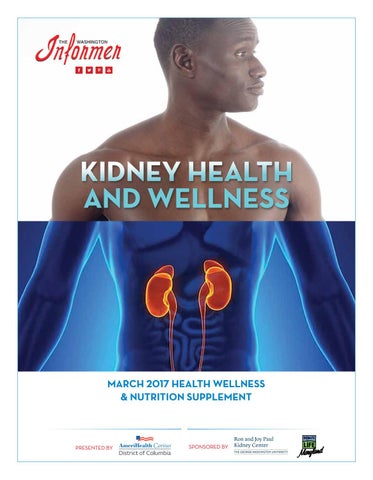
MARCH 2017 HEALTH WELLNESS & NUTRITION SUPPLEMENT
PRESENTED BY
SPONSORED BY
WORDS FROM THE EDITOR
NEWSPAPER READING IS A HABIT DON’T BREAK THE HABIT!
READ THE WASHINGTON INFORMER YOUR WAY: In Print – feel the ink between your fingers of our Award Winning Print Edition
n
On the Web – www.washingtoninformer.com updated throughout the day, every day
n
n
On your tablet
n
On your smartphone
n
n
n
Weekly Email Blast – sign up at www.washingtoninformer.com
202-561-4100 For advertising contact Ron Burke at rburke@washingtoninformer.com
...Informing you everyday in every way
In Memoriam Dr. Calvin W. Rolark, Sr. Wilhelmina J. Rolark THE WASHINGTON INFORMER NEWSPAPER (ISSN#0741-9414) is published weekly on each Thursday. Periodicals postage paid at Washington, D.C. and additional mailing offices. News and advertising deadline is Monday prior to publication. Announcements must be received two weeks prior to event. Copyright 2016 by The Washington Informer. All rights reserved. POSTMASTER: Send change of addresses to The Washington Informer, 3117 Martin Luther King, Jr. Ave., S.E. Washington, D.C. 20032. No part of this publication may be reproduced without written permission from the publisher. The Informer Newspaper cannot guarantee the return of photographs. Subscription rates are $45 per year, two years $60. Papers will be received not more than a week after publication. Make checks payable to: THE WASHINGTON INFORMER 3117 Martin Luther King, Jr. Ave., S.E Washington, D.C. 20032 Phone: 202 561-4100 Fax: 202 574-3785 news@washingtoninformer.com www.washingtoninformer.com
PUBLISHER Denise Rolark Barnes STAFF D. Kevin McNeir, Editor Ron Burke, Advertising/ Marketing Director Shevry Lassiter, Photo Editor Lafayette Barnes, IV, Assistant Photo Editor John E. De Freitas, Sports Photo Editor Dorothy Rowley, Online Editor ZebraDesigns.net, Design & Layout Mable Neville, Bookkeeper Dr. Charles Vincent, Social Sightings columnist Tatiana Moten, Social Media Specialist Angie Johnson, Circulation REPORTERS Stacy Brown (Senior Writer), Will Ford (Prince George’s County Writer), Hamil Harris, Tatyana Hopkins, D. Kevin McNeir, Lauren Poteat, Dorothy Rowley, Sarafina Wright (General Assignment Writer) Jade James-Gist PHOTOGRAPHERS John E. DeFreitas, Shevry Lassiter, Roy Lewis, Travis Riddick, Demetrious McKinney, Lateef Mangum, Mark Mahonney
Are Your Kidneys Healthy? Ignorance Could Yield Fatal Results I must admit that after learning about the role that our kidneys play in keeping the human body healthy while taking a biology class in high school several decades ago, I never thought anymore about the subject. I just assumed that since I felt fine, everything, including my two little kidneys, were fine too. Even more, since I don’t suffer from any of the pre-existing conditions typically associated with kidney disease like diabetes, high blood pressure or obesity, I always believed I was in the clear. But I have since realized that failing to request a urine and/or blood test during my annual physical, tests that can detect problems with my kidneys and catch them in their early stages, could place both my kidneys and my life in jeopardy. Said another way, it’s all about being more aware and becoming better educated. While one popular adage opines the notion “ignorance is bliss,” the truth remains that not knowing, particularly in cases like this, can prove to be fatal. Even if the end does not result in death, failing to be tested regularly and making sure our kidneys are functioning at their best can lead to a significant decline in our quality of ...failing to request life. In this health supplement the Washington a urine and/or blood Informer has chosen to focus on the theme test during my annual “Kidney Health and Wellness,” primarily because we want those who live and/or work in physical, tests that can the communities we serve, the Greater Washington Area, as well as our online readers who detect problems with reside throughout the U.S. and abroad, to my kidneys, could have life-enhancing kidney disease knowledge firmly within their grasp. place both my We have included stories and reflections from medical experts who work each day on kidneys and my life the “kidney frontline,” kidney transplant doin jeopardy. nors and recipients, the developers of a unique health support group for African-American women and one family whose faith and patience on which they stand as they await a kidney for the “man of the house,” eclipse their desperation and fear that death may come before his wait-listed name is called and a successful kidney transplant achieved. Do you know the kinds of foods to eat and avoid or the risk factors of which you should be aware so you can reduce the chances of becoming a person facing chronic kidney disease? Are you an organ donor or have you ever considered what you would do if you needed an organ transplant? Do you tend to consume vast quantities of fast foods, gobble down far too many meals where the prepared foods are fried or indulge in excessive amounts of alcohol? Do you know the last time, if at all, that you had your kidneys tested by a physician? These are questions whose answers matter as the decisions you have made or continue to make may either contribute to a healthy, properly-running body, or put you closer to facing any number of life-threatening illnesses. We hope you take heed of the facts we have included and, above all, make a renewed commitment to know and listen to your body – always seeking new and improved ways to keep your body healthy. After all, while we can always purchase a new home, a new car or a new wardrobe, outlets with new bodies for sale remain in extremely “short supply.” Godspeed and here’s to better health,
D. Kevin McNeir
Editor Washington Informer
www.washingtoninformer.com / MARCH 2017 HEALTH WELLNESS & NUTRITION SUPPLEMENT
HS-2
GWU Kidney Center: Fastest Growing Transplant Facility in U.S. Raises Access, Boosts Hope for D.C.’s Formerly-Ignored Communities
By D. Kevin McNeir WI Editor It may seem hard to believe but the District has the highest rate of kidney disease per capita in the U.S. Meanwhile, the epidemic of kidney disease continues to sweep the country. Additionally, those desperately in need of a kidney in D.C. far outweigh the number of donors – more so than in any other city in the nation. But despite such sobering statistics, hope has appeared on the horizon due in great part to the generosity of one local businessman whose personal journey forced him to come to terms with the life or death conditions one must face when kidney disease strikes home. “Kidney disease came out of nowhere,” said Ron Paul, chairman and CEO of Eagle Bancorp and Eagle Bank, who was diagnosed in the 1980s with glomerulosclerosis – a kidney disease that can eventually end in kidney failure. “I didn’t have any pre-existing conditions – no diabetes, no high blood pressure, no issues at all other than I found out I had the onset of kidney failure,” said Paul, who would opt for a kidney transplant from his brother Steven eight years after his initial diagnosis, hoping to avoid a lifetime of dialysis. Later, in 2008, he learned he would need another transplant. Again, he received a kidney donation – this time from a longtime friend, Kathy McCallum, the CFO of his company. His experiences, lasting over several decades, moved Paul and his wife to action, donating a $2.5 million gift under the auspices of The Ronald and Joy Paul Foundation that established the GW Ron and Joy Paul Kidney Center to address the urgent need for greater community awareness of kidney disease diagnosis, prevention and treatment. Paul never forgot how sick he once felt and his consuming fear about how he would be able to support his family on limited means while also trying to keep his company afloat. And so, with the arduous ordeal memories from their past, the Pauls set their sights on tipping the balance of kidney supply and demand – intent on helping others and saving the lives of other Washington area residents. That’s where Dr. Keith Melancon entered – a Louisiana native who became the director of the George
H-3 HS-3
Washington Transplant Institute in 2013 as a professor of surgery and medical director of the GW Ron and Joy Paul Kidney Center. With an impressive array of experiences, training, accomplishments and a well-earned reputation among his peers, both those living in the U.S. and abroad, most of his colleagues and patients point to his unwavering passion and dedication to extensive research that continue to center on his efforts to increase access to organ transplantation for minority and sensitized patients – all of whom have but few options for kidney transplantation. “We started the center in January 2015 after two years of working to get the program up and running,” said Dr. Melancon, 48, whose successful transplant numbers since the doors first opened total 89, making it both one of the fastest-growing centers in the U.S. with the added impressive caveat of having among the shortest wait for patients in need in America. “Access in the District was among the worst in the U.S. but our outcomes have been phenomenal particularly in Wards 4, 5, 7 and 8 where most of our patients have been Black,” he said. “We’re most proud of the live donor transplants for African Americans – 41 percent versus the average rate of 12 percent – especially since the best kind of kidney to receive is from a living donor.” Dr. Melancon says far too many people fail to receive regular testing for kidney disease which, added to inadequate knowledge and false beliefs, have impacted minorities far more than other ethnic groups. “Many think it’s a disease of the elderly – nothing could be further from the truth. And the assumption is there’s nothing one can do to prevent it – something that’s also false.” “Eating a healthier diet, particularly cutting down on sodium and sugar – major components within African-Americans’ culturally-induced dietary habits – and being more active, like working out or even walking, can normalize one’s blood pressure, eliminate the need for diabetes treatment and help reduce one’s weight. Awareness and knowledge can prove to be lifesavers.” So, is it that simple? Could a combination of heightened education and awareness, maintaining annual kidney checkups and making modifications in one’s diet and
lifestyle, collectively endorsed and followed by Dr. Melancon and the Pauls, be the key to higher-quality and longer lives, especially for people of color? Consider the poignant words of Alana Hunnicutt-Carroll who until recently had suffered from chronic kidney disease, even undergoing an earlier kidney transplant before turning to Dr. Melancon and his staff for help. “He made a third chance at life possible and I’m now doing great – working full-time with my catering business and volunteering as an advocate for the amazing program and people at GWU,” she said. Like many other Blacks, the pool to which she turned when looking for a donor, friends and family members, suffered from a higher rate of ailments like high blood pressure and diabetes which almost always disqualify them as a donor. In her case two potential donors were predictably denied. Then her husband, Reginald Carroll, stepped in. “He was determined to donate one of his kidneys but made me promise that afterwards we could
Dr. J. Keith Melancon has turned a recently-established kidney transplant center at the District’s George Washington University Hospital into one of the country’s most-respected and successful facilities, quickly emerging as a beacon of hope for Blacks and other minorities living in the Greater Washington Area. Pictured are: (left to right) Reginald Carroll, who donated a kidney to his wife (Alana), Dr. Melancon and his patient and kidney recipient, Alana Hunnicutt-Carroll. / Photo courtesy George Washington University Hospital
have a child,” said Hunnicutt-Carroll, the mother of a teenaged son from a previous relationship. “It’s considered high-risk but it’s still very possible for me to conceive and have a healthy child,” she added. “I have a few months to go
before reaching my one-year anniversary since the surgery. Then, I plan on keeping my promise to my husband.” “I’m blessed and even more convinced that God still answers prayers,” she said. HS
SUPPORT ORGAN, EYE AND TISSUE DONATION IT’S A DECISION EVERYONE CAN LIVE WITH
MARCH 2017 HEALTH WELLNESS & NUTRITION SUPPLEMENT / www.washingtoninformer.com
Register online or at the MVA when you obtain your license. DonateLifeMaryland.org
Keep Your Family Safe With Poison Prevention Submitted by AmeriHealth Caritas District of Columbia National Poison Prevention Week starts Sunday, March 19, and lasts through Saturday, March 25. Celebrate this important week by raising awareness of poison prevention and making sure your home is poison-proof. Follow these steps to help keep you and your family safe. Only take medicines as prescribed by your health care provider Many people take at least 1 medicine to manage their health. Taking these medicines as prescribed by your health care provider (doctor) can be an important part of being healthy. But changing your medicine without a doctor’s approval can be very unsafe. This includes stopping your medicine, taking too many, or taking others not prescribed for you. If you want to make changes to your medicine, talk to your doctor before doing so. It is also important to consider where you and other family members take your medicines. If a child sees someone take medicine in a common area, the child may think it is OK for him or her to take that medicine, too. This can be very unsafe. It is best to take your medicines in private. After you take them, lock them up away from children. If your child is prescribed his or her own medicine, he or she should always take it with a caregiver’s supervision. This helps ensure they take the right dose each time. Take over-the-counter medicines only as directed Over-the-counter medicines, vitamins, and supplements can be both helpful and convenient. They are available at most stores and work well when used correctly. But be sure to read the drug facts and labels before using these products. And never take more than the package says. It is also important to talk with your doctor or pharmacist before taking over-the-counter medicines. This is because some products can react with medicine you already take. Before adding anything new to your medicine routine, talk to your doctor or pharmacist first. Dispose of all expired or unused medicines safely Be sure to check the expiration dates on all medicines. Taking medicines past their expiration dates can be unsafe. If you think
you have old medicine in your home, check your cabinets and dispose of them safely. Safe disposal of medicines is important. There is also a special way to do this. Putting them down the drain can pollute the water supply. And throwing them away makes it easy for someone to find and take them. Here is how to get rid of medicines safely. First, mix all expired medicines in a plastic bag or empty coffee container. Mix these with something unpleasant, like kitty litter or used coffee grounds. Seal the bag or container. Then, throw it away. Remember to scratch out all your personal information on the medicine bottle before throwing that away, too. Keep all potential poisons out of children’s reach In addition to medicines, everyday household items can also be poisonous. For example, soaps and laundry pods can be harmful if swallowed. And these products come in many different shapes and colors. Children often confuse them for candy. This is very dangerous. Keeping these products in their original containers can help. They will be less likely confused for candy. And it is just as important to store these products out of children’s reach. Lock them up in an area children can’t get to, like a high cabinet or shelf. Here is a list of items to keep away from children and locked away at all times: • Medicines • Laundry and dish soaps (liquid and pods) • Bug killers and pesticides • Cleaning products • Bleach • Hair care products • Makeup • Products with alcohol, like mouthwash and hand sanitizer Avoid lead Lead poisoning can happen by swallowing or inhaling lead. Although lead is not used in new products, it is commonly found in old homes. If you live in an older building, you may have lead and not even know it. Lead can come from painted surfaces, old pipes, and old toys. You can help prevent lead poisoning by keeping your home, your family, and household items clean. If you want to check if your home or water has lead in it, you can get a free lead testing kit. Request your free kit from the
District of Columbia Water and Sewer Authority at 202-6123440. Use a carbon monoxide detector in your home Another danger in homes may be carbon monoxide (CO). CO is found in the fumes of burned fuel. And this dangerous gas can’t be seen or smelled. To help prevent CO from building up in your home, get your heater and other home appliances checked by a technician each year. It’s also important never to burn anything in your home, on a stove, or in the fireplace without an open vent. Engines can also produce CO. This means don’t run your car or other motors in a closed garage or inside any building. This can cause sickness and even death. The best way to help detect CO in your home is by installing a CO detector. If your detector alarm sounds, leave your home and call 911 right away. Know what to do in case of a poisoning Poisonings can happen anywhere. But there are many ways
to prevent them and keep your family safe. Be prepared and have a plan in case of an emergency. Remember these important poison prevention tips: • If you or someone you know is having trouble breathing or is unconscious, call 911 right away. • If you or someone you know was poisoned, stay calm and call Poison Help at 1-800222-1222. • If you or someone you know inhales a poison, get to fresh air right away. • If you or someone you know gets poison on the skin, take off any clothing the poison may have touched. Then, rinse the skin with running water for 15 to 20 minutes.
• If you or someone you know gets poison in the eyes, rinse the eyes with running water for 15 to 20 minutes. Save these numbers in your phone for help at any time: • In case of an emergency, call 911 • For Poison Help, call 1-800-222-1222 • For AmeriHealth Caritas District of Columbia (DC) Member Services, call 1-800408-7511 Sources: Centers for Disease Control and Prevention, U.S. Food and Drug Administration, and U.S. Health Resources and Service Administration All images are used under license for illustrative purposes only. Any individual depicted is a model. HS
www.washingtoninformer.com / MARCH 2017 HEALTH WELLNESS & NUTRITION SUPPLEMENT
HS-4
Member Wellness Center
2027 Martin Luther King Jr. Avenue SE, Washington, DC 20020
AmeriHealth Caritas District of Columbia members are invited to sign up for wellness classes each month. To sign up, visit www.amerihealthcaritasdc.com or call 1-877-759-6224.
March 2017
Care Coach on site Monday through Friday. Monday
Tuesday
Wednesday
Thursday
Friday
1
2
Healthy cooking class 5:30 p.m. – 7 p.m.
Total Body Dance Fitness for Beginners 6 p.m. – 7 p.m.
Saturday
3
4 Zumba® for Beginners 10 a.m. – 11 a.m. Yoga for Beginners 11 a.m. – 12 p.m.
6 Total Body Fitness for Beginners 6 p.m. – 7 p.m.
7 Zumba for Beginners 6 p.m. – 7 p.m.
13 Total Body Fitness for Beginners 6 p.m. – 7 p.m.
8 Yoga for Beginners 12 p.m. – 1 p.m.
14
9 Total Body Dance Fitness for Beginners 6 p.m. – 7 p.m.
15
Zumba for Beginners 6 p.m. – 7 p.m.
10
16
11 Total Body Dance Fitness for Beginners 10 a.m. – 11 a.m.
17
Total Body Dance Fitness for Beginners 6 p.m. – 7 p.m.
18 Total Body Fitness for Beginners 10 a.m. – 11 a.m. Yoga for Beginners 11 a.m. – 12 p.m.
20
21
22
Total Body Fitness
Zumba
Yoga
6 p.m. – 7 p.m.
6 p.m. – 7 p.m.
11 a.m. – 12 p.m.
27 Total Body Fitness 6 p.m. – 7 p.m.
28 Zumba 6 p.m. – 7 p.m.
23
24
Total Body Dance Fitness 6 p.m. – 7 p.m.
29
25 Total Body Dance Fitness 10 a.m. – 11 a.m.
30
31
Total Body Dance Fitness 6 p.m. – 7 p.m.
Space is limited. Times are subject to change.
5400ACDC-17218
H-5 HS-5
MARCH 2017 HEALTH WELLNESS & NUTRITION SUPPLEMENT / www.washingtoninformer.com
www.amerihealthcaritasdc.com
Family Keeps Faith in Search for Kidney Donor Campaign Raises Awareness and Hope
By Tatyana Hopkins (City Council, the Hill) WI Staff Writer Over 98,000 people nationwide currently have their names on a waiting list for a kidney with less than 20,000 transplants conducted each year. Desmond Padilla, 38, who lives with his family in Connecticut and whose name remains on the waiting list, learned that it could take as much as six years or more before a matching kidney could be found. But after three years passed by, he and his family found their patience waning. With that, they started a campaign on their own to find a donor and to hopefully prolong his life. Desmond received a donor kidney from his sister in 2010. Then, three years later routine blood work showed his body had rejected the transplant. He had already advanced to stage four renal failure, leaving him dependent on four-hour long dialysis treatments three times a week. “We were told a perfect match like this one would last 18 years,” said wife and mother, Evelyn. She compares the dialysis treatments to having another job for her and her husband, both of whom already work full-time while raising a brood of four children. But love conquers all. Even with their job responsibilities, the cost of childcare and a significant commitment of time related to Desmond’s dialysis treatments, the family of six has added even more to their plates – hosting a regular series of events to raise both awareness and funds. The
hashtag: #FindDesAKidney. “You never know who’s looking, who’s watching and whose heart you may touch,” Evelyn said. Many of the events they’ve already held have successfully reached family members, friends, co-workers and even their immediate community. Whenever they receive approval to set up and man a kidney failure awareness stand at local events, they sell T-shirts that include: Desmond’s name and blood type (A); the contact number to the Yale Donor Hotline; the proverbial hashtag; and a verse from the Bible which reads “faith without works is dead.” Desmond’s diagnosis of renal failure can be traced to Focal Segmental Glomerulosclerosis (FSG), a disease that produces scarring in the kidney. Men and African Americans tend to be slightly more susceptible than others. However, doctors have told the family that Desmond’s FSG appears to have no discernible cause. The Padilla’s campaign efforts continue to generate wide support among family and friends and have even led to two potential kidney donor leads. Unfortunately, neither one resulted in a successful match. However, Desmond says he has not lost faith. “Sometimes it’s frustrating but I try to stay positive,” said Desmond, who despite constant nausea, dizziness and pain, maintains a 60-hour workweek. He says the physical toll the disease has had on his body and the emotional impact to which he and his family have been subjected have made the waiting even harder. His helpmate agrees.
“It’s tough because you know so many people die waiting,” Evelyn said. Desmond added that he’s become more reluctant to developing friendships with fellow patients at his dialysis center after several died while still on a transplant waitlist. Through disappointments, the Padilla family says they’ll continue their campaign, #FindDesAKidney, always believing that everything they do helps them prepare for that one future outcome: a new kidney for Desmond. “We pray we get the call and we hope that it’s on time,” Evelyn said. HS
Evelyn Padilla remains hopeful that an acceptable kidney will be found for the head of the family, Desmond Padilla, 38, who needs a second kidney transplant after his body rejected a previous transplant.
Early Kidney Screening Saves Attorney’s Life
Launches Online ‘Challenge’ to Educate Others By Stacy M. Brown WI Senior Writer It was nearly three years ago when James Goodnow, a licensed attorney, found his life turning upside down. Diagnosed with kidney disease and without a family history of the illness, he sought medical attention that would include hospitalization. Fortunately, he survived. “Kidney disease is a silent killer that affects all segments of the population but it has a particularly devastating impact on African-American communities,” Goodnow said. “Individuals with kidney disease can be largely asymptomatic until they reach the advanced stages of the disease. The key for prevention is early screening. A family doctor or the local chapter of the National Kidney Foundation can offer a simple blood and urine test to identify risk factors. Early detection saves lives – period,” he said. Moved by what he had learned, Goodnow went online with an idea called “The Kidney Challenge.” The goal: to encourage others to speak up about kidney disease by taking a personal challenge. Those who have accepted the challenge have done things like jumping out of airplanes, lifting weights, breaking boards or entering beauty pageants – all as a means of offering support in the fight against kidney disease. Wanting to do even more, Goodnow then faced one of his
greatest fears – entering his name in one of the world’s largest public speaking competitions which to date has over 30,000 participants. “With 27,000 people on our Facebook page, ‘The Kidney Challenge’ serves as a place where kidney disease sufferers and survivors can share stories and be inspired,” Goodnow said. Based on recent statistics, kidney disease ranks as the ninth-leading cause of death in America, claiming more victims than either breast or prostate cancer. For many, particularly African Americans, the cost associated with battling kidney disease can be prohibitive. Alice Andors, a spokesperson for the American Kidney Fund in Rockville, Maryland, said the nonprofit helps one out of every five American dialysis patients better afford the cost of their health care, adding that minorities disproportionately represent those seeking their financial assistance. “One critical area to focus on is the fact that kidney disease often has no symptoms until the later stages,” she said. “In fact, about 38 percent of new cases of kidney failure each year are people who have not been under the care of a nephrologist,” she said. “This is called a ‘crash landing’ into kidney failure,” Andors noted. In January, the NAACP announced the launch of a series of town hall events in communities across the country to improve
knowledge about kidney disease and dialysis treatment options for African Americans. The program, dubbed “NAACP Dialysis Health Imperative for Access, Choice and Equity [ACE],” informs communities about access to care while illuminating the disproportionate impact that kidney disease has on Blacks and other people of color. Blacks comprise 32 percent of Americans with kidney failure – a rate that’s more than double their representation in the national population, based on figures from the National Institute of Diabetes and Digestive and Kidney Diseases. “Given the high rates of African Americans and people of color living with kidney disease, it is important that they have the information needed to manage their illness effectively and can access the best treatment modalities available, including home-based therapies,” said Dr. Marjorie Innocent, NAACP’s senior director of health programs. “At the same time, there needs to be more targeted efforts in communities nationwide to inform people about how to prevent kidney disease and live healthier lives. We must focus on disease management while not putting aside basic prevention,” she said. HS
www.washingtoninformer.com / MARCH 2017 HEALTH WELLNESS & NUTRITION SUPPLEMENT
HS-6
Saving Hearts and Lives in the African-American Community
By Patricia A. Maryland, Ph.D. Our heart is the engine that keeps our body running. That’s why problems with the heart —such as coronary artery disease, high blood pressure or heart failure — can significantly impact a person’s well-being, and, at worst, be life-threatening. American Heart Month, in February, shines a spotlight on heart
disease, the leading cause of death for men and women in the United States. For African-Americans, it’s also a time to raise awareness of how cardiovascular disease disproportionately impacts members of the black community. Indeed, nearly half of African-American adults suffer from some form of cardiovascular disease, compared to about a third of whites, according to the American Heart Association. This trend stems in part from the fact that African-American men and women are more susceptible than other racial and ethnic groups to a number of health conditions that increase the risk of heart disease, including high blood pressure, obesity and diabetes. African-Americans can take several small steps to manage these conditions and reduce their likelihood of experiencing cardiovascular problems, including adopting a healthy diet, exercising regularly and avoiding smoking. But improving heart health in the African-American community means more than taking care of ourselves as individuals; it requires a concerted effort by policymakers,
healthcare providers and community leaders to address social and environmental barriers and champion proactive strategies for heart health. Only with contributions from all of these stakeholders can we build a culture of health to counter heart disease among African-Americans. Improving access to preventive cardiovascular care is our chief priority in the fight for African-American heart health. As epidemiologists continue to study whether African-Americans might carry a gene that makes us more prone to heart problems, ensuring that our family, friends and neighbors take advantage of regular preventive screenings is critically important to identify their risk as early as possible. The fact remains that African-Americans are less likely to get screened for high cholesterol or have their blood pressure under control — despite being 40 percent more likely to have heart-threatening conditions such as hypertension, according to the U.S. Department of Health and Human Services. While care access plays a role in explaining heart health dispar-
ities, African-Americans also face unequal outcomes when they do seek medical treatment for heart conditions. For example, referrals for cardiac rehabilitation are given to African-American patients at a significantly lower rate than their white peers, according to the American Heart Journal. This important type of follow-up care — which includes exercise training, education on heart-healthy living and counseling — is critical for patients. The lack of such care may be one reason African-Americans experience higher readmission and mortality rates than white patients in the year after a heart attack, according to the Congressional Black Caucus Health Braintrust. For our part, healthcare providers must make it our mission to remove barriers for African-American patients to preventive services, specialized care and effective follow-up procedures for heart health. And we must also partner with patients to determine a strategy that can help them effectively monitor and con-
trol their conditions. At Ascension, we are acutely aware of the challenges that keep minority patients from accessing healthy heart care. That’s why we recently established an ambitious goal: to eliminate race-, ethnicity- and language-based (REaL) disparities in preventable hospitalizations related to heart failure by 2022, as well as to achieve a significant reduction in heart failure admissions rates for Medicaid patients in our network. Our goals are bold, but we know how to achieve them: by working side by side with patients to assess risk, consider every treatment angle, deploy the latest management strategies, collaborate with community partners and connect to necessary specialists and subspecialists. These efforts, coupled with education, innovation and a commitment to healthy communities, can help providers, policymakers and the African-American community eliminate disparities and save the hearts and lives of many more diverse patients. HS
— a disease that disproportionately affects African-Americans and can cause serious birth complications — is one such disease that can be managed through a mother’s ongoing relationship with her healthcare provider.
stance abuse and domestic safety — will do more than improve the lives of mothers and babies. Its impacts will be felt throughout the community. Healthy Neighborhoods Detroit, an Ascension Michigan program, provides a powerful example of a community building its capacity to address holistic health needs. By integrating healthcare, education, grocery access and affordable housing in some of the city’s most blighted areas, the effort is creating nerve centers where all residents can access the services they need. The health of our youngest citizens is the yardstick by which we measure the prosperity of our country and communities. Fortunately, we have made great gains in reducing high rates of neonatal mortality. But there is still more work to do to address equity gaps for African-Americans. It will take a comprehensive, coordinated effort to eliminate this quiet crisis. By working together, we have reasons to hope for a future in which African-American babies survive, thrive and lead our communities into the future. HS
Neonatal Mortality: The Quiet Crisis of the African-American Community By Patricia A. Maryland, Ph.D. President, Healthcare Operations and Chief Operating Officer, Ascension Healthcare In my years working in healthcare, I have been blessed to see patients celebrate happy moments, but I have also witnessed times of profound grief. The loss of a baby is one such example that deals a devastating blow to our families, healthcare providers, communities and nation as a whole. Most newborns grow and thrive, but in the United States, almost six out of every 1,000 babies die during their first year, according to the Centers for Disease Control and Prevention. Many of these deaths occur in the neonatal phase of development — the critical period from birth to 28 days of life in which babies are more vulnerable to disease, infection and other complications. No mother, family or community in our country should have to endure the pain of losing a child. It’s all the more shocking to learn that African-American mothers lose a child before their
H-7 HS-7
first month of life at more than twice the rate of white women — the highest rate of any racial group, according to the CDC. In some states, the equity gaps are even wider. These figures should sound the alarm for all Americans, especially African-Americans, policy makers, healthcare providers and community leaders. This cannot be our quiet crisis any longer. There are real lives at stake. It will take all of us, working together, to ensure African-American babies born in America have every opportunity to thrive. Here are five steps we can take to get there:
ACCESS
Increasing access to quality, timely and affordable healthcare is critical to our mission. African-American mothers who lost an infant were 2.3 times more likely than white mothers to not begin prenatal care until the third trimester, or not receive prenatal care at all, according to the Department of Health and Human Services.
CULTURALLY COMPETENT CARE
The factors that influence neonatal health are myriad and complex, but we must continue our efforts to build a culture of health in the black community — one that competently serves the unique needs of mothers on their pregnancy journey and ensures they are at her healthiest even before they conceive. This work requires healthcare providers enhance our outreach to communities of color to forge bridges of understanding among medical professionals and the patients they serve — relationships we know lead to better health outcomes across the board.
EARLY INTERVENTION
Caring for healthy black babies begins before conception and continues throughout a mother’s prenatal and post-partum experience. Early care interventions are critical if we are to address and prevent neonatal and infant mortality, because they allow us to address conditions that could lead to poor birth outcomes. Hypertension
SELF-EMPOWERMENT
Importantly, African-American mothers must take full ownership of their healthcare experience. That means taking advantages of every opportunity to access proactive preconception, prenatal and post-partum care, and feeling empowered to ask questions. Understanding what’s normal, when to be concerned and when to call a doctor is the No. 1 thing African-American women can do to ensure their babies are born and stay healthy.
HEALTHY COMMUNITIES
More cities and neighborhoods are waking up to the notion that where you live has a significant impact on your health. Addressing environmental and social factors of health — such as nutrition, stress, sub-
MARCH 2017 HEALTH WELLNESS & NUTRITION SUPPLEMENT / www.washingtoninformer.com
The GW/Ron and Joy Paul Kidney Center and The GW Hospital Transplant Institute Aims to Educate about Kidney Disease By Anne Banner Did you know that 1 in 3 American adults is at risk for kidney disease? Twenty-six million American adults suffer from chronic kidney disease (CKD), the ninth leading cause of death in the country, and millions of others are at increased risk. Washington, D.C., has the highest prevalence of CKD in the country. Did you know that African Americans are three times more likely to experience kidney failure than Caucasians? African Americans also constitute more than 35 percent of all U.S. patients receiving dialysis for kidney failure, but only represent 13.2 percent of the overall U.S. population. In addition, nearly half of African Americans have at least one risk factor for kidney disease. As a response to these staggering statistics, the Ron and Joy Paul Kidney Center was established at the George Washington University (GW) in 2015, through a generous gift from The Ron and Joy Paul Foundation, to address the urgent need for community awareness of kidney diagnosis, treatment, and donation. The center works handin-hand with the GW Hospital
Transplant Institute and MOTTEP, the National Minority Organ Tissue Transplant Education Program, to deliver the widest spectrum of kidney disease education, prevention, and treatment options available in the city. “Joy and I felt very strongly that if we could better educate the community, then we could hopefully reduce the amount of kidney failure,” says Ron Paul, chair and CEO of Eagle Bancorp and Eagle Bank and founder of the GW Ron and Joy Paul Kidney Center. “Should somebody be in end-stage renal failure, we want to be able to educate them on transplantation. It’s all about awareness and education. That’s what we’re going to be promoting through this center.” For Paul, the center strikes a personal note. In the 1980s, he was diagnosed with glomerulosclerosis, a kidney disease that can ultimately end in kidney failure. “It came out of nowhere,” he says. “I didn’t have any pre-existing conditions, no diabetes, no high blood pressure, no issues at all other than I found out I had kidney failure.” Eight years later, Paul faced a decision: a lifetime of dialysis or a kidney transplant. He chose a transplant, and his brother,
Steven, provided the needed organ. The donated kidney lasted far beyond its typical lifespan, but in 2008, Paul learned he would need another transplant. Again, he received a donation, this time from a longtime friend and chief financial officer of his company. Organs from live donors are ideal; they shorten or completely eliminate a patient’s need to be placed on a waiting list or on dialysis, and the short- and long-term survival rates tend to be better than people who receive kidneys from deceased donors. With outreach from the GW Ron and Joy Paul Kidney Center, the Pauls are hoping to tip the balance of kidney supply and demand, a move that could potentially save the lives of many Washington, D.C., residents. In 2016, the center launched a series of ads featuring CBS Sports/ News broadcaster James Brown as part of an awareness campaign. The ads, which highlight symptoms of kidney disease, have run on the D.C. metro area’s cable networks. Coupled with Metro bus ads, radio, and digital ads, they have also educated and motivated people to speak with their doctor and get checked for kidney disease — or to call the
Staff and faculty from the GW Hospital Transplant Institute provided kidney health education and blood pressure screening at the NBC4 Health and Fitness Expo, in partnership with the GW/Ron and Joy Paul Kidney Center. For more information about upcoming screening events,
GW Ron and Joy Paul Center for screenings and provider referrals. In addition, the center hosted a series of screening events and educational lectures and is working in partnership with MOTTEP, the GW Medical Faculty Associates, the GW Hospital, and the GW School of Medicine and Health Sciences to educate the community. Most people don’t find out they have kidney disease until it is very
advanced, but by catching kidney disease in its earliest stages, patients can work with doctors to manage their symptoms and lead a healthier life. To learn more about the GW Ron and Joy Paul Kidney Center and its screening and educational events, or to learn about kidney transplantation at the GW Hospital Kidney Transplant Center, please visit GWKidney.org or call 202715-4330. HS
HEY DOC, HOW’S MY KIDNEY FUNCTION? The best way to find out if you have kidney disease? Go to your doctor and get tested ASAP. It’s that simple.
ASK YOUR DOCTOR FOR URINE TEST
BLOOD TEST
BLOOD PRESSURE
Albumin to Creatinine Ratio (ACR)
Glomerular Filtration Rate (GFR)
Hypertension is one of the leading causes of kidney disease.
call 202–715–4330 visit GWKidney.org SMHS_1617_1
www.washingtoninformer.com / MARCH 2017 HEALTH WELLNESS & NUTRITION SUPPLEMENT
HS-8
1 IN 3 PEOPLE WHO READ THIS MAY ALREADY HAVE CHRONIC KIDNEY DISEASE. COULD IT BE YOU?
Don’t wait. Get tested today. call 202–715–4330
visit GWKidney.org
SMHS_1617_1
H-9 HS-9
MARCH 2017 HEALTH WELLNESS & NUTRITION SUPPLEMENT / www.washingtoninformer.com
Your Biggest Cheerleader in Healthcare
By Marsha Greaves Director of Patient Engagement Community of Hope Thinking about a candy bar snack or skipping your walk? I know it is tempting. Before making that choice, think about how limited exercise and healthy food can affect your health for years to come. Many of our neighbors have diabetes. Three times more people east of the river have diabetes than in other parts of the city. If you or someone in your family
or friend group has diabetes, I have some good news for you. You can control your blood sugar levels. Like many patients at Community of Hope’s Conway Health and Resource Center, you can thrive too. Our patient, Vanessa, is one excellent example. She first learned that she had diabetes in 2009. With exercise and a healthy diet, she brought her blood sugar levels down. But a lapse in that routine meant that her diabetes returned. This second time she is also fighting thyroid cancer and some other health challenges. They make her diabetes harder to control. After years of struggling with these health setbacks, Vanessa says “I won’t let diabetes take over me, I will take over it!” Vanessa’s doctor also referred her to our Care Team, a special support for people with diabetes or high blood pressure. Care Team patients meet with a nurse and a care coordinator to create individual health plans. A healthy diet and exercise are included in the plans. The most helpful skill she has learned is how to portion her meals. But she knows that simply
eating healthy does not improve her diabetes. That is why she is excited to combine her healthy diet with exercise. Care Coordinator Seun Ajayi introduced Vanessa to the Capital Bikeshare program that is available to our Care Team patients. Now she can maintain a healthy and active lifestyle as Capital Bikeshare member. Vanessa plans to “get rid of diabetes by riding these bikes.” As the spring has arrived, Vanessa uses the bikes more. She rides with her boyfriend and sometimes with her daughter walking beside her. She plans to use the bikes to ride to her doctors’ appointments across the city. The Capital Bikeshare program is just one of many extra helps you might enjoy as a Care Team patients at Community of Hope. You may also use the DC Greens Fruit and Vegetable Prescription program. You can access other critical services: a foot specialist, an eye health specialist, treatment for HIV, nutrition and dental care. You might also get to join a chronic disease support group, which helps you’ll learn with others and
provide each other support. One of the best parts of Care Team is our Care Coordinator. They assist you in setting self-management goals, such as when to take medicine and when to exercise, and they give you special reminders about your next appointment. “We know our patients want to have healthier habits for themselves and their families. It is my job to be their biggest cheerleader,” said Ajayi. All our patients and neighbors can get fresh fruits and vegetables
at Arcadia Mobile Market from April to October. Breast cancer screenings are provided by Breast Care for Washington. Vanessa’s favorite doctors work at Community of Hope. She is grateful for all of the support she gets from the caring staff. She loves the friendly atmosphere. She says “knowing people care, makes you feel 100 percent better” when dealing with many health conditions. There’s room for you too. Come join us and we’ll cheerlead for you through your healing. HS
“We know our patients want to have healthier habits for themselves and their families. It is my job to be their biggest cheerleader.” Seun Ajayi, Care Coordinator
FiNd YOuR NexT dOcTOR OR deNTisT VisiT The cONWaY healTh aNd ResOuRce ceNTeR
✔ Most insurance and Medicaid Plans accepted ✔ Medical, dental and counseling services available ✔ Open saturdays
call Medical NOW 202.540.9862 202.540.9857
Our expanded services and specialty care are funded in part by the Government of the District of Columbia, Department of Health.
www.communityofhopedc.org
“ I’ve had a physical
transformation from the
crown of my head to the soles of my feet, after
following my doctor’s advice about my diabetes .”
—Alanda Braxton Miles, Ward 8 resident
deNTal
Our Family caring for Yours www.washingtoninformer.com / MARCH 2017 HEALTH WELLNESS & NUTRITION SUPPLEMENT
HS-10
Heart Disease: Is Your Family at Risk?
It could affect you, your parent, your child or your grandchildren. One in three deaths in the United States can be attributed to cardiovascular disease or problems with the heart’s arteries, muscle or other functions according to the Centers for Disease Control and Prevention. While this statistic is alarming for everyone, the stakes are even higher for African-Americans. Heart disease in adults is common-
ly linked to risk factors including high blood pressure and obesity, which disproportionally affect African-Americans living in Washington, D.C. The prevalence of high blood pressure among African-American adults is two times higher than among their white peers according to reports from the District of Columbia Department of Health. When it comes to obesity, less than one in ten white District residents are obese, while the condition
affects one in three African-American residents. While many kids’ heart issues are related to congenital defects, most recently increasing obesity among children and teens has increased their risk for cardiac problems. So it’s important to start good habits now in order to avoid early onset of high blood pressure and obesity. As grandparents, parents and guardians, you have the chance to help your children avoid heart issues throughout their lives by making healthy choices now. Here are some heart healthy tips to implement today: • Limit Screen Time – We know that too much time sitting isn’t good for kids. Did you know that children ages 8-10 spend approximately six hours a day in front of a screen using entertainment media? As a parent or a grandparent, limit the time your child or grandchild spends on the phone, a laptop, the TV or a computer. Also, be sure they stop watching before bed. • Choose Healthier Drinks and Snacks – With long work hours and lots of other plans, finding time to make a healthy meal plan can be
hard. To get started, focus on adding more dark green, orange and red vegetables to your plate. Vegetables like sweet potatoes, dark leafy greens and peppers provide essential vitamins, minerals and nutrients and don’t contain excess calories and unhealthy fats. Additionally, cut down on sugary drinks and try adding a splash of lemon or fruit slices to water instead. • Get Moving as a Family – Children model the behaviors of their family members. With warmer temperatures on the way, make time to get outside with your kids and grandkids. Plan an activity that the whole family will enjoy. Kids should spend 60 minutes or more each day doing physical activity. • Schedule Routine Visits to Your Pediatrician – Just like it’s important for adults to have their cholesterol checked, children need to maintain routine visits to their pediatricians. These visits allow physicians to ask questions and monitor changes in health over time. This is especially important to stop obesity before it becomes a problem. Visit ChildrensNational.org to learn more about our primary care practices.
If your pediatrician recommends that your child should see a specialist, it’s important to choose a cardiologist who focuses on children’s heart health, like the doctors at Children’s National Heart Institute. In his forthcoming book, “Healing Children: A Surgeon’s Stories from the Frontiers of Pediatric Medicine,” Kurt Newman, MD, President and Chief Executive Officer of Children’s National, shares more tips and lessons to help parents find the right doctors and the best care for their kids. His guiding principle is that the more families use experts and facilities that specialize in pediatric care, the better their child’s experience and outcome will be. As the only exclusive provider of health care for kids in the District, Children’s National is dedicated to helping children grow up stronger. This includes caring for nearly 14,000 D.C. kids each month and advocating that pediatric medicine remains a mainstay in our nation’s health care system. HS Sources: Centers for Disease Control and Prevention District of Columbia Department of Health
STRONGER
IS TOP PEDIATRICIANS FOR YOUR TOP PRIORITY. It’s expert doctors and
nurses providing the best quality care. It’s being a leading voice for children’s health needs across our
community and beyond. And it’s doing everything in our power to help every child be their happiest, healthiest self. Because at Children’s National we don’t just want kids to grow up. We want them to GROW UP STRONGER.
1-888-884-BEAR
H-11 HS-11
childrensnational.org
#GrowUpStronger
MARCH 2017 HEALTH WELLNESS & NUTRITION SUPPLEMENT / www.washingtoninformer.com
Doctors Provide Health-focused Support Group for Black Women
Free Program Targets Middle-Aged Females, 40 to 75 By Sarafina Wright (Education) WI Staff Writer Friends and later colleagues for 38 years, two Black female doctors had a vision to help America’s most forgot-
ten and at-risk demographic. Black women ages 40 to 75 now top the list for having the highest risk of death due to heart disease, stroke and diabetes as compared to any of their female counterparts. The statistics prompted Doctors Gayle Porter and Marilyn Gaston to create
Prime Time Sister Circles [PTSC] as a source of support. “Many years ago we did a special about Black women’s health on BET with Pam Grier and former D.C. Mayor Sharon Pratt,” said Porter, a licensed, clinical psychologist. “Afterwards we got great feedback
UMC RECOGNIZES MARCH AS COLORECTAL CANCER AWARENESS MONTH
Meet Gerard & April BOTH TURNING
WHAT THEY DIDN’T KNOW...
Black men and women have a 45% higher chance of dying from colorectal cancer.
African Americans should begin colon cancer screening at age
45. (5 years earlier than other groups)
BLACKS HAVE THE HIGHEST DEATH RATES AND SHORTEST SURVIVAL.
– women wanted to know more. We looked everywhere and there weren’t many health and wellness books for Black women,” she said.” In 2001, still unable to locate literature specifically aimed at Black women, the duo decided to write their own book which they titled “Prime Time: The African-American Woman’s Complete Guide to Midlife Health & Wellness.” The book remains a novelty in the health category focused on African-American women in the midlife age group, spelling out strategies for Black women to utilize to gain better control over their physical and mental health. In 2003, the two physicians launched their second collaboration, the Sister Circles, throughout the Greater Washington Area. Several years later they expanded the initiative to Orlando, Chicago, Maryland and Pennsylvania. “This is a program that will help you stay healthy in terms of your weight, stress and activity level while also providing opportunities [for Black women] to talk and bond with other women,” said Gaston, a retired assistant surgeon general. PTSC consists of a 12-week session designed to be a culture-, gender- and age-specific program facilitated as an interactive support group. At each meeting the participants receive a free meal. “We meet for two hours a week and on Saturday mornings in community-based settings like churches, libraries, community and health
centers and the lobbies of apartment buildings,” Porter said. Porter added that when necessary the Sister Circles will go to the buildings in which the women live. “Every two weeks throughout the program we bring in dieticians, weight management coaches and specialists in mental health who engage the women and share their expertise,” she said. The doctors assert that the free program has maintained its funding for the past 14 years through donations provided by foundations and government entities. “I think we have been successful because we understand the cultural component,” Gaston said. “It’s not really about race but culture – having a keen understanding of the community with which we are dealing.” PTSC offers sessions twice annually during the spring and fall with goals that include motivating women to improve their health outcomes, reduce obesity and better understand the challenges they face due to their specific chronic illnesses. “We want to help make our community the healthiest it can be,” Porter said. “We know that keeping Black women healthy keeps our entire community healthy.” This year’s spring session of the Prime Time Sister Circles kicked off in March. For more information call 202-403-6266 or visit www.gastonandporter.org. For more information call 202403-6266 or visit www.gastonand-
Gerard and April are now sharing what they know... Colon cancer is preventable, beatable and treatable with proper screening. SCREENING CAN DETECT AND TREAT COLORECTAL CANCER* BEFORE THE ONSET OF SIGNS AND SYMPTOMS.
preventable
With proper screening and early detection, colon cancer is 90% preventable.
Call UMC at 202.574.6141 today to find out when you should be screened and which test is best for you. *colorectal cancer is cancer of the colon and rectum. Not-For-Profit Hospital Corporation 1310 Southern Avenue, SE, Washington, DC 20032
202.574.6000 www.united-medicalcenter.com
UnitedMedicalCenterDC
Working for a healthier community.
@UMC_DC
Doctors Gayle Porter and Marilyn Gaston, founders of Prime Time Sister Circles, a women’s support group located in various cities across the U.S. including the Greater Washington Area. /Photo courtesy of Prime Time Sister Circles
www.washingtoninformer.com / MARCH 2017 HEALTH WELLNESS & NUTRITION SUPPLEMENT
HS-12
SUPPORT ORGAN, EYE AND TISSUE DONATION IT’S A DECISION EVERYONE CAN LIVE WITH
Register online or at the MVA when you obtain your license. DonateLifeMaryland.org
H-13 HS-13
MARCH 2017 HEALTH WELLNESS & NUTRITION SUPPLEMENT / www.washingtoninformer.com
Be Kind To Your Kidneys By Brittany E. Tillman, CHES Be kind to your kidneys for the pair are vital anatomical organs that filter waste and extra water out of your blood and they produce your body’s urine fluid. Just how important is the duo (two kidneys)? Together it’s estimated that your kidneys filter 120-150 quarts of blood, which yields 1-2 quarts of urine, collectively of waste and extra fluid. In addition, your kidneys assist in controlling blood pressure and the production of hormones for your body. Imagine the waste that accumulates in your body if your kidneys are damaged.
Maintain a balanced healthy diet to prevent kidney disease or manage kidney disease: • Eat less than 2,300mg of sodium per day - Eat less packaged/process/ convenience foods - Use sodium free seasonings - Check nutrition food labels, select foods with a Daily Value (DV) of less than 20% sodium - Rinse canned fruit/vegetables/beans/fish with water before cooking or eating • Eat protein in small portions - Chicken, fish, meat, eggs, dairy, beans, nuts, grains • Eat heart healthy foods
Greater risk factors for developing kidney disease are: diabetes, high blood pressure, heart disease and/or family history of kidney failure. Nasty right. The kidneys are located on the left and right side of your back between the spine. If you have ever heard someone say my back hurts and then an older person will say drink more water or have you been drinking enough water. This associated back pain can occur for several reasons, and to name a few, kidney disease, kidney conditions and/or kidney infections. Along with other risk factors, dehydration can increase the risk of a person developing kidney stones. Kidney stones are minerals that form in one or both kidneys leading to a very painful experience when passing urine. Furthermore, a urinary tract infection (bladder infection) if gone untreated can move to the upper urinary system which the kidneys are components of. The kidneys function outstandingly better in the presence of the abundance of water. There is a heavier burden upon the fluid balance regulation of the kidneys when less water is consumed. Greater risk factors for developing kidney disease are: diabetes, high blood pressure, heart disease and/or family history of kidney failure. If you have any of the above risk factors it’s highly recommended that you check your kidneys with a glomerular filtration rate test (GFR) or a urine test for albumin (protein) by a medical provider.
- Grill, broil, bake, roast, stir-fry - Limit fried foods - Cook with small amounts of canola oil instead of butter - Trim fat off meat - Remove skin from poultry before eating Maintain proper hydration: Drink half of your weight in ounces of water. Example: 160lb person, drink 80 ounces (10 cups) of water daily. a. Cheat tip: you get 20% of fluid from daily food you eat. Watermelon, strawberries, cabbage, celery, spinach, pickles and lettuce have a high water content. In a more drastic state of kidney disease medical providers will limit Phosphorus and Potassium intake. An abundance of Phosphorus and Potassium in the kidneys can cause weak bones, muscle cramps, heart beat issues and muscle weakness. To limit the minerals eat more fresh fruit/vegetables, breads, pasta, rice, apples, peaches and rice milk. Avoid eating meats, poultry, fish, beans, colas, bran cereals and dairy as they are high in Phosphors. Avoid oranges, bananas, potatoes, tomatoes, brown/wild rice, dairy foods, whole wheat bread/pasta and nuts/beans as they are high in Potassium. So be kind to your kidneys by maintaining a balanced healthy diet with proper hydration. HS
www.washingtoninformer.com / MARCH 2017 HEALTH WELLNESS & NUTRITION SUPPLEMENT
HS-14
Attend the 2nd Annual Think Well Be Well Now Conference
Candice Camille, Wellologist™ is bringing an elite group of wellness practitioners together again the 2nd Annual Think Well Be Well Now Conference. She is answering the call for wellness once again this year to assist people in knowing what it takes to attain a state of wellness. This event comes on the heels of her personal wellness journey, which has included beating a deadly throat cancer and using an unconventional approach to becoming well. If you thought the fight ended there, let me tell you, this young lady has successfully bounced back from not only throat cancer, but the woes of business ownership. But, that didn’t stop her. She came back stronger than ever by providing dynamic wellness principles to live by which includes eating well, moving well, breathing and sleeping well, which results in being well. That’s why she is known as the Wellologist™. When asked what does it mean to be well, her response - “Wellness is first nature - it is a natural state of mind. Very much like breathing, it is designed to be constant. It is the belief that wellness is within your capacity to have it and your innate response is to live it daily as an intricate part of your being. You decide – formulating your thinking to keep your mind, body and spirit in perfect harmony - thinking constantly and consistently to be well.” The 2nd Annual Think Well Be Well Now Conference promises to shed a brighter light on health and wellness from a perspective of her 8 doctors that will be in attendance to share their principles on spiritual, meditation, nutrition, movement, air and sunshine, rest, hydration and fun! Here is what others are saying about last year’s event: Candice Camille’s Annual Think Well Be Well Now Conference was life-altering. I learned that I cannot out train a bad diet and abs are made in the kitchen. I also learned that Candice came back from what could otherwise keep a person down and has made it her lifelong mission to get everyone else to a state of wellness, states Joan Wilson, small business owner.
H-15 HS-15
Who knew that there were 8 doctors of wellness to visit daily? I didn’t, but I know now and I’m making my appointments and plan to keep them, states Diane Milatano. At the 2nd Annual Think Well Be Well Now Conference, you can expect to learn: • Know how to understand your current state of wellness • Balance your body, mind and spirit • Bridge the gap between your health and your wealth • Bounce back from life-altering challenges • Empower yourself to make you the priority • How to cook to be well • And, so much more
ABOUT CANDICE:
Candice Camille is spreading her message and principles to be well through her many appearances at conferences, destination retreats and special television and radio segments. In addition, she has started a raving movement entitled the Plank Talk Challenge. People from around the world are joining this movement and reaping the benefits of planking, which strengthens your core (start of a 6-pack), reduce back pain, provide more flexibility and ultimately, increases energy. Candice is also the founder and owner of Pure Nuphoria, a wellness space located just minutes from our nation’s capital, Washington DC. Pure Nuphoria is uniquely-designed to be a place of solace, warmth and contentment living. It is a de-stress zone where guests are able to quiet their minds, soothe their bodies and restore their souls. She is a licensed respiratory therapist, pulmonary function technologist, provides coaching and training for Girls Running Club of Prince Georges County and member of Women’s Business Owners of Prince Georges County. For more information about the 2nd Annual Think Well Be Well Now Conference and to book Candice for an interview or speaking engagement, please contact: thewellologist@gmail. com or www.CandiceCamille. com. HS
MARCH 2017 HEALTH WELLNESS & NUTRITION SUPPLEMENT / www.washingtoninformer.com
Now introducing
No Strings On Me
Doctor referrals are no longer required to see a specialist Always connected, never tied down Staying connected to your primary doctor is important. But your convenience is too. Now, you have the freedom to choose any AmeriHealth Caritas District of Columbia specialist without the hassle of a referral. Call us at 1-877-759-6224 to learn more. AmeriHealth Caritas District of Columbia complies with applicable federal civil rights laws and does not discriminate on the basis of race, color, national origin, age, disability, or sex.
www.amerihealthcaritasdc.com 5400ACDC-17202
www.washingtoninformer.com / MARCH 2017 HEALTH WELLNESS & NUTRITION SUPPLEMENT
HS-16