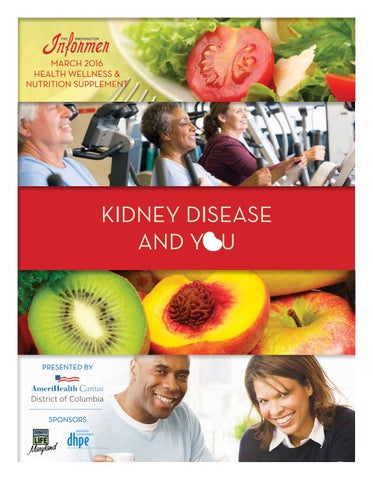
MARCH 2016 HEALTH WELLNESS & NUTRITION SUPPLEMENT
KIDNEY DISEASE AND Y U
PRESENTED BY
SPONSORS
NEWSPAPER READING IS A HABIT
Awareness of Kidney Health Vital for All Americans ‘Savoring the Flavor of Eating Right’ Also Important
DON’T BREAK THE HABIT!
READ THE WASHINGTON INFORMER YOUR WAY: In Print – feel the ink between your fingers of our Award Winning Print Edition
n
On the Web – www.washingtoninformer.com updated throughout the day, every day
n
n
On your tablet
n
On your smartphone
n
n
n
Weekly Email Blast – sign up at www.washingtoninformer.com
202-561-4100 For advertising contact Ron Burke at rburke@washingtoninformer.com
BY D. KEVIN MCNEIR Editor Washington Informer
...Informing you everyday in every way
In Memoriam Dr. Calvin W. Rolark, Sr. Wilhelmina J. Rolark THE WASHINGTON INFORMER NEWSPAPER (ISSN#0741-9414) is published weekly on each Thursday. Periodicals postage paid at Washington, D.C. and additional mailing offices. News and advertising deadline is Monday prior to publication. Announcements must be received two weeks prior to event. Copyright 2016 by The Washington Informer. All rights reserved. POSTMASTER: Send change of addresses to The Washington Informer, 3117 Martin Luther King, Jr. Ave., S.E. Washington, D.C. 20032. No part of this publication may be reproduced without written permission from the publisher. The Informer Newspaper cannot guarantee the return of photographs. Subscription rates are $45 per year, two years $60. Papers will be received not more than a week after publication. Make checks payable to: THE WASHINGTON INFORMER 3117 Martin Luther King, Jr. Ave., S.E Washington, D.C. 20032 Phone: 202 561-4100 Fax: 202 574-3785 news@washingtoninformer.com www.washingtoninformer.com
PUBLISHER Denise Rolark Barnes STAFF D. Kevin McNeir, Editor Ron Burke, Advertising/ Marketing Director Shevry Lassiter, Photo Editor Lafayette Barnes, IV, Assistant Photo Editor John E. De Freitas, Sports Photo Editor Dorothy Rowley, Online Editor ZebraDesigns.net, Design & Layout Mable Neville, Bookkeeper Mickey Thompson, Social Sightings columnist Stacey Palmer, Social Media Specialist Angie Johnson, Circulation REPORTERS Stacy Brown (Senior Writer), Sam P.K. Collins, Eve Ferguson, Will Ford (Prince George’s County Writer), Elton Hayes, D. Kevin McNeir, Dorothy Rowley, Kia Croom, Joya Patel, Rachel Sudduth, Sarafina Wright (General Assignment Writer) PHOTOGRAPHERS John E. DeFreitas, Shevry Lassiter, Roy Lewis, Patricia Little, Corey Parrish, Travis Riddick, Nancy Shia
March is both National Kidney and National Nutrition Month. And as health advocates prepare for World Kidney Day on March 14, the National Kidney Foundation continues to urge all U.S. citizens to give their kidneys a second thought and get a checkup. More than 26 million Americans already have kidney disease but most remain unaware of their condition because related symptoms often do not become apparent until the disease has progressed. Kidney disease stands as the ninth leading cause of death in the U.S. while over 95,000 people wait, hope and pray
for kidney transplants. Those with diabetes, high blood pressure or a family history of kidney failure should be regularly screened by a physician as early detection can make a significant difference in preventing kidney disease. Also during March, the Academy of Nutrition and Dietetics, the nation’s sponsoring organization for National Nutrition Month, hopes to spread the message that eating right depends on the individual and their lifestyle. And, as the academy emphasizes on its website, “There’s no one diet that is right for everyone.” Doctors, nutritionists, scientists and government officials have long urged Americans to change their ways and said that even small shifts in food choices, over the course of a week, a day or even a meal, can make a big difference. While one recent report focused on alcohol consumption (one glass a day for women, two glasses a day for men), moderate coffee drinking (three-to-five cups a day is fine); and eggs (now viewed as an acceptable part of one’s daily diet), other normal food choices remain on our list – and bad for our health. Americans eat too much fat, sodium and sugar and far too little vegetables, fruits or grains. Dieticians say it’s important to look at “why” one’s eating not just “what.” Oftentimes, we reach for food when what we really need is a nap, a hug or five minutes without a text message blaring in our ear. So how should you begin? Try low sodium or reduced sodium soups, canned beans and canned vegetables (if you don’t want to get fresh produce), eat more grain products like pasta and rice and be sure to include shelf-stable protein which can be found in items like canned chicken and tuna or peanut butter. As a country, both young and old have made food choices that have resulted in a record-high number of Americans suffering from obesity – a condition that has a negative impact on our overall health while overtaxing most of our body’s vital organs. We can live longer and live better – if we’re willing to change our daily routine, diet and visit a physician for annual checkups. Emergency rooms should not serve as our means of getting a checkup. Instead, early detection of any illnesses which often occur if we maintain an annual checkup, can make the difference between life and death. At the least we can witness an improved quality of life. So, love yourself a little more. See a doctor today. HS www.washingtoninformer.com / MARCH 2016 HEALTH, WELLNESS & NUTRITION SUPPLEMENT
H-2
African Americans and Kidney Disease Due to high rates of diabetes, high blood pressure and heart disease, Blacks and African Americans have an increased risk of developing kidney failure. Blacks and African Americans need to be aware of these risk factors and visit their doctor or clinic regularly to check their blood sugar, blood pressure, urine protein and kidney function. n Blacks and African Americans suffer from kidney failure at a significantly higher rate than Caucasians - more than 3 times higher. n African Americans constitute more than 35% of all patients in the U.S. receiving dialysis for kidney fail-
ure, but only represent 13.2% of the overall U.S. population. n Diabetes is the leading cause of kidney failure in African Americans. African Americans are twice as likely to be diagnosed with diabetes as Caucasians. Approximately 4.9 million African Americans over 20 years of age are living with either diagnosed or undiagnosed diabetes. n The most common type of diabetes in African Americans is type 2 diabetes. The risk factors for this type of diabetes include: family history, impaired glucose tolerance, diabetes during preg-
nancy, hyperinsulinemia and insulin resistance, obesity and physical inactivity. African Americans with diabetes are more likely to develop complications of diabetes and to have greater disability from these complications than Caucasians. African Americans are also more likely to develop serious complications such as heart disease and strokes. n High blood pressure is the second leading cause of kidney failure among African Americans, and remains the leading cause of death due to its link with heart attacks and strokes. HS
Due to high rates of diabetes, high blood pressure and heart disease, Blacks and African Americans have an increased risk of developing kidney failure.
H-3 H-3
MARCH 2016 HEALTH, WELLNESS & NUTRITION SUPPLEMENT / www.washingtoninformer.com
Celebrate National Nutrition Month® by Controlling the Risk of Diabetes Submitted by AmeriHealth Caritas District of Columbia Your lifestyle and food choices
can play an important role in your well-being. By eating the right foods and staying active, you can improve your overall health. Studies show that these simple routines can even help prevent various health conditions. For example, a balanced diet and daily exercise can help prevent diabetes and help control it. You may have heard of diabetes, but what is it? Why is it so important? Diabetes is a condition when your blood glucose (sugar) is too high. This can cause serious health problems, including: • Heart disease • Kidney failure • Vision problems, which can lead to blindness • Loss of feeling in feet or hands • Loss of limbs • Skin infections Based on the latest National Diabetes Statistics Report from 2014, over 29 million people in the United States have diabetes. And about 1 in 4 of them don’t know they have the condition. Some people, including African-Americans, are statistically more at-risk to develop diabetes. It can also run in the family. Know your family history and talk to your doctor about the condition. Untreated diabetes and not knowing can be very dangerous.
TYPES OF DIABETES
There are 3 main types of diabetes: • Type 1 diabetes. People with type 1 diabetes have trouble creating insulin. Insulin is a hormone in the body that controls blood glucose. An organ called the pancreas makes insulin. Without insulin, or too little of it, glucose builds up in the blood and causes serious problems. Type 1 diabetes is also called “juvenile diabetes” because it often develops in young people. It accounts for about 5% of all diabetes cases. Anyone can have type 1 diabetes, but it is uncommon for adults to develop it later in life.
The ways we help prevent type 2 diabetes in children are some of the same ways we can help treat diabetes in people of all ages. • Type 2 diabetes. About 90% – 95% of all diabetes cases are from type 2 diabetes. It can affect anyone, but it is most common in middle-aged and older adults. For type 2 diabetes, the body does not use insulin as it should. Fat, muscle and liver cells are supposed to use insulin to carry glucose into the body’s cells. This helps give the body energy. But those with type 2 diabetes have trouble getting glucose into the body’s cells. Because of this, the body creates more glucose than it needs. This increases blood glucose levels and is unsafe. Those who are overweight and inactive have a higher chance of developing type 2 diabetes. • Gestational diabetes. Pregnant women can also be at risk
for diabetes. This is when your body cannot make enough insulin when you are pregnant. This is unsafe for the mom and baby. Being overweight or gaining too much weight during pregnancy puts you at a higher risk. You can only get gestational diabetes during pregnancy and it usually goes away after having the baby. But the condition increases the risk of developing type 2 diabetes after pregnancy.
• Unexplained weight loss or gain • Having cuts or sores that heal slowly • Tingly feeling in the hands or feet If you’re having any of these symptoms, it does not always mean you have diabetes. Visit your doctor to talk about what you’re feeling. He or she will help you with next steps.
DIABETES PREVENTION The most common symptoms AND CARE
WARNING SIGNS
of diabetes are: • Feeling hungry and/or thirsty all the time • Going to the bathroom a lot • Blurred vision • Feeling tired
Inactivity and being overweight are the most common reasons people develop type 2 diabetes. And the condition usually develops during middle age. But recently, type 2 diabetes has increased in young people
who are overweight. And childhood obesity has increased drastically in the past 30 years. This puts children at a greater risk. Luckily, there are many ways to prevent this. The ways we help prevent type 2 diabetes in children are some of the same ways we can help treat diabetes in people of all ages. These include eating well and exercising every day. Those living with diabetes may also often take medicines or insulin shots to manage the condition. But living a healthy lifestyle, eating well and staying active are the best ways to prevent the condition. Encourage the whole family to stay healthy. Follow these healthy tips to help prevent and manage diabetes: • Maintain a healthy weight. Extra weight, especially belly fat, makes it hard for cells to respond to insulin. Maintaining a normal weight for your sex and age can help you be healthier. Talk to your doctor about what a normal weight is for you and your family members. • Exercise every day. Choose a fitness routine that works for you. It is important to be physically active at least 30 minutes each day. Children should be active for at least 60 minutes each day. This can help control blood glucose, weight and blood pressure. • Avoid tobacco products. Smoking raises blood glucose levels, cholesterol and blood pressure. When you have diabetes and use tobacco, the risk of heart and blood vessel problems is even greater. In addition to health tips already listed, eating well is an important part of managing and preventing diabetes. The diabetes diet and National Nutrition Month® March is National Nutrition Month. Now is the perfect time to learn what and how to eat to help you stay healthy. • Eat healthier foods. Those with diabetes should eat more whole grains, fruits and vegetables. These contain lots of fiber. Fiber can make you feel fuller faster and help you control your
Continued on Page H5
www.washingtoninformer.com / MARCH 2016 HEALTH, WELLNESS & NUTRITION SUPPLEMENT
H-4
From Page H4 weight. When snacking, it’s best to choose a medium sized fruit or vegetable. Be sure to eat edible skins of your fruits and vegetables, like apples, pears and yams. The skin contains a lot of fiber and other nutrients. If you eat canned foods, choose those containing water or 100% juice, not syrup. • Eat and drink less sugars, fats and salt. Choose a healthier option of your favorite foods. If you like fried chicken, try it baked with herbs and spices. Instead of cookies, choose another crunchy snack like granola. And substitute your favorite soda or sports drink with water or skim milk. It is important to watch what you eat if you have or are at-risk for diabetes. To find tasty recipes for you and your family, visit www.diabetes.org/mfa-recipes/ recipes. • Eat smaller portions. Many people don’t think about portion sizes when cooking, ordering or eating meals. Many are used to eating until their plates are empty and bellies full. This can lead to serious conditions like diabetes and high blood pressure. It is important to get into the habit of portion control every day to maintain a healthy weight. Learn how you can decrease your portion sizes:
• Eat 3 meals a day. It is easier to snack less when you eat full meals for breakfast, lunch and dinner. Eating 3 meals every day can help reduce hunger and give your more energy throughout the day. • Don’t eat when you are not hungry. Food can be enjoyable, but don’t eat just because you want to. When you feel bored, try being active. Take a walk, draw or read a book. If you still feel the need to eat, drink water or herbal tea instead. • Use smaller serving dishes. On a large plate, 1 cup of food can look tiny. This may cause you to eat more than your suggested serving size. If you don’t have portion control dishes, try using smaller plates when serving meals. • Enjoy your food. Eat slowly. Chew your food well and enjoy the different tastes and textures. Allow time for your body to digest the food. This will help you feel satisfied sooner. Drinking water before and during your meal can also help you eat less.
TALK TO YOUR DOCTOR
If you have diabetes, ask your doctor about the medical care you need. Be sure to ask about the following tests: • HbA1C test. This is a
Choose a healthier option of your favorite foods. If you like fried chicken, try it baked with herbs and spices. Instead of cookies, choose another crunchy snack like granola. blood test that measures your average blood sugar level over some time. Most people with diabetes need to have this test at least 2 times a year. • Urine test. This test looks for protein in your urine. Most people with diabetes should have their urine tested at least 1 time every year. If the urine test shows kidney disease, your doctor can work with you to treat it. • Eye exam. Changes in blood sugar levels can affect your eyes. A retinal eye exam checks for damage to your retina. Most people with diabetes should have their eyes tested 1 time every 2 years. Regular check-ups are also important, especially for people with diabetes. Talk to your doc-
tor about your blood pressure and sugar levels. Also, let him or her know if you have any skin infections, especially on your feet or legs. And be sure to ask any questions you may have.
TAKE CHARGE
Take charge of your diabetes. Talk to your doctor, exercise often and eat smart. Celebrate National Nutrition Month by making good food choices. National Nutrition Month is a nutrition education and information campaign by the Academy of Nutrition and Dietetics. This year’s theme is “Savor the Flavor of Eating Right.” To learn more about National Nutrition Month and ways you can “eat right,” visit
www.nationalnutritionmonth.org. Start eating right today and talk to your doctor about your health goals. Tell him or her about your family history and if your lifestyle puts you at risk for diabetes. No matter what your health status is, eating well and exercising every day can help keep you healthy. Take charge today. Your health depends on it. Sources: Academy of Nutrition and Dietetics, Centers for Disease Control and Prevention, MedlinePlus and National Institute of Diabetes and Digestive and Kidney Diseases All images are used under license for illustrative purposes only. Any individual depicted is a model. HS
My girls are healthy because they get a physical every year and see their dentist every 6 months. It’s important that my granddaughters get vaccinated for school. They get regular check-ups with our doctor and dentist, too. I’m Genevieve, and I help them however I can! To see the I am healthy series and get tips on ways to stay healthy, visit www.amerihealthcaritasdc.com/iamhealthy or scan the QR code with your mobile application. SM
5400ACDC-1522-35
H-5 H-5
MARCH 2016 HEALTH, WELLNESS & NUTRITION SUPPLEMENT / www.washingtoninformer.com
For Communities of Color, The Fight Against Diabetes Is Far From Over By Patricia Maryland Dr.PH Recently, the Centers for Disease Control and Prevention (CDC) announced the rate of new cases of diabetes in America has declined by about 20 percent. This represents the first sustained decrease in diagnosis since the disease emerged as a major threat to public health over the course of the past two decades. But the fight against diabetes is far from over, especially for communities of color. It’s good news that diabetes is on the decline overall, but we have not observed a significant change in its prevalence among the African-American community, which continues to be far more vulnerable to the disease than other racial and ethnic groups. Consider the data: Black adults are about twice as like-
ly to have diagnosed diabetes as non-Hispanic white adults. They are also twice as likely to die from the disease. What’s more, African-Americans are more than three times as likely to suffer from health complications related to diabetes, such as lower-limb amputation and kidney failure. It’s clear that the African-American community is shouldering an unequal burden when it comes to diabetes treatment, prevention, research and education. And so there is more work to do to not only overcome the diabetes epidemic, but also eliminate the healthcare disparities that disproportionately plague our community. To do that, we must redouble our efforts to create a culture of health in African-American communities—one that removes the stigma of seeking care and helps our neighbors and family members access the opportuni-
We have not observed a significant change in [diabetes] prevalence among the African-American community, which continues to be far more vulnerable to the disease than other racial and ethnic groups.
ties provided under the Affordable Care Act. Taking advantage of the options available today is the first step our community can take to reclaim Black health and wellness. But coverage alone isn’t enough to guarantee better health outcomes for African-Americans. Healthcare providers have a responsibility to deliver inclusive, quality care that considers the needs of the whole patient. That means providing patients with relevant, reliable information that empowers and engages them to make choices for a healthier life. The truth is that all healthcare providers should strive to provide an environment where no one is excluded—where everyone has access to compassionate, personalized care and the opportunity for better health regardless of their struggles or station in life. And that’s the right model for all providers. Because we must get to know our patients on an individual, holistic level— not prescribe a one-size-fits-all approach—if we intend to truly improve their health outcomes. Finally, our policymakers, civic leaders and all who have a stake in the health of our community must address the social determinants that influence and widen the diabetes equity gap.
For years, we’ve known that diabetes can be prevented and managed with healthy lifestyle changes such as exercise and good nutrition. But it’s difficult to go for a run around the block when you live in a high-crime neighborhood. It’s challenging to find fresh fruits and vegetables when you live in a food desert. We must marshal our communities around the policies that affect our environment’s ability to support a culture of health and wellness. Diabetes has been—and will continue to be—a major public health issue in the U.S. We’re making progress in the fight against the disease, but we need to do more to address the disparities felt by the African-American population. With a focused effort from members of the Black community, policymakers, civic leaders and healthcare providers to create a culture of health, deliver compassionate, personalized care and advance the policies that make healthy lifestyles viable, I am confident we can curb the diabetes epidemic for good, for everyone. HS Patricia A. Maryland, Dr.PH, is the President of Healthcare Operations and Chief Operating Officer for Ascension Health.
www.washingtoninformer.com / MARCH 2016 HEALTH, WELLNESS & NUTRITION SUPPLEMENT
H-6
Rap Producer Living Strong After Kidney Transplant
Portable Machine Key to Star’s Recovery By Stacy M. Brown WI Senior Writer For David Rush, the hip-hop star formerly known as Young Bo$$, touring the world with such superstars as Pitbull was only one part of his dream and life goals. Rush wanted a wife and children but kidney failure almost derailed those plans. “I was very much surprised when at 24 I was diagnosed,” said Rush, now a producer and the man behind the 2009 hit, “Shooting Star,” that featured Pitbull and LMFAO. He also worked on Pitbull’s popular hit song, “Go Girl.” “As far back as the 10th grade, I had protein in my urine and so there were some early warning signs but then you go on and go to college and you’re not really worried about doctor’s visits,” Rush said. However, after graduation, a visit to the doctor’s office revealed alarmingly high numbers, feelings of sluggishness and being sick, he said noting that he was diagnosed with kidney disease and was already in Stage 4 failure. Now, 33 and more than five years after a kidney transplant courtesy of his brother, Rush no longer needs dialysis but he’s hoping to raise awareness in the fight during National Kidney Month. According to the National Kidney Foundation African Americans suffer from kidney failure at a significantly higher rate than whites – more than three times higher. African Americans also constitute more than 35 percent of all patients in the U.S. receiving dialysis for kidney failure, but represent just 13.2 percent of the overall population. Due to high rates of diabetes, high blood pressure and heart disease, African Americans have an increased risk of developing kidney failure and need to be aware of the risk factors, making sure to have doctors regularly check blood sugar, blood pressure, urine protein and kidney function, foundation officials said. Diabetes stands as the leading cause of kidney failure in Blacks with approximately 4.9 million African Americans over 20 living with either diagnosed or undiagnosed diabetes.
H-7 H-7
For Rush, who has overcome his kidney issues and has achieved his dream of marriage and the birth of a son and daughter, the road wasn’t easy. He said he was aided by the NxStage System One, the first portable hemodialysis system that’s been cleared for home use by the U.S. Food & Drug Administration. “The portable home dialysis treatment was something that I stumbled upon,” Rush said. “I was signed to Pitbull and I wanted to go on tour and I just knew that there was a way because we have too much technology in the world not to be able to do this. I looked it up on Google and found NxStage and found that I could travel with the machine.” It takes about a month of training to use the machine, but it could be well worth it, said Dr. Byron Welch, a kidney doctor at Satellite Healthcare in Texas. “The payoff has been that you have complete control of the schedule,” Welch said.
Prescribing NxStage to patients is like allowing [a person] to regain control of their life and time, said Dr. Jose Morfin of the UC Davis School of Medicine and a member of the NxStage scientific advisory board. “The benefits my patients experience, like better blood pressure control, more energy and better mental health, are truly incredible to see,” Morfin said. “Performing more frequent home hemodialysis with the NxStage System One is definitely superior to conventional in-center dialysis.” Dr. Turan Marwaha, a specialist in internal medicine and nephrology in Orange County, California, said while there are eight companies that make in-home dialysis possible, only two are available in the U.S., including NxStage. “Patients who are using inhome dialysis have more energy, are able to spend more time with their families and have a better quality of life,” Marwaha said. Rush said all of his doctors approved his use of the machine.
Hip-Hop Artist and producer David Rush received a kidney transplant from his brother. / Photo courtesy 451 Marketing “When you’re first diagnosed, you are just in shock. Luckily, I was able to find the treatment and then consult with my doctor about it, get trained and go on tour. It changed everything for me. When I was going in for dialysis and spending five hours there, I still wasn’t coming out clean,”
Rush said. “With this machine, I was at home doing three hours and 45 minutes and feeling better. It was acting as a kidney and cleaning me more. I was no longer sluggish and beat up and it allowed me to do a whole tour – it allowed me to continue my dream.” HS
Sidebar
Rap Artist Advocates for Home Dialysis By Sarafina Wright WI Staff Writer
Rap artist David Rush, 33, formerly known as Young Bo$$, used a portable home dialysis treatment while he toured with international performer Pitbull. Now he wants to increase awareness of the system that could improve the quality of life for millions. In 2006, Rush signed on with rapper Pitbull, and in 2008 he went on a 40-city tour all while suffering from kidney failure. “I started in the hospital and I was doing 3 hours and 45 minutes, 6 days a week of dialysis,” Rush said. “I got knowledge of home dialysis and knew it was something I wanted to do.” “I was able to take it on tour and around the world me. It’s very self-sufficient,” he said. Rush insisted that with the help of friends and family the process went smoothly without adding burdens to his life. “You definitely need a care partner. Anything dealing with the body you want to have someone there,” he said. “There is a perception of the system that it is costly. But in truth it has about the same financial effect on your household as a microwave.” “Everything is covered as if you were getting your treatment at a facility,” he said. Rush said the process of dialysis at home remains the same as if you
MARCH 2016 HEALTH, WELLNESS & NUTRITION SUPPLEMENT / www.washingtoninformer.com
were in a hospital with the blood being extracted from your body, put through a filter and then put back in. In the 10th grade Rush learned that he had a rare kidney disease called focal segmental glomerulosclerosis. “I went in for a physical because I wanted to play football and that’s when I found out,” he said. Rush said at the time it was a deep concern, but he kept on living the way he always had and eventually went on to college. “In 2005, I found out that I had stage four kidney failure and up until that point I was healthy. I didn’t feel anything at all – that’s the scary part,” he said. “I was in a position to know my life was changing. “Right away they wanted to put me on dialysis and on a renal diet,” he said. Then in 2010, Rush’s fight with kidney failure got a lot easier. “My older brother is the true definition of a big brother,” he said. “He told me ‘I’m giving you this kidney and you’re going to take it!’” “We were a perfect match, so I got the kidney transplant,” he said. Rush acknowledges that not all are so lucky to have a relative willing to donate a kidney. After his own health challenges, he has become an advocate for the home dialysis system. “Only 2 percent of Americans are even using the home dialysis system, which needs to change,” he said. “This system really makes life easier. I took it on tour and on my honeymoon,” he said. HS
Stay in the Loop: What You Should Know About Lupus and Pregnancy Thometta Cozart MS, MPH, CHES, CPH and Ciearra Jefferson Directors of Health Promotion and Education Lupus is a chronic disease that is often overlooked, under discussed, misdiagnosed and misunderstood. It is an autoimmune disease with no cure that can damage any part of the body, including skin, joints and organs. More than 16,000 new cases of lupus are reported annually across the country. Of those who develop lupus, nine out of 10 are women; most women develop lupus between the ages 15 and 44, according to the Lupus Foundation of Ameri-
ca. Women of color, including African Americans, are two to three times more likely to develop lupus than Caucasian women. “A mystery is what lupus has been called by researchers, patients and physicians as it is an integrated, systemic disease that can take up to six years to diagnose,” stated Dr. Steve Owens, MPH, Health Equity and Lupus Health Education Director of the Directors of Health Promotion and Education (DHPE). African Americans also tend to have a more severe form of lupus, with more kidney disease, seizures, strokes, and lupus-related deaths. Gender, ethnicity, age and a family’s medical history also play a significant role in the risk of lu-
pus. So although, mostly women experience lupus, men, children and teenagers may also develop lupus. Thus, it is important to know the signs and symptoms of lupus, especially African Americans. Individuals experiencing the following symptoms should discuss the possibility of lupus with their health care provider: • Achy, Painful or Swollen Joints; • Extreme Fatigue or Weakness; • Sudden, Unexplained Hair Loss; • Photosensitivity or Sensitivity to Sunlight; • Chest Pains; • Anemia; and • A Lasting Temperature of
Be in the Know and Learn How Lupus Affects Black Women Today! More than 1.5 million Americans have lupus. Lupus affects mostly women ages 15 to 44. Black women are 3x more likely to develop lupus than white women. Black women with lupus who are pregnant or want to become pregnant should pay very close attention to their health. There is no cure for lupus but by managing one’s health, reducing stress and having the support of friends and family, women with lupus can strive for optimal health! Learn the Signs and Symptoms of Lupus at Lupus.org and attend the FREE Lupus and Pregnancy Webinar at 11 AM EST on Wednesday, March 16th at bit.ly/dhpelupus
Made possible by DHPE LEAP: Lupus Education and Awareness for Patients, Professionals and Providers through the HHS Office of Minority Health.
over 100 degrees Fahrenheit. Since most women are of childbearing age when they are diagnosed with lupus, and African American women usually develop lupus earlier, women should ensure they know and understand the impact lupus has on a pregnancy. Although many lupus pregnancies will have no complications, a lupus pregnancy is still considered “high risk.” Health professionals suggest that women with lupus who plan to get pregnant meet with their doctor in advance to discuss planning their pregnancy. To ensure more African American women know more about lupus, the DHPE LEAP: Lupus Education and Awareness for Patients, Professionals and Providers Program is hosting a Lupus and Pregnancy Webinar from 11:00 a.m.-12:00 p.m. EST on Wednesday, March 16, 2016 featuring Obstetrician and Gynecologist Dr. Yolanda Lawson, MD, PA, FACOG, Owner of MadeWell OBGYN Practice, and Associate Attending Physician at Baylor
Scott and White University Medical Center in Dallas, Texas. This free webinar will explain the relationship between lupus and pregnancy; discuss the signs and symptoms of lupus present in pregnant women; and explore how support systems, including family, friends, and community, can enhance the quality of life in pregnant lupus patients. To register, visit https:// attendee.gotowebinar.com/register/7640221900575921668 . The webinar ID is 100-350-243. DHPE, a national public health association, was recently funded by the Office of Minority Health, US Department of Health and Human Services, to implement a national lupus health education program. This program aims to bring national attention to lupus, a disease that impacts disproportionally women of color, especially African American women of child-bearing age. To learn more about lupus, visit www.lupus.org. For more information on the DHPE LEAP Program, visit www.bit.ly/dhpelupus or email info@dhpe.org. HS
Did you know that lupus currently affects more than 1.5 million Americans, and it is the leading cause of kidney disease, stroke and heart disease in women of childbearing age?
www.washingtoninformer.com / MARCH 2016 HEALTH, WELLNESS & NUTRITION SUPPLEMENT
H-8
March is National Nutrition Month: Local Efforts Make Healthy Food Available to More DMV Communities Thometta Cozart MS, MPH, CHES, CPH and Directors of Health Promotion and Education We all know the old adage, “An apple a day, keeps the doctor away,” yet 56% of adults in the District of Columbia reported not eating fruits and vegetables every day, according to 2013 data from the Centers for Disease Control and Prevention (CDC). In Maryland, the rate was 58% and in Virginia 59% of adults did not eat fruits and vegetables daily. Greater attention to good nutrition is needed in the DC-Maryland-Virginia (DMV) area. Healthy nutrition is important for preventing chronic diseases and having optimal health. Seven out of 10 deaths in the United States are linked to chronic diseases like heart disease, cancer, obesity, tobacco use and related conditions. “March is National Nutrition Month, and it is a great time to educate yourself about what you can do to prevent chronic diseases,” said Cheryl Welbeck, MBA, Project Director, Directors of Health Promotion and Education (DHPE). “It starts with the choices you make at the store and your access to healthy food options.” National Nutrition Month promotes the benefits of eating a healthy, balanced diet to improve the overall quality of life. Good nutrition and making small changes to your daily routines can make a big difference for your overall health, as well as contribute to the improved health of your community. DHPE offers 10 tips to help you eat more nutritiously: 1. Start breakfast with instant oatmeal & low-fat milk. 2. Skip the fast food drive through. 3. Keep low-fat or
H-9 H-9
greek yogurt, cheese and milk in your refrigerator. There are lactose-free options. 4. Snack on fruits and vegetables, including easy-to-carry items, such as carrots, apples, and bananas. 5. Pack a healthy lunch and skip eating out. 6. If you eat out, split the meal or only eat half. 7. Eat thin crust pizza. Add veggies as toppings. 8. Limit meat, fish & poultry to 5 ounces. 9. Eat whole-grain breads. 10. Drink lots of water — 8 glasses a day! Just as people need to plan for healthy nutrition, so do communities. DHPE is part of a CDC-funded program to prevent chronic diseases like diabetes and heart disease. Five national organizations, including DHPE, have partnered to make healthy living easier by supporting a network of 97 communities in 36 states, including the
DMV area. The other partners include the American Heart Association (AHA), the American Planning Association (APA), the Society for Public Health Education (SOPHE) and the National WIC Association (NWA). An important aspect of the national network of funded communities is education in the African American community about the benefits of healthy eating, including elements of a balanced diet and how to maximize food dollars. One local project in the DMV area is the Johns Hopkins WIC Program (JHWIC), which is funded through NWA to improve community health. JHWIC serves approximately 10,200 women and children in Baltimore City, MD and partners with Share Our Strength’s Cooking Matters at the Store to help low-income families stretch their food budgets and cook healthy meals. Since June 2015, 52 Share Our Strength Pop-up tours have provided education to over 815
MARCH 2016 HEALTH, WELLNESS & NUTRITION SUPPLEMENT / www.washingtoninformer.com
WIC participants and community residents in Baltimore City and indirectly reached over 1,600 children and household members. The Healthy Options Restaurant program on Virginia’s Eastern Shore is another local effort. In a region where 31% of the adults are obese, the Eastern Shore Healthy Communities Coalition (ESHC) is working with area restaurants to add healthy choices to menus. Now diners can “taste the good life” by selecting entrees with reasonable calorie counts, light sodium, no trans fats, and made from locally grown produce and seafood. By working directly with the restaurants to modify their menus and food options, ESHC made good nutrition an easier option for the entire community. This approach is an example of how policy, systems and environmental changes can make healthy living easier where people live, learn, work, and play.
In observance of National Nutrition Month, consider not only how you could increase your daily consumption of fruits and vegetables, but also how you could increase the healthy food options in your neighborhood and surrounding local communities. Local health coalitions welcome support from African Americans, as well as representation from non-health sectors, such as education, transportation, media and business. To find a local health coalition near you, visit http://bit.ly/Partnering4Health2. For information about the CDC-funded project, visit http://www.dhpe. org/mpage/Partnering4Health. For additional information about JHWIC, visit www.baltimarket.org/resources/ and for ESHC, visit http://bit.ly/1RHNuiU. To increase your nutrition knowledge and to get more information about National Nutrition Month, visit www. eatright.org. HS
Visit EatRight.org and Bit.ly/Partnering4Health2 to find out more.
Made possible by DHPE and Partnering4Health through funding from the Centers for Disease Control and Prevention.
Study Points to Need for More Nutritious Foods Dietary Changes Key to Improved Health
By William J. Ford WI Staff Writer @jabarwill A proposed food system study in Prince George’s County encourages a healthier lifestyle, but also advocates some businesses make fruits and vegetables more affordable. In order to make that a reality, dozens of recommendations are offered such as creating a food policy director/coordinator position; start a “Water is Life” campaign to encourage drinking water; and provide incentives for local farmers. The 252-page document comes from the Maryland-National Capital Park and Planning Commission and the county’s Planning Department. The study that took three years to complete observed 10 areas throughout the county and sectioned them off from the South, Central and North. “We have [a lot] of problems. Diabetes diseases are pretty bad in the county and obesity has sky-rocketed,” said Gül Güleryuz, a planner coordinator in the Countywide Planning Division. “We wanted to find out what was wrong and bring some policy recommendations.” Güleryuz, who presented the study for the first time before County Council on Feb. 9, outlined some of the county’s health disparities. For instance, the county’s obesity rate in the last 20 years increased from 19 percent to 35 percent. Also, the county’s death rate for diabetes and heart disease from 2011 to 2013 ranked higher than the state average. The county’s plan to combat diabetes rests with its nearly threeyear-old partnership with Doctors Community Hospital of Lanham for an “On the Road” diabetes program for residents to receive free information and screenings. The next session takes place from 1-3 p.m. Friday, March 18 at the Laurel Beltsville Senior Activity Center in Laurel. Trina Frazier, chronic disease program manager for the county’s Health Department, said in an email that residents can receive dialysis treatment at more than 30 locations in the county. “Yes, diabetes is a concern in Prince George’s County,” she said. “Diabetes disproportionately affects minority populations and the elderly, and its incidence is likely to increase as minority populations grow and the U.S. population becomes older.” Another reason for the county’s death rate for diabetes and heart disease, according to the food study, stems from economics. The average price for a basket with a portion of the five food groups in Cheverly cost $13.39, but is nearly seven dollars more in Suitland at $20.84. The average household income in Cheverly ranks at $77,370, compared to $69,775 in Suitland. In terms of the number of supermarkets, 41 are located in the northern part of the county that also has the highest population. About 24 are in the central region and 17 in the south. “When we did the study, we couldn’t believe the disparity in one part of the county from the other,” Güleryuz said. “It was an eye-opener.” Besides her work with the county, Güleryuz serves as a member of the Prince George’s County Food Equity Council, an independent group established in 2013 that advocates for healthier food choices. The group hosts its next meeting at 3 p.m. Wednesday, March 23 at Busboys and Poets in Hyattsville. For more information on the food study, go to www.pgplanning. org. Scroll down and click on “Prince George’s County Food System Study.” HS
www.washingtoninformer.com / MARCH 2016 HEALTH, WELLNESS & NUTRITION SUPPLEMENT
H-10
Children’s National Health System: Protecting the Health of the District’s Children About one third of the 120,000 children living in the District of Columbia reside east of the river, in Wards 7 and 8. Children’s National pediatricians and specialists provide care across the city, but have a special commitment to families in Southeast DC through programs that support the healthy development of whole child. Beginning this spring, Children’s National will relocate and expand three existing locations into two new, larger primary care offices: Children’s Health Center at Anacostia (2101 Martin Luther King Jr. Avenue SE near the Big Chair) and Children’s Pediatricians and Associates Fort Davis (3839 ½ Alabama Avenue SE). Additionally, it will significantly expand its space and the services provided at THEARC (Town Hall Education Arts Recreation Campus). The relocations and expansions will allow more families to access medical care in their own neighborhoods and help to address health issues more common in these District communities such as diabetes, asthma, and other conditions.
The new locations offer families better accessibility to public transportation and safe parking, and the clinics will have longer and more convenient hours. The new pediatric health center at the Big Chair will provide space for families to access Children’s pediatric community health programs closer to home, with services like: • IMPACT DC Asthma Clinic • Healthy Generations program for teenage parents and their children • Improving Diet, Energy and Activity for Life (IDEAL) Clinic, a weight-loss and health education program • Access to nutrition through the WIC program • Breastfeeding support • Family support services • Mental health support • Dental health Neighborhoods east of the Anacostia River have the highest rates of diabetes in DC and also the highest rates of mortality from diabetes. Managing a chronic condition such as diabetes can put great
stress on families. Children’s National specialists help families to manage a child’s diabetes, and also have doctors that help families address obesity early on to prevent it. Obesity can lead to chronic conditions and complications later in life like type-2 diabetes. Children’s National helps families live healthier by taking early action. Community programs like KiPow! (or Kid Power) engage, mentor, and empower children from a young age to make healthy choices. Community health can take a proverbial village and targeted services to families in Southeast like those offered by Children’s National can support children throughout their development. Healthy kids make healthy adults. Children’s National is interested in addressing all the important factors in a child’s healthy development and well-being. It also
operates the pediatric emergency department at United Medical Center, and community centers and schools across Southeast are served by Children’s experts through services such as the mobile health and school nurse programs, and SafeKids DC, which focuses on injury prevention. As the largest primary care provider for the District’s children, Children’s National saw more than 9,000 kids and teens each month
last year, and is well-positioned to positively impact the health of the District’s children. These new Southeast locations and services help Children’s National deliver high quality pediatric care to the community and improve the overall health outcomes for the District’s children. HS SOURCES: DC Action for Children DC Department of Health DC Hunger Solutions
To schedule an appointment, call 888-884-BEAR
Nationally recognized experts. Better outcomes. Dedicated to kids. Choose care that’s Just Right.
H-11 H-11
MARCH 2016 HEALTH, WELLNESS & NUTRITION SUPPLEMENT / www.washingtoninformer.com
Being just right for your child means providing the best outcomes possible. It means expert doctors who understand the unique physical and emotional needs of kids. And it means being the region’s only health system designed with children — and their families — in mind. At Children’s National, that’s care that’s just right.
D.C. HIV Cases Down but Threat Increases By Stacy M. Brown WI Senior Writer In early February, Washington, D.C.’s preliminary HIV/AIDS Surveillance Report revealed that newly-reported HIV cases in the District had declined for a seventh consecutive year.
While the report was encouraging for most, the truth remains that those with the highest lifetime risk of an HIV diagnosis live in the District of Columbia. One-out-of-13 District residents are projected to become infected over the course of their lives, according to a brand new report from the Centers for Control and Prevention. The rates are also high in Maryland where 1-in-49 residents are projected to become infected at some time in their lives. “Last year, I announced the bold goal to cut in half new HIV cases in the District by the year 2020,” D.C. Mayor Muriel Bowser said. “We continue to make progress toward that goal and take new approaches that will enable us to ultimately end the epidemic in our city.” The District’s report not-
Don’t suffer in silence... We are here to help. If you or someone you love is experiencing one of the following, seek immediate help: » Intense feelings of sadness and loneliness » Suicidal thoughts or actions » Out-of-control anger » Feelings of helplessness » Feelings of guilt or worthlessness
» Extreme weight gain/ loss » Substance abuse » Erratic or dangerous behaviors » Avoidance of family or friends » Risky sexual behavior » Changes in eating habits
Services and Programs
A proven healthcare provider in the community for over 50 years, United Medical Center has partnered with the Psychiatric Institute of Washington (PIW), a leader in psychiatric care within the DC Metropolitan area. Together, UMC and PIW deliver quality, patient-centered psychiatric care for residents in need of mental health treatment. The Behavioral Health Unit is a 30-bed inpatient unit providing short term acute stabilization to patients experiencing complex psychiatric and medical conditions. We provide services to both voluntary and involuntary patients, ages 18 and older.
Why Choose Us...
Our Behavioral Health Unit provides the following services: » » » »
Same-day, walk–in appointments Outstanding quality and diagnosis Caring and compassionate staff Convenient parking and Metro accessible
Help is Just a Phone Call Away
A caring UMC professional is available 24 hours/7 days a week at 202.574.6716 to assist you. Not-For-Profit Hospital Corporation 1310 Southern Avenue, SE, Washington, DC 20032
202.574.6000 www.united-medicalcenter.com
UnitedMedicalCenterDC
@UMC_DC
ed that gay men were particularly at risk. The category of men who have sex with men continues as the highest mode of HIV transmission in Washington. It noted that 49.4 percent of new HIV cases were from men who have sex with men while 13.1 percent of the new cases of HIV were attributed to heterosexual contact; 1.9 percent to gay men who were also intravenous drug users and 1 percent of the cases was by other individuals who were intravenous drug users.
BLACKS PARTICULARLY AT RISK
The CDC report noted that if current HIV diagnoses rates persists, about 1-in-2 black men who have sex with men and 1-in4 Latino men who have sex with men in the U.S. will be diagnosed with HIV during their lifetime. HIV is a viral disease, transmitted sexually and through contact with infected blood or hypodermic needles. If untreated, the virus erodes the body’s ability to fight off infectious diseases and certain cancers. An estimated 1.2 million individuals are already infected with HIV; more than 150,000 are not aware they are infected and can, potentially, spread the virus, the CDC reported. “As alarming as these lifetime risk estimates are, they are not a foregone conclusion. They are a call to action,” said Dr. Jonathan Mermin, director of CDC’s National Center for HIV/AIDS, Viral Hepatitis, STD and Tuberculosis Prevention. “The prevention and care strategies we have at our disposal today provide a promising outlook
for future reductions of HIV infections and disparities in the U.S., but hundreds of thousands of people will be diagnosed in their lifetime if we don’t scale up efforts now,” Mermin said. CDC researchers used diagnoses and death rates from 20092013 to project the lifetime risk of HIV diagnosis in the U.S. by sex, race and ethnicity, state and HIV risk group, assuming diagnoses rates remain constant. Overall, the lifetime risk of HIV diagnosis in the U.S. is now 1-in-99, an improvement from a previous analysis using 20042005 data that reported overall risk at 1-in-78. However, this overall progress masks large disparities, researchers said. Gay and bisexual men continue to be most affected by the HIV epidemic in the U.S. At current rates, 1-in-6 gay men will be diagnosed with HIV in their lifetime, including 1-in-2 gay black men, 1-in-4 Latino gay men and 1-in-11 gay white men. African Americans are by far the most affected racial or ethnic group with a lifetime HIV risk of 1-in-20 for men (compared to 1-in-132 for whites) and 1-in-48 for women (compared to 1-in880 for whites). “These estimates are a sobering reminder that gay and bisexual men face an unacceptably high risk for HIV – and of the urgent need for action,” said Dr. Eugene McCray, director of CDC’s Division of HIV/AIDS Prevention. “If we work to ensure that every American has access to the prevention tools we know work, we can avoid the outcomes projected in this study.” HS
One-out-of-13 District residents are projected to become infected with HIV over the course of their lives.
Working for a healthier community.
www.washingtoninformer.com / MARCH 2016 HEALTH, WELLNESS & NUTRITION SUPPLEMENT
H-12
A Strong and Healthy Baby By Dr. Megan Hollis Expecting a child can be one of the most exciting times in a woman’s life. Watching that baby grow strong and healthy is even more rewarding. How do you make sure a baby has the best start in life? Get prenatal care as early and often as possible. Early care now makes for a stronger baby later. I have been a doctor in DC since 2012, now working at Community of Hope’s Conway Health and Resource Center on Atlantic Street SW. Every day, I see how prenatal care and other pregnancy services help our moms-to-be. Healthy babies start with regular visits with a doctor who knows you. A doctor that you trust. Regular visits help you learn more about your changing body and your baby’s growth. Early care also reduces the risk of an early birth or low birth weight baby. Prepared moms
can raise happy and healthy sons, daughters and grandchildren. When a pregnant mom comes in for a visit, we talk about what foods to eat, guidelines for exercise and tips to keep mom and baby healthy. “I feel in control of my pregnancy knowing my baby’s growth and my own health,” says Natasha, who’s pregnant with her third child. Sadly, Wards 7 and 8 have two of the highest rates of low birth weight babies, according to a DC Health Matters report. About 40 percent of pregnant women here do not get care in their first three months of pregnancy. Early care in your pregnancy helps prevent delivery before the baby is ready. But more babies are being born in the area so it is critical to change. Getting early care will build a strong generation of babies. Natasha is excited for her baby boy. “Community of Hope has made me feel ready at every stage of my pregnancy. Staff sup-
port me in so many ways. A care coordinator helped me find free resources. My doula supports me through birth. I learned how to breastfeed properly and even got free baby supplies - like diapers.” Both mom and baby benefit from great care. Did you know prenatal support happens outside of the doctor’s office too? Here at Community of Hope, we have a lot of resources to help pregnant women. We have group care, where pregnant mothers have fun discussions and win prizes. Our staff help patients stop smoking, teach about breastfeeding, and even do home visits after a baby is born. Sign up and get your family ready for your new baby. Early pregnancy care saves lives. Community health centers like Community of Hope are a great place to start for moms-to-be. I encourage you to tell your friends, daughter, granddaughter, or niece about the impor-
Community of Hope patient Natasha Williams (left) stands with Dr. Megan Hollis tance of pregnancy care and all the support services we offer. While here, check out our dentistry and other services too. We are accepting new patients of all ages, and hope you will come
visit us. Dr. Megan Hollis is the Medical Director at Community of Hope’s Conway Health and Resource Center, located in Bellevue. HS
EARLY CARE NOW, STRONGER BABY LATER VISIT THE CONWAY HEALTH AND RESOURCE CENTER
✔ Pregnancy Care Visits - Walkin Hours Available ✔ One on One Support Throughout Pregnancy ✔ Pregnancy Groups* with Food Provided ✔ Help Signing Up for Insurance
202.540.9857 202.540.9862
MEDICAL APPOINTMENTS
DENTAL APPOINTMENTS
*You may qualify for free baby supplies. Ask a team member how. Enjoy prizes, raffles and giveaways.
This program is funded in part by the Government of the District of Columbia, Department of Health’s Community Health Administration.
www.communityofhopedc.org
H-13 H-13
4 Atlantic Street, SW
MARCH 2016 HEALTH, WELLNESS & NUTRITION SUPPLEMENT / www.washingtoninformer.com
Our Family Caring for Yours
Get the Facts on Organ, Eye and Tissue Donation in Older Adults Libby Wolfe Executive Director Donate Life Maryland “I’m too old to donate, plus, I’m not in the best of health. Nobody would want my organs.” It is a common myth that older adults are undesirable candidates and not needed to register as organ, eye and tissue donors. In fact, there is no age limit to register as a potential donor. The U.S. Department of Health and Human Services identified the nation’s oldest organ donor as a former Texan named Carlton, who upon his death at age 92, donated his liver and gave a 69-year-old woman a second chance at life. Other occurrences of older donors include a man from South Korea who was a cardinal in the Catholic Church. He became an organ and cor-
nea donor at age 86. Anyone can become an organ and tissue donor regardless of age, race or medical history. Strict medical criteria are used at the time of death to determine the suitability of organs and tissues for transplant. There are very few diseases that automatically disqualify someone from organ donation, so even some-
one with a variety of medical conditions in their history may
still have some organs and tissues that can be donated. Don’t assume you do not qualify to become a donor. By registering as a potential donor, you allow physicians to be able to determine at the time of death whether or not all or some organs can be used. Although the decision of whether or not to become a donor is very personal, it is encouraged that you share your decision with loved ones so they are aware of your wishes. You can choose to register as an organ, eye and tissue donor either at the Motor Vehicle Administration while obtaining your license or ID or online directly with the Donate Life Maryland Registry. If you are not registered and have the potential to be a donor at your time of death, your legal next of kin will be offered the option to choose donation on your behalf. This is why it is encouraged to share your donation wishes because a brief conversation now can help provide loved ones with guidance if they need to make this important decision. When it comes to organ, eye and tissue donation, there are a few basics that are important to realize. First, donor designation NEVER interferes with medical care. An individual who seeks medical care or requires emergency treatment due to trauma or illness will receive all medical interventions that are appropriate under the circumstances without regard to the potential for organ donation. Only Donate Life Maryland professionals—
separate from hospital personnel—have access to the official Maryland Donor Registry and donation is only discussed as an option after death is declared. Additionally, there is no charge for a person to donate their organs. Any fees related to the removal of organs are the responsibility of the transplant recipient. Lastly, donation of organs will not alter the appearance of a body so as to prevent an open casket at a funeral and all major religions support organ, eye and tissue donation as the ultimate act of charity. If you have specific questions about your faith’s views on donation, consult with your minister, pastor, rabbi or other religious leader. Currently, the average wait for an organ in the United States is five to seven years, and an average of 22 people die every day because a suitable organ is not available. A single individual can save up to eight lives through organ donation and improve the lives of up to 50 persons through tissue donation. Organs that can be donated include the kidneys, pancreas, liver, heart, lungs and intestines. Corneas and tissues such as bone, skin, heart valves and veins can also be donated. In 2014, 29,532 people received organ transplants and over 1 million more received cornea and tissue transplants. Of these transplants, the age bracket that provided the highest number of donated organs from deceased individuals was the 50-64 group (10,758 organs). Additionally, of these organ recipients, 61.6 percent of them were age 50+. So not only are older adults potentially eligible to donate organs, but they are potentially eligible recipients as well. An assumption that one is too old or not in the best of health to register as a donor is an incorrect one. If you support sharing the gift of life through organ, eye and tissue donation, make the choice to register as a donor today at DonateLifeMaryland.org and be sure to share this important decision with loved ones. HS
www.washingtoninformer.com / MARCH 2016 HEALTH, WELLNESS & NUTRITION SUPPLEMENT
H-14
CARE
IS THE
OF
HEART
OUR
AmeriHealth Caritas District of Columbia’s
Member “Eat & Greet” Wednesday, March 23, 2016 5:30 p.m. – 7:30 p.m. A conversation with your AmeriHealth Caritas District of Columbia Care Team
WORK
Providence Hospital Ross Hall 1150 Varnum Street, N.E. Washington, DC 20017
• Learn about new benefits and services
Bring the whole family. There will be a kids’ zone!
• Meet with our care coaches
Dinner will be served.
• Create your custom care plan
Transportation is available.
• Get your free Passport to Health
To register or request transportation, call us at 1-877-759-6224. You can also register at www.amerihealthcaritasdc.com.
5400ACDC-1522-64
www.amerihealthcaritasdc.com
H-15 H-15
MARCH 2016 HEALTH, WELLNESS & NUTRITION SUPPLEMENT / www.washingtoninformer.com
Meet with a care coach at our Member Wellness Center.
Get one-on-one help from a care coach to help reach your health goals. AmeriHealth Caritas District of Columbia has special programs to help you stay healthy. We connect you with your own personal care coach to help get you the care and information you need. To talk with a care coach or get more information, stop by 2027 Martin Luther King Jr. Avenue SE, Washington, DC 20020 Monday – Friday from 9 a.m. – 5 p.m.
5400ACDC-1622-23
www.amerihealthcaritasdc.com
www.washingtoninformer.com / MARCH 2016 HEALTH, WELLNESS & NUTRITION SUPPLEMENT
H-16