WHITWORTH UNIVERSITY SYMPHONY ORCHESTRA
Philip Baldwin, conductor

Philip Baldwin, conductor
Philip Baldwin, director
Prelude to Star Wars
Monday, May 4, 2026
7:30 p.m.
Martin Woldson Theater at The Fox PROGRAM
The Sea Hawk, Suite for Orchestra Erich Korngold, arr. Brubaker
The Right of Spring Igor Stravinsky, arr. Rosenhaus Berceuse and Finale 1882-1971
The Planets Gustav Holst Mars 1874-1934
Senior recognition followed by intermission
Symphony No. 2 in D Major, Op. 43 Jean Sibelius Allegretto 1865-1957 Finale
Star Wars, “Revenge of the Sith” John Williams, arr. Brubaker b. 1932
We ask that you refrain from using cameras or recording devices during the program. Please turn off any electronic beeping devices (watches, pagers, cellphones).
FLUTE
Rachelle Austin ‘28
Psychology
Spokane
Alyssa Brown,‘29 Studio Art Spokane
OBOE/ENGLISH HORN
Isaac Ojennus ‘29
Chemistry
Spokane
Melody Hough ‘28 Biology Spokane
CLARINET/BASS CLARINET
Bar Rozenhaimer ’27
James Fischer ’28
. History, Philosophy, Theology
. Music Education and Performance
West Linn, Ore.
Spokane
Teresa Johnson ’29 French and Secondary Education Cheney
BASSOON
Zoë Johnson ’27
Jacob Campbell, guest artist
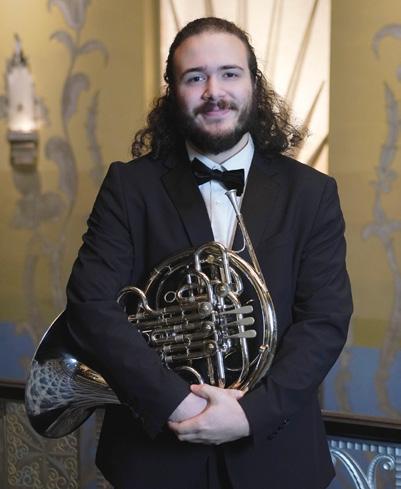
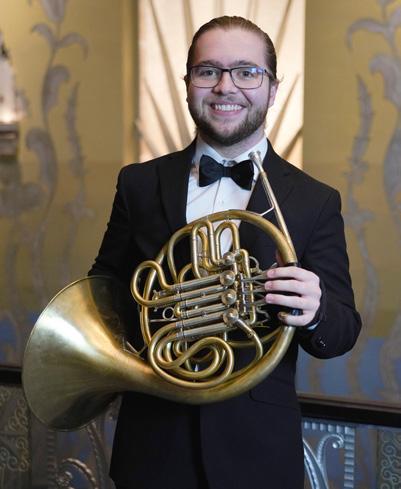
HORN
Music Performance and Education
Spokane
Isaac Crawford-Heim ‘26 Health Science Spokane
Bjorn Peterson ’29
Engineering
Missoula, Mont.
Kelsey Swenland ’29 Music Education and Performance Spokane
Hannah Marcoe ’27 Math Education Moscow, Idaho
Ariana Gamero ’29
Secondary Education and Art
Spokane
Carolyn Rose ’29 Elementary Education Liberty Lake
Isaac Dorcy ’26 Music Composition Shelton
TRUMPET
Alexis Hochberg ’28 .
. Music Education.
Liberty Lake
Anthony Cao ’27 Music Spokane
TROMBONE
Meg Zwiers ’29 .
Conor Waller, guest artist
Asher Kendoll, guest artist
TUBA/BARITONE
Julian Crandell ’27
PERCUSSION
Psychology and Music
Gallup, New Mexico
Music Composition
Deer Park
EJ Preuschoff ’29 Music Education Spokane
Loren Lenhe ’27
Madeleine Lyon ’26
Biochemistry.
Biology
Damascus, Ore.
Hockinson
Elizabeth Stubblefield ’26 Music Perf. and Pedagogy Spokane
Samarah Heggestad ’27 .
. . Music Perf. and Pedagogy .
. Spokane
Samarra Salcido ’26 Music Spokane
Jin Yue Trousil ’26 Applied Mathematics Juneau, Alaska
William Farley ’28 .
. Music Performance and Education
Spokane
Joshua Rivera ’26 Computer Science Liberty Lake
Jacob Luciano ’26 .
Michaila Caine ’28 .
Political Science and Theology
Pedagogy and Mathmatics .
Spokane
Enterprise, Ore.
Michaela Smith ’28 Music and Pedagogy Spokane
Ava Lynn Goins ’28
Gabrielle Ukrainetz ’25
Psychology
Music Education. .
Richland
Spokane Valley
Lori Petroske ’27 Biochemistry Spokane
Micah Smith ’29 English and History Spokane Valley
Joslin Hagen ’28
Computer Science
Spokane
Cher Knyaw ’29 Neuroscience Richland
Davian Calbert ’29
Halley Walter,’27
Physics
Biology
Greenacres
Liberty Lake
Lucas Mai ’29 Chemistry and Pre-Pharmacy Spokane
Nathan Wilson ’28
Sam Parker ’28
Physics and Math
Engineering
Spokane
Spokane
Shellbe Nelson ’26 Marketing Spokane Valley
William Burger ’29
Noah Williams ’28
Music Education and Theology
Music Education.
Gilbert, Arizona
Spokane
Emma Szymarek ’29 History Mead
Sarah Palmer ’27 Neuroscience and Pre-Medicine Spokane
Luke Twiss ’28
Computer Science
Vancouver
Lance Coppo ’28 Psychology Olympia
Calla Sicilia ’29 Elementary Education Spokane
BASS
Nate Moody ’26
Corey Hodges, guest artist
Hunter Koss ’26
Joy Zickau, guest artist
Music Composition
Medical Lake
Music Composition
Spokane
by Elizabeth Stubblefield
The Sea Hawk Overture is a work based on musical themes from Erich Korngold’s score for The Sea Hawk, a 1940s Warner Brothers adventure film produced as pro-British propaganda to bolster morale during World War II. Korngold was one of Hollywood’s most admired film composers whose style served as inspiration for later Golden Age scores, including Indiana Jones and Star Wars. Korngold’s use of dramatic leitmotifs to represent each character and their development is an excellent showcase of his opera-based approach to composing film music.
The Sea Hawk stars Geoffrey Thorpe, a swashbuckling English pirate who terrorizes the Spanish Armada, a threatening fleet of Spanish ships intending to overthrow England during the reign of Queen Elizabeth I. Thorpe is conflicted by his allegiance to the English Crown and his desire to win the heart of a captive Spanish princess. The story concludes with Thorpe valiantly slaying an English traitor and alerting Queen Elizabeth to the Spanish invasion plans, and his love returned by the princess.
Gustav Holst was a 19th century English composer known for his introverted nature and quiet dedication to composition and teaching. An important trip to Spain in 1913 sparked Holst’s interest in astrology, leading him to eventually compose a suite of symphonic tone poems based on astrologer Alan Leo’s descriptions of Mars, Venus, Mercury, Jupiter, Saturn, Uranus, and Neptune. The Planets helped establish Holst’s worldwide reputation as a composer.
“Mars, the Bringer of War” begins with a tensely quiet and bellicose march rhythm (introduced by the string players tapping their strings with the wood of the bow) and evolves into an intimidating militaristic brass fanfare. The work is driven by a 5/4 asymmetric ostinato, which is passed among various instruments and supported by the timpani and snare drum. The string sections help perpetuate the intensity of the melody with soaringly high melodies and running scales. An alert listener could imagine marching, canon fire, shouted commands, scrambling feet, and onslaught on the battlefield. Though composed on the eve of World War 1, Holst composed the Mars suite to characterize “the stupidity of war” in general, rather than individual events. Regardless of how the suite is interpreted, Mars is a brilliant source of inspiration for television, film, and game composers due to its strong imagery.
Stravinsky: The Firebird
Igor Stravinsky was a Russian composer whose approach to tonality and rhythm made him an important figure in the advancement of 20th-century music and a favorite collaborator of Sergei Diaghilev, founder of Ballets Russes (Russian Ballet). Diaghilev was Inspired by the boldness of Stravinsky’s previous works, as well as his enthusiasm for non-musical art forms, and commissioned Stravinsky to compose a score for The Firebird ballet.
Diaghilev’s Ballet Russes was a Paris-based ballet company seeking to elevate Russian folklore into a modern high-art spectacle through dance. Unusual rhythms and harmonies, exotic choreography, and bizarre storyline settings fittingly embody the modern features of this work. The Firebird was an immediate success from its premiere, helping Stravinsky establish an esteemed place for himself in Parisian art circles.
The Firebird’s narrative begins in the magical garden of Koschei, a powerful ogre and cruel sorcerer who has taken thirteen princesses captive and turned all their rescuers into stone. Prince Ivan chases the Firebird into this garden until she pleads for mercy, granted in exchange for one of her feathers, a token which Prince Ivan later uses to call upon her in the event of trouble. Prince Ivan discovers 13 princessses held captive in the garden and falls in love with one, vowing to free them all. Koschei captures Ivan and threatens to turn him to stone but the Firebird intervenes and casts her own spell forcing Koschei and his subjects to perform an “Infernal Dance” until they collapse in an exhausted slumber. While they sleep to the “Berceuse,” Ivan crushes an egg holding the sorcerer’s soul and ends the tyrant’s life. With Koschei’s death, the princesses are freed from the oppressive spell binding them, leading to the celebratory brass fanfare which characterizes the Finale.
Premiered in Helsinki in 1902 during a time of Russian oppression, Jean Sibelius’ Symphony No. 2 was embraced as a symbol of liberation and national pride by Finnish audiences. Although Sibelius personally denied any claims of nationalistic intention when composing the work, the triumphant transformation and climax of the Symphony’s persistent three-note motif offered Finnish listeners a powerful sense of national pride, vindication, and independence.
With blazing fast figures in the strings, the scherzos in the symphony’s third movement serve as a restless preparation for the slow and lyrical trios performed by the clarinets, horns, and a solo oboe. This buildup of tension between the contrasting trio and scherzo sections launches the orchestra into the victorious fourth movement. The finale’s romantic and stormy, yet hopeful, themes are passed from the strings to the brass sections in a grand heroic climax.
Although titled Star Wars: Episode III Revenge of the Sith, this concert medley encompasses many iconic themes from John William’s original and prequel Star Wars trilogy scores. Evoking memories of Hahn Solo, Luke Skywalker, and Chewbacca’s wild attempt to rescue Princess Leia from the Death Star, this arrangement begins with “A New Hope,” “Main Title,” and “Princess Leia’s Theme.” Following Princess Leia’s soaringly high and romantic leitmotif performed by the string sections, the music takes a dramatically dark and militaristic turn. “The Battle of Heroes” and “Revenge of the Sith” themes recall Obi-Wan Kenobi and Anikan Skywalker’s intense lightsaber duel on the volcanic planet Mustafar during Episode III, one of the tragic events which led Anakin to become Darth Vader. After musical themes of exile, betrayal, darkness, and anger, the work concludes with the triumphant “Throne Room” theme from Episode VI Return of the Jedi, celebrating the end of the Empire’s oppressive reign and bringing a resolution to the Skywalker journey.
John Williams drew plentiful inspiration for Star Wars’s scores from the styles and methods of other prominent composers. Much like Erich Korngold, John Williams employed leitmotifs throughout all the trilogies to represent prominent characters and significant events. For militaristic scenes, Williams’ choices of melodic material and instrumentation were also inspired by Holst’s iconic Mars from The Planets suite. Furthermore, the score bears hallmarks of modern 20th-century music, reflecting the bright melodic colors and rhythmic choices found in Stravinsky’s Firebird. The path from oppression to independence in Sibelius’ Symphony No. 2 is similar to the Rebellion’s struggle against the Empire’s rule in Star Wars. Altogether, William’s score is a brilliant blend of musical tradition, storytelling, and innovation.
The Whitworth Symphony Orchestra performs the standard orchestral repertoire, repertoire by underrepresented composers, and modern and commissioned works, including a premiere of Gwyneth Walker’s Let America Be America Again. The orchestra also performs with guest soloists and winners of its annual concerto competition and has enjoyed side-by-side concerts with the Coeur d’Alene Symphony. The orchestra has performed at the WMEA regional and All-Northwest conferences and was the featured collegiate orchestra in 2022. As part of its outreach, recruiting and cultural exchange goals, the orchestra tours biannually, most recently to Taiwan. Previous tours have included Italy, Hawaii, New York City, San Francisco and Salt Lake City. The orchestra is open to all qualified string musicians, regardless of major. The top wind and brass musicians of the Whitworth Wind Symphony are selected for membership in the Whitworth Orchestra. Our students benefit from outstanding opportunities including performance classes, chamber music, master classes (from such notable teachers and violinists as James Buswell and Charles Castleman), and clinics with principal players and conductors of the Spokane Symphony. The string chamber orchestra provides additional performance opportunities for the most ambitious players.
Philip Baldwin is the violin professor at Whitworth University and conductor of the Whitworth University Symphony Orchestra, as well as artistic director and conductor of the Spokane Youth Symphony. Baldwin earned a DMA at The Ohio State University, receiving the Distinguished Dissertation Award for work on the violin sonatas of William Bolcom. As a fellowship recipient, he attended the Conductor’s Institute of South Carolina and studied under distinguished teachers Paul Vermel, Kate Tamarkin and Donald Portnoy and trained with Wayne Toews at the Saito International Conducting School.
Baldwin serves as the concertmaster and assistant conductor of the Coeur d’Alene Symphony, is a former member of the Spokane Symphony, and has performed with the Tacoma, Canton and Columbus symphonies. As a guest conductor, he has appeared with the members of the Spokane Symphony, conducted the WMEA Junior All-State Orchestra, and twice directed the Hong Kong Youth Music Camp.
He is the past president of the Washington chapter of the American String Teachers and director of the Birch Bay String Teachers Workshop. Baldwin has presented lectures at eight ASTA national conventions, the Texas and Arkansas Music Educators Association conventions, and two International Short Story conferences on the intersection of music and literature.
Since 1890, Whitworth has held fast to its founding mission to provide “an education of mind and heart” through rigorous intellectual inquiry guided by dedicated Christian scholars. Recognized as one of the top regional colleges and universities in the West, Whitworth University has an enrollment of about 2,500 students and offers more than 100 undergraduate and graduate degree programs.
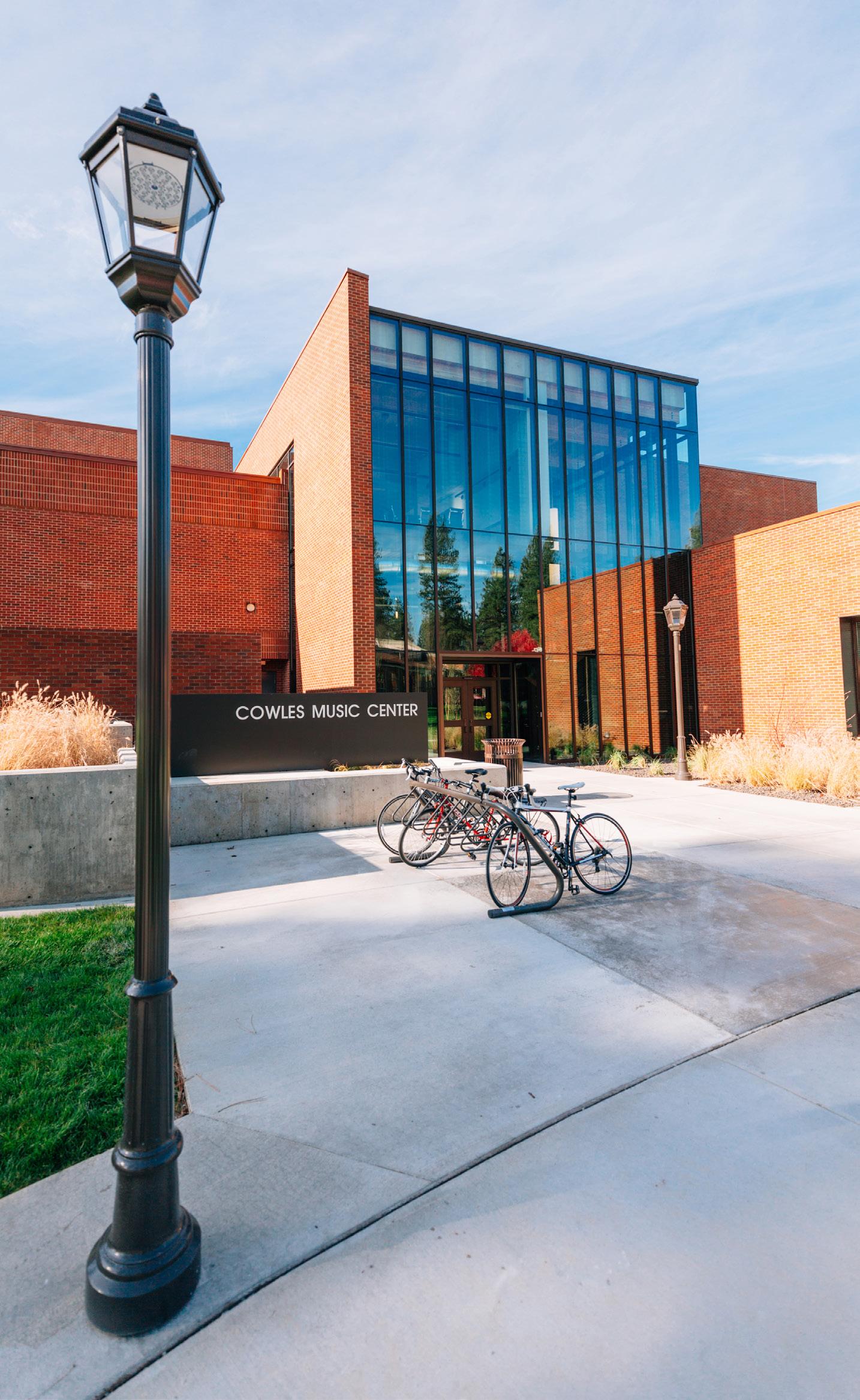
Whitworth University’s 200-acre campus of red-brick buildings and tall pines offers a beautiful, inviting and secure learning environment. More than $135 million in campus improvements have been made in recent years, including an expanded music center, a renovated auditorium stage, an expanded dining hall, a rec center, a science hall, an athletics leadership center and a graduate health sciences building.
In all of its endeavors, Whitworth seeks to advance its founder’s mission of equipping students to “honor God, follow Christ and serve humanity.”
For application information:
Office of Admissions
Whitworth University
300 W. Hawthorne Road Spokane, WA 99251
509.777.3212
admissions@whitworth.edu whitworth.edu/admissions
The Whitworth University Music Department, accredited by the National Association of Schools of Music, provides superb training in music as well as a thorough introduction to this essential element of the liberal arts. Whitworth music majors have gone on to prestigious graduate schools, fulfilling performance careers and successful teaching positions. Also, many non-music majors participate in the university’s renowned touring ensembles and enroll in private lessons through the music department. Whitworth University offers bachelor of arts degrees in composition, music production & songwriting, instrumental performance, jazz performance, string pedagogy, voice performance, and music education. Music scholarships are available to both music majors and non-majors.
facebook.com/whitworthmusic instagram.com/whitworthmusic youtube.com/whitworthuniversitymusicdepartment

Scan to learn about Whitworth’s music program.
Ben Brody, Whitworth Music Department Chair
Melissa Halverson, Whitworth Music Department Program Coordinator
The Whitworth Music Faculty
Pho Van Restaurant for providing student dinner
Fox Theater Staff
Whitworth Orchestra Officers
President, James Fisher; Vice-President, Alexis Hochberg
Chaplains: Nate Moody, Elizabeth Stubblefield, Michaila Caine, Rachelle Austin
Social Committee: Nate Moody, Hunter Koss, Samarah Heggestad, Sam Salcido, Zoe Johnson