Over the Rainbow Harold Arlen (1905 -1986) arr. Mark Hayes
INTERMISSION
Whitworth Community Concert Band
Mesa Dances Gavin Lendt (b. 1975)
Down a Country Lane Aaron Copland (1900-1990)
Suite of Old American Dances Robert Russell Bennett (1894-1981) (Selections) arr. James Curnow (b. 1943)
I. Western One-Step
II. Wallflower Waltz
III. Cake Walk
Elegy and Affirmation Jack Stamp (b. 1954)
The Hounds of Spring
Alfred Reed (1921-2005)
Whitworth Community Concert Band and Chorale
Irving Berlin’s America
Irving Berlin (1888-1989)
arr. Roger Emerson (b. 1950) & Paul Murtha (b. 1960)
Community Chorale Selected Program Notes
Love Walked In (1930)
In 1938, “The Goldwyn Follies ” was the first film Samuel Goldwyn released in Technicolor. George wrote the melody to Love Walked In in 1930, but lyrics were added for film use in 1937 by Ira Gershwin around the time of his brother ’s untimely death from a b rain tumor at age 39. The score for the movie was finished by Vernon Duke. George and Ira may be the most famous music duo. Remarkably, Ira lived to be 87, a full 48 years beyond George. Their immense catalog we know today speaks to the quality, skill, and yield of their partnership.
Night and Day (1932)
By the time he wrote Night and Day at age 41, Cole Porter had had several flops on Broadway. Educated at Harvard and Yale, he had married the debutant Linda Lee Thomas, considered one of the world’s wealthiest beauties. They had been living together in Europe. Many of Porter’s lyrics evoke images of their lifestyle, referring to the Rockefellers and Whitneys, champagne and oysters, costume balls and cruises. Night and Day however was an instant, international hit. His friend Irving Berlin even wrote him that he was mad because the song was played everywhere, by every band. Within three months of the song’s release for the musical movie “Gay Divorce”, more than 30 artists had recorded the song. -NPR synopsis
Let’s Call the Whole Thing Off (1937)
Written for the film “Shall We Dance”, the song featured the wellknown dancing, singing, and acting partners Ginger Rogers and Fred Astaire, and is a humorous caricature of a couple bickering over silly differences. The charm of the song lies in the fact that it doesn ’t take the subject matter too seriously; Astaire and Rogers are perfect foils.
Smile (1936)
Interestingly, Charlie Chaplin was English, growing up impoverished in London and living with his single mother, who was committed to a mental hospital in 1903 when Charlie was 14. Prior to this, he began performing in music and theatre halls as an actor and comedian. Later when he was 19, he signed a contract that brought him to the United States, and in 1914 began his career in America. By then he was only 29 years old and was easily one of the most famous screen
personalities in th e world. He wrote Smile with composer David Raksin, inspired by a duet from Puccini’s “Tosca”.
In 1936, the melody was originally used in Chaplin’s movie “Modern Times”. It was not until 1954 that John turner and Geoffrey Parsons added lyrics for Nat King Cole’ s recording of this unforgettable song.
They All Laughed (1937)
Also written for the film “Shall We Dance”, They All Laughed is sung by Ginger Rogers at a dinner club, who , after the second verse and chorus, is joined on the dance floor by Fred Astaire. Verse two, performed here tonight, was cut from the movie.
Blue Skies (1926)
Published in 1927, Berlin had written the song for a Rodgers and Hart musical “Betsy” , a virtual flop. The song however became a hit on opening night: the audience demanded an incredible 24 encores by star Belle Baker, who forgot the lyrics during encore #24. Berlin finished the song for her from the front r ow!
Come Sunday (1943)
While Duke Ellington is best known for his profound development and evolution of the American jazz idiom, he also aspired to elevate American music to be equal with the great European masters. When Ellington gave his Carnegie Hall d ebut in January 1943, performing his 3-movement, extended work “Black, Brown and Beige” , Come Sunday was a featured melody for alto sax player Johnny Hodges . In 1958 he reworked the first movement, “Black”, and added lyrics to Come Sunday for Mahalia Jackson. It quickly became a standard. Later, he considered his sacred music the most important work he had done.
Falling In Love with Love (with This Can ’t Be Love) (1938)
Written for the 1938 musical “The Boys from Syracuse”, these two songs have been recorded over 30 times by jazz greats, first by Cannonball Adderley in 1955, followed by the likes of Julie Andrews, Wes Montgomery, Carmen McRae, Sammy Davis Jr., Sarah Vaughan, and Andy Williams, among others. It has been recorded by opera greats Frederica von Stade and Jessye Norman. Even The Supremes recorded it in 1967.
The Way You Look Tonight (1936)
Winning the Academy Award for Best Original Song in 1936, it was first sung by Fred Astaire in the film “Swing Time”. He sits at the piano and sings to Ginger Rogers who is washing her hair in the next room. He smiles at the end of the song because he can feel her hand on his shoulder. At the very last note he turns and looks up, surprised at her appearance with a head still covered in shampoo.
Over the Rainbow (1938)
Easily one of the most recognized songs of the 20 th century, Over the Rainbow contains an opening introduction that is seldom heard; many American standards are similar. What is special about it is this: because the introduction is little known, the audience often politely listens to the performance, and then upon hearing the openi ng ascending octave “Somewhere…” most hearts melt into a sort of comfort, as if reminiscing about a favorite aunt. The intro was cut from the 1939 movie. There is much trivia to learn of this famous song. We hope you enjoy further exploration!
Community B and Selected Program Notes
Mesa Dances
Messa Dances, published in 2023, originated as the final movement of a large-scale band work titled Long May We Reign , which was commissioned by the Denison High School Band to celebrate 100 years of bands in Denison, Iowa. This lively work pays homage to the spirit of the southwestern United States. Wild wind flourishes, punctuated brass, and driving percussion capture the culture of that region. Interspersed throughout the piece are quotes from the Denison High School song, which comes to full fruition at the end of the piece.
Down a Country Lane
On June 29, 1962, Life Magazine featured Aaron Copland's composition Down a Country Lane. The piece was commissioned by Life in hopes of making quality music available to the common pianist and student. The work was featured along with an article title d "Our Bumper Crop of Beginning Piano Players . ” The article explains, "Down a Country Lane fills a musical gap: It is among the few modern pieces specially written for young piano students by a major composer." Copland is quoted in the article saying, "Even third-year
students will have to practice before trying it in public." Copland then explains the title: "The music is descriptive only in an imaginative, not a literal sense. I didn't think of the title until the piece was finished- Down a Country Lane just happened to fit its flowing quality."
Copland is very descriptive in his directions on how the piece should be played. The piece begins with instructions to play "gentl y flowing in a pastoral mood ; ” a brief midsection is slightly dissonant and to be played "a trifle faster; ” and the ending returns to the previous lyrical mood. Down a Country Lane was orchestrated for inclusion in a youth orchestra series and premiered on November 20, 1965, by the London Junior Orchestra. The band arrangement was completed by Merlin Patterson in 1988. Patterson specialized in Copland transcriptions. Copland himself spoke of Patterson's excellent work upon the completion of Down a Country Lane, saying that he produced "a careful, sensitive, and most satisfying extension of the mood and content of the original."
Suite of Old American Dances (Selections)
Robert Russell Bennett was best known for his brilliant and prolific orchestrations for Broadway shows. He worked with the leading stars and composers of the business, orchestrating over 200 shows including The King and I, Show Boat, Oklahoma!, South Pacific, Kiss Me Kate, and Annie Get Your Gun. However, it wasn ’t until he attended a concert by the Goldman Band in 1948 that he was inspired to compose for concert band. He remarked, “I went to that concert and I suddenly thought of all the beautiful sounds the American concert band could make that it hadn ’t yet made. That doesn ’t mean that the unmade sounds passed in review in my mind at all, but the sounds they made were so new to me after all my years with orchestra, dance bands and tiny ‘combos,’ that my pen was practically jumping out of my pocket begging me to give this great big instrum ent some more music to play.”
Bennett’s inspiration resulted in his Suite of Old American Dances, although he originally titled it Electric Park, which referred to an amusement park in Kansas City that Bennett recalled from his childhood. He recalls it as a place of magic with big band concerts and dancing all afternoon and evening in the dance hall. The original work contains five movements, each reflecting a popular dance of the day. The publisher changed Bennett ’s title before it went to print.
The Western One-Step referred to in this suite was also known as the “Texas Tommy,” an obsolete form of the one-step. The Texas
Tommy is believed to have originated in brothels and saloons where ladies of the evening were known as “tommies.” The second dan ce included in this edition pays tribute to the time -honored waltz, which was always popular.
The final dance is that of the cakewalk, which originated on the southern plantations where slaves often imitated their plantation owners. It included jig-like banjo and fiddle music and couples who danced with a backward sway. Speaking on the history of the cakewalk, Chester Whitmore, a world-renowned dancer, teacher, and choreographer and owner of the dance company Black Ballet Jazz, said, “The foundation of cakewalks are always high stepping, kicks, and also the struts and the slides. The same moves you see on Broadway shows.” Originally known as a “prize dance,” the best couple would be awarded a cake, and over time the dance became known as a cakewalk. Whitmore said, “[The cakewalk] i s very important because it is a foundation of the world of swing and the world of jazz [dance] itself - basic jazz step. And a historical African American black dance is very, very important. A lot of people say, ‘I don’t want to do the cakewalk, that plantation stuff. ’ No. It has a structure. If it wasn ’t for certain steps like that, the blues, plantation hymns, we wouldn ’t have jazz as we have it today. Be proud of it, because it was a dance that broke us out of the main things of slavery, that was something that everybody wanted to learn , blacks and whites. It broke the barrier. ”
Elegy and Affirmation
Elegy and Affirmation was written in memory of legendary composers Aaron Copland and Leonard Bernstein for their invaluable contributions to the continuing evolution of American music. Elegy and Affirmation was commissioned by the Croswell -Lexington (Michigan) High School Symphonic Band, Jeffery Ehardt, director.
The Hounds of Spring
The Hounds of Spring is a musical setting of a poem that depicts young love in springtime. The three -part overture form captures the twin elements of the poem: energetic youthful gaiety and the sweetness of tender love. Originally an ancient Greek tragedy, Algernon Swinburn e transformed the verse into a modern English poem at the age of 28. When it appeared in print in 1965, he became an overnight success.
When the hounds of spring are on winter ’s traces, The mother of months in meadow or plain
Fills the shadows and windy places
With lisp of leaves and ripple of rain
And soft as lips that laugh and hide
The laughing leaves of the trees divide, And screen from seeing and leave in sight
The god pursuing, the maiden hid.
-Algernon Charles Swinburne
The Hounds of Spring was commissioned by, and is dedicated to, the John L. Forster Secondary School Symphonic Band of Windsor, Ontario, and its director, Gerald A.N. Brown. The first performance took place in Windsor on May 8 th, 1980, by the Symp honic Band under the direction of the composer.
About the Whitworth Community Ensembles
The Whitworth community ensembles are adult, non -auditioned, open-enrollment ensembles specifically for community musicians college-aged and above, as well as Whitworth students, faculty and staff. The community ensembles are spaces where students, faculty, staff, alumni and community musicians meet to create music across generational, educational and social boundaries . Our shared purpose is to develop and employ musical skills in an ensemble setting, to develop increased interpersonal and intrapersonal relationships, and to engage with and contribute to the community and Whitworth University in meaningful, transformation al ways. The Whitworth community ensembles rehearse on Monday evenings during the Whitworth University academic calendar from 6:30 -8:30 p.m. The ensembles present two concerts each academic year, one per semester.
The Whitworth community ensembles resume on Monday, Sept. 14, 2026, and we would love to have you join us! Scan the QR code below for more information and registration.
About the Conductors
Scott Davis taught solo and choral music, and musical theater in Oregon for 31 years, where Scott conducted the Clackamas High School choral program of five choirs, including the 75 -voice, varsity “AChoir”. The A -Choir toured throughout the United States, performing music from the Renaissance through the 21 st century.
Scott designed units in beginning conducting and rehearsal technique for his most advanced Chamber Choir. Music theory, sight reading and ear training were integrated to all choirs and musical casts. He wrote Musical Theater and Theater Management courses, and conducte d musical s at Clackamas, Nelson and Jesuit high schools.
He was one of six Americans invited to study with the World Youth Choir throughout Western Europe with Ward Swingle, Frieder Bernius, and Robert Shaw. He earned a B.A. in Music with emphases in Vocal Performance and Church Music, and a B.A. in Arts Administration from Whitworth College in 1991, and earned a Master In Teaching in 1993. Scott served on the Oregon Board of ACDA 1994 -2004 and has served as Honor Choir Chair for NWACDA and NW NAfME. He was awarded Clackamas’ Golden Apple Award for significant impact in the lives of students and received radio station K103’s Teacher of the Week , being interviewed during a morning broadcast. An endowed scholarship at Whitworth University, the Scott W. Davis Music Sch olarship, was set up by a generous Clackamas family in 2016. He was nominated for Oregon Teacher of the Year in 2024. His music mentors include Rodney Eichenberger, Randi Von Ellefson, Debbie Hansen, John Baker, Debra Glaze, Wallace Long, and band director Jeffrey Betts.
Kyla Fague graduated from Whitworth in 2001 with a degree in music education and received her master ’ s degree in conducting from the American Band College at Southern Oregon University. While at Whitworth, she was awarded the Anna J. Carrel Out standing Senior in Music Award and was a member of the Wind Symphony and Jazz Ensemble I, playing saxophone as well as studying piano. Fague taught high-school band and math for four years in her hometown of Fairbanks, Alaska. At the 2005 Alaska Jazz Festival, she received the Most Distinguished Director Award. After returning to Spokane, Fague taught band at Medical Lake High School and Medical Lake Middle
School. She currently directs Jazz Band II at Gonzaga University, Jazz Band II at Ferris High School, and the Chancel Choir at Hamblen Park Presbyterian Church. She has been directing the Whitworth Concert Band since 2006. Fague loves spending time in the beautiful outdoors of the Pacific Northwest with her husband and three kids.
Richard Strauch is in his 28th year as director of the Whitworth Wind Symphony and professor of music at Whitworth University. He also conducts the Whitworth Chamber Winds, teaches courses in music history and conducting, and leads Whitworth ’s Power & Politics of Art: Rome/Florence/Vienna/Berlin study program. Prior to joining the Whitworth music faculty, Strauch served as director of instrumental activities at Phillips University, acting director of the Wheaton College Wind Ensemble and assistant to the director of ba nds at Yale University. He has toured Europe as music director of the Oklahoma Ambassadors of Music and as conductor of the Fox Valley Youth Orchestra. An active professional trombonist, he is a member of the Spokane Symphony Orchestra, and his other perfo rmance credits include the Clarion Brass Choir, the Norfolk Chamber Music Festival, the National Orchestral Institute and the Civic Orchestra of Chicago. Strauch holds doctor of musical arts, master of musical arts and master of music degrees in trombone p erformance from Yale University, and a bachelor of music degree in trombone performance and music history from the Wheaton College Conservatory of Music.
Whitworth Community Concert Band Spring 2026
Piccolo
Tanner Stansbury ‘16
Flute
Abby Sanders ‘25
Erin Rose Medina ‘04
Shay Perlot ‘26
Sofia Mottern Salinas ‘29
Sandi Nokes ‘91
Heaven McIntyre ‘26
Alexi LeMay ‘29
Oboe
Isaac Ojennus ‘29
Erica Leone
Bassoon
Tristan Koop ‘26
Cadence Roling ‘26
Clarinet
Collin Iedema ‘21
Brandon Campbell ‘ 13
Lindy Moyer ‘ 05
Aimie Thorland ‘22
Harmony Pakootas ‘28
Delaney Ferguson ‘21
Sidney Short
Sheila Huggins
David Bailey ‘29
Taylor Brown ‘28
Bass Clarinet
Callan Hosmer ‘21
Liz Richardson ‘18
Alto Sax
Jack Poole ‘29
Alden Sauvageau
Alice Pearson
Tenor Sax
Rylie Shankle ‘29
Diana Schepens
Baritone Sax
Ryan Leone
Trumpet
Mia Stone ‘26
Trevor Rees
Terry Titmus
Trevor Bradley
Archimedes Helm ‘28
Emma Williamson ‘28
French Horn
Nathan Miles
Paul Sanger
Collin Baker
Tylar Sewell
Melody Getman ‘08
Trombone
Tom Okura ‘13
Jay Weidemann ‘23
Louis Brookman
Angelina Burgard ‘09
Natalie Michaelis
George Spencer ‘28
Euphonium
Bernard Sheldon
Lucas Neumiller ‘29
Tuba
Jerry Olson
Rebecca Devereaux ‘22
Ivan Erland ‘28
Sam Doyon
Percussion
Maddie Okura ‘16
Rachel Barnett
Anja Powers ‘27
Liam Jensen ‘26
Piano
Ivan Erland ‘28
Melanie Williamson
Alaina Zemke
Tenors
Sopranos
Brett Booz
Julie Boehr
*Josiah Booz
Nicole Bouchard
Basses
The Whitworth Community Chorale and Chorale Apprentices * Spring 2026
William Burger ‘29
Ella Davis ‘26
Noah Griffin
*Pearl Druffel
Nathanael Heaton ‘29
Katherine Karr -Cornejo
*Karl Keener
Karen Keith
Caleb Krantz
Ra-Keli Kwetey ‘28
Alaina Michels
Beth Meersman
Robert Olson
Lily Reavis
Bryan Swenland
Michelle Reid ‘14
Douglas Wunsch
Sally Strauch
Anzhela Tymofiienko ‘26
Emily Weiler ‘26
*Gideon Booz
Hank Broeckling
Kristine Binnie
Doug Eppard
Kari Bonagofski
Stacy Evans
Beth Bousley
Max Fox
Joan Broeckling
Len Freibott
Zoey Byrd ‘27
Steve Heinje
Dalilah Cunningham
*Levi Jennings
Cynthia Curran ‘21
Rich Miller
Liliana Daza
Marcus Ong
Betsy Hammond
Randy Osterback
Judy Heaton
Nathan Stime
Chloe Huggins
Krista Jennings
Sophia Langa ‘27
Joy Liezen
COLLABORATING ARTISTS
Chrissy Mack
Mezzo-sopranos
Collaborative Pianist
M Mangum ‘28
Karissa Nakamura ‘28
Maeriah Case
Lydia Effinger
Amaris Mayorquin ‘29
Ruth Michaelis
Percussion Faculty
Carina Engelhard
Kathleen Freibott
Melissa Halverson ‘25
Elisha Heinje
Maria Heinje
Adel Nemes Thompson, MBA ‘21
Wendy Olson
Grace Oster
Kim Osterback
Paula Park
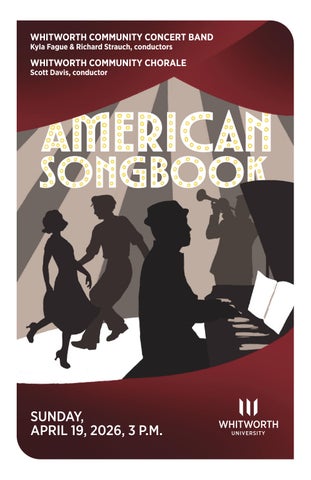
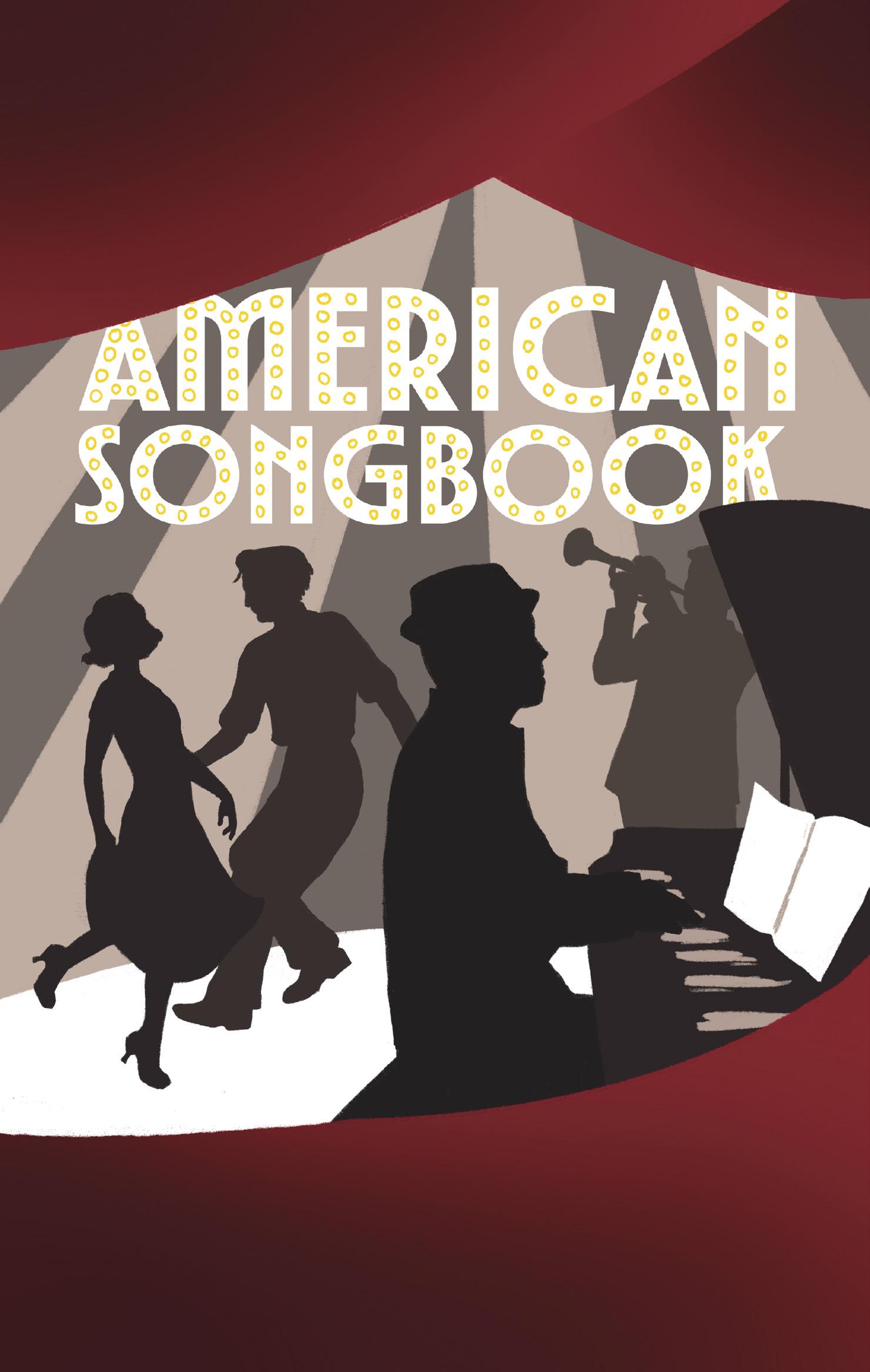
Leigh Wilson Program cover design by WCCB member Abby Sanders ’25 and WCC member Lily Reavis.
Hunter Koss ‘26
Camilla Mounts
Lucia Ngatia
Titi Olatunji ‘26
Alison Russo
Kaila Shumaker ‘21
Anne Wilcox
Sophie Wilson ‘23
Ziva Zemke
Altos
Patty Anderson
Pamela Barnes
Merri Best
Maria Paxson ‘18
Lucy Pearson ‘24
Nancy Potter
Evangelyn Riddle
Kylie Russell ‘26
Donna Rose Seaman ‘29
Claire Semler
Elizabeth Sheffield ‘29
Linda Storey
Kelsey Swenland ‘29
Lauren Tinz ‘26
Dana Tolley ‘09
Hanne Williamson*
Marta Williamson*
Melanie Williamson
Alaina Zemke
Tenors
Brett Booz
*Josiah Booz
William Burger ‘29
Noah Griffin
Nathanael Heaton ‘29
*Karl Keener
Caleb Krantz
Alaina Michels
Robert Olson
Bryan Swenland
Douglas Wunsch
Basses
*Gideon Booz
Hank Broeckling
Doug Eppard
Stacy Evans
Max Fox
Len Freibott
Steve Heinje
*Levi Jennings
Rich Miller
Markus Ong
Randy Osterback
Nathan Stime
COLLABORATING ARTISTS
Collaborative Pianist
Karissa Nakamura ‘28
Percussion Faculty
Leigh Wilson Program cover design by WCCB member Abby Sanders ’25 and WCC member Lily Reavis.
WHITWORTH UNIVERSITY
Since 1890, Whitworth has held fast to its founding mission to provide “an education of mind and heart” through rigorous intellectual inquiry guided by dedicated Christian scholars. Recognized as one of the top regional colleges and universities in the West, Whitworth University has an enrollment of about 2,500 students and offers more than 100 undergraduate and graduate degree programs.
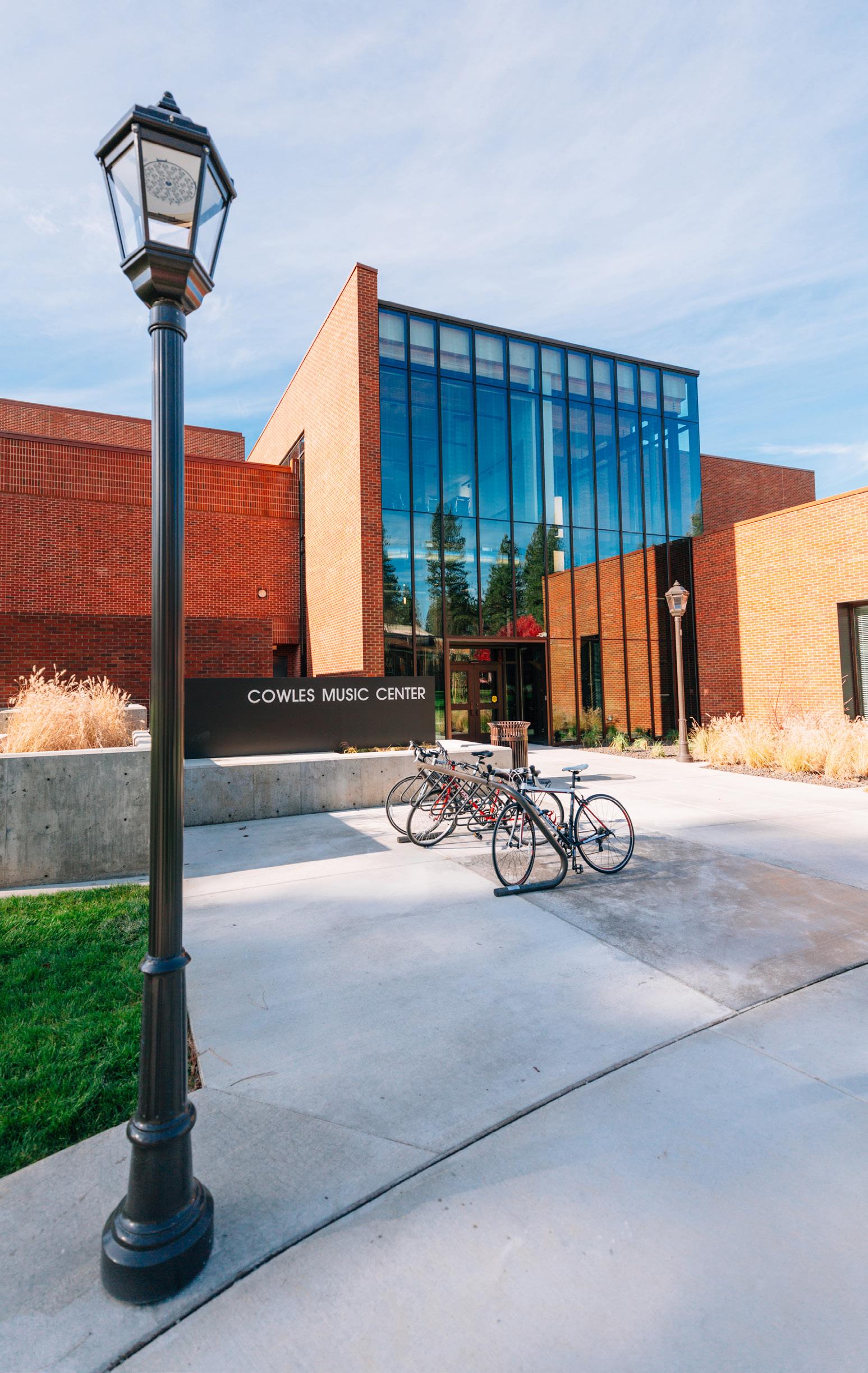
Whitworth University ’s 200-acre campus of red-brick buildings and tall pines offers a beautiful, inviting and secure learning environment. More than $135 million in campus improvements have been made in recent years, including an expanded music center, a renovated auditorium stage, an expanded dining hall, a rec center, a science hall, an athletics leadership center and a graduate health sciences building.
In all of its endeavors, Whitworth seeks to advance its founder ’s mission of equipping students to “honor God, follow Christ and serve humanity. ”
The Whitworth University Music Department, accredited by the National Association of Schools of Music, provides superb training in music as well as a thorough introduction to this essential element of the liberal arts. Whitworth music majors have gone on to prestigious graduate schools, fulfilling performance careers and successful teaching positions. Also, many non-music majors participate in the university’s renowned touring ensembles and enroll in private lessons through the music department. Whitworth University offers bachelor of arts degrees in composition, music production & songwriting, instrumental performance, jazz performance, string pedagogy, voice performance, and music education. Music scholarships are available to both music majors and non-majors.