SEPTEMBER 2026 | ISSUE NO.8
WHAT TO
YOUR UL T I MAT E G U I D E T O BL OOM I N G S U C C ES S
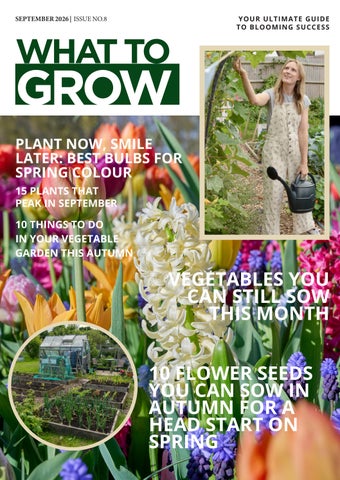
GROW PLANT NOW, SMILE LATER: BEST BULBS FOR SPRING COLOUR 15 PLANTS THAT PEAK IN SEPTEMBER 10 THINGS TO DO IN YOUR VEGETABLE GARDEN THIS AUTUMN
VEGETABLES YOU CAN STILL SOW THIS MONTH 10 FLOWER SEEDS YOU CAN SOW IN AUTUMN FOR A HEAD START ON SPRING
CONTENTS 20
SEED SAVING: HOW TO COLLECT, DRY AND STORE SEEDS SUCCESSFULLY
Seed are free and you can start collecting them now.
4
PLANT NOW, SMILE LATER: BEST BULBS FOR SPRING COLOUR Tulips, narcissus, alliums, fritillaries, crocus and naturalising bulbs.
8
16
10 THINGS TO DO IN YOUR VEGETABLE GARDEN THIS AUTUMN by Emma Bailey
GROW THROUGH WINTER: VEGETABLES YOU CAN STILL SOW THIS MONTH
24
Plenty still to od on the allotment in September from harvesting, sowing and planning for winter.
Spinach, winter lettuce, pak choi, lamb’s lettuce, broad beans, onions and green manuresand verbena.
10
10 FLOWER SEEDS YOU CAN SOW IN AUTUMN Get a Head Start on Spring.
12
12 PLANTS THAT PEAK IN SEPTEMBER
2
WHATTOGROW Magazine
What is looking great now
SEPTEMBER ON THE ALLOTMENT
19
DIVIDE AND MOVE PERENNIALS IN SEPTEMBER
Time to divide your perennials to get more out of your garden.
EDITOR LETTER SEPTEMBER There’s something rather lovely about September in the garden. Summer isn’t quite ready to let go, yet you can feel autumn quietly waiting in the wings. The evenings are drawing in, the morning air has a cooled, and the garden seems to take on a softer, richer feel. But don’t put your gardening gloves away just yet. September is one of the busiest and most rewarding months of the gardening year. There are still plenty of crops to harvest, seeds to collect, plants to divide and bulbs to get into the ground for a splash of colour next spring. It’s also a month of opportunity. The soil is still warm, making it a great time to sow certain vegetables and flowers, while newly planted perennials have plenty of time to settle in before winter. And as some summer flowers begin to fade, there are plenty of late-season stars ready to keep the garden looking colourful. In this issue, we’re looking at the jobs that really matter this month, from preparing your garden for autumn to dividing and
moving perennials. We’ll also explore what you can still sow now, the vegetables that can carry on growing through the colder months, and the plants that are putting on their best display just as summer comes to an end. September is also a good reminder that gardening doesn’t have to stop when summer does. In fact, some of the most satisfying gardening of the year happens now, often with a mug of tea nearby and a little less pressure to make everything perfect. So, whether you’re tending a large garden, growing on an allotment, filling a few pots on a patio or simply planning what you’ll grow next year, there’s plenty to keep you busy. Happy gardening
James
Editor
WHATTOGROW Magazine
3
Spring Bulbs Plant Now, Smile Later: Best Bulbs for Spring Colour here’s something wonderfully optimistic about planting bulbs in autumn. The garden may be heading towards winter, but beneath the soil you’re quietly preparing for a spectacular spring.
T
flowering bulbs are one of the easiest ways to bring colour back to the garden after the darker months. Better still, many need very little attention once planted.
From cheerful daffodils and elegant tulips to delicate crocuses and scented hyacinths, spring-
If you’re planning ahead for next spring, now is the perfect time to start choosing your bulbs.
DAFFODILS – THE RELIABLE SPRING FAVOURITE
TULIPS – BOLD COLOUR AND PLENTY OF CHOICE
Few flowers announce spring quite like the daffodil. Bright, cheerful and incredibly dependable, daffodils are a must-have for your garden.
If you want impact, tulips are hard to beat. They come in almost every colour imaginable, with varieties offering everything from simple cupshaped flowers to fringed, double and parrot-style blooms.
There are hundreds of varieties, ranging from traditional yellow trumpets to delicate white flowers and miniature types that are perfect for containers and rockeries. Plant bulbs in autumn, ideally in well-drained soil. They work particularly well planted in groups through lawns, borders or beneath deciduous trees.
4
WHATTOGROW Magazine
Tulips are particularly effective when planted in blocks or groups rather than scattered individually. For the best results, choose a sunny position with free-draining soil.
DAHLIA Dahlias are among the stars of August gardens. Their blooms range from small pompons to giant dinner-plate flowers in almost every colour imaginable. They thrive in sunny gardens and continue flowering well into autumn if deadheaded regularly.
CROCOSMIA Crocosmia sends up fiery orange and red flowers above sword-like foliage in August. Varieties such as ‘Lucifer’ are especially popular in cottage gardens.
SNOWDROPS – THE FIRST SIGN OF SPRING Snowdrops are one of the most treasured early flowers in the British garden. Their nodding white blooms can appear while winter is still very much with us. They are happiest in cool, lightly shaded positions with soil that retains some moisture but isn’t permanently waterlogged. Snowdrops are often sold ‘in the green’ shortly after flowering, which can be a useful way of establishing them in the garden. Plant them beneath deciduous trees, along woodland-style borders or in informal drifts.
LAVENDER Although lavender begins flowering earlier in summer, many varieties still look and smell wonderful in August. Its fragrant foliage and nectar-rich flowers are loved by pollinators.
WHATTOGROW Magazine
5
CROCUSES – SMALL FLOWERS, BIG IMPACT
HYACINTHS – SPRING COLOUR WITH A WONDERFUL SCENT
Crocuses may be small, but they can transform a lawn or border when planted in generous groups.
Hyacinths are ideal if you want to combine colour with fragrance. Their dense flower spikes produce a powerful scent that can fill a garden on mild spring days.
Plant crocus bulbs in autumn in well-drained soil. They are particularly effective naturalised in grass, beneath trees or around the edges of border
Choose firm, healthy bulbs and plant them in autumn. They prefer a sunny or lightly shaded position and soil that doesn’t remain excessively wet.soil.
ANEMONES – DELICATE BUT COLOURFUL
ALLIUMS – ARCHITECTURAL FLOWERHEADS
Spring-flowering anemones produce cheerful flowers in shades including blue, pink, purple and white.
Although alliums flower later than many traditional spring bulbs, they are worth including in your planting plans.
They are particularly useful for adding a softer, naturalistic feel to borders and containers.
Alliums prefer sunny conditions and well-drained soil. They are particularly useful in perennial borders because their foliage emerges early but their flowers rise above other plants later in the season. soil.
6
WHATTOGROW Magazine
DAHLIA Dahlias are among the stars of August gardens. Their blooms range from small pompons to giant dinner-plate flowers in almost every colour imaginable. They thrive in sunny gardens and continue flowering well into autumn if deadheaded regularly.
CROCOSMIA Crocosmia sends up fiery orange and red flowers above sword-like foliage in August. Varieties such as ‘Lucifer’ are especially popular in cottage gardens.
LAVENDER Although lavender begins flowering earlier in summer, many varieties still look and smell wonderful in August. Its fragrant foliage and nectar-rich flowers are loved by pollinators.
WHATTOGROW Magazine
7
GROW THROUGH WINTER
S
VEGETABLES YOU CAN STILL SOW THIS MONTH
eptember might feel like the end of the growing season, but it is actually a useful month for getting a final round of crops into the ground. With cooler temperatures and shorter days, growth is slower, but several hardy vegetables can be sown now to provide fresh harvests through autumn, winter and into early spring. The key is to choose crops that tolerate cold conditions and, where necessary, give them a little protection from the worst of the weather.
CARROTS
MUSTARD GREENS AND ORIENTAL LEAVES
September can be used for a final sowing of fastgrowing or suitable overwintering carrot varieties. Growth will be slow as autumn progresses, but roots can remain in the ground and may be harvested later.
Mustard greens, mizuna, pak choi and other oriental leaves can provide plenty of flavour during the cooler months.
For heavier soils or areas prone to winter wet, growing carrots in raised beds or containers can give better results.
Sow early in September for the best results. Some crops may be harvested as baby leaves, while others can be left to develop larger leaves where conditions allow.
WINTER SALADS September is an excellent time to sow hardy salad leaves. Winter lettuce, lamb’s lettuce, rocket, mizuna and mustard greens can all provide fresh leaves when summer salads have finished. Sow little and often rather than putting everything in at once. A greenhouse, cold frame or sheltered container can extend the cropping season considerably.
8
WHATTOGROW Magazine
BROAD BEANS September is a traditional time to sow hardy broad beans. Autumn-sown plants can establish before winter and produce an earlier crop the following spring. Choose a variety suitable for autumn sowing and plant in a sheltered, well-drained position. In colder areas, young plants may benefit from some protection during particularly harsh weather.
GARLIC AND OVERWINTERING ONIONS While these aren’t usually treated as quick crops for an autumn harvest, September is a good time to start thinking about overwintering onions and garlic. Depending on the variety and local conditions, planting can begin in September and continue through autumn. Good drainage is particularly important, as bulbs sitting in cold, wet soil can struggle.
GIVE YOUR WINTER CROPS A HEAD START September sowings benefit from getting established before the coldest weather arrives. Keep seedbeds watered during dry spells and remove weeds that compete with young plants.
winter completely, but they can reduce wind, frost and excessive wet while giving crops a little extra growing time.
As winter approaches, fleece, cloches, cold frames and unheated greenhouses can all provide valuable protection. They won’t stop
WHATTOGROW Magazine
9
10 FLOWER SEEDS YOU CAN SOW IN AUTUMN FOR A HEAD START ON SPRING A
utumn is a great time to sow certain flower seeds, particularly hardy annuals, wildflowers and some perennials. The cooler temperatures can actually help some seeds establish naturally before winter.
POPPIES
Hardy annuals such as field poppies can be sown directly where they are to flower.
FOXGLOVES
Sow in trays or directly into prepared soil; they will flower the following year.
CORNFLOWERS
Sow in autumn for earlier summer flowers.
10
WHATTOGROW Magazine
SWEET PEAS
Sow in pots or a cold frame for earlier, stronger plants next year.
VERBASCUM LARKSPUR
Sow a few seeds every couple of weeks in September for a longer succession of plants and flowers next year.
Think roots not flowers. Give them plenty of sunshine and drainage
SNAPDRAGONS
Autumn sowing can work well if you have a cold frame, unheated greenhouse or sheltered spot.
CALENDULA
Hardy and often happy with an autumn sowing.
AQUILEGIA
A useful autumn sowing, as the seeds benefit from a period of cold.
WHATTOGROW Magazine
11
12 PLANTS THAT PEAK IN SEPTEMBER
S
eptember is a wonderful month in the UK garden. Summer may be slowly slipping away, but that doesn’t mean the garden has to lose its colour. In fact, September can be one of the most rewarding times of the year to step outside. The days may be getting shorter and the mornings a little cooler, yet many plants are reaching their peak just when we need them most. Late-flowering perennials continue to put on a show, while dahlias, rudbeckias and asters can fill borders with rich, warm colours. Grasses begin to catch the light beautifully, berries start appearing, and the first hints of autumn creep into the foliage. Even plants that have flowered for months can surprise you with a final flush of blooms.
VERBENA BONARIENSIS The tall, airy stems of Verbena bonariensis continue flowering into September. Its small purple flowers seem to float above other plants, creating a light, informal effect while attracting plenty of butterflies.
12
WHATTOGROW Magazine
MISCANTHUS Ornamental grasses such as Miscanthus reach an impressive size by September, with feathery flowerheads beginning to appear above their foliage. They provide structure, movement and interest that can last throughout autumn and winter.
RUDBECKIA Often called black-eyed Susan, rudbeckia produces bold yellow flowers with dark centres. These cheerful blooms attract bees and butterflies and cope well with our increasingly warm summers.
DAHLIA Dahlias are one of the stars of the September garden. Their bold blooms come in an enormous range of colours, shapes and sizes, and regular deadheading encourages them to continue flowering well into autumn.
JAPANESE ANEMONE Japanese anemones provide elegant, daisy-like flowers on tall, slender stems. Shades of white, pink and soft purple work particularly well in borders and are excellent for adding late-season height.
WHATTOGROW Magazine
13
ASTERS September is prime time for many asters, producing masses of small daisy-like flowers in shades of blue, purple, pink and white. They are excellent for filling the late-season gap in perennial borders.
SEDUM Now often sold as Hylotelephium, sedums come into their own in September. Their flat clusters of tiny flowers attract bees and butterflies, while their sturdy stems provide structure well into autumn.
14
WHATTOGROW Magazine
HYDRANGEA Hydrangeas are still looking impressive in September, with many varieties developing deeper, richer tones as the season progresses. Their large flowerheads can remain attractive even after the flowers have faded.
SUNFLOWER Sunflowers are iconic late-summer plantsTheir tall stems and large golden flowerheads bring dramatic height and are especially popular in family gardens.
COSMOS Cosmos can remain remarkably productive in September, particularly if spent flowers are removed regularly. Their delicate foliage and simple blooms give borders a relaxed, cottage-garden feel.
FUCHSIA
CROCOSMIA Crocosmia can continue producing vibrant red, orange and yellow flowers into September. Its arching stems make it particularly effective in naturalistic borders and wildlife-friendly planting.
Hardy fuchsias can still be flowering heavily in September, producing their distinctive dangling blooms until the first frosts. They are particularly useful for adding colour to partially shaded areas.
WHATTOGROW Magazine
15
@EMMASALLOTMENTDIARIES Emma- Allotment gardening and lifestyle
10 THINGS TO DO IN YOUR VEGETABLE GARDEN THIS AUTUMN
C
ontinuing to get outside into your garden or allotment plot over the winter time is always a great idea. Not only will your spring/summer garden be thankful for all the work you put in now, but it will also do wonders for your mental wellbeing.
16
WHATTOGROW Magazine
Just a few hours a week spent outside can boost your mood, calm your nervous system and lower cortisol levels. Happy Autumn gardening! Written by Emma Bailey
Similarly, set over-wintering onion sets into the ground now. They will develop strong root systems over the autumn and winter, giving you a massive head start on spring.
5. Extend the Season with Fleece and Cloches Don’t let your winter greens and salads surrender to the dropping temperatures. Drape horticultural fleece over hardy Asian greens, winter spinach, or kale, or set up a low polythene tunnel. This simple step traps warmth, keeps off harsh winds, and extends your harvesting window well into the colder months.
6. Boost Your Soil with Green Manures If you have empty vegetable beds, don’t leave the soil bare and vulnerable to winter rains. Sow a green manure (cover crop) like grazing rye, mustard, or phacelia. These plants protect the soil, suppress weeds, and can be dug back into the ground in spring to add valuable nutrients and organic matter.
1. Harvest and Cure Winter Squash Before the first heavy frosts roll in, harvest pumpkins and winter squashes. Cut them with a sturdy 5cm to 10cm stem attached to prevent rotting, and “cure” them in a sunny, warm, and airy spot for a week to harden their skins. They’ll then store beautifully in a cool place for months.
2. Rescue Your Green Tomatoes If frosts are threatening and you still have plenty of green tomatoes on the vine, don’t let them go to waste. Pick them and bring them indoors. You can ripen them on a sunny windowsill or pop them in a paper bag with a banana to speed up the process. Alternatively, use them to make a delicious homemade chutney.
3. Clear Away Spent Crops Once your summer and autumn crops have finished producing, remove them to clear the ground. Pull up finished beanstalks, tomato vines, and squash plants. Be sure to compost any healthy, disease-free foliage. Clearing this debris deprives overwintering pests and diseases of a cosy home.
4. Plant Garlic and Over-Wintering Onions Autumn is the perfect time to get next year’s alliums into the ground. Plant individual garlic cloves with the pointy end facing up, about 5cm below the soil surface.
7. Gather Leaves for Leaf Mould Fallen autumn leaves are gardening gold dust. Gather them up and pack them into black bin bags (poke a few holes in the sides) or a wire cage. Leave them to rot
WHATTOGROW Magazine
17
down for a year or two, and you will be rewarded with a rich, crumbly leaf mould that makes a fantastic, free soil conditioner.
8. Mulch to Protect and Enrich Take advantage of the lingering warmth in the soil by applying a thick 5cm to 10cm layer of organic mulch, such as well-rotted manure or garden compost, over your beds. This insulating blanket protects soil life, prevents winter erosion, and suppresses weed seeds from germinating over the colder months.
10. Clean Your Greenhouse 9. Wash and Store Your Tools As the gardening season winds down, take time to care for your tools. Scrape dried mud off spades and hoes, wipe metal blades with an oiled rag to prevent rust, and sharpen your secateurs. Giving your equipment a thorough clean now ensures everything is in tip-top shape when spring returns.
18
WHATTOGROW Magazine
With light levels dropping through autumn and winter, every ray counts. Sweep out your greenhouse, wash the glass inside and out to maximise light, and disinfect staging and seed trays. This helps to eliminate overwintering pests and fungal spores that could threaten next year’s seedlings.
Some gradually form large, congested clumps, with the older growth in the centre becoming less productive while the younger shoots push outwards. Dividing the plant gives it a new lease of life. It can also be a surprisingly easy way to fill gaps in your borders without spending more money on new plants. A single mature clump of plants such as daylilies, hostas, hardy geraniums or asters can potentially provide several smaller plants to spread around the garden. There is also something rather satisfying about turning one plant into five or six. Why September is a good time Early autumn offers a useful combination for newly divided perennials.
DIVIDE AND MOVE PERENNIALS IN SEPTEMBER
The ground is still relatively warm from summer, encouraging roots to grow, while cooler temperatures and autumn rainfall reduce the stress of being lifted and replanted. Plants have also finished much of their main flowering for the year, so you can work on them without sacrificing the display you’ve been enjoying all summer. Try to choose a cool, calm and preferably overcast day. Avoid lifting plants during a spell of hot, dry weather, as their roots can dry out remarkably quickly.
Which perennials can be divided? September is one of those lovely gardening months when the borders start to slow down, but there is still plenty of life in the garden. The soil is warm, the worst of the summer heat is usually behind us, and there is often enough moisture around to help newly moved plants settle in. That makes it an excellent time to look at your perennial plants and decide whether they could do with a little attention. If a plant has outgrown its space, become overcrowded, developed a bare patch in the middle, or simply ended up in the wrong place, September is a good opportunity to lift, divide and move it. And the best bit? One established plant can often become several new ones.
Why divide perennials? Perennials are generally tough plants, but they don’t stay young and vigorous forever.
Many herbaceous perennials respond well to division, particularly those that form clumps such as: • • • • • • • • • • • •
Hardy geraniums Hostas Daylilies Asters Iris Rudbeckias Heucheras Sedums Pulmonarias Ornamental grasses Shasta daisies Phlox
Not every perennial needs dividing every few years, though. Some plants prefer to be left alone, while others have particular requirements, so it is worth checking the needs of an individual plant before attacking it with the spade.
WHATTOGROW Magazine
19
SEED SAVING: HOW TO COLLECT, DRY AND STORE SEEDS SUCCESSFULLY
S
aving your own seeds can save you money, preserve your favourite flowers and vegetables, and give you a ready supply of plants for the following growing season. Successful seed saving is about more than simply collecting seeds and putting them in a packet. Whether you are saving seeds from flowers, vegetables or herbs, a few simple techniques will help keep them viable and ready to sow when spring arrives.
Never store seeds while they are still damp. Choose the Right Plants
Always collect seed from healthy, vigorous plants that have performed well in your garden. Avoid plants that have suffered from disease, produced poor crops or struggled throughout the season. For vegetables, remember that some crops do not come true from saved seed. Modern F1 hybrids, for example, may produce offspring with quite different characteristics from the parent plant. Openpollinated and heritage varieties are generally better choices for seed saving.
20
WHATTOGROW Magazine
Flowers can be slightly easier, particularly annuals such as marigolds, calendula, cosmos and sweet peas.
Let Seeds Mature Fully One of the most common mistakes is collecting seed too early. Seeds need to mature fully on the plant before they are harvested. For flowers, wait until the flower has faded and the seed heads have begun to dry. Many plants will naturally indicate when their seeds are ready, with pods turning brown or becoming dry and brittle. Vegetable seeds often require a little more patience. Tomatoes, cucumbers and courgettes, for example, contain seeds inside fleshy fruits and need different treatment from dry-seeded crops such as peas and beans.
Collect on a Dry Day
Dry Seeds Thoroughly
Avoid These Common Mistakes
Ideally, collect seed on a dry day once any morning dew has disappeared. Damp seed is much more likely to develop mould during storage.
Drying is perhaps the most important stage of seed storage.
Collecting immature seeds: Seeds that have not fully developed may lead to poor germination.
Cut flower seed heads or dried pods into a paper bag or container and label them immediately. It is surprisingly easy to forget which variety you collected, particularly when several plants are producing seed at the same time. For vegetables, select fully mature fruits from healthy plants and extract the seeds according to the crop.
Spread cleaned seeds in a single layer on paper or a suitable dry surface and leave them somewhere warm, dry and well ventilated. Avoid excessive heat, which can damage some seeds. Large seeds such as beans and peas should feel completely dry before being stored. Small flower seeds also need to be thoroughly dried before being sealed away. Never store seeds while they are still damp.
Store Seeds Somewhere Cool and Dry Once completely dry, place seeds in labelled paper envelopes, small airtight containers or suitable seed-storage packets. Include the plant name and the year collected.
Storing damp seeds: Moisture encourages mould and can cause seed to deteriorate rapidly. Forgetting to label packets: Always record the name/variety and the year. (unless you fancy a surprise) Saving seeds from unhealthy plants: Disease and poor plant performance are not traits worth carrying forward. Keeping seed somewhere warm: A greenhouse, shed or warm kitchen cupboard can become surprisingly hot during the year. Storing seed for too long: The chances of a seed’s germination declines with age, although some types of seed remain viable considerably longer than others.
A cool, dry and dark cupboard is usually suitable for the average home gardener. The biggest enemies of stored seed are heat, moisture and fluctuating conditions. For longer-term storage, an airtight container can help protect seeds from humidity.
WHATTOGROW Magazine
21
HOW TO OVERWINTER FOR A THRIVING GARDEN As the days shorten and the frost creeps in, it’s actually the perfect time to give plants a head start, boost harvests and keep your garden productive all year round. Heirloom seed company, She Grows Veg, has some top tips on “overwintering” and how to make the most of this time of year, ready for the garden to burst into life come spring. There are lots of wonderful varieties that not only survive the harsh cold months, but thrive, given the right conditions, from onions, broad beans, peas, and spring onions, to hardy herbs like sage, thyme, oregano, and chives, plus flowers such as calendula, pansies, and violas. •
Use fleece protection By using a breathable, insulating fabric, you can protect plants from the harsh winter conditions but still allow light and water to penetrate. Broad beans are hardy but will appreciate a little extra fleece protection to help them survive the frost.
•
Allow for good drainage Drainage is vital for overwintering plants because poordrainage leads to waterlogged soil, which can cause root rot and fungal diseases. Good drainage allows excess water to escape and keeps the roots healthy.
•
Choose hardy vegetable varieties Onions are perhaps the easiest entry point into overwintering. Autumn-planted sets settle their roots in before winter, then snooze through the cold, only to leap into growth when spring warms up. Broad beans are also a great choice.
•
Use a cloche or mesh Cloches act as miniature greenhouses that provide protection from the frost and meshes offer protection from pests. Consider a cloche or mesh for peas that otherwise attract birds.
•
Keep herbs thriving Varieties such as sage, oregano, thyme and mountain mint are great overwintering herbs. If container-grown, consider raising the pot or moving to a more sheltered location for very harsh conditions.
Boasting a range of over 400 open pollinated heirloom seed varieties that promise the most beautiful, unique and delicious veg, fruit and flowers, She Grows Veg offers everything you need to continue gardening over the colder months. There are also ‘Sow, Grow and Taste’ Youtube videos available via QR codes on every single pack, along with expert tips and advice on how to get the best results from your seeds.
For more information on SheGrowsVeg and the range of heirloom seeds available, please visit https://shegrowsveg.com
SEPTEMBER ON THE ALLOTMENT
S
eptember is a busy month on the allotment, but it’s also one of the most satisfying. There’s plenty to harvest, from the last of the summer crops to early autumn favourites, while spent plants need clearing and beds can be prepared for the months ahead. It can feel like there’s always another job waiting to be done, but a little time spent now will make life much easier as autumn turns into winter.
Keep harvesting regularly
The good news is that the allotment is far from finished for the year. The soil is still holding plenty of warmth, making September a useful month for sowing a range of crops that can provide fresh leaves and roots later in autumn and, with a little protection, into winter. Winter salads, spinach, radishes and other hardy crops can all help keep the plot productive when the main growing season is winding down.
Harvest pumpkins and squash - Keep an eye on ripening fruits and reduce watering as they approach maturity, unless conditions remain particularly dry.
With a mixture of harvesting, sowing and preparing, September is really about making the most of what’s left of the growing season while quietly getting the allotment ready for the colder months ahead.
Sow green manure – Cover empty beds with crops such as winter tares or Italian ryegrass. These help protect the soil and capture nutrients over winter.
Pick runner beans, French beans, courgettes, tomatoes, cucumbers, sweetcorn and other crops while they are at their best. Lift remaining maincrop potatoes before slugs cause damage. Allow them to dry before storing and remove old foliage from the plot. Pick apples, pears, plums and autumn raspberries as they ripen. Support heavily laden branches where necessary.
Check tomatoes – Continue harvesting regularly and watch for splitting, blossom-end rot and signs of blight. Water consistently during dry spells.
Sow winter crops Sow spinach, winter lettuce, rocket and other hardy salad leaves for autumn and winter cropping.
Planting out Now is a good time to get overwintering onions established. Protect newly planted sets from birds until they have taken root. Plant out spring cabbage raised from earlier sowings and protect young plants from pigeons with netting.
24
WHATTOGROW Magazine
Ground care
Feed the compost heap Add healthy spent plants, grass clippings and other suitable organic material.
Clear spent crops – Remove finished plants and diseased foliage, but avoid putting diseased material on the compost heap. Keep weeding – Don’t let weeds take over as autumn rains arrive. Clearing beds now makes winter maintenance much easier.
Prune summer-fruiting berries After fruiting, cut out old blackberry and hybrid berry canes and tie in the new growth.
Protect crops from pests Net leafy vegetables and brassicas against pigeons and other pests. Check regularly for slugs and caterpillars.
Keep watering newly planted crops Although autumn is approaching, newly planted crops and dry soil may still need watering.
Plan for winter Decide which areas will remain productive through winter and where you can fit crops such as winter salads, spring cabbage and overwintering onions.
WHATTOGROW Magazine
25
NEXT ISSUE In our next issue of WhatToGrow, we’ll be embracing autumn gardening and looking at how to make the most of this beautiful and often underrated season. We’ll discover what to plant now for spring colour, from bulbs and bare-root plants to hardy perennials, as well as the vegetables you can still sow and harvest through the cooler months.