YOUR UL T I M A T E G U I D E T O BL OOMI NG S U C C ES S
AUGUST 2026 | ISSUE NO.7
WHAT TO
GROW
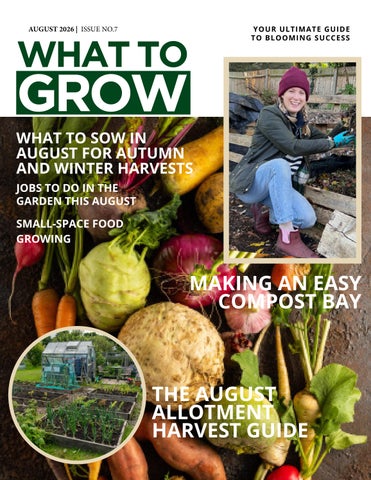
WHAT TO SOW IN AUGUST FOR AUTUMN AND WINTER HARVESTS JOBS TO DO IN THE GARDEN THIS AUGUST SMALL-SPACE FOOD GROWING
MAKING AN EASY COMPOST BAY
THE AUGUST ALLOTMENT HARVEST GUIDE
CONTENTS 12
WHAT TO SOW IN AUGUST FOR AUTUMN AND WINTER HARVESTS
Salad leaves, spinach, spring cabbage, turnips, pak choi, and overwintering onions.
14
MAKING AN EASY COMPOST BAY
A few pallets is all you need to be able to create some of that brown gold dust for your growing beds.
20
After months of hard work sowing, planting, watering and weeding, the plot is
22 3 4
8
10
EDITOR’S LETTER
15 PLANTS THAT PEAK IN AUGUST
Discover those late summer stars in your garden.
2
23
Practical techniques for reducing watering without sacrificing colour or crops.
WHATTOGROW Magazine
SLOW GARDENING: WHY DOING LESS IS THE NEW LUXURY Rewilding corners, leaving seedheads, composting naturally, and gardening with nature instead of against it.
WATER-WISE GARDENING
Best late-season nectar plants for bees, butterflies, and hoverflies. Include lavender, sedum, oregano, and verbena.
JOBS TO DO IN THE GARDEN THIS AUGUST
A practical monthly jobs: deadheading, hedge trimming, watering priorities, taking cuttings, and harvesting.
What’s going on in the garden in August.
CREATE A POLLINATOR PARADISE BEFORE AUTUMN
THE AUGUST ALLOTMENT HARVEST GUIDE
16
SMALL-SPACE FOOD GROWING: TABLETOP VEG REVOLUTION
Compact tomatoes, chillies, and dwarf veg varieties for balconies and patios.
EDITOR LETTER It’s good to be back after a longer than plan break. WhatToGrow is a family run magazine and we’ve had so much thrown at us of the last two years, something had to give. We choose August as our month to return as it is one of the most magical months - flowers are in bloom, the nights are still long and the vegetables getting ready for harvesting. We hope you enjoy this edition and we look forward to joining you all next month.
AUGUST August is the month of rewards after all your hard work. Borders are bursting with colour, vegetables are filling the kitchen basket, and every evening offers another excuse to spend more time outdoors. Yet beneath the beauty lies one of the busiest periods of the gardening calendar. Watering wisely, harvesting regularly and planning ahead for autumn all become part of the daily rhythm of gardening. In this issue, we look those plants that will be peaking in your garden this August. It will come as no suprise that many gardens and allotments have been suffering due the prolonged heat. Our article in water-wise gardening offers practical techniques for reducing watering without sacrificing colour or crops.
lavender, sedum, oregano, and verbena. Take a look at our practical monthly jobs for the garden from deadheading, hedge trimming, watering priorities, taking cuttings, and harvesting. In the build up to Autumn, take a look at Emma’s article on Making a easy compost bay. Allotment owners, you’ve been hard at work now it’s time to see what ready to harvest now and what is peaking in August.
James
Editor
Best late-season nectar plants for bees, butterflies, and hoverflies. Include
WHATTOGROW Magazine
3
15 PLANTS THAT PEAK IN AUGUST “LATE SUMMER STARS INCLUDING ECHINACEA, RUDBECKIA, HELENIUM, SEDUM, SALVIAS, AND ORNAMENTAL GRASSES.” August is one of the richest months in the British garden. Borders are full, pollinators are busy, and late-summer colour reaches its height before autumn begins to creep in.
WHY AUGUST GARDENS MATTER August is a crucial month for pollinators such as bees, butterflies, and hoverflies. Many earlier summer flowers begin to fade, so late-season plants provide an essential source of nectar and pollen. By including a mixture of perennials, annuals, and shrubs that peak in August, UK gardeners can keep borders colourful and wildlife-friendly right through to autumn. Here are 15 plants that truly shine during August.
JAPANESE ANEMONE Elegant and airy, Japanese anemones begin flowering in late summer and brighten shaded borders with pink or white blooms. They are especially useful for extending colour into September.
4
WHATTOGROW Magazine
RUDBECKIA Often called black-eyed Susan, rudbeckia produces bold yellow flowers with dark centres. These cheerful blooms attract bees and butterflies and cope well with Britain’s increasingly warm summers.
DAHLIA Dahlias are among the stars of August gardens. Their blooms range from small pompons to giant dinner-plate flowers in almost every colour imaginable. They thrive in sunny gardens and continue flowering well into autumn if deadheaded regularly.
CROCOSMIA Crocosmia sends up fiery orange and red flowers above sword-like foliage in August. Varieties such as ‘Lucifer’ are especially popular in cottage gardens.
LAVENDER Although lavender begins flowering earlier in summer, many varieties still look and smell wonderful in August. Its fragrant foliage and nectar-rich flowers are loved by pollinators.
WHATTOGROW Magazine
5
VERBENA BONARIENSIS This tall, airy perennial produces clusters of purple flowers that hover above borders. It adds movement and attracts butterflies throughout August.
HYDRANGEA Hydrangeas reach their full glory in late summer, with large flowerheads in blue, pink, white, or lime green. Our typical rainfall and mild temperatures suit them particularly well.
SEDUM Often known as Hylotelephium, sedums develop large pink flowerheads in August that deepen in colour as autumn approaches. They are drought-tolerant and easy to grow.
6
WHATTOGROW Magazine
ECHINACEA Coneflowers are excellent for sunny borders. Their daisy-like flowers bloom for weeks in late summer and provide valuable nectar for bees.
PHLOX Dahlias are among the stars of August gardens. Their blooms range from small pompons to giant dinnerplate flowers in almost every colour imaginable. They thrive in sunny gardens and continue flowering well into autumn if deadheaded regularly.
SUNFLOWER Sunflowers are iconic late-summer plantsTheir tall stems and large golden flowerheads bring dramatic height and are especially popular in family gardens.
FUCHSIA Hardy fuchsias flower heavily in August. These long-flowering shrubs bring colour to borders and containers, attracting bees and other pollinators, and will continue blooming reliably until the first autumn frosts finally bring the display to an end.
COSMOS Easy to grow from seed, cosmos flower continuously through August with delicate blooms floating above feathery foliage.
HELENIUM Helenium offers rich shades of orange, copper, and yellow that perfectly match the mood of late summer. These daisy-like flowers are excellent for wildlife-friendly planting schemes.
WHATTOGROW Magazine
7
WATER WISE GARDENING Practical techniques for reducing watering without sacrificing colour or crops
8
WHATTOGROW Magazine
DEEP WATERING
USE A WATERING CAN
Precise watering Direct water exactly where it’s needed, reducing waste.
Water plants deeply Instead of little and often.
Britain may be known for drizzle and grey skies, but recent summers have told a different story. Heatwaves, hosepipe bans, long dry spells and soaring temperatures are becoming more and gardeners are feeling the strain.
MAKE YOUR CONTAINERS WORK HARDER
The good news? A beautiful garden and productive veg patch do not need constant watering. With a few clever changes, you can cut water use dramatically while keeping borders blooming and crops thriving.
Container plants dry out quickly, so consider using larger pots planting more in a smaller space. Retain as much moisture as possible by mulching compost surfaces. Group containers together Try self-watering pots.
IMPROVE YOUR SOIL Healthy soil holds moisture for longer. To improve your soil consider adding Compost, Leaf mould or Wellrotted manure. Finish with a thick mulch layer to reduce evaporation and keep roots cool.
WATER MORE WISELY Water plants deeply, instead of little and often. Water early morning or evening when the sun is low. Aim water at roots, not leaves. Prioritise pots, veg and new plants.
MULCH
Retains moisture Retain as much moisture as possible by mulching compost.
Drip hoses and watering cans waste far less water than sprinklers.
WHATTOGROW Magazine
9
CREATE A POLLINATOR Tips PARADISE BEFORE AUTUMN As summer fades and cooler days approach, many gardens begin to lose their vibrant energy. But autumn is one of the most important seasons for pollinators. Bees, butterflies, moths, hoverflies, and even hummingbirds rely on late-season nectar and shelter to prepare for winter or migration. By transforming your outdoor space into a pollinator paradise before autumn arrives, you can support local
10
WHATTOGROW Magazine
ecosystems while keeping your garden lively and beautiful deep into the season.
LEAVE SOME AREAS “WILD” A perfectly tidy garden may actually be harmful to pollinators. Many insects overwinter in leaf litter, hollow stems, and small brush piles.
Before autumn cleanup, consider leaving: Fallen leaves beneath shrubs, Hollow flower stems standing or a small logs or twig piles.
WHY AUTUMN MATTERS FOR POLLINATORS Late summer and early autumn are critical times for pollinators. Bees are gathering their final food reserves, butterflies are fueling long migrations, and many beneficial insects are searching for safe places to overwinter. Unfortunately, flowering plants become scarce during this period, leaving pollinators with fewer food sources.
CHOOSE LATE-BLOOMING FLOWERS Excellent choices include: Asters, Sedum, Goldenrod Coneflowers, Black-eyed Susans, Sunflowers ,Verbena Joe-Pye weed, Salvia and Cosmos.
WHATTOGROW Magazine
11
WHAT TO SOW IN AUGUST FOR AUTUMN AND WINTER HARVESTS The gardener’s secret season for fresh veg long after summer fades
12
WHATTOGROW Magazine
By the time August arrives, many gardeners assume the productive season is winding down. Tomatoes are ripening, beans are climbing, and courgettes are threatening to take over the kitchen. But experienced growers know something different: August is one of the most important sowing months of the year. With warm soil, cooler evenings and fewer pests than spring, late summer offers ideal conditions for a surprising range of crops. Here’s what to sow in August for a productive autumn and winter garden.
RADISHES
One of the fastest crops you can grow, radishes can go from seed to plate in as little as four weeks. Autumn sowings tend to be less woody and pungent than those grown in hotter weather. Keep soil consistently moist to avoid splitting.
“Life begins the day you start a garden”
Sow every couple of weeks for continuous harvests into October.
TURNIPS Small salad turnips are underrated autumn vegetables. August sowings produce sweet, tender roots perfect for roasting or adding to stews. The leaves are edible too, giving you two crops from one sowing.
WINTER CABBAGE
If you missed sowing earlier in the year, it’s still possible to plant young winter cabbage plants in August. These establish before cold weather arrives and provide dependable harvests through winter and early spring.
KALE One of the stars of the winter garden, kale becomes sweeter after frost. August sowings establish quickly in warm soil and provide months of harvests. Curly kale, cavolo nero and red Russian kale all perform well in the autumn.
WHATTOGROW Magazine
13
MAKING AN EASY COMPOST BAY Making your own compost, especially when you own an allotment plot or vegetable garden, is so valuable. Homemade compost is absolutely full of nutrients and goodness for your soil and is much more affordable than buying compost in bags! It doesn’t have to be complicated and you don’t need to spend a fortune on a compost bay. A few pallets is all you need to be able to create some of that brown gold dust for your growing beds. HOW DO YOU MAKE COMPOST?
@EMMASALLOTMENTDIARIES Emma- Allotment gardening and lifestyle
To make compost simply, roughly layer equal parts “greens” (nitrogen-rich wet waste like food scraps) and “browns” (carbon-rich dry waste like dead leaves) in a covered bin on soil. Keep it moist like a damp sponge and let it sit for 6–12 months until it turns dark and crumbly. Some great examples of brown materials include: dry leaves, cardboard, woodchips and even teabags! There are a few things that must NOT be put into your compost bays. These include meat (this can attract rats!), diseased plants (especially those infected by blight), plastics and any wood that has been chemically treated.
14
WHATTOGROW Magazine
LET’S KEEP IT SIMPLE!! A lot of people (myself included) worry that composting is too difficult and complicated. It doesn’t have to be. So my biggest advice is to keep it simple. Create a low cost structure, chop crops up small as you pile them in and try to keep a 50/50 ratio of green to brown. Don’t let it dry out, keep it covered over the winter months and soon enough you will have some of that brown gold dust to spread over your growing beds!
HOW DID I MAKE MY COMPOST BAYS? You definitely don’t have to spend lots of money on an expensive compost bin (though there are some excellent options if you want to!). I’ve used old pallets to make mine. I lined it halfway round with a groundsheet to keep the compost inside, but kept the slats open at the top to ensure good airflow. I have a few planks of wood across the front, but have kept this low so I can tip my wheelbarrow into it and access it when I need to turn, chop, water or pull out my compost. I’ve used another groundsheet to cover over the top when I’m done filling. My biggest stumbling block with my compost bay is weeds. My plot had been left to become a bit of a jungle before I took it on and though I’ve done my best to eradicate as many weeds as I can, those nasty ones like bindweed and brambles still seem to get through. So I’ve lined the bottom of my compost bays with thick cardboard to help keep them away! Cardboard is not only a great weed suppressant but also a great brown material. So it’s a win win! HOW LONG DOES IT TAKE TO MAKE COMPOST? Compost should take anywhere from 6 months to 2 years to make using this method. In fact, the more stuff you have to compost, the quicker it takes! Turning regularly and chopping also helps to speed up the process. Of course, how long it takes also depends on which method of composting you choose. There are actually lots of ways to compost. Some examples include: Tumbler Composting (A form of hot composting) Worm Farm Composting (Vermicomposting) EMO Composting (Bacteria composting) Combination Composting (Compot Composting).
WHATTOGROW Magazine
15
SMALL-SPACE FOOD GROWING: TABLETOP VEG REVOLUTION As gardens shrink and urban living becomes the norm for millions across the UK, a quiet revolution is taking place on balconies, patios, windowsills and even outdoor tables. Forget the traditional vegetable patch stretching across the back garden — today growers are discovering that fresh produce can thrive in remarkably small spaces.
GROWING MORE IN LESS SPACE The appeal is obvious. Not everyone has room for raised beds or allotment-sized ambitions, but almost everyone can find space for a few containers. A sunny café-style table, a balcony corner, or a compact patio can become a surprisingly productive mini kitchen garden.
16
WHATTOGROW Magazine
Modern vegetable varieties have been bred specifically for container cultivation, making it easier than ever to harvest homegrown food from spaces once considered too small to grow anything useful. For younger gardeners, renters and city dwellers, tabletop growing offers an accessible entry point into food production without the commitment of larger plots. So whatever space you have available - see what you can grow.
“Welcome to the tabletop veg revolution.”
Success starts with choosing crops that naturally suit container life. Fast-growing, compact vegetables deliver the biggest rewards.
CUT-AND-COME-AGAIN SALADS Loose-leaf lettuces, rocket, and mixed salad leaves are ideal for shallow containers. A single sowing can provide weeks of fresh harvests, with leaves regrowing after each cut. By sowing little and often throughout August, gardeners can maintain a steady supply well into autumn.
DWARF TOMATOES Compact bush tomatoes have transformed container growing. Modern varieties remain small while producing generous crops of sweet fruit. A single pot on a sunny patio table can become both an attractive feature and a productive food source.
RADISHES Few vegetables offer quicker gratification. Many varieties can be harvested within four weeks of sowing, making them perfect for beginners and impatient gardeners alike.
SPRING ONIONS Spring oninos take up very little space and grow happily in narrow troughs or deep pots. Quit the space-saver, they leave room for other crops alongside them.
HERBS Basil, parsley, coriander, chives and thyme thrive in containers and provide excellent value from tiny growing areas. A tabletop herb collection can transform both cooking and outdoor entertaining.
WATERING MATTERS Container-grown vegetables require more attention than those planted in open ground. During warm August weather, pots may need watering daily, particularly when growing in full sun. Using peat-free compost enriched with water-retaining organic
matter can help reduce watering demands. Mulching container surfaces with gravel or fine bark also helps conserve moisture. Self-watering containers are becoming increasingly popular among busy gardeners, offering greater resilience during hot spells.
WHATTOGROW Magazine
17
BUILT TO PERFORM, DESIGNED TO IMPRESS INTRODUCING KENT & STOWE’S PATIO-WORTHY WATERING RANGE Kent & Stowe, renowned for its high-quality tools that help gardeners achieve extraordinary results, has launched a new watering collection that has both style and substance. Whether you’re watering blooming borders, a lush lawn, or a collection of carefully nurtured containers, the new Kent & Stowe Watering Collection makes the task not only effortless, but elegant. Designed with today’s gardens in mind, this refreshingly different collection is where high performance meets contemporary style. Garden Equipment That Belongs on Show Say goodbye to garish, flimsy, plastic watering tools with the new patio-worthy, Kent & Stowe watering collection. Crafted to complement beautiful outdoor spaces with sleek, modern lines and a clean, contemporary finish to stylishly fit into any modern or traditional garden design. Built to Last, Whatever the Weather This collection gives you control under pressure, with leak-proof fittings and frost-resistant hoses paired with a sleek, modern aesthetic, delivering everything gardeners need, and want, for a more enjoyable watering experience. Each product has been thoughtfully engineered and meticulously crafted for durability, ease, and long-term performance:
The Metal Spray Gun: Crafted from a tough aluminium alloy throughout the body and inlet, to guard against drops and damage. It also features an ergonomic grip and thumb control lever for simple, precise watering The Extraordinary Hose: This heavy duty, ultraflexible hose is made with 6-strand knitted helix technology to prevent kinks and twisting. It is lightweight yet strong thanks to an expanded PVC layer, and is frost proof to -30°C, so it is ready for year-round use The Metal Connector Machined from a die cast aluminium alloy, it has extended length to offer better grip and a tight seal to dramatically reduce leaks at connection points The Metal Hose Reel Set: The aluminium chassis and stainless steel drum provide unmatched reliability, incorporating everything you need to get watering. The set includes: the Extraordinary Hose 30m, the Metal Spray Gun and the Metal Connector Set. For effortless assembly, it has been crafted with ease of use in mind, and can be connected and used within just a few minutes.
THE AUGUST ALLOTMENT HARVEST GUIDE August is one of the most rewarding months on the allotment. After months of hard work sowing, planting, watering and weeding, your plot is overflowing with fresh produce ready to be picked. From baskets of runner beans to armfuls of courgettes and bowls of sweet berries, the harvest season reaches its peak. Yet August is about more than simply gathering crops. It is also the month when careful harvesting, storing and succession sowing can keep your allotment productive well into autumn and winter. HARVESTING AT ITS BEST Regular picking is one of the simplest yet most effective ways to keep your vegetable garden productive throughout the growing season. Many popular crops, including courgettes, runner beans, french beans, cucumbers, tomatoes and peas, respond to frequent harvesting by producing more flowers and therefore more fruit. Leaving produce on the plant for too long signals that its job is done, encouraging it to slow down or stop producing altogether and goes to seed in some cases.
20
WHATTOGROW Magazine
The gardener’s secret season for fresh veg long after summer fades RUNNER AND FRENCH BEANS Beans are among the stars of the August allotment. Pick pods while they are young and tender, ideally every two or three days. Leaving mature pods tells the plant that it has completed its life cycle and starts to go to seed. I think we’ve all grow too much at one point of another, beans freeze very well. Blanch them briefly before freezing to preserve flavour and texture. COURGETTES The age-old allotment challenge continues: keeping up with courgettes. Harvest fruits when they are around 15–20cm long for the best flavour and tenderness. Check plants daily, as courgettes can double in size seemingly overnight during warm weather. Larger fruits can still be used in soups, cakes and chutneys. TOMATOES
ROOT CROPS READY FOR LIFTING Several root vegetables are reaching harvestable size. POTATOES Second early potatoes are generally ready now, while some maincrop varieties can begin lifting towards the end of the month if required for immediate use. Only harvest what you need unless you’re storing them. Maincrop potatoes intended for winter storage are best left until the foliage dies back naturally. BEETROOT Young beetroot offers the sweetest flavour. Lift roots when they reach golf-ball to tennis-ball size. Smaller roots are often more tender than oversized ones. Don’t discard the leaves - they can be cooked similarly to spinach. CARROTS Early and maincrop carrots can be pulled as required. Water the soil before harvesting if conditions are dry. This will help roots come out cleanly and reduces breakages.
LEAFY CROPS STILL PRODUCING
Greenhouse and outdoor tomatoes begin ripening in earnest during August. Pick fruits as they colour fully and bring slightly underripe tomatoes indoors if poor weather threatens. Remove lower leaves to improve airflow and reduce disease risk. Pinch out the growing tips of cordon varieties towards the end of the month to encourage remaining fruits to ripen before autumn arrives. CUCUMBERS Regular harvesting keeps cucumber plants productive. Pick fruits while firm and glossy, avoiding the temptation to leave them too long. Overgrown cucumbers often become bitter and reduce future yields.
LETTUCE AND SALAD LEAVES Cut-and-come-again salads remain productive if harvested regularly. Pick leaves during the cooler morning hours for the best texture and freshness. To avoid gluts, continue sowing small batches for autumn harvesting. SWISS CHARD One of the allotment’s most dependable performers, Swiss chard can be harvested leaf by leaf over many months. Remove outer leaves while allowing the central crown to continue growing. KALE Early kale plantings may already be producing young leaves. Although often associated as winter crop, regular harvesting can begin much earlier.
WHATTOGROW Magazine
21
JOBS TO DO IN THE GARDEN THIS AUGUST August gardening: Where hard work meets beautiful rewards.
August is the perfect time to deadhead roses, dahlias, cosmos, and other flowering plants. This will encourage more blooms throughout the season. It is also a good time to trim lavender after it has finished flowering, helping to keep the plants neat and compact. Collect seeds from favourite annual flowers allows gardeners to save them for planting next year, providing a cost-effective way to grow beautiful blooms again. In the vegetable garden, August is an important time for both harvesting and planting. Crops such as beans, courgettes, cucumbers, tomatoes, and sweetcorn should be harvested regularly to encourage continued production. Now is also the time to sow fast-growing crops like lettuce, spinach, rocket, and radishes for autumn harvests. To help existing tomatoes ripen, the tops of outdoor tomato plants should be pinched out. During dry spells, it is important to continue watering, especially for fruiting vegetables, and any diseased foliage should be removed promptly to prevent problems from spreading throughout the garden.
22
WHATTOGROW Magazine
SLOW GARDENING WHY DOING LESS IS THE NEW LUXURY Making the most of your garden
In a world obsessed with productivity, optimization, and instant results, gardening is undergoing a quiet revolution. More people are turning away from perfectly manicured lawns, rigid planting schedules, and high-maintenance landscapes. Instead, they’re embracing a philosophy known as slow gardening—an approach that values patience, observation, and connection over constant activity.
WHAT IS SLOW GARDENING? Slow gardening is inspired by the broader slow living movement, which encourages people to resist the pressure of always doing more. Rather than treating the garden as another project to manage, slow gardeners view it as a living ecosystem that evolves at its own pace. This approach prioritises working with nature rather than controlling it. Choosing resilient, low-maintenance plants that don’t require much of your time. Allowing gardens to develop gradually allowing you more time observing instead of constantly intervening. The goal is not to create a flawless outdoor space but to build a meaningful relationship with the natural world.
WHATTOGROW Magazine
23
NEXT ISSUE Autumn is on its way and like always, there is plenty to do to get your garden ready for the next season. Join us next month as we prepare our gardens for the months ahead.
AUTUMN