
Strawberries Three Ways

(NC) Thanks to the more than 125 fruit and vegetable crops grown in Ontario, we have year-round options for eating healthy and local in this province. It’s especially easy in spring and summer, when the first freshly harvested crops of the season arrive fresh at local markets.
Find more recipes at ofvga.org.
FRESH ONTARIO STRAWBERRY POPSICLES
Prep time: 3 hours Servings: 6 popsicles
INGREDIENTS
1 1/2 cups (375 ml) strawberries, plus 3 small strawberries, halved
1 cup (250 ml) French vanilla yogurt (1% MF)
1 tbsp (15 ml) Ontario honey
6 wooden stir sticks
6 3 oz (90 ml) paper cups
INSTRUCTIONS
1. In a blender, combine 1 ½ cups (375 ml) strawberries, yogurt and honey; purée until smooth.
2. Divide among the paper cups.
3. Skewer a strawberry half onto each of 6 stir sticks. Insert the strawberry end of stick into centre of each cup.
4. Freeze until firm, about 3 hours.
5. Let stand at room temperature for a few minutes and peel off paper cups.
Tip: To make it easy to store in the freezer, place the filled cups in a muffin tin.

(Family Features) Changing daily habits, like what you eat, can enhance your overall wellness. However, it doesn’t have to mean forgoing favourite flavours or skipping out on delicious snacks.
Treating yourself in health-conscious ways is an important tactic to keep your health goals on track. In fact, healthy eating isn’t about restricting yourself; good nutrition simply starts with a balanced plate. By incorporating nutrient-rich options like milk and dairy foods, fruits, vegetables, whole grains and lean proteins, you can establish an eating pattern that supports wellness and an overall healthy lifestyle.
Find more better-for-you recipes at MilkMeansMore.org.
CHOCOLATE
AND STRAWBERRY GREEK YOGURT BARK
INGREDIENTS
3 cups plain non-fat Greek yogurt
1/3 cup honey plus additional for drizzling, divided (optional)
1 teaspoon vanilla
1/4 cup melted dark chocolate
1/2 cup strawberries
1/2 cup dark chocolate chips
DIRECTIONS
1. In medium bowl, combine Greek yogurt, honey and vanilla.

2. On parchment-lined baking sheet, spread Greek yogurt mixture to 1/4-inch thickness. Drop spoonfuls of melted chocolate onto yogurt and use toothpick to drag in circles. Press strawberries and chocolate chips into yogurt. Freeze at least 3 hours.
3. Remove from freezer and break into pieces.

(NC) While strawberries are a staple of desserts, they can also be a secret weapon for elevating savoury main dishes. Their natural acidity and sweetness provide a sophisticated balance to salty and spicy flavours—and they add nutritional value.
Find more recipes at californiastrawberries. com.
BBQ CHICKEN DRUMSTICKS WITH STRAWBERRY-CHIPOTLE SAUCE
Prep time: 15 minutes Cook time: 25 minutes
Servings: 4
INGREDIENTS
1 lb (450 g) ripe strawberries, stemmed 3 chipotle chile peppers in adobo
2 cloves garlic
1 tbsp (15 ml) apple cider vinegar
1 tbsp (15 ml) honey
1 tsp (4 g) kosher salt, plus more for seasoning 10-12 chicken drumsticks, about 4 lbs (1,800 g) Ground black pepper for seasoning
DIRECTIONS
1. Heat a gas or charcoal grill over medium heat. Clean grill grates and brush with oil right before adding chicken.
2. Make the sauce: Combine strawberries, chipotle peppers, garlic, vinegar, honey and salt in a blender. Blend until smooth. Taste and add more salt if needed. Pour 1 cup (250 ml) of sauce in a liquid measuring cup. Reserve the rest for serving.
3. Prep the chicken: Meanwhile, generously season chicken with salt and pepper on all sides.
4. Once the grill is ready, grill chicken covered for 15-20 minutes, turning every 5 minutes or so to avoid charring.
5. After 15 minutes, or when meat starts pulling away from the bone, generously brush one side of the chicken with barbeque sauce. Cover and cook for another 5 minutes. Turn and generously brush the other side of the chicken with barbeque sauce. Cook, covered, for another 5 minutes. You should use almost all of the 1 cup of sauce.
6. Once chicken is cooked all the way through, remove from the grill and serve with reserved barbeque sauce.
Publisher’s Note

Publisher
Victoria Ledden








OWNER/PUBLISHER/AD SALES Victoria Ledden | 705-429-0761 | vledden1@gmail.com PHOTOGRAPHER/WRITER Don Beaulieu

















Photo by Victoria Ledden
Trees Matter




PROTECTING OUR CLIMATE, ENVIRONMENT, AND HEALTH
Trees are among the most important natural resources on Earth. They do far more than beautify our parks, shoreline, streets, and forests. Trees play a critical role in protecting the environment, fighting climate change, and improving human health. As communities around the world face rising temperatures, extreme weather, raging wildfires and increasing pollution, planting and protecting trees has never been more important. And as we keep clearcutting woodlands for housing and commercial developments in the South Georgian Bay area we need to plant more trees.




One of the greatest benefits of trees is their ability to absorb carbon dioxide, one of the main greenhouse gases driving climate change. Through photosynthesis, trees capture carbon and release oxygen back into the atmosphere. A single mature tree can absorb significant amounts of carbon over its lifetime, helping reduce the impacts of global warming. Forests act as massive carbon storage systems, making them one of nature’s most effective climate solutions.
Trees also help protect the environment in many other ways. Their roots stabilize soil and reduce erosion, especially during heavy rains and floods. Tree roots spread through our Georgian Bay dunes binding loose sand together, reducing erosion and act as wind breaks holding sand in place. Trees improve water quality by filtering pollutants before they reach rivers, lakes, and groundwater. Urban trees help cool cities by providing shade and lowering surrounding temperatures, reducing the “heat island” effect caused by pavement and buildings. This cooling effect can also lower energy use by reducing the need for air conditioning during hot summer months. One tree on your property creating shade over your roof can lower the temperature in your house, lower your energy cost and can reduce a home’s air conditioning needs by up to 30%.
In addition, trees provide essential habitats for birds, pollinators, and wildlife. Healthy forests support biodiversity and strengthen ecosystems that all living things depend on. Without trees, many species would struggle to survive.
The health benefits of trees are equally important. Cleaner air is one of the most direct advantages. Trees filter pollutants such as dust, smoke, and harmful gases, improving air quality for communities. Studies have also shown that spending time around trees and green spaces can reduce stress, improve mood, and support mental well-being. Access to parks and natural areas encourages physical activity, social connection, and healthier lifestyles.
Planting trees is also a powerful community activity. It brings people together around a shared goal and creates a lasting positive impact for future generations. Whether planting a tree in a backyard, supporting local conservation projects, or protecting forests, every action contributes to a healthier planet. On May 2, 2026, your Wasaga Beach Climate Action Team volunteers planted 280 trees with Nottawasaga Valley Conservation Authority (NVCA) in the Wasaga Beach Provincial Park. (Photo courtesy of Bryan Davies Photography). NVCA also planted trees in Mulmur, Clearview, Collingwood, Springwater, Tottenham and Essa the following days.
Trees are not just part of the landscape — they are essential to life itself. By protecting and expanding tree cover today, we invest in cleaner air, a safer climate, healthier communities, and a stronger environment for tomorrow.

Engage with Wasaga Beach Climate Action Team
Wasagabeachclimateaction.com
info@wasagabeachclimateaction.com
Submitted by Gerard Dusastre
My father was a working man He wasn’t much for words The thing that he loved most to do Was to watch his little birds
His favourites were the hummingbirds ‘Round the horn plant’s orange blooms For hours, he’d watch them hover By the glass of the sunroom



The raucous, screaming blue jays Scarlet cardinals in the pine



He loved them, and they loved him A trusting partnership so fine

He’d watch the little goldfinch As it clung to stalk, or twig He liked the cedar waxwings

Though they weren’t so very big

He could even find a kind word For the grackles on the scene



“They’re really very pretty, With their heads so shiny green.”
Sometimes, he’d see a red-tailed hawk

Gliding on the Summer air


He’d watch, enthralled, ‘til it disappeared
Just because they were so rare

Winter was Dad’s favourite season
For watching his feathered friends
Come snow, or sleet, he’d venture forth
With food for them in hand
The small birds didn’t fear him
They knew he was their friend
He would feed them, and protect them
Until Winter’s bitter end
When he went to fill the feeder
With seeds, and bits of bread
The timid little chickadees
Would perch on his arms and head
To the very day he died
My Dad was worried about his birds
“Did you feed them? If you don’t, they’ll starve!”
We had to promise that we would
They paid their last respects to him
The day we put him in the ground
A cardinal, from the trees nearby
Filled the air with joyous sound
We all still feed the birds, you know
It’s what he’d want us to do
Sometimes, I feel him standing there
Approving of what we do
My father was a working man
He wasn’t much for words
But whatever else might come or go
He loved his little birds
Robert
G. Adams
- July, 1997
























Out of Place...Still Blooming
June is showing off.
The gardens are in full bloom, trees are thick with leaves, and everything seems to have decided—at the exact same time—that it’s go time. Flowers aren’t hesitating. They’re not waiting for perfect conditions or checking in with the forecast. They’re just… blooming.
And not quietly either.

Bright colours, wild growth, petals everywhere—it’s like nature’s throwing a party.
Meanwhile, humans tend to take a slightly different approach. We wait.
We wait for the right timing, the right opportunity, the right mood, the right version of ourselves to finally show up.
Nature doesn’t seem overly concerned with any of that.
Some flowers grow in perfectly manicured gardens. Others push up through cracks in sidewalks, gravel, or wherever they happen to land. No complaints. No hesitation. Just growth. Which brings us to this month’s insight.
Bloom Where You’re Planted
Ever feel like you’re a cactus in a rainforest? You know, trying to thrive in a place that just doesn’t suit you? It’s like being a fish out of water but with more prickles. But here’s the thing: you can still bloom even if you’re not in the perfect spot.
Think of it like this: you’re a plant with a mission. Maybe the soil’s a bit
rocky, or the sun’s playing hide and seek, but that doesn’t mean you can’t find a way to grow. Sometimes, it’s about making the best of where you are. Ask yourself: What’s one small change I can make today to start blooming, even if I feel I’m planted in the wrong spot?
If you find yourself in an awkward spot, remember that a plant doesn’t need a fancy pot to thrive—just a little sunlight, a whole lot of determination.
If that landed at all, here’s where it gets useful—pause for a moment and see how you’d answer the questions below.
• Identify Where You’re Planted - Consider where you are right now— whether it’s your job, a project, or your current mood. Are you a cactus in a rainforest? A sunflower trying to grow in the dark? How do you feel about where you’re planted?
• Find Your Sunshine - Next, think about how you can bring a little bit of light to where you are. Is there one thing you can do today to improve your situation?
• Start Growing - You don’t need a fancy garden to grow. What small change can you make today to begin blooming?
• Write It Down - Jot down your action plan, even if it’s as simple as “Stop feeling like a fish in a desert,” and shift from thinking, “I don’t belong here,” to “Let’s make the best of this and grow.”
Grow Where You Are
Nature connection doesn’t require perfect conditions or a picture-perfect setting. In June, it’s as simple as noticing what’s already growing around you. Flowers in full bloom, trees stretching upward, even weeds finding their way through cracks—they’re all reminders that growth doesn’t wait for everything to be just right.
Spending time outside, even briefly, can help shift your perspective. Fresh air, colour, and movement have a way of grounding your thoughts and reminding you that progress doesn’t have to be perfect to be real.
And that’s exactly why this column exists. Each month, we’ll keep paying attention to the small, often-overlooked ways nature supports us—especially when life feels uncertain or out of place. No grand gestures required.
All we need to do is Shut Up and Listen



Raven Murphy is a local speaker, author, storyteller, and educator whose connection to the natural world shapes everything she creates. From guiding immersive outdoor experiences to producing story-driven albums and podcasts, her work inspires people to step away from the noise and reconnect with what actually matters.
Her latest books, Shut Up and Listen: A No BS Guide to Unlocking Nature’s Wisdom in 31 Days, and Shut Up and Listen – Snow, Slush and Sanity: A Guide to Redefining Winter in 31 Days, are now available at Amazon.ca and through her website at www.ravenspeaks.ca, where you’ll find everything she offers—all in one place.
Submitted
by
Raven Murphy
Dinners Everyone Will Love
FLATBREAD NICOISE
Servings 4 Total Time 50 minutes
INGREDIENTS
4 ounces baby potatoes well-scrubbed
2 tablespoons extra-virgin olive oil divided 1 pound store-bought pizza dough at room temperature
kosher salt to taste
freshly ground black pepper to taste
2 ounces green beans or haricot verts
INSTRUCTIONS
trimmed
1 can Tuna in oil 5 ounces
1 1/2 teaspoons red wine vinegar
1/2 cup baby arugula
1/2 cup cherry tomatoes halved
1/4 cup pitted kalamata or nicoise olives
halved
1/4 small red onion thinly sliced
1. Preheat oven to 450 F. Using mandolin, thinly slice potatoes.
2. Drizzle 9-by-13-inch baking sheet with 1 tablespoon olive oil and spread pizza dough to edges. Shingle potatoes over dough, leaving 1/2-inch border. Season with salt and pepper, to taste, and drizzle with remaining olive oil.
3. Bake pizza until cooked through and crust is golden, about 25 minutes. Remove and let cool slightly.
4. Bring small saucepan of salted water to boil. Add green beans and cook until bright green and crisp tender, about 3 minutes. Strain, rinse with cool water and drain well. Transfer to work surface and cut each bean into thirds on bias.
5. Strain oil from tuna can into small bowl and whisk vinegar into oil. Season with salt and pepper, to taste.
6. Sprinkle slightly cooled pizza with arugula, tuna, tomatoes, olives, green beans and red onion. Drizzle with vinegar dressing then slice and serve warm. culinary.net


BURGER BOWLS
Recipe courtesy of Casa de Crews
Servings 4 Prep Time 10 minutes Cook Time 10 minutes
INGREDIENTS
Burger Bowls
2 cups French fries homemade or frozen
2 tablespoons olive oil
1 small yellow onion diced
1 pound ground beef or ground turkey
1 teaspoon Worcestershire sauce
1 teaspoon garlic powder
1/2 teaspoon smoked paprika
1/2 teaspoon salt
1/2 teaspoon black pepper
Dandy Iceberg Lettuce shredded
DIRECTIONS



2-3 Roma tomatoes diced pickle chips or spears chopped cheddar cheese shredded
Burger Sauce
1/3 cup mayonnaise
2 tablespoons ketchup
1 tablespoon Dijon or yellow mustard
1 tablespoon pickle juice
1 teaspoon Worcestershire sauce
1 teaspoon onion powder
1 teaspoon garlic powder
1/2 teaspoon smoked paprika
1. To make burger bowls: Cook French fries according to package directions.
2. In medium skillet over medium-high heat, heat olive oil. Add onion and saute until translucent, 5-7 minutes. Add ground beef to skillet, breaking up meat with spatula. Add Worcestershire sauce, garlic powder, paprika, salt and pepper; brown until cooked through. Drain and discard excess liquid and grease.
3. To make burger sauce: In jar, mix mayonnaise, ketchup, mustard, pickle juice, Worcestershire sauce, onion powder, garlic powder and paprika well to combine.
4. Assemble bowls with layer of shredded lettuce, 3-4 ounces ground beef, diced tomatoes, pickles, cheddar cheese and 1/2 cup fries.
5. Drizzle with burger sauce and mix well. culinary.net
























A Few Facts About Bed Bugs
It helps to understand how they live, act and what the best prevention steps are to take to keep them out of your home.
Bed bugs are not picky. Any home suits their needs, messy or not; they only care about their food source. They are unwanted in any household. But they might show up in your bedroom and drive you crazy as they bite you at night time and play hide-and-seek in the daytime. To remove them for good you have to be very meticulous in your cleaning process!
WHAT ARE THE BED BUGS?
• They are tiny wingless insects. They measure just 5 millimetres across. They reproduce quickly and can live for months between blood meals. A female can lay around 500 eggs in her life.
• Their small and narrow bodies enable them to squeeze into tiny spots.
• They like to hide in cracks and crevices in bedding and mattresses. They come alive at night and attack their sleeping victims. They are not shy and will bite anywhere on the human body!
• It takes a maximum 10 minutes to get their tummies full.
SIGNS OF BED BUGS
• live bedbugs are reddish and about 1/4 inch long.
• blood spots or red stains on bedding. They fill their bellies by piercing skin and drinking blood.
• bed bug droppings. They are dark tiny spots.
• small and pale yellow eggs, egg shells and yellowish skins that young bed bugs shed.
• they “talk” to each other by sending pheromone signals back and forth. A sweetly acidic smell lingering on the sheet. This can be your first clue to the presence of the bed bugs
• their bites are similar to flea bites and itch like mosquito bites.
HOW TO FIND THEM
• During the day they hide from you so well, that you need to search for them in cracks and crevices in your bed and bedding. Use a

flashlight to detect them. Remove the covers. Pick up the mattress and examine it close-up. Turn the box spring over and check for any sign of them.
• Move your bed frame away from the wall. Check the bed frame, headboard, furniture joints, and baseboards.
• They can travel to nearby furniture, couch cushions, behind painting, posters, wallpapers, even inside electrical outlets.
GETTING RID OF THEM
• Take all the bedding, blankets, and clean them very thoroughly.
• Wash the bedding in the hot water cycle at least for 30 minutes and dry at the highest setting.
• If the items can’t be washed, put them in the dryer for 30 minutes at the highest heat setting.
• Anything that can not be treated in the washer or dryer should be placed in a plastic bag. Leave it there for a few months to a year, if possible, until all the bugs have died.
• Use a steam cleaner on the mattresses, couches, cushions, curtains, walls at the suggested settings without damaging the items.
• Put infested items in garbage bags and leave them in the freezer at -19°C. Leave them in there at least for 4 days.
• After you removed all the bugs and eggs, make the area inhospitable for them. Place bedbug proof covers over your mattress and box spring. Zip these covers up all the way. Bugs that are trapped inside will die, and new bugs will not be able to get in.
• Clean the mattress seams and crevices properly. Vacuum everywhere in the room, including all the present furniture. Clean up cracks and holes in the baseboards and on the walls.
TRAVELING
If you travel and sleep in a hotel, check the room thoroughly for any evidence of bed bugs before packing up your suitcase, just in case!
SECOND HAND FURNITURE
Before you buy any used furniture, check if there is any evidence of bed bugs. You don’t want to import them to your clean home!
ESSENTIAL OILS TO REPEL BED BUGS
A few essential oils can help you to repel bed bugs. They are best used as a preventative measure or a supplementary tool alongside heat treatments and professional pest control. Research from Purdue University and other studies identified specific compounds within these oils that are most toxic to bed bugs.
• Citronella has been used for many centuries to repel mosquitoes and other unwanted bugs.
• Lavender, peppermint, tea tree essential oils are the most effective oils for keeping bugs away with their strong fragrances that bugs dislike.
• Thyme essential oil is the most toxic oil for bed bugs. It can overwhelm their nervous system even in small amounts.
• Tea tree oil can suffocate bugs by blocking their breathing pores upon direct contact.
DIY SPRAY
Mix 20-30 drops of essential oil with 500 ml water or witch hazel in a spray bottle. Apply diluted oil directly to mattress seams, bed frames, and furniture cracks where bed bugs hide.
Safety Note: Some essential oils can be toxic to pets (especially to cats).
If you are not able to get rid of the bed bugs, call a professional cleaning service to fumigate them!
Wishing you a bed bug free season!
Edit Baker 519-938-1702
grcleaner@gmail.com

Folk Icon Thrills Meaford Audience
It was 1969 when a young folk musician, living on Vancouver Island landed a gig at the Aldergrove Rock Festival on mainland British Columbia. “That was the big time, the mainland”, he recalled, at his performance in Meaford, Ontario last month. The Aldergrove performance gave him his first and biggest hit song, in 1972, which tells the story of the gig that punched him in his ego. The song: “Rock and Roll Song” (in 3/4 time, of all things). The performer was Valdy. Born Paul Valdemar Horsdal, he grew up in Ottawa but is better known for having an abode on Salt Spring Island, off Vancouver Island in British Columbia and celebrating being an islander. More than half-a-century after that tune, more hits, a couple of Juno awards (7 nominations) and countless accolades including The Order of Canada in July of 2012, he’s still at it.
At 81 years of age, Valdy shows no signs of slowing down on stage. He continues to bring his folksy-good natured persona and impromptu light-on-his-feet flowing motion with the music. His red shoes accentuate his “happy feet” which can’t help but dance a little—the music is a part of his being.
He opened this concert with some newer folk songs, eventually presenting some of his popular tunes awakening long-held memories and emotions from within the hearts of his audience. Valdy also offered new songs from the, “This one hasn’t been recorded, yet” department. Being a proud folksinger, he performed some politically orientated songs as well. That’s a criteria of the folk idiom.
One of his songs protested the huge subsidies given to the oil business in Alberta. The hook in that song was “Don’t subsidize, fund the people” as we seem to be staring down homelessness and poverty far and wide in our country. He offered up a song about someone he highly admired; Queen Elizabeth II “...was second to no one...”, he sang.
This writer considers Valdy a musical hero. From his first album his songs touched my heart. So much so, when he sang his older numbers in Meaford, I had to wipe tears from my face. Not the first time I’ve done that during one of his shows.
I’ve met him several times. In the late 1970s I had a mobile disc jockey service called Radio SHOW. Valdy accommodated my request (as had other major performers) to do the equivalent of a station identification, as if Radio SHOW was a radio broadcast. On tape, he identified himself and introduced one of his songs. I would insert that recording into performances at parties. We recorded that piece in the basement of the then Roxy Theatre in downtown Barrie, Ontario. Early this century, I opened for Valdy at a Canada Day event in Severn Bridge. THAT was not on my radar in the 1970s.


Wasaga Casual Wear & Boutique
early for best selection.
Monday - Friday 10am - 4pm Saturday 11am - 3pm 43-19th Street N., Wasaga Beach 705-429-7434




Valdy remains one of my favourite and most influential performers. His stories, his ramblings between songs, brought to light the many performers each of us have crossed paths with. I have one more musical wish: To see and hear him play bass with a jazz combo. That would be AWESOME! A folksinger who plays jazz... Gotta love the guy!
Here we see Valdy posing with the Six String Nation guitar. The guitar is a public art and history project conceived by Jowi Taylor, built from a variety of artifacts collected by Taylor representing diverse cultures, communities, characters and events from every province and territory of Canada. The building of the guitar was commissioned from Nova Scotia luthier George Rizsanyi. Taylor was attempting to build guitars using wood from local sources rather than more conventional exotic woods. Over a period of eleven years, Taylor researched and gathered contributed materials for the guitar from every province and territory in Canada. A few materials were contributed directly by individuals to Rizsanyi. It was built by Rizsanyi in his workshop near Pinehurst, Nova Scotia, with assistance from Michael McConnell and fretboard inlay work by Sara Nasr. The guitar was completed on June 15, 2006.
Submitted by Don Beaulieu
Home & Garden




















YOUR HOME FROM THESE 3 EXTREME
(NC) Canadians have never been strangers to harsh weather. But recent years have seen a rise in intense storms, flooding and wildfires across the country.
“The truth is that extreme weather events are becoming more common, and it’s putting Canadian households at risk,” said Mel Wright, vice president and head of Intact Insurance’s prevention program, which educates homeowners on making their properties climate-ready. “Being prepared is your best defence, and there are things you can start doing around the house today to help protect it.”
Here are steps you can take to be better prepared for three of the most frequent extreme weather events:
FLOODING It’s the most common and expensive natural disaster in the country, according to Public Safety Canada. Flooding can cause lasting damage to your home, especially the foundation. The key to flood preparedness is managing how water drains.
• Make sure to clean your gutters and eavestroughs regularly— even small amounts of debris can quickly become a blockage.
• Verify that your downspouts empty out at least six feet from your foundation.
• Set up a schedule to clean out your backwater valve and test your sump pump twice a year. If you don’t have a sump pump and backwater valve installed in your basement or crawl space, consider installing them.
WILDFIRE In the event of a fire, your home’s roof is at greatest risk: embers and sparks can float through the air and land there, where they can be harder to see and can ignite some roofing materials.
• Installing shingles made from Class A roofing materials like cement fibre, asphalt or metal can help slow or prevent your roof from igniting.
• It’s also important to create a fire break around your home—a gap where there’s no combustible material. Clear anything flammable, such as mulch, plants or firewood, from an area at least 1.5 metres from the exterior walls. If you can, clear any evergreen trees, such as pines, for at least 10 metres around your home. These types of trees are much more flammable than others.
STORMS AND STRONG WINDS. The biggest danger from strong winds is what might be blowing around.
• Make sure to secure any outdoor furniture and other objects, such as bird feeders or barbeques, to keep them from flying off, falling over or damaging your home.
• Switch your gardening and landscaping materials to something soft like soil, as opposed to stones, because strong winds can pick up heavier objects than you’d expect.

• Consider fortifying your doors and sealing exterior gaps and cracks in walls, as well as around pipes and fixtures. Simple upgrades and home maintenance can go a long way in keeping your home protected. Learn more about preparing for extreme weather at keepitintact.ca.
HOW TO STAIN YOUR DECK
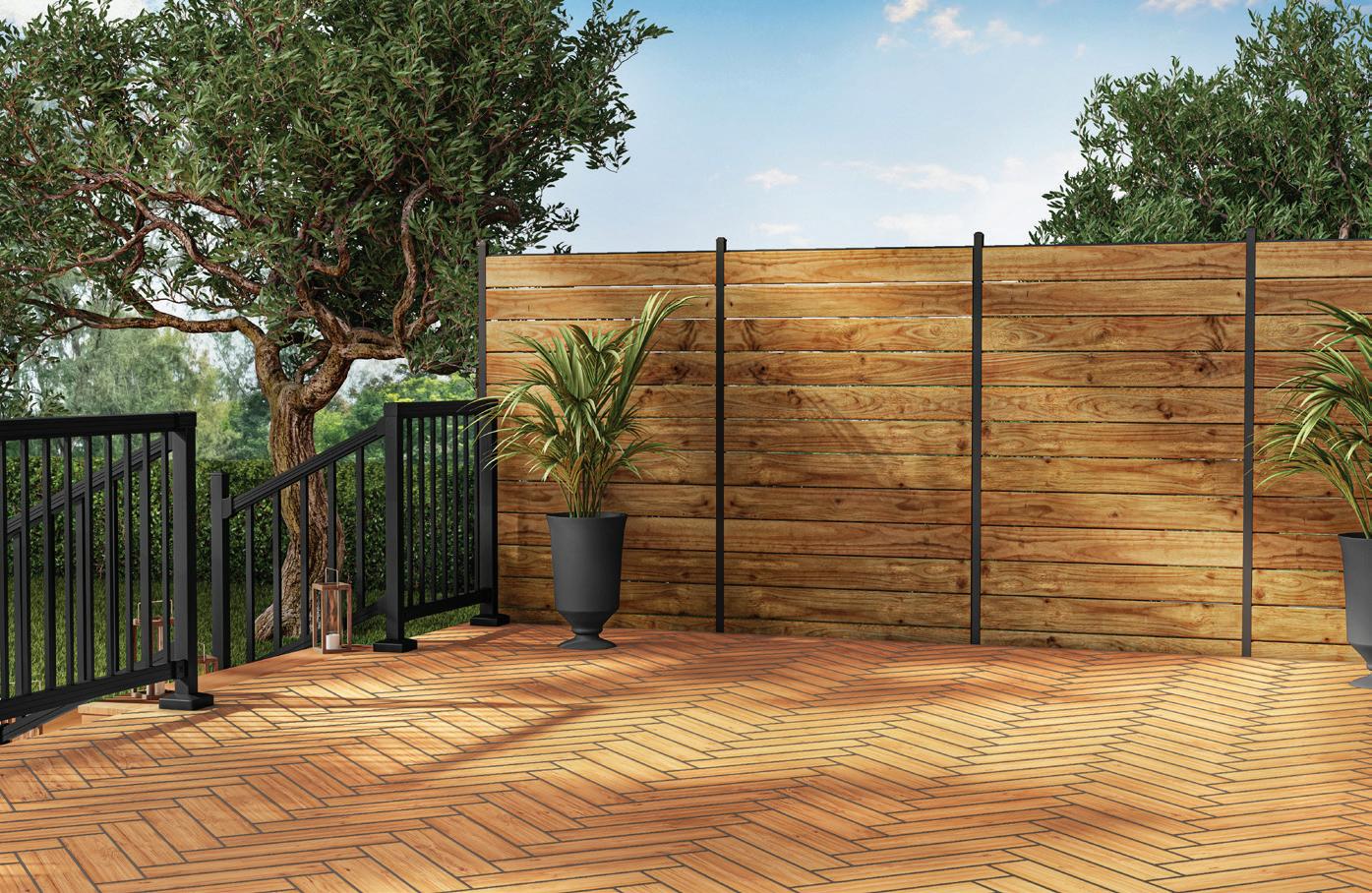
(NC) Your deck is the perfect place to enjoy your time as the weather gets warmer. If it’s starting to look a little worn out, staining your wooden deck can help you breathe new life into your outdoor space. Here’s a step-by-step guide to help you get started.
CHOOSE THE RIGHT TIME Sprinkle a small amount of water onto the deck. If it absorbs in less than 10 minutes, your deck needs urgent care. Choose a time of the year when the temperature is in the 10- to 30-degree Celsius range, and when no rain is in the forecast. It’s also best to avoid applying stain in direct sunlight if possible, working in sections as the sun moves across your deck.
PREPARE THE DECK Inspect your deck for damage. Sand any splintered areas with 80grit sandpaper or a belt sander and replace any missing fasteners. You can also tighten any screws or hammer down nails that are sticking up. Sweep away dirt, dust and debris with a broom, and rinse your deck with water. You can also use a pressure washer on a light setting.
Next, use a deck cleaner product and a brush to deep clean the wood, and allow your deck to dry for two to three days before applying stain.
PICK THE BEST STAIN Choosing the best deck stain for your project depends on a variety of factors unique to your deck. Look for a stain at your local hardware store, like The Home Depot, that’s made for your deck’s wood and matches your decking material. To keep your deck in great shape for longer, pick one that is designed to repel water and protect against UV rays.
You’ll get the best results by using an oil-based stain over a deck previously finished with oil-based stains and water-based stain over a deck previously finished with a water-based ones.
START WITH THE RAILINGS Sweep your deck again to remove any debris that may have accumulated after deep-cleaning. Make sure to sweep the railings with a broom as well to remove any dust. Protect your siding, door trim and any other parts of the home with painter’s tape. Stir the stain thoroughly and transfer it to a paint tray to make things easier. Begin staining your deck, working your way down from the highest points like posts and balusters. Use long, even strokes with your brush to ensure a consistent coating on your railings and try not to drip on the deck.
STAIN THE DECK BOARDS Apply the stain to your deck using a brush about the width of your deck boards. Choose your starting and stopping points, like by your deck stairs or a back door to your home so you don’t block yourself into a corner, and work in one direction. Apply your stain in long, even strokes along the length of the deck boards. Use a smaller paintbrush to apply stain in cracks and hard to reach corners. You can also touch up areas between boards this way. One coat is generally enough when staining your deck boards.
ALLOW THE STAIN TO DRY Let your stain dry for 24 to 48 hours before walking on your deck. Wait an extra day or two before putting heavy furniture back in to place.


















Collingwood Music Festival Bringing Stellar Line-Up
From July 6th to 18th, the Collingwood Music Festival (CMF) will return for its seventh summer, inviting over 220 outstanding musicians to Collingwood. The town and surrounding area will come alive as the two-week event seamlessly blends large-scale choral works, intimate chamber music concerts, as well as vibrant world and Indigenous music performances in beautiful outdoor settings. Tickets are now on sale for this exceptional lineup of world-class artists.
Collingwood Music Festival’s Artistic Director Daniel Vnukowski enthusiastically states: “Each summer, Collingwood transforms through music, and this year, that energy is unmistakable. From the raw power of the famous work Carmina Burana on our opening night to extraordinary voices from Canada and abroad, this season brings a scale and intensity we have not presented before. At the same time, our commitment to young artists and to this community remains central. This is a festival that continues to grow in ambition, in impact, and in what it offers to audiences across Southern Georgian Bay.”
N.B.: Carmina Burana is a cantata composed in 1935 and 1936 by Carl Orff, based on 24 poems from the medieval collection Carmina Burana. Its full Latin title is Carmina Burana: Cantiones profanae cantoribus et choris cantandae comitantibus instrumentis atque imaginibus magicis.
Highlights
This season’s highlights also include a gospel festival finale with Toronto Mass Choir, and the luminous sound of the Dagilėlis Boys’ Choir from Lithuania. The festival proudly presents a new work by Juno Award-winner Andy Milne. This, alongside exciting performances by genre-bending violinist Mark Fewer and friends, alternative early music ensemble Ménestrel, unconventional Montreal-based vocal ensemble Les Rugissants, and a timeless tribute to Bernstein and Rodgers with Canada’s first lady of musical theatre Louise Pitre.
CMF’s 2026 Youth Academy
Collingwood Music Festival’s commitment to young artists continues to flourish. During the festival, CMF’s Masterclass 2026 hosts 30 promising young musicians and 7 world-renowned teachers, and you are welcome to sit in with every class for free - five days of topnotch music right here in your back yard. The masterclass culminates with the CMF Youth Academy Grand Finale concert, offering this next generation of musicians the chance to shine.
Free Outdoor Community Concerts
The festival’s outreach and free outdoor concerts ensure that the festival remains open, accessible, and rooted in community through their World Music series at the Collingwood Amphitheatre and the return of their popular Symphony Under the Stars at Creemore Village Green. Learn more here: https://collingwoodfestival.com/events/ category/free/
Individual Tickets
Youth Under 16 enjoy FREE entry to any summer concert when accompanied by an adult with a paid ticket.
Order at https://collingwoodmusicfestival.ticketspice.com/summerconcerts-2026
The Collingwood Music Festival gratefully acknowledges support from the Canada Council for the Arts, Ontario Trillium Foundation, Ontario Arts Council, Ontario Cultural Attractions Fund, Ontario Creates, County of Simcoe, Town of Collingwood, and RTO7 (Regional Tourism Organization 7) in partnership with Bruce Grey Simcoe. June 7th concert in Meaford:
Sunday, June 7 at 3pm: Don’t miss “A Masterful Return to Meaford Hall” with Daniel Vnukowski (piano), Michael Schulte (violin), and David Hetherington (cello) https://collingwoodfestival.com/event/a-masterfulreturn/
During the month of July there will be images on display of past festivals, Collingwood Music Festival; A Retrospective Photo Exhibition, in the Pressroom Gallery at 65 Simcoe Street, Collingwood. Submitted by Don Beaulieu

Schmaltz & Pepper will be performing at this year’s CMF on Monday, July 13th. This amazing group features Toronto Symphony principal clarinetist Eric Abramovitz, Grammy-winning multi-instrumentalist Drew Jurecka, acclaimed violinist and Payadora Ensemble founder Rebekah Wolkstein, Juno-nominated bassist Michael Herring, and Juno Award-winning pianist Jeremy Ledbetter, this extraordinary group delivers a performance that is both deeply rooted and boldly original. This is Yiddish music like you’ve never heard it before, a very entertaining treat for your ears, for sure.
CHEESECAKE ICE CREAM WITH FRUIT SWIRLS
INGREDIENTS
12 ounces cream cheese cut into cubes
3/4 cup sugar
1 cup sour cream
3/4 cup half-and-half
2 teaspoons vanilla
1 1/4 teaspoons lemon juice divided
1 dash salt
1/3 cup blueberry raspberry, cherry, strawberry, peach or apricot fruit spread
DIRECTIONS
1. In large mixer bowl of electric mixer, beat cream cheese and sugar on medium speed until fluffy. Add sour cream, half-andhalf, vanilla, 1 teaspoon lemon juice and salt. Beat on low speed until combined then beat on medium speed until smooth. Cover and refrigerate 2-24 hours, or until cold.

2. Pour cream cheese mixture into 1 1/2-quart ice cream maker. Freeze according to manufacturer’s directions.
3. In small bowl, stir fruit spread and remaining lemon juice.
4. Spoon about one-third of ice cream into 2-quart food storage container. Spoon about half of fruit spread mixture in dollops over ice cream. Repeat layers. Top with remaining ice cream. Cover and freeze 4-24 hours.
5. To serve, scoop ice cream into dessert dishes. culinary.net

Toronto’s
Photo Credit: Peter Yuan
Supplied by Smaltz and Pepper
We Three Kings Comes to Collingwood
Three International Elvis Tribute Champions Bring “We Three Kings” to Collingwood June 12
Award-winning tribute concert celebrates the music of the King of Rock ’n’ Roll with two performances at the Georgian Bay Hotel.
The music and legacy of Elvis Presley will once again come alive in Collingwood on Friday, June 12, 2026, when the hit tribute concert “We Three Kings: The Multinational Tribute to Elvis Presley” arrives for two performances at 2:00 PM and 7:30 PM in the Grand Ballroom at the Georgian Bay Hotel
Recreating the three-decade career of Elvis Presley, We Three Kings features three world-renowned, international awardwinning tribute artists from three different countries performing together in one dynamic concert. All three performers are Grand Champions of the Collingwood Elvis Festival, making the Collingwood stop of the tour especially meaningful.
Direct from Germany, Oliver Steinhoff is widely regarded as Europe’s top Elvis tribute artist. An international award-winning performer, Steinhoff ’s voice, charisma, and stage presence are hauntingly reminiscent of the King. Star of Germany’s sold-out show Elvis die Story, Steinhoff is a European Grand Champion, two-time Elvis Contest UK winner, and Grand Champion of the Collingwood, Tweed, and Penticton Elvis Festivals. In We Three Kings, he recreates Elvis’s legendary 1970s Las Vegas concert years

Representing the United States is Leo Days, who for more than a decade portrayed Elvis in the long-running Las Vegas production Legends in Concert. Days has also toured the country with Elvis Lives and starred in the Waikiki production Burnin’ Love, which was ranked #1 on TripAdvisor during its run. International entertainment company Cirque du Soleil selected Days to portray Elvis in its acclaimed show Viva Elvis. In this concert, he captures the excitement of Elvis’s early career and the iconic ’68 Comeback Special
From Canada, international award-winning entertainer Roy LeBlanc recreates Elvis in the 1960s and early 1970s. A three-time champion and longtime host of the Collingwood Elvis Festival, LeBlanc starred for six consecutive years in the touring musical hit Blue Suede Shoes. He was also the first Canadian named “World’s Finest Elvis” at the Elvis Extravaganza in Las Vegas. In We Three Kings, LeBlanc performs Elvis’s beloved gospel and country hits, along with selections from the King’s famous film soundtracks
Produced by A Royal Tribute Productions, the show celebrates Elvis Presley’s music through three distinct eras of his legendary career.
“Collingwood has always been a special place for Elvis fans and tribute artists,” says producer and performer Roy LeBlanc. “All three of us have been honoured as Grand Champions at the Collingwood Elvis Festival, so bringing We Three Kings here feels like coming home. It’s going to be a fantastic celebration of Elvis and the fans who keep his music alive.”
With a hit-filled setlist, authentic costumes, powerful vocals, and captivating stage presence, We Three Kings delivers a high-energy tribute concert that audiences won’t want to miss.
“We Three Kings” performs Friday, June 12, 2026 at 2:00 PM and 7:30 PM in the Grand Ballroom at the Georgian Bay Hotel.
Tickets and information:
Matinee: https://ticketscene.ca/events/58052/ Evening: https://ticketscene.ca/events/58053/
Submitted by A Royal Tribute Productions


PHOTO CREDIT: Oliver Steinhoff PHOTO CREDIT: Eva Brand PHOTO
Mind. Body.


How Families Can Get Ready for a Safe Summer
(NC) Summer brings a sense of freedom for kids and the chance for everyone to enjoy nice weather and fun activities. But it can also bring the risk of extreme heat.
Extreme heat, and heat related illnesses, are especially dangerous for infants and young children.
Heat illnesses include heat stroke, heat exhaustion, heat fainting, heat edema (swelling of the hands, feet and ankles), heat rash (prickly heat) and heat cramps (muscle cramps). They are mainly caused by overexposure to heat or overexertion in the heat, and if not prevented, can lead to long-term health problems and even death.
Children most at risk include those with breathing difficulties (asthma), heart conditions, kidney problems, mental and physical disabilities, developmental disorders, diarrhea and those who take certain medications.
Consult with your family doctor or pharmacist to find out if your child’s medication increases their risk of heat-related illnesses.
• Tune in regularly to local weather forecasts and alerts, so you know when to take extra care.
• If you have an air conditioner, make sure it works properly before the hot weather starts. Otherwise, find an air-conditioned spot near you that you can use to cool off during extreme heat.
• Learn about ways to keep your home cool during the summer and plan for the future. For example, if you live in a house, plant trees on the side where the sun hits the house during the hottest part of the day.
• If you see any of these signs during extreme heat, immediately move the child to a cool place and give water.

Never leave children alone in a parked vehicle. Even on cooler days when the outside temperatures are moderate, the temperature inside a vehicle can be dangerously hot. By planning ahead now, you can help keep yourself and your family better protected during extreme heat and enjoy a safer summer. You can learn more at canada.ca/heat.
This Summer Get SPF Smart
(NC) Warm weather is a good reminder that sunscreen isn’t just for beach days. If your kids are outside for recess, walking to school, splashing in the backyard or waiting at the bus stop, their skin is getting UV exposure, even on hazy days. To help separate fact from fiction, here are some sun safety myths parents should know about:
Myth #1: You only need sunscreen on hot days.
UV rays can be strong when it’s cool or cloudy, and they bounce off water, sand and even some playground surfaces.
“Kids get UV exposure during everyday outdoor activities, even when it’s cloudy, so sunscreen should be part of their daily routine,” says Dr. Katie Beleznay, a dermatologist and mom of two. “Using a broad-spectrum sunscreen, SPF 30 or higher, and reapplying at least every two hours and immediately after swimming is important to protect their skin during a day outdoors.”


Myth #2: A little dab of sunscreen is all you need.
Most people don’t use nearly enough sunscreen. The recommended amount is 30 millilitres, or the size of a golf ball, to cover your whole body. It’s important to rub it in well for full coverage. Don’t forget your ears, the back of your neck, tops of your feet and the part line of your hair—even your scalp can burn.
Myth #3: One application lasts all day.
Sunscreen wears off with time, especially if you’re active and sweating or you’ve been swimming. Start by applying sunscreen 15 minutes before you head outside and reapply at least every two hours. If you’ve been sweating or swimming, reapply every 80 minutes. When in doubt, refer to the instructions on your sunscreen bottle.
Sunscreen tips:
• When you’re shopping, there are kid-friendly sunscreen options available, including lotions formulated to be gentle on skin, pediatrician tested, and designed to stay out of the eyes, such as Banana Boat’s Kids Sunscreen Lotion SPF 50+.
• To help remind yourself to use it daily, keep the bottle in a spot you won’t miss.
• Keep a small checklist on the door: hat, water bottle, sunscreen, snack.
• If your child gets dressed in stages, apply sunscreen while they’re still in shorts and a T-shirt—less chasing, fewer missed areas.
Making sunscreen part of the daily routine can help families stay one step ahead of UV exposure.
Stress in Children and Teens
Today our children have many issues to deal with that can cause them stress.
First, let’s look at some symptoms or behaviours that may indicate distress for your child or teen. Changes in sleep or appetite, irritability, withdrawing or clinginess. As well your child might have falling grades, physical complaints (headache/stomach-ache), increased risky behaviour or mood swings.
How can parents/caregivers support their child/teen?
1. Your regulation helps your child/teen’s mood and feelings so stay calm and predictable. When you get upset, can cause distress for your child/teen.
2. Don’t be afraid to show your child how you cope. Model coping, share your own small stress tools out loud.
3. Sometimes as parents, we don’t want to label that your child is struggling because it becomes real and that can be scary. However, it’s important to validate, don’t minimize: “That sounds really hard” vs “Don’t worry about it.”
4. An aspect of stress is feeling like we don’t have control over the situation or our feelings. Offer choices and small responsibilities to restore their sense of control.
5. Maintain routines for sleep, meals, homework, and downtime. This allows your child/ teen to experience predictability which calms their nervous system.
6. Communicate with teachers/counsellors about your observations and request small accommodations. Having a quiet space, extra time to complete projects or homework and regular check ins with their teacher can lessen negative effects of stress.
In all cases, plan regular time to hang out with your child/teen, doing fun activities like going for a walk, watching a funny movie, having a games night.
• Practical coping skills you can teach your child/teen.
• Breathing: 4 4 or box breathing (inhale 4 — hold 4 — exhale 4 — hold 4).
• Grounding: 5 4 3 2 1 sensory check (name 5 things you see, 4 you can hear…).
• Movement breaks: 3–10 minute walks, jumping, dance to reduce stress hormones.
• Progressive muscle relax: tense/relax major muscle groups for 5–10 minutes.
• Emotion naming + validation: “You look frustrated — that makes sense.”
• Worry time: schedule 10–15 minutes to problem solve worries so they don’t dominate the day.
• Creative outlets: journaling, art, music, sports — pick what fits the child. When to seek professional help
• When you observe persistent functional decline in an area of school, eating, sleeping lasting 2+ weeks or sudden severe changes.
• If your child/teen expresses interest in self harm, suicidal talk/behaviour or aggression that risks safety.
• If a parent’s own stress/trauma interferes with caregiving — seek support for both of you.
• If you are worried about self-harm, remove means of harm, stay with the child/teen if risk is high and contact local emergency services or crisis line and then connect with a mental health service.
Dealing with a child or teen that is experiencing distress can be overwhelming. Remember, you are the expert of your child or teen. If your child or teen is feeling overwhelmed, reach out for support. A therapist can teach your child or teen effective strategies that will help them cope. I hope the tips above will help lessen some of the stress your child or teen is experiencing. All the best!
Wendy Hunter, Registered Psychotherapist
In Support Of Children Counselling www.whunter63@gmail.com
















SUMMER WHEELS

6 Elgin St. S, Thornbury 519-599-2010 www.carquestthornbury.ca
206034
MIKE’S TIRES
5 THINGS TO DO AFTER A CAR ACCIDENT
(NC) When an accident happens, it can be tough to know what to do. It’s a sudden, shocking situation where it can feel like everything’s happening at once. Knowing what to do can help you stay safe and make things easier afterward. Here are five simple steps to follow:
1. STAY SAFE Turn on your hazard lights and pull over if you can. Check yourself and your passengers. If anyone is hurt, call 911 right away. If your car can move, drive to a safe spot. If not, stay inside with your seatbelt on until help arrives.
2. TAKE NOTES AND PHOTOS Write down what happened: date, time, place, weather and what you remember. Use your phone if needed. Take photos of the cars, damage, road and any injuries—but only if it’s safe.
3. EXCHANGE INFORMATION Get and share the following information with any other drivers involved in the accident:
• Name and phone number
� Insurance Company and Policy Number
• Driver’s licence number
• Car make, model, colour and licence plate
• If there are witnesses, get their contact info, too. Having these details on hand can make the insurance process faster and more accurate.
4. REPORT THE ACCIDENT Call your insurance company as soon as you can. Send them your notes, photos and police report, if there is one. Many insurers, like Belairdirect, let you start a claim online or in their app.
5. PROTECT YOURSELF FINANCIALLY Your insurer will review your claim and explain what’s covered under your policy, such as repairs, accident benefits or rental car costs. Accidents don’t just cause physical damage—they can also lead to a variety of unexpected expenses. Keep records of any accident-related out-ofpocket costs and review them with the adjuster, because your reimbursement will depend on your policy’s coverage and limits. These steps can help in the moment, but it’s okay to need more clarity after an accident. You can find additional guidance at belairdirect.com.
SHOULD KNOW
(NC) While we often think of self-care as something personal, it should also extend to the things we rely on every day, especially our cars. With so much wear and tear, it’s easy to forget that our vehicles need care and attention too.
“Vehicles often feel fine after winter, but that doesn’t mean they haven’t been affected,” says Brian Mielko, the CEO of OK Tire. “Spring is the best time to catch small issues early, before they turn into bigger problems during peak driving season.”
Showing your car a little love doesn’t have to be complicated. Here are some simple steps to take:
1. START WITH A 15-MINUTE INTERIOR CLEAN A quick interior clean will make your vehicle look and feel better for every drive.
A quick checklist:
• Clear out clutter and remove mats.



• Wash your mats and let them fully dry while you do the rest.
• Treat and remove salt stains.
• Vacuum seats, floors, and crevices.
• Wipe high-touch surfaces such as your steering wheel, dashboard and console.
• Eliminate odours and add a fresh scent. Pro tip: Use a soft brush to lift any stubborn debris from crooks in fabric car seats.
2. DON’T IGNORE WHAT YOU CAN’T SEE Underneath your car, road salt, moisture and grime can speed up rust and corrosion. That damage is important to address early, to protect against future wear. An undercarriage treatment adds a protective,
rust-resistant layer. It can extend the life of your vehicle and help you avoid costly repairs down the road.
3. CHECK YOUR TIRES BEFORE YOU HIT THE ROAD
If there’s one area you don’t want to overlook, it’s your tires. Before heading into a busy season of road trips, commuting and weekend drives, take a few minutes to inspect them. Watch for:
• Low tread depth (below ~3/32 inch, or visible wear bars)
• Cracks or bulges, especially on sidewalls
• Uneven wear (may indicate alignment or suspension issues)
• Vibration while driving
• Frequent air loss
A quick DIY reset is a good place to start, but if something seems off, it may be worth consulting a qualified technician. Advice from vehicle experts can help ensure your vehicle is ready for the season ahead.
Wasaga Casual Wear and Boutique




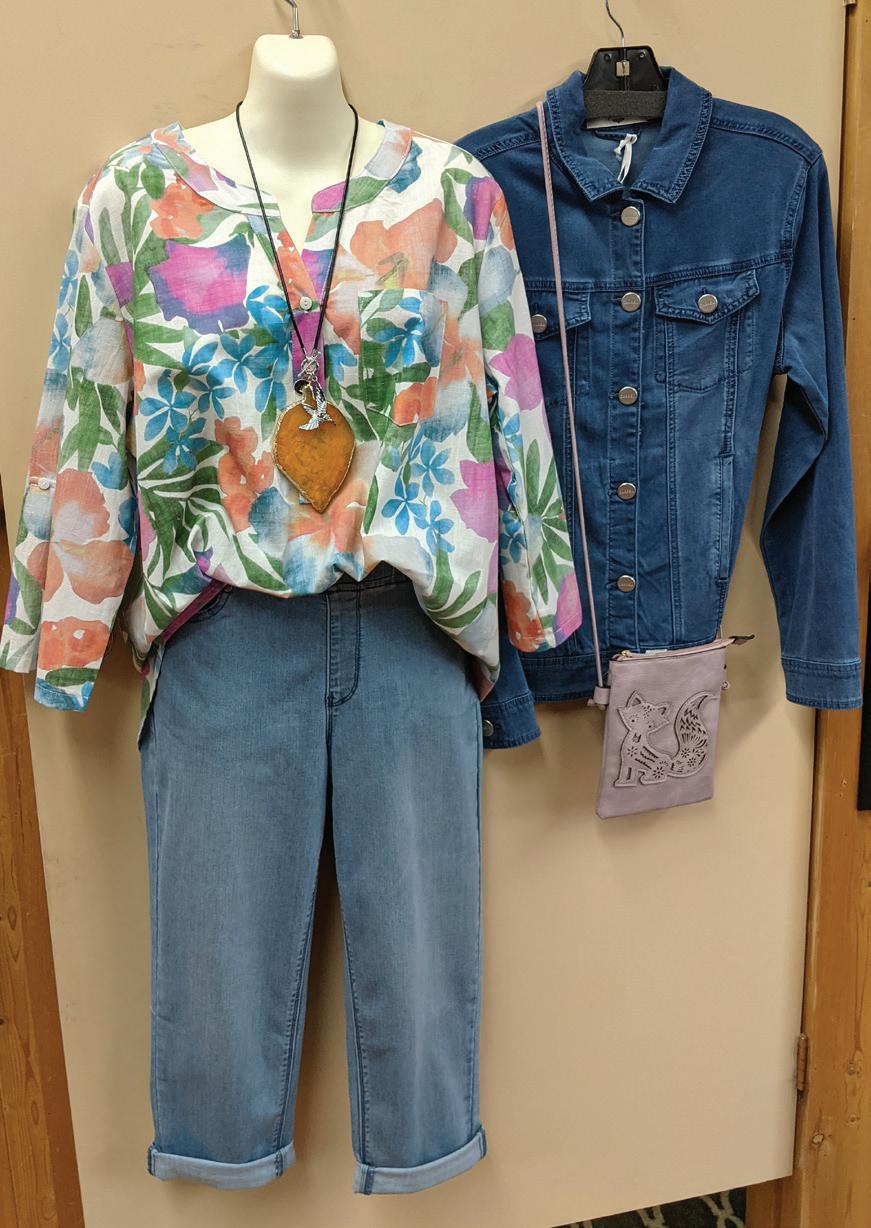
Located on 19th Street North in Wasaga Beach, we have happily served ladies for 32 wonderful years. This clothing store has been more than just a place to shop. It has been a trusted part of the community, helping women feel confident, stylish and celebrated through every stage of life. Reaching this incredible milestone is a testament to the dedication passion and personal service that has kept customers coming back for years. Through changing trends and generation of fashion, this store has remained committed to quality, elegance and creating a welcoming experience for every woman who walks through the doors. The relationship built over three decades speaks volumes about the care and the attention given to each customer
Come in and checkout our new arrivals! Times are changing but our commitment is to provide you with the best possible selection to face these times with style and comfort. Looking forward to seeing you soon, Leona & Julie
Congratulations on 32 years of success, style and dedication. Your hard work, resilience and love for what you do continues to inspire, and your legacy is something truly special. Wishing you many more years of growth, fashion and unforgettable moments ahead. What’s Up? Georgian Bay magazine
HOURS: Monday - Friday 10am - 4pm Saturday 11am - 3pm
LOCATION: 43-19th Street N., Wasaga Beach



Summer is Coming!
BARBEQUE BEACH BICYCLING BUTTERFLY FAMILY
FATHER’S DAY FISHING FLIP FLOPS FRIENDS HIKING ICE CREAM IRIS JUNE OUTDOORS PICNIC RELAX SAND SHORTS SUMMER SUNSHINE TOGETHER

A Ducky Day in Stayner!
The Stayner Duck Race is an annual event organized by the Stayner Kinsmen, a community service club based in Stayner, Ontario, Canada. The event typically takes place on the first weekend in May and has become a popular tradition in the town. This year the event was held on a cool Saturday, May 2nd.
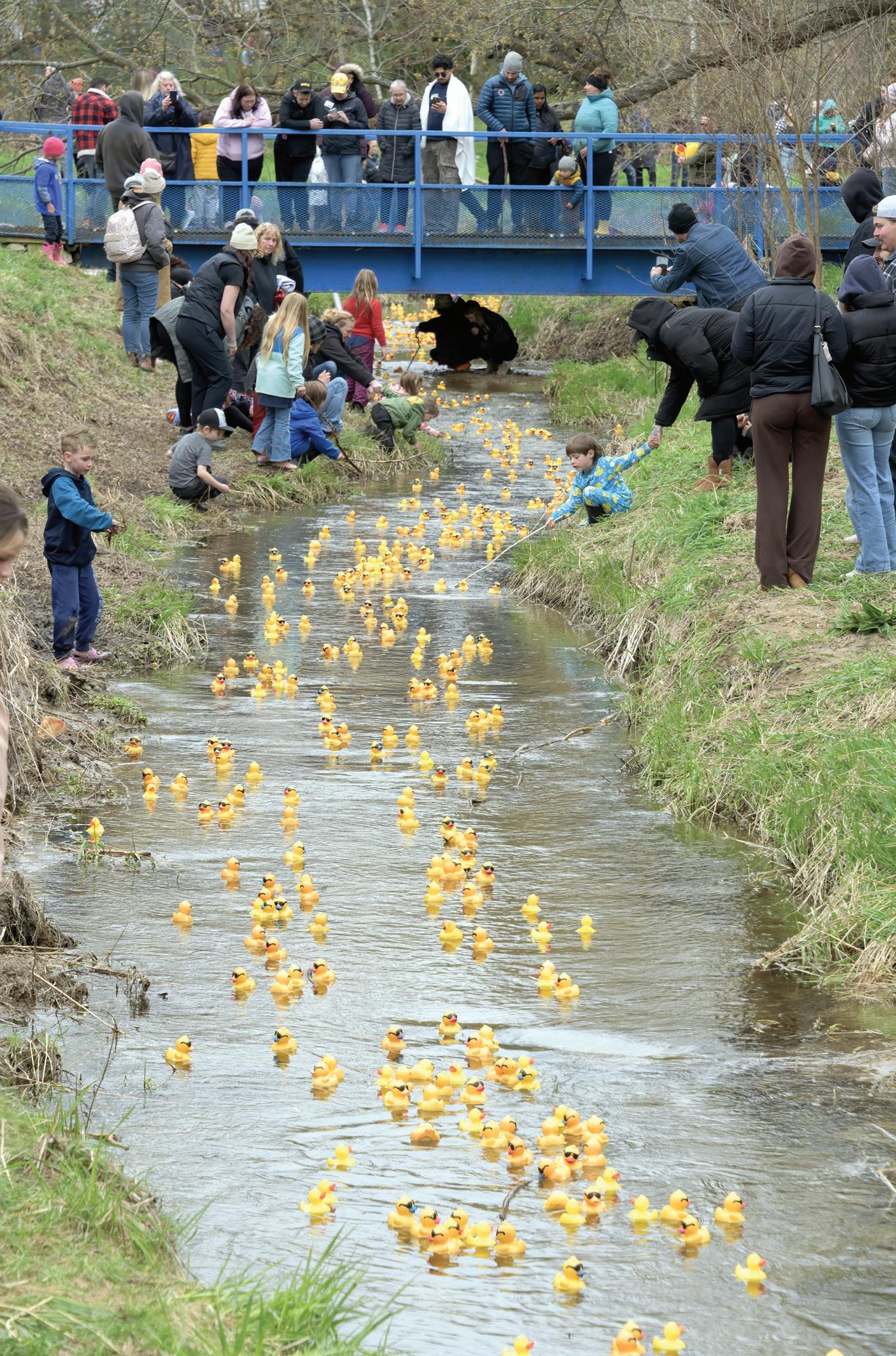
The day’s events took place at the Centennial/Kinsmen Participark along Lamont Creek. The main event this year saw 2,500 rubber ducks released in the final race of the day. For these races, the ducks are numbered and participants purchase tickets that correspond to their duck number. The ducks are then released into the creek, and the first ducks to cross the finish line win prizes for their lucky ticket holders.
Two races are run (swum?) before the third and final big race of the day. The first race features entries from local businesses, the corporate race. Ducks in this race can be seen riding a variety of devices, somewhat along the lines of a parade of, um, floats.
The field for the second race are entries from local school classes. Ducks in this heat are wildly and vividly decorated.
The starting gate is located just east of Elm Street at the north end of the park. The ducks race to the finish line just west of the old rail line in the south east of the park north of Brock Street.
The Stayner Kinsmen use the funds raised from the event to support various community projects and initiatives, such as local youth programs, community events, and charitable organizations.
In addition to the duck race, the event features various other activities and attractions, such as live music, food vendors, a beer garden, children and family activities. There are also various prizes and giveaways throughout the day, providing additional excitement and entertainment for participants. It is a grand day for all ages, for sure.
The Stayner Duck Race has become a beloved tradition in the town and attracts visitors from all over the region. It not only provides a fun day out for participants but also helps to support important community initiatives and promote civic engagement. Keep your eyes peeled for notices of the May 2027 race day.
Here are the winners of the 2026 duck races according to the Kinsmen website: Corporate Race: Clear View Electric
School Race: Ms. Gregorio’s Grade 2 class, from St. Noel Chabanel Catholic Elementary School in Wasaga Beach. They won a PIZZA DAY!!!
Main Race winners and purses:
1st - Hound (R Walker) $700
2nd - Dannette Szydlik $400
3rd - Dave Bates $200
4th - Greg Challenger $100
5th - Ryan Doner $50
6th - Everleigh Mckee $50


This ducky teen, Lenora Danby of Utopia, rode her dancing duck managing to stay in the saddle as it ran about in the crowds at the duck races. They certainly instilled a happy and energetic, possibly silly, vibe to the event. Danby is involved with the Cyber Gnomes Robotic Team of New Lowell when she’s not riding her duck or studying hard at school.

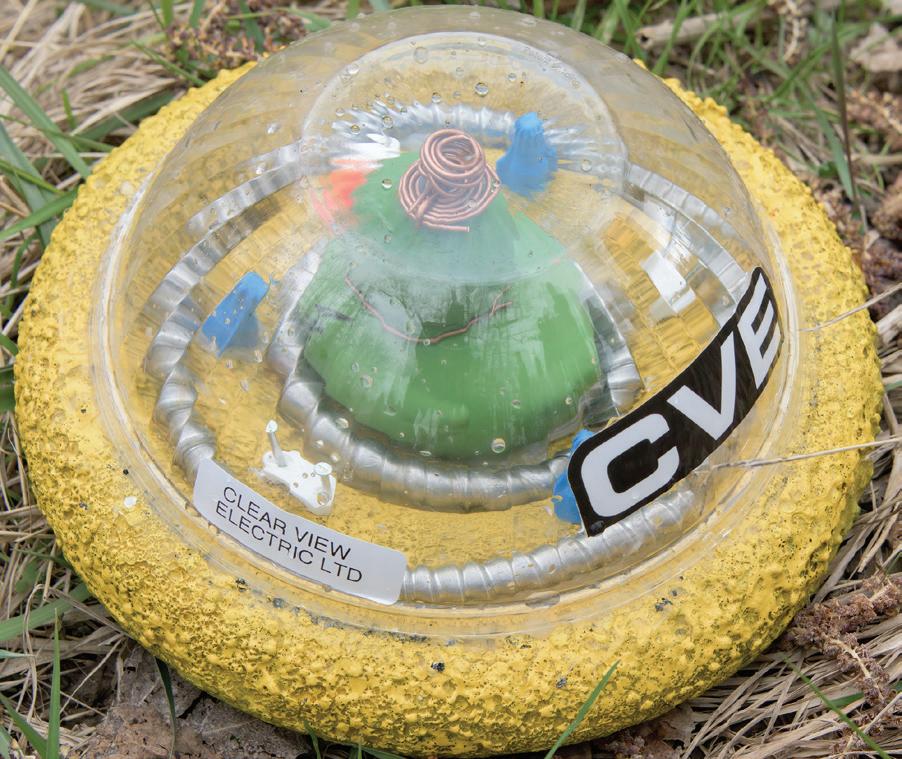
This UFO-like design basically flew down Lamont Creek as if it was on a cushion of air. Tim Horton’s was in the lead for some time, but, somewhere in a tight meander, the Clear View Electric duck from outer space found its guidance thrusters, took advantage of the sling-shot effect of an eddy in the middle if the course, moving up the outside and eventually taking the lead. The full length of the course is 1.5 kilometres, with rapids, rocks and overhangs (a concern for the sail boats). The final furlong saw much action and garnered the largest spectator numbers. Each race was no doubt an insight to the excitement-to-come at the Kentucky Derby, later in the day.
Here we see the winning entry of the school duck race, decorated by Mrs. Gregorio’s Grade 2 class, as it enters the final furlong before the finish line.
Submitted by Don Beaulieu