




















































India’s architectural landscape with strength, safety, and style.
For over 21 years, Alstone has stood as the backbone of modern facades — from airports and metros to high-rises and institutions our legacy is written on skylines across the nation.
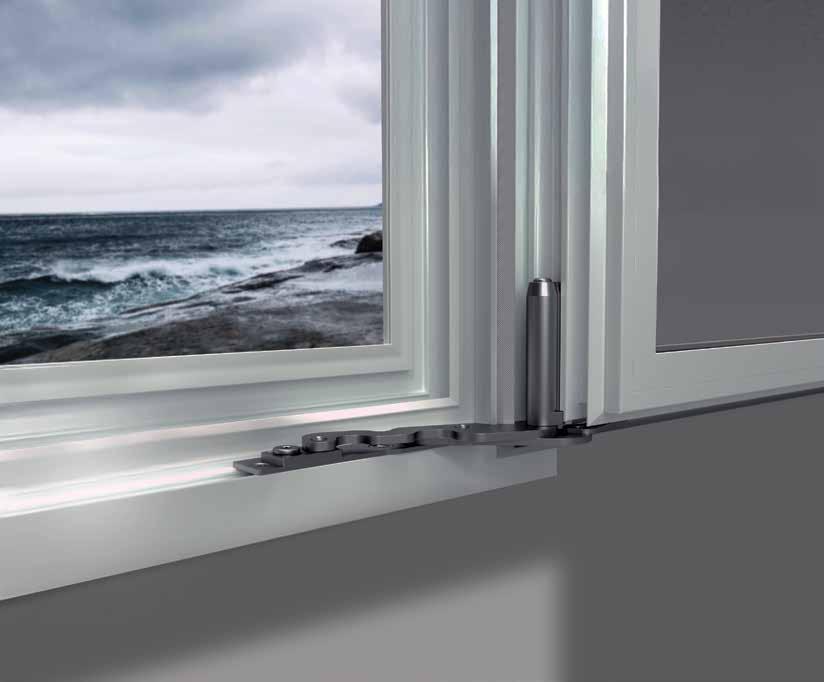
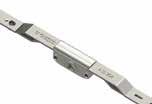
Durable materials, like stainless steel, and surface treatments like the exclusive ShieldMax5, allow many Giesse solutions to achieve and surpass maximum corrosion resistance according to european standards.
Class 5 is the highest level according to EN 1670 (over 480 hours in salt spray), ensuring consistent performance and extreme durability even in the most severe environmental conditions: seaside locations, tropical climates, areas with high pollution.
Para saber más
Find out more about Giesse Class 5 products


Volume 12 | Issue 2
January - February 2026
12

Designing Effective and Efficient Glass Façades and Fenestrations - Role of AI & Latest Design Tool
Ar. Saumya Khanna, Co-founder & Ar. Sudhir Ambawata, Co-founder, SSDA Architects
17 The Evolution and Innovation of Fenestration Design in India
Ar. Leena Kumar, Principal Architect, Kumar Consultants
20 Design Efficient Façades and Fenestrations with a Combination of Materials
Ar. Ritika Rakhian, Founder & Principal Architect, Urban Mistrii
26 Fenestration in India: Why Execution Defines Success More Than Products
Arnev Goel, Sr. Vice President & Head – Channel & Service Operations, Fenesta
Building Systems (DCM Shriram Ltd.)
30 The Evolving Role of Façade and Fenestration in Contemporary Architecture
Ar. Vishal Sharma, Founder Partner and Principal Architect, Confluence
34 Design Efficiency for Façades and Fenestrations: The Power of Material
Synergy
Suhel Kachwala, Managing Director, FG Glass
38 Living Façades: Biomimetic Façade Strategies for India
Ar. Samir Fayaz Shaikh, Founding Principal, Architecture & Urban Design Studio (AR&UD Studio)
44 Beyond the Glass: Acoustic Weak Points Architects Miss in Indian Façades
Kevin Mario D’souza, Founder, Sound And About
49 Why Fire Safety is Critical to Sustainable Urban Development in India
Sreenivas Narayanan, Global Partnerships Director, Siderise
58 The Expert’s Edge
Interview with Ashok Kumar Bhaiya, CMD, Aludecor
64 Cover Story
Façade Design, Engineering & High-Performance Building Skins: Form, Function & Technology
media@wfmmedia.com
+91 98701 44425
RNI: DELENG/2014/57870
An industry view on advancing façade design, engineering, and high-performance building envelopes
88 Industry Speaks
Interview with P. JOTHI RAMALINGAM PONNUSAMY, Director, Winwall Technology India Pvt. Ltd.
94 Face to Face
Interview with RITESH JINDAL, India Specialist Services Leader, Arup
102 Project Watch
Breathing Space: The Power of Biophilic Design in the Workplace by AD Studio 9
106 Project Watch
Innovative Façade & Fenestration Design Inspired by Context & Craft by Andy Fisher Workshop (AFW)
110 Project Watch
Rediscovering Stained Glass: The Lost Craft of Light and Colour by OSA Studio
DISCLAIMER: With regret we wish to say that publishers cannot be held responsible or liable for error or omission contained in this publication. The opinions and views contained in this publication are not necessarily those of the publishers. Readers are advised to seek expert advice before acting on any information contained in this publication which are very generic in nature. The Magazine does not accept responsibility for the accuracy of claims made by advertisers. The ownership of trademarks is acknowledged. No part of this publication or any part of the contents thereof may be reproduced in any form or context without the permission of publishers in writing.
WRITE TO THE EDITOR Please address your suggestions to: The Editor, Window & Façade Magazine, C55, Okhla Industrial Area, Phase – 1, New Delhi, 110020 or email renu@wfmmedia.com. Please provide your full name and address, stating clearly if you do not wish us to print them. Alternatively log on to www.wfmmedia.com and air your views. The opinions expressed in this section are of particular individuals and are in no way a reflection of the publisher’s views.
“Printed and Published by Amit Malhotra on behalf of M/s F & F Media and Publications. Printed at Thomson Press India Limited, 18/35, Delhi-Mathura Road, Faridabad - 121007, Haryana, Name of the Editor-Ms. Renu Rajaram”

The built environment today stands at an important crossroads. As architecture and construction respond to climate change, technological disruption, and evolving user expectations, the way we design and deliver buildings is undergoing a significant transformation.
At the same time, the global construction ecosystem continues to navigate uncertainty. Ongoing geopolitical tensions and conflicts across regions are influencing supply chains, commodity prices, and investment sentiment—factors that inevitably affect the building and real estate sector worldwide. Yet, industries rooted in innovation and collaboration often emerge stronger from such periods of disruption.
The cover story in this issue explores two key dimensions shaping this change: the evolution of façades into intelligent, high-performance systems, and the growing realisation that the success of fenestration in India depends not only on products but also on the quality of execution.
The content of this edition examines the transformation of the building envelope— from a static outer layer to a responsive, performance-driven system. Modern façades are no longer merely aesthetic elements; they function as dynamic interfaces that regulate light, heat, ventilation, and energy use. With the integration of tools such as simulation, BIM, parametric design, and AI-driven modelling, architects and engineers can now predict building performance well before construction begins. This shift is encouraging the industry to move beyond energy-intensive glass façades toward climate-responsive materials and smarter building envelopes that prioritise comfort, sustainability, and longterm efficiency.
This edition also highlights a crucial aspect of the fenestration industry—execution. As awareness grows around thermal performance, acoustic comfort, safety, and sustainability, windows and doors have become key contributors to building performance. However, as highlighted by Arnev Goel of Fenesta Building Systems, the real differentiator in the Indian fenestration market lies not only in advanced products but also in the precision of installation and service.
Do explore the insightful articles in this issue, including Designing Effective and Efficient Glass Façades and Fenestrations – Role of AI & Latest Design Tools by SSDA Architects; Design Efficiency for Façades and Fenestrations: The Power of Material Synergy by Suhel Kachwala of FG Glass; and Why Fire Safety is Critical to Sustainable Urban Development in India by Sreenivas Narayanan of Siderise.
I extend my sincere gratitude to our contributors, experts, industry partners, and advertisers whose continued support makes this issue possible. Together, we continue to shape meaningful conversations for the future of the built environment.
In modern architecture, façades serve several purposes beyond merely defining a building’s appearance. They control performance, affect occupant comfort, and specify a project’s environmental impact. As architects, we are constructing interfaces between art and science, inside and out, and between static form and dynamic function. Here, the design of the glass façade and fenestrations comes into the picture and offers a new perspective towards design. With advanced technology and modern design tools, the design of fenestrations seeks new levels of innovation in structures.
ArchiCAD and Revit modern façade workflows rely heavily on Building Information Modelling (BIM) technologies such as Autodesk Revit and Graphisoft ArchiCAD. They allow us to create 3D models of systems with embedded data, including cost estimates, material specifications, and thermal performance. It is possible to create custom glazing modules, panelised cladding, and curtain wall assemblies with precise geometry and performance characteristics. These models serve as the
engineers, architects, fabricators, and contractors.
Further, Rhino is essential for façades that need to be complex, varied, or responsive. With the help of these tools, one can create rule-based geometries that adjust to programming needs and environmental data. Parametric modelling can be used to optimise sun-shading systems according to solar orientation or to modify the openness of perforated panels according to visual privacy or daylighting requirements. This leads to quick form creation and refinement
with logic-based management of façade components.
High-resolution 3D modelling of dynamic shading systems, unitised curtain walls, and custom panels is made possible by software tools. Additionally, these technologies facilitate digital fabrication, enabling direct communication with fabricators and manufacturers. They assist in converting intricate geometries into logical, constructable systems. Context is the first step in design. Every choice, from glazing ratios to shading devices, must take orientation, solar path, and prevailing winds into consideration. Repetitive, standardised components make façades more affordable and easier to build. Errors in installation, material waste, and manufacturing time are all reduced by rational geometry.
Integrated shading systems include shading in the design as a fundamental component rather than as an afterthought. Effective sun control enhances energy efficiency and
aesthetic comfort in double-skin and brise-soleil façades. Further, smart material selection is essential; thermal behaviour, durability, and embodied carbon should all be taken into account in addition to aesthetics. Terracotta rainscreens, fibre cement panels, bio-based composites, and highperformance glazing all provide robust performance with minimal impact.
Wind resistance and structural integrity are assessed by simulation programmes such as ANSYS and COMSOL, which streamline processes while ensuring that environmental regulations and superior aesthetics are met. When creating structures that use less energy, programmes such as Ladybird and EnergyPlus are essential. Building water and energy consumption, including plug and process loads, lighting, ventilation, heating, and cooling, can be simulated with EnergyPlus. Working within 3D modelling programmes, Ladybird Tools enable smooth data transmission between simulation engines, allowing geometry generation, simulation, and visualisation via a single interface. By incorporating windows to improve
Façades are performative systems that control energy, shape experience, and respond to climate
natural light and ventilation, these technologies highlight the significance of energy-efficient architecture.
The function of software is to create interiors by reducing heat transfer. These resources aid in understanding the overall operation of a building’s skin and determining areas for improvement. For accurate evaluations of fenestration performance, many architects use tools such as Ecotect. Furthermore, countryspecific tools such as the H1 compliance calculator track important variables, including light penetration, thermal heat gain and loss, and Window Wall Ratio (WWR), offering vital information for design optimisation. In India, 3ds Max, SketchUp, and Revit, along with Building Information Modelling (BIM) systems, are essential for creating environmentally friendly and aesthetically pleasing designs.
Façades are performative systems that control energy, shape experience, and respond to climate. With the help of digital tools, architects can design façades that are effective, compliant, aesthetically pleasing, and responsive by combining the appropriate tools with thoughtful techniques.
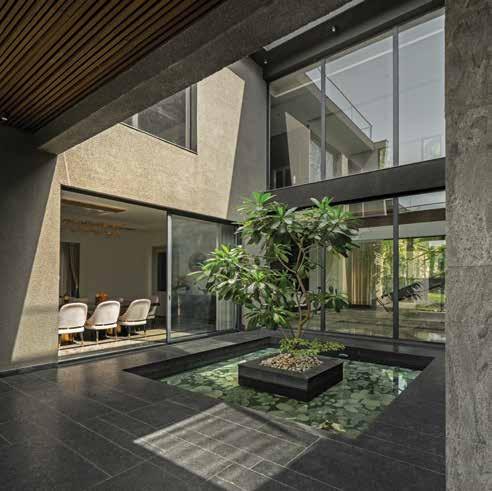
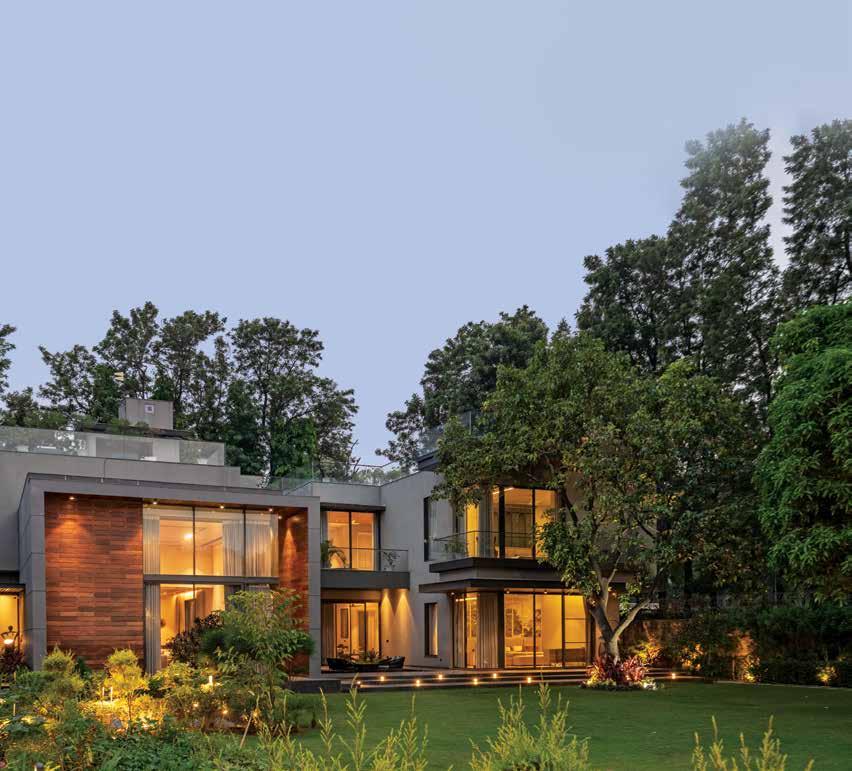
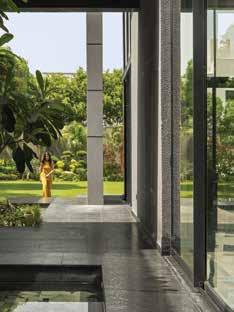
There are countless options when designing a home; each story is distinct to the person who creates it. Designed for a family of three, with five rooms and family lounges, the home emanates a functional approach to design. Sculpted around an idyllic Plumeria tree, it gives rise to a courtyard and drives the layout of the house. Built on a half-acre plot and guided by a conscious decision to limit ground coverage, the design ensures that the built-up area remains minimal. This allows for the creation of green zones, incorporating generous backyards, landscaped gardens and openair decks that enhance the connection with the outdoors.
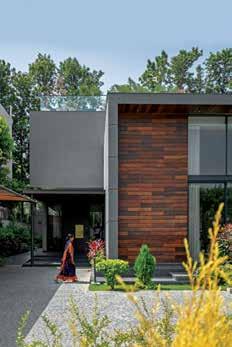
The residence evokes a contemporary design language with clean lines, modern materials and a play of volumes. It incorporates a thoughtful blend of materials such as metal accents, glass, wood, textured paint and stone to create a visually rich palette. Special attention is given to the stone finishes, introducing unique treatments that lend depth and character to the overall design. The façade gravitates towards a muted grey scheme, complemented by the warmth of natural wood.
Zoned across two levels with clear functional zoning, the ground floor is curated for the parents, while the first
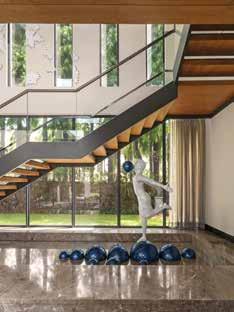
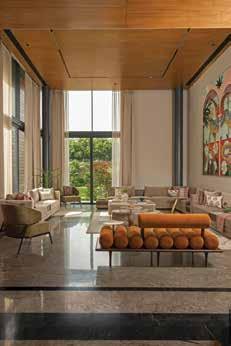
floor is tailored to the son’s lifestyle. The spatial planning ensures that the entertainment spaces are thoughtfully distributed across both levels to maintain connectivity yet allow independence. Vastu plays a vital role in shaping the spatial layout, guiding the planning with intention and harmony. Natural light is a key consideration, with ample north and east light flooding into the interiors. Moving indoors is the doubleheight living area with large floor-toceiling windows, draped in neutral hues and featuring wooden ceilings, which establish a connection with nature. The staircase towards the south brings a sense of verticality with its minimal design. Beneath a sculpture in grey and bold royal blue tones, a pop of colour is added to the neutral space.
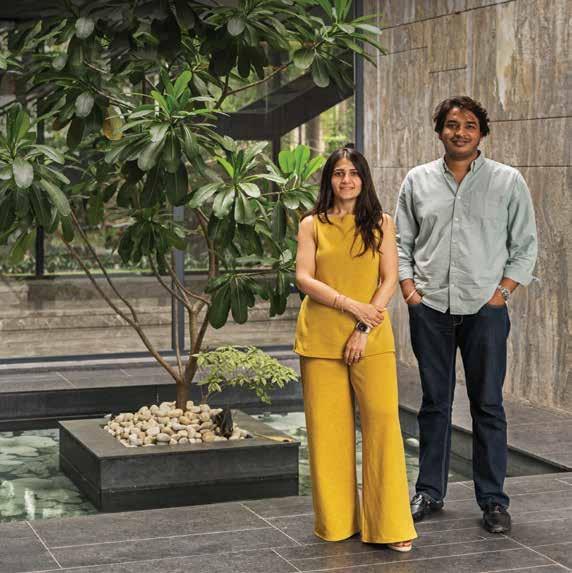
A captivating design feature in the residence is the courtyard housing the Plumeria tree. The entire spatial composition gradually reveals itself, being layered, connected and intentional. A double-height wall sits just behind the Plumeria tree. Clad in a textured stone known as Raymond, it creates a sculptural backdrop that elevates the natural elegance of the tree. The overall visual frames a sequence: the calming water


Head Office cum Application Centre: 28/01/8, Site IV, Sahibabad Industrial Area, Ghaziabad (UP) - 201005

For Sales: West: 8929070625/9311600436
North: 8929070621/9999697732
East: 9319623434
Karnataka: 9999697660
Customer Care: 8929701016 Delhi Office: 4899 Hauz Qazi, Delhi-110006 Coimbatore Office: 2/227 D Erangathu Thottam, Rasipalayam Sulur, Coimbatore-641402
Tamil Nadu & Kerela: 8929070623
Andhra & Secunderabad: 8929070624
body in the foreground, the graceful Plumeria at the centre, and the stone wall as a grounding element.
What’s truly remarkable is the play of sunlight within this scene. The light strikes the wall at a sharp angle, casting dynamic shadows that change throughout the day, animating the textures of the stone and breathing life into the composition. Adjacent to this is the dining area, crafted with seating for ten people. To heighten this experience, a mirror is thoughtfully placed in the dining area opposite the tree. While enjoying a meal, the mirror reflects the same composition—the tree, the Raymond stone wall and the shimmering water—offering an immersive view that brings the outdoors in and turns everyday moments into serene experiences.
Further, the interior palette features extensive use of marble and richly detailed wall panelling. In selected zones, HD-HMR panels finished in high-gloss PU add a refined sheen. Grey forms the base palette, beautifully complemented by blue accents that flow consistently throughout the home. Furniture is locally crafted, offering a sustainable choice
while adding a sense of authenticity to the design.
The private bedrooms are a story within themselves. In the mother’s room on the ground floor, corner-edge glazing is incorporated, extending uninterrupted across the view. A structural round column has been carefully integrated into the design without obstructing the openness. The intent ensures that she enjoys an expansive, unobstructed view of the lush garden. Additionally, a small boat installation outside brings nature, light and tranquillity into the everyday experience. The family lounges are adorned with curated artworks, while the pantry in blue weaves a cohesive visual thread. The other rooms are crafted with botanical wallpapers, bespoke furniture and subtle tones.
Landscaping plays a vital role in the design of this home, showcasing the client’s deep connection to their garden. Two majestic mango trees dominate the front of the house, and the architecture is thoughtfully shaped around them, honouring their presence rather than disrupting it. At the rear, the design opens up with expansive glazing at the lower level, offering uninterrupted views of the lush lawn and garden. Above, customcrafted FRP panels feature tailored slit windows that gently filter in light while shielding the interiors from the harsh southern sun.
In essence, the home brings one closer to nature while celebrating the idea of functional and practical design. With contemporary sensibilities and luxurious touches, this residence offers a sense of peace amidst the bustling outdoors.
• Project Name: Plumeria House
• Location: New Delhi
• Architects: Ar. Sudhir Ambawata, Ar. Saumya Khanna, Ar. Srishti Yadav
• Built-up Area: 9000 sq. ft.
• Commencement Date: 2022
• Completion Date: 2024
SAUMYA KHANNA
Co-founder, SSDA Architects
SUDHIR AMBAWATA
Co-founder, SSDA Architects
Ar. Saumya Khanna is an architect who believes spaces should feel as good as they look, guided by resonance rather than trends. Educated at the Sushant School of Art & Architecture, she co-founded SSDA Architects in 2021 and serves as Principal Architect. Her work spans residential, hospitality, and community projects, shaped by context, empathy, light, and an understanding of everyday human life.
Ar. Sudhir Ambawata completed his Bachelor of Architecture from New Delhi. In 2017, he pursued a Master’s Degree course M.Arch in Advanced Architectural Design from the School of Architecture, Oxford Brookes University (Oxford, United Kingdom), one of the largest and world ranked university for architecture. He also worked with award-winning architectural firms DADA Partners and The Phogat Associates, based in New Delhi.

FENESTRATION: THE CONSTANT IN ARCHITECTURE
Construction today has become the outcome of a complex box of multifunctional elements, with a plethora of materials and technology to choose from and adopt. Of all the elements of a built form, regardless of its shape, size, material, function and style, fenestrations, or the presence of openings in a building, remain a constant and an irreplaceable element. They remain a connection between the inside and the outside of any structure and allow for the movement of air and light through doors, windows, louvres, vents, skylights, curtain walls and glazed systems.
Importantly, fenestration, in its innumerable applications, designs and materials, dictates the style of architecture and gives character to a building. Fenestrations of the past, with their cultural relevance, climatic responses, mastery of artistic talent and knowledgebased design, have, the world over, gifted mankind a large repository of beauty, form and science. A study of these apertures
gives us an insight into the scientific knowledge and artistic disposition of the time and the people they represent.
CLIMATE-RESPONSIVE OPENINGS IN THE INDIAN CONTEXT
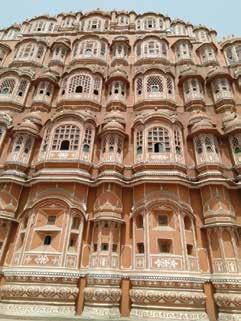
Historically, in the Indian context, openings were scientifically designed to cool interiors and were highly climateresponsive. They therefore had no universal typology and varied from place to place, depending on weather patterns, local materials and cultural aesthetics. Jaalis, as exemplified in the Hawa Mahal of Jaipur, are a model example of passive cooling and sustainable design, using the principle of the Venturi effect to create a constant movement of cool air within a space. The design and application of wind tunnels, verandahs, courtyards, skylights, orientation, sizes of openings, material and mass, and water as a coolant are all examples of passive cooling systems in the Indian subcontinent. In addition to this scientific temperament was the cultural aspect of talent and beauty. All elements of a built form, whether structural or non-structural, including openings, were
treated as objects of beauty — such beauty that it remains timeless in its refinement and is still visited by people around the world to study, marvel at and enjoy.
Fast forward to post-Independence India. As Indians became supposedly equal citizens, patriotism and socialism quickly gave way to capitalism, financial independence and wealth accumulation. With this newfound freedom, bereft of responsibility, came a characterless architecture. Fenestrations were merely openings, without thought of size, proportion, detail, climate or orientation, and buildings became careless and dull. The use of professionals for building design was almost unheard of, with a few exceptions. The materials used for openings were largely wood and steel.
Then, with the advent of information technology in India in the late sixties and early seventies, came a sea change in fenestration design. Multinational companies arrived with imported aesthetics of glass façades, large spans for working and relaxation, landscaped gardens and wall treatments in aluminium composite panels on metal sub-frames. This quickly captivated the imagination of the building industry for its ease of execution and speed of erection. It further eroded the skill set of the building workforce, shifting from thoughtful, detailed work to quick and speedy construction. However, it also meant quicker turnover and faster returns. Architecture in the subcontinent went through a period of mindless copying of the West, whose climatic zones are very different from ours. We therefore saw glass façades enveloping buildings even in hot


The performance of a building is shaped strongly by its façade and fenestration systems. These components regulate heat, light, ventilation, comfort, and energy use, which makes them central to the environmental behaviour of any project. As construction practices shift towards more climate-aware and resourceefficient methods, designers increasingly approach façades as working systems rather than visual layers. Efficiency now comes from combining materials that handle distinct but related roles, instead of depending on a single material to
address every condition. This shift is especially relevant in Indian contexts, where climate changes sharply across short distances and where buildings must respond to heat, humidity, dust, noise, and fluctuating daylight.
A façade functions as the interface between the interior and the external environment. Its efficiency depends on how accurately it responds to site conditions. Factors such as sun direction, wind movement, surrounding structures, vegetation, noise exposure, and privacy requirements shape the earliest design
decisions. A shaded site may require larger openings to recover daylight, while a western-facing wall may need deeper reveals and external shading. A noisy road pushes the selection of acoustic glazing, and a humid coastal environment narrows the choice of metals that will remain stable over time. Without this initial reading of the site, even high-performance materials end up functioning below their potential.
Since no material performs equally well across insulation, shading, ventilation, and structural support, designers now
rely on layered assemblies. Each material is assigned one primary function. A dense wall slows heat transfer but limits daylight. A perforated screen cuts glare but offers little insulation. Highperformance glass improves visibility and user comfort but requires shading to avoid heat gain. Lightweight metal cladding resists weather but may conduct heat. When these elements are combined, they create predictable responses to climate, occupancy, and orientation. This system-based approach is more reliable than placing all responsibility on a single surface.
Material selection is guided by measurable criteria such as thermal resistance, air permeability, solar heatgain values, reflectance, corrosion behaviour, and water absorption. Warm and humid regions benefit from breathable masonry, shaded openings, and controlled cross-ventilation. Dry regions respond well to thermal mass and small punched openings that stabilise temperature swings. Coastal
environments require materials that withstand salt-laden air, while dense urban environments call for acoustic control through glazing and sealed frames. These decisions focus on performance rather than appearance, ensuring that the façade maintains consistency over time.
Windows, which are often treated mainly as visual elements, play one of the largest roles in environmental control. Orientation, size, sill height, frame material, and shading strategy determine how much heat a window admits, how much daylight it provides, and how it supports natural ventilation. North-facing windows deliver steady light with minimal heat gain. East and west openings need shading to manage low-angle sunlight. South-facing windows can be paired with horizontal shading to block high summer sun while still admitting winter sun. Timber frames offer thermal stability but need upkeep. Aluminium frames require thermal breaks to prevent heat transfer.
uPVC works well when protected from prolonged UV exposure. Glazing choices such as double glazing, low-e coatings, laminated layers, and fritting all influence glare, heat, and acoustics. A window performs well only when these components are coordinated with orientation and use patterns.
Secondary skins and external shading devices add another layer of control. Screens, louvers, jalis, and perforated panels stop heat before it reaches the main wall, lowering mechanical cooling loads and stabilising indoor conditions. Their geometry must align with sun angles, and their material must match the climate. Metal screens suit dry conditions, terracotta jalis function well in humid zones, stone screens remain stable in high-heat environments, and timber fins create softer shading but require maintenance. The performance of these systems depends on correct placement and integration rather than their material alone.
A façade also interacts closely with mechanical and structural systems. Ventilation paths, air-conditioning loads, and lighting requirements all change
based on how the building envelope behaves. Shading devices reduce indoor temperature swings, lowering reliance on cooling systems. Well-placed windows improve natural ventilation. Durable, well-detailed glazing reduces glare, which lowers artificial lighting demand. Maintenance considerations must also be built into the early design stage. Panels should remain accessible,
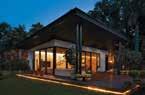
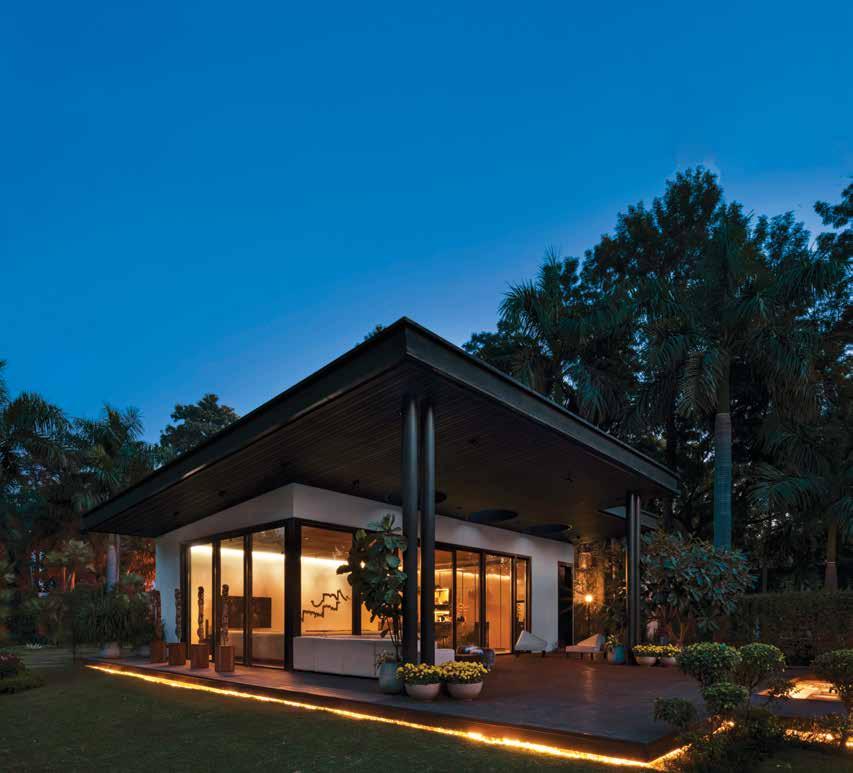
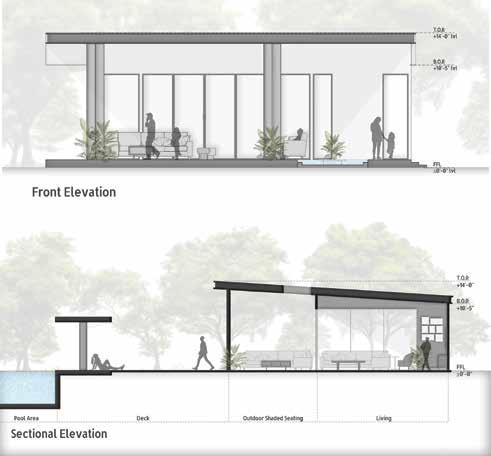
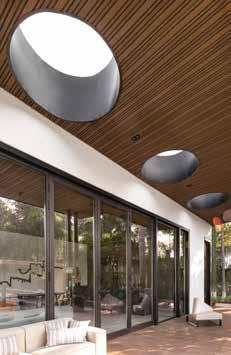
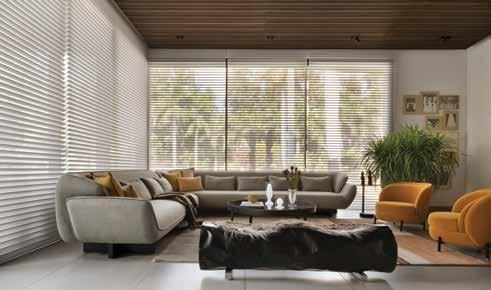
One example is a pool house developed through prefabricated modules. Blurring the boundaries between indoor and outdoor living, the Pool House is defined by a long, sleek contemporary form clad in glass and metal, which not only reflects the surrounding greenery and pool but also seamlessly integrates the views of the main house. Reinforcing the studio’s signature site-sensitive approach, this project emphasises sustainability, blending modern design seamlessly with the natural environment. By employing a prefabricated Light Gauge Steel Frame (LGSF) construction, the studio ensured minimal environmental disruption.
glazing should be replaceable without disturbing adjacent components, and services must pass through the façade without creating thermal bridges.
Durability plays a significant part in efficiency. Some materials weather predictably, while others need regular replacement. Stone performs reliably under prolonged exposure. Brick handles
both heat and moisture well. Metals react differently to coastal conditions. Glass requires careful detailing to avoid thermal cracking. Using multiple materials allows responsibility to be distributed across the façade system, with each layer managing a specific environmental or structural task. This creates a resilient assembly that can handle seasonal shifts and long-term wear.
Alongside conventional construction, prefabricated methods have provided an alternative over the last decade. Prefabrication allows walls, frames, roof structures, and service cores to be produced off-site under controlled conditions. This improves precision, reduces waste, and shortens timelines. Over the past ten years, several residential projects have applied this method to overcome labour constraints, restricted site access, and tight deadlines. The use of prefabricated elements also influences façade and fenestration decisions, since openings, shading, and surface materials must align with modular dimensions and tolerances.
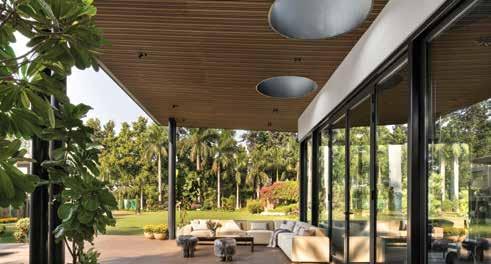
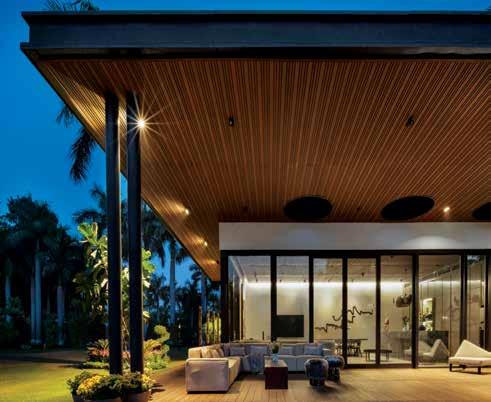
This method not only preserved the property’s mature trees and expansive lawns but also significantly reduced material waste and energy consumption during the construction process.
Its structural frame and wall segments were planned as repeatable units, which made assembly efficient once transported to the site. The façade strategy was coordinated with these modules, ensuring that openings, shading elements, and material transitions aligned without adjustments on site. This project reflects how prefabrication can work smoothly with façade design when dimensions are coordinated early and detailing is resolved before fabrication begins. The result is a building that relies on planned relationships between structure, envelope, and environmental control rather than site-based improvisation.
Efficient façade and fenestration design ultimately depends on clarity, consistency, and informed material choices. Layered systems allow each material to perform only the task it
handles best. Prefabrication offers an additional layer of control when timelines or logistics demand it. Whether assembled on site or produced in modules, a façade designed around climate, orientation, and measurable performance will always function more reliably than one driven primarily by appearance.
• Project Name: Pool House
• Project Location: Chattarpur, Delhi, India
• Program / Use / Building Function: Residential Extension
• Design Firm: URBANMISTRII

• Principal Architect: Ritika Rakhiani
• Design Team: Ritika Rakhiani, Anurag Dariola
• Photography: Avesh Gaur
• Shoot-day Styling: Raahul Kukreja
• Built Up Area: 1,800 sq ft
AR. RITIKA RAKHIANI
Founder & Principal Architect, URBANMISTRII
Ar. Ritika Rakhiani is a renowned architect with a passion for creating extraordinary spaces. She has dedicated her career to pushing the boundaries of design and innovation. With a keen eye for detail and a deep understanding of human-centric design, she has delivered a diverse portfolio of high-end residential and F&B projects recognised across the industry. Her work is defined by a refined balance of aesthetics and functionality, resulting in timeless designs that respond to contemporary needs while enduring over time. Committed to sustainability, she integrates responsible practices and advanced technologies to reduce environmental impact and enhance community value. She remains closely involved from concept to completion, collaborating with engineers, contractors and artisans to realise each client’s vision. Her work has been honoured with multiple architectural awards, reflecting a consistent commitment to excellence and innovation.



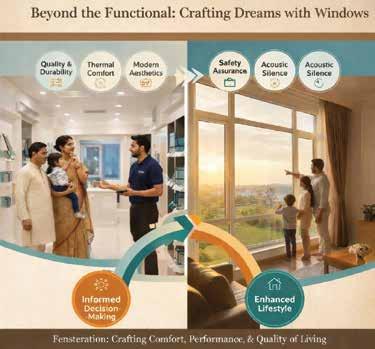
FENESTRATION IN INDIA: WHY EXECUTION DEFINES SUCCESS MORE THAN PRODUCTS
It is not merely a headline, but a reality increasingly evident across the industry. In India’s fenestration sector, conversations often revolve around profiles, glazing combinations, systems, sections, glass performance and hardware. We celebrate catalogues, technical sheets and detailed specifications, taking pride in product debates and innovation. Yet beyond the brochures lies a simple truth: projects are rarely won or lost on design alone. When they truly succeed or fail, the defining factor is seldom the product itself; they are ultimately shaped by the discipline, precision and consistency of execution.
In India’s fenestration industry, we celebrate products. We debate profiles, glazing combinations and hardware innovations. Yet when projects succeed or fail, it is rarely because of the catalogue. It is because of execution.
For most Indians, a home is far more than a physical structure or a financial investment; it is a lifelong aspiration shaped by emotion,
identity and personal pride. Every decision made during construction or renovation, from windows and doors to furniture, finishes and furnishings, carries deep emotional significance. Indian homeowners today approach these decisions with a strong emphasis on quality, durability and longterm performance, often prioritising these factors over upfront pricing. This shift has led to growing trust in branded and organised players, particularly those operating through company-owned showrooms and professionally managed dealer outlets.
Aesthetics, modern design sensibilities and everyday comfort now play a defining role in consumer behaviour. Homeowners spend considerable time evaluating visible and lifestyle-defining elements such as flooring, paints, wood finishes, laminates, façades, kitchens, wardrobes, furniture, and both entrance and internal doors. Traditionally, windows were viewed largely as functional necessities and often received less attention than interior décor elements like curtains and blinds. However, over the past few years, this perception has changed meaningfully. Consumers today actively evaluate windows on parameters such as thermal efficiency,
acoustic comfort, safety, ease of operation, aesthetics and sustainability. Fenestration has moved from being a background construction element to a critical contributor to comfort, performance and quality of living.
As awareness increases, industry conversations naturally gravitate towards products, profiles, glass configurations, hardware systems, certifications and design innovations. While these aspects are undeniably important, they represent only one part of the overall value proposition. The real opportunity, and increasingly the real differentiator, lies in the ability to deliver a seamless, coordinated and professionally executed experience that consistently translates product promise into everyday performance at site level.
In India’s fenestration industry, success is often measured by product superiority, manufacturing capability or specification depth. Yet true success is shaped far beyond the factory floor. Fenestration operates within a complex ecosystem where windows and doors must integrate seamlessly with civil structures, façades, interior finishes, climatic conditions and diverse user expectations.
As an integral component of the building envelope, fenestration performance is directly influenced by façade detailing, sill conditions, structural tolerances, waterproofing interfaces and climatic exposure. Poor coordination at these junctions often leads to water leakage, air infiltration and long-term performance failures, even when the product itself is technically sound.
The journey from initial site survey and design validation to manufacturing, logistics, installation and long-term performance involves multiple touchpoints, each demanding precision, coordination and accountability. A technically superior window system delivers its real value only when it is measured accurately, manufactured as per approved designs, installed professionally and aligned with onsite realities.
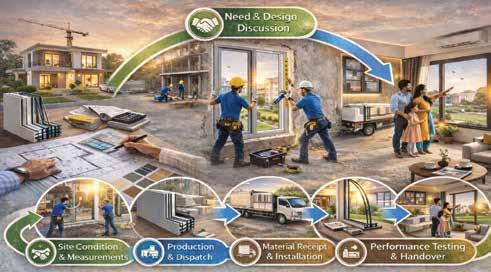
This is why fenestration cannot be viewed merely as a manufacturing activity or a tradable product category. It is an execution-intensive, engineering-led and experience-driven discipline. Windows and doors are not box products; they are highly customised solutions shaped by site conditions, architectural intent, structural constraints, regulatory requirements and customer expectations. Each project requires early technical involvement during the sales stage to assess feasibility, manage expectations and prevent downstream issues. Disciplined survey methodologies, standardised measurement protocols and clear design controls are essential to eliminate ambiguity before manufacturing begins.
Execution is often misunderstood as installation. In reality, execution is a system — one that begins well before manufacturing and continues long after handover. In this industry, a lack of design discipline and poor alignment between manufacturing and site readiness quietly destroy margins and customer trust. Installation must follow clearly defined standard operating procedures supported by quality checkpoints, supervision and final inspection with documented performance validation. Without these controls, even well-designed products struggle to perform as intended.
The industry’s high dependence on manpower across sales, planning, manufacturing, logistics, installation and
service further reinforces the need for systems rather than individual effort. Consistency cannot rely on personal experience or intent alone. True execution excellence emerges from structured processes, coordinated teams and governance mechanisms designed to reduce variability and deliver predictable outcomes at scale. Operational discipline, not individual heroics, determines reliability.
This is also where many organisations underestimate the importance of back-end and support functions. Beyond production, supply chain, finance, marketing, human resources and field teams, successful fenestration companies invest deeply in sales operations, service operations and market expansion teams. These functions enable sales and service teams, drive standardisation, expand market reach, ensure compliance and maintain continuity across multiple projects and geographies. Without strong operational support, even capable people and well-engineered products struggle to deliver consistent results.
Fenestration projects bring together diverse stakeholders — architects, developers, contractors, fabricators, installers and service teams — making complexity inherent to execution. A recurring challenge is fragmented responsibility: sales drives closures, manufacturing optimises output and installation targets completion. While each may perform well individually, customers experience fenestration as one
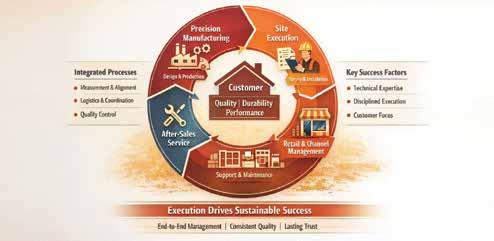
unified promise. Execution is complex because fenestration is not a single business model but four operating models running together.
Fenestration operates as four businesses within one industry:
• Precision Manufacturing
• Site Engineering & Execution
• Retail / Channel Experience
• After-Sales Lifecycle Service
Most industry challenges arise not from competition, but from managing these distinct models through a single lens, without recognising their different capabilities, metrics, leadership focus and execution discipline. Typical site-level challenges include structural openings varying from drawings, inadequate sill waterproofing, last-minute design revisions and inconsistent installer skill levels. These gaps do not appear in specifications, but they determine final performance and customer perception.
As the Indian fenestration market matures, differentiation will not come from profiles or pricing alone. Products can be replicated; execution excellence cannot. The shift must be from selling components to delivering integrated solutions, from transactions to ownership and from short-term wins to long-term performance. This evolution demands investment not just in machinery or capacity, but in people, processes, training, digital systems and leadership intent that consistently prioritises standards over shortcuts and discipline over convenience.
Fenestration in India stands at a clear inflection point. Rapid urbanisation, rising consumer awareness and growing design complexity are elevating expectations across residential and commercial projects. In this evolving landscape, execution is no longer a back-end function; it is the primary differentiator. The organisations that will lead the next phase of growth understand a simple truth: products may open doors, but execution builds reputations.
Brands in fenestration are not built in catalogues or showrooms; they are built at the customer’s site. They are defined by how teams manage constraints, coordinate stakeholders and uphold standards under challenging conditions. Success in this
industry requires patience, as results do not appear overnight. It demands investment not only in capital, but in time to define strategy, strengthen processes, train teams and embed discipline on the ground. Manufacturing capability is only the starting point of the fenestration journey; sustainable growth and profitability are created through disciplined execution over time. This industry does not reward shortterm thinking or rapid closures. It rewards organisations with long-term vision, robust systems and the discipline to consistently refine execution across sales and service.
The Indian fenestration market has witnessed multiple waves of entry. Several companies in the past, and even some large and well-known brands in recent years, have entered this category with ambition and capital. Yet many have either wound up operations, significantly reduced their footprint or continue to struggle to establish a meaningful presence and remain unable to scale beyond a certain level. More often, it is an underestimation of the industry’s operational complexity and the time required to build execution depth. Leadership teams must recognise that fenestration is not a short-gestation business. It demands sustained investment of time, attention and patience. Many more companies will enter this space in the future, attracted by urbanisation, rising consumer awareness and growing demand. However, unless they approach the market with longterm commitment, execution discipline and realistic timelines, scale will remain elusive.
In this industry, machines and fixtures are important enablers, but they are not the true differentiators. The real gold asset is
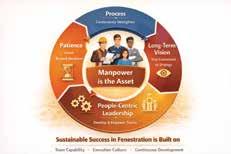
long-term vision

manpower — trained planners, production teams, installers, service engineers and leaders who understand process discipline. Success depends far more on building capable teams and nurturing an execution culture than on adding capacity alone. Sustainable success in fenestration comes from staying invested beyond handover, learning from every project, strengthening processes rather than chasing immediate wins and continuously developing people who carry the brand promise to the customer’s site. Ultimately, it is execution — guided by patience, people-centric leadership and long-term vision — that creates profitable and enduring businesses.
“A profitable and sustainable fenestration industry in India will be built on patience and long-term vision, where skilled execution and world-class products create lasting customer trust, and brands grow not through short-term wins but through enduring value delivered consistently on field.”
Sr. Vice President & Head – Channel & Service Operations, Fenesta Building Systems (DCM Shriram Ltd.)
Arnev Goel is a seasoned industry leader with nearly three decades of cross-sector experience and deep expertise in sales and retail operations, strategy, market expansion, and service transformation, anchored in execution-led growth. As a core member of the senior leadership team, he combines sharp commercial acumen with structured, processdriven execution to build customercentric, scalable, and sustainable business models across India and international markets, supported by strong dealer and showroom ecosystems. His leadership has enhanced sales effectiveness, elevated customer experience standards, and institutionalised robust service frameworks backed by standardised SLAs and strengthened service infrastructure. In the evolving fenestration landscape, he champions lifecycle ownership by seamlessly integrating channel, sales, and service functions, fostering trust, driving operational excellence, and delivering long-term value.
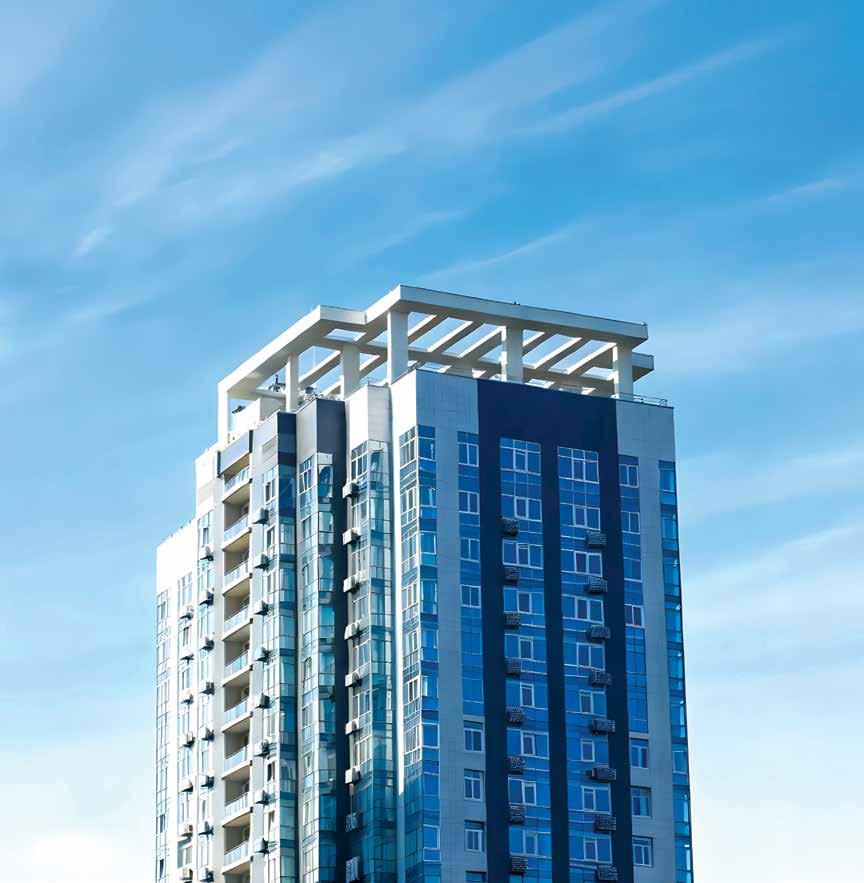


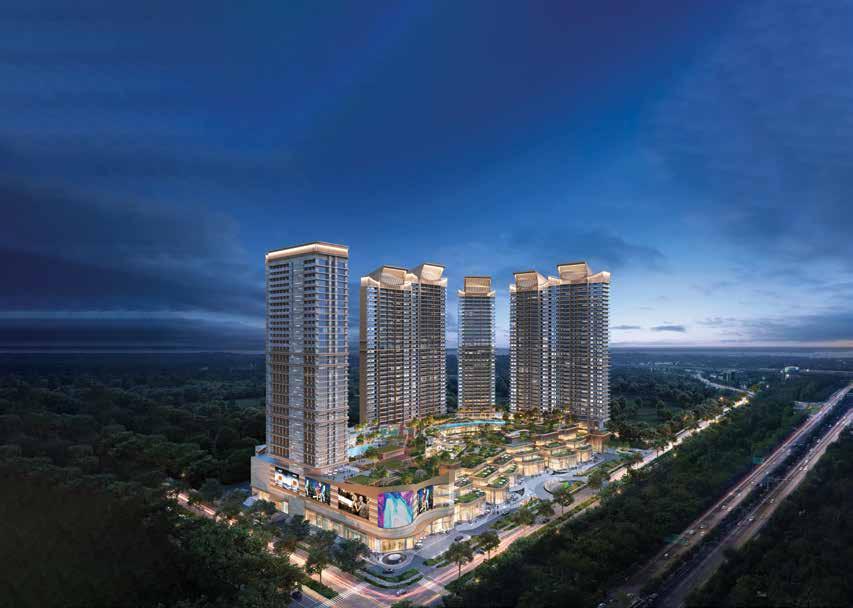
Architecture has always navigated the boundary between the inside and the outside. The façade and fenestration system, once primarily seen as an exterior design element, has now evolved into a crucial factor influencing building performance, user experience, environmental response, and energy efficiency. Today, the architectural envelope has become an intelligent mediator between structure and human comfort.
With increased attention to daylight calibration and thermal comfort, building façades are becoming lighter and more dynamically designed. At the same time, fenestration strategies are being reconsidered as spatial devices that influence how light moves and air circulates, as well as how occupants perceive their environment. This shift in perspective highlights a significant transition in design thinking, from treating the envelope as secondary to recognising it as a key design driver.
Modern façade systems are shaped by environmental factors as much as by design preferences. Rising climate challenges and more stringent regulations have prompted architects to reconsider how buildings respond to their surroundings.
Daylight calibration has become an important consideration in design decision-making. Rather than maximising glazing indiscriminately, architects now focus on achieving balance: allowing sufficient natural light while minimising glare and heat gain. This nuanced approach transforms the façade into a tuned filter rather than a transparent boundary.
Thermal comfort has also reshaped fenestration strategies. Meticulously designed openings and shading devices reduce reliance on mechanical cooling
systems. In many contemporary projects, shading systems and layered skins strike a balance between openness and protection, allowing buildings to remain visually transparent and environmentally responsible.
Such strategies demonstrate how performance considerations are influencing architectural expression. The visual identity of buildings increasingly emerges from functional responses to climate rather than solely from aesthetic gestures.
One of the most significant shifts in recent years has been the recognition that façades contribute directly to spatial experience. Instead of acting solely as exterior skins, they influence interior atmospheres and user perception. Filtered light, framed views, changing shadow patterns, spatial acoustics, and materiality
influence how occupants interact with a space throughout the day. Fenestration design determines whether interiors feel expansive or enclosed, calm or dynamic. Thoughtfully designed openings create layered thresholds, encouraging a gradual transition between indoor and outdoor environments.
Architectural envelopes that incorporate vertical articulation or layered glazing systems demonstrate how performance solutions can simultaneously enrich spatial narrative. Rather than concealing technical elements, contemporary design integrates them into the architectural language. This integration transforms façades into experiential devices, shaping how buildings look from the outside as well as how they feel from within.
Material innovation has played a decisive role in redefining façade and fenestration systems. In recent years, several materials have gained prominence for their ability to balance performance and aesthetics.
• High-performance glazing systems have become increasingly prevalent, offering enhanced thermal control while maintaining transparency. Advances in coating technologies allow glazing to modulate heat gain without compromising daylight access, enabling façades that remain visually open and environmentally efficient.
• Perforated metal screens and shading devices are also gaining traction. These elements provide climatic protection and create layered visual depth, allowing façades to respond dynamically to sunlight conditions throughout the day.
• Fibre-cement panels and hybrid composite systems offer durability with reduced maintenance demands, making them practical choices for large-scale developments.
• Glulam and mass timber window and door systems have been attaining prominence for the comfort they offer and their comparatively low maintenance requirements.
• Natural materials and pure finishes, such as aluminium and copper,
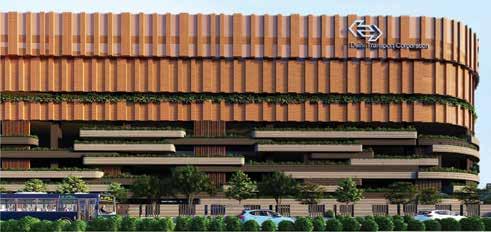
have gained renewed interest for their longevity and ability to age gracefully.
A broader push towards sustainability and lifecycle performance drives the increased adoption of these materials. Stringent energy codes and growing environmental awareness encourage architects to select materials that perform effectively across diverse climates while remaining cost-efficient.
As buildings grow taller and more complex, façade systems must perform efficiently both structurally and thermally. This dual requirement challenges designers to reconcile expressive design intent with rigorous performance standards.
Climate-responsive façades with defined forms and adaptive shading devices demonstrate how architectural expression can emerge from environmental logic. Instead of imposing form onto a building, architects allow climatic conditions to shape design outcomes. This approach aligns with a broader understanding of sustainability as a mindset rather than an added layer. Passive design strategies, such as orientation, ventilation, solar control, and landscaping, are embedded into façade planning from the earliest stages, thus reducing reliance on mechanical systems and improving longterm efficiency.
Despite technological advancements, one of the key challenges for architects is maintaining the narrative quality of façades while meeting stringent performance requirements. Energy regulations and cost constraints often introduce competing priorities. Expressive façade ideas must be aligned with measurable performance metrics, requiring deeper coordination between architectural vision and technical execution.
Rising material costs and availability issues further complicate decisionmaking. These realities must be navigated without compromising design integrity, thereby ensuring that performance enhancements do not reduce façades to purely technical assemblies.
The risk lies in allowing performance metrics to overshadow architectural storytelling. The most successful projects demonstrate that technical efficiency and design expression are complementary factors rather than opposing ones. When thoughtfully integrated, performance solutions can enhance the architectural identity of the building.
Achieving the balance between performance and narrative requires stronger collaboration across disciplines. Early involvement of façade engineers,
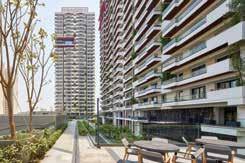
The building fosters a pleasant microclimate, with large balconies providing
manufacturers, fenestration specialists, and sustainability consultants can transform the design process from reactive problem-solving into proactive integration. When stakeholders engage from the concept stage, solutions become more coherent and costefficient. Transparent dialogue around fabrication possibilities and maintenance realities allows architects to refine design intent while maintaining feasibility.
Co-developing mock-ups, sharing and discussing data from past projects, jointly exploring new materials, and studying post-occupancy performance together can create a more researchdriven, innovation-led workflow. Such collaborative models shift traditional vendor-client relationships towards innovation partnerships, where knowledge is shared and refined collectively. This integrated approach becomes particularly critical in complex projects in which façade systems must address environmental performance, structural demands, and experiential goals simultaneously.
Looking ahead, several developments suggest transformative potential for façade and fenestration design.
• Adaptive façades that dynamically respond to environmental conditions are garnering attention.
• Lightweight composite materials offer opportunities to redefine structural efficiency, enabling more expressive and resource-conscious forms.
• Advances in glazing technologies offer intelligent modulation of light and heat, enhancing comfort while reducing energy consumption.
• Biophilic envelopes, such as vertical gardens, planted edges, perforated screens, and hybrid double-skin façades, soften the boundary between built form and the natural environment.
Such strategies reintroduce sensory richness into architecture, encouraging occupants to experience buildings as living systems. This convergence of performance and experience represents an important direction for architectural envelopes. Buildings are increasingly expected to regulate climate and influence emotional and psychological well-being.

The evolution of façade and fenestration design reflects a broader transformation in architecture itself. As cities densify and environmental challenges increase, buildings must perform more intelligently while remaining meaningful to those who inhabit them. The contemporary architectural envelope is emerging as a central instrument in this transformation, mediating between climate and comfort, technology and craft.
In the future, the most successful façades will be those that do more than protect or impress. They will adapt and communicate, crafting spaces that are environmentally responsible, socially inclusive, experientially rich, economically sustainable, and deeply connected to everyday life.
Founder Partner and Principal Architect, Confluence
Vishal Sharma is an established architect with over two and a half decades of experience in architectural design. As Founder Partner and Principal Architect at Confluence, an award-winning multidisciplinary firm with over 25 years of experience in implementing the best architectural, interior design, and landscape practices, Vishal has been the driving force behind the firm’s growth and strategic direction. With an impressive portfolio spanning diverse typologies, Vishal guides clients and colleagues through dynamic, integrated collaborations rooted in the project’s program, site, and cultural context.




In contemporary architecture, façades and fenestration define far more than a building’s exterior – they shape its performance, sustainability, and emotional connection with its surroundings. The pursuit of design efficiency is no longer about achieving minimalism in form, but about maximising value through intelligent material selection and integration.
The modern façade is an evolving ecosystem. Where aesthetics once
dominated, performance now takes centre stage. A façade must insulate, breathe, illuminate, and protect – all while maintaining elegance. Achieving this balance requires not just design intent, but a deep understanding of how materials behave in unison.
Glass, metal, and composites are no longer isolated components; they are part of a system that interacts dynamically with its environment. Glass allows for transparency and the passage of light. Aluminium provides adaptability and strength with
reduced weight. Steel delivers structural reliability for large spans and slender frames. Together, they create building skins that are responsive, resilient, and refined.
The success of a façade lies in how materials complement one another rather than compete. True efficiency emerges when designers and engineers explore the synergy between materials, understanding their physical, thermal, and optical behaviours.
The combination of high-performance glass, thermally broken aluminium systems, and precision-engineered steel frames, for instance, can achieve optimal energy savings while enhancing visual continuity. Efficient design also means thinking beyond the façade –incorporating shading systems, operable elements, and adaptive technologies to respond to climatic variations.
No single discipline can achieve design efficiency alone. It requires collaboration – architects envision, engineers calculate, and material specialists translate ideas into tangible solutions. Early coordination between these teams often determines whether a façade will simply stand or truly perform.
The most successful projects are those where design intent, fabrication expertise, and installation precision align seamlessly. This integrated approach reduces material waste, shortens timelines, and ensures the façade’s performance remains consistent throughout its lifecycle.
In an age defined by climate awareness, efficient façades contribute directly to sustainable development. Smart fenestration reduces energy consumption by managing heat and daylight. Recyclable materials such as glass and aluminium promote circularity. Design efficiency, therefore, extends beyond construction – it
influences long-term environmental impact.
Sustainability also involves lifecycle thinking, considering maintenance, recyclability, and adaptability. A welldesigned façade should not only serve today’s needs but also remain relevant as technologies and environmental standards evolve.
The next era of façade and fenestration design will be defined by integration and intelligence. Responsive materials, kinetic façades, and energygenerating surfaces are emerging at the intersection of architecture and technology. Yet, as innovation accelerates, the timeless principles of efficiency remain grounded in simplicity, precision, and purpose.
Design efficiency is not just about doing more with less – it is about doing things right with intent. When materials, technology, and human vision converge, architecture transcends performance to achieve poetry.
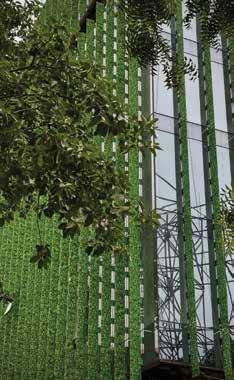
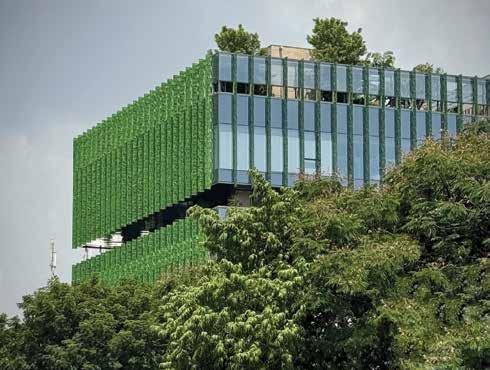
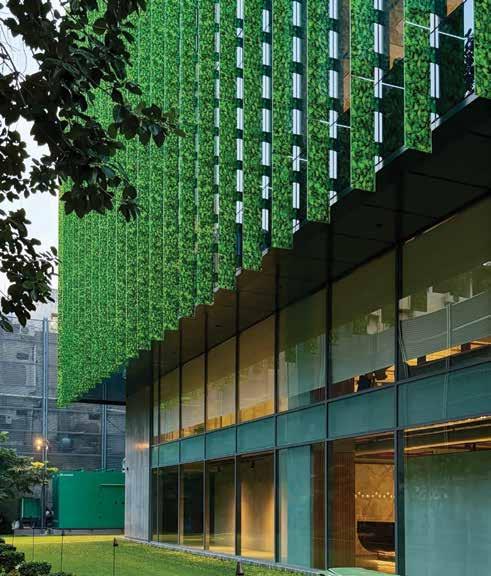
Abespoke, digitally printed glass façade was delivered for the Kaveri Seeds Headquarters, reflecting the brand’s strong connection to nature and sustainability. The project features precision-engineered vertical laminated glass fins with custom green
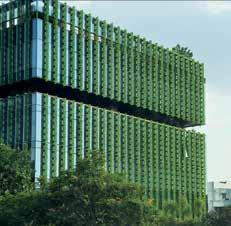
digital motifs, creating a striking yet elegant architectural identity.
Despite complex fabrication requirements – including large-format panels with multiple precision drillings – exceptional print clarity, accuracy, and seamless execution were ensured through close coordination with the design and execution teams. The project stands as a refined example of how design, technology, and craftsmanship come together to elevate modern corporate architecture.
• Location: Hyderabad, India
• Client: Kaveri Seeds Company Ltd.
• Architect: Moriq Interiors
• Consultant: Aspect
• Contractor: Vibrant Façades
• FG Product: Vertical Creations | Digitally Printed Laminated Glass

Managing Director, FG Glass
Suhel Kachwala is a visionary leader and the driving force behind the Fishfa Group, a prominent name in architectural glass and interior product processing. A Production Engineering graduate from Mumbai University, with an MBA from Boston and a master’s degree in Information Systems, he joined the family business in 2003 and has since led its transformation through technologydriven growth and global expansion. Under his leadership, brands such as FG Glass, Future Glass, Finetec Glazing, and Asian Prelam have strengthened their position in the industry. A strong advocate of automation, AI, and ESGled practices, Suhel continues to champion innovation, operational excellence, and sustainable growth across the group’s international operations.

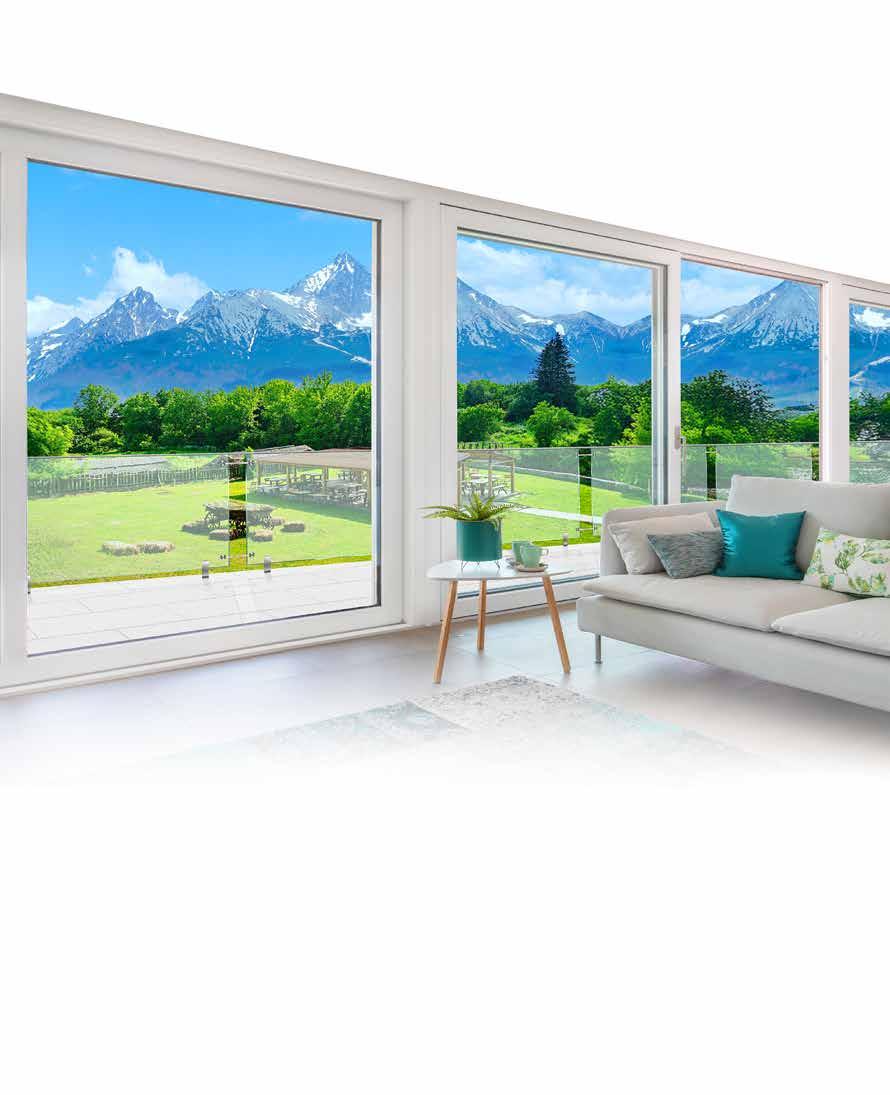
W i t h 1 2 7 ye a rs of r
Koemmerling does not just set the standard-we de�ne it. When you choose Koemmerling, you upgrade to the best in uPVC windows and doors. From unmatched durability to energy e�ciency, and aesthetic appeal, our cu�ing-edge solutions enhance your spaces while providing long-term performance you can trust. Choose the brand that stands at the forefront of design, technology, and sustainability.


Climate change and escalating urban temperatures are forcing a fundamental rethink of how we design buildings. Intense heat and more frequent heatwaves are the new normal; with urban heat islands amplifying outdoor temperatures, occupant comfort and energy demand are under pressure. Conventional HVAC-centric responses are increasingly unsustainable. The International Energy Agency has identified building cooling as one of the fastest-growing energy demands globally, and India — with rapid urbanisation and rising incomes — faces a steep increase in cooling loads if design approaches remain unchanged.
A large share of cooling demand arises from solar heat gain through the building envelope. The façade is therefore the building’s primary climatic interface: no longer just an aesthetic or branding device, it must actively control solar exposure, manage thermal gain, enable airflow, and deliver daylight and views. In hot and humid contexts, fully glazed, hermetically sealed façades behave like greenhouses and become thermal liabilities. The imperative is to move from the “seal and cool” model to façades that behave more like living systems: they should shade, breathe, evaporate, and adapt.
Biomimicry supplies a rigorous, performance-driven framework. Rather than literal copying, biomimicry abstracts nature’s proven functional
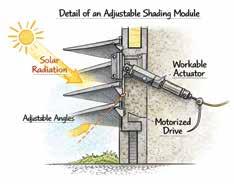
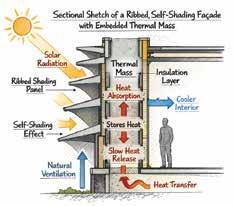
strategies — how organisms regulate temperature, modulate exposure, or change dynamically — and translates them into architectural systems. Janine Benyus’s triad — nature as model, measure and mentor — encourages designers to emulate efficient, adaptable mechanisms, assess solutions against ecological benchmarks, and favour long-term resilience over short-term optimisation. For façades, organism- and behaviour-scale analogues (cactus ribs, termite mounds, leaf orientation) are particularly instructive.
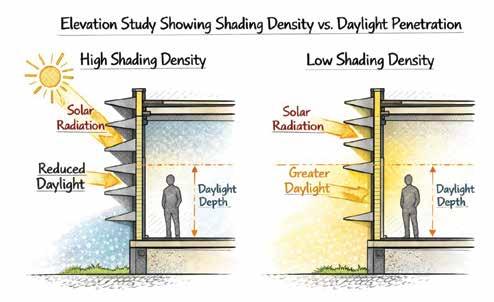
Several biological principles map directly to façade tactics. Surface modulation and texture — seen in elephant skin and desert beetles — fragment incident radiation, generate self-shading microgeometries, and promote convective cooling. Layering and gradients — analogous to canopies or leaf strata — use screens, cavities, and buffer zones to attenuate direct solar penetration while preserving diffuse daylight and airflow. Articulated ribs, fins, and patterned
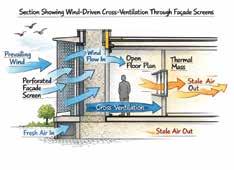
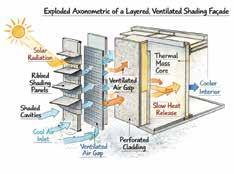
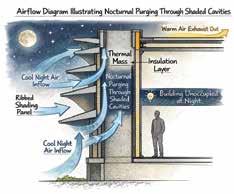
screens keep glazing out of direct sun and admit daylight. Passive ventilation strategies — organised channels, thermal mass, and stack-driven movement — permit heat absorption and nocturnal purging without continuous mechanical intervention. Kinetic and adaptive
mechanisms — movable fins, humidityor temperature-responsive elements — allow façades to change performance in response to conditions. Finally, hybrid and bio-reactive skins (PV or algae modules) can combine shading with energy or biomass production, where lifecycle and maintenance trade-offs are well understood.
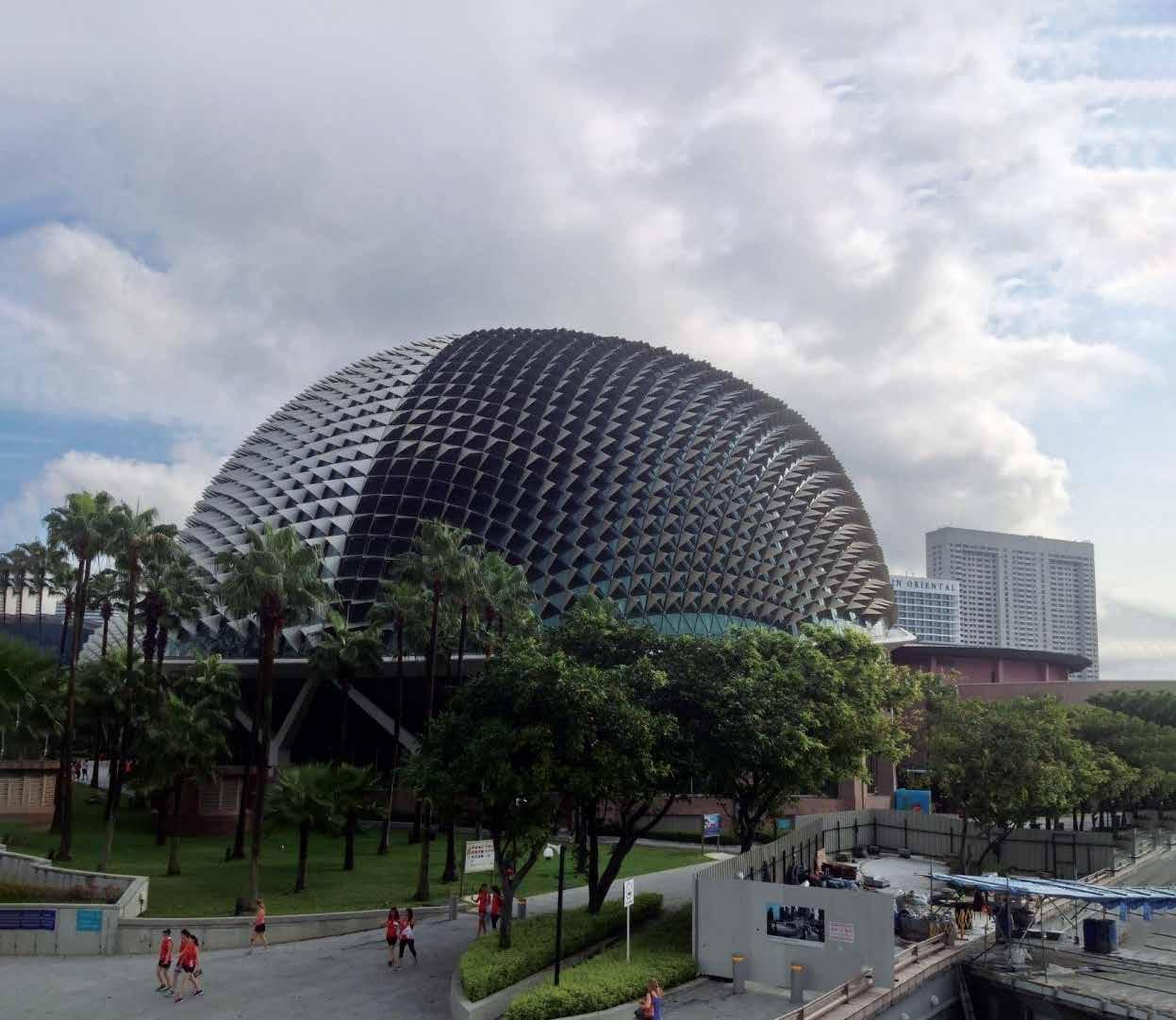
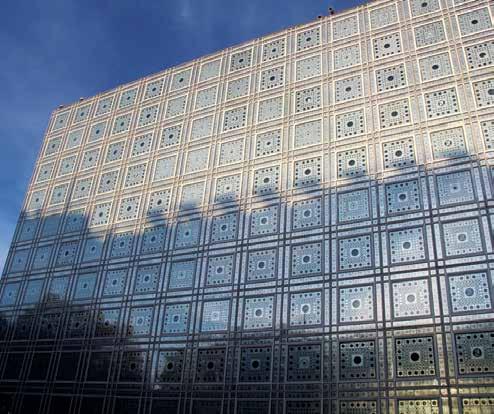
Built precedents validate these principles. Mick Pearce’s Eastgate Centre in Harare models passive ventilation on termite mounds, coupling thermal mass with ducting to achieve markedly reduced ventilation energy compared with conventional buildings. Singapore’s Esplanade uses durian-like aluminium “scales” to shield glazing from tropical insolation. Jean Nouvel’s Institut du Monde Arabe employed adaptive diaphragms to modulate daylight. These projects demonstrate that geometry, materiality, and control strategies — rather than exotic technologies — can deliver substantial thermal benefits.
India’s climatic diversity — from hot-dry deserts and humid coasts to composite interiors, temperate plateaus, and cold mountains — requires climate-specific adaptations of biomimetic tactics. The National Building Code’s climatic zones suggest strategies that can be readily translated into design prescriptions:
• Hot and dry (Jodhpur, Ahmedabad): Deeply articulated, ribbed shading skins that produce alternating bands of sun and shade; high thermal-mass façades with shaded buffer cavities that absorb daytime heat and release it at night; perforated jaali screens that filter light while enabling crossventilation.
• Warm and humid (Mumbai, Chennai, Kochi): Canopy-like overhangs and multi-layer screens that admit diffuse light while sustaining airflow; highly permeable shading systems that avoid sealed cavities; hydrophobic textured surfaces to shed monsoon rain.
• Composite climates (Delhi, Lucknow): Variable shading density — deciduous-tree analogues — to block summer sun and admit winter gains; double-skin façades with operable shading to switch between insulating and ventilating modes; stack-driven chimneys for nocturnal purging.
• Temperate (Bengaluru, Pune): Fine-grained, orientation-tuned shading elements and adjustable louvres that mimic leaf orientation; textured surfaces to reduce glare and surface heat.
• Cold climates (Shimla, Srinagar): Compact layered envelopes that trap heat; sun-admitting façades
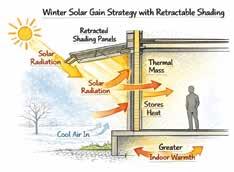
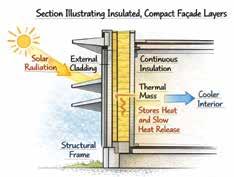
with retractable shading to maximise winter solar gain; adaptive elements that respond to temperature and moisture.
In technical terms, three tactics are typically combined: reduce incoming solar load, increase thermal storage where appropriate, and enable
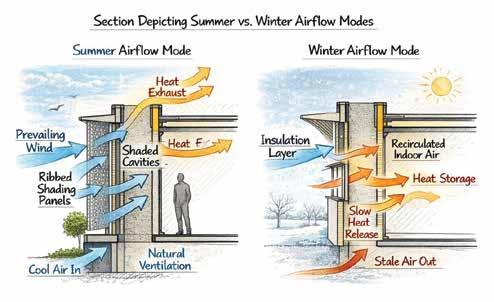
nocturnal heat rejection. Passive ventilation should be designed deliberately: orient channels to establish pressure gradients and coordinate inlet and outlet openings to encourage cross-flow or stack-driven movement. In low-humidity regions, evaporative strategies — wetted façades, porous terracotta membranes, or misting within cavities — can provide effective latent cooling, while in humid climates the emphasis shifts to preventing moisture entrapment and encouraging airflow.
Kinetic and hybrid systems broaden design options. Motorised screens and tracking fins provide precision but increase maintenance obligations. Where feasible, passive actuation — bimetallic strips, hygroscopic or shape-memory materials — improves resilience. Hybrid modules that combine shading with photovoltaics or algae cultivation convert incident solar energy into useful services while simultaneously mitigating heat gain.
Practical implementation demands early, integrated design. Façade strategies must be developed during concept design, not appended after HVAC sizing. Use climate mapping, orientationbased modules, computational fluid dynamics, and parametric workflows to test geometries; build full-scale mockups; and monitor post-occupancy performance. Material selection and detailing must account for dust, monsoon exposure, and serviceability. Vernacular precedents — stone jaalis, deep verandahs, terracotta screens — offer time-tested tactics that can be reinterpreted with contemporary fabrication and simulation.
Economically, biomimetic façades can reduce lifecycle costs. Lower mechanical loads reduce operational expenditure and peak demand; early simulation reduces redesign costs; accessible voids and replaceable panels lower maintenance disruption. Policy levers — façade performance criteria in codes, incentives for passive cooling, and procurement that rewards long-term energy performance — will hasten adoption. Research
partnerships and demonstration projects using locally available materials will provide scalable pathways.
Biomimicry is not a stylistic flourish but a disciplined, performance-first approach: observe natural systems, abstract functional strategies, and apply them with rigorous engineering and lifecycle thinking. In a hotter, more variable climate, façades that moderate their own microclimate, respond seasonally, and reduce dependence
on continuous mechanical life support will be central to resilient, low-energy cities. The blueprints are abundant in nature’s inventions — termite mounds, peepal leaves, cactus ribs, and camel hides — and translating those lessons into robust, maintainable façades is an urgent design priority. Architects, engineers, and clients must act now — integrate biomimetic façade design as standard practice to secure comfort, economy, and climate resilience across India and beyond.
• Benyus, J. M. (1997). Biomimicry: Innovation Inspired by Nature. William Morrow & Co. Gruber, P. (2011). Biomimetics in Architecture: Architecture of Life and Buildings. Springer.
• International Energy Agency (IEA). (2018). The Future of Cooling: Opportunities for Energy-Efficient Air Conditioning.
• Bureau of Indian Standards. (2016). National Building Code of India 2016. Volume 2, Part 8. Pearce, M. (2016). Biomimicry in Architecture. Architectural Design, 86(2), 26-33.
• Pawlyn, M. (2011). Biomimicry in Architecture. RIBA Publishing.

SAMIR FAYAZ SHAIKH
Founding Principal, Architecture & Urban Design Studio (AR&UD Studio)
Samir Fayaz Shaikh is an architect and urban designer based in Mumbai. He is the Founding Principal of Architecture & Urban Design Studio (AR&UD Studio). The firm’s design philosophy lies at the intersection of technology, the environment, and sociology.








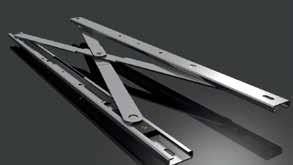
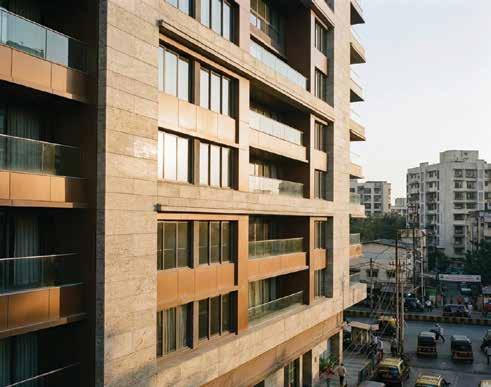
Afew years ago, a premium highrise project in Mumbai required an acoustic assessment. The developer had done what was believed to be the right thing. Every apartment had double-glazed sliding windows. On paper, this was a solid acoustic specification. However, in an effort to tighten the bottom line, aluminium profiles were extruded in-house and the windows fabricated internally. The assumption was simple: acoustics is all about the glass.
It was not. Residents were complaining about traffic noise that had no business being inside a premium apartment. On site assessment, the profiles showed poor sealing details, the meeting rails leaked sound, and the overall system performed well below what the glazing alone should have delivered. The glass was fine. Everything around it had failed. Full
replacement had to be recommended. As expected, that conversation did not go well.
This story captures something observed repeatedly across two decades of acoustics consulting in India. The industry has become reasonably aware that glass matters for sound insulation. Architects specify Rw values, and developers’ market double glazing as a feature. Yet noise often enters through everything else: the weak points that nobody discusses, details, or checks on site.
When most design teams think about façade acoustics, they think about glass. That is a reasonable starting point. However, focusing on glass alone creates a dangerous blind spot. A façade is a system. It is only as good as its weakest
acoustic element. The best double-glazed unit money can buy may be specified, but if sound leaks through profile joints, the AC opening, or the adjacent ventilation duct, the glazing specification becomes meaningless.
In international practice, this is well understood. Façade acoustic consultants assess the entire envelope as an integrated system. In India, the industry is still catching up. The acoustic conversation often begins and ends with the glass supplier’s data sheet.
So where does the noise actually get in? After hundreds of site assessments across residential, commercial, and hospitality projects, the same culprits appear repeatedly.
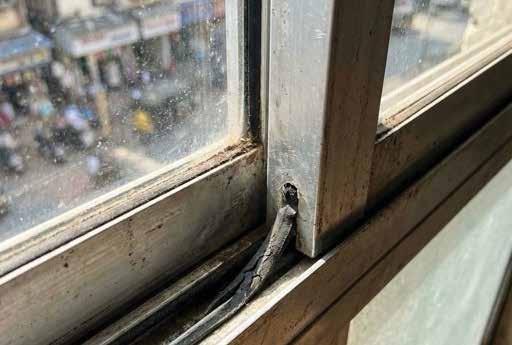
Sliding windows are common in Indian residential construction. They are practical, space-efficient, and affordable. However, they come with an inherent acoustic weakness: the meeting rail. Where the two sashes overlap, there is a joint that relies entirely on the quality of the weatherstrip and the compression of the interlock. In practice, particularly with cost-driven fabrication, these seals are often inadequate, worn out within a couple of years, or simply missing. The meeting rail becomes a continuous line of sound leakage running the full width of the window. On a quiet night, the difference can sometimes be heard simply by running a hand along the joint and feeling the air movement.
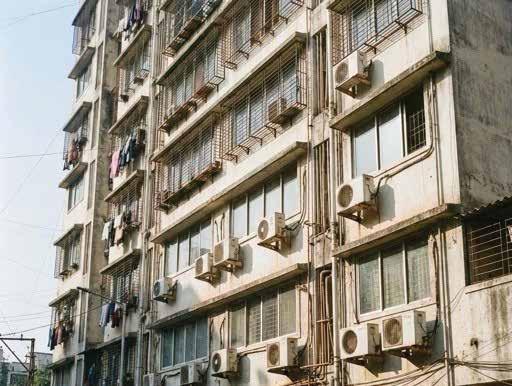
India runs on split air conditioning. Every bedroom, living room, and hotel room typically has a wall-mounted indoor unit, which means each room has a hole through the façade for the refrigerant
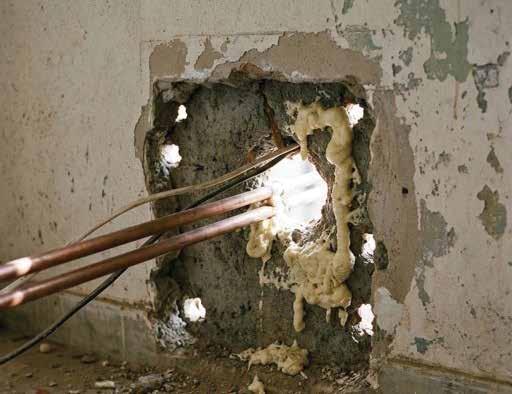
piping and drain line. In a well-detailed project, this penetration is sleeved, sealed with acoustic-grade sealant, and properly finished on both sides. In reality, openings are often packed with newspaper, loosely filled with polyurethane foam, or left with visible daylight around the pipes. Each of these becomes an open acoustic path from the street straight into the room. On a busy road, even a 50 mm unsealed gap around an AC pipe can undermine everything the glazing is intended to achieve.
Bathrooms and kitchens require exhaust ventilation, and in most Indian residential buildings, this is achieved through small ducts or façade openings. These are rarely treated acoustically. A typical bathroom exhaust duct is essentially a tube connecting the interior of the apartment to the outside air, with a small fan in between. Sound travels through it with very little resistance. In buildings near highways or metro lines, measurements have shown cases where the bathroom was the noisiest room in the apartment, not because of the window, but because of the exhaust duct.
Balcony sliding doors are usually the largest openable element in the façade and deserve the same acoustic attention
as
The threshold detail is particularly problematic. Floor-level tracks for sliding doors are designed for smooth operation and water drainage, not for acoustic sealing. The gap at the bottom of a closed balcony door can be several millimetres, running the full width of the opening. Combined with the meeting rail issue (as most balcony doors are also sliding), this creates a large,
acoustically compromised element in the centre of the living room façade.
Every façade has penetrations for services: electrical conduits, plumbing stacks, fire system piping, and others. Each is a potential flanking path. The issue is not their existence, but that they are rarely sealed acoustically. On most Indian sites, the gap between the pipe and the wall is filled with whatever is convenient during construction: cement mortar if fortunate, expanding foam if not. Neither is an acoustic solution. The penetration must be sealed with a material that is both airtight and flexible enough to accommodate building movement.
In curtain wall and aluminium façade systems, the junction between the floor slab edge and the façade framing is a known weak point internationally. Sound can travel vertically from one floor to the next through this gap. In Indian construction, the firestop zone at this junction is often treated purely as a fire safety requirement, using mineral wool and intumescent sealant. While

KEVIN MARIO D’SOUZA Founder, Sound And About
these materials offer some acoustic benefit, they are not optimised for sound insulation, and installation quality on site is inconsistent. Firestop installations are frequently seen with visible gaps, uneven compression, or missing entirely in certain bays.
Several factors make these issues more acute in India than in many other markets. The culture of natural ventilation means operable windows and balcony doors are not optional; they are essential. This results in more joints, more seals, more moving parts, and therefore more acoustic weak points compared to a fully sealed façade. The near-universal use of split AC systems means every room has a façade penetration that does not exist in markets where centralised HVAC is standard. Cost pressures in Indian construction, particularly in the large residential sector, mean that detailing and workmanship at these critical junctions are often the first casualties when budgets are reduced.
The National Building Code (NBC 2016) does address sound insulation requirements, but enforcement and site-
level compliance remain inconsistent. There is no widespread culture of acoustic site inspections during construction, meaning even well-specified details can fail in execution.
The solution is not complicated, but it requires a shift in thinking. Façade acoustics is not a glass specification exercise. It is a whole-system design issue that requires attention from the early stages of a project.
An acoustic consultant involved during design development can identify these weak points before they are built in. A simple façade audit checklist that goes beyond glazing performance to cover seals, penetrations, junctions, and ventilation paths can prevent the kind of expensive failures described at the start of this article. Critically, these details must be checked on site during construction, not just on drawings.
The principle is straightforward: a façade is only as quiet as its weakest element. Get the glass right, certainly. But do not overlook everything beyond it.
Kevin Mario D’Souza is the founder of Sound And About, a Mumbaibased acoustics consultancy with two decades of experience helping architects, developers and interior designers achieve optimal sound outcomes. From luxury hotels and corporate offices to schools and residential towers, his work spans the full range of built environments across India. His approach centres on becoming involved early in the design process, before acoustic problems are built into the structure. Outside of project work, he teaches acoustics at the university level and shares practical, experience-driven insights with the architecture and design community through his LinkedIn posts. He can be contacted at linkedin.com/in/kevinmariodsouza to follow his updates.



The World Resources Institute estimates that buildings and their construction currently contribute around 17% of India’s greenhouse gas (GHG) emissions1. This is only set to rise as towns and cities across the country manage unprecedented demand for housing and infrastructure in the face of rapid urbanisation, with urban populations growing to an estimated 600 million by 2036—40% of the total population2 Beyond the environmental considerations, it is also vital that these new spaces deliver the safety, stability, comfort and longevity necessary for people to truly thrive. Incorporating occupier wellbeing into the design process can then, in turn, contribute towards IGBC, LEED and BREEAM credits for the project. Fire safety in buildings plays a critical, yet often under-recognised, role in meeting these aims.
Fires represent one of the most severe stress tests a building can face, with consequences that extend far beyond immediate physical damage. Managing fire risk effectively, especially within the building envelope and structure, is therefore central to protecting the environmental, social and economic value embedded in our buildings.
It reduces the risk of immediate environmental impacts: Fires release
soot, aerosols and other pollutants into the air, while debris and gaseous deposits contaminate soil. Rainfall and runoff from firefighting efforts can carry these pollutants into surface and groundwater systems. Firefighting activities themselves carry impacts, from high water consumption to the fuel and emissions associated with emergency response, particularly those containing PFAS (per- and polyfluoroalkyl substances).
It prevents lifecycle disruption and embodied carbon loss: A major fire can fundamentally alter a building’s lifecycle. Partial or total demolition, repair or refurbishment leads to the loss of significant embodied carbon. The environmental impact extends beyond damaged materials to include replacement manufacturing, transportation, construction activity and the machinery required to complete the work.
It limits the social and community consequences of fire: Beyond building damage, fires carry severe social consequences. The human costs of injury, loss of life and enduring psychological effects are difficult to quantify, yet profoundly significant. For the individuals involved, medical treatment, lost income, temporary displacement and emotional recovery can also contribute to long-term economic strain.
It preserves asset value and insurability: Economically, building fires can destroy asset value, disrupt business continuity and trigger costly reconstruction. Protecting the façade and structural envelope significantly limits damage, lowering insured losses and helping to quickly stabilise supply chains, tenant operations and investor confidence.
Fire safety should support long-term functionality: In addition to preventing irreversible loss when things go wrong, buildings must also perform efficiently and safely during their typical operation to be considered truly environmentally and socially sustainable. User comfort and functionality are not only clear indicators of a successful design, but are key metrics often used in voluntary building standards such as IGBC, LEED and BREEAM.
Fire protection measures should also support these design aims, not trade against them. Within the building envelope, passive fire protection measures such as firestops and cavity barriers should not compromise key performance factors such as thermal efficiency or cause acoustic ‘weak spots’. These can result in occupiers having to compensate either through mechanical systems to manage temperature fluctuations—increasing energy use and associated carbon further—or experiencing increased stress and productivity dips due to unmanaged noise disrupting their activities.
The spandrel zone is a clear example of a façade element required to perform multiple roles at once. It plays a critical
1World Resources Institute (02/01/2024) ‘India’s Shift to Low-Carbon Construction Must Not Leave Workers Behind’ : https://www.wri. org/insights/india-just-transition-low-carbon-construction#:~:text=India%20aims%20to%20reduce%20the,the%20heart%20of%20 climate%20action
2World Bank Group (30/01/2024) ‘Gearing up for India’s Rapid Urban Transformation’ : https://www.worldbank.org/en/news/opinion/2024/01/30/gearing-up-for-india-s-rapid-urban-transformation
part in fire containment at the slab edge, provides thermal insulation across the façade and delivers acoustic separation between floors. When spandrels are poorly designed, these functions can be undermined simultaneously, leading to thermal bridging, inter-floor noise transfer, façade hot spots and weakened fire stopping. In contrast, a tested, wellengineered spandrel solution using appropriate non-combustible insulation such as stone wool can deliver consistent performance across fire, thermal and acoustic requirements, ensuring safety, comfort and long-term façade reliability without compromise.
Of course, the fire safety products used to ensure this resilience must not detract from these priorities themselves. Environmental, social and governance (ESG) credentials are increasingly influencing construction product specifications, procurement and insurance decisions in India, particularly for complex or high-risk buildings.
For fire safety products, protecting life and property will always be the primary objective. However, considering their ESG credentials will not detract from this purpose. The fire safety sector’s focus on rigorous testing, detailed data collection,
third-party verification and compliance with recognised standards aligns naturally with ESG reporting and performance improvement. Therefore, manufacturers of these products should undertake initiatives such as Life Cycle Assessments (LCAs) to enable transparent and comparable reporting of environmental impacts across product lifecycles through tools such as Environmental Product Declarations (EPDs).
Yet ESG goes beyond environmental data. Responsible sourcing standards such as BES 6001 (Framework standard for responsible sourcing) assess supply chain governance, ethical labour practices and site stewardship. Strong governance systems—including clear policies, compliance processes and independent assurance—help ensure that safety and sustainability commitments are consistently delivered, not just stated.
It is also important to consider the quality of support that surrounds these products. Products that are accompanied by clear specification guidance and robust installer training are far more likely to be installed correctly the first time, reducing material waste, rework and on-site errors that add unnecessary cost and carbon. At the same time, investing in training raises skill levels across the workforce, improving installation quality, safety and long-term career prospects for installers and contractors. This skills development delivers wider economic and social benefits, strengthening supply chains and creating more resilient project outcomes.
Nearly 70% of the urban infrastructure needed by 2047—the centenary of Indian Independence—is yet to be built3. This presents a real opportunity for the country to develop a built environment that leads the way in terms of both environmental stewardship and social value. This includes deploying effective fire risk management across all building types, supported by high-performance fire protection products that are engineered not only for safety and durability, but also with their wider impacts in mind.
3Ibid

Global Partnerships Director, Siderise
Sreenivas Narayanan is Global Partnerships Director for Siderise, responsible for building the company’s footprint worldwide. He has spent ten years in his previous role as Technical Director, creating and implementing the technical strategy for the Middle East, India, and South Asia Pacific. His expertise in the passive fire protection industry is rooted in developing business in new markets, promoting the technology of fire containment in modern building construction, and undertaking comprehensive fire testing programs. He has collaborated with over 60 different cladding manufacturers to complete more than 300 large-scale system façade tests, in addition to multiple resistance to fire tests with façade system manufacturers.
For more information, please visit www.siderise.com
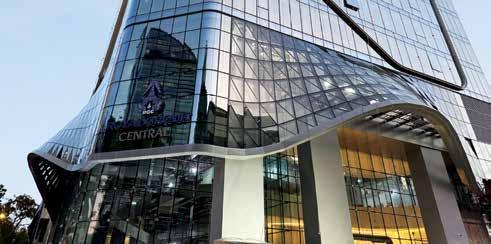

RAJAN GOVIND Director & Façade Specialist, BES Consultants
ver the past fifteen years, BES Consultants has delivered façade engineering solutions for several architecturally significant and technically complex developments across the commercial, residential, hospitality, and institutional sectors. The firm’s portfolio includes landmark projects such as the Royal Group J Trust Bank (RGC Tower), Phnom Penh, Cambodia, developed with bespoke unitised curtain wall systems; The Lodha Park – Tall Luxury Residential, Mumbai, involving multiple high-rise façade typologies; Yashobhoomi – Atrium Place, Gurugram, Delhi, featuring very large
Atrium and intricate cladding interfaces; and the Pan Pacific Hotel, Singapore, designed by Woha Architects to meet highperformance acoustic and environmental standards. These projects demonstrate BES’s ability to translate ambitious architectural concepts into practical, buildable, and highperforming façades.
Quality of service is central to the way BES operates. The firm follows a clear, engineering-first approach, resolving technical challenges early in the design stage. Structural behaviour, wind

resistance, air and water tightness, thermal efficiency, acoustics, and durability are carefully analysed before construction begins. Supported by BIM, 3D modelling, and coordinated documentation, this process improves accuracy, reduces site risks, and ensures seamless execution. The result is façades that perform reliably while maintaining control over cost and programme.
This consistent and disciplined working method has helped BES build longterm trust with developers, architects, consultants, and contractors. Clients value the firm’s transparency, technical clarity, and dependable delivery, often leading to repeat collaborations across projects and regions. As Rajan Govind, Founding Director, explains, “Façade engineering is about performance and accountability. When systems are resolved thoroughly at the design stage, execution becomes seamless and dependable.”
Today, BES offers specialist consultancy across building envelopes, façade engineering, advanced geometry, architectural engineering, BIM/3D design, building acoustics, and the refurbishment of existing buildings. With offices in India and Singapore, the firm supports projects across Asia, Africa & International Covering markets, continuing to deliver façades defined by iconic design, engineering precision, and lasting client confidence.
For more detail, contact:

info@besconsultants.net
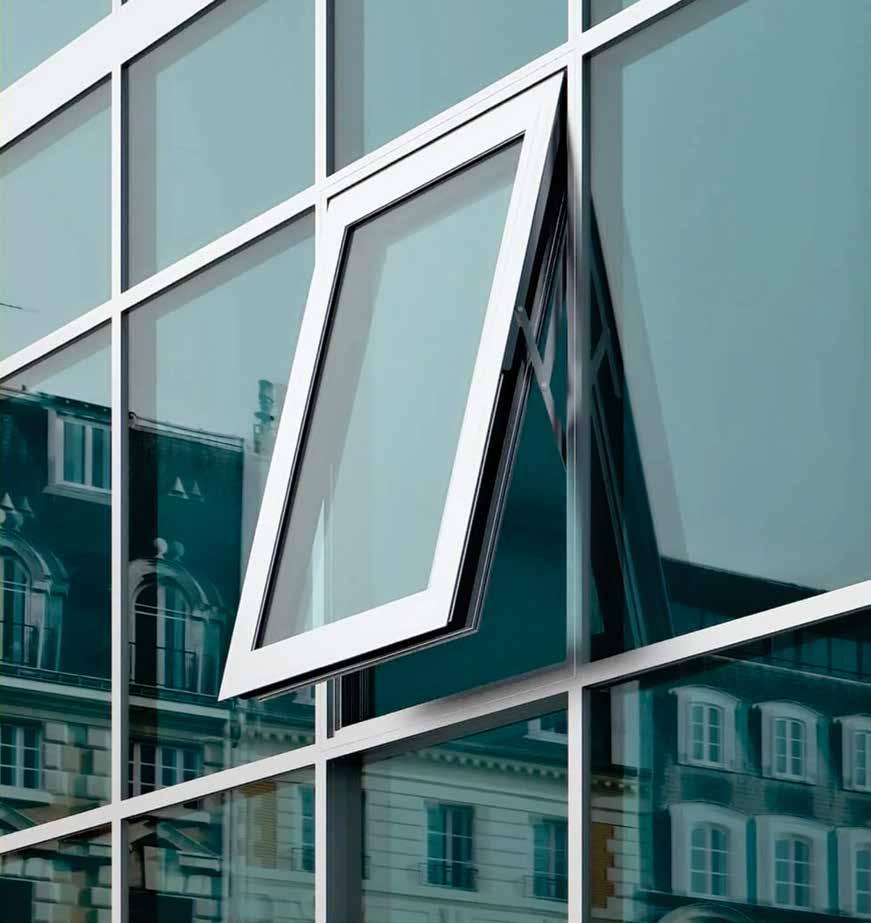
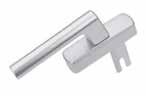


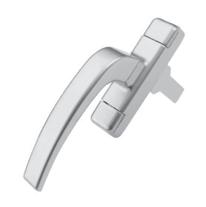

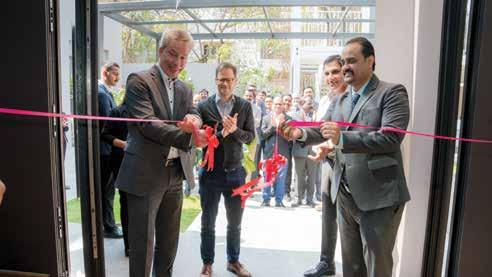
PROCURAL has officially opened its Experience Centre in Hyderabad, marking a significant milestone in its journey within the Indian market.
More than the launch of a showroom, the new space represents a thoughtfully curated environment built around a simple belief — that the right windows and doors shape how India lives.
Through its continued engagement with Indian homes, one insight has consistently stood out: windows here do far more than frame a view. They regulate heat during peak summers, provide protection in heavy monsoons, soften harsh sunlight, reduce external noise, and maintain the right balance of ventilation and privacy. Selecting the right system is therefore not merely a design decision — it is a lifestyle choice. The Experience Centre translates this philosophy into a tangible, immersive setting.
Every product on display reflects genuine Indian needs and aspirations. NEO and
GEMINI address the growing preference for larger openings and brighter interiors in contemporary apartments and villas. AQUILA demonstrates durability in demanding weather conditions. AURA introduces everyday comfort and understated elegance into functional living spaces. AURA SLIDE captures the aspiration for seamless indoor–outdoor living — expansive openings that welcome light while ensuring protection. Meanwhile, MAGNUS stands strong for projects that call for scale and architectural presence.
Rather than browsing catalogues, visitors can engage with the systems in a realistic environment — observing proportions,
movement and finishes, and envisioning how each solution integrates into actual homes and developments.
The centre was inaugurated by Dr. Matthias Koch, MD of PROCURAL Group, and Andreas Hartleif, CEO and Owner of Laumann Group — marking not only a milestone, but a shared commitment to bringing globally engineered aluminium systems closer to Indian architects, developers and partners.
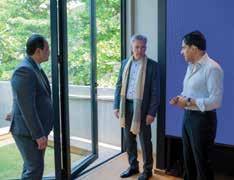
More than a display space, the showroom stands as an invitation — to explore, to question, to collaborate, and to experience how the right system can elevate everyday spaces.

For more details on the company and its products:

PROCURAL Private Limited
Website: www.procural-group.in
Email: connect@procural-group.in
Phone: +91 83740 92061

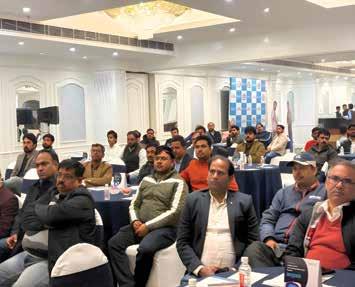
As India’s urban landscape evolves, expectations of façade materials have grown beyond aesthetics. Aluminium composite panels (ACPs) must now meet stringent requirements for long-term performance, fire safety, and documented reliability—factors that directly impact building safety, regulatory compliance, and the professional credibility of architects, builders, and designers.
Recognising this, Aludecor has launched an industry-first initiative to transform how ACPs are assessed and selected, moving from assumption-based decisions to evidence-backed verification.
In January 2026, Aludecor unveiled a nationwide television and digital campaign anchored in a simple principle: trust must be earned through testing. The message “Test Nahi Toh Trust Nahi” conveys this succinctly. Acclaimed actor Amit Sial lends his authoritative presence
to emphasise the importance of safety, compliance, and material responsibility. The campaign urges fabricators, architects, builders, and specifiers to insist on scientific validation before choosing materials, rather than relying on marketing claims.
Central to this effort is India’s largest voluntary, free, and open ACP testing initiative. Through the Join the Trust movement, stakeholders can submit ACP samples for evaluation regardless of brand. Submissions are handled via Aludecor’s dealer network, and testing is conducted anonymously at the company’s fully equipped in-house research and development facility.
A key differentiator is Aludecor’s infrastructure. It operates the only NABL-accredited reaction-to-fire testing facility run by an ACP manufacturer in India, reinforcing transparency and adherence to recognised safety
standards. Participants can observe testing online, and results are issued as formal, standard-driven reports, free of commentary or promotional bias.
To further engage the industry, Aludecor hosts Fabricator Meets in multiple cities, addressing recurring concerns such as fading, delamination, and the authenticity of fire-retardant claims. These sessions explain the entire testing journey, from sample submission to certified reports. The enthusiastic response from fabricators and consultants reflects a growing industry shift toward evidencebased material selection.
By opening its testing facilities to ACP products across brands and prioritising verification over assertion, Aludecor’s initiative goes beyond a marketing campaign. It signals a call for accountability in the façade sector. At a time when safety and performance expectations are rising, testing is no longer optional—it is the foundation of credibility and trust.

For more details on the product, contact:

Aludecor Lamination Pvt. Ltd.
Email: info@aludecor.com Website: www.aludecor.com Toll-free: 1800 102 0407
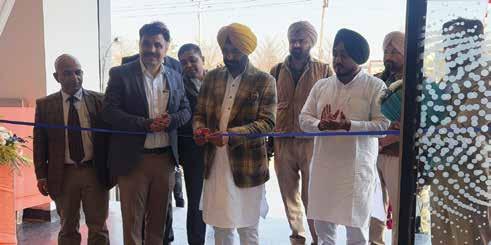
Ozone, a comprehensive provider of architectural hardware and systems since 1999, has unveiled its new Experience Centre in Mohali.
The two-day inaugural event, held on 14th and 15th February, marks a significant milestone in strengthening the brand’s presence in North India and bringing its complete portfolio of solutions closer to the region’s design and construction community.
With over 26 years of expertise, Ozone has built a strong reputation for delivering innovative, durable, and applicationdriven architectural hardware and system solutions across residential, commercial, and institutional projects. The Mohali Experience Centre reflects the company’s continued commitment to accessibility, engagement, and customer-centric growth.
The newly launched centre serves as a dedicated space where architects, interior designers, builders, consultants, fabricators, and channel partners can explore Ozone’s diverse portfolio, including aluminium windows, glass doors, railing systems,
fingerprint locks, digital safes, kitchen and furniture fittings, and more. The centre has been thoughtfully designed to provide a clearer understanding of product applications, system compatibility, and integrated solution possibilities for modern architectural requirements.
The centre embodies Ozone’s brand philosophy, built on:
• Innovation – Continuously evolving systems for contemporary architecture
• Quality & Reliability – Engineered for performance and longevity
• Comprehensive Solutions – A complete ecosystem across architectural hardware and systems
• Trust & Expertise – A legacy of leadership since 1999
• Customer-Centric Approach –Delivering accessible solutions where projects are executed
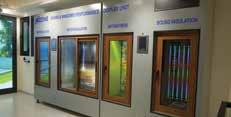
Speaking on the occasion, Alok Aggarwal, Managing Director, Ozone, said: “At Ozone, our vision has always been to provide complete architectural hardware and system solutions backed by strong technical expertise and service support. The Mohali Experience Centre is a significant step towards strengthening our connection with the North India market by bringing our brand, our expertise, and our comprehensive range closer to our partners and customers.”
On 14th February, the launch was graced by the presence of Sdr Gurpreet Singh (GP, State President, SC Wing – Aam Aadmi Party), Sdr Kulwant Singh (MLA – Aam Aadmi Party), Balram Sharma (Contractor – MCD & PWD), Ar. Pankaj Malik (Principal Architect, Planners Group), and Ar. Achharpal Singh (Principal Architect, A.P Associates). Their visit added further significance to the occasion and reflected strong support from key members of the region’s leadership and construction fraternity.
The Mohali Experience Centre represents another milestone in Ozone’s journey to expand its nationwide footprint, reinforcing its position as a trusted and innovative provider of comprehensive architectural hardware and systems. The company’s next Experience Centre is set to open in Jaipur, bringing the brand even closer to partners and customers in Rajasthan.
For more details on the product, contact:

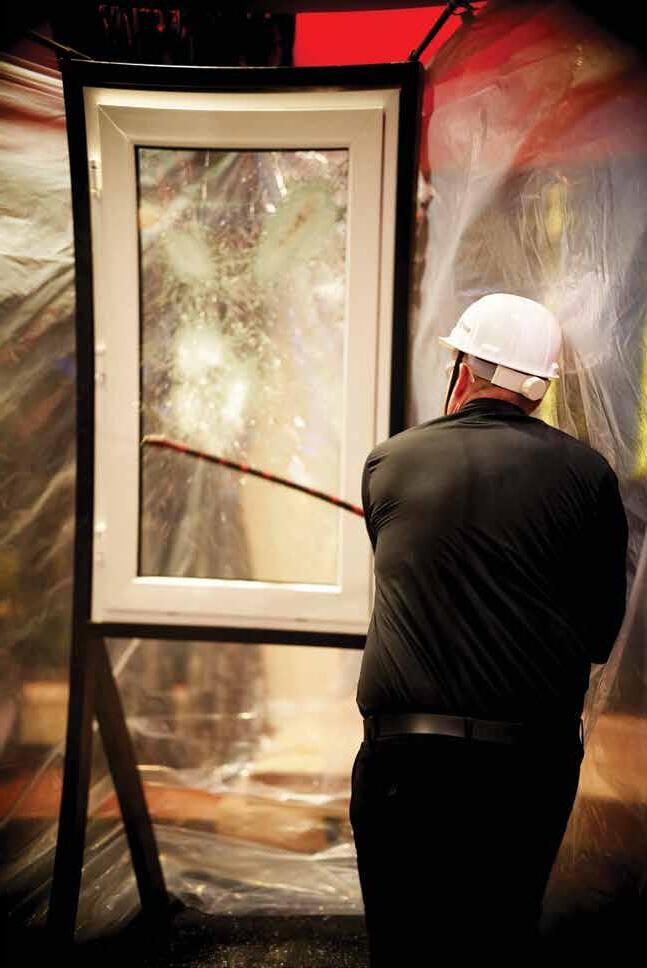
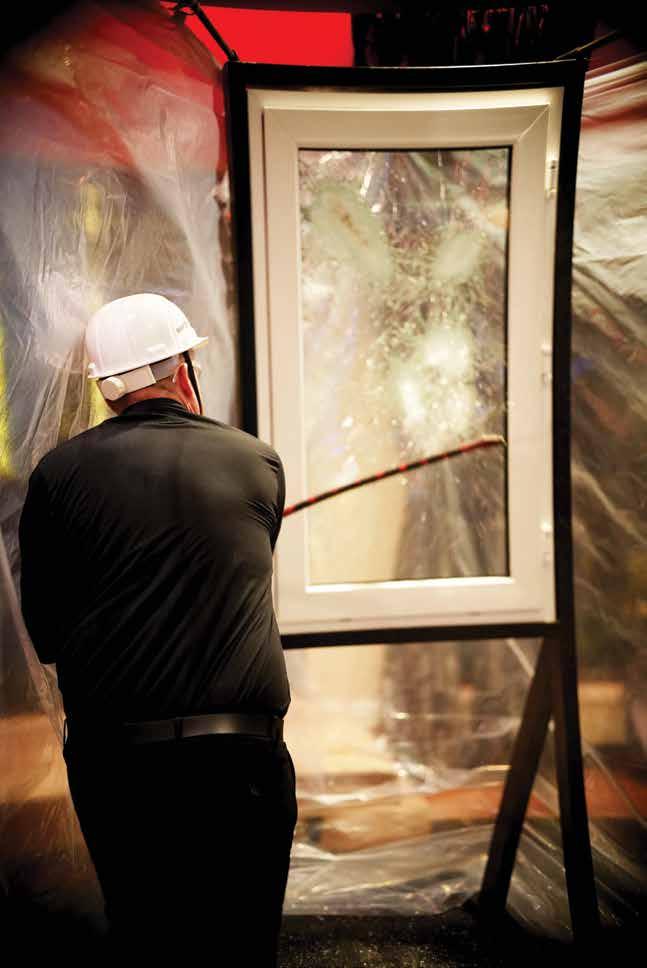
“At Aludecor,
is Encouraged — But Material Integrity is Non-Negotiable”
Ashok Kr Bhaiya, the CMD of Aludecor Lamination Pvt Ltd, has an inspiring story of introducing ACP in India & reaching the pinnacle. During the year 1999, while managing the import-export business, this promising material caught his eye. The millennium was changing then, and so was the lifestyle. He travelled to various parts of the US, Europe & Asian Nations to learn about the production technology & other nitty-gritty used in ACPs. In 2002, he introduced this high-potential product in India with state-of-the-art ACP manufacturing facilities having advanced equipment & futuristic technology along with a coil coating line in Haridwar under the brand name of Aludecor.
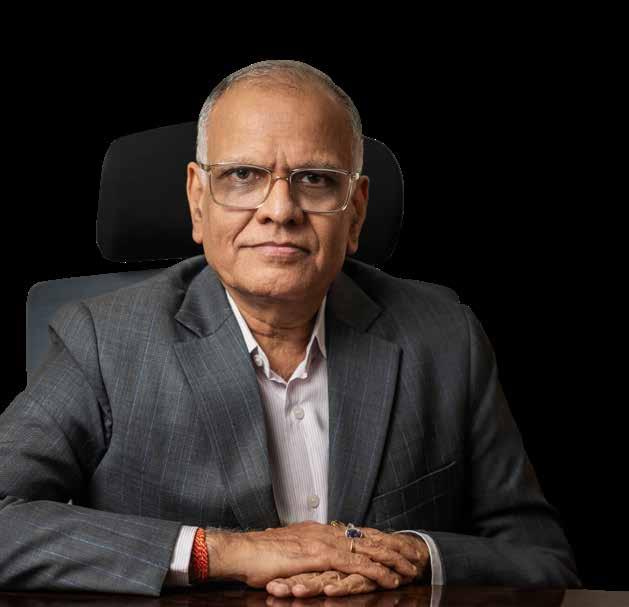

Founder and CMD
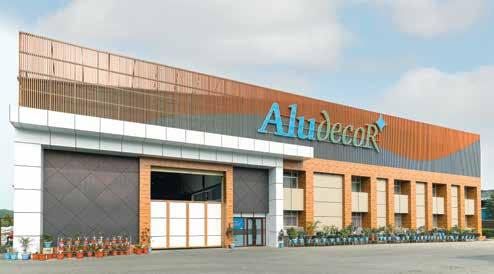
• Aludecor recently launched the “Test Nahi Toh Trust Nahi” movement, which talks openly about testing, proof, and transparency. Why was it important for you to shift the conversation from claims to evidence, especially in an industry where failures can have serious consequences?
For years, our category has run on brochures, sales pitches, and “FR” labels that sound reassuring on paper. But ACP is not a product that fails immediately. If something goes wrong – fading, peeling, delamination, or fire performance concerns – it usually surfaces months or years later, when the building is already in use and reputations are on the line.
In the real world, when a façade has a problem, the first person who gets blamed is rarely the manufacturer. It is the fabricator, the contractor, sometimes even the architect – people whose credibility is their livelihood. That is the uncomfortable truth of this industry.
So, for us, “Test Nahi Toh Trust Nahi” is not a marketing line. It is a category correction. Failures in our industry are not just commercial inconveniences. They can trigger disputes, rework, insurance complications and, in cases involving fire performance, they carry a much larger public responsibility. That is why we felt it was time to normalise a simple behaviour: do not trust the claim – trust

the test. The TVC was simply a way to start this conversation at scale; the real work begins on the ground.
• You have opened up the Aludecor labs to brand-blind and anonymised testing of ACP. How did this idea occur to you? Honestly, it came from one core question: If we are asking the industry to believe in testing, are we willing to be tested by our own standard of neutrality?
The credibility of any testing-led movement depends on one thing: process integrity. If the market even suspects that testing is being used as a competitive weapon, the entire idea collapses. That is why we designed it to be brand-blind and fully anonymised – where the brand identity, the sample owner and the testing personnel remain undisclosed during the process. Everything is standard-driven: only test values and observations are shared, without opinions, commentary, or interpretation.
The thought also came from years of observing how the market behaves. People often hesitate to test because they fear embarrassment, confrontation, or “what will happen if it fails”. We wanted to remove that emotional friction. When testing becomes a neutral service instead of a brand-versus-brand event, more people participate and the category improves.
So, the point is not to “prove someone wrong”. The point is to make it professionally normal to ask: “What does the material data say?”
That is how trust becomes durable – not because one company says it is good, but because the industry learns to demand proof as a default habit. If trust in ACP as a category is to rise, testing cannot remain a backstage activity. It has to become part of the culture. That is what this movement is really about.
• One striking aspect of this movement is opening your labs to the whole category. What does it take, as a leader, to invite scrutiny rather than avoid it?
Inviting scrutiny requires a very clear internal truth: you cannot ask the industry to trust a system you are not willing to stand inside yourself. Once that clarity is there, the fear of being examined reduces significantly.
As a leader, it means being comfortable with transparency not as a performance, but as a discipline. You have to accept that opening up processes will raise questions, slow conversations and sometimes expose uncomfortable gaps. But avoiding scrutiny only postpones those questions; it never eliminates them. In a category where longterm performance matters more than shortterm perception, that avoidance is far riskier.
Opening our labs to the whole category was not an act of bravado; it was an act of responsibility. It required confidence in our systems, respect for standard protocols and the humility to let data speak without interpretation or spin When scrutiny is handled through neutral processes and clear boundaries, it stops being a threat and becomes a stabilising force for the industry.
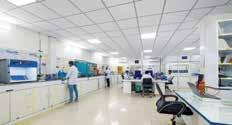
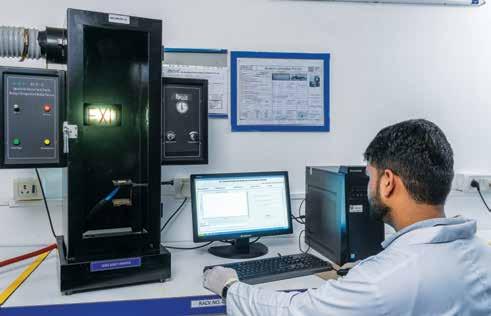
Ultimately, leadership is not about controlling the narrative. It is about creating conditions where the truth can stand on its own, and trusting that, over time, consistency will speak louder than any claim.
• Fabricators and contractors often carry the blame when materials fail. Was restoring dignity and confidence to this community a conscious part of your thinking behind this initiative?
Very consciously, yes. Anyone who has spent time in this industry knows that when something goes wrong on a site, the fabricator is the first to be questioned, even when the root cause lies in material quality, ageing, or non-verifiable claims made much earlier. That imbalance has existed for far too long.
This initiative was designed to give fabricators something they rarely have in disputes: objective proof. Not opinions, not brand assurances, but test-backed data that protects their workmanship and professional credibility Confidence in this industry does not come from selling harder; it comes from knowing that your material choice will stand up to scrutiny years later.
Restoring dignity means shifting the narrative from blame to evidence. When
“When testing becomes a neutral service instead of a brand-vs-brand event, more people participate, and the category improves”
a fabricator can say, “I chose based on testing, not claims,” it changes the power dynamic entirely. That sense of confidence – quiet, professional and defensible – was always at the heart of this movement.
• The ACP industry often reduces itself to price comparisons. At what point did you realise that trust, not price, would be the real battleground for the future of this category?
I realised very early that price could never be the real battleground in this category, because price only decides the transaction, not the consequence. ACP is not a product you replace casually; it sits
on buildings, carries brand identities and is exposed to time, weather and public use. When something fails, the discussion immediately shifts from “how much did it cost?” to “who is responsible?”
Over the years, we saw a clear pattern. Brands that competed primarily on price kept changing. What remained constant were the disputes, the rework and the erosion of confidence faced by fabricators and project teams. That was the moment it became obvious that price wins orders, but trust decides survival – both for the material and for the people who recommend it.
The real battleground revealed itself when customers stopped asking, “Kitna sasta hai?” and started asking, “Yeh chalega na?” That question is not about discounts; it is about risk, reputation and peace of mind. And the only way to answer that honestly is with evidence, consistency and accountability over time.
Once you understand that, price stops being the centre of the conversation. Trust becomes the differentiator that outlasts cycles, competitors and campaigns –and that is where we chose to invest our energy as a brand.
• Inside Aludecor, how do you encourage teams to take bold decisions while remaining uncompromising on quality and accountability? What behaviours do you reward, and what shortcuts are simply unacceptable?
Inside Aludecor, we are very clear that boldness is encouraged, but recklessness is not. We push our teams to take strong calls on innovation, investments and category leadership, but there is one non-negotiable filter every decision must pass through: will this still hold up when
no one is in the room to defend it? If the answer is uncertain, the decision does not move forward.
We reward people who ask uncomfortable questions, who slow the process down to get the data right and who are willing to take ownership when a decision has long-term implications. In our culture, courage is not about moving fast at any cost; it is about standing by the truth even when it is inconvenient. Teams that choose transparency over easy wins, and process over persuasion, earn trust internally – and that trust compounds over time.
What is simply unacceptable are shortcuts that compromise material integrity, testing discipline, or clarity in communication. We do not tolerate overselling, selective disclosure, or bending standards to suit a sales moment. In this industry, a shortcut today becomes a problem on someone’s site tomorrow, and that is a cost we refuse to pass on to others.
At Aludecor, accountability is not enforced through fear. It is built through a shared understanding that our reputation travels far beyond the factory gate. Every panel carries the weight of our decisions, and we expect our teams to act with that awareness every single day.
• Many landmark projects proudly display Aludecor on their façades, but problems in buildings often show up years later. When you see an Aludecor installation after a decade, what are you silently checking for in your mind?
When I see an Aludecor installation after a decade, I am not looking for logos or recognition. I am instinctively checking for silence: no complaints, no patchwork fixes, no visible fatigue in the surface. If the building has aged gracefully without drawing attention to the material, that is the strongest validation we can get.
I look at colour first – not in isolation, but in context. Has it retained its character against the sun, pollution and time? I notice the flatness of the panels, the alignment, the absence of waviness or
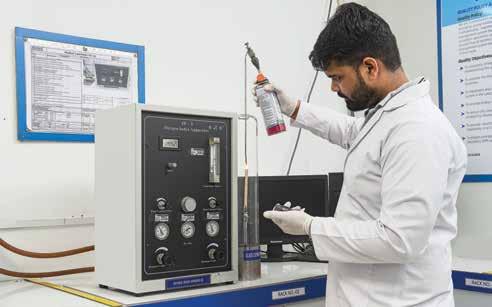
separation at the edges. These are small details, but they tell you whether the material behaved as it was supposed to when no one was watching.
Most importantly, I ask myself a simple question: has this material stayed out of trouble? In our category, success is not applause – it is longevity without incident. If, after ten years, the façade still performs
“Our ambition is not just to supply materials, but to influence testingbacked decision-making by architects, fabricators, developers, and end-users – especially when it comes to safety, longevity, and accountability”

quietly and reliably, it confirms that the decisions taken at the factory and testing stages were the right ones That kind of performance never comes from chance; it only comes from discipline, testing-backed decision-making and respect for time.
• For you personally, where does responsibility end and leadership begin when it comes to sustainable manufacturing? For me, responsibility is doing what regulations demand and what the market expects. Leadership begins where you choose to go further, even when no one is asking you to, and even when it makes things harder in the short term.
In manufacturing, sustainability cannot be treated as a compliance exercise or a communication layer. If it stops at certifications, it remains defensive. Leadership is when sustainability is embedded into sourcing, process design, waste reduction and consistency of execution – quietly and responsibly, without the need for loud claims.
What defines leadership for me is intent. Are we making decisions only to satisfy today’s audits, or are we building systems that will still make sense a decade from now? Sustainable manufacturing is not about being perfect; it is about being honest, disciplined and willing to invest before the pressure arrives.
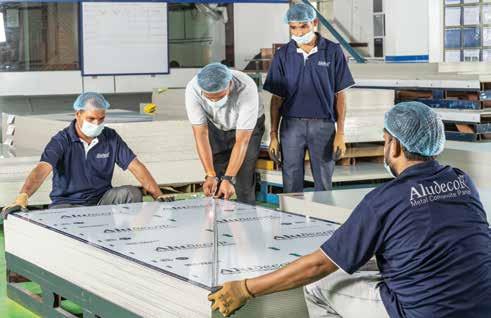
When sustainability becomes invisible in the final product but visible in its long-term performance, that is when responsibility has truly evolved into leadership.
• Aludecor is known for introducing industry firsts – from fire-retardant systems to design-led surfaces. Is there a product or innovation you are especially proud of, not because it sold well, but because it raised the bar for the industry?
Yes, without hesitation, it would be our fire-retardant and fire-resistant ACPs – not because they became a strong commercial pillar for us, but because they forced a long-overdue conversation in the industry.
When we introduced FR ACPs, the market was not asking for them loudly. Many felt they were unnecessary or expensive. But we had already identified the gaps – how loosely the term FR was being used and how little attention was paid to real fire scenarios. Fire performance must always be understood as part of a system, not just a material label.
What I am proud of is not just the product, but the discipline it demanded. It pushed us to invest in deeper testing, stronger certifications, tighter process controls and a much more responsible way of talking about fire safety. Over time, it also pushed the category forward. Today, fire
performance is no longer an optional conversation; it is an expected one.
That is when you know an innovation has done its job – when it does not just benefit one brand but raises the minimum standard against which everyone is measured.
• When future architects, engineers, or entrepreneurs look at Aludecor’s journey, what do you hope they learn – not about success, but about integrity?
I would hope they learn that integrity is not a single bold decision; it is a series of quiet, consistent choices made when taking a shortcut would have been easier and more profitable.
Aludecor’s journey shows that you can grow in a competitive, price-driven industry without distancing yourself from
responsibility. That it is possible to build scale without diluting standards, and ambition without compromising process. Integrity, in our experience, is less about saying the right things and more about designing systems that prevent you from doing the wrong ones.
If there is one lesson I would want future leaders to take away, it is this: reputations are not built in moments of success, but tested in moments of stress –when products fail, questions are asked and excuses are tempting Choosing proof over persuasion and accountability over convenience may slow you down initially, but over time, it becomes the strongest foundation you can build upon.
• What is your five-year vision for Aludecor’s role in shaping safer, smarter and more responsible built environments?
Over the next five years, I see Aludecor’s role evolving from being a trusted manufacturer to becoming a reference point for responsibility in the built environment. Our ambition is not just to supply materials, but to influence testingbacked decision-making by architects, fabricators, developers, and end-users – especially when it comes to safety, longevity, and accountability.
We want testing, documentation and verification to become normal parts of the conversation, not exceptional ones. If Aludecor can help shift the industry from assumption-driven choices to evidenceled decisions, we will have made a meaningful contribution to safer buildings and fewer disputes across the value chain. That includes deeper collaboration with specifiers, more transparent processes and continuous investment in testing and manufacturing discipline.
Ultimately, success for us will not be measured only by market share, but by whether responsible material selection becomes the default expectation. If, five years from now, safer and smarter building choices are no longer debated but demanded, and Aludecor is seen as one of the forces that helped make that shift happen, we will consider that vision fulfilled.

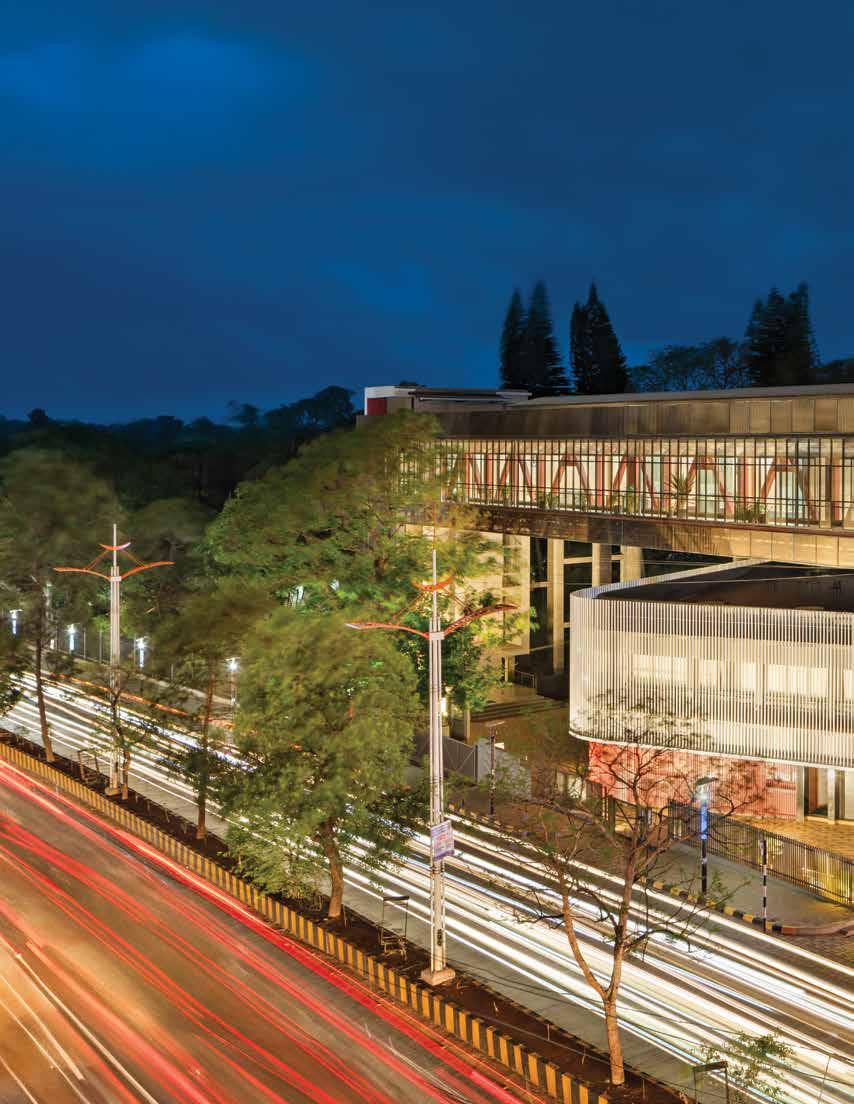
The way we build is shifting from creating static boxes to designing “living” skins that breathe and adapt. Modern architecture is moving away from the trend of all-glass towers that trap heat, focusing instead on how a building can better serve the people inside it. By blending digital tools with a deeper understanding of human comfort, today’s façades are
becoming more than just exteriors; they are sensitive interfaces that manage light, air, and energy to create a more natural living environment.
To understand the practical side of this shift, we interviewed a panel of leading architects and industry experts who are redefining the building envelope. Their collective
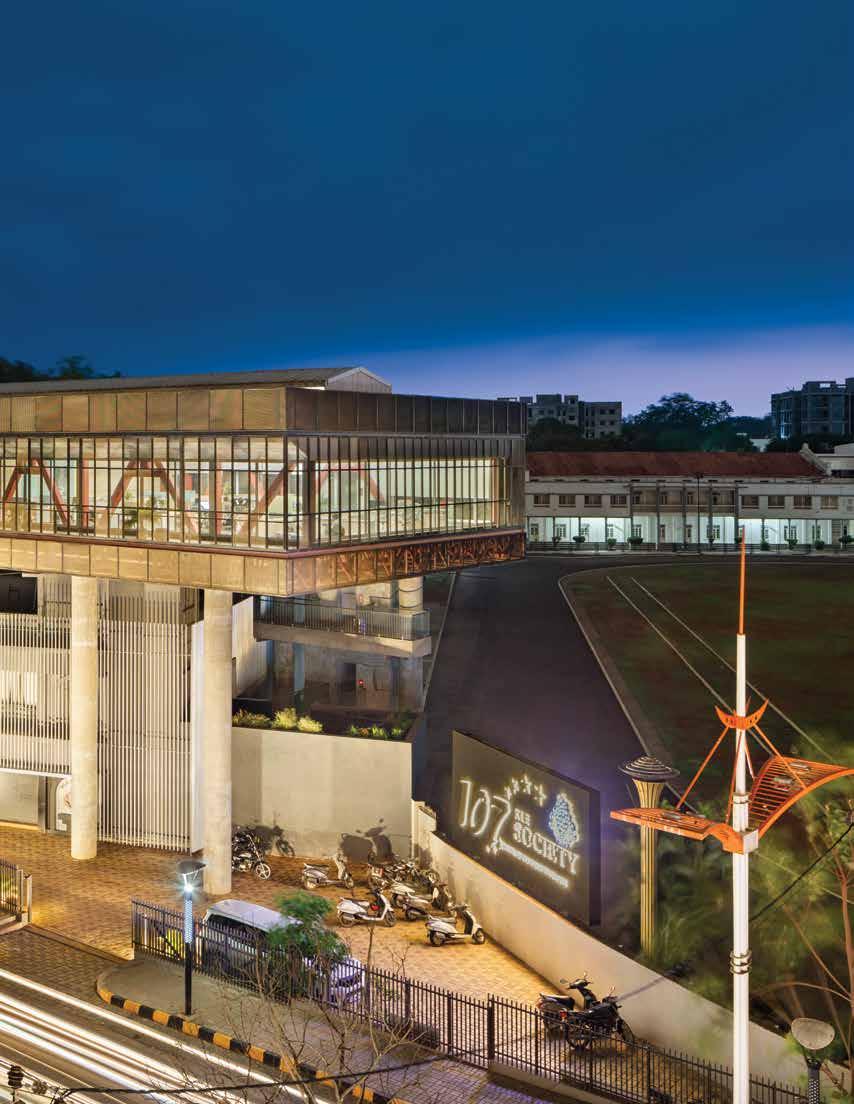
insights show how AI simulations, smart materials, and even traditional resources like brick are being used to create structures that are both efficient and welcoming. This exploration looks at the innovations and real-world constraints shaping a new generation of design—one where the building skin is an active, performance-driven system built for long-term well-being.




Advances in materials and digital technologies have transformed how building skins are conceived and engineered. High-performance composites, smart glazing, and parametric design tools enable façades to respond to climate, optimise energy use, and achieve complex geometries. Today’s envelopes integrate structure, performance, and aesthetics with unprecedented precision and adaptability.
Ar. Aayush Arya, Owner and Principal Designer, 6Hues Architecture Studio notes that 3D modelling and AI have revolutionised building skins, allowing organic and parametric forms to be precisely simulated. He suggests that advanced metal fabrication now enables kinetic façades that respond to wind, turning complex concepts into efficiently executed designs.
Ar. Bhuvan Kapila, Founder & Principal Architect, Workshop for Metropolitan Architecture notes that BIM, 3D modelling, and simulation software enable early study of proportions, climate response, and detailing. Improved glazing systems, engineered stone, and composite panels offer greater flexibility, helping us create building skins that are visually refined, structurally efficient, and responsive to site conditions and user comfort.
Mihir Thakkar, Founder, Fenestration & Façade India says that advances
in materials and digital technologies have transformed façades from static elements into dynamic, performancedriven systems. High-performance glazing, advanced aluminium systems, composites, and smart materials enable precise control of daylight, heat gain, insulation, and durability. Meanwhile, BIM, parametric modelling, and façade simulation tools allow early thermal, structural, and climatic testing before construction. As a result, façades are now engineered early in the project lifecycle, reducing risk, improving predictability, and enhancing long-term building performance.
Ar. Kapil Aggarwal, Principal Architect, Spaces Architect@ka opines that advances in materials science and digital tools have reshaped façade design. High-performance glazing—such as low-E, spectrally selective and vacuum insulating glass—enhances thermal control and daylight, while lightweight composite panels enable sculptural forms with strong strength-to-weight ratios. Phase change materials regulate heat passively, and smart systems like electrochromic glass and self-cleaning surfaces add adaptability. Meanwhile, parametric design tools, AI optimisation and BIM integrate performance, fabrication and cost from the outset. Earlystage simulation and digital prototyping allow precise, bespoke fabrication, transforming façades from static skins into dynamic, climate-responsive systems.
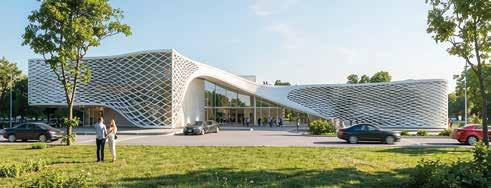




Ar. Ashish K Jain, Partner, AEON Consultants agrees, façade design is undergoing a paradigm shift. No longer static barriers, façades are now intelligent, adaptive systems. Tools such as parametric modelling, BIM, digital twins and AI-driven simulations optimise energy, daylight and airflow, while advanced materials — including dynamic glazing, nano-coatings, bio-based composites and ETFE — create lighter, stronger and more sustainable building skins that balance aesthetics, performance and occupant comfort.
Ar. Namrata Betigiri - Principal Architect and Ar. Praveen Bavadekar
- Founder & Principal Architect, Thirdspace Architecture Studio, Belagavi suggests that architecture is not only about providing shelter, but also about mediating between interior and exterior through skins and façades. Modernism approached the skin as a repetitive, factory-made module, from unitised glazing to prefabricated concrete panels. Today, however, advanced fabrication technologies have reduced the need for repetition in mass production. The long-held divide between craft and factory manufacture must therefore be reconsidered, as innovations such as 3D printing, digital fabrication and robotics enable new ways of conceiving and constructing façades and building skins.
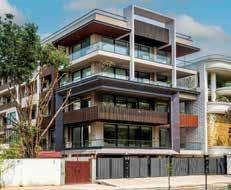
Ar. Sahir Choudhary, Associate Architect, Habitat Architects says building skins have evolved from static cladding into calibrated systems that negotiate structure, climate and experience simultaneously. Digital modelling and parametric workflows allow façades to respond to solar exposure, span, load and movement, rather than serving as applied aesthetics. At the Signature Estates clubhouse, the façade takes the form of a porous concrete exoskeleton, digitally rationalised to align geometry with performance. The skin is no longer added to a building; it becomes the building. He adds, “When technology allows geometry to respond to climate and structure at the same time, the façade stops being a surface and starts behaving like architecture.”
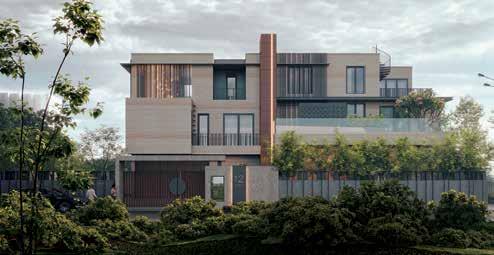

1 million+ homes
130+ cities

Rakesh S Morudkar,
Founder Principal Consultant & Managing Director, RSM Design Solutions
notes that in this age of everchanging environment and advances in technology, one has to be abreast with the latest developments in field of Materials – alternatives to the existing ones. These alternatives should necessarily be cost effective and sustainable.
Contemporary façade systems increasingly embody a seamless fusion of aesthetics, performance, and innovation. From unitised curtain walls and highperformance glazing to kinetic and responsive envelopes, today’s solutions demonstrate how advanced materials and engineering enable buildings to achieve visual distinction while meeting stringent environmental and functional demands.
Ar. Arya notes that dynamic pixel LED façade systems exemplify the seamless integration of form, function and advanced technology. Unlike traditional projection mapping, which depends on darkness and offers limited contrast, programmable LED façades deliver vivid, high-contrast visuals even in daylight. When integrated with translucent or reflective materials, they
enhance architectural expression while transforming buildings into interactive canvases—capable of storytelling, seasonal displays, wayfinding and animated effects that turn structures into engaging urban landmarks.
Ar. Kapila and Thakkar agree that the most successful systems are those that prioritise performance-tested, climate-responsive engineering. Ar. Kapila suggests that double-glazed curtain walls, ventilated stone cladding, and CNC-cut metal screens best represent this balance of aesthetics and thermal control.
Thakkar adds that the most effective systems integrate form, function, and technology through climate-responsive, performance-led design. Highperformance glazing, thermally broken

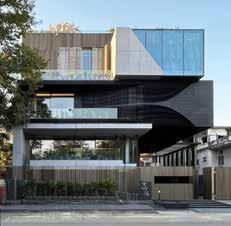
aluminium systems, and well-planned double-skin façades deliver measurable results — controlled heat gain, improved acoustics, airtightness, and durability in Indian conditions. Increasingly, integrated shading, ventilation, and digital monitoring define true performance beyond design trends.
Ar. Aggarwal and Ar. Jain both identify smart glazing and advanced materials as the pinnacle of integrated technology. Ar. Aggarwal opines that leading façade solutions today include unitised curtain wall systems by Schüco, Jansen and Kawneer, delivering high thermal performance and fast installation. Double-skin façades enhance energy
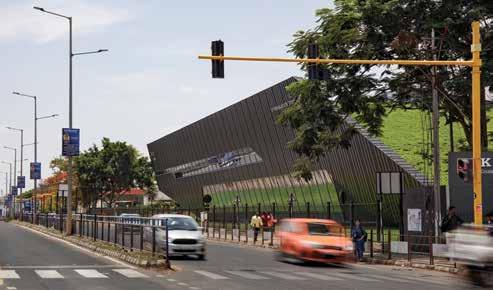
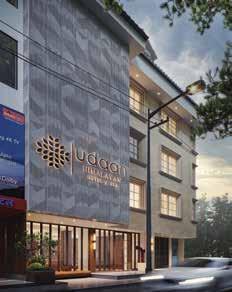
efficiency through ventilated buffer zones, while smart glazing from SageGlass and View Dynamic Glass controls solar gain and glare. HPL and metal composite panels offer durable, design-flexible rainscreen solutions, balancing aesthetics and performance.
Ar. Jain says that electrochromic glazing, double-skin façades, low-carbon glazing and dynamic shading systems enhance high-performance envelopes. Electrochromic glass controls solar gain while preserving views, double-skin façades improve thermal and acoustic performance, and responsive shading optimises light and heat—blending design, automation and sustainability.
Ar. Betigiri and Ar. Bavadekar say technological advancements in façades are twofold. We can now design, fabricate and assemble complex forms that respond precisely to contextual demands. At the same time, progress in material science enables improved insulation and climatic control while maintaining transparency and permeability. Ultimately, effective façade technology should reduce reliance on artificial lighting and mechanical ventilation.
Ar. Choudhary opines those exoskeletal systems, such as digitally fabricated GFRC lattices, represent the most convincing synthesis of form and function. He notes that these systems collapse structure, shading, and identity into a single move, where the skin is no longer an addition but what the building becomes.
Morudkar notes that the integration is best demonstrated through the software-driven parameters used in product selection. He opines that using sun path, lux, and glare analysis to determine glass thickness and aluminium sizing at the design stage is the ultimate example of technology guiding architectural intent.
Designing high-performance building envelopes today requires a holistic approach that balances thermal efficiency, airtightness, structural integrity, moisture control, fire safety, acoustics, and durability. Increasing regulatory demands and sustainability goals further emphasise façade optimisation to enhance occupant comfort, energy performance, and long-
term resilience across diverse climatic and urban conditions.
Ar. Morudkar notes that thermal, acoustic, fire, and safety considerations are all important and vital for the building envelope; one cannot sideline any single aspect and state that only one of the above is important, particularly as the norms and standards make them mandatory.
Ar. Kapila says that when designing high-performance envelopes, factors like thermal insulation, solar heat gain, natural ventilation, and daylighting are critical, and they also prioritise moisture control and weather resistance to prevent long-term damage, while ensuring that careful placement of openings improves acoustics and fire-rated systems and certified materials ensure safety compliance at the early design stage.
Ar. Jain opines that performance is multifaceted, where managing U-values and solar heat gain coefficients is critical to reducing energy demand, and the façade must evolve from a passive enclosure into an active, intelligent interface between the building and its environment.
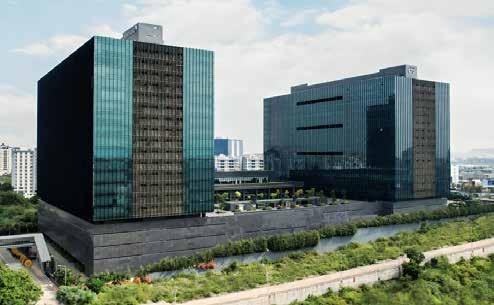
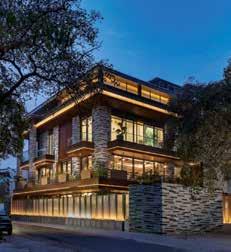
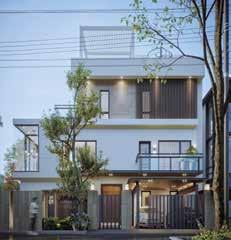
Ar. Arya says, thermal performance manages heat gain and loss through advanced glazing that filters solar radiation while maximising daylight, alongside insulated façade systems that enhance efficiency without compromising aesthetics. Acoustic performance relies on laminated glass, acoustic interlayers and specialised insulation to reduce traffic and coastal noise. Fire safety demands noncombustible, fire-rated materials, with modern metal panels offering woodlike warmth and high resistance. Safety and security combine active
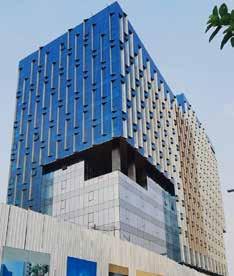
systems—such as surveillance and access control—with passive measures including robust materials, laminated safety glass and reinforced openings, ensuring durability, resilience and occupant protection.
Ar. Aggarwal notes that the resistance to heat flow, measured via U-Value and R-Value, remains the primary benchmark for energy efficiency, adding that acoustic performance is measured by the Sound Transmission Class (STC), while fire safety necessitates the use of non-combustible materials like mineral wool insulation and
fire-rated systems, and phase change materials (PCMs) can regulate heat flux passively.
Ar. Choudhary opines that thermal performance should be shaped through depth, porosity, and mass, and that the performance of a highperformance envelope is defined by how it balances transparency, shading, and glare to enhance spatial quality, operating as a thickened threshold that choreographs movement, light, and social interaction.
Ar. Betigiri and Ar. Bavadekar suggest that deep overhangs, verandahs and double skins are some ways in which an architectural and a spatial solution works more effectively than purely relying on technology to negotiate the boundary that separates the inside from the outside.
Thakkar notes that acoustic performance is a major consideration in dense urban environments, and addressing this requires a holistic approach to system design and installation quality rather than just increasing glass thickness, while fire safety must move beyond “checkbox compliance” to include rigorous testing of entire assemblies.
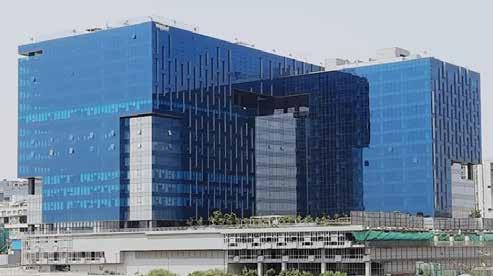
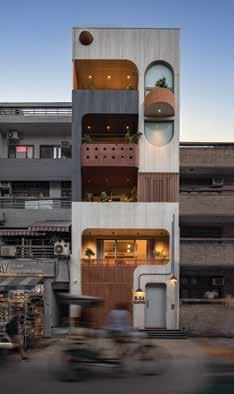
Cost-effective façade products are increasingly shaping contemporary architecture, enabling projects to achieve performance, durability and aesthetic value within tight budgets. Advances in materials, manufacturing and system design now allow façades to deliver thermal efficiency, weather resistance and longevity without excessive cost, ensuring that highquality building envelopes remain accessible across diverse building typologies and market segments.
Thakkar says that cost-effectiveness is increasingly measured through lifecycle value rather than the lowest upfront cost, noting that wellengineered aluminium window systems with thermal breaks, optimised glazing configurations, and locally manufactured curtain wall systems often deliver the best balance of cost, performance, and serviceability in the
Indian context, as real savings come from reduced energy consumption, fewer failures, and lower maintenance.
Morudkar notes that We cannot singly outline a façade product being costeffective. A thorough cost benefit analysis needs to be done to opt for alternate Product ensuring its adherence to the norms, lifecycle, guaranty / warranty offered , availability, replaceability , maintenance free etc.
Ar. Aggarwal suggests that cost-effective façade systems achieve performance goals while reducing installation and lifecycle costs. Aluminium frames with IGUs, standardised rainscreen panels and prefabricated unitised systems offer thermal efficiency, easy replacement and faster installation. Insulated wall panels provide combined insulation and finish for low- to mid-rise projects. Savings come from lower labour, reduced waste, improved energy performance and predictable fabrication.
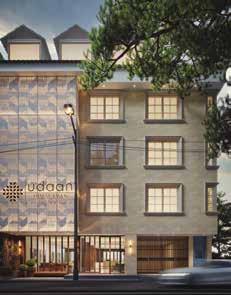
Ar. Arya opines that iron and stainlesssteel fabrication remain some of the most reliable and versatile materials in façade design because iron is a tried-and-tested material—malleable, strong, and
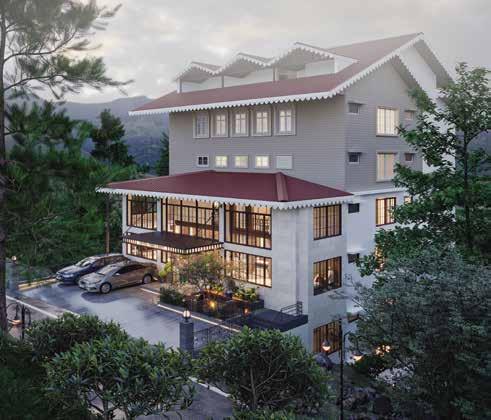
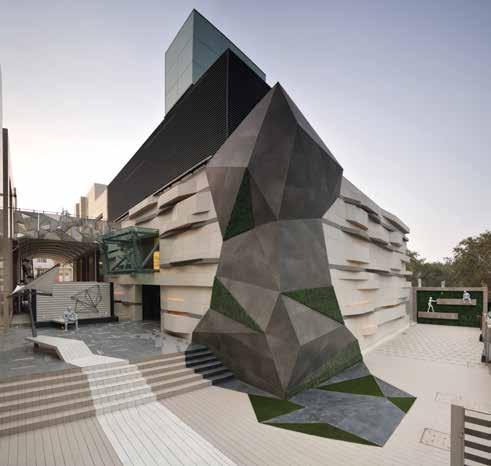
adaptable to almost any form—allowing for custom, sophisticated detailing and practical, durable, and economical design solutions.
Ar. Kapila says that cost-effective façade solutions today include aluminium composite panels, textured exterior finishes, locally sourced natural stone, fibre cement boards, and high-quality aluminium window systems which, when detailed and installed correctly, offer durability, thermal efficiency, and aesthetic value.
Ar. Jain notes that aluminium composite panels remain a key choice for most building owners because they are lightweight, durable, and versatile, while precast concrete panels offer strength and affordability for modular construction, and double-glazed units with low-E coatings provide excellent performance without a significant price hike.
Ar. Betigiri and Ar. Bavadekar suggest that they have discovered that sometimes the most ubiquitous and basic of materials, such as the humble
brick, can also be reinterpreted and used in a completely new manner to create highly performative façades, noting that materiality and technology cannot function effectively without a sensitive design approach.
The future of façade design and building envelopes is being defined by sustainability,
digitalisation and performance-driven innovation. Responsive materials, energygenerating systems and advanced fabrication techniques are transforming façades into active environmental moderators. As climate goals tighten and urban density grows, next-generation envelopes will integrate aesthetics, resilience and intelligence to shape healthier, more efficient and adaptable buildings.
Ar. Arya suggests that future envelopes will move towards smarter, responsive systems where lighting is an integral architectural element rather than an addon. He opines that integrated LED systems will transform façades into dynamic identities at night, allowing buildings to adapt to seasons or events through programmable pixel lighting.
Ar. Kapila, Ar.Jain, and Ar. Aggarwal agree that sustainability and intelligence will be the primary drivers of future innovation. Ar. Kapila notes that the future is defined by climate responsiveness and smart technologies, including green façades and recyclable components. Ar. Jain adds that Building-Integrated Photovoltaics (BIPV) will turn façades into power plants, while biophilic skins ensure long-term resilience. Ar. Aggarwal suggests that
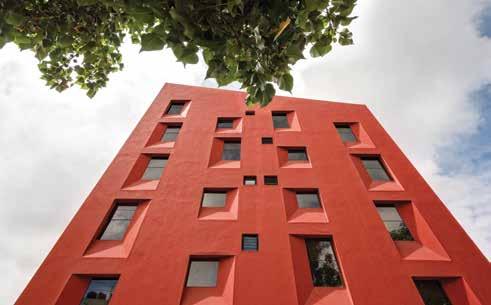
climate-adaptive skins will respond to real-time environmental changes to reduce energy loads, transformed by AIdriven performance modelling into active environmental interfaces.
Ar. Betigiri and Ar. Bavadekar say they are excited by glazing innovations that allow for unparalleled transparency and connectivity. They note that despite its paradoxical nature, advanced glazing will continue to evolve, marking its presence through near invisibility and seamless assembly.
Ar. Choudhary opines that the future lies in intelligence and depth, where skins shift from fixed expressions to calibrated systems based on environmental data. He suggests that façades will operate as spatial mediators—thickened thresholds that choreograph movement and light while functioning as integrated architectural systems.
Thakkar identifies five key shifts: climatefirst design, sensors for performance monitoring, a focus on retrofitting, renewable integration, and stronger national standards.
Morudkar concludes that easier , actual user friendly Software having options to
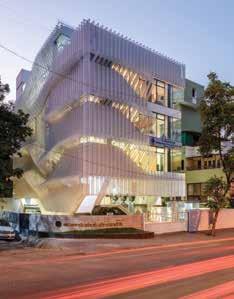
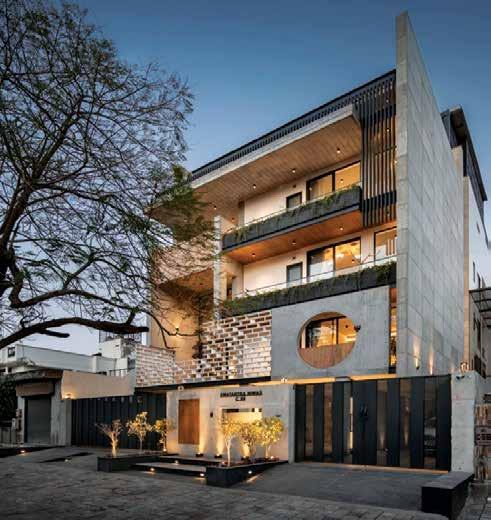
explore and analyse are the ones which we should opt for. However, the productivity enhancement, integration / output compatibility to the mostly / popularly used Software is key element.
The shift toward intelligent building skins marks a turning point in how we define the relationship between a structure and its surroundings. Architecture is moving away from being a static barrier and toward becoming an active, performance-driven system. As we have seen through the insights of our expert panel, the successful façade of the future is not just about hightech glazing or complex 3D modeling; it is about a thoughtful synthesis of data, material choice, and human comfort. Whether through the reinterpretation of the humble brick or the implementation
of AI-driven kinetic systems, the goal remains the same: creating buildings that are both environmentally responsible and responsive to the people who use them.
Ultimately, the future of the building envelope lies in its ability to balance innovation with practicality. While digital tools like BIM and parametric design allow for unprecedented precision, the real value of these technologies is their ability to reduce energy loads and improve long-term durability. By focusing on performance-led aesthetics rather than just visual trends, the industry is paving the way for a more resilient urban landscape. These nextgeneration skins will continue to evolve, transforming our cities into healthier, more efficient spaces that stand the test of time.
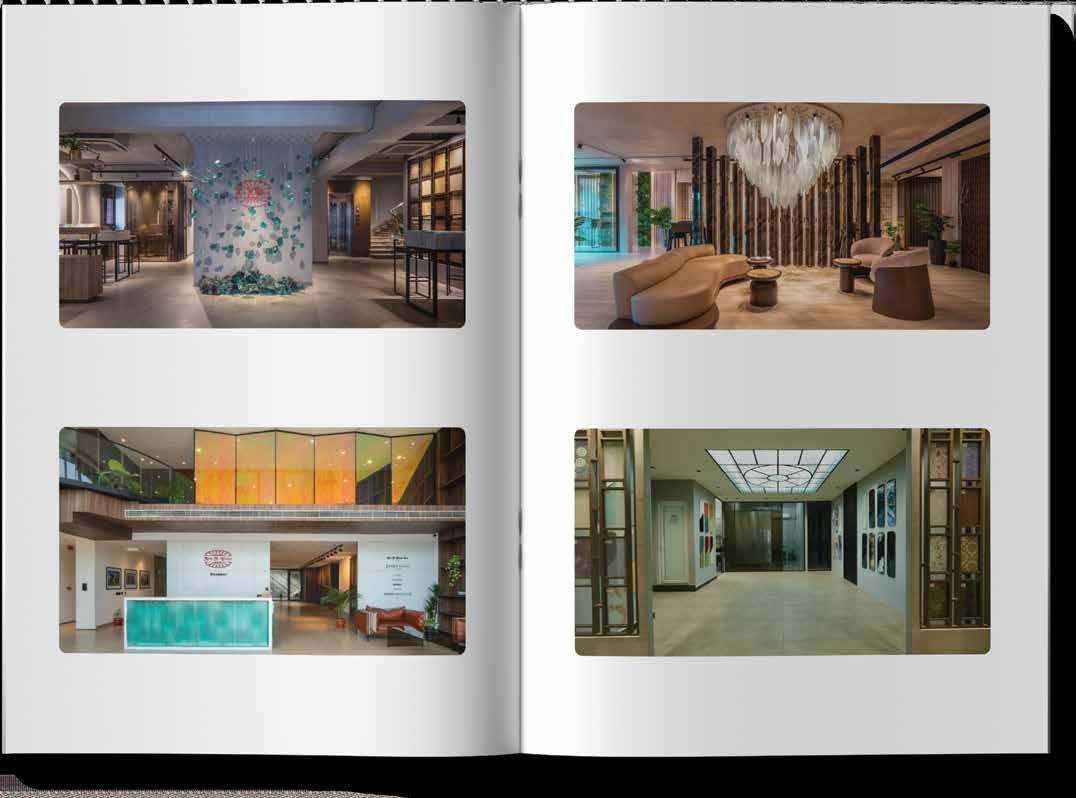
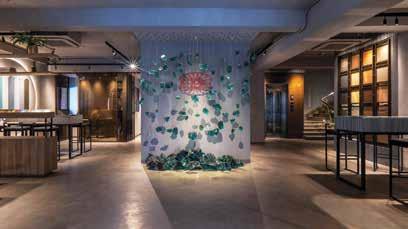
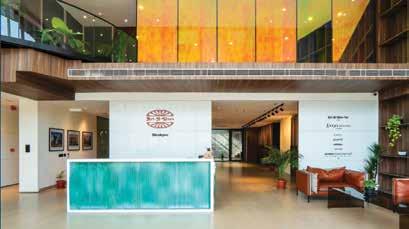
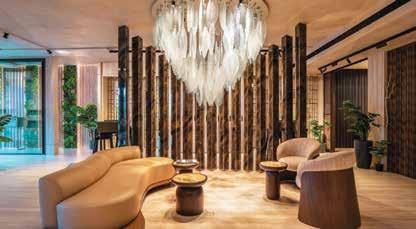
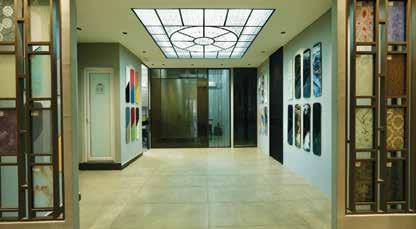
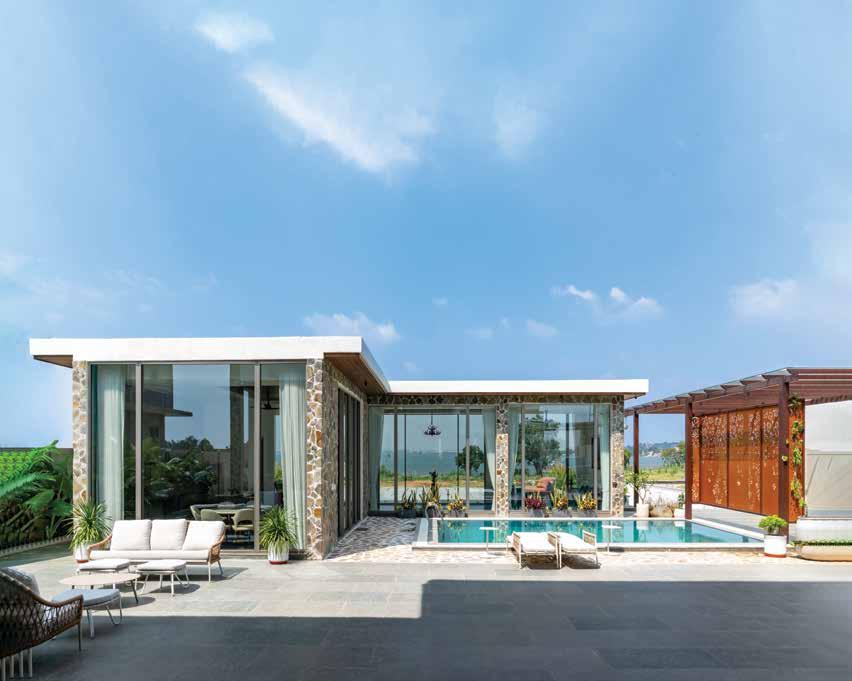
The traditional boundary between a building’s interior and the outside world is vanishing. No longer viewed as a static “box” or a purely decorative layer, the modern façade has evolved into a sophisticated, high-performance interface. In an era defined by rapid climate change and digital transformation, building skins are being redefined as active, data-informed systems that breathe, adapt, and generate energy.
This shift represents a move away from the era of sealed glass towers toward a more nuanced, “living” architecture. By merging cutting-edge materials science—such as electrochromic glazing and bio-based composites—with
digital tools like BIM, AI, and parametric modeling, architects are now able to predict a building’s performance long before the first stone is laid.
To explore this frontier, we spoke with a diverse panel of industry leaders, consultants, and architects. From the integration of Building-Integrated Photovoltaics (BIPV) to the resurgence of climate-responsive materials like terracotta and fiber cement, these experts share their vision for a future where aesthetics, sustainability, and costefficiency coexist.
Through their collective insights, we examine how the next generation of building envelopes is prioritising
occupant well-being and environmental intelligence, transforming the very skin of our cities into a tool for a more resilient future.
Advances in materials science and digital innovation are fundamentally transforming the way building skins are conceived, engineered and delivered. From high-performance glazing and smart coatings to parametric modelling and BIM-driven precision, façades are no longer passive envelopes. They are responsive, data-informed systems that enhance efficiency, sustainability and architectural expression.
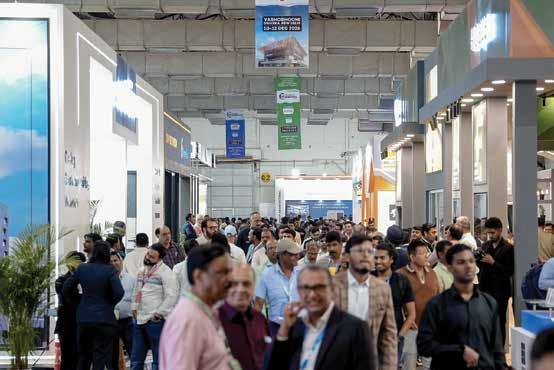

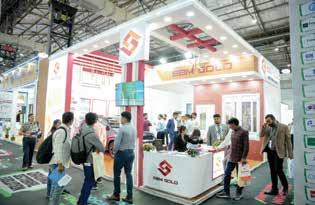
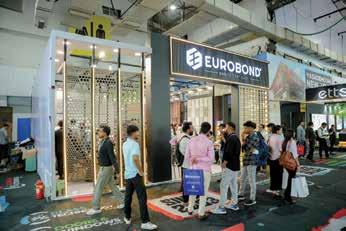
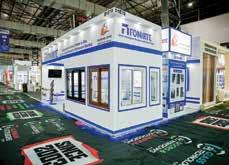
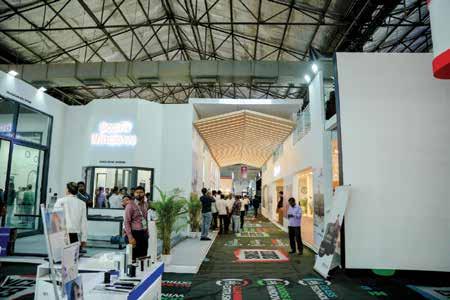
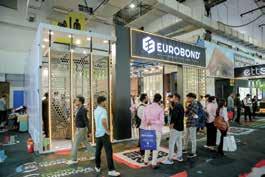
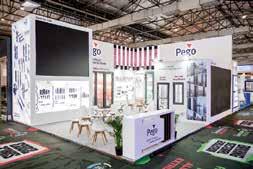
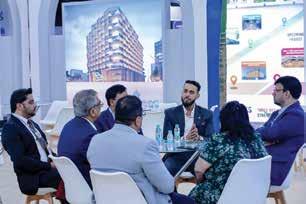
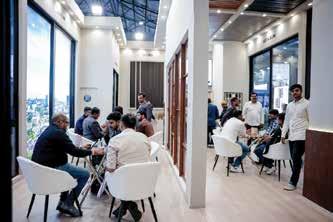
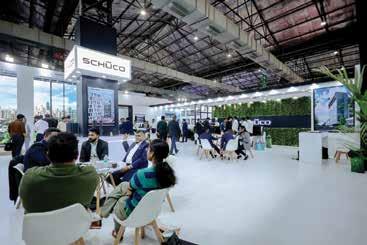
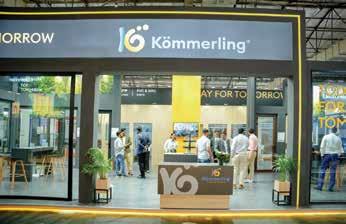
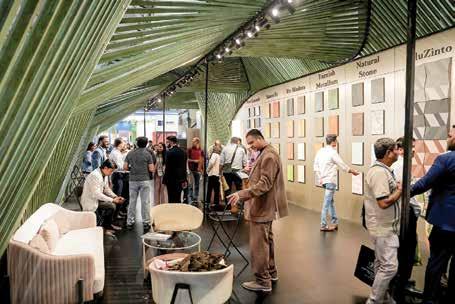
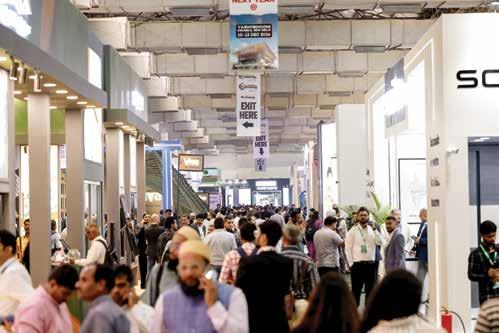







Kartheek Pasupuleti, DirectorProjects Façade at PRA Façade Design & Engineering Consultancy, notes that the last decade has seen the industry shift from traditional approaches toward performance-led, technology-driven systems. He explains that materials such as engineered glass with advanced coatings and thermally optimised aluminium now allow façades to respond actively to climate and user needs, managing solar gain and thermal comfort without compromising aesthetics. Furthermore, he observes that digital tools like BIM and parametric design allow multidisciplinary teams to assess performance early in the process, while digital twins enable continuous post-occupancy optimisation.
According to Ar. Shweta Balasubramoni, Founder and Principal Architect at Vistaar Associates, building skins are no longer merely cosmetic layers but have become vital environmental filters. She opines that the use of simulation tools to test solar exposure, airflow, and heat gain before construction begins has fundamentally changed decisionmaking, ensuring the façade is resolved early in the design phase rather than added as an afterthought.
Aman Upadhyay, Assistant Manager - Project Coordinator at Aluplex India Pvt Ltd , states that recent advancements in materials such as Low-E glass, ETFE systems, and thermally broken aluminium profiles have significantly enhanced building performance by improving energy efficiency and reducing structural loads. He adds that digital technologies, including BIM, parametric design tools, and CNC fabrication, have transformed façade engineering by enabling precision detailing and improved installation accuracy.
Ar. Taranjit Singh Chandpuri, Head Hospitality Design at Nostri Design Consultants Pvt. Ltd., says that significant advancements in materials like smart glazing and phase-change materials have revolutionised the engineering of building skins. He highlights the role of sensors and digital actuators that allow the building envelope to “breathe” or automatically adjust shading. Additionally, he points out that digital technologies such as computational design and AI are making buildings more “alive” by predicting performance and enabling intricate, functional patterns.
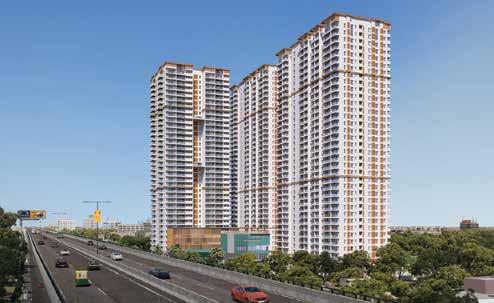



In the context of India’s hot-humid and monsoon-heavy climate, Ar. Pratul Bajaj, Founder of Anantē Studios, notes that façades have evolved from aesthetic skins into essential climate-control systems. He explains that by using BIM and environmental simulations to test solar heat gain and wind-driven rain before construction, firms can reduce junction failures. He believes the focus today has shifted toward climate-responsive façades rather than purely glass-heavy architectural statements.
Rajeev Kumar, Independent Consultant and Advisor (Retired Director, Govt. of India), opines that there has been a paradigm shift in how façades are perceived; they are no longer just an architectural identity but are highperformance, intelligent environmental systems. He notes that these engineered interfaces can be optimised before construction using parametric design and IoT integration, effectively becoming smart, sustainable performance systems rather than mere enclosures.
Ar. Raj Singh, Co-Founder and Principal Consultant at Nexivaa, says over the past decade, façade design has evolved from traditional 2D drafting to a more integrated, data-driven engineering approach. Tools such as BIM, parametric modelling and performance simulations now allow façade systems to be analysed and optimised before construction, improving coordination between architectural, structural and services teams while reducing on-site conflicts.
At the same time, advances in materials and manufacturing have expanded façade capabilities. High-performance glazing, aluminium composite systems, fibre-cement boards and engineered cladding offer improved durability, thermal performance and design flexibility. As a result, façades are now engineered systems that respond to
climate, performance requirements and long-term building operation.
Modern façade systems are no longer defined by aesthetics alone. Today, they seamlessly unite architectural expression with high-performance engineering and smart technologies. By integrating advanced materials, digital modelling, automation, and climate-responsive design, these systems enhance energy efficiency, occupant comfort, safety, and durability—transforming building envelopes into dynamic, highperforming skins for the future.
Pasupuleti notes that unitised curtain wall systems are leaders in high-performance applications due to their factory-controlled precision, which ensures high airtightness and thermal break continuity. He also highlights double-skin façades as excellent examples of integrated performance, creating a ventilated cavity that acts as a thermal buffer and improves acoustic attenuation.
Ar. Balasubramoni opines that ventilated terracotta façades are particularly notable for being tactile, durable, and climateresponsive. She adds that the cavity in these systems reduces heat gain and allows the building to perform passively. Furthermore, she notes that carefully
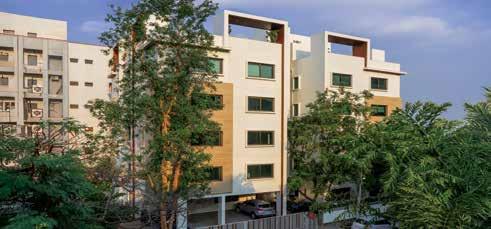
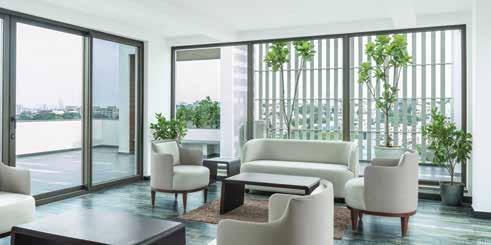
detailed steel systems bring precision and adaptability through modular grids and slender sections.
Ar. Chandpuri identifies three systems representing the pinnacle of aesthetic and high-performance integration: Biophilic Algae Façades (like SolarLeaf), Building-Integrated Photovoltaics (BIPV), and Kinetic Shading systems. He explains that SolarLeaf uses living microalgae to generate renewable energy and provide dynamic shading. He further notes that kinetic façades, such as those at the Al Bahar Towers, use sensors to physically move in response to the sun, reducing heat gain without blocking natural light.
Kumar says that systems like electrochromic smart glass, climate-adaptive façades, and BIPV glazing best exemplify this integration. He notes that electrochromic glazing dynamically changes tint to eliminate the need for external shading while improving occupant comfort. According to him, BIPV panels seamlessly integrate into curtain walls to generate energy while contributing to aesthetics and daylighting performance.
Ar. Bajaj agrees that ventilated rainscreens (such as terracotta, fiber cement, or HPL) and high-performance glazing with external shading are among the most successful systems for managing moisture and reducing heat gain. He also notes the
effectiveness of unitised curtain walls for high-rise buildings due to their superior water-tightness and quality control.
Upadhyay agrees with the effectiveness of modern systems like Unitised Curtain Wall Systems, Double Skin Façades, and BIPV. He notes that unitised systems offer factory-controlled quality and faster installation, while double-skin façades enhance thermal buffering.
According to Ar. Singh, several façade systems today demonstrate how architectural intent and engineering performance can work together effectively. Unitised curtain wall systems, widely used in high-rise buildings, are factory-fabricated, ensuring consistent quality and faster installation. Advances such as double-glazed units with solar-control coatings help maintain daylight while reducing solar heat gain, particularly in warmer climates. Ventilated façades (rainscreen systems) improve moisture management, thermal comfort, and durability. He adds, similarly, parametric and perforated metal façades combine expressive design with functional shading and ventilation, balancing aesthetics with performance.
In HighPerformance Building Envelopes In today’s architecture, building envelopes must do far more than enclose space.
They are expected to deliver exceptional thermal efficiency, acoustic comfort, fire safety and structural resilience, while responding to sustainability targets and occupant wellbeing. A carefully engineered envelope balances performance, durability and compliance, ensuring long-term value alongside refined architectural expression.
Pasupuleti notes that a multidimensional approach is essential for occupant comfort, code compliance, and building longevity. He emphasises that thermal performance is fundamental, requiring the optimisation of U-values, solar heat gain coefficients, and airtightness through insulated glazing and thermally broken frames. He further opines that urban context demand façades with high acoustic insulation achieved via glass lamination and careful cavity design. Regarding safety, he states that façades must comply with fire codes using fire-resistant materials and compartmentation strategies like cavity barriers, while also integrating resistance to wind and seismic loads.
Ar. Chandpuri agrees that fire and safety are non-negotiable, while noting that thermal and acoustic parameters
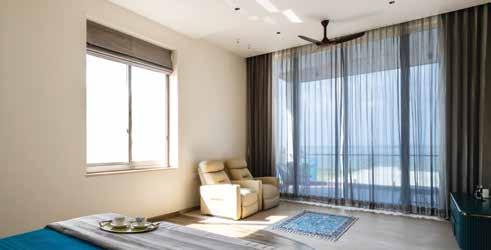
often depend on specific building requirements and location. He explains that modern envelopes are integrated systems that balance conflicting goals, such as insulation thickness meeting fire standards. He highlights a shift in thermal performance toward managing thermal inertia using phase-change materials and triple-glazing. For acoustics, he advocates a “mass-air-mass” approach and the use of acoustic sealants. He also stresses that fire safety must now include considerations for smoke toxicity and structural integrity.
Kumar concurs that a high-performance envelope must simultaneously optimise these elements to ensure energy efficiency, interior comfort, and life safety. According to him, the current approach is performancebased, focusing on preventing vertical fire spread and ensuring durability over the building’s lifecycle. He adds that sustainability has now become an additional critical parameter for high-performance systems.
Ar. Balasubramoni notes that thermal performance must be addressed through orientation and material layering, particularly in tropical climates where solar control is more vital than insulation alone. She agrees that fire safety is non-negotiable, especially in ventilated cavity systems, but adds that moisture management is often an overlooked essential. She also maintains that a truly sustainable façade must be easy to access and repair.
Ar. Bajaj highlights that in the Indian context, the focus is on thermal control through shading and solar heat gain coefficients, particularly on west-facing façades. He observes that monsoon water management—including proper drainage and sealant quality—is a critical factor alongside fire safety and dust control. He concludes that execution detailing in these areas is just as important as the initial material selection.
Ar. Singh notes that designing a highperformance façade requires balancing multiple performance requirements. Thermal performance is a key concern, particularly in climates with high cooling demand. The façade helps control solar heat gain, daylight penetration, and insulation levels, directly influencing the building’s overall energy consumption. He adds, acoustic performance is also important, especially in dense urban areas where buildings must protect occupants from traffic and city noise. Fire safety has become a critical aspect of façade engineering, requiring appropriate material selection, cavity barriers, and systems that meet tested fire standards. Structural safety remains fundamental, as façades must withstand wind loads, accommodate structural movement, and allow safe maintenance access throughout the building’s lifecycle.
Upadhyay agrees that high-performance envelopes must address multiple criteria,
specifically listing thermal U-values, acoustic STC ratings, and fire-safe perimeter systems. He notes that structural safety, including wind load resistance and anchor design, along with water and air tightness, are parameters that directly impact energy consumption and regulatory compliance.
In today’s competitive construction landscape, achieving a balance between budget and performance is more critical than ever. Modern façade products are now engineered to deliver thermal efficiency, durability, safety and aesthetic appeal without escalating project costs. Through smarter material choices, optimised systems and efficient fabrication, it is entirely possible to achieve value without sacrificing long-term performance.
According to Ar. Chandpuri, while advanced technology can be costlier initially, traditional materials like fiber cement boards, vinyl siding, and aluminium composite panels (ACPs) often prove most cost-effective by balancing lower upfront costs with minimal long-term maintenance. He notes that fiber cement boards offer exceptional durability, while vinyl siding remains the most affordable low-maintenance option. Furthermore, ACPs provide an economical choice due to their lightweight nature and ease of installation. Ultimately, he believes true cost-effectiveness depends on a balance between initial expenditure and total life cycle performance.
Pasupuleti agrees that cost-effectiveness is about value through performance and durability rather than just the lowest initial expense. He opines that optimised unitised systems offer compelling value for mid-to-high rise projects because factory fabrication and reduced site labour mitigate risks and improve schedule certainty. For more cost-sensitive applications, he suggests that advanced stick-built façades with thermally broken

frames remain effective when paired with intelligent design coordination and standardised components.
Ar. Balasubramoni also maintains that true cost-effectiveness is lifecycle-based, noting that ventilated terracotta systems perform well over time as they require minimal repainting and resist weathering. She observes that thoughtfully detailed steel assemblies offer durability and recyclability, which reduce long-term environmental costs. In many projects, she believes passive strategies like shading screens and cavity walls deliver stronger performance returns than expensive fully glazed façades.
Kumar notes that passive elements such as insulated metal panels, ACP cladding, and engineered panels are currently the most cost-effective for budget-conscious projects. He agrees with the other experts that these systems combine lower upfront costs with reliable thermal and weather performance. However, he expects the industry focus to shift increasingly towards advanced, intelligent, and highperformance building-integrated systems. Ar. Bajaj shares the view that costeffectiveness means strong lifecycle value, highlighting standardised aluminium window systems with solar-control glass and ventilated HPL or fiber cement
panels as top-performing options in the Indian context. He also suggests that insulated metal panels are suitable for commercial projects and emphasises that standardisation and repetition are major strategies for saving costs.
Upadhyay identifies stick curtain wall systems for mid-rise buildings and ACPs with fire-rated cores as practical, costeffective solutions. He also recommends thermally broken aluminium window systems and precast concrete panels, noting that the final selection should depend on project scale, labour costs, and specific performance requirements.
Ar. Singh agrees Cost-effective façade solutions deliver the required performance while remaining practical to manufacture and install. In many Indian projects, uPVC and thermally broken aluminium windows offer a balanced solution for residential and mid-rise developments, providing good energy performance at manageable costs.
Cladding materials such as fibre cement boards and high-pressure laminate panels are widely used for their durability and ease of installation. Optimising glazing based on orientation and solar exposure— rather than using high-performance glass throughout—also improves value. Early façade planning ensures better performance and constructability.
The future of façade design is being defined by intelligence, performance and sustainability. No longer mere outer skins, building envelopes are evolving into responsive systems that regulate energy, enhance occupant comfort and express architectural identity. Advances in materials, digital engineering and climate-conscious design are transforming façades into dynamic, highperformance elements of contemporary architecture.
Pasupuleti notes that the future of façade design is increasingly defined by digital intelligence, sustainability imperatives, and adaptive performance. He highlights a significant shift towards “smart façades” equipped with sensors and automated controls that respond in real-time to climate and occupant behaviour to optimise energy use. Furthermore, Pasupuleti opines that embodied carbon considerations, lightweight materials, and “Design for Disassembly” will be central to minimising environmental impacts throughout a building’s lifecycle.
Ar. Balasubramoni agrees that the next major shift will involve circular thinking and the use of unconventional materials. She specifically points to the move
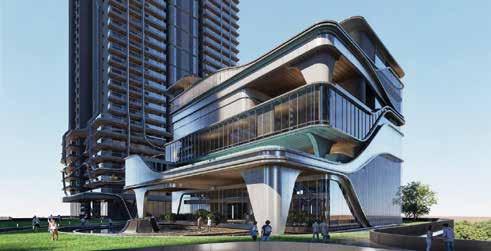
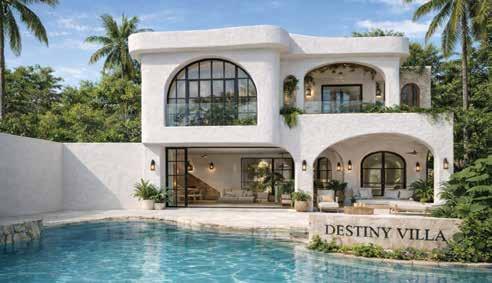
towards agricultural and bio-based waste—such as rice husk ash panels and mycelium composites—to reduce embodied carbon. According to her, the façade of the future will be regional, repairable, and materially honest, moving away from a dependence on mechanical correction and towards climate alignment.
Ar. Chandpuri says that building envelopes are shifting from static barriers to dynamic “living” skins that act as primary sources of energy generation. He identifies the rise of kinetic skins and solar glass as key trends for active energy management. Like Balasubramoni, Chandpuri mentions the potential of carbon-negative bio-based materials like timber curtain walls and mycelium panels, noting innovations like the BIQ House in Hamburg which uses algae-filled louvres to produce biomass and heat.
Kumar notes that the future will be driven by three major shifts: intelligence, sustainability, and integration. He agrees with the other experts that smart, adaptive façades like dynamic glazing will optimise comfort in real-time. Kumar also highlights that Building-Integrated Photovoltaic (BIPV) systems are currently leading adoption due to established
Ar. Bajaj observes that in the Indian context, the future will reward projects that balance climate intelligence with cost discipline. He predicts a trend towards climate-responsive design that reduces glass dependency and increases the use of prefabricated, unitised systems. Bajaj also notes that stronger energy compliance norms and lower embodied carbon materials will be critical shaping factors.
Upadhyay says that façades are evolving from passive cladding into intelligent, responsive skins. He believes the future will be shaped by net-zero energy façades with integrated solar systems and

adaptive shading. Additionally, Upadhyay mentions that AI-driven performance monitoring and modular off-site fabrication methods will significantly influence how building envelopes are engineered and maintained.
Ar. Singh concludes that façade design is increasingly becoming climate-responsive and performance-led, with building envelopes tailored to local environmental conditions to improve energy efficiency and occupant comfort. Technologies such as automated shading, adaptive glazing and sensor-based controls are emerging, alongside a stronger focus on reducing embodied carbon. At the same time, testing and validation through mockups, simulations and façade testing are becoming standard, ensuring performance is engineered and verified well before installation.
The evolution of the building skin from a passive barrier to an intelligent, socioenvironmental system marks a definitive turning point in modern architecture. As highlighted by our panel of experts, the future of the façade lies in the perfect intersection of digital precision and material innovation. Whether through the adoption of energy-generating BIPV, the climate-responsive nature of ventilated terracotta, or the life-cycle efficiency of unitised systems, the industry is moving toward a model where performance and aesthetics are no longer in competition.
The shift toward “living skins” is a response to the dual challenges of urbanisation and climate change. By prioritising thermal efficiency, fire safety, and embodied carbon, today’s architects and engineers are ensuring that the buildings of tomorrow are not just structures, but active contributors to a sustainable urban ecosystem. The building envelope has officially become the most critical component in our quest for resilient, high-performance, and human-centric design.
“Performance
is Essential to Ensure Façades are Safe, Watertight and Energy-Efficient”
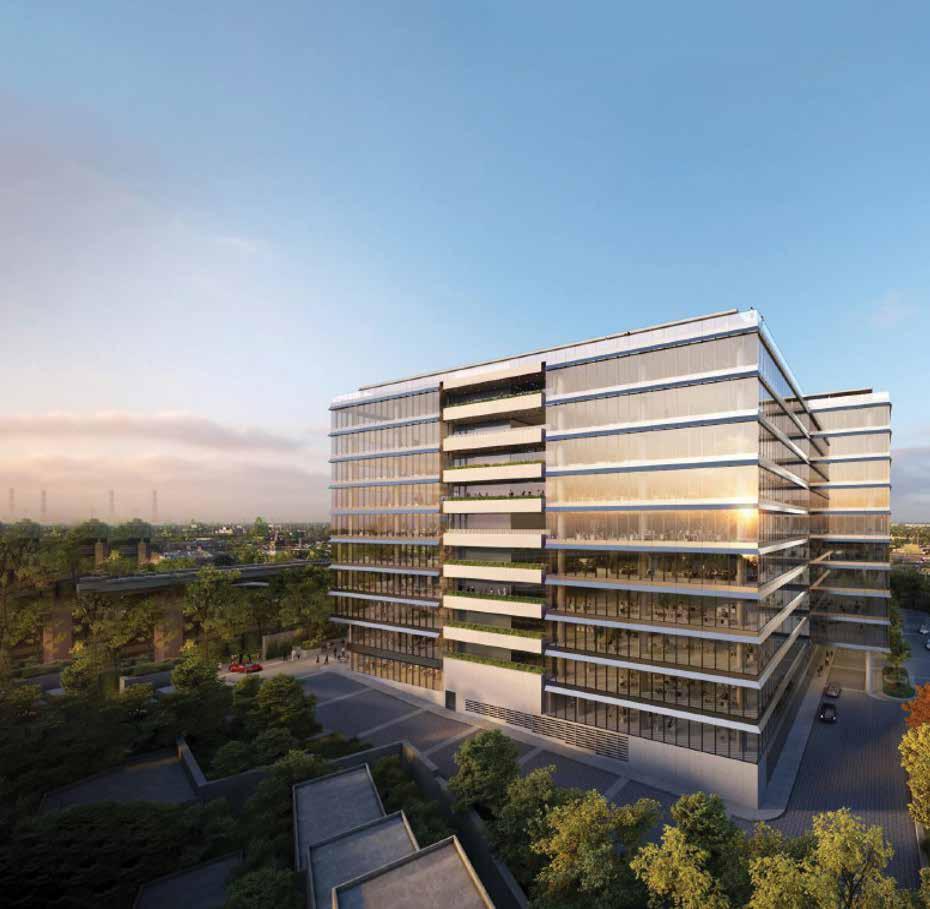

P. Jothi Ramalingam Ponnusamy is the Director of Winwall Technology India Pvt. Ltd., which is a NABL performance testing laboratory. He has been associated with the architectural aluminium industry since 1990 as an anodising and powder coating specialist. He is presently a member of the Doors, Windows, and Shutters Sectional Committee, CED 11, which is responsible for creating the Indian Standards for the design, fabrication, testing, and installation of doors, windows, and shutters. He has
constantly strived to create more test facilities in India for the benefit of the Indian façade and fenestration industry, thereby helping the industry to improve its quality and compete successfully internationally. Under his stewardship, Winwall India has been accredited by NABL as the first laboratory in India for NFPA 285 testing of the fire propagation characteristics of exterior wall assemblies containing combustible components, for becoming a testing facility for processed glass, and for conducting cyclic testing of
hardware used in the window and door industry.
In an exclusive interaction with WFM Media, P. Jothi Ramalingam Ponnusamy, Director of Winwall Technology India Pvt. Ltd., discusses Winwall India’s NABL-accredited façade, fire, glass and hardware testing capabilities, its role in Indian Standards development, and the importance of early performance validation for complex high-rise façades.
Could you please introduce Winwall Technology India Pvt. Ltd. and share the journey that brought the company to where it is today?
Winwall Technology India Pvt. Ltd. is a joint venture with Winwall Technology Pte. Ltd., Singapore. Winwall Singapore has been performance testing façades, windows and doors for 34 years and maintains testing facilities in Singapore, Malaysia and Vietnam, with joint ventures in India and Thailand. In the last 34 years, Winwall has tested approximately 6,000 projects across Asia, including Singapore, Malaysia, Taiwan, Indonesia, Thailand, Vietnam, India, Sri Lanka and Qatar.
How does Winwall’s accreditation (ISO 17025, NABL, BIS recognition) distinguish the company in the field of façade and performance testing in India?
NABL granted ISO 17025 accreditation to Winwall India in 2015. After auditing the systems and procedures and interacting with Winwall's technical team, NABL found that the systems
Dhirubhai Ambani International School building, Mumbai and procedures followed align with ISO 17025 requirements, the equipment used is accurate and the testing team is competent. This gives the façade contractor confidence that the team will test the performance mock-up samples installed in the Winwall lab impartially and that the test results will be accurate.
What inspired the Winwall group to establish a performance testing facility in India, and how does this fit into the organisation’s broader global vision?
Winwall Singapore is one of the oldest performance testing laboratories in Asia and has always strived to spread its experience across the continent, benefiting the local construction industry either by setting up a laboratory
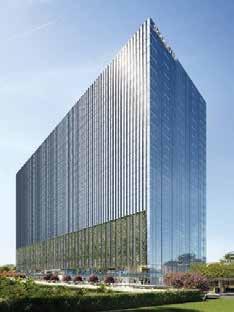
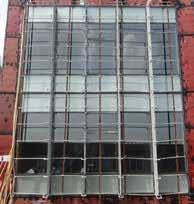
“As buildings grow taller and more complex, it is vital to validate an entirely new façade system under severe laboratory conditions before installation. This allows us to identify weak spots, refine the design and deliver a fully proven, high-performance solution on site”
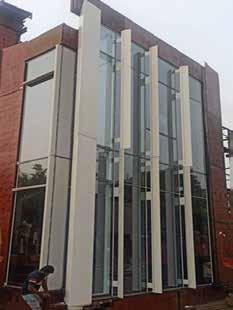
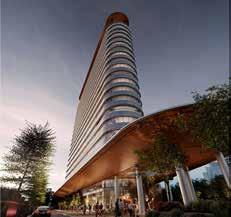
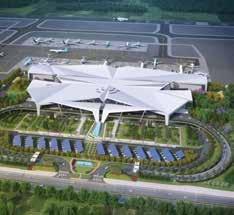
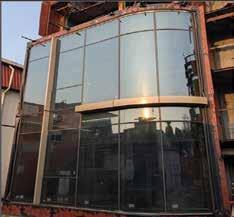
or joining with local players to establish joint ventures. As one of the world’s fastest-developing economies, India needs facilities to test the façades and windows installed in the high-rise buildings being built across the country, ensuring they are safe, energy-efficient and watertight.
Could you walk us through the major types of tests your lab conducts –from façades and windows to fire testing and hardware durability?
In addition to being accredited to conduct performance testing of façades, windows, doors and handrails, Winwall also has the infrastructure to test the fire propagation of semi-combustible cladding systems, perimeter fire barriers (smoke seals), annealed and processed glass used in construction, transport and solar panels, and all kinds of window hardware for durability and operability. Winwall India is also setting up an acoustic testing facility in its Panvel laboratory.
How does Winwall ensure that its testing procedures align with national and international standards such as ASTM, AS/NZS, BS EN & CWCT?
The Winwall teams across laboratories share their knowledge and testing experience to stay updated on changes and modifications introduced into different standards and get the accreditation renewed on a timely
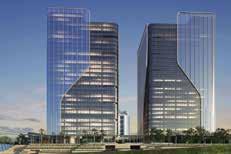
basis. The Winwall team also played an important role in preparing the Indian Standards for windows, thus ensuring we do not have to depend on the many other standards such as BS EN, ASTM or AS/NZS, which were specified earlier.
With advancing technologies and evolving building codes, how does Winwall stay at the forefront of innovation in façade and materials testing?
Winwall has strived to offer worldclass testing services to the Indian façade and fenestration industry by
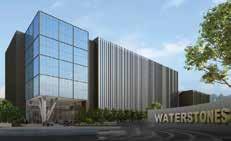
“India’s rapidly evolving skyline demands façade systems that are proven safe, energy-efficient and watertight — and performance testing is the key to achieving this”
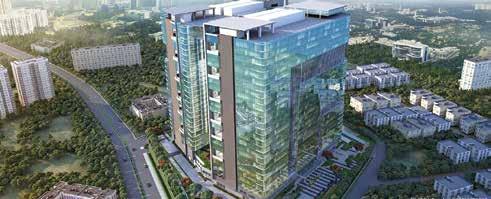
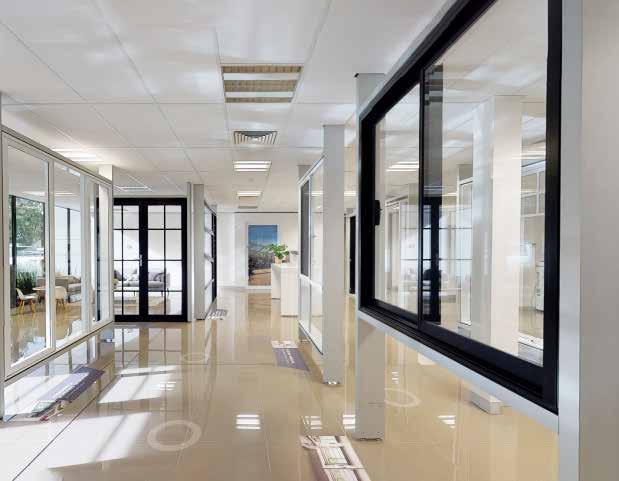

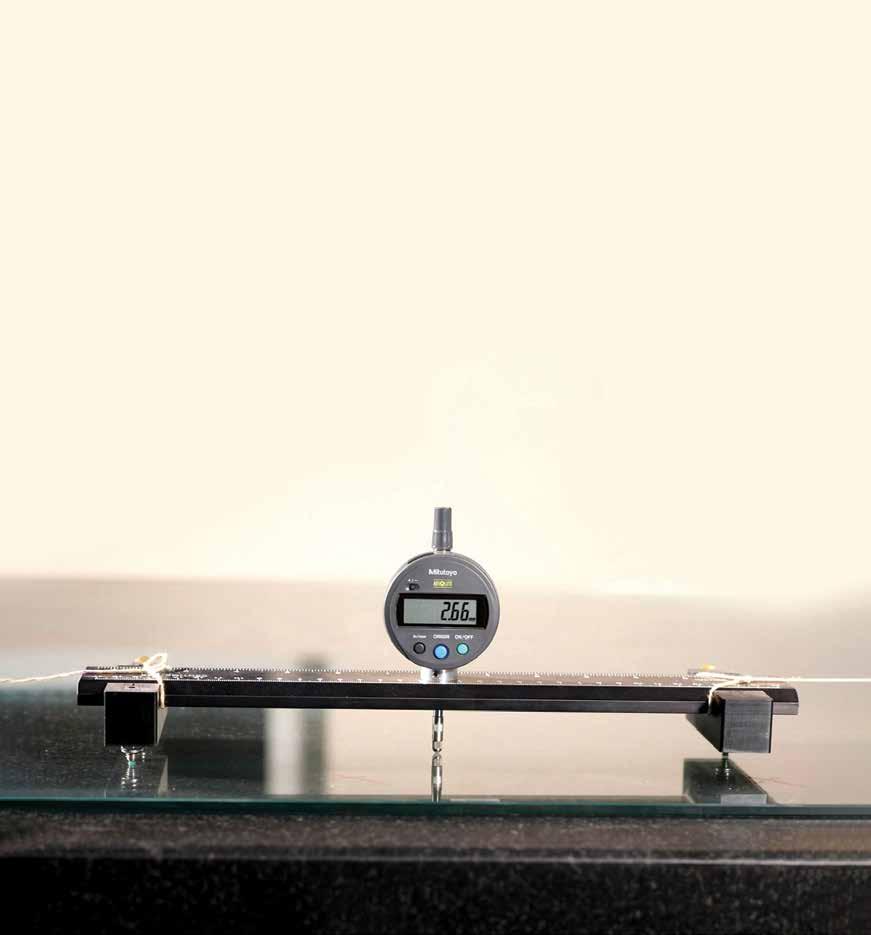

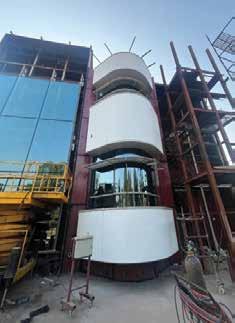
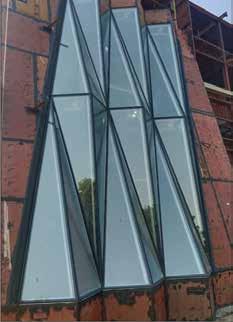
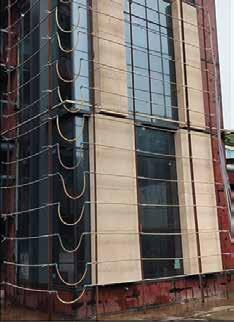
constantly upgrading its facilities and modernising its testing equipment. Winwall is keen to expand its scope of services to test all components used in the façade industry, offering a onestop solution for India’s fast-growing façade industry.
What advice would you give architects, engineers and builders about integrating performance testing early in the design process?
As buildings grow taller and more complex, the responsibility for
ensuring their façades can sustain high wind loads, remain energy-efficient and stay watertight falls squarely on the architects and developers. Every developer wants their project to be unique; therefore, the entire façade system uses a completely new set of aluminium extrusions. Under these circumstances, it is vital to validate the entire system's performance under severe laboratory conditions before installation in the project. We can correct any mistakes and weak spots and then install a fully proven system.
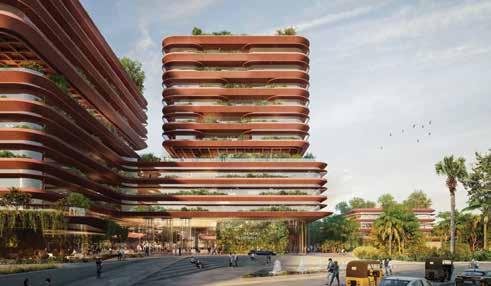
What are some of the common challenges you face when testing complex building systems like curtain walls or high-rise façades, and how does your team address them?
Testing complex systems like curtain walls or high-rise façades requires meticulous planning. At Winwall, we have successfully managed significant challenges, including completing India’s tallest mock-up at 18 metres and the largest test sample under AS/NZS standards, measuring 13.5 metres high by 8 metres wide.
While standard test chambers are typically made of steel, projects of this scale require specialised equipment such as telescopic cranes and 20-metre scissor lifts to be identified and outsourced at the right time. To manage these complexities, Winwall employs a dedicated team of approximately 20 engineers. Our specialised planning, execution and procurement teams ensure that every project is completed seamlessly and on time. Additionally, as no two projects are identical, each requires the chamber to be refabricated from scratch within a set timeframe. Our expert personnel and resources allow us to consistently deliver these unique projects efficiently.

“We do not View
We

Ritesh Jindal is a trained architect with over 12 years of experience in façade engineering, building envelope design, and multidisciplinary consultancy. He currently leads Arup’s Façades business in India, serves as the Mumbai Office Leader and holds the role of India Country Manager for Technical Specialist Services, driving strategic growth façades, fire, lighting, acoustics, sustainability, and AV. Ritesh brings a holistic design approach that integrates architectural intent, building physics, and advanced computational design. He is highly proficient in BIM, parametric modelling, and digital workflows, enabling the delivery of complex, high-performance building solutions.


• Arup has had a long and meaningful presence in India. How would you describe the firm’s journey so far, and what milestones best reflect its growth in the country?
Since opening our first office in India twenty years ago, our team has grown to more than 250 members across four offices located in Mumbai, Delhi, Bangalore and Hyderabad, each contributing to transformative projects that span India and beyond. To date, we have delivered over 250 projects nationwide, spanning infrastructure, urban development and complex building design. Throughout this journey, our work has consistently championed sustainability, helping to shape climateresilient communities where people and places can thrive.
But our story in India began long before that — over 50 years ago. Arup’s expansion in India reflects our enduring commitment to investing in people. Whether it is nurturing talent through meaningful projects or designing a workplace that fosters collaboration, connection and innovation, we are building an environment where ideas flourish.
• From your experience, what distinguishes Arup’s approach to engineering and consulting within the Indian market?
Arup’s approach in the Indian market is distinguished by its strong commitment to shaping a better world through holistic and integrated solutions. We do not view projects in isolation; we look at them through a long-term, strategic lens — considering resilience, sustainability, commercial viability and societal impact from the outset. We strive to push the boundaries of what is possible on our projects.
We go beyond conventional engineering by adopting a multidisciplinary design approach that aligns technical excellence with sustainability, social responsibility and long-term value. Where we have single-discipline commissions, we bring the insights and advice of
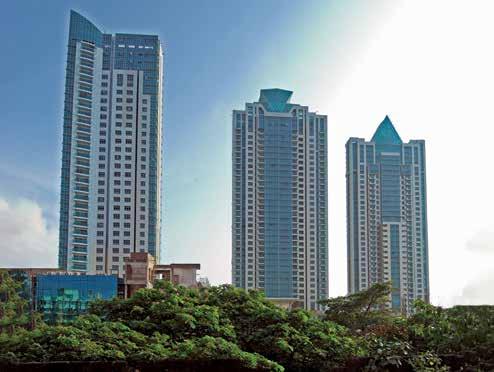
our international multidisciplinary practice. Sustainability is embedded in every project, guiding us to minimise environmental impact, optimise resource efficiency and enhance economic and community outcomes. This means engaging with clients and team members to challenge business as usual in pursuit of reducing the project’s impact on the environment.
At a leadership level, we differentiate ourselves by partnering closely with clients to shape their vision, challenge assumptions where necessary and create future-ready solutions aligned with India’s rapid urban and infrastructure growth. This combination of technical authority, strategic insight and purposedriven thinking gives Arup a distinctive edge in the market.
• Can you talk us through some of the key façade projects Arup has delivered in India and the role the firm played in shaping those building envelopes?
Our diverse project portfolio spans both bustling urban centres and remote locations, all driven by a commitment to sustainable solutions that contribute positively to society. Arup has been
closely involved in shaping some of India’s most prominent building envelopes, combining architectural intent with highperformance engineering. Some of these include projects such as Rajiv Gandhi International Airport, Kempegowda International Airport, Navi Mumbai Airport, Statue of Unity, ICC Tower Mumbai, Imperial Towers Mumbai and Jio World Centre. Across these projects, our role has focused on translating design vision into buildable, climateresponsive and durable envelopes, balancing aesthetics, constructability, energy performance and long-term resilience in India’s demanding urban and environmental context.
• India presents diverse climatic conditions. How does climate shape façade strategies across different regions and building types? How do local building codes, sustainability guidelines and fire safety requirements shape façade design decisions in Indian projects?
It all begins with light. For the façade design team, every project starts with a simple question: how can we harness daylight to create spaces that are bright, comfortable and energy-
efficient, without falling prey to glare or overheating? The answer lies in a blend of tradition and technology.
India’s climates are as varied as its languages. In the humid air of Chennai, the dry heat of Ahmedabad, or the temperate calm of Bengaluru, the sun’s path and intensity change dramatically. To respond, designers import local climate data — hour by hour, day by day — into advanced simulation tools such as Ladybug and Honeybee. These platforms allow them to visualise how sunlight will move across a building’s surfaces, how deeply it will penetrate rooms and where it might cause discomfort or excessive heat.
But simulation is only the beginning. The team then experiments with window sizes, glass types and shading devices — horizontal overhangs, vertical fins, even traditional jali screens reimagined in modern materials. Each option is tested against benchmarks for daylight autonomy and glare, often set by green building standards such as LEED or IGBC. The goal is always the same: maximise useful daylight, minimise glare and energy consumption, and ensure that every occupant enjoys a view without squinting or reaching for the blinds.
“For the façade design team, every project starts with a simple question: how can we harness daylight to create spaces that are bright, comfortable and energy-efficient, without falling prey to glare or overheating?”

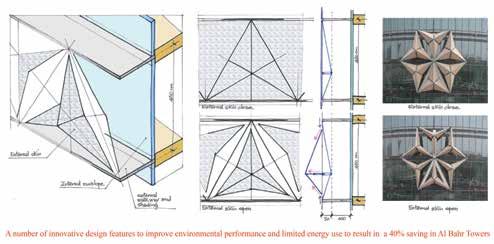
• What façade materials and systems are gaining popularity in India today, and what factors typically drive these choices — performance, cost or visual identity?
As a consultant, the choice of material is primarily dependent on various factors such as location, orientation and system type, as well as performance requirements set by the MEP engineers in relation to cooling loads. Currently, continued growth is observed in highperformance unitised curtain wall systems, particularly for commercial offices, mixed-use developments and data centres. Developers are increasingly opting for factoryfabricated unitised glazing because it offers better quality control, faster installation and improved airtightness and water performance — critical in cities with heavy monsoons and tight construction timelines. For window systems, higher performance with respect to water penetration and air infiltration is expected and, in some cases, in line with project requirements, a thermally broken system may be recommended.
There is also rising interest in doubleglazed units with high-performance solar control coatings, driven by energy codes, ESG commitments, acoustic performance and operational cost considerations. We anticipate that Indian clients, and those who use and reside in buildings, will have
increasing expectations of quality and performance.
Over the more than twenty years that we have been working in the Indian façade market, we have seen the capability and technology of the domestic façade industry — including fabrication techniques and quality of workmanship — achieve international standards.
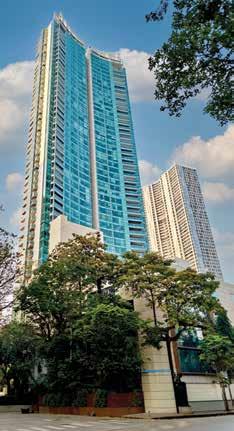
With regard to materials, aluminium and glass remain dominant in projects, but we are seeing growing adoption of terracotta panels, GRC/GFRC, UHPC, perforated metal screens and engineered stone systems — often used to express identity while moderating solar exposure. At Arup, our material specialists are supporting an upcoming development in Mumbai with Art Deco-inspired architecture for buildings rising to 300 metres, through detailed evaluation of façade material systems.
This includes performance-based assessment of engineered stone, GRC/ GFRC, terracotta and aluminium in relation to structural capacity, fixing methodology, durability in coastal environments, fire performance, maintenance requirements and longterm lifecycle behaviour, ensuring the proposed envelope solutions are robust, buildable and aligned with the project’s performance objectives.
In terms of decision drivers, performance is becoming increasingly important— especially thermal efficiency, air and water tightness, durability, and maintenance especially in coastal or polluted environments. However, cost and speed of delivery remain significant influences in many markets including India. Visual identity does play a major role in Grade A commercial and premium residential developments, but increasingly it is expected to be achieved without compromising lifecycle value or sustainability.
We anticipate that over the next few years there will be an increasing focus on the resolution of details, acoustic performance, security considerations and quality of work. We also keen that the industry embraces the new Indian Building Code to drive the robustness and safety of the buildings that will populate growing cities.
Overall, the shift is toward façades that are not only architecturally distinctive, but demonstrably resilient, energyefficient, and aligned with long-term asset performance expectations.
• What role do façades play in improving energy efficiency and thermal comfort, particularly in high-density urban environments?
How are daylighting strategies, shading devices, and façade articulation being used to enhance occupant comfort while reducing energy loads?
Daylight is only part of the story. In India, where the sun can be both a blessing and a challenge, the best façades are those that balance natural and artificial lighting seamlessly. The process begins with orientation. North-facing façades are preferred for their ability to provide soft, diffuse light, while south-, east-, and west-facing elevations demand careful shading to avoid glare and overheating. High-performance glazing — often with low-emissivity coatings — lets in light while blocking unwanted heat. Shading devices, from fixed overhangs to dynamic louvres, are tailored to each elevation, ensuring that every room receives just the right amount of daylight.
But the real magic happens when daylight and artificial lighting work together. Smart controls dim or switch off electric lights when the sun is shining, saving energy and creating a
“We do not view projects in isolation; we look at them through a long-term, strategic lens — considering resilience, sustainability, commercial viability and societal impact from the outset”
more natural ambience. Light shelves and reflective surfaces bounce daylight deeper into interiors, reducing the need for artificial illumination even on cloudy days. In some projects, traditional elements such as jali screens are reinterpreted to filter sunlight and create patterns of light and shadow that change throughout the day.
We are keen to engage with clients and design teams working on residential
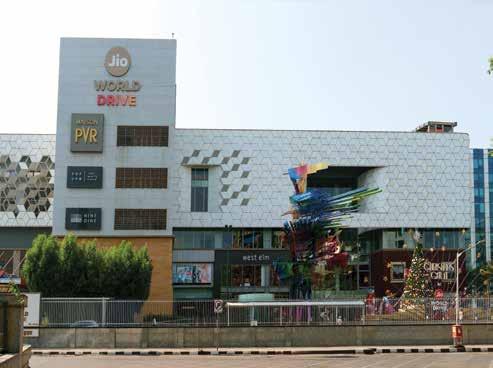
developments, where the use of rooms within living spaces will drive the façade — allowing bright, airy living spaces (where noise and pollution allow), combined with cool, insulated bedrooms.
• How do you see building exteriors evolving in India over the next few years, particularly in response to climate change, energy demands, and urban density?
As the demands on façades grow, so do the technologies that support them. Dynamic glazing — such as electrochromic glass — can change its tint in response to sunlight, reducing glare and heat gain without sacrificing views. Automated shading devices, controlled by sensors and algorithms, adjust in real time to the sun’s position, optimising comfort and energy use.
Closed Cavity Façades, which combine insulated glazing with dynamic shading between layers, offer superior daylight control and thermal performance and will need to be explored in the Indian context. Building-integrated photovoltaics (BIPV) turn façades into power plants, generating renewable energy while providing shade. Advanced materials — high-performance coatings, spectrally selective films, innovative fabrics — allow designers to fine-tune
daylight transmission and heat gain as never before.
Recent research in India shows that optimising variables such as louvre depth, window-to-wall ratio, and glazing properties can improve useful daylight illuminance by up to 25% and reduce energy use intensity by nearly 20% in cities such as Ahmedabad, Delhi, Mumbai, and Bangalore.
The story of façade design in India is still being written. As cities grow and climates change, the need for buildings that are both beautiful and sustainable has never been greater. The integration of daylight simulation, advanced glazing, and responsive shading is setting new benchmarks for comfort and efficiency. With the rise of AI-driven design, IoT-enabled façades, and a renewed appreciation for traditional wisdom, the next generation of Indian buildings will be brighter, smarter, and more responsive than ever before.
• What skills and expertise do you believe the next generation of façade engineers and designers in India will need?
India’s rapid urbanisation and climatic diversity present complex challenges for building envelope design. As the demand for high-performance, energyefficient buildings grows, façade engineers are increasingly tasked with integrating advanced daylight simulation, solar analysis, and glare control strategies. These approaches are not only essential for occupant comfort and visual quality but also play a critical role in reducing operational energy use and achieving sustainability targets. By leveraging state-of-the-art digital tools and a deep understanding of local climatic conditions, today’s façade professionals are redefining standards for daylighting, shading, and thermal performance in Indian architecture.
At the same time, it is important to recognise that the façade industry in India is still relatively young, with a limited pool of experienced specialists.
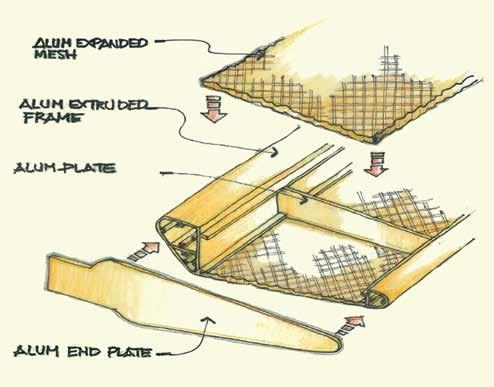
For the next generation, developing a strong technical foundation in façade systems, materials, construction technologies, fabrication, and the underlying building physics is essential to reliably design and deliver highperformance building envelopes. Initiatives such as the establishment of the Society of Façade Engineering in India represent an important step in creating platforms for knowledge sharing, professional development, and peer learning. Looking ahead, there is a clear opportunity for higher education institutions to introduce dedicated façade engineering programmes that establish core principles, enabling future specialists to build on this foundation, innovate responsibly, and raise industry standards across the country.
Not long ago, façade design was guided primarily by rules of thumb and professional judgement. A designer would select sunshades or glazing types based on established practice and experience, applying proven solutions to familiar challenges. Today, the process is far more dynamic — and far more precise.
Parametric tools have changed the game. With platforms such as Grasshopper and Arup’s own ParameterSpace, designers can generate hundreds of façade options in minutes, each one tuned to the building’s orientation, the local climate, and the client’s goals. Want to know how a deeper fin or a different glass coating will affect daylight on the third floor in July? The answer is just a few clicks away.
This approach is not just about speed — it is about evidence. In a recent project in Pune, our team used parametric analysis to refine the depth and angle of vertical fins on the east and west façades, balancing daylight access with glare reduction and solar gain control. The result is a design that is aiming to achieve LEED Platinum certification, not through guesswork but through datadriven iteration and collaboration with architects, engineers, and clients.
Studies show that parametric patterned façades, especially those with optimised perforation patterns, can significantly improve daylight quality and visual comfort in hot-dry climates.
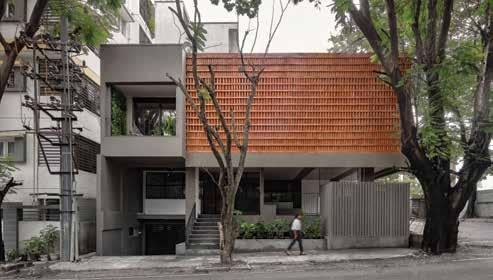
Rethinking the urban workspace, a unique biophilic environment was created that not only brings the outdoors in but also stays naturally cooler, harnessing natural cooling techniques to eliminate the need for air conditioning, even in the harshest summers.
RETHINKING WORKSPACE DESIGN: A BIOPHILIC APPROACH
The design moves beyond cluttered studios and sterile, air-conditioned spaces, designing a place that breathes, inspires and fosters creativity. Thoughtfully crafted with biophilic principles, this climateresponsive haven nurtures collaboration, focus and comfort — allowing ideas to flow effortlessly, even in the most demanding hours.
SITUATING THE WORKSPACE: A DELICATE BALANCE OF NATURE AND URBANITY
Located in one of the city’s prime areas, the studio occupies a first-floor space within a bare-shell building surrounded by a lush canopy. This fortunate setting
allows an abundance of natural daylight and ventilation to flood the space. Through a thoughtful interplay of forms and spaces, our design achieves a delicate balance between interior seclusion and exterior connectivity, fostering tranquillity while engaging in a visual dialogue with the landscape.
REIMAGINING THE INDOOR EXPERIENCE: NATURE-INSPIRED DESIGN SOLUTIONS
In a world where work and well-being intertwine, especially for creatives, our design reimagines the indoor experience. Through biophilic principles, nature is seamlessly woven into the space, transforming it into an energising sanctuary that sparks creativity and nurtures both mind and body. Here, productivity meets balance and inspiration thrives alongside wellness.
Designed to embrace seamless collaboration, the open-plan studio fosters a dynamic flow, where interaction
between designers sparks innovation and fuels creativity.
The space embraces an earthy, grounded aesthetic with subtle flooring, muted walls and an exposed brick façade, which not only provides thermal comfort but also adds texture and depth. Reclaimed wood accents and lush greenery throughout the space further enhance the organic ambience, creating a harmonious balance between built and natural environments.
Upon entry, a welcoming reception area greets visitors, featuring a custom foyer table made from locally sourced materials. This carefully crafted piece is paired with a uniquely shaped sofa, its organic form mirroring the natural beauty surrounding the space, establishing an atmosphere of harmony and inspiration.
Adjacent to the main studio, a serene meeting room is flooded with natural sunlight and enlivened by vibrant greenery, embodying the studio’s dedication to biophilic design. At its centre, a striking paludarium merges art and nature, serving as a focal point that elevates the entire space.
Mindfully designed to address the challenges posed by neighbouring buildings, top-hung windows strike a delicate balance between privacy and the influx of natural light and ventilation. This solution ensures seclusion while filling the interior with a soft, airy glow, enhancing the overall aesthetic with refined sophistication. The conference area and workstations embody minimalist elegance, with concealed sockets
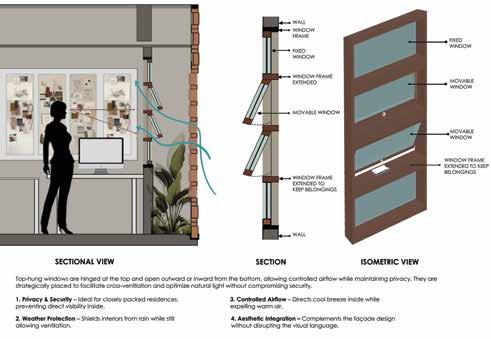
maintaining a clean and uncluttered visual flow.
The workstation wall showcases the studio’s creative journey through vibrant artwork featuring intricate sketches and elevations that honour its design heritage.
In pursuit of innovative design, inspiration was drawn from traditional paludariums to develop the Verdurium — a cutting-edge hybrid horticultural system. Seamlessly integrated into the meeting area, this modular ecosystem incorporates an inbuilt irrigation network and optional centralised misting, cultivating a cooler microclimate that harnesses summer breezes to enhance comfort.
The thoughtful inclusion of diverse plant species and water elements — including misting and drip irrigation systems — not only purifies the air and generates a calming soundscape but also fosters a deeper connection to nature.
By merging natural and built environments, the studio has crafted an inspiring workspace that enhances creativity, motivation and well-being.
This synergy embodies the essence of biophilic design.
Ultimately, the design culminates in a seamless indoor-outdoor experience, with fully operable windows and doors inviting occupants to engage with the surrounding greenery. This approach encourages cross-ventilation, reduces reliance on air conditioning and
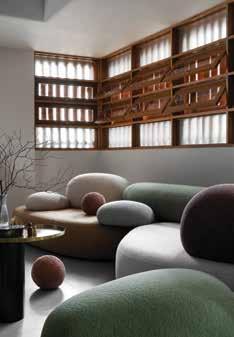
exemplifies harmony between nature and architecture.
The architectural approach focuses on climate-responsive design elements, enhancing the building’s ability to adapt to environmental conditions. The south-facing façade features exposed brickwork that blurs the boundary between indoors and outdoors. A strategically positioned exposed brick wall reduces heat intensity and blocks direct sunlight from entering primary areas, while also ensuring privacy. Integrated greenery further strengthens the connection between interior and nature, creating a balanced relationship between form and function.
A natural and sustainable strategy has been employed to regulate interior temperatures. An optimised drip irrigation system efficiently cools the terracotta tiles while nourishing the lush vegetation along the façade. This integration fosters a thriving biodiverse environment,
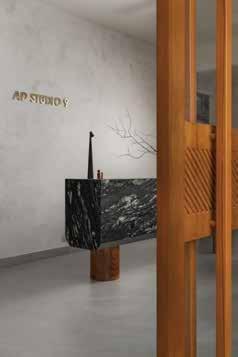
The design culminates in a seamless indooroutdoor experience, with fully operable windows and doors inviting occupants to engage with the surrounding greenery
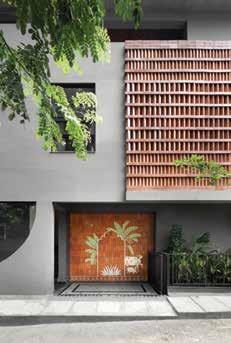
In pursuit of innovative design, inspiration was drawn from traditional paludariums to develop the Verdurium — a cutting-edge hybrid horticultural system
and redefining biophilic design within an urban context. By reducing reliance on air conditioning during summer months, the project demonstrates the transformative potential of nature-driven design on both building performance and occupant wellbeing.
By embedding nature into the built environment, a thriving ecosystem has been established, welcoming local wildlife — from birds and squirrels to butterflies. This living façade delivers numerous benefits, including:
• Evaporative cooling naturally reduces surface temperatures
• Microclimate transformation, enhancing thermal comfort and well-being
• Air purification, promoting healthier surroundings
• Noise dampening, shielding against urban disturbances
• Visual screening, ensuring privacy and tranquility
This harmonious integration of nature and architecture not only supports biodiversity but also creates a serene
and restorative environment for occupants.
The project reflects a commitment to seamlessly blending architecture with nature, enhancing occupant well-being and enriching the urban ecosystem.
The office stands as a compelling embodiment of the transformative power of biophilic design, reflecting core principles of honest, meaningful and nature-driven architecture. By artfully combining natural materials with thoughtfully curated spatial experiences, the studio has created a vibrant living environment that nurtures creativity, wellbeing and collaboration, while offering respite from the harsh summer heat.
Remarkably, the workspace maintains a cooler temperature than the exterior even during extreme summers — all without reliance on air conditioning — demonstrating the ingenuity of its biophilic design strategy.
As Frank Lloyd Wright once observed, “Study nature, love nature, stay close to nature. It will never fail you.” In designing with nature, the studio has created a space that not only sustains but elevates the human experience — where every detail, texture and beam of light fosters a deeper connection to the surrounding world.
• Project Name: Akshara Vinyasa
• Project type: Office Architectural interior design
• Project Location: Rajarajesware Nagar, Bengaluru, India
• Designed & executed bySandesh Dhanaraj (AD Studio 9)
• Designer: Apoorva Lekha
• Area: 2500 sqft
• Completion Year: 2023 - 2024
• Photography: Arjun Krishn

Co-Founder & Principal Architect, AD Studio 9
Apoorva Lekha is the Co-Founder & Principal Architect at AD Studio 9. Her portfolio spans residential, commercial and public projects, each one an opportunity to enhance spaces in meaningful ways. Committed to eco-friendly practices, she fosters a collaborative and creative environment within her team, encouraging them to push boundaries while upholding sustainability. For her, sustainable design goes beyond environmental responsibility—it is about crafting spaces that are efficient, healthy and adaptable for the future. She is constantly exploring new materials and techniques that support this mission, creating projects that are both forwardthinking and timeless. She aims to shape spaces that resonate with the lifestyles and cultures of those who inhabit them.

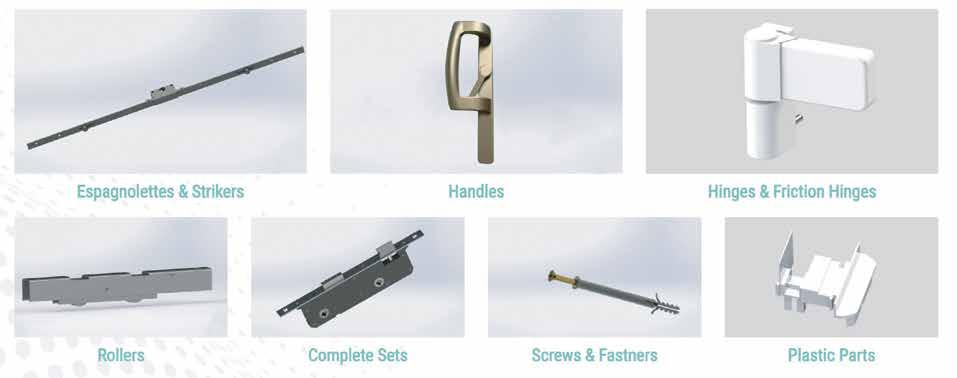
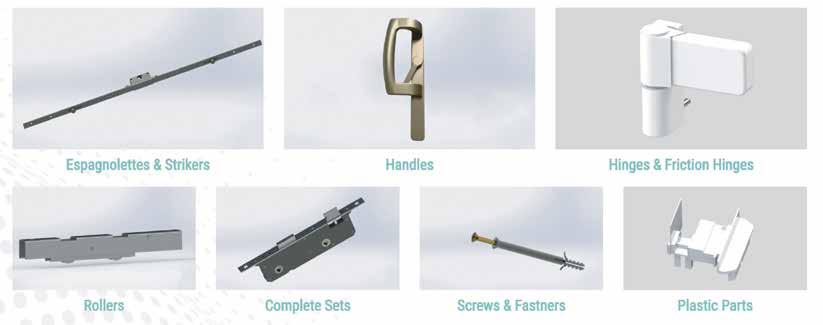
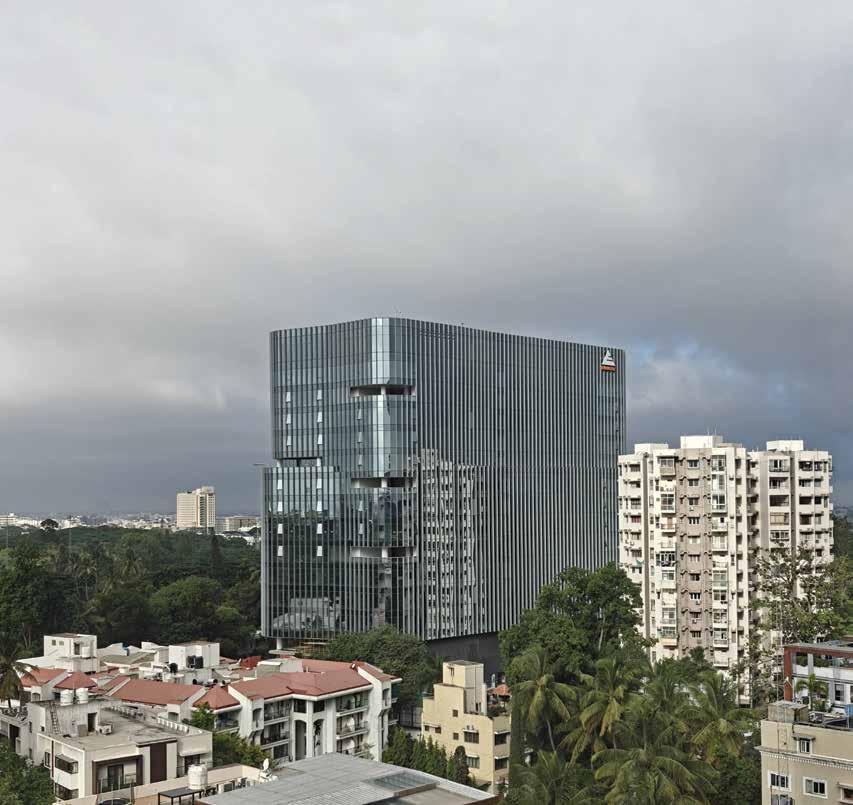
Tucked into a subtle yet prominent corner of Sankey Road — one of Bangalore’s most exclusive residential precincts — the site of the former Le Meridien Hotel enjoys a rare urban vantage point. It offers uninterrupted views of the Bangalore Golf Course and is just minutes from MG Road, the historic heart of the city. Over time, this location became an unofficial gateway to central Bangalore — a bridge between old and new, the convergence
of heritage and modernity, green and urban.
It was here that Embassy Group envisioned its next development. While the original brief called for a high-end residential offering, the vision soon evolved: the team pivoted towards creating a landmark commercial address. But this was never to be another anonymous glass box. In a city dominated by sprawling tech
campuses and repetitive office towers, this relatively compact yet prime site demanded a different kind of response — one that would deliver presence, identity and long-term visual impact.
FAÇADE
The design of Embassy Zenith focused on delivering maximum clarity, elegance and sophistication through restraint and meticulous detailing. The approach was to create
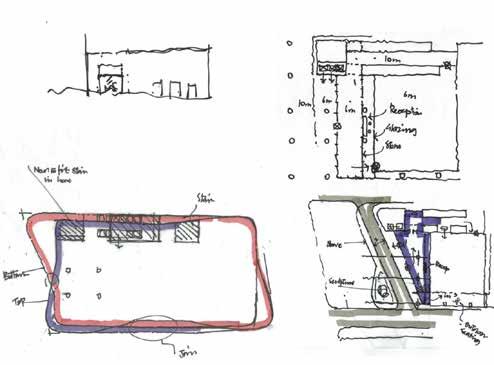
a unified glass volume — a seamless, monolithic form that quietly asserts itself through the careful balance of proportion, modulation and material craftsmanship.
A fully unitised curtain wall system was deployed for the tower façades, ensuring quality control, speed of installation and long-term performance. All façades follow a strict modular rhythm based on a 1.5-metre planning grid, ensuring clean alignment between architectural and interior planning. This modularity is expressed externally through slender vertical mullions, minimised horizontal breaks and controlled panel repetition.
To soften the otherwise rectilinear geometry of the tower, all four corners are elegantly rounded with a gentle five-metre radius curve — a technically ambitious move that required custombent glass and curved unitised panels. These corners not only visually unify the building mass but also emphasise bold geometry, creating a sculptural quality rarely seen in Indian commercial façades.
The primary façade comprises a highperformance building envelope: low-E vision glass panels combined with fritted spandrels and operable window units for natural ventilation. Vertical aluminium fins, applied to alternating mullions, are carefully orchestrated to delineate the building’s verticality, reduce solar gain and create a subtle texture across the elevation. This move was calibrated
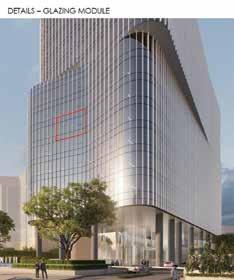
to balance shading effectiveness with construction efficiency.
On the lower podium levels, the design introduces a distinct material shift. Here, glass is replaced with textured GRC panels, drawing inspiration from the intricate woven patterns of Ilkal sarees — a subtle but deliberate nod to Karnataka’s regional craft heritage. These panels introduce tactile warmth
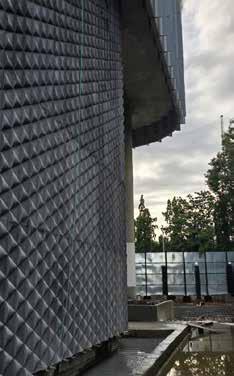
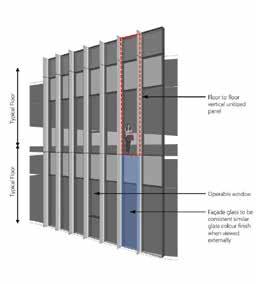
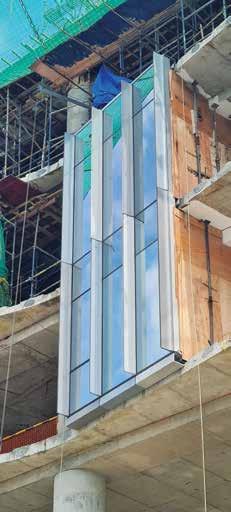
while creating a sense of materiality that anchors the base of the building, ensuring the podium is perceived as a grounded architectural element, firmly rooted in the site’s context and cultural memory.
Every element of the façade was designed to reinforce the idea of architectural continuity — a single, seamless expression that harmonises transparency with performance. The unitised curtain wall system utilises advanced prefabrication technology, enabling precise factory-controlled fabrication, minimising on-site tolerances and ensuring an impeccable finish. Operable panels are seamlessly integrated, while recessed mullions at the spandrels enhance the perception of the building’s vertical bays.
Beyond its aesthetic qualities, the façade also delivers tangible environmental benefits. The use of low-E glazing and external shading devices significantly improves thermal comfort, while operable windows support passive ventilation strategies. The restrained material palette — limited to glass, aluminium and GRC — reduces embodied carbon while enhancing durability.
Driven by a strong environmental ethos, the façade of Embassy Zenith exemplifies how thoughtful design and a well-executed, integrated system can create a distinctive identity within dense urban environments. It establishes a new benchmark for commercial developments in India, demonstrating that innovation stems not from novelty, but from clarity, craftsmanship and consistency.
• Project Name: Embassy Zenith
• Location: Sankey Road, Bangalore
• Client: Embassy Property Developers Pvt Ltd
• Design Consultant: AFW (Singapore)
Other Consultants:
• Local Architect: Thomas Associates
• Structural Consultant: Buro Happold Engineering India
• MEP Consultant: Grune Design Pvt Ltd
• Lighting Consultants: DPA Lighting Consultants (UK)
• Façade Consultant: Global Façade Solutions
• PMC: Collaborative Workspace Consultants LLP
Materials Used for the Façade:
• High Performance DGU Glass
• Aluminium Fins
• GRC panels
• Commencement Date: 2022
• Completion Date: Q4 2025

Hamish Winstanley is a British architect based in Singapore, serving as the Director at AFW (Andy Fisher Workshop). With over 20 years of experience, AFW has developed an extensive portfolio across India, collaborating with leading developers such as Bagmane Group, Prestige Constructions, Embassy Group, and Sattva Salarpuria. Having lived and worked in Singapore for over 15 years, Hamish has been instrumental in leading the design and execution of numerous large-scale projects across Southeast Asia and South Asia. His portfolio includes landmark developments such as the Stephen Riady Centre in Singapore, Junction City Mall in Yangon, Myanmar, and the Pan Pacific Hotel in Myanmar.
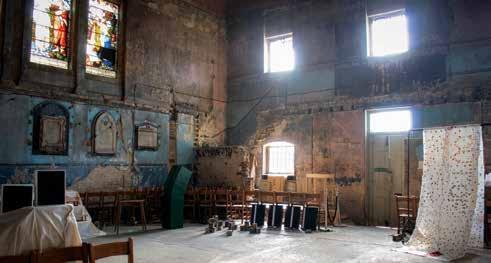
Fenestrations today are largely treated as neutral apertures, reduced to performance values and visual transparency. Windows are expected to disappear, letting light in without altering it, and comfort is measured almost exclusively through thermal and acoustic metrics. In this process, the cultural, sensory and temporal roles of façades have steadily faded from architectural practice.
This reduction becomes evident when contrasted with Kaalchakra, an exhibition designed by OSA Studio and presented at the Asylum Chapel during London Design Festival 2025. The spatial design treated architecture, light and material decay as active collaborators rather than neutral backdrops.
Housed within a nineteenth-century chapel built between 1826 and 1833, Kaalchakra used stained-glass fragments and fractured window openings as primary spatial instruments. Recycled coloured glass inspired by eighteenth-century palettes was introduced into broken bays, allowing
light to enter the space unevenly and shift across the day. These chromatic projections fell across floors, walls and artworks, continuously changing and functioning as artworks in themselves. Larger openings admitted direct sunlight that grazed cracked plaster and eroded masonry, revealing the passage of time embedded within the building fabric.
Historically, fenestrations have always shaped more than illumination. Across South Asian and vernacular traditions, windows filtered, tinted and patterned light to moderate heat, reduce glare and align interiors with daily rhythms. From the coloured glass panels of Jaipur’s havelis to perforated stone screens and deep reveals, these systems embedded environmental intelligence within craft and culture. Light was never raw. It was composed.
Contemporary façade design, however, has largely prioritised quantifiable efficiency. Clear glazing, uniform daylight distribution and sealed envelopes dominate specifications. While these
systems perform well in simulations, they often produce visually harsh interiors that rely heavily on mechanical conditioning. Comfort becomes a technical output rather than a lived, sensory condition. In many cases, buildings are over-designed to maintain uniform conditions regardless of actual patterns of use.
Kaalchakra offers an alternative framework. By reintroducing coloured fenestration, the project demonstrated how light can be softened without being eliminated. Coloured glass moderated solar intensity while enriching spatial depth and visual comfort. Importantly, the chapel was not designed for continuous twenty-fourhour occupation. This allowed fenestration strategies to respond to moments of use rather than abstract standards, suggesting that efficiency should be calibrated rather than maximised.
The treatment of ageing surfaces further reinforced this thinking. Cracks, stains

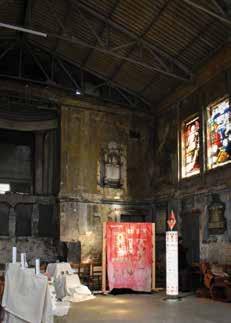
Recycled coloured glass, inspired by eighteenth-century palettes, was added to broken bays to cast shifting light throughout the day and irregularities were intentionally retained rather than concealed. As light interacted with these textures, decay became legible and meaningful. The façade did not attempt to erase age but collaborated with it. Time was not hidden behind finishes but made visible through light and shadow. This approach reframes weathering not as failure but as an architectural asset.
For architects, this highlights the importance of conceiving façades and fenestrations early as spatial and experiential devices. Windows should not be reduced to technical inserts resolved late in the process. Their size, depth, colour and orientation fundamentally shape how space is perceived and inhabited. Façade consultants, in turn, must expand performance criteria beyond energy metrics to include glare control, colour rendering, light distribution and temporal variation.
Builders and contractors play a crucial role in enabling such outcomes. Working with recycled glass, irregular openings and aged fabric requires precision and judgement. Efficiency in execution does not mean
standardisation. It means understanding material behaviour, tolerances and the value of restraint. Knowing what to retain can be as important as knowing what to replace.
In the Indian context, the disappearance of coloured fenestration reflects a broader loss of climate-responsive craft. Contemporary construction often equates modernity with clear glass and sealed interiors, despite extreme heat and glare. Cities that once used colour, depth and shadow to temper the climate now rely heavily on mechanical systems. Reintroducing coloured glass, textured surfaces and layered openings does not imply nostalgia. It requires contemporary detailing, technical rigour and collaboration across disciplines.
Kaalchakra demonstrates that effective façades do not need to be visually silent to be efficient. When fenestrations are allowed to filter, stain and modulate light, they create environments that are calm, legible and deeply connected to time. Comfort extends beyond thermal neutrality into visual ease and emotional resonance. As architects, façade consultants, builders and contractors rethink performance in an era of climate urgency, façades must once again be understood as cultural and environmental instruments rather than neutral skins.

Founder And Principal Architect, OSA Studio
• Project name: Kaalchakra
• Location: Asylum Chapel, Caroline Gardens, Asylum Rd, London
• Client: London Design Festival 2025
• Architect: Daksh Goel (OSA Studio)
• Architectural hardware used: Pop, Stained glass, Wood, Cement
• Commencement date: August 2025
• Completion date: September 2025
Daksh Goel is an architect and product designer holding a Bachelor’s degree in Architecture from CEPT University, Ahmedabad, one of India’s premier design schools, and a Master’s degree from the Royal College of Art, London, the world’s top-ranked design institution. His work investigates the intersection of architecture, materiality, and human experience, driven by a commitment to precision, proportion, and the emotional impact of space. Trained in both architectural practice and critical design thinking, he approaches each project as an exploration of clarity and craftsmanship, where form, light, and texture converge to achieve balance and timelessness. His built and conceptual works have been featured in over twenty-five international publications and exhibited at Somerset House, London. His collaboration with the London Design Festival further reflects his dedication to spatial storytelling and contemporary architectural expression.
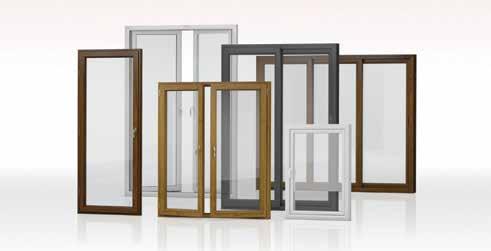
In the past decade, India’s construction landscape has expanded rapidly. In 2026, customers expect more than functionality; they want design-forward products that combine performance with refined aesthetics. Homeowners, architects and developers seek windows that deliver durability across the subcontinent’s diverse climatic conditions while remaining costefficient. Choosing between FrameX uPVC windows and aluminium windows is therefore more than a technical decision; it is about elevating living spaces and enhancing everyday life. With a legacy of over 50 years, Sudhakar Group delivers premium profile system solutions that simplify decision-making for modern customers.
FrameX uPVC windows stand out for thermal insulation and energy efficiency. Their multi-chambered profiles resist heat transfer, keeping interiors cool in tropical climates while retaining indoor warmth in colder regions. They are particularly suitable for urban environments, offering moisture resistance and superior
soundproofing, ensuring long-term value and reduced electricity costs.
Aluminium windows, by contrast, are valued for structural strength and sleek design. These systems provide enhanced security, corrosion resistance and durability, performing reliably even in harsh conditions.
FrameX uPVC windows offer versatile customisation, including wood-like laminates such as Mahogany and Walnut for a warm, elevated look that blends with homes and villas while delivering strong performance. They remain affordable without compromising on style.
Aluminium windows, typically positioned at premium price points due to rising raw-

material costs, deliver a modern, minimalist aesthetic suited to luxury apartments and commercial spaces. Both materials are low-maintenance: FrameX uPVC excels in rustproofing, sustainability and energy savings, while aluminium remains ideal for long-term durability.
FrameX uPVC windows create a serene indoor environment through multi-chambered profiles and fusionwelded corners that reduce external noise. Aluminium windows achieve similar acoustic comfort through highprecision engineering, advanced sealing technology and structural rigidity that ensures vault-like closure against disturbances.
Ultimately, selecting the best window in 2026 is less about comparing materials and more about choosing superiorquality systems suited to each space. Whether prioritising thermal insulation or contemporary architectural expression, customers should opt for brands that deliver consistent performance. With over five decades of manufacturing excellence, Sudhakar Profile Systems offers premium FrameX uPVC and aluminium windows backed by longterm warranties and elegant designs, making both options adaptable to modern lifestyles.
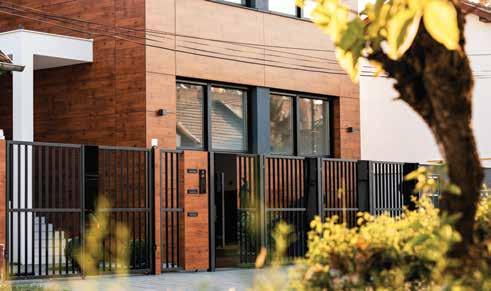
In contemporary architecture, façades are no longer mere outer shells — they are statements of design intent, durability and long-term performance. Responding to this evolving architectural demand, Durian Laminates introduces Exterra, a premium Exterior Grade Compact Laminate solution engineered to deliver superior performance without compromising aesthetics.
Durian Exterra is designed to redefine exterior surfaces by seamlessly integrating advanced surface technology, structural reliability and refined visual appeal. Suitable for residential, commercial and large-scale architectural projects, Exterra offers architects and designers a dependable solution for façades, window surrounds, cladding and exterior applications exposed to challenging environments.
At the heart of Exterra lies its most defining feature — the high-performance Exterior Film with PVDF layer. This advanced surface technology provides exceptional resistance to UV radiation, extreme weather conditions, pollution and environmental stress. The PVDF layer ensures long-lasting
colour stability, fade resistance and low maintenance, allowing exterior elevations to retain their original appearance for years. The performance of the exterior surface is validated through 3000-hour accelerated weathering testing conducted by EPH Germany, reinforcing its reliability for longterm exterior use.
Manufactured in accordance with EN 438 standards, Exterra Exterior Compact
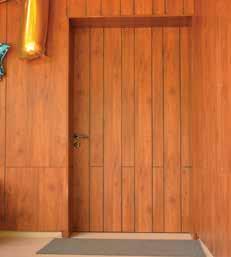
Boards deliver consistent and reliable performance across a wide range of climatic conditions. The boards offer excellent dimensional stability, along with high resistance to heat, moisture, and weather fluctuations, making them wellsuited to environments characterised by intense sunlight, heavy rainfall, humidity and urban pollution. Backed by a 10year warranty, Exterra provides added assurance of durability and performance in exterior applications.
From a design perspective, Exterra is introduced with a carefully curated exterior colour palette reflecting contemporary architectural sensibilities. The range includes elegant solid colours, natural earthy tones and modern neutrals, enabling creative freedom across varied façade concepts. All finishes are stabilised through the PVDF exterior film, ensuring long-term vibrancy without chalking or discolouration.
Beyond performance and design, Exterra supports sustainable construction practices by reducing the need for frequent repainting or replacement. Its long service life and low maintenance requirements contribute to improved lifecycle value, material efficiency and reduced environmental impact.
Durian Exterra represents Durian Laminates’ commitment to delivering future-forward surface solutions for modern architecture. Engineered for endurance and designed for visual distinction, Exterra empowers architects to create façades that stand strong against time and environment.
For more details on the product, contact:
Email: mail@cedarindia.com
Website: www.durianlam.com
Phone: +91 (79) 2970 5335/6/7
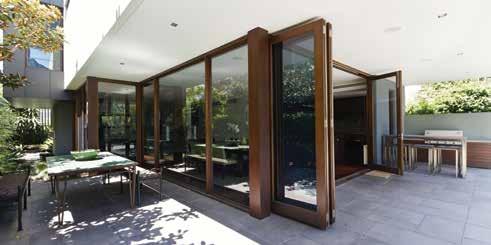
For decades, windows and doors were treated as finishing elements— selected late in the design process and judged mainly on appearance and cost. That perspective is rapidly changing. Today, window and door systems are expected to perform, adapt and actively contribute to how a building functions, feels and sustains itself over time.
This shift—from passive components to intelligent building elements—is redefining modern architecture. At the forefront are advanced uPVC fenestration solutions from Koemmerling. Blending German heritage, engineering excellence and purposeful design, Koemmerling uPVC Windows & Doors address realworld building challenges with precision.
In India’s demanding climate—marked by intense heat, heavy rainfall, dust, noise, fluctuating temperatures and pollution— windows and doors must go beyond aesthetics. They play a critical role in regulating indoor temperatures, reducing external disturbances and enhancing comfort.
Koemmerling uPVC windows and doors are engineered as effective thermal and acoustic barriers. Multichambered profiles, high-quality EPDM gaskets, advanced glazing options and airtight sealing minimise heat transfer, air leakage and noise—ensuring comfortable, quieter interiors yearround. Manufactured from lead-free, recyclable uPVC with long-life profiles, they also lower energy consumption and reduce replacement cycles, supporting sustainable construction and a smaller carbon footprint.
Future-ready fenestration is defined not just by material choice, but by material science. Drawing on over 127 years of German expertise, Koemmerling applies advanced material science to its uPVC formulations, tailored to Indian conditions. The result is lead-free, weather-resistant and dimensionally stable profiles that perform reliably even in extreme environments.
Unlike traditional materials that expand, corrode or degrade, Koemmerling
uPVC windows and doors retain their structural integrity and appearance for decades. This durability ensures long-term performance, reduced maintenance and lower lifecycle costs—key priorities for architects and developers.
High-performance fenestration is often perceived as limiting design flexibility. Koemmerling addresses this with a comprehensive range of uPVC window and door systems engineered for diverse applications. From casement and sliding systems to tiltand-turn, lift-and-slide, slide-and-fold, and fixed or customised combinations, each solution balances aesthetics with performance.
Designed for expansive glazing and clean, contemporary lines, these systems maximise daylight, enhance indoor–outdoor connectivity and offer wider views.
As sustainability takes centre stage, Koemmerling stands as a pioneer in energy-efficient solutions. Superior insulation reduces reliance on artificial heating and cooling, directly lowering energy consumption. By eliminating lead from its formulations early on, Koemmerling set a benchmark for responsible manufacturing—prioritising occupant health and environmental stewardship.
For more details, contact:

www.koemmerling.co.in Email: info.india@profine-group.com
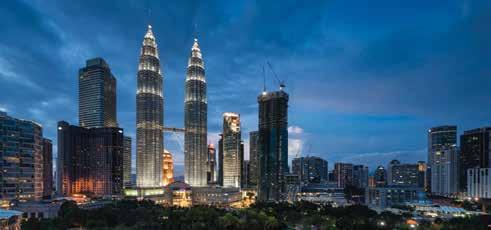
As the role of glass continues to evolve from a passive building component into a vital structural element, the Saugaat Inc. remains at the forefront of this transformation—driving innovation that unlocks new architectural and engineering possibilities.
Advancements in interlayer technology have significantly enhanced the strength, stiffness, and energy absorption of laminated glass, enabling thinner, lighter systems without compromising safety or durability.
In applications requiring resistance to extreme impact, forced entry, and high mechanical stress, glazing must maintain structural integrity and reliable postbreakage performance. Kuraray Trosifol® PET provides an effective solution—reinforcing PVB laminates to improve stiffness, impact resistance, and overall security performance in demanding environments.
PRODUCT OVERVIEW: KURARAY
TROSIFOL® PET
Kuraray Trosifol® PET is a super-clear, highperformance reinforcement film engineered with dual-sided surface pre-treatment to ensure optimal adhesion to PVB interlayers. When integrated into laminated glass assemblies, it significantly enhances the
mechanical strength, safety performance, and security characteristics of the finished laminate.
By reinforcing PVB structures, Kuraray Trosifol® PET improves impact resistance, post-breakage stability, and overall structural integrity—making it an ideal solution for high-security and safety-critical applications.
Beyond structural enhancement, Kuraray Trosifol® PET offers design versatility. The film can be printed to introduce colours,
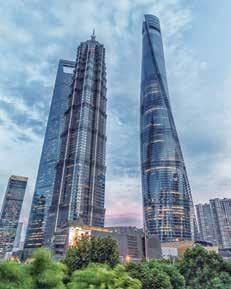
patterns, branding elements, or functional layers, expanding creative and technical possibilities for architectural and specialist glazing projects.
Technical Specifications:
• Roll Width: 153 cm (60 inches)
• Roll Length: 1325 metres (4,347 feet)
Key Applications:
• Forced-entry-resistant glazing
• Bullet-resistant systems
• Blast-resistant glazing
• Detention and correctional facilities
• Rail transportation glazing
• Marine glazing applications
Saugaat Inc.’s commitment to excellence is reinforced through strategic partnerships with globally recognised industry leaders, including Kuraray (Japan), H.B. Fuller | Kömmerling (USA), and Edgetech Europe GmbH (Germany), a subsidiary of Quanex. These alliances strengthen the company’s ability to deliver world-class technologies, superior quality standards, and forwardthinking solutions to the market.
Through continuous investment in research, engineering expertise, and technological advancement, Saugaat Inc. empowers architects, engineers, fabricators, and developers with innovative solutions that expand the structural, aesthetic, and performance boundaries of glass.
Authorised Distributor of Edgtech, H.B. Fuller & Kuraray For more details on the brand, contact:

Saugaat INC.
Email: saugaatinc@gmail.com
Tel: +91 253 2597864
Mob: +91 9664561331,+91 7057888158
PRODUCT DESCRIPTION
•Trosifol® PET is a super clear film with pre-treatment on both sides designed for adhering to P VB. The PET adds strength to the PVB improving both safety and security of the glass laminate. T rosifol® PET can also be printed to add color, designs or functionality to PVB laminates.
• Roll width: 153 cm (60 inches)
• Roll length: 1325 meters (4347 feet)
• Applications: Forced entry glazing · Bullet-resistant glazing · Bomb blast glazing · Detention facilities · Rail car glazing · Marine glazing · Decorative glazing · Architectural glazing

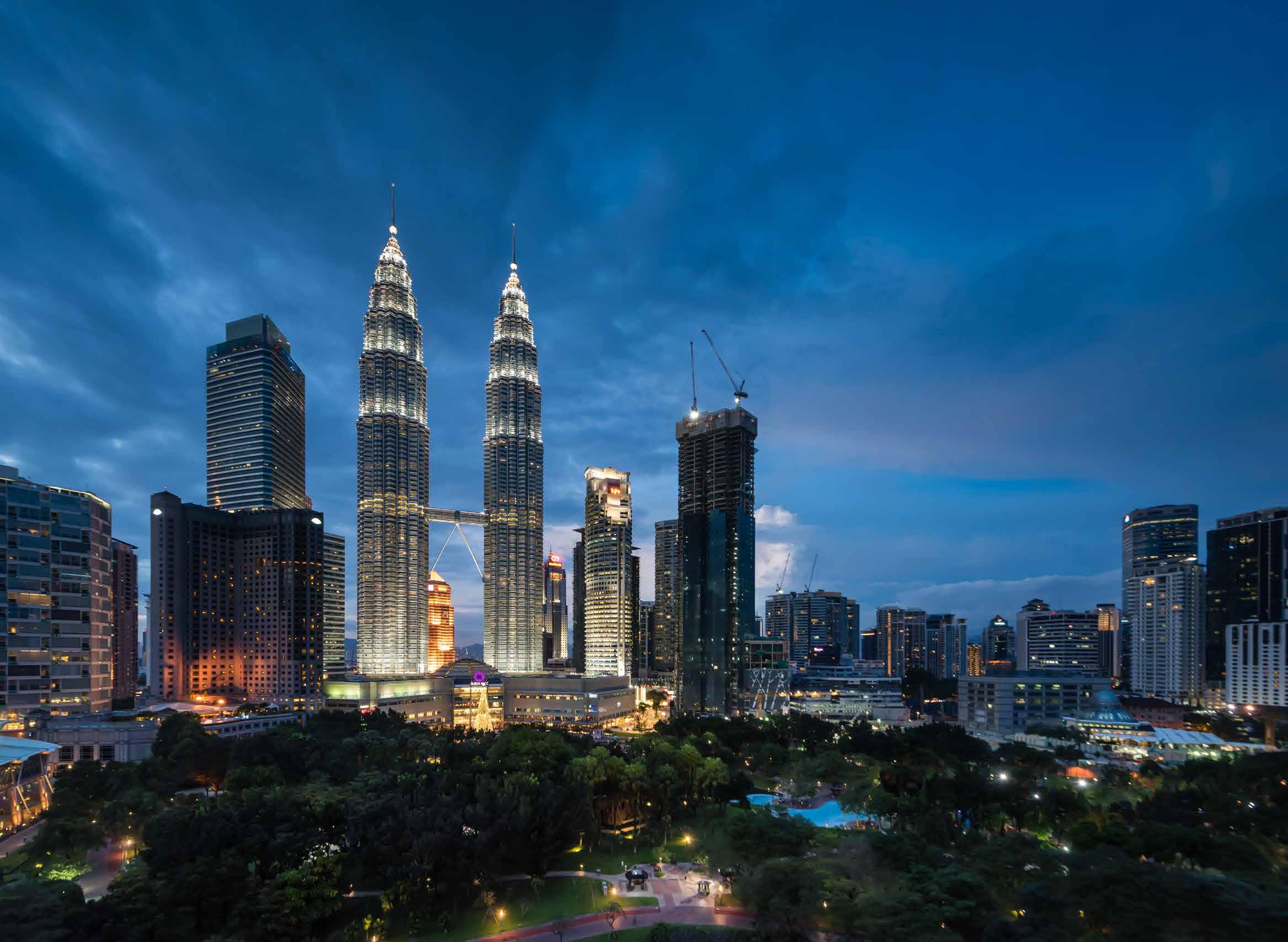
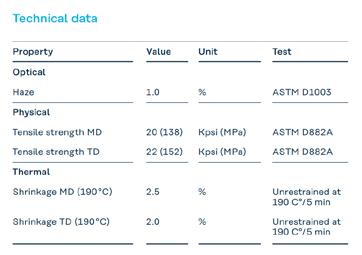



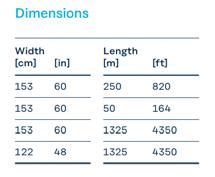

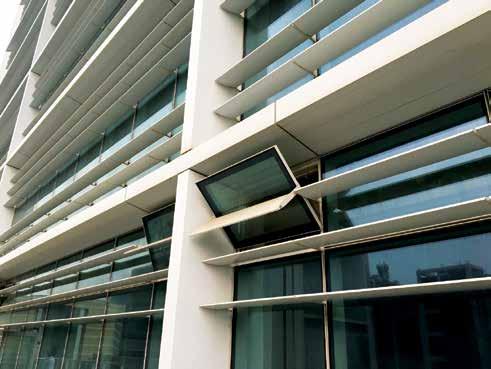
Automation of smoke vent solutions and natural ventilation systems is vital for modern commercial buildings, ensuring rapid emergency response, healthier indoor environments, and significant energy savings. These integrated technologies use sensors, actuators, and controls to manage airflow intelligently, adapting to real-time conditions such as fire alarms, temperature shifts, or pollutant levels.
Smoke vents, often certified under SHEV standards, deploy automatically via thermal fuses, electrical triggers, or building management systems during fires. They expel hot smoke and gases upwards, creating a breathable layer at floor level for safer evacuations. This prevents smoke logging, where toxic fumes accumulate and obscure visibility, directly supporting compliance with fire safety codes in offices, warehouses, and retail spaces.
Automated natural ventilation leverages weather sensors and occupancy data to open windows, vents, or skylights precisely, drawing in fresh air without mechanical fans. It dilutes indoor pollutants such as CO₂ and VOCs, boosting cognitive function and reducing sick building syndrome. Hybrid models blend this with HVAC systems for optimal performance in varying climates,
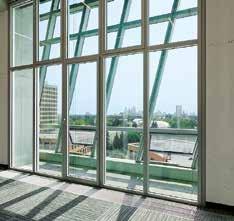
maintaining comfort while reducing electricity use by up to 40%.
In fire scenarios, these systems activate within seconds, channeling smoke out and preserving clear exit paths, which can halve evacuation times. They protect structural integrity by rapidly cooling interiors, minimising fire spread to adjacent areas or assets such as inventory. Fire services gain tactical advantages, entering buildings with better visibility and lower heat stress for effective suppression.
By prioritising passive airflow, automation reduces HVAC runtime, cutting carbon emissions and operational costs over a building’s lifespan. Smart controls predict needs, optimising openings for peak efficiency. This aligns with green standards and enhances property value through proven ROI from lower utility bills and minimal upkeep.
Seamless integration with BMS platforms enables remote monitoring, scheduling, and overrides for daily use or emergencies. Regular testing of actuators and sensors—typically annually— ensures reliability, while modular designs simplify retrofits in existing structures. Future trends include IoT connectivity for predictive maintenance, further elevating safety and performance.

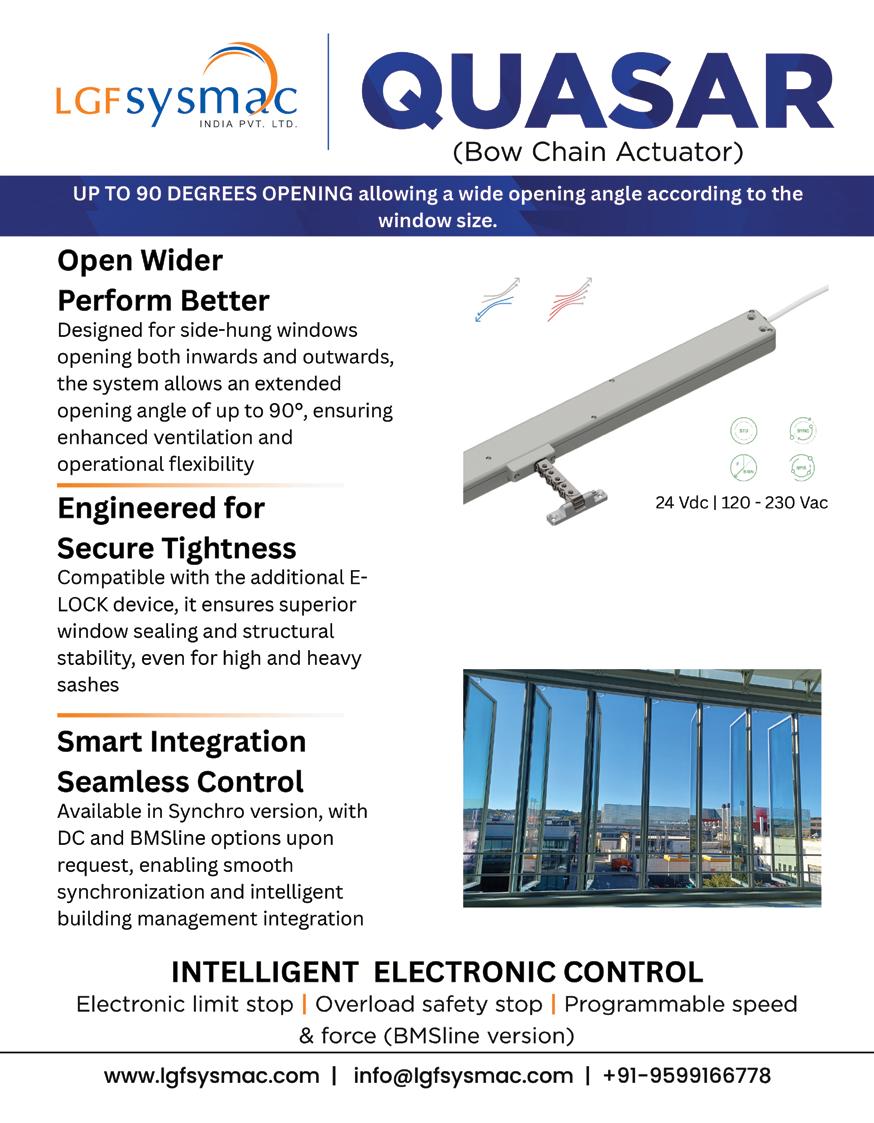
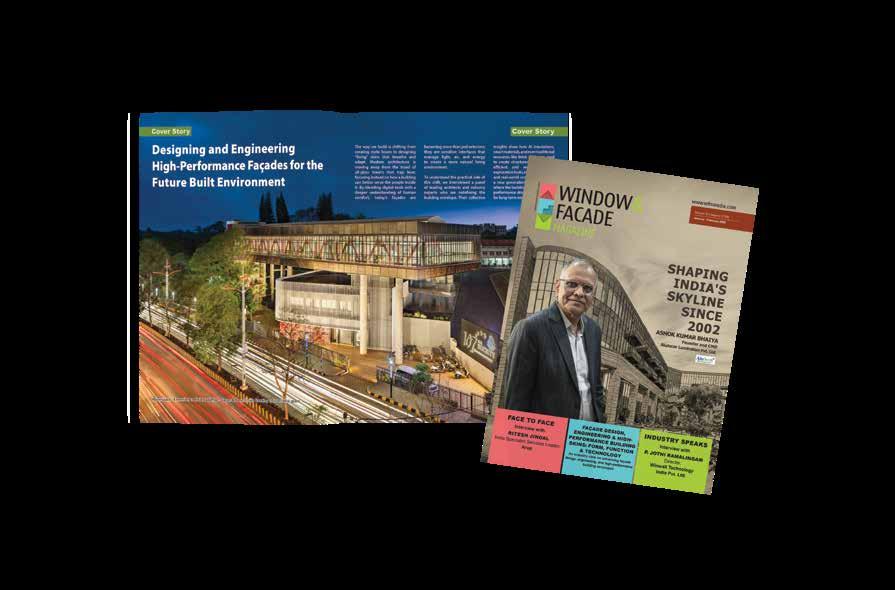






regardless of assembly configuration. This engineering approach delivers smoother operation with noticeably less effort compared to traditional systems of similar load capacity.
STAC introduces two core structural platforms in India: LS400 (including LS400 Slim) and LS200, each developed to meet different project requirements.
The Indian architectural market is evolving rapidly. Contemporary design now demands expansive glazing, minimal visible aluminium sections, effortless movement, and long-term reliability—particularly in large-format openings. Responding to this demand, STAC officially launches its advanced Lift & Slide system range in India, bringing European engineering precision to modern Indian projects. With stock availability now established in India, architects, fabricators, and developers can access STAC’s globally proven lift & slide technology with faster delivery and localised support.
At the heart of the STAC system lies its balanced bogie technology, designed to redefine performance in heavy sliding applications. Unlike conventional lift & slide mechanisms, STAC’s system ensures completely vertical lifting. The sash does not sway, tilt, or pitch during operation. Each wheel carries an equal load throughout the lifting movement, guaranteeing perfectly balanced weight distribution. This balanced kinematics reduces wear, prevents bearing seizure,
eliminates noise, and significantly extends hardware lifespan.
The compact design allows the wheels to be positioned at the furthest extremes of the sash, improving stability and performance even in large, heavy glazing panels. The independent transmission mechanism between carriages ensures the wheel train functions seamlessly,
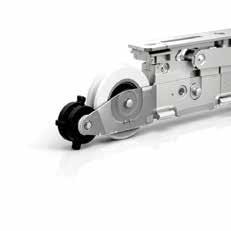
LS400 & LS400 SLIM
The LS400 is designed for heavy and largedimension sashes, supporting substantial glazing weights while maintaining effortless movement. It offers completely vertical lifting and perfectly synchronised load distribution across all wheels. The LS400 Slim version further enhances architectural minimalism, reducing visible profile dimensions and allowing for greater glazing surfaces—ideal for luxury residences, villas, and high-end commercial façades where transparency defines the aesthetic. With supplementary bogies, the LS400 system supports very high sash weights while preserving smooth and silent performance.

The LS200 system provides a robust and versatile solution for medium to large openings. It enables configurations of two to six sashes with various combinations of fixed and sliding panels, creating bright, open spaces with high manoeuvrability and user comfort. Designed for reliability and ease of use, LS200 offers exceptional performance for residential and premium apartment applications where both aesthetics and functionality are essential.
In line with minimalist architectural trends, STAC offers a concealed striker system known as the Embedded Keeper. This solution allows the striker to be integrated directly into grooved frame profiles, hiding fixings behind frame covers. The result is a clean, uninterrupted visual line with no visible hardware elements disturbing the façade design. Manufactured in AISI 304 stainless steel, the embedded striker provides exceptional corrosion resistance, making it suitable for coastal and high-humidity regions across India.
Beyond performance, STAC places strong emphasis on aesthetics and ergonomics, offering two distinct handle ranges for lift & slide systems.
The DELTA handle range reflects minimalist, functional design principles.







ensure the mechanism blends seamlessly with aluminium profiles. The system is engineered for usability, prioritising intuitive operation and reduced visual bulk. DELTA handles are available in various finishes, including black, white, and custom RAL colours.
The ATRIA range is developed for contemporary transparent spaces where elegance and ergonomics must coexist. Available with or without locking options, ATRIA handles are designed to facilitate the manoeuvring of large and heavy sashes comfortably. The detachable design also allows for custom finishing, offering flexibility to architects and fabricators.

All STAC components are treated to achieve high corrosion resistance in accordance with European standards, ensuring durability in coastal, humid, and extreme climate zones. The system incorporates advanced damping options
EMBEDDED KEEPER
such as SOFT-LIFT technology, enhancing user safety by preventing abrupt handle recoil during lowering. Additionally, STAC offers accessible drive solutions that reduce operating effort and allow lower handle positioning, supporting inclusive architectural design.
With the launch of STAC Lift & Slide systems in India, the market gains access to globally recognised engineering that combines minimalist design, structural strength, and effortless operation. From the heavy-duty LS400 and ultraminimal LS400 Slim to the versatile LS200 platform, complemented by concealed embedded strikers and refined DELTA and ATRIA handle collections, STAC delivers a complete ecosystem for modern architectural enclosures. As Indian architecture moves towards larger openings and lighter visual structures, STAC stands ready to support the next generation of design with precision, performance, and reliability.
For more information, contact:
Email:
Phone:
KINGSTON PU6021 is a highperformance, two-component polyurethane adhesive designed for precision corner joining in aluminium, steel-plastic, wood-aluminium, and aluminium-plastic composite window and door frames. Its advanced formulation securely bonds corner brackets to the profile cavity, enhancing structural integrity and preventing issues such as cracking, misalignment, and leakage. The adhesive’s thixotropic, nondrip consistency ensures accurate, clean application, while its innovative injection technology delivers smooth and uniform results. With rapid curing powered by a built-in curing agent and multiple open-time options, PU6021 streamlines production and adapts to varied project needs. Beyond fenestration, it provides exceptional adhesion on metals and is

suitable for aluminium, wood, plastic components, and stone, offering versatility without compromising strength.
Key Advantages:
• Optimised for aluminium window and door corner joints
• Superior strength and durability
• Excellent multi-material adhesion
Kingston Fenestra Pro 300 is the pinnacle of professional-grade, polymer-based acrylic paintable sealants for interior and exterior perimeter sealing applications. Trusted by industry experts, this sealant delivers unparalleled performance and reliability and is ideal for sealing door, window, and connection joints across a variety of materials, including aluminium, uPVC, and wood. Crafted with precision, Kingston Fenestra Pro ensures superior
adhesion and flexibility, guaranteeing a tight, durable bond that endures over time. Whether for interior or exterior projects, professionals rely on Kingston Fenestra Pro for its ease of application and exceptional results. This series is available in various colours like white, black, brown, light grey and dark grey
Kingston Weather Neutral (WN+) 399 is the ultimate neutral-grade silicone sealant designed for exterior applications. This non-reactive sealant offers exceptional UV resistance, ensuring long-lasting durability and performance even in harsh weather conditions. With its superior bonding capabilities, Kingston Weather Neutral (WN+) 399 forms a strong and reliable bond, making it the perfect choice for a wide range of applications. From ACP (Aluminium Composite Panel) and glass joints to acrylic boards and aluminium partitions, this sealant is the fabricator’s best friend, guaranteeing high-quality results. WN+ 399 in dark grey is a new colour variant that uniquely matches window profiles, providing a seamless and aesthetic finish. It is not only a waterproof solution but also non-reactive to the environment, further enhancing its premium quality. With excellent weather resistance, robust bonding properties, and improved window protection, this sealant ensures the longevity and reliability of your projects. The available colours are black, white, clear, brown and dark brown.
For more details on the product, contact: Kingston Multi Products India Pvt Ltd
E mail: info@kingstonindia.in
Website: www.kingstonindia.in
Contact: 011-47047914, 011-27357978/79