
Cultivating Knowledge
Spring
2026
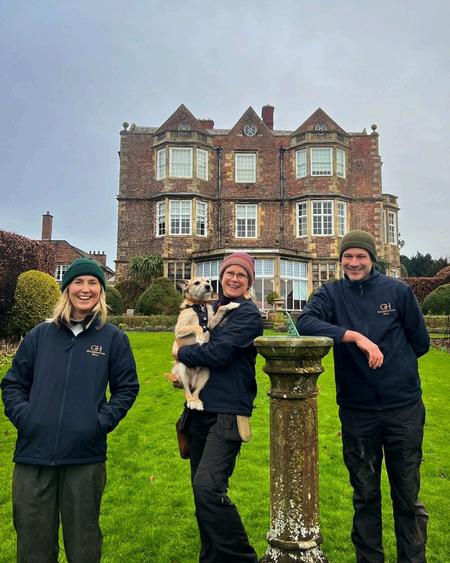
Above:The Goldsborough HallTeam (see Page 5)
Welcome to our Spring edition of Cultivating Knowledge!
Our gardens are continuing to wake up, and here at Working for Gardeners we’re ready for all the new and exciting opportunities ahead.

Beginning with this edition of our newsletter, we shine a spotlight on the heart of our WRAG Scheme; our Partner Gardens. Without the generosity and commitment of garden owners who open their gates to trainees, our work-based training scheme wouldn't exist. These gardens are more than beautiful spaces, they are living classrooms where aspiring horticulturists develop the skills, confidence, and expertise that will shape their careers. Inside this edition, you'll start to discover the diversity of our partner gardens, from historic estates to contemporary designed landscapes, and hear directly from those who have experienced the rewards of hosting our WRAG Scheme trainees.
We're also thrilled to celebrate the remarkable achievements of the next cohort of talented trainees who will be showcasing their garden designs at Gardener's World Live this year. This prestigious opportunity demonstrates the calibre of creative talent within our community and reflects the solid foundation that hands-on, workbased training provides. We profile these designers and their inspiring creations, offering a glimpse into how WRAG Scheme has helped transform their passion into professional expertise.
As we look ahead to warmer days and longer evenings spent in gardens, we hope this newsletter inspires you - whether you're considering becoming a trainee, thinking about offering a placement in your garden, or simply celebrating the vital work happening across our horticultural community.
Happy gardening,
Cathy Hastie Chair

Happy 100 Birthday Sonia! th
Thursday 16th April 2026 is a very special day indeed for member Sonia Kurta, who will be receiving the ultimate Birthday card from Their Majesties the King and Queen as she celebrates her 100th Birthday.
Sonia is an Honorary Member and has a very special link to Working for Gardeners (formerly known as the Women’s Farm and Garden Association (WFGA)), having been a previous acting Chair and Trustee of the Charity, as well as being a member of the Women’s Land Army, and therefore a very important part of our rich history and the Working for Gardeners family.
Patricia McHugh, a former Director of the WFGA, and close friend of Sonia writes:
“Born in Surrey in 1926 Sonia turns 100 in April. She became a member of the WFGA in her teens as it offered employment opportunities, followed by joining the Women's Land Army aged 17 and a half. During this period she worked mainly with cattle and at the end of the war decided to take A levels in order to gain a scholarship to a university. She married a Polish refugee and they moved to Cambridge and following university she and her husband purchased a small holding and grew strawberries and cut flowers for the next 25 years.
Having received a degree from Durham, she attended Cambridge University and completed her MA and continued to work for the University in farm economics and beef cattle raising.
I met her when she had retired and was on the Board of Trustees for the WFGA, later to become Chairman. She travelled to Australia, New Zealand and Canada and joined members on garden tours to Ireland and Scotland.
Meanwhile with failing eyesight and mobility issues, she set about writing 8 books, the first featured her memories of the Land Army, I believe all are available on Amazon. Sonia has a wonderful sense of humour, is great company, very knowledgeable and over the years her contribution for women working on the land has been considerable.”
Sonia - we are delighted to hear that you still very much enjoy finding out what the Charity and its members, trainees and Partner Gardens have been up to throughout the year via our quarterly newsletter, and we’d like to take this opportunity to wish you the most wonderful Birthday!

Donation Received in Memory of Tom Fenton
In the autumn of 2025 we received the sad news of the passing of former Working for Gardeners member Tom Fenton, who has supported the WRAG Scheme since 2021, providing a placement for three trainees.
Tom was an active member and Trustee of the HPS (Hardy Plant Society) and was keen to explore how the two organisations could work together in the future. We are very touched and grateful that the HPS Essex Group have chosen Working for Gardeners to receive a donation in memory of Tom.
Donation from the Chalcroft Charitable Trust
We’d like to extend a big thank you to the Trustees of the Chalcroft Charitable Trust who have made a very generous donation to Working for Gardeners. Donations of this nature really help to support us as we grow and evolve, and we are most grateful that the Chalcroft Charitable Trust believe in our work and have chosen to make a donation.
If you would like to make a donation you can do so via our website, via CAF (Charities Aid Foundation) or directly via BACS. Please contact the office for more details
New WRAGS Partner Gardens
Welcome to the following new Partner Gardens:
Strathtyrum Farm
Garden Organic, Ryton
Lovington House
Fron Heulog
Queen’s College
Trewithen Gardens
Nyetimber Manor
Southill Park
Midway Manor
Ledbury Flower Farmer
The Lodge Gardens by Rachel Folyats
Beth Chatto's Plants and Gardens
Bottengoms Farm
Merefield Gardens
Mains of Balgavies
Tarmangie
The Bield at Blackruthven Coldharbour
Longstock Park Water Garden
The Manor House
Cinderwood Market Garden
Mortlake Crematorium
Lindfield House
The Medlars
Snowdenham House
Allt-y-Bela

Thank you to all our hard working Regional Managers for helping to make this happen.


New gardens can join the Scheme at any point in the year, so if you know of a garden you think would be interested, please do let your Regional Manager know, or get in touch with us at admin@wfga org uk
Meg Cobley’s RHS Master of Horticulture Dissertation: Update
Some of you may remember an online questionnaire that we helped to circulate back in March 2025
The aim of this was to gather data for an RHS Master of Horticulture dissertation which WRAG Alumni Member, Meg Cobley, was writing on the challenges faced by career-changers as they train and begin work as professional gardeners
Meg will be graduating at the end of March 2026 (with Distinction!) and would like to thank everyone who participated for their valuable comments and detailed answers
Meg says that the dissertation ended up being a much bigger project than originally anticipated and she presented her findings at the RHS FutureHort Conference at Wisley in early March (in person/online)
Meg has created a summary of the main findings, an excerpt of which we share below:
How can the industry help career changers?
There is currently a serious shortage of labour in the horticultural industry, and whilst efforts have been made to attract young people, these schemes will take time to yield results. There is, therefore, an incentive to attract older workers who are keen, ready and willing to start work now and bring valuable transferable skills with them.
Measures to focus on include:
Create meaningful, structured work experience opportunities.
Increase training options around the country, especially of RHS Level 2. Focus on modular training to allow gradual transitions between careers. Encourage employers to see that flexible hours attract a more diverse workforce, who bring additional benefits to the workplace.

Self-employed gardeners often work alone and are struggling to find the mentors and business advice which would help them grow their businesses with confidence. Input at an early stage would reduce this barrier significantly.
More work is needed to improve the public’s perception of professional gardeners and the skills required for this work.There are several professional organisations but membership numbers are low More effective outreach to raise their profiles and increase awareness of their offerings would attract more members and thereby increase their voice in society.
Read the full summary here:
www wfga org uk/wp-content/uploads/2026/03/MHort-Dissertation-Summary-Meg-Cobley-March2026 pdf
As a result of her research, Meg has recently launched the Cambridge Gardening School to help fill the gap in practical training provision in her local area.All of the tutors owe their second careers to the WRAGS placements that got them started and therefore they would like to offer Working for Gardeners members a 10% discount on any courses booked Visit the Members Benefits area of our website to access full details of how to use this discount, or click below:
www wfga org uk/members-area/member-benefits/

WRAGS Partner Garden Spotlight
Goldsborough Hall Gardens: Nurturing Growth Through WRAGS
At Goldsborough Hall in North Yorkshire, the gardens have flourished under the care of a team whose roots all lie in the WRAG Scheme. Head Gardener Debbie completed her training placement at the Hall before expanding her experience with the National Trust and as a self-employed gardener. Paul also trained here and stayed on, combining his work at the Hall with his own gardening business, while Melly joined the team after completing her WRAG Scheme placement in a local hotel garden.
Each brings their own skills and creativity. Debbie’s specialist pruning knowledge keeps the orchard and rose gardens thriving. Melly’s creative eye shines through her willow plant supports, colour combinations, and photography for social media. Paul’s practical craftsmanship has produced new garden structures, including potting benches and leaf bays.
Their diverse professional backgrounds, spanning teaching, IT and fashion, have proved invaluable. The organisational, communication and problem-solving skills they developed in earlier careers translate beautifully into the demands of horticulture, helping the team plan efficiently, adapt quickly and engage confidently with visitors.
The WRAG Scheme has been central to shaping this thriving team. It has given each gardener the grounding and confidence to progress professionally, while enriching the Hall with their enthusiasm, insight and innovation. Goldsborough Hall’s gardens, much like its gardeners, continue to grow thanks to the opportunities that the WRAG Scheme provides.
Owner Clare Oglesby says: “The WRAG Scheme has brought such talent and energy into our gardens. It’s wonderful to see trainees develop their skills and become an integral part of our team – their passion keeps Goldsborough Hall’s gardens evolving.”

Melly, Debbie holding Vinnie, and Paul
WRAGS Updates
Ben’s Story
Nethercott House
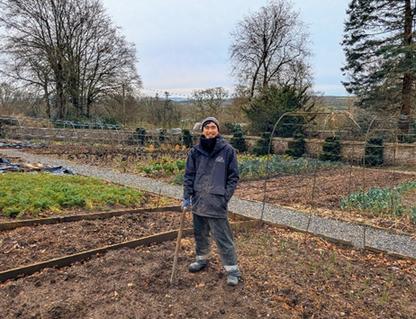
Through the generous sponsorship of the Devon GardensTrust, I recently began my WRAG Scheme placement at Nethercott House, part of the Farms for City Children Charity, celebrating its 50 Anniversary this year. Every year, Nethercott welcomes schools for residential stays that immerse children and teachers in a week of farming, gardening and creative activities. th
In its Victorian-walled garden, I have enjoyed the wonderful opportunity to learn and be part of an institution which marries horticulture and education; rather fitting as I work and retrain in my own horticultural journey through the WRAG Scheme. Whilst horticulturally fascinating – with its year-on-year successes as a productive kitchen garden, alongside numerous quirky and interesting edibles – it is particularly in its unique educational setting that I have found to be an eye-opening experience, both for me and those who visit.
Here, the pigs, donkeys and cattle are not just cute.As one might typically do, I weed beds and clear carrot tops, but here the ‘waste’feeds the pigs; their manure returns to the soil, nourishing future crops. In the nearby field, hay grown on site sustains the cattle through winter. Meadow, animal and garden form a circular system whose benefits are both practical and visible.
Likewise, this is seen in the full ‘plot to plate’experience. Children who come to sow, dig and harvest are fuelled by the very produce they helped to grow.They encounter edible cultivars many have not seen before, alongside local varieties that embed a sense of rootedness — not only to what is grown here, but also to the process of tending to the land.
So, as I look into the upcoming growing seasons, where the propagation ramps up and the blossoms come into flower amidst a hive of activity (not just for the bees!), I wait in palpable anticipation as Nethercott reminds me and taps into the very essence of what first drew me into horticulture – a yearning not only to gain experience but to experience, and to understand that gardening is not only for city children, but the city child inside us all. It encourages us to redevelop a sense of rootedness that evokes a deeper connection to ourselves, to each other wider wonders of life itself.
Ben Choy - WRAG S

Pictured above: Ben Choy
Vine Stewardship and the Living Conservation of the Walled Garden
Claudia Canepa
During a period of severe winter weather in early January (-5°C with hail and snow), I was assigned to work in the vinery within the Walled Garden at Blenheim Palace. The vinery is a historic glasshouse for cultivating table grapes, typical of great estates, and retains both century-old vines and a highly disciplined, architectural system of training.
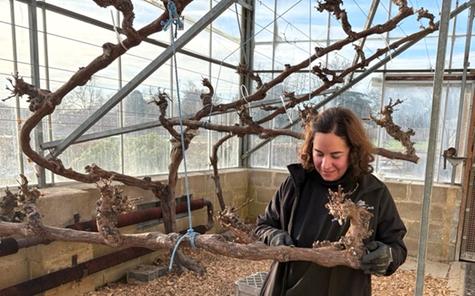
Observing Kay Laul, an experienced gardener and vine keeper at Blenheim, pruning the vines was illuminating. Each cut was guided by close observation and an understanding of long-term growth. Vinery work here functions as a form of intangible heritage conservation, maintaining the skills, knowledge, and spatial logic embedded in the glasshouse.
I feel incredibly grateful to be working in a functioning and living historic site. Kay was generous with her expertise, teaching me how to remove mealybugs by carefully scraping away old bark without damaging new growth or using pesticides. The labour involved is considerable: a single vine can require a full day’s work, underscoring the level of craft essential to preserving both plant health and the integrity of the historic growing system.
Much of the house is planted with Muscat ofAlexandria, producing pale green to golden grapes with a distinctive aromatic sweetness.At the far end, Madresfield Court is grown, a highly regarded Victorian dessert grape with deep blue-black berries. The results exemplify historic fruit mastery: a pre-industrial discipline rooted in precise pruning, training, timing, and careful microclimate management. The aim is consistent excellence - unblemished fruit, even ripening, and grapes worthy of formal display - a tradition reflected in Blenheim’s long history of Royal Horticultural Society recognition.
Claudia Canepa - WRAG Scheme Trainee at Blenheim Palace @canepa3719
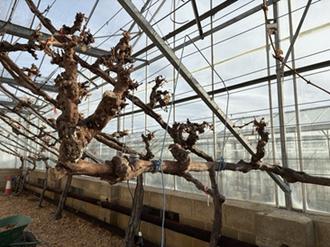
L&R: Rafter-trained grapevines in Blenheim's Victorian vinery, where the permanent vine arms are trained along the sloping roof rafters, integrating plant structure and glasshouse architecture into a single historic growing system
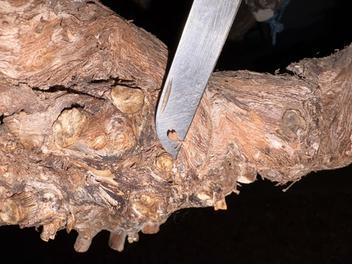
Claudia working in the vinery at Blenheim Palace
What a ‘Beautiful Border’!
Meet our BBC Gardeners’ World Live Participants for 2026

We’re delighted to once again be supporting a team of WRAG Scheme trainees and alumni to create Beautiful Borders at the BBC Gardeners’ World Live Show at the NEC in Birmingham this summer. The theme this year is ‘Once Upon a Time’. ‘Meet’ our participants and see their designs below, and follow their journey to the NEC via our social media channels. Better yet, visit our stand, meet our team and see the designs in person between 18 - 21 June: tickets available from BBC GWL th st
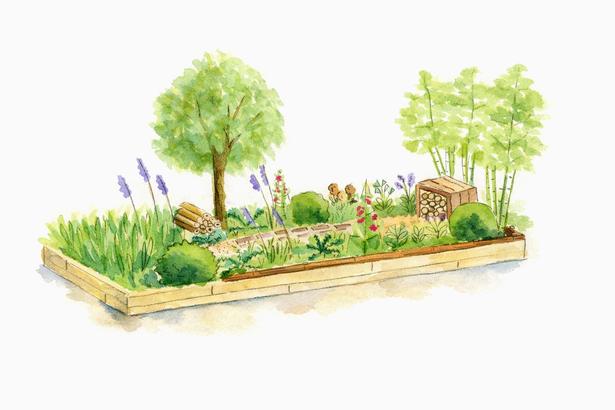
Tom Brett
‘Once UponATimeABrush BecameA Spade’
Once upon a time, I worked as a painter and decorator After years in that trade, I reached a point of self-doubt and change, and decided to retrain as a gardener
This border tells that personal story – the uncertainty of starting again, the learning process, and the confidence that has grown from it.
@joshuatreegardencare
Alice Pote & Georgina Spencer ‘Gothic: Returning to Once Upon a Time’
“Two years ago, we entered Gothic Lodge’s garden - once enchanting, but taken over by nature. Over time, we uncovered its hidden beauty, restoring it to its storybook charm and “once upon a time” spirit.
Our show garden mirrors this journey: from wild beginnings to careful renewal.
@georgina.spencer.gardens @the_larkspur_gardener
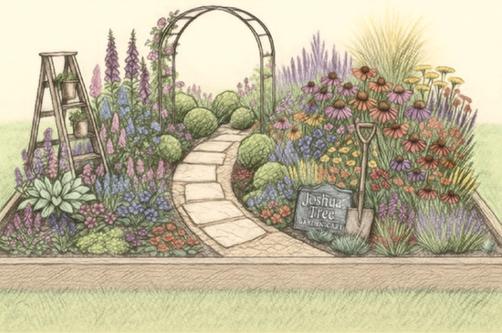
Kate McCallum
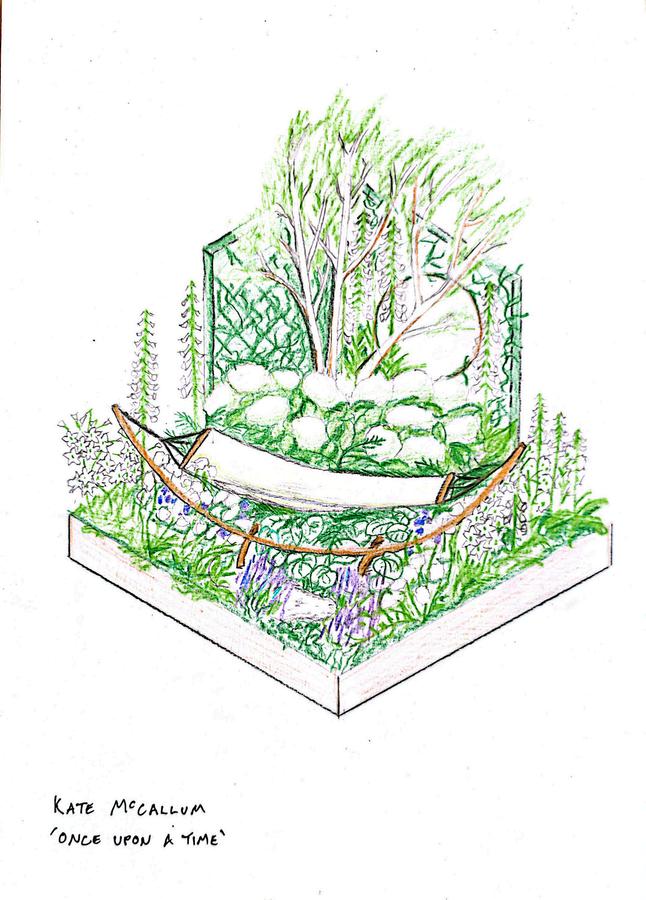
‘By the Light of the Moon’
‘Once upon a time’transports me back to childhood and the world of fairytales. My border is set in the magical twilight hours as the world slips into sleep. Colours fade into shades of dark and light, and the sense of scent heightens.
My border is a space in which to dream when the light is fading. @kateinthegreen
Heather Carstens
‘Once Upon aTime –Through a Child’s Eyes’
This design is inspired by my childhood memories of exploring and discovering the simple joys of being in a garden, moments that first connected me with nature.
Returning to gardening as an adult, and building a garden from scratch with my son, rekindled that same sense of wonder and ultimately inspired my change in career
@heather_carstens_design

Sarah Elsley ‘’Summer of Love’
The design of my garden is inspired by the journey of my daughter toward love and self acceptance through a period of adversity.
The plants were chosen for their hidden meanings, some from Victorian floriography and some from more contemporary sources
@selsley1
Ellen Pye ‘May Morning’
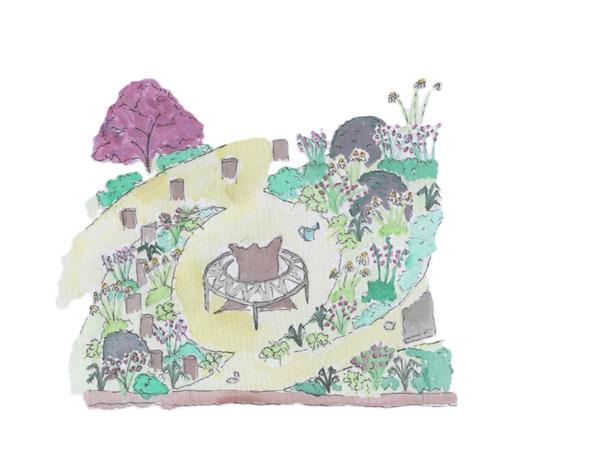
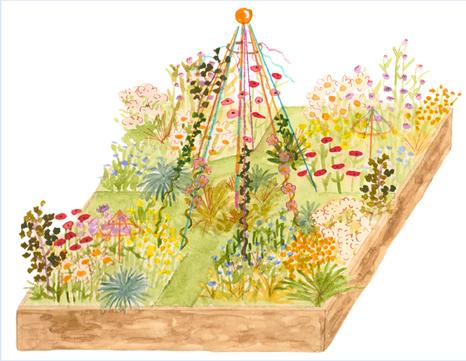
This border is inspired by the living tradition of Morris dancing, a joyful celebration of nature, community, and the turning of the seasons. I am part of a newly formed Morris side called Heaps Morris, and we have been dancing together since 2023.
Being part of this group has been a transformative experience for me. This garden tells the story of how, through dancing, I have found a community seeking to reconnect with nature and the land.
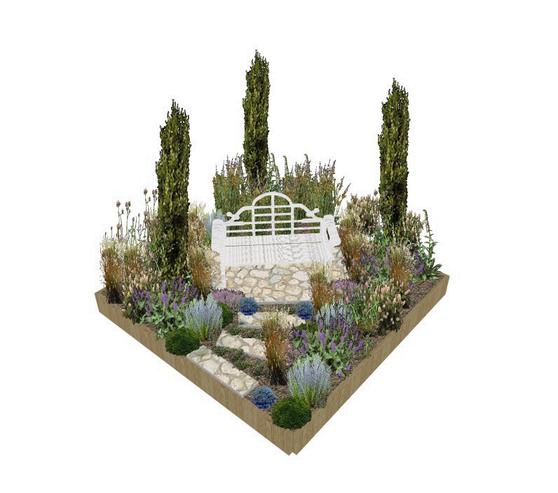

Christopher Kelleher
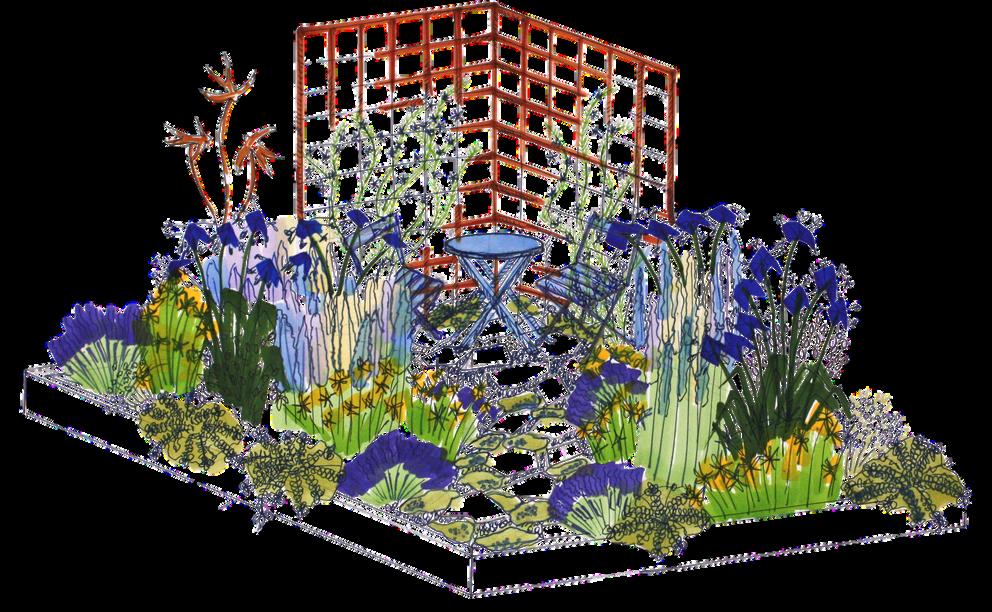
‘Once Upon a Time –AMoment to Breathe’
You have just bought your first home with a small garden. When you move in, the garden is bare, nothing but concrete slabs and grass but, after months of work, it’s been transformed into a beautiful ornamental garden.
One evening, you sit down on a bench in the garden. Planting either side envelopes you. The sun dips in the west but the last rays of the day warm your face and turn the grasses golden. Floral scents hang in the air conjuring memories of past holidays.Your eyes rest as they float across the soothing palate of purples, blues and whites.You sit back, breathe deeply, and relax.
@space_to_grow_gardens
Working for Gardeners has chosen to support current trainees and alumni within their first year of completing a WRAG Scheme Placement, but ANYBODY can apply directly to build a Beautiful Border at any of the BBC Gardeners’ World Live Shows. It’s a challenging but rewarding experience with a great sense of team spirit across all the participants, not just our team. The theme changes every year and is announced in the autumn, so what would you create?
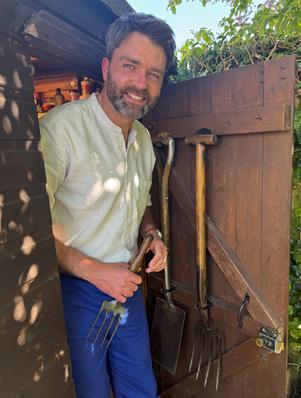
Spring - A Rush of Gree
By Ross Pearson


Ross Pearson is a professional horticulturist and garden writer based in Northumberland. He is also a Visiting Lecturer of Horticulture and Heritage Crafts at St Cuthbert’s Society, Durham University, and we’re delighted that in addition, he’ll be contributing excerpts from his gardening journal to our Newsletter throughout 2026.
Spring arrives at precisely the moment you begin to think winter might never end. It announces its presence with a rush of green intent, transforming the garden from a place of barren contemplation into a place of urgent decision-making. Buds burst, shoots surge and suddenly everything that appeared quite dead last week is very much alive and demanding attention.
This is the season when optimism runs dangerously ahead of good sense. The sun shines once and we are immediately convinced that winter is over forever. Seed trays are filled with heroic ambition, jumpers are abandoned far too early and someone, somewhere, is planting out dahlias with the confidence of a person who has never met a late frost.
The sensible business of spring begins with cutting back. Roses, those flamboyant divas of the border, require firm direction and a complete absence of sentimentality. Dead wood out, weak growth gone and anything crossing removed before it causes future arguments. Shrubs that flower on new wood positively relish a hard prune, though they rarely look grateful at the time.
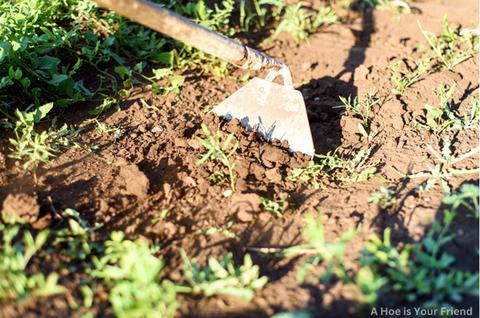
Weeding, meanwhile, becomes a daily reminder that nature does not approve of bare soil. Chickweed and groundsel appear overnight, apparently grown by moonlight and bad intentions. The trick is persistence: remove them early and often and try not to take it personally Asturdy hoe is now your closest companion.
Soil deserves kindness now Agentle fork, a good mulch and the restraint to stop before single digging the entire garden is key. Compost should be applied with generosity, not flung about like confetti. Better to mulch one area well and move on next year, than cover all borders in a thin layer
Spring is undeniably the season of expectation. Every empty space looks full of promise, every emerging shoot a small miracle. Not all will fulfil their potential, of course, but hope, like compost, is an essential ingredient.And when the garden finally settles into growth and the panic subsides, one thing becomes clear: spring may be chaotic, but it is gloriously, unapologetically alive. Get out there and make the most of it.
Ross Pearson @rosspearsongardening

Bulb Bonanza, Overbury Court
Worcestershire - October 2025
Over coffee and fruit loaf, Overbury’s Head Gardener, Harry Green, outlined the day ahead – alongside Harry and his colleagues we would plant some 3,000 bulbs.
We began on a steep grassy bank. Harry and Ben made planting holes with a heavy digging bar – a speedy and practical method on a steep slope. We followed with bulbs (Narcissus Rip Van Winkle, Sailboat and Pueblo) and compost. Meanwhile children from the village nursery worked at the top of the bank. They were very keen and placed at least one bulb per hole, sometimes four
Our next task was planting formal urns. Harry demonstrated depths and spacing for a bulb lasagne of Super Parrot tulips, Moonlight Sensation daffodils and Ocean Magic muscari before we each planted our own urn.
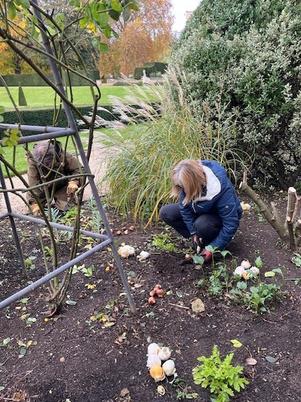
After lasagne it was time for the main course – 900 tulips (Maureen, Avant Garde and World Friendship) and 300Allium Everest for the ‘silver and gold’border. We placed all the bulbs - in fives, with Everest to the rear – before planting. This is likely to be the last year so many bulbs are planted for a short-lived display as the future focus will be on bulbs that naturalise, like species tulips.
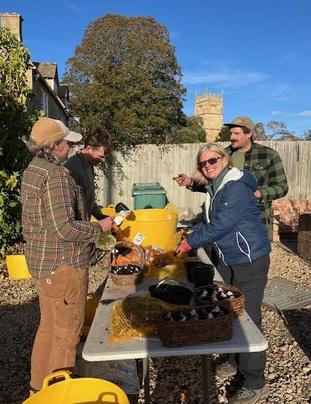
Dessert was preparing indoor displays of Narcissus Paper White, hyacinths and Iris reticulata. Unlike the snugly-buried bulbs in the urns these would be forced, so were planted with tips peeping through.
The day ended with a tour of the kitchen garden. I left with a large bundle of chard but more importantly, greater bulb-planting confidence and knowledge. Many thanks to Harry and the team at Overbury Court for a very enjoyable day, and to Liz Harrison-Hall of Working for Gardeners, for organising the event.
Taissa Csaky
WRAGAlumni Member
Images copyright and courtesy of Liz Harrison-Hall

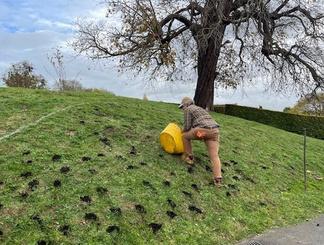
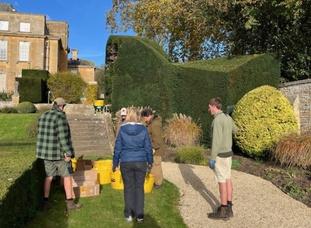

Above: Planting on the bank
Above: Preparing to plant on the Silver and Gold border
Above: Getting stuck in on the Silver and Gold border
Right: Preparing displays for forcing in the kitchen garden
Propagation Day, Braxted Park, Essex -
March 2026
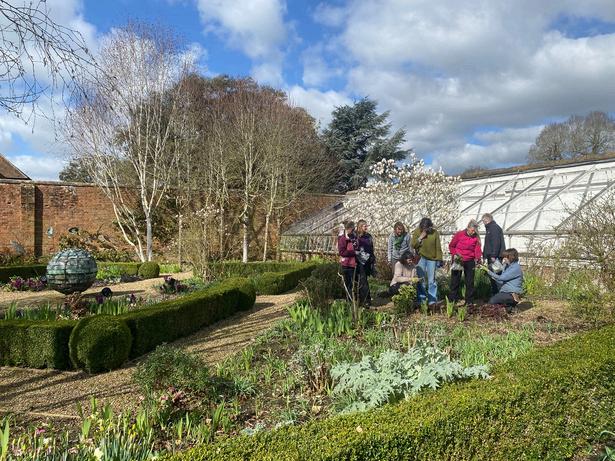
In early March I joined six other Working for Gardeners members for a propagation Workshop at Braxted Park Estate in Essex. The historic manor, now a wedding venue, features walled gardens and glasshouses set within beautiful parkland. Head Gardener Sally (formerly of Beth Chatto Gardens) and gardener Gill, introduced the principles of propagation over tea and biscuits, before we explored the gardens to collect plant material. Think pick ‘n’ mix, only better.
The team is gradually refining the planting, learning from what thrives and what doesn’t. The gardens must adapt to a changing climate while remaining an attractive backdrop for weddings. As a result, the plant selection is stunning and increasingly resilient.
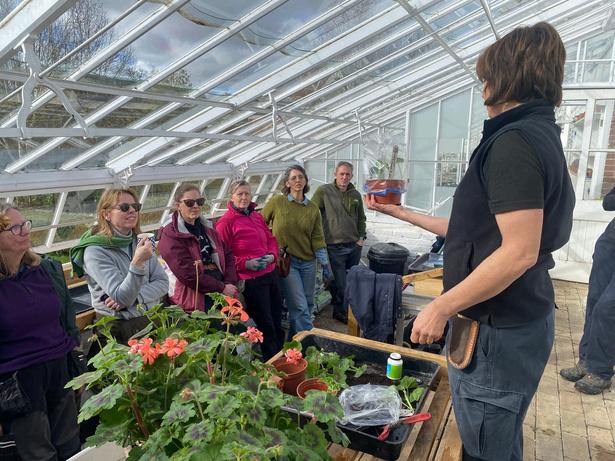
Back in the glasshouse with our bounty, we began with softwood cuttings. We snipped the bottom of the stem horizontally just below a leaf node, and used a diagonal cut to remove the tips (to know which way was up). Most leaves were then removed to reduce transpiration, leaving 2-4 at the top. We dipped cuttings in rooting powder, poked into compost-filled pots (around the edge for better drainage) and watered. We covered each pot with a clear plastic bag to retain moisture. We also practised basal cuttings, removing small sections of plant from below ground with some root attached, then potting them into damp compost.
Pictured: attendees under instruction from Sally and Gill.
Did you know that we send out an email Bulletin each week that contains information about new events that we’ve added to our website, news, and feedback from our event attendees?
Use this link to subscribe:
Events Update



Member Benefits Update

discount

RHS: 30% discount (Individual/Joint)
RHS: *Student Membership £20 (*for WRAGS trainees)


discount



Garden Collective: subscription during 2026: 3 months for £1, then £42 for your first year (normally £72 per year).

50% discount (seeds only)

discount on purchases of £10 and over

Wire Fence: 8% discount (Gabion products: 10%)
Bulbs co uk: 10% discount
Kent Wildflower Seeds: 10%
Genus: 10%
Kings Seeds:
Chiltern Seeds: 15%
Cambridge Gardening School: 10% discount


This funding is open to all Working for Gardeners members of 12 months’standing and who are British citizens ordinarily resident with the U.K.Applicants are invited to present a strong case to receive funding in pursuit of a new career within the areas of horticulture and agriculture, which they would not otherwise be able to undertake.
TheApplication form will be available on our website from 1st April 2026 via the below link, and applications must reach the office by 22nd May 2026 to be considered: https://www.wfga.org.uk/join-the-wfga/christine-ladley-fund/
Bursaries of up to £1500 can be applied for to support travel and related costs.Applications are welcome throughout the year but must be received at least six weeks before the intended date of travel to allow the application to be carefully considered.
WRAG Scheme trainees can also apply for smaller awards (up to £500) to support training and other activities through the Merlin Trust’s WRAG Scheme Bursary, developed in conjunction with Working for Gardeners, which opens in June each year. If you can’t wait until then and would like to find out more about the International Travel Bursary, do visit the Merlin Trust website (https://merlin-trust.org.uk/) or contact the MerlinTrust if you have any questions about eligible activities.
A Big Thank You To...
all our wonderful contributors, and thank you for reading our Newsletter If you’d like to write an article for the next edition, we’d love to hear about your idea: admin@wfga org uk