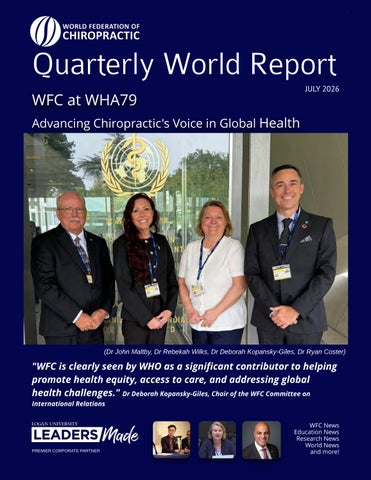
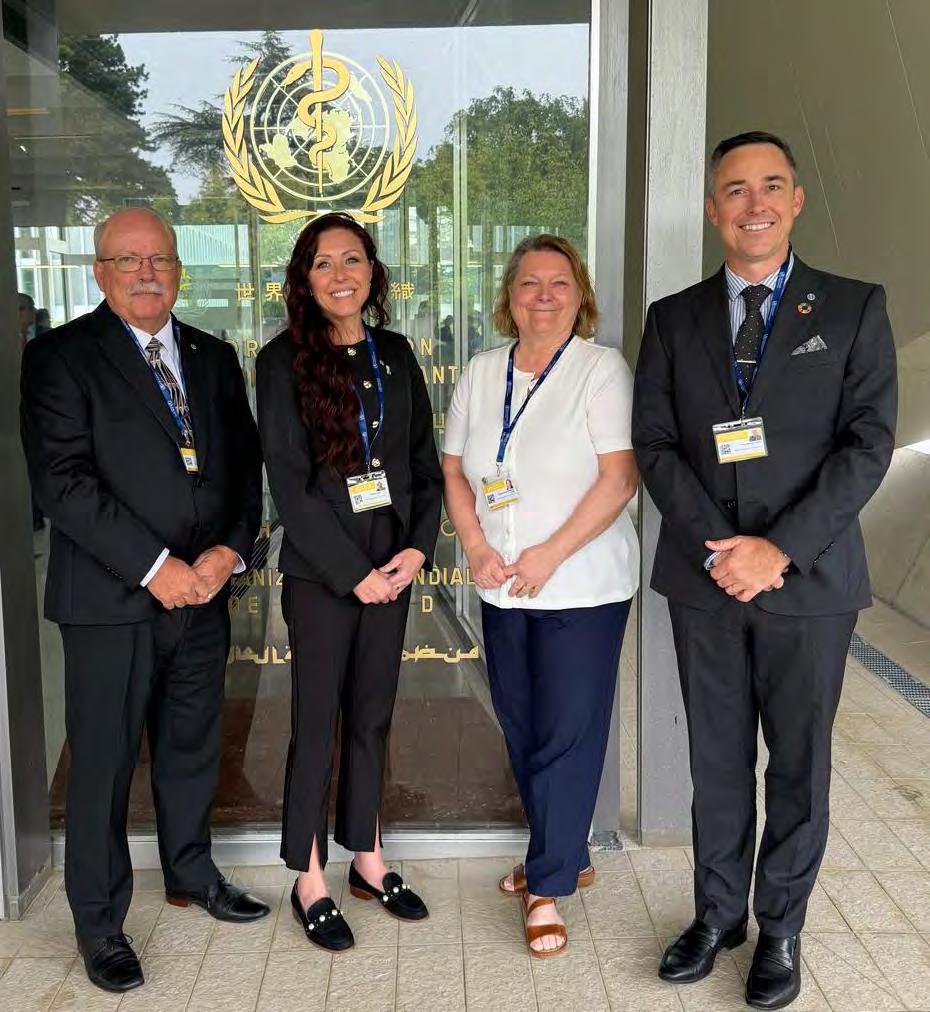
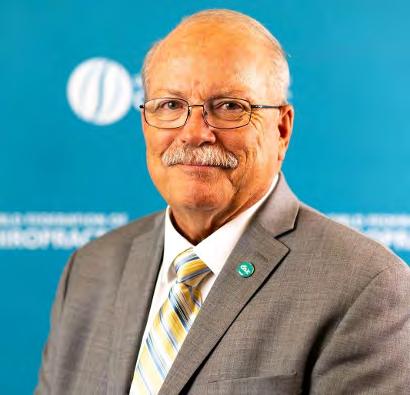
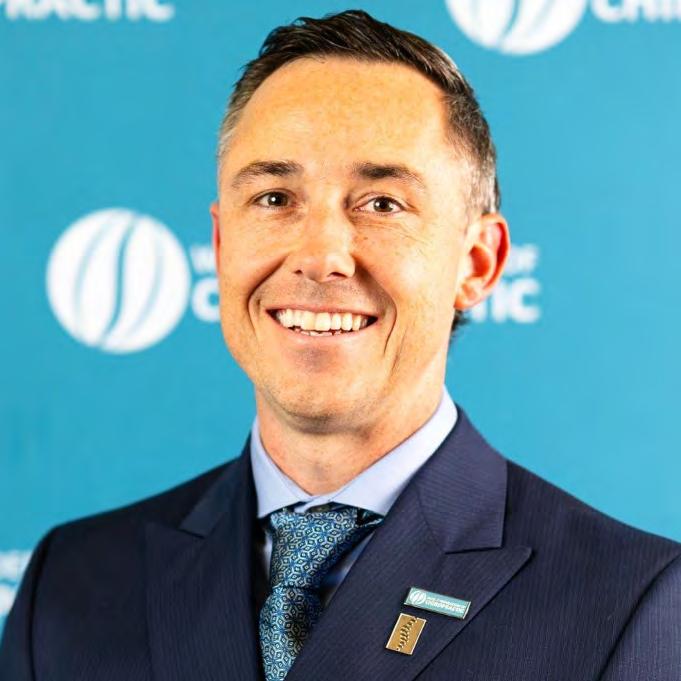
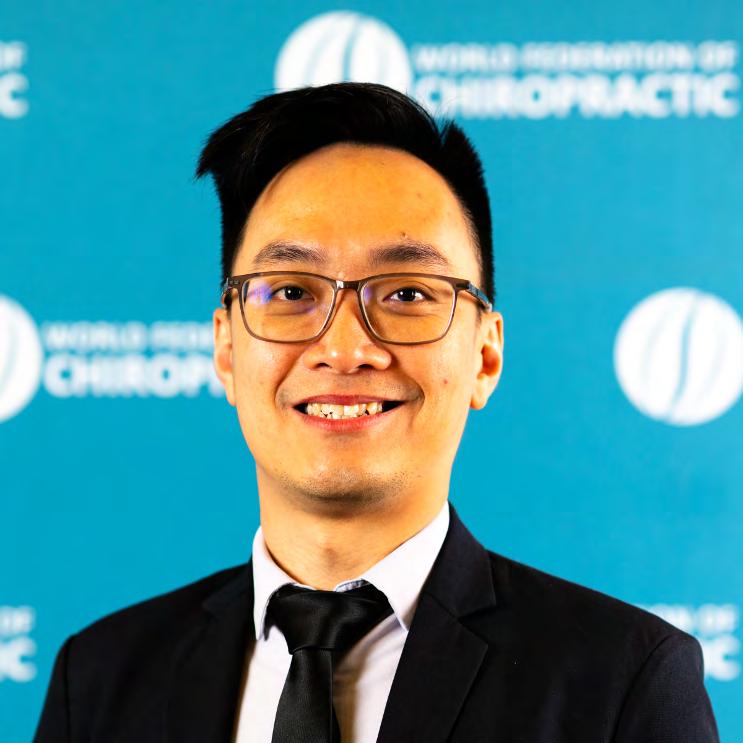
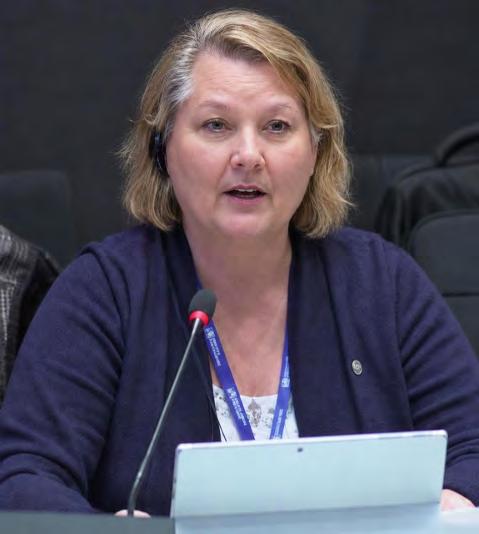
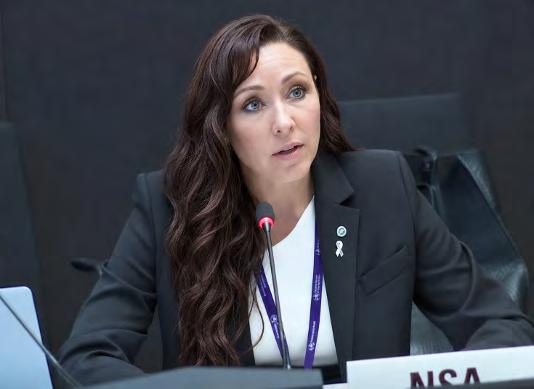
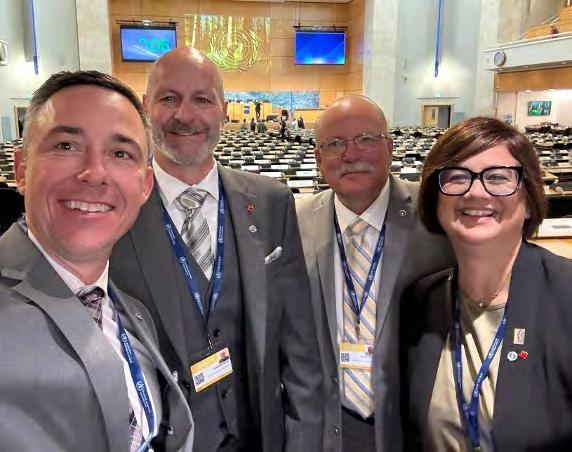
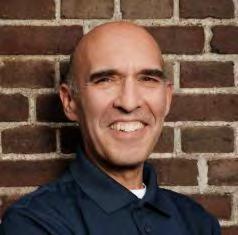
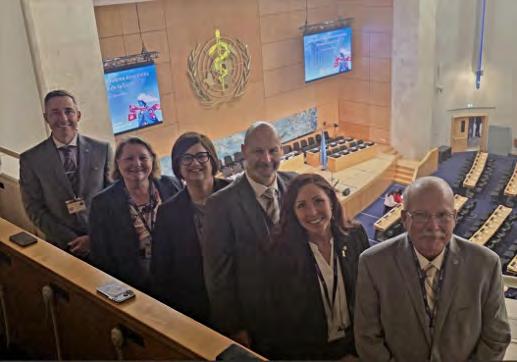
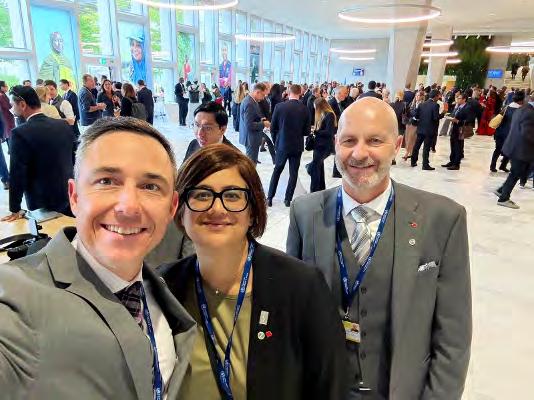
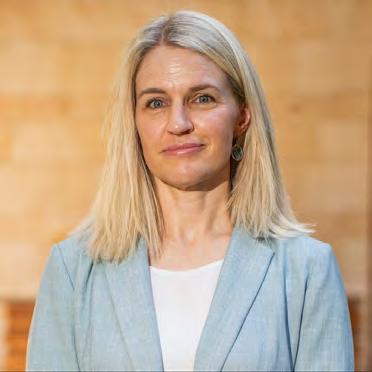
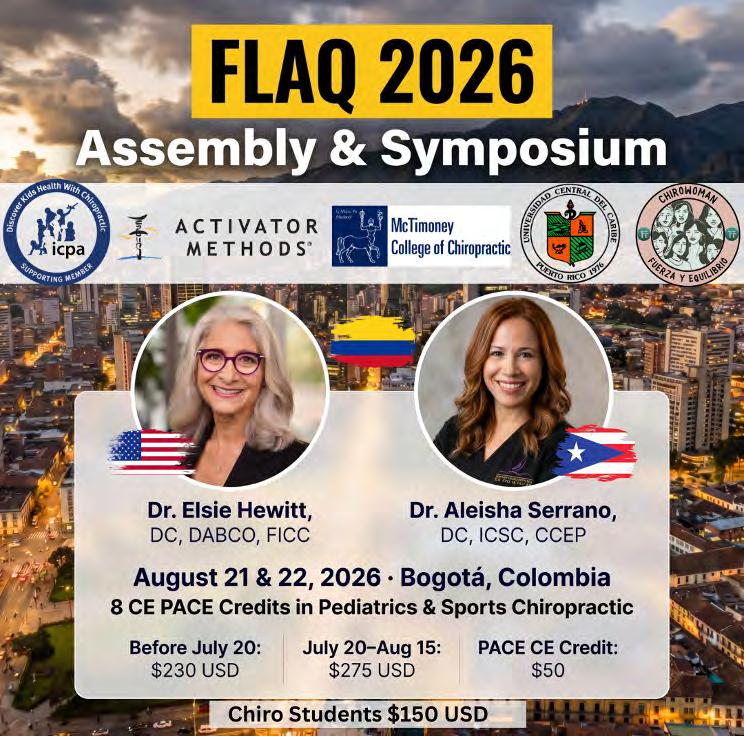
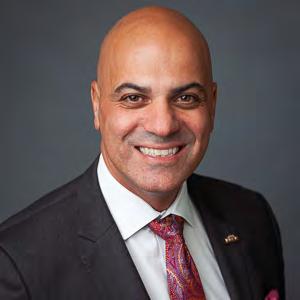
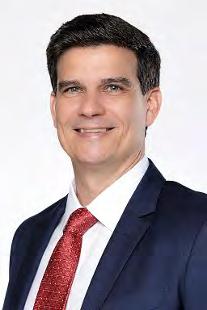
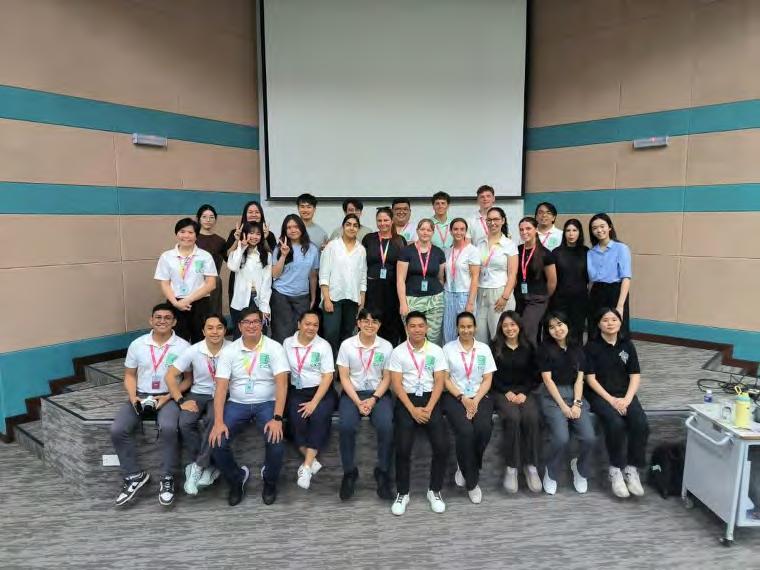
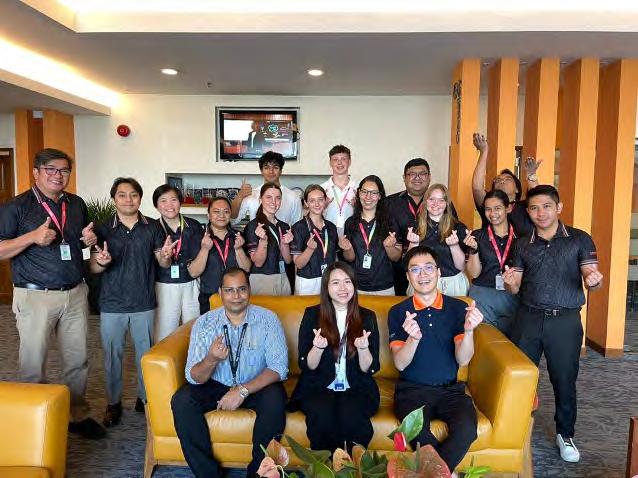
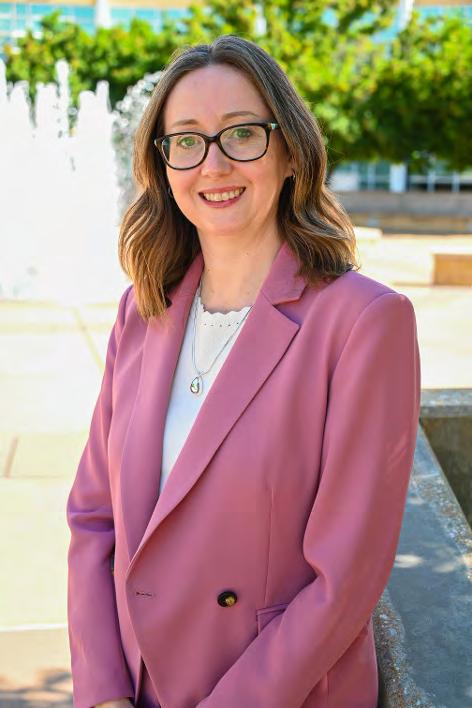
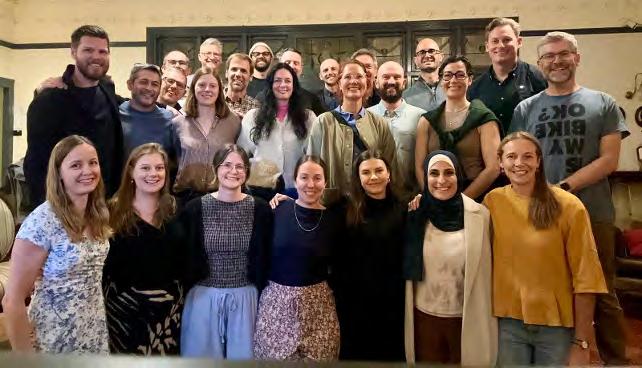
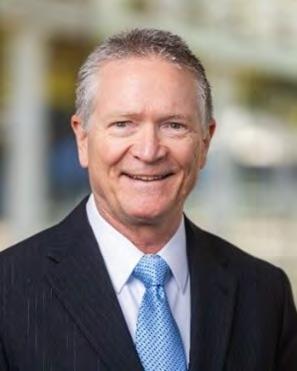
(Dr John Maltby, Dr Rebekah Wilks, Dr Deborah Kopansky-Giles, Dr Ryan Coster)
"WFC is clearly seen by WHO as a significant contributor to helping promote health equity, access to care, and addressing global health challenges." Dr Deborah Kopansky-Giles, Chair of the WFC Committee on International Relations
Building the Future of Chiropractic: Global Progress, Educational Excellence and Shared Purpose
Dear Colleagues,
As I reflect on the remarkable momentum being experienced across our global profession, I am filled with optimism about the future of chiropractic and pride in what we are collectively achieving through the World Federation of Chiropractic.
Recently, the WFCBoard of Directors convened in Tokyo, Japan, for a productive series of meetings that highlighted the growing influence of chiropractic on the world stage. Alongside our Board meetings, we were privileged to participate in the Asian Chiropractic Summit , bringing together leaders, educators and representatives from across the region.
These discussions served as a powerful reminder that while our profession has made significant progress in many jurisdictions, considerable work remains to ensure that people everywhere have access to safe, evidence-based chiropractic care delivered by appropriately educated and regulated practitioners.
One message emerged with absolute clarity:
education remains the cornerstone upon which the future of chiropractic will be built.
Across many parts of the world, chiropractic continues to seek legislative recognition and professional regulation. As we advocate for these important advancements, we must remain steadfast in our commitment to educational excellence and high professional standards. Strong educational frameworks not only safeguard the public but also provide the credibility and foundation necessary for governments and policymakers to recognize chiropractic as an essential component of modern healthcare systems.
During our time in Japan, the WFCwas honoured to engage with senior political leaders and influential stakeholders regarding the advancement of chiropractic within the Japanese healthcare landscape. The enthusiasm and openness demonstrated by our Japanese colleagues and political counterparts provide genuine reason for optimism and reinforce our belief that meaningful progress can be achieved through collaboration, persistence and diplomacy.
The conversations held in Tokyo also reinforced a broader truth: the future of chiropractic will increasingly be shaped by our ability to work together across borders, cultures and healthcare systems. To fulfill our potential, we must continue investing in educational development, leadership cultivation, research advancement and interprofessional collaboration.
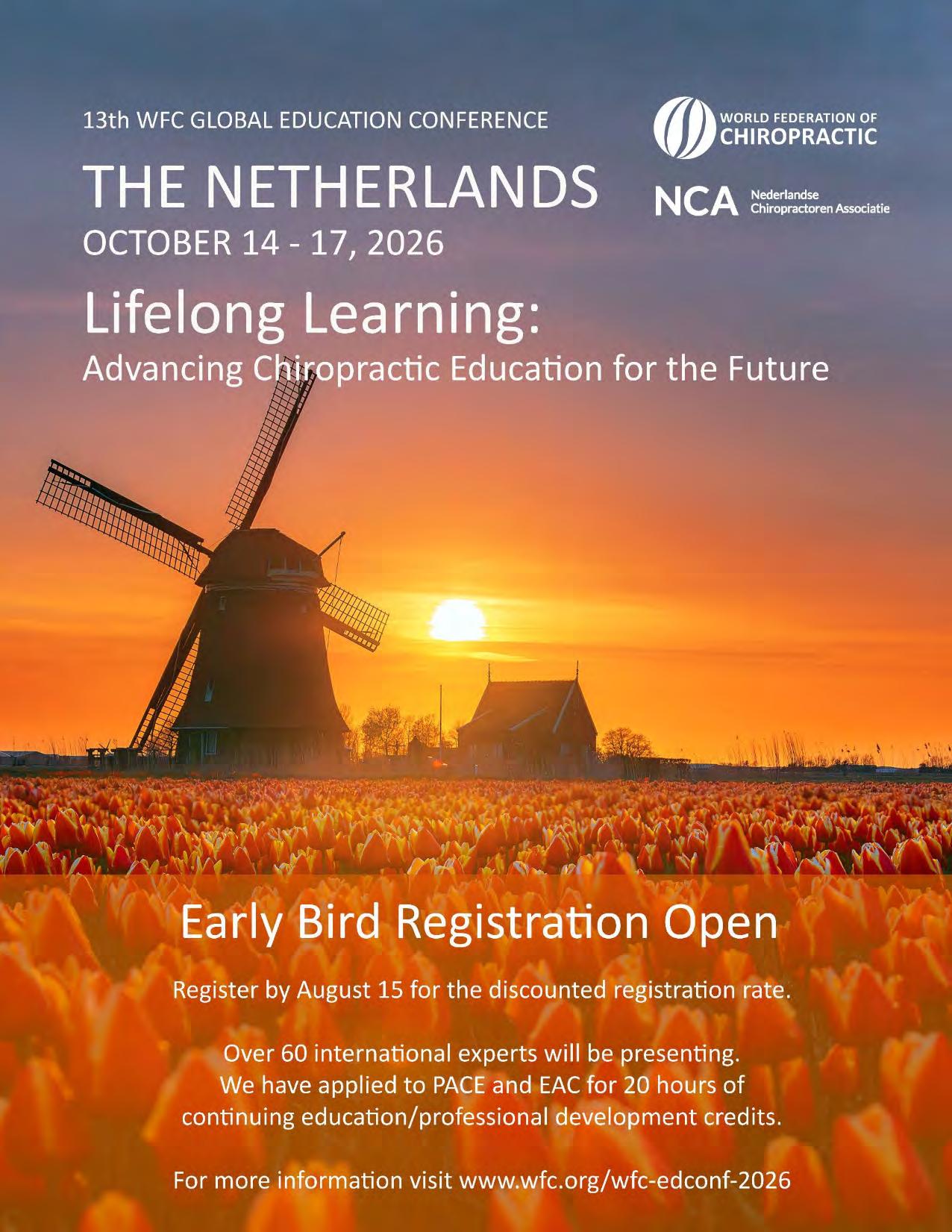
It is therefore with great excitement that I encourage all members of the global chiropractic community to join us at the upcoming WFC Global Education Conference in Utrecht, Netherlands, from 14?17 October 2026. This conference will provide an exceptional opportunity for educators, researchers, regulators
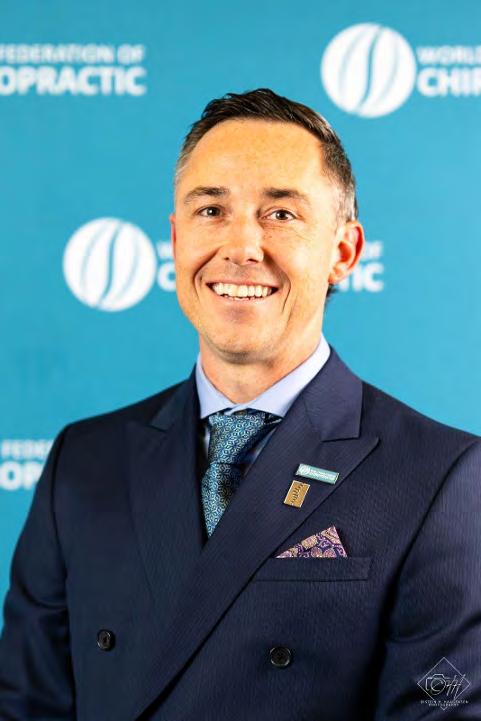
Dr Ryan Coster, WFCPresident
and professional leaders to exchange ideas, advance educational innovation and help shape the future direction of chiropractic education.
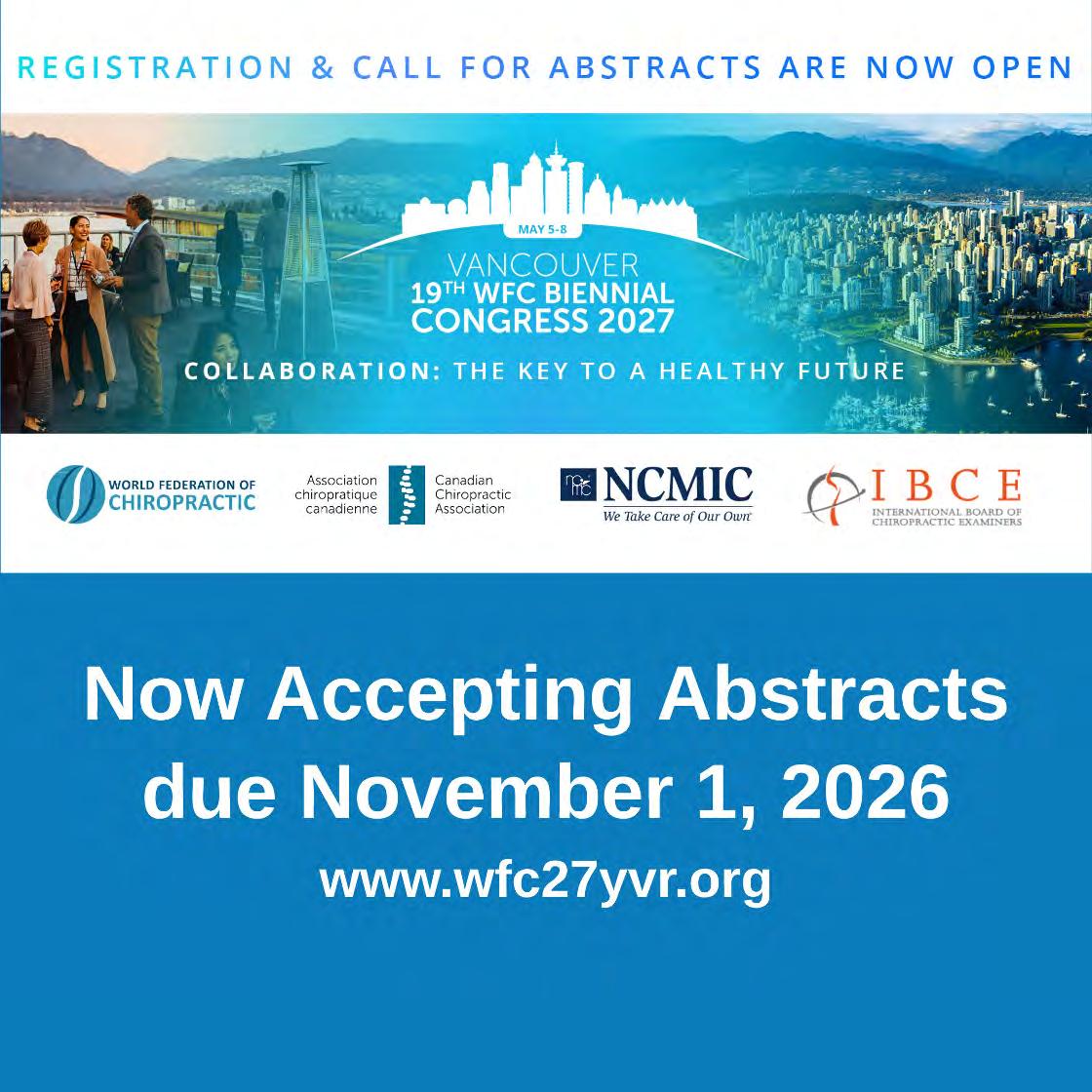
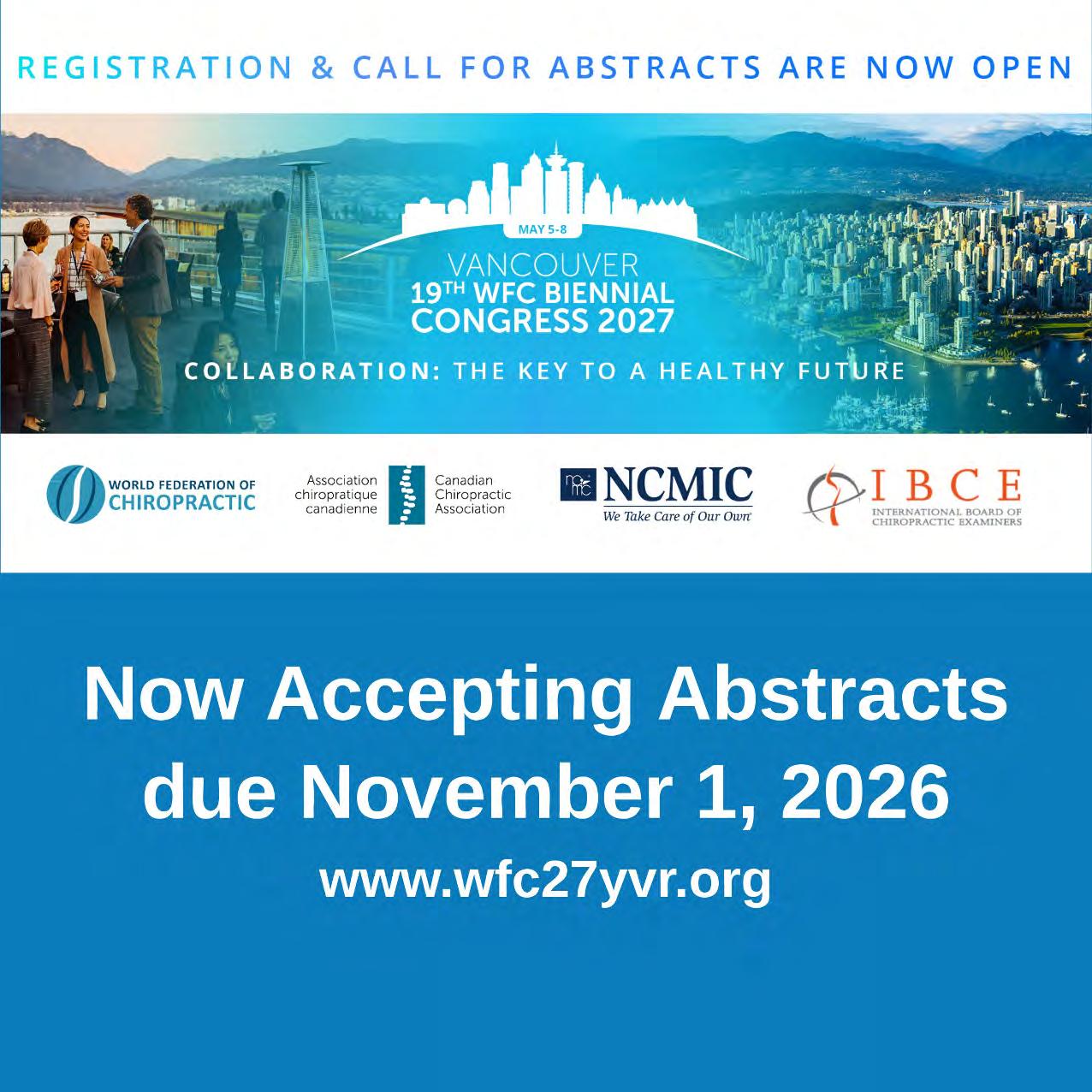
Looking beyond Utrecht, preparations for the 2027 WFCCongress in Vancouver, Canada, May 5-8, 2027, are also progressing exceptionally well. This will serve as a global celebration of our profession, showcasing leading scientific developments and inspiring the next generation of chiropractic leadership.
I am also pleased to report that the Board of Directors has formally launched the search for the Federation?s next Secretary-General. This important leadership position will play a critical role in advancing the WFC?s mission and strengthening our global partnerships. In this regard, I extend my sincere appreciation to Dr.
John Maltby for his dedicated service as Interim Secretary-General since October 2025.
As we move forward together, let us remain ambitious in our vision and enduring in our principles. The future of chiropractic is not something that will simply happen - it is something we are actively creating together and I invite you to be part of this journey.
Together, let us continue to elevate our profession, expand our global impact and ensure that chiropractic remains a respected, trusted and indispensable contributor to the health and well-being of communities around the world.
With warm regards and unwavering optimism,
Sincerely,
Dr Ryan Coster, WFC President
WFCGlobal Education Conference 2026 will Bring
Together the World?s Chiropractic Community in Utrecht, Netherlands
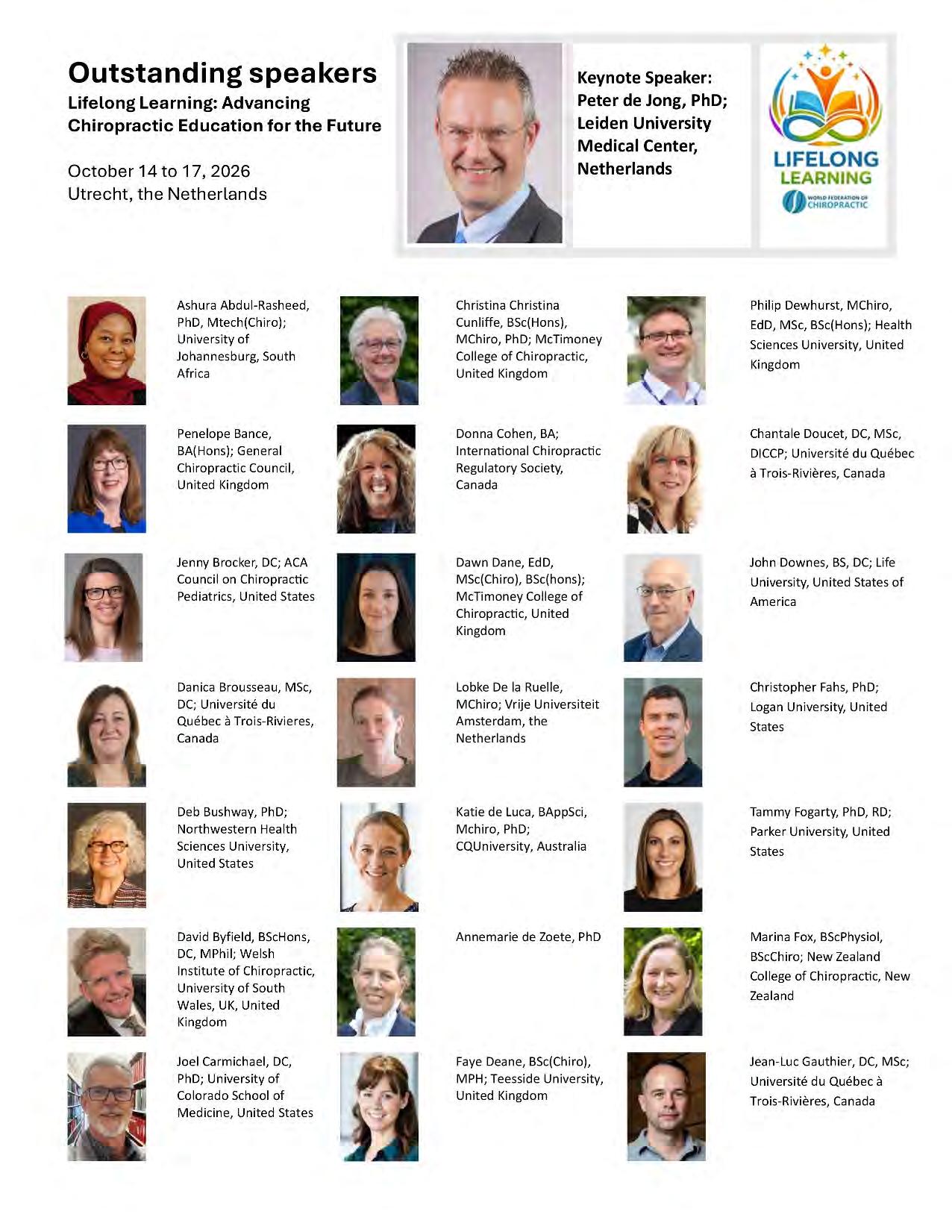
The chiropractic profession will come together in Utrecht, the Netherlands, from October 14?17, 2026, for the 13th World Federation of Chiropractic (WFC) Global Education Conference. Hosted by the WFCin partnership with the Netherlands Chiropractors Association, the conference will be held at the Royal Jaarbeurs Convention Center and will focus on the theme Lifelong Learning: Advancing Chiropractic Education for the Future.
Recognized as the leading international forum for chiropractic education, the conference will bring together educators, researchers, administrators, regulators, accrediting bodies, professional associations, industry partners, and practicing chiropractors from around the world. Through keynote presentations, plenary sessions, workshops, and research presentations, participants will explore how the profession can strengthen educational standards and prepare future generations of practitioners and leaders. The 2026 program will examine topics including lifelong learning, professional resilience, mentorship, technological innovation, reflective practice, and the development of educational cultures that support continuous improvement and evidence-informed care. Attendees will have opportunities to exchange ideas, build new collaborations, and learn from experts representing a wide range of backgrounds and perspectives.
While education remains the central focus, the conference is designed for more than academic leaders. Practicing chiropractors will benefit from sessions dedicated to professional development, leadership, and the future direction of the profession. Participants can earn up to 20 professional development hours while gaining practical insights that can be applied in clinical practice.
A key outcome of the conference will be the development of a consensus document outlining lifelong learning competencies for the chiropractic profession. These recommendations are expected to help inform accreditation standards, guide curriculum development, support continuing education programs, and assist chiropractors in planning their own professional growth throughout their careers.
Beyond the conference program, Utrecht provides an ideal setting for international visitors. With its historic city centre, vibrant cultural atmosphere, and convenient access through Amsterdam Schiphol Airport, the city offers excellent opportunities for networking and collaboration.
As healthcare continues to evolve, the WFCGlobal Education Conference 2026 will provide a valuable opportunity for the profession to reflect, innovate, and help shape the future of chiropractic education and practice worldwide.
For more information and registration details, visit www.wfc.org/wfc-edconf-2026.
Leadership, Legacy, and the Future of the WFC
Once again comes that time to recap what has happened at the WFCin the past quarter. I must say that it has been one of the busiest and most productive times since I have taken this position. I will be mainly highlighting most of the events as there will be more detailed accounts further on in the QWR.
I started my travels attending the CCA Annual Convention in Halifax, Nova Scotia. The energy generated throughout the conference was amazing. I had the opportunity to meet with several key people, among my favorites, Jean Moss and Vince Sinclair with World Spine Care. True giants of the profession. While there I was able to promote Vancouver Congress 2027. Hats off to Ayla Azad and her team for an unforgettable experience.
The next week it was off to Zurich, Switzerland for the ECU Annual. Again, what a great time. I was able to update the ECU Board on WFC happenings around the world. Great reports from many countries, most notably Greece, which announced the opening of a new chiropractic program beginning in October in Athens. This is being accomplished through a partnership with AECC. As the demand for chiropractic education grows, similar opportunities will hopefully continue. Again, I was able to promote both the Education Conference in the Netherlands in October as well as Vancouver Congress 2027. Thanks to Espen Ohren and his team for making us feel so welcome.
Next stop Geneva for the World Health Assembly. Our team of six was in full-time mode the entire time. There are at least two reports following that will give you an extremely detailed report. Suffice it to say a great big thank you to Deb Kopansky-Giles for the effort to make this one of the most productive WHA?s for the WFC ever.
In case you thought I was done, the next week I travelled to Malaysia for a site visit. Loved the food but the highlight had to be meeting with the Deputy Minister. Those of you who have been involved in these types of meetings understand it is usually 15 minutes, a handshake, photo op, then out the door. Not this time. I was able to spend nearly an hour letting him tell his story about the health care in Malaysia. As a cardiologist, he was acutely aware of challenges we face. I was able to bring to the conversation how chiropractic could help. I was most appreciative of the time we spent together and very pleased that a short time later he asked his staff to get the correct spelling of my name. I found out that the next day he had a video produced and sent to government officials about our visit.
Our next stop was Tokyo for the annual Board meeting, where I was impressed by the dedication and experience of our new Board members as they work to advance the WFCvision. I also shared that I will not be applying for the SecretaryGeneral position. After nearly 50 years of leadership service to chiropractic, my family felt it was time for me to step back. I remain committed to supporting a smooth transition and am deeply grateful for the opportunity to serve. To everyone who has been part of this journey?thank you, and above all, thank Him.
Dr John Maltby, WFCInterim
From Geneva to Tokyo: A Busy Quarter for the WFC
The second quarter of 2026 has been a dynamic and highly productive period for the WFC Secretariat, marked by significant governance activity, international engagement, strategic planning, and operational delivery. With a new Board term commencing, major global events taking place, and several flagship initiatives progressing simultaneously, the Secretariat has remained focused on supporting strong governance, strengthening organizational systems, and advancing the Federation's global mission.
Welcoming the 2026?2028 Board of Directors
A major milestone during Q2 was the successful onboarding of the new WFCBoard of Directors and support for the Board's first meeting of the 2026?2028 term in Tokyo, Japan. Extensive preparation was undertaken to ensure directors were equipped with the resources, policies, governance information, and background materials necessary to begin their term effectively. The Secretariat coordinated onboarding sessions, board documentation, travel arrangements, and the development of an enhanced SharePoint resource environment to improve access to governance materials and organizational information.
Global Engagement and International Representation
Q2 featured significant international engagement on behalf of the profession. The WFCdelegation participated in the 79th World Health Assembly in Geneva, where representatives engaged with WHO programs, Member States, and strategic partners on issues including rehabilitation, health workforce development, healthy ageing, primary health care, and musculoskeletal health. The Assembly further strengthened the WFC's relationships within WHO and reinforced chiropractic's contribution to global health policy discussions.
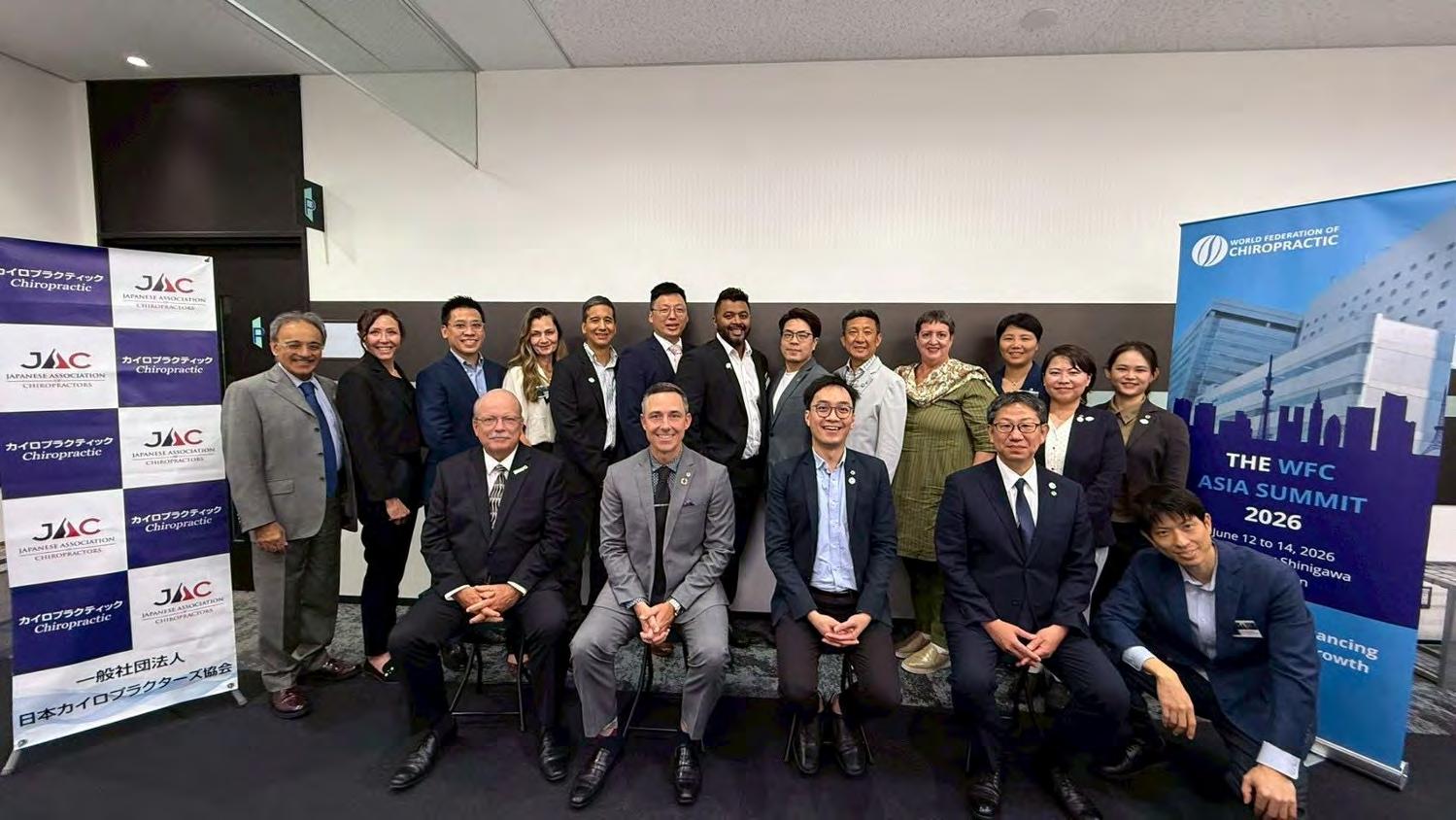
Immediately following the Board meeting, the Secretariat supported the planning and delivery of the WFCAsia Summit 2026, hosted by the Japanese Chiropractors Association. The Summit provided valuable opportunities for dialogue with member associations and regional leaders while strengthening collaboration across Asia. We extend our sincere gratitude to the Japanese Chiropractors Association for its outstanding leadership, hospitality, and commitment to advancing the profession throughout the region.
Advancing Education and Global Events
Preparations for the 13th WFCGlobal Education Conference in Utrecht, the Netherlands, continued at pace throughout the quarter. Work progressed across scientific programming, workshop review, accreditation requirements, marketing, and event logistics. Promotional activities have expanded globally as the profession looks ahead to this landmark event in October 2026.
Planning for the 19th WFCBiennial Congress in Vancouver, Canada, also advanced significantly, with the Executive Planning Committee fully engaged and promotional activities underway. At the same time, the Secretariat managed the 2029 Congress bid process, supporting candidate destinations and coordinating presentations to the Board during the Tokyo meeting.
World Spine Day preparations moved from planning into implementation, with campaign development, sponsorship discussions, and global communications activities continuing to build momentum toward October.
Strengthening Operations, Systems, and Governance
Behind the scenes, the Secretariat continued to strengthen organizational infrastructure and governance processes.
SECRETARIAT MESSAGE
Significant work was completed to enhance SharePoint functionality, improve access controls, refine data governance practices, and support cybersecurity oversight. Development also continued on the WFCObservatory initiative, aimed at strengthening the Federation's ability to gather, manage, and respond to global profession data more effectively.
Committee activity continued to expand across research, rehabilitation, education, and international relations, requiring increased coordination and support while ensuring alignment with the WFCStrategic Plan. Financial oversight, sponsorship management, policy review, and risk management remained ongoing priorities throughout the quarter.
Looking Ahead
As we move into the second half of 2026, the Secretariat remains focused on supporting the newly elected Board, delivering major global initiatives, strengthening organizational systems, and preparing for a busy period of international activity. We remain grateful to our members, volunteers, committee leaders, sponsors, and partners whose dedication and collaboration continue to make the work of the WFCpossible.
Thank you for your ongoing support as we work together to advance chiropractic worldwide.
OUR PEOPLE WFC BOARD OF DIRECTORS (2026-28)
Ryan Coster (President)
North American Region
Holly Tucker (Vice-President)
North American Region
Yi Kai Wong (Secretary-Treasurer)
Asian Region
Carlos Ayres
Latin American Region
Cecilia Bergstrom
European Region
David Cahill
PacificRegion
Elga Drews
African Region
Judy Forrester
North American Region
Jason Jaeger
North American Region
Robert Jones
North American Region
Brad Kane
North American Region
Baiju Khanchandani
European Region
Jakob Lothe
European Region
Efstathios Papadopoulos
Eastern Mediterranean Region
Hayden Thomas
PacificRegion
Tokyo Welcomes the New WFCBoard
The WFCBoard of Directors met in Tokyo, Japan, from June 10?12, 2026, for its Q2 meeting and the first gathering of the newly elected 2026?2028 Board. The meeting marked the beginning of a new term of service, bringing together experienced returning directors and a number of new Board members from across the WFC's seven world regions. It was an excellent opportunity for directors to build relationships, establish priorities, and begin shaping the Federation?s work for the years ahead.
A highlight of the meeting was the election of the WFCExecutive Officers for the 2026?2028 term. The Board elected Dr Ryan Coster (Canada) as President, Dr Holly Tucker (USA) as Vice-President, and Dr Yi Kai Wong (Malaysia) as Secretary-Treasurer. Together, they bring a wealth of experience in leadership, advocacy, education, public health, and organizational governance, positioning the Federation well as it continues to advance chiropractic worldwide.
The Board addressed a broad range of governance and strategic matters, including financial oversight, organizational risk management, membership engagement, preparations for the 2026 Global Education Conference in Utrecht, 2027 WFC Congress in Vancouver and the launch of the search process for the WFC?s next Secretary-General. Directors approved a revised 2026 budget, updated financial policies, and measures to strengthen financial stewardship and operational continuity.
The Tokyo meeting was held alongside the 2026 WFCAsia Summit, hosted by the Japanese Association of Chiropractic. On behalf of the Board, we extend our sincere appreciation to our Japanese hosts for their outstanding hospitality, leadership, and commitment to advancing chiropractic throughout the region. The Summit provided a valuable opportunity for the Board to engage directly with member organizations and
OUR COMMITTEES
RESEARCH COMMITTEE
SidneyRubinstein DC, PhD(Chair) Netherlands
KatiePohlman DC, MS, PhD (Vice-Chair) USA
PUBLIC HEALTH COMMITTEE
ClaireJohnson DC, MSEd, PhD(Chair) USA DISABILITY & REHABILITATION COMMITTEE
KatiedeLuca MAppSc, PhD(Chair) Australia COMMITEE ON INTERNATIONAL RELATIONS
Rebekah WilksBS, DC(Director of Strategyand Policy)
leaders from across Asia, strengthening relationships and gaining insight into the opportunities and challenges facing the profession throughout one of the world's most dynamic regions.
A particular highlight was a joint Board?Asia Summit panel discussion on "Integrating Chiropractic into Primary Health Care Systems in Asia: Workforce, Policy, and Practice." The session explored how chiropractic can become more effectively integrated into healthcare systems through workforce development, education, policy reform, and collaborative care models. Participants shared experiences from across Asia, identifying regulatory development, workforce planning, education capacity, and stronger advocacy as critical enablers of future growth.
The Board was also honoured to welcome distinguished guests who traveled from around the world to present proposals to host the 2029 WFC Biennial Congress. We thank all bidding organizations for the professionalism, enthusiasm, and vision demonstrated in their presentations. The commitment shown by each prospective host reflects the growing strength and global reach of the chiropractic profession.
As the new Board begins its work, there is tremendous optimism about the future. The Tokyo meetings demonstrated the value of international collaboration, strategic leadership, and meaningful engagement with members. We look forward to building on this momentum as we continue to advance the WFC's mission of fostering high standards in chiropractic education, research, and patient care worldwide.
CONTACTING THE WFC
Write to us:
World Federation of Chiropractic, 2 St. Clair Avenue West,Toronto, Ontario M4V1L5, Canada
Call us:
+1 647 255 8030
Email us:
General inquiriesinfo@wfc.org
John Maltbyjmaltby@wfc.org
Christina Daviscdavis@wfc.org
Khalid Salimksalim@wfc.org
Rebekah Wilksrwilks@wfc.org
NEWS ITEMS
The WFCwelcomes news items, digital images and feature stories to include in the QWR. Send all submissions (in Word format) to QWR@wfc.org. Please note all submissions may be subject to editing.
QWR ADVERTISING OPPORTUNITIES
Full page color US$995
Half page colorUS$595
Quarter page colorUS$395
A discount of 10%is applied to orders for multiple issues of the Quarterly World Report.
The WFCQuarterly World Report is published in January, April, July and October of each year. Advertising copy, in high resolution pdf or jpeg format, is required fifteen days in advance of the publication date.
The World Federation of Chiropractic reserves the right to decline advertising. Inclusion of any advertising in the WFCQuarterly World Report does not in any way imply endorsement of any product or service.
2026-2028 WFCBOARD EXECUTIVEOFFICERS
ANNOUNCED
At its Q2 Board Meeting held in Tokyo, Japan, from June 10?12, the World Federation of Chiropractic (WFC) Board of Directors elected its Executive Officers for the 2026?2028 term. Representing two regions of the world and bringing extensive experience in clinical practice, association leadership, education, public health, and international advocacy, the newly elected officers will play a key role in guiding the Federation?s strategic priorities over the coming two years.
Dr Ryan Coster (Canada) was elected WFC President . Based in Moncton, New Brunswick, he is President of the New Brunswick Chiropractors? Association and holds an MBA focused on organizational management. He has previously served on the Board of Chiropractic Australia and has been recognized for his leadership and service to the profession. Dr Holly Tucker (United States) was elected WFC Vice-President. A graduate of Logan University, Dr Tucker maintains a private practice in North Carolina and is an active
MEET OUR EXECUTIVEOFFICERS
leader within the American Chiropractic Association. With a background in public health and experience as a participant in the World Health Organization Internship Programme, she brings valuable expertise in advocacy and international engagement. Dr Yi Kai Wong (Malaysia) was elected WFC Secretary-Treasurer. A senior lecturer at IMU University and President of the Association of Chiropractic Malaysia, Dr Wong is a respected educator and public health advocate. He has played an important role in advancing chiropractic policy and education in Malaysia and serves on the WFCPublic Health Committee.
Together, the newly elected Executive Officers bring diverse perspectives and complementary expertise to the leadership of the WFC, positioning the Federation to continue advancing its mission of promoting high standards in chiropractic education, research, patient care, and global collaboration.
Ryan COSTER, WFC President
Ryan Coster of Moncton, New Brunswick, serves as President of the New Brunswick Chiropractors' Association. A Macquarie University graduate, he received the Student of the Year Award and the Chiropractic Association of Australia's Academic Excellence Award. He also holds an MBA from Mid Sweden University with a focus on organizational management. A strong advocate for evidence based practice, he previously served on the Board of Chiropractic Australia and has a special interest in sports chiropractic. Ryan received the Queen Elizabeth II Platinum Jubilee Medal in 2022 and the Canadian Chiropractic Association's Public Service Award in 2024.
Ryan Coster represents the WFC
North American Region
Holly TUCKER, WFC Vice-President
Holly Tucker, of Wilmington, North Carolina, is a 2011 graduate of Logan University and State Delegate of the American Chiropractic Association. Earlier in her career, she operated a practice in Tennessee and was an active member of the TCA while completing her master's degree in public health at UTK. She serves as District Liaison for the North Carolina Chiropractic Association; completed the Internship Programme at the World Health Organization in 2011 and was elected to the WFC Board in 2019.
Yi Kai WONG, WFC Secretary-Treasurer
Yi Kai Wong is a pioneer graduate of the chiropractic program at IMU University and currently serves as a senior lecturer in the program. Based in Kuala Lumpur, Malaysia, he plays key leadership roles in both national and international organizations, including serving as President of the Association of Chiropractic Malaysia. With a Master's degree in Public Health, he is a strong advocate for accessible, affordable, and evidence-based healthcare. His advocacy efforts with the Malaysian Ministry of Health have been instrumental in shaping policy, and he also contributes as a member of the WFCPublic Health Committee. A passionate educator, he is committed to developing the next generation of chiropractic professionals in the Asian region.
We welcome our Executive Officers for the 2026-28 term.
Holly Tucker represents the WFC North American Region
Yi Kai Wong represents the WFC Asian Region
Connected Leadership, Lifelong Learning, and Global Impact
Dear colleagues,
As I reflect on the remarkable breadth of stories featured in this edition of the Quarterly World Report, one message emerges with unmistakable clarity: chiropractic is entering a period of unprecedented global momentum and with that momentum comes responsibility, opportunity, and purpose.
Across every region of the world, we are witnessing evidence of a profession that is increasingly connected, engaged, and influential. From the World Federation of Chiropractic's participation at the 79th World Health Assembly in Geneva to policy discussions in parliaments, ministries of health, universities, and regulatory bodies, chiropractic is continuing to strengthen its voice within modern healthcare systems. These achievements remind us that progress is not measured solely by recognition, but by the meaningful contributions we make to improving health, function, and quality of life for the communities we serve.
A defining feature of this issue is the central role of education. Whether through international student exchanges, new academic programs, accreditation initiatives, groundbreaking educational research, or preparations for the 2026 WFCGlobal Education Conference in Utrecht, we are seeing a profession committed to lifelong learning and continuous improvement. Education remains our greatest investment?not only in future practitioners, but in the credibility, sustainability, and advancement of chiropractic worldwide.
Equally inspiring is the growing emphasis on collaboration. Throughout these pages, we see chiropractors working alongside governments, rehabilitation leaders, researchers, educators, public health experts, athletes, community organizations, and healthcare partners. These
relationships are expanding opportunities for integration, demonstrating the value of evidence-informed care, and positioning chiropractic as a trusted contributor to multidisciplinary health systems.
Research continues to strengthen our foundation. New studies, educational initiatives, leadership programs, and rehabilitation efforts showcased in this issue reinforce an important truth: the future of our profession will be shaped by those willing to ask questions, challenge assumptions, generate evidence, and translate knowledge into action. Innovation and inquiry are essential companions on our journey forward.
Most importantly, this edition reflects the collective efforts of thousands of dedicated individuals around the world; leaders, volunteers, clinicians, researchers, educators, students, regulators, and advocates, each contributing in their own way to advancing the profession. While our contexts may differ, our shared commitment remains constant: improving health through safe,
Christina Davis, WFC Executive Operations Manager and QWR Editor-in-Chief
As we look ahead to the coming months and to gathering together in Utrecht in 2026, let us continue building on this momentum with purpose. By staying connected, embracing lifelong learning, and working collaboratively across borders and disciplines, we can help shape a stronger future for chiropractic and the populations we serve.
Thank you for your dedication in clinics and classrooms, in labs and legislatures, on committees and in communities.
Join the WFCand connect with a global network dedicated to advancing the chiropractic profession.
APPLY HERE
Partner or Sponsor:
Collaborate with the WFCto strengthen the profession worldwide through education, advocacy, and strategic partnerships.
APPLY HERE
Become an Individual Supporter:
Join a global community dedicated to advancing evidence-based chiropractic care, promoting collaboration, and strengthening the profession worldwide as a proud WFCIndividual Supporter.
APPLY HERE
Become a Student Supporter:
Are you a chiropractic student passionate about advancing the profession?Join the WFCas a Student Supporter and connect with global initiatives, resources, and your future peers.
APPLY HERE
Attend Our Events:
From regional summits to the WFCBiennial Congress, engage with global leaders shaping the future of chiropractic.
VIEW UPCOMING EVENTS
Explore Our Affiliates:
Discover the organizations that partner with the WFCto advance chiropractic worldwide.
VIEW AFFILIATED ORGANIZATIONS
WFCDelegation Strengthens Global Voice at the 79th World Health Assembly
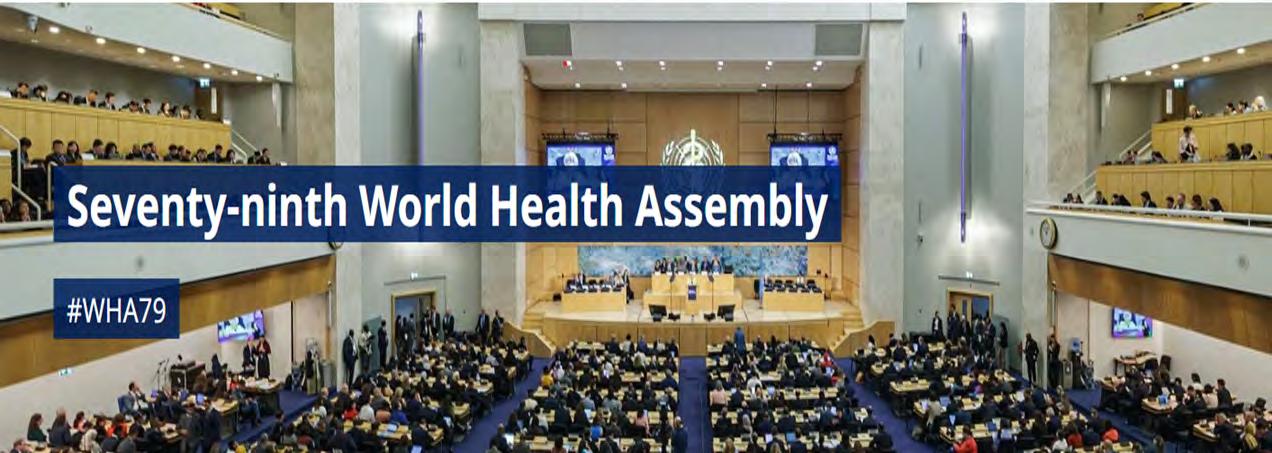
The World Federation of Chiropractic (WFC) was proud to participate in the 79th World Health Assembly (WHA79), held in Geneva, Switzerland, from May 18?23, 2026. As the decision-making body of the World Health Organization (WHO), the World Health Assembly brings together health ministers and delegations from 194 Member States to shape the future of global health policy. This year's theme, ?Reshaping Global Health: A Shared Responsibility,? highlighted priorities including primary health care, health workforce development, rehabilitation, healthy ageing, digital health, pandemic preparedness, and health equity.
The WFCdelegation was led by Interim Secretary-General Dr John Maltby and included WFCPresident Dr Ryan Coster, Chair of the Committee on International Relations Dr Deborah Kopansky-Giles, Director of Strategy & Policy Dr Rebekah Wilks, and representatives of the Canadian Chiropractic Association, Dr Ayla Azad and Dr Russell Baron. The delegation also engaged with colleagues attending the Geneva Health Forum, further strengthening chiropractic's presence within the wider global health community.
Participation in WHA79 was particularly significant as WHO continues to undergo major organizational restructuring. Despite these changes, the WFC maintained and strengthened relationships across key WHO programs, including health workforce, rehabilitation, healthy ageing, primary health care, and traditional, complementary and integrative medicine. As a Non-State Actor in Official Relations with WHO since 1997, the WFCcontinues to play an important role in supporting global health initiatives and contributing technical expertise to policy development and implementation.
One of the most impactful aspects of the Assembly was the opportunity for the WFCto speak directly
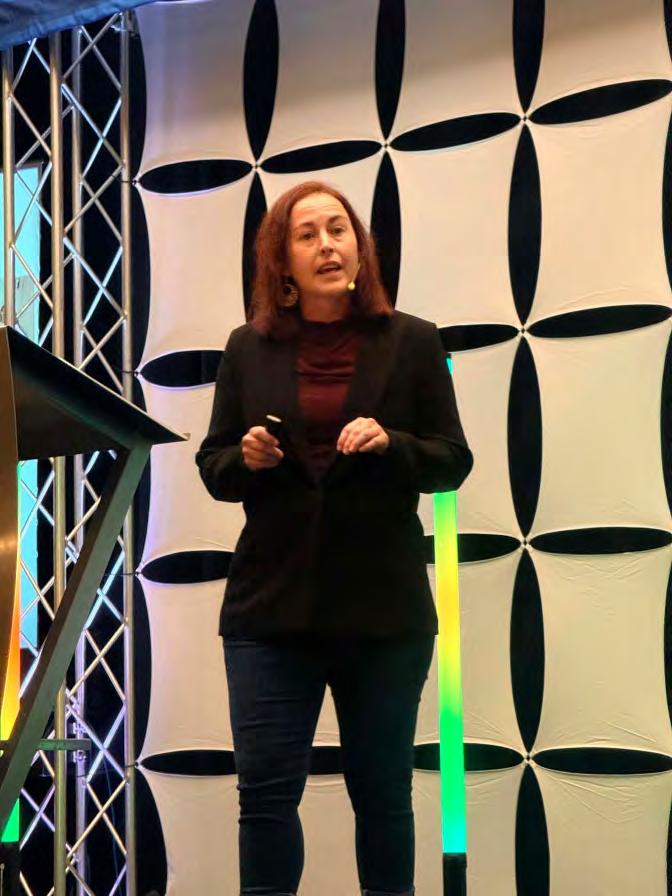
to Member States. During formal proceedings, Dr Deborah Kopansky-Giles delivered a statement calling for greater recognition of musculoskeletal health within national noncommunicable disease strategies, while Dr Rebekah Wilks addressed the Assembly on the need to fully integrate rehabilitation into primary health care systems.
The WFCalso collaborated on several multi-organizational constituency statements, helping to advance priorities related to healthy ageing, person-centred care, equitable health services, and workforce development.
The WFC's leadership role extended beyond the Assembly floor. Together with the World Rehabilitation Alliance and Member States including Japan and Cameroon, the WFC co-sponsored the official WHO side event "Beyond Survival: Integrating Rehabilitation for Health, Longevity and Equity." The Federation also supported global discussions
Dr Deborah Kopansky-Giles delivering the WFC Intervention
highlighting pain management, rehabilitation, and equitable access to care. These activities reinforced the growing recognition of musculoskeletal health and rehabilitation as essential components of sustainable health systems.
Throughout the week, the delegation held strategic meetings with key WHO technical units, discussing upcoming initiatives including expanded workforce data collection through National Health Workforce Accounts, contributions to rehabilitation quality standards, and participation in healthy ageing and long-term care initiatives. WHO leaders also encouraged collaboration on the development of a future Global Status Report on Chiropractic, an important opportunity to raise awareness of the profession's contribution to health systems worldwide.
WHA79 was a landmark event for the WFC.
Through advocacy, partnership-building, and active participation in global health discussions, the Federation strengthened its voice within WHO and reinforced chiropractic's role in advancing health equity, rehabilitation, healthy ageing, and integrated, people-centred care. The relationships strengthened and opportunities created during the Assembly will continue to support the WFC's mission of advancing evidence-based chiropractic care and improving musculoskeletal health around the world.
Dr Rebekah Wilks delivering the WRA-supported WFC Intervention
Drs Ryan Coster, Russ Baron, John Maltby and Ayla Azad
WFCAsia Summit 2026
Aligning Asia: Collaboration, Leadership and a Shared Vision for the Future
Following the WFCBoard of Directors Meeting in Tokyo, Japan, chiropractic leaders from across the region gathered for the WFCAsia Summit 2026, hosted by the Japanese Association of Chiropratic (JAC). Facilitated by Dr Yi Kai Wong, WFCBoard Asian Representative, the Summit provided an important opportunity for member associations and professional leaders to exchange ideas, share national developments, and strengthen collaboration in support of chiropractic's continued growth throughout Asia. The WFCextends its sincere thanks to the JAC for its outstanding leadership, hospitality, and commitment to advancing the profession throughout the region.
A major focus of the Summit was reviewing progress on Aligning Asia, the regional strategic framework designed to guide chiropractic development toward 2030 and beyond. Discussions highlighted achievements in education, regulation, research, public awareness, workforce development, and healthcare integration, while also acknowledging ongoing challenges related to title protection, workforce sustainability, professional recognition, and public understanding of chiropractic. Participants also reviewed country reports from across Asia, revealing both the diversity of the region and its shared priorities. While some countries have well-established
regulatory and educational frameworks, others continue to work toward professional recognition, title protection, and the development of accredited educational pathways.
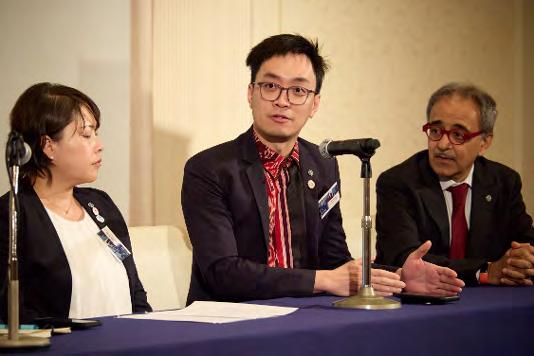
A highlight of the Summit was the joint WFC Board?Asia Region panel discussion, "Integrating Chiropractic into Primary Health Care Systems in Asia: Workforce, Policy, and Practice." The session brought together Board members and regional leaders to discuss healthcare integration, workforce development, education, regulation, and policy advancement across Asia. The Summit reinforced the importance of partnership, shared learning, and collective action across the region.
The WFCthanks all delegates and member associations for their contributions and looks forward to continuing to advance a trusted, evidence-informed, and integrated chiropractic profession throughout Asia.
Panelists: Dr Junko Usuda, Dr Yi Kai Wong, Dr Baiju Khanchandani
Activities of the WFCResearch Committee and Global Patient Safety Initiative
The Research Committee Chair (Sidney Rubinstein (SMR)) and Vice-Chair (Katie Pohlman (KP)) meet regularly with the Interim Secretary-General, the Executive Operations Manager, and Board Liaison (Cecilia Bergstrom) to discuss planning and strategy.
The following provides a brief overview of the Research Committee's composition and recent developments. The RClast met in April. The primary agenda item was the planning for the upcoming WFCevents, particularly the 2026 Global Education Conference in Utrecht and the 2027 World Congress in Vancouver, with substantial attention to abstract review processes, submission timelines, and presentation formats for 2027. Discussion centered on the transparency and rigor of the current two-stage abstract review process, concerns about submission deadlines, and possible adjustments as well as opportunities to improve the poster competition. Planning for the 2027 WFCCongress will continue in future meetings after discussions with the Congress Planning Committee. Updates were also provided on ongoing research initiatives, notably the GPSI.
The following provides a brief overview of Global Patient Safety Initiative (GPSI) committee's recent activities and developments. In the second quarter, the GPSI focused on consolidating ongoing work and advancing key priorities. Dr. Gay Swait has been formally integrated into the GPSI,
bringing substantial experience from the Royal College of Chiropractors (RCC). The WFC Leadership Study is progressing well, including presentations delivered at ACC-RAC(March 2026) and the Integrative Conference (April 2026).
The Chiropractic & Manual Therapies special theme on patient safety, guest-edited by Rubinstein, Salsbury, and Coleman, continues to advance, with approximately 26 submissions and ongoing editorial processing. The plan is to hold a final hybrid end-of-the-theme session at the WFC Congress in Vancouver.
The Advisory Committee?s next projects are also moving forward. The CITADEL initiative has been reframed as ChiroSafe: Chiropractic Safety Best Practices Initiative. A pilot study on patient perspectives of safety in chiropractic care has received funding in Canada (via CCRF), which will set the stage for a more global project to be conducted with the GPSI, and the development of a Global Patient Safety Consortium is underway, linked to planned workshops or congress-related activities.
Sidney Rubinstein, Chair, Research Committee
Katie Pohlman, Vice-Chair, Research Committee
WFCCommittee on International Relations (CIR)
TheWorld Federation of Chiropractichasbeen in official relationswith the World Health Organization (WHO) asa non-state actor (NSA) since1997. WFCmaintainsan active program of workwith WHO, which includessupport for WHO policiesand programs, adviceon mattersrelative to thechiropracticprofession, and attendanceat annual and other meetings.
The WFCCommittee on International Relations (CIR) has had a productive second quarter, highlighted by participation in the 79th World Health Assembly (WHA79) in Geneva, Switzerland. The WFCdelegation included President Dr Ryan Coster;CIRChair Prof Deborah Kopansky-Giles;Interim Secretary-General Dr John Maltby;CCACEOAyla Azad;CCAPresident Russell Baron;and WFCDirector of Strategy& PolicyDr Rebekah Wilks, whileCIRmember Dr FayeDeane attended theGeneva Health Forum. The theme of WHA79 was ?Reshaping Global Health: A Shared Responsibility,? bringing together health leaders from all 194 WHO Member States to discuss global priorities including primary health care, universal health coverage, noncommunicable diseases, pandemic preparedness, and health workforce development. As a Non-State Actor in Official Relations with WHO, the WFC delivered two statements to the Assembly, advocating for greater recognition of musculoskeletal health within NCD strategies and stronger integration of rehabilitation within primary health care and universal health coverage. The WFCalso contributed to four constituency statements with
international partners.
A significant milestone was the WFC's first co-sponsorship of an official WHO side event, ?Beyond Survival: Integrating Rehabilitation for Health, Longevity and Equity.? The WFCalso supported a global pain care side event and participated in discussions on rheumatic and musculoskeletal conditions. Strategic meetings with WHO leaders across rehabilitation, health workforce, healthy ageing, and traditional and integrative medicine created new opportunities for collaboration and further strengthened chiropractic's voice within the global health community.
Thank you to the many individuals within the WFC who contributed to the success of our attendance at the 79th World Health Assembly.
Submitted on behalf of the WFCCommittee on International Relations:
Deborah Kopansky-Giles, Chair
Michele Maiers, Vice Chair
Faye Deane
Raul Carrillo
Martin Camara
Neerasha Ramsamy
Jakob Lothe
Prepared byCommitteeChair, Deborah Kopansky-Giles
Deborah Kopansky-Giles, Chair, CIR Committee
World Rehabilitation Alliance: Advancing Rehabilitation on the Global Health Agenda
The World Rehabilitation Alliance (WRA) continues to advance global advocacy efforts to strengthen the integration of rehabilitation within health systems and broader global health agendas.
The WRA maintained a strong presence at the recent World Health Assembly (WHA) in May, coordinating advocacy across a wide range of agenda items and supporting the delivery of coordinated statements related to rehabilitation, universal health coverage (UHC), noncommunicable diseases (NCDs), sustainable development goals (SDGs), primary health care, stroke, health emergencies, emergency and operative care, and well-being.
The WFC, in collaboration with the WRA, delivered an individual statement highlighting the importance of fully integrating rehabilitation into primary health care. The statement emphasized that achieving UHCrequires accessible rehabilitation services, supported by a competent workforce, sustainable financing, effective referral pathways, and integration within health information systems.
Several rehabilitation-focused side events were held during WHA, highlighting the role of rehabilitation in promoting health, equity, and quality of life. These events strengthened engagement with Member States and partners while reinforcing the importance of rehabilitation and assistive technology within UHCdiscussions. The WFCwas an official supporter of two side-events, reflecting an unprecedented level of engagement at the WHA.
Momentum for rehabilitation continues to grow at the country level. During WHA, 38 Member States
referenced rehabilitation under the dedicated rehabilitation agenda item, while at least 17 additional countries highlighted rehabilitation across other agenda items, including UHC, primary health care, stroke, and health emergencies. Discussions increasingly emphasized the importance of rehabilitation monitoring, accountability mechanisms, and the use of functioning outcomes to measure health system performance and population well-being.
The WRA continues to engage with WHO and partner networks on the integration of rehabilitation and functioning within global monitoring and reporting frameworks. Advocacy efforts have focused on ensuring that rehabilitation is reflected within UHCand NCD monitoring systems and on advancing recognition of functioning as a key dimension alongside mortality and morbidity.
The WRA's UHCPolicy Brief has been finalized and published on the WRA webpage. The brief anchors the WRA position of functioning as a measurable dimension of UHCand will support advocacy activities leading into upcoming global UHCdiscussions and preparations for the 2027 UN High-Level Meeting on UHCas well as the 2027 UHCHLM political declaration. The brief will equip Member States, regional allies and civil society in their advocacy through 2026-27.
Looking ahead, the WRA is also fully engaged with preparations for World Rehabilitation Day, and the Champions Programme which will capture lived experience cases meeting WHO Declarations of Interest and anchored in the WHO Framework for Meaningful Engagement. Cases will capture policy relevant evidence such as out-of-pocket costs, access gaps and service availability.
Rehabilitation: An Opportunity for Chiropractic to Make an Even Greater Contribution
The World Federation of Chiropractic's Disability and Rehabilitation Committee has published an important new commentary that explores chiropractic's role within the rapidly evolving global rehabilitation agenda.
Published in Chiropractic & Manual Therapies, the paper, led by Committee Chair Associate Professor Katie de Luca and an international team of authors, comes at a pivotal time for healthcare. As populations age, the prevalence of chronic disease increases and more people live with disability, rehabilitation has become one of the fastest-growing priorities for health systems worldwide. The World Health Organization estimates that some 2.4 billion people could benefit from rehabilitation during the course of their lives.
The commentary demonstrates how chiropractic is well positioned to contribute to this global need. Drawing upon the WFCChiropractic Rehabilitation Competency Framework, the authors describe the profession's potential role across a broad spectrum of rehabilitation settings, including primary care, multidisciplinary musculoskeletal services, sports medicine, neurological rehabilitation and postoperative recovery.
Throughout, the emphasis is firmly on person-centred, evidence-informed care that seeks not simply to reduce pain, but to improve function, participation and quality of life.
Importantly, the paper also recognises that opportunities remain alongside challenges. Greater integration within health systems, stronger interprofessional collaboration, enhanced education and continued research will all be essential if chiropractic is to realise its full potential as a rehabilitation profession. The authors argue that these developments should be viewed not simply as aspirations, but as practical priorities for
the years ahead.
For the WFC, the publication reflects a broader strategic direction that has increasingly aligned chiropractic with contemporary healthcare priorities, including rehabilitation, disability inclusion, whole-person care and interprofessional practice. It reinforces the Federation's vision of ensuring access for all people, of all ages, in all nations to safe, evidence-informed, people-centred chiropractic care.
The WFCcongratulates Associate Professor de Luca and her co-authors on producing a thoughtful and timely contribution that will help shape future discussion about chiropractic's place within global rehabilitation.
Read the full article here
Dr Katie de Luca, Chair, Disability and Rehabilitation Committee
WFCPublic Health Committee Advances Global Health Priorities
Over the past two years, the WFCPublic Health Committee (PHC) has worked on six WFCposition statements to advance chiropractic and public health. Each position statement topic was strategically selected and developed. The initial seed statement was distributed to the PHC members and stakeholders for review and consideration. Feedback and input were collected by the chair, and the revised draft was resubmitted to the PHCmembers for further review and revision. Feedback and revision continued until the PHCcommittee reached 100%agreement on each position statement. The resulting position statements were submitted, then reviewed and approved by the WFCBoard. These position statements support the chiropractic profession?s public health efforts, the WFCMission, and align with World Health Organization principles.
Position statement proposals and their relevance to the WFCstrategic plan objectives. These position statements are available in full on the WFCwebsite.
- Chiropractic is a healthcare profession (WFC strategic plan objectives 1, 2, and 3)
- Chiropractors support and promote improved physical function (WFCstrategic plan objectives 1 and 2)
- Chiropractic care inclusion in non-communicable disease strategies (WFC strategic plan objectives 1 and 2)
- Chiropractic principles and practices include patient-centered, person-centered, and people-centered care (WFCstrategic plan objectives 1, 2, and 3)
- Chiropractic care includes quaternary prevention (WFCstrategic plan objectives 1 and 2)
- Chiropractors support and promote the
health of marginalized and underserved people (WFCstrategic plan objectives 1 and 2)
Public health and health promotion are integral to chiropractic practice, reflecting a shared commitment to improving health, function, and quality of life. By engaging in public health, the chiropractic profession continues to demonstrate its relevance within modern healthcare systems and its contribution to community and population well-being. Integrating public health and health promotion principles is a natural extension of chiropractic?s commitment to improving health, function, and quality of life for all. The PHCis dedicated to advancing public health matters relevant to chiropractic practice. The PHCthanks Drs. John Maltby and Rebekah Wilks for their input and guidance on the position statements and processes.
Claire Johnson, DC, MSEd, PhD. Chair, WFC Public Health Committee
World Spine Day 2026: Toolkit Launch and Opportunities to Get Involved
Preparations for World Spine Day 2026 are well underway, and we are excited to share significant progress in supporting this year's global campaign Spine Health for Life. As one of the largest public awareness campaigns focused on spinal health, World Spine Day continues to bring together healthcare professionals, organizations, communities, and individuals around the shared goal of promoting evidence-based approaches to spine health and wellbeing.
We are excited to announce the release of this year's World Spine Day Toolkit, which is available on the World Spine Day Website. Designed to support participation across diverse settings and regions, the toolkit provides a comprehensive suite of resources to help organizations, healthcare providers, educational institutions, and community groups engage effectively with the campaign. Materials include promotional graphics, social media content, event planning guidance, key messaging, and communication resources that can be adapted to local contexts while maintaining a consistent global message.
This year, we have also created French and Spanish logos which are also available on the website under resources for our French-speaking and Spanish-speaking stakeholders to utilize.
As we move closer to World Spine Day, we encourage stakeholders across the global spine health community to begin planning their involvement. There are many ways to participate, including organizing local awareness events, collaborating with multidisciplinary partners, promoting healthy movement and physical activity, sharing patient education resources, and amplifying campaign messages through social media and professional networks.
We also invite organizations to help extend the reach of the campaign by becoming official supporters and sharing World Spine Day resources with their members and communities. Collective engagement strengthens the visibility of spine health as a public health priority and helps foster greater awareness of the importance of maintaining a healthy spine throughout life to allow people to live, access education, work and participate in their communities.
We are also seeking organizations wishing to collaborate as partners with WSD to strengthen the reach and impact of the campaign. Collaborations may include educational materials or other resources that can help expand engagement and accessibility across regions. These collaborations play a vital role in ensuring that World Spine Day resources are available to diverse audiences and can support activities in communities around the globe. Please email worldspineday@wfc.org with interest.
We look forward to seeing the innovative activities, partnerships, and community engagement efforts that will take place around the world. Together, we can continue to advance awareness, encourage healthy behaviours, and promote better spine health for all.
Stay tuned for further news and to like, follow and share our updates on Facebook, Instagram, Xand Linked in to amplify the WSD message.
Left:Dr Rebekah Wilks, DC, WFCProject Lead & Co-Chair. Right:Dr DanielleWiesner, DC, Co-Chair with the"World SpineDayGlobal ExecutiveCommittee"consistingof Dr Rebecca Bauer, Dr Florian Allix, Dr LykkeHoffbeck, and Dr Dinesh Palipana.
Canadian Chiropractic Association Hosts National Convention & Tradeshow and Inaugural CCA Research Day
The Canadian Chiropractic Association (CCA) recently welcomed over 400 chiropractors, researchers, students, industry partners, and healthcare leaders from across Canada to its National Convention & Tradeshow, a flagship event that showcased the strength, innovation, and future direction of the chiropractic profession. Held over several days of education, networking, and collaboration, the convention provided attendees with opportunities to engage with leading speakers, explore emerging trends in healthcare, and strengthen professional connections.
A major highlight of this year's event was the launch of the inaugural CCA Research Day, a significant milestone in the Association's ongoing commitment to advancing evidence-informed chiropractic care. The event brought together researchers, educators, clinicians, and students to share new findings, discuss research priorities, and explore opportunities for collaboration across institutions and disciplines.
Research Day featured presentations covering a range of topics relevant to musculoskeletal health, patient care, public health, rehabilitation, and healthcare integration. Participants had the opportunity to learn about innovative projects, emerging evidence, and practical applications that can help strengthen clinical practice and inform healthcare policy. The event also provided a valuable platform for students and early-career researchers to showcase their work and connect with experienced investigators and mentors.
Beyond the scientific program, the National Convention & Tradeshow offered a comprehensive educational experience, including keynote
presentations, clinical workshops, leadership discussions, and industry exhibits. Attendees explored current issues affecting the profession while gaining practical knowledge to support patient care and professional development.
The success of both the Convention and the inaugural Research Day reflects the CCA's ongoing leadership in promoting excellence in chiropractic practice, education, and research. By bringing together diverse voices from across the profession, the event reinforced the importance of collaboration, innovation, and evidence-informed care in advancing the health and well-being of Canadians. As the profession continues to evolve, initiatives such as Research Day will play an important role in strengthening chiropractic's contribution to healthcare and supporting the next generation of researchers and leaders.
Dr. Ryan Coster, WFC President, Dr. Ayla Azad, CEO of the CCA, Dr. Russ Baron, CCAPresident.
Ontario Chiropractic Association: Advancing Evidence-Based Chiropractic Care in Ontario
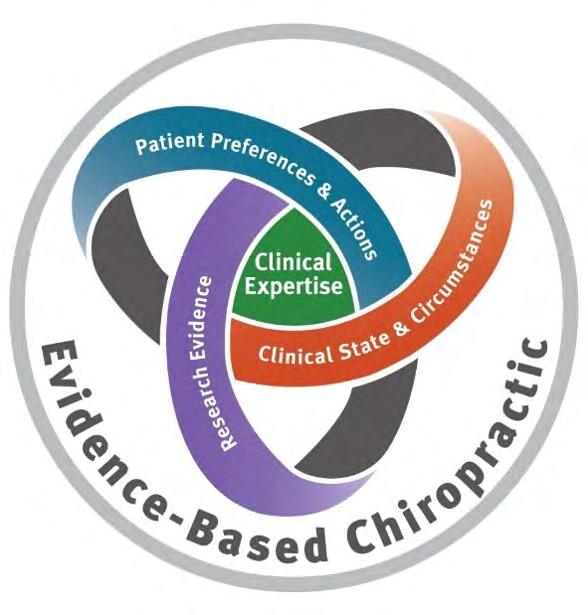
The Ontario Chiropractic Association (OCA) is helping to move evidence-based practice forward in a way that is both practical and relevant to modern chiropractic care. Through its Evidence-Based Chiropractic Care (EBCC) initiative, the OCA has supported the development of a seven-paper series published in a special issue of the Journal of the Canadian ChiropracticAssociation. Together, the papers offer a contemporary view of how research evidence, clinical expertise and patient preferences can be brought together to support high-quality care. The initiative was designed to strengthen a shared understanding of evidence-based practice while supporting its meaningful application within modern clinical practice and evolving healthcare environments.
A key message running through the series is that evidence-based practice is more than simply applying research findings. It also depends on sound clinical judgement, person-centred care and the ability to tailor decisions to each patient?s needs and circumstances. The papers revisit familiar concepts such as the evidence hierarchy and show how these tools can be used flexibly rather than rigidly, with the goal of supporting better decision-making in everyday practice.
The series also addresses one of the profession?s ongoing challenges: translating research into real-world care. By examining barriers such as limited time, access to resources and competing demands, the EBCCinitiative highlights the need for support at both the individual and organizational level. Importantly, it also offers practical guidance for situations where high-quality evidence is limited, including a structured clinical decision tool to help clinicians make informed, patient-focused choices.
What makes this work especially valuable is its
collaborative foundation. The initiative brought together clinicians, researchers, educators and patient perspectives to help advance a shared, practice-informed understanding of evidence-based chiropractic care. While developed in Ontario, the themes are relevant well beyond one jurisdiction. For WFCreaders, the series offers a useful example of how the profession can strengthen evidence-informed, patient-centred and collaborative care while continuing to evolve in response to changing healthcare expectations.
As healthcare systems increasingly emphasize quality, accountability and integration, initiatives such as EBCCshow how chiropractic organizations can play a leadership role in supporting both practitioners and patients. The full EBCCpaper series is available through the OCA website for those interested in exploring the work in more detail.
CACBrings Chiropractic and Applied Neuroscience to Rural China
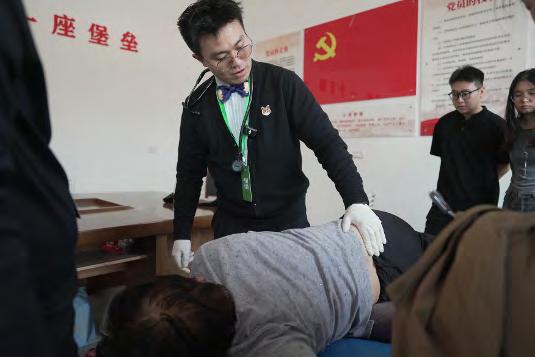
The Chinese Association of Chiropractic (CAC) recently led a humanitarian outreach initiative in Chenguang Village, Fuping County, Shaanxi Province, bringing advanced chiropractic care and applied neuroscience to an underserved rural community.
Sponsored by Jin Ji Jian Health Management , CACdispatched a team of chiropractic professionals to address the pressing needs of post-stroke patients in the village. Many elderly residents suffered from post-stroke complications including hemiplegia, aphasia, and limb weakness, with limited access to specialized rehabilitation services. Local village doctors had been providing basic home-based care, but lacked the tools to manage complex neurological deficits.
Led by CAC's Dr. Bobby Yiu, the team delivered an integrated intervention combining chiropractic principles with applied neuroscience techniques, including oculomotor guidance, sensory input rehabilitation, prefrontal assessment, cerebellar activation, and cranial nerve stimulation. The goal was to re-engage the central nervous system and restore functional control.
A remarkable outcome was achieved for a villager with six-year post-stroke sequelae who had lost hand mobility. Following systematic assessment and intervention, the patient regained active hand movement for the first time in years?a result attributed to proper neurological activation rather than conventional manual therapy alone.
Beyond direct patient care, CAC's team provided hands-on training to local village doctors, equipping them with reproducible neurorehabilitation protocols to sustain impact long after the team's departure.
This initiative reflects CAC's commitment to extending chiropractic's global reach into communities where it is most needed, ensuring that advances in brain science serve not only urban clinics but also rural populations with limited healthcare access.
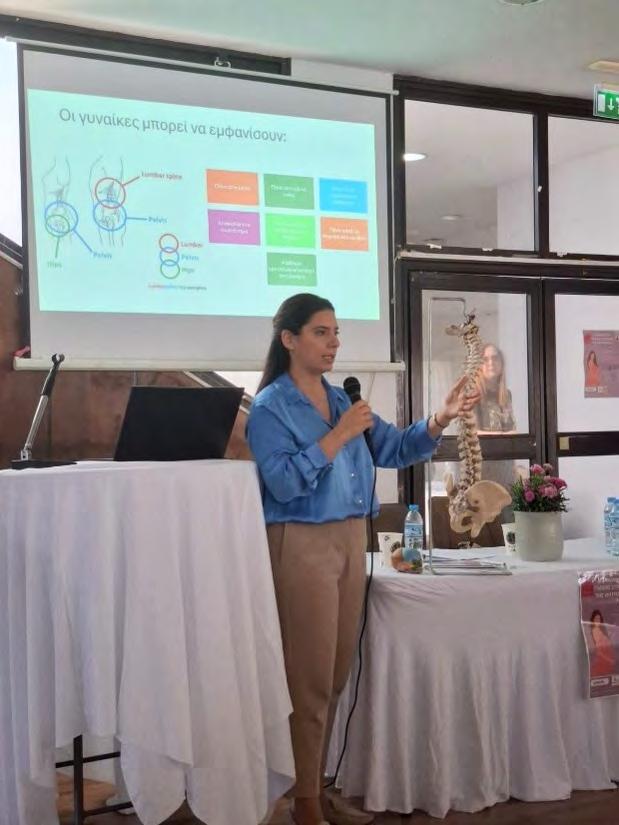
Chiropractic and midwifery collaboration in an interdisciplinary conference in Cyprus
Chiropractic Association in supporting the neuromusculoskeletal health needs of families. Attendees included midwives from private practice and Cyprus?national healthcare system, including the State Health Services Organization (OKYPY).
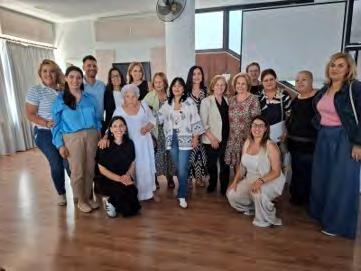
The ?Filotokos?Midwives Association, in collaboration with the Cyprus University of Technology, organized an accredited Interdisciplinary Midwifery Conference in Limassol, Cyprus, on 28 May 2026. The event brought together healthcare professionals from diverse disciplines to exchange knowledge, clinical experience, and evidence-based developments in midwifery and women?s health.
A significant milestone was the inclusion of chiropractic care in the scientific program. For the first time, a chiropractor was invited to present, reflecting growing recognition of the value of multidisciplinary collaboration in maternal and infant health. Dr. Anna Papadopoulou, D.C., shared the work of the Cyprus
Presentations throughout the conference emphasized the importance of interdisciplinary, patient-centred care. Dr. Papadopoulou discussed the role chiropractic care can play during pregnancy, birth, and the postpartum period, focusing on the neurological, hormonal, and physical changes associated with pregnancy and how chiropractic care may help address neuromusculoskeletal concerns while supporting maternal wellbeing. She also introduced the World Federation of Chiropractic?s E.P.I.C. principles?Evidence-based, People-centred, Interprofessional, and Collaborative care? which align closely with contemporary maternity care.
Clinical scenarios were also explored in which referral to chiropractors with expertise in pregnancy and paediatric care may be beneficial within a coordinated care plan. The conference provided an excellent opportunity to strengthen professional relationships, promote interdisciplinary dialogue, and enhance
Dr Anna Papadopoulou MChiro, D.C., DACNB, MSc, FRCC
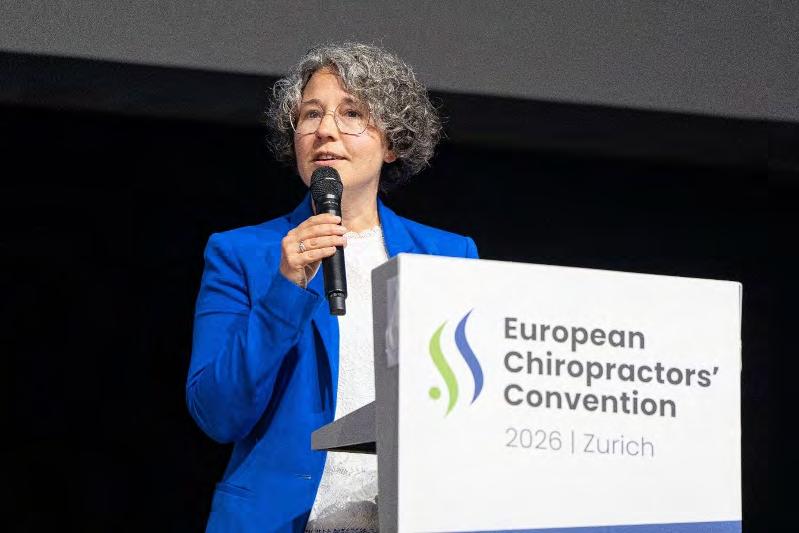
ECU2026 Brings the International Chiropractic Community to Zurich
From 14?16 May 2026, Zurich welcomed chiropractors, researchers, educators and healthcare professionals from across Europe and beyond for the European Chiropractors? Convention 2026 (ECU2026). Organised jointly by ChiroSuisse, the Swiss Chiropractic Association, and the European Chiropractors?Union (ECU), the congress brought together 547 participants from 23 countries for three days of scientific exchange, collaboration and professional dialogue.
Held under the theme ?MSK Care in the 21st Century: Evidence, Expertise, and Empathy at the Core?, ECU2026 focused on the future of musculoskeletal healthcare and the evolving role of chiropractic within modern healthcare systems. The programme highlighted the importance of evidence-informed, patient-centred and interdisciplinary approaches to musculoskeletal care.
Dr Vivian Kil, ECU President
education and accreditation in Europe.
The congress featured keynote lectures, workshops, panel discussions and a dedicated Research Day covering a broad range of topics including chronic pain, rehabilitation, artificial intelligence in healthcare, patient safety, education and healthcare integration. Internationally recognised speakers from leading institutions such as Harvard Medical School, Karolinska Institutet and Uppsala University shared current scientific developments and clinical perspectives with participants.
One of the major highlights of ECU2026 was the inclusion of two Political Forums addressing important healthcare policy questions facing the profession and wider healthcare systems. Discussions explored the integration of chiropractic into national healthcare structures, the growing societal burden of musculoskeletal disorders, rehabilitation challenges in ageing populations and the future of chiropractic
The forums brought together experts from research, public health, politics, healthcare policy and professional leadership, including representatives from the WHO Regional Office for Europe, academia and Swiss politics. A key message throughout the discussions was that the future integration of musculoskeletal healthcare professions depends not only on scientific evidence, but also on collaboration, professional standards, patient safety and political engagement.
Beyond the scientific programme, ECU2026 also provided valuable opportunities for networking and international exchange. The congress strengthened existing collaborations and created new connections between professionals from different countries and disciplines.
Zurich proved to be an ideal host city, combining scientific excellence, international exchange and Swiss hospitality. The next Swiss Chiropractors? Convention will take place from 9?11 September 2027 in Davos, Switzerland.
Strengthening Chiropractic in Hong Kong: HKCA?s Strategic Initiatives in Advocacy, Professional Development, and Community Care
1. Strategic Advocacy: Submission to the HKSAR Five-Year Plan
(Context for International Readers:For thefirst time in itshistory, theHongKongSpecial Administrative Region (HKSAR) isformulatingitsown First Five-Year Plan for Economicand Social Development (2026?2030). Thislandmarkblueprint alignswith the National 15th Five-Year Plan of thePeople?sRepublic of China and servesasa comprehensive action agenda to driveHongKong?slong-term, high-quality development. It mapsout strategicdirectionsacross varioussectors?includingtheeconomy, infrastructure, green transition, and vital livelihood areassuch ashealthcare, education, and housing. ThePlan aimsto leverageHongKong?sunique advantagesasan international financial and innovation hub, and a coreenginein the Guangdong-HongKong-Macao Greater BayArea, whileactualizinga "people-oriented"governance philosophyto enhancethewell-beingof itscitizens.)
Recognizing the strategic importance of this historic blueprint, the HKCA submitted a comprehensive proposal on 14 May 2026 to Legislative Council Member Dr. Hon David Lam Tzit-yuen, outlining four priority areas aimed at strengthening public protection, enhancing primary healthcare integration, and upholding professional standards over the next five years:
- Regulation of Unregulated Pain Centres: Proposing comprehensive regulatory oversight to eliminate public health risks. This includes extending the Private Healthcare Facilities Ordinance to cover chiropractic facilities, regulating medical devices, and enforcing advertising
standards to stop misleading claims by non-regulated entities.
- Integration into Primary Healthcare: Advocating for the inclusion of chiropractors in the Government?s Primary Care Directory, the development of official clinical guidelines under the Primary Healthcare Commission, and coordinated public/professional education campaigns to facilitate inter-professional referrals.
- Mandatory Continuing Professional Development (CPD): Urging the amendment of the Chiropractors Registration Ordinance (Cap. 428) to mandate CPD for practicing certificate renewal. Currently, chiropractors and pharmacists are the only regulated healthcare professions in Hong Kong without mandatory CPD; this amendment would align the profession with all other regulated healthcare sectors.
- Local Undergraduate Programme: Proposing the establishment of a locally accredited chiropractic undergraduate programme. This initiative leverages Hong Kong?s "Super Connector" role to partner local universities with international institutions, cultivating homegrown talent and building professional sovereignty in the Greater Bay Area.
2. Professional Standards: Consultation on Board Exam Implementation
In response to the Chiropractors Council?s consultation launched on 31 March 2026 regarding the potential implementation of a board
HONG KONG cont'd
examination (specifically the WFCInternational Test of Competence - ITC) as a prerequisite for registration, the HKCA actively engaged the local profession.
Following a Council briefing the HKCA hosted a Virtual Town Hall to gather robust feedback from registered chiropractors and subsequently submitted a formal response to the Council.
- HKCA?s Position: Reaffirmed its support for the underlying principle of a locally benchmarked competency requirement to enhance regulatory ownership, gatekeeping, and public protection.
- Key Concerns & Recommendations: The submission highlighted practical concerns raised by the profession, including potential logistical bottlenecks (given the proposed 1-2 annual sittings and current 9-12 month registration delays), the adequacy of a purely computer-based format for a hands-on clinical profession, the maturity of the newly launched ITC, and the need for fair exemption criteria for those already registered in regulated jurisdictions. The HKCA recommended a longer transitional period, increased exam frequency, transparent exemption pathways, and a future roadmap for integrating practical clinical skills assessments.
3. Professional Development: Inaugural HKCA Mentorship Program 2026
To support new graduates and bridge the gap in clinical and philosophical knowledge beyond university training, the HKCA launched its first-ever Mentorship Program in 2026. The initiative pairs experienced HKCA members (10+ years of clinical experience) with early-career chiropractors (?5 years of experience, open to all HK registered chiropractors).
The program structure includes a welcome reception, six months of flexible self-organized meet-ups (June?November), and a closing graduation event. The program officially kicked off
on 29 May 2026 with a highly successful first cohort comprising 10 mentees.
Mentorship Kickoff Fellowship 29th May 2026
4. Community Service: Outreach for the Elderly Healthcare Foundation
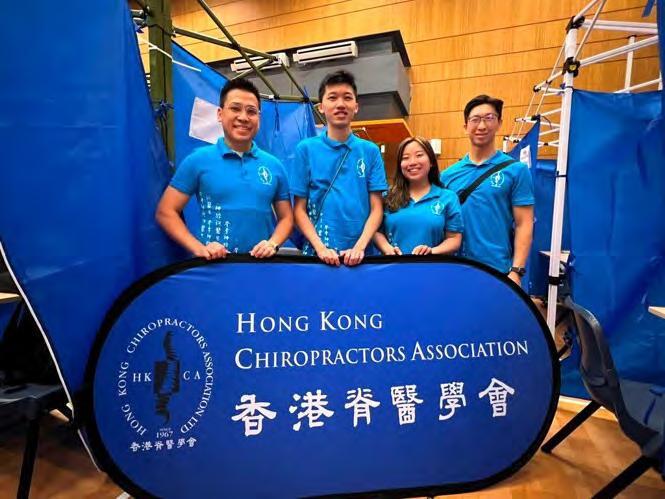
On 30 May 2026, the HKCA participated in a mobile clinic organized by the Elderly Healthcare Foundation (??????????). HKCA members Dr. Winkie Chan, Dr. Derek Wong, and Dr. Fabien Leong provided chiropractic services to 30 underprivileged seniors, promoting spinal health and access to pain management care. The event also enabled HKCA President Dr. Leonard Wong to meet with former Secretary for Food and Health Dr. Ko Wing-man to discuss challenges and future opportunities for the chiropractic profession in Hong Kong.
HKCA
Left to right (Dr Leonard Wong ? President HKCA, Dr. Fabien Leong, Dr. Winkie Chan, Dr. Derek Wong)
Rooted in Ubuntu: Showcasing African Paediatric Chiropractic on the Global Stage
The 40th Gathering of the International Chiropractic Pediatric Association (ICPA) provided an opportunity to celebrate the growth, collaboration, and impact of paediatric chiropractic worldwide. Among the international speakers invited to share their experiences was CASA?s own Dr Jacqui Bunge, who represented both South Africa and Paediatric Chiropractic Africa (PCA) on the global stage.
Dr Bunge delivered a presentation entitled "Rooted in Ubuntu", sharing the story of paediatric chiropractic in South Africa and the journey that led to the establishment and growth of Paediatric Chiropractic Africa. Her presentation highlighted the power of collaboration, mentorship, education, and service in developing a strong community of practitioners dedicated to caring for infants, children, pregnant mothers, and families across the continent.
The opportunity to present alongside respected international leaders in paediatric chiropractic was both a recognition of Dr Bunge's contribution to the profession and an acknowledgement of the progress being made within Africa. Her presentation reflected on how a shared vision among a small group of passionate chiropractors has evolved into a growing movement focused on advancing paediatric chiropractic education and clinical excellence throughout the region.
Over the past several years, Paediatric Chiropractic Africa has played an increasingly important role in supporting practitioners through continuing education, student engagement initiatives, and local collaboration. These efforts have helped strengthen the profession while creating opportunities for chiropractors to further develop their skills in caring for children and families.
The Gathering also served as a reminder that chiropractic is a truly global profession. While practitioners may come from different countries, cultures, and healthcare systems, they remain united by a common purpose: supporting healthy development, promoting well-being, and helping families thrive.
Looking ahead, the future for paediatric chiropractic in Africa continues to gain momentum. Plans are already underway to welcome the ICPA to African soil in 2026 for Webster Certification and Birth in Balance programmes, creating valuable opportunities for local practitioners to access internationally recognised training and further expand their expertise.
CASA congratulates Dr Jacqui Bunge on representing South Africa with distinction and acknowledges the ongoing work of Paediatric Chiropractic Africa in fostering education, collaboration, and excellence within the profession. Through leaders such as Dr Bunge, African chiropractic continues to demonstrate that it has an important voice and valuable contribution to make on the world stage.
CASA Cares: Supporting Communities, Strengthening Futures
At CASA, we believe that caring for communities extends far beyond the walls of our practices. Through CASA Cares, our profession's social responsibility initiative, we continue to invest in projects that support both the future of chiropractic and the well-being of the communities we serve.
One of our key focus areas this year has been supporting chiropractic students as they transition into practice.
Through a valued collaboration with HiTech Therapy (a local supplier), CASA Cares facilitated the donation of scrub sets to senior chiropractic students at both the Durban University of Technology (DUT) and the University of Johannesburg (UJ). These students represent the future of our profession, and we are grateful to HiTech Therapy for partnering with us in helping them take the next steps in their professional journey. By supporting students early in their careers, we invest not only in their success but also in the continued growth, sustainability, and excellence of chiropractic care in South Africa.
CASA Cares has also been fortunate to partner with a local baby care brand that generously
donated a substantial range of baby care products to support our CASA Baby Box Initiative.
The Baby Box Initiative aims to provide practical support to families in need during the important early stages of a child's life. Each box contains essential care items while also promoting healthy growth and development.
A unique component of the programme promotes spinal health from an early age through educational resources on healthy positioning, carrying, feeding, and development. Recognizing South Africa?s linguistic diversity and varying literacy levels, the initiative also includes non-verbal educational cards that help caregivers access important information regardless of language or background. These efforts reflect the heart of CASA Cares: supporting families, strengthening the chiropractic profession, and creating lasting community impact. We extend our sincere gratitude to our partners, donors, volunteers, and members whose support makes this work possible, demonstrating that chiropractic care is not only about treating patients, but also about building healthier communities and a better future for all.
Chiropractic at the Swiss Parliament?s Health Day
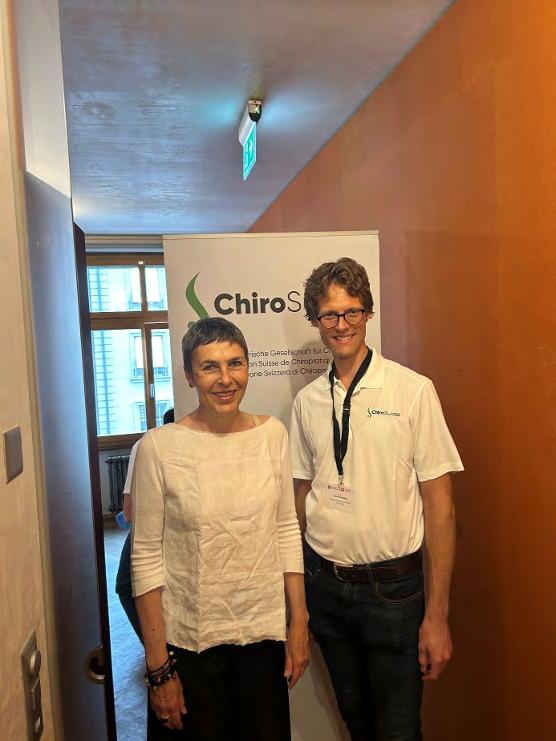
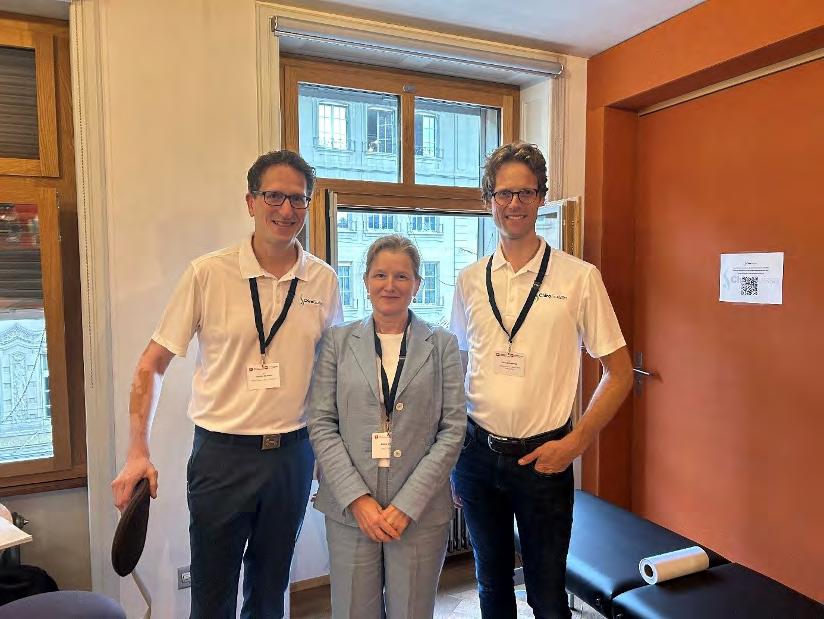
On 2 June 2026, ChiroSuisse participated for the first time in the annual Health Day for Members of the Swiss Parliament , offering musculoskeletal health screenings to parliamentarians.
The event forms part of Switzerland?s annual Health Days initiative, which aims to promote prevention and support the early detection of health problems. ChiroSuisse offered musculoskeletal health screenings, which were attended by 31 members of Parliament from across the political spectrum.
Alongside the chiropractic assessments, partner organisations provided cardiovascular checks, vision and hearing screenings, skin cancer examinations, cancer counselling, sleep consultations and kidney function tests.
Two chiropractors represented ChiroSuisse at the event. Each participant received a brief musculoskeletal assessment, including a short medical history, a functional screening and personalised advice. The feedback was highly positive, with many parliamentarians expressing appreciation for the insights gained into their musculoskeletal health.
The event not only contributed to preventive healthcare but also provided an excellent opportunity to raise awareness of chiropractic among national decision-makers. By engaging directly with members of Parliament, ChiroSuisse was able to highlight the important role of chiropractors in the prevention, diagnosis and management of musculoskeletal conditions and to strengthen the visibility of the profession at the political level.
National parliament member Barbara Gysi with chiropractor Taco Houweling
Chiropractor ThomasVincentini with ChiroSuisseCEO SabineSchläppi and chiropractor Taco Houweling
Parliamentary Roundtable: Strengthening Chiropractic?s Role in UK Healthcare
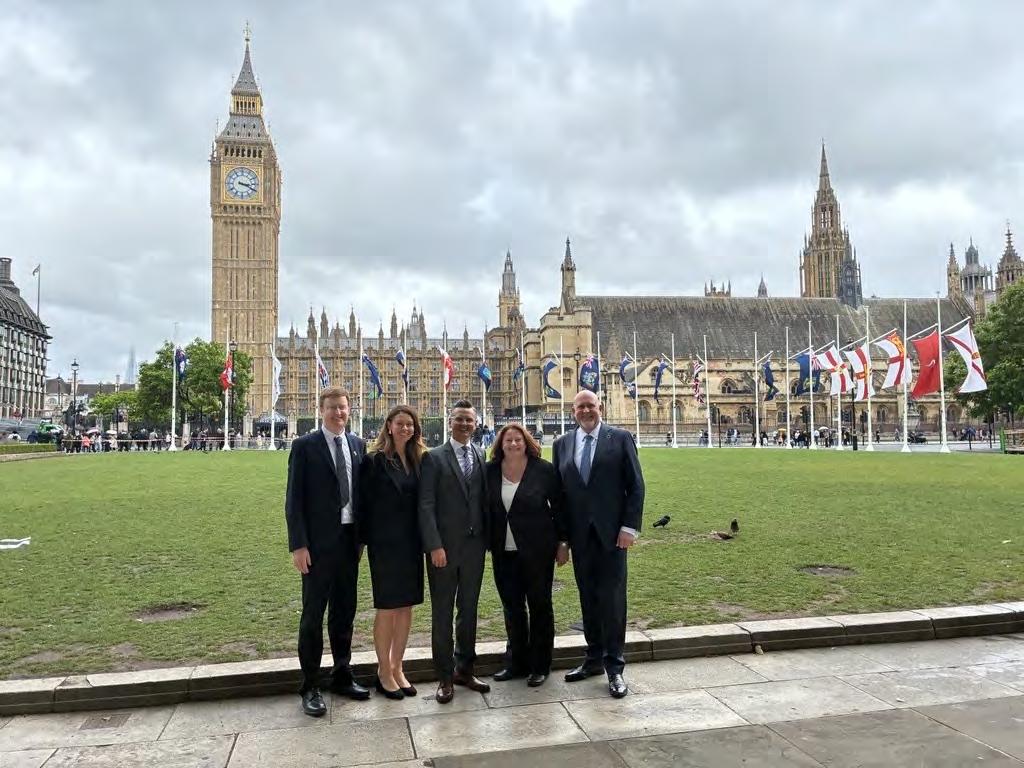
On 3 June, the British Chiropractic Association (BCA) hosted a parliamentary roundtable bringing together Members of Parliament, Peers, BCA members, and representatives from healthcare charities to explore the evolving role of chiropractic within the UK healthcare system. The discussion focused on how chiropractic can contribute more effectively to the wider healthcare workforce, particularly within the framework of Allied Health Professions (AHPs), and the growing need to address pressures on musculoskeletal (MSK) services across the UK.
With NHSwaiting times continuing to challenge timely access to care, participants highlighted the importance of making better use of regulated healthcare professionals already working in community settings. Chiropractors, with their specialized expertise in MSK care, were recognized as a valuable yet underutilized resource. Discussions highlighted the potential for improved patient pathways, earlier access to appropriate care, and reduced pressure on NHS services through greater integration of chiropractic within healthcare delivery.
A central theme of the roundtable was the need to establish a clear and credible pathway for chiropractic to achieve recognition as part of the Allied Health Professions workforce. Participants discussed the importance of aligning chiropractic with established healthcare frameworks and agreed that constructive engagement with the Department of Health and Social Care (DHSC) and relevant stakeholders would be essential.
Achieving this goal will require a coordinated effort supported by evidence, collaboration, and a shared commitment to strengthening chiropractic?s role within integrated care systems.
The roundtable also showcased examples of chiropractors already working alongside NHS colleagues to deliver care in local communities. Chaired by BCA President Tim Button, the session featured contributions from practitioners including Faye Deane, Richard Brown, and representatives from the Corbett Clinic, demonstrating the positive impact of collaborative working and reinforcing the case for broader integration.
Participants expressed strong support for continuing the dialogue and translating discussion into action. As the BCA advances its public affairs agenda, ongoing engagement with the DHSC, MSK leaders, and other stakeholders will be vital. The BCA remains committed to building support for a clearer pathway for chiropractic within the UK healthcare system, and those interested in learning more about its work are encouraged to contact the Association at enquiries@chiropractic-uk.co.uk.
The roundtable represents an important step towards strengthening the healthcare workforce, improving patient access to care, and ensuring collaboration and innovation remain at the forefront of future healthcare delivery.
American Chiropractic Association Advances Medicare Access, Leadership Development,
and Public Health Awareness
Efforts to expand access to chiropractic for U.S. seniors and other Medicare beneficiaries are gaining momentum. The American Chiropractic Association (ACA) and its members continue to advocate for passage of the Chiropractic Medicare Coverage Modernization Act (H.R. 539), bipartisan legislation that would provide Medicare patients access to all Medicare-covered benefits allowable under a chiropractors?state license. The bill, to date, has attracted more than 160 cosponsors in Congress.
ACA?s advocacy efforts are not limited to federal legislation. The association has also expanded its participation and expertise in the area of coding and documentation, which has a significant impact on health policy and research. An article on this topic was recently published online. Read it here.
In other news, ACA?s annual Student Leadership Conference will take place in September in Whittier, Calif., on the campus of Southern California University of Health Sciences (SCU). The 2026 conference will be hosted by ACA, the
American Black Chiropractic Association (ABCA) and SCU. The event will offer student leaders the opportunity to connect, develop leadership skills and strengthen pathways that support the future of chiropractic.
Coming this October: ACA and doctors of chiropractic nationwide will celebrate National Chiropractic Health Month (NCHM) 2026 with the theme ?Joint Efforts.?. The campaign will focus on the importance of joint health over a lifetime and steps people can take to support mobility, joint function and overall musculoskeletal health. A ?Joint Efforts?campaign toolkit with resources and ideas on how to participate will be available later this year at www.acatoday.org/NCHM.
For more information about ACA news and initiatives, visit www.acatoday.org.
Chiropractors to be covered by Oregon Medicaid to treat cervicogenic headache in 2027
Chiropractic cervical spine manipulation will be granted coverage under Oregon?s Medicaid program to treat cervicogenic headache after a final vote on August 14, 2025, that will go into effect on January 1, 2027.
In January of 2025, Oregon State began evaluating the effectiveness of spinal manipulation for cervicogenic headache as a part of its Benefits Update Project. Dr. Lisa Kouzes, a member of the Commission that establishes Medicaid coverage benefits in Oregon, supported state staff in identifying evidence on the effectiveness of chiropractic treatment for cervicogenic headache. In preparation for the March 20, 2025, meeting, Dr. Kouzes sought support from the University of Western States and the Oregon Board of Chiropractic Examiners. University of Western States administrators, Drs. Martha Kaeser and Patrick Battaglia, provided written testimony describing clinical diagnostic and management competencies and evidence-based care taught to chiropractic students to ensure safe and effective treatment for cervicogenic headaches, to include cervical spine manipulation. Dr. Craig Kawaoka of the Oregon Board of Chiropractic Examiners then provided verbal testimony describing the education and licensure requirements as well as the scope of practice of chiropractic physicians in Oregon. As the effectiveness of cervical spine manipulation for cervicogenic headache had been established, discussion during the March meeting then centered on patient safety. Further information was requested to carry the discussion forward at the next meeting in June.
Given the focused interest in scientific evidence of the safety of spinal manipulation, Dr. Kouzes sought input from the chiropractic and spinal manipulation global research community. In preparation for the June meeting, written testimony was provided about the safety of on; however, additional interest in discussing the
specifics of coverage carried the topic forward to the next meeting.
Drs. Daniels and
Kouzes collaborated with state staff to ensure all dose-response studies were included for the Commission?s review, and ultimately the Commission approved chiropractors in Oregon to provide 12 spinal manipulation treatments within the existing 30 visits per year for neck and back pain that are shared between chiropractic and osteopathic manipulation, physical and occupational therapy, and acupuncture.
Lisa Kouzes DC, MPH Clinton Daniels, DC, MS
Activator Methods
International: A Commitment to Evidence Informed Practice
Founded in 1967, Activator Methods
International?s foundation was built on a commitment to clinical research. With more than five decades of peer-reviewed evidence, Activator Technique is noted to be one of the most studied low-force techniques. The peer reviewed literature spans topics such as patient outcomes, biomechanics, neurophysiology, and analysis reliability. More specifically, clinical research has demonstrated the mechanical characteristics of force delivery, neurophysiological responses of muscle spindles, spinal biomechanics, and clinical efficacy.
Studies comparing high-velocity, low-amplitude (HVLA) manual manipulation and instrument-assisted adjustinghave demonstrated comparable patients outcomes regardless of the delivery of care. Several studies have compared force characteristics. One notable study was conducted by Funabashi et al. in 2017 and published in Spine. Another is a systematic review, published in the Journal of the Canadian Chiropractic Association by Higgins et al., which synthesized the outcomes of eight clinical trials which demonstrated comparable results.
Beyond clinical outcomes, the research has examined the physiological effects of instrument-assisted adjusting. This includes investigating heart rate variability modulation, muscle spindle responses, and skin temperature changes following an adjustment with an activator instrument. To further support this, a study identified a physiological autonomic response within minutes post-treatment when an appropriate load was delivered, as there was a secondary cooling followed by a rewarming effect.
Each of these effects impacts a patient's healing and response to treatment.
The low force of the instrument makes it an ideal choice for several populations that may not tolerate HVLA. In addition, the reproducible force of the instrument is important to note as it reduces treatment variability between practitioners and visits. This can be particularly relevant for paediatric patients, people with osteoporosis or degenerative disc disease, individuals with chronic widespread pain, and pregnant patients. Of note was a recent study that focused on male rabbits with osteoarthritis as subjects that received chiropractic manipulation with an Activator V. This was performed and published by Conesa-Buendia et al., (2021) in ScientificReportsand demonstrated that this method of care may mitigate osteoarthritis progression.
Studies focused on prone leg-length analysis correlated with position one check have demonstrated strong inter- and intra-examiner reliability. This reliability is a component that helps to support practitioner clinical confidence and competence in determining treatment steps.
As research continues to evolve, Activator Methods continues to be the gold standard and cornerstone of instrument adjusting. With a commitment to quality, Activator Methods International is the only company to hold an ISO 13485 certificate. To access the articles discussed above and the full Activator Research Library go to https://activator.com/research/
Why do regulators ask different questions on the application for licensure / registration?
Chiropractors today are more mobile than ever, moving not just within a jurisdiction but often worldwide. Regulatory boards are responsible for ensuring that both new graduates and seasoned practitioners meet government-established standards. They must also continually gauge whether the information they gather to complete this assessment is both reasonable and useful.
For this purpose, the ICRShas undertaken a comparative review of applications for licensure / registration of chiropractic regulatory bodies throughout the world.
Our premise is that the application process must support the overall legislative goal of regulation: to protect the public.
Boards must decide which information to request, and also which details will be displayed on the public website. While complying with the legislature?s mandate, the determination should be based on the needs of two groups:
The Public
1. Has the right to know that chiropractors who are treating them are currently licensed or registered
2. Name, License Number, Status
3. General Location (this varies by jurisdictional law)
The Regulatory Authority
1. Must be able to accurately identify practitioners
2. Determines whether they:1). initially qualify, and 2). maintain compliance with legal requirements
3. Must be able to locate and contact them
In the process of granting and renewing the legal practice privilege, regulators request much more information than they choose to publish as part of
the public practitioner profile on the website. Boards consult with legal counsel to respect legislative privacy requirements.
A core question must be asked for each data field. ?Why do we need to know this??
Lessons learned so far
- The application process itself may range from online submission portals to traditional paper-based processes, most often driven by the number of applicants and agency resources.
- Information collected varies according to legal authorization and practical need, as well as tradition. In centralized government settings, uniformity among professions may be a factor.
- Terminology relating to sex and gender is used inconsistently across jurisdictions
- The terminology of the formal degree awarded to graduating chiropractors differs considerably, with at least 26 identified to date.
- Whether externally administered examinations are required varies.
- The number of fully accredited chiropractic programs is increasing rapidly, but accreditation is not universally available.
- The wording of jurisdictional laws may affect recognition of accreditation.
- There are over 35 status categories of chiropractic license or registration.
- There are at least eight named types and levels of chiropractic license or registration.
- The language used to request verification of license/registration for practitioners relocating from another jurisdiction may result in information gaps.
- An identical violation in one jurisdiction
may be recorded differently in another.
- Boards publish very different information on their public practitioner profiles.
- Obtaining criminal background checks across nations is difficult.
- Determining recency of practice after absence is complex and inconsistent.
- Cultural and language competence should be considered.
A draft model of application elements is under review. While complete international consistency may be neither achievable nor desirable, identifying core application elements may assist regulatory authorities in balancing public protection, practitioner mobility, and administrative efficiency.
FICSStrengthens Global Leadership, Strategic Partnerships
and International Sporting Presence
FICSenters the second half of 2026 with renewed momentum across international sport, education, strategic partnerships and organisational leadership, as the Federation expands its influence as the global voice for sports chiropractic.
A key milestone is the appointment of Catherine Perry (née Quinn) as Chief Operating Officer. Catherine brings extensive experience in executive leadership, clinical governance, elite sport, stakeholder engagement and organisational development. Her appointment strengthens FICS? operational capacity at a time of international growth and reflects the Federation?s commitment to professionalising its systems, supporting members and delivering greater impact across global sport.
?It isa privilegeto step into theroleof Chief Operating Officer at such an important timefor FICS. Our organisation hasa unique opportunityto strengthen theglobal position of sportschiropractic, support practitionersat everystageof their development and build meaningful partnershipsthat placeathlete health at thecentreof what we do. I am excited to help shapethenext phaseof FICS?growth and work alongsideour international communityto turn strategyinto measurable impact.?
CatherinePerry, Chief OperatingOfficer, FICS
FICShas also renewed its long-standing strategic partnership with the European Chiropractors? Union (ECU) through the signing of a Memorandum of Understanding. This renewed partnership reflects a shared commitment to collaboration, evidence-informed practice and the integration of chiropractic care within elite sport and wider healthcare systems.
Sport remains one of the most powerful platforms through which chiropractic can demonstrate its value. By working closely with international sporting and professional bodies, FICScontinues
to raise the visibility, credibility and contribution of sports chiropractors within multidisciplinary athlete healthcare teams.
Perry, Chief Operating Officer
Education remains central to this mission. FICScontinues to support chiropractic universities and colleges worldwide through articulation agreements designed to increase access to the International Certificate in Sports Chiropractic (ICSC), create clearer academic pathways and develop the future sports chiropractic workforce.
Recent service agreements with international sporting bodies, including the International Table Tennis Federation and the World Squash Championships, further demonstrate the trust placed in FICSpractitioners to deliver high-quality care in high-performance environments.
Looking ahead, the FICSExecutive Committee will meet in Lausanne this June to begin shaping the Federation?s next three-year strategic plan. It is fitting that this work will take place in the home of the Olympic movement, a city synonymous with international sport, collaboration and ambition. FICSis delighted to be meeting in such prestigious surroundings as it looks to the future and prepares for its 40th Anniversary at the 2027 Members General Assembly in the United States.
Together, these developments mark an important period of growth for FICS, strengthening its role as the global leader in sports chiropractic and athlete healthcare.
Catherine
FLAQ 2026 Annual Assembly and Symposium: Bringing Latin America together
The Federación Latinoamericana de Quiropráctica (FLAQ) is pleased to invite chiropractors and chiropractic students from across Latin America to its Annual Assembly on August 21 and the 2026 Symposium with continuing education on August 22 were we welcome all chiropractors and students to participate, learn and network in Bogotá, Colombia.
This two-day event will combine professional leadership, regional collaboration, and continuing education, providing a unique opportunity to connect with colleagues committed to advancing chiropractic throughout Latin America.
Participants may earn 8 hours of continuing education, featuring:
Pediatric Chiropractic (4 CECredits)
Dr. Elsie Hewitt, DC, DABCO, FICC(USA)
Founder of the Master in Chiropractic Pediatrics Program at Logan University
Topic: Craniosacral Therapy: Assessment, Clinical Application, and Hands-On Training (Presented in English with Spanish translation)
Sports Chiropractic (4 CECredits)
Dr. Aleisha E. Serrano, DC, ICSC, CCEP (Puerto Rico)
Recognized sports chiropractor in Puerto Rico and Latin America, who served as chiropractor for the Colombian Olympic Archery Team during the 2008 Olympic Games.
Topic: Comprehensive Functional Athlete Assessment and Management Protocols
The FLAQ Assembly will provide an important forum for member associations and regional leaders to
share achievements, strengthen partnerships, discuss professional priorities, and collaborate on initiatives that continue to elevate chiropractic education, research, regulation, and patient care throughout Latin America.
The event will be held at the Hotel Cosmos 100 and Convention Center in Bogotá, offering attendees the opportunity to combine professional development with cultural and travel experiences in one of South America's most vibrant destinations.
FLAQ looks forward to welcoming colleagues from across the region for a memorable weekend of learning, networking, leadership, and professional collaboration. Enhance your continuing education experience by exploring Bogotá and consider extending your visit to Medellín before or after the Symposium. For registration, hotel reservations, and additional information, please visit here.
Dr. Karlos Boghosian Receives NBCE?s Highest Honor Following Four Consecutive Years
as President
Dr. Karlos Boghosian, D.C., FICA, FACC, concluded four consecutive years of service as President of the National Board of Chiropractic Examiners (NBCE) during the organization's 2026 Annual Meeting and was honored with the Paul M. Tullio Award for Distinguished Service, the highest recognition bestowed by the NBCE.
Named in honor of Dr. Paul M. Tullio, a visionary leader whose commitment to examination excellence, innovation, and fiscal stewardship helped shape the NBCE, the award recognizes extraordinary contributions to chiropractic assessment, public protection, and service to the profession.
Dr. Boghosian?s leadership journey spans more than a decade of service to chiropractic regulation and professional assessment at the state, national, and international levels, including service as President of the Federation of Chiropractic Licensing Boards (FCLB), immediate Past President of the International Board of Chiropractic Examiners (IBCE), Chair of the Connecticut Board of Chiropractic Examiners, having been appointed by two consecutive governors, and four consecutive years as President of the NBCEfrom 2022 through 2026.
His tenure coincided with one of the most transformative periods in the organization?s history. Under his leadership, the NBCEundertook a comprehensive modernization of governance structures, expanded computer-based testing opportunities from three testing administrations annually to eleven months of testing availability, launched significant enhancements to examination content and administration, and advanced a redesigned Part IVexamination experience focused on contemporary clinical competency assessment.
Among the most significant achievements during his presidency was the development of the NBCEAssessment Center?a purpose-built facility representing a $14 million investment in the future of chiropractic assessment. The project was fully self-funded through responsible financial stewardship and allows the organization to provide testing availability forty-eight weeks per year while strengthening examination consistency and operational sustainability.
Dr. Boghosian also championed one of the most extensive stakeholder engagement efforts in NBCE history, bringing together educators, regulators, students, accreditors, and professional leaders to help shape the future of chiropractic assessment. That collaborative process directly informed many of the initiatives implemented during his presidency and reflected his longstanding belief that progress is achieved through listening, partnership, and service.
His commitment to advancing chiropractic assessment extended beyond North America. As President of the International Board of Chiropractic Examiners, Dr. Boghosian helped lead a historic partnership between the IBCEand the
Dr. Karlos Boghosian Receives NBCE?s Highest Honor Following Four Consecutive Years as President cont'd
World Federation of Chiropractic to develop the International Test of Competence (ITC). Designed for chiropractors practicing in unregulated jurisdictions, the ITCestablishes an international benchmark for professional knowledge, clinical decision-making, and situational judgment. The initiative provides national chiropractic associations and governments with an important tool to support professional standards and strengthen public trust in chiropractic care worldwide.
In 2026, his service culminated in another historic milestone: the successful combination of the Federation of Chiropractic Licensing Boards and the National Board of Chiropractic Examiners. The initiative preserved the mission and legacy of the FCLB while positioning both organizations for long-term sustainability and continued service to state regulatory boards and the public.
During his teenage years, Dr. Boghosian and his family were forced to leave their homeland amid revolution, war, and religious persecution, ultimately building a new life in North America. Those experiences helped shape a leadership philosophy grounded in resilience, humility, faith, and service. Throughout his career, he has frequently emphasized the importance of stewardship, collaboration, and leaving institutions stronger than they were found.
Reflecting on his service, Dr. Boghosian noted, ?The accomplishmentsof thepast several yearswerenever theresult of oneindividual. Theyweremadepossible through thededication of countlessvolunteers, educators, regulators, board members, staff, and stakeholderswho sharea commitment to public protection and theadvancement of thechiropractic profession. I am deeplygrateful for theopportunityto haveserved alongsidethem.?
Beyond his professional service, Dr. Boghosian is the founder and CEO of SoVita Chiropractic Centers, a multi-location chiropractic organization
serving communities throughout the Northeast. He has also served on numerous nonprofit and educational boards and remains actively involved in initiatives that support health, education, leadership development, and community service.
While his presidency has concluded, Dr. Boghosian continues his commitment to chiropractic leadership, public protection, and service to the profession.
About Dr. Karlos Boghosian
Dr. Karlos Boghosian, D.C., FICA, FACC, is the immediate Past President of the National Board of Chiropractic Examiners, immediate Past President of the International Board of Chiropractic Examiners, Past President of the Federation of Chiropractic Licensing Boards, Chair of the Connecticut Board of Chiropractic Examiner, and Founder and CEO of SoVita Chiropractic Centers.
Universidade Gama e Souza Signs MOU with CLAEQ, Marking First Step Toward Formal Accreditation
The chiropractic program at Universidade Gama e Souza (UNIGAMA) in Rio de Janeiro has signed a Memorandum of Understanding with the Consejo Latinoamericano de Educación Quiropráctica (CLAEQ), formally establishing a relationship between the two organizations and laying the groundwork for an accreditation review. The development marks a significant step for chiropractic education in Brazil and across Latin America.
Upon signing and returning the Memorandum of Understanding to CLAEQ, Dr. Paulo Gomes de Oliveira Neto, Director of UNIGAMA's Chiropractic Program, described the occasion as a "historic step" for the institution and a contribution to advancing chiropractic education throughout Brazil and the broader region.
CLAEQ has formally welcomed UNIGAMA into the relationship. Dr. Joseph P. Busch, President of CLAEQ and Editorial Director of The American Chiropractor Magazine, emphasized the broader effort behind this progress. "Thismilestone representstheculmination of collaborativeworkby dedicated professionalsfrom acrosstheworld who sharea commitment to rigorousbenchmarksin chiropracticeducation,"he said. "It marksa significant first step toward establishinga dedicated accreditingbodyfor chiropracticeducation in Latin America, a region that, until now, haslacked formal accreditation infrastructureof thiskind."
Mayda Serrano, Executive Director of the Federación Latinoamericana de Quiropráctica (FLAQ), commented on the significance of the university's decision. "UNIGAMA's decision to enter this rigorous accreditation process reflects strong academic leadership and a vision that will strengthen chiropractic across Latin America," she said. "This initiative will inspire other institutions to
embrace quality and continuous improvement."
With the MOU now signed, the next step will be UNIGAMA's formal application, which would initiate a structured review of the program's curriculum, faculty, clinical training, and institutional resources. Successful completion of that process would align the program with CLAEQ's standards and provide a model for other institutions in the region seeking formal recognition. Both CLAEQ and FLAQ view the signed MOU as a positive signal of the growing momentum toward raising educational standards and strengthening the profession throughout the Americas.
About CLAEQ
CLAEQ is the accrediting body for chiropractic education programs in Latin America, dedicated to establishing and upholding rigorous academic and clinical standards across the region. ccela-claeq.org.
About FLAQ
FLAQ represents chiropractic associations and professionals across Latin America, advancing the profession through education, advocacy, and regional collaboration. flaq.org.
Prof. Dr. Paulo Gomes de Oliveira Neto
Dr. Joe Busch
Dr. Mayda Serrano
IMU Chiropractic Study Tour 2026 Welcomes Students from Teesside University and Camara Institute for Chiropractic Sciences
IMU University welcomed international delegates from Teesside University, United Kingdom , and Camara Institute for Chiropractic Sciences, Philippines, as part of the IMU Chiropractic Study Tour 2026.
The study tour brought together 10 students from Teesside University and 9 students from Camara Institute for Chiropractic Sciences (CICS), together with one accompanying staff member from CICS. The Teesside University delegation participated in the programme from 7 June to 4 July 2026, while the CICSdelegation joined from 14 June to 27 June 2026.
The programme was designed to provide participants with an immersive educational and cultural experience in Malaysia. Through a combination of academic sessions, clinical observation, peer learning, institutional visits, and cultural activities, the study tour aimed to broaden students?understanding of chiropractic education, clinical practice, and healthcare delivery within an international context.
Throughout the programme, the visiting students engaged with IMU faculty members and chiropractic students in a range of learning activities, including chiropractic skills sessions, clinical practicum observation, and student reflection sessions. Participants also had the opportunity to visit healthcare and rehabilitation-related facilities, including ALTY Orthopaedic Hospital, TAGSChiropractic & Rehabilitation, and Cheras Rehabilitation Hospital.
In addition to academic and clinical exposure, the study tour incorporated cultural immersion activities and local experiences, allowing participants to gain a deeper appreciation of Malaysia?s diverse cultural landscape. These included campus orientation, networking sessions, visits to local landmarks, and a Melaka cultural visit , which provided students with the opportunity to experience Malaysia?s heritage and history.
Commenting on the programme, Wong Yi Kai, IMU Mobility Coordinator, said:
?TheIMU ChiropracticStudyTour reflectsour commitment to creatingmeaningful international learningexperiencesfor students. Bybringing together studentsfrom Malaysia, theUnited Kingdom, and thePhilippines, theprogrammeencourages cross-cultural exchange, peer learning, and a broader understandingof healthcareeducation beyond the classroom. Wearepleased to support initiativesthat strengthen global engagement and student mobility at IMU.?
Dr Faye Deane, Course Lead from Teesside
University, shared:
?Thisstudytour provided our studentswith a
MALAYSIA
cont'd
valuableopportunityto experiencechiropractic education and clinical learningin an international setting. Theexposureto IMU?sacademicenvironment, clinical practicum, and Malaysia?shealthcare landscapehashelped broaden their perspectivesas futurechiropracticprofessionals. Wearegrateful to IMU Universityfor hostingour studentsand for creatingsuch a well-rounded and enriching programme.?
Dr Martin Camara, Founder of Camara Institute for Chiropractic Sciences, added:
?Wearedelighted that our studentshad the opportunityto participatein theIMU Chiropractic StudyTour. Theprogrammeoffered meaningful exposureto chiropracticeducation, clinical observation, interprofessional learning, and Malaysian culture. Thiscollaboration with IMU Universitysupportsour shared goal of developing globallyminded chiropracticgraduateswho are prepared to servediversecommunities.?
The study tour reflected IMU?s commitment to internationalization, interprofessional learning, and global engagement in healthcare education. It also provided a meaningful platform for students from Malaysia, the United Kingdom, and the Philippines to exchange perspectives, build professional networks, and develop a broader understanding of chiropractic practice across
different healthcare and cultural settings.
Overall, the IMU Chiropractic Study Tour 2026 successfully strengthened international collaboration and created valuable learning experiences for all participating students, faculty members, and partner institutions.
McTimoney Celebrates New Graduates at Historic Oxford Union
McTimoney University College celebrated the achievements of its graduating class in April at a ceremony held in the historic Oxford Union, one of the United Kingdom?s most renowned centres of academic debate and intellectual exchange.
The occasion brought together graduates from Spain, Hong Kong, Netherlands, Norway, France, Germany, as well as the UK, together
with their families, friends, faculty and staff to recognise the dedication and perseverance of students completing their studies. Awards were conferred on graduates from the Master of Chiropractic (MChiro), MSc Animal Manipulation, and MSc Chiropractic (Paediatrics) programmes.
Addressing the graduands, university leaders reflected on the commitment required to balance rigorous academic study with professional and personal responsibilities. Graduates were
encouraged to carry forward the values of evidence-informed practice, lifelong learning and patient-centred care as they embark on the next stage of their professional journeys.
The ceremony marked a significant milestone for each graduate and celebrated the growing contribution of McTimoney College alumni to healthcare, animal health and wellbeing, and specialist clinical practice both within the United Kingdom and internationally.
The Royal College of Chiropractors is pleased to announce, on behalf of the UK Forum of Chiropractic
Deans, the publication of Outcomes for Chiropractic Graduates 2026.
This document defines the knowledge, skills and competencies expected of newly qualified chiropractors in the UK. It replaces and updates the 2022 edition of Outcomes for Chiropractic Graduates. It does not replace the Regulator?s Education Standards, but sits alongside them as an outward-facing document intended for multiple audiences and reflecting the views and expectations of the profession.
Outcomes for Chiropractic Graduates 2026 enables patients, the public, health professionals, health & care organisations and commissioners to understand and recognise what chiropractors know and are able to do at the point of graduation. Through doing this, it:
- Provides a clear framework for new and established programme providers in terms of core curriculum design, helping them produce graduates whose knowledge, skills and competencies meet the needs of the profession.
- Enables chiropractic students to understand what they will need to know and be able to do at the point of graduation, thus enabling them to play an active role in directing their own learning.
- Facilitates the identification of knowledge, skills and competencies that are postgraduate/relate to special interests.
- Enables patients, the public, health professionals, health & care organisations and commissioners to
understand and recognise what chiropractors know and are able to do.
- Ensures postgraduate trainers and employers have a clear understanding and clear expectations of graduates?attributes and can support and facilitate a smooth transition to autonomous professional practice.
- Helps enable those returning to practice to identify and address professional learning needs.
- Helps enable overseas graduates to recognise the knowledge, skills and competencies required for professional practice in the UK.
The purpose of this new edition is to ensure that the document reflects contemporaneous practice and remains consistent with changes that have occurred in the profession over the past 4 years, particularly with reference to the new GCCEducation Standards and Code of Professional Practice.
The Forum of Chiropractic Deans is made up of senior representatives of all the UK chiropractic programmes and the Royal College of Chiropractors. They have produced this edition in consultation with the profession.
The Chiropractic Patient Incident Reporting and Learning System (CPiRLS) is a secure website, which allows chiropractors to view, submit and comment on patient safety incidents.
Organisations (UK and overseas) wishing to use CPiRLS or receive trial access to the full site for evaluation purposes, should contact The Royal College of Chiropractors.
Cleveland University-Kansas City (CUKC) has received approval from the Higher Learning Commission to offer streamlined versions of its Bachelor of Science (B.S.) in Human Biology and Bachelor of Science (B.S.) in Exercise Science programs, significantly reducing the number of credit hours required for graduation. The change positions both degrees among the most efficient pathways to earning a bachelor?s degree in the United States, with students able to complete either program in as little as two years.
The fully online B.S. in Human Biology now requires 94 credit hours, while the mostly online B.S. in Exercise Science requires 96 credit hours, down from the traditional 120 credits. According to CUKC, curriculum updates were designed to create a more focused and purposeful educational experience while maintaining academic rigor and quality.
?Innovation meansmeasuringqualitybylearning and opportunity, not bycredit hours,?said Dr. Karla Bruntzel, Dean of the College of Health Sciences. She noted that the redesigned programs provide students with accelerated
pathways to their career goals without compromising educational standards.
CUKC?s trimester schedule and year-round course offerings allow students to progress through the programs at an accelerated pace. The Human Biology degree is delivered entirely online, while the Exercise Science program combines online coursework with on-campus laboratory sessions in Overland Park, Kansas.
Dr. Greg Williams, Director of Exercise Science Programs, said the Exercise Science curriculum focuses on personal training and health coaching, performance enhancement, and corrective exercise, preparing graduates for professional certifications and careers in the field.
Students seeking advanced education can continue into CUKC?s online master?s programs in Exercise Physiology and Sports Performance or Healthcare Administration, making it possible to earn both bachelor?s and master?s degrees in approximately three years. Founded in 1922, CUKCcontinues to provide innovative educational pathways for future healthcare professionals.
CUKCAnnounces Annual Conference and Expo (ACE) Will Continue as Cleveland Conferences at New Venue
Cleveland University-Kansas City (CUKC) has announced that its long-running Annual Conference and Expo (ACE) will continue under a new name, Cleveland Conferences, beginning in 2026. The event will take place October 8?10, 2026, at the Marriott Kansas City Overland Park Hotel in Overland Park, Kansas, less than a mile from the university?s campus.
The rebranding reflects CUKC?s ongoing
commitment to advancing the chiropractic profession and supporting the broader healthcare community. Building on the legacy of ACE, Cleveland Conferences will continue to offer high-quality continuing education, professional networking opportunities, and innovative programming for healthcare practitioners.
The three-day event will bring together leading chiropractic educators, researchers, and
UNITED STATESOF AMERICA
practitioners from across the United States. Educational sessions will cover a range of topics, including pain management, compliance, sports chiropractic, pregnancy, pediatric care, and women?s health. Participants will also have the opportunity to earn up to 20 continuing education units.
Featured keynote speakers include Dr. Krista Burns, founder of the American Posture Institute; Dr. Christine Goertz of the Duke University School of Medicine; and Dr. Sherry McAllister, president of the Foundation for Chiropractic Progress. They will be joined by an impressive lineup of healthcare leaders and educators presenting the latest trends, best practices, and
innovations in chiropractic care.
In addition to educational programming, attendees can connect with colleagues, industry leaders, and exhibitors showcasing new technologies, products, and services for chiropractic professionals. Book signings by Dr. Goertz and Dr. McAllister will also be featured during the conference.
Registration for Cleveland Conferences 2026 is now open. More information on the program, speakers, continuing education opportunities, and accommodations is available through Cleveland University-Kansas City.
CUKCEarns Historic Strength and Conditioning Accreditation
Cleveland University-Kansas City (CUKC) has achieved a significant milestone in strength and conditioning education, becoming the first institution to receive Council on Accreditation of Strength and Conditioning Education (CASCE) accreditation for a post-baccalaureate/graduate Certificate in Strength and Conditioning.
The accreditation recognizes CUKC?s commitment to delivering high-quality education that prepares students with the knowledge, practical skills, and professional experience needed to succeed in the growing field of strength and conditioning. CASCE is widely recognized as the leading accrediting body for strength and conditioning education programs.
?This accreditation validates the rigor and relevance of our program and reinforces our commitment to student success,?said Dr. Greg Williams, Director of Exercise Science Programs at CUKC. He noted that the graduate certificate was specifically designed for working professionals seeking advanced credentials and preparation for the Certified Strength and Conditioning Specialist (CSCS) examination. The program combines 100% online coursework with one weekend of immersive on-campus laboratories and 300 hours of field experience. It is designed for professionals in fitness, sports performance, rehabilitation, chiropractic, and related healthcare fields who want a flexible pathway to advanced
training without pursuing a full degree.
As eligibility requirements for the CSCS examination evolve, accredited education will become increasingly important. By 2030, candidates for the CSCS exam will be required to complete an accredited program, placing CUKC at the forefront of this transition.
The curriculum focuses on human movement science, exercise physiology, nutrition, and strength training principles, while supporting careers as strength and conditioning coaches, sports performance specialists, rehabilitation professionals, personal trainers, and chiropractors integrating athletic performance services into practice.
The certificate is available as a standalone credential or as part of CUKC?s Master of Science in Exercise Physiology and Sports Performance program, providing students with a flexible and accredited pathway to career advancement.
Dr. Tobi Jeurink Appointed to Kansas State Board of Healing Arts
Cleveland University-Kansas City (CUKC) has announced the appointment of Dr. Tobi Jeurink to the Kansas State Board of Healing Arts, one of the state?s most influential healthcare regulatory bodies. Appointed by Kansas Governor Laura Kelly, Dr. Jeurink will serve as one of only three Doctors of Chiropractic on the 15-member board.
A member of the CUKC faculty and a 2001 graduate of Cleveland Chiropractic College?Kansas City, Dr. Jeurink brings extensive clinical, academic, and leadership experience to the role. The Kansas State Board of Healing Arts is responsible for licensing and regulating healthcare professionals across multiple disciplines, helping to ensure high standards of patient care and public protection throughout the state.
In accepting the appointment, Dr. Jeurink emphasized the importance of service, trust, and compassionate healthcare leadership. She noted that the opportunity carries significant responsibility and offers a chance to contribute to decisions that impact
both healthcare providers and patients across Kansas.
Her appointment is also a significant milestone for the chiropractic profession, ensuring that chiropractic perspectives are represented in discussions and decisions related to healthcare regulation and public policy. As a board member, Dr. Jeurink will help shape regulations, standards, and oversight affecting a broad range of healthcare practitioners.
CUKC leaders praised the appointment as a reflection of the university?s longstanding mission to educate and develop leaders in health promotion and healthcare. Dr. Jeurink?s selection highlights the impact that chiropractic professionals can have not only in clinical practice but also in public service and healthcare governance.
She is expected to attend her first official meeting of the Kansas State Board of Healing Arts later this summer, beginning her service on behalf of both the profession and the people of Kansas.
Family of Dr. James Bryden Honors Student Veterans at Cleveland University-Kansas City
Cleveland University-Kansas City (CUKC) has announced the appointment of Dr. Tobi Jeurink to the Kansas State Board of Healing Arts, one of the state?s most influential healthcare regulatory bodies. Appointed by Kansas Governor Laura Kelly, Dr. Jeurink will serve as one of only three Doctors of Chiropractic on the 15-member board.
A member of the CUKC faculty and a 2001 graduate of Cleveland Chiropractic College?Kansas City, Dr. Jeurink brings extensive clinical, academic, and leadership experience to the role. The Kansas State Board of Healing Arts is responsible for licensing and regulating healthcare professionals across multiple disciplines, helping to ensure high standards of patient care and public protection throughout the state.
In accepting the appointment, Dr. Jeurink emphasized the importance of service, trust, and compassionate healthcare leadership. She noted that the opportunity carries significant responsibility and offers a chance to contribute to decisions that impact
both healthcare providers and patients across Kansas.
Her appointment is also a significant milestone for the chiropractic profession, ensuring that chiropractic perspectives are represented in discussions and decisions related to healthcare regulation and public policy. As a board member, Dr. Jeurink will help shape regulations, standards, and oversight affecting a broad range of healthcare practitioners.
CUKC leaders praised the appointment as a reflection of the university?s longstanding mission to educate and develop leaders in health promotion and healthcare. Dr. Jeurink?s selection highlights the impact that chiropractic professionals can have not only in clinical practice but also in public service and healthcare governance.
She is expected to attend her first official meeting of the Kansas State Board of Healing Arts later this summer, beginning her service on behalf of both the profession and the people of Kansas.
A Purpose-Driven Path: Dr. Angela Pierce Leads Logan?s College of Chiropractic Into a Connected Future
When Dr. Angela Pierce reflects on her journey into chiropractic education, she describes it as a path that ?snowballed?from a personal search for answers into a career devoted to healthcare, education, and leadership. Today, she serves as Dean of Logan University?s College of Chiropractic, guiding future chiropractors while helping the profession adapt to an increasingly connected healthcare landscape.
?I didn?t know at the time where I was going,?she said, ?but looking back, there were signs all along the way.?
Dr. Pierce?s journey began with her own health challenges. As a child and young adult, she lived with a rare disease that led her to consult numerous healthcare providers and rely on a variety of medications. Despite extensive medical care, she continued searching for relief until she discovered chiropractic.
?I saw every medical doctor and specialist. I was taking all sorts of medications,?she recalled. ?And within a few weeks of being treated by a chiropractor, I experienced a rapid transformation in my health.?
The experience inspired a question that would shape her future: Why did this work? Determined to better understand the science behind healing, she pursued studies in biochemistry, chiropractic, and neurosciences. The desire to help others facing similar challenges became the driving force behind her career.
?I held onto the hope that someday I could help people the way chiropractic helped me,?she said.
Now, as dean, Dr. Pierce is focused on preparing students for modern healthcare. While the core principles of chiropractic remain unchanged, she believes the profession must evolve alongside advances in technology, education, and interdisciplinary care.
?My vision is to prepare students to practice chiropractic in the modern world,?she said. ?That means understanding modern healthcare, meeting the needs of our community and addressing the whole person.?
She emphasizes the importance of collaboration, noting that chiropractors increasingly work alongside a variety of healthcare professionals. ?The modern learner is different. Technology is different. The healthcare system is different,?she said. ?We?re becoming more connected within the profession and with other areas of specialty.?
For Dr. Pierce, that connectedness is essential to the profession?s future. ?To grow the profession, we have to stay connected with each other, with other schools, with our communities, and with other healthcare providers,?she said.
As she leads Logan University?s College of Chiropractic into its next chapter, Dr. Pierce advocates for innovation, transparency, and collaboration across the profession. Her vision is clear: a chiropractic profession that is connected, person-centered, and purpose-driven.
?My goal is to leave something behind that?s better than I found it,?she said. ?If I can help prepare students to go out and change lives, then I?ve done something that matters.?
Dr Angela Pierce, Dean of Logan University's College of Chiropractic
Northwestern Health Sciences University Launches Master?s Degree in Human Performance
Northwestern Health Sciences University (NWHSU) has announced the launch of a new Master of Health Science (MHS) in Human Performance, a graduate program designed to provide chiropractors and other healthcare and performance professionals with advanced training in athlete performance, recovery, and data-informed clinical decision-making.
The flexible program is delivered primarily online, with optional in-person experiences available through NWHSU?s Human Performance Center. For chiropractors looking to expand their expertise in sports and performance care, the degree offers a practical pathway to advanced credentials while maintaining the flexibility needed by working professionals.
One of the program?s distinguishing features is its certificate-driven design. Chiropractic graduates will be prepared for, or nearly prepared for, several recognized postgraduate credentials, including the Certified Chiropractic Sports Physician® (CCSP), International Certificate in Sports Chiropractic (ICSC), and Certified Performance & Sport Scientist (CPSS). Practitioners who already hold eligible
certifications may receive transfer or prior-learning credits, potentially reducing both the time and cost required to complete the degree.
?We?reexcited to offer a program focused on the needsand performanceof theindividual athlete,? said Dr. Deb Bushway, President and CEO of NWHSU. ?Not onlydoesthisalign with our person-centered approach to healthcare, but it expandswho our graduatescan support. Thisis about real peoplemeetingtheir goals:from professional and Olympiccompetitorsto recreational athletesand agingadultsseekingto maintain mobilityand function.?
Students may choose from two specializations:
Data Analytics, which emphasizes performance technology and evidence-based decision-making, and Functional and Integrative Nutrition, which focuses on nutrition and supplementation strategies to optimize performance and recovery. A third Sports Practitioner track, focused on clinical sports care and injury management, is planned for the future.
The program was developed with input from sports chiropractic and performance experts, including NWHSU alumni and specialists from the Human Performance Center. Students may complete the degree in as little as eight to twelve
months, depending on prior education and experience.
As demand for human performance professionals continues to grow, NWHSU?s new degree aims to position chiropractors at the forefront of athlete care, performance optimization, and interdisciplinary sports healthcare.
Parker Seminars Dallas Returns in 2026
Parker Seminars Dallas, one of the chiropractic profession?s premier educational and networking events, will return to the Parker University campus in Dallas, Texas, October 2?4, 2026
The annual Homecoming event is expected to bring together thousands of chiropractors, healthcare professionals, educators, business leaders, and industry innovators for a weekend focused on professional growth, collaboration, and innovation.
For decades, Parker Seminars has served as a leading platform for advancing chiropractic and healthcare education, offering attendees access to world-class speakers, evidence-informed clinical education, business development strategies, leadership training, and opportunities to connect with colleagues from around the globe.
The 2026 event will feature a diverse program designed to address the evolving needs of modern healthcare practitioners. Participants will have the opportunity to learn from thought leaders across chiropractic, healthcare, technology, business, and personal development while exploring emerging trends and innovations that are shaping the future of patient care and practice success.
INVICTA Gala
Raises
Rooted in chiropractic principles yet embracing an interdisciplinary approach to healthcare, Parker Seminars Dallas aims to equip attendees with practical knowledge and skills that can be immediately applied in clinical practice, business operations, and leadership roles. The event will also provide continuing education opportunities for healthcare professionals seeking to expand their expertise and stay current with industry developments.
Beyond the educational program, attendees can explore a dynamic Expo Hall showcasing the latest technologies, products, services, and solutions supporting healthcare practices. The weekend will also include networking receptions, alumni gatherings, book signings, and special Homecoming activities designed to strengthen connections among Parker University graduates, students, faculty, and healthcare professionals.
Whether seeking clinical insights, business strategies, leadership development, or professional connections, attendees will find a broad range of opportunities to learn and engage throughout the three-day event.
Registration, hotel information, and additional event details are available at parkerseminars.com.
More Than $500,000 for Veterans and First Responders
The 2026 INVICTA Gala raised more than $500,000 to support The INVICTA Project?s mission of providing no-cost treatment for veterans and first responders experiencing traumatic brain injuries (TBI), post-concussion symptoms, and related neurological conditions. Hosted in Texas, the event brought together community leaders, supporters, and
eight Medal of Honor recipients to celebrate service and raise funds for life-changing care.
The gala featured keynote presentations, live and silent auctions, and tributes honoring military personnel and first responders. Attendees also participated in related events, including the Salute &
Shoot Range Day, a reception, and opportunities to meet Medal of Honor recipients.
Funds raised will directly support The INVICTA Project?s work in helping individuals affected by conditions such as post-concussion syndrome, chronic headaches, memory impairment, sleep disturbances, brain fog, and chronic pain. Treatment is provided through a comprehensive two-week program at the Parker Performance Institute in Frisco, Texas, where participants receive diagnostic assessments, individualized treatment plans, and follow-up support at no cost.
The fundraising total marks a significant milestone for the organization, more than doubling the amount raised at the inaugural 2024 gala. According to The INVICTA Project, the growing support reflects increasing awareness of the challenges faced by veterans and first responders and the need for accessible, innovative treatment options.
Organizers have already begun planning for the 2027 INVICTA Gala as The INVICTA Project continues its efforts to restore health, function, and quality of life for those who have served their communities and country.
Parker University Women?s Volleyball Wins 2026 NCVF National Championship
Parker University?s Women?s Volleyball team has captured the 2026 National Collegiate Volleyball Federation (NCVF) National Championship in the Women?s D2AA Collegiate Club Volleyball division, marking a historic achievement for the young program. The championship was won at the NCVF National Tournament, held April 2?4 in Kansas City, Missouri, one of the largest collegiate club volleyball events in the United States, featuring more than 600 teams.
The national title was especially notable as it came during the team?s first-ever appearance at the tournament. Parker completed the competition with a perfect 8-0 record, overcoming several nationally recognized universities and securing multiple hard-fought victories that went to decisive third sets.
The championship capped an impressive season in which the team finished with an overall record of 15-4. In only its fourth year of existence, the program has quickly established itself as a rising force in collegiate club volleyball.
?Thewaythat our girlscompeted wasincredible,? said Aaron Gilbreath, Parker University?sDirector of Athletics. ?Thepassion and heart that theyput into
each match, the adversitythat theyovercame, the joytheyhad competingasa family, and theclutch performancesfrom so manyindividuals, iswhyour girlsareNational Champions.?
Team captain and libero Peyton Kriegel reflected on the accomplishment, noting that a national championship was not initially on the team?s radar at the start of the season. ?Therewasn?t an ounceof grit and determination that wasn?t left on that championship floor,?she said.
Individual honors also highlighted the team?s success. Rylee Steward was named Tournament MVP, while Jenna Szilagyi and Karlee Easterling earned First Team All-Tournament recognition.
The championship represents a milestone for Parker University athletics and underscores the program?s rapid growth, competitive spirit, and commitment to excellence both on and off the court.
The Royal College of Chiropractors Welcomes a New President
At the Royal College of Chiropractors?annual Winter Conference, held on 4 February at the Royal College of Physicians in London,Stuart Smellie formally began his term as President of the RCC, following a year serving as President?Elect.
Mr Smellie brings more than three decades of clinical experience, alongside a longstanding commitment to postgraduate education, professional standards, and leadership within the profession. He has contributed to the academic and professional development of the Royal College for many years, having served as a trustee since 2010 and spent 15 years as Director of Academic Affairs. During this time, he was the lead author of the RCC?s Quality Standards programme, supporting chiropractors in delivering high?quality, evidence?informed care across a wide range of practice areas.
The conference was a great success, attracting more than 300 chiropractors and guests. With a strong programme of speakers, it offered opportunities for learning, professional dialogue, and reconnection in the impressive setting on the edge of London?s Regent?s Park.
Speaking about taking on the new role, Mr Smellie said:
?It isa great honour to serve asPresident of the Royal College, and I am lookingforward to working with colleaguesacrosstheprofession to continue to support chiropractorsin deliveringthe highest standardsof carefor our patients.? He also paid tribute to the outgoing President, Mark Gurden, thanking him for six years of committed leadership, including guiding the College through the unprecedented challenges of
the COVID?19 pandemic.
The RCC supports the profession through a broad range of activities, including the development of clinical standards, delivery of post?registration education and training, support for specialist faculties, promotion of research, leadership in patient safety initiatives, and collaboration with universities, professional associations, and the General Chiropractic Council. Mr Smellie took the opportunity to recognise and thank the many chiropractors who contribute their time, expertise, and commitment to these activities..
As part of this ongoing work, Mr Smellie launched a public consultation on a new RCCQuality Standard for Axial Spondyloarthritis (AxSpA). The proposed standard aims to support improved recognition and earlier diagnosis of this condition, which is known to be associated with significant delays in diagnosis and management. The consultation reflects the RCC?s commitment to continuous improvement in clinical care and invites input from the profession to help shape guidance that supports timely, patient?centred, and effective management.
Chiropractic Academy of Research and Leadership (CARL): an update
Since its establishment in 2016, the Chiropractic Academy for Research Leadership (CARL) has played a central role in developing the next generation of chiropractic research leaders. Through a highly competitive process, early career researchers from around the world linked to the profession are selected to complete a three-year fellowship.
CARL was founded by Professors Jon Adams, Jan Hartvigsen and Greg Kawchuk, whose vision was to foster credible, collaborative and courageous academic leadership within the chiropractic profession. Following the sad passing of Greg last year, the mentor team has expanded to include Associate Professor Diana De Carvalho, herself a graduate of the first CARL cohort.
The current CARL III cohort began in 2025, bringing together 16 international fellows who had their inaugural residential in Odense, Denmark. The cohort has already demonstrated strong academic productivity, with peer-reviewed publications, strong academic and leadership collaborations across countries, and strong support in navigating challenges in academic careers in chiropractic and related professions. Eleven fellows have completed their PhDs, while the remainder are nearing completion of this important milestone.
The fellows recently attended their second residential, held over five days in the Blue
Mountains near Sydney, Australia. Fellows and mentors lived and worked together in a heritage guest house that provided a focused and collaborative environment. Although Professor Adams joined remotely, the programme continued to benefit from extensive expertise, with Professor Simon French joining the mentor team for the residential.
Senior CARL fellows based in Australia also joined for part of the residential, further strengthening cross-cohort collaboration. The group discussed plans for ?Learn with CARL?, a skills development series focused on research methodology and professional development. This initiative is expected to expand in the coming year.
CARL continues to make a significant contribution to research capacity and leadership within chiropractic. The achievements of earlier cohorts illustrate this impact clearly, please see this recent publication from the CARL II cohort. The CARL II cohort: what we did and what came out of it | Chiropractic & Manual Therapies | Springer Nature Link
Further information about CARL?s work, including newsletters and updates, is available via the CARL website https://www.carlresearchfellows.org/ and LinkedIn channel Chiropractic Academy for Research Leadership (CARL) | LinkedIn. The team also extends sincere thanks to its funders, whose support makes the programme possible.
The wider CARL group in Australia, including mentors, the CARL 3 cohort and the Australian CARLI and II senior fellows.
Early morning hike in the Blue Mountains.
Self-Management of Low Back Pain with Radiating Leg Pain: Barriers,
Facilitators, and Clinical Implications
This qualitative analysis examines the key role chiropractors play in supporting behaviour change related to self-management of low back pain with radiating leg pain. This condition is often linked to higher pain levels, greater disability, and worse outcomes than uncomplicated low back pain. Although clinical guidelines emphasize exercise, patient education, and self-management, many patients find it difficult to follow these recommendations.
The study is based on secondary qualitative analysis of interviews from a randomized clinical trial. Participants with subacute and chronic low back pain with leg pain received spinal manipulative therapy along with home exercises and advice. The analysis focuses on patients? experiences with self-management and uses the Behavior Change Wheel, including the COM-B and TDFframeworks, to understand behaviour in terms of capability, motivation, and opportunity.
Barriers to self-management were found to be complex and overlapping. Common challenges included lack of time, pain or fear of worsening symptoms during exercise, uncertainty about proper technique and relevance, and low confidence in the effectiveness of exercises. Some patients also lacked clear goals. These barriers differed between individuals and changed over time, highlighting the need for flexible and personalized approaches.
The analysis also identified key facilitators of successful self-management. A strong therapeutic relationship between patient and clinician was especially important. Other supportive factors included simple and tailored exercises, repeated instruction with feedback, clear and realistic goal setting, and experiencing symptom relief or
improved function. The therapeutic alliance consistently enhanced motivation, confidence, and adherence.
Clinically, the findings suggest that chiropractors can improve self-management by actively incorporating behaviour change strategies into care. Practical approaches include demonstrating and supervising exercises, adjusting and progressing them over time, addressing expectations early, setting clear goals, and regularly reviewing both effort and outcomes.
Overall, the study highlights that effective self-management depends not only on what advice is given but how it is communicated, individualized, and supported over time. This reinforces the importance of a patient-centred, relationship-based approach in evidence-based chiropractic practice.
Anna-Marie L. Ziegler, Don Thorpe, Douglas Kennedy, Craig Schulz, Stacie A. Salsbury, Gert Bronfort, Ronni Evans. Barriers and facilitators to self-management in people with back-related leg pain. Chiropractic & Manual Therapies, 2025.
Linkhere.
Use of pain medication rises prior to contact with a chiropractor and declines afterwards
A nationwide Danish registry study of more than 7,000 patients with lumbar spinal stenosis shows that the use of prescribed pain medication increases leading up to chiropractic care and declines afterward. Despite clinical guidelines advising against routine use of pain medication, nearly half of patients used such medication in the year prior to starting treatment. Usage gradually rose, peaked around treatment initiation, and then decreased during the following year.
The study highlights a highly uneven distribution of medication use. The top 10%of users accounted for 43?68%of total consumption across drug types, including paracetamol, NSAIDs, opioids, and gabapentinoids. This finding underscores the complexity of the patient population and suggests that one-size-fits-all approaches are insufficient.
Certain groups were more likely to continue using pain medication after treatment. Women, patients with comorbidities, and those already using paracetamol, opioids, or gabapentinoids had a 5?16%higher risk of persistent use. In contrast, patients with higher education levels were less likely to continue medication, pointing to possible social differences in managing chronic pain.
Medication use declined overall after patients entered a structured chiropractic care programme, but the continued use of paracetamol and gabapentinoids remained relatively high one year later. This indicates that while chiropractic care may contribute to reducing reliance on medication, challenges remain?particularly among long-term high users. The researchers emphasize the need for more targeted strategies to support planned tapering of medication.
The study is based on comprehensive Danish national registries, including the Danish Register of
Medicinal Product Statistics and the National Patient Register, offering robust insight into real-world medication use in a structured care setting.
From a clinical perspective, the findings suggest that chiropractors play an important role in supporting safe and evidence-based pain management. In collaboration with general practitioners, they can help identify patients at risk of prolonged or inappropriate medication use and contribute to more tailored tapering strategies. Overall, the results highlight the importance of individualized, patient-centred care approaches. While chiropractic treatment appears to coincide with reduced medication use, ongoing attention to high-risk groups and long-term users is essential to further improve outcomes and align practice with clinical guidelines.
Rikke K. Jensen, Mathias Bech, Christian V. Skovsgaard, Jesper Ryg, Jan Hartvigsen, Melker S. Johansson. Use of prescribed analgesics before and after a standardised chiropractic care programme among patients with lumbar spinal stenosis: a nationwide cohort study. Chiropractic & Manual Therapies 2026. Linkhere.
Why the Journal of Chiropractic Education Matters
The Journal of Chiropractic Education (JCE) is one of the chiropractic profession?s most important scholarly resources. It is an international, peer-reviewed journal dedicated exclusively to advancing chiropractic education through research, innovation, and scholarly discourse.
For 40 years, the journal has served as the chiropractic profession?s primary forum for sharing evidence on teaching methods, curriculum development, assessment, clinical training, educational technology, accreditation, and lifelong learning. It is also the only peer-reviewed journal devoted entirely to educating future chiropractors and preserving the scholarship of chiropractic education.
The importance of JCEextends beyond academia. The journal helps ensure that chiropractic education remains evidence-informed, internationally relevant, and responsive to the changing needs of patients, healthcare systems, and society. By disseminating educational research and promoting scholarly excellence, the JCE strengthens the quality of chiropractic programs, supports faculty and educational leaders, and ultimately contributes to the preparation of competent, ethical, and patient-centered chiropractors worldwide. The formula is simple: better faculty = better graduates = better patient care.
As a practicing chiropractor, the patient is always the most important stakeholder. The Journal of Chiropractic Education advances educational scholarship today, helping shape the chiropractors, educators, and leaders of tomorrow, who will continue to strive for best quality patient care. For more information, visit http://journalchiroed.com
Bart Green, DC, MSEd, PhD, Editor-in-Chief, Journal of Chiropractic Education
The Back Pain Chronicles: A Researcher?s Bid to Close the Gap Between Science and the Clinic
Low back pain is the leading cause of disability worldwide. The science on how to treat it has advanced considerably over the past two decades. Yet patients continue to receive care and advice that lags years behind the evidence.
Christine Goertz, DC, PhD, has spent more than 35 years trying to close that gap through research. Now she?s trying a different approach: a free newsletter.
The Back Pain Chronicles, available at christinegoertz.substack.com, launched as a direct response to what Goertz calls a persistent failure of translation: the disconnect between what clinical trials demonstrate and what patients are actually told when they walk into a clinic, search online, or talk to friends.
?Wealreadyhaveenough evidenceto change how wetreat lowbackpain,?Goertz hassaid. ?The problem isgettingthat knowledgewhereit needsto go.?
The newsletter addresses that problem in plain language: no jargon, no hedging, no academic throat-clearing. Recent topics include the physical, psychological, and social dimensions of low back pain, such as exploring how sleep disruption, chronic stress, job dissatisfaction, and social isolation can drive pain just as powerfully as structural factors. It?s the kind of whole-health framing that chiropractic practitioners have long championed, made accessible for a general audience.
For clinicians, the practical value is straightforward. Patients who arrive at an appointment already understanding that low back pain is multidimensional and that movement, mindset, and lifestyle are central to recovery are easier to engage. The educational groundwork has been laid before the visit even begins.
Goertz, a Professor at Duke University School of Medicine and Director of the Duke Spine Health Program, has led federally funded pragmatic clinical trials through the NIH, HRSA, and the Department of Defense, with career research funding exceeding $44 million. Her forthcoming book, Take Your Back Back: Whole Health Healing for Low Back Pain (Simon & Schuster, October 2026), extends the newsletter?s mission into long form.
The newsletter is free to all readers. Doctors of chiropractic seeking an evidence-based resource to recommend to patients can direct them to: christinegoertz.substack.com.
Building Chiropractic Education and Research Collaboration: CERF Report Spring 2026
The Chiropractic Educators Research Forum (CERF) serves all world regions and holds virtual conferences each year, which contain keynote addresses, peer-reviewed research presentations, and tutorials. The CERFconferences address critical issues facing the chiropractic profession and chiropractic education.
As a service to the profession, CERFconference proceedings are published in the Journal of Chiropractic Education, which includes abstracts and video links for each presentation. These links provide free access to all CERFconference content.
- Stakeholder Engagement: Fostering Connections and Improving Communications in Chiropractic Education
https://doi.org/10.7899/JCE-26-9
- Collaboration in Education and Research: Stronger Together
https://doi.org/10.7899/JCE-25-14
- Technology in Education: Riding the Wave of the Future
https://doi.org/10.7899/JCE-24-18
- Battling Burnout: Raising Resilience in Education
https://doi.org/10.7899/JCE-23-30
- Keeping It Real: Practice Relevant Education
https://doi.org/10.7899/JCE-23-24
- Rise of Faculty Scholars: Building Capacity for a Stronger Future
https://doi.org/10.7899/JCE-22-26
- Academic Integrity for All: Building Better Professionals
https://doi.org/10.7899/JCE-22-15
CERFis proud to be an Associate Founding Member of the International Chiropractic
Education Alliance. At present, CERFhas over 600 members. CERFis a volunteer-run organization created for chiropractic program faculty, staff, and administrators to build education research capacity and to develop and advance academic scholarship. CERFprovides opportunities for chiropractic and other health profession educators to develop their skills, present new knowledge, and engage in scholarly activities. The CERFmission is to build scholarship and research capacity for chiropractic educators throughout the world. Membership is free. CERFthanks and recognizes WFCfor its sponsorship. https://cerfweb.org/
With 2.4 billion people worldwide requiring rehabilitation, the scale of unmet need is unprecedented. Against this backdrop, a new commentary on behalf of the World Federation of Chiropractic?s, Disability and Rehabilitation Committee highlights challenges and opportunities of the chiropractic profession to recognise within modern health systems.
At its core, the message is both empowering and confronting: chiropractors are ?well-positioned, yet underutilised and poorly integrated within most health systems.? Despite decades of the growing burden of disease that is led by musculoskeletal conditions, utilisation of chiropractic services has remained stagnant, underscoring a profound gap between our professional capabilities and health system recognition.
The commentary titled, "Chiropractic?s role in strengthening rehabilitation in health systems?is readily available in the journal Chiropractic & Manual Therapies. It provides a backdrop of evidence supporting our contribution to deliver rehabilitation throughout the life course, and across the continuum of care. This includes for:
- Post-surgical care: Chiropractic interventions are associated with reduced reoperation rates (7%vs 13%) following lumbar discectomy and improved functional outcomes;
- Sports injury recovery: Up to two-thirds of elite athletes engage with chiropractic care, demonstrating its central role in performance and recovery; and
- Neurorehabilitation: Chiropractors contribute meaningfully to complex neurological recovery through multimodal, function-focused care.
Yet the most powerful and important reflection is that the delivery of rehabilitation is not an intervention ? it is a goal-directed, person-centred process focused on optimising function and participation. This commentary align inherently with WHO?s International Classification for Functioning and Disability (ICF).
A strength of our profession is that integration of chiropractic in multidisciplinary rehabilitation teams, publicly funded health systems and in hospitals is already occurring ? and often succeeding. In multidisciplinary teams, chiropractors improve care efficiency, influence medical decision-making, and elevate patient outcomes. In publicly funded systems and hospitals, their inclusion is associated with higher patient satisfaction and potential system-wide cost savings.
However, and important for this readership group, is that challenges are stark and unfortunately not new. There are persistent misconceptions about scope of practice and evidence informed care, fragmented regulation across our global footprint of 90 countries, and the limited inclusion in global health policy frameworks ? even where musculoskeletal disability is dominant.
Responsibly, the blame is not placed on those outside the profession, but a call to action within the commentary asks the profession what we can do better.
The profession must mobilise to support Chiropractic?s role in strengthening rehabilitation in health systems. Our authorship group seeks theory driven implementation strategies for chiropractors to be embed¬ded within health systems to deliver rehabilitation, data on chiropractic workforce gaps and rehabilitation train¬ing needs, advocacy for improved recognition through health systems and policy research and enhanced interprofessional education through advanced rehabilitation curricular. Importantly, adopting taxonomies appropriate to the language of global rehabilitation initiatives ? function, participation, disability ? are critical.
As a profession, this commentary suggests we must align with global rehabilitation priorities to
enable equitable access and optimise function across the life course. This is not an incremental change ? what is needed is a paradigm shift. The opportunity before chiropractic is not simply to participate in the delivery of rehabilitation in health systems, but to help lead it for those with neuromusculoskeletal conditions.
This wonderful commentary highlights the global strengths and diverse opinions of the World Federation of Chiropractic?s, Disability and Rehabilitation Committee. A shortened link for access to the commentary is here: https://rdcu.be/foewz
Associate Professor Katie de Luca Chair, WFCDisabilityand Rehabilitation Committee
Physiotherapy versus chiropractic, and the role of the Disability and Rehabilitation Committee of WFC
Dr Peter Tuchin BSc, GradDipChiro, PhD
Recently I was requested to write a report that chiropractic could be considered alongside physiotherapy for a person with cerebral palsy.
The person requested government support for chiropractic treatment to help her joint restriction, altered gait, muscle tension and reduced mobility. These issues were significantly affecting her quality of life, study, work and independence, and they needed more than one therapeutic approach.
Whilst physiotherapy may be considered a strong role in exercise prescription, rehabilitation and long-term functional training, my report suggested that chiropractic is also relevant because of its specific use of manual therapies, particularly SMT, to address mechanical dysfunction and pain.
I cited evidence SMTcan improve pain and function in a range of spinal conditions, and noted emerging research showing possible effects on sensorimotor integration, proprioception, cortical drive and motor control. These neurophysiological findings are especially important in neurological populations, where small gains in movement efficiency, balance or muscle activation may have meaningful day-to-day benefits.
My report was careful to acknowledge the limits of the evidence. High-quality research specifically examining chiropractic in cerebral palsy and other neurological disorders is still limited, and many studies are small or preliminary. That means chiropractic should not be presented as universally superior to physiotherapy. But, I recommended a collaborative model rather than a competitive one.
My report proposed the argument- that chiropractic may offer a distinct contribution
within a multidisciplinary framework for
individuals whose neurological disorders are accompanied by substantial musculoskeletal burden. In conditions such as cerebral palsy, primary neurological impairment is frequently associated with chronic pain, spasticity, contracture, gait abnormalities, reduced mobility, and progressive functional limitation.
However, the report contends that chiropractic is relevant insofar as it employs manual therapeutic approaches, including spinal manipulative therapy, directed toward mechanical dysfunction and pain modulation. The literature cited in the report indicates that spinal manipulative therapy is supported by clinical guidelines and systematic reviews for certain spinal pain conditions, with evidence of modest improvements in pain and physical function.
In addition, emerging neurophysiological research suggests that such interventions may influence proprioception, sensorimotor integration, cortical drive, and motor control. While these findings do not in themselves establish efficacy for cerebral palsy or other neurological disorders, they provide a plausible mechanistic rationale for further investigation in populations characterised by impaired neuromotor performance.
The DRCof the WFCis working to highlight that chiropractic is not ?superior?to physiotherapy, but rather it is a relevant adjunctive intervention when individualised, clinically indicated, and integrated with rehabilitation, exercise, and broader supportive care. Chiropractic and physiotherapy should be regarded as potentially complementary rather than mutually exclusive modalities within contemporary multidisciplinary neurological management.
Trust: A Treatment Effect Modifier
Dr Michael Vianin, DC, MSc
Musculoskeletal pain is among the most frequent reasons for seeking care, yet long-term outcomes remain inconsistent. Accumulating evidence suggests that one powerful determinant of outcome is neither imaging nor intervention technique, but trust. In musculoskeletal care, trust is not a byproduct of treatment. It is a core component of treatment itself.
A recent scoping review, Health-seeking behaviour in adults with musculoskeletal conditions: A scoping review, underscores that help-seeking behavior is shaped not only by symptom severity, but by prior experiences with healthcare, cultural context, beliefs, and perceived credibility of clinicians. Patients engage with care when they trust that they will be taken seriously and guided competently. When trust is fragile, patients delay consultation, disengage prematurely, or seek parallel opinions. Before any intervention can work, trust determines whether care is even accessed or sustained.
The qualitative study It?s hard to trust an individual, it?s easier to trust an image makes this dynamic explicit. Patients with low back pain described imaging as something more trustworthy than a clinician?s verbal reassurance. An image was perceived as objective, irrefutable, and safer to rely on than professional judgment alone. When relational trust is insufficient, technology becomes a substitute.
Trust also shapes expectations, which in turn shape outcomes. The longitudinal study Negative, but not positive, expectancies predict 10-year changes in pain outcomes demonstrated that negative expectancies predicted worsening pain, functional decline, and depressive symptoms over ten years. Positive expectancies alone did not significantly alter trajectories, but negative ones clearly harmed them. Expectations are not formed in isolation; they are, in part, co-constructed within clinical encounters. Prognostic language, confidence in explanations,
and the clinician?s perceived conviction influence patients? outcomes.
However, professional education does not consistently prepare clinicians to cultivate trust deliberately. As argued in The pain education paradox and validation gap, pain education often emphasizes mechanisms and theoretical models while neglecting the relational processes that determine whether explanations are accepted. Information without trust rarely transforms beliefs. Education delivered within a strong alliance can recalibrate maladaptive expectations; the same education delivered without trust may reinforce skepticism.
Trust in musculoskeletal care rests on several pillars: perceived competence, consistency, transparency about uncertainty, and collaborative decision-making. It requires clinicians to acknowledge limits of knowledge while demonstrating commitment to partnership. Importantly, trust does not mean acquiescing to all patient requests, such as unnecessary imaging, but it does require explaining choices in ways that preserve credibility and shared purpose.
In musculoskeletal disorders, where pathology is often ambiguous and trajectory uncertain, trust becomes the stabilizing force that sustains engagement, moderates negative expectations, and supports adherence to management strategies. Without trust, interventions lose effectiveness. With trust, interventions can gain therapeutic potency.
If clinicians aim to improve outcomes in musculoskeletal rehabilitation, they must move beyond viewing trust as a desirable interpersonal quality. Trust is a clinical variable. It influences help-seeking, expectation formation, adherence, and long-term prognosis. In this sense, cultivating trust is not an adjunct to treatment. It is part of the mechanism by which treatment works.
THANK YOU TO OUR CORPORATE AND EDUCATIONAL PARTNERS FOR THEIR GENEROSITY AND SUPPORT
PREMIER CORPORATE PARTNER
Logan University ? USA
PLATINUM CORPORATE PARTNERS
Activator Methods International ? USA
Cleveland University Kansas City - USA
Dynamic Chiropractic Magazine ? USA
Ergotherapy ? South Africa
Human Touch ? USA
International Board of Chiropractic Examiners ? USA
NCMIC- USA
Palmer College of Chiropractic ? USA
Parker University ? USA
DIAMOND CORPORATE PARTNERS
Canadian Chiropractic Protective Assn ? Canada
Canadian Memorial Chiropractic College ? Canada
Foot Levelers - USA
National Board of Chiropractic Examiners ? USA
The American Chiropractor ? USA
GOLD CORPORATE PARTNERS
Northwestern Health Sciences University ? USA
Serola Biomechanics, Inc. ? USA
SILVER CORPORATE PARTNERS
Chiropractic Diplomatic Corps ? Philippines
Northeast College of Health Sciences ? USA
New Zealand Chiropractic Board - New Zealand
The Royal College of Chiropractors ? UK
University of Bridgeport - College of Chiropractic ? USA
University of Western States ? USA
BRONZE CORPORATE PARTNERS
Asociación de Quiroprácticos de Puerto RicoA.Q.P.R.
College of Chiropractic Sciences ? Canada
Dreambed Company Ltd. - Japan
Elite Chiropractic Tables ? Canada
Federation of Canadian Chiropractic ? Canada
Four Star Industries Pte Ltd ? Singapore
Fujitega Research Foundation ? Spain
Japanese Association of Chiropractors ? Japan
KCSAssociation ? Japan
The Chiropractic Knowledge Hub (Kiropraktorernes Videnscenter) ? Denmark
National University of Health Sciences ? USA
Sommeil Terre Pte Ltd ? Singapore
Southern California University of Health Sciences ? USA
THANK YOU TO OUR INDIVIDUAL SUPPORTERS FOR THEIR GENEROSITY AND SUPPORT