Food Talk Starts Here
Conversations about food and farming have never been hotter. You see pesticides, seed oils and regenerative agriculture debated online every day. It’s hard to know who to trust or how to make sense of it.
At Gather Wisconsin, we are committed to providing you with trusted information straight from the source. Our answers come from the people who grow your food and the specialists who study it—Wisconsin farmers, veterinarians, food scientists and nutrition experts.
In this issue of the Gather Wisconsin newsletter, we are excited to dive into some of the biggest questions on food and the agricultural practices behind them. You’ll find clear answers to common questions like what organic really means, how pesticides are used, where to find real protein and healthy fats, and more. We turn to Wisconsin farms and food experts to show you how these practices play out right here at home.
These answers are just a piece of the story. If you want to dig deeper, you can explore longer articles on GatherWisconsin.com to help you make confident food choices.
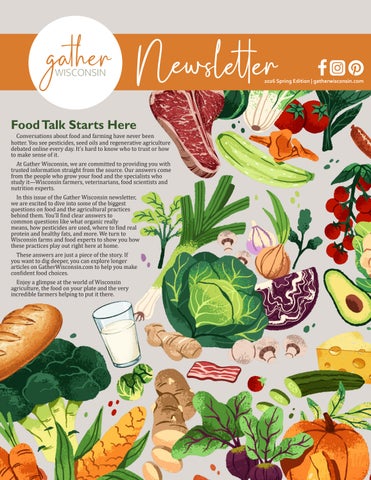
Enjoy a glimpse at the world of Wisconsin agriculture, the food on your plate and the very incredible farmers helping to put it there.
What is regenerative agriculture?
Regenerative practices focus on restoring the land, improving soil health and increasing biodiversity. Instead of relying solely on tilling the land or using synthetic or manufactured fertilizers and pesticides, regenerative agriculture includes practices such as:
• Composting and natural fertilizers, such as manure from livestock
• Planting diverse crops, trees and other plants to attract and protect pollinators

• Cover crops
• Crop rotation
• Low- or no-till on fields and farmland
These sustainable farming methods have been used for generations by Indigenous tribes and farms of all types and sizes in the United States. And some, like crop rotation or minimal tillage, may also be used by organic or conventional farmers.
Farmers care deeply about their land and want to be good stewards. So, think of regenerative agriculture as a spectrum. Even if they aren’t using all the practices under the “regenerative agriculture” umbrella, they are adapting to the changing demands of farming in the 21st century.
Learn more about responsibly-grown produce: www.gatherwisconsin.com/food/regenerative-agriculture-for-fruits-and-vegetables-what-you-need-to-know/
What does organic mean?


Dominick and Erica Gentry are fifth-5th generation organic dairy farmers on their family farm in Black River Falls. They milk 80 dairy cows and farm over 500 acres of land. Milk from their cows is made into a variety of products at Westby Cooperative Creamery.
Organic dairy farming consists of the methods and practices used to manage dairy cows for milk. Being organic means there is no use of antibiotics, growth hormones or Genetically Modified Organisms (GMOs). For organic dairy farming, this means having cows graze, rotating crops and using different weed management practices.
To become certified organic, the cows must have at least 30% of their dry matter intake come from pasture during the grazing season. Due to this requirement, the Gentry’s must keep rigorous management practices in their fields and pastures. At their farm, they use rotational grazing which means they rotate the cows on different pastures to ensure they are getting fresh grass.
Learn more about organic dairy farming: www.gatherwisconsin.com/farming/organic-dairy-farming-in-wisconsin/

Where can I source real protein + healthy fats?
Wisconsin farmers are ready to help you fill your cart with real food that is wholesome and nutrient dense as outlined in the new Dietary Guidelines for Americans. The new dietary guidelines suggest prioritizing protein at every meal. Protein is the building block of muscle and tissue and can be linked to improved cognitive performance, fertility and function of vital organs.
Ideas to incorporate protein from Wisconsin farms in your diet:
Beef: A single 3-ounce serving of beef packs 22 grams of protein.
Dairy: One serving of whole milk provides 8 grams of protein. Whole dairy foods like cottage cheese and Greek yogurt offer 12-13 grams of protein per serving.
Poultry + Eggs: Chicken is a protein powerhouse, boasting 38 grams of protein in one serving. A serving of two large eggs provides 12 grams of protein.
Healthy fats help your body absorb essential vitamins like A, D and E. They also support brain function and provide sustained energy throughout the day, making them a crucial component of a wholesome diet. Full-fat dairy like whole milk, butter, cheese and yogurt are excellent sources of healthy fats.
Learn more about real food from Wisconsin farmers: www.gatherwisconsin.com/food/fill-your-cart-with-real-food-aligned-to-nutritional-guidelines/


