Gather Newsletter Spring 2025

Page 1


Homegrown Happiness: Cultivating Fresh Food in Any Space

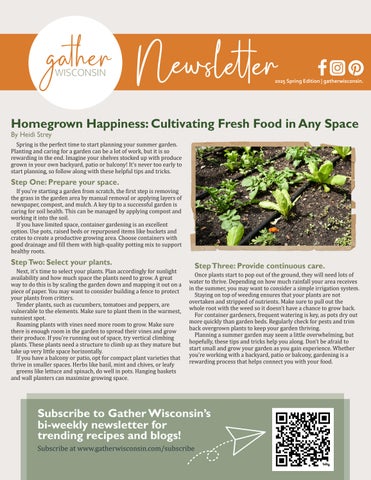
Spring is the perfect time to start planning your summer garden. Planting and caring for a garden can be a lot of work, but it is so rewarding in the end. Imagine your shelves stocked up with produce grown in your own backyard, patio or balcony! It’s never too early to start planning, so follow along with these helpful tips and tricks.

Step One: Prepare your space.

If you’re starting a garden from scratch, the first step is removing the grass in the garden area by manual removal or applying layers of newspaper, compost, and mulch. A key tip to a successful garden is caring for soil health. This can be managed by applying compost and working it into the soil.

If you have limited space, container gardening is an excellent option. Use pots, raised beds or repurposed items like buckets and crates to create a productive growing area. Choose containers with good drainage and fill them with high-quality potting mix to support healthy roots.

Step Two: Select your plants.

Next, it’s time to select your plants. Plan accordingly for sunlight availability and how much space the plants need to grow. A great way to do this is by scaling the garden down and mapping it out on a piece of paper. You may want to consider building a fence to protect your plants from critters.

Tender plants, such as cucumbers, tomatoes and peppers, are vulnerable to the elements. Make sure to plant them in the warmest, sunniest spot.

Roaming plants with vines need more room to grow. Make sure there is enough room in the garden to spread their vines and grow their produce. If you’re running out of space, try vertical climbing plants. These plants need a structure to climb up as they mature but take up very little space horizontally.

If you have a balcony or patio, opt for compact plant varieties that thrive in smaller spaces. Herbs like basil, mint and chives, or leafy greens like lettuce and spinach, do well in pots. Hanging baskets and wall planters can maximize growing space.

Step Three: Provide continuous care.

Once plants start to pop out of the ground, they will need lots of water to thrive. Depending on how much rainfall your area receives in the summer, you may want to consider a simple irrigation system.

Staying on top of weeding ensures that your plants are not overtaken and stripped of nutrients. Make sure to pull out the whole root with the weed so it doesn’t have a chance to grow back.

For container gardeners, frequent watering is key, as pots dry out more quickly than garden beds. Regularly check for pests and trim back overgrown plants to keep your garden thriving.

Planning a summer garden may seem a little overwhelming, but hopefully, these tips and tricks help you along. Don’t be afraid to start small and grow your garden as you gain experience. Whether you’re working with a backyard, patio or balcony, gardening is a rewarding process that helps connect you with your food.

Supporting Wisconsin Farmers: Delicious Ways to Make a Difference

Did you know that supporting Wisconsin farmers can be as easy as making small changes to your grocery list? Not only does buying local benefit family farms, but it also means fresher, more flavorful food on your table. Here are some simple ways to enjoy the best of Wisconsin agriculture.

1. Buy direct from farmers

Visiting a local farm is a great way to see where your food comes from while enjoying fresh-picked produce, dairy and other goods. You can also explore nearby farmers’ markets to find seasonal fruits, vegetables, and homemade goods.

Want to visit a farm near you? Check out Wisconsin Agricultural Tourism’s interactive map at wiagtourism.com to plan your trip!

2. Find local picks at your grocery store

You don’t have to visit a farm to support your local farmer. Many grocery stores carry local produce, meat and dairy products that come from family farmers and retain their freshness from the farm. For example, milk takes less than 48 hours to travel from the farm to the grocery store.

Look for the ‘Proudly Wisconsin Cheese’ or other certified local seals to be sure you’re supporting Wisconsin’s farm families.

3. Eat seasonal food whenever possible

Buying foods when they are in season means they can be purchased directly from a local grower shortly after harvest. Plus, they are often fresher as they don’t have a long journey to the store. And most importantly, in-season food tastes best!

Enjoy fresh greens and asparagus this spring!

4. Include our top crops on your grocery list

Wisconsin is known for its incredible cheese, cranberries and snap peas, among other farm-fresh products. Incorporating these ingredients into your meals is an easy way to support local farmers while enjoying the best flavors of the season.

Looking for delicious ways to enjoy local ingredients? Browse recipes at gatherwisconsin.com/recipes and get cooking! Whether you shop at a farmers’ market, choose local products at the grocery store or try new seasonal recipes, every small choice helps support Wisconsin’s farm families. Supporting local agriculture has never been easier—or more delicious!

The Hilby Farm: Where Tradition Meets Innovation

Becca and Joey Hilby are bringing new life to their farm in Hazel Green. Though the land has been farmed for generations, they consider themselves first-generation farmers, forging their own path with fresh ideas, diverse livestock and innovative products.

Since moving to the farm in 2015, the Hilbys have expanded their farm, growing crops like corn and soybeans while raising steers, pigs, chickens and goats. Sustainability is at the heart of their work. Joey has adopted no-till farming to improve soil health and prevent erosion, while Becca has found creative ways to reduce waste— including turning beef tallow, a common byproduct, into handmade candles.

“I realized how much beef tallow goes to waste, so I started making candles,” Becca says. “It’s a fun, sustainable way to use every part of our beef.”

Beyond farm work, Becca manages marketing, the farm’s website and sales at farmers markets. She hopes to build a farmstand to offer local goods directly to the community, making it easier for people to support local farms.

“One of the biggest challenges of shopping local is knowing where to go,” she explains. “A farmstand would give our community a convenient option.”

Farming is a family affair for the Hilbys, with their children helping with daily chores. They want to create a sustainable farm that their kids can take over if they choose.

“It’s a great place to raise our kids, and we hope they love it as much as we do,” Becca shares.

Becca also shares their journey on Instagram, connecting with others who love agriculture and rural life.

“Farming can be isolating, and while social media isn’t a substitute for real-life connections, it’s a great way to meet like-minded people,” she says.

Balancing full-time jobs, parenting, and farm life isn’t easy, but the Hilbys are in it for the long haul—building a farm that is financially and environmentally sustainable, one step at a time.

Celebrate Beef Month

As the scent of steak on the barbeque fills the air, Wisconsin proudly welcomes May Beef Month, a time to honor the dedication, collaboration and unmatched flavor that defines the beef industry.

In Wisconsin, cattle are raised by a community that spans from pasture to plate. This economic powerhouse is the cornerstone of our agricultural heritage made up of many key players.

Local Farmers:

At the heart of Wisconsin’s beef industry nearly 23,000 beef and dairy farms where generations have worked the land and raised cattle with care and dedication. These farmers take pride in their craft, nurturing their herds to produce the highest caliber beef for consumers. Families can trust the people behind their steak and other beef products. In fact, 85 percent of beef comes from Beef Quality Assurance certified farmers and ranchers who use science-based practices to assure cattle well-being, beef quality, and safety.

Meat Processors:

From small-scale butcher shops to state-of-the-art processing facilities, Wisconsin boasts a network of more than 500 processing partners who play a crucial role in bringing beef from farm to table. They directly employ more than 43,000 people in their communities. These processors uphold strict safety protocols, ensuring every cut of beef meets the highest industry standards.

Beef Retailers:

Wisconsin’s retailers are essential conduits between farmers and families, offering a diverse array of beef products to satisfy every palate. Whether it’s the neighborhood butcher, a supermarket grocer, or a bustling farmers’ market, retailers play a vital role in bringing this premium protein to plates.

Restaurants:

Restaurants create meaningful moments and drive culinary innovation. They work closely with beef suppliers, farmers, and distributors to keep delicious beef options on their menus for any date, celebration, or family night out.

Customers:

Ultimately, the success of Wisconsin’s beef industry depends on the support and satisfaction of its customers. By choosing beef, consumers not only enjoy unrivaled taste but also contribute to the sustainability and vitality of their communities.

This May Beef Month let’s come together to celebrate the rich heritage and unparalleled taste of beef. Wisconsinites can explore the diverse range of products available and share beef-inspired creations on social media using #MayBeefMonth.

AROUND THE TABLE

Grilled Steak Flat Bread

INGREDIENTS

• 1 beef Strip Steak Boneless (about 1 pound)

• 1-8 oz refrigerated pizza dough

• 1 white onion sliced

• 1-1/2 Tablespoon olive oil

• 1/2 Cup roasted red peppers sliced

• 1/2 Cup blue cheese crumbled

• 1/2 Cup arugula leaves

• 1 Tablespoon balsamic syrup

• 1 teaspoon kosher salt

• 1 teaspoon freshly ground black pepper

INSTRUCTIONS

1.Pre-heat a small skillet over medium heat; add 1/2 tablespoon olive oil and onions to the pan. Cook for 8 to 10 minutes or until onions are caramelized; Remove from skillet and set aside.

2. On a greased sheet pan, take the pizza dough and form it to the size of the sheet pan. Brush both sides of the dough with 1/2 Tablespoon of olive oil. Place pizza dough on grid over medium heat. Grill the dough for 30 seconds to 1 minute on each side being careful not to burn it. Remove the dough and place it back on the sheet pan. Top the flat bread with roasted red peppers & 1/4 cup of blue cheese. Bake in the oven at 375°F for 10 minutes; once the cheese is melted slightly remove from oven and set aside.

3. Season both sides of the steak with salt & pepper. Place steak on grid over medium, ash-covered coals or over medium heat on preheated gas grill. Grill according to the chart for medium rare (145°F) to medium (160°F) doneness, turning occasionally. Remove steak and let rest for 5 minutes. Slice into 1/2inch strips and set aside.

4. Take the flat bread and top with the caramelized onions, arugula, sliced steak, remaining blue cheese, and drizzle the balsamic syrup on top. Cut into 6 even sized squares and serve.

Address Service Requested PO Box 5550 Madison, WI  53705 For nearly a century, we’ve protected the futures, legacies, and livelihoods of Wisconsin families just like yours. Connect with one of our 150+ dedicated local agents today, and take the first step toward safeguarding everything you value most.

Turn static files into dynamic content formats.

Create a flipbook