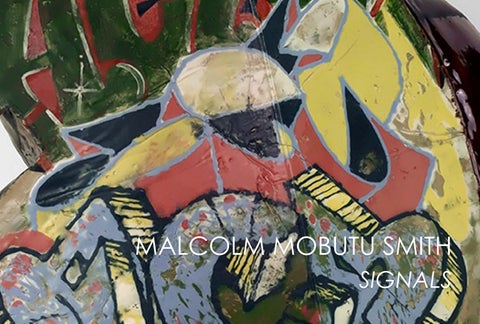
MALCOLM MOBUTU SMITH SIGNALS
MALCOLM MOBUTU SMITH SIGNALS

MALCOLM MOBUTU SMITH SIGNALS
By Dallas Dunn
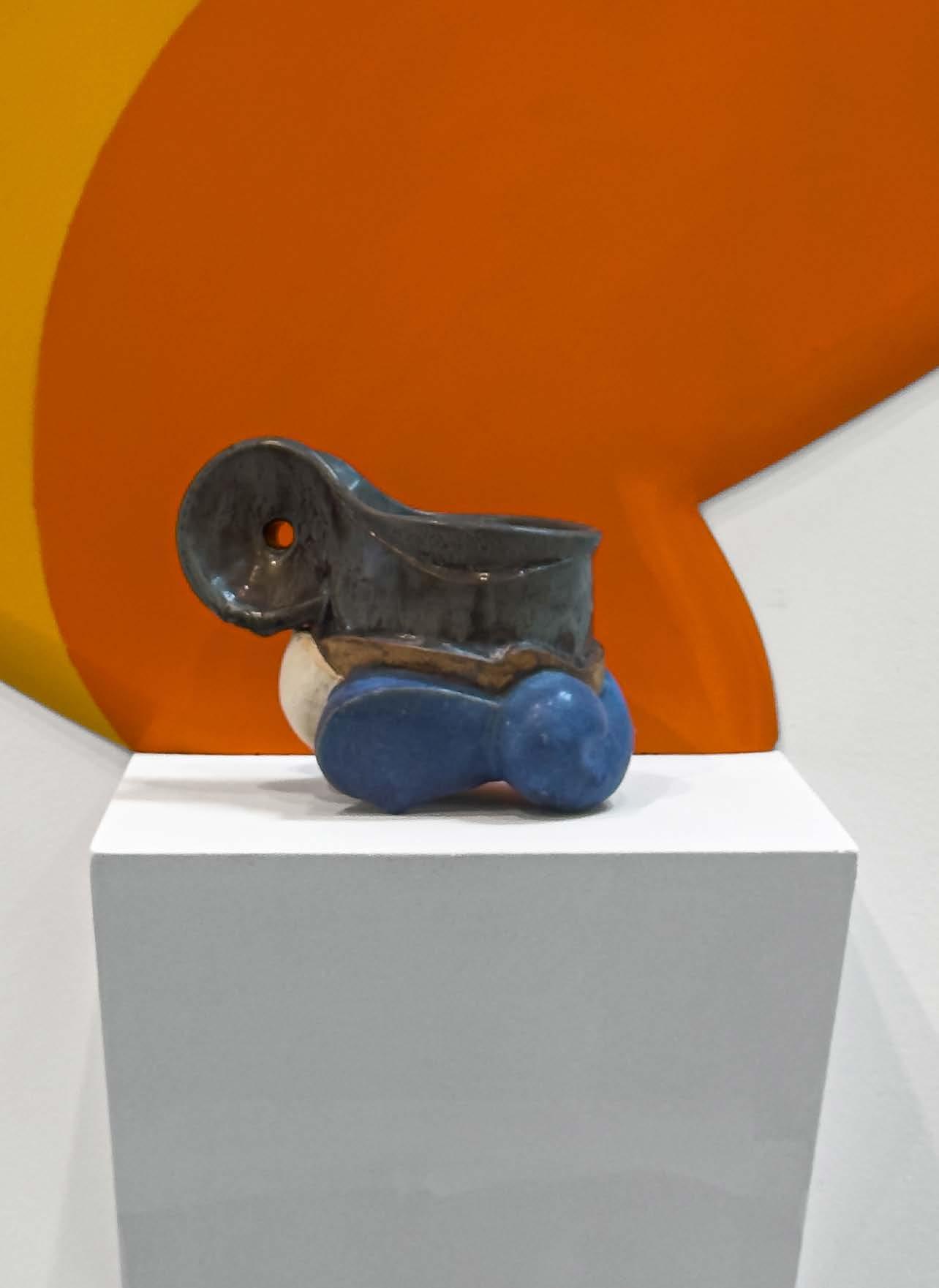
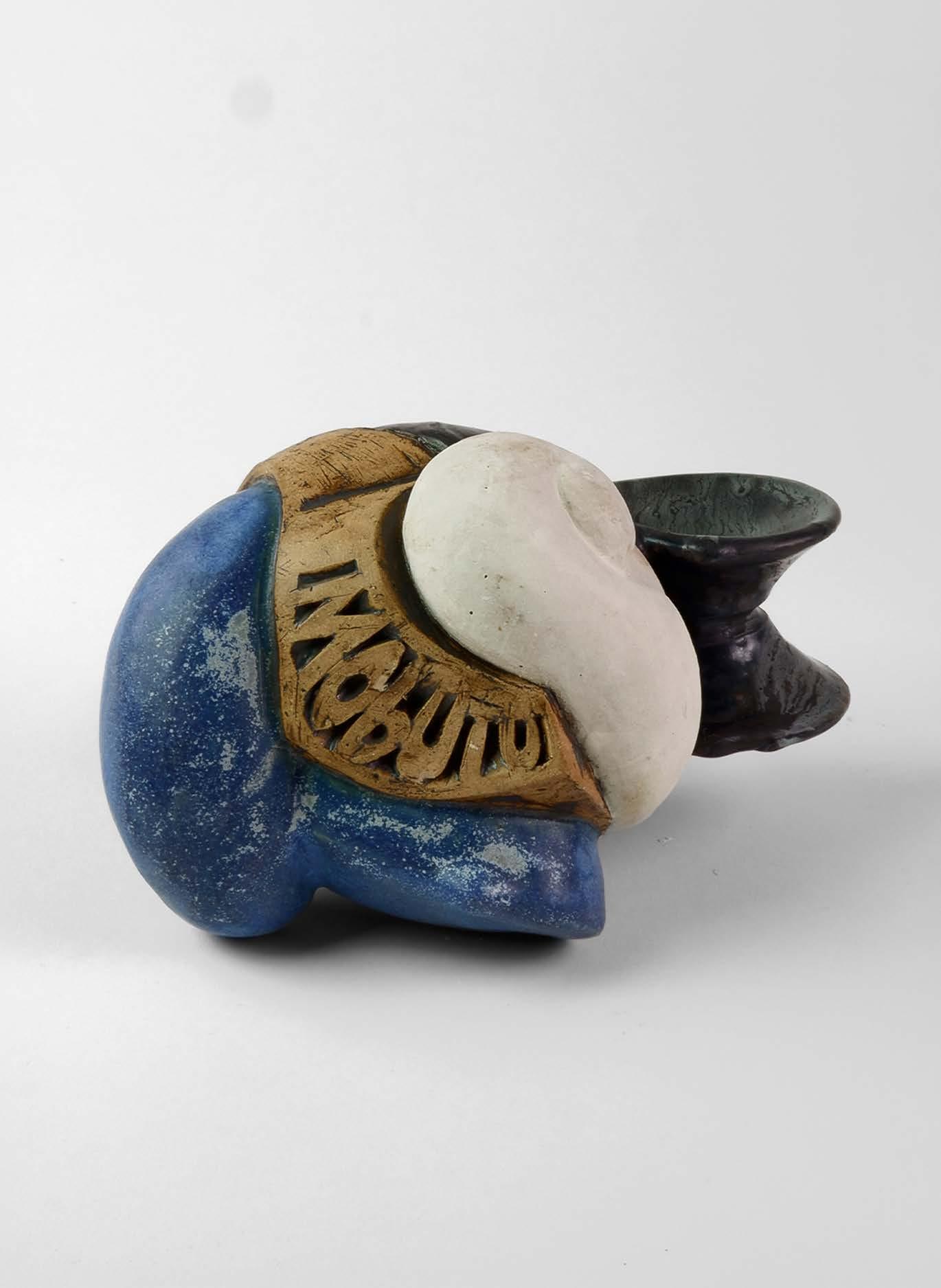
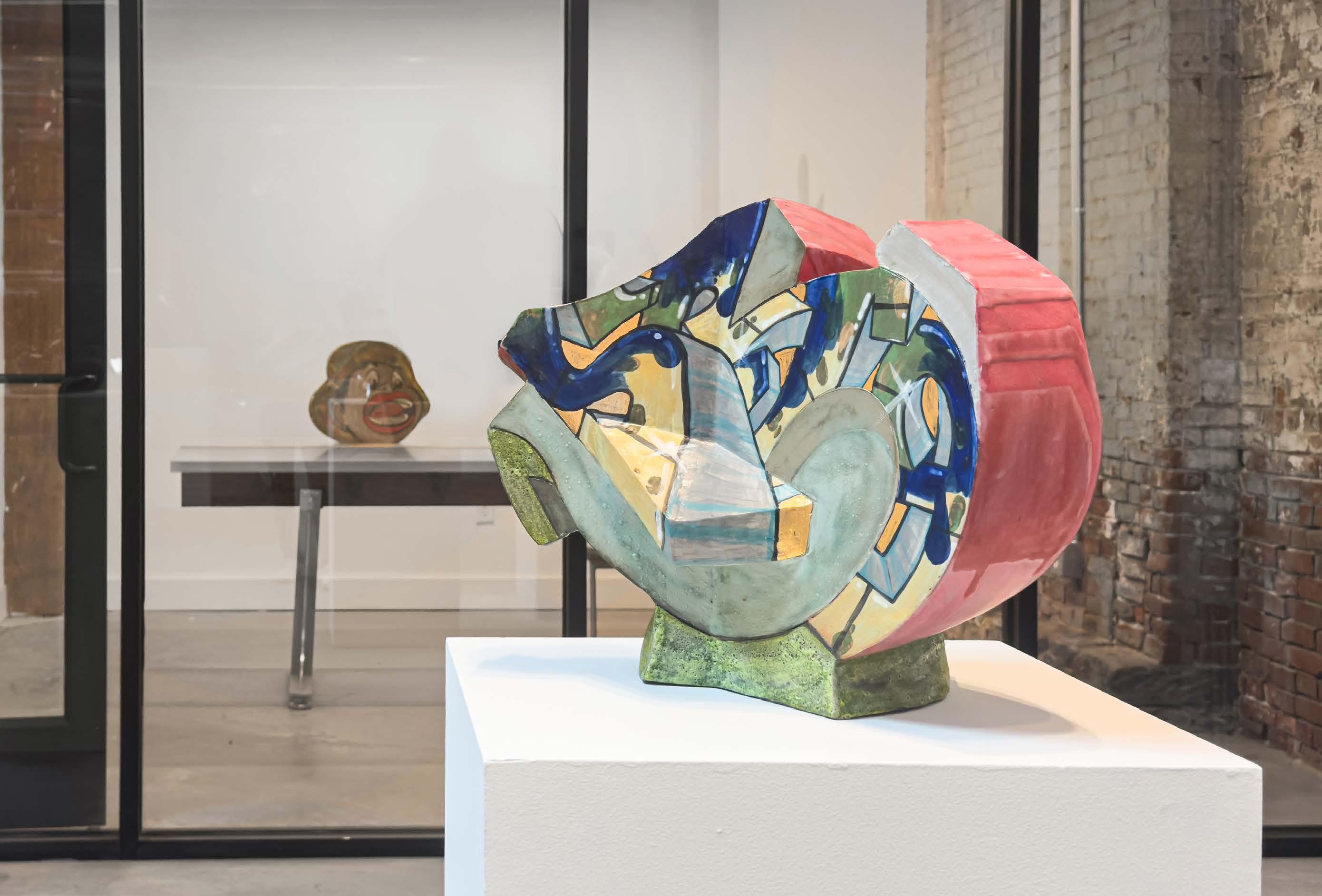
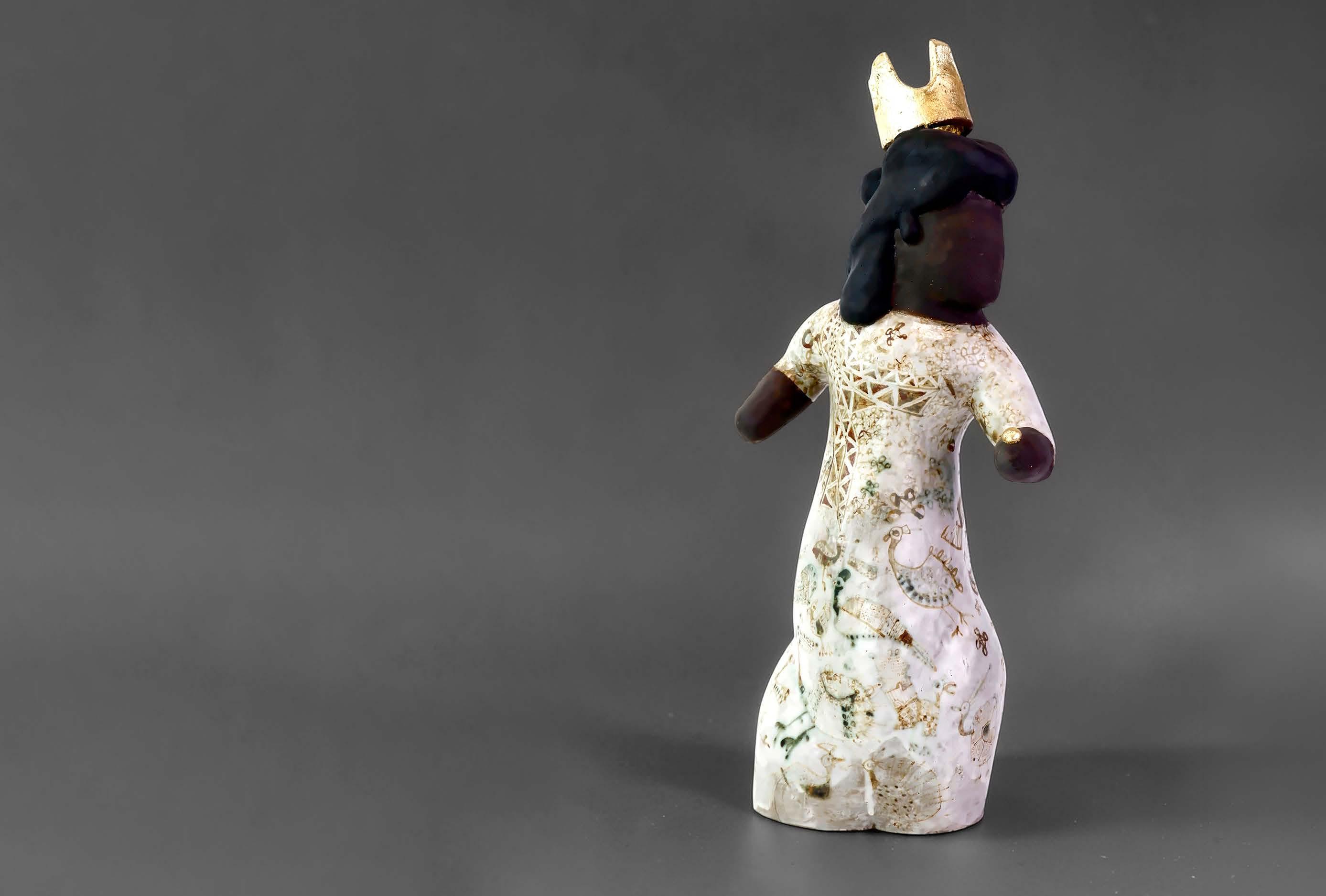
Wexler Gallery is pleased to present Signals, a solo exhibition of ceramic sculpture by Malcolm Mobutu Smith. Bringing together new works alongside significant pieces from the past decade and beyond, the exhibition offers a focused view of an evolving practice that moves fluidly between play and critique, tradition and rebellion, beauty and confrontation.
Smith’s work is guided by improvisation—both formal and conceptual—and is rooted in a rich intersection of graffiti, comic books, hip hop, jazz, and African sculptural traditions. Blending wheelthrown precision with the expressive freedom of hand-building, his sculptures often begin as abstractions of cups, bottles, and vases. Yet they ultimately transcend utility. These are not simply objects, but embodiments of identity, cultural critique, and aesthetic inquiry. The vessel becomes a site of contradiction: a stand-in for the human
body and the body politic, capable of both concealment and revelation.
The exhibition takes its title from Smith’s definition of the “signal” as an act that incites, notifies, and transmits—an impulse beyond language. Across sculpture, vessel, and drawing, his works operate as gestures in space. They “dance, lift and drop, pose and posture,” asserting presence through silhouette, stance, and volume. These forms are not static; they mark space and direct attention, functioning as totemic signals that communicate through material, gesture, and spatial tension rather than narrative clarity.
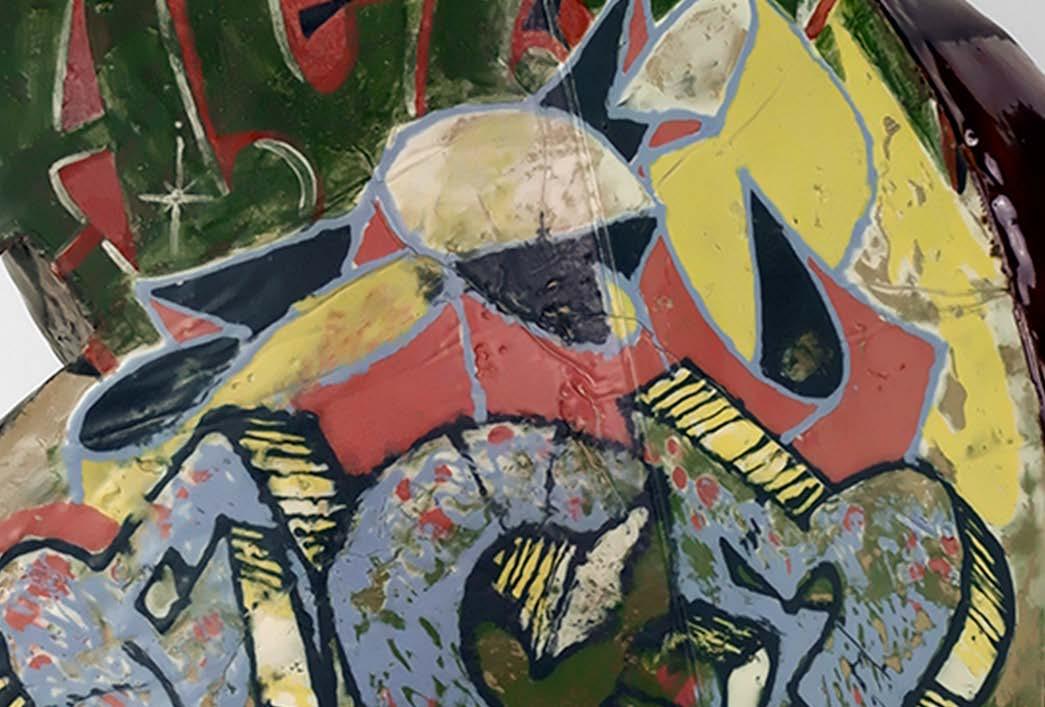
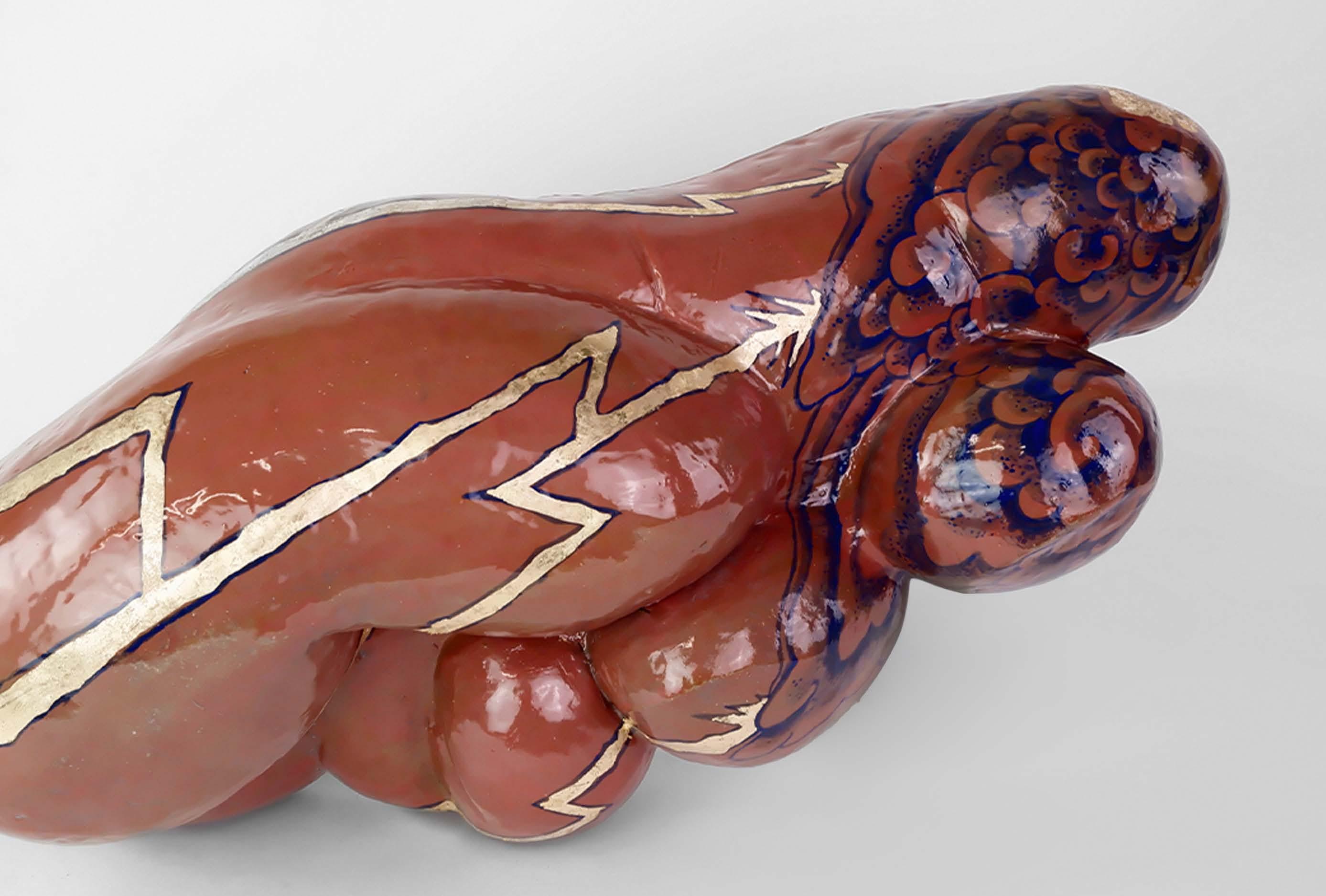
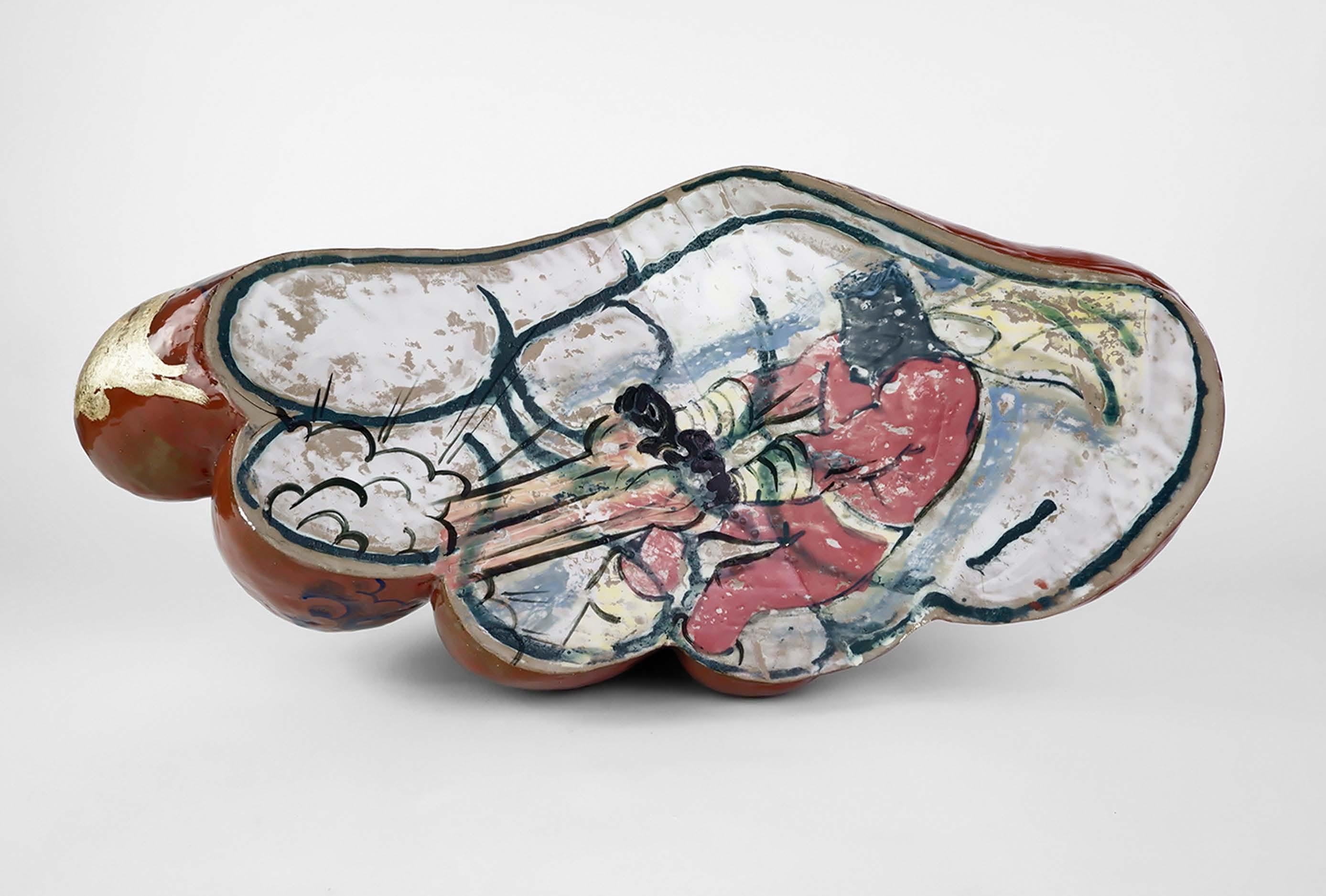
At the core of Smith’s practice is a visual language that fuses volumetric complexity with graphic surface. His sculptures appear at once soft and muscular—globular, rounded forms animated by sharp edges, bold color, and shifting planes. They evoke bodily organs as much as comic book dynamism, moving through what the artist
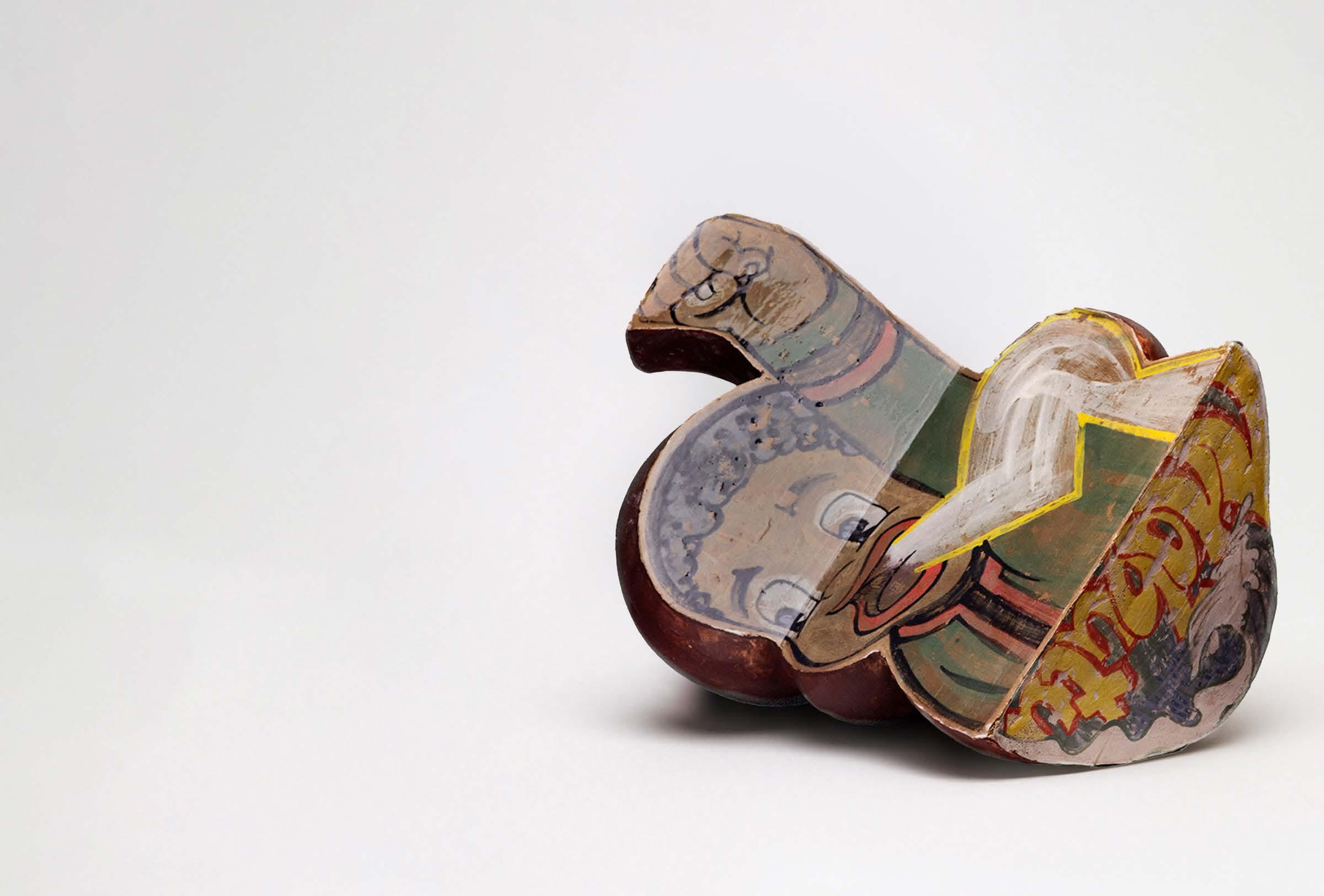
describes as “parallaxes of human anxiety.”
Meaning is both revealed and obscured; the works remain intentionally slippery, resisting fixed interpretation while inviting sustained engagement.
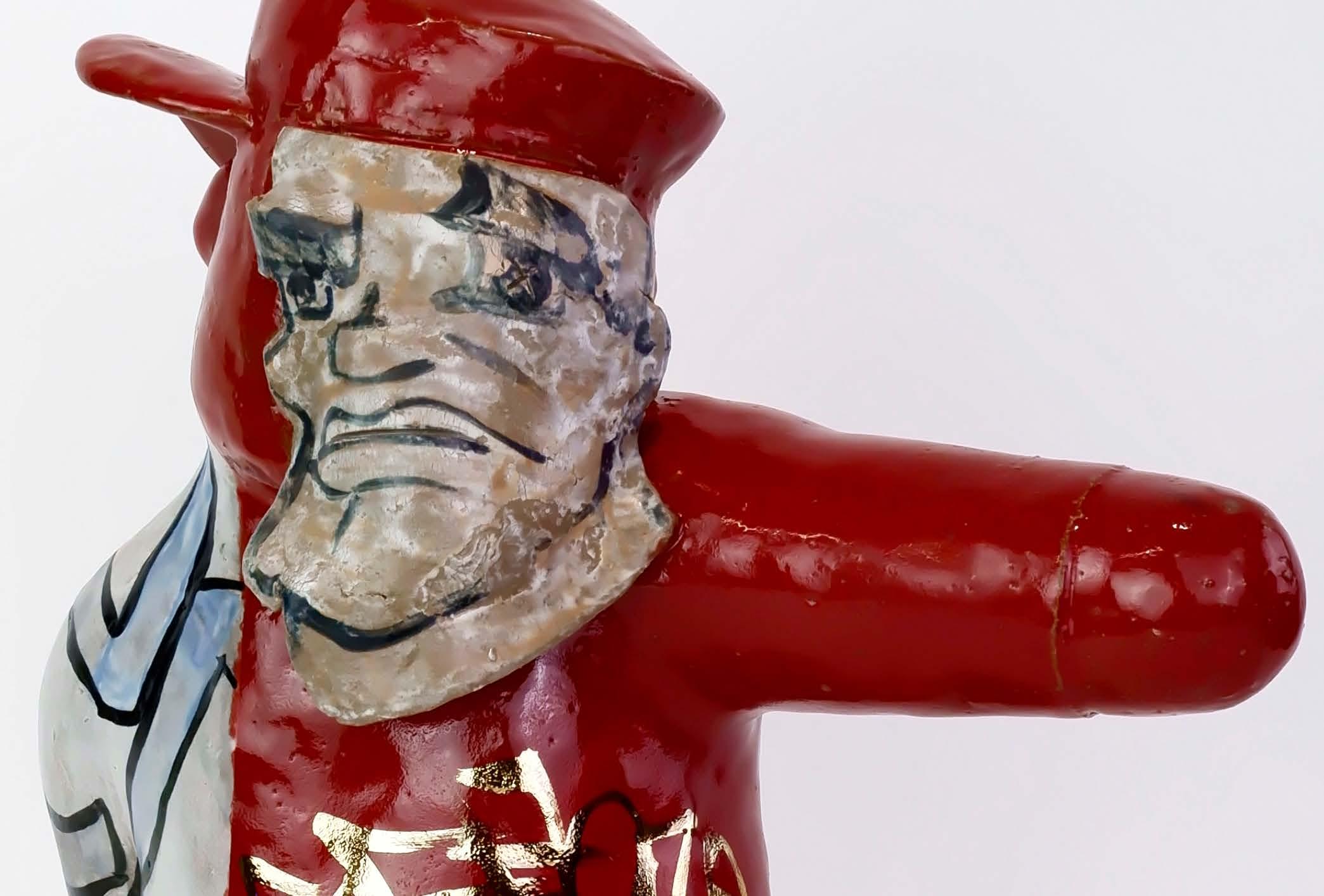
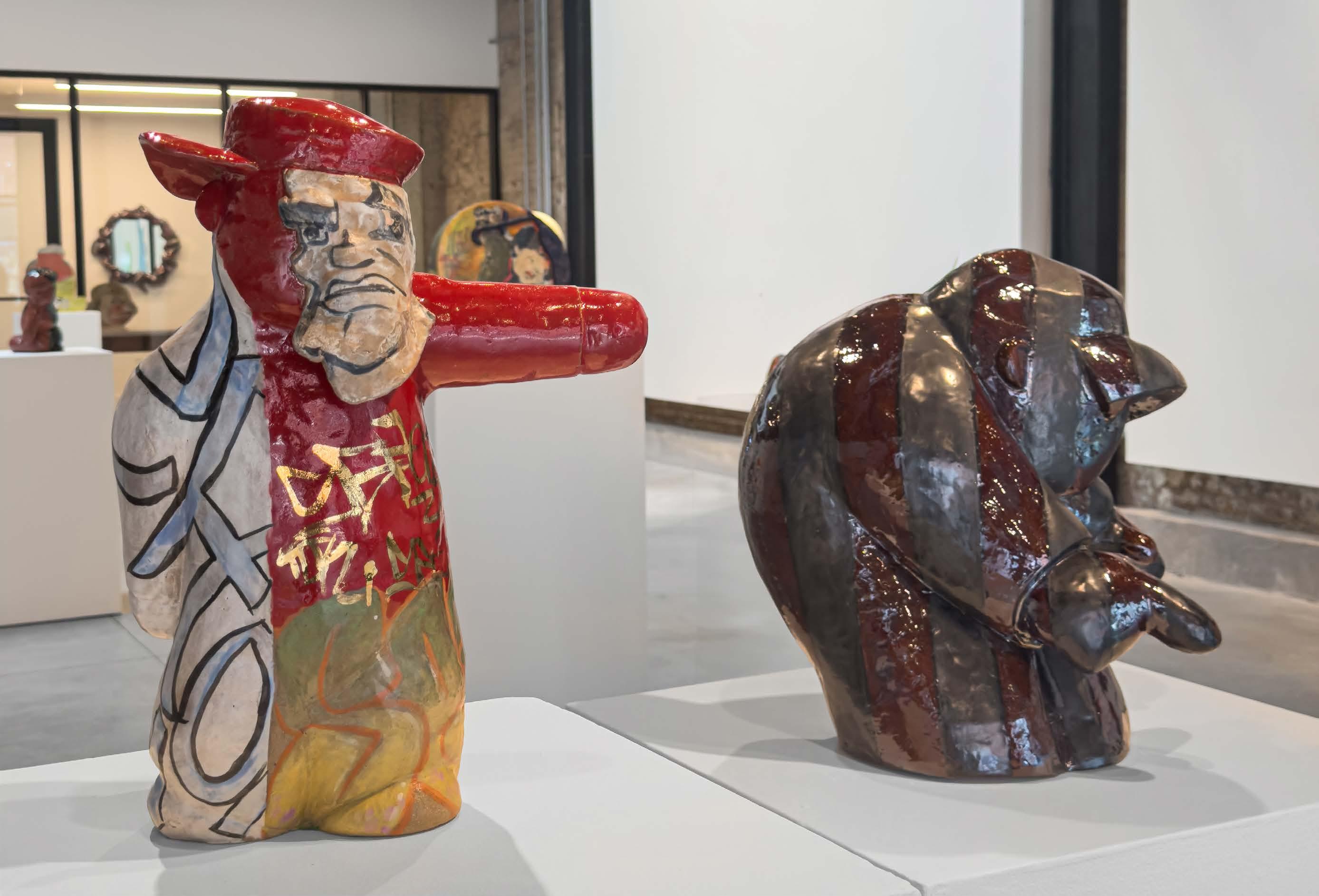
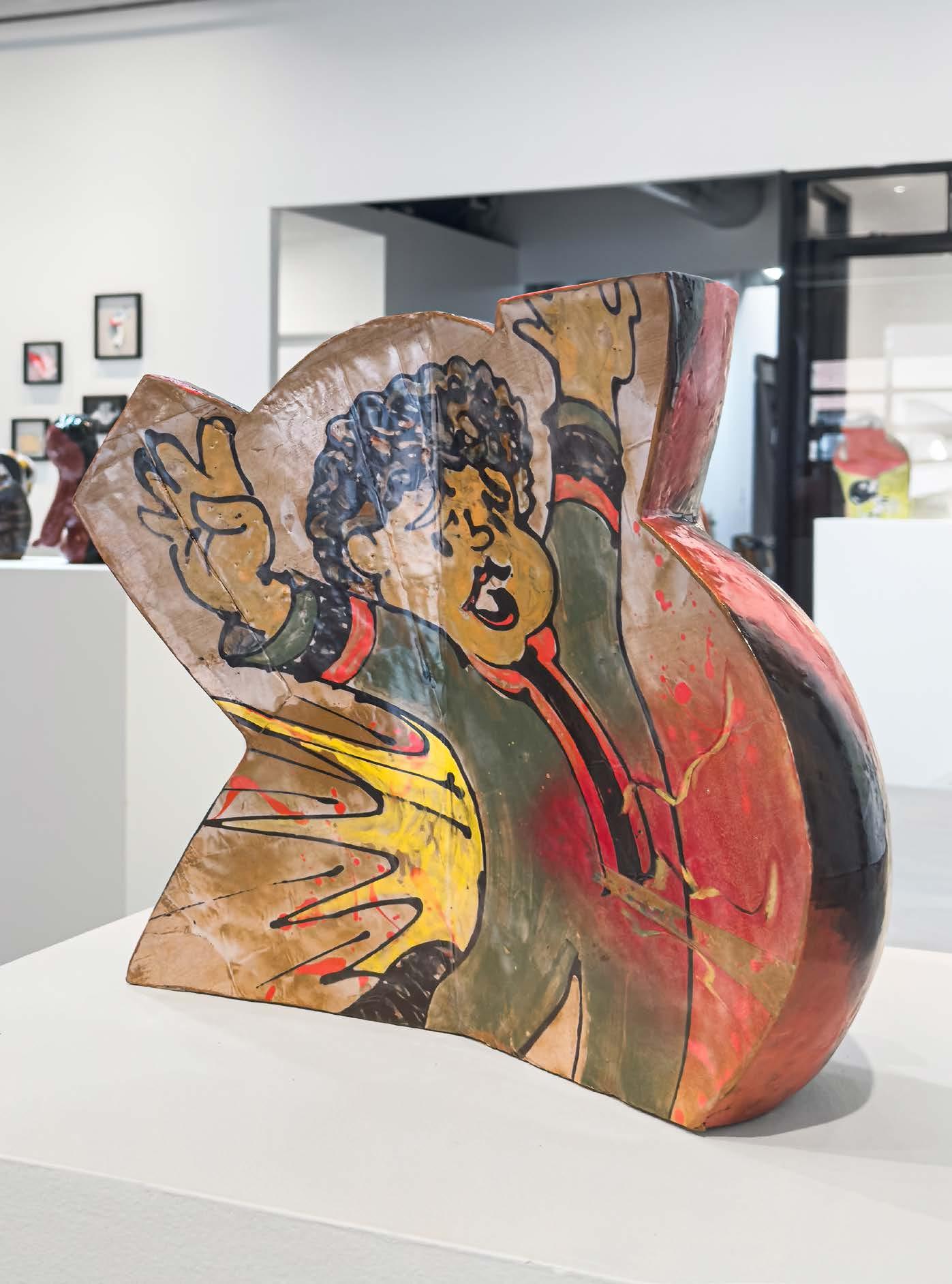
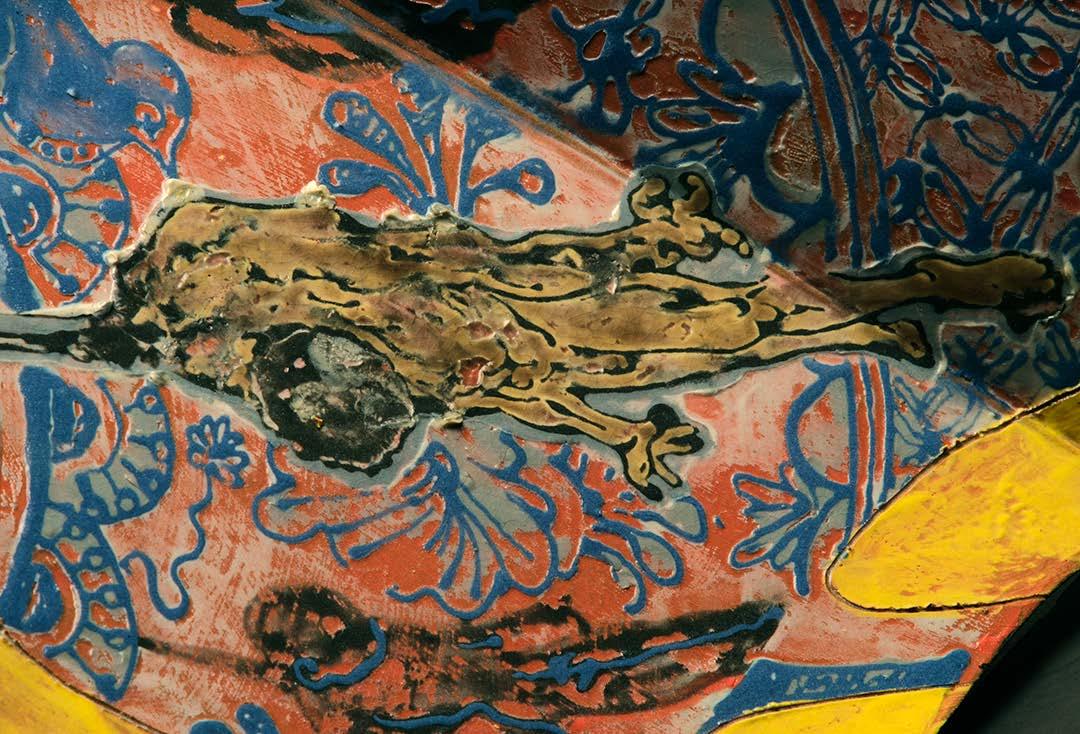
Beneath their lyrical surfaces, many of these works carry a charged historical weight. Smith embeds racially loaded imagery appropriated from American periodicals of the 1930s through the 1950s—imagery that often emerges only upon close inspection. These caricatures, once tools of dehumanization, are recontextualized within the sculptures to confront enduring systems of racism and cultural trauma. In works such as No More Words, figures associated with pride and resilience are placed in direct tension with offensive representations, producing a complex dialogue between shame and pride, despair and resistance.
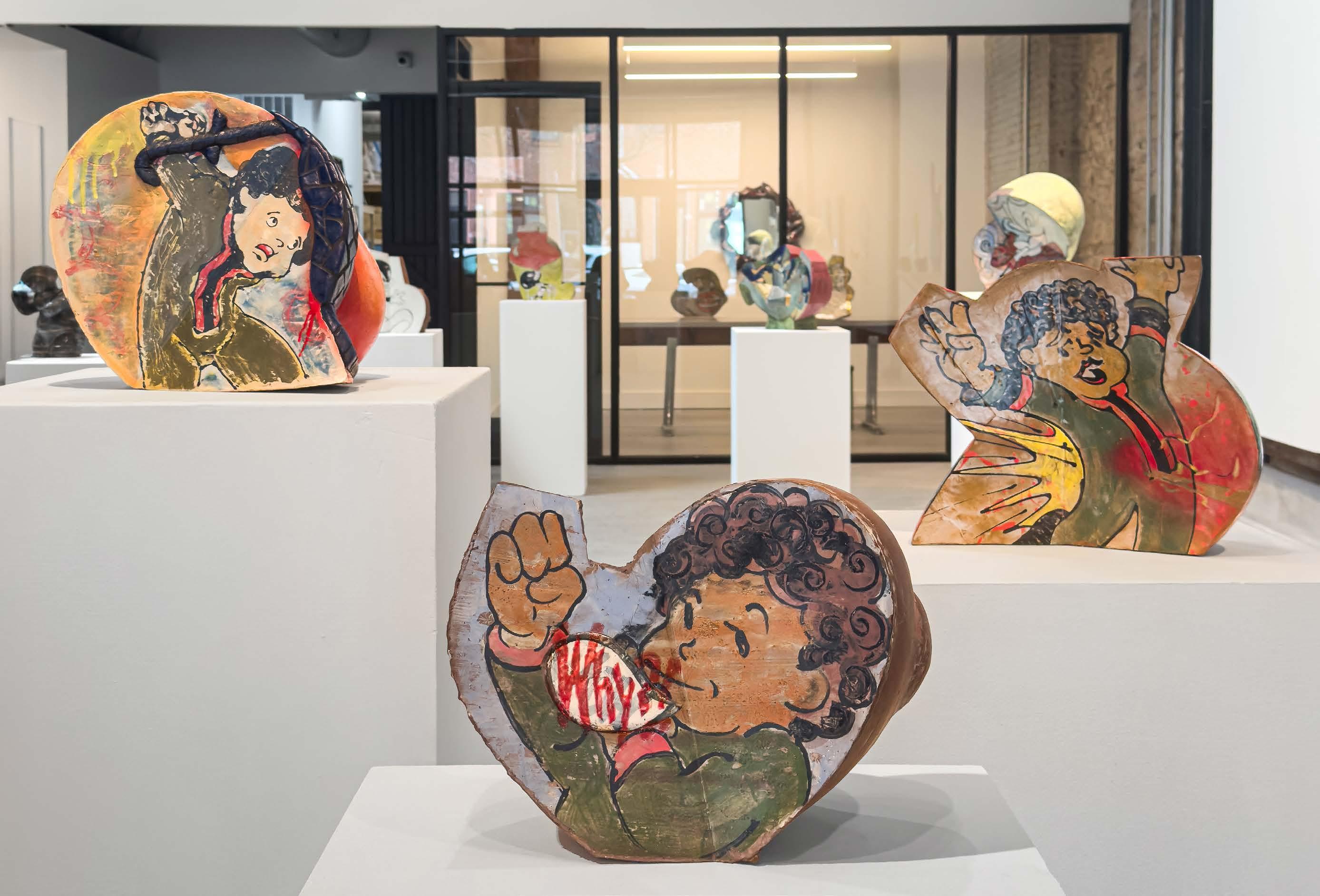
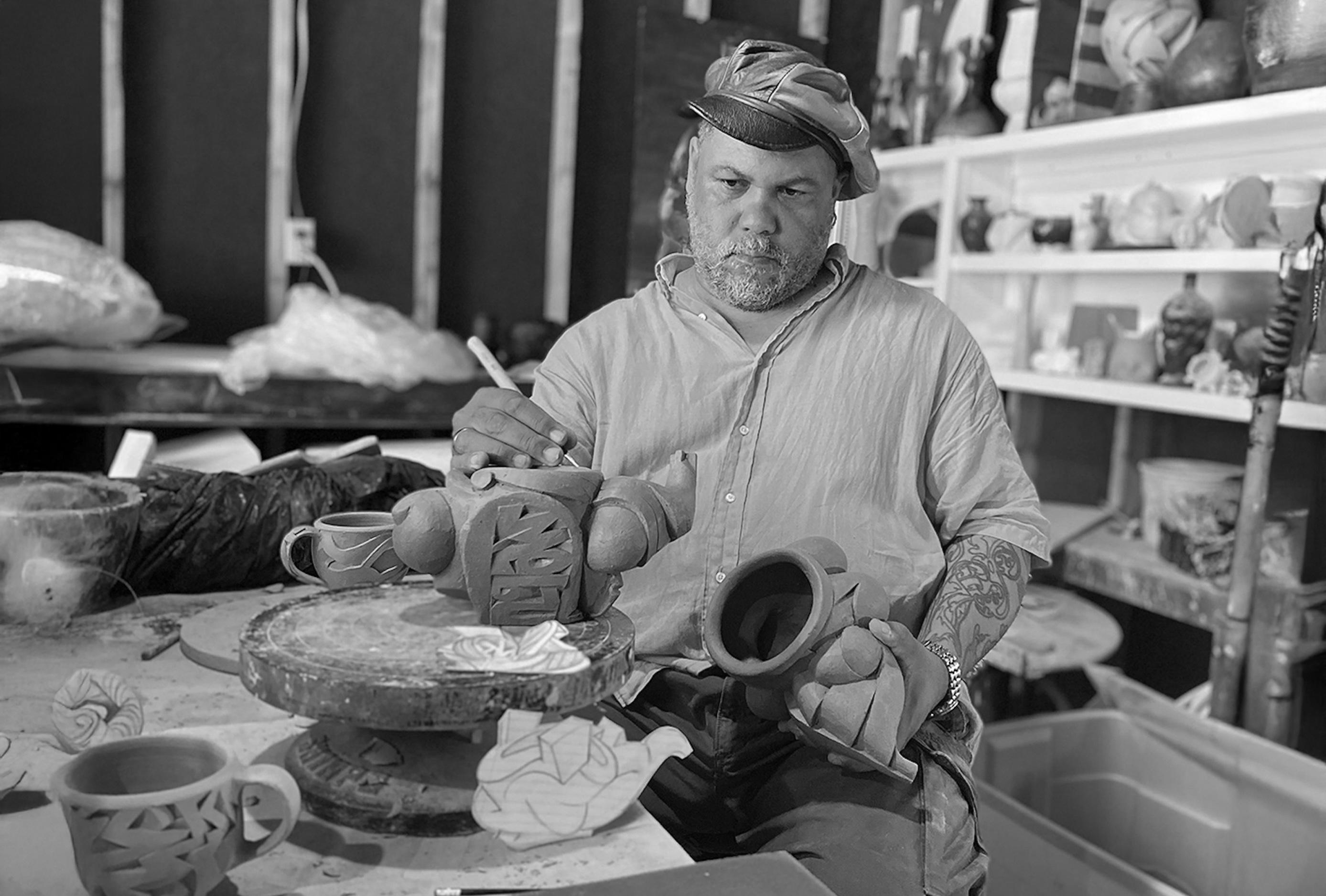
Smith’s approach to ceramics is deeply informed by his early experience as a graffiti artist working from Flint to Philadelphia, where marking space functioned as a declaration of presence. In clay, this impulse shifts from the street to the vessel, which he claims as a shared cultural form. As writer Khephra Burns observed, the clay pot has long served as both a carrier of sustenance and a marker of human presence—“human here.” Smith’s work extends this lineage, treating the vessel not as a passive object but as an active site of inscription, occupation, and cultural discourse.
Since 2010, his practice has responded to the turbulence of American political and social life, tracing a trajectory from cautious optimism to deepening disillusionment. Sparked by the anxieties and contradictions surrounding the nation’s evolving socio-political landscape, his work channels both personal and collective unease. The issues he confronts—race, inequality, and cultural division—are not distant histories but ongoing ruptures that continue to shape contemporary experience.
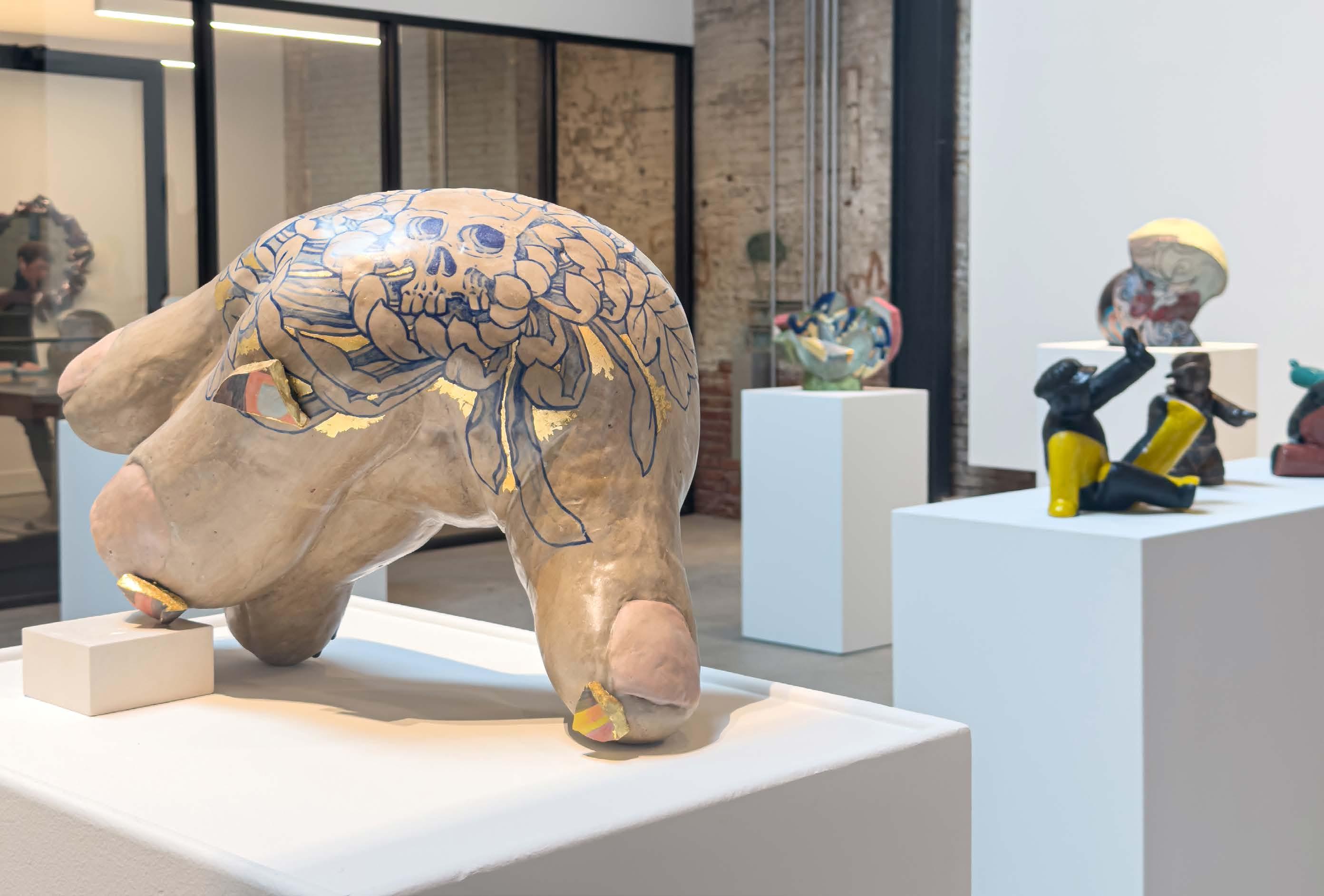
Alongside overt social critique, Signals also includes non-objective works that push against the conventions of functional pottery. These sculptures draw on archetypal vessel forms while subverting their utility through blocked openings, exaggerated volumes, unstable bases, and ornamental excess. Smith describes them as “overtly decorative embellishments to utilitarian vase forms,” embracing the wet plasticity of clay to create fanciful flourishes, shifting textures, and distorted volumes. These works build unified expression through the unexpected— whether through joyous play, sensuous curves, or productive discord.
Across the full scope of the exhibition, Smith constructs a ceramic language that is as critical as it is celebratory. Through the consequences of translation—from the graphic to the real and back again—he reclaims the vessel as a site of identity, memory, and resistance. Seductive in form yet confrontational in content, these works do not resolve meaning; they transmit it. They mark space, call attention, and invite viewers into a charged intersection where form, objecthood, history, and lived experience converge.
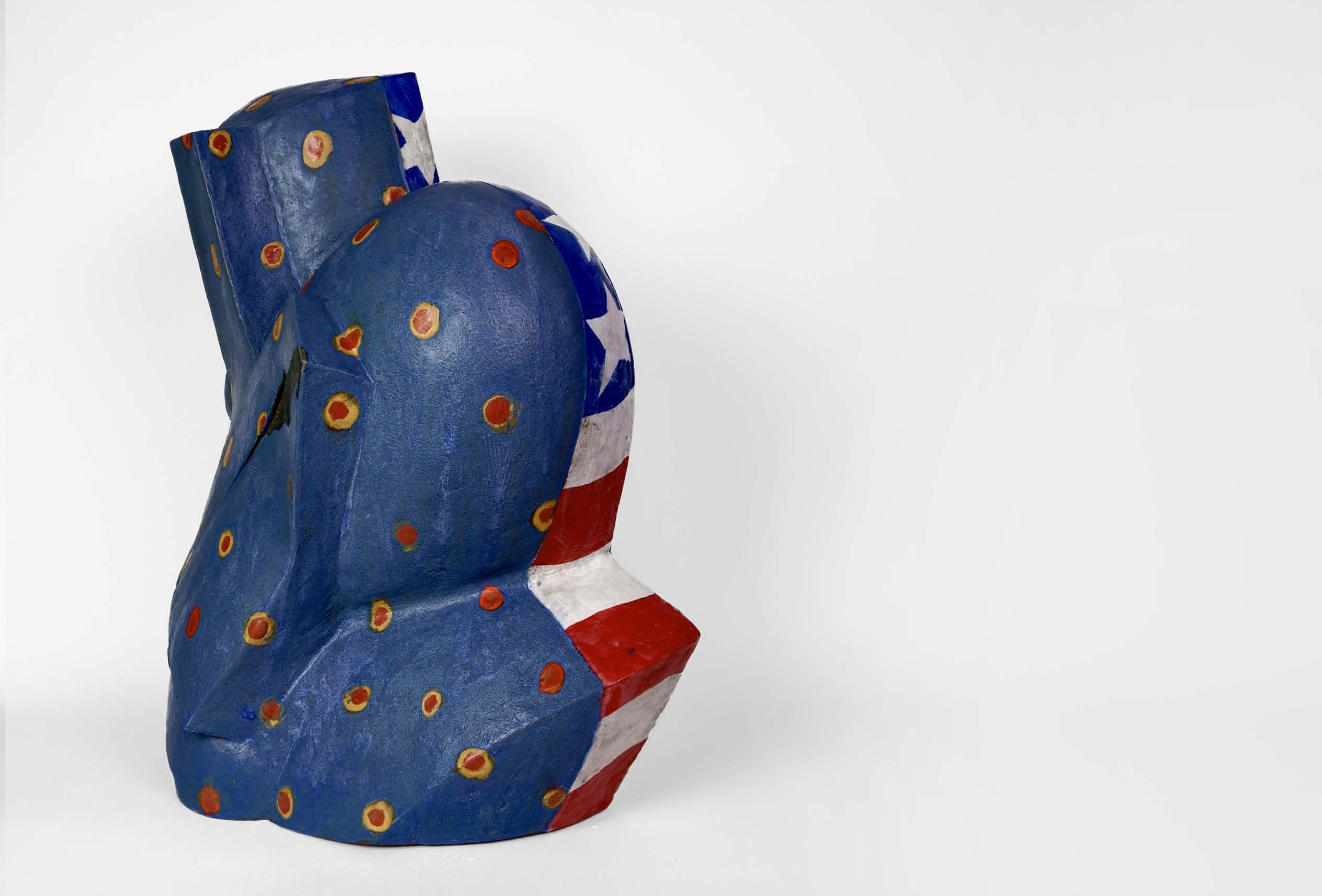
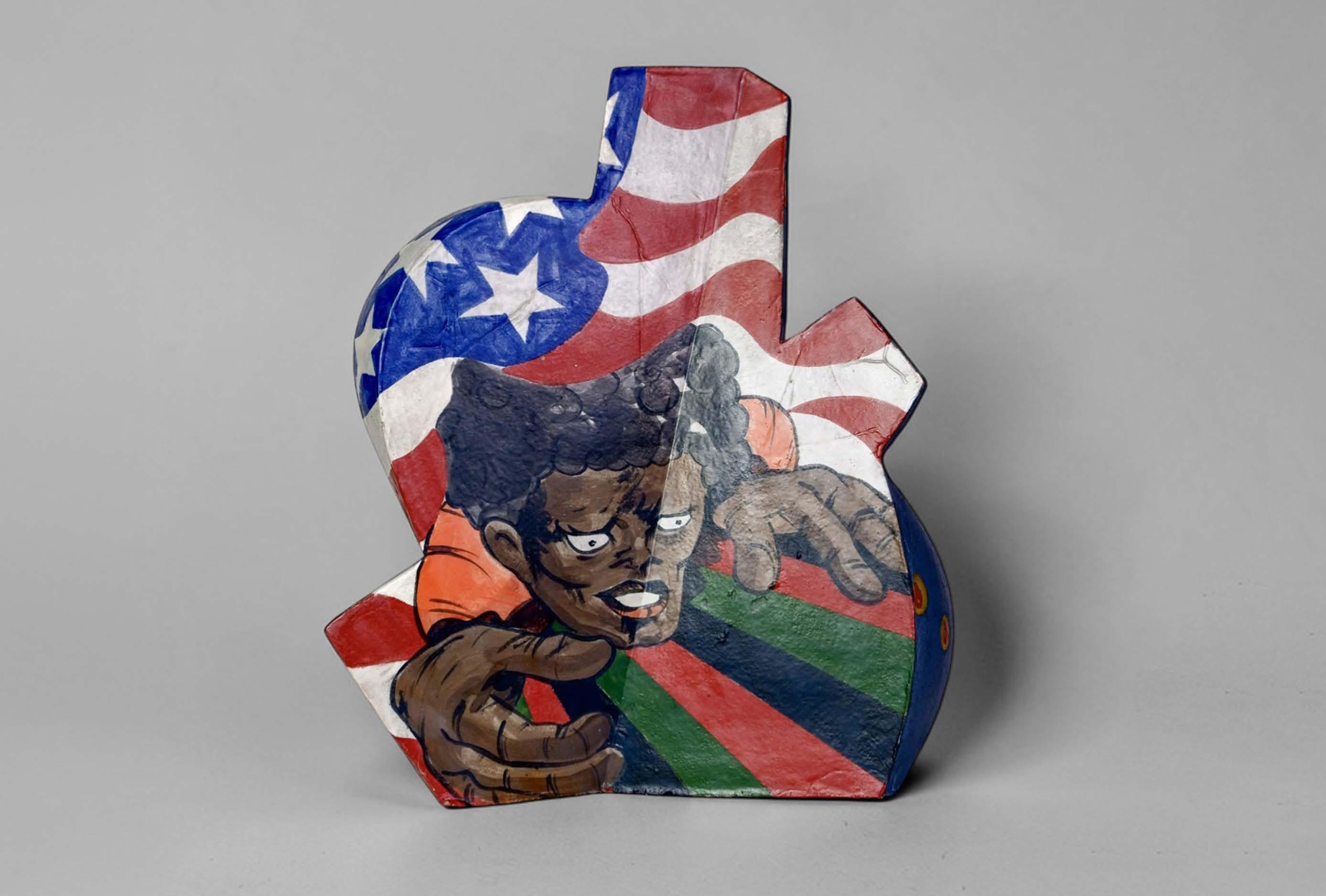
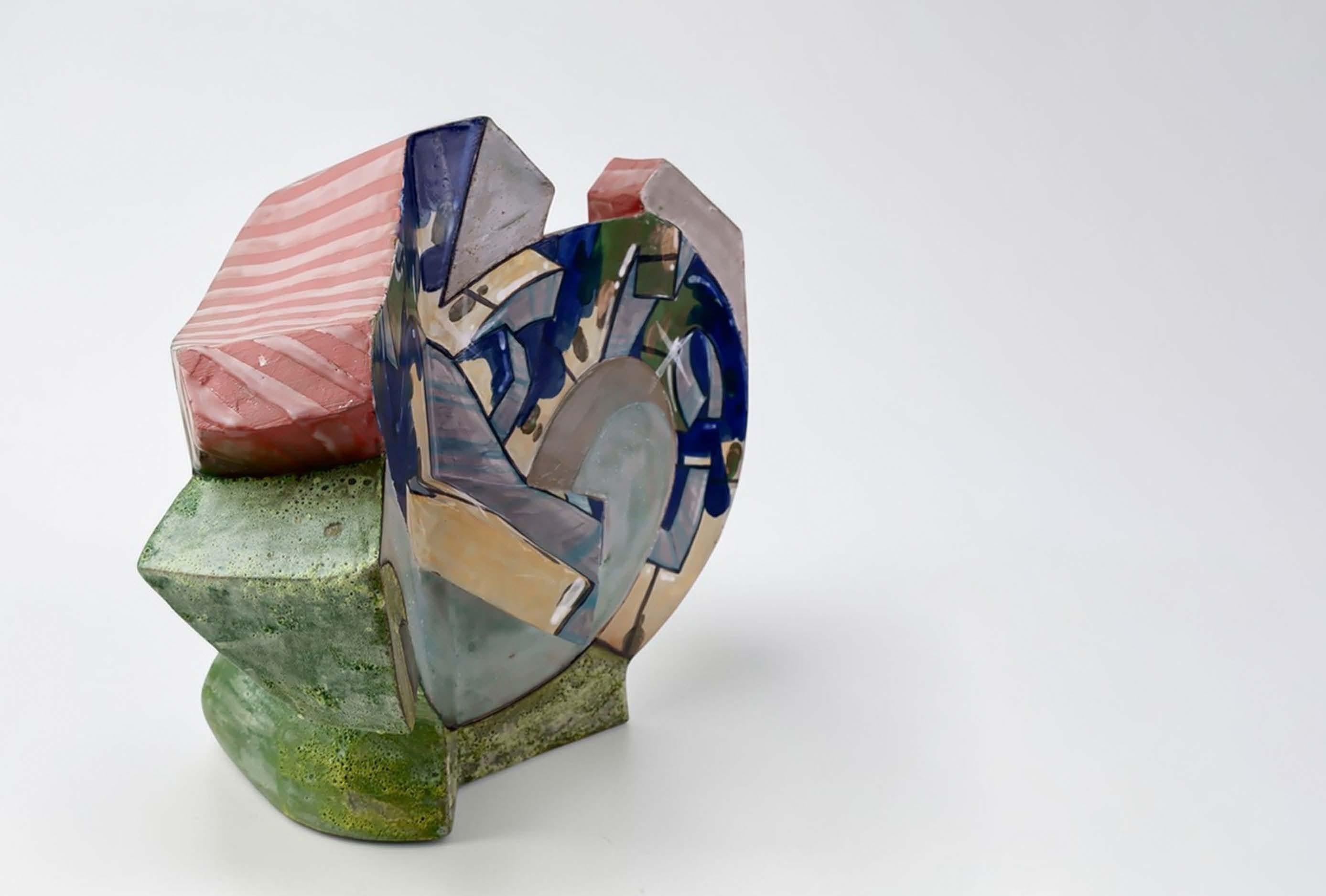
Backatcha, 2026
Stoneware |16 x 20 x 12 inches
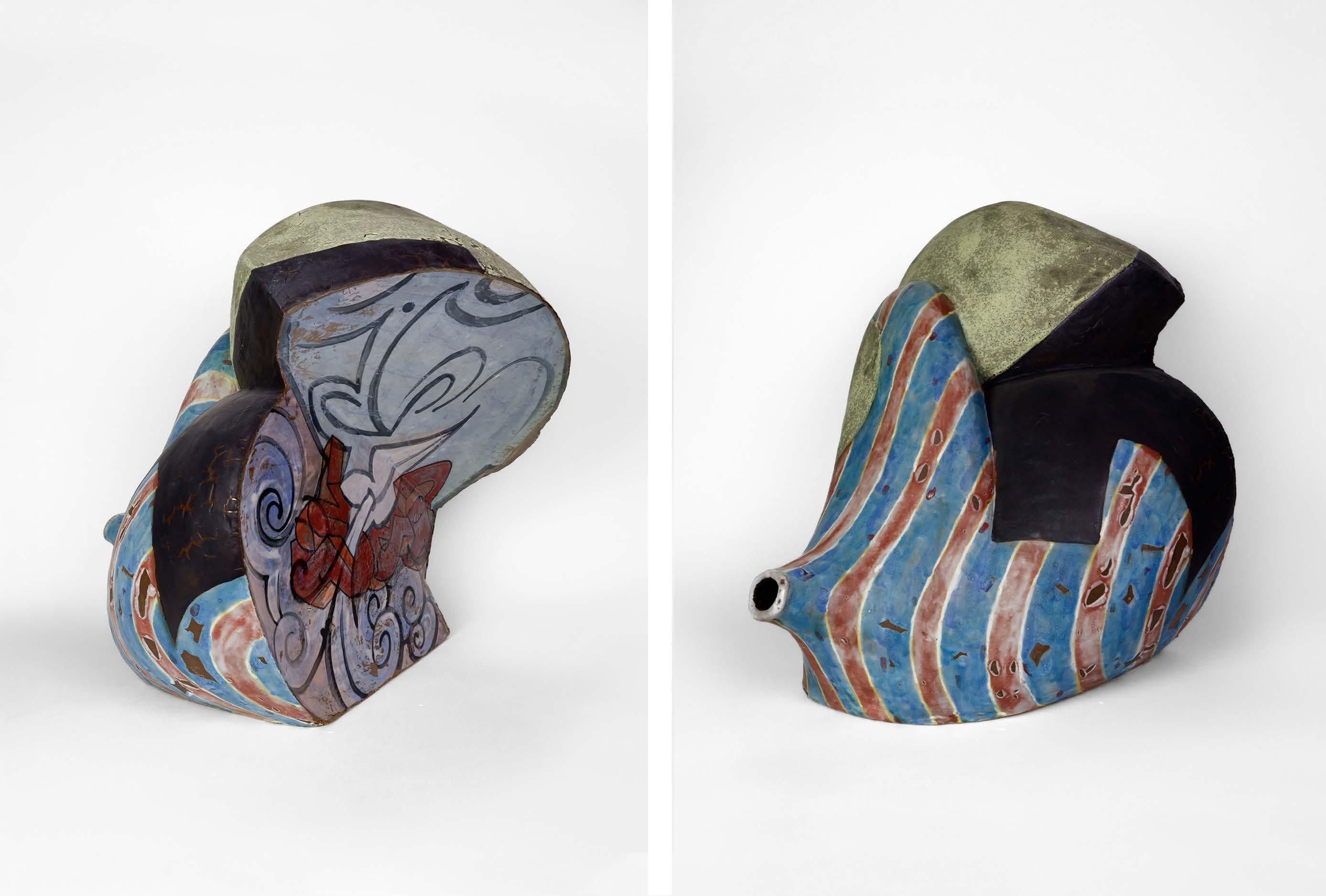
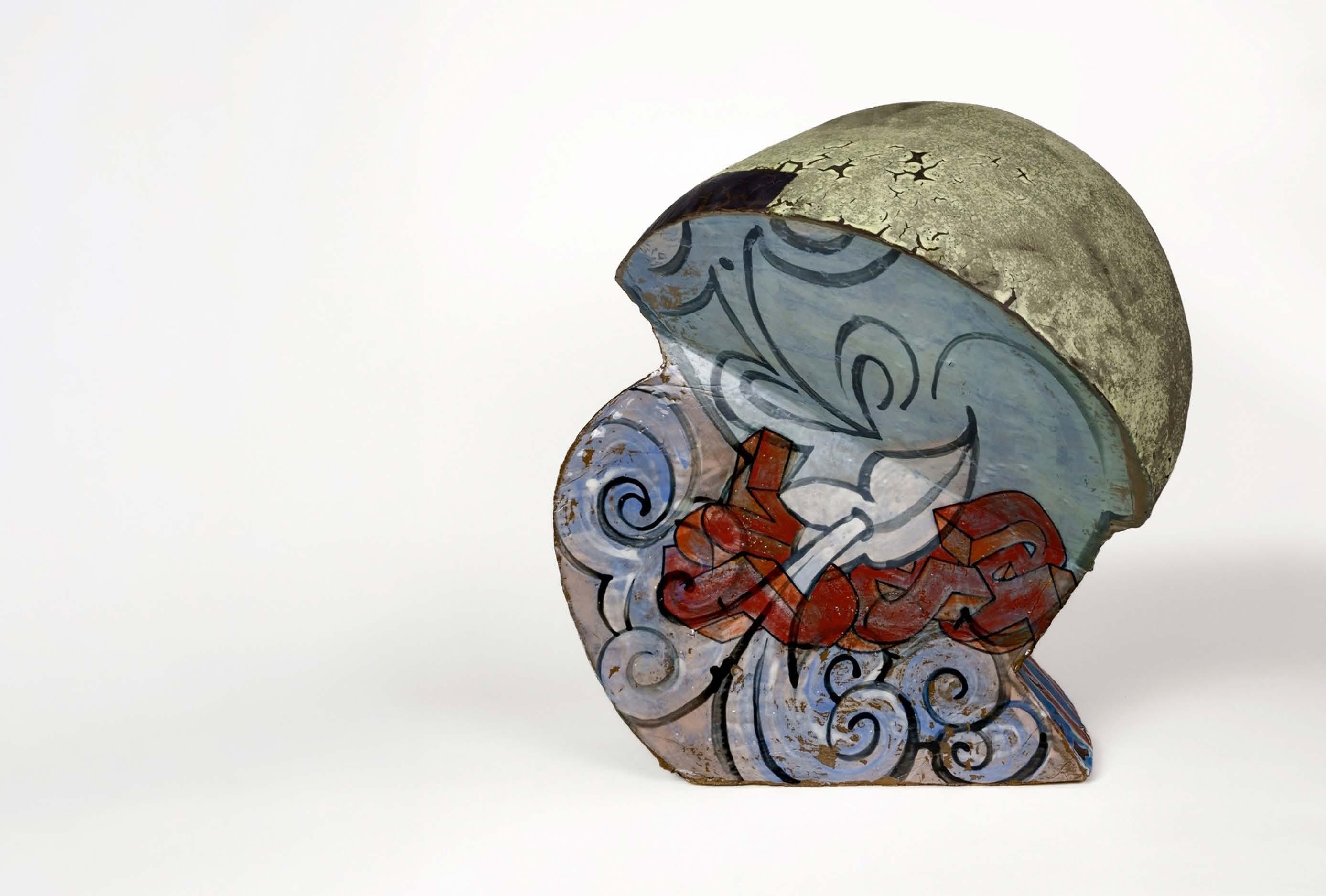
Exhale
|15.5 x 11 x 6 inches
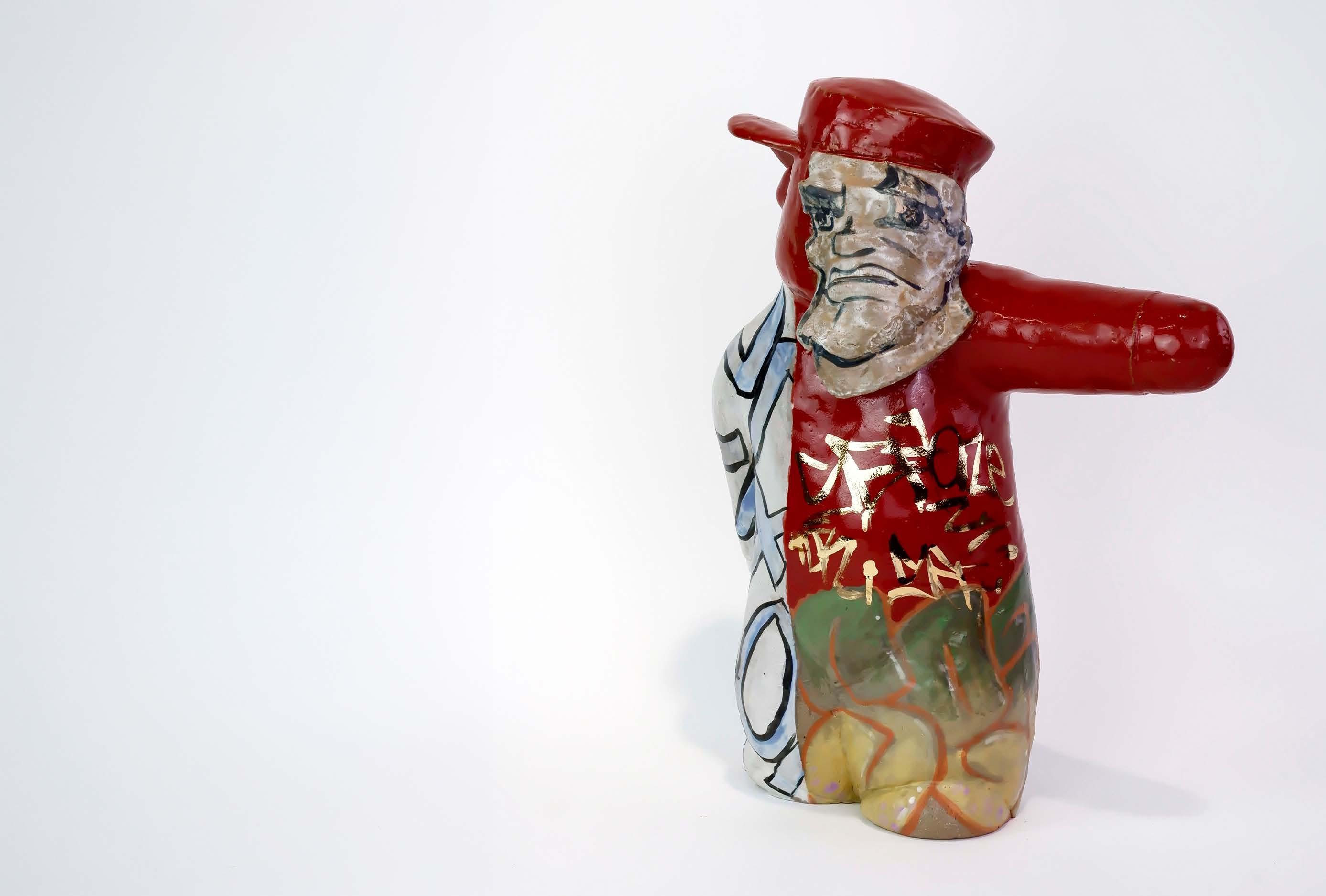
|18 x 20 x 13 inches
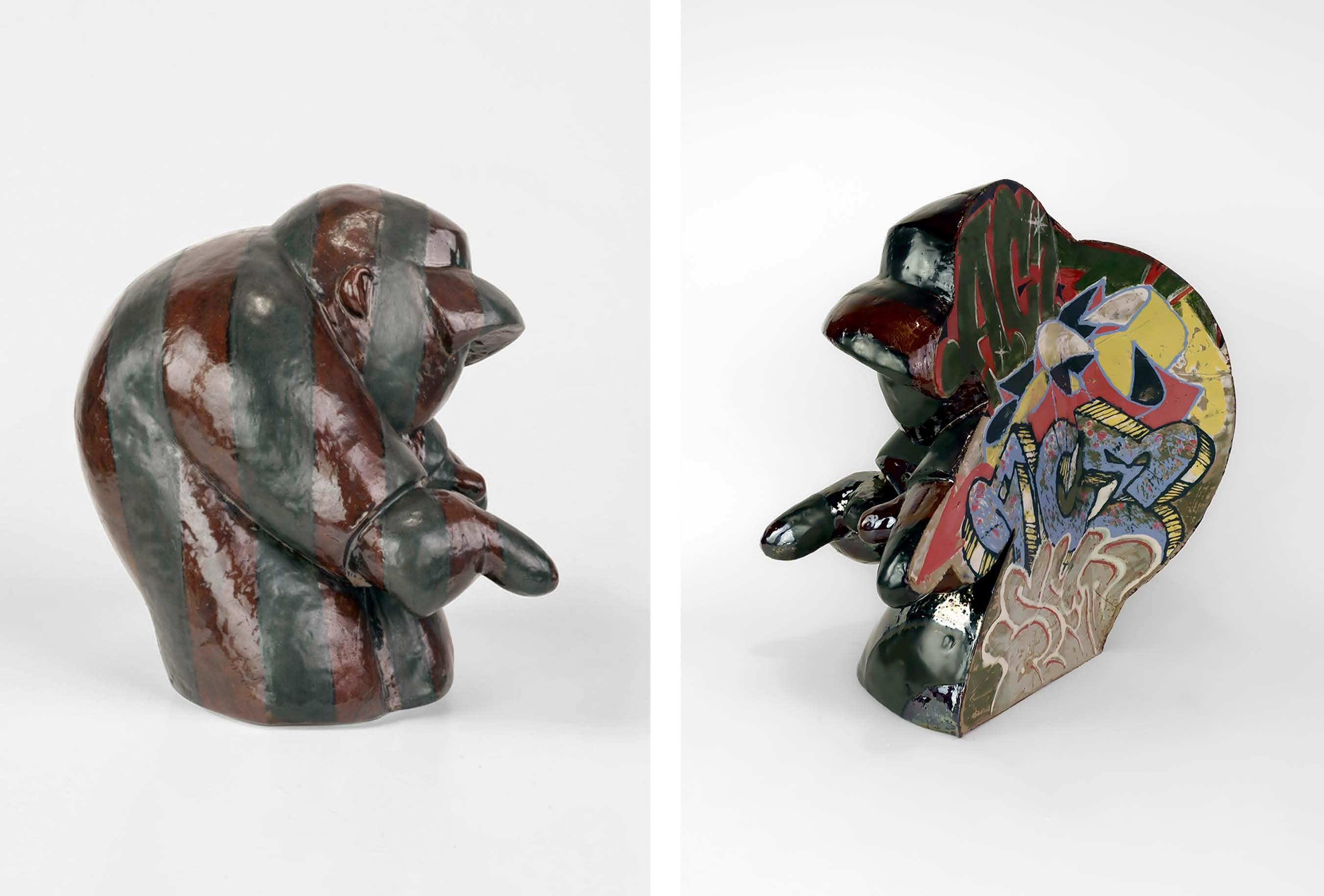
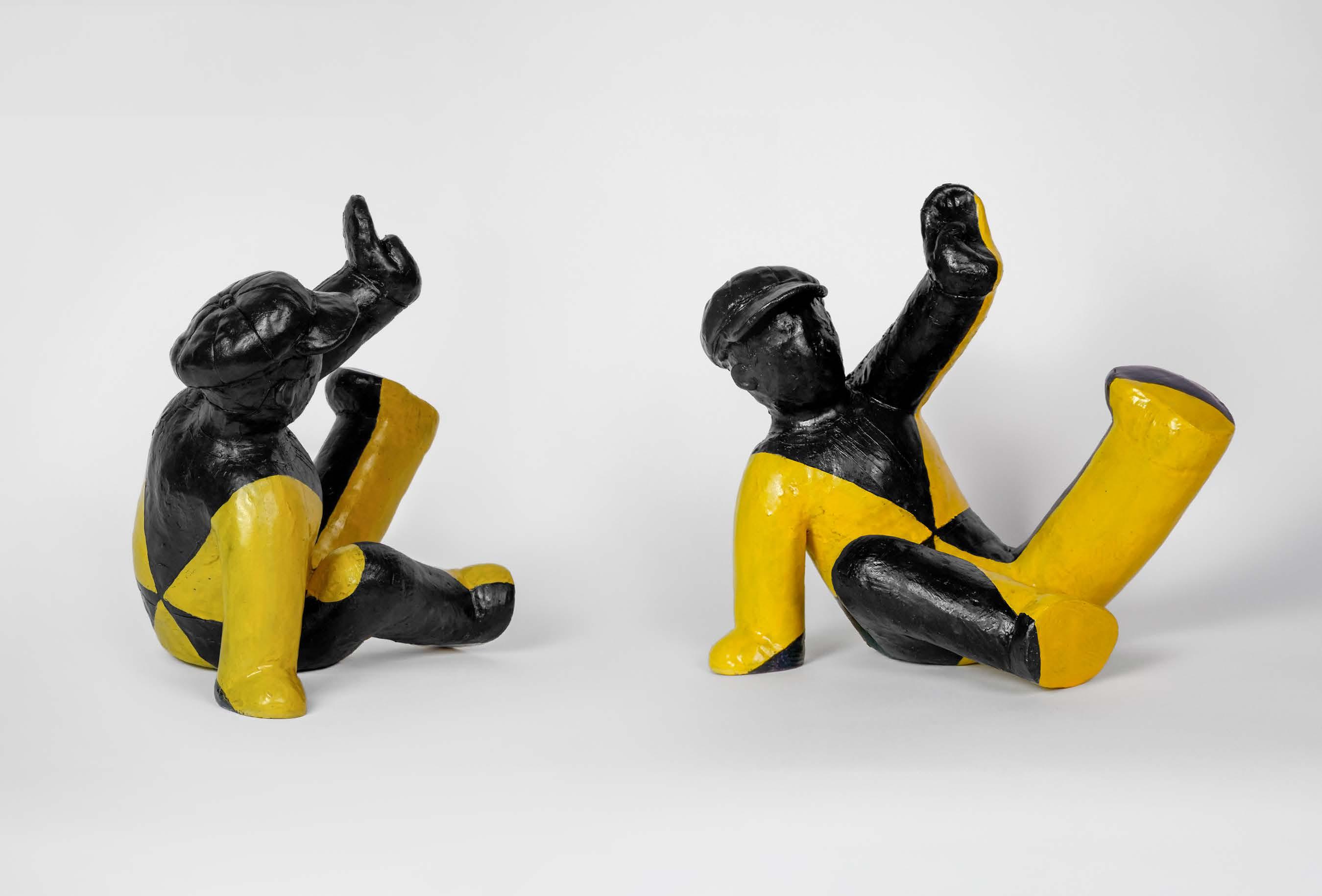
(left) The One, 2026
Stoneware
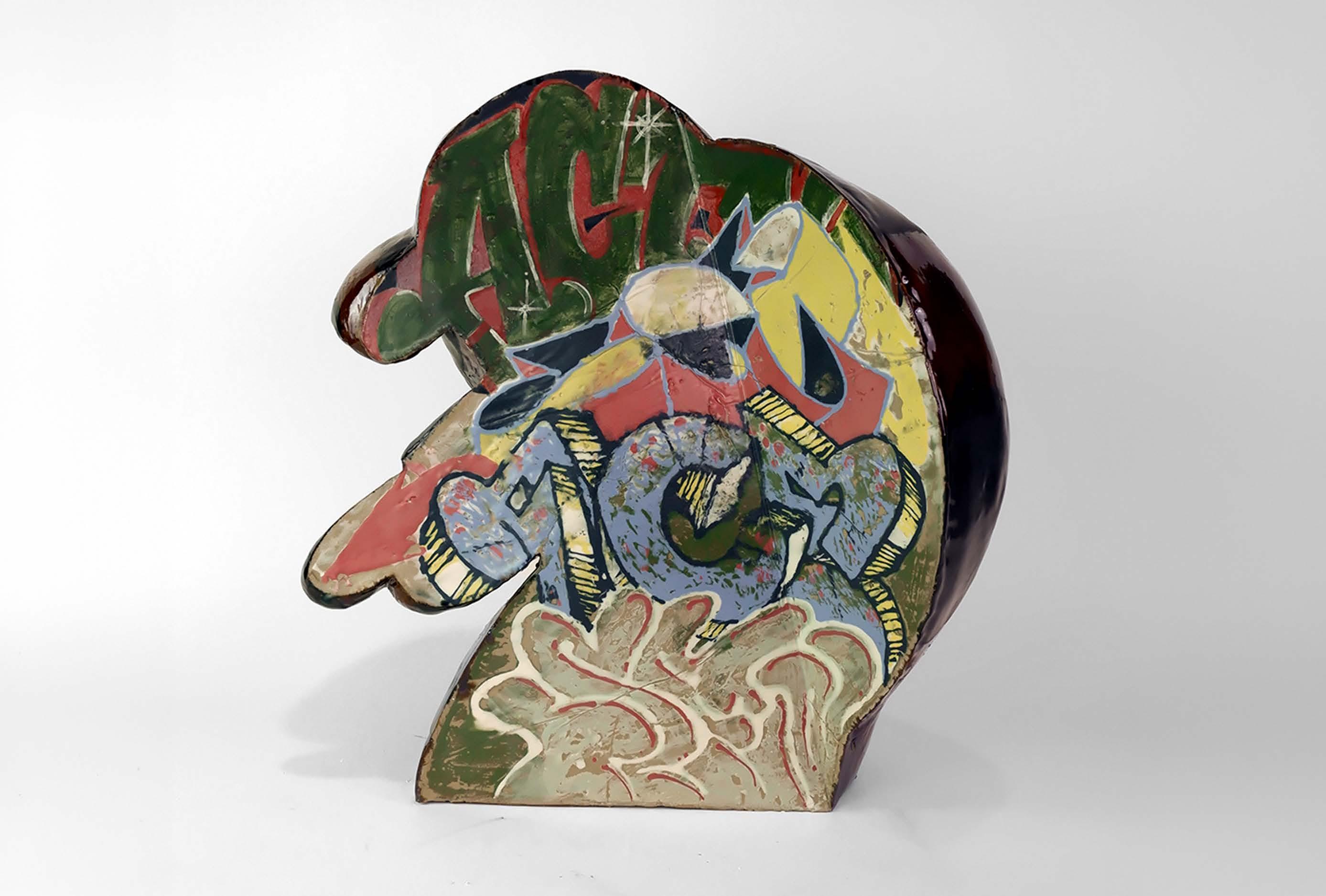
(right) All In, 2026
Stoneware
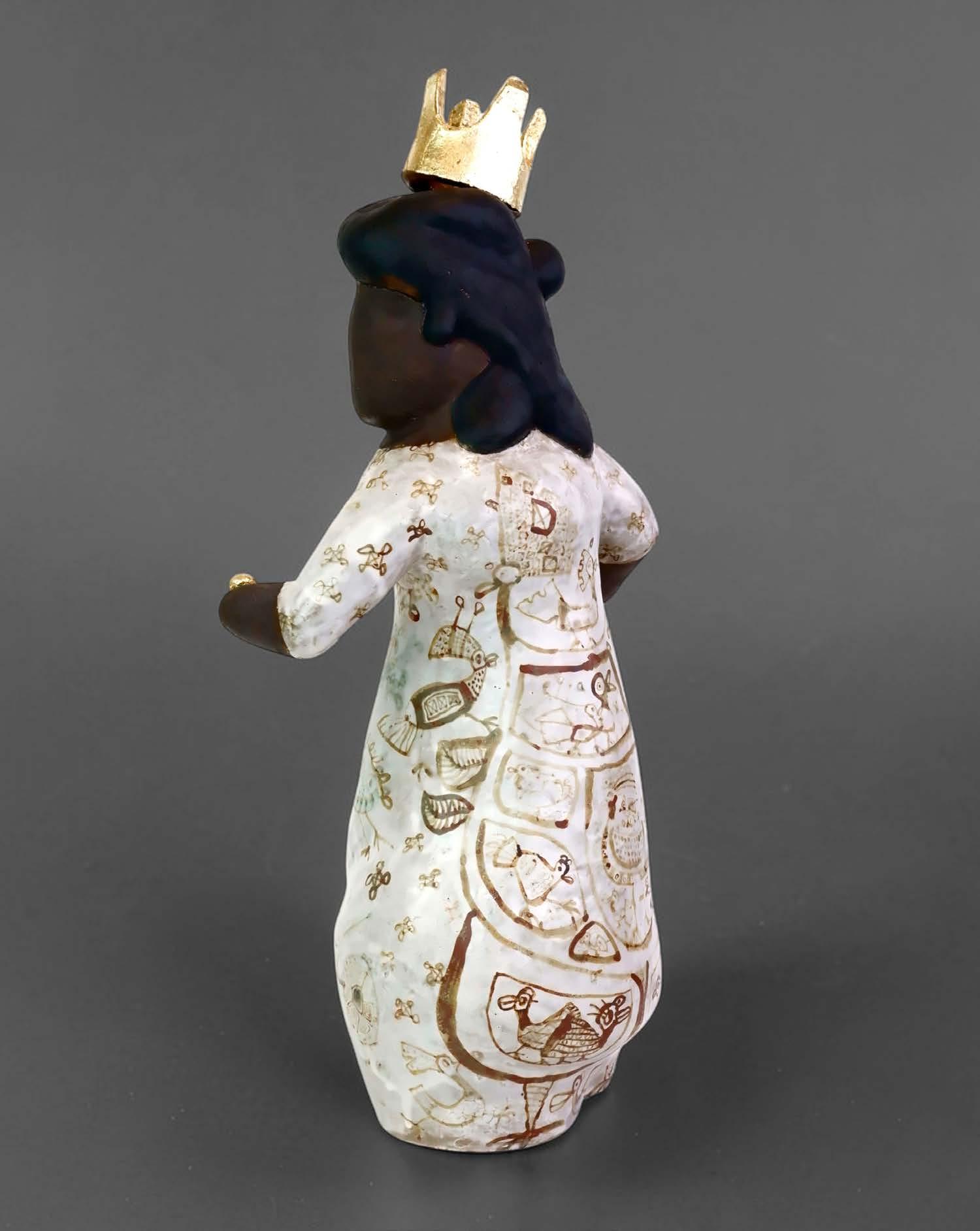
Seed, 2026 Stoneware |21.5 x 11 x 9.5 inches
Black Bolt (Collab with Collin McClain), 2026
Stoneware |26.5 x 12 x 12 inches
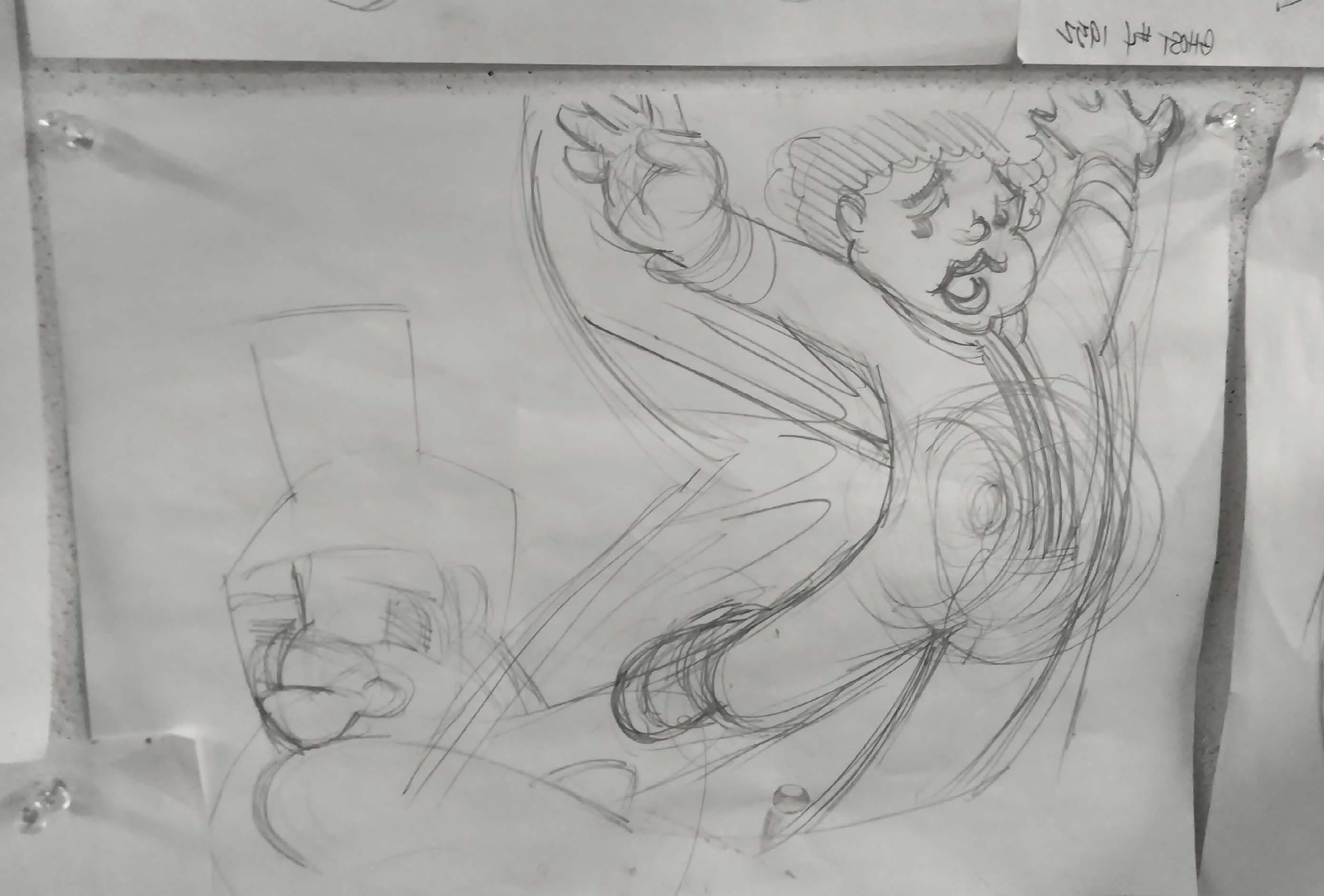
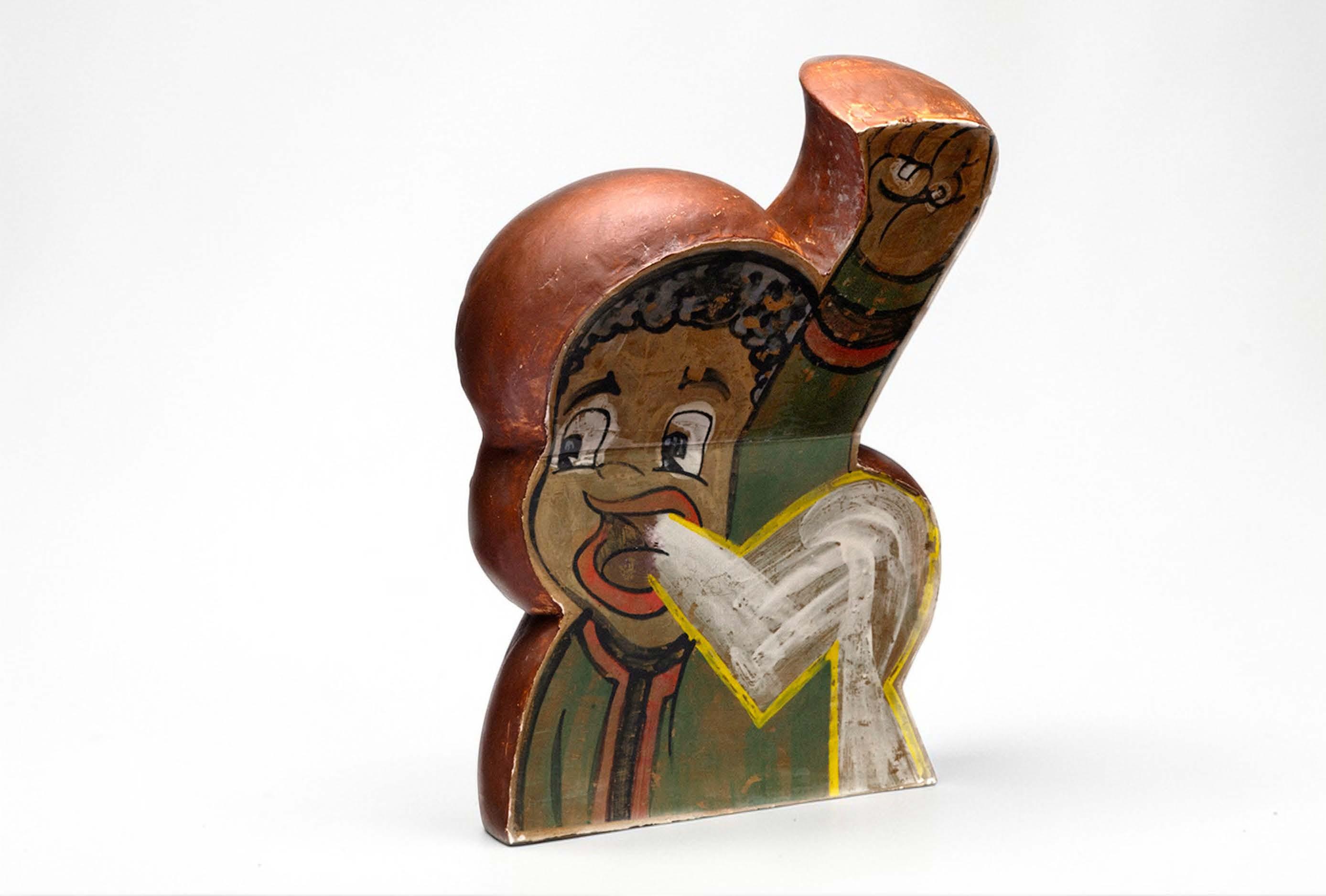
Li’l Tuffy is a recurrent motif in Smith’s work
A black child in a red, green, and black jumpsuit. The character was created by Smith’s mother Jean Pajot Smith, and featured in two children’s books 1st published by Johnson publishing/Ebony Jr! in the 1970s. The character was created in the image of her multiracial children. In No More Words a defiant Li’l Tuffy raises a fist in a triumphant pose of “Black Power.”
No More Words, 2021
Stoneware | 23 x 16 x 13 inches
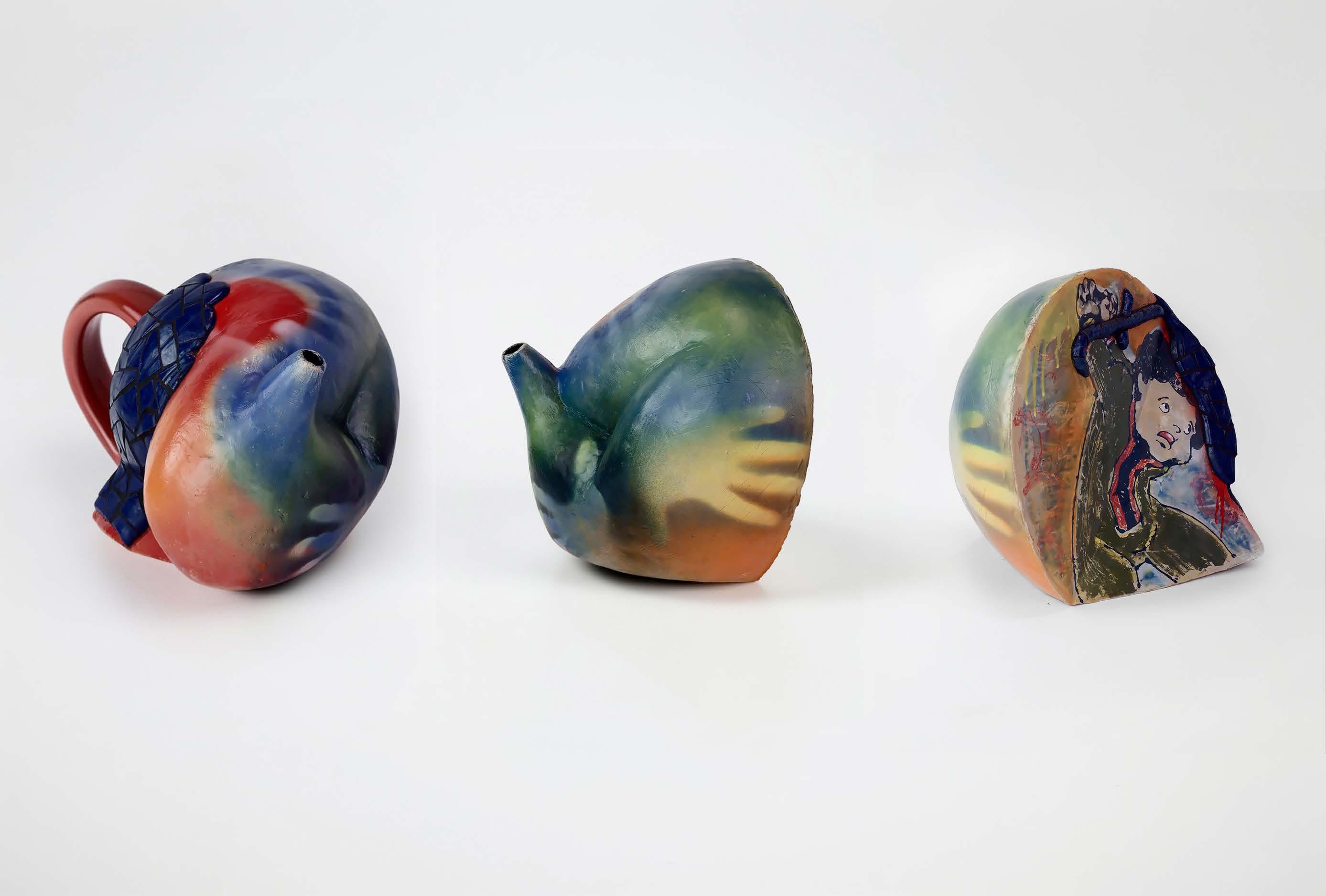
and Blue, 2026
Stoneware |16 x 14 x 16 inches
Black
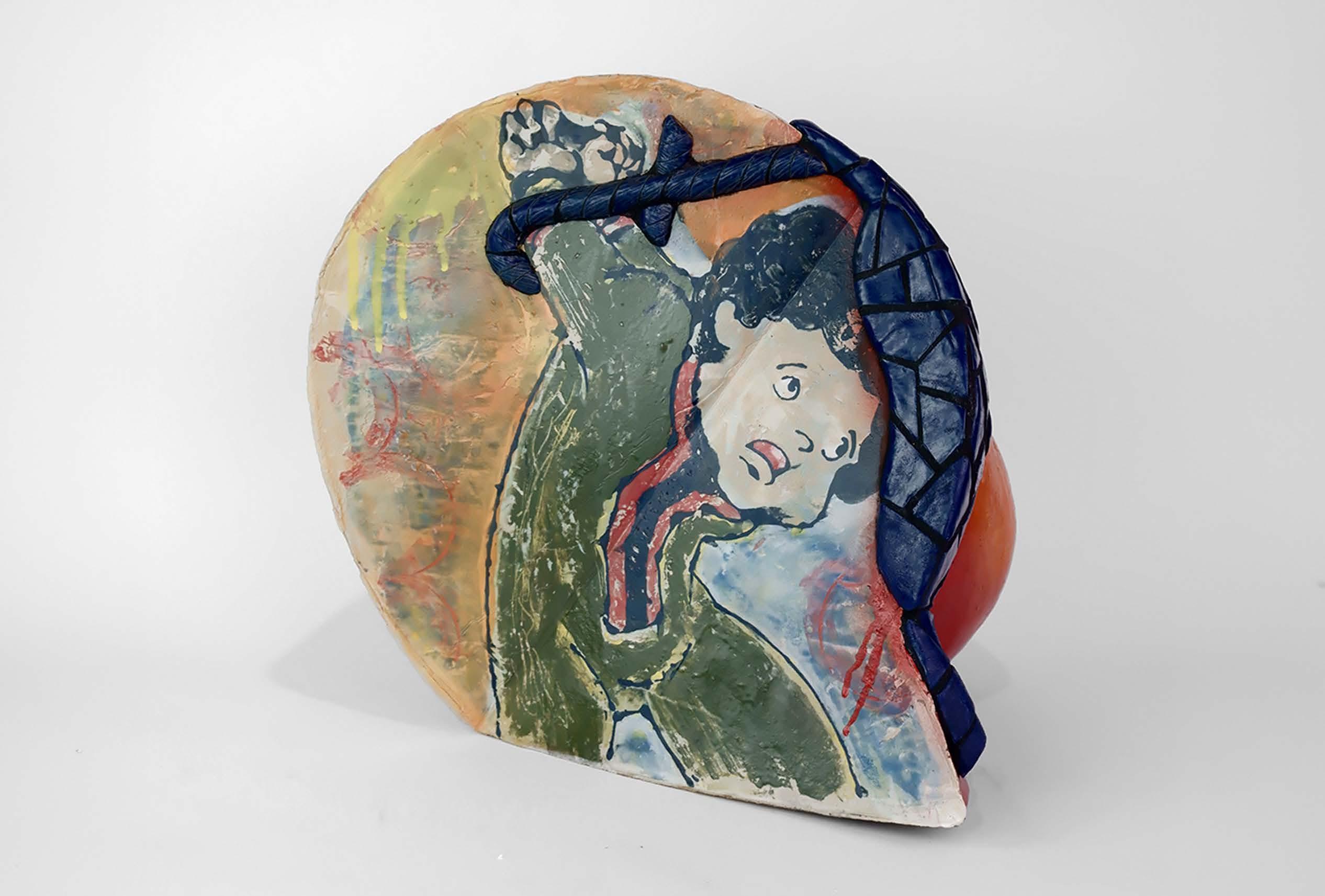
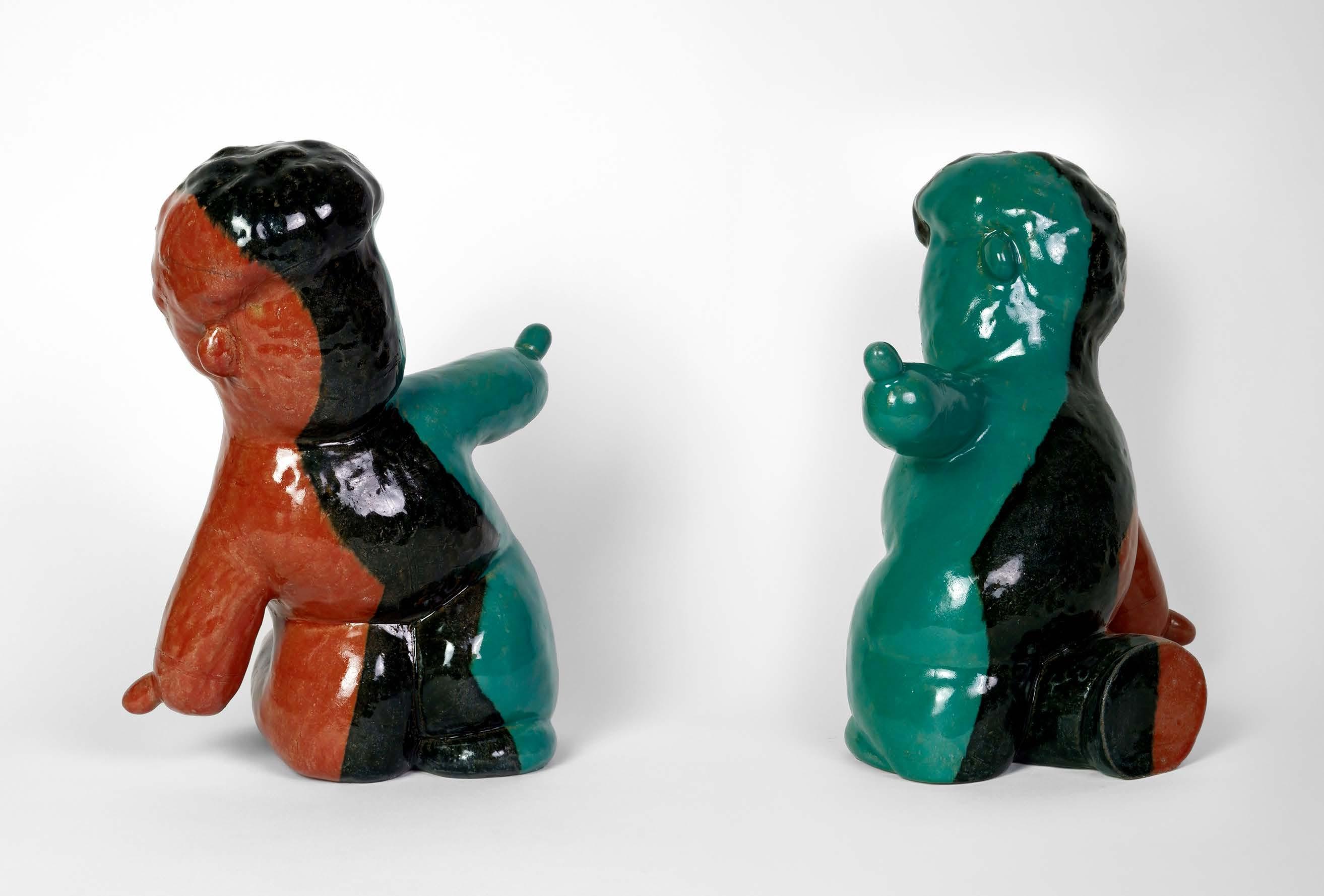
(left) Tuffy Made Safe, 2021
Stoneware |16 x 19 x 7 inches
(right) Why Tuffy, 2026
Stoneware |14 x 12 x 16 inches
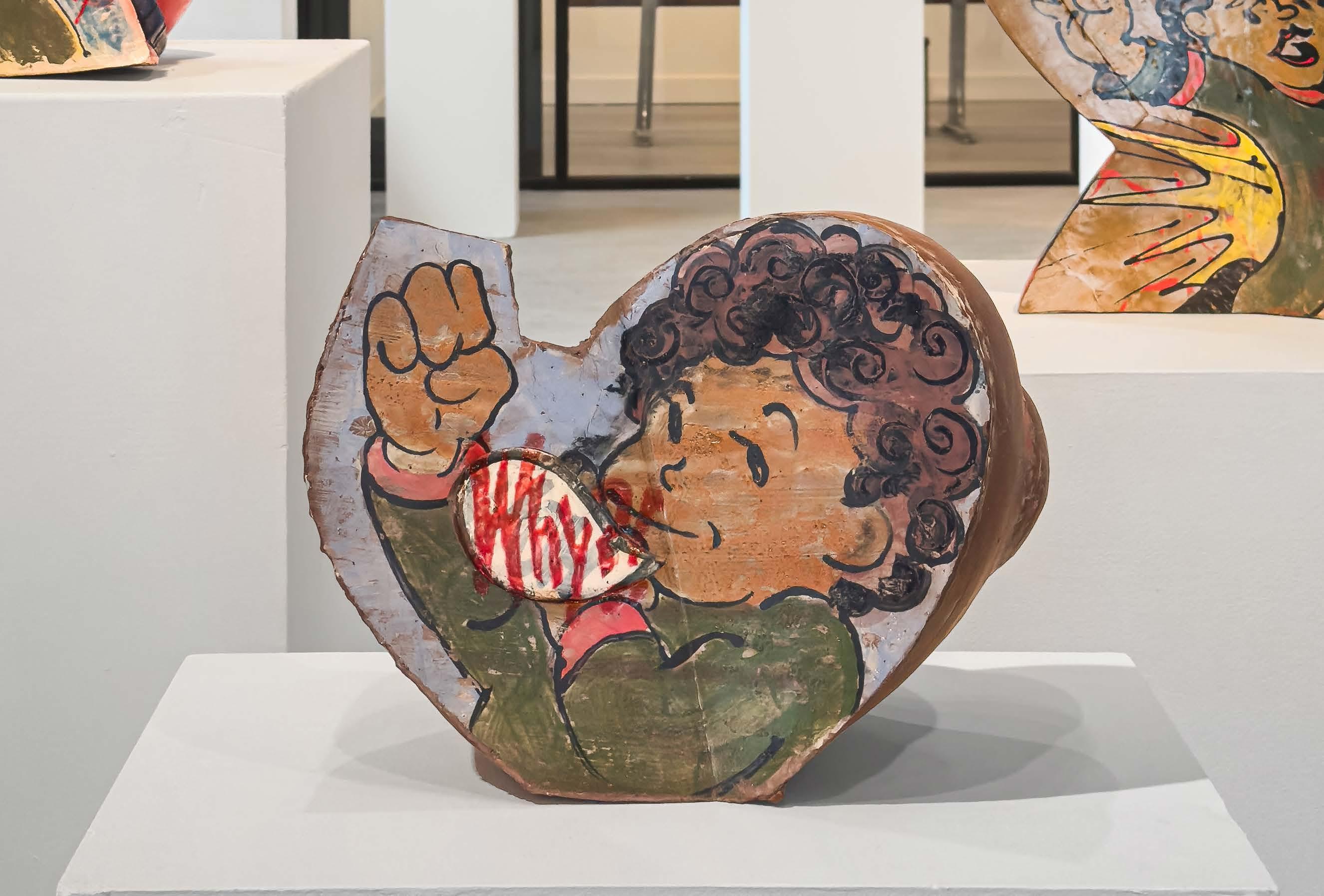
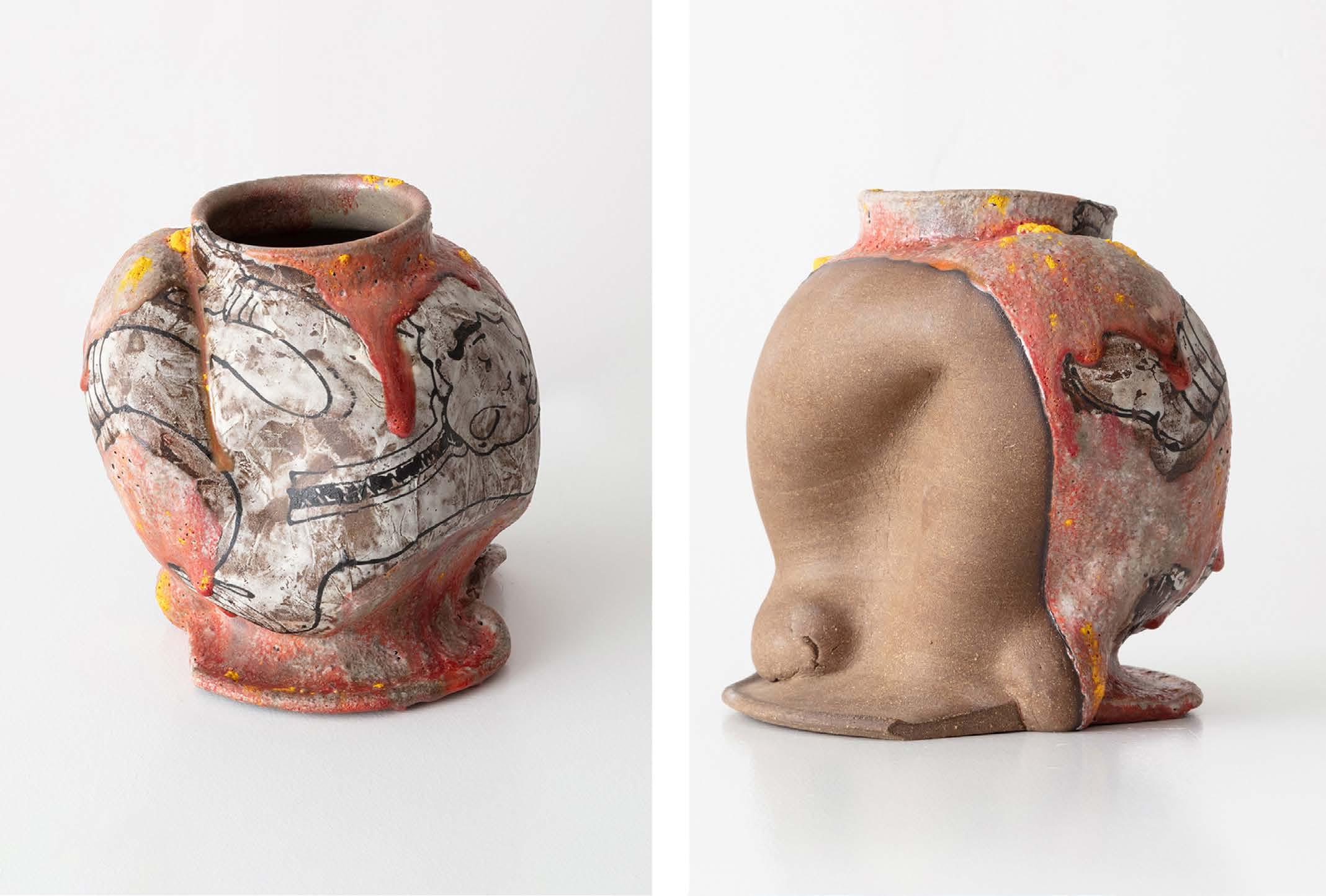
This piece features a character called Li’l Tuffy created by my mother for a cartoon coloring book published in 1971 by Johnson Publishing (of Ebony, Jet and Essence magazine fame). This work has an original image of Li’l Tuffy, created and drawn by me, ‘floating’ on the surface of the vessel in the midst of angry glaze colors and action.
-Malcolm Mobutu Smith
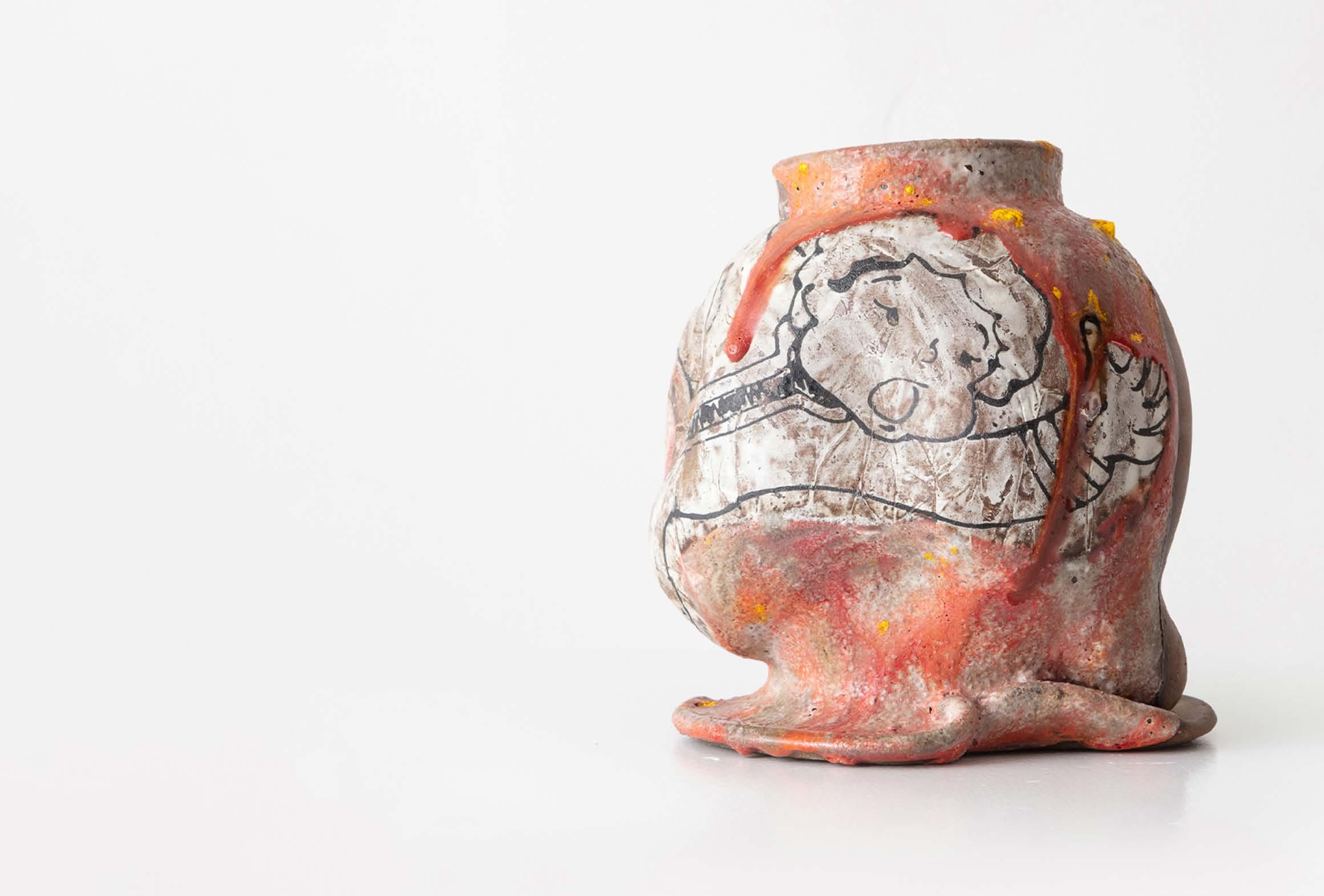
Li’l Tuffy Adrift in a Sea of Peril, 2019
Stoneware | 9 x 8 x 8.5 inches
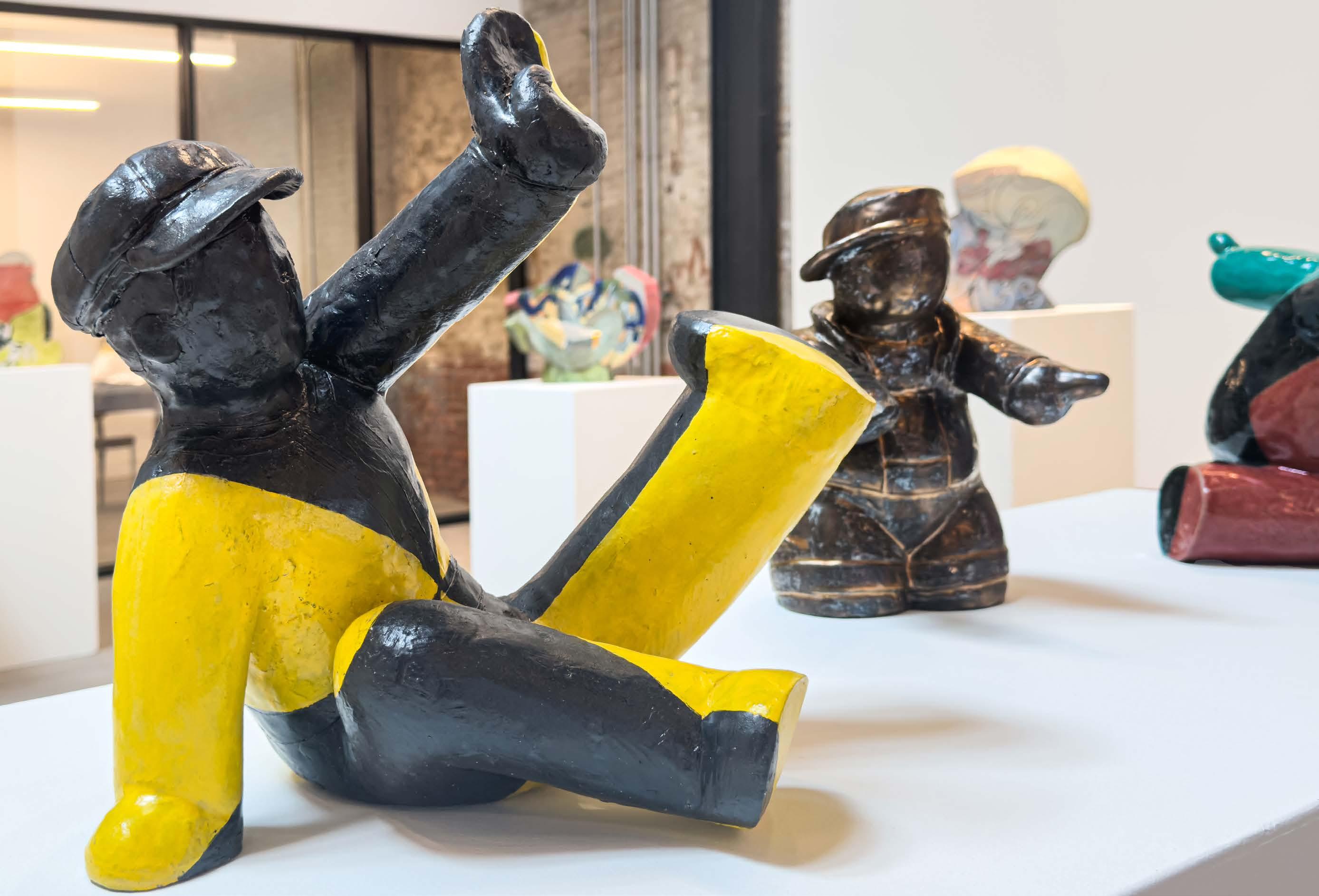
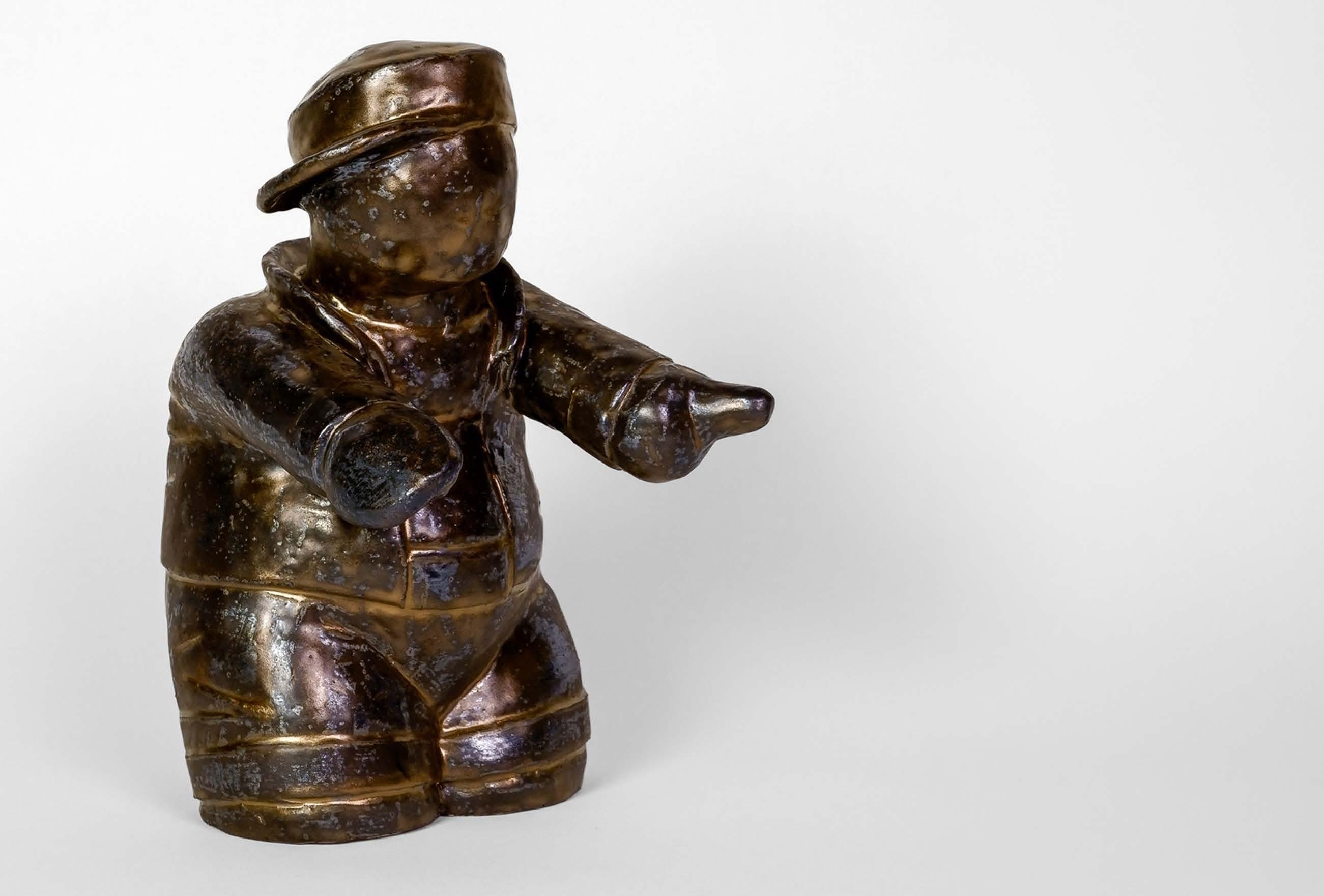
(left) Fit Thick, 2026
|11.5 x 7 x 6 inches
(right) Up Rock, 2026
|12 x 11 x 8 inches
Stoneware
Stoneware
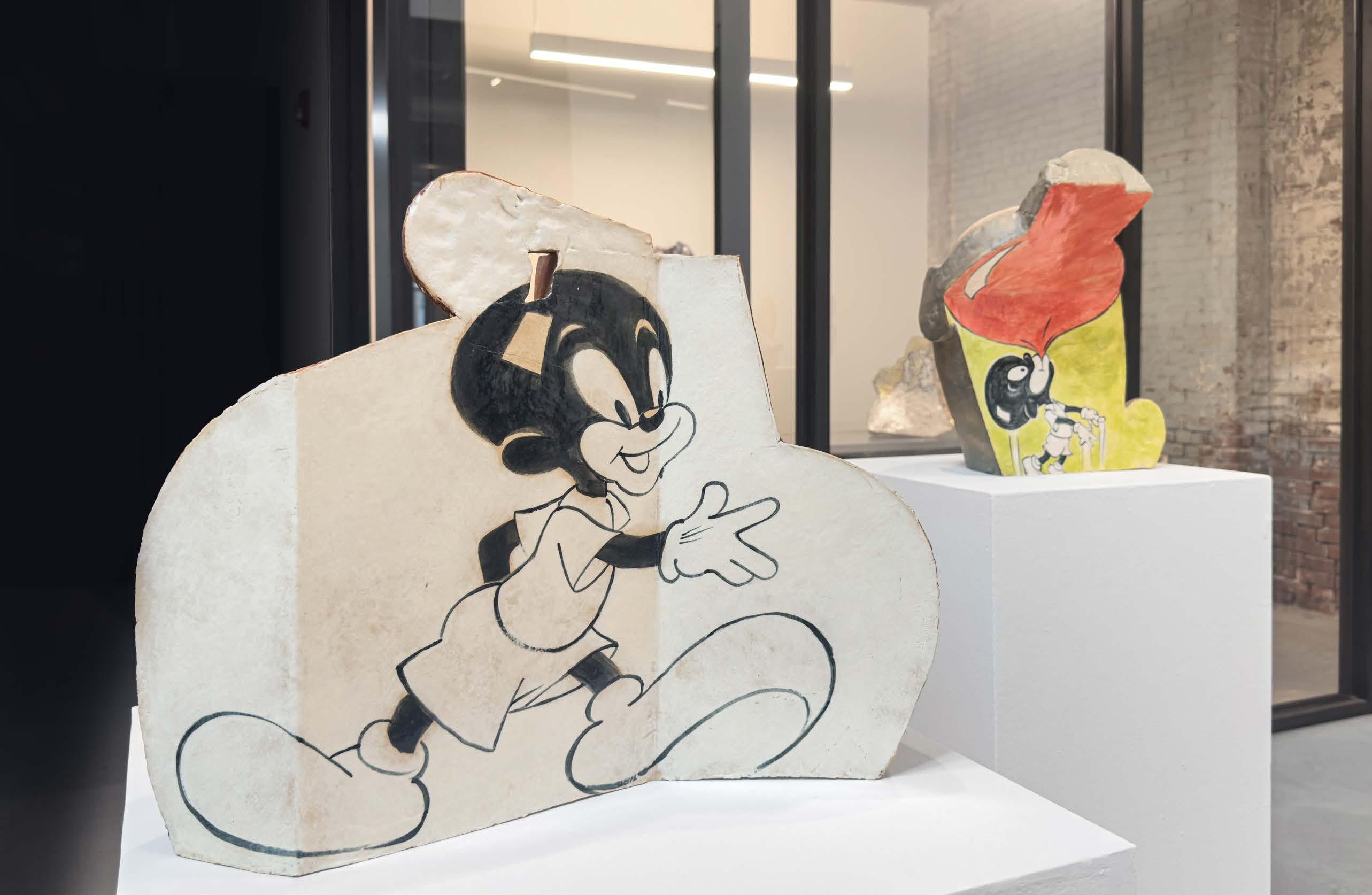
In “Love Lifts Us Up” (2010), the hope of reconciliation and peace is even more elusive, as if the child in short pants (based on the 1940 comic book figure “Little Eight Ball”) can save himself by blowing a big enough pink gum bubble, which appears sure to topple down onto him from the top of Smith’s tilting pot. Developing from teen-age street artist to university professor, Mobutu Smith avoids ideological expressions or explicit statements in the same way graffiti tags are ambiguous yet jaggedly applied.
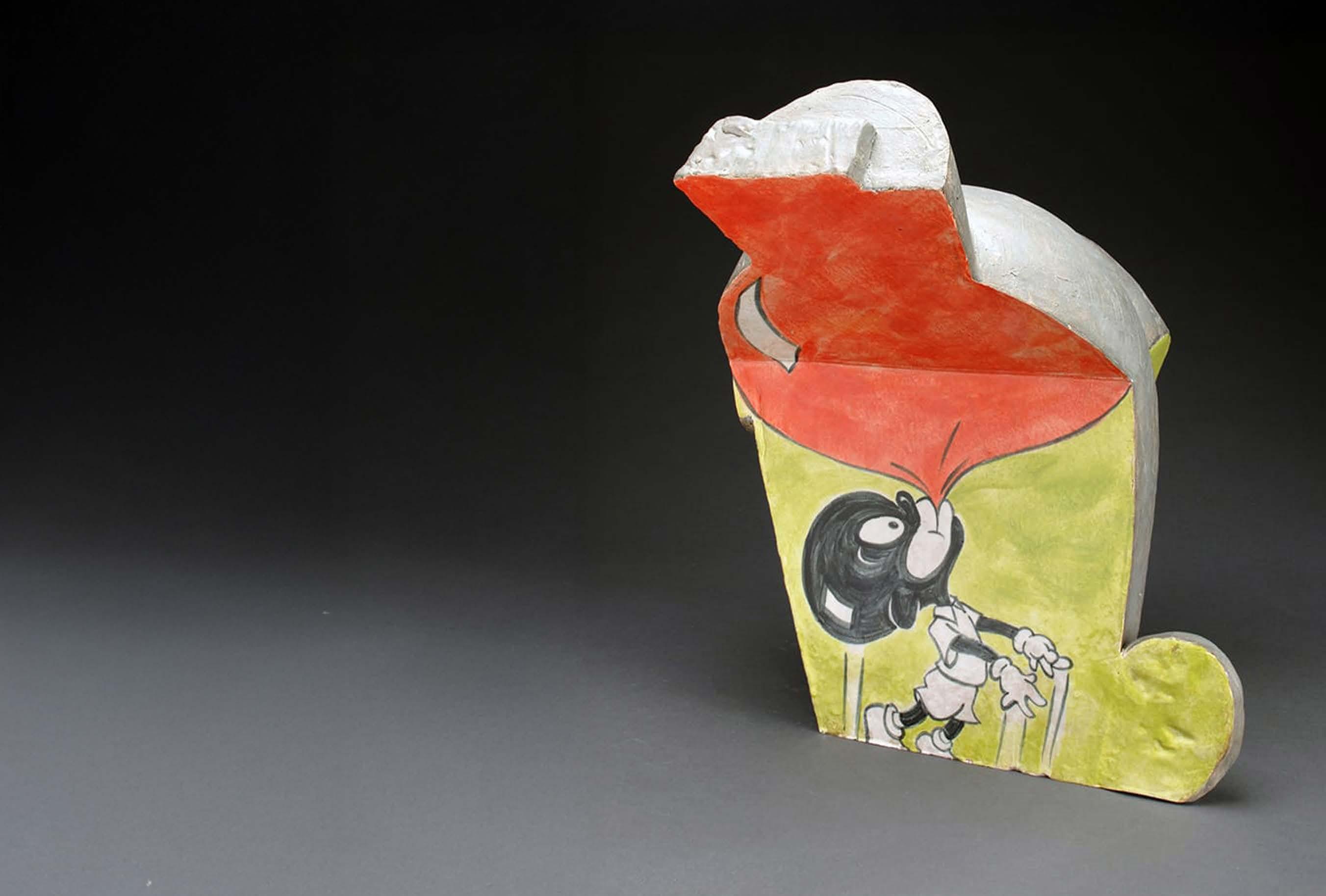
Love Lifts Us Up, 2010
Stoneware | 17 x 14 x 15 inches
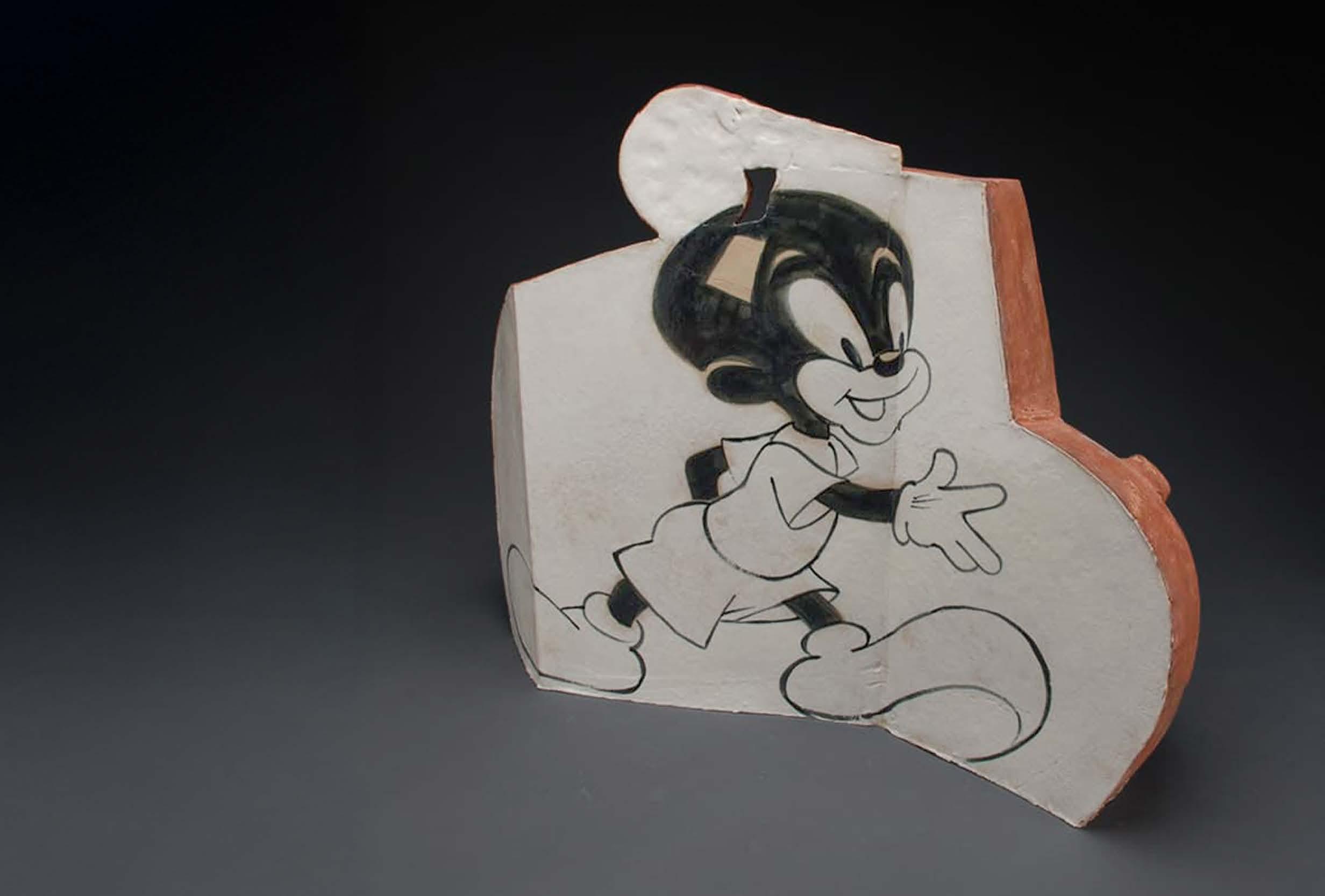
Making Strides, 2010
Stoneware | 16 x 22 x 12 inches
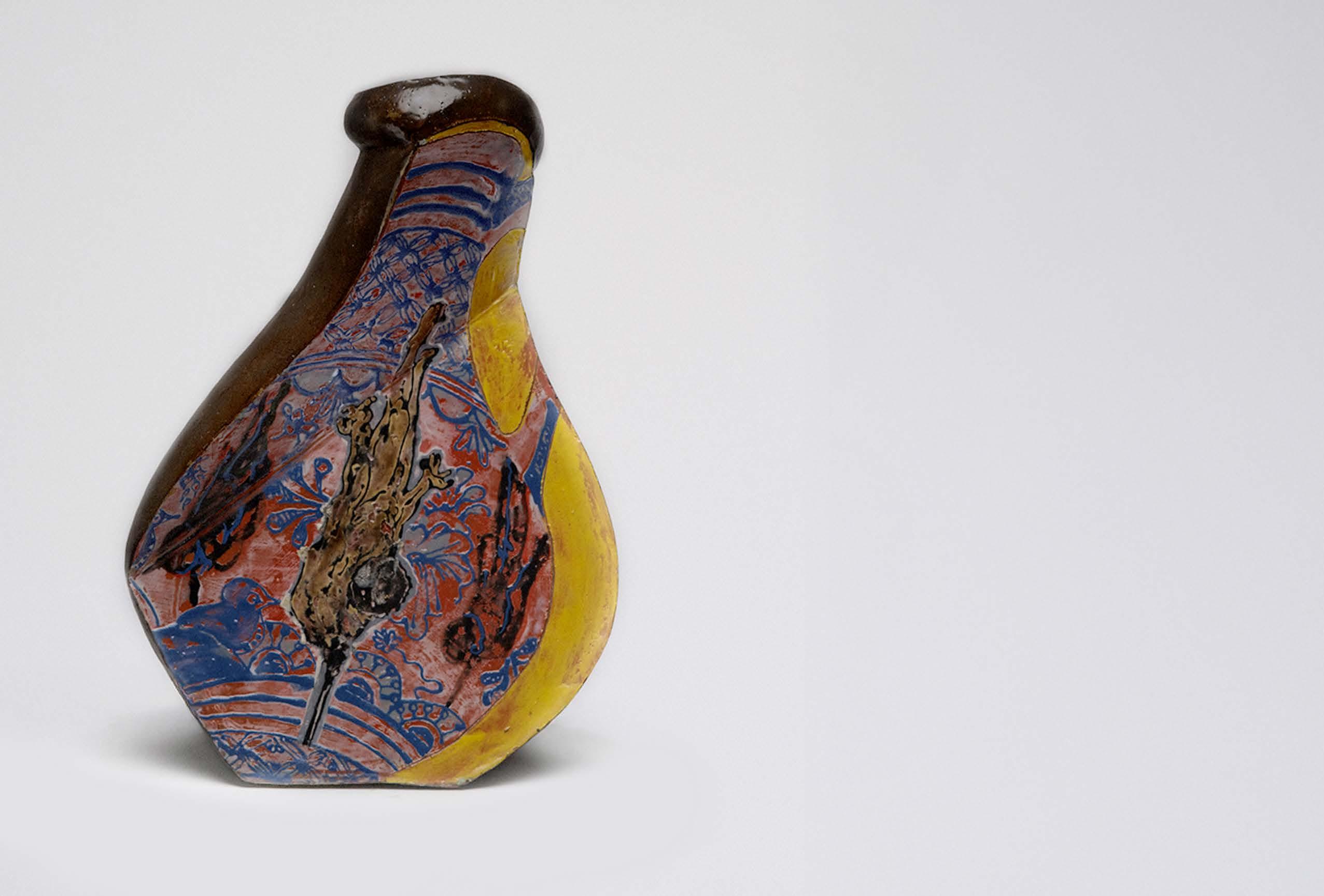
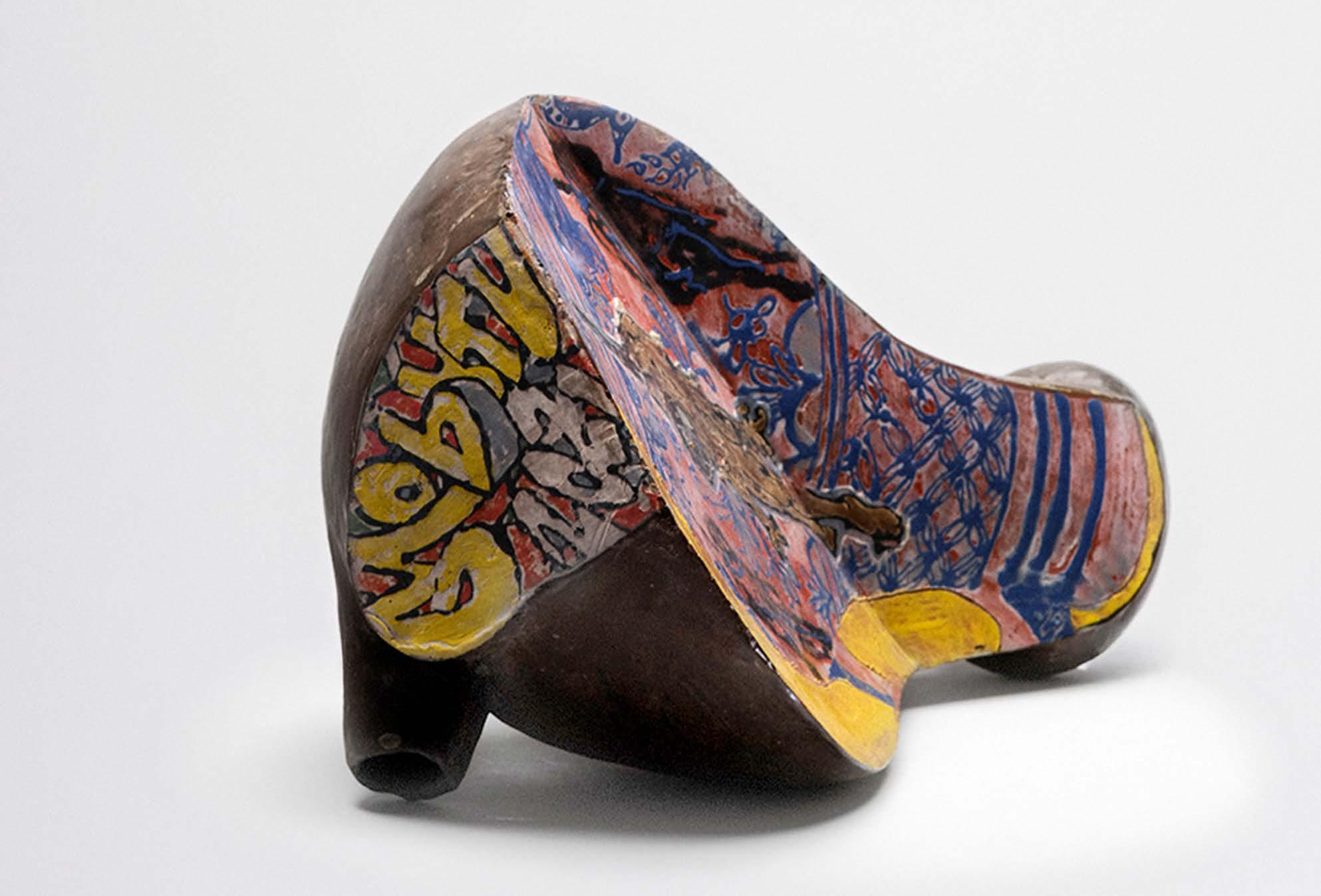
Stoneware | 19 x 13 x 9 inches
Uppity Uproar, 2021
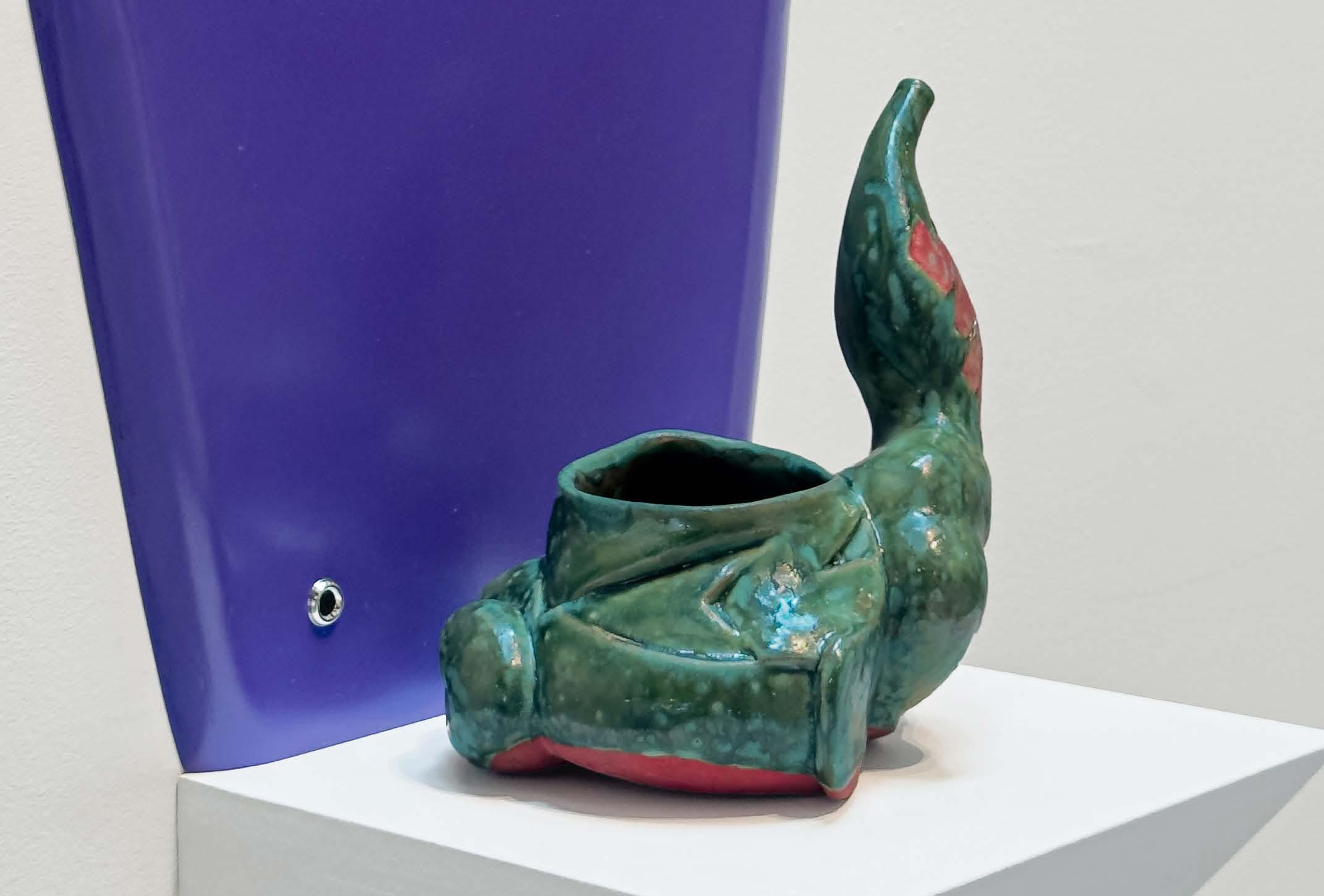
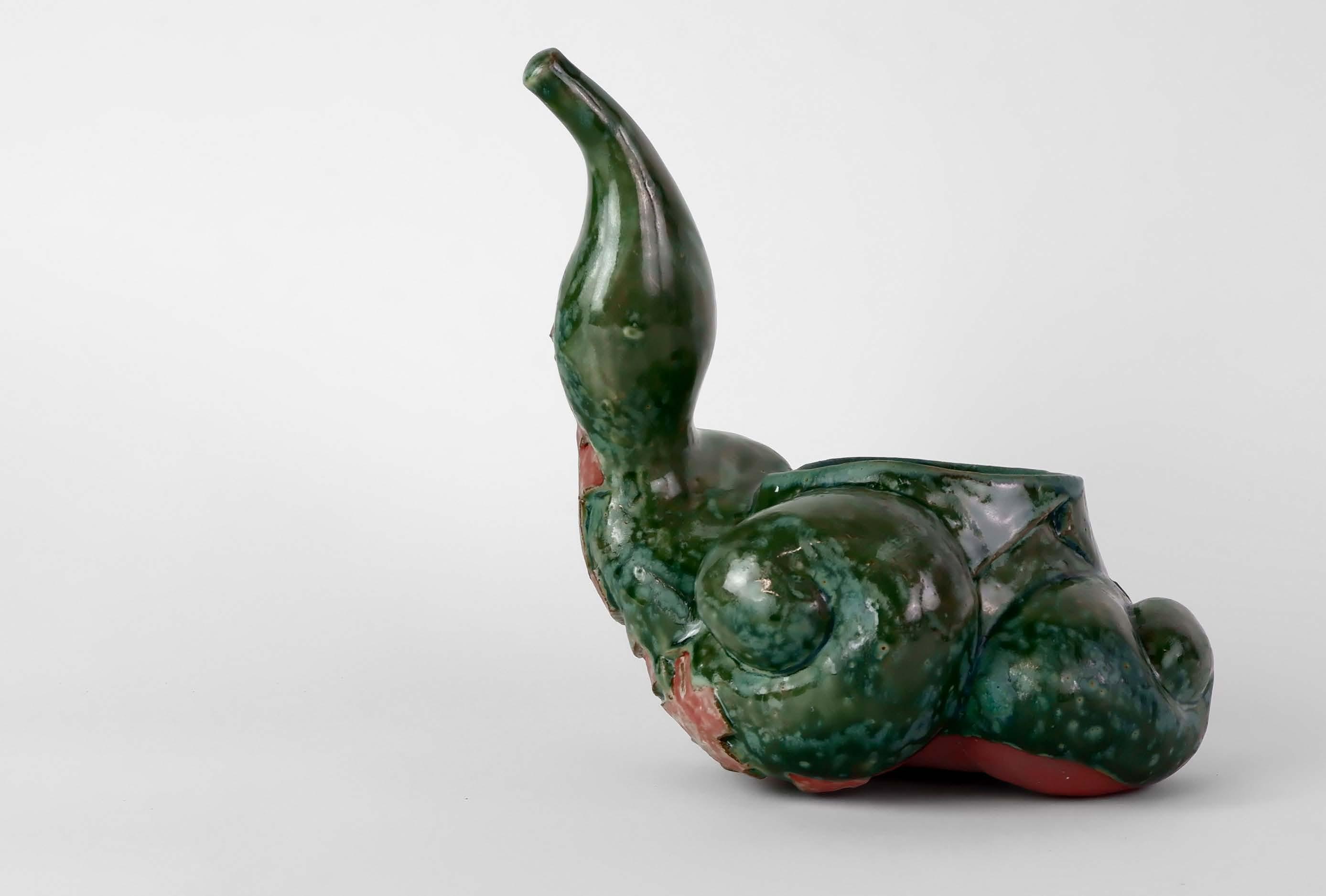
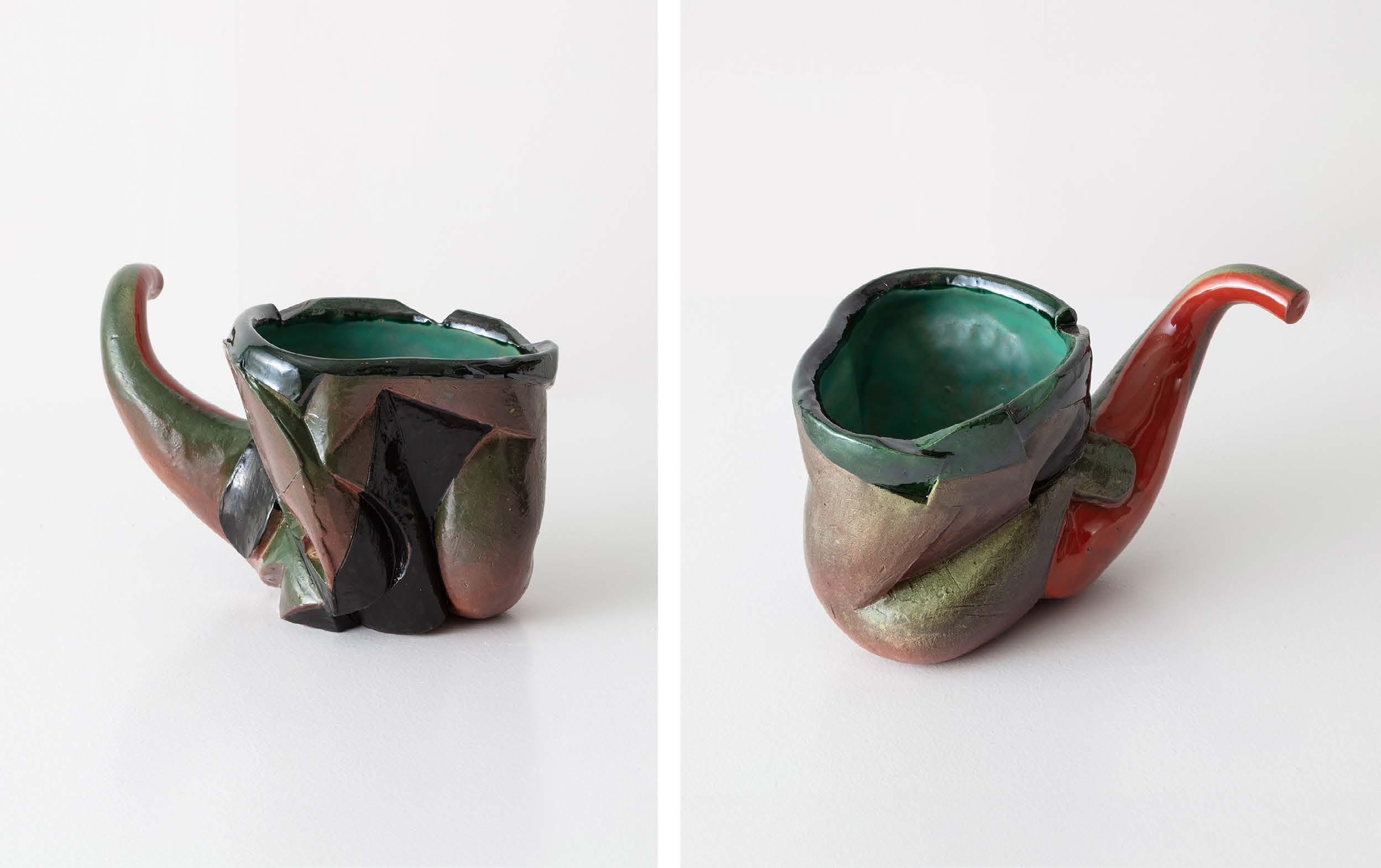
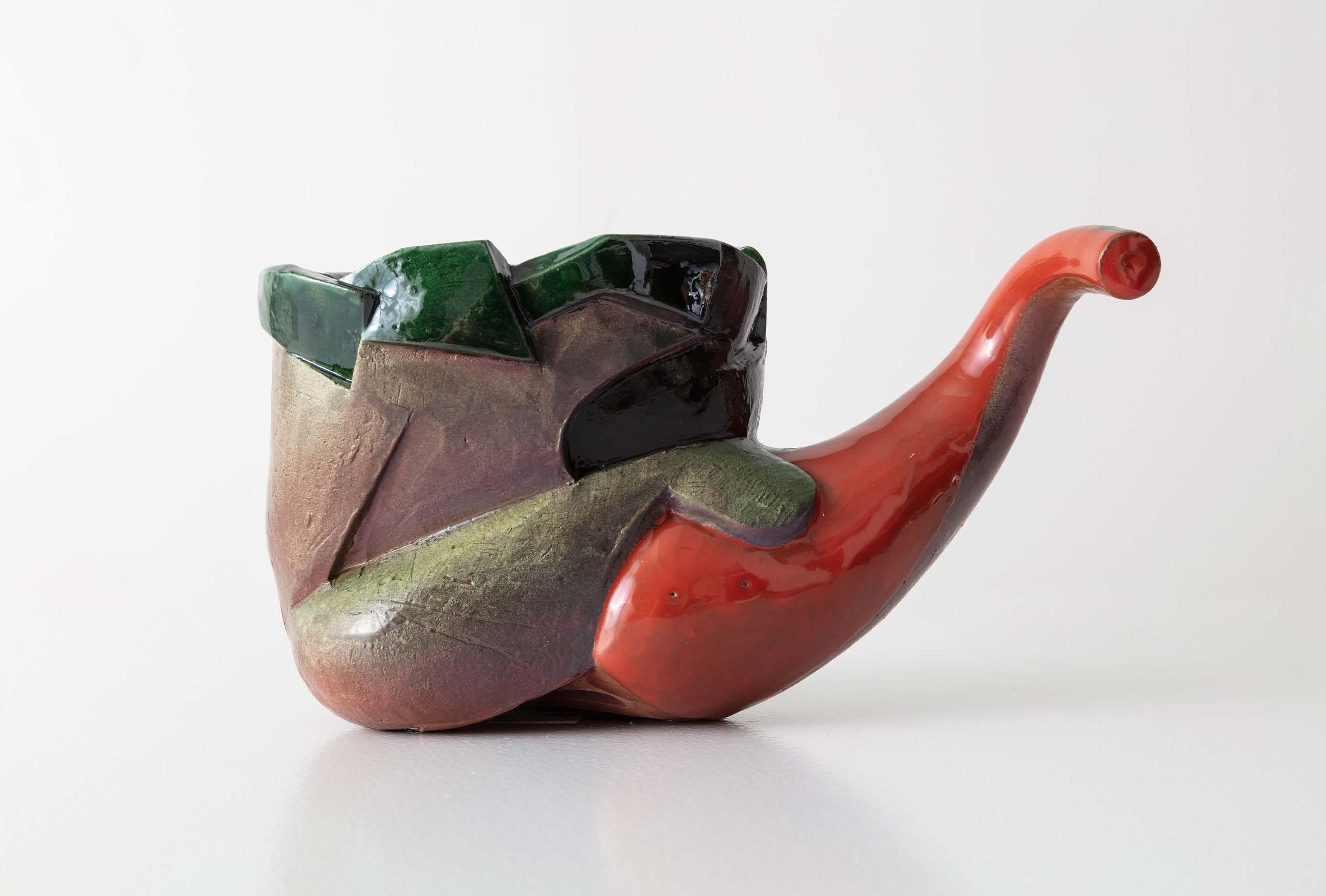
Appletail Scoop, 2021
|5 x 8.5 x 6 inches
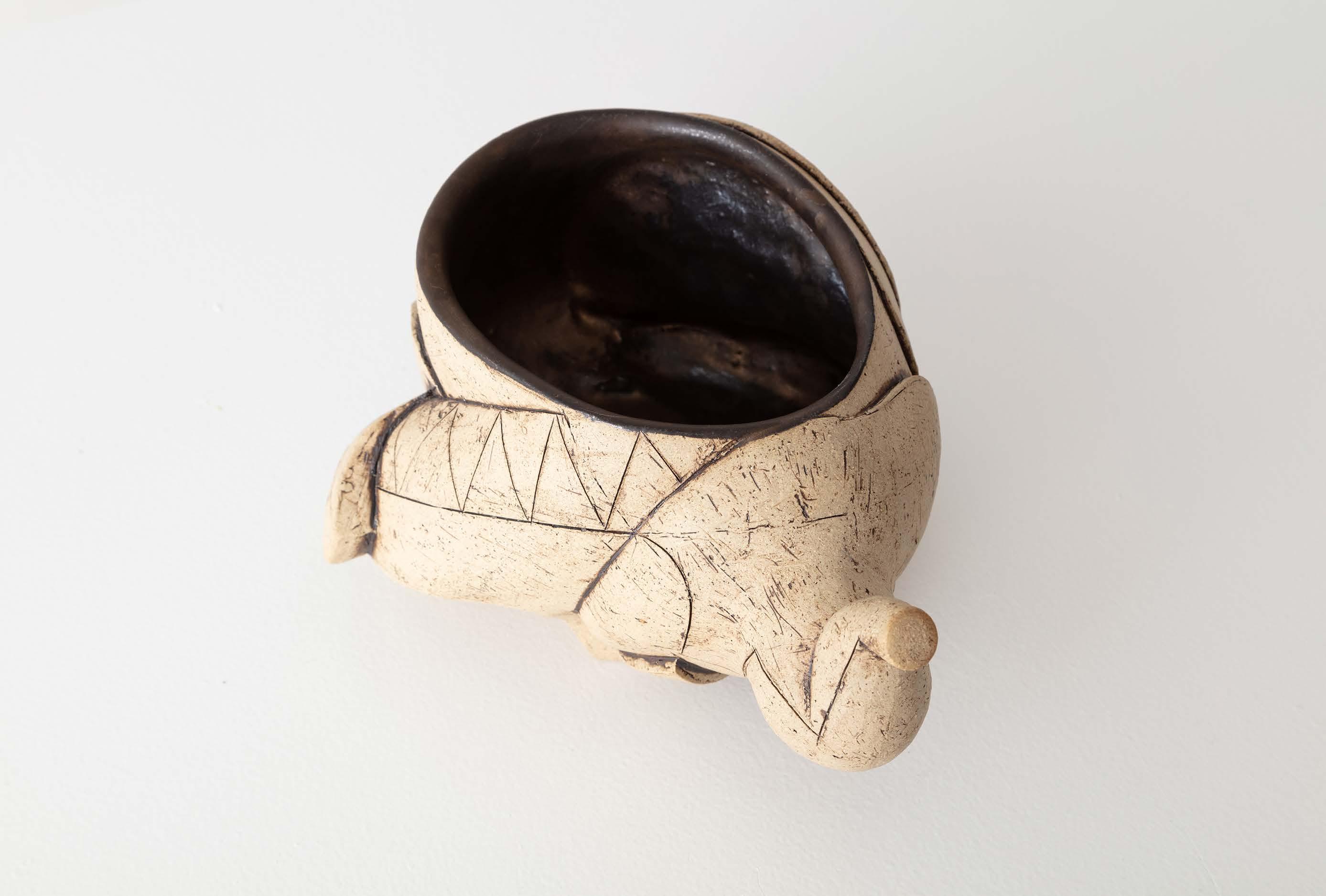
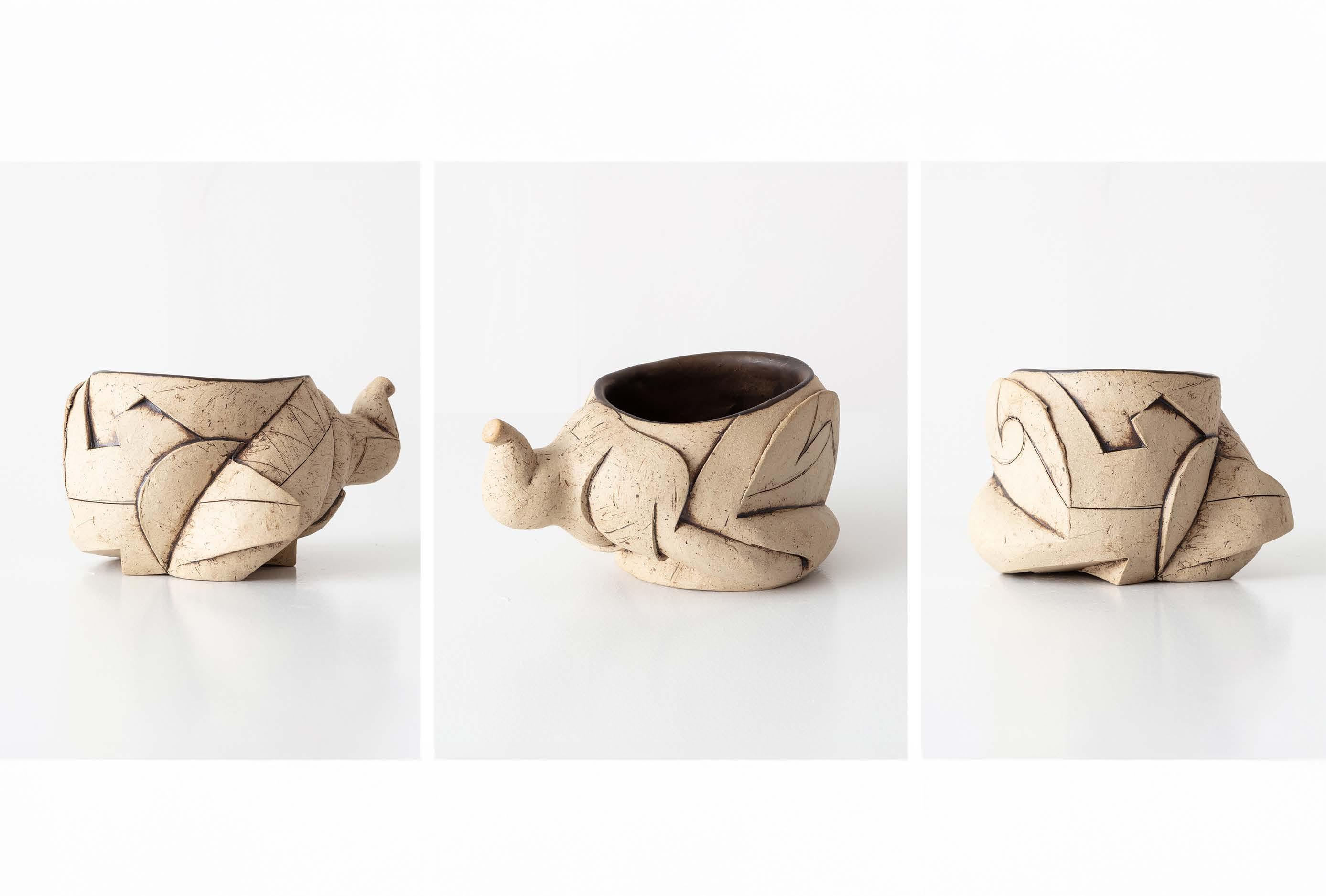
Relic I, 2019
Stoneware |4.5 x 8.25 x 6.5 inches
SELECTED COLLECTIONS
Yingge Museum of Ceramics Art, Taipei, Taiwan.
Haan Museum, Lafayette, IN
Center for Fine Print Research Archive, Bristol, UK
Oppenheimer Collection, Nerman Museum Overland Park, KS
Nerman Museum of Contemporary Art, Overland Park, KS
Indiana State Museum, Indianapolis, IN
Baker University Collection, Baldwin City, KS
FuLed International Ceramic Art Museum, Beijing, China
The Gloryhole Collection, The International Museum of Ceramics at Alfred, NY
Grace Hampton, American Crafts, Private Collection, Exton, PA
Helms-Craven Library, Western Kentucky University, Bowling Green, KY
Jingdezhen Institute of Fine Art, Jingdezhen, China