
March - May 2026
Field Day: Year 10 Visit Kew Gardens - Thomas C, Year 10
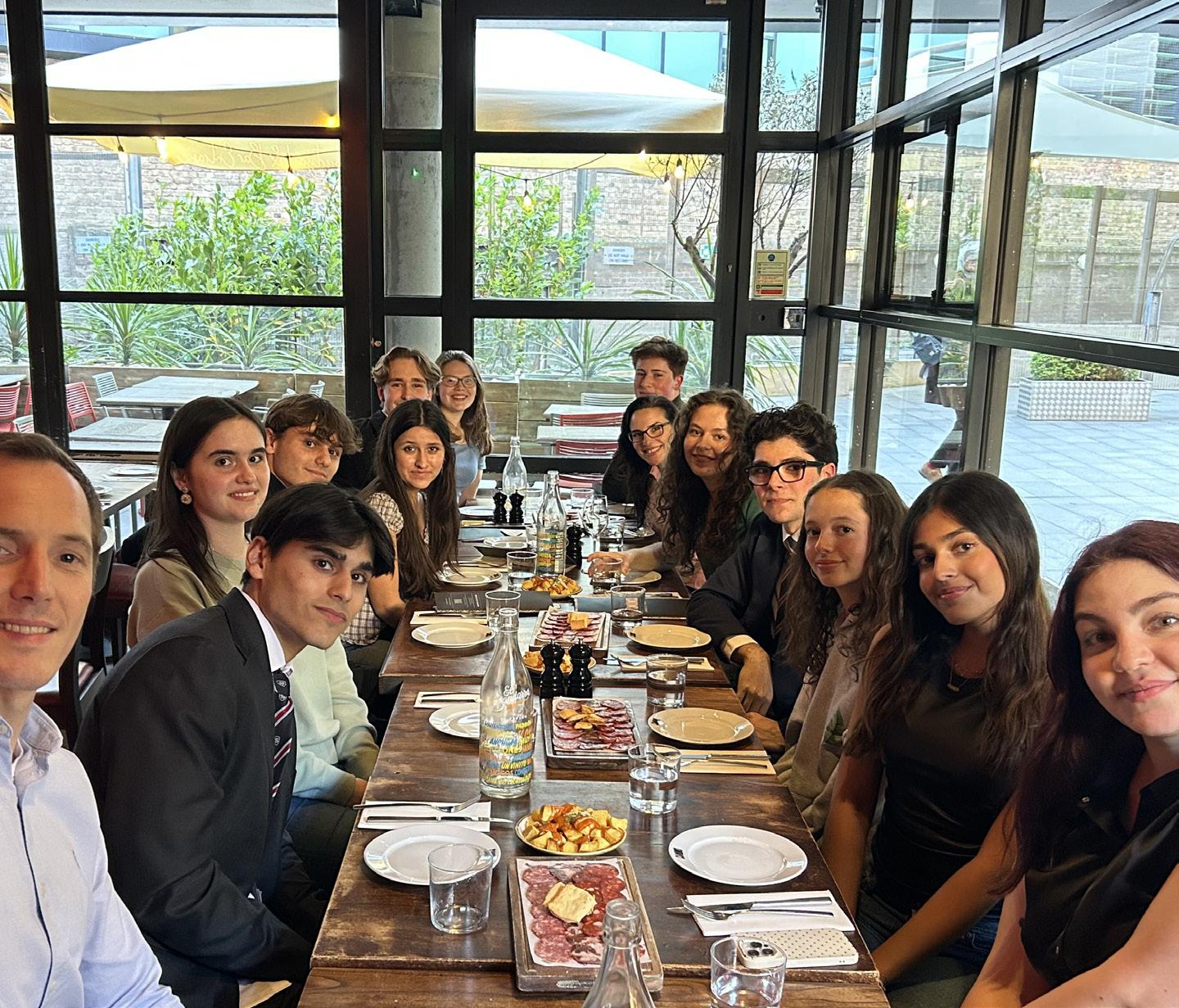
A Taste of Authentic Spanish Cuisine at Camino - Ben C, Year 12
The Importance of Music in Our Day to Day LivesSantiago Q, Year 10
The London Mozart Players Workshop - Santiago Q, Year 10
Young Enterprise - Tommy S, Year 12
Futures at Wetherby - Yunus A, Year 8
Bronze Duke of Edinburgh Expedition - Santi Q, Year 10
First Tech Challenge Regional Competition - James C, Year 10
Regents Park Bandstand Concert - Alexander M, Year 9
My Time in Kenya - Horatio S, Year 8
Inspired Athletics Meet - Leo F, Year 8
Why Curacao Should Not Have Qualfied for the World CupDomenico C, Year 10
Clouds - Santi Q, Year 10
Linguistic Conditions - Santi Q, Year 10
The Unexpected Wonders of the Solar System - Santi Q, Year 10
Cover photograph - Jack A, Year 10
World Cup Preview 2026, Henry Cr, Year 8
Contributing to the Barometer is a great way to earn gold notes, improve your writing, and it looks great on your CV
To submit articles or cover photos, join the Barometer club at Friday lunchtimes (B11) Or, you can email Mr s Bradley at nicola.bradley @wetherbysenior.co.uk
Read the latest issue at https://issuu.com/wetherbysenior
Thomas C, Year 10 writes…
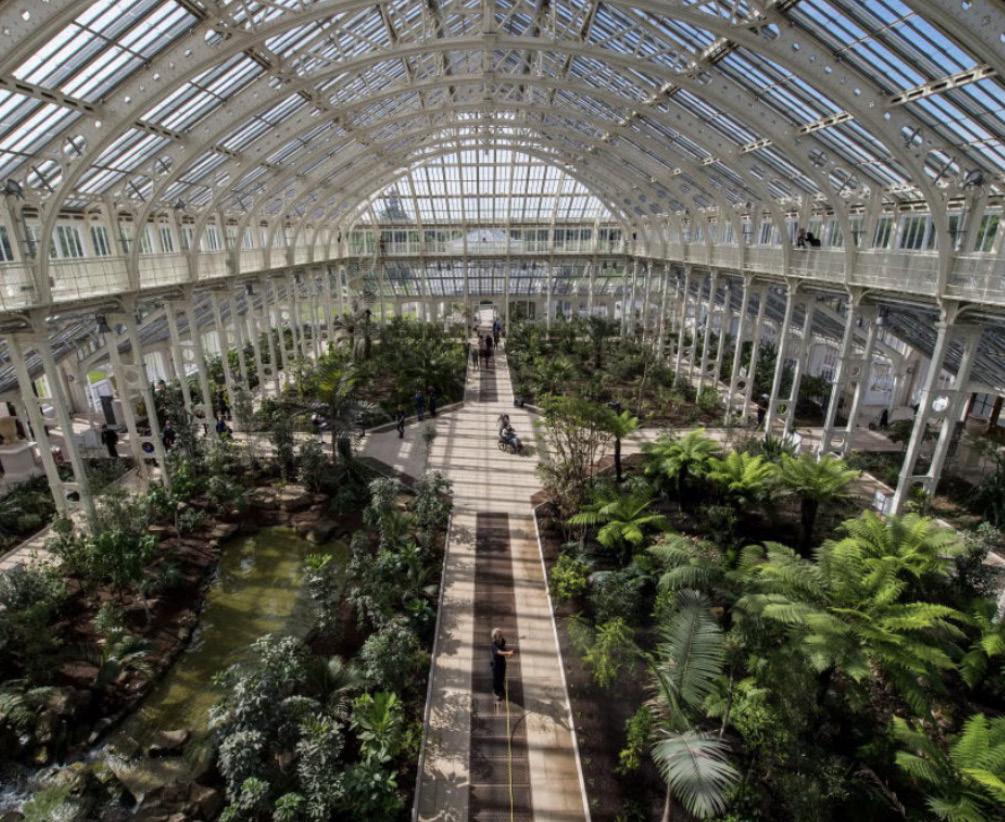
On 18th March, Year 10 went on a trip to Kew Gardens to end the term. The fresh air, mixed with the warm sun shining down on the trees and flowers, created a calm and relaxing environment that ensured a pleasant day.
Walking through the gardens with friends is relaxing in itself, but when partnered with the vibrant floral displays in areas such as the Waterlily House and the Princess of Wales Conservatory, it leaves you stunned, speechless, intrigued and amazed. Not only are the displays visually stunning,
but you are also given in-depth descriptions of each plant, including information such as its country and area of origin, as well as the ideal climate for it to thrive. You also learn about the benefits the plants can bring, whether helping with illness and skin irritation or simply making your tea taste better!
Other attractions at Kew Gardens include the Tree Top Walkway, which gives you the opportunity to see the gardens from a towering perspective. The prickly tops of the trees, partnered with the distant view of central London, create a mesmerising landscape. In
addition, areas such as the Great Pagoda, with its historic beauty and architecture, as well as the Hive, with its satisfying humming sound and dazzling lights, are not to be missed.
To cap off the term, the trip to Kew Gardens was an experience that could only be described with words of praise, as long as sunburn or bee stings were not part of your day! All in all, Kew Gardens is a wonderful place and, when combined with friends, fresh air and a relaxing walk, there is no better way to end a school term.
Ben C, Year 12 writes...
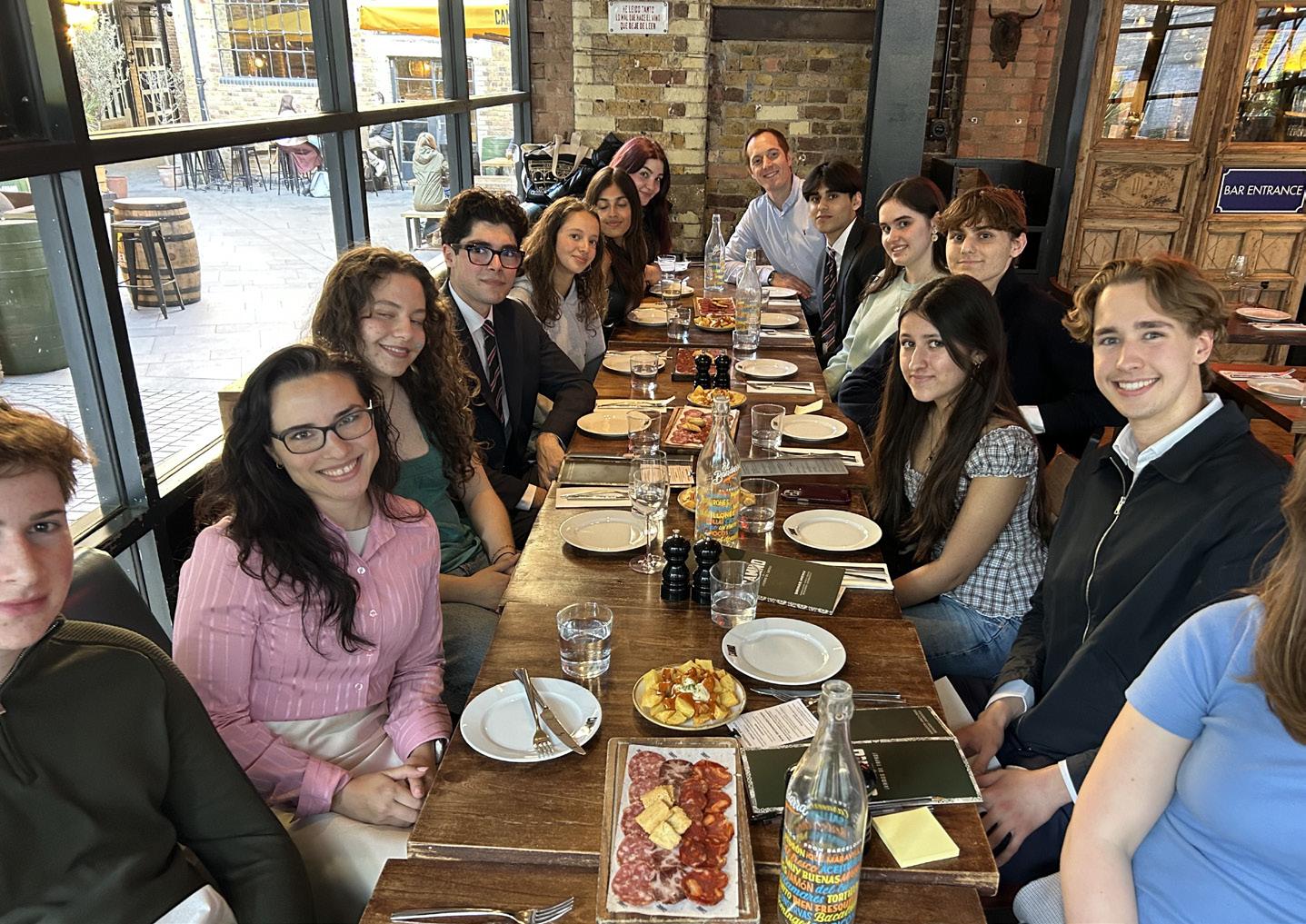
Spanish A Level students had the exciting opportunity to attend an evening event at Camino King’s Cross, organised by Ms García in conjunction with Francis Holland Regent’s Park. This dinner allowed us both to sample authentic Spanish cuisine, which I personally had not tried before, and to converse in Spanish with other A Level students.
I greatly enjoyed the variety of dishes offered in the tapas and, despite normally being a fussy eater, found every dish delicious. Over the course of the evening, we played a variety of Spanish grammar and vocabulary-related games, allowing us to practise our conversation and pronunciation skills, which was invaluable. There was never a pause in conversation, and the Spanish natives discussed everything from university applications to comparisons between life in Spain and England. Best of luck to the Year 13 Spanish
students in their upcoming exams!
Los estudiantes de español A-Level tuvieron la emocionante oportunidad de asistir a un evento nocturno en Camino King’s Cross, organizado por Ms García junto a Francis Holland Regent’s Park. Esta cena nos permitió probar la auténtica cocina española, que
personalmente no había probado antes, y conversar en español con otros estudiantes de A-Level.
Disfruté muchísimo de la variedad de platos ofrecidos en las tapas y, a pesar de ser normalmente un poco quisquilloso con la comida, todos los platos me parecieron increíbles. Durante la noche, jugamos a una variedad de juegos relacionados con la gramática y el vocabulario en español, lo que nos permitió practicar nuestras habilidades de conversación y pronunciación, algo realmente invaluable. Nunca hubo una pausa en la conversación y los hablantes nativos de español hablaron de todo, desde solicitudes universitarias hasta comparaciones entre la vida en España e Inglaterra.
¡Mucha suerte a los estudiantes de español de Year 13 en sus próximos exámenes!
Santi Q, Year 10 writes...
Music is a powerful element that enriches our day-to-day lives, nurtures emotional well-being and strengthens social bonds and connections. But have you ever thought about learning a musical instrument? Doing so can provide many valuable advantages.
Firstly, playing a musical instrument engages multiple areas of the brain, developing thinking skills and mental speed. Reading music and turning notation into performance enhances memory, concentration and pattern recognition. These developed skills can help in other academic subjects, such as mathematics and languages. The mix of creativity and discipline involved in learning an instrument nurtures a wellrounded, adaptable mind capable of handling complex tasks.
On another level, music is also uniquely effective in managing stress. Playing an instrument encourages focus and mindfulness, helping to reduce stress. It also provides an outlet for emotional expression, allowing you to convey feelings and emotions through the instrument. Performing music and achieving progress can boost self-esteem, giving you confidence that can extend into other areas of your life. It also has a lasting effect on the brain, with some studies suggesting that regular engagement with musical instruments can support mental sharpness in both current and
later life.
In conclusion, mastering an instrument, or even producing music as a hobby, is far more than just another pastime; it is a personal investment in development, social bonding and valuable life skills. The combination of cognitive

stimulation, emotional fulfilment and transferable skills is sure to provide enduring value.
Santi Q, Year 10 writes...
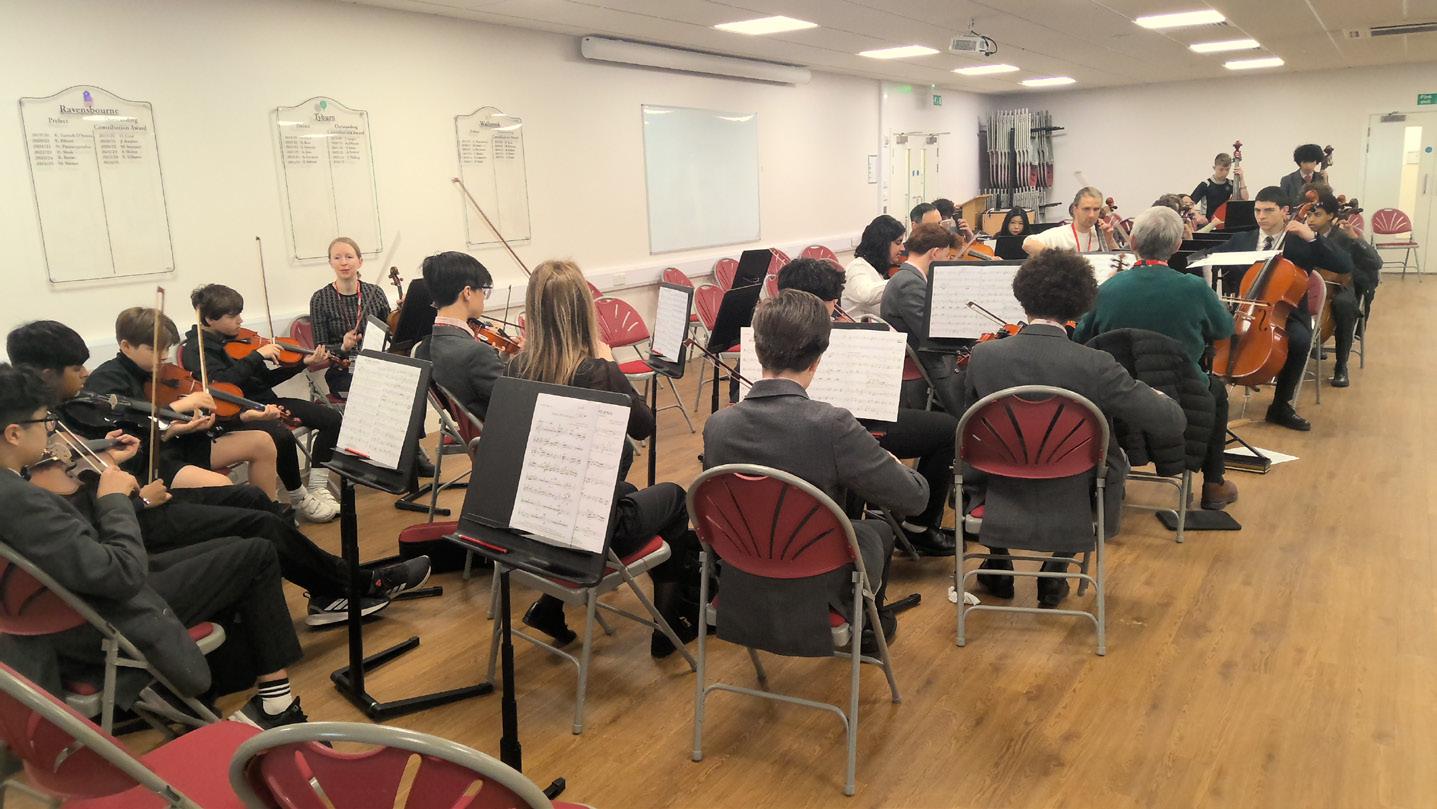
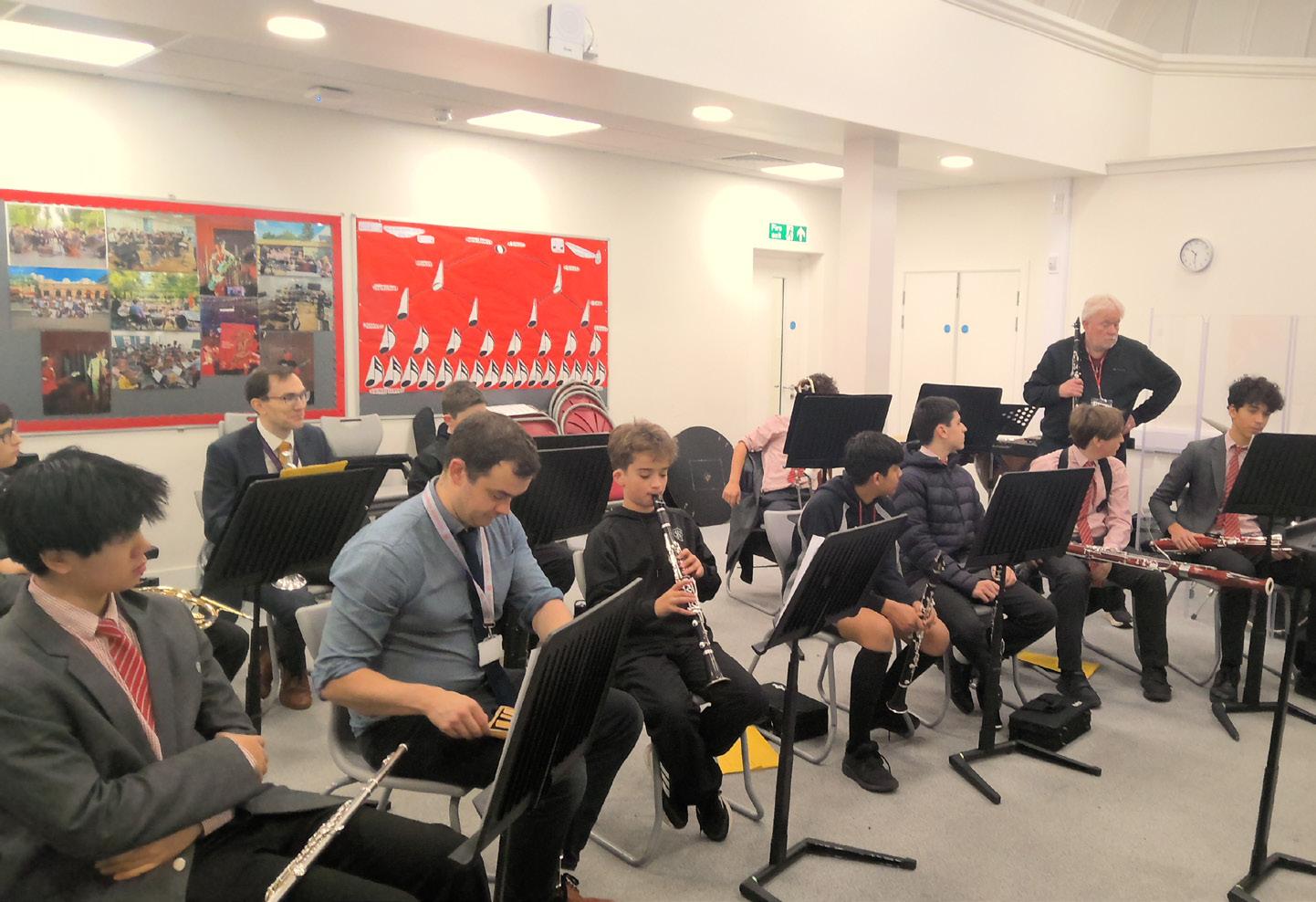
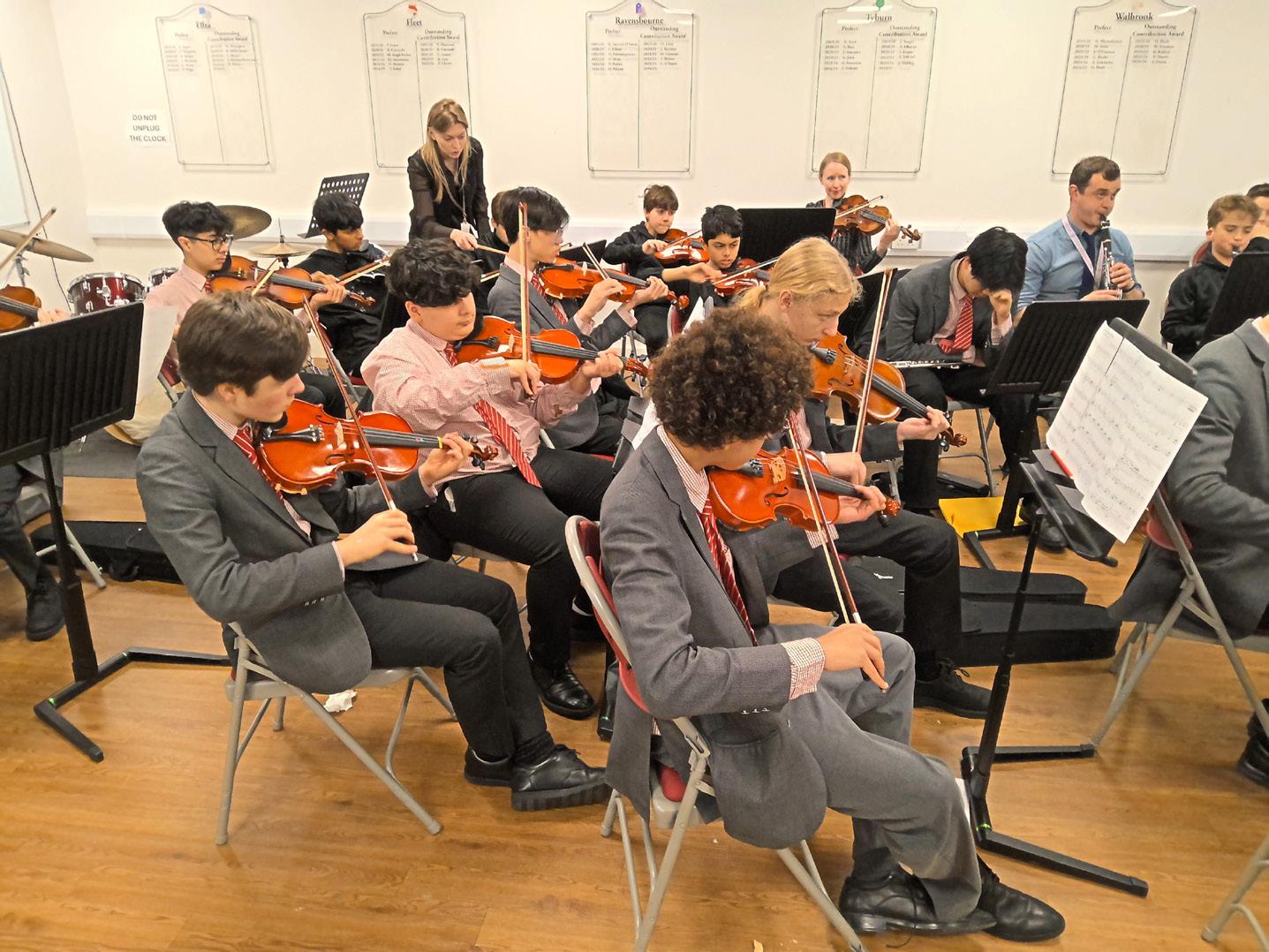
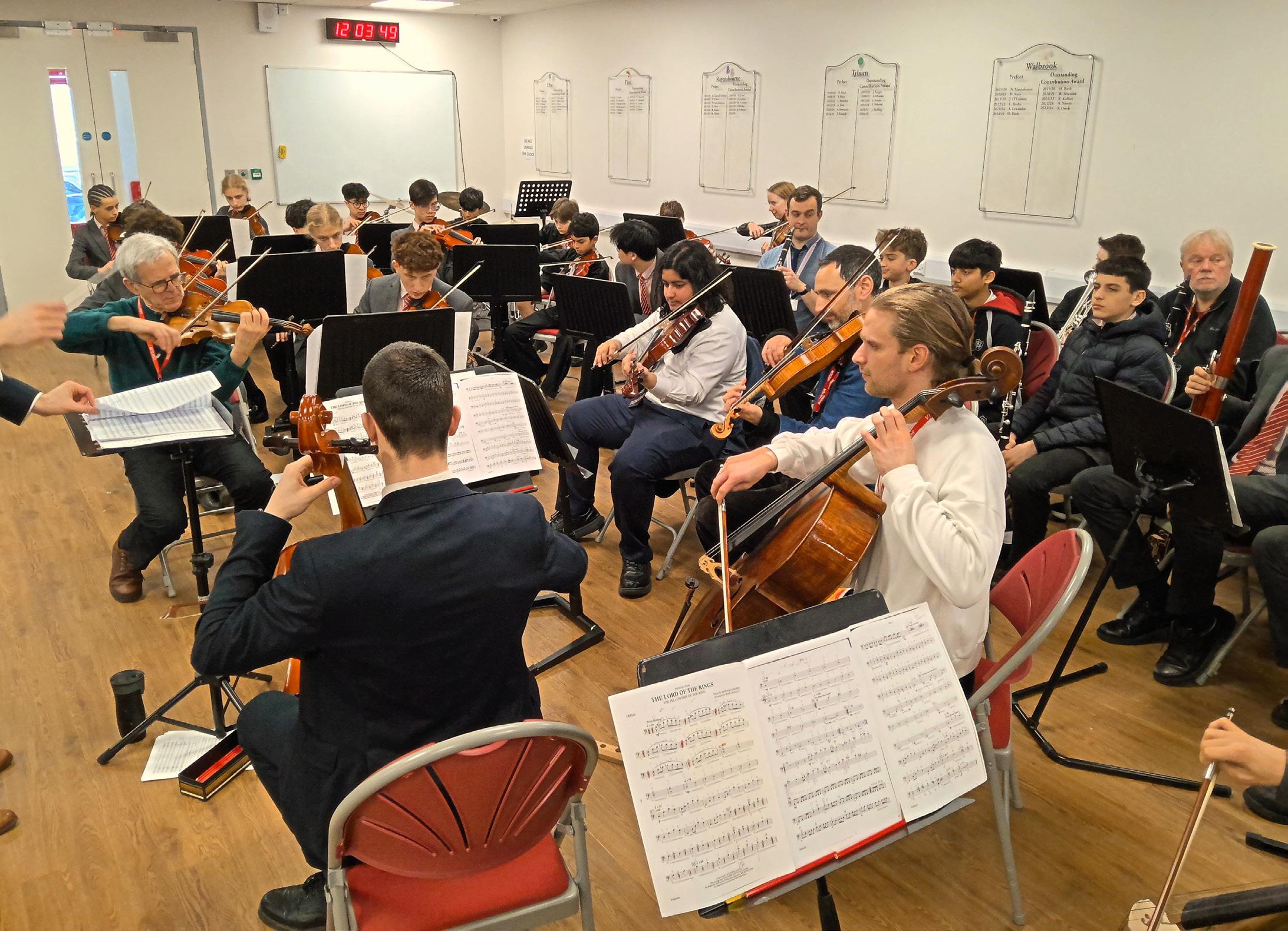
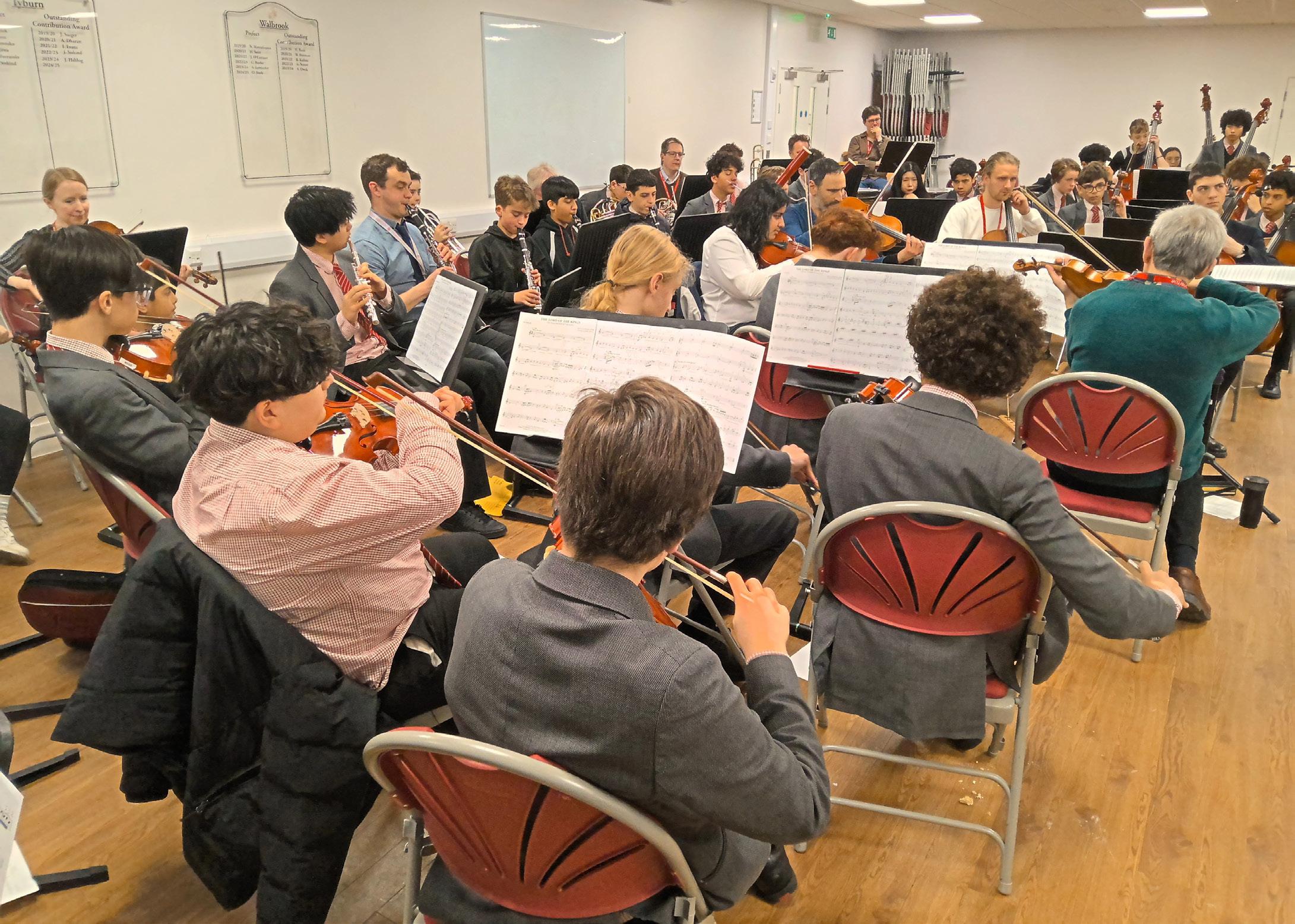
On Monday 16th March, a number of other boys and I had the privilege of participating in a collaborative workshop with the London Mozart Players, a renowned chamber orchestra known for their excellence in both classical and contemporary repertoire. During the workshop, we had the opportunity to work with them for two hours on our concert pieces, including The Phantom of the Opera and The Lord of the Rings.
The workshop gave us an interactive experience of coordinating with different sections of the orchestra and developing essential skills such as dynamics and musical timing. We also received practical advice on mastering more challenging passages for a variety of instruments, including violins, cellos and brass. The collaborative approach not only improved our skills but also fostered a deeper understanding of the music and each instrument’s role within the orchestra.
In addition to refining our technique, the session served as valuable preparation for the upcoming Spring Concert, giving us personalised feedback and experience of professional rehearsal and performance standards.
Overall, the workshop offered valuable insight into orchestral collaboration and the refinement of our skills. We benefited from the expertise of the London Mozart Players while gaining confidence and experience, making it both a memorable and educational experience.
Tommaso S, Year 12 writes...
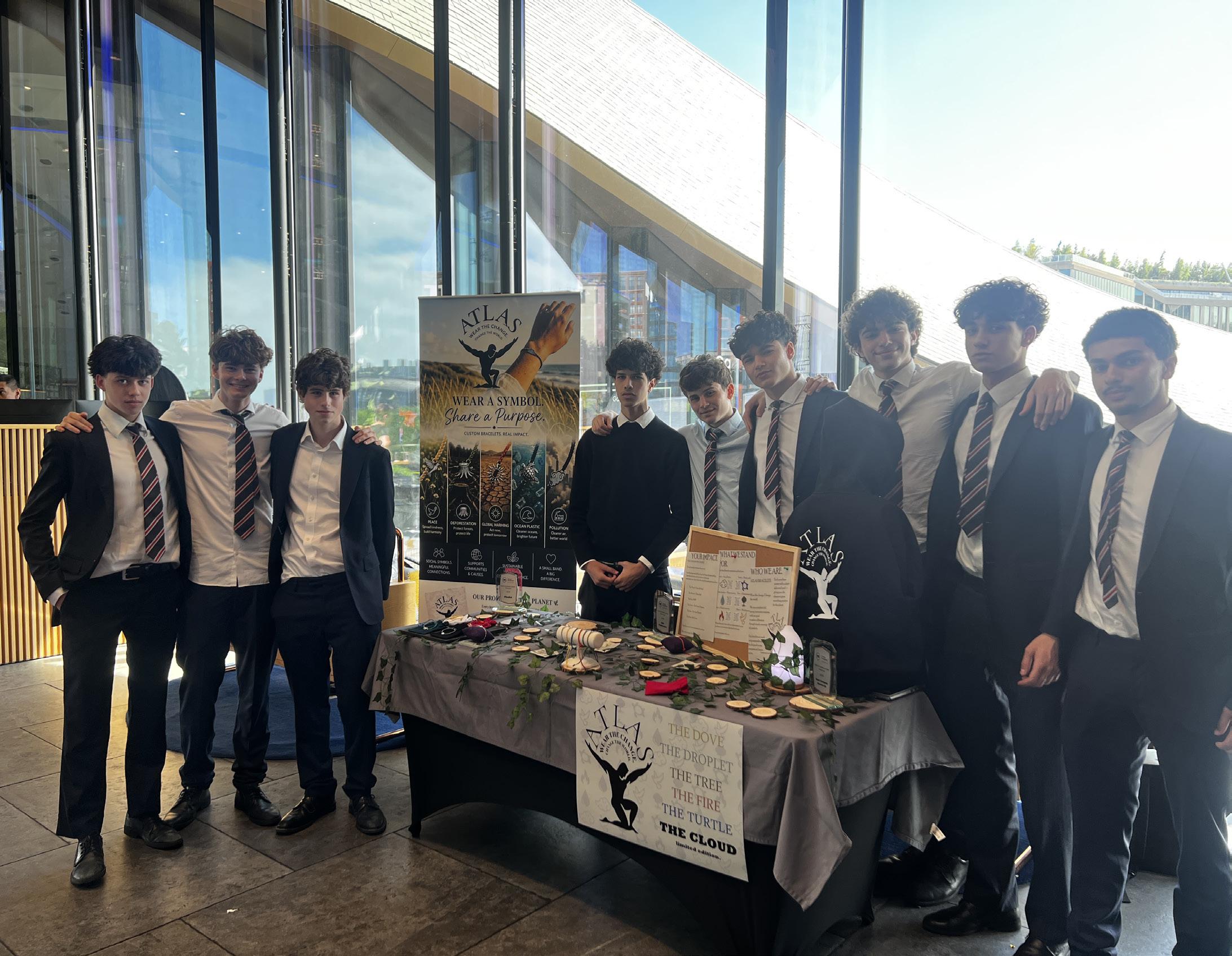
The journey of creating Atlas Bracelets did not happen overnight. Since October, we have collectively designed, developed and built our company from the ground up. It has been both fun and challenging. Each week, we continued to find new ways to improve our product and give ourselves a competitive edge over other businesses, while conducting research into potential manufacturers for our bracelets and seed-paper cards. We also utilised our individual skills to create handcrafted elements of the product.
Throughout the process, we learned valuable lessons about teamwork, communication, problem-solving, leadership and entrepreneurial spirit: skills and values that we will use in our future careers, and ones we have continued to develop throughout
our journey with Young Enterprise.
In addition to running our local enterprise, we attended several trade fairs, including events at Portobello Road and Brent Cross. At these events, we actively marketed and sold our products directly to consumers. Our dedication and hard work resulted in a total profit of over £1,600.
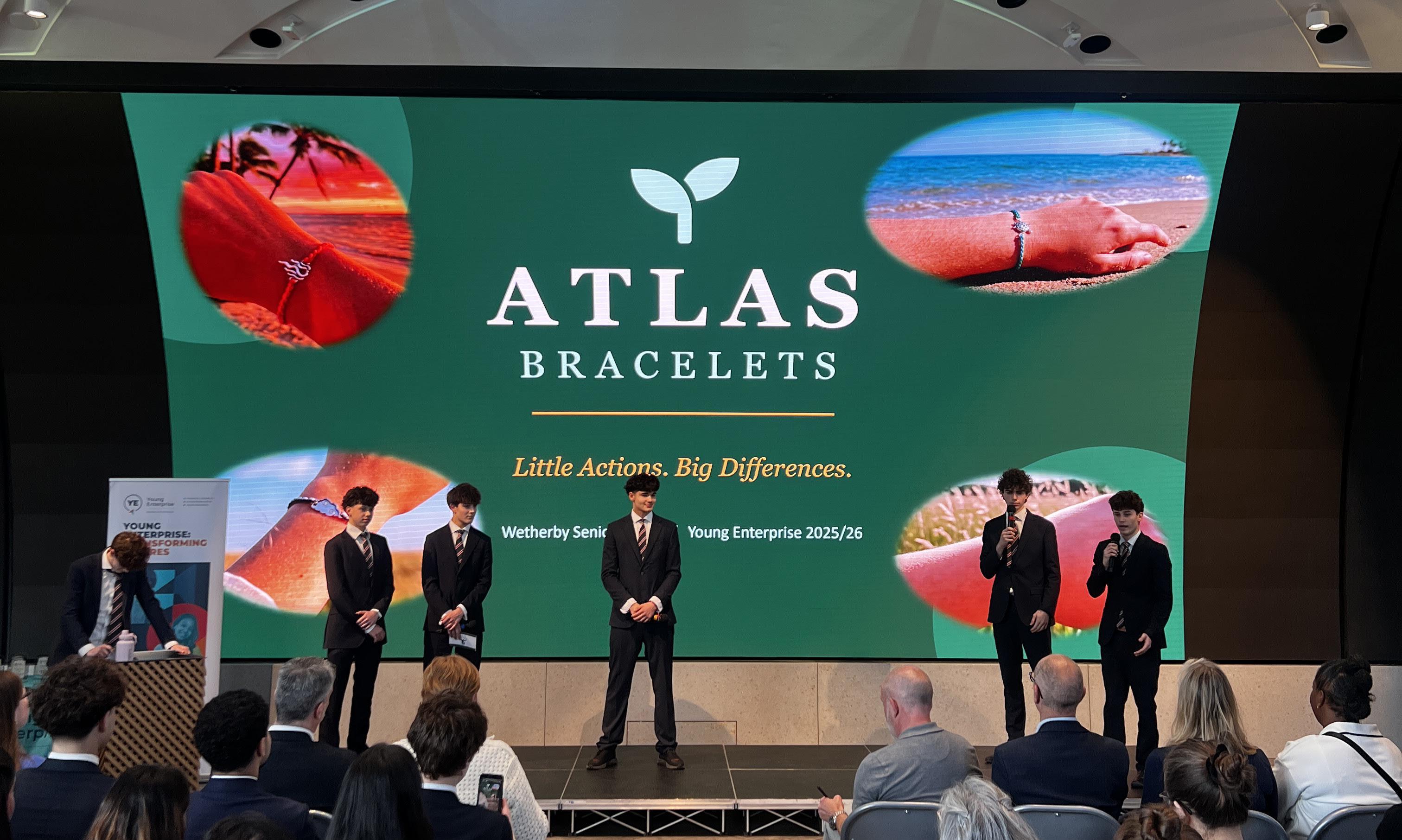
Furthermore, Young Enterprise has given us many unforgettable experiences and opportunities this past year. A particularly memorable event occurred recently on 29th April, when we were fortunate enough to present our business concept at the Samsung headquarters in King’s Cross. This came after winning the Best Presentation Award in the first round of the competition, which allowed us to progress to the next phase.
As soon as we arrived, we all worked together to construct our display booth. Every element of the stand was carefully designed and decorated to represent our creative vision for the brand. Immediately after setting up our display, the judges were impressed both by the visual presentation of our booth and the innovative nature of our product, which gave us an excellent start to the day.
Before we knew it, it was time to practise our presentations. Panos, Jaspar, Jay, Majed and I prepared for the judging portion of the competition before taking part in an interview with the judges, where they asked us a variety of questions relating to all aspects of our business, including our finances, the inspiration behind our idea and the development of our product.
The next thing we knew, it was time to present. As luck would
have it, we were chosen to pitch first in front of numerous judges and students from other schools. All five of us delivered a professional, entertaining and confident presentation that demonstrated not just our product, but also the dedication, hard work and teamwork behind Atlas Bracelets.
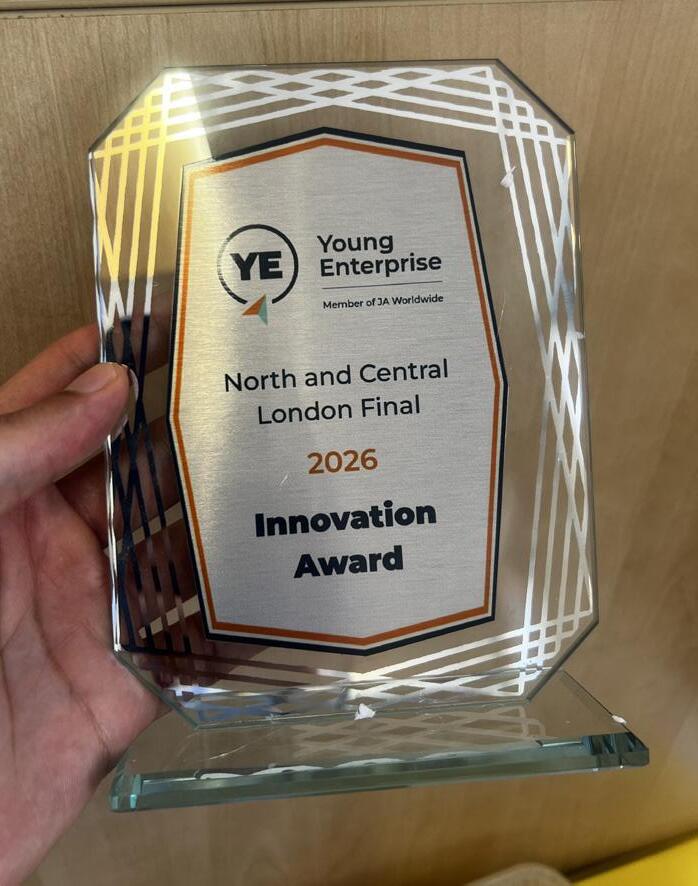
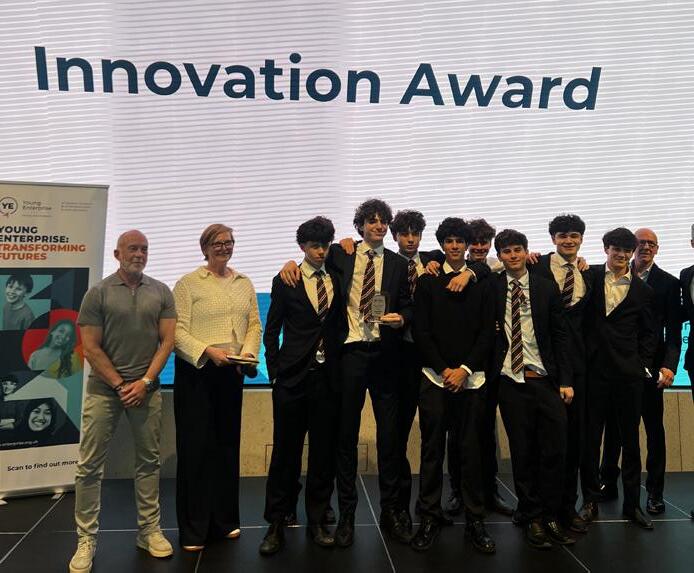
Although we narrowly missed out on first prize, we were very proud to take home the Innovation Award, which made Atlas Bracelets one of the most successful and well-decorated Young Enterprise teams our school has ever had.
Our participation in the competition may have come to an end, but the memory of Atlas
Bracelets certainly will not. We plan to continue developing our brand and carry forward the experience, skills and memories we created together throughout this amazing year.
Finally, I would like to congratulate every member of our team and say how proud I am of our work this year. I speak on behalf of everyone when I say that the effort we put into designing this product was huge, and that it has been a joy watching our company flourish. I also want to thank Mr Kamath, who played a key role in our success, and I cannot wait for our celebration dinner.
Well done, lads!
Yunus A, Year 8, writes...
Futures, anywhere in the world, and especially at Wetherby, can feel like a conundrum that any student can barely crack, even with years of preparation and guidance. The reason I say “especially at Wetherby” is because of the outstanding systems we have in place to ensure that students from Year 7 onwards can grow exponentially and pursue futures and careers that suit them, even on an international scale. However, such a wide range of opportunities can make these paths difficult to navigate. Thankfully, the resources you will hear about in this article do a great job of combating that.
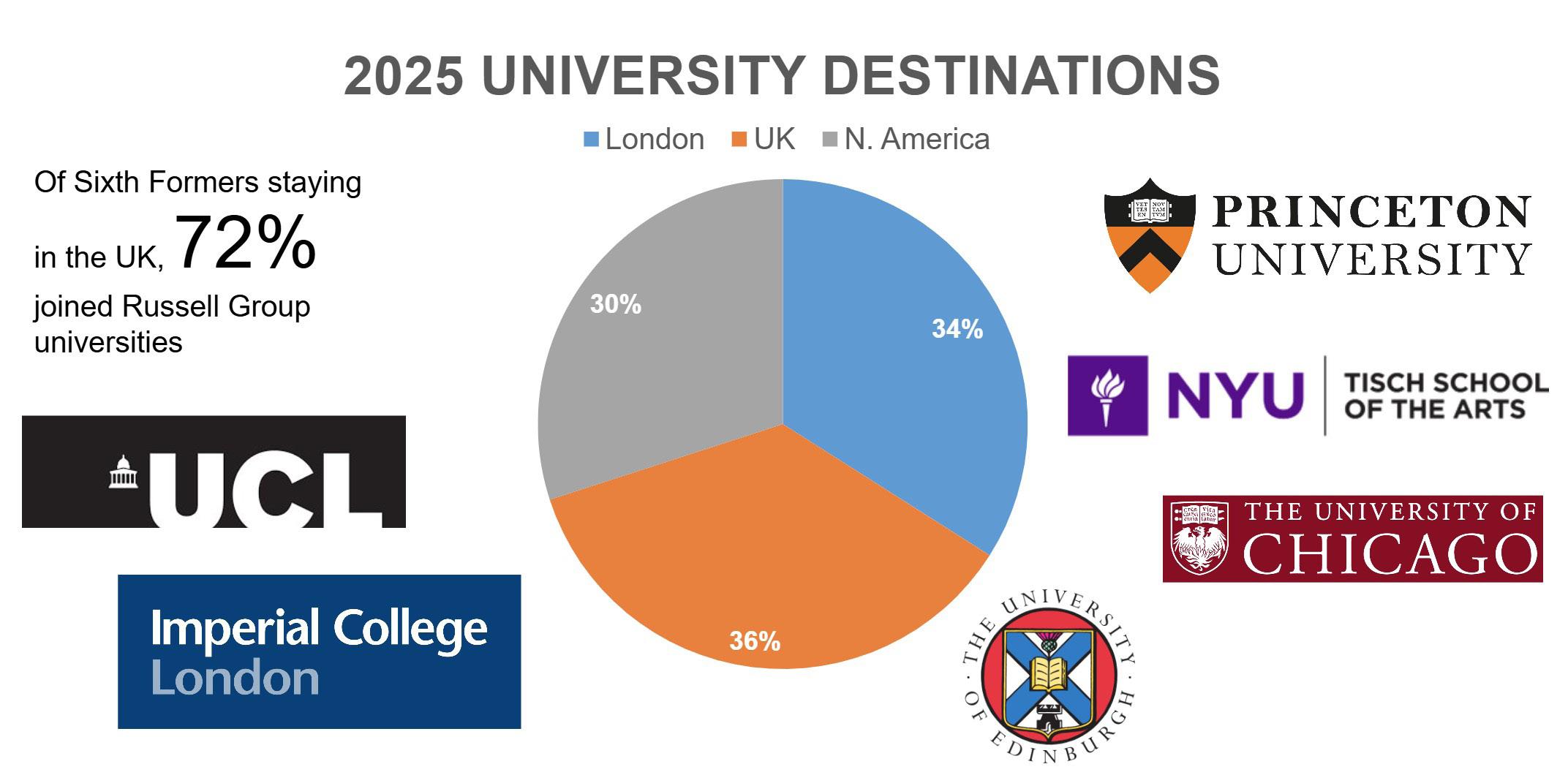
Throughout this article, you will hear from our own Head of Futures, as well as our soon-to-be University of Chicago student and Deputy Head Boy, Aditya Dubey. In addition, I will provide a list of some of the notable destinations our Upper Sixth students will be attending at the end.
Our Alumni’s Global Expedition for Education
There is a wide range of resources available to students to help them succeed in their futures and, in the words of Ms Rocci Ruiz, Head of the Futures Department here at Wetherby, “The aim and ethos of the Futures Department at Wetherby Senior is to help pupils develop the tools to master their own future, from building selfawareness and decision-making skills to preparing for higher education and an ever-changing professional world.”
A distinguishing characteristic of our school is the way our students pursue education not only in the UK, but also internationally. “More than one third of our leavers choose to study abroad, which demonstrates that they understand and take advantage of different educational systems and global opportunities.”
However, we cannot speak of the future without speaking about the past. It is the culmination of years of hard work and determination that leads to the final result. I asked our Deputy Head Boy, Aditya, to reflect on his experiences leading up to his final year at Wetherby and the things that prepared him for an international application to the University of Chicago.
“Looking back on my time at Wetherby, I’m grateful for the opportunities that have prepared me for an international application. Whether through sport, acting or leadership roles, I was consistently encouraged to step beyond the classroom and develop confidence in a range of settings. These experiences have not only made me more wellrounded but have also shaped my ability to engage with different perspectives and challenges. As I look ahead, I’m excited to carry this mindset into a new academic environment and continue building on it.” – Aditya D, Year 13
Ms Rocci’s Reflection on Working with the Boys
In addition to my conversation with Aditya, I spoke to Ms
Rocci Ruiz about her own feelings watching the Upper Sixth boys develop and achieve such impressive admissions results. I am sure the boys have enormous gratitude towards Ms Rocci, as well as the many others responsible for helping them succeed.
“I am very proud to see, throughout the Sixth Form, how our pupils develop their perspectives and craft authentic and thoughtful applications with the help of tutors, the Head of Competitive Applications, the Sixth Form team and myself. This year, we continue to show how Wetherby pupils stand out in a very competitive higher education landscape. Regardless of the destination, I am sure they will all leave their mark, continuing a great trajectory that we will be proud to say started at Wetherby.”
– Ms Rocci, Head of Futures
Words from the Writer
“The future is always bittersweet, an amalgamation of excitement and anxiety, to say the least. On a personal level, this is my last article for The Barometer, a journey I have been part of throughout my Wetherby career. And although you reading this may be someone like me, either in the lower years or simply in a comfortable place where it feels like nothing is going to change, I want you to think about the future, even if only for a moment. Where will you be, and what will you be doing? Think about the deep nature of change and the forms it can take.
When we speak about the future within a school environment, we are not just talking about the Upper Sixth. The future is something we all experience. Finally, I want to dedicate these last few words to those in all year groups, especially those in the Upper Sixth going through change or beginning a new chapter at another school or university. Change is natural. And the very best of luck in your exams!” –Yunus A, Year 8
Our leavers have secured exceptional offers. For instance, all four boys who applied received offers from the University of Chicago, one of the top universities in the world, with an acceptance rate of less than 5%, and we also have several offers from Imperial College London.
Beyond these highlights, our leavers have secured offers from
UCLA, USC, Tulane, Boston College, Babson College, IE, the Columbia University/Tel Aviv Dual Programme, NYU, Georgetown Qatar, the University of Miami, ESCP, EDHEC, the University of Amsterdam, UNC Chapel Hill, Northeastern, McGill, LSE, UCL, Edinburgh, KCL, Bristol, St Andrews, Dalhousie, Manchester and Cardiff, among many others.
Santi Q, Year 10 writes...
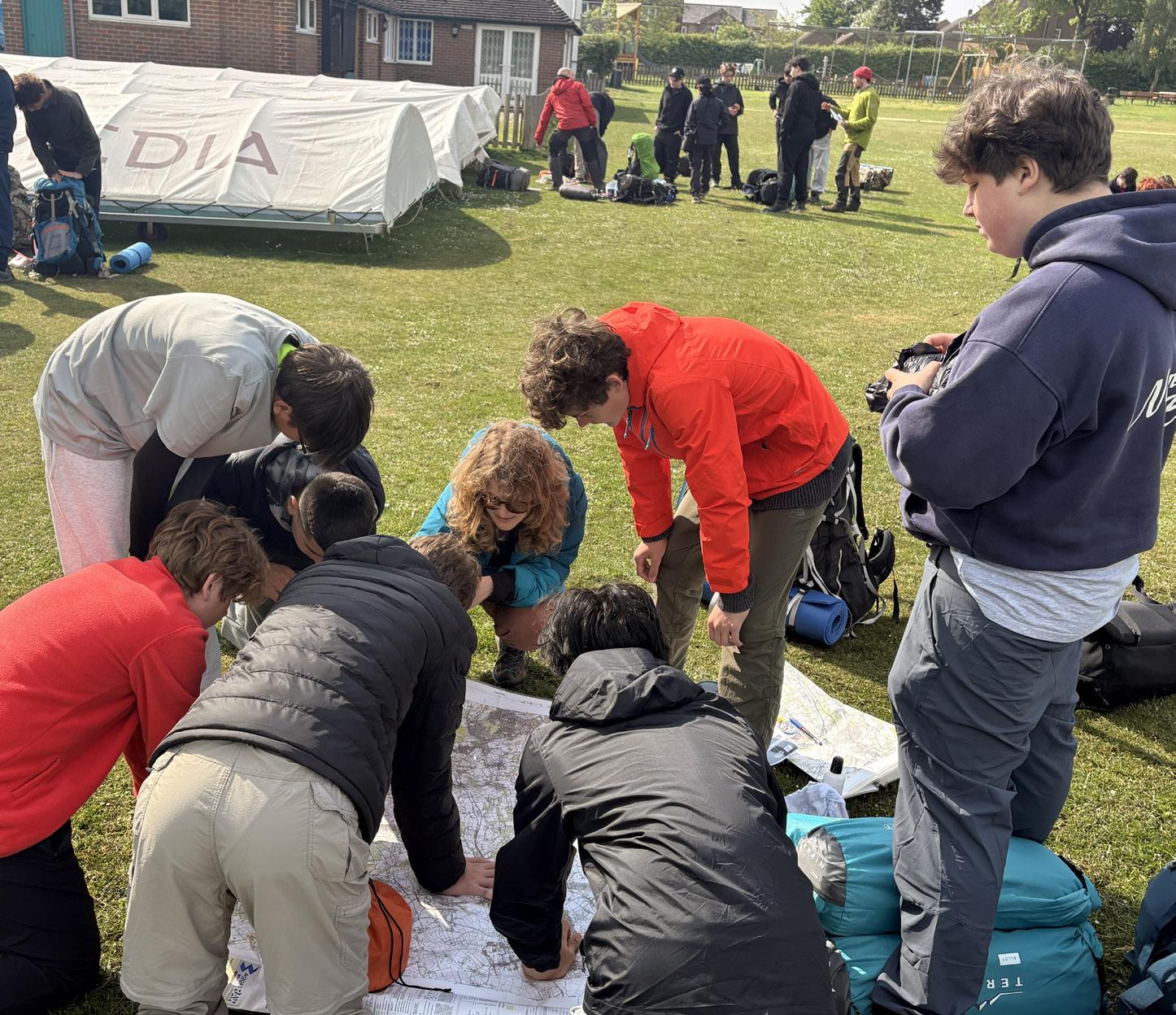
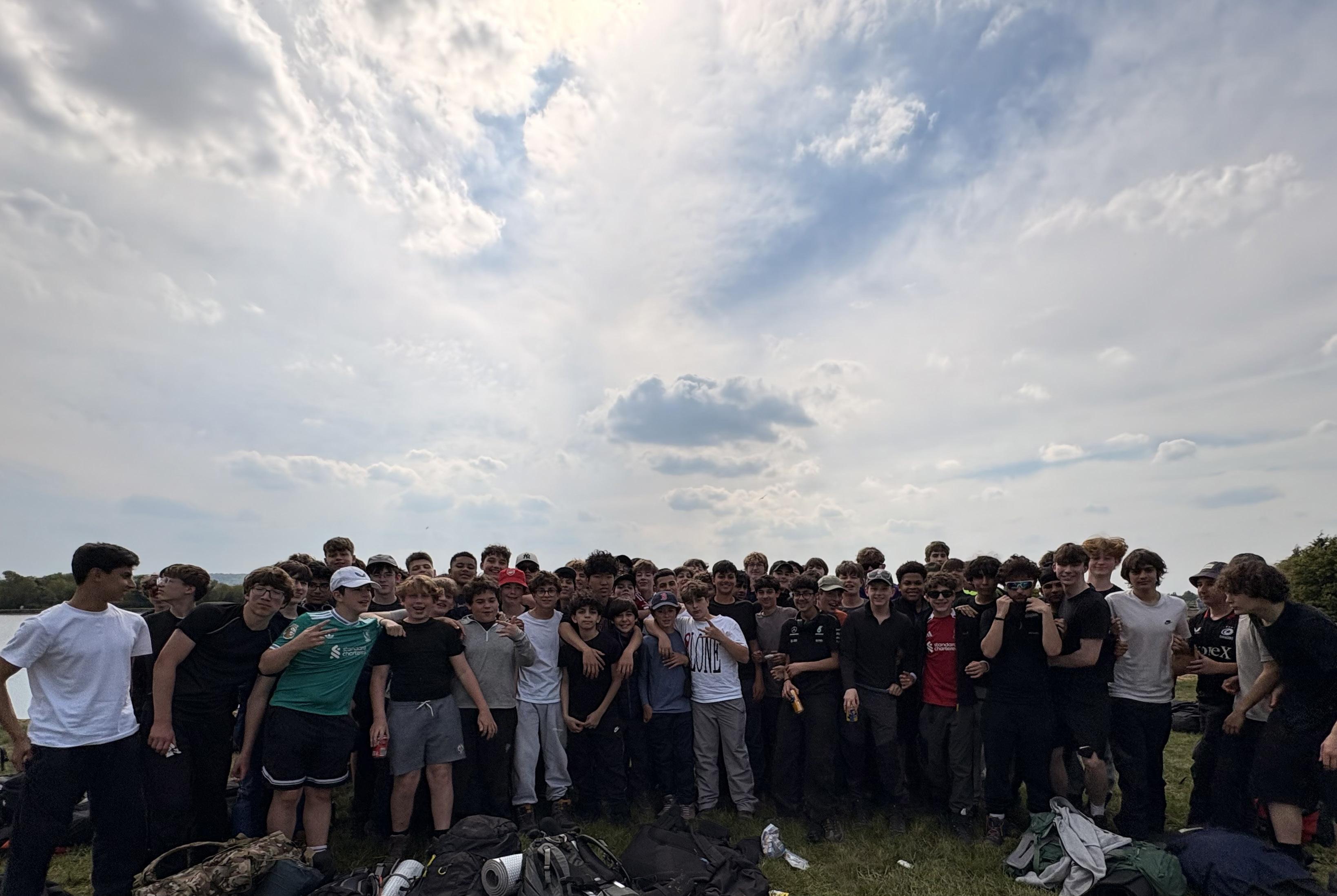
Completing the Bronze DofE expedition was one of the most memorable experiences of the year for myself and everyone involved. The many hours of walking and packing sounded intimidating at first, yet the expedition became both a challenging and enjoyable experience that we all look back on positively.
Some of the best parts of the expedition were the scenery and the countryside knowledge we gained along the way. Spending hours walking through rural areas allowed us to see open landscapes, fields and farm plots arranged almost like a natural collage. The long walks, although tiring at times, rewarded us with amazing views and an atmosphere that made the challenge far more enjoyable.
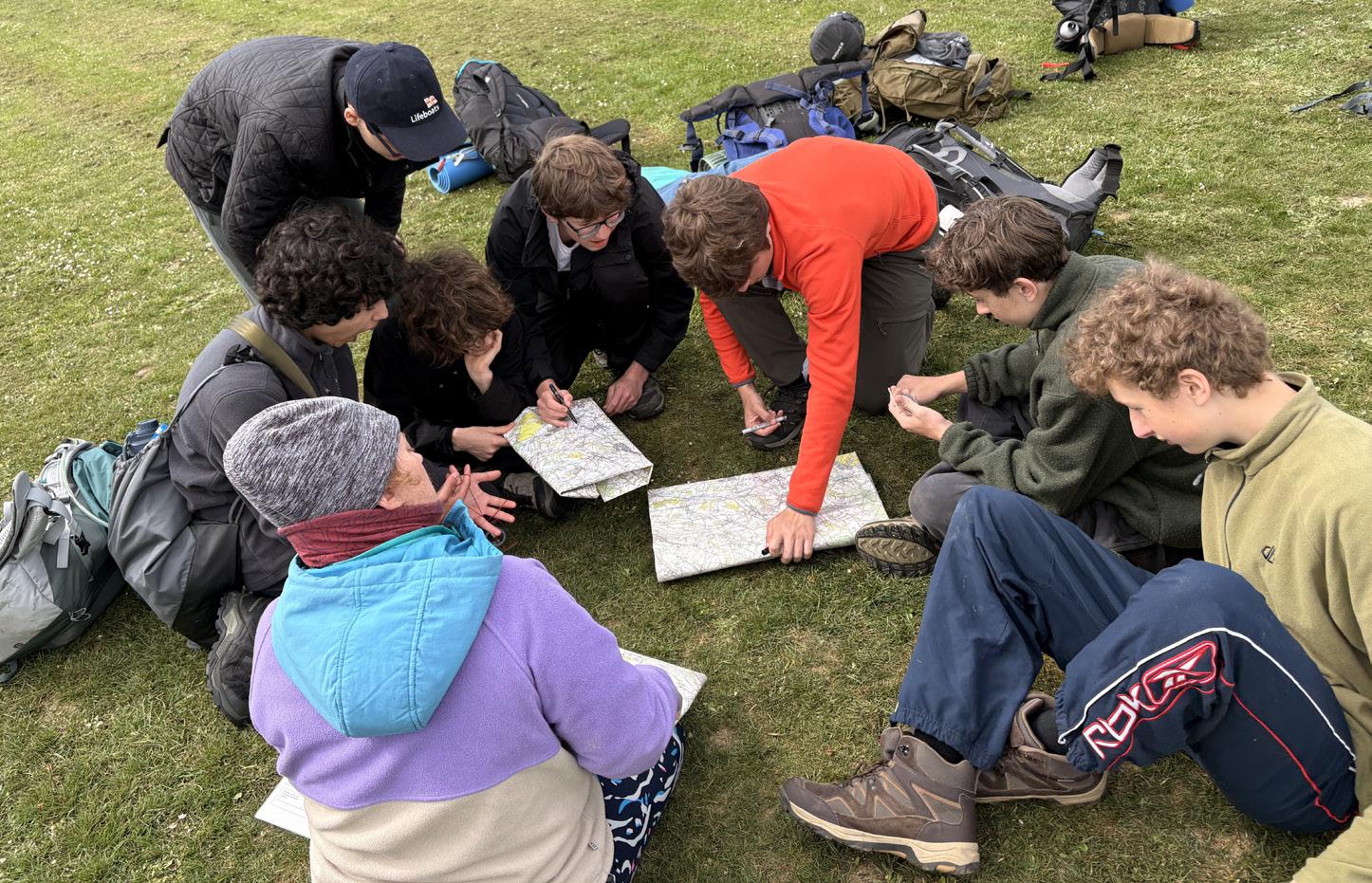
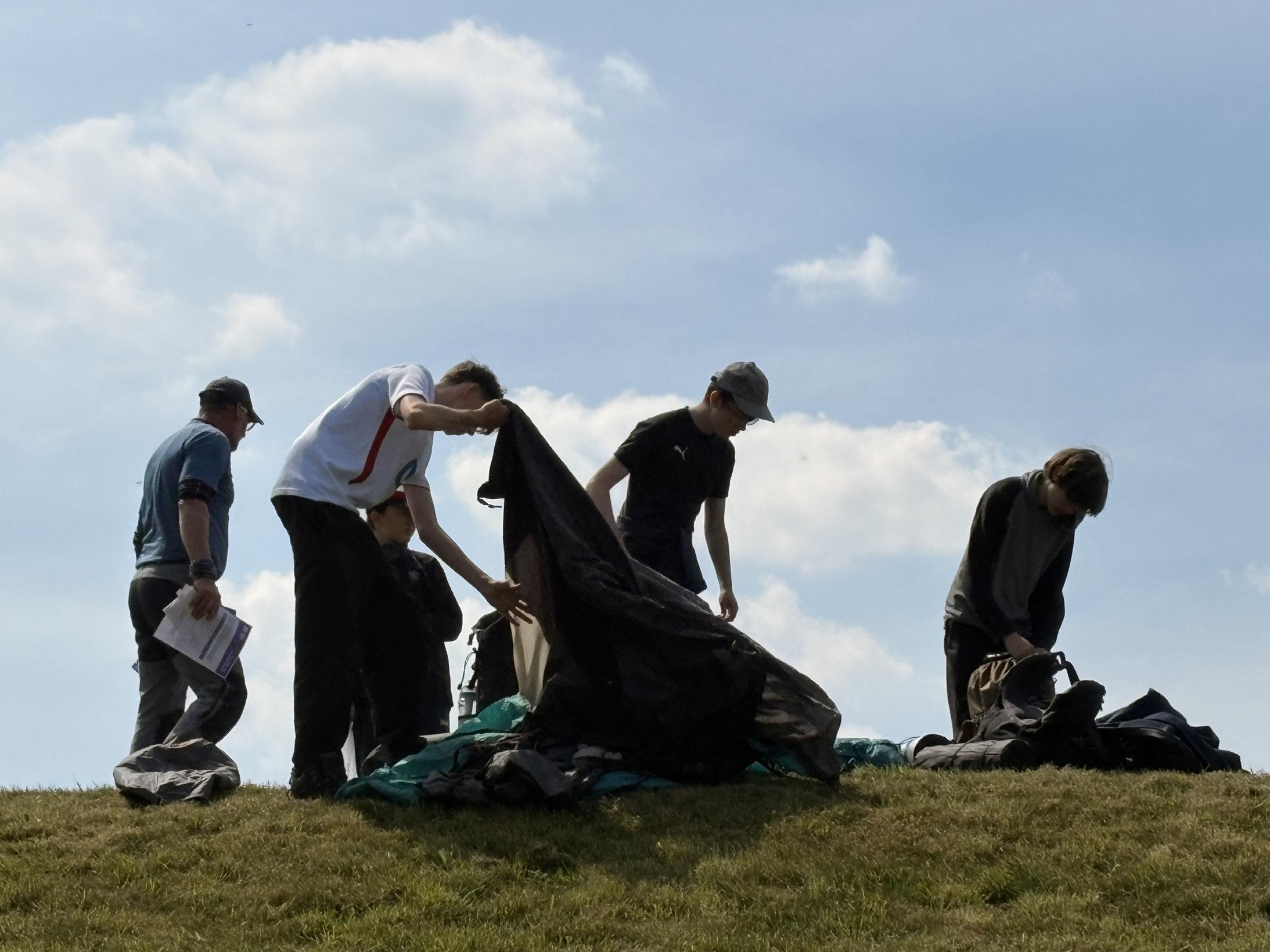
Another major part of the expedition was teamwork and the responsibility that came with it. Whether pitching tents, cooking dinner, planning routes or trying to work out where we actually were on the map, we always worked together as a group. Navigation proved difficult for many, but it also gave us a sense of independence.
Cooking and tent-building were also highlights of the experience. After a full day of walking and relying on our map-reading skills, a packet of Wayfarers or a pot of noodles felt amazing. By the evening, everyone had a strong sense of achievement, knowing that we had managed almost everything ourselves.
One of the most rewarding parts of the expedition was seeing how everyone adapted and changed over time. At the start of the practice expedition, carrying heavy backpacks and walking long distances felt difficult. By the end, everyone had become more confident and determined. The expedition pushed many students outside their comfort zones, yet that was exactly what made it such
a valuable experience. Overall, Bronze DofE was far more than just walking long distances. It taught us important values such as resilience, teamwork and independence, while giving us many memorable experiences along the way. Ultimately, despite the sore legs and heavy backpacks, it was an experience that I would recommend to everyone.
Alexander M, Year 9 writes...
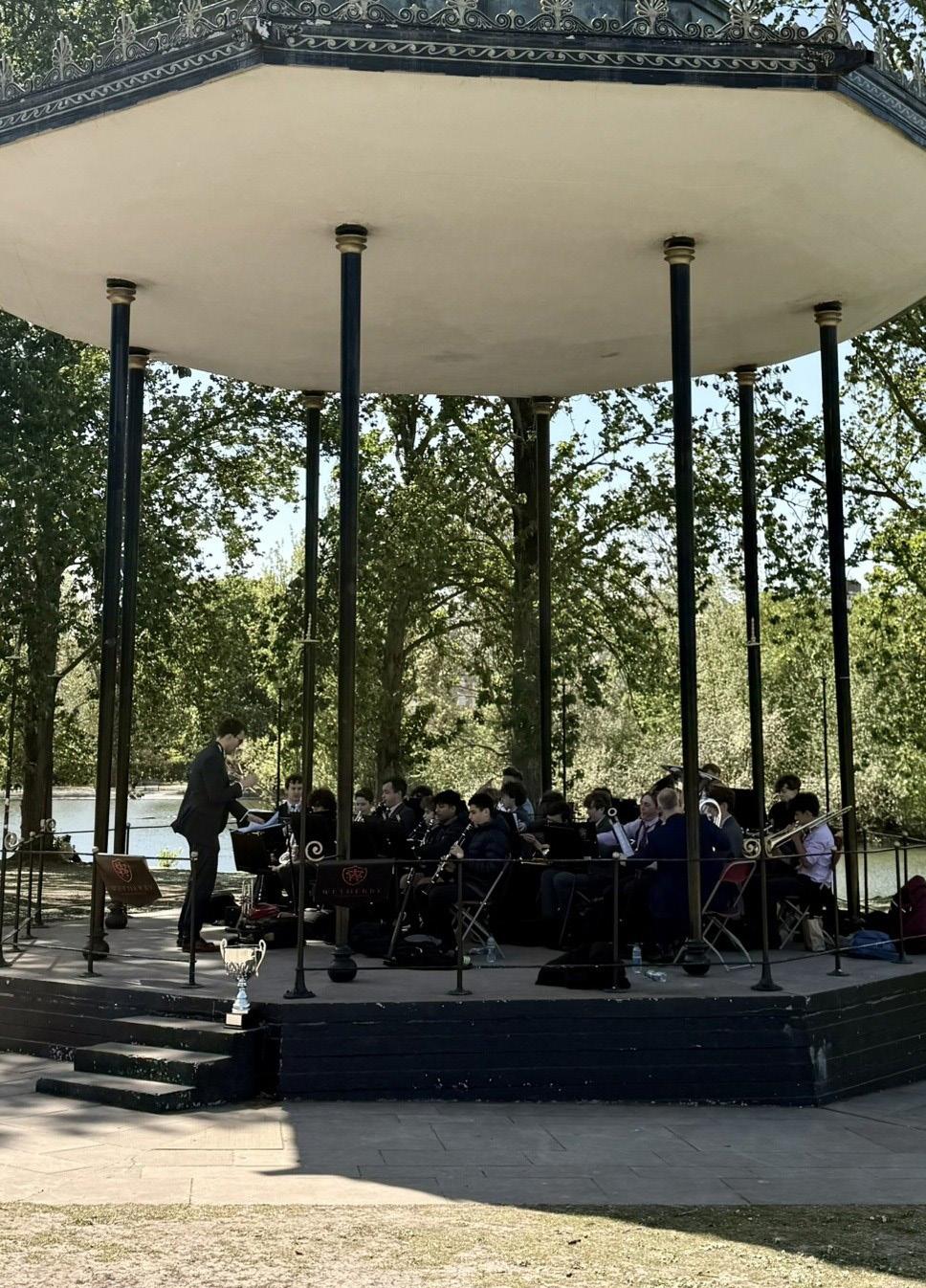
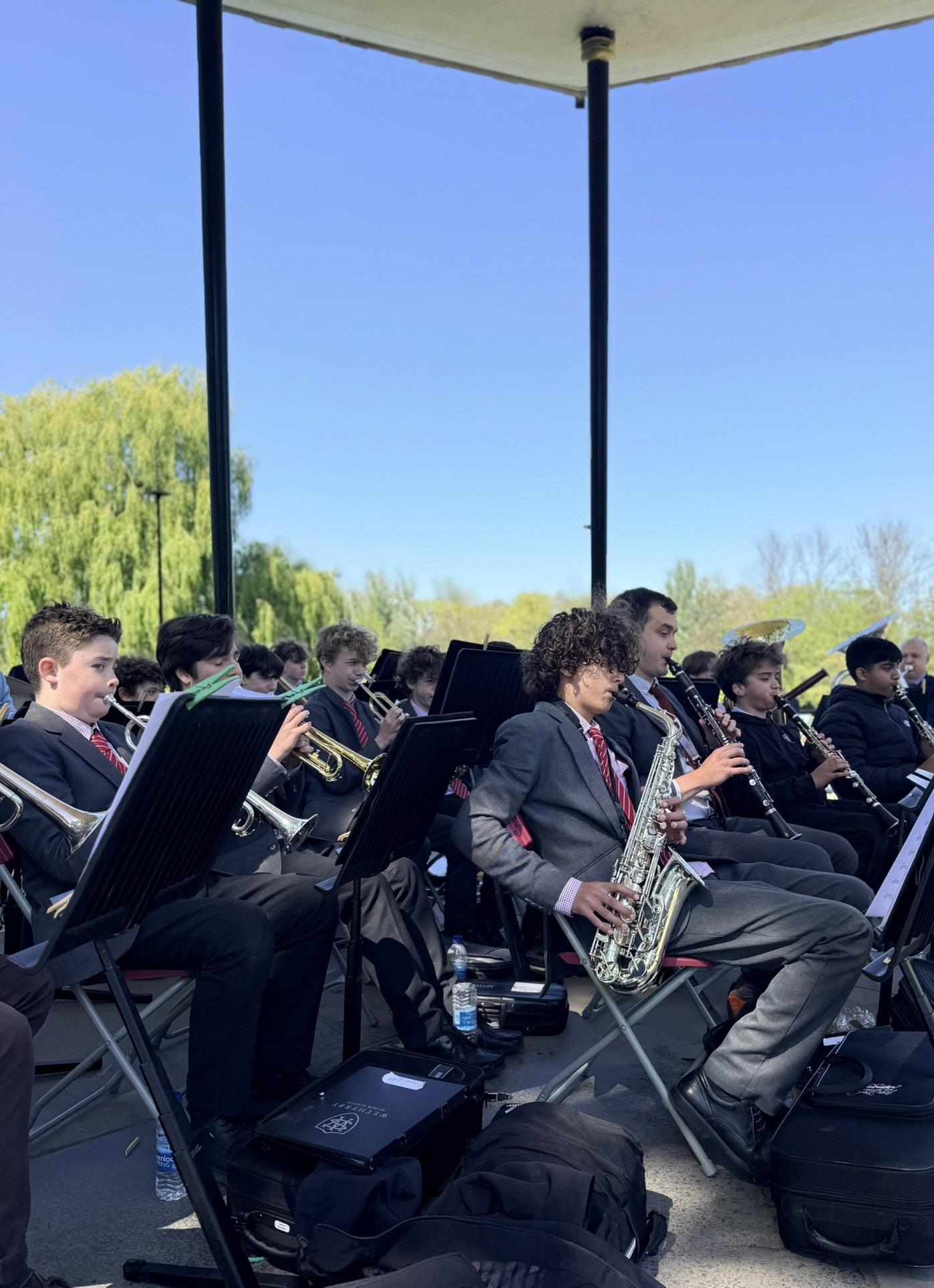
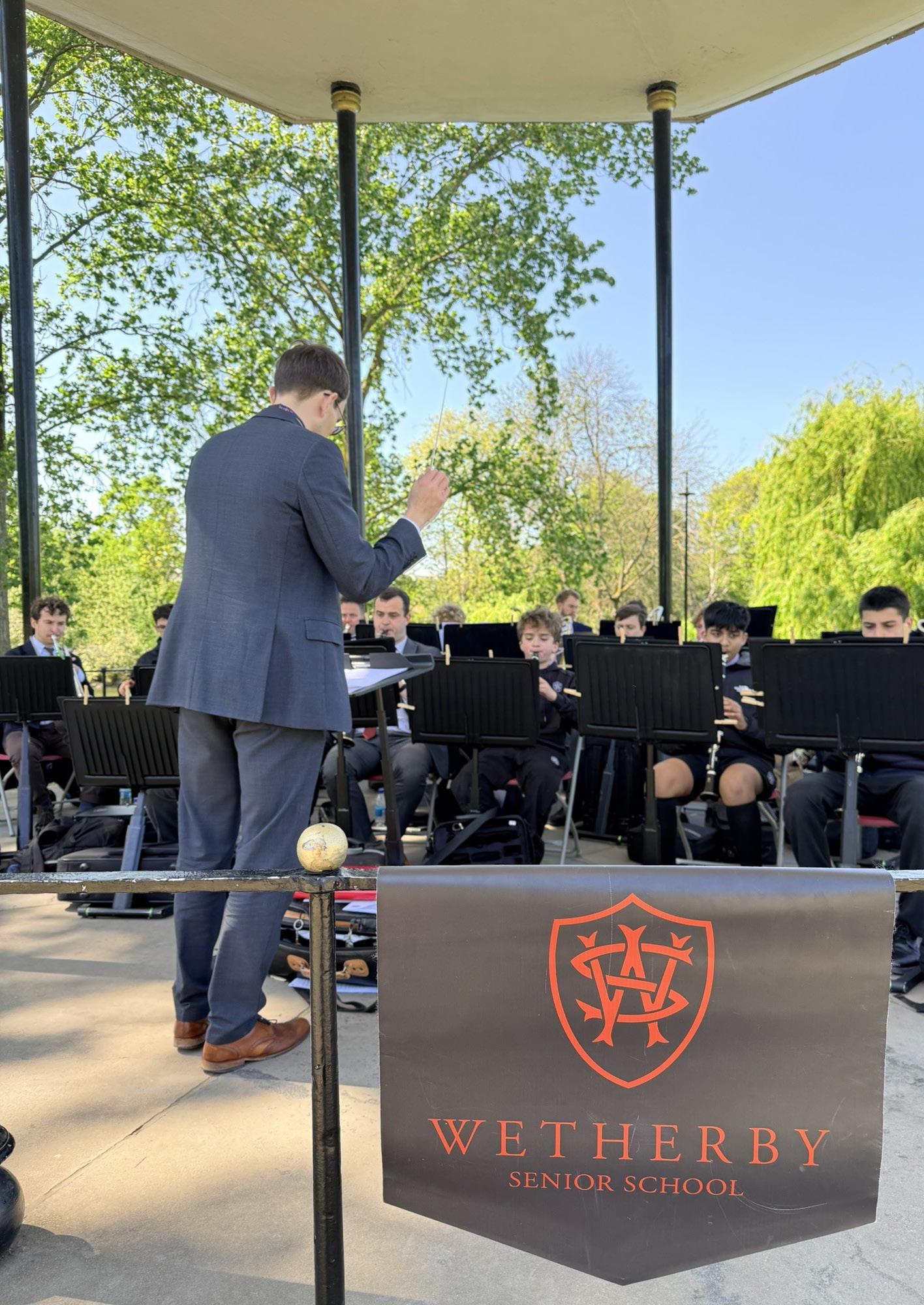
On 22nd April 2026, Concert Band performed at the bandstand in Regent’s Park. Although the wind made it very difficult for the music to stay on the stands, the performance was, overall, a success.
There were at least 50 people watching the performance, which consisted of five impressive songs: The Incredibles, Blinding Lights, Call Me Maybe, The Final Countdown and Never Gonna Give You Up.
The whole of Concert Band and Symphonic Brass performed in the concert, consisting of around 30 students playing a variety of instruments such as the trombone, bassoon and clarinet. The bands had been rehearsing throughout the morning before leaving for the bandstand at around 11:30am.
Even though the wind was quite strong during the performance and caused general chaos in the
bass section, the weather was otherwise great, with the sunshine making everything feel warm.
The programme began with The Incredibles, the theme from the popular Pixar film, which was bold and dramatic. The second piece was Blinding Lights by The Weeknd, an upbeat and uplifting song that started the performance very well. Up next was Call Me Maybe, a tuneful piece where the clarinets and trombones did much
of the heavy lifting. The fourth piece was The Final Countdown, a powerful performance that emphasised the brass section, followed finally by Never Gonna Give You Up, which ended the concert on a high note.
In the end, the concert went very well, and all the students and teachers performed brilliantly. Hopefully, the next Wetherby concert will be just as good, if not better!
James C, Year 10 writes...
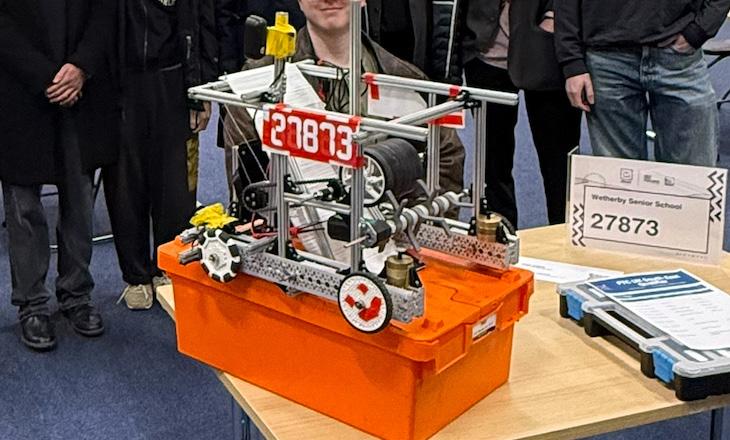
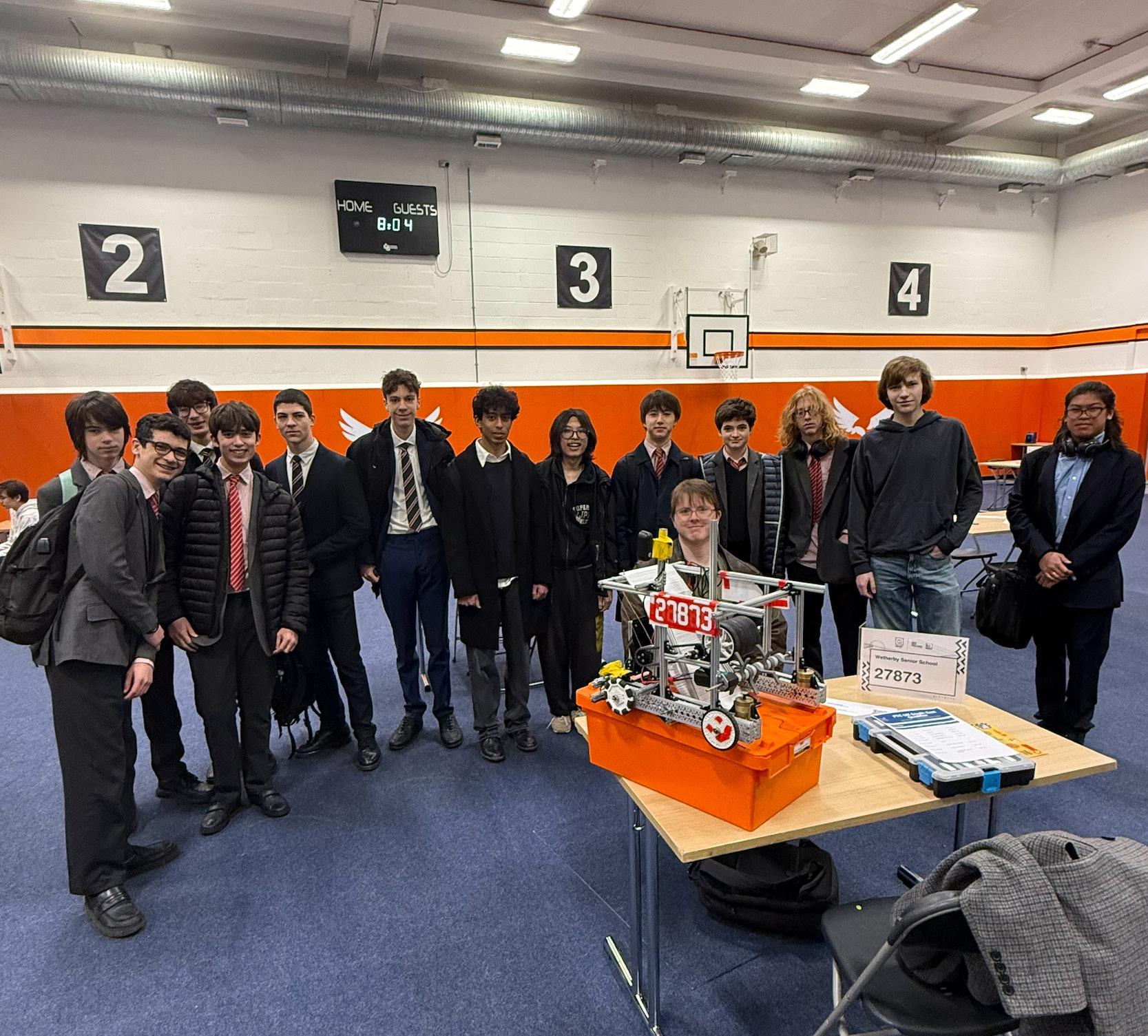
On 21st March, Wetherby Senior School’s Senior Robotics team once again travelled to ASL (the American School in London), near St John’s Wood. However, this time we went to compete in the 2025–2026 FTC (First Tech Challenge) Regional Competition against other schools and teams.
The competition involved several different elements. First of all, our robot had to be checked to ensure that it fit all of the required parameters and rules:
• It had to fit inside an 18x18x18 cube
• The Control Hub needed a specific name and had to be fully updated
• There could be no loose wires
The actual gameplay consisted of two parts:
• A 30-second autonomous code
• A 2-minute driver-based TeleOp
To win the game, you had to have the most points at the end of the two and a half minutes. Each year, the challenge changes. This year, we had to shoot balls into a hoop in different orders, which sounds much easier than it actually is.
This year was Wetherby’s first time attending the competition due to complications last year. There were a total of 20 teams competing, all with varying levels of experience and ability. However, we quickly realised how competitive the event was when we saw that another
team had built their robot entirely out of carbon fibre. Despite this, we tried not to let it distract us.
In our first match, we lost by around 40 points. However, we won the second match, largely thanks to one of the more experienced teams we were paired with. We then lost a few more matches and won a few others,
eventually placing 9th out of the 19 competing teams.
Although we did not make it through to the second round because we were not in the top four, we learned a great deal from the experience and realised that next time we would need a much stronger robot.
Leo F, Year 8 writes...
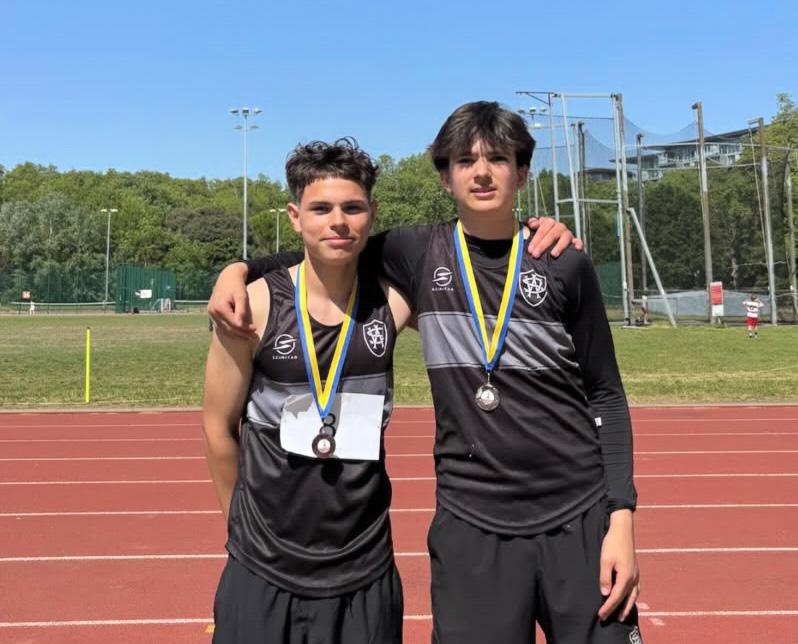
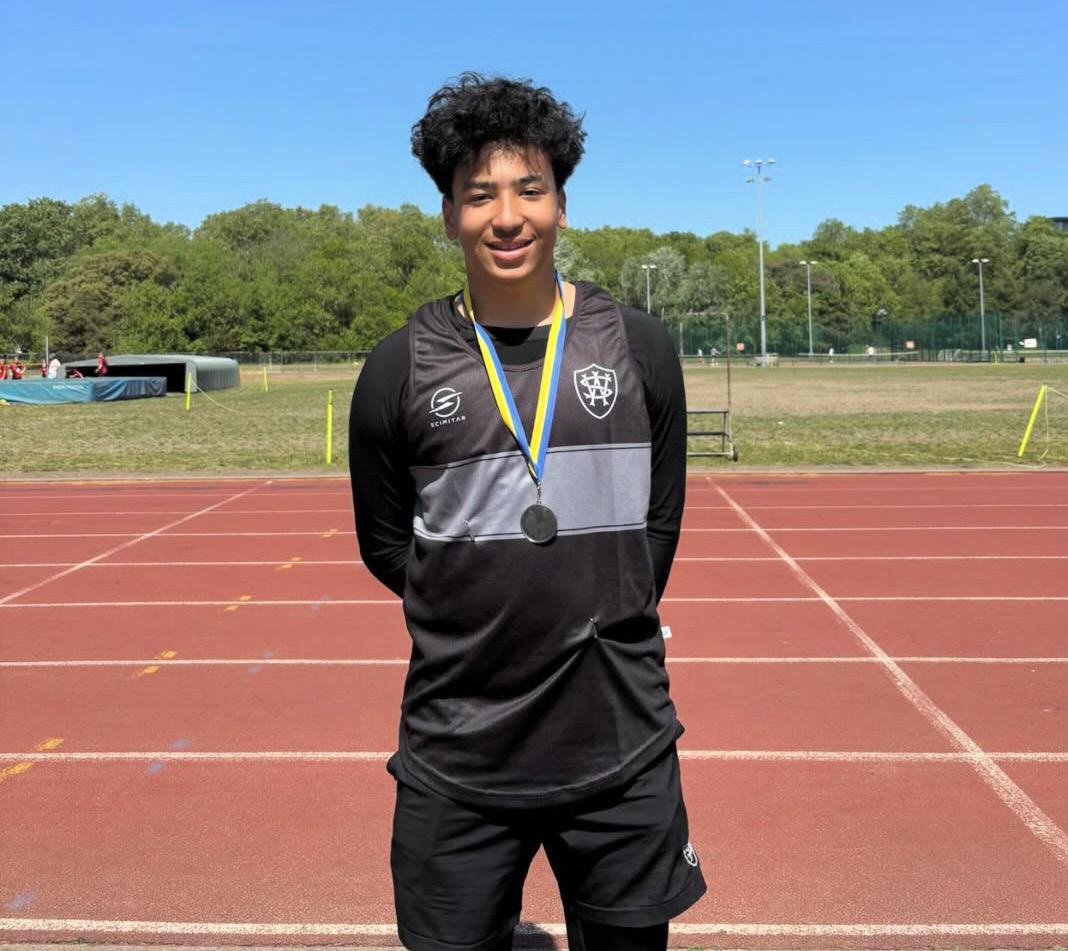
Back on 1st May, Wetherby Senior headed out to the ISA Sport event. It seems like forever ago now, yet the outcomes still stand clear: a solid performance across the board.
That day, David flew across the finish line as if nothing else mattered. First place in the 100 metres came his way with a time of 12.35 seconds, which is impressive for our level. Then, just when you thought it might stop there, the same thing happened again in the 200 metres. Right on his heels was Owen, taking silver in both races without hesitation. Hard work really does show, especially when the training never stops.
Fresh off the track, Ren grabbed third place in the 200 metres, pushing our score even higher. Closing strongly, the relay team of Ren, Henry, Owen and David also secured third place. Honestly, it was hard to tell how they stayed so focused when the pressure increased, yet somehow everything clicked.
Fresh legs brought fresh results out on the field. Henry took gold in shot put, while Horatio followed closely behind with silver. That event almost felt like a practice session because everything ran so smoothly.
Owen’s javelin throw reached 18.5 metres, which was another strong result. Not far behind, Emile threw 17.17 metres in the same event. High jump came next for both of them, with each achieving fourth place. Perhaps competing
alongside one another pushed them even harder.
Somehow, the hours just flew by. One moment we were lining up, and the next there were cheers bouncing off the gym walls. Every person from our school
gave their all, and the effort was clear in every performance. Not everything ran perfectly, and parts of the day became chaotic at times. Still, one message came through clearly: Wetherby stands strong when competition gets tough.
Henry Cr, Year 8 writes...
Favourites for the Tournament
The France national football team are among the favourites due to their exceptional squad depth, world-class stars such as Kylian Mbappé and defender William Saliba, and their strong tournament history. Recent World Cup success has made them one of the most consistent and dangerous teams in international football. In the last two World Cups, they have not finished lower than second place, winning in 2018 and finishing runners-up in 2022.
The Spain national football team are also strong favourites thanks to their technical style, intelligent passing and exciting young talents alongside experienced players who helped them win Euro 2024. With a rich history of success and a clear tactical identity, Spain remain one of the most organised and difficult teams to beat in major international tournaments.
The Turkey national football team enter the World Cup as underdogs, with less recent tournament success compared to the elite nations. Despite a talented squad and passionate support, inconsistency and strong competition mean they are often overlooked, giving them the freedom to surprise stronger teams. Their star player, Kenan Yıldız, is having the season of his life, with 20 goal contributions in total this season, while 32-yearold Inter Milan player Hakan Çalhanoğlu is coming off the back of winning the Italian league and
reaching the Champions League final in 2025. Turkey fans will believe they have a chance to go far in the World Cup.
The Canada men’s national soccer team are considered underdogs due to their relatively limited history at the World Cup. While they possess exciting young talent and growing confidence, they still lack the experience and depth of the traditional football powerhouses on the global stage. However, they also have stars of their own, such as left back Alphonso Davies and striker Jonathan David, who are not related despite their similar surnames. Jonathan David has scored 39 goals for Canada and is their all-time top scorer. With only two losses since January 2025, against Australia and Mexico, Canada are strong dark horses for this summer’s World Cup.
Kylian Mbappé will likely be one of the standout players at the World Cup and a serious contender for Player of the Tournament, thanks to his incredible pace, sharp finishing and confidence on the biggest stage. Having already proven himself in previous tournaments, he can lead France’s attack, score crucial goals and inspire his team to challenge for another title. Winning the tournament as a teenager in 2018, scoring in the final, and then scoring a hat-trick in the 2022 World Cup final in Qatar — becoming the first player to do so since 1966 — were incredible achievements. If he wins the tournament in the
USA, he could go down as one of the greatest players in World Cup history and will likely win the 2026 Ballon d’Or.
Harry Kane remains England’s key player, known for his leadership, intelligent movement and clinical finishing in important matches. At the World Cup, he can guide younger teammates, create chances and score vital goals under pressure. His experience and composure make him essential to England’s hopes of progressing deep into the tournament. England fans will also hope he can repeat his achievement from 2018 and finish as the tournament’s top scorer.

Domenico C, Year 10 writes...
Introduction
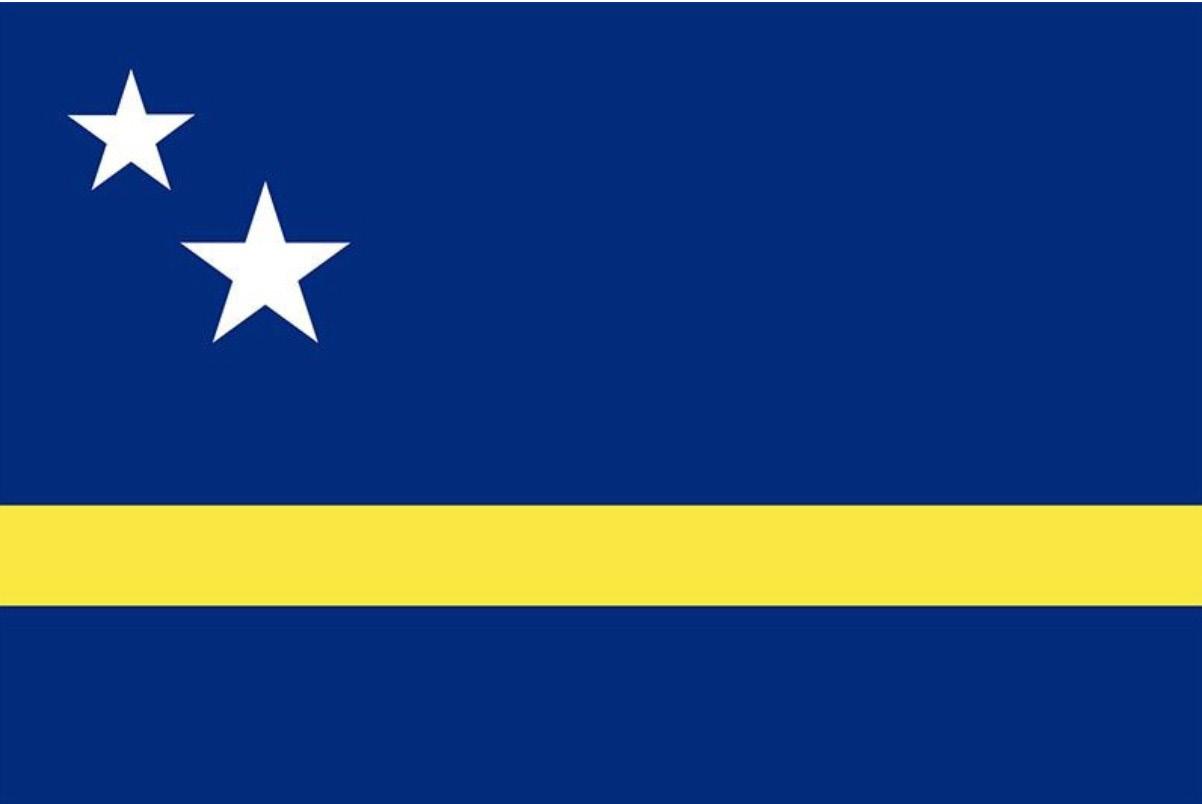
Curaçao, officially the Country of Curaçao, is an autonomous constituent country within the Kingdom of the Netherlands. Situated in the Caribbean, Curaçao covers 444 km² and has a population of around 154,000. The island first came under European influence in 1499 through the Spanish Empire before being taken over by the Dutch West India Company in 1634 during the Eighty Years’ War, as it was strategically positioned to benefit from the transatlantic slave trade taking place at the time.
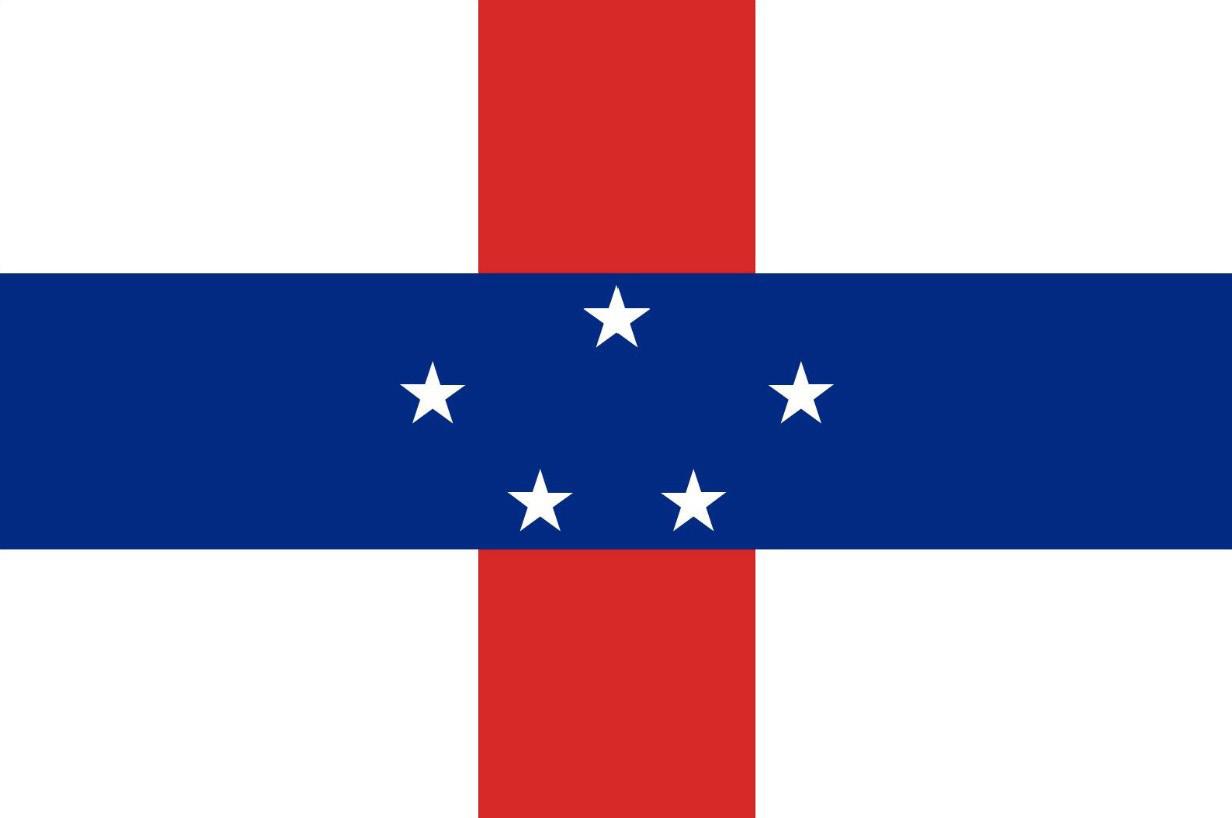
Since then, the territory has remained part of the Netherlands as one of the overseas ABC islands (Aruba, Bonaire and Curaçao), alongside Sint Maarten, Sint Eustatius and Saba. However, Curaçao remains the largest island in the Dutch Caribbean. It only became an autonomous country on 10th October 2010, marking the dissolution of the Dutch Antilles, which had included all the aforementioned territories.
Curaçao has broken records in football, becoming the smallest nation by both population and area ever to qualify for the World Cup, a record previously held by Iceland, which has around twice the population and 232 times the land area. From its football formation in 1924 until this World Cup qualification,
Curaçao had never qualified for the tournament. Their football history can be split into three main periods:
Territory of Curaçao (1924–1958)
Qualified?: Never
Biggest victory?: 14–0 against Puerto Rico (1948)
Biggest defeat?: 8–1 against the Netherlands (1948)
Dutch Antilles (1958–2010)
Qualified?: Never, but secured third place in CONCACAF in 1963 and 1969
Biggest victory?: 15–0 against Puerto Rico (1959)
Biggest defeat?: 8–0 against the Netherlands (1962)
Curaçao (2010–Present)
Qualified?: Yes, 2026 World Cup
Biggest victory?: 10–0 against Grenada
Biggest defeat?: 7–0 against Argentina
Curaçao faced numerous challenging opponents during qualification but came through undefeated, with a 0–0 draw against Jamaica securing qualification.
The Argument Against Curaçao
While this argument does not apply solely to Curaçao, the i sland serves as an example of why this system can be viewed as unfair and how it potentially takes up valuable qualification spots.
To begin with, while there are similarities between Curaçao and the UK home nations, the situations are not directly

comparable. The UK itself does not compete in the World Cup. Instead, its four constituent countries — England, Scotland, Wales and Northern Irelandcompete separately. These nations had separate football associations long before FIFA was formed. The most recent of the four, the Irish Football Association, was founded in 1880 while Ireland was still fully British, 24 years before FIFA’s formation in 1904. As a result, the federations remained separate after FIFA was established.
Curaçao and the Netherlands appear, at first glance, to have
a similar story. The Royal Netherlands Football Association (KNVB), the governing body for football in the Netherlands, was founded in 1889, predating FIFA. Football in Curaçao, meanwhile, was run by the FFK (Federation of Curaçaoan Football), which was only established in 1924. Unlike the UK associations, the FFK was formed after FIFA itself, raising questions about why FIFA permitted a separate federation in this case.
Secondly, FIFA’s policy on overseas territories has varied over time. While Curaçao and
territories such as the Faroe Islands, Puerto Rico and New Caledonia are allowed to enter World Cup qualification, others, such as Gibraltar, were originally denied FIFA membership before eventually being admitted following lengthy legal disputes.
During Sepp Blatter’s presidency from 1998 to 2015, FIFA reinforced the principle that federations representing nonsovereign states could not normally be admitted into FIFA. This is now outlined in Article 11 of the FIFA statutes, which states that an association must represent a country recognised as sovereign by the majority of UN members. However, existing members were protected through a grandfather clause, meaning territories such as Curaçao retained membership.
The author argues that this clause is unfair to newer applicants. If some overseas territories are permitted membership, then others should be as well; otherwise, none should be allowed.
Finally, and perhaps most significantly, the article argues that there is little distinction between many Curaçao players and Dutch players. The coach, Fred Rutten, was born in the Netherlands in 1963. Captain Leandro Bacuna was born in the Netherlands in 1991. Goalkeeper Eloy Room was also born in the Netherlands in 1989. The article notes that only midfielder Tahith Chong was actually born on the island, though he spent much of his childhood in the Netherlands.
The argument presented is that many of the players only represent Curaçao to further their football careers and were all developed
within the Dutch football system. Unlike the UK home nations, where English players generally represent England and Scottish players represent Scotland, Dutch-born players can represent Curaçao. The article therefore suggests that this gives the Netherlands an indirect second representation at the World Cup.
Curaçao and other overseas territories are clearly capable of playing football at a high level and, occasionally, achieving impressive results. However, the article argues that allowing these territories to compete in major international competitions, such as the 2026 World Cup, blocks sovereign nations from participating.
Economically, the author argues this can also negatively affect the tournament. For example, it is estimated that Italy’s failure to qualify cost around one billion euros, while the loss of Italian dual-national players is estimated to have cost the Italian Football Federation (FIGC) around 1.3 billion euros.
The article proposes the following solutions:
• Remove the grandfather clause from the FIFA statutes
• Allow FIFA to expel overseas territory federations from membership
• Encourage these federations to merge with the football associations of their sovereign states while maintaining some local autonomy
In Curaçao’s case, this would involve the FFK joining with the KNVB, while still
allowing Curaçao to compete independently in regional Caribbean events. The two federations already maintain strong relations and recently signed a historic co-operation agreement.
Finally, the article suggests replacing Curaçao in qualification. FIFA usually manages replacements by selecting the nation that narrowly missed qualification within the same confederation, which in this case would most likely be Jamaica.
Horatio S, Year 8 writes...
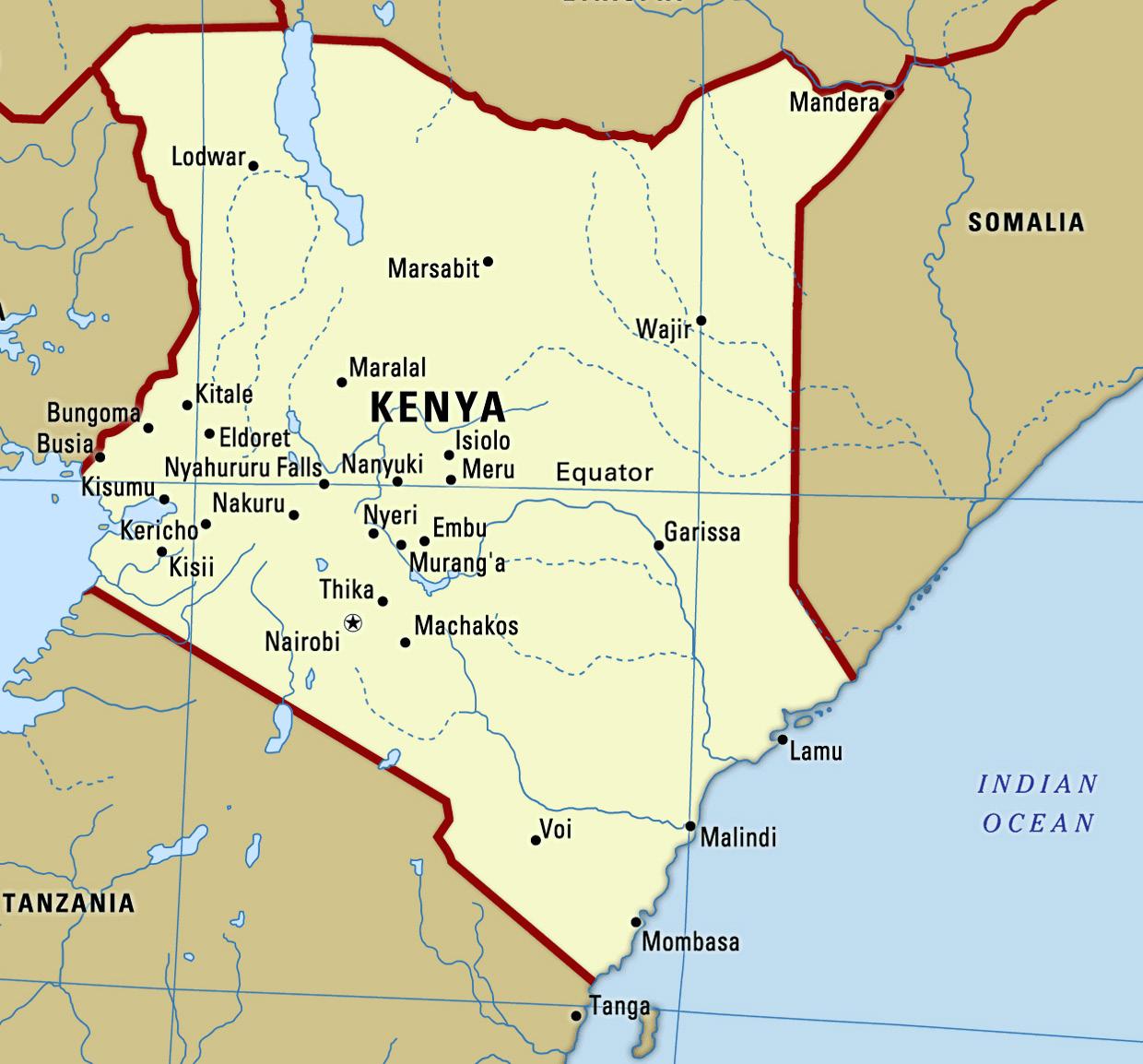
During my first term of Year 8, I spent my time at a school in Nairobi, Kenya. It was a long journey to get there, but it was definitely worth it. When I arrived, I had three days to relax before starting school, so I spent the time preparing my things. As it was a boarding school, I would not spend much time outside the campus.
On the final day before term started, with my uniform packed and ready, I arrived at my dormitory on Sunday and met my roommates. At first, there were only two of us, but we spent lots of time playing Uno and talking. He showed me around the school and introduced me to everyone on the first day. It was a little nerveracking not knowing anyone, but everyone was very friendly and the teachers helped me a lot with catching up.
A few months later, I knew lots of people. The school had many events for boarders, such as discos and karaoke nights, so there was never a boring evening. We also celebrated Roald Dahl Day, where we dressed up as characters from his books. Since I did not have anything properly prepared, I wore casual clothes and tried to pass myself off as the BFG.
A couple of weeks later, Halloween arrived and, as boarders, unless an adult came to pick you up, you had to stay at the school. However, it did not really matter because the school organised a huge party to make up for it. It was great fun, but the best part was that I was fitting in well and had even been
invited to someone else’s birthday party.
It was not until early November that I was placed into a house and my second roommate arrived, but more importantly, I was finally able to compete in events. The school offered lots of sports that I would not usually play, such as volleyball and water polo, and there was something for everyone to take part in.
During half term, I was able to choose another student to stay with, and I chose my first roommate. Thankfully, he said yes, so I stayed with him for the entire holiday. His parents were very kind, and we spent most of the time relaxing together. When I returned to school, my fourth and final roommate arrived. He was also an exchange student and came from Saudi Arabia, so we spent a lot of time talking about
the schools we originally came from.
One of the things I found most interesting was when the school took some boarders to visit Nairobi National Park. We saw so many amazing animals, including two sleeping lions. The park itself was enormous, covering over 110 square kilometres.
I did not spend Christmas in Kenya, but while I was still at school there was a huge Christmas sale where everyone baked festive treats to sell, with the money going to charity. I made a lemon tart, which sold so quickly that I did not even get a slice myself.
After the school term ended, I spent some time travelling around Kenya with my parents, doing things such as seeing baby elephants and zebras, which were adorable, and going on safaris.

Santi Q, Year 10 writes...
Whether they are covering the entire sky or floating in small clusters, clouds are always drifting above us. However, for the average person, they remain mysterious and far out of reach. This article will give you an insight into what clouds are and how they form.
Clouds are made of minuscule water droplets, ice crystals or sometimes a combination of both, suspended in the air. They are able to float because their density is lower than the air around them, at around 0.4% of the surrounding
air density.
They form when water vapour in the atmosphere cools and condenses into water droplets or ice crystals when temperatures are particularly cold. This happens when warm air with high humidity rises into the atmosphere, expands and cools, eventually reaching a point where it can no longer hold all of its water vapour. Tiny particles in the air, such as dust, salt or pollen, act as surfaces for the water vapour to condense onto.
Because of their composition,
clouds are not static or fixed objects. Their shapes and coverage constantly change as air rises, cools and condenses while interacting with changing atmospheric conditions. Depending on these conditions, clouds can form a dense layer stretching across the whole sky like a blanket or break apart into individual clusters.
In fact, fog is essentially a cloud at ground level, formed through very similar processes and conditions. An average cloud can also weigh around one million tonnes!
Santi Q, Year 10 writes...
Did you ever try to write sentences without using the first item of the English letter set? It is quite the unorthodox mission. But looking behind the twisted English joint with the old lexicon, there is nothing here forbidden by the rules of writing. This mission spans multiple time periods and is definitely not new, with the most notorious victor being Ernest Vincent Wright, who wrote 50,000 words in 1939 without using the letter “E”. Yet, there exist much more difficult conditions.
Such writing, with the fifth of the Latin list missing, is an unusual and difficult pursuit. Try to form normal talk with this condition. It calls for grand amounts of brain
activity to accomplish this task. Only a trio of word strings in, and seven worth of duration units it has cost. Is using seven a hack and foolish? That is yours to think. It is far harder to do, as all pronouns cannot occur. Now you must look up to Wright’s vast victory.
Forth from ABC straits, how of a swap to wordlore? Each word herein stands on English root, with no strange-land inblend. This one proves lighter than past attempts, with online helps now. If yon deemed past drafts olden, try this read. Alas, light though it be, it wins not back the one-and-score of sunrounds I did waste to write the “E”-less one. But is it waste if thou learned and had glee? I had none of those.
Have fun creating your own constraints, as they can be surprisingly fun. Here’s a game: find out which conditions I have used.
This paragraph follows the same rule in every single sentence. It is no cheap vocabulary trick or archaic speech illusion. The quick brown fox hastily jumps over the lazy dog. I have just proved it by using all alphabet letters. The eagle-eyed among you may notice an extra word. And yes, eagleeyed counts as two separate words here. Take that as a hint or as a red herring. The paragraph reads vaguely smoothly, different from other strange rules. Can you spot it or will you live never knowing?


Santi Q, Year 10 writes...
The Solar System is something we all learn about as children and accept as containing eight planets, with Pluto famously being “kicked out of the club”. However, what many people may not know are the fascinating details behind each planet.
Starting off, you probably already know that Jupiter is a gas giant with no solid surface. But did you know that on planets such as Jupiter and Saturn, it can rain diamonds? This is caused by extreme atmospheric pressure breaking down methane. Additionally, every other planet in the Solar System could fit inside Jupiter. Venus, meanwhile, has an incredibly slow rotation cycle, taking 243 Earth days to complete a single Venusian day, yet only 225 Earth days to orbit the Sun. This means that a day on Venus is actually longer than a year there. If you are ever thinking about travelling to Mercury, be prepared for extreme temperatures ranging from 427°C during the day to -179°C at night due to its very thin atmosphere.
Moving on to the Sun, did you know that it actually makes noise? However, because sound is a longitudinal wave that requires a medium to travel through, it cannot reach us through the vacuum of space. The Sun produces sounds similar to a low hum, mixed with rhythmic basslike pulses and thumps. Its surface is made of superheated plasma, and the movement of this plasma generates sound energy. If the sound could travel to Earth, it would supposedly be as loud as a
rock concert.
Another fascinating fact is that the average light particle, known as a photon, takes roughly 40,000 years to travel from the Sun’s core to its surface because it must slowly move through an enormous maze of plasma. Yet, once it escapes the surface, it takes only around eight minutes to reach Earth.
The Solar System contains millions of asteroids, meteoroids and comets, making it an enormous and diverse environment. Facts such as these highlight just how fascinating our place in the galaxy truly is.
Do you have something you’d like to write about?
Is there a passion or interest you’d like to share with others?
Is there a cause you would like to draw attention to?
Would you like to report on school events?
Are you a great photographer or artist?
Send your articles (and images to go with them) to nicola.bradley@wetherbysenior.co.uk, or ask to be added to the team on Teams where you can submit it directly.
A submission deadline will be set each half term, so get writing so your article can be included!