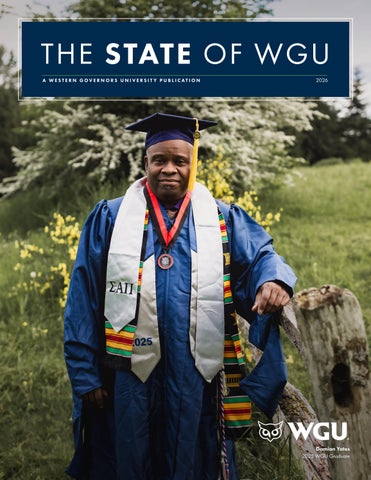
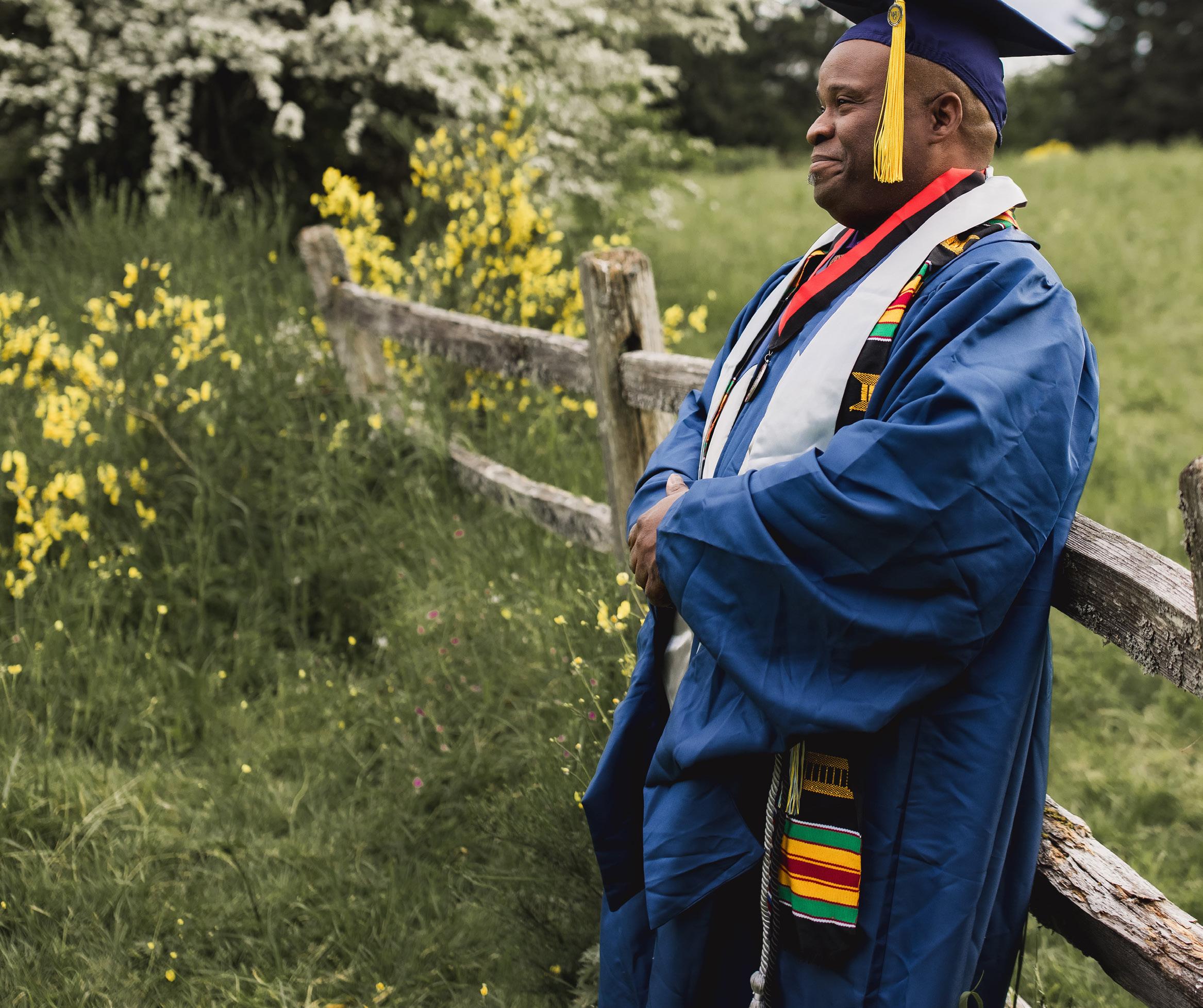
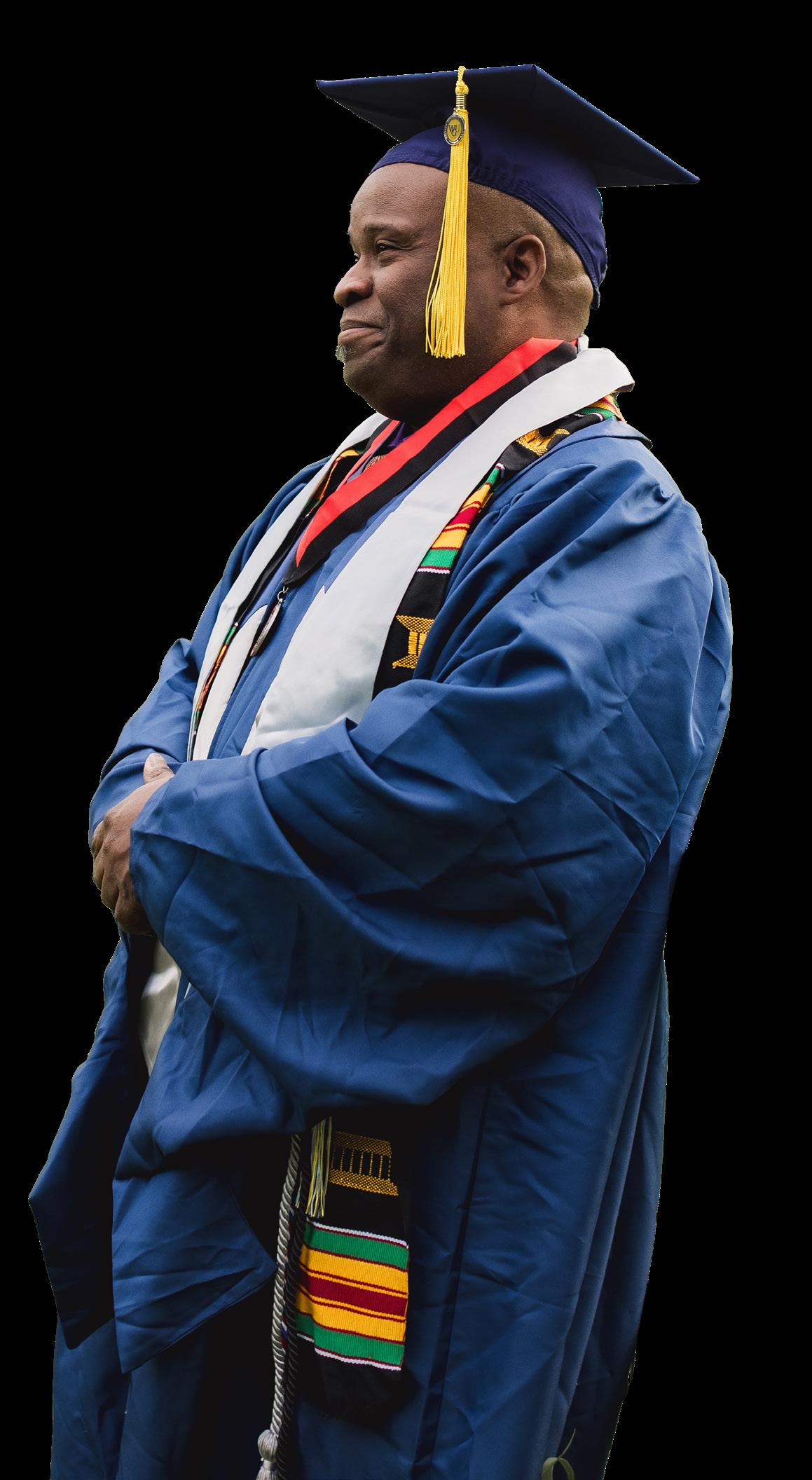
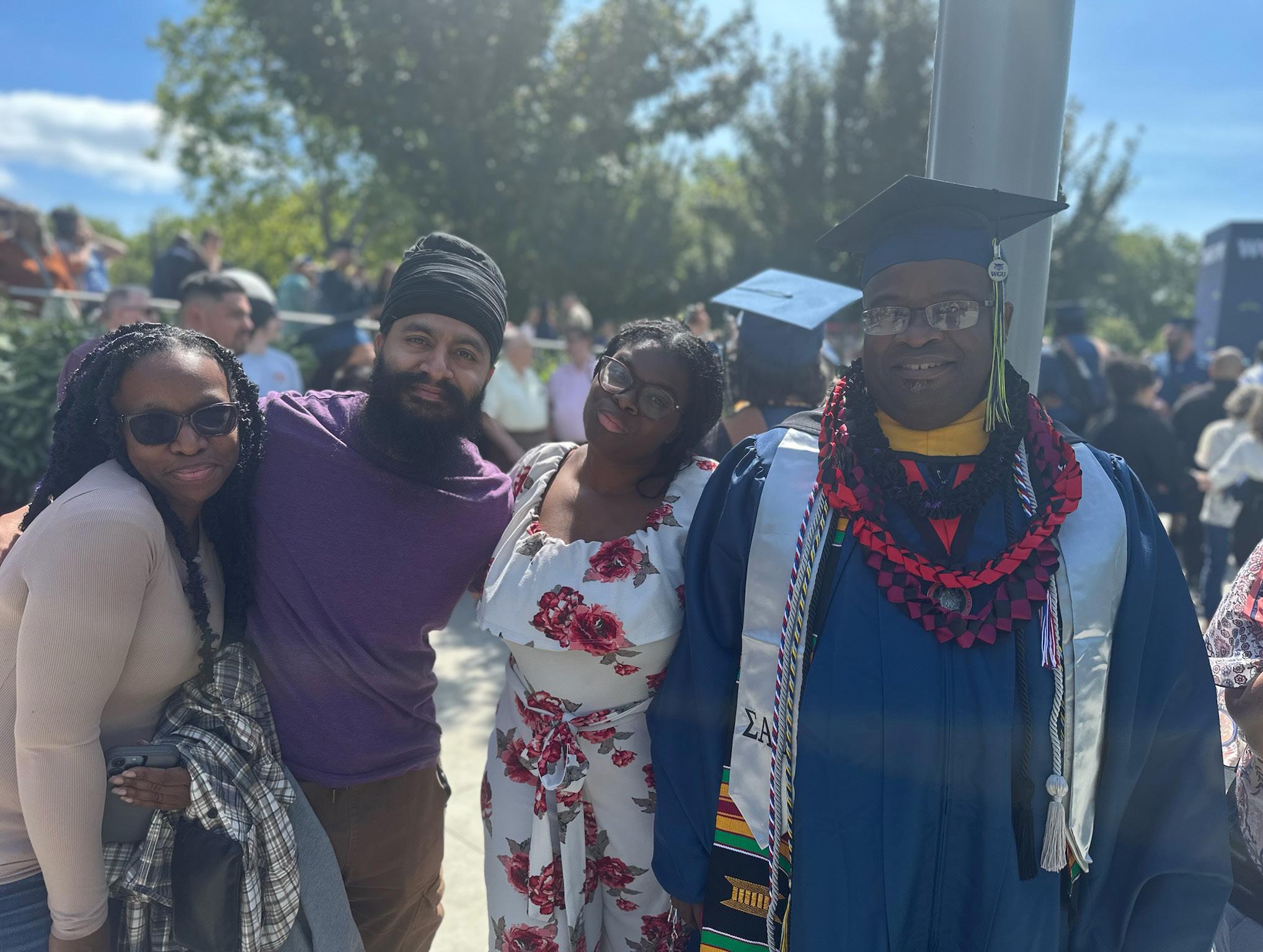
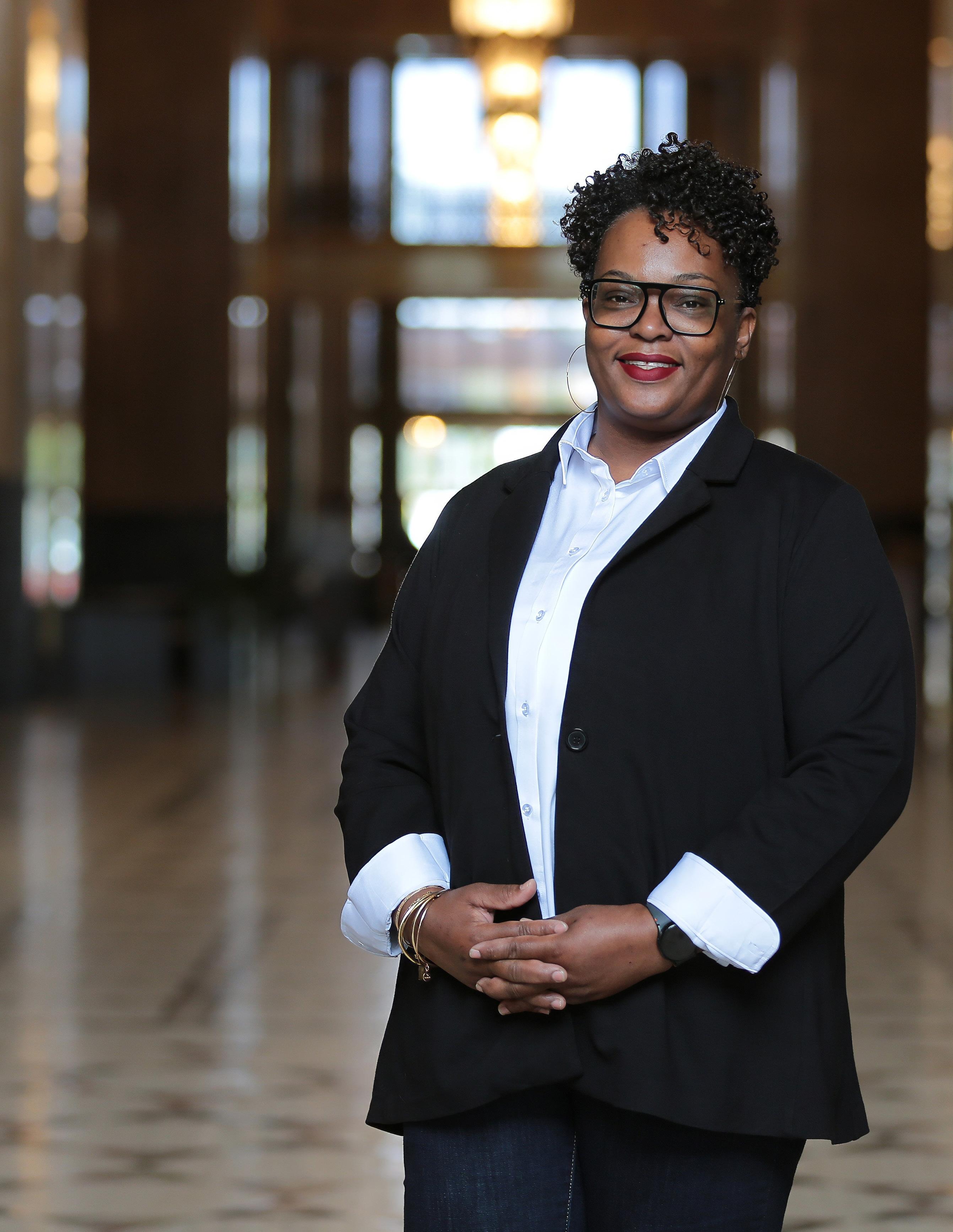
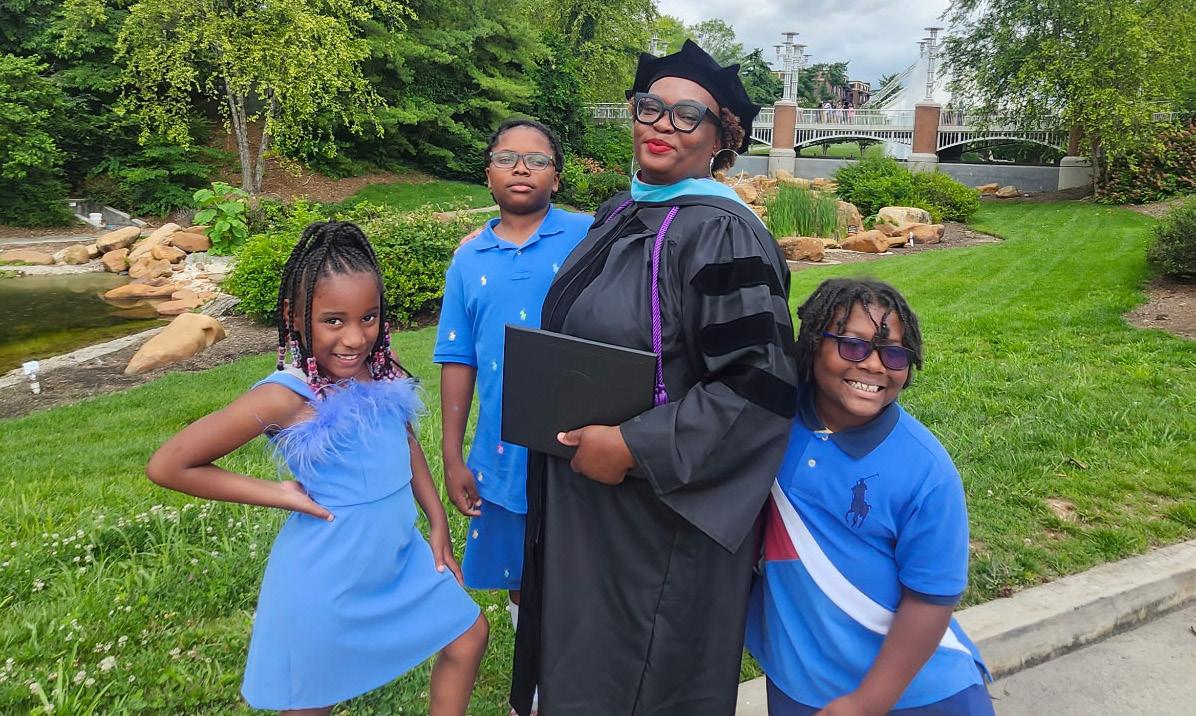
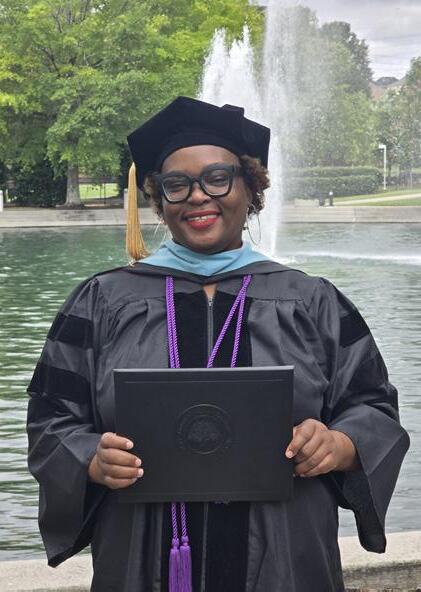
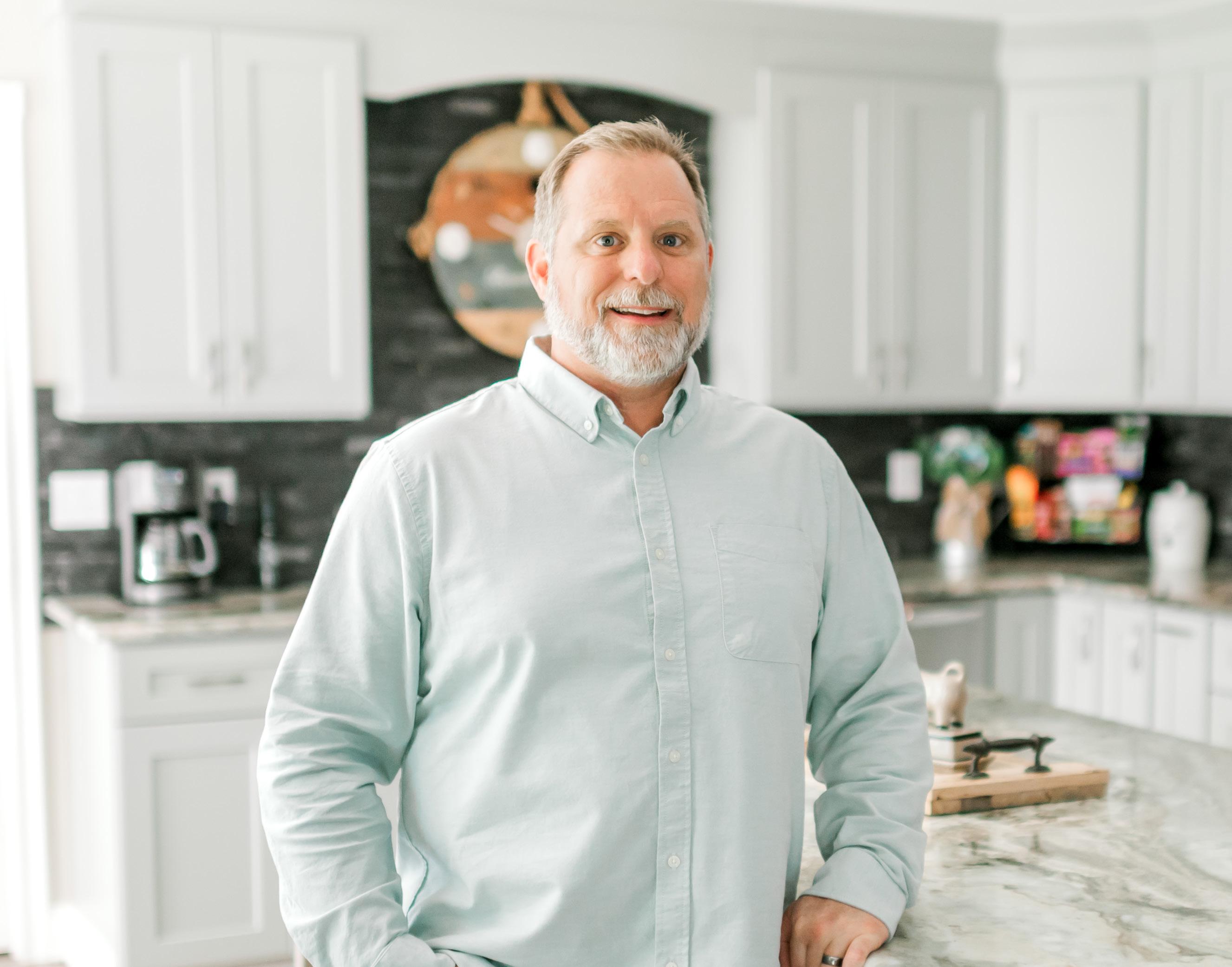
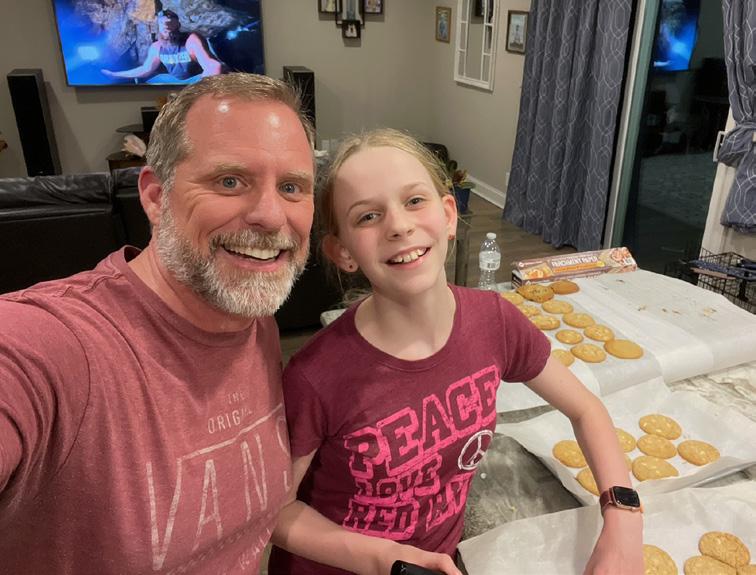
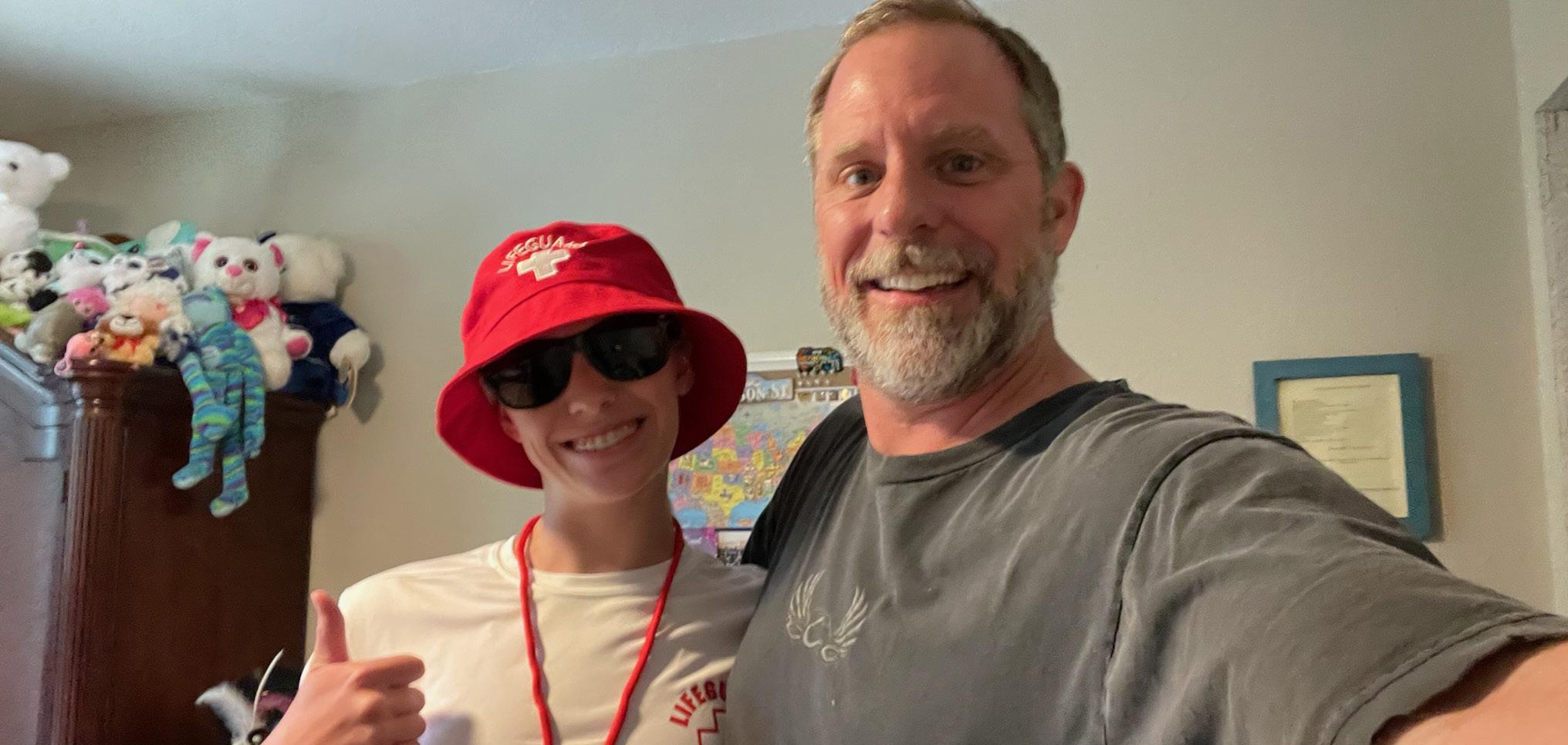
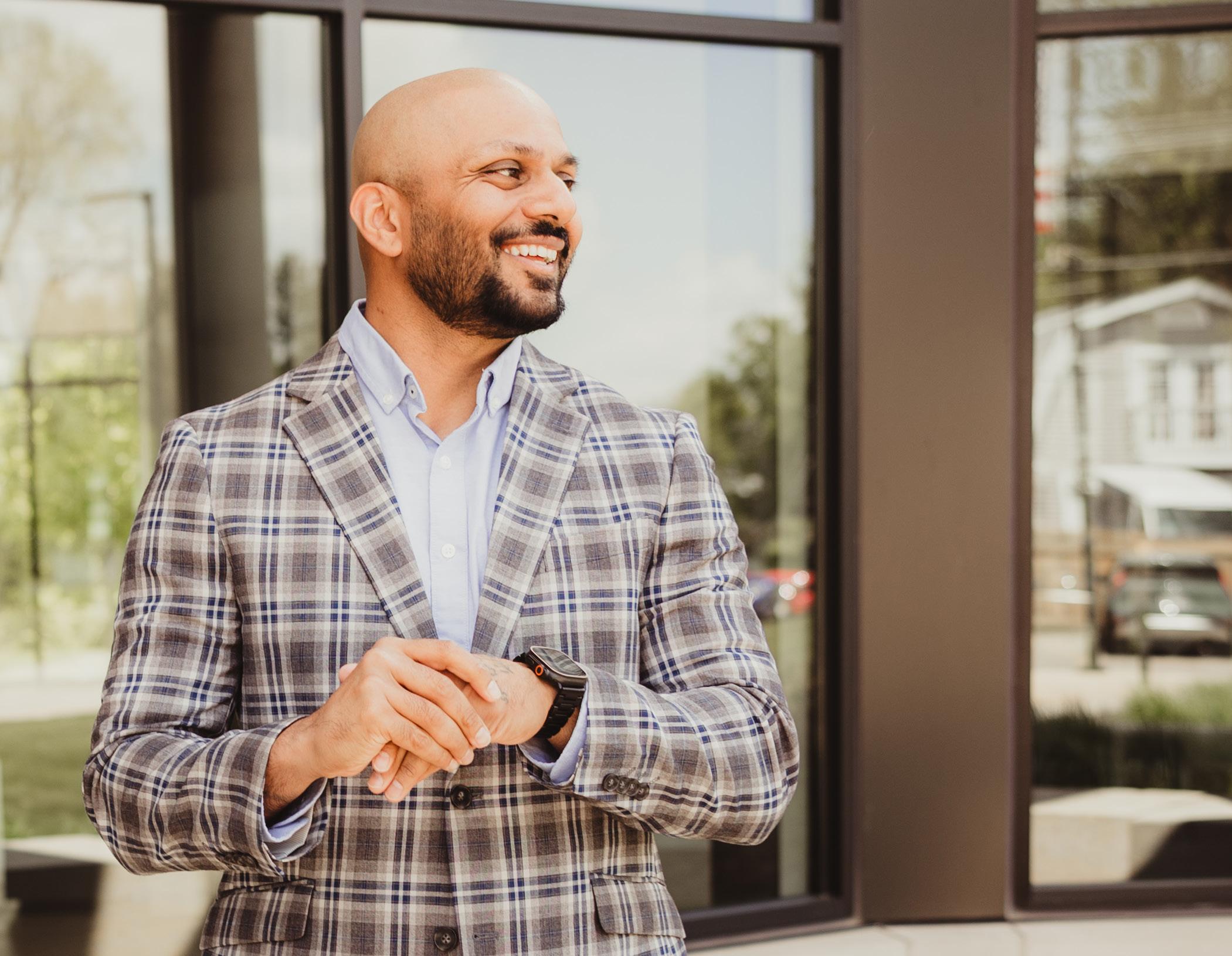
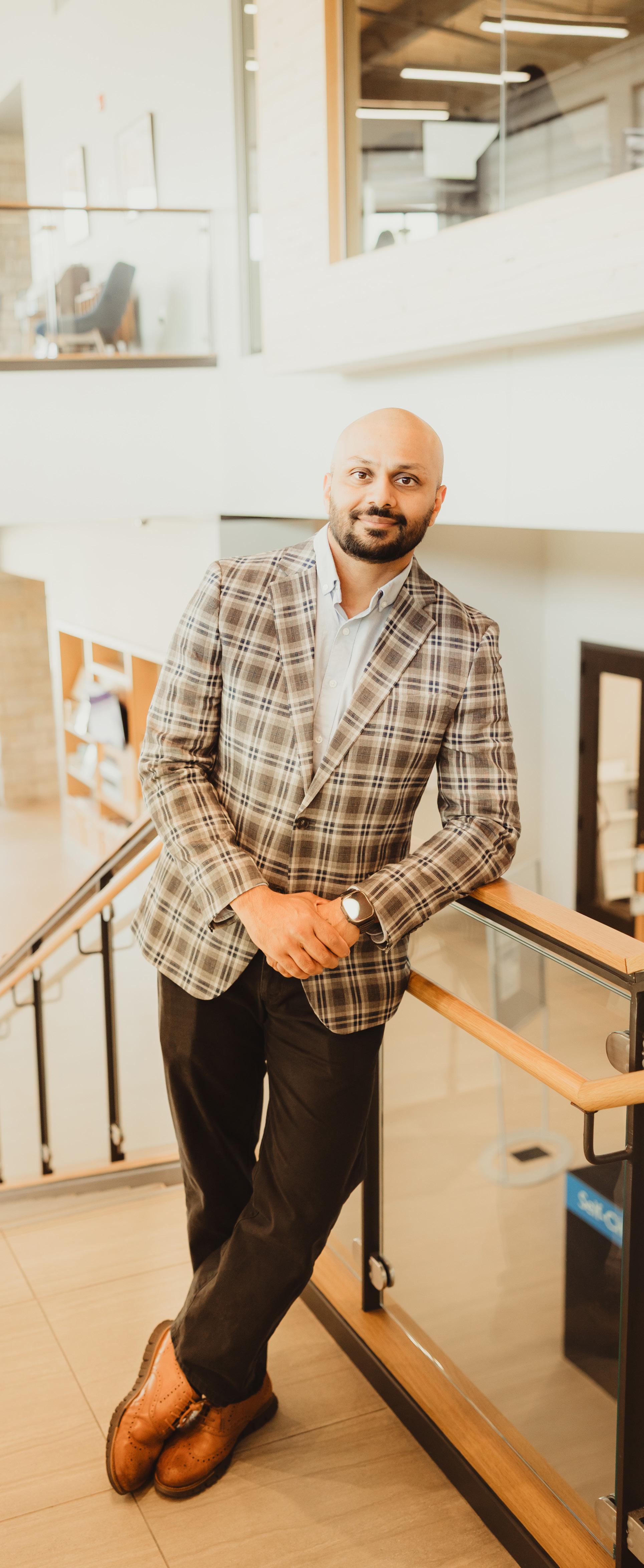
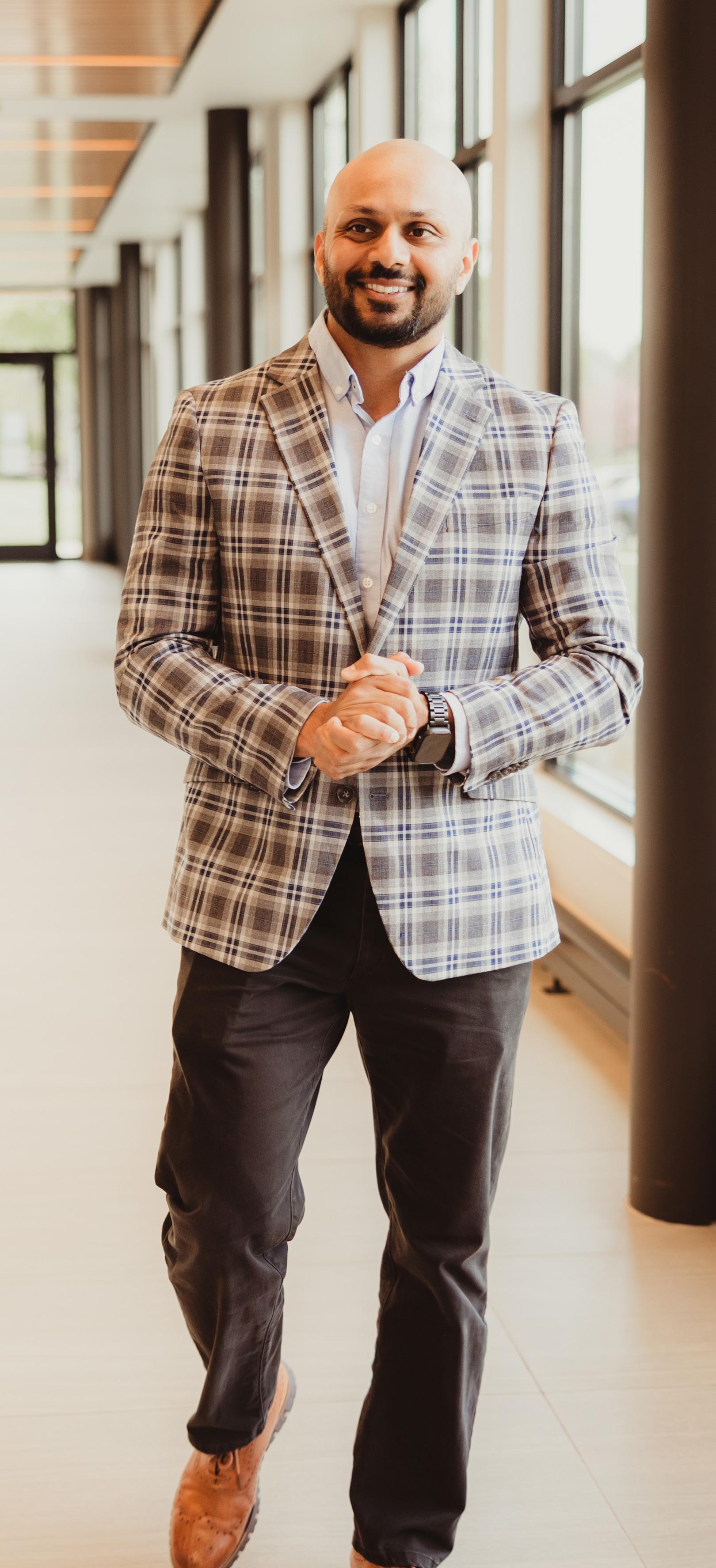
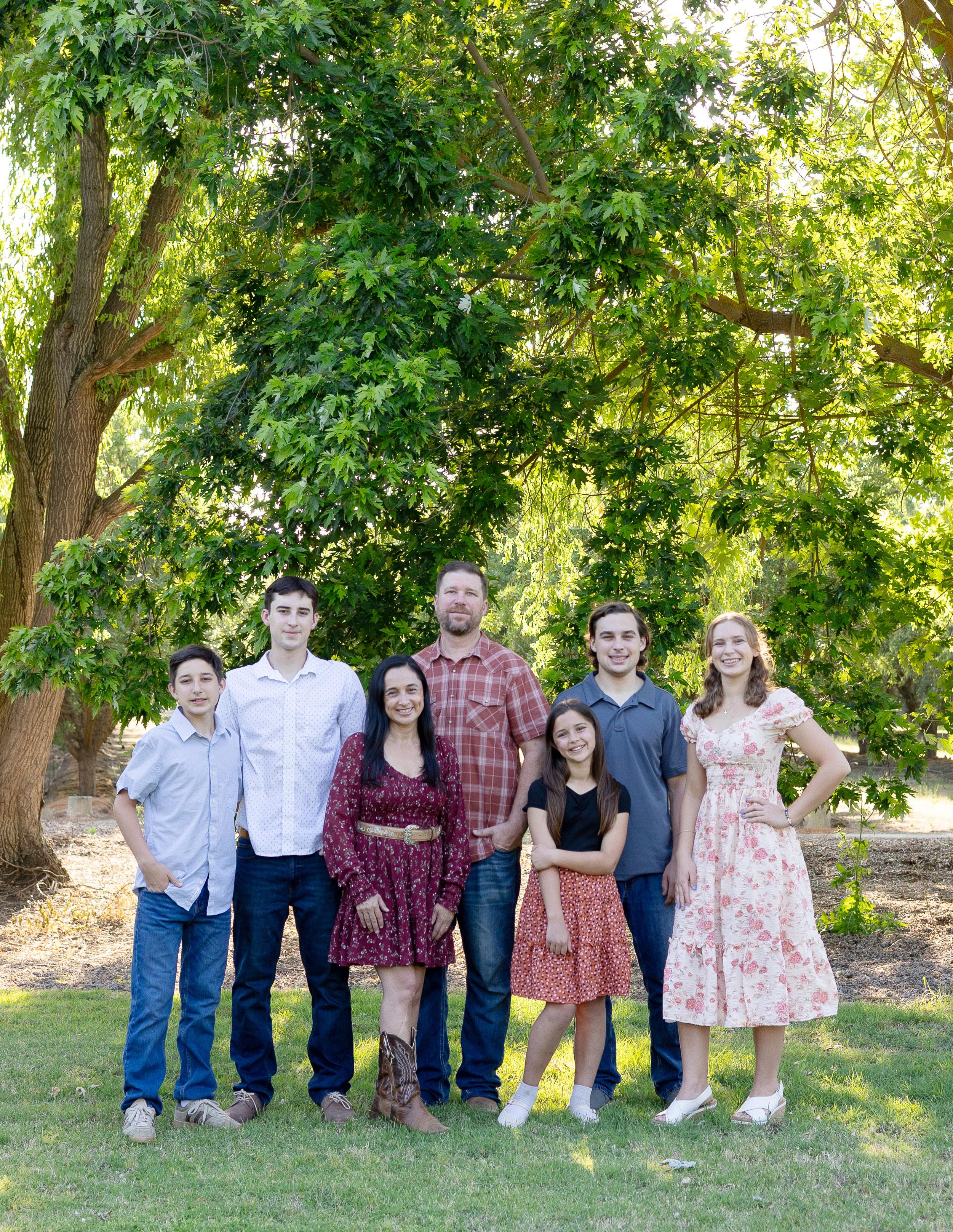
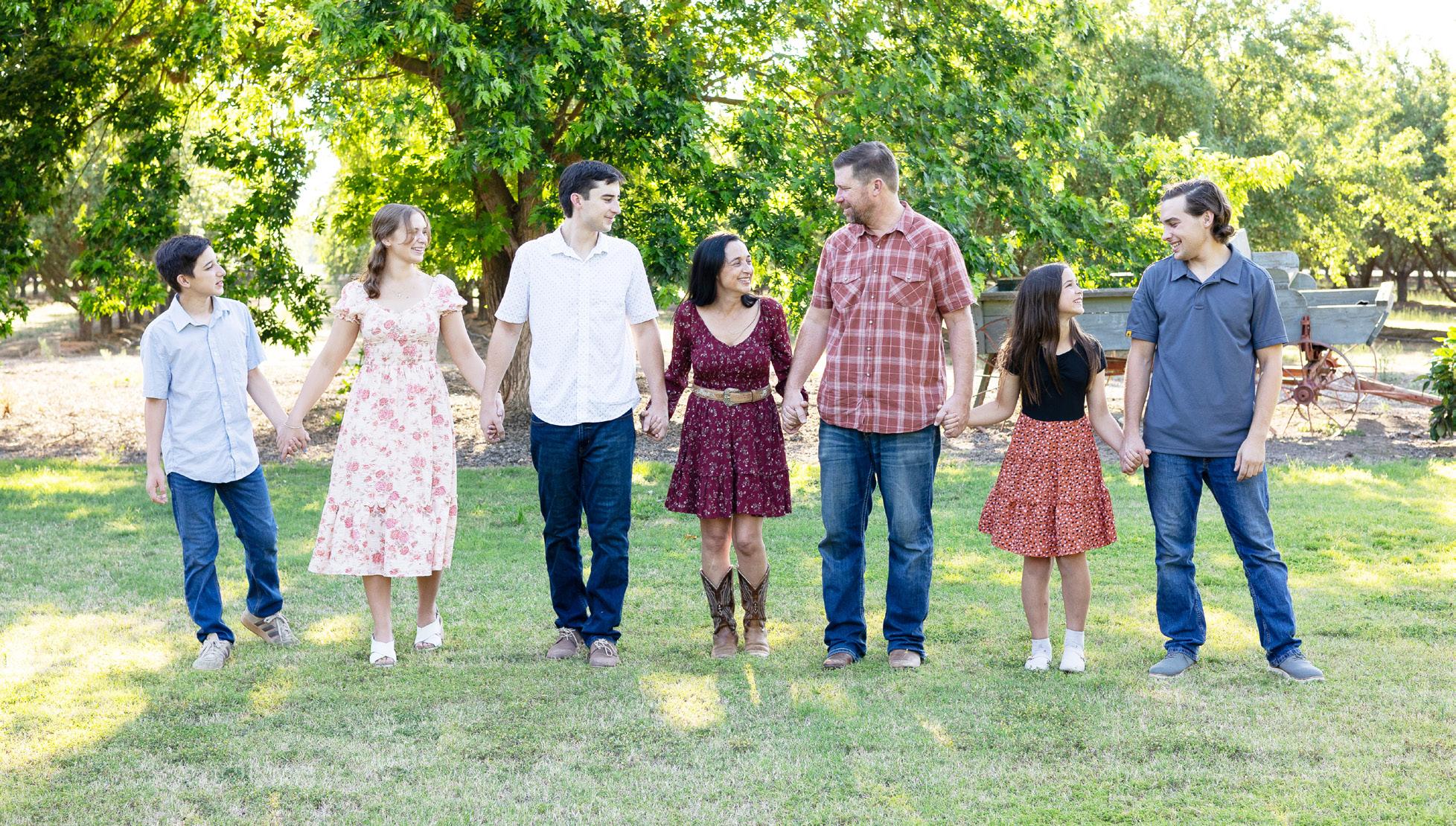
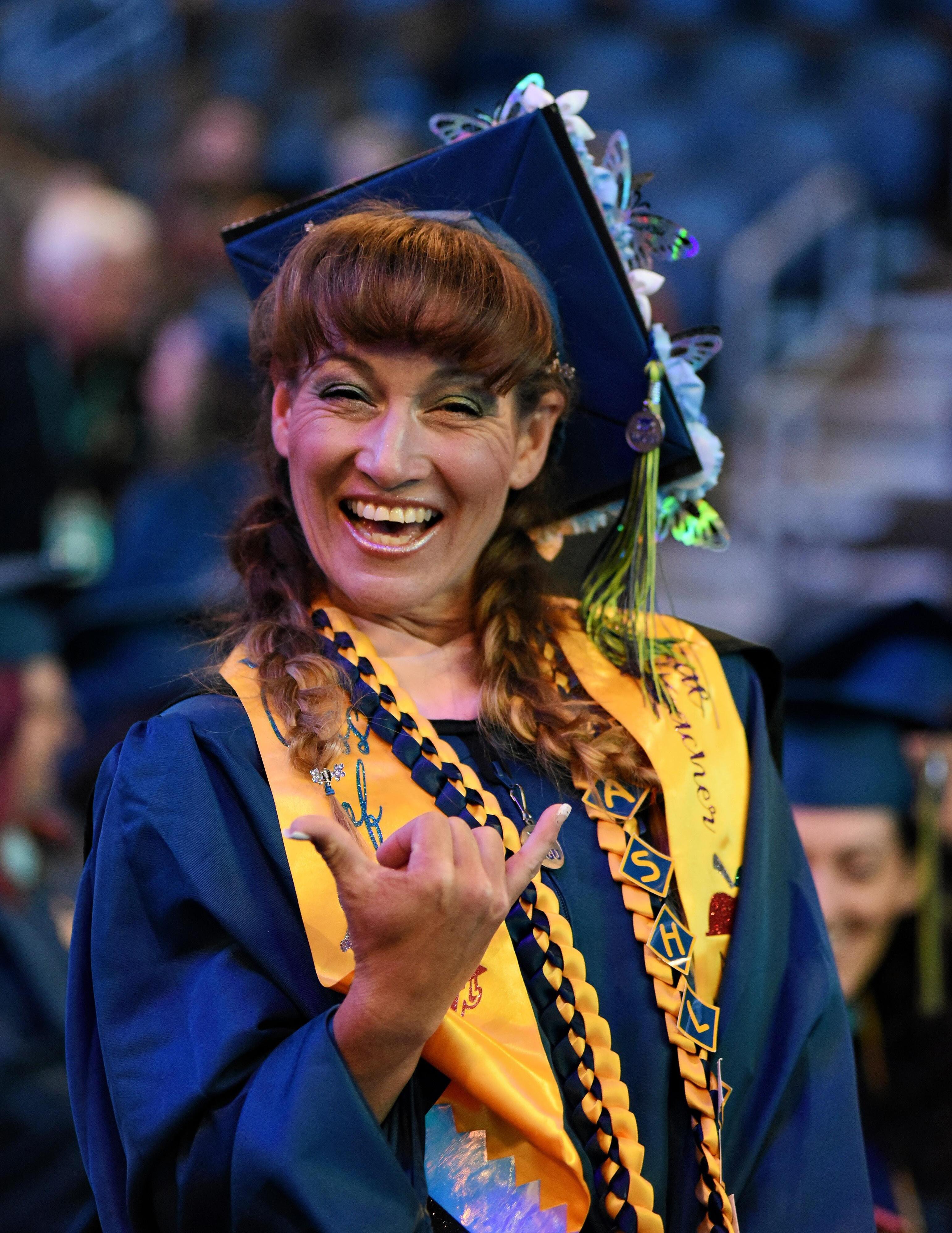
Yates is a self-described introvert and, by his own account, his own worst critic. Accepting praise has always been difficult. Pride in his own accomplishments is something he has been actively working on in therapy. And yet, earning those three degrees shifted something in him.
He describes WGU as providing "cadence" — a word that says a great deal about the way he moves through the world. After years of military service, he recognized that he needed structure — a focal point to channel his energy. For most of his adult life, that focal point had been his children. WGU gave him one for himself. It replaced evenings lost to video games — his social escape from everything else — with coursework, projects, and purpose. His kids noticed. "They all know that if
I start doing nothing but gaming, something's wrong," he says with a wry acknowledgment of what that signal means.
That same shift in orientation eventually pushed him toward Toastmasters, a global nonprofit building public speaking, communication, and leadership skills, a step he says he never would have taken without the confidence that gradually built through his time at WGU. "I would have never even tried," he says. During his time in WGU's cybersecurity community, he found himself fielding questions from strangers online, stepping into a role he had long avoided. The experience planted a seed. He applied to speak at his own commencement ceremony — a decision that still surprises him when he thinks about it. The speaking slot went to someone else, and he will readily admit he was relieved. But he had applied, and that was new.
"Being authentic and true to yourself is one of the more important lessons I hope my kids took. Living a lie is not living."
DAMIAN YATES
A LEGACY THAT WALKS BESIDE HIM
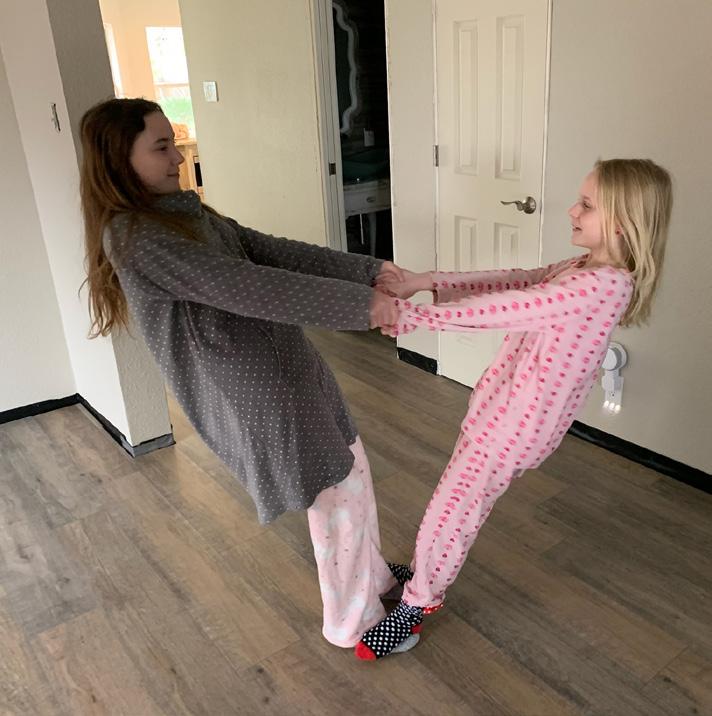
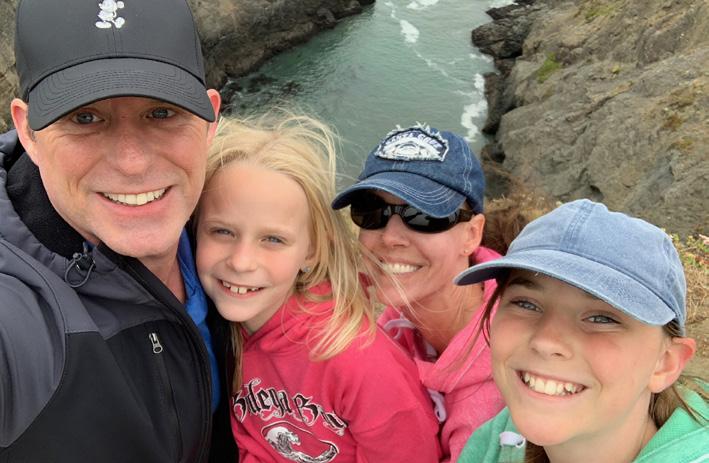
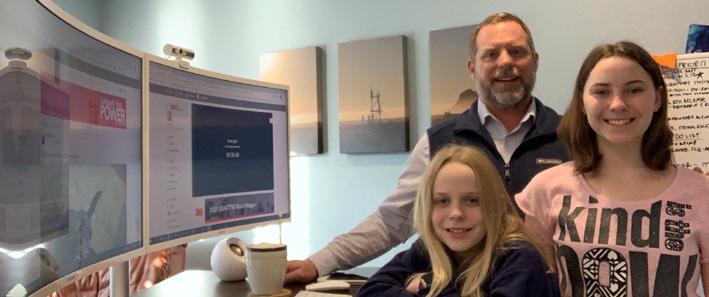
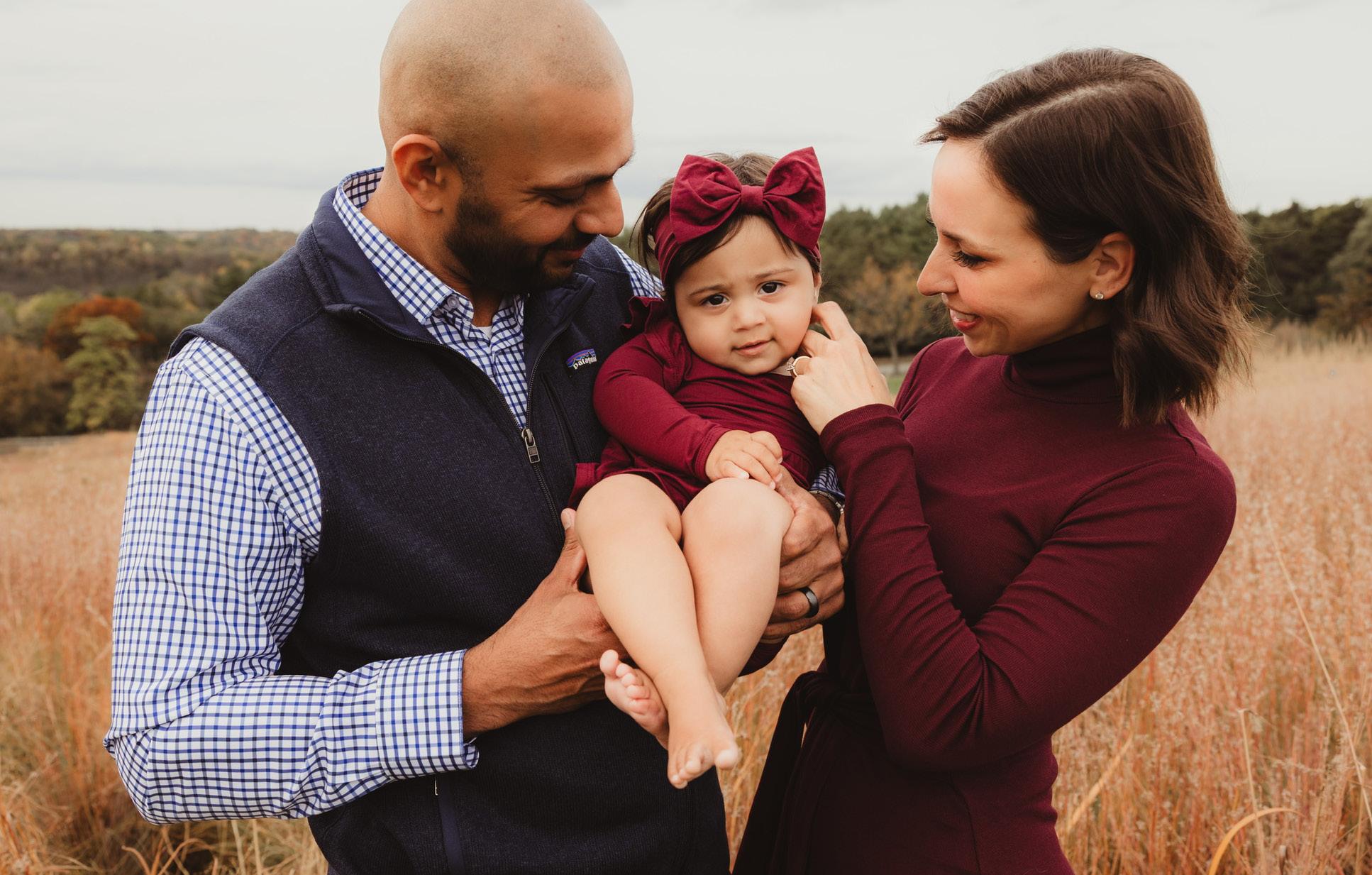
When Yates reflects on the impact of his education, he does not separate it neatly from his children or his career. They are intertwined. His daughter is a nurse. His eldest son trained as a paramedic and volunteered at a fire station before his passing. His youngest is pursuing mechanics. His second eldest son is working toward a degree in graphic design. "Probably one of the more prideful things I take in myself," Yates says, "is the fact that none of my children are takers. They all give of themselves."
He believes they learned by watching. "Learn from what we see," he says. "My kids have seen the struggles I've gone through to keep food on the table and a house over our heads." He also taught them something less tangible:
that authenticity matters more than appearances. "Being authentic and true to yourself is one of the more important lessons I hope my kids took," he says. "Living a lie is not living."
For policymakers and community leaders who want to understand what WGU makes possible, Yates offers this: "Education has always been a factor in charting my trajectory in life and work. The fact that I was actually able to find a school where I could focus without having to be on campus — that was one of the more important things." He commutes an hour and a half to work each day in the Seattle area. Getting to a traditional campus would have been, in his words, "a nightmare." WGU was not just convenient, it was the only path that could have worked for someone in his circumstances.
Three degrees, four kids raised, a home purchased and a life rebuilt
more than once. Damian Yates has spent most of his journey leading from the back, pushing rather than pulling, watching for what is coming so he could guide the people around him through it. Walking that stage in 2025, he finally let himself stand up front. And for the first time in a very long time, he told himself he had made it.
To learn more about how WGU is expanding access to education for working adults across the Northwest region and beyond, visit wgu.edu.
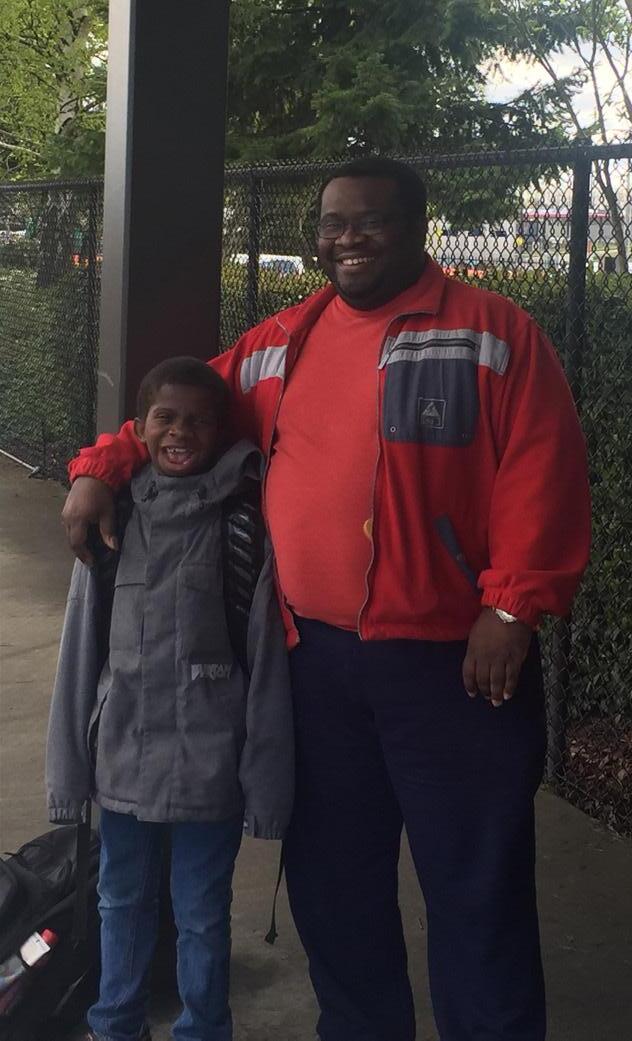
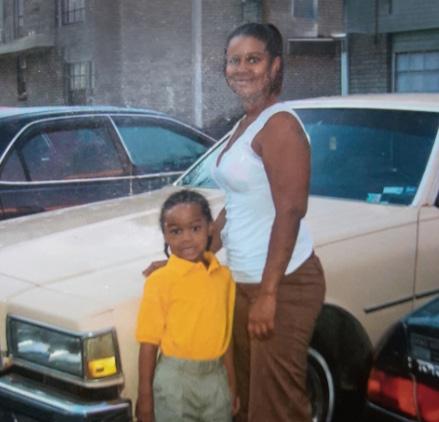
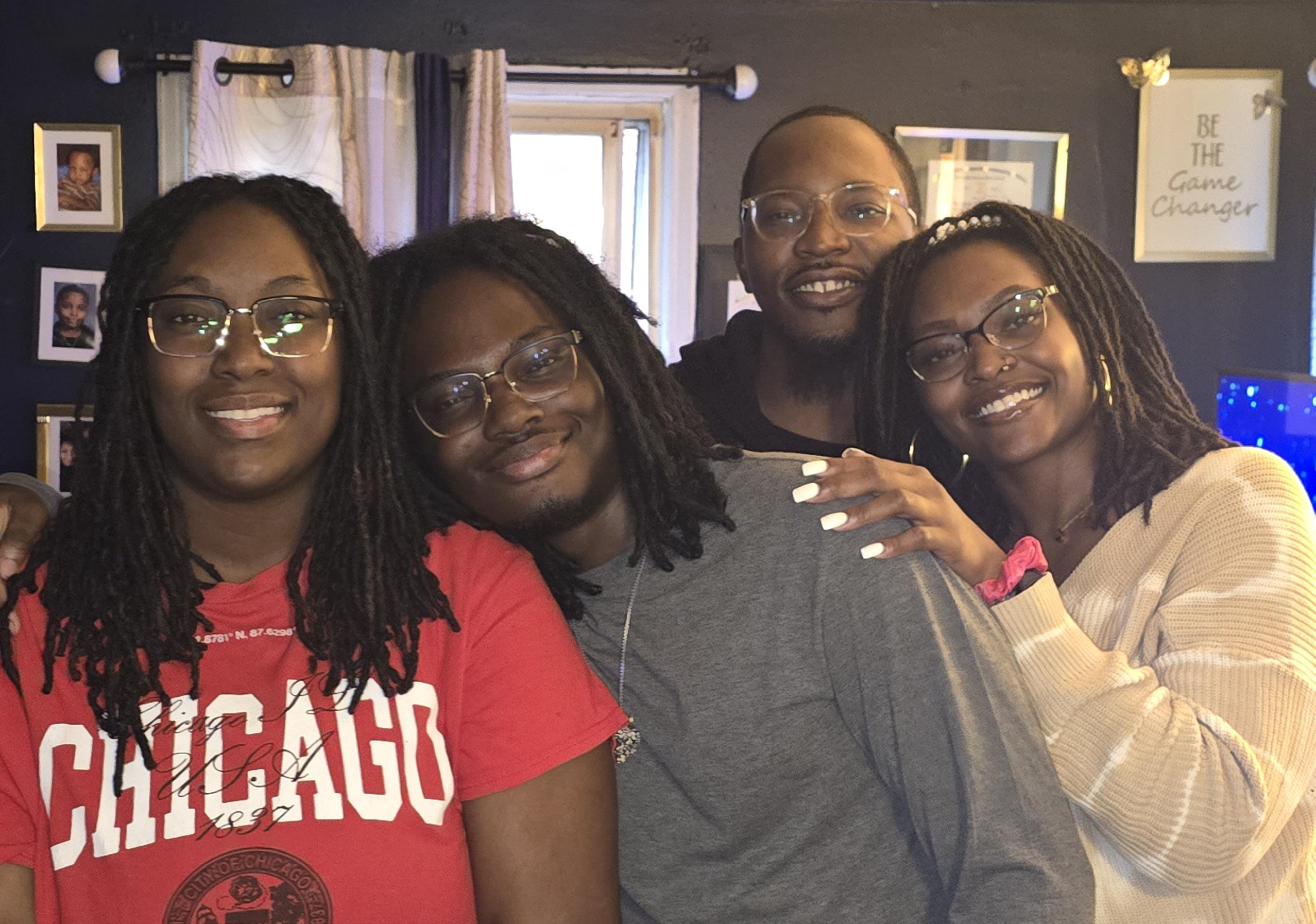
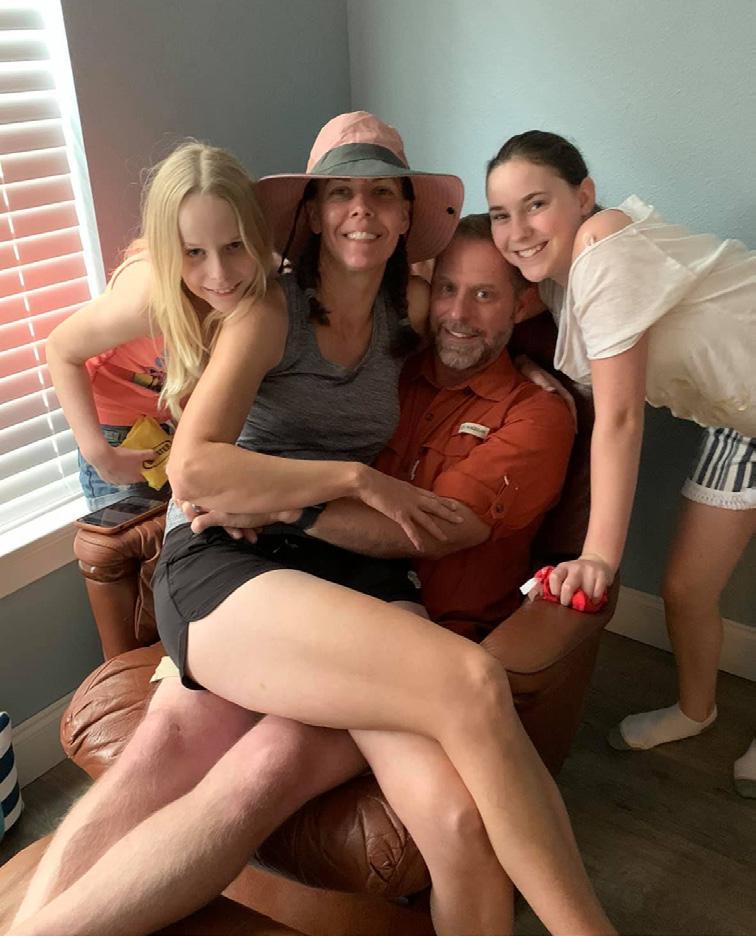
Damian's Late Eldest Son, Quynton
Growing Where You’re Planted
Sarah’s Story
From a night shift in rural New York to a doctoral degree and a classroom of her own, Sarah Looney chose to add to her life rather than pause it.
"I didn't have to stop doing life. I got to add to it."
SARAH LOONEY
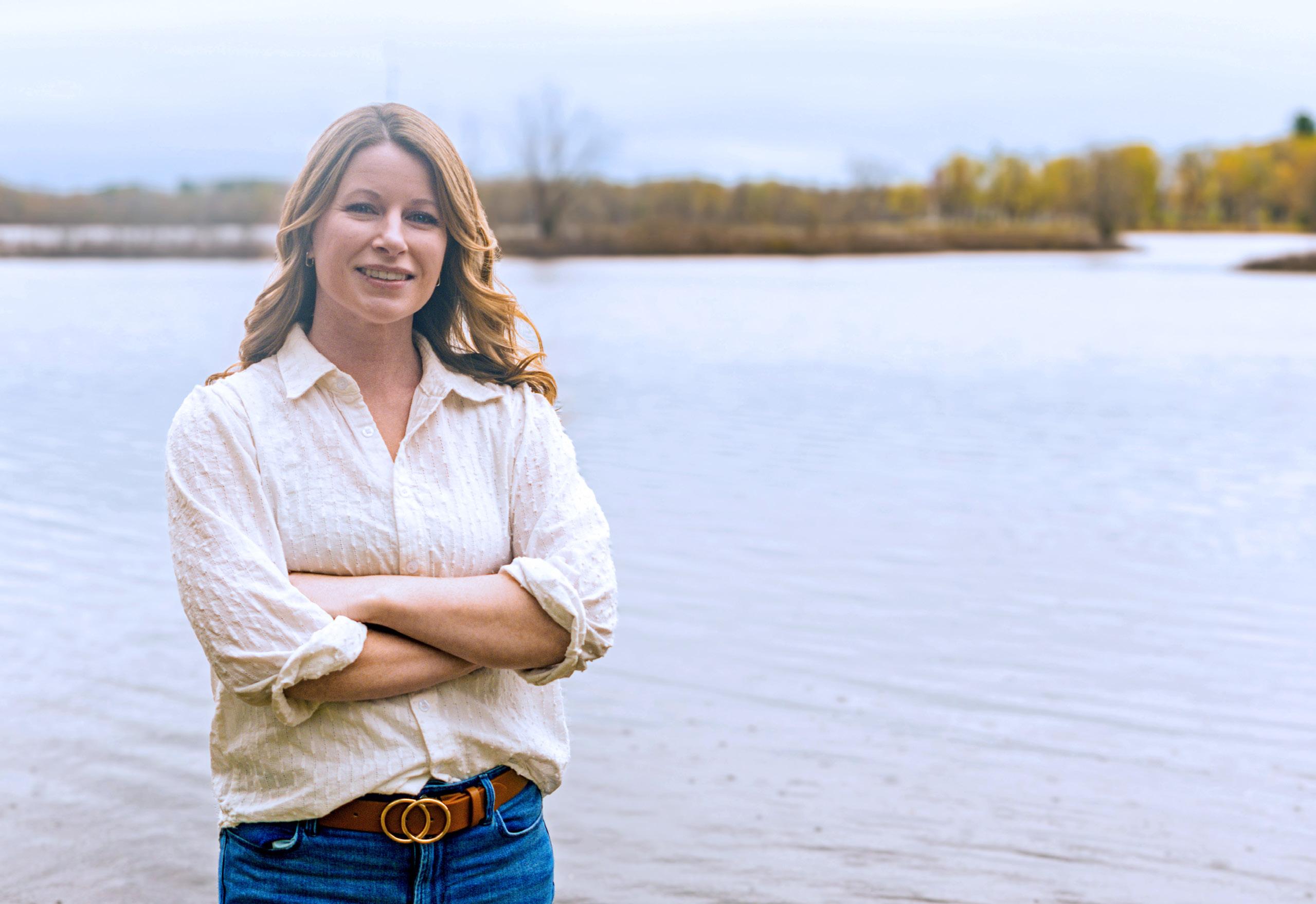
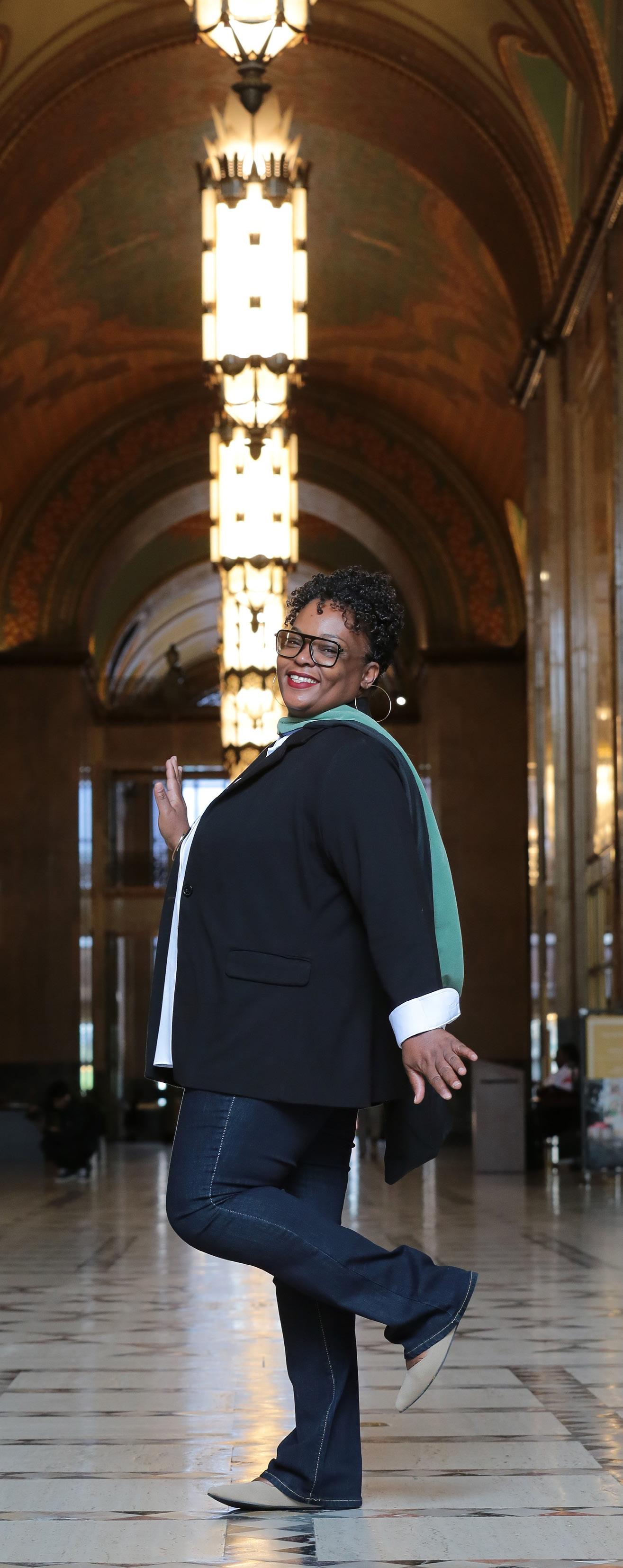
When Sarah Looney describes where she lives in upstate New York, she is direct about it. "It's nowhere," she says. Three hours in any direction to the nearest trauma center, limited colleges, and fewer options for just about anything you could need. She lives in a community that depends entirely on the nurses and healthcare workers who choose to stay, to root themselves there, and to keep showing up. Looney has always been one of those people. What changed, over the course of a decade of education pursued in the margins of a full and demanding life, was what she was able to offer when she did.
Looney began her career as a bedside nurse, working night shifts in an acute care unit at the hospital that serves the community she grew up in. She loved it — most days. She loved the patients, the friendships created through the bond among people who work long shifts under pressure, and the privilege of caring for neighbors she had known her whole life. Nursing at the bedside was always going to be part of her story, but not the whole of it. "I knew my story didn't end at the bedside," she says. It took a pandemic to make clear what the next chapter would look like.
HAVOC IN HEALTHCARE
The early years of the pandemic reshaped healthcare in ways that are still being felt today. For Looney, working in a rural hospital where resources were already stretched thin, the experience was clarifying in the hardest possible way. Senior nurses, the mentors who had trained her and steadied her through the most difficult moments of her early career, left in waves. Looney found herself at the front of the unit, precepting nurses who had come through a nursing education that looked nothing like what had come before. Clinical rotations had been disrupted. Hands-on learning had been compressed. The nurses arriving at the bedside were capable and committed, but they were entering a world that had not waited for them to be ready.
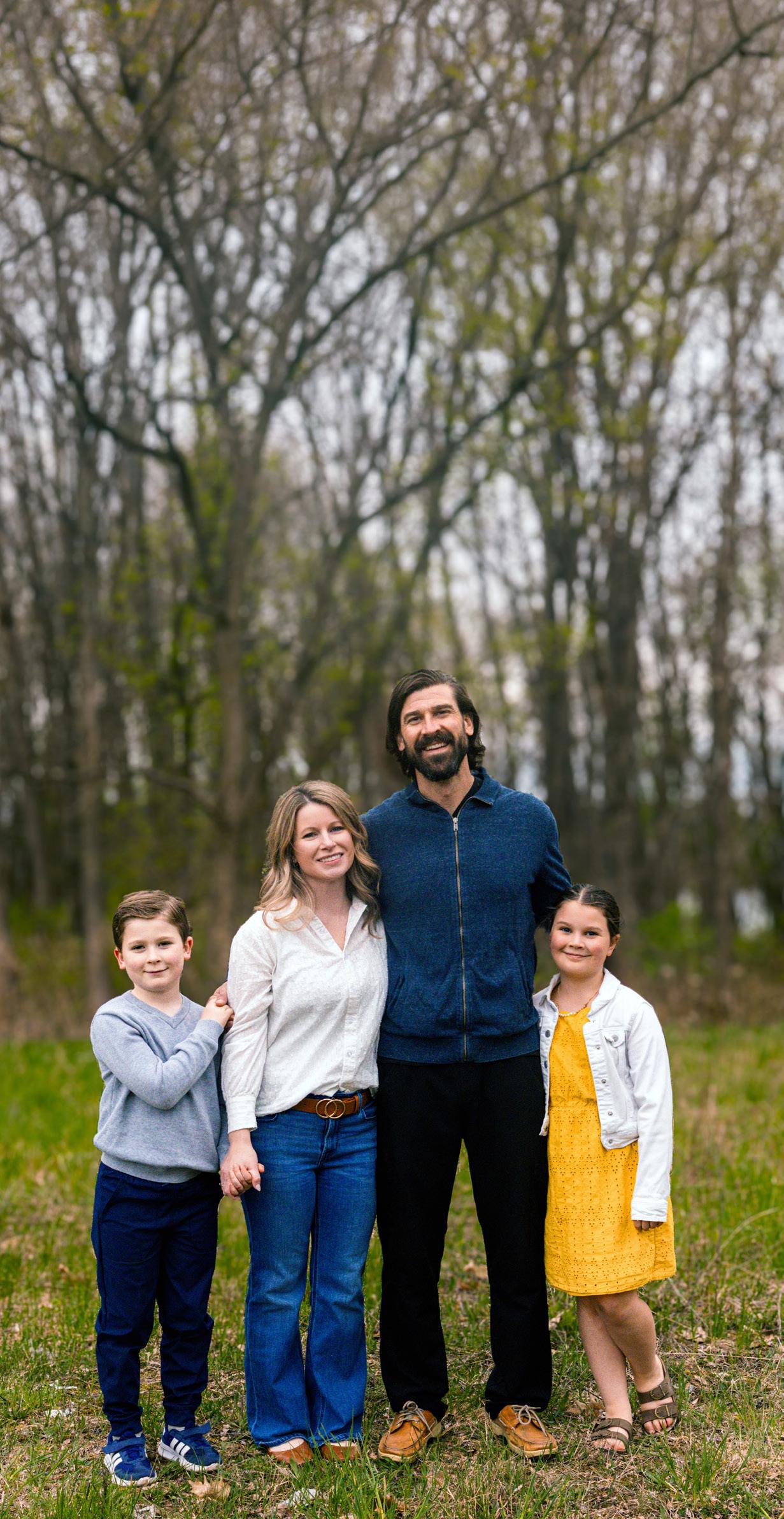
There were mornings when Looney had to give herself a pep talk before going in. She recognized that feeling for what it was. "That wasn't where my passion was anymore," she says. "I wanted to really invest all that love I had for nursing into the future nurses coming in." At the same time, she and her husband, a respiratory therapist also working through the pandemic, were raising two young children and navigating the uncertainty that everyone in healthcare was carrying. They had a small COVID wedding, just the two of them making it legal, because the weight of what they were walking into every day made the future feel less certain than it ever had before. Out of that season of fear and loss came clarity. "Life is too short," she says. "We always think we have more time. And I was like, this is the right time to go back to school."
NOWHERE NEW YORK, AND NO REAL OPTIONS
Going back to school in rural New York was not a matter of choosing between programs. It was a matter of finding one that existed. The colleges in her area offered limited options beyond a bachelor's degree in nursing, and most of those required in-person attendance. Looney couldn’t stop working. She couldn’t arrange childcare around a fixed class schedule. She couldn’t commute to a campus while her husband was traveling for work and she was, in her words, effectively a single parent some weeks. "There was nothing locally available to me at all," she says.
She did her research and interviewed with other programs, but the conversations felt transactional and uncertain. When she connected with Western Governors University, she could feel the difference from the first phone call. The program was
"Life is too short. We always think we have more time. And I was like, this is the right time to go back to school."
SARAH LOONEY
accredited. The model was competency-based, which meant she could move at her own pace and study at 11 o'clock at night after her children were asleep, if that was the only hour available. And the people she spoke with were helpful in a way that felt genuine. "It just felt like the right fit," she says.
She enrolled in WGU's Bachelor of Science in Nursing program and got to work, building her education into the spaces her life allowed rather than rearranging her life to accommodate her education.
NEW YEAR, SAME SARAH
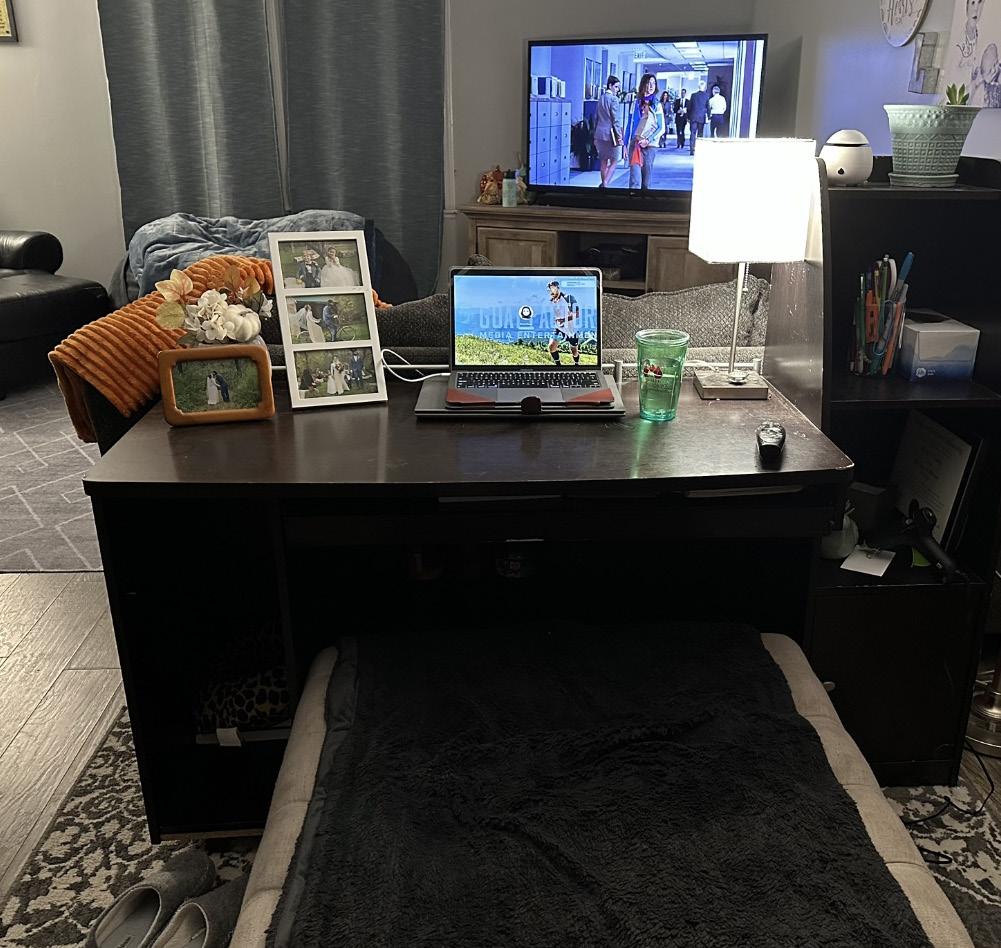
A typical week during that period looked something like this: after a night shift, Looney would get home around 8:30 in the morning, have breakfast with her kids, and then sleep until early afternoon. From roughly 2:00 to 6:00, she would work on coursework, manage the house, or do whatever she needed to do for herself before heading back in. On days off, she moved her desk into the living room so her children could play nearby while she worked. When her husband was home, he took the kids so she could have uninterrupted hours. When he was traveling, she figured it out anyway.
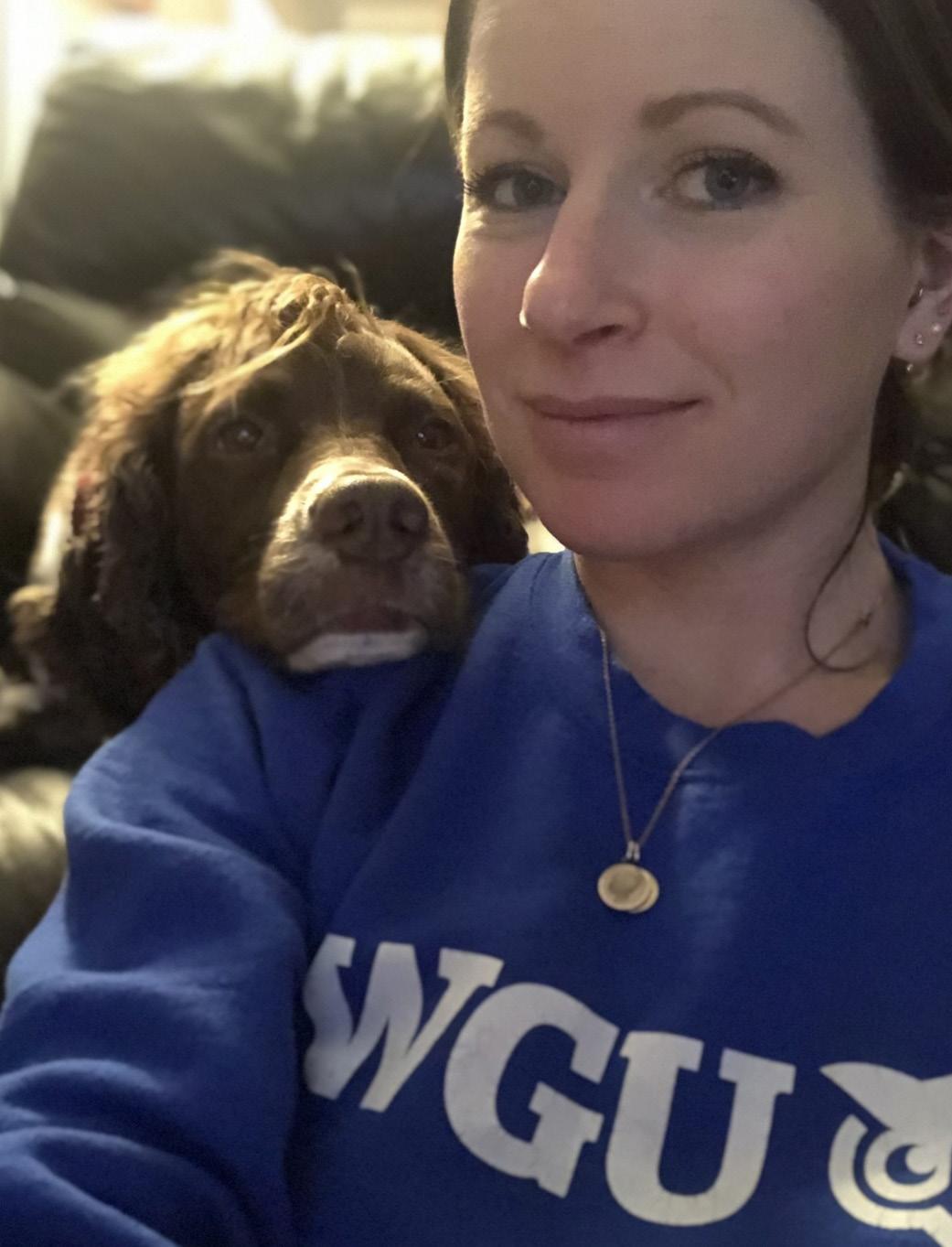
She still remembers one particular New Year's Eve. Her husband was working and her kids were asleep. She was sitting in the living room with her dog on her shoulder, typing a paper for WGU, and instead of feeling sorry for herself, she thought: this is it. This is what it looks like. "I could see what was coming if I kept putting in the work," she says. It was not glamorous, but it was purposeful, and purpose was all the fuel she needed.
The one thing she was willing to call a real sacrifice was sleep. Everything else, she kept. She did not miss her daughter's first day of school or her first concert. She did not step away from her job, her family, or her friendships. She reorganized her time rather than her life. "I didn't have to stop doing life," she says. "I got to add to it."
IMPOSTOR SYNDROME AND THE SEAT AT THE TABLE
Looney is the first person in her family to earn a college degree. There was no roadmap, no parent who had navigated financial aid or graduate applications or the specific exhaustion of being a non-traditional student. What she had was a supportive family who believed in her completely and the particular mix of determination and self-doubt that tends to follow people who are doing something new.
Impostor syndrome showed up most powerfully when she finished her bachelor's degree and decided to keep going. A master's degree felt like something other people did, people with more credentials or more certainty or more access than she had. She talked to her WGU mentor — a consistent and grounding presence throughout her time in the program — and said she was thinking about the master's. The mentor helped her think through it and shortly after, Looney enrolled.
What pushed the impostor syndrome back was not a single moment but an accumulation of them. The feedback that came back on papers, the grades that reflected real understanding, the growing recognition that she had something to say, and increasingly the tools to say it with evidence behind it. WGU's emphasis on evidence-based practice, a concept she had barely encountered as a bedside nurse, changed the way she thought about her work and eventually transformed what she was able to contribute to it. "Had I not gone to WGU, I would have never known what that was," she says. "And I use it every single day now."
She also, for the first time in her adult life, learned to stand up in front of people and speak. WGU required recorded presentations. She was, by her own description, an introvert who dreaded public speaking. “I hated it to begin with,” but she did it anyway, again and again, until the dread gave way to competence. "It took six years of education to get here," she says.
FROM THE CRUISE SHIP TO THE CLASSROOM
She finished her master's degree on a cruise to Bermuda. She was on the ship, finishing her final assignment and waiting for her results; the notification that she had passed came on the way home. "I was like, this is the best trip ever," she says. It was also, she notes with some amusement, the last time her computer came on vacation with her.
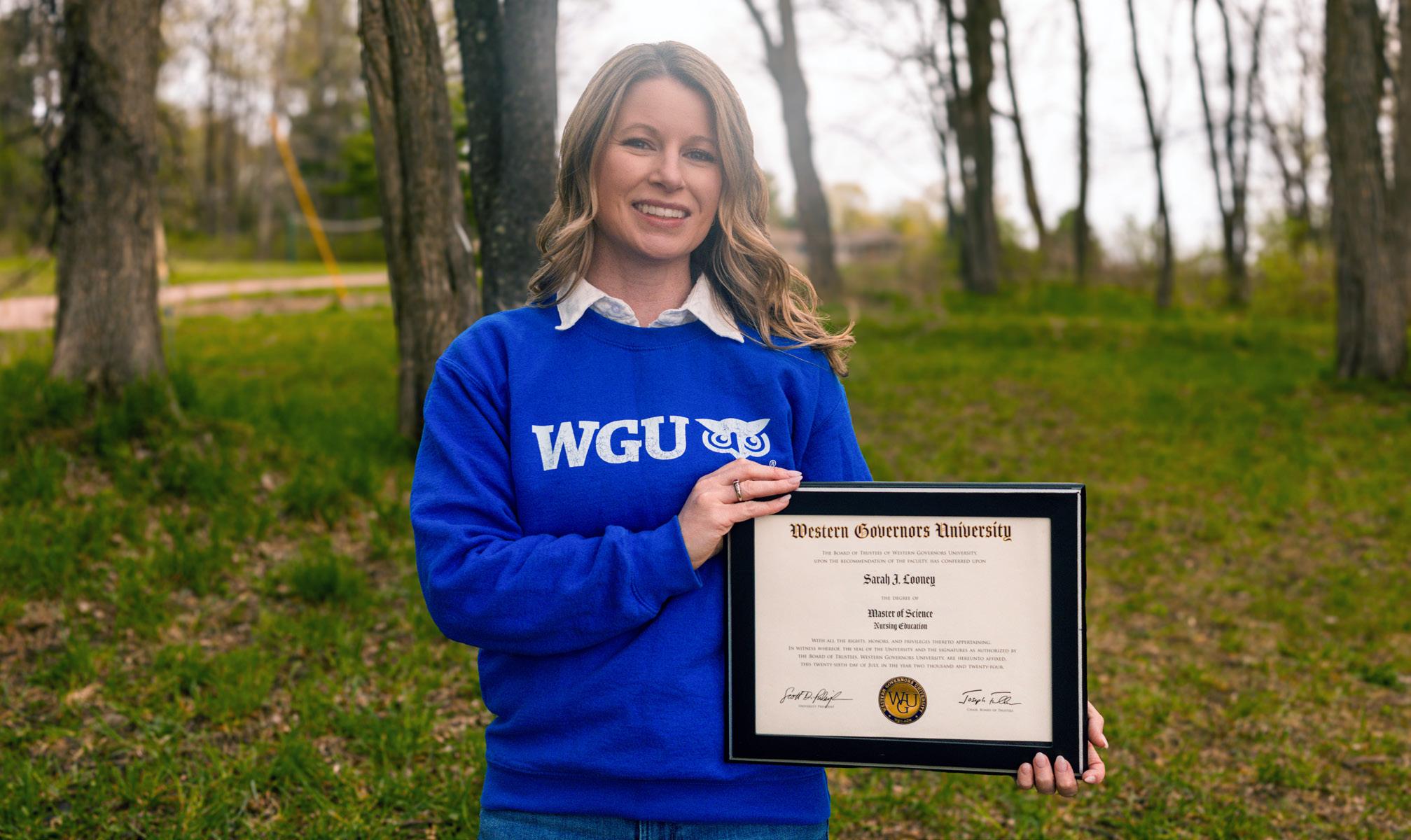
She graduated from WGU in July 2024. In August, she enrolled in a doctoral program at Ohio State University. She passed her final defense in February 2026. In May, she graduated with her doctorate in nursing education. She is also, this academic year, teaching her first classes as an Assistant Professor at SUNY Canton — the same institution where she earned her associate's degree more than a decade ago. The professor who taught her then is now her colleague.
"My 18-year-old self walking down those halls would never have thought it would be me standing there teaching," she says. "It just feels like a full circle moment."
"WGU has opened doors for me that weren't possible before. Life hasn't been the same since, and because of WGU, it won't be the same after."
SARAH LOONEY
"We might have few resources, but we're going to have really smart nurses. And what more can you ask for?"
SARAH LOONEY
WHAT RURAL HEALTHCARE ACTUALLY NEEDS
In her classroom, Looney teaches adult medical surgical nursing and specialty courses covering mental health, maternal newborn care, and pediatrics. She also leads clinical rotations at local clinics and hospitals, shaping the next generation of nurses who will care for the same communities she has spent her entire career serving.
She teaches them to ask why. Why are you giving this medication? Why is this intervention indicated? What does the evidence say? She pushes them to understand the reasoning behind their practice rather than simply following orders, because in a rural hospital, there is often no specialist down the hall to defer to. The nurse at the bedside has to know. "We might have few resources," she says, "but we're going to have really smart nurses. And what more can you ask for?"
Looney has a clear message. Rural communities do not have the luxury of underprepared healthcare workers. When the nearest trauma center is hours away, the nurse in the local emergency department is often the most important person in the room. Investing in accessible, flexible, accredited education for the people already living and working in those communities is not just a matter of workforce development. It is, in the most direct sense, a matter of life and death. "If you don't have opportunities to continue your education up here," she says, "we just have no hope for rural healthcare."
WGU gave Sarah Looney the opportunity that her geography would have otherwise denied her. She used it to earn three degrees, build a career in nursing education, and become the first college graduate in her family. She used it, above all, to stay.
To keep serving the community she grew up in, only now from a place of deeper knowledge, harder-earned confidence, and a classroom full of future nurses who are going to need every bit of both.
"It was a mountain," she says, "and we're on the other side of it."
To learn more about how WGU is expanding access to education and strengthening rural healthcare communities across the Northeast region and beyond, visit wgu.edu.
"My wife saw me for who I was. She broke down the walls. Even if I did fail, I can't fail with her."
ZEPHANIAH WILLIAMS
PHOTO CREDIT: UPON A DREAM
The Long Way to the Magic Kingdom
Zephaniah’s Story
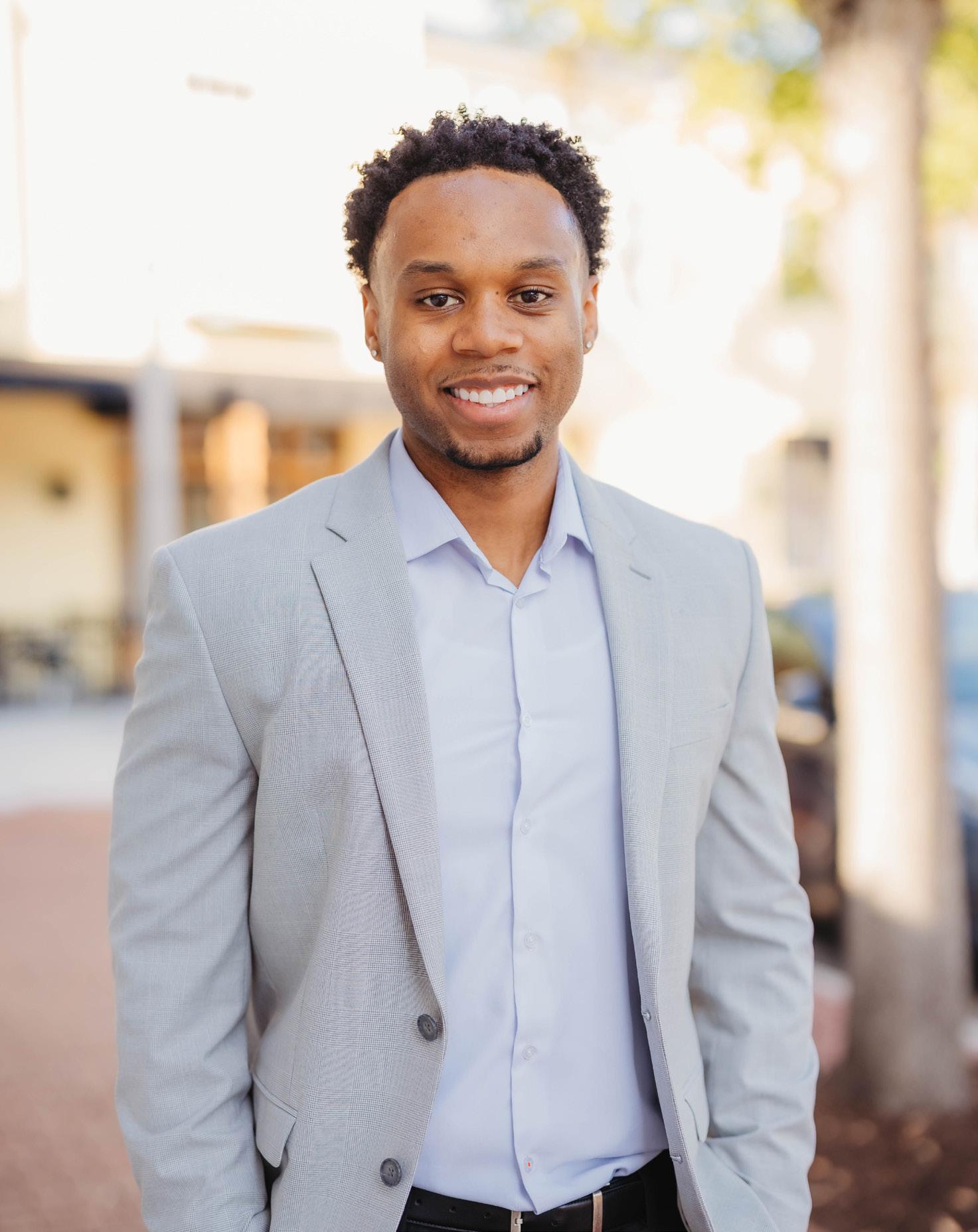
Growing up without a blueprint, Zephaniah Williams chose to build his own — and ended up at The Walt Disney Company before his 25th birthday.
Zephaniah Williams grew up knowing he didn’t quite fit anywhere. At school, he was a Black kid who cared about his grades, and that set him apart from many of the people around him. At home, taking school seriously was not something that earned approval. He did not wear the right clothes or listen to the right music to belong in one world, and he was never going to be the right person to belong in the other. "You cannot let the world shape your outcome," he says now, with the clarity of someone who learned that lesson the hard way. But for a long time, the world tried its best to do exactly that.
He grew up in poverty, raised by a mother who had him when she was 15 years old and who dropped out of high school to do it. She worked hard, relentlessly so, and what she modeled above all else was discipline. Expect nothing in return, be strategic, and do not get taken advantage of. It wasn’t a soft upbringing, and it wasn’t designed to be. What it lacked in structure and guidance, it made up for in raw lessons about survival. "The cycle had to stop with me," Williams says.
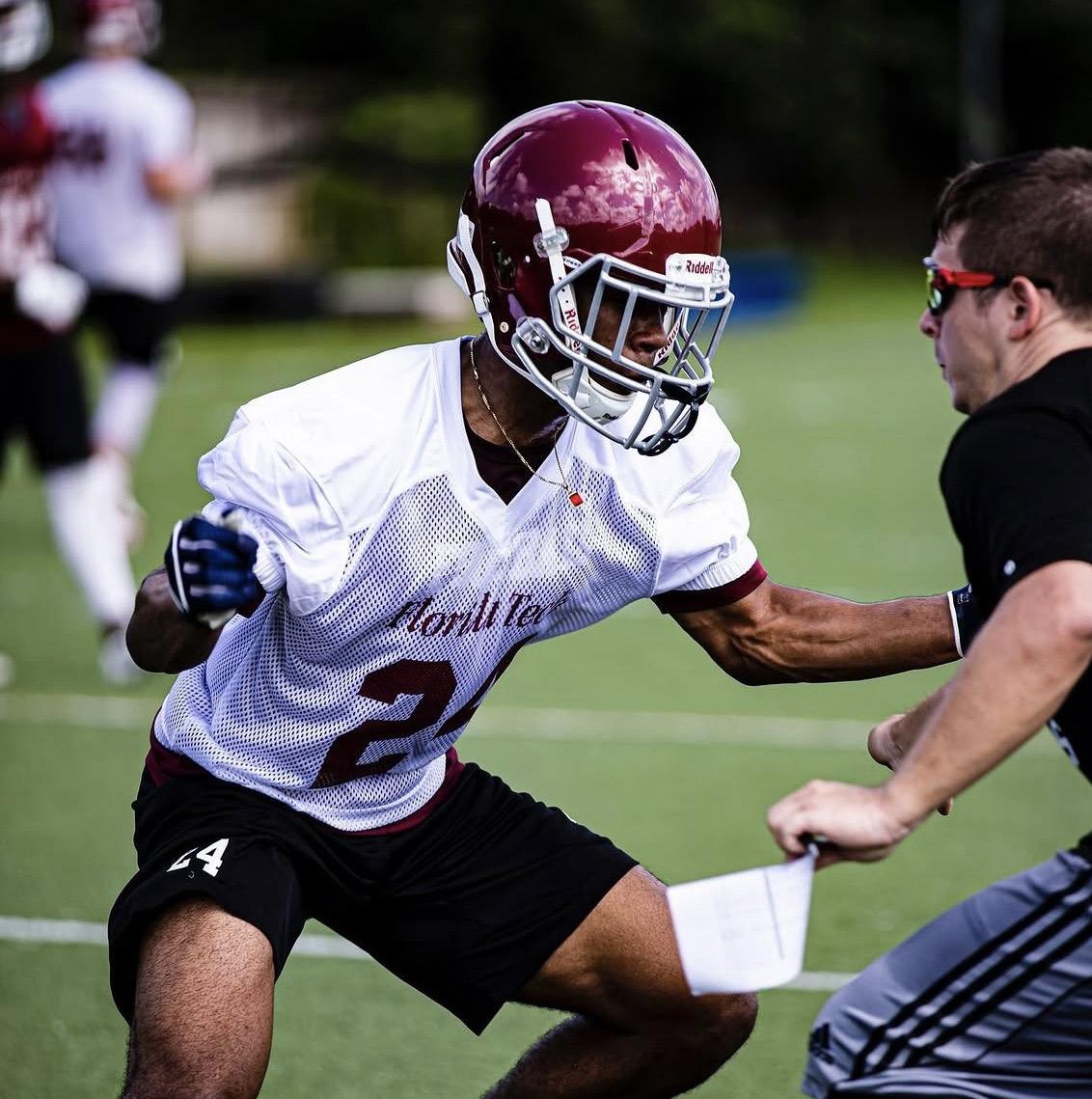
For much of his adolescence, the most visible path forward was football. Sports, not education, were held up as the way out in the environment where he was raised. Williams was good enough to commit to Central Michigan University to play wide receiver. He was going to be a football player who majored in accounting, because accounting felt credible, felt like proof. It was a plan built as much on external expectations as on his own ambitions. Then 2020 arrived and dismantled it entirely.
THE YEAR EVERYTHING CHANGED
The COVID-19 pandemic shut down college football and, with it, the identity Williams had built around the sport. "It took my inner child," he says. The version of himself he had been preparing to become — the athlete, the competitor, the one with a clear and visible future — was suddenly gone. What came next required him to figure out who he actually was without a jersey on his back.
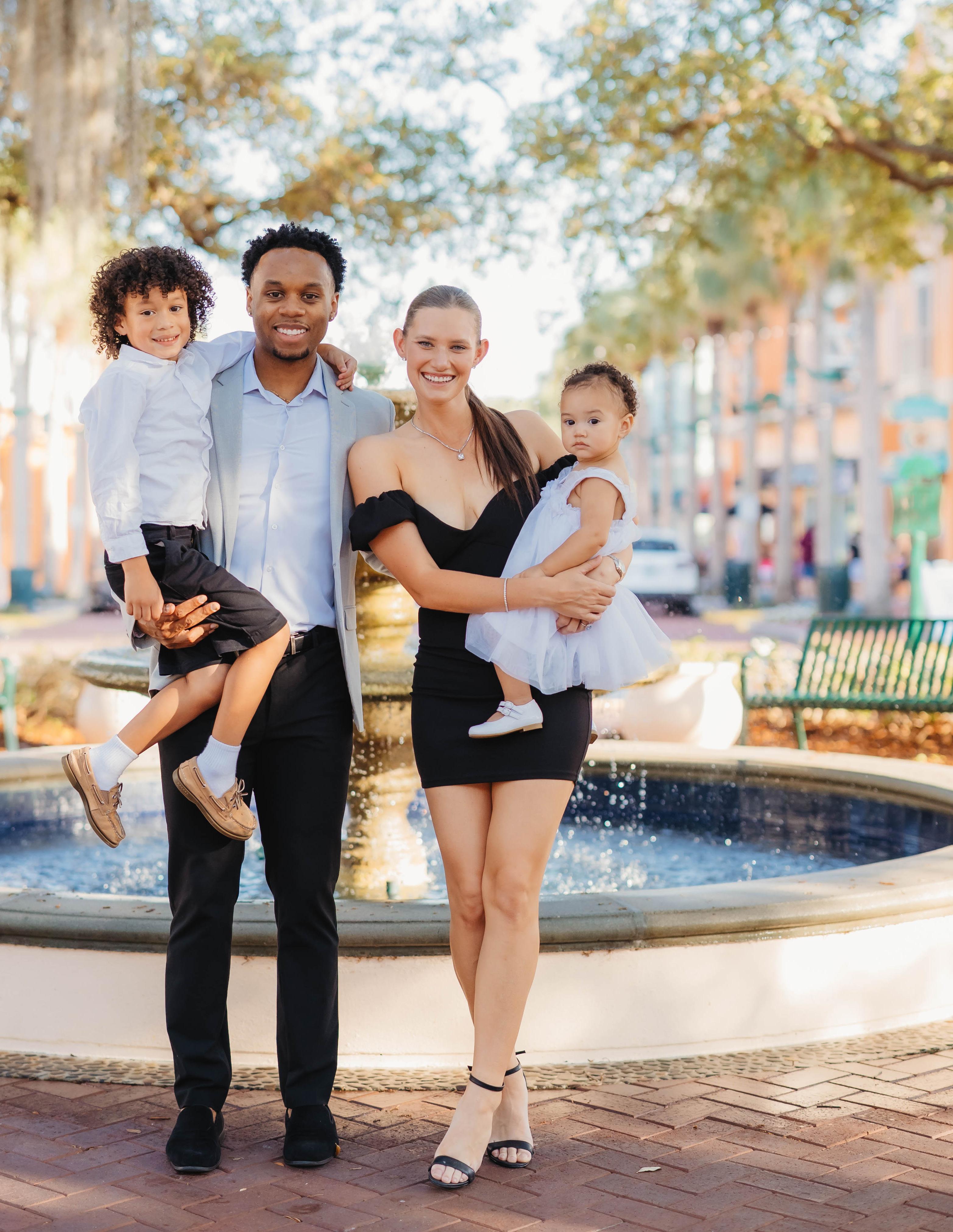
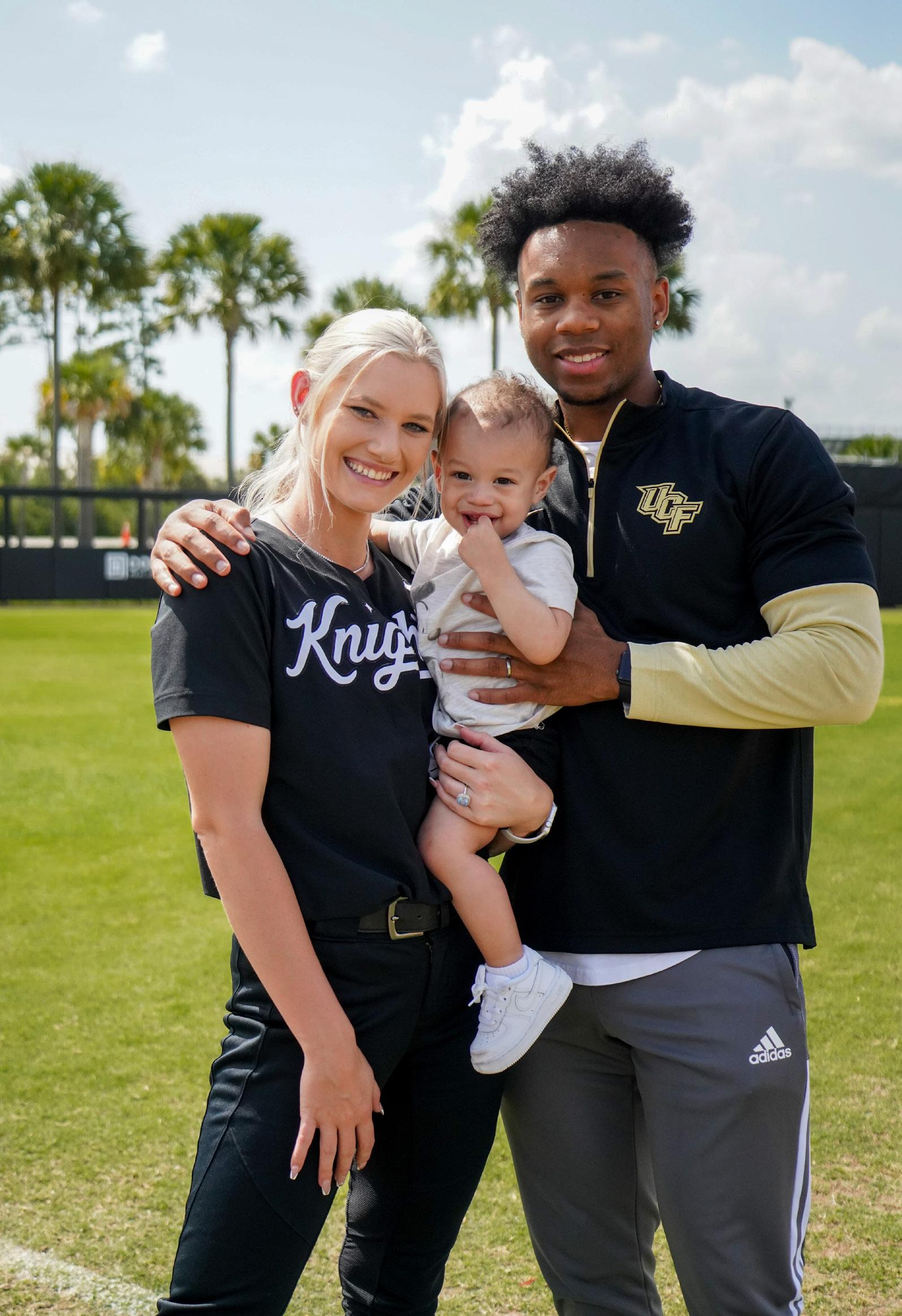
What 2020 gave him, in return for what it took, was his family. During the pandemic, his relationship with his now wife, Jasmine, deepened, she became pregnant, and Williams made a decision that would define the years that followed. He gave up football and took a job in insurance to support his family. When their son, Zee Brysen, was born in April 2021, Williams stepped fully into the role of provider and primary caregiver, trading what remained of his athletic ambitions for something he came to value far more.
The family eventually made their way to Florida, where Jasmine pursued her softball career at the University of Central Florida. Williams worked, kept the household running, and spent those years as the constant presence at home while his wife trained and competed. He was the one tracking Zee at the ballpark during games, the one making sure the family stayed grounded while Jasmine pursued her own goals. His wife has said plainly that he did it all with grace, that you would never have known how hard things were by looking at him. That steadiness and willingness to hold things together without fanfare is something Williams does not see as sacrifice. "Family is everything to me," he says. "What I did was the bare minimum."
A NEW DIRECTION, FOUND AT A CAR SHOW
During those years in Florida, Williams was restless in a different way. He was working, he was present, but he didn’t have a path that felt like his own. That changed at a car club, of all places, when he struck up a conversation with a man standing next to a Lamborghini. Demetrius Deck was a cybersecurity professional, successful and self-assured, and he was Black. For Williams, who had grown up without strong examples of Black men in professional careers, that visibility mattered more than anything the man said. "When people can see themselves in someone else, they can picture their life like that," Williams reflects. He had never been able to picture it before, and suddenly, he could.
The two men began meeting regularly, exchanging what they each knew. Williams helped with media education. Deck helped Williams understand cybersecurity. Williams began researching how to make the field a career, and that search led him to Western Governors University. He had no background in cybersecurity and no college degree, but he enrolled in WGU's Bachelor of Science in Cybersecurity and Information Assurance program, driven by something he had not felt in years: the sense that a specific future was actually possible.
Almost immediately, he found that WGU's model fit the life he was living. He was at home with a toddler, his wife was balancing school and softball, and the household was rarely calm. There was no version of a traditional campus schedule that could have worked. WGU's competency-based approach allowed him to move at his own pace, studying in the hours he could find, accelerating when he had momentum. He shares, "The competency-based model from WGU can fit into whatever approach or situation you are in," and that is exactly what he needed.
THE MENTOR WHO TOLD HIM THE TRUTH
The first month of his program was not without friction. Williams was moving forward, but not with the focus the work required. He was putting things off, spreading his attention too thin, and it was starting to show in his performance. His WGU program mentor, Brittany Roberts, did not ease into the conversation. She gave him direct, honest feedback and pushed back on the pace he was setting for himself. She told him he was rushing through things in the wrong ways and falling behind in the wrong places.
What turned it around was not just the feedback itself, but the way Roberts delivered it. She took the time to get to know him. She was not interested only in his coursework. She wanted to understand who he was, what was driving him, and what was getting in the way. "It's not only about the work," Williams came to understand. "It's about the relationships." He trusted her process, adjusted his approach, and stopped
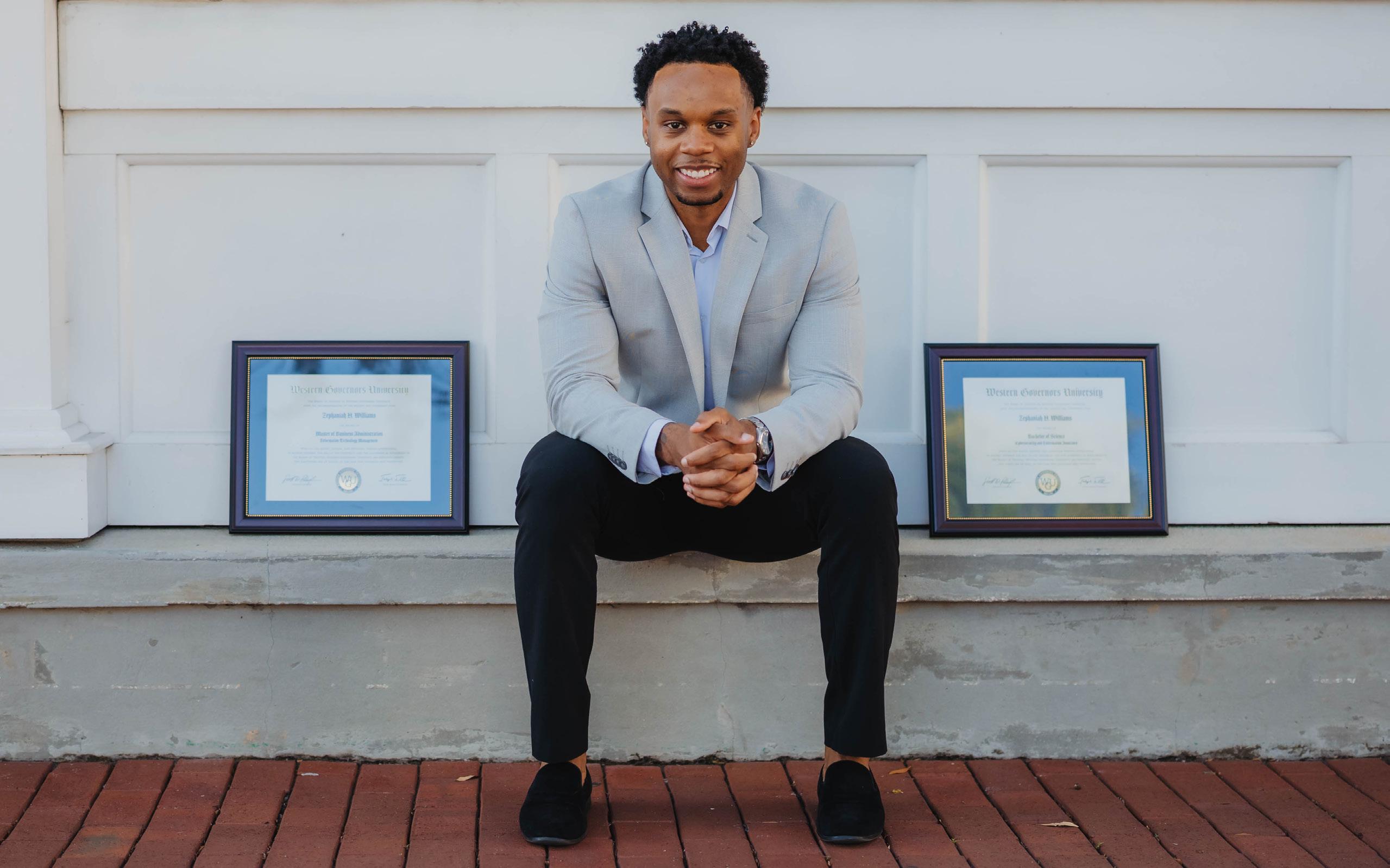
failing. From that point forward, he did not slow down. He completed his bachelor’s degree in six months, finishing within the exact timeframe he had set as a goal — one that his mentors had initially expected would take considerably longer. "It felt like I broke a curse," he says of that moment. "The impossible seemed possible. There was no limit to what I could accomplish."
He didn’t stop there. Following the bachelor’s degree, he enrolled in WGU's Master of Business Administration in Information Technology Management and completed it in two months. The household during that period was, by his own description, chaotic. But the discipline Williams had carried since childhood, and the focus he had finally found for himself, made the difference. He had a goal, a model that worked for him, and a family watching him go after it.
"You cannot let the world shape your outcome. Your work is limitless. You can accomplish anything you set your mind to."
ZEPHANIAH WILLIAMS
THE WORK THAT GOT NOTICED
Armed with two degrees, Williams moved into the professional world with a clarity and confidence he had not possessed before. He joined Marriott International as a Systems Analyst, and it was there that the full weight of his WGU education began to show in his work. He took on a security project involving the partnership between Walt Disney World Parks reservation and Marriott Hotel reservations on Disney property. The work was thorough, technically sophisticated, and effective enough that it drew attention from The Walt Disney Company itself.
After being exposed to the internal operations of The Walt Disney Company through his work at Marriott International, Williams felt motivated to explore a future there. He eventually
came across an open position and decided to apply; soon after, a recruiter reached out, and the rest felt like magical history..
Now a Cybersecurity Architect: TWDC Global Information Security Corporate Segment, Williams was only 24 when he accepted the offer. He stepped into a six-figure role alongside peers who were often decades older and far more established in their field. Imposter syndrome, he acknowledges, was immediate and real. Despite this, he quickly found a supportive culture. He shares: "The environment at TWDC is extremely welcoming, and the leaders and my peers are accepting and engaging to help me become the best version of myself here."
BREAKING THE CYCLE
Williams is deliberate when he talks about what all of this means beyond the career milestone. His son is still young, but Williams is already thinking about what he is absorbing. He wants him to understand that the path forward is not determined by where you start. He wants him to understand sacrifice and purpose and the kind of faith that leads you to take an opportunity when it presents itself, trusting that it is part of something larger. Jesus is the centerpiece in Williams' entire life and drives his every decision and his 'why' for everything he does, a foundation that has blessed him with his wife, Jasmine, his son, and his daughter. "Breaking the cycle means everything to me," Williams says.
His wife, Jasmine, remains his support line and is a central part of that story. She saw him clearly when he was still learning to see himself. "She broke down the walls," he says. "Secure and confident — even if I did fail, I can't fail with her." Her role is not in the background of his journey. She is the person who stood beside him through the ramen dinners, the cramped apartments, the years when nothing was certain, and who pushed him back toward his own potential when he was tempted to stay small.
Williams offers a straightforward message: accessible, affordable education changes the path for people who were never supposed to make it. WGU was not a fallback option for him. It was the only option that could have worked given his circumstances, and it produced a cybersecurity professional now securing digital infrastructure for one of the most recognized companies in the world. "You cannot let the world shape your outcome," he says. "Your work is limitless."
He grew up caught between two worlds, belonging fully to neither. Today, Zephaniah Williams has built a world of his own, and it turns out it was worth every bit of the work it took to get there.
To learn more about how WGU is expanding access to education and building the nation's cybersecurity workforce, visit wgu.edu.
"Persistence truly pays off. And what makes me proudest is being able to use what I've learned to help others succeed."
TALISHA BROWN, MHA, EDD
PHOTO CREDIT: VIDAL LEONARD PHOTOGRAPHY
She Went to School With All of Them
Talisha’s Story
Talisha Brown didn't pursue her graduate degrees alone. Her children pushed her to go further, her grandkids cheered her on, and her students stood up and clapped.
When Talisha Brown was studying for a proctored exam in the early morning hours before her household woke up, her grandchildren were asleep in the next room. When she passed a paper and shouted in celebration, they came running to ask what happened. When she stayed at her desk instead of cooking dinner, her family understood why — because she had made sure they did. Brown didn't hide her education from the people she loved. She let them in, every step of the way, because she needed them to understand what it actually took. "I felt like they went to school with me," she says. "I felt like they were there with me."
They were. And now they are going places of their own.
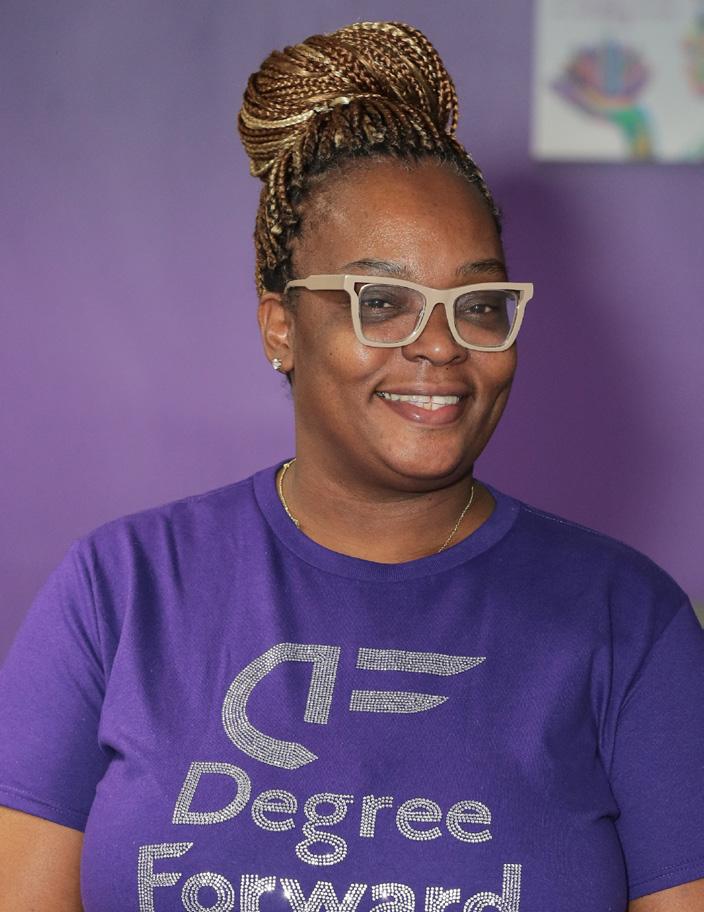
Brown is the Associate Director of Academic Success at Degree Forward in Detroit, Michigan, where she coaches students through competency-based education programs. She holds a Master of Healthcare Administration from Western Governors University and a Doctorate in Education with a concentration in adult learning and development, earned in 2025. She is the first person in her family to complete a college degree. She is also just getting started.
THE ROAD THAT KEPT NARROWING
Brown spent seven years working as a licensed practical nurse. She loved the work. She loved the patients, the relationships she built with them, and the particular satisfaction of showing up for people when they were at their most vulnerable. But the pandemic changed things in ways she couldn't ignore. The weight of direct patient care became something she carried differently after that, and she began to listen to the part of herself that had always wanted something more.
She had long wanted to become a registered nurse. In Michigan, that path is narrower than most people realize. The programs that would allow her to transition from LPN to RN were limited, and many of them were out of state. She drove to Ohio more than once to take the required tests. She passed them. But the reality of commuting across state lines through Michigan winters while maintaining her work and her family responsibilities was not sustainable.
"It was really devastating to know that's not going to be a road I'm going to take," she says. But devastation did not mean defeat. She knew she wanted to keep going in education, even if the direction had to change. "Once I saw the opportunity to go to school to further my education in something other than nursing," she says, "I jumped at it."
For Brown, the biggest fear was financial. She feared that pursuing a full-time program would mean cutting back on work, and cutting back on work meant destabilizing the life she had built. When she discovered that WGU's program was both affordable and flexible, the calculation changed entirely. "I didn't feel like I would be in serious debt going to WGU," she says. Knowing she didn’t have to choose between her education and her finances gave her reassurance. She decided to enroll.
NO-BRAINER
When Brown found WGU's Master of Healthcare Administration program, she didn't hesitate. The cost was manageable and she could move at her own pace. She could study from her dining room — which she eventually cleared out and converted into a dedicated workspace — while her family moved around her. She could take her proctored exams at 5:00 in the morning, after a cup of coffee and before anyone else was up and the day's demands had begun.
Her program mentor, Hillary, became one of the most important people in her academic life. On a Friday afternoon, before a critical proctored exam, Hillary walked her through the process: open the course, complete the study guide, study the study guide, then sit for the exam. Brown had been a nurse for years and felt confident she already knew the material. She took the exam anyway, without the preparation Hillary had recommended, just to prove herself right. She passed on the first try. She called Hillary on Monday morning to tell her. "She was as excited for me as I was for myself," Brown says. "It actually feels like when you make friends in a traditional school setting and you're calling each other to discuss the test. Being able to call her and express that to her — I really appreciated that."
That experience shaped how Brown thinks about her role today. "I think it's very important for students working in competency-based education to have a coach or a mentor," she says. "Someone they can talk with, express fears with, share the joys with, and have their questions answered."
A FULL HOUSE AND A CLEARED DINING ROOM
During the period Brown was pursuing her master's degree, her household was full in the most literal sense. She had a high school senior, a college student, an adult daughter who had moved back home with two grandchildren, and eventually additional family members moving through as life continued to unfold around her. She didn't slow down. Instead, she created small, intentional windows of time inside the chaos and protected them.
"I felt like they went to school with me. I felt like they were there with me."
TALISHA BROWN, ON HER FAMILY
The dining room became her office. The early mornings became her classroom. The grandchildren learned that when it was school time, they were to be as calm as the house allowed. "I had to be intentional," she says. "I had to adjust with what was actually going on in the house." Her family didn't just tolerate her education. They participated in it, reading the directions on her assignments over her shoulder, listening when she explained what she was working on, and cheering when she passed. "To me, this type of learning is a little bit more personal because I was able to share those things with them," she says.
She needed them to see the work because she needed them to understand what competency-based education actually requires. People on the outside, she says, sometimes assume it is easier than traditional school. That flexibility means less effort. "I needed my family to understand that some days I won't be making dinner and they will need to instead," she says. "I won't be participating in some family activities. They needed to actually see me in the work."
THE RIPPLE THAT KEEPS SPREADING
Brown finished her master's degree in February 2024. She had told herself she was done. She had earned what she set out to earn. Then her children started asking questions, they wanted to know if she was going to keep going. They told her she should pursue a doctorate. She was skeptical at first. Then she thought about her grandparents, who would never get to see her walk across that stage, and about what it would mean to be the first person in her family's history to reach that level of education. "This would be a win for my family," she says. "I thought, yeah. Yeah, I can do this."
She enrolled in a doctoral program almost immediately. To keep herself moving through the difficult stretches, she
created inspirational pockets of motivation that might seem unconventional, but proved remarkably effective. She played Pomp and Circumstance. She watched recordings of previous graduation ceremonies on YouTube and imagined herself in the next one. She pictured her mother's face and the pride she would have for her daughter. She heard her children screaming her name in the audience as her name would be called. She also thought about a nephew she had lost — someone who had checked in regularly to ask how far along she was in school and who would never get to see the finish line. "Knowing that wasn't something he was ever going to be able to do helped keep me going," she says.
There were moments when she nearly stopped. The hardest stretch came when her daughter moved back home with her two children. Brown wanted to step back from school entirely to be fully present for her family, but her daughter wouldn't allow it. The second hardest moment came when she lost her nephew during her bachelor's degree. As the oldest sibling, she felt the pull to set everything aside and hold her family together. "That's not what he would have wanted me to do," she says. She took a few weeks and then she went back.
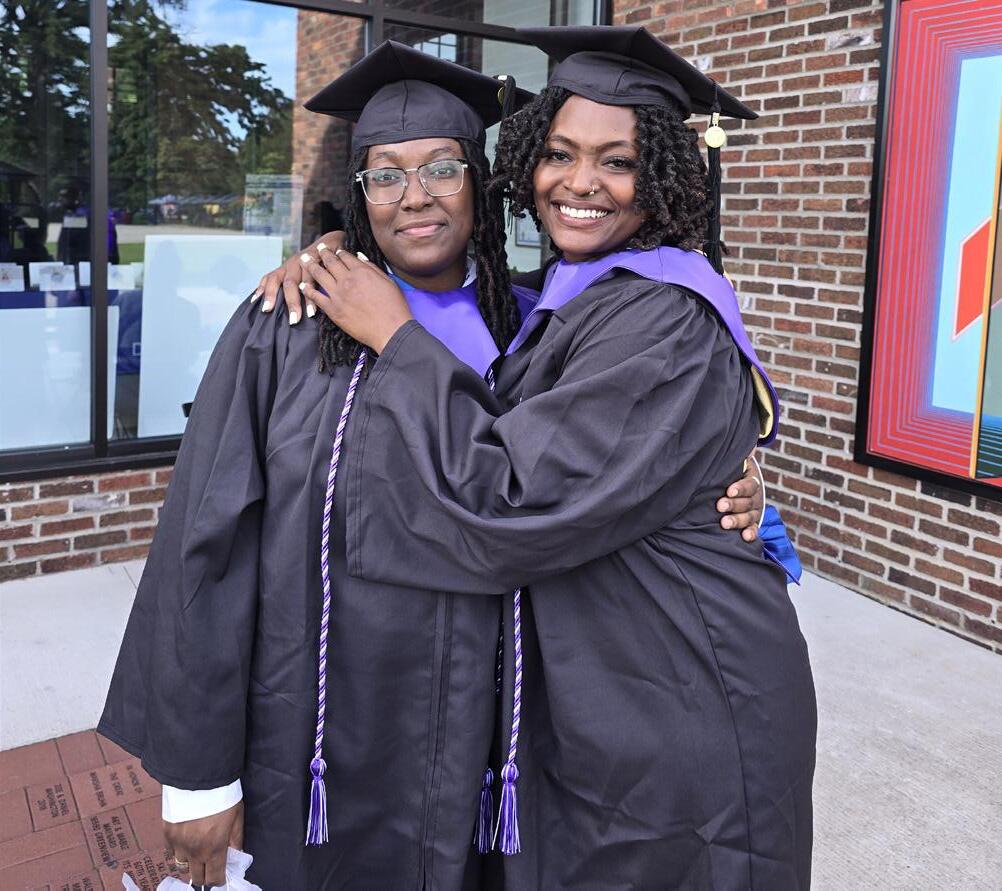
She graduated with her doctorate in 2025. At the graduation ceremony for her students at Degree Forward, before her own celebration had even fully settled, her students stood up and began to clap. They found out she had just finished her doctorate, and they wanted her to know they had been rooting for her the whole time. "I wasn't expecting it," she says. "While I'm doing all the support, I didn't understand that they were feeling the support for me as well." That moment confirmed what she had been afraid leaving nursing might cost her. While she didn’t continue bedside care, she had the relationships with her mentees and that’s what she needed most. "Something that I was worried about not doing by leaving the medical field — I'm actually doing it. And this is proof." Brown’s ripple effect has created waves across the shore.
"I have broken a lot of generational curses. No one in my family has ever gone that far in school. I hope my grandchildren understand that whatever they put their full potential to, they can succeed in it."
TALISHA BROWN
WHAT SHE UNDERSTANDS THAT OTHERS
DON'T
Brown's doctorate in adult learning and development is not a credential she holds passively. It informs her work every day as she coaches students through programs that many people still don't fully understand. Traditional educators, she says, often underestimate what competency-based education demands. "A lot of people don't even think it's real," she says. What Brown knows, from the inside, is that it requires a particular kind of discipline — one that doesn't come from external deadlines but from a student's own commitment to showing up for themselves.
That is exactly why mentorship matters so much in this model. "Every competency-based program should have strong coaching support," she says. "It builds the confidence for students to stay on track and stay engaged." The flexibility that makes the model accessible also makes it easy to drift. A mentor is what keeps the line taut.
what it felt like to have someone believe in you before you fully believed in yourself.
She is also thinking about what comes next. Her youngest son is neurodivergent, and Brown is actively exploring what competency-based education (CBE) can look like for students who learn differently. She is currently mentoring a neurodivergent student and wants to help build a model to make this educational approach accessible to people who have historically been told it isn't for them. This commitment to accessibility is central to her new project, AcceleratEd, which supports adult learners in CBE programs by providing coaching, training, and specialized resources for both students and academic coaches.
Brown's reach now extends well beyond her own students. One of the people she mentored finished his Master’s degree through WGU, enrolled in a program she told him about, and later appeared in a commercial for the university. When he told her he wouldn't have done it without her, she told him he was wrong — that he had done the work himself. But she understood what he meant. She had once been on the receiving end of that kind of encouragement, and she knew
Her oldest daughter is finishing her master's degree and already talking about a doctorate. She, too, is working at Degree Forward as an academic coach. Her youngest son recently finished his associate's degree program. Her grandchildren are watching all of it, including one who has already asked whether she thinks he could be a doctor someday. Brown told him yes without hesitation.
For anyone sitting in the position she once sat in — uncertain, underfunded, convinced that the road was too narrow — she has three things to say. Go for it. Stay consistent. You will succeed. "And it actually happened," she adds, with the confidence of someone who fully believes in themself.
To learn more about Dr. Talisha Brown and her work, follow her work on LinkedIn: linkedin.com/in/drtalishabrown/
To learn more about how WGU is expanding access to education and empowering adult learners across the Great Lakes region and beyond, visit wgu.edu.
The Impossible Thing
Chris’s Story
Chris Reed was the first in his family to earn a college degree. His daughter noticed — and so did the world.
PHOTO CREDIT: LAURIE ADALLE PHOTOGRAPHY
"My dad used to tell me that one of his biggest regrets was not going to college. 'We could have been living better lives now,' he would tell me with that look of wisdom you only discover from firsthand experience. Around this time, my dad chose to take on a challenge that far surpassed this insanity: getting his bachelor's degree. I realize now how daunting this was for someone who worked full-time and was taking care of a family as I have begun my own college journey. I honestly could not be more proud of what he has accomplished and he remains to be one of my greatest inspirations."
Those words belong to Addison, written as a reflection on watching her father do something no one in their family had done before. Chris Reed didn’t know she was paying that close attention to his journey. He was just trying to get it done.
That is the thing about Reed - he doesn’t lead with the milestone, he leads with the work.
THE CEILING HE KEPT HITTING
"I'm the first person in my family to get a degree. That was a huge milestone for me. Prior to the degree, I made decisions that affected three or four people. Now I'm working on projects that will impact hundreds of people in the US and thousands globally."
CHRIS REED
For years, Reed was the kind of employee who earned good reviews, took on overtime without being asked, and showed up in ways that his employers consistently recognized. He worked hard, and he moved up — to a point. "I continually got to a certain level in a job and that was kind of the ceiling for me," he says. It happened more than once, across more than one company.
The message was not always delivered directly, but it was consistent. To get to the next level, he needed a degree. Reed had heard a version of this before, closer to home. His father, whom he didn’t meet until his early forties, spoke openly about his own regret of not going to college. So did his brother, who came within one semester of finishing his degree before walking away. The pattern was clear and Reed had no intention of becoming part of it.
The problem was not motivation, it was everything else. The cost of tuition at a traditional university stopped him before he could start. His work schedule made attending on-campus classes at set hours nearly impossible. And the unanswered questions that came with trying to figure it all out on his own were enough to keep him circling the idea without ever landing on it. "I wanted the answers," he says, "but I was afraid to ask."
THE CALL THAT CHANGED THINGS
When Reed finally made the call to Western Governors University, he knew things were different. The staff didn’t have every answer immediately, but they knew where to find one. The financial aid process — which had previously felt like an impenetrable wall — turned out to be something he qualified for. He had assumed that he was too far removed from high school to be eligible. He was wrong. His employer also offered tuition assistance, which meant that with financial aid and company support combined, the financial barrier that had held him back for years was suddenly manageable.
"Starting was the hardest part," he says. "But once I actually made that step and made the call, I got a ton of help. It was simple." The path was not free of obstacles, but it was no longer a mystery. WGU's competency-based model meant Reed could move at his own pace without being tied to a campus schedule.
The first term felt almost too easy. Reed moved through the material quickly, motivated and confident. He came home each night and opened his coursework without hesitation. What he didn’t realize was that the first term was giving him a false sense of what was coming.
"Just start. Because if you don't start, you're never going to finish. And once you do start, just keep going."
CHRIS REED
WHEN EVERYTHING HIT AT ONCE
By the third and fourth terms, the coursework had grown genuinely challenging. At the same time, Reed's employer had offered him a new position, one that required relocating his entire family from California to Texas, and he accepted. His family uprooted, his kids enrolled in new schools, his wife navigated a new city, and he stepped into a role unlike anything he had done before.
The job was not harder because it was beyond him. It was harder because it required an entirely different way of thinking. He had spent years in tactical roles, solving problems that arrived in the morning and needed answers by the end of the day. His new position asked him to think in quarters and years, to plan for outcomes that
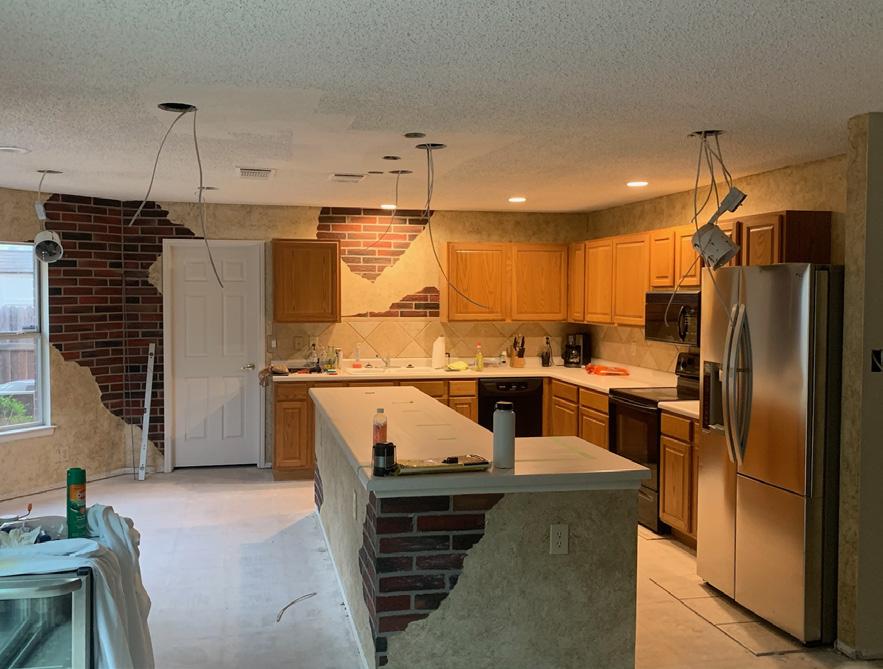
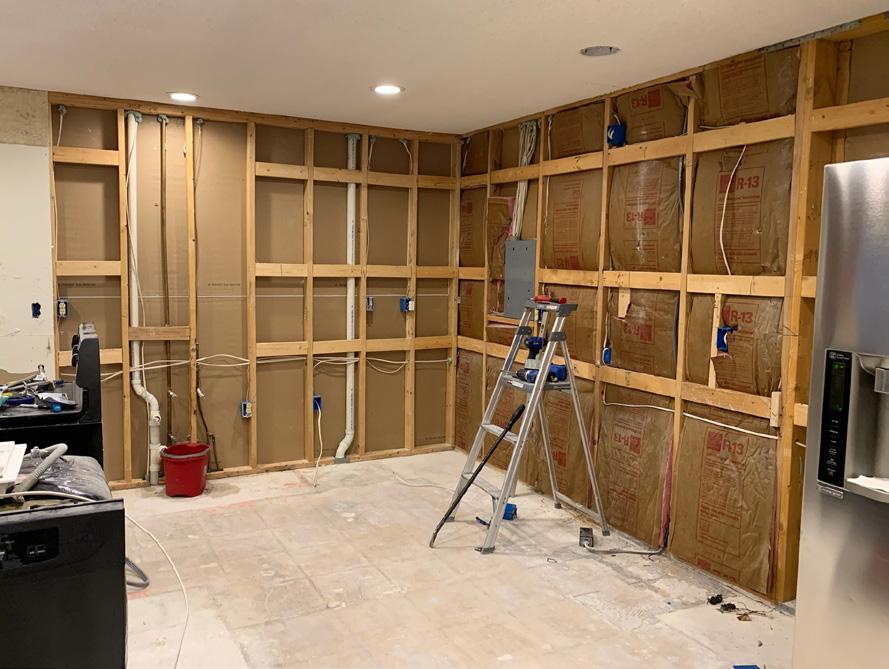
BEFORE
the people he served wouldn’t see for twelve months or more. Learning to hold that kind of long view while simultaneously managing a family in transition and finishing a degree was, by his own admission, a great deal to carry.
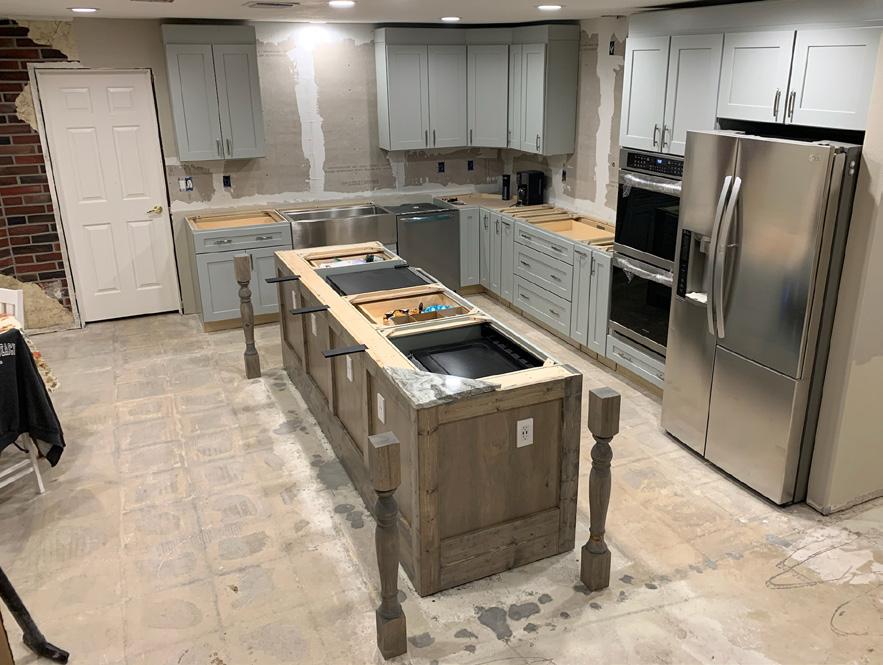
Then he decided to remodel the house.
"That was a big mistake," he says plainly. During the peak of the chaos, his weeks looked something like this: ten to twelve hours of work each day, followed by three to four hours on the house in the evenings. On weekends, he would sometimes spend an entire Saturday working through coursework. His wife stepped into the gaps he could not fill, keeping the household moving and making sure he knew he
had someone in his corner. Just having somebody to root me on," he says. "That was all I could ask for."
He found his footing by letting go of the idea that everything had to happen at once. He began alternating ninetyday stretches of focused schoolwork with ninety-day stretches of focused renovation, giving each the attention it needed rather than spreading himself across everything simultaneously. He also learned to work smarter inside the WGU model itself, taking sample exams first to gauge what he actually needed to study and, in some cases, testing out of courses entirely. The autonomy that WGU offered was not just a convenience. At certain points, it was the only reason the whole thing stayed together.
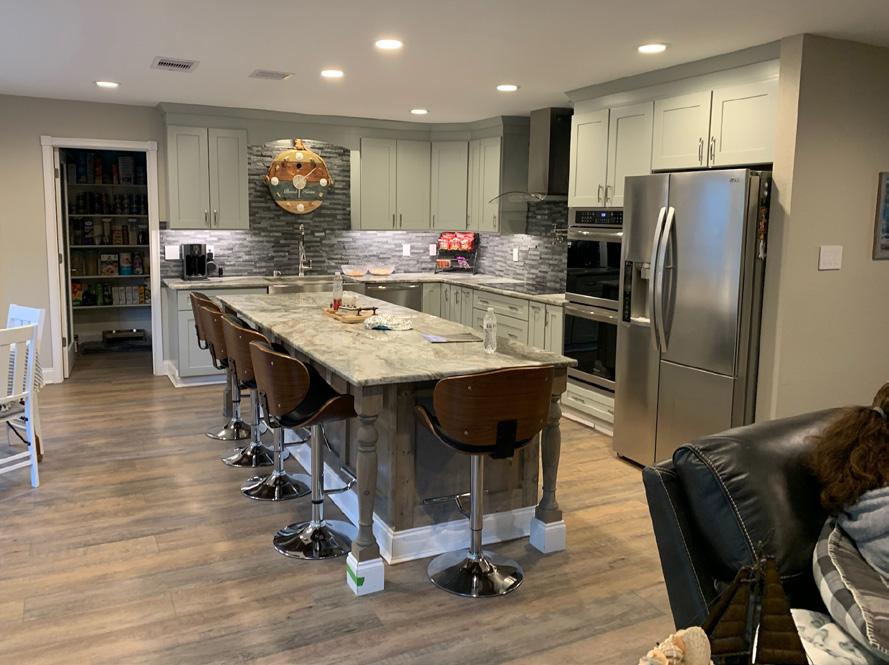
AFTER
THINKING DIFFERENTLY
Something else was happening during those years that Reed did not fully recognize until later. The strategic thinking his new job demanded was changing the way he approached everything, including school. He stopped seeing his degree as a mountain and started seeing it as a series of steps. Each writing assignment was its own goal. Each exam was its own finish line. The self-talk moved from overwhelm to something more manageable, more forward-moving. "It's all just a stepping stone to get to the end result," he says.
That shift showed up in unexpected places. One of his favorite courses turned out to be humanities, a class he had dreaded before it appeared in his term. He had gone in skeptical, unable to see the connection to a business degree. What he found instead was a wider lens. The course challenged him to approach unfamiliar ideas with curiosity rather than resistance, to ask why someone might see things differently rather than defaulting to frustration when they did. He carries that lesson into his work today, particularly when collaborating with colleagues and partners in other countries. "I think I would have approached those interactions from the perspective of why can't they see it my way," he says. "Now I approach it by being more inquisitive about why they are so passionate about what they believe."
FROM THREE PEOPLE TO THOUSANDS
Before his degree, Reed was a team lead overseeing a small group responsible for managing a fleet of medical devices — handling quality checks, retrofits, cleaning, and delivery to hospitals and patients. The decisions he made affected the people immediately around him and the customers in front of him. He was good at it, but the ceiling was real.
Today, Reed writes the processes and policies that govern how teams across the United States and around the globe manage that same kind of work. When engineers develop a software update or a new procedure, Reed is the person who figures out how to execute it in the field, walking through every step the way an end user would, testing it across different service centers, and then writing the documentation that makes it work for teams in France, Japan, South America, and beyond. He went from occasionally participating in one or two large projects to actively running more than half of his twenty to thirty projects he is involved with at any given time.
The scale of that change is difficult to overstate. A recent project focused on a persistent compliance issue: field teams were regularly forgetting to complete a required vehicle inspection report. The typical solution was a sign on the wall, but Reed thought differently. The teams were already in their vans, driving back to service centers, with their phones connected to CarPlay units. Why not a location-based reminder that triggered automatically at the right moment? He worked with a dozen people in the field to develop and test
"I honestly could not be more proud of what he has accomplished and he remains to be one of my greatest inspirations."
CHRIS REED
the process, built the communication strategy to roll it out at multiple levels of the organization, and released it. The targeted improvement was one percent. The actual reach went well beyond that.
The financial impact of that trajectory is measurable. In the five years since earning his degree, Reed has seen a 75% increase in his pay. A mentor in his organization put it to him plainly at one point: a degree does not just tell people what you know. It tells them what you are willing to fight for. It shows that you can commit to something difficult and see it through to the end. For a first-generation college graduate who spent years watching that credential hold other people back from the ceiling he kept running into, that framing hit home for him.
WHAT ADDISON SAW
Chris Reed did not walk the graduation stage. The diploma arrived in the mail, and life kept moving. His older daughter, Addison, was watching the whole time though. She saw the late nights and the stretched weekends and the stress that came and went in waves. She wrote about it later, describing what he had done as "the impossible" and naming him as one of her greatest inspirations. He didn’t know she felt that way while it was happening, he was just living his life and doing what needed to be done.
Addison is now in college, pursuing a degree in creative writing. His younger daughter is beginning to think through her own path. Reed and his wife have always told both of their girls that a four-year university is not the only option, but continuing to grow and add value to themselves is not optional. A certificate, a credential, a degree — something that has weight in the market, something that proves you were willing to commit — is the expectation. It is a message shaped by everything Reed learned the hard way, and it is one his daughters are already carrying forward.
"What I'm most proud of," he says, "is being in a position where I can support my family. Where I can provide them with what they need and be there for them." The degree made that possible in ways he could not have predicted when he finally made that first call to WGU. The ceiling he had spent years running into is gone and now, the sky is the limit.
To learn more about how WGU is expanding access to education and helping working adults break through professional ceilings, visit wgu.edu.
The Dual-Threat Executive
Tauqeer’s
Story
Tauqeer Qazi came to America at age four, and eventually built a career that no single degree could have made possible.
Tauqeer Qazi thinks in seconds, not minutes. It is a habit forged on the track, where he ran a 4:18 mile as an NCAA collegiate athlete and learned that the difference between winning and finishing often comes down to fractions of time that most people would round away. That precision — the intimate, almost uncomfortable relationship with pace and compounding effort — has followed him into every chapter of his adult life. Into medical school, residency, fellowship, and executive leadership. Into fatherhood and into two master's degrees he earned through WGU.
"No matter how difficult the race gets," he says, "finishing is very important. You can always worry about how you did once the race is over. But just the fact that you finished something challenging — you've already beaten most of your competition right there."
Tauqeer Qazi, MD MBA MHA is now the Chief Medical Officer at Vernon Memorial Healthcare in Viroqua, Wisconsin. On top of focusing on executive strategy and operations, he's also still a practicing physician, seeing patients one half day per week, because he never wanted to stop. The degrees he earned didn't replace the medicine, they expanded it.
A CALCULATION MADE EARLY
Qazi came to the United States from Pakistan at age four with his parents, both of whom built their American lives around steady, hard work. His mother has held the same job for more than three decades. She pursued stability, and she pursued it with consistency. "I've seen my parents work since coming to America," he says, "and that work has compounded to the point where they now have a son who is a Chief Medical Officer."
The lesson he took from watching them was simple: never forget what the main mission is. Every day will
bring new obstacles and problems to navigate, but the mission has to stay visible through all of it. For Qazi, that mission has always been rooted in patients. When he was working full-time in clinical medicine, he was already doing the math. As a physician, he could see 20 to 25 patients a day. As a healthcare executive overseeing an entire organization, he could help hundreds of clinicians see their patients more efficiently. Over the span of a career, the difference in reach was enormous. "If my goal is to leverage my outreach to as many patients as possible,"
"The more communication you have in the beginning, the less downstream negative impact you're going to have to deal with. That applies to anything — school, business, family."
TAUQEER QAZI
he says, "I would be able to access more patients by being in a strategic leadership position."
He didn't abandon clinical medicine to get there. Instead, he moved to night shifts and weekends in the clinic, took on a role with a utilization management organization during the day to gain experience on the payor side of healthcare, and enrolled in WGU's Master of Healthcare Administration. He planned to stop there, but decided to pursue the MBA as well. He finished both with a newborn at home.
PHOTO CREDIT: LACEY COYLE PHOTOGRAPHY
NOW OR NEVER
The decision to enroll came down to one honest conversation with himself about the kind of person he is. WGU's rolling enrollment meant there was always a reason to wait one more month. His daughter had just been born, his wife had six weeks of maternity leave, and he had returned to work within two weeks. "Do I run the risk of kicking the can down the road until my baby's older and I still haven't started?" he asked himself.
Finally, he enrolled. He used the month before his first term to prepare with the same intentionality he had brought to athletics — scanning YouTube reviews of the program and conducting what he calls a “granular assessment” of WGU's Facebook groups. He went into each course knowing which ones would demand more critical thinking, which would be writing-intensive, and which he could move through with confidence. Before starting any course, he would build his own notes from what he found in those online communities. He reviewed coursework every day for two to three morning hours before the day’s distractions arrived. This set the pace for him to expand on his studies during downtime at work, during his baby's naps, and in the late-night hours when the household had finally settled. When his brain was freshest in the morning, he tackled the writing-heavy material. He left easier review work for the exhausted hours and protected his high-focus blocks for the things that genuinely required them.
"It's tailoring the education piece to where you're at in your life," he says. "Everybody's story is a little bit different."
The Facebook community surrounding WGU was something he hadn't anticipated. He had attended Rutgers University for his undergraduate degree, a campus of 35,000 students at the time, and felt less connected to his classmates there than he did in the WGU groups online. When he had a question about a course, someone had already asked it. When he had reservations about learning finance and accounting with a newborn at home and two fulltime jobs, he saw others in the group reassuring that the work was doable if you simply committed to it. He trusted them, and he was right to. He completed the WGU MBA with confidence.
FROM URBAN TO RURAL, AND WHAT THAT TAUGHT HIM
Before Vernon Memorial, Qazi had trained and practiced at four large urban health systems. He understood how organizations operate at scale, how the infrastructure of major hospital networks functions, and what it looks like when resources are plentiful. What rural Wisconsin required of him was something different, and he recognized that from the start.
In a smaller organization, the providers aren't just colleagues. They are the experts in the specific kind of medicine their community needs. Qazi stepped into the CMO role not as someone arriving with answers, but as someone arriving with questions and the willingness to be taught. "I really had to rely on and trust the providers I was overseeing," he says, "because they're the ones who are the subject matter experts who have to teach me how they practice within their community." He brought institutional knowledge from larger systems. They brought deep familiarity with what Viroqua's patients actually needed. The combination, he believes, is exactly what good executive leadership requires — not the
person with all the answers, but the person who knows how to lead a team toward them.
He also brought something rare: the ability to speak two languages fluently in any room he enters: the language of the clinic and the language of the boardroom. "You can speak medicine to the clinicians and you can speak business to the administrative team," he says. "You're the dual-threat quarterback that can be put in either position at any time." That translation ability, he argues, is precisely what healthcare organizations are missing when clinical leadership and administrative leadership operate in isolation. When a physician who has treated patients sits in the room where decisions are being made, the clinicians on the floor feel represented. When they don't, the distance between bedside and boardroom grows into something that contributes to the burnout and frustration that has become one of healthcare's most pressing crises. Qazi understands both sides from the inside, which makes him more useful to both.
THE LESSON THAT STUCK
There was a moment during the MHA curriculum that brought into focus something Qazi had believed but never articulated so precisely. The program's emphasis on population health and the social determinants that shape whether communities thrive or fall behind was territory that medical school had never covered. "In medical school, you don't learn about the struggles that the Native American population in the United States has with accessing equitable healthcare," he says. "That's something I was never taught." WGU taught it, and it changed the lens through which he approaches his work in Viroqua.
He also distilled the MBA to its foundation. Behind all the terminology, behind the coursework and the papers and the finance and accounting, he found something straightforward. "The MBA all just boils down to: can you differentiate between what is an asset and what is a liability?" he says. "If you can keep building on top of that, you can nail it." The credentials opened doors that wouldn't have opened otherwise. Without them, he says plainly, he would never have secured interviews with the CEO, CFO, and COO of a healthcare organization. All three of those individuals are now among his most valued mentors.
"You don't have to be a jack of all trades. You can be a master of more than one. You can master clinical medicine, you can master healthcare administration, you can master business administration. The sky is the limit."
TAUQEER QAZI
THE MISSION THAT CARRIES EVERYTHING
Qazi's parents came to America and kept their eyes on the main mission. His mother worked the same job for three decades. His father did what was necessary. Neither of them chased what their passion might have been, because the work of building a life in a new country demanded something more immediate. In exchange, they gave their son the foundation to pursue something they couldn't. "Because of what they've done for me," he says, "I can confidently say that my daughter will have an opportunity to do what her heart desires."
His mission now is to help physicians practice medicine the way they were trained to practice it: with the autonomy and the institutional support to genuinely take care of patients, rather than simply manage the constraints placed on them by systems they didn't build. "Administration should help facilitate that environment," he says, "not dictate it." As he grows into the CMO role and begins to engage with healthcare technology startups, he wants to carry that mission further. The compounding hasn't stopped.
For any physician or healthcare professional sitting on the fence about pursuing a credential like the MHA or MBA, Qazi says: the stories of people who made it to executive leadership without the degree are the vocal minority. You only hear the Cinderella stories. "As someone who is a product of obtaining the degrees and as someone who is actually in the role," he says, "I can confidently say that you're more likely doing harm by not getting the degree than you are by getting it." WGU made it possible to pursue that degree without pausing a career, without disrupting a family, and without waiting for a season of life that was going to be less demanding. That season, he will tell you directly, was never coming. The right time was the moment he stopped waiting for it.
To learn more about how WGU is helping healthcare professionals lead at the highest levels, visit wgu.edu.
"Integrity is doing the thing you say you're going to do. Choosing to do the hard thing instead of the fun stuff."
KAREN FARLEY
PHOTO CREDIT: NIKI SCHULZ PHOTOGRAPHY
Good, Kind, and Brave
Keren’s Story
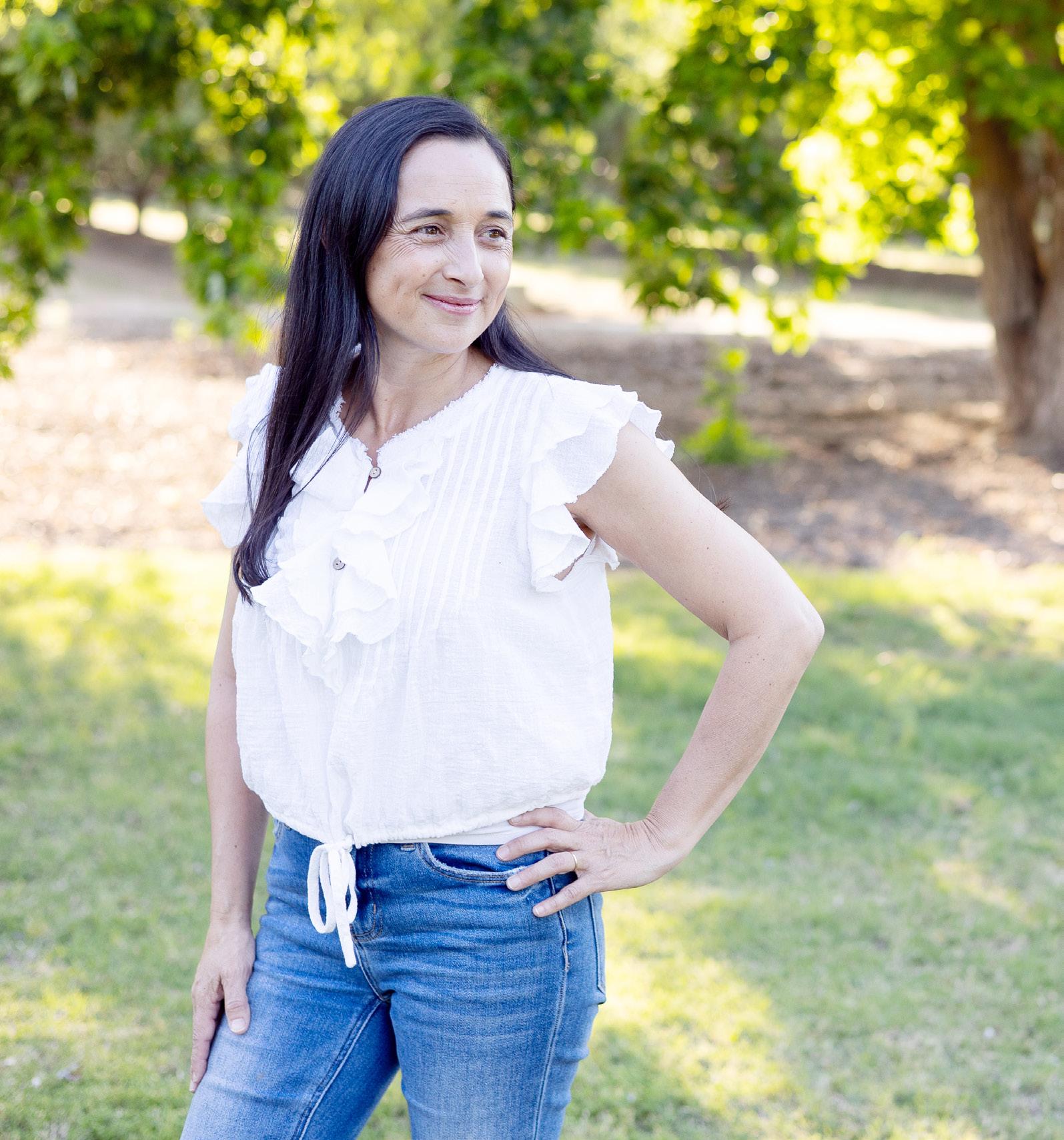
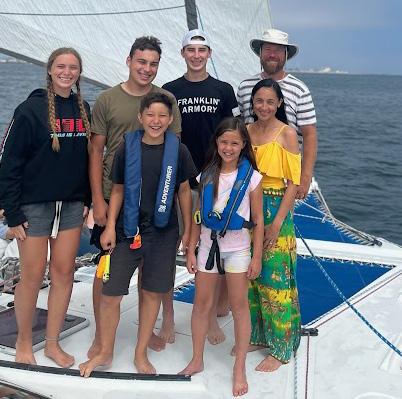
Keren Farley learned to read at ten years old, raised five children, sailed 10,000 miles, and earned a master's degree along the way. Her second graders think she's a hero. She'd like to think anyone can be.
Keren Farley walked into an elementary classroom as a substitute teacher for the first time not because she had planned to be a substitute, but because she needed a paycheck while she figured out what came next. She had a criminology degree, a dispatching career she had stepped away from after six months, and no particular expectation that thirty second graders were about to change the direction of her life. They did anyway. "I fell in love with those kids," she says. The kind voice that her dispatching colleagues had said made her too nice for law enforcement finally had a place where it belonged, and she knew it the moment she walked in.
It would take her nearly two more decades, raising her five children, a 10,000-mile sailing journey, and a master's degree earned from a boat off the coast of Panama to get to the classroom that is fully hers. But she got there.
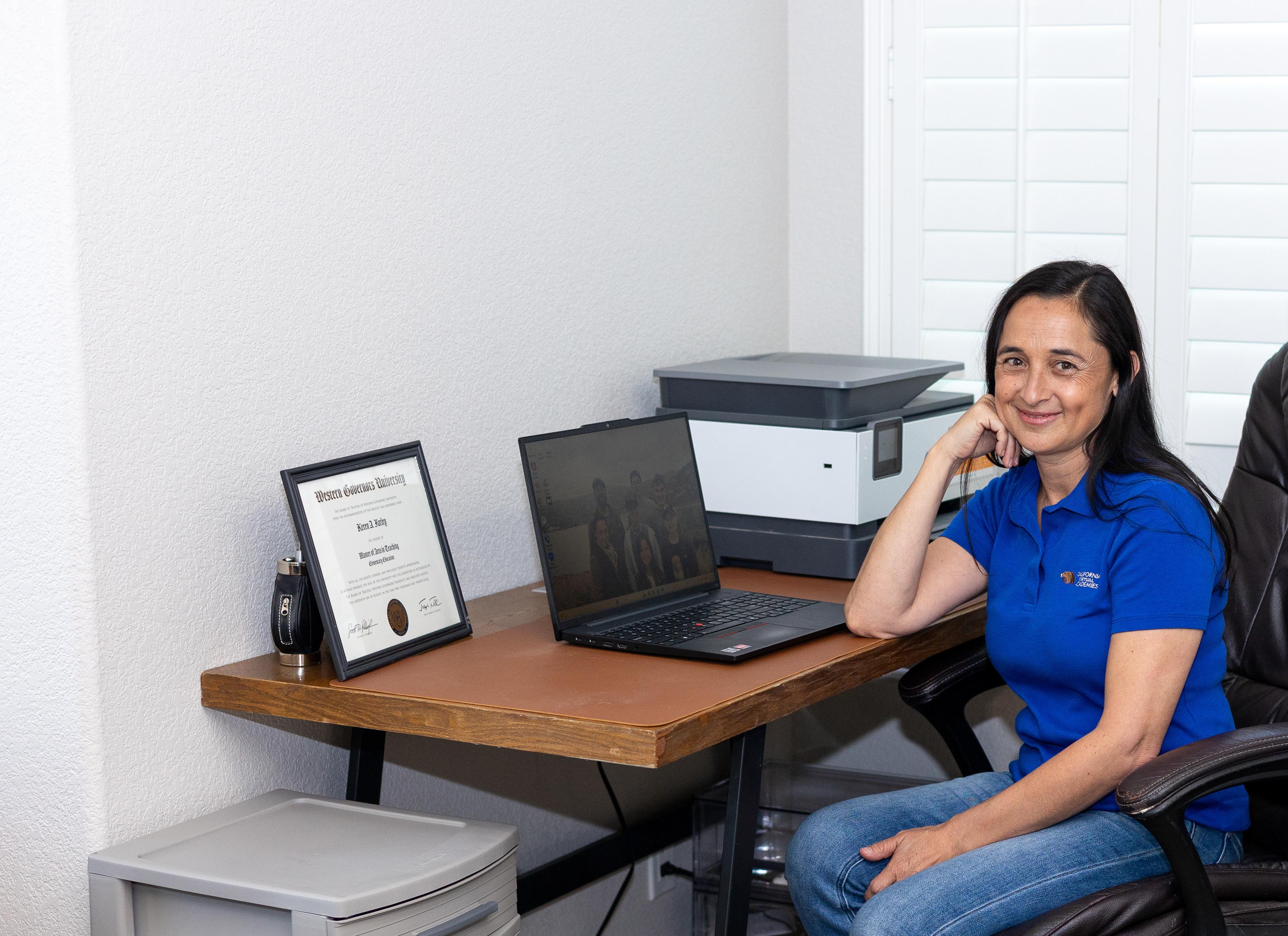
Farley is now a credentialed educator and a first-year full-time teacher at California Virtual Academy, where she teaches second grade to 28 students spread across the state. She earned her Master of Arts in Teaching through Western Governors University in 2024. She is also, by her own account, still learning what it means to believe in herself.
"You are good, you are brave, you are capable of doing hard things. Go do what you want to do with your life. WGU will help you."
KEREN FARLEY
THE KIND VOICE THAT FOUND ITS PLACE
Farley grew up moving constantly. One school district to the next, never staying anywhere long enough to build the kind of stability that early literacy requires. By the time a fifth-grade teacher finally pulled her aside during recess and spent that time getting her caught up on reading, Farley had already absorbed a belief about herself that would take years to dislodge. She wasn't as smart as the other kids. She was always a little behind.
That belief followed her to Fresno State, where she ran track and cross country as a collegiate athlete and graduated with a Bachelor of Science in Criminology. It followed her into dispatch, where she lasted six months. It followed her through the years she spent at home raising five children — Jonathan Jr., Samuel, Rachael, Adam and Lucy. It followed her through the substitute teaching she returned to when her kids reached school age and she was ready for something of her own again. Even as she succeeded, there was always someone ahead of her in her own mind — someone with a higher degree, a better credential, a clearer path. "I was always comparing myself to somebody with a higher education," she says.
What gradually wore that belief down was not a single moment but a series of people who refused to confirm it. Teachers, coaches, and eventually, a program mentor at WGU named Wendy Cardiff. She celebrated every milestone, challenged every moment of self-doubt, and made it clear that the student in front of her was not someone to be pushed through a program but someone worth paying attention to.
A DEGREE ON THE WATER
Farley's family doesn't sit still. Her husband, Jonathan, works in school administration, and together they built a life organized around travel, flexibility, and keeping the whole family moving in the same direction. When Farley decided at 46 that she wanted to become a teacher — not a substitute, not a helper, but an educator with her own classroom and her own lesson plans — the path forward had to accommodate the life she already had.
Her husband had recommended WGU based on colleagues who had successfully completed programs there. The reputation was good, the model was self-paced, and most importantly, it was entirely online. "I would never have gotten my master's if I had to go into a building somewhere," she says. "That would never have worked."
Over the course of the program, Farley completed her coursework while her family sailed 10,000 miles across the ocean from Florida to California via the Panama Canal. Much of her work was completed from anchorages, ports, and harbors along the route, often requiring routes to be planned around reliable cell and Wi-Fi reception so she could continue her studies. Study sessions happened
below deck with her husband taking the children into town or to the beach so she could focus. She was online from seven in the morning until nine or ten at night on heavy days. She missed meals she would normally have cooked. She missed beach days. She made a deliberate decision to compress a two-year program into one year, because she didn't want her children to feel her absence any longer than necessary.
When asked what that decision says about who she is, she pauses before answering. "I guess it says I love them," she says, then adds something more. "But it also says something about WGU — that it understands families. They give you the platform to set your own goals and the allowance to be wherever you are in the world to do your education."
THE CHEERLEADER IN THE CORNER
Cardiff, Farley’s mentor, showed up on every weekly call with the same energy: genuine, specific, and celebratory. When Farley passed a difficult test, Cardiff celebrated it. When Farley received an Academic Excellence Recognition award for a paper she had written, she called Cardiff and asked if WGU gave those out to everyone as encouragement. Cardiff told her no. Then Farley received a second one for a paper on
differentiated instruction, and called Cardiff again with the same skepticism. She told Farley she had never heard of anyone receiving two.
"She had to reassure me: be proud of yourself," Farley says. "She had to say it." The awards meant something beyond the recognition itself. They were proof that someone had actually read what she wrote, had sat with it, and had decided it was worth honoring. "I wasn't just a passenger on a train," she says. "They were stopping me at every stop and saying, 'We read what you did. It mattered.'"
Math was the course that tested her most. She didn't pass the first proctored math exam, and the reason wasn't that she couldn't learn the material. The math problems were simply taking her too long to solve under timed conditions. She went to Cardiff, who directed her to the tutoring resources already embedded in the program. In those sessions, tutors worked through her approach to word problems, showed her how to solve them more efficiently, and taught her the kind of test-taking strategy that most students are never explicitly taught: do the easier problems first, manage your time, don't let one hard question consume the time you need for five easier ones. She passed. "I knew I would fail if I didn't ask for help," she says. "So I had to learn: ask for help. And the help was there."
"I wasn't just a passenger on a train. They were stopping me at every stop and saying, 'We read what you did. It mattered.'"
KEREN FARLEY
TEACHING WHAT SHE LEARNED
When Farley applied for the job at California Virtual Academy, her principal said her application stood out. It wasn't years of classroom experience, because she didn't have them yet; it was the fact that she had earned her credential and master's degree online. The principal recognized that a teacher who had navigated that kind of learning environment would understand, from the inside, what her students were up against every day.
She does. She knows what it takes to keep a Chromebook open when
the beach is nearby and the task in front of you is difficult. She knows the discipline required to stay in the material when nothing external is forcing you to. And she knows how to make the experience feel less isolating for the children on the other end of her screen.
She starts every day with show and tell because she understands that second graders who are learning from home need to see each other. She uses videos, games, and anything that keeps the experience alive and engaging. She also does something she learned to do the hard way: removing the fear from testing. She doesn't call them tests. She calls them learning checks, and she tells
her students directly that a learning check is not a measure of how smart or capable they are. It's a measure of how well she taught them. "It alleviates the pressure from them and the stigma of thinking, 'I am stupid'," she says. She tells her students they’re not bad at reading, they’re not bad at math, they’re just not there yet. And she is there to help them get there.
She extends the same message to the parents of her students, many of whom carry their own version of that hovering question: did I make the right choice for my child? Farley's answer, delivered through every learning check and every daily lesson, is yes. "Let the teachers teach," she says, "and let the children learn."
ANYONE CAN BE A HERO
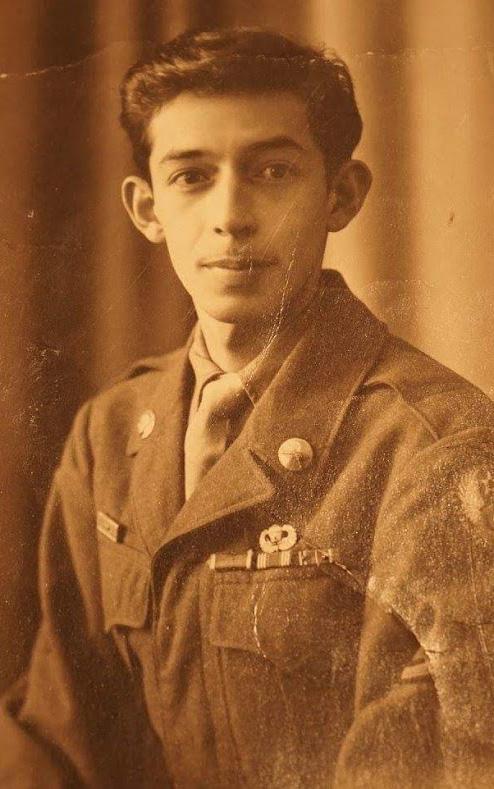
Farley's grandfather, Edgar Griffin, was a paratrooper in the 101st Airborne Division during World War II. When her second graders told her that teachers are heroes, she thought of him. She doesn't argue with her students, but she does expand the definition. A hero, she tells them, is not only someone in servitude to others. A hero is anyone who does the right thing when they're supposed to, who chooses the brave and hard thing over the easy one, and who is always kind. "Anyone can be a hero," she says. "Kids can be heroes."
She learned to read at ten years old, on borrowed time during a lunch recess, in a school she wouldn't attend the following year. She spent the next four decades believing, in some part of herself, that she
was always a little behind. She earned her master's degree while sailing across the world, in the hours she carved out below deck, fueled by coffee and the belief that her family deserved a mother who finished what she started.
She is now in her first full year as a credentialed, full-time teacher. Her students are seven years old and learning to read in homes scattered across California. When they struggle, she tells them what she needed to hear for most of her life: you are good, you are capable, and the support is already there. You just have to ask for it.
To learn more about how WGU is expanding access to education and building the next generation of teachers across the Southwest region and beyond, visit wgu.edu.
REINVENTING HIGHER EDUCATION
Western Governors University (WGU) is a leading accredited, online nonprofit university providing affordable, high-quality education and producing the largest number of graduates annually out of any institution in the U.S.* By designing programs around skills and knowledge that employers look for and offering students flexibility through online and workforce-aligned degree programs, WGU delivers an excellent return on investment for both students and employers.
423,000 AND COUNTING
191,000 AND COUNTING Total graduates
Enrollment demographics
• 75% of students are from one or more underserved populations.
• 44% are first-generation college students.
• 21% come from low-income households.
• 41% are historically underrepresented races and ethnicities.
• 16% live in rural areas.
• 15% of students are military-affiliated.
• 5% are active duty.
• 7% are veterans.
• 3% are military spouses or dependents.
• 33 is the median age of WGU students.
• 78% of students work while enrolled.
Source: 2024 Harris Employer Poll of 300 employers of WGU graduates
Source: WGU 2024 Gallup Alumni Survey
Western Governors University is the nation’s leading nonprofit, online university and is mission-driven to transform higher education to be more student-centric, affordable, accessible, and workforce relevant. WGU operates in all 50 states and offers over 112 bachelor’s, master’s, and certificate programs across the healthcare, education, technology, and business fields.