LECTRONICS
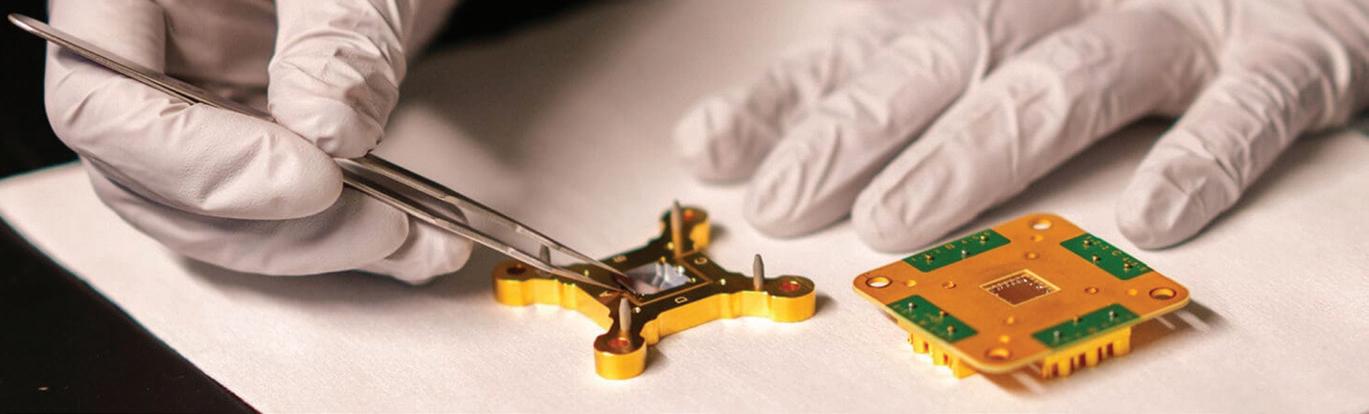
SCALABLE SUPERCONDUCTING QUBITS

ON-CHIP ACOUSTIC CONTROL
SECURING QUANTUM SYSTEMS
ADDING TEXTURE TO TOUCHSCREENS






Cable from the editor
Happy new year!
As we step into 2026, the electronics industry continues to be shaped by rapid innovation at both the component and system levels. From foundational circuit architectures to increasingly intelligent connected devices, engineers are being challenged to design solutions that are not only more powerful, but also more efficient, reliable and scalable.
This issue focuses on Circuits & Circuit Design and the Internet of Things (IoT) — two areas that remain deeply intertwined as connectivity becomes embedded into everything from industrial equipment to critical infrastructure. Advances in circuit design are enabling higher performance in smaller footprints, lower power consumption and improved signal integrity, all of which are essential for the next generation of IoT devices operating at the edge.
Our lead article explores a particularly exciting frontier: the development of longer-lasting qubits. As researchers work to overcome coherence and stability challenges in quantum systems, circuit design plays a central role in bridging theoretical physics and practical implementation. While large-scale quantum computing may still be on the horizon, the progress being made today highlights how precision engineering at the circuit level can unlock entirely new computing paradigms.
Elsewhere in this issue, we dive into energy-efficient microelectronics made possible by new materials and chip-stacking techniques that promise reduced power consumption and higher integration density; a timely analysis of cybersecurity in the quantum era and its implications for connected systems; and a look at creative touchscreen interface technologies, such as tactile fingertip bandages that add texture to human–machine interactions.
As always, this magazine aims to provide practical insights alongside emerging research, helping you stay informed about technologies that are shaping the future of electronics design and manufacturing. I hope you enjoy this issue. If you would like to contribute an article or case study, or have feedback to share, please contact: wnie@wfmedia.com.au.
Westwick-Farrow Media
A.B.N. 22 152 305 336
www.wfmedia.com.au
Head Office
Unit 5, 6-8 Byfield Street, North Ryde Locked Bag 2226, North Ryde BC NSW 1670 Ph: +61 2 9168 2500
Editor
Ashna Mehta wnie@wfmedia.com.au
Publishing Director/MD Janice Williams
Art Director/Production Manager Linda Klobusiak
Circulation Alex Dalland circulation@wfmedia.com.au
Copy Control Ashna Mehta copy@wfmedia.com.au
Advertising Sales
Account Manager
Sandra Romanin – 0414 558 464 sromanin@wfmedia.com.au
Asia
Tim Thompson - 0421 623 958 tthompson@wfmedia.com.au
If you have any queries regarding our privacy policy please email privacy@westwick-farrow.com.au
Printed and bound by Dynamite Printing Print Post Approved PP100007394 ISSN No. 0728-3873
All material published in this magazine is published in good faith and every care is taken to accurately relay information provided to us. Readers are advised by the publishers to ensure that all necessary safety devices and precautions are installed and safe working procedures adopted before the use of any equipment found or purchased through the information we provide. Further, all performance criteria was provided by the representative company concerned and any dispute should be referred to them. Information indicating that products are made in Australia or New Zealand is supplied by the source company. Westwick-Farrow Pty Ltd does not quantify the amount of local content or the accuracy of the statement made by the source.
Ashna Mehta Editor
Organic transistor ‘limitation’ improves stability
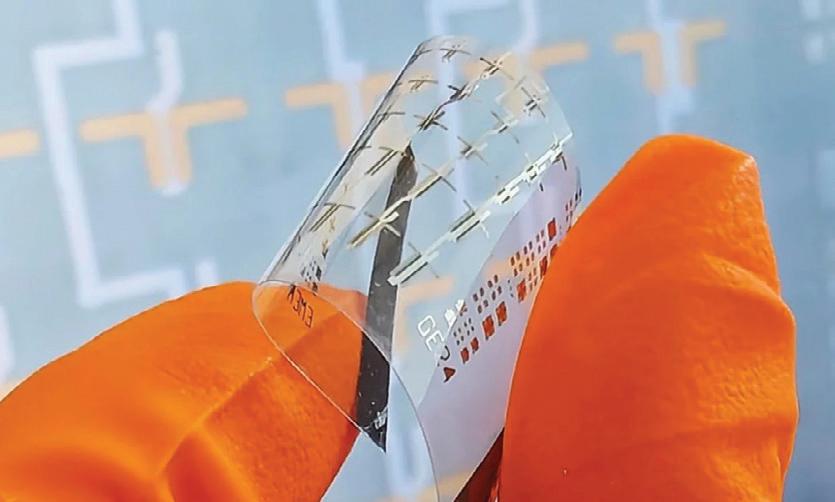
What many engineers once saw as a flaw in organic electronics could actually make these devices more stable and reliable, according to new research from the University of Surrey.
The paper, published in Joanneum Research Materials, describes how embracing small energy barriers at the metal/ semiconductor interface of organic thin-film transistors (OTFTs) can help them perform more consistently and operate more reliably over time.
Organic thin-film transistors (OTFTs) are a key component of what are thought to be the next generation of flexible and wearable electronics. They are lightweight, low-cost and printable on large areas, but their long-term stability has been a persistent challenge.
“For years, engineers have tried to remove contact energy barriers, and with good reason: more often than not, they hold back performance. Our research turns that idea on its head. We found that small, well-controlled barriers actually make the transistor’s operation far more stable,” said Dr Radu Sporea, Associate Professor in Semiconductor Devices.
Working with collaborators in Austria and industry partners at Silvaco Europe, the team fabricated flexible transistors using a silver contact material, common in printed electronics, and demonstrated improved current uniformity between devices. Even at very low operating voltages (≤ –4 V), the transistors maintained stable performance, making them suitable for lowpower and wearable applications.
The key to understanding the improved stability in the devices was enabled by exploring the novel ‘multimodal transistor’ (MMT) design with two gate electrodes, allowing separate control of current injection and flow. This separation makes the MMT an ideal test structure for confirming the physics behind contact-controlled operation.
Using advanced computer simulations, the researchers confirmed that when the contact barrier is kept low but significant, the transistor operates in a contact-controlled mode, where current flow is primarily governed by the semiconductor/contact interface rather than the channel. This makes the devices more resistant to voltage shifts caused by trapped charges and other aging effects that typically affect devices that rely on the channel for operation by eliminating energy barriers at the contacts.
In future, the use of MMTs and their robust operation could simplify the pixel circuits used in next-generation OLED or microLED displays, reducing manufacturing complexity and improving energy efficiency.
Preventing radiation-induced faults in electronics
Electronics exposed to radiation can be prone to failure. Satellites and medical devices such as CT scanners are especially sensitive. Researchers at the Fraunhofer Institute for Integrated Circuits IIS in Dresden are working on an open-source tool that can be used to better prevent radiation-related loss of function.
Telephone and television reception, GPS navigation systems, broadband internet via satellite — none of this would be possible without electronics in space. However, cosmic radiation can damage components, lead to short-term failures, malfunctions and memory errors, and cause the electronics to age more rapidly.
To ensure that circuits function reliably in the long term, chip designers must account for stress factors for semiconductor technologies such as radiation bombardment in the design stage. However, smaller companies and research institutions in particular often lack relevant information on the limits and properties of the components implemented in the semiconductor chips. They therefore often have only limited access to innovative technologies.
Researchers at Fraunhofer IIS are working jointly with partners on a solution in the FlowSpace project: “We want to make electronics even more robust and reliable with an open-source tool,” said Roland Jancke, Head of Design Methodology in the Engineering of Adaptive Systems division at Fraunhofer IIS.
According to Jancke, the open-source tool and an open process design kit (PDK) could give a broad community such as universities and smaller companies access to innovative technologies. An open PDK provides an interface between the technologists developing a component and the chip designers. With freely accessible information about the components in the semiconductors, the designers know how these elements behave and can be used.
For example, chip designers can already account for component aging in the design phase. In the FlowSpace project, Jancke’s team simulates the long-term response of components to radiation in the laboratory. The scientists use mathematical models and measurements to realistically simulate how a certain component is likely to age, and whether it will still function, after being irradiated over a 10-year period.
Chip developers design relevant circuit parts redundantly for applications exposed to radiation in order to prevent malfunctions. The new solution enables the chip area required for this to be reduced, as it is also compatible with increasingly small semiconductors that are even more sensitive to radiation. Smaller solutions are becoming increasingly popular, as they save energy, space and weight.

Electronex Sydney nears sell-out
Following the record success of the Melbourne Electronex – Electronics Design and Assembly Expo in May 2025, Electronex 2026 in Sydney has received an excellent response, with over 90% of exhibition space already sold. The next event will be held at Rosehill Gardens Event Centre, Sydney, from 3–4 June 2026, together with the annual SMCBA Conference.
Electronex was first held in 2010 and is the only specialised event for the electronics industry in Australia. The Expo features a range of electronic components, surface mount and inspection equipment, test and measurement and other ancillary products and services. Many companies also use the event to release and demonstrate new products and technology which attracts designers, engineers, managers and other decision-makers who are involved in designing or manufacturing products that utilise electronics. Companies can also discuss their specific requirements with contract manufacturers that can design and produce turnkey solutions for their products.

A post-show visitor survey at the Melbourne Expo in 2025 confirmed the event’s quality audience with 75% of visitors directly involved in purchasing, 93% discovering new companies and 97% rating the show as beneficial to their industry.
For exhibitor enquiries, contact Australasian Exhibitions & Events (AEE) on 03 9676 2133, email info@auexhibitions.com.au, or visit www.electronex.com.au.

Predictive AI model enhances solid-state battery design
Researchers at Edith Cowan University (ECU) are working on ways to make solid-state batteries more reliable with the help of artificial intelligence (AI) and machine learning.
In her recent research, ‘Interface engineering and safety in solid-state batteries: Advancing from human-centered insights to AI-driven innovations’, PhD candidate Elnaz Karimi noted that solid-state batteries promise safer, longer-lasting and more efficient performance compared with current lithium-ion batteries.
However, one big challenge for solid-state batteries is the interface: the area where different battery materials (cathode, anode and electrolyte) meet.
If the interface isn’t well-designed, the battery can develop problems such as lithium dendrites, which cause short circuits, higher resistance or even safety risks.
“Improving this interface is essential to make solid-state batteries reliable. Good interface engineering of solid electrolyte helps the battery move energy (ions) more easily, stay mechanically stable and avoid overheating.
“AI and machine learning are now helping us to do this faster. These tools can predict how materials will behave, identify better interface designs and spot potential failure points before they occur,” she said.
Karimi explained that by feeding key factors like pressure and temperature into AI and machine learning models, researchers can predict how efficiently different components, particularly electrolyte, of a solid-state battery will perform.
Together, strong interface engineering and AI-powered insights are key to making solid-state batteries safe, durable and ready for large-scale use from electric vehicles to grid energy storage, said ECU lecturer Dr Muhammad Azhar.
Azhar noted that while a lot of research has been done on solidstate batteries in laboratories, work was needed on bringing these batteries into large-scale production. Australia has a strong focus on local battery manufacturing.
“Work is already underway in this arena, both in China and Europe. A lot of manufacturers are working towards making solid-state batteries at large scale, but also trying to address the interface issue.”
Image: Supplied
Engineers build longer-lasting qubit
Alaina O’Regan, Princeton Engineering
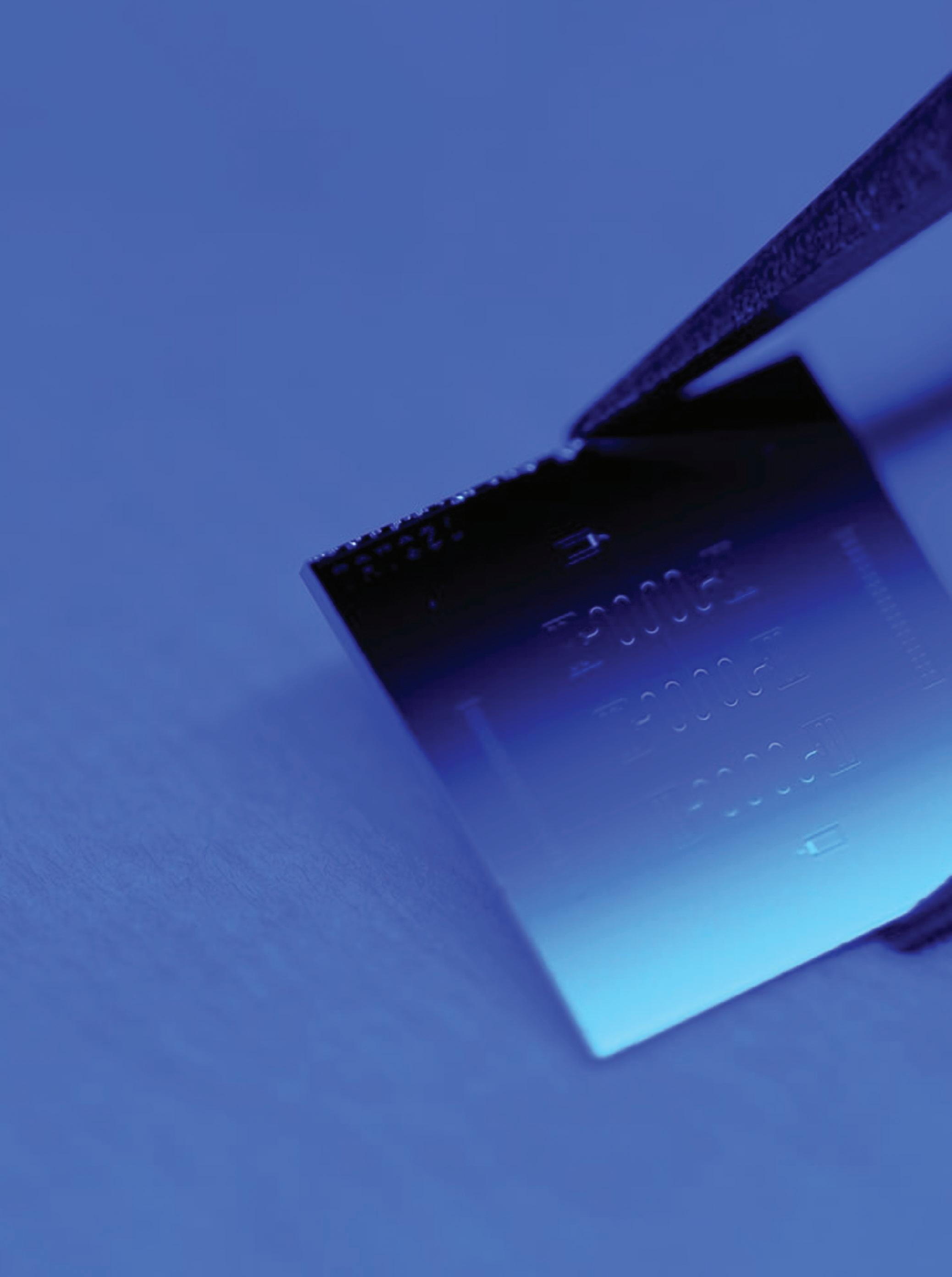
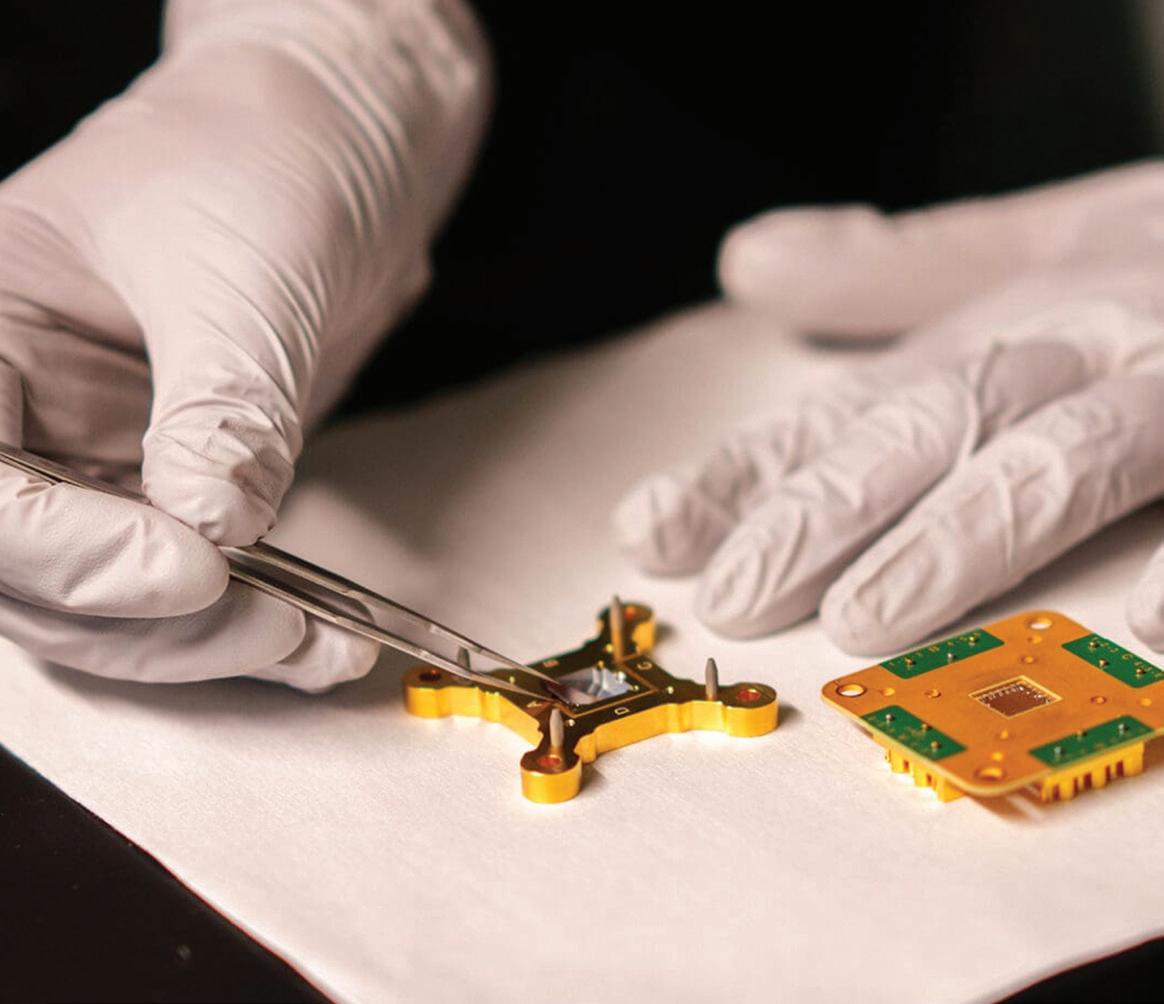
The new chip represents the largest advance to superconducting quantum hardware in more than a decade.

IN A MAJOR STEP TOWARDS PRACTICAL QUANTUM COMPUTERS, PRINCETON ENGINEERS HAVE BUILT A SUPERCONDUCTING QUBIT THAT LASTS THREE TIMES LONGER THAN TODAY’S BEST VERSIONS.
In an article in the journal Nature, the Princeton team reported their new qubit lasts for over 1 millisecond. This is three times longer than the best ever reported in a lab setting, and nearly 15 times longer than the industry standard for large-scale processors. The researchers built a fully functioning quantum chip based on this qubit to validate its performance, clearing one of the key obstacles to efficient error correction and scalability for industrial systems.
“The real challenge, the thing that stops us from having useful quantum computers today, is that you build a qubit and the information just doesn’t last very long,” said Andrew Houck, leader of a federally funded national quantum research centre, Princeton’s dean of engineering and co-principal investigator on the paper. “This is the next big jump forward.”
The new qubit design is similar to those already used by leading companies like Google and IBM, and could easily be slotted into existing processors, according to the researchers. Swapping Princeton’s components into Google’s best quantum processor, called Willow, would enable it to work 1000 times better, Houck said. The benefits of the Princeton qubit grow exponentially as system size grows, so adding more qubits would bring even greater benefit.
Better hardware is essential to advancing quantum computers Quantum computers have shown the potential to solve problems that cannot be addressed with conventional computers. But current versions are still in early stages of development and remain limited. This is mainly because the basic component in quantum computers, the qubit, fails before systems can run useful calculations. Extending the qubit’s lifetime, called coherence time, is essential for enabling quantum computers to perform complex operations. The Princeton qubit reportedly marks the largest single advance in coherence time in more than a decade.
“This advance brings quantum computing out of the realm of merely possible and into the realm of practical,” Houck said. “Now we can begin to make progress much more quickly. It’s very possible that by the end of the decade we will see a scientifically relevant quantum computer.”
While engineers are pursuing a range of technologies to develop qubits, the Princeton version relies on a type of circuit called a transmon qubit. Transmon qubits, used in efforts by companies including Google and IBM, are superconducting circuits that run at extremely low temperatures. Their advantages include a relatively high tolerance for outside interference and compatibility with current electronics manufacturing.
But the coherence time of transmon qubits has proven extremely hard to extend. Recent work from Google showed that the major limitation faced in improving their latest processor comes down to the material quality of the qubits.
The Princeton team took a two-pronged approach to redesigning the qubit. First, they used a metal called tantalum to help the fragile circuits preserve energy. Second, they replaced the traditional sapphire substrate with high-quality silicon, the standard material of the computing industry. To grow tantalum directly on silicon, the team had to overcome a number of technical challenges related to the materials’ intrinsic properties. But they prevailed, unlocking the deep potential of this combination.
Nathalie de Leon, the co-principal investigator of the new qubit, said that not only does their tantalum–silicon chip outperform existing designs, but it’s also easier to mass-produce. “Our results are really pushing the state of the art,” she said.
Michel Devoret, Chief Scientist for Hardware at Google Quantum AI, which partially funded the research, said that the challenge of extending the lifetimes of quantum computing circuits had become a “graveyard” of ideas for many physicists. “Nathalie really had the guts to pursue this strategy and make it work,” Devoret said.
Using tantalum makes quantum chips more robust
Houck said a quantum computer’s power hinges on two factors. The first is the total number of qubits that are strung together. The second is how many operations each qubit can perform before errors take over. By improving the quality of individual qubits, the new paper advances both. Specifically, a longer-lasting qubit helps resolve the industry’s greatest obstacles: scaling and error correction.
The most common source of error in these qubits is energy loss. Tiny, hidden surface defects in the metal can trap and absorb energy as it moves through the circuit. This causes the qubit to rapidly lose energy during a calculation, introducing errors that multiply as more qubits are added to a chip. Tantalum typically has fewer of these defects than more commonly used metals like aluminium. Fewer errors also make it easier for engineers to correct those that do occur.
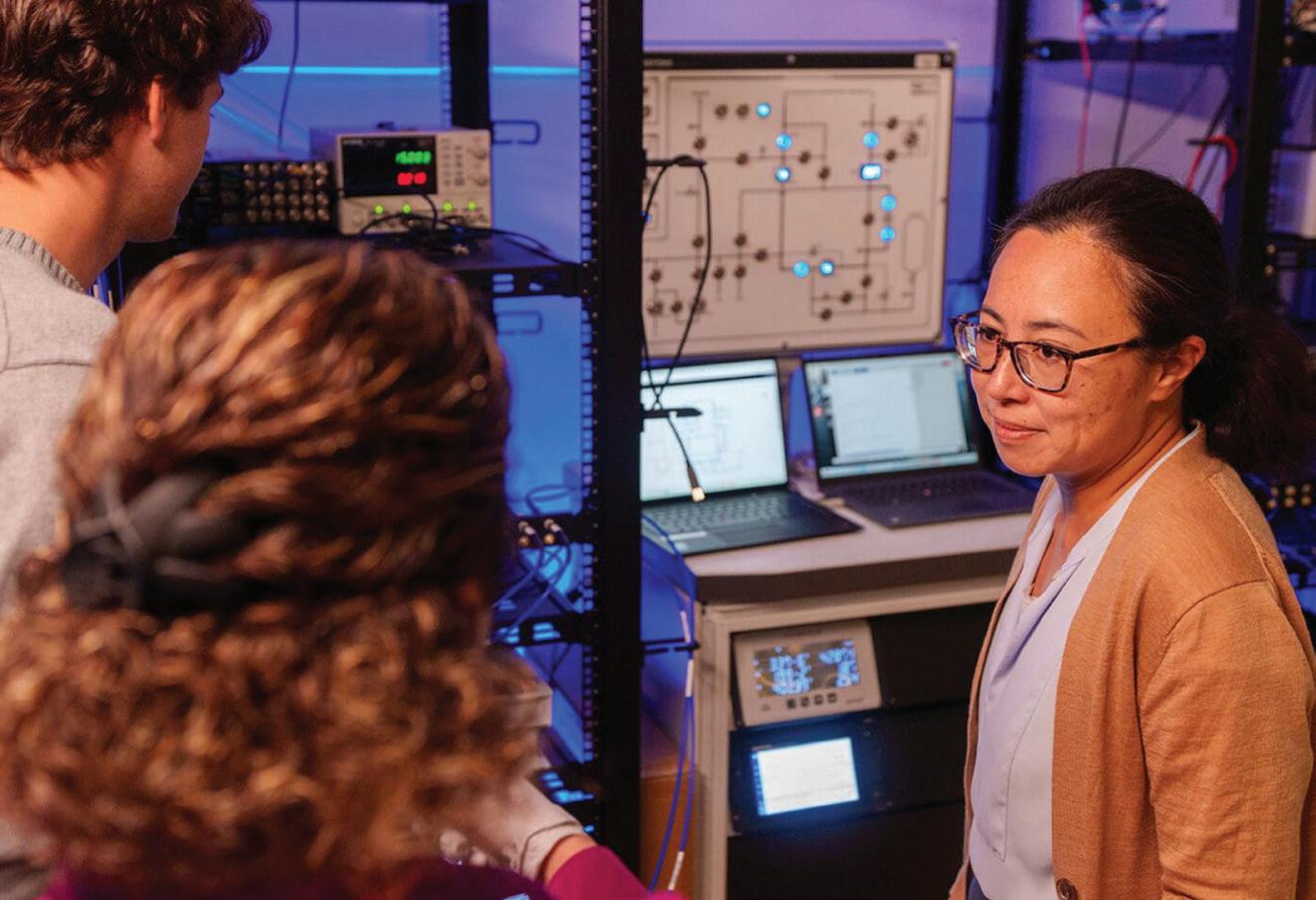
Houck and de Leon first introduced the use of tantalum for superconducting chips in 2021 in collaboration with Princeton chemist Robert Cava, the Russell Wellman Moore Professor of Chemistry. Despite having no background in quantum computing, Cava, an expert on superconducting materials, had been inspired by a talk de Leon had delivered a few years earlier, and the two struck up an ongoing conversation about qubit materials. Eventually, Cava pointed out that tantalum could provide more benefits and fewer downsides. “Then she went and did it,” Cava said, referring to de Leon and the broader team. “That’s the amazing part.”
Researchers from all three labs followed Cava’s intuition and built a superconducting tantalum circuit on a sapphire substrate. The design demonstrated a significant boost in coherence time, in line with the world record.
Tantalum’s main advantage is that it’s exceptionally robust and can survive the harsh cleaning needed for removing contamination from the fabrication process. “You can put tantalum in acid, and still the properties don’t change,” said Bahrami, colead author on the new paper.
Once the contaminants were removed, the team then came up with a way to measure the next sources of energy loss. Most of the remaining loss came from the sapphire substrate. They replaced the sapphire with silicon, a material that is widely available with high purity.
Combining these two materials while refining manufacturing and measurement techniques has led to an improvement in the transmon. Because the improvements scale exponentially with system size, Houck
said that swapping the current industry best for Princeton’s design would enable a hypothetical 1000-qubit computer to work roughly 1 billion times better.
Using silicon primes the new chips for industrial systems
The work brings together deep expertise in quantum device design and materials science. Houck’s group specialises in building and optimising superconducting circuits; de Leon’s lab focuses on quantum metrology and the materials and fabrication processes that underpin qubit performance; and Cava’s research team has spent three decades at the forefront of superconducting materials. Combining their expertise has yielded results that couldn’t have been accomplished alone. These results have now attracted industry attention.
Devoret, a professor of physics at the University of California-Santa Barbara, said that partnerships between universities and industry are important for advancing the frontiers of technology. “There is a rather harmonious relationship between industry and academic research,” he said. University labs are well positioned to focus on the fundamental aspects that limit the performance of a quantum computer, while industry scales up those advances into large-scale systems.
“We’ve shown that it’s possible in silicon,” de Leon said. “The fact that we’ve shown what the critical steps are, and the important underlying characteristics that will enable these kinds of coherence times, now makes it pretty easy for anyone who’s working on scaled processors to adopt.”
Nathalie de Leon specialises in engineering materials for quantum information technologies. She initiated the unusual collaboration between Houck, Cava and herself that has led to at least two major advances.
Image credit: Matthew Raspanti, Office of Communications.
Advancing perovskite solar cell commercialisation with AI

Researchers from Pohang University of Science and Technology (POSTECH) have utilised AI to develop a roadmap for sustainable solar cells, in order to get clean electricity cheaply while protecting the environment. Perovskite solar cells, also known as “next-generation solar cells”, have received attention for their high theoretical efficiency (34%), which surpasses that of traditional silicon solar cells. However, the production of these cells requires the use of toxic chemicals and has limited long-term stability, thus hindering their commercialisation.
The research team, led by Professor Jeehoon Han, developed a new manufacturing process that uses bio-based solvents, such as gammavalerolactone (GVL) and ethyl acetate (EA), instead of the toxic solvent dimethylformamide (DMF).
The study’s core is AI-based reverse engineering technology. By analysing experimental data, the researchers identified optimal conditions to boost efficiency while minimising costs and carbon emissions. They then verified the conditions suggested by AI through experiments and presented a sustainability evaluation model that considers manufacturing costs, environmental impact and process efficiency, as well as a global deployment scenario.
The GVL-EA process developed by the research team reportedly reduces the manufacturing cost of perovskite solar cells by half and decreases the climate impact by over 80%. Additionally, they confirmed that considering module lifespan and recycling strategies together can help identify the actual break-even point for commercialisation in different regions.
“AI has found conditions that were previously considered impossible by optimising the process itself,” Han said. He added that using nontoxic bio-solvents can make solar cells safer, cheaper and more efficient.
Enhancing computer cooling with ionic technology
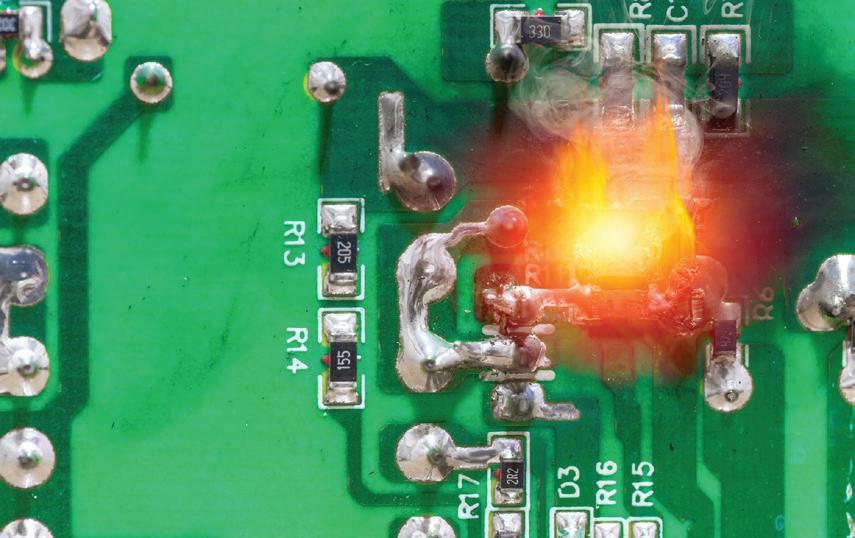
As more devices are added to computer chips to increase processing power capacity, heat generation becomes increasingly concentrated. This heat must be removed to maintain chip performance. This is currently achieved by circulating water through millimetre-scale channels to cool nanosized hotspots. This scale mismatch reduces the cooling efficiency by consuming more water than necessary, thereby raising environmental concerns.
Now, researchers at the University of Osaka have developed a strategy to enhance cooling by driving the flow of ions through nanoscale channels. This ionothermoelectric strategy is analogous to the Peltier technique, in which passing an electric current through a material results in heating or cooling. The researchers have published their findings in ACS Nano
“We fabricated a nanosized pore in a semiconductor membrane and surrounded the nanopore with a ‘gate’, in the form of a nanowire. Applying a voltage to the gate induced the flow of ions through the nanopore,” said lead author Makusu Tsutsui. “Varying the voltage modulated the surface charge of the nanopore.”
A negative applied voltage resulted in a negatively charged nanopore that was only permeable to positively charged ions, or cations. Consequently, each ion drags a certain quantity of heat along with its charge. The team created a concentration gradient in saltwater around the nanopore to drive cation transport in one direction, effectively pumping heat out of the nanopore. Reversing the applied voltage made the nanopore surface positive and permeable only to negative ions, or anions, therefore switching the system from cooling to heating.
“We placed a nanoscale thermocouple next to the holes within the materials — or nanopores — to map temperature changes driven by the voltage-induced ion transport,” said senior author Tomoji Kawai. “Switching from heating to cooling resulted in temperature drops of over 2 K. We found that the ionic heat transfer depended on the input power as well as the ion species used.”
Solid-state nanopores are fully compatible with semiconductor fabrication technologies. Thus, implementing the ionic refrigeration strategy developed at the University of Osaka could increase the capability of next-generation semiconductor chips. These advances in thermal control could also ease environmental concerns.
QUT to establish photochemical mass spectrometer
A new national research facility dedicated to analysing light-responsive molecules and advanced polymer materials will be established at Queensland University of Technology (QUT), following a major investment through the Australian Research Council’s (ARC) Linkage Infrastructure, Equipment and Facilities (LIEF) scheme.
The $1.35 million project, led by Dr David Marshall from the QUT Centre for Materials Science and Central Analytical Research Facility (CARF), will deliver a mass spectrometer designed specifically for real-time, highprecision characterisation of molecules as they undergo photochemical transformations.
The bespoke equipment offers a capability currently unavailable in Australia: the ability to trigger light-induced reactions on demand and immediately analyse the resulting molecular changes.
This will allow researchers to observe and understand interactions at the molecular scale in ways not previously possible.
Marshall said the mass spectrometer will accelerate advances in fields where light-driven processes play a central role, from next-generation materials and synthetic chemistry to atmospheric science and renewable energy technologies.
“Light is one of our most abundant natural resources, and it underpins countless emerging technologies. To harness its full potential, we need to understand exactly how molecules behave the moment they absorb light. The mass spectrometer will allow us to capture that detail in real time, opening the door to smarter, more sustainable chemical and materials innovation,” Marshall said.
The project brings together an interdisciplinary team of leading Australian chemists, materials scientists, atmospheric scientists and analytical experts from QUT, Griffith University, The University of Wollongong and The University of Queensland.
“The mass spectrometer will help develop novel light-responsive materials, improve understanding of atmospheric processes relevant to climate modelling and support industries developing future-focused technologies,” Marshall said.

Scientists reveal it is possible to beam up
quantum signals
New research has shown that it is feasible to send quantum signals from Earth to a satellite, paving the way for stronger quantum communication networks.
Quantum satellites currently beam entangled particles of light from space down to different ground stations for ultra-secure communications. New research shows it is also possible to send these signals upward, from Earth to a satellite; something once thought unfeasible.
This breakthrough overcomes barriers to current quantum satellite communications. Ground station transmitters can access more power, are easier to maintain and could generate far stronger signals, enabling future quantum computer networks using satellite relays.
The study ‘Quantum entanglement distribution via uplink satellite channels’, by Professor Simon Devitt, Professor Alexander Solntsev and PhD candidates Srikara S and Hudson Leone from the University of Technology Sydney (UTS), has been published in the journal Physical Review Research.
China launched the Micius satellite in 2016, which enabled the first experiments with the transmission of quantum-encrypted information from space. In 2025, the Jinan-1 microsatellite extended this progress with a 12,900 km quantum link between China and South Africa.
“Current quantum satellites create entangled pairs in space and then send each half of the pair down to two places on Earth — called a downlink,” Solntsev said. “It’s mostly used for cryptography, where only a few photons (particles of light) are needed to generate a secret key.”
The reverse idea, where entangled photon pairs are created on the ground and sent upward to a satellite, hadn’t been taken seriously. It was thought that an ‘uplink’ approach wouldn’t work due to signal loss, interference and scattering.
“The idea is to fire two single particles of light from separate ground stations to a satellite orbiting 500 km above Earth, travelling at about 20,000 km per hour, so that they meet so perfectly as to undergo quantum interference. Is this even possible?” Devitt said.
“Surprisingly, our modelling showed that an uplink is feasible. We included real-world effects such as background light from the Earth and sunlight reflections from the Moon, atmospheric effects and the imperfect alignment of optical systems,” Devitt said.
The researchers suggest the uplink concept could be tested in the near future using drones or receivers on balloons, paving the way for future quantum networks across countries and continents using small low-orbit satellites.
“A quantum internet is a very different beast from current nascent cryptographic applications. It’s the same primary mechanism but you need significantly more photons — more bandwidth — to connect quantum computers,” Devitt said.
“The uplink method could provide that bandwidth. The satellite only needs a compact optical unit to interfere incoming photons and report the result, rather than quantum hardware to produce the trillions upon trillions of photons per second needed to overcome losses to the ground, allowing for a high-bandwidth quantum link. That keeps costs and size down and makes the approach more practical.” Devitt said.
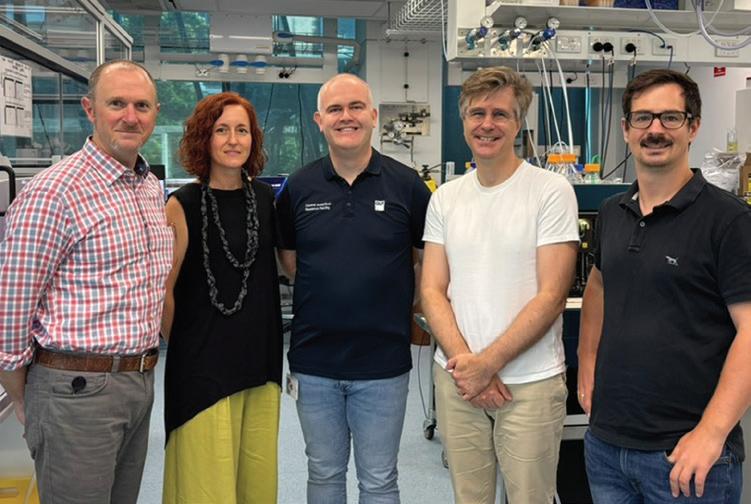
Left to right: Professor Stephen Blanksby, Associate Professor Branka Miljevic, Dr David Marshall, Distinguished Professor Christopher Barner-Kowollik, Associate Professor Hendrik Frisch.
Enhancing performance of aqueous zinc–iodine batteries

The formula powering aqueous zinc–iodine batteries has been brought under the microscope, with researchers from the University of Adelaide finding a way to enhance their performance.
Rechargeable aqueous zinc batteries are growing as potential replacements for large energy storage systems made of lithium-ion due to their low cost, affordable density and high safety.
However, the conventional hosts for iodine cathodes often show slow reactions and poor electrochemical reproducibility, so the research team, led by Professor Shizhang Qiao, Chair of Nanotechnology at the School of Chemical Engineering, sought to use ferrocene in the cathodes.
The research findings were published in the journal Nature Chemistry
“The conversion of iodine in aqueous zinc-iodine batteries accompanies the polyiodides shuttle effect, but the conversion of ferrocene, an organometallic compound, can precipitate the polyiodides which gives it a low self-discharge,” Qiao said.
“Since ferrocene is composed of low-cost elements, it offers favourable scalability and potentially low cost for large-scale production. Simulation results show that incorporating it reduces the total battery cost by nine% compared to that without ferrocene,” Qiao said.
Qiao added that use of ferrocene essentially eliminated the shuttle effect, a problem common in zinc–iodine batteries, where intermediate polyiodides dissolve in the electrolyte and shuttle back and forth between the cathode and anode.
“Not only does using ferrocene improve energy density but it also lowers the overall cost, making the coupling a practical, economical and scalable strategy for advancing aqueous zinc–iodine battery technologies. Our findings also show the active mass in the cathode can reach 88%, minimising the capacity loss of inactive hosts,” Qiao said.





High-performance modules
The Acromag XMC-ZU Series of rugged and highly configurable modules is now being distributed across Australia and New Zealand by Metromatics. The FPGA-based computing platforms are designed for modern embedded systems requiring real-time processing, high-speed data throughput and flexible I/O expansion.
The modules integrate an advanced AMD Zynq UltraScale+ MPSoC, combining an ARM-based processing system with programmable logic fabric. This hybrid architecture delivers enhanced performance and adaptability for compute-intensive, mission-critical and I/O-heavy applications across defence, aerospace and industrial automation.
The module features a quad-core ARM Cortex-A53 application processor and dualcore Cortex-R5 real-time processor, delivering general and deterministic processing. The module also features an integrated Mali-400 GPU plus H.264/H.265 video codec support, optimised for vision, imaging and multimedia workloads.
An UltraScale+ programmable logic fabric with logic cells and on-chip memory enable custom hardware acceleration and tailored I/O processing. The module comes with a range of rugged design options, including air-cooled and conduction-cooled variants suitable for harsh industrial, military and aerospace environments.
The module is suitable for real-time signal processing, sensor fusion and edge computing, industrial automation and motor control, and high-bandwidth data acquisition and system interfacing.
The XMC-ZU Series is available for order worldwide. Metromatics provides local sales, service, technical assistance and support for the full Acromag product line throughout Australia and New Zealand.
METROMATICS PTY LTD www.metromatics.com.au
Dual channel sensor
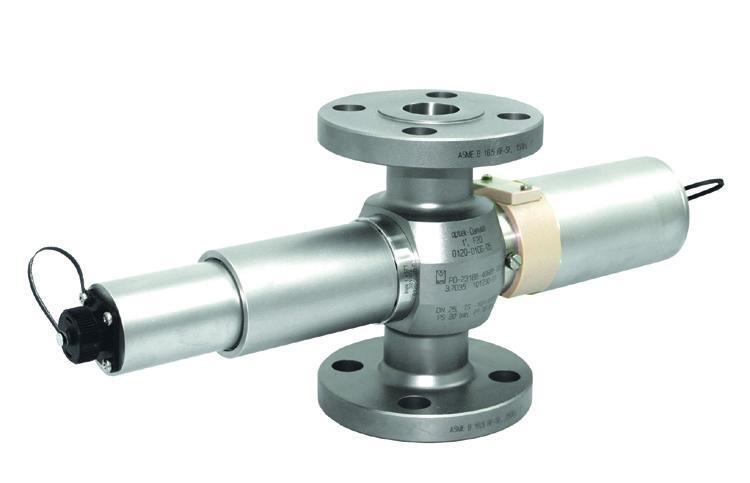
The Optek AF26 is a high-precision dual-channel sensor which is designed for inline operation. The dual-channel sensor is designed to provide accurate absorption measurements with repeatability, linearity and resolution. The sensor’s output can be correlated to almost any colour scale including APHA and Hazen.
Selected combinations of optical filters make it possible to focus on specific wavelengths, thereby enabling suitable adaptation to the application. Typically, one of the two measured wavelengths is used as a reference channel, where it can be used to prevent the influence of particulate, gas bubbles and lamp aging. Additionally, NIST-traceable calibration accessories provide absolute measurement confidence.
The sensor’s secondary wavelength is designed to compensate the desired light absorbance measurement from any undesired light scattering influence, such as suspended solids, gas bubbles, immiscible fluids or window fouling. The AF26 sensor’s output can also be correlated to almost any colour scale including APHA and Hazen.
The sensor can also be used for the concentration control of metal ions (iron, chromium, copper, nickel, cobalt and manganese) in the plating industry.
AMS INSTRUMENTATION & CALIBRATION PTY LTD www.ams-ic.com.au
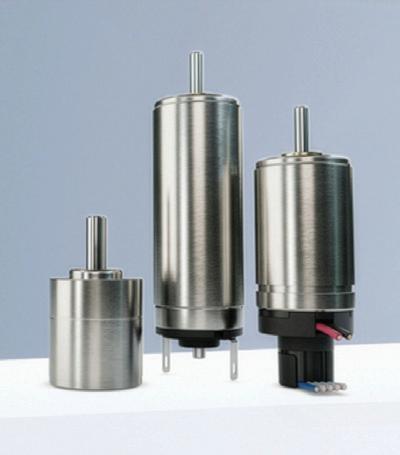
DC micromotors
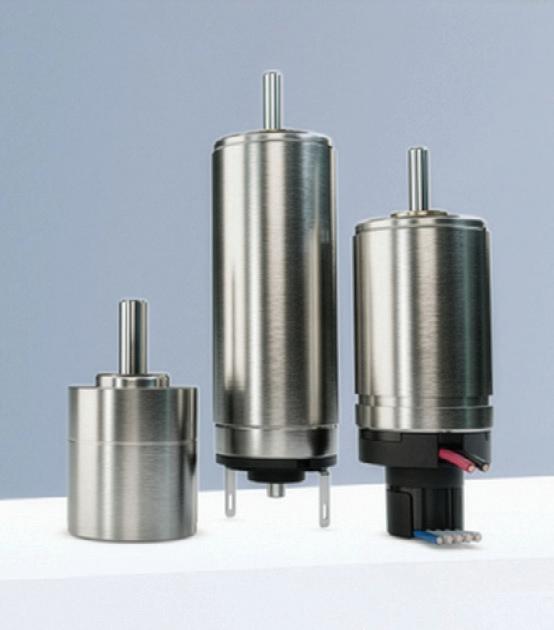
FAULHABER has introduced the 14 mm GXR and SXR series DC micromotors, engineered for high power density and precise integration in space-constrained environments. The GXR 1437 features copper-graphite commutation for robust, long-life performance, while the SXR series (1424 and 1437) uses precious-metal commutation for lownoise, dependable operation.
The micromotors feature a 14 mm diameter, thereby enabling them to be integrated with FAULHABER’s modular gearheads (14GPT) and IEP3 magnetic encoders, for a compact, diametercompliant drive solution.
A hexagonally wound coil also delivers maximum power output in a minimal footprint.
The micromotors also feature multiple bearing options, voltage variants and electrical connection types, with customisable shaft modifications and rotor balancing to match specific application needs.
The micromotors are RoHS-compliant and manufactured to high standards for a range of demanding environments. These motors are suitable for high-end optical systems, medical devices (such as surgical robots and infusion pumps) and other precision-driven equipment where space, efficiency and adaptability are critical. The GXR and SXR series enables engineers to achieve high-performance motion control in miniaturised systems — supporting advanced system integration and long-term durability.
ERNTEC PTY LTD www.erntec.net
Microprocessors
STMicroelectronics has introduced STM32MP21 microprocessors (MPUs) for edge applications in smart factories, smart homes and smart cities, combining advanced cores and peripherals with strong security targeting SESIP Level 3 and PCI pre-certification.
Extending ST’s STM32MP2 series, the new MPUs with a 1.5 GHz 64-bit Arm Cortex-A35 core and advanced 32-bit Cortex-M33 at 300 MHz facilitate fast execution times with flexibility. The two cores handle complex tasks and real-time control, adding the opportunity for boot processing on the Cortex-M33 to launch services quickly and accelerate system wake-up from power-saving modes.

Bringing a focused feature set, the microprocessor integrates MIPI CSI-2 and image signal processing (ISP) pipeline for machinevision applications such as industrial inspection and barcode or QR-code readers. Also, two Gigabit Ethernet ports with TimeSensitive Networking (TSN) support applications that need determinism, low latency, jitter-free communication, synchronisation and scheduling.
On top of DDR4/LPDDR4 DRAM support, the series supports DDR3L memory, enabling designers to enhance system performance, footprint and BoM.
The security architecture shared throughout the series of microprocessors is built to comply with strengthened regulations worldwide, including the incoming EU Cyber Resilience Act (CRA). A secure hardware cryptographic accelerator inhibits physical attacks, while supporting secure boot and applicative needs. Code isolation with Arm TrustZone protects startup and sensitive processes, completed with hardware protection of memory and peripherals leveraging ST’s proprietary resource isolation framework (RIF) to prevent tampering.
The STM32 ecosystem also provides extensive software and tools for building and testing MPU applications. These include ST Edge AI desktop and cloud tools, OpenSTLinux and software expansion packages, as well as evaluation boards, the STM32MP215FDK Discovery kit, and adapter boards. On top of the well-established OpenSTLinux distribution, with Yocto and Buildroot flavours, a bare metal offer will be available for the STM32MP2 series in 2026, as presented previously for the STM32MP13 series.
STMICROELECTRONICS PTY LTD www.st.com

Novel materials for energy-efficient microelectronics
Adam Zewe

MIT RESEARCHERS HAVE DEVELOPED A NEW FABRICATION METHOD THAT COULD ENABLE THE PRODUCTION OF MORE ENERGY-EFFICIENT ELECTRONICS BY STACKING MULTIPLE FUNCTIONAL COMPONENTS ON TOP OF ONE EXISTING CIRCUIT.
In traditional circuits, logic devices that perform computation, like transistors and memory devices that store data, are built as separate components, forcing data to travel back and forth between them, which wastes energy.
This new electronics integration platform allows scientists to fabricate transistors and memory devices in one compact stack on a semiconductor chip. This eliminates much of that wasted energy while boosting the speed of computation.
Key to this advance is a newly developed material with unique properties and a more precise fabrication approach that reduces the number of defects in the material. This allows the researchers to make extremely tiny transistors with built-in memory that can perform faster than state-of-the-art devices while consuming less electricity than similar transistors.
By improving the energy efficiency of electronic devices, this new approach could help reduce the burgeoning electricity
consumption of computation, especially for demanding applications like generative AI, deep learning and computer vision tasks.
“We have to minimise the amount of energy we use for AI and other data-centric computation in the future because it is simply not sustainable. We will need new technology like this integration platform to continue that progress,” said Yanjie Shao, an MIT postdoc and lead author of two papers on these new transistors.
The new technique is described in two papers (one invited) that were presented at the IEEE International Electron Devices Meeting. Shao is joined on the papers by senior authors Jesús del Alamo, the Donner Professor of Engineering in the MIT Department of Electrical Engineering and Computer Science (EECS); Dimitri Antoniadis, the Ray and Maria Stata Professor of Electrical Engineering and Computer Science at MIT; as well as others at MIT, the University of Waterloo and Samsung Electronics.

Flipping the problem
Standard CMOS (complementary metal-oxide semiconductor) chips traditionally have a front end, where the active components like transistors and capacitors are fabricated, and a back end that includes wires called interconnects and other metal bonds that connect components of the chip.
But some energy is lost when data travel between these bonds, and slight misalignments can hamper performance. Stacking active components would reduce the distance data must travel and improve a chip’s energy efficiency.
Typically, it is difficult to stack silicon transistors on a CMOS chip because the high temperature required to fabricate additional devices on the front end would destroy the existing transistors underneath.
The MIT researchers turned this problem on its head, developing an integration technique to stack active components on the back end of the chip instead.
“If we can use this back-end platform to put in additional active layers of transistors, not just interconnects, that would make the integration density of the chip much higher and improve its energy efficiency,” Shao said.
By improving the energy efficiency of electronic devices, this new approach could help reduce the burgeoning electricity consumption of computation.
The researchers accomplished this using a new material, amorphous indium oxide, as the active channel layer of their backend transistor. The active channel layer is where the transistor’s essential functions take place.
Due to the unique properties of indium oxide, they can ‘grow’ an extremely thin layer of this material at a temperature of only about 150°C on the back end of an existing circuit without damaging the device on the front end.
Perfecting the process
They carefully optimised the fabrication process, which minimises the number of defects in a layer of indium oxide material that is only about 2 nanometres thick.
A few defects, known as oxygen vacancies, are necessary for the transistor to switch on, but with too many defects it won’t work properly. This optimised fabrication process allows the researchers to produce an extremely tiny transistor that operates rapidly and cleanly, eliminating much of the additional energy required to switch a transistor between off and on.
Building on this approach, they also fabricated back-end transistors with integrated memory that are only about 20 nanometres in size. To do this, they added a layer of material called ferroelectric hafnium-zirconium-oxide as the memory component.
These compact memory transistors demonstrated switching speeds of only 10 nanoseconds, hitting the limit of the team’s measurement instruments. This switching also requires much lower voltage than similar devices, reducing electricity consumption.
And because the memory transistors are so tiny, the researchers can use them as a platform to study the fundamental physics of individual units of ferroelectric hafnium-zirconium-oxide.
“If we can better understand the physics, we can use this material for many new applications. The energy it uses is very minimal, and it gives us a lot of flexibility in how we can design devices. It really could open up many new avenues for the future,” Shao said.
The researchers also worked with a team at the University of Waterloo to develop a model of the performance of the back-end transistors, which is an important step before the devices can be integrated into larger circuits and electronic systems.
In the future, they want to build upon these demonstrations by integrating back-end memory transistors onto a single circuit. They also want to enhance the performance of the transistors and study how to more finely control the properties of ferroelectric hafniumzirconium-oxide.
“Now, we can build a platform of versatile electronics on the back end of a chip that enable us to achieve high energy efficiency and many different functionalities in very small devices. We have a good device architecture and material to work with, but we need to keep innovating to uncover the ultimate performance limits,” Shao said.
Reprinted with permission of MIT News.
iStock.com/prawest nujeen
Transforming acoustic waves with a chip
Alex Parrish, Virginia Tech College of Engineering

ACOUSTIC WAVES ARE BEST KNOWN AS THE INVISIBLE DELIVERY AGENTS BRINGING VOICES, CAR HORNS OR OUR FAVOURITE SONG TO OUR EARS. BUT THE WAVES CAN ALSO MOVE PHYSICAL OBJECTS, LIKE AN ITEM VIBRATING ATOP A CONCERT SPEAKER — OFFERING THE POWER TO TURN SOUND INTO A TOOL.
Assistant Professor of mechanical engineering Zhenhua Tian and his team at the Virginia Tech College of Engineering have explored how to use acoustic waves as invisible grabbers to manipulate fluid flows and tiny particles on electronic chips. The work has significant potential in the medical field, where acoustic wave chips could play a role in non-invasive surgery or do the work of a centrifuge, pulling particles from blood.
A central challenge, however, has been that the standard technology that produces acoustic waves on electronic chips — a device called an interdigital transducer (IDT) — doesn’t make the kind of highly customisable curved and overlapping waves that Tian’s team needs to trap objects, route wave information, or transport fluids. The solution? Make a new wave-producing technology themselves, all contained on a chip. The research behind it has been published in Nature Communications
Making the chip
Tian’s team uses acoustic waves to grab small objects like blood clots in the body and tiny cells in a petri dish, but the plane acoustic waves produced by an IDT didn’t make that possible. Think of it like trying to move a ping pong ball with the flat of your hand — you can roll it along a surface, but you can’t pick it up and freely move it. Tian’s team needed acoustic wave fingers for complex movement and manipulation at the microscale.
To create crisscrossing acoustic waves tuned to work together required reimagining not only the shape of the acoustic transmitter, but also the electrodes that create the energy patterns coming out of it.
The team developed several versions of the new tool that could operate at different scales, carry different degrees of power, and generate on-chip waves with different energy profiles. Team members encoded it with a highly customisable phase distribution, enabling new ways to tilt, curve and harmonise acoustic waves. This new collection of mechanisms came together on an electronic chip,
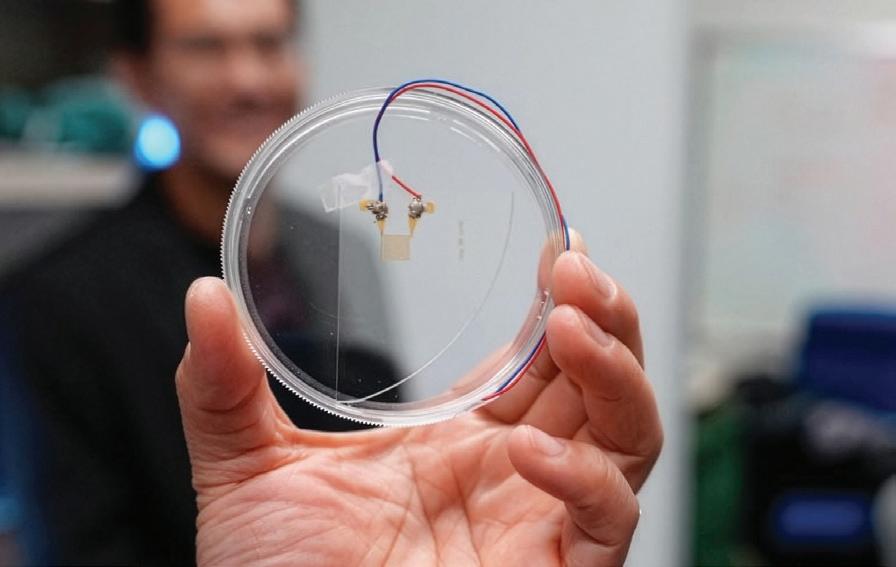
an all-in-one instrument that, with a few adjustments, could make long jets of acoustic energy with more range and power than a traditional IDT could.
The metamaterial difference
Team members didn’t just create a new tool; they created a new metamaterial for the job. Their chip is more than just a new kind of fabric or a new flavour of ice cream. It is engineered with materials and acoustics that can reshape acoustic energy to change its function.
The reason? Adaptability. Tian’s team engineered the chips to precisely control the energy flow of acoustic waves for different purposes, such as wave routing or the manipulation of fluids and particles. That offers potential applications for non-invasive surgery, biosensors, microfabrication and semiconductor cooling.
Tian’s team will continue to explore these tools’ use in new applications. There have been promising results when the PIM was deployed for controlling acoustic waves in both liquid and solids, making a wide horizon for the future of the technology.
Zhenhua Tia’s team created a number of versions of this device, capable of directing acoustic energy to move microscopic objects.
Image credit: Alex Parrish, Virginia Tech.



Single-photon switch advances photonic computing
Purdue University College of Engineering

THERE ARE FEW TECHNOLOGIES MORE FUNDAMENTAL TO MODERN LIFE THAN THE ABILITY TO CONTROL LIGHT WITH PRECISION. FROM FIBREOPTIC COMMUNICATIONS TO QUANTUM SENSORS, THE MANIPULATION OF PHOTONS UNDERPINS MUCH OF OUR DIGITAL INFRASTRUCTURE. YET ONE CAPABILITY HAS REMAINED OUT OF REACH: CONTROLLING LIGHT WITH LIGHT ITSELF AT THE MOST FUNDAMENTAL LEVEL USING SINGLE PHOTONS TO SWITCH OR MODULATE POWERFUL OPTICAL BEAMS.
Now, researchers at Purdue University have achieved this milestone, demonstrating what they call a “photonic transistor” that operates at single-photon intensities. Their findings, published in the journal Nature Nanotechnology, report a nonlinear refractive index several orders of magnitude higher than the best-known materials, a leap that could finally make photonic computing practical.
“We demonstrated a way to realise a photonic transistor working at single-photon intensities,” said Vladimir Shalaev, Purdue’s Bob and Anne Burnett Distinguished Professor in Electrical and Computer Engineering. “This was a longstanding problem, and we found a potential way of solving it.”
The achievement addresses a fundamental challenge in photonics: traditional optical nonlinearity, where one beam of light affects another, requires
enormous power levels.
“Usually there is optical nonlinearity, which allows two beams to interact with each other,” said Demid Sychev, a postdoctoral researcher in Shalaev’s group in the Elmore Family School of Electrical and Computer Engineering. “But typically, this interaction works only for macroscopic beams, for classical light, because the nonlinear refractive index is very small. This is a problem because this method cannot be used for single photons.”
Amplifying the quantum world
The solution came from an unexpected source: the avalanche multiplication process used in commercial single-photon detectors. When a single photon strikes silicon and creates a single electron, that electron can trigger an avalanche that generates up to 1 million new electrons, a cascade that bridges the microscopic quantum world with macroscopic, measurable effects.
“This multiplication is a very powerful tool for connecting the microscopic quantum world with the macroscopic world,” Sychev said. “This principle was often used for single-photon detection, but what we did was apply this process to create a huge nonlinearity for optical beams, where one single-photon beam can control a huge macroscopic beam.”
Peigang Chen, a fourth-year PhD student in Shalaev’s group, said “When I first came to the group, I just thought this was a genius idea from Demid. In the future, we’re going to fabricate our own single-photon avalanche diodes (SPAD) for this specific design. But the easiest way for us to get this first result was to use a commercial SPAD.”
The device functions as an optical switch: A single photon in the control beam can modulate the properties of a much more powerful probe beam, effectively switching it on or off.
Three critical advantages
The Purdue team’s approach offers three key advantages over alternative methods that have been explored for single-photon nonlinearity.
First, it operates at room temperature. “Typically, what people use for singlephoton nonlinearity these days are quantum systems where they use two-level systems, like a single-photon emitter coupled to a cavity,” Sychev said. “But this method is very sensitive to temperature. It cannot be applied at room temperature.”
Second, the technology is compatible with complementary metal-oxidesemiconductor, meaning it can be integrated into existing semiconductor manufacturing processes. “This is seamless and compact,” Chen said. “For the others, it’s very different and complicated physics systems. This one is semiconductor, and it can always be fabricated on chip.”
Third, and perhaps most importantly, it operates at gigahertz speeds and could potentially reach hundreds of gigahertz, dramatically faster than existing approaches. “Clock rates of such systems may go up to gigahertz, but with the methods we developed, in principle, it can be extended to hundreds of gigahertz,” Sychev said.
Applications: From quantum to classical
While the research has obvious applications in quantum computing, where it could increase the efficiency of generating single photons and enable faster quantum teleportation protocols, Sychev believes classical computing applications may be even more transformative.
“The reason why a photonic computer is not realised is because the current approaches using photons are supposed to be much better. Photons consume less energy; they are faster,” he said. “Ideally,
from photons, you can get terahertz clock rates of CPUs, compared to currently existing 5 gigahertz in the best cases. But the problem is that there are no photonic switches like this. The needed interaction between photons typically requires high powers of optical light. With our method, in principle, you can do it with single photons.”
The implications extend beyond computing to data centres, optical communications and data transfer systems — anywhere that the speed and energy efficiency of photons could replace slower, more power-hungry electronics.
Next steps and broader impact
The team is now focused on optimising the technology. “Previously, all commercially available SPADs we used were not designed for this purpose,” Sychev said. “Now our goal is to make a device which will be
optimised to work as a single-photon switch.” They plan to explore different device geometries and materials to further enhance performance.
Sychev emphasised that while the demonstration is significant, substantial work remains. “This work indeed can bring more results in the future for industry and for academia, for science and technology,” he said. “It’s a longstanding problem, and we found some potential way of solving that problem. It still requires a lot of work toward this goal, but at least some interesting direction was found, and we are very happy about this.”
As the demand for faster, more efficient computing and communication systems continues to grow, the ability to manipulate photons at the single-photon level represents a critical step towards realising the full potential of light-based technologies.

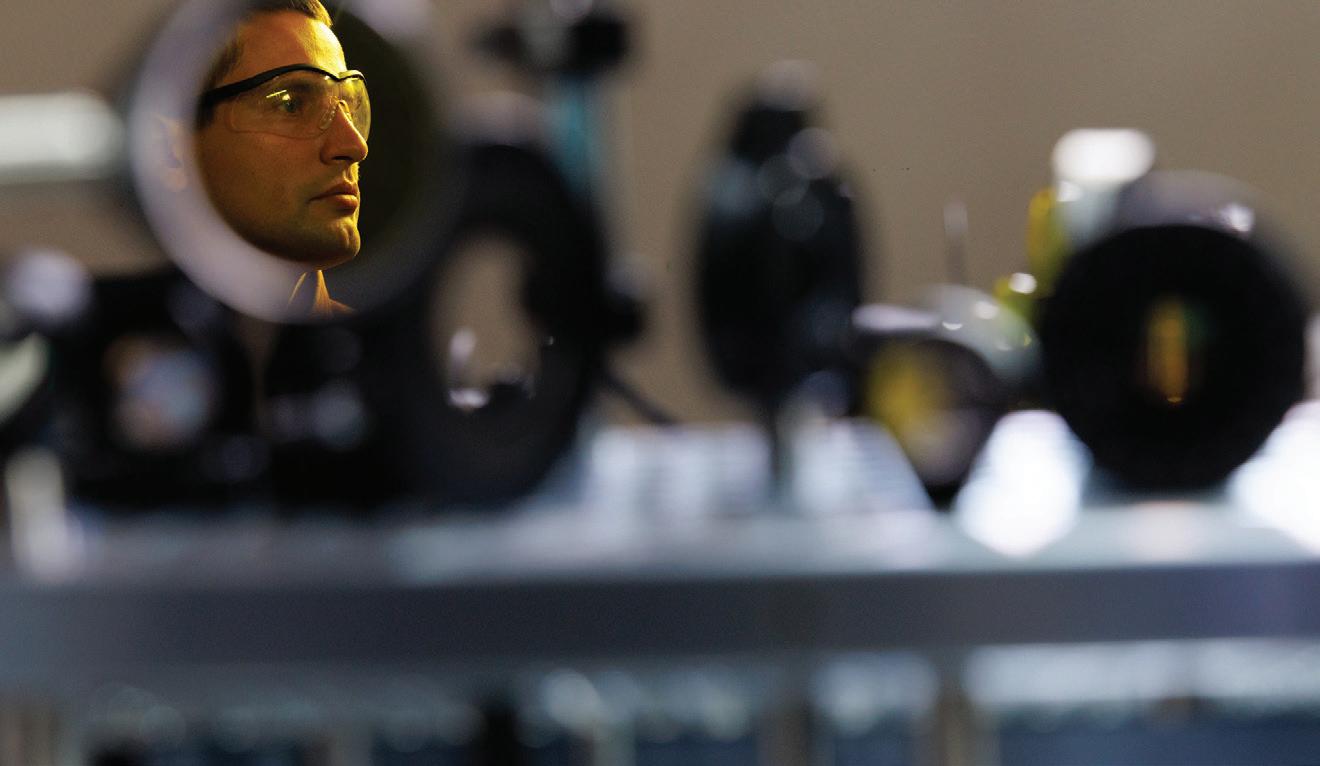
Demid Sychev, a postdoctoral researcher in Shalaev’s group and the first author of this paper, is seen in the reflection of one of many mirrors in Shalaev's nanophotonics laboratory.
Image credit: Purdue University College of Engineering.
Mini-ITX motherboard
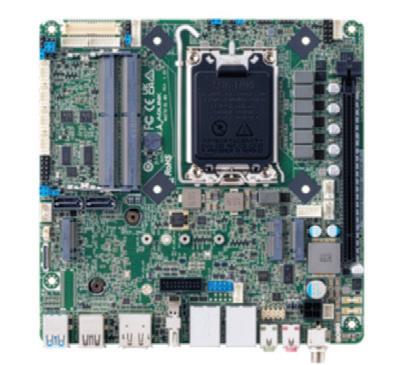
ADLINK Technology has launched the AmITX-RL-WV, a Mini-ITX motherboard designed for industrial embedded systems operating in environments with variable power conditions.
Built on the Intel H610 chipset, the motherboard supports 14th, 13th and 12th Gen Intel Core i9/i7/i5/i3 processors (up to 65 W TDP) and features wide-voltage input (12–28 V DC-in). This combination makes it suitable for deployment in factory automation, machine control systems, transportation, kiosks and mobile medical carts, where power variability is a frequent challenge.
With its compact 170 x 170 mm Mini-ITX form factor, the motherboard provides robust computing performance with extensive I/O and expansion capabilities, including a PCIe 4.0 x16 slot for add-on cards such as vision, control or AI accelerators. The motherboard also features dual 2.5 GbE LAN ports to facilitate industrial networking and up to 64 GB DDR4 3200 MHz memory for stable multitasking.
The motherboard expands ADLINK’s AmITX series portfolio with enhanced mechanical compatibility for industrial applications, providing system integrators with greater design flexibility and deployment confidence.
ADLINK TECHNOLOGY INC www.adlinktech.com
Interface card
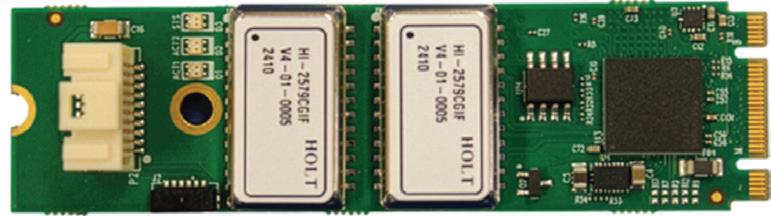
Metromatics, the authorised distributor for Alta Data Technologies in Australia and New Zealand, has launched the MP2-1553 — a compact 1–2 channel MIL-STD-1553 interface card in the M.2 2280 form factor, engineered for next-generation embedded avionics systems.
The interface card brings full-featured 1553 bus capability to the smallest host computers and mission hardware via PCI Express, making it suitable for flight control computers, UAVs, mobile ground vehicles and compact mission processors where SWaP constraints are critical.
Supplied with Alta’s AltaAPI SDK, the interface card is designed to simplify integration across multiple operating systems and development environments. Integrated system clock sync and IRIG-B decode further reduce external timing hardware and wiring complexity. Units are offered in commercial and extended-temperature versions for deployment in demanding environments.
Metromatics provides local sales, engineering assistance and post-sales support for Alta's full MIL-STD-1553 and ARINC product line.
METROMATICS PTY LTD www.metromatics.com.au
Short-wave infrared cameras
Teledyne Judson Technologies has launched the SCION Family of SWIR cameras — a line of high-performance, high-volume cameras for demanding applications. The SCION platform introduces a new class of SWIR imaging solutions with a 10-micron pixel pitch and formats of 640x512 and 1280x1024.
SCION cameras support a range of applications including material analysis, fluorescence measurement, defect detection and Earth observation. Initial sensor options deliver sensitivity from 300–1700 nm or 900–2500 nm, leveraging Teledyne’s proprietary VisGaAs (Visible-sensitive InGaAs) and MCT (mercury cadmium telluride) sensor materials. These cameras combine wide sensitivity with high frame rates and sample-up-the-ramp (SUPR) capability, enabling sub-one-electron read noise with a one-second acquisition.
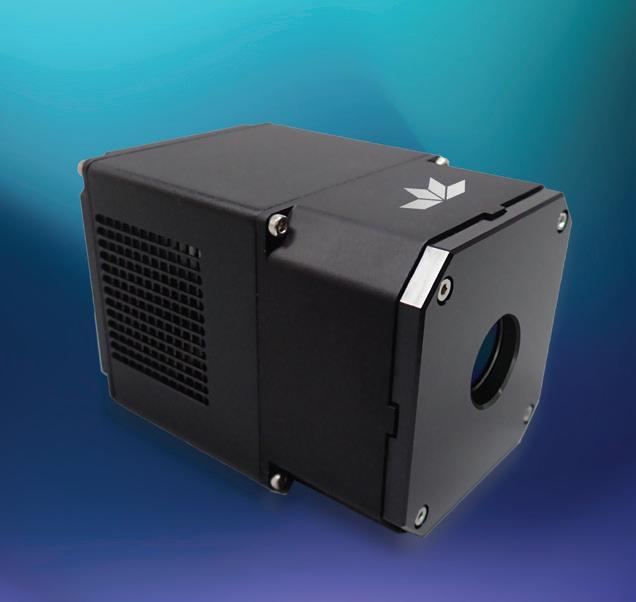
The combination of VisGaAs sensitivity with low-noise, thermoelectrically cooled camera design enables the cameras to deliver a flexible platform for applications where performance, stability and integration efficiency are critical.
The unified integration of sensor, vacuum package and camera electronics simplifies the supply chain, reduces supplier count and minimises technical and schedule risk. The system is custom-designed from the pixel level though the API and SDKs, reinforcing Teledyne’s ‘Pixel-to-PC’ architecture and providing a simple, easy-to-use infrared sensing solution.
TELEDYNE E2V ASIA PACIFIC LIMITED www.teledyne-e2v.com
What does cybersecurity look like in the quantum age?
Ty Tkacik, Penn State University

QUANTUM COMPUTERS PROMISE UNPRECEDENTED COMPUTING SPEED AND POWER THAT WILL ADVANCE BOTH BUSINESS AND SCIENCE. THESE SAME QUALITIES ALSO MAKE THEM A PRIME TARGET FOR MALICIOUS HACKERS, ACCORDING TO SWAROOP GHOSH, PROFESSOR OF COMPUTER SCIENCE AND OF ELECTRICAL ENGINEERING AT THE PENN STATE SCHOOL OF ELECTRICAL ENGINEERING AND COMPUTER SCIENCE.
Ghosh, alongside Suryansh Upadhyay, who recently received his doctorate in electrical engineering from Penn State, authored a paper identifying several major security vulnerabilities facing quantum computing systems. The paper, published in the Proceedings of the Institute of Electrical and Electronics Engineers (IEEE), highlights the need to develop defence mechanisms covering not just the software and programs running on these systems, but the physical components that power them.
In this Q&A, Ghosh and Upadhyay discussed quantum computing, the security vulnerabilities facing these state-of-the-art machines and how developers can better prepare them for the future.
>
What makes a quantum computer different from a traditional computer?
Ghosh: Traditional computing works using units of information called bits, which you can picture as a light switch in the ‘on’ or ‘off’ position. These positions are assigned values of one or zero, with one representing on and zero representing off. We program computers by using algorithms or educated guesses to develop the best possible solution for a problem, compiling this solution to generate machine-level instructions — directions specifying which bits need to equal one and which bits need to equal zero — that the computer follows to execute a task.
Quantum computers are built on quantum bits, or qubits. These qubits are much more versatile than standard bits, capable of effectively representing one, zero or both at the same time, otherwise known as a superposition. These qubits can also be linked to one another, known as entanglement. By incorporating superpositions and entanglement into decision-making, quantum computers can process exponentially more data than bitpowered computing systems, while using an equivalent number of qubits.
This is useful for improving workflows in many industries, since quantum computers can process information much faster than traditional computers. One example is the pharmaceutical industry, where quantum computing can quickly process data and predict the efficacy of potential new drugs, significantly streamlining the research and development process. This can save companies billions of dollars and decades spent researching, testing and fabricating innovative drugs.
What are some of the main security vulnerabilities facing quantum computers right now?
Upadhyay: Currently, there is no efficient way to verify the integrity of programs and
The interconnectedness that allows qubits to operate so efficiently inadvertently creates a security vulnerability.
compilers — many of which are developed by third parties — used by quantum computers at scale, which can leave users’ sensitive corporate and personal information open to theft, tampering and reverse engineering.
Many quantum computing algorithms have businesses’ intellectual property integrated directly in their circuits, which are used to process highly specific problems involving client data and other sensitive information. If these circuits are exposed, attackers can extract company-created algorithms, financial positions or critical infrastructure details. Additionally, the interconnectedness that allows qubits to operate so efficiently inadvertently creates a security vulnerability — unwanted entanglement, known as crosstalk, can leak information or disrupt computing functions when multiple people use the same quantum processor. What are current commercial quantum providers doing to address the security concerns? Can they use the same security methods implemented in traditional computers?
Upadhyay: Classical security methods cannot be used because quantum systems behave fundamentally differently from traditional computers, so we believe companies are largely unprepared to address these security faults. Currently, commercial quantum providers are focused on ensuring their systems work reliably and effectively. While optimisation can indirectly address some security vulnerabilities, the
assets unique to quantum computing, such as circuit topology, encoded data or hardware coded intellectual property systems generally lack end-to-end protection. Since quantum computers are still a relatively new technology, there is not much incentive for attackers to target them, but as the computers are integrated into industry and our day-to-day life, they will become a prime target.
How can developers improve security in quantum computers?
Ghosh: Quantum computers need to be safeguarded from ground up. At the device level, developers should focus on mitigating crosstalk and other sources of noise — external interference — that may leak information or impede effective information transfer. At the circuit level, techniques like scrambling and information encoding must be used to protect the data built into the system. At the system level, hardware needs to be compartmentalised by dividing business data into different groups, granting users specific access based on their roles and adding a layer of protection to the information. New software techniques and extensions need to be developed to detect and fortify quantum programs against security threats.
Our hope is that this paper will introduce researchers with expertise in mathematics, computer science, engineering and physics to the topic of quantum security so they can effectively contribute to this growing field.

Single board computer
Quectel Wireless Solutions has launched the QSM368Z smart single board computer (SBC).
The QSM368Z is designed to give developers more choice and speed up product development of intelligent solutions and digital transformation.
The single board computer features a Rockchip RK3568 IoT processor, with a quad-core ARM Cortex-A55 CPU, ARM Mali G52 GPU, 8M ISP HDR and 1 TOPS NPU. Together, these components provide computing, graphics and edge compute capabilities, enabling developers to run complex workloads, perform real-time data analysis and support advanced imaging applications directly at the edge. The board supports both Linux and Android, giving developers the flexibility to build on familiar, open platforms and speed up software development cycles.

The SBC includes triple-screen concurrent display support, 1000 Mbps Ethernet and 4K video encoding. The integrated NPU also allows the board to run deep learning algorithms, powering real-time decision-making for smart manufacturing and factory automation applications.
The SBC includes built-in Wi-Fi 5 and Bluetooth 4.2, along with optional support for Quectel LTE Cat 1, LTE Cat 4, Wi-Fi 6 and GNSS modules. This range of options allows developers to tailor network performance and coverage for specific environments, from highbandwidth industrial networks to remote or mobile IoT systems.
The single board computer measures 120 x 100 x 22.25 mm and is designed to operate in temperatures from -10 to +75°C, making it suitable for both indoor and outdoor deployments where stability and durability are critical.
With its blend of computing power, flexible connectivity and rugged design, the QSM368Z is designed for next-generation IoT gateways, smart displays, industrial terminals, safety monitoring systems, NAS, NVR/DVR and automotive NVR solutions. QUECTEL www.quectel.com

Computer-on-module
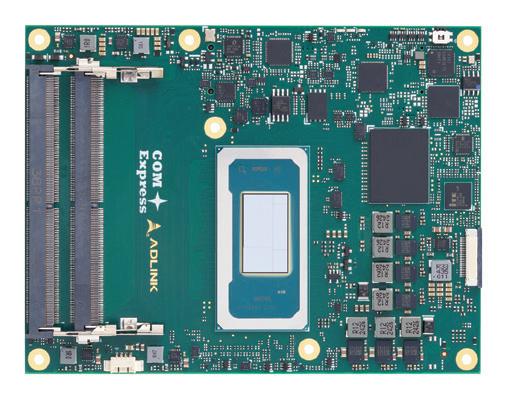
ADLINK Technology has launched the Express-PTL COM module powered by the Intel Core Ultra Series 3 processors, also known as Panther Lake H-series. The module delivers enhanced performance with advanced AI architecture, featuring an integrated NPU 5.0 that provides up to 50 TOPS of dedicated AI acceleration. The module also features a next-gen Intel Xe3 GPU designed for efficient, streamlined operation, delivering up to 120 TOPS of GPU performance for AI tasks and significant improvement in graphics rendering.
The module incorporates a hybrid CPU architecture with 4 high-performance (P) cores, 8 efficiency (E) cores and 4 lowpower (LPE) cores, offering improved processing efficiency and enhanced transistor performance. Complementing this highperformance computing, the module also supports up to 128 GB of DDR5 SO-DIMM with IBECC for low-latency memory access. Industrial-temperature SKUs are engineered to withstand rugged environments with a temperature range from -40 to 85°C. Industrial features such as TCC, TSN, In-Band ECC, extended temperature support and FuSa/FSEDP compliance enable robust, missioncritical operation, making the module a versatile solution for edge AI and general embedded deployments.
The module also delivers enhanced graphics performance with an integrated Intel Xe3 GPU, featuring a simplified design that reduces complexity, making it suitable for graphics-intensive applications such as medical imaging and infotainment.
ADLINK’s Express-PTL module will be available in Q2 of 2026.
ADLINK TECHNOLOGY INC www.adlinktech.com








GNSS antennas
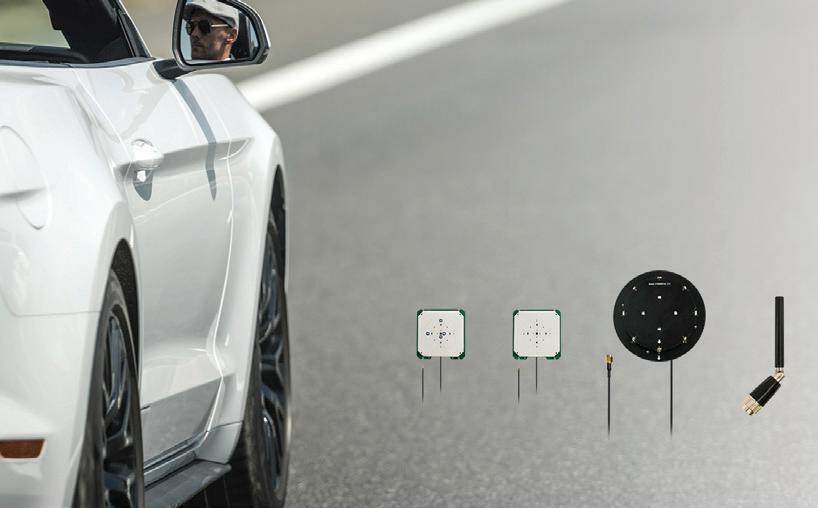
Quectel Wireless Solutions has introduced four additions to its range of global navigation satellite system (GNSS) antennas. The new antennas include the YFGD000AA highprecision, low-profile antenna; the YFGD000BA, optimised for triple-band solutions in GNSS L1, L2 and L5 bands; the YFGN000H1AC high-precision, lightweight antenna that covers all GNSS bands; and the YEGT010W1AM, designed for general-purpose reception in non-precision applications.
The YFGD000AA is a high-performance multi-band active GNSS antenna designed for applications requiring ultra-precise positioning across L1, L2, L5, L6 and L-band frequencies (1164–1300 MHz and 1525–1606 MHz). With dimensions of 78.6 x 75.6 x 16.2 mm and a screw mounting, the antenna is suitable for vehicular or fixed installations and operates in the -40 to +85°C temperature range. This antenna is engineered for mission-critical deployments in autonomous systems, geodetic surveying and high-accuracy navigation. It is RoHS, REACH and POPS compliant.
The YFGD000BA offers similar capabilities to the YFGD000AA but has been developed to support applications with ultraprecise positioning needs across L1, L2 and L5 bands (1164–1238 MHz and 1559–1606 MHz). It shares dimensions, operating temperature range and mounting options with the YFGD000AA and is also RoHS, REACH and POPs compliant.
The YFGN000H1AC is a high-precision antenna with a higher profile than the YFGD000AA and YFGD000BA but with greater performance and lighter weight of 62 g. The antenna covers all GNSS bands and delivers 35 ±4 dB gain with a low noise figure of ≤4 dB, making it suitable for weak-signal environments. With a diameter of 122 mm and height of 22.5 mm, the antenna features a screw mounting so it can be attached to vehicles or fixed installations. It operates in -40 to +85°C temperature range and is RoHS and REACH compliant.
The YEGT010W1AM is a GNSS rubber external antenna with a diameter of 10.22 mm and height of 69.5 mm. This ultra-wideband GNSS antenna provides broad coverage from 1559–1606 MHz and is terminated with an SMA male connector. With omnidirectional capability and linear polarisation, the antenna is suitable for general-purpose reception in nonprecision applications. The terminal mount design makes it easy to install on gateways, routers or tracking devices in protected environments. Operating in the -40 to +85°C temperature range, the antenna weighs 8.9 g and is RoHS compliant.
QUECTEL www.quectel.com

Fingertip bandage brings texture to touchscreens
Amanda Morris, Northwestern University
NORTHWESTERN UNIVERSITY ENGINEERS HAVE DEVELOPED THE FIRST HAPTIC DEVICE THAT ACHIEVES ‘HUMAN RESOLUTION’, MEANING IT ACCURATELY MATCHES THE SENSING ABILITIES OF THE HUMAN FINGERTIP.
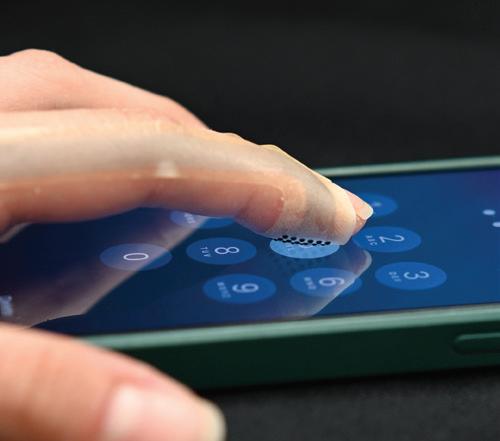
Called VoxeLite, the ultra-thin, lightweight, flexible, wearable device recreates touch sensations with the same clarity, detail and speed that skin naturally detects. Similar to a bandage, the device gently wraps around a fingertip to give digital touch the same realism people now expect from today’s screens and speakers.
By combining high spatial resolution with a comfortable, wearable form factor, VoxeLite could transform how people interact with digital environments, including more immersive virtual reality systems, assistive technologies for people with vision impairments, human–robot interfaces and enhanced touchscreens.
The study has been published in the journal Science Advances
“Touch is the last major sense without a true digital interface,” said Northwestern’s Sylvia Tan, who led the study. “We have technologies that make things look and sound real. Now, we want to make textures and tactile sensations feel real. Our device
Image credit: Northwestern University
In experiments, study participants wearing the device recognised virtual textures, patterns and directional cues.

is moving the field toward that goal. We also designed it to be comfortable, so people can wear it for long periods of time without needing to remove it to perform other tasks. It’s like how people wear glasses all day and don’t even think about them.”
“This work represents a major scientific breakthrough in the field of haptics by introducing a technology that achieves ‘human resolution,’” said Northwestern’s J. Edward Colgate, a haptics pioneer and senior author of the study. “It has the ability to present haptic information to the skin with both the spatial and temporal resolution of the sensory system.”
Unsolved problems in haptics
Despite decades of progress in highdefinition video and true-to-life audio, digital touch has lagged behind. Today’s haptic feedback — mostly simple smartphone vibrations — cannot convey the rich, detailed information that fingertips naturally perceive. This is partially because the skin’s spatial and temporal resolution is notoriously difficult to simulate.
“Think of very old motion pictures when the number of frames per second was really low, so movements looked jerky. That’s due to low temporal resolution,” Colgate said. “Or think of early computer displays where images were pixelated. That’s low spatial resolution. Nowadays, both problems are solved for graphical displays. For tactile displays, however, they have been far from solved. In fact, very few researchers have even attempted to tackle both of them together.”
Individual pixels of touch
With VoxeLite, the researchers brought the field much closer to solving these issues. The device features tiny, individually controlled nodes embedded into a paper-
thin, stretchable sheet of latex. These soft nodes function like pixels of touch, each capable of pressing into the skin at high speeds and in precise patterns.
Each node comprises a soft rubber dome, conductive outer layer and hidden inner electrode. When a slight voltage is applied, it generates electroadhesion — the same principle that causes a balloon to stick to a wall after being rubbed. In their previously developed TanvasTouch technology, Colgate and Peshkin harnessed electroadhesion to modulate friction between a fingertip and a smooth touchscreen surface. In those devices, an applied electric field alters friction to create the illusion of texture, but it does not involve any moving parts.
VoxeLite moves this concept forward. The new technology applies electrostatic forces in a precise, controlled way to make each tiny node ‘grip’ a surface and tilt to press into skin. This generates a highly localised mechanical force, so each ‘pixel’ of touch pushes the skin on a fingertip. Higher voltages increase friction during movement, producing more pronounced tactile cues to simulate the feeling of a rough surface. On the other hand, lower voltages create less friction and, therefore, the sensation of a slipperier surface.
“When swiped across an electrically grounded surface, the device controls the friction on each node, leading to controllable indentation on the skin,” Colgate said. “Past attempts to generate haptic effects have been big, unwieldy, complex devices. VoxeLite weighs less than a gram.”
Reaching human resolution
To create the human-resolution sensations, Tan packed the nodes closely together. In the densest version of the device, nodes are spaced about 1 millimetre apart. In user testing, Tan used a version with 1.6
millimetres of spacing among the nodes.
“The density of the nodes really matters for matching human acuity,” Tan said. “The nodes need to be far enough apart that your body can tell them apart. If two nodes are less than one millimetre apart, your fingertips only sense one node instead of two. But if nodes are too far apart, they cannot recreate fine details. To make sensations that feel real, we wanted to match that human acuity.”
VoxeLite operates in two modes: active and passive. In active mode, the device generates virtual tactile sensations by rapidly tilting and indenting individual nodes as a user moves across a smooth surface, such as the screen of a smartphone or tablet. The nodes can move up to 800 times per second, covering nearly the full frequency range of human touch receptors.
Recognising virtual textures
In a series of experiments, study participants wearing the device accurately recognised virtual textures, patterns and directional cues. People wearing VoxeLite identified those directions patterns — up, down, left and right — with up to 87% accuracy. They also identified real fabrics, including leather, corduroy and terry cloth, with 81% accuracy.
In passive mode, the device essentially disappears. Because it is extremely thin, soft and conforms to the skin, VoxeLite does not interfere with real-world tasks or block the natural sense of touch. Then, wearers can move seamlessly between real and digital experiences.
For future iterations of the device, the Northwestern team envisions a technology that can be paired with smartphones and tablets. Just like earbuds use Bluetooth to interact with devices, VoxeLite could someday perhaps sync with devices to transform flat, smooth screens into textured interfaces. That potentially could lead to more lifelike online shopping experiences, where shoppers can feel textiles and fabrics before making a purchase. It also could lead to tactile maps for people with vision impairments or more interactive games, where players can feel the stretch of a rubber band or the bumpy rocks on a cliff.
“What makes this most exciting is combining spatial and temporal resolution with wearability,” Tan said. “People tend to focus on one of these three aspects because each one is such a difficult challenge. Our lab already solved temporal resolution with electroadhesion. Then, my challenge was to make it spatially distributed and wearable. It did take a while to get here. Now, we’re running studies to understand how humans actually receive and perceive this tactile information.”
Chip-scale magnetometer FOR PRECISE MAGNETIC SENSING
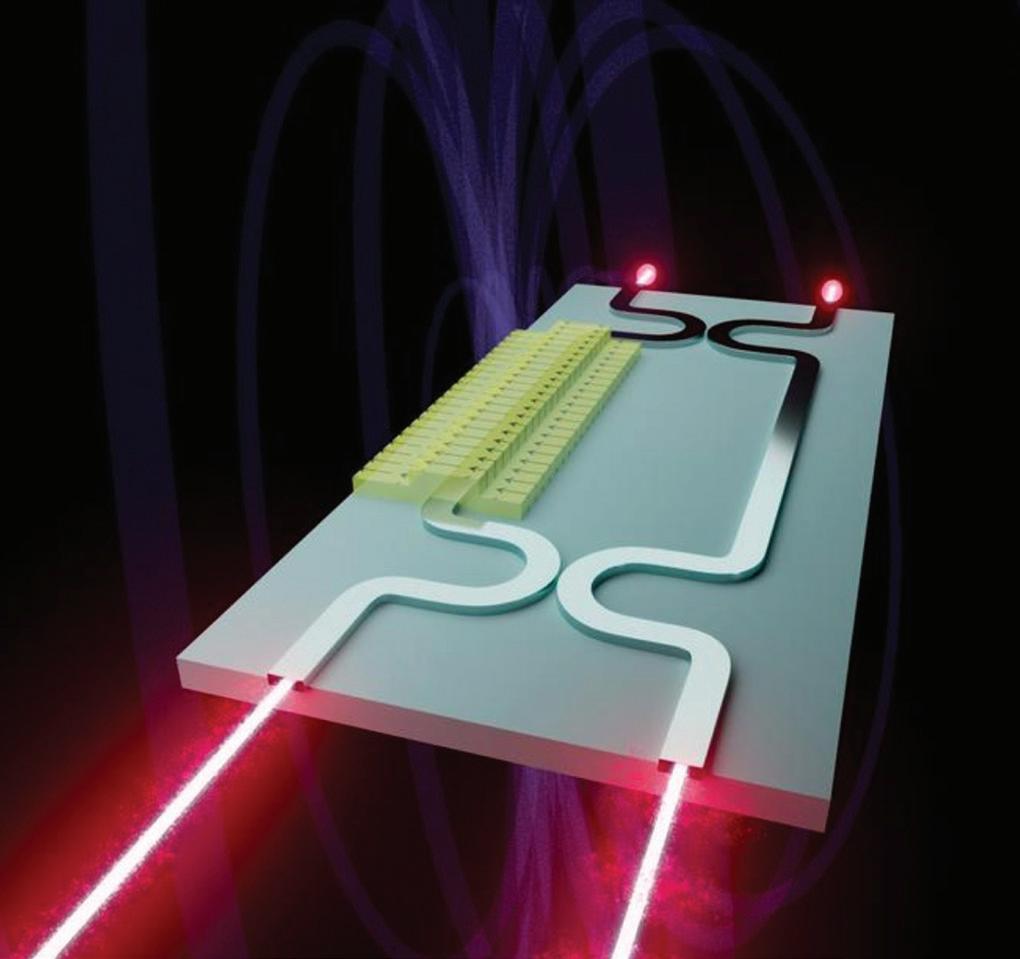
RESEARCHERS HAVE DEVELOPED A PRECISION MAGNETOMETER BASED ON A SPECIAL MATERIAL THAT CHANGES OPTICAL PROPERTIES IN RESPONSE TO A MAGNETIC FIELD. THE DEVICE, WHICH IS INTEGRATED ONTO A CHIP, COULD BENEFIT SPACE MISSIONS, NAVIGATION AND BIOMEDICAL APPLICATIONS.
High-precision magnetometers are used to measure the strength and direction of magnetic fields for various applications. However, many of today’s magnetometers must operate at extremely low temperatures — close to 0 kelvin — or require relatively large and heavy apparatus, which restricts their practicality.
“Our device operates at room temperature and can be fully integrated onto a chip,” said Paolo Pintus from the University of California Santa Barbara (UCSB) and the University of Cagliari, Italy, co-principal investigator for the study. “The light weight and low power consumption of this magnetometer make it ideal for use on small satellites, where it could enable studies of the magnetic areas around planets or aid in characterising foreign metallic objects in space.”
In Optica, the research team, led by Galan Moody of UCSB, with Caroline A. Ross of MIT also serving as a co-principal investigator, describe their new magnetometer. They show that the device can achieve a sensitivity comparable to that of other high-performance, but less practical, magnetometers.
“The magnetometer could be useful for magnetic navigation, providing an alternative navigation source in environments where GPS is jammed, spoofed or unavailable such as underwater, in tunnels or during electronic warfare,” Pintus said. “It could also benefit medical imaging methods such as magnetocardiography and magnetoencephalography, which currently depend on highly sensitive magnetometers that require bulky, costly equipment.”
Turning light into magnetic insight
The new magnetometer was developed as part of the U.S. National Science Foundation’s Quantum Sensing Challenges for Transformational Advances in Quantum Systems program. It builds on previous works in which the researchers used magneto-optic materials to develop a magneto-optic modulator and integrated magneto-optic memories for photonic in-memory computing.
For the new device, the researchers used a magneto-optical material called cerium-doped yttrium iron garnet (Ce:YIG), which was provided by Yuya Shoji from the Institute of Science Tokyo. When an external magnetic field is present, light propagating through Ce:YIG experiences a phase shift that can be detected with an optical interferometer.
Optical interferometers work by splitting light into two paths and then recombining those paths. By placing the magneto-optic material in one of the paths, the researchers were able to measure whether the light in that path becomes brighter or dimmer, which was then used to determine the strength of the magnetic field.
To make the magnetometer practical, the researchers built it on silicon photonics, a technology that creates tiny optical devices using the same silicon found in microchips. This allowed them to create a device with minimal size, weight and power consumption that can be integrated with other chip-based optical components such as lasers and photodetectors.
“Historically, magneto-optic materials have been used almost exclusively in optical isolators and circulators, a specialised class of devices that enforce unidirectional light propagation,” Pintus said. “By incorporating magneto-optic materials directly onto a photonic integrated circuit, we expand the range of integrated photonic components and introduce functionalities that stem from their unique properties.”
The magnetometer operates with ordinary laser light, but the authors have shown that injecting quantum light can improve its performance. “The idea is similar to what’s already done in large optical interferometers used to detect gravitational waves, like LIGO,” Pintus said. “By using squeezed light — a special quantum state of light — we can reduce noise and increase the instrument’s sensitivity.”
High sensitivity from a small device
Using a combination of multi-physics simulations and experimental measurements, the researchers showed that the device can detect magnetic fields ranging from a few tens of picotesla to 4 millitesla. For comparison, Earth’s magnetic field is about 100,000 times stronger than the minimum detectable field, yet around 1000 times weaker than the maximum field the instrument can measure. This sensitivity matches that of high-performance cryogenic magnetometers, without their restrictive temperature, size, weight or power constraints.
Now that the researchers have taken an important step towards demonstrating the feasibility of their approach, they are working to improve performance by exploring alternative magneto-optic materials and integrating quantum elements for even greater sensitivity. They note that transitioning the research into a commercial product would require the challenging task of creating a fully integrated chip-based system that includes other key components, such as an integrated laser and photodetector.
Diamond sensor reveals hidden magnetic fluctuations
Scott Lyon, Princeton University
IN SPACES SMALLER THAN A WAVELENGTH OF LIGHT, ELECTRIC CURRENTS JUMP FROM POINT TO POINT AND MAGNETIC FIELDS CORKSCREW THROUGH ATOMIC LATTICES IN WAYS THAT DEFY INTUITION. SCIENTISTS HAVE ONLY EVER DREAMED OF OBSERVING THESE MARVELS DIRECTLY.
Now Princeton researchers have developed a diamond-based quantum sensor that reveals new information about magnetic phenomena at this minute scale. The technique uncovers fluctuations that are beyond the reach of existing instruments and provides key insight into materials such as graphene and superconductors. Superconductors form the basis of hoped-for technologies like lossless powerlines and levitating trains.
The underlying diamond-based sensing methods have been under development for half a decade. But in a paper in Nature, the researchers reported roughly 40-times greater sensitivity than previous techniques.
Nathalie de Leon, associate professor of electrical and computer engineering and the paper’s senior author, said the new technique gives researchers a way to directly observe the structure of “very small magnetic fields and very small length scales”. That reveals details about magnetic fluctuations that hide in the statistical data of more conventional approaches.
“You have this totally new kind of playground,” de Leon said. “You just can’t see these things with traditional techniques.”

A new way to study real quantum materials
Her team’s new technique is based on engineered defects near the surface of a lab-grown diamond. These diamonds, about the size of a large flake of sea salt, are far purer than natural diamonds and the defects engineered into them are vanishingly small — one missing atom in a lattice of billions. But because those defects interact strongly with magnetic fields, and because they can be carefully engineered, they make excellent magnetic sensors.
Typically, these sensors are treated as individual points in space. In this latest advance, de Leon and her team built a system that implants two of these defects extremely close together, allowing the defects to interact in quantum-mechanical ways that, to the researchers’ surprise, made the overall system much more capable.
“That is a very new way of operating this quantum sensor that allows us to probe something which has not been possible before,” said Philip Kim, an experimental physicist at Harvard who was not involved in this study. Other techniques that try to get at this information have been confined to carefully constructed arrays of atoms,
not real materials, Kim said. The new technique allows scientists to probe real materials directly.
Kim is now working with de Leon using complementary techniques in his lab, where he studies condensed matter physics. Specifically, he looks at superconductors that can be cooled by liquid nitrogen to their critical temperatures, and graphene, a material that has proven difficult to engineer at scale.
Quantum entanglement reveals signals in the noise
To create the new sensor, the researchers fired nitrogen molecules travelling more than 30 thousand feet per second at the diamond. When a molecule strikes the diamond’s famously hard surface with that much energy, the molecule breaks apart, sending its two nitrogen atoms — no longer chemically bonded — hurtling in separate directions into the diamond’s crystalline structure.
By precisely controlling how much energy the molecule has when it slams into the diamond, the researchers can control how deep the nitrogen atoms penetrate. In this

case, they drill past a few dozen carbon atoms and stop about 20 nanometres beneath the surface, coming to rest roughly 10 nanometres apart from each other. That exceedingly small separation allows the two atoms to interact with each other in ways that give rise to quantum entanglement.
When entangled, the electrons in these two nitrogen atoms begin to act in lockstep. The measurement of one reveals a perfectly correlated measurement in the other. Because they still represent distinct points, like two eyes, the entangled sensors can triangulate signatures in the noisy fluctuations and effectively home in on the source of the noise.
At this size range, between the atomic scale and the wavelength of visible light, de Leon said scientists want to measure previously invisible quantities, like how far an electron travels through a material before bouncing off another particle, or the evolution of magnetic vortices that appear in superconducting materials under special conditions.
“That range is, in fact, the length scale of interest,” Kim said. “A good range where one can understand a lot of interesting things.”
A weakness in the sensor leads to quantum advantage
The breakthrough that led to this entangled sensor came from Jared Rovny, who began working with de Leon in 2020 as one of the inaugural Princeton Quantum Initiative postdoctoral fellows.
The COVID-19 pandemic had curtailed access to the lab when Rovny started. So, like many of his peers, he set to work on ideas that did not require in-person, experimental set-ups. He and de Leon
While quantum entanglement is normally a problem for engineers, Jared Rovny, right, found a way to use entanglement as a resource to realise a major quantum advantage with very little additional cost — a rare feat, according to his adviser, Nathalie de Leon, left.
Researchers have developed a magnetic sensing technique using quantum entanglement to detect previously hidden fluctuations in advanced materials such as superconductors. The researchers implant point defects in labgrown diamonds to reveal an unprecedented look at magnetic field structure and correlated noise, a quantity that is beyond the reach of existing instruments.
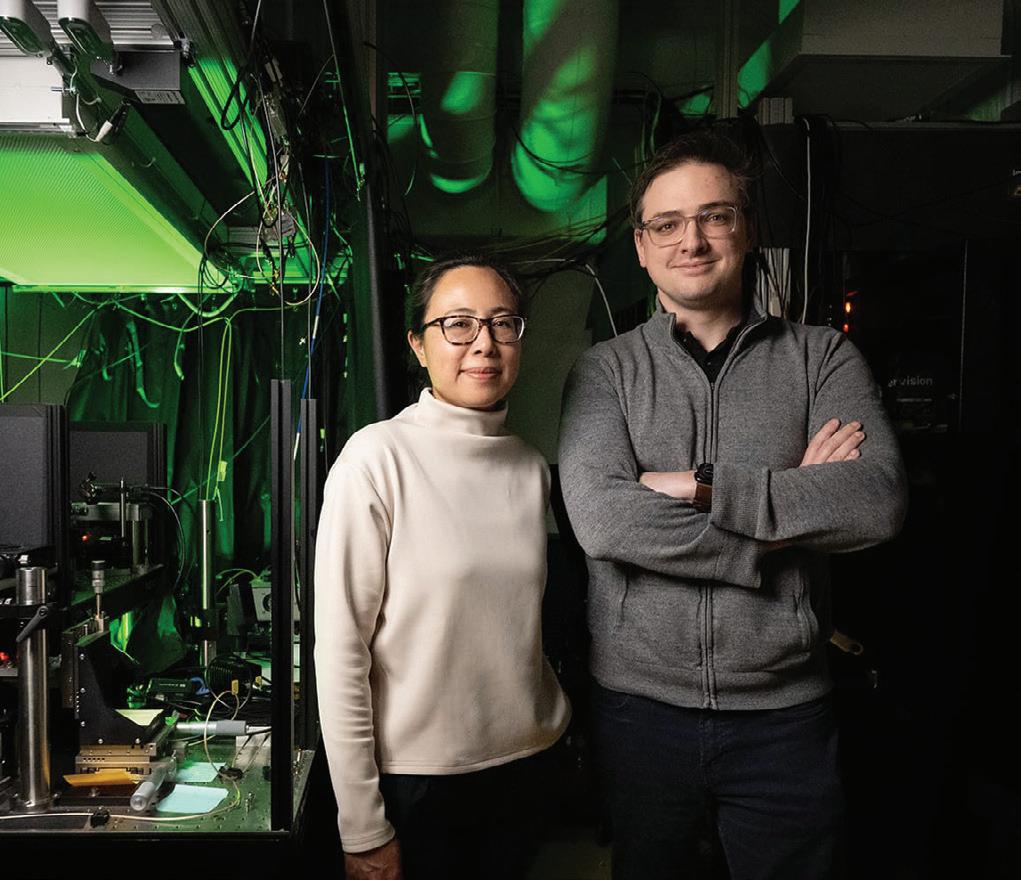
decided to dig into the theory around magnetic noise and see if there were ways to use the diamond defects — called nitrogen vacancy centres — to detect correlations in the magnetic noise that hums in the background of condensed matter physics.
“It started as one of these weird, COVID, theory projects,” de Leon said. At the time, sensing correlations in magnetic noise was not a topic of scientific conversation, she said. In fact, they started the project out of pure curiosity, not sure where it would lead. “It was only after we started formalising it that we realised how powerful it was.”
Rovny had a background in nuclear magnetic resonance, or NMR, in which interacting particles and their correlations were key to his research. This fed his curiosity and allowed the project to take a more serious turn.
“That NMR side of me was really always thinking about interactions,” Rovny said. “There were a bunch of different physics ideas I wanted to explore that had to do with
interacting these things, not leaving them separate.”
At first, working in collaboration with Shimon Kolkowitz, an atomic physicist at University of Wisconsin-Madison (now at University of California-Berkeley), they looked at correlations between two centres that were not entangled. While those methods led to interesting findings, they were also technically onerous and prohibitively complex for most experimental uses.
“What I realised is that if you entangled them,” Rovny added, referring to the nitrogen vacancy centres, “the presence or absence of a correlation sort of puts its fingerprint onto the system”.
That fingerprint allowed them to bypass the most cumbersome problems and gave them the advantage of two sensors with roughly the same cost of using only one.
“Now all I have to do is a single measurement,” de Leon said, “a single normal measurement.”
Images credit: Sameer A. Khan/Fotobuddy
AMPING UP BATTERY INSIGHTS IN THE TROPICS
Malaysia has set an ambitious target to increase its renewable energy share to 70% by 2050. Meeting this goal will require investment in reliable, safe and cost-effective energy storage solutions — such as battery energy storage systems — to manage intermittency, maintain grid stability and address peak demand challenges, particularly for solar generation.
Battery energy storage systems behave differently in hot and humid climates, yet most available research has been developed for cooler regions. For Malaysia, this gap affects how batteries are selected, designed and managed in conditions where heat and humidity significantly influence performance, safety and lifespan.
Recognising the need for climate-specific evidence, Malaysia’s Sustainable Energy Development Authority (SEDA) and CSIRO undertook a joint study — to assess how different battery chemistries perform under Malaysia’s tropical conditions.
The joint report reviews six battery chemistries. It provides a structured overview of factors that shape how battery energy storage systems operate in tropical environments and establishes a clear baseline for future planning and deployment across residential, commercial and industrial applications.
CSIRO's Dr Mahathir Almashor, Senior Engineer, Energy Systems Program, said, “This study was shaped by both scientific interest and practical relevance. Most international battery research comes from cooler regions including Japan, China, Europe and the United States. This creates a knowledge gap for countries operating in hot and humid climates. Malaysia’s conditions, together with SEDA’s strong interest in the topic, made it a natural partner. The findings are also highly relevant for northern Australia, where similar tropical environments exist.”
The study highlights several factors that shape how storage systems perform in Malaysia’s climate.
“Consistently high temperatures can accelerate side reactions leading to shorter life and higher risk of thermal runaway. However, Malaysia’s relatively stable temperature range offers more favourable conditions for most battery chemistries,” Almashor said.
“Malaysia’s stable temperature range (22–32°C) also avoids the deep seasonal temperature swings that accelerate degradation in colder regions.”
However, consistently high humidity — often reaching 80–90% — remains a significant challenge. “Humidity can accelerate corrosion and contribute to failures, even when battery energy storage systems are housed in climate-controlled enclosures. This risk is exacerbated by the lack of dedicated studies to the effects of humidity and salinity on specific chemistries. This report is a strong start in highlighting this research gap and its associated challenges,” Almashor said.
Saiful Hakim Abdul Rahman, Director, Strategic Planning, SEDA, emphasised that these findings reinforce the need for climate-appropriate system design, including protective enclosures, ventilation and thermal management tailored to Malaysian conditions.
“This research will support several policy processes, including the development of standards, guidelines and frameworks for safe, economically sound battery energy storage systems deployment,” Rahman said.
CSIRO noted that the study has already attracted interest from other South-East Asian technical agencies and research partners beyond Malaysia, reflecting a wider regional appetite for evidence on tropical storage.
As more countries consider large-scale storage in tropical environments, the knowledge generated through partnerships like this can form part of a common reference point for future projects and regional planning.