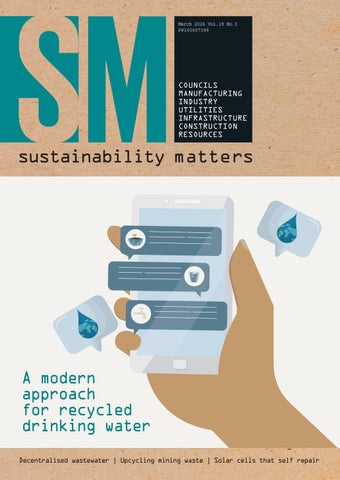
A modern approach for recycled drinking water


WORDS from the EDITOR
Climate uncertainty creates increased pressure for water utilities across Australia to meet the demands of consumers and industry in a sustainable manner.
Diversifying water supplies through large infrastructure investments proved useful during the Millennium Drought (2001–2010). With further improvements in technology now possible, these desalination plants continue to provide benefits beyond the droughts — providing a ‘new’ source of water to meet the needs of growing communities and industry.
As we well know, large infrastructure investments like this are not always possible and are time consuming to implement, so one new solution has been designed to be deployed more rapidly. The new solution I’m talking about combines Veolia’s expertise in reverse osmosis desalination with SMB Offshore’s expertise in engineering to create freshwater floating production units (FPUs). The units are able to produce up to 100,000 m3 of fresh water daily in order to help service growing communities in water-stressed regions and/or provide heavy industries with a sustainable water supply.
Desalination still has constraints as far as requiring significant energy and waste management resources, so another means of diversifying water supplies with a more circular approach is that of purified recycled water. While this solution was flatly rejected at the start of this century, acceptance from the scientific community and the public is now much stronger. Even so, many in the water industry remain nervous about this water source in our water supply.
In this issue, we talk about an interesting method for gaining public acceptance of purified recycled water. We also look at the FPUs in more detail as well as scaled decentralised systems (SDSs) for wastewater in high-density areas.


Westwick-Farrow Media
A.B.N. 22 152 305 336 www.wfmedia.com.au
Head Office Unit 5, 6-8 Byfield Street, (Locked Bag 2226) North Ryde BC NSW 1670, AUSTRALIA Ph: +61 2 9168 2500
If you have any queries regarding our privacy policy please email privacy@wfmedia.com.au
Editor Carolyn Jackson sm@wfmedia.com.au
Assistant Editor Kylie Baracz
Publishing Director/MD Janice Williams
Art Director/Production Manager
Linda Klobusiak
Circulation
Alex Dalland circulation@wfmedia.com.au
Copy Control
Ashna Mehta copy@wfmedia.com.au
Advertising Sales
Tim Thompson Ph: 0421 623 958 tthompson@wfmedia.com.au
All material published in this magazine is published in good faith and every care is taken to accurately relay information provided to us. Readers are advised by the publishers to ensure that all necessary safety devices and precautions are installed and safe working procedures adopted before the use of any equipment found or purchased through the information we provide. Further, all performance criteria was provided by the representative company concerned and any dispute should be referred to them. Information indicating that products are made in Australia or New Zealand is supplied by the source company. Westwick-Farrow Pty Ltd does not quantify the amount of local content or the accuracy of the statement made by the source.
Carolyn Jackson sm@wfmedia.com.au
Floating desalination solution to combat water scarcity

Veolia and SBM Offshore have signed a memorandum of understanding to address the convergence of water scarcity, energy transition and industrial transformation.
Through this partnership, the companies will develop and deploy freshwater floating production units (FPUs), combining reverse osmosis desalination technology with offshore engineering expertise to provide a sustainable, ocean-based solution to address global water demand.
“This partnership with Veolia marks an important moment in SBM Offshore’s journey to diversify our business,” said Olivier Icyk, SBM’s Chief Business Officer. “By combining our expertise in ocean infrastructure with Veolia’s leading desalination technology, we are taking bold steps to deliver sustainable solutions for waterstressed regions. Together, we are unlocking new markets in the blue economy and reaffirming our commitment to a responsible energy transition.”
The partnership targets multiple market segments facing acute water stress, including:
• municipal water systems in coastal areas experiencing growing demand and climate-related supply disruptions;
• mining operations in water-scarce regions seeking to reduce their environmental impact and secure social licence to operate;
• heavy industries requiring reliable freshwater supplies for their transition to lower-carbon operations.
These floating desalination units will be able to produce up to 100,000 cubic metres of fresh water daily — an amount equivalent
to the needs of approximately 500,000 inhabitants.
Beyond their production capacity, these units can be deployed rapidly with shorter delivery timelines compared to onshore construction, scaled to match evolving requirements, and relocated as demand patterns shift.
This adaptability helps industrial clients secure water independence, reduce competition for water resources with local communities, and demonstrate environmental stewardship.
Together, the companies will develop comprehensive engineering, procurement, construction, installation, commissioning and long-term operation solutions for sustainable ocean-based water production.
“Water security has become inseparable from energy security, resource security and industrial competitiveness,” said Arnaud Valleteau, CEO of Veolia’s engineering & procurement projects, Water Tech. “As industries transition to more sustainable operations, reliable water access has become a strategic imperative, not just an operational requirement. We are proud to collaborate with SBM Offshore, whose offshore engineering excellence is globally recognised, to deliver solutions that address this critical need with unprecedented flexibility and speed.
“This innovative partnership is a concrete example of our GreenUp strategic program in action, enabling industries and communities to build resilience, reduce their environmental footprint and secure their future in an increasingly water-constrained world.” Veolia
www.anz.veoliawatertechnologies.com
Sustainability in 2026
Lisa Zembrodt, Principal and Senior Director, SE Advisory Services, Schneider Electric
Australia’s sustainability landscape is evolving at its fastest pace yet. Encouragingly, we’re seeing an increased shift from climate ambition to climate action. With mandatory climate-related financial disclosures well underway, more organisations are moving beyond preparation to actively embedding sustainability into their business strategy. It’s no longer just about reporting; it’s about using these frameworks to drive meaningful progress, build resilience and unlock long-term value.
From readiness to implementation
In 2025, many organisations focused on preparing for new regulatory requirements
under the Australian Sustainability Reporting Standards (ASRS). That made sense; it was the first year of a complex and evolving process. But as we head into 2026, I expect the focus to move beyond compliance.
With many of our clients, we’re now talking less about how to report and more about what is actually being reported — about emissions reduction, risk management, and the real-world outcomes behind the data.
Companies in Group 1 will release their first disclosures in 2026. Those working to calendar-year timelines are already reassessing their first-year approach, while others operating on fiscal years are still in preparation mode. The reality for many has been more complex than anticipated, and spreadsheets have quickly
been replaced by integrated platforms like Schneider Electric’s ResourceAdvisor.
A strategic shift at the top
What’s most encouraging is the way climate-related issues are now being considered in boardrooms. Directors are responsible for these outcomes in the same way they are for financial performance. That responsibility is accelerating cultural change and bringing sustainability into core strategic discussions.
There are challenges, of course. Resourcing continues to be an issue, especially for teams working across multiple reporting regimes. I’ve also seen capability gaps and a natural hesitance from leaders navigating new

requirements alongside competing priorities. Australia simply does not have enough sustainability expertise to employ this expertise in every company directly that needs it.
Digital value chain software solutions such as Zeigo are supplementing the traditional consultant-led approach and democratising progress to ensure small and medium enterprises are just as prepared as those that can afford to hire external experts or employ them directly.
But there’s also strong momentum. Many organisations are starting to look beyond the reporting activity and into how they can act on the insights they’re gathering, whether that’s through transition planning, investment prioritisation, or emissions reduction projects.

With mandatory climate-related financial disclosures well underway, more organisations are moving beyond preparation to actively embedding sustainability into their business strategy.
When companies align their reporting, planning and implementation, they unlock not just compliance, but competitive advantage. At Schneider Electric, we’ve supported clients through that journey, from data management and risk assessment to net zero strategy and action. These works are ongoing, with a continuous feedback loop for refinement, reporting, and optimised outcomes.
Technology no longer the barrier
Looking ahead to 2026, I believe the biggest gains in sustainability won’t come from breakthrough technologies, but from how effectively we implement the ones we already have.
Demand flexibility, microgrids, battery energy storage systems (BESS), fleet electrification, renewable power purchase agreements, and advanced supply contract risk management are already helping organisations tackle emissions, improve energy resilience and strengthen financial performance. Yet many businesses are only scratching the surface of what these can do.
AI-powered platforms like EcoStruxure ResourceAdvisor are unlocking better, faster decisions by turning complex data into actionable insights. Electrification is gaining momentum, supported by government decarbonisation plans, while energy productivity and efficiency — doing more with less — remains one of the most important and accessible levers for reducing emissions and operating costs.
For businesses, the takeaway is clear: you don’t need to wait for the next innovation cycle. Most of the tools needed to drive sustainability progress and better commercial outcomes in the near term are already available. The opportunity lies in selecting the right mix of technologies, sequencing their
rollout effectively, and focusing on execution. Done well, this approach can accelerate decarbonisation, unlock efficiencies and create long-term financial resilience.
From what I’ve seen, the organisations progressing fastest tend to have three things in place: a trusted end-to-end advisor, a reliable energy and ESG data platform, and publicly stated targets backed by a credible transition plan.
Looking ahead
In 2026, I see a mood of cautious optimism. Inflation and cost pressures will remain, and some organisations will take a compliance-first approach; this is a natural starting point. But for others, sustainability will be increasingly recognised not as an obligation, but as a path to resilience, growth and leadership.
The next phase isn’t about perfection, it’s about progress. And that progress is well underway.

Lisa Zembrodt, Principal and Senior Director, SE Advisory Services, Schneider Electric
A matter of influence

While purified recycled water has been well accepted and even celebrated in Singapore for decades, public acceptance of recycled drinking water is still low in Australia and other countries.
Many in Australia will remember the public rejection of recycled water by Toowoomba residents in Queensland back in 2006 during the millennium drought, which led to a referendum where they voted in favour of desalination.
Since then, public acceptance of recycled drinking water has been slowly improving, with Western Australia now leading the way in Australia. Purified recycled drinking water was introduced in Perth in 2017 out of necessity as the city has limited dams and the water resources were dwindling.
With growing concern over climate change, supplying water to other large cities across the country is also becoming an increasing challenge. Many of the state’s water utilities have boosted their efforts to try and educate the public with data and facilities that demonstrate the benefits and safety of purified drinking water, but the ‘ick-factor’ still remains ever present.
Now, an international study led by the Universitat Oberta de Catalunya (UOC) in Spain has identified a method that could prove key to overcoming consumers’ instinctive resistance to recycled
drinking water — using sensory content on social media rather than rational data.
Research led by Professor Inma Rodríguez-Ardura, coordinator of the UOC’s Digital Business Research Group (DigiBiz), found that influencers on platforms such as Instagram use sensory and emotional content to build mental images, and that this is more effective than purely rational arguments for overcoming resistance to drinking recycled tap water and encouraging sustainable consumption.
The study, published in the British Food Journal, is based on the experience of 800 Instagram users from Barcelona and Phoenix. The authors also include Professor Antoni Meseguer-Artola and Gisela Ammetller, fellow members of the UOC’s Faculty of Economics and Business.
The research team understood that, while there is a real and urgent need to encourage the consumption of recycled tap water in areas threatened by the climate emergency, the main obstacle to uptake is not its safety, but how it is perceived. Although recycled tap water is safe for human consumption if it has gone through appropriate water treatment systems, when people know that the source is treated and purified waste water, for many their instinctive reactions include rejection, fear and even revulsion. This visceral reaction is compounded by a widespread tendency among consumers to undervalue the supply of tap water, or take it for granted until a supply crisis occurs.
In this context, traditional communication strategies, based predominantly on technical data, scientific presentations and rational

arguments about collective savings, are demonstrably insufficient for changing deeply ingrained habits. “Although sustainable water consumption objectively benefits society as a whole in the long term, just communicating this idea is not enough to get consumers’ full engagement,” Rodríguez-Ardura said. This is where influencer marketing comes in. According to the research, this tool helps make abstract benefits like sustainability more tangible, linking them to positive emotions and feelings, aspects that public institutions and supply companies have failed to exploit to date.
The power of mental imagery
The study centres on the concept of mental imagery and how social media, specifically Instagram, can be used to evoke it. The researchers set out to determine how the content created by influencers can generate subjective, transformative and compelling experiences for their followers. Rodríguez-Ardura, who is affiliated to the UOCDIGIT research centre, explained the importance of this psychological mechanism: “Mental imagery is a subjective experience that involves conjuring up vivid feelings, objects, people or events, even if they did not happen or are not real. It’s a type of feeling we create in our minds that makes things that were perceived as abstract, complex or distant seem tangible, understandable and real.”
The research identifies two dimensions within this phenomenon: elaborated imagery, which the consumer creates voluntarily through cognitive effort (such as calculating how much plastic is saved by
To break down the barriers to sustainable water consumption, it’s not enough to get people to understand that tap water is healthy and safe. It’s also vital to recreate the experience of drinking it as something desirable, refreshing and emotionally satisfying.
drinking tap water), and spontaneous imagery, which arises effortlessly or unconsciously, prompted by a stimulus. For example, a video of an influencer drinking recycled tap water out in the sunshine might automatically evoke mental images of it being refreshing and thirst-quenching, without the need for complex rational processing.
One of the key findings of the study, conducted on a sample of 800 Instagram users between the ages of 18 and 54, is the asymmetric impact of different types of message. Although being informative is important for the formation of mental images, hedonic or sensorial content has a significantly greater impact. “To break down the barriers to sustainable water consumption, it’s not enough to get people to understand that tap water is healthy and safe. It’s also vital to recreate the experience of drinking it as something desirable, refreshing and emotionally satisfying,” Rodríguez-Ardura said.
The study also explores the concept of ‘transportation’, a psychological state of deep immersion in a narrative. The data reveals that mental imagery acts as a powerful antecedent or trigger for this phenomenon, leading the consumer to become so absorbed in the influencer’s story that they lose track of time and feel part of the scene before them on the screen. Facilitating this vicarious experience reduces the capacity for critical thinking and opposition to the message. It fosters an enduring emotional connection that is key to transforming attitudes on sensitive issues, allowing us to experience the benefits of recycled tap water and its sustainable use before we actually taste it.
Implications for future campaigns
The study’s conclusions offer a roadmap for public institutions and bodies responsible for water management. It suggests that campaigns should not be limited to providing information, but should strive as much, if not more, to have hedonic and sensory appeal. If an authority wants to encourage the use of recycled tap water, its strategy should focus on helping the public to visualise and feel its positive properties.
“A public institution that promotes the use of recycled tap water in the urban supply system must focus its strategy on helping consumers to vicariously ‘visualise’ and ‘feel’ the positive properties of the water. This can be achieved, for example, through influencer marketing initiatives focusing on conveying the sensation of drinking, the freshness of the water, or doing healthy activities where drinking water is an emotionally desirable experience,” Rodríguez-Ardura said.
The researchers also believe this communicative approach can be applied to other areas beyond water — such as encouraging people to vaccinate or recycle, or even to combat climate change.
iStock.com/courtneyk


EPSON MAKES PROGRESS WITH SUSTAINABILITY PLANS AND INITIATIVES IN AUSTRALIA AND NEW ZEALAND
We recently sat down with Epson Australia’s Environment and Sustainability Manager Fatida Un to discuss the company’s sustainability plans and initiatives in Australia and New Zealand and their recently published, second Sustainability Impact Report.
What prompted Epson Australia to begin publishing annual Sustainability Impact Reports and how has this practice evolved?
Sustainability has always been part of Epson’s DNA. If you look back over the brand’s 50-year history, it is clear this has been a focus from the very beginning.
The decision to publish Sustainability Impact Reports really came from a desire to be open and transparent with our local stakeholders. We wanted to go beyond talking about sustainability and show clearly what we were doing, how we were progressing and where we still needed to improve.
Putting this into a formal report gives us structure and accountability. It helps us set clear expectations, track progress and be honest about any gaps. Over time, it also helps build internal accountability, so sustainability becomes part of everyday decision making across the business, rather than something owned by just one team.
Epson Australia recently issued its second Sustainability Impact Report. What was the background to this second report? Last year we made a public commitment to publish an annual Sustainability Impact Report, so this year’s report was us staying true to that commitment.
After releasing the first report last year, we saw growing expectations from customers, partners and employees for clear and transparent information about what we were doing locally. Where the first report was about setting expectations and being open about our commitments, this second report moved that conversation forward by demonstrating our progress and learning. It also reflects how much our internal capability has grown over the past year and our continued commitment to our sustainability initiatives in Australia and New Zealand. That said, while we are pleased with the progress, we are very conscious that we don’t have all the answers (who does, you might ask?) and that there is still more work to do. Being open about where we are and where we are still improving is a big part of why we publish the reports. Transparency really matters.
How does the second report differ from the first report? The biggest difference is the depth and strength of the data
Fatida Un, Epson Australia’s Environment and Sustainability Manager
we are now able to share, both locally and globally. We have structured each section around a clear fl ow of commitment, progress and next steps. That helps readers understand not just what we aim to do, but what has actually changed over time.
This is a really important point as one of our goals is to create and communicate clear and tangible change. The second report details this much more clearly.
In this year’s report we also better connected our local story with Epson’s global direction. That includes sharing the global roadmap towards net zero, alongside a more complete view of our local greenhouse gas assessment, particularly Scope 3 emissions. We have also included more practical examples of our work with industry and community partners which helps bring the report to life.
Where the first report kicked off proceedings and set the scene and our goals, the second report is all about learning, progress and achievement.
Progress and Trends
Can you summarise the key sustainability initiatives, highlights, and achievements included in the second Sustainability Impact Report?
It’s tricky as there is a lot in there but there are several areas that stand out where we have made real, significant and tangible progress.
One is the strengthening of our understanding of local corporate emissions. This has enabled us to set a near-term local emissions reduction target that supports Epson’s global net zero goal. This is an important step in moving from ambition to action at a local level and something we are actively working on daily.
We have also improved operational efficiency across the business. This includes reducing energy use, cutting waste and removing expanded plastics from selected consumer product packaging.
Beyond environmental outcomes, we have prioritised our people and communities with employee engagement increasing, with a 50% rise in volunteering hours compared to the previous reporting period. We see this level of participation as a critical part of our journey.
Collaboration with partners such as the Australia Fashion Council has always been a key theme and this particular partnership has progressed significantly over the last year, helping us better understand how innovation and sustainable technology can support local manufacturing.
In parallel, we have started a gap analysis for climate-related financial disclosures in preparation for Group 3 reporting in FY28. This reflects our view that building capability early is essential as expectations around climate reporting continue to evolve.
What surprised you most when compiling the data and insights for this second report?
confidence and shared understanding across the business.
At the same time, the report clearly highlights where our systems and processes still need to mature further. Seeing those gaps in a structured way is valuable, because it helps us efficiently and effectively prioritise where to focus.
Where have you seen the most meaningful progress and where do challenges remain?
The most progress has been in how we manage and use data. There is now greater consistency, clearer ownership and a stronger understanding of what information is needed and why it matters. We now have benchmarks and hard facts that help initiatives get actioned rather than simply remaining ideas or intentions.
In fairness the more complex challenges remain around impacts that currently sit beyond our direct operations, particularly across the supply chain. These are not issues that can be solved quickly or in isolation. The key here is consistent and ongoing collaboration with our parent company and suppliers, as well as sustained internal accountability at both a local and global level.
We are determined and committed that these challenges will be overcome, but we also appreciate that it will take time to do so.
Reporting Methodology and Impact Measurement
How do you balance being transparent about challenges while still recognising progress and achievements?
Credibility comes from being open about where we are, not just where we want to be. Sustainability work is complex and progress is rarely linear. We are deliberate about acknowledging challenges, whether that is around data gaps, supply chain complexity or areas where progress has been slower than planned.
At the same time, it is important to celebrate genuine progress — with the emphasis on ‘genuine’ — and using data helps ground that conversation. It allows us to explain what has truly improved, why it matters and what still needs attention.
That balance helps avoid overstatement while still giving stakeholders confidence that momentum is building.
Beyond reporting metrics, how do you assess the real-world impact of Epson Australia’s sustainability initiatives?
This is a great question. We also look at how sustainability is influencing behaviour and decision making across the business. That includes whether teams are considering sustainability earlier in planning, whether trade-offs are being discussed more openly and whether sustainability risks and opportunities are shaping priorities.
Feedback from employees, customers and partners also provides valuable insight into whether our initiatives are having meaningful impact beyond what can be captured in a table or chart.
Starting and including the sustainability discussion as early as possible is the key here. Our aim is that it will become second nature over time.
Can you share an example of how insights from sustainability reporting have informed business or operational decisions?
How powerful the reporting process itself has become. When you work on something day in and day out you don’t always stop to recognise how far things have progressed. Pulling the data together created a real and significant moment of reflection. It highlighted how much our internal capability has grown simply through the discipline of collecting, reviewing and sense checking information. It reinforced that reporting is not just about publishing outcomes, it actively builds capability, >
One clear example is how emissions data has helped us prioritise action. Improving our understanding of where emissions sit across our operations and value chain has enabled more focused discussions about where we can realistically reduce impact and where collaboration is needed.

Having structured data has helped shift sustainability discussions from being values-led to being decision-led, supporting more informed choices around investment, efficiency improvements and supplier engagement.
This all results in real action and creates tangible results.
Industry Perspective and Thought Leadership
From your perspective, how is sustainability reporting evolving across Australian businesses?
We are seeing a clear shift from voluntary, narrative-based reporting towards more structured and decision-useful disclosures. The introduction of the standards such as Australian Sustainability Reporting standards (AASB S1 and S2) is accelerating this change by raising expectations around governance, risk management and the quality of data underpinning sustainability claims. At the same time, there is growing demand for transparency across the full value chain, including supply chain emissions and social impacts, not just direct operations.
What are the most pressing sustainability challenges facing the technology sector today?
The technology sector faces a number of interconnected challenges. Managing product lifecycles and e-waste responsibly remains a major issue, particularly as product turnover accelerates. There is also growing pressure to address emissions and other impacts across complex global supply chains, where influence is often indirect.
At the same time, expectations around transparency and credible reporting are increasing rapidly. Organisations are being asked not only to innovate, but to demonstrate that innovation is aligned with environmental and social responsibility. Balancing growth, innovation and sustainability outcomes is one of the sector’s defining challenges.
Looking Ahead
What are your key priorities for the next reporting period? We have a clear set of sustainability goals and a commitment to achieve them. Our third Sustainability Impact Report needs to demonstrate that we have.
We are also 100% focused on deeper integration of sustainability into our business decision making too, rather than treating reporting as a standalone exercise. That means clearer accountability, stronger collaboration with suppliers and partners and ensuring sustainability insights are actively informing strategy, risk management and operational planning.
Finally, we will continue to improve data quality and coverage, particularly in areas that will support future climate-related disclosures. This includes strengthening internal processes and building capability in preparation for evolving reporting requirements.
In short, Epson is truly committed to building and creating a more sustainable future and we are happy to be held to that commitment by producing our annual Sustainability Impact Reports for many years to come.
To see further highlights, details, a summary of and to download Epson Australia’s second Sustainability Impact Report in full go to: https://www.epson.com.au/Impact-Report

Scaled decentralised systems for highdensity living
Conventional centralised wastewater treatment plants (WWTPs) can find it difficult to meet sustainability goals as they grow, particularly in high-density environments.
To address these issues, scaled decentralised systems (SDSs) provide an alternative by integrating distributed treatment facilities into existing sewer networks, reducing transport distances and enabling localised resource recovery. However, their performance across plant scales and core technologies remains underexplored in realworld dense urban settings.
A study, published in Environmental Science and Ecotechnology, presented a comprehensive life-cycle assessment of SDSs for wastewater treatment in a high-density city in China.
The research, conducted by the State Key Laboratory of Urban Water Resource and Environment and the School of Environment at Harbin Institute of Technology, evaluated the environmental and cost performance of
29 scenarios (27 SDS scenarios plus two centralised benchmarks), comparing SDS configurations with conventional centralised systems.
The study examined three SDS scales (SDS5, SDS10 and SDS20), focusing on technologies like membrane bioreactors (MBR), constructed wetlands (CW) and moving-bed biofilm reactors (MBBR).
The results revealed that SDSs significantly reduce global warming potential (GWP) compared with centralised systems. These gains were driven by shorter conveyance distances that preserve influent carbon for denitrification and reduce pumping demand, together with the lower electricity consumption of MBBR-based treatment and additional benefits from localised resource recovery.
After screening the 27 SDS scenarios with single recovery, a combined water reuse and heat pump strategy was evaluated for the most promising SDS design, delivering up to a 52.5% reduction in GWP.
Despite the environmental benefits, the study also highlighted a critical trade-off: communal septic tanks, prevalent in highdensity urban areas, still contributed 24–47% of total GWP. This underscores the importance of considering existing infrastructures in the design of SDSs.
The findings indicate that carefully designed SDSs, paired with robust biofilm technology and integrated resource recovery, provide a sustainable pathway for wastewater management in dense cities.
Dr Xiuheng Wang, a leading researcher in urban water resource management, said, “Our findings suggest that the key is not simply ‘centralised versus decentralised’, but carefully scaled decentralisation — integrating treatment and local resource recovery, while accounting for upstream methane hotspots embedded in existing infrastructure.”
The findings of this research provide a roadmap for cities seeking to reduce their environmental footprint and improve wastewater treatment efficiency.
water efficiency

Calls for efficiency standards for data centre water use
Australia is experiencing rapid growth in data centre investment as they represent a vital part of the AI revolution. However, with good sustainable management, this growth doesn’t need to come at the expense of our water resources.
The Water Services Association of Australia has released a report on water use in data centres across Australia, outlining key approaches that will deliver efficient and sustainable water use in data centres over decades to come.
The report, ‘Data Centres and Water in Australia: A resource for sustainable data centre development’, sets out five key policy principles that should be prioritised to ensure the sustainable development of future data centres across Australia.
These include:
1. early engagement between data centre customers and water utilities;
2. building trust through transparent reporting of water and energy use metrics;
3. efficiency standards to embed best practices across the market;
4. recycled water and circular economy solutions as preferred pathways; and
5. fair, consistent and future-ready regulatory and cost-recovery frameworks.
The report was authored by the Water Services Association of Australia (WSAA), the peak body for the water sector in Australia and New Zealand, which represents more than 150 water utilities supplying safe water and wastewater services to 24 million people.
WSAA Executive Director Adam Lovell said water efficiency standards for new data centre development would help provide greater planning and development certainty, help reduce future costs, accelerate approvals and build trust.
“Australia is well positioned to become a global data centre hub, and that needn’t be at the expense of our water resources,” Lovell said. “The key is to help the sector become smart water users.
trust and provide longer-term reductions in water use costs.”
The report is designed to help data centre proponents and water utilities work collaboratively to deliver the most efficient and effective resource use solutions in new data centre developments.
Report author and WSAA Manager for Policy and Customer Danielle Francis said the water sector was well placed to work with the data centre industry to embed the transition towards efficient cooling.
“One of the key issues is transparent reporting of water and energy use,” Francis said. “Market-wide, consistent reporting across the sector would improve transparency, support broader performance uplift and build community trust.
Australia is well positioned to become a global data centre hub, and that needn’t be at the expense of our water resources.
“We have a history in Australia of developing innovative solutions to make sure industrial users through to residential consumers have reliable access to water supplies.
“But that needs to be balanced against using every drop as efficiently and effectively as possible.
“The experience from around the world shows that strong efficiency standards and regulation are the smartest ways to help data centres use water wisely.
“Water efficiency standards will drive bestpractice water solutions, help build community
“There are examples in Asia, Europe and the US that shows that strong transparency and water efficiency standards work.
“The water sector will work positively with governments and data centres to help set these standards here sooner, so we can build more sustainable water solutions into new projects.
“A good starting point would be to expand the NABERS energy rating tool to water and incorporating detailed water-use data into servicing applications.
“If we get this right now, it will have a lasting legacy for decades to come.”


HOW CAN YOU REDUCE LAB WASTE WITHOUT SACRIFICING RESULTS?
Laboratories are on the front line of modern science, but they are also significant producers of waste. Single-use plastics including pipette tips and their storage racks have become entrenched in life science workflows due to contamination risks and ease of use. Yet the convenience of disposables comes with a hefty environmental price, with millions of tonnes of waste produced globally by research labs. This realisation is forcing scientists, procurers and product designers to rethink how routine actions like pipetting can be made more sustainable.
At METTLER TOLEDO and Rainin, we are committed to helping you reach your lab sustainability goals. While we aim to reduce our impact internally, we also make sure that our products reflect these efforts. As a result, we have created several low impact pipette tips to help you reduce your lab waste.
Green Pipetting with EarthRack & TerraRack
Enter EarthRack — the world’s first biodegradable pipette tip rack from Rainin. EarthRack is the revolutionary new era in pipetting; it’s light, biodegradable and still of the same quality of a regular pipette tip rack. Made form reformed cellulose, EarthRack can be composted after use, or easily incinerated, reducing plastic lab waste by up to 80%. EarthRack is also certified BioClean Green, the new testing regimen developed by us at RAININ to ensure the quality and purity of tips packaged in this unique cellulose packaging.
An alternative to EarthRack is TerraRack, the recyclable pipette tip racks from Rainin. While still made from plastic, TerraRack uses PETE plastic, the same as water bottles or fruit punnets, that can easily be recycled. By switching to TerraRack, your lab can ensure that your pipette tip boxes don’t have to end up in landfill. TerraRack is available in universal tips and can be used with any brand of pipette.
By switching to a green pipette tip from Rainin, your lab can progress with its sustainability goals. Whether you have made significant progress to green up your lab, or are just beginning
your sustainability journey, Rainin can offer consultations on how to increase your lab’s sustainability.
Tips for Trees
Did you know that 24,700,000 football fi elds worth of forests are cut down every year?
At Rainin, we don’t only want to focus on reducing your lab waste through green tips, but to make a global impact on the environment. That’s why for 2026 we have launched Tips for Trees.
Tips for Trees is our new initiative to help global reforestation. We have teamed up with Tree Nation, a global leader in sustainability, to facilitate the reforestation of land all over the world. For every 20 of our green tips purchased, Rainin will plant a tree through Tree Nation in Australia’s Big Scrub Rainforest in southern Queensland.
We also have another program, Reuse, Reforest, which also promotes global sustainability via tree planting. Every time one of our customers reuses our pipette servicing box, we will plant a tree in the Forest Gardens of Simiyu in Tanzania.
All progress is tracked via Tree Nation’s transparent reporting, including the quality, type, and number of trees planted and the carbon impact of the trees.
Together, we can Be the Difference and can continue to protect our earth whilst advancing scientific research.
Be the Difference with Rainin
If you’re interested in our green pipetting ranges, or would like to know more about our sustainability initiatives, contact us via email on info.mtaus@mt.com, or call us to chat about your sustainability goals via 1300 659 761.
Specsavers partnership tackles optical waste
Four in five (78%) Aussies are unknowingly ‘gloarding’, according to new research, with 32.3 million pairs of old prescription glasses and 6.8 million empty contact lens blister packs currently stored in Australian homes.
When laid end to end, this volume would stretch from Perth to Brisbane, posing a significant environmental challenge.
To combat this growing optical waste, Specsavers has partnered with Opticycle to introduce an end-to-end recycling solution across Australia, helping Aussies declutter their homes and protecting the planet by diverting hard-to-recycle optical waste from landfill.

The recycling program specifically targets traditionally hardto-recycle items, including old prescription glasses, sunglasses, contact lens blister packs and manufacturing waste.
Opticycle ensures that the collected optical waste is processed locally within Australia, providing full traceability and transparency on its journey to be repurposed into new materials.
“Many of us hold onto old glasses — often as a ‘backup
pair’ or simply because we don’t know what to do with them. This ‘gloarding’ behaviour can weigh us down,” said professional organiser Kristina Duke. “Specsavers’ new recycling program provides a perfect opportunity for a home reset, allowing you to declutter your space and mind, knowing your old clutter is being responsibly transformed into new resources.”
Specsavers’ research showed nearly half of Australians (46%) said they were unaware that old glasses can be recycled, and six in 10 Australians (61%) are unaware that empty contact lens blister packs can be recycled.
“This initiative is a cornerstone of Specsavers’ broader commitment to positive social and environmental impact. By making it easy to recycle old eyewear, we’re helping people declutter their homes while protecting our planet. It’s a win-win for the environment and for personal peace of mind,” said Cathy Rennie Matos, Specsavers ANZ Head of Sustainability.
The program was rolled out to all stores last year and has now recycled around 30 tonnes of optical waste.
Upcycled mattresses to become sustainable insulation
Swinburne researchers have turned old, unwanted mattresses into safe and sustainable building insulation materials using fungi.
With their findings published in Nature’s Scientific Reports journal, the team grew a common fungus together with shredded mattress foam to create a new material that is solid and lightweight.
Mattresses are one of the hardest household items to recycle, explained Swinburne authors Dr The Hong Phong (Peter) Nguyen, Associate Professor Mostafa Nikzad and Dr Huseyin Sumer.
“Mattresses are durable, bulky, and often end up in landfill,” Nguyen said. “Through natural biological processes, we can give this waste a second life.”
The process involves fungal roots binding to the waste, forming natural mineral compounds that can resist extreme heat, remaining stable even when exposed to temperatures close to 1000°C.
“The material performed well as an insulator, with heat-blocking ability very close to commercial insulation products already used in homes and buildings,” Nguyen said.
“The approach is both practical and environmentally responsible, using fungus that is closely related to strains used in food production and medicine, and relying on common, widely used chemicals.”
1.8 million mattresses are disposed of each year in Australia, according to Director of Innovation at the Australian Bedding Stewardship Council, Tracey Pryor, who co-funded this research.

“740,000 mattresses are still sent to landfill, equating to approximately 22,000 tonnes of needless waste that can take up to 120 years each to decompose,” Pryor said.
Nguyen hopes that with further development, this fungus-based material could also be used as fire-resistant insulation, building panels, or even be shaped for future construction methods such as 3D-printed building elements.
“Our work shows how combining biology with waste materials, while leveraging deep manufacturing science, can lead to smart, low-impact solutions that better the environment and the lives of everyone,” Nguyen said.
SUSTAINABILITY BUSINESS LIVE: WHERE COMPLIANCE, RISK AND COMMERCIAL STRATEGY COME TOGETHER

Australian businesses are entering a decisive new era. With the implementation of AASB S2 mandatory climaterelated financial disclosures, sustainability has shifted firmly into the domains of financial reporting, governance, risk management and executive accountability. What was once largely voluntary is now regulated. What was once siloed is now enterprise-wide.
It is against this backdrop that Sustainability Business Live (#SBLive2026) takes place on 3–4 June 2026 at the Melbourne Convention & Exhibition Centre.
Organised by Stirling Media, founded by Craig Macfarlane, the event has been purpose-built to help organisations respond to this new reality — practically, commercially and strategically.
“The conversation has fundamentally changed,” says Macfarlane. “Sustainability is no longer just a values discussion. It’s about risk, compliance, governance and performance. With AASB S2 now being implemented, boards and executive teams need clarity, credible partners and real-world solutions. Sustainability Business Live is designed to bring all of that together.”
What makes this event different is not simply its scale — more than 3,500 attendees, 100 exhibitors, 10 concurrent conference streams with 200 speakers — but its structure.
For the fi rst time in Australia, the entire business team is being brought together under one roof at a sustainability-focused event. This is not sustainability managers speaking only to other sustainability managers. This is CFOs sitting alongside ESG leaders. Procurement teams attending with operations managers. Risk and governance professionals engaging directly with energy managers, fleet directors and data specialists.
That convergence makes Sustainability Business Live a uniquely powerful proposition. Real change does not happen in departmental silos — it happens when decision-makers across finance, operations, risk and strategy are aligned. This event has been designed specifically to facilitate that alignment.
The 2026 edition features 10 concurrent conference streams, allowing attendees to build their own learning journey. Delegates can move between sessions on climate reporting, risk and governance, sustainable finance, electrification, waste and circular economy, energy optimisation, climate technology investment, certification pathways and operational decarbonisation. Attendees are not locked into a single theme — they curate the program that best suits their organisation’s priorities.
Anthesis — the world’s leading sustainability consultancy — joins as Title Sponsor, reinforcing the event’s international credibility. Dr Matthew Bell will travel from the UK to provide global insight into sustainability transformation and strategic implementation. The speaker lineup also includes Dr Saul Griffith
on electrification as a business opportunity; Amanda Robinson from Nestlé, sharing practical lessons from embedding sustainability within a multinational supply chain; and Haris Murtaza from Alsco, presenting real-world operational improvements that have strengthened resilience while reducing environmental impact.
Sessions will directly address the practical implications of AASB S2, including climate risk identification, governance frameworks, internal controls, data integrity and disclosure readiness. The program also explores certifi cation and assurance pathways, helping organisations strengthen credibility with regulators, investors and customers.
Importantly, Sustainability Business Live is free to attend for verified solution-buyers (solution-seekers) — those responsible for implementing change within their organisations. In a market where many sustainability conferences charge upwards of $2,000 per delegate while offering limited program choice, this event delivers broader content, greater flexibility and stronger commercial relevance at no cost to qualified attendees.
Solution-providers are equally welcome — and encouraged — to participate. Suppliers can purchase delegate tickets at a rate significantly lower than comparable industry events, or participate through the exhibition and sponsorship program, which includes complimentary attendee passes. This ensures a high-quality balance between organisations seeking solutions and those equipped to deliver them.
The exhibition floor will feature more than 100 providers across carbon accounting, emissions reduction, electrification infrastructure, energy management, sustainable finance, climate tech and compliance systems. There remains limited opportunity for solution providers to secure last-minute exhibition stands.
“At its core, this event is about action,” Macfarlane adds. “We’ve created a platform where entire business teams can come together, understand their compliance obligations, manage risk intelligently and implement changes that deliver measurable ROI. That’s where real transformation happens.”
For organisations navigating the intersection of sustainability, risk and commercial performance, Sustainability Business Live represents not just another conference — but a catalyst for enterprise-wide change.
For event enquiries email info@stirlingmedia.com.au


How Australia can increase its circularity rate

onshore processing
Hatch, an engineering, operational and development projects organisation (metals, energy and infrastructure), has said that Australia’s big mineral advantage is being held back by a linear system that sees raw materials exported for processing in China, and then imports the finished goods back, which often end up in landfill.
The solution to this could lie in developing onshore processing plants and creating operational strategies that treat circularity as a core design requirement, not just an optional add-on.
Australia’s National Circular Economy Framework aims for a 10% reduction in per person material usage, a 30% increase in material productivity, and an 80% recovery of resources — which together could support reducing 14% of emissions and 26 million tonnes of waste each year.
Hatch’s Managing Director for Climate Change, Jan Kwak, said Australia has the capability to achieve the global average or even exceed it, adding “it just needs a robust framework”.
“Right now, we dig it up, ship it out and lose the circularity. Australia has enormous natural advantages in critical minerals; we have some of the world’s most valuable critical minerals, but we only capture the first step of the value chain. When processing happens offshore, recovery happens offshore too, and we lose control of the materials we’ll need again,” Kwak said.
“Australia is one of the world’s largest suppliers of minerals essential to clean energy, including iron ore, bauxite, copper, nickel and the precursors for lithium battery chemicals. But recent reporting shows most critical minerals are still refined in China, Indonesia and Malaysia before being re-imported as finished products.
Kwak said this reliance on foreign processing sharply limits Australia’s ability to build a functioning circular economy.
“If the refining and manufacturing happen somewhere else, then the reuse, remanufacturing and recycling happen somewhere else too. You simply can’t close a loop you don’t own.
“The country needs an operational roadmap for key sectors alongside enforcement
measures so it’s able to meet the nation’s ambitious circularity targets.
“The government’s framework identifies the right sectors and levers, and now we need the implementation plan that will see circularity designed into every stage, with domestic processing and refining being key to that plan.
“That plan must signal to all industries to work towards a common goal — collaboration across sectors and influence spheres. With global tailings production now exceeding 9.9 billion tonnes per year, the unlocking of that value chain needs to happen now to fully leverage our capacity to exceed the 8% global circularity rate.
“As we think about resilience, we also need to think about the circularity opportunities we’re creating. Mines are shutting down due to declining ore grades and rising operational costs — this is the result when operators don’t capture the full value of the resource and regional potential.
“We need a new operating curve, and building domestic processing is key to that.”
Kwak said digital systems that track materials across their lifecycle, and implement modular designs that make infrastructure easier to repurpose are integral to circularity. Further, he said longer-term executive tenures are needed.
He said industries need strong methodologies that measure financial, social and environmental value generation, and added that Hatch is already applying circular thinking across its client engagements, and embedding it as a core focus of the company’s global strategy.
“Circularity is one of Hatch’s key market differences — it’s built into our planning, our client work and our future-facing innovation. It’s one of the ways we tackle some of the world’s toughest challenges and deliver sustainable positive change for tomorrow,” he said.
CLIMATE PROTECTION FOR PV PLANTS
Trinasolar’s Shield Extreme Climate Solution is said to help solar developers protect their assets and safeguard performance, no matter what the weather forecast holds. Launched at the Smart Energy Conference, the product provides next-generation protection for utility-scale PV plants, using a combination of high-strength structural modules and intelligent weather-responsive tracking. It should thus lower BOS cost and LCOE, maximising project returns.
The Shield Extreme Climate Module’s (NED19RC.20) glass is said to be 25% thicker than that of conventional modules and its resistance to energy impact 2.5 times greater. The frame design increases the module’s load-bearing capacity, thereby further improving stability.
In strong winds, the Shield solution is said to withstand wind pressure up to +8000/6000 Pa in a fixed mounting system installation setting, due to innovative dual fastening and triple-beam installation design. In severe hailstorms, it has been said to withstand 55 mm hail at 0° and 75 mm at 60°. The short-term severe hail climate forecast automatically issues commands for the tracker to adopt a protective angle.
Equipped with self-developed Tracker Control Unit (TCU) and Network Control Unit (NCU), the TrinaTracker smart control system is integrated with a variety of extreme climate protection strategies. By harnessing real-time monitoring data from the smart cloud platform, the system can implement intelligent protective measures for PV power plants, for safe and stable operation of the system.
In a setting in which tracking mounting is used, the smart cloud platform monitors real-time wind speed, automatically adjusting to the stow position when certain wind speeds are detected. A tiered stow strategy assigns different protection angles based on wind speed levels, balancing risk mitigation with maximised power generation. The structure includes a module design that increases mechanical load capacity to +3600/-3000 Pa.
In heavy snow, the solution withstands 2.2 m of uneven snow load in a fixed mounting system installation setting. In a tracking mounting installation setting, the TrinaTracker smart cloud platform provides real-time monitoring of snow thickness. O&M personnel can initiate snow removal with one click, effectively mitigating the potential threats of snow load to the modules and mounting systems. This should not only improve the efficiency of O&M operations but also prevent power generation losses caused by snow accumulation.
The solution was specifically designed and tested for the Australian market. Based on the Queensland testbed, the solution set-up achieved an overall customer value increase by the equivalent of 0.0364 AUD $/W and reduction of LCOE by 2.84%.
Trina Solar Australia www.trinasolar.com/au


UNDERWATER ULTRASONIC TESTING SYSTEM
The Hylec Controls V-Meter MK IV ultrasonic testing system is now being used in a new application for wood density testing.
Hylec recently received an enquiry from a user needing to test submerged wooden pylons. By equipping the V-Meter MK IV with underwater transmitter and receiver ultrasonic transducers, the team successfully conducted in situ ultrasonic testing beneath the waterline.
Fully capable underwater, the testing system is suitable for marine piles, piers, bridge footings and flooded structures. It provides non-destructive testing of wood, concrete and composites, and provides real-time data for velocity and integrity assessment.
The portable, rugged device can now be used a replacement for the discontinued Pilodyn wood density tester. Already in use for applications across mining, marine infrastructure and construction, the device is suitable for engineers, divers and asset inspectors needing to assess timber and structural materials — now even in submerged or saturated environments.
Hylec Controls Pty Ltd www.hyleccontrols.com.au
From mining waste to construction material
Flinders University researchers are turning mining waste into a powerful tool for sustainable construction — proving that good construction materials can be developed from unlikely sources.
Dr Aliakbar Gholampour from Flinders University’s College of Science and Engineering has uncovered promising applications for a rare earth by-product in concrete production.
The study focuses on Delithiated β -spodumene (D β S), a by-product of lithium refining, which exhibits pozzolanic properties — meaning it reacts chemically to enhance the strength and durability of concrete. The research shows that when used in geopolymer binders, D β S can improve mechanical performance and long-term resilience.
“By examining the microstructural behaviour of DβS-based geopolymers under varying alkaline activator ratios, we’ve gained critical insights into its suitability as a sustainable concrete ingredient,” Gholampour said.
Conventional concrete is the most widely used and made construction material, with 25 billion tonnes used every year — but it consumes about 30% of non-renewable natural resources, emitting about 8% of atmospheric greenhouse gases and comprising up to 50% of landfill.
The findings of the new studies by Gholampour and his team provide insight into the effective incorporation of Dβ S as an alternative ingredient to fly ash (a coal combustion by-product) in the creation of geopolymer binders. It also identifies
the optimal alkaline ratio range for use in geopolymer.
“This approach not only enhances mechanical properties and durability of geopolymer concrete, but also addresses a growing environmental concern by diverting D β S from landfill,” Gholampour said. “With lithium refining responsible for generating increased volumes of Dβ S, the capability to reuse this in construction offers a sustainable solution that will reduce industrial waste, prevent potential soil and groundwater contamination, and support circular economic practices in the mining and building sectors.”
The findings — ‘Advanced characterization of ambient-cured geopolymer paste with delithiated β-Spodumene: effect of Na2SiO3–to–NaOH ratio on performance and microstructure’ and ‘Reactions, phase evolution, and microstructure of ambient-cured geopolymer with delithiated β-spodumene’ — have been published in Materials and Structures journal and Journal of Materials in Civil Engineering
This builds on a series of research papers published by Gholampour’s research team — from testing alternative compositions of improved construction materials to the more effective use of 3D printing of concrete.
“These findings not only contribute to reducing environmental impact and resource consumption but also enhance the performance, predictability and adaptability of next-generation concrete systems,” Gholampour said. Flinders University www.flinders.edu.au


Delithiated beta spodumene material and concrete cylinder made from the by-product. People in image (left to right): Mohammad Valizadeh Kiamahalleh and Dr Aliakbar Gholampour.
Credit: Traci Klarenbeek
Energy storage system to decarbonise buildings
University of Birmingham researchers have designed an energy storage system that charges from surplus renewable power that would otherwise be wasted, and delivers heat or cooling when required.
Developed by Professor Yongliang Li, Chair in Thermal Energy Engineering at the School of Chemical Engineering, the compact system is intended for buildings where traditional appliances such as heat pumps are impractical, and has been demonstrated at lab scale with a 5 kW demonstrator unit that responds intelligently to smart tariffs and grid signals.
The system uses advanced thermochemical materials that have higher energy densities than conventional systems. Early analysis has shown commercial adopters can expect lower upfront and running costs than existing systems.
“Thermochemical storage differs from classical methods of heat storage such as hot water tanks, where there is significant energy loss as the water temperature falls to meet the ambient temperature,” Li said. “Thermochemical storage behaves more like a fuel: it is triggered by a chemical reaction, so there is no loss during storage, offering higher energy density and long-term storage capability.
“The race to decarbonise commercial buildings is intensifying. One of the biggest challenges is how to deliver low-carbon heating and cooling without overwhelming the electricity grid or pushing up cost.
“The increased generation of zero-carbon power, means the limiting factor is now the flexibility of energy storage systems

that unlock the full value of clean energy, by storing energy when electricity is cheap and abundant and releasing it when buildings actually need it.”
The research team is working with a UK company to develop a fully integrated system for demonstration at a practical scale, and University of Birmingham Enterprise is now seeking further commercial partners to pilot the system in energy-intensive commercial settings, in sectors such as HVAC, manufacturing and engineering, or commercial building management.
Council recycling service tackles difficult waste disposal
Recycling tricky items, such as e-waste, batteries, vapes, soft plastics and textiles, has become easier thanks to a new on-demand recycling service from Waverley Council.
This service is specifically aimed at helping households dispose of items that cannot be placed in existing kerbside rubbish bins.
“We are making recycling easier by cutting through the confusion about what to do with the tricky bits and pieces we all have lying around the house,” said Waverley Mayor Will Nemesh.

Council has partnered with ReSmart, a collection service provider that works with businesses who re-use or recycle the collected items.
Waverley households can now book in for their waste to be collected via ReSmart’s website, mobile app or over the phone.
Residents can book one collection per month, for up to 120 litres of waste items — the equivalent of about eight shoeboxes or four fabric shopping bags.
After being collected from Waverley households, the waste items will be temporarily stored by ReSmart or transported to a partner business’s processing location.
Other waste items eligible for collection are X-rays, aluminium coffee pods, metal cookware, paint, cosmetics, medicine blister packs, polystyrene, and clothing, shoes and accessories.
Large buildings with more than 30 units can opt to have a shared recycling hub within their premises, where the waste items will be collected from.
This can be arranged through a representative of the building signing up to an agreement with the council and ReSmart.
“This streamlined service gives a second life to these waste items that people often don’t know what to do with,” Nemesh said.
“It is a practical, sustainable solution that saves our residents the hassle of sorting through their unwanted items, which are then prevented from ending up in landfill.”
Professor Yongliang Li in the lab with the prototype.

Solar cells that repair themselves using sunlight
UNSW researchers have developed a way to monitor solar cells at a microscopic level while they are operating — to discover exactly how damage caused by ultraviolet light can be naturally repaired.
The new monitoring method allows experts to directly observe chemical changes inside high-efficiency silicon solar cells as they degrade under UV exposure, which in turn is expected to help develop processes that can help the cells recover using normal sunlight.
The research, led by UNSW Sydney Scientia Professor Xiaojing Hao, and published in Energy & Environmental Science , could transform how solar panels are tested, designed and certified for long-term outdoor use.
“This new method can be used directly on the production line to quickly check how well solar cells resist UV damage, making it useful for future quality control during manufacturing,” Hao said.
Silicon solar cells suffer a reduction in their efficiency and performance over time due to exposure to ultraviolet radiation — known as ultraviolet-induced degradation (UVID).
Some previous studies have shown the drop in performance can be as high as 10% after the equivalent of 2000 hours’ exposure to UV radiation during accelerated testing.
Photovoltaic experts have long known that solar cells can recover some of this lost performance when exposed to sunlight during normal operation, but this recovery had only been observed in terms of electrical output and it remained a mystery what was actually happening inside the material.
Without that understanding, it has been difficult to determine whether UV-related performance losses are permanent, how serious they are, and how well current testing standards reflect real-world conditions.
The UNSW-led team, including Dr Ziheng Liu, Dr Pengfei Zhang and Dr Caixia Li, addressed this challenge by developing a new, non-destructive monitoring technique that can track material-level changes inside a working solar cell.
They used a technique called ultraviolet Raman spectroscopy that identifies a material by shining a laser on it and analysing how the light scatters to reveal the material’s molecular vibrations.
This method allowed the researchers to observe chemical bonding near the surface of the solar cell while it was being exposed to UV light and during recovery under visible light. At all times the cell remained intact, and it can be used for cells operating under realistic conditions.
“This technique works a bit like a camera. Instead of just measuring how much power the cell produces, we can directly see how the material itself is changing in real time,” Liu said.
“Normally we can only measure the power output. That has been observed already by many people, but with this new method we are also explaining the mechanism and we can see the change at a material level.”
Previously, studying such processes required cutting cells apart or relying on indirect electrical measurements, making it impossible to observe reversible changes as they occurred.
With the new monitoring method, the researchers were able to observe how the chemical changes were happening and understand better how the damage was being repaired using normal light.
At the microscopic level, UV light reconfigures certain chemical bonds involving hydrogen, silicon and boron atoms near the cell surface. This weakens surface layer quality and reduces performance. The team was able to observe these bond changes directly for the first time.
When the cell was later exposed to normal visible light, the researchers saw the chemical structure return to its original state. Hydrogen atoms migrated back towards the surface, broken bonds were repaired, and the material recovered.
“This confirms that recovery is not just an electrical effect,” Liu, from UNSW’s School of Photovoltaic and Renewable Energy Engineering, said. “The material itself is repairing at the atomic level.”
The ability to directly observe reversible material changes has major implications for the solar industry.
By revealing exactly which changes are temporary and which are
With the new monitoring method, the researchers were able to observe how the chemical changes were happening and understand better how the damage was being repaired using normal light.

lasting, the new monitoring method provides a scientific foundation for improving these tests.
“This approach helps distinguish between true long-term degradation and reversible changes,” Liu said. “That distinction is essential for accurate lifetime prediction.”
Beyond its scientific insights, the monitoring technique offers practical advantages.
Traditional UV degradation tests can take days or weeks and often require destructive analysis. In contrast, the Raman-based method can detect UV sensitivity in seconds while leaving the solar cell intact.
This speed and realism make it suitable for use during manufacturing, where rapid feedback is critical. The researchers say the method could be used to screen new materials, processing conditions or design changes before cells are built into full solar panels.
In the future, it could even be adapted for in-line quality control, allowing manufacturers to identify potential UV-related issues early in production.
The monitoring method also helps explain why some solar cells degrade more than others.
By directly observing material-level changes, the researchers showed how design choices such as passivation layer thickness or surface coating properties can affect how hydrogen moves during UV exposure and recovery. This knowledge would allow manufacturers to make informed trade-offs between peak efficiency, durability and cost.
Importantly, the study — supported by the ARC Research Hub for Photovoltaic Solar Panel Recycling and Sustainability (PVRS) — shows that a solar cell that temporarily degrades but then recovers may actually outperform a more costly design that is fundamentally more UV-resistant over its lifetime.
“This work gives us a clearer picture of how solar cells behave in the real world,” Hao said. “With better monitoring tools, we can design better tests, better panels, and ultimately more reliable solar energy systems.”
Greener method recovers critical metals from spent batteries
Researchers have developed a method to recover high-purity nickel, cobalt, manganese and lithium from spent lithium-ion batteries using a mild, sustainable solvent.
The researchers from Monash University said the process provides a safer and more environmentally friendly alternative to traditional high-temperature or chemicalintensive recycling methods.
Current recovery methods are often limited, relying on high temperatures or hazardous chemicals to extract only some elements.
The Monash team’s new method addresses these challenges by using a novel deep eutectic solvent (DES) combined with an integrated chemical and electrochemical leaching process.
Dr Parama Chakraborty Banerjee, principal supervisor and project lead, from the Department of Chemical and Biological Engineering, said the approach achieves more than 95% recovery of nickel, cobalt, manganese and lithium even from industrialgrade “black mass”, which contains mixed battery chemistries and common impurities like graphite, aluminium and copper.
“This is the first report of selective recovery of highpurity Ni, Co, Mn and Li from spent battery waste using a mild solvent,” Banerjee said.
“Our process not only provides a safer, greener alternative for recycling lithium-ion batteries but also opens pathways to recover valuable metals from other electronic wastes and mine tailings.”
Parisa Biniaz, PhD student and co-author, said the breakthrough is a major step closer to a circular economy for critical metals and reduces the environmental impact of battery disposal.
“Our integrated process allows high selectivity and recovery even from complex, mixed battery black mass. The research demonstrates a promising approach for industrialscale recycling, recovering critical metals efficiently while minimising environmental harm,” Biniaz said.

PhD student Parisa Biniaz and Dr Parama Banerjee in the lab, where the Monash team developed a greener method to recover critical metals from spent lithium-ion batteries.
Kunkaeo
‘Brownfielding’ increases to meet renewable energy demand

University of Queensland researchers have revealed capital expenditure at existing mine sites is expanding at a rate not seen before amid rising demand for metals for renewable energy projects, transport infrastructure, digital devices and data centres.
Professor Deanna Kemp from UQ’s Sustainable Minerals Institute said data highlighted an urgent need for policymakers to consider the long-term implications of relying more heavily on ‘brownfielding’ and what regulations may be needed if we are operating larger mines for longer.
“Complexities around new mine projects has fuelled the brownfield expansion trend, with miners often finding it a more viable option to keep supply flowing,” Kemp said. “Mine expansion is not a new phenomenon but the scale and rate we are seeing now certainly is, and it is solidifying as a structural feature of the global economy.
“This trend has social and environmental implications, and I don’t think we’ve truly considered them.”
The analysis of 20 years of data on mining activity and capital investment revealed expansions at 366 brownfield mines in 57 countries, indicating major companies were
focusing less on greenfield sites to address supply shortfalls.
Researchers at SMI’s Centre for Social Responsibility in Mining said the deepening trend of expanding existing mine projects was taking place amid the accepted sustainability risks of ongoing expansion as well as deferred and more complex mine closure.
“Digging deeper is often coupled with a decline in the grade of the metal deposits,” Kemp said. “Larger pits or deeper underground workings also result in greater volumes of mine waste.
“This often extends environmental impacts beyond the original project footprint, while surrounding populations may also experience incremental disruption and displacement.”
Researchers said projections show the supply of metals such as copper, cobalt, graphite, iron ore, lithium, nickel and zinc will need to lift sharply to support the global rollout of decarbonisation technologies.
Kemp said it was unlikely this supply would come from new, large-scale mining
projects with ongoing concerns from conservationists, local communities and people connected to the land.
“Simply put, it is very hard to get a new mine up and running,” Kemp said.
Kemp said established mines typically carried a range of social, environmental and governance issues that experts considered through different lenses. Supply side considerations, for example, are usually the realm of economic geologists, while social and environmental scientists are more focused on examining and establishing potential impacts.
“Our goal with this research is to bring these perspectives together,” Kemp said. “We now see a need for a regulatory framework that is more realistic about the patterns that we’re creating.
“If the global energy and digital transition is going to increasingly be reliant on mine expansion, we need to talk about how governance systems could be better set up for a future where we have larger mines that continue to be extended in different ways.”
Ferrocene could be key to next-gen grid-storage batteries
An orange solid with a camphor-like odour has helped aqueous zinc-iodide batteries move a large step closer to supplying safe and economic grid and household energy storage.
Researchers from the ARC Centre of Excellence for Carbon Science and Innovation based at Adelaide University have used ferrocene, an electroactive cation and that orange, camphor smelling solid, to solve two key problems plaguing the ability of the aqueous zinc-iodide battery to become an alternative energy storage source to lithium-ion batteries: the shuttling effect of reaction intermediates that corrode the anode and the need to boost energy density.
Rechargeable zinc (Zn) aqueous batteries have attracted attention because of their low cost, affordable energy density and high safety. Porous carbon materials in zinc-iodide (Zn-I) batteries, which feature high electronic conductivity and physical adsorption, make them suitable to host iodine to improve the reversibility (charge-discharge) of Zn-I batteries.
The problem is that in Zn-I batteries, the I-/I2 conversion generates soluble polyiodides (essentially a string of iodine atoms) that shuttle to the anode on cycling leading to corrosion of the Zn anode and significant self-discharge.
The porous carbon has typically been used to confine the polyiodides, but this adsorption is weak and shuttling effects cannot be completely avoided. Limiting the amount of iodide in the porous carbon has been used as a trade-off, but that compromises the energy density. Other cations employed to confine the polyiodides have been electrochemically inactive.
“The ferrocene effectively captures the polyiodides transforming the soluble polyiodide-mediated liquid phase into an insoluble
ferrocenium–polyiodide complex that stops the shuttling effect,” Qiao said.
Without ferrocene, it is only the iodine that provides the energy capacity. But the ferrocene–ferrocenium redox improves the active mass ratios of iodine cathodes from the typically less than 70% in traditional porous carbon to 90%, which has significantly enhanced the energy density and minimised capacity loss of the batteries.
“This value surpasses reported Zn-I batteries. Our Zn-I batteries also surpass traditional aqueous systems in both energy density and lifespan, demonstrating its great potential in commercial application,” Qiao said.
In addition, Zn-I has very long-term cycling stability that is superior to the Li-ion battery, which will further reduce the overall cost of the batteries.
“As we seek greater reliance on batteries for storage of grid energy, the safety concerns and high cost of Li-ion batteries is creating opportunities for alternative technologies. Aqueous batteries are cheaper, stable and therefore safer, are recyclable and have a longer lifespan,” Qiao said.
“The introduced functional redox materials that reconciled shuttle suppression with high energy density, offers a promising route to the development of advanced aqueous Zn–I2 batteries.
“We still have a lot of work to do before commercialisation. At the fundamental level, we are working on improving the energy density further and we are exploring the ability to scale up the system from the ampere-hour (Ah) Zn–I2 pouch cells.”
The research is published in Nature Chemistry ARC Centre of Excellence for Carbon Science and Innovation www.carboncentre.org.au

Ferrocene powder.


Registrations Now Open

3 & 4 June 2026
Melbourne Convention & Exhibition Centre
Why attend Australia’s biggest sustainability event?
Cut carbon without cutting profit
Reduce energy and operational costs
Navigate mandatory climate reporting
Implement AASB S2
Access funding, grants and incentives
Discover technologies that decarbonise your business


The Hon Matt Kean, Chair, Climate Change Authority
Saul Griffith, Founder and Chief Scientist, Rewiring Australia and Rewiring America
Dr Matthew Bell, Global CEO, Anthesis
Sue Lloyd, ViceChair, International Sustainability Standards Board
Natalie Kyriacou OAM, Author, Environmentalist and Founder, My Green World
Prof Rod Sims, Chair, The Superpower Institute
Ronni Kahn, Founder, OzHarvest
Justin Merrell, Group Environmental Director, Lion
Bel Quince, GM Sustainability – Planet, Woolworths