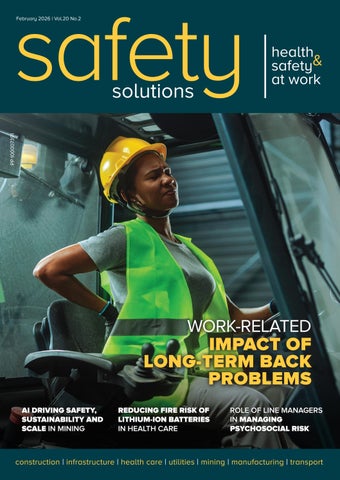
Safety Solutions February 2026

Page 1


AI DRIVING SAFETY, SUSTAINABILITY AND SCALE IN MINING

REDUCING FIRE RISK OF LITHIUM-ION BATTERIES IN HEALTH CARE

ROLE OF LINE MANAGERS IN MANAGING PSYCHOSOCIAL RISK

There is No Safety without Security

Start your Industrial Security journey with Pilz today

Modern machinery faces two critical challenges:

Safety protects people from operational risks.

Security protects machines from unauthorised access, manipulation, and cyberthreats - which, if ignored, can compromise safety.

Regulations now reflect this reality. The EU Machinery Regulation explicitly addresses cybersecurity as a safety issue, and IEC 62443 sets the global benchmark for Industrial Security.

Pilz can help you comply and stay secure. From risk assessment to defence-in-depth strategies, we guide you through IEC 62443 and other standards to build a robust Industrial Security concept - right down to the machine level.

Protect your people

Secure your systems

Stay ahead of evolving regulations

Machinery
Machinery

CONTENTS

Welcome to the first issue of Safety Solutions for 2026, which includes a focus on fire and technology.

In our lead feature: in the critical, fast-paced world of health care, where safety is everything, Brooks Australia CEO Cathy Brand sets out the fire risk of lithium-ion batteries, and five ways to suppress this risk.

Then, in our technology feature, Mark Buckland — Resources and Utilities Director at Avanade — turns our focus to Australia’s mining industry; a cornerstone of our economy, Buckland argues it stands at a turning point today. Faced with rising safety expectations, pressure to decarbonise and an acute skills shortage, Buckland makes the case that AI is no longer a futuristic addon — it’s becoming the engine room of safer, smarter and more sustainable mining practices. We also cover a range of other industries and safety concerns, including many timely ones. Managing psychosocial risk is just one example. Being firmly on the current safety agenda — especially following Victoria’s Occupational Health and Safety Amendment (Psychological Health) coming into effect in that jurisdiction in December — Dr Georgi Toma and Kirra Southwell from Heart and Brain Works have line managers in their sights; they explain why the role of line managers is more important than ever, what the law requires, and how to equip line managers to lead psychologically safer teams.

Plus, there’s news, case studies, products and some interesting research. Happy reading and wishing you all a safe and productive 2026.

$1.43M FINE FOLLOWS FATIGUE-RELATED DRIVER FATALITY

Following a fatigue-related driver fatality, a warehousing and logistics company and its director have been convicted and fined a total of $1.43 million. In August 2022, the delivery driver’s van drifted into the path of an oncoming truck at Kialla West, south of Shepparton, 12 hours into an overnight shift delivering baked goods to Albury and various locations in Victoria’s north. As a result of the collision, the 27-year-old delivery driver died, while the truck driver was unharmed.

A WorkSafe Victoria investigation found that, prior to the incident, the driver had completed the same 796 km delivery run for 17 consecutive nights, with most including shifts exceeding 12 hours, without adequate breaks of time to rest and recover between shifts. Information about the causes, signs, symptoms and identification of fatigue, as well as instruction and training in the prevention of fatigue, including the need for breaks with continuous rest periods, should also have been provided.

“This incident is a tragic example that shows how setting realistic workloads and safe policies can be the difference between a worker going home at the end of the day or tragically losing their life,” WorkSafe Victoria Chief Health and Safety Officer Sam Jenkin said.

$340K ENFORCEABLE UNDERTAKING FOLLOWS CONVEYOR BELT INJURY

After a worker’s hand was injured in a conveyor belt, a fruit packing company has pledged to spend $340,000 to improve health and safety outcomes. The incident occurred in July 2023, when while cleaning on and around several machines in operation at the company’s Mildura factory — including sweeping up fruit that had dropped off nearby conveyors — the worker noticed some fruit had become caught between the conveyor belt and a bar running across it.

First using a squeegee and then his gloved left hand, the worker attempted to dislodge it, injuries to his middle and pointer fingers being caused when the glove was caught between the moving conveyor belt and the bar. WorkSafe Victoria alleged that the company failed to use engineering controls that prevented access to moving plant and failed to devise and implement a lock-out tag-out procedure to ensure the plant was not operating during cleaning.

The company entered into the enforceable undertaking while facing two charges of failing to ensure a workplace under its control was safe and without risks to health. If the undertaking is contravened, WorkSafe Victoria may reinstate the charges.

iStock.com/SlobodanMiljevic. Stock image used is for illustrative purposes only.

iStock.com/Michele Jackson. Stock image used is for illustrative purposes only.

COMCARE’S NATIONAL WORK HEALTH AND SAFETY AWARDS

The winners of Comcare’s biennial National Work Health and Safety Awards, now in their 20th year, were announced in November. The awards have five categories, including a new award celebrating the work of elected health and safety representatives in Commonwealth workplaces.

And the winners are…

Category 1 — Prevention (joint winners)

• APS Mental Health and Suicide Prevention, Australian Public Service Commission

• Journey Management System Application, Inland Rail Pty Ltd Category 2 — Recovery at and Return to Work

• Early intervention mental health program, Australia Post Category 3 — Impact and Contribution

Outstanding contribution by an individual

• Chief Petty Officer Matthew Jacques, Royal Australian Navy

Outstanding contribution by a team

• Driver Safety Campaign, Telstra

Category 4 — Health and Safety Representative (joint winners)

• Tamsin Anspach, Electorate of Senator the Hon Penny Wong

• Siew Dyer, National Indigenous Australians Agency

SURVEY RESULTS SHOW FALL IN NATIONAL RETURN TO WORK RATE

Safe Work Australia’s 2025 National Return to Work (NRTW)

Survey results have been released. Providing critical insights for improving return to work outcomes and ensuring more equitable support for all injured workers, the survey shows that the NRTW rate fell to 88.9% in 2025 — down from 91.6% in 2021.

Notable differences between outcomes for workers with physical and psychological injuries are also revealed — workers with physical injuries had a higher return rate (90.2%) than those with psychological injuries (76.5%).

Further, while most workers (64.7%) returned to the same duties, the survey shows that only 53.4% resumed their previous hours — a drop from 58.1% in 2021.

Category 5 — Judges’ choice

• Metropolitan: Psychosocial Risk Management Framework, Western Sydney International Airport

• Regional: Ric Selim, Australian Border Force/Department of Home Affairs

19-YEAR-OLD’S TRAUMATIC HEAD INJURY DEATH LEADS TO $350K FINE

In Western Australia, a construction company has been fined $350,000 (and ordered to pay more than $6600 in costs) over the death of a 19-yearold worker who was struck by a sea container drawbridge ramp weighing around 250 kg. At the time of the incident, which occurred in November 2021, the worker was assisting his supervisor to lower the ramp. Another company that was engaged to complete the works, including the lowering of the sea container ramp, was also prosecuted over the incident and was fined $250,000 in August 2025.

“There were no written procedures or clear instructions for carrying out the task, even though it should have been recognised as hazardous,” WorkSafe WA Commissioner Sally North said. “Struck-by incidents involving falling objects remain a significant cause of serious injuries and fatalities in construction and other industries. I urge workplace leaders to engage with their teams and reassess the measures they have in place to prevent objects from falling.”

iStock.com/Natalia Kokhanova. Stock image used is for illustrative purposes only.

VICTORIA’S NEW PSYCHOLOGICAL INJURY OBLIGATIONS NOW IN EFFECT

The Occupational Health and Safety (Psychological Health) Regulations 2025 — which create new obligations for workplaces across Victoria to protect employees from psychological injury — have come into effect. Commencing 1 December, it is made clear in the new regulations that, just like physical threats, Victorian employers must address risks associated with psychosocial hazards — such as bullying, sexual harassment, aggression or violence, and exposure to traumatic events or content.

“Safe work is about more than just protecting workers from physical hazards — of course that’s important, but it’s every bit as crucial to protect workers from risks to their mental health,” WorkSafe Victoria Chief Health and Safety Officer Sam Jenkin said. “Just like physical injuries, psychological injuries can take a terrible toll on workers’ lives and the new regulations make absolutely clear the steps employers must take to identify hazards and control the associated risks.”

Victorian employers now have a specific duty to identify psychosocial hazards, take reasonable steps to eliminate or control the associated risks, and review risk controls under the changes. WorkSafe Victoria stated that the regulations provide the flexibility for duty holders to identify and control psychosocial hazards and risks in a way that best supports their working environment.

WorkSafe Victoria also stated that, while employers must comply with their new duties from 1 December, inspectors will take into

account factors such as previous experience with psychosocial risk management when determining any compliance and enforcement response. Workers with concerns about psychosocial hazards in their workplace can contact WorkSafe Victoria’s advisory service on 1800 136 089.

WORKER’S DEATH LEADS TO FIRST-OF-ITSKIND COMMONWEALTH PSYCHOSOCIAL RISKS PENALTY

On 28 July 2020, while on duty at Royal Australian Air Force (RAAF) Base Williamtown near Newcastle, NSW, a 34-yearold worker took his own life. In the first penalty of its kind for a Commonwealth employer, the Department of Defence has been convicted and fined for failing to manage psychosocial risks relating to the death of a worker — admitting it did not take reasonably practicable measures to eliminate or minimise the health and safety risks to the RAAF technician. This is the first time a Commonwealth employer has been convicted of failing to manage psychosocial risks under federal work health and safety laws.

Magistrate Brett Thomas convicted Defence and fined the department $188,000, In the NSW Local Court on 19 December 2025. An adverse publicity order, with details to be determined,

was also made by Thomas; adverse publicity orders are available under section 236 of the WHS Act and can require an offender to publicise the offence, its consequences and the penalty imposed. By failing to provide the necessary training for supervisors involved in the use of the draft Work Plan procedure used as a performance management tool, Defence breached its primary health and safety duty under section 19(1) of the WHS Act.

The matter was prosecuted by the Commonwealth Director of Public Prosecutions. For a Category 3 criminal offence under the WHS Act, $500,000 was the maximum penalty available to the court.

If you are affected by any of the issues discussed in this article, Lifeline has a 24/7 crisis support service that can help, please call 13 11 14.

iStock.com/dusanpetkovic. Stock image used is for illustrative purposes only.

SOUTH AUSTRALIA TO REDUCE HEIGHT LIMITATION OF HIGH-RISK CONSTRUCTION WORK

South Australia has approved changes to work health and safety regulations to reduce the height limitation of high-risk construction work from three metres to two metres. The move will align South Australia with the national model WHS regulations and other Australian states and territories, changing the definition of high-risk construction work in the Work Health and Safety Regulations 2012 (SA). The changes have been made in consultation with key unions and industry associations.

To allow time for industry to be educated about the regulations before they come into effect, there is a transition date of 1 July 2026.

NEW FATIGUE RISKS MODEL CODE OF PRACTICE

A new model Code of Practice has been published by Safe Work Australia (SWA), providing practical guidance to employers on how to manage health and safety risks related to fatigue at work. “Fatigue is a state of physical, mental or emotional impairment that can have health effects and can prevent people from functioning safely in the workplace,” SWA stated.

“Employers are responsible for preventing work-related fatigue and ensuring fatigue doesn’t create a risk in their workplace. To do this, they must consult with workers and should design work in a way that eliminates or minimises risk as much as they reasonably can.

“Managing fatigue-related risks may mean changes to work hours and shift design, providing sufficient breaks while at work and between periods of work, providing additional tools or equipment to assist with tasks or altering the way tasks are completed to allow for flexibility.”

The new model Code complements the model Code of Practice: Managing Psychosocial Hazards at Work. You can download the model Code of Practice: Managing the Risk of Fatigue at Work at www. safeworkaustralia.gov.au/doc/model-code-practice-managing-riskfatigue-work.

FIVE WAYS TO REDUCE FIRE RISK OF LITHIUMION BATTERIES IN HEALTHCARE SETTINGS

In the critical, fast-paced world of health care, safety is everything. We rely on our hospitals to be sanctuaries — places where care and precision rule every decision. But what if one of the fastestgrowing threats to that safety is hiding in plain sight — inside the very tools we rely on? Brooks Australia CEO CATHY BRAND sets out the fire risk of lithium-ion batteries in healthcare settings and five ways to suppress this risk.

In August 2024, a Victorian hospital was forced to evacuate part of its premises after a workstation on wheels (WOW) battery caught fire.1 Additional batteries onsite were found cracked, swollen and leaking — likely damaged during charging or swapping processes. It was a narrow escape, but one that reflects a much broader and urgent problem: fire risk in healthcare environments is evolving, and lithium-ion batteries are at the centre of it.

The modern hospital: a new landscape of risk

Hospitals today are increasingly reliant on battery-powered devices. WOWs, tablets, infusion pumps, portable diagnostic tools, and even staff e-scooters or power-assisted equipment all utilise these batteries. While these devices have improved patient care and efficiency, they have also introduced hidden hazards.

Lithium-ion batteries, prized for being lightweight, energy-dense and rechargeable, become dangerously unstable when dropped, punctured, overheated or overcharged. Fires caused by thermal runaway in lithiumion batteries can escalate within seconds, producing toxic fumes, high heat and even secondary explosions.

In a hospital filled with vulnerable patients, flammable materials, pressurised oxygen tanks and essential electronics, a fire of that kind can be catastrophic.

What’s more concerning is that many workplaces have yet to adapt their safety protocols to accommodate the realities of these risks. Studies suggest that more than 50% of workers don’t know what to do or where to go in a fire emergency, and fewer than 25% can locate the nearest fire extinguisher.2 There is a dangerous gap emerging between the risks of modern healthcare technology and our collective preparedness to handle them.

Why healthcare fires are uniquely dangerous — proactive strategies for prevention

Unlike most commercial settings, hospitals and healthcare facilities face additional layers of complexity regarding fire safety. Patients may be unconscious, immobile or hooked up to life-sustaining equipment. Staff must balance

their emergency response with patient care, often making split-second decisions under intense pressure.

A lithium-ion battery fire — especially one that spreads to nearby devices or ignites near oxygen tanks — can escalate with frightening speed. The presence of chemicals, flammable materials and highly sensitive electronics make any lapse in fire preparedness potentially life-threatening.

That’s why fire safety in healthcare settings must move beyond passive compliance and become an active, high-priority strategy.

While fire suppression and evacuation protocols are essential, early detection remains the first and most critical line of defence — particularly in environments where lithium-ion batteries are in regular use. Smoke and heat detectors must be appropriately selected, strategically placed near high-risk areas such as charging stations and equipment bays, and routinely tested for responsiveness. Detectors should be positioned according to AS 1670 standards and calibrated to suit the specific sensitivities of healthcare environments, where

false alarms can be highly disruptive, but early warnings are life-saving.

Modern detection systems should be seamlessly integrated with automated fire panels that coordinate building-wide alerts, activate occupant warning systems and trigger emergency responses without delay. These systems not only notify staff in real time but can also support staged evacuations, interface with nurse call systems and log events for post-incident review. Ensuring that detection infrastructure is intelligently connected and maintained across all critical areas — especially where lithium-ion batteries are stored or used — helps transform passive monitoring into active protection.

With proper awareness, planning and ongoing training, the risks associated with lithium-ion battery fires can be effectively minimised. Reliable early detection, regular audits, clear protocols and well-maintained equipment all play crucial roles in preventing incidents before they occur.

The use of lithium-ion batteries in health care will continue to grow as technology

THERE IS A DANGEROUS GAP EMERGING BETWEEN THE RISKS OF MODERN HEALTHCARE TECHNOLOGY AND OUR COLLECTIVE PREPAREDNESS TO HANDLE THEM.

advances, but fire risk does not need to increase alongside it. By taking proactive, strategic action now — embedding fire safety into everyday practices — healthcare facilities can remain secure sanctuaries for patients and staff alike. Prevention is not just an option; it is a responsibility we must all share to ensure safety keeps pace with innovation.

1. www.worksafe.vic.gov.au/safety-alerts/lithium-ionbattery-catches-fire

2. fireandsafetyaustralia.com.au/workplace-firestatistics

purposes only.

What can be done: a proactive path forward in five steps

Fortunately, fires involving lithium-ion batteries are largely preventable. With the right systems, clear protocols and ongoing education, healthcare facilities can dramatically reduce the risk of such incidents. Achieving this requires a fundamental cultural shift — where fire prevention is prioritised alongside infection control and patient safety, becoming an embedded part of everyday practice.

1. Conduct regular, comprehensive fire safety and hazard audits

Audits must go well beyond the basics of checking fire doors and smoke detectors. Facilities should carefully examine how and where lithium-ion batteries are stored and charged. Are batteries being overcharged or left unattended during charging? Are power cords showing signs of wear, fraying or positioned where they could be damaged by foot traffic? Are devices stored in well-ventilated areas that prevent overheating? A detailed and methodical audit helps identify these vulnerabilities early, allowing for timely intervention before minor issues escalate into emergencies.

2. Introduce clear, detailed protocols for lithium-ion battery use and storage

It is essential that staff receive thorough training on how to recognise early warning signs of battery failure, such as bulging casings, unusual heat generation, strange odours or leaking fluids. These indicators signal that a battery requires immediate removal and replacement. Damaged or defective batteries should never be left unattended, nor disposed of in regular waste bins. Establishing a robust and transparent process for battery inspection, handling and safe disposal ensures that risks are minimised and staff know exactly how to respond to potential hazards.

3. Invest in ongoing fire safety education and hands-on training for all staff Fire safety must be a mandatory and recurring part of staff training programs, rather than a one-time session during onboarding. Everyone — from clinical personnel to support staff and administrative teams — should be confident in evacuation procedures, the correct use of fire extinguishers and the reporting channels for hazards or incidents. Fire drills should be designed to simulate realistic scenarios, including the complexities of evacuating patients who are immobile or reliant on life-support equipment, as well as responding effectively to battery-related fires.

4. Ensure all equipment and infrastructure are fire-ready and regularly maintained

Fire safety equipment, including extinguishers, sprinkler systems and smoke alarms, must be routinely inspected and serviced to guarantee functionality. It is critical that extinguishers are suitable for the types of fires likely to occur in healthcare settings — especially electrical or chemical fires involving lithium-ion batteries. Emergency signage should be clearly visible, up to date and strategically placed, while all floors should have well-marked, accessible exits and designated assembly points. These seemingly small but essential measures can make a life-saving difference during an emergency.

5. Develop and practise a fire plan tailored to lithium-ion battery risks

Every healthcare facility needs a fire plan that specifically addresses the unique challenges posed by lithium-ion battery fires. This plan should detail evacuation routes, communication protocols, staff roles, and responsibilities during an emergency. Most importantly, the plan must be actively practised and reviewed regularly. A fire plan that is simply filed away offers no protection when seconds count — it must be ingrained into the culture and readiness of the entire organisation.

iStock.com/Hispanolistic. Stock image used is for illustrative

DIGGING SMARTER HOW AI IS DRIVING SAFETY, SUSTAINABILITY AND SCALE IN MINING

Australia’s mining industry is a cornerstone of our economy but stands at a turning point today. Faced with rising safety expectations, pressure to decarbonise and an acute skills shortage, the sector must evolve. As MARK BUCKLAND , Resources and Utilities Director at Avanade explains, AI is no longer a futuristic add-on — it’s becoming the engine room of safer, smarter and more sustainable mining practices.

In mining, where the stakes are high and mistakes can be costly, AI has emerged as one of the most transformative technologies. While the appetite is strong, there’s work to be done. AI isn’t a silver bullet. But when embedded with the right people, processes and platforms, it becomes a multiplier of productivity, safety and insight.

Mining and AI: a collision of tradition and transformation

For an industry steeped in tradition and scale, mining is under increasing pressure to modernise — and it’s happening fast. Across Australia, AI is already powering everything from autonomous haulage systems to real-time emissions monitoring. According to a 2024 report by the Minerals Council of Australia, digital technologies, including AI, are expected to deliver over $74 billion in value to the mining sector by 2030, primarily through productivity and efficiency gains.1

But this transformation extends beyond the pit. The integration of AI is also reshaping workforce needs, driving a new wave of

reskilling across regional communities. As mining operations become more data driven, local economies also stand to benefit. Not just through creation of new roles, but by fostering new ecosystems of innovation in regional Australia.

Safer mines with smarter technology

AI is emerging as one of the industry’s most powerful tools for improving safety — a longstanding and critical challenge in mining. From predictive maintenance that prevents multimillion-dollar breakdowns, to AI vision systems that monitor driver fatigue and detect hazards in real time, technology is enhancing OHS across the board. It’s particularly powerful in remote or underground sites where human visibility is limited, and every second counts.

Mining companies are now using AI in smarter, more targeted ways to reduce risk. For example, some organisations are using AI-powered digital twins of their process plants to optimise maintenance and reduce the risk of unexpected failures — helping teams act before issues escalate. Computer vision is also being deployed via fully automated drones to detect corrosion with pinpoint accuracy, reducing reliance on manual inspections and minimising human error.

Generative AI is creating tailored, sitespecific training materials that reflect local conditions, demographics and historical incidents, helping workers better understand and manage risks. Meanwhile, anomaly detection systems are turning real-time operational data into frontline insights, enabling faster, safer decision-making.

By augmenting human decision-making with real-time data and automation, AI is not only reducing risk — it’s helping to build a safer, more sustainable future for mine workers across Australia.

Closing the skills gap with AIaugmented workforces

Australia’s mining sector talent shortage could stall growth in the years ahead. According to a 2022–27 workforce forecast by the Australian Resources & Energy Employer Association, the mining industry would need approximately 24,000 new workers by 2026 to meet its growth targets.2 But this isn’t just about more boots on the ground — it’s about smarter, tech-enabled boots.

AI also presents a chance to attract new talent. The use of AI opens new pathways to attract digitally native talent and people who may never have considered mining but are drawn to a new frontier of data science, robotics and sustainability — areas that appeal to a new generation of workers and that are helping mining rebrand from a hard-hat industry to a high-tech one.

Building the digital core for mining’s next phase

To fully realise the benefits of AI, mining companies must first build the digital foundations to support it. That means modernising legacy systems, improving data governance and breaking down silos that stifle innovation. For mining leaders, this is the moment to assess whether their digital environments are truly fit for purpose. Is the data architecture agile enough to support AI models? Are systems interoperable, secure and scalable? Without this foundation, even the most ambitious AI initiatives will struggle to deliver lasting value.

The age of AI in mining has arrived. The question is no longer whether to embrace it, but how to do so ethically, responsibly and at scale. For a sector that contributes over 10% of Australia’s GDP and anchors the livelihoods of many regional communities, this is more than a technology choice. It represents a generational opportunity to future-proof one of nation’s most critical industries. How mining leaders navigate this moment will not only define the next era of the industry but help shape the trajectory of Australia’s broader industrial future.

1. 2024 Annual Report minerals.org.au/resources/2024annual-report

2. Resources and energy workforce forecast: 2022–2027 www.calameo.com/read/000373495435f7298c03d

iStock.com/standret.
Mark Buckland.

Hand protection

ATG AD-APT Technology hand protection is designed to keep hands cool, dry and comfortable during extended glove use. Integrated into the MaxiFlex range, and now available in the MaxiCut range, this advanced technology keeps hands up to 65% cooler according to the company, making it suitable for high-performance in hot work environments.

Activated by hand movement and rising temperatures inside the glove, AD-APT Technology releases a natural cooling agent that reduces sweat build-up without compromising grip or durability. Unlike traditional moisture-wicking gloves, which can feel damp over time, AD-APT works in conjunction with the glove’s AIRtech 360° breathability to evacuate moisture, actively regulating microclimate conditions inside the glove and extending comfort throughout the workday.

These gloves offer a lightweight, flexible and long-lasting abrasionresistant design, making them suitable for hand protection and prolonged wear. With the addition of AD-APT Technology into the MaxiCut range, workers can stay cooler, drier, more productive — and ultimately safer — in industries like construction, manufacturing, roofing and sheet metal handling.

Designed to last and dermatologically accredited by the Skin Health Alliance, MaxiFlex and MaxiCut with AD-APT Technology offers not just protection, but a cool and comfortable experience.

Mayo Hardware Australia www.mayohardware.com.au

All-in-one connected wearable

Industrial safety helmet

The Sundström SR575 Industrial Safety Helmet is engineered for optimal balance, lightweight comfort and comprehensive protection for the head, eyes and respiratory system.

Designed with a low centre of gravity, the product is designed to offer good stability and comfort, even during prolonged use in harsh working conditions.

Features include an ergonomic design that is lightweight and well-balanced for extended wear; an adjustable head harness with customisable height, angle, width and airflow direction for enhanced comfort; a flip-up visor and compatibility with hearing protectors for integrated protection; and quick-change peel-off visor clips and replaceable components including the exhalation membrane, face seal, head harness seal, sweatband and head harness, for easy maintenance.

Part of Sundström’s modular system, the SR575 integrates with the SR500, SR500Ex and SR700 Powered Air-Purifying Respirators (PAPRs), as well as approved Sundström filters. The breathing hose connects to both the helmet and the fan unit. Additionally, the product offers the flexibility to connect to an air supply using the SR507 regulator, making it suited to a wide range of industrial applications.

Safety Equipment Australia Pty Ltd www.sea.com.au

Blackline Safety’s G8 is designed to be an all-in-one connected wearable — combining advanced gas detection, lone worker protection and radio-quality communication in one rugged device that connects workers to each other, to their safety teams, and to the broader digital worksite, with real-time data streamed to the cloud to keep safety and operations leaders informed. With an IP-67 rating, it is engineered to meet demanding industrial environments. Its advanced gas detection features swappable cartridges covering 20+ gases, and its lone worker protection includes monitoring of falls, no motion, health events, physical assaults and getting trapped or stranded.

Features include: dual-band GNSS/GPS (L1/L5) for faster time-to-first-fix and location accuracy within one metre; access to ZoneAware geofencing in Blackline Live; three ways to communicate (in emergencies or for everyday productivity) with enhanced speaker and mic technology; push-to-talk; emergency voice calling; text messaging; internal full-range speaker delivering up to 1 W of audio power; and optional RSM with up to 1.5 W output.

The product’s visibility and usability features include: 64-colour backlit display; reflective active-matrix TFT LCD and nearly 77,000 pixels; NFC TagAssign, for instant device assignment with a single tap for faster shift starts; and 35-lumen, easy-access flashlight for reliable visibility in low-light or confined spaces.

Blackline Safety

www.blacklinesafety.com

Portable fire protection equipment at

any time, day or night

FIREX, an Australian manufacturer and wholesaler of portable fire protection equipment, has a network of 20 Click & Collect warehouses nationwide, with 16 sites providing 24/7 access. Opening in Waterloo in 2018, the company seen more than 50,000 technician visits, which is says proves strong demand for after-hours access.

“Technicians don’t stop working when the doors of other suppliers close,” said FIREX owner Ali McGovern. “By making certified fire protection equipment available 24/7, we’ve removed one of the industry’s biggest pain points.”

Once an order is placed, a PIN code is sent directly to a technician or the client’s phone in under a minute, FIREX said. Then the roller doors open, lights and cameras activate, and gear is collected — the products are colourcoded, and the warehouse signage guides technicians to what they need.

In stock are extinguishers and alarms to hose reels, hydrants, and emergency lighting, while if a technician needs something outside the usual range, FIREX said it ensures it’s waiting for them. It’s a model, FIREX said, saving technicians up to two hours daily by eliminating counter queues, traffic delays and downtime.

FIREX also said that sustainability is central, with circular economy principles built into FIREX’s system from the outset, and each warehouse featuring Swap & Go cylinders and recycling cages — enabling up to 95% of returned materials to remain in circulation and out of landfills.

Firex Distribution (Australia) Pty Ltd www.firex.com.au

FIREX warehouse with owners Connor Farrell and Ali McGovern.
Image: Supplied

Safety glove

The Graphex LQR+ glove is engineered for advanced liquid-resistant protection without compromising on impact defence, cut resistance or dexterity. Designed for high-risk environments such as mining, construction and maintenance, the product is designed to deliver complete coverage, combining a durable liquid barrier with integrated back-of-hand impact protection.

Constructed using an impermeable sandy nitrile dip coating, the LQR+ is designed to form a shield against liquids, oils and other contaminants while maintaining superior grip in wet or oily conditions. The 18-gauge Cut Level F Graphex yarn is designed to provide good dexterity and precision handling, while the flexible TPR back-of-hand guards absorb and deflect impact from knocks and scrapes in demanding applications.

High-visibility finishes make the LQR+ suitable for low-light and underground worksites, where awareness and protection are paramount. The product is certified and independently tested by the BSI Group.

Private Brands Pty Ltd www.privatebrands.com.au

Foot rest

The PostureAssist Foot Rest is an ergonomic foot support designed to attach directly to the base of office chairs with a centre post gas strut. It is intended to assist in maintaining natural posture and comfort during seated work.

The compact, lightweight design moves in sync with the user’s chair, allowing continuous foot support through height and position changes. It features an adjustable design to accommodate a range of users and seating styles.

Constructed from ABS injection moulded plastic with non-slip footpads, the footrest is designed to be durable and easy to maintain. Installation requires minimal tools and can be completed within minutes. The design is suitable for commercial, home office, healthcare and education/schooling environments. It is designed to support anyone who can be seated in an office chair.

The PostureAssist Foot Rest has undergone independent testing for strength and stability in accordance with relevant workplace ergonomic standards.

PostureAssist Foot Rest www.postureassistfootrest.org

Radar level sensor

The OndoSense apex Level Line radar sensor is designed to enable high-precision and fast level measurements in harsh industrial environments with extreme temperatures, smoke and dust. This includes for molten metal level monitoring or for throughput measurements on conveyor belts.

The radar level sensor is intended to deliver consistently reliable measurement results with an accuracy of up to 0.1 millimetres, even with strongly fluctuating levels. This is due to a unique combination of a high measuring rate (500 Hz) and smart filter algorithms. As a result, the product aims to provide error-free, precise measurements at all times, even in the presence of wave motion, bubble formation or other abrupt level fluctuations.

The level radar is also suitable for measurements in closed containers requiring a high resistance to heat, temperature or pressure. For this purpose, OndoSense supplies an air-cooled housing that can be easily attached to the container lid from the outside. This radar solution allows, for example, level monitoring of closed melting furnaces with metal temperatures of up to 1600°C.

OndoSense www.ondosense.com

SMOKE COMPLEXITY, SKIN ABSORPTION AND PROTECTIVE EQUIPMENT IN FIREFIGHTER SAFETY

To address health and safety questions raised by Australian firefighters, researchers have conducted a comprehensive overview of the science behind bushfire smoke exposure.

Firefighter feedback in the aftermath of the 2019–2020 Black Summer and recommendations made by the coronial inquest into those bushfires has informed Australian research — including from the University of Wollongong (UOW) — intended to bridge the gap between scientific findings and the practical information needed by those on the frontline.

Published open access (doi.org/10.1071/WF25138) in the International Journal of Wildland Fire, the researchers synthesised global research on exposure pathways (including inhalation and skin absorption), smoke composition, toxicity, and the effectiveness of protective equipment and decontamination procedures.

“Firefighters operate in incredibly complex environments and face hazards from smoke that are often invisible,” said lead author Dr Max Desservettaz, from UOW’s Environmental Futures. “This review was driven by their need for clear, evidence-based answers to specific questions about the risks they encounter, from the toxicity of different smoke types to how contaminants interact with their gear and skin.”

Consolidating the evidence on health hazards faced by firefighters, the review highlights that bushfire smoke is a dangerous cocktail of fine particles, toxic gases such as carbon monoxide, benzene and formaldehyde, and a variety of carcinogens. Found to be remarkably potent in toxicological studies was the smoke produced from Australia’s native vegetation, particularly eucalypts.

In addition to the risks of breathing smoke, skin can also act as an entry point for toxic chemicals. Heavy sweating — under the intense heat and physical exertion of firefighting — can make the

skin more permeable, drawing harmful compounds from soot into the body. As the review stresses, this pathway deserves more attention in safety protocols.

While personal protective equipment remains essential, it has limitations. N95 or P2 masks are among standard wildland firefighting gear and provide protection against particles, but none against toxic gases. Fit-testing respirators is therefore critical, as is thorough decontamination practices. Prompt washing of gear and skin after exposure, particularly using wet-soap cleaning methods, was found by the study to greatly reduce the risk of chemical contaminants entering the body.

While there is considerable global research available, Desservettaz said ensuring this knowledge is accessible and actionable for firefighters is crucial; ongoing collaboration between researchers and fire agencies to develop practical guidelines, explore new monitoring tools, and ensure safety protocols reflects the latest science being called for in the study.

“A key goal now is effective communication. We found crucial knowledge often isn’t reaching the frontline, where it can make a difference,” Desservettaz said. “Fighting bushfires requires immense skill and bravery. Supporting firefighter health means ensuring they have the best available information to manage the risks inherent in protecting our communities. This review is a step towards that.”

Through the Australasian Fire and Emergency Service Authorities Council, the researchers are now working with national partners to translate their findings into accessible educational materials for firefighters and fire agencies across the country.

CASE STUDY Rock lobster processor and exporter finds driver safety partner

Transport technology solutions provider Microlise has announced a new contract with Geraldton Fishermen’s Co-operative (GFC) — claimed to be the world’s largest rock lobster processor and exporter — to enhance safety, efficiency and product quality. To help GFC raise performance across every stage of the lobster supply chain, Microlise will support GFC with its delivery management, fleet visibility, and safety, health and compliance technology.

“We’re proud to partner with GFC to support such a unique and critical supply chain. By combining our AI-enabled Driver safety systems and advanced planning and optimisation tools with GFC’s deep industry expertise, we can help deliver measurable improvements in safety, efficiency and product quality, directly benefiting their members and customers,” said Luke Olsen, Managing Director — APAC at Microlise.

Solutions to be employed include Microlise’s Driver Excellence, AI Driver Distraction Cameras, Planning and Optimisation and Delivery Management solutions, including Electronic Proof of Delivery. These are designed to help digitalise and streamline GFC’s planning operations while providing deeper insights and real-time visibility across the supply chain.

Driver safety, enabling real-time monitoring of every load in transit, maintaining product quality, and reducing transport incidents to ensure safer operations and smoother handovers are also a focus of the solutions. “Safety is a foundation of this investment,” said Michael May, GFC Supply Chain General Manager. “Protecting our drivers and our members’ product is non-negotiable for us, and Microlise helps raise the bar across the board.”

Microlise www.microlise.com/au

Image: Supplied
Image: Supplied

HOW DOES CAPACITY FOR WORK CHANGE

BEFORE AND AFTER PSYCHIATRIC TREATMENT?

A Norwegian study of more than 2600 patients — with everything from mild to severe mental health challenges — set out to find out.

Norwegian University of Science and Technology (NTNU) researchers seeking to understand the role of psychiatric treatment in return to work following mental health challenges have found that it is no guarantee of success. “For many people, the start of treatment does not mark a return to working life, but rather the beginning of prolonged or increasing absence,” said Jakob Lundqvist, a PhD research fellow at NTNU’s Department of Psychology.

With a focus on Norway, which ranks at the very top among the OECD countries when it comes to absence due to illness and disability benefit, the study — published open access in BMC Health Services Research (doi: 10.1186/s12913-025-12856-w) — found that the number of people granted sick leave increased sharply in the months before treatment began, but decreased somewhat afterwards. Notably, it was observed that the use of long-term benefits — such as, in Norway, the work assessment allowance (AAP) — also increased. What this means is that the level of absence due to illness remained relatively stable in the year following the start of treatment.

“The result was that over 30% of the respondents were on sick leave, receiving AAP, or on disability benefit one year after treatment for mental health problems had begun,” Lundqvist said. Drilling down into the data, three groups were identified as at particularly high risk of ending up on a pathway towards increased incapacity for work, these were: women, elderly people, and patients receiving specialist healthcare services.

The research also suggests that the speed with which patients receive access to treatment has an impact, in settings where the referral process and waiting time before starting treatment were usually longer — resulting in an absence from work for long periods of time before treatment begins — increasing the risk of patients dropping out of working life permanently. “This may mean that it is not just about the patients’ mental health problems, but also about how the health services are organised,” Lundqvist said.

Lundqvist, a psychologist, also observes that perspectives of those providing treatment in Norway may be playing a part — the author observing that psychological treatment often focuses on reducing symptoms, while ability to function in everyday life and capacity for work are often not prioritised. “Sick leave should not be seen as a form of treatment,” Lundqvist said. “It may be necessary, but it rarely improves the person’s capacity for work. If we are to succeed, clinicians must strengthen both ability to function in everyday life and capacity for work in parallel with symptom relief. Only then can we reverse the trend.”

THE CRUCIAL ROLE OF LINE MANAGERS IN MANAGING PSYCHOSOCIAL RISK

As legal duties expand and workplace expectations evolve, it’s no longer enough for organisations to rely on policy or isolated wellbeing initiatives. They must invest in the people who influence culture most directly: their line managers. Dr GEORGI TOMA and KIRRA SOUTHWELL from Heart and Brain Works explore why the role of line managers is more important than ever, what the law requires, and how to equip them to lead psychologically safer teams.

Line managers sit at the intersection of people and performance. Every day, they shape how work is planned, communicated and experienced — how it feels to show up, speak up and be supported. Increasingly, they also stand on the frontline of managing psychosocial risk.

Why line managers matter more than ever

Work design, team dynamics, workload and recognition: these are some of the key levers that influence psychological health at work. And they sit largely in a line manager’s hands. Managers influence how work is distributed, how change is communicated and how

concerns are addressed, or overlooked. Their leadership style, emotional intelligence and responsiveness to early warning signs can either reduce risk or exacerbate it.

Yet many managers are under strain themselves. Our psychosocial risk audits consistently show that line managers experience high workloads, cognitive overload and emotionally demanding roles, often without adequate training, support or clarity about how to manage psychosocial hazards effectively.

The legal and regulatory shift

Across Australia, psychosocial risk management has moved from a best-practice recommendation to a legally enforceable obligation. Under WHS and OHS laws, employers must now identify and manage psychosocial hazards with the same diligence as physical risks.

Recent developments include:

• The model Code of Practice: Managing Psychosocial Hazards at Work, adopted or adapted across all harmonised jurisdictions.

• Victoria’s Occupational Health and Safety Amendment (Psychological Health) that came into effect from 1 December 2025, which introduces specific duties to control psychosocial risk.

• A growing body of legal cases showing that failure to act on known psychosocial hazards can result in serious financial and reputational consequences.

These frameworks place responsibility not only on the organisation as a whole but also on individuals — especially managers — who shape daily working conditions.

Legal lessons: what happens when we get it wrong

Several recent court cases in Australia highlight the consequences of failing to manage psychosocial hazards:

• Mathews v Winslow Constructors — $1.3 million awarded due to prolonged bullying and harassment, and a failure to act.

• Court Services Victoria — $379,000 awarded following exposure to traumatic content, high demands and toxic culture.

• Elisha v Vision Australia — nearly $1.5 million awarded for psychiatric injury linked to poor management response and breached duty of care.

In each case, the hazards were known but left unaddressed. Early signs were missed or dismissed. Patterns of harmful behaviour

continued unchecked. These weren’t isolated failures, they were systemic issues in culture and capability.

What good looks like

Line managers aren’t expected to be mental health professionals. But they are expected to:

• Understand what psychosocial hazards are.

• Recognise when work is becoming harmful (eg, whether due to high workload, poor change processes or interpersonal conflict etc.).

• Regularly check in with their teams and notice early signs of stress.

• Take reasonable steps to reduce and report risks.

• Implement practical control measures as part of everyday team leadership. When managers are trained and empowered to do this well, they become a powerful early intervention. When they’re not, psychosocial risks are overlooked, leading to preventable harm, disengagement and even litigation.

What organisations can do

To build confidence and capability among line managers, organisations should:

• Train managers on psychosocial hazards, legal obligations and practical controls.

• Embed capability frameworks into WHS, leadership and performance systems.

• Assess manager confidence and behaviour through surveys, 360 feedback or audit tools.

• Resource managers properly, giving them time, tools and clear escalation pathways.

• Align expectations across HR, WHS and leadership to reinforce consistency.

Line managers are not just implementers of policy. They are culture carriers, risk mitigators and frontline influencers of psychological safety. Their ability to connect with their teams and act early makes them one of the most powerful — and often underutilised — levers for preventing harm.

Level crossing AI solution has merit

Around 75% of Australia’s 23,000 level crossings are ‘passive’, meaning they are without barriers, lights or sounds — using only signs to warn drivers of oncoming trains. To address this safety gap, Swinburne University of Technology developed Smart-LX, an edge AI solution that, by combining AI with solar power, delivers real-time alerts without relying on traditional infrastructure; features that make it a cost-effective safety enhancement for remote and underserved locations.

In addition to its immediate safety benefits, Smart-LX also captures driver behaviour, which can help shape future polices. “Too many serious incidents continue to occur at passive level crossings, particularly in regional Australia,” project lead Associate Professor Chris McCarthy said. “With Smart-LX, we set out to create an affordable, intelligent warning system that can help prevent these tragedies.”

The solution was a partnership with Freight Victoria (Department of Transport and Planning) and funded by the Australian Government’s Department of Infrastructure, Transport, Regional Development, Communications and the Arts, as part of the Regional Australia Level Crossing Safety Program. It was a Merit Recipient in the Government & Public Sector Solution section of the 2025 VIC iAwards.

AI-powered mental health assistance

Hosted by the Australian Information Industry Association and celebrating Victoria’s top innovators and technology leaders, the solution’s iAwards merit recognition, McCarthy said, “highlights just how critical” the challenge of passive level crossing safety is “and what can be achieved when innovation is driven by real community need”. Team members on the Smart LX project were: Professor Prem Prakash Jayaraman, Professor Hadi Ghaderi, Professor Hussein Dia, Dr Felip Martí, Dr Anas Dawod, Shihan Xu and Shane Joachim. Swinburne University of Technology www.swin.edu.au

GreyMind AI’s Reeboot AI is offered in two primary formats — Reeboot You and Reeboot Work — both powered by the same clinically governed, AI-enabled platform. Reeboot Work is an AI-enabled platform designed to help organisations embed psychological wellbeing into everyday operations.

Developed by digital mental health experts, it is intended to deliver scalable, 24/7 mental health support that is private, safe and built for the real-world demands of modern life — especially for sectors like health care, mining, education and local government.

Reeboot Work is not a diagnostic tool or crisis service and does not replace clinical care. Instead, it is designed to offer structured, evidence-aligned assistance for common workplace stressors — including anxiety, burnout, low mood, interpersonal strain, emotional regulation, FIFO pressures and neurodivergent needs.

Purportedly, Reeboot AI is officially approved under the WA Government’s Artificial Intelligence Assurance Framework — making it the first AI mental health assistant to receive such endorsement in the state.

GreyMind AI greymind.ai

WILL SILICOSIS COMPENSATION COSTS RISE DESPITE VICTORIA’S ENGINEERED STONE BAN?

Monash University researchers have explored whether silicosis compensation costs are set to continue rising in Victoria despite the engineered stone ban. Led by the Monash Centre for Occupational and Environmental Health’s Dr Dee Tomic — within the School of Public Health and Preventive Medicine at Monash University — the study analysed all compensation claims for silicosis lodged in Victoria between 2019 and 2024.

Drawing on data from WorkSafe Victoria, the study projected the cost of claims to 2031. Published in the American Journal of Industrial Medicine , the study is said to be the first internationally to quantify the workers compensation costs of silicosis, and found that the economic burden of silicosis — a progressive and often fatal lung disease — among Victorian workers is likely to escalate over the coming years.

“Silicosis has re-emerged as one of the most serious occupational diseases of our time,” Tomic said. “Our analysis shows that even with the world-first Australian ban on artificial stone, costs will continue to rise for years to come, because many workers have already been exposed and remain at risk of developing this preventable but irreversible disease.”

The study found there were 663 silicosisrelated compensation claims made by 356 Victorian male workers aged 15–74 years between 2019 and 2024 and that costs of silicosis-related claims totalled $111.8 million from 2019–2024, having grown from $5.1 million in 2019 to $21.9 million in 2024. Furthermore, Monash University estimates that by 2031 annual compensation payments are projected to hit $29.9 million, with the greatest share related to claims among workers aged 35–44 years.

Fire protection system

The Marioff Internet of Things-enabled HI-FOG system is designed for high-pressure water mist fire protection systems and intended to enhance safety, improve system reliability and make fire protection more proactive.

The product’s key features include: real-time monitoring with 24/7 visibility of system status and performance; automated alerts with instant notifications about faults, events or maintenance needs; centralised management with multi-site control via a single interface; and smart data use with performance analytics for predictive maintenance. Marioff www.marioff.com

Around 30% of all costs were common law (fault-based) claims, but for workers aged 15–24 years, these payouts made up more than 70% of costs. Comprising the largest share of costs was payments for lost earnings (35.8%). This was followed by common law payments at 30.1%. Hospital costs and other medical costs (including rehabilitation) were found to be relatively small — at 0.6% and 4.5% respectively.

“Australia is the first country in the world to ban artificial stone, but it continues to be used all around the world, with thousands of workers exposed to high levels of silica dust and at risk of developing silicosis,” Tomic said. “Our study shows the immense and long-term financial impact that governments, insurers, employers and health systems face when regulation lags behind science. The human and economic costs are both foreseeable and preventable.”

Sleep scientist to tackle on-call workforce fatigue risk

Playing a critical role in emergency response, infrastructure maintenance, utilities, health care, aviation and other essential services, on-call staff are also disproportionately exposed to fatiguerelated injuries and incidents, representing an estimated $2.25 billion annual cost to the Australian economy.

Now, CQUniversity sleep scientist Dr Madeline Sprajcer has secured $529,993 to investigate fatigue risks for Australia’s on-call workers. The funding is part of an Australian Research Council Discovery Early Career Researcher Award (DECRA) and is the university’s only DECRA recipient in this round.

With limited extant evidence existing on how repeated overnight callouts impact sleep, cognitive performance, fatigue and safety, Sprajcer’s project will explore the acute effects of overnight disruptions on on-call workers.

“This funding gives us a critical opportunity to understand what on-call workers are actually experiencing during repeated overnight waking,” Sprajcer said. “By building this evidence base, we can better protect the people who keep our essential services running around the clock.”

Commencing in 2026, Sprajcer’s project aims to generate new insights into how interrupted sleep impacts WHS outcomes. “Dr Sprajcer’s work will deliver insights that can improve lives, reduce injuries and support safer communities,” said Professor Grant Stanley, CQUniversity Vice-President of Research.

CQUniversity www.cqu.edu.au

image used is for illustrative purposes only.
Dr Madeline Sprajcer.

DOES SHIFT WORK INCREASE THE RISK OF KIDNEY STONES?

Researchers have evaluated how various shift work patterns contribute to kidney stone risk.

Publishing their findings in Mayo Clinic Proceedings (doi. org/10.1016/j.mayocp.2025.03.032), the researchers found that shift workers have a 15% higher risk of developing kidney stones, especially younger workers and those with low levels of manual labour. Also playing key roles in contributing to the occurrence of kidney stones were body mass index (BMI), fluid intake and other lifestyle factors.

Identified as an irregular work schedule outside of conventional daytime work hours, especially night shift work, long-term shift work could lead to adverse health outcomes, with the probability of developing chronic diseases, such as cardiovascular diseases, metabolic syndrome and mental disorders, having been reported to be increased among shift workers. Long-term shift work could also disrupt workers’ circadian rhythms, affect metabolism and hormone secretion, and alter lifestyles.

With kidney stone disease among shift workers having been rarely investigated in prior studies, the researchers used data from over 220,000 participants from the UK Biobank Study. The association of shift work — including its type, frequency and duration — with kidney stone events over a median follow-up period of 13.7 years was analysed by the researchers. Additionally, mediation analyses were conducted to investigate whether various lifestyle behaviours could explain this relationship.

“This is the first population-based cohort study to comprehensively evaluate how various shift work patterns contribute to kidney stone risk,” said lead investigator Dr Yin Yang, from the Department of Epidemiology in the School of Public Health at Sun Yat-sen University. “We found that shift work is associated with a higher risk of kidney stone events; an association that is partially mediated by several lifestyle factors, including smoking, sleep, fluid intake and BMI.”

Participants with a longer history of shift work were determined to have a slightly lower risk of kidney stones — something that warrants further investigation but may suggest adaptation over time or a healthy worker effect. “Kidney stones may be silent or cause acute complications, especially pain that may be sufficiently severe so as to necessitate hospitalization,” said Dr Felix Knauf from the Division of Nephrology and Hypertension at the Mayo Clinic, corresponding author of an accompanying editorial.

“A central effect of shift work is the disruption of circadian rhythms,” Knauf wrote. “Homeostasis and health are underpinned by physiologic systems, virtually all of which are governed by the biologic clock that dictates the periodicity, tempo and physiologic effects of circadian rhythms. This also applies to physiologic systems that regulate water balance and the homeostasis of solutes relevant to kidney stone formation.

“Thus, the observed effect of shift work in promoting kidney stone formation reflects, at least in part, its disruptive effect on circadian rhythms. The findings of this study highlight the need to explore initiatives that seek to remediate the risk factors for kidney stones, including greater flexibility in work schedules.”

Yang concluded: “Our findings come at a time when the effect of shift work on urological health is an urgent priority globally. Supporting healthy lifestyle habits among shift workers could have a meaningful impact on their urological health. Workplace health promotion initiatives could integrate educational programs emphasizing the importance of weight management, increased fluid intake, healthy sleep habits, reduced sedentary behavior, and smoking cessation. These interventions have the potential to alleviate the adverse effects of shift work on kidney stone formation and improve workers’ health.”

WHAT IS THE WORK-RELATED IMPACT

OF LONG-TERM BACK PROBLEMS?

Australian researchers have set out to project the work-related impact of long-term back problems among working-age Australians (15–64 years). The research team — led by health economist Dr Sean Docking from Monash University’s School of Public Health and Preventive Medicine — found that, by 2033, more than 3.2 million working-age Australians are expected to be living with chronic back issues. This leads to a loss of around 4.6% to Australia’s Gross Domestic Product over a 10-year period, the study — published open access (doi.org/10.1001/ jamanetworkopen.2025.27284) in JAMA Network Open reveals.

The researchers also revealed that, unless urgent action is taken, long-term back problems will cost the Australian economy an estimated $638 billion in lost productivity over the next decade. “The economic impact beyond healthcare costs is often overlooked,” Docking said. “Early retirement and work

absences associated with back problems are costing the Australian economy billions.

“Back pain remains one of the leading causes of disability in Australia. Pain and restricted physical function may result in early exit from the workforce, long periods of work absence and/or reduced productivity while at work.” Docking added: “Beyond the significant impact to the Australian economy, these work impacts can create significant financial stress for individuals.”

As the researchers reveal, even modest improvements could yield major economic benefits; $41.4 billion could potentially be added to Australia’s GDP over a decade, the study suggests, if the prevalence of long-term back problems are reduced by just 10%. Opioid prescription and imaging have both been associated with longer work absences, and there are clear efficiencies within the health system that can be addressed, said co-author and rheumatologist Professor Rachelle Buchbinder from the School of Public Health and Preventive Medicine.

“Ironically, the health care provided for back pain may be contributing to this issue,” Buchbinder said. “Too many Australians are receiving care contrary to the best available evidence, resulting in little if any benefit and sometimes causing harm.” Docking added: “Promoting advice to remain active and at work, alongside providing Australians with the tools to self-manage their back pain can boost workforce participation and productivity. Tackling this very common health issue can improve the health of society and aid in the government’s priority to address stagnant productivity.”

Westwick-Farrow Media

A.B.N. 22 152 305 336

www.wfmedia.com.au

Head Office: Unit 5, 6–8 Byfield Street, (Locked Bag 2226) North Ryde BC NSW 1670, AUSTRALIA

Ph: +61 2 9168 2500

Interim Editor: Dr Joseph Brennan, PhD ss@wfmedia.com.au

Publishing Director/MD: Janice Williams

Art Director/Production Manager: Linda Klobusiak

Art/Production: Kate Atkinson

Circulation: Alex Dalland circulation@wfmedia.com.au

Copy Control: Ashna Mehta copy@wfmedia.com.au

Advertising Sales Manager: Sandra Romanin Ph: 0414 558 464 sromanin@wfmedia.com.au

If you have any queries regarding our privacy policy please email privacy@wfmedia.com.au

ISSN 1447-8277 PP 100007391

Printed and bound by

IVE Group

Westwick-Farrow Media is committed to using environmentally responsible print services to produce our publications. This edition is printed on paper 30% recycled and made up from elemental chlorine free bleached pulp which is FSC certified from sustainably managed sources. It is delivered in a totally degradable plastic wrapper.

All material published in this magazine is published in good faith and every care is taken to accurately relay information provided to us. Readers are advised by the publishers to ensure that all necessary safety devices and precautions are installed and safe working procedures adopted before the use of any equipment found or purchased through the information we provide. Further, all performance criteria was provided by the representative company concerned and any dispute should be referred to them. Information indicating that products are made in Australia or New Zealand is supplied by the source company. WestwickFarrow Pty Ltd does not quantify the amount of local content or the accuracy of the statement made by the source.

oakstudio22. Stock image used is for illustrative purposes only.

Turn static files into dynamic content formats.

Create a flipbook