Carolyn Hullick Chief Medical Officer at the Australian Commission on Safety and Quality in Health Care and an emergency physician
Technology
Sam Riley Co-founder and CEO of Drova
Clinical
Courtney Garland Board Chair at Haakaa and a neonatal
Aged
Pamela Jabbour Founder and CEO of Total Image Group AI Cornelius Mare Chief Information Security Officer, Australia at Fortinet
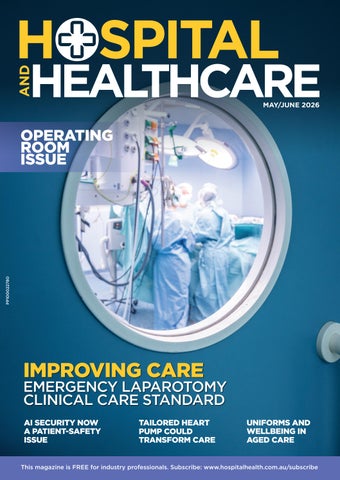
OPERATING ROOM ISSUE
Editor: Dr Joseph Brennan, PhD hh@wfmedia.com.au
Publishing Director/MD: Janice Williams
Art Director/Production Manager: Linda Klobusiak
Circulation: Alex Dalland circulation@wfmedia.com.au
Copy Control: Ashna Mehta copy@wfmedia.com.au
Media and Marketing Consultant: Richard Emanuel +61 416 751 750 remanuel@wfmedia.com.au
Advertising Manager: Richard Austin +61 401 400 866 raustin@wfmedia.com.au
PUBLISHED BY Westwick-Farrow Media
A.B.N. 22 152 305 336
Welcome to the May/June 2026 Operating Room Issue
www.wfmedia.com.au
Head Office Unit 5, 6-8 Byfield Street, North Ryde Locked Bag 2226 North Ryde BC NSW 1670 AUSTRALIA
ph: +61 2 9168 2500
If you have any queries regarding our privacy policy please email privacy@wfmedia.com.au
Subscriptions for unregistered readersprice on application
Westwick-Farrow Media is committed to using environmentally responsible print services to produce our publications. This edition is made with
mixture of materials from FSC-certified forests, recycled materials, and/or FSC-controlled wood. While controlled wood doesn't come from FSC-certified forests, it mitigates the risk of the material originating from unacceptable sources . It is delivered in a totally degradable plastic wrapper.
Patients with urgent abdominal conditions such as a bowel obstruction, bowel perforation or serious internal bleeding can be among the sickest in the hospital. Delaying surgery, when needed, is highly likely to worsen outcomes and can be catastrophic. But emergency laparotomy is a complex and high-risk procedure. Though one of the most common emergency surgeries in Australia — with more than 15,000 performed each year — it is associated with a mortality rate of around 7%, with estimates as high as 20% in some populations.
Mounting international and Australian evidence showing a structured approach to the care of patients undergoing emergency laparotomy could substantially improve outcomes led by the Australian Commission on Safety and Quality in Health Care (the Commission) to release Australia’s first national Emergency Laparotomy Clinical Care Standard, which was officially launched in May. In our lead feature, Conjoint Professor Carolyn Hullick — Chief Medical Officer at the Commission and an emergency physician — outlines the new Standard, which provides health professionals with clear guidance on timely recognition and escalation, risk stratification, shared decision-making and the importance of multidisciplinary perioperative care.
Also in this issue, we have a suite of operating room-aligned case studies and articles on recent research, together with some of
WANT TO CONTRIBUTE?
our regular features and usual breadth of coverage. This includes our A Day in the Life series, this time with insights into the day of Declan Hofbauer. Declan is Manager of The Royal Melbourne Hospital’s Injury Management Team, whose ‘Recovery at Work’ collaborative approach between injured workers and their managers was named winner of the Leading Return to Work Practice Award in this year’s WorkSafe Awards. We also have the co-founder and CEO of an integrated governance, risk and compliance AI company putting forward the view that health care has crossed a governance complexity threshold — with AI agents changing the benchmark for what good governance looks like; the founder and CEO of a custom uniforms company considering the more-than-functional significance of workwear in aged care — where uniforms, when thoughtfully considered, can quietly support emotional wellbeing, dignity and connection; plus, much more. Happy reading.
Dr Joseph Brennan, PhD Editor, H+H
We welcome articles and research reports from health professionals across Australia for review for the bimonthly print publication and our daily web page. If you have a story you think would be of interest, please send an email to hh@wfmedia.com.au
The Rounds Updates in health care
National Pain Alliance launched to advocate for chronic pain
The National Pain Alliance — a “cross-condition, lived experiencecentred coalition of national organisations representing communities deeply impacted by chronic pain” — was officially launched by Chronic Pain Australia at Parliament House, Canberra on 30 March.
Steered by Chronic Pain Australia, the alliance seeks to advocate for chronic pain to be formally recognised within national health data and policy frameworks.
“The National Pain Alliance brings together organisations representing a wide range of conditions to ensure chronic pain is finally recognised in national data, policy and health system planning,” Chair of Chronic Pain Australia Nicolette Ellis said. “If we continue to overlook chronic pain as a national health priority, the cost will only grow — not just the personal costs to individuals and families, but for the economy and the health system.
“Millions of Australians are being held back from participating fully in work, community and family life, and the nation simply cannot afford to ignore that.” Without reform, Chronic Pain Australia said the annual cost of chronic pain is projected to rise from $139.3 billion in 2018 to $215.6 billion by 2050.
Chronic Pain Australia said it will work with clinicians, government, researchers and community organisations and focus on three key priorities: recognising chronic pain as a national health priority; improving
national data, measurement and research visibility; and strengthening policy coordination and access to evidence-informed care.
The founding members of the National Pain Alliance include Chronic Pain Australia, Endometriosis Australia, MS Australia, Arthritis Australia, Wounds Australia, Musculoskeletal Health Australia, CRPS Awareness – The Purple Bucket Foundation and the Connective Tissue Disorders Network Australia.
AdPha partners with Therapeutic Guidelines to deliver obesity clinical guidance
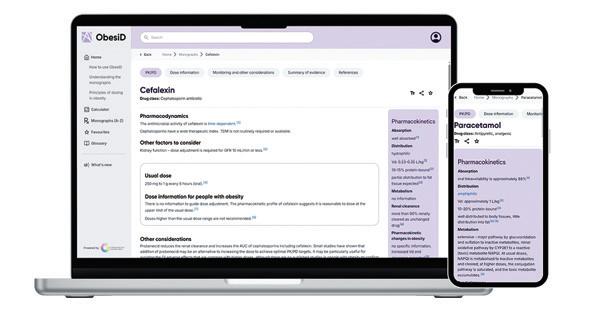
Advanced Pharmacy Australia (AdPha) has partnered with Therapeutic Guidelines to deliver AdPha’s new clinical resource, ObesiD. The resource offers concise evidencebased advice on more than 70 medicines and guidance on dosage adjustment principles to support use of medicines in patients with obesity.
AdPha’s ObesiD is available on desktop and mobile apps from 16 March, powered by Therapeutic Guidelines’ technology platform. Users with access to Therapeutic Guidelines will now be able to seamlessly switch between products.
Approximately one-third of Australian adults live with obesity, and a further 30% are overweight, figures that AdPha said show why a dedicated guide to equip healthcare professionals with evidence-based strategies to tailor patient treatment is essential.
“This partnership represents an exciting and innovative step forward in Australian health publishing,” Therapeutic Guidelines CEO Dr Leigh-Anne Claase said. “By working closely with AdPha, we can bring vital guidance to even more health professionals nationwide. We will continue to provide resources that are not only reliable and evidence-based, but also more accessible and user friendly for the Australian healthcare community.”
The partnership will also encompass the upcoming launch of a redesigned and improved Don’t Rush to Crush, a guide to safely administering oral medicines to people with enteral feeding tubes or swallowing difficulties, AdPha said.
Improving care for some of the sickest patients in the hospital
new national standard for emergency laparotomy
Read the Standard
CONJOINT PROFESSOR CAROLYN HULLICK FACEM*
Australia’s first Emergency Laparotomy
Clinical Care Standard will help health services develop timely, appropriate and standardised approaches to care that will save lives, Chief Medical Officer at the Australian Commission on Safety and Quality in Health Care writes.
When a patient presents to my emergency department with a stroke in the middle of the night, the care pathways and protocols are clear — and these processes are similar across Australia.
But when a patient’s condition means they may need an emergency laparotomy — one of the most time-critical and high-risk surgeries we see outside of major trauma — there is no such standardised national approach.
Patients with urgent abdominal conditions such as a bowel obstruction, bowel perforation or serious internal bleeding can be among the sickest in the hospital. Many of these patients either have sepsis on presentation or are at high risk of developing it. Delaying surgery, when needed, is highly likely to worsen outcomes and can be catastrophic.
But emergency laparotomy is a complex and high-risk procedure. Though one of the most common emergency surgeries in Australia with more than 15,000 performed each year, it is associated with a mortality rate of around 7%, with estimates as high as 20% in some populations. Older adults, people with frailty or significant comorbidities, and people presenting with sepsis are at particularly high risk.
Recovery from an emergency laparotomy may involve days to weeks in hospital, postoperative complications such as infection and pneumonia, the need for further high-risk interventions, and potential loss of independence for older patients.
Patients who may need an emergency laparotomy, and their families, are confronted with an unexpected and potentially devastating diagnosis for which a positive outcome may not be guaranteed. This means difficult decisions must be made under extreme time pressure, with clinicians they don’t know.
In some cases, surgery may not significantly prolong or improve life, so clinicians must have honest conversations with patients and loved ones about the benefits and risks of surgery and what matters most to the patient.
Despite these complexities, standardised, evidence-based clinical pathways for emergency laparotomy are not embedded in practice in Australia as they are for other timecritical conditions such as stroke or cardiac events, and other surgical emergencies such as hip fracture.
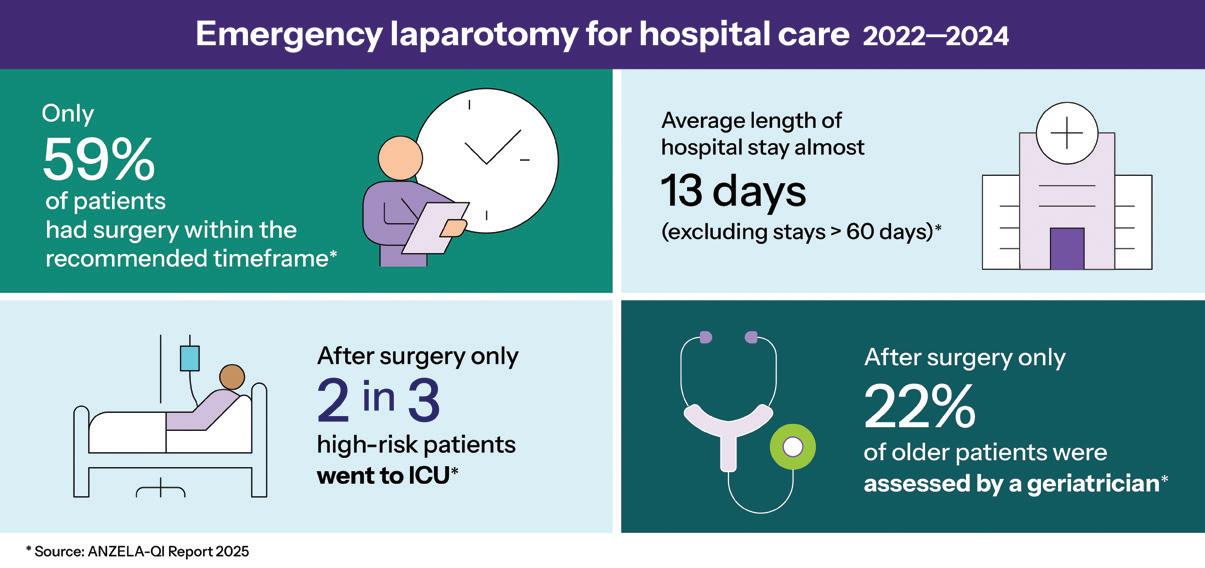
This has led to significant variation in care, for example in timely access to surgery. In cases where a surgeon had recommended surgery within two hours, only 20% reached theatre in time, according to the latest Australian and New Zealand Emergency Laparotomy Audit –Quality Improvement (ANZELA-QI) report.
The report also showed that access to a consultant surgeon and consultant anaesthetist for operations after hours is inconsistent. Rates of frailty assessment also remain low, and less than a quarter of older emergency laparotomy patients are assessed postoperatively by a geriatrician.
A new national standard of care
Mounting international and Australian evidence shows a structured approach to the care of patients undergoing emergency laparotomy can substantially improve outcomes.
This is why the Australian Commission on Safety and Quality in Health Care (the Commission) has released Australia’s first national Emergency Laparotomy Clinical Care Standard to improve care for patients aged 18 and over undergoing emergency surgery for urgent, high-risk, intra-abdominal conditions, performed via open or laparoscopic approaches.1
Developed by the Commission with guidance from an expert topic working group, the new Clinical Care Standard describes the care patients should be offered by clinicians and healthcare services throughout Australia.
The Standard provides health professionals with clear guidance on timely recognition and escalation, risk stratification, shared decision-making and the importance of multidisciplinary perioperative care.
It includes quality statements that describe the expected standard for key components of patient care, with explanations of what
Key takeaways for health services
Evidence shows a systematic approach to emergency laparotomy care — before, during and after surgery — reduces mortality and improves functional outcomes for patients undergoing this high-risk procedure.
The Standard highlights a range of systems and pathways health services can use to support clinical care in key areas.
Rapid assessment and escalation
• Establish systems for rapid assessment and escalation of patients with symptoms suggestive of time-critical intra-abdominal conditions, and prompt referral for surgical review.
• Use a sepsis pathway and train staff to identify and act on sepsis.
Identifying high-risk patients
• Ensure consistent and standardised use of preoperative risk and frailty assessments; and use them to support discussions between clinicians, patients and families and to help guide their care pathways.
• Enable prompt access to theatre. Ensure the presence of a consultant surgeon and consultant anaesthetist for high-risk patients.
• Establish routine consultation about post-operative critical care for high-risk patients, and prioritise access when critical care is necessary.
these mean for patients, clinicians and healthcare services.
Along with the quality statements, the Standard contains a set of clinical indicators that allow health services to monitor care delivery and support implementation of local quality improvement initiatives.
The Standard also addresses specific considerations for patients who may need to be transferred to access investigations
Risks and goals of care discussions
• Provide support for clinicians to discuss and document patients’ goals of care and limitations on medical treatment, and ensure consistent use of a goals of care form.
• Ensure senior clinician involvement in shared decision-making about surgery when it is likely that an emergency laparotomy will not benefit a patient, or will be inconsistent with their goals and preferences.
• Provide clinicians with education, training and access to structured shared decision-making tools to support sensitive, clear and direct discussions about risk and prognostic issues.
Involving physicians for older patients
• Establish suitable local systems to support collaborative management with an appropriate physician (such as a geriatrician) with skills in the care of older patients.
Using the indicators in the Standard will support health services to identify gaps, understand what quality improvement measures are needed, and to track change.
Importantly, the indicators used in the Standard are aligned with ANZELA-QI, meaning health services that adopt the Standard and also choose to participate in the clinical quality registry will be able to compare themselves with similar services nationally.
or suitable treatment. In regional, rural and remote locations it is essential that systems and networks support timely patient-centred decision-making about transfer, coordination between services and appropriate interventions before transfer.
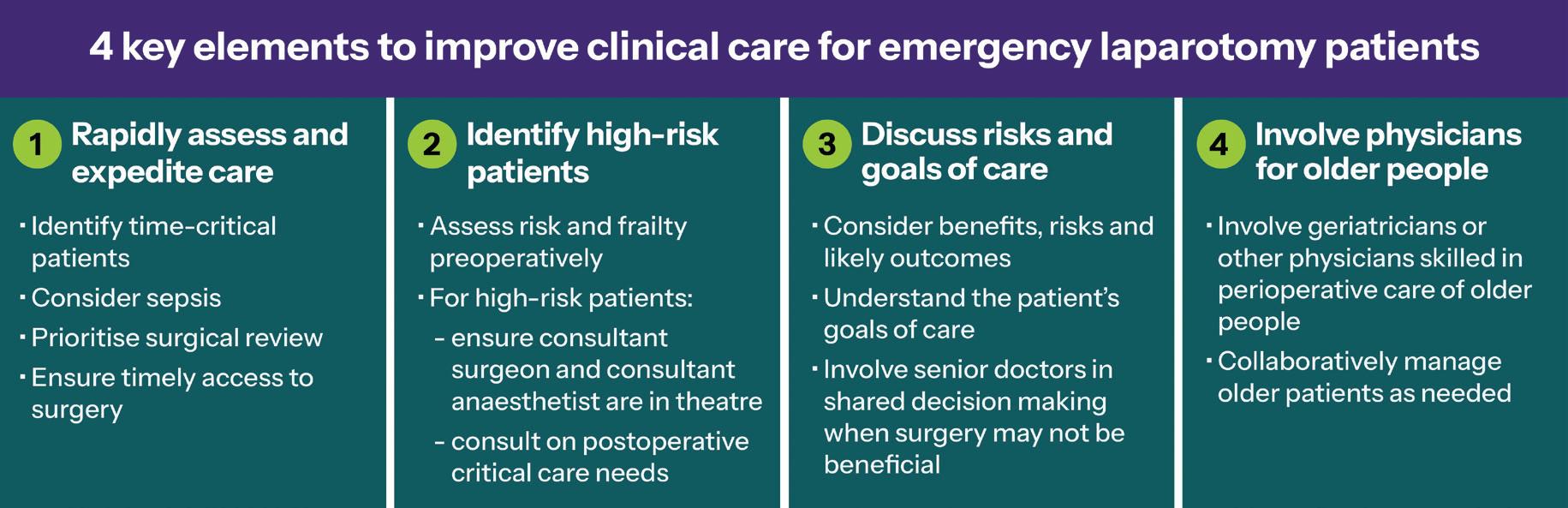
The best-practice guidance described in the Standard can be distilled into four key elements that make a vital difference to the care received by emergency laparotomy patients. (See Figure 1).
Figure 1: Four key elements to improve clinical care for emergency laparotomy patients
Though one of the most common emergency surgeries in Australia with more than 15,000 performed each year, it is associated with a mortality rate of around 7%, with estimates as high as 20% in some populations.
A chance to improve outcomes for patients
As Australia’s first national standard for emergency laparotomy, the new Clinical Care Standard is an opportunity for Australia to experience the improvements in care that similar initiatives have achieved internationally.
In the United Kingdom, for example, the National Emergency Laparotomy Audit (NELA) has been credited with substantial improvements in emergency laparotomy outcomes, including a reduction in the mortality rate of more than 30% in its first 10 years.
It is the Commission’s intention that the Standard supports clinicians and health services to provide care that patients want
and need, improve clinical decision-making and unwarranted variation, reduce the risk of complications, and lower readmission rates.
As an emergency doctor who understands what it’s like to care for a deteriorating patient and their distraught family, I urge all health services to make use of this Standard to improve pathways of care as we have for other time-critical presentations.
1. Lower-risk emergency surgical procedures, such as appendicectomy and cholecystectomy, are not covered by the Standard. Trauma laparotomy and vascular, gynaecological and urological emergency procedures are also excluded.
Clinical Care Standards are developed by the Australian Commission on Safety and Quality in Health Care. Their use and applicability for hospitals assessed to the National Safety and Quality Health Service Standards is described in this fact sheet on Applicability of Clinical Care Standards: www.safetyandquality.gov.au/publications-and-resources/resource-library/fact-sheet11-applicability-clinical-care-standards.
Find out more about the Emergency Laparotomy Clinical Care Standard on the Commission’s website: www.safetyandquality.gov.au/el-ccs.
*Conjoint Professor Carolyn Hullick is Chief Medical Officer at the Australian Commission on Safety and Quality in Health Care and an emergency physician.
SUPPORTING CASE STUDY
Using data to improve emergency laparotomy care in regional WA
Bunbury Regional Hospital acts as a regional resource centre for the entire south-west of Western Australia and performs about 15 emergency laparotomies a month.
Like other rural and regional hospitals, it must negotiate challenges such as distance, limited resources and a high-churn workforce when providing emergency care for time-critical high-risk conditions.
Despite this, since it began examining emergency laparotomy data at regular clinical review meetings, the hospital has significantly improved its performance against ANZELA-QI’s key indicators of emergency laparotomy care, and has one of the lowest crude mortality rates in Australia.
A key area of improvement has been clinicians’ use of clinical frailty assessment and mortality risk scores to help inform perioperative care pathways such as post-operative admission to ICU, and to help senior clinicians when discussing difficult decisions with patients and families.
The hospital now considers these practices business as usual. As a result, decisions about post-operative care have improved and surgery that does not align with patients’ goals of care is rare.
Dr Jacinta Cover, general surgeon and Head of Department and Medical Co-Director for Surgical, Paediatric and Maternity Services at
Bunbury Regional Hospital, says these practices have become the accepted way of working in the department.
“Our registrars know they can’t call me at 2 am about doing a laparotomy unless they already have these scores,” she says.
“Regularly going through that data cycle and looking at the improved outcomes overall for the patients has brought everybody on board; it’s a standardised process in our department.”
The health service has also improved emergency theatre access by confining elective surgery to certain hours of the day. It uses data to predict recovery and ensure there is access to critical care for those who are likely to need it.
“From a patient journey point of view, it means there is much less consultant-led variation in the journey. Using ANZELA-QI has really helped us to standardise our approach,” Cover says.
Dr Jacinta Cover
An era for AI agents
why healthcare leaders can’t afford to manage governance on spreadsheets
SAM RILEY*
According to the CEO and co-founder of an integrated governance, risk and compliance AI company, health care has crossed a governance complexity threshold — with AI agents changing the benchmark for what good governance looks like.
Australian healthcare leaders are being asked to govern more, prove more and respond faster than the old operating model was ever designed to support. Compliance has become more proactive. Privacy, cyber, resilience and sustainability now sit much closer to the centre of operational decisionmaking. AI in health has added a new layer of governance altogether. What were once treated as separate issues now converge in the same operating environment. Yet many organisations are still managing critical governance work through spreadsheets,
inboxes, static registers and manual, disconnected systems.
That is the mismatch at the heart of the problem. Health care is trying to govern a more complex, more regulated and more exposed system with tools built for static administration. For many leaders, this no longer feels like governance in the formal sense. It feels like constant reconciliation: chasing updates, assembling evidence, briefing the board with caveats and hoping nothing important is sitting in a folder or spreadsheet nobody has touched for weeks.
A spreadsheet can store information, but it cannot coordinate accountability. In the era of AI agents, that distinction matters more than ever. Spreadsheets were built to record activity. Healthcare leaders now need systems that coordinate action. >
The question is no longer whether health care should use AI. It is what operating model will let health care use AI agents safely, traceably and at scale.
The enemy is fragmentation
Health care does not have a governance problem because leaders lack frameworks. It has a governance execution problem because the work is still fragmented. There is no shortage of obligations, committees or dashboards. What many healthcare organisations still lack is a joined-up operating layer that connects objectives, obligations, risks, actions, evidence and reporting. That is why the issue is not whether a hospital uses Excel. The issue is whether Excel is acting as the governance backbone.
This is not a story about careless teams. It is a story about capable people trying to manage overlapping obligations through systems that do not work together. The result is familiar across health care: duplicated effort, stale evidence, repeated data entry, caveated board papers and too much dependence on the few people who know where everything is. Spreadsheets are not the problem. Running mission-critical governance across spreadsheets is.
Compliance has moved beyond record-keeping
Australian health care is moving towards a more proactive, risk-based compliance model. That raises the bar. Leaders need more than a register of obligations. They need to know what is owned, what is overdue, what evidence is current, what risk has shifted and what it impacts for the organisation. Compliance is no longer a documentation exercise. It is an enabler to run a better organisation.
The human cost of fragmented systems and spreadsheets is easy to miss. Smart people end up chasing evidence and rebuilding the same picture for different audiences, rather than strengthening the system itself and building more capability into the organisation. Governance becomes a monthly or annual ‘looking back’ exercise, struggling to prove control exists, when it should be the daily system that creates confidence from the Board down.
Risk, resilience and sustainability now overlap
Healthcare risk no longer sits in neat columns. Privacy, supply, facilities, sustainability and AI risks spill quickly across reputation,
continuity of care, resilience, cost and trust. The organisation experiences those issues as an overlap. Governance still too often handles them as separate files, forums and owners. The same applies to digital risk. In health care, a cyber incident rarely stays confined to systems. It can quickly become a patient access issue, a service delivery issue and a board issue. The stakes are high because healthcare data is unusually sensitive, and because fragmented governance rarely stays neatly inside one category for long.
A resilience plan in a folder is not resilience. It is only resilience when it changes behaviour. In health care, resilience is the organisation’s ability to keep care moving when conditions change. Sustainability belongs in that same operating core. It now reaches into procurement, facilities, resilience, cost, reporting and community trust. It is not a side report. It is becoming part of safe, resilient service delivery.
AI agents change the governance standard
AI agents matter because they change the benchmark for what good governance looks like. Healthcare organisations are not only beginning to govern AI as a new source of risk. They are also entering a world in which AI agents can help carry out governance work by chasing actions, surfacing overdue tasks, connecting evidence, escalating issues and helping prepare reporting. AI agents are most valuable where work is repetitive, evidence-heavy and crossfunctional. Healthcare governance fits that description almost perfectly.
That is when the spreadsheet model starts to look fundamentally unfit. AI agents are only as useful as the governance system they act within. If obligations sit in one file, risks in another, controls somewhere else, evidence in inboxes and reporting in decks assembled at the last minute, agents have nothing coherent to work with. In health care, spreadsheet governance is really hindsight governance. AI agent-led governance is about foresight, coordination and proof. The question is no longer whether health care should use AI. It is what operating model will let health care use AI agents safely, traceably and at scale.
The cost of delay is rising Healthcare leaders are not short of effort. They are short of connected execution. Every new requirement, reporting cycle, resilience review, sustainability obligation, privacy concern and AI decision adds another layer to an already crowded governance landscape. The real risk is not that teams are doing nothing. It is that they are working hard in systems that do not work together.
What health care needs is an operating layer that connects objectives, obligations, risks, actions, evidence and reporting: governance that is objective-led, always-on and designed for coordination rather than clerical maintenance.
Because this is no longer simply an efficiency problem. The cost of fragmented governance is measured in slower decisions, weaker assurance, more fragile operations and less confidence at the leadership level. It is measured in the discomfort of walking into a board or audit meeting without defensible answers, and in the frustration of watching smart people spend their time chasing evidence instead of improving care.
The best healthcare leaders are no longer asking, “How do we report this?” They are asking, “How do we run this better?” In health care, that is no longer an administrative distinction. It is a strategic one.
Patients and their families have co-designed a clinical trial to determine if invasive devices used to monitor cardiac function during and after surgery help or harm the more than 20,000 Australians who go under the knife for open heart surgery each year.
Led by the Monash Victorian Heart Institute, the 2000-patient PUMA trial will compare the commonly used pulmonary artery catheter (PAC) and the central venous catheter (CVC); the latter being a less invasive, simpler alternative that, researchers hope, will reduce unnecessary treatments, shorten ICU stays, reduce healthcare costs, and significantly cut the environmental footprint of intensive care by 2030.
“These invasive devices have been broadly de-adopted in other high-risk patient groups after large clinical trials due to sepsis, acute respiratory distress syndrome, and use in non-cardiac surgery failing to show a benefit to patients,” said lead investigator Dr Luke Perry, Head of Anaesthetic Research at the Victorian Heart Institute. “PUMA will resolve decades of international controversy around the role of pulmonary artery catheters in contemporary practice, paving the way for high-value care that could reduce major complications and get patients home to their families sooner.”
Dr Luke Perry, Head of Anaesthetic Research at the Victorian Heart Institute, with the less invasive central venous catheter (left) that will simplify heart surgery and result in better patient outcomes.
Transforming the treatment experience
Located 500 metres from Christchurch Hospital, the Bone Marrow Cancer Trust’s Rānui Apartments offer housing for patients and their families travelling to Christchurch for life-saving treatment. The $18.9 million project was designed by Plus Studio and built by Higgs Construction, providing 43 self-contained apartments. It opened to residents in November 2024, and its proximity to Christchurch Hospital has nearly tripled the Trust’s capacity, making Rānui the largest provider of patient accommodation in the South Island and the only provider that supports patients and families of any age and any treatment type.
The design features three apartment types repeated throughout — intended to maximise efficiency without sacrificing quality. Precast concrete complemented by timber fins and pale blue facades are used in the four-storey, L-shaped building — the colour having been selected for its capacity to provide calm, reduce stress and support wellbeing. There is a mix of one-, two- and three-bedroom units, along with studio rooms, with the design
allowing for multiple room configurations to accommodate various family sizes and needs.
Comfortable beds, ample living spaces, and complete bathroom, kitchen and laundry amenities are included in each apartment, while the ground floor features a reception area, communal spaces, offices, outdoor living areas and parking facilities. Within a few months of opening the facility provided close to 4000 nights of accommodation, serving 590 families.
“This facility transforms the treatment experience for patients and their families,” Bone Marrow Cancer Trust CEO Mandy Kennedy said. “Rānui Apartments provides a purpose-built environment that addresses their specific needs during treatment.”
... to provide calm, reduce stress and support wellbeing.
A day in the life of Declan Hofbauer a hospital’s injury management team manager
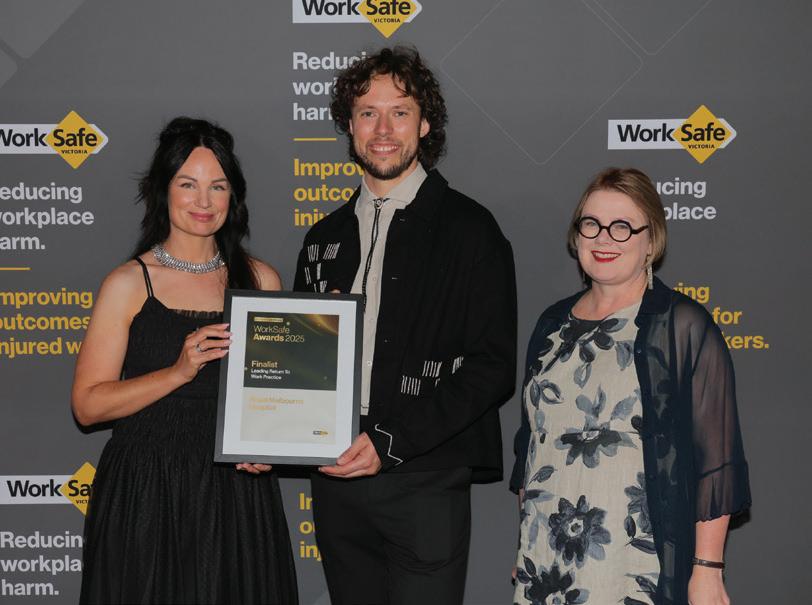
Declan Hofbauer is Manager of The Royal Melbourne Hospital’s (RMH) Injury Management Team, whose ‘Recovery at Work’ collaborative approach between injured workers and their managers was named this year’s winner of the Leading Return to Work Practice Award in Victoria’s 2025 WorkSafe Awards. Being the RMH’s Injury Management Team Manager since 2023, and an Injury Management Consultant with the hospital before that, Declan worked previously in injury management, claims and advisory roles, and as an osteopath — including in his own practice in Warburton, Victoria. Here’s a day in his life.
07:00 It’s an early start to wake up with my little one, but it’s all worth it as we make some coffee together (for me) as well as organising a “sooboo” (that’s two-year-old for “smoothie”) before getting out the door.
08:00 Once I’m in the office, I’ll kick things off with a team check-in and an email and admin catch-up. A big part of the day is supporting my team; whether that’s sense-checking decisions, coaching through complex claims or helping prioritise competing demands.
10:00 Coffee time.
10:15 This time is usually invested in stakeholder engagement: meeting with service leadership across the hospital and external stakeholders as a team to align on claims and current projects. We work closely with directors and senior leadership to ensure we have topdown support for our injured employees and Recovery at Work, addressing systematic barriers to ensure success.
I will then collaborate with my team members on our strategy, either at a claim or program level depending on the conversation. Throughout the day, there is a consistent focus on ensuring injured workers receive timely, consistent and high-quality injury management support, while also lifting capability across our services.
07:15 Each day I will ride my bike to day care for drop-off, making sure I give the little one a big cuddle before cycling into work at our city office.
09:00 Once I’ve caught up with my team and ensured they are suitably supported, I’ll jump on an organisation-wide huddle to understand the pulse of the hospital and where the demand for our services is. By doing this, we can shape how our team partners with the leaders of the organisation. During these meetings, we’ll occasionally be delivering an organisation-wide ‘people first’ message, such as promoting our Safety Culture team and Injury Management program.
Declan and Rachel Baker (Director of Safety Culture at RMH) with WorkSafe Victoria CEO Cathy Henderson at the 2025 WorkSafe Awards in February 2026
12:30 In our team, afternoons are dedicated to project work. This includes process development or strategic projects for our program. I’ll also hold meetings with stakeholders — both internal and external.
Recently, we developed an internal dashboard with our Digital Innovation team, delivering live data to senior leaders on our early intervention program. Visibility is so powerful in an organisation of our size.
12:00 Time for some lunch.
Currently we are working with agencies and providers on an innovative program designed to improve access to treatment and drive Recovery at Work outcomes with a people-first model. Ad hoc committee and working group meetings also occur during this time.
17:00 At the end of the day, I’m back on the bike to clear my headspace before jumping back into family life and getting organised for another day.
22:00 Sleep.
15:00 Coffee time again! 15:15 Afternoons will regularly continue with more strategic work such as targeted desktop claim reviews that will provide support to the Injury Management Business Partners. Each week, we’ll also conduct audit and compliance reviews.
The day will be closed out with any urgent admin that needs to be addressed. We are a 24/7 business, and much like the rest of the hospital, responding to enquiries is prioritised in a triage-style manner.
Declan and the RMH team explain their WorkSafe Awards-winning model
(Credit: WorkSafe Victoria)
A Day in the Life is a regular column opening the door into the life of a person working in their field of health care. If you would like to share a day in your working life, please write to: hh@wfmedia.com.au
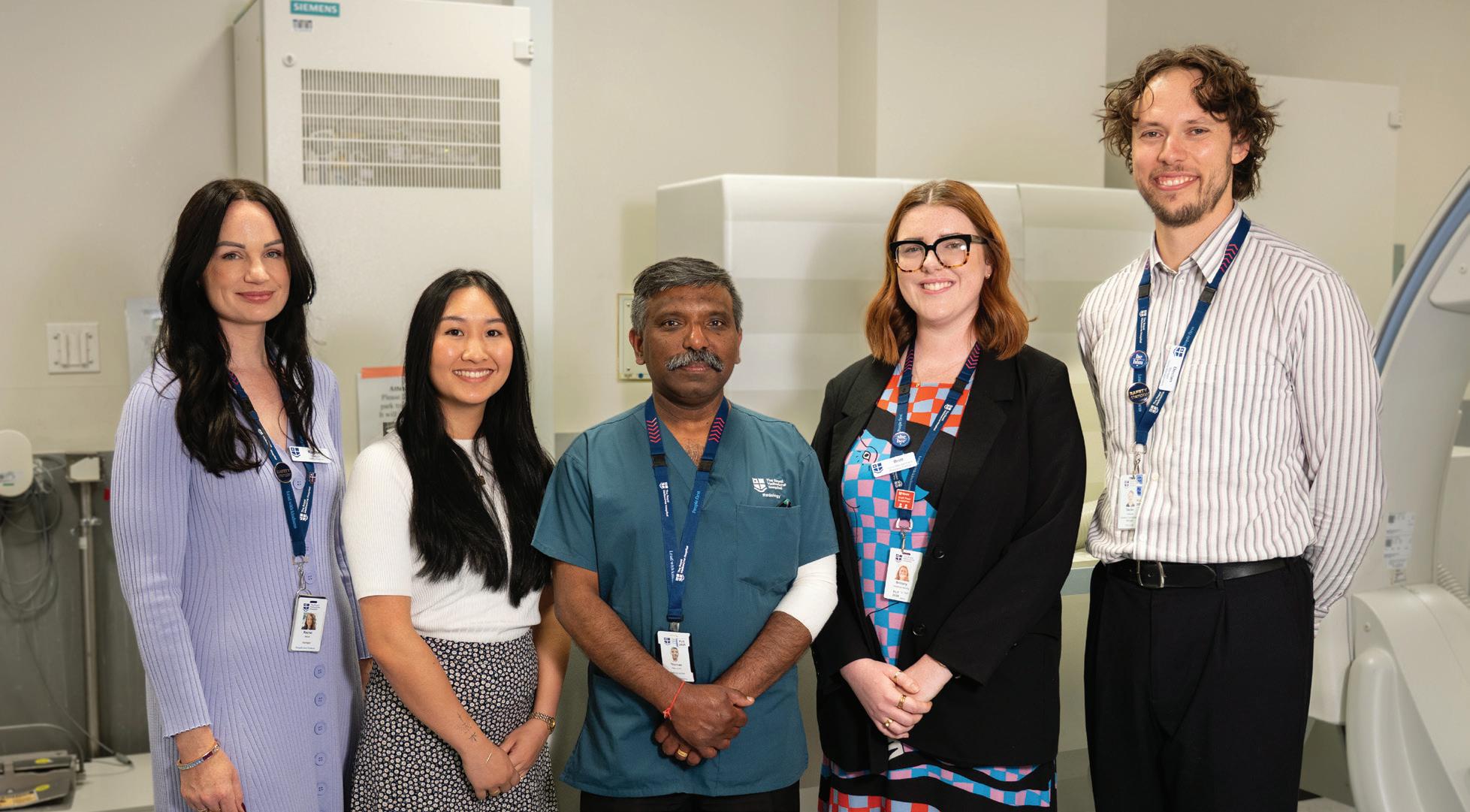
The RMH’s Rachel Baker, Linda Huynh, Brittany Hopkins-Hennig and Declan Hofbauer alongside RMH radiographer Thomas John (centre) who was supported through their WorkSafe Awards-winning model
Breastfeeding challenges healthcare professionals should be prepared to address
COURTNEY GARLAND*
A neonatal nurse and lactation consultant sets out what she sees as the most common breastfeeding challenges healthcare professionals should be prepared to address.
Across more than a decade working in the Neonatal Intensive Care Unit, I’ve supported hundreds of families through those first fragile days of feeding. While every journey is unique, the challenges mothers face often follow familiar patterns. When we, as healthcare professionals, can anticipate and respond with evidence-based guidance and empathy, we set mothers up for success — not just in breastfeeding, but in confidence, connection and overall wellbeing.
The early postpartum period is an emotional and physical crossroad. Hormones are fluctuating, recovery is ongoing and even the smallest challenge can feel monumental. Every word, touch and piece of advice from a clinician has the power to build confidence or unintentionally create doubt.
Below are the most common breastfeeding challenges I see in practice and how healthcare teams can better support mothers through them.
1. Getting the right latch and positioning
A good latch is the cornerstone of successful breastfeeding, yet it’s one of the hardest things to master. Pain, shallow attachment, clicking sounds or flattened nipples post-feed all point to latch or positioning issues.
Encourage the semi laid-back (biological nurturing) position early on. This allows babies to use instinctive reflexes to find the breast while keeping the mother comfortable — ideal after birth when upright sitting can be uncomfortable. Correcting latching issues early prevents nipple trauma, ensures efficient milk transfer and boosts maternal confidence.
2. Managing engorgement when milk comes in
Around days three to five after giving birth, many women experience a sudden surge of fullness, warmth and discomfort. Engorgement can flatten the nipple, making attachment harder.
Suggest laid-back or side-lying feeding positions for comfort, alongside gentle breast massage or expressing just enough milk to soften the areola before a feed.
During this phase, leakage is common — and frustrating. Tools like silicone breast milk collectors can help relieve surface pressure and collect milk passively, offering comfort while allowing mothers the chance to begin building their ‘milk stash’ without needing to pump — something many appreciate when everything feels overwhelming.
3. Healing sore, cracked or damaged nipples
Nipple trauma is one of the top reasons women stop breastfeeding prematurely — and it often stems from poor attachment or frequent unlatching. Once damage occurs, feeding can become excruciating.
Reassess positioning, then support healing with topical treatments such as lanolin, coconut oil or nipple ointment. If severe, a short break from direct feeding may be needed. During that time, mothers can hand express or pump as appropriate to maintain supply — but be mindful that overuse of silicone pumps in the early weeks may contribute to oversupply and engorgement.
If bottle feeding temporarily, teach paced feeding using a slow-flow teat to help protect the breastfeeding rhythm and prevent flow confusion.
4. Recognising and managing nipple thrush
Nipple thrush is an invisible but intensely painful condition, often triggered by antibiotic exposure during birth or excessive moisture from soaked breast pads.
Encourage mothers to describe symptoms in their own words; many report a ‘stabbing’ or ‘burning’ pain deep behind the nipple, even without visible signs.
Remind them to keep nipples dry and change
pads frequently. Reusable silicone shells can help by keeping milk off the skin, allowing airflow and reducing the damp environment thrush thrives in.
If infection is suspected, coordinate treatment for both mother and baby to prevent reinfection and prolonged pain.
5. Supporting mothers with perceived low milk supply
Few concerns cause more anxiety than “I don’t think I have enough milk”. In most cases, this fear stems from misunderstanding normal newborn behaviour.
Frequent feeding, cluster feeding and unsettled evenings are developmentally normal, not indicators of low supply.
Educate mothers on the true markers of adequate intake — swallowing sounds during feeds, softening of the breasts, steady weight gain and healthy nappy output.
Encouragement and reassurance at this stage are invaluable. Confidence alone can influence supply by reducing stress hormones that inhibit milk letdown.
6. Preventing and managing blocked ducts and mastitis
Blocked ducts and mastitis often arise in the first few weeks when feeds are skipped, bras are too tight or latch is suboptimal.
Teach mothers to recognise early warning signs — localised tenderness, warmth or a firm lump.
Encourage continued feeding with the baby’s chin pointing towards the blockage, warm compresses and gentle massage towards the nipple.
If systemic symptoms develop — fever, chills, body aches — refer promptly for antibiotic therapy. Early intervention reduces the risk of abscess and supports ongoing breastfeeding.
7. Prioritising emotional and mental health support
Amid the physical challenges, emotional wellbeing is often the deciding factor in breastfeeding continuation.
Mothers who feel supported and seen are more likely to persevere through setbacks. Words matter: “You’re doing beautifully” can mean more than any technical correction.
Approach every consult with compassion. Offer plans, not ultimatums. Validate her efforts. When mothers feel safe and empowered, their feeding outcomes and mental health improve dramatically.
Final thoughts
Breastfeeding support is not just a clinical skill — it’s a blend of evidence, empathy and presence.
When healthcare professionals are equipped to identify and respond to the most common challenges early, we protect more than breastfeeding rates: we protect confidence, connection and mental health.
A mother may forget the exact advice you gave, but she’ll always remember how you made her feel. That’s the kind of care that changes outcomes and lives.
*Courtney Garland — a neonatal nurse and lactation consultant — is Board Chair at Haakaa.
Featured Products
Keep up with the latest industry innovations
Intracranial pressure monitoring device
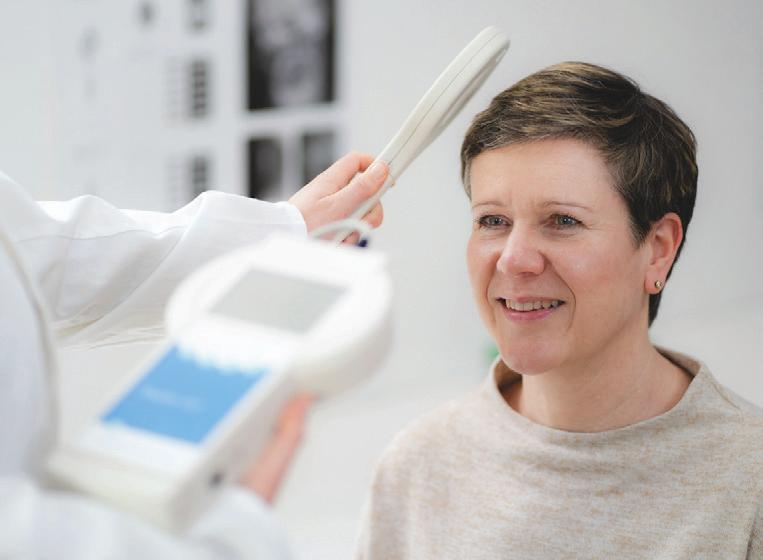
M.scio is an intracranial pressure (ICP) monitoring device designed for long-term implantation. It is designed to provide an option for managing hydrocephalus, a chronic, neurological condition where CSF accumulates and builds up in the brain and can affect people of all ages, from newborns to older Australians. The M.scio is a coin-sized device implanted along the shunt tubing at the burr hole site. A compressible silicone membrane responds to changes in CSF pressure, which is detected by a measuring cell and transmitted telemetrically to a hand-held receiver for real-time ICP monitoring.
Primarily used in patients with complex hydrocephalus, M.scio is intended to support management of shunt-related complications, CSF disturbances and ICP control. It is designed to enable precise, non-invasive monitoring without zeroing or complex set-ups, and with a 44 Hz sampling rate that provides detailed pressure curves and clinically relevant ICP morphologies for both acute and long-term care. Readings remain stable with minimal drift (<2 mmHg) for up to four years, ensuring consistent accuracy.
Two variants of M.scio are now available in Australia: M.scio Flat (provided with or without catheter) is intended for use in the treatment of patients with hydrocephalus (including subarachnoid haemorrhage induced hydrocephalus) by measuring intracranial pressure; and M.scio Dome (provided with or without catheter) is intended for use in the treatment of patients with hydrocephalus (including subarachnoid haemorrhage induced hydrocephalus) by measuring intracranial pressure, enabling hypodermic infusion or injection of therapeutic substances, and facilitating cerebrospinal fluid drainage.
B. Braun Australia Pty Ltd www.bbraun.com.au
HEPA Filter
The Megalam HEPA filter is purpose-built to meet the rigorous EN1822:2009 standards, providing a certified 99.995% filtration efficiency at the Most Penetrating Particle Size (MPPS) to ensure optimum particulate removal. Every filter is subjected to automated scan testing for accurate leak detection and a DEHS aerosol challenge, being engineered to deliver excellent quality assurance and consistent performance for demanding hospital applications.
The innovative ePTFE media is designed to facilitate superior depth loading capability, effectively capturing and retaining microscopic airborne contaminants. Its self-supporting pleated design is engineered to offer extended service intervals and promote optimal airflow, which results in lower energy consumption and cost savings over the filter’s operational life.
Constructed with a robust, anodised aluminium frame, the filter is designed to exhibit high structural integrity and resistance to corrosion, even under continuous use. The fully chemical-free construction is designed to prevent any off-gassing, to make the Megalam HEPA filter a safe and reliable choice for maintaining sensitive healthcare environments where clean air and patient safety are critical.
Camfil Australia Pty Ltd www.camfil.com.au
High-contrast tapware
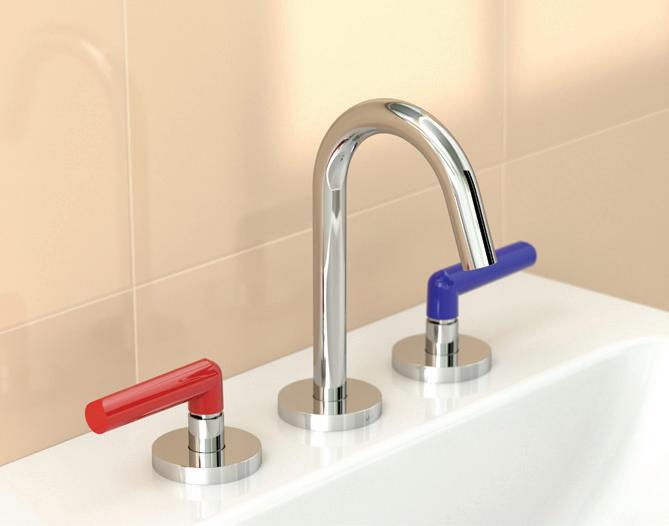
GalvinAssist High-Contrast
Tapware is designed to play a practical role in improving visibility and operational clarity in environments where users may have reduced or variable vision. The lead-free GalvinAssist Lever and Cross Wall Top Assemblies incorporate red and blue colour indicators that provide clear differentiation between hot and cold water. This supports accurate operation in settings such as health care, aged care, disability accommodation and public facilities where compliance with accessibility guidelines is required.
The assemblies are manufactured from Lead Safe DZR brass containing less than 0.25% lead content, meeting WaterMark certification requirements and supporting potable water safety. Both models feature durable ceramic disc technology: the Lever version provides a ¼-turn mechanism designed for low-resistance operation, while the Cross version offers a ¾-turn configuration suitable for users who prefer a more traditional handle.
High-contrast markings, combined with defined turning mechanisms, are designed to enable consistent performance across a wide range of installation types, including basins and sinks. The products are designed to complement accessibility provisions outlined in AS 1428.1 and other relevant building and plumbing standards. With corrosion-resistant materials, serviceable internal components, and a chrome-plated finish engineered for longevity, the GalvinAssist High-Contrast range is engineered to offer a specification-ready solution for projects requiring durable, compliant and visually distinct tapware.
SEKO IoT solutions revolutionise on-premise laundry dosing
For more than three decades, pump specialist SEKO has responded to the healthcare sector’s need for precise, consistent chemical dosing systems capable of handling high load demand within onpremise laundries.
SEKO’s range includes dedicated peristaltic, solenoid and pneumatic dosing pumps, known globally for their superior dosing precision and chemical compatibility which enable operators to enjoy accurate, repeatable performance over the long term with minimal maintenance requirement.
Nowhere is this more important than the healthcare sector, where a constant flow of bedding, towels, uniforms and more must be washed to the highest standards of cleanliness and disinfection in a fast-paced environment where opportunities to service equipment may be limited.
That’s why SEKO’s chemical injection systems have been a mainstay of the healthcare industry since the 1990s, with premium-grade components and microprocessor-driven dosing delivering impeccable injection of detergent, fabric softener, chlorine bleach and other additives.
These dedicated laundry systems have also become well known for their intuitive control interfaces and ease of operation as SEKO, mindful of high staff turnover rates and a
shortage of training time in hospitals and care facilities, ensures a smooth user experience is built into its product designs.
SEKO has combined its experience in both the healthcare and laundry sectors to revolutionise the way on-premise laundry operators monitor and manage their installations with a dedicated range of smartphone-accessible chemical injection systems.
With SEKO operating under the Kaizen principle of continuous improvement, its R&D team is constantly looking to push the envelope on product innovation and bring customers cutting-edge solutions to their daily challenges.
This approach has seen the company introduce the power of the Internet of Things (IoT) and remote connectivity to an everincreasing range of systems – including the award-winning LS100 – to help managers achieve a new standard of efficiency.
During operation, these pump systems harvest data on wash cycle status, chemical consumption and equipment performance. This information can then be accessed historically or in real time via the SekoWeb and SekoBlue apps thanks to each system’s built-in web server.
With vital information such as cost per kilo of laundry at their fingertips, managers can gain a
detailed understanding of their spending and adjust wash formulas to optimise performance and minimise chemical consumption.
Reducing chemical and energy consumption in this way means managers benefit from immediate efficiency improvements while being able to budget more accurately and streamline stored chemical volume –especially useful on smaller sites where space is at a premium.
Meanwhile, SekoWeb provides access to upto-date downloadable manuals, intelligent auto-tuning sensors and online step-by-step technical support which can accelerate installation, setup and commissioning and reduce associated time and costs.
These systems’ value is already well proven, with the devices having been installed in hospital and care home OPLs the world over, where their compact design is ideal for tight plant rooms. Plus, because one unit can serve as many as 10 washers, there is no need to fit individual dosing systems per machine.
With smartphone-connected pump equipment increasingly specified for on-premise laundry machines within healthcare settings, SEKO’s dedicated systems provide today’s operators with the ability to take control of costs over both the short and long term.
The human touch how staff uniforms can support emotional and social wellbeing in aged care
PAMELA JABBOUR*
Uniforms are more than functional workwear. They are a visual and sensory part of the care environment that residents and clients engage with repeatedly. When thoughtfully considered, uniforms can quietly support emotional wellbeing, dignity and connection.
In aged care, quality of life is shaped by everyday moments. A calm interaction. A familiar face. A sense of comfort and reassurance that builds over time. While clinical care, compliance and staffing are prioritised, the non-clinical details that shape how residents feel day-to-day are just as important. These include the look and feel of the environment, the way staff present themselves and how approachable and familiar they appear. One often overlooked element in this experience is staff uniform design.
Why small details matter Residents experience care through their senses and their relationships. Visual cues, familiarity and comfort all influence how safe and supported someone feels,
particularly in shared living environments. For residents living with dementia, these details can be especially important. Changes in perception, memory and sensory processing mean that unfamiliar or overly busy visual stimuli can increase confusion or anxiety. Consistency in staff uniforms helps residents recognise carers more easily, supporting trust and reducing distress during everyday interactions.
Uniforms can also help residents understand who does what within a care setting. Introducing subtle variations in colour or pattern across uniform ranges to represent different departments, such as care teams, hospitality, maintenance or wellbeing staff, can help residents distinguish roles
more easily. This visual clarity supports independence, reduces uncertainty and reinforces routine.
The same principles apply to in-home care settings. For older people receiving care at home, a recognisable uniform helps them quickly identify their carer when someone arrives at their door. This simple visual cue can provide reassurance, reduce anxiety and support a sense of safety and control within their own home. For families, it also offers confidence that the person entering the home is there in a professional care capacity.
Colour, comfort and connection
Colour plays a quiet but powerful role in aged care settings. Softer, warmer tones in uniforms are often associated with calm and approachability, while harsh contrasts or overly clinical colours can feel confronting. For people living with dementia, strong patterns, dark colours or high-contrast designs can be confusing or misinterpreted. However, gentle differences in colour or pattern applied consistently across uniform
Small, thoughtful changes can have a meaningful impact.
ranges can support recognition without overwhelming the senses.
Comfort is equally important. Soft, breathable uniform fabrics make a noticeable difference during close contact activities such as personal care or mobility support. Residents and clients often respond to how relaxed and present staff appear, which is influenced by how comfortable staff feel in their uniforms. Fit and adaptability also influence connection. Uniforms that allow ease of movement support confident and unrushed care. For residents and in-home clients, this ease translates into smoother, more reassuring experiences.
Supporting staff to support residents
Staff wellbeing and resident wellbeing are closely linked. Uniforms that prioritise comfort, temperature regulation and mobility can help reduce fatigue across long shifts. Feeling comfortable and professional in a uniform supports confidence and pride, which can influence how staff engage emotionally with residents and clients. Clear visual identification of roles through uniform
design can also support staff by reducing repeated questions or uncertainty, allowing interactions to remain focused on care and connection.
This is particularly relevant in dementia care and in-home care, where emotional cues, tone and body language play a significant role in communication. Uniforms that support calm movement, visual clarity and physical comfort help carers remain emotionally available during challenging moments.
Enhancing
the care environment does not require a full uniform redesign
Small, thoughtful changes can have a meaningful impact. These may include refining colour palettes, introducing subtle pattern variations to differentiate departments, choosing softer fabric blends for high-contact roles, incorporating antimicrobial fabric treatments to help keep staff feeling fresh throughout busy shifts, or offering adaptive uniform options that support diverse body types and cultural needs. These incremental changes are practical, achievable and closely aligned with person-centred care principles.
Recentring the human experience
At its heart, aged care is about people. Emotional and social wellbeing is shaped
Surgical robot expands scope
After assisting 100 Sunshine Coast Health patients, the Da Vinci surgical robot is now being used in more types of procedures. Having joined the surgical team at Sunshine Coast University Hospital (SCUH) a year ago, the Da Vinci robot has mostly been used for urological surgeries, Sunshine Coast Health said — with patients reporting reduced pain and quick recoveries. Now, the surgical team is expanding the robotics program to include general surgery and gynaecology.
“It optimises your precision in your surgery,” SCUH General Surgeon Dr Josefin Petersson said. “I get a 3D view that is really up close and I’m able to move and do really precision surgery in places I wouldn’t be able to do previously, that have been too hard to get to from a keyhole, laparoscopic point of view.” The key benefits of robotic-assisted surgery are reduced pain, less blood loss and significantly faster recovery than open or laparoscopic procedures, Petersson said.
“For patients undergoing urology surgery, robotics has cut down their hospital stay from five nights to one night, while also helping them return to normal activities up to two months faster,” Robotic Surgery Clinical Nurse Consultant Phil Hall said. For hysterectomy patients, it reduces a 10-day hospital stay to one night and significantly reduces the amount of scarring, SCUH said.
“This is going to significantly change our patients’ surgical experience here at SCUH,” Hall said. The surgeon sits at a nearby console and
by many small moments each day, whether in a residential setting or within someone’s own home. Staff uniforms are part of that environment, even if they are not always consciously noticed. By viewing uniforms as part of the overall care experience rather than simply a functional requirement, providers can support a calmer, more connected and more human approach to care. Often, it is the smallest details that make the biggest difference.
CASE STUDY
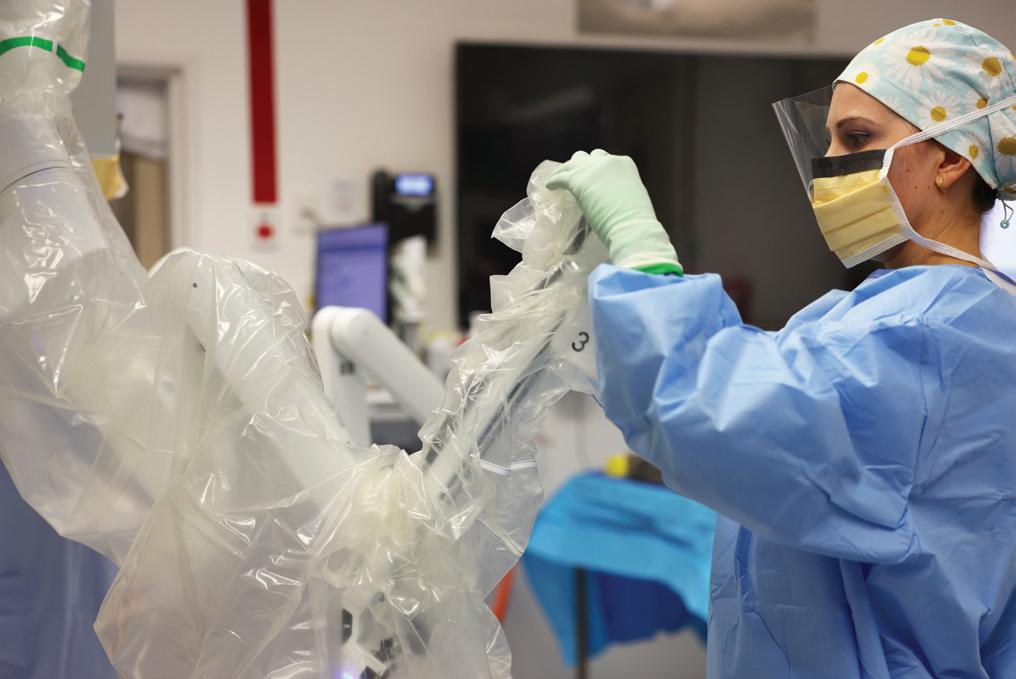
controls the robot’s instruments with their hands and feet during robotic-assisted surgery — while viewing a crystal-clear, magnified 3D image of the surgical site. “It’s a great tool to use when you’re performing difficult surgery in narrow smaller spaces, where there’s not much room — it enhances your view and you can do amazing things,” Petersson said.
Sunshine Coast Health
*Pamela Jabbour is founder and CEO of Total Image Group.
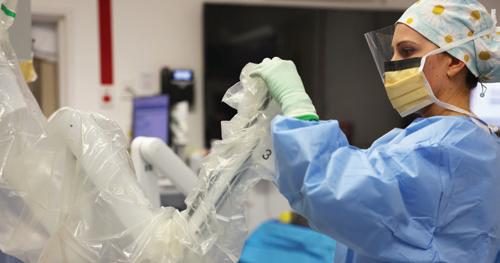
Theatre nurse prepping the arms of the Da Vinci robot for surgery
Why AI security is now a patientsafety issue
CORNELIUS MARE*
A chief information security officer explains how, as AI adoption accelerates across health care, AI security is fast becoming a frontline patientsafety issue for healthcare organisations.
Healthcare organisations are rapidly embracing AI to improve care delivery, streamline operations and address workforce shortages. From clinical decision support and medical imaging analysis to patient scheduling and administrative automation, AI is increasingly embedded across modern healthcare environments.
Healthcare organisations have traditionally focused on protecting electronic health records, hospital networks and connected medical devices. AI systems introduce a new attack surface that can affect data confidentiality as well as the integrity of clinical decisions, operational processes and patient outcomes. If healthcare organisations treat AI simply as another application to secure, they risk overlooking the unique vulnerabilities these technologies introduce. The urgency of the issue is reflected in breach data. According to the Office of the Australian Information Commissioner, the health sector accounted for 18% of all notifiable data breaches in Australia between January and June 2025, the highest of any industry.1 As digital health systems expand and AI becomes more deeply integrated into care delivery, protecting these systems becomes even more critical.
AI expands the healthcare attack surface
Healthcare data has always been a prime target for cybercriminals. Protected health information (PHI) is highly valuable, and
healthcare environments often combine legacy systems, modern cloud platforms and large user populations across clinical and administrative teams.
AI expands that already challenging attack surface in a number of ways:
1. AI systems depend on vast datasets. These datasets, which often contain sensitive patient information, are used to train and refine models. If attackers gain access to training environments or manipulate the data feeding AI systems, they may be able to compromise both privacy and accuracy.
2. Many AI systems interact with users through natural language interfaces or automated workflows. These systems can be vulnerable to techniques such as prompt injection, where attackers craft inputs designed to manipulate the model’s behaviour.
3. AI models themselves can become targets. Through techniques such as model manipulation or model inversion, adversaries may attempt to extract sensitive data or influence model outputs.
At the same time, the broader cyberthreat landscape is intensifying with more exploitation attempts, demonstrating the scale at which attackers are probing organisations for weaknesses. In health care, where digital systems increasingly support clinical decisions and operational workflows, these risks can have far-reaching consequences.
When cybersecurity becomes patient safety
Traditional cyber incidents in health care typically focus on system availability or data exposure. For example, ransomware attacks disrupt hospital operations and delay care delivery. AI introduces the potential to affect the integrity of medical insights and clinical workflows.
If an AI model used to analyse imaging data is manipulated, diagnostic results could be affected. If an AI system supporting triage or scheduling is compromised, patient prioritisation may be disrupted. Even administrative AI tools handling sensitive data could expose patient records if security controls are inadequate.
This means that the impact of AI security failures may extend beyond privacy and compliance into direct clinical risk. Cybercriminals are also becoming faster and more automated. Global reconnaissance scanning has increased, highlighting how attackers increasingly use automation to identify vulnerable systems before organisations can patch them. This makes AI security a patient safety and operational resilience issue for healthcare leaders, not just the IT department.
Compliance alone is not enough
Healthcare organisations already operate within strict regulatory frameworks governing patient privacy and data protection. However, many of these frameworks were designed around traditional IT systems rather than AI-driven decision environments. Simply extending existing security controls to AI platforms may not be sufficient.
AI systems require new governance approaches that address how models are
Building AI security into healthcare strategy
To safely realise AI’s benefits, healthcare organisations should take a proactive approach to AI security and governance.
1. Establish AI governance frameworks and standards
Healthcare organisations need clear policies defining how AI systems are developed, deployed and monitored. Governance frameworks should address issues such as training data management, model validation, access control and auditability. Healthcare organisations should also look to formal standards, such as the ISO 27090, which is currently in development. Security and clinical leaders should collaborate to ensure AI tools meet both cybersecurity and patient safety standards.
2. Secure the data pipeline
AI models are only as trustworthy as the data used to train and operate them. Healthcare organisations should protect training datasets with strong access controls, encryption and monitoring to prevent tampering or unauthorised access. Data integrity checks can also help detect attempts to manipulate AI training inputs.
3. Strengthen identity-centric security
Many AI risks arise from unauthorised access to systems, datasets or development environments. Implementing strong identity and access management, including multi-factor authentication and least-privilege access, helps reduce these risks. Healthcare organisations should also ensure AI platforms are integrated into broader identity security frameworks.
4. Monitor AI behaviour and outputs
Traditional security monitoring focuses on networks and endpoints. AI systems require additional oversight to detect abnormal model behaviour, unexpected outputs or attempts to manipulate interactions. Continuous monitoring helps organisations identify emerging threats and respond quickly.
5. Align cybersecurity with clinical resilience
Healthcare organisations should treat AI security as part of their broader resilience strategy. Security teams, IT leaders and clinical stakeholders must work together to ensure AI systems support, not undermine, care delivery.
AI introduces the potential to affect the integrity of medical insights and clinical workflows.
trained, validated, monitored and secured throughout their lifecycle. Without these controls, healthcare organisations risk deploying technologies that introduce unseen vulnerabilities. The challenge is that many healthcare providers are adopting AI faster than they can build the governance frameworks needed to manage it securely.
Meanwhile, cybercriminal ecosystems continue to expand. In underground markets, compromised credentials and corporate access are increasingly traded as commodities, lowering the barrier for attackers to infiltrate enterprise networks. For healthcare organisations managing vast volumes of sensitive patient data, this growing cybercrime economy increases the risk of targeted attacks.
Securing innovation in health care
Artificial intelligence holds enormous promise for health care. It can improve diagnostics, enhance operational efficiency and help clinicians focus more time on patient care. However, as AI becomes embedded in healthcare infrastructure, the consequences of security failures grow more significant.
Healthcare organisations must recognise that AI security is no longer just about protecting technology; it’s about protecting patients. By building strong governance frameworks, securing data pipelines and integrating AI into broader cybersecurity strategies, healthcare leaders can ensure innovation moves forward safely without compromising trust.
1. Latest Notifiable Data Breach statistics for January to June 2025. Office of the Australian Information Commissioner (OAIC). Accessed 27 March, 2026. https://www.oaic.gov. au/news/blog/latest-notifiable-data-breach-statistics-forjanuary-to-june-2025
*Cornelius Mare is Chief Information Security Officer, Australia at Fortinet.
iStock.com/Thicha Satapitanon
Could this tailored heart pump
transform care for half of heart failure patients?
Half of the 64 million people living with heart failure are left with only medication or palliative care, having no access to heart pump treatments. Now, a heart pump is being developed by Monash engineers that could offer these patients the mechanical support they’ve never had.
“This major heart failure condition, known as HFpEF, has no dedicated mechanical circulatory support, leaving over half of all heart failure patients without a mechanical support option”, said Nina Langer — who as part of her PhD program in mechanical engineering at Monash University investigated how existing heart pumps could be adapted for HFpEF patients, to help drive innovation in next-generation devices and patient care.
“Most of these patients have a heart that’s stiff, with thickened walls and a smaller ventricle. This means standard ventricular assist devices don’t fit well — and can even cause harm,” Langer said.
Getting hands-on with a purpose-built test rig during her research, Langer designed a high-tech plumbing system with pipes, pumps and valves, which allowed her to simulate cardiovascular conditions, test modifications to existing devices and make real-time adjustments.
A paper published open access (doi: 10.1007/ s10439-024-03585-y) in Annals of Biomedical Engineering, on which Langer was the lead author, suggests a heart pump designed specifically for HFpEF could provide a bridge to transplant — keeping patients alive while they wait for a donor heart or even serving as a longterm solution for those without other options. By improving blood flow and alleviating the strain on the heart, the Monash study
suggests the heart pump design could address the unique challenges of this condition. The study’s findings, Monash said, are contributing to the development of the first mechanical circulatory support device for HFpEF patients, which is now being developed by the largest cardiovascular device program in the country — the Monashled Artificial Heart Frontiers Program (AHFP).
“The results underscore the need for dedicated heart pumps designed for this patient group, rather than repurposing devices developed for other types of heart failure,” Langer said.
“A dedicated pump could transform care for millions, offering a new lease on life for those currently left with few options.”
On Langer’s contribution, one of her PhD supervisors and Co-Director of the AHFP, Professor Shaun Gregory, said: “Nina’s highquality and translational research captures the
unmet need for novel, targeted mechanical circulatory support for the largest cohort of patients with heart failure — over half of patients fall into the HFpEF category. While we’ve known of this unmet need for some time, this new study points to a clearer device development pathway.”
To further explore the adaptations of existing heart pumps and to help engineers and clinicians push the limits of innovation in the field, Langer also developed a computational model that was experimentally validated in collaboration with MIT (Massachusetts Institute of Technology).