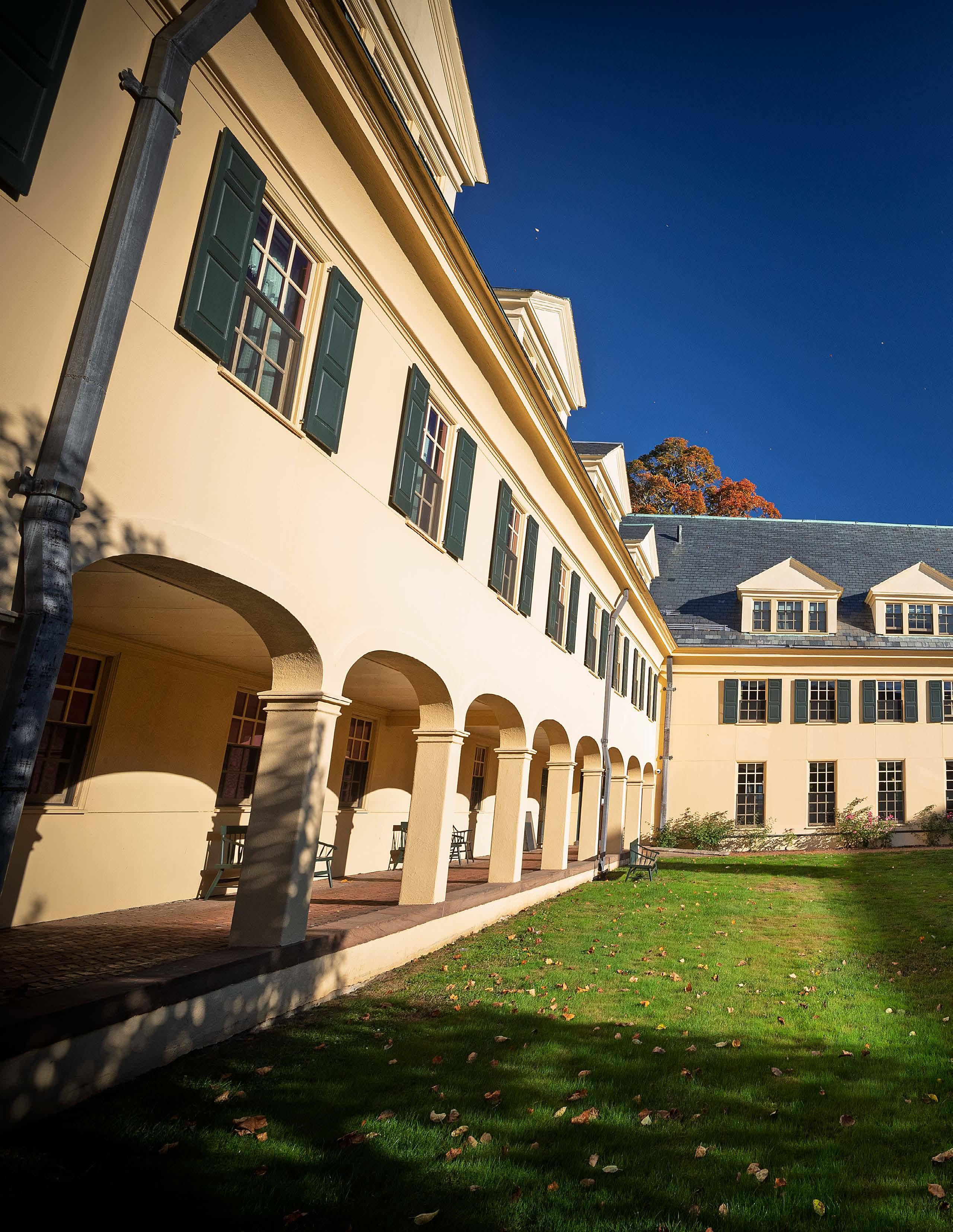
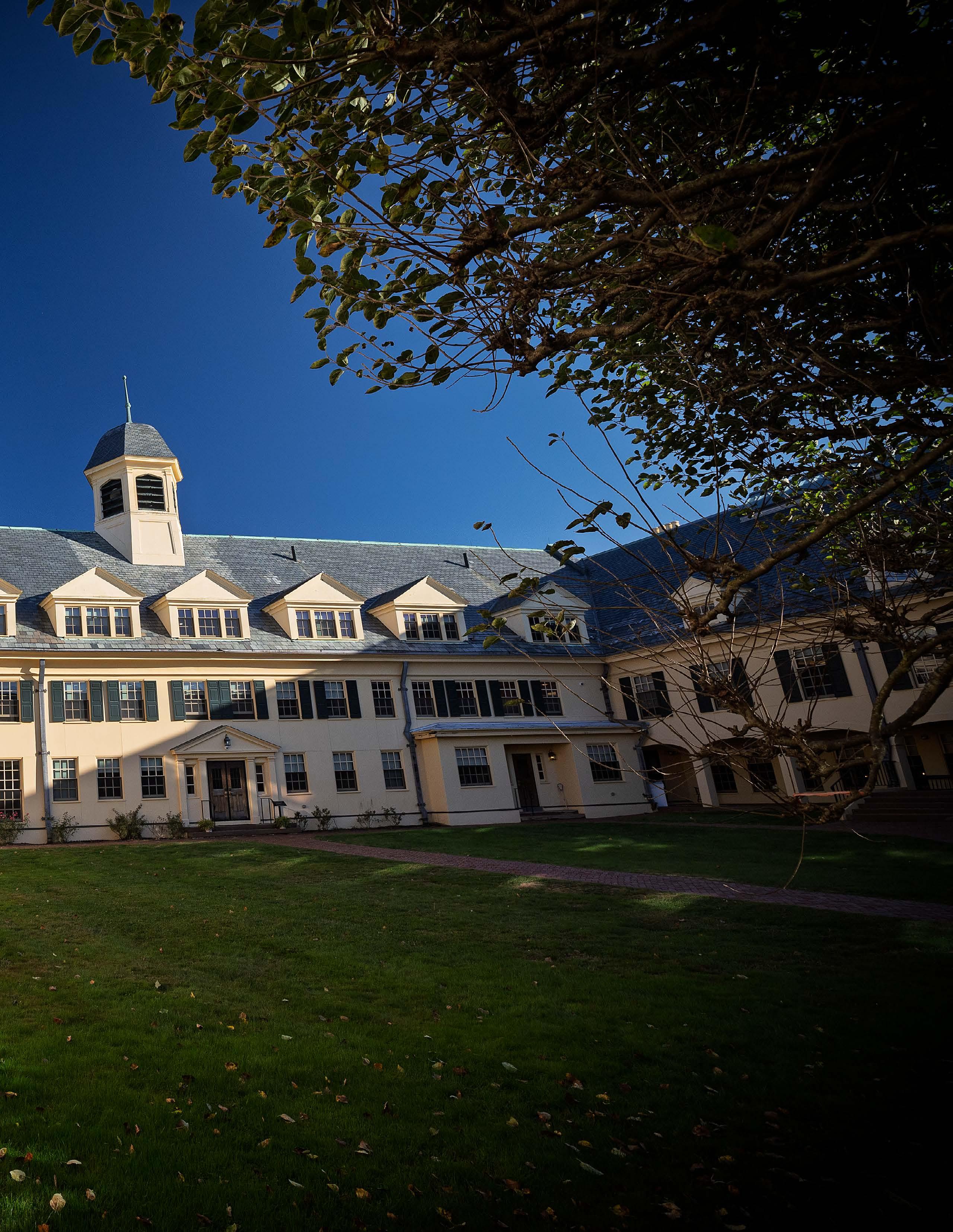
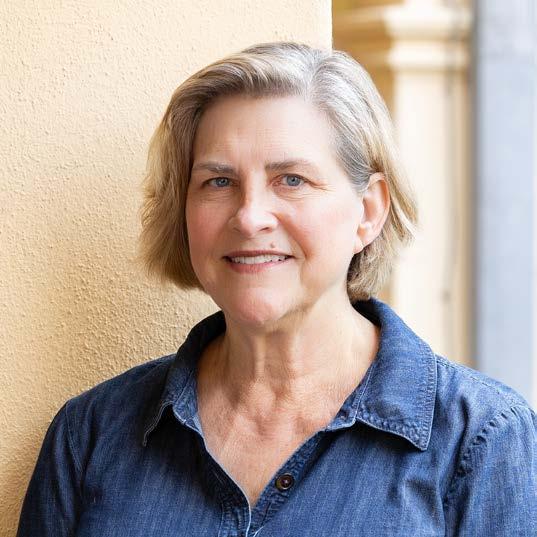
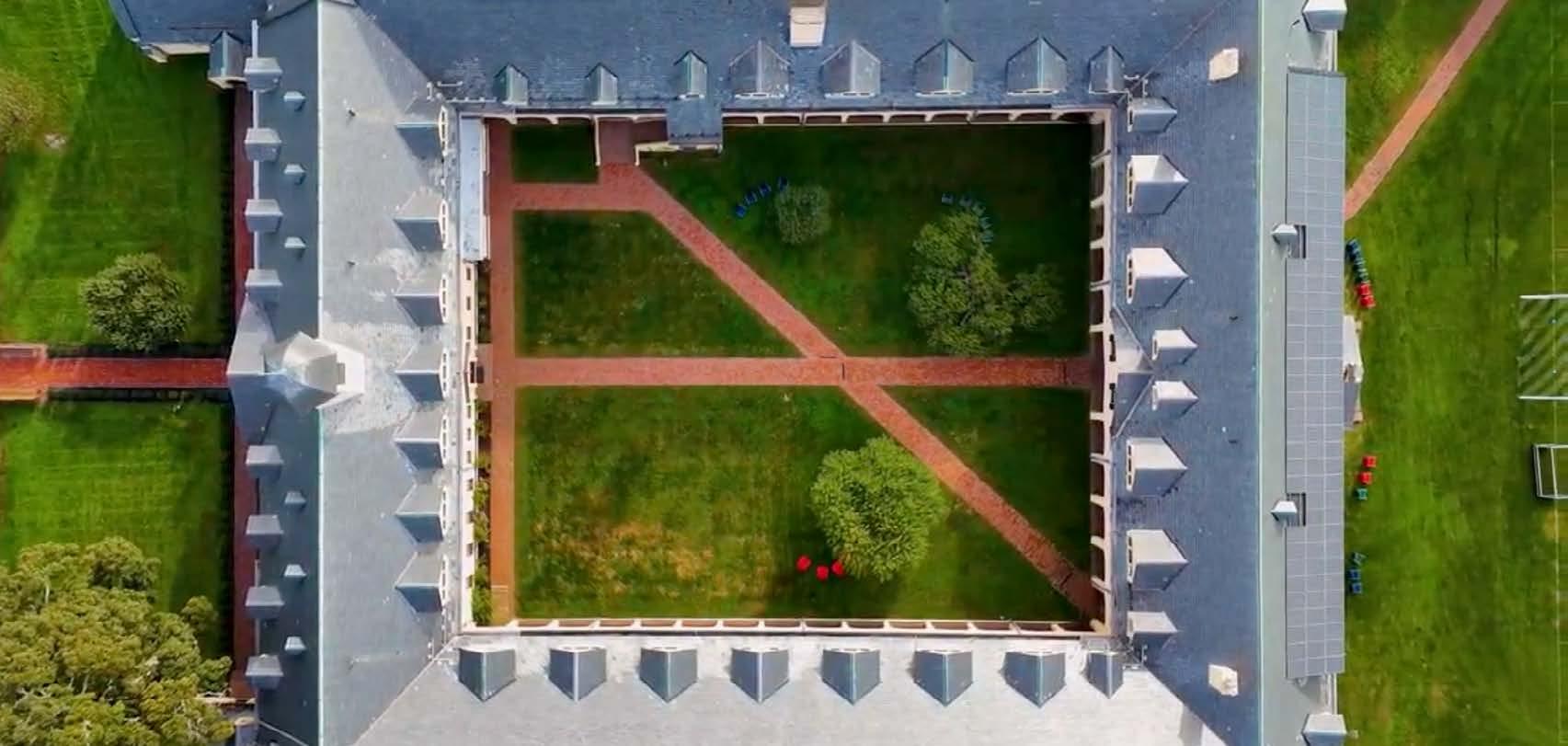
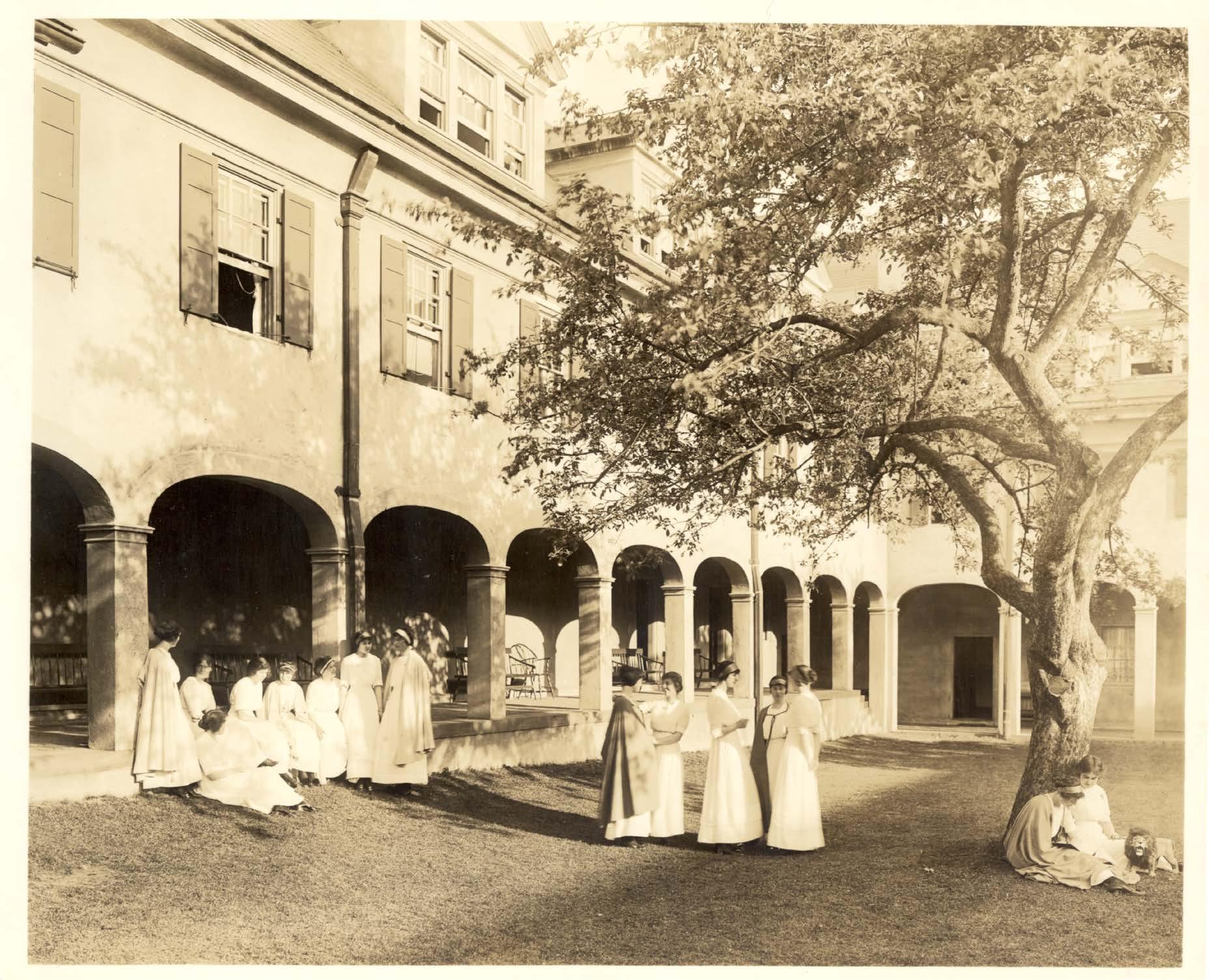
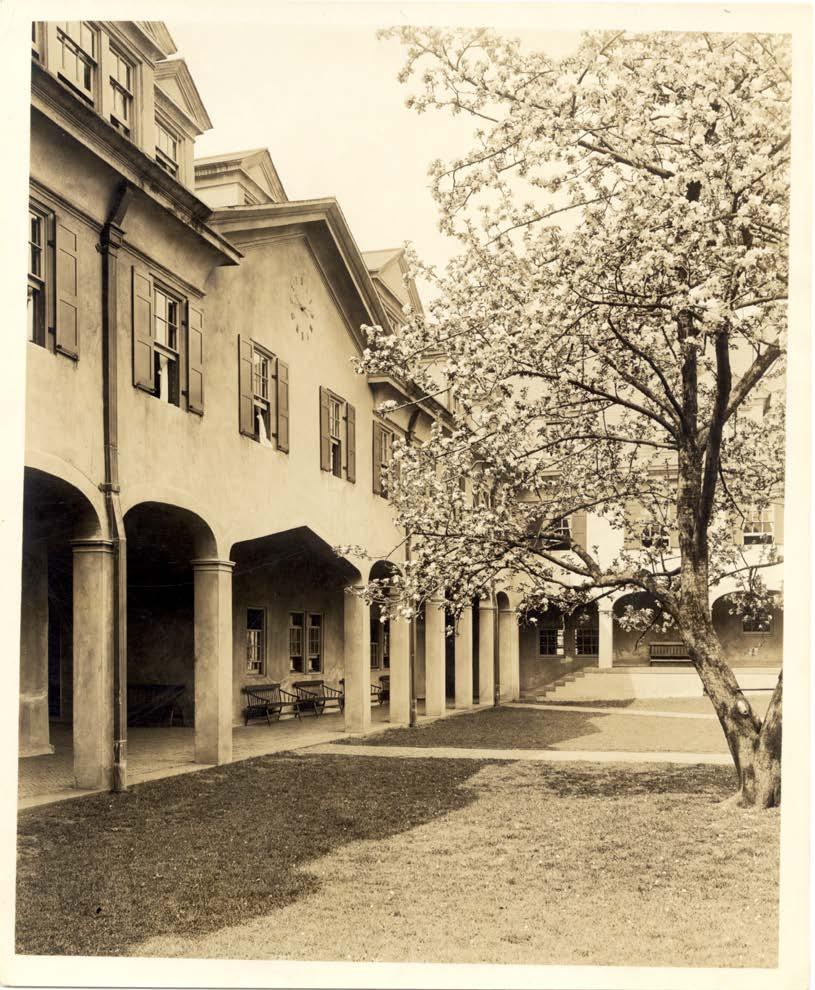
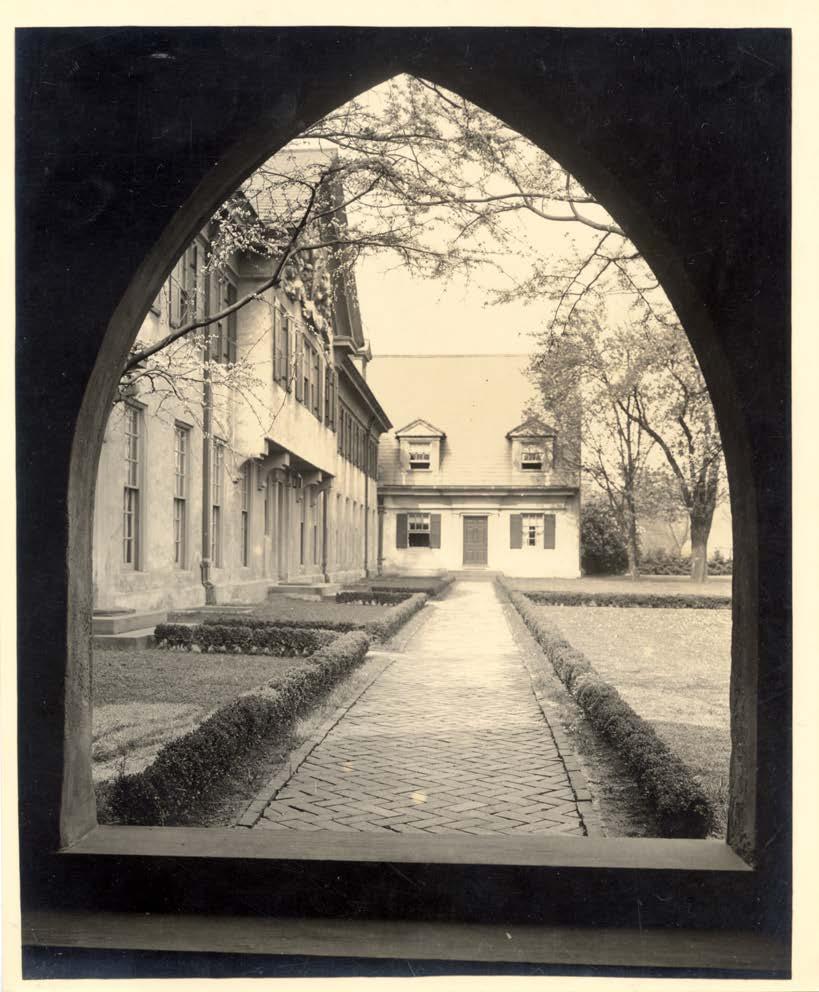
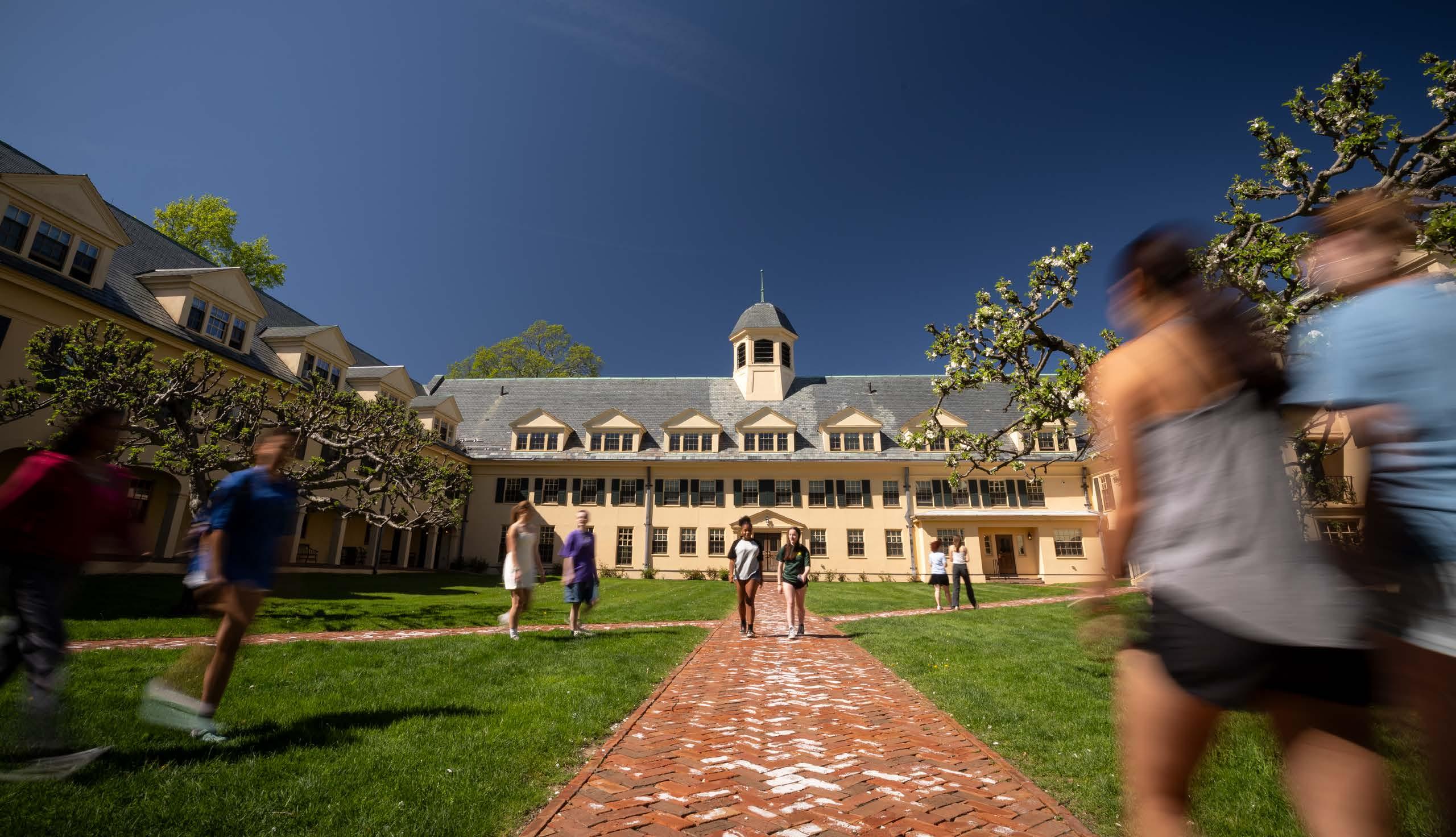
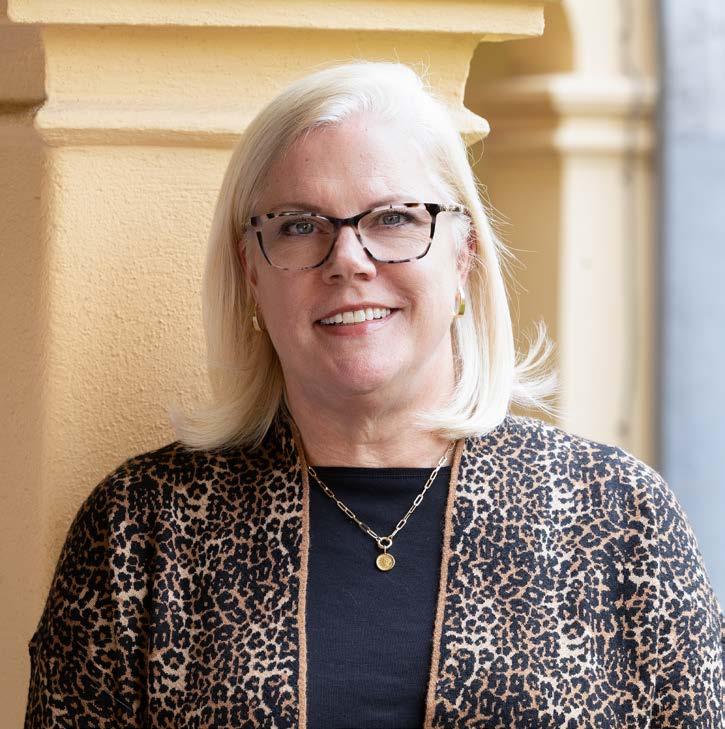
“My favorite space at the school is the Quad, which is both open and closed. The essence of the school is visible there—the community of living and learning, gathering and moving through, transforming girls into confident women, and open to the sky of possibility.”
—Kim Hoagland ’69, Board Chair and Architectural Historian
MOTTO COGITARE. AGERE. ESSE.—To
DESIGN
Char Davidson Small and Mighty Creative
CONTRIBUTORS
Polly Oppmann Fredlund P’25 Head of School
Mary Risner Chief Development Officer
Carrie Loyd ’05 Director of Strategic Communications
Emily Badger Advancement Services Manager
Sara Cipot Advancement Projects and Events Manager
Strength of Character Women’s Empowerment Passion for Learning Community
Please contact alumnae@westoverschool.org with any corrections, errors, or updates.
Gratitude in Every Gift
A MESSAGE FROM THE HEAD OF SCHOOL
Dear Westover Community, Westover is better because of you.
I am grateful to the donors who are fueling this next chapter from the Class of 1965 and their remarkable Reunion gift funding the Westover Institute, to young alums who are beginning a lifetime of giving back to a place that changed the trajectory of their lives.
It is through these acts of generosity that we are able to fuel our programs, steward our beloved campus, and ignite this next generation of changemakers. I am grateful for each gift and for the collective impact of this community on what is possible.
In this issue you will also learn more about our commitment to the stewardship of Westover’s campus. For each of us, our connection to Westover is inseparable from its sense of place, from the main building with her corridors, Red Hall, and Chapel to Quad, Sally Port, Seven Sisters, and the Westover woods with her pond. These spaces are interconnected and together
serve as what I call our “third teacher”, a campus designed not simply to shelter the students who pass through it, but to shape them.
To ensure this campus has the foundation it needs for the next hundred years, Westover has partnered with The Stone House Group to assess the scope, needs, and priorities for caring for our historic buildings. As we look ahead, we will be turning to this community to help us care for the place that has given each of us so much.
I hope the photos and stories of Westover’s “third teacher” that fill these pages inspire you, and remind you of the power of place to play a transformational role in shaping the lives of young women. Board Chair and architectural historian Kim Hoagland ’69 said it best: “Preserving and renewing Westover’s buildings will ensure not only the survival of the school, but more importantly the survival of the spirit of Westover.”
We are excited for this next chapter of renewal and together elevating our stewardship of this extraordinary campus for generations to come.
Joyfully,
Polly Oppmann Fredlund P’25 Head of School
Strength in Community
A MESSAGE FROM THE CHIEF DEVELOPMENT OFFICER
Dear Westover Community,
As we close the books on fiscal year 2025, I am filled with both awe and deep gratitude. This has been a year of new beginnings, a phase that captures the spirit of our record-breaking success, our collective optimism, and the bold path we are charting together for Westover’s future.
With your generosity and belief in Westover, we surpassed $5 million in total philanthropic support. This number is not just a milestone; it is a testament to a community united in its commitment to empower young women and sustain an institution we all hold dear.
The strength of this community—our alums, families, trustees, and friends—continues to inspire me. Thank you for answering the call, for lifting our students and faculty, and for supporting the daily work that makes Westover such a special place. Your belief fuels everything from our classrooms and renovations to financial aid and faculty development. Truly, every corner of campus shines brighter because of you.
Special thanks must be extended to Head of School Polly Fredlund, whose steady leadership and bold vision are lighting the way forward. Polly’s ability to blend tradition with transformation has already made a meaningful difference. Her dedication to listening and her thoughtful engagement with every constituency are helping Westover find clarity in its direction and confidence in its future.
Within these pages, you will find stories of generosity, legacy, and leadership. You may recognize yourself or someone you know in these stories. If so, I hope you’ll reach out. Whether through giving, volunteering, or conversation, there are so many ways to support Westover’s mission. As we look to the future, our most pressing opportunities include revitalizing our beloved physical plant, guided by a recent facilities audit, while continuing to grow the Westover Fund and increasing access through financial aid.
Westover is ready for what comes next, and it’s because of you. Thank you for your enduring trust, your time, your gifts, and your service. Together, we are making a difference that will support Westover students for generations to come.
With deepest gratitude,
Mary Risner Chief Development Officer
Place, Purpose, and the Next Century How Westover’s Campus Has Shaped Generations of Students
by Carrie Loyd ’05, Director of Strategic Communications
If you pause in the main building and simply listen, Westover begins to tell its story.
The floorboards creak in a way that feels almost deliberate, worn smooth by more than a century of students’ footsteps. Laughter carries down Math Corridor and bends around the corner into Red Hall. Wooden doors close with a steady, familiar weight and open again with a distinctive click-click. The murmur of conversation drifts from dorm room windows overlooking the Quad and bounces between the apple trees. These sounds are not interruptions; they are the steady rhythm of a place that has been alive with learning, living, and community for 117 years.
“By housing students in the same building in which they learn and gather, the school building encourages an ethic of inclusion and a unity of purpose.”
– Kim Hoagland ’69, Board Chair and Architectural Historian
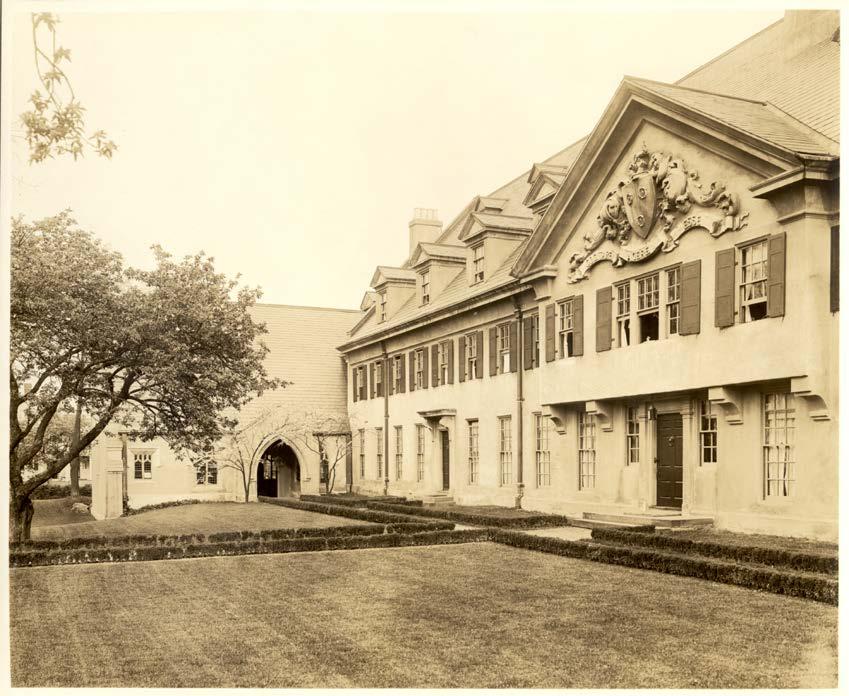
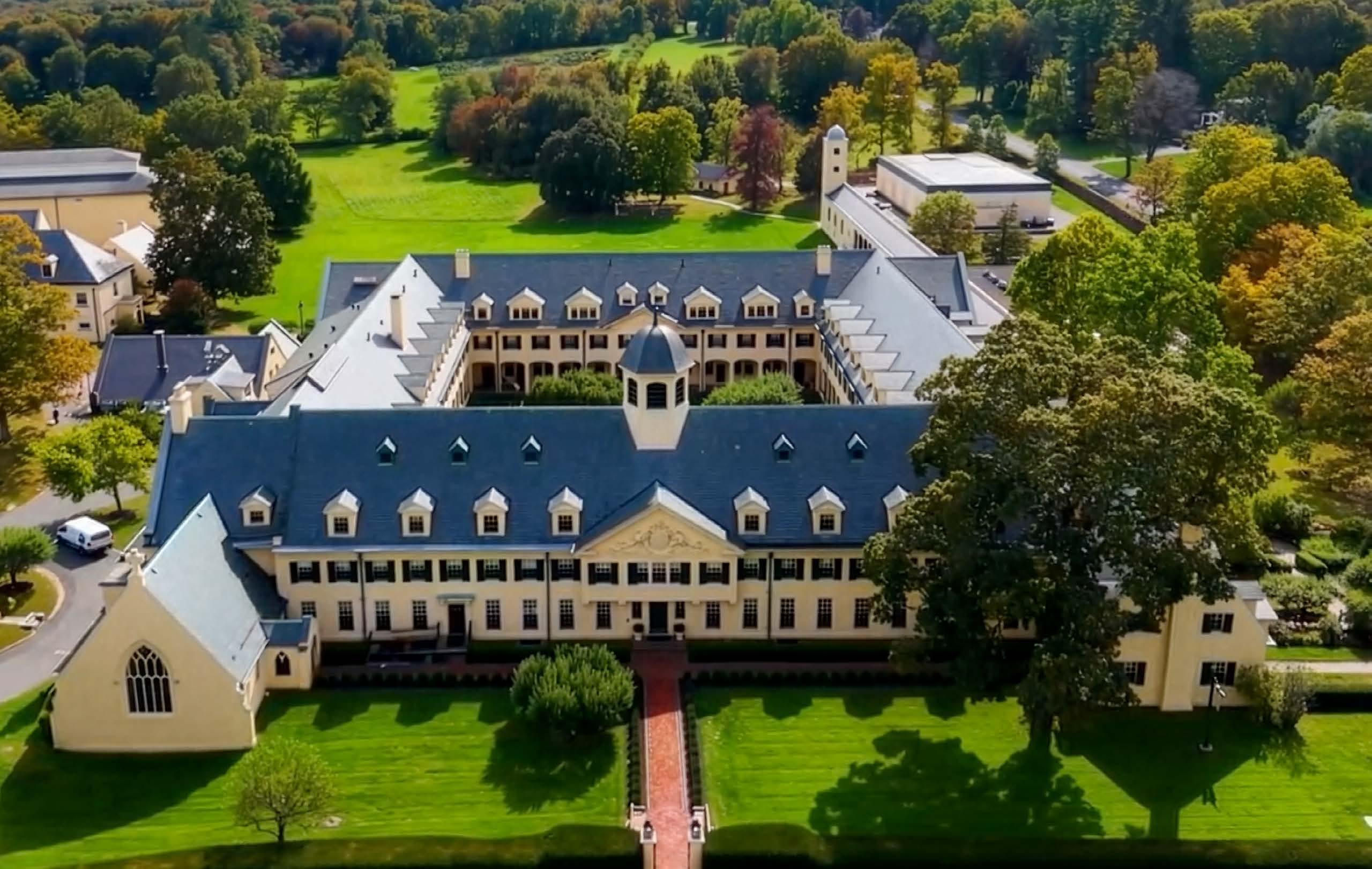
At the center of it all sits the Quad, the literal and figurative heart of campus, embraced on all sides by the hug of the main building. Classrooms, dormitories, common rooms, and the dining hall all look inward toward it, drawing daily life from a shared center. Academic debate and late-night laughter exist within the same walls. Teachers and students do not simply share a school day. They share a life, measured not in periods and bells but in the small, accumulated moments that make a place feel like home.
Learning, living, and community are not separate ideas here. They are intertwined with intention and essential to the Westover experience.
A Vision Built in Place
When Westover was founded in 1909, it was not conceived simply as another boarding school for girls. Founder Mary Robbins Hillard and architect Theodate Pope Riddle approached the project with a shared conviction: that the campus itself should be an active participant in a student’s intellectual and personal growth, not just a backdrop to education, but a force within it.
Mary believed that young women deserved the same rigor, independence, and preparation that young men were receiving in elite preparatory schools. In 1909, that belief placed her firmly at the edge of convention. American women could not yet vote. Most colleges remained closed to them, and those that were not often offered a deliberately lighter curriculum on the assumption that women’s intellects were suited to refinement rather than rigorous inquiry. She imagined a school where strong academics would be paired with character development, curiosity, and a sense of responsibility to the world beyond campus.
Hers was a vision for education that extended far beyond the classroom. The spaces where students lived, gathered, and moved throughout the day mattered just as much as the lessons they encountered in class. To translate that belief into brick and mortar, she partnered with Theodate Pope Riddle, one of the first professional female architects in the United States.
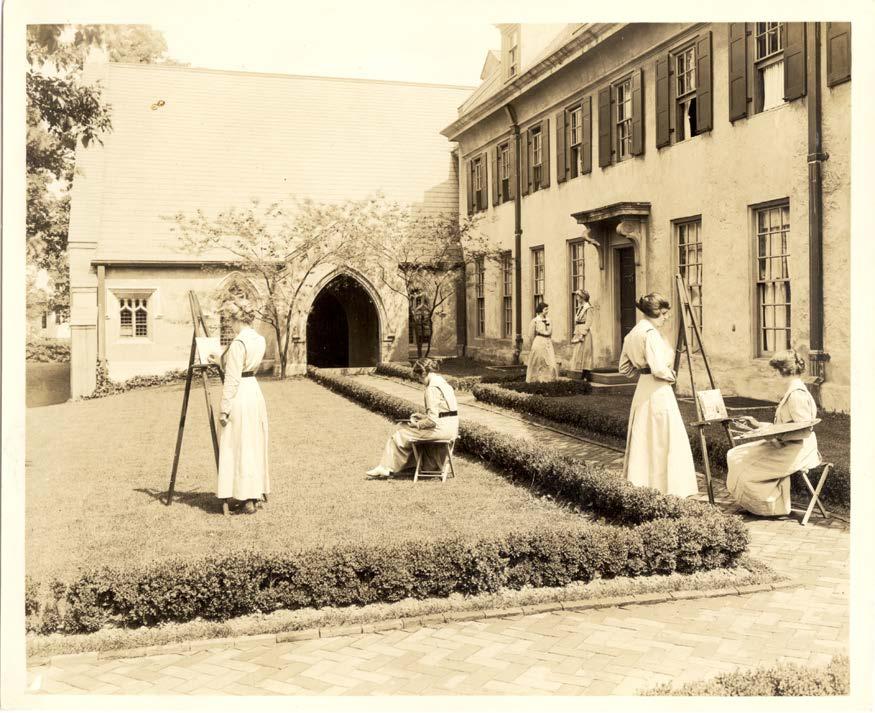
Photo by Mattie Edwards Hewitt (c. 1870-1956), acclaimed American photographer of architecture, landscape, and design.
Theodate was no ordinary collaborator. As one of the first licensed female architects in the United States, she had claimed her profession through sheer force of conviction at a time when architecture was considered exclusively a man’s domain. She had studied, petitioned, and persisted her way into a field that had not made room for her, and she designed with the confidence of someone who knew exactly what it had cost to get there. For Theodate, Westover was not simply a commission. It was a statement.
Together, they moved forward with the boldness of women who had decided not to wait for the world to give them permission. And so Westover began.
“For years I have been keen on architecture and felt that the ugliness of buildings actually menaced my happiness and felt breathlessly that I must help in the cause of good architecture.”
– Theodate Pope Riddle, Architect of Westover School
Theodate drew from European academic traditions deliberately, designing buildings that conveyed permanence and seriousness of purpose from the moment the school opened its doors. Materials and textures were chosen with care, giving the buildings a slightly weathered, established quality even on the day they opened.
For Mary and Theodate, the campus was never merely a setting. It was an instrument. Arcades and corridors encouraged movement and exploration. Shared spaces invited conversation and exchange.
Residences and classrooms were woven into one cohesive environment, because for Mary, independence and community were not competing values—they were inseparable ones.
The partnership between the friends was remarkable in its time: two women shaping both the intellectual mission and physical form of an educational institution. In an era that offered women neither pulpit nor drafting table, Mary and Theodate claimed both. Their collaboration ensured that Westover’s philosophy and its architecture were not merely compatible, compatible, they were inextricably connected.
More than a century later, their intentions remain visible. The campus they imagined together still does exactly what they designed it to do: not simply shelter the students who pass through it, but shape them.
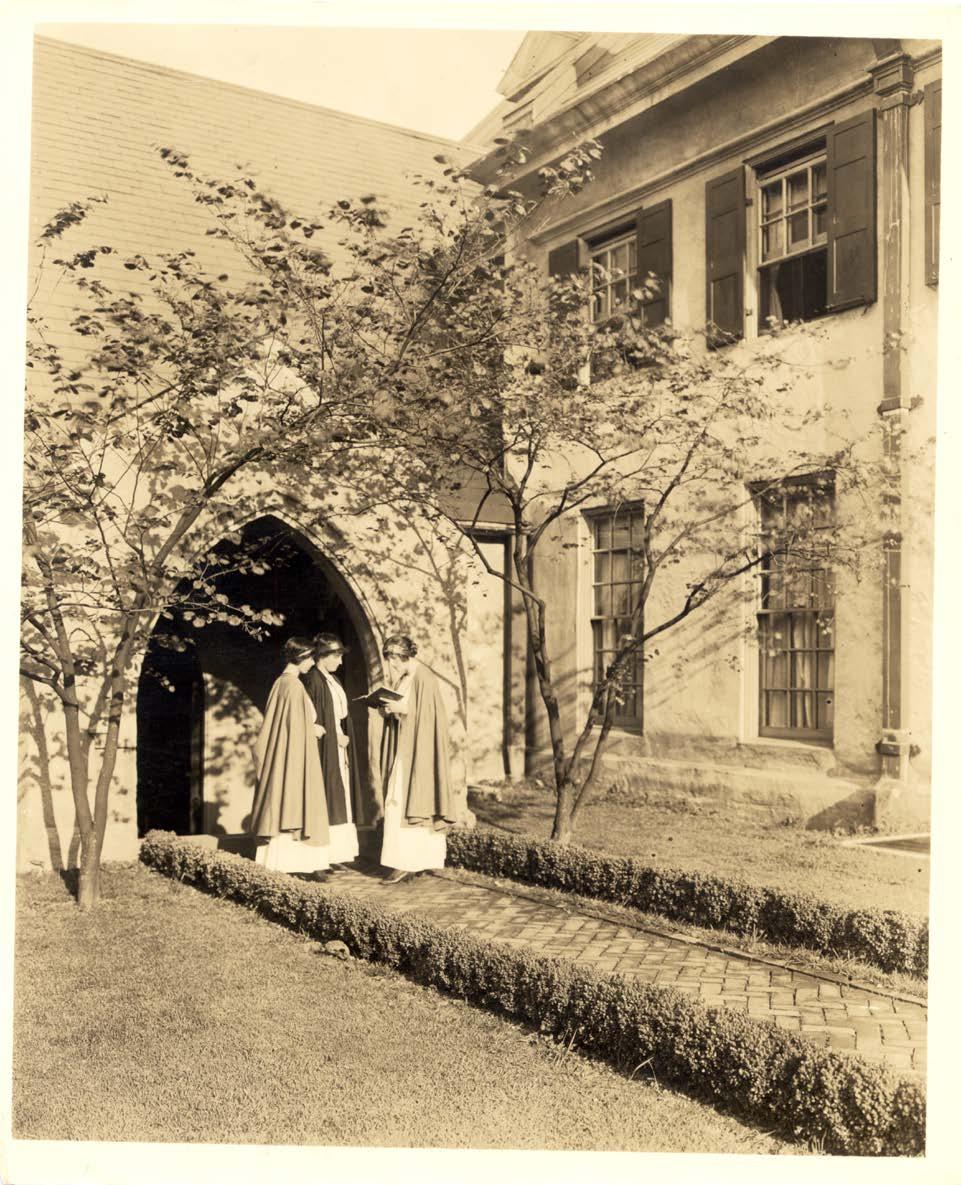
Photos by Mattie Edwards Hewitt (c. 1870-1956), acclaimed American photographer of architecture, landscape, and design.
The Power of Placer
Head of School Polly Fredlund has a name for what Mary and Theodate built: She calls the campus Westover’s “third teacher”, present in every corridor and courtyard, shaping students alongside faculty and peers, generation after generation.
The Quad teaches continuity and belonging, marking beginnings and endings with the circle of AA Germans each fall and the procession of Commencement each spring.
Red Hall teaches courage, the quiet moment seated on the steps, the steadying breath before rising to speak before an audience eager to hear your voice.
The library teaches focus and discovery, its quiet hum of study complemented by the spirit of exploration just beyond its walls in the neighboring science labs.
Studios and galleries nurture hands-on experimentation. Each space, with its own architecture and character, invites students to explore materials, test ideas, and grow into their own creative voices.
“The campus is Westover’s third teacher. It works quietly, alongside faculty and peers, generation after generation—shaping students in ways that last long after they leave their time here.”
– Polly Fredlund P’25, Head of School
Chapel offers both reflection and celebration. Its vaulted ceiling was designed to carry voices and song, and more than a century later, it still does—when music fills that space, voices rising together and instruments finding their resonance in the stone and wood, it teaches something that cannot be put into a lesson plan: that beauty, like community, is made together.
Dorm corridors teach independence and interdependence. Their intertwined hallways encourage empathy, reminding students that community is not assumed; it is practiced every day.
These spaces do more than house learning; they elevate it.
This sense of place shapes how students see themselves as leaders. It connects them to the generations who came before them and encourages them to imagine the impact they will have beyond campus. Westover graduates leave prepared to make a difference and lead lives of consequence, carrying with them lessons learned not only in classrooms but in the spaces that shaped their experience.
Built to Evolve and Transform
From its earliest days, Westover was never meant to stand still.
Mary Hillard created a school for young women with the intention of shifting what was possible. She designed it with clarity of purpose but not with rigidity, trusting that each new generation of students would inherit a wider world than the one before them, and that Westover would keep pace.
That same philosophy also extended to the buildings themselves. Within its walls, the school has continually adapted—quietly, thoughtfully, and without surrendering the character that makes it distinctive.
Classrooms that once held recitations by lamplight now support digital collaboration and global connection. Science labs have evolved alongside new forms of inquiry. The Pollina Center for Women in Science and Engineering, once the campus’s furniture woodshop, now hosts cuttingedge classes in computer science and artificial intelligence.
Creative spaces have expanded to reflect new artistic practices, while residential life has also evolved in quieter but equally meaningful ways. Dorm rooms that once accommodated ironing boards and linen closets now prioritize the infrastructure students depend on today: wireless connectivity, charging stations, and the technology that supports modern learning and communication. Small alcoves along the corridors, originally designed to store students’ traveling trunks, later became telephone closets and now house microwaves, hot pots, and other shared conveniences.
Perhaps no space better reflects this spirit of adaptation than the Alison Kimball Bradford ’44 Student Commons. Before its 2017 renovation, the room served as the school’s study hall. Earlier still, it functioned as the assembly room. At various points, it was divided into small classrooms, and in the school’s earliest days, it was a gymnasium and then a theater. Its many transformations trace the story of a campus responding thoughtfully to the evolving needs of its students.
Through each change—whether renovation, repurposing, or new construction—the spirit of the campus has remained remarkably constant.
Westover was built to evolve while holding fast to its core identity.
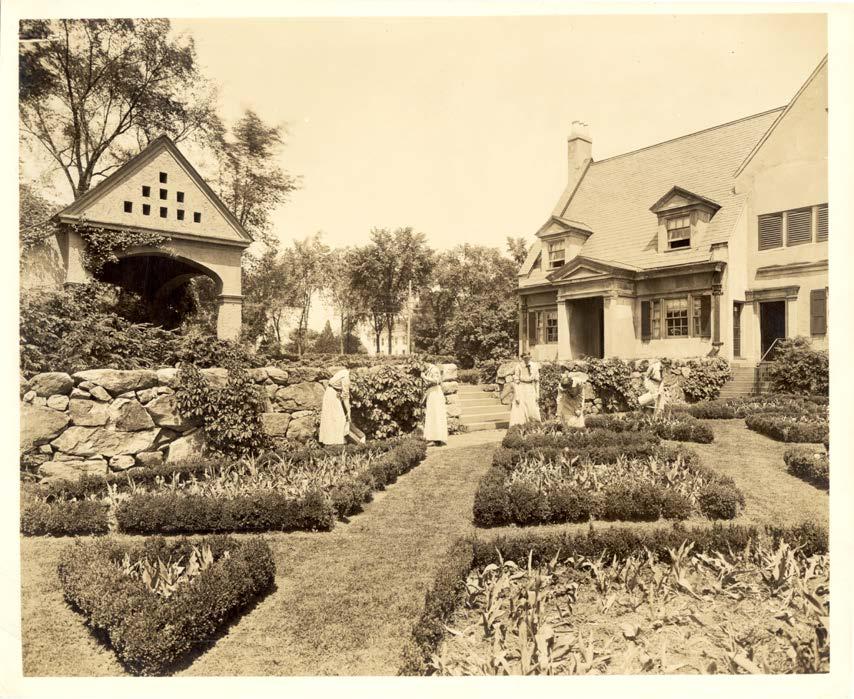
Photos by Mattie Edwards Hewitt (c. 1870-1956), acclaimed American photographer of architecture, landscape, and design.
Investing in Our Campus A Master Plan for Westover’s Future
Westover is now 117 years old. The same structures that have shaped students for generations now require something in return: careful, intentional stewardship.
Historic structures must be preserved with intention. Infrastructure must be maintained and modernized. Systems that once quietly supported daily life must be renewed to meet contemporary needs—all while honoring the architectural integrity that defines the campus.
The spaces that Mary Robbins Hillard and Theodate Pope Riddle envisioned more than a century ago continue to shape the Westover experience today. Preserving that legacy requires more than admiration. It requires thoughtful planning and careful stewardship. Much of this work is unseen, but it is essential.
To ensure the campus remains strong and relevant for future generations, Westover is undertaking a comprehensive review of its infrastructure and facilities, starting with a ten-year facilities plan designed to strengthen the campus while honoring the character that makes it distinctive. Our guiding principle remains clear: to preserve the historic feel and architectural integrity of the campus while modernizing key systems and spaces so they remain functional, accessible, and responsive to contemporary teaching and learning.
Caring for this place is the responsibility of all those who love it. This stewardship allows the vision that shaped Westover’s founding to continue guiding its future and ensures that the campus, alive with history, purpose, and possibility, will continue to shape the students who walk these halls.
Two major planning initiatives are currently underway to inform priorities and guide the next phase of campus stewardship.
Planning for the Next Century Architecture, Infrastructure,
and Sustainability
In partnership with the Stone House Group, Westover has undertaken a comprehensive study of its campus infrastructure to guide responsible investment in facilities that serve our students, honor our architectural heritage, and advance our commitment to sustainability.
“Preserving and renewing Westover’s buildings will ensure not only the survival of the school, but more importantly the survival of the spirit of Westover.”
— Kim Hoagland ’69, Board Chair and Architectural Historian
The architectural master plan evaluates the condition and future potential of Westover’s major buildings, with a focus on repairs, modernization, and strategic use of space. The Arcade and Louise B. Dillingham Performing Arts Building are among the most urgent priorities, with significant needs related to the building envelope, roof, and Arcade seating area—alongside a meaningful opportunity to modernize a space that is central to Westover’s strength in the arts and dance. The Science and Library Building requires window replacement and exterior repairs. The Main Building’s priorities are largely mechanical: HVAC modernization, updated electrical systems, and classroom improvements. A building more than one hundred years old, its underlying systems deserve the care to keep her thriving for the next generation.
Below ground, the utility master plan examines campus-wide infrastructure— steam and hot water systems, electrical, and chilled water—and charts a longterm path toward greater efficiency and sustainability.
Perhaps most exciting is the opportunity these upgrades present as a living laboratory for students as they learn firsthand about energy systems, electrification, and renewable power generation as Westover builds a campus that reflects its values for generations to come.
why is westover yellow?
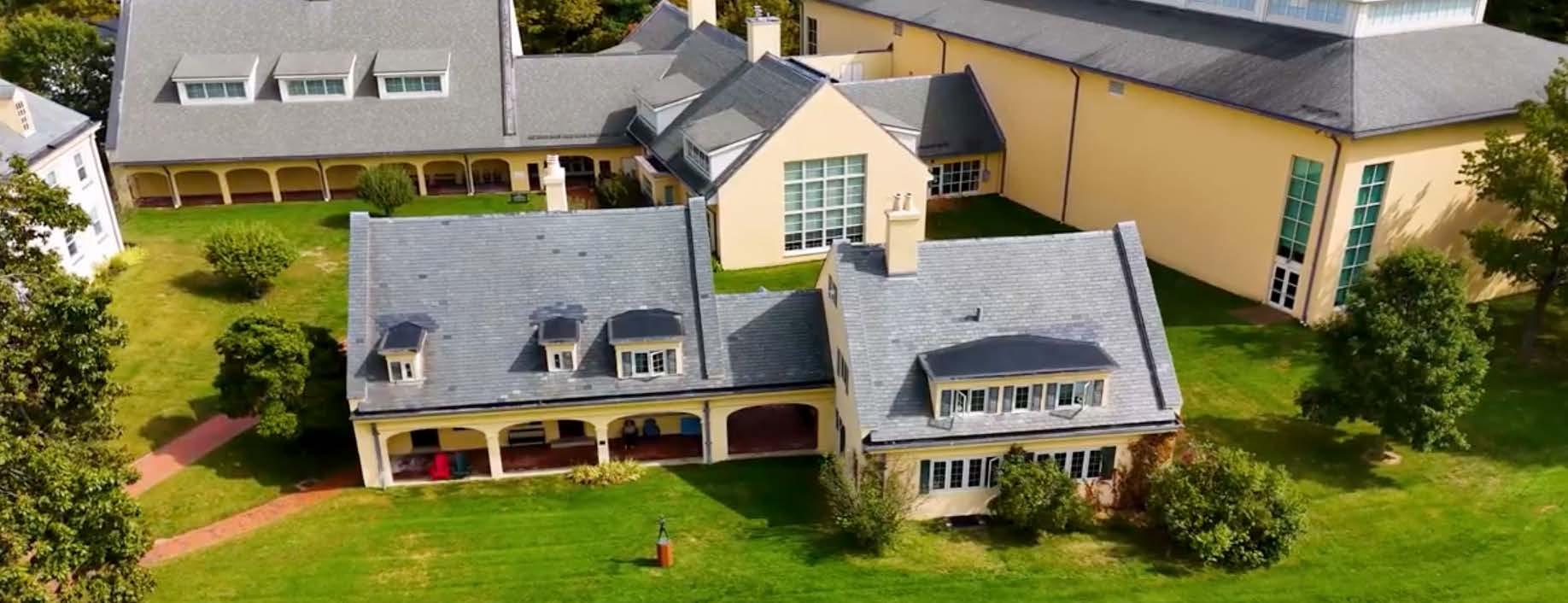
It’s hard to miss Westover. In the center of Middlebury, the buildings glow in a warm wash of yellow, standing apart from the gray stone and white clapboards that define the surrounding town green. The shade, officially Benjamin Moore’s Mission Ivory, has become inseparable from the school’s identity. But Westover was not always yellow.
When construction first began, Theodate Pope Riddle had a particular vision: a school that looked established from the moment it opened. To create that sense of age and permanence, builders turned to an unlikely inspiration: a plaster mixture once used by Michelangelo made from white sand, lime, and goat hair. Applied to the cement exterior walls, the material dried to a blue-gray tone with a rippling texture meant to evoke old European buildings.
It looked impressive for a while.
Within a decade, the coating began to crumble and flake away, weathering far more quickly than anyone expected. The aging effect the architects had hoped for was perhaps a little too convincing. The entire exterior of the school eventually had to be scraped and refinished.
The agreed-upon solution was simpler: paint. The school adopted a soft yellow tone, the color we know today, that immediately changed the character of the campus.
Why yellow? The answer may lie in Westover’s early student uniforms, which were a nearly identical hue, meaning the buildings and the students would have matched almost perfectly. Or the clue may be found in Theodate Pope Riddle’s own sunny yellow Packard, suggesting the color held a particular place in her affections. Perhaps both are true. No written record confirms exactly how the decision was made, but then again, the best traditions rarely come with documentation. They simply take hold and become inevitable.
What began as a practical renovation gradually became a definitive feature. Structures later built on campus have also been washed in Mission Ivory, preserving the warm yellow glow that has become synonymous with Westover.
The exact moment the school became yellow may be lost to history. But once it happened, it stuck, and true to Westover, it became part of the tradition.
Photo by Mattie Edwards Hewitt (c. 1870-1956), acclaimed American photographer of architecture, landscape, and design.
The Next Chapter Is Ours to Write
There are moments in the life of an institution when admiration is not enough, when those who love a place must also act on that love. For Westover, that moment is now. Ensuring that this campus remains strong, functional, and worthy of future generations of students will require thirty million dollars over the next ten years, and the work begins with clear priorities: the arts and science wing, connected by the beloved Arcade, and the mechanical systems that quietly sustain the rhythms of daily life.
The Arcade along Molder Field has always been more than a passageway. It is one of the vital seams that holds campus together, linking the performing arts spaces, where students find their creative voices, to the Science and Library Building, where they develop their intellect and curiosity. Securing and restoring this corridor, along with the accompanying buildings, means preserving two of Westover’s most vital centers of learning. And beneath it all, renewing the mechanical systems that carry heat, light, and life through every corner of this historic campus ensures that Westover moves confidently into its next century.
These are not abstract priorities. They are the spaces where students find their voices, develop their curiosity, and begin to understand what they are capable of. Investing in them is investing in that transformation.
Westover has always been more than a school. It is a living argument that environment shapes who we become, and that the spaces where we learn and live leave marks on us that last a lifetime. Every Westover alum carries this place within her. The question before us now is what we will leave behind for those who come next.
Head of School Polly Fredlund is meeting personally with donors who are ready to help launch this work. Whether your connection to Westover is recent or spans decades, there is a place for you in this effort. Gifts at every level contribute to a campaign that will determine the condition of this campus and the quality of the experience it offers for generations to come.
The floorboards that carried your footsteps are still here. The corridors where you found your voice, the spaces where you became who you are, are all waiting to do the same for the students who will follow. Help us ensure that remains possible.
To learn more, to discuss giving opportunities, or to arrange a personal conversation with Polly, please contact the Westover Advancement Office at 203-577-4646 or alumnae@westoverschool.org. We would love to hear from you.
Photo by Mattie Edwards Hewitt (c. 1870-1956), acclaimed American photographer of architecture, landscape, and design.
A Roadmap for a Stronger, More Sustainable Westover
Grant from the David, Helen, and Marian Woodward Foundation Funds Comprehensive Facilities Audit
Thanks to a generous grant from the David, Helen, and Marian Woodward Foundation, Westover has taken a significant step toward strengthening and sustaining its historic campus with the completion of a comprehensive facilities audit.
This detailed, forward-looking assessment offers more than just a snapshot of our buildings, it provides a ten-year roadmap that will guide Westover’s efforts to enhance its physical plant in ways that directly impact the student and faculty experience.
From more comfortable, climate-controlled classrooms to safer, more accessible common areas and upgraded learning environments, the improvements prioritized through this audit will benefit every member of our community. Faculty will have access to the kinds of spaces and resources that support modern teaching, while students will thrive in surroundings that reflect the excellence of the education they are receiving.
Whether it’s improving classroom lighting and ventilation, modernizing critical infrastructure, or advancing our sustainability goals, these enhancements ensure that Westover’s facilities rise to the level of its academic and cultural vision.
We are deeply grateful to the David, Helen, and Marian Woodward Foundation for recognizing the longterm value of this work. Their support is helping us preserve the character of Westover’s iconic campus while preparing it for the next generation of learners and leaders.
Campus Sustainability at a Glance
Highlights from the Ten-Year Facilities Audit
TOP PRIORITY PROJECTS
• Critical roofing and drainage repairs
• Modernization of HVAC systems
• Upgrades to electrical and fire safety systems
SUSTAINABILITY AND EFFICIENCY
• Transition to high-efficiency heating and cooling
• Energy-efficient lighting and controls
• Improved building insulation and envelope repairs
ACCESSIBILITY ENHANCEMENTS
• Improved access to classrooms and common spaces
• Upgraded walkways and entrances
LEARNING ENVIRONMENTS
• Renovation of high-use academic spaces
• Technology infrastructure upgrades
• Enhanced science and arts lab functionality
CAMPUS STEWARDSHIP VISION
• Plan aligns with Westover’s mission to preserve its historic architecture
• Supports future-ready learning in every space
• Informs capital and annual giving priorities
To support these initiatives, or if you are aware of grant opportunities or philanthropic partnerships that could help move this important work forward, please reach out to the Advancement Office at 203-577-4646 or alumnaedevelopment@westoverschool.org. Your ideas and connections can help ensure that Westover remains a vibrant, inspiring place to teach and learn for years to come.
Rooted in Westover Investing in Its Future
Priscilla White Givan ’60
For Priscilla White Givan ’60, Westover is a place where community takes root and never lets go. Her days as a student grew into decades of joyful service as Class Secretary and Alum Association Governor, and now into her decision to include Westover in her estate plans, ensuring the school she loves continues to flourish.
“Westover has been part of my life from the get-go,” Pris says. Her family’s ties stretch back through her mother, Mary White ’34; her sister, Peggy ’66; and several aunts, cousins, and a niece. That legacy set the stage, but it was Pris’s own experience that shaped her most deeply. The friendships she formed, the traditions she shared, and the sense of belonging she felt as part of the Class of 1960 are still central to her life more than sixty years later.
Pris has served as Class Secretary for more than forty years, a role she says is hard to give up. What began as a way to keep her classmates updated has become a throughline of connection and joy. During the pandemic, she helped organize weekly Zoom gatherings for the Class of 1960, bringing classmates together during a moment when many felt isolated. Those calls continue every month, offering a space for laughter, storytelling, and genuine care. “Some classmates are homebound, and some are very busy, but we all look forward to seeing each other,” she says. These conversations have strengthened bonds and have given the class an enduring sense of connection.
Pris’s commitment to Westover extends beyond her class. When she began exploring her estate plans, she reflected on the areas that have guided her life: education, church, music and the arts, and children. Westover was placed squarely among them. “Planning to give fills my desire to support the school while also allowing me to feel secure,” she explains. For Pris, it simply feels right to include a place that has shaped so much of who she is. She wants her gift to help maintain the campus she loves. “The school cannot go on if we do not maintain it,” she says. “I want to make sure this place lives on.”
Pris often reflects on the confidence and growth she experienced as a student. She arrived already loving to sing, but Westover gave that passion room to grow. She found her voice in the Glee Club and the Undertones; she built leadership skills as Third Head of West; and she found friendships that have lasted more than half a century.
What brings her equal joy is seeing Westover today. Pris speaks with admiration about the school’s dedication to remaining a girls-centered institution and its commitment to academic innovation. She is inspired by the energy she sees on campus and by the leadership of Head of School Polly Fredlund. “If Westover accepted eighty-fouryear-old women, I would enroll again,” she says. “It is such an energetic place to be.”
Serving on the Board of Governors has also widened Pris’s circle. It has allowed her to connect with younger alums, learning from new perspectives, and sharing her own wisdom. She values these intergenerational connections and the way they enrich her life. “The spirit of Westover has not changed. The feeling of loyalty has not changed,” she reflects.
If Pris were to welcome a student to campus for the first time, she would urge her to step in with confidence and an open heart. “You are not alone,” she says. “Everyone starts on equal footing at Westover. Stay open to new ideas. You arrive with a clean slate and the opportunity to shape your own story. Those choices will be lifechanging.”
Pris knows this to be true, because her own story was shaped in the same halls. The friendships she forged, the confidence she built, and the sense of purpose she found at Westover have stayed with her for a lifetime. It is precisely this transformative power, still as strong today as it was in 1960, that inspired her planned gift. She wants future students to feel the same welcome, possibility, and lasting connection that changed her life.
Pris does not describe her estate gift as grand or dramatic. Instead, she sees it as a thoughtful and natural continuation of her relationship with a school that has been at the center of her life for so long. “Westover opened my world,” she says. “I am so happy that I can give something back.”
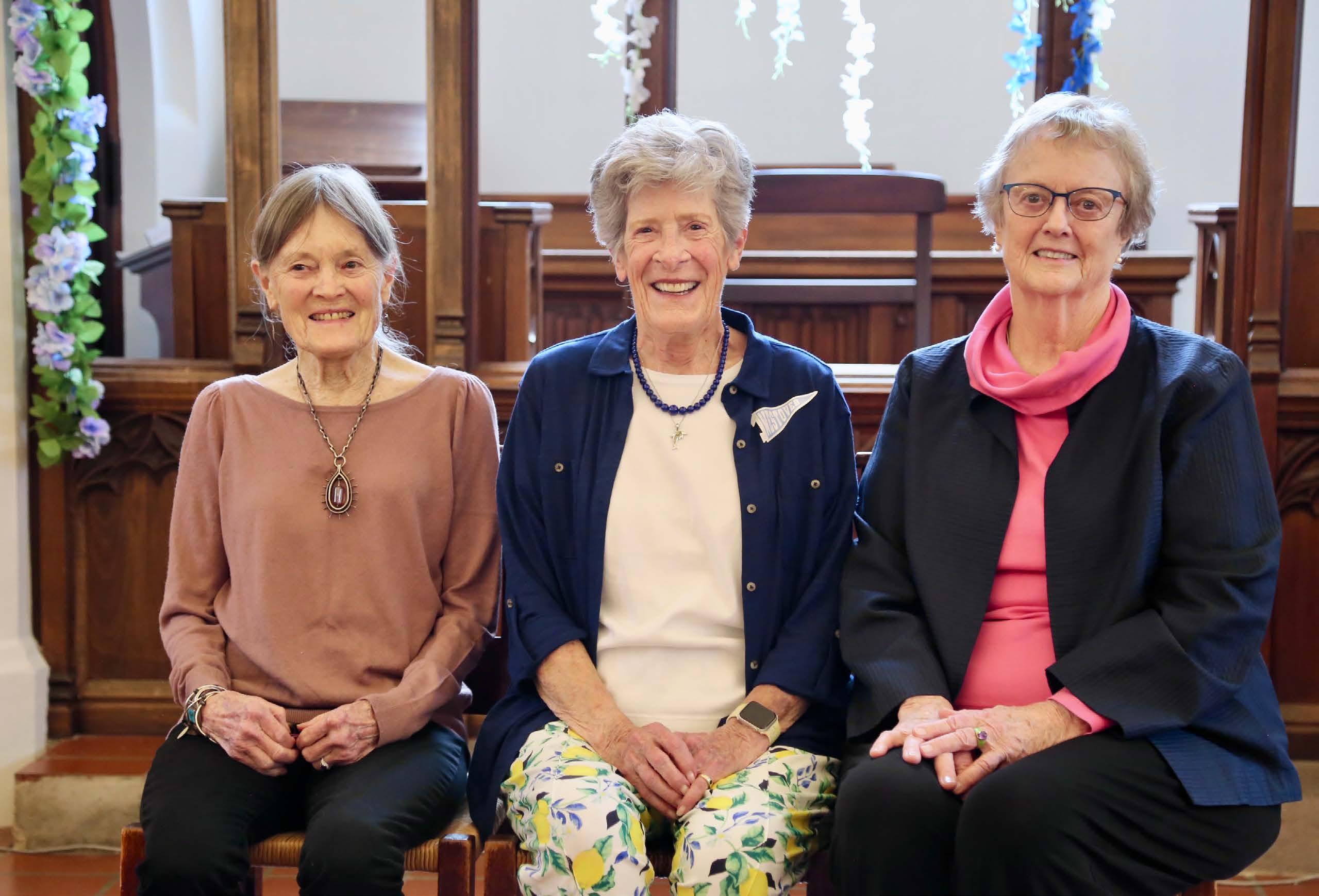
Pris (center) at her 65th Reunion in June 2025 with classmates Deborah Roberts Watson ’60 and Jennifer Jones ’60, P’88, ’90
Leading Through Connection
Domenique Harrison ’08 Reflects on Her Board of Governors Presidency
Domenique Harrison ’08 closes her term as president of the Alum Association Board of Governors with a record of leadership rooted in vision, empathy, and steadfast commitment to her alma mater. Over the past several years, she has helped guide a group of volunteer leaders whose mission is to serve as ambassadors to Westover by connecting alumnae, strengthening the Westover Fund, and advancing the mission of the School through meaningful engagement. Under Domenique’s leadership, that mission has felt both newly energized and deeply personal. She has championed connection, lifted alum voices, and helped build a stronger, more inclusive network grounded in shared purpose. In the conversation that follows, she reflects on what inspired her service, how the role shaped her, and what she hopes for Westover’s future.
WHAT INITIALLY INSPIRED YOU TO JOIN THE BOARD OF GOVERNORS, AND WHAT INSPIRED YOU TO STEP INTO THE PRESIDENCY?
[Stepping onto the Board of Governors in] 2020 was such a meaningful moment for our diverse Westover community. After being welcomed into a Town Hall to share about our experiences as alums and students and talk honestly about our connection to the School, I realized I needed to reconnect—and recommit—to learning with, growing alongside, and contributing to an evolving alum community.
As I stepped into the role of a BOG member and offered my time to different committees and working groups, I saw the beauty of collaborating with alums and current Westover staff to build a stronger, more expansive, and more inclusive community. After about four years of service, I found myself reflecting on how I wanted my final years on the Board to feel. When the former president encouraged me to consider taking on a new role, I spent real time thinking about what I wanted my leadership to be grounded in—advocacy, agency, and both individual and collective power to help Westover become a change agent and an innovative school community within the broader boarding school landscape.
WHAT HAS KEPT YOU ENERGIZED AND COMMITTED THROUGHOUT THESE SIX YEARS?
Each year on the BOG was different and brought new opportunities for learning, growth, and collaboration with Westover’s staff, alums, and students. Seeing projects through to completion and watching Westover adopt and expand them, offering informal mentorship to current students, moving through different leadership roles, and feeling supported by Mary Risner and her team in the Office of Advancement—all of it reminded me that I was never doing this work alone, and that I was contributing to a vibrant, welcoming community.
HOW HAS YOUR UNDERSTANDING OF WESTOVER’S MISSION DEEPENED DURING YOUR SERVICE?
Being part of the writing and development of our belonging statements and other identity-focused commitments helped me see more clearly who and what Westover was, is, and has the potential to become for a new generation of students. I now understand Westover’s mission as a call to creativity, exploration, and leadership—supporting young women, girls, and nonbinary students in becoming their most curious, confident, and empowered selves at Westover, in their communities, and beyond.
HOW HAVE YOU SEEN THE WESTOVER COMMUNITY WORK TO CREATE A MORE INCLUSIVE AND WELCOMING ENVIRONMENT?
One of the clearest ways I’ve seen Westover foster belonging and inclusiveness is through its consistent, transparent communication with alums about what’s happening on campus and how the School is navigating both local and global challenges. Head of School Polly Fredlund’s “Upfront with Polly” columns offer thoughtful updates on how justice, equity, and diversity show up in daily campus life—how cultures are honored, how international holidays are celebrated, and how students are leading cross-cultural initiatives. It’s a powerful testament to Westover’s ongoing commitment to community and care.
WHAT DO YOU BELIEVE IS THE MOST IMPORTANT WORK ALUM VOLUNTEERS CAN DO FOR THE SCHOOL TODAY?
The most important thing alums can do today is twofold: (1) reflect on the activities and practices that bring them joy—rest, play, growth, learning—and consider how those same passions can be shared within the Westover community; and (2) give: your time, your resources, your expertise, your mentorship, and your presence.
WHAT INITIATIVES OR COLLABORATIONS FELT MOST MEANINGFUL TO YOU?
I’ve truly valued the work of finding, connecting with, and welcoming new governors to the Board, as well as honoring alums who have achieved remarkable things through our annual Alumnae Awards during Alumni Weekend. It’s a gift to celebrate alums whose work aligns so deeply with the Westover mission.
CAN YOU SHARE A MOMENT THAT CAPTURES THE POWER OF ALUM ENGAGEMENT AT WESTOVER?
Every Reunion Weekend reminds me of the power of our community. Alums show up, serve, and connect across generations. The threads of tradition, culture, creativity, and sport still ground Westover’s ethos today. Whether it’s the laughter of alums returning to the corridors after years away or the spontaneous, in-person mentorship happening between recent grads and rising juniors and sophomores, I’m always in awe of what intentional gathering makes possible.
WHEN YOU THINK ABOUT WESTOVER, WHAT FILLS YOU WITH THE GREATEST SENSE OF PRIDE?
I’m deeply grateful to be an alum, to serve as BOG president, and to sit on the Board of Trustees under Polly’s leadership. It has been a true joy to watch her move with intention, care, and flexibility—connecting, leaning in, and building with, around, and beyond the Westover community.
WHAT ARE YOUR HOPES FOR THE BOARD’S FUTURE WORK?
I hope we continue exploring creative ways to encourage more alum volunteers to engage deeply with the Board—both in person and at events around the world. I also hope we feel empowered to use our individual gifts to bring alums, whether deeply connected or long estranged, back into the Westover fold.
Invested
For the first time in seven years, Westover has reached one hundred percent faculty and staff participation in the Westover Fund in the 2024–2025 year. This marks a meaningful milestone that reflects the care, commitment, and belief our faculty and staff bring to our community every day.
At Westover, students are guided and encouraged by a community of adults who are deeply invested in their growth. Teachers, coaches, advisors, dorm parents, and staff work together to shape each student’s experience—through one-on-one conferences, thoughtful advising, late-night dorm conversations, and daily moments of mentorship in and beyond the classroom. These relationships build confidence, spark curiosity, and often last well beyond graduation.
When the people who know Westover best choose to give back in this way, it speaks volumes. Their generosity strengthens our classrooms, enriches our programs, and helps ensure that every student continues to feel supported, challenged, and inspired.
We are deeply grateful to our faculty and staff for their dedication, generosity, and unwavering commitment to our students and to one another. Your belief in Westover makes our community stronger every day.
A Legacy of Innovation and Inspiration
The Class of 1965 Champions the Westover Institute for Their Sixtieth Reunion
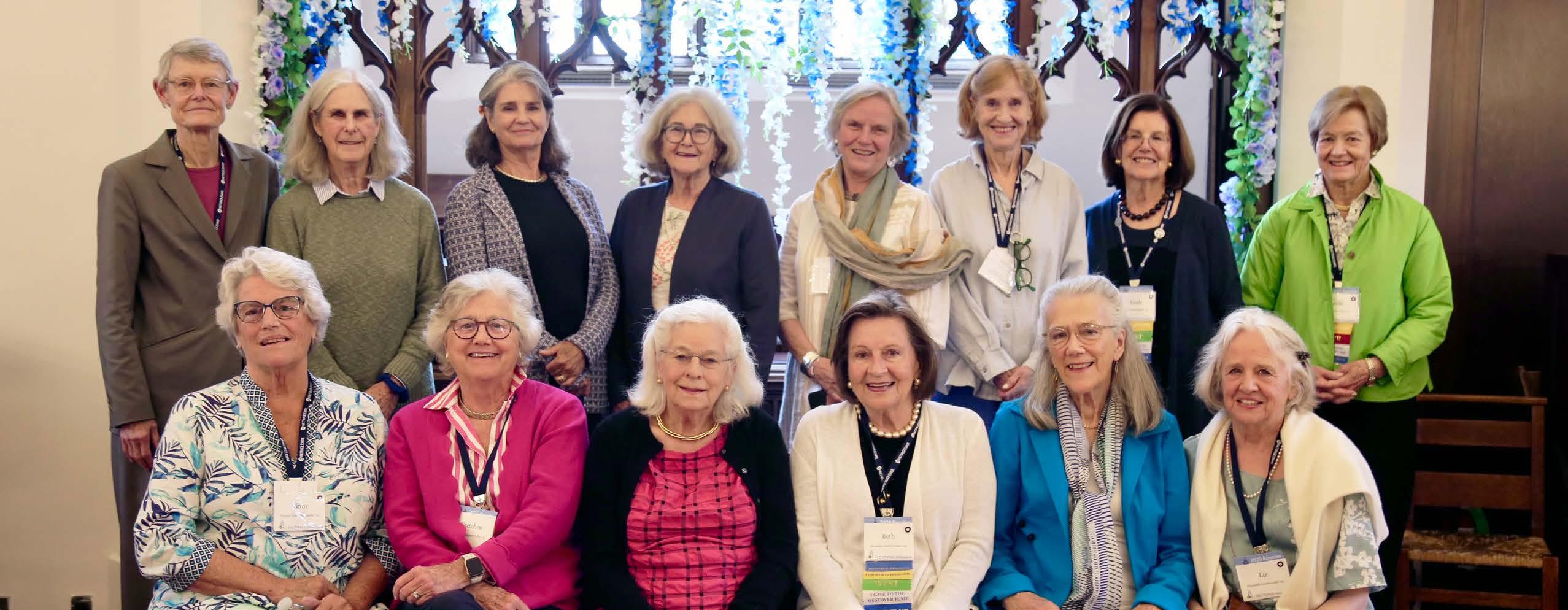
In a beautiful expression of enduring loyalty and vision, the Class of 1965 selected the Westover Institute as the focus of their sixtieth Reunion class gift—and in doing so, they have set a new standard for what it means to give back.
Thanks to the generosity of this devoted group of alums, the Westover Institute is now fully funded for the next five years, providing an extraordinary runway to grow this distinctive and beloved program.
The Westover Institute creates space for students to tackle real-world challenges through curiosity, collaboration, and creativity without the pressure of a grade. Through place-based learning, faculty-led explorations, and cross-disciplinary inquiry, the program cultivates joyful problem-solving and a truly global perspective. Students investigate big questions and connect their learning to the world around them in deeply meaningful ways. Faculty, in turn, are supported with dedicated grants that allow them to stretch, imagine, and innovate alongside their students.
This is a program that sets Westover apart from its peers, and now, thanks to the Class of 1965, it will flourish.
We offer our deepest thanks to every member of the class who contributed, and a special note of gratitude to Beth Golden, Caroline Benson, Edie Heilman, Eldie Acheson, Elsie Walker, Leslie Hume, Linda Brandi, and Martha Martin for leading this powerful initiative with heart and purpose.
Your class has not only honored your Westover legacy, you’ve created new opportunities for future generations of Westover students to learn with purpose, joy, and imagination.
Thank you for believing in Westover. And thank you for helping our students believe in their ability to shape the future.
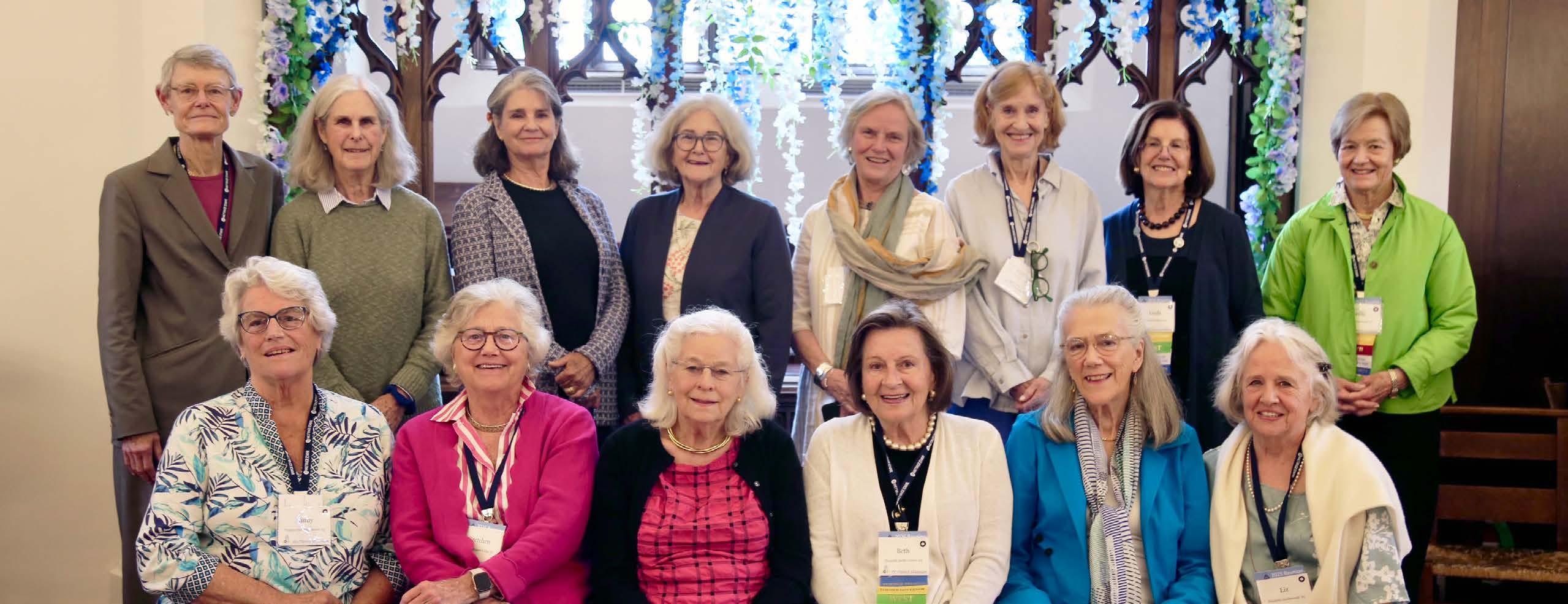
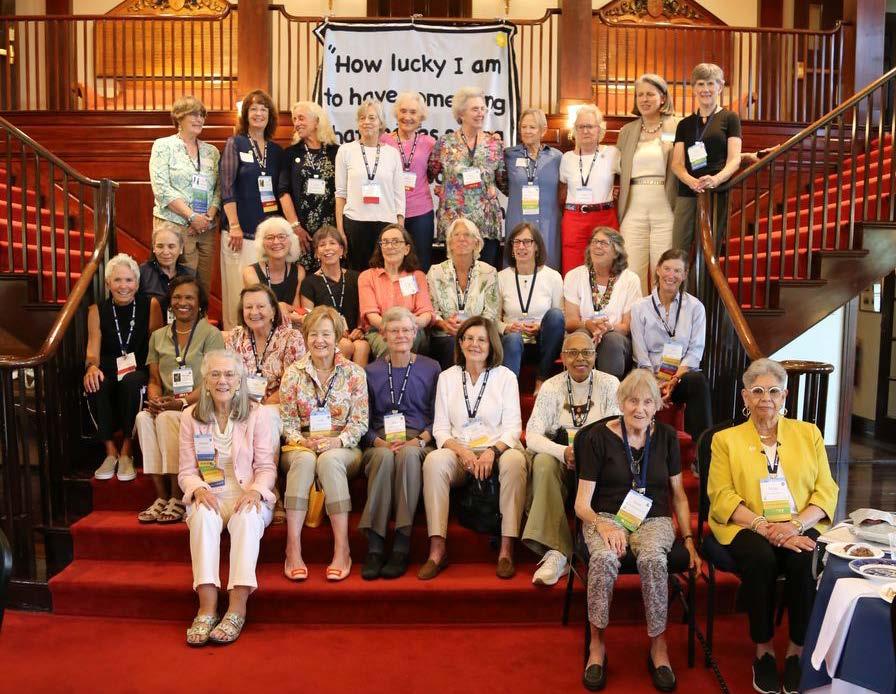
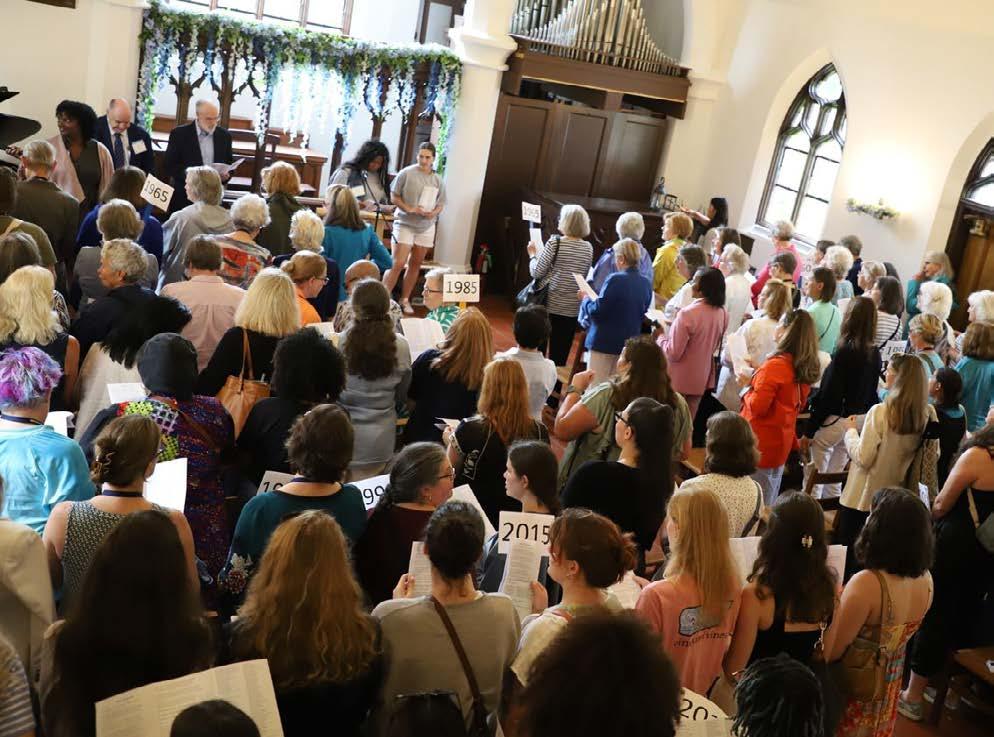
The Class of 1965 gathered in the Chapel to mark the occasion of their 60th Reunion in June 2025.
Keeping the Westover Spirit Strong
Natalie Callender Bagley ’83
For Natalie Callender Bagley ’83, giving back to Westover feels like the most natural expression of gratitude for a place that shaped her life. “Westover has been such an important part of my life ever since I stepped foot onto campus freshman year,” she says. It was where she formed friendships that remain among her closest today and where she developed the confidence and leadership skills that continue to guide her. She often reflects on how her foundation was built here and how much of who she is now “leans back to my Westover roots.”
That deep connection is what made her invitation to join the Alum Association Board of Governors feel so meaningful. She remembers getting the call and immediately feeling excited to serve. “I was thrilled to be on the Board of Governors and volunteer my time to give back to the school, which is so special to me,” she says. The mission of the Board asks members to serve as ambassadors to Westover by connecting alums, strengthening the Westover Fund, and advancing the mission of the School through engagement with its community. For Natalie, this charge felt like a natural extension of what she had already been doing since the day she graduated.
Before joining the Board, she stayed closely connected as a Peer Fundraiser and Class Secretary, helping to plan reunions, writing class notes, and hosting annual gatherings with her Westover friends. “I think I’ve always been an ambassador for Westover,” she says. “I’ve been somewhat of the glue to keep connections not only within my class but with others, too.” Over the years, she has discovered countless unexpected Westover connections through work, travel, and daily life, and each one immediately brings a sense of shared pride and belonging.
Serving on the Board of Governors has deepened her understanding of the School today and the impact alums can have when they stay involved. She speaks often about the importance of alum participation and how even small contributions demonstrate confidence in the School and help Westover qualify for grants. She notes how meaningful it is to see faculty and staff reach full participation and how it reflects the culture of support that defines the community.
Natalie describes her own Westover experience as transformational and believes it shaped the course of her life in lasting ways. That is why she gives back through mentorship, committee work, fundraising efforts, and by championing Westover’s mission wherever she goes. Hearing stories from alums across generations inspires her, especially the way “there is always a thread that pulls through” and connects their memories to her own.
“ Westover has been such an important part of my life ever since I stepped foot onto campus freshman year.”
Staying connected to Westover has been a constant for Natalie even as work, family, and travel shaped different seasons of her life. Today, she speaks or visits with Westover friends regularly, and she loves connecting with current students and hearing what life on campus is like for them now. Sharing these updates with her classmates keeps the bond between generations vibrant and meaningful.
She believes there is always an opportunity for alums to make a difference, whether by mentoring students in programs like FIRE (Financial Independence, Readiness, and Empowerment) or WISE (Women in Science and Engineering), participating in Reunion planning, writing class updates, attending events, or supporting the Westover Fund or Giving Day. She encourages alums to update their contact information, join WestoverConnect, add Westover to their LinkedIn profile, follow School updates, and share Westover with prospective families.
For Natalie, volunteerism at Westover is not just service. It is a continuation of the gratitude she has carried since the day she first stepped on campus, a way to honor her own experience while helping ensure that Westover remains the strong, vibrant, life-changing community it has always been.
Inspired to share your time and talents with Westover? We’d love to hear from you! Reach out to Lizzie Schweyer, Constituent Relations, at lschweyer@westoverschool.org or 203-577-4658 to start the conversation.
Staying Connected through Giving
Amanda Trabulsi ’12
Amanda Trabulsi ’12 sees giving back to Westover as a meaningful way to support a community that matters to her. After returning to the United States from working in international development, she chose to invest in Westover and has remained a steady donor for the past five years. Now settled in Connecticut and building her career, Amanda feels an even greater commitment to help sustain Westover’s future and ensure that the opportunities she valued continue for generations to come.
Westover was where she discovered the confidence and belonging that still guide her choices today. It was the environment that allowed her to grow academically and personally, and the first place where she stepped into leadership with real voice and purpose. Giving back now is her way of ensuring that current and future students can experience the same transformation. “Knowing that even a modest contribution can directly support a student’s experience today is incredibly meaningful,” she says. “The reality is that balancing career goals, personal milestones, and finances will always be part of life, no matter the stage. Starting early simply makes that commitment a natural part of who I am and what I value.”
When Amanda reflects on her time at Westover, one defining moment rises above the rest. Early in her freshman year, she listened to a chapel talk from Siobhan Matias Rosario ’09, who spoke openly about her experience as a mixed-race student. For Amanda, who had grown up mixed race in a predominantly white community, it was the first time someone articulated what she had felt for years. That moment helped her see her identity as a strength. It marked the beginning of seeing herself clearly and proudly and affirmed that Westover was a place where differences were valued rather than minimized.
Her giving now reflects the experiences that shaped her then. She is especially passionate about supporting student-led initiatives that connect Westover to the broader world and the faculty who guide students through those opportunities. She knows how influential teachers were in her own life, and many of those relationships continue today. She hopes her support helps sustain a Westover where students feel empowered to lead and educators feel supported to help them grow.
“ You don’t need a major gift to make a meaningful difference at Westover. Start by giving in ways that connect to who you are. ”
Amanda’s understanding of leadership has remained consistent since her student days. Leadership begins with listening. She believes that the strongest leaders are those who understand the challenges facing their communities and work to remove barriers rather than create them. Her own leadership path at Westover was shaped by simply being surrounded by young women in positions of influence. Seeing her peers lead made it easier to imagine herself in those roles, eventually becoming Second Head of Dorcas and later Second Head of School. Faculty members also played a powerful role. Small classes and close relationships with teachers encouraged her to use her voice, take risks, and grow more confident as a speaker and a writer.
When she thinks about what she would say to young alums who want to make an impact but are unsure where to begin, Amanda is quick to emphasize that every contribution matters. “You don’t need a major gift to make a meaningful difference at Westover,” she says. “Start by giving in ways that connect to who you are. Impact grows when it’s rooted in something personal. The most important thing is to start. Once you take that first step, whatever it looks like, you naturally build a relationship with the school that deepens over time. It’s less about the size of the gift and more about choosing to stay connected to a place that shaped you.”
Amanda’s story is a reminder that giving early is not about capacity. It is about connection. It is about honoring the lessons and opportunities that helped you become who you are. And it is about helping ensure that future Westover students can experience that same sense of belonging, confidence, and possibility.
A Record-Breaking Year Fueled by You
A Message from the Director of the Westover Fund
What a moment to celebrate!
In fiscal year 2024–2025, the Westover Fund soared to a record-breaking $2.22M, a milestone that speaks volumes about what is possible when this community comes together. This success isn’t just about the number; it is about the collective strength of belief, generosity, and love for Westover that made it happen.
This year’s achievement was built by everyone, and I want to extend my heartfelt thanks to some of our most dedicated champions. To our exceptional faculty, the Class of 2025, and the Board of Trustees: your 100% participation was a powerful vote of confidence in our mission, and your leadership set the tone for all who followed. Want to see something marvelous? Check out the In Honor of Page of the Report and see how the class of 2025 celebrated each other this year.
There is a tangible energy on campus right now, something you can feel in every corner of the School. You could see it on the smiling faces of faculty, with families during Family Weekend, and you can hear it in the voices of students eager to take advantage of all Westover has to offer. That excitement? It’s real. And it’s contagious.
This is a time for great pride in Westover, and even greater gratitude for those who continue to stand with us. The Westover Fund makes possible so much of what defines the student experience: academic excellence, vibrant traditions, financial aid, and the people who guide our students every step of the way.
Thank you for your steadfast support. You are part of something extraordinary. And together, we are just getting started.
With appreciation and Westover pride,
Mara Keggi Ford Director of the Westover Fund
Giving Overview
FY 2025 Revenue & Expenses
FY25 Westover Fund Awards
THE JULIA B. KIRLIN AWARD, named for the long serving staff member and one of the founders of the Westover Development office, is given to the reunion class with outstanding fundraising participation. This year the Julia B. Kirlin Award was presented to the Class of 1965 with 60% participation.
THE ADELE Q. ERVIN AWARD, named for a former Governor, Trustee, and the First Director of Alumni Relations, is presented to the reunion class with the most exceptional fundraising results in overall fundraising for the Westover Fund. This year, the Adele Q. Ervin Award goes to the extraordinary Class of 1965, who raised $130,000 for the Westover Fund and an additional $140,000 for the Westover Institute!
THE ALUMNAE BOARD OF GOVERNORS AWARD is given for the highest percentage participation in overall fundraising among reunion classes celebrating their 5th, 10th or 15th reunion. This year the Alumnae Board of Governors Award goes to the Class of 2010 with 11% participation.
FY25 Giving Days Recap
Giving Tuesday - December 3, 2024
Thanks to the generosity of our community, Westover had a strong showing on Giving Tuesday, with 264 donors coming together to raise $89,205 in support of the Westover Fund. Every gift, large or small, helped strengthen essential programs, enrich student experiences, and affirm the power of collective support. We are grateful for the alums, families, faculty, staff, and friends who chose Westover as part of their Giving Tuesday tradition. Your participation helped set a positive tone for the rest of our giving year!
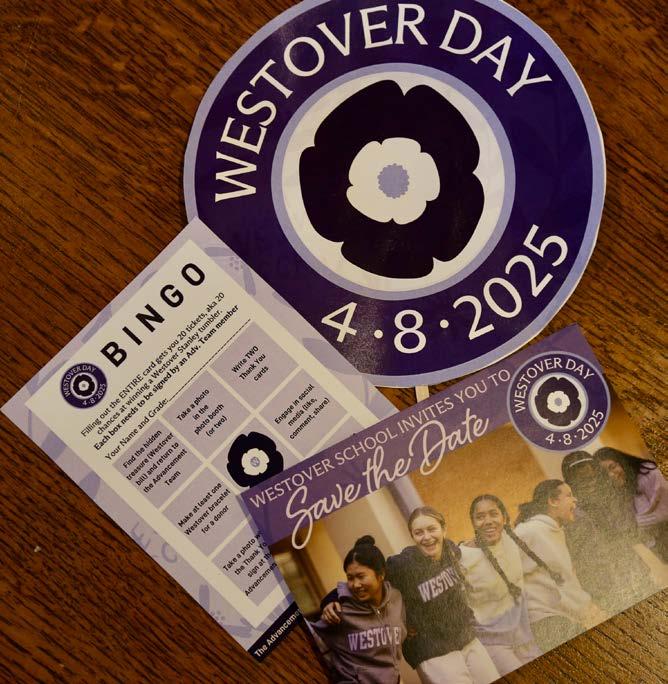
Westover Day - April 8, 2025
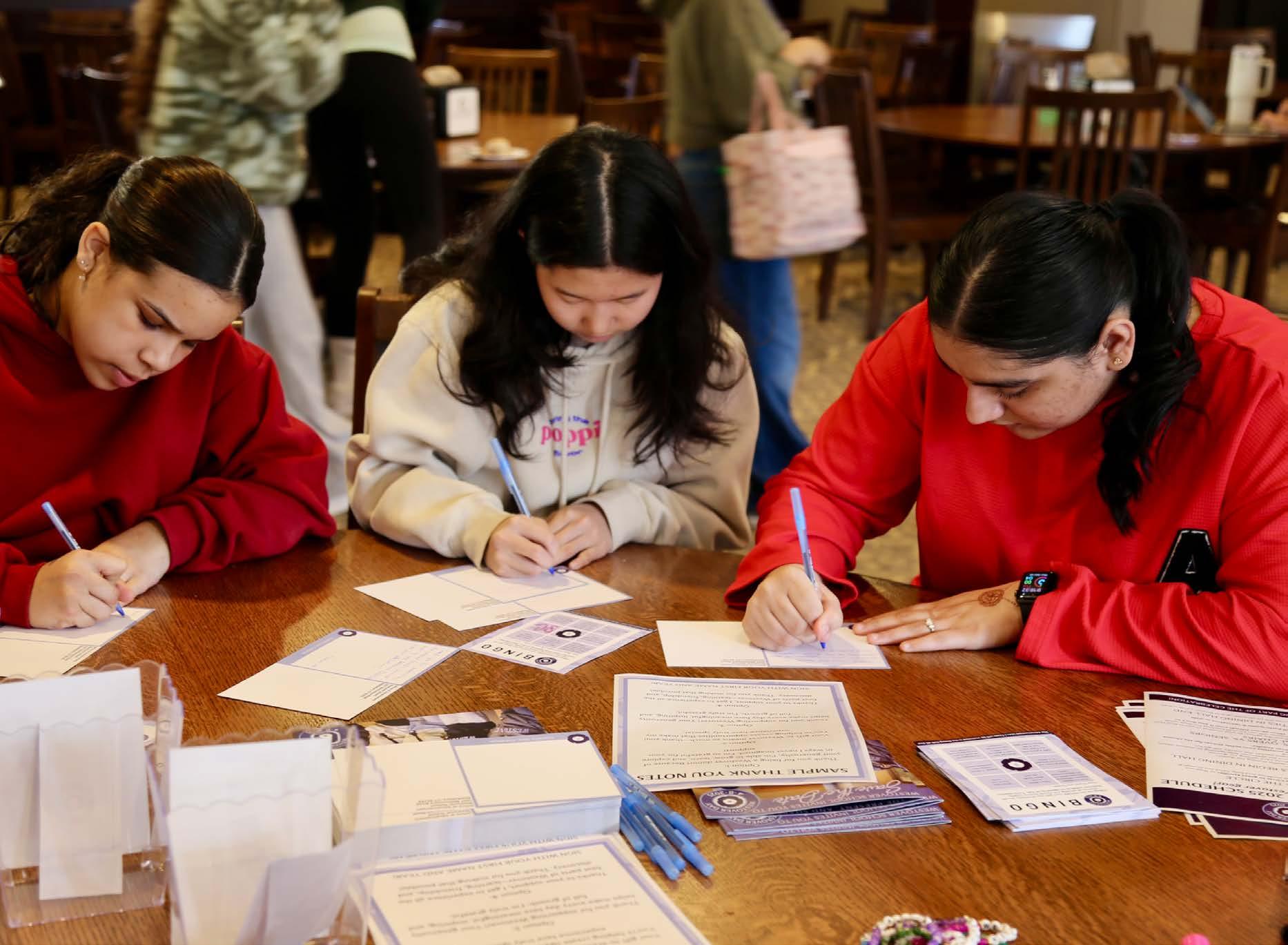
Westover Day continues to shine as one of our most spirited and impactful celebrations of philanthropy. This year, the Westover community rallied to raise $89,031 from 392 donors
The energy on campus was extraordinary. Students learned about the impact of philanthropy by discovering hidden dollars around campus and choosing which Westover Fund designation they wanted to support. They wrote heartfelt thank-you notes, crafted friendship bracelets, and posed for pictures at a Westover Daythemed photo booth.
The day culminated in an unforgettable West vs. Overs vs. Seniors musical chairs showdown, where friendly rivalry, and plenty of laughter, filled Red Hall. The victorious team earned well-deserved Crumbl cookies, and the whole community ended the day with a deeper understanding of what philanthropy makes possible at Westover.
Westover Day once again demonstrated the joy, generosity, and togetherness that define our school. Thank you to everyone who participated and helped make the day such a success.
To our dedicated Westover volunteers,
Thank you. Whether you shared your leadership, lent your voice to our community, supported our outreach efforts, or offered your time and talents in ways both big and small - you helped move Westover forward this year.
Your generosity, insight, and commitment make a profound difference. Every moment you gave, every connection you strengthened, and every effort you contributed helped create meaningful opportunities for our students, families, and alums.
Thank you for your partnership and for embodying the spirit and strength of Westover. We are deeply grateful for all you do to help our school thrive.
With appreciation,
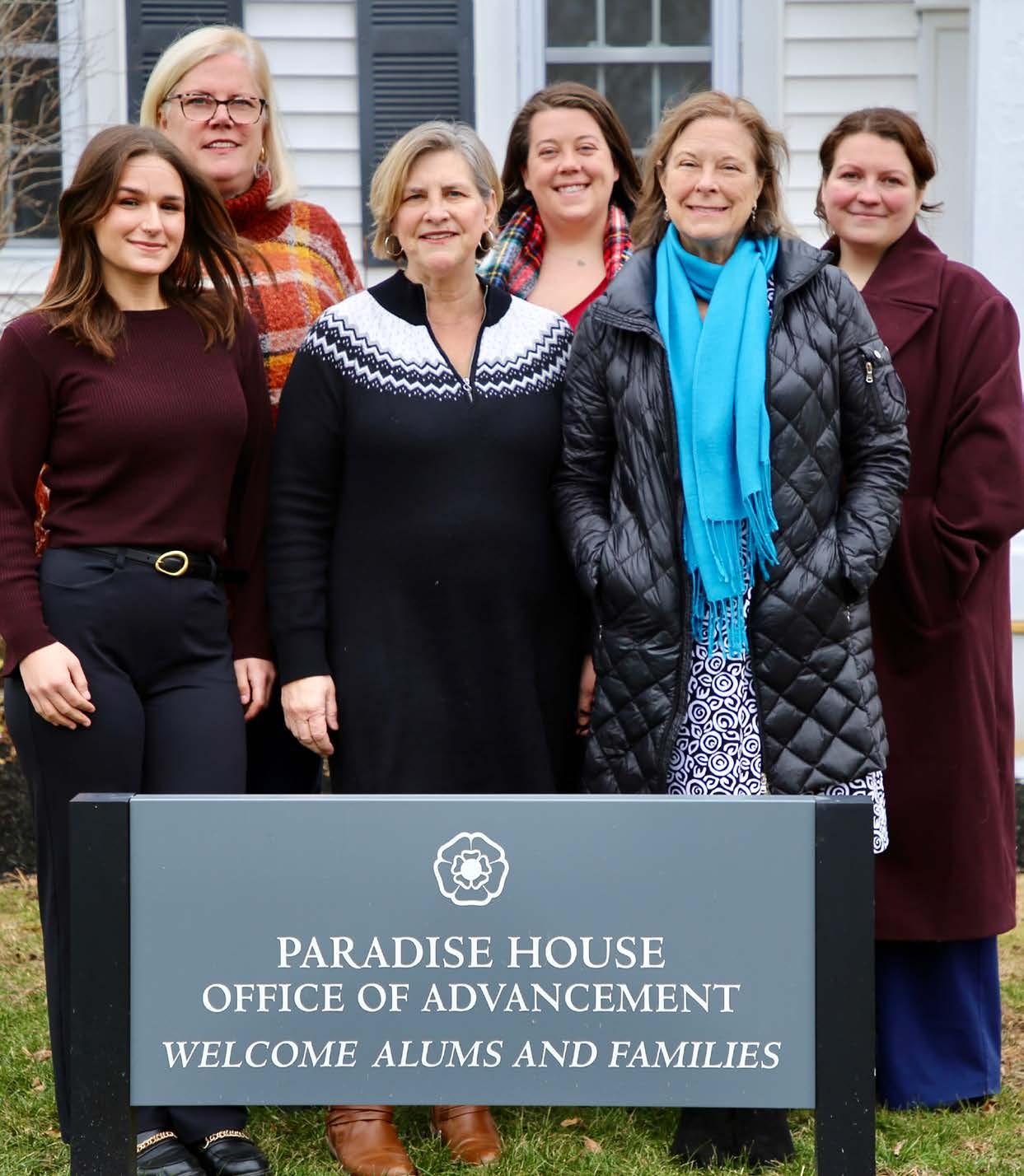
The Westover Advancement Team
Looking for a meaningful way to stay connected to Westover?
We invite you to join our community of volunteers—alums, parents, and friends who give their time, voice, and energy to support today’s students and strengthen the Westover experience.
Volunteer opportunities include:
CLASS SECRETARIES
Foster connection within your class by sharing updates, supporting reunions, gathering class notes, and encouraging participation in the Westover Fund.
PEER FUNDRAISERS
Inspire classmates and peers to support Westover through Giving Days, personal outreach, and, if you’re comfortable, leadership and transformative giving efforts.
ADDITIONAL WAYS TO GET INVOLVED
Support reunion efforts, mentor students through F.I.R.E. (Financial Independence, Readiness, and Empowerment), engage on social media, host or support events, assist Admission, and more.
Whether you have a little time or a lot, there is a role for you - and your involvement makes a difference.
To learn more or raise your hand to help, scan the QR code. A member of the Office of Advancement will be in touch. You can also email us at alumnae@westoverschool.org
A Lasting Impact at Westover
At Westover, young women are inspired to think deeply, act with purpose, and engage the world with confidence and joy. Through innovative programs, global perspectives, and a culture rooted in service, Westover empowers students to discover how their voices, values, and actions can create meaningful impact in our classrooms, our communities, and far beyond our yellow walls.
This enduring vision is sustained by the generosity of alums and friends who believe in Westover’s mission and choose to carry it forward. By including Westover as a beneficiary in their philanthropic and estate plans, these community members ensure that future generations of students will continue to learn, lead, and serve with distinction.
Westover’s Office of Gift Planning is here to help navigate charitable given tools to help you plan a meaningful gift that makes a difference for you and for Westover.
LEARN ABOUT GIVING VEHICLES and how they can benefit both you and Westover
westoverlegacy.org/giving-options
ASSETS TO GIVE
westoverlegacy.org/what-you-can-give
westoverlegacy.org/plan-your-legacy
westoverlegacy.org/resources/gift-calculator
Westover’s Hillard Society celebrates all community members who have included Westover in their estate plans. If you have already included Westover in your estate or philanthropic planning, let us know so we may recognize you as a member. Contact the Office of Advancement at (203) 577-4646 or alumnae@westoverschool.org. Visit westoverlegacy.org for more information.
Be a part of the Westover Fund this year. Empower this next generation of graduates to lead with courage in a world that requires bold thinking and fearless action.
The Westover Fund sustains the heart of a Westover education - supporting innovative programs, exceptional faculty, and an environment designed for girls to discover their purpose and lead with confidence. Your generosity ensures that every student has access to opportunities that nurture their talents, challenge their thinking, and prepare them to engage the world with courage and conviction.
“I learned so many things during my time at Westover—how to be curious, passionate, kind, and empathetic, as well as how to be firm, resolute and resilient. Out of everything I learned at Westover, the thing that I am the most grateful for is learning that I am capable. I hope you’ll consider joining me in supporting today’s Westover students, so they too can discover their own sense of capability, confidence, and purpose.”
- Alexandra Pape ’12, Board of Governors
Join Alex in making a gift today to directly support the people and programs that define the Westover experience - vibrant academics, joyful traditions, inspiring faculty, and the spaces where students discover who they are and all they can become.
The Westover Fund
Together, we care for the place that cares for our students. Make your gift today.