Free-falling snowflakes land on the slopes of the Continental Divide. IT TAKES 10-12″ OF COLORADO SNOW TO ACCUMULATE 1″ OF H20.
2
Things heat up when spring sunshine melts the snow and water runs off to Clear Creek and into one of three canals.
3
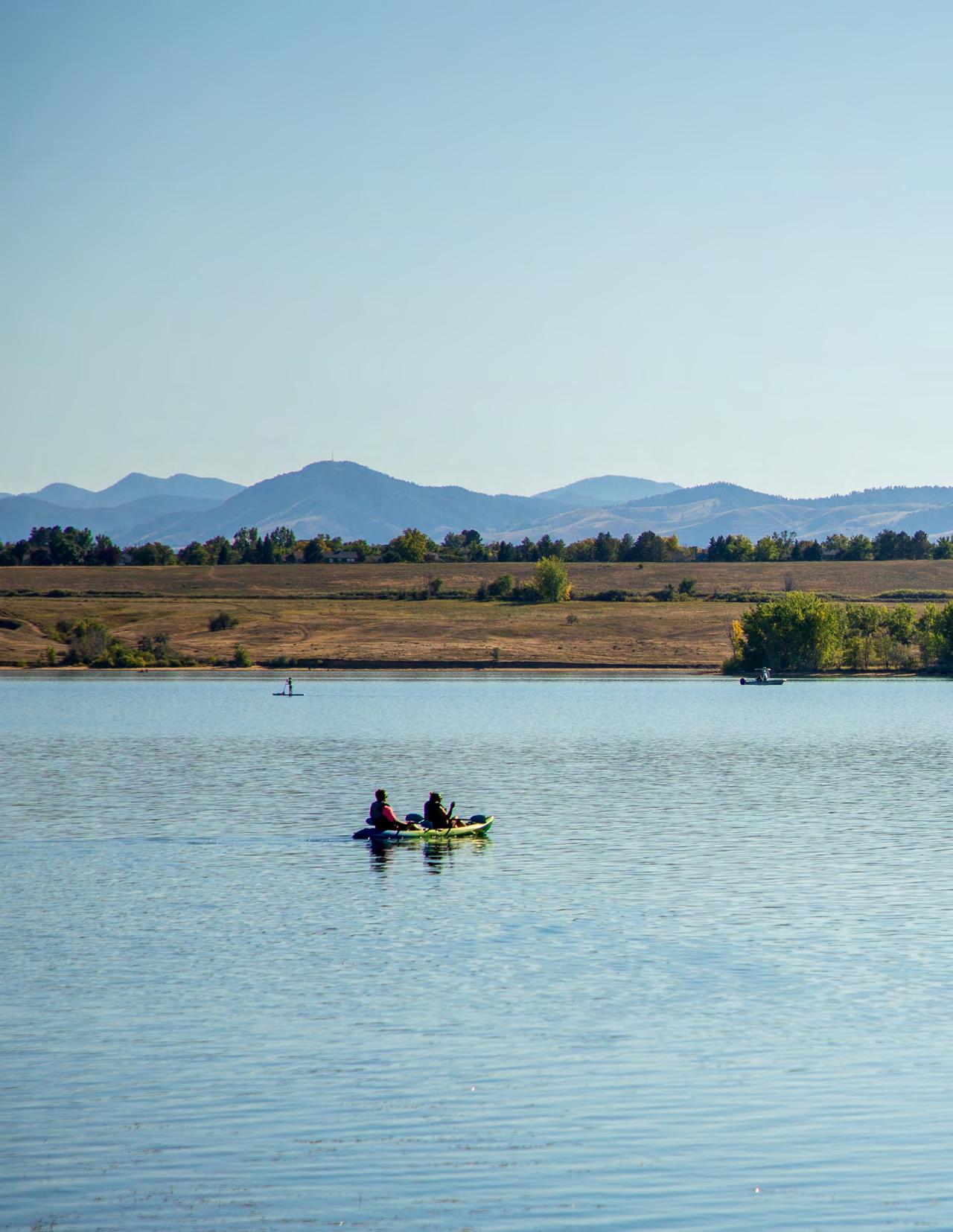
Water sets sail for Standley Lake.
4
Finding its way to the water treatment facilities, water passes through a complex system of treatment cycles, filters, pH balancing, and a clear well.
5 After it is transformed into high-quality drinking water, the City delivers it to Westminster’s residents and businesses.
Source Water Assessment
The Colorado Department of Public Health and Environment (CDPHE) completed a Source Water Assessment Project report (SWAP) for our water supply. It provides a screening evaluation of potential contamination that could occur in the Standley Lake watershed. It does not mean that the contamination has occurred or will occur. This information is used to evaluate the need to improve our current water treatment capabilities and prepare for future contamination threats.
To receive a copy of this report, please contact Water Quality staff at 303-658-2500 or water@westminsterco.gov
Potential sources of contamination to our source water include existing/ abandoned mines, aboveground and underground leaking storage tanks, Environmental Protection Agency (EPA) abandoned contaminated sites, EPA chemical inventory/storage sites and toxic release sites, EPA hazardous waste generators, permitted wastewater discharges, solid waste sites, forests, fallow and pasture/hay, septic systems, oil/gas wells and roads, EPA Superfund sites, commercial/industrial/ transportation, residential areas, urban recreational grasses, quarries/strip mines, gravel pits, and row crops.
WATER TREATMENT
Here is how the City cleans our drinking water. Similar to most other drinking water treatment facilities, the City uses four steps for treating water.
STANDLEY LAKE
1
Coagulation, Flocculation and Sedimentation
Water from Standley Lake enters the drinking water treatment facility and is channeled into a mixing chamber where a chemical called a coagulant is added, causing small particles such as dirt and debris to stick together, forming larger particles called floc. As the particles continue to coagulate or stick together, they get heavier. Over time, the heavy, larger particles settle to the bottom of the settling basins where they are removed with sludge collectors. Lime is added for corrosion control.
2
Filtration
The cleaner, clearer water that remains flows through a fine media filter. Semper, the City’s oldest drinking water treatment facility, uses a 36-inch layer of sand and anthracite to filter water. It’s a lot like a three-foottall Brita® water filter. Built in 2001, Northwest Treatment Facility is a more modern treatment facility that uses a thin microfiltration membrane to remove fine particulates.
4 Water Delivery
3
Disinfection
As part of the disinfection process, a small amount of chlorine is added to eliminate bacteria and viruses.
CHLORINE
Once our drinking water has been cleaned and filtered, it is pumped to one of several potable water storage tanks. Thanks to gravity, clean and safe water flows to our homes 24/7 through a network of over 550 miles of water lines.
MONITORING WATER QUALITY
Here’s a glimpse into our evaluation of water quality during the year.
WATERSHED
Manual quality control checks = 15,000+ test results
74 dedicated city sample stations =
96 sampling trips 5,760 test results
26 creek and canal sample locations =
36 sampling trips 4,996 test results
4 lake sample locations = 24 sampling trips
1,580 test results
WATER TREATMENT FACILITIES
27 new construction projects =
201 test results
150 continuous monitoring locations throughout the treatment process
DISTRIBUTION
13 water storage tanks =
424 test results
DRINKING WATER FACILITY
CONSTRUCTION UNDERWAY
In October 2025 Westminster broke ground on its new Westminster Boulevard Drinking Water Facility Project, intended as a modern and resilient treatment facility capable of preventing wildfire-related contamination.
Located along Westminster Boulevard, just northeast of West 98th Avenue, the new drinking water facility will produce up to 14.7 million gallons of clean, safe, and affordable drinking water every day.
As construction continues this year and through 2028, you’ll notice work in the surrounding area to support this project. First, a new water supply line will connect existing pipes along Wadsworth Boulevard at 92nd Avenue to carry untreated water from Standley Lake to the treatment facility. A second water line will be built to carry clean water from the facility to the existing distribution system at 98th Avenue and Sheridan Boulevard.
To learn more about the projects and stay up to date on status, visit westminsterco.gov/ drinkingwaterproject or scan the QR code and make sure to sign up for email updates about construction impacts, detours, and project progress.
The History of Westminster’s Water Treatment Plants
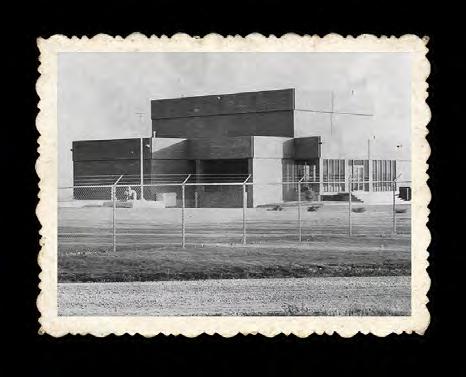
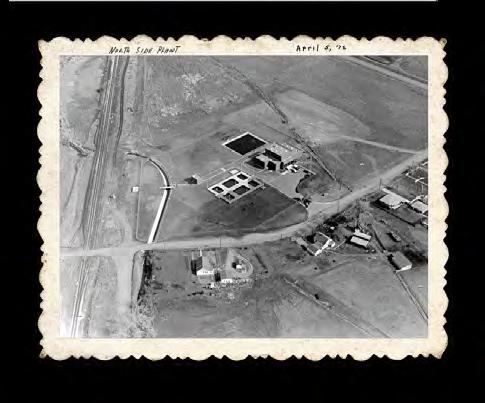
Over the years, expansions and upgrades to Semper Water Treatment Facility were required to meet the needs of a booming Westminster. Semper was built back in 1969 when the city’s population was approximately 20,000 people. According to the 2020 census, Westminster is now home to about 116,000 residents.
The above photos of Semper, capture the 51-year-old facility, which treats 65% of the City’s water annually. Northwest Treatment Facility treats the remaining 35% of the City’s drinking water supply.
I HEARD ABOUT THE DROUGHT.
HOW DOES IT AFFECT ME?
Snow totals this winter fell well short of averages in the mountains and across the Front Range, tracking at or below 2002 levels, the driest year on record. As outlined in Our Drinking Water’s Origin Story (page 1), runoff from mountain snowpack is channeled into Standley Lake and makes up the majority of Westminster’s water supply.
In response to these dry conditions, the City entered Drought Watch on April 15th to enact voluntary outdoor watering restrictions. This early, proactive step signaled conditions are drier than normal and encouraged water conservation across the community.
For the most current drought stage information, visit westminsterco.gov/drought .
Fortunately, the City is well prepared to handle shortterm drought. Standley Lake typically stores enough water to last a full year. Westminster also benefits from strong prior investments, including senior water rights and significant storage capacity, which helps maintain a reliable supply even in dry years.
Should these dry conditions persist across multiple years, the City could enact further water restrictions depending on the nature of the shortage. These restrictions would primarily focus on outdoor watering of lawns and gardens during the summer months. During this time of year, a significant portion of residential water use goes toward outdoor irrigation, making it one of the most impactful areas for conservation.
Conserving water now can help reduce the need for stricter measures if dry conditions continue. Residents and businesses can make a difference by taking a few simple steps, such as limiting lawn watering to no more than three days per week, watering before 10 am or after 6 pm to reduce evaporation, and checking irrigation systems for leaks or overspray.
Additional Everyday Conservation Tips SHOWERS
Replace inefficient shower heads with WaterSense-labeled models.
TOILETS
Replace old toilets with WaterSense-labeled models.
LANDSCAPING
When replacing your lawn, choose native and water-wise plants that thrive with less water.
IRRIGATION
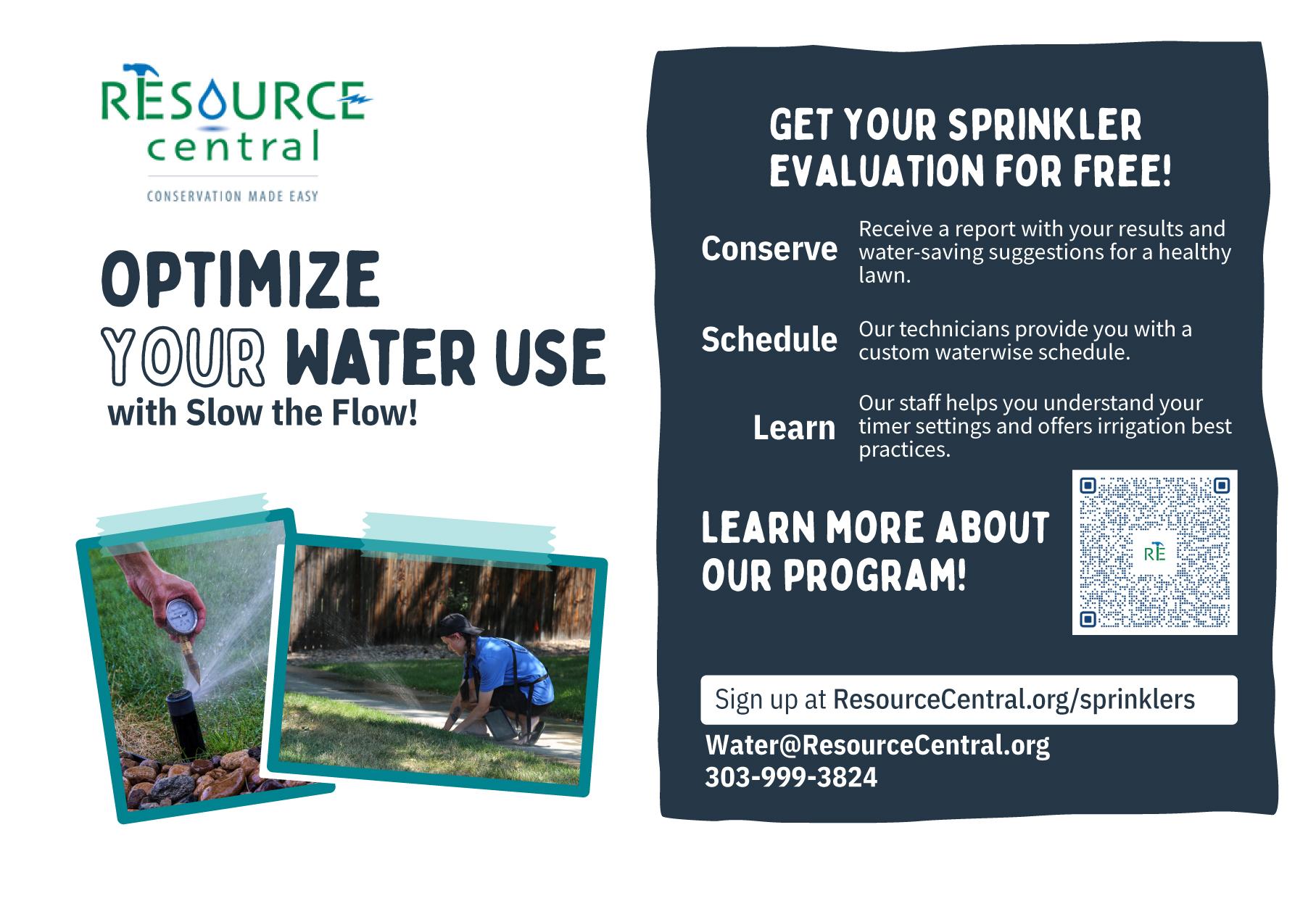
If you have an irrigation system, ensure it is properly set up and maintained. See page 16 for information on Resource Central’s free sprinkler inspection program.
WATER BILL
Monitor your water bill monthly. A spike in your usage could indicate a leak, so sign up for Westy Water to get automatic leak alerts.
For more watersaving tips, scan the QR code or visit home-waterworks.org
WATER SAMPLE TEST RESULTS
Westminster’s drinking water is monitored for more than 100 different substances on a strict sampling schedule, and more than 1,700 water samples are collected annually across the entire distribution system. The water we provide to residents and businesses must meet specific state and federal health standards. To help you better understand what is in your drinking water, we are sharing the 2025 test results for regulated substances that were detected. The Amount Detected that is referenced in the table on the following page is reported as the maximum amount detected unless otherwise noted.
The frequency of testing for individual substances is determined by CDPHE based on the likelihood that the concentrations of the substance will change over time. Some test results are for samples that were collected within the past five years.
Terms & Abbreviations
MAXIMUM CONTAMINANT LEVEL (MCL)
The highest level of a contaminant that is allowed in drinking water.
MAXIMUM CONTAMINANT LEVEL GOAL (MCLG)
The level of a contaminant in drinking water below which there is no known or expected risk to health. MCLGs allow for a margin of safety. MCLs are set as close to the MCLGs as feasible using the best available treatment technology.
TREATMENT TECHNIQUE (TT)
A required process intended to reduce the level of a contaminant in drinking water.
HEALTH-BASED
A violation of either an MCL or TT.
NON-HEALTH-BASED
A violation that is not related to an MCL or TT.
ACTION LEVEL (AL)
The concentration of a contaminant which, if exceeded, triggers treatment and other regulatory requirements.
MAXIMUM RESIDUAL DISINFECTANT LEVEL (MRDL)
The highest level of a disinfectant allowed in drinking water. There is convincing evidence that addition of a disinfectant is necessary for control of microbial contaminants.
MAXIMUM RESIDUAL DISINFECTANT LEVEL GOAL (MRDLG)
The level of a drinking water disinfectant, below which there is no known or expected risk to health. MRDLGs do not reflect the benefits of the use of disinfectants to control microbial contaminants.
NEPHELOMETRIC TURBIDITY UNIT(NTU)
Measure of the clarity or cloudiness of water. Turbidity in excess of 5 NTU is just noticeable to the typical person.
HIGHEST LEVEL ALLOWED
Single or calculated value used to determine if regulatory contaminant level (e.g. MCL) is met. Examples of calculated values include the 90th percentile, Running Annual Average (RAA) and Locational Running Annual Average (LRAA).
VIOLATION
Failure to meet a Colorado Primary Drinking Water Regulation.
PICOCURIES PER LITER ( pCi/L )
Measure of the radioactivity in water.
PARTS PER MILLION = MILLIGRAMS PER LITER (PPM = mg /L)
One part per million is equal to one drop in a hot tub.
PARTS PER BILLION = MICROGRAMS PER LITER (PPB = µg /L)
One part per billion is equal to one drop in an Olympic-size swimming pool.
NOT APPLICABLE (N/A)
Does not apply or not available.
90TH PERCENTILE (P90)
The Amount Detected levels reported for lead and copper represent the 90th percentile of the total number of sites tested. The 90th percentile is equal to or greater than 90% of our lead and copper test results.
NOT DETECTED (ND)
Indicates that the substance was not found by laboratory analysis.
DETECTED CONTAMINANTS
SUBSTANCE
1. The Amount Detected is reported as the maximum range value unless otherwise specified.
2. The MCL for Gross Beta Particle Activity (Beta Emitters) is 4 mrem/year. Since there is no simple conversion between mrem/ year and pCi/L the Environmental Protection Agency considers 50 pCi/L to be the level of concern for Gross Beta Particle Activity (Beta Emitters).
3. The Amount Detected for Chloramine represents the average of all individual sample results collected in the distribution system. 100% of the samples collected in the distribution system met the treatment technique requirement that at least 95% of the samples collected per month must be at least 0.2 ppm.
4. HAA and TTHM are regulated as locational running annual average (LRAA). The Amount Detected represents the highest LRAA, and the Range Low-High represents individual sample results
5. Radium-228 is an individual alpha particle activity emitter,
of
Discharge of drilling wastes; discharge from metal refineries; erosion of natural deposits
Water additive used to control microbes
Discharge from steel and pulp mills; Erosion of
deposits
of household
of
of household plumbing; Erosion of natural deposits
however it is not included in the gross alpha particle activity (Alpha Emitters) and is measured separately. Radium-228 sample results are combined with radium-226 sample results for the purposes of determining compliance.
6. Turbidity is measured at the water treatment plant to assess cloudiness of the water as a good indicator of the effectiveness of the filtration process. The highest turbidity result was recorded in December 2025.
7. Combined Uranium represents the total of the concentrations of all the isotopes of uranium in the sample
8. Copper and lead were measured at residential taps throughout the city between June and September 2024. The Action Level (AL) for lead and copper applies to the 90th percentile (P90) of all samples collected for each contaminant (e.g. 90% of all sample results for copper must be below 1.3 ppm). Amount Detected represents the 90th percentile and the Range Low-High represents individual sample results.
ADDITIONAL TEST RESULTS
Some substances present in the drinking water are not strictly regulated because they do not pose a health risk to the general population. We include this information for customers who inquire about water quality data for beer brewing or optimizing aquariums, water softeners, or dishwashers. These test results are for samples collected in 2025.
Additional Drinking Water Data for 2025 ANALYTE
Non-Health-Based Violation
The City of Westminster takes our responsibility to provide our community with safe, clean, and affordable drinking water seriously. We are required by state and federal law to monitor our drinking water for specific contaminants on a regular basis and follow rigorous testing protocols and requirements.
We are updating our community of a data collection issue that did not meet the Colorado Department of Public Health and Environment’s (CDPHE) requirements.
From December 29, 2024, to January 15, 2025, water operations staff did not complete CDPHE’s data collection requirements for monitoring and testing for free chlorine, and cannot confirm the quality of your drinking water during that time. While the total chlorine levels did not exceed CDPHE’s safety limits, water operations staff did not record the free chlorine values independently of the total chlorine levels for the two-week period. This data collection error has been rectified.
Water operations staff did continuously monitor and record total chlorine data, which includes free chlorine, during this two-week period, and it never exceeded CDPHE’s safety limits.
• WHAT DOES THIS MEAN AND IS THERE ANYTHING FOR ME TO DO? There is no indication that this monitoring and reporting error impacted public health, so customers do not need to seek alternative water supplies or take further actions. If a situation arises where the water is no longer safe to drink, you will be notified within 24 hours.
• WHAT IS BEING DONE? This error was resolved on January 15, 2025, with proper monitoring and reporting of free chlorine. Semper Water Treatment Facility’s daily record keeping was also updated to include required data entry for free chlorine every four hours.
You may contact the City’s utilities water treatment staff at 303-658-2500 or water@westminsterco.gov for additional information regarding this public notice. Please feel free to share this information with your Westminster community.
LEAD IN DRINKING WATER
Lead can cause serious health effects in people of all ages, especially pregnant people, infants (both formula-fed and breastfed), and young children. Lead in drinking water is primarily from materials and parts used in service lines and in home plumbing. The City of Westminster is responsible for providing high-quality drinking water and removing cityowned lead service lines, but we cannot control the variety of materials used in customer-owned service lines and the plumbing in your home. Because lead levels may vary over time, lead exposure is possible even when your tap sampling results do not detect lead at one point in time.
You can help protect yourself and your family by identifying and removing lead materials within your home plumbing and taking steps to reduce your family’s risk. Using a filter, certified by an American National Standards Institute accredited certifier to reduce lead, is effective in reducing lead exposures. Follow the instructions provided with the filter to ensure the filter is properly used.
Use only cold water for drinking, cooking, and making baby formula. Boiling water does not remove lead from water. Before using tap water for drinking, cooking, or making baby formula, flush your pipes for several minutes. You can do this by running your tap, taking a shower, doing laundry, or washing a load of dishes. If you have a lead service line or a galvanized line that requires replacement, you may need to flush your pipes for a longer period.
If you are concerned about lead in your water and wish to have your water tested, contact Westminster Water Quality at 303-658-2500. Information on lead in drinking water, testing methods, and steps you can take to minimize exposure is available at epa.gov/safewater/lead
Look Out For Our Most Vulnerable Neighbors
Some people may be more vulnerable to contaminants in drinking water than the general population. Immunocompromised people such as people with cancer undergoing chemotherapy, people who have undergone organ transplants, people with HIV-AIDS or other immune system disorders, some older people, and infants can be particularly at risk of infections. These people should seek advice about drinking water from their health care providers. Service Line Inventory
State and federal laws require the City of Westminster to take an inventory of all water service lines in our service area so we can properly classify the material. A service line is the underground pipe that carries water from the water main, likely in the street, into your home or building. You can find a copy of the inventory, a map of service line materials at each location, as well as more information about the project by visiting bit. ly/WestminsterSLI . If you have questions about the material of your service line, contact Westminster Water Quality at 303-658-2500
DID YOU KNOW?
All drinking water, including bottled water, may be reasonably expected to contain at least small amounts of some contaminants. The presence of contaminants does not necessarily indicate that the water poses a health risk.
SUBSTANCES THAT COULD BE IN SOURCE WATER
To ensure that drinking water is safe, CDPHE prescribes regulations that limit the amounts of certain contaminants in water provided by public water systems. The Food and Drug Administration regulations establish limits for contaminants in bottled water that must provide the same level of protection for public health.
The water sources for tap and bottled water include rivers, lakes, streams, ponds, reservoirs, springs, and wells. As water travels over the surface of the land or underground, it dissolves naturally occurring minerals including potentially radioactive material, and it can pick up substances resulting from the presence of animals or from human activity.
Contaminants that may be present in source water include:
• MICROBIOLOGICAL CONTAMINANTS: Viruses and bacteria that may come from sewage treatment plants, septic systems, agricultural livestock operations, and wildlife.
• INORGANIC CONTAMINANTS: Salts and metals, which can be naturally occurring or result from urban stormwater runoff, industrial or domestic wastewater discharges, oil and gas production, mining, or farming.
• PESTICIDES AND HERBICIDES: May come from a variety of sources, such as agriculture, urban stormwater runoff, and residential uses.
• RADIOACTIVE CONTAMINANTS: Can be naturally occurring or a result of petroleum production and mining activities.
• ORGANIC CHEMICAL CONTAMINANTS: Synthetic and volatile organic chemicals, which are byproducts of industrial processes and petroleum production, and also may come from gas stations, urban stormwater runoff, and septic systems.
For more information about contaminants and potential health effects, or to receive a copy of the U.S. Environmental Protection Agency (EPA) and the U.S. Centers for Disease Control (CDC) guidelines on appropriate means to lessen the risk of infection by Cryptosporidium and microbiological contaminants, call the EPA Safe Drinking Water Hotline at 1-800-426-4791 or visit cdc.gov/cryptosporidium or epa.gov/ground-water-and-drinking-water
How the EPA Sets Limits
The Environmental Protection Agency (EPA) studies pollutants and their impacts to the environment and people to determine the Maximum Contaminant Level (MCL). Every water utility, including Westminster, is required by law to not exceed the MCL.
The Maximum Contaminant Level Goal (MCLG) is the level at which there are no known effects on a person’s health with an additional margin for safety. The MCL is set as close as possible to the goal.
Sometimes the MCL is higher than the MCLG. This is because of one of three possible reasons:
1. The technology needed to measure such small quantities of the MCLG is not available;
2. The technology needed to remove the pollutant or reduce it to the MCLG is not available yet; or
3. The cost of treating the pollutant to the MCLG outweighs the potential benefit of a lowered standard.
AFFORDABILITY ASSISTANCE PROGRAMS
Our Affordability Assistance Programs help make water and sewer bills more affordable for our income-qualifying customers, as well as those customers experiencing a short-term financial impact due to a difficult life event. These programs are available to any household that pays a Westminster utility bill.
To learn more and apply for the following programs visit westminsterco.gov/1094/ Water-Bill-Assistance.
$300 Bill Credit Program
Provides $25/month for 12 months toward residential water bills for residents that meet the qualifying income guidelines.
Hardship Program
Supports residents who are experiencing shortterm difficulties paying their utility bill due to a temporary interruption of income, such as job loss, injury or medical emergency.
Indoor Efficiency Program
Provides up to two free high-efficiency toilets and free indoor water-use inspections to income-qualified residents.
Leak Repair Program
Available free of charge to income-qualified homeowners whose water meter reports a leak. To learn more, email Heather Sackett at hsackett@westminsterco.gov
Emergency and Essential Home Repair Program
Provides home repairs up to $10,000 to income-qualified, owner-occupied households in Westminster, including plumbing, electrical, furnace repair/replacement, water heater repair/ replacement, and accessibility improvements.
Residents in Adams County: (303) 685-4225
Residents in Jefferson County: (303) 403-5446
DRINKING WATER FAQS
Does the City of Westminster add fluoride to its drinking water?
No. The City’s water does contain naturally occurring fluoride through the erosion of natural deposits, but the levels fall within current safety guidelines.
Westminster remains committed to providing safe, reliable drinking water and acknowledges concerns related to recent court rulings and public statements. As always, we support ongoing research and will continue to adhere to state and federal requirements.
Where should I go if I have a question about my drinking water?
Please submit your question through Access Westminster, the City’s service request portal. Access Westminster allows residents and business owners to submit requests to City staff, who will look into your request and follow up with you.
To submit a request through Access Westminster, please visit bit.ly/AccessWestminsterNow. When you are prompted to choose a category, please select “Water Concerns – Other” and we will make sure your question reaches the water quality team.
You can also reach out directly to the water quality team by calling 303-658-2500 or by email at water@westminsterco.gov.
Q A Q A Q A
What If I have questions about water rates?
In 2024, the City approved a 4.0% water rate adjustment schedule for 2026 to account for the increasing cost of providing clean, safe, and affordable drinking water. This includes the cost of repairing and replacing water mains and other water treatment materials. You can learn more about your water rates at bit.ly/ westywaterrates.
RECYCLING MADE EASY
Disposing of your hard-to-recycle items is easier than ever. The City of Westminster partnered with SustainAbility Recycling, a company with a proven track record in neighboring communities, to open a convenient one-stop drop-off center right here in Westminster. Since opening in April 2024, the Sustainability Center has become a reliable resource for residents looking to recycle more responsibly. The facility is located at 6020 West 91st Avenue.
Residents can drop off most recyclables in a simple, hassle-free way. For single-stream recycling, often referred to as “common recycling,” just drive up to the compactor and place your items inside. The compactor is serviced multiple times each week and transported to Republic Services for processing, helping keep the site clean, efficient, and ready for use.
For hard-to-recycle items, a separate dropoff area is available. On-site staff assist with collecting materials and ensuring they are
sorted into the proper recycling streams. These materials are then processed through specialized recycling partners. Items such as electronics can be dropped off with confidence as materials are handled by certified e-waste recyclers who follow responsible practices and protect any personal data remaining on devices.
The Sustainability Center is more than just a drop-off location. It also serves as a hub for education and community engagement. Schools, neighborhood groups, and residents are invited to visit and learn more about waste reduction, recycling practices, and environmental stewardship. The knowledgeable staff are passionate about sustainability and eager to share practical ways to make a positive impact.
To learn more about the Sustainability Center, including accepted materials and hours of operation, visit westminsterco.gov/ sustainabilitycenter
PLEASE HELP US KEEP OUR WATER CLEAN
The City has separate sanitary and storm sewer systems. The separate systems have two different pipes. One pipe carries sanitary sewage to the wastewater treatment facility. The other pipe carries stormwater (rain) from storm drains to local streams, rivers, and lakes, such as Big Dry Creek with little or no treatment. Therefore, it’s critical you don’t throw anything into the storm sewer.
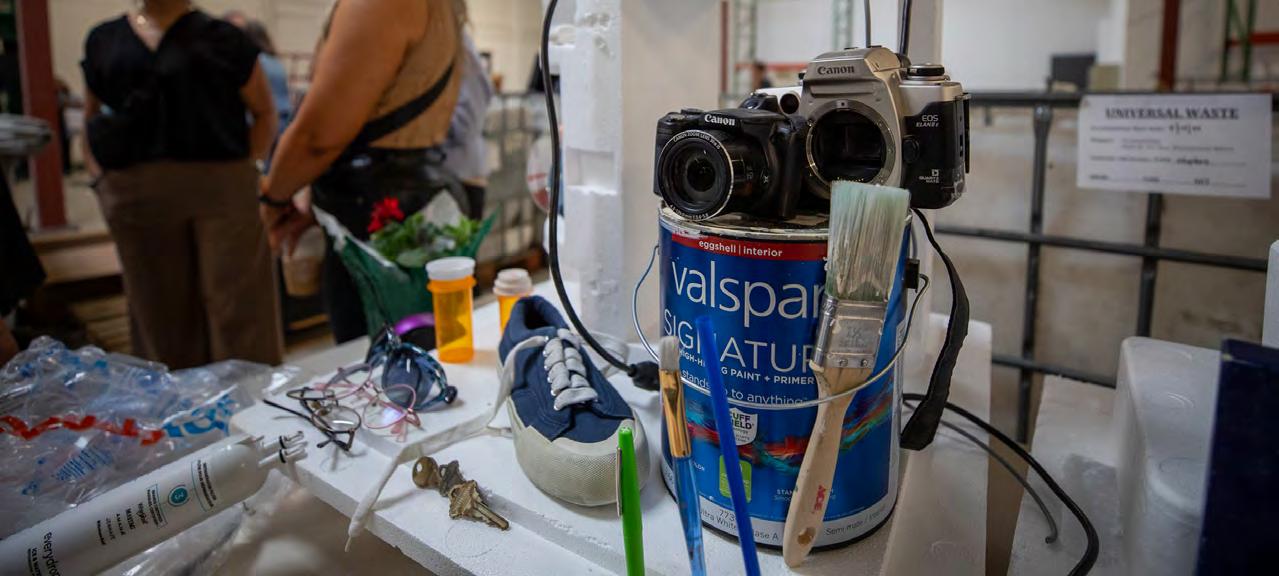
If you have hazardous materials to dispose of, including various liquid cleaning products and paint, you can take advantage of our free home collection program. A worker will come straight to your home to take your unwanted hazardous waste. This helps ensure our waterways stay clean. You can learn more about the program and which items are accepted by visiting bit.ly/westytrashandrecycling.
UP PET POOP FIX OIL LEAKS (Don’t pour used oil down drains!)
THIS IS YOUR WATER SYSTEM: GET INVOLVED!
Have a question or concern? Feel free to reach out directly to the water quality team by calling 303-658-2500 or by email at water@westminsterco.gov.
City Council Meetings
Residents are invited to provide comments about drinking water quality, budgets, and plans during City Council meetings. Westminster City Council meets in regular session on the second and fourth Mondays of each month at 6:30 p.m. in the Council Chambers at Westminster City Hall, 4800 W 92nd Avenue. Please refer to the City’s website at westminsterco.gov for additional information including new ways to watch the council meetings and submit public comment via email and voicemail.
Social Media @CityofWestminsterColorado nextdoor.com/city/westminster--co @westminsterco @westminster.colorado @WestminsterCO
Water Infrastructure Projects Update
Infrastructure projects are almost entirely funded by your monthly water bill. To learn about what we are doing to keep our drinking water clean and safe, as well as potential impacts of our construction projects, please visit westminsterco.gov/473/ Westminster-in-the-Works
The City of Westminster’s Utilities Operations Division maintains the City’s water mains. If you suspect problems in the water system such as main breaks, service line leaks, frozen meters, or pressure issues, notify us 24/7 at 303-658-2500