The City of West Kelowna is situated on the traditional territory of the syilx/ Okanagan people. We recognize and honour these lands where we live, work, play and connect.
Prepared by Communications and Finance departments of the City of West Kelowna.
For the fiscal year ended December 31, 2025.
West Kelowna, British Columbia, Canada
Message
WELCOME TO WEST KELOWNA
city while respecting our rural sophistication.
Recognized for our outstanding outdoors, our active community can be seen by paddleboarding or kayaking along the shores of Okanagan Lake, mountain biking on best-in-class trails, and hiking and snowshoeing through centuries old pine forests. Visiting West Kelowna’s award-winning wineries and local shops and indulging in local produce at farms and farmers markets, cafes and artisan studios make West Kelowna a memorable community to live, work and play.
low, remains important to the success of short- and long-term financial strategies. The City’s vision, mission and focus areas reflect the ongoing effort to achieve this balance underpinned by continual input from the West Kelowna community.
The City has professional staff in administration, building, bylaw, communications, engineering, facilities, finance, fire rescue and protective services, human resources, information services, legal and legislative services, parks, public works – including roads, sewer and water quality, treatment and distribution, roads and construction, and recreation.
Community Facts
• Incorporated: December 6, 2007 (District); became a City on June 26, 2015.
• Area: 12,353 hectares (30,525 acres)
• Population: 40,093 (2024) **
• Active Parks: 82.6 hectares
• Approx. 500km paved roads; 7.5km unpaved
• Approx. 35km of paths and trails
• More than 14,750 homes
• Rapid community growth with a population increase of 9.9 per cent since 2021 (BC Stats).
** Source: BC Statistics: Municipal and sub-provincial areas population, 2012 to 2024 (Last updated February 2024)
YOUR CITY COUNCIL
Councillor
Stephen Johnston
Councillor
Tasha Da Silva
Councillor
Carol Zanon
Mayor Gord Milsom
Councillor
Rick de Jong
Councillor Jason Friesen
Councillor Garrett Millsap
The City of West Kelowna is governed by an elected Council comprised of a Mayor and six Councillors. Members of Council are elected for a four-year term. The current term is from 2022 to 2026.
Regular Council Meetings are generally held on the second and fourth Tuesdays of every month in Council Chambers at City Hall. Public Hearings on development matters are scheduled as needed and typically take place just prior to the Regular Council Meeting.
Committee of the Whole meetings are scheduled on an as needed basis.
Members of the public are encouraged to attend Council and Committee Meetings and Public Hearings. Meeting minutes and agendas are available on the City’s website.
COMMITTEES & BOARDS
Regional District of Central Okanagan (RDCO)
Mayor G. Milsom
Councillor S. Johnston
Councillor R. de Jong, 1st Alternate
Councillor J. Friesen, 2nd Alternate
Okanagan Regional Library Board
Councillor T. Da Silva
Councillor G. Millsap, Alternate
Economic Development Committee
Councillor J. Friesen
Councillor T. Da Silva, Alternate
Airport Advisory Committee
Councillor R. de Jong
Councillor G. Millsap, Alternate
Municipal Insurance Association Representative
Councillor C. Zanon
Councillor G. Millsap, Alternate
Accessibility Committee
Councillor G. Millsap
Councillor C. Zanon, Alternate
The City of West Kelowna is a member of the Regional District of the Central Okanagan. The City appoints two members from West Kelowna Council to serve on the 13-member Regional District Board. The West Kelowna appointees also serve as members of the Central Okanagan Regional Hospital District.
GORD MILSOM
Mayor, City of West Kelowna
MESSAGE FROM THE MAYOR
In 2025, the City of West Kelowna saw another year of tremendous progress, collaboration and investment as we continue to build a bright future for our City. Together, we have delivered important infrastructure, strengthened community services, and taken thoughtful steps to support a growing, resilient, and inclusive city.
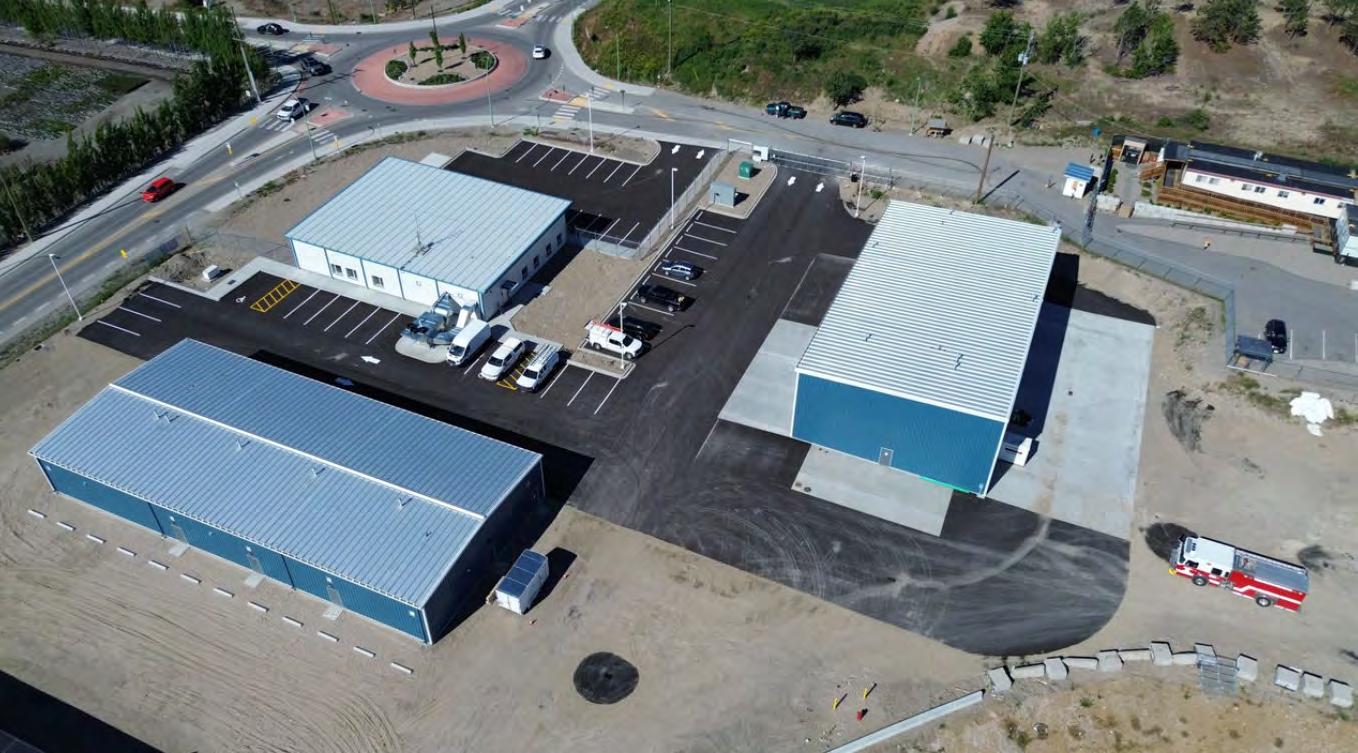
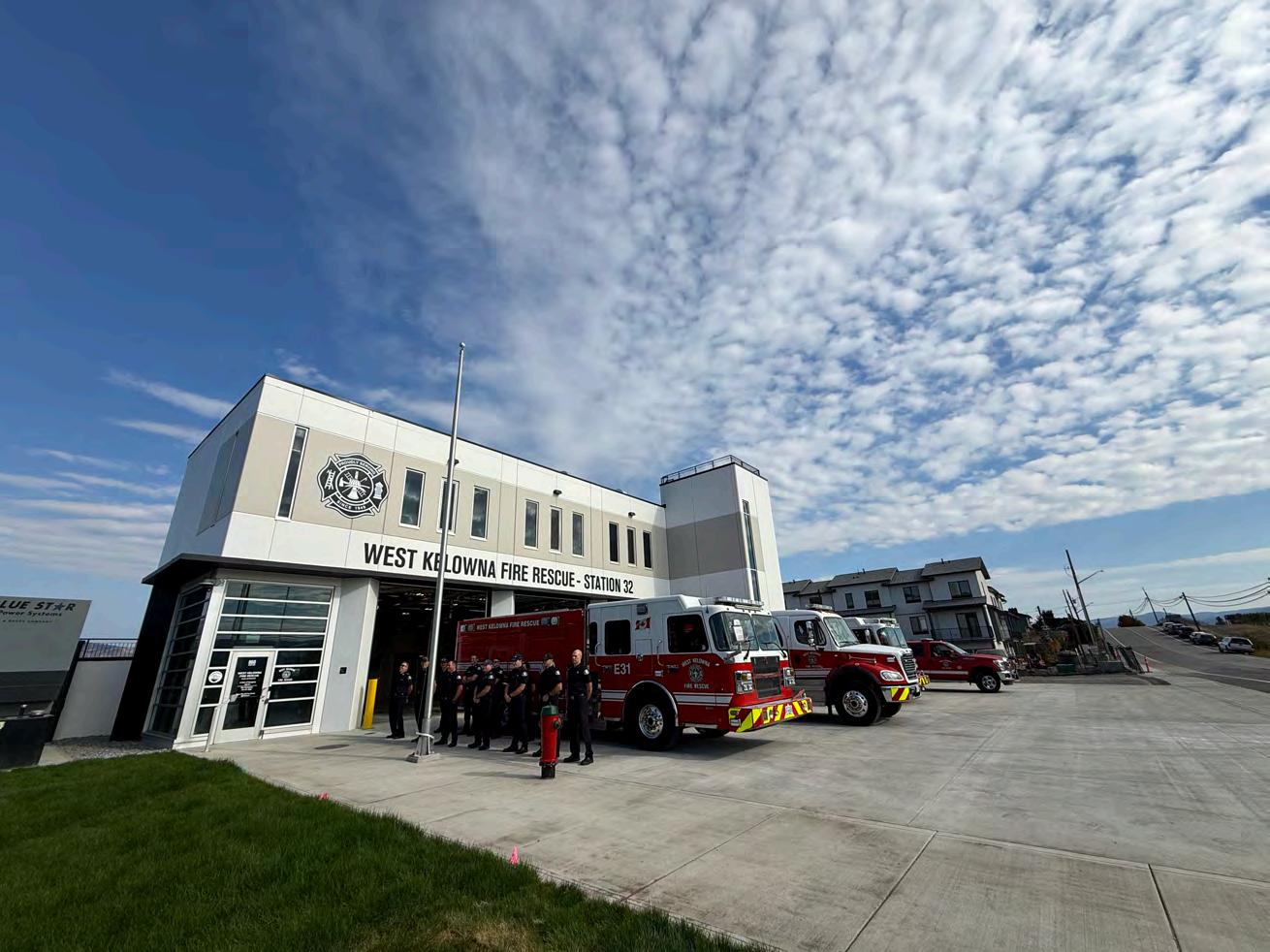
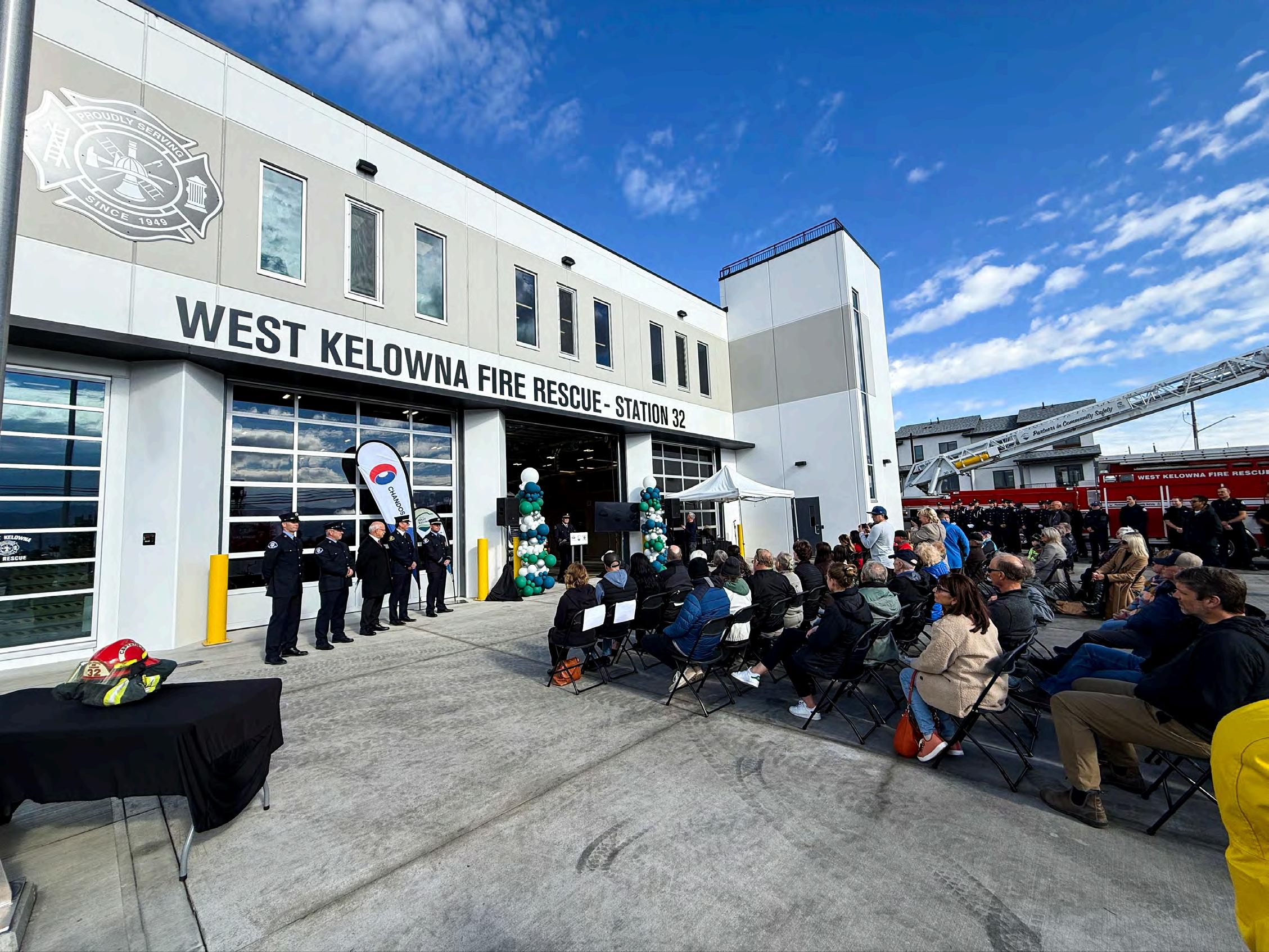
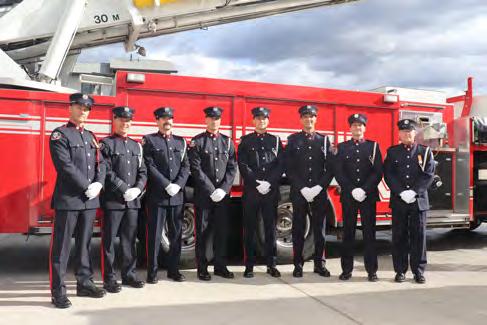
A major highlight was the opening of Fire Station 32 in Lakeview Heights which was completed on time and on budget. On October 8, West Kelowna Fire Rescue began operating from this modern facility, designed to serve West Kelowna and Westbank First Nation for the next 75 years with a strong focus on efficiency, training, and firefighter health and safety.
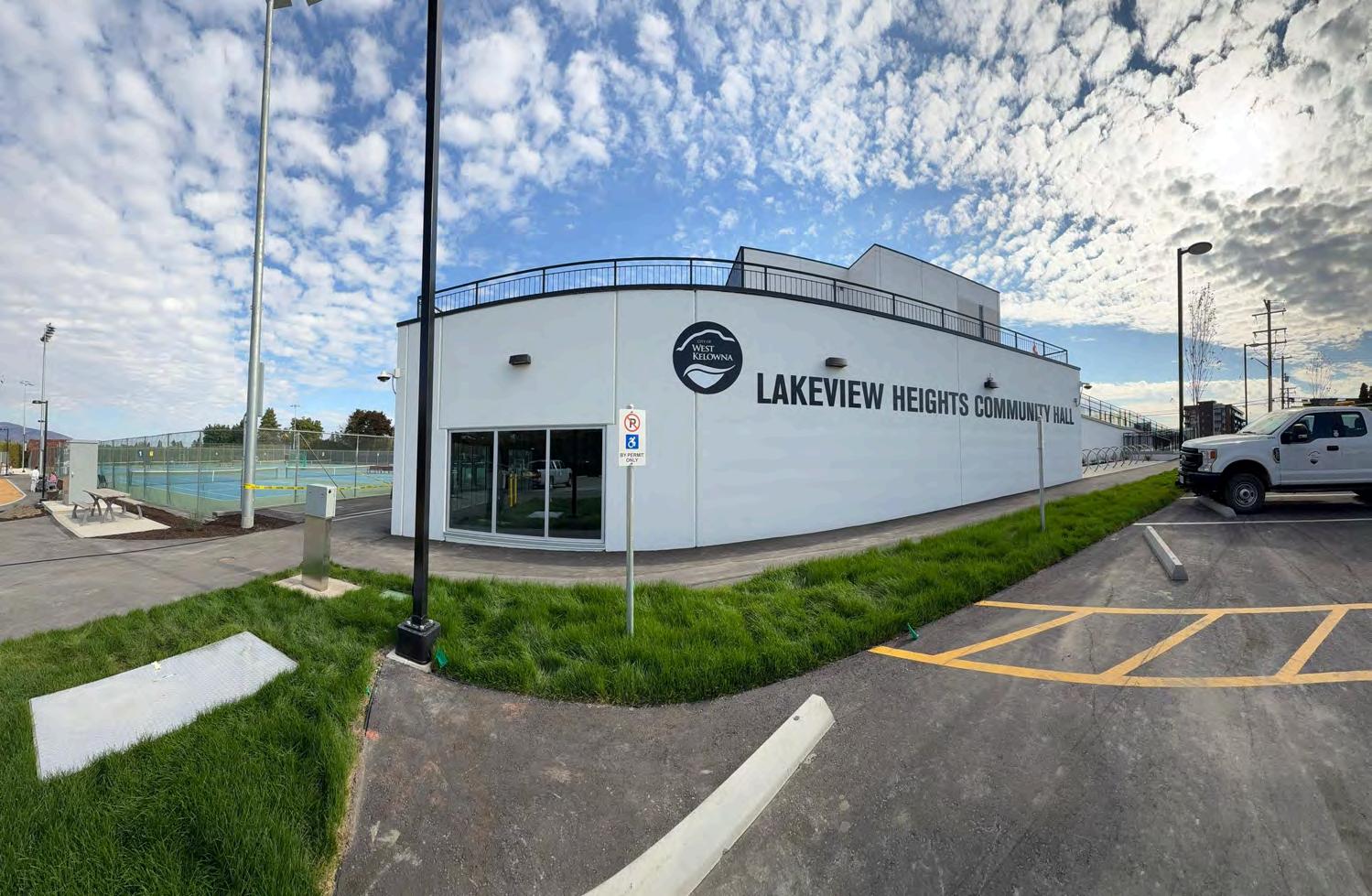
The community also celebrated the opening of the Lakeview Heights Community Hall, part of the Fire Station 32 complex. As part of the project, Anders Park was upgraded with new pickleball courts, a sport court, and a playground, made possible through a generous $50,000 donation from the West Kelowna Professional Firefighters Local 4457 Charitable Society.
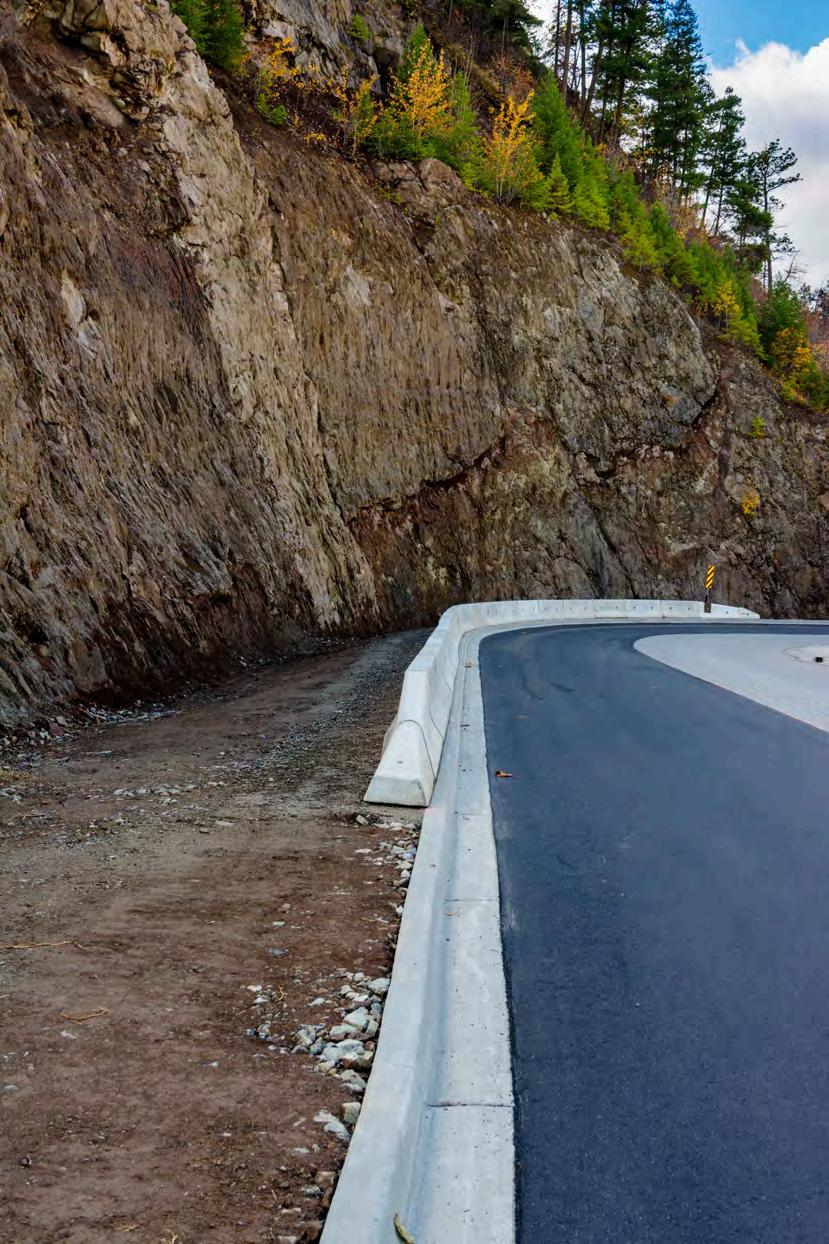
Another milestone was the Butt Road and Old Okanagan Highway Intersection Improvement Project, which also opened to the public on time and on budget, on December 4. This $4.35 million project improves safety and connectivity and reflects Council’s Invest in Infrastructure priority, completed in partnership with Westbank First Nation and the Ministry of Transportation and Transit.
In early 2025, Parks, Utilities, and Operations staff moved into the City’s first purpose-built Operations Centre at 2515 Bartley Court. This shared facility improves efficiency for teams who maintain critical infrastructure around the clock.
In the fall, we started the renovations on the Mt. Boucherie Community Centre to return the space to public use. The project will provide 16 permanent daycare spaces, 64 after-school spaces, and improved multipurpose and banquet facilities.
Council also advanced important community initiatives, including adoption of the City’s first Accessibility Plan, shaped by public engagement. In addition, work began to draft a Community Safety and Well-Being Plan to identify both shortand long-term actions to build a safer, more connected community.
Significant bylaw updates were approved in 2025, including a new Zoning Bylaw that better reflects our community's vision and aligns with the goals of the Official Community Plan and aligns with provincial housing legislation. Council also adopted new tenant protection policies to support renters through clear requirements for notice, compensation, and one-for-one rental replacement.
We appointed the inaugural board of the West Kelowna Economic Development Corporation, tasked with supporting economic growth and business development. I look forward to seeing the work of the board advance economic development strategies in our community.
Arts and culture continued to thrive with popular City events including record attendance at Music in the Park, the popular new Pop Ups in the Plaza program, art exhibitions, Peruse the Parks, Play Days, Light Up, and Twinkle Tour. The City also supported Culture Days and community-led events like Westside Daze and Canada Day and celebrated the success of a new Fall Fair.
As we reflect on this productive year, Council and I are proud of all that we have accomplished together with our community.
Gord Milsom, Mayor
COUNCIL'S STRATEGIC PRIORITIES
Vision Statement
A progressive local government, working with the community to make West Kelowna a resilient, welcoming, safe and inclusive place, rich with opportunity for all ages.
Mission Statement
To plan for the future while taking care of today, striving to create and capitalize on opportunities for the community to prosper.
To provide, in proactive and fiscally-responsible ways, the facilities, infrastructure and services required to meet the evolving needs of the community.
To advocate for West Kelowna at a variety of decision-making tables and with a range of partners, working to get the tools and resources necessary for community success.
To collaborate with partners in the pursuit of shared opportunities and the resolution of common challenges.
To protect and preserve the natural environment, celebrate and promote the community's agricultural setting, and honour its rich cultural heritage.
ADVOCACY PRIORITIES
City Council has identified these key topics as part of their advocacy priorities:
• Transitional and supportive housing
• Affordable and seniors housing
• Wildfire mitigation funding
• Highway 97/Westlake & Boucherie intersections
• Provincial RCMP officer funding
• Redundant power supply
• Mental health services
• Accessibility funding
• Highway 97 couplet
• Emergency shelter
• FireSmart funding
COUNCIL'S STRATEGIC PRIORITIES
The previous West Kelowna City Council identified a set of pillars to help guide the use of resources and organize the City’s strategic priorities. These pillars have stood the test of time and are reaffirmed by the current Council for the 2022-2026 Strategic Priorities.
Invest in Infrastructure
We will invest in building, improving and maintaining infrastructure to meet the needs of, and to provide a high quality of life for, current and future generations.
Pursue Economic Growth and Prosperity
We will work with stakeholders throughout the region to advocate for and support efforts aimed at helping West Kelowna businesses prosper. With a focus on the future, we will advance opportunities to expand our economy, increase employment, and develop the community in ways that contribute towards prosperity for all.
Strengthen Our Community
We will provide opportunities for the residents of West Kelowna to build connections, celebrate successes, embrace the community’s strengths and diversity, address shared needs, and contribute to shaping the community’s future.
Foster Safety and Well-being
We will pursue through direct action, advocacy, and collaboration with local and regional service providers, investments in community health, needs-based housing, emergency preparedness, policing, and other services that foster safety and well-being in West Kelowna.
Invest in Infrastructure
We will invest in building, improving and maintaining infrastructure to meet the needs of, and to provide a high quality of life for, current and future generations.
Initiative
Commissioning and opening of the Rose Valley Water Treatment Plant
Update to the Water Master Plan
An Upland Watershed and Storage Protection Strategy
Upgrades to the Powers Creek Water Treatment Plant
New City Hall/ Library building
Replacement of Fire Hall #32
Establishment of a purpose-built Operations Yard
The upgrade and expansion of the Johnson Bentley Memorial Aquatic Centre
New Sports Fields and additional Parks, including Dog Parks
An Interconnected Pathways Strategy
The development of additional Accessible Recreational Spaces in our parks and recreation facilities
Prepare for funding opportunities by developing shelf-ready infrastructure plans
Upgrades to the Old Okanagan/Butt Road intersection
Implementation of a Stormwater Drainage Program for older neighbourhoods
Pedestrian Improvements, including those aimed at making sidewalks more accessible
Upgrades to Shannon Lake Road from IR #9 to Swite Road
Improvements to Elliott Road from Smith Creek Road to Reece Road
Construction of the Ministry of Transportation and Transit's planned intersection upgrades and other Highway 97 improvements within West Kelowna
Meaningful investment to improve the existing public transit system in West Kelowna, including the number of routes and frequency of service, the incentives offered youth and others to encourage ridership, and the introduction of innovative offerings such as on-demand transit
2025 Achievements
• Completion of Fire Station #32 and Lakeview Heights Community Hall and the associated upgrades to Anders Park
• Completed City of West Kelowna Operations Yard
• Completed upgrades to Old Okanagan/Butt Road intersection
• Completed upgrades to Shannon Lake Road from IR#9 to Swite Road
• Additional City investment in transit for the Hwy 97 Route
• Additional accessible recreation spaces added: handrails and wheelchair let downs installed at the arena
• Various park upgrades including improved irrigation at Darroch and Mt Boucherie sports fields; reconstructed Pebble Beach volleyball court; accessible walkway loop built at Westbank Centre Park; bear safe garbage bins installed; shade trees added at Wildhorse and Shannon Woods dog parks; and new stairs at Sandstone Park.
2026 Priorities
• Update the Water Master Plan
• Memorial Park Concept Plan
Status
• Pedestrian improvements to Brentwood Road with new sidewalk
• Elliott Road improvements from Smith Creek Road to Reece Road
• Capital Delivery Model
• Upland watershed storage protection strategy
• Smith Creek playground
• Ranch Park rebuild
Pursue Economic Growth & Prosperity
We will work with stakeholders throughout the region to advocate for and support efforts aimed at helping West Kelowna businesses prosper. With a focus on the future, we will advance opportunities to expand our economy, increase employment, and develop the community in ways that contribute towards prosperity for all.
Status Legend completed delay identified on track potential or emerging issue
Launch the new West Kelowna Economic Development Corporation
Create a West Kelowna Economic Development Strategy in partnership with the Economic Development Corporation
Explore opportunities for new revenue generation
The development of a West Kelowna Innovation Centre, complete with opportunities for post-secondary services, co-work facilities and business accelerator services
Westbank First Nation
2025 Achievements
Support our partners, including through advocacy, in identifying and addressing recovery needs
Undertake a review of the City’s Tourism Function to ensure it meets the needs of the City’s hospitality, viticulture and other tourism-focused industries
Work with Westbank First Nation to pursue common economic development goals and joint actions
• West Kelowna Economic Development Corporation appointed its inaugural board of directors. The first board meeting was held Nov. 12, 2025.
• FortisBC revenue sharing agreement signed
2026 Priorities
• Hire CEO for West Kelowna Economic Development Corporation
• West Kelowna’s Economic Development Corporations first strategic plan
• Establish a new Marine Launch Licence for commercial use of Gellatly Bay boat launch
Strengthen Our Community
We will provide opportunities for the residents of West Kelowna to build connections, celebrate successes, embrace the community’s strengths and diversity, address shared needs, and contribute to shaping the community’s future.
Initiative
A review of the Zoning Bylaw in response to directions set out in the City’s new Official Community Plan, as well as provincial legislative changes designed to increase residential densities
A review of, and revisions to, the Westbank Town Centre Revitalization Plan
Complete and implement the West Kelowna Housing Strategy
Develop a Property Acquisition Strategy to identify and acquire lands for use in civic projects, including those in support of attainable housing and priority housing projects, such as seniors housing and non-market housing
We will work to ensure that residents and visitors with different abilities are able to use and enjoy our sidewalks, pathways, parks, trails, facilities, beaches and other attractions. We will work in collaboration with Council’s Accessibility Committee on the provision of an Accessibility Plan for community review
Returning the Mt. Boucherie Community Centre for public use
Expanding the offerings at Memorial Park
Opening the new City Hall/Library Building
Incorporating community amenities into the project for replacing Fire Hall #32
Increasing accessibility at civic facility gathering spaces
The development of Festivals and Events Policy to guide the City in its support for existing and new events in West Kelowna
The development and implementation of a Public Art Strategy
2025 Achievements
• Adopted new Zoning Bylaw
• Accessibility Plan adopted
• New events at Memorial Park including Pop Ups in the Plaza and the Farmers Market
• New Lakeview Heights Community Hall completed along with upgrades to Anders Park with three new pickleball courts, a new sport court and a new playground
• Additional accessible recreation spaces added: handrails and wheelchair let downs installed at the arena
2026 Priorities
• Westbank Urban Centre Plan
• Develop a land strategy
Status
• Mount Boucherie Community Centre renovations
• Memorial Park Concept Plan
• Continued implementation of the Housing Accelerator Fund initiatives
• Boucherie Urban Centre Plan
• Industrial Lands study
Foster Safety and Well-being
We will pursue through direct action, advocacy, and collaboration with local and regional service providers, investments in community health, needs-based housing, emergency preparedness, policing, fire and other services that foster safety and well-being in West Kelowna.
Status Legend completed delay identified on track potential or emerging issue
Initiative
The design and build of Fire Hall #32
Completing the Fire Services Plan to ensure that the service is keeping pace with the changing community
Continued investment in Wildfire Mitigation efforts
Increased Police Services dedicated to West Kelowna, and for provincial recognition of and resourcing for its rural policing responsibilities
A Redundant Power Supply to increase the resiliency of West Kelowna and the Greater Westside in the face of disasters and other events that threaten the community’s primary supply
Deregionalization of RCMP Services Policing in Central Okanagan
We will continue dialogue and action that further develop respectful and trusting relationships with all Indigenous Peoples as we work to advance reconciliation
Developing a Natural Asset Management Plan to identify natural resources and ecosystems that are incorporated by the City into its delivery of municipal services
Updating (as necessary) and implementing the Green Fleets Strategy for City of West Kelowna vehicles and equipment
Implementing the recommendations of the Transportation Master Plan to provide, and help the community shift towards, additional sustainable travel options
Creating a Corporate Climate Action Plan
Continued advocacy for additional services connected to the West Kelowna Urgent and Primary Care Centre, and to other health service providers in the community
Implementing the West Kelowna Housing Strategy to facilitate the development of a range of housing types, including housing options for target groups, such as low income seniors, to address issues of attainability and homelessness
Identifying and supporting the building of Low Income Housing
2025 Achievements
• Completion of new Fire Station #32
• Endorsement of the Plan for Firefighting in Complex Buildings
• Successful 2025 FireSmart grant program
2026 Priorities
Status
• Negotiations with Province and RCMP for greater provincial policing resources
• Working with BC Hydro on a redundant power supply for the Westside
• Advocacy for maintaining provincial funding for the FireSmart program
• Adoption of the Transportation Master Plan
• Seeking grants for affordable housing projects
• Community Safety and Well-being Plan
WEST KELOWNA ECONOMIC DEVELOPMENT CORPORATION
The West Kelowna Economic Development Corporation is the strategic business development agency created by the City of West Kelowna to lead efforts aimed at building West Kelowna's economy.
The West Kelowna Economic Development Corporation has the following responsibilities:
• to develop and keep current a West Kelowna Economic Development Strategy
• to attract businesses, employers and investment to West Kelowna
• to develop appropriate branding aimed at identifying West Kelowna as a distinct community within the Central Okanagan, British Columbia and Canada
• to coordinate sector-specific and broader economic development activities undertaken by or in collaboration with business and development agencies
• to develop and support programs aimed at retaining and expanding existing businesses
• to advise the City on the development of services, infrastructure, bylaws, policies and regulations to support business growth and expand the
The board members:
• Joanna Schlosser
• Rick Madison
• Matthew Whitt
• Colin Crabbe
• Peter Balazsy
• Councillor T. Da Silva (non-voting director)
• Ron Bowles, West Kelowna CAO (non-voting director)
The Board held their first meeting November 12, 2025.
RON BOWLES
Chief Administrative Officer
MESSAGE FROM THE CAO
June 8, 2026
Last year marked my first full year of service and what a pleasant ride 2025 was. Most of the year was spent delivering municipal services by an excellent team—this I say without doubt or hesitation. The leadership team did go through a transition throughout the year as the organization shifted to service-based operations. I can proudly state the new senior executive team is now mounting a change-management charge as our organization modernizes and becomes more transparent.
At the top, Council and management have found a team-groove and are diligently tackling an ambitious set of strategic priorities and advocacy efforts. Nearing the end of Council’s four-year term, we are on track to deliver upon 82 per cent of their strategic plan and boast substantial progress on 50 percent of our advocacy initiatives, which is remarkable considering the political climate and partisanship.
As your Chief Administrative Officer, my mandate from Council was very clear; set-up a municipally-owned corporation to grow West Kelowna economy and jobs, gain local control of policing and increase provincial policing funding , establish a progressive federal and provincial government lobbying program, enhance the culture of customer service excellence, improve budget effectiveness, and increase transparency . I am happy to report substantial progress in each of these areas.
The West Kelowna Economic Development Corporation board was appointed, and they are actively planning what the economic future of the community looks like. The province agreed to consider more police officer funding and subsequently in early 2026 increased funding by 30 per cent. Mayor and Council had 44 touchpoints with government ministries and politicians in the year, resulting in advancements in policing, mental health, affordable housing, emergency shelter and hydro power reliability. An
West Kelowna Council
Chief Administrative Officer
internal service-based culture is being talked about in all departments.
The Council and public-facing portion of budget deliberations was revamped last fall. Finally, the community now receives four important quarterly reports; financial statements, strategic plan update, relevant departmental statistical information and an award-winning annual report.
There are a few initiatives I also wish to mention. Modernized project management principles have taken root in City departments, and two large projects were delivered on time and on budget (Fire Station 32 and Butt Road/Old Okanagan Hwy intersection). The Canadian housing construction economy has slowed down, and this is not good for housing affordability.
In West Kelowna, however, cranes are present and development continues through unique programs such as Getting to Yes, West Kelowna Builds (early 2026) and the Housing Accelerator Fund.
In closing, I want to thank the community of West Kelowna for their continued suggestions as our organization modernizes, and Council for their support in maintaining a planned and principled approach to getting things accomplished in a good way.
Regards,
Ron Bowles
LISA SIAVASHI
MESSAGE
FROM THE CFO
June 8, 2026
In accordance with the Community Charter, I am pleased to present the 2025 Annual Report for the City of West Kelowna. The report provides detailed information regarding the financial position and results of operations for the year ended December 31, 2025.
Structure
The 2025 Annual Report is organized into three sections: Introductory, Financial, and Statistical.
The Introductory Section outlines the City of West Kelowna’s organizational structure, summarizes 2025 operating results by department, and highlights the 2025 Strategic Priorities. The City’s departments are Corporate Services, Financial Services, Operations, Community Development, and Protective Services.
The Financial Section presents the 2025 Audited Financial Statements and the Auditor’s Report. The audited statements include:
• Statement of Financial Position
• Statement of Operations and Accumulated Surplus
• Statement of Change in Net Financial Debt
• Statement of Cash Flows
The Statistical Section provides five years of financial and non-financial data, along with information required under the Financial Information Act that may not be immediately apparent in the financial statements.
For 2025, the Annual Report follows the guidance of the Government Finance Officers Association of the United States and Canada (GFOA) Financial Reporting Program. The program encourages municipal governments to publish high-quality financial reports that support full disclosure and clearly communicate the City’s financial position and results.
2025 Operating Results
The City’s financial position declined in 2025, with net financial debt increasing from $30.7 million to $31.9 million. This continued the trend from 2024 and was driven largely by significant capital expenditures. At the same time, the net book value of the City’s tangible capital assets increased from $504.7 million in 2024 to $519.2 million in 2025.
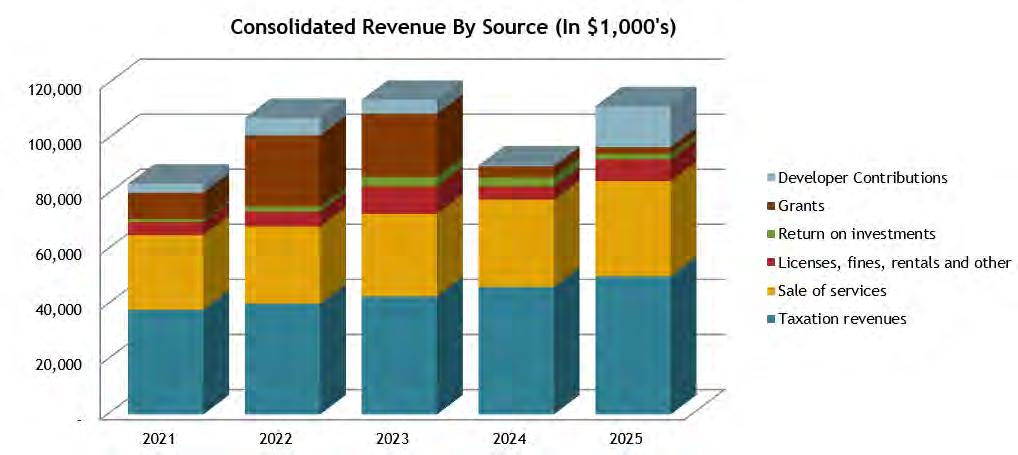
Revenue reached 120% of budget, primarily due to government transfers, Development Cost Charges (DCCs), and cost recoveries for capital projects that had been budgeted in prior years but were completed and recognized in 2025. Compared with 2024, revenue increased by $21.4 million for the same reason.
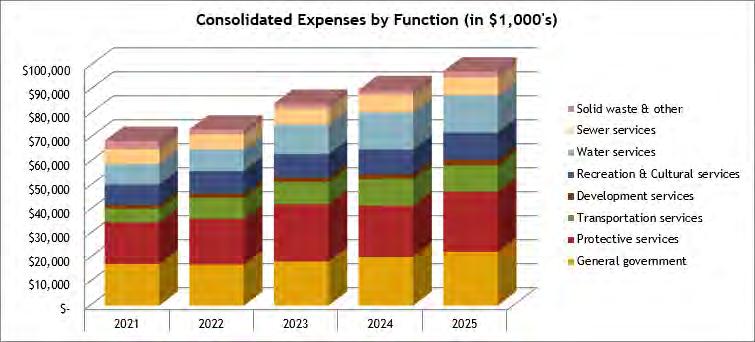
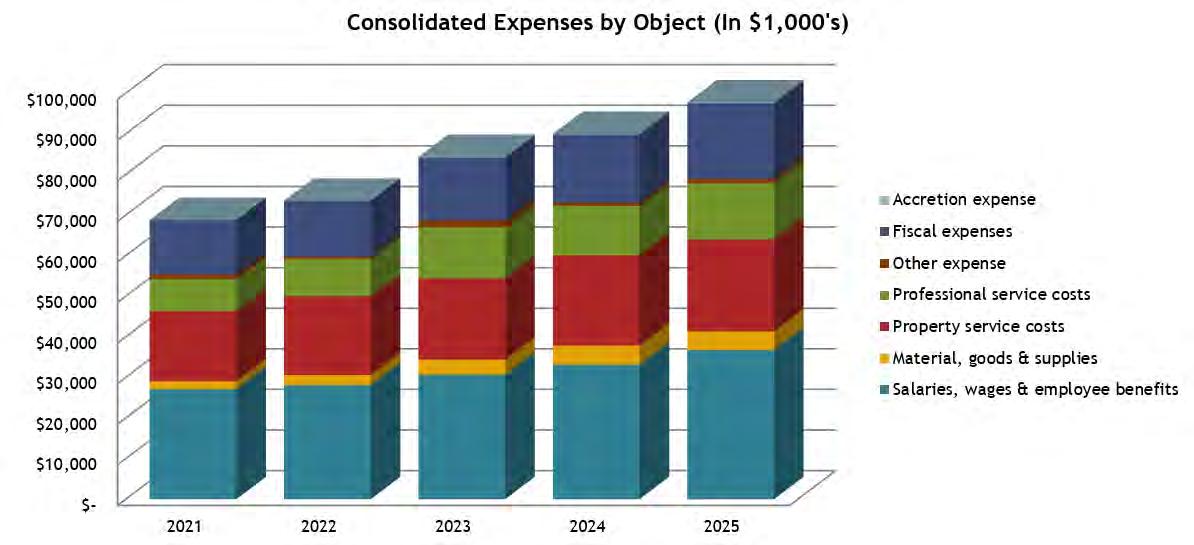
Expenses were 106.3% of budget, an increase of $7.725 million compared with 2024 actuals. The increase was driven mainly by staffing coverage in protective services, as well as higher contract costs and utility charges.
The significant increase in revenue resulted in a consolidated surplus of $14,127,760, well above the budgeted surplus of $2.4 million. This was primarily due to the recognition of DCCs used to fund capital projects.
It is important to note that this accounting surplus reconciles to a small accounting deficit of $686,593 after removing grants received for a specific purpose, DCCs, and non-cash items such as actuarial adjustments.
Key highlights from the 2025 financial statements include:
• Decrease in cash and cash equivalents due largely to less grant funds and less debt financing advanced during the year.
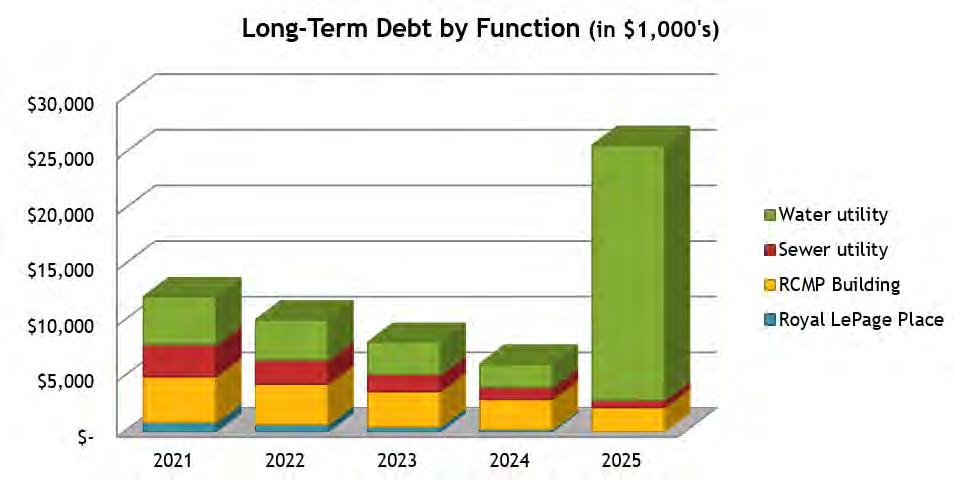
• Increase in long-term debt as short-term debt received for the Rose Valley Water Treatment Plant and the new City Hall/Library Building rolled over from the interim financing.
• Increase in deferred revenue arising from the advanced receipt of grant funds for New Child Care Spaces and for Housing Accelerator Funding.
• Decrease in deferred development cost charges in the financial liabilities section and increase in other revenue as these charges are recognized for capital funding.
• Increase in General Government Expenses due to the growth in capital creating higher amortization along with new FTEs added for 2025.
• Increase in Protective Services Expenses due to higher staffing costs.
• Continued increases in Water due to raising chemical and contract pricing as well as an emergency watermain break.
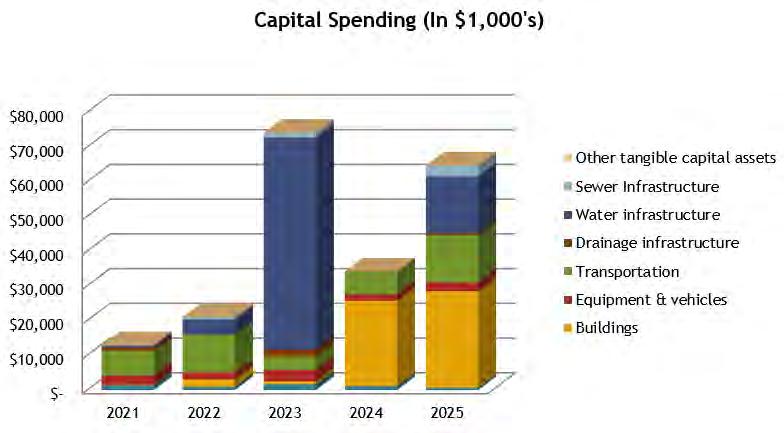
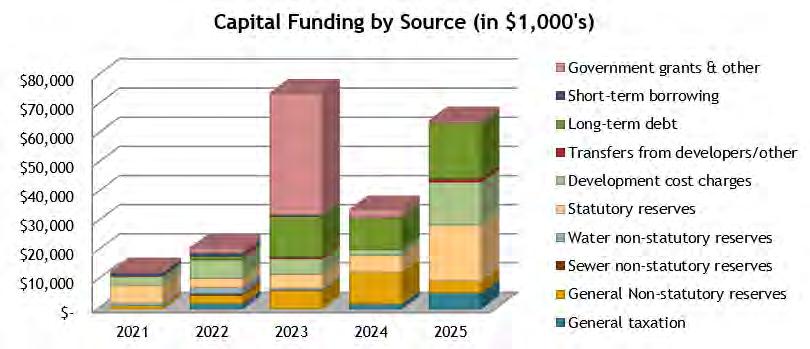
Total reserves ended 2025 at $23.9 million, down from $27.7 million in 2024, due to continued use for major capital expenditures. Major projects completed in 2024 included the Rose Valley Water Treatment Plant and the new City Hall. In 2025, the City completed this phase of major facility investments with the replacement Fire Hall and a new Public Works Yard.
Financial Management
City staff prepared the financial statements for the year ended December 31, 2025 in accordance with generally
appropriate, with the audited financial statements and maintains internal controls to provide reasonable assurance that reliable and materially accurate financial information is produced.
Audit
The financial statements were audited by BDO Canada LLP, whose responsibility was to express an opinion based on the audit results. The audit was planned and performed to provide reasonable assurance that the statements were free of material error or misstatement. In the auditors’ opinion, the financial statements present fairly, in all material respects, the City’s financial position as at December 31, 2025.
Future Outlook
The City operates in an increasingly complex financial and service environment. It will respond to these challenges by relying on staff expertise and the framework of policies and procedures established by Council. Inflation and rising costs for goods and services are expected to remain key financial pressures. To mitigate these impacts, staff will prioritize value in purchasing and make operational adjustments where feasible.
The City will continue to invest in renewing existing infrastructure in accordance with its capital plan. The capital budgeting process is being refined to better schedule projects and align them with financial and staffing capacity. Council will then determine whether proposed new asset purchases should proceed.
A formal Capital Delivery module will also be established to improve transparency around investments in new assets and to ensure they are clearly communicated to Council and the community.
The City aims to maintain property taxes at a reasonable level, aligned with the infrastructure, services, and service levels that the community, through its elected officials, has identified as appropriate.
Regards,
Lisa Siavashi
CORPORATE SERVICES
General Manager: Karla Campbell
Information Services
What we do
Communications and Engagement
Human Resources
The Human Resources Department provides support to all departments of the City to attract, develop and retain staff to provide high-quality services to our community. The department provides strategic advice when it comes to labour relations advice and leading bargaining with unions, support recruitment, provide health and safety guidance, compliance, and monitoring.
Bylaw Services
The goal of West Kelowna Bylaw Services is to encourage and facilitate voluntary compliance of the City's regulatory bylaws that protect the peace, health and safety of our community. The department investigates complaints and enforces bylaws on a range of issues including noise regulation, parking, property maintenance, graffiti and vandalism, temporary overnight sheltering and the general safe use of our public spaces. The department works closely with the RCMP and WKFR.
Legislative and Legal Services
The Legislative and Legal Services Department provides support to Council, residents and staff for services related to Council meeting management, corporate records management, freedom of information and privacy matters, and conducting local government elections. Legislative and Legal Services is also responsible for conducting land-related transactions (acquisitions, dispositions, and leases), processing insurance claims and legal files, and developing the City’s risk management program. Legislative and Legal Services also oversees the City’s Bylaw Services Department.
Information Services
Information Services provides the technology, systems, data, and support that enable City operations across departments. The team manages core infrastructure, enterprise business applications, cybersecurity, service desk support, and geospatial information systems (GIS), while also leading technology planning, system improvements, and organization-wide projects that improve service delivery, decision-making, and efficiency.
2025 Key Actions and Achievements
Human Resources
• COR Audit: The 2025 Safety Audit was successful with a 95% pass rate.
• The City’s WorkSafe insurance rate dropped 8.13% due to the City’s proactive focus on safety, absences related to workplace illness or injury to remain far below those in the industry.
• Implementing a new technology platform to streamline our human resource management processes and strengthen our data insights into workforce trends and metrics to inform evidence-based people and cultural decisions.
Bylaw Services
• Community Support Officer and Bylaw Officers maintain a daily visible presence in key areas, conducting wellness checks, clearing small camps, and supporting our business community.
• 1,995 General Duty Bylaw Investigation files opened
• 483 Community Support Officer files opened;
• 2,448 total files closed and 30 files remained active at end of year
• 742 bylaw notices/warnings issued
• 2 repeat nuisance fees
• 11 contracted clean ups
Communications and Engagement
• 9 community engagement programs completed.
• 22,919 visits to the City’s online engagement platform OurWK.ca
• 2,658 net audience growth on City’s social media channels (Facebook, Instagram, X, LinkedIn, YouTube).
• 934,117 visits to the City of West Kelowna website.
• 4,948 subscribers to City’s eNews and alerts.
• 175 news releases, public service announcements, traffic advisories and Council Highlights issued.
Information Services
• Supported over 25 software platforms across the organization
• Responded to over 2,000 incidents and service requests in 2025
• Implemented an online payment, business licences, code enforcement modules
• Rolled out a high resolution Nearmap imagery is high-resolution, with data, providing a detailed and accurate view of properties, infrastructure, and landscapes
• Maintained critical digital infrastructure and security systems, including timely renewal and administration of core certificates supporting City online services.
What we do
Oracle Fusion ERP/HRIS Project
CORPORATE SERVICES
FINANCIAL SERVICES
Chief Financial Officer: Lisa Siavashi
The City of West Kelowna is implementing a new system to deliver a comprehensive, cohesive and efficient software platform for finance, procurement and HR called the Oracle Fusion Enterprise Resource Planning/Human Resources Information System (ERP/HRIS).
2025 Key Actions and Achievements
Property tax is used to fund the majority of local government administration and operations, such as road maintenance, fire protection, parks and recreation, bylaw enforcement, planning and development services, and general reserves contributions. Net property tax revenue increased 7.31% compared to the year prior.
• Fees for services are collected to fund utilities such as water, sewer and solid waste collection.
• Returns on investment were continued to be strong in 2025.
• Revenue from building permit fees continued to drop in 2025, worsened by a change in reporting requirements to allocated some of the fees collected to deferred revenue to match the services provided by the City.
• The City’s overall expenses were driven by higher-than-expected costs across several areas, including legal, fire, policing, transit, utilities and within the water fund.
• Additionally, the City continues to add resources to West Kelowna Police Services consistent with the five-year financial plan.
• City of West Kelowna staff are implementing Oracle Fusion, a new system that will combine finance, payroll, and human resources in one place. It replaces several older systems the City has used for years.
• Staff from Finance, Human Resources, and Information Services worked together throughout 2025 to plan the new Oracle Fusion system, map how the City operates, and start building it. The City expects to begin using it in early 2027.
• 637 Accounts Receivable invoices issued for a total value of $6,916,514.07
• 60,688 utility billing invoices sent
• 4,675 phone calls to utility billing
• 31,233 emails sent and received to utility billing
• 17,121 tax invoices sent
• 3,162 phone calls to tax staff
• 12,587 emails sent and received to tax staff
• 24,673 phone calls to reception
• 12,609 payments processed by cashier (not including online payments)
• 51 public bid opportunities
• 520 purchase orders issued for a total value of $41,096,310.99
• 37 contracts awarded for a total value of $19,111,166
OPERATIONS
General Manager: Patrick Pulak
Public Works
Recreation & Culture
What we do
Operations is responsible for all operational matters of the City of West Kelowna including water, sewer, roads, utilities, parks, fleet operations, facilities as well as recreation, culture and community events. The work of the Operations Department allows residents to go about their daily lives.
Public Works
The Public Works Department is responsible for managing and operating the core City services including water treatment and distribution, sanitary and storm sewers, roads, sidewalks, transit, waste management and fleet services. Public Works staff help keep the community safe by providing clean drinking water, a reliable sanitary sewer system, maintenance of road transportation networks including sidewalks and multi-use paths, and storm water drainage systems. In addition, Public Works provides all of the maintenance for the vehicles and equipment required to keep these services up and running for the teams that deliver these services for the community.
Facilities
The Facilities Department is responsible for the maintenance, repair, and efficient operation of many of the City-owned buildings and facilities to ensure they are safe, functional, and meet the needs of staff and the public.
Recreation and Culture
The Recreation and Culture Department is responsible for planning, delivering, and managing community recreation programs and events to promote active living, wellness, and social connection for residents of all ages.
Parks
The Parks Department is responsible for the maintenance of all City parks, washrooms, cemetery, road boulevards, facility grounds, all trees on public property, and other publicly owned spaces. The Parks Department helps keep our parks clean and safe so everyone has a place to enjoy the outdoors, the road corridors, roundabouts, and exterior spaces of our buildings mowed and weeded. Parks takes care of beaches, boat launches, docks, flower beds/planters/baskets, playgrounds, sports fields, trails, courts, picnic shelters, natural areas, seasonal lights and decorations, supporting community events, and dog parks.
2025 Key Actions and Achievements
The new City of West Kelowna Operations Centre opened in May, bringing together Parks and Public Works teams together in a shared location. Features of the Operations Centre includes an admin building, a five-bay workshop, and a mechanic shop.
Public Works
• 2,200 new or replaced water meters completed
• Completed 12 water main repairs, 59 service leak repairs, and 9 curb stop repairs.
• Plowed 447 km of sidewalks and pathways of snow
• Over 500 km of roads are swept each spring
• Repainted 180 km of road lines
• Swept 120 lane km of bike lanes
• Inspected and cleaned 634 storm drains
• 400 km of roadside mowing completed
• Completed 11.5 km of ditch maintenance
• Filled 178 potholes
• There are 302 assets as part of the City’s fleet that require regular and preventative maintenance.
• The City has 13 hybrid/electric vehicles.
Parks
• Anders Park was upgraded and now includes three new pickleball courts, a new sport court, and a new playground for families to enjoy. Thanks to the West Kelowna Professional Firefighters Local 4457 Charitable Organization for donating $50,000 for equipment for the new playground.
• Westside residents purchased 253 new trees through Urban Re-Leaf, our residential tree planting program.
• Major irrigation and infield rebuild at Darroch Park sports field have significantly boosted field quality and playability.
• Mount Boucherie Field B2's irrigation was rebuilt, reducing dry spots and improving safety.
• Westbank Centre Park pergola, Marina Park and Rotary Trails Park gazebos were rebuilt for durability.
• Anders Park construction was completed, and the park reopened with a new sport court, playground and three pickleball courts.
• Improved wildfire resilience thanks to fuel-modification work at 10 key sites.
• The Pebble Beach Volleyball Court was reconstructed for a more appealing, low-maintenance space and improved playability.
• Constructed a 370-metre accessible walkway loop at Westbank Centre Park for an inclusive park experience.
• Field enhancements at various baseball diamonds to elevate sport quality and safety.
• Upgrades to Pritchard Park to improve aesthetics and reduce maintenance.
• Installed 12 bear-safe garbage bins on concrete pads to promote wildlife coexistence and lessen conflicts.
• Added shade trees at Wildhorse and Shannon Woods Dog Parks via the Community ReGreening Grant Program, backed by BC Hydro.
• Improved Sandstone Park access with new stairs.
• Feast tables added to gazebos in Marina Park and Powers Point Park.
Facilities
• The new Lakeview Heights Community Hall was completed which was rebuilt as part of the Fire Station 32 redevelopment project. The new hall is over 4,200 sq ft – 484 sq ft larger –and has improved accessibility, an improved kitchen area with an outdoor serving area, indoor and outdoor washroom access, and dedicate space for the Lakeview Heights Tennis Club.
• Renovations began on the Mount Boucherie Community Centre and Child Care project to restore the space to community use now that it is no longer being used as City Hall. The restored community centre will include 16 permanent daycare spaces and 64 afterschool program spaces, as well as multipurpose rooms, banquet facilities, and new office space for Recreation staff.
Recreation and Culture
• Seasonal events were expanded to support art and culture in our community. Our core annual events continue to grow in popularity include Westside Daze, Canada Day, Music in the Park, the World of Wheels Car Show, Spring and Fall Art Exhibitions, Spring and Fall Multicultural Events, Peruse the Parks, FireSmart Family Day, Fall Fair, Light Up, WKFR Food Drive and the Twinkle Tour.
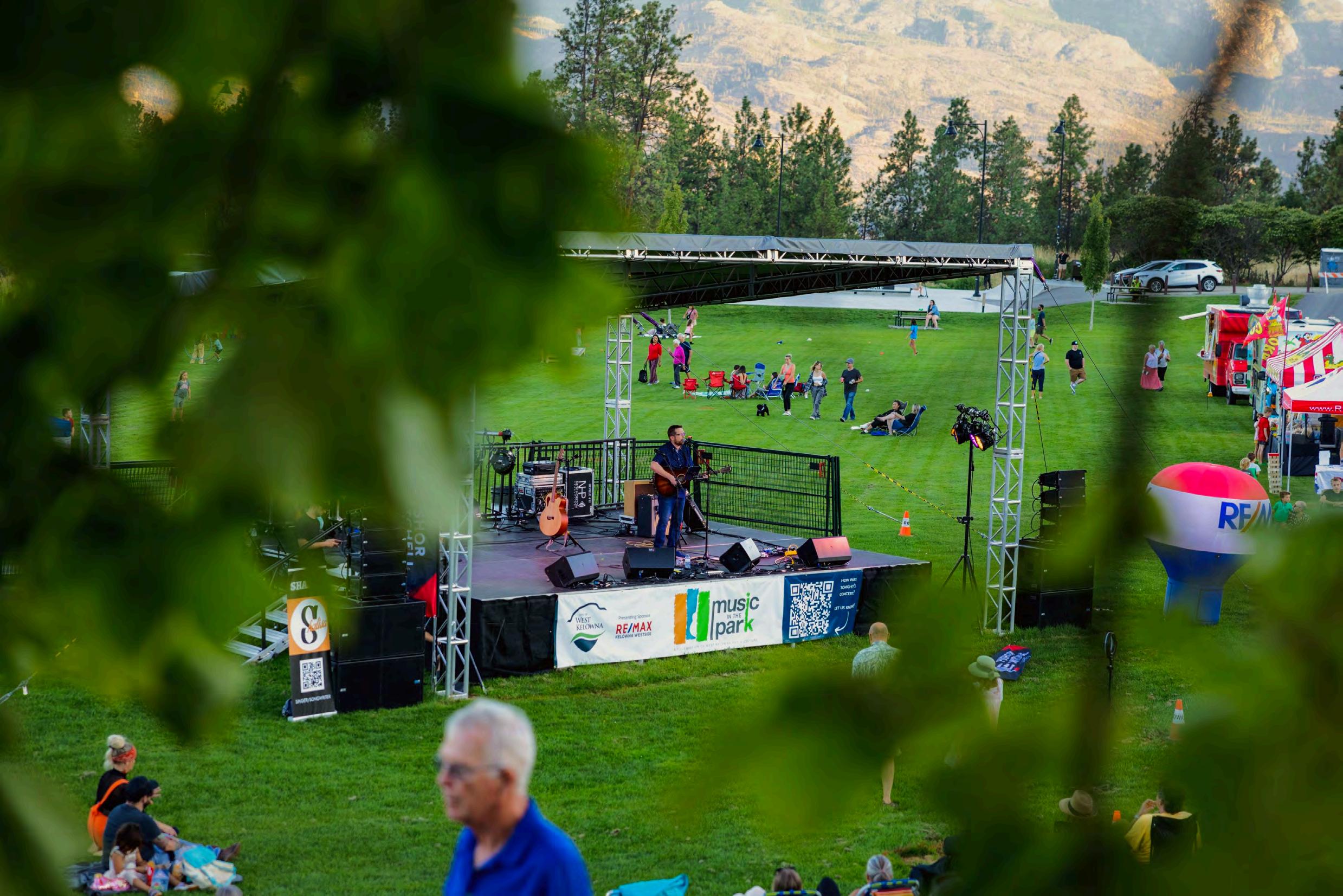
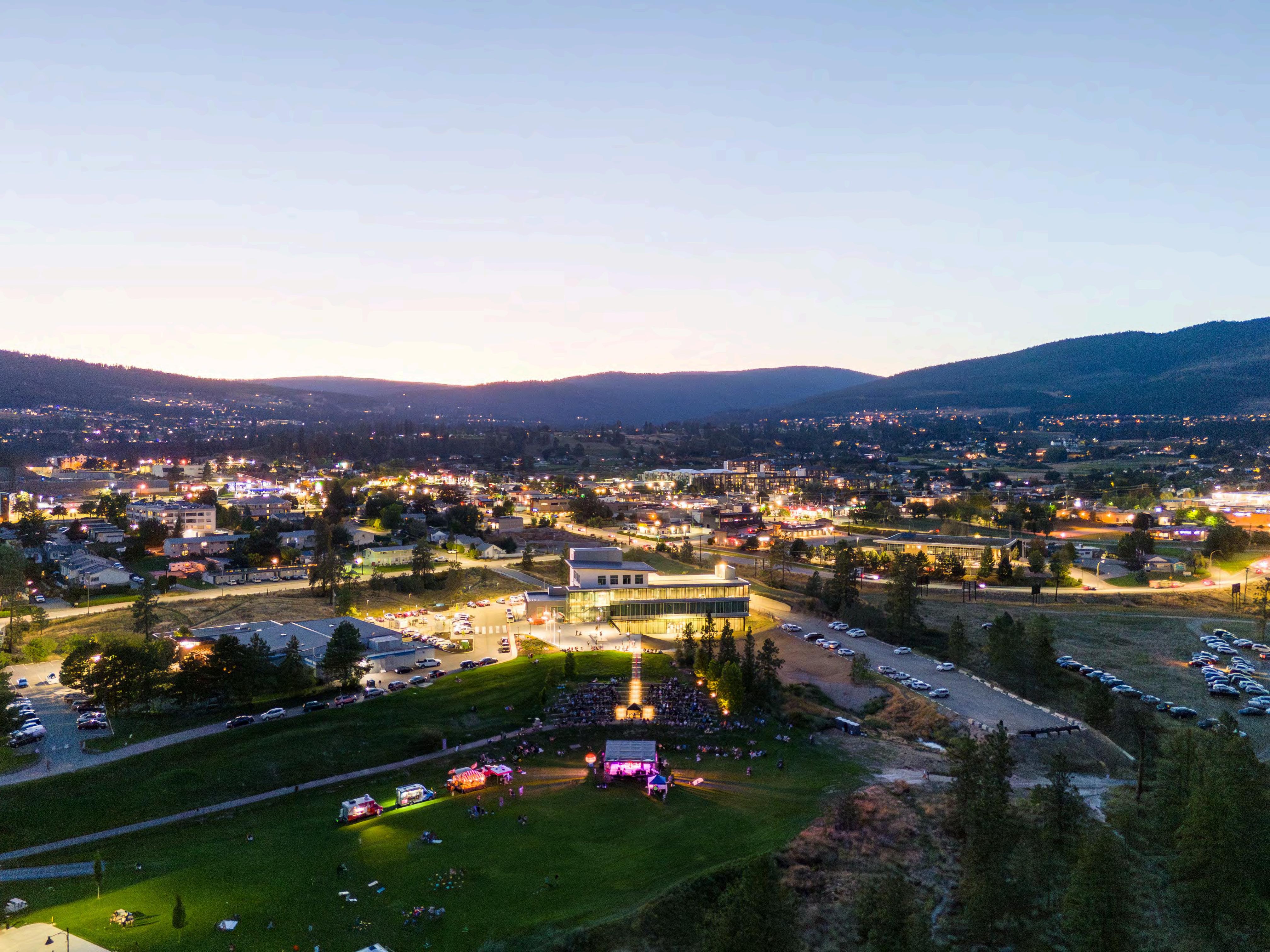
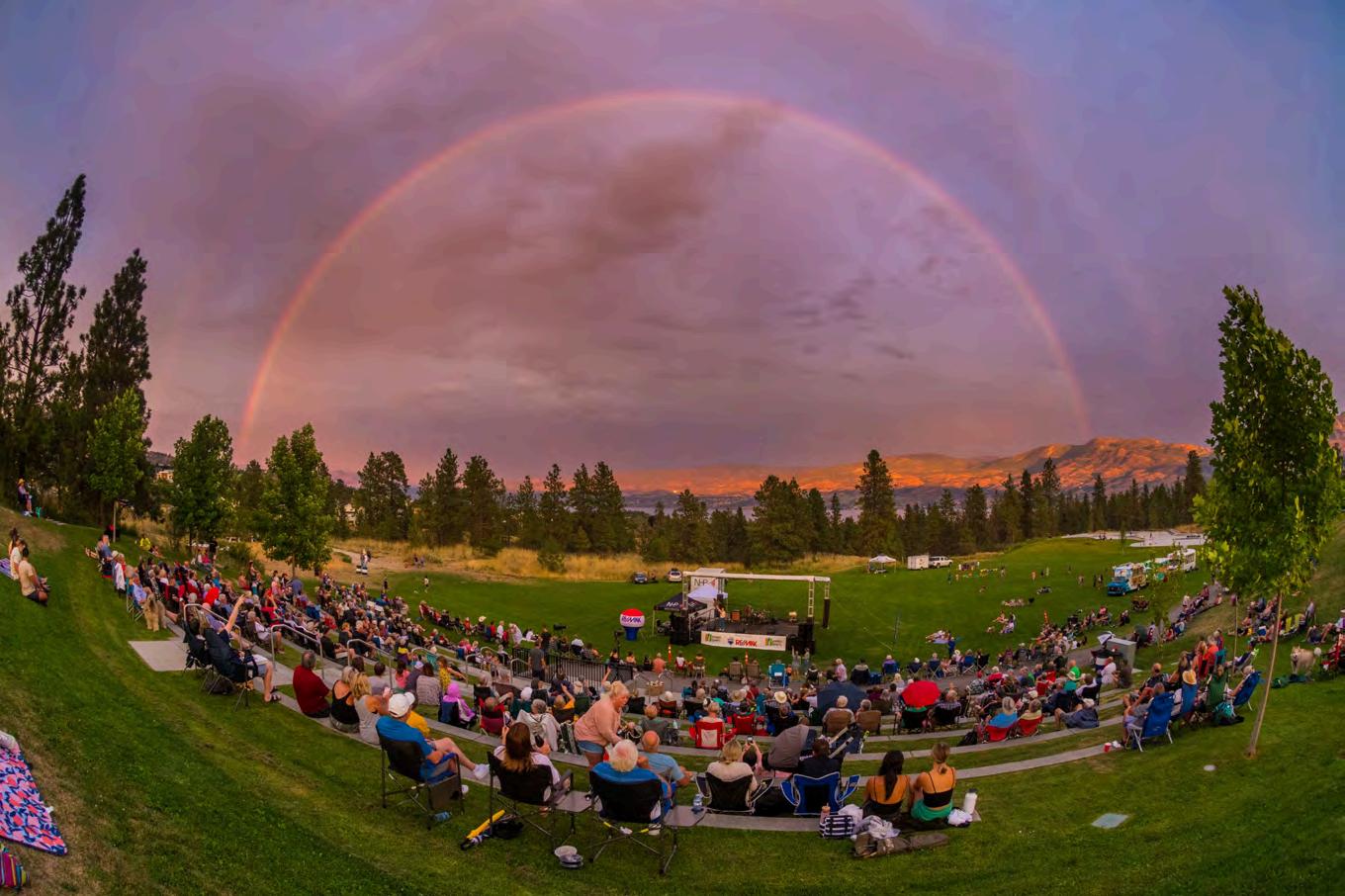
• Music in the Park attendance increased from 6,500 to 11,700 people enjoying the free, Friday night concerts at the Annette Beaudreau Amphitheatre at Memorial Park.
• The City launched Pop Ups on the Plaza - a new, free, and vibrant series of community events at City Hall's outdoor plaza that saw 1,837 people attend over the summer.
• A new Friday Night Market took place on the plaza before Music in the Park and the Westbank Farmers' Market moved to the City Hall Plaza.
• Recreation and Culture programs expanded this year to include more summer day camp and child care programs, hosting 1,621 children.
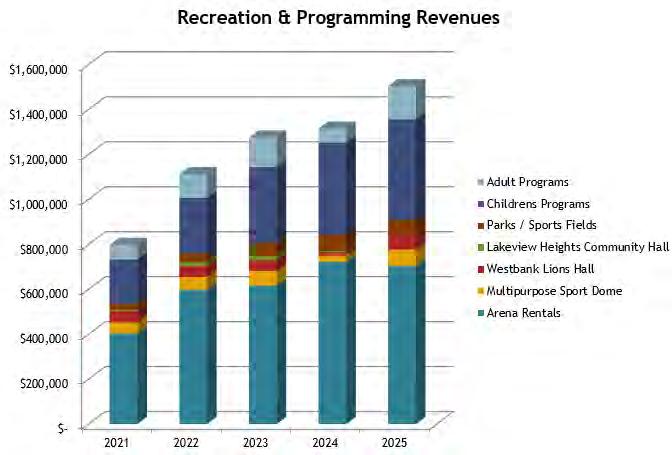
• The Recreation Department saw a15% increase in program registration and facility rentals.
COMMUNITY DEVELOPMENT
General Manager: Brent Magnan
Community & Social Development Planning
Building & Licensing
What we do
Building and Licensing
The Building and Licensing Department provides building inspection services for all developments so that structures are built to ensure the safety, integrity, and accessibility of structures throughout the community. The department is also responsible for licensing of businesses as well as short-term rental accommodations.
Current Planning
The Current Planning Department assists developers as well as the public with understanding and interpreting land use regulations, provincial legislation, development applications, and processes. The department ensures development applications are processed in a timely manner, while meeting greater objectives outlined in our Official Community Plan.
Community and Social Development
The Community and Social Development Department provides proactive support for community issues such as supports for unhoused populations, community well-being, and accessibility. The department helps to address multi-jurisdictional challenges to community and social issues in collaboration and partnership with provincial organizations such as BC Housing, and other regional non-profit organizations and service providers.
Engineering & Capital Projects
Long-Range Planning
The City’s Long Range Planning Department focuses on initiatives that will shape the future of our city through comprehensive land-use planning strategies. These policy documents are the foundation for the 12,000+ new residents the City will welcome over the next 20 years.
Development Engineering
The Development Engineering Department is responsible for reviewing and approving engineering aspects of development applications as well as subdivision approval, ensuring that projects align with City standards and infrastructure capacity.
Engineering and Capital Projects
The Infrastructure Engineering Department leads the planning, design, and delivery of municipal capital projects including roads, water, sewer and drainage infrastructure. They are also responsible for advancing city-wide master plans, delivering the City’s 10-year Capital Plan and advancing the City’s Asset Management Plan to ensure infrastructure sustainability, efficiency, and resiliency.
Housing
The Housing Department is responsible for administering and implementing the City’s $7.9 million Housing Accelerator Fund Action Plan, and associated investments.
Engineering and Capital Projects
• Intersection improvements were completed at the Butt Road and Old Okanagan Highway intersection to enhance safety for all road users and improve connections to key destinations in the city. The project included additional left-turn lanes in all directions, a new westbound right-turn lane on Butt Road, active transportation improvements, watermain and drainage upgrades, and was delivered in collaboration with the Ministry of Transportation and Westbank First Nation.
• Construction of active transportation and road improvements on Shannon Lake Road was completed between Westbank First Nation IR#9 and Swite Road including new cycling and pedestrian infrastructure, roadway upgrades, and a roundabout at Asquith road. The project also included safety improvements and connectivity enhancements along key segments along the corridor.
• Our Capital Works Crew completed 20 projects throughout the City to improve drainage, extend sidewalks and bike lanes, upgrade crosswalks, access enhancements to Fire House 30 and the Operations Center.
• A total of 1.5 kilometres of new water and storm main infrastructure were installed across the city.
• A total of 4.5 kilometres of new sidewalks, cycling lanes and multi-use path ways were constructed throughout West Kelowna.
• A total of 4.7 lane kms of road resurfaced (15,500 m2).
• The City began work to implement a formal Capital Delivery Model, to improve project management and deliver future capital projects in a principled, accountable and transparent approach.
Planning and Development
• 75 planning applications were received.
• The City approved 19 new subdivision applications
• Council adopted a Zoning Bylaw that better reflects our community’s vision and aligns with the goals of the Official Community Plan. The updated bylaw includes details on new Urban and Neighbourhood Centre zones, introduces a density bonusing program to help deliver
more priority housing and modernizes parking regulations to accommodate higher density buildings. The bylaw was also updated to align with the Provincial housing legislation.
• The City has been implementing the Housing Accelerator Fund action plan, which includes seven initiatives and 18 milestones. This led the approval of the Rental Protection and Tenant Relocation Assistance Policy, and an updated Manufactured Home Park Redevelopment Policy. These Council-approved policies set clear criteria for rental protection, tenant relocation, and compensation, as well as prevent the loss of purpose-built rental housing through one-for-one replacement.
• 3,687 building inspections completed.
• 369 active new business licences.
• The total number of active business license in West Kelowna is 2,827.
• The City issued 835 Intercommunity Business Licenses, including both new and renewed.
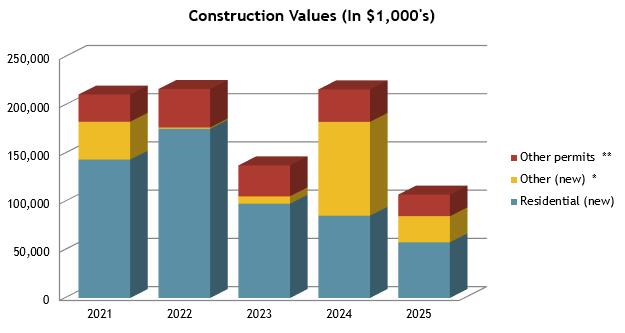
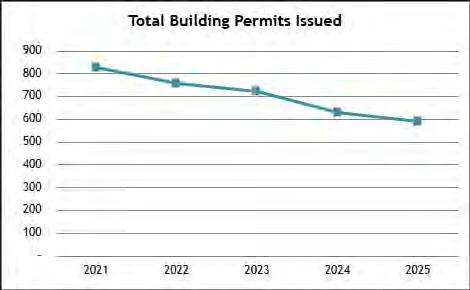
• The City issued 590 building permits for a total construction value of $107,262,512 for a range of projects including residential, commercial, and industrial developments.
• The City of West Kelowna permitted 383 active Short-Term Rentals, comprised of 127 resort accommodations, 123 bed and breakfast STRs, 129 short-term rentals and four agri-tourism units
Community and Social Development
• The City’s first ever Accessibility Plan was approved. This plan includes three goals and 16 actions and outlines a pathway for building an accessible community where everyone can fully participate in the spaces, processes, and activities of their everyday lives – both now and in the future.
• Launched an Accessible Active Transportation (AAT) Audit to help identify barriers and opportunities for improvement in accessibility across the Westbank Urban Centre.
• Supported numerous initiatives related to homelessness, poverty reduction, family supports, and community well-being which impact residents in West Kelowna.
PROTECTIVE SERVICES
Fire Chief and General Manager: Jason Brolund
What we do
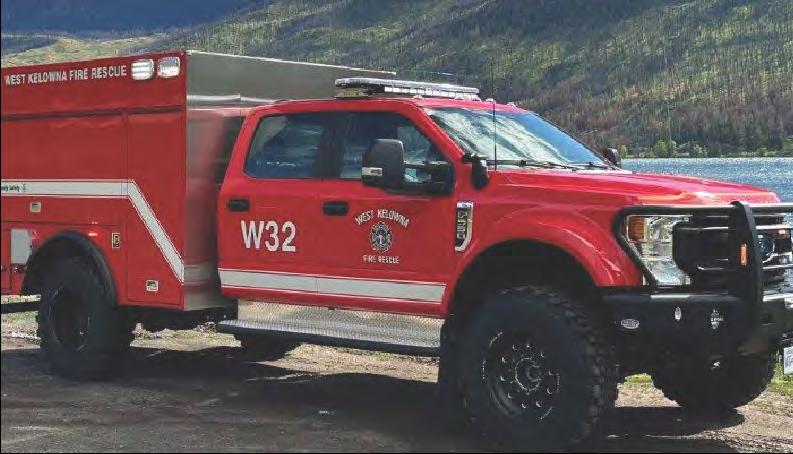
With a staff of over 100 men and women, West Kelowna Fire Rescue (WKFR) provides services for City of West Kelowna and Westbank First Nation residents, businesses and visitors. WKFR responds as a composite service (career and paid-on-call) from four strategically placed fire stations: two are in the urban core of the community and two in the rural area.
WKFR protects tens of thousands of lives and billions of dollars in property value. Our fire service is regarded provincially as experts in the prevention, coordination, and suppression of wildfire. We are very proud of and work hard to maintain our close working relationship with the BC Wildfire Service. We are regarded as leaders in the province in FireSmart and wildfire mitigation.
The department also partners with fire and rescue services in other jurisdictions to help with regional, provincial and national emergencies, when required. We are active partners in the Central Okanagan Regional Emergency program – managing major emergencies from the Regional Emergency Operations Centre. Our staff represent the department and city provincially and nationally on various boards and groups and provide training and support to firefighters in our areas of expertise.
WKFR responsibilities include:
• Prevention, control and extinguishing of fires;
• Rescue, first medical response;
• Protection of life and property;
• Firefighter training, health and safety;
• Enforcement of municipal bylaws respecting fire prevention; and
• Coordination of the City’s Emergency Management Program, FireSmart and Wildfire Mitigation Program, fire inspections, pre-incident planning and fire investigation programs and services.
West Kelowna Fire Rescue (WKFR)
training, a self-contained breathing apparatus room, and separate dormitory space for sleeping. The project was completed on-time and on-budget.
Fire Station 33 (Rose Valley) underwent a small expansion to upgrade its gear room. The project created a safer, more functional space with additional room for firefighting gear and for crews to get dressed quickly when responding to emergencies.
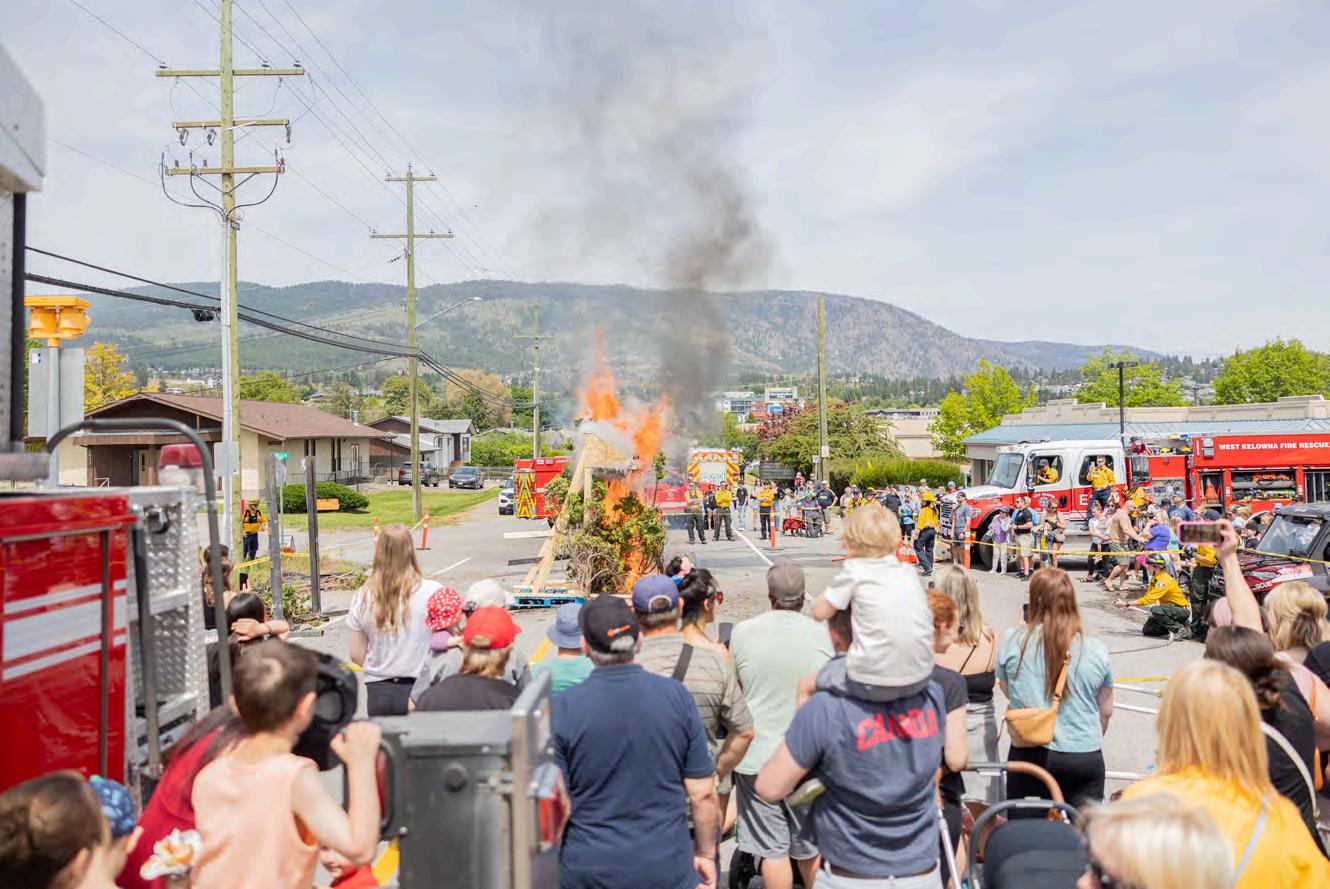
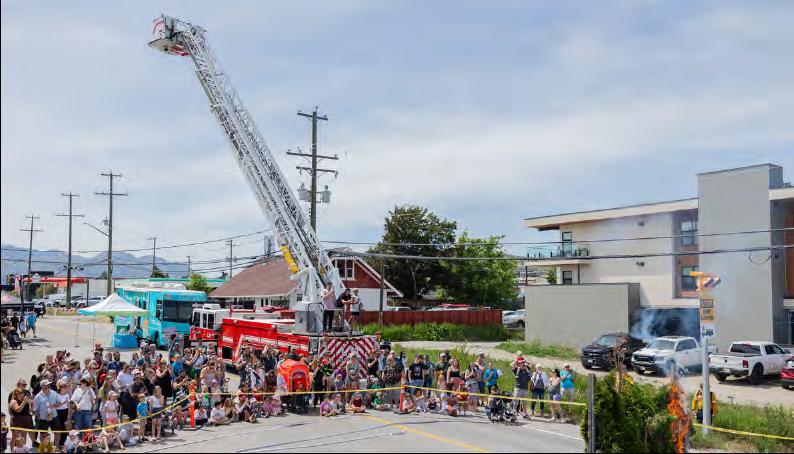
A record 1,110 people attended FireSmart Family Day on May 24, meeting firefighters and WKFR staff while learning to protect their homes from wildfires.
West Kelowna Fire Rescue's FireSmart/Wildfire Mitigation Specialist continued to conduct Home Ignition Zone Assessments, encourage private property owners to complete actions to improve the survivability of their homes in case of a wildfire, and coordinate community outreach and a FireSmart Family Day to provide education and awareness about preparedness and mitigating wildfire-related risks.
Two new 15 passenger vans are now based at Fire Station 33 and 34 to transport firefighters to emergency scenes as well as training activities. The need for the vans was identified after the McDougall Creek Wildfire and as a part of preparing for future growth in the community.
The Shannon Lake Road Wildfire Mitigation project was completed. The five-hectare project lies along Shannon Lake Road in the vicinity of Brookhaven Care Centre and Crystal Springs Mobile Home Park. The work was completed by Ntityix Resources (WFN) crews. It consisted of hand work, chipping and removing debris. This work has lowered potential fire intensity in the area giving fire crews a better chance to suppress a fire.
WKFR crews completed eight hands-on Ice and Swiftwater Rescue training sessions in preparation for threats faced within our community.
Completed 10 wildfire mitigation projects .
Completed 71 FireSmart Home Assessments across the Westside.
West Kelowna Fire Rescue’s 28th annual Holiday Food Drive collected a total of 15,897 pounds of food and $5,890 in cash donations with the total impact valued at $63,755 to support the Central Okanagan Food Bank.
FINANCIAL SECTION
2025 DRAFT Consolidated Financial Statements
And Independent Auditor's Report thereon
Fiscal Year Ending December 31, 2025
Schedule
Schedule
City of West Kelowna
December 31, 2025
Management's Responsibility for Financial Reporting
Lisa Siavashi, CPA, CMA Chief Financial Officer
May 12, 2026
Independent Auditor’s Report
To the Mayor and Council of The City of West Kelowna
Opinion
We have audited the financial statements of the City of West Kelowna (the “City”), which comprise the statement of financial position as at December 31, 2025, and the statement of operations and accumulated surplus, the statement of changes in net financial assets (debt) and the statement of cash flows for the year then ended, and notes to the financial statements, including a summary of significant accounting policies.
In our opinion, the accompanying financial statements present fairly, in all material respects, the financial position of the City as at December 31, 2025, and its results of operations, its change in net financial assets, and its cash flows for the year then ended in accordance with Canadian public sector accounting standards.
Basis for Opinion
We conducted our audit in accordance with Canadian generally accepted auditing standards. Our responsibilities under those standards are further described in the Auditor’s Responsibilities for the Audit of the Financial Statements section of our report. We are independent of the City in accordance with the ethical requirements that are relevant to our audit of the financial statements in Canada, and we have fulfilled our other ethical responsibilities in accordance with these requirements. We believe that the audit evidence we have obtained is sufficient and appropriate to provide a basis for our opinion.
Unaudited Information
We have not audited, reviewed or otherwise attempted to verify the accuracy or completeness of Schedule 4 and Schedule 5 of the financial statements.
Responsibilities of Management and Those Charged with Governance for the Financial Statements
Management is responsible for the preparation and fair presentation of the financial statements in accordance with Canadian public sector accounting standards, and for such internal control as management determines is necessary to enable the preparation of financial statements that are free from material misstatement, whether due to fraud or error.
In preparing the financial statements, management is responsible for assessing the City’s ability to continue as a going concern, disclosing, as applicable, matters related to going concern and using the going concern basis of accounting unless management either intends to liquidate the City or to cease operations, or has no realistic alternative but to do so.
Those charged with governance are responsible for overseeing the City’s financial reporting process.
Auditor’s Responsibilities for the Audit of the Financial Statements
Our objectives are to obtain reasonable assurance about whether the financial statements as a whole are free from material misstatement, whether due to fraud or error, and to issue an auditor’s report that includes our opinion. Reasonable assurance is a high level of assurance, but is not a guarantee that an audit conducted in accordance with Canadian generally accepted auditing standards will always detect a material misstatement when it exists. Misstatements can arise from fraud or error and are considered material if, individually or in the aggregate, they could reasonably be expected to influence the economic decisions of users taken on the basis of these financial statements.
As part of an audit in accordance with Canadian generally accepted auditing standards, we exercise professional judgment and maintain professional skepticism throughout the audit. We also:
• Identify and assess the risks of material misstatement of the financial statements, whether due to fraud or error, design and perform audit procedures responsive to those risks, and obtain audit evidence that is sufficient and appropriate to provide a basis for our opinion. The risk of not detecting a material misstatement resulting from fraud is higher than for one resulting from error, as fraud may involve collusion, forgery, intentional omissions, misrepresentations, or the override of internal control.
• Obtain an understanding of internal control relevant to the audit in order to design audit procedures that are appropriate in the circumstances, but not for the purpose of expressing an opinion on the effectiveness of the City’s internal control.
• Evaluate the appropriateness of accounting policies used and the reasonableness of accounting estimates and related disclosures made by management.
• Conclude on the appropriateness of management’s use of the going concern basis of accounting and, based on the audit evidence obtained, whether a material uncertainty exists related to events or conditions that may cast significant doubt on the City’s ability to continue as a going concern. If we conclude that a material uncertainty exists, we are required to draw attention in our auditor’s report to the related disclosures in the financial statements or, if such disclosures are inadequate, to modify our opinion. Our conclusions are based on the audit evidence obtained up to the date of our auditor’s report. However, future events or conditions may cause the City to cease to continue as a going concern.
• Evaluate the overall presentation, structure and content of the financial statements, including the disclosures, and whether the financial statements represent the underlying transactions and events in a manner that achieves fair presentation.
We communicate with those charged with governance regarding, among other matters, the planned scope and timing of the audit and significant audit findings, including any significant deficiencies in internal control that we identify during our audit.
Chartered Professional Accountants
Kelowna, British Columbia May 12, 2026
City of West Kelowna
Statement of consolidated financial position
Year ended December 31, 2025, with comparative information for 2024
Financial Assets Cash and cash equivalents (Note 2)
(Note 3)
Financial Liabilities
payable and accrued liabilities (Note 4)
(Note 5)
112,297,681
(30,703,342)
Non-financial assets
capital assets (Note 10) 519,223,170 504,709,706
Contingent liabilities and commitments (Notes 14 and 16)
Lisa Siavashi, CPA, CMA
Chief
Financial Officer
The accompanying notes and schedules are an integral part of the consolidated financial statements.
Gord Milsom Mayor, City of West Kelowna
City of West Kelowna
Statement of consolidated operations and accumulated surplus
Year ended December 31, 2025, with comparative information for 2024
(Note 11)
Expenses (Schedule 3)
The accompanying notes and schedules are an integral part of the consolidated financial statements.
City of West Kelowna
Statement of consolidated changes in net debt Year ended December 31, 2025, with comparative information for 2024
The accompanying notes and schedules are an integral part of the consolidated financial statements.
City of West Kelowna
Statement of consolidated cash flows Year ended December 31, 2025, with comparative information for 2024
(used
December 31, 2025
1. Summary of significant accounting policies
The following is a summary of the City’s significant accounting policies:
a) Nature of operations
The City of West Kelowna ("the City") is a local government situated in the province of British Columbia, Canada. The City is subject to the laws and regulations of the provincial statutes of the Community Charter, the Local Government Act. West Kelowna was officially incorporated as Westside District Municipality on December 6, 2007. In 2008, the name was changed to District of West Kelowna. On June 26, 2015, West Kelowna was reclassified from District to Municipality. At that time, the City had become British Columbia's 51st city. The City provides community services to its taxpayers and is responsible for creating and maintaining an infrastructure to serve a population in excess of the full time residents.
b) Basis of consolidation
The consolidated financial statements reflect the assets, liabilities, revenue and expenses of all municipal organizations, committees and Boards which are owned or controlled by the City. All inter-entity transactions and balances have been eliminated. The controlled organizations include:
West Kelowna Economic Development Corporation
c) Segregation of Operations
The City’s resources and operations are segregated into General, Water, Sewer, Storm Drainage, Statutory Reserve and Non-statutory Reserve Funds for accounting and financial reporting purposes. The consolidated financial statements include all of the accounts of these funds. All interfund transactions and balances have been eliminated within the financial statements.
d) Basis of accounting
The consolidated financial statements are prepared using the accrual basis of accounting and are the responsibility of and prepared by management in accordance with Canadian public sector accounting standards ("PSAS"). Expenses are recognized as they are incurred and measurable based on receipt of goods and services and/or the creation of a legal obligation to pay. The preparation of consolidated financial statements necessarily involves the use of estimates based on management's judgment, particularly when transactions affecting the current accounting period cannot be finalized with certainty until future periods.
e) Cash and cash equivalents
Management classifies all term deposits and investments with a maturity of 3 months or less that are cashable on demand as cash equivalents.
f) Financial Instruments
All financial instruments, are measured at cost or amortized cost. The carrying amount of each of these financial instruments is presented on the statement of financial position. When investment income is externally restricted, the investment income is recognized as revenue in the period in which the resources are used for the purpose specified.
For financial instruments measured using amortized cost, the effective interest rate method is used to determine interest revenue or expense.
All financial assets are tested annually for impairment. When financial assets are impaired, impairment losses are recorded in the statement of operations.
Transaction costs are added to the carrying value for financial instruments measured using cost or amortized cost.
1. Summary of significant accounting policies (continued)
g) Tangible capital assets
Tangible capital assets are initially recorded at cost which includes all amounts that are directly attributable to the acquisition, construction, development or betterment of the asset. The City does not capitalize interest associated with the acquisition or construction of tangible capital assets. The cost, less residual value, of the tangible capital assets, excluding land, is amortized on a straight-line basis over their estimated useful lives as follows:
Asset class Estimated useful life
Buildings
Drainage
Other tangible capital assets
Sewer infrastructure
years
years
years
years Transportation
Vehicles and
Water infrastructure
years
years
years
Tangible capital assets received as contributions are recorded at their fair value at the date of receipt and are also recorded as revenue.
The City has numerous works of art located throughout the City which are not reflected in these consolidated financial statements due to the subjectivity as to their value.
Tangible capital assets constructed and contributed by developers are recorded at their fair value and are capitalized into tangible capital assets and reflected in the statement of operations and accumulated surplus as revenue.
h) Work in progress
Work in progress represents capital projects under construction but not yet completed and are recorded at cost. Work in progress is not amortized. Amortization of these assets will commence when the asset is put into service.
i) Prepaid expenses and inventory
Prepaid expenses consist of amounts paid related to future years' expenses. Inventory consists of supplies held for construction use and are recorded at lower of cost or replacement cost.
j) Employee future benefits
The City and its employees make contributions to the Municipal Pension Plan. As this plan is a multi-employer plan, the City’s contributions are expensed as incurred.
Sick leave and other retirement benefits are also available to the City’s employees. The ALGEU Collective Agreement allows for the accumulation of sick leave to a maximum of 100 days, it is expensed in the year it is accumulated. Earned sick leave vests after 10 years of employment and is paid to a maximum of 50 days. Accrued earned sick leave and vacation pay is included in wages and payroll liabilities.
City
December 31, 2025
1.Summary of significant accounting policies (continued)
k) Deferred development cost charges ("DCC's")
Pursuant to the provisions of the Local Government Act, DCC’s are held for the purpose for which the charges have been imposed. When projects are completed, the DCC’s are recognized as revenue. Because these funds are restricted in nature they are shown as a liability.
l) Debt
Outstanding debt is reported net of applicable sinking fund balances.
Interest on debt is charged to current operations. Interest charges are accrued for the period from the date of the latest interest payment to the end of the year.
m) Municipal Finance Authority debt reserve deposits
The City obtains its long-term debt through the Municipal Finance Authority ("MFA"). As a condition of borrowing and as required by legislation, a debt reserve fund is to be established in the amount of one-half the average instalment of principal and interest as set out in the lending agreements. The reserve is funded in part by cash, being the withholding of 1% of the total issue proceeds. The total debt reserve fund cash as at December 31, 2025 is $558,873 (2024 - $298,713). The remainder is funded by a demand note whereby the City may be required to loan certain amounts to the Municipal Finance Authority. The total demand loan as at December 31, 2025 is $1,146,021 (2024 - $542,873). These demand notes are contingent in nature and are not reflected in the accounts of the City.
n) Reserve funds
Non-statutory reserves represent an appropriation of surplus for specific purposes as determined by Council. Reserves for future expenses represent funds that are available to temporarily finance operations until planned revenues (i.e. property taxes, grants, etc.) are received, or for other operating or capital purposes as determined by Council. Statutory reserves have been established by bylaw in accordance with the Community Charter and their use is restricted by legislation.
1. Summary of significant accounting policies (continued)
o) Revenue
Revenue with performance obligation(s) are recognized when, or as, the City has satisfied the performance obligation either through a point in time or over a period of time. The City satisfies the performance obligation(s), when control of the benefits associated with the promised goods or services has passed to the payor. Revenues included under exchange transactions are, but not limited to:
• Revenue recognition on engineering fees, planning & development permits, recreation program fees, and property lease revenues are recognized over time as the performance obligations are satisfied.
• Revenue recognition on sales of property, fees for recreation classes, business licenses, fees for goods and services are recognized at a specific point in time when the performance obligations are satisfied.
Revenue from transactions with no performance obligation is recognized at the realizable value when the City has the authority to claim or retain an inflow of economic resources and a past event giving rise to a claim or economic resources has occurred. Revenue included under non-exchange transactions are, but not limited to:
•Developer contributions, tax penalties & arrears, and bylaw violation revenues are involuntary transactions and are recognized at the transaction price when the City has the authority to claim an inflow of economic resources.
Taxes are recorded at estimated amounts when they meet the definition of an asset, have been authorized and the taxable event occurs. For property taxes, the taxable event is the period for which the tax is levied. As taxes recorded are initially based on management’s best estimate of the taxes that will be received, it is possible that changes in future conditions, such as reassessments due to audits, appeals and court decisions, could result in a change in the amount of tax revenue recognized. Taxes receivable are recognized net of an allowance for anticipated uncollectable amounts.
Contributions or other funding received which has externally imposed restrictions are initially accounted for as deferred revenue and then recognized as revenue when used for the specific purpose.
Contributions received in-kind are recognized as revenue in the period received at the fair market value at the time of the contribution.
p) Government Transfers
Government transfers are recognized as revenue in the consolidated financial statements when the transfer is authorized and any eligibility criteria are met, except to the extent that transfer stipulations give rise to an obligation that meets the definition of a liability. Transfers are recognized as deferred revenue when transfer stipulations give rise to a liability. Transfer revenue is recognized in the statement of operations as the stipulation liabilities are settled.
q) Budget figures
The budget figures are from the City's 10-Year Financial Plan Bylaw, adopted before May 15th of each year. Subsequent amendments have been authorized by Council to reflect changes in the budget as required by law. Such amendments are not reflected in the financial statement budget figures.
City
1. Summary of significant accounting policies (continued)
r) Measurement of uncertainty
The preparation of consolidated financial statements requires management to make estimates and assumptions that affect the reported amounts, and disclosure of, assets and liabilities at the date of the consolidated financial statements, and the reported amounts of revenues and expenses during the reporting period. Areas requiring the use of management estimates relate to the determination of payroll liabilities, the existence and measurement of any contingent liabilities, asset retirement obligations and tangible capital asset estimated useful life and related amortization expense. Actual results could differ from management’s best estimates as additional information becomes available. Adjustments, if any, will be reflected in the consolidated financial statements in the period that the change in estimate is made.
s) Liability for contaminated sites
Contaminated sites are a result of contamination being introduced into air, soil, water or sediment of a chemical, organic or radioactive material or live organism that exceeds an environmental standard. The liability is recorded net of any expected recoveries. A liability for remediation of contaminated sites is recognized when all of the following criteria are met:
• an environmental standard exists;
• contamination exceeds the environmental standard;
• the City is directly responsible and accepts responsibility;
• it is expected that future economic benefits will be given up; and
• a reasonable estimate of the amount can be made.
The liability includes all costs directly attributable to remediation activities including post remediation operations, maintenance and monitoring.
t) Asset retirement obligations
A liability for an asset retirement obligation is recognized when there is a legal obligation to incur retirement costs in relation to a tangible capital asset: the past transaction or event giving rise to the liability has occurred; it is expected that future economic benefits will be given up; and a reasonable estimate of the amount can be made. The liability is recorded at the amount that is the best estimate of the expenditure required to retire a tangible capital asset at the financial statement date. The liability is subsequently reviewed at each financial reporting date and adjusted for the passage of time and for any revisions to the timing, amount required to settle the obligation or the discount rate. Upon the initial measurement of an asset retirement obligation, a corresponding asset retirement cost is added to the carrying value of the related tangible capital asset if it is still in productive use. The cost is amortized over the useful like of the tangible capital asset. If the related tangible capital asset is unrecognized or no longer in productive use, the asset retirement costs are expensed.
City
1. Summary of significant accounting policies (continued)
u) Segmented disclosure
A segment is defined as distinguishable activity of group of activities of a government for which it is appropriate to separately report financial information to achieve the objectives of the standard.
The City of West Kelowna is a diversified municipal government that provides a wide range of services to its citizens. The City’s operations and activities are organized and reported by funds and departments. The General Fund reports on operations, funded primarily by property taxes, which include services provided by the City such as general government services, protective services, solid waste, public health and housing, development, transportation, and parks, recreation and cultural services. The utility operations are comprised of the water, sewer and storm drainage systems, each accounting for its own operations and programs within their own funds. Operating results reported by the following segments are included in Schedule 3.
The various segments are described as follows:
i) General government services
This segment is responsible for a number of different functions including Legislative Services, Administration, Finance, Information Services and the West Kelowna Economic Development Corporation. Legislative services involves staff working closely with Council and community partners to coordinate the delivery of a wide range of functions and services. Administration is responsible for the Human Resources function, which oversees the recruitment and retention of people, management of labour relations, administration of collective agreements, employee compensation and benefit programs, staff training and development, employee health and safety and Work Safe BC regulations. Finance is responsible for the requisition of tax revenues from the Province and other taxing authorities and all treasury and accounting functions. Information Services includes an all-encompassing computer database and mapping system for properties in the City, which is used by City departments, other government agencies and members of the public. The West Kelowna Economic Development Corporation was established to enhance and promote development within the City boundaries.
ii) Protective services
This segment is responsible for all the various services provided by the RCMP, Fire Services and Bylaw Enforcement designed to protect the lives and property of both citizens and visitors with a focus on emergency response, law enforcement, search and rescue, education and prevention.
iii) Solid Waste
Captures the costs of the contract for garbage, recycling, and yard waste pick up at residential locations, along with the cost of replacement carts.
iv) Development services
This segment is responsible for delivering health, planning and development services to the City. The specific functions include planning, building permits and inspections, business licensing, design and engineering services as well as tourism and economic development.
v) Transportation services
This segment is responsible for roads and maintenance, street lighting, traffic management, transit, and storm drainage.
December 31, 2025
1. Summary of significant accounting policies (continued)
u) Segmented disclosure (continued)
vi) Parks, recreation and cultural services
This segment is responsible for recreational program design, delivery and management, municipal facilities/parks development and maintenance and museum operations, as well as coordination of many recreational/sporting activities and groups.
vii) Water services viii) Sewer services
This segment is responsible for the operation and maintenance of the five water systems that provide water services to the residents and businesses within the municipal boundaries of the City
This segment is responsible for the operation and maintenance of the sewer collection system within the municipal boundaries of the City.
ix) Other
This segment includes the operation and maintenance of the Westbank Cemetery.
2. Financial assets - cash and cash equivalents
Cash and cash equivalents held by the City include cash with an average interest rate of 4.01% (2024 - 5.62%).
3. Financial assets - Accounts receivable
4. Liabilities - Accounts payable and accrued liabilities
City of West Kelowna
5. Liabilities - Deferred revenue
6. Liabilities - Deferred development cost charges ("DCC's")
December 31, 2025
7. Liabilities - Short-Term & Equipment debt
Interest is charged on a daily floating rate basis and compounded monthly. Interest paid during the year was $1,231,143 (2024$1,940,485).
Estimated principal payments on short term debt, excluding Bylaw 313 for the duration of the term are as follows:
$ 1,223,881 $ 1,027,557 $ 649,553 213,325 $
Bylaw 313 is a temporary interim borrowing loan (up to 5 year term) with interest only payments. When the interim period is complete, it will transfer into long-term debt with annual interest and principle repayments.
The maximum borrowing for each bylaw is as follows:
Bylaw 313 - Fire Hall 32 Temporary Borrowing Agreement 8,000,000 $
8. Liabilities - Long-term debt
9. Asset retirement obligation:
The City's asset retirement obligation consists of the following obligations:
The City owns and operates several buildings that are known to contain asbestos as well as sewer pipes, which various regulations require specific considerations upon asset retirement. The City recognized an obligation relating to the removal and disposal of the asbestos in these buildings and sewer pipes as estimated at December 31, 2025. The buildings all have an estimated useful life of 6-40 years from the date of completion of construction, of which various number of years remain. Sewer pipes have an estimated useful life of 70 years, again with various numbers of year remaining. The estimated costs of $1,871,788 (2024 - $1,789,130) is the present value of expected future expenditures using a discount rate of 4.62% (2024 - 4.62%) per annum.
(Schedule 1)
Additions to work in progress for the year totaled $2,645,937 (2024 - $22,866,235).
There were no contributed assets for 2025 or 2024.
11.
Taxation revenue comprises the following amounts collected less transfers to other governments:
City
December 31, 2025
13. Revenue - other
(Note 6)
14. Contingent liabilities
Regional District of Central Okanagan
(Note 8)
Regional District debt is, under the provisions of the Local Government Act, a direct, joint and several liability of the City and each member municipality within the Regional District, including the City of West Kelowna. The loan agreements with the Regional District of Central Okanagan and the Municipal Finance Authority provide that if at any time the scheduled payments provided for in the agreements are not sufficient to meet the Authority’s obligation with respect to such borrowing, the resulting deficiency becomes a liability of the member municipalities. As at December 31, 2025, the City does not anticipate being required to assume any of the Regional District's debt. The balance of MFA debt held through the Regional District at December 31, 2025 was $119,082,000 (2024 - $95,221,000).
Municipal Insurance Association
The City is a participant in the Municipal Insurance Association of British Columbia (the "Association"). Should the Association pay out claims in excess of premiums received, it is possible that the City, along with the other participants, would be required to contribute towards the deficit. Management does not consider external payments under this contingency to be likely and therefore no amounts have been accrued.
Legal actions
The nature of the City's operations are such that the City is subject to potential or ongoing litigation, the outcome of which is not determinable at this time. Accordingly, no provision has been made in the accounts for these actions. The amount of loss, if any, arising from ongoing litigation will be recorded in the accounts in the period in which the loss amount is known or can be reasonably estimated. The City has insurance policies and financial reserves to offset associated risks.
City of West Kelowna Notes to Financial Statements
December 31, 2025
15. Municipal Pension Plan
The City and its employees contribute to the Municipal Pension Plan (a jointly trusteed pension plan). The board of trustees, representing plan members and employers, is responsible for administering the plan, including investment of assets and administration of benefits. The plan is a multi-employer defined benefit pension plan. Basic pension benefits provided are based on a formula. As at December 31, 2024, the plan has about 273,000 active members and approximately 133,000 retired members. Active members include approximately 47,000 contributors from local governments.
Every three years, an actuarial valuation is performed to assess the financial position of the plan and adequacy of plan funding. The actuary determines an appropriate combined employer and member contribution rate to fund the plan. The actuary's calculated contribution rate is based on the entry-age normal cost method, which produces the long-term rate of member and employer contributions sufficient to provide benefits for average future entrants to the plan. This rate may be adjusted for the amortization of any actuarial funding surplus and will be adjusted for the amortization of any unfunded actuarial liability.
The most recent valuation for the Municipal Pension Plan as at December 31, 2024, indicated a $2,765 million funding surplus for basic pension benefits on a going concern basis.
The next valuation will be as at December 31, 2027.
The City paid $2,740,861 (2024 - $2,495,365) for employer contributions while employees contributed $2,358,187 (2024 - $2,139,612) to the plan in fiscal 2025.
Employers participating in the plan record their pension expense as the amount of employer contributions made during the fiscal year (defined contribution pension plan accounting). This is because the plan records accrued liabilities and accrued assets for the plan in aggregate, resulting in no consistent and reliable basis for allocating the obligation, assets and cost to the individual employers participating in the plan.
16. Commitments
The City has entered into various operating leases for equipment and payments under contracts for services with terms varying from one to five years. The total lease commitments payable in each of the next five years are as follows:
The City is holding letters of credit in the amount of $26,904,764 (2024 - $27,077,773), which are received as security related to performance deposits.
The City has revolving credit facilities with one Canadian chartered bank providing for borrowing of up to $6,000,000. The facilities bear interest at the bank prime rate less 0.5% and are due on demand. As at December 31, 2025, $nil (2024 - $nil) has been drawn on these facilities.
17. Budget
The budget amounts presented reflect the statutory financial plan as adopted by Council on March 11, 2025, adjusted for amortization and other items for comparability with the actual results. The following table reconciles the balanced statutory financial plan to the budget surplus reported on the statement of operations and accumulated surplus.
Surplus as per 10 year Financial Plan Bylaw No. 0323, 2025 - $
Adjust for non-operating items included in Financial Plan:
(2,696,267)
(3,755,566)
18. Financial Instruments
Instrument Risk Management
The City is exposed to credit risk, liquidity risk, and interest rate risk from its financial instruments. This note describes the City’s objectives, policies, and processes for managing those risks and the methods used to measure them. Further qualitative and quantitative information in respect of these risks is presented below and throughout these consolidated financial statements.
There have not been any changes from the prior year in the City’s exposure to above risks or the policies, procedures and methods it uses to manage and measure the risks.
City of West Kelowna Notes to Financial Statements
December 31, 2025
18. Financial Instruments (continued)
Credit risk
Credit risk is the risk that one party to a financial instrument will cause a financial loss for the other party by failing to discharge an obligation. The City is exposed to credit risk through its cash, accounts receivable, and portfolio investments.
The City manages it credit risk by holding cash at federally regulated chartered banks with all deposits fully guaranteed. The City measures its exposure to credit risk based on how long amounts have been outstanding and based on historical experience regarding collections. The maximum exposure to credit risk at the financial statement date is the carrying value of its cash and accounts receivable as outlined in Note 4. Accounts receivable arise primarily as a result of utilities, and grants receivable. Based on this knowledge, credit risk of cash and accounts receivable are assessed as low.
Liquidity risk
Liquidity risk is the risk that the City will encounter difficulty in meeting obligations associated with financial liabilities. The City is exposed to liquidity risk through its accounts payable, long-term debt, short-term debt and equipment financing.
The City manages this risk by holding investments with its primary banking institution, having the ability to increase tax rates per bylaw in order to increase cash, and by monitoring cash activities and expected outflows through budgeting and maintaining investments that may be converted to cash in the near-term if unexpected cash flows arise. Also to help manage the risk, the City has in place a planning, budgeting and forecasting process to help determine the funds required to support the normal operating requirements. Funding, whether through reserves or financing, for capital projects is secured before being proposed in the financial plan. The City’s five-year financial plan is approved by the Mayor and Council, which includes operational activities and capital investments. The City measures its exposure to liquidity risk based on results of cash forecasting and expected outflows and extensive budgeting.
During the current and prior periods, cash balances have decreased as a result of the planned drawdown and utilization of short-term financing obtained in prior periods. These funds were intentionally deployed over a two-year period to support capital and operating expenditures, in accordance with the City’s approved financial plan.
As a result of the utilization of short-term financing in prior periods, the City will incur future cash outflows for repayment and interest. In the current period, this debt was converted to long-term debt with scheduled repayments over its term. The majority of these repayments are expected to be funded through parcel tax revenues, such that related inflows from ratepayers are expected to offset the outflows, resulting in minimal net impact on future cash flows. The associated cash flows have been incorporated into the City’s financial planning and forecasting processes.
Interest rate risk
Interest rate risk is the risk that the fair value or future cash flows of a financial instrument will fluctuate because of changes in market interest rates. The City is exposed to interest rate risk through its long-term and short-term debt and through its equipment financing.
The City manages interest rate risk on its long-term debt by holding all debt through MFA at a fixed rate, with refinancing typically being completed at the ten or fifteen year mark. Therefore, fluctuations in market interest rates would not impact future cash flows and operations relating to long-term debt. See Note 8 for interest rates and maturity dates for long term debt.
City of West Kelowna Schedule 1Schedule of consolidated
December 31, 2025
City of West Kelowna
Schedule 4 - Growing Communities (unaudited)
December 31, 2025
Opening balance $ 8,639,122 Interest allocation 242,925 Spent during the year (5,164,141) Ending balance $ 3,717,906
City of West Kelowna
City of West Kelowna
Schedule 5 - Ministry of Housing Capacity Funding (unaudited)
December 31, 2025
301,215 $
balance 245,078 $
City of West Kelowna
STATISTICAL SECTION
REVENUE BY SOURCE
EXPENSES BY FUNCTION
City of West Kelowna
EXPENSES BY OBJECT
ST ATEMENT OF RESERVE FUNDS AND SURPLUS
CAPITAL SPENDING
CAPITAL FUNDING BY SOURCE
Proportional Breakdown of Capital Funding
LONG-TERM DEBT BY FUNCTION
LONG-TERM DEBT CAPACITY
PROPERTY TAX REVENUE
TAXABLE PROPERTY ASSESSMENTS
PERMISSIVE TAX EXEMPTIONS
Trustees of Westbank United Church
224.2(f) Buildings for Public Worship
Synod of the Diocese of Kootenay (St. George's Anglican Church)
3672 Brown Road
D, DISTRICT LOT 486, PLAN 761 (Folio: 12433.000; PID: 004-004-094)
224.2(f) Buildings for Public Worship 3690 Brown Road BLOCK D, DISTRICT LOT 486, PLAN 761 (Folio: 12434.000; PID: 012-091-413)
Redeemer Lutheran Church of Westbank
224.2(f) Buildings for Public Worship
Roman Catholic Bishop of Nelson (Our Lady of Lourdes Catholic Church)
224.2(f) Buildings for Public Worship
The Trustees of the Congregation of the Highway Gospel Hall
224.2(f) Buildings for Public Worship
The B.C. Conference of the Mennonite Brethren Churches (Sunridge Community Church)
224.2(f) Buildings for Public Worship
Lakeview Heights Baptist Church
224.2(f) Buildings for Public Worship
Grace Lutheran Church of Westbank
224.2(f) Buildings for Public Worship
Christian and Missionary Alliance-Can (Westside Alliance Church)
224.2(f) Buildings for Public Worship
Stach, Edwin G and Ball, James and Montgomery, Darren (Glenrosa Congregation of Jehovah's Witnesses)
224.2(f) Buildings for Public Worship
Powers Creek Community Church
224.2(f) Buildings for Public Worship
3637 Brown Road LOT 7, DISTRICT LOT 486, PLAN 17912 (Folio: 12623.000; PID: 001-901-818)
2547 Hebert Road LOT B, DISTRICT LOT 486, PLAN 33022 (Folio: 12643.714; PID: 003-267-695)
2549 Hebert Road LOT A, DISTRICT LOT 486, PLAN 33509 (Folio: 12643.717; PID: 003-164-900)
1190 Stevens Road LOT B, PLAN 31241 (Folio: 12713.158; PID: 003-761-801)
2630 Alhambra Drive LOT 19, DISTRICT LOT 506, PLAN 29377 (Folio: 12746.675; PID: 004-340-078, PID: 004-340-086, and PID: 004-340-248) $
1162 Hudson Road
LOT A, DISTRICT LOT 506, PLAN 35557 (Folio: 12746.730; PID: 001-736-795) $
2011 Daimler Drive
LOT 2, DISTRICT LOT 2601, PLAN 34258 (Folio: 14135.112; PID: 003-000-842)
3797 Glenway Road
LOT A, DISTRICT LOT 3188, PLAN 32791 (Folio: 14590.552; PID: 003-311-791) $ 2,326.07 $ 2,461.12 $
3718 Glenway Road
LOT A, DISTRICT LOT 3188, PLAN 34442 (Folio: 14590.670; PID: 002-976-951)
Buildings for Public Worship - Community Charter s.224.2(f) and/or Private Schools - Community Charter s.224.2(h)
B.C. Corp Seventh-Day Adventist Church (Westbank Seventh-Day Adventist Church)
224.2(f) Buildings for Public Worship
224.2(h) Private Schools
Total for Seventh Day Adventist Church
Pentecostal Assembly of Canada (Emmanuel Assembly)
224.2(f) Buildings for Public Worship
Green Bay Bible Camp
224.2(a) Not-for-profit
for Green Bay Bible Camp
Central Okanagan Community Foodbank Society
224.2(a) Not-for-profit
224.2(a) Not-for-profit
Central Okanagan School District #23 (Leased by Okanagan Boys and Girls Club)
224.2(a) Not-for-profit
Pathways Abilities Society
224.2(a) Not-for-profit
City of West Kelowna leased by Greater Westside Board of Trade (Chamber of Commerce)
224.2(a) Not-for-profit
Nature Trust of BC (Park Leased by the District of West Kelowna)
224.2(d) Municipal Property
Westbank First Nation
224.2(d) Municipal Property
3155 Glenrosa Road
LOT 1, DISTRICT LOT 3189, PLAN 36431 (Folio: 14626.664; PID: 003-490-823)
2600 Hebert Road DISTRICT LOT 3480, PLAN B5391 (Folio: 14711.000; PID: 011-347-678)
1449 Green Bay Road LOT 1, PLAN 7108 (Folio: 12270.000; PID: 010-024-115) AND 1449 Green Bay Road DISTRICT LOT 5205 (Folio: 15592.000)
2545 Churchill Rd
LOT 15, DISTRICT LOT 486, PLAN 18115 (Folio: 12643.018; PID: 008-313-857) AND 3711 Elliott Road
LOT A DISTRICT LOT 486, PLAN KAP19916 (Folio: 12643.155; PID: 007-933-371) AND 2495 Main Street BLOCK C DISTRICT LOT 486, PLAN KAP761 (Folio: 12566.000; PID: 012-065-765) AND 2542 Main Street
Lot A, Plan # KAP 18082, District Lot 486 (Folio: 12643.002; PID: 008-316-198)
3031 McIver Road LOT A, DISTRICT LOT 3189, PLAN KAP68635 (Folio: 14626.035; PID: 024-973-246)
2829 Inverness Road
LOT 96, DISTRICT LOT 3481, PLAN 20022 (Folio: 14732.099; PID: 007-928-190) $
2476 Main Street
LOT 4, DISTRICT LOT 486, PLAN KAP4967 (Folio: 12562.000; PID: 010-394-672)
2372 Dobbin Rd
LOT 1, PLAN KAP81960, LAND DISTRICT 41 (Folio: 15509.000; PID: 026-813-912)
Westlake Road
LOT 57, DISTRICT LOT 4662, PLAN 27476 (Folio: 15361.190; PID: 004-772-695)
Casa Palmero Drive
LOT B, DISTRICT LOT 485, PLAN KAP85543 (Folio: 12371.021; PID: 027-333-680)
BUILDING PERMITS
Building Permit
(in $1,000s)
* Includes Commercial, Agricultural, Industrial and Institutional ** Includes Renovations/Additions, Utilities, Swimming Pool, Accessory Structure, Retaining Walls, Blasting, Signs & Demolition
Source: City of West Kelowna Development Services and Building Divisions
City of West Kelowna
WEST KELOWNA FIRE RESCUE
RECREATION SERVICES
NUMBER OF EMPLOYEES
NUMBER OF EMPLOYEES BY GRAPH
POPULATION DEMOGRAPHICS
CANADIAN AWARD FOR FINANCIAL REPORTING PRESENTED BY GOVERNMENT FINANCE OFFICERS ASSOCIATION
Government Finance Officers Association of the United States and Canada (GFOA) awarded a Canadian Award for Financial Reporting to the City of West Kelowna for its annual financial report for the fiscal year ended December 31, 2023. The Canadian Award for Financial Reporting program was established to encourage municipal governments throughout Canada to publish high quality financial reports and to provide peer recognition and technical guidance for officials preparing these reports.
In order to be awarded a Canadian Award for Financial Reporting, a government unit must publish an easily readable and efficiently organized annual financial report, whose contents conform to program standards. Such reports should go beyond the minimum requirements of generally accepted accounting principles and demonstrate an effort to clearly communicate the municipal government’s financial picture, enhance an understanding of financial reporting by municipal governments, and address user needs.
A Canadian Award for Financial Reporting is valid for a period of one year only. We believe our current report continues to conform to the Canadian Award for Financial Reporting program requirements, and we are (will be) submitting it to GFOA to determine its eligibility for another award.
Canadian Award for Financial Reporting
Presented to City of West Kelowna British Columbia For its Annual Financial Report for the Year Ended December 31, 2024