

The West Hills Community College District 2026-2030 Strategic Plan establishes a shared vision and roadmap to advance student success, strengthen regional partnerships, and ensure the district remains responsive to the evolving educational and workforce needs of California's CentralValley over the next five years. Developed through an inclusive planning process involving district leadership, faculty, classified professionals, students, and community input,theplanalignsdistrictwideprioritieswiththeCaliforniaCommunityCollegesChancellor'sOfficeVision2030.
The Strategic Plan is guided by the district's vision, "The relentless pursuit of student success," and a proposed mission focused on expanding accessible educational opportunities, strengthening regional prosperity, and creatingclearpathwaystolivable-wagecareersthroughinnovationandcollaboration.
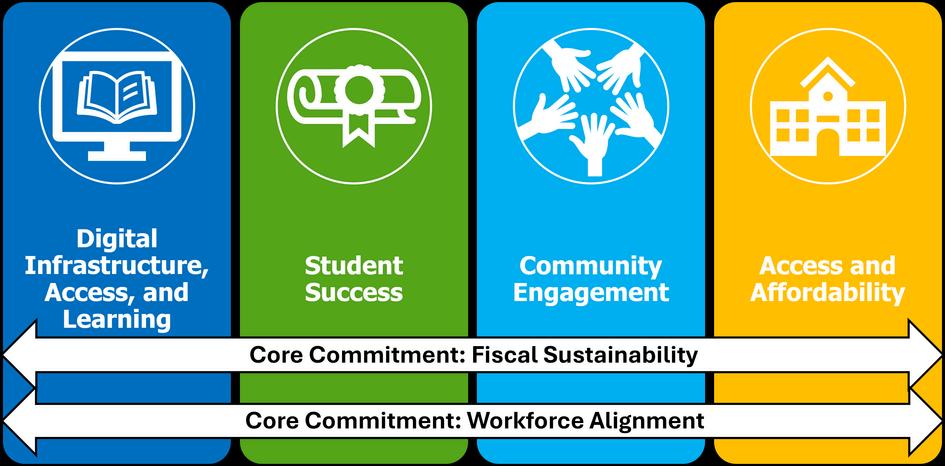
The plan is organized around four strategic priorities that will guide decision-making and resource allocation across thedistrict:
DigitalInfrastructure,Access,andLearning–Expandaccesstotechnology,broadband,digitalliteracy,and responsibleuseofinstructionaltechnologyandartificialintelligencetoimproveteaching,learning,andstudent support
Student Success – Improve student outcomes through personalized support, integrated services, equityfocusedpractices,expandedwork-basedlearningopportunities,anddata-informedinterventions.
Community Engagement – Strengthen partnerships with schools, employers, families, and community organizationswhileincreasingoutreach,advocacy,anddistrictvisibility.
Access and Affordability – Remove financial, geographic, and logistical barriers by expanding affordable educationalopportunities,financialaidawareness,adultlearnerpathways,andflexiblelearningoptions.
Supportingeverystrategicpriorityaretwodistrictwidecommitments:
Fiscal Sustainability – Ensure responsible stewardship of resources through sound financial planning, strategic investments,andlong-termfiscalstability.
Workforce Alignment – Strengthen partnerships with employers and align educational programs with regional workforcedemandstopreparestudentsforhigh-demandcareersandsupporteconomicdevelopment.
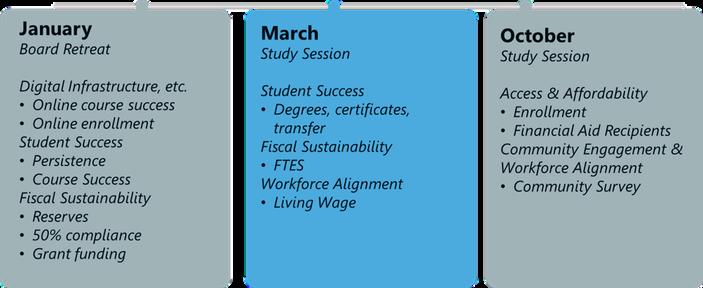
The district will evaluate progress using a comprehensive set of Key Performance Indicators (KPIs) aligned with California Community Colleges Vision 2030, along with additional local measures These include enrollment, persistence, course success, degree and certificate completion, transfer, employment outcomes, financial aid participation, fiscal health, and community engagement. Progress will be reported to the Board of Trustees three times each year during scheduled Board Retreats and Study Sessions to ensure transparency, accountability, and continuousimprovement.
The District Strategic Plan serves as a high-level framework that aligns with the strategic plans of Coalinga College and Lemoore College while allowing flexibility for local innovation. By focusing on student success, access, technology, community partnerships, fiscal responsibility, and workforce development, the plan positionsWest Hills Community College District to expand educational opportunity, strengthen regional prosperity, and transform lives througheducationoverthenextfiveyears.
Draft Mission Statement: During its November 2025 meeting, District Leadership Council reviewed several potential draft mission statements, and after making a number of revisions, selected the statement below. This updated mission statement will circulate through participatory governance for review, potential revision, and board approval during the spring 2026semesterasBoardPolicy1200.
DraftMission:
“West Hills Community College District is dedicated to student success and regional prosperity by creating accessible opportunities for our diverse communities Through strong partnerships and innovative learning, we provide clear pathways to livable-wage careers and empowerstudentstobuildabetterfuture.”
Current Mission Statement: This is WHCCD’s current mission statement as of January 2026 (BP 1200,adopted11/16/21).
“To cultivate learning, provide economic opportunity, and increase equity among our diversestudents,employees,andcommunities.”
“The relentless pursuit of student success.”
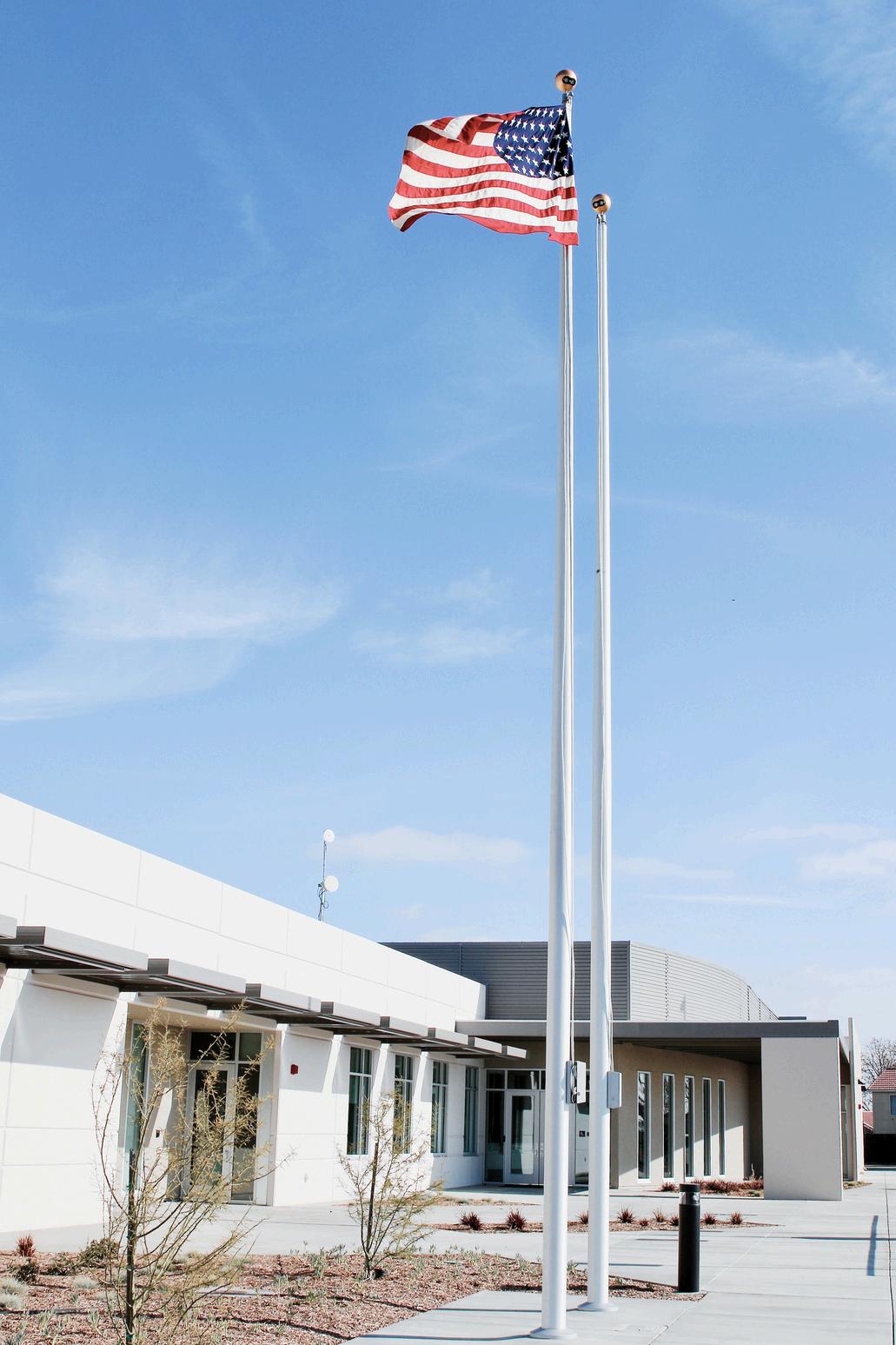
Robert Pimentel, Ed D
The West Hills Community District Strategic Plan sets shared vision and s direction for the district o next five years. It reflec unwavering commitment to student success, equity, access, and the long-term vitality of the communities we serve. In a time of rapid change and increasing complexity in higher education, this plan provides clarity, focus, and purpose for our collective work. The development of this Strategic Plan was intentional, inclusive, and grounded in evidence. Beginning in summer 2025, the district engaged leaders, faculty, classified professionals, and students in a comprehensive planning process that combined institutional data with professional expertise and lived experience. Through retreats, surveys, and dialogue across our colleges and district office, we examined both our strengths and the challenges before us. The result is a plan that is informed by those closest to the work and aligned with the realities of our district and region. This Strategic Plan is organized around four strategic priorities:
Digitial Infrastructure, Access, and Learning
Student Success
Community Engagement
Access and Affordability
This Strategic Plan is organized around four strategic priorities:
Digitial Infrastructure, Access, and Learning
Student Success
Community Engagement
Access and Affordability
These priorities represent the most critical areas where focused, coordinated action will have the greatest impact on students and communities. They are supported by two core commitments Fiscal Sustainability and Workforce Alignment which guide our approach to responsible resource allocation and ensure that our educational pathways remain responsive to regional workforce and economic needs.
This plan is intended to serve as a guiding framework rather than a prescriptive checklist. It will inform districtwide decision-making, resource allocation, and operational planning, while allowing flexibility for colleges and departments to respond to local contexts and emerging opportunities. As Coalinga College and Lemoore College advance their own strategic planning efforts, alignment with this district framework will strengthen coherence, accountability, and shared purpose across the district.
Ultimately, the success of this Strategic Plan will be measured not by the document itself, but by how effectively it shapes action, collaboration, and outcomes Its implementation depends on our collective responsibility to align daily decisions with long-term goals, to continuously assess our progress, and to remain steadfast in our commitment to the students and and communities who place their trust in West Hills Community College District.
Robert Pimentel, EdD Chancellor,West Hills Community College District
District
History
The West Hills Community College District (WHCCD) has served the educational needs of California’sWest Side for more than 90 years.
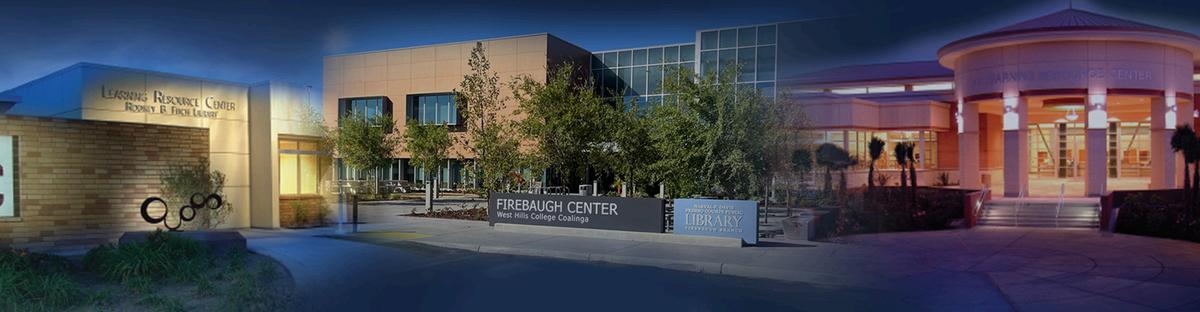
Today, the district spans nearly 3,500 square miles and includes Coalinga College and its Firebaugh Center, Lemoore College, a district office in Coalinga, three child development centers, and the Farm of the Future facility located at the north end of Coalinga.
WHCCD traces its roots to 1932, when the Coalinga High School District and Fresno State College partnered to offer college courses on the high school campus As local demand grew, the program evolved into a permanent institution. In 1956, a major milestone was reached with the opening of a new 40-acre college campus on Cherry Lane in Coalinga. Five years later, the college separated from the high school district and became known as Coalinga College. In 1969, the name changed to West Hills Junior College, reflecting an expanded service area across the region.
Expansion continued throughout the 1960s and 1970s as nearby communities joined the district and additional instructional sites were added Lemoore and Avenal became part of the district in 1962, followed by Riverdale andTranquility in 1963.The first classes in Lemoore were offered in 1964 in rented facilities, marking the beginning of a growing educational presence in Kings County. In 1971, the district extended access to northern communities through the establishment of the Firebaugh Center in Firebaugh, furthering its commitment to serve the entire west side of the San JoaquinValley.
In 1979, WHCCD purchased 15 acres at Cinnamon and 19th in northwest Lemoore, where a classroom and office facility opened in 1981 as the Kings County Center in the early 1900s, the California Postsecondary Eduction
commission designated the district as the official community college provider for the Hanford and Armona areas, paving the way for continued expansion.
As the district moved into the late 1990s and early 2000s, WHCCD expanded educational access through online learning and opened its second college, Lemoore College, in 2002. Since then, the district has continued to provide accessible, high-quality education that supports workforce development, transfer opportunities, and lifelong learning across the communities it serves.
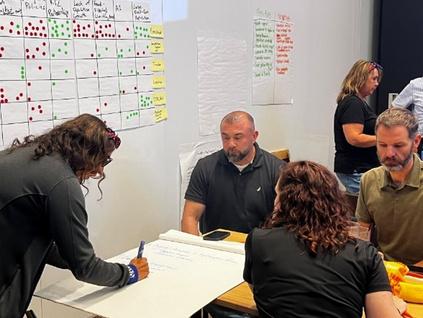
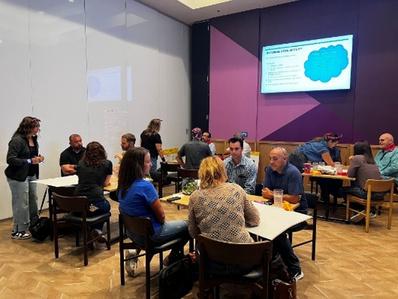
The District Strategic Planning process began in summer 2025 with a District Office Leadership Retreat, which brought together district office managers and confidential employees for structured discussion and analysis. This retreat was designed to combine quantitative data with professional expertise to identify early themes and challenges facing the district.
During the retreat, participants engaged in several focused activities, including:
Environmental Scans: Groups reviewed and discussed internal metrics (enrollment, completion, transfer, student support) and external factors (funding, technology trends, demographics, competition).
Cross-Impact Analysis: Participants used a“dot voting”system to identify which external factors would have the greatest positive or negative impact on district KPIs aligned with CCCCOVision 2030.
Collaborative Poster Sessions: Teams synthesized their findings and recorded major priorities based on their discussions
These activities resulted in the identification of several consistent themes that formed the basis for a set of draft Strategic Priorities and Core Commitments. BroadLeadershipEngagement:September2025LeadershipRetreat
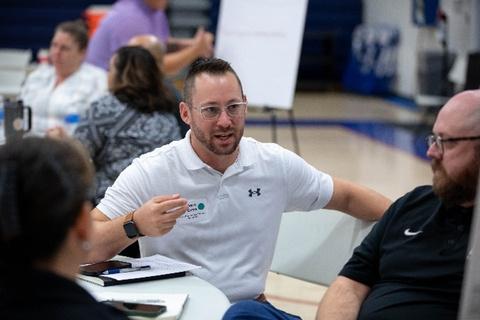
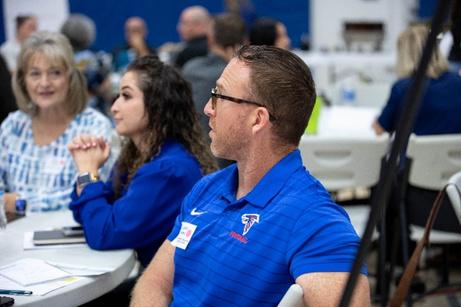
To expand the conversation beyond the district office and test early ideas more broadly, the District held a large-scale leadership retreat in September 2025. More than 100 administrators and managers from Coalinga College, Lemoore College, and the District Office participated.
This retreat ensured that the draft priorities were informed by a wide range of leadership perspectives and operational contexts and provided clear direction for refining the plan.
In November 2025, the District conducted a districtwide survey soliciting plan feedback from faculty (both full-time and part-time) and classified staff. The survey focused on each of the six Strategic Priorities and Core Commitments, asking respondents to identify the district’s greatest strengths and the most important opportunities for improvement in each area. Responses were received from 145 faculty and staff, providing detailed insight into how district priorities are experienced across instructional, student services, and operational roles.
Input from faculty, administrators, and classified staff was subsequently validated by triangulating results with the district’s two annual student surveys: the fall Student Satisfaction Survey and the spring Completer Survey. Relevant student quotes from these surveys are included with each of the strategic priorities.
Input from leadership retreats and the employee survey was reviewed together by WHCCD’s Office of Accreditation, Research, Institutional Effectiveness, and Planning to identify shared priorities and recurring themes.
As illustrated below, the WHCCD Strategic Plan consists of four strategic priorities. Each priority is intended to be a key area of focus for the district and colleges in the coming five years:
Digital Infrastructure, Access, and Learning
Student Success
Community Engagement Access and Affordability
In addition to the strategic priorities, the district has identified two core commitments.The work in these areas extends across the strategic priorities, focusing both on institutional impact in the form of fiscal sustainability and impact on students and the regional economy through workforce alignment.
Digital Infrastructure, Access, and Learning
Digital Infrastructure, Access, and Learning focuses on ensuring that students and employees have the tools, skills, and connectivity needed to teach, learn, and thrive With a strong emphasis on rural communities, this includes access to broadband, devices, and digital literacy support. The priority also promotes the responsible integration of instructional technology and artificial intelligence to improve learning experiences, support faculty, and advance equitable student success
“I greatly appreciate the availability of laptops that we can check out for a semester from the library”
Student Comment from the Fall 2024 Student Satisfaction Survey
What we are doing well...
Strong classroom technology and distance education infrastructure.
Widespread and effective use of Canvas and online learning tools.
A culture of innovation and adaptability among faculty, staff, and administrators, with ongoing professional development
Early implementation of districtwide digital initiatives such as RuBICON to expand broadband access throughout our rural district.
Opportunities for improvement...
Expand digital literacy outreach, particularly for new students, adult learners, and rural populations unfamiliar with college systems
Improve student access to devices and internet, including laptops, hotspots, and evening access to on-campus technology.
Better integration and streamlining of digital systems so students and staff are not navigating multiple platforms to complete basic tasks.
Continue to develop an intentional approach to AI integration in teaching, learning, and student services.
Strengthen student-facing technology support and proactive maintenance of digital infrastructure.
Community Engagement emphasizes the district’s role as an active, visible, and trusted partner in the communities it serves. This includes educational partnerships, outreach to families and employers, cultural events, and advocacy that strengthen access, trust, and opportunity.
“I attended the Noche De Familia with my work and I found out that I can receive free food from the pantry. I didn't know I was able to do so and it was such a blessing.”
Student comment from the fall 2025 Student Satisfaction Survey
What we are doing well...
Hosting high-impact community and cultural events (e.g., Día de los Muertos, food distributions, community fairs) that bring families and local residents onto campus.
Maintaining strong K–12 and pre-collegiate partnerships, including dual enrollment and early outreach efforts.
Leveraging athletics, student life, and campus events as gateways for community involvement.
Demonstrating strong staff commitment and buy-in for outreach and engagement activities.
Marketing and social media presence that increases district visibility
Improve coordination and communication across departments and colleges to reduce silos and duplication in outreach efforts.
Continue to pursue and develop transfer partnerships with four-year institutions
Expand legislative and policy advocacy at the state, local, and federal levels.
Student Success focuses on supporting students from entry through completion, transfer, and employment by addressing academic, personal, and structural barriers. It emphasizes equity, personalized support, and an integrated approach to instruction and student services.
What most impacted your success as a student?
“Support from programs like EOPS and CalWORKs, along with the encouragement from professors who believed in my growth.”
Student comment from the spring 2025 Completer Survey
What we are doing well...
Strong categorical programs and targeted supports (EOPS, DSPS, tutoring, cohort models) that effectively serve specific populations. Innovative instructional approaches, including 8-week courses, shortterm training, and flexible modalities.
Effective case management and cohort-based practices, particularly in CTE and counseling (even if not yet fully scaled).
Robust basic needs and wraparound services, including food pantries and student support programs
A deeply rooted culture of care and personal connection between students, faculty, and staff.
Scale student support models so benefits extend beyond targeted programs to the full student population
Improve use of data and tools (e.g., Civitas) to identify, intervene, and follow up with students earlier and more consistently.
Strengthen coordination between instructional and student services, reducing silos and handoff gaps.
Expand work experience, internships, and job acquisition as core components of student success.
Access and Affordability focuses on reducing financial, geographic, and logistical barriers to college enrollment and success. It ensures that students, especially those from rural, low-income, and nontraditional backgrounds, can start and persist in their education.
“Offering workshops or counseling on budgeting, financial aid, and student loans would help ease financial stress.”
Student comment from the spring 2025 Completer Survey
What we are doing well...
Extensive adoption of Open Educational Resources/ZeroTextbook Cost programs, dramatically lowering textbook costs.
Strong financial aid and basic needs programs, including food support and emergency resources.
Expanded dual enrollment, Rising Scholars, and noncredit pathways that broaden access.
Systems such as 8-week calendar and Reg365 that improve enrollment efficiency and year-round access.
Expand intentional outreach to adult learners and returning students, including clearer transition pathways.
Deepen family engagement, recognizing families as key partners for both traditional-aged and adult learners.
Expand credit for prior learning (CPL) and competency-based education (CBE) options.
Increase financial literacy and awareness so students understand how to use aid effectively.
Use data more intentionally to target access efforts to populations with the greatest barriers.
Fiscal Sustainability ensures that the district can meet its mission over the long term through responsible stewardship, strategic investment, and alignment of resources with student and community priorities.
“…fiscal responsibility isn’t treated as an afterthought it is built directly into the district’s mission, priorities, and everyday decision-making…”
Employee comment from the Strategic Planning Survey
Strong success in securing and managing grants.
A conservative budgeting approach that has produced healthy reserves and financial stability.
Ongoing attention to compliance and fiscal discipline, including legislated requirements
Improve the sustainability of grant-funded projects once external funding ends.
Improve communication and shared understanding around budget decisions and tradeoffs
Enhance efficiency of space and classroom utilization.
Maximize Student Centered Funding Formula outcomes, particularly financial aid participation and completions.
Balance districtwide staffing and investment decisions to support both colleges equitably.
Continue implementation of funding allocation model to incentivize college efficiency.
Workforce Alignment ensures that district and college decision making carefully consider labor market needs and connections. This will ensure that students have clear pathways from education to employment while also meeting the needs of employers and driving regional economic vitality.
“WHCCD’s greatest opportunity in Workforce Alignment lies in deepening partnerships with regional employers to create direct pipelines from education to employment, ensuring that every student who learns a trade or career skill can transition seamlessly into a sustainable job.”
Employee comment from the Strategic Planning Survey
Strong foundation of CTE programs aligned with regional workforce needs.
Established employer partnerships, advisory boards, and industry connections.
Responsive and customizable not-for-credit CTE offerings through Skills Valley.
Growing apprenticeships, internships, and applied learning experiences.
Strengthen job acquisition and work-based learning pipelines. Improve coordination between colleges and contract education/Skills Valley.
Expand credit for prior learning to support incumbent workers and upskilling.
Invest in emerging technologies and industries, ensuring programs remain relevant and competitive
The District Strategic Plan is intended to be a broad, high-level plan to guide the priorities of the District in the next five years. In spring 2026 both Coalinga College and Lemoore College will be finalizing their college-level plans. These College Strategic plans will be explicitly aligned with the Strategic Priorities and Core Commitments of this plan.
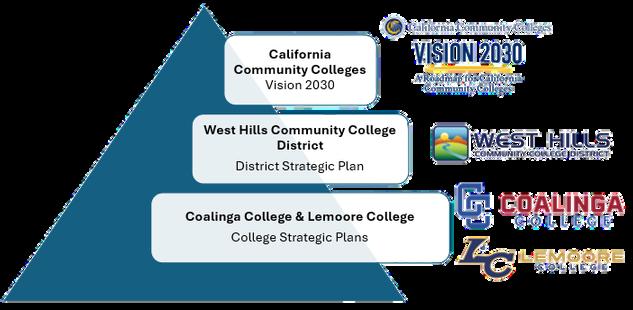
At its core, the WHCCD District Strategic Plan has been built to align with the California Community Colleges Chancellor’s Office Vision 2030. This ambitious, statewide plan for the California Community College system lays out a series of goals and key performance indicators. WHCCD has adopted these same key performance indicators as a means of tracking the success of this Strategic Plan.
The metrics included inVision 2030 are a combination of leading and lagging indicators:
Leading Indicators –These are metrics provide a look at shorter-term performance early in a students’academic career. Leading indicators are typically predictive of future success in lagging indicators.
Lagging Indicators –These are longer-term metrics, focusing on endpoints of student performance such as degree completion or employment.
In addition to Vision 2030, the district has selected several additional leading indicators as a way of monitoring progress.
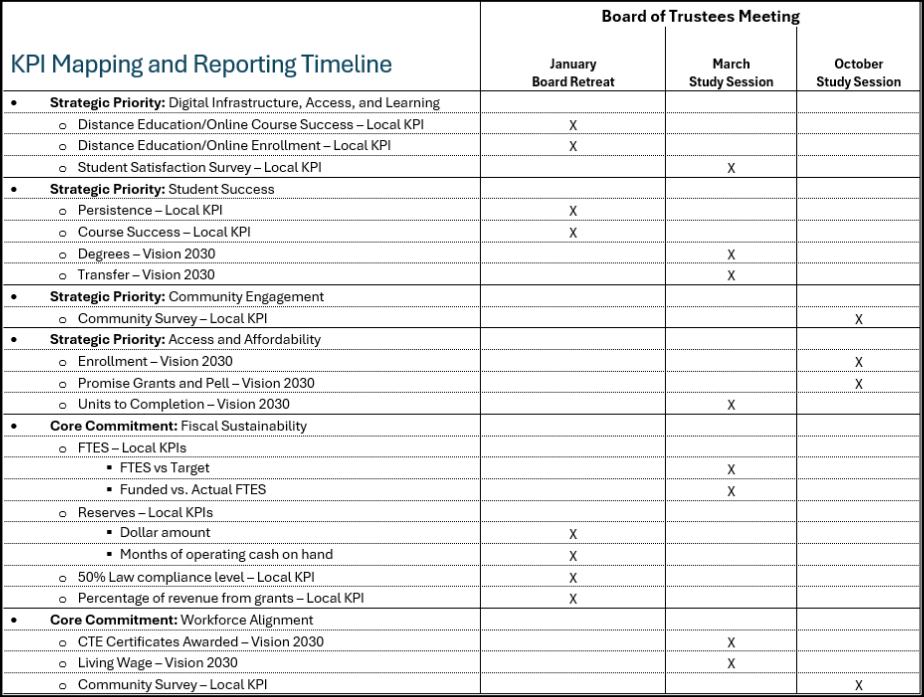
The district will provide updates on these KPIs to the Board of Trustees on an annual basis (timeline is included below).
Leading Indicators
Local Data: Enrollment and FTES
Local Data: Persistence
Local Data: Course Success Rates
Vision 2030: Equity in Enrollment
Vision 2030: Promise Grant and Pell Recipients
Lagging Indicators
Vision 2030: Completion (Degree or Certificate)
Vision 2030: Associate Degree forTransfer (ADT) Completion
Vision 2030:Transfer
Vision 2030: LivingWage
Vision 2030: Units andTime to Completion
Survey Indicators
WHCCD Student Satisfaction Survey (new questions in existing survey)
Satisfaction with Online Learning
WHCCD Community Survey (new survey)
Community Engagement
Workforce Alignment
Fiscal Indicators
FTES – Local KPIs
FTES vsTarget
Funded vs. Actual FTES
Reserves – Local KPIs
Dollar amount
Months of operating cash on hand
50% Law compliance level – Local KPI
Percentage of revenue from grants – Local KPI
The WHCCD Board of Trustees will be presented with updates on the 20262030 District Strategic Plan three times annually, during the annual Board Retreat and Study Sessions (typically scheduled in January, March, and October).
During these reports, staff will present on:
KPI progress (see detailed scheduled below)
Current activities and initiatives aligned to Strategic Priorities and Core Commitments
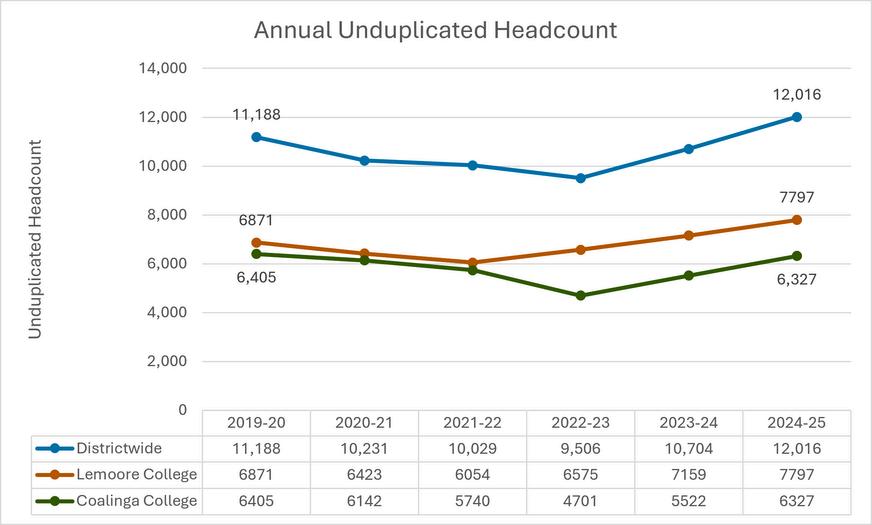
Unduplicated headcount includes all student categories, including dual enrollment, Rising Scholars, and non-credit. Students enrolled at both colleges will be counted in each college category, but only once for districtwide; because of this, the combined sum of Coalinga+Lemoore does not equal the districtwide total.
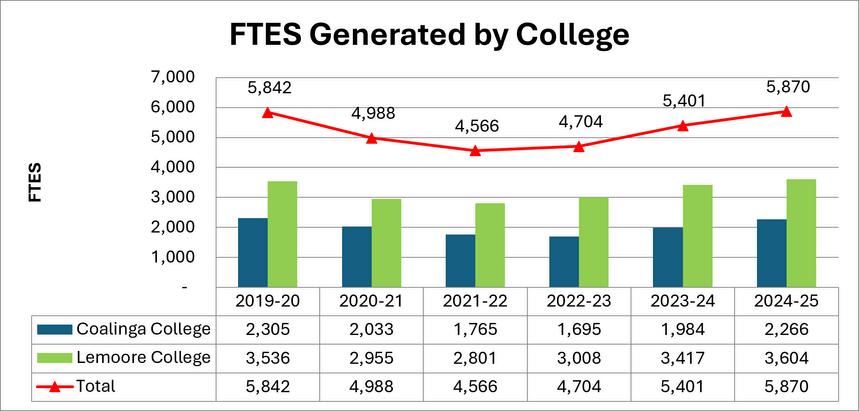
Note: FTES = Full-Time Equivalent Students. 1 FTES = 525 hours of instruction.
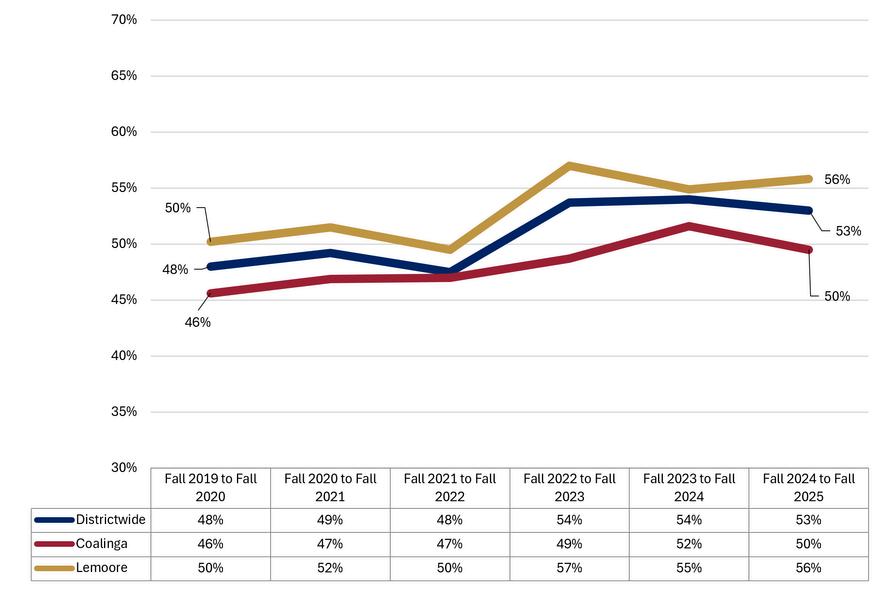
Fall to Fall Persistence
Fall to Fall Persistence by Race/Ethnicity
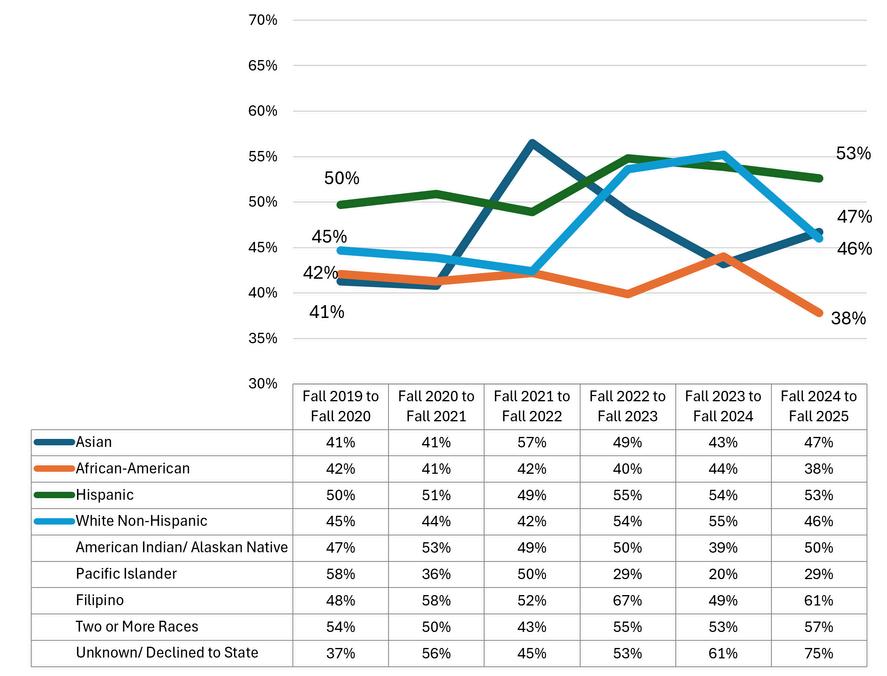
Note: Persistence charts includes general, open admissions population only; excludes high school special admissions students, Rising Scholars, Kings Rehab, and CVC-OEI
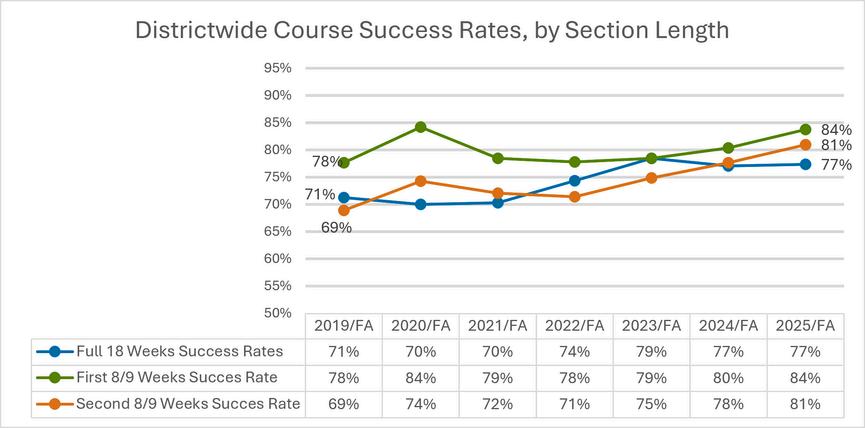
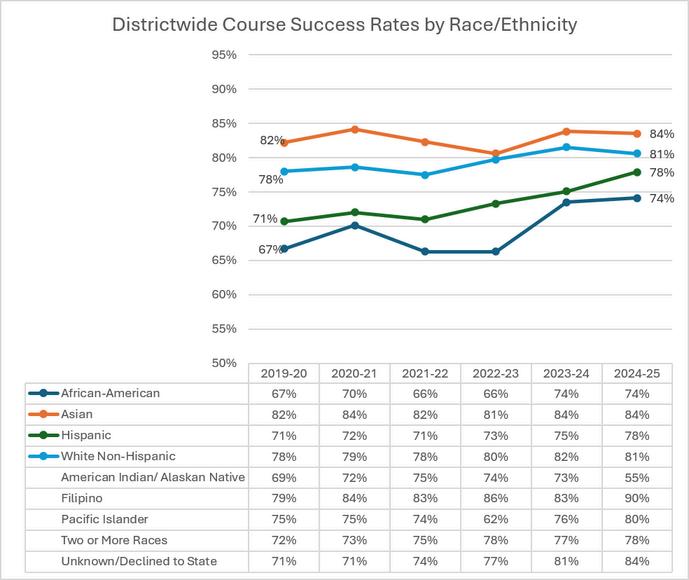
Note: Success rate data is based on open admissions students only; dual enrollment, Rising Scholars, and Kings Rehab students are excluded.
Goal 1: Equity in Access
StudentEnrollment
Goal 2: Equity in Success
Completion(DegreeorCertificate)
AssociateDegreeforTransfer(ADT)Completion Transfer
LivingWage
Goal 3: Equity in Support
CaliforniaCollegePromiseGrant(CCPG)andPellGrants Reduceunitsinexcessof60forfirst-timeADTComplete