Each category includes this year’s finalists (a composite from the past 5 years) as well as space to write in your personal favorites... even a new category to include who you love that we missed! Go online and vote, and remember to share, share and share some more! Businesses are counting on your support and we know of several that are determined to retain their “best” title, so don’t be shy about sharing this contest everywhere!
Thanks for taking the time to vote!
UP FRONT
CONNECTICUT JEWISH LEDGER | SINCE 1929 | OCTOBER 2, 2020 | 14 TISHREI 5781
SF State U event with Palestinian hijacker Leila Khaled, briefly hosted on YouTube, is taken down
BY GABRIEL GRESCHLER
(J. the Jewish News of Northern California via JTA) – After livestreaming for about 23 minutes on YouTube, a roundtable conversation on Wednesday, Sept. 25, from San Francisco State University featuring Palestinian hijacker Leila Khaled suddenly went dark.
“This video has been removed for violating YouTube’s Terms of Service,” a message said on the page.
The livestream had at least 900 viewers when it was shut down, abruptly ending when an old video of Khaled was being shown in which she defended her former activities.
“People have the right to fight those who occupy their land by any means possible, including weapons,” Khaled said in the video right before the feed stopped.
Titled “Whose Narratives? Gender, Justice and Resistance,” the virtual discussion was organized by San Francisco State’s Arab and Muslim Ethnicities and Diasporas Studies Department. It was to include a talk by Khaled, as well as a conversation afterward with Khaled and several other activists. An associate professor, Rabab Abdulhadi, served as moderator. Abdulhadi, who has a history of anti-Israel activism, hosted the event with SFSU Professor Tomomi Kinukawa.
The day before the event, Zoom announced that Khaled’s participation would violate company policy and it would not allow its platform to be used as the host. Zoom disabled the registration link, and the Facebook link where people could sign up to attend became inactive on Wednesday morning or violating Facebook’s “policy prohibiting praise, support and representation for dangerous organizations and individuals, which applies to pages, content and events.”
Organizers were left scrambling to find a new platform.
Event organizers also reached out to San Francisco State for help in finding a new webinar host and said on social media posts that the university was working with them.
In a letter to Jennifer Summit, provost and vice president for academic affairs, they wrote: “SFSU and CSU [the California state university system] are obligated to defend us against the vilification and smearing by an Israel lobby that is troubled by and seeks to silence Palestinian narratives and scholarship, teaching and advocacy for justice in/for Palestine.”
The university’s president, Lynn Mahoney, repeatedly defended the event by invoking freedom of expression, in response to nearly 90 Jewish and pro-Israel groups expressing outrage and concern about the event.
The Lawfare Project initially sent a letter to Zoom last week warning that by knowingly permitting Khaled to use its platform to communicate directly to U.S. college students, Zoom could violate federal law that makes it illegal to provide material support or resources to a foreign terrorist organization.
Neither YouTube, Facebook, San Francisco State nor the Arab and Muslim
Ethnicities and Diasporas Studies Department immediately responded to a request for comment.
Abdulhadi said in status updates on her personal Facebook page that Zoom had removed the event link, and later reported that YouTube had pulled the plug during the conversation.
“Facebook has taken down the AMED event page and disappeared the Leila Khaled webinar,” she wrote.
The original event page showed several hundred people planning to attend the talk and over 2,000 people “interested.”
On its Facebook page Tuesday, Sept. 22, after the Zoom cancellation was announced, the department posted that it would be hosting the event over Facebook Live in what, at the time, appeared to be the department’s choice for an alternative hosting platform.
The post called for supporters to “post a 30-second video in any language of yourself
IDF Lone Soldier from Newton, Massachusetts, highlighted at FIDF Virtual Gala
BY STACEY DRESNER
Growing up in Newton, Massachusetts, Noah* and his family visited Israel on a regular basis.
“We were a pretty Zionistic family, so we would go once or maybe twice a year, depending on the year,” he said. “Israel was always a very big thing in my life.”
Noah attended Jewish day school and went to the religious Zionist camp Moshava Indian Orchard in Pennsylvania. When he graduated from Maimonides School in Brookline, Massachusetts in 2016, he, like many of his classmates, went to Israel for a gap year.
“I come from a background where everyone would graduate from high school and go to Israel for a year, and then go back home to college,” Noah explained.
But after an inspiring year participating in Mechinat Otzem – a pre-military program in the south of Israel – Noah decided to stay. He made aliyah in 2017 and began serving in the Israeli Defense Forces (IDF) Golani Brigade.
On Sept. 13, the experiences of Noah and other Lone Soldiers in the IDF were highlighted during the Friends of the Israeli Defense Forces (FID) National Gala, held virtually for the very first time.
The gala, themed “A Night of Heroes,” saluted IDF soldiers and veterans, and raised more than $15 million to support wellbeing and educational programs for IDF soldiers, families of fallen soldiers and wounded veterans.
“FIDF is in daily communication with the IDF to follow their directives and understand the soldiers’ on-going needs,” said FIDF National director and CEO, Maj. Gen. (Res.) Meir KlifiAmir. “Even during…difficult times, we
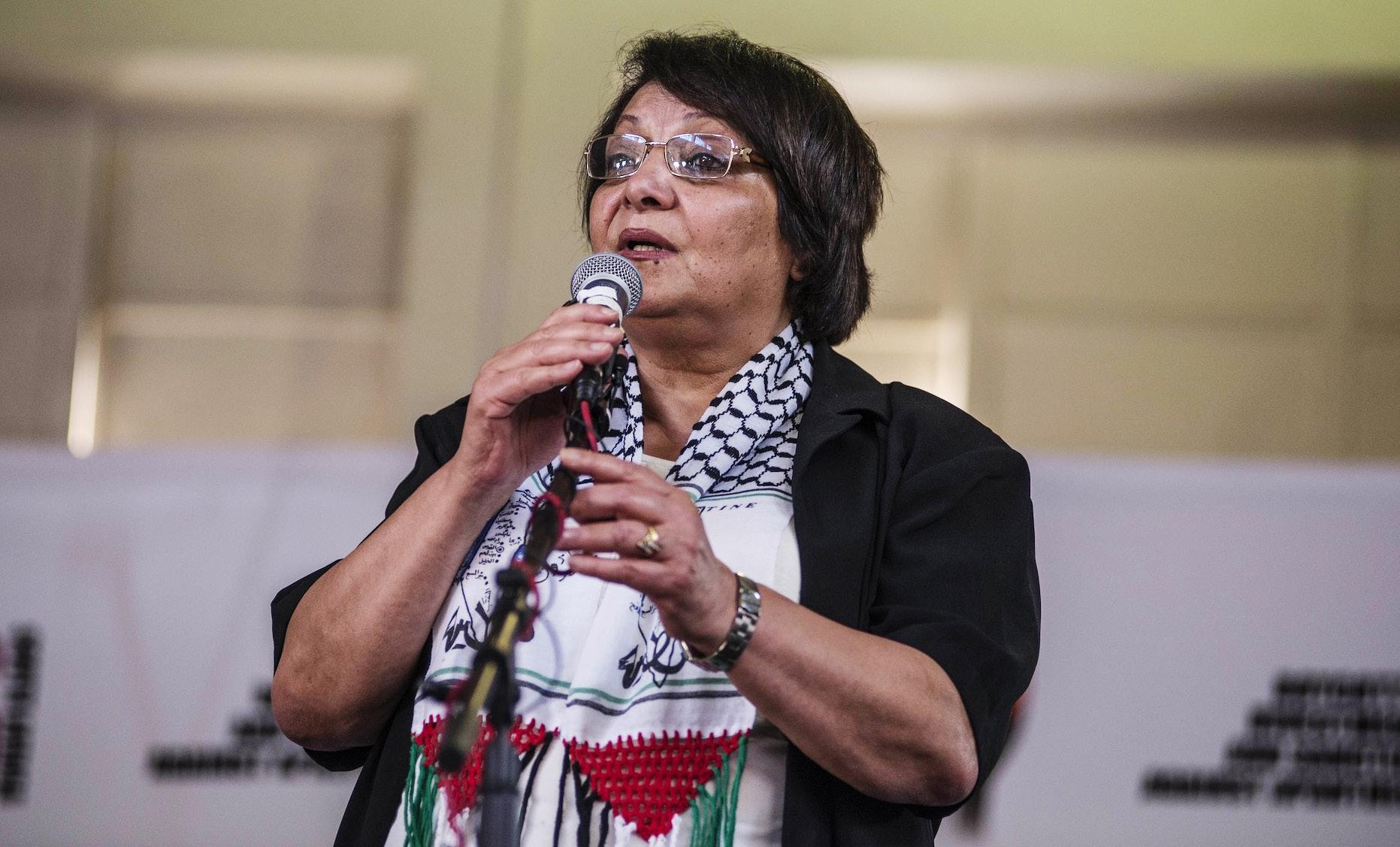
PALESTINIAN ACTIVIST LEILA KHALED SPEAKS IN, SOWETO, SOUTH AFRICA, FEB. 15, 2015. (IHSAAN HAFFEJEE/ANADOLU AGENCY/GETTY IMAGES)
continue to fulfill the needs of our sons and daughters in uniform.”
Noah, who was discharged from the IDF as a staff sergeant in June, and next year will begin serving in the reserves, says that several things inspired him to make aliya and serve in the IDF.
“First of all, my older brother was in the [IDF]. He was drafted in 2013. And that was a very big thing for me that my older brother was in Israel and was in the army,” Noah explained. His brother Jacob now lives in Haifa, where he attends the Technion.
Noah’s year of study in Israel after high school also played a big role. He was one of seven Americans and 199 Israelis participating in Mechinat Otzem, a program that mostly Israelis go through between high school and the army.
“I was always [thought] Israel is a great place to visit, but I’m never going to live here,” he said. “But I got off the plane, and I became immersed in the culture and I fell in love with the place.”
Noah had attended Maimonides with Ezra Schwartz z”l, the 18-year-old American yeshiva student who was killed in a terrorist attack in the West Bank on Nov. 19, 2015.
Khaled
supporting” the event. A Change.org petition expressing support for the event and “academic freedom on Palestine” had more than 1,800 signatures and counting as of Wednesday morning.
“Leila Khaled is a powerful, inspiring figure,” the petition read, calling the proposed event a “historic conversation [on] resistance, resilience, and gender.”
Khaled was part of a team that hijacked TWA Flight 840 on its way from Rome to Tel Aviv in August 1969. A year later she participated in the attempted hijacking of an El Al flight from Amsterdam to New York City as part of a series of simultaneous hijackings carried out by the Popular Front for the Liberation of Palestine (PFLP), a U.S.-designated terrorist organization.
Khaled was arrested in London, where the pilot diverted the plane, and later released in exchange for hostages from another hijacking. She lives in Amman, Jordan.
As a counterpoint to the Khaled event, the San Francisco Hillel was scheduled to host a “Vigil for Victims of Terror” on Wednesday featuring a prerecorded video of Uri Bar-Lev, the El Al pilot on board
Khaled’s hijacked plane in 1970, as well as poems by San Francisco State students. According to the Hillel’s executive director, Rachel Nilson Ralston, the speakers were to include the SFSU president, Lynn Mahoney, and state Sen. Scott Wiener.
Commenting on Zoom’s decision, Ralston said, “The San Francisco Hillel community is relieved that Zoom, who provides such a vital tool to our students, will not allow their platform to amplify hatred or promote a known terrorist. We are grateful for the outpouring of concern and support. As always, we’re focused on supporting our students as they move forward with our ongoing efforts to improve San Francisco State University’s campus climate.”
The local Jewish Community Relations Council’s Middle East project director, Karen Stiller, said Zoom “made the commendable decision not to give hate a platform. Hosting this event would have been a serious ethical violation.”
The JCRC was among the vigil hosts along with the Anti-Defamation League and other local organizations.
Ezra, who was spending a gap year studying at Yeshivat Ashreinu in Beit Shemesh, had gone with five classmates to the Etzion bloc, south of Jerusalem, to beautify a nature reserve dedicated to the three Jewish teens kidnapped and killed by terrorists the year before. A terrorist, reportedly a Palestinian, opened fire on them, killing Schwartz and wounding his classmates.
“Ezra was a year above me in high school, we didn’t have any class together, but we played baseball together for three years,” Noah said. “When he was killed, it was my first experience with the death of a peer. Did it affect my decision to draft? Not really, I already wanted to; it just kind of reaffirmed my mindset.”
During his two years and eight months of IDF services, Noah served in the Special Forces unit attached to the Golani Brigade.
After eight months of training, he and his unit spent eight months of deployment throughout Judea and Samaria.
One of the most harrowing experiences Noah had was losing a fellow soldier in an explosion during an arrest his unit made in a town near Jenin this past May.
“We immediately reacted to the situation, doing what we are trained to do,” he said. “We did a search and that started a two-week long period of arrests, going to see the family, arrests, going to the family. We spent that time not sleeping, not eating, barely functioning, just on automatic… We spent two weeks from the time of the
incident until the guy was found.”
While Noah was able to call his parents in the U.S. to share his grief, as a Lone Soldier he depended a lot on the members of his unit.
“They are my best friends. These guys are going to be my best friends for the rest of my life. At the end of the day, I’ve seen these guys at their best and at their worst – in the rain and in the cold, when you haven’t showered, when you are hungry and when you are tired, and when you have no energy for anybody. They love you from the start to the end.”
After the Covid-19 pandemic began, Noah was among thousands of IDF soldiers ordered to quarantine on base, not just to protect the soldiers from the virus, but also to maintain military preparedness.
“It didn’t really affect us, except that we couldn’t leave base,” Noah said. “We did 41 days on base when usually you will go home for the weekend.”
It was during that time that the FIDF stepped in to address the needs of the soldiers, distributing tens of thousands of hygiene kits to combat soldiers and units adopted by FIDF. FIDF will also provided gym kits, which consist of various weights and equipment; additional snack and sweet packages; and Sony PlayStations.
“They brought a washer and dryer to the base and they brought us shampoo, shavers, and toothpaste. They play behind the scenes. Only the Americans know who the FIDF is, not the Israelis. They just know
NOAH, SECOND FROM RIGHT, WITH HIS FAMILY (L RO R): HIS SISTER RACHEL; FATHER ROBERT; NOAH; AND YOUNGER BROTHER ADAM.
Prosecutors drop charges against Robert Kraft
BY CNAAN LIPHSHIZ
(JTA) – Prosecutors in Florida said they are dropping the charges against the New England Patriots owner Robert Kraft, whom they had accused last year of solicitation of prostitution.
The decision, which was announced Thursday, follows a a Palm Beach County Court ruling from May that excluded from the prosecution’s body of evidence a video that reportedly showed Kraft performing a sexual act at a massage parlor in January 2019.
The defense claimed the footage was illegally obtained and violates Kraft’s constitutional rights.
“Without the videos, we don’t have a case we can prosecute,” state attorney Dave Aronberg told reporters Thursday, according to The New York Times. “We are ethically compelled to drop all the charges.”
Kraft, who is Jewish, gave no reaction to the decision, The Times reported.
that someone is looking out for them,” Noah said.
And while they look out for all IDF soldiers, FIDF takes special care of lone soldiers.
“They take Lone Soldiers on an outing each year to a water park; that was amazing. And they paid for one of my flights home,” Noah said. “Lone Soldiers are allowed to go
home one month a year to visit family. And the FIDF pays for one of those flights.”
After his discharge from the IDF in June Noah took some time off, and now is looking for a job in his new home.
“I’m here for the long haul,” he said. “America is a great place to visit.”
*Last name omitted for soldier’s protection.
At the Hebrew Center for Health and Rehabilitation, we understand that comfort and familiarity is a key part of the journey to wellness. We also understand that maintaining your religious beliefs and principles is fundamental in continued enrichment of life.
Our Kosher meal services allow residents to maintain their dietary requirements throughout their stay with us. At the Hebrew Center, we ensure we follow all principles of Kosher including purchase, storage, preparation, and service.
At the Hebrew Center for Health and Rehabilitation, we also offer a variety of other services and amenities to ensure your stay is as comfortable as possible.
THESE SERVICES INCLUDE:
• Passport to Rehabilitation Program
• Long-Term Skilled Nursing Care
• Specialized Memory Care
• Respite Care Program
• Palliative Care and Hospice Services Coordination
OUR AMENITIES INCLUDE:
• Barber/Beauty Shop
• Café
• Cultural Menus
• Laundry and housekeeping services
• Patient and Family education
• Life Enrichment
For more information on our Kosher program, please contact: DIRECTOR, PASTORAL SERVICES - (860) 523-3800
Hebrew Center for Health and Rehabilitation One Abrahms Boulevard, West Hartford, CT 06117
STAFF SGT. NOAH (RES.), SECOND FROM THE LEFT, WITH HIS UNIT. STAFF SGT. AMIT BEN YIGAL Z”L, WHO WAS KILLED ON A PATROL IN MAY, IS FIRST ON THE RIGHT.
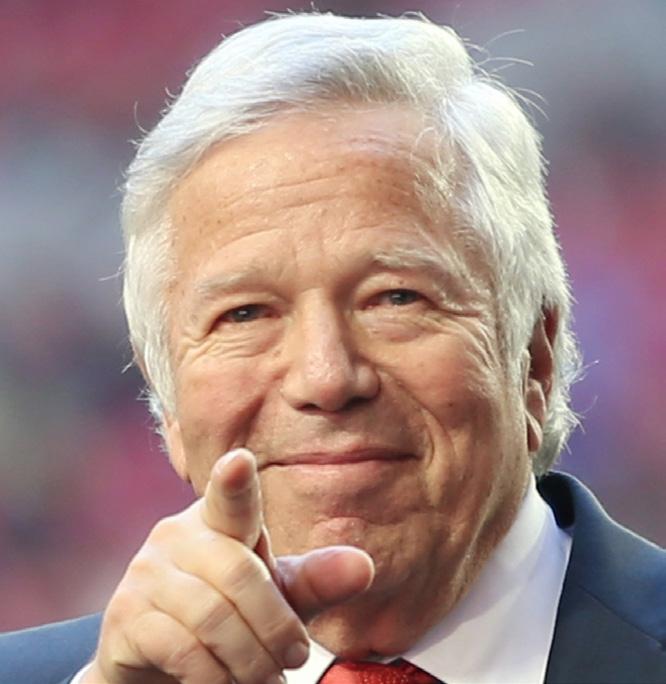
ROBERT KRAFT (COURTESY OF THE NEW ENGLAND PATRIOTS/ DAVID SILVERMAN)
HIGH HOLIDAYS
How to fulfill the mitzvah of Sukkot while fighting antisemitism
BY ELIANA RUDEE
(JNS) Inviting two neighbors of different faiths into one’s socially distanced sukkah this year, says “2 for Seder” founder Marnie Fienberg, can help address the isolation felt during the coronavirus pandemic, as well as the rising tide of antisemitism.
Fienberg, the daughter-in-law of Tree of Life victim Joyce Fienberg, started the 2 for Seder initiative as a part of the nonprofit Pittsburgh Interfaith Evolution (PIE), in the wake of the Pittsburgh Tree of Life*Or L’Simcha Synagogue shooting to empower Jews to combat antisemitism in their own communities by inviting those of a different faith to share their Passover seder.
This Sukkot, she is calling upon North American Jews to open their sukkahs in a “COVID-safe” way and share this Jewish experience with two neighbors of different faiths–a way to “rethink the High Holidays for our current world.”
According to Fienberg, inviting guests continues the thousands-year-old Jewish mitzvah of ushpizin (welcoming guests into one’s home), and helping Jews find relevance and spirituality during the High Holidays. “Abraham and the prophet Zechariah set examples that hospitality with others makes the world a better place. Many believe that according to the biblical prophet Zechariah, during the messianic era Sukkot will become a universal festival. All nations will make annual pilgrimages to Jerusalem to celebrate the feast,” she tells JNS.
The tradition that was “inspired by our ancestors” also provides a safe way to connect to others when many have been socially isolated, she says.
“Sukkot is home-based and outside. If you stay socially distanced or virtual, this is exactly the safe protocol that we have been following for months to prevent transmission of the virus,” she notes, following CDC recommendations.
“If you already have a sukkah, are thinking of getting one or plan to get in the
spirit of Sukkot on your porch, this is the time for beginning a new family tradition,” says Fienberg. “The sukkah doesn’t have to be perfect this year. Find a space to create a temporary structure so you can see the stars and feel the air, reminding us how fragile the structures we build in our lives are compared to the power of nature.”
For those who are not yet ready to host guests, Fienberg has also designed guidelines for a virtual celebration. It can include a traditional “Four Species” ceremony–incorporating the etrog (citron), lulav (date palm frond), hadass (myrtle bough) and aravah (willow branch)–with a synagogue or other Jewish group, showing off sukkah spaces and playing games with grandparents who may be isolated from their families.
Also accessible online is a guide to planning one’s own holiday family traditions, including basic educational materials from both Sephardi and Ashkenazi traditions, a SukkahSAFE fact sheet and a webinar that help identify commonalities between religions and cultures.
Pushing back on stereotypes
Inviting two guests of different faiths not only fulfills the mitzvah in a safe way, claims Fienberg, but helps to fight antisemitism at its core.
“Sukkot is home-based and outside. If you stay socially distanced or virtual, this is the safe protocol we have been following to prevent transmission of the virus.”
“Jews are being blamed for COVID and cruel tropes burn across the Internet daily,” she relates. “As we have been pulled apart during COVID, hatred and antisemitism has focused on the old trope that Jews cause all plagues. This has given people who are frustrated with our health restrictions a potential outlet for their anger. … We can’t
give up fighting antisemitism because of COVID-19. At the same time, we also have to be realistic and extremely safe in how we approach our model of sharing a Jewish experience with neighbors of different faiths to build bridges.”
Fienberg says that sharing a meal with a friend or neighbor of another faith gives others a firsthand experience of Judaism, “cutting through the noise of antisemitic tropes and news while fostering open communication and conversation. Many people who hate Jews or just feel ambivalent toward us have never really known a Jewish person.”
While she acknowledges that “you can’t fix the whole world,” inroads can be made between people, especially when it’s someone familiar. “Our home-based Jewish holidays lend themselves to this goal,” adds Fienberg, who also expressed gratitude in 2 for Seder: in the sukkah’s partners, which include the JCC Association, Women of Reform Judaism, Federation of Jewish Men’s Clubs, and Jews Indigenous to the Middle East and North Africa.
“Sukkot gives us the power to change and repair our corner of the world,” emphasizes Fienberg, “our best hope for true peace.”
TORAHPortion
Chol Hamoed Sukkot
BY RABBI SHLOMO RISKIN
One of the most picturesque festivals of the year is the Sukkot – when we build and decorate a special “nature home” which will be lived in for an entire week. But what are we actually celebrating and what is the true meaning of the symbol of the sukkah? Is it the sukkah of our desert wanderings, the temporary hut which the Israelites constructed in the desert when they wandered from place to place? If so, then the sukkah becomes a reminder of all of the exiles of Israel throughout our 4,000year history, and our thanksgiving to God is for the fact that we have survived despite persecution and assimilation, which still threaten to overwhelm those still living in the Diaspora.
Or is the sukkah meant to be reminiscent of the Divine “clouds of glory” which encompassed us in the desert with God’s rays of splendor, a fore-taste of the Sanctuary which served as the forerunner of our Holy Temple in Jerusalem? In the Grace after Meals during the Sukkot festival we pray that “the Merciful One restore for us the fallen tabernacle of David,” which would imply that the sukkah symbolizes the Holy Temple. The Talmud (B.T. Succot 11) brings a difference of opinion between Rabbi Akiva and Rabbi Eliezer as to which of these options is the true significance of our celebration.
The major biblical description of the festivals is found in Chapter 23 of the Book of Leviticus. There are two textual curiosities which need to be examined. The three festivals which were always considered to be our national festivals, and which also biblically appear as the “desert” festivals, are Pesach, Shavuot and Sukkot – commemorating when we left Egypt, when we received the Torah at Sinai and when we lived in desert booths. Rosh Hashana and Yom Kippur are more universal in nature and not at all related to the desert sojourn. It seems strange that in the biblical exposition of the Hebrew calendar Pesach and Shavuot are explained, after which comes Rosh Hashana and Yom Kippur, and only at the conclusion of the description comes Sukkot.
One can argue that this is the way the months fall out on the calendar year. However, the Israelites left Egypt for the desert and presumably they built their booths immediately after the Pesach. Would it not have been more logical for the order to have been Pesach, Sukkot, Shavuot, Rosh Hashana and Yom Kippur?
Secondly, the Festival of Sukkot is broken up into two parts. Initially, the Torah tells us: “And the Lord spoke to Moses saying: on the fifteenth day of this seventh month shall be the Festival of Sukkot, seven days for God these are the Festivals of the Lord which you shall call holy convocations” (Leviticus 23:3338). It would seem that these last words conclude the biblical description of the festivals and the Hebrew calendar. But in the very next verse, the Torah comes back again to Sukkot, as if for the first time: “but on the fifteenth day of the seventh month, when you gather in the crop of the land, you shall celebrate God’s festival for a seven day period… You shall take for yourselves on the first day the fruit of a citron tree, the branches of date palms, twigs of a plaited tree (myrtle) and willows of brooks; and you shall rejoice before the Lord your God for a sevenday period… You shall dwell in booths for a seven-day period… so that your generations will know that I caused the people of Israel to dwell in booths when I took them from the Land of Egypt. I am the Lord your God” (ibid. Leviticus 23:39-44). Why the repetition? And if the Bible now wishes to tell us about the four species, why was this verse not linked to the previous discussion of the Sukkot booths?
The Vilna Gaon said that this repetition of Sukkot with the commandment concerning the Four Species is introducing an entirely new aspect of the Sukkot festival: the celebration of our entering into the Land of Israel. In fact, this second Sukkot segment opens with the words, “But on the fifteenth day of the seventh month when you gather the crop of the land (of Israel), you shall celebrate this festival to the Lord.”
Hence, there are two identities to the festival of Sukkot. On the one hand, it is a desert festival, alongside Pesach and Shavuot, which celebrates our desert wanderings and survivals while living in flimsy booths. On the other, Sukkot, the Four Species, represent our conquest and inhabitance of our homeland and signals the beginning of redemption turn the sukkah into rays of Divine splendor and an expression of the Holy Temple.
So which Sukkot do we celebrate? Both at the very same time! But when we sit in the sukka, are we sitting in transitory booths representative of our wandering or rather in a Divine sanctuary protected by rays of God’s glory? I think it depends on whether we are celebrating the festival in the Diaspora or in the Land of Israel!
860.333.9032
2280 Berlin Tpk. Newington, CT
(In the MedCare Express plaza-use side entrance) newington@finefettle.com
1548 W Main St. Willimantic, CT (Across from Papa’s Pizza) hello@finefettle.com
Opinion
RBG and how to save a corrosive political culture
(JNS) U.S. Supreme Court Justice Ruth Bader Ginsburg, who died on Sept. 18 –the eve of Rosh Hashanah – at the age of 87 was a symbol of female empowerment, as well as a renowned scholar and jurist. Though not religious, she was a proud Jew, and her achievements as an attorney in an era where women were not fully accepted in the legal profession and then as a principled judge justify the many laudatory eulogies about her.
But Ginsburg’s status as a pop-culture icon and idol of liberals, feminists and others, who nicknamed her the “Notorious RBG” after a rap star, made her known popularly in a way no other American judge has ever been. As such, the possibility that President Donald Trump, whom Ginsburg’s many fans detest, naming her successor has added more fuel to the fire of a political conflict that already seemed more like a tribal culture war than a presidential election. But rather than succumb to the temptation to treat political differences as proof of evil, we should be learning from her to embrace our opponents as fellow humans without giving up our principles.
By the time she passed away, Ginsburg had since ceased being merely an honored female pioneer or the intellectual leader of the high court’s liberal faction, as well as an admirable role model for Jewish women and girls. The transformation of a deeply serious and cultured judge into a badass culture-war figure gave her significance that transcended the legal battlefields where she had labored. “RBG” inspired “I dissent” T-shirts, coffee mugs, bobblehead dolls, action figures, coloring books and a character on “SNL” played by Kate McKinnon was a symbol of the “resistance” to political conservatives in general and Trump in particular.
Conservatives like the late U.S. Supreme Court Justice Antonin Scalia believed that the original intent of the framers should dictate how the Constitution should be interpreted. Ginsburg upheld the liberal tradition that took a more activist view of the Constitution as a living document that could change in order to justify what she considered necessary changes.
BY JONATHAN S. TOBIN
her sudden passing has further inflamed divisions in American society. Those who claim to venerate her memory are now threatening to “burn it all down” if Republicans are able to confirm a conservative successor to Ginsburg. Others are threatening to pack the court with liberals should Democrats gain control of the government next year (something Ginsburg specifically opposed) to gain revenge for ignoring what her granddaughter reportedly said was her dying wish to be replaced by the next president, whom she likely hoped would be former Vice President Joe Biden.
There’s plenty of hypocrisy on both sides of the argument about the future of the court. Due to the way Congress has abdicated its responsibilities, the court is the only effective check on the growth of the administrative state controlled by the executive branch. In effect, it is the superlegislature that has more to say about the disposition of key issues than the other branches of government. That struggle to control the court is therefore a life-anddeath affair for both parties.
we can respect and like, even when we disagree with them.
One of the most inspiring stories about Ginsburg is about friendship, not legal combat.
Scalia, whose death in 2016 triggered a previous court controversy, was Ginsburg’s conservative counterpart. Like her, his opinions were intellectual and often fiery critiques of what he considered the flawed thinking of colleagues. On the most contentious issues that divide Americans, Scalia and Ginsburg stood on opposite sides.
In the political culture of America in 2020, such disagreements have become the moral equivalent of religious war in which compromise or even mutual respect is impossible. That’s not how Scalia and Ginsburg looked at it.
Howard Meyerowitz Office Manager howardm@jewishledger.com • x3035
Samuel Neusner, Founder (19291960) Rabbi Abraham J. Feldman, CoFounder and Editor (19291977) Berthold Gaster, Editor (19771992) N. Richard Greenfield, Publisher (19942014)
Ledger (USPS # 131 150) is published 24 times per year by JHL Ledger LLC from our office at:
Postmaster, send address changes to: Jewish Ledger 40 Woodland Street Hartford, CT 06105
A secular saint of the political left, PUBLISHER’S STATEMENT Periodicals postage paid at Hartford, CT and at additional mailing offices.
And it has turned Ginsburg’s death into one more excuse for Americans to attack and demonize each other. But it doesn’t have to be that way, and Ginsburg’s own life provides an example of how to return to treating opponents as fellow human beings
The two served as colleagues on the prestigious federal Court of Appeals for the District of Columbia Circuit and were eventually reunited on the Supreme Court. On both benches, they jousted on a host of cases, with neither of them sparing each other’s positions from scorn in their opinions.
And yet, they were also close personal friends.
The two shared a love of opera, which they often attended together. Indeed, their friendship was immortalized in a comic
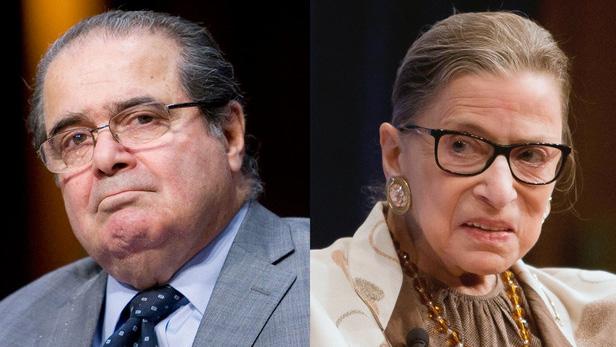
SUPREME COURT JUSTICES ANTONIN SCALIA AND RUTH BADER GINSBURG.
opera called “Scalia v. Ginsburg.” They also loved food, and along with their spouses, shared meals and even traveled together. While their personalities were different – Scalia was more voluble and Ginsburg more reserved – their respect and affection for each other were never in question. No case, no matter how contentious, ever came between them.
How did they do it? And how can society emulate their example?
The answer comes not just from the nobility of spirit that both embodied, but from mutual values that transcended ideological differences. They could care about each other while also disagreeing because of a shared morality.
In his new book titled Morality, Rabbi Jonathan Sachs, former chief rabbi of the United Kingdom, explains that people act in this manner because they see themselves “as part of the same framework of virtues and values, rules and responsibilities, codes and customs, conventions and constraints.”
As Sachs points out, “morality achieves something almost miraculous, and fundamental to human achievement and liberty. It creates trust. It means that to the extent that we are part of the same moral community, we can work together without constantly being on guard against violence, betrayal, exploitation or deception. The stronger the bonds of community, the more powerful the force of trust, and the more we can achieve together.”
This is a powerful lesson that those two judges, each revered by their own side of the political divide, understand intuitively.
The trouble with all too many Americans right now – on both the right and the left–is that they are so drenched with hatred of political opponents that they no longer see them as part of the same community. Those who view things differently are foes not merely to be defeated, but to be delegitimized and destroyed.
Scalia and Ginsburg taught us that we can still be friends while strongly disagreeing with each other. Engaging in civil discourse between left and right may no longer seem possible. Being willing to agree to disagree, and to respect each other’s opinions and credit each other with good motives, has gone out of style with unknowable consequences for the future of American democracy.
We can learn from the two judges that civility and mutual respect don’t require agreement as much as commonalities at the core. Instead of using Ginsburg’s death as an excuse to make these divisions worse with threats and insults, we should be remembering her example and stop demonizing our opponents. May both their memories be for a blessing.
Jonathan S. Tobin is editor in chief of JNS–Jewish News Syndicate. Follow him on Twitter at: @jonathans_ tobin.
From camp ‘rabbi’ to pursuing justice: How Judaism animated Ruth Bader Ginsburg’s life
BY BEN SALES
(JTA) – In its obituary of Ruth Bader Ginsburg, The Guardian wrote that the late Jewish Supreme Court justice “abandoned her religion.”
That couldn’t be more wrong.
While Ginsburg, who died Friday, Sept. 18, at age 87, was not known for her ritual observance, she spoke frequently about how Jewish values inspired her, and she was active in Jewish causes and with Jewish organizations.
As Ginsburg would note in speeches, she was the only justice with a mezuzah affixed to her office door (presented to her as a gift from Shlamith, a Jewish all-girls school in Brooklyn, New York). A poster on the wall read “Tzedek, tzedek tirdof,” the Hebrew injunction from the Torah meaning “Justice, justice shall you pursue.” She also once wore that line woven into one of her jabots, or collars worn on her Supreme Court robes.
“I am a judge born, raised, and proud of being a Jew,” she wrote in an essay for the American Jewish Committee in 1996. “The demand for justice runs through the entirety of the Jewish tradition. I hope, in my years on the bench of the Supreme Court of the United States, I will have the strength and courage to remain constant in the service of that demand.”
Here’s a timeline of the most Jewish moments and motifs in the life of RBG.
As a teenager, she acted as her camp’s “junior rabbi” and wrote an essay about the importance of remembering the Holocaust.
Ginsburg, raised in Brooklyn and attended the East Midwood Jewish Center, a Conservative synagogue, spent summers she at Camp Che-Ne-Wah in the Adirondacks, where she was unofficially called her camp’s “junior rabbi” and would lead Shabbat prayers.
Barely a year after the Holocaust ended, a teenage Ginsburg wrote an essay in her synagogue bulletin titled “One People” about the importance of a world free of prejudice. She republished the essay in her 2016 book My Own Words.
“We must never forget the horrors which our brethren were subjected to in Bergen-Belsen and other Nazi concentration camps,” she wrote. “There can be a happy world and there will be once again, when men create a strong bond towards one another, a bond unbreakable by a studied prejudice or a passing circumstance.”
She was disillusioned with Jewish observance at age 17 when women weren’t counted in a prayer quorum
at her mother’s shiva. Presaging her pioneering work for women’s rights, Ginsburg would relate that she stopped feeling connected to Jewish ritual at 17 because of the absence of a minyan at her mother’s shiva, as women were not counted. Even though there was “a house full of women,” she said in a 2008 speech at Washington, D.C.’s Sixth & I Synagogue, no prayer was held because 10 men were not present.
In her college dorm, she felt discriminated against when all the Jewish women were placed on the same floor.
In her freshman dormitory at Cornell University (from which Ginsburg graduated in 1954), Ginsburg discovered that she and the other women in her corridor were all Jewish. She told a documentary she felt that they were placed together “so we wouldn’t contaminate” other students.
She sent their kids to Hebrew school. Speaking to the Jewish Telegraph Agency in 1993, when Ginsburg was nominated for the Supreme Court, her husband, Martin Ginsburg, described the family as “not wildly observant,” though he said they went to a traditional Passover Seder with relatives. Later in life, in 2015, Ginsburg co-authored a feminist reinterpretation of the Passover story with Rabbi Lauren Holtzblatt.
The Ginsburgs sent their kids to Hebrew school when they lived in the New York area, but Martin Ginsburg told JTA that they didn’t join a synagogue when they moved to Washington, as the kids had grown up.
She visited Israel in the 1970s for a conference on Jewish law – and kept going back.
As an attorney, while arguing a series of landmark women’s rights cases before the Supreme Court in the ’70s, Ginsburg also “actively participated” in the American Jewish Congress’ Commission on Law and Social Action. Also during that decade, she attended a conference in Israel discussing the position of women under secular and halachic laws in Israel and America.
For decades after that trip, Ginsburg continued to travel to the country and comment on its legal system. In 2000, she was honored along with other American and Israeli Jewish feminists at the Knesset. Five years later she was part of a group that advised Israel not to adopt an Americanstyle constitution because it would give the
country’s judges less freedom. At an event on that subject, she said, “I admire Israel and I admire Aharon Barak,” Israel’s former chief justice.
More recently, in 2017, she received a lifetime achievement award from the Genesis Prize Foundation in Israel. She was supposed to receive the Genesis Prize itself, known as the “Jewish Nobel,” but declined because she feared that the $1 million cash prize could violate ethics laws.
When a soldier wanted to wear a kippah in the military, Ginsburg stood up for him in court.
In 1984, S. Simcha Goldman, a Jewish soldier, fought in court against a military policy that banned him from wearing a yarmulke on duty. Ginsburg’s appeals court declined to hear his case, but Ginsburg dissented from that decision.
“A military commander has now declared intolerable the yarmulka Dr. Goldman has worn without incident throughout his several years of military service,” she wrote. “At the least, the declaration suggests ‘callous indifference’ to Dr. Goldman’s religious faith.”
In her confirmation hearings, she spoke about how her Jewish heritage impacted her views.
Appearing before the Senate in 1993, Ginsburg said her ancestors “had the foresight to leave the old country when Jewish ancestry and faith meant exposure to pogroms and denigration of one’s human worth.” During questioning, she spoke about how country clubs would bar admission to Jews and said, “One couldn’t help but be sensitive to discrimination, being a Jew in America during World War II.”
She stayed involved in Holocaust remembrance.
Ginsburg was active with the U.S. Holocaust Memorial Museum. In 1993, months after she joined the court, she presented the museum’s Medal of Remembrance to Emilie Schindler, widow of Oskar Schindler, whose story of rescuing Jews during the Holocaust had recently been told in the film “Schindler’s List.”
In 2004, she gave a speech at the museum on Holocaust Remembrance Day on the role of the law in preventing atrocity. “In striving to drain dry the waters of prejudice and oppression, we must rely on measures of our own creation – upon the wisdom of our laws and the decency of our institutions, upon our reasoning minds
CONTINUED ON PAGE 17
Briefs
Film agencies in Israel and UAE reach cooperation deal
(JNS) The Abu Dhabi Film Commission of the United Arab Emirates and the Israeli Film Fund announced a cooperation agreement on Monday. A government agency, the Abu Dhabi Film Commission said the agreement would lead to training programs for film and TV co-production, in addition to joint film festivals, reported the AP. Under the agreement, Emirati students will study in Jerusalem at the Sam Spiegel Film and Television School. It is the latest news of warming ties since the UAE and Bahrain signed peace agreements last week to normalize relations with the Jewish state.
New York will erect statue in Brooklyn to honor RBG (JTA) – New York state will honor the life and legacy of the late Supreme Court Justice Ruth Bader Ginsburg with a statue in her birthplace of Brooklyn. Gov. Andrew Cuomo made the announcement on Saturday, Sept. 19 less than a day after Ginsburg died. Cuomo’s office said he would appoint a commission to select an artist and set a location selection process into motion.
“Justice Ruth Bader Ginsburg selflessly pursued truth and justice in a world of division, giving voice to the voiceless and uplifting those who were pushed aside by forces of hate and indifference,” Cuomo said. “As a lawyer, jurist, and professor, she redefined gender equity and civil rights and ensured America lived up to her founding ideals – she was a monumental figure of equality, and we can all agree that she deserves a monument in her honor.” He added: “While the family of New York mourns Justice Ginsburg’s death, we remember proudly that she started her incredible journey right here in Brooklyn. Her legacy will live on in the progress she created for our society, and this statue will serve as a physical reminder of her many contributions to the America we know today and as an inspiration for those who will continue to build on her immense body of work for generations to come.”
Cuomo also announced on Saturday that landmarks across the state would be lit in blue in Ginsburg’s memory, since “Blue is the color of justice and was reportedly Justice Ginsburg’s favorite color.”
RBG’s family to accept honorary doctorate from Ben-Gurion U
(JNS) In his letter inviting U.S. Supreme Court Justice Ruth Bader Ginsburn, to receive a 2020 honorary doctorate, Ben Gurion University Presient Professor Daniel Chamovitz wrote, “From fighting for your own right to excel as a lawyer in a male-dominated profession to becoming a human-rights advocate for all people and fulfilling the demanding role of U.S. Supreme Court Justice, your courage to follow your inner moral compass has repeatedly shown the world how thoughtful, seasoned, compassionate judgment is a necessary guidepost for democratic rule.”
Ginsburg was planning to travel this year to accept the degree, but the ceremony was postponed due to COVID-19. Instead, her family will be invited to Israel to accept the degree on her behalf at a future date of mutual convenience.
AABGU CEO Doug Seserman said “our board and staff share in the world’s grief over this heroic and fearless Jewish trailblazer. The world lost a guiding light. Now we must find our own. RIP RBG. May her memory be for a blessing.”
In UN speech, Trump touts Mideast accomplishments
(JNS) In his speech to the United Nations on Tuesday, President Donald Trump touted his accomplishments on Iran and Mideast normalization deals with Israel. In a pre-recorded address from the White House’s Diplomatic Reception Room to the 75th U.N. General Assembly, which is mostly virtual due to the coronavirus pandemic, Trump mentioned withdrawing the United States from the “terrible” 2015 Iran nuclear deal and imposing “crippling sanctions on the world’s leading state sponsor of terror.” He also mentioned the United States having “obliterated the ISIS caliphate 100 percent,” and eliminating Islamic State leader Abu Bakr al-Baghdadi and “the world’s top terrorist, Qassem Soleimani.” Al-Baghdadi killed himself and two children by detonating a suicide vest during a raid of his compound by U.S. forces in northwest Syria in October 2019, while Soleimani, general of the Quds Force of Iran’s Islamic Revolutionary Guard Corps, was targeted in a U.S. airstrike on Jan. 3 at Baghdad International Airport.
Trump also mentioned the Sept. 4 economic deal between Serbia and Kosovo in which the latter has agreed to formally recognize the State of Israel and open an embassy in Jerusalem. Serbia has also agreed to move its embassy from Tel Aviv to Jerusalem.
The president hailed what he called “a landmark breakthrough” with the United Arab Emirates and Bahrain, which signed agreements last week to normalize relations with Israel. He reiterated that the deals
represent “the dawn of the new Middle East.”
“By taking a different approach, we have achieved different outcomes–far superior outcomes. We took an approach, and the approach worked,” continued Trump. “We intend to deliver more peace agreements shortly, and I have never been more optimistic for the future of the region. There is no blood in the sand. Those days are, hopefully, over.”
Hong Kong cosmetics maker features blush named for Anne Frank
(JTA) – A cosmetics maker in Hong Kong featured a product named for Anne Frank in its online catalog. The Dream Like Anne liquid blush was part of a line of products by the cosmetics maker, Woke Up Like This, named for women deemed to be inspiring, including Melinda Gates, Virginia Woolf, Frida Kahlo. The product was removed from the catalog last week following complaints that naming the blush for the Holocaust teenage diarist was disrespectful. The Hong Kong edition of the magazine Time Out apologized for an article that featured the product. “We understand and recognize the insensitivities within this article, and that the inclusion of this product came across as disrespectful of Anne Frank and what she represents,” the apology said. “We sincerely apologize for the distress that this piece has caused.”
Polish parliament votes to ban kosher and halal meat for export
(JTA) – Poland has moved a step closer to terminating its $1.8 billion industry of kosher and halal meat for export – one day after a parliamentary committee had removed language about a ban in an animal rights bill. On Thursday night, Sept. 17, the parliament’s lower house, the Sejm, voted in favor of the Law on Animal Protection. Among the 460 lawmakers, 375 backed the measure. The text on the ban was reintroduced, Tok FM reported. The bill must still pass the Senate to go into effect. The law, whose final text has not been published, bans the slaughter of animals without prior stunning. There is an exception for meat produced for the needs of religious minorities in Poland, according to the PAP news agency. Meat producers affected by the ban will be compensated by the government, which will also determine the precise conditions of who may conduct slaughter without stunning, the law says.
Poland has fewer than 20,000 Jews and a similarly sized Muslim minority but is nonetheless a major exporter of kosher and halal meat. Opponents of slaughter without stunning, which is a prerequisite for halal and kosher meat, say its cruel. Proponents of the practice say its relatively painless.
Internet giants urged to remove French rapper’s antisemitic songs
(JTA) – France’s oldest anti-racism watchdog group called on internet giants to remove from their platforms newly released hit rap songs that critics say are antisemitic. The International League against Racism and Anti-Semitism, or LICRA, urged YouTube, Google, Apple Music and Spotify to remove works by Issa Lorenzo Diakhaté. The 28-year-old rapper, also known as Freeze Corleone, engages in “antisemitism, conspiracy theories, glorification of Hitler and the Third Reich and the terrorist Mullah Omar,” a former leader of the Taliban, LICRA wrote last week on Twitter.
Corleone sings in his 10th album, “The Phantom Threat,” about wanting his children to “live like Jewish investors” and of being “determined like Adolf.” He also sings “F*** a Rothchild, f*** a Rockefeller, I come determined like Adolf in the ’30s” and “couldn’t care less about the Shoah.” Corleone’s album has enjoyed considerable commercial success, selling about 15,000 copies since its release on Sept. 11 – a date some believe he chose deliberately. The album’s 17 songs have been played more than 5 million times on Spotify. Corleone has a long history of similar statements in his previous albums, the magazine showed.
Separately, a Paris court last week sentenced the well-known far-right Holocaust denier Hervé Lalin to 17 months in prison for inciting hatred against Jews online, AFP reported.
Also last week, a different court fined another Holocaust denier, Alain Soral, some $6,350 for blaming Jews for the fire that ravaged the Notre Dame church in the French capital in 2019.
Indian kickboxing champ moving to Israel with plans to represent his new land
(JTA) – A mixed martial arts and kickboxing champion from India is moving to Israel, and he plans to represent the Jewish state in international competition. Obed Hrangchal, 26, who has won national medals in India in several martial arts, is religiously observant and a member of the Bnei Menashe Jewish community. He is set to immigrate with his parents and sister right after the High Holidays. “I have always dreamt of making aliya to the Land of Israel and I am very excited at the prospect of doing so,” he said in a statement released by Shavei Israel, an organization that helps lost communities of Jews or descendants of Jews to rediscover their roots and come to Israel. Hrangchal plans to serve in the Israeli army.
He and his family were the only Jews in the village of Thinghlun, in the state of Mizoram, before selling their home and farmland in 2013 to move to the capital city
of Aizawl while awaiting the opportunity to immigrate to Israel. The Bnei Menashe are believed to be descended from the biblical tribe of Manasseh, one of the 10 Lost Tribes exiled from the Land of Israel more than 2,700 years ago. In 2005, then-Sephardic Chief Rabbi Shlomo Amar endorsed the Bnei Menashe’s claim to Jewish ancestry, but required them to convert to Orthodox Judaism. More than 4,000 Bnei Menashe have made aliyah in the past two decades. Another 6,500 remain in India but want to move to Israel.
At a meeting in August, Israel’s minister of aliyah and absorption, Penina TamanuShata, told Shavei Israel Chairman Michael Freund that in cooperation with the Interior Ministry, she was moving ahead with the aliyah of 722 Bnei Menashe, including Hrangchal and his family.
‘Sapiens’ graphic novel coming out in October (JTA) – For anyone intimidated to start reading Israeli historian Yuval Noah Harari’s comprehensive book “Sapiens: A Brief History of Humankind,” help is on the way: A graphic novel version will be available next month. “Sapiens: A Graphic History” will be narrated by a caricature of Harari and reimagines human evolution as a reality television show. It’s the first of four planned volumes covering the material in the bestselling book, which has sold 16 million copies in 60 languages worldwide. The aim is to interest readers who don’t usually engage with science and history, according to Harari’s website.
The nonfiction book charts the course of the development of humans from the prehistoric era to modernity. It was published originally in Hebrew as a textbook for Harari’s students at the Hebrew University of Jerusalem. Comics artists David Vandermeulen as co-writer and Daniel Casanave as the illustrator collaborated on the graphic novel.
In 2019, Harari and his husband, Itzik Yahav, co-founded Sapienship: a social impact company, with projects in the fields of entertainment and education. Sapienship tries to focus public conversation on today’s global challenges.
Armani Hotel Dubai to host first kosher restaurant in UAE (JNS) On the heels of the Abraham Accords signed in Washington between Israel. Bahrain and the United Arab Emirates comes Armani/Kaf, the first kosher-certified dining destination in the UAW, which officially opened its doors on Sept. 17.
The 40-seat pop-up dinner venue on the ground floor of the award-winning Burj Khalifa and Armani Hotel Dubai will specialize in kosher cuisine that complies with kashrut, Jewish dietary laws. It will be
operated under the rabbinical supervision of Rabbi Levi Y. Duchman, rabbi of the UAE, who has certified the venue with glattkosher and pas Yisroel certifications from Emirates Kosher Supervising Agency, the only UAE-based kosher certifier. The iconic venue, with views of downtown Dubai, is one of few five-star hotels that offer guests kosher in-room dining service outside of Israel. Armani/Kaf will be closed for dinein guests on Fridays but offer a takeaway menu for Shabbat. Kosher delivery service is also in the works.
Ilhan Omar explains how people experience antisemitism. Really.
(JTA) – Many people have gaps in their understanding of what antisemitism is and how it works, according to Rep. Ilhan Omar, who has been accused of fomenting anti-semitism. Omar, D-Minn., offered her perspective on the antisemitism experience in an interview published Sunday, Sept 19, in The New York Times.
“In the process of writing a few of the opeds I’ve written on the rise of antiSemitism in comparison to the rise of Islamophobia, it has been interesting to see the ways in which so many people create a lens through which they see it,” she said. “It is important, when you are not of that community, to understand the different ways that bigotry shows up.”
Omar has been accused of writing several tweets echoing antisemitic stereotypes about Jews, money and power, and In July she came under fire for a campaign mailer that named three donors, all Jewish, to her Democratic primary opponent.
She told The Times Magazine that “there are a lot of preconceived notions about what thoughts and ideologies I have that have no basis in reality” based on her religion, skin color or gender.
Israel sends emergency supplies to malariastricken Chad
By Abigail Klein Leichman (Israel21C via JNS) When Israeli Flying Aid delivered several shipping containers full of donated medical equipment and food to refugees and orphans in Chad last October, IFA founder and CEO Gal Lusky said they would be back.
Two weeks ago, despite the pandemic, a Hercules military transport aircraft took off from an Israeli military base in the south, filled to capacity with items donated by IFA and the American Jewish Committee (AJC)–2,000 six-person tents, personal protection equipment (PPE) for medical teams, backpack sprayers to eradicate malaria-carrying mosquitos, and more. “The operation was completed tonight after 24 nerve-wracking hours,” Lusky told
ISRAEL21c on Sept. 17. “It was amazing. The pilot was so emotional when they finally landed at 1 a.m.”
The African country has absorbed many refugees from neighboring countries who have been victimized by radical Muslim jihadis including Boko Haram. One of the biggest refugee camps, with 30,000 people, is near Lake Chad. “Nobody is speaking about the floods at Lake Chad,” Lusky tells ISRAEL21c. “They suffer from terrible malaria there. In that one refugee camp there are 12,000 cases of malaria.”
Chad Cabinet Chairman Abdul Kareem Déby came to the Israeli Prime Minister’s Office a couple of weeks ago and described his country’s situation to the National Security Council. “I received a call from that meeting,” says Lusky. “Our prior mission in Chad last October was discussed and we were asked to help. I said, ‘You send the plane and I’ll stock it.’ The National Security Council made all the technical arrangements for the flight.”
The next trip is planned for sometime in 2021. “We’ll be there again with medical personnel to train them in respiratory care and ob/gyn surgeries,” Lusky says, explaining that girls as young as 10 are often raped or forced into marriage. “We have already shipped 40 tons of high nutritional-value food and one container of medical equipment, and we’ll distribute that to orphanages and places that suffer malnutrition. And we’ll support the hospital there dealing with malaria cases.”
This article first appeared in ISRAEL21c.
Emirati, Bahraini foreign ministers send Israel greetings for 5781
(Israel Hayom via JNS) “May it be a blessed year for realizing peace and stability in the region,” wrote Bahraini Foreign Minister Abdullatif al-Zayani in response to his Israeli counterpart, Gabi Ashkenazi, who had sent a Rosh Hashanah blessing on the eve of the Jewish new year, 5781. In personal Rosh Hashanah message to both
al-Zayani and to Emirati Foreign Minister Sheikh Abdullah bin Zayed al-Nahyan respectively, Ashkenazi said: “My dear friend, on the eve of the new year on the Jewish calendar, I would like to wish you and your people a year full of peace, prosperity, stability and health! Happy New Year!”
Al-Zayani responded, saying, “Thank you my dear friend Gabi Ashkenazi, the foreign minister of the State of Israel, for the [Rosh Hashanah] blessing… May it be a blessed year of realizing peace and stability in the region.” Al-Nahyan, the Emirati foreign minister, replied, ”Happy Rosh Hashanah, dear Gabi. This is a wonderful way to start the year and I hope this is a good sign for both of us in the region.”
On social media, too, Emirati citizens wished Israelis a happy new year. One twitter account managed in Hebrew said: “Happy new year to the Jews. May this year be the beginning of the new relationship between the United Arab Emirates and Israel.”
Florida will offer specialty license plate that supports Israel
(JTA) – Florida drivers can now show their support for Israel on their license plates. Gov. Ron DeSantis has signed legislation that authorizes the creation of a “Florida Stands With Israel” specialty plate. The legislation authorized nearly three dozen spe-cialty plates, according to Florida Politics. A portion of the revenue generated by sales of the Israel plate will benefit the first-responder organization Hatzalah of Miami-Dade. The new license plates must have 3,000 pre-orders in order to authorize production. The Israeli-American Council said it will launch a community marketing campaign to reach the mandate. An open contest sponsored by the council – and technically co-ordinated by the co-sponsoring organization, Artists 4 Israel – will decide on the design. The judges will include lawmakers and community leaders.
ARTS & ENTERTAINMENT
‘Schitt’s Creek’ sweeps the 2020 Emmys and makes history
BY EMILY BURACK
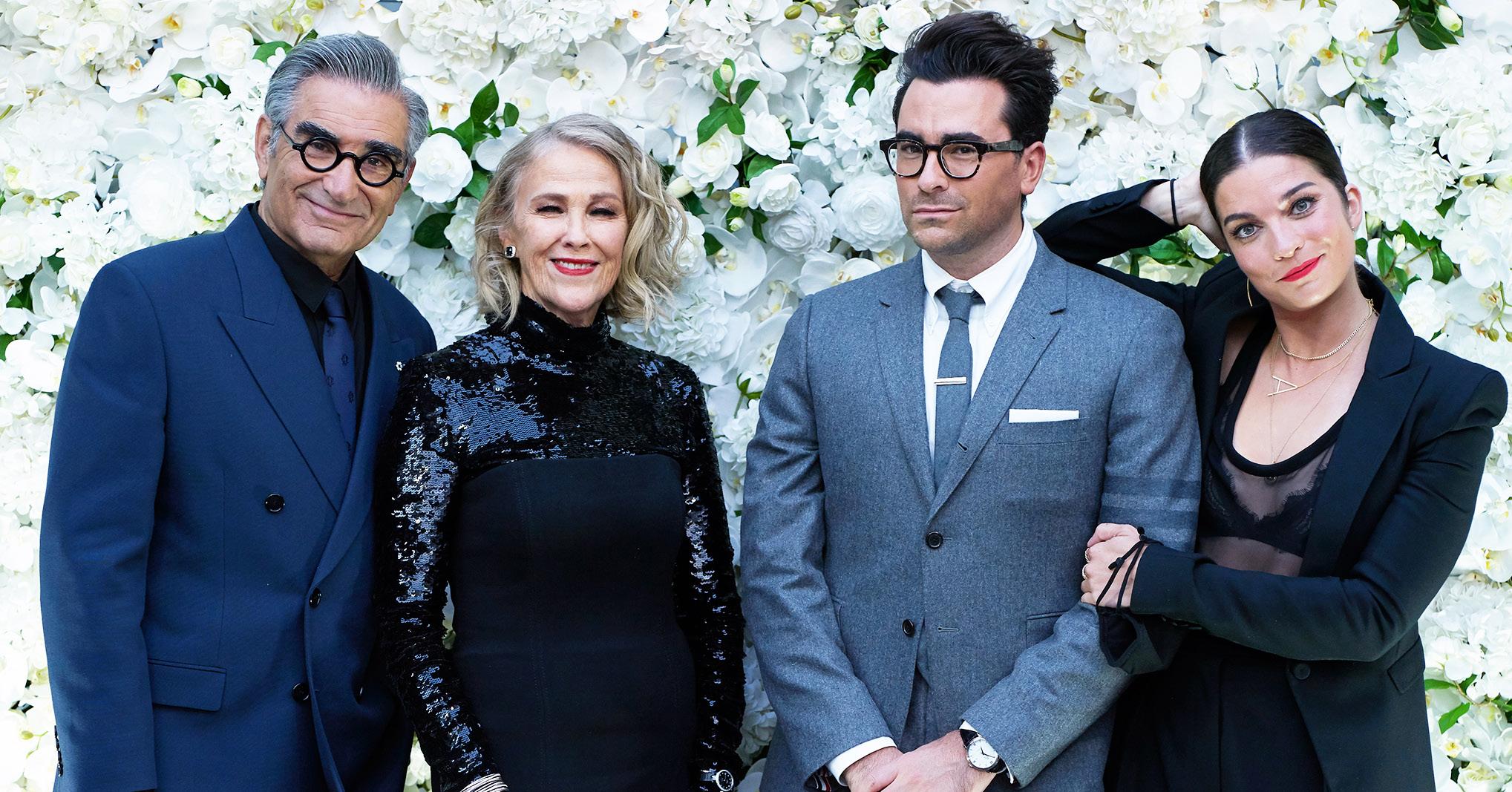
(JTA) – “Schitt’s Creek,” the show co-created by the father-and-son duo Eugene and Dan Levy, swept the Emmy Awards on Sunday night, Sept. 20.
The beloved series won every comedy category for its sixth and final season, and the younger Levy alone won four awards.
This year’s Emmys ceremony was broadcast live, but from nearly 100 streams in different locations across the country. Yet in the first hour of the show, the stream returned again and again to the “Schitt’s Creek” Emmys party in Toronto, where the Levys and the cast and crew of the show had gathered to watch together safely. (The show’s Twitter account shared that all were “adhering to Ontario’s COVID-19 guidelines” and “all in attendance have been in isolation since returning negative COVID-19 tests.”)
“Oh no,” Daniel Levy said at the start of his third acceptance speech, winning for best supporting actor. “The internet’s about to turn on me. I’m so sorry.”
Yet there was little backlash: Much of Twitter seemed overjoyed at what it deemed the long overdue awards for the show.
As radio host Michelle Collins tweeted, the Emmys feel like “feels like Dan Levy’s Bar Mitzvah in the best way.” The first half of the night truly felt like a celebration of all things Dan Levy and “Schitt’s Creek,” and with the awards, the sitcom made history in many ways.
Let’s count them:
Most comedy awards in a single season
The Canadian sitcom won nine Emmys – seven on Emmy night, and two at the Creative Arts Emmys last weekend. The nine total awards for a single season beats the previous record held by “The Marvelous Mrs. Maisel,” which won eight awards at the 2018 and 2019 Emmys.
The reason for the sweep? The Hollywood Reporter hypothesized that TV Academy members, who vote on the Emmys, binge-watched the show on Netflix – along with the rest of America. “‘Schitt’s Creek’ had never won a single Emmy for any of its prior seasons. It is widely suspected that TV Academy members, like the rest of the public, caught up with the show on Netflix, which has been airing prior seasons of the show,” the newspaper wrote.
“AMC’s ‘Breaking Bad’ achieved major Emmy success late in its run via the same course.”
The show premiered in 2015 on CBC, a Canadian channel, and Pop TV, a littleknown American channel (formerly TV Guide Network). It didn’t break through the pop culture bubble until it arrived on Netflix in 2017.
All four comedy acting awards
With wins for Eugene Levy for lead actor, Catherine O’Hara for lead actress, Dan Levy for supporting actor and Annie Murphy for supporting actress, “Schitt’s Creek” became the first show to ever sweep all four acting categories in either comedy or drama. The last time a show got close to winning all four was when “All in the Family” won three of the acting categories in 1978.
Plus, three of the four of the actors won their first Emmys – including the comedy legend O’Hara. (Eugene Levy previously won in 1982 and 1983 for Outstanding Writing in a Variety or Music Program for his work on “Second City Television,” a sort of Canadian “Saturday Night Live.”)
O’Hara’s win was the first of the night.
“I will forever be grateful to Eugene and Daniel Levy for the opportunity to play a woman of a certain age – my age – who gets to fully be her ridiculous self,” she said in her acceptance speech.
Eugene Levy followed soon after, saying “It’s kind of ironical that the straightest role I’ve ever played lands me an Emmy for a comedy performance, so now I seriously have to question just what I’ve been doing for the last 50 years.”
Levy, in true Jewish dad fashion, also shouted out working with his children: “As a dad, getting to work on camera for six years with both my kids, Daniel and Sarah – hi honey! – such a joy, love you both and could not be prouder.” The interfaith Levy family – Eugene is Jewish, his wife, Deborah Devine, is not – mirrors the interfaith Rose family on the fictional “Schitt’s Creek.”
All seven comedy awards
“Schitt’s Creek” also won for best comedy series, comedy writing and comedy directing, making the show the first in history to pull off an entire category sweep,
winning all seven major comedy prize categories.
In his acceptance speech for best comedy series, the younger Levy said: “Our show, at its core, is about the transformational effects of love and acceptance, and that is something we need more of now than we’ve ever needed before.”
Levy has spoken at length about his decision to make the world of “Schitt’s Creek” one without homophobia. As he explained to the Advocate, “I have made a very strong point to not ever show bigotry, homophobia or intolerance on our show because to me, it’s a celebration of love. At the root of it, [‘Schitt’s Creek’] is a celebration of love between the family and between the relationships that we build.”
Other Jewish moments
There were a few other Jewish wins. Namely, Jewish actress Julia Garner won best supporting actress in a drama series for the second year in a row for her performance in “Ozark.”
“Wow, first, I’m shocked, to be honest,” Garner said. “I want to show gratitude to all the women in this category. You are the reason why I’m acting in the first place, so thank you.” She was nominated alongside megastars Laura Dern, Meryl Streep, Helena Bonham Carter, Thandie Newton and more.
Jewish actress Maya Rudolph was finally recognized for her comedic work – she went
from zero Emmys to two this week. Rudolph won for guest actress in a comedy for her scene-stealing impression of Sen. Kamala Harris on “Saturday Night Live,” and for best voice-over performance for Connie the Hormone Monstress in “Big Mouth,” the Netflix animated comedy about puberty. Rudolph was actually nominated against herself in the guest actress category for her appearance as Harris and as the judge in the sitcom “The Good Place.” At a news conference, she explained that the role of the judge was modeled on Jewish Supreme Court Justice Ruth Bader Ginsburg, who passed away on Friday evening.
“I was actually thinking about ‘The Good Place‘ a lot and about how we modeled [the judge’s] robe after Ruth Bader Ginsburg and how much of that was an homage to an iconic human being,” Rudolph said. “When you think of a judge, when you think of allknowing, when you think of powerful, when you think of all good – we modeled her robe after RBG, so that was pretty cool.”
Other Jewish wins: Maria Schrader won for directing “Unorthodox,” the hit Netflix drama based on Deborah Feldman’s memoir of the same name, about Feldman’s departure from the haredi Orthodox world. Schrader took home the only Emmy for the show, which had eight nominations.
Jewish screenwriter Damon Lindelof won outstanding writing in a limited series and best limited series with writing partner Cord Jefferson for their work on the HBO superhero show “Watchmen.”
THE “SCHITT’S CREEK” CAST AT A PRE-EMMYS PARTY, SEPT. 21, 2020. FROM LEFT: EUGENE LEVY, CATHERINE O’HARA, DAN LEVY AND ANNE MURPHY. (CREDIT: ”SCHITT’S CREEK”/INSTAGRAM)